file:///H|/Modellismo/AFV%20Interiors/[armor]%20-%20AFV%20Interiors/afvinteriors.hobbyvista.com/flk38t/flk38t.html
Czech/German Flakpanzer 38(t) auf
Selbstfahrlafette 38(t) (Sd.Kfz.140)
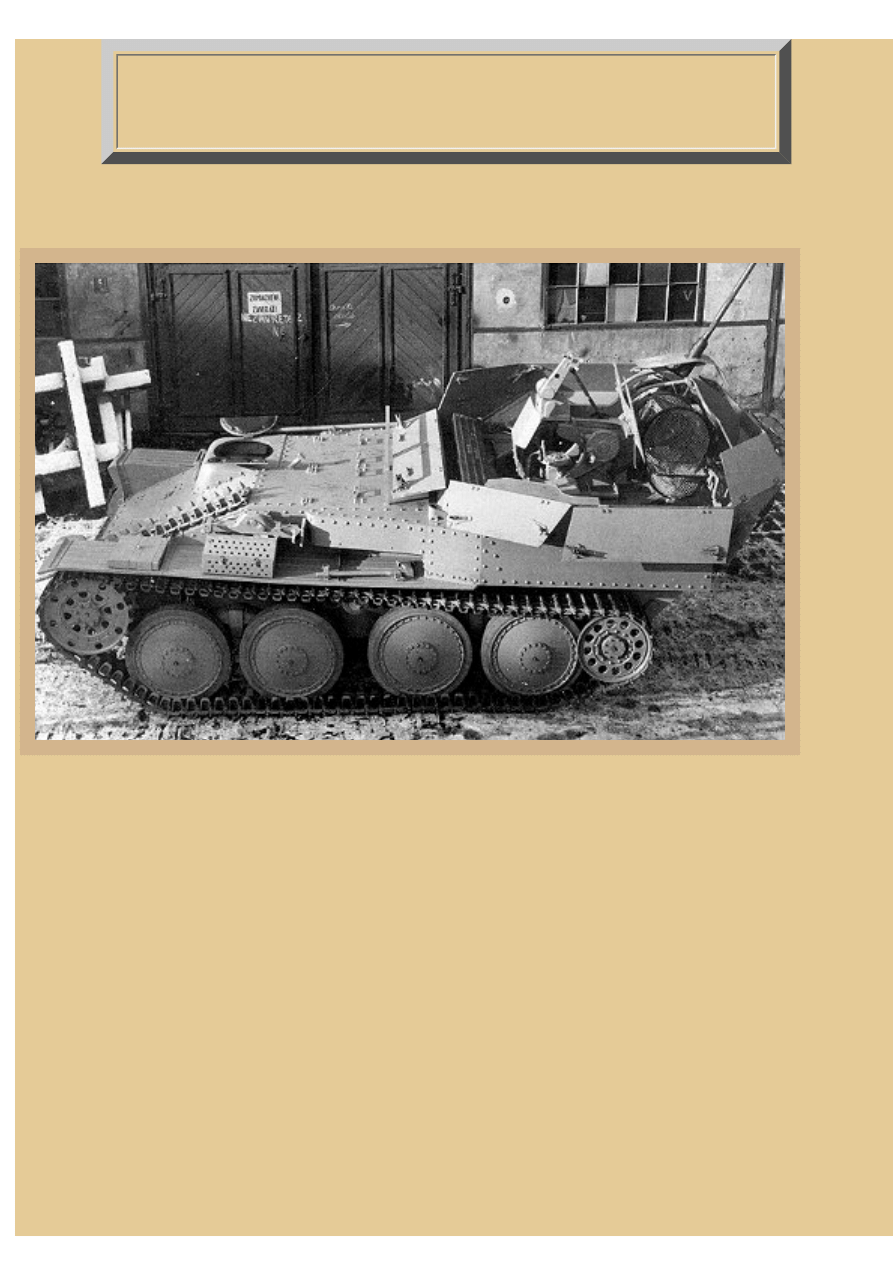
Picture
1:
The
Flakpanzer 38(t) was another of Germany's attempts to provide some desperately needed anti-aircraft
protection for their ground equipment during WWII. Based on the excellent Czech 38(t) chassis and
running gear, the new superstructure was designed to provide space to mount a 2cm Flak38 L/112.5
gun then in use as a medium anti aircraft weapon. The superstructure was mounted at the rear of the
chassis, open at the top with folding upper side plates, and provided only moderate protection for the
gun crew. Converted by BMM in Prague (originally Ceskomoravska Kolben Danek-CKD- before the
German take over) during the period between November of 1943 and February of 1944, there were
approximately 140 Flakpanzer 38(t) vehicles produced by the end of the war.
The Flakpanzer 38(t) was usually manned by a crew of 4- a driver up at the right side of the vehicle
bow and a three man gun crew consisting of gunner, loader and commander. The superstructure had a
new sloping front plate with a large hatch for access to the brake/transmission assemblies, and a new
raised cast driver's hatch/visor assembly. Over the driver's head is a circular two part hatch and a
bulkhead separates the driver from the repositioned engine, now located just behind him on the right
side of the vehicle. Eight upper superstructure plates fold down for unobstructed traverse for ground
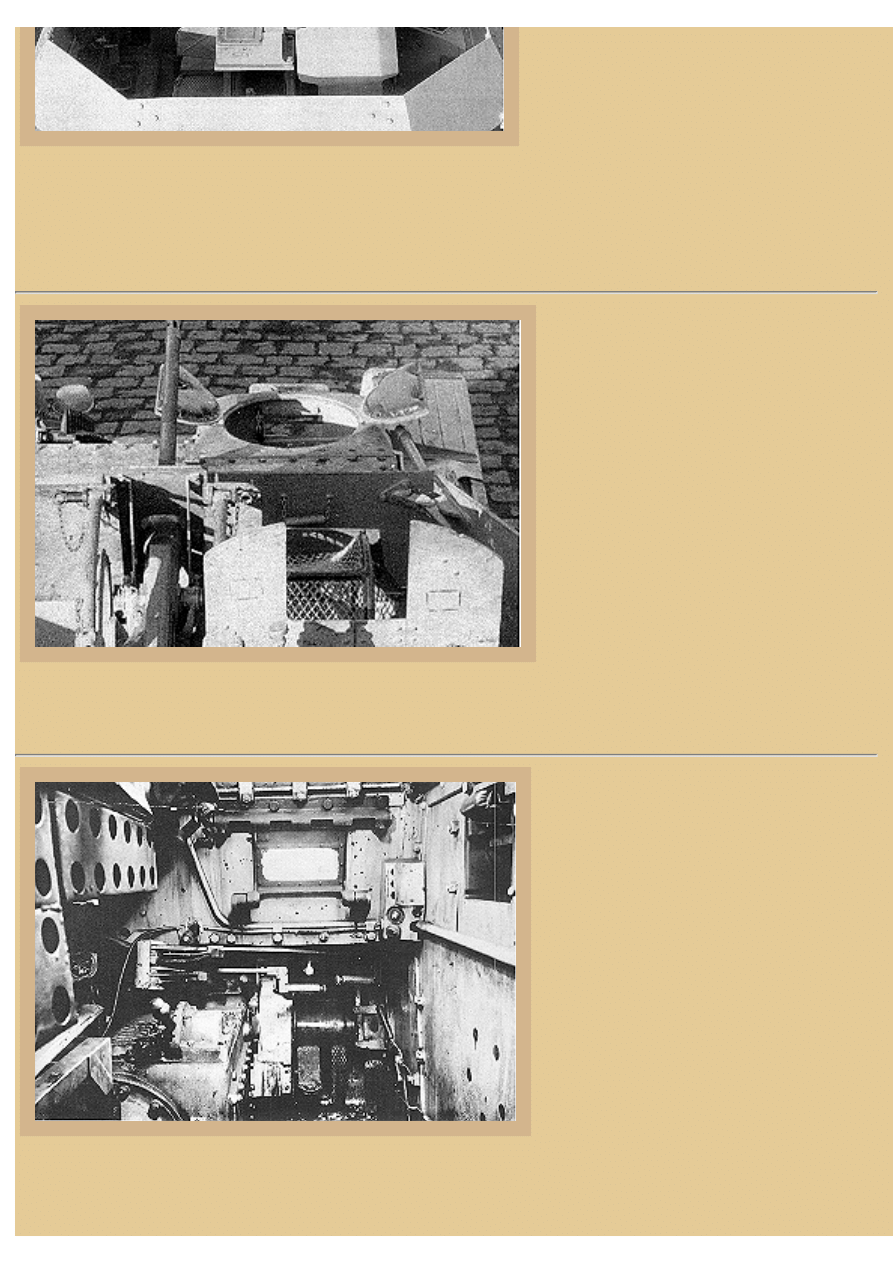
targets, as seen in this CKD photo dating from the war years. The superstructure shield plates are held
upright by large simple latches between the plates. Although there are some welded plates on the
hull, the vast majority are riveted in place to an angle iron frame. Armor is 10mm thick on most of
file:///H|/Modellismo/AFV%20Interiors/[armor]%20-%20AFV...nteriors/afvinteriors.hobbyvista.com/flk38t/flk38t.html (1 di 8)06/02/2007 20.03.16
file:///H|/Modellismo/AFV%20Interiors/[armor]%20-%20AFV%20Interiors/afvinteriors.hobbyvista.com/flk38t/flk38t.html
the vehicle plates with a maximum of 15mm on the hull front.
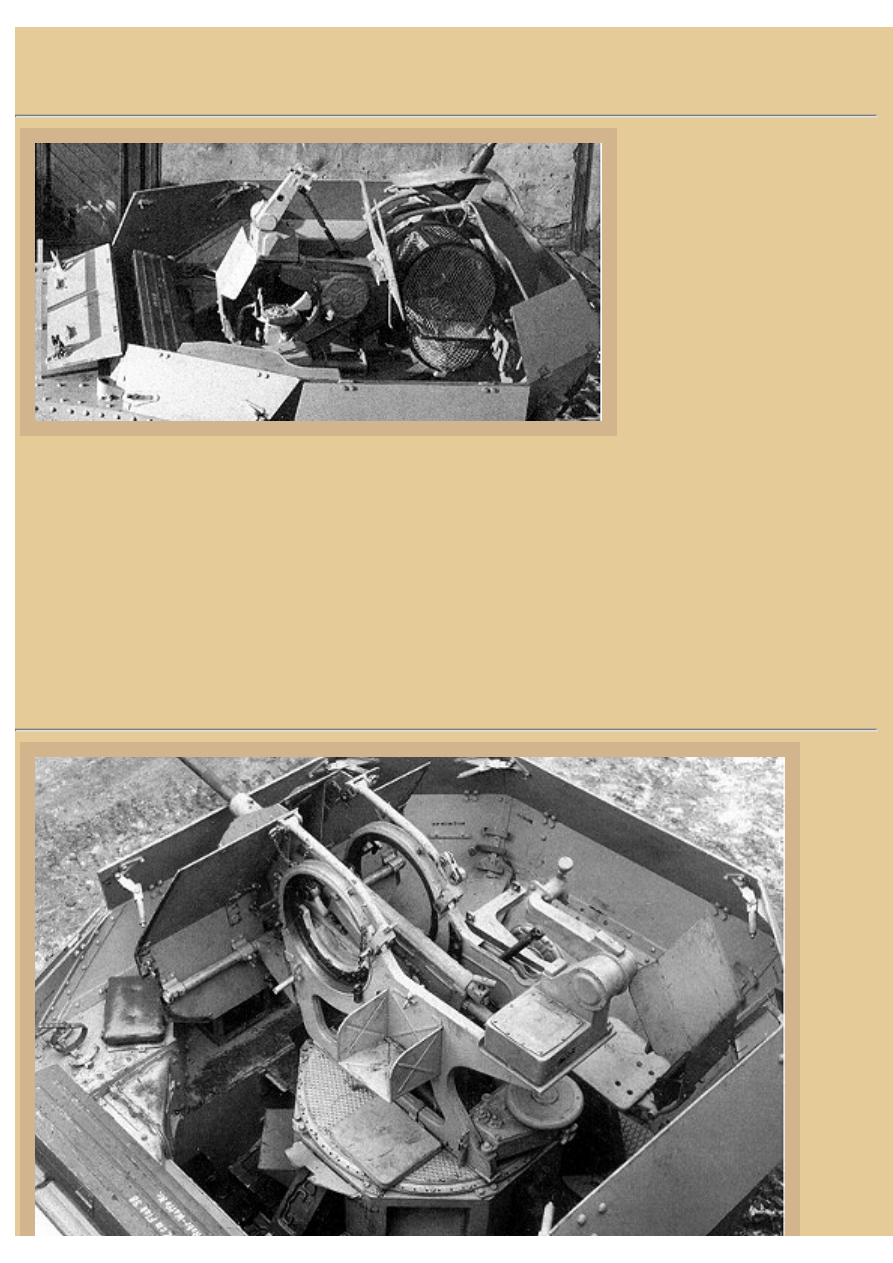
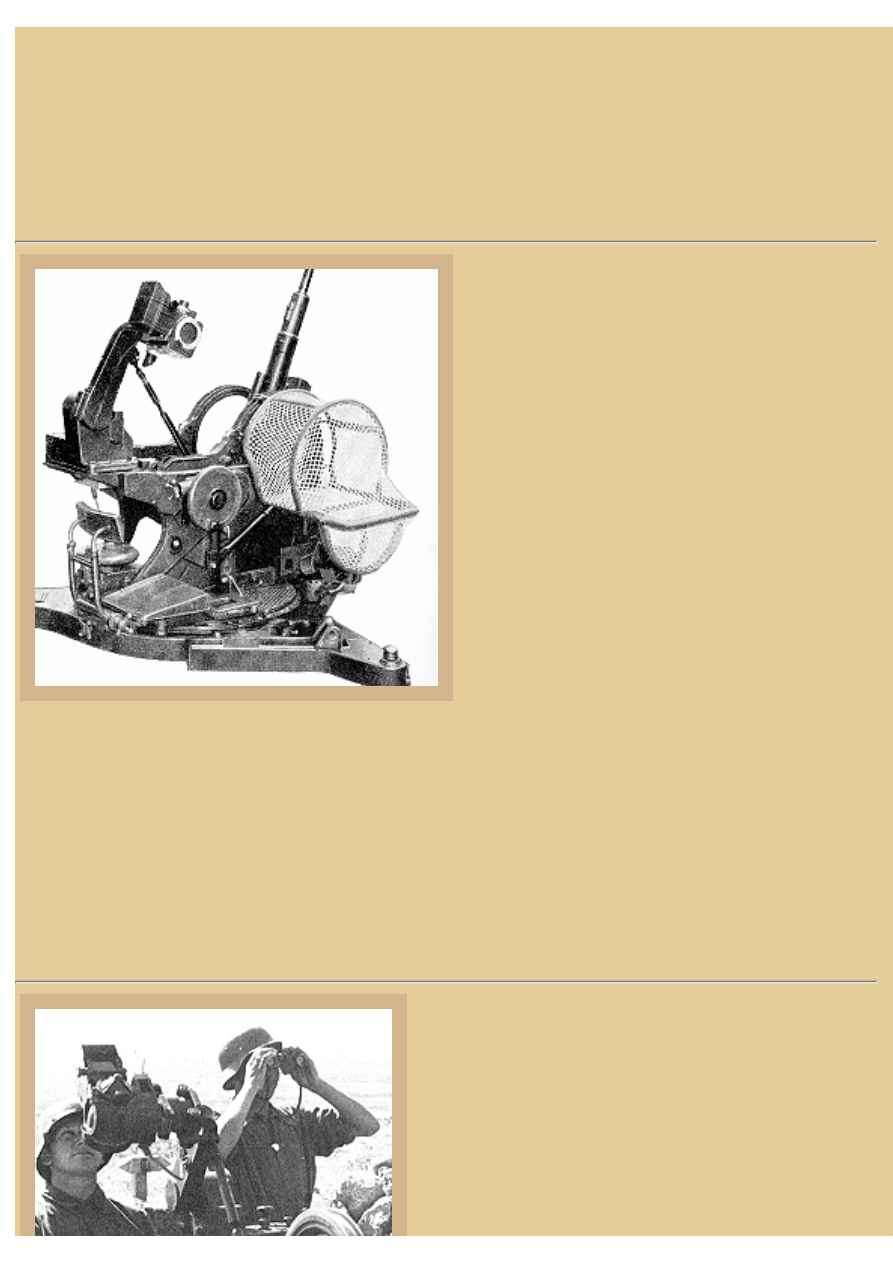
Picture 2:
This is a closer look at the
previous photo, showing a bit
more detail of the fighting
compartment. The elevation
hand wheel is mounted on
this side of the gun mount
and this vehicle has a large
armor shield for a back rest
for the gunner. The catch net
for spent 20mm ammo
rounds also surrounds the
circular elevation race on this right side and because the superstructure shields have been lowered on
this side we can see the long spare barrel storage box at the front of the fighting compartment. The
gun is elevated to around 60 degrees and the support rod to the sight bracket can be seen rising from
the gun mount. There are not sights mounted in these CKD photos. We will explore these later. The
decision to build the Flakpanzer 38(t) was made due to a lack of self propelled medium anti aircraft
guns and was to remain in production until the new Flakpanzer IV became available in 1944. The
engine in the Flakpanzer 38(t) was the same as in the original tank, the Praga AC, and information on
this power plant is available in the Czech 38(t) Tank page in AFV INTERIORS. Top speed was
42km/hr and the engine drove the front sprockets through a 5 speed gearbox with one reverse gear.
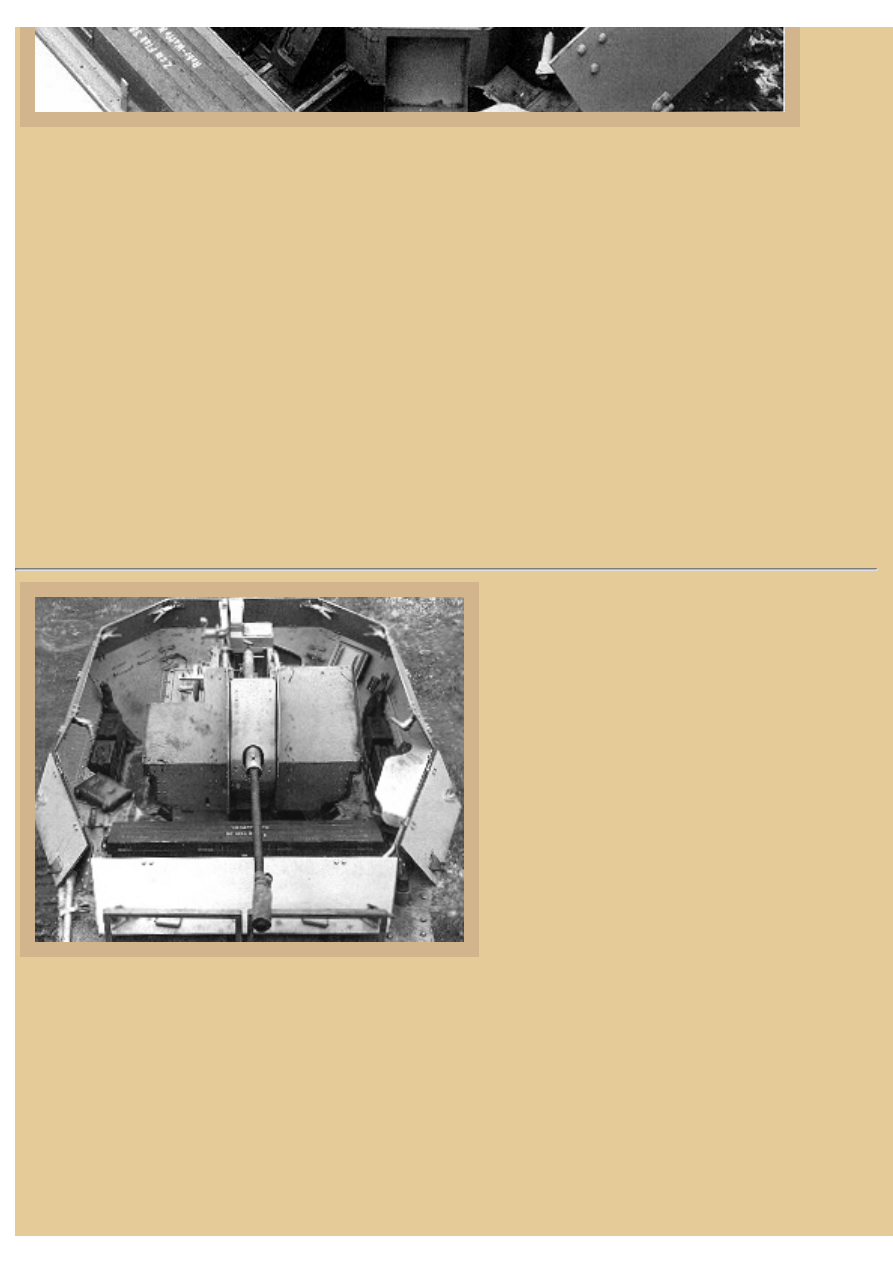
Picture
3:
This is
the
view of
the left
side of
the gun/
mount
rotated
90
degrees
to the
right.
The
long
barrel
file:///H|/Modellismo/AFV%20Interiors/[armor]%20-%20AFV...nteriors/afvinteriors.hobbyvista.com/flk38t/flk38t.html (2 di 8)06/02/2007 20.03.16
file:///H|/Modellismo/AFV%20Interiors/[armor]%20-%20AFV%20Interiors/afvinteriors.hobbyvista.com/flk38t/flk38t.html
storage
box at
the
front of
the fighting compartment is now to the lower left in the photo and we are looking again at the seat
cushion on the engine compartment at the left. Between the cushion and the barrel box is a bracket
for a gas mask container and another one is located at the far corner of the lower side plates also. A
bracket for a machine pistol is hidden by the right gun shields but the bar to hang leather MP ammo
pouches is seen running horizontally to the left of this second gas mask bracket. The circular
elevation race of the 20mm gun mount is clearly seen here (the best ID feature between this Flak38
and the earlier FlaK30) and the ready round ammo support bracket is clearly visible on this side of
the mount. The bracket shelf could hold three horizontally stacked 20round magazines for quick
access by the loader. The traverse wheel is also visible now below the rear of the mount and the
raised central pedestal base for the gun is also clear. Notice the ammo boxes leaning up along the
base of the pedestal and the interesting and rare large back rest armor shield for the gunner's seat. For
some reason, the gunner's protective front shield has been removed, perhaps to better view the far
side of the fighting compartment. The upper superstructure shields have been dropped on this side to
improve the view. There are no sights mounted in any of the CKD photos. We will examine them
later.
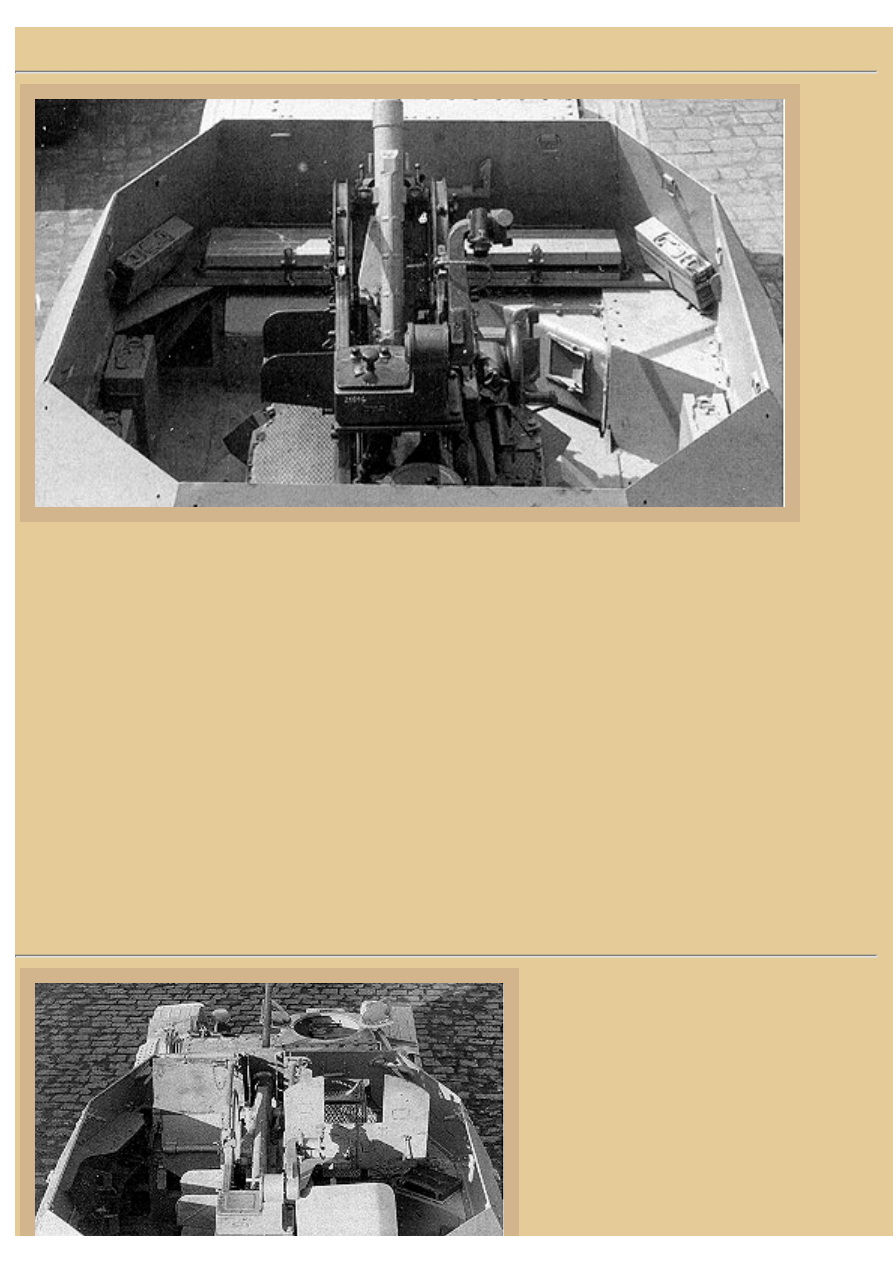
Picture 4:
The view front straight on shows the
characteristic Flak38 gun shields and a cover
over the barrel muzzle brake. Now the front
three shield plates have been lowered and the
frame supports to limit gun depression are
visible at the bottom of the photo. The long
dark gray spare barrel storage box is seen at
the front of the compartment and the crew
seat pad is again seen, now to the lower left in
the photo. Ammo boxes are stored to either
side of the floor and gas mask container
brackets are at each back corner. Again, the
horizontal bars seen on the left rear wall are
for hanging MP ammo pouches and the MP is
now seen in its protective canvas bag, behind the last floor ammo box at the left. On the other side of
the vehicle rear (the vehicle's left side - our right) is a folded up seat for another crew member's use
during travel and next to it is the second machine pistol, also in its protective green brown bag. The
cover shelf protecting the vehicle radio is at the photo's lower right and the antenna mount can just be
seen on the fender between the folded down shields at the lower right. The latches that hold the
hinged shields are seen particularly well here. The interior of Flakpanzer is painted the same as the
exterior, in this case dark yellow (Dunkelgelb), and the floor is much darker, probably either red lead
primer or the typical green/gray found in tanks and other German AFVs.
file:///H|/Modellismo/AFV%20Interiors/[armor]%20-%20AFV...nteriors/afvinteriors.hobbyvista.com/flk38t/flk38t.html (3 di 8)06/02/2007 20.03.16
file:///H|/Modellismo/AFV%20Interiors/[armor]%20-%20AFV%20Interiors/afvinteriors.hobbyvista.com/flk38t/flk38t.html
Picture
5:
Looking down into the fighting compartment from the back deck of a different vehicle you see this
arrangement. The gun is mounted on a circular pedestal mount with full 360 degree rotation and
elevation of -5 to +90 degrees. The gunner sits to the right rear of the weapon and elevated the
weapon by hand wheel on the right side of the mount and traverses by hand wheel directly behind,
partially hidden at the bottom of this photograph. The floor is covered by non-skid plating and you
can see the intrusion of the engine compartment at the right front of the fighting compartment. At the
front is a long dark gray box containing replacement quick connect barrels for the 20mm gun and to
either side, mounted on the diagonal plates, are ammo boxes. There are three larger ammo storage
boxes on the floor to the left in the compartment and two on the right behind the engine compartment.
Also seen here are the adjustment controls for the sight pivot mechanism, seen on the flat plate
mounted directly behind the gun at the lower center of the weapon. No shield mounts are attached for
the gun or gunner as were usually supplied, even though the shields were sometimes not used. Also,
do you notice anything peculiar about the inside of the upper hull side armor shields? This vehicle,
photographed at BMM, has welded upper shields- there are no latches! There is also no radio shelf/
bracket. Perhaps this is a prototype vehicle?
Picture 6:
Here's what the interior looks like with
gun and gunner shields attached and
typical upper hull shields with hinges
and latches. Notice that the sight pivot
adjustment knobs are now missing at the
rear of the gun. The gunner's seat in this
vehicle is installed and we are looking at
file:///H|/Modellismo/AFV%20Interiors/[armor]%20-%20AFV...nteriors/afvinteriors.hobbyvista.com/flk38t/flk38t.html (4 di 8)06/02/2007 20.03.16
file:///H|/Modellismo/AFV%20Interiors/[armor]%20-%20AFV%20Interiors/afvinteriors.hobbyvista.com/flk38t/flk38t.html
the back of the back rest. On top of the
engine cover is a pad for one of the crew
to sit while traveling in the vehicle and
on the opposite side of the hull is a shelf
that covers a radio mount for a FuG5 or
FuG2 radio. The Flak38 gun is loaded from the left and on this left side of the gun mount you can see
a bracket for two ready round ammo boxes. Just visible through the gunner's shield aperture in this
CKD photo (as are most of these images) is the catch net for spent shells on the right of the gun.
Picture 7:
The driver's split hatches are visible in
this close up crop of the previous photo
and brown leather head padding on
each hatch is clearly seen. The driver's
visor is visible through the hatches and
the lighter paint on the walls of his
area is apparent in the original photo
prints. The interior was probably
painted the light buff called Elfenbein,
which has also been called ivory or
light cream in some publications.
There is no entrance into the fighting
compartment from the driver's area.
The back of the Flak38 gun shield is visible here as is the ammo catch bag.
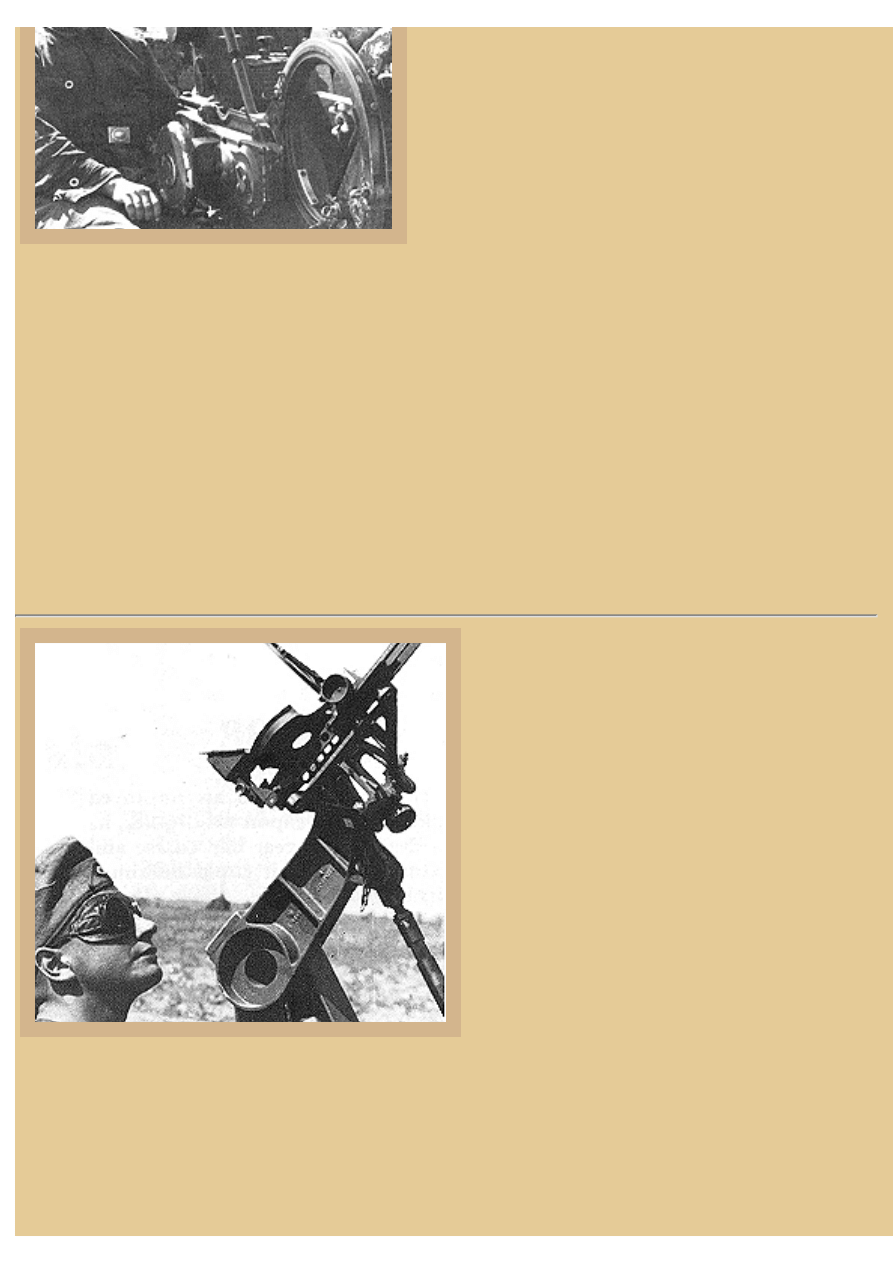
Picture 8:
I have been intrigued by this interior
photo of a 38(t) variant for many years.
It comes from one of the large gunned
versions of the 38(t) but provides us
with some useful information about the
driver's area just the same. From
approximately the visor area down, the
controls are the same as all 38(t)
variants. The transmission is to the left
and you can see the unique levered
steering tiller linkages crossing to a
handle to the left of the driver's legs
and a second handle just to the right
(here caught in the shadows and somewhat difficult to see). Down below are the brake, clutch, and
accelerator pedals. The gear shift lever is to the left, in front of the steering lever pivot, directly on
file:///H|/Modellismo/AFV%20Interiors/[armor]%20-%20AFV...nteriors/afvinteriors.hobbyvista.com/flk38t/flk38t.html (5 di 8)06/02/2007 20.03.16
file:///H|/Modellismo/AFV%20Interiors/[armor]%20-%20AFV%20Interiors/afvinteriors.hobbyvista.com/flk38t/flk38t.html
top of the transmission. Also in view, to help identify the vehicle as a 38(t) type, is the
communication box device at the front right corner of the hull. The box has a series of colored lights
that were wired to a similar control unit at the commander's station and allowed a simple visual
communication between the two. The parts of the photograph that intrigue me are the apparent open
over-head hatch and the holed support structures to the left. My best guess is that this photo is taken
in one of the Panzerjager 38(t) variants, perhaps the Marder III, Ausf. M.
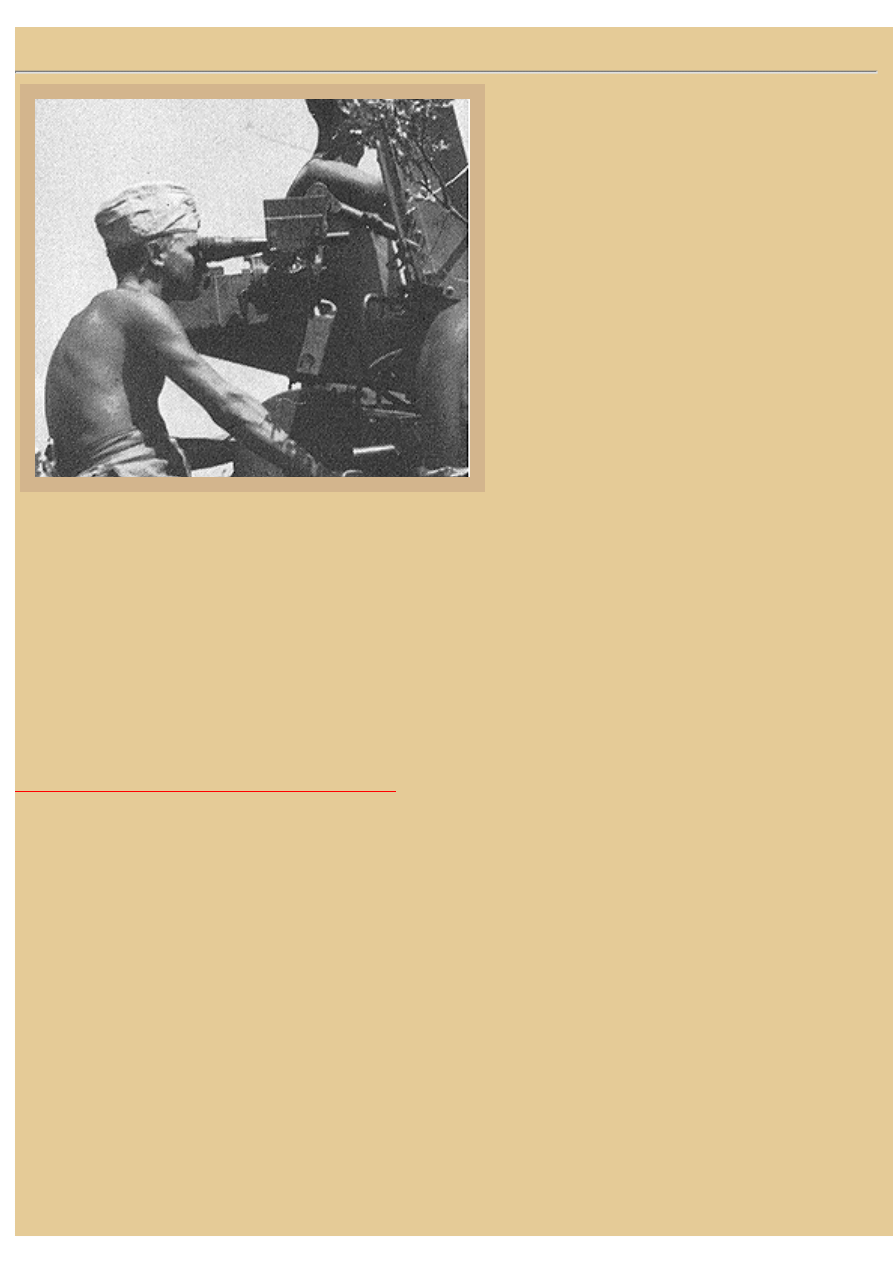
Picture 9:
The 2cm Flugabwehrkanone 38 was developed
by Mauser-Werke as an improved replacement
for the earlier 2cm FlaK30. The design was first
produced in late '39 and came into action in early
1940, generally as a towed gun on a wheeled
trailer. One of the major differences, and the
most important improvement, was an increased
rate of fire. The theoretical rate of 480rps was
almost twice as fast as the FlaK30. In practice,
the actual rate of fire was far less, due to the fact
that one 20 round ammo magazine would last
only a few seconds before requiring replacement
and this would slow the firing rate considerably.
The new weapon also included both coarse and
fine elevation and traverse adjustments on the
hand wheels and could come on target, and move
with it, faster than its earlier brother. <>br>
The gunner's seat is now on the right side, the gun pivot elevates by use of a circular bearing on both
sides. Foot pedals are used to fire the gun, one for single shot and another for sustained. This German
training manual photo drawing also shows the net used to catch expended shells on the right- the
ammo magazine was attached to the left of the receiver. Each of the larger ammo boxes we saw
earlier held three magazines and the smaller ones two. The Flak38 not only fired shells at almost
twice the rate of the earlier Flak30, but the carriage was lighter and therefore easier to transport. But,
this had its drawbacks- the gun vibrated much more during firing and many crews actually preferred
the slower and steadier Flak30 over the newer weapon.
Picture 10:
The sight for the Flak38 was originally the Flakvisier
38, a box shaped electrical computing sight with a
reflecting optical mirror system, seen here in this crop
of a Bundesarchiv photo (as are also the next two
images). The sight was electrically linked to the
elevation and traverse wheels so the optical sight was
file:///H|/Modellismo/AFV%20Interiors/[armor]%20-%20AFV...nteriors/afvinteriors.hobbyvista.com/flk38t/flk38t.html (6 di 8)06/02/2007 20.03.16
file:///H|/Modellismo/AFV%20Interiors/[armor]%20-%20AFV%20Interiors/afvinteriors.hobbyvista.com/flk38t/flk38t.html
automatically adjusted for target course and speed to
lead it across the sky (mirror deflection inside the
protective box). The same sight can also be seen in the
previous German manual picture. Keep in mind that
any mechanical or electrical AA sight system must
provide at least two basic aiming functions. It must
take into account the changing range to target and
over elevate the gun accordingly (to account for
gravity effects on the projectile), and it must calculate
the lead angle necessary to put the round in the vicinity of the target. In effect, the system is guessing
where the target would be when the round arrived-- both shell and target arriving at the same point in
space at the same time.
The 2cm (0.79in) ammo could be any of eight different combat types, plus a couple more training
types. Most shells included a tracer to assist aiming and traveled at around 900mps (3000fps). High
Explosive (HE) fragmentation ammo was most useful as it did not require a direct hit to disable an
aircraft. For ground work, an Armor Piercing (AP) round was used. One of the best AP projectiles
was the 2cm Pzgr Patr 40 L'spur, with an excellent tungsten core penetrator capable of defeating
40mm of armor at 100meters and 0 degree obliquity (1.57in at 109yd). Unfortunately for the
Germans, tungsten was rare and only relatively few of these rounds were available during the last
stages of WWII.
Picture 11:
The second type of sight seen mounted to the
arm of the Flak38 is the Linealvisier 21 (Linear
Sight) seen in this photo. This sight used an
open course and speed rung sight stamped out
of sheet metal and clamped into the gun's sight
bar. Similar to a typical rifle sight, there was an
adjustable large ring with sliding horizontal
slider at the front of the mounting and a small
pip alignment bead at the rear. Unfortunately,
this photo shows the ring from the side and you
don't get the full idea of the sight, but the
mounting and rear bead are clearer than other
photos I have of the system. The Linealvisier
was later replaced with a similar device, the
Schwebekreisvisier 30, popularly known as a
"cart-wheel" open ring sight, but rarely seen in action photos of the Flakpanzer 38(t). It consisted of a
series of concentric rings with a bead at the center. Each ring represents a certain distance, depending
on the range of the target, and allowed the gunner an approximate lead angle during firing. Our
gunner is wearing the regular issue disposable sunglasses with protective leather/paper side shields
that reduced sand and sun effects in the North African desert.
file:///H|/Modellismo/AFV%20Interiors/[armor]%20-%20AFV...nteriors/afvinteriors.hobbyvista.com/flk38t/flk38t.html (7 di 8)06/02/2007 20.03.16
file:///H|/Modellismo/AFV%20Interiors/[armor]%20-%20AFV%20Interiors/afvinteriors.hobbyvista.com/flk38t/flk38t.html
Picture 12:
The third sight mounted on the Flak38, and
often seen in pictures of the Flakpanzer 38(t),
was a 3x8 ground target periscope. A simple
mount for this telescope was attached to the
left of the box type Flakvisier 38, as seen
here, and was particularly potent against
slow moving targets. When shields were
added to the 2cm mounts a separate shield
arrangement was designed for the gunner
with an open aperture for the sight to view
through. On occasion you will see photos of
ground and vehicle mounts with the gun's
right shield missing and the gunner's shield
in tact, and occasion with the gunner's shield
missing and the gun's intact. The shields
made the gun over 120kg heavier and were more often used when a vehicle was prone to ground
firing modes more than anti aircraft work.
Most Flakpanzer 38(t) vehicles were issued to the AA Platoons of each tank regiment in Panzer
Divisions in January and February of 1944. A number of them were engaged by the Allies in
Normandy, including the 12th SS Panzer Division "Hitlerjugend" (Hitler Youth). They were not
difficult to put out of action by ground forces, with their thin skins and open fighting compartments,
but the vehicles did manage to end the flying careers of many pilots during the Western European
fighting.
BACK TO AFV INTERIORS HOME PAGE
(c) 2001, 2003 AFV INTERIORS Web Magazine
file:///H|/Modellismo/AFV%20Interiors/[armor]%20-%20AFV...nteriors/afvinteriors.hobbyvista.com/flk38t/flk38t.html (8 di 8)06/02/2007 20.03.16
Document Outline
Wyszukiwarka
Podobne podstrony:
AFV Interiors Water Buffalo
Afv Interiors Isu 152
AFV Interiors CV 33 35
AFV Interiors German AFV Radio Equipment In WWII
AFV Interiors M1A2 Abrams
AFV Interiors British Medium Tank Mk I & Mk II
AFV Interiors Czech Light Tank, LT vz 38, Pz Kpfw 38(t)
AFV Interiors Leopard 2
Afv Interiors Daimler Scout Car
AFV Interiors Otter
AFV Interiors B1 bis
Afv Interiors Mk V
AFV Interiors Marder III
AFV Interiors M113 Toa
AFV Interiors Fahrpanzer
AFV Interiors Semovente Da 75 18
AFV Interiors LVT
AFV Interiors IS 2
Afv Interiors Medium Tank Mark A whippet
więcej podobnych podstron