
Chapter 29 Lecture

CHAPTER 29
PLANT DIVERSITY I: HOW
PLANTS COLONIZED LAND
Copyright © 2002 Pearson Education, Inc., publishing as Benjamin Cummings
Section A: An Overview of Land Plant
Evolution
1. Evolutionary adaptations to terrestrial living
characterize the four main groups of land plants
2. Charophyceans are the green algae most closely related
to land plants
3. Several terrestrial adaptations distinguish land plants
from charophycean algae

•
More than 280,000 species of plants
inhabit Earth today.
•
Most plants live in terrestrial
environments, including deserts,
grasslands, and forests.
–
Some species, such as sea grasses, have
returned to aquatic habitats.
•
Land plants (including the sea
grasses) evolved from a certain
green algae, called charophyceans.
Introduction
Copyright © 2002 Pearson Education, Inc., publishing as Benjamin Cummings

•
There are four main groups of land
plants: bryophytes, pteridophytes,
gymnosperms, and angiosperms.
•
The most common bryophytes are
mosses.
•
The pteridophytes include ferns.
•
The gymnosperms include pines and
other conifers.
•
The angiosperms are the flowering
plants.
1. Evolutionary
adaptations to terrestrial
living characterize the
four main groups of land
plants
Copyright © 2002 Pearson Education, Inc., publishing as Benjamin Cummings
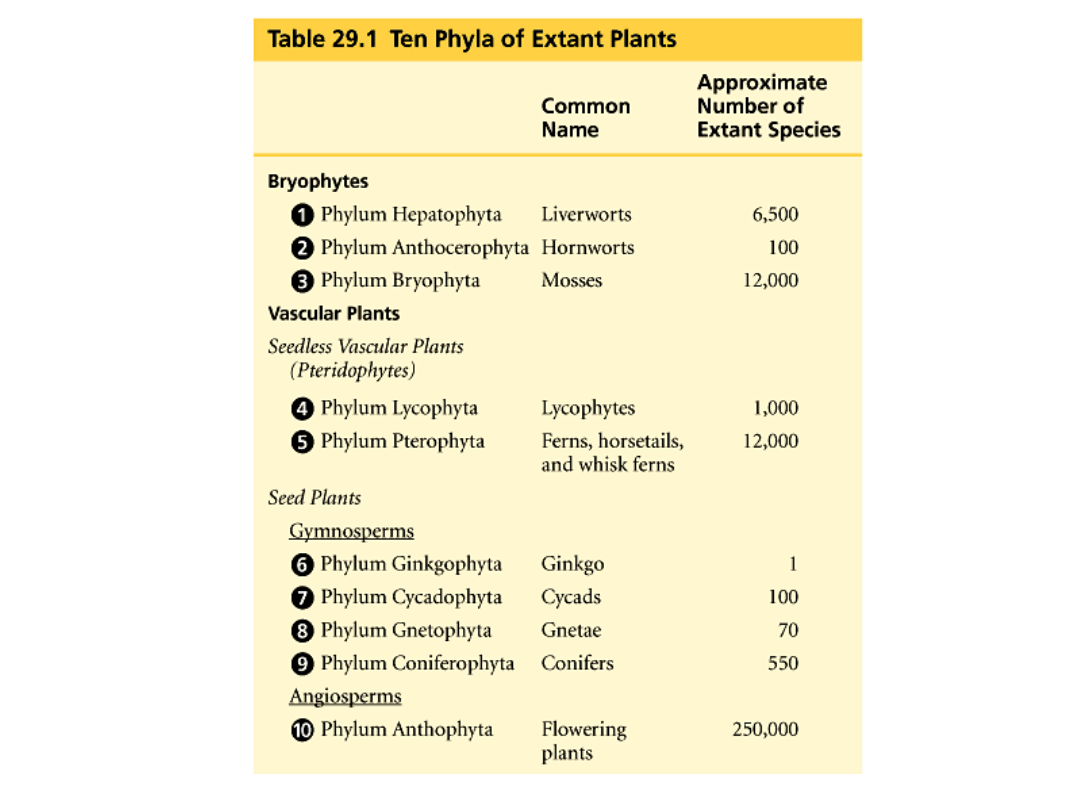
Copyright © 2002 Pearson Education, Inc., publishing as Benjamin Cummings

•
Mosses and other bryophytes have
evolved several adaptations,
especially reproductive adaptations,
for life on land.
–
For example, the offspring develop from
multicellular embryos that remain
attached to the “mother” plant which
protects and nourished the embryos.
•
The other major groups of land
plants evolved vascular tissue and
are known as the vascular plants.
–
In vascular tissues, cells join into
tubes that transport water and nutrients
throughout the plant body.
–
Most bryophytes lack water-conducting
tubes and are sometimes referred to as
“nonvascular plants.”

•
Ferns and other pteridiophytes are
sometimes called seedless plants
because there is no seed stage in
their life cycles.
•
The evolution of the seed in an
ancestor common to gymnosperms
and angiosperms facilitated
reproduction on land.
–
A seed consists of a plant embryo
packaged along with a food supply
within a protective coat.
–
The first seed plants evolved about 360
million years ago, near the end of the
Devonian.
•
The early seed plants gave rise to the
diversity of present-day
gymnosperms, including conifers.

•
The great majority of modern-day
plant species are flowering plants, or
angiosperms.
–
Flowers evolved in the early Cretaceous
period, about 130 million years ago.
–
A flower is a complex reproductive
structure that bears seeds within
protective chambers called ovaries.
Copyright © 2002 Pearson Education, Inc., publishing as Benjamin Cummings

•
Bryophytes, pteridiophytes,
gymnosperms, ands angiosperms
demonstrate four great episodes in
the evolution of land plants:
–
the origin of bryophytes from algal
ancestors
–
the origin and diversification of vascular
plants
–
the origin of seeds
–
the evolution of flowers
Copyright © 2002 Pearson Education, Inc., publishing as Benjamin Cummings
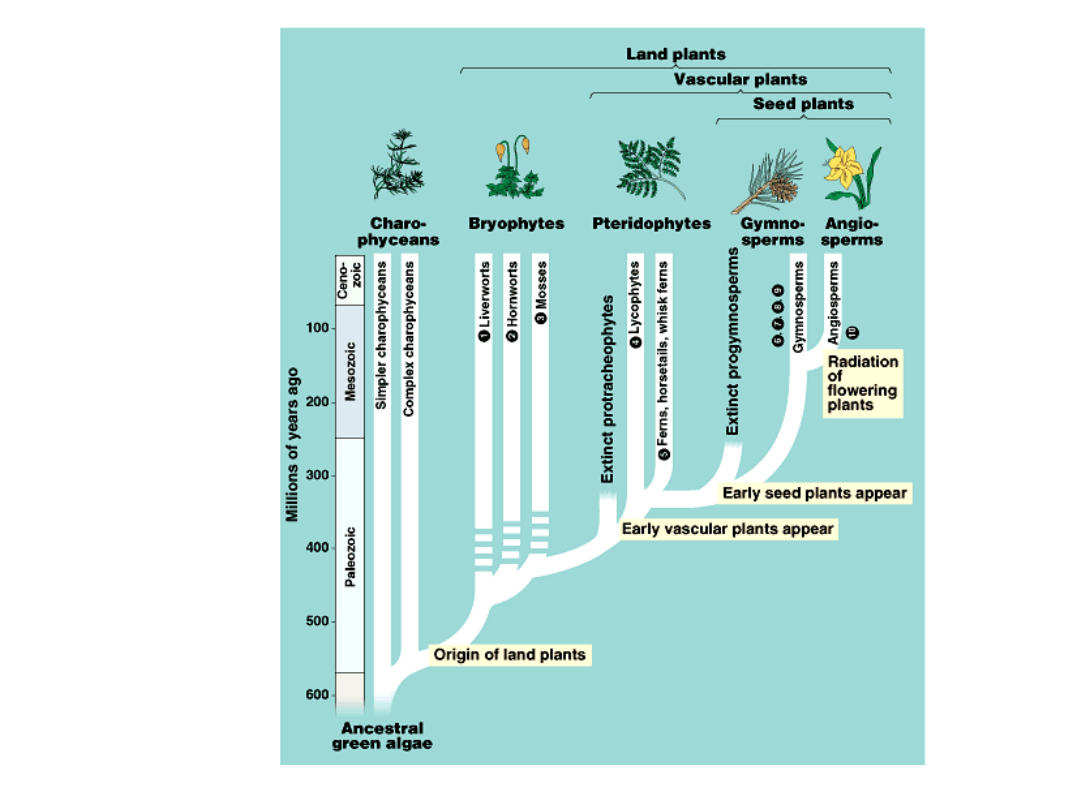
Copyright © 2002 Pearson Education, Inc., publishing as Benjamin Cummings
Fig. 29.1

•
What features distinguish land plants
from other organisms?
•
Plants are multicellular, eukaryotic,
photosynthetic autrotrophs.
–
But red and brown seaweeds also fit
this description.
•
Land plants have cells walls made of
cellulose and chlorophyll a and b in
chloroplasts.
–
However, several algal groups have
cellulose cell walls and others have both
chlorophylls.
2. Charophyceans are the green
algae most closely related to
land plants
Copyright © 2002 Pearson Education, Inc., publishing as Benjamin Cummings
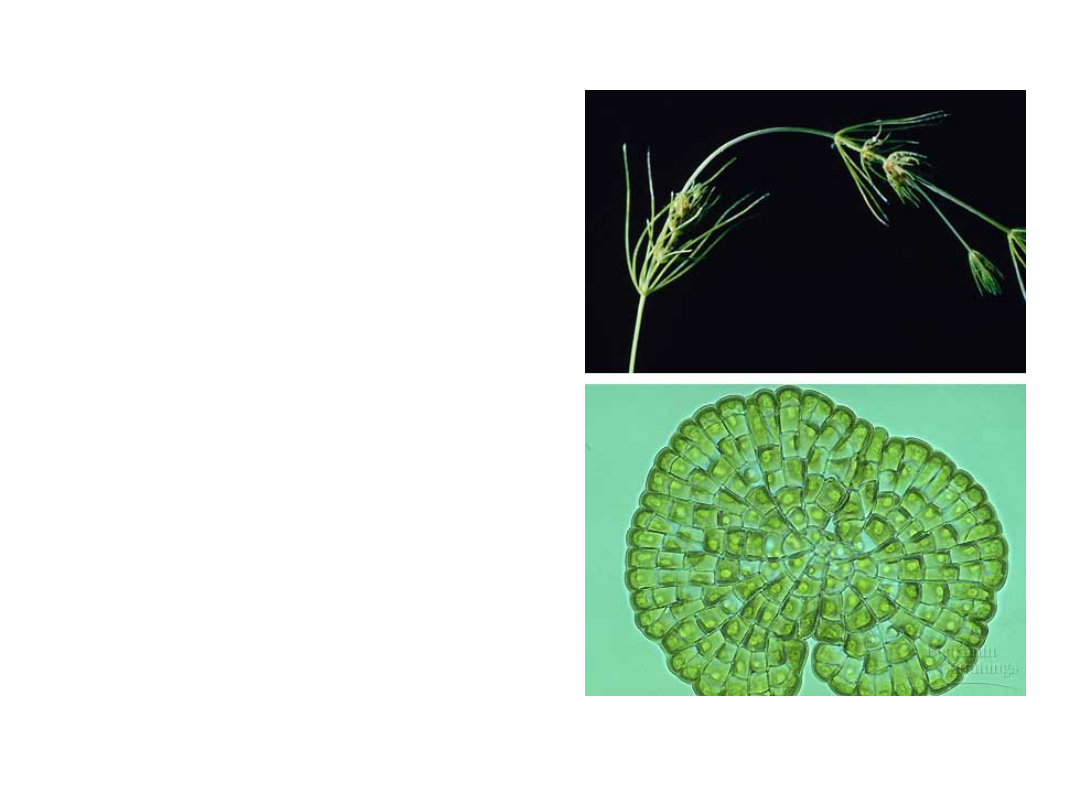
•
Land plants share
two key
ultrastructural
features with
their closet
relatives, the
algal group called
charophyceans.
Copyright © 2002 Pearson Education, Inc., publishing as Benjamin Cummings
Fig. 29.2

•
The plasma membranes of land
plants and charophyceans possess
rosette cellulose-synthesizing
complexes that synthesize the
cellulose microfibrils of the cell wall.
–
These complexes contrast with the
linear arrays of cellulose-producing
proteins in noncharophycean algae.
Copyright © 2002 Pearson Education, Inc., publishing as Benjamin Cummings

•
A second ultrastructural feature that
unites charophyceans and land
plants is the presence of
peroxisomes.
–
Peroxisomes are typically found in
association with chloroplasts.
–
Enzymes in peroxisomes help minimize
the loss of organic products due to
photorespiration.
Copyright © 2002 Pearson Education, Inc., publishing as Benjamin Cummings

•
In those land plants that have
flagellated sperm cells, the structure
of the sperm resembles the sperm of
charophyceans.
•
Finally, certain details of cell division
are common only to land plants and
the most complex charophycean
algae
–
These include the formation of a
phragmoplast, an alignment of
cytoskeletal elements and Golgi-derived
vesicles, during the synthesis of new
cross-walls during cytokinesis.
Copyright © 2002 Pearson Education, Inc., publishing as Benjamin Cummings

•
Several characteristics separate
the four land plant groups from
their closest algal relatives,
including:
–
apical meristems
–
multicellular embryos dependent on
the parent plant
–
alternation of generations
–
sporangia that produce walled spores
–
gametangia that produce gametes
3. Several terrestrial adaptations
distinguish land plants from
charophycean algae
Copyright © 2002 Pearson Education, Inc., publishing as Benjamin Cummings

•
In terrestrial habitats, the resources
that a photosynthetic organism
requires are found in two different
places.
–
Light and carbon dioxide are mainly
aboveground.
–
Water and mineral resources are found
mainly in the soil.
•
Therefore, plants show varying
degrees of structural specialization
for subterranean and aerial organs -
roots and shoots in most plants.
Copyright © 2002 Pearson Education, Inc., publishing as Benjamin Cummings
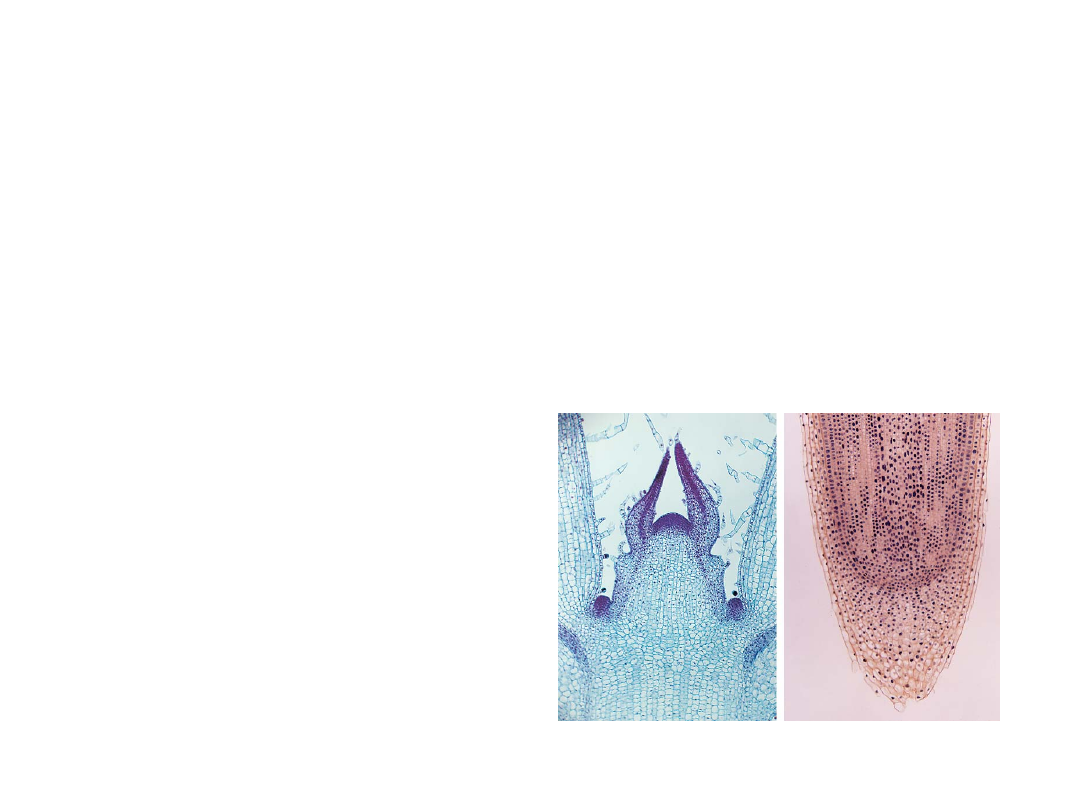
•
The elongation and branching of the
shoots and roots maximize their
exposure to environmental resources.
•
This growth is sustained by apical
meristems, localized regions of cell
division at the tips of shoots and roots.
–
Cells produced by
meristems differentiate
into various tissues,
including surface
epidermis and
internal tissues.
Copyright © 2002 Pearson Education, Inc., publishing as Benjamin Cummings
Fig. 29.3
•
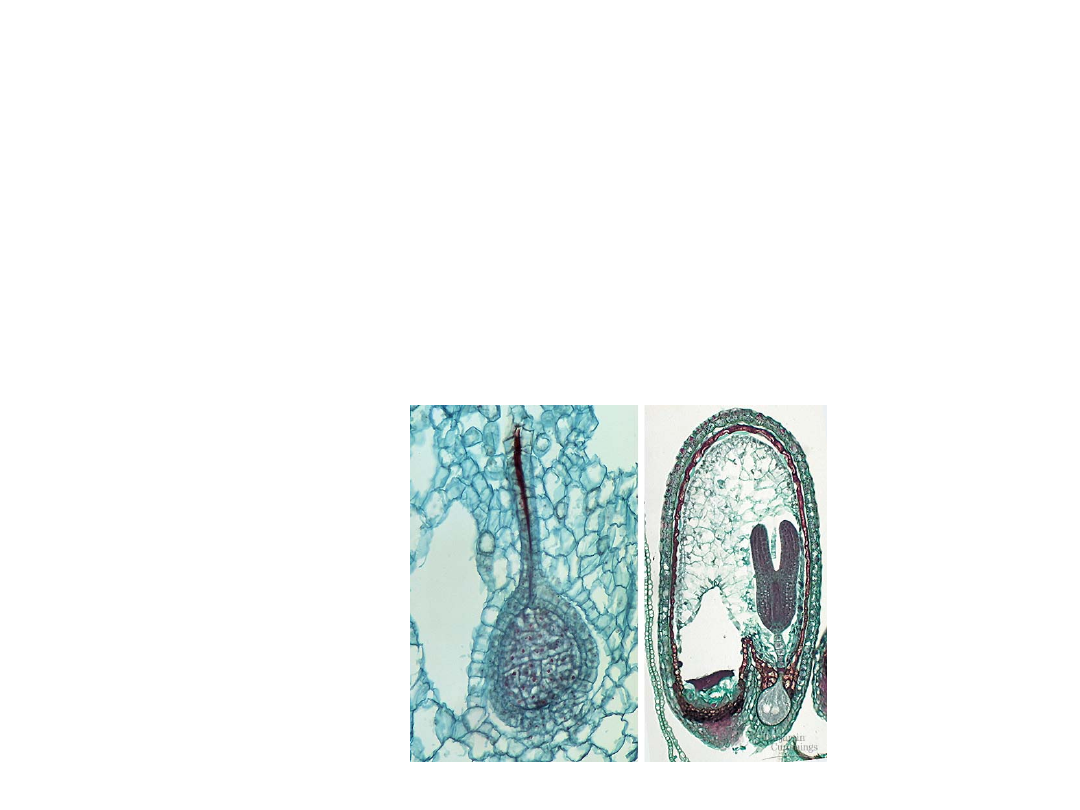
Multicellular plant embryos develop
from zygotes that are retained within
tissues of the female parent.
•
This distinction is the basis for a
term for all land plants,
embryophytes.
Copyright © 2002 Pearson Education, Inc., publishing as Benjamin Cummings
Fig. 29.4

•
The parent provides nutrients, such
as sugars and amino acids, to the
embryo.
–
The embryo has specialized placental
transfer cells that enhance the
transfer of nutrients from parent to
embryo.
–
These are sometimes present in the
adjacent maternal tissues as well.
Copyright © 2002 Pearson Education, Inc., publishing as Benjamin Cummings

•
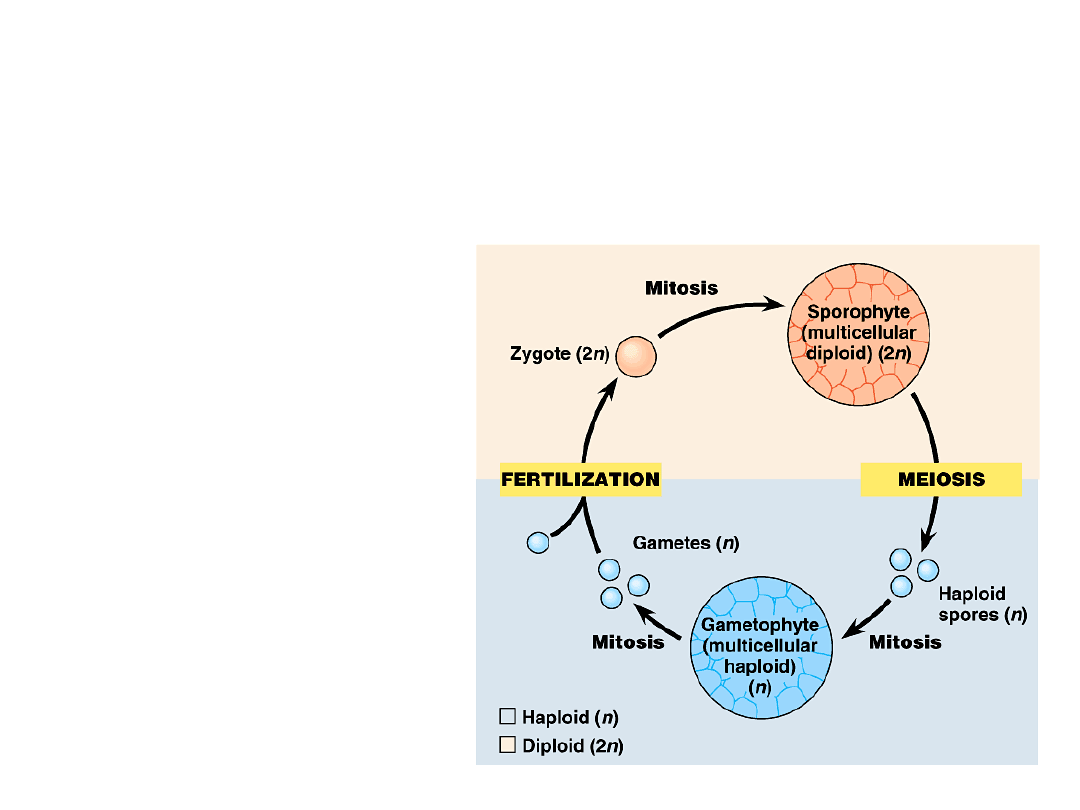
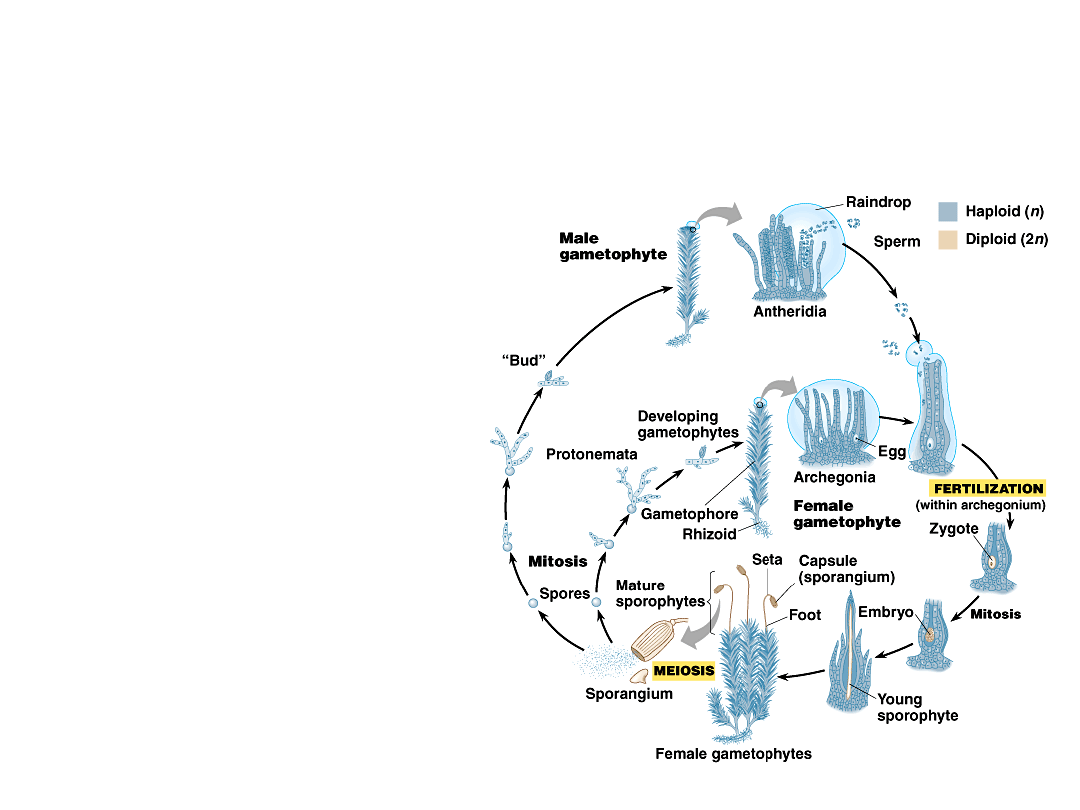
All land plants show alternation of
generations in which two
multicellular body forms alternate.
–
This life cycle also occurs in various
algae.
–
However, alternation of generation does
not occur in the charophyceans, the
algae most closely related to land
plants.
Copyright © 2002 Pearson Education, Inc., publishing as Benjamin Cummings
•
One of the multicellular bodies is
called the gametophyte with
haploid cells.
–
Gametophytes produce gametes, egg
and sperm.
–
Fusion of egg and
sperm during
fertilization
form a diploid
zygote.
Copyright © 2002 Pearson Education, Inc., publishing as Benjamin Cummings
Fig. 29.6

•
Mitotic division of the diploid zygote
produces the other multicellular
body, the sporophyte.
–
Meiosis in a mature sporophyte
produces haploid reproductive cells
called spores.
–
A spore is a reproductive cell that can
develop into a new organism without
fusing with another cell.
•
Mitotic division of a plant spore
produces a new multicellular
gametophyte.
Copyright © 2002 Pearson Education, Inc., publishing as Benjamin Cummings

•
Unlike the life cycles of other sexually
producing organisms, alternation of
generations in land plants (and some
algae) results in both haploid and
diploid stages that exist as
multicellular bodies.
–
For example, humans do not have
alternation of generations because the
only haploid stage in the life cycle is the
gamete, which is single-celled.
•
While the gametophyte and
sporophyte stages of some algae
appear identical macroscopically in
some algae, these two stages are very
different in their morphology in other
algal groups and all land plants.
Copyright © 2002 Pearson Education, Inc., publishing as Benjamin Cummings

•
The relative size and complexity of
the sporophyte and gametophyte
depend on the plant group.
–
In bryophytes, the gametophyte is the
“dominant” generation, larger and more
conspicuous than the sporophyte.
–
In pteridophytes, gymnosperms, and
angiosperms, the sporophyte is the
dominant generation.
•
For example, the fern plant that we typically
see is the diploid sporophyte, while the
gametophyte is a tiny plant on the forest
floor.
Copyright © 2002 Pearson Education, Inc., publishing as Benjamin Cummings
•
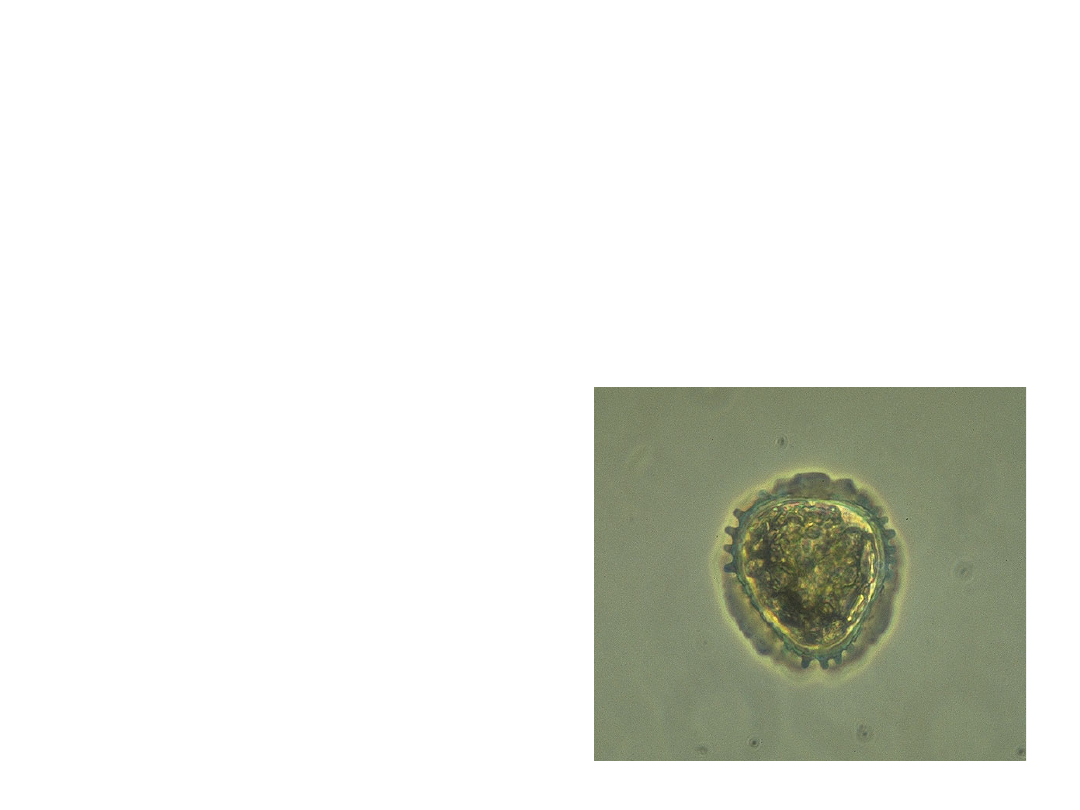
Plant spores are haploid
reproductive cells that grow into a
gametophyte by mitosis.
–
Spores are covered by a polymer called
sporopollenin, the most durable
organic material known.
–
This makes the walls
of spores very tough
and resistant to harsh
environments.
Copyright © 2002 Pearson Education, Inc., publishing as Benjamin Cummings
Fig. 29.7
•
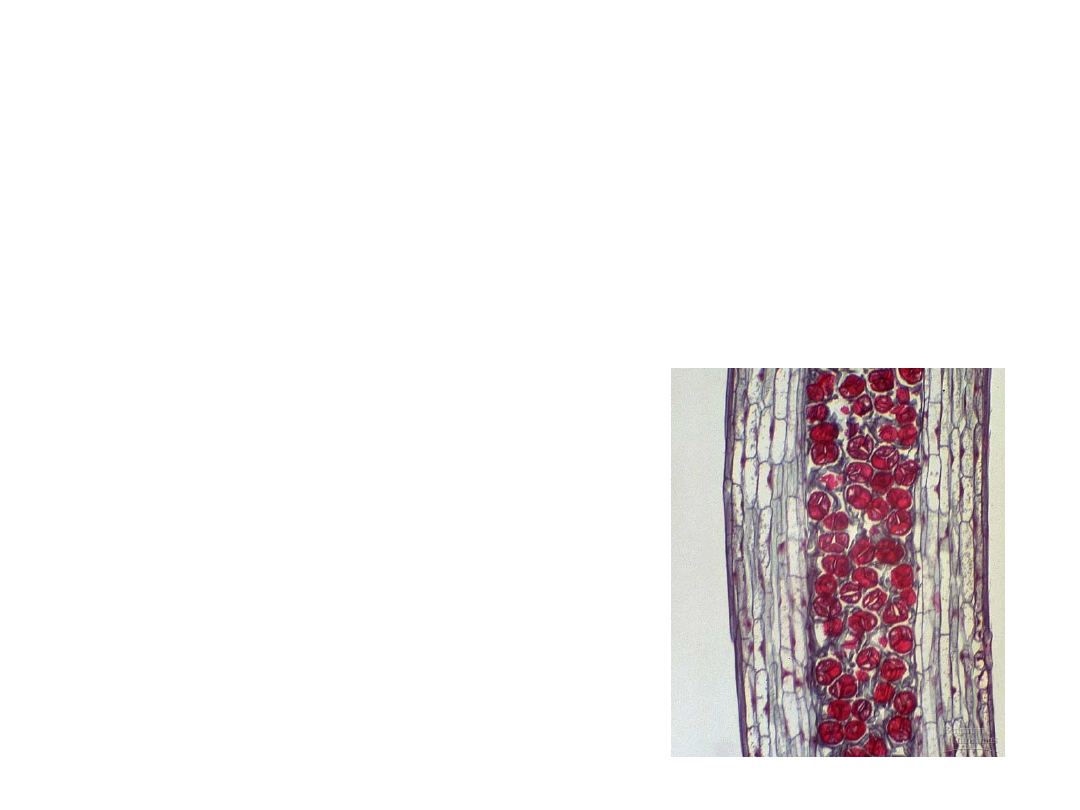
Multicellular organs, called
sporangia, are found on the
sporophyte and produce these
spores.
•
Within a sporangia, diploid spore
mother cells undergo meiosis and
generate haploid spores.
•
The outer tissues of the
sporangium protect the
developing spores until
they are ready to be
released into the air.
Copyright © 2002 Pearson Education, Inc., publishing as Benjamin Cummings
Fig. 29.8
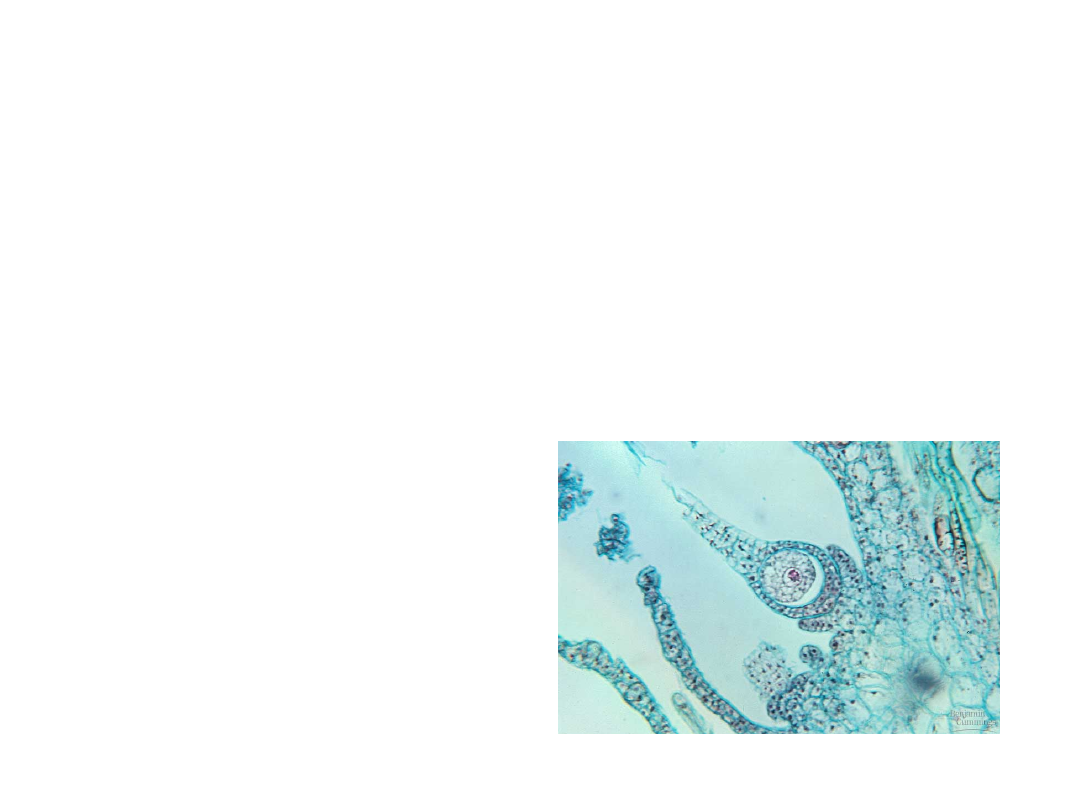
•
The gametophytes of bryophytes,
pteridophytes, and gymnosperms
produce their gametes within
multicellular organs, called
gametangia.
•
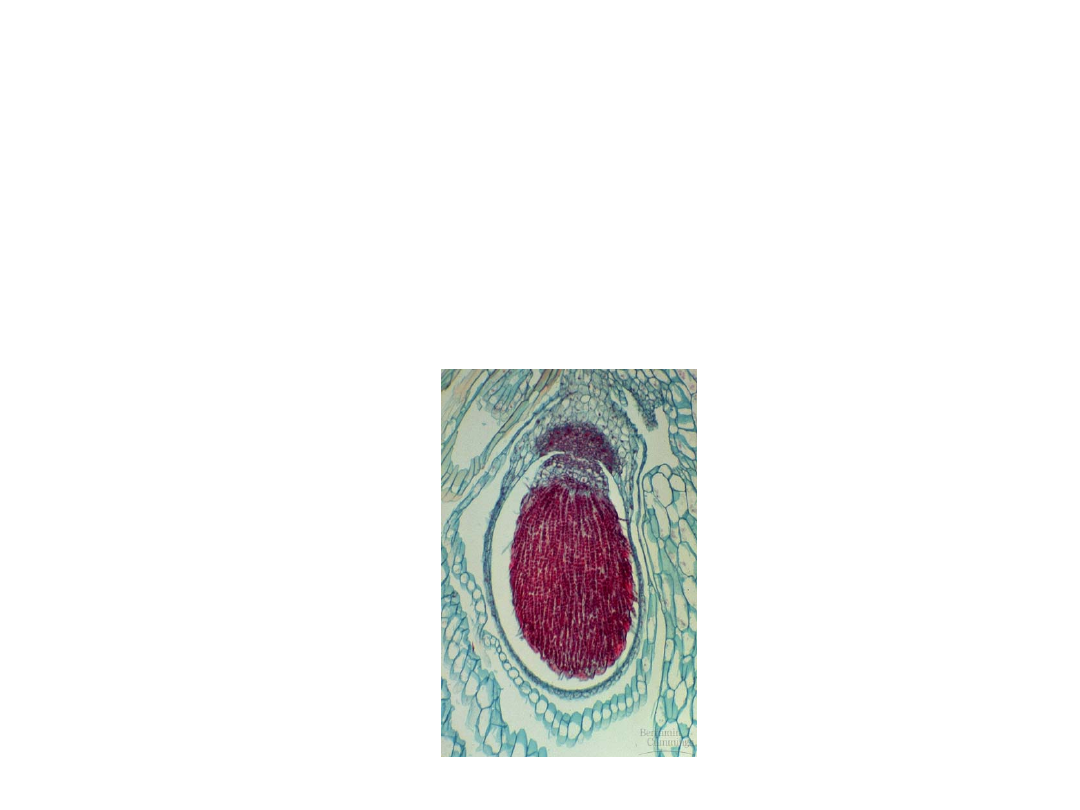
A female gametangium, called an
archegonium, produces a single
egg cell in a vase-shaped organ.
–
The egg is retained
within the base.
Copyright © 2002 Pearson Education, Inc., publishing as Benjamin Cummings
Fig. 29.9a

•
Most land plants have additional
terrestrial adaptations including:
–
adaptations for acquiring, transporting,
and conserving water,
–
adaptations for reducing the harmful
effect of UV radiation,
–
adaptations for repelling terrestrial
herbivores and resisting pathogens.
Copyright © 2002 Pearson Education, Inc., publishing as Benjamin Cummings
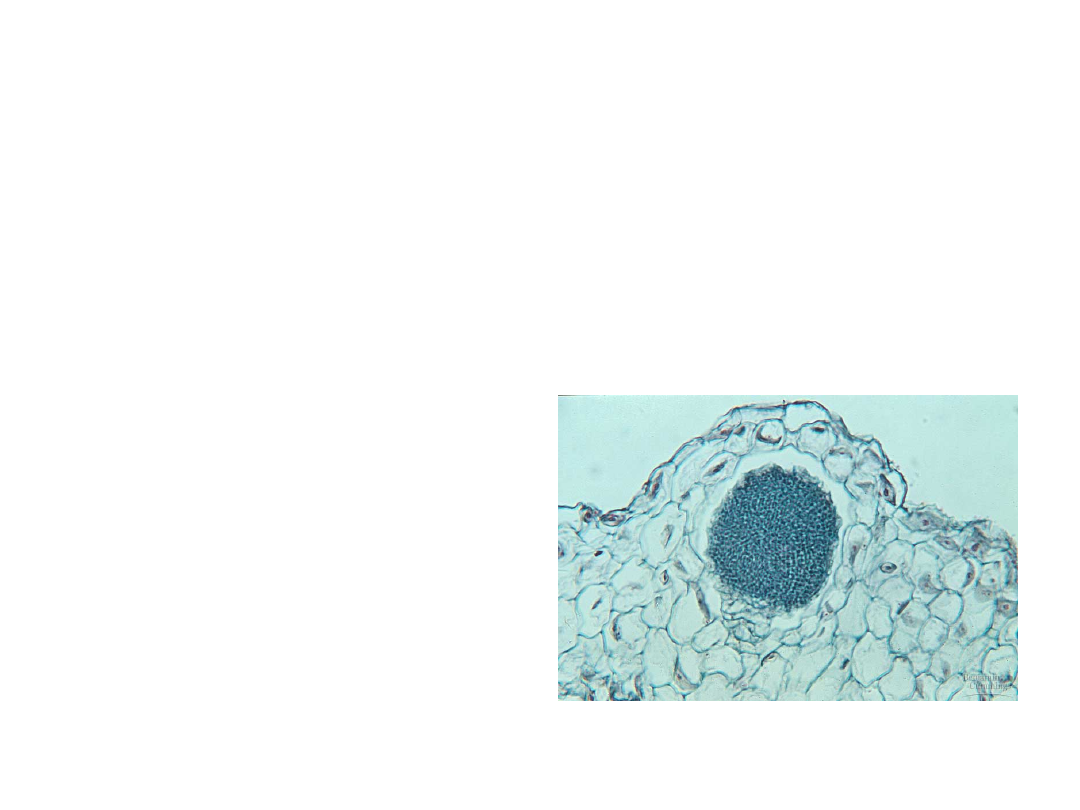
•
Male gametangia, called antheridia,
produce many sperm cells that are
released to the environment.
–
The sperm cells of bryophytes,
pteridiophytes, and some gymnosperms
have flagella and swim to eggs.
•
A sperm fuses with
an egg within an
archegonium and
the zygote then
begins development
into an embryo.
Copyright © 2002 Pearson Education, Inc., publishing as Benjamin Cummings
Fig. 29.9b
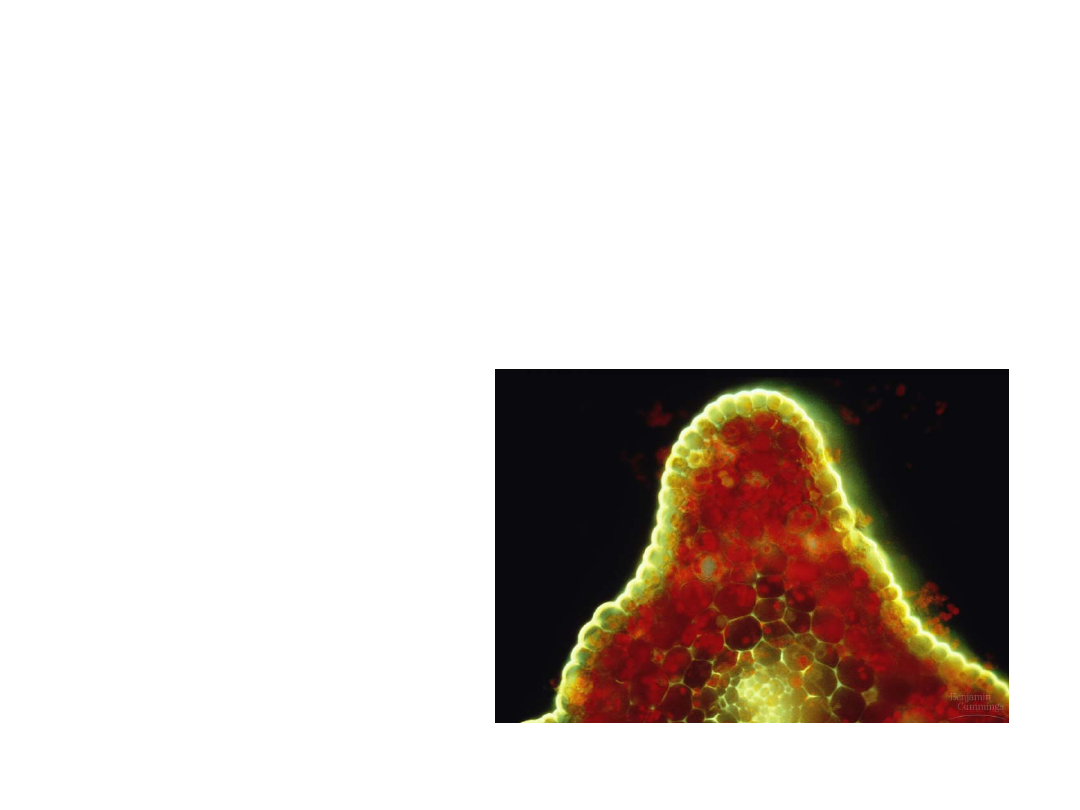
•
In most land plants, the epidermis of
leaves and other aerial parts is
coated with a cuticle of polyesters
and waxes.
–
The cuticle protects the plant from
microbial attack.
–
The wax acts as
waterproofing to
prevent excessive
water loss.
Copyright © 2002 Pearson Education, Inc., publishing as Benjamin Cummings
Fig. 29.10

•
Pores, called stomata, in the
epidermis of leaves and other
photosynthetic organs allow the
exchange of carbon dioxide and
oxygen between the outside air and
the leaf interior.
–
Stomata are also the major sites for
water to exit from leaves via
evaporation.
–
Changes in the shape of the cells
bordering the stomata can close the
pores to minimize water loss in hot, dry
conditions.
Copyright © 2002 Pearson Education, Inc., publishing as Benjamin Cummings

•
Except for bryophytes, land plants
have true roots, stems, and leaves,
which are defined by the presence of
vascular tissues.
–
Vascular tissue transports materials
among these organs.
•
Tube-shaped cells, called xylem,
carry water and minerals up from
roots.
–
When functioning, these cells are dead,
with only their walls providing a system
of microscopic water pipes.
•
Phloem is a living tissue in which
nutrient-conducting cells arranged
into tubes distribute sugars, amino
acids, and other organic products.
Copyright © 2002 Pearson Education, Inc., publishing as Benjamin Cummings

•
Land plants produce many unique
molecules called secondary
compounds.
–
These molecules are products of
“secondary” metabolic pathways.
–
These pathways are side branches off
the primary pathways that produce
lipids, carbohydrates, and other
compounds common to all organisms.
Copyright © 2002 Pearson Education, Inc., publishing as Benjamin Cummings

•
Examples of secondary compounds
in plants include alkaloids, terpenes,
tannins, and phenolics such as
Flavonoids.
–
Various secondary compounds have
bitter tastes, strong odors, or toxic
effects that help defend land plants
against herbivorous animals or
microbial attack.
–
Flavonoids absorb harmful UV
radiation.
–
Other flavonoids are signals for
symbiotic relationships with beneficial
soil microbes.
–
Lignin, a phenolic polymer, hardens the
cell walls of “woody” tissues in vascular
plants, providing support for even the
tallest of trees.
Copyright © 2002 Pearson Education, Inc., publishing as Benjamin Cummings

•
Humans have found many
applications, including medicinal
applications, for secondary
compounds extracted from plants.
–
For example, the alkaloid quinine helps
prevent malaria.
Copyright © 2002 Pearson Education, Inc., publishing as Benjamin Cummings

CHAPTER 29
PLANT DIVERSITY I: HOW
PLANTS COLONIZED LAND
Copyright © 2002 Pearson Education, Inc., publishing as Benjamin Cummings
Section B: The Origin of Land Plants
1. Land plants evolved from charophycean algae over 500
million years ago
2. Alternation of generations in plants may have originated
by delayed meiosis
3. Adaptations to shallow water preadapted plants for
living on land
4. Plant taxonomists are reevaluating the boundaries of
the plant kingdom
5. The plant kingdom is monophyletic

•
Several lines of evidence support the
phylogenetic connection between
land plants and green algae,
especially the charophyceans,
including:
–
homologous chloroplasts,
–
homologous cell walls,
–
homologous peroxisomes,
–
phragmoplasts,
–
homologous sperm
–
molecular systematics.
1. Land plants evolved from
charophycean algae over 500
million years ago
Copyright © 2002 Pearson Education, Inc., publishing as Benjamin Cummings

•
Homologous chloroplasts - The
chloroplasts of land plants are most
similar to the plastids of green algae
and of eulgenoids which acquired
green algae as secondary
endosymbionts.
–
Similarities include the presence of
chlorophyll b and beta-carotene and
thylakoids stacked as grana.
–
Comparisons of chloroplast DNA with
that of algal plastids place the
charophyceans as most closely related
to land plants.
Copyright © 2002 Pearson Education, Inc., publishing as Benjamin Cummings

•
Homologous cellulose walls - In both
land plants and charophycean algae,
cellulose comprises 20-26% of the cell
wall.
–
Also, both share cellulose-manufacturing
rosettes.
•
Homologous peroxisomes - Both land
plants and charophycean algae
package enzymes that minimize the
costs of photorespiration in
peroxisomes.
•
Phagmoplasts - These plate-like
structures occur during cell division
only in land plants and charopyceans.
•
Many plants have flagellated sperm,
which match charophycean sperm
closely in ultrastructure.

•
Molecular systematics - In addition
to similarities derived from
comparisons of chloroplast genes,
analyses of several nuclear genes
also provide evidence of a
charophycean ancestry of plants.
–
In fact, the most complex
charophyceans appear to be the algae
most closely related to land plants.
•
All available evidence upholds the
hypothesis that modern
charophyceans and land plants
evolved from a common ancestor.
Copyright © 2002 Pearson Education, Inc., publishing as Benjamin Cummings
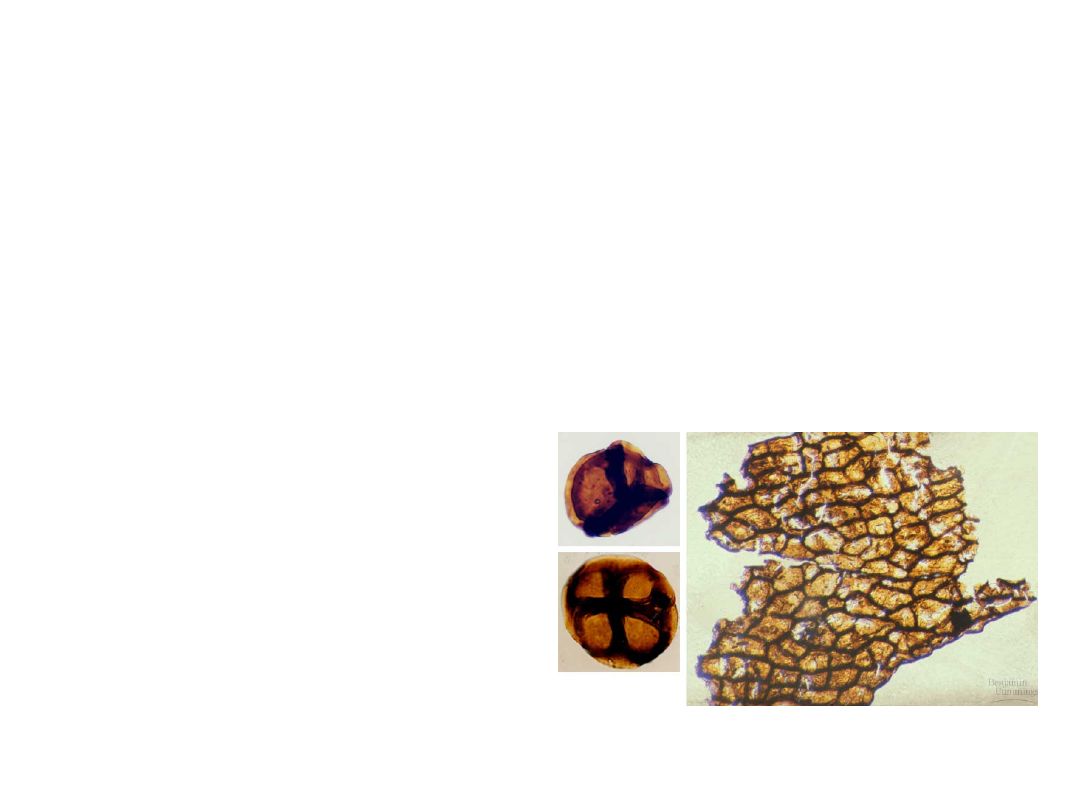
•
The oldest known traces of land plants
are found in mid-Cambrian rocks from
about 550 million years ago.
–
Fossilized plant spores are plentiful in the
mid-Ordovician (460 million years ago)
deposits from around the world.
–
Some of these fossils
show spores in
aggregates of four,
as is found in modern
bryophytes, and the
remains of the
sporophytes that
produce the spores.
Copyright © 2002 Pearson Education, Inc., publishing as Benjamin Cummings
Fig. 29.12

•
The advanced charophyceans Chara
and Coleochaeta are haploid
organisms.
–
They lack a multicellular sporophyte, but
the zygotes are retained and nourished
on the parent.
•
The zygote of a charophyceans
undergoes meiosis to produce haploid
spores, while the zygote of a land
plants undergoes mitosis to produce a
multicellular sporophyte.
–
The sporophyte then produces haploid
spores by meiosis.
2. Alternation of generations in
plants may have originated by
delayed meiosis
Copyright © 2002 Pearson Education, Inc., publishing as Benjamin Cummings
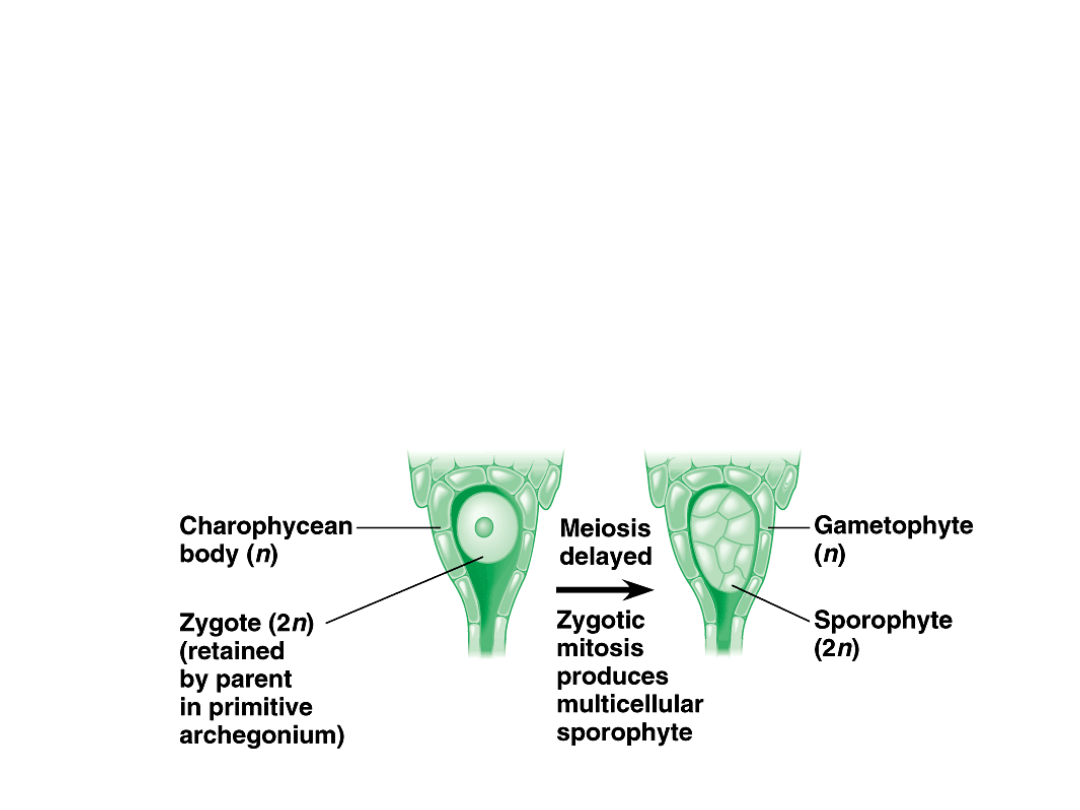
•
A reasonable hypotheses for the
origin of sporophytes is a mutation
that delayed meiosis until one or
more mitotic divisions of the zygote
had occurred.
–
This multicellular, diploid sporophyte
would have more cells available for
meiosis, increasing the number of
spores produced per zygote.
Copyright © 2002 Pearson Education, Inc., publishing as Benjamin Cummings
Fig. 29.13

•
Many charophycean algae inhabit
shallow waters at the edges of
ponds and lakes where they
experience occasional drying.
–
A layer of sporopollenin prevents
exposed charophycean zygotes from
drying out until they are in water
again.
–
This chemical adaptation may have
been the precursor to the tough
spore walls that are so important to
the survival of terrestrial plants.
3. Adaptations to shallow water
preadapted plants for living on
land
Copyright © 2002 Pearson Education, Inc., publishing as Benjamin Cummings

•
The evolutionary novelties of the first
land plants opened an expanse of
terrestrial habitat previously
occupied by only films of bacteria.
–
The new frontier was spacious,
–
the bright sunlight was unfiltered by
water and algae,
–
the atmosphere had an abundance of
carbon dioxide,
–
the soil was rich in mineral nutrients,
–
at least at first, there were relatively
few herbivores or pathogens.
Copyright © 2002 Pearson Education, Inc., publishing as Benjamin Cummings

•
The taxonomy of plants is
experiencing the same turmoil as
other organisms as phylogenetic
analyses revolutionize plant
relationships.
–
The classification of plants is being
reevaluated based on cladistic analysis
of molecular data, morphology, life
cycles, and cell ultrastructure.
–
One international initiative, called “deep
green,” is focusing on the deepest
phylogenetic branching within the plant
kingdom to identify and name the major
plant clades.
4. Plant taxonomists are
reevaluating the boundaries of
the plant kingdom

•
Even “deeper” down the
phylogenetic tree of plants is the
branching of the whole land plant
clade from its algal relatives.
–
Because a phylogenetic tree consists of
clades nested within clades, a debate
about where to draw boundaries in a
hierarchical taxonomy is inevitable.
Copyright © 2002 Pearson Education, Inc., publishing as Benjamin Cummings
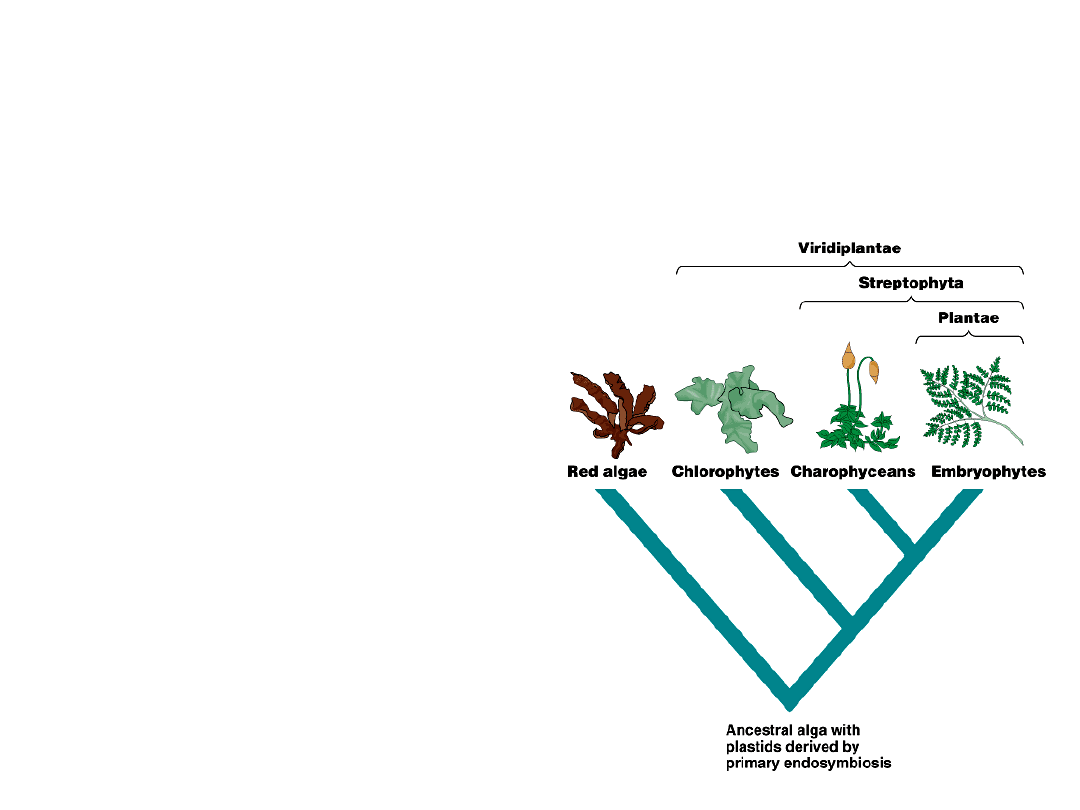
•
The traditional scheme includes only
the bryophytes, pteridophytes,
gymnosperms, and angiosperms in
the kingdom Plantae.
•
Others expand the
boundaries to include
charophyceans and
some relatives in
the kingdom
Streptophyta.
•
Still others include all
chlorophytes in the
kingdom
Viridiplantae.
Fig. 29.14

•
The diversity of modern plants
demonstrates the problems and
opportunities facing organisms that
began living on land.
•
Because the plant kingdom is
monophyletic, the differences in life
cycles among land plants can be
interpreted as special reproductive
adaptations as the various plant
phyla diversified from the first
plants.
5. The plant kingdom is
monophyletic
Copyright © 2002 Pearson Education, Inc., publishing as Benjamin Cummings

CHAPTER 29
PLANT DIVERSITY I: HOW
PLANTS COLONIZED LAND
Copyright © 2002 Pearson Education, Inc., publishing as Benjamin Cummings
Section C1: Bryophytes
1. The three phyla of bryophytes are mosses, liverworts, and
hornworts
2. The gametophyte is the dominant generation in the life
cycles of bryophytes
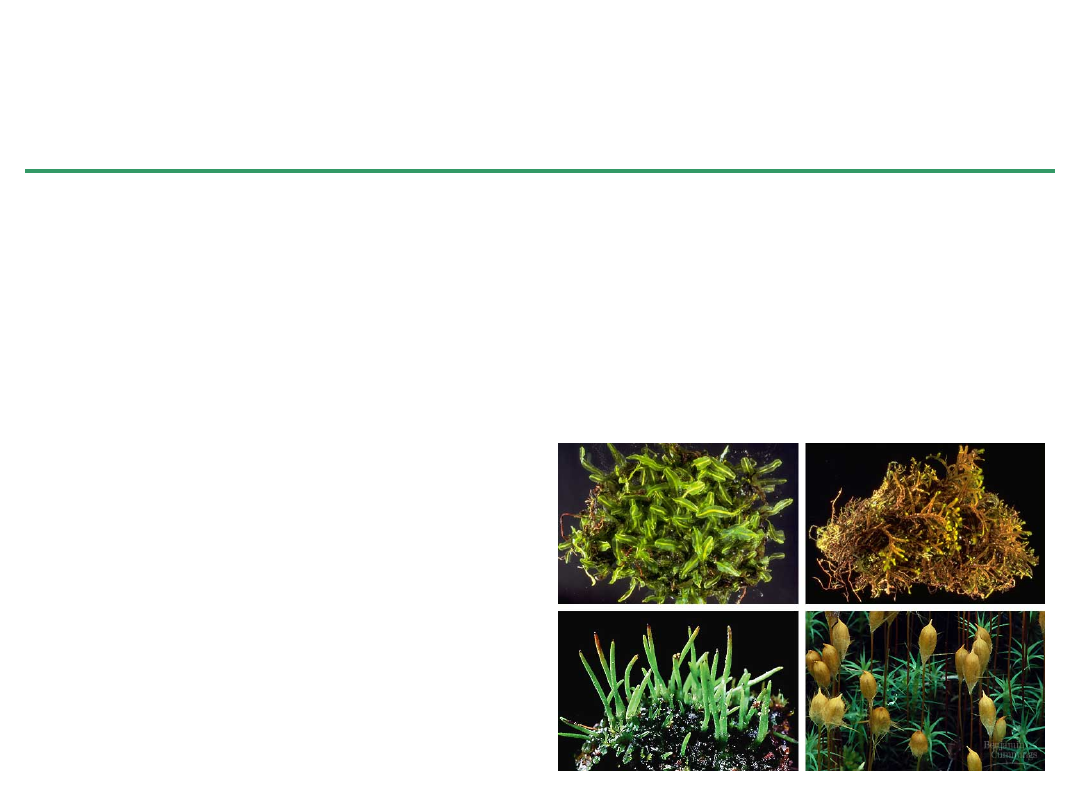
•
Bryophytes are represented by three
phyla:
–
phylum Hepatophyta - liverworts
–
phylum Anthocerophyta - hornworts
–
phylum Bryophyta - mosses
•
Note, the name Bryophyta
refers only to one phylum,
but the informal term
bryophyte refers to all
nonvascular plants.
1. The three phyla of
bryophytes are mosses,
liverworts, and hornworts
Copyright © 2002 Pearson Education, Inc., publishing as Benjamin Cummings
Fig. 29.15

•
The diverse bryophytes are not a
monophyletic group.
–
Several lines of evidence indicate that
these three phyla diverged
independently early in plant evolution,
before the origin of vascular plants.
•
Liverworts and hornworts may be
the most reasonable models of what
early plants were like.
•
Mosses are the bryophytes most
closely related to vascular plants.
Copyright © 2002 Pearson Education, Inc., publishing as Benjamin Cummings

•
In bryophytes, gametophytes are the
most conspicuous, dominant phase of
the life cycle.
–
Sporophytes are smaller and present
only part of the time.
•
Bryophyte spores germinate in
favorable habitats and grow into
gametophytes by mitosis.
•
The gametophyte is a mass of green,
branched, one-cell-thick filaments,
called a protonema.
2. The gametophyte is the
dominant
generation in the life cycles of
bryophytes
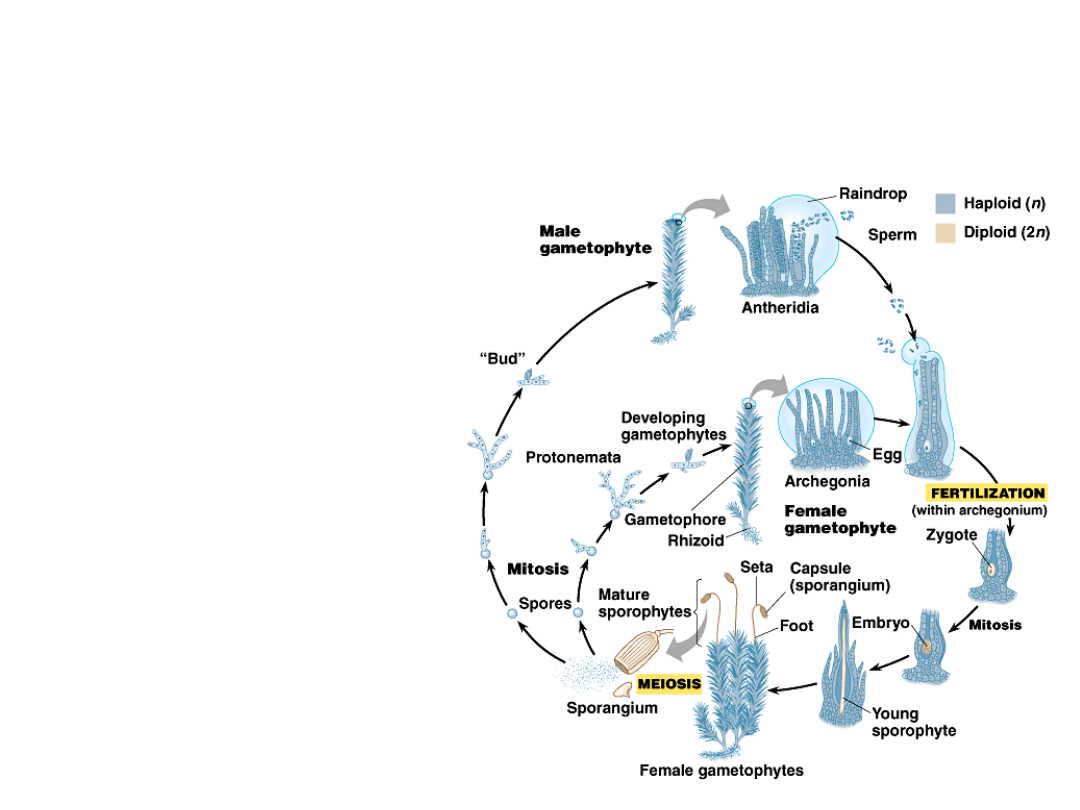
•
When sufficient resources are
available, a protonema produces
meristems.
•
These meristems
generate gamete-
producing
structures, the
gametophores.
Copyright © 2002 Pearson Education, Inc., publishing as Benjamin Cummings
Fig. 29.16

•
Bryophytes are anchored by tubular
cells or filaments of cells, called
rhizoids.
–
Rhizoids are not composed of tissues.
–
They lack specialized conducting cells.
–
They do not play a primary role in water
and mineral absorption.
Copyright © 2002 Pearson Education, Inc., publishing as Benjamin Cummings

•
Bryophyte gametophytes are
generally only one or a few cells thick,
placing all cells close to water and
dissolved minerals.
•
Most bryophytes lack conducting
tissues to distribute water and
organic compounds within the
gametophyte.
–
Those with specialized conducting tissues
lack the lignin coating found in the xylem
of vascular plants.
•
Lacking support tissues, most
bryophytes are only a few centimeters
tall.
•
They are anchored by tubular cells or
filaments of cells, called rhizoids.
Copyright © 2002 Pearson Education, Inc., publishing as Benjamin Cummings
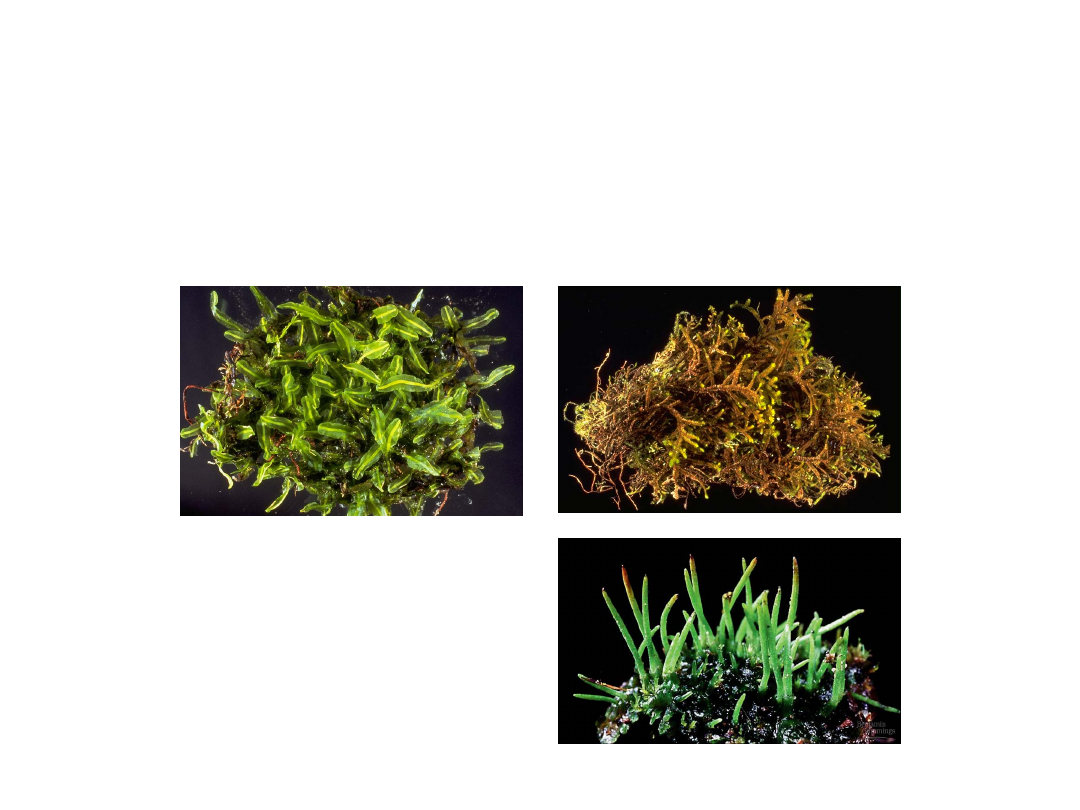
•
The gametophytes of hornworts and
some liverworts are flattened and
grow close to the ground.
Copyright © 2002 Pearson Education, Inc., publishing as Benjamin Cummings
Fig. 29.15a, b, c

•
The gametophytes of mosses and
some liverworts are more “leafy”
because they have stemlike
structures that bear leaflike
appendages.
–
They are not true stems or leaves
because they lack lignin-coated vascular
cells.
•
The “leaves” of most mosses lack a
cuticle and are only once cell thick,
features that enhance water and
mineral absorption from the moist
environment.
Copyright © 2002 Pearson Education, Inc., publishing as Benjamin Cummings
•
Some mosses have more complex
“leaves” with ridges to enhance
absorption of sunlight.
–
These ridges are coated with cuticle.
•
Some mosses have conducting
tissues in their stems and can grow
as tall as 2m.
–
It is not clear if these conducting
tissues in mosses are analogous
or homologous to the xylem and
phloem of vascular plants.
Copyright © 2002 Pearson Education, Inc., publishing as Benjamin Cummings
Fig. 29.15d
•
The mature gametophores of
bryophytes produce gametes in
gametangia.
–
Each vase-shaped
archegonium
produces a single
egg.
–
Elongate antheridia
produce many
flagellated sperm.
Copyright © 2002 Pearson Education, Inc., publishing as Benjamin Cummings
Fig. 29.16

•
When plants are coated with a thin
film of water, sperm swim toward the
archegonia, drawn by chemical
attractants.
–
They swim into the archegonia and
fertilize the eggs.
•
The zygotes and young sporophytes
are retained and nourished by the
parent gametophyte.
–
Layers of placental nutritive cells
transport materials from parent to
embryos.
Copyright © 2002 Pearson Education, Inc., publishing as Benjamin Cummings

CHAPTER 29
PLANT DIVERSITY I: HOW
PLANTS COLONIZED LAND
Copyright © 2002 Pearson Education, Inc., publishing as Benjamin Cummings
Section C2: Bryophytes (continued)
3. Bryophyte sporophytes disperse enormous numbers of
spores
4. Brophytes provide many ecological and economic
benefits

•
While the bryophyte sporophyte does
have photosynthetic plastids, they
cannot live apart from the maternal
gametophyte.
•
A bryophyte sporophyte remains
attached to its parental gametophyte
throughout the sporophyte’s lifetime.
–
It depends on the gametophyte for
sugars, amino acids, minerals and
water.
•
Bryophytes have the smallest and
simplest sporophytes of all modern
plant groups.
3. Bryophyte sporophytes
disperse enormous
numbers of spores
Copyright © 2002 Pearson Education, Inc., publishing as Benjamin Cummings
•
Liverworts have the simplest
sporophytes among the bryophytes.
–
They consist of a short stalk bearing a
round sporangia which contains the
developing spores, and a nutritive foot
embedded in gametophyte tissues.
Copyright © 2002 Pearson Education, Inc., publishing as Benjamin Cummings
Fig. 29.17

•
Hornwort and moss sporophytes are
larger and more complex.
–
Hornwort sporophytes resemble grass
blades and have a cuticle.
–
The sporophytes of hornworts and
mosses have epidermal stomata, like
vascular plants.
–
The sporophytes of mosses start out
green and photosynthetic, but turn tan
or brownish red when ready to release
their spores.
Copyright © 2002 Pearson Education, Inc., publishing as Benjamin Cummings
•
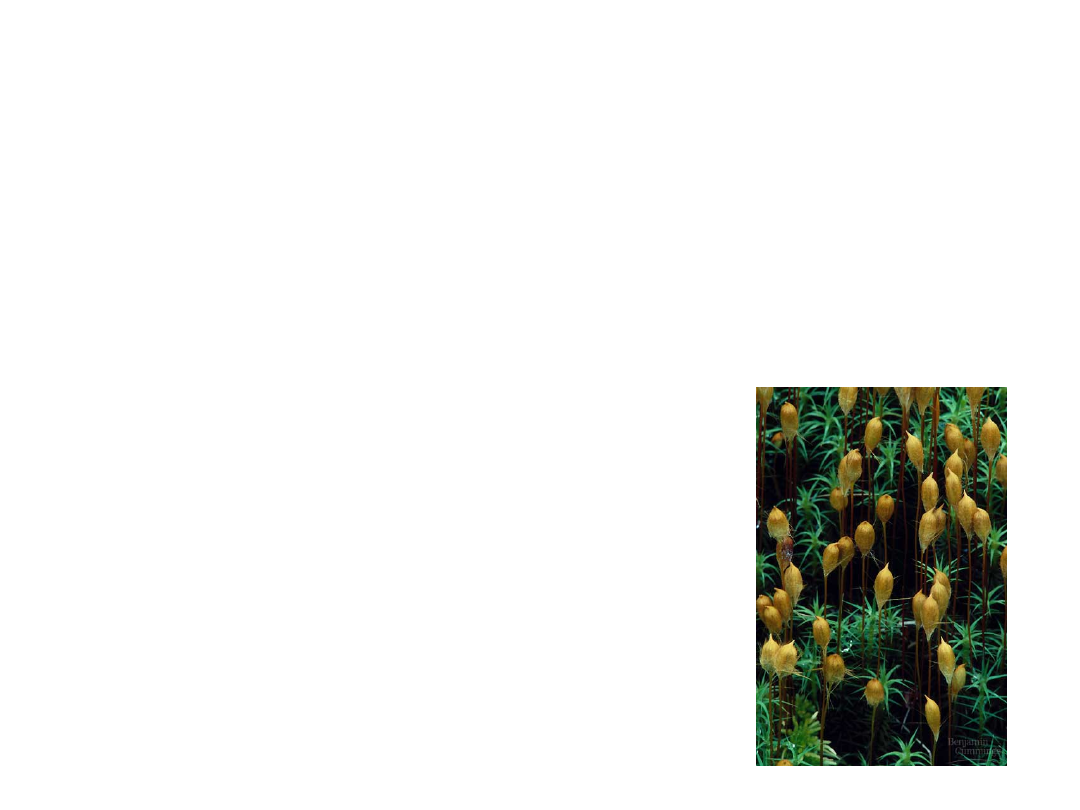
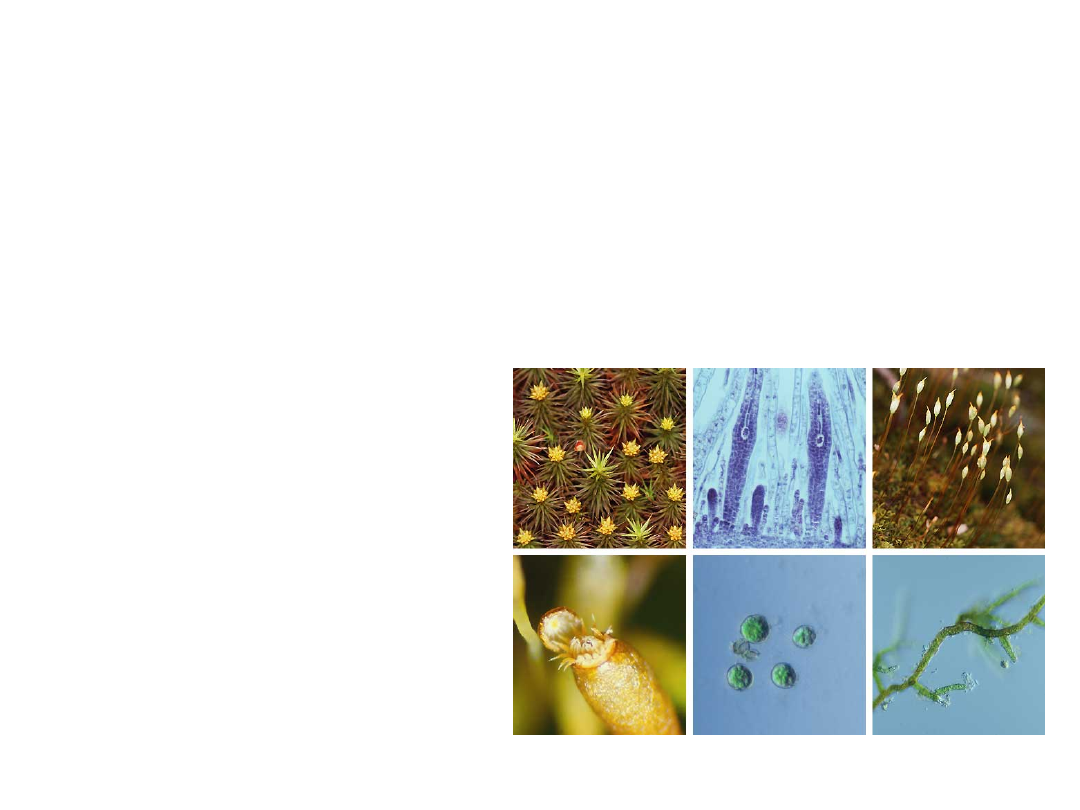
Moss sporophytes consist of a foot,
an elongated stalk (the seta), and a
sporangium (the capsule).
•
The foot gathers nutrients and water from
the parent gametophyte via transfer cells.
•
The stalk conducts these materials to the
capsule.
•
In most mosses,
the seta becomes
elongated, elevating
the capsule and
enhancing spore
dispersal.
Copyright © 2002 Pearson Education, Inc., publishing as Benjamin Cummings
Fig. 29.16x
•
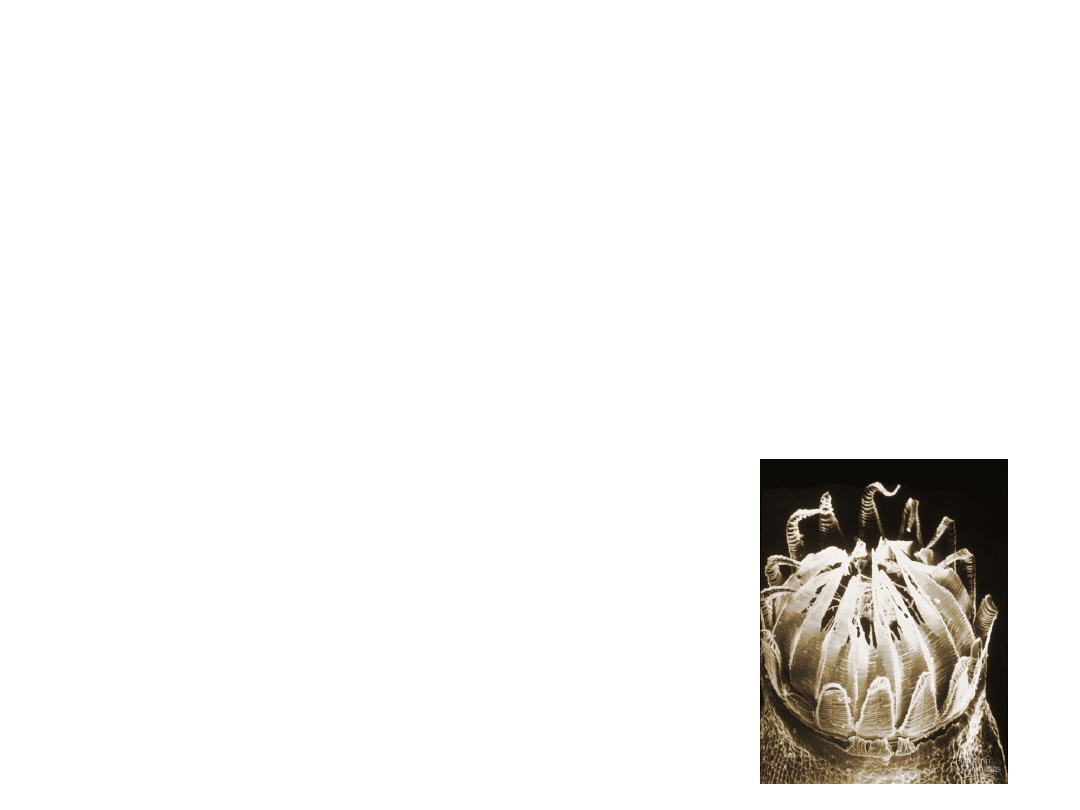
The moss capsule (sporangium) is the
site of meiosis and spore production.
–
One capsule can generate over 50 million
spores.
•
When immature, it is covered by a
protective cap of gametophyte tissue, the
calyptra.
–
This is lost when the capsule is ready to
release spores.
•
The upper part of the capsule,
the peristome, is often
specialized for gradual
spore release.
Copyright © 2002 Pearson Education, Inc., publishing as Benjamin Cummings
Fig. 29.18

•
Wind dispersal of lightweight spores
has distributed bryophytes around
the world.
•
They are common and diverse in
moist forests and wetlands.
•
Some even inhabit extreme
environments like mountaintops,
tundra, and deserts.
–
Mosses can loose most of their body
water and then rehydrate and reactivate
their cells when moisture again
becomes available.
4. Bryophytes provide
many ecological and
economic benefits
Copyright © 2002 Pearson Education, Inc., publishing as Benjamin Cummings
•
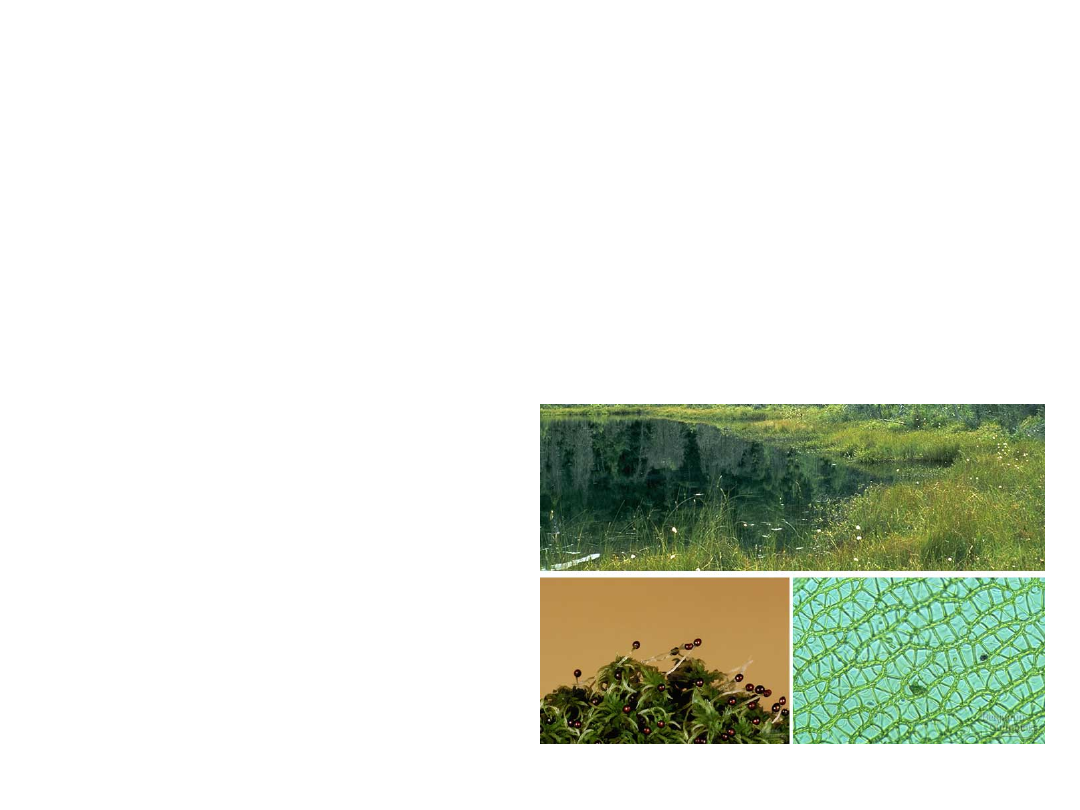
Sphagnum, a wetland moss, is
especially abundant and widespread.
–
It forms extensive deposits of
undecayed organic material, called
peat.
–
Wet regions dominated by Sphagnum or
peat moss are known as peat bogs.
–
Its organic materials
does not decay readily
because of resistant
phenolic compounds
and acidic secretions
that inhibit bacterial
activity.
Copyright © 2002 Pearson Education, Inc., publishing as Benjamin Cummings
Fig. 29.19

•
Peatlands, extensive high-latitude
boreal wetland occupied by
Sphagnum, play an important role as
carbon reservoirs, stabilizing
atmospheric carbon dioxide levels.
•
Sphagnum has been used in the past
as diapers and a natural antiseptic
material for wounds.
•
Today, it is harvested for use as a soil
conditioner and for packing plants
roots because of the water storage
capacity of its large, dead cells.
Copyright © 2002 Pearson Education, Inc., publishing as Benjamin Cummings

•
Bryophytes were probably Earth’s
only plants for the first 100 million
years that terrestrial communities
existed.
–
Then vegetation began to take on a
taller profile with the evolution of
vascular plants.
Copyright © 2002 Pearson Education, Inc., publishing as Benjamin Cummings

CHAPTER 29
PLANT DIVERSITY I: HOW
PLANTS COLONIZED LAND
Copyright © 2002 Pearson Education, Inc., publishing as Benjamin Cummings
Section D: The Origin of Vascular Plants
1. Additional terrestrial adaptations evolved as vascular
plants descended from mosslike ancestors
2. A diversity of vascular plants evolved over 400 million
years ago

•
Modern vascular plants
(pteridophytes, gymnosperms, and
angiosperms) have food transport
tissues (phloem) and water
conducting tissues (xylem) with
lignified cells.
•
In vascular plants the branched
sporophyte is dominant and is
independent of the parent
gametophyte.
•
The first vascular plants,
pteridophytes, were seedless.
Introduction
Copyright © 2002 Pearson Education, Inc., publishing as Benjamin Cummings

•
Vascular plants built on the tissue-
producing meristems, gametangia,
embryos and sporophytes,
stomata, cuticles, and
sproropollenin-walled spores that
they inherited from mosslike
ancestors.
1. Additional terrestrial
adaptations evolved as
vascular plants descended
from mosslike ancestors
Copyright © 2002 Pearson Education, Inc., publishing as Benjamin Cummings

•
The protracheophyte
polysporangiophytes demonstrate
the first steps in the evolution of
sporophytes.
–
These terms mean “before vascular
plants” and “plants producing many
sporangia,” respectively.
•
Like bryophytes, they lacked lignified
vascular tissues, but the branched
sporophytes were independent of the
gametophyte.
–
The branches provide more complex
bodies and enable plants to produce
many more spores.
–
Sporophytes and gametophytes were
about equal in size.
Copyright © 2002 Pearson Education, Inc., publishing as Benjamin Cummings
•
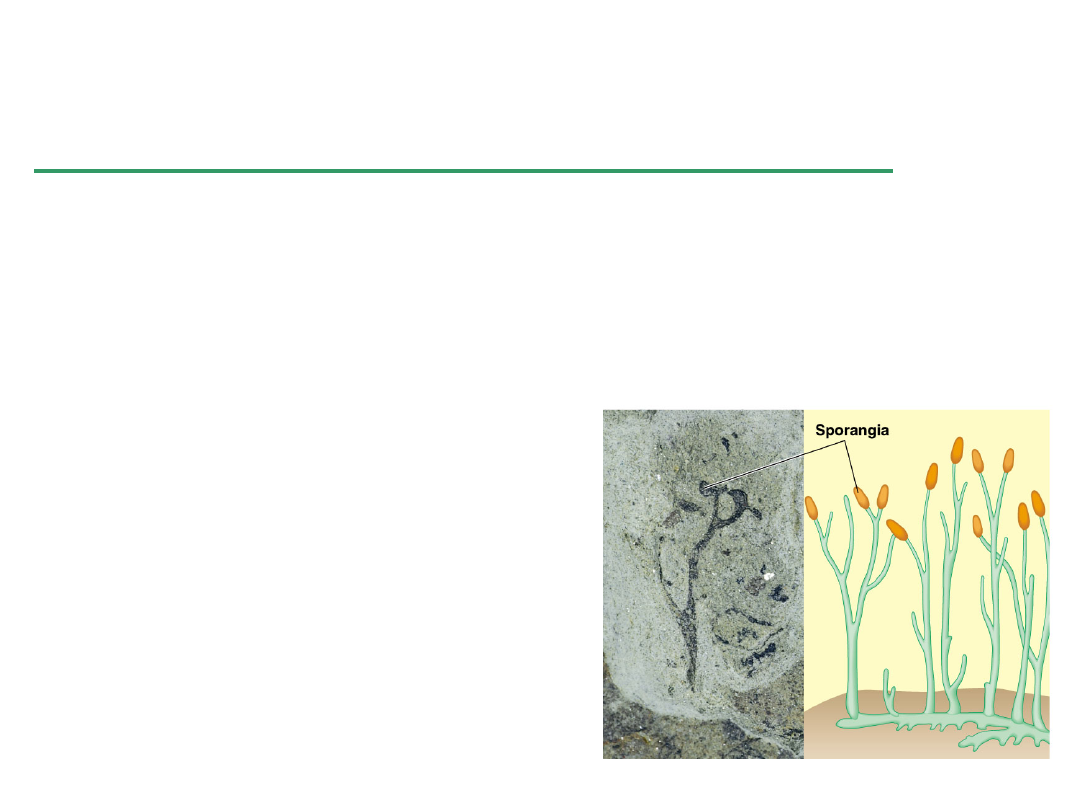
Cooksonia, an extinct plant over 400
million years old, is the earliest
known vascular plant.
–
Its fossils are found in Europe and
North America.
–
The branched sporophytes
were up to 50cm tall with
small lignified cells, much
like the xylem cells of
modern pteridophytes.
2. A diversity of vascular plants
evolved over 400 million years
ago
Copyright © 2002 Pearson Education, Inc., publishing as Benjamin Cummings
Fig. 29.20

CHAPTER 29
PLANT DIVERSITY I: HOW
PLANTS COLONIZED LAND
Copyright © 2002 Pearson Education, Inc., publishing as Benjamin Cummings
Section E: Pteridophytes: Seedless
Vascular Plants
1. Pteridophytes provide clues to the evolution of roots
and leaves
2. A sporophyte-dominant life cycle evolved in seedless
vascular plants
3. Lycophyta and Pterophyta are the two phyla of modern
seedless vascular plants
4. Seedless vascular plants formed vast “coal forests”
during the Carboniferous period
•
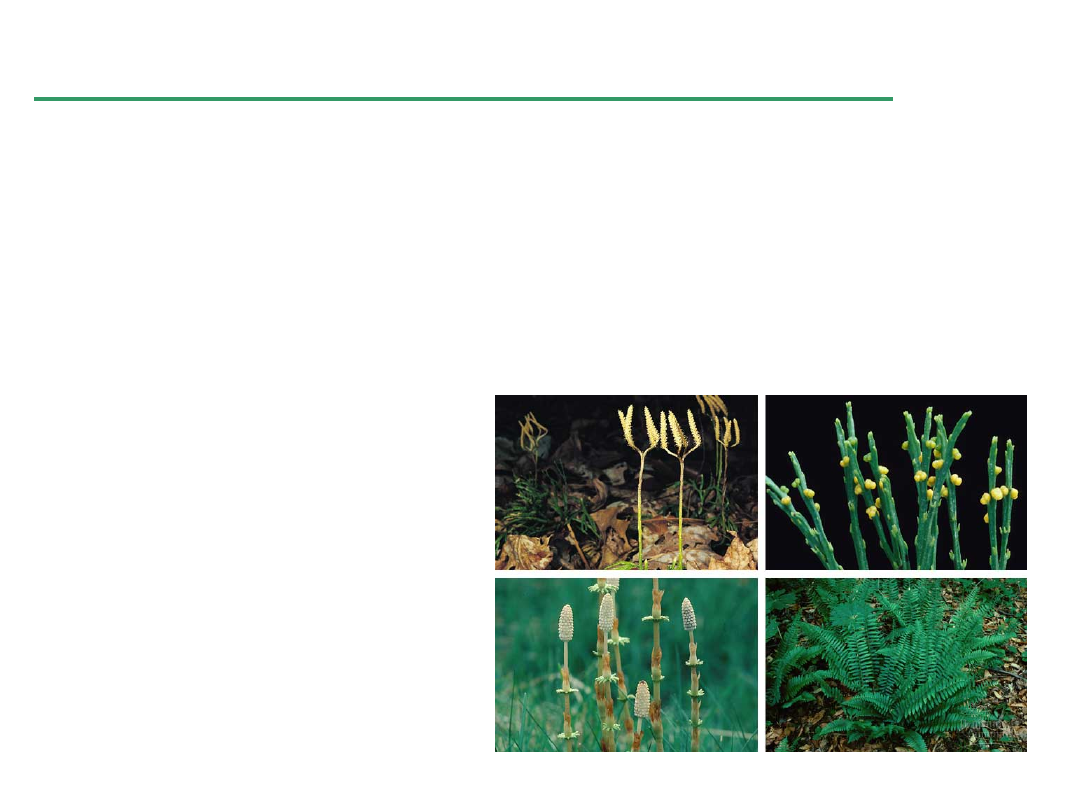
The seedless vascular plants, the
pteridophytes consists of two
modern phyla:
–
phylum Lycophyta - lycophytes
–
phylum Pterophyta - ferns, whisk ferns,
and horsetails
•
These phyla probably
evolved from different
ancestors among the
early vascular plants.
Introduction
Copyright © 2002 Pearson Education, Inc., publishing as Benjamin Cummings
Fig. 29.21

•
Most pteridophytes have true
roots with lignified vascular tissue.
•
These roots appear to have
evolved from the lowermost,
subterranean portions of stems of
ancient vascular plants.
–
It is still uncertain if the roots of seed
plants arose independently or are
homologous to pteridophyte roots.
1. Pteridophytes provide clues
to the evolution of roots and
leaves
Copyright © 2002 Pearson Education, Inc., publishing as Benjamin Cummings
•
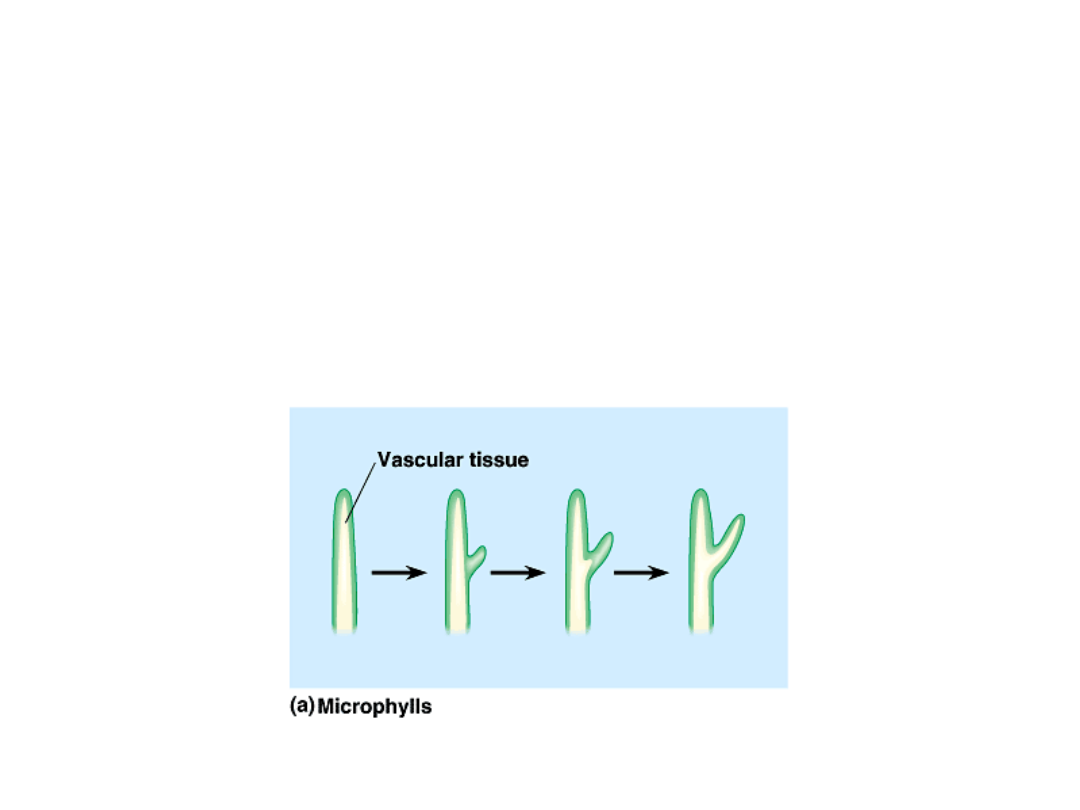
Lycophytes have small leaves with
only a single unbranched vein.
–
These leaves, called microphylls,
probably evolved from tissue flaps on
the surface of stems.
–
Vascular tissue then grew into the flaps.
Copyright © 2002 Pearson Education, Inc., publishing as Benjamin Cummings
Fig. 29.24a

•
In contrast, the leaves of other
vascular plants, megaphylls, are
much larger and have highly-
branched vascular system.
–
A branched vascular system can deliver
water and minerals to the expanded
leaf.
–
It can also export larger quantities of
sugars from the leaf.
–
This supports more photosynthetic
activity.
Copyright © 2002 Pearson Education, Inc., publishing as Benjamin Cummings
•
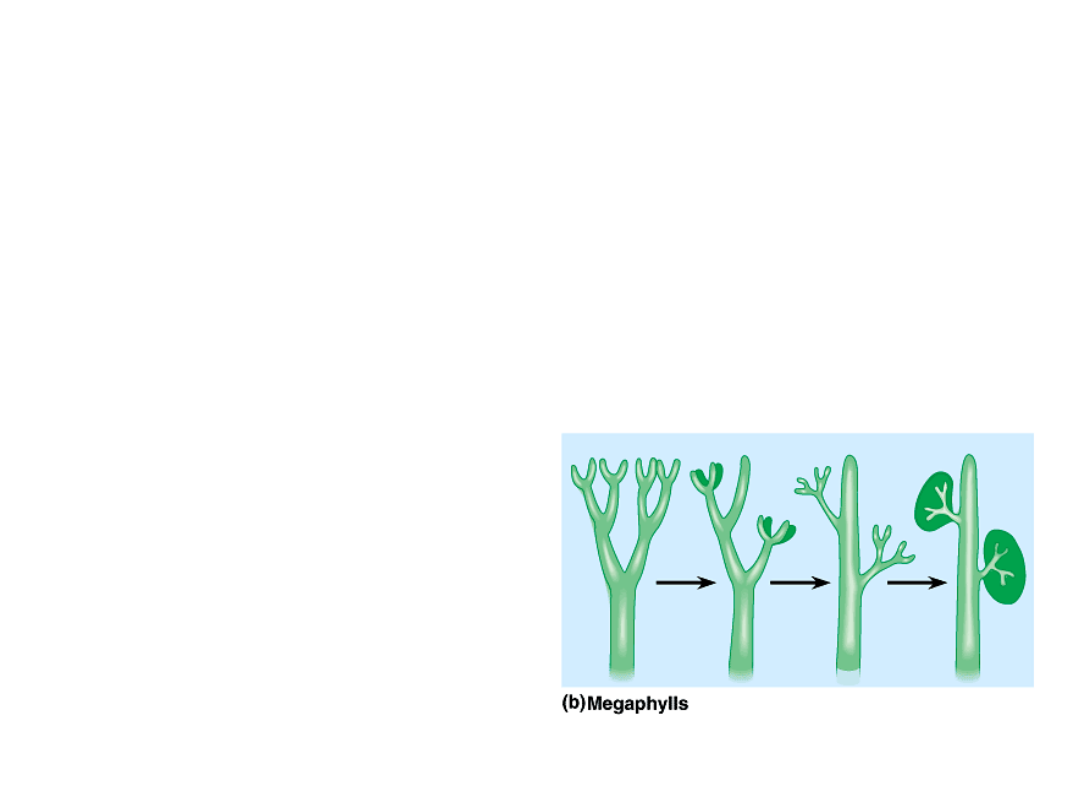
The fossil evidence suggests that
megaphylls evolved from a series of
branches lying close together on a
stem.
–
One hypothesis proposes that
megaphylls evolved when the branch
system flattened and a tissue webbing
developed joining the branches.
–
Under this hypothesis,
true, branched stems
preceded the origin of
large leaves and roots.
Copyright © 2002 Pearson Education, Inc., publishing as Benjamin Cummings
Fig. 29.22b

•
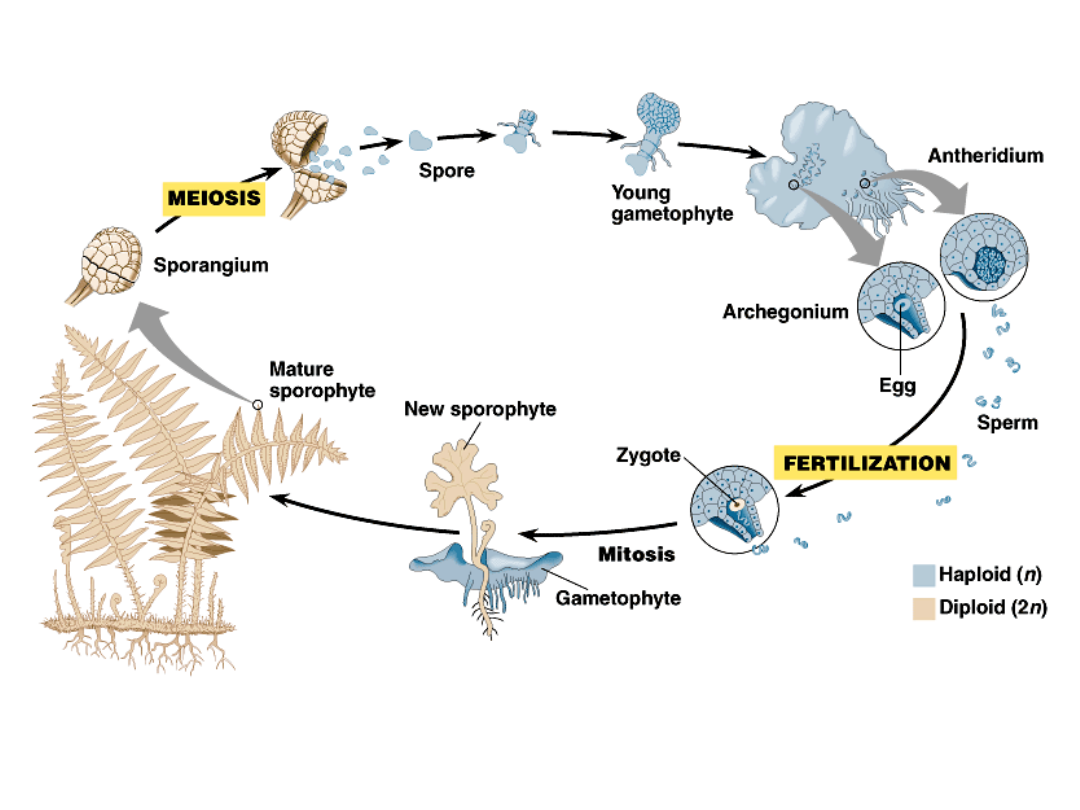
From the early vascular plants to
the modern vascular plants, the
sporophyte generation is the
larger and more complex plant.
–
For example, the leafy fern plants
that you are familiar with are
sporophytes.
–
The gametophytes are tiny plants that
grow on or just below the soil
surface.
–
This reduction in the size of the
gametophytes is even more extreme
in seed plants.
2. A sporophyte-dominant life
cycle evolved in seedless
vascular plants

•
Ferns also demonstrate a key
variation among vascular plants: the
distinction between homosporous
and heterosporous plants.
•
A homosporous sporophyte
produces a single type of spore.
–
This spore develops into a bisexual
gametophyte with both archegonia
(female sex organs) and antheridia
(male sex organs).
Copyright © 2002 Pearson Education, Inc., publishing as Benjamin Cummings
Copyright © 2002 Pearson Education, Inc., publishing as Benjamin Cummings
Fig. 29.23

•
A heterosporous sporophyte
produces two kinds of spores.
–
Megaspores develop into females
gametophytes.
–
Microspores develop into male
gametophytes.
•
Regardless of origin, the flagellated
sperm cells of ferns, other seedless
vascular plants, and even some seed
plants must swim in a film of water
to reach eggs.
•
Because of this, seedless vascular
plants are most common in relatively
damp habitats.
Copyright © 2002 Pearson Education, Inc., publishing as Benjamin Cummings

•
Phylum Lycophyta - Modern
lycophytes are relicts of a far more
eminent past.
–
By the Carboniferous period, lycophytes
existed as either small, herbaceous
plants or as giant woody trees with
diameters of over 2m and heights over
40m.
–
The giant lycophytes thrived in warm,
moist swamps, but became extinct when
the climate became cooler and drier.
–
The smaller lycophytes survived and are
represented by about 1,000 species
today.
3. Lycophyta and Pterophyta
are the two phyla of modern
seedless vascular plants

•
Modern lycophytes include tropical
species that grow on trees as
epiphytes, using the trees as
substrates, not as hosts.
•
Others grow on the forest floor in
temperate regions.
•
The lycophyte sporophytes are
characterized by upright stems with
many microphylls and horizontal
stems along the ground surface.
•
Roots extend down from the
horizontal stems.
Copyright © 2002 Pearson Education, Inc., publishing as Benjamin Cummings

•
Specialized leaves (sporophylls)
bear sporangia clustered to form
club-shaped cones.
•
Spores are released in clouds from
the sporophylls.
•
They develop into tiny, inconspicuous
haploid gametophytes.
–
These may be either green aboveground
plants or nonphotosynthetic
underground plants that are nurtured
by symbiotic fungi.
Copyright © 2002 Pearson Education, Inc., publishing as Benjamin Cummings
•
The phylum Pterophyta consists of
ferns and their relatives.
•
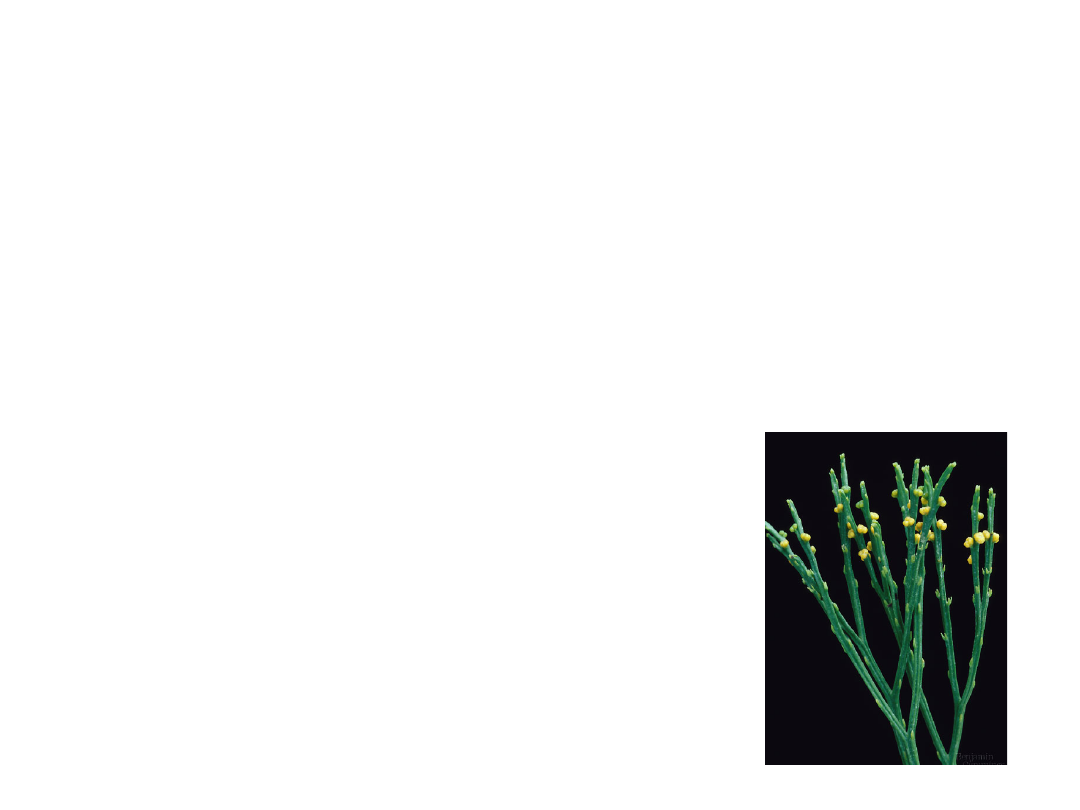
Psilophytes, the whisk ferns, used
to be considered a “living fossil”.
•
Their dichotomous branching and
lack of true leaves and roots seemed
similar to early vascular plants.
•
However, comparisons of DNA
sequences and ultrastructural
details, indicate that the lack
of true roots and leaves evolved
secondarily.
Copyright © 2002 Pearson Education, Inc., publishing as Benjamin Cummings
Fig. 29.21b
•
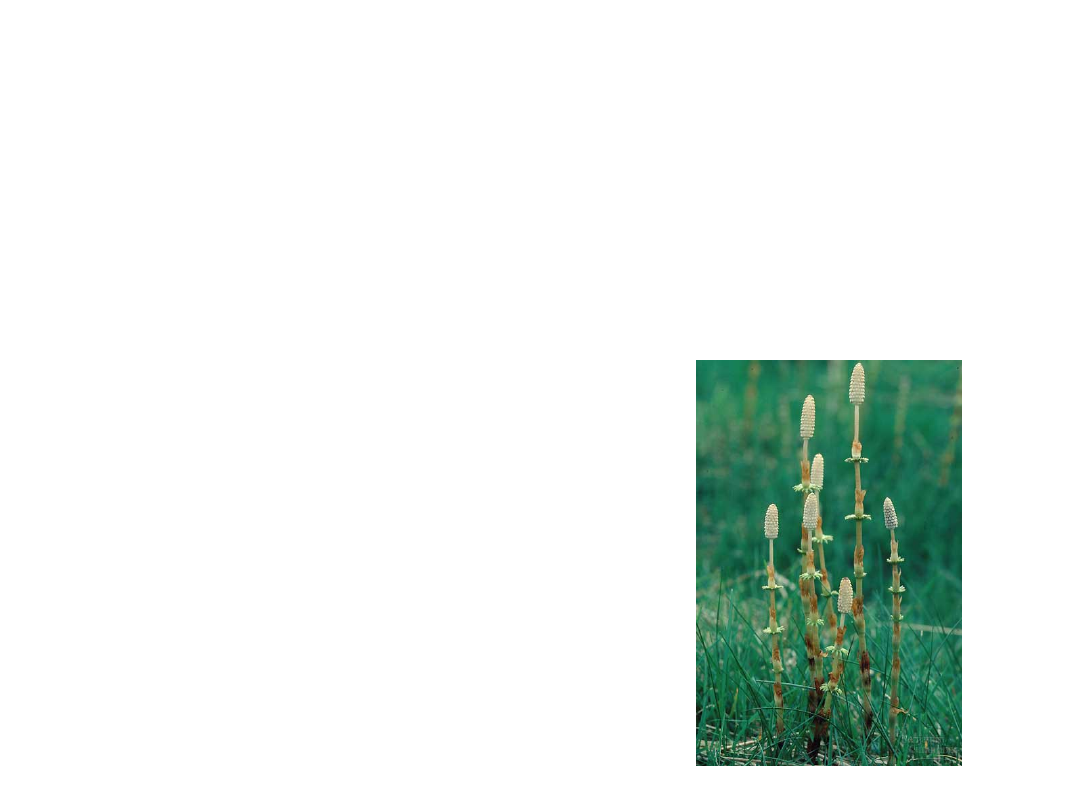
Sphenophytes are commonly called
horsetails because of their often
brushy appearance.
•
During the Carboniferous,
sphenophytes grew to 15m, but
today they survive as about 15
species in a single wide-spread
genus, Equisetum.
•
Horsetails are often found in
marshy habitats and along
streams and sandy roadways.
Copyright © 2002 Pearson Education, Inc., publishing as Benjamin Cummings
Fig. 29.21c

•
Roots develop from horizontal
rhizomes that extend along the
ground.
•
Upright green stems, the major site
of photosynthesis, also produce tiny
leaves or branches at joints.
–
Horsetail stems have a large air canal to
allow movement of oxygen into the
rhizomes and roots, which are often in
low-oxygen soils.
•
Reproductive stems produce cones
at their tips.
–
These cones consist of clusters of
sporophylls.
•
Sporophylls produce sporangia with haploid
spores.
Copyright © 2002 Pearson Education, Inc., publishing as Benjamin Cummings
•
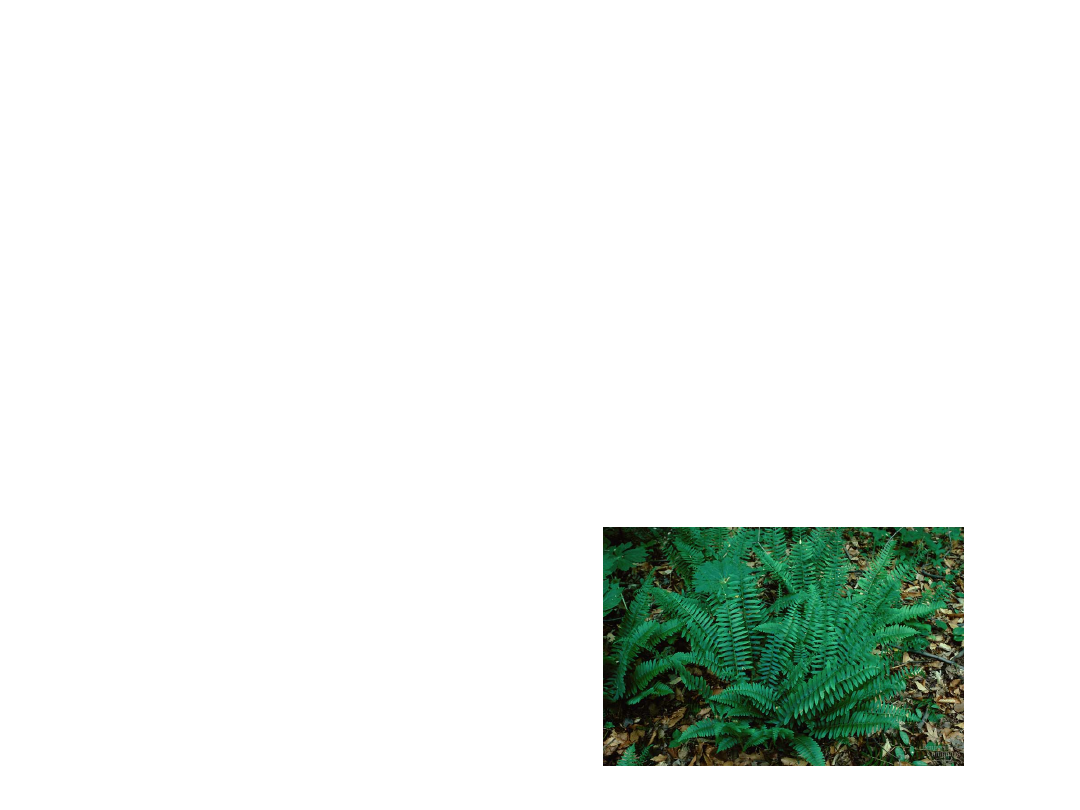
Ferns first appeared in the Devonian
and have radiated extensively until
there are over 12,000 species today.
–
Ferns are most diverse in the tropics
but are also found in temperate forests
and even arid habitats.
•
Ferns often have horizontal rhizomes
from which grow large megaphyllous
leaves with an extensively branched
vascular system.
–
Fern leaves or fronds
may be divided into
many leaflets.
Copyright © 2002 Pearson Education, Inc., publishing as Benjamin Cummings
Fig. 29.21d
•
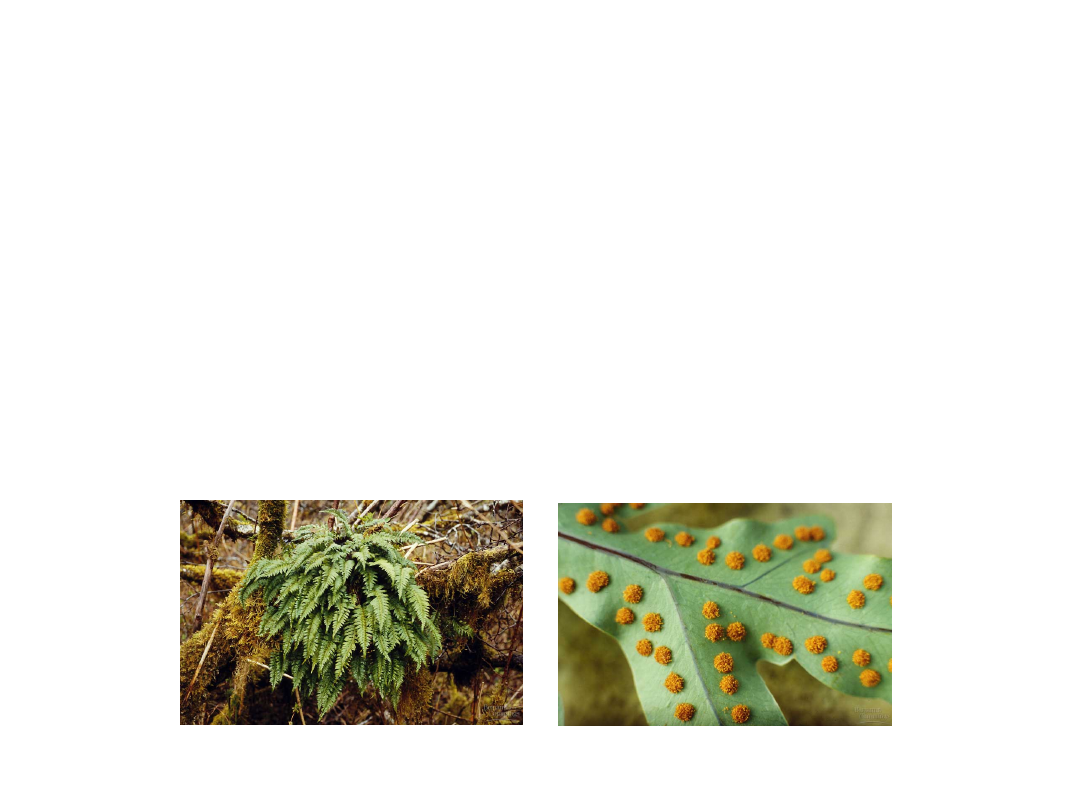
Ferns produce clusters of sporangia,
called sori, on the back of green
leaves (sporophylls) or on special,
non-green leaves.
–
Sori can be arranged in various patterns
that are useful in fern identification.
–
Most fern sporangia have springlike
devices that catapult spores several
meters from the parent plant.
–
Spores can be carried great distances by
the wind.
Copyright © 2002 Pearson Education, Inc., publishing as Benjamin Cummings
Fig. 29.24a, b
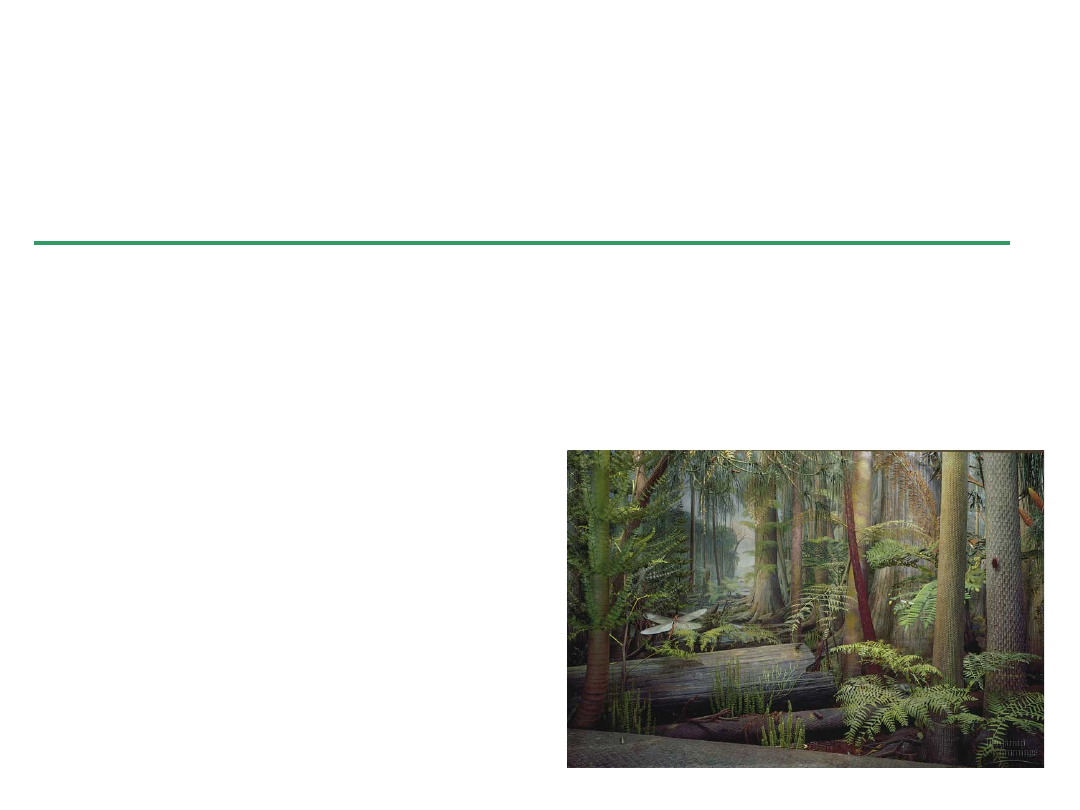
•
The phyla Lycophyta and Pterophyta
formed forests during the
Carboniferous period about 290-360
million years ago.
•
These plants left not
only living represent-
atives and fossils, but
also fossil fuel in the
form of coal.
4. Seedless vascular
plants formed vast “coal
forests” during the
Carboniferous period
Copyright © 2002 Pearson Education, Inc., publishing as Benjamin Cummings
Fig. 29.25

•
While coal formed during several
geologic periods, the most extensive
beds of coal were deposited during
the Carboniferous period, when most
of the continents were flooded by
shallow swamps.
•
Dead plants did not completely decay
in the stagnant waters, but
accumulated as peat.
•
The swamps and their organic
matter were later covered by marine
sediments.
•
Heat and pressure gradually
converted peat to coal, a “fossil
fuel”.
Copyright © 2002 Pearson Education, Inc., publishing as Benjamin Cummings

•
Coal powered the Industrial
Revolution but has been partially
replaced by oil and gas in more
recent times.
–
Today, as nonrenewable oil and gas
supplies are depleted, some politicians
have advocated are resurgence in coal
use.
–
However, burning more coal will
contribute to the buildup of carbon
dioxide and other “greenhouse gases”
that contribute to global warming.
–
Energy conservation and the
development of alternative energy
sources seem more prudent.
Copyright © 2002 Pearson Education, Inc., publishing as Benjamin Cummings
Document Outline
- Chapter 29 Lecture
- Slide 2
- Introduction
- 1. Evolutionary adaptations to terrestrial living characterize the four main groups of land plants
- Slide 5
- Slide 6
- Slide 7
- Slide 8
- Slide 9
- Slide 10
- 2. Charophyceans are the green algae most closely related to land plants
- Slide 12
- Slide 13
- Slide 14
- Slide 15
- 3. Several terrestrial adaptations distinguish land plants from charophycean algae
- Slide 17
- Slide 18
- Slide 19
- Slide 20
- Slide 21
- Slide 22
- Slide 23
- Slide 24
- Slide 25
- Slide 26
- Slide 27
- Slide 28
- Slide 29
- Slide 30
- Slide 31
- Slide 32
- Slide 33
- Slide 34
- Slide 35
- Slide 36
- Slide 37
- 1. Land plants evolved from charophycean algae over 500 million years ago
- Slide 39
- Slide 40
- Slide 41
- Slide 42
- 2. Alternation of generations in plants may have originated by delayed meiosis
- Slide 44
- 3. Adaptations to shallow water preadapted plants for living on land
- Slide 46
- 4. Plant taxonomists are reevaluating the boundaries of the plant kingdom
- Slide 48
- Slide 49
- 5. The plant kingdom is monophyletic
- Slide 51
- 1. The three phyla of bryophytes are mosses, liverworts, and hornworts
- Slide 53
- 2. The gametophyte is the dominant generation in the life cycles of bryophytes
- Slide 55
- Slide 56
- Slide 57
- Slide 58
- Slide 59
- Slide 60
- Slide 61
- Slide 62
- Slide 63
- 3. Bryophyte sporophytes disperse enormous numbers of spores
- Slide 65
- Slide 66
- Slide 67
- Slide 68
- 4. Bryophytes provide many ecological and economic benefits
- Slide 70
- Slide 71
- Slide 72
- Slide 73
- Slide 74
- 1. Additional terrestrial adaptations evolved as vascular plants descended from mosslike ancestors
- Slide 76
- 2. A diversity of vascular plants evolved over 400 million years ago
- Slide 78
- Slide 79
- 1. Pteridophytes provide clues to the evolution of roots and leaves
- Slide 81
- Slide 82
- Slide 83
- 2. A sporophyte-dominant life cycle evolved in seedless vascular plants
- Slide 85
- Slide 86
- Slide 87
- 3. Lycophyta and Pterophyta are the two phyla of modern seedless vascular plants
- Slide 89
- Slide 90
- Slide 91
- Slide 92
- Slide 93
- Slide 94
- Slide 95
- 4. Seedless vascular plants formed vast “coal forests” during the Carboniferous period
- Slide 97
- Slide 98
Wyszukiwarka
Podobne podstrony:
4 Plant Structure, Growth and Development, before ppt
plant cloning
Molecular evolution of FOXP2, Nature
#07 Flue Gas Plant
No 004 CCS Demonstration Plant fully integrated into new unit 858 MW
Blanchard European Unemployment The Evolution of Facts and Ideas
Plant Display
deklaracja 3rok, UG, 5. semestr, Evolution
Religion & Evolution
Dugatkin The Imitation?ctor Evolution?yond the Gene
Sansewieria gwinejska, wężownica łac Sansevieria trifasciata ang Snake plant
Ściągi, Angielski 4, air pollution zanieczyszczenie powietrza alternative energy energia alternatywn
fitopatologia, Microarrays are one of the new emerging methods in plant virology currently being dev
Heavy metal toxicity,effect on plant growth and metal uptake
Dynamics of Evolutionary Stasis
więcej podobnych podstron