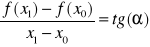
Wyrażenie to iloraz przyrostu wartości funkcji przez przyrost argumentu

f(x)=x2, x0=1
x1=3
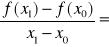
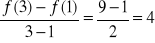
x1=-2
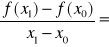
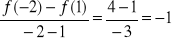
f(x1)
f(x0) f(x1)-f( x0
α x0 x1
x1- x0=h
x1= x0+h
Sieczna wykresu funkcji
f(x)=x2, x0=2, x0=1, x0=-2
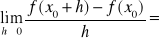
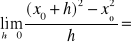
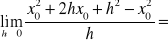
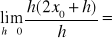
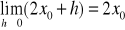
Jeżeli funkcja 2x jest granicą ilorazu roznicowego funkcji f(x)=x2, w punkcie x0=2 to nazywamy ją pochodną funkcji f'(x)=2x
f'(2)=2x=2*2=4
f'(1)=2x=2*1=2
f'(-2)=2x=-2*2=-4
f'(x)=2x , x∈R to pochodna funkcji f(x)=x2
Funkcja Pochodna
f(x)=c f'(x)=0
f(x)=x f'(x)=1
y= x2 y'=2x
y= x3 y'=3 x2
y= xn y'=n xn-1
y= 1/x y'=-1/ x2
y= √x y'=1/2√x
y= sin x y'=cos x
y= cos x y'=-sin x
y= tg x y'=1/cos2 x
y=ctg x y'=-1/sin2 x
Pochodna sumy i iloczynu
[f(x) + g(x) ]'=f'(x)+ g'(x)
np. y=-5x2
y'=(-5x2)'=-5(x2)'=-5*2x=-10x
y=x4- 5x2+6
y'=(x4)'-10x+(6)'=4 x3-10x [f(x)* g(x) ]'=f'(x) g(x)+ f(x) g'(x)
np. y= x3* x3
y'=( x3* x3)=( x3)' x3+ x3( x3)'= y'=3 x2 x3+ x33 x2=3 x5+3 x5=6 x5
y=sin x*cos x
y'=(sin x cos x)'=
Pochodna ilorazu funkcji
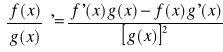
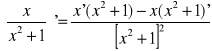
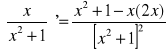
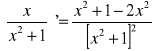
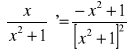
np.
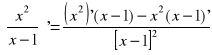
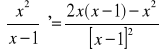
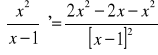
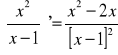
np.
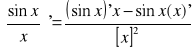
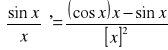
np.
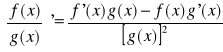
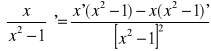
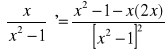
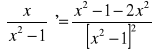
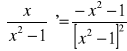
Wyszukiwarka
Podobne podstrony:
Algebra i Analiza Matematyczna, Pochodne funkcji
,analiza matematyczna 1, POCHODNE FUNKCJI
Matematyka Pochodne funkcji Calki ZAD 4
Matematyka Pochodne funkcji Calki ZAD 5
Matematyka Pochodne funkcji Calki ZAD 2
Matematyka Pochodne funkcji Calki ZAD 1
Matematyka Pochodne funkcji Calki ZAD 4
Matematyka Pochodne funkcji Calki ZAD 2
Matematyka Pochodne funkcji Calki ZAD 5
Matematyka Pochodne funkcji Calki ZAD 1
2010 12 10(2) granica funkcji, ciągłość funkji, różniczkowalność, iloraz różnicowy
Wybrane zastosowania pochodnej funkcji, Analiza matematyczna
sciaga iloraz roznicowy funkcji w punkcie, STUDIA, WIL PK, Metody numeryczne
Pochodna funkcji, Analiza matematyczna
Granica i pochodne funkcji, Ekonomia- studia, matematyka
Analiza matematyczna Wykłady, POCHODNE FUNKCJI
więcej podobnych podstron