
Revision 0 January 2019
MASTER’S GUIDE
TO
COMPLIANCE IN
PANAMA
24-Hour Emergency Assistance
+507 6673 6081
2019
!!! NOTICE !!!
This is a practical guide for Masters to assist in compliance with Panamanian laws and
regulations. It is not an “official” document and is not required for compliance. It is intended
to provide useful direction for Masters. It does not replace any document required by law or
regulation. It does not replace direction
provided by the ship’s owner/manager/operator.
This guide may be modified as required to be in harmony with policies of the
owner/manager/operator. Questions about this guide should be directed to
O’Brien’s at

Master’s Guide to Compliance in Panama 2019 Revision 0
© O’Brien’s 2019 |
24 HR: +1 281 606 4818
TABLE OF CONTENTS
............................................................................................... 3
S.A. ........................................................... 4
...................................................................................... 5
..................................................................... 8
................................................................................ 8
.................................................................................. 9
........................................................................................ 9
......................................................... 10
Master’s Guide to Compliance in Panama 2019 Revision 0
© O’Brien’s 2019 |
24 HR: +1 281 606 4818
I
NTRODUCTION
The Master of any vessel making a call to Panama faces several regulatory issues that are specific to
Panama especially when transiting the Panama Canal. Your vessel is enrolled with OOPS (Panama) S.A.
to ensure compliance with Panamanian regulations. This guide is intended to help the Master effectively
and efficiently face these issues. Use of the directions in the guide will allow OOPS (Panama) to better
serve you.
Information designed to save you time and effort is present in
red italics.
E
MERGENCY
R
ESPONSE
N
OTIFICATION
In the event of an emergency in Canal waters, you must:
1
Notify the Panama Canal Authority (ACP) through the Panama Canal Pilot on board or
In the event that the vessel does not have a Panama Canal Pilot on board, notifications must
be made to the ACP by contacting the Marine Traffic Control Center by phone at
+507 272 4201 / +507 272 4202 or via VHF radio channels 12 or 16.
2
Contact the PCSOPEP Authorized Person (AP).
See PCSOPEP Emergency Contacts for Panama Canal Waters (page 14) or below.
W
HEN TO
R
EPORT
The Master is obligated to report to the ACP whenever there is an Actual or
Probable Discharge of oil or other pollutants.
1
The Master should report even when no Actual Discharge of oil has occurred (i.e. if there is a
probability or significant possibility that a discharge could occur).
If there is any doubt about whether there is a real threat of discharge, the Master should report.
2
In all cases, the Authorities should be kept informed by the Master as to how the situation is
progressing and advised when all threat of pollution has passed.
M
ASTER
’
S
A
CTIONS
Upon discovery of one of the above situations you should proceed as follows:
1
See to the immediate safety of the crew and vessel
2
Make an initial assessment of the situation
3
Notify the Panama Canal Authority (ACP)
4
Notify the Authorized Person (AP): 24 hr:
+507 6673 6081
5
Contact the owner/operator (manager).
W
HAT THE
AP
N
EEDS TO
K
NOW
In order to provide the help you need, the AP will ask you for some important
information. This includes:
1
Vessel name, country of registry, IMO number, and Panama Canal Ship Identification Number (SIN)
2
Time and date of Incident
3
Nature of the incident and location
4
Planned Transit Route
5
Identification of Spilled Product and any Toxic or Explosive Hazard
6
Estimated Quantity / Volume of Spilled Product
7
Size and Appearance of the Slick
8
Weather Conditions
9
Actions Taken or Planned by On-scene Personnel and Vessel
10 Injuries or Deaths and damage to the vessel
11 Any other information or concerns you may have
Master’s Guide to Compliance in Panama 2019 Revision 0
© O’Brien’s 2019 |
24 HR: +1 281 606 4818
R
ESPONSE
A
REAS
R
ESPONSE
A
REAS
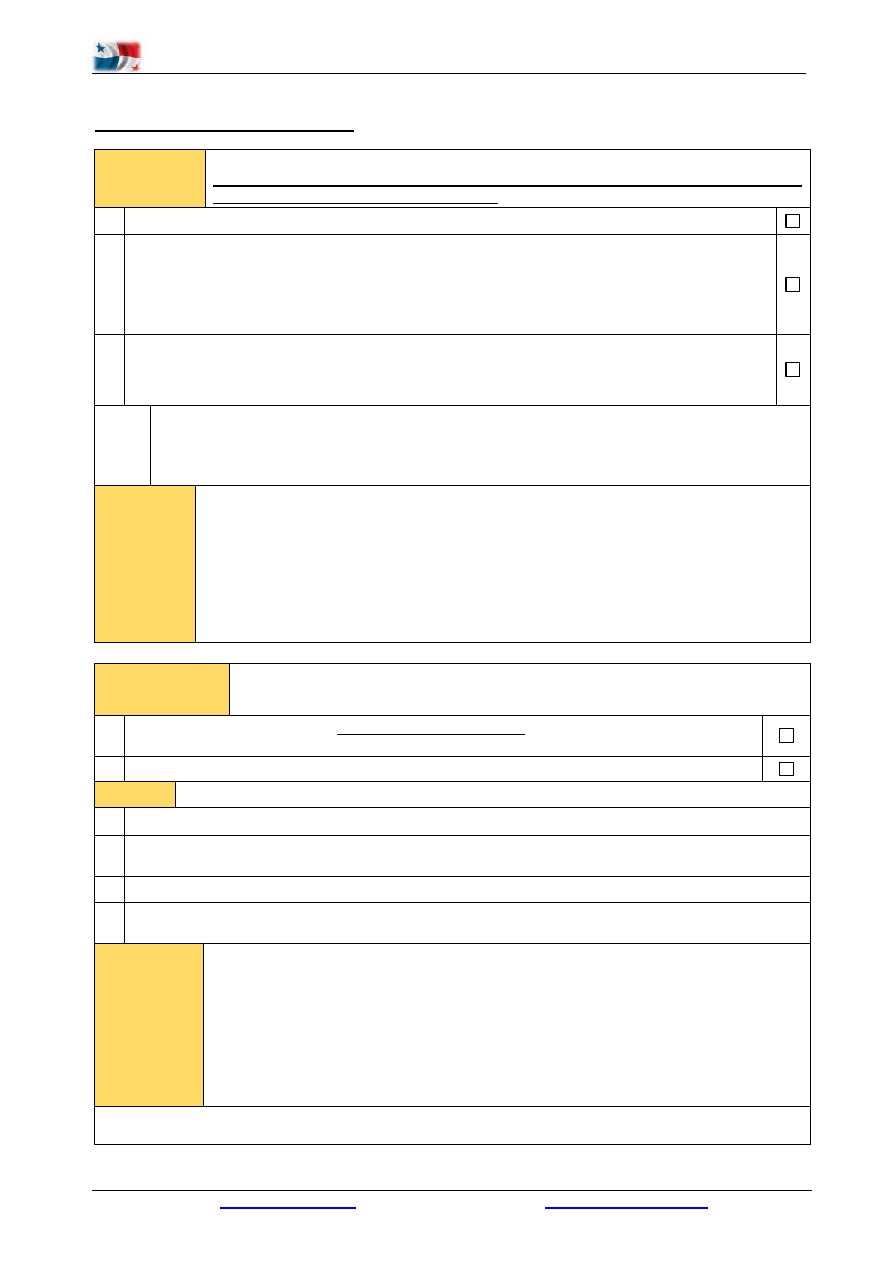
For the purpose of oil spill response planning, Panama Canal waters have been
divided into three (3) main response areas:
1
The Pacific Anchorage and Channel Area
2
The Lake Areas
3
The Atlantic Anchorage and Channel Area
Both the Pacific and Atlantic areas are saltwater bodies of the Canal, whereas the lakes are freshwater
bodies. As such, the specifications required for equipment and response strategies differ for each of these
areas.
The ACP will act as the sole OSRO in the event of an oil spill.
The Canal Operation Compatibility Area is described as a continuous area generally following the course
of the Panama Canal, and generally contiguous to it, running from the Atlantic Ocean to the Pacific Ocean.
It includes the Atlantic entrance and its anchorage areas, the Port of Cristobal, Gatún Locks, Gatún Dam,
Gatun Spillway, Gatun Power Station, Portions of Gatun Lake, Culebra Cut, Pedro Miguel Locks, Miraflores
Lake, Miraflores Locks, Miraflores Spillway, Miraflores Filtration Plant, Miraflores Power Station, the Port
of Balboa, the Pacific entrance and its anchorage areas, as well as the land and water areas encompassing
them.
N
OTE
The ACP is considering enforcing the requirement to maintain a PCSOPEP for all vessels
calling/operating in the Canal Operation Compatibility Area including ports in 2016.
C
OMMUNICATION WITH
OOPS
(P
ANAMA
)
S.A.
T
ELEPHONE
24-hour contact number:
+507 6673 6081
The following numbers are provided as alternatives to contact one of the duty Authorized Persons in the
event the 24-hour number is busy:
+507 6674 6079 (Ms. Ethzel Davis
– Mobile)
+507 6674 7223 (Annais De Obaldia
– Mobile)
+507 6672 0170 (Mr. Marcelo Vega
– Mobile)
E
O’Brien’s has established an email address to ensure
effective and efficient assistance to you.
Master’s Guide to Compliance in Panama 2019 Revision 0
© O’Brien’s 2018 |
24 HR: +1 281 606 4818
P
ANAMA
C
ANAL
C
OMPLIANCE
R
EQUIRED
D
OCUMENTS
The following are required in Panama in addition to the normal international documents
for toll-paying vessels that transit the Panama Canal with 400 Metric Tons (MT) or more
carrying capacity of oil as cargo and/or fuel:
1
Panama Canal Shipboard Oil Pollution Emergency Plan (PCSOPEP)
2
PCSOPEP Notice of Acknowledgement (NoA)
This document is the approval document for the PCSOPEP. It also establishes the expiration
date (four years from the issue date) for the PCSOPEP.
It is recommended that a copy of this document be maintained on board with the PCSOPEP.
3
Panama Canal Ship Identification Number (SIN)
All ships will be issued a SIN when it makes its first transit of the canal. It can be found on the
document that establishes the ship’s tonnage for levying the transit fee (tariff).
N
OTE
The following vessels do NOT require a PCSOPEP:
• Vessels calling Panamanian waters
not scheduled for transit
of the canal.
• Auxiliary vessels engaged in government (public use), non-commercial service.
• Military vessels.
PCSOPEP
R
EVIEW
&
A
PPROVAL
The ACP will
only
review a PCSOPEP
after
the 96-hour notice of arrival/transit is received
prior to a vessel’s first transit of the Panama Canal (next transit for vessels when PCSOPEP
has expired and is resubmitted).
Once the PCSOPEP is reviewed and found to comply, the ACP issues the Notice of
Acknowledgement (NoA) electronically to the plan preparer, who forwards it on to the vessel
operator/manager.
The NOA is valid for 4 years from the issue date on the document.
S
UBMISSION
R
EQUIREMENTS
Every ship transiting the Panama Canal must have a compliant PCSOPEP on file with
the ACP.
Compliance is confirmed by the issuance and validity of the NoA.
1
Submit the PCSOPEP to ACP at least 96 hours in advance of arrival in Panama Canal waters
(Initial transit or expired PCSOPEP).
2
Maintain a copy of the valid PCSOPEP and NoA on board the vessel.
V
ALIDITY
Any of the following may invalidate the PCSOPEP Notice of Acknowledgement (NoA):
1
Significant changes in the vessel configuration that affects the cargo and/or fuel oil capacity.
2
Significant changes in a vessel’s emergency procedures and response structure affecting the safety
management system and emergency preparedness.
3
Any non-compliance condition found during random inspections by the ACP.
4
Change in the vessel name, owner/operatorship or administration that affects the relationship with the
Panama Canal Authority (ACP) and the Authorized Person (AP).
N
ON
C
OMPLIANCE
Failure to have a compliant PCSOPEP (
valid NoA or PCSOPEP submitted at least 96
hours in advance of transit
) will subject a vessel to possible delays, assignment of the
highest tier transit tariff and an additional monetary penalty of $2500 USD for the first
offence and higher sanctions including possible denial of transit for subsequent offences.
The vessel will not be allowed to transit the Panama Canal until the local agent accepts
the sanctions by submitting a Letter of Guarantee and initiating payment of the penalty.
When the penalty is paid within 10 days it is reduced to $1667 USD.
The ACP is now considering the possibility of allowing vessels to maintain an electronic copy of the
PCSOPEP in lieu of a hard copy.
Master’s Guide to Compliance in Panama 2019 Revision 0
© O’Brien’s 2019 |
24 HR: +507 6673 6081
6
I
NITIAL
T
RANSIT
R
EQUIRED
D
OCUMENTS
(E
LECTRONIC
F
ORMAT
)
The following documents are mandatory for the
initial transit
of the Panama
Canal.
They must be provided in electronic format (i.e. WORD, EXCEL, PDF, TIFF,
JPEG to the ACP at least 96 hours prior to arrival.
• International Tonnage Certificate
• PC/UMS Documentation of Total Volume (suitable substitute)
• Volume Calculations (if available)
• Suez Canal Certificate (if available)
• Load Line Certificate (if multiple load lines exist, provide the one with the least freeboard)
• Pilot Card (vessel speed and general information)
• Ship Particulars
• Certificate of Registry
• Ship Classification Certificate
• Minimum Crew Safe Manning Certificate
• International Sewage Pollution Prevention Certificate
• Passenger Ship Safety Certificate – Form P (passenger vessels only)
• International Oil Pollution Prevention Certificate
• Certificate of Fitness (for tank vessels)
D
IAGRAMS
The following drawings (plans) shall be provided in PDF of AUTOCAD format only, in one
plan (not in sections), in order to allow for precise calculations:
• General Arrangement Plan
• Capacity Plan with deadweight scale
• Mid-ship Section Plan
• Lines Plan
• Shell Expansion Plan
• Docking Plan
• Trim and stability booklet or hydrostatic information (summer loaded figures at zero trim for
extreme draft, displacement, deadweight and tons of immersion)
• Container Loading or Stowage Plan when fully loaded (full container vessels only)
• Cargo Securing Manual (full container vessels only – all pages regarding container
information above and below deck and all combinations available)
The documents must be legible, of good quality, and shall include all pages. Please specify in the subject
of the message, the vessel’s current name, IMO number, and, if available, the vessels SIN (Panama Canal
Ship Identification Number).
1
The above mentioned documents shall be submitted to
at least 96 hours prior to arrival at Panama Canal waters.
N
OTE
O’Brien’s cannot submit these documents to the ACP on your behalf. If you require assistance,
please contact your ship management office and/or local agents in Panama.
The following must also be provided, upon request, to a Panama Canal Authority (ACP) boarding officer
for verification:
1
International Oil Pollution Prevention Certificate
2
Shipboard Oil Pollution Emergency Plan (SOPEP) or Shipboard Marine Pollution
Emergency Plan (SMPEP)
3
Panama Canal Ship Identification Number (SIN) which can be found on the document that
establishes the ship’s tonnage for the purpose of levying the fee for transit of the Panama
Canal.
4
PCSOPEP prepared specifically for the vessel. It may be a separate document or annex
to an existing SOPEP/SMPEP.
Master’s Guide to Compliance in Panama 2019 Revision 0
© O’Brien’s 2019 |
24 HR: +507 6673 6081
7
O
N
B
OARD
D
RILLS
&
E
XERCISES
A
UTHORIZED
P
ERSON
(AP)
N
OTIFICATION
E
XERCISES
The purpose of these exercises is for the Master to demonstrate that he can
successfully establish communications with the AP.
1
Call the 24-hour number and state you are conducting an
“Authorized Person Notification Exercise.”
+507 6673 6081
F
REQUENCY
Twice (2) per every twelve (12) months based on the issue date of the Notice of
Acknowledgement (NoA). At least once (1) within the last six (6) months prior to transit
of the Panama Canal.
2
Complete the Authorized Person Exercise Report Form.
This form is included at the end of this document.
3
The AP will confirm and request that the Authorized Person
Exercise Report Form be submitted via email to:
4
Document the exercise by filing the completed exercise report form with the PCSOPEP and
making an entry in t
he Ship’s Log book.
Exercise records must be maintained on board the ship for a minimum of 3 years.
ACP
I
NITIATED
E
XERCISES
ACP may require a ship to participate in an exercise. You must comply with a request
to participate. Notify the AP if the ACP requests an exercise.
N
OTICE OF
A
RRIVAL
Any vessel on an international voyage and underway to the Canal must notify the Panama Canal
Authority at least ninety-six (96) hours prior to its arrival, of the following:
1
Its intention of proceeding to the anchorage, transiting, or proceeding to port.
2
The security level at which the vessel is currently operating, per the ISPS Code.
3
Confirmation the vessel possesses a valid International Ship Security Certificate (ISSC).
4
The security level at which the vessel operated in the previous ten calls at port facilities.
5
Any special security measures implemented during said calls.
6
A confirmation that the appropriate security measures were maintained during ship-to-ship
activity during the period covered by its previous ten calls at port facilities.
Vessels with a voyage time of less than ninety-six (96) hours from their last port of call prior to entering
Canal waters must provide to the Authority, immediately upon their departure from that port, the
information listed above.
The local agent is the critical link in arranging for transit through the Panama Canal. The ship must
provide a notice of arrival to be filed with Panama 96 hours before arrival. This report is required to comply
with the ISPS Code.
Yachts and small craft, on local or international voyages, shall provide the following information to
the Authority through the Flamenco or Cristobal signal stations when they are not less than 12 nautical
miles from the sea buoys at both ends of the Panama Canal:
1
Name of the yacht or small craft
2
Type and service of the yacht or small craft
3
Dimensions
4
Flag of registry
5
Last place of departure and port of call prior to arrival at the Panama Canal
6
Number and nationality of persons on board
7
Purpose for entering canal waters
Master’s Guide to Compliance in Panama 2019 Revision 0
© O’Brien’s 2019 |
24 HR: +507 6673 6081
8
F
UEL
O
IL
S
WITCHOVER
R
EQUIREMENTS
N
OTICE TO
S
HIPPING
N-1-2017
“Vessel Requirements”, Section 29.a, requires that vessels complete the switch
(changeover) from heavy fuel oil (residual fuel) to light fuel (distillate fuel) that
will be used for their propulsion engines, auxiliary engines, boilers and other
ancillary equipment, prior to arriving at Panama Canal waters.
After evaluating the possible impact a modification to this requirement may have on operations, to include
health issues for ACP personnel, the above listed requirement has been modified as follows:
A
PPLICABILITY
V
ESSELS
T
RANSITING THE
P
ANAMA
C
ANAL
1
Vessels with intentions to transit
that, prior to transit, need to anchor at the Pacific or Atlantic
Anchorages, or vessels that plan to call at the Pacific or Atlantic port terminals,
will be permitted
to use heavy (residual) fuel to operate their auxiliary engines, boilers and other ancillary
equipment during their stay at the anchorage or at the berth
.
2
However, these vessels will be required to perform a changeover from heavy (residual) to light
(distillate) fuel that is used to
operate their propulsion engines prior to entering Canal waters
.
3
Vessels that opt to burn heavy (residual) fuel in their auxiliary engines, boilers and other
ancillary equipment, as described above, shall change over to light (distillate) fuel operation in
the same,
at least two (2) hours prior to the scheduled pilot time for their Canal transit
.
Vessels will be deemed ready for Canal transit only when the changeover to light fuel has been completed
and are operating only on distillate fuel.
The switch-over for main diesel (propulsion) from HFO must take
place prior to anchorage if the vessel is arriving Canal waters for transit and cannot take place at
anchorage.
A
PPLICABILITY
V
ESSELS
NOT
T
RANSITING THE
P
ANAMA
C
ANAL
1
Vessels that arrive at Canal waters with the sole intention to visit either the Pacific or Atlantic
port terminal and
will not transit
, may be allowed to proceed to and from the port terminal on
heavy fuel, including the main propulsion engines. These vessels will not be subject to the fuel
changeover requirement stated in Notice to Shipping N-1-2017.
P
URPOSE
This requirement will resolve operational issues, as well as avoid any negative impact
on the health of Panama Canal Authority (ACP) personnel, caused using HFO while
in Canal waters.
O
PERATIONAL
E
QUIPMENT
T
ESTS
P
RE
-T
RANSIT
O
PERATIONAL
T
ESTS
The ACP requires that vessels test the navigational and safety equipment,
prior to transiting the Canal to ensure a vessel is ready to begin their transit.
The testing and verification procedures are linked below.
1
At least two hours prior to the "pilot boarding time" assigned by Maritime Traffic Control Unit, the
master shall notify the Cristobal or Flamenco Signal Station that all equipment has been tested
and is in operational condition and the vessel is ready to proceed.
2
Prior to the transit, the master shall confirm to the pilot that all equipment has been tested and is
in operational condition and the vessel is ready to proceed.
3
Masters of vessels with deficiencies, including equipment that does not perform as designed or
required by standards, shall immediately notify the Cristobal or Flamenco Signal Station of the
deficiencies and describe the type of problem
4
The Canal port captain on duty will evaluate the vessel's conditions and determine if it will
proceed to transit or be delayed until the deficiencies are corrected. If delayed, a new "ready to
transit time" will be assigned when all deficiencies have been corrected to the satisfaction of the
ACP
5
Failure to perform the operational equipment test and/or report the vessel's condition may lead
to transit delays until the Canal is satisfied that the vessel is safe to transit the Canal.
Panama Canal Test and Verification Procedures -
https://www.pancanal.com/eng/op/notices/2019/N10-2019.pdf
Master’s Guide to Compliance in Panama 2019 Revision 0
© O’Brien’s 2019 |
24 HR: +507 6673 6081
9
B
ALLAST
W
ATER
M
ANAGEMENT
B
ALLAST
W
ATER
M
ANAGEMENT
R
EQUIREMENTS
The ACP included a number of ballast water management measures for
vessels operating in Panama Canal Waters. A list of the requirements are
included below, and are available on pages 71-72 of the Notice to Shipping
No. N-1-2019 -
https://www.pancanal.com/eng/op/notices/2019/N01-2019.pdf
1
Discharge of ballast water, managed and unmanaged, is strictly prohibited from the
southern ends of Miraflores and Cocoli locks to the northern ends of Gatun and Agua Clara
locks
2
At least two (2) hours prior to the scheduled pilot time for the vessel’s Canal transit, ballast water
overboard discharge valves must be closed and secured by padlocks or other approved method, and
must remain in that condition until vessel completes the Canal transit.
3
Vessels that arrive to the Atlantic or Pacific anchorage areas are strongly encourage to manage their
ballast water to prevent the discharge of high risk ballast. Discharge of unmanaged ballast water is
prohibited in these areas.
4
Vessels arriving to either the Pacific or Atlantic port terminals to undertake cargo loading/BW
discharging operations, shall be fitted with an approved and operational Ballast Water Management
System (BWMS). In cases where the vessel is not fitted with an approved BWMS, it may commence
cargo loading operations; however it would not be allowed to discharge ballast water. If the vessel is
unable to complete its cargo loading operations without discharging ballast water, it would be required
to cease cargo loading.
5
Ballast water taken up and discharged in the same place is considered low risk, provided that the
water comprises 95 percent or greater of the volume of water in the tank. At the Pacific side of the
Panama Canal, the same place is considered to be the waters within the Port of Vacamonte, the
islands of Melones, Taboga, Taboguilla, the eastern boundaries of the Pacific Merchant anchorage
and the Balboa basin. At the Atlantic side of the Canal, the same place is considered as waters within
the boundaries of the Outer Atlantic anchorage and the northern ends of Agua Clara and Gatun locks.
6
Vessels that only uptake and discharge ballast water in the same place are not required to meet the
Regulation D2 (Treatment Discharge Standard), and therefore are not required to have an IMO type-
approved BWMS.
7
Vessels will only maintain the low-
risk ballast water condition if they operate within the “same place”.
However, if these vessels are relocated from the Pacific to the Atlantic side or from the Atlantic to the
Pacific side of the Canal with ballast water within their tanks, the same place condition for the ballast
water is void. Consequently, their ballast water will be considered high risk to their new location and
shall not be discharged until properly mana
ged as per the vessel’s BWMP.
8
Disposal of tank sediment is strictly prohibited in water bodies under the responsibility of the Panama
Canal. Eductors are not permitted to strip ballast tanks, unless a vessel seeks permission from the
Canal Port Captain to discharge sediment to a reception facility.
9
The Ballast Water Record Book (BWRB) and the Ballast Water Management Plan (BWMP) shall be
available for inspection by the Panama Canal authorities on request.
O
THER
U
SEFUL
R
ESOURCES
A
DVISORIES
TO
S
HIPPING
The Panama Canal Authority maintains a list of Advisories to Shipping by year
available for download from their website. The most current advisories can be found
at:
https://www.pancanal.com/common/maritime/advisories/index.html
M
ARINE
T
ARIFFS
Official tariffs for transit of the Panama Canal are published by the Panama Canal
Authority and kept up to date on their website at:
https://www.pancanal.com/eng/op/tariff/index.html
The tariffs for transiting the canal are on a per voyage basis and are established from
the total cargo and/or fuel oil capacity and corresponding TIER identified in the
PCSOPEP.
N
OTICES
TO
S
HIPPING
The Panama Canal Authority also maintains a list of Notices to Shipping updated at the
beginning of each calendar year. These include the Vessel Requirements for transiting
the Panama Canal and are available for download from their website at:
https://www.pancanal.com/eng/op/notices/index.html

Master’s Guide to Compliance in Panama 2019 Revision 0
© O’Brien’s 2019 |
24 HR: +507 6673 6081
10
S
UGGESTIONS
/
C
OMMENTS
/
C
LARIFICATIONS
C
ONTACT
V
ESSEL
S
ERVICES
This document is intended to be a helpful guide for Masters. Please help us
make it more useful for you.
If you have questions, comments or concerns please contact us at:
24-Hour Emergency Assistance in Panama
+507 6673 6081
Master’s Guide to Compliance in Panama 2019 Revision 0
© O’Brien’s 2019 |
24 HR: +507 6673 6081
11
PCSOPEP
A
UTHORIZED
P
ERSON
N
OTIFICATION
E
XERCISE
F
ORM
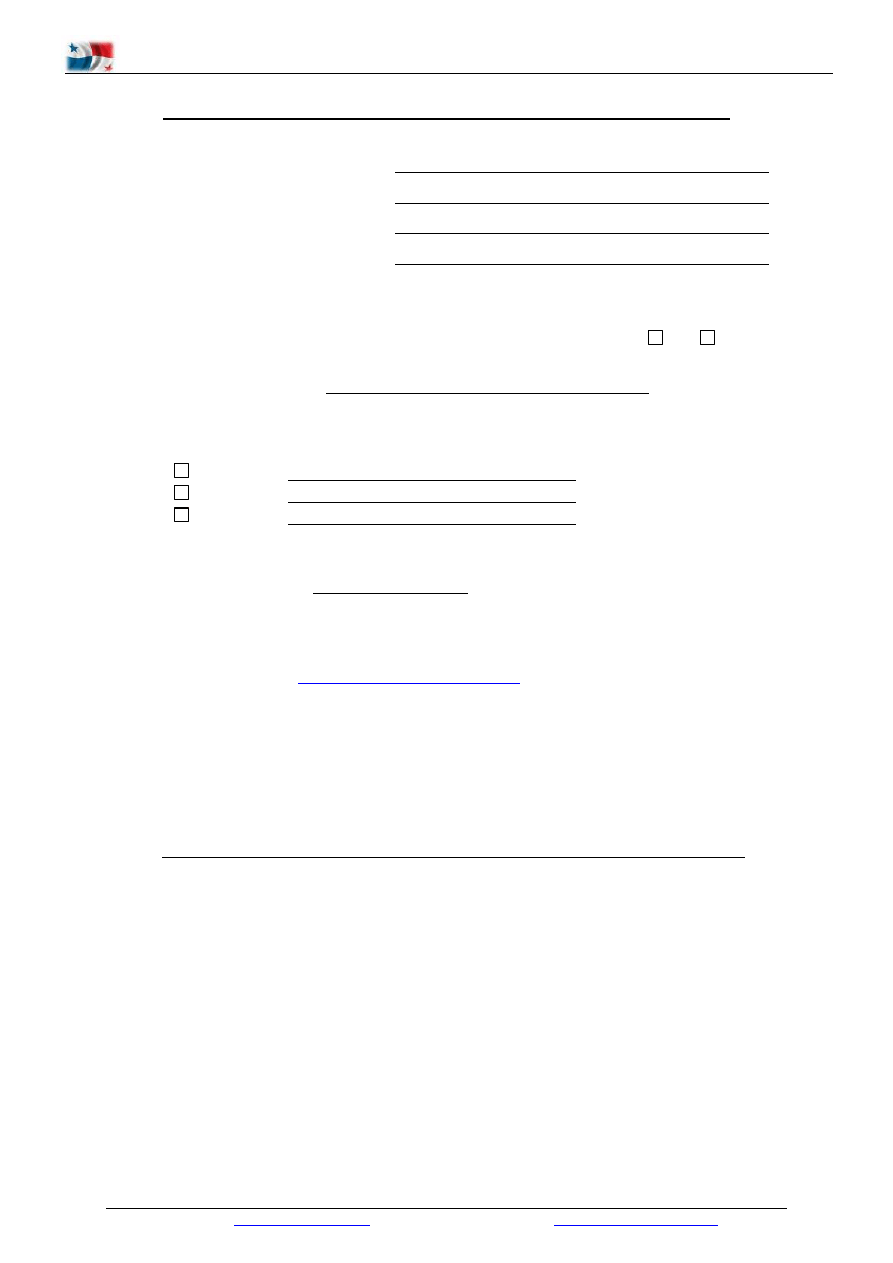
1.
Date Performed:
2.
Vessel Name (initiating drill):
3.
IMO #:
4.
Panama Canal SIN:
5.
Name of Person Notified:
(Ms. Ethzel Davis, Ms. Annais De Obaldia, or Mr. Marcel Vega)
Is this person identified in your PCSOPEP as Authorized Person? YES
NO
6.
Time initiated (UTC):
7.
Time in which Authorized Person or designee responded:
8.
Method used to contact AP:
Telephone
Radio
Other
9.
Description of notification procedure: Master called Panama Canal “Authorized Person”
24 Hour contact
number
+507 6673 6081
and informed the on call AP
representative that the vessel was holding a notification drill in accordance with the PCSOPEP
Other
Comments:
1. To complete the drill the Master must complete the information
requested in item 1 through 9 and e-mail it to OOPSPANAMA at:
2. Receipt confirmation by the AP is not required.
3. It is not required to copy the AP on arrival messages and
information on cargo or other information send to the agent
except in case of an emergency or a spill.
4. Retain this information for a minimum of 3 years and also ensure
a log entry is made in the ship log book.
10. Authorized Person Notification completed in accordance with the plan.
Name / Signature of Master:
Wyszukiwarka
Podobne podstrony:
Canada Masters Guide 2019 Rev 0
Crisis Team Guide 2019 Rev 0
Guide to Media Public Affairs 2019 Rev 0
Errata Dungeon Master Guide
Affiliate Marketers Master Guide
English literature II study guide 2019
Mutants & Masterminds 1e to 2e Conversion Guide
Bill Hurter Master Lighting Guide for Wedding Photographers (2)
01 00 Implementation Guide Rev 1 1 03
09 Sample Excerpt from Checklist and Audit Guide Rev 1 1 03
2019 BWM Checklist Rev 0
master yi guide pentakill
2019 VGP Checklist Rev 0
2019 PacNW Checklist Rev 0
zz 2019 Masters Guides
147 Zostań mistrzem nadmiaru Be a Master of Redundancy Kirk Lundbeck on Jay Friedman website Dec 14
2019 Hawaii Checklist Rev 0
więcej podobnych podstron