US Regulatory Update: California Checklist
2019 Revision 0
©
O’Brien’s 2019 |
24 HR: +1 281 606 4818
1
C
OMPLIANCE WITH
S
TATE
R
EQUIREMENTS IN
C
ALIFORNIA
C
ALIFORNIA
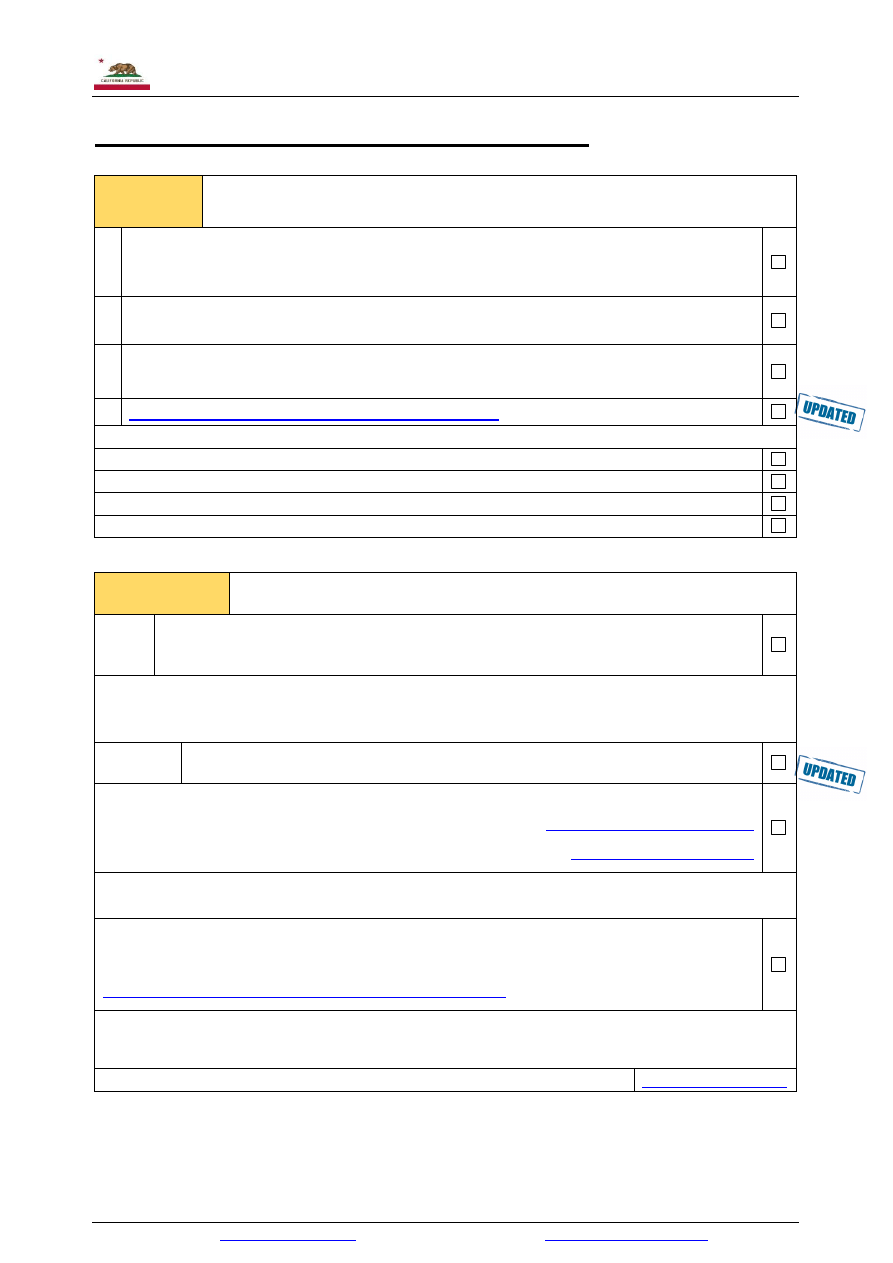
Vessels > 300 GT calling State of California ports and waters require the following
documents in addition to the federal (USCG) documentation required to be available on
board the vessel.
1
California Certificate of Financial Responsibility (CA COFR)
This certificate is valid for one year from the date of issue and will remain valid for a second
year from the date of issue only if the insurance is current.
2
California Vessel Contingency Plan (CA VCP / CA NT VCP) for TANK / NONTANK vessels
Plans without at least one vessel possessing a valid CA COFR will be deactivated by DFW.
3
CA VCP / CA NT VCP Approval Letter (maintain copy with the plan on board the vessel)
Approval letters are valid for 5 years as long as a valid CA COFR is maintained.
4
California Emergency Notification Checklist Placard
NONTANK only
)
Vessels must also have the following services under contract and identified in their contingency plans:
• Qualified Individual (QI)
• Spill Management Team (SMT)
• Oil Spill Response Organization (OSRO)
• Salvor (SMFF resource provider)
S
UBMISSION
R
EQUIREMENTS
The State of California regulations include the following submission requirements
for both tank and nontank vessels contingency plans and CA COFRs.
Plans
Plans must be submitted to the California Department of Fish and Wildlife (DFW) at least
5 working days (7 calendar days) prior to entering California waters to satisfy plan
submission requirements.
When a new plan or vessel addition to an existing plan is submitted with less than 5 working days (7
calendar days) prior to entering California waters, a notice of violation and possible monetary penalty for
failure to allow sufficient time for plan review may result even if the plan is approved prior to arrival.
CA COFR
New applications must be received by the DFW at least 10 calendar days prior to
operation in California waters.
Submit P&I Club renewal documentation, Certificate of Entry (CoE),
annually
to DFW:
cacofr-nontank@wildlife.ca.gov
The CA COFR will be revoked if the CoE is NOT received within 45 days of February 20
th
each year and
the submission of a new CA COFR application will be required.
Vessels calling CA on or after February 20
th
each year, but within the 45-day grace period must
submit the CoE
at least 10 calendar days prior
to operation in California waters
CA DFW maintains a list of the vessels that have submitted proof of insurance on their website at:
https://nrm.dfg.ca.gov/FileHandler.ashx?DocumentID=76424
When a vessel arrives in California without submitting the CA COFR application 10 calendar days in
advance or proof of insurance renewal documentation 10 calendar days in advance, DFW may issue a
notice of violation and possible monetary penalty for failure to comply with the submission requirements.
For more information or assistance with CA COFR applications contact us at:
US Regulatory Update: California Checklist
2019 Revision 0
©
O’Brien’s 2019 |
24 HR: +1 281 606 4818
2
A
GENT FOR
S
ERVICE OF
P
ROCESS
All CA Contingency Plan Holders and CA COFR Applicants must identify an Agent for
Service of Process. This must be an individual who resides in the State of California or
a corporation resident in California that is registered with the CA Secretary of State.
All O’Brien’s Plan Holders and CA COFR
applicants may list the following company as
the legal agent for service of process in
California at no additional cost.
Keesal, Young & Logan, A Professional Corporation
450 Pacific Avenue
San Francisco, CA 94133
Attention: Agent for Service of Process, Ref. 7766
‐1
P: +1 415 398 6000 F: +1 415 981 0136
NOTE: If using KYL, it is not required to include a name, title, and email address on applications.
C
ALIFORNIA
U
NANNOUNCED
E
XERCISE
P
ROGRAM
S
TATE
A
GENCY
C
ONDUCTED
U
NANNOUNCED
D
RILLS
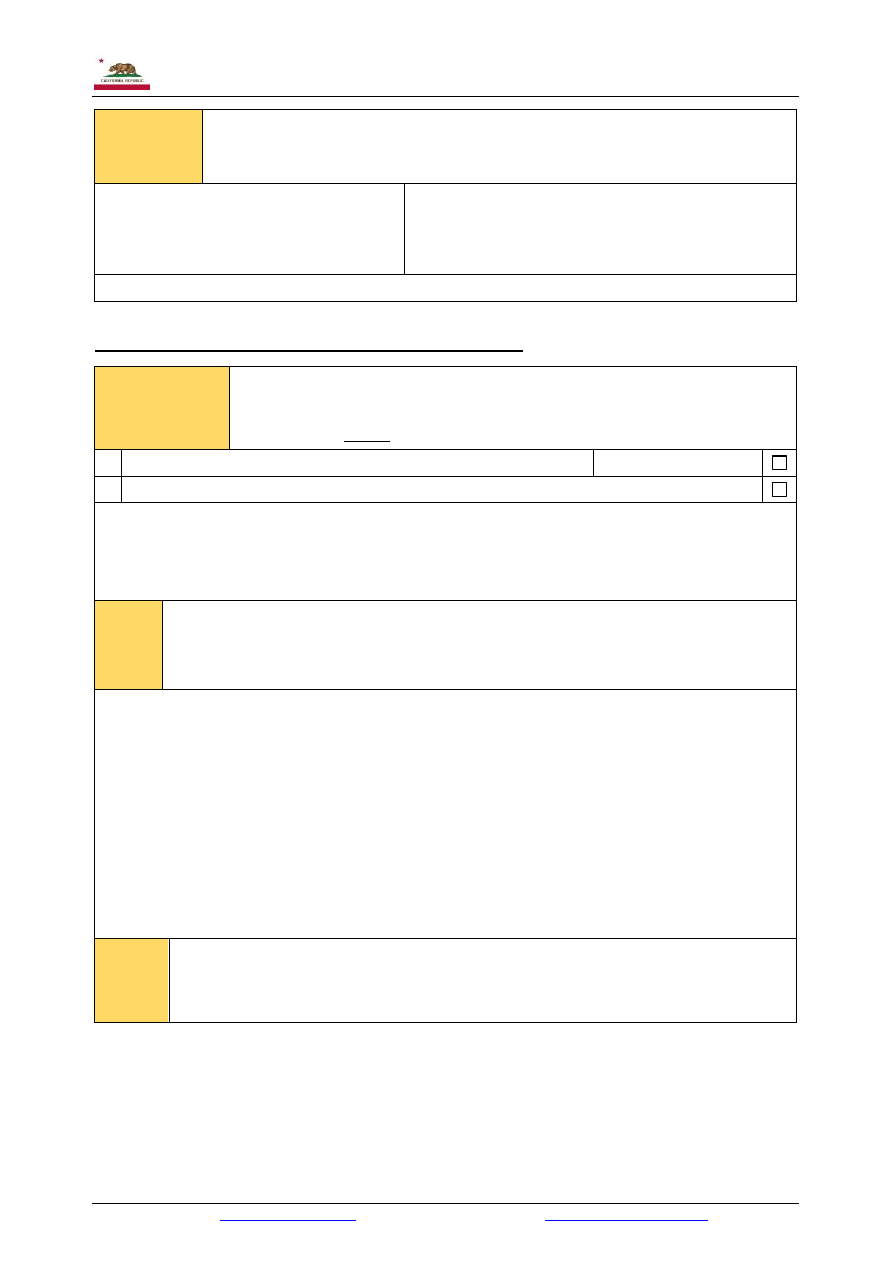
The California Department of Fish and Wildlife (DFW) inspectors may board your
vessel and request that you conduct an unannounced notification drill.
These drills are usually in the form of notification exercises.
1
Do NOT delay, time is of the essence. Immediately notify the QI at:
+ 1 281 606 4818
2
State: “This is a State-Initiated Unannounced Notification Exercise,” repeated three (3) times.
Tell the QI that you are involved in an unannounced drill and that you have state authorities on board.
We must follow special procedures on our side to successfully comply with the unannounced drill
requirements within 30 minutes. You must tell us this exercise is being required by state authorities.
Otherwise, we may mistake it for a normal QI Notification Exercise. This will undoubtedly lead to a failure
of the drill and a possible penalty for the ship.
NOTE
Our watch standers will follow a similar, but different process when communicating with vessel
Master’s and crew for these exercises.
This includes completing a series of regulatory notifications and providing the vessel a written
confirmation via email or fax within 30 minutes of receiving the call.
In California, a boarding officer may also initiate an unannounced drill of your Incident Management
Team (O’Brien’s). If this happens the Master will be presented with a detailed scenario by the boarding
officer and must:
• Take the actions required by the California Vessel Oil Spill Contingency Plan.
• Immediately call our 24-hour emergency number +1-281-606-4818.
• State: “This is a State-Initiated Incident Management Team Exercise,” repeated three (3) times.
• Inform the Qualified Individual of the details of the unannounced drill.
• Provide support as requested by the Qualified Individual.
It is likely that the master will have little involvement in the exercise after initial notification has been
made. However, the guidelines are vague so the master should be prepared to participate as required
by the DFW Drill Coordinator and the Qualified Individual.
C
OSTS
While there are no additional costs for unannounced QI Notification drill and exercises,
there is a cost to an unannounced IMT exercise. Depending upon the duration of the
exercise (how many objectives are being tested) which lasts between 2
– 6 hours on
average, the estimated costs are between $5
– 10K.
US Regulatory Update: California Checklist
2019 Revision 0
©
O’Brien’s 2019 |
24 HR: +1 281 606 4818
3
C
ALIFORNIA
B
UNKERING AND
C
ARGO
T
RANSFER
R
EQUIREMENTS
D
ECLARATION
OF
I
NSPECTION
The California Department of Fish and Wildlife (DFW) inspectors may board your
vessel to confirm you have completed the pre-transfer conference and documented
the same as part of your Declaration of Inspection (DOI) per USCG regulations found
in 33 CFR 156.150 (c).
In California, it is mandatory that you notify your identified OSRO in advance of conducting
bunkering or transfer operations.
N
OTE
It is not required to contact your QI (O’Brien’s) only your OSRO
7
B
ARREL
S
PILL
K
IT
All vessels engaging in bunkering operations are required to have sufficient oil spill
response equipment to contain and clean-up the equivalent of a seven (7) barrel spill on
deck. This equipment is only required to be made available for the duration of bunkering
operations in California waters.
There are several ways in which a vessel can comply with these requirements:
1
Tank vessels already maintain the equivalent of a 12-barrel spill kit on board.
2
The facility terminal or bunker barge provider can provide a 7-barrel spill kit to be placed on
board for the duration of the bunkering operations for an additional fee.
This is a very common
practice in California and can be arranged with the assistance of the local vessel agents
.
3
Obtain and maintain a 7-barrel spill kit on board the vessel for use during bunkering operation
in California.
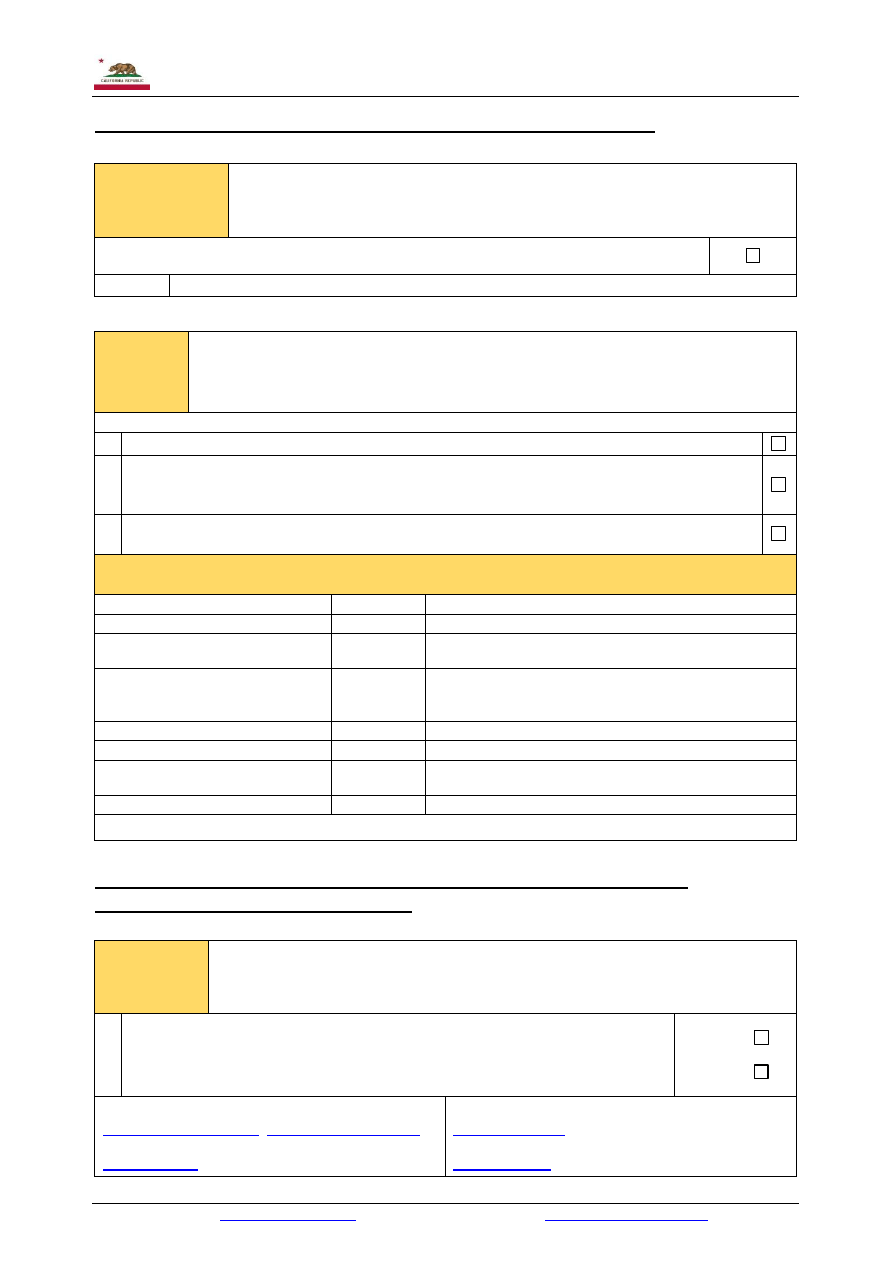
Below is list of recommended equipment for the containment and removal of oil. Quantity (amount) of
equipment and supplies should be sufficient to clean up a 7-barrel spill on deck.
Type
Location
Use
Sorbents
Deck Store
Smaller leaks, deck cleaning, and wipe-offs
Non-sparking shovels, mops,
scoops, buckets, and/or brooms
Deck Store
Deck Cleaning
Lined big-bags or container
suitable for holding recovered
waste
Deck Store
Storage of soiled sorbents
Emulsifiers (dispersants)
Deck Store
Deck cleaning (must never be allowed overboard)
Protective clothing
Deck Store
Personal Protection
Non-sparking portable pump
with hoses
Deck Store
Pumping spilled / leaking oil off the deck
Scupper plugs
Deck Store
Plug all scuppers before any oil movement
During bunker operations, the equipment and supplies must remain ready for immediate use
C
ALIFORNIA
I
NCREASED
O
N
-W
ATER
R
ESPONSE
R
EQUIREMENTS AND
S
HORELINE
P
ROTECTION
C
OVERAGE
C
OVERAGES
The state of California adopted increased on-water response planning requirements
effective October 1, 2009. The state of California also identified specific areas of
California that require special shoreline protection when ships are transiting both in
and out of port.
1
Verify who is your contracted Oil Spill Response Organization (OSRO) identified
in the VRP/NTVRP. The same should be identified in your CA VCP/ CA NTVCP.
This can be found in Appendix B of your VRP/NTVRP and Section A of your CA
VCP / CA NTVCP.
MSRC
NRCC
Marine Spill Response Corporation (MSRC)
+1 732 417 0175 / +1 800 645 7745
National Response Corporation (NRCC)
+1 631 224 9141 / +1 800 899 4672
US Regulatory Update: California Checklist
2019 Revision 0
©
O’Brien’s 2019 |
24 HR: +1 281 606 4818
4
2
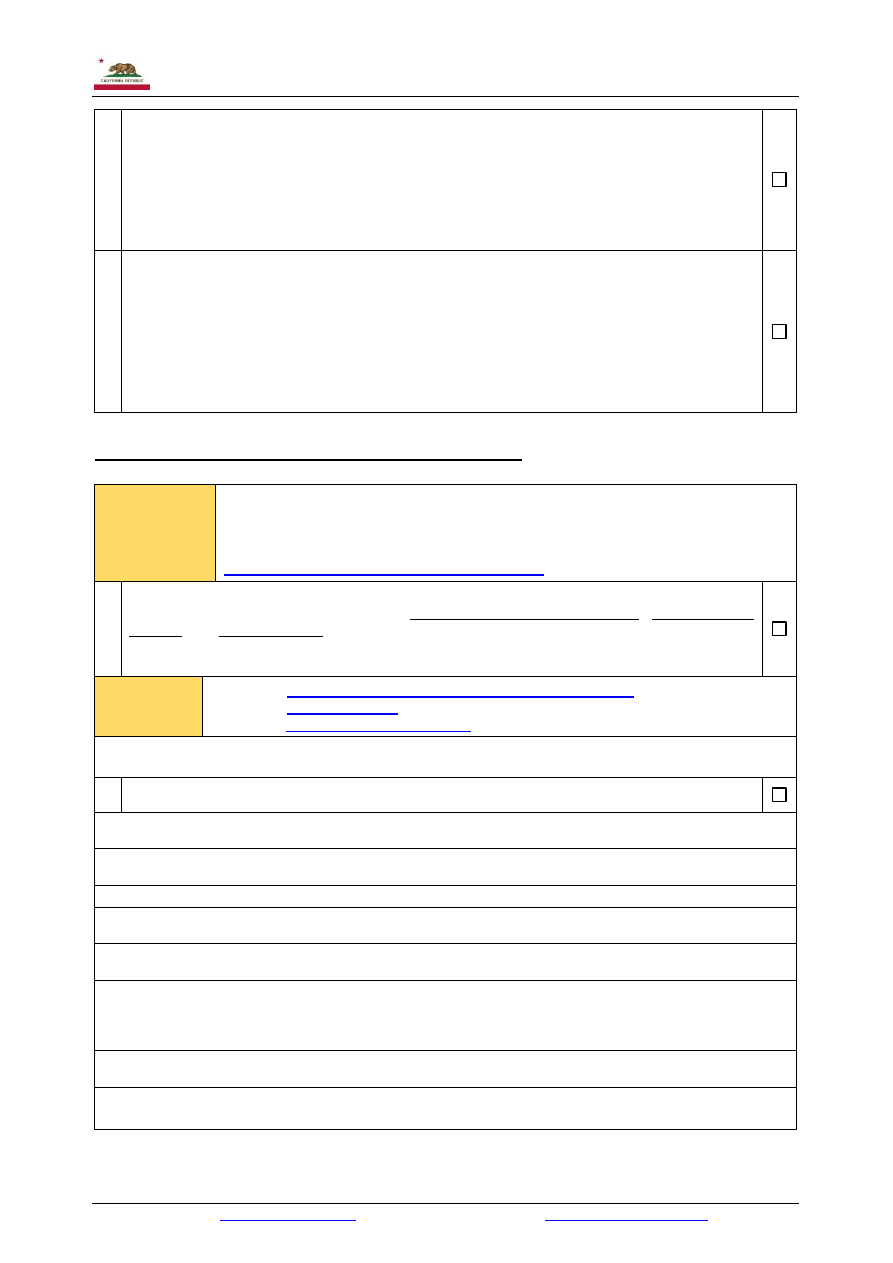
If MSRC is your contracted OSRO, then it is recommended, but not required to notify them
at
least 24 hours in advance
when your vessel is calling the following California ports or places:
• Humboldt Bay
• Monterey
• Port Hueneme
Additional coverage arrangements and fees may apply
3
If NRC is your contracted OSRO then it is recommended, but not required to notify them
at
least 24 hours in advance
when your vessel is calling the following California ports or places:
• Port Hueneme
• Santa Barbara Channel – southbound traffic lane only
• Southern San Francisco Bay – south of the San Mateo Bridge in route to Redwood City
• Eureka or Humboldt Bay
• San Diego
Additional coverage arrangements and fees may apply.
C
ALIFORNIA
E
MISSION
R
EDUCTION
R
EGULATIONS
C
ALIFORNIA
A
IR
R
ESOURCES
B
OARD
The State of California Air Resources Board (ARB) has been very active in their efforts
to implement and enforce regulations to reduce air emissions in California that are
stricter than those prescribed by the North American Emissions Control Area (NA
ECA). Information regarding these regulations are available on the ARB website:
http://www.arb.ca.gov/ports/marinevess/ogv.htm
1
Effective January 1, 2014: Use marine gas oil (DMA) or marine diesel oil (DMB)
at or below
0.10% sulfur
in all ocean-going vessel main (propulsion) diesel engines, auxiliary diesel
engines, and auxiliary boilers when operating in Regulated California Waters (RCW - within 24
nautical miles of the California Baseline).
The switchover to compliant fuel must be completed prior to entering the RCW.
R
EFERENCE

Regulated California Waters (RCW - 24 nm Zone)
Figure 1b.

Figure 1c.

This does NOT apply to vessels on innocent passage in California waters (not bound to or departing
from a port or place in California).
2
Maintain the following records (in English) for at least 3 years and make them available upon
request:
• The date, local time, and location (longitude and latitude) when they enter and leave Regulated
California Waters (RCW).
• The date, local time, and location at the initiation and completion of any fuel switching used to
comply with the regulation (e.g. upon entering/leaving RCW).
• The date, local time, and location of any fuel switching conducted within RCW.
• The type of fuels used (e.g. heavy fuel oil, marine gas oil, etc.) in each auxiliary engine, main engine,
and auxiliary boiler within RCW.
• Purchase records of the types, amounts, and actual percent sulfur content by weight of all fuels
purchased for use on the vessel, as reported by the fuel supplier or a fuel testing firm.
• A fuel system diagram that shows all storage, service, and mixing tanks, fuel handling, pumping,
and processing equipment, valves, and associated piping. The diagram or other documentation
shall list the fuel tank capacities and locations, and the nominal fuel consumption of the machinery
at rated power.
• A description of the fuel switch over procedure with detailed instructions and clear identification of
responsibilities.
• The make, model, rated power or output, and serial number of all main engines, auxiliary engines,
and auxiliary boilers.
US Regulatory Update: California Checklist
2019 Revision 0
©
O’Brien’s 2019 |
24 HR: +1 281 606 4818
5
S
UNSET
R
EVIEW
During a recent “sunset review” the State of California determined that the NA
ECA alone will not achieve equivalent reductions to the current requirements
within RCW, and retained the current State requirements. The State plans to
reevaluate the requirements again in two (2) years.
N
ON
-C
OMPLIANCE
F
EE
S
CHEDULE
This regulation includes a provision to allow for the payment of a non-
compliance fee when a vessel is unable to comply based on the following
circumstances:
• An unplanned redirection to a California port.
• The inability to purchase compliant fuel.
• An inadvertent purchase of defective fuel.
• The inability to schedule vessel modification in time for compliance.
CA Ports Visits
Per Port Visit Fee
Fee if Compliant Fuel Purchased and Used
1
st
Port Visited
$ 45,500
$22,500
2
nd
Port Visited
$ 45,500
$22,500
3
rd
Port Visited
$ 91,000
$45,500
4
th
Port Visited
$136,500
$68,250
5
th
or more Port Visited
$182,000
$91,000
Marine Notice 2011-3: Noncompliance Fee Provision Information and Submittal Forms
E
SSENTIAL
M
ODIFICATION
E
XEMPTION
Vessel operators may qualify for an exemption if they can demonstrate that they
cannot meet the fuel-
use requirements in the regulation without “essential
modifications,” as defined in the rule.
• Vessel operators must apply for this exemption at the earliest practicable date prior to their port visit.
• In their applications, operators will need to supply an “Essential Modifications Report” signed by the
Chief Engineer of the vessel that identifies the specific modifications needed to comply with the fuel-
use requirements and identifying the maximum extent to which the cleaner fuels specified in the
regulation can be used (e.g., some engines or boilers may still be able to operate on the cleaner
fuel without modifications, or engines and boilers may be able to operate on the cleaner fuel for a
portion of the voyage in RCW without modifications).
• The application must be approved before the vessel operator can rely on the Essential Modifications
exemption.
• After approval of the application, the vessel operator must inform the ARB prior to each entry into
RCW that the operator will be complying under this provision.
• Vessel operators are strongly advised to refer to the regulation and contact ARB staff prior to
applying for the Essential Modifications exemption. This will ensure that they understand the
requirements of this provision before preparing an application.
S
AFETY
E
XEMPTION
A safety exemption may also be requested. The safety exemption is designed to
provide the master of a vessel with an exemption from the regulation in situations
where compliance would endanger the safety of the vessel, its crew, its cargo or its
passengers due to severe weather conditions, equipment failure, fuel
contamination, or other extraordinary reasons beyond the master's reasonable
control.
Please see Marine Notice 2011-5 (linked below) for more details regarding safety exemptions such as:
• When can the safety exemption be used or not?
• What is the process to use the exemption?
• What are the limitations on the use of the exemption?
• Is there a fee involved?
• How to request an exemption (use of the Safety Exemption Claim Form)?
Marine Notice 2011-5: Safety Exemption Information and Notification Form
For more information or to determine if your vessel(s) qualify for an Essential Modification or Safety
Exemption please contact the ARB staff directly. The ARB staff contact information can be found at:
http://www.arb.ca.gov/ports/marinevess/ogv/ogvcontact.htm
US Regulatory Update: California Checklist
2019 Revision 0
©
O’Brien’s 2019 |
24 HR: +1 281 606 4818
6
S
HIPBOARD
I
NCINERATION
The Airborne Toxic Control Measure Amendments Limiting Onboard Incineration on
Cruise Ships and Oceangoing Ships (ATCM) effective November 28, 2007 prohibits
cruise ships and oceangoing ships from conducting onboard incineration within three
nautical miles of the California coast.
1
Cease all on board incineration prior to entering California waters (0-3 nm).
More information can be found at:
http://www.arb.ca.gov/ports/shipincin/shipincin.htm
A
T
-B
ERTH
E
MISSION
R
EDUCTION
R
EGULATION
The purpose of the At-Berth Regulation is to reduce emissions from diesel auxiliary
engines on container ships, passenger ships, and refrigerated-cargo ships while
berthing at a California Port.
The At-Berth Regulation defines a California Port as the Ports of Los Angeles, Long
Beach, Oakland, San Diego, San Francisco, and Hueneme.
The At-Berth Regulation provides operators with vessel fleets visiting these ports
two options
to reduce
at-berth emissions from auxiliary engines by:
• Turning off auxiliary engines and connect the vessel to some other source of power, most likely
grid-based shore power where available.
• Using alternative control technique(s) that achieve equivalent emission reductions.
Please note, the regulation applies to an operator of a container vessel or refrigerated cargo vessel fleet
whose vessels cumulatively make 25 or more visits annually to any single specified port. It also applies
to an operator of a passenger-vessel fleet whose vessels cumulatively make five (5) or more visits
annually to any single port
R
EDUCED
O
NBOARD
P
OWER
O
PTION
Fleets intending to comply with this regulation by satisfying the Reduced
Onboard Power (Shore Power) Option must satisfy the following two criteria,
on
a quarterly basis
:
1
At least 7
0 percent of a fleet’s visits to a port must satisfy the following limit on engine operation:
for each visit, the auxiliary engines on the vessel
cannot operate for more than three hours
during the entire time the vessel is at-berth.
2
The fleet’s total onboard auxiliary engine power generation must be reduced by at least 70
percent from the fle
et’s baseline power generation.
ARB has additional spreadsheet tools and forms to assist with fleet record keeping requirements which
include: 1) visit information spreadsheet, 2) emergency event form, and 3) delayed visit form available
at:
https://www.arb.ca.gov/ports/shorepower/shorepower.htm
R
EGULATORY
A
DVISORY
ARB issued a Regulatory Advisory to vessel operators to inform affected fleets of the
proposed schedule for considering amendments to the At-Berth Regulation and to
explain administrative changes in implementation during the time needed to develop
amendments to the Regulation. As specified in the Advisory, fleets are required to
provide the following verification of their use of the advisory through the Quarterly
Reporting Form. In addition, Scenario 1 requires immediate notification when a berth is
unavailable. ARB staff may ask fleets to provide additional information to support their
good faith effort claims.
1
Complete and return the Quarterly Reporting Form no later than one month after each
calendar quarter to
2
Complete and return the Scenario 1 Initial Notification Form to
immediately when a vessel is equipped to receive shore power, but the terminal berth is not
able to provide power.
The Regulatory Advisory Notification and Reporting Forms are available at:
http://www.arb.ca.gov/ports/shorepower/forms/forms.htm
E
NFORCEMENT
Fleets that fail to fully comply or to demonstrate good faith efforts pursuant to this
Advisory may be subject to enforcement action and penalties. Fleets that make good
faith efforts, but are not in compliance with the At-Berth Regulation requirements by
the dates outlined in the advisory, may be subject to enforcement action and
penalties.
US Regulatory Update: California Checklist
2019 Revision 0
©
O’Brien’s 2019 |
24 HR: +1 281 606 4818
7
C
ALIFORNIA
V
ESSEL
D
ISCHARGE
R
EQUIREMENTS
SLC
MISP
The California State Lands Commission (SLC) Marine Invasive Species Program (MISP) is
charged with preventing or minimizing the introduction of non-indigenous species to California
waters from vessels > 300 gross tons capable of carrying ballast water.
The SLC has developed a series of comprehensive regulatory information sheets (linked below) to help
members
of the shipping industry understand California’s requirements for preventing the introduction
of nonindigenous species:
MISP Information Sheet
http://www.slc.ca.gov/Programs/MISP/InfoShts/General_Info.pdf
Biofouling and Ballast Water Management Sheet
–
http://www.slc.ca.gov/Programs/MISP/InfoShts/BiofoulingBallastWater_Management.pdf
Ballast Water Reporting Form and Annual Vessel Reporting Form
–
http://www.slc.ca.gov/Programs/MISP/InfoShts/Reporting_RecordKeeping.pdf
Performance Standards for Ballast Water Discharge
–
http://www.slc.ca.gov/Programs/MISP/InfoShts/PerfStd.pdf
California has delayed implementation of both interim and final ballast water discharge
performance standards as follows:
• New build vessels – First arrival on or after January 1, 2020
• Existing vessels – First dry docking on or after January 1, 2020
The implementation date for final performance standards has been delayed until January 1, 2030
Marine Invasive Species Act Enforcement and Hearing Process: Effective July 1, 2017
California has finalized the adoption of regulations related to the enforcement and hearing process
for imposing administrative civil penalties for violations of the Marine Invasive Species Act.
SLC is now issuing significant penalties for ballast water violations in State waters, and they are
planning to adopt amendments later this year to apply these penalties to biofouling violations as
well. See below for additional information on these requirements.
http://www.slc.ca.gov/Programs/MISP/REPORTINGLETTERAPRIL2017.pdf
Marine Invasive Species Act Control Fund Fee: Effective April 1, 2017
California has increase the fee paid by vessels arriving at California ports from $850 per qualifying
voyage to $1,000 per qualifying voyage if the vessel has traveled from outside of California.
The fee applies to all vessels arriving from outside of California, and not just those vessels that
will discharge ballast water.
We recommend that a copy of each of these information sheets is downloaded, reviewed, and
maintained on board vessels that operate in California waters.
SLC issued the following reminder on January 7, 2019 regarding ballast water report submissions and
biofouling requirements.
http://www.slc.ca.gov/Programs/MISP/MISP_letter_07Jan19.pdf
US Regulatory Update: California Checklist
2019 Revision 0
©
O’Brien’s 2019 |
24 HR: +1 281 606 4818
8
B
ALLAST
W
ATER
E
XCHANGE
Vessels that are not using an AMS or USCG type approved ballast water treatment
system must conduct ballast water exchange outside of 200nm if coming from
outside the Pacific Coast Region (PCR)
–
http://www.slc.ca.gov/Programs/MISP/InfoShts/LargePCRmap.pdf
• Vessels arriving from outside of the PCR with ballast sourced outside of the
PCR are required to conduct BWE at least 200 nm from land* at a depth of at
least 2000 meters.
(*This includes islands, such as those around Southern
California. See the map above for more details on the 200nm boundary for
conducting exchange)
• Vessels arriving at a California port or place from within the PCR and carrying
ballast water sourced from within the PCR are required to conduct BWE at
least 50 nm from land at a depth of at least 200 meters.
Yes
No
Yes
No
The California Marine Invasive Species Act (MISA) does NOT provide for a vessel deviation exemption
for ballast water exchange even though the USCG does.
SLC has been very strictly enforcing the exchange requirement for vessels coming from outside
the PCR, and issuing significant penalties for violations. Please ensure exchange is conducted
at least 200nm from any land prior to discharging in California.
1
Annual Agents Letter 2017 (Annual Vessel Form and BW reporting)
–
http://www.slc.ca.gov/Forms/MISP/2017_LtrAgents_UPDATED.pdf
2
Ballast Water Reporting Form
http://www.slc.ca.gov/Forms/MISP/BallastWaterForm.pdf
This is the same new BWMR Form used by the USCG, but it
must be submitted 24 hours in
advance of arrival to California. If the voyage is < 24 hours, it should be submitted prior to
departure from the last port of call prior to arrival.
B
IOFOULING
M
ANAGEMENT
California recently finalized regulations related to biofouling management became
effective
October 1, 2017
.
The rulemaking requires four things (1) new reporting forms; (2) a biofouling
management plan and record book; (3) biofouling management requirements; and
(4) requirements for vessels with extended residency periods in California. An
additional Guidance Document is available here
–
http://www.slc.ca.gov/Programs/MISP/4_8_GuidanceDoc.pdf
1
New Annual Vessel Reporting Form
– Effective October 1, 2017
Vessels calling California after Oct 1, 2017 will need to submit the Annual Vessel Reporting
Form once per calendar year. This replaces the Annual Hull Husbandry Form and the Ballast
Water Treatment Annual and Supplemental Forms.
Marine Invasive Species Program Annual Vessel Reporting Form (Revised 08/17)
The form can be submitted via email to
or through the CSLC web portal
2
Biofouling Management Plan & Record Book
– Effective on delivery for vessels build after
January 1, 2018. For existing vessels, the requirement is effective after the first regularly
scheduled out-of-water maintenance on or after January 1, 2018.
In addition to aligning with the IMO “Guidelines for the Control and Management of Ships’
Biofou
ling to Minimize the Transfer of Invasive Aquatic Species (adopted on July 15, 2011),”
the plan should describe the biofouling management practices and anti-fouling systems
specifically used for the hull and each of the vessel’s niche areas listed in the California
Regulations.

US Regulatory Update: California Checklist
2019 Revision 0
©
O’Brien’s 2019 |
24 HR: +1 281 606 4818
9
The Record Book must contain details of all inspections and biofouling management measures
undertaken on the vessel since the beginning of the most recent scheduled out-of-water
maintenance or since delivery into service for a new build.
Please contact your Client Specialist it you would like a copy of the plan template or to have
O’Brien’s assist you with plan development.
Biofouling Management Requirements
– Effective on delivery for vessels build after January
1, 2018. For existing vessels, the requirement is effective after the first regularly scheduled out-
of-water maintenance on or after January 1, 2018.
Antifouling Coatings:
• If a vessel is using an antifouling coating, the antifouling coating shall not be aged
beyond its effective coating lifespan, as documented in the vessel’s Biofouling
Management Plan
• If the antifouling coating is aged beyond the effective coating lifespan, the Biofouling
Management Plan shall describe how biofouling will be managed after the expected
coating lifespan is exceeded. All management actions should be documented in the
Biofouling Record Book.
If a vessel is not using an antifouling coating, the Biofouling Management Plan shall describe
how biofouling will be managed in the absence of an antifouling coating. All management
actions should be documented in the Biofouling Record Book
Niche Area Management:
• Biofouling in the following niche areas (if these niche areas are present) must be
managed using one or more practices that are appropriate for the vessel and its
operational profile, as determined by the owner, operator, master, or person in charge
of the vessel:
o Sea chests, sea chest gratings, bow and stern thrusters, bow and stern thruster
gratings, fin stabilizers and recesses, out-of-water support strips, propellers
and propeller shafts, and rudders
• Niche area management practices must be described in the Biofouling Management
Plan and completed actions must be documented in the Biofouling Record Book
4
Extended Residency Periods (45 Consecutive Days or Longer in the Same CA Port)
–
Effective on delivery for vessels build after January 1, 2018. For existing vessels, the
requirement is effective after the first regularly scheduled out-of-water maintenance on or after
January 1, 2018.
Vessels that have remained in one port for 45 or more consecutive days must comply with the
following biofouling management requirements upon arrival at a California port:
• Biofouling in the niche areas (described above) must be managed in a manner that is
consistent with the niche area management practices described in the Biofouling
Management Plan.
• Any activities conducted to manage biofouling on niche areas or any wetted surface
shall be documented in the Biofouling Record Book
US Regulatory Update: California Checklist
2019 Revision 0
©
O’Brien’s 2019 |
24 HR: +1 281 606 4818
10
N
O
D
ISCHARGE
Z
ONE
California marine waters (0-3 nm) have been designated a No Discharge Zone (NDZ)
by the EPA prohibiting the discharge of treated/untreated sewage of large passenger
and ocean-going vessels 300 gross tons or greater equipped with a holding tank with
remaining capacity or containing sewage prior to entry into California marine waters.
1
A vessel that does NOT have holding tanks is allowed to discharge treated sewage using an
approved USCG marine sanitation device in CA waters.
2
A vessel that has maximized its holding tank capacity by entering the NDZ with an empty
holding tank may discharge properly treated sewage above and beyond that capacity in the
California NDZ while in transit.
Passenger vessels may NOT discharge sewage in the California NDZ.
NOTE
When the vessel is not underway treated sewage that exceeds holding capacity is required to
be pumped ashore.
Vessels must be underway in California to discharge treated sewage that exceeds their
holding capacity and only if one they meet one of the above requirements.
Any sewage discharge in California State waters is required to be reported to the California
State Waters Resource Control Board. These reports may be submitted to:
Renan Jauregui / Division of Water Quality
(916) 341-5505
Renan.Jauregui@waterboards.ca.gov
Additional information is available at -
http://www.waterboards.ca.gov/water_issues/programs/npdes/sb771.shtml
A sample reporting form is available at -
http://www.waterboards.ca.gov/water_issues/programs/npdes/docs/sb771/report_form.pdf
Graywater discharges are regulated under the VGP, and additional information is included below.
More detailed information on the CA NDZ including a map can be found at:
https://www.epa.gov/sites/production/files/2015-10/documents/california_ndz_final_rule_factsheet.pdf
VGP
California certified the EPA Vessel General Permit (VGP) with the following additional permit
conditions/requirements when operating in state waters:
1
Large passenger vessel and cruise ship graywater discharges are prohibited in state waters.
Graywater discharges from vessels 300 gross tons or more are also prohibited if they have
sufficient holding capacity.
2
A copy of the NOI must be sent to the State Water Resources Control Board via email at
calvgp_cert@waterboards.ca.gov
Additional information regarding VGP compliance can be found in the VGP Checklist.
US Regulatory Update: California Checklist
2019 Revision 0
©
O’Brien’s 2019 |
24 HR: +1 281 606 4818
11
C
ALIFORNIA
E
XERCISE
P
ROGRAM
R
EQUIREMENTS
California requires all TANK and NONTANK vessel contingency plans be exercised annually through a
shore-based Incident Management Team Tabletop Exercise (IMT TTX). Any number of the following
California-specific objectives and sub-objectives may be tested.
All of them must be tested in a single drill once every three years in the State of California.
1
Notifications
2
Staff mobilization
3
Incident Command System
4
Unified Command
5
Public Information Officer (PIO)
6
Liaison Officer
7
Safety Officer
8
Operations
8.1 Source Control
8.2 Assessment
8.3 Vessel Emergency Services
8.4 Lightering
8.5 Firefighting
8.6 Shoreline Protection
8.7 Wildlife Recovery and Rehabilitation
8.8 Safety of Responders and Public
9
Planning
9.1 Situation Unit
9.2 Resource Unit
9.3 Environmental Unit
9.3.1 Waste Management
9.3.2 Applied Response Technology (ART):
9.4 Documentation
9.5 Volunteer Management
10 Logistics
10.1 Communications
10.2 Personnel Support
10.3 Incident Command Post (ICP) Equipment and Support
11 Finance
N
OTE
CA requires the submission of an annual IMT TTX exercise report within 60 days of the
completion of the exercise for their review.
This report must also include an appendix listing all
the CA VCP/CA NTVCP holders represented by the Spill Management Team (SMT).
O’Brien’s submits this report on behalf of plan holders each year.
For this reason, it is imperative that every CA VCP/CA NTVCP holder have one or more
representatives attend the annual I
MT TTX held by O’Brien’s.
PIO
Effective April 1, 2014, CA began requiring active participation of a Public Information Officer
(PIO) to develop press releases, a fact sheet, and claims information to satisfy these exercise
requirements related to crisis communications, the media, and public engagement.
O’Brien’s has maintained a PIO on staff within our Incident Management Team since 2008.
Wyszukiwarka
Podobne podstrony:
2019 BWM Checklist Rev 0
2019 VGP Checklist Rev 0
2019 PacNW Checklist Rev 0
2019 Hawaii Checklist Rev 0
2019 Alaska Checklist Rev 0
2019 GoM Checklist Rev 0
2019 Guam Checklist Rev 0
2019 Exercise Checklist Rev 0
2019 Am Samoa Checklist Rev 0
2019 SOE CVTIS Checklist Rev 0
2019 Great Lakes Checklist Rev 0
09 Sample Excerpt from Checklist and Audit Guide Rev 1 1 03
Crisis Team Guide 2019 Rev 0
Canada Masters Guide 2019 Rev 0
Guide to Media Public Affairs 2019 Rev 0
Panama Masters Guide 2019 Rev 0
03 2000 Revisions Overview Rev 3 1 03
05 DFC 4 1 Sequence and Interation of Key QMS Processes Rev 3 1 03
więcej podobnych podstron