The Instructor
The
Instructor
Mark Dvoretsky
The Positional Exchange Sacrifice
The following game, in which White executed a
problematical, positional exchange sacrifice, was first
commented upon by the winner, Grandmaster Alexander
Kotov - but quite superficially. In 1988, GM Igor Platonov
published an article in the magazine Shakhmaty v SSSR,
where the game was subjected to a deeper and more
substantive review. I have used Platonov’s article as a
training exercise for strong players. First, we would play out
the game position; then we compared notes, and analyzed the
resulting complications. This eventually led to a considerable
expansion and improvement of the existing analysis of this
game, and a number of new ideas.
You will note that all these training games ended in my favor.
This is no accident - and it wasn’t just because I relied on the
earlier analyses, since each of the games quickly swerved into
a new channel. Rather, it was because positions with unusual
material imbalances are not that frequent in most players’
practice. As a result of this training, my students were
enabled to enrich their experience in this kind of struggle,
which undoubtedly will help them in future tournament
battles.
Bondarevsky – Kotov USSR Championship, Moscow 1948
1. d2-d4 d7-d5 2. c2-c4 e7-e6 3. Ng1-f3 c7-c6 4. e2-e3 Ng8-
f6 5. Bf1-d3 d5xc4 6. Bd3xc4 Nb8-d7 7. Nb1c3 b7-b5 8.
Bc4-e2 a7-a6 8...Bb7!? 9. e3-e4 b5-b4 10. e4-e5
b4xc3 11. e5xf6 Bf8-b4?!
“An invitation to a duel. Of course, Black might have avoided
file:///C|/Cafe/Dvoretsky/dvoretsky.htm (1 of 12) [02/11/2002 10:17:19 PM]
The Instructor
the conflict with the simple 11...Nxf6 12. bc Bd6, with c6-c5
to follow” (Platonov). According to theory, White’s position
after 13. 0-0 0-0 14. Bg5 would be preferable.
Another possibility was: 11...cb 12. fg Bxg7 (12...baQ 13.
ghQ is bad for Black) 13. Bxb2 .
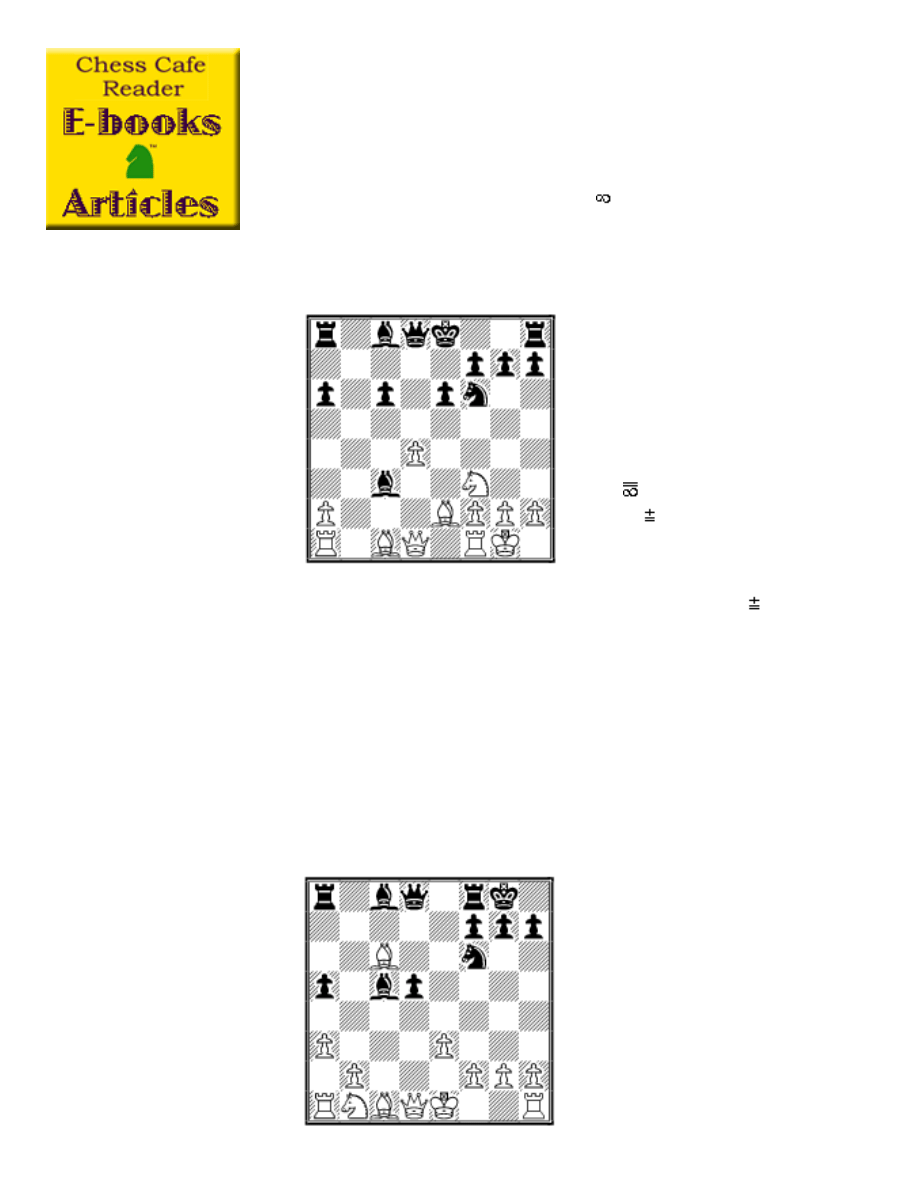
12. 0-0 Nxf6 13. bc Bb4xc3
14. Bc1-a3!?
A courageous exchange
sacrifice, although hardly
forced. ECO recommends 14.
Rb1!? 0-0 15. Qc2 (15.
Bg5!? ) 15...Bxd4 (15...Ba5
16. Ne5 ) 16. Rd1 c5 17. Ba3
Qa5 18. Nxd4 Qxa3 19. Rd3
Qa5 20. Nc6 Qc7 21. Qxc5
Re8 22. Rd8 Rxd8 23. Ne7+ Qxe7 24. Qxe7 .
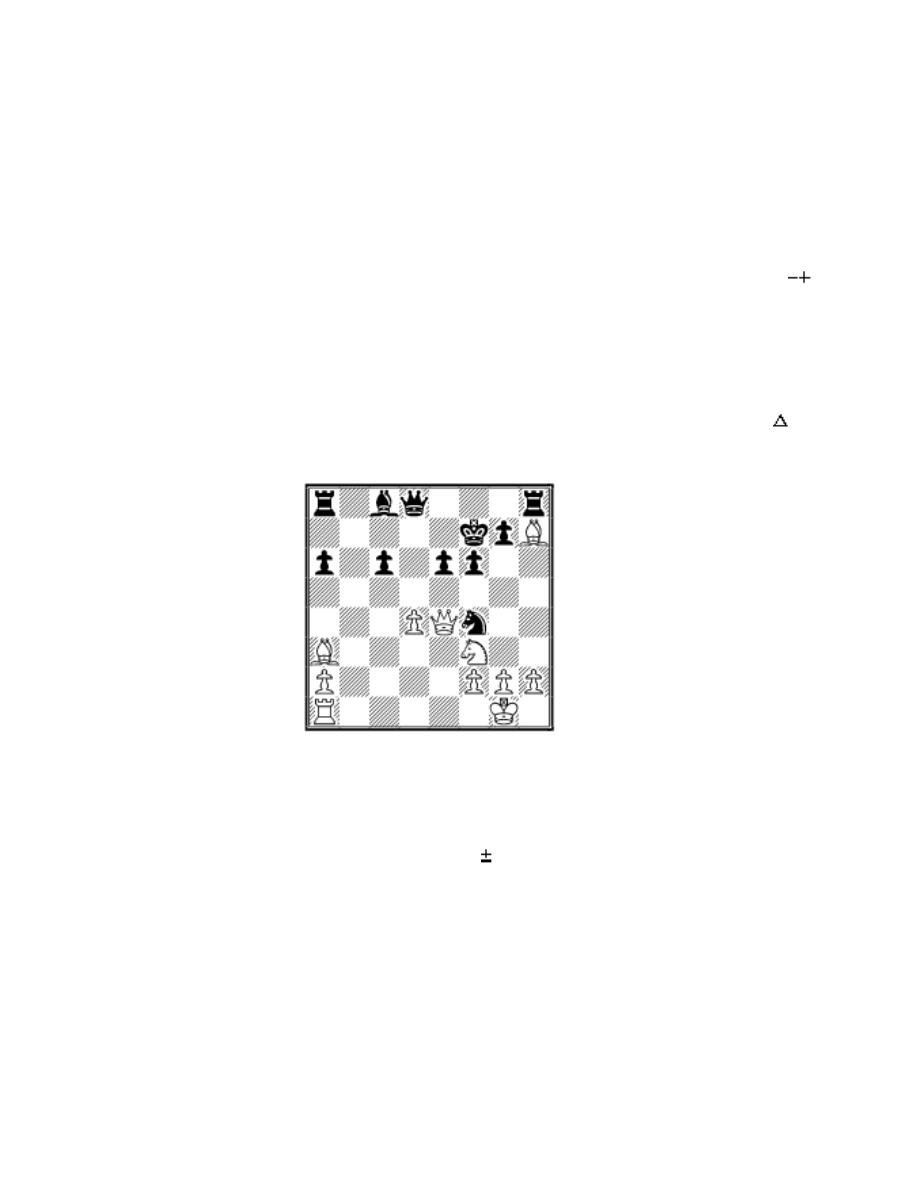
Nearly a century earlier, the game Mayet - Anderssen
(Berlin 1855) saw a similar exchange sacrifice - this time
with the intent of preventing the opponent from castling.
1. d4 d5 2. c4 e6 3. a3 c5 4. dc Bxc5 5. Nf3 a5 6. e3
Nc6 7. cd ed 8. Bb5 Nf6 9. Ne5? 0-0 10. Nxc6 bc 11.
Bxc6
11...Ba6! 12. Bxa8 Qxa8
(threatening 13...d4) 13. Qf3
Nd7! 14. Nc3 (14 Qg3)
14...Ne5 15. Qxd5 Nd3+ 16
Kd1? (16. Kd2 was better)
16...Qc8?! (romantic: for the
sake of his attack, Black
rejected the simple win by
16...Nxf2+) 17. Kc2 Rd8 18.
file:///C|/Cafe/Dvoretsky/dvoretsky.htm (2 of 12) [02/11/2002 10:17:19 PM]
The Instructor
Qh5? (18. Qf3) 18...Nf4?! (again, 18...Nxf2 was an easy
win), and White resigned, although he should first have
made sure that Black would find the decisive continuation
of his attack after 19. Qg5! Bd3+ 20. Kd1.
14...Bc3xa1 15. Qd1xa1
A different, and promising, continuation of the attack - 15.
Qc2!? Nd5 16. Rxa1 (16. Ne5? Bc3 17. Bf3 Qc7
does
not work - Platonov) - was tried out in the training game
Inarkiev - Dvoretsky (12-21-2001, Game/90).
16...f6 17. Bd3!? (17. Nd2!?) 17...Nf4 18. Bxh7 Kf7 19.
Qe4 (19. Bc1 Ne2+!; 19. Be4 Bb7 20. Rb1 Qd7 Rab8)
19...Qd5?!
19...Qc7! was better: 20. Bc1!?
Ne2+ 21. Kh1 Nxc1 22. Rxc1
Bd7 23. Bg6+ Kf8
20. Qxf4 Rxh7 21. Ne5+ Kg8
22. Rc1
Another good line was 22.
Ng6!? Qh5 23. Ne7+ Kh8 24. Qd6 (or 24. Qc7) 24...Bd7
(24...Qe8 25. Ng6+ Kg8 26. Ne7+ Kh8 =) 25. Qxd7 (25.
h3 Qe8) 25...Qxh2+ 26. Kf1 Qh1+ 27. Ke2 Qxg2 28.
Qxe6 Re8 29. Re1 , intending Kd3.
22...Bb7 23. Ng6 Qxa2
If 23...Qd8 24. Nf8; but 23...Qd7 was safer.
24. Ne7+ Kf7 25. Bc5
25. Qg3 g5 26. Qd3 Rh6 27. Rb1 Bc8 28. Rb2 =
file:///C|/Cafe/Dvoretsky/dvoretsky.htm (3 of 12) [02/11/2002 10:17:19 PM]

The Instructor
25...g5 26. Qc7 Qb3 27. h4?
Weakening his own king position was not to be
recommended. 27. Qd7 Rah8 28. Re1 would retain a
dangerous attack. However, at this moment, we were both
in fairly severe time-pressure.
27...gh (27...Rah8 28. g4!?) 28. Re1 h3! (28...Ke8? 29.
d5) 29. Nd5+ Kg6 30. Nf4+ Kh6 31. Qd6 Rg8 32. Re3?
32. Rxe6? Qd1+ 33. Kh2 hg
; 32. d5!? Rhg7 .
32...Qb1+ 33. Kh2 hg 34. Rh3+ Kg5 35. Nxe6+ Kf5 36.
Qf4+ Kxe6 37. d5+ cd White resigned.
15...Nf6-d5!
Black is planning f7-f6 followed by Kf7. He has much
better chances of a successful defense than in the Mayet -
Anderssen game, since Black has an excellent central
outpost at d5.
16. Qa1-c1?
Too slow! 16. Ne5 was more energetic, intending
Anderssen’s maneuver: Nc4-d6. The attempt to prepare
castling by 16...Ne7? then runs into Platonov’s central
break 17. d5!:
17...ed 18. Nxc6; 17...cd 18. Nc6! Nxc6 19. Qxg7 Kd7
20. Qxf7+ Ne7 21. Bg4
; 17...Nxd5 18. Bh5! Rf8 19.
Nxf7! (even stronger than Platonov’s 19. Qc1) 19...Qf6
20. Qc1, when White retains a powerful attack;
17...0-0 18. Nxc6 Nxc6 19. Bxf8 Nd4! (Platonov
considered 19...Qxf8 20. dc
O
) 20. Qxd4 Qxf8 / .
So Black would have had to continue 16...f6 17. Nc4 Kf7.
Platonov thinks that here (and also in other, similar
file:///C|/Cafe/Dvoretsky/dvoretsky.htm (4 of 12) [02/11/2002 10:17:19 PM]

The Instructor
positions) White should trade his light-square bishop for
the powerful knight at d5. For example: 18. Bf3 g6
(18...Kg8 19. Bxd5) 19. Nd6+ Kg7 20. Bxd5 cd 21. Qc3
h5 22. h4 . Despite his material advantage, Black will not
find it easy to defend, given the threatening position of the
knight at d6 and the presence of opposite-color bishops,
which strengthens the attack.
In the training game Zvjagintsev - Dvoretsky (11/12/1997,
Game/90), White gave check at once: 18. Nd6+!? Kg8.
With this move order, the g7-g6 and Kg7 setup is less
attractive, since it would take the king two moves to get to
g7.
19. Qb2!?
Aimed against 19...Rb8 and 19...Qa5.
19...a5!?
Intending 20...Nb4.
20. Bc5 h5
On 20...h6, Black has to consider 21. Bh5.
21. Re1?!
21. h4! was considerably stronger. Vadim was afraid of
the response 21...Ba6?!, when White would play 22. Bxa6
Rxa6 23. Qb7 Nc7 24. Rb1 , or 24. Nc4 .
21...h4 22. Bd3 ( 23. Bg6) 22...Rh6 23. h3 Bd7
The position probably favors Black already.
24. Qd2 Rb8
If 24...a4!? (intending 25...Qa5), then 25. Nc4)
file:///C|/Cafe/Dvoretsky/dvoretsky.htm (5 of 12) [02/11/2002 10:17:19 PM]
The Instructor
25. f4? f5! (intending Rg6-g3) 26. Be2 Rg6
Bringing the rook to g3 may be objectively strong, but it
allows White to complicate. 26...a4!? was simpler.
27. Bh5 Rg3 28. Nf7 Qc8! (28...Qf6 29. Bd6) 29. Ng5
Qb7!?
29...Qc7! was more exact, with no fear of 30. Bf7+ Kh8
31. Bxe6 Qxf4 32. Nf7+, because of 32...Kg8
)
30. Bf7+ Kh8 31. Bxe6 Bxe6
31...Qb2? 32. Qxb2 Rxb2 33. Bxd7 =.
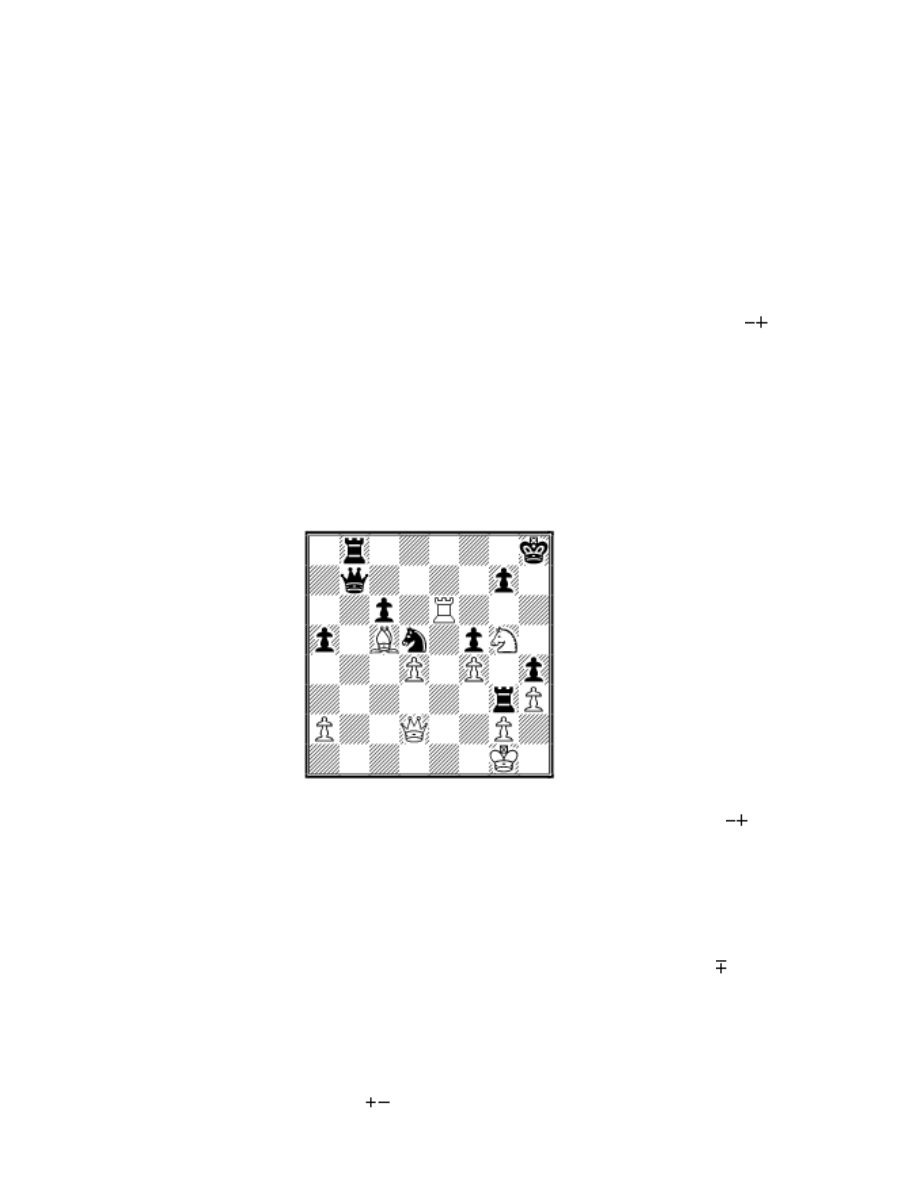
32. Rxe6
32...Nf6!
32...Qb1+!? would have led to
some interesting tactical
complexities. On 33. Kh2 Qf1
34. Bd6, Black has a winning
combination: 34...Nxf4! 35.
Bxf4 Rxg2+! 36. Qxg2 Qxf4+.
And after 33. Re1!, the
tempting 33...Ne3 (hoping for
34. Rxb1 Rxb1+ 35. Kf2 Nc4 36. Qc2 Rb2
) is met by
34. Nf3!, when 34...Nxg2 35. Rxb1 Nxf4+ 36. Kf2 Rg2+
37. Ke3 Rxb1 38. Kxf4 Rxd2 39. Nxd2 Rh1 leads to an
unclear endgame. Apparently, Black’s best would have
been 33...Nxf4! 34. Rxb1 Rxb1+ 35. Kh2 Rxg2+ 36.
Qxg2 Nxg2 37. Kxg2 Rb2+ 38. Kf3 Rxa2 .
33. d5
33. Qe2 is beautifully refuted by 33...Qb1+ (33...Qb2?? 34.
Re8+!
) 34. Kh2 Rxh3+!! (34...Rxg2+? 35. Qxg2 Rb2
file:///C|/Cafe/Dvoretsky/dvoretsky.htm (6 of 12) [02/11/2002 10:17:19 PM]

The Instructor
36. Re2) 35. gh Rb2
.
33...Qb2 34. Qxb2 Rxb2 35. Bf2
35. dc Rgxg2+ 36. Kf1 Rgc2
.
35...cd
36. Bxg3
36. Ra6 Rc3!? (threatening 37...Rc1+) 37. Ra8+ Ng8 38.
Bxh4 Rc1+ 39. Kh2 Rcc2
36...hg 37. Kf1 Rf2+ 38. Ke1 Rxg2 39. Ra6 Rxa2 40.
Ra8+ Ng8 41. Kf1
41. Nf7+ Kh7 42. Ng5+ Kg6 43. Rxg8 Ra1+ (43...g2 44.
Nf3 a4) 44. Ke2 g2
.
41...a4
41...Rf2+ 42. Kg1 Rxf4 43. Ra6!? g6 44. Ra7 Rh4! 45.
Kg2 f4
R
.
42. Ra6!? g6! 43. Rxg6 Rf2+ 44. Kg1 a3 45. Nf7+ Kh7
46. Rxg3 a2 47. Ng5+ Kg6 48. Nf3+ Kf7 49. Ne5+ Kf8
White resigned.
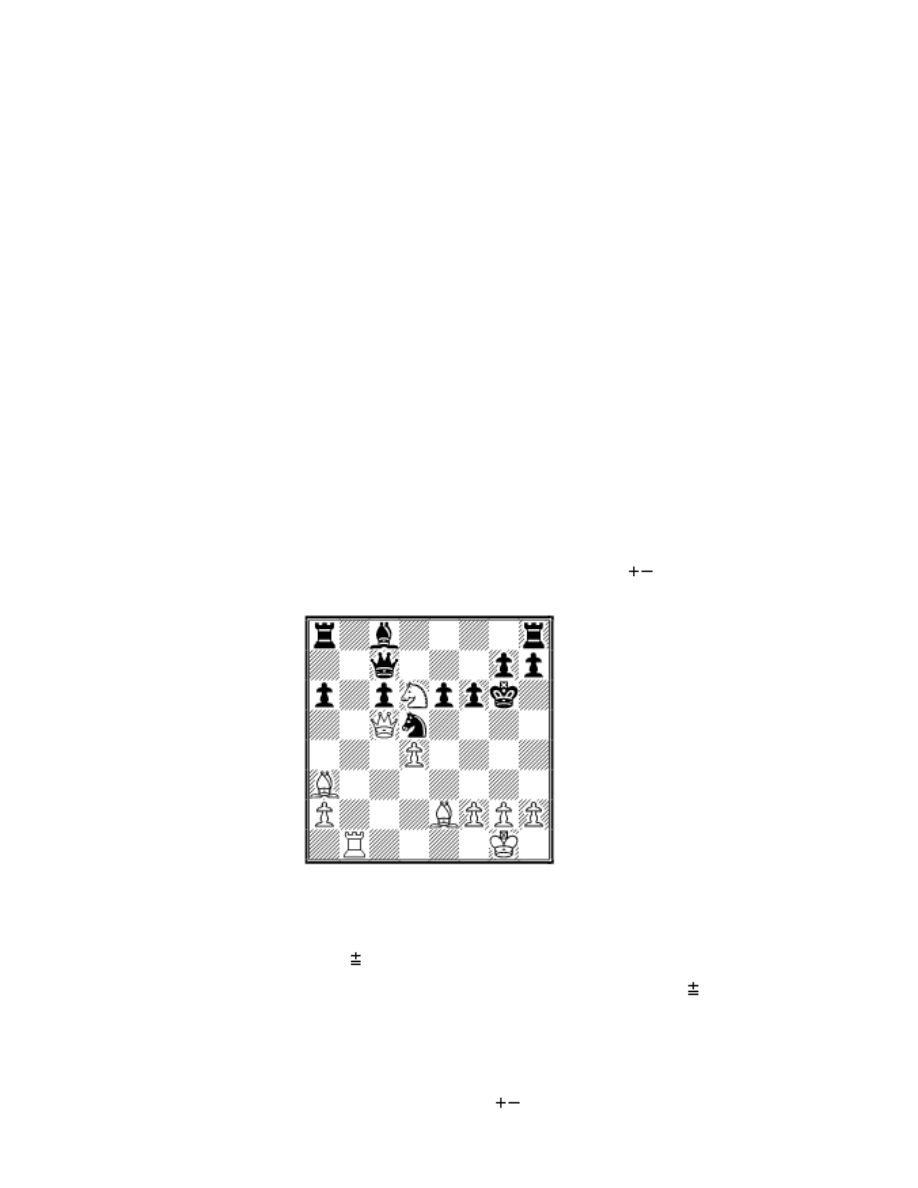
16...f7-f6! 17. Nf3-d2
17. Qxc6+ Bd7 18. Qd6 Qc7
17...Nd5-e7?
An unfortunate retreat. In order to set up the easily-
prevented threat of 18...0-0, the knight quits its excellent
central post. More logical was 17...Kf7 18. Nc4, and now
either 18...g5!? 19. Nd6+ Kg7, or 18...Kg8 19. Nd6 Bd7
( 18...Qa5) - “Black’s position would have been more
comfortable than the one in the note to White’s 16th move”
(Platonov).
file:///C|/Cafe/Dvoretsky/dvoretsky.htm (7 of 12) [02/11/2002 10:17:19 PM]
The Instructor
18. Qc1-c5! Ke8-f7 19. Nd2-c4 Ne7-d5
Acknowledging the error.
20. Rf1-b1
“A calm and powerful move, in the spirit of the classic
examples of attacking chess. By securing the b-file, White
provides even more strength to the invading knight on d6,
and in some lines threatens Rb1-b3 (using the open file as a
trampoline, à la Nimzowitsch), transferring the rook to the
kingside” (Platonov).
20. Bf3!?, intending Re1, Nd6+ and Bxd5, was also worthy
of consideration.
20...Qd8-c7 21. Nc4-d6+ Kf7-g6
21...Kg8? 22. Ne8 Qf7 23. Qxc6
was bad (Platonov)
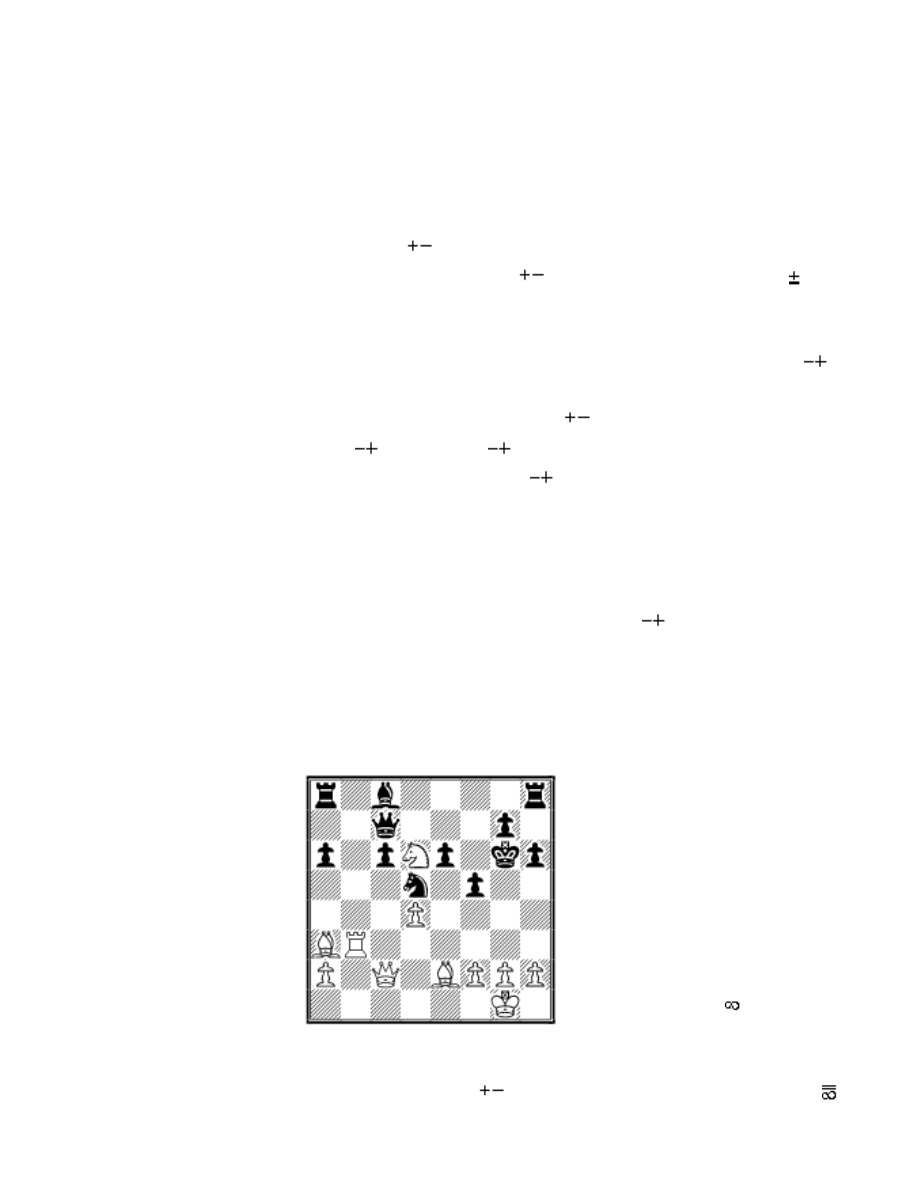
22. Rb1-b3!?
Threatening 23. Rg3+. White
had other ways to continue the
attack as well:
Kotov suggested 22. Qc2+!? f5
23. g4. Platonov’s
recommended answer was
23...h6, with the continuation
24. Bd3 Rf8 25. Nxf5 Rxf5. However, White simply
continues 24. gf+ ef 25. Bd3 Rf8 26. Nxc8 Raxc8 27.
Bxa6 . And 23...Rd8 is met by 24. gf+ ef 25. Qd3 Kf6
26. Rb7 Qxb7 27. Nxb7 Bxb7 28. Qh3 .
Platonov considered 23...Nf4!? a poor move, because of the
breakthrough 24. d5, for example: 24...Nxe2+ 25. Qxe2 cd
26. gf+ ef 27. Nxc8
; 24...Nxd5 25. Kh1 (intending
file:///C|/Cafe/Dvoretsky/dvoretsky.htm (8 of 12) [02/11/2002 10:17:19 PM]

The Instructor
Rg1); 24...c5 25. de Nxe2+ 26. Qxe2 Qxd6 27. gf+ with
an attack. But after 24...Qa5! 25. Nc4, he only examined
25...Nxe2+ 26. Qxe2 Qxd5 27. Ne5+ Kf6 28. g5+
and 25...Qxd5 26. Bf3 - but here, he missed 25...Qc3!
.
White must therefore give up the spectacular, but unsound
breakthrough in favor of 24. Bf3 h6 25. Qc1!, with mutual
chances. Interestingly, Kotov suggests replacing White’s
last move with 25. gf+ ef 26. Rb7. Platonov extended the
variation as follows: 26...Qd8 27. Nf7 Bxb7 28. Nxd8
Rhxd8 . The evaluation of this last position is disputable,
since White has 29. Be4! ; on the other hand, rather than
play 27...Bxb7?, Black could end matters with 27...Re8!
Platonov thinks White’s strongest plan here is to trade his
bishop on d5, by 22. Bf3!? His opinion is that this plan,
although it doesn’t win, still gives Black difficult problems
to solve. Here is his analysis (with several corrections):
22...Rb8 23. Re1 Qb6?! 24. Qc2+ f5 25. Nxc8 Rhxc8 26.
Rxe6+ Nf6 (26...Kf7 27. Bxd5 Qb1+ 28. Re1+
) 27.
Bh5+! Kxh5 28. Qxf5+ g5 29. Bc1
;
22...h6 23. Bxd5 (23. Qc2+ f5 24. Nxf5 ef 25. Bxd5
Bd7
- Dvoretsky) 23...ed 24. Rb7 Qd8! (24...Qxb7 25.
Qc2+ f5 26. Nxb7 Bxb7 27. g4
) 25. Qxc6! (but not
Platonov’s line: 25. Qc2+ f5 26. Nf7, in view of
26...Re8!
);
22...Rd8 23. Bxd5 (23. Qc2+) 23...ed 24. Qc2+ Kh6!
(24...f5 25. Rb7 Qxb7 26. Nxb7 Bxb7 27. g4 Kf7 28.
Qxf5+ Kg8
O
- Dvoretsky) 25. Nf5+ (25. Rb7 Bxb7 26.
Nf5+ Kg6 27. Nd6+ = Dvoretsky) 25...Kg6!, and White
has only a perpetual check (Platonov). Certainly, it is not
easy to leave one’s king exposed to discovered check, but
25...Bxf5?! doesn’t solve Black’s problems: 26. Qxf5 (
27. Bc1+) 26..Rf8 (forced) 27. Qh3+ (27. Re1 Rf7! =,
intending 28...g6) 27...Kg6 28. Bxf8 Rxf8 29. Qd3+ f5
file:///C|/Cafe/Dvoretsky/dvoretsky.htm (9 of 12) [02/11/2002 10:17:19 PM]
The Instructor
30. Qxa6
M
- (Dvoretsky).
22...h7-h6 23. Qc5-c2+
Here too, Platonov recommends 23. Bf3. This move is
justified after 23...Rd8 24. Bxd5 ed (24...Rxd6? 25. Be4+
f5 26. Qe5 [Platonov] 26...Rxd4 27. Qxd4 e5 28. Qc4 fe
29. Qxe4+
) 25. Qc2+ f5 26. Rb7! Qxb7 (26...Qxd6
27. Bxd6 Bxb7 28. g4
) 27. Nxb7 Bxb7 28. g4 .
Stronger is 23...Kh7 24. Qc2+ f5 (24...g6) 25. Bxd5 ed
26. Re3 (26. Rc3!? Qe7! 27. h3 Qf6 28. Rxc6 Bd7
-
Dvoretsky) 26...Rd8 27. Nxf5 (27. Ne8? Qf7! [27...Qa5?
28. Nxg7! Kxg7 29. Re7+
] 28. Nxg7 [28. Re7
Rxe8!
] 28...Ra7!
- Platonov) 27...Bxf5 28. Qxf5+
Kh8!
P
, and 29. Re7 Re8
doesn’t work (Dvoretsky).
Less exact would be 28...g6?! (instead of 28...Kh8!) 29.
Qf6 Rd7 - White does not continue 30. h4 Rf7 31. Re7
(which Platonov gives as a draw after 31...Rxe7 32. Bxe7
Rg8 33. h5), because of 31...Qxe7!
, but with 30. Re6
Rg8 31. Bc1 Qd8 32. Qf4 Qf8 33. Qd2, followed by h4-
h5, with an unclear position.
23... f6-f5
24. Nd6-c4?
A mistaken repositioning of this
knight - it stood better at d6
than it will at e5.
On 24. Bf3!?, Black could
retreat the knight by 24...Ne7!?
(24...Nf6 25. g4 ) , and if 25.
d5!? (Platonov), then 25...Rd8!
(25...Nxd5 26. Bxd5 ed 27. Re3 Kh7 28. Nxf5 Bxf5 29.
Qxf5+ g6 30. Qf6
; 25...ed 26.Re3 Kh7 27. Nxc8 )
26. Nxc8 (Platonov’s suggested 26. Ne8 is refuted by
file:///C|/Cafe/Dvoretsky/dvoretsky.htm (10 of 12) [02/11/2002 10:17:19 PM]

The Instructor
26...Qe5
) 26...Raxc8 27. de (27. d6 Rxd6 28. Bxd6
Qxd6
) 27...c5 .
After 24. g4!? Kh7, the training game Zvjagintsev -
Dvoretsky (11/12/1997. Game/60, beginning with Move
22) saw the unfortunate continuation 25. Bc4? Rd8! 26.
Nxc8 (26. gf Rxd6 ; 26. Bxd5 ed 27. Nxf5 ) 26...Raxc8
27. gf ef 28. Bxa6 Rb8 29. Rg3?! Kh8! 30. Qxf5 Qf4
31. Qg6 Qf6?! (31...Qxd4!
32. Bd3 Qa1+ 33. Kg2
Nf4+) 32. Qxf6 Nxf6 33. Rc3 (we stopped the game
here).
White had a stronger line: 25. gf ef 26. Bf3 (26. Nxf5?
Bxf5 27. Qxf5+ g6
) 26...Be6 27. Rb7 Qa5 28. Nxf5
Qe1+ 29. Kg2 .
24...Kg6-h7 25. Nc4-e5 Ra8-b8 26. Rb3-g3 Nd5-f4! 27.
Be2-f1 Rh8-d8 28. Rg3-c3
28. Qc1!? c5! (28...Rxd4 29. Nxc6) 29. Bxc5 (29. Rc3
Rxd4 30. Rxc5 Qd6 31. Nf7 Qd7 32. Rc7 Qa4
)
29...Nd5 .
28...Bc8-b7 29. Ba3-c5 Nf4-g6 30. Ne5xg6?
“Black’s stouthearted defense threw Bondarevsky off his
stride. Had he kept his knight, retreating it to c4, White
could still have retained some small attacking chances. The
exchange of knights sharply reduces his attacking
firepower.” (Kotov)
30...Kh7xg6
31. g2-g4 Bb7-c8
31...Qf4
32. Rc3-g3 Kg6-h7 33. Bf1-d3 Qc7-f4 34. g4xf5 e6xf5 35.
Qc2-e2 Rb8-b7 36. h2-h3 Qf4-h4 37. Qe2-e5 Qh4-f6 38.
Qe5-f4
file:///C|/Cafe/Dvoretsky/dvoretsky.htm (11 of 12) [02/11/2002 10:17:19 PM]
The Instructor
White’s flag fell.
Copyright 2002 Mark Dvoretsky. All rights reserved.
Translated by Jim Marfia
This column is available in
Chess Cafe Reader
format. Click
for more
information.
[
] [
]
[
]
] [
Copyright 2002 CyberCafes, LLC. All Rights Reserved.
"The Chess Cafe®" is a registered trademark of Russell Enterprises, Inc.
file:///C|/Cafe/Dvoretsky/dvoretsky.htm (12 of 12) [02/11/2002 10:17:19 PM]
Document Outline
- Local Disk
Wyszukiwarka
Podobne podstrony:
Mark Dvoretsky The Instr5
Mark Dvoretsky The Inst16
Mark Dvoretsky The Inst30
Mark Dvoretsky The Inst14
Mark Dvoretsky The Inst11
Mark Dvoretsky The Instru
Mark Dvoretsky The Instr9
Mark Dvoretsky The Instr8
Mark Dvoretsky The Inst29
Mark Dvoretsky The Inst17
Mark Dvoretsky The Inst13
Mark Dvoretsky The Inst28
Mark Dvoretsky The Inst25
Mark Dvoretsky The Inst21
Mark Dvoretsky The Instr2
Mark Dvoretsky The Instr4
Mark Dvoretsky The Inst20
Mark Dvoretsky The Instr6
Mark Dvoretsky The Inst26
więcej podobnych podstron