The
Instructor
Mark Dvoretsky
Passivity in the Opening
Some players, when confronted with a more experienced opponent (with a
much higher rating) play too cautiously, avoiding the main variations. As a
result, they cede the initiative to their opponent, and thus in fact make his task
easier. By way of examples to illustrate the sad consequences of passive
opening play, I present some of my own games. These were played in the latter
half of the 90’s, when after a lengthy layoff I took part in a few Opens.
Ridameya - Dvoretsky Barbero del Valdez 1996
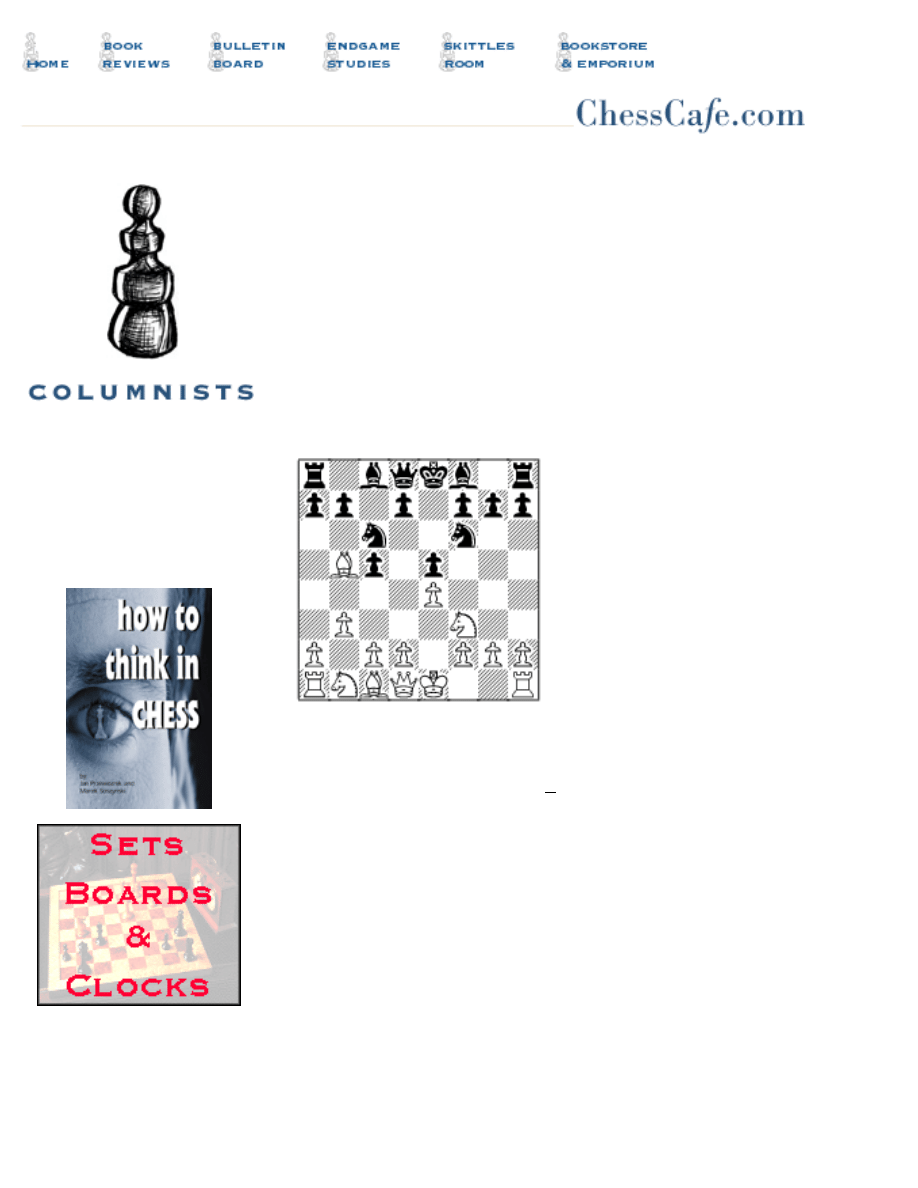
1. e4 c5 2. Nf3 Nc6 3. b3 e5 4. Bb5 (4. Bb2 d6 5. Bb5) 4...Nf6 (4...d6)
The Black pawn at e5 shuts in the Bishop at
b2; White’s position might even become
inferior,.unless he prepares either a center
break with c2-c3 and d2-d4, or something
else.
5. Nc3?! Passive: the Knight has no
prospects at c3, especially after a likely
exchange at c6. 5. 0-0 was more logical;
Black would reply 5...d6.
5. Bxc6!? deserved serious consideration.
5...dc?! is poor: 6. Bb2 Bd6 7. Nxe5 Qe7
8. f4 [8 Nc4!?] 8…Nxe4 9. 0-0 intending
10. Re1. 5...bc!? is stronger: 6. Nxe5 Qe7 7. Bb2 d6! 8. Nxc6 (8. Nc4+/= would
be simpler); and now: (A) 8...Qxe4+ 9. Qe2 Qxe2+ 10. Kxe2 a5!? (10...Bb7 11.
Na5 Bxg2 12. Rg1 intending Bxf6+) 11. Bxf6 gf 12. d4 - Black probably has
sufficient compensation for the pawn, although this would need to be
demonstrated; (B) 8...Qc7!? 9. e5 Ng8 10. Na5! Qxa5 11. Qf3 d5!? (11...Rb8
12. ed is unclear) 12. Nc3 - unclear.
5...d6 6. h3? 6. 0-0 Be7= is better. 6...g6!
White’s last move wasted valuable time. Black is now fully justified in
choosing a more active developmental scheme (compared with 6...Be7). He
intends to continue Bg7, 0-0, Nh5 and then f7-f5 or Nf4 - which will, among
other things, demonstrate clearly the weakening effect the move h2-h3 had on
the kingside.
7. Qe2?! Bg7 8. d3 0-0 9. Bxc6 (9. Bg5? Qa5) 9...bc 10. 0-0 Nh5 -/+ 11.
Na4?! f5 12. Nh2?! Be6 13. Rd1 Qd7 14. c3 Rae8 15. f3 (15. Nf3 was
better) 15...Nf4 16. Qf1 g5 17. Be3 h5 18. Qe1 (18 g3 fe) 18...Qf7 19. Rd2
Qg6 20. Kh1 g4 21. h4?! (21. ef Bxf5 22. fg hg 23. hg Bxd3 and ...e5-e4)
21...Bf6 22. g3?! Nh3 23. Qe2 f4-+ 24. gf ef 25. Bg1 Bxh4 26. d4 Ng5 27.
The Instructor
file:///C|/Cafe/Dvoretsky/dvoretsky.htm (1 of 5) [5/9/2001 8:37:39 AM]
dc d5 28. Bd4 gf 29. Nxf3 Nxf3 30. Qxf3 Bg4 31. Qd3 de 32. Qf1 Bf3+
33. Rg2 Kh7 34. Qxf3 ef 35. Rxg6 Kxg6 36. Rf1 Re1 37. Rxe1 Bxe1 38.
Nb2 Kf5 39. Nd3 Bg3 40. Ne5 f2 41. Kg2 h4, and White resigned.
Lickleder - Dvoretsky German Team Tmt. 1997
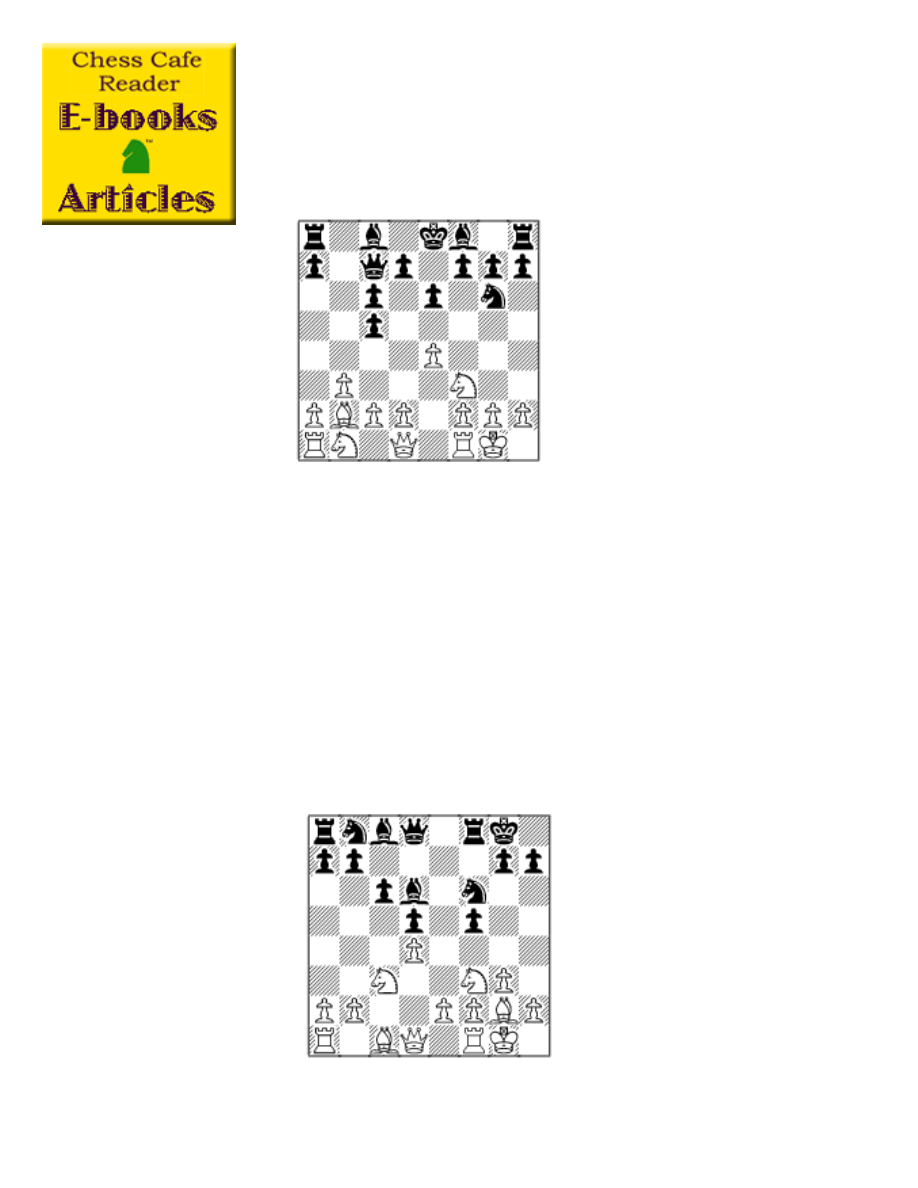
1. e4 c5 2. Nf3 Nc6 3. Bb5 e6 4. Bxc6 bc 5. 0-0 Ne7 6. b3 Ng6 7. Bb2
Qc7!? (7...f6, intending Be7 and 0-0)
Black wants to execute the same plan as in
the previous game - hemming in the Bishop
on b2 with his pawn at e5. White has a
choice of several reasonable continuations
(although it is certainly true that one would
be hard-pressed to say he could count on
any sort of advantage): 8. Re1 f6 [8...e5!?
9. c3 d6 10. d4 Be7 11. dc dc] 9. d4 cd 10.
Qxd4 Be7 11. c4 c5 12. Qe3 Bb7; 8. e5!?
Be7 9. d3 0-0 10. Nbd2 f6 11. ef Bxf6 12.
Bxf6 gf; 8. d4!? cd 9. Qxd4 c5 - all lines
are unclear.
8. d3!? Too passive. Now Black has an easy game. 8...e5 9. Nbd2 Be7 10.
Nc4 d6 11. Ne3 0-0 12. Ne1?! 12. Nf5 was preferable. 12...f5=/+ 13. ef Bxf5
14. Nxf5 Rxf5 15. g3 Raf8 16. Ng2 Bg5 17. Bc1 Bxc1 18. Rxc1 Qf7 19.
Qe2 Rf3 19...h5!? was worth examining. 20. Ne1 Rf6 21. Rd1 Ne7 22. Rd2
Nd5 23. Qe4! Qd7 23...Qb7!? was interesting: the intent is 24...Qb4,
exploiting the weakness at c3. 24. f3 Now, with 24...Nc7! 25. Rdf2 Ne6 (with
ideas of Ng5 or Nd4), Black would have retained the better chances. Instead, he
temporized with 24...R8f7? 25. Rdf2! (intending Ng2 and f4) 25...Nc7 (Black
gets nothing from 25...Nc3 26. Qc4) 26. Ng2 Ne6, and after 27. f4 ef 28.
Nxf4, the position leveled out.
Pascual - Dvoretsky Terrassa, 1996
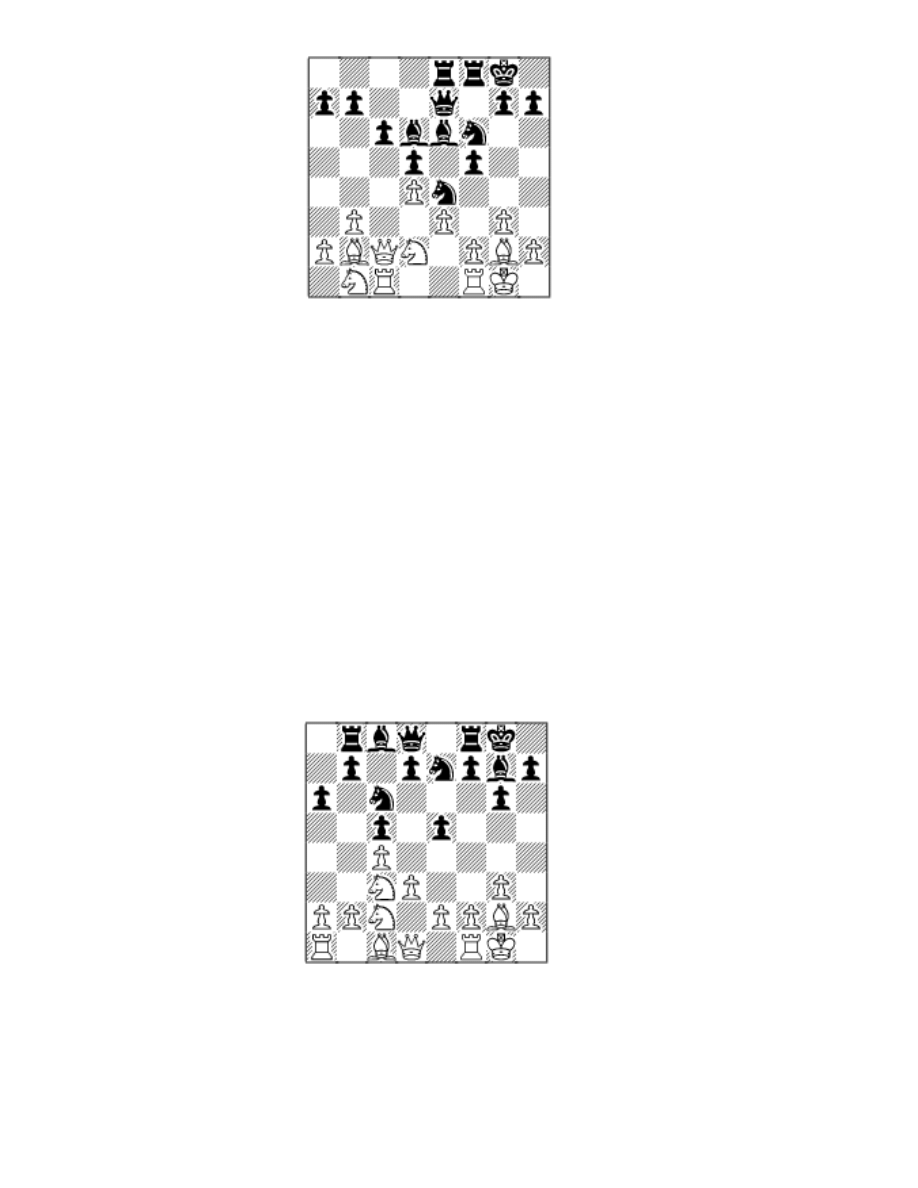
1. Nf3 f5 2. c4 Nf6 3. Nc3 e6 4. g3 d5 5. cd ed 6. d4 c6 7. Bg2 (7. Bf4!?)
7...Bd6 8. 0-0 0-0
9. b3? This development of the Bishop is
too passive. 9. Bf4, or 9. Ne5, were
better. 9...Ne4 10. Qc2?! Another
inaccuracy. After 10. Bb2, White puts his
Knight on e5, which can only be
prevented by ..Nbd7, which in turn locks
in the Bishop at c8. Now, Black succeeds
both in developing the Bishop, and
defending the e5 square. 10...Be6 11. e3
Nd7 12. Bb2 Qe7 13. Rae1 Rae8 14.
Nd2 Ndf6 15. Ncb1?
The Instructor
file:///C|/Cafe/Dvoretsky/dvoretsky.htm (2 of 5) [5/9/2001 8:37:39 AM]
Preferable was 15. f3 Nxd2 16.
Qxd2=/+. With the text, White hopes to
prepare f2-f3 more comfortably.
However, Black has a tactic which cuts
across this plan.
15...Ng4! -/+ 16. Nf3 16. f3? is bad here,
on account of 16...Nxh2! 16...Qf6 17.
h3?! Weakening the kingside is a bad
idea. Simplifying the position a little by
17. Ba3 is more logical. 17...Nh6 My
first instinct was to continue
17...Ngxf2?!, but the position after 18.
Rxf2 (or 18. Ne5 Nxh3+ 19. Bxh3 Nxg3) 18...Bxg3 19. Rff1 didn’t look
clear enough to me. The simple retreat of the Knight retains Black’s
advantage.
18. Ne5 Nf7 19. Nd3 (19. Nxf7!?) 19...g5 20. Nd2 Qh6 21. Nf3?! g4!
(21...f4?! 22. g4) 22. hg fg 23. Nfe5 Nfg5 24. Nf4?! Bxe5 25. de Nf3+ 26.
Bxf3 gf 27. Qd1 Ng5 28. Qd4 Nh3+. White resigned.
In the games we have examined thus far, Black’s game unfolded pretty much
by itself, with no special accuracy or resourcefulness needed. The following
example is more complex. Note the repeated occurrence of the problem of
whether to exchange the light-squared Bishops. First I offered the exchange;
then I declined it. And it may have been my apparently inconsistent play that
ended up confusing my opponent.
Pascual - Dvoretsky Barbero del Valdez 1996
1. Nf3 c5 2. c4 g6 3. g3 Bg7 4. Bg2 Nc6 5. Nc3 e5 6. d3 Nge7 7. 0-0
0-0 8. Ne1 8. a3 8...a6 8...d6 9. Nc2 Be6 9. Nc2 Rb8
Black intends to continue 10...b5,
obtaining a queenside initiative. There
would be some point to either preventing
it with 10. a4!?, or setting up White’s
own queenside play with 10. Rb1!? d6
(10...b5 11. cb ab 12. b4 cb 13. Nxb4
Nxb4 14. Rxb4 Qa5 15. a3+/=) 11. b4
Be6 12. bc dc 13. Ne3+/=.
10. Ne3 b5 11. Ned5 d6 12. Rb1 White
acted more purposefully in the game
Sisniega - Karpess, Novi Sad Ol 1990:
12. b3 Bg4 13. h3 Be6 14. Bb2 Qd7 15.
Kh2 Kh8 16. Qd2 f5 17. e3, intending f2-f4. 12...Bg4!? 13. Nxe7+?! This
trade was provoked by my last move: White feared the attack on the e-pawn
after 13...Nxd5 14. Nxd5 Nd4. As long as Black has not yet played ...Qd7,
White should drive the Bishop from its active position with 13. h3 Be6 14.
Kh2=. 13...Nxe7 14. Qc2 Qd7 15. Nd5 Nxd5 16. Bxd5
The Instructor
file:///C|/Cafe/Dvoretsky/dvoretsky.htm (3 of 5) [5/9/2001 8:37:39 AM]
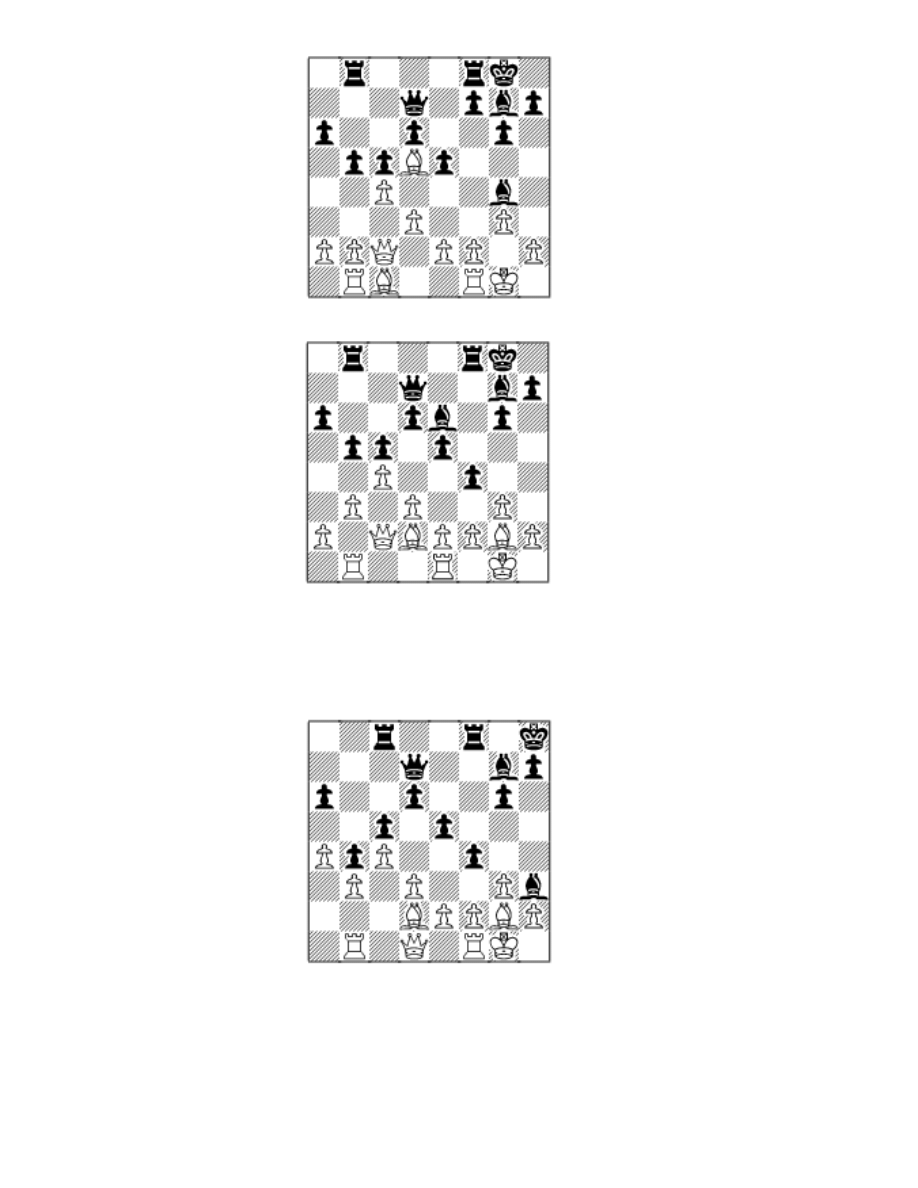
Obviously, Black’s plan is a kingside
attack: f7-f5-f4. The two ways to unpin
the f-pawn are Kh8 and Be6. Since
White’s Bishop stands beautifully on d5,
I decided to offer the trade of Bishops.
First, though, it makes sense to drive the
Rook at f1 to a worse square.
16...Bh3! 17. Re1 17. Bg2 is
unfavorable, due to 17...Bxg2 18. Kxg2
d5. 17...Be6=/+ 18. Bg2 f5 19. b3 f4
20. Bd2
While executing your own plan, it’s
important to keep an eye out for active
possibilities for your opponent. On the
natural 20...g5?, White continues 21. b4!,
stirring up queenside counterplay.
20...Rbc8! An excellent prophylactic
move! 20...b4?!, with the same idea, was
weaker on account of 21. Qc1! g5 22.
a3. 21. a4?! A strange decision. Locking
up the queenside makes it easier for
Black to execute his attack on the
kingside. 21...b4 22. Qd1 Apparently
intending 23. e3 - which Black prevents.
22...Qf7!? In order to meet 23. e3 with f4-f3. 23. Rf1 Now the tempo Black
gained on move 16 shows its usefulness. 23...Kh8!? 24. Bf3 On 24. Be4
(intending Kh1, followed by Rg1 or f2-f3), Black continues the same way.
24...Bh3 25. Bg2 Qd7
Black has no objection, in principle, to
the exchange of the light-squared Bishop
that defends White’s kingside; but he
would like it to occur in the best possible
way - i.e., so that the Queen enters at h3.
Perhaps White should have allowed this
anyway: 26. Bxh3!? Qxh3 27. Kh1 (27.
Qe1? f3 28. ef Rf5 ) 27...Rf5 28.
Rg1=/+.
26. Qe1 By overprotecting the g3-pawn,
White prepares 27. Bxh3 Qxh3 28. f3.
Therefore, I now decline the exchange.
26...Be6! 27. Qc1
Better 27. Be4, intending f2-f3. 27...g5 28. Bd5? And again, 28. Be4 was
preferable.
The Instructor
file:///C|/Cafe/Dvoretsky/dvoretsky.htm (4 of 5) [5/9/2001 8:37:39 AM]
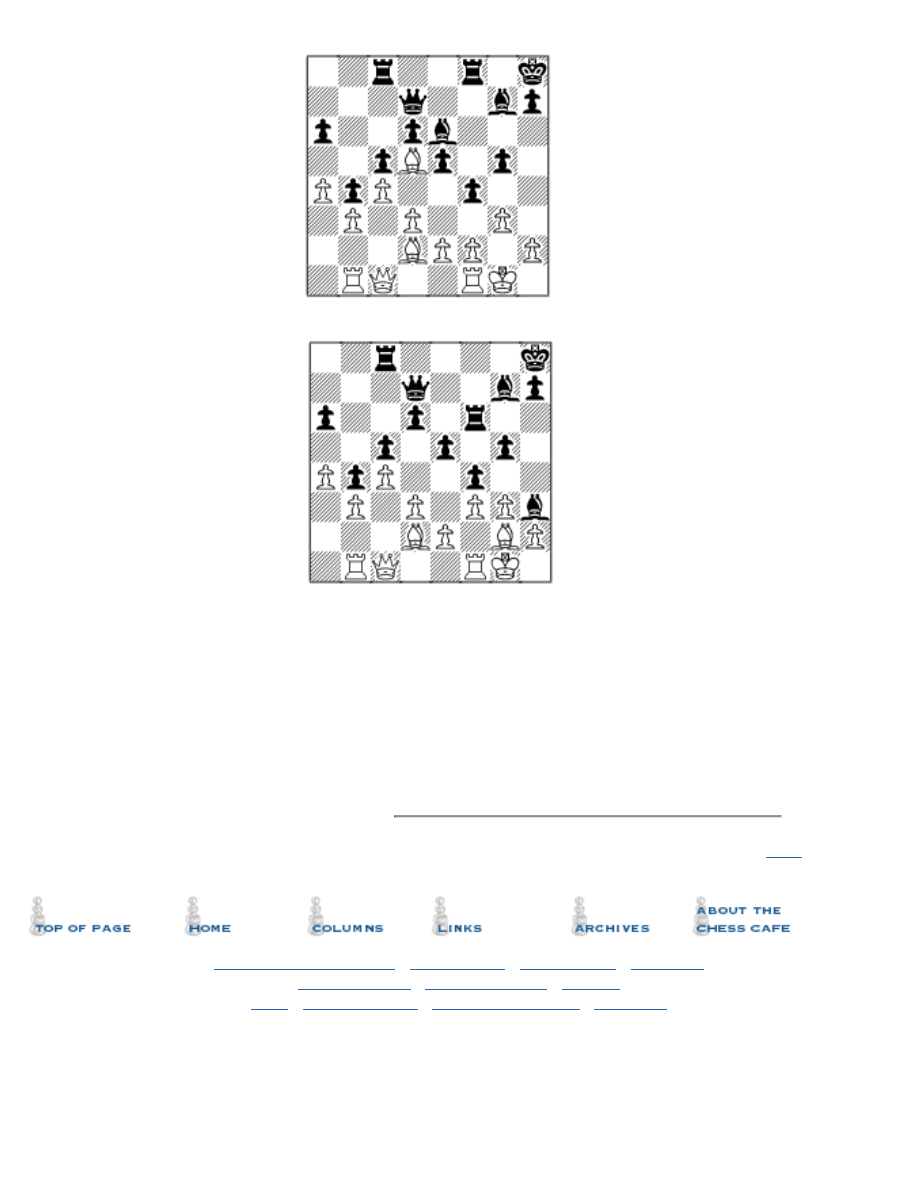
28...Bh3?! Black continues to turn his
opponent’s head with the question of
exchanging Bishops. But this was
precisely the moment when the exchange
leads to a decisive advantage: 28...Bxd5!
29. cd Qh3 (intending Rf6-h6) 30. Kh1
(30. Qc4 g4!) 30...g4!, and if 31. gf ef
32. Bxf4 Rxf4! 33. Qxf4 Be5 wins. 29.
Bg2 Rf6 30. f3
In order to defend against the threatened
30...Rh6, White must shut in his own
Bishop; so now, Black once again has a
good reason to decline the exchange.
However I feared that after 30...Be6 31.
g4 (31. e3!?) 31...h5 32. h3, I would
have no way of breaking in. I therefore
decided (and I’m not sure if I was right)
to put off the exchange for one more
move.
30...h5 31. Rf2? The decisive mistake!
White had to play 31. Bxh3 Qxh3 32.
Rf2!=/+ (stronger than 32. Qe1), with a defensible position. 31...Be6! Now
there will be no stopping the attack: the “bad” g2-Bishop merely interferes
with its own pieces. 32. e4 Rcf8 32...Bh6!? 33. Qf1 Bh6 Threatening
34...g4. 34. gf gf 34...ef?! 35. d4 was weaker. 35. Kh1 Rg6 36. Qe2?!
Intending Bf1 and Rg2. 36...h4 (36...Rfg8) 37. h3 Rfg8 38. Rbf1 Qg7 39.
Be1 (39. Kh2 Rg3) 39...Bxh3 White resigned.
Copyright 2001 Mark Dvoretsky. All rights reserved.
Translated by Jim Marfia
This column is available in
Chess Cafe Reader
for more
information.
[
] [
]
[
]
] [
Copyright 2001 CyberCafes, LLC. All Rights Reserved.
"The Chess Cafe®" is a registered trademark of Russell Enterprises, Inc.
The Instructor
file:///C|/Cafe/Dvoretsky/dvoretsky.htm (5 of 5) [5/9/2001 8:37:39 AM]
Document Outline
- Local Disk
Wyszukiwarka
Podobne podstrony:
Mark Dvoretsky The Instr5
Mark Dvoretsky The Inst16
Mark Dvoretsky The Inst30
Mark Dvoretsky The Inst14
Mark Dvoretsky The Inst11
Mark Dvoretsky The Instru
Mark Dvoretsky The Instr9
Mark Dvoretsky The Inst29
Mark Dvoretsky The Inst17
Mark Dvoretsky The Inst13
Mark Dvoretsky The Inst28
Mark Dvoretsky The Inst25
Mark Dvoretsky The Inst18
Mark Dvoretsky The Inst21
Mark Dvoretsky The Instr2
Mark Dvoretsky The Instr4
Mark Dvoretsky The Inst20
Mark Dvoretsky The Instr6
Mark Dvoretsky The Inst26
więcej podobnych podstron