
Yoram Schweitzer and Sari Goldstein Ferber
Al-Qaeda and the Internationalization
of Suicide Terrorism

The Jaffee Center for Strategic Studies (JCSS)
JCSS was founded in 1977 at the initiative of Tel Aviv University. In 1983 the Center
was named the Jaffee Center for Strategic Studies – JCSS – in honor of Mr. and Mrs.
Melvin Jaffee.
The purpose of the Jaffee Center is, first, to conduct basic research that meets the
highest academic standards on matters related to Israel's national security as well
as Middle East regional and international security affairs. The Center also aims to
contribute to the public debate and governmental deliberation of issues that are – or
should be – at the top of Israel's national security agenda.
The Jaffee Center seeks to address the strategic community in Israel and abroad,
Israeli policymakers and opinion-makers, and the general public.
The Center relates to the concept of strategy in its broadest meaning, namely the
complex of processes involved in the identification, mobilization, and application
of resources in peace and war, in order to solidify and strengthen national and
international security.

Yoram Schweitzer and Sari Goldstein Ferber
Al-Qaeda and the Internationalization
of Suicide Terrorism
Memorandum No. 78
November 2005
Jaffee Center for Strategic Studies

רברפ ןייטשדלוג ירשו רצייוש םרוי
הדעאק לא
םידבאתמה רורט לש היצזילבולגהו
Editor: Judith Rosen
Cover Design: Yael Kfir
Graphic Design: Michal Semo, Yael Bieber
Printing House: Kedem Printing Ltd., Tel Aviv
Jaffee Center for Strategic Studies
Tel Aviv University
Ramat Aviv
Tel Aviv 69978
Israel
Tel. +972-3 640-9926
Fax. +972-3 642-2404
E-mail: jcss2@post.tau.ac.il
http://www.tau.ac.il/jcss/
ISBN: 965-459-065-4
© All rights reserved
November 2005
Jaffee Center for Strategic Studies
Tel Aviv University

Table of Contents
Executive Summary ....................................................................................................7
Introduction .................................................................................................................9
PART I: AL-QAEDA AND THE IDEOLOGY OF SELF-SACRIFICE
Chapter 1 / Al Qaeda and its Affiliates ................................................................15
The Organizational Core .....................................................................15
Al-Qaeda Affiliates ...............................................................................18
The Towering Figure of Bin Laden ....................................................20
Chapter 2 / Suicide Terrorism as Ideology and Symbol ..................................25
Istishhad as a Unifying Organizational Value ...................................26
Globalization of the Idea of Istishhad ................................................27
Chapter 3 / Translating Organizational Ideology into Practice .......................33
Istishhad as a Personal Quest ..............................................................33
Locating, Recruiting, and Assigning Suicide Terrorists .................36
The Psychological Contract ................................................................39
The Dynamic of Empowerment .........................................................40
Propaganda by the Deed .....................................................................45
PART II: THE SUICIDE ATTACKS OF AL-QAEDA AND ITS AFFILIATES:
MODES OF ACTION AND REFLECTION OF CULTURE
Chapter 4 / General Operational Features ...........................................................49
Chapter 5 / Suicide Attacks of al-Qaeda ..............................................................53
Kenya and Tanzania – American Embassies ....................................53
Yemen – The USS Cole .........................................................................55

Solo Suicide Attackers: The Attempted "Shoe-Bomb"
Attack and the Djerba Synagogue – Tunisia ....................................57
Kenya – Israeli Tourist Targets ...........................................................59
Chapter 6 / Suicide Attacks of al-Qaeda Affiliates ............................................63
Singapore – Showcase Terrorism Thwarted .....................................63
Bali and Jakarta, Indonesia .................................................................66
Morocco – Jewish and Western Targets ............................................68
Saudi Arabia – Government Symbols and Economic Targets .......70
Istanbul, Turkey ....................................................................................72
Madrid – The Trains of Spain .............................................................74
Chechnya ...............................................................................................76
Iraq .........................................................................................................78
Conclusion ..................................................................................................................83
Notes ............................................................................................................................89

Executive Summary
Although al-Qaeda joined the ranks of groups carrying out suicide attacks
approximately fifteen years after this mode of operation became part of the terrorism
repertoire, it has since become the dominant group in the global arena with regard
to suicide terrorism. It was the main force behind the internationalization of suicide
terrorism, transforming it from a local phenomenon to an international phenomenon.
On an ideological level, al-Qaeda introduced the ideal of self-sacrifice, istishhad, as
the jewel in the crown of global jihad, its leading organizational value, and became
its own commercial symbol.
In addition:
•
Al-Qaeda employed innovative modes of action and raised suicide terrorism’s
level of destruction and fatalities to previously unknown heights.
•
It disseminated its philosphy and modes of action by means of agents of influence
and liaison officers among its ranks who immigrated to other areas of combat
and preached the al-Qaeda doctrine. The organization was thus able to command
and assist terrorist groups and networks around the world that implement these
concepts and modes of action in accordance with their particular operational
exigencies.
•
Due to the massive international pressure being exerted on al-Qaeda, the center
of gravity of suicide terrorism has shifted to its affiliates, which are inspired by
al-Qaeda and work in accordance with its worldview.
•
It is critical that Osama Bin Laden be removed (apprehended or killed). As long
as he continues to lead al-Qaeda, the organization will aspire to maintain its high
profile through strategic showcase attacks, which will preserve its own status
and its ability to lead its affiliates.
•
Still, even if efforts to dispose of Bin Laden succeed, it is not certain that this will
eliminate the phenomenon of suicide terrorism among al-Qaeda’s affiliates in
their global jihad campaign.
•
Beyond intelligence efforts and operations to thwart the suicide terrorism of al-

8 Yoram Schweitzer, Sari Goldstein Ferber
Qaeda and its affiliates, primary efforts to prevent proliferation of the concept of
istishhad should be invested by mobilizing spiritual leaders with religious and
institutional authority throughout the Muslim world to unite and offer non-
violent Islamic alternatives that decry the path of Bin Laden as contradictory to
the spirit of Islam.

Introduction
The concept of sacrificing one’s life in the name of Allah (istishhad) became a supreme
organizational ideal within al-Qaeda and then spread to its operatives and affiliates
in what might be described as a self-reproducing, self-disseminating virus. In 1998,
more than a decade and a half after Hizbollah added suicide attacks to the terrorism
repertoire, al-Qaeda joined the list of groups employing this mode of operation.
The organization became the dominant force in suicide terrorism and the group
directly responsible for its internationalization. Under the leadership of Bin Laden
and his associates, suicide terrorism was transformed from a useful and efficient
political tool in local conflicts into a more widespread and destructive international
phenomenon. Although suicide terrorism was not the only mode of action for
al-Qaeda and its affiliates, it was their preferred method, both operationally and
symbolically. Al-Qaeda’s championship of suicide attacks led to escalating levels of
death and destruction, which reached heights that were hitherto unknown.
Modern suicide terrorism emerged in the early 1980s and grew to become a
familiar phenomenon. The capacity of a suicide attack to inflict mass casualties
and immense destruction endowed its perpetrators with an aura of power that
far exceeded their actual strength. This was true first and foremost of Hizbollah,
a pioneer in the use of suicide terrorism. Other terrorist groups, many of them
secular in orientation, followed in Hizbollah's footsteps and adopted this mode of
operation, thus importing it in areas throughout the world, among them Sri Lanka,
Israel, the Palestinian Authority, Turkey, and Russia. Over the past two decades,
the tactic of suicide terrorism has mushroomed across twenty-nine countries in five
continents
1
around the world and has been adopted by more than thirty terrorist
groups and networks, religious and secular alike. More than 1,323 male and female
suicide terrorists have taken part in suicide attacks or were intercepted en route
between 1983 and mid-September 2005 (figure 1). Suicide attacks came to be seen as
one of the most effective means at the disposal of leaders of terrorist groups striving
to achieve their political goals.

10 Yoram Schweitzer, Sari Goldstein Ferber
Figure 1. Distribution of Suicide Terrorists (as of 22 September 2005)
While the willingness of terrorists to risk or even sacrificetheirlivesduringterrorist
attacks is not a new phenomenon in human history, suicide terrorism is a distinct
mode of operation. It most often involves explosives carried on a person’s body or in
a vehicle driven by one or more people, who aim to detonate themselves along with
the explosives at or near a chosen target. While at times suicide attacks have been
carried out in pairs or in certain cases larger groups, most suicide attacks around the
world have been performed by individuals. This study defines a suicide attack as
"a violent, politically motivated action executed consciously, actively and with prior
intent by a single individual (or individuals) who kills himself in the course of the
operation together with his chosen target. The guaranteed and preplanned death of
the perpetrator is a prerequisite for the operation's success.”
2
Some terrorists were
not successful in achieving their goal of actively causing their own death, whether
due to technical operational problems, the preventative measures of security forces,
or, in some cases, their own last minute regret. These cases, however, nonetheless fall
into the said category of suicide attacks. In contrast, this definition excludes cases of
450
400
350
300
250
200
150
100
50
0
Lebanese
Sri Lankans
Palestinians
Turks
A
Q &
Affiliates
Chec
hn
yans
Ir
aqis
50
265
400
17
108
107
376

Al-Qaeda and the Internationalization of Suicide Terrorism 11
self-sacrifice in which there was a slim chance that the perpetrator would survive,
even if the perpetrator had no intention of remaining alive. The inclusion of these
categories of attack would have resulted in much higher numbers of suicide attacks
than those appearing here.
Suicide terrorism is at once both a personal process and a group process. On the
one hand, it is an individual act in which the person committing suicide undergoes
a personal deep and complex psychological process leading him or her from a state
of conscious awareness to a state of consciousness similar to an operator-dependant
hypnotic reaction. This process evolves from the preparatory stages until the
moment the act of suicide is committed. At the same time, the suicide is the outcome
of organizational activity. From the moment an individual consciously decides to
volunteer for such an operation, the process is closely managed by an organizational
framework that links itself to the personal process, nurtures it, and intensifies it,
both to make sure that volunteers do not change their mind about executing the
assignment and to facilitate execution. In this dynamic, one component cannot exist
without the other – the suicide terrorist needs the organizational production, and the
organization is ineffective without the individual suicide terrorist.
The major supportive role played by organizations in preparing the suicide
operation and then exploiting it for their own purposes is critical. Convincing the
individual to volunteer for the task, to stay committed, and to actually carry it out
is usually done without threats, but rather through temptation, persuasion, and
indoctrination, according to the personality of the volunteer and the organizational
nature of the particular group.
3
In addition, terrorist groups sending men, and
sometimes women, to carry out suicide attacks have used sophisticated production
measures after the attack to provide videotaped wills, announcements to the press,
and prior interviews with the perpetrators. This media promotion exalts the act,
romanticizes the attacker, and glorifies the objective of the suicide attacks. The
family members of suicide attackers are also usually treated with a great deal of
honor and respect within their communities, often receiving material remuneration,
and in Islamic groups, they are assured forgiveness in the world to come.
This study will describe and analyze the suicide component of al-Qaeda’s
activity by exploring the multi-dimensional relationship between the organization’s
core and the organization’s affiliates – terrorist networks supported by established
terrorist organizations, founded primarily by veterans of the war in Afghanistan
or their disciples (figure 2). Part I will present the organizational, operational, and
psychological processes cultivated by the core members of al-Qaeda that enabled

12 Yoram Schweitzer, Sari Goldstein Ferber
them to assimilate and disseminate the concept of self-sacrifice in the name of Allah
among the global affiliates. It will analyze al-Qaeda’s structure and operations
from an organizational perspective and briefly sketch the history of al-Qaeda.
Tactics such as locating, recruiting, and assigning suicide candidates, supporting
and communicating with terrorists and their operators, organizational culture and
vision, and leadership traits will be addresssed. Part II will describe and analyze a
number of selected suicide attacks as case studies that illustrate the importance of
self-sacrifice within terrorist activity as a whole. The statistical information included
in the study is accurate as of mid-September 2005. The study’s conclusion will stress
the need for an ideological response to the concept of self-sacrifice in the name
of Allah as a mandatory component of the effort to curb its dissemination to new
recruits by al-Qaeda and its affiliates. Of course, this ideological response would
function in conjunction with enforced intelligence operations, which are critical for
thwarting the terrorist operations of al-Qaeda and its affiliates.
Osama Bin Laden
Al-Qaeda
Ad-Hoc
Networks
Begal Network
Turkish Network
Spanish Network
Saudi Network
Zarqawi Network
Established
Terror Orginizations
G.S.P.C.
Jahadia Salfiya
Al-Itkhad al-Islami
IMU
Jaysh Muhammad
Lashkar al-Toiba
al-Jama’a al-Islamiya
International Islamic Front
for Jihad against the Jews
and the Crusaders
Qaedat al-Jihad
Al-Qaeda and
Egyptian Islamic Jihad
Figure 2. Evolution of al-Qaeda and its Affliliates

Part I
Al-Qaeda and the Ideology of Self-Sacrifice


Chapter 1
Al-Qaeda and its Affiliates
What is al-Qaeda and how it was formed? What is its worldview and what are its
goals? How did it link itself to terrorist groups and terrorist networks around the
world, and what channels of operation lie at its disposal? How do the personality
and leadership style of Bin Laden shape organizational operations? These questions
are crucial avenues to understanding how al-Qaeda has successfully spread its
philosophy and exported suicide terrorism.
The Organizational Core
Al-Qaeda ("the base") was established by Osama Bin Laden in 1988, towards the
end of the war in Afghanistan. It was fashioned out of an organization called the
Services Office (Maktab al-Khidamat), whose purpose was to absorb, place, and
manage the thousands of volunteers who came to Afghanistan between 1979 and
1989 from around the Muslim world in order to fight alongside the local mujahidin
against the invading Soviet army. Both during and after the war Afghanistan served
as an important magnet for young Muslims from all over the world, and it was
there that al-Qaeda's worldview took shape.
1
The new organization’s purpose was
to bring together people who had accumulated rich professional experience during
the war in Afghanistan and mold them into a standing active power base capable of
advancing Bin Laden’s concept of militant Islam beyond Afghanistan’s borders.
Al-Qaeda’s principal objective was and remains the establishment of governing
regimes throughout the world that function according to Islamic religious law, at first
in leading Muslim countries such as Saudi Arabia, Egypt, Pakistan, and Indonesia,
and then elsewhere. It has also striven to establish Islamic autonomies within
countries with large Muslim minorities, such as the Southeast Asian countries of
the Philippines, Thailand, and others. Furthermore, al-Qaeda has tried to exploit the
sense of alienation sometimes felt by Muslim immigrants around the world, in order

16 Yoram Schweitzer, Sari Goldstein Ferber
to convince them to return to the familiar values of Islam and in turn preach them to
others. The culmination of the vision translates into one main Muslim force – a kind
of powerful Islamic caliphate – that would restore Islam to the superior status that it
merited and enjoyed in the past.
Indeed, al-Qaeda sees itself as the representative of all Muslims, who, in its
view, constitute one indivisible entity (the Islamic umma). The group’s operations
introduced a new paradigm of a fighting cross-nation Muslim community dispersed
all over the globe,
2
employing extreme violence against those who are perceived
as opposed to its Islamic fundamentalist ideology. It regards the entire world as a
legitimate arena of active jihad by means of terrorism in general and suicide attacks
in particular.
The organizational structure of al-Qaeda’s top leadership is based on the legacy
that crystallized during the war in Afghanistan, according to the Islamic model of
a leader working alongside an advisory council (shura). Decisions of the supreme
leader, supported by his interpretation of the correct path according to the Quran,
the oral tradition, and consultations with religious teachers, demarcate the path of
the organization. Bin Laden emerged as the undisputed supreme leader of al-Qaeda
after Abdullah Azam, the primary ideologue of the Afghanistan War Volunteers and
Bin Laden’s partner and spiritual guide, was killed in a mysterious explosion in
1989. Hereafter, Bin Laden was hailed as the leader of the group, and all those who
joined the ranks of al-Qaeda under his leadership declared their loyalty to him. At
the same time, Bin Laden has consistently worked with a dominant figure by his
side for consultation, sharing responsibility for al-Qaeda policy and the burden of
decision-making. After the death of Abdullah Azam, Muhammad Atef (Abu Hafez
al-Masri), al-Qaeda’s military commander, served as his closest associate and advisor,
until he was killed by American shelling in Afghanistan in November 2001. This
position was subsequently filled by Bin Laden’s deputy, Dr. Ayman al-Zawahiri, of
the former Egyptian Islamic Jihad.
Following the end of the war and the withdrawal of the Soviet army from Afghan
soil, al-Qaeda began operating as an independent organization comprised primarily
of the war veterans, who formed a class of “Afghan alumni.” In the early 1990s, their
ranks were joined by a new generation of fighters: outstanding trainees from camps
Bin Laden had established in Sudan and then in Agfhanistan who were chosen by
Bin Laden and were willing to serve under his command. In those years al-Qaeda
functioned primarily as an ideological center and conduit for financial and logistical
assistance to terrorist groups and networks that aspired to actualize the concept of

Al-Qaeda and the Internationalization of Suicide Terrorism 17
jihad in many countries, among them Egypt, Algeria, Somalia, the United States,
and the Philippines.
In the early 1990s, al-Qaeda started to acquire a reputation as an organization
assisting terrorist attacks carried out by others. Its name surfaced as the group
involved with terrorist and guerrilla attacks around the world, including the attacks
on American tourists in Aden in 1992 and on American forces in Somalia in 1993, the
attack on the Twin Towers in 1993, and the 1995 attempted assassination of Egyptian
president Mubarak in Ethiopia. Al-Qaeda’s independent terrorist activity began
only in August 1998, when Bin Laden decided that his organization had reached
organizational and operational maturity and set up a base in protective territory that
provided him with the ability to plan and prepare, far from the reach of his enemies.
By means of the showcase terrorist attacks carried out by his people, Bin Laden
was attempting to turn his organization into a pioneering force, paving the way
for his affiliates. And in fact, al-Qaeda’s entrance into the arena of suicide terrorism
had profound influence on how this mode of operation was employed around the
world. Al-Qaeda worked to multiply and internationalize suicide attacks, which was
indeed a significant development: before al-Qaeda, terrorist groups limited the use
of suicide attacks to native and local theaters (except for the few non-representative
attacks carried out by Hizbollah in Argentina in 1992 and 1994, and by the Tamil
Tigers in India in 1991).
Bin Laden himself was expelled from his native country of Saudi Arabia because
of his criticism of the regime. He then moved to Sudan, where he established himself
as a patron of Islamic organizations preparing themselves for terrorist attacks. Five
years later, in 1996, Bin Laden was also forced to leave Sudan, due to American
and Egyptian pressure on the Sudan government resulting from his involvement
in terrorist training in Sudan in general, and from his role in the attempted
assassination of the Egyptian president in Ethiopia in 1995 in particular. Bin Laden
then established himself in Afghanistan as a guest of the Taliban regime, and al-
Qaeda began preparing for terrorist attacks of its own.
In February 1998, as part of his efforts at unifying factions and institutionalizing
the Islamic cause, Bin Laden announced the establishment of an Islamic umbrella
group, with al-Qaeda at its center, known as the International Islamic Front for Jihad
against the Jews and the Crusaders. This framework was meant to band together
terrorist organizations and networks that already had some kind of ideological
partnership and in certain cases operational partnership as well. The declared aims
of this front were identical to the declared aims of al-Qaeda. Also during this period,

18 Yoram Schweitzer, Sari Goldstein Ferber
cooperation intensified between al-Qaeda and Egyptian terrorist organizations,
primarily the Egyptian Islamic Jihad, led by Dr. Zawahiri. This partnership was
formalized in June 2001 when al-Qaeda and the Egyptian Islamic Jihad merged into
one organization, which from that point on operated under the name Qaedat al-
Jihad.
Notwithstanding the operational reputation that al-Qaeda has earned for itself
over the years, independently it has in fact carried out only seven terrorist attacks,
all of which were suicide attacks. Prior to the attacks of September 11, 2001, al-Qaeda
launched only three attacks: on the American embassies in Kenya and Tanzania
(August 1998); on the USS Cole (October 2000); and the proxy attack carried out on
September 9, 2001, two days before the attack in the United States, at the request of
the Taliban against Ahmad Shah Massoud, leader of the Northern Front, the main
source of opposition against the Taliban regime in Afghanistan. After the attacks
in the United States, al-Qaeda executed another three attacks, two by means of
individual suicide bombers operating under the instructions of a senior member of
the organization’s general command, and an additional attack in Kenya in November
2002. The attack in Kenya was undertaken by a terrorist network commanded by
an al-Qaeda field operative with previous operational experience in the area. The
terrorist network attempted to use missiles to shoot down an Arkia Airlines flight,
at the same time that a car-bomb was detonated by two suicide terrorists at a hotel
frequented by Israeli tourists. The remaining suicide attacks attributed to the global
jihad movement were actually carried out by al-Qaeda affiliates around the world,
some with direct or indirect assistance from al-Qaeda, but all generally were inspired
by the concept of istishhad that the organization instilled in various ways.
Al-Qaeda Affiliates
Whereas al-Qaeda is under the specific control of Bin Laden, links with affiliates not
under his direct command have been complex and are far from a uniform paradigm.
While grouped loosely under the generic label of al-Qaeda, these affiliates are in
fact independent organizations with varying degrees of ideological and operational
association with Bin Laden's group. They have included terrorist networks led
by Afghan alumni, usually from the younger generation of those who came to
Afghanistan from the early 1990s onward. Such networks have been formed on an
ad hoc basis specifically to carry out attacks. They have been based to a large degree
on the operational knowledge and experience acquired by their members at training

Al-Qaeda and the Internationalization of Suicide Terrorism 19
camps in Afghanistan, and they have operated according to the indoctrination their
members absorbed there or later received from the alumni.
Furthermore, al-Qaeda commanders have usually not been involved operationally
in the planning and execution of attacks carried out by al-Qaeda affiliates. Such
attacks have tended to be carried out under the authority of commanders of local
terrorist networks; for example, the networks that participated in the 1993 attack
on the Twin Towers; the planners of the “millennium attacks” (attempted attacks
against American and Jewish targets in Jordan, and an attempted attack in the United
States in December 1999); and the terrorist networks in Europe, such as the Milani
network that planned attacks in Germany in December 2000 and the Begal network
that planned to operate in France and was captured in July 2001.
3
Al-Qaeda’s links with established Islamic terrorist groups around the world were
based both on commanders' shared ideology and their shared military experiences in
Afghanistan. While veterans of the war in Afghanistan assumed command positions
within local terrorist organizations upon returning to their countries of origin, they
maintained their connections with al-Qaeda commanders. The established terrorist
groups operated autonomously, usually within the borders of their home countries,
and included: branches of al-Jama'a al-Islamiya in a number of Asian countries;
Abu Sayyaf in the Philippines; Lashkar al-Toiba, Jaysh Muhammad, and Harakat
al-Ansar in India; al-Itkihad al-Islami in Somalia;'Usbat al-Ansar in Lebanon; the
Islamic Army of Aden in Yemen; and many others. Despite their autonomy, the
groups or individual activists within them periodically cooperated with al-Qaeda
when preparing terrorist attacks, as in the cooperation between al-Qaeda and the
MILF, Abu Sayyaf, and al-Jama'a al-Islamiya in the attempted Singapore attack of
December 2001 and the attack in Bali in October 2002.
4
Similar cooperation lay in
the logistical support by the Somalian al-Itkihad al-Islami to the perpetrators of the
attacks on Israeli targets in Mombassa in November 2002. The attackers subsequently
escaped to Somalia, and it is possible that the group helped them smuggle explosives
from Somalia to Kenya in preparation for the attack.
The major change in al-Qaeda’s relationship with its affiliates resulted from the
war against terror declared by the international coalition in response to the attacks of
September 11. Until September 11, 2001, al-Qaeda in its broad sense consisted of five
components: a small structure of “operators” and “planners” working out of camps
and traveling to different locations around the world; cadres of suicide terrorists
ready for operations who would vacate their places for others; clerics and other
agents of influence throughout the world instituting a program of indoctrination

20 Yoram Schweitzer, Sari Goldstein Ferber
regarding the concept of self-sacrifice; businessmen and philanthropists from Saudi
Arabia and the Gulf states; and sleeper cells in Western countries that remained in
contact with the organization’s headquarters in Afghanistan.
The war on terror, however, launched by the United States in the wake of
September 11, 2001 struck a serious blow to al-Qaeda’s infrastructure in Afghanistan,
caused the death of many of the group’s fighters and commanders, and placed
group members and leaders under international siege. All this forced al-Qaeda
commanders to adapt to the new situation by going underground and dispersing
their operatives in different locations. As a result, the center of gravity of activity of
the global jihad moved gradually from al-Qaeda to its affiliate organizations, which
continued to employ suicide attacks as their primary mode of operation.
The Towering Figure of Bin Laden
The testimony of al-Qaeda members arrested over the years indicates that Bin Laden
is not only the most important symbolic figure among the Afghan alumni in general
and al-Qaeda in particular. He also functions in practice as the organization’s
commander, is involved with strategic decision-making, and meticulously assesses
the tactical details of specific terrorist operations. The report of the US commission
of inquiry into the events of September 11
describes Bin Laden’s deep involvement
in initiating and managing the specific attack, directing al-Qaeda’s overall strategy
of terrorism, and micro-level tactical decision-making as well. This was reflected,
for example, in Bin Laden’s disregard for the relactance of his host, Afghanistan’s
Taliban ruler Mula Umar, to carrying out attacks in the United States, and from
similar opinions of senior leaders in al-Qaeda. It was Bin Laden himself who decided
that the September 11 plan would go ahead.
Born in 1957, Osama Bin Laden looked to the Muslim Salafi foundations as the
model of a way of life that in turn aroused admiration among his followers. The
connection to his followers is important to him: his patterns of dress and eating
resemble those of his close associates. He is modest, hospitable, pleasant, and
softspoken, and tends to be embarrassed when an issue relating to his family arises.
One of his rules of etiquette in communal meals and prayer is that the difference
between him and other participants is reflected only by signs and glances that he
exchanges with his associates, and not by any other external elements. He sometimes
serves as the imam during prayers, but he usually prefers not even to bow down in
the first row of worshippers and instead blend in with his people.
5

Al-Qaeda and the Internationalization of Suicide Terrorism 21
Osama is the son and seventeenth child of Muhammad Bin Laden, a wealthy
man close to the Saudi royal family. As Islam allows men to take no more than four
wives, Muslim men often divorced their fourth wife in order to marry a new fourth
wife. Osama’s mother was this type of fourth wife. Because of her modern character
and strong nature, her Syrian family was pleased when Muhammad Bin Laden took
her far away from them, but she failed to become acclimated in Saudi Arabia. Her
relationship with her husband was strained and difficult, and his disrespect for her
was why Osama was called “son of the slave” by the family, the other women, and
his older brothers. Muhammad Bin Laden distanced Osama and his mother from
the family, and this act seems to have sparked in Osama a long process of mixed
feelings towards his mother. On the one hand, he loved her and wanted to be with
her, but on the other hand he did not welcome the familial rejection, and therefore
made efforts to remain close with his father and the rest of the family. During his
childhood, however, Osama had no outlet for his need for freedom and support
because his father was a tyrant who oppressed his children and the women of the
family under the credo of the patriarchal religious and social culture. In general, his
years with the family – when he was cared for by Muhammad’s first wife, another
strong woman who took care of all of her husband’s neglected children – was full of
restrictions, blows, and the curtailment of freedoms. His own mother, who entered
and exited his life a number of times, likewise ignored Osama’s growing signs of
needing more freedom.
6
The four years Osama spent in Beirut from age sixteen to age twenty, addicted to
alcohol and frequently soliciting prostitutes, clearly had a significant impact on his
development. His eldest brother, who was later killed, was able to stop his brother’s
nihilistic campaign of self-destruction in Beirut. Osama became increasingly
religious and replaced his self-destructive behavior with a commitment to the need
to sacrifice his life in the name of Allah. Compounding this transformation was the
series of losses Osama suffered during his life, beginning with the death of his father
when he was ten years old, continuing with the death of his eldest brother whom
he greatly admired (both in plane crashes), and concluding with the death of his
mentor Abdullah Azam, who had taught him the principle of the importance of
sacrificing life for the sake of jihad.
The likelihood that Azam was killed by the Americans, the Islamic influences
Bin Laden absorbed during his university studies in Jedda, and his experience in
Afghanistan – where he became an instructor and a primary leader for all the young
volunteers – together built the foundation underlying Bin Laden’s rise as a leader

22 Yoram Schweitzer, Sari Goldstein Ferber
challenging the United States. Some argue that all the losses he experienced during
his life are connected in his mind to American activity, and that in his furious state
he demands the sacrifice of Americans as recompense for the sacrifices made by the
Islamic umma that he rose up to defend.
7
Based on his biography and interviews conducted with him, three fundamental
psychological components of Bin Laden’s identity emerge clearly: a sense of
humiliation, a need for freedom, and a desperate need for the support and love of
those close to him. His difficulty with individuation – the separation of a person’s
personality from that of his or her biological mother – stemming from the multiple
losses that he experienced mixed with his need to be free, which was exacerbated
by the repressive and violent environment in which he was raised. His ambivalence
toward his mother, characteristic of difficulty with individuation, is reflected in an
incident following the wedding of his son. The morning that Bin Laden’s mother
left the wedding festivities to return to Syria, Bin Laden ordered that a Syrian
meal befitting his mother’s ethnic origin be served, and then wept before his close
colleagues and guests – but not before his mother.
As a person who was robbed of his sense of freedom and whose process of
separation from both parents was traumatic and full of loss, he grew up to be a person
who receives love from people he empowers and who are granted freedom of action
under his auspices. Evidence of this assessment is the fact that he does not see his
position as one of a fighter, rather as one who empowers others, or, in his words, “as
one spurring on and inflaming the nation.”
8
According to al-Jazeera correspondent
Ahmed Zeidan, Bin Laden appears to have learned this decentralized style from
Azam, although it is unclear whether this is an attempt to glorify his historical
roots and the people dear to him. The modesty and Salafi ascetic foundations of Bin
Laden’s management style are important to him in order not to appear to others as
aggressive or malicious. He joyfully recounted to Zeidan that an American journalist
he met was astonished by the fact that he was a simple person and that he was
not aggressive. He also recounted that Korean businessmen agreed to enter into
commercial relations with his brother even after they realized that he was a member
of his family. These stories were meant to persuade the listener that Bin Laden is a
"good person" and not one of the “bad guys,” as the Americans portrayed him.
Perhaps herein lies the root of Bin Laden's management style of empowerment
with members of al-Qaeda – he empowers them and accords them freedom of
decision and freedom of action in return for boundless loyalty, closeness, admiration,
and love. His need for the recognition and love of those close to him is reflected in

Al-Qaeda and the Internationalization of Suicide Terrorism 23
the way he communicates with them, which is based largely on glances, movements,
and eye contact. This type of communication indicates great intimacy, closeness, deep
familiarity, love, and trust. In other words, the style of empowerment Bin Laden
exercises in al-Qaeda is at least in part an expression of his personality, which seeks
the freedom that he never had, and his traumatic separations from his parents, which
prevented him from experiencing a normal process of separation and maturation
during his childhood. All this created a need to give freedom to others, even if they
do not remain with him and are located far away from him.
Bin Laden's necessary concession of control and his organization's decentralization
was a function of the multi-national Afghanistan experience, but this experience
suited his personality and the need to teach and empower others. The camps
were the site of processes of indoctrination and constant propaganda, influence,
and expanding the circle of companionship without close supervision and with
emotional enthusiasm, on a meta-national trans-border level. The only payment
asked in return was sympathy for Bin Laden’s ideas and an adoption of his path
after leaving Afghanistan. His hopeless competition with his father’s other children
during his childhood and the loss of love of his mother and father discouraged his
competing with his colleagues and followers. Bin Laden’s strategy is to rely on the
supremacy of the idea, his own leadership, and use of the religious experience and
his own modesty as fundamental components to increase people’s support of his
ideas. The resulting flexibility reflected in his intra-organizational network ensures
the operational continuity of plans, with or without Bin Laden.


Chapter 2
Suicide Terrorism as Ideology and Symbol
Bin Laden’s work environment and work patterns were shaped during the war
in Afghanistan, which he joined as a participant in the rank and file. The multi-
national involvement during the ten years of the war in Afghanistan required the
development of one ideological framework that would serve to unify all fighters.
The unifying idea was the concept of jihad in the path of Allah against the enemy,
cast as a Christian empire of conquest attempting to impose its control over Muslim
lands and their Muslim inhabitants. The fighters and their chief ideologue, Abdallah
Azam, regarded the local area and its population as a microcosm of the Islamic
nation.
With the conclusion of the war, Bin Laden, who had earned the reputation of a
contributor, an organizer, and a fighter, decided to maintain this force for the future.
Its essential component was a large number of fighters of different nationalities with
common experiences and a shared emotional and ideological common denominator.
These fighters could be planted around the world and used to recruit new cadres and
work to advance the idea of global jihad. At the same time, based on his multi-national
experience in Afghanistan, Bin Laden established a decentralized organization that
could accommodate and respect differences between organizations and people.
This structure enabled participants – fighters and commanders alike – to retain their
freedom of action, as long as the organization’s unifying principle of self-sacrifice
was zealously championed as a leading principle. Bin Laden understood that in a
decentralized structure, the principle of istishhad would guide the leadership and
function as a unifying force and greatly increase the intensity of the global jihad
struggle.

26 Yoram Schweitzer, Sari Goldstein Ferber
Istishhad as a Unifying Organizational Value
The concept of istishhad as a means of warfare is part of an overall philosophy that
sees active jihad against the perceived enemies of Islam as a central ideological pillar
and organizational ideal. According to al-Qaeda’s worldview, one’s willingness
to sacrifice his or her life for Allah and “in the path of Allah” (fi sabil allah) is an
expression of the Muslim fighter’s advantage over the opponent. In al-Qaeda, the
sacrifice of life is a supreme value, the symbolic importance of which is equal to if not
greater than its tactical importance. The organization adopted suicide as the supreme
embodiment of global jihad and raised Islamic martyrdom (al-shehada) to the status
of a principle of faith. Al-Qaeda leaders cultivated the spirit of the organization,
constructing its ethos around a commitment to self-sacrifice and the implementation
of this idea through suicide attacks. Readiness for self-sacrifice was one of the most
important characteristics to imbue in veteran members and new recruits.
1
The principal aim of a jihad warrior, sacrifice of life in the name of Allah, is
presented in terms of enjoyment: “We are asking you to undertake the pleasure of
looking at your face and we long to meet you, not in a time of distress…take us
to you.”
2
The idealization of istishhad, repeated regularly in official organizational
statements, is contained in its motto: “we love death more than our opponents love
life.” This motto encapsulates the lack of fear among al-Qaeda fighters of losing
temporary life in this world, since it is exchanged for an eternal life of purity in
heaven. It is meant to express the depth of pure Islamic faith in contrast to the weak
spirit, hedonism, and valuelessness of Islam's enemies. Sacrifice in the name of Allah,
according to al-Qaeda, is what will ensure Islam’s certain victory over the infidels,
the victory of spirit over material, soul over body, afterlife over the reality of day to
day life, and, most importantly, good over evil.
Suicide expresses the feeling of moral justification and emotional completion in
the eyes of the organization and hence the perpetrators. An echo of Bin Laden’s
call for the young members of Islam to actualize the way of Allah through istishhad
resonated in the will of one of the attackers in Saudi Arabia in May 2003, in which he
repeats the passage promising the pleasures of the Garden of Eden:
Young members of Islam, hurry and set out on Jihad, hurry to the
Garden of Eden which holds what the eye has never seen, the ear has
never heard, and the human heart has never desired! Do not forget the
reward that has been prepared by Allah for a martyr. The messenger of
Allah, may peace and prayer be upon him, said: ‘The martyr is granted

Al-Qaeda and the Internationalization of Suicide Terrorism 27
seven gifts from Allah: he is forgiven at the first drop of his blood; he
sees his status in Paradise and is wrapped in the clothes of faith; he is
safe from the punishment of the grave; he will be safe from the great
fear of the judgment; a crown of honor, with a gem that is greater than
the entire world and the contamination in it, will be placed on his head;
he will marry 72 dark eyed maidens; and he will intercede on behalf of
70 members of his family.
3
Bin Laden himself clearly expressed the organizational ethos he instilled in his
followers: “I do not fear death. Sacred death is my desire. My sacred death will result
in the birth of thousands of Osamas.”
4
The organization’s success in inculcating the
ethos of istishhad among many members was reflected in the words of one of al-
Qaeda’s senior commanders, who was responsible for dispatching a large number
of suicide terrorists: “We never lacked potential suicide operators . . . we have a
department called ‘the suicide operators department.’” When asked if the department
was still active, he answered, “yes, and it will continue to be active as long as we are
fighting a Jihad against the Zionist infidels.”
5
Globalization of the Idea of Istishhad
Al-Qaeda has emerged over the years as an organization with a flexible and dynamic
structure engaged in global activity. It has undergone changes in membership,
leadership, and command locations since its establishment. The ideal of al-Qaeda's
globalization is actualized through the dispersal of al-Qaeda training camps “alumni”
in locations around the world; the organization’s aspiration to provide a model for
emulation by other, and not necessarily local, groups; its extensive propaganda
campaign; and the use of modern communications media and the internet.
The Dispersal of the Afghan Alumni
Al-Qaeda’s main objective was to promote self-sacrifice among as many Islamic
organizations as possible, primarily those identifying with the concept of global
jihad. In addition, the organization's glorification of suicide attacks appears to have
been of special sectoral symbolic importance. The phenomenon of Muslim suicide
terrorism in the name of Allah was generally associated with the Shiite stream of
Islam, which was responsible for the introduction of this mode of operation during
the 1980s. Thus, from the perspective of al-Qaeda leaders, the organization’s entrance
into the arena of suicide terrorist operators had to dwarf the suicide attacks that had

28 Yoram Schweitzer, Sari Goldstein Ferber
already been carried out by other groups both in scope and in damage, in order
to increase the global prestige of Sunni Islam and the prestige of al-Qaeda and its
leader.
A Model for Emulation
Al-Qaeda worked towards achieving mass death with as high proportions as
possible. To this end, the group and its affiliates used especially large groups of
suicide terrorists, numbering in certain circumstances twelve, fourteen, nineteen, or,
in the case of Chechnya, thirty. These attacks indeed resulted in an unprecedented
number of casualties. The number of terrorists was also unusual in comparison to
most other terrorist organizations that had carried out suicide operations (with the
exception of the Tamil Tigers who operated in Sri Lanka, at times using cells with a
larger number of members, with as many as a dozen participants in one operation).
The Propaganda Campaign
Al-Qaeda cast the suicide weapon as an effective tool for deterring the West – first
and foremost the United States – from aggression and for instilling fear in targeted
populations around the globe. Bin Laden has worked to send clear signals that
suicide terrorism is a weapon of defiance challenging the Western way of life. Mass
indiscriminate killing is designed to plant a strong sense of fear and vulnerability,
which in turn would spur public opinion in Western countries to pressure their
governments to adjust their policies and yield to his various demands. Bin Laden also
uses propaganda and psychological warfare techniques that exacerbate the physical
harm inflicted. Al-Qaeda and its affiliates tend to issue press releases or videotapes
shortly after attacks, reiterating each attack’s background and threatening to repeat
and intensify attacks if the countries targeted do not change their policies. Group
leaders may even address public opinion directly in order to encourage civilians to
exert pressure on their governments.
For example, following the October 2002 attacks in Bali by al-Jama'a al-Islamiya
with the assistance of al-Qaeda, which claimed the lives of 202 victims, Bin Laden
released a cassette in which he threatened to attack Australia a second time, claiming
that Australia was cooperating with the United States and harming Muslims through
its policy in East Timor.
6
In a similar manner, shortly after attacks in Madrid killed
191 people on March 11, 2004, Bin Laden issued a manifest accusing the Spanish
government of responsibility for the attack, due to its support for the United States
and the presence of its troops in Iraq. Exploiting the trauma of the attacks, he called
for the citizens of Europe to pressure their governments to withdraw their forces

Al-Qaeda and the Internationalization of Suicide Terrorism 29
from Iraq, in exchange for which they would receive a hudna (a temporary ceasefire).
This generous offer, he threatened, would be rescinded in three months, after which
the attacks in Europe would be renewed.
7
The Electronic Media and the Internet
Al-Qaeda uses modern communications media both for the dissemination of the
core organizational concepts, chief among them self-sacrifice in the path of Allah,
and for strategic direction towards preferred targets of operation for supporters
of global jihad. Indeed, Arab and Western mass media have been primary tools of
al-Qaeda commanders in increasing the organization’s strength in areas not under
their direct control. A further objective has been increasing the prestige of the Arab
media, which has always been considered inferior and of little interest compared to
its Western counterparts.
8
Recognizing the potential of the media, al-Qaeda established a communications
committee, which was headed for a long period by Khaled Sheikh Muhammad,
before he became one of the organization’s top operational commanders. At the same
time, Bin Laden created a company called al-Sahab, which produced the professional
tapes and promotional film clips disseminated throughout the Arab and Western
world, primarily by means of the Qatari television station al-Jazeera. The preferred
status that Bin Laden granted al-Jazeera and selected sympathetic journalists such as
Yosri Fouda (the journalist given the first exclusive with Khaled Sheikh Muhammad
and his close colleague Ramzi Bin al-Shibh just before the first anniversary of the
September 11 attacks) and Ahmed Zeidan (the al-Jazeera correspondent in Pakistan
who was allowed to interview Bin Laden in Afghanistan a number of times before the
American invasion of the country) was part of Bin Laden’s calculated media policy.
Bin Laden even admitted to Zeidan that al-Qaeda selects sympathetic journalists
and initiates granting them interviews.
The media played a pivotal role in al-Qaeda's claim of responsibility for the
September 11 attacks. Until September 11, Bin Laden had refrained from explicit
claims of responsibility for attacks carried out by al-Qaeda, both from his desire to
remain unexposed to reprisal attacks, and, more importantly, to prevent the leader
of the Taliban from issuing an explicit order to refrain from causing trouble for the
regime. The regime was already under international pressure due to its role in the
drug trade and terrorism, and was told to turn Bin Laden over to the United States
and to close the terrorist training camps within its borders. At first, then, Bin Laden
did not claim direct responsibility for September 11 either. Despite the fact that

30 Yoram Schweitzer, Sari Goldstein Ferber
his hints and innuendos on the subject were clear to everyone listening, they left
him room to maneuver and to enjoy the fruits of his achievement without actually
providing legal proof of his guilt. Yet after the American attack on Afghanistan and
the American-led international coalition’s declaration of war, a process began, in
December 2001, through which Bin Laden indirectly admitted that he had been
responsible for the attack. Eventually, al-Qaeda took responsibility for the attacks
in the United States in an unequivocal public declaration, in the form of a three-part
series of hour-long segments of an al-Jazeera program called “It was Top Secret,”
directed by al-Jazeera correspondent Yosri Fouda. This series was initiated by al-
Qaeda, and its broadcast of the segments was timed to coincide with the one year
anniversary of the September 11 attacks.
Critical here is al-Qaeda’s understanding of the role of the media, clearly reflected
in a letter from Ramzi Bin al-Shibh, assistant to the commander of the US attacks,
to Yosri Fouda, the correspondent chosen for the organization's announcement of
responsibility:
It is the obligation of he who works in a field capable of influencing
public opinion to be faithful to Allah in his work . . . not satisfying
human beings . . . and not aspir[ing] to material benefit or fame. [You
should] put the events of 9/11 and what subsequently occurred in
this Crusade against Muslims in the historical and religious context of
the conflict between Muslims and Christians . . . so that the picture is
complete in the mind of the viewers. This is a historical responsibility
in the first place; for, unlike what has been promoted in the media, the
ongoing war is not between America and the al-Qaeda organisation.
9
The close attention to media appearance is reflected in a fax from al-Qaeda to Fouda,
which explained how, in the view of the sender, the three-part program should
be organized
10
and who should be interviewed, and noted the prohibition of any
musical accompaniment for quotes from the Quran and the Hadith.
11
The fax said
that Fouda would be expected to prepare the segments with an understanding of his
mission as a Muslim journalist for Islam.
Furthermore, Bin Laden's clear awareness of media particulars, including the
quality and angles of filming, was demonstrated when he asked Ahmed Zeidan
to film him from a different angle and to disregard previous footage that, in his
opinion, was not flattering. Bin Laden also directed Zeidan to refilm a ballad that he
played before an audience of listeners because there was too small an audience in
the original footage.
12
Zeidan made explicit notes of his impression of Bin Laden as

Al-Qaeda and the Internationalization of Suicide Terrorism 31
someone who distinguishes clearly between body language and spoken language,
and keenly takes both into consideration. Bin Laden stressed to Zeidan his view of
the role of the media, and, most importantly, the role of satellite television stations
“that the public and the people really like, that transmit body language before spoken
language. This is often the most important thing for activating the Arab street and
creating pressure on governments to limit their reliance on the United States.”
13
Al-Qaeda’s communications warfare has spanned satellite television stations
and the internet. Television stations throughout the Arab world, and primarily
the popular al-Jazeera network, have served al-Qaeda by broadcasting the videos
produced by the organization. Bin Laden also tried to use Zeidan to refute the words
of Abdallah Azam's son-in-law in the newspaper al-Sharq al-Awsat, which could be
construed to indicate conflicts between Bin Laden and Azam and hinted that Bin
Laden was behind the assassination of his spiritual guide. During the past few years
as well, while Bin Laden and Zawahiri have been the target of intensive pursuit, the
two still make sure to appear from time to time in audio and video tapes that they
have produced meticulously, in order to prove that they are still alive and active.
In addition, the past years have witnessed increased use of the internet by al-Qaeda
and its affiliates. Out of the approximately 4,000 Islamic websites on the internet,
about 300 are connected to radical Islamic groups that support al-Qaeda. These
websites disseminate the organization’s messages and encourage the recruitment of
new suicide volunteers to join the ranks of the global jihad. Some even provide their
readers with instructions for carrying out attacks and making explosive devices, and
all terrorist groups maintain more than one website in more than one language. Two
internet newsletters directly associated with al-Qaeda are Saut al-Jihad and Mu'askar
al-Batar.
14
These two websites provide explanations on how to kidnap, poison, and
murder people, as well as a list of targets that should be attacked. Due to efforts by
Western forces to close or damage terrorist sites, they regularly change their internet
addresses. Sometimes new addresses appear as messages for previous users, and in
some cases addresses are maintained for chat rooms only, where they are passed on
by chat participants.
Both the terrorists who executed the Madrid attacks in March 2004 and those
who participated in the September 11 attacks made regular use of the internet for
communication. The anonymity of the web facilitates communication on sensitive
issues without exposure and thus to a certain degree neutralizes pressure from
governments. The internet has provided young Muslims, particularly in Europe,
with a virtual community that serves primarily to ease the emotional strain on

32 Yoram Schweitzer, Sari Goldstein Ferber
Muslim immigrants experiencing the difficulties of adapting to a new environment
and feeling a need to maintain their religious identity. The psychological support
enables them to mitigate the alienation felt by many Muslims in a foreign religious
environment and to dull the sense of crisis that accompanies most instances
of immigration. Indeed, the internet actualizes the value of the Islamic umma by
making it an accessible ideal and enabling Muslims to create transnational, cross-
border communities.
Through cyberspace, internet users can receive instructions regarding religious
activities in the form of verses from the Quran or oral law and can receive militant
messages to quash personal misgivings regarding violent activity. Sometimes,
those responsible for maintaining al-Qaeda websites are involved with al-Qaeda
operational activity, as in the case of the al-Qaeda website editor apprehended in
Saudi Arabia at the site where authorities recovered the body of Paul Johnson, a
Martin Lockheed employee who was kidnapped and then killed by his abductors
on January 18, 2004.
15
Thus, al-Qaeda has made sure to utilize all channels of the media to capitalize
fully on its own terrorist attacks, and, more significantly, the attacks carried out by
its affiliates. In doing this, the organization has attributed operational successes to
the organization and to the idea of global jihad, and has strengthened the power of
the message of istishhad.

Chapter 3
Translating Organizational Ideology into Practice
A significant measure of al-Qaeda's success and presentation of a new standard in
suicide terrorism depends on its recruiting and training practices. The willingness
for self-sacrifice lies at the center of the recruitment process and constitutes a
fundamental criterion for joining the al-Qaeda organization. How the organization
has succeeded in convincing young people to volunteer to end their life at an untimely
age, and how it sustains their willingness to undertake a suicide mission during the
long period that elapses between their initial commitment and their execution of the
mission is of critical importance (figure 3). The experience of those involved in the
attacks of September 11 illustrates the process.
Istishhad as a Personal Quest
Perhaps the underlying prerequisite without which the process is not viable is to
present the idea of istishhad as an answer to the need of young Muslims for self-
fulfillment. This primary need characterized the Hamburg group, which provided
most of the September 11 pilots, and the Saudi group, which served as the pilots’
security detail during the operation. The members of these groups were young
people torn between a profound sense of personal and social belonging to the
Muslim world and an awareness of the backward aspects of Muslim societies
and the inferior political status of Islam. The path that Bin Laden offered them in
order to resolve the dissonance between their loyalty to their religious and cultural
heritage and their discomfort with the socio-political status of Islam revolved
around the concept of jihad and personal willingness for self-sacrifice, mirroring
the prophet’s warriors of the seventh century. Psychological research has shown
that ideas facilitating continuous identity that transcend chronological periods and
geographical surroundings are the ideas that individuals will adopt for extensive
periods of time.
1
And indeed, the path of jihad as a solution for the sensitive state

34 Yoram Schweitzer, Sari Goldstein Ferber
of maturing Muslims is an answer rooted in the Quran and Muslim tradition, and
posits a connection with the golden age of historic Islam.
2
Al-Qaeda’s active, militant expression of shehada thus became a personal
commandment and a primary, deep-rooted path in suicide candidates’ sense of
personal identity – a means of integration into the organization’s activity as well
as insulation against second thoughts by way of assuming an active connection
to Islamic tradition. Religiously sanctioned jihad was perceived as the ultimate
solution for young rebellious Muslims aspiring to change their situation, redeem
their community, act as heroes, and gain a positive sense of meaning in life. These
Figure 3. The Absorption and Training Process of Suicide Terrorists in al-Qaeda
Agents of influence around the world locate and dispatch new recruits
Absorption questionnaire and initial triage
Early identification of willingness for self-sacrifice
Training, indoctrination, and management of the value of self-sacrifice
Creating a sense of belonging and comrades-in-arms
Individual identification and segregation
Identification of specific volunteers for suicide operations
Filmed and recorded pledge of commitment
Pledging loyalty to Bin Laden and recording a will
Assignment to a specific suicide operation
Training and target preparation
Supervised dispatch to the target
Arrival to target country and absorption by the operation commander
Operation commander escorts the suicide attacker to the operation

Al-Qaeda and the Internationalization of Suicide Terrorism 35
young Muslims were males twenty and older (sometimes much older) who were lost
and looking for meaning in life. For some, their lives did not unfold in a successful
direction, while others managed to achieve relatively respectable social and economic
standings in society but nonetheless had a strong sense of frustration, humiliation,
and failure to integrate emotionally into permissive modern social frameworks.
These young adults found an answer to their spiritual needs and a means of self-
fulfillment in militant Islam in general and the idea of istishhad in particular.
The stories of the participants in the September 11 attacks indicate that al-Qaeda
takes advantage of these developmental characteristics of young Muslims. The
organization endowed these young adults with two valuable assets. First, it gave
them a sense of heroism accompanied by a sense of power, if not omnipotence,
which compensates for the sense of inferiority felt by many in light of their difficult
situation as Muslim immigrants or children of immigrants. Second, by presenting
jihad as an authentic and traditional Islamic answer, it gave them the feeling that in
their frequent visits to mosques, they chose the path of jihad on their own, without
coercion. Jihad as such answers their need for independence.
Members of the Saudi group were of average education, while the Hamburg
group included men with higher education levels. However, in terms of readiness for
istishhad and emotional maturity, the two groups were quite similar. After adopting
the idea of jihad as a personal goal, a number of them even told their relatives that
one day they would like to sacrifice their life in the name of Allah. Members of both
groups toyed with the idea of self-fulfillment by volunteering to fight in Chechnya,
but al-Qaeda recruiters explained that it was difficult to reach Chechnya and they
would be better off going to Afghanistan and seting out for their target from there.
Upon arriving in Afghanistan, they appear to have reached a place that answered
their emotional needs and lived up to their expectations for a jihad mission. Replacing
Chechnya with al-Qaeda targets was not at all difficult for them.
3
Afghanistan offered young Muslims surroundings that could nurture their
psychological needs. Here they were not foreign and they did not suffer from
belonging to “an inferior religion.” They assumed a sense of power of victors. For
this reason, when sent on missions back to the world where they were treated as
inferior or where they felt that they were treated as inferior (primarily in Western
countries), or where they felt alienated and deceived (in “infidel” Muslim countries),
they worked to change their subjective experience by demonstrating power in
the name of the “real, pure” Islam. This strong sense of omnipotence, which they
received during their training in Afghanistan and which they brought with them on

36 Yoram Schweitzer, Sari Goldstein Ferber
their missions, served as powerful fuel that enabled them to overcome the feelings
of impotence they acquired in their countries of origin.
Locating, Recruiting, and Assigning Suicide Terrorists
Suicide candidates are recruited throughout the world. During the first stage, al-
Qaeda representatives or agents of influence who work under the auspices of the
organization and identify with its ideas strive to arouse emotions, create groups
revolving around the Islamic fundamentalist idea, and “sell” the concept of jihad
to young religious and non-religious Muslims. Their influential activity in Arab
and Western countries alike is more similar to religious missionary activity than to
standard military recruitment. Their persistence in stressing the close relationship
between the decline of Islam since the fall of the Ottoman Empire on the one hand,
and the importance of forfeiting life in order to restore Islam to its golden age on
the other hand, plants the idea of self-sacrifice at this early stage. In other words,
the beginnings of indoctrination towards sacrificing life for the sake of Islam take
the form of emotional-religious persuasion by charismatic, greatly influential
people. Such positions were occupied by Abu Katada and Abu Hamza al-Masri in
London, Salah Awladi and Muhammad Heider Zamar in Germany, Suleiman al-
Alwan in Saudi Arabia, and many others.
4
Such "inspirational" figures also operated
in universities and cultural centers. Their personal appeal was enhanced by peer
pressure and group norms that encouraged collective acceptance of the ideology.
Not all those who went through the training camps in Afghanistan were recruited
as members of al-Qaeda, rather only those deemed worthy of being included in the
organization. The willingness to commit suicide has been a criterion of paramount
importance. Upon their arrival at al-Qaeda camps, candidates must complete a
questionnaire that includes queries such as: what brought them to the camp? How
did they hear about it? What in particular attracted them? Where did they work before
coming? Do they have any special talents or training? The aim of the questionnaire
is to assess the potential of new candidates, to weed out undercover agents, and to
identify candidates with exceptional talents and useful skills. This process served to
identify Hani Hanjour, the pilot who crashed the plane into the Pentagon. Hanjour
already had a pilot’s license when he arrived in Afghanistan and was added at a
relatively late stage of planning as the fourth pilot in the September 11 mission.
It was also important for recruiters to find candidates who were not known as al-
Qaeda operatives in order to prevent the possibility of their being identified before
carrying out their mission.

Al-Qaeda and the Internationalization of Suicide Terrorism 37
Finally, of course, was the question whether candidates were willing to commit
suicide – specified by Khaled Sheikh Muhammad as the most important attribute al-
Qaeda was looking for in a new recruit.
5
Indeed, most of the process of selecting al-
Qaeda trainees for suicide operations was unrelated to their operational capabilities
or their success during training. Rather, it revolved around the finality of their
decision to sacrifice their lives and an assessment of their ability to carry out the act
at the moment that Bin Laden gave the order, based on their pledge of loyalty to his
leadership. Candidates who gave an unequivocal affirmative answer to the idea of
suicide were interviewed by al-Qaeda’s military commander Muhammad Atef, who
assessed the candidates’ patience in order to establish whether they were suitable for
al-Qaeda’s long-term plans. For this reason, the recruitment process was structured
around a system of formal admission into the organization and the establishment
of a “psychological contract” based on an emotional connection between the sides,
relying on common interests regarding the idea of suicide.
According to Khaled Sheikh Muhammad, the training of candidates also
included psychological tests to check their ability to withstand pressure, in order
to assess their devotion to the concept of jihad and the idea of sacrificing their lives.
The report of the commission of inquiry into the events of September 11 reveals
that Bin Laden was personally involved in recruiting the candidates for the 9/11
attack and assigning them to operational activity. Bin Laden, described as someone
who could assess a candidate’s promise as a potential suicide operative in just ten
minutes,
6
toured camps and spoke with candidates after they passed the first stage
of the selection process. He frequently visited al-Qaeda camps to teach trainees the
fundamental worldview of the organization, and he would interrupt his lectures to
converse directly with the participants. Based on a positive impression regarding
candidates’ willingness to commit suicide, it would be suggested that they swear
their loyalty to Bin Laden before being informed of their mission. After swearing
their loyalty, they would be sent to be videotaped, which served as a final seal of
their willingness to die in the path of Allah in the service of al-Qaeda. Most of the
September 11 suicide attackers were chosen in this manner.
The pledge of loyalty and the filming of the video are akin to primal ceremonies
arousing in participants irrational feelings and functioning impulses like those said
to accompany religious experiences.
7
The move to a new cognitive judgment and to
functioning on an emotional level supported by religious justifications, which portray
shehada as superior to national heroism, includes the self-control that accompanies
such a sense of superiority and enables the candidate to carry out the act of suicide
consciously and coolly.

38 Yoram Schweitzer, Sari Goldstein Ferber
The motivation to carry out a suicide attack develops in four phases: 1)
awareness of the contemporary crisis facing Islam; 2) identification with the distress
of the surroundings in which the person lives; 3) “autosuggestion” – self-persuasion
regarding the idea of suicide; and 4) separation from normal life, assisted by the
personal influence of an al-Qaeda representative. Jessica Stern holds that suicide
attackers enter a trance, or a hypnosis-like state, in which they are maneuvered by a
figure they regard as having the authority to lead.
8
In this state, no other points of view
exist but the one held jointly by the attacker and his handler. Nothing is ambiguous
and nothing is uncertain; the suicide attacker feels that Allah is with him and that
he has been transformed into a good person. In Stern’s view, the transcendentalist
aspiration (a subjective sense of life beyond the limits of the physical body) of
Muslim suicide attackers offers joy similar to the enjoyment resulting from love,
beauty, or prayer. Others have described this state as one of dissociation in which
logical thought is subordinated to an emotional goal. In any case, psychologists
agree that the period of time during which suicide attackers prepare for operations
is one of psychological comfort. In the case of September 11, letters were sent that
included instructions, regulations, and behavioral procedures aimed at bringing the
individual suicide attackers to a point of partially hypnotic automatic functioning
and unquestionable agreement with the operation's objective, leaving no room for
second thoughts.
9
Bin Laden employs a dynamic system of building operational plans while
assembling potential suicide candidates. During the long period of time that elapses
between planning and executing attacks, he adapts the plans to the candidates and
the candidates to the plans, and then grants the operatives operational autonomy.
The clearest example of this dynamic was his management of the operational plan
that lay at the heart of the September 11 attacks. He first rejected the idea when it was
presented to him in 1996 by Khaled Sheikh due to logistical and other constraints,
but he later adopted it when suitable conditions emerged. He considered Khaled
Sheikh’s grandiose operational concept, then limited it, and then adapted it to
the candidates who were chosen to carry it out. When two of the four candidates
turned out to not be suited to the task because of their Yemeni nationality, which
prevented them from receiving a visa to the United States, Bin Laden moved to an
alternate plan. In the course of the preliminary preparation for the attack, a number
of targets were suggested. However, although he chose the targets, he also allowed
a degree of flexibility to the attackers themselves, allowing them to chose one of the
targets (either the Capitol or the White House), and even leaving them to decide the
date of the attack. This approach of adjusting between the plan and the candidates

Al-Qaeda and the Internationalization of Suicide Terrorism 39
was so fluid that Bin Laden, for reasons that remain unclear, was willing at the last
minute to change the team of suicide attackers that were chosen and trained ahead
of time for the attack on the American destroyer USS Cole (October 2000). In the
case of September 11, Bin Laden intervened in Khaled Sheikh’s decision to remove
Khaled Midhar, who had been one of the first to join the cadre of suicide attackers
and was assigned to the mission by Bin Laden personally in late 1999. Bin Laden
allowed Midhar to return to his home due to problems that arose, but, in the end,
Midhar returned in the fall of 2001 with Bin Laden’s authorization and rejoined his
colleagues to take part in the attack in the United States.
The Psychological Contract
The psychological contract refers to the verbally agreed upon relationship between
the al-Qaeda member and the organization’s representative, and reflects an
organizational psychological approach that has increased in popularity since the
1980s. This approach sees organizations as platforms for individuals, in contrast to the
previously dominant view that regarded individuals as resources of organizations.
10
This approach has been credited with an increase in organizational productivity.
Under Bin Laden’s leadership, al-Qaeda “creates” cadres of fighters who pledge
their personal loyalty to Bin Laden, thus declaring their membership in the family
of global jihad and willingness to sacrifice their lives for the goal as defined by the
group’s leader. This personal declaration of loyalty obligated organization members
to carry out Bin Laden’s orders with strict obedience. Members of the organization
who take this obligation upon themselves are recorded on video cassettes pledging
that they will carry out the task. This filmedcommitmentistestimonythatisextremely
difficult to deny or circumvent. It is also used for propaganda and the recruitment
of new cadres, who are called on to follow the path of those who went before them.
Thus, the pledge and the willingness for sacrifice constitute a psychological contract.
It appears that Bin Laden places an emphasis on using the “principle of comradeship”
to create the psychological contract and this makes al-Qaeda attractive. Al-Qaeda
and its affiliates undertake activity that creates emotional ties between individuals,
as well as a sense of obligation to the organization on the part of the candidate.
Bin Laden adopted as his mode of operation the mode used by the prophet
Muhammad in forging binding ties within tribes and among tribes in order to
establish his power to fight. In the same way that the prophet fashioned for himself
an inter-tribal military force, Bin Laden has attempted to create an international
force.

40 Yoram Schweitzer, Sari Goldstein Ferber
The Dynamic of Empowerment
In psychological terms, empowerment is defined as leadership activity that enables
members of an organization to exercise independent judgment, which endows them
with the authority to make decisions regarding their daily lives and their activity in
the organization.
11
Bin Laden appears to have developed the use of empowerment
– the provision of autonomy, individualization of the struggle, and independence
– in part ftrom his personal experience, as well as from religious sources. According
to this approach, Islam is a religion of empowerment, and the belief in Allah and the
prophet Muhammad provides the soul with power.
Bin Laden enlisted religious legitimacy of empowerment as a way of management
and command within al-Qaeda. He demonstrates to his followers how Islam was
established and how it flourished by virtue of the victory of the few over the many,
the weak over the strong, and especially the power of the love of death as a way of
rising above material difficulties. This religious truth is reflected in the character of
Khaled Ibn al-Walid, who engaged in the battle of Qadissiya against the Persians in
the year 637, or the twelfth year of the Hijra (Sirat Ibn Hashem, the twelfth year). He
brought 120,000 soldiers with him, and together they faced 300,000 Persian soldiers.
As an act of psychological warfare, he sent a letter to the Persian commander
“Aslimu Tislemu,” meaning: “convert to Islam, and peace will be upon you." He
also explained: “if you do not agree, I will come at you with my people who love
death as you love life.” Hence the juncture of the organizational explanation with
the religious explanation, which includes a broad system of values that constitutes
the religious ethos of shehada and jihad expressed in acts of sacrifice.
12
Not only does
Bin Laden make use of the words of al-Walid for the sake of psychological warfare
and for disseminating the idea of suicide to other organizations, but he also makes
use of the style of empowerment and the delegation of authority in the name of
religious faith as a form of management.
Examination of communications between al-Qaeda leadership and collaborators
and commanders in the field during the prominent terrorist attacks carried out by
the organization’s hard core reveals four elements characteristic of interpersonal
empowerment:
Working in Pairs – The model of working in pairs was directly influenced by
Bin Laden’s own working style. He himself led al-Qaeda in close collaboration with
a supportive deputy who possessed operational or spiritual strengths. Similarly,
in every al-Qaeda attack, and particularly in the preparations for September 11,

Al-Qaeda and the Internationalization of Suicide Terrorism 41
an emphasis was placed on finding a partner for every participant. The presence
of close partners undoubtedly contributed to the dynamic of mutual support and
identification, and the sense of self-worth of each participant increased through a
process known as “twinship.”
13
The work in pairs was aimed first and foremost
at the idea of shehada. The leadership of al-Qaeda was aware of the advantages
of reinforcing the process of self-persuasion from the work of the imams and the
sermons in the mosques. The organization uses this technique in order to immunize
operatives against second thoughts about suicide. The increase in operatives’ sense
of self-worth during the experience of working in pairs, when both partners accept
the idea and support each other, eases the individuals’ isolation stemming from the
idea itself and the need to keep it secret. It also allows supervision and continued
communication in the event that contact with one partner is severed. Working in
pairs likewise affords an operational advantage, proven in the case of the attack on
the American embassy in Kenya. Awhali, one of the suicide operatives, was forced
by circumstances in the field to leave the car-bomb in order to pursue the embassy
guard, and his partner activated the detonation mechanism and completed the
mission.
Reinforcing a Predisposition – Al-Qaeda as an organization relies on similarities
between members and suicide candidates. Like other secret organizations, it recruits
siblings, cousins, friends, and surviving relatives of past suicide operatives.
14
Where
al-Qaeda is unique among organizations, however, is in its reliance on a predisposition
for the act of istishhad. Actualizing the precept of faith in the willingness to sacrifice life
for Allah is part of the new culture introduced by al-Qaeda and its affiliates. Clerics
and preachers in mosques assist in reinforcing this predisposition by using sermons
to portray the state of Muslims in the world as personally obligating each believer
to actualize the precept of self-sacrifice for Allah “here and now.” Presented in this
context, the idea is internalized in general, powerful terms, and is not dependent on
a specific action or operation.
15
This predisposition to suicide in the name of Allah is a psychological state of
willingness and readiness for actualization. All it needs is a handler who knows
how to take advantage of it and bring the person from a state of willingness – the
predisposition – to a state of realization. The predisposition, or the earlier state that
enables people to volunteer to join the organization and to pledge their loyalty to
Bin Laden out of personal choice, opens the door for carrying out the act. Al-Qaeda
knows how to identify this predisposition during recruitment. The organization
provides training, but relies primarily on the personal process experienced by

42 Yoram Schweitzer, Sari Goldstein Ferber
candidates on their own as a condition for assigning them to missions. Therefore, it
must be emphasized that the idea of self-sacrifice is not planted, but rather reinforced
by the organization during recruitment and training. For instance, both the Saudi
group and the Hamburg group already displayed a willingness and predisposition
for suicide when they arrived in Afghanistan, before they were actually recruited for
the specific mission.
16
Fulfilling a Personal Need – Al-Qaeda does not brainwash, implant foreign ideas
into the minds of candidates, or apply unreasonable pressure. In fact, the opposite
is true, whereby the organization adapts to the profiles and styles of the operatives
themselves. For example, the report of the commission of inquiry into the events of
September 11
reveals that the leadership and emissaries of the organization were
able to identify the personal needs of different members of the Hamburg group and
could therefore design solutions for each one. Interpersonal work involved adapting
the organization to the needs of candidates from the moment a religiously valid
psychological contract was concluded between the candidate and the leader, and
between the candidate and al-Qaeda.
For example, Ziad Samir Jarrah, the pilot of the fourth hijacked plan that crashed
in Pennsylvania, was a vibrant man who upon arriving in Germany began spending
time with a young Turkish woman, consuming alcohol, and going to clubs. Jarrah
displayed a stormy and impulsive character that was in search of a framework and
inclusion. He found this framework in a Hamburg mosque and his return to religion.
He then channeled all the impulses he had invested in his volatile and ambivalent
feelings for his Turkish girlfriend towards religion and the idea of istishhad. He
became increasingly closed, introverted, and religious. According to the testimony
of his girlfriend, Jarrah was calmer when he returned to Germany after completing
his training course in Afghanistan.
17
He and his friends maintained their Western
lifestyle for operational reasons, but his new dedication solved his internal conflict
between Islam and the West, religion and secularism, and impulsiveness and
deliberate action that Jarrah had experienced before leaving for Afghanistan.
In his will, which was filmedin1996–afullfiveyearsbeforehisdeath– Muhammad
Ata, the commander of the September 11 attacks, revealed compulsive traits, even by
strict Islamic standards, in requesting that his body be handled by only gloved hands,
that his internal organs not be touched, and that pregnant women not be allowed to
visit his grave. The absence of a normal outlet for sexual urges was also reflected in
a single platonic relationship with a friend’s wife (whom he convinced to convert to
Islam), his refusal to look for a bride, and his short experience with love which ended

Al-Qaeda and the Internationalization of Suicide Terrorism 43
because the young woman refused to wear a veil. His charismatic and intellectual
abilities joined his drive for fulfillment to mitigate the disagreements he had with
the impulsive Ziad Jarrah, his adversary from the Hamburg group (with whom he
had altercations that almost caused Jarrah to leave the group of suicide operatives),
with his own opinion winning the day. It appears that Bin Laden identified Ata’s
psychological characteristics and saw him as a determined and intelligent man with
leadership potential. From the moment Ata was assigned to the task, his position
also influenced him and helped shape his character as a commander. His fervor and
the fact that he no longer had any other need except for his loyalty to the Islamic
goal, which in itself emotionally moved him, seems to have resulted in his fulfilling
his role in a responsible and even obsessive manner.
This psychological approach also helps us understand Ata’s deep relationship
with Marwan al-Sheikhi, his apartment-mate in Hamburg and his partner during
all phases of preparation for the attack. Al-Sheikhi, who piloted the plane that
crashed into the southern tower of the World Trade Center, was described by his
American flight instructors as innocent and pleasant. The slightly childish twenty-
three year-old, who needed someone to lead and advise him, was captivated by
Ata’s authoritative, dominant, and dogmatic personality. Overall, the relationship
between al-Sheikhi and Ata was convenient for al-Qaeda. It appears to have been
identified by their commanders from the outset and utilized to meet their needs.
Ramzi Bin al-Shibh, who possessed impressive interpersonal capabilities and
greater intellectual capabilities than Muhammad Ata, filled a liaison and mediation
role. His social skills included his ability to make friends quickly and to present
Islam persuasively as a positive way of life, without Ata’s stringent approach. These
characteristics made him an optimal collaborator and mediator. This is the role he
played, instead of being used as a suicide operative, a role prevented him due to
his inability to acquire a visa to the United States. Bin al-Shibh, who stood out as a
conversationalist and as someone in need of the company of others, was given a job
that in effect would tap his skills and afford him personal fulfillment. He admired
Ata and accepted his own supporting role. His advantages were clear to al-Qaeda
leadership from the early stages of planning.
Khaled Sheikh Muhammad, one of the visionaries, planners, and senior
commanders of the September 11 attack, came from an immigrant family from
Baluchistan. His father was an imam who from the time he was a boy instilled in
him a belief in the importance of jihad. During his youth in Afghanistan, Khaled

44 Yoram Schweitzer, Sari Goldstein Ferber
Sheikh developed a bitterness that evolved into a burning hatred towards the West,
and subsequently developed a worldview calling for a continued struggle against
the enemy, represented first and foremost by the United States. From the outset,
his grandiose motivations were defining features of his involvement in terrorism.
He provided his cousin Ramzi Yusef with financial assistance for the attack on the
Twin Towers in 1993 and, along with his cousin, planned to assassinate the pope.
During the mid-1990s he was one of the people who came up with the idea of a
showcase attack of crashing planes into targets on land. His grandiose ideas were
clearly reflected in his suggestion of the scheme that subsequently evolved into the
attack of September 11. At first, he came to Bin Laden with a proposal to hijack ten
planes, and crash nine into buildings. Then, all the male passengers of the tenth
plane, which he himself planned to command, would be killed, and he would hold
a press conference during which he would give a speech explaining the attacks and
denouncing American policy.
18
Al-Qaeda’s leaders recognized that Khaled Sheikh
was an original planner with an imagination that exceeded traditional thinking
and performance capabilities fitting the excessive spirit of the organization. They
therefore found him a planning and operational position. Among other interests, he
was attracted to activity in Southeast Asia, where he saw great potential in using al-
Qaeda affiliates to execute his plans. Bin Laden recognized these abilities and turned
Khaled Sheikh into the liaison between al-Qaeda and its affiliates in Southeast Asia.
Al-Qaeda capitalized significantly from Khaled Sheikh's role in this position and the
many attacks in which he was involved until his arrest in Pakistan in March 2003.
Candidates, therefore, go through both a personal and an organizational process,
with the latter solving conflicts or answering needs that arise during the former.
In this way, al-Qaeda has displayed an ability to “work with the candidate.” The
command structure functions through the candidate’s subjective world. This
organizational ability constitutes the glue that holds individuals together and
allows them to survive. It also facilitates flexibility and personal and interpersonal
harmony in a manner that satisfies candidates and this explains the positive mood
of candidates while preparing their attacks.
Giving Autonomy to the Group – The highest level of group functioning is the
ability of a large group to function as a coordinated body, which would include
small subgroups operating independently within the larger group.
19
The ability
of Bin Laden and al-Qaeda’s top leadership to empower the cells charged with
carrying out the organization’s attacks enabled the individuals in these groups to
crystallize as individual units, driven, guided, and unified by the idea of suicide.

Al-Qaeda and the Internationalization of Suicide Terrorism 45
This type of bonding is more intimidating than mere dependence on the authority
of the leader, and it facilitates flexibility in plan execution and decision-making. All
this ensures the successful execution of the mission, despite geographical distances,
the difficulties of communication with the original source of authority, and the
differences between countries of origin of members of the group. For example, in the
case of the delegation of authority from Khaled Sheikh to Muhammad Ata, or from
the supreme organizational authority to the local authority, there was a high degree of
certainty that the idea would be fulfilled by virtue of its role as the motivational force
binding the group together and as a necessary condition for the group's existence.
This type of delegation of power also contributes to an increased sense of self-worth
and self-respect among cell members, stemming from their leaders' confidence in
them.
20
The sense of independence that al-Qaeda gives to its cells also decreases the
chance of friction and resistance.
21
Therefore, empowerment, which enables cell members to exercise judgment and
gives them a sense of independence and confidence, also raises the concept of suicide
to the highest possible level as a primary motivating and unifying force – a force that
is preferable to mere obedience to a leader. It transforms the act of suicide into a
psycho-spiritual act to be carried out in the name of the supreme goal, independent
of the organization under whose auspices the members are working. This is how
al-Qaeda ensures that cell members possess maximum psychological and spiritual
strength, which is necessary for executing the organization’s grandiose plans.
Propaganda by the Deed
Another important component adopted by Bin Laden as part of the organization’s
pioneering culture and as a guiding operative principle is propaganda through deed.
This concept is neither new nor unique to al-Qaeda, and was in fact characteristic
of anarchistic terrorism in nineteenth-century Russia. The central component of
this type of propaganda is the terrorist operation as an act of personal example and
as an ideal for others to emulate.
22
The first suicide attacks that al-Qaeda carried
out in East Africa were intended as models of inspiration to be emulated by other
organizations. Based on an approach of "see what I do, and do likewise," the suicide
attack in the United States was intended by its planners to serve as the perfect model
of propaganda by deed. Demonstrating the act of jihad as an act of self-sacrifice in
the path of Allah was designed in part to encourage the recruitment of many new
suicide attackers to the ranks of al-Qaeda.

46 Yoram Schweitzer, Sari Goldstein Ferber
An example of the moral push that al-Qaeda attacks gave its operatives and
potential recruits is the responses of Muhammad Ata and Marwan al-Sheikhi, two
al-Qaeda operatives who were already in the midst of preparations for carrying out
suicide attacks in the United States. Although he did not realize the significance at
the time, their flight instructor in Florida recalled that the day after the attack on
the USS Cole, the two young men, whom he described as straight-faced antipathetic
people who rarely showed emotion, were seen rejoicing, hugging, and kissing. Only
in retrospect did he understand that this unusual outburst of joy corresponded with
the reports on the October 2000 attack in Yemen.
23
The success of the attack also lent
them a moral boost, literally fulfilling the goal of propaganda by the deed.
Another good example of this element could be seen in the videotape that al-
Qaeda released to the al-Jazeera television network, which included a victory meeting
that Bin Laden hosted for a Saudi guest after hearing the news of the September 11
attacks. During the meeting, Bin Laden’s guest spoke of the attack’s immense impact
on many youth who began showing increased interest in Islam and asked to join
his ranks.
24
This principle was also reinforced by the many manifests issued by al-
Qaeda after the attack discussing its achievements.

Part II
The Suicide Attacks of al-Qaeda and its Affiliates:
Modes of Action and Reflection of Culture


Chapter 4
General Operational Features
Al-Qaeda’s organizational culture and operational characteristics, embodied in its
suicide attacks, were in turn passed on to its affiliates, who adapted them to suit their
own organizational character and trademark. In addition to emulating specific modes
of operation, they imprinted their own style and lent their own operational nuances
to pursuit of the global jihad. Relationships between al-Qaeda and its affiliates have
assumed different forms, shaped in accordance with particular respective abilities,
varying common links, and changing political circumstances. In certain instances,
al-Qaeda has provided affiliates with operational and logistical support, and at other
times has offered advice, direction, or mere ideological inspiration.
The relationship between al-Qaeda and its affiliates mirrors the relationship
between the al-Qaeda command and its operatives. It is generally not dominated by
authority, but is rather a relationship of empowerment, facilitating freedom of action
and independent decision-making and implementation. Relations of empowerment
promote the supremacy of istishhad above all other organizational values. Moreover,
al-Qaeda has succeeded in instilling this principle in its members and affiliates from
other terrorist organizations to such a degree that even the arrest or assassination
of senior al-Qaeda leaders regardless of the crucial roles they might play does not
impede the sacrificial drive among the adherents of global jihad.
Following the American attack against al-Qaeda in Afghanistan, the organization
was forced to rely increasingly on affiliates that were under less international
pressure and could continue carrying out suicide attacks according to the doctrine
that had nurtured them. This resulted in a change in the center of gravity away from
al-Qaeda, which relied on a reserve force of fighters and suicide operatives under
the supervision of Khaled Sheikh Muhammad. Thus, Khaled Sheikh was also placed
at the disposal of al-Qaeda's affiliates (for instance, during the terrorist campaign
of al-Jama'a al-Islamiya in Southeast Asia). The center shifted to al-Qaeda affiliates,

50 Yoram Schweitzer, Sari Goldstein Ferber
which, after the arrest of Khaled Sheikh, were forced to find suicide operatives
among their own ranks and to assume more independent management in this area.
The cases studies presented below reflect the spectrum of ways in which the idea
of istishhad was transferred and instilled. Using the parameters of individual and
organizational psychology sketched above, the study analyzes specific attacks as
representative embodiment of al-Qaeda philosophy and culture. Furthermore, it
explores the different kinds of connection between the organizations. Al-Qaeda’s
links with its affiliates are often maintained by senior commanders and ideologues,
who were once part of al-Qaeda and spent much time with al-Qaeda commanders
before moving on to operate in other frameworks and locations. These individuals
form the pipeline connecting the organization, the “branch,” or the local network to
al-Qaeda, the parent organization. Or, communication has occurred through liaison
officers, as between al-Qaeda and al-Jama'a al-Islamiya in Southeast Asia in their
joint meetings for coordination and operational guidance to plan showcase suicide
attacks. The two groups shared critical information in order to facilitate the process
of drawing conclusions from operational failures. Their close cooperation and al-
Qaeda’s financing of al-Jama'a al-Islamiya operations was the result of personal
contact and trusting relations between senior commanders and operatives of both
organizations who led the collaboration to achieve their common goals.
The most notable characteristic of the few attacks that were carried out by al-
Qaeda is that they were especially deadly showcase attacks. Despite the broad
common denominator and similarities between al-Qaeda’s suicide terrorism and
that of its affiliates, there are a number of distinguishing nuances (table 1). There
have also been some discernable changes in the modes of operation employed since
the September 11 attack.
•
Al-Qaeda attacks have been characterized by long-term extensive planning, in most
cases for two years or more. Al-Qaeda attacks were directed by a senior operative
from al-Qaeda’s headquarters, who supervised the operation's commander
directing the attack in the target country. In contrast, affiliate organizations have
usually limited their planning of operations to shorter periods, ranging from nine
to twelve months.
•
Al-Qaeda and its affiliates have made use of the large reserve of suicide attackers
at their disposal. Most suicide attacks have involved more than one attacker, and
sometimes even groups of a number of attackers.
•
Simultaneous attacks have been carried out by both al-Qaeda and its affiliates.
The affiliate groups have also at times used an integrated tactic of shooting attacks
and car-bombs driven by the suicide attackers.

Al-Qaeda and the Internationalization of Suicide Terrorism 51
•
There has been a move from attacking symbolic targets to attacking “soft” or
financial targets. At the beginning of its activity, al-Qaeda focused on striking
at symbolic targets, but then moved its focus to non-secured targets or financial
targets. Al-Qaeda affiliates have focused on soft and financial targets.
•
Initial reluctance to claim responsibility for operations evolved into claiming
responsibility publicly. Until the attack of September 11, al-Qaeda spokespeople
obscured the organization’s involvement in order to prevent it or its hosts from
being subject to international pressure and to acts of reprisal and punishment.
This changed after the September 11 attack, and even more once the American-led
coalition forces attacked terrorist activities in Afghanistan, toppling the Taliban
regime that had been ruling the country. Al-Qaeda affiliates claimed responsibility
for attacks under various names directly related to the idea of global jihad and
under the names of leaders of al-Qaeda and affiliates who had been killed.
Table 1. Suicide Terrorism: Al-Qaeda vs. al-Qaeda Affiliates
Al-Qaeda
Affiliates
Planning
Precise and extended,
sometimes lasting a number of
years
Short-term, usually up to one
year
Management
and Command
Overall command by a senior
member of al-Qaeda central
command, and supervision by
an operational commander in
the target country
Supervised by the commander
of the local terrorist network
Number of
Attackers
Usually two or more attackers
From individual attackers to
groups
Nature of
Attack
Usually simultaneous and
parallel in mode
Integrated with other modes of
attack
Targets
Focus on symbolic targets and
shift towards “soft” targets
Usually “soft” targets
Claiming
Responsibility
No direct claim of
responsibility until September
11. After September 11,
move to direct claim of
responsibility.
Always claimed responsibility,
usually under different names
clearly associated with al-
Qaeda and the idea of global
jihad

52 Yoram Schweitzer, Sari Goldstein Ferber
Al-Qaeda’s operative-organizational practice that commanders do not commit
suicide but rather flee the area of the incident after execution was also adopted
by al-Qaeda affiliates. This is meant to ensure an ability to establish new terrorist
networks with new recruits. Commanders supervise the preparation of logistical and
operational infrastructures, gather intelligence, enlist collaborators, absorb suicide
operatives upon their arrival to the target area, and, in final phases of operations,
dispatch them to prevent last minute second thoughts and ensure that they reach the
target. Commanders personally supervise the execution of the operation and take
pains to “clean” the preparation site of clues that might help security forces track
them down and reveal collaborators’ identities and modes of operation. Examples
of this critical backdrop can be found in the attacks in Kenya and the attacks of the
Turkish network in Istanbul.
The small number of suicide attacks presented in this section are clearly not a
comprehensive inventory of all the suicide operations that have been carried out
by al-Qaeda and its affiliates. Rather, they were chosen to represent the groups’
particular modes of operation and to illustrate the functional and symbolic value
of self-sacrifice in the name of Allah. Al-Qaeda is the force that laid the foundation
and demarcated the path. Its affiliates have emulated their actions, adding their
own operative nuances according to their abilities and the conditions in which they
operate.

Chapter 5
Suicide Attacks of al-Qaeda
Kenya and Tanzania – American Embassies
The suicide attacks carried out by al-Qaeda operatives on the American embassies in
Nairobi and Dar al-Salam (August 7, 1998) were the brainchild of the organization’s
headquarters in Afghanistan. They were directed and overseen by an operational
commander sent by al-Qaeda to Kenya to supervise the preparations. The commander
in the field was Fadhil Muhammad, codenamed Fazul Harun, whose ethnic origin
was the Comoro Islands in the Indian Ocean. Like many other al-Qaeda members
and commanders, Fazul was recruited into the organization after volunteering to
fight in Afghanistan during the Soviet invasion and after proving his ability as a
warrior. While some members of the cell had trained in Afghanistan in 1994 and were
of different nationalities, most were Tanzanian and Kenyan. The suicide attacker in
Tanzania was the cousin of Abdallah al-Nishiri, the commander of the suicide attack
in Yemen two years later.
The operation in Nairobi was conducted in the morning, when a car-bomb carrying
hundreds of kilograms of explosives and two suicide attackers exploded next to
the American embassy. Two hundred thirteen people were killed in the explosion,
and more than 4,000 were injured. One of the two suicide attackers survived the
attack, after getting out of the car to pursue an embassy security guard who refused
to open the embassy gate and then fled the area after the attackers threw a hand-
grenade at him and threatened him with their weapons. Almost concomitantly – the
attacks were executed just a few minutes apart – a suicide terrorist driving a tanker
filled with explosives attacked the American embassy in Dar al-Salem, killing eleven
people.
Preparations for the attacks in East Africa began five years previously. Bin Laden
himself was involved in the decision to send men to Kenya to gather preliminary

54 Yoram Schweitzer, Sari Goldstein Ferber
intelligence, check operational feasibility, and assess suitable targets in order to draft
a basic plan of attack. According to the testimony of Muhammad Ali, an Egyptian
officer recruited by the American military who cooperated with al-Qaeda, Bin Laden
discussed with him the details of the preliminary intelligence conveyed to al-Qaeda
headquarters. Based on this initial activity, operatives were sent to Kenya to integrate
into the area, marry local women, open businesses, prepare a local infrastructure
under commercial guise, and continue gathering intelligence on selected targets.
Planning continued for a number of years with a few operational setbacks. Some
feared that the cell had been compromised, and the attack was therefore delayed.
When Bin Laden finally decided that the time had come to attack Western targets in
Africa, he dispatched the operational field commander of the attack fromAfghanistan
to the region. Preparations then moved into high gear under the supervision of al-
Qaeda headquarters operational commanders.
The recruitment and selection of suicide terrorists for the attack was carried out
according to familiar al-Qaeda procedure. The three suicide attackers – two Saudis
(one of whom was a relative of an al-Qaeda commander) and one Egyptian – were
approved by Bin Laden himself after pledging their loyalty and committing to sacrifice
their lives in the name of Allah. As the literal embodiment of the organizational
vision, the suicide attackers were not involved in preparing the operation. They
arrived in Kenya at the end of the process, after preparations had been completed by
local operatives under the supervision of the operational field commander. To keep
them isolated and to deny them the opportunity for second thoughts, the command
echelon usually did not allow the suicide attackers to fraternize with other members
of the network. A few days before the scheduled date of the attack, most members
of the network were ordered to leave Nairobi and Tanzania. Only the operational
commander and the suicide attackers remained in place.
The operational glitch that caused one of the two suicide attackers in Kenya to
survive furnished the opportunity to learn about the preparations for the attack.
Fazul, the commander of the Kenya attack who managed to escape the area, later
returned to the country to command another al-Qaeda attack, this time against
Israeli targets in Mombassa. The second attack made use of the infrastructure
that had been constructed during the preceding years. Indeed, from the outset the
African continent was selected by al-Qaeda as a relatively easy arena of activity. The
local security services were limited in their ability to monitor terrorist organizational
preparations. In addition, the ease with which operatives could move between
countries on the continent facilitated operations.

Al-Qaeda and the Internationalization of Suicide Terrorism 55
Al-Qaeda’s integrated attacks in Kenya and Tanzania were the first independent
terrorist attacks carried out by the organization. Meant as a springboard for the activity
to follow, the operation reflected the organization’s unique modes of operation. In
addition to Bin Laden’s detailed personal involvement in operative planning, the
appointment of an overall al-Qaeda commander from the general command, and
the appointment of a field commander to oversee the attack in practice, the attack
also involved the exploitation of personal commitments of loyalty to Bin Laden for
the sake of organizational propaganda and the recruitment of additional suicide
operatives. The attacks were executed simultaneously and by pairs of suicide
operatives, in order to ensure them both support and personal empowerment. It was
meant to demarcate a path for al-Qaeda’s affiliates. It was also intended to send a
message to new volunteers that suicide operations could strike directly at the power
of their enemies, and that the lack of fear of death and the desire for death itself was
the key to victory, despite the asymmetry of military power relations between them
and their enemies.
Yemen – The USS Cole
On October 12, 2000, a boat-bomb with half a ton of explosive material and disguised
as a service vessel exploded alongside the American destroyer USS Cole. Two al-
Qaeda suicide terrorists sailed the boat out to the destroyer. Due to the ship’s security
procedures, the attackers were unable to pull up close to the ship, and the damage
was therefore limited. Seventeen American sailors were killed in the attack, and
approximately thirty-five were injured. The original plan called for attacking the
USS Sullivan on January 3, 2000 as part of the “millennium attacks” plan. However,
an operational mishap (the boat-bomb was filled with too much explosive material
and sank when placed in the water) forced the attackers into hiding, reorganizing,
selecting an alternative target, and preparing for a new attack. The new phase of
planning lasted about ten months, and culiminated in the attack of October 2000.
The attack on the USS Cole illustrates al-Qaeda’s organizational principles and
familiar modes of operation, including the work of operational commanders; the
entrustment of management of the project to the person who devised the idea; and
Bin Laden’s close supervision and intervention in determining the attack strategy
and assessing micro-tactical details.
The operational concept was introduced by Abdullah al-Nishiri. Nishiri was an
Afghan alumnus who approached Bin Laden based on their previous acquaintance
and suggested attacking commercial tankers in Aden Bay, as he had observed and

56 Yoram Schweitzer, Sari Goldstein Ferber
tracked the tankers during a recent visit to his home country. Because he suggested
the idea, Bin Laden appointed him to direct the project, along with Walid Bin
Atash, who had previously served as Bin Laden’s bodyguard. Although Bin Atash
volunteered to join the group of suicide attackers earmarked for the attack in the
United States, his Yemeni origins prevented him from receiving a visa to enter the
United States. As compensation, Bin Laden made him Nishiri’s assistant and partner
in directing the attack on the USS Cole.
Bin Laden himself was actively involved in the overall direction of the attack.
He eventually replaced Nishiri’s idea of targeting an oil tanker with targeting an
American destroyer because he recognized the high symbolic value of a blow to
American power embodied in the warship. The two suicide operatives assigned to
the mission were Hassan al-Khamri and Ibrahim al-Thawar (Nibras). Nibras already
knew Bin Laden and had a good relationship with Walid Bin Atash, after helping
him with a previous al-Qaeda operation in Southeast Asia.
1
The relations of trust
between the two served to reinforce their mutual commitment and bind them to their
task, based on al-Qaeda’s concept of “twinship” and interpersonal empowerment.
Just before the attack, Bin Laden wanted to change the suicide terrorists and assign
new ones in their place. Operation commander Nishiri sensed the attackers’ desire to
actualize their commitment, and therefore encouraged them to continue on with their
task, despite Bin Laden’s instruction, and to take advantage of the first opportunity
that presented itself while he traveled to Afghanistan to convince Bin Laden that they
were the best candidates for the operation. In fact, two operatives took advantage
of this period in order to execute their missions at their own initiative, against the
orders of Bin Laden and with the tacit approval of the operation commander. While
smacking of independence, their actions were actually natural culminations of al-
Qaeda culture. According to al-Qaeada practice, cell assignments and infrastructure
preparations specifically gave supreme commanders (supervisors) and to a certain
extent attackers as well significant freedom in operations and decision-making
regarding the attack. The concept of istishhad is prioritized above obeying orders
during the entire process, with the individual commitment finalized after the
organization identified the willingness to commit suicide. Indoctrination of the idea
thus becomes so complete that after pledging their loyalty, suicide operatives are
like missiles that have already been fired at a target.
Bin Laden apparently considered the suicide operatives’ enthusiasm for carrying
out the attack at any price, with the support of Nishiri, not as disobeying orders
and breaking the chain of command, but rather as singleminded dedication to the

Al-Qaeda and the Internationalization of Suicide Terrorism 57
task and as actualizing the organization’s supreme principle. He dealt the same way
with all those who deviated from his instructions but nonetheless achieved positive
results. Clearly, Bin Laden’s attention to detail and involvement in operational
elements of al-Qaeda activity was not an expression of autocratic or aggressive
behavior. Rather, it must be understood in the context of the organizational processes
familiar to him from before and during his experience in Afghanistan. Thus, Nishiri
continued commanding operations for Bin Laden and al-Qaeda, and was charged
with overseeing another terrorist attack, carried out in October 2000 in Yemeni
territorial waters against the French tanker, the Limburgh.
After the plan was executed successfully, Bin Laden gave orders to take full
advantage of the operational accomplishment of the attack on the American destroyer
and the death of some of its crew. He instructed the media committee, then chaired
by Khaled Sheikh Muhammad, to produce a short film that combined footage of
al-Qaeda training programs, the damaged USS Cole, and the attacks in Kenya and
Tanzania. The short film clarified to everyone that al-Qaeda was responsible for all
the attacks, even though the organization never officially claimed responsibility.
The film was disseminated among young Muslims in Yemen and Saudi Arabia, and
facilitated the intensified al-Qaeda recruitment.
Solo Suicide Attackers: The Attempted “Shoe-Bomb” Attack and
the Djerba Synagogue – Tunisia
As part of a set of suicide attacks planned prior to the September 11 attack to be
carried out afterwards, al-Qaeda decided to activate individual suicide operatives
from among the European recruits who had joined its ranks. The first ambitious
attack of this kind was attempted on December 22, 2001. Al-Qaeda sent Richard
Colvin Reid aboard an American Airlines flight from Paris to Miami to kill the 196
passengers and crew by blowing up the plane with explosives hidden in his shoe.
The operation was foiled by technical-operational failure as well as the awareness
of a flight attendant, who noticed Reid’s actions and enlisted the assistance of
passengers. The combination of these factors resulted in Reid’s neutralization and
arrest and the safe landing of the plane.
Reid was born in England to a father of Jamaican origin and a British middle-class
mother. His father, prone to relocating frequently, was involved in criminal activity,
and abandoned his home and his pregnant wife. Reid’s relatives described him as
a young man who was confused, lost, restrained, tense, and angry. When Reid was
fifteen, he was sent to an institution for young criminals, and he later was confined

58 Yoram Schweitzer, Sari Goldstein Ferber
to a prison facility for adults, where he was persuaded to convert to Islam. After his
release, he gravitated towards radical Islamic circles in England and spent most of his
time in mosques in Brixton. These mosques were the site of preparatory ideological
meetings aimed at convincing young Muslims from around Europe to join the global
jihad. After indoctrination and preparation in London, Reid traveled to Pakistan and
from there to Bin Laden’s training camps in Afghanistan, where he was immersed in
the al-Qaeda world. Upon completion of his training, Reid volunteered for a suicide
mission in the name of the organization. His acquaintances included young people
with similar backgrounds who also volunteered for suicide missions, including
Zacharia Moussaoui, who is suspected of having been earmarked for the September
11 attack but was arrested in August 2001 while attending flight school in the United
States. Another acquaintance was Nizar Trabelsi, a once-professional soccer player
who was supposed to carry out a suicide attack in Belgium as part of Jamal Begal’s
network. The attack was thwarted when the head of Trabelsi’s network was taken
into custody.
Reid’s biography and the manner in which he was recruited to al-Qaeda are
characteristic of the way al-Qaeda enlists young operatives in Europe. Some are
former prison inmates, some are converts to Islam, and some are second and third
generation immigrants living in the West. After these candidates are identified by
local agents of influence working in the mosques, they are persuaded to travel to
Afghanistan and are absorbed in al-Qaeda’s melting pot. Once they express their
willingness to commit suicide and are deemed fit for the task, they are channeled
toward a suicide operation. Despite Reid’s efforts to claim that he acted alone at his
own initiative, it was later discovered that he was linked to al-Qaeda and handled
and funded by Khaled Sheikh Muhammad and his network of collaborators. Reid
left a will with the organization, which explained his motivations for sacrificing
himself for the sake of the global jihad.
The activation of Reid indicates that practical operational considerations are what
dictate al-Qaeda’s mode of operation, and that the use of a single individual suicide
attacker is possible once determined that he can complete his mission without the
support of a partner. The same mode of operation was repeated in the attack on the
synagogue in Djerba, Tunisia on April 11, 2002. This attack was executed by Nizar
Nawar, the son of Tunisian immigrants living in France, by means of a gasoline tanker
filled with explosives. Twenty-one people were killed in the attack, mostly German
tourists who were visiting the site. Nawar was recruited into al-Qaeda after training
in Afghanistan and expressing willingness to commit suicide, and was handled

Al-Qaeda and the Internationalization of Suicide Terrorism 59
from afar by Khaled Sheikh Muhammad. In an interview after the attack, Abdul
Azam al-Muhajir, one of al-Qaeda’s prominent military commanders,
2
confirmed
that the organization had executed the attack in Djerba by means of Nawar (Seif
al-Din al-Tunisi). Investigation of the attack revealed the suicide operative’s links to
terrorist cells in France, Germany, and Canada. Preparations for the attack had been
underway for a number of months, during which the attacker communicated with
his handlers by means of the internet.
Nawar is a classic example of an al-Qaeda recruit in Europe. A young Mulism
living in France as a second generation immigrant, Nawar was attracted to al-
Qaeda’s ideas, trained in an al-Qaeda camp, and recruited for a suicide mission. He
worked on the mission alone, under the remote instruction of his handler Khaled
Sheikh Muhammad, and remained steadfastly committed to it until realizing his
new life (and death) goal. Just before leaving on his suicide mission, he called a close
friend from his days in the training camp in Afghanistan to say goodbye, for words
of encouragement and support for the operation, and to prove that he had in fact
actualized the value of self-sacrifice in the name of Allah. This was the principle he
had trained for and to which he had committed himself in the ranks of al-Qaeda.
Kenya – Israeli Tourist Targets
On November 28, 2002, two terrorist attacks occurred one after the other on Israeli
targets in Mombassa, Kenya, one of which was executed by means of a suicide
operative. The first attack involved the launch of two Strela (SA-7) missiles at an
Arkia Airlines flight carrying 261 passengers and crew. The missiles were fired
during the plane’s takeoff at the Mombassa airport. Due to a technical-operational
mishap, the missiles missed their target and no one was injured. Twenty minutes
later, a car-bomb driven by a suicide terrorist and filled with tanks of gas and about
200 kilograms of explosives was detonated at the Paradise Hotel. Approximately
200 Israelis who had arrived in Mombassa that morning on the Arkia plane that was
subsequently targeted when departing Mombassa were at the hotel. Ten Kenyans
and three Israelis, including two young brothers, were killed in the attack, and about
eighty others were injured.
Al-Qaeda claimed responsibility for the attack under the name Qaedat al-Jihad,
the name given to the group upon the unification of al-Qaeda and Egyptian Islamic
Jihad, on a number of websites associated with the group. Those who claimed
responsibility declared that the attack was intended to smash the dreams of the

60 Yoram Schweitzer, Sari Goldstein Ferber
Jewish-Crusader alliance, which aimed at safeguarding its interests in the region.
They also wrote that they wanted to demonstrate to Muslims around the world the
mujahidin’s steadfastness to the Palestinian cause and determined protest against
Israel’s occupation of the holy places.
3
An investigation of the attacks indicated that the terrorist network that had
planned both attacks was headed by Fazul Harun (Fadhil Muhammad), who
also commanded the August 1998 attack in Nairobi. A number of other members
of the network were involved in both attacks as well. The network included local
infrastructure operatives, aided by individuals from the wider Muslim community in
Mombassa. According to the testimony of Umar Sa'id Umar, who was involved with
the attack, preparations began one year earlier and included gathering intelligence,
renting a number of residential homes to be used by cell members, hiding weapons,
and renting a number of vehicles. The explosives were smuggled into Kenya from
Somalia aboard commercial fishing boats, which helped camouflage the operation,
similar to preparation of the 1998 attacks. Some of the advance coordinating meetings
took place in mosques and in residential houses. Primary communication among
cell members was facilitated by cellular phone and e-mail. Umar Sa'id himself was
asked to go to Somalia one week before the attack to prepare a safehouse and an
escape boat in order to smuggle out and hide the network operatives who, one week
later, would try to shoot down the Arkia plane and supervise the suicide attack.
4
The attacks in Mombassa were based on a local infrastructure of Muslim operatives
who were recruited and trained in Afghanistan. Most of these operatives served as
logistical collaborators for the central core, which directed the operation. Al-Qaeda
members married the daughters of local collaborators and maintained active lives
within a small community linked by marriage, emotional commitment, and the
mutual obligation of sleeper cell members to the goals of the organization. The entire
group, whose activities were funded by al-Qaeda, was under the command of an
operative sent by al-Qaeda central command to supervise the execution of the attack.
The hotel attack was executed, in familiar al-Qaeda style, by two suicide terrorists
who carried out their attack shortly after the attempted missile attack on the Arkia
plane. The attack in Mombassa was the first one carried out against Israeli targets
abroad. In its announcement claiming responsibility, al-Qaeda attributed the attack
to the organization’s direct support for the Palestinians’ struggle against Israel, and
noted that it was the actualization of the group’s commitment to fight against the
enemies of Muslims.

Al-Qaeda and the Internationalization of Suicide Terrorism 61
Al-Qaeda’s return to a country where the organization had already carried
out a terrorist attack – in this case, Kenya – stemmed from its assessment of the
weakness of the local security forces, who failed to apprehend the members of the
infrastructure network in Kenya in 1998. Al-Qaeda identified Kenya as a failed state
in its treatment of terrorism and the regime’s inability to efficiently enforce its own
laws, and the organization exploited this situation to its advantage. According to
its usual practice, al-Qaeda based its selection of Kenya as a convenient target on
the presence of a local network which functioned freely among the large Muslim
community living in Mombassa. Even after the attacks in Mombassa, some terrorist
network members were not apprehended and remained free in Mombassa. Their
continuing attempts to carry out attacks in Kenya resulted in raising the state of alert
in embassies and temporarily suspending flights to the country. Similarly, the African
continent in general and the country of Kenya in particular may be prominent arenas
for terrorist activity in the future as well.
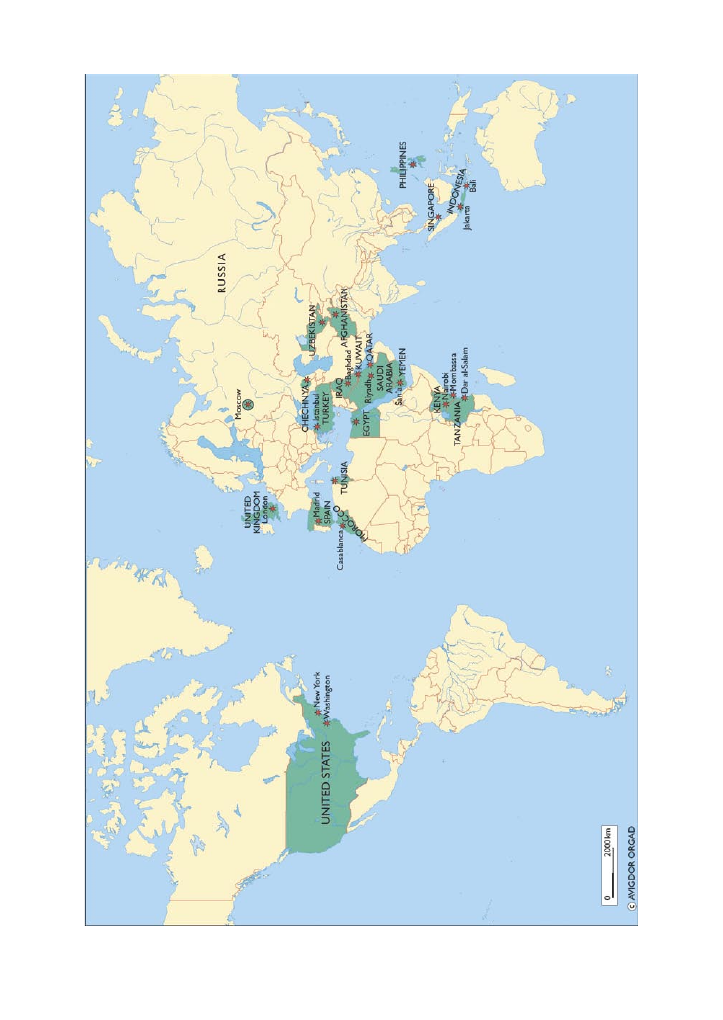
Geographic Distribution of Suicide Attacks by al-Qaeda and its Affiliates

Chapter 6
Suicide Attacks of al-Qaeda Affiliates
The close links between senior al-Qaeda members and their counterparts among the
leadership of terrorist organizations in Southeast Asia were based on their common
experience in Afghanistan. They stemmed from Bin Laden’s recognition of the
strategic importance of their continuing cooperation even after they left his camps.
This cooperation was intended to advance the idea of including countries in Asia,
with their vast Muslim population, in the Islamic caliphate to be established. Khaled
Sheikh Muhammad’s personal relationship with senior members of al-Jama'a al-
Islamiya in Indonesia and Malaysia, and most importantly his close ties with Hambali,
the group’s operations officer who also served as the chief liaison officer between
al-Jama'a al-Islamiya and al-Qaeda, resulted in joint undertakings and constituted
a primary channel for al-Qaeda’s provision of financial and logistical support for
the group’s activities. This partnership resulted in a broad terrorist infrastructure
used to plan and carry out showcase suicide terrorist attacks. The organizational
connection was reduced, or at least disrupted, after the arrest of the two leaders.
The al-Qaeda imprint was felt in other locations as well. Saudi Arabia bore
particular significance for Bin Laden, as both his native country and what he saw as
an authentic Muslim arena perverted by a heretical regime. Elsewhere in the Middle
East, Iraq presented itself after the 2003 war as fertile ground for an al-Qaeda satellite.
In Europe, terrorist networks have usually operated on a local and independent
basis. It appears that at least some of them enjoyed some type of outside funding
originating from sources linked to al-Qaeda. Others relied on their own independent
capabilities and resources.
Singapore – Showcase Terrorism Thwarted
The most ambitious al-Qaeda-supported operation of al-Jama'a al-Islamiya was
planned for Singapore in late 2001, a few months after the attack in the United States.

64 Yoram Schweitzer, Sari Goldstein Ferber
The attack was thwarted by means of the timely arrest of members of the local
terrorist network, which included about two dozen operatives preparing an attack
on Western targets on the island. Breaking up the Singapore network was facilitated
by a videotape found in Afghanistan among the ruins of the home of Muhammad
Atef, the military commander of al-Qaeda and one of the planners of the September
11 attack who was killed in an American bombing, and by the tracking of an al-
Qaeda operative, which led to the arrest of additional members.
1
The interrogation
of individuals arrested in Singapore revealed that network members gathered
intelligence and planned attacks on a variety of targets, including:
•
A bus transporting American soldiers on leave from their naval base to the
subway station in Yishun. It appears that bicycle-bombs were considered for
this attack. Investigators uncovered a videotape describing the preparation of
bicycle-bombs, along with another tape documenting the surroundings of the
subway station and bicycle parking areas and hinting at the nature of the attack.
•
American sailing vessels. One of the arrested men had a map marked with
lookout points observing the “killing zone” along a sailing route of American
vessels adjacent to the Singapore shore.
•
American, British, Israeli, and Australian consulates and embassies. Investigators
recovered video footage documenting the American embassy complex and a
stolen photo of the Israeli embassy.
•
American companies and financial targets. Intelligence was gathered onAmerican
companies in Singapore, as well as buildings housing American citizens.
Network members also prepared safehouses and purchased chemical substances
meant for making improvised explosives. Overall, it appears that the attacks were to
be carried out by seven truck-bombs carrying thousands of kilograms of explosives,
driven by suicide terrorists. The targets of the attack were the American and Israeli
embassies, the diplomatic representatives of Australia and Great Britain, and local
American financial and military targets.
In accordance with al-Qaeda’s method of working with local partners, members
of the local network were instructed to focus their preparations on preparing the
logistical and operational infrastructure. Al-Qaeda was supposed to supply the
suicide operatives and trasnport them to the area a short time before the attack.
2
Al-
Qaeda’s involvement in planning the attack, which was to be directed by al-Jama'a
al-Islamiya, was undertaken by two non-local operatives working under al-Qaeda
auspices. Khaled Sheikh Muhammad dispatched the two in order to reinforce the
management of the local network. One of the operatives assigned by al-Qaeda’s

Al-Qaeda and the Internationalization of Suicide Terrorism 65
general command to the task, based on his relevant skills, was Fatur al-Rahman
Ghuzi, codenamed Mike. Ghozi was a Philippine demolitions expert who trained
in Bin Laden’s camps in Afghanistan and was a member of the Philippine terrorist
organization MILF. At the conclusion of his training, he was recruited into al-Qaeda,
sent to train members of other Islamic groups in Asia, and called upon to help the
members of the Singapore network purchase explosives and design a truck-bomb in
preparation for the suicide attack.
The second operative dispatched by al-Qaeda to help plan the attack was
Muhammad Mansour Jabarrah, codenamed Sammy. Jabbarah was a Canadian
of Iraqi descent who lived with his family in Kuwait. Under the influence of his
brother who had previously joined al-Qaeda, Jabbarah reached the al-Qaeda
training camps in Afghanistan, where he excelled. His high level of spoken English
and his Canadian passport caught the attention of recruiters. He was summoned
for a personal meeting with Bin Laden, who identified the advantages he offered
the organization. Bin Laden prevented him from volunteering for suicide missions,
and preferred instead to make use of his singular skills as a non-suspect collaborator
in the impending attack in Singapore. He therefore referred him to Khaled Sheikh.
Both Jabarrah and Ghozi were arrested after the attack was thwarted. Ghozi, who
was apprehended and jailed, managed to escape, and was later killed. Jabarrah was
extradited to the United States and sentenced to life in prison.
The formation and management of al-Jama'a al-Islamiya’s Singapore terrorist
network and al-Qaeda’s remote operational connection occurred under the auspices
of Hambali, who functioned as an operational coordinator between his organization
and al-Qaeda. He is the one who located operatives and sent them to al-Qaeda’s
training camps in Afghanistan. He introduced the head of the network to Bin
Laden, who appointed Khaled Sheikh Muhammad to run the operation in his name.
Khaled Sheikh Muhammad directed the operation from far, by means of the field
representatives who supervised the preparations. In accordance with al-Qaeda’s
organizational ethos and its preferred mode of operation, the aim was to carry out
an attack by means of a large number of suicide terrorists, which would ensure
operational success, the maximum amount of death and destruction, and financial
damage to the island. On a symbolic level, the attack was aimed at instilling the ethos
of self-sacrifice in al-Qaeda’s other affiliates in Southeast Asia through propaganda
by the deed.

66 Yoram Schweitzer, Sari Goldstein Ferber
Bali and Jakarta, Indonesia
On the night of October 12, 2002, terrorists carried out a number of attacks in
Indonesia. The targets selected by the perpetrators, members of a terrorist network
operated by al-Jama'a al-Islamiya, were two popular nightclubs in Bali on the Kuta
coast, an entirely tourist area. The attacks were carried out by two suicide terrorists:
Jimmy, who wore a belt of explosive on his waste and detonated it in Paddy’s Bar,
and Iqbal, who detonated a TNT-laden car-bomb outside Sari’s Club. The two
operated in coordination with one another.
3
They detonated themselves one just a
few seconds after the other, causing the destruction of the clubs, the caving in of the
roofs, and a giant fire, which in turn caused widespread damage in the surrounding
area. The attack killed 202 people, including eighty-eight Australian tourists.
Preliminary meetings to plan the Bali attack were held in Thailand in February
2002 and included senior members of the organization, like Hambali, Mukhlis (Ali
Gufron), the operation’s overall commander, and Imam Sumudra, the commander
of the network. At these meetings, it was decided to attack nightclubs frequented
by Western tourists on the island of Bali. All the participants in Bali already knew
each other from previous terrorist activity carried out by al-Jama'a al-Islamiya
against Christian churches on Christmas 2000. The attack was paid for by funds
that Khaled Sheikh, al-Qaeda’s liaison officer, transferred to Hambali, his friend and
confidant, which Hambali transferred to Mukhlis, who was supervising the attack.
The attack cost $30,000, which accounted for a portion of a total sum of $100,000 that
al-Qaeda transferred to al-Jama'a al-Islamiya via Khaled Sheikh, as an expression of
satisfaction with the affiliate’s activity in Southeast Asia.
4
Part of the funding was
acquired through a robbery carried out by a number of members of the network.
The Bali episode illustrated al-Qaeda’s close links with some of its affiliates.
The attack in Bali was planned after the failure of the planned showcase attack in
Singapore and based on the lesson that it was difficult to strike against secured
targets such as embassies. The conclusions of Khaled Sheikh Muhammad and his
partner Hambali were discussed in a subsequent meeting of al-Jama'a al-Islamiya
commanders, who decided to focus on a non-secured Western tourist target, which
in their view constituted a desecration of Islamic soil. The planning of the attack
lasted eight months. It was facilitated through a local infrastructure and led by
operatives from Afghanistan with operational experience, linked to one another
by strong familial and social bonds. The sanctification of the value of self-sacrifice
was given priority by the planners of the attack, despite the fact that there was no
operational need for such a mode of operation. That is, the attack could also have

Al-Qaeda and the Internationalization of Suicide Terrorism 67
been executed by remote control, but the planners preferred a suicide attack in order
to strengthen this mode of operation in Southeast Asia.
Close ties with al-Qaeda also encouraged al-Jama'a al-Islamiya toward mass-
casualty suicide showcase attacks, after previous attacks with much lower casualty
figures were executed without the use of suicide operatives. Yet even more
significantly, the organization’s covenant with al-Qaeda did not only influence
the tactical realm. It also resulted in a major strategic change within al-Jama'a al-
Islamiya to challenge the legitimacy of Indonesia’s “infidel” Islamic regime, attempt
to undermine the stability of the regime, strike deadly blows at the economy, and
create an atmosphere of insecurity in the country. The attack in Bali was meant to
assault tourism, an important economic sector and the regime’s soft underbelly, by
exploiting a relatively easy target in a quiet and unsecured area. Furthermore, al-
Qaeda aspired to use its affiliates in Southeast Asia to cause friction and intensify the
confrontation between the Western world and the moderate Muslim world that did
not share al-Qaeda’s radical orientation.
The attack in Bali was a revised version of a previous failed attack planned by al-
Jama'a al-Islamiya that called for attacking tourist and aviation targets in Thailand.
Bashir Bin Lap, a Malaysian Afghan alumnus codenamed Lillie, was a member of the
terrorist cell operated by Hambali. When apprehended in Thailand in August 2003,
he disclosed how Hambali recruited him through a letter in which he asked if he
would be willing to volunteer for a suicide operation. After answering affirmatively,
Lillie was invited to meet with Bin Laden in Kabul, where he, along with a number
of other people, including a former classmate, pledged his loyalty. According to
Lillie, Bin Laden preached to the new recruits about their obligation to Allah and
told them that their role was to suffer and sacrifice their lives in Allah’s name. The
arrest of the head of the cell that planned to carry out the attack resulted in the delay
of the operation.
5
The Bali attack did not prompt al-Jama'a al-Islamiya to cease further suicide
attacks. In August 2003, a car-bombing rocked the Marriott Hotel in Jakarta, the capital
of Indonesia. The attack was commanded by two of the group’s senior members
who were also involved in the Bali attacks and had not been apprehended, and was
financed by the funds that Khaled Sheikh transferred to Hambali. On September
9, 2004, another suicide attack was carried out next to the Australian embassy in
Jakarta in the form of a car-bomb driven by one or two suicide operatives. The attack
killed nine people and injured 180. The Indonesian police force reported finding
traces of explosive materials in the hotel room of the two people suspected of having

68 Yoram Schweitzer, Sari Goldstein Ferber
died while carrying out the attack. The police also released a video with footage of a
white delivery truck with the two suicide operatives inside passing by the site of the
attack just moments before the attack.
In the spirit of intensifying the psychological effect of the death and placing blame
on the West, responsibility was claimed shortly afterwards: “We decided to place
Australia – which we regard as one of the worst enemies of Allah and Allah’s religion,
Islam – on trial. . . . We were able to bring justice upon them to its fullest extent, when
members of the mujahidin succeeded in carrying out the martyrdom operation by
means of a car-bomb against the front of the embassy.”
6
The announcement called
on the Australian government to withdraw from Iraq and on Australian citizens to
refrain from visiting Indonesia. If they did not, they were warned, they would suffer
from more violent actions. The main suspects in the attack were two of the most
senior commanders of al-Jama'a al-Islamiya, Dr. Azhari and Dulmatin, who since
their involvement in the Bali attack have still not been apprehended.
The attacks in Singapore, Bali, Thailand, and Jakarta provide instructive illustration
of the close link between al-Qaeda and the organizations it supports. They highlight
the key role of liaison officers, who are charged with handling communications
between al-Qaeda, the parent organization, and its affiliates, the disseminators of the
idea of global jihad. This channel facilitates the transfer of organizational principles,
operational ideas, and professional expertise, under the ethos of self-sacrifice in the
path of Allah.
Morocco – Jewish and Western Targets
On May 15, 2003, four cells containing a total of thirteen suicide operatives working
in coordination with each other attacked a number of targets in the Moroccan city
of Casablanca. By means of their explosive-belts, the attackers caused the death of
forty-five people and injured an additional 100. One of the suicide operatives was
injured and apprehended alive, while another suicide operative became hesitant
about his role and was arrested. The targets included a Spanish-owned restaurant,
the Safir hotel, a Jewish cemetery, and a Jewish community center.
7
All of the suicide attackers were young Moroccans and members of the Salafiya
Jihadiya organization. They lived in poor neighborhoods on the outskirts of
Casablanca and prayed in local mosques where clerics preached active jihad against
the infidels. They belonged to the al-Kafir and al-Hijra stream of Islam, which
espouses spiritual and physical separation from the heretical life of surrounding
society, as well as the total severing of ties with the Moroccan establishment. During

Al-Qaeda and the Internationalization of Suicide Terrorism 69
the months following the attack, other operatives from radical Islamic groups were
arrested throughout Morocco and a plan to carry out additional suicide attacks was
thwarted. Investigation of the incident revealed that the Moroccan terrorist cells had
links to Afghan alumni, including Moroccans who had operated outside of their
own country, as well as others who aided the terrorist network that planned the
local attacks. The question of a direct link to al-Qaeda was discussed at length in
Moroccan newspapers, and a number of versions were offered. One version held
that a few months before the attack, an unnamed senior member of al-Qaeda living
outside of Morocco transferred more than $50,000 to forces in Morocco that were
somehow linked to the attack.
8
One of the main suspects in the suicide attacks in Morocco was Muhammad
al-Garbuzi, a forty-four year old father of four and an Afghan alumnus who for a
number of years lived in hiding in an apartment in north London. In December 2003,
Garbuzi was tried in absentia in Morocco and sentenced to twenty years in prison for
establishing a terrorist network linked to al-Qaeda. According to the Moroccans, Bin
Laden ordered Garbuzi to establish a training camp for Moroccans in Afghanistan at
the beginning of 2001. They also claimed that he was part of a criminal organization
with links to a terrorist organization, that he had helped plan the attacks, and that
he had collected money in order to fund terrorist operations. The testimony of others
taken into custody in connection with the attacks indicates that Garbuzi attended
a meeting held in Istanbul in 2003 in which the Casablanca attack was planned.
9
Others on trial in this case included three Muslim clerics who were charged with
persuading volunteers to carry out the suicide attacks.
The attack in Morocco again demonstrated the familiar mode of operation of
al-Qaeda and its affiliates – the simultaneous attack of many participants. In this
case, four cells of suicide attackers were meant to demonstrate the existence of an
untapped reservoir of suicide operatives at the organization’s disposal aimed at
causing maximum death. The attack focused on civilian targets within the Jewish
community and Western recreational targets. Despite the impressive coordination
capability and the great number of suicide cadres symbolically involved in the attack,
the planners also demonstrated flawed operational judgment in their decision to
carry out the attack on Friday evening, when most locations tended to be empty.
Perhaps this is why the attack resulted in relatively limited concrete results, in
contrast to the plan itself, which was complex and daring.
The suicide attackers in Morocco came from society’s lowest socio-economic class.
They were young Muslims who grew up in a religious and isolationist community
that intensely objected to the overall society in their own country, which they

70 Yoram Schweitzer, Sari Goldstein Ferber
regarded as heretical. This appears to be another example of the success of Afghan
alumni – this time, Moroccans living outside of their home country – in infusing
the values of al-Qaeda by demarcating a path of self-sacrifice as a primary mode of
operation, through terrorist attacks on Jewish and Western targets, which for them
symbolized more than anything else the disintegration of the Muslim society in
which they lived.
Saudi Arabia – Government Symbols and Economic Targets
For al-Qaeda, Saudi Arabia is not only the country of origin of its leader and many
of its members, but, first and foremost, the very heart of Islam and the birthplace
of Muhammad the prophet. For this reason, liberating Saudi Arabia from the
“heretical” regime of the Saudi family is one of its main aims. Accordingly, Bin
Laden and al-Qaeda spokespeople began condemning Saudi Arabia’s relationship
with the United States in the 1990s. However, the organization refrained from posing
a direct challenge to the stability of the Saudi regime until May 2003, shortly after
the conclusion of the war in Iraq and at the outset of the low intensity campaign
there, when it staged a terrorist attack within the borders of the kingdom. The
strategic goals of the attack were the toppling of the regime and the establishment
of an Islamic state ruled by religious law (shari'a) based on the model of the Taliban
regime in Afghanistan. Al-Qaeda focused its attacks on foreigners to pressure them
to leave the country. It also struck against Saudi security forces in order to highlight
their inability to defend the regime, implement the rule of the regime, and ensure
the security of its citizens and foreigners. In addition, al-Qaeda attacked oil facilities
and oil companies in order to weaken the Saudi economy. The attacks on energy
targets within the country were accompanied by a propaganda war in which al-
Qaeda spokespeople defined the Saudi regime as a pharaonic regime trading in the
assets of the Islamic nation and serving the interests of the Crusaders. Based on
this approach, attacks against the oil industry helped preserve Islamic interests and
damaged primarily Western economic interests by causing an increase in gasoline
prices and global economic instability.
10
The suicide attacks in Saudi Arabia were carried out for the most part by cells
of a number of suicide operatives who combined armed shooting assaults with the
detonation of car-bombs in order to destroy their targets. The terrorist campaign
in Saudi Arabia began with an attack on May 29, 2003 by three cells of members
of a terrorist network supported by Saudi al-Qaeda, each including nine to twelve
members. They attacked three residential complexes in Riyadh simultaneously,

Al-Qaeda and the Internationalization of Suicide Terrorism 71
killing the guards with rifle fire, clearing a path of entry into the center of the
complexes for explosive-laden car-bombs, and then using suicide drivers to detonate
them. Twenty-nine people were killed in the attack, including eight Americans.
11
On November 8, 2003, coordinated attacks were carried out against the al-Muhi
residential complex in Riyadh, killing seventeen people and injuring 122. The complex
housed non-Saudi Arabs and was located next to the city’s diplomatic residential
area. The attack began with light weapons fire on the guards of the complex, after
which two suicide terrorists dressed in Saudi military uniforms entered the complex
driving a jeep, ushering in another explosive-laden vehicle.
12
In one of al-Qaeda’s
announcements claiming responsibility, spokesmen apologized for the fact that only
Arabs and Muslims were killed in the attack. They claimed, however, that these
people were agents serving as translators for the FBI.
13
The next suicide attack was carried out on April 21, 2004 at the headquarters of
Saudi special forces. Its aim was to strike a blow at the prestige of those waging the
war against al-Qaeda in Saudi Arabia. A suicide terrorist detonated himself inside
a booby-trapped car next to the headquarters of security forces in Riyadh, killing
four people. An unknown group claimed responsibility for the attack under the
name Battalions of the Two Holy Sites on the Arabian Peninsula. The group posted
announcements on Islamic websites, claiming that it was “following the path of Bin
Laden and al-Qaeda.”
14
The most dramatic showcase attack was carried out by al-Qaeda in Hobar, Saudi
Arabia, on May 29, 2004. A four-member cell dressed in military uniforms attacked
three Western oil company offices with light weapons fire and planned on detonating
a car-bomb. The attack did not go as planned, and evolved into a siege situation
with hostages that concluded with the escape of three of the four perpetrators. The
attackers killed sixteen hostages after checking their nationalities. While all non-
Muslims were butchered in cold blood, Muslims were released after being warned
that associating with Westerners would mean risking their own lives. Another six
people were killed during the efforts to capture the perpetrators.
15
Al-Qaeda’s links to the terrorist networks operating in Saudi Arabia can be
characterized as the relationship between a parent organization and its offshoots.
The connection between al-Qaeda and its Saudi branch was maintained by senior
commanders who had worked for years alongside senior al-Qaeda members in
Afghanistan. After returning to Saudi Arabia, these commanders directed the terrorist
networks operating within the kingdom. Although how exactly they communicated
with al-Qaeda commanders is uncertain, the commanders operating throughout

72 Yoram Schweitzer, Sari Goldstein Ferber
Saudi Arabia were certainly part of al-Qaeda cadres, preaching against the Saudi
regime until a decision was made, apparently in coordination with senior al-Qaeda
leaders, to advance to the stage of terrorist attacks within the kingdom immediately
following the conclusion of the war in Iraq. Some of these commanders, led by
Yousef al-Uyeri (the chief ideologue of al-Qaeda in Saudi Arabia and radical Islamic
forces in Iraq and Chechnya)
16
and Abdul Aziz al-Muqrin were among the most
prominent spokespeople in Saudi Arabia for the concept of self-sacrifice, and also
stood out during the propaganda campaign that accompanied al-Qaeda’s terrorist
attacks. They were eventually killed by Saudi security forces and replaced by other
leaders, some of whom have also since been killed.
The intensive activity of the Saudi branch of al-Qaeda exemplifies the importance
of Saudi Arabia in the view of al-Qaeda. As expressed by Bin Laden’s deputy Dr.
Ayman al-Zawahiri in his book Cavalry under the Flag of the Prophet, the main task
of al-Qaeda leadership is to find a country to replace Afghanistan as its home
base. Clearly, if Saudi Arabia ended up serving as the organization’s home base in
the aftermath of success in toppling the regime of the Saudi family, it would be
considered a twofold realization of the dream. Although so far al-Qaeda has been
unsuccessful in achieving its goal of finding a home-base country, it appears that
the organization will continue to aspire to this goal in Saudi Arabia as long as it is
able to recruit young Muslims into its ranks within the kingdom. The adoption of
suicide attacks as the leading mode of operation for terrorist activity in Saudi Arabia
and the accompanying rhetoric appearing in claims of responsibility attests to the
internalization of al-Qaeda’s principles and ideology by its affiliates.
Istanbul, Turkey
Two attacks one minute apart were carried out on November 15, 2003 in Istanbul’s
two main synagogues, Neve Shalom and Beit Israel. Two suicide terrorists detonated
two pickup trucks filled with hundreds of kilograms of explosives and chemical
fertilizers, concealed beneath boxes of cleaning substances. Twenty-three people
were killed in the attack and 300 were wounded. Most of the casualties were Muslim
innocent bystanders, while eight of the people killed were Jews coming to attend
synagogue. The suicide terrorists were Masut Tchabuk (age 29) and Gohan al-
Tuntash (age 22) from the city of Bingol in the Kurdish part of Turkey.
Al-Qaeda claimed responsibility for the attack in Istanbul in an e-mail message
to the weekly al-Majalla. The message was signed by Abu Muhammad al-Ablaj, who
had already appeared in the media a number of times as an al-Qaeda spokesman. In

Al-Qaeda and the Internationalization of Suicide Terrorism 73
an e-mail message sent in the name of al-Qaeda to the newspaper al-Quds al-Arabi
published in London, the organization claimed responsibility under the name of
Abu Hafez al-Masri Battalions. In internet forums on websites associated with al-
Qaeda, the attack was described as a “gift to Jerusalem.” The motivation for the
attack, it was explained, was the desire to strike out at Jews around the world “as
part of the struggle for Palestine.”
Five days later, on November 20, 2004, another cell of the same al-Qaeda-
supported Turkish terrorist network carried out a double suicide attack next to the
British consulate and a branch of the British bank H.S.B.C. The two suicide terrorists
detonated two car-bombs twelve minutes apart. Thirty-four people were killed in the
attack and 500 were injured. Among the dead was Roger Short, the British consul.
One of the suicide terrorists at the British consulate was Fridon Ogrulu, an Afghan
alumnus who had also fought in Chechnya. Although his name was released as a
suspect in preparing the synagogue attacks, he managed to escape. In retrospect,
it appears he was one of the suicide operatives in the second wave of attacks.
The second suicide terrorist was Mawlut Ogur, an introspective forty-seven year
old therapeutic plant shop owner from Ankara who spent most of his time in his
shop and the nearby mosque, only rarely speaking with the owners of neighboring
shops. A group by the name of Haft al-Masri Battalions (named after the military
commander of al-Qaeda who was killed by American bombings in Afghanistan)
claimed responsibility for al-Qaeda. Before this, two local Turkish groups had taken
responsibility for the same attacks – I.B.D.A.C. (Great East Islamic Raiders Front)
and Turkish Hizbollah.
The Turkish network is a characteristic example of an al-Qaeda-supported terrorist
network. The network’s inner hard core consists of operatives who once belonged
to local terrorist organizations within Turkey who decided, like many other young
Muslims, to travel to al-Qaeda camps in Afghanistan. There they trained, underwent
indoctrination, and were recruited to work towards the idea of global jihad within
their home countries. Network commanders were summoned to meetings with Bin
Laden, who endowed them with the responsibility and the authority to actualize the
ideal of global jihad. They then set out to fulfill their mission, not only in accordance
with the spirit of the organization, but through subsequent consultations and
logistical support. Network commanders apparently maintained communication
with elements linked to al-Qaeda in Pakistan, Afghanistan, and Iran by means of
the internet during preparations for the operation, which began at least six months
before the execution of the attack itself. In addition, al-Qaeda leadership discussed

74 Yoram Schweitzer, Sari Goldstein Ferber
preferred targets for the attack with the head of the Turkish network, but left the
local network operational freedom of action to choose the date and the targets to
be attacked. In fact, in the two waves of suicide attacks, the head of the network
eventually chose different targets than the ones that had been determined in advance,
due to operational constraints.
Funding for the operation was provided by al-Qaeda sources in either Iran
or Syria, countries that served as countries of refuge for network operatives and
commanders who escaped there after attacks were carried out. Al-Qaeda and groups
supported by al-Qaeda take advantage of failed states and states that make it easy
for their operatives to cross their borders. In the case of this network as well, senior
commanders fled the area, while many junior members of the network were arrested.
This enables commanders to establish new terrorist networks to achieve the goals of
global jihad through suicide attacks in their home countries or in other locations.
Madrid – The Trains of Spain
On the morning of March 11, 2004, ten explosive devices were detonated within
a short period of time at train stations in southern Madrid. The police discovered
and diffused another three devices that had been hidden in backpacks. The Madrid
attacks were not suicide bombings, but rather explosive devices detonated remotely
by means of cellular telephones. However, when security forces surrounded
an apartment in which a few members of the terrorist network had hidden, the
operatives blew themselves up rather then fall into the hands of the authorities.
They thus actualized the ethos of self-sacrifice that had been instilled in them. In
addition, an explosive belt was found, indicating the potential for at least one suicide
attack. The attacks claimed 191 fatalities, and approximately 1,400 were injured. The
casualties were of eleven nationalities.
A number of different groups claimed responsibility for the attack. A claim
of responsibility by al-Qaeda was received by the newspaper al-Quds al-Arabi,
including an explicit warning that attacks would soon be carried out in the United
States. Shortly after the attacks, a videotape was found near Madrid’s main mosque
showing a man who introduced himself as Abu Dujan al-Afghani and claimed that
he was the military spokesman of al-Qaeda in Europe. In a Moroccan accent, the
man explained: “The attack was in retaliation for Spain’s involvement in the war in
Iraq. It was a response to the crimes you have committed around the world, chiefly
in Iraq and Afghanistan, and there will be more, God willing.”
17
Abu Hafez al-Masri
Battalions also claimed responsibility for the attack in Madrid in an announcement

Al-Qaeda and the Internationalization of Suicide Terrorism 75
sent to the newspaper al-Hayat, greeting “the Spanish people who chose peace when
they elected the party that opposed the alliance with the United States.” Indeed,
the elections in Spain resulted in the replacement of the socialist government with
the opposition, which had rejected the government’s pro-American policy and
its involvement in Iraq. The opposition had committed to change this policy and
withdraw Spanish troops from Iraq if its candidate, Jose Luis Rodriguez Zapatero,
were elected. It has been argued that the change in power was caused to a significant
degree by the attacks, and by the suspicion that the government accused the Basque
underground of carrying out the attack, ignoring indications that Islamic forces were
responsible in order make political gains at the polls.
Security forces believe that al-Qaeda carried out the attack by means of an
affiliated terrorist network. This assessment is based on a number of factors. First,
some members of the involved cell were operatives that had already been suspected
of having links to al-Qaeda. Second, the rhetoric that accompanied the attack in the
claim of responsibility and the comprehensive document that appeared in Arabic
describing advanced plans of al-Qaeda to carry out an attack in Spain before the
elections were characteristic of al-Qaeda. The document, which had already been
published on a number of Islamic websites in December 2003, described Spain as the
“weakest link” in the US-led coalition in Iraq, as most Spaniards objected to the war.
Finally, the terrorist campaign in Spain included most of the features of al-Qaeda
attacks, except for the absence of suicide operatives.
Al-Qaeda affiliates have used a wide variety of modes of operation in addition to
the primary tool of suicide terrorism, and it is therefore not surprising that terrorist
attacks were carried out without the use of suicide attackers or with other methods
that the group had not used previously. The principle of operational flexibility is
of the utmost importance in al-Qaeda, and members of terrorist networks enjoy a
large degree of freedom of action. The principle of self-sacrifice for the sake of global
jihad, whether by means of fighting to death or by blowing up along with their
enemies, serves as a guiding principle.
The Moroccan network that executed the attacks in Spain was based on operatives
who were already involved in terrorist activities or terrorism-supporting activities
as collaborators, including veterans of jihad warfare in Afghanistan, Bosnia, and
Chechnya. These operatives kept in contact with their associates in other parts of the
world, and some were even suspected of involvement in terrorist activities in their
native Morocco. In any event, however, the Spanish network behind the Madrid
train attacks operated with a large degree of operational and logistical autonomy,

76 Yoram Schweitzer, Sari Goldstein Ferber
relying on local human resources linked to the North African-Moroccan network
in Spain itself – even if it operated in accordance with the overall organizational
strategy laid down by al-Qaeda, which called for attacking targets identified with
American policy in Iraq. Indeed, more than eighteen months after the attack, there
is still no evidence of contact between the head of the network and the al-Qaeda
general command regarding the planning and financing of the operation. Perhaps
this explains the decision to employ a non-suicide mode of operation, though this
was "corrected" when cell members who were besieged by security forces chose not
to surrender, but rather took the path of istishhad instead.
While still uncertain whether the link between al-Qaeda and the attackers in Spain
was direct or merely indirect, it is already clear that the attacks were carried out in
accordance with the strategic goals laid down by Bin Laden and his spokespeople
in videotapes and on the internet. As in the case of Southeast Asia, al-Qaeda’s aims
were leveled not only at one country, but rather at an entire region, in which a group
of operatives is spread out. They pointed to countries that, along with the United
States, were involved in Afghanistan and Iraq, and defined them as preferable targets
of attack. These countries included Spain, whose symbolic importance transcends its
pro-American policy. The Iberian peninsula (al-Andalus, in Arabic) is a symbol of
the Western occupation of a territory that had once been under the control of Islam,
and is often mentioned on the websites of al-Qaeda supporters.
Chechnya
The use of suicide terrorism in the Chechnyan conflictisarelativelynewphenomenon,
beginning in 2000. Since June 2000, approximately 800 people have been killed in
twenty-five suicide attacks carried out by over 100 Chechnyans. More than one-third
of the perpetrators have been women (figure 4).
The Chechnyan conflict is for the most part an historic national conflict centered
on the demands of Chechnyan separatists for independence. Two wars have erupted
in Chechnya over the past two decades, the first from 1994-96 and the second from
1999 to the present. During the second war, trends of Islamic extremism increasingly
took hold of the Chechnyan forces, finding expression in the integration of their own
rhetoric on global jihad into the traditional national elements of the struggle. The
Chechnyans cooperated with al-Qaeda in the propaganda campaign to transform
their struggle into part of the global confrontation portrayed by Bin Laden and his
colleagues as a war between Islam and the Jewish-Crusader alliance plotting to
humiliate Islam and occupy its land. Chechnyans who trained in al-Qaeda camps in

Al-Qaeda and the Internationalization of Suicide Terrorism 77
Afghanistan served as agents of influence disseminating the concept of global jihad
in general and the idea of self-sacrifice in the name of Allah in particular.
The attacks carried out by the Chechnyans over the past few years have become
increasingly grandiose, involving a great deal of weaponry and, in some cases, a
large number of suicide terrorists. Even though they were not working under Bin
Laden’s direct command, Chechnyan terrorists have enjoyed the verbal support of
al-Qaeda spokesmen, as well as the help of fighters sent to join them in their war
for independence. Russia’s involvement in Chechnya attracted many new recruits
to the ranks of al-Qaeda, especially after the outbreak of the second war. Volunteers
who trained in al-Qaeda camps wanted to fight the Russians based on their belief
that they could recreate the success of their predecessors in their war against the
Soviet Union, which spawned al-Qaeda's core ethos.
Excellent examples of this dynamic were Muhammad Ata and the associates who
were suicide attackers on September 11, 2001. They originally wanted to fight in
Chechnya, but were redirected by Bin Laden to the mission in the United States in
accordance with his priorities at the time. As in the case of other al-Qaeda-supported
groups, the critical role of liaison officers in passing on the principle of global jihad
is clear in the relationship between al-Qaeda and the Chechnyan group, particularly
at the upper echelons of the command structure. Senior commanders who spent
Figure 4. Suicide Attacks and Attackers in Chechnya (as of mid-September 2005)
* The large number of suicide attackers during 2003 and 2004 stemmed from two attacks with a
large number of perpetrators: the Moscow theater attack (October 2002) and the Beslan school
attack (September 2004).
60
50
40
30
20
10
0
2000
2001
2002
2003
2004
4
5
1
1
3
44
11
20
6
37
Attacks
Attackers

78 Yoram Schweitzer, Sari Goldstein Ferber
much time with al-Qaeda commanders went to operate in Chechnya and used their
experience to shape the group’s methods of warfare and introduce local fighters to
al-Qaeda principles, including the principle of self-sacrifice. Al-Qaeda’s ideological
influence was also reflected in the writings of Aghiri Hasa'udi, a veteran of the al-
Qaeda training camps who served as a spiritual teacher and mentor for the operators
of Chechnyan terrorism and who was killed by security forces in Saudi Arabia in
2003.
18
Al-Qaeda’s inspiration and influence on escalation in Chechnyan operations was
best reflected in two incidents that integrated the tactics of suicide and hostage-
taking in fortified compounds. The first incident took place in Moscow in October
2002. Approximately forty Chechnyan terrorists wearing belt-bombs and carrying
an excess of weaponry took over a theater in Moscow, taking hundreds of hostages.
During the Russian security forces’ rescue operation, 129 hostages were killed. The
second incident took place from September 1-3, 2004 in northern Ossetia. Thirty-two
terrorists carrying explosives and a variety of weapons, some wearing belt-bombs,
took hundreds of hostages in a school in Beslan. The incident, which began as a
negotiating hostage situation and ended as a suicide attack, took the lives of over
300 people, half of whom were high school students and their parents who had
come to open the new school year. This attack offers a concrete expression of the
combination of local violent tradition, the suicide ethos promoted by al-Qaeda and
its affiliates, and the willingness to commit indiscriminate mass murder among an
enemy population in order to instill shock and fear among those watching around
the world. Foreign, non-Chechnyan operatives – including Arabs – also took part in
the attack.
Iraq
Before the US invasion of Iraq, Bin Laden spoke out against the impending attack
on the Islamic nation and called for preparations to struggle against the American
occupier. Still, Bin Laden did not offer his own organization to fight alongside
Saddam Hussein, of whom he was extremely critical. After the end of the military
campaign, Bin Laden and his deputy encouraged the citizens of Iraq to carry out
suicide attacks in order to strike at the occupiers and the foreigners in the country:
“Use bombs wisely, not in forests and on hills. . . . The enemy is scared primarily by
fighting in the street in cities. . . . We emphasize the importance of suicide operations
against the enemy.”
19
They also called for attacks against humanitarian aid agencies,
and subsequently against Iraqis whom they called collaborators. Since the beginning

Al-Qaeda and the Internationalization of Suicide Terrorism 79
of the campaign that followed the war until late March 2005, approximately 160
suicide attacks were carried out in Iraq by some 200 suicide operatives (figure 5).
Some have been executed by al-Qaeda affiliates. At the beginning of 2004, Ahmed
Fadil Nazzal al-Khalayilah, better know by the name Abu Mus'ab al-Zarqawi,
claimed responsibility for some twenty-five of the suicide attacks undertaken thus
far.
20
During the first months of 2005, websites of supporters of Global Salafi Jihad
published a list of 154 people killed in Iraq during the second half of 2004. It was
noted that thirty-three of the dead were suicide attackers who belonged to the Salafi
Jihad camp, primarily among Zarqawi’s close colleagues.
21
In Iraq, Zarqawi handled
suicide attackers coming for the most part from Saudi Arabia, Syria, and Kuwait. He
also collaborated with allies within Kurdish Islamic fundamentalist organizations,
like Ansar al-Islam and Ansar al-Sunna, which have links to al-Qaeda and are
associated with the global jihad. Thus, at least fifty-eight of the 200 suicide attackers
that operated in Iraq since the beginning of the current campaign belonged to his
camp, and it is likely that the actual figure is even larger.
The activity of the terrorist camps headed by Zarqawi, himself a veteran of the
Afghanistan camps, is yet another example of the operations of autonomous terrorist
networks maintaining contacts with affiliates who share the same worldview in
order to realize world jihad. Zarqawi is one of the most active and studied terrorists
among al-Qaeda affiliates. Since the outbreak of the war in Iraq, he has focused most
of his efforts in this area, with an emphasis on suicide attacks and the kidnapping of
hostages, a mode of operation that he adopted in the course of operations. Zarqawi has
also undertaken terrorist activities in other parts of the world. His portfolio includes:
the assassination of the US Agency for International Development (U.S.A.I.D.)
official Lawrence Foley in Amman in October 2002; the planning of attacks for a
network that operated under the name al-Tawhid thwarted in Germany in 2003; and
the operation of terrorist networks in Turkey and the Caucasus. The last prominent
Zarqawi-planned attack attempted outside Iraq, thwarted in Jordan in April 2004,
aimed at using suicide operatives to strike at the general intelligence headquarters
of Jordan, the American embassy in Amman, and the prime mnister’s ofice.
Three truck-bombs filled with explosives and ready for detonation were found
in the possession of a group operated by Zarqawi, and a warehouse was discovered
in which the group hid chemical substances. Jordanian demolition experts reported
that planners of the operation gathered twenty tons of explosives and seventy-one
types of chemical substances, including a substance that causes third degree burns,
nerve gas, and substances causing asphyxiation. These supplies were to be used to
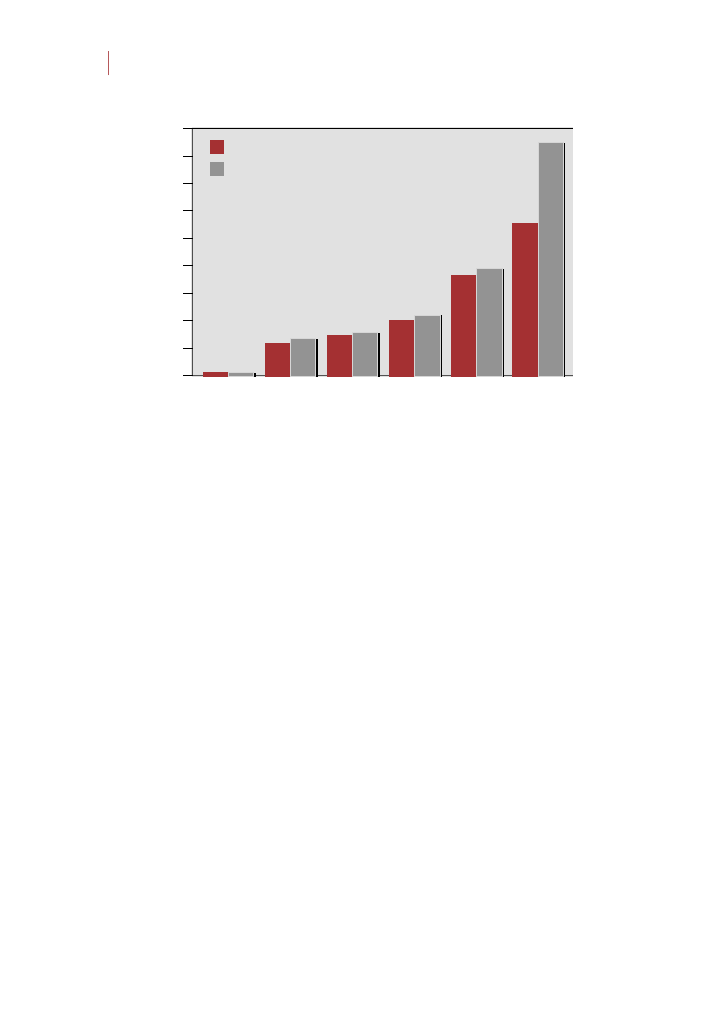
80 Yoram Schweitzer, Sari Goldstein Ferber
carry out a mega-attack causing high rates of death and damage in order to raise the
ante established by al-Qaeda with the attacks of September 11.
22
Zarqawi’s worldview, operational strategy, and aspirations in Iraq were reflected
in a letter that he sent to Bin Laden in February 2004. The letter was found among
the possessions of Zarqawi’s assistant who was apprehended by American forces
in Iraq. In it, Zarqawi suggested focusing on Iraq as the new “land of jihad” as a
replacement for Afghanistan, which was lost in the American attacks and the fall
of the Taliban regime. More than a philosopher or religious guide, Zarqawi comes
across as a practical man and an opportunist. On the one hand, he had no hesitation
about accepting assistance from Shiite Iran, which provided him and his people with
refuge and medical treatment after he was injured. On the other hand, he preached
vehemently against the traitorous and deviant Shiites in general and the Shiites in
Iraq in particular. He called the latter traitors to Islam who should be attacked and
killed, and he called for a civil war in Iraq in order to sabotage American interests in
the region. Zarqawi suggested a deal to Bin Laden. Bin Laden would recognize Iraq
as the principal land of jihad and, it is implied, Zarqawi, already identified by the
international media as the senior representative of global jihad in Iraq, as the leading
figure. In return, Zarqawi would pledge his loyalty to Bin Laden, though having
strictly maintained his independence over the years and shunning the oath and the
Figure 5. Suicide Attacks in Iraq (as of 22 September 2005)
2
2
23 27
29 31
40 44
73 78
112
170
Mar–J
uly
2003
A
ug–Dec
2003
Jan–Ma
y
2004
Jun–Oct
2004
No
v 2004–
Mar 2005
Apr–Sep
2005
180
160
140
120
100
80
60
40
20
0
Attacks
Attackers

Al-Qaeda and the Internationalization of Suicide Terrorism 81
pledge ceremony, despite the fact that he saw himself as belonging to the stream of
global jihad.
23
On December 27, 2004, another Bin Laden tape appeared in which he for the first
time gave public support for Zarqawi’s operations in Iraq and declared the unification
of his group and, “the prince, the warrior, and the respected friend, Abu Mu'sab al-
Zarqawi and the groups that have joined him, who are the best of the sect fighting
for the word of Allah. . . . We in al-Qaeda very much welcome your unification
with us.”
24
In this way, al-Qaeda’s branch in Mesopotamia was established, and
public recognition was given to Zarqawi’s special status within al-Qaeda and the
terrorist attacks that he, his people, and his affiliates had carried out both inside and
outside Iraq. These attacks were thus “officially” recognized as reflecting al-Qaeda’s
operational strategy. After Zarqawi had proven over the years his dedication to the
path of al-Qaeda and supported the principle of sacrificing life in the name of Allah
as a primary tenet (even though he used other modes of operation as well, such as
kidnapping and executing hostages and assassinations), Bin Laden supported his
initiative without imposing his authority over him and with an understanding of
his need for independence and for the ability to control his own people. Here, Bin
Laden again demonstrated his willingness to allow someone identifying with his
worldview and working for its actualization to undertake significant independent
and autonomous action. He also showed that al-Qaeda regards the ideas of
jihad and istishhad as above any need to demonstrate organizational supremacy,
organizational control, or organizational responsibility. Bin Laden’s relationship
with Zarqawi appears much like a business partnership. However, despite the fact
that Zarqawi is not a man of vision attracting a mass following like Bin Laden, his
personal motivation of rising to prominence has made him extremely dangerous,
due to his indiscriminate terrorist actions and his determination to continue his
boundless murderous operations with as many casualties as possible until he is either
apprehended or killed. Al-Qaeda is reaping the fruits of its past basic investment
– including not only the training of cadres, but the dissemination of worldview,
methods of operation, and values as well – by giving support and a free hand to such
terrorist networks. In this way, al-Qaeda is promoting its own goals and interests.


Conclusion
Although al-Qaeda joined the ranks of suicide terrorism relatively late in the game,
the organization quickly emerged as its main proponent, fashioning it into an
international phenomenon and increasing its death tolls to hitherto unknown heights.
Al-Qaeda has made a pivotal contribution to the escalation and internationalization
of suicide terrorism, transforming the concept of self-sacrifice, or istishhad, into its
main unifying principle. Bin Laden stressed the concept of istishhad as the heart and
soul of the idea of jihad, promoting it through the decentralized and empowering
management style that he both employed in al-Qaeda and instilled in its affiliates.
This transformed the phenomenon of suicide terrorism, which had hitherto been
regarded as a local problem practiced by local terrorist groups, into an international
issue, transforming millions of citizens around the world from spectators into
participants in, and victims of, acts of terrorism.
For al-Qaeda, suicide attacks are both an operational mode and a propaganda
tool. The massive casualties and economic damage inflicted by suicide terrorism
have provided al-Qaeda and its affiliates with propaganda of the utmost importance
that has been crucial for recruiting volunteers to continue the campaign and expand
the camp of supporters for global jihad. Istishhad is perceived by these groups as
their trump card in the asymmetrical struggle they are waging, and they continue
to uphold it as their primary organizational and operational principle. The
psychological effect of suicide attacks is intensified greatly by the widespread use
of communications media, which has helped highlight al-Qaeda's determination to
actualize its cross-border ideology. Through suicide terrorism, al-Qaeda has become
a model of emulation for other terrorist organizations.
At this stage, it appears that the cross-border paradigm of suicide attacks that Bin
Laden implemented attracts scattered individuals from the population of Muslim
countries and the population of Muslim immigrants in non-Muslim countries. That
is, it has not become a model of ideological identification for larger groups within
these populations. Still, there is a danger that the dynamic of empowerment and

84 Yoram Schweitzer, Sari Goldstein Ferber
self-actualization used by al-Qaeda to promote the idea of suicide operations around
the world could be adopted by socially frustrated Muslim populations in the West,
resulting in the evolution of a more popular culture of suicide.
Beyond the clear operative imperative to thwart the terrorist attacks of al-Qaeda
and affiliates, the major conclusion of this study is that there is an urgent need to
provide an ideological answer to the suicide challenge put forward by al-Qaeda.
Supporters of extremist Islam must be offered an ideological Islamic alternative
bearing moderate and pragmatic interpretation of the Quran, in contrast to the
unequivocal extremist interpretation promulgated by Bin Laden and his followers.
Such alternative messages have a slim chance of acceptance if they are disseminated
by parties that are not seen as possessing primary Islamic religious and moral
authority. Thus, such alternatives can be provided only by prominent Muslim clerics
and leaders with wide support in Arab and Muslim countries and recognized Islamic
institutions whose opinions carry religious, cultural, and moral weight. Countries
in which acclaimed extremist clerics issue religious rulings supporting religiously
sanctioned murder, under the slogan of self-sacrifice in the name of Allah while
taking the lives of others, must restrain this activity much more aggressively and not
give these individuals the freedom to incite. Non-Muslim forces must encourage the
leaders of Arab and Muslim countries – and if necessary pressure them – to silence
incendiary rhetoric and offer alternative platforms instead.
At the same time, it is important that countries with large Muslim minority
populations – in Europe, for example – begin encouraging leading religious figures
to put all of their social and moral weight behind efforts to prevent the spread of
radicalizing trends influencing young Muslims today. Beyond the inherent threat of
escalating Muslim hostility, increased violence and terrorism coming from extremist
Muslim forces may result in counter-extremism among peripheral groups in the
West, who could exploit the situation in order to ignite a racially-based confrontation,
plunging the continent into a bloody cycle of religious and racial violence.
Many circles in the Arab and Muslim world have severely criticized the methods
of al-Qaeda and its affiliates. This criticism has increased in light of the suicide
attacks in Iraq, which primarily hurt Iraqi citizens. There has been especially
harsh criticism of the kidnapping and execution of hostages in Iraq (such as the
murder of twelve Nepalese citizens, the beheading of American hostages, and the
kidnapping of French citizens, Italian citizens, and nationals of other countries).
Muslim journalists, religious figures, and spiritual leaders were also shocked by the
massacre in Beslan, which sparked their condemnation of the methods by which al-

Al-Qaeda and the Internationalization of Suicide Terrorism 85
Qaeda and its affiliates, through sinful behavior, soil all of Islam and give the religion
a bad image.
1
The serious consequences of failing to take tangible steps against the
radicalization influencing wide circles of Muslims is what creates the urgency for
pragmatic forces in the Muslim world to take concrete and effective action to defend
their religion’s good name. These forces hold the key to success.
Analyzing al-Qaeda from an organizational and operational perspective provides
better insight when attempting to foresee the short-term and long-term dangers the
organization poses to the West. It also constructs new parameters for identifying the
source of its power. The study, for example, has demonstrated the need to assail the
instrumental role played by the communications media, which would both lessen
the propaganda impact and help sever the affiliates from the parent organization’s
hard-core. The potential pool of suicide terrorists are part of the civilian population,
which must therefore be addressed ideologically, religiously, and socially. Part of
al-Qaeda’s achievement to date has been its success in instilling the supremacy of
the concept of istishhad above the leadership itself, including that of Bin Laden. The
Muslim world therefore must, at its own initiative and with the encouragement of the
West, generate an ideological alternative as an important component of struggling
against this concept.
Given Bin Laden's personal contribution and symbolic importance to advancing
the idea of global jihad in general and ideological suicide in particular, removing Bin
Laden from the equation, whether by killing him or apprehending him, is crucial to
the war on terrorism in general and on al-Qaeda in particular. It would most likely
break al-Qaeda’s chain of command and possibly even split the organization. As
long as Bin Laden remains the leader of al-Qaeda, the organization will continue
trying to carry out showcase attacks with mass casualties in order to preserve its
status. Taking Bin Laden out of the picture is also likely to have a symbolic and
moral impact on al-Qaeda’s relations with its affiliates. Nonetheless, the practical
short-term impact of such a step on the independent activity of al-Qaeda’s affiliates
remains unclear, as Bin Laden has succeeded in inculcating many of them with the
culture of suicide to the extent that it could well eclipse his own personal leadership
and facilitate its own perpetuation after he is gone.
Many people doubt al-Qaeda’s present capability of functioning as an
independent organization and question its actual status. They argue that while al-
Qaeda remains an ideological model, actualization of the aims of global jihad is
being carried out primarily by autonomous terrorist organizations and networks
that associate themselves with the Islamic stream identified with the idea of global

86 Yoram Schweitzer, Sari Goldstein Ferber
jihad. This approach holds that due to international pressure and pursuit, al-Qaeda
no longer exercises real direct influence on the terrorist operations being carried out
in its name. This approach is reinforced by occasional statements made by figures
associated with al-Qaeda, which indicate that “today al-Qaeda is not in itself an
organizational entity, rather an idea that has become a belief.”
2
Yet available evidence points otherwise and indicates that al-Qaeda is still a
dangerous force with independent operational capabilities. Despite the intense
pursuit of al-Qaeda leaders and the international pressure under which they find
themselves, Bin Laden still has a hard core of active commanders at his disposal
who constitute a fighting, loyal cadre trained in methods of guerrilla warfare and
armed with extremist ideology, desire, and determination. As such, al-Qaeda still
possesses capabilities and power to continue surviving as an independent terrorist
organization, to carry out long-term, precise, and careful planning, and even to execute
impressive attacks. This assessment is reinforced periodically by the exposure of al-
Qaeda infrastructures and the arrest of al-Qaeda operatives engaged in planning
attacks under the supervision of senior commanders who remain free. One example
of this phenomenon was the arrest of a number of al-Qaeda operatives in Pakistan
and England who were involved in preparations for terrorist attacks in England,
the United States, and South Africa.
3
To be sure, there is a lack of definitive updated
information on the current whereabouts and activities of al-Qaeda leaders and their
ability to manage the organization and its affiliates around the world. Nonetheless,
the principle of decentralized management that Bin Laden employed in his relations
with affiliates, his insistence on ensuring the ideological and operational training of
their members in his camps over the years, and the idea of self-sacrifice in the name
of Allah as a guiding principle facilitate the continuation of cooperative independent
activity, even during periods when his communication with them is extremely
difficult.
It is vitally important to distinguish between al-Qaeda’s “hard-core” and its
affiliates, all of which are generically identified by the international media as “al-
Qaeda.” This distinction facilitates a better understanding of the nature of the threat
and the manner in which it is managed and actualized, and allows us to accurately
assess al-Qaeda’s real size and strength. Al-Qaeda and its affiliates cannot be
understood as a homogenous body operating under a unified command making
centralized decisions on undertaking a wave of terrorist attacks around the world.
There are networks, satellites, and ad hoc organizations that operate with varying
degrees of autonomy. Ironically, failure to distinguish between the activities of al-

Al-Qaeda and the Internationalization of Suicide Terrorism 87
Qaeda and the activities of its affiliates strengthens the image of power that Bin
Laden strives to maintain for the al-Qaeda brand name, in order to advance his
interests and emerge victoriously from the struggle of consciousness that he and
his cohorts have been waging in a determined and skillful manner for more than a
decade.


Notes
Notes to Introduction
1. Afghanistan, Argentina, China, Colombia, Croatia, Egypt, India, Indonesia, Iraq, Israel,
Kenya, Kuwait, Lebanon, Morocco, Pakistan, Phillipines, Qatar, Russia, Saudi Arabia,
Spain, Sri Lanka, Tanzania, Thailand, Tunisia, Turkey, UK, US, Uzbekistan, Yemen. In
Australia, Belgium, France, and Singapore suicide attacks were intercepted.
2. Yoram Schweitzer and Shaul Shay, The Globalization of Terror: The Challenge of Al-Qaida and
the Response of the International Community (New Brunswick, NJ: Transaction Publishers,
2003), pp. 154-55.
3. Interviews by Yoram Schweitzer in Israeli jails during 2004 and 2005 with suicide
bombers whose actions were interrupted and therefore survived the operations.
Notes to Chapter 1, Al-Qaeda and its Affiliates
1. Schweitzer and Shay, The Globalization of Terror, p. 55.
2. Interview of authors with Professor Emanuel Sivan, Jerusalem, July 23, 2004.
3. Schweitzer and Shay, The Globalization of Terror, pp.185-88.
4. Maria Ressa, Seeds of Terror (New York: Free Press), pp. 13, 27.
5. Ahmed Zeidan, Bin Laden Unmasked: Meetings whose Publication were Prohibited by the
Taliban (Beirut: The World Book Company, 2003), p. 47.
6. Avner Falk, “Osama Bin Laden: A Psychobiographical Study,” Mind and Human Interaction
12 (2001): 161-72.
7. Falk, "Osama Bin Laden."
8. Zeidan, Bin Laden Unmasked, p. 34.
Notes to Chapter 2, Suicide Terrorism as Ideology and Symbol
1. 9/11 Commission Report, National Commission on Terrorist Attacks upon the United
States, Washington, 2004, p. 234.
2. Abdul Aziz al-Muqrin, Saut al-Jihad (The Voice of Jihad) 18, June 3, 2004.
3. Excerpt from the will of Muhammad Bin 'Abdul Wahab al-Muqit, at: www.cybcity.com/
faroq, October 20, 2003.
4. “Osama says Taliban Rejected US Billions for Arrest,” Ausaf 1, 7, 28 December 1998.
5. Yosri Fouda and Nick Fielding, Masterminds of Terror: The Truth Bhind the Most Devastating
Terrorist Attack the World has Ever Seen (New York: Arcade Publishing, 2003), p. 114.
6. Al-Jazeera, November 12, 2002.

90 Yoram Schweitzer, Sari Goldstein Ferber
7. “Osama Bin Laden Speech Offers Peace Treaty with Europe, Says Al-Qaida Will Persist
in Fighting the U.S,” at: www.memri.org, No. 695, April 15, 2004.
8. Zeidan, Bin Laden Unmasked, p.15, n. 12.
9. Fouda and Fielding, Masterminds of Terror, p. 153.
10. Fouda and Fielding, Masterminds of Terror, p. 145.
11. Fouda and Fielding, Masterminds of Terror, p. 145.
12. Zeidan, Bin Laden Unmasked, p. 65.
13. Zeidan, Bin Laden Unmasked p. 25.
14. Interview of Yoram Schweitzer with Reuven Paz, September 19, 2004.
15. Lawrence Wright, “The Terror Web,” The New Yorker, August 2004.
Notes to Chapter 3, Translating Organizational Ideology into Practice
1. Donald W. Winnicott, “On Transference,” International Journal of Psycho-Analysis 37 (1956):
386-88.
2. Interview of authors with Professor Emanuel Sivan, July 23, 2004.
3. 9/11 Commission Report, p. 234.
4. 9/11 Commission Report, pp. 165, 233.
5. 9/11 Commission Report, p. 234.
6. 9/11 Commission Report, p. 235.
7. William James, The Varieties of Religious Experience. A Study in Human Nature (Oxford:
Longmans Green, 1960), p. 534.
8. Jessica Stern, Terror in the Name of God: Why Religious Militants Kill (New York: Harper-
Collins, 2003), p. 282.
9. Ariella Ringle-Hoffman, “Muhammad 'Ata’s Cult of Death,” Yediot Ahronot, February 14,
2001.
10. J. Thompson and J. Bunderson, “Violations of Principle: Ideological Currency in
Psychological Contract,” Acadamy of Management Review 28, no. 4 (2003): 571-86; Fiona
Patterson, “Developments in Work Psychology: Emerging Issues and Future Trends,”
Journal of Occupational and Organizational Psychology 74, no. 4 (2001): 381-90.
11. Chip R. Bell and Ron Zemke, “Do Service Procedures Tie Employees’ Hands?” Personnel
Journal 67, no. 9 (1988): 76-84; Holly R. Rudolph and Joy V. Peluchette, “The Power Gap:
Is Sharing or Accumulating Power the Answer?” Journal of Applied Business Research 9,
no. 3 (1993): 12-21.
12. Interview of authors with Dr. Yigal Carmon, Jerusalem, July 5, 2004.
13. Heinz Kohut, “Is the Investigation of the Inner Life of Man Still Relevant Today?”
Zeitschrift fuer-Psychoanalyse und ihre Anwendungen 25, no. 4 (1971): 298-322.
14. Marc Sageman, Understanding Terror Networks (Philadelphia: University of Pennsylvania
Press, 2004), p. 113.
15. C. Avilla, “Distinguishing BIS-mediated and BAS-mediated Disinhibition Mechanisms: A
Comparison of Disinhibition Models of Gray (1981, 1987) and of Patterson and Newman
(1993),” Journal of Personality and Social Psychology 80, no. 2 (2001): 311-24.
16. 9/11 Commission Report, pp. 233-34.
17. Dirk Laabs and Terry McDermott, “Prelude to 9/11: A Hijacker's Love, Lies Prelude to
9/11,” The Los Angeles Times, January 27, 2003.
18. 9/11 Commission Report, p. 154.

Al-Qaeda and the Internationalization of Suicide Terrorism 91
19. W. R. Bion, Second Thoughts (London: Wheaton & Co. Ltd., 1967).
20. J. Koerner, “The Didactics of Psychoanalytic Education,” International Journal of
Psychoanalysis 83, no. 6 (2002): 1395-1405.
21. M. Mahler, “Symbiosis and Individuation: The Psychological Birth of the Human Infant,”
Psychoanalytic Study of the Child 29 (1974): 89-106.
22. Ze'ev Ivinsky, Personal Terrorism – Theory and Practice (Tel Aviv: Hakibbutz Hameuhad,
1997), p. 30.
23. Forest Sawyer, The Death Pilots of September 11th, 2001, MS-NBC, National Geographic
documentary, aired on March 10, 2002.
24. Yediot Ahronot, December 14, 2001.
Notes to Chapter 5, Suicide Attacks of al-Qaeda
1. 9/11 Commission Report, p. 191.
2. Al-Sharq al-Awsat, May 18, 2002.
3. Tom Maliti, “Trial of Four Suspects in Bombing,” www.lexis-nexis.com, February 26,
2004.
4. Andrew England, “FBI's Most Wanted Leader of Al-Qaeda Cell Escaped,” www.lexis-
nexis.com, June 12, 2004.
Notes to Chapter 6, Suicide Attacks of al-Qaeda Affiliates
1. Ressa, Seeds of Terror, p. 160.
2. Ressa, Seeds of Terror, p. 158.
3. Ressa, Seeds of Terror, p. 168.
4. Simon Elegant, “The Terrorist Talk,” Time, October 13, 2003.
5. Elegant, “The Terrorist Talk.”
6. The Guardian, "Bin Laden Tape Praises Bali Attack," November 13, 2002.
7. “Bomb Kills at Least 20 in Downtown Casablanca,” www.cnn.com, May 19, 2003.
8. “Suspected Moroccan Bomber Detained,” www.cnn.com, May 19, 2003.
9. Elaine Sciolino, “Morocco Connection Is as Sleeper Threat in Terror War,” New York Times,
May 16, 2004.
10. Abdul Aziz al-Muqrin, “It is from Allah’s Grace upon Us and the People,” Saut al-Jihad
(The Voice of the Jihad) 18, June 4, 2003.
11. Christoph Reuter, My Life is a Weapon (Princeton: Princeton University Press, 2004), p.
152.
12. “Saudis: Bombing Suspects Questioned,” www.cnn.com, November 11, 2003.
13. Caroline Faraj, “Al Qaeda Carried out Saudi Bombing,” www.cnn.com, November 12,
2003.
14. “Four Dead in an Attack in Riyadh: Intelligence Headquarters is Destroyed,” Ha'aretz,
April 22, 2004.
15. Yoav Stern, “Saudi Commandos Free Hostages, at Least 22 Dead,” Ha'aretz, May 31,
2004.
16. Reuven Paz, “The Impact of the War in Iraq on Islamist Groups and the Culture of Global
Jihad,” www.prism.org, September 2004.
17. Wright, “The Terror Web.”

92 Yoram Schweitzer, Sari Goldstein Ferber
18. Paz, “The Impact of the War in Iraq on Islamist Groups.”
19. “Bin Laden Tape: Full Text,” www.bbc.com, February 12, 2003.
20. Dexter Filkins, “US Says Files Seek Qaeda Aid in Iraq Conflict,” www.nytimes.com,
February 9, 2004.
21. Reuven Paz, “Arab Volunteers in Iraq: An Analysis,” www.e-prism.org, March 2005.
22. “Jordan Says Major Al Qaeda Plot Disrupted,” www.cnn.com, April 26, 2004.
23. Filkins, "US Says Files Seek Qaeda Aid."
24. “Bin Laden in a Speech to the Iraqi People,” www.memri.org.il, December 30, 2004 (last
appeared on the site on January 2, 2005).
Notes to Conclusion
1. “Arab and Muslim Reaction to Terrorist Attack in Beslan, Russia,” www.memri.org, no.
780, September 8, 2004; “Former Kuwaiti Information Minister: ‘Not a Single Fatwa has
been Issued Calling for the Killing of Bin Laden,’” www.memri.org, no. 781, September
10, 2004.
2. “Former Bin Laden Bodyguard in an Interview: Many Al-Qaeda Operatives Entered
Iraq: Zarqawi is not the #1 Man in Al-Qaeda: 95% of Al-Qaeda Operatives are Yemenite,”
www.memri.org.il, August 4, 2004 (found on line as of January 2, 2005).
3. Amy Waldman and Eric Lipton, “New Cooperation and New Tensions in Terrorist
Hunt,” New York Times, August 17, 2004.

JCSS Memoranda 1998 – present
No. 78, November 2005, Yoram Schweitzer and Sari Goldstein Ferber, Al-Qaeda and
the Internationalization of Suicide Terrorism.
No. 77, September 2005, Mark A. Heller and Rosemary Hollis, eds., Israel and the
Palestinians: Israeli Policy Options [Hebrew].
No. 76, June 2005, Yoram Schweitzer and Sari Goldstein Ferber, Al-Qaeda and the
Globalization of Suicide Terrorism [Hebrew].
No. 75, March 2005, Uzi Eilam, L'Europe de la Défense [Hebrew].
No. 74, December 2004, Paul Rivlin and Shmuel Even, Political Stability in Arab States:
Economic Causes and Consequences.
No. 73, November 2004, Shaul Kimhi and Shmuel Even, Who are the Palestinian
Suicide Bombers? [Hebrew].
No. 72, October 2004, Aviezer Yaari, Civil Control of the IDF [Hebrew].
No. 71, July 2004, Anat Kurz, ed., Thirty Years Later: Challenges to Israel since the Yom
Kippur War [Hebrew].
No. 70, June 2004, Ephraim Asculai, Rethinking the Nuclear Non-Proliferation Regime
[Hebrew].
No. 69, January 2004, Daniel Sobelman, New Rules of the Game: Israel and Hizbollah
after the Withdrawal from Lebanon.
No. 68, November 2003, Ram Erez, ed., Civil-Military Relations in Israel: Influences and
Restraints [Hebrew].
No. 67, October 2003, Asher Arian, Israeli Public Opinion on National Security 2003.
No. 66, October 2003, Shlomo Gazit, Between Warning and Surprise: On Shaping
National Intelligence Assessment in Israel [Hebrew].
No. 65, June 2003, Daniel Sobelman, New Rules of the Game: Israel and Hizbollah after
the Withdrawal from Lebanon [Hebrew].

No. 64, May 2003, Shmuel L. Gordon, Dimensions of Quality: A New Approach to Net
Assessment of Airpower.
No. 63, January 2003, Hirsh Goodman and Jonathan Cummings, eds., The Battle of
Jenin: A Case Study in Israel’s Communications Strategy.
No. 62, October 2002, Imri Tov, ed., Defense and Israel's National Economy: Exploring
Issues in Security Production [Hebrew].
No. 61, July 2002, Asher Arian, Israeli Public Opinion on National Security 2002.
No. 60, August 2001, Asher Arian, Israeli Public Opinion on National Security 2001.
No. 59, June 2001, Emily Landau, Egypt and Israel in ACRS: Bilateral Concerns in a
Regional Arms Control Process.
No. 58, April 2001, David Klein, Home-Front Defense: An Examination of the National
Cost [Hebrew].
No. 57, September 2000, Paul Rivlin, World Oil and Energy Trends: Strategic Implications
for the Middle East.
No. 56, July 2000, Asher Arian, Israeli Public Opinion on National Security 2000.
No. 55, March 2000, P. R. Kumaraswami, Beyond the Veil: Israel-Pakistan Relations.
No. 54, November 1999, Shmuel Even, Trends in Defense Expenditures in the Middle
East [Hebrew].
No. 53, August 1999, Asher Arian, Israeli Public Opinion on National Security 1999.
No. 52, August 1998, Abraham Ben-Zvi, Partnership under Stress: The American Jewish
No. 51, July 1998, Aharon Levran, Iraq's Strategic Arena [Hebrew].
No. 50, June 1998, Shmuel Even, Trends in the World Oil Market: Strategic Implications
for Israel [Hebrew].
No. 49, July 1998, Asher Arian, Israeli Public Opinion on National Security 1998.

Wyszukiwarka
Podobne podstrony:
GOLDSTAR
Ein Schweizer Rezept FONDUE
Rzeka Goldstream w Kanadzie staje się tajemniczo jaskrawo zielona , Rzeka Goldstream w Kanadzie staj
Eingesperrt im Gefängnis?s Schweigens Zamknięci w więzieniu milczenia
Kultur in der Schweiz bildende Kunst, Literatur und Musik
Goldstar 800AW
Helvetica Schweiz
schweiz
Clifford Goldstein Prosto o roku 1844
Anekdoten aus dem Schweizer Oberland
GoldStar Studioworks 56m
Phil Goldstein The Yellow Book Of Mentalism
Goldstein, Gigerenzer Thr Recognition Heuristic
Zamknięci w więzieniu milczenia Eingesperrt im Gefängnis?s Schweigens
Goldstar N06X3 Chassis Tv
Goldstein - roz. 1-3, Psychologia
Goldstein zaburzenia z pograncza rozdz 3, Psychologia UŚ, Semestr VI, PZ kliniczna - Zaburzenia spow
Goldstein - zab z pogranicza, psychologia, psych kliniczna
więcej podobnych podstron