
1
Social Fieldwork Research
Child Participation in Justice Report
Poland, 2012
FRANET contractor:
The Helsinki Foundation for Human Rights
Authors:
Patzer H., Bodnar A. Ph.D., Szuleka M., Smętek J.
This document was commissioned under contract as background material for comparative analysis
by the European Union Agency for Fundamental Rights (FRA) for the
project children and justice
. The
information and views contained in the document do not necessarily reflect the views or the official
position of the FRA. The document is made publicly available for transparency and information
purposes only and does not constitute legal advice or legal opinion.

2
EXECUTIVE SUMMARY ....................................................................................................................... 3
1. BACKGROUND ................................................................................................................................. 4
1.1 Research Methodology .......................................................................................................................... 4
1.2 Sample ................................................................................................................................................................... 5
1.3 Legal context ....................................................................................................................................................... 7
2. FINDINGS ....................................................................................................................................... 11
2.1 Right to be heard ................................................................................................................................... 11
2.1.1 Right to be heard in the criminal justice field .................................................................................... 12
2.1.2 Right to be heard in the civil justice field ............................................................................................ 19
2.1.3 Concluding assessments on the right to be heard ........................................................................... 24
2.2 Right to information ............................................................................................................................. 25
2.2.1 Right to be informed in the criminal justice field ............................................................................. 25
2.2.2 Right to be informed in the civil justice field ..................................................................................... 29
2.2.3 Concluding assessments on right to information ............................................................................. 31
2.3 Training and co-operation of professionals ..................................................................................... 31
2.3.1 Training and co-operation of professionals in the criminal justice field ................................... 32
2.3.2 Training and co-operation of professionals in the civil justice field ........................................... 34
2.3.3 Concluding assessments on training and cooperation of professionals ................................... 35
2.4 Horizontal issues ................................................................................................................................... 35
2.4.1 Discrimination .............................................................................................................................................. 35
2.4.2 Best interest of the child .......................................................................................................................... 36
2.4.3 Potential patterns with regard to differences and similarities in regional, national and
international context ............................................................................................................................................ 38
2.5 CoE Guidelines ....................................................................................................................................... 38
3. CONCLUSIONS ............................................................................................................................... 40
3.1 Overarching issues ......................................................................................................................................... 40
3.2 Research ............................................................................................................................................................ 43
ANNEXES ............................................................................................................................................ 46
Documentation ............................................................................................................................................ 46
Quotes ....................................................................................................................................................................... 46
Tables ........................................................................................................................................................................ 49

3
EXECUTIVE SUMMARY
This report analyses the participation of children in justice proceedings in Poland, taking into account
both the criminal law and civil law, focusing mostly on the practices of hearing children. The findings
are based on qualitative social research, done by interviewing representatives of professional groups
who deal with children during hearings.
The main findings from the conducted fieldwork are described in the relevant sections, yet they can
be summarized in a few main points:
• The discrepancy between the rules and procedures of child-hearing in civil law and in
criminal law. In the criminal proceeding the duty and procedure of child’s hearings are
strictly and clearly regulated while in the civil procedure involves two types of child hearings
(direct and indirect) and these types depend mainly on the discretionary decisions of judges.
• The recent changes in the practices of child-hearing connected with the introduction of
Articles 185a and 185b in the Code of Criminal Proceedings which seems to be the core
element of the implementation of the postulate of child-friendly justice in Poland. The
majority of our interviewees referred to those Articles, showing extensive knowledge of
these regulations and experience in practical their use.
• The importance of the child’s age (15 years old as a border age for hearing children in the
special mode; and 4 years old as the common border age below which the child is not
heard). The issue of child age has appeared to be one of the most disputable aspects of the
research. Basically all of the respondents had different ideas and opinions concerning this
point.
• The importance of the role of the psychologist (court-expert psychologists and FDCC
employees). The research shows that psychologists play various roles in proceedings
including: supporting of the judge, ensuring that the hearing does not affect the best
interest of the child, assessing the credibility of the child’s testimony and his/her level of
maturity and cognitive skills.
• The overall assessment of the trainings on child-friendly justice dedicated to professionals.
All of our respondents who have participated in special trainings highly appreciated them
and found them extremely useful in their work. Many respondents named the trainings
organized by the Nobody’s Children Foundation
1
as exemplary.
• The knowledge and practical application of child-friendly justice (including the Council of
Europe Guidelines). Despite the fact that many of our respondents were not aware of the
CoE Guidelines they proved in the interviews that they follow the main idea of child-friendly
justice i.e. they act in view of the child’s best interest.
1
The website of the Nobody’s Children Foundation (Fundacja Dzieci Niczyje) is available at: http://fdn.pl/

4
1. BACKGROUND
1.1 Research Methodology
The researchers working in the project were all graduates of social and cultural studies, pursuing
their post-graduate (PhD) studies. They were thus very well-prepared methodologically and
experienced in conducting social research on different topics, both within the university and in NGO
or commercial projects. There were four researchers involved in the project, two female ones and
two male ones: two social anthropologists and two graduates of cultural studies. All were within the
26-45 age group.
The methodology used during research included semi-structured interviews, but also observation,
which was important in explaining the context of the interviews and understanding the
interviewee’s point of view, and in building interpretations. The researchers shared their
impressions and problematic issues not only in the reporting templates, but also at the bi-weekly
research meetings, where they presented their on-going work. Such organization of work helped us
in identifying any difficulties early, and also built a shared body of knowledge among the
researchers.
In the pre-research phase possible respondents were identified and then recruited. We encountered
a few problems when recruiting our respondents. Some difficulties in recruitment resulted from the
fact that the timeframe of the project overlapped with the holiday period in Poland. Hence, many
potential respondents refused to take part in the research and others had to postpone their
interviews. The second major obstacle that presented itself in the course of the research was that a
lot of potential respondents lacked time and were overloaded with work. This was mostly the case
with court-appointed guardians and FDCC employees, but also judges. Other hindrances included,
for example, previous commitments of potential respondents, refusal to participate due to a
perceived lack of knowledge and experience, or simply refusal without any justification. It is also
worth mentioning that at one point during the study, the researchers observed a lowered level of
respondents’ trust before and during their interviews. This may be related to the onset of the Amber
Gold affair in Poland
2
, which made particular respondents (e.g. one prosecutor) distrustful of any
attempts at conducting an interview. One of our researchers drew our attention to this one case.
The respondents were not an easy group to research, being professionals in a very specific field, with
their own professional jargon and their specific code of conduct. The difficulty was at first the
language, especially that of law professionals, and the distance some of them built during the
interview. However, these difficulties were overcome in the beginning, through training and the
sharing of knowledge among the researchers. Another difficult issue was of a more psychological
nature: the professionals, especially those having more experience, spoke of problems of violence
against children and often had some traumatic stories to tell. This was difficult for the researchers,
2
Since 2 July 2012 the Internal Security Agency (Agencja Bezpieczeństwa Wewnętrznego) has been conducting
an investigation against Amber Gold, a company offering deposits in gold, silver and platinum, under a
suspicion that Amber Gold mislead its clients and was engaged in money-laundering. Soon after a decision was
made to liquidate the company and terminate all deposit agreements. The onset of the affair, highly publicized
and widely investigated by the media, coincided with the first stage of this research.

5
especially with the high number of interviews some conducted. In this respect the time for research
and for filling in the reporting templates was rather short, not allowing the researchers enough time
to digest the difficult data.
The limitations of the interview could be seen mostly at times when the interviewee did not
understand the question, and then the researchers had to rephrase it to obtain an answer. There
were also some interviewees who commented on the interview schedule as not well-adapted to the
Polish situation or criticised some questions, however the criticism was not directed at the
interviewees themselves. There were a few situations when the respondents spoke from a position
of older age or superiority, and either lectured the researchers or just remained distanced and
critical all the time, which needed extra competence on the side of the researchers.
1.2 Sample
In the course of research we have conducted 58 individual interviews and two focus groups, all in all
with 59 participants
3
. Half of the participants were social professionals (29) and half were legal
professionals (30).
There was a significant gender imbalance in the research sample, as we interviewed four times more
women than men (46 women to 12 men). This might be caused by the fact that it is mostly women
who are directed to participate in the child proceedings, especially among judges (7 out of 11) and
prosecutors (7 out of 9). Among the 29 legal professionals there were 20 women. As for the social
professionals, there are more women working in this sector, which can be clearly seen in our sample
(26 out of 29).
The majority of the participants live in big to middle-sized cities (53 out of 58), the others live in
smaller municipalities. As to the age groups, most of the participants belong to the group 26-65,
divided into 28 people in the younger group (26-45) and 26 people in the older group (46-65). Only 4
respondents are older than 65.
Among the legal professionals, we talked to: 8 attorneys, 11 judges (8 on the district level and 3 on
the regional level), 8 prosecutors (1 working now at the national level at the ministry, others working
at the district level), and 2 police officers. The social professionals represented the following
professions: 13 FDCC employees, 5 court-appointed guardians, 5 expert witness psychologists, and 6
NGO workers.
Within our pool of respondents, there were many regular employees of public institutions and those
working in private practices (with differing length of work experience); however, we also managed
to recruit numerous experts in the field (among the judges, prosecutors, NGO workers, and
psychologists). The experts were the ones who are involved in different activities aimed at creating
child-friendly conditions for minors in justice proceedings, and so they train other professionals,
lecture and write about these issues, and are well-known in their field. What is interesting, many of
them have not completed any official training courses on child hearings or the like, but they have
3
There was only one participant of the focus groups who did not take part in the individual interview. He is
thus not included in the tables, as we did not have as much data on him. He was a legal professional
(attorney), dealing with both civil and criminal cases, living in a big city, in the age group 26-45.

6
learned through experience. These were mostly professionals with a long work experience, and so
they had an overview of the legal system over the years.
The interviewees from the legal field worked in the following institutions: the court (11),
prosecutor’s office (8), private institution (8), public institution (2). Professionals working in the
social field worked in: the court (8), public institution (15), non-governmental organization (6).
Our respondents worked in the context of: criminal law (19), civil law (21), or both (18). The review
of the issues dealt with by the respondents reveals a predominance, among legal professionals, of
the following types of cases: sexual abuse (19), domestic abuse (15), violence (8), custody and
divorce (15), and other (7). Social professionals most often listed: sexual abuse (13), domestic abuse
(13), violence (2), custody and divorce (23), and other (7). Other issues included: international child
abduction, adoption, the negligence of children, traffic accidents, social rehabilitation, children’s
rights, and civil rights.
The role of the respondents in the proceedings: overall there were 39 actors (11 judges, 8
prosecutors, 2 police officers; 13 FDCC employees, 5 court-appointed family guardians), 12 observers
(8 attorneys, 4 NGO workers), and 7 supporters (5 expert witness psychologists, 2 NGO workers).
The atmosphere of the interviews was usually good, with a high or average level of confidence, and a
high or average level of confidentiality. However, it needs to be noted that problematic issues
pertaining to the respondent’s own group might not have been mentioned, as some respondents
felt we were examining their work and they did not want to be criticised. This is why the criticism
was more likely to be placed on other professional groups, which still provides much data to
describe the state of child-friendly justice. There was a slight problem with obtaining the trust of the
interviewees and the agreement for the interview in a few cases, yet this was only marginal. The
interviews were usually not interrupted, other than the respondent receiving a phone call or telling
someone he/she is busy at the moment.
The interviews were quite long, with the shortest lasting one hour and the longest three hours and a
half. The average time of an interview was one and a half hours, as the interview schedule was very
long, and also the interviewees usually had much to say in their responses. The researchers were
also very accurate in asking the prescribed questions and, especially with any new issues arising,
tried to learn more about the context of the respondent’s work to understand it better. The
difficulty was the range of different professions of the interviewees and also the various types of
judicial proceedings they could be involved in.
As for the focus groups, they were very revealing, and lively. In the criminal law focus group, there
were seven respondents taking part in it, and the whole discussion lasted two hours and twenty
minutes. All respondents were active and involved, some spontaneously took part in the discussion,
while others needed more encouragement. Respondent 2 was very active, even dominant, and often
ironic (it is noticeable). Respondents 1, 2, 6, and 7 were relatively more active than the others - knew
each other well, so they felt very well during the interview and sometimes dominated the discussion.
They can be described as activists who undertake initiatives to improve and promote child-friendly
proceedings. Due to their professional positions, they contact the other legal and social
professionals from around the country, and face different problems and viewpoints. Thus, they were

7
able to give some generalized opinions on the justice system and its child-friendliness. They are also
known as highly skilled experts in this area. On the other hand, respondents 3, 4, and 5 needed some
encouragement to take a more active part in the discussion. Respondent 4 made a mistake in
describing the procedure of the hearing while sharing her experience at the very beginning of the
discussion. She was strongly criticised by the expert participants and had to defend herself, after
which she was more reluctant to take part in the discussion. Respondent 3 was a young lawyer who
had not had much experience with child hearings. However, he was not afraid to speak in the
debate, if he had a formed opinion on the discussed matter. Respondent 6 was a rather shy person;
however she was active in the discussion whenever she could refer to her professional experience.
As for the civil law focus group, there were five participants taking part in it, and the discussion
lasted for one hour and fifty minutes. The group was smaller than it had been planned due to
unexpected circumstances that prevented the arrival of some participants, yet the discussion was
very informative, and the conclusions were equivalent to those from the individual interviews. The
atmosphere of the focus group discussion was good and the level of confidence was high. There
were no interruptions. Due to their more extensive practical experience in child hearings,
respondents 1 and 2 dominated the discussion. The involvement of other respondents was at a
similar level, except for respondent 5, who was the least active. It should be taken into account that
respondent 2 presented a strongly critical point of view, and some would call it one-sided. Other
participants were less critical in their assessments, although they disagreed with each other quite
often. Overall, both focus group discussions were very rich and revealing, and provided us with
additional data on the civil and criminal proceedings.
1.3 Legal context
Under Polish law a minor is a person who has not attained the age of 18. The child who has not
attained the age of 13 has no capacity to perform acts in law. A person who has attained the age of
13, but has not attained the age of 18, has a limited capacity to perform acts in law. In light of Polish
law the child can appear in court proceedings in the capacity of: a claimant in civil proceedings, a
victim in criminal proceedings, a witness in civil or criminal proceedings, a defendant in minor or
juvenile proceedings.
In addition, pursuant to Article 10 (2) of the Criminal Code a juvenile, who after attaining the age of
15 commits one of the qualified prohibited acts (such as an assault on the President of the Republic
of Poland, homicide, grievous bodily harm), may be liable as an adult, if the circumstances of the
case and the mental state of development of the perpetrator, his characteristics and personal
situation warrant it, and especially when previously applied educative or corrective measures have
proved ineffective.
The Polish judicial structure consists of three tiers: district courts (divided roughly into criminal and
civil divisions), regional courts (divided roughly into criminal and civil divisions) and appellate courts
(divided roughly into criminal and civil divisions). Above them there is the Supreme Court, which can
be considered as a fourth instance in cases in which cassation appeal may be submitted.
In the research there are mainly representatives of district and three representatives of regional
courts.

8
The majority of cases concerning children’s rights and interests (custody, divorce, contacts with
parents, crimes) are considered by these two kinds of courts.
Child as a witness or victim in the criminal proceeding
The rules for child hearings under the Code of Criminal Procedure can be found in Articles 185a and
185b of the Criminal Code, which specify the conditions for the hearing of children under 15 years of
age in cases of domestic and sexual abuse (among others, offences against the family and
guardianship; offences against sexual liberty and decency). The Articles state that a child under 15
years of age (at the moment of the interview), who was a victim (or witness in Art. 185b) of domestic
or sexual abuse, should be heard only once, in the presence of a psychologist, and this hearing
should be video-recorded for future reference. Additionally according to article 185b, the rules of
article 185a may apply to a minor under the age of 15 who is a witness in cases which involve
offences perpetrated with the use of violence or illegal threat and in cases which involve offences
against sexual liberty and decency (regulated in Section XXV of the Criminal Code). These Articles
were mentioned by most of the interviewees, and are a basis for action.
The Code of Criminal Procedure does not specify the minimum age to testify at a trial. The Code of
Criminal Procedure does not make any distinction between the minor who testifies in the capacity of
a witness or the victim.
Under article 185a of the Code of Criminal Procedure, a minor under 15 years of age at the moment
of the interview, who has been a victim of an offence against sexual liberty or an offence against the
family and guardianship, should, as a rule, give testimony only once. However, the minor may be re-
interviewed when new circumstances which need to be explained appear or when another interview
is requested by the defendant who, at the time of the minor’s first testimony, had no defence
counsel. An interview under article 185a should be conducted by the court during a court hearing.
The interview must take place in the presence of a psychologist and be recorded via an audio-video
device. Only the prosecutor, the defence counsel, the counsel for the victim and the minor's
statutory representative or the person who has custody over the minor can be present at the
interview. The article 185a does not provide guidance as to the location of the interview.
Furthermore there is a possibility to interview the minor in criminal proceedings which do not
concern the cases of domestic and sexual abuse (offence against the family and guardianship;
offence against sexual liberty). This type of interview is governed by article 177 of the Code of
Criminal Procedure. Under this article anyone called as a witness has a duty to appear and testify.
There is no limitation as to the possibility of giving testimony more than once. Often, witnesses who
have already been interviewed by the investigating body (law enforcement or the prosecution) are
asked to give testimony about the same facts again in court. Pursuant to Article 171 (3), a witness
under the age of 15 should give testimony in the presence of his or her statutory or de facto
representative (unless this would frustrate the purpose of the proceedings). Such an interview, when
it involves a child, does not have to be conducted in the special room and could be repeated.
However our respondents mainly focused on child hearings conducted according to the provisions

9
stated in Articles 185a and 185b, which is why child hearings conducted according to Article 177
were not widely described in the interviews.
Pursuant to the provisions of the Code of Criminal Procedure in pre-trial proceedings the
information concerning a particular activity, the rights and obligations of the child etc. is given to the
child by the prosecutor or the police. During the trial, it is the judge who gives this information to the
child. The notice of pending proceedings is given to the minor participant in these proceedings by his
or her statutory representative in the proceedings or a specially appointed guardian ad litem
(kurator sądowy). Persons representing the child in the proceedings are informed of its subsequent
stages pursuant to the provisions of the Code of Criminal Procedure or the Code of Civil Procedure.
When it comes to direct information duties, the information is given to the person by the organ
conducting the proceedings before any action that requires the provision of that information (such
as a hearing) begins.
The minor participating in the proceedings is always interviewed by the court. In the majority of
cases the minor is interviewed in a special interview room called “the blue room”. These rooms can
be placed in court buildings as well as outside the court or prosecutor’s office, in specialized
foundations or aid centres for children. The room is equipped with a one-way mirror, recording
equipment and toys for the child to help him or her feel comfortable. The interview is conducted by
a judge (wearing no robe) in the presence of a psychologist. The hearing is observed behind the
mirror by, among others, the defender of the accused and parents of the child. Evidence obtained
from the hearings once in the blue rooms has the same legal validity as confessions obtained during
interrogation in court courtroom.
During the interviews our respondents mainly referred to the following Articles: 190 § 1 of the Code
of Criminal Procedure which states that before the interview, the witness shall be given information
about legal responsibility for giving false testimonies and hiding the truth, 191 § 3 of the Code of
Criminal Procedure which states that the witness shall be informed about the right to refuse to
testify if the case concerns his/her closest person. Furthermore the respondents underlined that the
child has to be informed about the provisions of the Article 183 § 1 which states that the witness can
refuse to answer the question if the response could expose him/her or the person closest to him/her
to criminal liability.
Child as the participant of the civil proceeding
Accordingly to Article 216
1
and 576 (2) of the Code of Civil Procedure if the reasons concerning the
behaviour of the minor warrant it, the minor shall be heard in the course of the proceedings in cases
which directly refer to his/her personal situation or property. The hearing should be conducted
outside the court room.
The child under 13 years of age has no ability to perform procedural acts, that is he or she cannot
represent himself or herself during the trial. In such a case, the child is represented by his or her
statutory representative, namely the parent who has custody over the child.

10
In a situation where a minor has attained the age of 13, yet has not attained the age of majority (18
years), he or she has a limited ability to perform acts in law, and thus a limited ability to perform
legal acts. If this is the case, it may happen that the minor will be permitted to represent himself or
herself in court. This applies to cases arising out of contracts commonly concluded in small current
matters of everyday life, cases regarding the disposal of the child's own property, acts in law
concerning items given to the child for an unrestricted use.
The Code of Civil Procedure does not specify the minimum age which the child has to reach in order
to testify in a trial. If the case involves a child under parental custody, the court may, at its own
discretion, interview only the child or his or her statutory representative, or both. A child under the
age of 17 interviewed as a witness in the civil proceedings does not make an affirmation before
giving testimony. Under Article 430 of the Code of Civil Procedure, minors who have not attained the
age of 13 and children or grandchildren of the parties to the proceedings who have not attained the
age of 17 cannot be interviewed as witnesses in divorce proceedings.
The court may interview the minor in pending proceedings to determine the place of residence of
the minor with one of the parents. However, it is more common that the court requires an opinion
of an expert witness psychologist or an opinion written by the Family Diagnostics and Consultation
Centre to be obtained.
Pursuant to the provisions of the Code of Civil Procedure, the child is informed about the course of
particular activities, his/her rights and obligations etc. by the judge. In practice, it also happens that
expert psychologists who assist judges during interviews/hearings inform the children about the
course of particular activities.
The minor participating in the proceedings is always interviewed by the court. In general, the hearing
should be conducted outside the court room. Our respondents admitted that the hearing can take
place in the judge’s offices, in the blue room (the same which was described in the paragraph
concerning hearings in the criminal proceeding) and outside the court (e.g. in the Family Diagnostic
and Consultation Centre).
When it comes to the awareness of legal developments among the respondents the majority of
them could not recall any pending changes in legislation. Forty respondents (nineteen social
professionals and twenty-one legal professionals) did not mention any potential legal developments
while eighteen respondents (eight social professionals and ten legal professionals) mentioned some
recently drafted changes.
The main upcoming change mentioned by the respondents (seven) concerned the extension of the
scope of Articles 185a and 185b CCP in reference to the age of the child (up to 18) and the types of
crimes covered by these articles. Some of the respondents (seven) indicated the already introduced
changes (like i.e. special hearing mode) as an example of a good legislative development.
11
2. FINDINGS
2.1 Right to be heard
The children’s right to be heard is differently practiced in the case of civil and criminal proceedings,
and the child is more often heard in the latter.
All of our interviewees who deal with criminal proceedings always indicated as first the Articles 185a
and 185b of the Code of Criminal Procedure. As it was mentioned above, these Articles introduced
the special mode of child hearings in the criminal procedure, however their scope is limited to
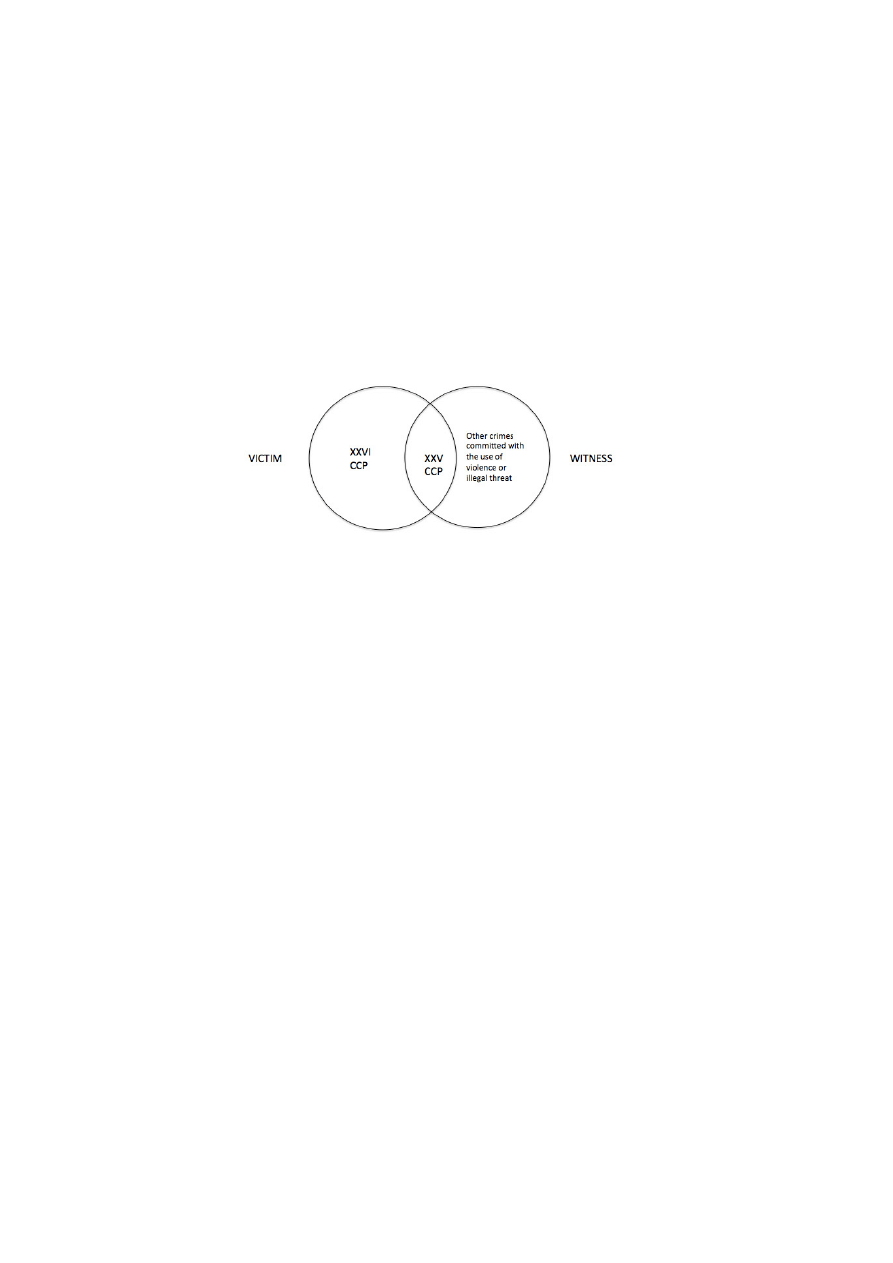
certain kinds of offences. In the case of these two articles, there is a difference in the treatment of
victims and witnesses. Please find graph below.
All differences in the treatment of children that can be observed depend on the type of crime and
not on the role of the child. It should be underlined that there is another mode of child hearing
which is the same as for adults and it is not aimed at protecting the best interest of the child. It is
possible that the child can be heard according to the provisions of this article (Article 177 CCP).
However, our interviewees did not concentrate on this mode of hearing.
We have not observed any differences in child hearing in criminal proceedings when it comes to
geographical location.
The special mode of child hearing regard only victims or witnessed who are below 15 years of age,
but do not regulate the minimum age of the child. The minimum was a subject of dispute among our
interviewees.
Apart from singular examples (hearing at the police station), we did not find any differences in the
treatment of children of different genders. Some of our respondents paid attention to the hearing of
children from ethnic minorities (e.g. Roma, but their remarks were mostly limited to the necessity to
provide translators.
When it comes to the civil procedure, the child hearings can take two forms – direct and indirect.
The direct hearing is always conducted by a judge and the indirect can be conducted by a
psychologist or a court-appointed family guardian.
All differences in the treatment of children, as mentioned above, depend on their age and not
gender or a role in the proceedings. In the majority of cases children are heard by FDCC
psychologists. However, whether the child is heard directly or indirectly depend on the discretionary

12
decision of the judge. It is worth noting that one of our respondents declared that always tries to
hear the minor.
2.1.1 Right to be heard in the criminal justice field
Within the framework of criminal proceedings the interviewees had much to say about the rules and
regulations, and also gave many examples of hearing children. As became clear during the research,
the necessary regulations are at place in the Code of Criminal Procedure, and they are seen by the
various professionals as well-defined and child-friendly. What the interviewees stressed, both in the
individual interviews and in the focus groups, was that the application of the law is not ideal and
should be improved:
Participant 1: We have excellent provisions and regulations, possibly the best in Europe, but their
implementation is minimal - both by the justice system and by other institutions and services. So
raising awareness and sensitivity to this issue, and more cross-functionality, meetings for the people
who provide support [is important]. But also making the society more sensitive to certain issues, legal
education in short. Because only then will all children be treated relatively equally if they are aware
of the fact that they are entitled to such treatment.
The rules for child hearings under the Code of Criminal Procedure can be found in the above-
mentioned Articles 185a and 185b, which specify the conditions for the hearing of children under 15
years of age in cases of domestic and sexual abuse (offence against the family and guardianship;
offence against sexual liberty). The majority of professionals working in the criminal procedure
described this special mode of hearing children, and many had experience in using it in their
practice. Among them were those who conducted many hearings of children, and those who heard
only a few children in their career. Many of those professionals who worked in both the criminal and
civil procedure also had some knowledge of the hearing of children under Articles 185a and 185b.
The interviewees with a longer work experience compared the current situation to the procedures at
place before. Overall, according to the interviewees, the procedure of child hearing has been
significantly improved in Poland, especially in comparison to the late 1970s and 1980s. In those
times, there were no such special procedures as those regulated now in the Code of Criminal
Procedure by Articles 185a and 185b. Some of our interviewees have also played an active role in
the process of implementation of the child-friendly hearing procedure, as well as conducted many
trainings for legal and social professionals in this area.
In the current practice the hearing takes place either in the pre-trial or trial phase. Most of the
interviewees are aware that the hearing should be one-time only, if possible, and so they express
the opinion that it is best to hear the child only after other evidence has been gathered. Most of the
interviewees stressed that it is better to avoid the hearing if possible, which is why the child is heard
only if it is the only witness (and/or victim) of the crime.
If the hearing takes place in the trial phase, the child is heard by the judge. In the interviewees’
opinions, the Code of Criminal Procedure enables judges to ensure a child-friendly and protective
environment in many ways. First of all, there is a special mode of hearing including a “friendly
room”, a limited number of people involved with the child during the hearing, and psychological
support for the child and the judge.

13
If the child victim/witness is under 15 and covered by Article 185a or 185b, then in the majority of
cases the hearing takes place in the child-friendly hearing room. As the interviewees noted, even if
there is no special hearing room, the judge can ensure a friendlier environment for the child. As
stated by the interviewees, under Article 316 of Code of Criminal Procedure each witness (including
children) may be heard outside the court room, e.g. in the judge’s chambers or even at the child’s
home. If the child does not fall under the category of the special hearing mode, then it might be
heard either in the judge’s chamber, in the prosecutor’s office, in the courtroom, police station, or in
the child-friendly room. Yet, the child-friendly room is less used in such circumstances. Most of the
interviewees have never witnessed a hearing of a child over 15 years old conducted in the special
child-hearing room.
If the hearing takes place in the pre-trial phase, the child can be heard by a prosecutor, police officer
or a judge. Both prosecutor and police officers hear children pursuant to Article 177 CCP and judges
pursuant to Article 185a and 185b.
In the trial phase, the prosecutors are participants of the child hearing conducted by the judge, and
can also ask questions with a judge acting as intermediary. The prosecutors, similarly to the judges,
were aware of the regulations for the special mode of hearing. In other cases, they heard children in
their offices, which usually were just simple office rooms, sometimes a bit intimidating, because of
the big tables and chairs etc. Often the prosecutors were also trained in the procedure of hearing
children, and so they became more aware of the way the child reacts to questioning, the signs of
trauma, methods to check if the child understands what is said etc.
The only two police officers who took part in the research said that they do not hear small children
at the police station, as that would require the presence of a psychologist. They usually hear children
over 15 years of age. As one police officer stressed, there is a lack of expert psychologists
cooperating with the Police, thus it is very difficult to appoint one for a hearing. As a result,
psychologists do not support children in every hearing conducted at the police station. It could be
noted as a good example that one of the respondent police officers stated that the hearing of
sexually abused girls is conducted by a woman in a separate room where they can be alone, and
policemen are not present during such hearings
The respondents often talked about the child-friendly hearing rooms. It is evident from the
interviewees’ responses that the way the rooms are organized and furnished differs significantly, yet
they do share particular characteristics. They usually have colourful walls, not necessarily in light
pastel colours, but in different colours, and often with patterned wallpaper. In the room there is
different-sized furniture for both small children and adults, usually a small table and chairs for
kindergarten- and early-school-aged children, then a normal size table and chairs, often a sofa or
comfortable armchair. The rooms are equipped with lots of toys – teddy bears and other plush toys,
sometimes dolls, building blocks etc. This is worth noting, as the guidelines do not state that toys
are necessary, however almost all the respondents spoke about toys as a vital equipment in the
room. Only a few more experienced psychologists-experts said that the rooms are not for playing
and should not distract children too much:
This is contradictory to what everyone wants to place in the room. (...) Toys often distract children.
One of our psychologists told a story of a heating at which the first part of the hearing had to be

14
spent on trying to detach the child from a huge teddy bear which was placed in the hearing room.
This child came from a family which did not have such [beautiful] toys.
The same respondent noted also that in many cities in Poland there are no special rooms for child
hearings. So, in cases which involve child hearings, such a place has to be organized ad hoc, and
sometimes does not meet the necessary standards.
What is more, two legal professionals noted that the room was equipped too richly, especially taking
into account the environment (e.g. very poor families) which the children came from. Another
problem raised by some respondents was the design of the rooms which suits predominantly
younger children, but may make older children (for example teenagers) feel uncomfortable and not
at ease in the room.
The interviewees often mentioned that there should be a technical room next to the special room.
The two rooms are separated by a two-way mirror, so the prosecutor, recording clerk and defence
counsel can observe and hear the child during the hearing. They can ask additional questions using a
phone set as well.
What is very important, the hearing in the special room should be and mostly is recorded on camera.
Later the recording is shown in the main courtroom and attached to the files. This is a way to ensure
that the hearing will not have to be repeated, unless new circumstances arise, which cannot be
answered by the recorded material. The problems mentioned in relation to recording the hearings
were: the non-recording of interviews in some courts, the problems with the quality of the
recording, the unavailability of these videos to some prosecutors or other professionals due to the
lack of equipment or due to other technical issues. For example, respondent 30 mentioned that the
child-friendly room in his court is not equipped with any special recording devices. Only seldom did
interviewees mention the problem of the protection of sensitive data – the availability of it on a
CD/DVD disk, and also the problem of guarding it at places where it is recorded.
Some interviewees emphasize the importance of the quality of recording devices and the location of
the special room. One interviewee for example conducted a hearing in a room located on the first
floor of a building facing a busy street, which negatively affected the quality of the recording. The
recording is unfortunately still problematic in some courts, as the recording equipment is not
available everywhere. Within our sample of respondents there were 3 people who admitted that the
hearings are not recorded, as there is no equipment for recording in the place of the hearing.
Another issue is the reluctance of the judges to record the hearings, as they do not want to be
recorded, or they do not see the significance of the recording. This was discussed in the focus group
interview, and also by one of the interviewees working in an NGO:
Judging from the information that we have, it is not always the technical reasons which influence
that. (…) It happens that during the hearing in the hearing room the judge says that she has not been
at the hairdresser’s, so she cannot be recorded.
The ability to record the hearing is one of the most important issues in the process of certifying the
child-friendly hearing rooms in Poland by the Ministry of Justice and the Nobody’s Children
Foundation.
4
Other conditions relate to the furnishing of the room, as well as to the available
4
These certificates are issued by the Nobody’s Children Foundation in cooperation with the Ministry of Justice.

15
equipment. The procedure of certification was described at length by the expert interviewees who
take part in the process. In the opinion of one of them, the number of the rooms that meet the
requirements of the Ministry is constantly increasing. These rooms are also under constant quality
control. The certificate can be taken away if a room fails to meet the requirements (e.g. the technical
equipment is not working properly), or is not used sufficiently.
Other measures undertaken to ensure a friendly atmosphere at the hearing include not putting on
formal judicial robes by the judge (also by the prosecutor and attorney) and using less formal
language. The participants wear normal clothes so as not to intimidate the child; they try to smile at
the child more and speak in a way understandable for children, avoiding complicated legal terms and
names. All these efforts are undertaken to reduce the stress of the child during the hearing, since
neither the court nor the prosecutor’s office etc. are seen as places suitable for children. This
particular aspect was well understood by all respondents who mentioned both good and bad
examples of approaching children by different professionals. It can be noted that most interviewees
believed that the ability to talk to children and deal with them comes more “naturally” to women
and those who have children themselves. This could be seen in the high number of women
professionals, social and especially legal, delegated to the task of hearing children. Some methods
and approaches are however trainable, and most of the interviewees also believed that trainings can
bring good results, or talked about what they themselves learned.
The people present at the hearing in the special mode are first and foremost the judge and the
expert witness psychologist. The judge conducts the hearing and is supported in this task by the
psychologist. This support role is most often understood as helping the judge to start the
conversation and phrase the questions. The psychologist is also supposed to provide the child with
psychological support. Some respondents, mostly psychologists themselves, also noted that the aim
of the psychologist’s presence is to observe the child’s reactions, and to evaluate how reliable the
child’s testimony is. One of the interviewees also noted that, according to articles 185a and 185b of
the Code of Criminal Procedure, the expert psychologist is not only “present at the hearing”, but
“takes part” in the procedure. This means that the expert psychologist is also allowed to ask
questions. In exceptional situations, i. e. when the judge does not know how to lead the hearing of
the child or when he/she can cause secondary victimization, the psychologist should conduct the
hearing, however this needs to be reported in the record. A psychologist with a long work
experience said that there were some situations in the past when she had to conduct the hearing,
because the judge had difficulties with starting a conversation with a child about difficult issues
(such as sexual abuse). Nowadays the judges are generally well-prepared. Psychologists are present
during the hearing just to give them a hand when needed.
This however proved to be a controversial issue, as some interviewees also stressed the fact that it is
the task of the judge to examine the child and find out the truth. Therefore, the judge should ask the
questions in person and cannot be replaced in this role by anyone, even a very good psychologist.
This was one of such arguments, expressed by a judge with a 30-year-long experience:
I think a judge should be [in the room with the child and conduct the hearing]. If the judge isn't up to
this, he or she should let the psychologist do this. But if the judge is trained and prepared [then he or
she should interview the child personally]. It is the judge who decides the case so it's crucial he or she
has contact with the child. There's the principle of direct examination of evidence, we have to see the

16
child. Evidently, we later see this child in the recording, but a prepared judge is probably the best
suited and the most competent person to collect evidence. Questions sometimes appear already
when the child gives answers. Maybe I had a bad luck with psychologists, I haven't met many of them
able to ask questions. After 30 years of work I can see things straight away. But where I allowed a
psychologist to take the lead, I quickly noticed that the questions were, so to say, off-the-wall, and
spoiled everything. It's dangerous because we have to collect evidence, rule on the guilt [or
innocence]. A psychologist isn't prepared to do what we do.
The other people present at the hearing, although most often in the second “technical” room
(behind the two-way mirror), are: the prosecutor, the court clerk, the defence counsel of the
accused (if any). Some respondents mentioned that the legal guardian of the child was also present,
however only in the technical room, and only if he/she was not engaged in the case. The prosecutor
and defence counsel of the accused can also ask questions at the hearing, but this is done through
the judge – either they phrase their questions directly to the judge, through the headset or pass
them to the judge in a written form. The questions, however, should be supervised by the expert
psychologist taking care of the child, in order to ensure that the child is not victimised again. This
was expressed by one of the judges:
I keep the headset on at all times and I don't allow [the prosecutor or defence counsel] to ask
questions directly because these questions are very embarrassing for the child. Still, there's another
thing that came up in practice: the psychologist should also have the headset on. Often, a question
asked by a third party is phrased in a way harmful for the child. Sometimes I can't notice that right
away but the psychologist can stop that and rephrase the question.
The hearing lasts between 15 minutes and 1, 5 hours, although most judges said that it should not
last more than 1 hour, taking into account the child’s age. It is impossible to determine the exact
duration of a hearing, as it depends on the case, the child’s state and character. The respondents
spoke about adjusting the pace of the hearing to the child’s abilities, and allowing for breaks in the
hearing, if necessary. Many hearings take place in the first half of the day and mostly in the court’s
working hours. There were however respondents who considered it problematic that they could not
hear children after their working hours in some child-friendly hearing rooms. The requirement to
hear children during working hours made it more difficult to schedule the hearings, especially in
places where the rooms were few.
In general a child’s age does not limit his or her ability to be a witness in criminal proceedings. Even
small children, who have not developed good language skills, may give testimony, using a variety of
techniques, such as drawing a situation they were witness to or showing it in a role-play. There was a
wide range of indications concerning the youngest children who can participate in child hearings
from 2,5 years old through children not younger than 4 years of age to the general definition
including the level of child’s mental development and cognitive skills.
One judge exemplified this by recalling a testimony given by a four-year-old girl who had witnessed a
murder. As there was a doubt as to whether the murder was committed by man or a woman, the
testimony of the girl was needed and she drew a woman holding a knife. The law does not specify a
minimum age of children who can be heard, however most interviewees said that children under
four years of age usually do not testify, which is motivated by their stage of psychological
development.

17
The child’s age affects the way questions are asked. The younger the child is, the simpler the
questions must be, i. e. sentences cannot be complex, and the interviewer cannot use double
negatives. It is also very important to give the child an opportunity for some spontaneous responses.
The interviewer can order breaks during the hearing to give the child some rest. The interviewer
leading the hearing, judge or prosecutor, is the person responsible for monitoring the hearing. The
psychologist is responsible for ensuring that the child does not suffer any harm.
Furthermore, if the interviewees are trained in child-friendly justice, they use techniques learned
during those trainings when hearing children. For example, the judge may ask control questions (i.e.
“Do you know what my dog ate for breakfast today?”), to check if the child knows what telling the
truth is, and if the child understood the questions.
A shared opinion was that evidence from a child’s testimony should be accepted and treated equally
to other evidence, including the evidence obtained from the testimony of an adult person. The
respondents did not value the testimony of a child less than the testimony of an adult person. What
was stressed, there are many cases in which the child is the only witness to a crime, such as in sexual
abuse, and then the child’s testimony is the only available evidence and should be treated with
utmost care.
There were multiple good practices mentioned by the interviewees – many of these were related to
the child-friendly hearing rooms (so called “blue rooms”). Good practices could, for example, include
placing the hearing room in the courthouse close to the prosecutor’s office, so both institutions
could use it; or finding solutions when there was little space for a hearing room (hearing room on
one floor, and the technical room placed on another floor, connected by cables).
A positive example from a courtroom hearing was when the judge sat beside the child on the
witness’ bench and asked questions from there; or another example was ordering the absence of the
defendant in the room. The judges often took into account the difficult situation of the child. The
most striking statement was that of a judge who said that when he hears children he always
remembers being questioned himself as a child and the things which were helpful for him then.
As a contrast, among bad practices, the interviewee police officer noticed one in particular, namely
that victims often meet perpetrators in court corridors. Such meetings can be intimidating for the
victim, especially when there is more than one perpetrator.
“It is simply very bad when before the court trial the victim sees the perpetrator or, often,
perpetrators. Sometimes, there is one victim – many perpetrators, a victim with one parent – juvenile
perpetrators with their parents. There is this advantage in numbers which does not work in a physical
manner, but psychologically, that the victim may withdraw certain things, may skip some things. So,
maybe not the procedure of hearing itself, but the way of treating the people heard in court...I think
it should not be that way.”
A solution to this problem could be providing child-friendly waiting rooms in courts or police
stations.
An issue which was much discussed by some respondents was the possibility of dealing with the case
by the same judge in the pre-trial and trial proceedings. One respondent noted positively that in the
majority of cases he observed the judge who hears the child at the pre-trial stage of the proceedings

18
also deals with this case in the proceedings before the court. In the respondent’s opinion such a
practice may reduce the risk of a double hearing of the child in the same proceedings. During the
focus group discussion the participants agreed with such a statement, but they argued that the
practice is different:
Participant 1: The principle of direct examination of evidence is still misunderstood. That’s something
we learned 100 years ago and can still see today – the judge wants to have direct contact with the
child, although that’s not exactly how it works. We know the rulings of the Supreme Court, although
in fact it wasn’t the Supreme Court but the world of science that said that if the judge questions a
child during a court sitting, he or she should not adjudicate because of the possible bias. Fortunately
there’s also a Supreme Court’s ruling which mentions in the justification that the judge who questions
a child should get the case later on, and this is the only right position.
Different respondents: Right! Of course!
Participant 1: But because the Supreme Court still defends the rights of the defendant, there will be
rulings saying that in such a situation the judge should withdraw. I know it because we are faced
with the same situation in other fields of criminal law – when it comes to the protection of the victim
he or she doesn’t count, it’s only the protection of the defendant that matters so that there is doubt
that the judge is biased as a result of the contact with the child.
Participant 3: I’d like to add that if a judge has taken part in the proceedings concerning temporal
retention, he or she already has some opinion, and, in theory, should withdraw.
Participant 1: Yes, this results from the positions valid in the past when only article 6 of the
Convention existed. Now, we have got many EU regulations protecting the child, but they aren’t
taken into account at all. [FGP]
Another interviewee mentioned an example of a 7-year-old child, who did not make any statements,
while in the child-hearing room, so she was heard in the orphanage where she lived, and this
resulted in obtaining an important testimony. The interviewee also mentioned a case when a child
was abused by the mother’s partner, which was reported by a neighbour, and the prosecutor helped
the judge to organise an immediate child hearing and also managed to detain the suspect, so the
child was less scared of testifying. The prosecutor also informed the family court immediately, so the
child had a guardian ad litem appointed.
The good practices included also: a good preparation of the professionals to the hearings;
interdisciplinary consultations; interdisciplinary teams of judge-prosecutor-psychologist working
together; and an out-going and positive attitude towards the child victims/witnesses.
To sum up, the three most important aspects of a child-friendly hearing, which were mentioned by
the interviewees were:
-
One-time hearing
As a rule, children should be heard only once during the entirety of the proceedings. For this reason
the hearing should be recorded. The date and time of the hearing as decided to be the most
favourable for the child should be determined by the court-appointed expert psychologist after

19
becoming familiar with the case and the child’s personal situation, and set with the judge,
prosecutor, and defence counsel.
-
Friendly environment
The hearing should take place in a child-friendly hearing room which should be located outside of
the court building. In practice, most of the child-friendly hearing rooms are located inside court
buildings for practical reasons. If there is no special room in- or outside the court building, the child
should be heard outside of the court room e.g. in the judge’s chambers.
-
Psychological support
The court-appointed expert psychologist should take part in the hearing. The psychologist should not
only support the child during the hearing, but also prepare him or her for this procedure. One
interviewee noted that in some cases (especially difficult ones) the judge should receive
psychological support as well.
Overall, the interviewees, both in the individual interviews and in the focus group discussion, called
for various improvements in the child hearings within the criminal procedure. Among these were:
-
introduction of obligatory training for professionals hearing children, including defence
counsels;
-
improving the level of knowledge of the standards for hearing children among all
professional groups;
-
improving regulations on the guardian ad litem;
-
introduction of the institution of a carer/counsellor of the victim, who will support the child
and family throughout the proceedings;
-
introduction of a clear definition of the expert psychologist’s responsibilities in the hearing;
-
introduction of an obligatory psychological evaluation of the child before the hearing;
-
introduction of basic legal education at the primary school level.
2.1.2 Right to be heard in the civil justice field
In the civil procedure the hearing of the child does not happen as often as in the criminal procedure,
which might be caused by the fact that it is not obligatory in every case for the judge to hear the
child. Some of the interviewed judges had a long experience in hearing children, however the
hearings were much less frequent than in the criminal proceedings. Some of the psychologists
participated in such hearings, while attorneys did not have a direct experience of them, but could
only call for such hearings. The most experienced professionals were the employees of the Family
Diagnostics and Consultation Centres (FDCCs)
5
who prepare psychological evaluations of children on
the request of the court. However, these have been classified for the use of this research project as
“indirect hearings”. Other “indirect hearings”, that is the community interviews conducted by court-
appointed family guardians, were very few.
5
Family Diagnostics and Consultation Centre (FDCC) is an institution established in order to prepare
psychological evaluations of families and individuals for the use of courts etc.

20
As underlined by our respondents, the child’s participation in the family court proceedings is usually
not very active. In practice it means that when the divorcing couple has a child or children, it is the
family judge who decides on the parental authority, i.e. he/she decides which parent the child is
going to live with and he/she sets up the schedule of the parent-child contacts. This is done
according to Article 58 of the Family and Guardianship Code. However, if there is a conflict between
parents concerning the child’s place of residence or parental responsibility, one of the parties has a
right to ask the judge to hear the child. Most cases when children are heard concern family law (i.e.
custody, visitation rights, alimony), also when the case concerns the management of the child’s
property. If the child’s parents want to take actions beyond the ordinary management of the child’s
property, they need to ask the court for permission. Child hearings also take place in cases of
international child abduction, as regulated by the Hague Convention on the Civil Aspects of
International Child Abduction.
As evidenced by the interviews, the child hearing is not as strictly regulated in the civil law as in the
criminal law – there is no specific location designated for the hearing, the minimal age of the child is
not specified, the presence of the psychologist is not obligatory, and the hearings do not have to be
recorded on video. One respondent referred to Article 576 par. 2 of the Code of Civil Proceedings,
which reads: “In cases concerning the person or property of the child, the court will hear the child if
the child’s mental development, state of health and level of maturity allow it, taking into
consideration as much as possible the child’s reasonable wishes. The hearing of the child takes place
outside the court room”. Some respondents emphasised that there are no guidelines concerning the
use of this provision in practice. Furthermore, in some respondents’ opinion the family judges are
not prepared well enough to conduct child hearings, for example they do not know on which basis
they should estimate the child’s mental development or they are afraid to hear the child personally.
As some legal professionals mentioned, neither the Code of Civil Procedure nor the Family and
Guardianship Code regulate the minimal age for the child to be heard. It only states that a child can
be heard if its stage of development, health and mental condition enable it to participate in the
proceedings. Yet, children who are older than 10 years of age should have the possibility to express
their opinion in the course of the proceedings.
In the opinion of the interviewees the civil procedure does not regulate the length and frequency of
child hearings. The most important aspect is that it is the judge who decides if he or she wants to
hear the child. This happens mostly: if there are doubts or unclear issues in the case, if the opinion of
the FDCC is lacking in some details, if the attorney of one of the sides or the guardian of the child ask
for the hearing, if the procedure requires so (The Hague Convention), or if the judge believes that it
is important to hear the child notwithstanding all the other issues.
As described in the interviews, the child hearing (wysłuchanie) in the civil procedure takes place in a
separate room where no parties or other participants are present. Children are often heard in the
judge’s chambers, not necessarily in the child-friendly hearing room. The choice of the place of the
hearing is determined by the nature of the case. The more complicated the case is for the child, the
friendlier the place should be. It is just the judge and the child who are involved in the hearing. The
child has a chance to express its will concerning who it prefers to stay with. What the judge
examines is the emotional ties between parents and the child, but also takes into account the

21
material and social conditions in both households. The judge bases his/her decision on the child’s
best interest – where and with whom the child’s best interest will be better realized.
The participants of the focus group discussion on the civil law argued that the existing regulations
enable or demand the exercise of child-friendly procedures, such as direct hearings outside the
courtroom:
[…] We have the right procedures, one only has to apply them, think and feel. It's true, I've been a
family judge for many years and I have extensive experience. And in my view directing a newly-
appointed judge to a family court is a mistake. [FGC]
Unfortunately, these opportunities are – in the opinion of the interviewees - rarely used by judges
due to pragmatic reasons or a low awareness of children’s rights. The participants of the focus group
for example negatively assessed the judges’ reluctance to hear children directly. They argued that
there is also a lack of systemic solutions for the promotion of child-friendly justice proceedings.
These depend on the judge’s personal commitment. This can be illustrated well by the example of
different attitudes of the judges in Białystok and in Warsaw to hearing children. As was described in
detail in the focus interview, the judge from Białystok hears children practically always, while the
legal and social professionals from Warsaw have witnessed it very rarely.
It may be concluded that the child-friendliness of the civil proceedings depends more on the
personal approach and life experience of the judge and other legal and social professionals than on
the systematic solutions. The regulations enable them to exercise the child’s right to be heard, but it
does not always happen in practice. Among the positive examples, it can be shown how the
commitment of individual judges can change the situation. The quote below describes the
establishing of a child-friendly hearing room at a court in a smaller-sized town by family judges:
We have in our court this special hearing room, set up according to the guidelines of the Nobody's
Children Foundation. [...] I furnished this room, it was my idea, when the district court was
established in our city we needed to obtain funding which wasn't that easy at all. This room has been
here from the day our court was created. The room wasn't originally planned, but the family judges
interfered and it has been built. This room was set up on the personal initiative of the judges who at
the time worked in the family division. We personally bought furniture, I called the Nobody Children's
Foundation to find how this should be furnished. [...] The room is very nicely furnished. It comprises
two sections: there's an entrance area where you can leave your overcoats, and there's a room we
furnished with children furniture we bought from IKEA, with toys and board games in boxes. On the
walls we have pictures of cartoon characters, I got them from a video shop. There's a table adjusted
to the child's height, coloured armchairs. Obviously, a two-way mirror, a huge one, and recording
equipment.
On the other hand, as some respondents argued, there is not enough attention paid to family law in
the study curriculum during judicial traineeship. In the family courts the ruling judges are usually the
young ones, just starting their careers, inexperienced both in life and profession. In addition, what
was mentioned in one interview, the case law is often outdated - most of it is from the 1960s and
does not fit into contemporary society. Moreover, the development of the jurisprudence is impeded
by the inability to make a cassation appeal to the Supreme Court in virtually all family cases, with
scarce exceptions. What was also pointed out by many interviewees was that in larger cities family

22
cases last for years. The judges are overburdened with work and often resign from hearing children
directly for pragmatic reasons, such as the lack of time.
Instead of hearing the child the judge may decide for a form of “indirect hearing”, that is a
psychological examination at the Family Diagnostics and Consultation Centre (FDCC) or a community
interview done by a court-appointed family guardian. However, according to some respondents,
child hearings are crucially important for the family law proceedings and it is not possible to replace
them by examinations at the FDCC. They expressed the opinion that only by hearing and observing
the witness directly it is possible to verify if the testimony is credible or not. In the opinion of these
interviewees the civil law judges should be more encouraged to hear children.
When the case concerns custody, the judge sends the child and its parents to the Family Diagnostics
and Consultation Centre (FDCC) where the family goes through psychological tests and interviews.
The examination is focused on exploring the questions which were indicated to the FDCC employees
by the judge. The psychologists and child counsellors from the FDCC prepare an evaluation report
(opinia) describing relationships between family members, the child’s psychological development,
and his/her views. The opinion has the status of evidence in the case. The procedure of preparing
the opinion can be classified as an “indirect child hearing” (wysłuchanie pośrednie). These opinions
are standardized and might provide a more objective evaluation of the child’s situation, especially in
cases of conflicts between parents when it happens that they employ private psychologists in order
to prove their case.
The respondents emphasized the difference between the child-friendliness of the courthouse or
courtroom and the FDCC. Most assessed that the waiting rooms and examination rooms at the FDCC
do not cause as much stress as the courtrooms do. Moreover, the examination techniques are
adjusted to the child’s age, as they are done by psychologists. The examination of small children at
the FDCC is more about playing together or drawing than talking about the family directly. Many of
the professionals working at the FDCC avoided the word “hearing” and used the term “examination”
instead. This is connected with the fact that the FDCC employees, as well as court-appointed
guardians doing the community interviews, do not feel they are “hearing children”, which was at
times somewhat problematic in interviewing them. However, some interviewees were critical of the
work done by the FDCC experts, because they saw the opinions as not well-prepared, however these
were only single opinions. Some of the interviewees strongly argued that these evaluations should
not replace the hearing done by the judge personally.
In contrast, some interviewees from other professions were critical about the work of the judges
they contacted professionally; they said that these judges were not well prepared to conduct child
hearings. This might be connected to the fact that family judges were seen as less experienced and
less trained. Some respondents also said that the family judges put too much trust in the
psychologists’ opinions, instead of just listening to what the child has to say.
A problem mentioned often by most of the interviewees was the inconsistency of the different
psychological opinions issued by private psychologists at the request of the parents. In reference to
these private opinions issued by the psychologists, one respondent stated that this measure is
sometimes overused. One respondent spoke about a case which she dealt with in which the same
psychologist issued two completely different opinions about the same child. The mother of the child
ordered the preparation of such an opinion without the father’s knowledge. After that, the father

23
decided to turn to the same psychologist and ordered an opinion, which was completely different
than the previous one.
As already argued, another form of “indirect hearing” is the practice of interviewing minors at home
during the pre-trial period for the purpose of preparing the court-appointed guardian’s community
report (wywiad środowiskowy kuratora). The report gives information about the minor’s social
environment. It is the court-appointed guardian who interviews the child for the purpose of such an
evaluation. As the guardians themselves said, the interviews are based on a “guided conversation”
(rozmowa kierowana) with the minor and his/her family members, but a lot of information comes
from the guardian’s own observations. Apart from reporting on the family situation, the court-
appointed guardians also assess the material conditions and hygienic standards of the minor’s
household. The guardian interviews the child either before the court hearing or afterwards,
depending on the judge’s decision. One interviewee also mentioned that when legal proceedings are
on-going, the judge can also order a court-appointed guardian to supervise the minor, and so the
court-appointed guardian stays in regular contact with the child during the pre-trial and trial period.
Furthermore, the court-appointed guardians who participated in the research complained about the
workload and spare of capacity. For example according to the interviewee no 37 court-appointed
family guardians can work from Monday to Sunday, between the hours of 7 a.m. and 9 p.m. They
conduct interviews in the morning, or in the evening, during the week or during the weekend.
Among the interviewees there were also a few who mentioned not witnessing or conducting any
hearing of a child. These were mostly attorneys, but also court-appointed family guardians. As one of
the interviewees said, child-hearing is still seldom practised in the family law proceedings, and it
happens mostly when the judge has some doubts, e.g. the psychological opinion from the Family
Diagnostics and Consultation Centre does not fully explain what the child’s best interest is, and then
he/she decides to hear a child.
In the opinion of some interviewees, one of the main drawbacks of the civil procedure with respect
to child hearings is the lack of any provisions describing the rules of recording child hearings (i.e. no
duty to record and to prepare an official written record of the hearing).
As the most urgent improvement needed, the participants indicated the need to clarify in which
cases a child is a party to proceedings or a part, or subject, of the proceedings. Thus the question of
representation should be improved as well, because if a child is a party to proceedings, the child
should have a guardian properly ensuring his or her best interest.
Another important issue mentioned in connection with civil proceedings was the need to reduce the
negative impact of conflicted parents on children. In this case, it would be appropriate to ensure an
adequate representation of a child at a trial by a person not from the family.
As for other needed improvements, many interviewees argued that the cases should last shorter, as
now the pace of the proceedings is too slow. One interviewee stated that the duration of court
proceedings concerning parental responsibility should not exceed one year, because if the
proceedings last longer, it may have a very negative impact on the child, as it affects the child’s
sense of stability. As the interviewee stated, according to the Hague Convention, if the duration of
the proceedings exceeds one year, the child’s relationship with the parent or parents is weakened. In

24
Poland, as the interviewee stated, it should be a maximum of one year and a half until the family
trial is over and all the assessments from the FDCC are gathered. Whereas currently he sometimes
has to wait for six months to receive the FDCC evaluation. The reason for this is that the FDCCs are
overloaded with work. He also emphasised that mediation should become a part of the family law
proceedings as this is the only possibility of avoiding family conflicts.
2.1.3 Concluding assessments on the right to be heard
According to the research participants, the Polish Code of Criminal Procedure provides a high degree
of friendliness in proceedings involving children. One responded even ventured a claim that “we
have the best law in Europe in this area”. It is worth noting that in addition to the child-friendly
provisions of the Code of Criminal Procedure, important documents, such as “Standards of the
special mode of child hearing” and “Guidelines for the friendly hearing rooms”, have been
developed. However, there is still a large area for improvement in putting these regulations into
practice. All professionals (judges, prosecutors, and expert witness psychologists) involved in child
hearings are overburdened with work, which has a negative impact on many aspects of their
practice. For example, they do not have enough time to attend trainings and are not able to devote
enough time to hear each child. For this reason, the possibility of psychologically supporting children
before and after hearings is also limited. On the other hand, the negative effects of the structural
constraints are mitigated by the personal commitment of many legal and social professionals.
The psychological evaluation and support is very important both in criminal and civil cases, and this
is provided either by the presence of the psychologist at the hearing or by obtaining psychological
opinions. An important role is played here by the Family Diagnostic and Consultation Centre, where
courts send families and individuals to obtain a holistic evaluation of the situation of the child. The
importance of this institution can be seen especially in divorce and custody proceedings, when it is
very difficult to determine the child’s best interest. The FDCC was valued by many professionals, and
the problematic issue was mostly that its employees are overburdened with work.
The participants repeatedly compared criminal and civil proceedings, usually suggesting the
superiority of the former over the latter. Civil proceedings, in their opinions, are very general, if not
too general, allow many possible interpretations, and offer little guidance for practitioners. This in
turn impedes the effective practice of child hearings. Criminal proceedings, on the contrary, are
much more structured and unambiguous. In practice, some criminal procedures are often
implemented into civil proceedings. An example would be a hearing in a friendly hearing room in
cooperation with an expert psychologist. It is worth noting that, unlike in the criminal courts, in the
civil courts there are fewer child-friendly hearing rooms.
In conclusion, it may be said that the main weakness of the proceedings in family cases (civil) is the
lack of highly qualified family judges. Family law is underestimated both at the study and
apprenticeship level. Family judges are often young and have little life experience. Therefore,
although the regulations provide space for child-friendly practices, their current use is not
sufficiently effective.

25
2.2 Right to information
We did not observe any differences concerning informing children about their participation in
criminal or civil proceedings when it comes to geographical locations. The analysis of the interviews
shows that the procedures concerning informing children are similar regardless of where they take
place.
What was common among more than a half of the respondents was that they use the materials
prepared by the Nobody’s Children Foundation. The respondents use the materials in their daily
work with children and find them very well adjusted to children’s needs.
There is a visible difference in the scope of information provided to children in civil and criminal
proceeding.
In general the majority of the respondents stated that there are no rules or procedures on informing
children. However, when respondents talked about the criminal proceedings it is visible there are
certain rules that they need to follow (which comes from the regulations on the hearing of witnesses
in the criminal procedure). The respondents usually inform children about the duty to tell the truth
and the right to refuse to testify when the testimony can incriminated the members of the child’s
family. This responsibility rests on the person who conducts the hearings (in most cases on judge).
Apart from these core elements the respondents often inform children about procedure, purpose,
role of the child and about the recording of the hearings. Less often but it also happens the
respondents inform about the further stages of proceedings.
Differently then in the criminal proceedings the civil proceedings leave more discretion for people
who conduct hearings. Hearings in the civil procedure are often conducted by FDCC psychologists, as
indirect hearings. Most of the FDCC psychologists stat that it not their task to inform children about
the case instead it tis a task of the parents. The psychologists usually inform the child about the
procedure of the hearing and about its purpose but omit the details of the case. They often ask child
what he or she already knows and then act upon it either explaining more or refraining from giving
any information (if the child does not know anything). Furthermore, other experts (judges,
guardians) provided similar descriptions.
2.2.1 Right to be informed in the criminal justice field
What the interviewees said about the right of the child to be informed can be divided into at least
three different areas: the notification about the hearing, providing the information about the
hearing and the child’s rights during the hearing (the right to refuse to testify, the obligation to tell
the truth), and – not very often practiced - informing the child about the course of the case.
At the pre-trial stage, the prosecutor is responsible for informing the parties about, among other
things, the date and time of the hearing. If the child hearing is conducted during the second stage of
the proceedings (the trial), then the court is responsible for providing the witness/victim with
information about the hearing. The interviewees mentioned that in this situation the court clerks
send a notification about the hearing via post. As an example of good practices one respondent (no
43) indicated that in their small-town court, they also enclosed the booklets “I will be a witness in
court” (“Będę świadkiem w sądzie”) and “I am going to court” (“Idę do sądu”) with the notification.
These booklets, published by the Nobody’s Children Foundation, are designed for children and in an

26
easy and clear way explain the basic information concerning the duties of the witness and the
proceedings. Most professionals talked only about the printed brochures and books, and even
showed them to the researchers during the interviews.
Overall, a child is not directly notified about the hearing. As a rule, the written notification from
court or prosecutor’s office of the hearing is received by the parents. Regardless of the stage of the
procedure, all interviewees in the criminal procedure provide children with the information about
the hearing right before it starts. As the interviewees stated, they take into account the child’s age,
level of mental development or disability (if any). If the judge/prosecutor is not sure whether a child
has understood the information properly, he/she asks the psychologist for help. One of the
respondents (no 33), a very experienced psychologist, strongly underlined that the information
should be given by the psychologist before the hearing and the judge may repeat some of it later for
procedural reasons. Furthermore, some of the respondents claimed that the way children are
informed by parents affects the outcomes of the proceedings significantly so the legal professionals
and court-appointed psychologists should be able to recognize the influence in order to minimize it.
According to the interviewed professionals the most important information given to the child is that
about the obligation to tell the truth and the right to refuse to testify. This information is given orally
at the very beginning of the hearing, but also it is often given in the written form (i.e. in official forms
or in the mentioned above Nobody’s Children Foundation’s booklets). By way of example, two police
officers mentioned that they did not use any special materials, but only the standard Police
information forms. Both police officers found this form difficult to understand, even for an adult, but
they are open to provide children and their parents with further explanations and clarifications.
Failure to provide information concerning right to refuse testifying and obligation to tell the truth
will invalidate the hearing. One of the research participants exemplified this statement with a case of
a child hearing which was challenged, because the child was not advised about her rights and duties
by the court-appointed expert psychologist who took over the hearing. As a rule, this information
should be provided by the judge, but sometimes providing this information is a part of the
psychological preparation for the hearing. However, even when the expert psychologist explains the
obligation to tell the truth and the right to refuse to testify, this should be repeated by the judge
once more.
The right to refuse to testify was especially problematic for the interviewed professionals. Some
respondents indicated that young children are not able to recognize the consequences involved in
the decision to provide testimony or to refuse to provide testimony. What is worth underlining is the
fact that the professionals often did not mention the exact age of children but instead used terms
such as: small children or younger children (who were not able to understand) and older children or
teenagers (who might be able to understand). However one of the judges stated that young children
who are 4 or 5 years old do not understand much of what is happening during the proceedings,
while older children who are more than 7 years old generally understand everything. According to
this interviewee, children who go to school know that there are some rules, which they have to
obey. If the child does not understand the information received, it should be explained once again,
with simpler language.

27
Another reason why informing about this right is problematic is that professionals found it difficult
to explain it to the children in a way which would be understandable, yet would not cause the denial
of the child to say anything.
One expert psychologist described her method to inform children about the right to refuse to testify,
and about its consequences:
I've got such a narrative cartoon technique for informing children about the right to refuse to testify,
in such a way that the child understands the consequences of refusal. I draw a house for the child.
The house's door and windows are closed and I say that now we are together going to create our
story of this house and the child who lives there. (...) And I tell stories. In this house there lives a child,
a boy or a girl, depending on who I am working with, who has a problem but doesn't want to tell
anyone. It doesn't tell anyone, it keeps its doors and windows closed and nobody knows what is
actually going on in there. Other children are playing, and now I draw balls, bikes and other
wonderful things outside. The children are playing and the child inside won't go outside to other
children because it is slightly afraid, it doesn't want anyone to know that it has a special problem. A
woman is walking past the house; this is a woman who already helped many children and is ready to
help children, she wants to, she knows how to help and would definitely like to speak to the child if
she only knew that there is a child inside and that it has a problem. "And what can we do now? You
tell the story further, what can the child do, what would you recommend it to do?" Naturally, 100 per
cent of children say you must open a window or the door of this house or let the woman inside and
tell her about the problem. And what will happen next? Usually children project some positive
solutions. A sense of support that the child has now, that it can leave the house now and go play with
other children. Then I start talking about the child. "Let's now imagine that you may have a problem
and may be so closed like in a closed house, and nobody knows about this problem, but now you
know perfectly well that, just like the child in our story, if you do not talk about it to somebody who
could help you, then nothing can be done. Try to tell me whether you would like to tell me what it is
that you have problem with or not." This is how I manage to explain it to children.
If the child does not testify, there might not be enough evidence to support the case, and so the
violence might continue. This was discussed at length during the focus group discussion:
Participant 6: (...) There are methods to by-pass the difficult situation when you need to inform the
child. Because we know we have to remain objective at the same time on the one hand, but on the
other hand we also know that if a child uses this right [the right to refuse to testify], then the case
will not move forward and the child
Participant 2:
will continue to be harmed.
Participant 6: Exactly. And I would like to add one more thing when we’re talking about how you
inform the child. We have to inform the child, in my opinion, that something is being recorded or that
there’s someone on the other side of that mirror. I sometimes show children the other room because
they are curious. By doing this I let them feel more at ease and safer in the situation. We show them
the mirror and say, to wit, that it’s switched off at the moment. We tell them about it because
children often ask, regardless of their age actually, who is going to watch the recording and for
whom it is intended. And I believe we have to tell them honestly what the situation is. The truth is the
kids who come to us to be interviewed are cheated and taken advantage of

28
Participant 1: But how do we tell them because I admit I have a problem with it. Because it’s like this:
if I tell them for example that “your daddy will watch this recording” then
Well, I don’t know. If
they do not ask, I usually don’t tell.
Participant 6: What if the child asks you directly?
[Short silent pause]
Participant 6: I always try to tell them, but also explain why.
Participant 2: Because each party has the right to see it. And what if they don’t know what a party
is? Well, you should’ve done your homework at school.
[Laughter in the room]
Participant 6: Oh no, I am against this sort of thing [laughter].
Participant 1: That is why I always give the court experts a begging look - let them do something
because they know the child. I fear the right to refuse to testify because I was once in a situation
where two court-appointed guardians were waiting, and I tell them that if the child refuses I’ll ask
the guardian, and this would have been the first case of this sort in Poland although it works fine
globally - that the guardian expresses consent on behalf of the child. I think you should not leave
behind any child who has refused to testify if we are aware that there may be something wrong
Participant 3: But Judge, please pay attention to this: if a child has asked you whether its daddy is
going to watch the testimony, and if you say daddy won’t watch it and then he does, then how is the
child to ever again trust any representative of the authorities or the justice system?
Participant 1: No, I’ll never answer like that. Of course, you should always tell the truth. But I’m
wondering whether the child needs to know everything about it. Because if the child asks, then the
answer is yes. But if the child doesn’t ask?
Most participants of the focus group and some other interviewees agreed that it is very important to
inform children that they are being recorded and observed by other participants present behind a
two-way mirror. As one of the participants stated, the children who are being heard have already
been cheated by adults. If they are cheated again by the legal professionals, they will lose confidence
in the justice system. Therefore, none of the important aspects of the hearing should be hidden.
Some of the respondents also postulated to put the recording devices in the visible place in the
hearing room to make sure that the child has an opportunity to note that his/her testimony is
recorded. Furthermore, the children are more concentrated on the hearing itself if they know what
the devices are for. Apart from that children quite often ask about who is going to see the
recordings. The judges and psychologists (i.e. no 43, 58) underlined that is crucial to provide to
children the full answer. Furthermore one person stated that she shows children the technical room
where other observers will be present during the hearing. She also shows children all the recording
equipment, the camera and microphone.
The majority of the interviewees agreed that legal guardians (mostly parents or grandparents) play
an important role in informing children about the proceedings. As a general rule, if the guardian
reports a suspected crime, their impact on the child is positive; for example, they often encourage
the child to testify. Therefore, it is important that the guardians also receive information materials

29
prepared for children. This aids them in giving them the most important information in a simple and
accessible language.
On the other hand it happens that the children are negatively influenced by the parent or other
relatives, e.g. grandparents. In this context the respondents pointed to the importance of assistance
from an external supporter in informing children, such as a guardian ad litem or a psychologist. As
described in the Standards of Hearings in the Special Mode, the hearing should be preceded by a
conversation with a psychologist. The negative influence of the parents is or should be caught in that
conversation or in a conversation between the judge and a child.
As a background note it should be stated that if the perpetrator is one of the parents, the other one
is automatically excluded from the proceedings and the child is represented by a guardian ad litem.
In such cases, the guardian ad litem receives the written notification. What was criticised by some
respondents was that these might be randomly appointed persons unfamiliar with the case and the
child’s situation, so they usually do not prepare children for the hearings.
Most interviewees observed that children seem to understand better the information that is given to
them in a suitable language. If the language spoken by legal professionals is enigmatic and full of
legal terms, children have difficulties with understanding it. Also, if the judge goes through all the
regulations by just reading it out very quickly, there is always a chance of skipping some of the
important information. Many interviewees stressed that if the child is well-informed, then its
testimony is more credible. Some interviewees, especially those who were experts and conducted
trainings, emphasised the role of basic legal education already at the elementary school level in
informing children better.
As there are no exact rules on who should inform children about the hearings, the best solution, in
one judge’s opinion, would be to create an institution of the carer (personal guardian) of the victim.
The carer would support the process of preparing the child for the hearing by explaining the
procedure (who will be involved, where it will take place, etc.), showing the child the special room
before the hearing, and helping with the bureaucracy. According to the interviewee, children should
be at least informed by the court-appointed expert psychologist, and informing should be a part of
the psychological preparation for the hearing.
2.2.2 Right to be informed in the civil justice field
As it was mentioned at the beginning of this part in civil proceedings the rules concerning informing
children deeply depends on the discretionary decisions of the person who conducts the hearing.
Most of our respondent, regardless of their profession, stated that there are no rules or procedures
of informing children and it is up to the parents or other legal representatives to inform children.
Regardless the fact whether the hearing is direct or indirect (evaluation by the FDCC) the scope of
the information provided to child is pretty much the same. The general rule, which appears in the
interviews, is not informing the child about every single detail of the case, especially if the case
concerns divorce or custody.
The child is notified about the hearing by the parents or legal guardians who receive the notification
from the court.

30
In the case of direct hearings that is when the judge decides during the trial that he/she needs to
hear the child, he/she immediately tries to set a date for the hearing and advises the parent to
personally bring the child for the hearing. If it is not possible to determine the date of the child
hearing during the trial, the parents receive a notification in written form.
At the beginning of the hearing, the judge tries to establish contact with the child, so he/she
introduces himself/herself and asks the child some general questions about school or friends. Then
the judge explains the most important issues to the child – who he/she is, what is the purpose of the
conversation, and how the hearing will proceed.
There was a wide range of opinions among the legal professionals when it comes to informing
children about the details of the case from the very strict statements that a child should never be
informed about the whole case through the statements that children should know as little details as
possible to the statements that children should be provided with full information about the case.
Since the child is not a witness, the respondent does not advise him or her on the obligation to tell
the truth or other formal issues. At the beginning of the hearing the judge should try to learn what
information about the case the child already has. The judge then should provide some information
about the case and the hearing, depending on the child’s age and awareness. Some of our
respondents saw informing children as very important and described in detail how they inform
children during the hearings:
Participant 1: Yes, of course, I explain that I am a judge. The child is not a witness, so I don't caution
it of the liability for perjury or any other official matters. But I inform the child that it is here in
connection with a case concerning e.g. its parents, its contacts with the parent. I make a short
introduction, but generally I try to get to know the child, ask some questions to determine what it
already knows, what information was put into its head, to make the child tell me about it itself.
In the case of “indirect hearings”, the FDCC employees also inform the child about the examination
which they conduct. The psychologists introduce themselves and describe the reasons why the
hearing is held. The FDCC experts also inform parents about the evaluation, as they need their
agreement - parents need to sign the agreement to confirm that both of them and the child will go
through the examination. As the interviewee stated, even though the evaluation is recommended by
the court, the FDCC psychologists cannot force anybody to go through it.
One interviewee complained that the FDCC experts do not really inform children about the case, but
they try to learn what the child knows, as it influences the outcome of the evaluation. At the same
time, the FDCC employees explained their own procedures of informing children, and also stated
that they have to be sure what the child knows in order not to traumatize the child by for example
being the first to tell the child about the divorce.
The participants agreed that the quality of information provided at the beginning of the hearing
depends mostly on the parents’ and the professionals’ competencies.
Parents play an important role in informing children about the proceedings. However, almost all of
the respondents agreed that in family cases the parents are usually conflicted, which negatively
influences the child’s right to be informed. Children are often manipulated by biased parents, who
fear what the child will tell the judge. These conflicts between parents were mentioned often within

31
the civil law cases as a circumstance which has a very negative impact on children. Some
interviewees (both legal and social) even mentioned cases when parents (usually fathers) were
unjustly accused of sexual violence by the other partner, who did not even think about the trauma
this will cause for the child. This was also mentioned as a significant difficulty in preparing a
psychological evaluation of the child’s testimony. For this reason, some argued that there should be
some external supporter who should inform and prepare the child for the hearing.
2.2.3 Concluding assessments on right to information
There are differences in informing children between the criminal and civil proceedings. Overall, the
right to be informed is realized in both proceedings, however the scope of information given to the
children differs. The reason for these differences lies in legal requirements of different procedures
but also in the professionals’ convictions about the measures that should be taken to protect the
best interest of the child.
In the criminal proceedings the child is informed about the date, time and place of the hearing
through its legal guardian, and about the hearing itself and the child’s rights during the hearing (the
right to refuse to testify, the obligation to tell the truth, the information about recording) in the
beginning of the hearing. In this case the consequences of not informing the child are grave, as it
might undermine the whole hearing.
In the civil proceedings children are informed about the hearing procedure, the role of the child and
potentially about further stages of the proceedings and their influence on them.
In both proceedings the interviewees mentioned the information materials used to inform the
children and their parents, either before or in the beginning of the hearing. These are booklets and
brochures prepared by the Nobody’s Children Foundation in cooperation with the Ministry of
Justice, which are accessible to children thanks to the easy language and drawings.
In both of the procedures the role of the psychologist in informing the child is important, as the
psychologist supports the judge in deciding how to best approach the child, and what to do if the
child seems not to understand the information provided.
2.3 Training and co-operation of professionals
The majority of interviewees have undergone training in different fields (43 out of 58), which is
significant. However the majority of our respondents did not remember the exact name or topic of
the course and could not recall the details of training. Nevertheless they admitted quite often that
they use in their daily work the knowledge gained through those courses.
There is also a group of respondents who have not been trained, i.e. apart from the studies and their
own research they have not participated in any specialized training or courses. However, they have a
long experience in the field and profound knowledge in the area of child-friendly justice, forensic
psychology etc. Because of that knowledge, experience, profound engagement and activism, they
are considered experts in the field. These people conduct multiple trainings themselves, however
could not be shown in the provided tables as participants of trainings. This is a significant bias in the
findings, as part of those who have no training are experts in the field (this is the case for at least 5
interviewees out of the 15 who have no training).

32
Most of the legal professionals were trained (19 out of 29), as well social professionals (24 out of
29).
The overall range of the number of trainings per professional is usually from 1 to 3 trainings,
although some respondents mentioned having “a lot of training” in a specific field (exact number of
trainings not given). The duration of trainings was rarely mentioned in detail, and many people have
also undergone multiple trainings and have not specified the timing of each, so we cannot provide
such information on the interviewees’ training.
As for the type of training, the interviewees participated in such trainings:
-
Legal (family law, procedural law, human rights) 5
-
Social/Psychological (forensic psychology, psychological diagnosis methods, family system therapy,
social rehabilitation) 18
-
Specific justice Issues (sexual abuse, domestic violence centred on women, children, or general) 12
-
Specific Child related (developmental psychology, child and youth psychotherapy) 4
-
Related to procedures and methods (mostly child hearing methods and procedures, also family
guardian procedure) 27
For details see Table 4.
The trainings that are offered are provided by the Nobody’s Children Foundation, the Institute of
Forensic Research and the National School for Judiciary and Prosecutors. Sometimes the
respondents mentioned some specialized professionals associations like the Polish Association of
Psychologists, the Polish Association of Court Psychologist, the Association of Judges “IUSTITIA”,
Children Rights Ombudsman and the Ministry of Justice. Certain institutions, especially FDCCs
organized internal trainings for their staff.
Some of these trainings mentioned above are dedicated only to the legal professionals (i.e. the
National School for Judiciary and Prosecutors) and some are available to representatives of various
professions (i.e. the Nobody’s Children Foundation, the Institute of Forensic Research).
The respondents appreciated in the most the trainings provided by the Nobody’s Children
Foundation and among those trainings the respondents named “The Child in Court Proceedings”
(“Dziecko w postępowaniu sądowym”), “The Child under an Umbrella of the Law” (“Dziecko pod
parasolem prawa”). The training that was valid the most was the workshops for the groups
consisting of three professionals: judge, prosecutor and psychologist (expert witness) form the same
district.
In general the array of topics includes techniques and methods of child hearings, the elements and
stages of child’s mental and physical development, preparing psychologist opinions and others.
Furthermore, among our respondents quite popular were postgraduate studies which are available
at any time at Polish universities and various institutions.
2.3.1 Training and co-operation of professionals in the criminal justice field
Most of the legal professionals working in the criminal justice field have undergone training (11 out
of 14). Among the 5 social professionals working in the criminal justice field 3 have been trained.

33
Apart from people working only in one field, there were those who worked in “both fields”. 11 social
professionals worked both in the criminal and civil justice field (as shown in Table 3), and among
these 9 have received some training. Furthermore, 7 legal professionals worked in both areas, and
among them only 1 has received training. Those 6 not trained professionals were all attorneys,
which is caused by the fact that they do not specialize in one specific procedure.
Overall, the high number of interviewees working in the criminal justice field who have undergone
training (14 out of 19) is connected to the introduction of Articles 185a and 185b to the Polish law in
2003, and then the creation of Guidelines on Child-Friendly Hearings and the procedure of certifying
the hearing rooms for children. This change was followed by the creation of special trainings, mostly
by the Nobody’s Children Foundation (NCF), the Ministry of Justice, and the Prosecutor General’s
Office. As seen from the interviewee’s responses, these NCF trainings and also trainings of the
Cracow Institute of Forensic Research on the procedures have been very popular among all
professionals (mostly prosecutors, judges, and psychologists), and they have also started an increase
in interdisciplinary cooperation among the legal and social professionals.
The special mode of hearing in the criminal procedure (under articles 185a and 185b) induces
obligatory cooperation between legal professionals and psychologists. In sexual abuse cases also an
expert psychologist specialising in sexology is often involved. These are good examples of
multidisciplinary cooperation.
In the interviewees’ experiences, the closest cooperation in the criminal field was indeed established
between the judge and/or prosecutor and the psychologist. One of the psychologists was very
positive about her cooperation with judges, however, she complained about young prosecutors, as
they sometimes put too much pressure on the child. It also happened once that one of the
prosecutors had openly manifested her disappointment with the psychologist’s work after the child
refused to testify. Others mentioned their long-standing cooperation in conducting the child
hearings in groups of three: judge, prosecutor, psychologist. What worked best according to the
interviewees was meeting before the hearing to determine the best way to ask questions at the
hearing.
From among various specialists, the police cooperate with translators, school counsellors
(pedagogues) and institutions, and psychologists. One interviewee said that school counsellors
readily help and provide information. The other interviewee referred to cooperation with
psychologists, pointing out two major problems. First, there is a lack of expert psychologists
cooperating with the Police, and, as a result, it is difficult to get support in emergency situations. The
police officers are now more aware that a wrongly conducted interview may result in further trauma
for the child. If they see the need for special psychological support, they direct the children victims
and witnesses to the Nobody's Children Foundation.
The NGOs cooperate with courts, police, and prosecutors, and they inform children as well as their
parents about their activities. One of the important aspects of the work of the Nobody’s Children
Foundation, for example, is the psychological assistance for children acting as witnesses and as
victims in the proceedings. Nobody’s Children Foundation also cooperates with the Ministry of
Justice in certifying the special rooms.

34
All over Poland, interdisciplinary teams working on children’s issues are currently being established.
The idea of organizing such teams should be seen as positive, but more time is necessary for it to
fully develop. The professionals participating in the communal interdisciplinary teams called on by
the mayor are: the police, a social worker, an NGO worker, a court-appointed guardian,
representative of public healthcare, representatives of local authorities. The team’s composition
depends on the mayor.
2.3.2 Training and co-operation of professionals in the civil justice field
Among the 8 legal professionals working in the civil justice field, 7 have undergone training. Among
the 13 social professionals working in the civil justice field, 12 have been trained. For a description of
people working in “both fields”, read above in point 2.3.1. Overall, 19 among the 21 professionals
working in the civil justice field have been trained. Cooperation in the civil justice field was evaluated
differently by different respondents – some professionals were happy with it, while others described
the shortcoming of it. One judge for example assessed the cooperation between herself and
different professionals (i.e. psychologists, workers of the FDCC) very well. The respondent stated
that there are some FDCCs which appear to be better than others. In her work she cooperates with
those psychologists and the FDCC which seems to her as the most reliable and credible. What should
be noted is that the respondent remains in working contact with the psychologists and quite often
consults them on different aspects of conducting child hearings. In another respondent’s opinion,
the cooperation should be improved by describing the rules of the hearings and the scope of the
cooperation between the professionals better and clearer.
Many judges appreciate the work of the FDCC experts very much and they find their assessment
useful. The only negative thing stressed by them was the fact that they have to wait very long for an
evaluation, because the FDCC employees are overloaded with work.
Some interviewees were critical about the work of the private psychologists who are sometimes
consulted by one of the parents before the family is directed to the FDCC. In their opinion those
professionals prepare misleading opinions, because – as ordinary therapists – they are not familiar
with the work of court-appointed experts. A few interviewees believed that a credible family
evaluation must involve both the parents and the child.
An interviewee from one FDCC said that while preparing her evaluation she consults with family
guardians, school tutors, school psychologists, and family doctors. Usually this is done on the phone.
If during the evaluation it is suspected that the child has been or may have been sexually abused, the
interviewee asks the sexologist cooperating with the Centre for help. The interviewee sees the
cooperation and its results very positively.
One court-appointed guardian stated that she has good relations with other professionals working in
an interdisciplinary team. The team assembles on the motion of the family guardian or the social
worker from the Local Social Welfare Centre (Miejski Ośrodek Pomocy Społecznej) in order to discuss
a given situation or plan concrete actions. The professionals who participate in such meetings are:
the family guardian, the LSWC worker, an Emergency Intervention Centre employee, a police officer,
and a school representative. They have been cooperating together for a long time already, and their
relations are based on the exchange of experiences.

35
2.3.3 Concluding assessments on training and cooperation of professionals
Overall, the majority of interviewees have undergone training in different fields (43 out of 58), which
is significant. There was also a group of respondents who have not been trained, but have a long
experience in the field and profound knowledge in the area of child-friendly justice, forensic
psychology etc., and so they act as experts in the field.
The number of interviewees who have undergone training was high both in the civil justice field (19
out of 21) and in the criminal justice field (14 out of 19).
As can be seen in the interviews, the special trainings on the procedures of child-hearing have been
very popular among all professionals (mostly prosecutors, judges, and psychologists), and they have
also started an increase in interdisciplinary cooperation among the legal and social professionals.
In general the cooperation is assess positively, especially between judges and psychologists.
Surprisingly the group of professionals who assess psychologists the worst are psychologists
themselves. For example one respondent complained that there is a lack of cooperation between
the psychologists form FDCC and these psychologists who run private practice. As a result
sometimes the opinion on the same case might be completely different.
The group of the professionals that always remains out of the network of cooperation is attorneys.
This is a result of the fact the scope of the attorneys’ activity in the procedures quite often does not
cross paths with activity and roles of the other professionals.
Furthermore, we have observed that the FDCC’s work and opinions (regardless the geographical
location) are highly appreciated by the judges. Although some of them pointed out that the process
of writing the opinion could be faster. However the judges note, as do the representatives of the
FDCC themselves, that the FDCCs (regardless of the location) are overloaded with work.
2.4 Horizontal issues
2.4.1 Discrimination
The interviewees mostly noticed four aspects of discrimination in the justice system. First, there is
physical discrimination against some children. There are still many buildings inaccessible to disabled
people, i.e. the Warsaw family courthouse, as there is no elevator or ramp for wheelchairs and
prams there.
Second, there are children who are discriminated against procedurally. This was exemplified by the
case of Polish children without a residence address or minor foreigners without proper care. For the
latter, the issue may be more easily resolved if the child’s personal data or country of origin cannot
be determined, because then there is a special procedure for appointing a legal representative.
However, there are cases where an appropriate request needs to be filed to the child’s country of
origin. One of the respondents gave an example of such a request concerning a Romanian child, who
remained unanswered for five years. It may be concluded that such children are outside the
jurisdiction of the courts, and it is extremely difficult to incorporate them into the justice system.

36
Third, most interviewees said that if a child is mentally disabled, the psychologist decides if she/he
can be heard. This issue was not seen as problematic, and it seems that the professionals know how
to deal with it. One interviewee stated for example that if there was a disabled child witness/victim,
then the child’s special needs would be met, however she did not come across any such hearing.
Fourth, the interviewees saw the possibility of discriminating against children of different ethnic or
national background, yet they declared that they did not encounter it in their everyday practice.
Many interviewees stated that they never came across any hearing of foreigners or children of a
migrant background. As they argued, for those children who are non-Polish speakers the presence of
an interpreter would be required.
Some respondents dealt with cases in which Roma children were involved. However, they usually
said that these children did not need any translator, as they understood Polish. In one case the
respondent even explained the difficulties of hearing these children with their unwillingness to
cooperate, not with their problems with communicating in Polish or with their fear of the court. One
of the attorneys mentioned that he put forward a motion to hear a half-Roma children in a case
which concerned the limitation of parental authority. However, according to the interviewee, the
professional involved with the hearing checked that the children were bilingual and they understood
the questions, so they did not consider a simultaneous interpretation.
There was another less visible level of discrimination, and that was the social background of the
children and their families. Only a few interviewees mentioned this fact. One of them stated that,
although the child-friendly room is supposed to make children feel like home, in many cases, the gap
between the room and the material condition in which they live is so huge, that it makes them
anxious. As the interviewee stated, some children, who are being heard in the child-friendly room,
come from very impoverished families and they are not used to see nicely furnished places. Some of
them have never played with toys they spotted in the room for the first time. Therefore, as the
interviewee underlined, in some cases, the child-friendly room does not encourage children to
testify, it rather makes them shy or distracted.
Furthermore, according to the interviewee no 16 who spoke about the international cases
concerning the Hague Convention stated the child hearings she was involved in had no effect on the
case. The interviewee stated that the children were too small, so they could not tell why they
wanted to live in Poland and not in the country they were taken from.
“In those two cases, they had no influence at all because the children were small and failed to make a
statement as required under the Convention on the Civil Aspects of International Child Abduction. The
Convention explicitly states that a child must give reasons why it doesn't want to go back, not why it
feels comfortable here; the child needs to say why it doesn't want to go back, as opposed to why it
wants to stay. Examples of such reasons are political conditions, inability to pursue desired
education, insufficient material conditions, no friends abroad, racism or things like that. The child
should also explain why it cannot fulfil itself there rather than why it wants to stay here.”
2.4.2 Best interest of the child
According to Article 72 of the Polish Constitution, the Republic of Poland provides the protection of
child’s rights. Both the civil procedure and the criminal procedure lack the statutory definition of the
best interest of the child (dobro dziecka). The notion is subject to an individual assessment of the

37
court, depending on the circumstances of a given case. For instance the Supreme Court in the
judgement of 22 February 1952 (C 681/51) decided that “the best interest of the children advocates
that they should grow up in a stable and well-functioning family”. According to Article 56 of the
Family and Guardianship Code (Kodeks rodzinny i opiekuńczy), the court cannot decide on the
divorce if there is a possibility that by declaring the divorce it may threaten the best interest of the
child. Taking into consideration this rule the Supreme Court noted that “the best interest of the child
will not prevent declaring the divorce if the resources for raising up the child are secured and if the
child’s contact with both of the parents is not difficult” (Judgement of 31 December 1951 C 625/51).
The term “best interest of a child” is also a subject of the well-developed doctrine in this field. For
example S. Kołodziejski maintains that “the best interest of the child” means the set of values, both
spiritual and material, which is necessary for the proper development of the child. („Dobro
wspólnych małoletnich dzieci – jako przesłanka odmowy orzeczenia rozwodu”, Pal. 1965, nr 9, s. 30).
Among the interviewees there was no single definition of the child’s best interest. It was seen a bit
differently by different professionals, depending also on their involvement with specific legal issues –
among those working in the civil procedure the “child’s best interest” was defined more through the
family, while among those working in the criminal procedure more through non-traumatization and
the capturing of the wrong-doer.
One interviewee stated that the child’s best interest is when the child has a happy family, which
includes – in his words - a mother and father. Children should feel safe, have somewhere to live,
have both parents, go to school, be fed, be used to some daily routines and feel secure by i.e. being
provided educational opportunities enabling them to become someone in the future. This is also
why parents should be encouraged to have only as many kids as they can afford to bring up. The
interviewee stated that in her opinion the child’s views are taken into account during the court
proceedings, as nobody wants a child to be harmed. She stressed though that children are
sometimes harmed by the unprofessional behaviour of legal professionals or of social professionals
involved with them during the proceedings (e.g. a misleading psychological opinion).
According to another interviewee, the best interest of the child is not to deepen the harm done to
the child already and to create quite comfortable conditions for the hearing, and also to consider the
child’s future. The interviewee always acts according to the best interest of the child, for example by
not hearing the child, if there is other evidence available.
Yet another respondent stated that the term “the best interests of the child” is used in the daily
work of the family judge and is the essence of this work. The respondent defines the “best interests
of the child” as a conjunction of certain circumstances and actions leading to a situation which is “as
good as possible” for the child. That means a situation in which the child can grow up normally and
have the possibility to contact both his/her parents and grandparents. The respondent also
mentioned that the term “the best interests of the child” has a second aspect to it, which is related
to the economic and financial situation of the child.

38
2.4.3 Potential patterns with regard to differences and similarities in regional, national
and international context
The interviewees talked mostly about Polish law, however they also mentioned of course the
Council of Europe Guidelines, the European Convention for the Protection of Child’s Rights, the
Hague Convention etc. There were no significant regional differences observed, the differences
rather were explained as practices of different judges etc.
2.5 CoE Guidelines
Overall, a little over half (31 out of 58) of the research participants were in some degree familiar
with the CoE guidelines. Among them, 21 were familiar with the CoE Guidelines (have read them,
have undergone training related to it, or use them in their everyday practice); 10 have heard of
them; and 27 have never heard about these Guidelines.
In relation to professional groups, it was observed that both in the legal professionals group and in
the social professionals group more-less half of the sample was somehow familiar with the CoE
Guidelines (15 out of 29 legal professionals and 16 out of 29 social professionals).
In relation to the justice field, in the civil law field 9 out of 21 people (less than half of the
interviewees) were in some degree familiar with the Guidelines. In the criminal justice field 11 out of
19 people were in some degree familiar with the CoE Guidelines. Among the professionals working
in both the civil and criminal justice field, 11 out of 18 people (more than half) were in some degree
familiar with the Guidelines.
An important factor which influenced the familiarity with the CoE guidelines was the unavailability of
the official Polish translation of this document, which made it less accessible for Polish-speaking
professionals. A significant number of people who were familiar in some degree with the Guidelines,
have heard about them at a professional training, workshop, or conference. Another factor was that
the CoE Guidelines have, in the opinion of the interviewees, no binding legal force.
Many respondents also mentioned other Guidelines and Rules of Proceeding, such as the Guidelines
on Child-Friendly Hearings issued by the Ministry of Justice, or the Convention on Children’s Rights.
What is also worth underlining is that even when respondents said they have not heard about the
CoE Guidelines, many of them described practices of child hearing which were in line with the CoE
Guidelines, or otherwise took into account the best interest of the child.
It is difficult to assess how the Guidelines are implemented, but it can be observed in every single
interview that the protection of the child’s best interest is a primary concern for our interviewees.
The fact that almost every respondent tries to adjust the language to the child’s stage of mental
development is an example of the implementation of the Guidelines’ principles, even without being
aware of the provisions of the Guidelines.
When it comes to law and procedures, Articles 185a and 185b CCP can be given as the examples of
regulations that follow the Guidelines insofar as they require the presence of the psychologist, a
one-time hearing and the child-friendly location outside the courtroom. The Polish practice of

39
hearing children in specially prepared child-friendly rooms, the so-called “blue rooms”, is specifically
quoted as an example of good practice in the justification to the Guidelines.

40
3. CONCLUSIONS
3.1 Overarching issues
The main points emerging from the research conducted in Poland were:
1.
Discrepancy between the procedure of child hearing in the civil and criminal law
As argued by the interviewees, the procedure of hearing children (przesłuchanie) is described much
more precisely in the Code of Criminal Procedure, and so in practice professionals conduct it
similarly in all cases when children need to be heard as victims or witnesses of crimes. In the Code of
Civil Procedure the child hearing (wysłuchanie) is not described in such detail, and in many cases it is
optional for the judge to hear the child. The rules and regulations for these hearings were described
in more detail and without much hesitation in the criminal cases, while the civil law procedure of
hearing children proved to be much less obvious to the respondents, and much less often applied.
2.
Gaps and limitations of the research
One of the gaps of the findings remains the practices of child hearings on the basis of Article 177
CCP. These hearings are mainly conducted by the prosecutors and Police officers, however
professionals when asked about child’s hearings, immediately referred to the special mode of
hearing basically leaving no space for any further questions concerning the mode described in Article
177 CCP. As a result it was not possible to gather sufficient information concerning hearings of
children between 15 and 18 years of age.
3.
Most disputed aspects indicated by the interviewees
We identified three the most disputed aspects covered in interviewees’ responses. The first and the
most visible question was the minimum age of heard children. As it was stated below (paragraph
2.1.1) there was a wide range of indications concerning the youngest children who can participate in
child hearings from 2,5 years old through children not younger than 4 years of age to the general
definition including the level of child’s mental development and cognitive skills.
Furthermore, we observed a visible difference between respondents with respect to their opinions
on cooperation of various professionals. In general the opinions were positive in all groups apart
from attorneys. This can be attributed to the fact that their work mainly does not cross paths with
the activity of other professionals. In contrast to the judges and prosecutors, who highly appreciated
the results of psychologists’ work and cooperation, the group of psychologists remained the most
critical of the representatives of their own profession.
Many respondents who were engaged in establishing child-friendly rooms were very proud of their
accomplishments. In their opinion the child-friendliness seemed to consist of bright colours of walls,
plenty of toys and small furniture. This view was criticised by the experts dealing in their daily work
with different aspects of child-friendly justice. In the opinion of those experts the child friendly
rooms should not distract the child and should not be over-equipped with toys. What is even more
important is the fact that equipment of this room cannot replace the child-friendly attitude and
perspective in work of the professionals.

41
4.
The overall assessment of the trainings on child-friendly justice dedicated to professionals
The majority of our respondents has at least once participated in the special trainings concerning
different aspects of child-friendly justice dedicated to professionals, mostly on child hearing
techniques or the special mode of child hearing in criminal justice. Other trainings were focused on,
among others, dealing with sexual and domestic violence, forensic psychology, the stages of
children’s psychological development, or family law. The trainings were evaluated positively by all
the interviewed professionals, the only negative aspects were their unavailability for court-
appointed family guardians, the unwillingness of attorneys to take part in them, and the lack of
enough trainings dedicated for family judges. Many of the trainings in child-hearing methods and
procedures, which the interviewees talked about, were conducted by or in cooperation with experts
from the Nobody’s Children Foundation and the Institute of Forensic Research in Cracow. These
courses not only provided specific knowledge and a basis for cooperation with other professionals
(especially in the case of the trainings of groups of three professionals), but also equipped the
participants with additional materials which can be used to prepare the child and his family for the
hearing. These materials included booklets prepared by the Nobody’s Children Foundation and by
the Ministry of Justice for child witnesses and victims, and were mostly part of social campaigns, i.e.
“I will be a witness in court”. The usefulness of these materials was very highly valued by all the
respondents, and many of them distributed these brochures to the parents and children who came
in contact with the justice system.
5.
The importance of the role of the court-expert psychologist
The importance of the presence of the psychologist at the child hearings and his role in the
evaluation of the child’s testimony has already become common knowledge among Polish social and
law professionals. As could be seen from the interviews, the psychologist is considered the best
person to reach the child and to protect him/her against trauma and secondary victimization during
the hearing.
In the criminal proceedings the presence of the court-appointed psychologist at the hearing (in the
special hearing room, in the judge’s chambers, or in the court room) is obligatory. Some of our
respondents drew the researchers’ attention to the situation in which the judge and/or prosecutor
relegates the asking of questions to the psychologist. This was criticized by some, as they argued
that the judge has a different task than the psychologist, and he/she cannot relegate his power to
determine the guilt of the accused to anyone else.
In the civil proceedings the dominant role of the psychologist can be seen in the practice of hearing
children “indirectly” at the Family Diagnostic and Consultation Centres (FDCC) or sometimes through
a court-appointed family guardian, rather than hearing them directly by the judge. The interviewees
argued that the judges should not completely resign from hearing children directly, yet oftentimes
hearing children at the FDCC causes less stress and also – thanks to the psychological preparation of
the FDCC employees – gives a more balanced and complete picture of the child’s best interest.
The interviewees also described cases of badly done psychological opinions, i.e. written without
examining the child personally, or very partial. According to them, this mostly happens in divorce
cases, when there are conflicting interests of the two parents to take into account. The respondents
often pointed to the paid-for psychological opinions as less-accurate, however some also criticised
the FDCC psychologists’ opinions as not fully professional.
Overall, the judges and prosecutors valued the psychologists’ presence at the hearing highly, and
stressed how helpful it is for them.

42
6.
The knowledge and practical application of child-friendly justice (including CoE Guidelines)
As the research has shown, overall over half of the research participants (31 out of 58) were in some
degree familiar with the CoE guidelines. Notwithstanding this fact, most of the interviewees were
aware of how child-friendly justice should work and tried to put this knowledge into practice. Even if
respondents were not able to quote the CoE guidelines, they used other guidelines available in the
Polish language and taught during the trainings, and so the hearings were often done in accordance
with the CoE guidelines. Overall, the awareness of the rules of child-friendly justice was high among
both legal and social professionals, although there is a visible tendency to rather separate the child
from the justice system and save it from trauma than to provide him/her with all the burdening
information and let him/her go through the difficult hearing – that is how the best interest of the
child is most commonly understood. Those respondents who knew the CoE Guidelines well stressed
that the Polish guidelines were based on the same principles, and some even said that the Polish
special mode was also used to create these Guidelines.
7.
Legal developments
When it comes to the awareness of legal developments among the respondents the majority of
them could not recall any pending changes in legislation. Forty respondents (nineteen social
professionals and twenty-one legal professionals) did not mention any potential legal developments
while eighteen respondents (eight social professionals and ten legal professionals) mentioned some
recently drafted changes.
The main upcoming change mentioned by the respondents (seven) concerned the extension of the
scope of Articles 185a and 185b CCP in reference to the age of the child (up to 18) and the types of
crimes covered by these articles. Some of the respondents (seven) indicated the already introduced
changes (like i.e. special hearing mode) as an example of a good legislative development.
It may come as a surprise that the legal experts, who would be the most affected by the potential
new legal developments, were not particularly aware of them. And the once who were aware of
these planned changes were mainly the experts (mostly connected to Nobody’s Children
Foundation) who in their daily work monitor the legislative changes in this field.
8.
The general assessment of the child friendliness of justice
On the basis of the outcomes of this research, it could be observed that there is a significant
tendency to introduce the postulates of child-friendly justice. However, this is still a work in
progress.
The tendency to protect the best interest of a child is visible and easy to observe in criminal
proceedings. It is also confirmed by the planned legislative changes. However, it is not possible to
claim the same about the civil procedure.
At this point, it should be emphasised one more time that no matter how good and proper the law,
the practice of this law remains the most important factor in the assessment of child-friendliness of
justice.
9.
Recommendations

43
The most important recommendation is constant training of professionals. The ideal training should
be multidisciplinary, including legal, psychological and cultural elements, as well as a clear practical
element (like i.e. hearing techniques). It is connected with the postulate to constantly increase the
awareness of child-friendly justice among professionals, including not only theoretical knowledge of
its principles, but also thinking about practical solutions rooted in common sense (like e.g.
introducing some strictly organizational rules in conducting child-friendly hearings).
The capacities (including staff) of the FDCC should be taken into consideration and strengthened
given their general workload. Similarly, the institution of the guardian ad litem should be revised to
avoid the situations in which this role is performed by unprepared and unqualified people,
appointed from the court’s administrative staff, or by a few qualified guardians who are
overburdened with work.
We postulate, especially in civil proceedings, trying to strike a balance between direct and indirect
hearings. On the basis of the research we could observe that in civil proceedings the indirect
hearings are much more often used than direct hearings. Taking into consideration the positive
examples provided by our respondent, the direct hearing may empower children and, if conducted
in a proper way, will not carry a risk of frightening the child and cause aversion towards the justice
system.
3.2 Research
It is possible to indicate two dominating trends among the respondents, in response to the question
concerning the feasibility of conducting research with children about the hearings. The first one
includes the respondents who displayed a positive attitude towards the research and the second
those who displayed a negative attitude towards it. There is also a strongly represented group of
respondents who do not have a shaped opinion on this issue, but who have concerns as to the
question of finding respondents, preparing the methodology, and the timing of such research.
In fact, regardless of their attitudes, positive or negative, the respondents indicated similar problems
and methodological concerns, among them:
• problems with the definition of the child;
• determination of children's mental capacities (e.g. awareness of proceedings) and potential
age limits;
• difficulties in finding respondents (how to access them, which channels should be used, if
the relatives should be included);
• necessity for the presence of psychologists;
• timing of the interview – the respondents present various options: 1) before the hearing; 2)
immediately after the hearing; 3) sometime after the hearing;
• disagreement as to the methodology – there appear four options: 1) a questionnaire to be
filled in rather than an interview; 2) an interview accompanied by a questionnaire, 3) an
interview without a questionnaire; 4) limitation of the research to the examination of court
files.

44
There was a significant group of respondents who did not have a shaped opinion concerning the
feasibility and possibility of conducting such research, but they had many concerns about the
methodology.
Two respondents stated that the feasibility of conducting such research would depend on who we
perceive as children; some postulated including age limits. Another interviewee did not know how to
conduct such research and emphasised that the most important thing would be to check the level of
children's awareness of the proceedings. Furthermore, one person suggested doing research on the
impact of child hearings on the results of proceedings.
Some respondents considered research with children as participants difficult, because it would carry
the risk of double-victimisation. Some saw research as possible if conducted immediately after the
hearings, and they also suggested including the relatives of the children in such research.
Some of the answers of the respondents show positive attitudes to such research, but at the same
time they included many concerns and reservations as to the methodology of the research. In
general, the respondents thought it would be interesting to know the children's opinions about the
proceedings.
One respondent had a positive attitude and emphasised that some parts of the proceedings were
designed to protect the best interest of the child and it would be good to have feedback from
children on how these legal procedures work in practice. Another respondent agreed with this
opinion and expressed an interest in the results of such research – it would be interesting, she said,
to find out how children perceive the psychological examinations they conduct. The respondent was
also concerned it would be difficult to access these children, especially taking into account the data
protection measures.
Other respondents did not dismiss the idea, but were not sure about the exact purpose of such
research. As one respondent stated, it is very important to ask children about their impressions
instead of assuming that the adults know better how children feel. A two-stage methodology was
proposed, first examining court files, and then checking the findings with the interviews (i.e. how
many hearings the child had to undergo etc.). Some interviewees stated it would be useful to
conduct such research, but had methodological concerns as to its timing - the interviews with
children should not be conducted immediately after the proceedings according to some, or a long
time after the proceedings according to others. The respondents claimed it would be a good idea
and enumerated some issues which should be considered while designing the research, for example
the age of the research participants, types of cases in which the children were involved, and also the
presence of psychologists during the interviews should be obligatory.
Some respondents had negative attitudes towards such research or they could not imagine it. They
said it is not a good idea or that they do not see any sense in conducting such research. Other
respondents pointed out that involving children in such research may lead to double-victimisation:
The fact that they participate in the criminal proceeding is already a trauma. And then holding the
examination focused on whether the child was satisfied with their participation, or not, whether the
child’s best interest was secured or not…? Well, it seems to me that we would inundate the child too
much with the proceedings.

45
What was also noticed by one respondent was that at present it would unfortunately be impossible
to conduct research with adults who had undergone hearings in their childhood, because the
procedures were changed very recently in Poland, and so the adults’ memories and experiences
would not match the current conditions.
Surprisingly, the matter of securing the best interest of the child in such research appeared explicitly
only in a few cases, however it was an undercurrent in many interviewees’ opinions. One
respondent for example stated that, to secure the child’s best interest, the best manner of
conducting research with children would be to use the existing data from psychological
examinations. It would be in the best interest of the child, because such a child would not have to
participate in yet another interview.
If we look at the existing research in Poland, there is a growing number of research of judicial
proceedings, and also on the abidance to the different guidelines on the procedure of hearing
children. Overall, one can find a significant number of both strictly scientific and also applied articles
and books on child-friendly justice. There is also some research done on the actual practices of child
hearing, by scientific institutions, NGOs, and governmental institutions. What seems to be a gap in
this field is the qualitative research of children participants of the hearings, in which the children’s
experiences would be analysed and described. Yet, archival research and the analysis of the court
files is being done, and so there is some available data on the practices of child-hearing in Poland in
the recent years.
The majority of interviewees knew where to look for such research, and some also mentioned the
names of the authors, mostly experts in the field of child-friendly justice. The respondents suggested
they would look for such research through NGOs or research institutes (Nobody’s Children
Foundation and the Forensic Research Institute were the primary sources mentioned), in thematic
quarterlies (i. e. “The Abused Child”), in the training materials they received at different courses, on
the internet, on the website of the Ministry of Justice, or browsing through conference papers. What
can be concluded from the study, however, is that not all of the professionals look for such research
by themselves. A significant part of the interviewees know these articles and books which were used
during their training courses or at yearly conferences. There seems to be a higher number of social
professionals who improve their skills on their own and read different psychological or legal studies
in their everyday practice. What is worth noting, however, is that those professionals who hear
children more often (both legal and social) do feel a need for knowledge and make a constant effort
to educate themselves better.
3.3 Any other issues not covered in previous sections

46
ANNEXES
Documentation
Quotes
• “We have excellent provisions and regulations, possibly the best in Europe, but their
implementation is minimal - both by the justice system and by other institutions and
services. So raising awareness and sensitivity to this issue, and more cross-functionality,
meetings for the people who provide support [is important]. But also making the society
more sensitive to certain issues, legal education in short. Because only then will all children
be treated relatively equally if they are aware of the fact that they are entitled to such
treatment.”
• “This is contradictory to what everyone wants to place in the room. (...) Toys often distract
children. One of our psychologists told a story of a heating at which the first part of the
hearing had to be spent on trying to detach the child from a huge teddy bear which was
placed in the hearing room. This child came from a family which did not have such
[beautiful] toys.”
• “Judging from the information that we have, it is not always the technical reasons which
influence that. (…) It happens that during the hearing in the hearing room the judge says
that she has not been at the hairdresser’s, so she cannot be recorded.”
• “I think a judge should be [in the room with the child and conduct the hearing]. If the judge
isn't up to this, he or she should let the psychologist do this. But if the judge is trained and
prepared [then he or she should interview the child personally]. It is the judge who decides
the case so it's crucial he or she has contact with the child. There's the principle of direct
examination of evidence, we have to see the child. Evidently, we later see this child in the
recording, but a prepared judge is probably the best suited and the most competent person
to collect evidence. Questions sometimes appear already when the child gives answers.
Maybe I had a bad luck with psychologists, I haven't met many of them able to ask
questions. After 30 years of work I can see things straight away. But where I allowed a
psychologist to take the lead, I quickly noticed that the questions were, so to say, off-the-
wall, and spoiled everything. It's dangerous because we have to collect evidence, rule on the
guilt [or innocence]. A psychologist isn't prepared to do what we do.”
• “I keep the headset on at all times and I don't allow [the prosecutor or defence counsel] to
ask questions directly because these questions are very embarrassing for the child. Still,
there's another thing that came up in practice: the psychologist should also have the
headset on. Often, a question asked by a third party is phrased in a way harmful for the
child. Sometimes I can't notice that right away but the psychologist can stop that and
rephrase the question.”

47
• “Yes, this results from the positions valid in the past when only article 6 of the Convention
existed. Now, we have got many EU regulations protecting the child, but they aren’t taken
into account at all.”
• “[…] We have the right procedures, one only has to apply them, think and feel. It's true, I've
been a family judge for many years and I have extensive experience. And in my view
directing a newly-appointed judge to a family court is a mistake.”
• “We have in our court this special hearing room, set up according to the guidelines of the
Nobody's Children Foundation. [...] I furnished this room, it was my idea, when the district
court was established in our city we needed to obtain funding which wasn't that easy at all.
This room has been here from the day our court was created. The room wasn't originally
planned, but the family judges interfered and it has been built. This room was set up on the
personal initiative of the judges who at the time worked in the family division. We personally
bought furniture, I called the Nobody Children's Foundation to find how this should be
furnished. [...] The room is very nicely furnished. It comprises two sections: there's an
entrance area where you can leave your overcoats, and there's a room we furnished with
children furniture we bought from IKEA, with toys and board games in boxes. On the walls
we have pictures of cartoon characters, I got them from a video shop. There's a table
adjusted to the child's height, coloured armchairs. Obviously, a two-way mirror, a huge one,
and recording equipment.”
• “No, I’ll never answer like that. Of course, you should always tell the truth. But I’m
wondering whether the child needs to know everything about it. Because if the child asks,
then the answer is yes. But if the child doesn’t ask?”
• “I've got such a narrative cartoon technique for informing children about the right to refuse
to testify, in such a way that the child understands the consequences of refusal. I draw a
house for the child. The house's door and windows are closed and I say that now we are
together going to create our story of this house and the child who lives there. (...) And I tell
stories. In this house there lives a child, a boy or a girl, depending on who I am working with,
who has a problem but doesn't want to tell anyone. It doesn't tell anyone, it keeps its doors
and windows closed and nobody knows what is actually going on in there. Other children are
playing, and now I draw balls, bikes and other wonderful things outside. The children are
playing and the child inside won't go outside to other children because it is slightly afraid, it
doesn't want anyone to know that it has a special problem. A woman is walking past the
house; this is a woman who already helped many children and is ready to help children, she
wants to, she knows how to help and would definitely like to speak to the child if she only
knew that there is a child inside and that it has a problem. "And what can we do now? You
tell the story further, what can the child do, what would you recommend it to do?"
Naturally, 100 per cent of children say you must open a window or the door of this house or
let the woman inside and tell her about the problem. And what will happen next? Usually
children project some positive solutions. A sense of support that the child has now, that it
can leave the house now and go play with other children. Then I start talking about the child.
"Let's now imagine that you may have a problem and may be so closed like in a closed
house, and nobody knows about this problem, but now you know perfectly well that, just

48
like the child in our story, if you do not talk about it to somebody who could help you, then
nothing can be done. Try to tell me whether you would like to tell me what it is that you
have problem with or not." This is how I manage to explain it to children.”
• “Yes, of course, I explain that I am a judge. The child is not a witness, so I don't caution it of
the liability for perjury or any other official matters. But I inform the child that it is here in
connection with a case concerning e.g. its parents, its contacts with the parent. I make a
short introduction, but generally I try to get to know the child, ask some questions to
determine what it already knows, what information was put into its head, to make the child
tell me about it itself.”
• ”The fact that they participate in the criminal proceeding is already a trauma. And then
holding the examination focused on whether the child was satisfied with their participation,
or not, whether the child’s best interest was secured or not…? Well, it seems to me that we
would inundate the child too much with the proceedings.”

49
Tables
Table 1. Sample
Gender
Location
Age Group
Professional
Group
Male
Female
Rural/small
municipality
Urban/big
cities
< 45
45-65
> 65
Total
Legal
9
20
4
25
17
10
2
29
Criminal 2
12
1
13
10
4
-
14
Civil 3
5
1
7
2
4
2
8
Both areas 4
3
2
5
5
2
-
7
Social
3
26
1
28
11
16
2
29
Criminal 2
3
-
5
1
3
1
5
Civil 1
12
-
13
5
8
-
13
Both areas -
11
1
10
5
5
1
11
All
professionals
12
46
5
53
28
26
4
58
Table 2. Familiarity with Guidelines
Ad CoE
guidelines:
Familiarity with Guidelines
Profession
Familiar with CoE
guidelines
Just heard of
them/somehow
familiar
Never
heard/not
familiar
Total
Legal
10
5
14
29
Civil 4
1
3
8
Criminal 5
2
7
14
Both areas 1
2
4
7
Social
11
5
13
29
Civil 1
3
9
13
Criminal 4
-
1
5
Both areas 6
2
3
11
All
professionals
21
10
27
58
Table 3. Training Participation
Training Participation
Profession
no
yes
Total
Legal
10
19
29
Civil 1
7
8
Criminal 3
11
14
Both areas 6
1
7
Social
5
24
29
Civil 1
12
13
Criminal 2
3
5
Both areas 2
9
11
All professionals
15
43
58

50
Table 4. Type of Training
Type of Training
Professional
Group
Legal
Social/
psychological
Specific justice
issues
Specific child
issues
Methods/
procedures*
Legal
5
3
4
1
12
Social
-
15
8
3
15
All
professionals
5
18
12
4
27
*We decided to put all the trainings on child hearing methods into the category “Methods/Procedures”, not into
“Specific Child Issues”.
Wyszukiwarka
Podobne podstrony:
Participation in international trade
Italy in figures Włochy w liczbach 2012
NR 140 Task Force White?gle participates in largest shura in Andar since 03
offshore accident analysis draft final report dec 2012 rev6 online new
MISSING CHILD FOUND IN DOCKS article
offshore accident analysis draft final report dec 2012 rev6 online
20090302 01?ghans participate in SRP netting more than00 munitions
Participation in international trade
European transnational ecological deprivation index and index and participation in beast cancer scre
Kwiek, Marek The Growing Complexity of the Academic Enterprise in Europe A Panoramic View (2012)
więcej podobnych podstron