
Curing an air lock in a hot water pipe.
(No hot water from the hot tap!)
If no water, or a spluttering supply, comes out of the hot tap when its opened, the likely cause
is an air lock.
If you have an automatic washing machine, and have both the hot and cold supplies
connected, an effective remedy can be implemented quite easily.
The cold water to least one of the downstairs taps will be connected directly to the mains (this
is generally the kitchen sink tap). The washing machine will be connected to this run of cold
pipe as it needs mains pressure to work properly. The mains pressure of the cold water is
much greater than that of the hot water and we can use this greater pressure to push any air
locks back to the hot water storage tank.
Disconnect the cold water hose from the back of the washing machine (Turn the valve off
first). Disconnect the hot water hose from the valve on the hot water pipe. (Turn this valve off
first also). Now connect the free end of the cold hose, to the free, hot valve. Turn on the hot
water valve and then the cold water valve. This will now allow the greater pressure of the cold
water to push any air back up the hot water pipe.
Leave both valves open for approximately 30 seconds and then close, cold first. Now check
the flow from the hot tap at the kitchen sink and the air should have been dispelled. If not
repeat above. If, after 3 attempts, the problem is still there, please contact a plumber from our
directory ( Locate a specialist ). There may be a problem with your system.
If your washing machine only has the cold connected, another way of utilising the higher cold
pressure to clear an air lock is by connecting the cold tap to the hot tap. This can be done, in
most cases, with a piece of hosepipe and a couple of jubilee clips. Make absolutely sure the
connections are sound and do not leave the taps unattended. If you have a mixer tap in the
kitchen, the same method can be used, but you will need a longer piece of hose to utilise the
cold from the mains tap and the hot from another tap.
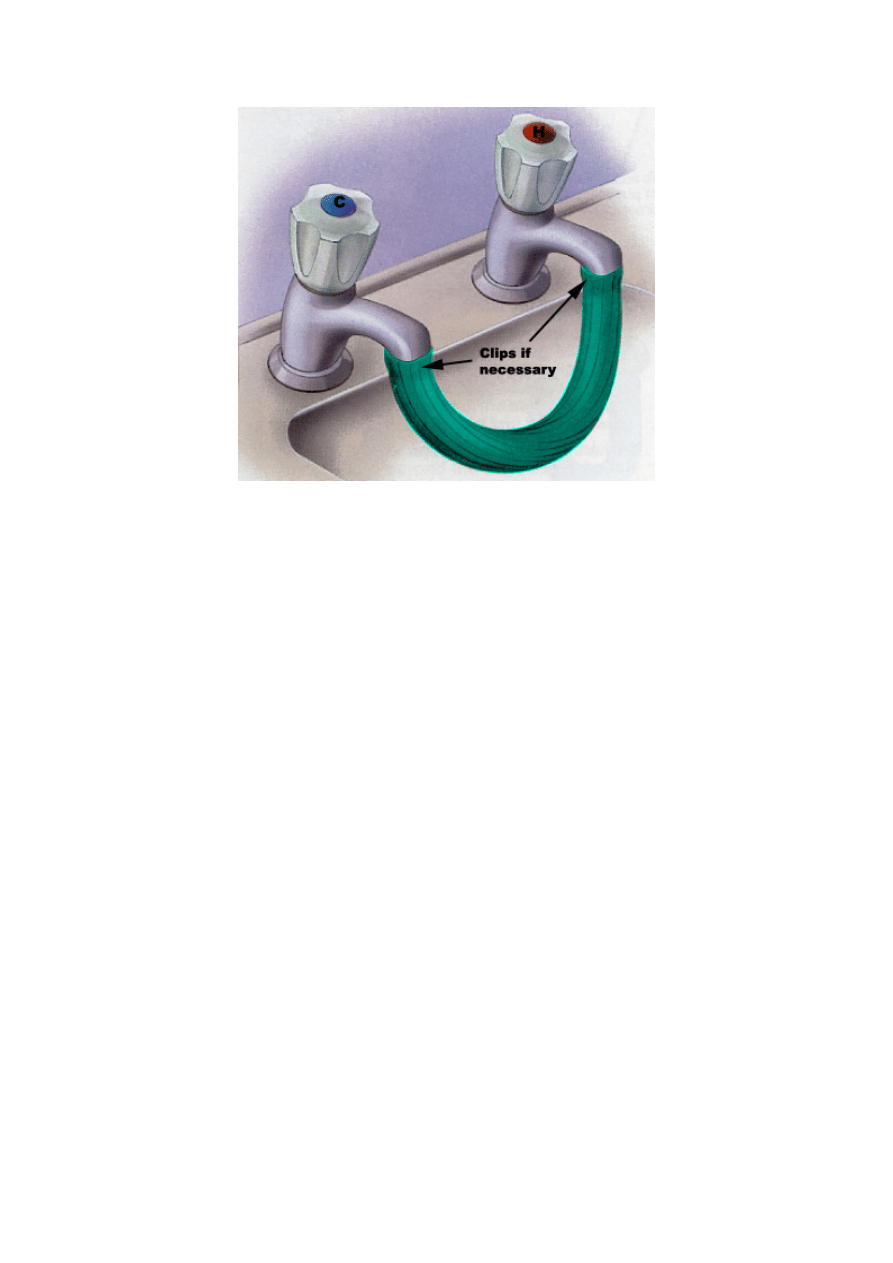
A Further method was sent in by a user, Dave Maynard:
When needing to pass mains cold water pressure across to air locked hot water supply using
kitchen mixer taps: Easier than trying to find another tap and having to use a long hose which
may, anyway, not fit the shape of some taps. Simpler than playing around with washing
machine hoses.
Procedure:
1)Squeeze the single mixer tap outlet so that the palm of your hand covers it firmly.
2) Turn on the hot, then the cold, (this order is important to prevent confined mains pressure
from forcing
your hand away from the tap outlet). The cold supply, now unable to exit from the hand
blocked tap outlet, will instead flow across to the hot water pipe causing a backflow in the
hot water system, clearing the airlock.
Note: If you have a similarly non-mains pressured COLD supply i.e. also fed from a header
tank and which also has an airlock: Same as just described but this time you need to use the
mains pressured water to purge the non-mains pressured COLD
supply, which, unlike the hot supply, is probably inaccessible from downstairs and therefore
nowhere near any mains pressured water.
To do this you firstly need to create a path between the hot water supply and the non-mains
pressured cold water supply.
Procedure:
Prior to starting the tap squeezing exercise, and if you have a non-electric shower mixer tap
in the upstairs bathroom:
1) Unscrew the showerhead from the pipe
2) Place 2 or 3 layers of plastic bag over the end of the pipe to form a strong membrane

3) Re-screw the shower head with the membrane still in place
4) Go to the header tank and turn ONLY the hot outlet OFF. Leave the cold one ON.
5) Go back to the shower taps and turn both hot and cold ON, with the diverter in the
SHOWER position.
6)Go back downstairs and carry out the procedure initially described i.e. using hand
pressure over the mixer taps.
The mains pressured water will now back flow up into the hot water system but then flow
across to the non-mains pressured cold water system via plastic bag blocked mixer in the
bathroom thus clearing any air locks in the non-mains pressured cold supply.
If you don't have a shower mixer as described, but do have separate hot and cold taps e.g.
sink taps, then steps 1) to 3) can be replaced by just connecting a hose across the two taps.
Step 5) would omit the requirement to set the diverter.
Wyszukiwarka
Podobne podstrony:
Estimating Temperatures in an Air
Electric Hot Water
21 269 287 Effect of Niobium and Vanadium as an Alloying Elements in Tool Steels
Gas Hot Water
20 Seasonal differentation of maximum and minimum air temperature in Cracow and Prague in the period
Piórkowska K Managers' loyalty as an organizational resource in the strategic context
Electric Hot Water
Some Oceanographic Applications of Recent Determinations of the Solubility of Oxygen in Sea Water
Breakthrough An Amazing Experiment in Electronic Communication with the Dead by Konstantin Raudive
FIDE Trainers Surveys 2011 04 29 Georg Mohr An Isolated Pawn in the Endgame
Get Your Ass in the Water & Swim Like Me African American Narrative Poetry from the Oral Tradition
J Michael Bishop How to Win the Nobel Prize, An Unexpected Life in Science (2003)
Sting An English man in N1123/4983
bacterial contamination in drinking water
więcej podobnych podstron