ARKUSZ ZAWIERA INFORMACJE PRAWNIE CHRONIONE DO MOMENTU
ROZPOCZĘCIA EGZAMINU!
Miejsce
na naklejkę
dysleksja
MJA-P1_1P-082
EGZAMIN MATURALNY
Z JĘZYKA ANGIELSKIEGO
POZIOM PODSTAWOWY
Czas pracy 120 minut
Instrukcja dla zdającego
1. Sprawdź, czy arkusz egzaminacyjny zawiera 11 stron (zadania
1–8). Ewentualny brak zgłoś przewodniczącemu zespołu
nadzorującego egzamin.
2. Część pierwsza arkusza, sprawdzająca rozumienie ze słuchu,
będzie trwała około 20 minut i jest nagrana na płycie CD.
3. Pisz czytelnie. Używaj długopisu/pióra tylko z czarnym
tuszem/atramentem.
4. Nie używaj korektora, a błędne zapisy wyraźnie przekreśl.
5. Pamiętaj, że zapisy w brudnopisie nie podlegają ocenie.
6. Na karcie odpowiedzi wpisz swoją datę urodzenia i PESEL.
7. Zaznaczając odpowiedzi w części karty przeznaczonej dla
zdającego, zamaluj pola do tego przeznaczone. Błędne
zaznaczenie otocz kółkiem
i zaznacz właściwe.
8. Tylko odpowiedzi zaznaczone na karcie będą oceniane.
Życzymy powodzenia!
MAJ
ROK 2008
Za rozwiązanie
wszystkich zadań
można otrzymać
łącznie
50 punktów
Wypełnia zdający przed
rozpoczęciem pracy
PESEL ZDAJĄCEGO
KOD
ZDAJĄCEGO
Egzamin maturalny z języka angielskiego
Poziom podstawowy
2
ROZUMIENIE ZE SŁUCHU
Zadanie 1. (5 pkt)
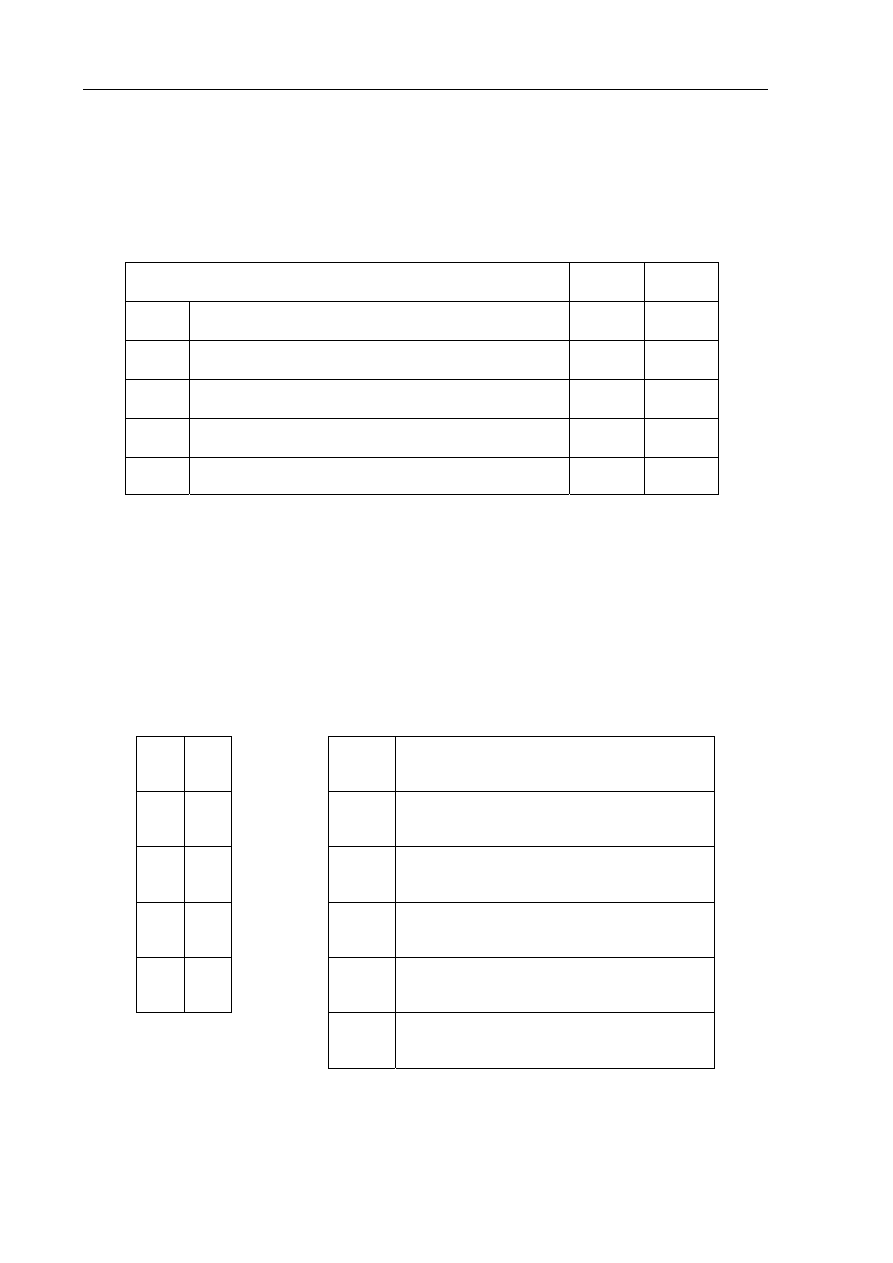
Usłyszysz dwukrotnie krótką rozmowę John’a i Mary. Na podstawie usłyszanych
informacji odpowiedz na pytania 1.1. – 1.5. i zaznacz znakiem X odpowiednią rubrykę
w tabeli. Za każdą poprawną odpowiedź otrzymasz 1 punkt.
Who
John
Mary
1.1. prefers practice to theory?
X
1.2. makes better omelettes?
X
1.3. used to work as a cook?
X
1.4. couldn’t find a job?
X
1.5. met interesting people at university?
X
PRZENIEŚ ROZWIĄZANIA NA KARTĘ ODPOWIEDZI!
Zadanie 2. (5 pkt)
Usłyszysz dwukrotnie zapowiedzi pięciu programów telewizyjnych. Na podstawie
usłyszanych informacji odpowiedz na podane pytanie, wpisując w każdą kratkę (2.1. –
2.5.) odpowiednią literę (A–F). Jeden punkt (A–F) podany został dodatkowo i nie odnosi
się do żadnej wypowiedzi. Za każdą poprawną odpowiedź otrzymasz 1 punkt.
What is each programme about?
2.1.
B
A.
A LIFE CHANGE
2.2.
A
B.
DAY-TO-DAY PROBLEMS KIDS
HAVE
2.3.
F
C.
A NICE PLACE TO LIVE
2.4.
C
D.
PROFESSIONALS HELPING KIDS
2.5.
D
E.
CHILDREN’S ACCIDENTS AT HOME
F.
PEOPLE IN UNIFORMS SAVING OUR
LIVES
PRZENIEŚ ROZWIĄZANIA NA KARTĘ ODPOWIEDZI!

Egzamin maturalny z języka angielskiego
Poziom podstawowy
3
Zadanie 3. (5 pkt)
Usłyszysz dwukrotnie tekst narracyjny. Z podanych możliwości odpowiedzi wybierz
właściwą, zgodną z treścią tekstu. Zakreśl literę A, B lub C. Za każdą poprawną
odpowiedź otrzymasz 1 punkt.
3.1. According to the speaker, Harry’s childhood was
A. quite typical.
B. not very happy.
C. really pleasant.
3.2. The speaker mentions Harry’s
A. negative attitude to the Army.
B. ability to work with kids.
C. success as a rugby player.
3.3. Harry and his brother
A. heard about the tsunami on the radio.
B. made the Red Cross send more help.
C. were glad they could help some people.
3.4. Which is true about Harry?
A. He can apologise if he is wrong.
B. He has always had a lot of girlfriends.
C. He has never had problems with the media.
3.5. The speaker presents
A. some facts from Harry’s life.
B. his personal opinion on Harry.
C. different views on the Royal Family.
PRZENIEŚ ROZWIĄZANIA NA KARTĘ ODPOWIEDZI!
Egzamin maturalny z języka angielskiego
Poziom podstawowy
4
ROZUMIENIE TEKSTU CZYTANEGO
Zadanie 4. (7 pkt)
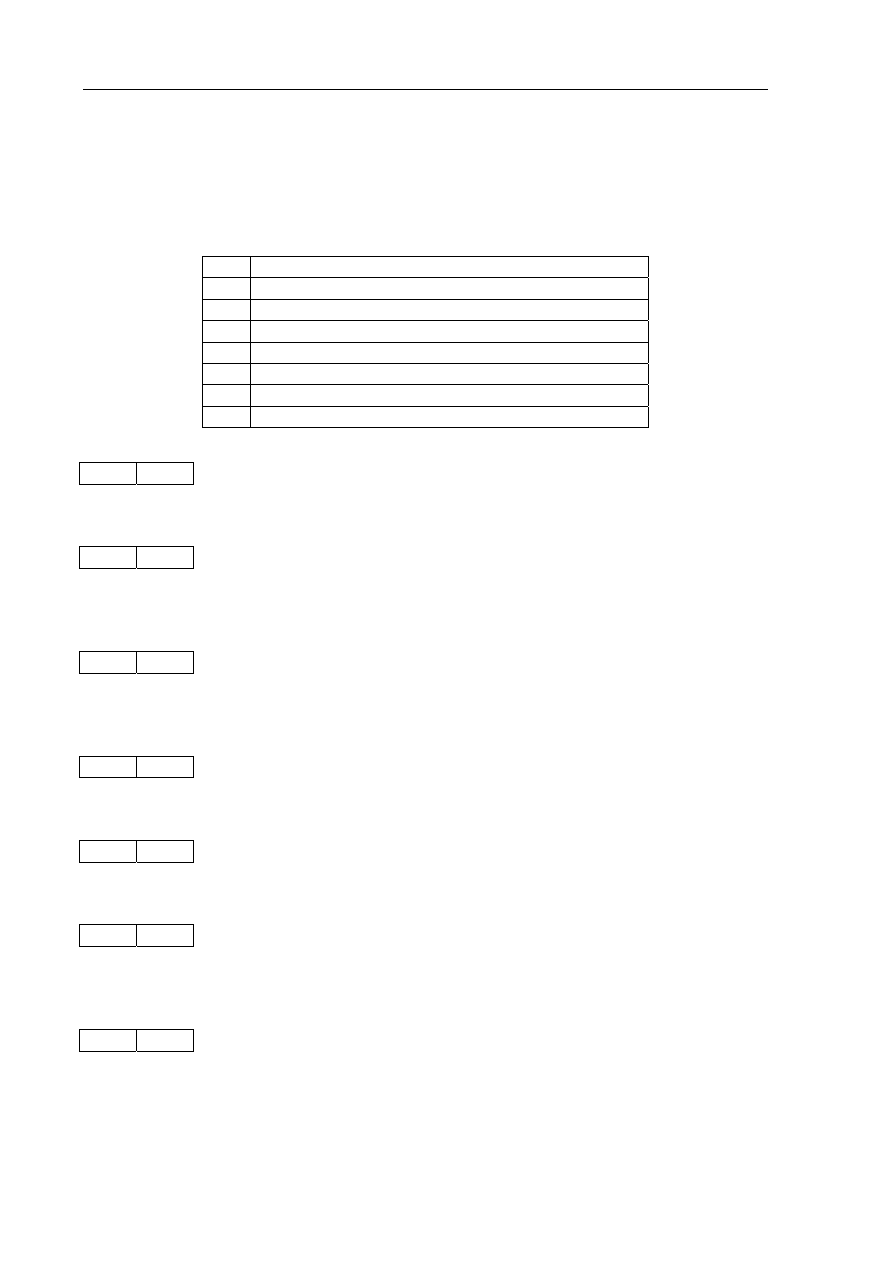
Przeczytaj poniższy tekst. Do każdej części tekstu (4.1. – 4.7.) dopasuj zdanie,
podsumowujące jej treść (A – H) i wpisz w każdą kratkę odpowiednią literę.
Jedno zdanie nie odnosi się do żadnego tekstu. Za każdą poprawną odpowiedź
otrzymasz 1 punkt.
A. The colour represents the way you earn money.
B. Somebody who is different from the others.
C. Life is rarely so clear.
D. You knew who was who.
E. The real world is full of lies.
F. It’s a more official way.
G. Not all lies are harmful.
H. Black is not always negative.
BLACK & WHITE
4.1.
B
A ‘black sheep’ is a person who ignores tradition or does things that are not accepted.
A family may have a member who is not like them. This person brings shame to his/her group
and is not welcome at family meetings.
4.2.
D
‘White hats’ and ‘black hats’ were symbols of the ‘good guys’ and the ‘bad guys’
in American western movies. The early movies were made with no sound, so the film
directors put a white hat on the hero and a black hat on the bad guy. That way even a small
child could tell who the hero was.
4.3.
H
Black is also used in some expressions that describe good things. Being ‘in the black’
is a good situation. It is a business expression that means a company has made a profit.
The expression comes from the colour of ink used in the books that record a company’s profits
or losses. Profits are written in black and losses are written in red.
4.4.
A
A ‘white collar’ job is the kind of job many people want to have. It is a job where you work
at a desk, using your brain instead of your muscles. Usually ‘white-collar’ jobs pay more than
‘blue-collar’ jobs - jobs where you use your physical strength.
4.5.
F
Some expressions use black and white together. Someone may say that your suggestion
sounds all right, but he wants to see it in black and white. He wants to get a formal document
in writing or in print – black ink on white paper.
4.6.
C
Some people see things only in black and white. In this expression, black and white represent
opposite extremes. Most things in the world aren’t so simple. One side of an issue is not
all good and the other side is not all bad. In the real world there are many grey areas where
black and white mix to represent the true situation.
4.7.
G
We know that we should tell the truth, but is it always good? Sometimes people say
something which is not true because they don’t want to hurt their friends or relatives. In other
words they tell ‘a white lie’.
adapted from ‘Words and their Stories’
PRZENIEŚ ROZWIĄZANIA NA KARTĘ ODPOWIEDZI!

Egzamin maturalny z języka angielskiego
Poziom podstawowy
5
Zadanie 5. (6 pkt)
Przeczytaj poniższy tekst. Na podstawie informacji w nim zawartych zdecyduj, które
zdania są zgodne z treścią tekstu (TRUE), a które nie (FALSE).
Zaznacz znakiem X odpowiednią rubrykę w tabeli. Za każdą poprawną odpowiedź
otrzymasz 1 punkt.
Holidaying at home is fun and quite cheap, says writer Peter Major from London.
This is what he says in one of his books:
“We live a couple of tube stops from King’s Cross in London, so we can easily travel
by train and help fight global warming by avoiding flying. Flights abroad might seem cheap,
but when you consider the taxes and cost of getting to the airport, they’re not. It’s over £20
return to Stansted Airport on the train.
What I like doing is booking special fares on the train, and using our family rail card,
which saves money and guarantees seats. There’s nothing like getting value for money,
and the joy of knowing you will have somewhere to sit however crowded the train. On most
trains our two daughters can walk up and down the corridors and enjoy trips to the buffet.
Some train services even provide crayons for kids. Our eldest daughter actually learnt to crawl
on the train.
If you book a cottage or a B&B in advance and shop around, it’s no more expensive
than a foreign hotel. And although it rains, it has never spoilt our holiday: wet walks, board
games, table tennis or just having the time to listen to raindrops can be fun. There are so many
things to do at home. Our children have had great holidays swimming in Lake Coniston,
exploring ruined abbeys in Yorkshire and picnicking in beautiful valleys. Staying in the UK
is great for your kids’ knowledge of history, too.
Europe’s greatest wilderness is in the Scottish Highlands. A couple of years ago,
we took the sleeper to Inverness, and travelled on (in a rented car and then in two boats)
to the island of Taransay – where, on a summer day, it looked like the South Pacific
and we had a beach of beautiful white sand all to ourselves.”
This is an extract from Save Cash and Save the Planet. Find out more – see our books
about holidaying in the UK, ethical tourism and ideas for getting away from it all –
with traffic-free cycle trails and wildlife walks.
adapted from www.foe.co.uk / living / poundsavers
TRUE
FALSE
5.1.
According to Peter Major, train travellers are friendly
to the environment.
X
5.2. In Peter’s opinion, flying is inexpensive these days.
X
5.3. Peter’s children find journeys by train interesting.
X
5.4. Bad weather has a bad effect on the Majors’ holiday plans.
X
5.5. A few years ago the family took a trip to a South Pacific island.
X
5.6.
Peter Major has found some useful information in the book Save
Cash and Save the Planet.
X
PRZENIEŚ ROZWIĄZANIA NA KARTĘ ODPOWIEDZI!

Egzamin maturalny z języka angielskiego
Poziom podstawowy
6
Zadanie 6. (7 pkt)
Przeczytaj poniższy tekst. Z podanych możliwości odpowiedzi wybierz właściwą, zgodną
z treścią tekstu. Zakreśl literę A, B, C lub D.
Za każdą poprawną odpowiedź otrzymasz 1 punkt.
When Reggie Love and Mark returned to the hospital there were reporters everywhere.
‘Ms Love, Ms Love,’ they called. ‘Just a few questions, please.’ She took Mark’s hand
and walked faster.
‘Is it true your client is refusing to speak to the FBI? Is it true he knows more than
he wants to say? Did Mark talk to Jerome Clifford before he died?’ Reggie said quickly
to Mark, ‘Don’t look at them and don’t say a word.’
In room 943 Ricky was sitting on the end of the bed. Dr Greenway told Mark to sit next
to him and hold his hand.
‘Ricky,’ he said, ‘I would like to talk about the other day when you and Mark were hiding
in the trees.’
‘It’s okay, Ricky, ’ said Mark. ‘He knows we were smoking. Mom’s not angry with us.’
‘Ricky, do you remember seeing the big, black car?’ said Dr Greenway.
‘Yes,’ said Ricky quietly.
‘What did the big black car do, Ricky?’
Ricky shut his eyes tightly, put his head on Mark’s knee and his thumb went into
his mouth. He didn’t speak another word for twenty-four hours.
Mark was tired, so when Ricky was asleep again, they left the hospital in Reggie’s sports
car. It was old, but Reggie liked to drive fast, and that was fine with Mark.
Mark watched the mirror closely to see if anyone was following them.
‘You think that Mom and Ricky are safe?’ he asked.
‘Yes. The hospital promised to keep guards at the door. Now I wonder what Momma
Love is giving us for dinner?’
Momma Love was Reggie’s mother. She frequently had young guests to dinner.
Most of Reggie’s work was with children. Some had family problems, some had drug
problems and some had already started a life of crime. Reggie often decided that they needed
good food.
‘Momma Love’s cooking is the best,’ she told Mark.
And it was. Everything was fresh and smelled perfect. They spent an hour at the table,
talking and eating.
After dinner Momma Love showed Mark some photographs. ‘Reggie’s children,’
she said. ‘I never see them now. Their father took them and spoiled them. Reggie felt angry
at first, but she’s got a new life now and tries not to think about it.’
Mark’s bed was comfortable and he fell asleep quickly, but around two o’clock he woke
up and found himself worrying about Mom and Ricky. Why was he there? His place was with
them, at the hospital. He got up and stood at the window, thinking about the past two days.
It had all started on Monday, after school. Now he had missed two days of school.
When would it all end?
As Mark looked into the dark night he suddenly noticed a small red light. A cigarette.
Someone was out there, in the street, smoking a cigarette. Though he couldn’t be seen,
Mark held his breath. Someone was watching the house.
adapted from a novel by John Grisham, retold by Janet Mc Alpin

Egzamin maturalny z języka angielskiego
Poziom podstawowy
7
6.1. Reggie
Love
A. wanted Mark to tell the reporters everything.
B. allowed Mark to answer just one question.
C. did not let Mark speak to the reporters.
D. decided to tell the reporters the truth.
6.2. Doctor Greenway wanted to talk to Ricky about
A. the cause of his hand injury.
B. his relationship with Mark.
C. his problems with smoking.
D. the vehicle the boy had seen.
6.3. Mark left the hospital
A. to allow Ricky to fall asleep.
B. to have a rest somewhere else.
C. because Ricky refused to speak to him.
D. because somebody was following him.
6.4. Momma Love often
A. prepared meals for the visitors.
B. solved young visitors’ problems.
C. discussed problems with the guests.
D. served ready-made dishes to the guests.
6.5. What do you learn about Reggie’s own children?
A. They do not frequently see their father.
B. They still visit Reggie’s house regularly.
C. They come to Reggie when she feels angry.
D. They have lived with their father for some time now.
6.6. When Mark woke up at night, he
A. wanted to light a cigarette.
B. noticed a smoker outside.
C. found it very hard to breathe.
D. saw someone standing at the window.
6.7. The text is about a boy who
A. has had many problems at school.
B. is preparing a meal for his sick friend.
C. has found himself in danger.
D. is cooperating with the press.
PRZENIEŚ ROZWIĄZANIA NA KARTĘ ODPOWIEDZI!

Egzamin maturalny z języka angielskiego
Poziom podstawowy
8
WYPOWIEDŹ PISEMNA
Przedstawione prace są jedynie propozycją pełnej realizacji polecenia. Każda inna
wypowiedź pisemna spełniająca wszystkie wymogi wyszczególnione w kryteriach
oceniania zostanie oceniona na maksimum punktów.
Zadanie 7. (5 pkt)
Zredaguj wiadomość do swojego współlokatora/swojej współlokatorki z zagranicy.
• Poinformuj go/ją, dlaczego musisz wyjść.
• Poproś o zrobienie zakupów.
• Przypomnij, od której godziny otwarty jest sklep.
• Podaj informację, gdzie zostawiłeś/łaś pieniądze.
Judy,
Sorry, but I have to leave earlier. We have an extra biology class.
We haven’t got anything for dinner so could you do some shopping
while I am at school? The shop is open from 9 a.m. I left you some
money on the table. See you soon.
XYZ

Egzamin maturalny z języka angielskiego
Poziom podstawowy
9
Zadanie 8. (10 pkt)
Po powrocie z Wielkiej Brytanii stwierdziłeś/łaś, że zostawiłeś/łaś jedną ze swoich rzeczy
w hotelu. Napisz list do właściciela hotelu.
• Poinformuj, w jakim terminie przebywałeś/łaś w hotelu i wyraź zadowolenie
ze swojego pobytu.
• Napisz, jaką rzecz zostawiłeś/łaś i dlaczego tak bardzo zależy Ci na jej
odzyskaniu.
• Opisz, jak ta rzecz wygląda i wspomnij, gdzie prawdopodobnie ją zostawiłeś/łaś.
• Poproś o przesłanie jej do Ciebie i zaoferuj pokrycie kosztów przesyłki.
Dear Sir / Madam,
I am writing to enquire about the possibility of getting back
something I left in my hotel room.
I stayed in your hotel on 25
th
April and I was extremely satisfied
with the accommodation and the quality of service.
However, when I arrived home I noticed that one of my
necklaces was missing and I realized I had left it in the drawer of
the wooden cabinet next to my bed. The necklace is silver with a red
stone. It is not a very valuable piece of jewellery but it is of special
importance for me
because it is a
birthday present from
my grandmother.
I hope the chambermaids found it and I would be very grateful
if you could send it back to me. I am willing to cover any necessary
costs.
I look forward to hearing from you.
Yours faithfully,
XYZ
Wyszukiwarka
Podobne podstrony:
ang mod pp
ang roz prii a
ang transk pp
listopad 2008 roz PP odp
ang mod pp
arkusz ang stand PP a
ang PP niesl
ang pp niesl model
roz, Politechnika Poznańska (PP), Mechanika Techniczna, Ćwiczenia, Semestr 1, Mechanika kartówka 2
ang pp a
lo iii 1 pp ang
ang PP stand A rozw
Angielski PP Roz
biologia PP Roz
Polski PP Roz
więcej podobnych podstron