Magazine – Magic
Page 1 of 4
The United Kingdom’s international organisation for educational opportunities and cultural relations. We are registered in England as a charity.
Introduction
You can listen to a recording of this article at:
http://learnenglish.britishcouncil.org/magazine-articles/magic
This support pack contains the following materials:
• a pre-reading vocabulary activity
• the article that you can listen to
• a comprehension activity based on the article
• an activity in which you rearrange the words in sentences
Before you read
Vocabulary activity
Match the words and phrases at the top to their definitions.
a. blamed
b. harm
c. household names
d. infamous
e. levitating
f. persecuted
g. pick
h. potion
i. spell
j. tap into
1. a liquid believed to have a magical effect
2. choose
3. famous for something considered bad
4. famous people that most people know of
5. hurt someone
6. make a connection with
7. making something rise or float in the air without support
8. said to be the cause
9. spoken words thought to have magical power
10. treated cruelly for a long time because of your beliefs
Magazine – Magic
Page 2 of 4
The United Kingdom’s international organisation for educational opportunities and cultural relations. We are registered in England as a charity.
Read the article
Magic
by John Russell
Double, double, toil and trouble;
Fire burn and cauldron bubble.
Fillet of a fenny snake,
In the cauldron boil and bake;
Macbeth – William Shakespeare
A.
From the witches in Shakespeare’s Macbeth, to
Gandalf the Wizard in Lord of the Rings books
and films, it is clear that the idea of magic has
been around for many years. Both play and
books / films use the idea of something
mysterious to add interest and excitement to the
story – but they also tap into something
deeper…our fascination with magic.
B.
The word ‘Magic’ has many different meanings. A
man playing card tricks in the street is doing
magic, just as a wizard in a story fighting with
dragons is using magic. Magic is when something
happens that we can not explain or understand.
Often forcing us to not believe our own eyes or
even appearing to be breaking the laws of
physics or nature! When a rabbit appears in a hat
or when someone claims to see into the future –
both can be called magic.
C.
In the past anything that people couldn’t
understand was called magic – and many people
were persecuted or even killed because they
were thought to be witches or wizards. When a
sick person suddenly became well or a well
person (or even animal) became ill, magic was
the cause. Unexplained events were blamed on
people who were said to use magic. It was
thought that the devil or strange forces allowed
them to have these powers. However, accusing
someone of being a witch or of having magical
powers was often just an excuse to remove an
unpopular person from the community or take
someone’s property away. Unfortunately,
thousands of people were executed for witchcraft
over hundreds of years. The most infamous
recent trials were the Salem witch trials in
America, dramatised in Arthur Miller’s play, The
Crucible.
D.
Magic has always been used as a form of
entertainment. People enjoy the mystery of
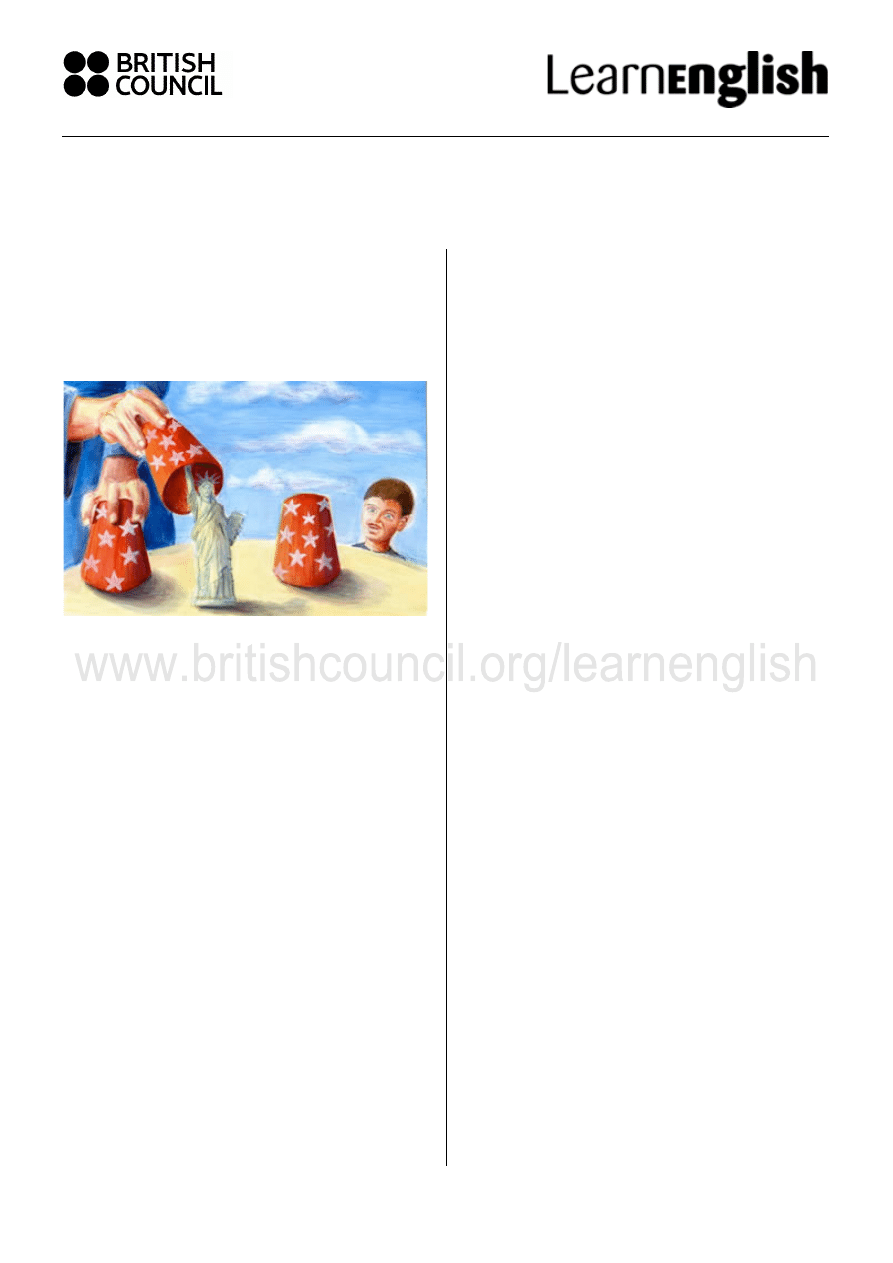
working out which cup the little ball is underneath
or how he knows which card I was thinking of.
From early Egyptian times magicians and
illusionists have entertained people, and there
have been many great magicians. Harry Houdini
was one of the first world-famous magicians –
famous for escaping from deadly situations. In
more recent times magicians such as David
Copperfield or David Blane have become
household names for their illusions; such as
making the Statue of Liberty disappear or
levitating.
E.
Not a lot of people would argue that David
Copperfield has real magical powers – he is just
a great illusionist. But there are some who
believe magic really exists and can change our
lives. A few believe that a spell can make
someone fall in love or a potion will protect you
from danger. White magic is the idea that spells,
or mixtures of certain herbs can have a positive
influence on our lives. Black magic is the
opposite of this, the idea that magical powers can
be used to harm others. Dark magic is associated

Magazine – Magic
Page 3 of 4
The United Kingdom’s international organisation for educational opportunities and cultural relations. We are registered in England as a charity.
with the devil and evil powers, but white magic is
more to do with the earth and nature.
F.
Wizard, warlock, witch, sorcerer, enchantress. All
names associated with magic, but made popular
(and most created) through stories, plays or films.
Shakespeare was not the first to add interest to a
story with magic and the 20th Century saw a
huge rise in stories about magic. The fantasy
novel and film has created new universes where
magicians fight to save the world, or something
magical is the key to the story (like the ring in
Lord of the Rings). T.H. White wrote about the
most famous wizard of all – Merlin, in his books
about King Arthur. The British author Terry
Pratchett uses magic a great deal in his popular
Discworld series of books, witches and wizards
are often his main characters and there is even
an ‘Unseen University’ of magic. A young wizard
called Harry is also quite popular in books and
films at the moment, so I’m told ...
G.
Magical rings and three headed dogs may not be
real, but does this mean nothing magical really
exists? Can you always explain how the magician
has done the card trick? Maybe it is better not to
explain, but to leave a little magic and mystery in
our lives. Pick a card, any card ...
After reading
Comprehension activity
Someone has magically removed the headings from each paragraph in the text. Can you match the
correct heading with the correct paragraph? There is one extra that you don’t need to use.
Paragraphs in text:
A
B
C
D
E
F
G
Headings:
1. But it’s fun to watch…
2. Do you believe in magic?
3. Good magic, bad magic, black magic, white magic
4. Have people always liked magic?
5. It’s a kind of magic!
6. Magic books and silver screens
7. Magic on television
8. What is magic?
Word ordering activity
These sentences from the article have been mysteriously mixed up. Can you put them back in the right
order? Try not to look back at the text.
1. events were on Unexplained blamed people use were said to magic who
2. make A believe a spell few that can in fall love someone
3. is clear magic idea of It has been that the around for years many
4. 20th a saw huge The about rise in Century magic stories
5. always you explain the trick how magician Can done the card has
Magazine – Magic
Page 4 of 4
The United Kingdom’s international organisation for educational opportunities and cultural relations. We are registered in England as a charity.
Answers to vocabulary activity:
1. h; 2. g; 3. d; 4. c; 5. b; 6. j; 7. e; 8. a; 9. i; 10. f
Answers to comprehension activity:
1. D; 2. G; 3. E; 4. C; 5. A; 6. F; 7. extra heading; 8. B
Answers to word ordering activity:
1. Unexplained events were blamed on people who were said to use magic; 2. A few believe that a spell
can make someone fall in love ; 3. It is clear that the idea of magic has been around for many years; 4.
The 20th Century saw a huge rise in stories about magic; 5. Can you always explain how the magician
has done the card trick
Wyszukiwarka
Podobne podstrony:
learnenglish magazine amelia earhart support pack 0
learnenglish uk culture manners support pack 0
learnenglish podcasts themes computers support pack
learnenglish wanna talk about horror films support pack 0
learnenglish uk culture creative industries support pack
learnenglish wanna talk about learning languages support pack
learnenglish podcasts themes classical music support pack
learnenglish uk culture student money support pack
LearnEnglish MagazineArticle NewZealand
Music is Great Part 2 Support Pack
LearnEnglish MagazineArticle Tobacco
Music is Great Part 1 Support Pack
Amber Kell Moon Pack Extra Christmas Tree Magic
Alpha Pack 1 5 Black Magic
Historia gry Heroes of Might and Magic
Testing young learners
NLP Magazine 01 id 320421 Nieznany
[ebook renewable energy] Home Power Magazine 'Correct Solar Panel Tilt Angle to Sun'
alcatel support document for cable system in cuba
więcej podobnych podstron