
J Clin Aesthet Dermatol. 2015 Jan; 8(1): 50–58.
PMCID: PMC4295858
Atrophic Acne Scarring
A Review of Treatment Options
, MD and
, MD, MBA
Copyright and License information ►
This article has been
Abstract
Background: Scarring is an unfortunate and frequent complication of acne, resulting in
significant psychological distress for patients. Fortunately, numerous treatment options exist for
acne scarring. Objectives: To extensively review the literature on treatment options for atrophic
acne scarring. Materials and methods: A comprehensive literature search was conducted on the
following topics: dermabrasion, subcision, punch techniques, chemical peels, tissue
augmentation, and lasers. Results: The literature supports the use of various treatment
modalities; superior results may be achieved when multiple modalities are combined for a multi-
step approach to scarring. Conclusion: The safety and efficacy of various treatment devices for
acne scarring is well established, but there is a paucity of split-face trials comparing modalities.
Acne vulgaris is a common skin disease, affecting nearly all adolescents and 12 to 51 percent of
adults aged 20 to 49.
Scarring is a common sequela, estimated to occur in up to 95 percent of
acne patients
and resulting in significant psychological distress for many individuals. Given its
impact on self-esteem, social interactions, and even the ability to obtain employment,
effective treatment of acne scarring is paramount.
Acne scarring may be either atrophic or hypertrophic. Atrophic acne scars are further subdivided
morphologically into boxcar, icepick, or rolling, with the choice of treatment modality often
based on scar type. Over the past few decades, a wide variety of therapeutic interventions have
been developed to treat acne scars, including dermabrasion, subcision, punch techniques,
chemical peels, tissue augmentation, and laser. Herein, the authors review the various treatments
available for atrophic acne scarring.
DERMABRASION

Dermabrasion, a treatment utilized since the 1950s, involves the use of a serrated wheel,
diamond embedded fraises, sterilized sandpaper or wire brush attached to a rapidly rotating
handpiece that evenly abrades the skin to the papillary dermis. In contrast, microdermabrasion
utilizes aluminum oxide crystals delivered through a nozzle to superficially abrade the stratum
corneum through a series of microlacerations.
For acne scarring, dermabrasion may be
particularly helpful in softening sharper scar edges. The technique, however, is highly operator-
dependent, with error resulting in significant scarring. Additional disadvantages include
postoperative pain and healing times of up to one month, with the tendency to form milia.
result of these disadvantages, dermabrasion has largely been replaced by resurfacing lasers. In a
prospective, split-scar study comparing diamond-fraise dermabrasion to fractionated CO
2
laser,
two laser treatments resulted in equivalent improvement of acne scarring at three months, with
significantly less adverse events than in the dermabrasion-treated group.
opinion, the poor safety profile, long recovery time, and operator-dependent technique make
dermabrasion an inferior choice to laser therapy.
SUBCISION
Subcutaneous incisionless surgery (subcision) was first introduced in 1995 as an effective
treatment for rolling scars.
In this procedure, a hypodermic, tribevelled, or filter needle is
introduced into the subdermal plane to undermine the scar through a series of backward and
forward motions, followed by horizontally rotating the needle in a fanning motion.
motions loosen the fibrotic adhesions that cause the bound-down appearance of rolling scars and
create a wound environment amenable to collagen deposition. The bleeding and subsequent clot
formation that result from the procedure aid in elevating the skin from the underlying scar tissue,
generating a potential space for neocollagenesis. In a study of 40 patients undergoing subcision
for rolling scars, the overall degree of improvement was rated 51 percent by patients and 50 to 60
percent by investigators.
Although there were no serious adverse events in this study, 5 to 10
percent of patients in other studies have developed hypertrophic scarring requiring treatment
with intralesional steroids.
Atrophic acne scar types: (A) icepick, (B) boxcar, (C) icepick (black arrow) and boxcar (blue arrow), (D)
rolling.
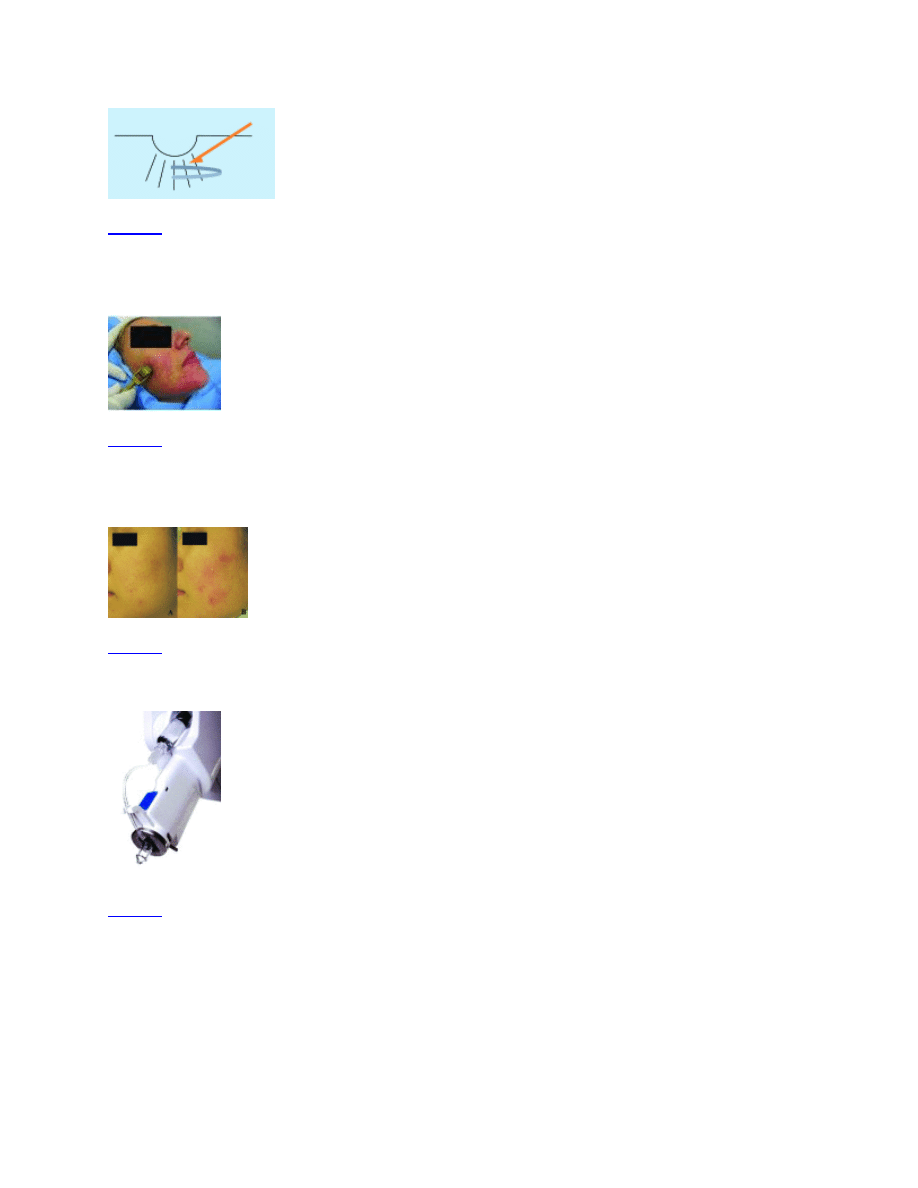
Schematic demonstrating subcision. A hypodermic, tribevelled, or filter needle is inserted into the
subdermal plane and rotated in a fanning motion to undermine the scar, disrupting fibrous attachments.
Acne scars treated with skin needling: a revolving barrel equipped with multiple rows of needles is rolled
across the skin.
The CROSS technique (A) before and (B) shortly after the procedure.
Diagram of the Airgent handpiece used for subdermal minimal surgery. A needleless hypodermic
inoculator delivers hyaluronic acid subdermally through a high pressure jet.
Compared to other modalities, subcision was recently rated statistically significantly higher
among patients than dermal fillers in a randomized, prospective, split-face comparison at three
months (p=0.03) and trended toward increased satisfaction at six months (p=0.12). Blinded

evaluators leaned toward subcision at three months (p=0.12) and showed no preference at six
months (p=0.69).
Although subcision is adequate stand-alone treatment, improved results are achieved when it is
combined with other modalities. In a split-face, single-patient trial of subcision alone versus
subcision and the nonablative 1320nm neodymium-doped:yttrium aluminum garnet (Nd:YAG)
laser at two-week intervals, the combination treatment was superior.
fibrous attachments, subcision may make acne scars more amenable to other treatment
modalities as part of a multi-step approach.
SKIN NEEDLING
Skin needling, sometimes referred to as collagen induction therapy (CIT), involves vertically
puncturing the skin to release scar tissue and promote neocollagenesis in a manner analogous to
subcision. Specific tools have been designed for the purpose of skin needling, comprised of a
rolling barrel equipped with multiple rows of needles. The needling tool is rolled across the skin
in multiple directions, penetrating to a depth of 0.1 to 1.3mm, depending upon the pressure
applied. The creation of small holes by the needling tool is analogous to the way in which
fractional ablative lasers create noncontiguous columns of thermal injury, with healthy tissue
interspersed to promote healing. Several authors have also described the use of a tattoo gun to
“needle abrade” small acne scars.
In a study of 33 patients, analysis by photography as well as
cutaneous casts of the scars made before and after two sessions of skin needling showed
improvement in scar depth of up to 25 percent.
PUNCH TECHNIQUES
Many treatment modalities do not effectively correct icepick scars with depths that reach up to
2mm. For these scars, punch techniques—including punch excision, elevation, and grafting—
may be more suitable. In punch excision, a scar is removed with a punch biopsy tool and the site
is sutured or allowed to heal by secondary intention. In punch elevation, the punched-out scar is
elevated to the level of the surrounding skin and secondarily heals like a graft. In the case of
punch grafting, the scar is first excised and discarded as with punch excision; in its place, a full-
thickness skin graft is positioned, taken from an inconspicuous site, such as the postauricular
scalp. Studies on the effectiveness of punch techniques are largely limited to dated, small case
reports involving few patients. In these reports, the grafts were placed slightly elevated above
surrounding skin, with dermabrasion performed 4 to 6 weeks later to correct any residual surface
abnormalities.
One disadvantage of this procedure is that it is often a painstakingly slow
process. Complications may also arise, including graft depression, failure of the graft to take, or
formation of sinus tracts.
When combined with other modalities, punch techniques allow for
the treatment of deep icepick scars so that less aggressive resurfacing may subsequently be
performed to achieve optimal cosmetic results. For example, Grevelink et al

excellent results may be achieved when punch excision is combined with concurrent CO
2
laser
resurfacing.
CHEMICAL PEELS AND THE CROSS TECHNIQUE
Although there is some data to support the use of superficial chemical peels for acne,
authors’ experience, results are modest at best. Medium-depth peels, such as trichloroacetic acid
(TCA) have shown varying results for acne scars, but are limited by their unpredictable degree of
penetration beyond the papillary dermis. In a study of 15 patients receiving 1 to 3 peels
consisting of Jessner’s solution followed by 35% TCA for “crateric” or icepick scarring, at least
some improvement was observed in 14 of 15 patients; however, significant improvement was
seen in only one patient. Furthermore, 73.4 percent of patients experienced postinflammatory
hyperpigmentation, which lasted up to three months in some individuals.
phenol, can also treat acne scars. In one study, 7 out of 11 patients achieved more than 50-
percent improvement. However, significant side effects, such as scar formation and
hypopigmentation, persisted beyond six months.
Given the high risk of side effects coupled
with only modest results, it is the authors’ opinion that deep peels rarely be employed to treat
acne scars.
In 2002, Lee et al
reported a new technique using focal application of TCA which they called
the chemical reconstruction of skin scars (CROSS) method. This technique was designed to take
advantage of the dermal thickening and collagen production that occurs when higher
concentrations of TCA are applied, while minimizing such side effects as scarring and
dyspigmentation. TCA is applied to the epithelial lining of the scar until frosting occurs. In the
original study, 65 patients with skin types IV to V were treated with either 65 or 100% TCA
using the CROSS method. Eighty-two percent of patients in the 65% TCA group and 94 percent
of patients in the 100% TCA group achieved improvement of 50 to 70 percent. Furthermore, all
patients in the 100% group who received 5 to 6 treatments achieved improvement greater than 70
percent.
Subsequent studies have further elucidated the effectiveness of the CROSS technique,
particularly for icepick scarring.
In a comparative study of 100% TCA CROSS to skin
needling, there was a trend toward increased improvement in the TCA CROSS group—75.3
percent improvement versus 68.3 percent after four sessions of either treatment.
TISSUE AUGMENTATION
Soft tissue augmentation is aimed at replacing tissue volume as well as stimulating collagen
production by native fibroblasts in acne scars.
Over the years, collagen fillers have fallen out
of favor, replaced by products with less allergenic potential, including hyaluronic acid (HA),
calcium hydroxyapatite, poly-L-lactic acid (PLLA), polymethylmethacrylate, and autologous fat
transfer. Typically, dermal fillers are reserved for larger, rolling scars given the size of the
injected molecules and the degree of precision required for delivery.

Although HA fillers are commonly used for scars,
there is little data in the literature regarding
the use of HA fillers specifically for acne scars. Even for depressed scars, reports in the literature
are limited to small case studies, albeit with excellent results achieved.
experience, HA represents an exceptional option for treatment of rolling acne scars. Belotero
(Merz Aesthetics, Greenborough, North Carolina), a relatively new HA filler on the market, is a
good choice for acne scars as it does not carry the risk of the Tyndall effect, as do other HA
fillers. More recently, a new technique known as subdermal minimal surgery (Airgent,
PerfAction, Inc., Rehovot, Israel) has been developed in which a needleless hypodermic
inoculator delivers HA through a high pressure jet, allowing for more precise and even radial
dispersion into the dermal planes. In a study of 10 patients, eight had at least 50-percent
improvement in acne scar appearance.
PLLA (Sculptra, Galderma, Fort Worth, Texas) is a synthetic dermal filler originally approved
for the treatment of human immunodeficiency virus (HIV) lipoatrophy, but also used with some
success for the treatment of atrophic acne scars. While one study found PLLA to improve acne
scars after seven treatments, the trend toward increased patient satisfaction over time was not
significant.
Disadvantages of PLLA include the number of treatments and the difficulty in
achieving accuracy, with risk of overcorrection.
Calcium hydroxyapatite (Radiesse, Merz Aesthetics) is a semi-permanent filler that has been
shown to improve rolling scars; improvement can be seen after just one treatment and at least
some degree of improvement maintained for up to 12 months.
An alternative to temporary fillers, which require repeated treatments at significant cost to the
patient, is a permanent filler composed of polymethylmethacryalate microspheres in a water-
based gel with 3.5% bovine collagen (Artefill). In a study of 14 patients with atrophic acne scars
treated with 1 to 2 sessions of Artefill immediately following subcision, 2 of 14 reported
significant improvement (76-100%) and 8 of 16 reported moderate improvement (51-75%).
Given the permanence of this filler, it is not typically a first choice for acne scars.
FAT TRANSFER
Fat transfer (FT) offers the advantage over synthetic fillers because of its autologous nature.
Acne scars are often subcised immediately prior to treatment with FT. Some fat does not survive
the transfer process, and survival is often practitioner-dependent. Thus, most patients require
subsequent transfer procedures.
In one study comparing three sessions of fractional CO
2
laser
to one session of FT in 22 acne scar patients, FT proved more effective.
2
laser group, less than 20 percent of patients had excellent scar improvement and 0 had marked
scar improvement. Alternatively, in the FT group, scar improvement was graded as 30 percent
excellent and 30 percent marked. These studies are weakened by short follow-up periods, as
other studies have revealed limited duration of effect when FT is used for other applications.
Thus, although FT may be effective for acne scarring, results are not permanent and the
procedure is highly operator- dependent.

AUTOLOGOUS FIBROBLAST TRANSFER
Autologous fibroblast transfer (AFT) (Laviv, Fibrocell Science, Inc., Exton, Pennsylvania)
represents one of the newest filler techniques for treatment of acne scarring. Similar to FT, AFT
offers the advantage over other dermal fillers in its low allergenicity potential. Furthermore,
although the permanence of FT has been debated,
AFT has the potential to offer permanent
results. In this technique, the patient first undergoes punch biopsies from an inconspicuous site
such as the postauricular scalp. From these specimens, fibroblasts are isolated and cultured over
several weeks and then injected dermally at the site of the acne scar, where these cells provide a
reservoir for new collagen formation and assist in the remodeling of pre-existing extracellular
matrix.
In two double-blind, placebo-controlled trials, AFT led to significant improvement of
acne scars compared to placebo, with most patients showing sustained benefit at 12 months. Side
effects were limited to temporary erythema and edema.
AFT is an innovative addition to
our armamentarium for acne scar revision, but further studies are warranted.
LASER RESURFACING
Over the past decade, laser resurfacing has emerged at the forefront of acne scar treatment. The
first lasers to be used for acne scarring were the ablative CO
2
and Er:YAG lasers, which emit
radiation at wavelengths of 10,600 and 2,940nm, respectively, targeting water in the epidermis to
stimulate collagen synthesis. In 1996, Alster et al
published the largest study to date on the use
of ablative CO
2
for acne scarring, showing a mean improvement of 81.4 percent in 50 patients
with moderate-to-severe acne scars. These results are quite staggering, and it should be noted
that in the authors’ experience, such high rates of improvement are not always observed.
Response rates to the original short-pulse Er:YAG lasers ranged from 25 to 90 percent,
the largest study of 21 patients reporting mean improvement in acne scarring of 40 percent.
Despite the results with these lasers, adverse events, such as postinflammatory
hyperpigmentation and prolonged erythema were pronounced.
2
and Er:YAG lasers, more serious complications, including infection and scarring, have been
reported.
Because the traditional 2940nm Er:YAG laser has 12 to 18 times the absorption in water-
containing tissue than the CO
2
laser, it does not penetrate as deeply into the skin as the CO
2
laser.
Furthermore, hemostasis is difficult to achieve with the Er:YAG, with increased intraoperative
bleeding. In order to address these shortcomings, longer pulsed Er:YAG lasers were developed.
In a prospective study of 35 patients with pitted acne scars, results were excellent (>75%
improvement) in 36 percent of patients and good (50-75% improvement) in 57 percent.
Following the advent of ablative lasers, efforts were made to develop devices with a better safety
profile, leading to the introduction of the nonablative, long-pulsed 1450nm diode and 1320nm

Nd:YAG lasers. These mid-infrared wavelengths target water in the dermis to stimulate collagen
synthesis. Both lasers showed modest efficacy after 3 to 6 treatments in improvement of acne
scarring.
In a prospective, split-face comparison of 20 patients with atrophic acne scarring
treated with the nonablative long-pulsed 1450nm diode and 1320nm NdYAG, all patients
demonstrated mild improvement after three treatment sessions, with a trend toward greater scar
improvement in the 1450 nm diode group.
Although side effects were minimal with the nonablative lasers, their efficacy did not compare to
traditional ablative laser therapy. In 2004, the introduction of fractional photothermolysis (FP)
revolutionized acne scar treatment, as multiple treatments could offer results comparable to
ablative resurfacing, but with less downtime and fewer side effects.
epidermis and dermis interspersed between the columns of laser-treated skin provide a reservoir
of healthy cells that may migrate into the injured tissue, thus expediting healing. The first
fractional laser (Fraxel, Solta Medical, Mountain View, California) was a 1550nm erbium-doped
laser. Geronemus et al
reported its efficacy in 17 acne patients with ice-pick, boxcar, and
rolling scars who received a series of five treatments. Mean clinical improvement ranged from
25 to 50 percent using digital photography and from 22 to 66 percent using typographic imaging.
Side effects were limited to temporary postprocedure erythema and edema, with no
dyspigmentation or scarring observed.
In another study of 53 patients, 90 percent achieved
clinical improvement of 51 to 75 percent after 2 to 5 monthly treatments.
study to date for non-ablative fractional laser (NAFL), 500 acne scar patients were treated with
the 1540nm fractionated laser (Lux 1540, Palomar, Burlington, Massachusetts), with a median
improvement of 50 to 75 percent after three treatments.
In 2007, a second-generation erbium-doped 1550 nm laser (Fraxel SR1500) was approved by the
FDA, which delivers a higher pulse energy of up to 70mJ, resulting in deeper tissue penetration.
In one study, 18 of 29 patients achieved 50- to 75-percent improvement in acne scarring, while
five achieved greater than 75-percent improvement. As with earlier reports, side effects were
minimal.
All of the aforementioned studies on NAFL included patients with Fitzpatrick skin type IV and
V, with no postinflammatory hyperpigmentation (PIH) observed. However, a more recent study
found that even at energies as low as 10mJ, PIH can occur.
exercised when treating darker skinned individuals with NAFL.
As technology has advanced, ablative fractionated CO
2
and erbium lasers have also been
developed to achieve more prolonged collagen remodeling. The effectiveness of ablative
fractional laser (AFL) was first demonstrated by Chapas et al,
in which 13 patients with acne
scarring received 2 or 3 monthly treatments with fractional CO
2
(Fraxel Re:pair Laser Prototype,
Solta Medical, Mountain View, California), resulting in a mean scar depth improvement by
topographic analysis of 66.8 percent. Side effects included post-procedure erythema, edema, and
petechiae, which resolved by seven days. Unlike traditional ablative resurfacing, no delayed
onset pigmentary changes were observed.
Similar results in terms of efficacy and safety have
been observed in subsequent studies.
In one study, when AFL was used at a low energy
followed by nonablative 1064nm Nd:YAG, clinical efficacy was better than that of AFL alone at
a higher energy, with fewer adverse events.

More recently, Cho et al
conducted a randomized, blinded, split-face comparison of NAFL to
AFL for atrophic acne scarring. Eight patients had half their face treated with a single 1550nm
erbium-glass NAFL session, while the other half was treated with a single 10,600nm CO
2
AFL
session. Three months later, all patients demonstrated equal or greater improvement in scarring
with the AFL than NAFL. The benefits of AFL are that it more closely rivals the efficacy of
traditional ablative laser therapy than does NAFL, yet without the long downtime and risk of
permanent scarring or dyspigmentation seen with ablative lasers.
MANAGEMENT OF ACNE SCARS DURING
TREATMENT WITH CONCOMITANT ISOTRETINOIN
Decades ago, a handful of case series reported the development of keloids and hypertrophic scars
after acne scar revision with dermabrasion, argon laser, and the 585nm pulsed dye laser in
patients on or having recently completed isotretinoin.
In other instances, patients on
isotretinoin were reported to develop spontaneous keloids.
that isotretinoin may lead to exaggerated scarring through stimulation of angiogenesis and the
production of collagen inhibitors, with subsequent collagen accumulation. These case reports led
to the recommendation that resurfacing of acne scars be delayed for 6 to 12 months after the
completion of isotretinoin.
More recently, however, reports on the successful treatment of
acne scarring utilizing such methods as dermabrasion, chemical peels, and laser resurfacing have
challenged this recommendation.
For example, Yoon et al
of acne scars using the 1550nm erbium-doped fiber laser in 35 patients taking isotretinoin.
Similarly, the authors have experienced successful revision of acne scars with various
modalities—including fractional CO
2
laser—in patients taking isotretinoin. Studies suggest that
the immunologic and inflammatory pathways responsible for acne scarring vary among
individuals, helping to explain differences in severity and type of acne scarring. Thus, it is
possible that the exaggerated scarring observed in earlier case reports may be attributed to
individual factors, such as genetics or anatomic location, and not the use of isotretinoin. Early
treatment of acne scars is critical for improved patient quality of life. Given the recent
cumulative data on the safety of various resurfacing techniques in patients taking isotretinoin, it
is the authors’ opinion that current or recent therapy with isotretinoin should not be an absolute
contraindication to acne scar revision. At the same time, there are potential legal repercussions
should resurfacing treatment during isotretinoin therapy lead to complications; thus, such
treatment warrants caution, particularly for less experienced practitioners. Decisions should be
made on a case-by-case basis, and a test area should always be performed.
CONCLUSION
Scarring is an unfortunate and frequent complication of acne, resulting in significant
psychosocial distress for many patients. Fortunately, there are numerous treatment options
available for acne scarring, and often several modalities may be combined to achieve maximum

results. Successful treatment of acne scarring requires not only an understanding of appropriate
treatments for different scar types, but also skilled execution of the procedure by the physician.
In addition, dermatologists must be knowledgeable regarding side effects, post-procedure down-
time, and general efficacy of each treatment modality in order to counsel and optimally treat
patients. Realistic expectations must be emphasized to achieve patient satisfaction and it is
important to counsel patients that there is no single treatment, or even combination thereof, that
can achieve 100-percent improvement of acne scarring.
Footnotes
DISCLOSURE:Dr. Hession reports no relevant conflicts of interest. Dr. Graber is a consultant
for Medicis.
REFERENCES
1. Ghodsi SZ, Orawa H, Zouboulis CC. Prevalence, severity and severity risk factors of acne in high school
pupils: a community based study. J Invest Dermatol. 2009;129:2136–2141. [
2. Collier CN, Harper JC, Cafardi JA, et al. The prevalence of acne in adults 20 years and older. J Am Acad
Dermatol. 2008;58:56–59. [
3. Golden V, Stables GI, Cunliffe WJ. Prevalence of facial acne in adults. J Am Acad Dermatol.
1999;41:577–580. [
4. Layton AM, Henderson CA, Cunliffe WJ. A clinical evaluation of acne scarring and its incidence. Clin
Exp Dermatol. 1994;19:303–308. [
5. Cunliffe WJ. Unemployment and acne. Br J Dermatol. 1986;115:386. [
6. Goodman G. Postacne scarring: a review of its pathophysiology and treatment. Dermatol Surg.
2000;26:857–871. [
7. Christophel JJ, Elm C, Endrizzi BT, Hilger PA, Zelickson B. A randomized controlled trial of fractional
laser therapy and dermabrasion for scar resurfacing. Dermatol Surg. 2012;38:595–602. [
8. Orentreich DS. Subcutaneous incisionless (subcision) surgery for the correction of depressed acne
scars and wrinkles. Dermatol Surg. 1995;21:543–549. [
9. Goodman G, Baron J. The management of postacne scarring. Dermatol Surg. 2007;33:1175–1188.
[

10. Alam M, Omura N, Kaminer MS. Subcision for acne scarring: technique and outcomes in 40 patients.
Dermatol Surg. 2005;31:310–317. [
11. Goodman G. Postacne scarring: a review of its pathophysiology and treatment. Dermatol Surg.
2000;26:857–871. [
12. Sage R, Lopiccolo M, Liu A, et al. Subcuticular incision versus naturally sourced porcine collagen filler
for acne scars: a randomized split-face comparison. Dermatol Surg. 2011;37:426–431. [
13. Fulchiero G, Parham Vetter P, Obagi S. Subcision and 1320-nm ND:YAG nonablative laser resurfacing
for the treatment of acne scars: a simultaneous split-face single patient trial. Dermatol Surg.
2004;30:1356–1360. [
14. Camirand A, Doucet J. Needle dermabrasion. Aesthetic Plast Surg. 1997;21:48–51. [
15. Fabbrocini G, Fardella N, Monfrecola A, Proietti I, Innocenzi D. Acne scarring treatment using skin
needling. Clin Exp Dermatol. 2009;34:874–879. [
16. Johnson WC. Treatment of pitted scars; punch transplant technique. J Dermatol Surg Oncol.
1986;12:260–265. [
17. Solotoff S. Treatment for pitted acne scarring-postauricular punch grafts followed by dermabrasion.
Dermatol Surg Oncol. 1986;12:1021–1027. [
18. Grevelink JM, White V. Concurrent use of laser skin resurfacing and punch excision in the treatment
of facial acne scarring. Dermatol. Surg. 1998;24:527–530. [
19. Dreno B, Fischer TC, Perosino E, et al. Expert opinion: efficacy of superficial chemical peels in active
acne management--what can we learn from the literature today? Evidence-based recommendations. J
Eur Acad Dermatol Venereol. 2011;25:695–704. [
20. Al-Waiz M, Al-Sharqi A. Medium-depth chemical peels in the treatment of acne scars in dark-skinned
individuals. Dermatol Surg. 2002;28:383–387. [
21. Park JH, Choi YD, Kim SW, Kim YC, Park SW. Effectiveness of modified phenol peel (Exoderm) on
facial wrinkles, acne scars and other skin problems of Asian patients. J Dermatol. 2007;34:17–24.
[
22. Lee JB, Chung WG, Kwahck H, Lee KH. Focal treatment of acne scars with trichloroacetic acid:
chemical reconstruction of skin scars method. Dermatol Surg. 2002;28:1017–1021. [
23. Kitano Y, Uchidda H. Analysis of focal high concentration TCA treatment for atrophic acne scarring.
Jap J Plast ReconstrSurg. 2006;49:573–653.
24. Yug A, Lane JE, Howard MS, Kent DE. Histological study of depressed acne scars treated with serial
high concentration (95%) trichloroacetic acid. Dermatol Surg. 2006;32:985–990. [

25. Leheta T, Tawdy A, Hay R, Farid S. Percutaneous collagen induction versus full-concentration
trichloroacetic Acid in the treatment of atrophic acne scars. Dermatol Surg. 2011;37:207–216. [
26. Wang F, Garza LA, Kang S, et al. In vivo stimulation of de novo collagen production caused by cross-
linked hyaluronic acid dermal filler injections in photodamaged human skin. Arch Dermatol.
2007;43:155–163. [
27. Richards KN, Rashid RM. Twenty-four month persistence of hyaluronic acid filler for an atrophic scar.
J Gosmet Dermatol. 2011;10:311–312. [
28. Richards KN, Rashid RM. Twenty-four month persistence of hyaluronic acid filler for an atrophic scar.
J Gosmet Dermatol. Dermatology Online Journal. 2011;1018:311–312. 15. [
29. Halachmi S, Ben Amitai D, Lapidoth M. Treatment of acne scars with hyaluronic acid: an improved
approach. J Drugs Dermatol. 2013;12:el21–el23. [
30. Beer K. A single-center, open-label study on the use of injectable poly-L-lactic acid for the treatment
of moderate to severe scarring from acne or varicella. Dermatol Surg. 2007;33(Suppl 2):S159–S167.
[
31. Goldberg DJ, Amin S, Hussain M. Acne scar correction using calcium hydroxyapatite in a carrier-
based gel. J Gosmet Laser Ther. 2006;8:134–136. [
32. Epstein R, Spencer J. Correction of atrophic scars with Artefill: an open-label pilot study. J Drugs
Dermatol. 2010;9:1062–1064. [
33. Goodman G. Postacne scarring: a review of its pathophysiology and treatment. Dermatol Surg.
2000;26:857–871. [
34. Azzam OA, Atta AT, Sobhi RM, Mostafa PI. Fractional CO (2) laser treatment vs autologous fat
transfer in the treatment of acne scars: a comparative study. J Drugs Dermatol. 2013;12:e7–el3.
[
35. Eremia S, Newman N. Long-term follow-up after autologous fat grafting: analysis of results from 116
patients followed at least 12 months after receiving the last of a minimum of two treatments. Dermatol
Surg. 26:1150–1158. [
36. Weiss RA, Weiss MA, Beasley KL, Munavalli G. Autologous cultured fibroblast injection for facial
contour deformities: a prospective, placebo-controlled, phase III clinical trial. Dermatol Surg.
2007;33:263–268. [
37. Weiss R, Weiss MA, Beasley KL, Munavalli G. Autologous cultured fibroblast injection for facial
contour deformities: a prospective, placebo-controlled, phase III clinical trial. Dermatol Surg.
2007;33:263–268. [

38. Munavalli GS, Smith S, Maslowski JM, Weiss R. Successful treatment of depressed, distensible acne
scars using autologous fibroblasts: a multi-site, prospective, double blind, placebo-controlled clinical
trial. Dermatol Surg. 2013;39:1226–1236. [
39. Tierney MD. Treatment of acne scarring using a dual-spot-size ablative fractionated carbon dioxide
laser: review of the literature. Dermatol Surg. 2011;37:945–961. [
40. Alster TS, West TB. Resurfacing of atrophic facial acne scars with a high-energy, pulsed carbon
dioxide laser. Dermatol Surg. 1996;22:151–154. [
41. Alster TS. Cutaneous resurfacing with CO
2
and erbium: preoperative, intraoperative, and
postoperative considerations. Plast Reconstr Surg. 1999;103:619–632. [
42. Jeong JT, Kye YC. Resurfacing of pitted facial acne scars with a long-pulsed Er:YAG laser. Dermatol
Surg. 2001;27:107–110. [
43. Bellew SG, Le C, Weiss MA, et al. Improvement of atrophic acne scars with a 1320 NdYAG laser: a
retrospective study. Dermatol Surg. 2005;31:1218–1222. [
44. Chua SH, Ang P, Khoo LSW, et al. Nonablative 1450-nm diode laser in the treatment of facial atrophic
scars in skin type IV and V Asian skin: a prospective clinical study. Dermatol Surg. 2004;30:1287–1291.
[
45. Bhatia AC, Dover JS, Arndt KA, et al. Patient satisfaction and reported long-term therapeutic efficacy
associated with 1320 nm NDYAG laser treatment of acne scarring and photoaging. Dermatol Surg.
2006;32:346–352. [
46. Tanzi EL, Alster TS. Comparison of a 1450-nm diode laser and a 1320-nm NdYAG laser in the
treatment of atrophic acne scars: a prospective clinical and histologic study. Dermatol Surg.
2004;30:152–157. [
47. Manstein D, Herron GS, Sink RK, et al. Fractional photothermolysis: a new concept for cutaneous
remodeling using microscopic patterns of thermal injury. Lasers Surg Med. 2004;34:426–438. [
48. Geronemus R. Fractional photothermolysis: current and future applications. Lasers Surg Med.
2006;38:169–176. [
49. Alster TS, Tanzi EL, Lazarus M. The use of fractional laser photothermolysis for the treatment of
atrophic scars. Dermatol Surg. 2007;33:295–299. [
50. Weiss R, Weiss M, Beasley K. Long-term experience with fixed array 1540 fractional erbium laser for
acne scars. Abstract Am Soc Laser Med Surg Conf, Kissimmee, April 2008.
51. Mahmoud BH, Srivastava D, Janiga JJ, et al. Safety and efficacy of erbium-doped yttrium aluminum
garnet fractionated laser for treatment of acne scars in type IV to VI skin. Dermatol Surg. 2010;36:602–
609. [

52. Chapas AM, Brightman L, Sukal S, et al. Successful treatment of acneiform scarring with CO
2
ablative
fractional resurfacing. Lasers Surg Med. 2008;40:381–386. [
53. Ortiz A, Elkeeb L, Truitt A, et al. Evaluation of a novel fractional resurfacing device for the treatment
of acne scarring. Abstract presented at American Society for Laser Medicine and Surgery Conference,
April 2008, Kissimee, Florida.
54. Kim S. Clinical trial of a pinpoint irradiation technique with the CO
2
laser for the treatment of
atrophic acne scars. J Gosm Laser Ther. 2008;29:1–4. [
55. Cho SB, Lee SJ, Kang JM, et al. The efficacy and safety of 10,600-nm carbon dioxide fractional laser
for acne scars in Asian patients. Dermatol Surg. 2009;8:481–485. [
56. Kim S, Cho KH. Clincal trial of dual treatment with an ablative frational laser and a nonablative laser
for the treatment of acne scars in Asian patients. Dermatol Surg. 2009;35:1089–1098. [
57. Cho SB, Lee SJ, Oh SH, et al. Non-ablative 1550nm erbium-glass and ablative 10,600nm carbon
dioxide fractional lasers for acne scar: a randomized split-face study with blinded response evaluation.
JEADV. 2010;24:921–925. [
58. Rubenstein R, Roenigk HH, Stegman SJ. Atypical keloids after dermabrasion of patients taking
isotretinoin. J Am Acad Dermatol. 1986;15:280–285. [
59. Zachariae H. Delayed wound healing and keloid formation following argon laser treatment or
dermabrasion during isotretinoin treatment. Br J Dermatol. 1988;118:704–706. [
60. Bernestein LJ, Geronemus RG. Keloid formation with the 585-nm pulsed dye laser during isotretinoin
treatment. Arch Dermatol. 1997;133:111–112. [
61. Katz BE, McFarlane DF. Atypical facial scarring after isotretinoin therapy in a patient with previous
dermabrasion. J Am Acad Dermatol. 1994;30:852–853. [
62. Goihman-Yahr M. Correspondence. Int J Dermatol. 1999;38:228–229. [
63. Manzano R, Herranz P, Borbujo J, et al. Keloid appearance during isotretinoin therapy for acne. Adas
Dermo-SifiUogrdficas. 1995;86:123–126.
64. Rivera AE. Acne scarring: a review and current treatment modalities. J Am Acad Dermatol.
2008;59:659–676. [
65. Bagatin E, Ramos dos Santos Guadanhim L, Yarak S, Kamamoto C, Augusto de Almeida F.
Dermabrasion for acne scars during treatment with oral isotretinoin. Dermatol Surg. 2010;36:483–489.
[
66. Picosse FR, Yarak S, Cabral NC, Bagatin E. Early chemabrasion for acne scars after treatment with oral
isotretinoin. Dermatol Surg. 2012;38:1521–1526. [

67. Yoon JH, Park EJ, Kwon IH, et al. Concomitant use of an infrared fractional laser with low-dose
isotretinoin for the treatment of acne and acne scars. J Dermatolog Treat. 2013 May 6. [Epub ahead of
print] [
Wyszukiwarka
Podobne podstrony:
Effective Treatments of Atrophic Acne Scars
Treatment of acne scarring mixed articles
A review of the use of adapalene for the treatment of acne vulgaris
Practical Evaluation and Management of Atrophic Acne Scars
Combination Therapy in the Management of Atrophic Acne Scars
Review of Wahl&Amman
Zen & the Art of Mayhem Optional Rules
Grzegorz Ziółkowski Review of MEN IN BLACK
Book Review of The Color Purple
A Review of The Outsiders Club Screened on?C 2 in October
A review of molecular techniques to type C glabrata isolates
Short review of the book entitled E for?stasy
Presentation 5 Psychological Aspects of Treatment of the S
Book Review of The Burning Man
więcej podobnych podstron