
Introduction to shuriken, and a short History of the Art
There are two basic types of shuriken, bo shuriken, or long thin blades, and hira
shuriken (also called shaken), or flat, star-shaped or lozenge-shaped blades.
The basic method of throwing of the shuriken varies little between schools, the main
differences being the shape of the blades and their use.
Origins
The earliest mention of throwing blades comes from Ganritsu Ryu, founded by
Matsubayashi Henyasai, a professional swordsman in service of the 18th lord of
Matsuhiro in Kanei, around 1624. This school gave rise to Katono, or Izu Ryu, founded
by a samurai of Sendai, called Fujita Hirohide of Katono, also known as Katono Izu,
who was a student of Mastubayashi. He pioneered the use of a throwing needle, about
10cm in length and weighing about 20gm, several of which he wore in his hair. The
needle was held between the middle and forefinger, and thrown like a modern dart into
the eyes of an attacker. It was said that he could throw two needles at a time at a
picture of a horse, hitting each hoof in turn.
Enmei Ryu
The famous swordsman Miyamoto Musashi was reportedly the founder of this school,
which involves throwing a 40cm blade, probably a tanto, or knife. There is a story of a
duel between Musashi and Shishido, an expert of the kusari-gama, a sickle and chain
developed specifically to defeat the samurai's sword. As Shishido pulled out his chain,
Musashi threw a dagger and struck him in the chest, killing him.
Shirai Ryu
Shirai Ryu was founded by Shirai Toru Yoshikane, born 1783 in Okayama. At the age of
8 he began to learn swordsmanship under Ida Shimpachiro of Kiji-ryu, and at 14 moved
to Tokyo and trained daily under the Nakanishi school of Itto Ryu sword, and began
teaching in Okayama at 23. Over 9 years his fame spread and he had over 300
students, but he continued to doubt his ability. In the subsequent years he returned to
Edo a number of times to train with his seniors, until eventually he achieved some sort
of major revelation and found peace with his technique. After this revelation, he added
the word Tenshin to the name of his art, thus known as Tenshin Itto Ryu. The style of
blade and throwing method he taught became known as Shirai Ryu.
The blade of Shirai Ryu is a metal rod 15cm to 25 cm in length and about 5-6mm in
diameter. It is sharpened at one end and rounded at the other.(see fig. 2 )
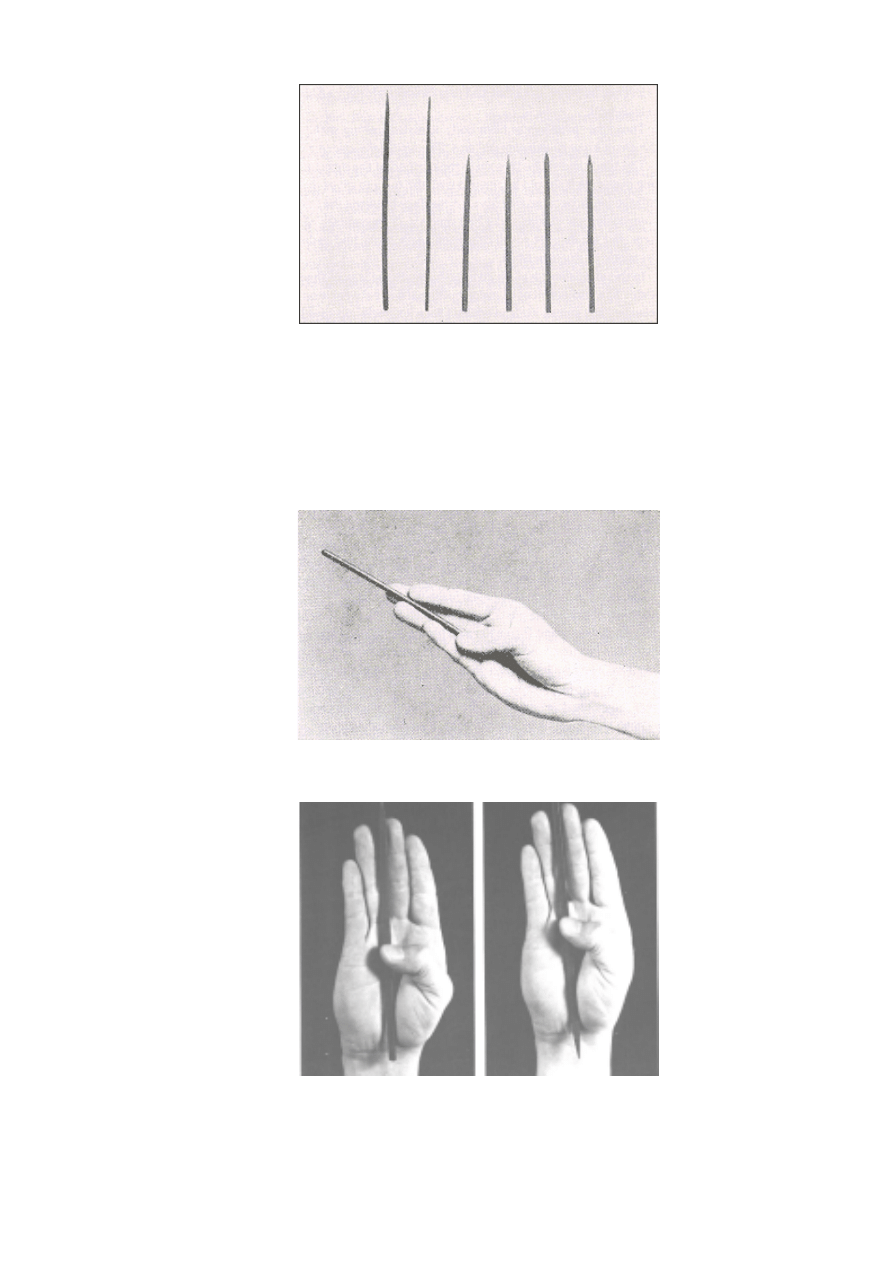
Figure 2. Shuriken of the Shirai Ryu
It is held in the hand by forming a guide with the 1st, 2nd and 3rd fingers. The little
finger gives extra support and the thumb holds the blade in place. The feeling of the
hand when holding and throwing is said to be gentle, like holding a swallows egg so as
not to break it. (see fig. 3). Depending upon the distance to be thrown, the blade is held
with the point outwards towards the target, or inwards to the palm.
Figure 3. Holding the shuriken of the Shirai Ryu
Fig 4. A variation in the hold of Shirai Ryu, for long blades.
Negishi Ryu
Negishi Ryu was founded by Negishi Nobunori Shorei, a retainer of Joshu Annaka
during the last days of the Tokugawa shogunate. Negishi became a student of Kaiho
Hanpei, the second master of Hokushin Itto Ryu sword, after showing promise with the
use of a shinai as a child. He studied other schools such as Araki Ryu and spear of
Oshima Ryu, eventually becoming the head of the Kaiho Ryu, and later taught for
several years. When the Meiji Restoration ordered the abolition of swords, he became a
farmer, and passed away in 1904.
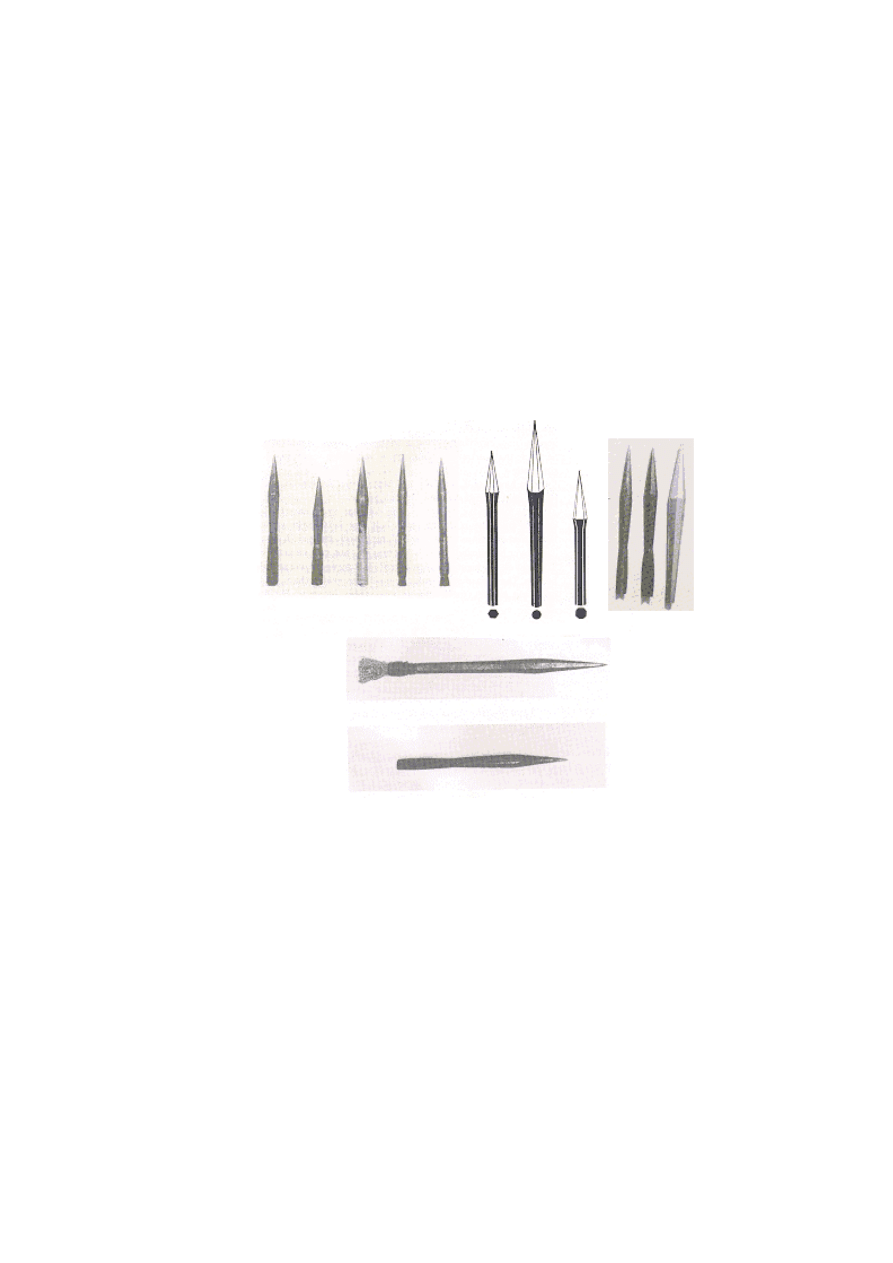
The basic blade shape of the Negishi Ryu is a projectile shaped pen that has an
enlarged head and tail, like a slender bomb. (see fig.5 ) They weigh around 50gm, and
sometimes have a tassel of hair or cotton attached to the tail to assist straight flight.
Figure 5. Shuriken of the Negishi Ryu
Much like the method of Shirai Ryu, it is held in the hand with the fingers acting as a
guide, and the thumb locks it in place.(see fig. 6)
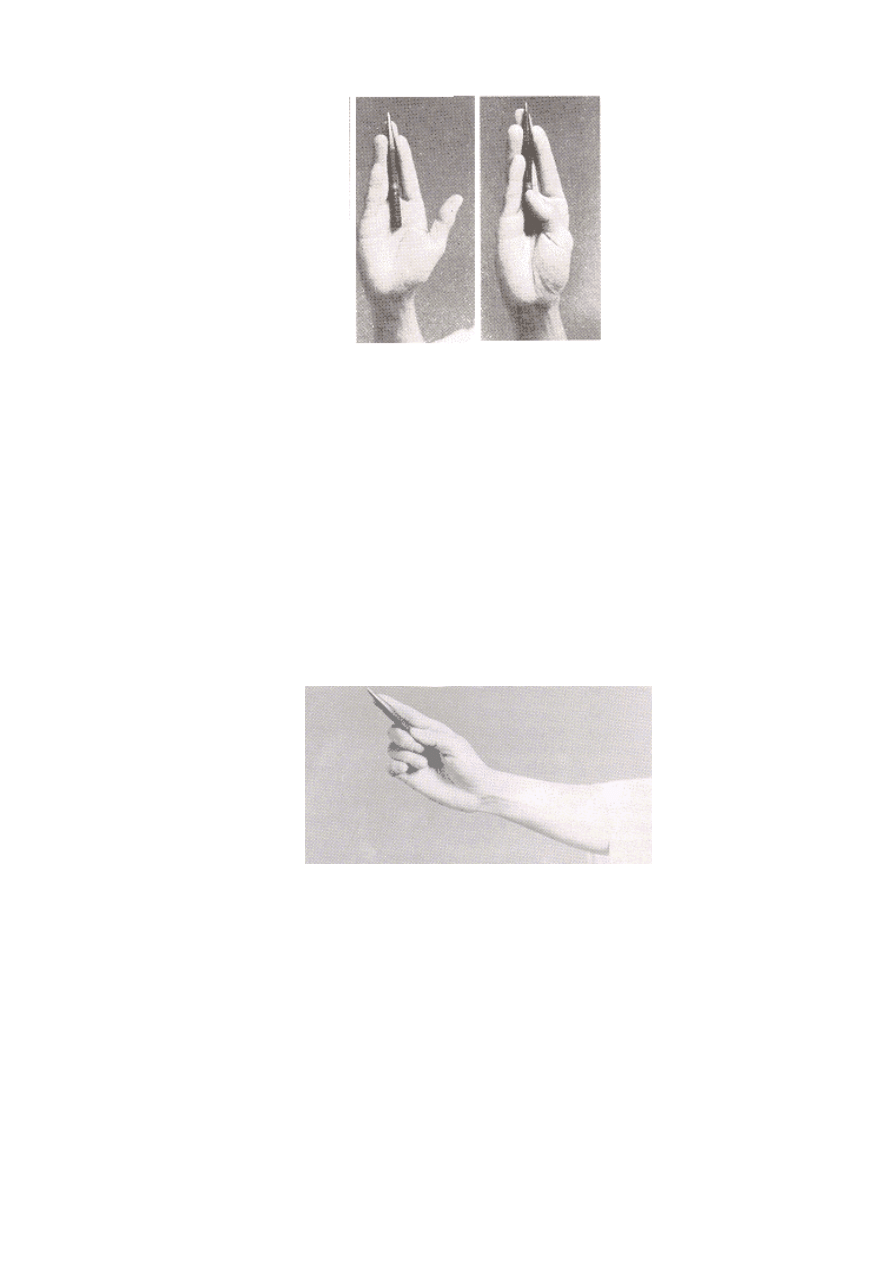
Figure 6. Holding the shuriken of the Negishi Ryu
Jikishin Ryu
Not much is known about Jikishin Ryu, and it is suspected that this is a variation in style
of a precursor to Shirai or Negishi Ryu, though I suspect it may be from Kashima Shinto
Ryu, as this method of holding is best thrown as one steps forward with the right foot.
The major difference is in the way the blade is held (see fig 7). The 3 smaller fingers are
curled, while the index finger points out straight, as though making a gun shape with the
hand. The blade sits with its butt in the palm and the thumb applies slight pressure from
above, downwards, holding it in place on the side of the curled middle finger, and
holding the tail down as it leaves the hand. The index finger then rests on the side of the
blade, providing support. The throw is a simple raising and lowering of the arm from the
side as a step is taken forward, the arm cuts down as if it were a sword.
Figure 7. Holding the shuriken of the Jikishin Ryu
Other styles and types of shuriken
There are other less well known styles of shuriken, and a huge variety of blade shapes.
Here are some more examples.
Tenshin Shoden Katori Shinto-Ryu
This style is one of the most famous martial arts of Japan, with a long and distinguished
history. It is a composite art consisting of many weapons, sword and shuriken included.
As with many other schools, the shuriken was taught as part of the techniques for
sword. There are descriptions of two different blades. One is hashi, or chopstick
shaped, where it is a square stick, sharp at one end and thick at the other (see Fig. 9).
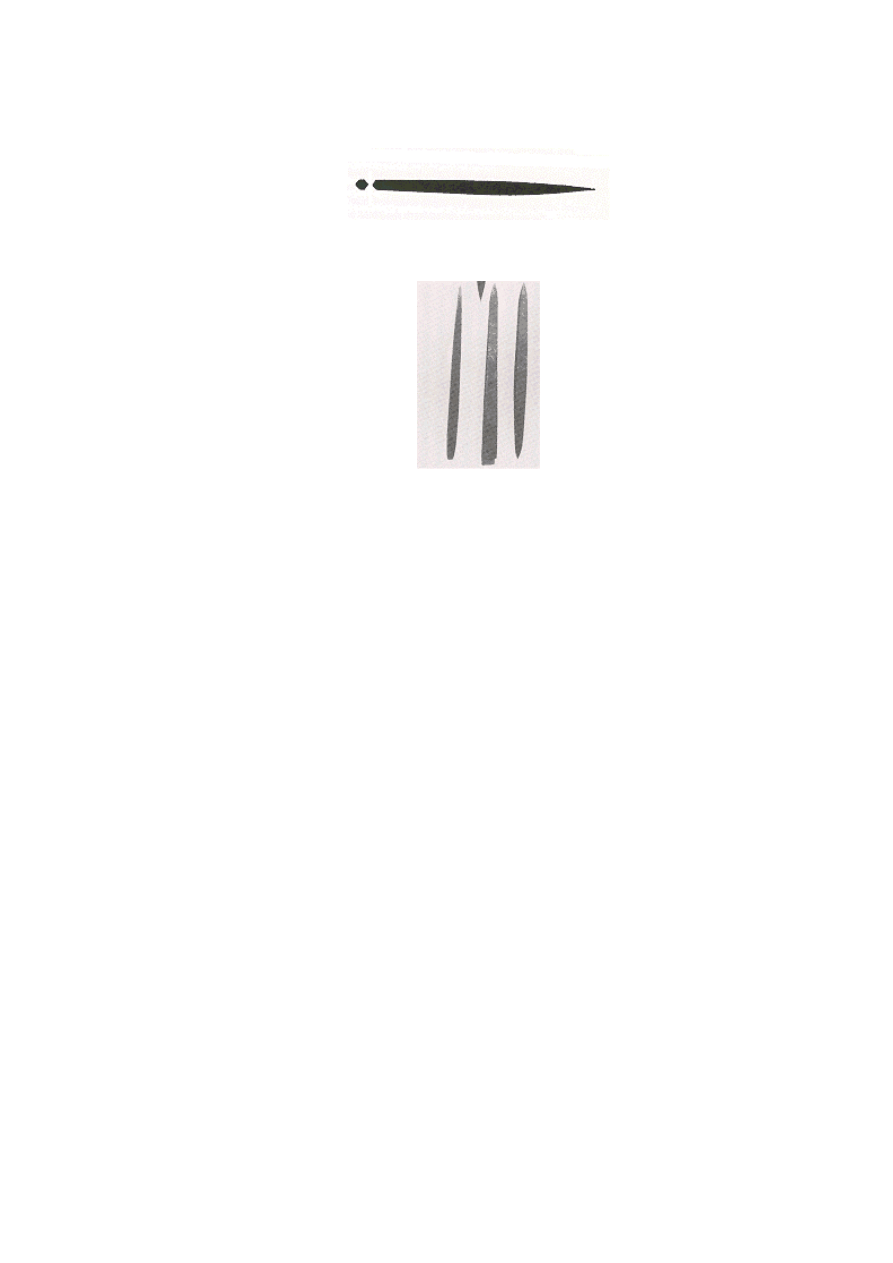
Figure 8 shows another version, with a hexagonal cross-section shown at the base, to
give an idea of the thickness and shape.
Figure 8. A Shuriken from the Katori Shinto Ryu, a famous sword school
Figure 9. Shuriken of the Katori Shinto Ryu (Left, Middle), and Ikku Ryu (Right).
Tatsumi Ryu
This school is a comprehensive martial art founded by Tatsumi Sankyo around the mid
1500's, and still operates today. It teaches a complete range of weaponry, including
shuriken, as well as battlefield and martial strategies. Details about the shuriken in this
Ryu are scarce at present, though I suspect shuriken training was introduced into the art
at a later date.
Otsuki Ryu
Yasuda Zenjiro, a master of Otsuki Ryu Kenjutsu from Hiroshima recounts that his
teacher, Okamoto Munishige, an Edo period samurai of the Aizu domain used shuriken
on a number of occasions during his employment in the Shogunate's security force. He
reportedly carried around 12 blades in various places, including the koshita, or back flap
of the hakama.
Ikku Ryu
Ikku Ryu is the name given to a relatively modern style of shuriken, created by modern
day shuriken master, and author Shirakami Ikku-ken. He was a student of Master
Naruse Kanji (d. 1948), who had trained in Yamamoto Ryu sword, and had written a
book on Japanese Sabre Fighting, after his experiences at war with China at the turn of
the century. Master Naruse was a student of Yonegawa Magoroku who in turn was a
student of the above mentioned founder of Shirai Ryu, Shirai Toru. From his teacher,
Shirakami learned both Shirai Ryu and Negishi Ryu, and combined the blade from the
Shirai Ryu with the throwing style of the Negishi Ryu, and formed a new method, which
involves a double pointed blade (see fig. 9, R), This method overcomes the problem of
positioning the blade the right way round in the hand before throwing, giving greater
flexibility in distance..
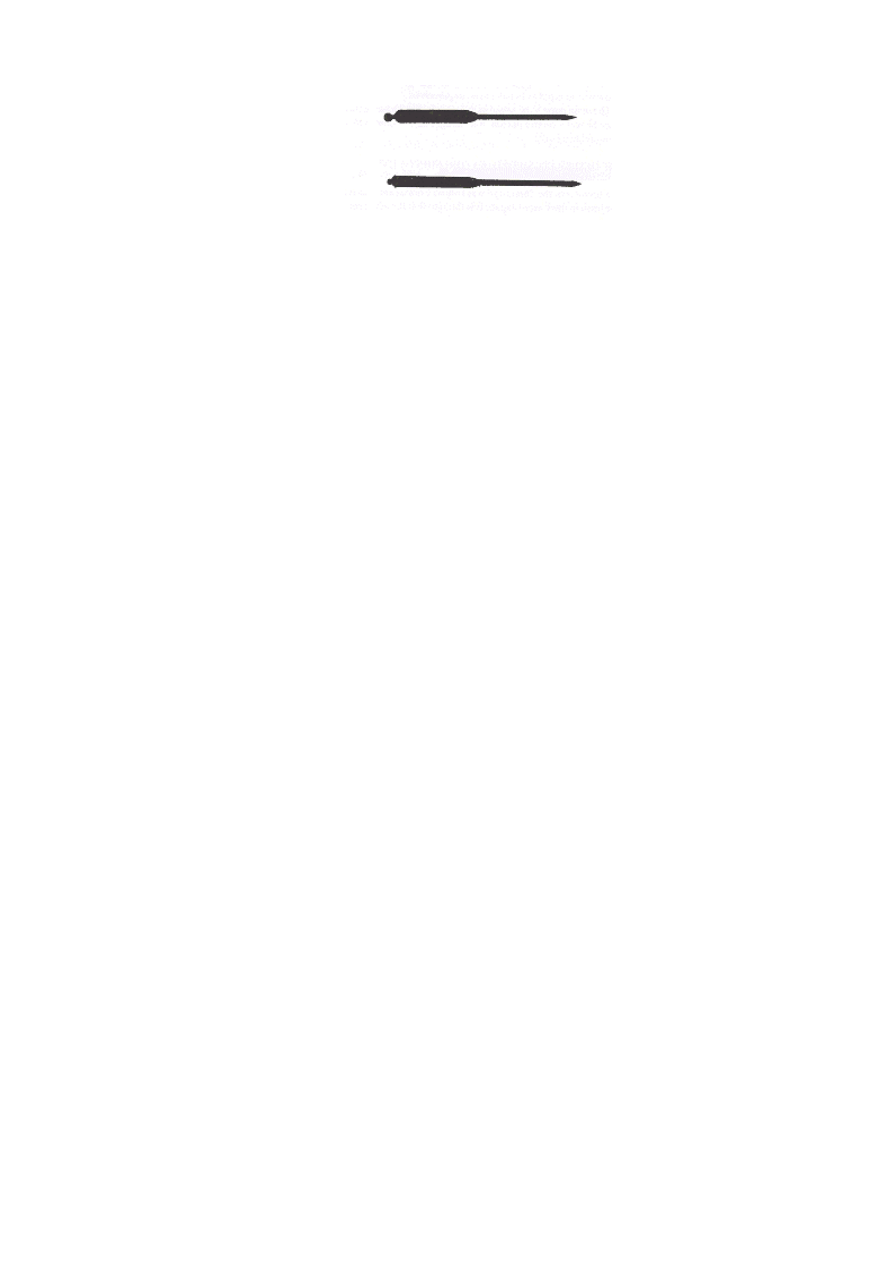
Figure 10. Kogai, Japanese ornamental hairpin
There is a famous story which relates a duel between Shosetsu and Sekiguchi Hayato,
who faced each other off with swords. As Hayato rushed at Sekiguchi, the latter pulled a
kogai from his hair and threw it, pinning Sekiguchi's hakama, or pleated skirt, to the
wooden floor. It is thought that Sekiguchi used a specially fashioned kogai that was
balanced, and made to look like a hair-pin.
Shuriken of the Ninja schools
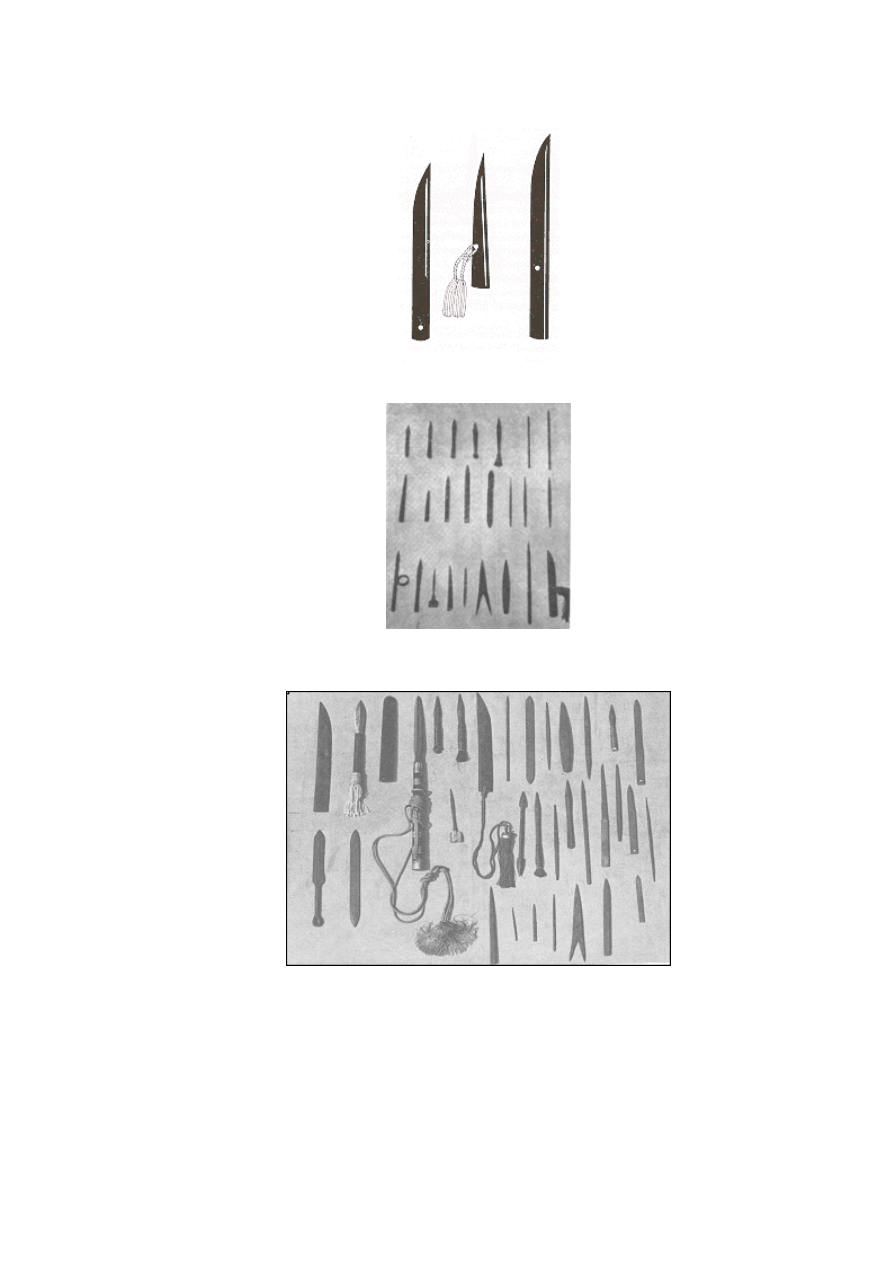
Figure 11. Tanto-gata, Japanese knives adapted to become shuriken
Figure 12. Some straight blades from various schools and sources.
Figure 13. A variety of straight throwing blades from the collection of
Dr. Masaaki Hatsumi, current Head Master of Togakure Ryu Ninjutsu.
This interesting collection of blades (fig. 13) shows a wide variety from a range of
schools. The large blade with long tassle, and the second from left, top row, are called
uchine, which are actually throwing spears. They are held and thrown much like a
modern-day javelin (see fig. 14). The long chord was used to retrieve the uchine, and
also the tanto-gata (top row, 7th from left) immediately after the throw, so it could be
thrown again, in rapid succession. The smaller uchine has tassels which are used to
create drag in flight, ensuring a straight hit. Centre row, 4th from the right is a kozuka, a
small utility knife that fits into the scabbard of a katana, or long sword. There are several
blades peculiar to Ninjutsu, such as the flat spatulate blades, and the arrow-head
shaped blade, as well as several from Negishi Ryu and Shirai Ryu. At some point in
history, Negishi Ryu became utilised by various schools or clans of Ninjutsu.
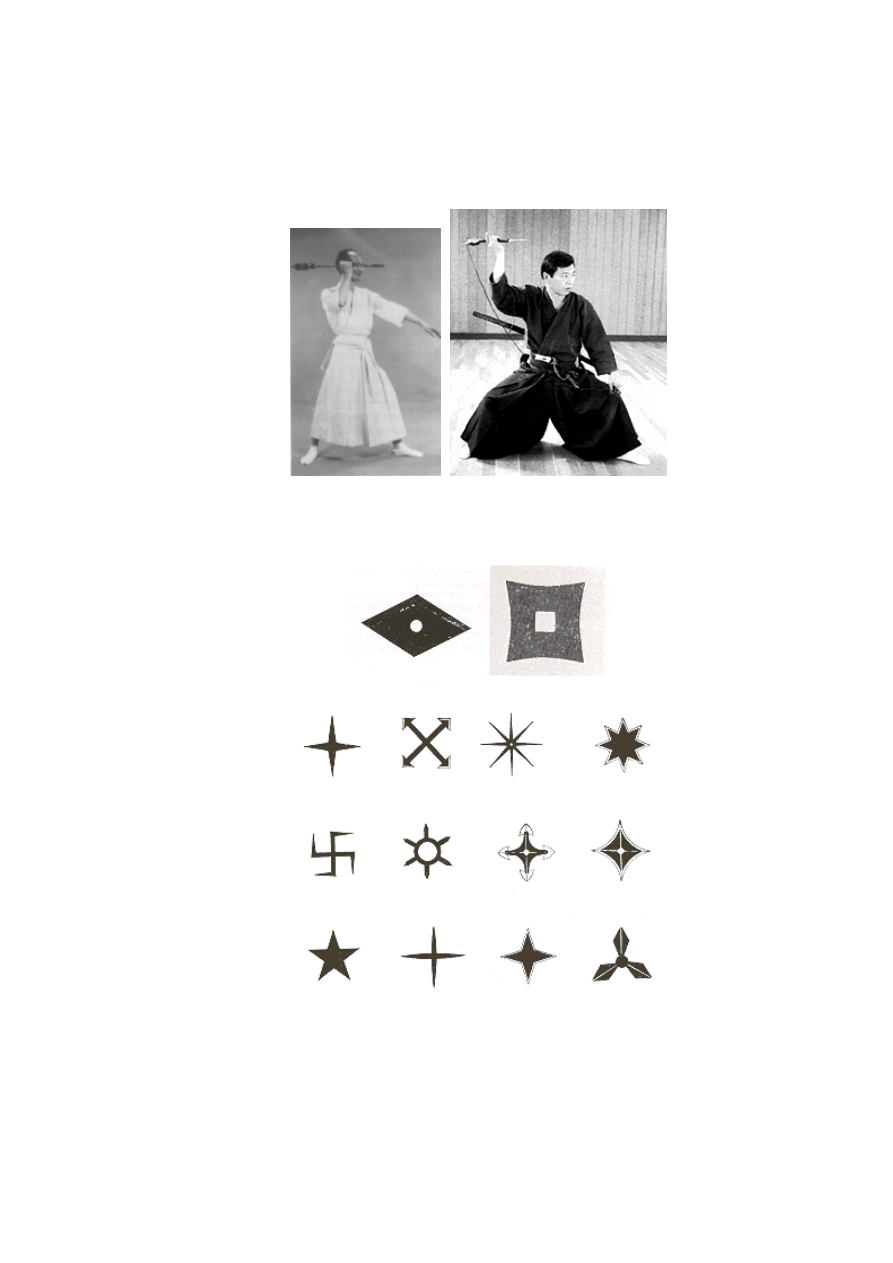
Figure 14. Posture for throwing the uchine.
Figure 15. Some disc or star-shaped shuriken from various Ninjutsu schools.
From top left, examples 1,3, and 4 are shuriken of the Koga and Iga Ryu. 5 and 6 are
from Kobori Ryu, 7 is from Yagyu Ryu, 8 from Koden Ryu or Shosho Ryu, 10 is from
Yagyu Ryu and Koga Ryu.
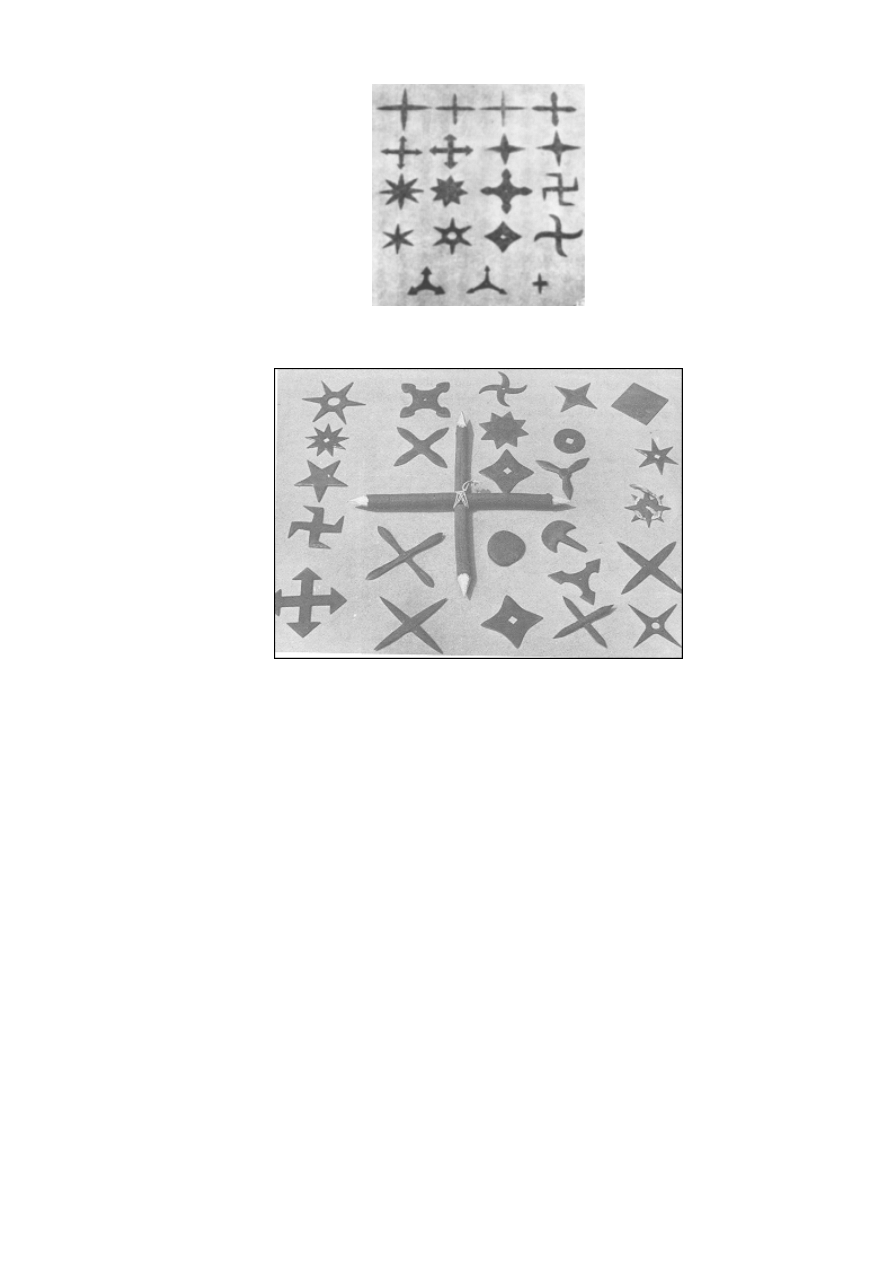
Figure 16. Some throwing stars from various schools and sources.
Figure 17. A Variety of hira shuriken, or shaken throwing blades from the collection of
Dr. Masaaki Hatsumi, current Head Master of Togakure Ryu Ninjutsu.
The star and cross shaped shuriken, known as hira shuriken, or shaken, use an entirely
different principle in flight than do the bo shuriken, as they spin at a rapid rate, and have
multiple points which can make contact with the target. There seems to be some
dispute over the method of throwing. Dr Hatsumi, current Head Master, or 33rd soke of
Togakure Ryu Ninjutsu, shows throwing the shuriken as one would throw a small
"frisbee", that is, the blade is held horizontally, parallel to the ground, between the
thumb and first finger. The wrist makes a flicking action forward as the arm straightens
out in front of the thrower's stomach. Several shurikens are held cupped in the left hand
like a stack of coins, and are passed to the right hand in rapid succession. Shirakami
Ikku-ken however, states that this method is wrong, and that the blade is held and
thrown vertically, in much the same way as a bo shuriken. (see fig. 18, below)
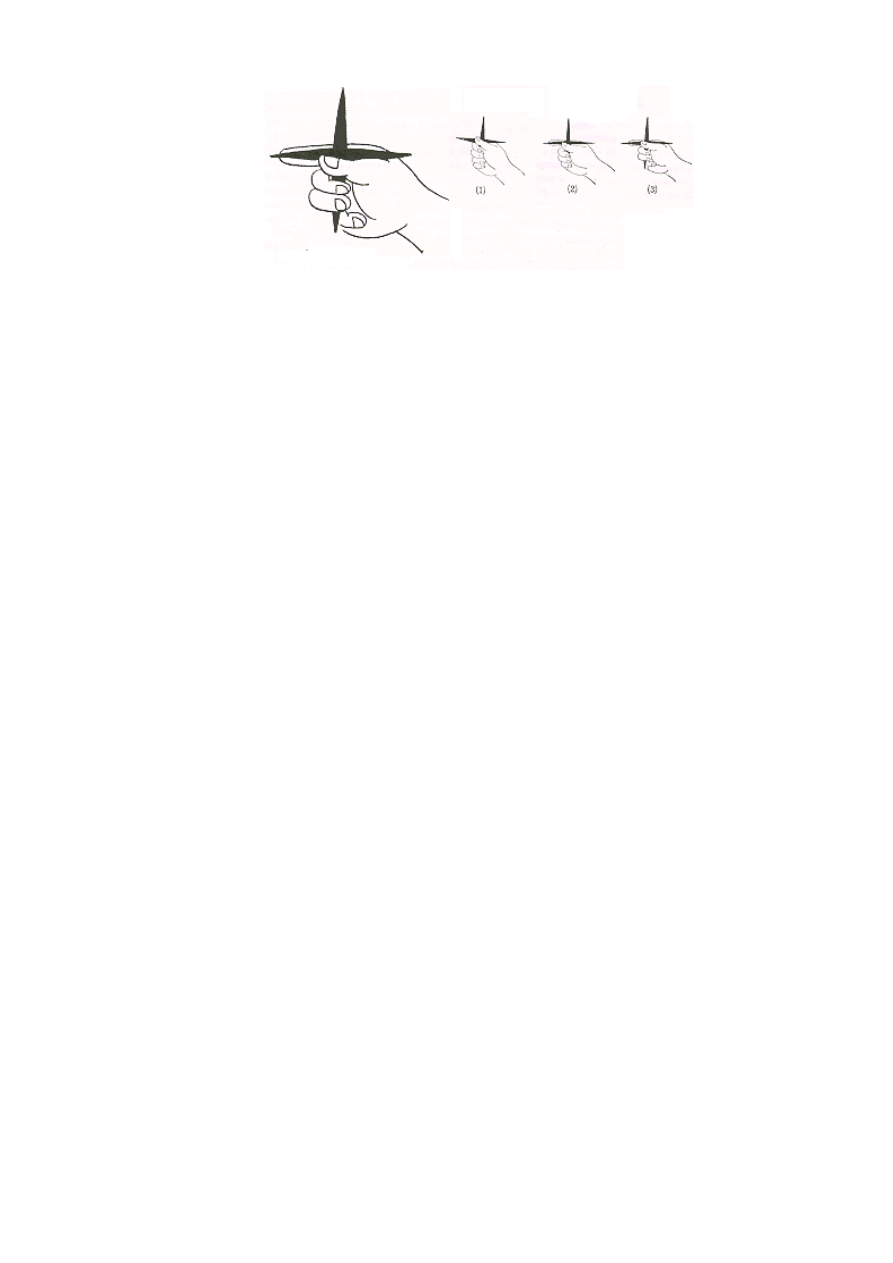
Figure 18. Holding a hira shuriken of the Ninjutsu schools. (1) shows an incorrect
method
Both types of throw are feasible, however, the latter method can generate much more
power.
Wearing the Shuriken
The shuriken's tactical advantage is it's small size and concealability, and ability for a
quick draw which helps one gain the upper hand by using surprise when attacked. With
practice, great accuracy with the shuriken can be achieved, and this enhances its
tactical advantage. By momentarily disabling an attacker who could be from 3 to 15
paces away, this gives one precious time to collect your thoughts and move to better
position from which to deal with the attack.
To make better use of this advantage, a thorough understanding of the draw is
necessary, and how the shuriken are worn can either help or hinder your ability to
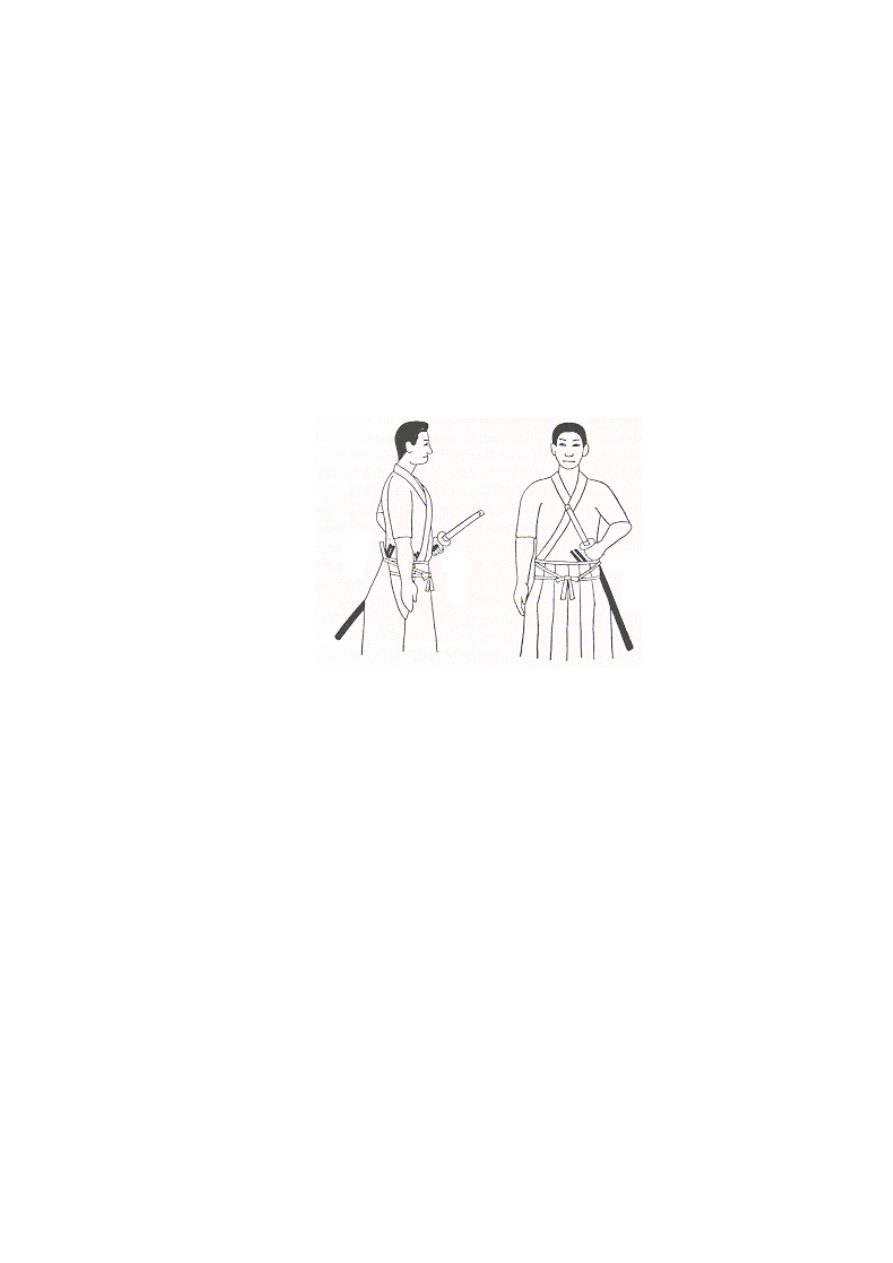
respond to attack effectively. Traditionally, in Shirai and Negishi Ryu, a number of points
around the hip were used as places to wear the shuriken, and each position would offer
some advantage over another, due to hand position, angle of the hand to the opponent,
and position of the blade as it comes into the hand.
Figure. 19. Wearing the shuriken
The illustration above shows 3 positions, each convenient for a right hand draw in a
variety of situations. The points of the blade are embedded in the clothing, so whether
one takes the front or back set, the blade will fit in the hand ready for a turning or a
direct hit, dependent upon the situation.(Particularly important in Shirai Ryu) In feudal
times in Japan, Samurai did not have the restrictions on wearing such weapons as we
do these days, so their blades could have been in view, or hidden, as the left illustration
shows.
Ninjutsu practitioners hold their hira shuriken, up to 8 or 10, together like a stack of
coins wrapped in a leaf of cotton, which is then pocketed or secreted in any number of
pouches built for that purpose.
As mentioned above, shuriken were also worn as hairpins.
It should be mentioned here that there are weapons regulations in place that govern the
possession and use of shuriken, so if an individual is endeavoring to begin practice by
purchasing or making one of their own, they should check the laws of their area.

Shuriken in the Modern World
It is difficult justify to the authorities the ownership and use of shuriken, especially with
the high rates of violent crime in today's society. Offences relating to sharp, concealable
and throwable weapons are quite common these days, and prohibitions on such
weapons are a logical and easy solution. Yet, still the problems of violence remain,
suggesting that the root of the problem lies deeper within the fabric of society itself. It is
simply not feasible to continue placing endless prohibitions on everyday objects which
can be adapted to become weapons, because if violence and hatred are still present,
crimes will continue to occur. This is one area where Martial Arts can have a positive
rather than a negative influence, and one that often gets overlooked. I believe there are
many reasons for training in a Martial Art, especially a traditional art which places great
emphasis in moral values such as respect, humility, honor and integrity as well as
techniques of self defense.
Arts that are aimed at developing skill in fighting are useful only for military purposes,
and simply remain as a jutsu, or method. Arts that follow the principles of Japanese
Budo, are deeper in that they become a way of life, and that these moralistic principles
become a strong guiding influence over the student, and for them the art becomes the
way. Development and mastery of a Martial Art requires years of patience,
perseverance, dedication and humility, and this kind of training can only have a positive
influence on a student. For this reason, I believe that proper practice of shuriken can
and does have a place in the modern world. The skill in throwing a blade is to have it
strike the target perfectly, and such is the danger of the weapon, but to achieve such
skill requires a calm and relaxed mental state, free from distractions and feelings of
egocentricity. Such a mental state can only be achieved by years of dedication and
understanding, which makes it an unattractive proposition for persons of ill intent who
wish to maliciously cause others injury.
Shirakami Ikku-ken tells a story in his recollections of how a problem student of his at
high school turned his life around after studying the shuriken art. The student was
throwing a knife in a classroom, and Shirakami walked in on he and his friends.
Shirakami got angry and reprimanded the boy, then told him that if he was going to
throw a knife, he should throw it and earnest. Shirakami took the knife and threw it at
the wall, embedding deeply. This act so impressed the student that he came to ask
Shirakami to teach him, to which Shirakami replied that violent, dishonest and lazy
people cannot throw a blade correctly, so he wouldn't teach him. The boy was
disappointed, and practiced on his own, vowing to surprise his teacher, but couldn't
make the blade stick. He came to his teacher and asked again, this time promising to
work hard and earnestly. Shirakami agreed and showed him the basic form. As it turned
out, the boy trained diligently, and his parents noticed a change in their son. Over time,
the boy began to apply himself more to training and less to troublesome activities with
his friends, and eventually he earned a new found respect for teachers, and his grades
began to improve. The student went on to be accepted in University.
This story serves as a good example of how Martial Arts can lead those astray to a
focused and worthwhile path in life.
As a final note in this introduction, it is interesting to hear that some American Special
Forces and other military units are becoming interested in shuriken, because, aside
from their combative characteristics, the shuriken has potential in survival applications,
where one needs to hunt for food.
BASIC PRINCIPLES
The shuriken in flight
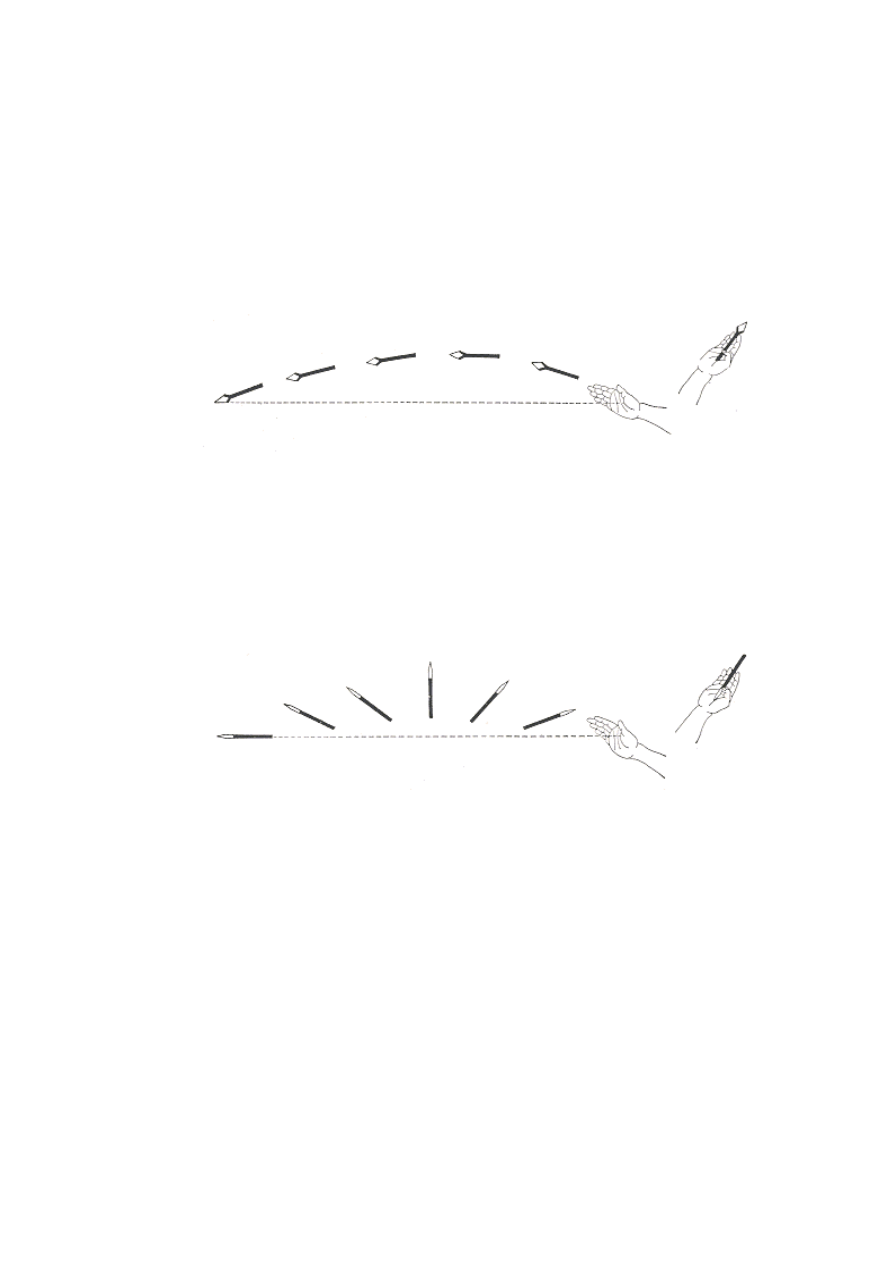
The shuriken travels through the air to the target in 3 different ways, depending upon
the school, grip, and throw. The "direct hit" method, jikidaho or choku-da, involves
holding the blade with the point out, towards the target. This method is employed in the
Negishi Ryu, and also as a short distance throw in the Shirai, Jikishin and other Ryu.
(see fig. 20, below)
Figure 20. "The direct hit" method
The second way that the blade turns, the "turning hit", is called hantendaho, or Ikkaiten-
da, and involves holding the blade with the tip pointing into the palm. During its travel
through the air to the target, the blade turns 180 deg, or 1 turn. This method is
employed by the Shirai and other Ryu. (see fig. 21, below) but not by Negishi Ryu,
however I believe nowadays students of Negishi Ryu also learn the throws and about
the blades of other Ryu, including Shirai, .
Figure 21. The "turning hit" method
The third way a blade turns, the "multi turn" method, or dakaiten-da, has the blade
turning 360 deg. or more as it flies through the air. This method is employed by the hira
shuriken schools, where the many points of the star shaped blade will rotate and have
no difficulty piercing the target at any distance. This method is also employed by the
Shirai Ryu over long distance throws, (up to 18 steps). (Not illustrated.)
Distance
Distance from the target, especially in Shirai Ryu, is measured in steps, rather than
units such as feet or metres, because distance varies for each individual. A taller
individual has a longer stride, but they also have a longer arm reach, so proportionately,
the relationship between the travel of their arm and their distance in steps from the
target is exactly the same as for a shorter individual. This makes standard units of
measurement useless as a guide to learning distance. In Shirai Ryu, throwing distances
are multiples of 3 steps from the target, from 1 to 15-18, (about the maximum effective
range for throwing a blade). This is due to the fact that Shirai Ryu is based upon the

principle of the "turning hit" method of throwing. Each turn in the air is equivalent to 3
steps of added distance, which is a kind of limitation, as one can only throw from one of
these distances. 1 step's distance is measured by standing in a right zenkutsu dachi, or
right forward stance, with the right arm extended forward touching the target with the tip
of the shuriken. By taking one deep stride backwards with the right foot, then
withdrawing the left foot so one is standing in shizentai, or natural stance, this process
measures the 1st step's distance. From this stance, the form is practiced (Manji no kata,
with blade, see below), utilising the "direct hit" method, as there is not room enough for
the blade to turn in flight..
The next throwing distance from the target is 3 steps, which involves turning the blade
in the hand so the tail is pointing to the target. Standing at the target as before, take 3
deep strides backwards, so that the left foot is forward. From here, withdraw the left
foot, and stand in shizentai. This is the 3 step's distance, and from here the "turning hit"
method is utilised, as this distance dictates, according to the Shirai Ryu technique, a
turning hit.
For the remaining distances, this same process is repeated, each time turning the blade
in the hand. When retrieving the blades from the target, stride forward counting the
steps, so one gets a disciplined and repetitive experience of measuring the distance by
steps. Ultimately, one should be able to judge automatically whether one should hold a
blade in hand with the tip or tail pointing out.
The technique of Negishi Ryu does not have this problem of turning the blade, because
the principle of the throw is different. As mentioned above, Negishi Ryu solely utilises
the "direct hit" method of travel, with the tip of the blade always held pointing outwards,
so throwing at any distance can be achieved. However, the technique is much more
advanced and much more difficult to master, though technically, it is superior to Shirai
Ryu. Judgement of distance is purely by feel based upon experience, and minute
adjustments in technique (see below) are made to allow for the minute variations in
distance. To develop this judgement, one must train quite severely and repetitively,
otherwise a good hit of the target will be an impossibility. Training starts at 1 steps
distance, arrived at in exactly the same way as above for Shirai Ryu. The individual
practices at this distance for about 2 weeks, ensuring that mastery of this distance is
achieved.
After 2 weeks, the next distance is begun. From a left zenkutsu dachi, the left foot slides
back so the heel meets the instep of the right foot, weight is transferred to the left foot,
then the right foot slides back, stepping again into zenkutsu dachi. This action decides
the next distance, and is actually a shuffle, however it is exactly the same change in
distance as a full step, except that one remains with the same foot forward, rather than
the opposite foot, as described above with the Shirai Ryu.
The throw is then practiced, with the necessary adjustments made (eg. earlier release,
see below), for another two weeks. Each day, the individual at first throws at 1 steps
distance, until they are comfortable with their ability, then the next distance back is
trained at. After 2 weeks of this, the slide backwards is repeated, and the 3rd distance is
added to the routine. Once again, the individual starts at 1 steps distance, progresses to
2 steps, then onto 3, and practices like this, each day, for a further 2 weeks. Every 2
weeks, a further backstep is added, only practiced after each of the shorter distances
have systematically been practiced. So after 9 months of dedicated training, one should
be reaching the limit of their throw.
The throw of Jikishin Ryu is only used for short distances, as its grip does not allow for a
"turning hit" method of throwing, nor does it allow for earlier release. The practice of
Jikishin is primarily a development in speed, as it is only used for short distance.
Because it can only be used at short distance, the reaction time to attack is necessarily
much shorter, therefore the goal of the training is achieve a quicker draw and throw.
Striking the target
There are many forms of target, so only a brief discussion will follow. Shuriken were
developed as a quick response shock weapon that caused the enemy to be distracted
while the thrower rushed closer for a killing technique, usually by sword. This is why
shuriken appears to be have been taught as part of swordsmanship. So it can be said
that it is not a weapon that can deal deathly blows. In its role as a distracting weapon, it
therefore was targeted at the softer and more vulnerable parts of the body, such as the
head, especially the eyes, the throat, and various exposed regions of soft tissue, such
as the back of a swordsman's hands. It was not meant to pierce armour or to be able to
kill with one blow from a distance
.
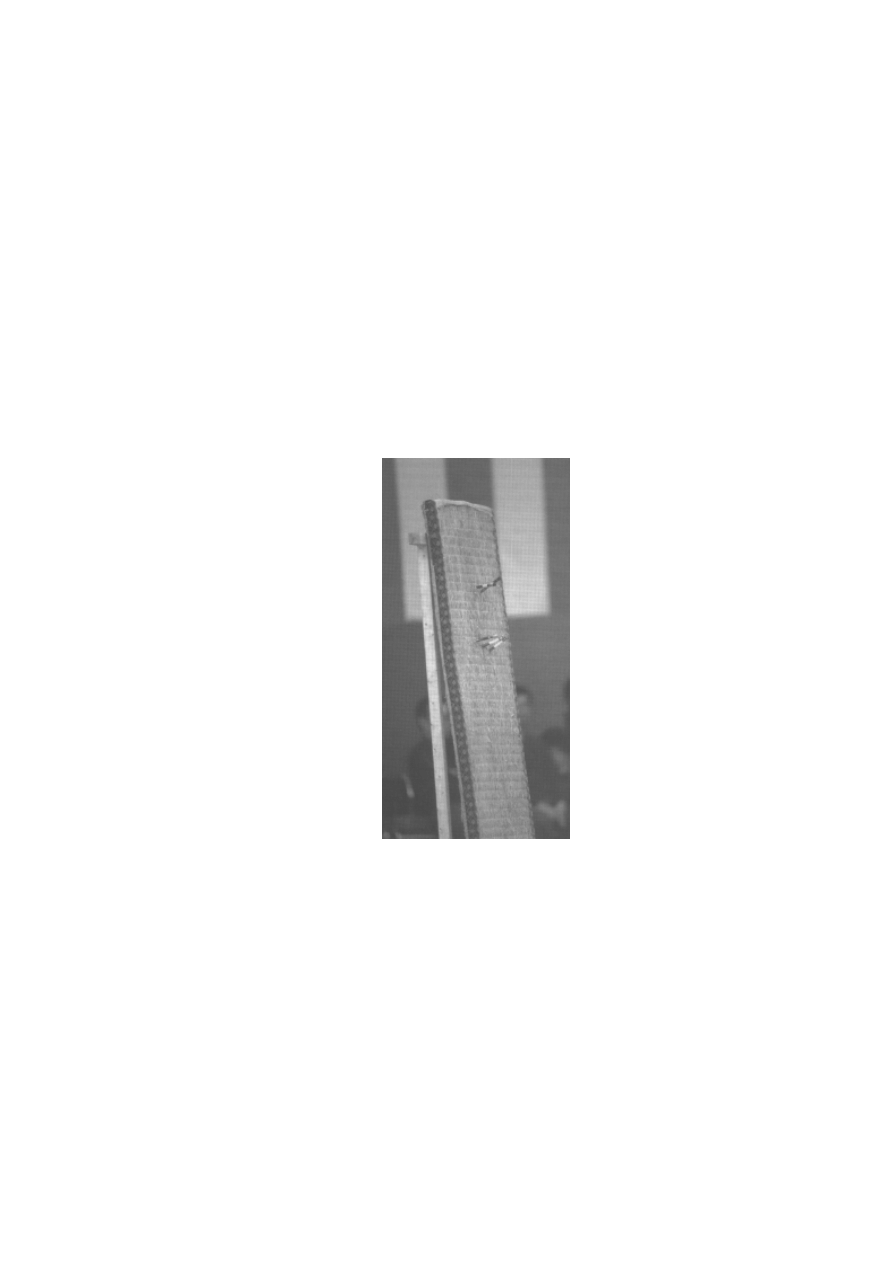
Figure 22 Tatami used as target
For this reason, practice with a hard target is not necessary, and it also tends to
damage the shuriken. Traditionally, tatami, or straw matting was used (see fig. 22),
although more elaborate targets consisting of frames holding various types of material,
ranging from screens of paper, boards of wood, or even blocks of wood have been
developed. Trees have been often used, especially by "yamabushi", or mountain
warriors, whose retreat to the wild had left them without resources. Today, cardboard
boxes, or sheets of cardboard, with a piece of white paper and a target image drawn on
it and pinned to the box would be sufficient.
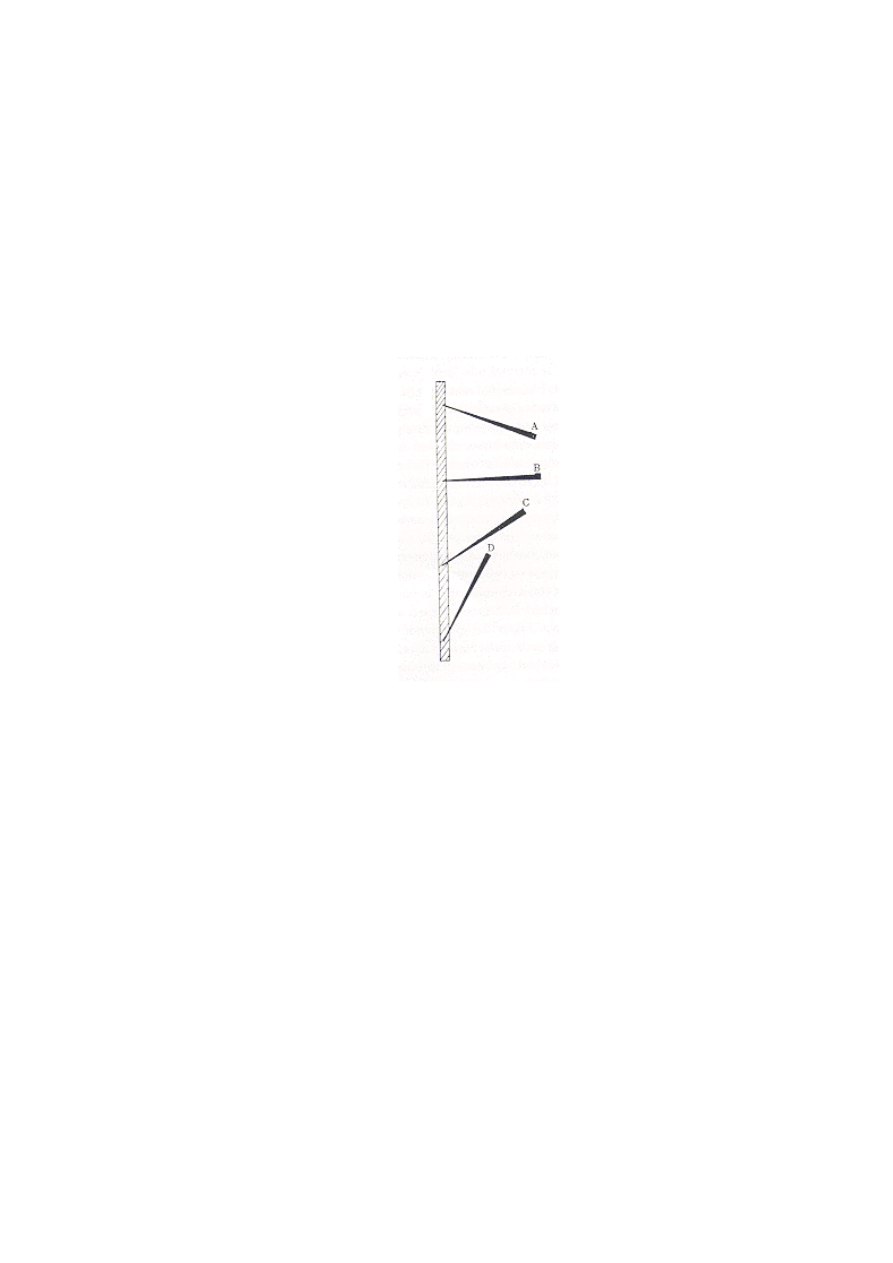
The shuriken can hit the target in a number of ways, and the ideal is to have the full
weight of the blade moving down its length through the point into the point of impact.
This gives maximum force to the hit. If the tail is swinging up or sideways as the point
strikes, much of the blades force is lost to lateral movement, and penetration by the
blade is reduced.
Because the blade is falling due to gravity, and turning during flight due to the force of
the throw, there is an ideal moment during the rotation of the blade for it to hit the target,
and that is as the blade is just becoming horizontal, or just as it becomes aligned with
the direction of the throw. If one were to draw a line from the hand that releases the
blade directly to the target, then the blade should hit the target just as it becomes
aligned to the trajectory of the throw.
Figure 23 The "Live" and "Dead" Hit
This illustration shows a number of possible angles the blade can hit the target if thrown
in a horizontal trajectory. Any angle between A and B is ideal, because as the tip hits
the target, the body of the blade is still rotating and applying force down its length to the
tip. This type of hit is said to be a "live hit", as the blade is still applying force directly to
the strike after it touches the target, thus is more penetrating..
C and D are termed "dead hits" because at the moment of impact, the weight at the
base of the blade is no longer being transferred to the tip, but is being carried upwards,
laterally to the point of impact, and is therefore much less penetrating.
The throw
Needless to say, the throw is the most important aspect of the shuriken art. How
important it is though, is the obstacle we have to realize and overcome. All schools and
methods stress the importance of "form" when throwing, it is not just a matter of
throwing the blade at the target. Adhering to the throwing form is absolutely necessary
for achieving consistent and controlled accuracy.

In throwing the shuriken, at the moment of the throw, there are two major variables that
affect the outcome of the throw; distance and the throw. The distance we are subject
to, so it is a variable we have to account for by adjusting our technique. The extent of
variability in the throw can be decreased through training, to the point where it becomes
a constant. When the throw becomes constant, the only variable facing us in hitting the
target is distance, which we can learn to adjust to through regular training at different
distances. It is very difficult for the mind to be able to judge and adjust to 2 variables at
the same time, so by making 1 of these become close to a constant, it makes the task
of judging 1 variable easier. The principles are very similar to the game of golf. In golf,
there are also two variables, distance and swing. The variability of distance is
compensated for by changing between heavier and lighter clubs, it is the swing that has
to be refined so it becomes constant. Once the swing is mastered, its variability has
been reduced to close to constancy, and the trick becomes choosing the right size club
according to the distance.
In shuriken, once the throw has been mastered, and thus becomes constant, minute
changes in technique can be made to adjust to changes in distance, thus creating a
more controlled and accurate throw. To achieve a constant throw, great attention must
be paid to practice of the form.
Breathing
The Breath is very important to the throw, one must coordinate their breathing pattern
with the physical movements of the body for the technique to become natural and
effective. Due to the physiology of the body, power cannot be generated as effectively
on the in-breath as it can on the out-breath. This is because generation of power in a
strike is an outward force, as is breathing out, whereas breathing in is an inward force.
Breathing in as one exerts force tends to sap power from the body, and severely limits
physical performance. Therefore, it is important to understand the physical movements,
and the type of breath that should be associated with these movements.
In Japanese swordsmanship there is the concept of "In-Yo", probably more widely
known as "Yin-Yang". This concept describes how all things in the universe can be
represented by two opposing yet inter-related sets of alternating polarities, that combine
to form the whole of things that we perceive. In our body we have In-Yo, it is found in
our footwork: step with the left foot, step with the right foot. With our breathing it is:
Inbreath - Outbreath, in cutting with the sword it is raise and lower. If we take certain
movements to be related to In, and other movements to be related to Yo, and combine
them, we can through an understanding of this concept, unite various groups of
movement into a unified whole, thus making our overall performance much more
harmonious, and efficient.
In the ultimate form of throwing a shuriken, Koso no I (see below), there is only two
components, the raising, and the lowering of the arm. Thus the in-breath is coordinated
with the raising of the arm, and the outbreath is coordinated with the lowering of the
arm, or the throw.
Observing and judging the strike
At the end of each throw there is a moment of stillness. At this point, one must hold their
intent with the feeling of zanshin, or readiness and observation. At this point one
concentrates on the feeling at the end of the throw, and observes the result of the throw.

In simple terms, one examines the position of the blade in the target, and how close to
or far from perfect it is, then observes or remembers how they felt during the throw. One
can then judge how their body influenced the blade and its flight, then assess what
postural and other adjustments need to be made for subsequent throws.
Observing the position of the blade in the target can tell you a lot about the throw. Not
only can it tell the weaknesses in the throwers technique, it can also give an indication
of the psychological state of the thrower. On an individual throw, its position can tell you
about the throw itself. If 3 or more were thrown in a row, the grouping, and the
relationship between each blade in the target can tell you about the state of mind of the
thrower at the time. If the positions of the blades are observed over a whole session of
throwing, details of the throwers technique and their general state of mind can be
observed. In effect, the results of throwing a blade can be a good barometer for
measuring the mental state of the thrower.
BASIC TECHNIQUES
Basic Forms of Throw
In the Negishi and Shirai Ryu, there are 2 basic types of throw; to the front, and to the
side. Front throws involve 3 forms,1. Koso no I, 2. Jikishin and 3. Uranami.
Front Throws
The Basic Form, Manji No Kata
The method of learning the front throw, indeed all throws, is by first going through a
series of steps from basic form to advanced form. The basic form is called Manji no
kata, and is practiced for the first 6 months without holding a blade. It is a simple set of
8 movements, which form the essence of the constant throw, and cannot be neglected.
The reason why it is practiced without a blade is to prevent the mind from becoming
attached too early to scoring a hit, which would otherwise distract one's concentration
from the form.
For any throw, there are several steps one must go through, in order to set up the
conditions for an accurate hit, and this kata, or form, drills the body through these steps.
Even though the form looks very rigid and the movements seem superfluous, this is
necessary as it causes the body to succumb to the form, and allows the correct
throwing movement to dictate how the body moves during the throw, rather than have
the untrained body upset the movement of the blade during throw.
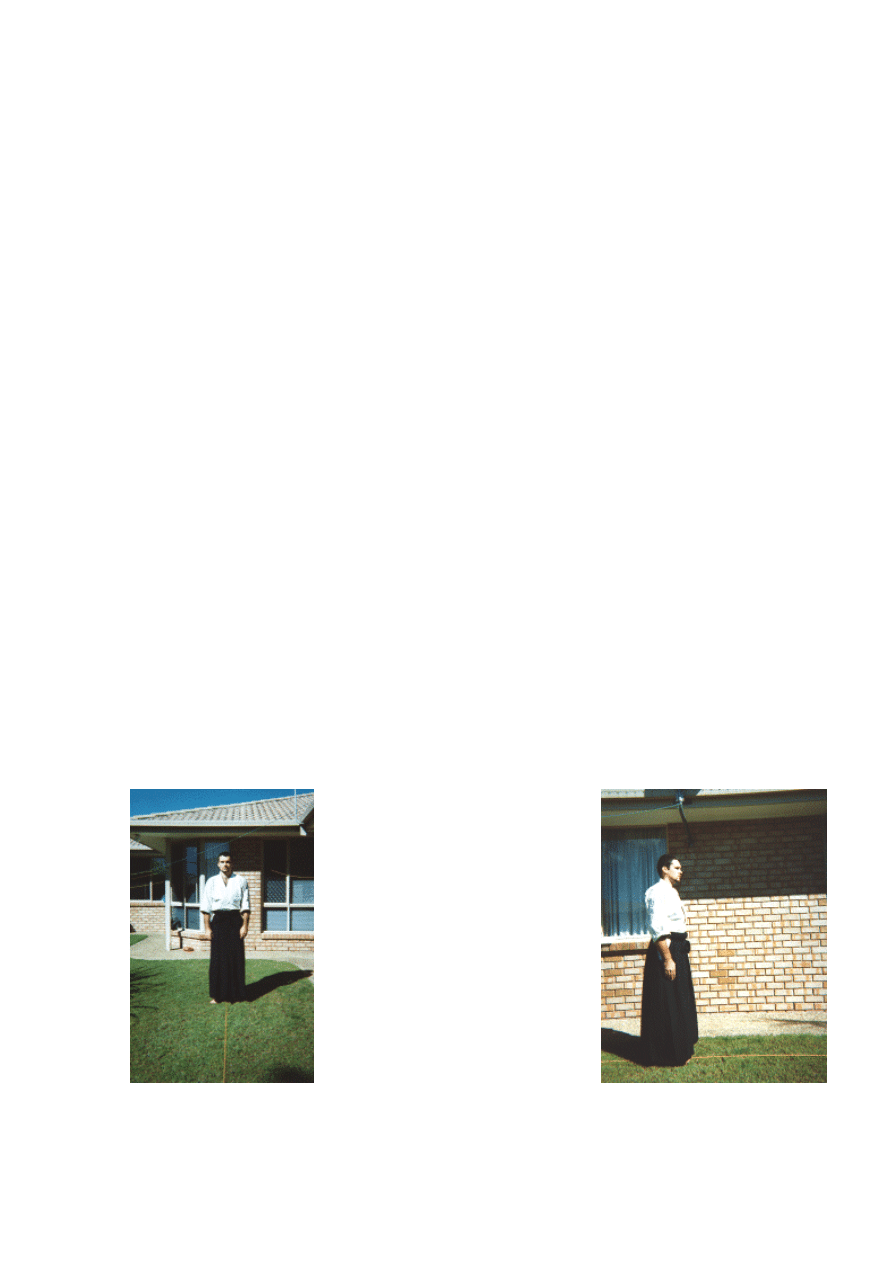
Manji No Kata, the basic form
Preparation, Nyujo, or
entrance. Just before the
desired distance, stop, and
bow to shomen, (shrine) or the
east, then step with the left foot
to the throwing position.
1. Stand in shizentai, or natural
stance with the heels slightly
apart, and the feet open at a 60
deg. angle. The arms hang
relaxed down by the sides, and
face directly to the front,
towards the target. Look at the
target in a state of metsuke,
which is striking a line from
your hara, or abdomen directly
to the target. As you strike this
line, feel a response from the
target, as though the target is
informing you of the correct
line.
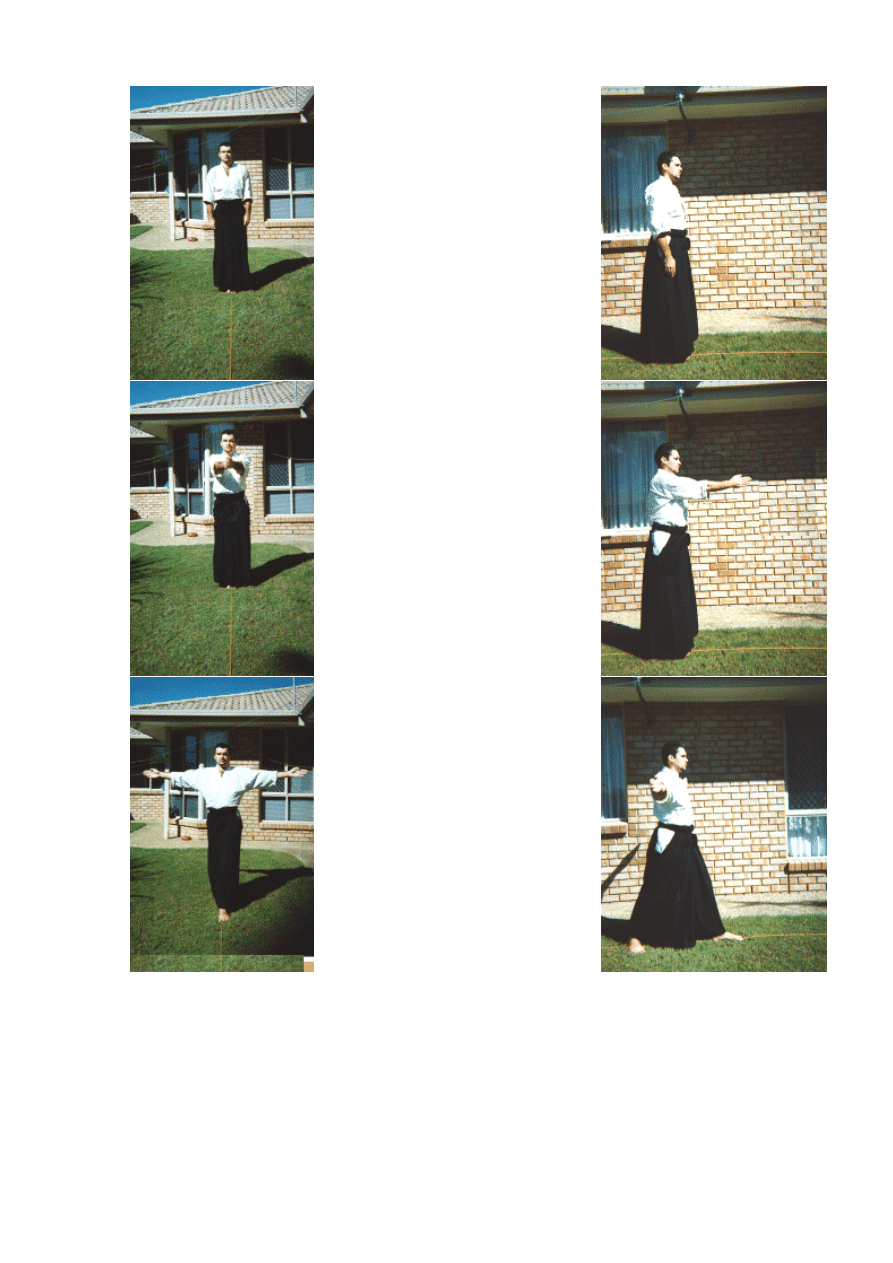
2. Yoi, or ready. Turn the feet
inwards, so they are pointing
forward, and straighten the
arms, holding the fingers
together and palms flat to the
sides.
3. Manji (a). Raise both arms
together, swinging them
forward and up in an arc, so
they meet palm to palm directly
in front of the chest horizontally
to the ground, as though
making a diving posture with
the hands.
4. Manji (b). Slide forward with
the left foot along the line, and
turn the right foot so it is angled
about 60 deg. from the front,
until a long but comfortable
stance is achieved. As you
slide forward, open the arms
horizontally backwards, so they
are 180 deg. apart to your
sides, both at right-angles to
the line forward. This is the
manji, or swastika shape.
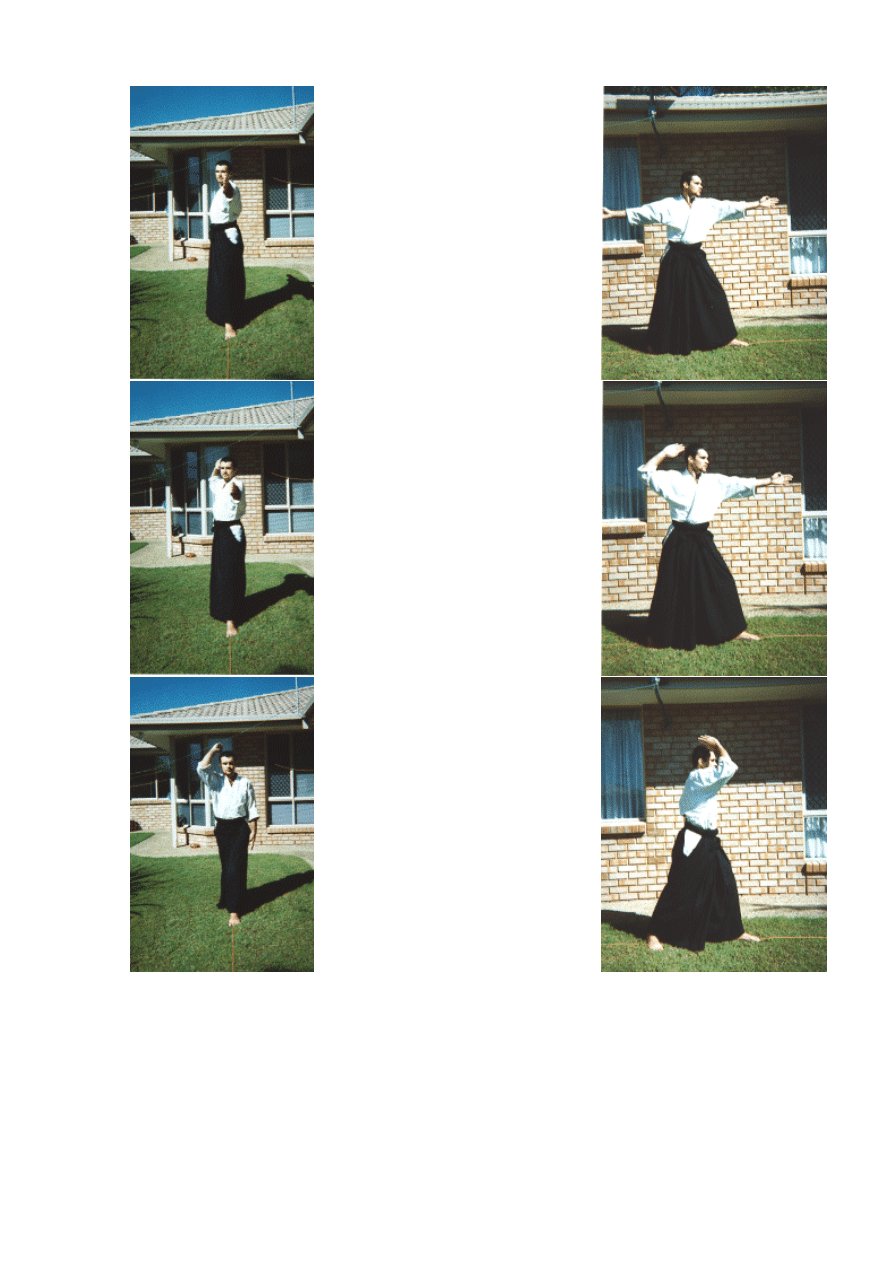
5. Manji (c). Turn on the hips,
90 deg. to the right, while
maintaining your gaze on the
target, so that the left hand is
pointing directly to the target,
and the right hand is reaching
directly behind you. Both hands
remain upright with the palms
at right angles to the ground.
6. Shuriken no kamae Raise
the right hand by bending at
the elbow, bringing it up behind
the right ear. The hand and
wrist remains straight, and the
rest of the body does not move.
7. Te no uchi, or throw. Turn on
the hips to face forward, lean
forward on the left knee, and
cut the right hand downwards
and forwards as though it were
a sword, straight towards the
target.
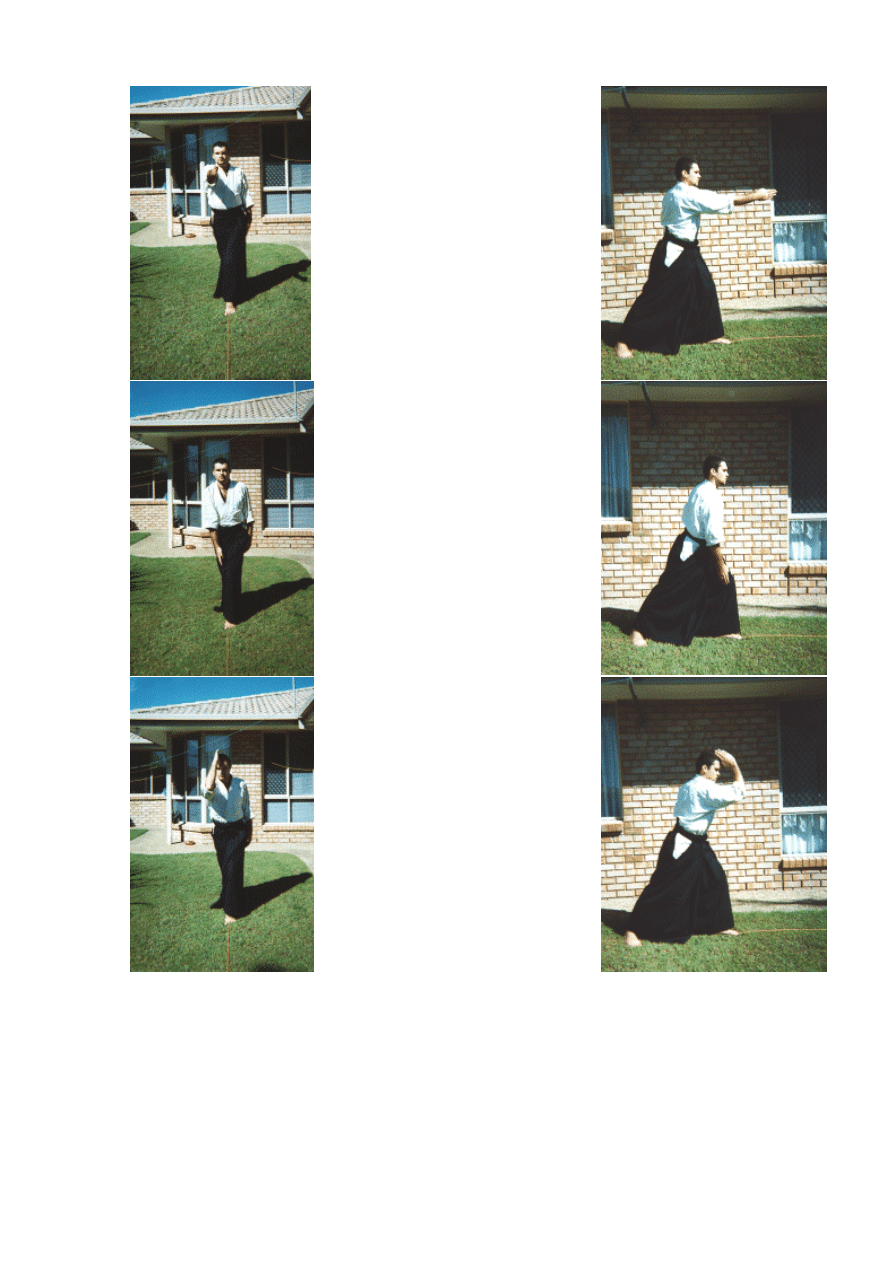
As the right hand cuts down,
the left hand drops to the left
side in a natural position.
The hand follows through down
next to the left knee,
then returns upwards to the
forehead, where it stays for a
moment. The right hand
remains at the forehead,
fingers together pointing
upwards, thumb resting on the
hairline, while you maintain
zanshin, where you feel the
result of the throw, but are in a
state of readiness.
8. Step back to shizentai,
dropping the right arm to its
side, and pause for a moment,
looking at the target.
Once the 8 movements of the form have been absorbed by the body and become
familiar, the form begins to control how the body moves, and at this stage the student is
ready to hold a blade while practicing the form. Manji no kata then becomes an 11 step
form, as it now incorporates extra steps which involve passing the blade from the left
hand to the right. The shuriken are carried in the left hand, tips pointing to the rear as
you step up to the throwing position. This is an inoffensive gesture, as having shuriken
in the throwing hand would be seen as offensive action. Between step 2 and 3 of the
sequence above, 3 further steps are added. 1. The left hand is raised, holding the
shuriken, to the front of the hara, tails pointing to the right. 2. The right hand raises to
meet the left, the thumb goes behind the blade while the fingers cover the blade, thus
hiding the blade from view. The grip is transferred to the right hand. 3. Both arms drop
to the side together.
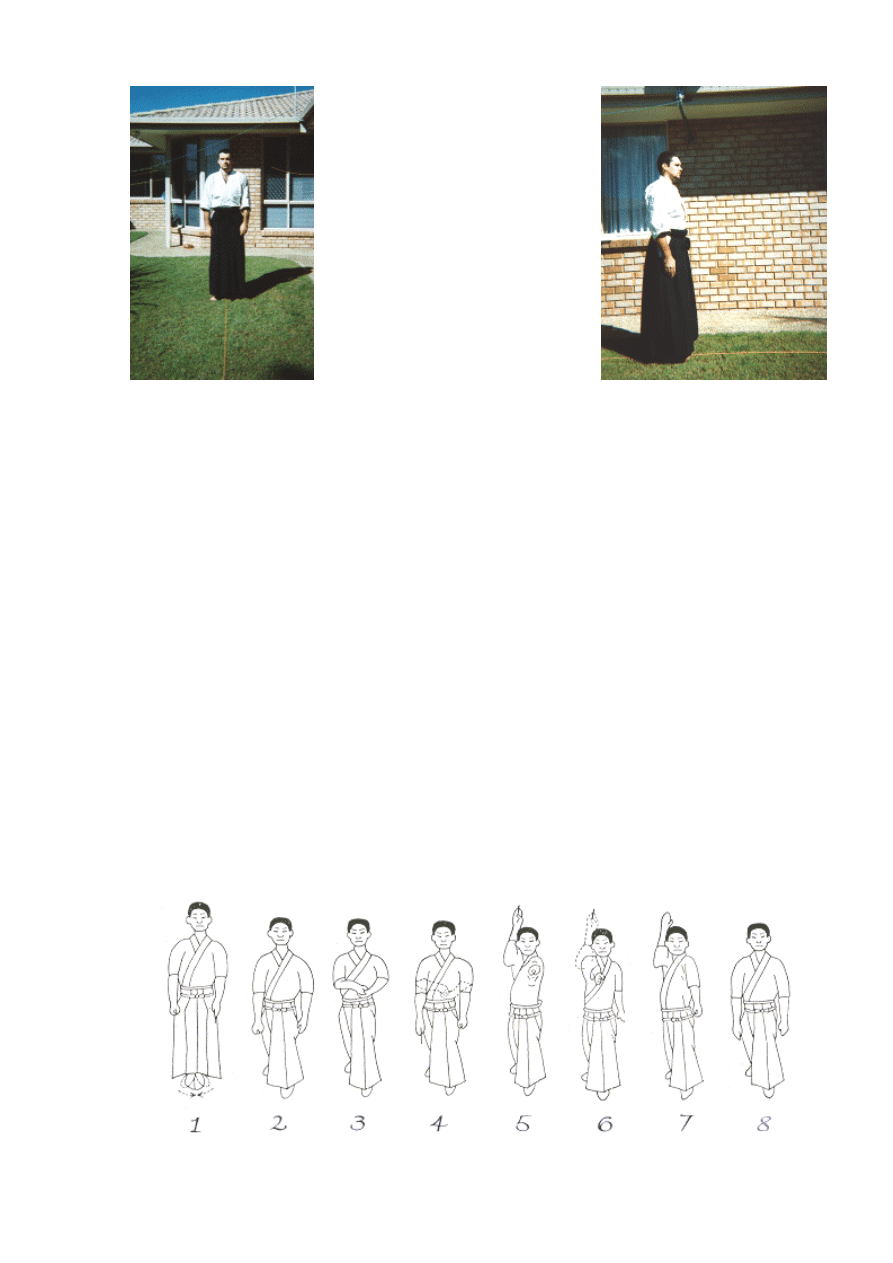
The second level of Koso no I (see fig. 24) is called Toji no kata, and simply involves a
shortened, or abbreviated number of steps to the Manji no kata form. The swastika
shape, or manji is subtracted, and the arm is raised to shuriken no kamae (step 5)
behind the right ear from the side as though raising a sword (shomen uchi movement in
Aikido). This arm movement is the same movement used in Jikishin Ryu, although the
Jikishin grip of the blade is different, and the right foot does not step forwards during the
throw.
Figure 24. The Toji no kata form.
The third level of Koso no I (see fig. 25) is called chokushi no kata, which involves a
further shortening of the form. The holding of the right arm by the side is subtracted,
making the movement go directly from "passing the blade" (step 3) to shuriken no
kamae, (step 5). The arm moves in a round movement, travelling past the side to the
rear, then raises to the position behind the ear (yokomen uchi movement in Aikido).
Figure 25. The Chokushi no kata form.
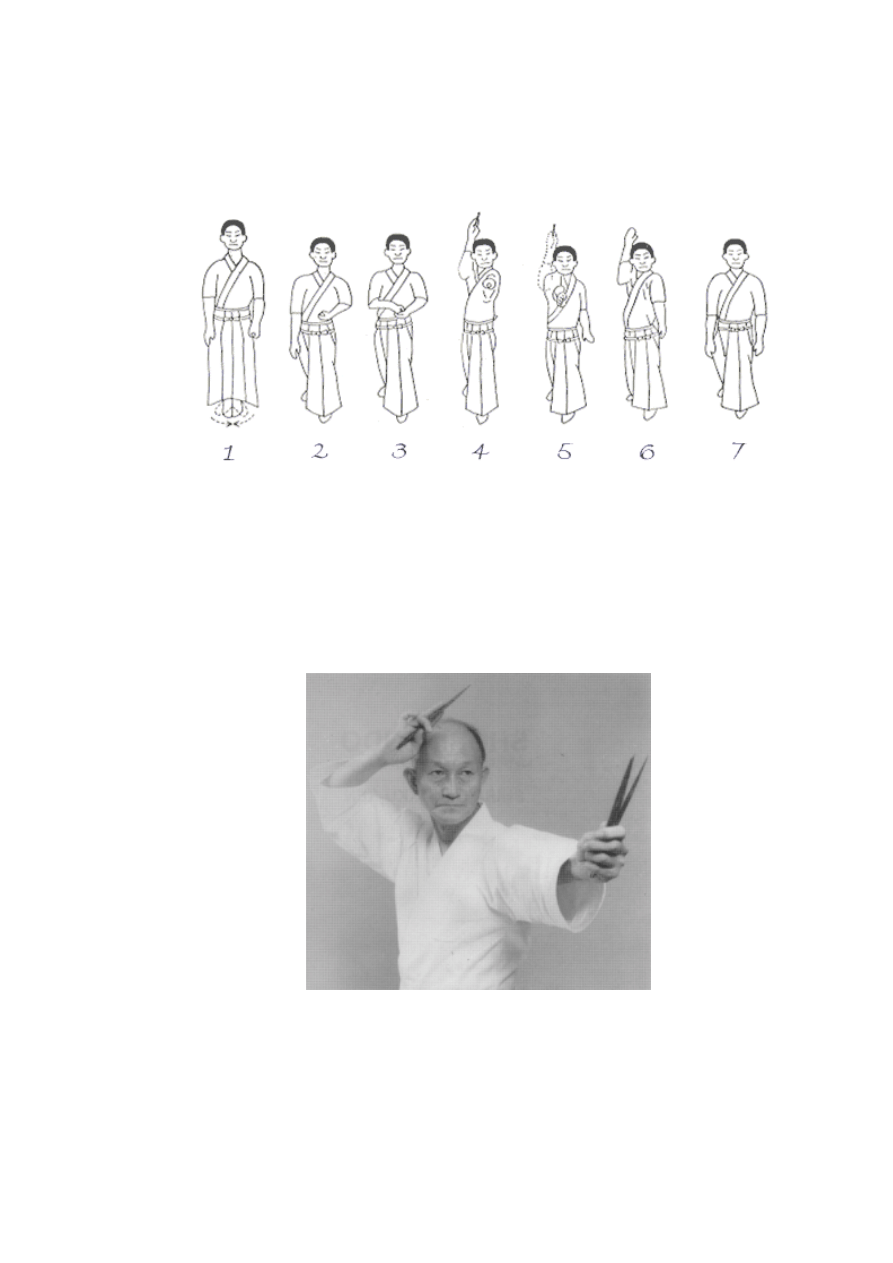
The final level called Koso no I, is really the essence of the front throw movement. Over
years of training, the shape of the throw becomes more natural, free and smoother,
even appearing casual, yet the core movements, the Koso no I, remain internally, even
though the large, rigid and superfluous movements have gradually been whittled and
trimmed away. The posture is such that the throw is available immediately, without
having to adjust before cutting down with the right arm. It is pure readiness. The
ultimate goal is to be able to simply look at the target and strike it with a shuriken.
Figure 26. The Koso No I of Shirakami Ikku-ken
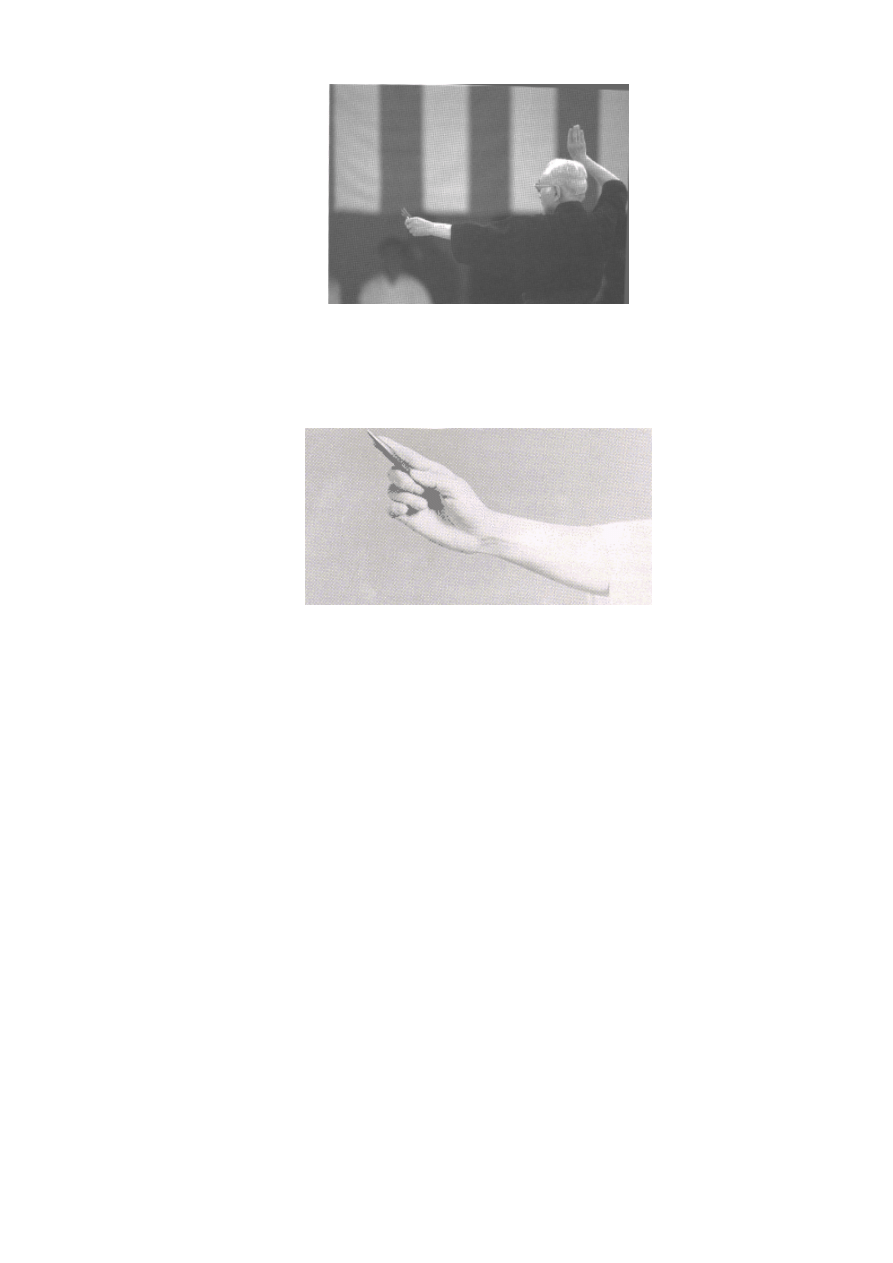
Figure 27. The Koso no I of Satoshi Saito Sensei, current head of Negishi Ryu
The second form of front throw, Jikishin is really a simplified form of Koso no I, but its
emphasis is on surprise and speed. It is used for short distances, and uses a different
method of holding the blade. (see fig. 28)
Figure 28. The Jikishin grip.
This method of holding the blade facilitates a quick draw...it is a simple yet natural grip;
the right hand can reach for and take the blade in one movement quite quickly and
easily, and can be thrown as quickly as one can raise their arm, however, the grip does
not facilitate a long distance throw. As with all other grips, the hand is light and relaxed,
as if holding a swallows egg. The arm movement on the throw is as though one is
cutting with a sword.
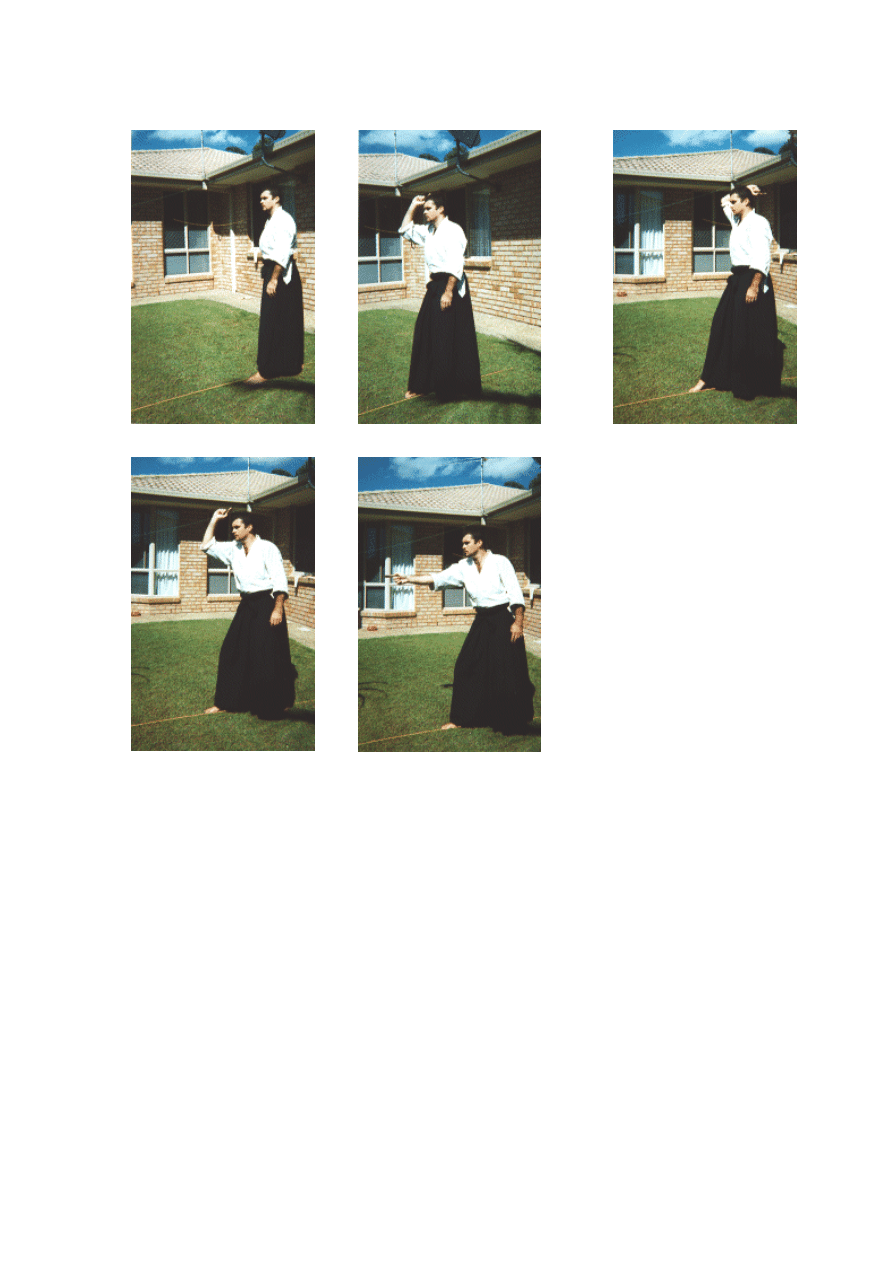
The Jikishin throw
1 2
3
4 5
The third form of front throw is called Uranami, and is the more difficult of the 3. It is like
a softball pitch where the arm swings at the right side, from the natural, downwards
pointing position, forward to a horizontal angle facing the target. It is the underhand
version of the Jikishin throw, as it utilises a right forward step as the blade is thrown. As
with the Jikishin throw, it is fast, immediate, and a surprise.
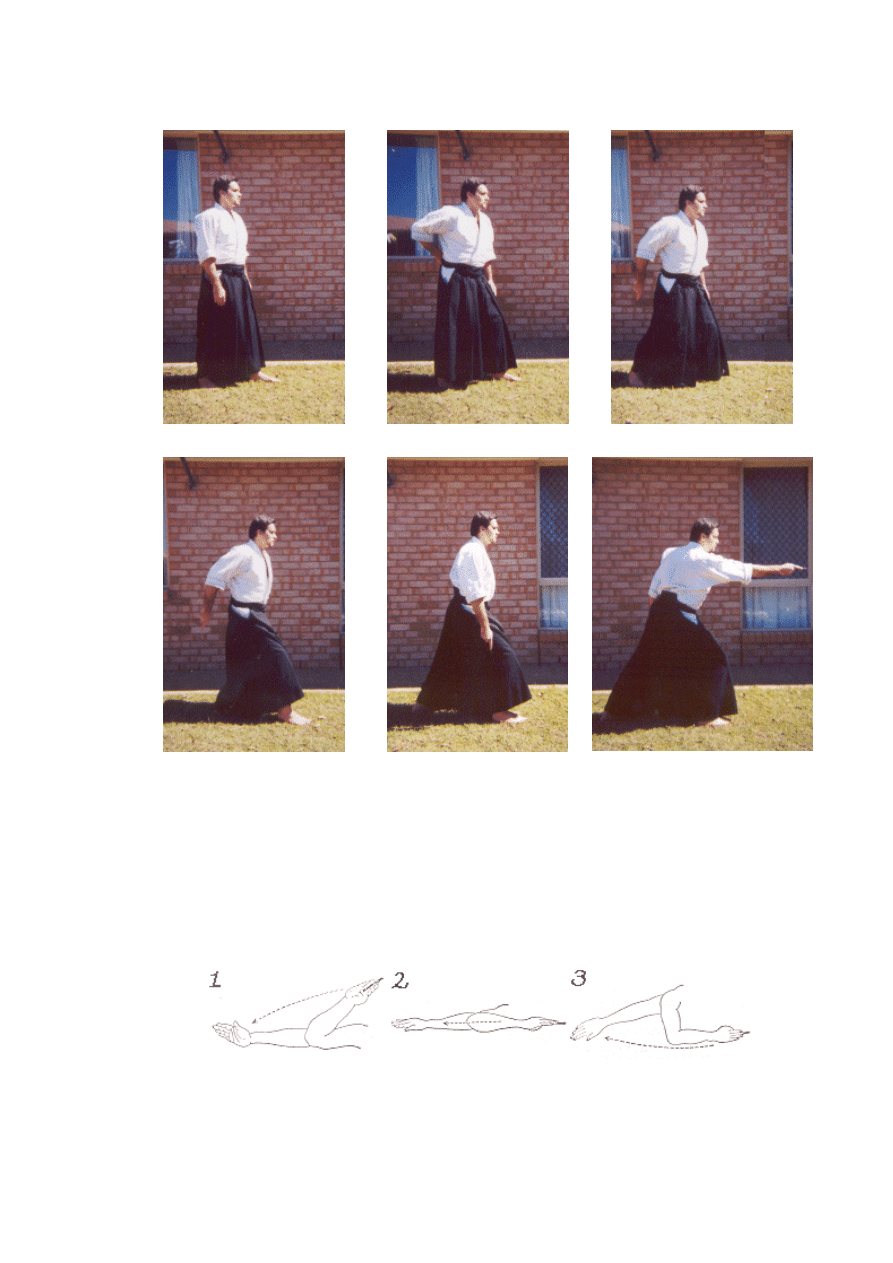
The Uranami throw
1 2 3
4 5 6
Side Throws
Side throws also involve 3 forms, 1. Hon uchi (the basic over-arm throw), 2. Yoko uchi
(side-ways throw) and 3. Gyaku uchi (under-arm throw). In practice, these throws can
be done from standing, "tachi uchi", or sitting in "za uchi", in the traditional Japanese
style of sitting on the knees and ankles (see below).
Figure 29. 1. Hon uchi, 2, Yoko uchi, 3. Gyaku uchi (4. Ura Uchi)
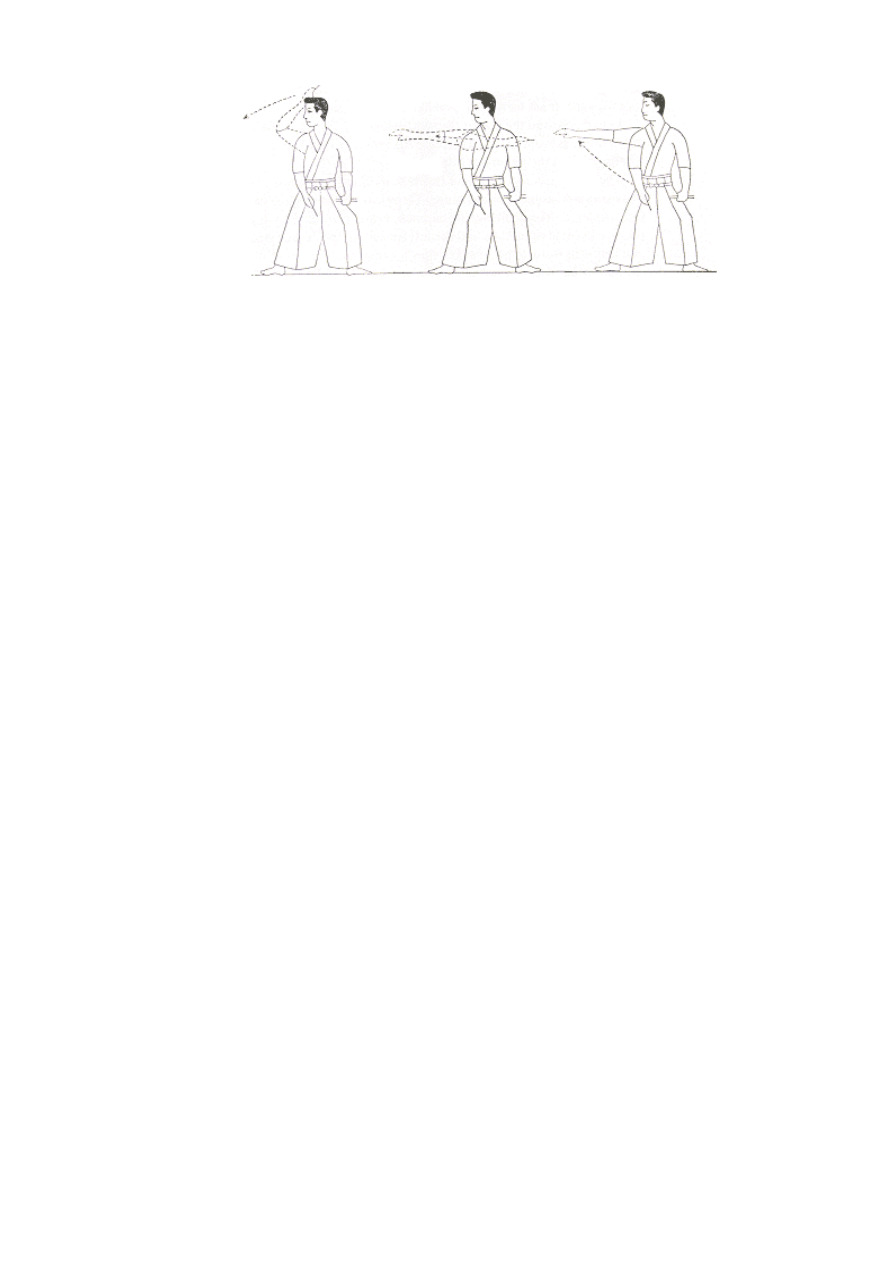
Figure 30. Hon uchi, yoko uchi and gyaku uchi from standing posture (tachi uchi)
Hon uchi is the basic throw, yoko uchi is more difficult, and gyaku uchi being the most
advanced. The latter two are not usually practiced until the hon uchi form is mastered.
Mastery of hon uchi requires practice at various levels of performance, which starts with
Manji no kata, which progresses to Toji no kata, then to Chokushi no kata, leading to
the final form Koso no I. This final form is the essence of all levels of the over-arm
throw, which is done completely naturally and without thought, and consists of only 2
movements; raise and throw.
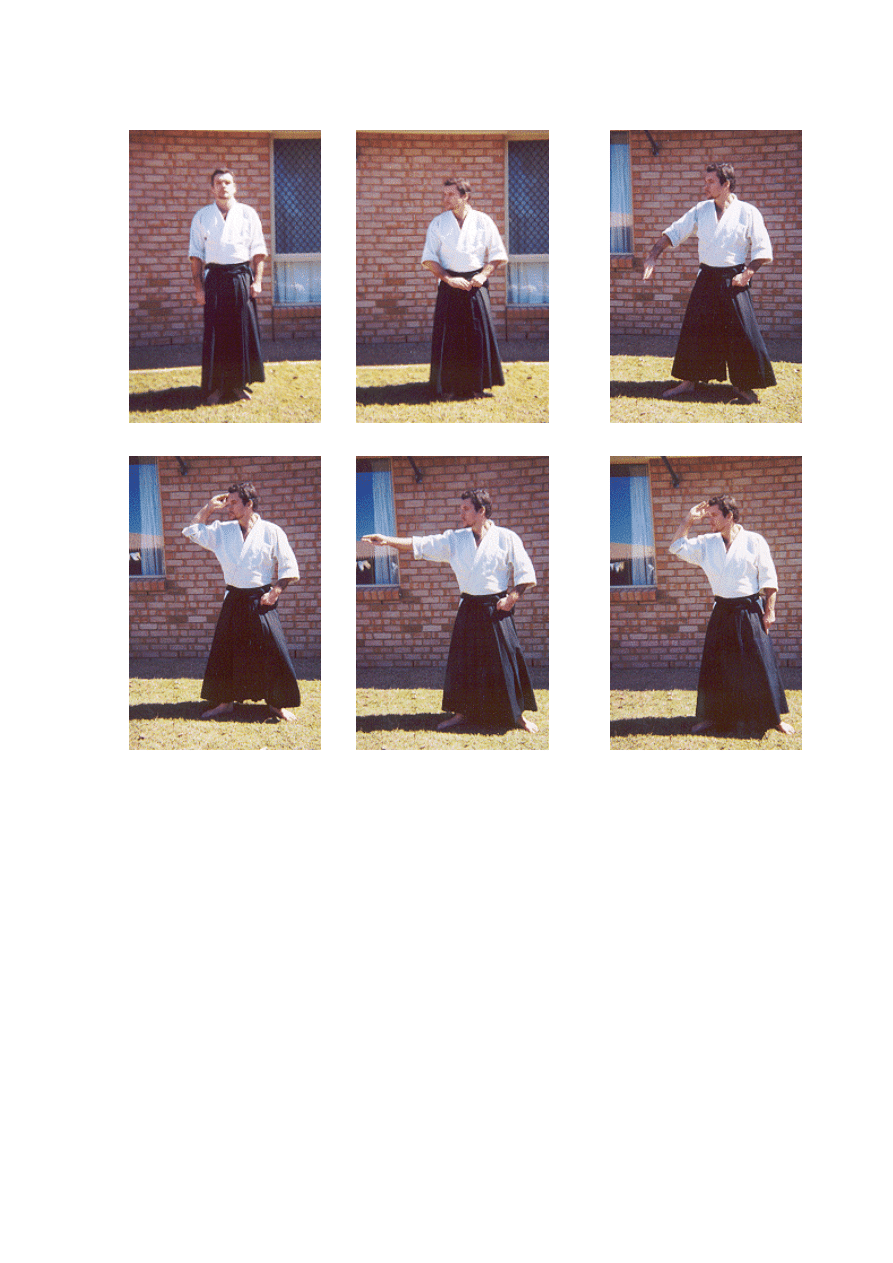
The Hon-uchi throw
1 2
3
4 5
6
The Second Form, Yoko Uchi
The action of hon uchi focusses on the bending of the elbow, and is not a powerful
throw, while the second form, yoko uchi, (see fig 29-30 above, fig. 31 below) will
produce more power and is quicker. The lesson in this form however is the change in
hand movement to allow a fast and powerful throw sideways, either right of left. In the
second and the third form, most of the technique is an extension and variation of
principles of the first form; if the first form is mastered first, these will be easier to attain,
despite them being more difficult throws.
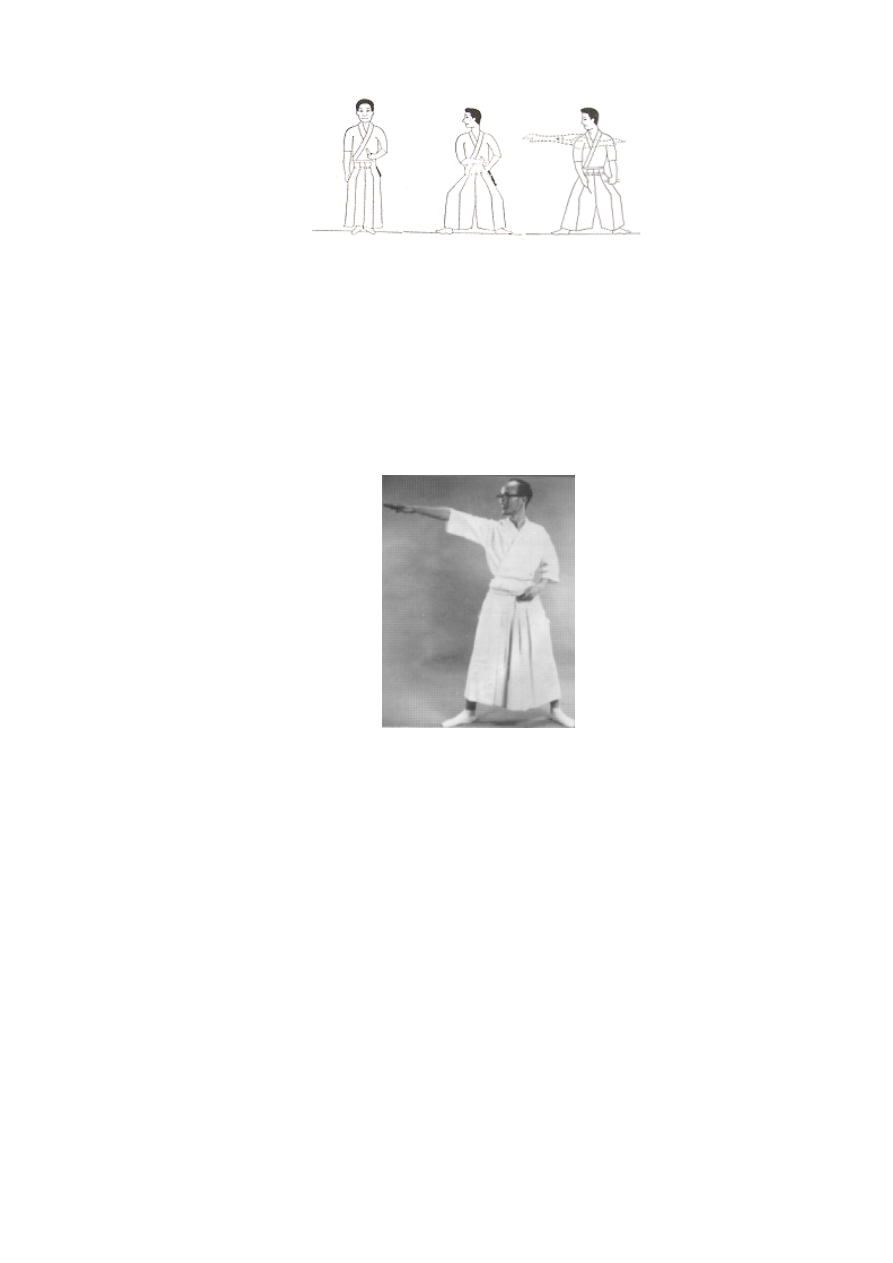
Figure 31. Yoko uchi.
The illustration shows to basic form, where one steps as the blade is passed to the
other hand, then the throw is made from a static posture. The more advanced form is
one movement, stepping and throwing together. From shizentai, the blade is passed
hands, the right arm raised to the chest, and swung out and towards the target, as one
steps sideways. The moment the right foot is placed on the ground, the right hand is just
completing the throw.
Figure 32. The end of the yoko uchi throw by Shirakami Ikku-ken.
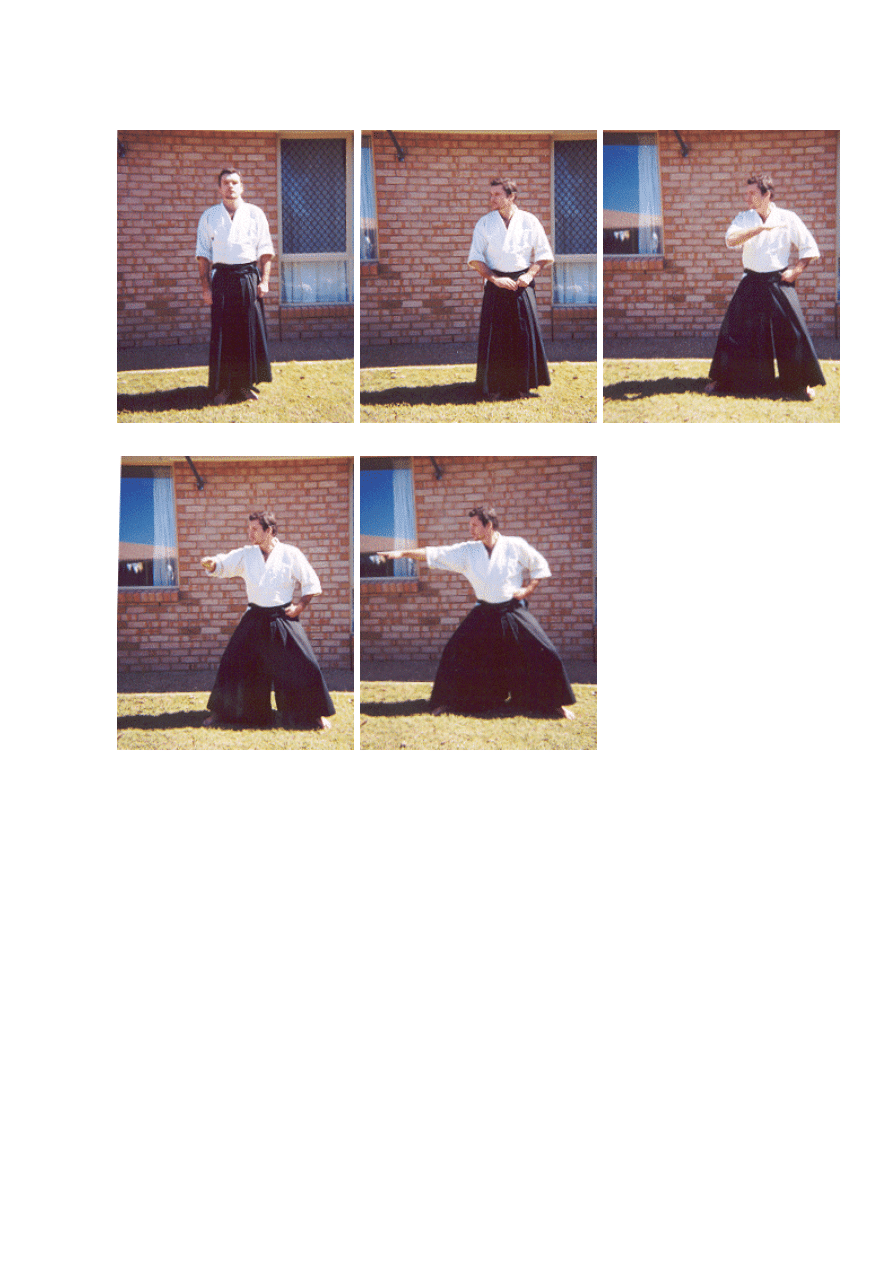
The Yoko-uchi throw
1 2 3
4 5
The Third Form, Gyaku Uchi
In gyaku uchi, the throwing action comes from the shoulder, and is more difficult than
hon uchi or yoko uchi. The arm raises with the palm down until it points towards the
target. At this point, the hand stops raising sharply, and the blade is allowed to depart
the hand. This throw is different from Uranami, as the hand raises from the front of the
body, and the palm is face down in gyaku uchi, whereas Uranami comes from the side,
and the palm faces to left at right angles to the ground.
The Gyaku-uchi throw
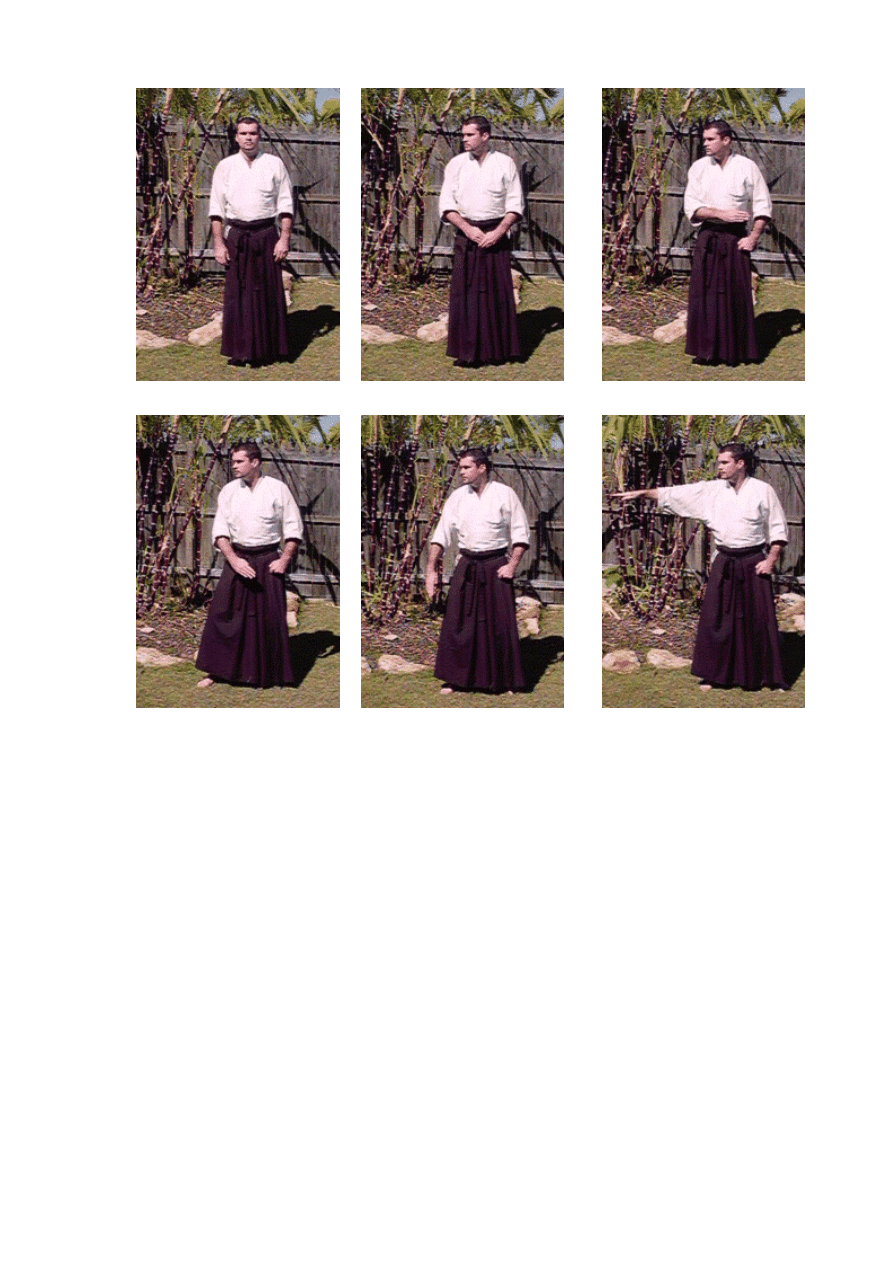
1 2 3
4 5 6
Rear Throw, Ura Uchi
Ura Uchi uses a similar throwing action as Gyaku uchi, but it is aimed at the rear, and
the palm is not facing flat to the ground, but vertical. Elevation in this throw is gained by
leaning the body more forward, and angling the hip more sharply at the end of the
throw.
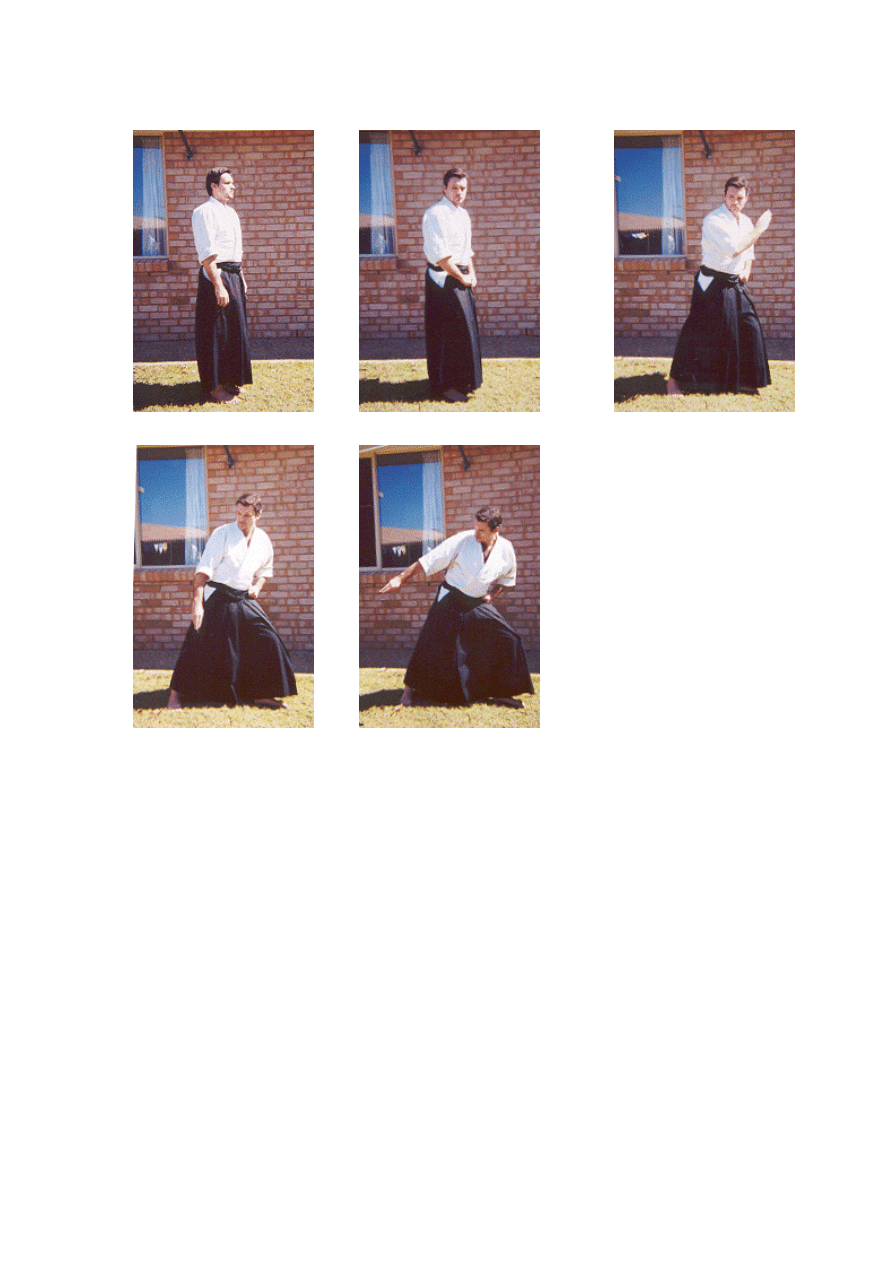
The Ura-uchi throw
1 2
3
4 5
ADVANCED TECHNIQUES
Throwing the blade in Negishi Ryu
Adjusting to distance
When adjusting to the variation in distance while throwing in the Negishi Ryu, one
cannot make the same simple adjustments possible in Shirai Ryu, where one just needs
to turn the blade in the hand. In Negishi Ryu, the hand grip is constant. To make the
adjustment to different distances, slight postural changes need to be made, both in the
way the hand is held, and the leaning of the body at throw.
1. Leaning the body "When close to a target, lean back on the throw. When far from a
target, lean forward on the throw"
On close throws, as the arm sweeps down, pull the torso back at the last moment to
add turn to the throw. This causes the shuriken to straighten earlier in the shorter
distance, thus allowing a more direct hit. It also has the added benefit of pulling the
head back from target slightly, in case the blade miss hits and bounces back.
On distant throws, leaning forward on the throw adds the body weight, creating a more
powerful throw, necessary to cover greater distances. It also has the added effect of
intensifying the concentration forward, giving the psychological advantage by creating
the illusion of being closer to the target.
2. Timing the release "For close targets, release later, for distant targets, release
earlier".
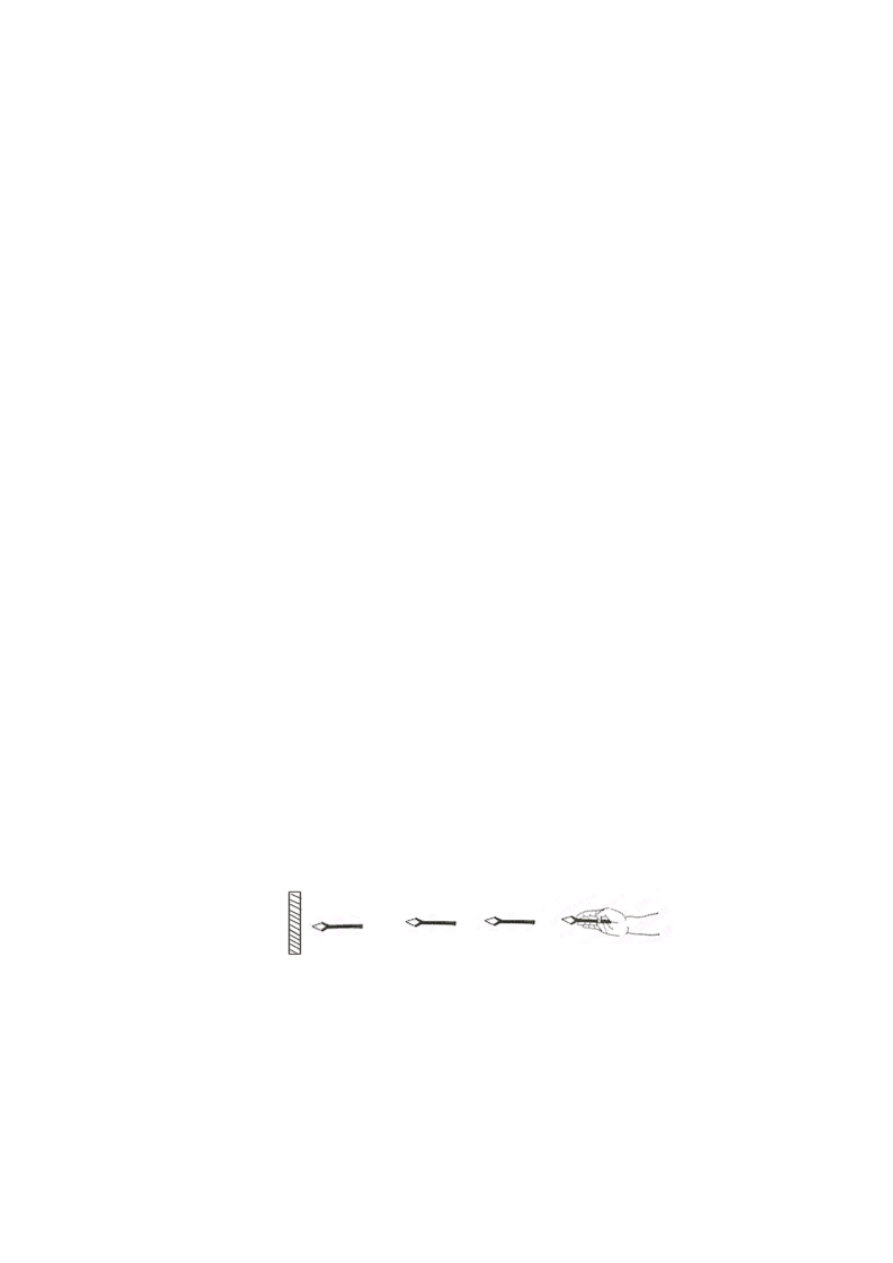
When the arm is raised in Koso no I, the blade is pointing upwards. In its flight towards
the target, the tip tilts forward and straightens in relation to the target, so it is in line with
the angle of trajectory at the moment of, or just before, striking the target. So when
closer to the target, the shuriken has less time to tilt in flight, so a late release means
that the shuriken is more horizontal as it leaves the hand (see fig 33). When further from
the target, the shuriken needs to align with the trajectory just before striking the target,
because of this tendency to tilt, so an early release will compensate for this tilt.(see fig
34-35)
Fig. 33. Late release, and turning the palm, for close targets.
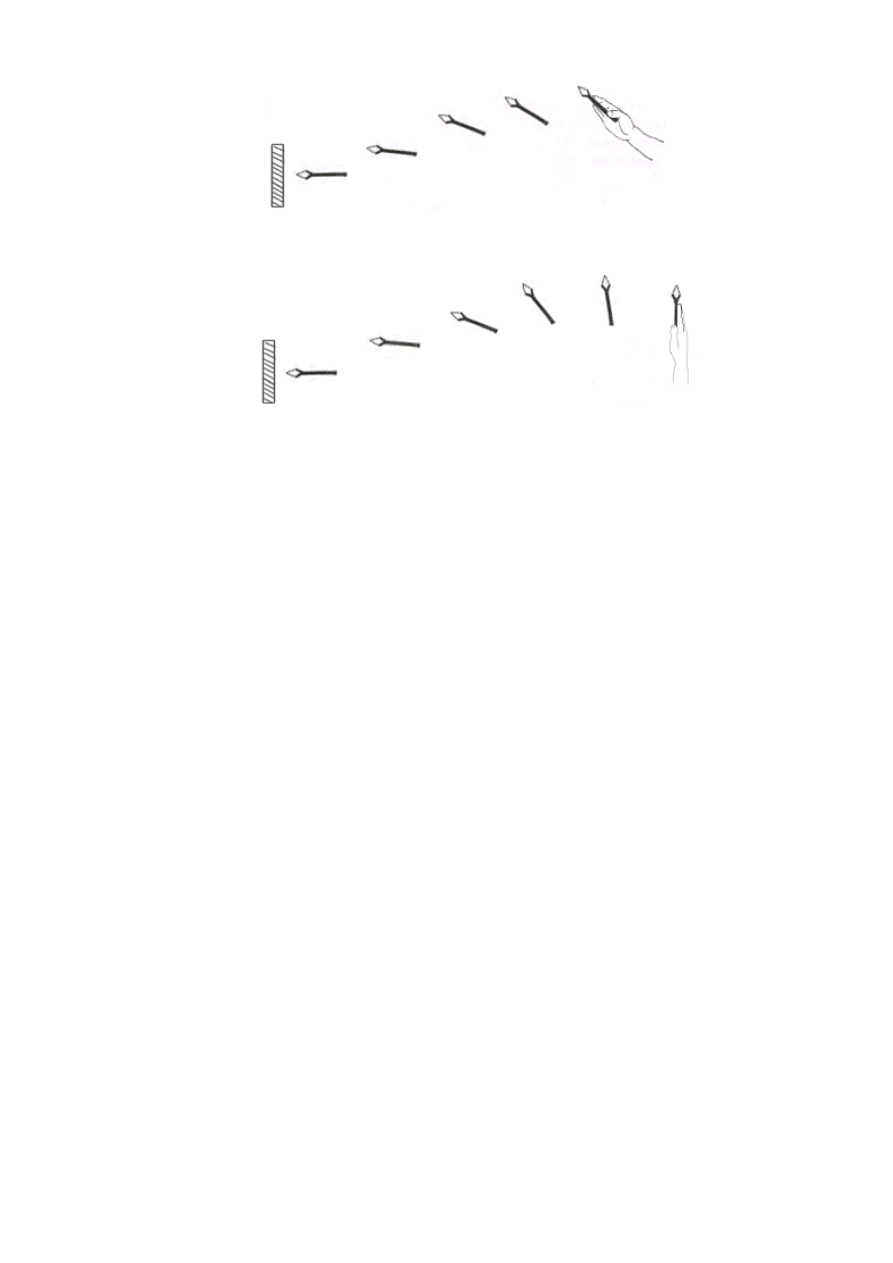
Fig. 34. Mid release for mid-range targets
Fig. 35. Early release, and facing the palm, for distant targets
3. Turning the hand "Face the palm for distant throws, turn the palm for closer throws."
The shape of the hand is very important for the trajectory of the blade as it leaves the
hand, as this is the last contact with the body to have influence over the blade's flight.
Not only does the blade need to be gripped lightly, as though "holding a swallows egg",
the hand must facilitate a clean, smooth, and even departure called hanare, from the
hand. Early and late releases have different effects on the position of the blade in
relation to the trajectory, and earlier releases have a less controlled hold, so their
departure tends to be more variable (see fig.35). By turning the hand so the palm faces
the target on early release, there is more weight and support behind the blade.
For a late release, the blade has already developed velocity, so the grip then tends to
require more gentle guidance. By turning the hand so the palm faces to the left in
relation to the target, the hand is really only offering a straight pathway for the blade to
depart the hand. The thumb catches on the butt end of the blade as it departs,
preventing the blade from turning excessively before reaching the target (see fig 33)
In training, one should start at a close distance, and practice late release with the
turning of the palm, as basic technique (as shown above in Manji no kata). As the
student becomes more proficient, the distance is increased
Aim
When aiming at the target, the basic shape of the aim is to have the tips of the blades in
the left hand in line with the eyes and the target (see fig.26, above). However, on a
more advanced level, the idea is to try and take aim with the navel, rather than take aim
with the eyes. By looking at the target, our focus is outside the body, and our thoughts
are with striking the target. Rather, we should feel the target, by placing our awareness
in the navel, and try to feel some sort of connection between our centre (the tanden)
and the centre of the target. Mr Shirakami relates a story of how his teacher felt
confused by this concept, and mentioned this to his teacher, Tonegawa Sensei. The two
of them went to the dojo at night, and began to throw shuriken in the dark. The first
blade made the sound of piercing the target, then the second blade made an unusual
sound. Apparently it had hit the tail of the previous blade.
This story illustrates how one can learn the perception of the target by feel, rather than
by relying in sight alone.
Variations in Training
Training can be made more interesting, or to focus on particular skills, by varying the
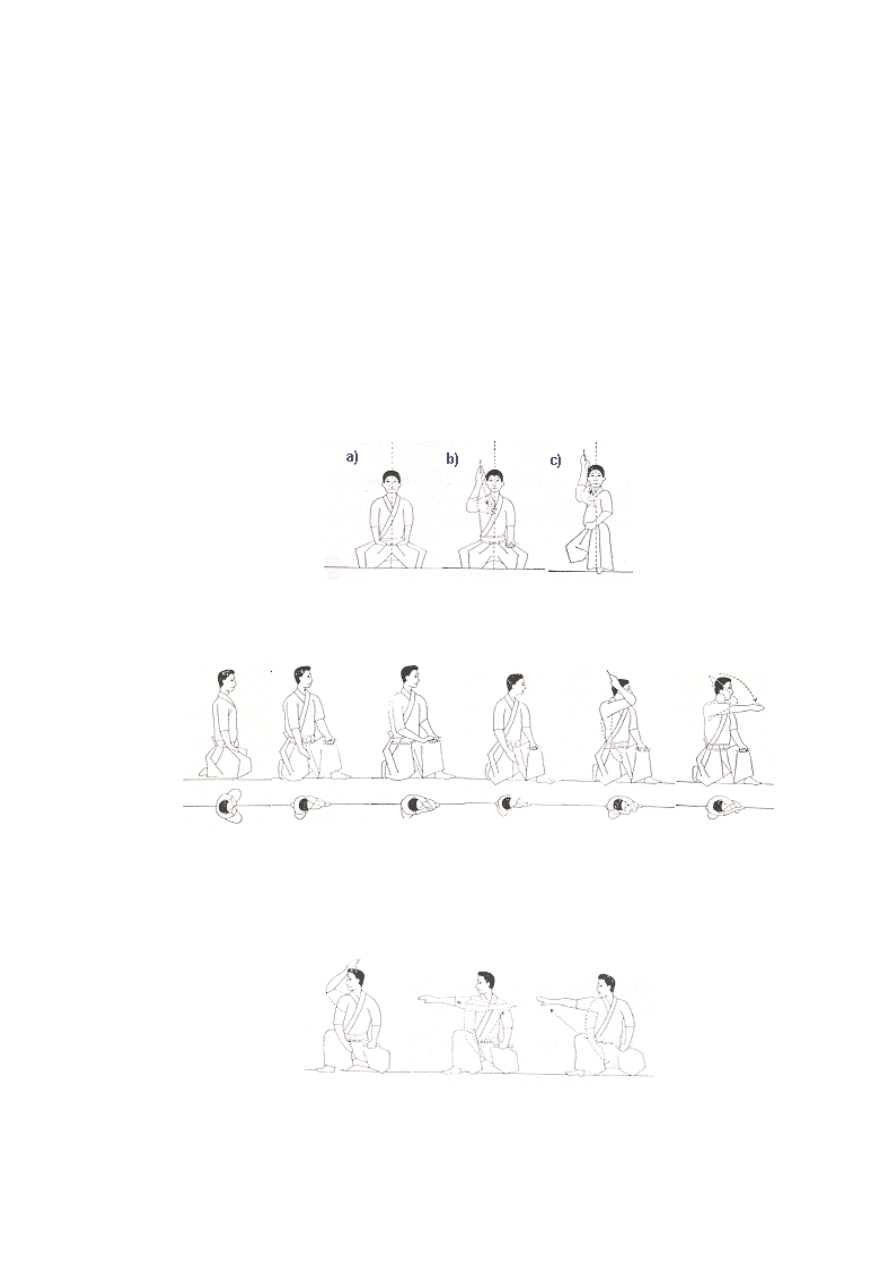
training method. One of the basic forms of variation is to train on the knees. In several
traditional martial arts, training in a number of techniques, called suwari-waza, is still
done on the knees. This form of training builds up necessary strength and stability in the
hips, and also teaches the body movement to be more precise. The seated form of the
throw is called za-uchi, (see fig. 36) and can be done directly facing the target, as in a) -
b) or in the stance called tachihiza, c) where the left knee is forward and the foot on the
ground, and the right knee is back and placed on the ground.
Fig. 36. Za Uchi, or seated throw.
Figure 37. Here the toji form on the knees in tachihiza, is illustrated .
The side throws can also be performed in seated posture. Note that the front throw is
performed in either seiza, (full seated posture), or tachihiza with the right leg back,
whereas sideways throws are made in tachihiza with the left leg back. (see fig. 37)
Figure. 38 Hon uchi, yoko uchi and gyaku uchi from kneeling posture (tachihiza)
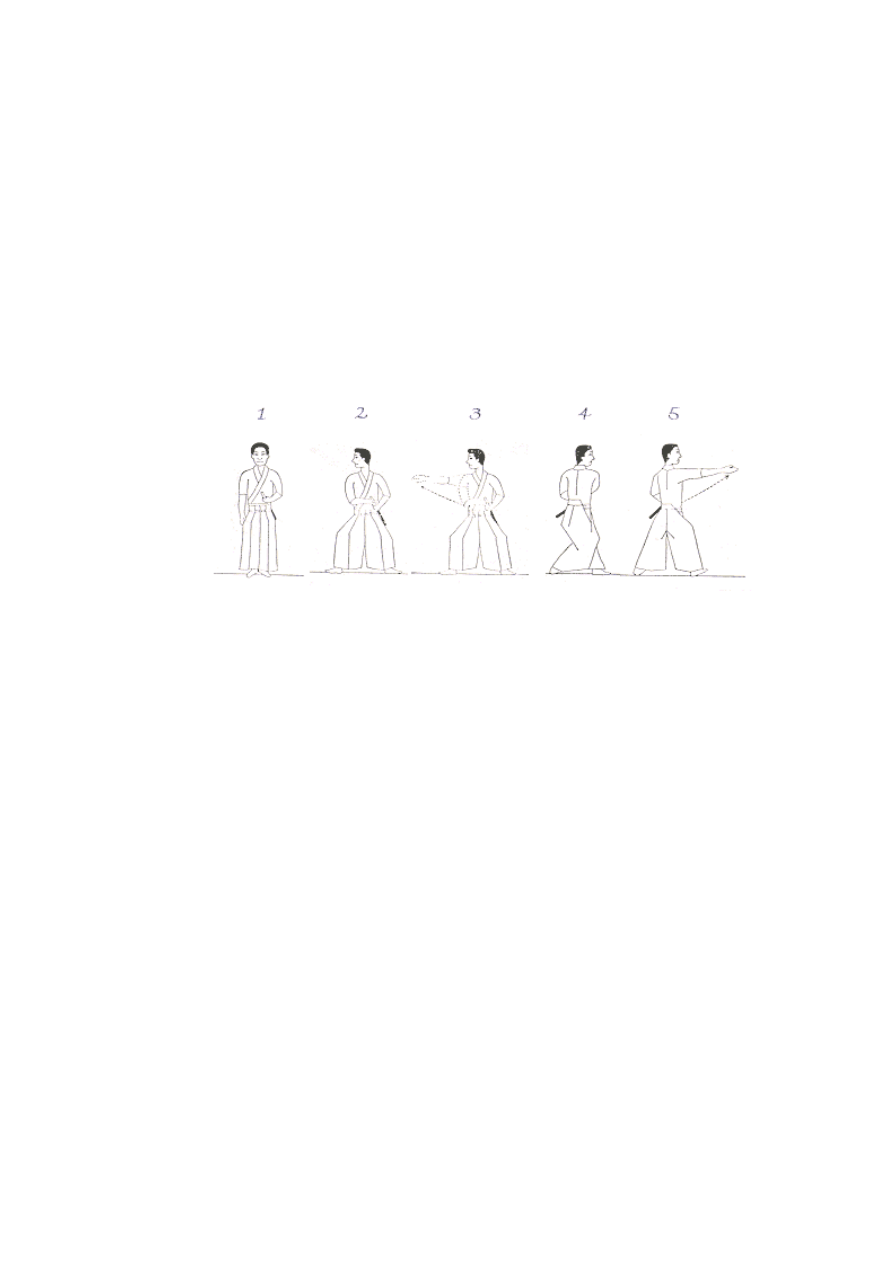
Throwing from a "still distance" and from a "moving distance"
There are training methods for throwing the blade while running, jumping and turning,
and also lying down. When the basic form is practiced, the distance is set, and training
progresses incrementally from 1 and beyond. At each step, we throw repetitively until
that distance is mastered, then we take the next step back. So arises the desire to be
able to throw one step further away. However, we are bound by the throw from a static
position, which is a constraint preventing us from being able to throw at any distance.
The tendency when throwing at greater distances is to unconsciously add more power
to the movement, which in fact adversely affects the technique. Mr Shirakami writes of
his teacher Naruse Sensei that even when he was throwing at great distances, his
movement was relaxed and appeared as though he was throwing only a close distance,
yet the blade flew powerfully and struck firmly. To be able to achieve this, we must
overcome our thoughts about distance as being an obstacle.
Figure 39. Multiple throwing can also be practiced while walking.
Note: 1 - 3 shown from the front, 4 - 5 are shown from the back. The action is a
continuous stepping to the throwers right side.
Figure 39 shows a method of multiple throwing in time with the stepping of the feet.
The training method of throwing while running, either forwards or backwards, is another
such method. Training at Sei no Maai, or "still distance" lays the technical foundation for
Do no Maai, or "moving distance". By training at static distances, one learns the
mechanics of the form. When we count the steps and throw, the concept of distance is
always at the back of our mind. By training during movement, one is using the form. At
each distance, one must make minute adjustments in their technique to have the blade
strike effectively, and while static, we have plenty of time to think about the distance and
achieve this. But when moving while throwing, at the moment of departure of the blade,
our posture and movement has to be adjusted quickly and precisely to allow the blade
to strike effectively. This form of training cuts down the time we think about distance,
thus decreasing the obstacle that is always at the back of our mind. Eventually, we lose
the concept of distance entirely, and merge with the target at the moment we think of
throwing, enabling us to throw a blade and have it stick at any distance without thought.
Rapid throwing.
There is a certain posture with a technique developed for rapid throwing, where the left
hand is held above the left eye (see fig 40,), so passing the blade from left to right
hands could be done with the raised throwing arm. This allows for the rapidity of
throwing blades in succession. There is a phrase from olden times that says "Ikki
Goken", which means to throw 5 blades in one breath. A strong or prepared adversary
may be able to receive the first blade (ie. deflect or ignore), so it is sometimes
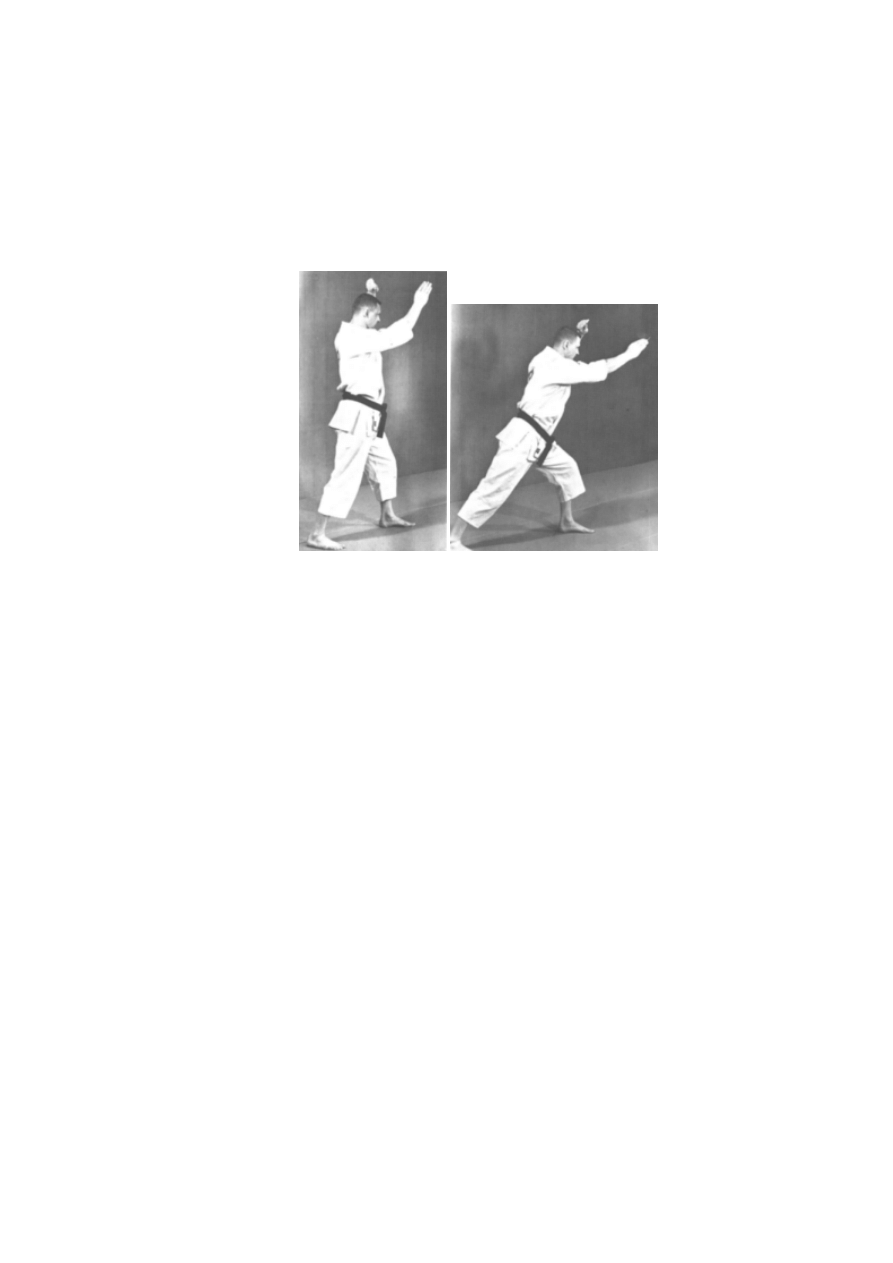
necessary to be able to throw several in rapid succession. Before the 1st blade strikes,
the 2nd blade should be on its way, closely followed by the 3rd, and so on. When we
practice the basic form, we are taught to pause and observe momentarily, in zanshin or
readiness. This is because we are learning the throw. But we have to be detached from
the throw, and to be able to continue our movement without caring if the blade strikes
well or not. The art is in being able to detach ourselves from the throw immediately after
the blade has departed the hand, and throw the next, or commit ourselves to the next
action.
Figure 40.
Throwing the blade during a sword cut
There are also techniques that involve throwing shuriken while holding a sword.
Because the throwing position of the right hand, and the throwing action of the right
hand is the same as the position and action of the right hand as it holds and cuts with a
sword, the two weapons can be blended in such a way that they do not adversely affect
the movement of each other. There are 5 forms in a kata called Tojustsu Kumikomi no
Kata, (see fig. 37) where the sword is held as normal by the left hand, and the right
hand is held in Koso no I. The throw is made, then the right hand returns to the sword,
gripping the handle.
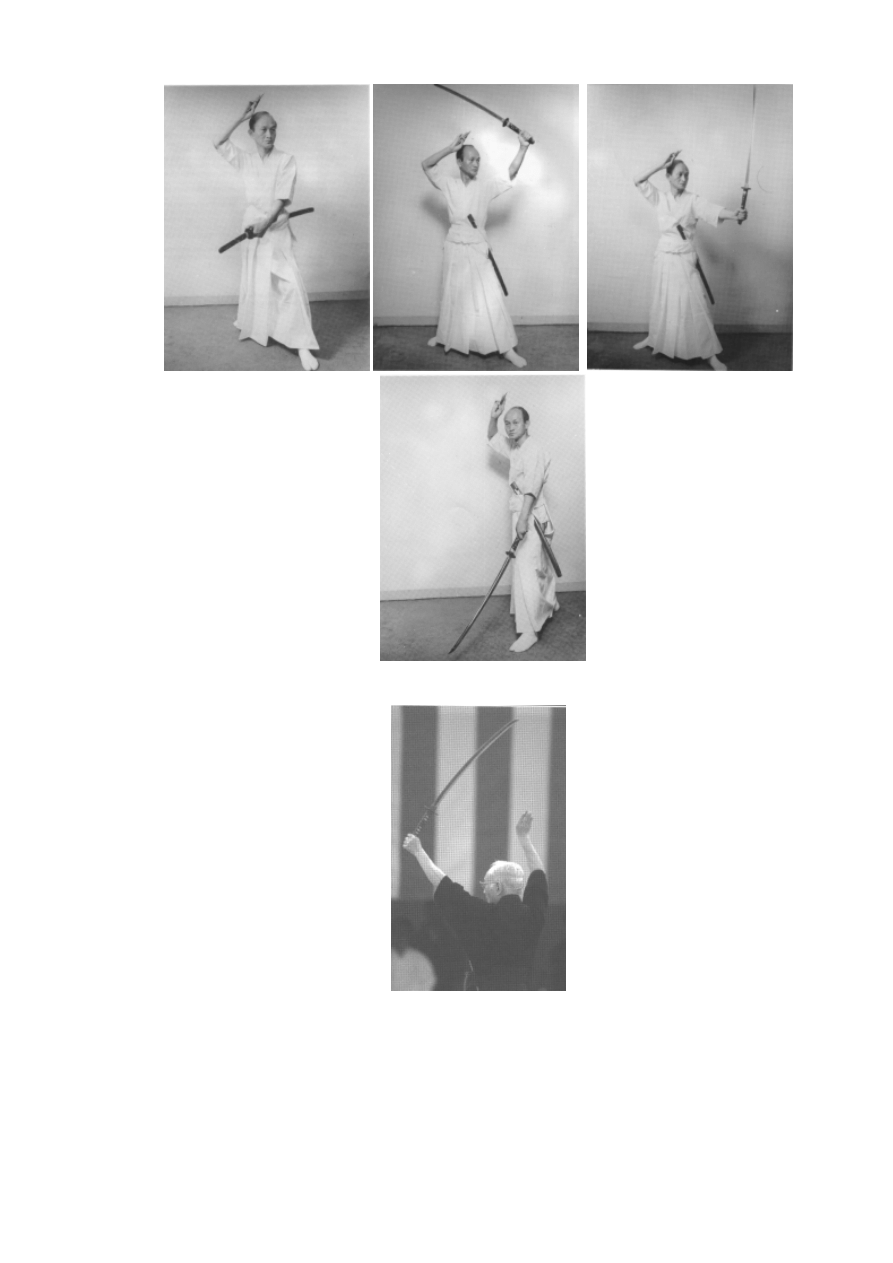
Figure 41. Some of the postures of the Tojutsu Kumikomi no Kata
Figure 42. Satoshi Saito Sensei demonstrating shuriken throwing with the sword.
The idea is that one develops the ability to throw shuriken quickly while one is drawing
and cutting with the sword. Most swordsmen trained only in the sword know only the
rhythm of the sword, which has a certain timing, due to the weight and size of the
weapon. The shuriken, being smaller and lighter, can be drawn and thrown much
quicker than a sword, so it can be said that you can attack inside the rhythm of a
swordsman's attack. Thus one could be able to launch 1 or 2 shuriken at the opponent
before they are in sword distance, giving you an advantage already.

Receiving a blade.
An advanced level of training involves not throwing a blade, but having a blade thrown
at you. This stems from the days of the Samurai where a swordsman would defend
himself against attackers throwing or propelling objects at him, such as a shuriken, or
an arrow. There are stories of famous encounters where swordsmen could deflect the
flight of arrows and shuriken in battle, though this is generally thought of as being the
stuff of legends. However, within the arts there are training techniques designed to
develop this ability, so we should not discount the possibility that an individual can
perform this sort of feat. Mr Shirakami tells of his experiences where he asked his
student to shoot arrows at him, while wearing fencers protective face gear. He was able
to develop the ability to deflect the flight of an arrow.
The key seems to be in the mental attitude one takes when faced with such an attack.
Rather than wait to see the path the arrow is taking, then react to it by trying to block it,
the idea is to move at the same instant, with the same feeling as the attacker, and cut
the arrow down. I believe this feeling is the same as awase training with sword, in
Aikido. Here the idea is to match your feeling and movement to that of the attacker's
without the thought of reacting to their movement.
The shooting of an arrow, or the throwing of the blade is seen as being like the cutting
of a sword. There is the moment in the attackers mind where they commit to action,
then the body follows, acting out the mind's intentions. So by using awase, the idea is to
unify yourself to this moment, to cut as the attacker cuts, and providing the sense of
timing in awase is correct, it does not matter whether the weapon attacking your centre
is a fist, a sword, an arrow or a shuriken, correct performance of the technique will
protect your centre, thus deflecting the attack.
Wrapping the blades with paper, varnish and string
There is mention of shuriken being wrapped in paper, string and lacquer (Interview with
Saito Sensei in Skoss, 1999), and Fig. 18 above shows this, but I have no idea what it is
for. There is the practice of gluing pigskin to the end of the blades, with the hairs
pointing backwards, to assist in the smooth departure from the hand, and create drag in
flight for a straight trajectory, however this seems to serve a different function to that of
wrapping the blades. In the interview Saito Sensei makes mention of this in conjunction
with the balancing of the centre of gravity of blades to accentuate close or distant hits.
Perhaps this wrapping is a method of adjusting the centre of gravity. The illustration in
Fig. 18 shows a number of blades each with a varying amount of wrapping.

The notes on this page in relation to the shuriken throwing art are more theoretical and
intellectual, and are not necessarily so important for learning the technique of throwing a
blade, however if one wishes to study the art more deeply there could be something of
interest here to think about.
Distance with various weapons
Some martial arts teach weapons after one has mastered empty-handed forms, others
teach empty-handed forms after one has mastered weapons forms. In Iwama Aikido,
the development of hand techniques is seen as a progression from sword techniques.
Morihiro Saito Sensei, the current head of Iwama dojo, teaches sword, staff and empty-
hand techniques as being 3 essential components of Aikido training. Less well known is
that he is also a master of Negishi Ryu, and was once quite famous among the local
gangs as being a person not to cross. It is also reported that Sokaku Takeda, the
teacher of Aikido's founder, O-Sensei, was also a master of the Shuriken, although it is
not known which style. I found it interesting that shuriken is part of the technical
repertoire of these masters of empty-handed and sword techniques.
Various weapons have various effective ranges, and when one looks at how the ancient
warrior was required to master a range of weapons to deal with a range of situations on
the battlefield, one can see there is a well organized and logical plan behind the choice
of weapons that a warrior learns. With mastery of techniques comes the control of
distance. If one has mastered hand techniques, then one is able to control an opponent
who is in close enough range to hit you with their bare hands. If one has mastered the
bow and arrow, one can control attackers at a great distance. But outside, or within the
ranges of those weapons, if one has not had the proper training, one will not be able to
control the distance beyond or within the range one has trained in. Therefore, by
learning various weapons, one also learns to control various distances. In real terms,
the closer the opponent the more of a threat, the further the opponent the less a threat.
In Aikido we have techniques trained in 2 forms, kihon, and ki-no-nagare. Kihon
involves training in a strong, static form where one is already gripped. Ki-no-nagare
training is a flexible, moving form which involves the opponent taking one step towards
you to attack. These forms of training gives one the control over the closest combat
distances, the ones with the most immediate danger. Training in empty-handed
techniques usually begins with the left foot forward, as the weaker left hand is used for
defensive maneuvers leaving the stronger right arm free for counter-attacking and
controlling maneuvers. Training in sword is usually done one step back with the right
foot forward, and adds another step's distance to the effective range of control, as the
blade can hit an opponent who is further than 1 step away. Training in jo, or staff, is
usually done with the left foot forward, and this is an extra step in distance away from
the opponent, making the effective range of the staff a step greater than the sword.
Perhaps it is by no coincidence that the next step beyond the staff's effective range is
covered by the minimum effective range of the shuriken, with the throw of Jikishin. The
maximum practical effective range of a shuriken is 15-18 paces, which is half the
minimum range of a bow. Weapons such as the bow, the spear and the halberd were
battlefield weapons, thus were not used indoors. This leaves the shuriken to control the
distance indoors.

Finding a "Live Blade"
Just as a batsmen may feel more comfortable, even perform better using certain bats,
or billiard players preferring certain cue sticks, so one will find that some blades feel, fly
and stick better than other blades. Shinto mythology of Japan holds that all things are
imbued with elements of the spiritual, and tools and weapons do not escape this idea.
There are swords in museums and collections in Japan that are so historically valuable
they have become designated as national treasures, and aficionados report that such
blades emit a presence and power that can be felt when handled. Whether or not
events in the past have given these blades any particular power perhaps can never be
determined, but such ideas have a great influence on the mind of an individual, and
these psychological influences can seriously enhance or decrease a persons physical
performance.
So when making, or finding and throwing blades, be mindful of which blades tend to feel
more comfortable, or tend to fly and stick better in the target. While there may be no
physical markings or signs to differentiate between the blades, there may be differences
in their performance, so one must judge and choose by feel. If a blade feels more
comfortable to handle, and seems to strike properly more often, and with greater and
unusual ease, then this blade is said to be a "live blade", and should be kept as one's
own special blade that no-one else handles. One builds up a collection of live blades by
discarding the "dead blades".

Achieving Higher Accuracy
It is natural for us to want to have good accuracy, as that is the impressive thing about
throwing a blade. Yet to throw with the desire of achieving an accurate hit is detrimental
to actually achieving an accurate hit. What we should be striving for is to achieve
accuracy without trying to be accurate. Accuracy comes as a result of employing the
principles of the throw correctly, rather than of trying throw an accurate blade. To
achieve this, there are 2 things to consider. First, is experience, which is on the physical
level, and second is our attitude when throwing, which is on the mental level..
1.The Physical Level
When you have just completed an excellent throw, where not only did the blade strike
the target beautifully, but your throwing action was effortless and natural, the feeling one
experiences is indescribable. To develop accuracy, all one need do is count averages.
As a beginner, you may experience 1 perfect throw out of 100 unsuccessful throws,
however over time, this ratio gradually increases.. Rather than judge your accuracy by
your best throw, one must judge accuracy by the average of all your throws. The idea is
to raise your average of perfect throws per throw, so that you reach 100%. This of
course is theoretically possible, but practically impossible, due to all sorts of factors
Nevertheless, our aim should be to increase that average.
We must remember that perfection in the dojo does not equal perfection in the real
world. The dojo is a controlled training environment, and therefore our performance is
somewhat contained by this environment. The real world does not have this controlled
atmosphere, thus rendering all situations unique, variable and potentially dangerous.
Our performance in the real world is only going to be a fraction of our performance in
the dojo. For this reason, we cannot judge the level of our ability by how well we may
have once performed a technique. Because of the pressure of situations in real life, we
may not be able to recall that singular moment when we performed the technique
perfectly in the dojo, and thus when the time comes, it is likely that we will perform
poorly.
If we measure our ability by a percentage of perfect techniques per techniques
performed, then we have a much more reasonable estimate of our ability in the real
world. And by concentrating more on raising the percentage of accurate and perfect
throws in the dojo rather than improving the accuracy of an individual throw, then we
can effectively increase the potential effective performance of technique in the real
world. This obviously requires a long time of repetitive training. So in effect, training to
develop accuracy, on the physical level, should be geared towards repetitive practice,
and our focus should simply be to increase the percentages..
2. The Mental Level
One of the intriguing aspects of shuriken is that the reason for throwing a blade is to
make it stick, yet the best way to make the blade stick is to have no desire to achieve a
good hit, so in effect, the reason for throwing a blade is in fact not to make it stick,
however the best indication that you are employing the principles correctly is that you
can actually make it strike well, and often. This paradox reflects the Zen outlook on life,
to act without desires, do something without doing it.

It is when we develop and refine a physical activity so highly and precisely that we begin
to experience the effect the mind has on our body and physical function. When
performing simple activities that require little motor skill, our body tends to act somewhat
predictably and reliably. But when we impose strenuous conditions on the body, such as
developing fine and complex motor skills to a high degree of accuracy and reliability
under situations of stress, the body often tends to act less reliably and capably. One of
the reasons for this is that our body has not had sufficient physical training in the
required activity, and this can be covered by technical development in training on a
physical level.
Another factor that influences this hindrance to our physical ability is our "mental state".
It is all very well to theorise about the connection of the mind and body, but there
appears to be little in the way of instruction on this in everyday life. And when the
teachings of a martial art begin to discuss this area, too often it gets passed off as
religious dogma, and therefore largely ignored. If we can make the leap of faith in
agreeing that the body and mind are indeed connected, and can and do influence each
other, then we can begin to learn what these teachings may have to offer, and perhaps
gain some of the benefits they purport to bestow upon the student.
When we require of our body the performance of actions that utilise fine and complex
motor skills, as well as a resistance to stress, distractions and external conditions, our
ability to perform is greatly affected by our mental state. Just as our body chemistry is
regulated by hormones produced by various mental states, so too are our actions
regulated by our mental state. There appear to be a number of mental triggers that
enable our body to perform to great levels of ability, and although the methods by which
these operate may not be fully understood, they nevertheless seem to work in the
individuals who apply these principles in their training.
Almost of all these philosophical teachings I believe are designed to improve the
utilization of the hip in the body's movement. As most martial artists will already know,
the center of our power and movement is in the hip, as the hip both controls the stability
of the legs, which in turn provide support for the hip itself, and the upper body. as well
as controls movement in the upper body. The hip is also the center of the body's weight
and mass, thus is called the center of gravity. The closer the center of gravity is to the
ground, the more stable and solid a person, and with stability comes speed and power.
From a physical point of view, having a lower center of gravity is a great advantage. The
philosophical teachings of martial arts appear to be methods of drawing the attention
away from the upper body and bringing it down to the hip. Meditation and abdominal
breathing bring the minds focus on the body's center of gravity. By focusing on the
"hara", or "tanden" the breath becomes abdominal, thus lower, rather than in the chest,
or higher. Many teachings also require the stilling of thoughts and desires, which tend to
raise the heart rate, thus bringing the feeling of focus up into the chest. Once the hip is
physically identified as the major factor in improving body movement, one has to learn
how to control this new-found ability, and the secret appears to be the ability of the body
to relax. Stiffness and rigidity are looked upon as being detrimental to natural physical
movement, as stiffness usually means a contraction of the muscles, which severely
limits flexibility and ability to move quickly. By being relaxed, the body is able to quickly
change direction and to fluidly react to changes in its environment, but it is also the
physical state in which one can better perceive the condition of one's own body. If you
are relaxed, it is easier to listen to what's happening with the body, hence you are in a
better position to make the necessary changes, which are now easier to do since the
body is relaxed.

So by instituting rules which govern the activity of the mind, we are able to subtly control
the activity of the body. Over the long term, as we utilize these mental tactics to trick our
body into what we believe is better performance, the body begins to react to this new
method of control, and physical performance can increase. Once we see this increase
in physical performance, we begin to realize the benefits of such mental states as being
relaxed, stilling the mind of thoughts and desires, of breathing abdominally and focusing
the mind on the center, and accept them as a valuable mental state to cultivate. Long
term exposure to this type of mental state begins to influence us on a deeper and more
psychological level. Since the body and the mind are very adaptable organisms, this
influence can effect an adjustment in the psychological makeup of a person, and cause
great changes in the personality. In the long term, training in traditional martial arts can
have a great beneficial effect on the student.
Shuriken training is the perfect vehicle for such mental processes to be experimented
with. Because the basic movement of the throw is such a simple and gross utilization of
the body, and the ability to achieve a high level of accuracy depends upon a great deal
of refinement of this physical process, the influence of the mental state over the body is
easily observed in this movement. If your mind is unsettled, distracted or unfocussed,
the effects of this can immediately be seen in the results of your physical movement, in
this case, the shuriken's strike of the target. To be able to consistently throw accurate
and controlled blades, not only must one have mastered the technical aspects of the
physical movement, one must also be able to relax, settle the breathing from the chest
down to the abdomen, empty their mind of thoughts and desires, focus their attention on
the center, and develop a feeling of oneness and unity between their mind and the
surroundings.
In this way, proper shuriken training can offer great benefits in not only physical, but
also mental and spiritual development.

The Way of Shuriken
In their summary of Negishi Ryu in "Sword and Spirit", Meik and Diane Skoss mention
an abstract teaching called shichi, or "Four Knowledges", those being the exponents
ability to correctly understand a situation, other people's intentions, principles of the art,
and the "Way" itself. Unfortunately I haven't had exposure to those teachings, but I have
had instruction in something which sounds very similar, so I will write about it here. It
wasn't explained to me as being 4 types of knowledge as such, rather it was on how to
make the transition from basic and varied principles from within the dojo to a realistic
application and understanding in the real world, something like moving from "practice"
to "doing".
1. Training
When training is still at the stage of learning technique, it is said to be "shuriken-jutsu",
or the method of shuriken. When training is at the stage of doing technique it becomes
"shuriken-do", or the way of shuriken. "Jutsu" is practiced in the dojo, "do" is done in the
real world. This means that in the dojo, we are learning and practicing techniques and
principles etc, that we intend to apply later, at some given stage, rather like having a
skill developed and fine tuned. Our consciousness is molded, governed and protected
by the rules and atmosphere of the dojo itself, as it is a center of learning. When we
leave the dojo and go about our regular business, we are faced with the real world, or
have come back to reality, and are faced with the rules of that reality. In the real world
we need all our skills for survival, and thus all that we have learnt, in the context of
education, now comes to use. When we apply our skill and knowledge to the outside
world, then methods have become ways. Likewise for shuriken, when we use shuriken
in our daily life, it becomes "shuriken-do".
From the perspective of Budo, or the Martial Way, reality contains two parts, Wartime,
and Peacetime. This is all the person of Budo is concerned about. Wartime is not
necessarily an official declaration, but rather the point at which the peaceful fabric of our
personal world becomes threatened so much so that it requires the use of Martial Skill
in order to protect it.
During Peacetime, one continues practice of their Martial Art, and one reaps the
benefits of such physical, mental, and spiritual training. For example, after one has
studied in the dojo one also continues practicing at home, on a daily basis. The practice
becomes a part of the daily routine, and the benefits such practice has to offer begin to
shape our experience of the world outside the dojo. In effect, one is "doing" shuriken, or
one is living the "Way" of Shuriken. During Wartime, one uses the shuriken for self
defense, and again, one is "doing" shuriken, or living the "Way".
To live the way during Peacetime, daily practice of shuriken is a method of controlling
both the consciousness as well as the physique. The mental focus and concentration,
as well as the physical and mental relaxation required for proper flight of the blade (as
mentioned above in "Philosophical Considerations") affects the consciousness that in
turn affects one's experience of reality in the real world. Thus training in shuriken is
having an effect on one's life in this way. For it to have such an influence, the practice
must be regular, and held with equal importance as other daily activities.
During Wartime, the shuriken is used as a form of protection of Peacetime, the
techniques one has learned are used in order to achieve a return to the state of peace.

In order to achieve this return to peace, the rules of War come into effect and take over
the decision making processes, until the state of peace has been achieved, then the
rules of Peace take over. Chapter 57 of the "Dao De Jing" says: "Use the orthodox to
govern the state, use the unorthodox to wage war". Peacetime has its own rules, as
does Wartime. In the dojo we learn the rules of War, and that is how to engage the
opponent. Understanding these differences between Wartime and Peacetime, and how
to apply our Shuriken Art to them, is the Way of Shuriken.
2. Engaging the Opponent
In the dojo, one has learnt specific techniques and principles that govern the use of the
shuriken. At some stage, one must learn how to apply this knowledge in Wartime. While
an individual's ability to defend themselves when faced with an opponent is greatly
enhanced by the study of a Martial Art, the final outcome of the engagement rests solely
on the actions of the individual. Practicing technique can only take one to a certain
stage. Elsewhere in an individual's consciousness, decisions have to be made, and
realizations achieved in order to prepare the individual for engaging an opponent.
Shuriken has largely been taught as part of a "koryu" or a traditional system that
involves a number of arts, such as sword, staff, empty-hand and other weapons.
Satoshi Saito Sensei also will only take students who have been studying another
martial art. It appears that the reason for this is that shuriken is a supplemental art that
"piggybacks" on the basic principles and techniques of a major Martial Art system,
typically kenjutsu, and that one can take the principles regarding engaging the opponent
from that Art, and apply them to a certain extent, at some level in the shuriken Art.
Therefore, the instruction on this topic I received was very general, and did not touch
upon the specific use of techniques. It was suggested that I take the principles of
engagement from the Art I was studying and by following a set of guidelines, apply them
to the use of the shuriken in developing my own method of dealing with an opponent. In
my case, the main Art is Aikido, which involves empty-hand, sword and staff techniques,
and I have developed my understanding of the application of shuriken based upon my
understanding of the martial principles of Aikido.
The basic guidelines are simply
1. Assess the level of threat
2. Decide upon what outcome and its consequences
3. Decide which actions to take to best facilitate that
outcome.
1. Assessing the level of threat.
In assessing the level of threat, 5 things about the opponent must be observed
immediately.
1. Distance
2. Angle
3. Momentum
4. Nature of attack
5. Intention
These 5 things are determined through an understanding of the main art.

"Distance" is determined by number of steps away the opponent is. As the opponent
takes steps closer, they are closing the distance, but also shortening the reaction time,
and increasingly limiting defensive options, thus increasing the level of threat.
"Angle" is determined by the relationship between the opponents centre and that of of
one's own, by drawing an imaginary line between the two. Certain angles, such as rear
attacks are harder to defend than, say a side attack. Various techniques of the various
main arts will have varying levels of threat assigned to the various angles of attack.
"Momentum" is the speed of the opponent's oncoming attack, but it is also the weight
or power behind the physical movement that is counted as well. If an opponent is
attacking quickly, but their structure is not well grounded, the level of threat is less than
a similar attack from a stronger structure, which would have greater application of power
than an attack from a weaker structure.
"Nature of the attack" is the weapon, and the target. The weapon is the type of
weapon being used to attack, and thus has a variety of threat associated with each
weapon. One's own body has areas which are more and less defensible than others,
and are more or less vulnerable to certain types of attack than others. An understanding
of the vital areas of one's own body is just as important as an understanding of the
potential damage various weapons can cause.
"Intention of the opponent when attacking". Even though the opponent may be at a
close distance, at a dangerous angle, with considerable momentum towards a
particularly vital area, the level of threat may not necessarily be so great if the opponent
does not intend to attack. Likewise, if a relatively distant opponent is showing non-
aggressive signs by turning the body, focusing away from your center and not moving,
the level of threat can be dangerously high if the opponent intends to harm you. One
must be able to look into the opponents soul and determine if they intend to attack or
not, if so, with how much intensity, and with how much capability. This is a very
intangible ability that is entirely up to the individual and their application of their training,
it is not something which can be taught systematically.
2. Deciding Upon the Outcome. Understanding of how things work - worldly
knowledge
All actions have consequences, both short term and far-reaching. Much of human
suffering is derived from the consequences of negative actions, so to allay suffering,
one must choose actions that do not lead to such negative consequences. One must
observe the world and develop an understanding of how consequences derive from
actions, then one will be in a better position to know the consequences of their own
actions. At this point, the individual must take a stance, or make decisions based upon a
form of morality or philosophy, where they choose what they are prepared to do, and
are not prepared to do. Is one prepared to kill or to injure in order to protect oneself, or
is one resolved to preserve life at all costs, no matter what the situation is? It is here
that the individual's integrity, honor and responsibility are tested, yet it is here that the
individual is judged as a human being.
However, the individual is also part of a society, or culture, and there are both written
and unwritten rules that prompt and inhibit action, behavior and recourse to the law.
Within this culture, there are certain expectations one is expected to abide by, and
these can be limiting factors in making decisions. Very often the social situation or the

cultural setting will call for particular types of action, and here there may be conflicts
with one's own morality, but there also may be opportunities for action. One may be
able to act while protected by the requirements of the situation, or one may be forced to
act against their principles. How one follows, breaks or stretches the interpretation of
the rules of society will determine the social standing of the individual within society
So in determining how one wishes the threatening situation to turn out, one must
consider these two factors.
3. Deciding Which Actions Best Facilitate that Outcome
This is a logical decision based upon the assessment of the level of threat, what kind of
outcome you desire, and the technical understanding of one's art. All one is required to
do, once the choice of actions have been made, is to commit to them fully, to act to the
best of one's ability, and to be prepared to accept the consequences.
Attaining Mastery
The final goal of shuriken-do, indeed with any art, is to attain mastery. Not having much
experience with being a master, I can only speculate on what mastery really is.

Appendix A. Laws.
Australian Weapons Law
- Update 26 April 2001
There seems to be a somewhat grey area when it comes to the law on shuriken in
Australia. The yellow posters shown hanging in gun shops with an array of prohibited
weapons depict both shaken and bo shuriken, along with blowpipes, folding butterfly
knives and nunchaku etc. They state that possession of these is illegal and penalisable
by $5000 fine and/or 2 years imprisonment, a pretty hefty penalty by any standard.
According to a security-industry based colleague of mine, the wording of the law is
deliberately left ambiguous to enable room for discretionary action by the state and
federal police forces in interpreting the law on a case by case basis. This means there is
room for various interpretations regarding possession and use of shuriken, and that it is
up the officers of the law in their line of questioning to establish the intent of the
individual.
Summary - the Regulations
Shaken, or throwing stars are classified as Category R weapons, under section 8 (m) of
the Weapons Categories Regulation 1997 and therefore need to be licensed.
Possession is prohibited unless the person:
a) is licensed or holds a permit, or
b) has other lawful authority, justification or excuse.
And is not under the influence of drugs or alcohol. Maximum penalty is 100 penalty units
(1 unit = $75) or 2 years imprisonment.
Bo shuriken do not appear to have a specific classification under the regulation, though
according to the Weapons Licensing Branch of Queensland Police Headquarters, they
are classified under Section 51 Subsection 5 of the Weapons Act 1990 as being a knife,
although even that may be open to dispute, because the relevant clause states that it
must cause injury when held in one or both hands, whereas the shuriken's purpose is to
be thrown. "A grey area"
A person must not physically possess a knife in a public place, unless the person has a
reasonable excuse, which may be to perform a lawful activity, duty or employment, form
of entertainment, recreation, sport or exhibiting, and is not under the influence of drugs
or alcohol. Carrying for self defense is not a lawful excuse.
Summary - the Interpretation
Police and law enforcement officers interpret the regulations according to their
perception of the situation. Their questioning is to establish the intent of the person
found possessing a weapon. If you are caught carrying a shaken you must be licensed
and/or have lawful authority or justification, otherwise you will be subject to the penalty
mentioned above. If you are caught carrying a bo shuriken, it will be interpreted in much
the same way as carrying a knife. If it cannot be shown that the weapon is in your
possession due to some connection with a lawful or reasonable activity, then you will be
subject to a penalty of 20 units (I unit = $75) or 6 months imprisonment. It is also
important to note, whether you are carrying weapons lawfully or not, being under the

influence of drugs or alcohol while in possession of Category A - H and R weapons, and
knives, is an offence.
These are the laws regarding carrying. The laws regarding use are different altogether.
While you cannot lawfully carry any weapon for self defense, it must only, if at all, be for
protection of property. When the situation arises that you or someone else is in
immediate, life-threatening danger, that you are, or that someone else is "fearful for
their life", then you are allowed to use any means at your disposal to protect that life. If
one is carrying weapons of any kind, serious questions will be asked about your intent,
but if it can be shown that you were within the law in carrying and use of the weapons,
there will generally be no penalty. However, as in all cases, the final decision rests with
the satisfaction of the law enforcement officers, and/or the presiding judge if it goes to
trial.
There is talk at the moment of prohibiting the carrying of a screwdriver without due
cause, no doubt because of this tool's use in a number of attacks recently.
WEAPONS ACT 1990
Source:
The Australasian Legal Information Institute
WEAPONS REGULATION 1996 - 1996 Amendment to the Weapons Act1990
Source:
The Australasian Legal Information Institute This law covers licensing and all its definitions
WEAPONS CATEGORIES REGULATION 1997 - 1997 Amendment to the Weapons
Act1990
Source:
The Australasian Legal Information Institute Lists the various types of weapons and groups them
in certain categories.
Overseas Law
US: Code of Virginia, Chapter 829 relating to personal protection; permits; penalty;
study.
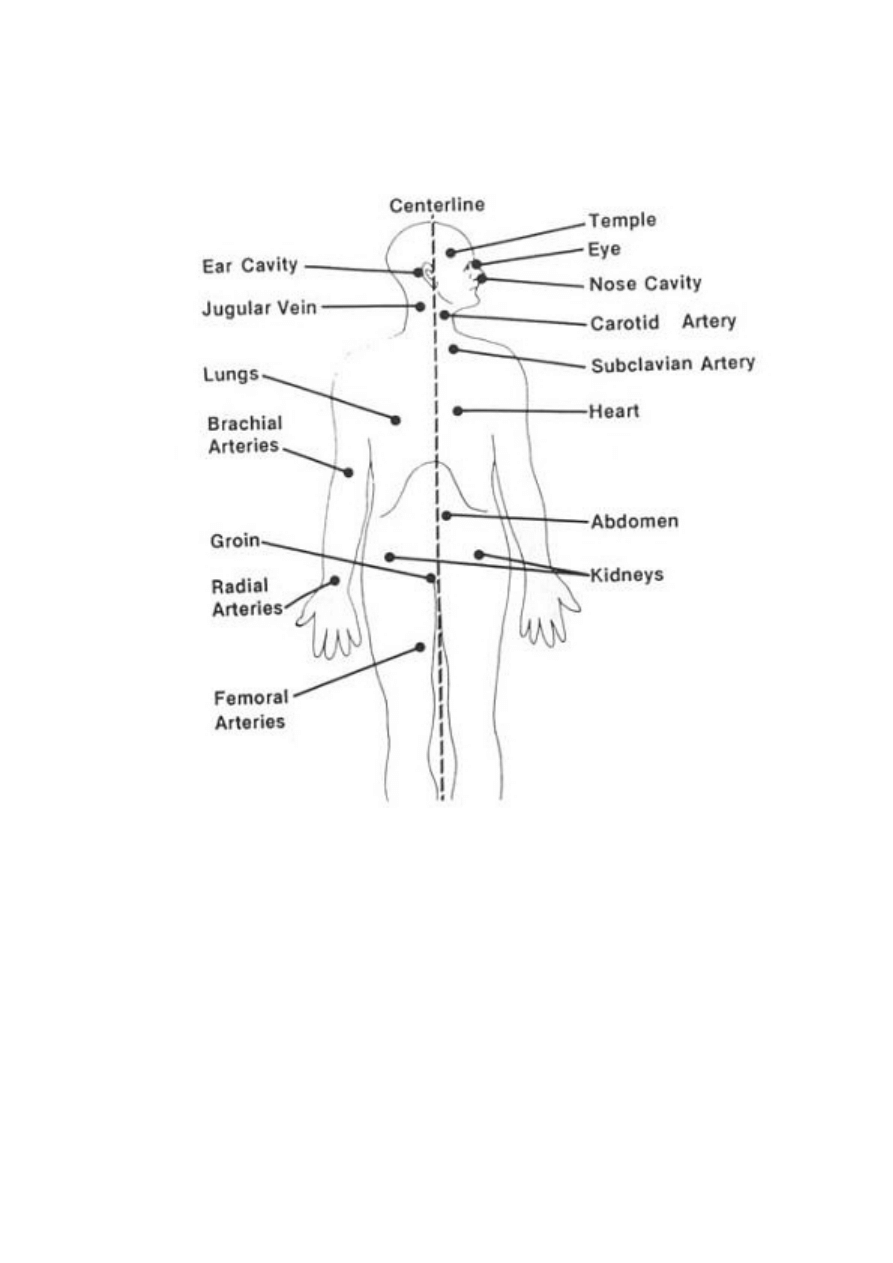
Appendix B. Targets.
The main target areas (basing on human anatomy).
The main target areas in our ryu tradition are:
•
Between eyebrows
•
The upper lip
•
The throat
•
The heart
•
The abdomen
•
The thigh
•
The foot
Wyszukiwarka
Podobne podstrony:
Mantak Chia Taoist Secrets of Love Cultivating Male Sexual Energy (328 pages)
Exploring the Secrets of the Female Clitoris!
7 Secrets of SEO Interview
Midnight Secrets of Shadow Channeler Spell List
Benefits and secrets of fasting
Dragonstar Secret of the Shifting Sands
Final Secret of Free Energy Bearden
Insider Secrets of Online Poker
21 Success Secrets of Self Made Millionaires
Midnight Secrets of Shadow The Death That Comes in the Night
Secret Of The Academy, Slayers fanfiction, Prace niedokończone
Rucker The Secret of Life
Gopi Krishna Ancient Secrets of Kundalini
MKTG Secrets of the Marketing Masters
Midnight Secrets of Shadow Midnight 2nd Edition Errata
CoC Secrets of the Kremlin
Money Making Secrets of Mind Power Masters
Midnight Secrets of Shadow Shadow Servants
więcej podobnych podstron