
159
C.1
Overview
It is common to confuse nuclear weapons effects survivability with nuclear
weapons system survivability. Nuclear weapon effects survivability applies to the
ability of any and all personnel and equipment to withstand the blast, thermal
radiation, nuclear radiation, and electromagnetic pulse (EMP) effects of a
nuclear detonation. Thus, nuclear weapons effects survivability includes, but is
not limited to, nuclear weapons systems.
Nuclear weapons system survivability is concerned with the ability of our nuclear
deterrent forces to survive against the entire threat spectrum that includes,
but is not limited to, nuclear weapons effects. The vast range of potential
threats include: conventional and electronic weaponry; nuclear, biological, and
chemical contamination; advanced technology weapons such as high-power
microwaves and radio frequency weapons; terrorism or sabotage; and the initial
effects of a nuclear detonation.
In simple terms, nuclear weapons effects survivability refers to any and all
personnel, equipment, and systems (including, but not limited to, nuclear
systems) being able to survive nuclear weapons effects. Nuclear weapons system
survivability refers to nuclear weapons systems being survivable against any
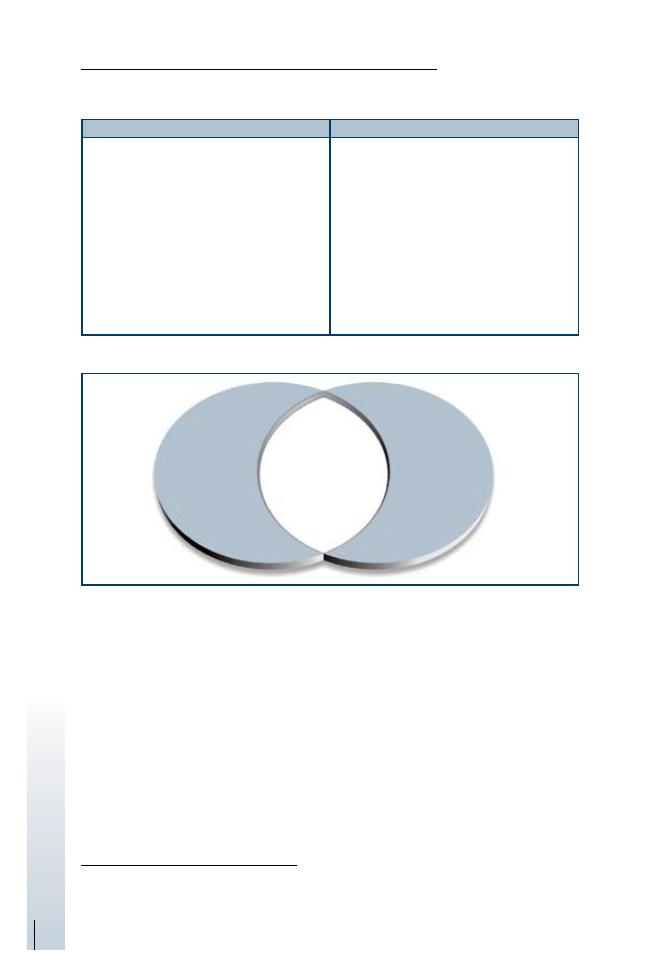
threat (including, but not limited to, the nuclear threat). See Figure C.1 for
a summary of the differences between nuclear weapons effects and nuclear
weapons system survivability. An overlap occurs when the threat to the
survivability of a nuclear weapons system is a nuclear detonation and its effects.
Figure C.2 illustrates the intersection between nuclear effects survivability and
systems survivability.
Nuclear weapons effects survivability refers to the capability of a system to
withstand exposure to a nuclear weapons effects environment without suffering
the loss of its ability to accomplish its designated mission. Nuclear weapons
effects survivability may be accomplished by hardening, timely re-supply,
redundancy, mitigation techniques (to include operational techniques), or a
combination thereof. Systems can be nuclear hardened to survive prompt
nuclear weapons effects including blast, thermal radiation, nuclear radiation,
EMP, and in some cases, Transient Radiation Effects on Electronics (TREE).
For a description of these effects see Appendix B, The Effects of Nuclear Weapons.
Appendix C
Nuclear Weapons Effects
Survivability and Testing
160
Nuclear Matters: A Practical Guide
20
08
Nuclear hardness describes the ability of a system to withstand the effects of a
nuclear detonation and avoid internal malfunction or performance degradation.
Hardness measures the ability of a system’s hardware to withstand physical
effects such as overpressure, peak velocities, energy absorbed, and electrical
stress. This reduction in hardware vulnerability can be achieved through a
variety of well-established design specifications or through the selection of
well-built and well-engineered components. This appendix does not address
residual nuclear weapons effects such as fallout, nor does it discuss nuclear
contamination survivability.
1
Mechanical and structural effects hardening consists of using robust designs,
protective enclosures, protective coatings, and the proper selection of materials.
1
For information on fallout and nuclear contamination, see Samuel Glasstone and Philip
Dolan, The Effects of Nuclear Weapons 3rd Edition, United States Department of Defense and
the Energy Research and Development Administration, 1977.
Nuclear
Weapons
Systems
Survivability
Against
Nuclear
Weapons
Effects
Nuclear
Weapons
Effects
Survivability
Nuclear
Weapons
Systems
Survivability
Figure C.2
Intersection of Nuclear Effects Survivability and Systems Survivability
Nuclear Weapons
Effects
Survivabilty
Survivability of
Everything
- Nuclear Weapons
- Nuclear Force Personnel
- Nuclear Force Equipment
- Conventional Weapons
- Conventional Force Personnel
- Conventional Equipment
Against the Effects of
Nuclear Weapons
Nuclear Weapons
System
Survivabilty
Survivability of
Nuclear Forces
- Nuclear Weapons
- Nuclear Force Personnel
- Nuclear Force Equipment
Against the Effects of
Any Threat
- Nuclear Weapons
- Chemical, Biological Weapons
- Conventional Weapons
- Advanced Technology Weapons
- Special Ops Attack
- Terrorist Attack
Figure C.1
Nuclear Weapons Effects vs System Survivability

161
Nuclear Weapons Effects Survivability and Testing
C
a
pp
en
d
ix
Electronics and electrical effects hardening involves using the proper
components, special protection devices, circumvention circuits, and selective
shielding. Nuclear weapons effects on personnel are minimized by avoidance,
radiation shielding protection, and automatic recovery measures. The automatic
recovery measures compensate for the temporary loss of the “man-in-the-loop”
and mitigate the loss of military function and the degradation of mission
accomplishment.
Trade-off analyses are conducted during the acquisition process of a system
to determine the method or combination of methods that provide the
most cost-effective approach to nuclear weapons effects survivability. The
impact of the nuclear weapons effects survivability approach on system cost,
performance, reliability, maintainability, productivity, logistics support, and
other requirements are examined to ensure maximum operational effectiveness
consistent with program constraints. The different approaches to hardening are
not equally effective against all initial nuclear weapons effects.
C.2
Nuclear Weapons Effects Survivability
Each of the primary and secondary environments produced by a nuclear
detonation causes a unique set of mechanical and electrical effects. Some
effects are permanent and others are transient. Both types can cause system
malfunction, system failure, or loss of combat capability.
C.2.1
Nuclear Weapons Effects on Military Systems
The nuclear environments and effects that may threaten the survivability of a
military system vary with the altitude of the explosion. The dominant nuclear
environment refers to the effects that set the survival range between the target
and the explosion.
2
Low-air, near-surface, and surface bursts will damage most
ground targets within the damage radii. Also, high-altitude bursts produce
high-altitude electromagnetic pulse (HEMP) effects over a very large area that
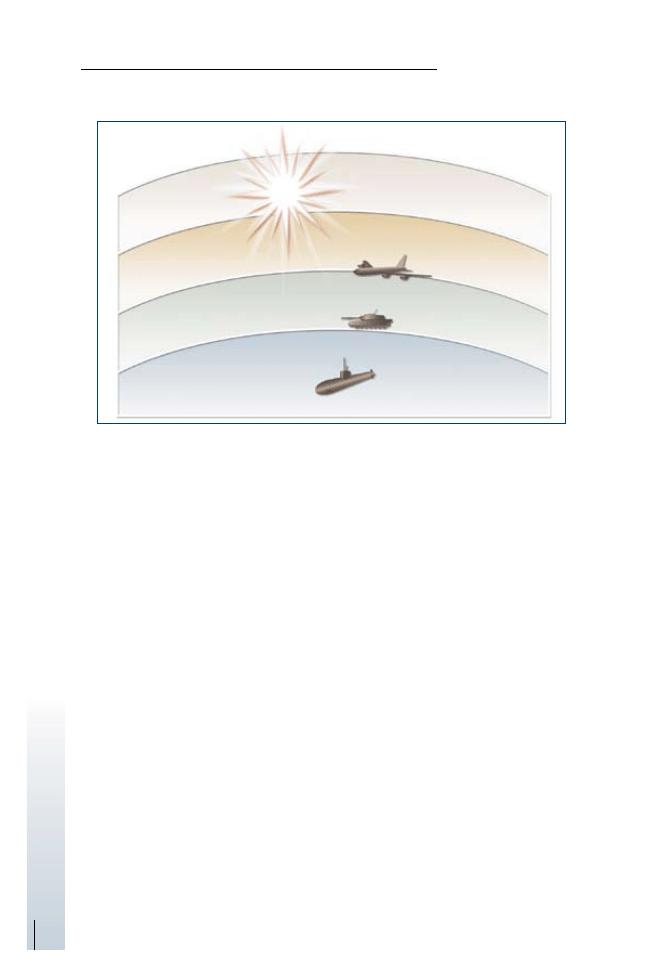
may damage equipment with vulnerable electronics on the ground. Figure
C.3 highlights the nuclear environments that dominate the survival for typical
systems based on various heights of burst from space to below the Earth’s
surface.
Nuclear weapons-generated X-rays are the chief threat to the survival of
strategic missiles in-flight above the atmosphere and to satellites. Neutron and
gamma ray effects also create serious problems for these systems but do not
normally set the survivability range requirements. Neutron and gamma ray
2
The survival range measures the distance from Ground Zero (GZ) necessary to survive
nuclear weapons effects.
162
Nuclear Matters: A Practical Guide
20
08
effects dominate at lower altitudes where the air absorbs most of the X-rays.
Air blast and thermal radiation effects usually dominate the survival of systems
at or near the surface; however, neutrons, gamma rays, and Source Region
EMP (SREMP) may also create problems for structurally hard systems that
are near the explosion. SREMP is produced by a nuclear burst within several
hundred meters of the Earth’s surface and is localized out to a distance of three
to five kilometers from the burst. The final result of the EMP generated by
the detonation is a tremendous surge of low frequency photons that can enter
a system through designed and unintended antennas, generating a flow of
electrical current that overloads and destroys electrical components, and renders
the equipment non-operational.
Underwater shock and ground shock are usually the dominant nuclear weapons
effects for submerged submarines and buried shelters, respectively. HEMP is
the dominant threat for surface-based systems located outside the target zone
such as Command, Control, Communications, and Intelligence (C
3
I) facilities
or sophisticated electronics.
Nuclear weapons effects survivability requirements vary with the type of system,
its mission, its operating environment, and the threat. For example, the X-
ray, gamma ray, and neutron survivability levels used for satellites are very low
compared with the survivability levels used for missiles and Re-entry Vehicles
(RVs), or Re-entry Bodies (RBs). Satellite levels are usually set so that a single
nuclear weapon, detonated in the region containing several satellites, will not
damage or destroy more than one satellite. The levels used for RVs, on the
Dominating Environment
Underwater and
Underground Shock
SREMP
Nuclear Radiation
HEMP
Blast and Thermal
Nuclear Radiation
HEMP
Nuclear Radiation
Blast and Thermal
SREMP
X-rays and Nuclear Radiation
Sub-Surface
Surface
Low-Altitude
Mid-Altitude
High-Altitude
Exo-Atmosphere
Figure C.3
Dominant Nuclear Environments as a Function of Altitude

163
Nuclear Weapons Effects Survivability and Testing
C
a
pp
en
d
ix
other hand, are very high because the RV/RB is the most likely component
of an ICBM/SLBM to be attacked by a nuclear weapon at close range. The
ICBM/SLBM bus and booster have a correspondingly lower requirement in
consideration of their range from the target and the time available to target
them.
When a system is deployed within the Earth’s atmosphere the criteria are
different. Systems operating at lower altitudes do not have to consider X-ray
effects. The gamma rays and neutrons generally set the survival range for most
systems operating at lower altitudes. The survival ranges associated with gamma
rays and neutrons are generally so great that these ranges overcome problems
from the air blast and thermal radiation. Two of the most challenging problems
in this region are the prompt gamma ray effects in electronics and the total
radiation dose delivered to personnel and electronics.
The area between ten km down to the surface is somewhat of a transition region
in which the denser air begins to absorb more of the ionizing radiation and the
air-blast environment becomes more dominant. Aircraft in this region have to
survive air-blast, thermal radiation, and nuclear radiation effects.
On the ground, air blast and thermal radiation are the dominant nuclear
weapons effects for personnel who must be at a safe distance from the range
of these two effects in order to survive. Because of this, air blast and thermal
radiation typically set the safe distance (or survival range requirements) at the
surface for most systems, and particularly for threats with yields exceeding ten
kilotons (kt).
This is not necessarily true for blast-hard systems that can survive closer to a
nuclear explosion such as a battle tank or hardened shelter. Very high levels of
ionizing radiation usually require systems to be at greater distances from ground
zero (GZ) to avoid personnel casualties and damage to electronic equipment.
This is especially true for smaller yield weapons. For example, a battle tank will
probably survive at a distance of less than one-half km from a ten kt explosion
if the only consideration is structural damage. However, ionizing radiation
from the detonation affects the crew and the tank’s electronics. Because thermal
effects are easily attenuated and have a large variation of effect on the target,
they are hard to predict. Consequently, thermal effects are not normally taken
into consideration when targeting. Although they are a large part of a nuclear
weapon’s output, thermal effects do not govern survivability considerations for
materiel objects, but they are always considered for exposed personnel.
Surface-launched missiles are in a category by themselves because they operate
in so many different environmental regions. Missiles have to survive the effects
of air blast, thermal radiation, HEMP, ionizing radiation, SREMP, and even X-
rays.

164
Nuclear Matters: A Practical Guide
20
08
C.2.2
Nuclear Weapons Effects on Personnel
Several of the effects of nuclear weapons are a threat to personnel. Thermal
radiation can cause burns directly to the skin or can ignite clothing. Fires can
spread to other locations, causing people to be burned due to an indirect effect
of thermal radiation. Initial nuclear radiation (gamma rays and neutrons) can
cause a significant acute dose of ionizing radiation. Residual radiation can
cause significant exposure for days to weeks after the detonation. The blast
wave can cause immediate casualties to exposed personnel, or could impact
and roll a vehicle causing personnel injuries inside the vehicle. EMP will not
cause injuries directly, but it can cause casualties indirectly, e.g., instantaneous
destruction of electronics in an aircraft in flight could cause persons in the
aircraft to be killed or injured.
Effects survivability concepts for manned systems must consider the impact
of a temporary loss of the “man-in-the-loop” and therefore devise ways of
overcoming the problem. Hardened structures provide increased personnel
protection against all nuclear weapons effects. As a rule-of-thumb, survivability
criteria for manned systems are based on the ability of 50 percent of the crew to
survive the nuclear event and complete the mission.
Systems with operators outside in the open air have a less stringent nuclear
survivability requirement than do systems such as armored vehicles or tanks
where the operators are in a hardened shelter. At distances from GZ where a
piece of equipment might survive, an individual outside and unprotected might
become a casualty. Therefore, his equipment would not be required to survive
either. Conversely, because an individual in a tank could survive at a relatively
close distance to the detonation, the tank would be required to survive. The
equipment need not be any more survivable than the crew. Because EMP has
no effects on personnel, all systems should, in theory, have an equal requirement
for EMP survivability.
C.2.3
Nuclear Weapons Effects Survivability Measures
There are a number of measures that enhance nuclear weapons effects
survivability of equipment. Some of these measures can be achieved after
production and fielding, but most measures require hardening features that are
most effective if they are a part of the design development from the beginning.
These measures are also much cheaper if they are designed and produced as a
part of the original system rather than as a retrofit design and modification.
Timely Re-supply is the fielding and positioning of extra systems or spares in the
theater of operation that can be used for timely replacement of equipment lost
to nuclear weapons effects. The decision to rely on reserve assets can have a

165
Nuclear Weapons Effects Survivability and Testing
C
a
pp
en
d
ix
significant impact on production because using and replacing them would result
in increased production quantities and costs.
Redundancy is the incorporation of extra components into a system or piece of
equipment, or the provision of alternate methods to accomplish a function so
that if one fails, another is available. The requirement for redundancy increases
production quantities for the redundant components and may increase the cost
and complexity of a system.
Mitigation Techniques are techniques that can be utilized to reduce the
vulnerability of military systems to nuclear weapons effects. These may include
but are not limited to:
Avoidance, or the incorporation of measures to eliminate detection
and attack. Avoidance techniques are very diverse. For example,
avoidance may include stealth tactics that utilize signal reduction or
camouflage. This approach may or may not affect production and can
be costly;
Active Defense, such as radar-jamming or missile defense systems.
Active Defense can be used to enhance a system’s nuclear weapons
effects survivability by destroying incoming nuclear weapons or
causing them to detonate outside of the susceptible area of the
protected system; and
Deception, or the employment of measures to mislead the enemy
regarding the actual system location. These measures include decoys,
chaff, aerosols, and other ways to draw fire away from the target. The
impact of deception on production depends on the approach. Some
deception measures can be quite complex and costly, such as the
decoys for an Intercontinental Ballistic Missile (ICBM) system; others
can be relatively simple and inexpensive.
Hardening is the employment of any design or manufacturing technique that
increases the ability of an item to survive the effects of a nuclear environment.
Hardening mechanisms include shielding, robust structural designs, electronic
circumvention, electrical filtering, and vertical shock mounting. Hardening
impacts production by increasing the complexity of the product. It may also
introduce a requirement for production controls to support hardness assurance,
especially in strategic systems.
Threat Effect Tolerance is the intrinsic ability of every component and piece of
equipment to tolerate/survive some level of exposure to nuclear weapons effects.
The exposure level that a piece of equipment will tolerate depends primarily on
the technologies it employs and how it is designed. The nuclear weapons effects
survivability of a system can be enhanced when critical elements of the system

166
Nuclear Matters: A Practical Guide
20
08
are reinforced by selecting and integrating technologies that are inherently
harder. This approach may affect production costs because the harder
components may be more expensive.
C.3
Nuclear Weapons System Survivability
Nuclear weapons system survivability refers to the capability of a nuclear
weapon system to withstand exposure to a full spectrum of threats without
suffering loss of its ability to accomplish its designated mission. Nuclear
weapons system survivability applies to a nuclear weapon system in its entirety
including, but not limited to, the nuclear warhead. The entire nuclear weapon
system includes: all mission-essential assets; the nuclear weapon and the delivery
system or platform; and associated support systems, equipment, facilities, and
personnel. Included in a system survivability approach is the survivability
of: the delivery vehicle (RB, RV, missile, submarine, or aircraft); the forces
operating the nuclear weapon system; the supporting command and control
links; and the supporting logistical elements.
Nuclear weapons system survivability is concerned with the entire threat
spectrum that includes, but is not limited to, nuclear weapons effects. The
vast range of potential threats include: conventional and electronic weaponry;
nuclear, biological, and chemical contamination; advanced technology weapons
such as high-power microwaves and radio frequency weapons; terrorism or
sabotage; and the effects of a nuclear detonation.
System survivability is a critical concern whether nuclear weapons and forces are
non-dispersed, dispersing, or already dispersed. The capability to survive in all
states of dispersal enhances both the deterrent value and the potential military
utility of U.S. nuclear forces.
Survivability of nuclear forces is defined in DoD Directive 3150.3, Nuclear
Force Security and Survivability, as, “the capability of nuclear forces and their
nuclear control and support systems and facilities in wartime to avoid, repel, or
withstand attack or other hostile action, to the extent that essential functions
(ability to perform assigned nuclear mission) can continue or be resumed after
onset of hostile action.”
It is often difficult to separate measures to enhance survivability from those
that provide security to the force or its components. In a potential wartime
environment, for example, hardened nuclear weapons containers as well as
hardened weapons transport vehicles provide security and enhance survivability
during transit. Many of the measures to enhance nuclear weapons system
survivability and to protect against the effects of nuclear weapons can be the

167
Nuclear Weapons Effects Survivability and Testing
C
a
pp
en
d
ix
same. Hardening and redundancy, for example, as well as threat tolerant
designs, re-supply, and mitigation techniques apply to both.
C.3.1
Nuclear Force Survivability
Until recently, DoD Directive 3150.3 governed nuclear force security and
survivability program requirements. The Directive is outdated and is expected
to be cancelled. The scope and requirements outlined in DoD Directive 3150.3
will be broadened and covered by two documents: one current DoD Directive
and its corresponding manual (DoDD 5210.41 and DoD S-5210.41-M)
pertaining to nuclear force security; and one future DoD Instruction entitled
Chemical, Biological, Radiological, and Nuclear (CBRN) Survivability Program.
C.3.2
Nuclear Command and Control Survivability
Nuclear weapons systems include not only the nuclear weapons but also the
associated command and control (C
2
) support. The security and survivability
of weapons systems C
2
is addressed in DoD Directive 3150.3, Nuclear Force
Security and Survivability, DoD Directive 5210.41, Security Policy for Protecting
Nuclear Weapons, and DoD Manual 5210.41-M, Nuclear Weapons Security
Manual.
DoD Directive S-5210.81, United States Nuclear Weapons Command and
Control, establishes policy and assigns responsibilities related to the U.S. Nuclear
Command and Control System (NCCS). The policy states that the command
and control of nuclear weapons shall be ensured through a fully survivable and
enduring NCCS. The DoD supports and maintains survivable and enduring
facilities for the President and other officials to perform essential C
2
functions.
The Under Secretary of Defense for Acquisition, Technology, and Logistics
(USD(AT&L)), in conjunction with the Services, establishes survivability
criteria for related nuclear weapons equipment.
C.3.3
Missile Silos
Air Force Intercontinental Ballistic Missile (ICBM) systems are deployed in
missile silos. The survivability of these silos is achieved through the physical
hardening of the silos and through their underground location, which protects
against air blast effects. The dispersal of the multiple missile fields also adds to
system survivability by complicating any targeting resolution.
C.3.4
Containers
Nuclear weapons containers can provide ballistic protection as well as protection
from nuclear and chemical contamination. Containers can also provide safety,

168
Nuclear Matters: A Practical Guide
20
08
security, and survivability protection. In the past, considerable research and
development was devoted to enhancing the efficacy of containers for use with
nuclear weapons for artillery systems.
C.3.5
Weapons Storage Vault
The Weapons Storage Vault (WSV) is an underground vault located in the floor
of a hardened aircraft shelter. A WSV can hold up to four nuclear weapons and
provide ballistic protection in the lowered position through its hardened lid and
reinforced sidewalls. The U.S. calls the entire system (including the electronics),
the Weapon Storage and Security System. NATO calls it the Weapon Security and
Survivability System. Both the U.S. and NATO refer to the entire system by the
same acronym, WS3. The WS3 is currently in use in Europe.
C.4
Tests and Evaluation
Nuclear weapons effects testing refers to tests conducted to measure the
response of objects to the energy output of a nuclear weapon. Testing (using
simulators and not actual detonations) is essential to the development of nuclear
survivable systems and is a consideration throughout the development and
acquisition process. These testing and analysis methods are well-established
and readily available. Analysis plays an important role in nuclear weapons
effects survivability design and development. Computer-aided analysis
complements testing by helping engineers and scientists to: estimate the
effects of the various nuclear environments; design more accurate tests; predict
experimental responses; select the appropriate test facility; scale testing to the
proper level and size; and evaluate test results. Analysis also helps to predict the
response of systems that are too costly or difficult to test. Analysis is limited,
however, by the inability to model complex items or to handle the large, non-
linear responses often encountered in both nuclear weapons effects and digital
electronics.
C.4.1
Testing
Because the U.S. is no longer conducting underground nuclear tests, all nuclear
weapon effects testing is done by simulators. These simulators are usually
limited to a relatively small exposure volume and generally used for single
environment tests, such as X-ray effects tests, neutron effects tests, prompt
gamma ray effects tests, and EMP effects tests. Free-field EMP, high explosive
(HE), and shock tube tests are notable exceptions since they can be tested at the
system level. Additionally, in certain situations, the Army can test full systems
for neutron and gamma fluence, and total dose at its Fast Burst Reactors (FBR).
Figure C.4 lists the types of simulators commonly used for nuclear weapons
effects testing.

169
Nuclear Weapons Effects Survivability and Testing
C
a
pp
en
d
ix
C.4.2
X-ray Effects Testing
X-ray environments are the most challenging to simulate in a laboratory.
Historically, underground nuclear effects tests were done principally to study
X-ray effects. Existing X-ray facilities only partially compensate for the loss of
underground testing, and opportunities for improving the capabilities of X-ray
facilities are both limited and costly.
Because they are rapidly absorbed in the atmosphere, X-rays are only of concern
for systems that operate in space or high-altitude. Additionally, the X-ray
X-rays Effects
(Hot)
Low-Voltage Flash X-ray
Machines
Components and small
assemblies
Test
Type of Simulator
Size of Test
X-rays Effects
(Cold)
Plasma Radiators
Components
Total Dose Gamma
Effects
Cobalt 60
FBR
Components, circuits, and
equipment
EMP
Pulsed Current Injection
(PCI)
Free Field
Point of Entry (POE) Systems
Thermal Effects
Thermal Radiation Source
(TRS)
Flash Lamps and Solar
Furnace
Equipment, large components
Components and materials
Shock Effects
(Dynamic pressure)
Large Blast Thermal
Simulator (LBTS)
Explosives
Equipment, large components
Systems
Neutron Effects
FBR
Components, circuits, and
equipment
Blast Effects
(Overpressure)
Small Shock Tubes
Large Shock Tubes
HE Tests
Components, parts, and
equipment
Small systems and large
equipment
Vehicles, radars, shelters, etc.
Gamma Ray Effects
Flash X-ray Machines
Linear Accelerator
FBR
Components, circuits, and
equipment
Figure C.4
Simulators Commonly Used for Effects Testing

170
Nuclear Matters: A Practical Guide
20
08
environment within a system is a strong function of distance and orientation of
the system with respect to the nuclear burst.
X-ray effects tests are usually conducted using flash X-ray machines and plasma
radiation sources. Flash X-ray machines are used to simulate the effects from
higher energy hard (or hot) X-rays, and plasma radiation sources are used to
simulate the effects from lower energy soft (or cold) X-rays.
Flash X-ray machines, commonly referred to as FXRs, generate large amounts
of electric power, which is converted into intense, short pulses of energetic
electrons. The electrons are normally stopped in a metal target that converts
a small portion of their energy into a pulse of X-rays. The resulting photons
irradiate the test specimen. The electron pulse may also be used to simulate
some X-ray effects. The output characteristics of FXRs depend on the design
of the machine and vary considerably from one design to the next. Radiation
pulse widths range from ten to 100 nanoseconds and output energies range
from a few joules for the smallest machines to several hundred kilojoules for the
largest. The rapid discharge of this much energy in a matter of nanoseconds
results in power levels ranging from billions to trillions of watts.
X-ray effects testing usually requires a machine capable of producing a trillion
watts or more in power with an output voltage of around one million volts. The
X-rays produced by a machine of this type tend to resemble the hard X-rays that
reach components inside enclosures. The machine’s output energy and power
usually determines the exposure level and test area/volume. Most X-ray tests in
FXRs are limited to components and small assemblies.
Cold X-ray effects testing is designed to replicate surface damage to exposed
components in space applications, and it is normally performed with a plasma
radiation source (PRS). The PRS machine generates cold X-rays by driving
an intense pulse of electric energy into a bundle of fine wires or a gas puff to
create irradiating plasma. The energy of the photons produced by the PRS
is a function of the wire material, or gas, and tends to be in the one to three
kiloelectron-Volt (keV) range. These X-rays have very little penetrating power
and deposit most of their energy on the surface of the exposed objects. The
exposure level and test volume depends on the size of the machine. Test objects
are normally limited to small material samples and components.
Currently, there are a number of pulsed power facilities used to generate X-ray
environments. The DOE operates both the Saturn and Z facilities. The DoD
operates the Decade, Pithon, and Double Eagle facilities. These facilities are
currently in various states of readiness based on predicted future use.

171
Nuclear Weapons Effects Survivability and Testing
C
a
pp
en
d
ix
C.4.3
Gamma Dose-Rate Effects Testing
All solid state components are affected by the rapid ionization produced by
prompt gamma rays. Gamma dose-rate effects dominate TREE in non-space-
based electronics; the effects do not lend themselves to strict analyses because
they are usually nonlinear and are very difficult to model. Circuit analysis is
often helpful in bounding the problem, but only active tests have proven to be
of any real value in replicating the ionizing effects on components, circuits, and
systems.
The two most popular machines used for gamma dose-rate testing are the FXRs
and the linear accelerator, or LINAC. The FXRs used for dose-rate effects tests
operate at significantly higher voltages than the FXRs used for X-ray effects
tests and produce gamma radiation that is equivalent, in most respects, to the
prompt gamma rays produced by an actual nuclear explosion.
LINACs are primarily used for component-level tests because the beam
produced by most LINACs is fairly small and is of relatively low intensity.
LINACs produce a pulse or a series of pulses of very energetic electrons. The
electron pulses may be used to irradiate test objects or to generate bremsstrahlung
radiation.
3
LINACs are restricted to piece-part size tests and are typically in the electron
beam mode when high-radiation rates are required. The two biggest drawbacks
to use of the LINAC are its small exposure volume and low-output intensity.
Most dose-rate tests are active; that is, they require the test object to be powered
up and operating for testing. Effects like component latch-up, logic upset,
and burnout will not occur in the absence of power. Tests must be conducted
in a realistic operating condition and the test object must be continuously
monitored before, during, and after exposure.
Sandia National Laboratories operates the High-Energy Radiation Megavolt
Electron Source (HERMES) pulsed—power facility to simulate prompt gamma
environments at extreme dose rates for the DOE. The DoD currently operates
smaller gamma-ray facilities used to test systems at lower levels. These include
the PulseRad 1150 at Titan International and the Relativistic Electron Beam
Accelerator (REBA) at White Sands Missile Range.
3
Bremsstrahlung is literally “braking radiation;” it is caused by the rapid deceleration of
charged particles interacting with atomic nuclei, and produces electromagnetic radiation
covering a range of wavelengths and energies in the X-ray regions.

172
Nuclear Matters: A Practical Guide
20
08
C.4.4
Total-Dose Effects Testing
The objective of total-dose effects testing is to determine the amount of
performance degradation suffered by components and circuits exposed to
specified levels of gamma radiation. The most popular and widely used
simulator for total-dose effects testing is the Cobalt-60 (Co60) source. Other
sources of radiation such as high-energy commercial X-ray machines, LINACs,
and the gamma rays from nuclear reactors are also used for testing but not with
the frequency or the confidence of the Co60 source.
C.4.5
Neutron Effects Testing
The objective of most neutron effects testing is to determine the amount of
performance degradation in susceptible parts and circuits caused by exposure to
a specified neutron fluence. The most popular device for simulating the effects
of neutrons on electronics is a bare, all metal, unmoderated fast-burst reactor
(FBR). A FBR produces a slightly moderated fission spectrum, which it can
deliver in either a pulsed or steady-state mode. Both the Army and Sandia
National Laboratories currently have a fast-burst reactor.
C.4.6
EMP Effects Testing
There are two general classes of EMP effects tests, injection tests and free-field
tests. An injection test simulates the effects of the currents and/or voltages
induced by HEMP on cables by artificially injecting current pulses onto
equipment cables and wires. Injection tests are particularly well suited to the
evaluation of interior equipment that is not directly exposed to HEMP.
A free-field test is used to expose equipment, such as missiles, aircraft, vehicles,
and radar antenna, to HEMP. Most free-field HEMP testing is performed with
either a broadcast simulator or a bounded wave EMP simulator. Both types of
simulators use a high-powered electrical pulse generator to drive the radiating
elements. In the broadcast type simulator, the pulse generator drives an antenna
that broadcasts simulated EMP to the surrounding area. Objects are positioned
around the antenna at a range corresponding to the desired electrical field
strength. The operation of the equipment is closely monitored for upset and
damage. Current and voltage measurements are made on equipment cables and
wires to determine the electrical characteristics of the EMP energy coupled into
the system.
In the bounded-wave-type simulator, the pulse generator drives a parallel plate
transmission line consisting of a horizontal or vertical curtain of wires and
a ground plane. The test object is placed between the wires and the ground
plane. The energy travels down the line, passes the test object, and terminates

173
Nuclear Weapons Effects Survivability and Testing
C
a
pp
en
d
ix
in a resistive load. As the pulse passes the test object, it is subjected to the
electric field between the lines. Some simulators locate test instrumentation in a
shielded chamber below the ground plane.
Free-field EMP simulators are available at Patuxent River Naval Air Station in
Maryland and at White Sands Test Range in New Mexico. These facilities can
test most systems.
C.4.7
Air-Blast Effects Testing
The military relies more on structural analyses for determining air-blast effects
than on testing. This is due to the confidence engineers have in computer-aided
structural analysis and to the difficulty and costs associated with air-blast testing.
Exposed structures and equipment like antennas, radars, radomes, vehicles,
shelters, and missiles that have to be evaluated for shock and blast effects are
usually subjected to an evaluation that consists of a mix of structural analyses,
component testing, or scale-model testing. The evaluation may also include
full-scale testing of major assemblies in a high explosive (HE) test or in a large
shock tube.
Shock tubes vary in size from small laboratory facilities to very large, full-scale
devices. The Defense Threat Reduction Agency (DTRA) Large Blast/Thermal
Simulator (LBTS) can accommodate test objects as large as a helicopter. It
can simulate ideal and non-ideal air-blast environments. Shock tubes have the
advantage of being able to generate shock waves with the same positive phase-
time duration as the actual blast environment.
HE tests were conducted by the former Defense Nuclear Agency at the
“Stallion Range,” in White Sands, New Mexico. These tests were used to
validate the survivability/vulnerability of many systems before the LBTS
became operational. The explosive source was normally several thousand tons
of ammonium nitrate and fuel oil (ANFO) housed in a hemispherical dome.
The test objects were placed around the dome at distances corresponding to
the desired peak overpressure, or dynamic pressure of an ideal blast wave. HE
tests produce shock waves with fairly short positive duration corresponding
to low-yield nuclear explosions. HE test results have to be extrapolated for
survivability against higher yield weapons and for non-ideal air-blast effects.
Structures constructed of heat sensitive materials, like fiberglass and aluminum
(which lose strength at elevated temperatures), are normally exposed to a
thermal radiation source before the arrival of the shock wave.
C.4.8
Thermal Radiation Effects Testing
The majority of thermal radiation effects testing is performed with high
intensity flash lamps, solar furnaces, liquid oxygen, and powered aluminum

174
Nuclear Matters: A Practical Guide
20
08
flares, called thermal radiation sources (TRS). Flash lamps and solar radiators
are normally used on small material samples and components. TRS is used for
larger test objects and was frequently used in conjunction with the large HE
tests. The DTRA LBTS features a thermal source that allows test engineers to
examine the combined effects of thermal radiation and air blast.
C.4.9
Shock Testing
High fidelity tests exist to evaluate systems for survivability to nuclear
underwater and ground shock effects because, for these factors, conventional
explosive effects are very similar to those from nuclear weapons. There is a
family of machines, such as hammers, drop towers, and slapper plates, for
simulating shock effects on various weights and sizes of equipment. Explosives
are also used for shock testing. The Navy uses explosives with floating shock
platforms (barges) to simulate underwater shock and subjects one ship of each
class to an explosive test at sea. The Army and the Air Force employ similar
methods.
Wyszukiwarka
Podobne podstrony:
Megadeath Nuclear Weapons Effects
Megadeath Nuclear Weapons Info Classification
Megadeath Nuclear Weapons Council
Control of Megadeath Nuclear Weapons Data
Control of Megadeath Nuclear Weapons Design Info
Ancient Nuclear Weapons
Hazards of Nuclear Weapons Waste Storage
Navy Information on Nuclear Weapons
DoD Nuclear Weapon System Safety Program Manual
Effect of?renaline on survival in out of hospital?rdiac arrest
effect of AVR on survival
Nuclear War Survival
The effect of temperature on the nucleation of corrosion pit
Does the United States Need to Develop a New Nuclear Earth Penetrating Weapon
ZMPST 10 Survivable Networks
Pallant SPSS Survival Manual
Does the number of rescuers affect the survival rate from out-of-hospital cardiac arrests, MEDYCYNA,
więcej podobnych podstron