
Labour Positions
Why are different positions
important?
Changing positions during labor offers several
benefits. Some are obvious to the mother in
labor: comfort , reduced pain and nerves.
Beyond these advantages, there are important
effects on the baby and on the progress of labor.
Changing positions during labor can change the
shape and size of the pelvis, which can help the
baby’s head move to the optimal position during
first stage of labor, and helps the baby with
rotation and descent during the second stage.
Positions for the first
stage of Labor
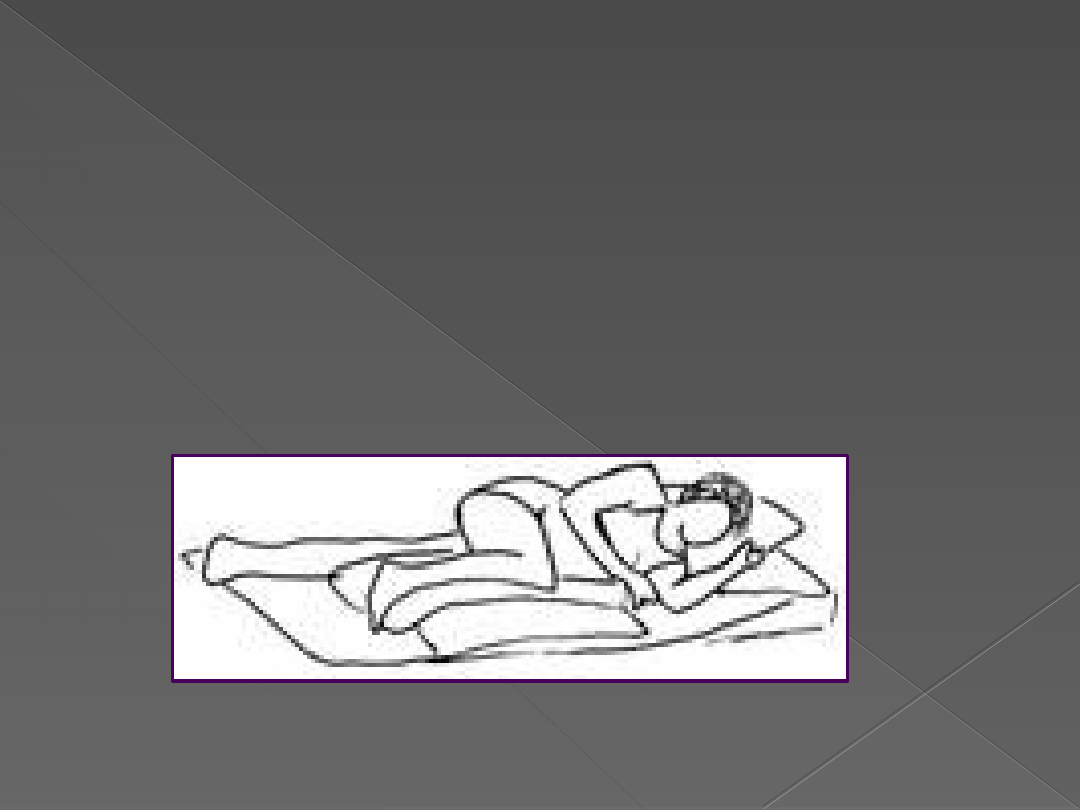
For Resting:
Side-lying. Try put pillows between your
knees for comfort.
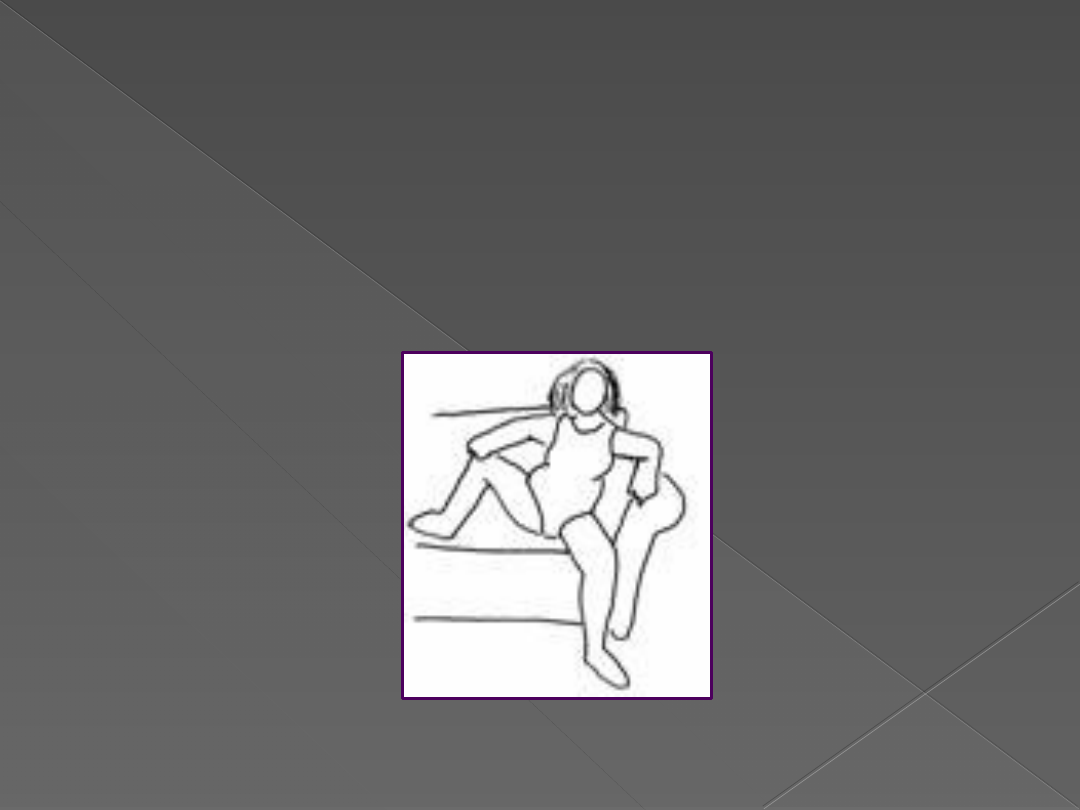
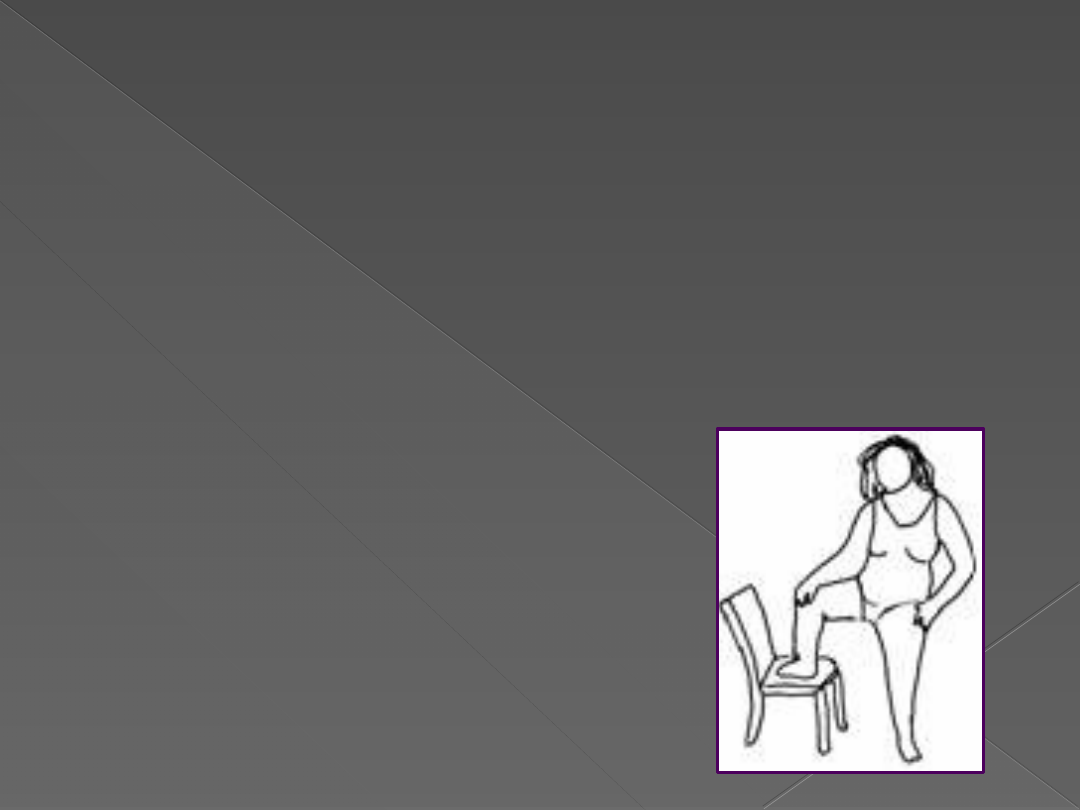
Sitting with one foot up. Asymmetrical
position help enlarge the pelvis on one
side, and change the shape of the pelvis,
which helps the baby find the best
position.
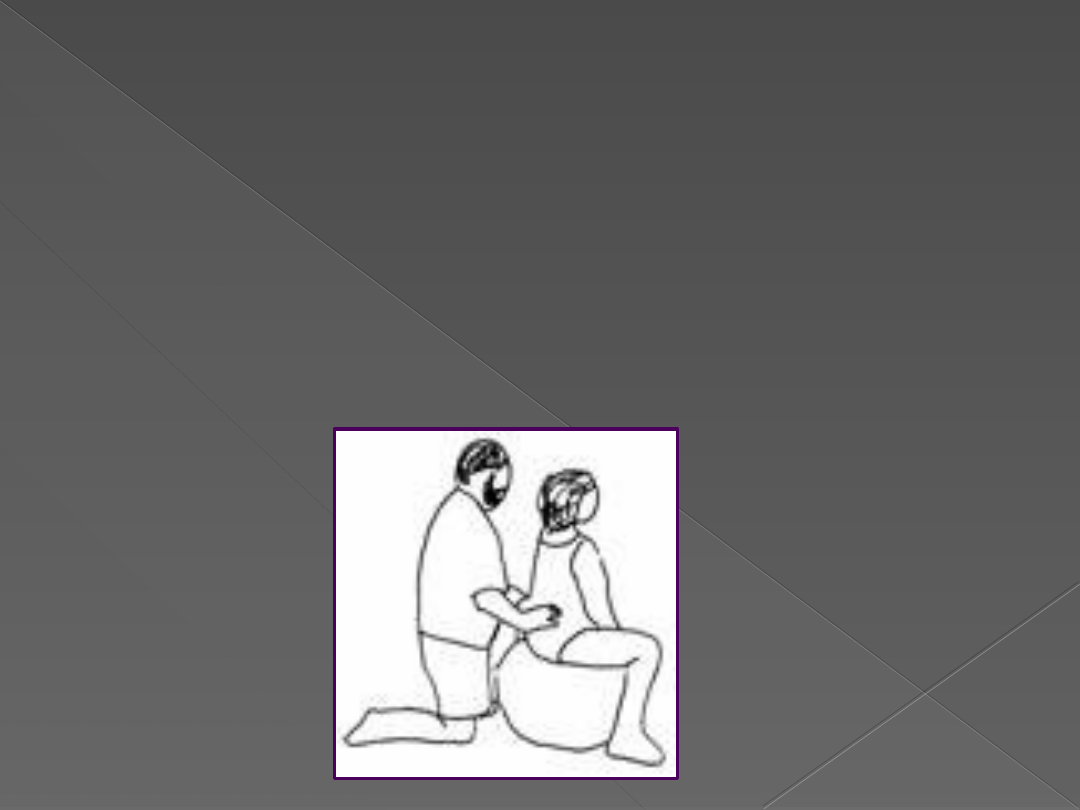
Rhythmic motion: In labor, it
just feels better when mom
sways in rythm to her
breathing.
Sway on ball – reduce pain, helps baby to descend, put
pressure on cervix and encourage the cervix to open
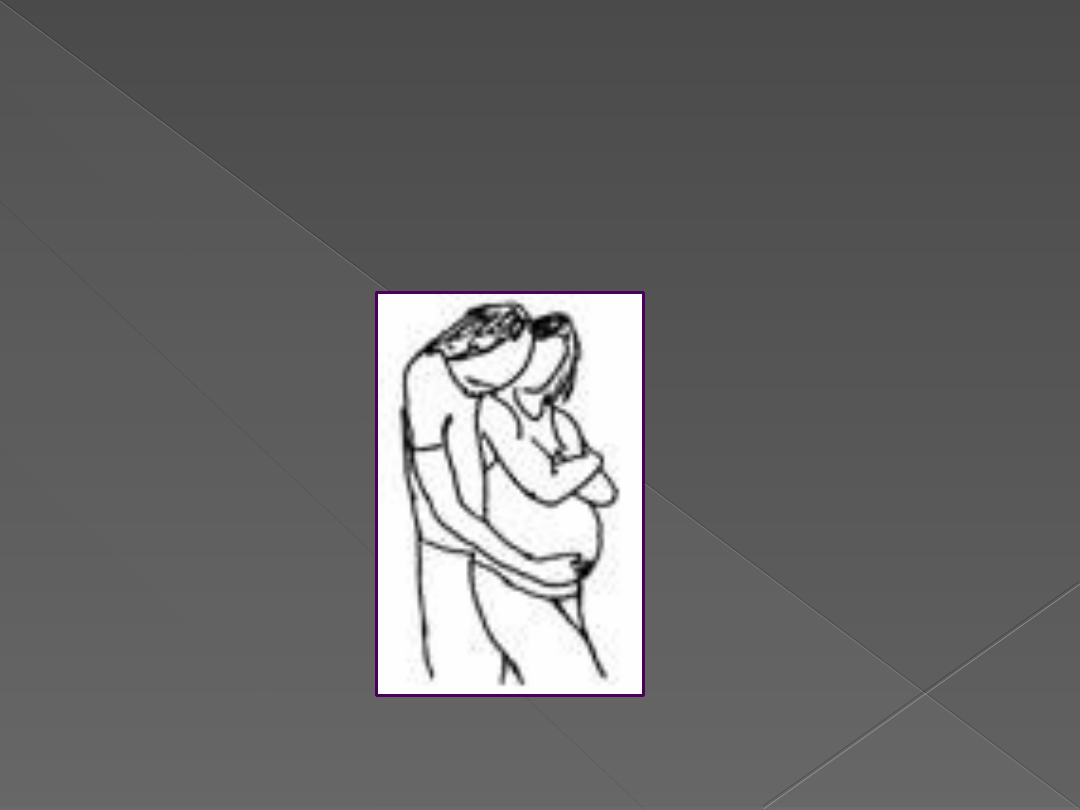
Dance with abdomen raised – it calm
mother and baby
Activity helps baby to descend, to rotate into
position for birth. In early labor, be active
occasionally, but don’t exhaust yourself by
walking all through early labor. Walking is more
effective in active labor, when baby must
descend far enough to put pressure on mom’s
cervix and encourage the cervix to open.
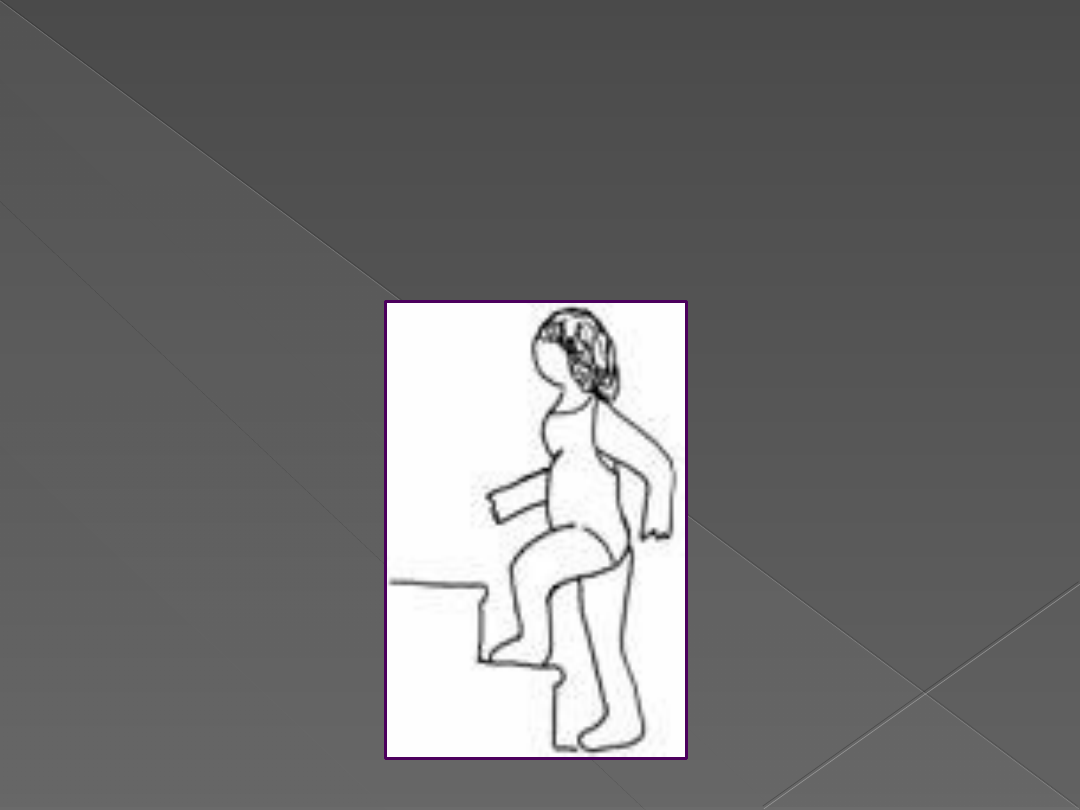
Lunge - is an
asymmetrical
position that
encourages the
baby to rotate.
Stair Climbing
Positions for Back Labor (when mom has back
pain, irregular contractions, or progress is slowly)
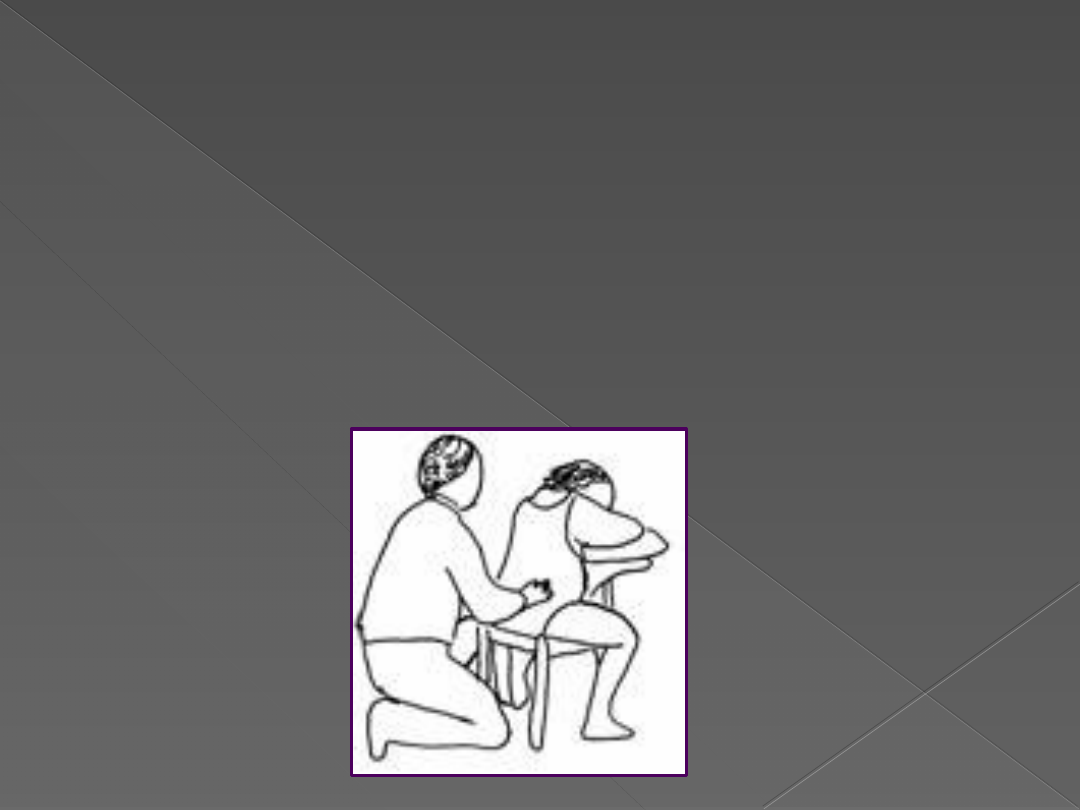
On chair - rest your arms and head
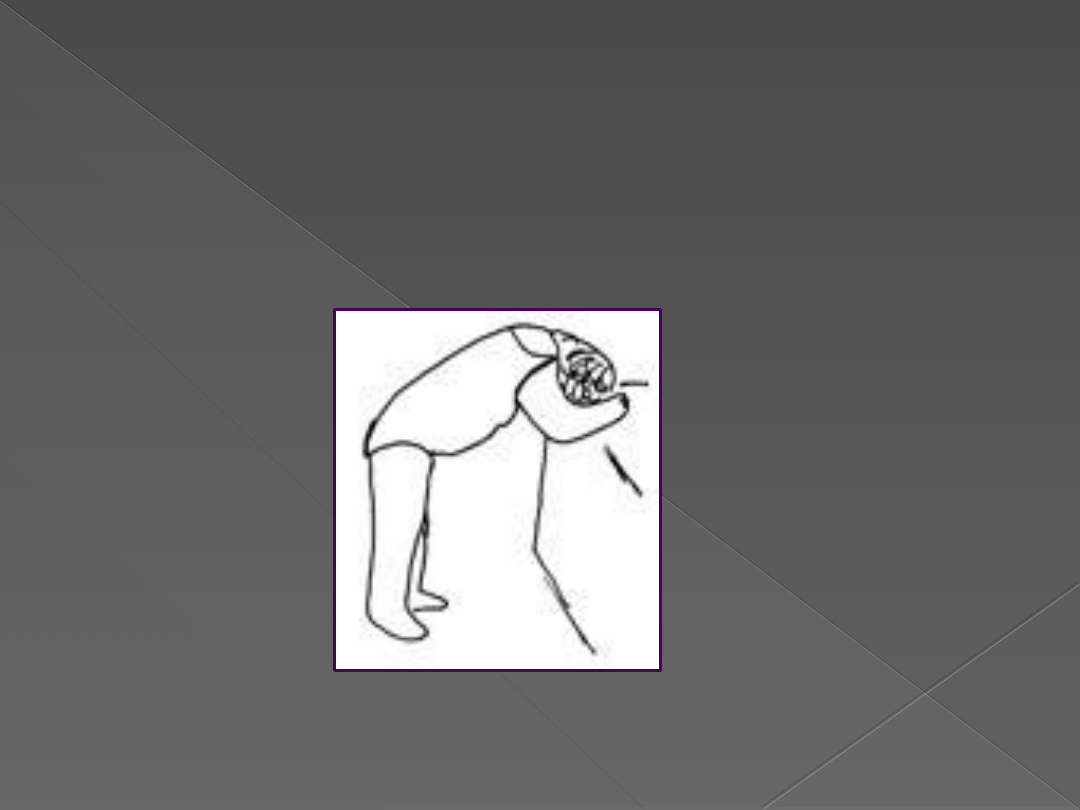
Leaning against a wall, or your partner, or
leaning over a table. Can sway.
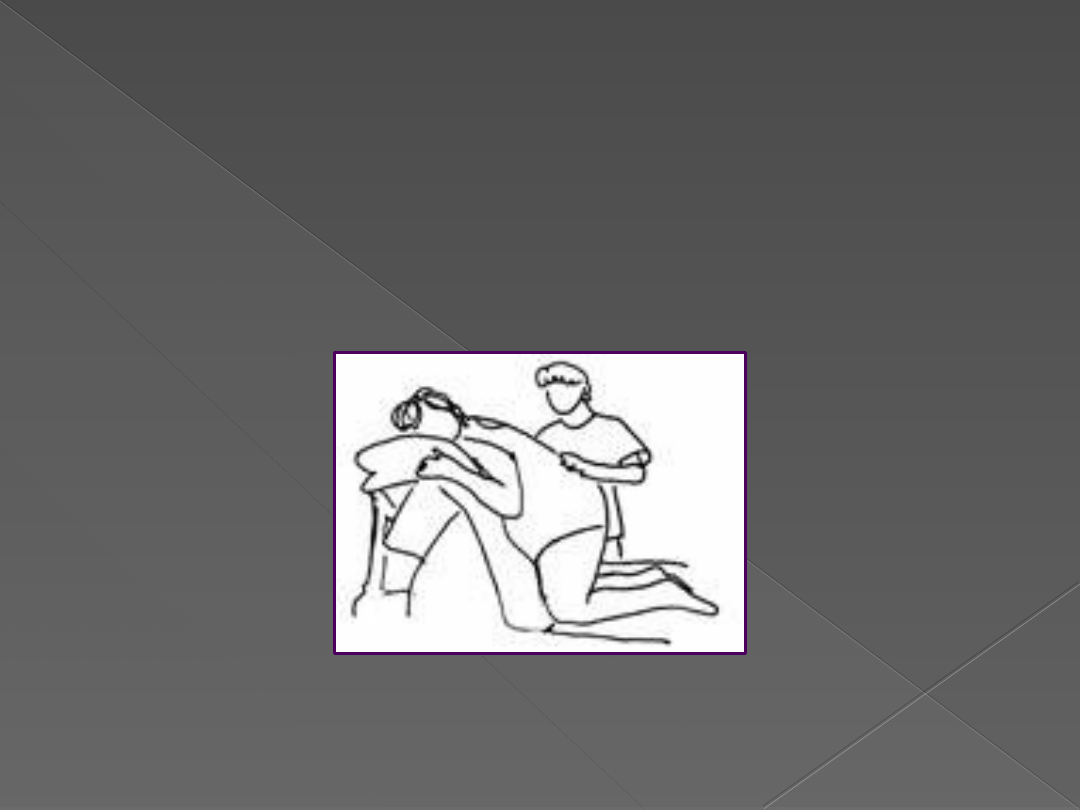
Raise the head of a hospital bed, then put
knees on bed with arms resting on top of
bed.
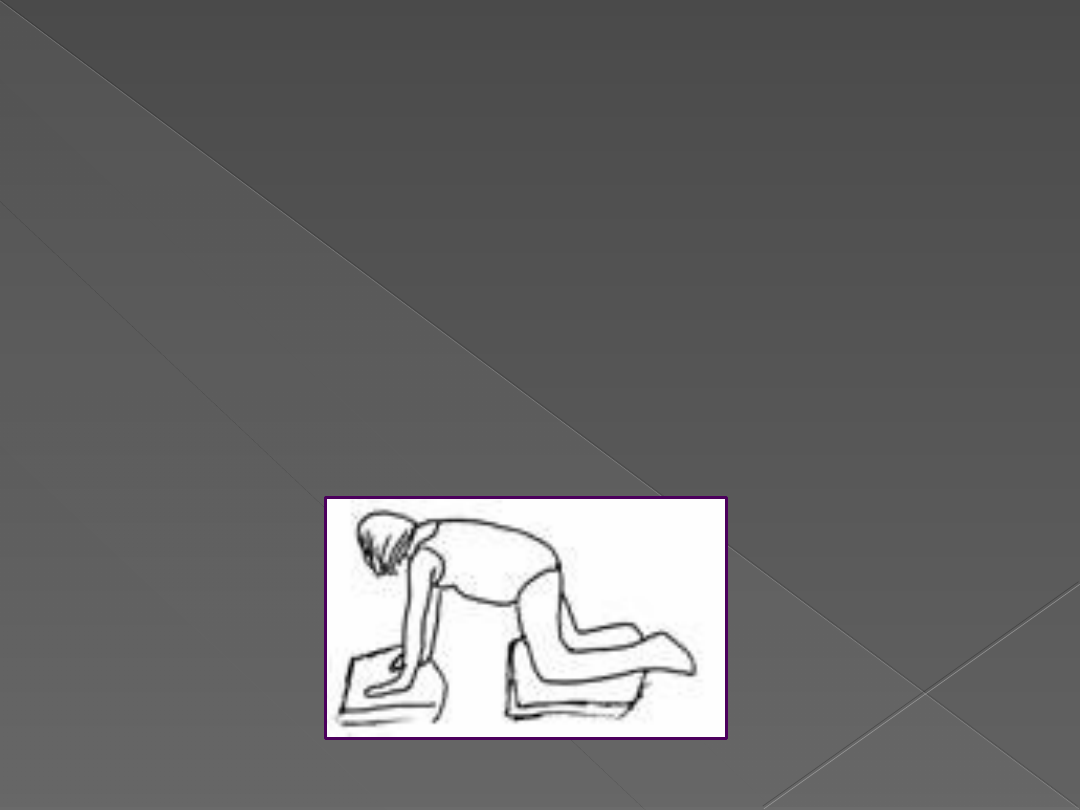
Hands and knees. Can relieve back
pain, makes it possible to sway side to
side, rock back and forth. Having knee
pads on something soft will help knees.
On all four
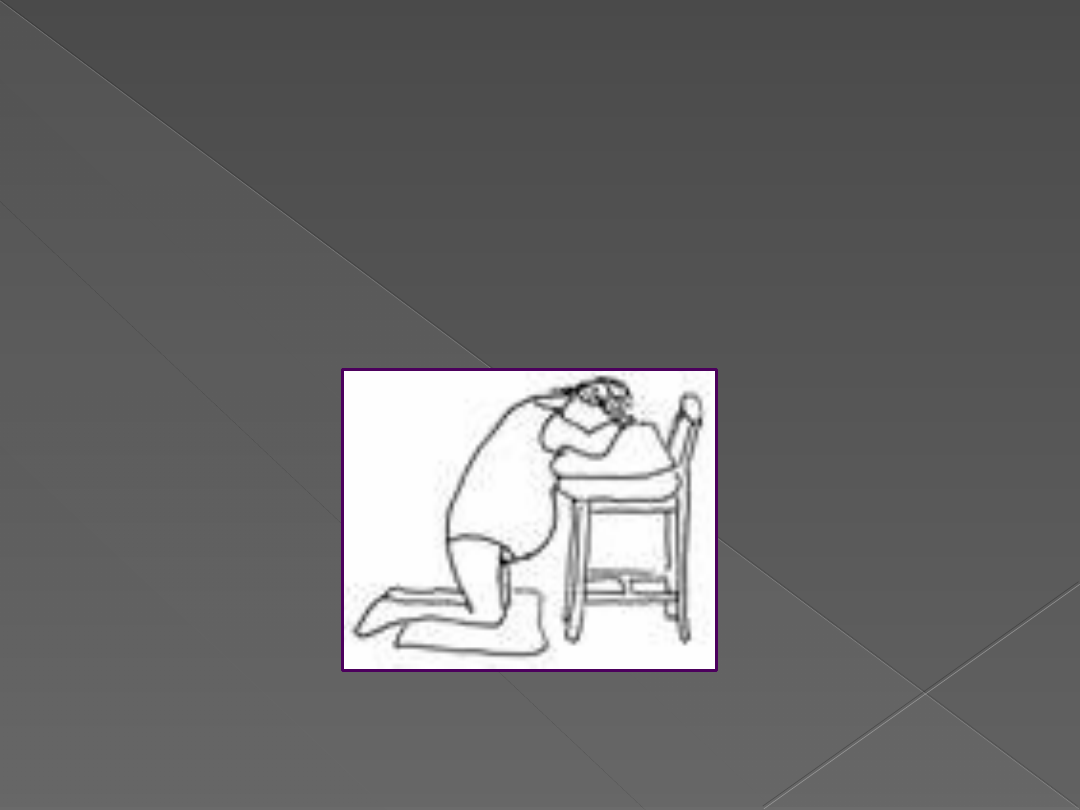
By a chair
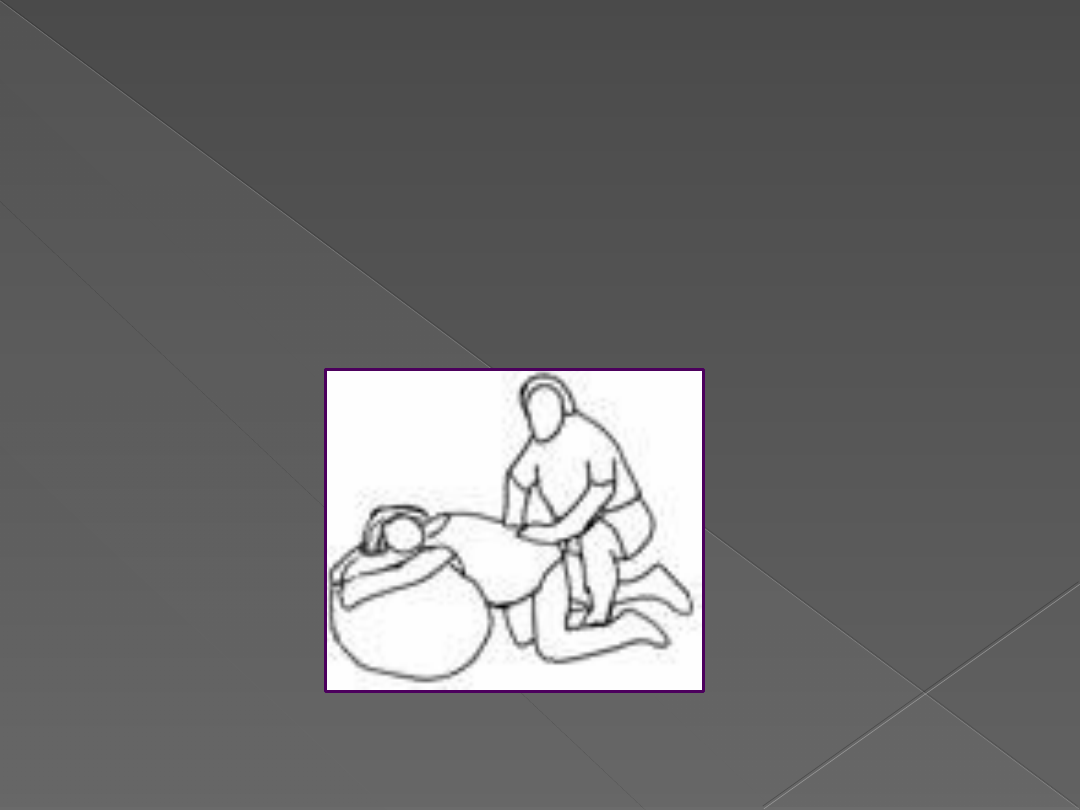
Over birth ball
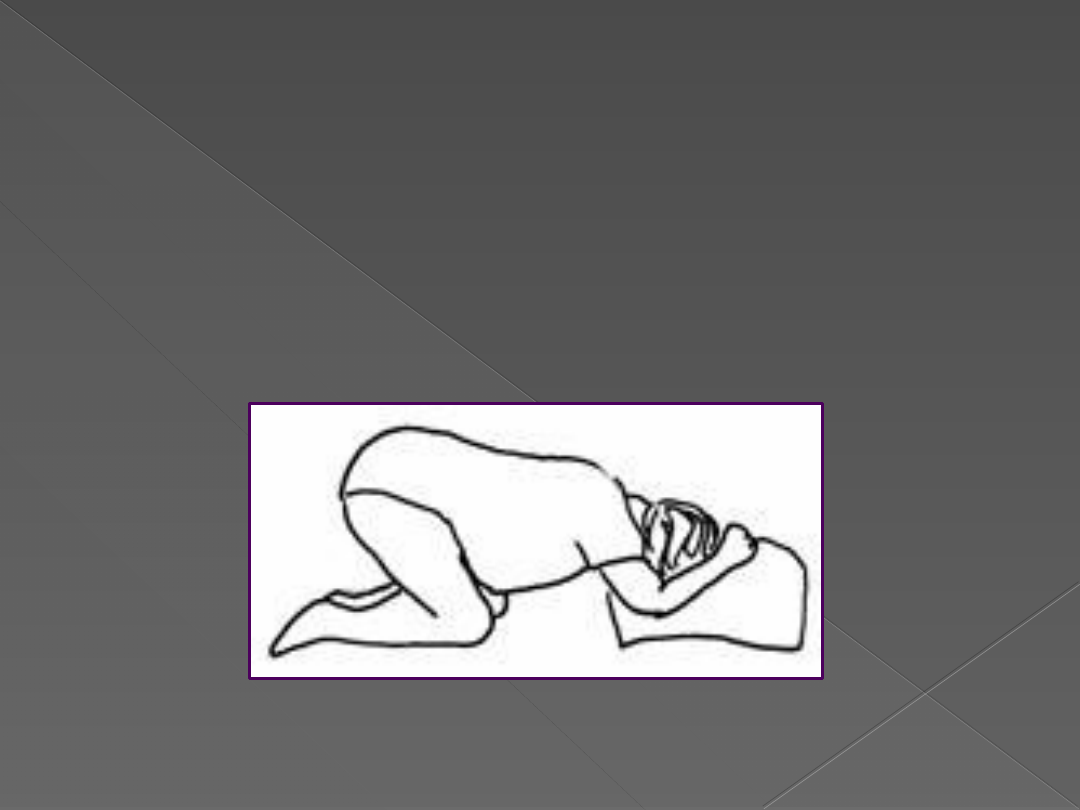
Knee-Chest

Positions for Second
Stage
An ideal position: can open the pelvic outlet,
provide a smooth way for the baby to
descend through the birth canal, use the
advantages of gravity to help the baby
move down, and give the mother safe.
Try a position for a few contractions. If it
works, stay with it. If not, switch to a new
position in between contractions.

“Standard” positions. These can be done by
anyone. These are the positions that most
women are used to delivering babies in.
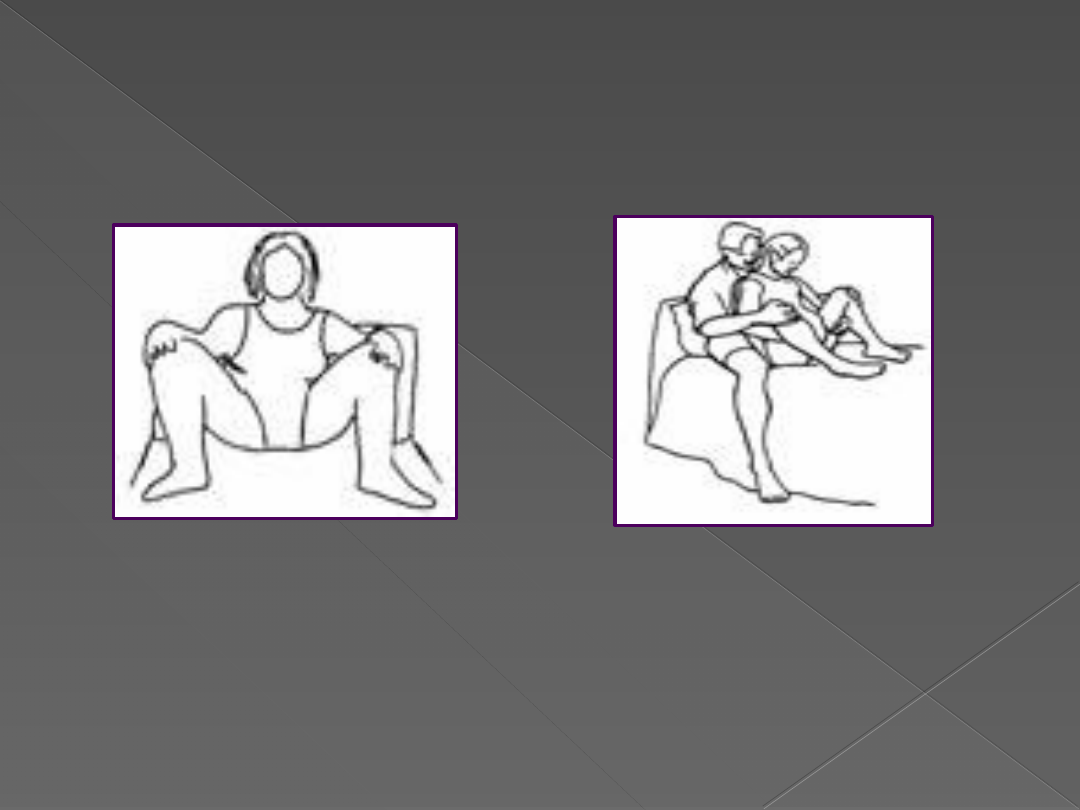
Sitting. With pillows underneath knees, arms, and
back. During contractions, can wrap hands
around knees and pull knees up toward
shoulders. Most common in hospital setting. For
mom and baby: some help from gravity moving
the baby down, easy access to perineum.
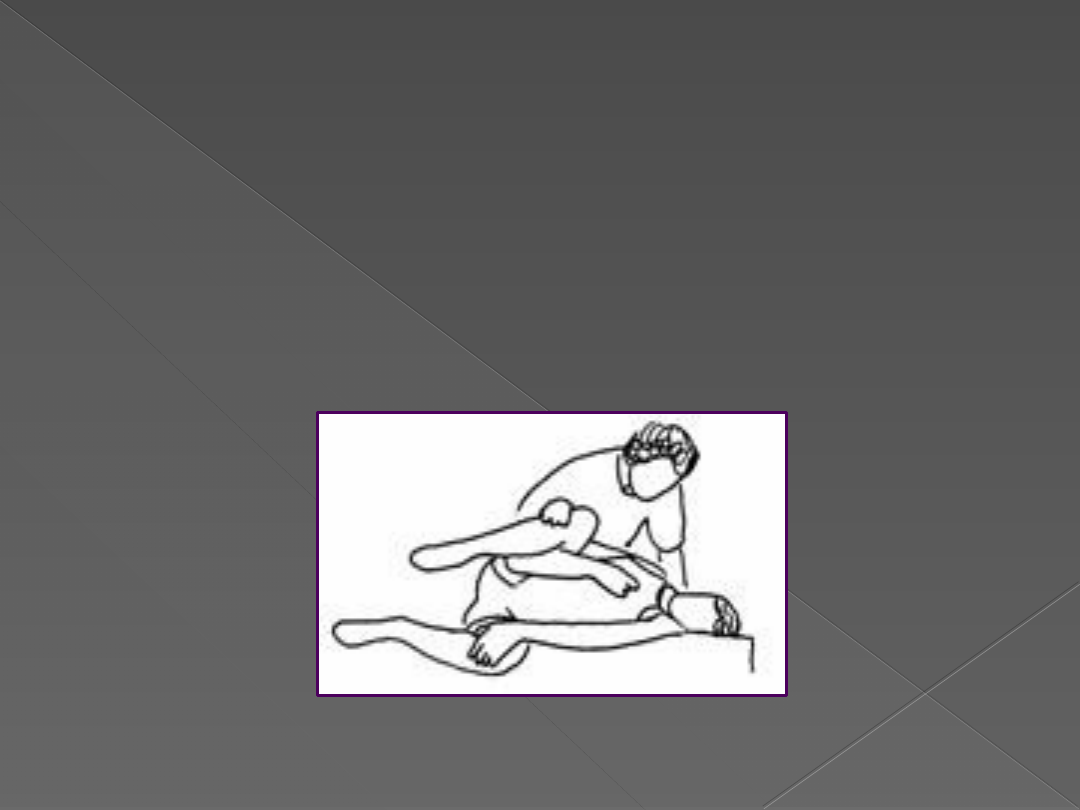
Side-Lying. Upper leg supported by partner.
Gravity neutral, good for fast second
stage. May be a comfort position for
mom.
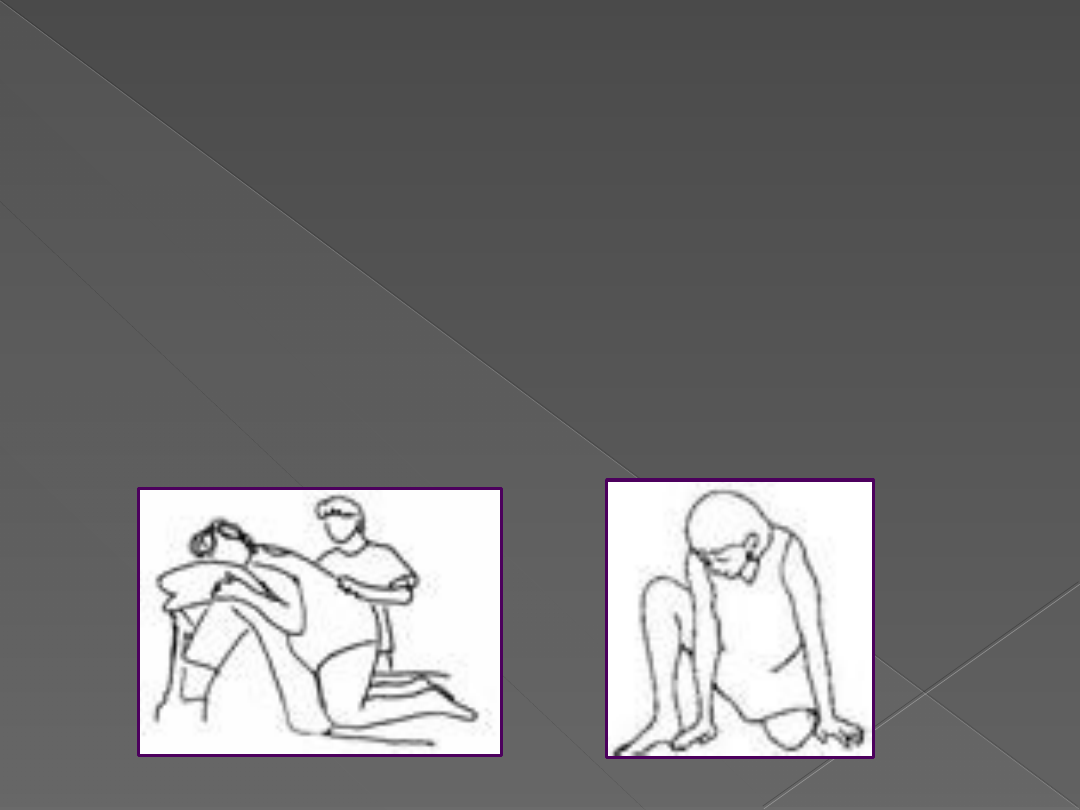
Kneeling positions. When you are
in these positions, you would to
have one person on each side of
you, making sure you stay
balanced and stable.
Kneeling. Hands on the bed, and knees
comfortably apart. Or one knee up.
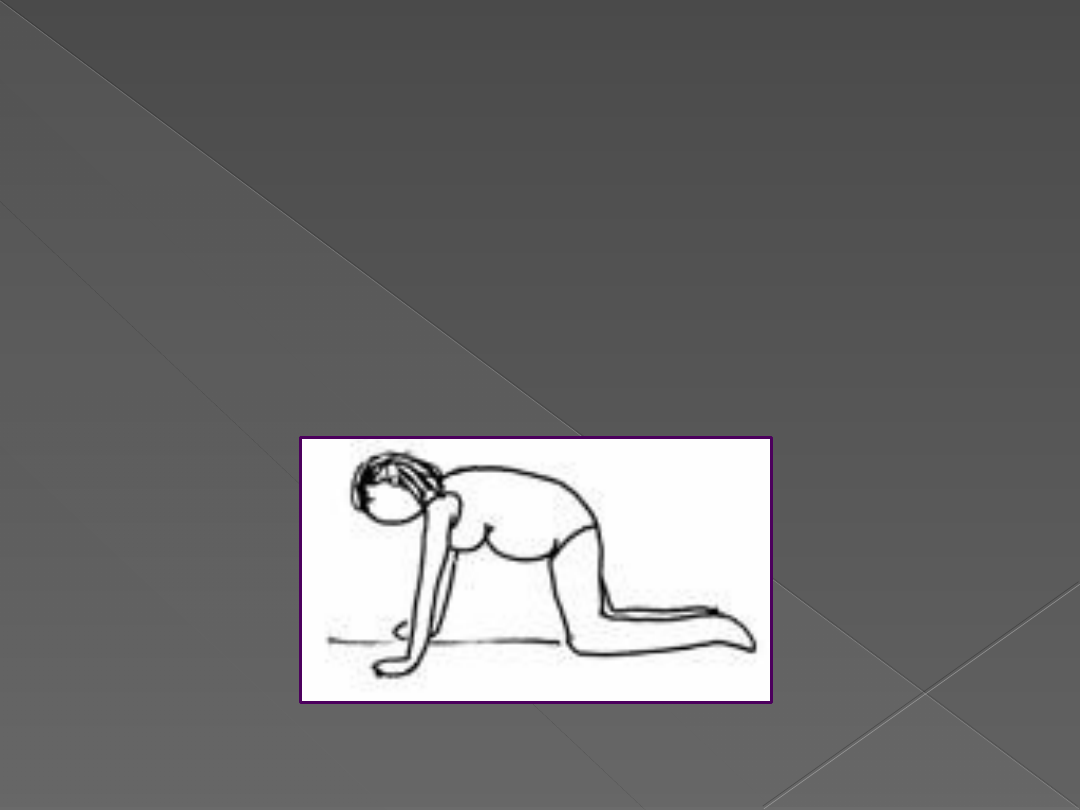
Hands and knees. Great for back labor, big
babies, breech babies. Many find it most
comfortable.
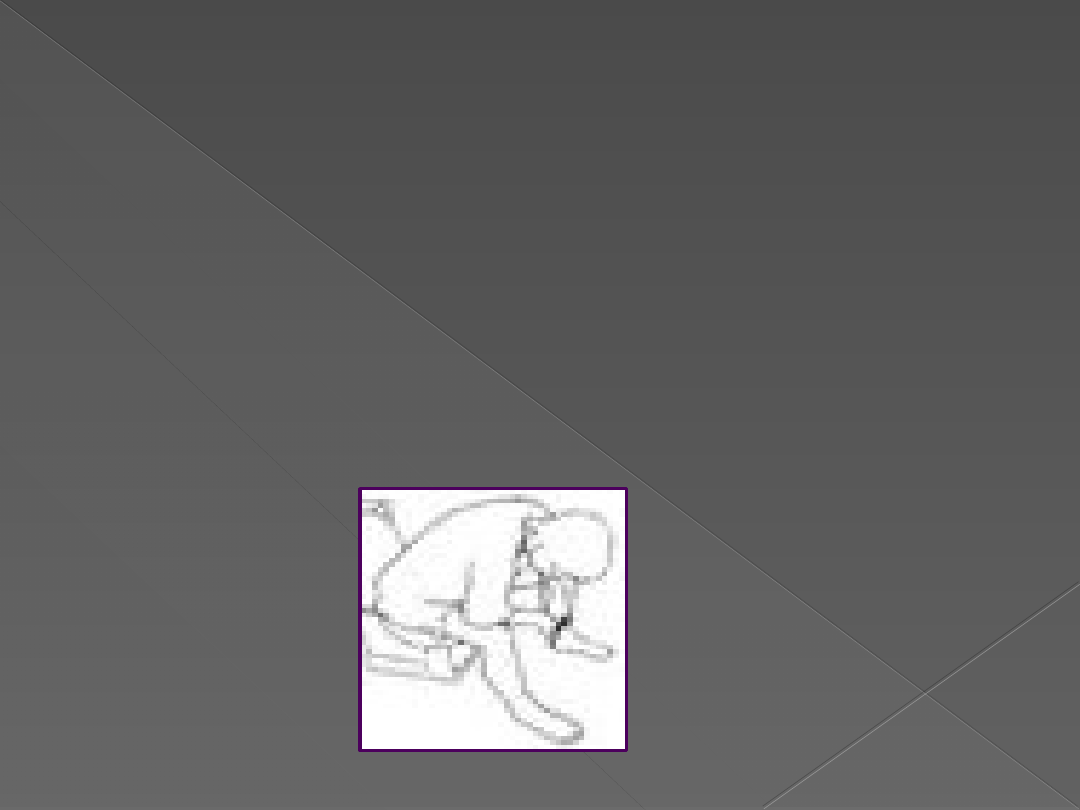
Squatting. These will not be possible
if you have had an epidural, because
with an epidural, you typically can not
get up out of bed.
Sitting: on birthing chair. Opens pelvis,
better gravity for baby, natural pushing
position.
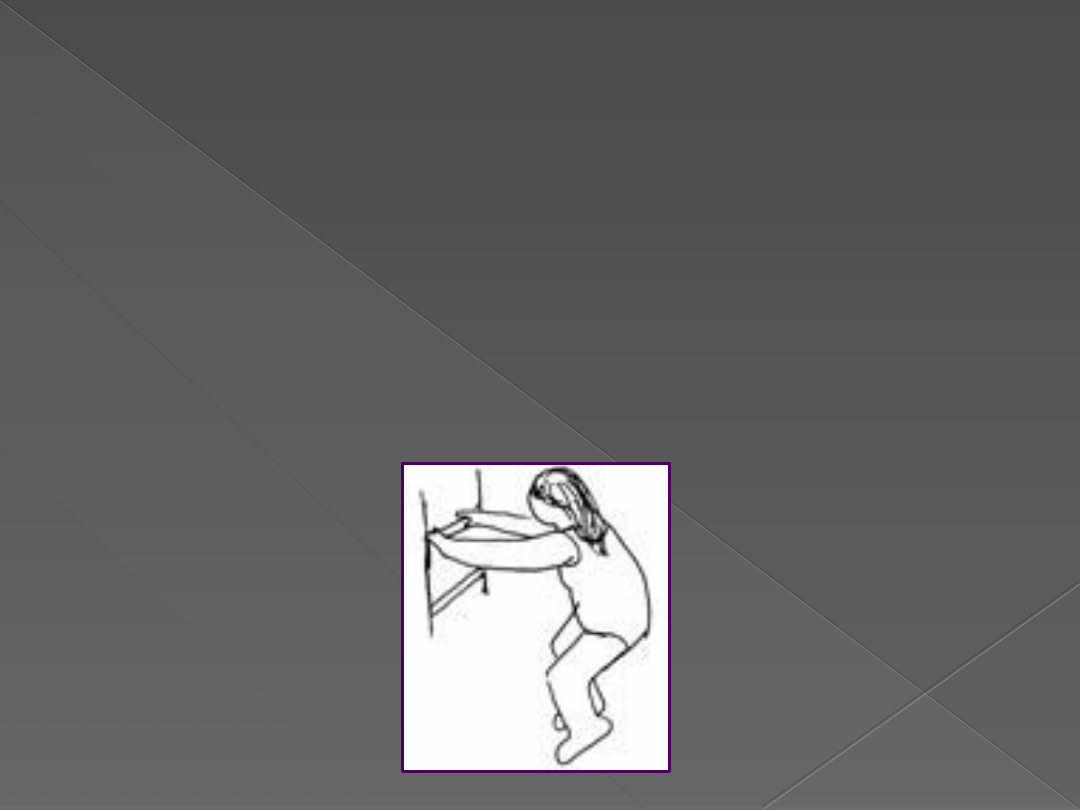
Squatting Supported. Opens pelvis, better
gravity, sense of control for mom. During
squatting, the average pelvic outlet is 28%
greater than in the supine position. Stand, or
sit back to relax in between contractions.
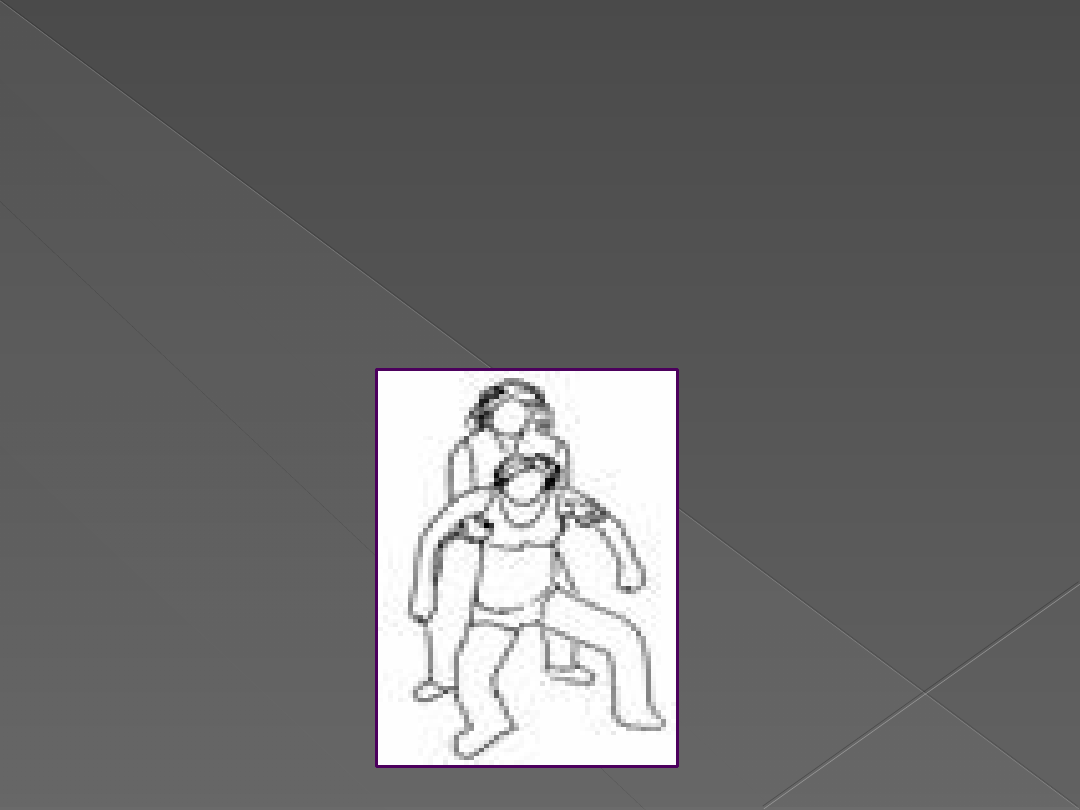
Dangle. Gravity, no external pressure on
perineum or pelvis. Feeling of being
well-supported. May be difficult for
mom to see or touch baby during birth.
THANK YOU
Document Outline
- Slide 1
- Positions for the first stage of Labor
- Slide 3
- Slide 4
- Slide 5
- Slide 6
- Slide 7
- Slide 8
- Slide 9
- Slide 10
- Slide 11
- Slide 12
- Slide 13
- Slide 14
- Positions for Second Stage
- Slide 16
- Slide 17
- Slide 18
- Slide 19
- Slide 20
- Slide 21
- Slide 22
- Slide 23
- THANK YOU
Wyszukiwarka
Podobne podstrony:
75 Positioning for Shots
Loudspeaker And Listener Positions For Optimal Low Frequency Spatial Reproduction In Listening Rooms
What should I pack for labour
Microactuator for Precise Head Positioning
Term Limits for U S Government Positions
Microactuator for Precise Head Positioning
Business Analyst Interview Questions for Business Analyst Position
Interview for a Receptionist Position
Executive Interview Questions for Management Positions
Positive Options for Living with Lupus Self Help and Treatment (Positive Options for Health)
Figures for chapter 5
Figures for chapter 12
GbpUsd analysis for July 06 Part 1
Figures for chapter 6
The American Society for the Prevention of Cruelty
AME Stds for NATO Seminar
positive psychology progress seligman
więcej podobnych podstron