
INFERTILITY
Psychological problems
linked to new
reproductive
technologies

What is infertility ?
Inability to conceive a
pregnancy after one year of
engaging in sexual intercourse
without contraception
(Radwan, 2003)
A problem for 10 - 20 %
couples

Infertility
Reaction as stages of
mourning
DENIAL - the couple doesn’t accept the
possibility of having a problem
ANGER - looking for reasons of a
problem, blaming oneself or others
BARGAINING - efforts to find successful
treatment
GRIEF - somatic distress, feeling of guilt
ACCEPTANCE - new concept of the
future

Reactions to infertility -
context
Social construction of infertility
biological parenthood valued higher
childbearing more important for a
woman
progress in medicine and surgery
offers new treatment methods
social pressure to “do something about
it”, ie. to find the proper treatment

FEMALE / MALE reactions
to infertility
Men respond with less emotions than
women
Is it always true?
Inconclusive findings - dramatic differences
vs. no differences - WHY?
persons with different types of diagnosis
assessment in different stage of diagnosis and
treatment
wrong instruments

FEMALE / MALE reactions
to infertility
Women more often question their self-
worth
Women more likely to be labeled by
themselves and by others as responsible
Women more likely to believe that their
behaviour caused infertility
Women more likely to take responsibility
to protect their husbands’ self-esteem

Gender differences in coping
with infertility (Jordan &
Reverson, 1999)
Meta-Analysis of 8 studies with infertile
couples
Wives used mostly strategies like
Seeking Social Support,
Escape/Aviodance, Positive Reappraisal
Wives used mainly emotion-focused
coping strategies
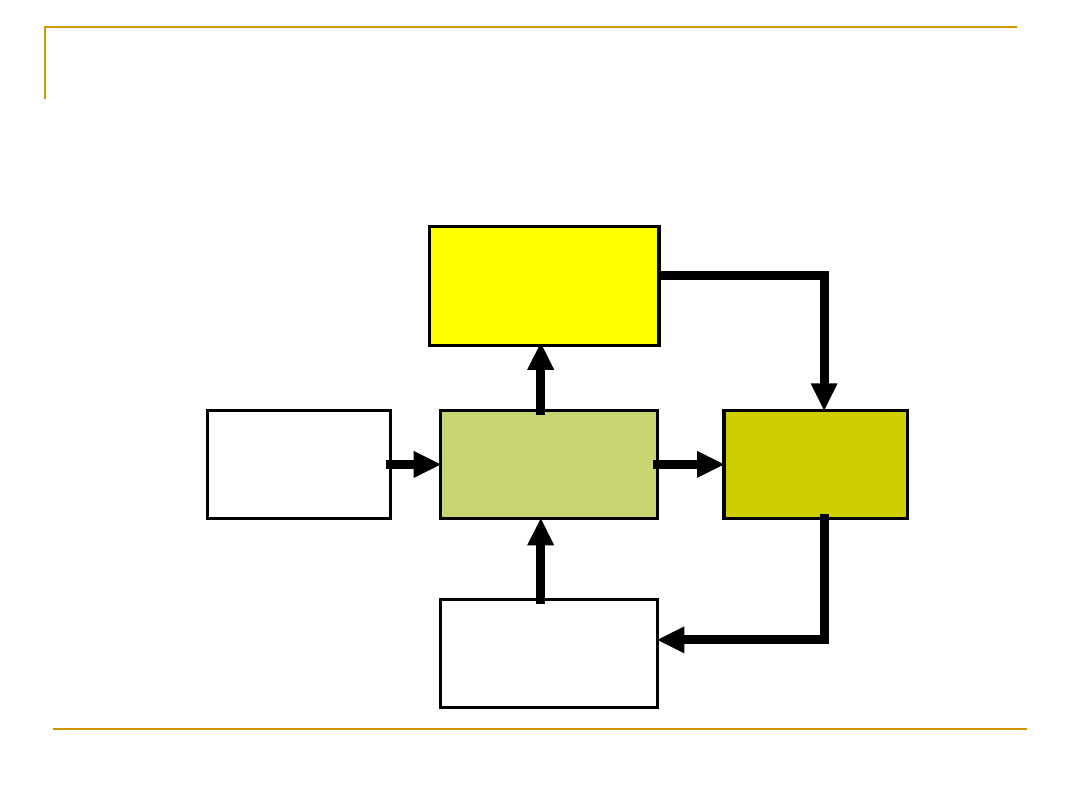
Cyclical model of infertility
(van Balen, 2002 - modified)
Illness,
genes,
trauma,
chance
Involuntary
childlessness
Psychological
problems
Somatic
mechanism
Infertility
treatment
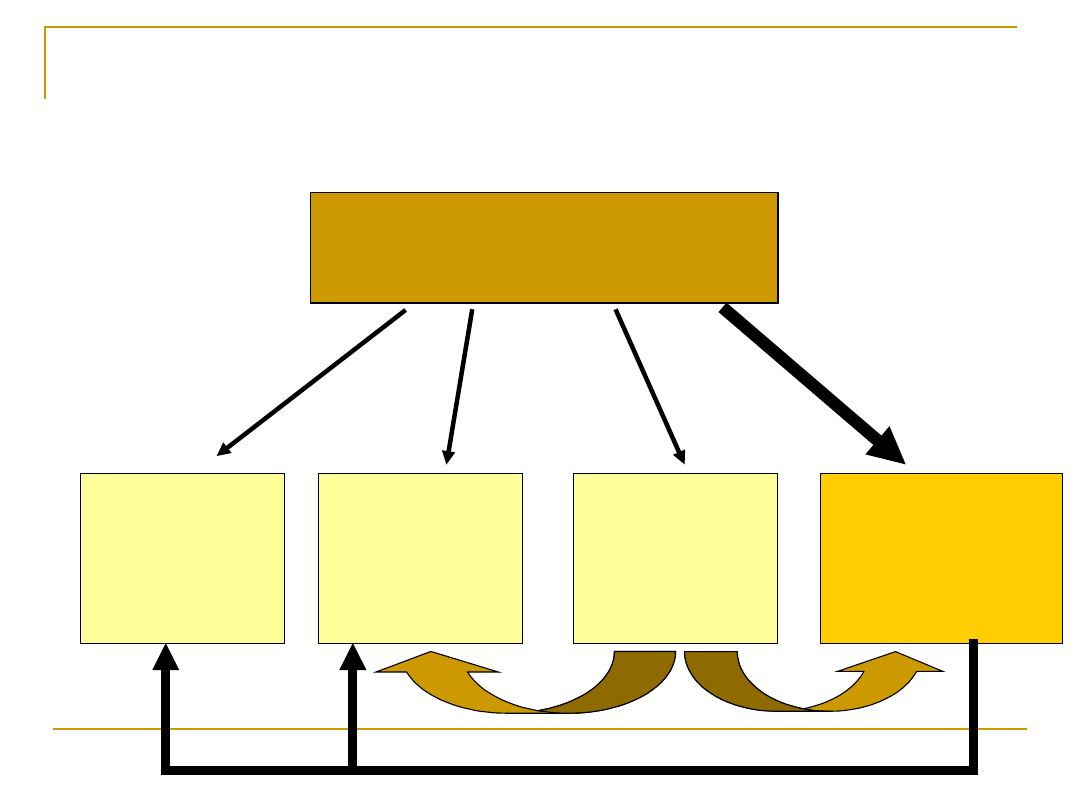
Options available to a
couple
Infertility
Remain
childless
Adoption
Traditional
treatment
New
reproductive
technology

New Reproductive Technology
(NRT)
Assisted Reproductive Technology
(ART)
In vitro fertilization (IVF) - embryo transfer
(ET)
IVF - ET
Gamete intra-fallopian transfer GIFT
Zygote intra-fallopian transfer ZIFT
Intracytoplasmic sperm injection ICSI
Donor insemination DI
Surrogacy
Gestational
Genetic

Challenges / controversies
of NRT
Are they accepted within the society?
Are they available…?
…technically
…economically
…legally
Are they safe…?
…for comissioning women and men
…for resulting children
Are they effective?
Are they ethical?

Opinions on NRT
study by U. Tomczyńska (1999)
SUBJECTS
180 students
69 males, 111
females
4th year of
medicine,
psychology,
management
23-25 years of
age
METHOD
questionnaire to
measure
the knowledge
on NRT
the level of
acceptance of
NRT
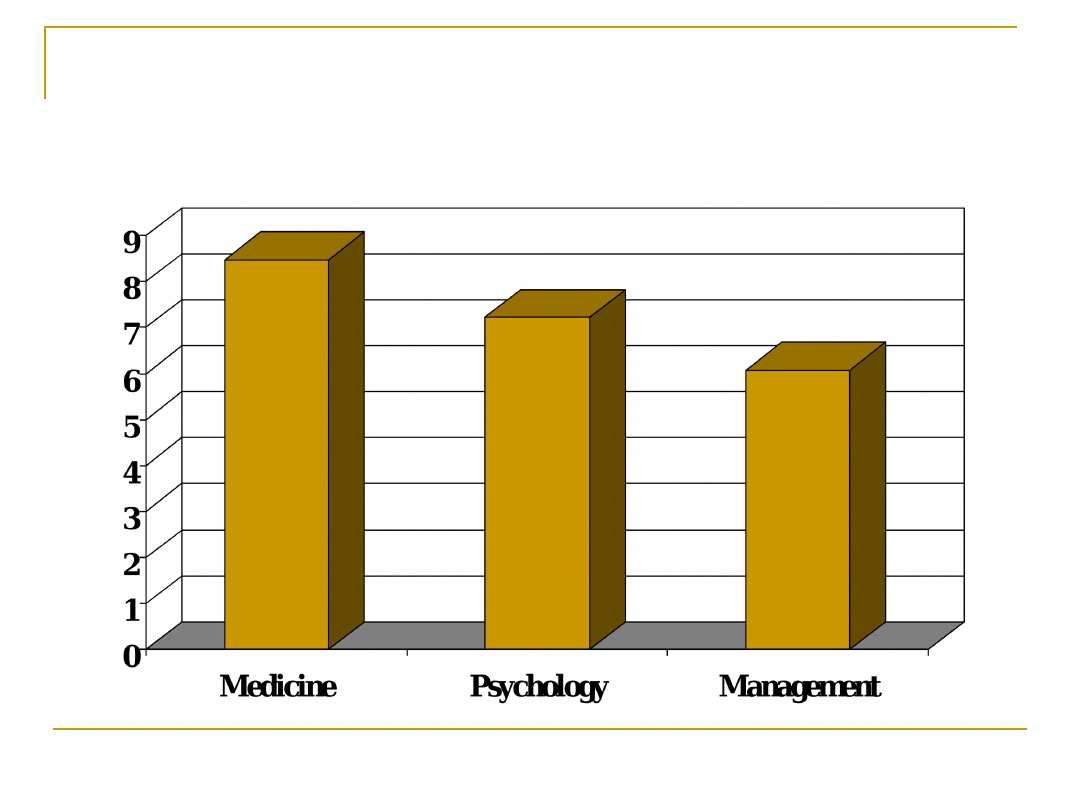
Knowledge on NRT in
relation to area of studies
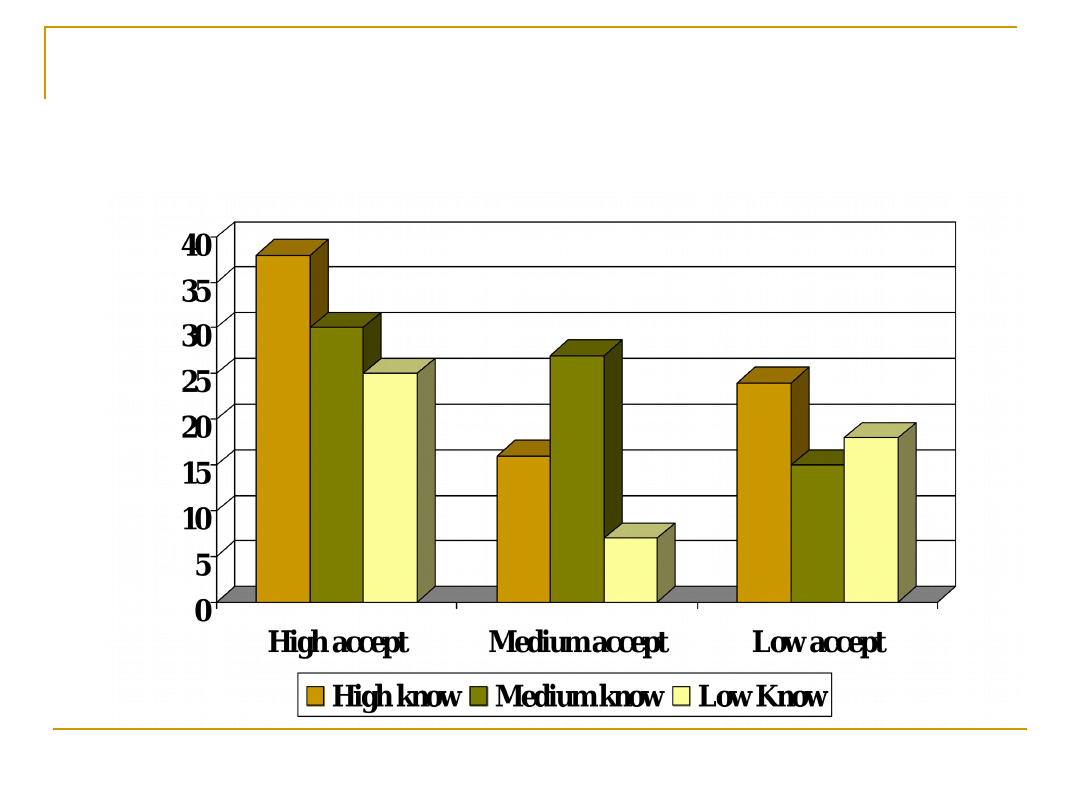
Knowledge and NRT
acceptance
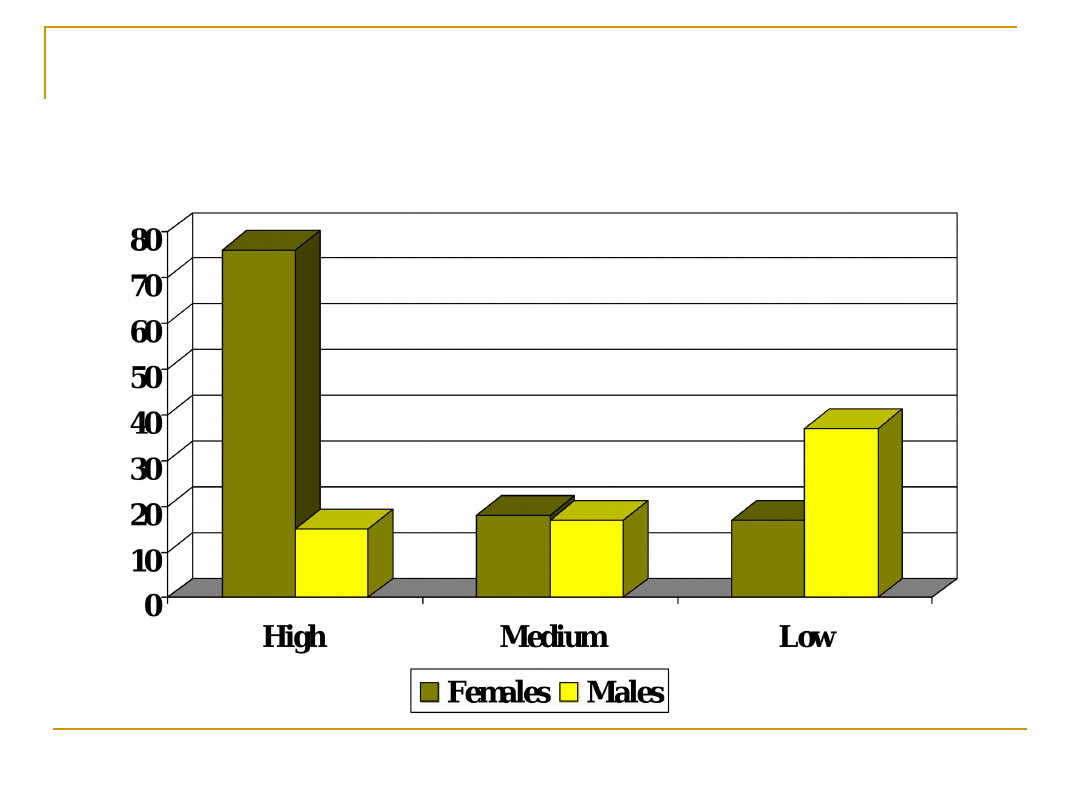
Gender and NRT
acceptance
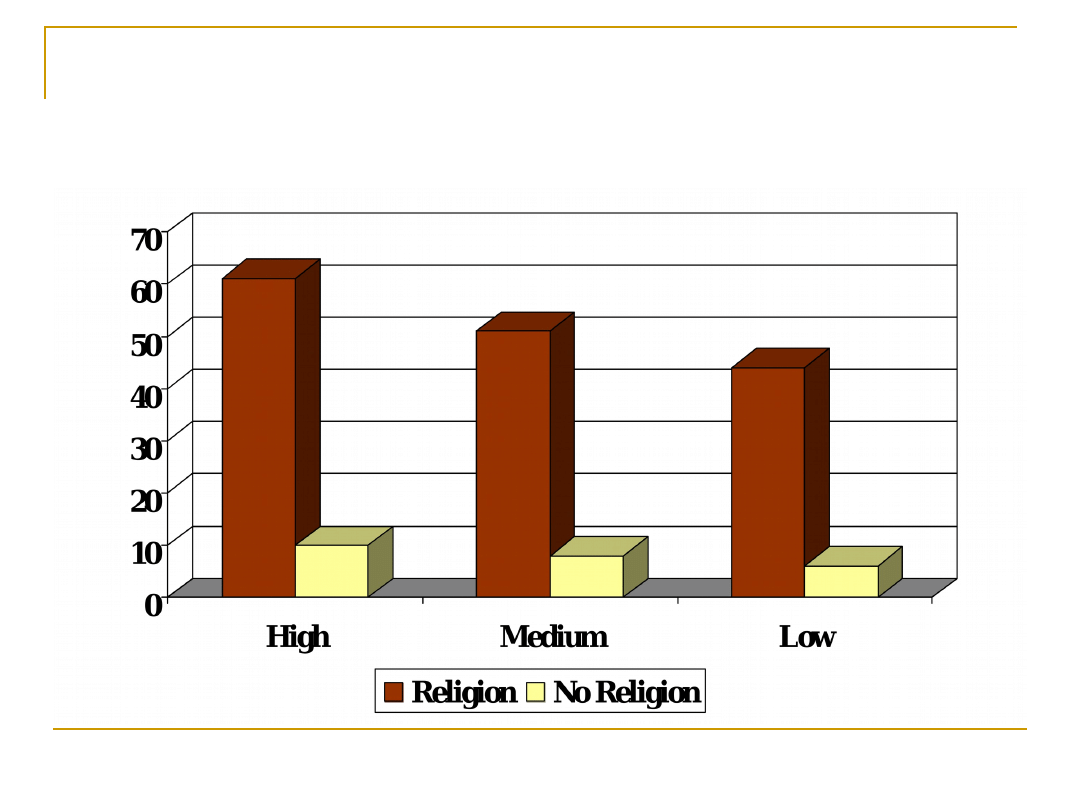
Religion and NRT
acceptance

Experience with infertility and
acceptance of NRT(M. Stefanek,
2005)
3 gropus of couples
No children, with children, treated for infertility
Attitudes towards 3 methods of infertility
treatment
IVF, DI, Surrogacy
Findings
Out of 3 methods - IVF most often accepted,
surrogacy least accepted
Infertile couples - highest level of acceptance
High concordance of wives’ and husbands’ opinons

Opinions of infertile couples
(DI)
study by J. Janczak (2002)
Diagnosis of male infertility
Anger – 36% M
Surprise – 33% M
Grief – 31% M
95% F
Immediate decision to perform DI
65 % M;
54% F
Others needed some time to think and decide
Will I love a „donor’s child”?
33% M
Church view on DI not important 93% M & F

Copules’ motives (DI)
(study by Janczak)
Women
Strong desire to have
a child
Perform parental role
A possibility to go
through pregnancy
and labour
Deception of a
partner’s infertility
Possibility to find a
donor resembling a
husband
Men
Strong desire to
have a child
Perform parental role
A woman can go
through pregnancy
and labour
Compensation for
a partner
A child at least
partly genetically
related

Attitudes toward DI
(by E. Bielawska-Batorowicz,
1994)
TRAITS OF THE DONOR
good health
82%
physically like husband
57%
lack of addictions
20%
proven fertility
14%
husband’s blood group
14%
high intelligence
9%
Catholic religion
6%
anyone could be a donor 12%

Attitudes toward DI
(Bielawska-Batorowicz, 1994)
HOW LONG to continue
as long as necessary to conceive
43%
up to 2 years
37%
up to the doctor’s decision to stop 20%
Risk connected with DI
possible risk
15%
DI safe
85%

Attitudes toward DI
(Bielawska-Batorowicz, 1994)
DI versus adoption
better
100%
child genetically related 85%
women experience a pregnancy
85%
adoption can’t be kept in secret
54%
Secrecy around DI
should be kept secret
94%
should be revealed to
family (6%)
child (3%)

Availability of NRT in
Poland
Technically & financially
All NRT methods
available
17 IVF centres
2000 cycles per year
Signals about surrogacy
Costs
IVF 1300 Euro
ICSI 1700 Euro
DI 450 Euro
Average wage 600 Euro
Treatment not
subsidized
Legally
No legal solutions on
the national level
Supreme Court
decisions in specific
cases
„Conservative”
professional
guidelines
Heterosexual couples in
stable relationships
No posthumous, no
postmenopausal
conceptions
Maximum of 2 embryos
transfered (3 above 35
yrs)

Safety of NRT - parents
Women
Diagnostic procedures
Ovarian stimulation
Egg retrival
Embryo transfer
Perfect timing
Waiting for results
„Emotional
rollercoaster”
Treatment even if fertile
Men
Diagnostic
procedures
Sperm collection
Perfect timing
Sex on demand
Waiting for results

Safety of NRT - children
During pregnancy
Increased risk of
Chromosomal abnormalities (in ICSI)
Low birth weight
Premature birth
Cesarean section
Risk related to infertility, general health
and not to NRT
In the family
Parent-child relationships

Attitudes to pregnancy / child in
IVF and GIFT couples
(Braverman, 1998)
373 couples - postal questionnaire
Disclosure about NRT
81.5% to parents
73,5% to in-laws
80,4% did not tell the child
When the child knows
62,9% interested
24,2% happy
Disclosure when a child is 3 or 4-6 yrs old

Attitudes to pregnancy / child in
IVF and GIFT couples
(Braverman, 1998)
F/M anxious during pregnancy
transition to parenthood not difficult
appreciated the child more than most
parents
satisfying parenting, not overprotective
relation with the partner improved during
pregnancy, some stress in the first 6
months after delivery

Attitudes to parenting in IVF
and GIFT couples (Gibson, 2000)
IVF couples not different form controls on
measures of depression, marital satisfaction,
A tendency for lower self-esteem in IVF
mothers
Lower self-esteem in IVF fathers
A tendency for less positive experience of
parenthood in IVF mothers
No differences in attachment to a child
IVF and control mothers more protective

Psychological adjustment
in IVF pregnancy (Klock,
2000)
IVF women not different from controls on
self-esteem, depression, anxiety,
IVF women - lower marital satisfaction
Changes over time
IVF - improvement in self-esteem, decrease in
state anxiety, decrease in rating of a marriage
non-IVF - decrease in ratings of a marriage

Parent - child relationships
after NRT
Golombok et al., 2004, McMahon et
al.., 2003
IVF
Parenting stress as in other parents
Gamete donation
More positive paterent-child relations in
comparison to natural conception families
Surrogacy
Greater warmth and attachment in
comparison to natural conception families

Possible psychological problems in
families created through gamete
donation
(D. Ehrensaft, 2005)
The effect of the „Birth other” (a third parent)
Who is a parent
Important: an intention to parent / rise up a child
The concept of the birth other
The effect of his/her traits on a child’s characteristics
The myths related to donors
Ignoring the existence of a donor vs. Exagerating a donor’s role
Phantasies on relationships between a donor, a partner, a family
The danger of a donor „claiming back” the child
The information about conception – when & in
what way
To a child
To other persons

Semen Donors
Usually anonymous, children have no
access to identifying data
Identifying data on donors available in
Sweden, Austria and New Zealand
The effect of availability of donors’ data
less donors (!) - no previous records to
compare
different donors (!) - more mature with
stable family life

Why did I become a semen
donor?
(Bielawska-Batorowicz, 1996)
Knowledge on DI
mass media (33%), friends (50%), medical
doctor (8%)
DI accepted in Poland - 25%
Motives
financial
92%
test for fertility
67%
help for infertile couples
50%

Why did I become a donor?
(Bielawska-Batorowicz, 1996) - 2
Want to know the outcome 50%
Asked about the outcome 16%
Donor’s right and obligations
none 100%
a recipient woman’s partner is legal a father
of a child
83%
think about a child
92%

Why did I become a donor?
(Bielawska-Batorowicz, 1996) - 3
Secrecy and management of a donor’s
data
anonymity should be kept
only general data available (education,
hobby, personality)
I would quit the programme if my personal
data were recorded and available 58%
children should never know about DI
children should never have access to
donor’s data

Why did I become a donor?
(Bielawska-Batorowicz, 1996) - 4
Who can be a recipient couple
married couple
100%
unmarried couple
58%
single woman
67%
divorced woman
42%
widow
67%
lesbian woman
25%

Infertility and NRT –
summary
Infertility – a recognized disease (WHO)
Incidence – relatively high (ca 20%)
Information on new ways of treatment may
provoke more people to search for treatment
Inconsistent views concerning NRT effects on
families and children
Suffering connected with NRT
Controversies around NRT as options for
same sex couples and people in post-
reproductive age
Document Outline
- Slide 1
- Slide 2
- Slide 3
- Slide 4
- Slide 5
- Slide 6
- Slide 7
- Slide 8
- Slide 9
- Slide 10
- Slide 11
- Slide 12
- Slide 13
- Slide 14
- Slide 15
- Slide 16
- Slide 17
- Slide 18
- Slide 19
- Slide 20
- Slide 21
- Slide 22
- Slide 23
- Slide 24
- Slide 25
- Slide 26
- Slide 27
- Slide 28
- Slide 29
- Slide 30
- Slide 31
- Slide 32
- Slide 33
- Slide 34
- Slide 35
- Slide 36
- Slide 37
Wyszukiwarka
Podobne podstrony:
reprod w3 2008
bioinformatyka w6 2008 web
reprod w4 2008
reprod w6 2010
reprod w1 2008
reprod w7 2008
reprod w5 2008
reprod w2 2008
reprod w3 2008
Ubytki,niepr,poch poł(16 01 2008)
2008 XIIbid 26568 ppt
Tamponada serca, Karpacz, 2008
W6 Technika harmonogramów i CPM
Bliźniuk G , interoperacyjność przegląd, marzec 2008
w6 Czołowe przekładanie walcowe o zebach srubowych
komunikacja niewerbalna wgGlodowskiego 2008
więcej podobnych podstron