
Lecture XIII
Neurolinguistics and first
language acquisition
May, 7th, 2008

Structure of the talk
Language acquisition – definition of the term
A chronological overview of language development
Psychological approaches to language development:
behaviourism and cognitivism
Nature or narture?
Language as a human universal
The human brain and language
Brain development and language development
The critical period (age) hypothesis
Wild children
Phonological development - babbling

Language acquisition
Human are so constructed that one brain responds in much
the same way to a given trigger as does another brain, all
things being equal. This is why a baby can learn any
language; it responds to triggers in the same way as any
other baby.
Language acquisition – the phenomenon of linguistic
development that results in the creation of a grammar, i.e. the
mental system that allows people to speak and understand a
language.
Children develop different sorts of linguistic knowledge
concurrently, however, for practical purposes, it is convenient
for researchers of language development to analyse the
development of the subcomponents of language separately.
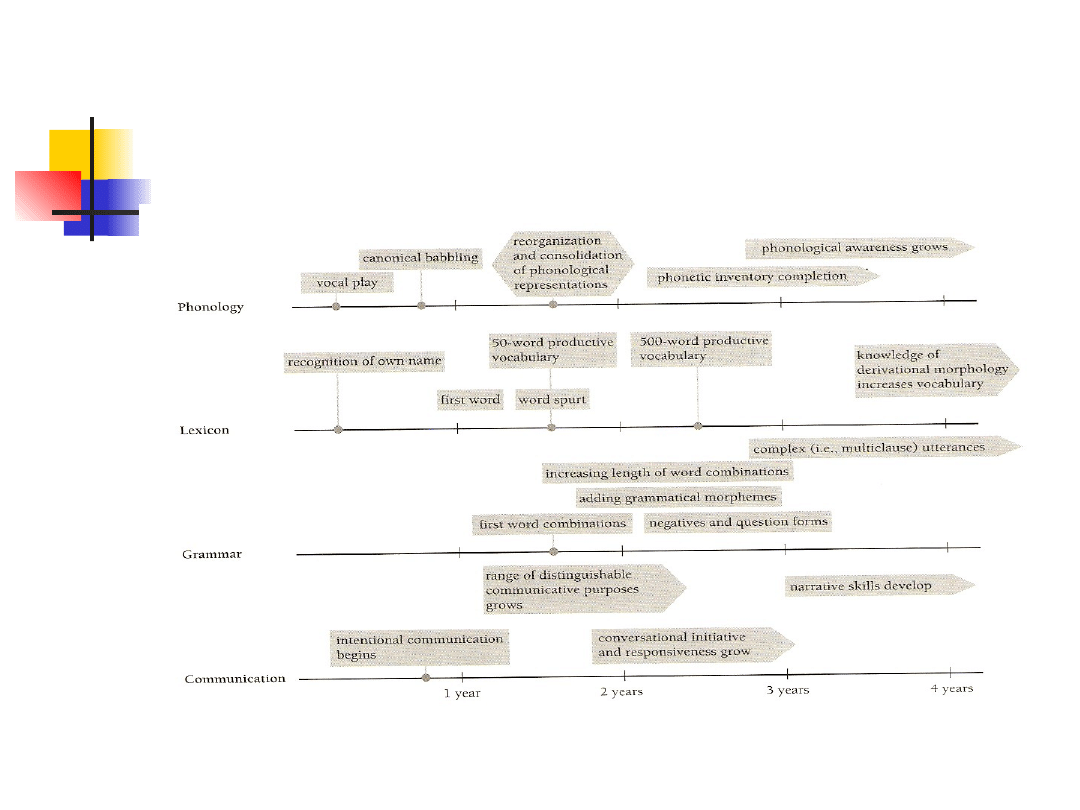
A chronological overview of language acquisition

Major psychological theories of
language development -
behaviourism
Behaviourism – change in behaviour
occurs in response to the
consequences of prior behaviour.
The stick and carrot method
The major tenet of behaviorism – we
do not need to know what happens
in the mind of a child (animal) to
explain the change in the child’s
behaviour

Major psychological theories of
language development - cognitivism
Cognition – the act or faculty of knowing, the
product of this act, a perception or insight
Cognitive psychology – responses are affected by the
point of view of the receiver of the stimulus as well
as by his/her environment
Cognitivism asserts that we cannot understand
behaviour without understanding what is going on in
the mind of the organism producing the behaviour.
It is generally assumed that general cognitive
development influences language development and
language acquisition is crucial to other aspects of
cognitive development

Noam Chomsky
The Chomskyan revolution (1957) – the LAD
(language acquisition device) – a brain centre
that takes as its input certain information from
the environment and produces as its output
the ability to speak and understand language.
The LAD contains some knowledge of the
structure of language in order for language
acquisition to take place.
This knowledge is not language specific,
therefore it is frequently termed Universal
Grammar (UG).

Current approaches to
language development
The biological approach sees language development
as a biological process connected with maturing.
The linguistic approach seeks to describe UG and
how it interacts with language experience to produce
linguistic knowledge
The social approach sees language as a social
phenomenon (it rejects the existence of the LAD) –
language acquisition is regarded as language
socialisation
The domain-general cognitive approach starts from
the premise that language acquisition is not different
from any other learning problem (it also rejects the
existence of the LAD).

Nature or nurture?
Empiricism – the mind at birth is a
blank slate all knowledge and
reason come from experience
(Locke)
Nativism – the mind must have
some preexisting structure in order
to organise and interpret
experience (Plato, Kant).

Language as a human
universal
Language – a system for communication that uses symbols
that stand for things and syntax, i.e. a productive system
for combining symbols to express new meaning.
Pidgin languages – contact languages – use lexical items
from one or more contact languages, but has its own very
primitive grammar
Creoles – languages that were once pidgin languages and
which subsequently became native languages for some
people (creolisation – a process of adding grammatical
features characteristic of human language). Swahili is
thought to be the result of contact between Arabic and
Bantu languages.
Nicaraguan Sing Language

The brain and language
Neurolinguistics – the study of the relation of the
brain to language functioning.
Crucial parts of the brain:
-
the cerebral cortex – controls higher mental
functions
-
subcortical structures – control more primitive
functions (e.g. breathing, eating)
-
the corpus collosum – the band of nerve fibres that
connects the two cerebral hemispheres
-
contralateral connections – the right side of the brain
controls the left side of the body and vice versa.
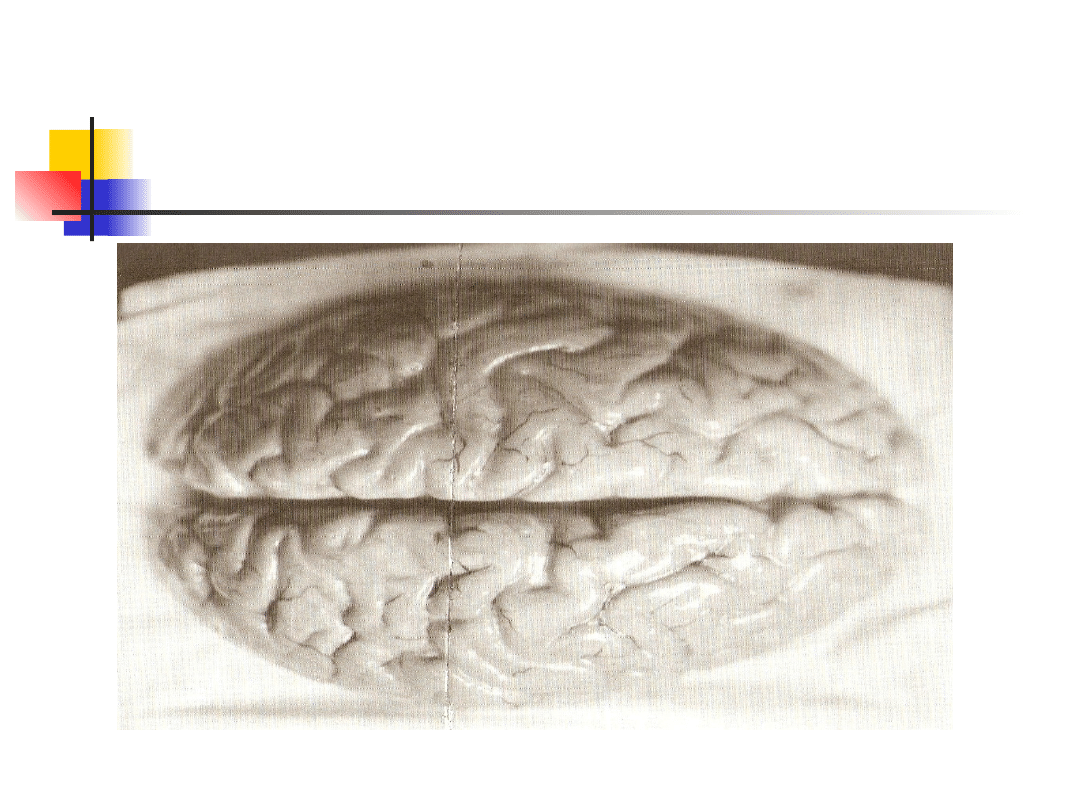
The human brain
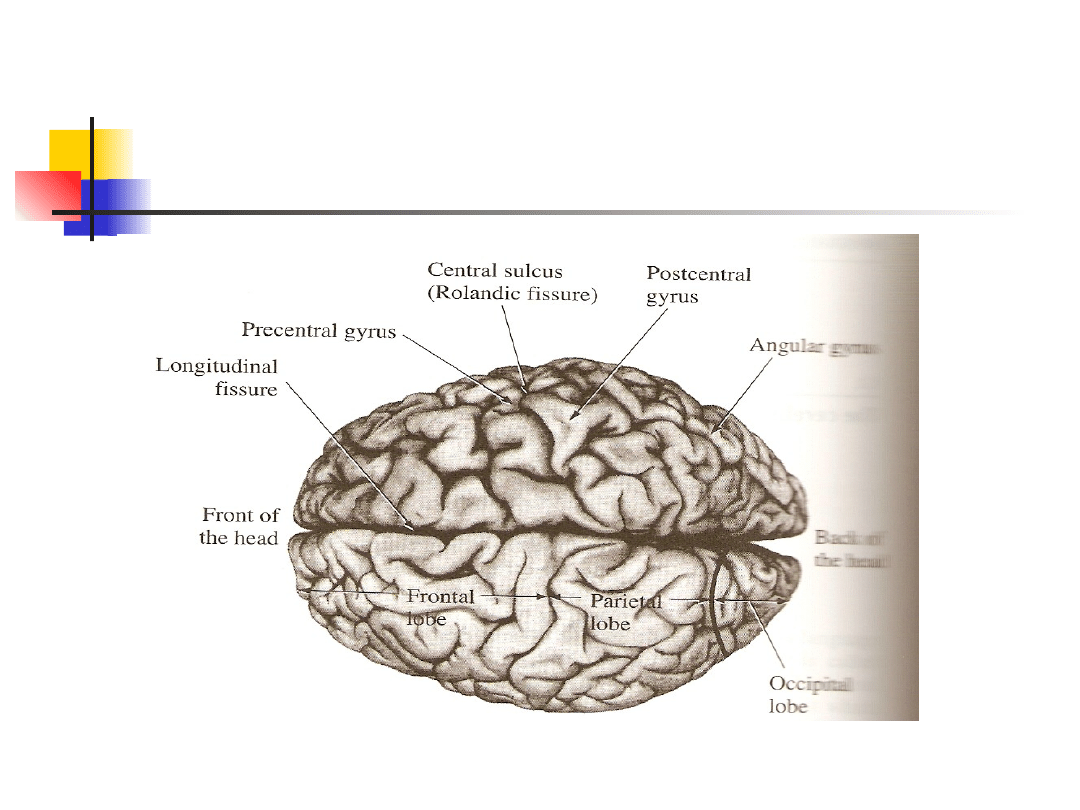
The human brain
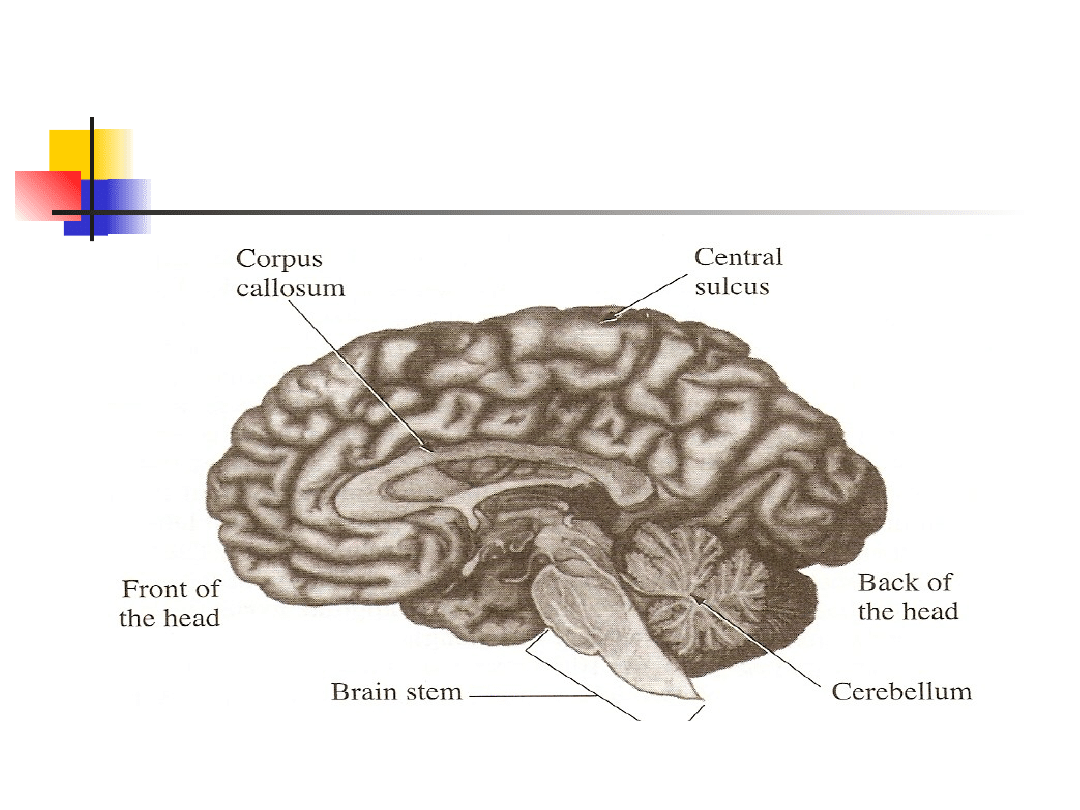
Cross-section of the
human brain
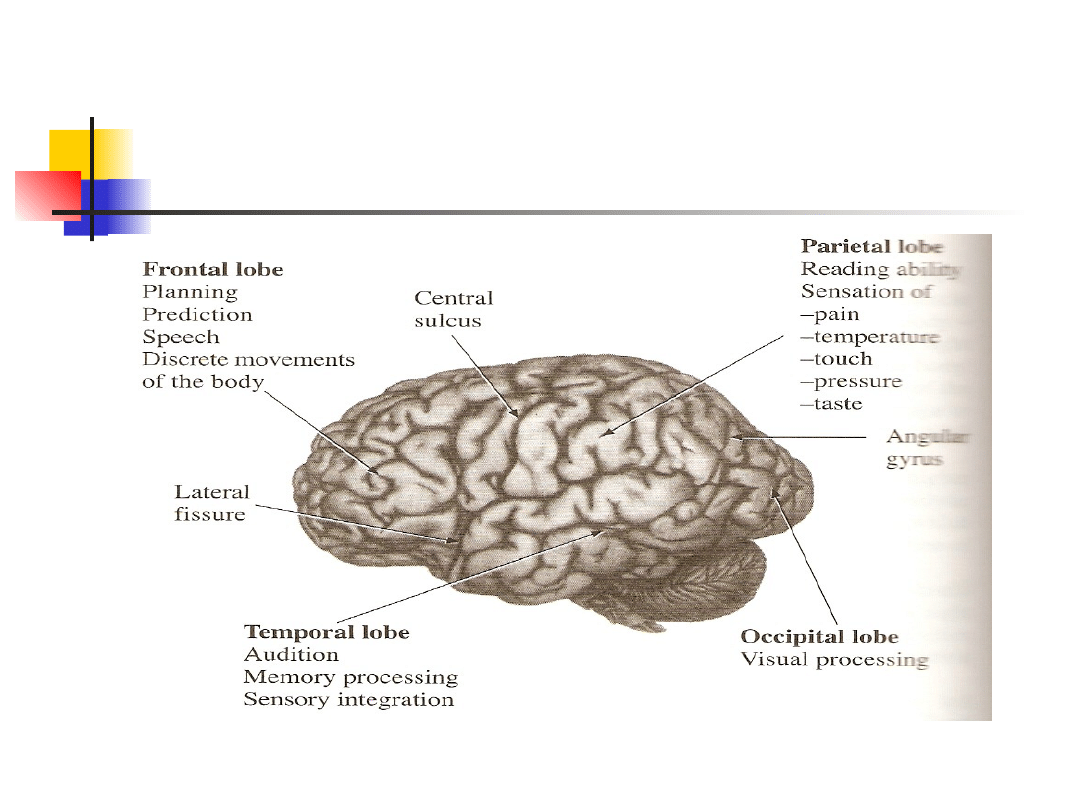
Parts of the human brain and
their functions
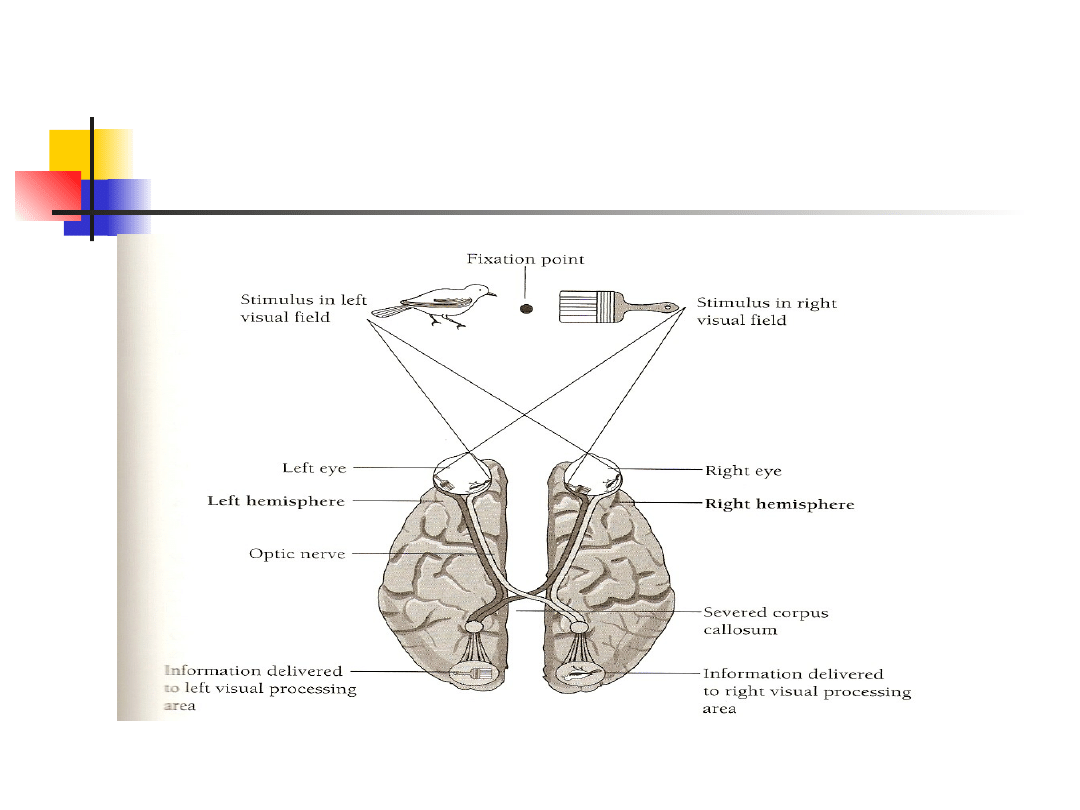
Lateralisation

Aphasia
Aphasia – language deficit caused by damage to the
brain.
Broca’s aphasics – speech is very halting and they find
it difficult to accurately produce phonemes, e.g.
It’s hard to eat with a spoon.
[...har.i:t....wit...pun]
Fluent aphasia – patients do not have problems
producing fluent speech but cannot fully control
speech production
Wernicke’s aphasia – speech is fluent, characterised by
good intonation paterns, but the patient hardly ever
makes sense.
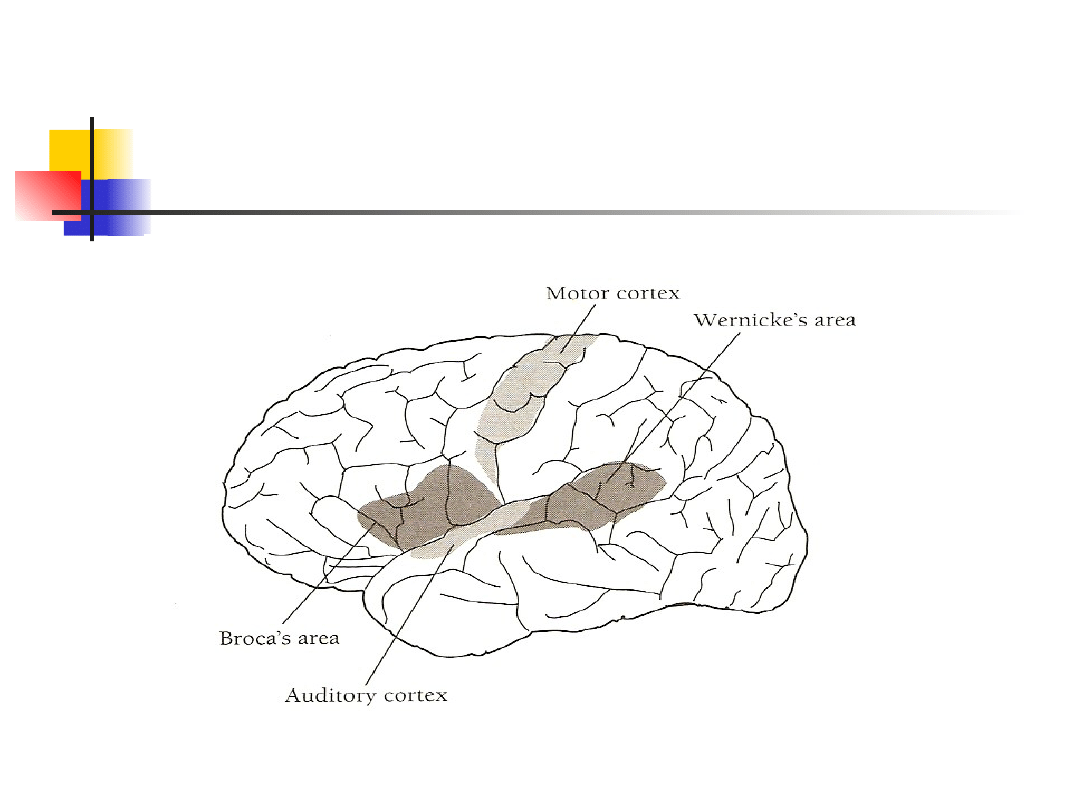
Broca’s and Wernicke’s
area

Critical period hypothesis
Critical period hypothesis – the notion
that a biologically determined period
exists during which language
acquisition must occur, if it is to occur
at all.
Wild children: Genie,
- Mama wash hair in sink.
- At school scratch face.
- Like go ride yellow school bus.

Phonological development –
babbling
Vowels acquired before consonants
Stops acquired before other consonants
Labials acquired before velars and alveolars
New phonemic contrast manifest
themselves first in word-initial position
High-frequency sounds will be acquired
before low-frequency ones (// before //)
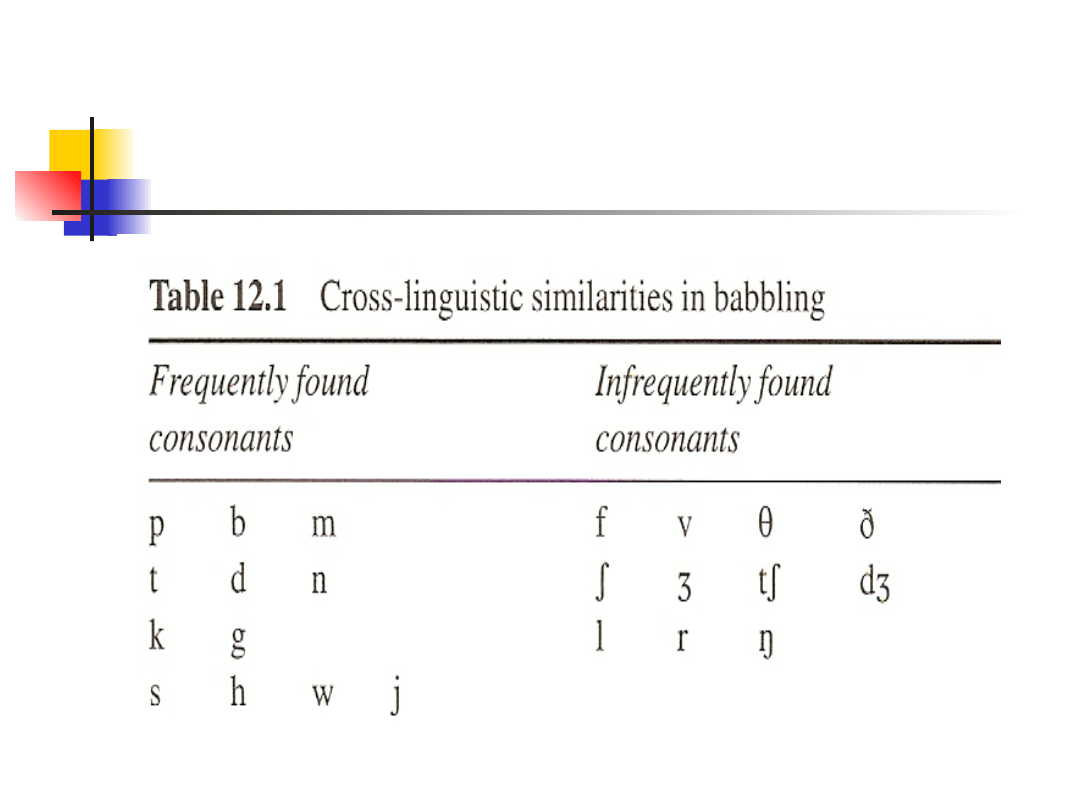
Cross-linguistic similarities in
babbling
Document Outline
- Slide 1
- Slide 2
- Slide 3
- Slide 4
- Slide 5
- Slide 6
- Slide 7
- Slide 8
- Slide 9
- Slide 10
- Slide 11
- Slide 12
- Slide 13
- Slide 14
- Slide 15
- Slide 16
- Slide 17
- Slide 18
- Slide 19
- Slide 20
- Slide 21
Wyszukiwarka
Podobne podstrony:
Lecture XIV First language acquisition
Lecture XV Second language acquisition
First Language Acquisition
Explaining the first language acquisition overview of theories 4
Year II SLA #3 Theories of First Language Acquisition
Year II SLA #2 First Language Acquisition
First Language Acquisition Vs Second Language Learning
Han, Z H & Odlin, T Studies of Fossilization in Second Language Acquisition
Lecture XIII
3 Theories of the First language?quisition
First language aquisition and its implications for language teaching
Language acquisition and univer Nieznany
Han, Z H & Odlin, T Studies of Fossilization in Second Language Acquisition
part3 25 Pragmatics and Language Acquisition
Han and Odlin Studies of Fossilization in Second Language Acquisition
Age and Second Language Acquisition and Processing
więcej podobnych podstron