
c
IB DIPLOMA PROGRAMME
PROGRAMME DU DIPLÔME DU BI
PROGRAMA DEL DIPLOMA DEL BI
M06/4/PHYSI/HP2/ENG/TZ1/XX/M+
22 pages
MARKSCHEME
May 2006
PHYSICS
Higher Level
Paper 2

– 2 –
M06/4/PHYSI/HP2/ENG/TZ1/XX/M+
This markscheme is confidential and for the exclusive use of
examiners in this examination session.
It is the property of the International Baccalaureate and must not
be reproduced or distributed to any other person without the
authorization of IBCA.
– 6 –
M06/4/PHYSI/HP2/ENG/TZ1/XX/M+
SECTION A
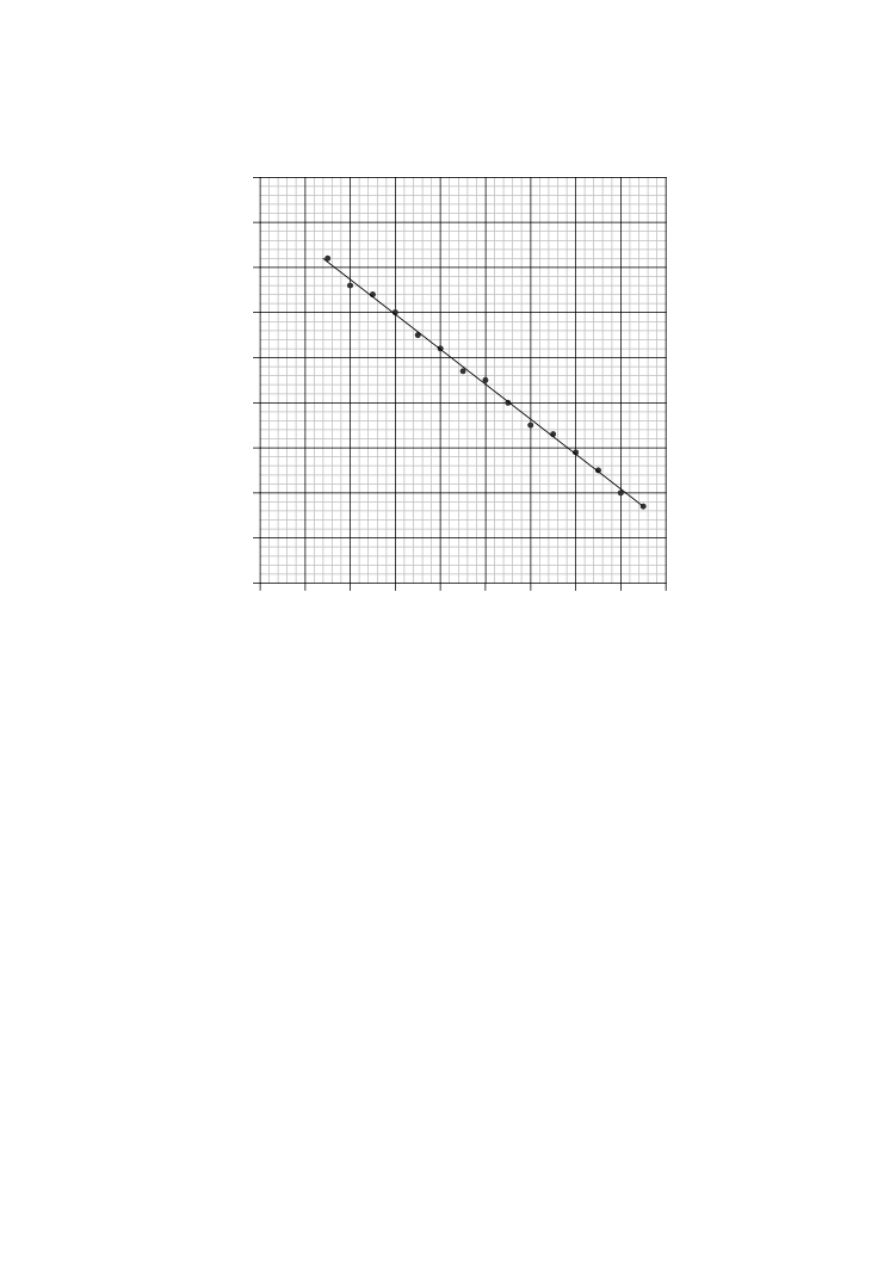
A1. (a)
h / cm
17.0
16.0
15.0
14.0
13.0
12.0
11.0
10.0
9.0
8.0
0
10
20 30 40 50 60
70 80
90
/ C
θ
°
(i)
sensible line of fit with reasonable distribution of points either side of line;
[1]
(ii)
0
16.2( 0.2) cm
h
=
±
;
[1]
(b) this is a straight-line graph so has equation of the form
y mx c
=
+
;
0
0
0
(1
) gives
h h
k
h h
h k
θ
θ
=
−
=
−
;
0
m
h k
= −
;
0
c h
= ;
[4]
essentially
look
for:
stating equation of a straight-line graph, showing that
0
(1
)
h h
k
θ
=
−
can be written
in this form, identifying m and c.

– 7 –
M06/4/PHYSI/HP2/ENG/TZ1/XX/M+
(c)
0
0
( )
gradient
;
.
If credit for m
h k has not been given in b
k
then it can be given if this statement is correct
h
= −
⎫
=
⎬
⎭
gradient
0.077 ( 0.003)
=
±
;
therefore,
0.077
16.2
k
=
;
3
1
4.8 10 deg C
−
−
≈
×
Or
Allow use of a point on line of best fit i.e. choice of data point from line of best fit;
correct substitution into h = h
0
(1 - k
θ
);
correct rearrangement essentially showing that
0
1
(1
)
h
k
h
θ
=
−
;
[3]
Accept range of answers for the gradient between
3
4.9 10
−
×
and
3
4.6 10
−
×
.
(d) estimate:
gradient
h
r
=
;
gradient
5
1.5( 0.2) 10
−
=
±
×
;
5
7
1.5 10
6.0( 0.8) 10 m
25
r
−
−
×
=
=
±
×
;
comment:
this is very small so it is unlikely that capillary action is the only mechanism /
OWTTE / this assumes that the direct proportion holds for values of h up to
25m
/
OWTTE;
[4]
Accept ECF based on estimate only if comment is reasonable and consistent. If numerical
value is correct, then award the mark for a plausible explanation (e.g. reference to molecular
forces) as to why this is a reasonable value.

– 8 –
M06/4/PHYSI/HP2/ENG/TZ1/XX/M+
A2. (a) translational equilibrium: sum of the (net) forces acting is zero;
rotational equilibrium: sum of the (net) torques / moments of the forces is zero;
[2]
(b)
(i)
5.00
kN;
[1]
(ii) appreciate to take moments;
moments
about
A:
B
8.80 1.50 2.00 3.50 3.80
N
×
=
×
+
×
;
to
give
B
1.85kN
N
=
;
therefore,
A
5.00 1.85 3.15kN
N
=
−
=
;
Or
appreciate to take moments;
by moments about B :
A
8.80 1.50 6.80 3.50 5.00
N
×
=
×
+
×
;
to
give
A
3.15kN
N
=
;
therefore,
B
1.85kN
N
=
;
[4]
– 9 –
M06/4/PHYSI/HP2/ENG/TZ1/XX/M+
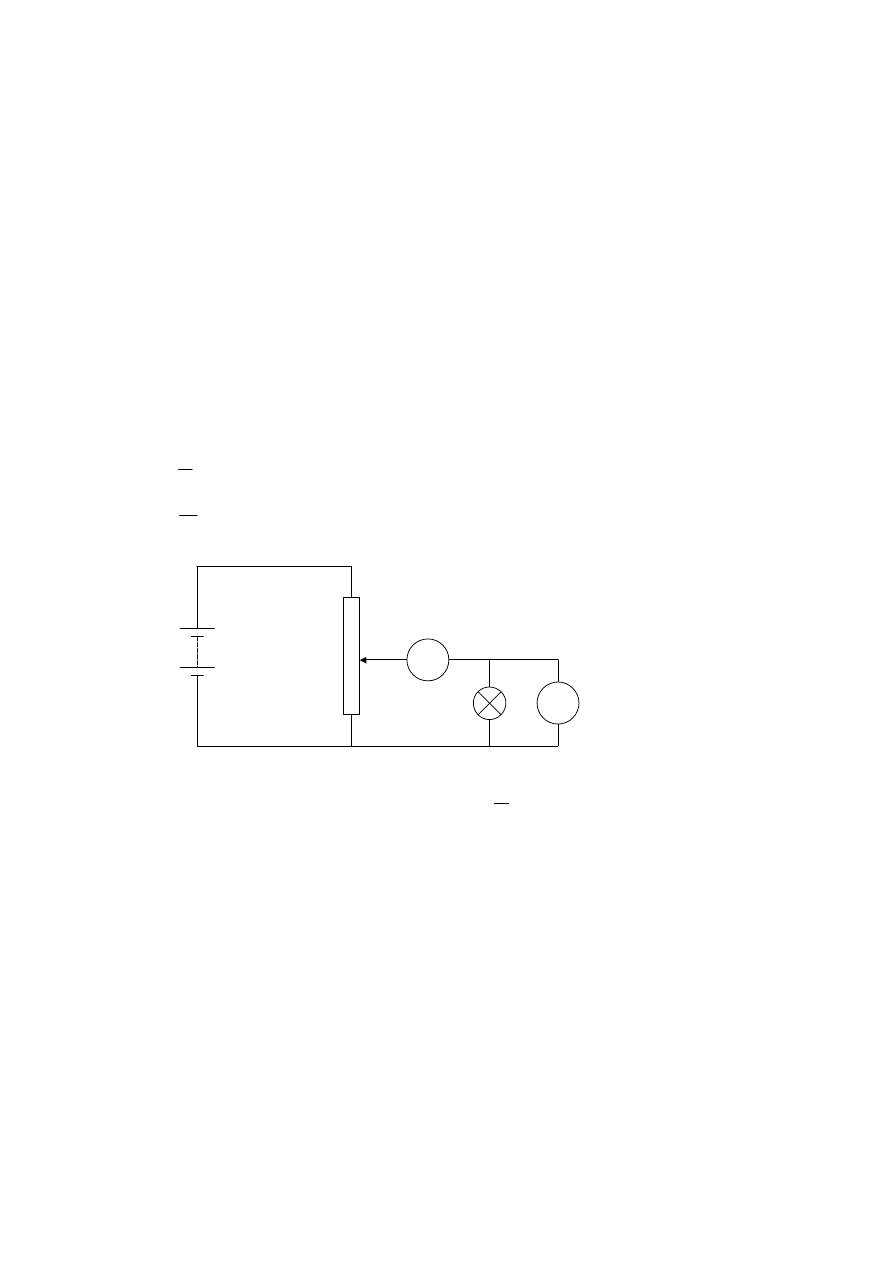
A3. (a) there are no positions;
the lamp is effectively in series with
100 k
Ω
no matter what the position of S;
this means that the pd across it will always be close to zero (very small) / never
reach 6 V;
Or
there are no positions;
the resistance of the filament is much smaller that
100 k
Ω
;
so (nearly) all the potential of the battery appears across the variable resistance;
[3]
Award [1] max for correct answer with no argument or incorrect argument.
Anthropomorphic answers such “battery has a lot of resistance to overcome”
score [1] max. Must mention that voltmeter is effectively in series with battery to
get full marks.
(b)
V
I
R
=
;
12
0.80 A
15
=
=
;
[2]
(c)
A
V
S
12 V
correct position of ammeter;
correct position of voltmeter (either to the right or left of the lamp);
[2]
– 10 –
M06/4/PHYSI/HP2/ENG/TZ1/XX/M+
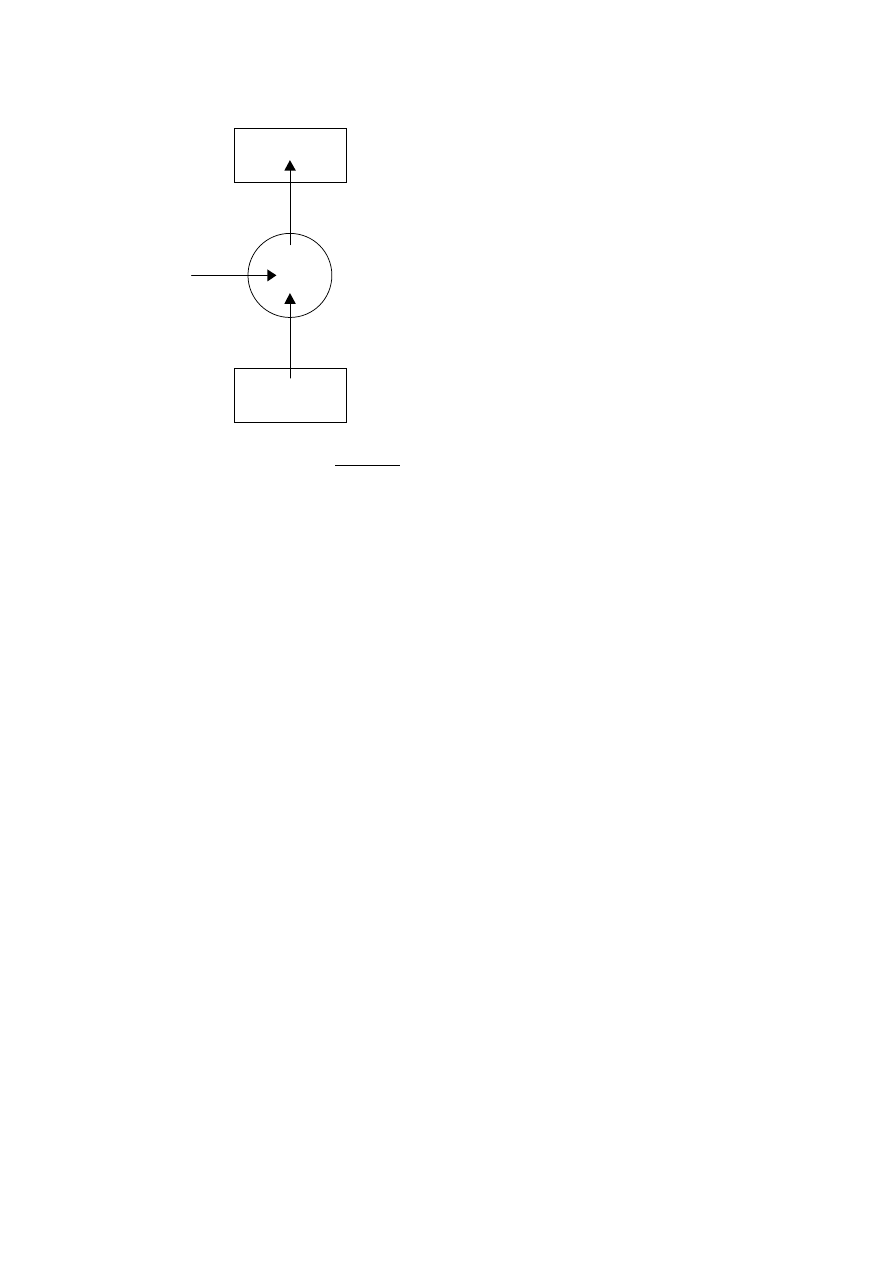
A4. (a)
[3]
Award
[1] for the correct direction and labelling of each arrow.
(b)
(i)
C
D
→
vaporization / change of phase to gas (vapour);
A
B
→
condensation / change of phase to liquid;
[2]
Do not accept answers explaining just the isobaric nature of the change.
Explaining the isothermal nature of the changes by using
Q W
=
is not
sufficient.
(ii)
absorbed
C
D
→
/
C
D
→
and
B
C
→
;
ejected
A
B
→
/
A
B
→
and
A
D
→
;
[2]
(iii) the area enclosed by ABCD;
[1]
hot reservoir
cold reservoir
W
H
Q
C
Q

– 11 –
M06/4/PHYSI/HP2/ENG/TZ1/XX/M+
SECTION B
B1. Part 1 Kepler’s third law
(a) (i)
the orbits are elliptical / not circular;
[1]
Do not accept “because R changes”.
(ii)
gravity
/
gravitational;
[1]
(iii)
s
2
M m
F G
R
=
;
[1]
Same symbols as in question must be used to receive the mark.
(iv)
let
v
= the speed of planet, the acceleration is then
2
v
R
=
from
Newton
2,
F
= G
M
s
m
R
2
=
mv
2
R
;
Some reference to Newton 2
is required to receive this mark.
⎧
⎨
⎩
2 R
v
T
π
=
;
therefore,
2
2
s
2
4
M m
mR
G
R
T
π
=
=
;
therefore,
2
2
3
s
4
T
R
GM
π
=
;
[4]
2
s
4
so K
GM
π
=
Be aware of the many simple variants of this e.g. using
2
2
2
4 R
a
R
T
π
ω
=
=
.
(b) (i)
recognize that gravitational field strength
2
2
2
4
v
R
R
T
π
=
=
;
9
5 2
40 1.1 10
(6.2 10 )
×
×
=
×
;
1
0.1N kg
−
=
[2]
(ii)
2
2
3
s
4
T
R
GM
π
=
therefore,
2
3
2
4
jup
R
M
GT
π
=
;
2
3
27
11
5 2
4π
(1.1) 10
6.7 10
(6.2 10 )
jup
M
−
×
×
=
×
×
×
;
27
2.0 10 kg
≈
×
;

– 12 –
M06/4/PHYSI/HP2/ENG/TZ1/XX/M+
Or
2
0.1
GM
R
=
;
2
0.1R
M
G
=
;
9 2
11
0.1 (1.1 10 )
6.7 10
−
×
×
=
×
27
2.0 10 kg
≈
×
;
[3]
Part 2 Heating water electrically
(a) (energy is transferred) by conduction through the insulation of the element / OWTTE;
(energy is then transferred) by the bulk motion of the water / convection through
the water / OWTTE;
the element will also radiate some energy which will be absorbed by the water /
OWTTE;
[3]
(b) energy supplied by heater in
3
1s 7.2 10 J
=
×
;
energy
per
second
= mass per second
×
sp ht
×
rise in temperature;
4
3
7.2 10
mass per second 4.2 10
26
×
=
×
×
×
;
to give mass per second
0.066 kg
=
/ flow rate = 0.066kg s
-1
;
[4]
(c) energy is lost to the surroundings;
flow rate is not uniform;
[2]
Do not allow “the heating element is not in contact with all the water flowing in the unit”.
Accept answers that imply that there will be a temperature gradient between element and wall
of pipe. Do not accept answers such as “element will not heat water uniformly”.
(d)
,
P
P VI I
V
=
=
;
3
7.2 10
30 A
240
×
=
=
;
[2]
(e) when operating at
7.2 kW
the element is at a higher temperature / hotter than
when first switched on;
therefore, resistance is greater (and so current is smaller) / OWTTE;
Or
element is cold / OWTTE when first switched on;
therefore,
smaller
resistance
than
when hot (and so current is larger);
[2]

– 13 –
M06/4/PHYSI/HP2/ENG/TZ1/XX/M+
(f)
(i)
2
V
P
R
=
;
2
2
240
110
240
110
R
R
=
;
2
110
240
110
240
R
R
⎛
⎞
= ⎜
⎟
⎝
⎠
;
0.21
=
Or
from
P VI
=
2
1
2
1
11
240
110 to give
24
I
I
I
I
=
=
;
2
2
2
2
1
1
I R
I R
=
;
2
2
1
2
2
2
1
11
24
R
I
R
I
⎛
⎞
=
= ⎜ ⎟
⎝
⎠
;
0.21
=
[3]
(ii) to get equivalent power, heating elements must have lower resistance;
therefore, they have to be physically larger so more expensive / take up more
space;
Or
smaller voltage supply needs larger current;
so thicker cables therefore, more expensive / take up more space;
[2]
– 14 –
M06/4/PHYSI/HP2/ENG/TZ1/XX/M+
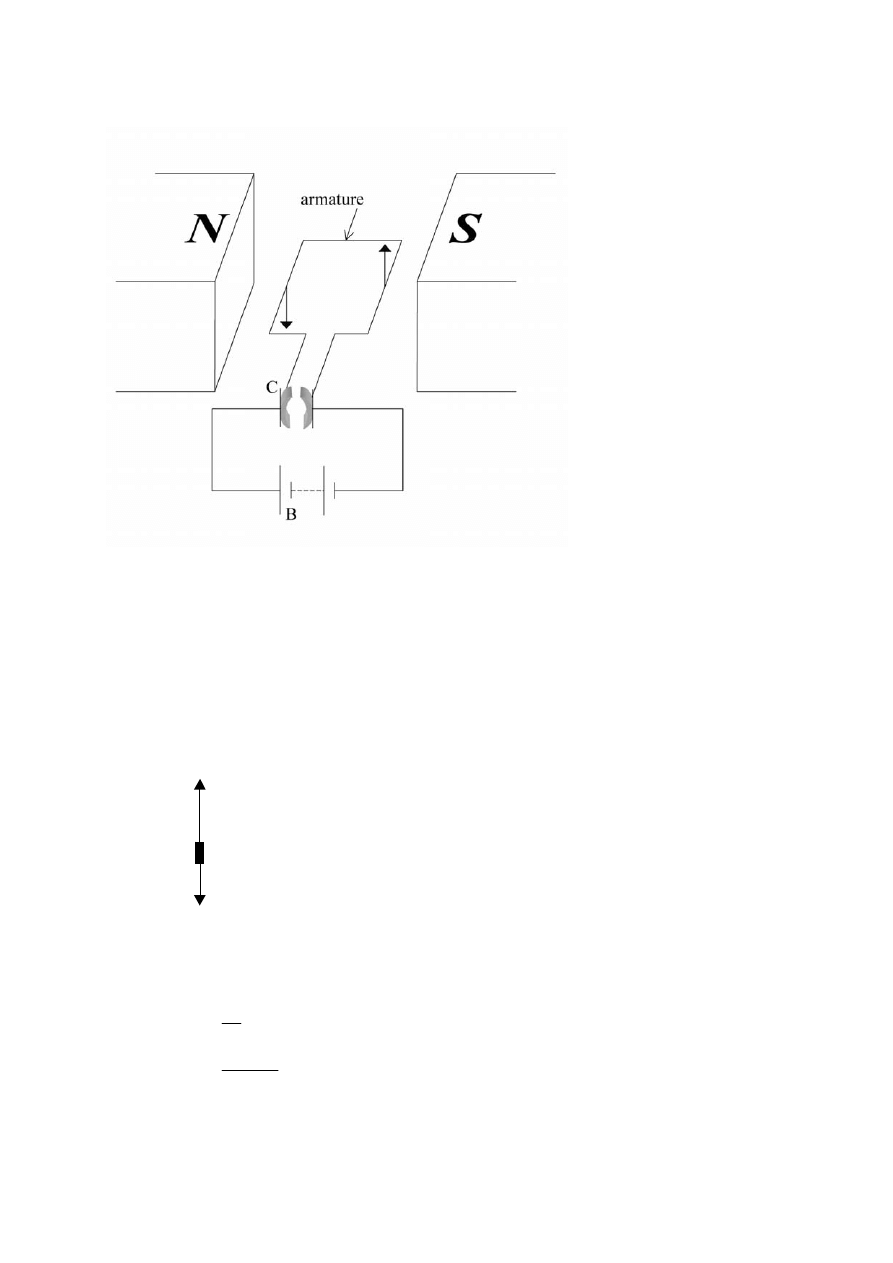
B2.
(a) (i)
showing connection via brushes,
[1]
(ii)
two
correct
forces;
[1]
(iii) when the split ring is in contact with the brushes the current in the coil will
always be in the same direction / OWTTE;
some statement to the effect that this will be so even after the coil has
rotated through
180
D
and sides of coil are reversed;
when the split ring is not in contact with the brushes, the momentum of the
coil will keep it rotating / OWTTE;
[3]
(b)
(i)
tension in thread
weight of object
tension
in
thread;
weight (of object) / mg;
tension
length
>
weight length;
[3]
(ii)
2
2s
a
t
=
;
2
2
2 0.84
0.35m s
(2.2)
−
×
=
=
;
T mg ma
−
=
;
(
) 0.015 10.35 0.16 N
T
m g a
=
+
=
×
=
;
[4]

– 15 –
M06/4/PHYSI/HP2/ENG/TZ1/XX/M+
(c) (i)
measure the time it takes the object to go successive distances of say 10 cm / any
realistic length given or implied;
if the times are equal then speed is constant / OWTTE;
[2]
(ii) increase in potential energy
0.015 10 0.84 0.13J
=
× ×
=
;
rate
of
working
= power input
0.13
0.037 W
3.4
=
=
;
[2]
(iii) power input to motor
6.0 0.045 0.27 W
VI
=
=
×
=
;
0.037
0.14
0.27
out
in
P
Eff
P
=
=
=
or
14 %
;
[2]
(d)
lg( )
E
against
lg( )
I
;
lg( ) lg( )
lg( )
E
k
n
I
=
+
;
slope/gradient
n
= ;
[3]
(e) (i)
a magnetic flux links the coil;
as the coil rotates the flux linkage changes with time;
therefore, from Faraday’s law an e.m.f. will be induced;
[3]
(ii) the faster the speed of rotation, the greater the flux change;
Faraday’s law states that the e.m.f. is equal/proportional to the rate of change of
flux;
[2]
(iii) the amount of flux linking the coil changes with the angle that the coil
makes with the magnetic field /
OWTTE;
[1]
(f)
(i)
any maximum/minimum value of
V;
[1]
(ii)
from
the
graph
0
2.0 V
V
=
;
therefore,
0
rms
1.4V
2
V
V
=
=
;
[2]

– 16 –
M06/4/PHYSI/HP2/ENG/TZ1/XX/M+
B3. Part 1 Sound waves
Production of sound waves
(a) the direction in which energy (of the wave) is propagated;
for a transverse wave it is at right angles to the direction of vibration of the
particles (of the medium through which the wave is travelling);
for a longitudinal wave the direction of energy propagation is in the same
direction as the vibration of the particles;
[3]
Accept answers based on diagrams for full marks provided direction of energy
transfer and direction of oscillation are clear on the diagram.
(b)
(i)
longitudinal;
it is likely that the hammer will set the atoms of the rod to vibrate in the
same direction as the direction of the motion of the hammer / OWTTE;
Award [0] if no explanation or poor explanation.
Or
hammer would not experience a rebounding force (if wave were not longitudinal)
/OWTTE;
some reference to direction of propagation of energy being along the length of the rod;
[2]
(ii)
3.00 m
s
=
;
3
1
4
3.00
5.00 10 ms
6.00 10
s
v
t
−
−
= =
=
×
×
;
[2]
Watch out for incorrect answers based on
v
f
λ
=
and
4
1
1667 Hz
6 10
f
−
=
=
×
! it can give the correct numerical result with a
completely wrong argument.
(iii) the hammer blow/pulse sets the rod vibrating;
the vibration of the rod causes the air molecules in contact with the rod to
vibrate;
thereby setting up a longitudinal wave in the air/creates the sound/OWTTE;
[3]
(iv)
v
f
λ
= ;
3
3
5.00 10
3.00 m
1.67 10
×
=
=
×
;
some statement to recognize that this wavelength corresponds to the
fundamental mode standing wave e.g. for the fundamental
2l
λ
=
;
[3]

– 17 –
M06/4/PHYSI/HP2/ENG/TZ1/XX/M+
Interference of sound waves
(c) (i) the sound from the two sources undergo interference / some statement that
recognizes that interference is occurring;
when the path difference between the sources is an integral number of
wavelengths there is maximum interference and minimum when the path
difference is an odd integral number of half wavelengths;
some statement that the path difference is altering as
1
S moves;
[3]
(ii)
path
difference
2
λ
=
;
to
give
0.16 m
λ
=
;
[2]
(iii)
1
S X
= one wavelength
0.082 m
=
;
1
0.082 4100 340 ms
v
f
λ
−
=
=
×
=
;
[2]
Accept ECF for those candidates who use the incorrect wavelength from
(ii).

– 18 –
M06/4/PHYSI/HP2/ENG/TZ1/XX/M+
Part 2 Radioactive decay
(a)
proton/
1
1
H
/ p
+
;
[1]
(b) (i)
no more C-14 / carbon dioxide is taken in when a tree is dead;
the amount of C-14 determines the activity (of the charcoal);
(since C-14 is radioactive) the amount present (in the charcoal) decreases
with time / OWTTE;
[3]
(ii)
0
t
N
N e
λ
−
=
ln 2
T
λ
=
;
4
1
1.3 10 yr
−
−
=
×
;
activity
A
N
∝
therefore,
0
t
A A e
λ
−
=
;
therefore,
4
(1.3 10 )
2.1
0.22
9.6
t
e
−
−
×
=
=
;
to
give
4
1.2 10 yr
t
=
×
;
[5]
Do not accept answers that use arguments based on proportionality or
approximate number of half-lives.
(iii) so little radioactive carbon left to make detection difficult/inaccurate/
OWTTE /
difficult to distinguish activity from background count / OWTTE;
[1]
– 19 –
M06/4/PHYSI/HP2/ENG/TZ1/XX/M+
B4. Part
1 Momentum
(a) if the total (or net) external force acting on a system is zero / for an isolated system;
the momentum of the system is constant/momentum before collision equals
momentum after collision;
[2]
Award [1] for “momentum before (collision)
= momentum after (collision)”.
(b) (i)
(a collision in which) kinetic energy is not lost / kinetic energy is conserved;
[1]
(ii) the momentum of the puck is not conserved since a force acts on it during
collision / OWTTE;
the rink is attached to the Earth and momentum is given to the Earth such
that the change in momentum of the puck is equal to the change in
momentum of the Earth / OWTTE;
Or
the momentum of the Earth and puck are conserved / OWTTE;
the change in momentum of the puck is equal and opposite to the change in
momentum of the Earth;
[2]
This is a discussion so more than bald statements are required e.g. identification
of system and some explanation.
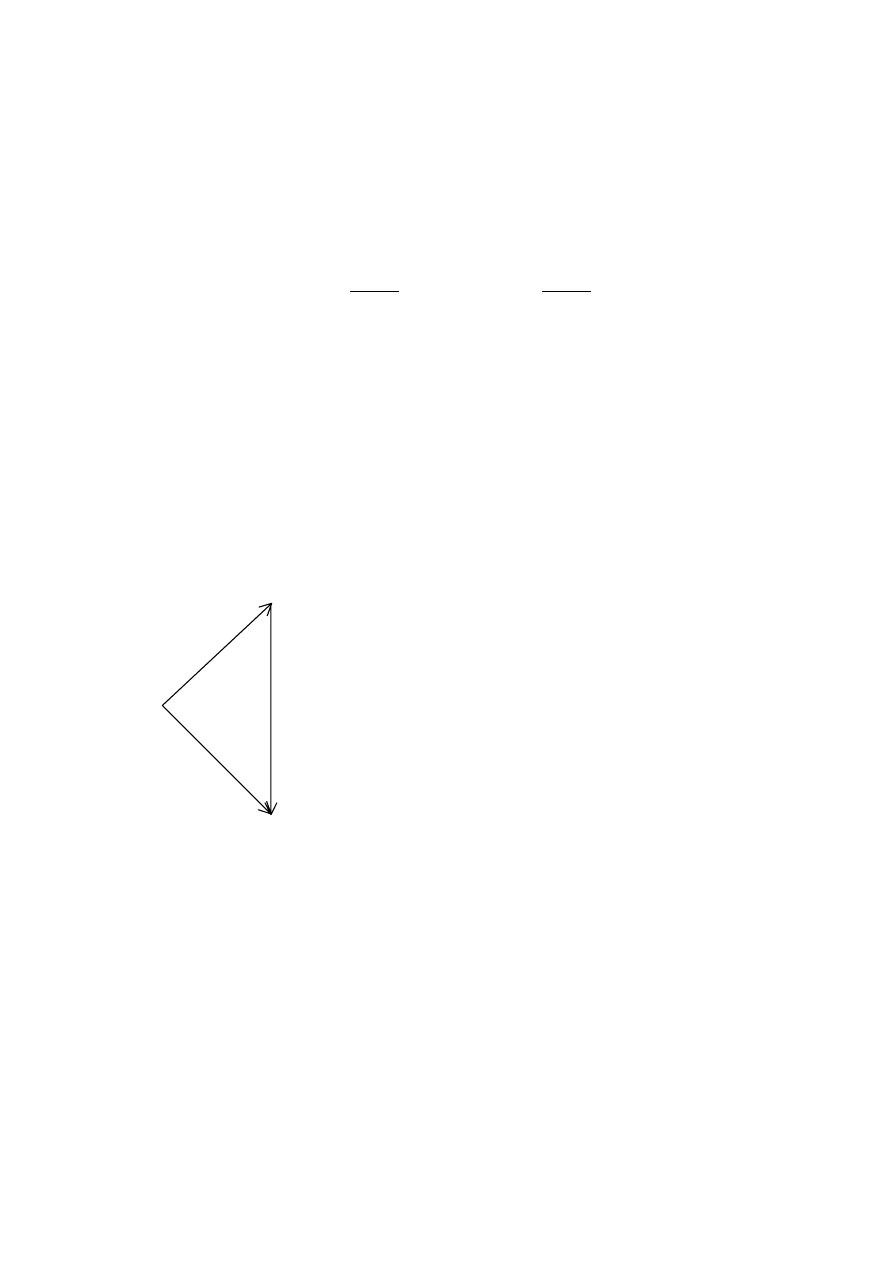
(c)
vector 5.0 cm long;
at right angles to initial vector as shown;
By eye is sufficient.
resultant
vector
as
shown;
stated
length
7.1( 0.2) cm
=
±
equivalent to
0.71( 0.2) N s
±
;
Length should be checked.
.

– 20 –
M06/4/PHYSI/HP2/ENG/TZ1/XX/M+
Or
Second vector at right angles to first;
And of equal length;
Difference shown as a vertical vector;
Of magnitude
2
2
0.5
0.5
+
;
0.71 N s
=
[4]
Caution
: Many students are obtaining instead the sum of the two momenta rather than the
difference
. In this case the numerical answer is the same for the magnitude so watch out.
(d)
3
0.71
59 N
12 10
p
F
t
−
∆
=
=
=
∆
×
;
this is the average force and from the graph it can be seen that
av
2
F
F
=
;
therefore,
120 N
F
=
;
Or
area under graph is
0.71 N s
p
∆ =
;
area is
max
1
2
F
t
∆
;
and so
max
3
2 0.71
120 N
12 10
F
−
×
=
=
×
;
[3]

– 21 –
M06/4/PHYSI/HP2/ENG/TZ1/XX/M+
Part 2 The quantum nature of radiation
The photoelectric effect
(a) light consists of photons /photons are incident on the surface;
the energy of each photon
hf
=
where h is the Planck constant;
a certain amount of energy, the work function
φ is required to remove an electron
from the metal surface;
if
f
h
φ
<
then no electrons will be emitted;
[4]
In view of the question, these precise points are needed for [4], allow [2 max] for
a purely qualitative answer.
(b)
(i)
15
1.1 10 Hz
×
;
[1]
(ii)
K
e E
hf
φ
=
− ;
slope
of
graph
h
e
=
;
slope
15
4.2( 0.4) 10
−
=
±
×
;
h = 4.2(± 0.4) × 10
−15
× 1.6 × 10
−19
= 6.7× 10
−34
J s
;
[4]
Accept answers in the range
34
6.1 10
J s
×
−
and
34
7.4 10
J s
−
×
.
Note: the answer must show that the graph has been used – if not, award [0]
as this could have been taken from the data book. Award full points for
correct answers using just one point on the line or two points and a system
of equations to eliminate the work function.
(iii)
0
hf
φ
=
;
15
34
19
1.1 10
6.7 10
7.4 10
J
−
−
=
×
×
×
=
×
;
[2]
Accept answers in the range
19
6.7 10
J
−
×
and
19
8.1 10
J
−
×
.
The value of h from part (ii) must be used.
– 22 –
M06/4/PHYSI/HP2/ENG/TZ1/XX/M+
X-rays
(c)
(i)
2
1
2
Ve
mv
=
;
3
19
31
2
2 25 10 1.6 10
9.1 10
Ve
v
m
−
−
× ×
×
×
=
=
×
;
8
1
10 m s
−
≈
[2]
(ii)
hc
Ve
λ
=
;
34
8
3
19
6.6 10
3 10
25 10 1.6 10
hc
Ve
λ
−
−
×
× ×
=
=
×
×
×
;
11
5 10 m
−
≈ ×
;
[2]
Accept
10
10
m
−
.
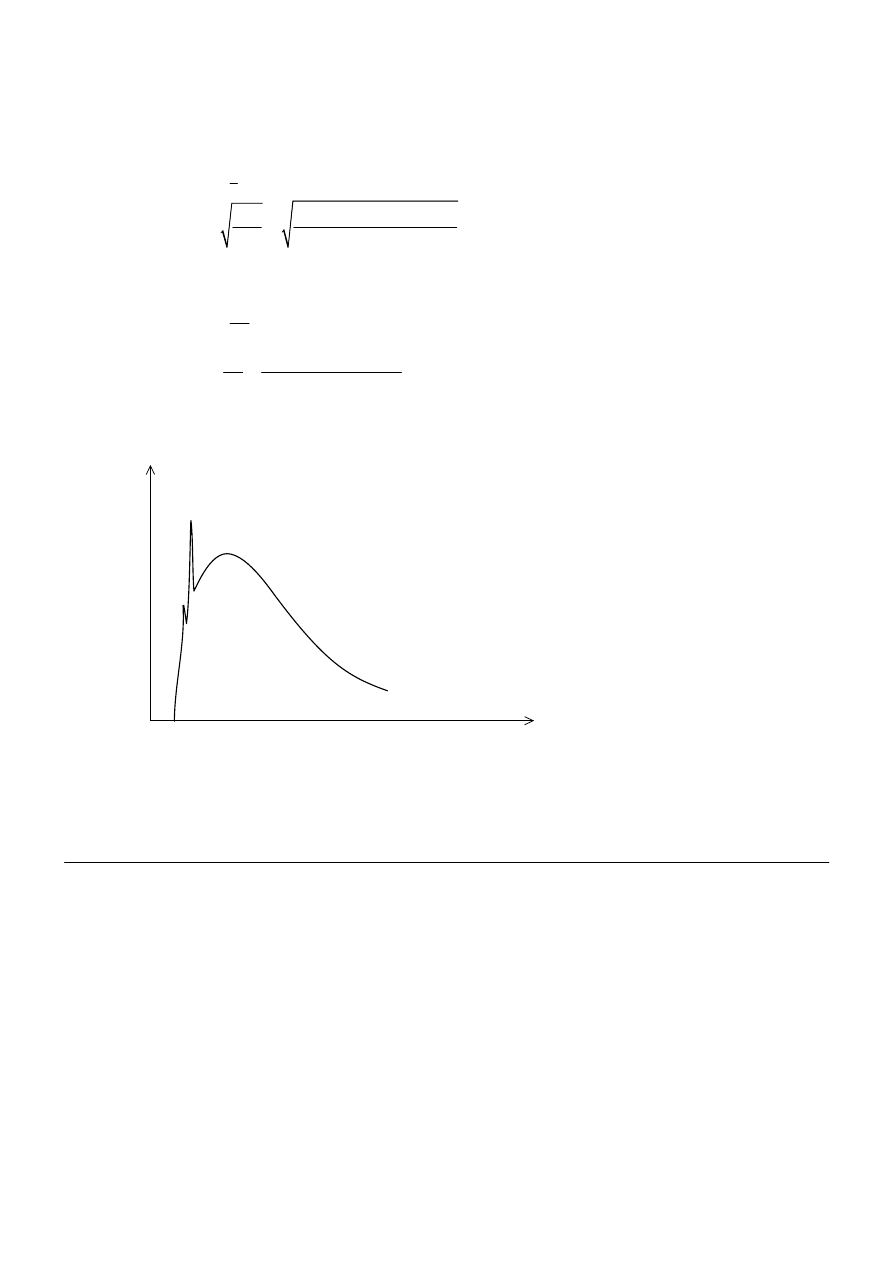
(d)
continuous spectrum with cut off;
and with reasonable tail;
characteristic
peak(s);
[3]
Wyszukiwarka
Podobne podstrony:
E Physics HL paper 2 TZ1 M07 E
M Physics HL paper 2 TZ1 M07 E
Physics HL paper 1 TZ1 M
M Physics HL paper 1 TZ1 M07 E
Physics HL paper 3 TZ1 M
E Physics HL paper 1 TZ1 M07 E
M Physics HL paper 2 TZ2 M07 E
E Physics HL paper 1 TZ2 M07 E
M Physics HL paper 1 TZ2 M07 E
E Physics HL paper 2 TZ2 M07 E
Chemistry HL paper 2 TZ1
May 2002 History HL Paper 3 EU
Nov 2003 History Europe HL paper 3
Mathematics HL paper 3 discrete mathematics
Chemistry HL paper 2 TZ2mk
Mathematics HL paper 3 series and differential equations 001
Mathematics HL paper 3 discrete mathematics 001
Mathematics HL paper 3 statistics and probability 001
Nov 2001 History HL Paper 3
więcej podobnych podstron