
2207-6514
34 pages
M07/4/PHYSI/HP2/ENG/TZ2/XX+
Wednesday 2 May 2007 (afternoon)
physics
hiGhER lEvEl
papER 2
IB DIPLOMA PROGRAMME
PROGRAMME DU DIPLÔME DU BI
PROGRAMA DEL DIPLOMA DEL BI
INSTRUCTIONS TO CANDIDATES
•
Write your session number in the boxes above.
•
Do not open this examination paper until instructed to do so.
•
Section A: answer all of Section A in the spaces provided.
•
Section B: answer two questions from Section B in the spaces provided.
•
At the end of the examination, indicate the numbers of the questions answered in the candidate box
on your cover sheet.
2 hours 15 minutes
Candidate session number
0
0
© IBO 2007
22076514
0134
2207-6514
– 2 –
M07/4/PHYSI/HP2/ENG/TZ2/XX+
sEction a
Answer all the questions in the spaces provided.
a1. The question is about investigating a fireball caused by an explosion.
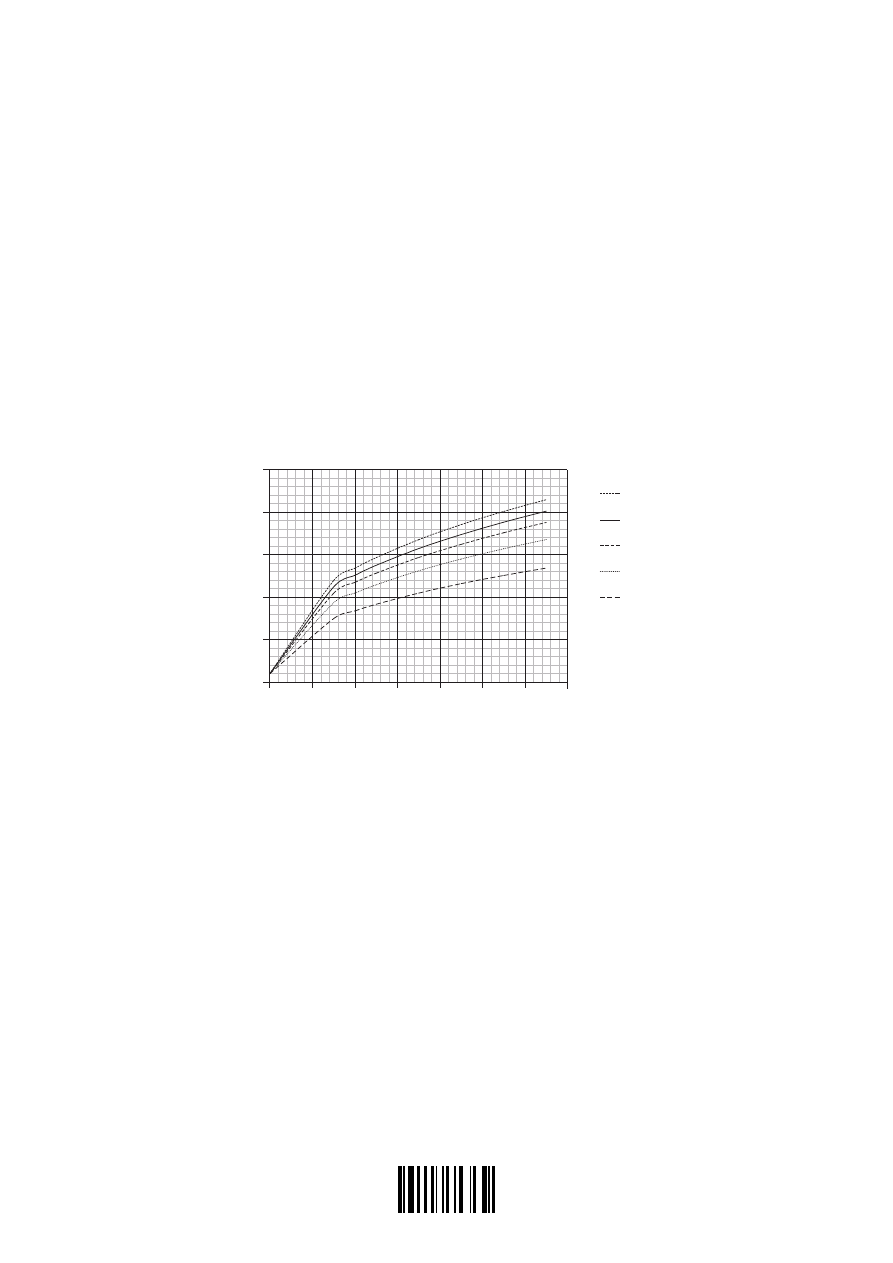
When a fire burns within a confined space, the fire can sometimes spread very rapidly in the
form of a circular fireball. Knowing the speed with which these fireballs can spread is of
great importance to fire-fighters. In order to be able to predict this speed, a series of controlled
experiments was carried out in which a known amount of petroleum (petrol) stored in a can
was ignited.
The radius
R of the resulting fireball produced by the explosion of some petrol in a can was
measured as a function of time t. The results of the experiment for five different volumes of
petroleum are shown plotted below. (Uncertainties in the data are not shown.)
R / m
25
20
15
10
5
0
Key:
30 10
–3
m
3
25 10
–3
m
3
15 10
–3
m
3
10 10
–3
m
3
5.0 10
–3
m
3
0
10 20 30 40 50 60 70
t / ms
(a) The original hypothesis was that, for a given volume of petrol, the radius R of the fireball
would be directly proportional to the time t after the explosion. State two reasons why
the plotted data do not support this hypothesis.
1.
. . . . . . . . . . . . . . . . . . . . . . . . . . . . . . . . . . . . . . . . . . . . . . . . . . . . . . . . . . . . . . . . . .
. . . . . . . . . . . . . . . . . . . . . . . . . . . . . . . . . . . . . . . . . . . . . . . . . . . . . . . . . . . . . . . . . .
2.
. . . . . . . . . . . . . . . . . . . . . . . . . . . . . . . . . . . . . . . . . . . . . . . . . . . . . . . . . . . . . . . . . .
. . . . . . . . . . . . . . . . . . . . . . . . . . . . . . . . . . . . . . . . . . . . . . . . . . . . . . . . . . . . . . . . . .
[2]
(This question continues on the following page)
0234
2207-6514
– 3 –
turn over
M07/4/PHYSI/HP2/ENG/TZ2/XX+
(Question A1 continued)
(b) The uncertainty in the radius is 0.5 m. The addition of error bars to the data points would
show that there is in fact a systematic error in the plotted data. Suggest one reason for this
systematic error.
. . . . . . . . . . . . . . . . . . . . . . . . . . . . . . . . . . . . . . . . . . . . . . . . . . . . . . . . . . . . . . . . . . . . . . .
. . . . . . . . . . . . . . . . . . . . . . . . . . . . . . . . . . . . . . . . . . . . . . . . . . . . . . . . . . . . . . . . . . . . . . .
. . . . . . . . . . . . . . . . . . . . . . . . . . . . . . . . . . . . . . . . . . . . . . . . . . . . . . . . . . . . . . . . . . . . . . .
. . . . . . . . . . . . . . . . . . . . . . . . . . . . . . . . . . . . . . . . . . . . . . . . . . . . . . . . . . . . . . . . . . . . . . .
[2]
(c) Since the data do not support direct proportionality between the radius R of the fireball
and time t, a relation of the form
R = k t
n
is proposed, where k and n are constants.
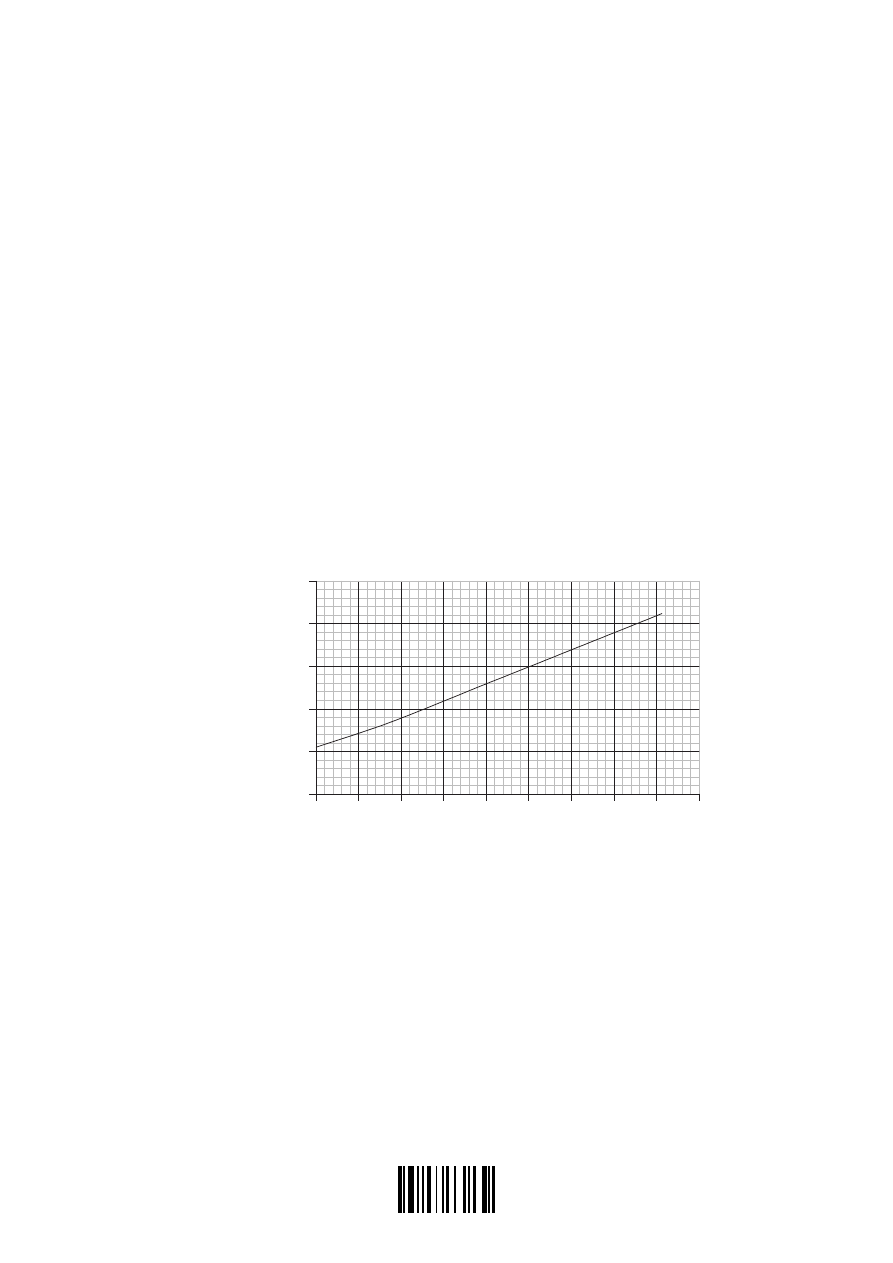
In order to find the value of k and of n, lg(R) is plotted against lg(t). The resulting graph,
for a particular volume of petrol, is shown below. (Uncertainties in the data are not shown.)
lg(R)
1.3
1.2
1.1
1.0
0.9
0.8
1 1.1 1.2 1.3 1.4 1.5 1.6 1.7 1.8 1.9
lg(t)
Use this graph to deduce that the radius R is proportional to t
0.4
. Explain your reasoning.
. . . . . . . . . . . . . . . . . . . . . . . . . . . . . . . . . . . . . . . . . . . . . . . . . . . . . . . . . . . . . . . . . . . . . . .
. . . . . . . . . . . . . . . . . . . . . . . . . . . . . . . . . . . . . . . . . . . . . . . . . . . . . . . . . . . . . . . . . . . . . . .
. . . . . . . . . . . . . . . . . . . . . . . . . . . . . . . . . . . . . . . . . . . . . . . . . . . . . . . . . . . . . . . . . . . . . . .
. . . . . . . . . . . . . . . . . . . . . . . . . . . . . . . . . . . . . . . . . . . . . . . . . . . . . . . . . . . . . . . . . . . . . . .
. . . . . . . . . . . . . . . . . . . . . . . . . . . . . . . . . . . . . . . . . . . . . . . . . . . . . . . . . . . . . . . . . . . . . . .
. . . . . . . . . . . . . . . . . . . . . . . . . . . . . . . . . . . . . . . . . . . . . . . . . . . . . . . . . . . . . . . . . . . . . . .
[4]
(This question continues on the following page)
0334
2207-6514
– 4 –
M07/4/PHYSI/HP2/ENG/TZ2/XX+
(Question A1 continued)
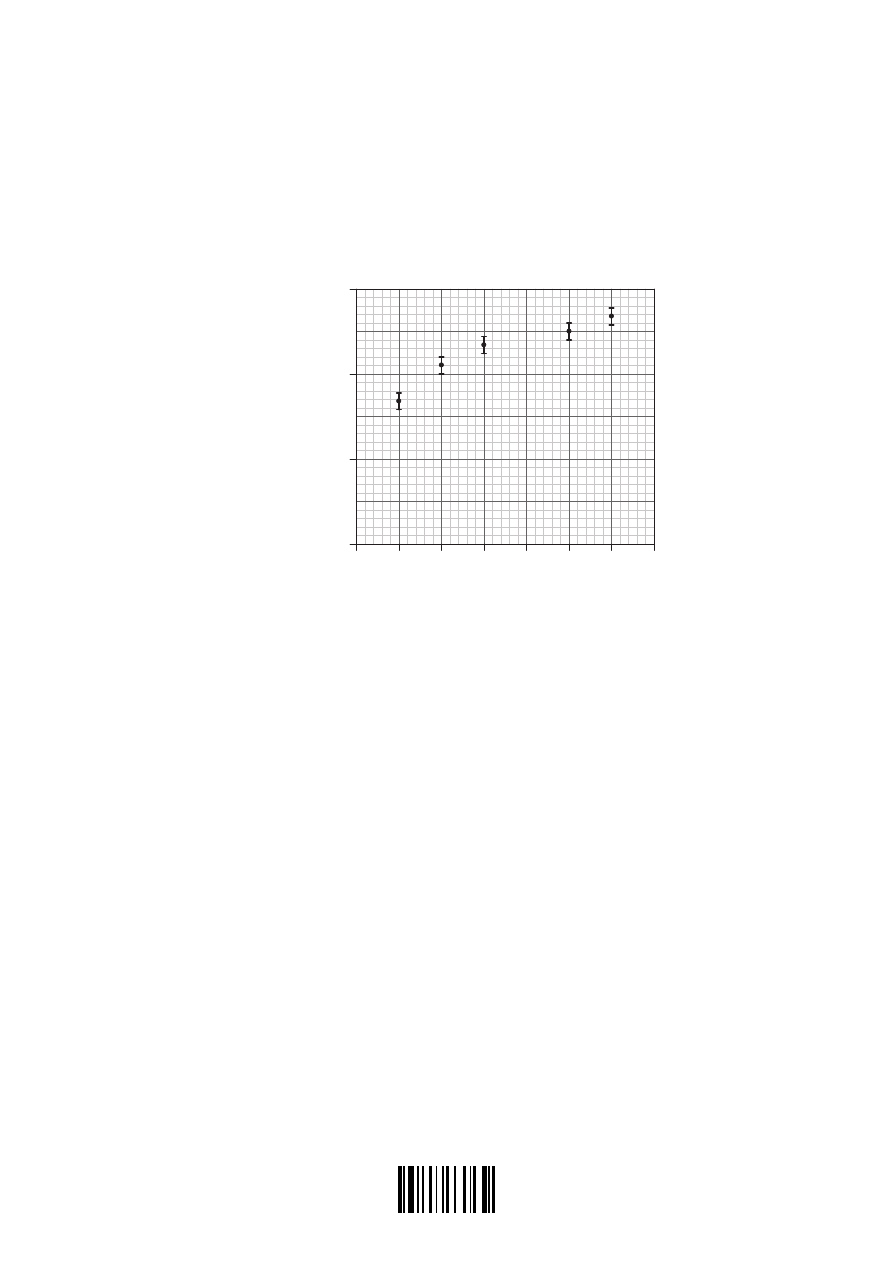
(d) It is known that the energy released in the explosion is proportional to the initial volume
of petrol. A hypothesis made by the experimenters is that, at a given time, the radius of
the fireball is proportional to the energy E released by the explosion. In order to test this
hypothesis, the radius R of the fireball 20 ms after the explosion was plotted against the
initial volume V of petrol causing the fireball. The resulting graph is shown below.
R / m
15
10
5
0
0
5
10 15 20 25 30 35
V / 10
–3
m
3
The uncertainties in R have been included. The uncertainty in the volume of petrol is
negligible.
(i) Describe how the data for the above graph are obtained from the graph in (a).
. . . . . . . . . . . . . . . . . . . . . . . . . . . . . . . . . . . . . . . . . . . . . . . . . . . . . . . . . . . . . . . . . .
. . . . . . . . . . . . . . . . . . . . . . . . . . . . . . . . . . . . . . . . . . . . . . . . . . . . . . . . . . . . . . . . . .
[1]
(ii) Draw the line of best-fit for the data points.
[2]
(iii) Explain whether the plotted data together with the error bars support the hypothesis
that R is proportional to V.
. . . . . . . . . . . . . . . . . . . . . . . . . . . . . . . . . . . . . . . . . . . . . . . . . . . . . . . . . . . . . . . . . .
. . . . . . . . . . . . . . . . . . . . . . . . . . . . . . . . . . . . . . . . . . . . . . . . . . . . . . . . . . . . . . . . . .
. . . . . . . . . . . . . . . . . . . . . . . . . . . . . . . . . . . . . . . . . . . . . . . . . . . . . . . . . . . . . . . . . .
. . . . . . . . . . . . . . . . . . . . . . . . . . . . . . . . . . . . . . . . . . . . . . . . . . . . . . . . . . . . . . . . . .
. . . . . . . . . . . . . . . . . . . . . . . . . . . . . . . . . . . . . . . . . . . . . . . . . . . . . . . . . . . . . . . . . .
[2]
(This question continues on the following page)
0434

2207-6514
– 5 –
turn over
M07/4/PHYSI/HP2/ENG/TZ2/XX+
(Question A1 continued)
(e) Analysis shows that the relation between the radius R, energy E released and time t is in
fact given by
R
5
= Et
2
.
Use data from the graph in (d) to deduce that the energy liberated by the combustion of
1.0 10
–3
m
3
of petrol is about 30 MJ.
. . . . . . . . . . . . . . . . . . . . . . . . . . . . . . . . . . . . . . . . . . . . . . . . . . . . . . . . . . . . . . . . . . . . . . .
. . . . . . . . . . . . . . . . . . . . . . . . . . . . . . . . . . . . . . . . . . . . . . . . . . . . . . . . . . . . . . . . . . . . . . .
. . . . . . . . . . . . . . . . . . . . . . . . . . . . . . . . . . . . . . . . . . . . . . . . . . . . . . . . . . . . . . . . . . . . . . .
. . . . . . . . . . . . . . . . . . . . . . . . . . . . . . . . . . . . . . . . . . . . . . . . . . . . . . . . . . . . . . . . . . . . . . .
. . . . . . . . . . . . . . . . . . . . . . . . . . . . . . . . . . . . . . . . . . . . . . . . . . . . . . . . . . . . . . . . . . . . . . .
[4]
0534
2207-6514
– 6 –
M07/4/PHYSI/HP2/ENG/TZ2/XX+
a2. This question is about electric circuits.
(a) Define e.m.f. and state Ohm’s law.
e.m.f.:
. . . . . . . . . . . . . . . . . . . . . . . . . . . . . . . . . . . . . . . . . . . . . . . . . . . . . . . . . . .
. . . . . . . . . . . . . . . . . . . . . . . . . . . . . . . . . . . . . . . . . . . . . . . . . . . . . . . . . . .
Ohm’s law: . . . . . . . . . . . . . . . . . . . . . . . . . . . . . . . . . . . . . . . . . . . . . . . . . . . . . . . . . . .
. . . . . . . . . . . . . . . . . . . . . . . . . . . . . . . . . . . . . . . . . . . . . . . . . . . . . . . . . . .
[2]
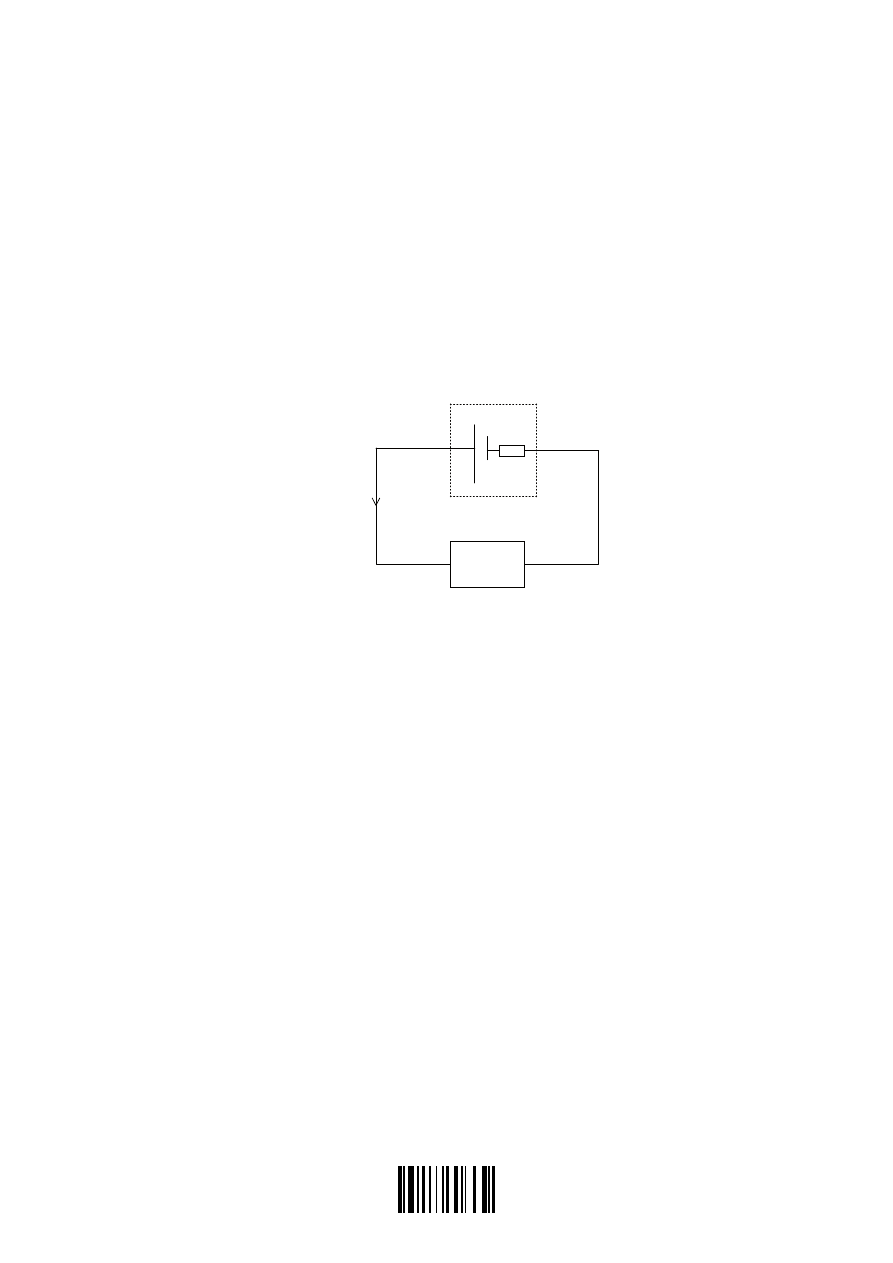
(b) In the circuit below an electrical device (load) is connected in series with a cell of
e.m.f. 2.5 V and internal resistance r. The current I in the circuit is 0.10 A.
I = 0.10 A
e.m.f. = 2.5 V
r
load
The power dissipated in the load is 0.23 W.
Calculate
(i) the total power of the cell.
. . . . . . . . . . . . . . . . . . . . . . . . . . . . . . . . . . . . . . . . . . . . . . . . . . . . . . . . . . . . . . . . . .
. . . . . . . . . . . . . . . . . . . . . . . . . . . . . . . . . . . . . . . . . . . . . . . . . . . . . . . . . . . . . . . . . .
[1]
(ii) the resistance of the load.
. . . . . . . . . . . . . . . . . . . . . . . . . . . . . . . . . . . . . . . . . . . . . . . . . . . . . . . . . . . . . . . . . .
. . . . . . . . . . . . . . . . . . . . . . . . . . . . . . . . . . . . . . . . . . . . . . . . . . . . . . . . . . . . . . . . . .
. . . . . . . . . . . . . . . . . . . . . . . . . . . . . . . . . . . . . . . . . . . . . . . . . . . . . . . . . . . . . . . . . .
. . . . . . . . . . . . . . . . . . . . . . . . . . . . . . . . . . . . . . . . . . . . . . . . . . . . . . . . . . . . . . . . . .
[2]
(iii) the internal resistance r of the cell.
. . . . . . . . . . . . . . . . . . . . . . . . . . . . . . . . . . . . . . . . . . . . . . . . . . . . . . . . . . . . . . . . . .
. . . . . . . . . . . . . . . . . . . . . . . . . . . . . . . . . . . . . . . . . . . . . . . . . . . . . . . . . . . . . . . . . .
. . . . . . . . . . . . . . . . . . . . . . . . . . . . . . . . . . . . . . . . . . . . . . . . . . . . . . . . . . . . . . . . . .
. . . . . . . . . . . . . . . . . . . . . . . . . . . . . . . . . . . . . . . . . . . . . . . . . . . . . . . . . . . . . . . . . .
[2]
(This question continues on the following page)
0634

2207-6514
– 7 –
turn over
M07/4/PHYSI/HP2/ENG/TZ2/XX+
(Question A2 continued)
(c) A second identical cell is connected into the circuit in (b) as shown below.
I = 0.15 A
load
The current in this circuit is 0.15 A. Deduce that the load is a non-ohmic device.
. . . . . . . . . . . . . . . . . . . . . . . . . . . . . . . . . . . . . . . . . . . . . . . . . . . . . . . . . . . . . . . . . . . . . . .
. . . . . . . . . . . . . . . . . . . . . . . . . . . . . . . . . . . . . . . . . . . . . . . . . . . . . . . . . . . . . . . . . . . . . . .
. . . . . . . . . . . . . . . . . . . . . . . . . . . . . . . . . . . . . . . . . . . . . . . . . . . . . . . . . . . . . . . . . . . . . . .
. . . . . . . . . . . . . . . . . . . . . . . . . . . . . . . . . . . . . . . . . . . . . . . . . . . . . . . . . . . . . . . . . . . . . . .
. . . . . . . . . . . . . . . . . . . . . . . . . . . . . . . . . . . . . . . . . . . . . . . . . . . . . . . . . . . . . . . . . . . . . . .
. . . . . . . . . . . . . . . . . . . . . . . . . . . . . . . . . . . . . . . . . . . . . . . . . . . . . . . . . . . . . . . . . . . . . . .
[4]
0734
2207-6514
– 8 –
M07/4/PHYSI/HP2/ENG/TZ2/XX+
a3. This question is about X-rays.
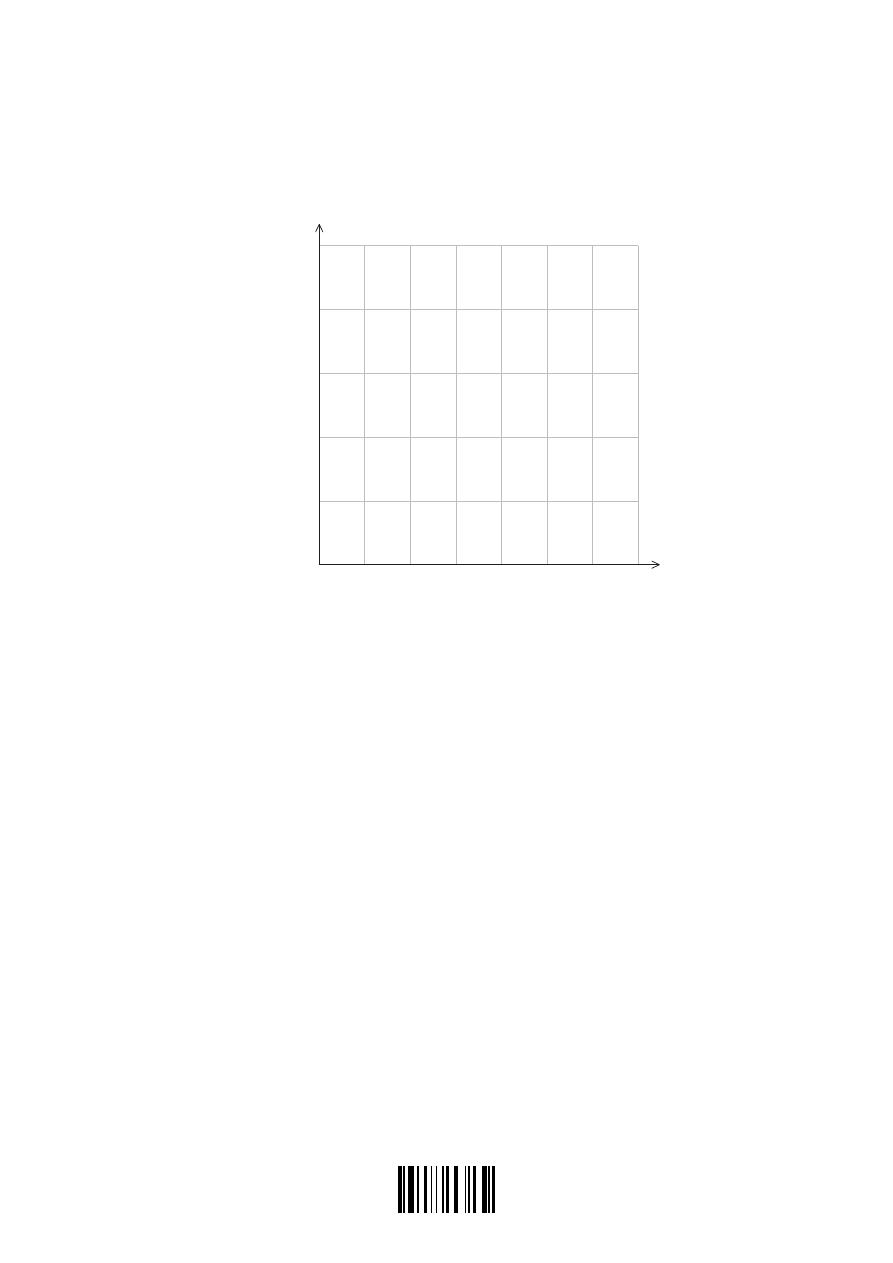
(a) Using the axes below, draw a sketch-graph of a typical X-ray spectrum that includes a
characteristic spectrum. Label the characteristic spectrum with the letter C.
[3]
intensity
wavelength
(b) The X-ray spectrum of molybdenum has a particular characteristic spectral line of
wavelength 6.6 10
–11
m. The ionisation energy of molybdenum is 20 keV.
(i) Deduce that the energy of an X-ray photon of wavelength 6.6 10
–11
m is 19 keV.
. . . . . . . . . . . . . . . . . . . . . . . . . . . . . . . . . . . . . . . . . . . . . . . . . . . . . . . . . . . . . . . . . .
. . . . . . . . . . . . . . . . . . . . . . . . . . . . . . . . . . . . . . . . . . . . . . . . . . . . . . . . . . . . . . . . . .
. . . . . . . . . . . . . . . . . . . . . . . . . . . . . . . . . . . . . . . . . . . . . . . . . . . . . . . . . . . . . . . . . .
[2]
(ii) The characteristic spectral line of wavelength 6.6 10
–11
m is produced by
electrons making transitions between an excited energy level and the ground state
energy level of the molybdenum atom. Calculate, in electron-volts, the excited
energy level.
. . . . . . . . . . . . . . . . . . . . . . . . . . . . . . . . . . . . . . . . . . . . . . . . . . . . . . . . . . . . . . . . . .
. . . . . . . . . . . . . . . . . . . . . . . . . . . . . . . . . . . . . . . . . . . . . . . . . . . . . . . . . . . . . . . . . .
. . . . . . . . . . . . . . . . . . . . . . . . . . . . . . . . . . . . . . . . . . . . . . . . . . . . . . . . . . . . . . . . . .
[2]
0834

2207-6514
– 9 –
turn over
M07/4/PHYSI/HP2/ENG/TZ2/XX+
Blank page
0934
2207-6514
– 10 –
M07/4/PHYSI/HP2/ENG/TZ2/XX+
sEction b
This section consists of four questions: B1, B2, B3 and B4. Answer two questions.
b1. This question is about Newton’s laws of motion, the dynamics of a model helicopter and the
engine that powers it.
(a) Explain how Newton’s third law leads to the concept of conservation of momentum in the
collision between two objects in an isolated system.
. . . . . . . . . . . . . . . . . . . . . . . . . . . . . . . . . . . . . . . . . . . . . . . . . . . . . . . . . . . . . . . . . . . . . . .
. . . . . . . . . . . . . . . . . . . . . . . . . . . . . . . . . . . . . . . . . . . . . . . . . . . . . . . . . . . . . . . . . . . . . . .
. . . . . . . . . . . . . . . . . . . . . . . . . . . . . . . . . . . . . . . . . . . . . . . . . . . . . . . . . . . . . . . . . . . . . . .
. . . . . . . . . . . . . . . . . . . . . . . . . . . . . . . . . . . . . . . . . . . . . . . . . . . . . . . . . . . . . . . . . . . . . . .
. . . . . . . . . . . . . . . . . . . . . . . . . . . . . . . . . . . . . . . . . . . . . . . . . . . . . . . . . . . . . . . . . . . . . . .
. . . . . . . . . . . . . . . . . . . . . . . . . . . . . . . . . . . . . . . . . . . . . . . . . . . . . . . . . . . . . . . . . . . . . . .
. . . . . . . . . . . . . . . . . . . . . . . . . . . . . . . . . . . . . . . . . . . . . . . . . . . . . . . . . . . . . . . . . . . . . . .
. . . . . . . . . . . . . . . . . . . . . . . . . . . . . . . . . . . . . . . . . . . . . . . . . . . . . . . . . . . . . . . . . . . . . . .
[4]
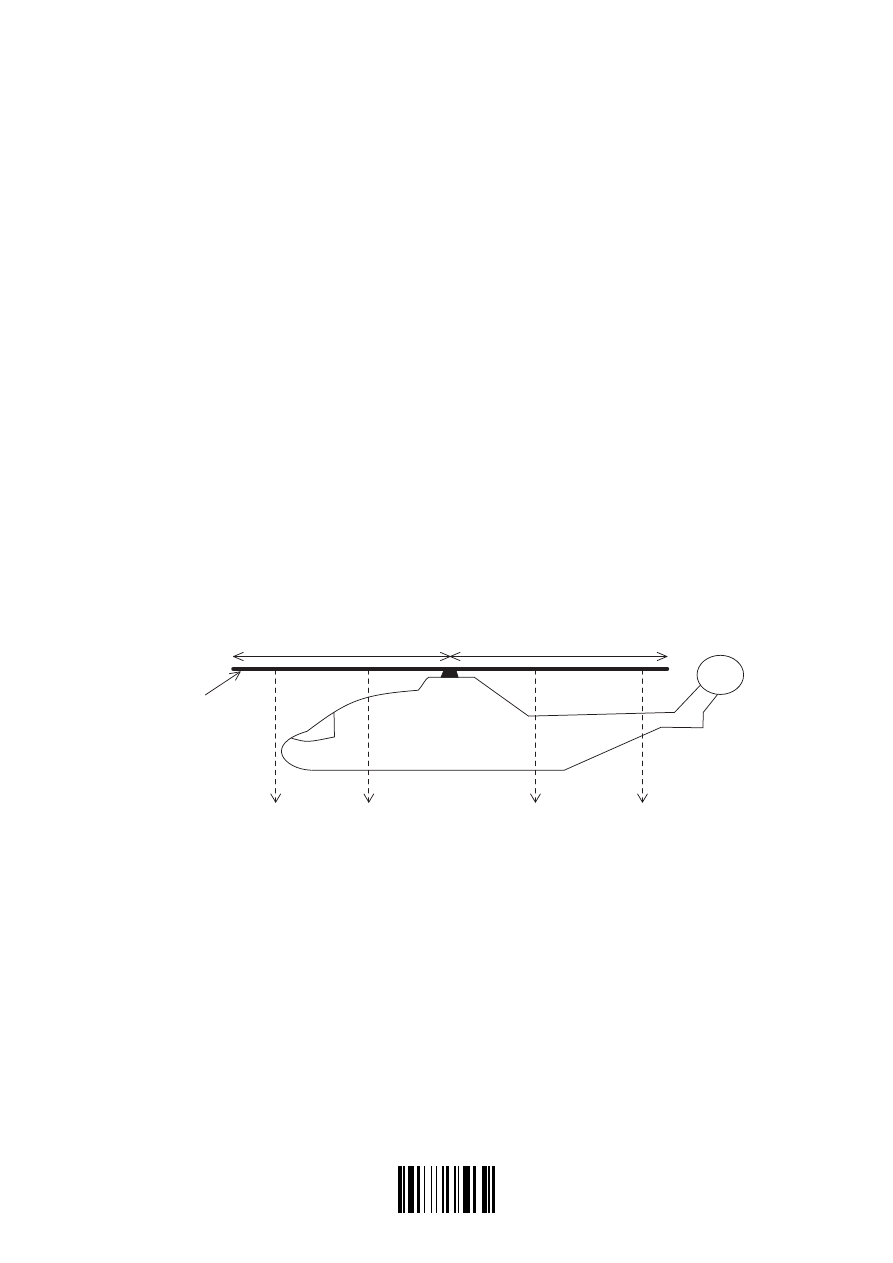
(b) The diagram illustrates a model helicopter that is hovering in a stationary position.
rotating
blades
0.70 m
0.70 m
downward motion of air
The rotating blades of the helicopter force a column of air to move downwards. Explain
how this may enable the helicopter to remain stationary.
. . . . . . . . . . . . . . . . . . . . . . . . . . . . . . . . . . . . . . . . . . . . . . . . . . . . . . . . . . . . . . . . . . . . . . .
. . . . . . . . . . . . . . . . . . . . . . . . . . . . . . . . . . . . . . . . . . . . . . . . . . . . . . . . . . . . . . . . . . . . . . .
. . . . . . . . . . . . . . . . . . . . . . . . . . . . . . . . . . . . . . . . . . . . . . . . . . . . . . . . . . . . . . . . . . . . . . .
. . . . . . . . . . . . . . . . . . . . . . . . . . . . . . . . . . . . . . . . . . . . . . . . . . . . . . . . . . . . . . . . . . . . . . .
. . . . . . . . . . . . . . . . . . . . . . . . . . . . . . . . . . . . . . . . . . . . . . . . . . . . . . . . . . . . . . . . . . . . . . .
. . . . . . . . . . . . . . . . . . . . . . . . . . . . . . . . . . . . . . . . . . . . . . . . . . . . . . . . . . . . . . . . . . . . . . .
[3]
(This question continues on the following page)
1034

2207-6514
– 11 –
turn over
M07/4/PHYSI/HP2/ENG/TZ2/XX+
(Question B1 continued)
(c) The length of each blade of the helicopter in (b) is 0.70 m. Deduce that the area that the
blades sweep out as they rotate is 1.5 m
2
. (Area of a circle
= π
r
2
)
. . . . . . . . . . . . . . . . . . . . . . . . . . . . . . . . . . . . . . . . . . . . . . . . . . . . . . . . . . . . . . . . . . . . . . .
. . . . . . . . . . . . . . . . . . . . . . . . . . . . . . . . . . . . . . . . . . . . . . . . . . . . . . . . . . . . . . . . . . . . . . .
[1]
(d) For the hovering helicopter in (b), it is assumed that all the air beneath the blades is
pushed vertically downwards with the same speed of 4.0 m s
–1
. No other air is disturbed.
The density of the air is 1.2 kg m
–3
.
Calculate, for the air moved downwards by the rotating blades,
(i) the mass per second.
. . . . . . . . . . . . . . . . . . . . . . . . . . . . . . . . . . . . . . . . . . . . . . . . . . . . . . . . . . . . . . . . . .
. . . . . . . . . . . . . . . . . . . . . . . . . . . . . . . . . . . . . . . . . . . . . . . . . . . . . . . . . . . . . . . . . .
. . . . . . . . . . . . . . . . . . . . . . . . . . . . . . . . . . . . . . . . . . . . . . . . . . . . . . . . . . . . . . . . . .
. . . . . . . . . . . . . . . . . . . . . . . . . . . . . . . . . . . . . . . . . . . . . . . . . . . . . . . . . . . . . . . . . .
[2]
(ii) the rate of change of momentum.
. . . . . . . . . . . . . . . . . . . . . . . . . . . . . . . . . . . . . . . . . . . . . . . . . . . . . . . . . . . . . . . . . .
. . . . . . . . . . . . . . . . . . . . . . . . . . . . . . . . . . . . . . . . . . . . . . . . . . . . . . . . . . . . . . . . . .
[1]
(e) State the magnitude of the force that the air beneath the blades exerts on the blades.
. . . . . . . . . . . . . . . . . . . . . . . . . . . . . . . . . . . . . . . . . . . . . . . . . . . . . . . . . . . . . . . . . . . . . . .
[1]
(f) Calculate the mass of the helicopter and its load.
. . . . . . . . . . . . . . . . . . . . . . . . . . . . . . . . . . . . . . . . . . . . . . . . . . . . . . . . . . . . . . . . . . . . . . .
. . . . . . . . . . . . . . . . . . . . . . . . . . . . . . . . . . . . . . . . . . . . . . . . . . . . . . . . . . . . . . . . . . . . . . .
. . . . . . . . . . . . . . . . . . . . . . . . . . . . . . . . . . . . . . . . . . . . . . . . . . . . . . . . . . . . . . . . . . . . . . .
. . . . . . . . . . . . . . . . . . . . . . . . . . . . . . . . . . . . . . . . . . . . . . . . . . . . . . . . . . . . . . . . . . . . . . .
[2]
(This question continues on the following page)
1134

2207-6514
– 12 –
M07/4/PHYSI/HP2/ENG/TZ2/XX+
(Question B1 continued)
(g) In order to move forward, the helicopter blades are made to incline at an angle to the
horizontal as shown schematically below.
While moving forward, the helicopter does not move vertically up or down. In the
space provided below draw a free body force diagram that shows the forces acting on
the helicopter blades at the moment that the helicopter starts to move forward. On your
diagram, label the angle .
[4]
(This question continues on the following page)
1234

2207-6514
– 13 –
turn over
M07/4/PHYSI/HP2/ENG/TZ2/XX+
(Question B1 continued)
(h) Use your diagram in (g) opposite to explain why a forward force F now acts on the
helicopter and deduce that the initial acceleration a of the helicopter is given by
a = g tan
where g is the acceleration of free fall.
. . . . . . . . . . . . . . . . . . . . . . . . . . . . . . . . . . . . . . . . . . . . . . . . . . . . . . . . . . . . . . . . . . . . . . .
. . . . . . . . . . . . . . . . . . . . . . . . . . . . . . . . . . . . . . . . . . . . . . . . . . . . . . . . . . . . . . . . . . . . . . .
. . . . . . . . . . . . . . . . . . . . . . . . . . . . . . . . . . . . . . . . . . . . . . . . . . . . . . . . . . . . . . . . . . . . . . .
. . . . . . . . . . . . . . . . . . . . . . . . . . . . . . . . . . . . . . . . . . . . . . . . . . . . . . . . . . . . . . . . . . . . . . .
. . . . . . . . . . . . . . . . . . . . . . . . . . . . . . . . . . . . . . . . . . . . . . . . . . . . . . . . . . . . . . . . . . . . . . .
. . . . . . . . . . . . . . . . . . . . . . . . . . . . . . . . . . . . . . . . . . . . . . . . . . . . . . . . . . . . . . . . . . . . . . .
. . . . . . . . . . . . . . . . . . . . . . . . . . . . . . . . . . . . . . . . . . . . . . . . . . . . . . . . . . . . . . . . . . . . . . .
. . . . . . . . . . . . . . . . . . . . . . . . . . . . . . . . . . . . . . . . . . . . . . . . . . . . . . . . . . . . . . . . . . . . . . .
. . . . . . . . . . . . . . . . . . . . . . . . . . . . . . . . . . . . . . . . . . . . . . . . . . . . . . . . . . . . . . . . . . . . . . .
. . . . . . . . . . . . . . . . . . . . . . . . . . . . . . . . . . . . . . . . . . . . . . . . . . . . . . . . . . . . . . . . . . . . . . .
[5]
(i) The helicopter is driven by an engine that has a useful power output of 9.0 10
2
W. The
engine makes 300 revolutions per second. Deduce that the work done in one cycle is 3.0 J.
. . . . . . . . . . . . . . . . . . . . . . . . . . . . . . . . . . . . . . . . . . . . . . . . . . . . . . . . . . . . . . . . . . . . . . .
. . . . . . . . . . . . . . . . . . . . . . . . . . . . . . . . . . . . . . . . . . . . . . . . . . . . . . . . . . . . . . . . . . . . . . .
[1]
(This question continues on the following page)
1334
2207-6514
– 14 –
M07/4/PHYSI/HP2/ENG/TZ2/XX+
(Question B1 continued)
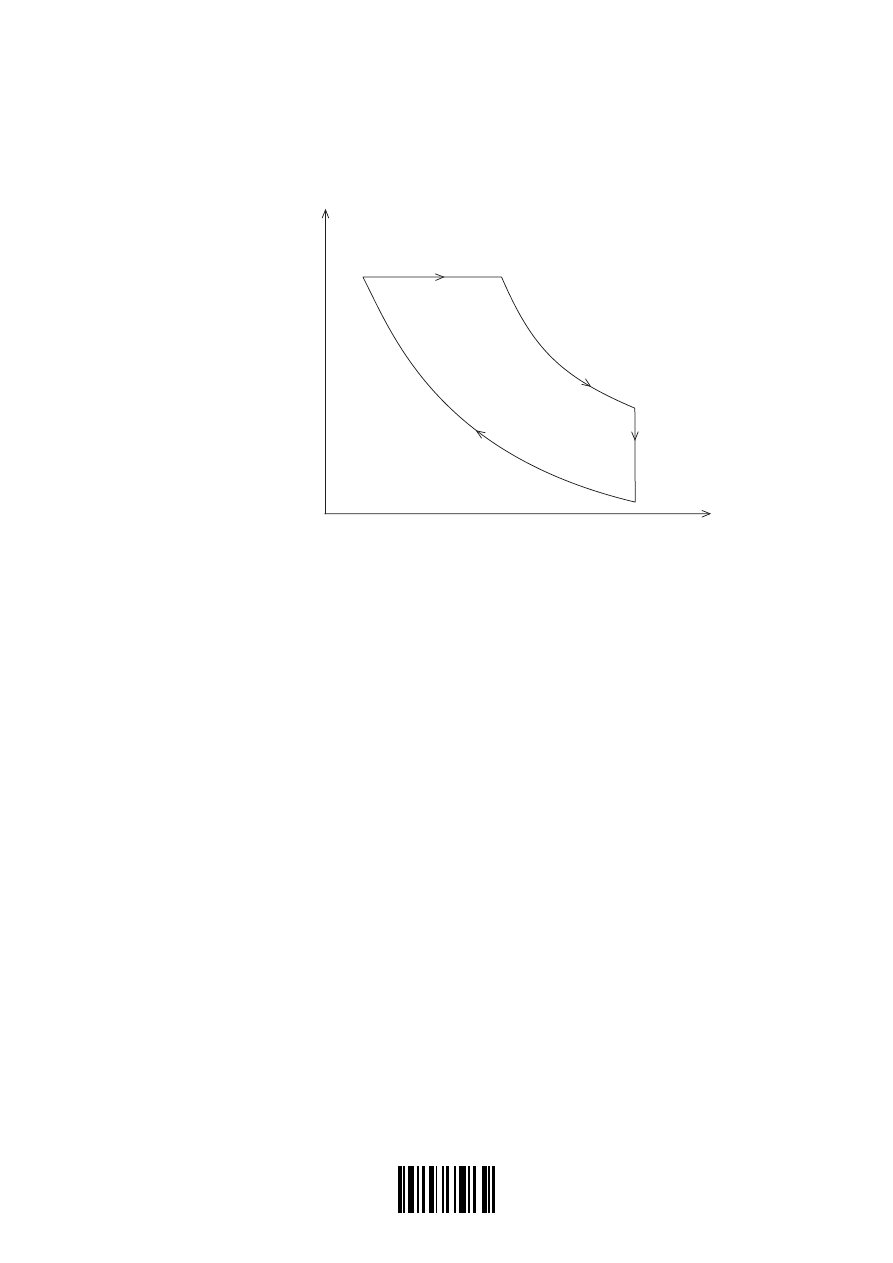
(j) The diagram below shows the relation between the pressure and the volume of the air in
the engine for one cycle of operation of the engine.
pressure
B
C
D
A
volume
(i) State the name given to the type of process represented by DA.
. . . . . . . . . . . . . . . . . . . . . . . . . . . . . . . . . . . . . . . . . . . . . . . . . . . . . . . . . . . . . . . . . .
[1]
(ii) During one cycle of the engine, the gas absorbs Q
1
units of thermal energy and
Q
2
units of thermal energy are transferred from the gas. On the diagram above,
draw labelled arrows to show these energy transfers.
[2]
(iii) The efficiency of the engine is 60 %. Using your answer to question (i) on page 13,
calculate the values of Q
1
and Q
2
.
. . . . . . . . . . . . . . . . . . . . . . . . . . . . . . . . . . . . . . . . . . . . . . . . . . . . . . . . . . . . . . . . . .
. . . . . . . . . . . . . . . . . . . . . . . . . . . . . . . . . . . . . . . . . . . . . . . . . . . . . . . . . . . . . . . . . .
. . . . . . . . . . . . . . . . . . . . . . . . . . . . . . . . . . . . . . . . . . . . . . . . . . . . . . . . . . . . . . . . . .
. . . . . . . . . . . . . . . . . . . . . . . . . . . . . . . . . . . . . . . . . . . . . . . . . . . . . . . . . . . . . . . . . .
. . . . . . . . . . . . . . . . . . . . . . . . . . . . . . . . . . . . . . . . . . . . . . . . . . . . . . . . . . . . . . . . . .
[3]
1434

2207-6514
– 15 –
turn over
M07/4/PHYSI/HP2/ENG/TZ2/XX+
b2. This question is in two parts. part 1 is about some properties of waves associated with the
principle of superposition. part 2 is about the gravitational field associated with a neutron star.
part 1 Waves
Stationary (standing) waves and resonance
(a) State two ways in which a standing wave differs from a continuous wave.
1.
. . . . . . . . . . . . . . . . . . . . . . . . . . . . . . . . . . . . . . . . . . . . . . . . . . . . . . . . . . . . . . . . . .
. . . . . . . . . . . . . . . . . . . . . . . . . . . . . . . . . . . . . . . . . . . . . . . . . . . . . . . . . . . . . . . . . .
2.
. . . . . . . . . . . . . . . . . . . . . . . . . . . . . . . . . . . . . . . . . . . . . . . . . . . . . . . . . . . . . . . . . .
. . . . . . . . . . . . . . . . . . . . . . . . . . . . . . . . . . . . . . . . . . . . . . . . . . . . . . . . . . . . . . . . . .
[2]
(b) State the principle of superposition as applied to waves.
. . . . . . . . . . . . . . . . . . . . . . . . . . . . . . . . . . . . . . . . . . . . . . . . . . . . . . . . . . . . . . . . . . . . . . .
. . . . . . . . . . . . . . . . . . . . . . . . . . . . . . . . . . . . . . . . . . . . . . . . . . . . . . . . . . . . . . . . . . . . . . .
. . . . . . . . . . . . . . . . . . . . . . . . . . . . . . . . . . . . . . . . . . . . . . . . . . . . . . . . . . . . . . . . . . . . . . .
. . . . . . . . . . . . . . . . . . . . . . . . . . . . . . . . . . . . . . . . . . . . . . . . . . . . . . . . . . . . . . . . . . . . . . .
[2]
(This question continues on the following page)
1534
(Question B2, part 1 continued)
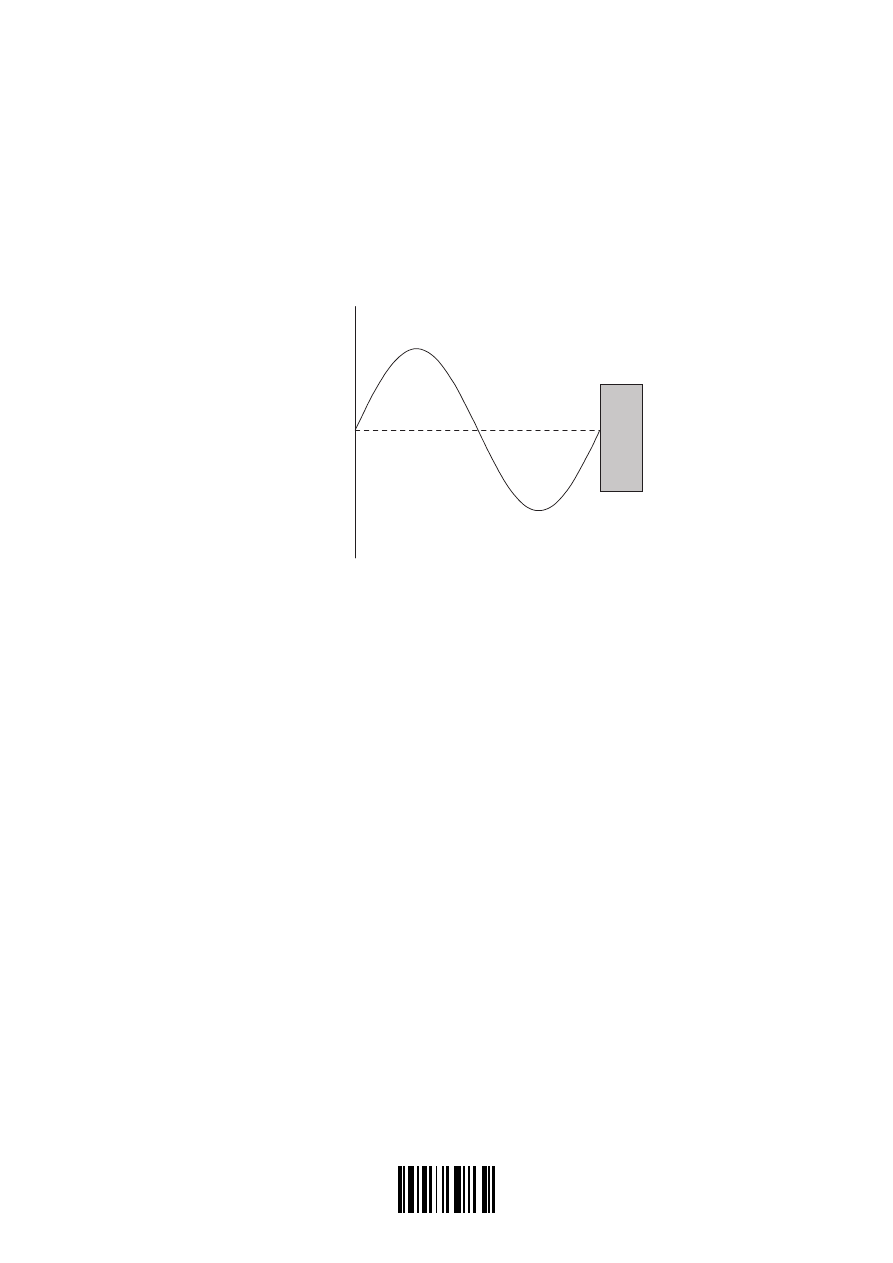
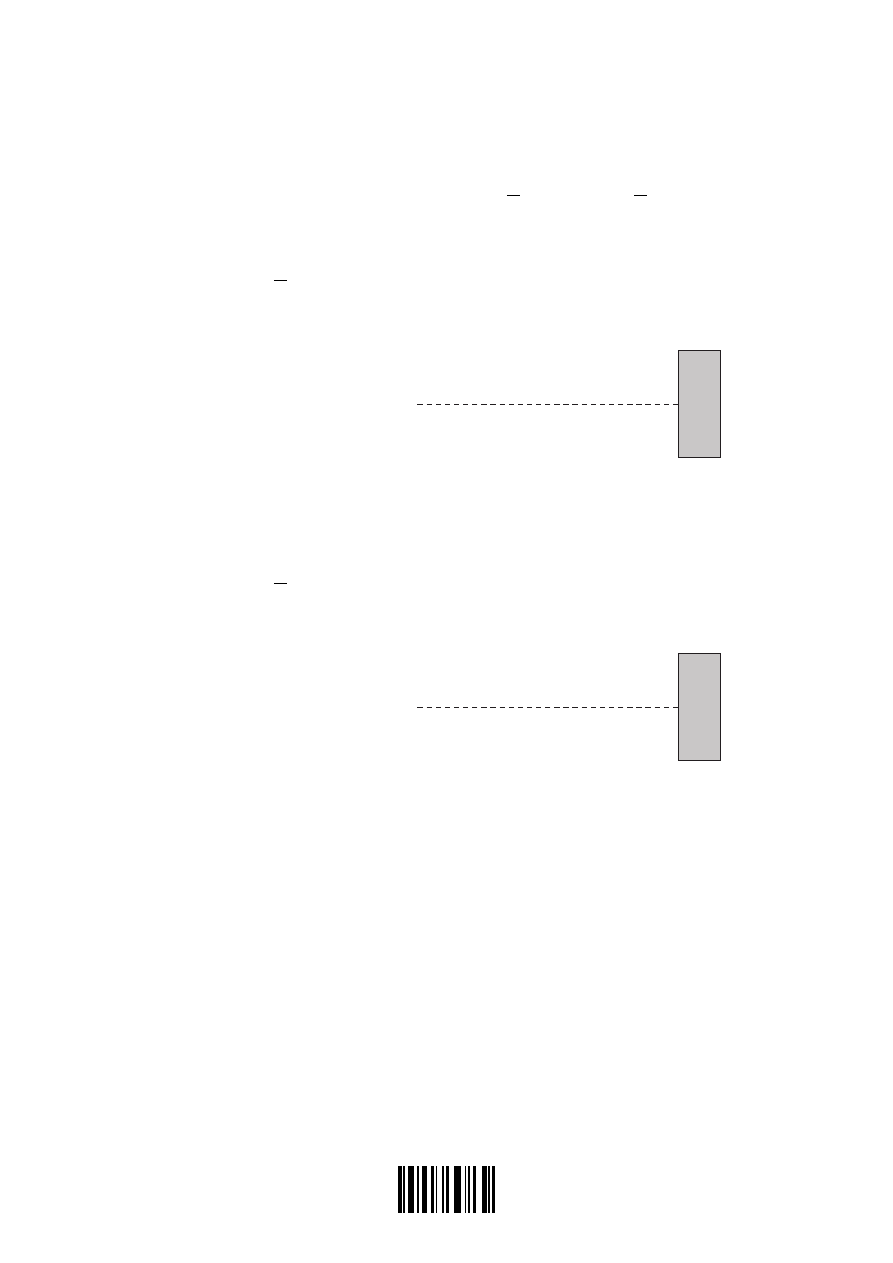
(c) A stretched string is fixed at one end. The other end is vibrated continuously to produce
a wave along the string. The wave is reflected at the fixed end and as a result a standing
wave is set up in the string.
The diagram below shows the displacement of the string at time t = 0. The dotted line
shows the equilibrium position of the string.
free end
fixed end
(This question continues on the following page)
2206-6514
– 16 –
M07/4/PHYSI/HP2/ENG/TZ2/XX+
1634
2207-6514
– 17 –
turn over
M07/4/PHYSI/HP2/ENG/TZ2/XX+
(Question B2, part 1 continued)
(i) The period of oscillation of the string is T. On the diagrams below, draw sketches
of the displacement of the string at time
t T
=
4
and at time
t T
=
2
.
[2]
t T
=
4
t T
=
2
(ii) Use your sketches in (i) to explain why the wave in the string appears to be
stationary.
. . . . . . . . . . . . . . . . . . . . . . . . . . . . . . . . . . . . . . . . . . . . . . . . . . . . . . . . . . . . . . . . . .
. . . . . . . . . . . . . . . . . . . . . . . . . . . . . . . . . . . . . . . . . . . . . . . . . . . . . . . . . . . . . . . . . .
. . . . . . . . . . . . . . . . . . . . . . . . . . . . . . . . . . . . . . . . . . . . . . . . . . . . . . . . . . . . . . . . . .
. . . . . . . . . . . . . . . . . . . . . . . . . . . . . . . . . . . . . . . . . . . . . . . . . . . . . . . . . . . . . . . . . .
[2]
(This question continues on the following page)
1734

2207-6514
– 18 –
M07/4/PHYSI/HP2/ENG/TZ2/XX+
(Question B2, part 1 continued)
(d) Stationary waves are often associated with the phenomenon of resonance.
(i) Describe what is meant by resonance.
. . . . . . . . . . . . . . . . . . . . . . . . . . . . . . . . . . . . . . . . . . . . . . . . . . . . . . . . . . . . . . . . . .
. . . . . . . . . . . . . . . . . . . . . . . . . . . . . . . . . . . . . . . . . . . . . . . . . . . . . . . . . . . . . . . . . .
. . . . . . . . . . . . . . . . . . . . . . . . . . . . . . . . . . . . . . . . . . . . . . . . . . . . . . . . . . . . . . . . . .
. . . . . . . . . . . . . . . . . . . . . . . . . . . . . . . . . . . . . . . . . . . . . . . . . . . . . . . . . . . . . . . . . .
[2]
(ii) On 19 September 1985 an earthquake occurred in Mexico City. Many buildings
that were about 80 m tall collapsed whereas buildings that were taller or shorter than
this remained undamaged. Use the data below to suggest a reason for this.
period of oscillation of an 80 m tall building
=
2.0 s
speed of earthquake waves
=
6.0 10
3
m s
–1
average wavelength of the waves
=
1.2 10
4
m
. . . . . . . . . . . . . . . . . . . . . . . . . . . . . . . . . . . . . . . . . . . . . . . . . . . . . . . . . . . . . . . . . .
. . . . . . . . . . . . . . . . . . . . . . . . . . . . . . . . . . . . . . . . . . . . . . . . . . . . . . . . . . . . . . . . . .
. . . . . . . . . . . . . . . . . . . . . . . . . . . . . . . . . . . . . . . . . . . . . . . . . . . . . . . . . . . . . . . . . .
. . . . . . . . . . . . . . . . . . . . . . . . . . . . . . . . . . . . . . . . . . . . . . . . . . . . . . . . . . . . . . . . . .
. . . . . . . . . . . . . . . . . . . . . . . . . . . . . . . . . . . . . . . . . . . . . . . . . . . . . . . . . . . . . . . . . .
[3]
(This question continues on page 20)
1834

2207-6514
– 19 –
turn over
M07/4/PHYSI/HP2/ENG/TZ2/XX+
Blank page
1934
2207-6514
– 20 –
M07/4/PHYSI/HP2/ENG/TZ2/XX+
(Question B2, part 1 continued from page 18)
Beats
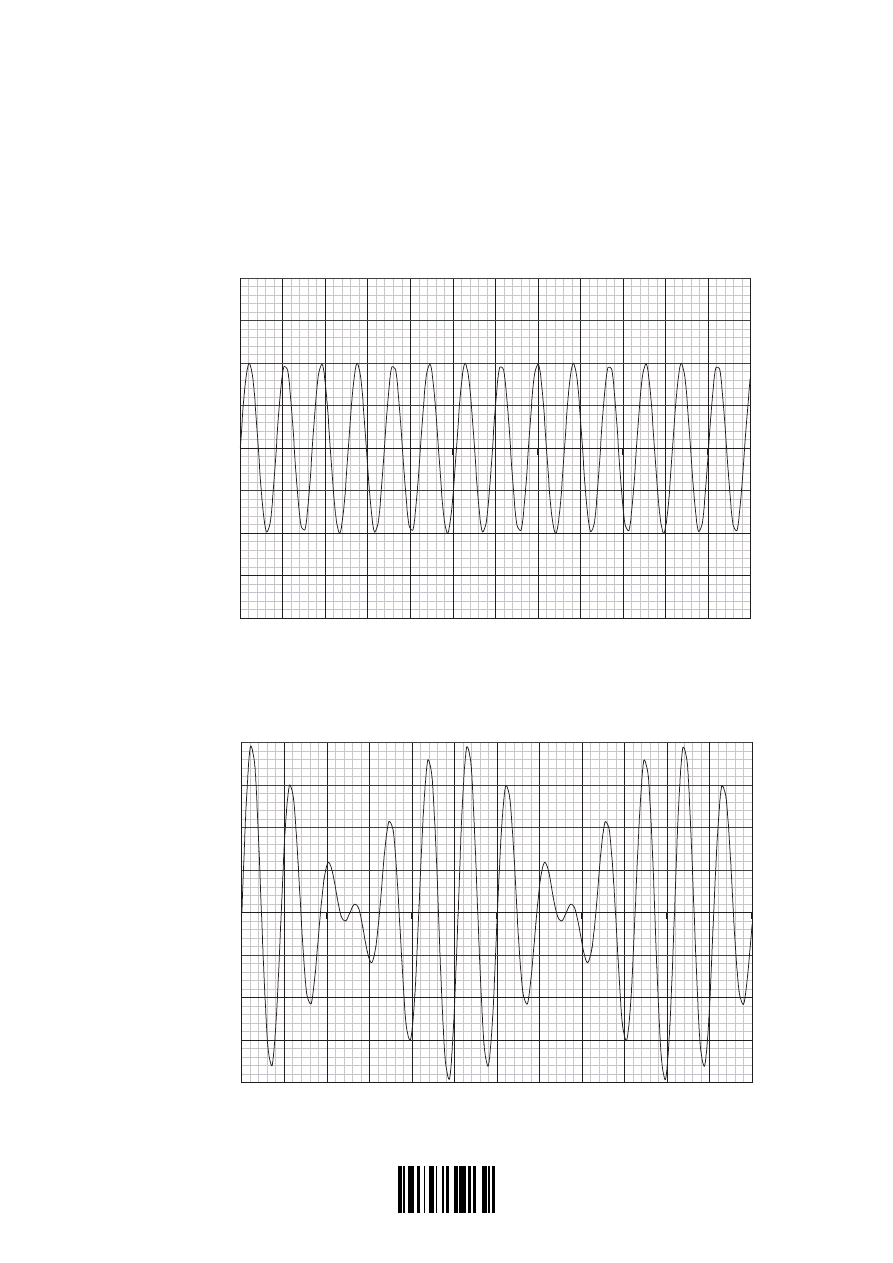
(e) Two sound sources X and Y have the same intensity but different frequencies. The graph
below shows the variation with time t of the displacement y of the air at point P when
source X is sounded alone.
Sound source X
y / arbitrary
units
0
0.01 0.02 0.03 0.04 0.05 0.06 0.07 0.08 0.09 0.10 0.11 0.12
t / s
The graph below shows the variation with time t of the displacement y of the air at point P
when source X and source Y are sounded together.
Sound sources X and Y
y / arbitrary
units
0
0.01 0.02 0.03 0.04 0.05 0.06 0.07 0.08 0.09 0.10 0.11 0.12
t / s
(This question continues on the following page)
2034

2207-6514
– 21 –
turn over
M07/4/PHYSI/HP2/ENG/TZ2/XX+
(Question B2, part 1 continued)
Use data from the graphs
(i) to explain what is heard by an observer at point P.
. . . . . . . . . . . . . . . . . . . . . . . . . . . . . . . . . . . . . . . . . . . . . . . . . . . . . . . . . . . . . . . . . .
. . . . . . . . . . . . . . . . . . . . . . . . . . . . . . . . . . . . . . . . . . . . . . . . . . . . . . . . . . . . . . . . . .
. . . . . . . . . . . . . . . . . . . . . . . . . . . . . . . . . . . . . . . . . . . . . . . . . . . . . . . . . . . . . . . . . .
. . . . . . . . . . . . . . . . . . . . . . . . . . . . . . . . . . . . . . . . . . . . . . . . . . . . . . . . . . . . . . . . . .
[2]
(ii) to calculate the beat frequency and the frequency of the sound source X.
. . . . . . . . . . . . . . . . . . . . . . . . . . . . . . . . . . . . . . . . . . . . . . . . . . . . . . . . . . . . . . . . . .
. . . . . . . . . . . . . . . . . . . . . . . . . . . . . . . . . . . . . . . . . . . . . . . . . . . . . . . . . . . . . . . . . .
. . . . . . . . . . . . . . . . . . . . . . . . . . . . . . . . . . . . . . . . . . . . . . . . . . . . . . . . . . . . . . . . . .
. . . . . . . . . . . . . . . . . . . . . . . . . . . . . . . . . . . . . . . . . . . . . . . . . . . . . . . . . . . . . . . . . .
. . . . . . . . . . . . . . . . . . . . . . . . . . . . . . . . . . . . . . . . . . . . . . . . . . . . . . . . . . . . . . . . . .
. . . . . . . . . . . . . . . . . . . . . . . . . . . . . . . . . . . . . . . . . . . . . . . . . . . . . . . . . . . . . . . . . .
[4]
(f) State one of the possible values for the frequency of sound source Y.
. . . . . . . . . . . . . . . . . . . . . . . . . . . . . . . . . . . . . . . . . . . . . . . . . . . . . . . . . . . . . . . . . . . . . . .
[1]
(This question continues on the following page)
2134

2207-6514
– 22 –
M07/4/PHYSI/HP2/ENG/TZ2/XX+
(Question B2 continued)
part 2 Neutron star
(a) Define gravitational field strength.
. . . . . . . . . . . . . . . . . . . . . . . . . . . . . . . . . . . . . . . . . . . . . . . . . . . . . . . . . . . . . . . . . . . . . . .
. . . . . . . . . . . . . . . . . . . . . . . . . . . . . . . . . . . . . . . . . . . . . . . . . . . . . . . . . . . . . . . . . . . . . . .
. . . . . . . . . . . . . . . . . . . . . . . . . . . . . . . . . . . . . . . . . . . . . . . . . . . . . . . . . . . . . . . . . . . . . . .
[2]
(b) Neutron stars are very dense stars of small radius. They are formed as part of the
evolutionary process of stars that are much more massive than the Sun.
A particular neutron star has radius R of 1.6 10
4
m. The gravitational field strength at its
surface is g
0
. The escape speed v
e
from the surface of the star is 3.6 10
7
m s
–1
.
(i) The gravitational potential V at the surface of the star is equal to – g
0
R. Deduce,
explaining your reasoning, that the escape speed from the surface of the star is
given by the expression
v
g R
e
= 2
0
.
. . . . . . . . . . . . . . . . . . . . . . . . . . . . . . . . . . . . . . . . . . . . . . . . . . . . . . . . . . . . . . . . . .
. . . . . . . . . . . . . . . . . . . . . . . . . . . . . . . . . . . . . . . . . . . . . . . . . . . . . . . . . . . . . . . . . .
. . . . . . . . . . . . . . . . . . . . . . . . . . . . . . . . . . . . . . . . . . . . . . . . . . . . . . . . . . . . . . . . . .
. . . . . . . . . . . . . . . . . . . . . . . . . . . . . . . . . . . . . . . . . . . . . . . . . . . . . . . . . . . . . . . . . .
. . . . . . . . . . . . . . . . . . . . . . . . . . . . . . . . . . . . . . . . . . . . . . . . . . . . . . . . . . . . . . . . . .
[3]
(ii) Calculate the gravitational field strength at the surface of the neutron star.
. . . . . . . . . . . . . . . . . . . . . . . . . . . . . . . . . . . . . . . . . . . . . . . . . . . . . . . . . . . . . . . . . .
. . . . . . . . . . . . . . . . . . . . . . . . . . . . . . . . . . . . . . . . . . . . . . . . . . . . . . . . . . . . . . . . . .
. . . . . . . . . . . . . . . . . . . . . . . . . . . . . . . . . . . . . . . . . . . . . . . . . . . . . . . . . . . . . . . . . .
. . . . . . . . . . . . . . . . . . . . . . . . . . . . . . . . . . . . . . . . . . . . . . . . . . . . . . . . . . . . . . . . . .
[2]
(This question continues on the following page)
2234

2207-6514
– 23 –
turn over
M07/4/PHYSI/HP2/ENG/TZ2/XX+
(Question B2, part 2 continued)
(c) The period T of rotation of the neutron star is 0.02 s. Use your answer to (b)(ii) to deduce
that matter is not lost from the surface of the star as a result of its high speed of rotation.
. . . . . . . . . . . . . . . . . . . . . . . . . . . . . . . . . . . . . . . . . . . . . . . . . . . . . . . . . . . . . . . . . . . . . . .
. . . . . . . . . . . . . . . . . . . . . . . . . . . . . . . . . . . . . . . . . . . . . . . . . . . . . . . . . . . . . . . . . . . . . . .
. . . . . . . . . . . . . . . . . . . . . . . . . . . . . . . . . . . . . . . . . . . . . . . . . . . . . . . . . . . . . . . . . . . . . . .
. . . . . . . . . . . . . . . . . . . . . . . . . . . . . . . . . . . . . . . . . . . . . . . . . . . . . . . . . . . . . . . . . . . . . . .
. . . . . . . . . . . . . . . . . . . . . . . . . . . . . . . . . . . . . . . . . . . . . . . . . . . . . . . . . . . . . . . . . . . . . . .
[3]
2334

2207-6514
– 24 –
M07/4/PHYSI/HP2/ENG/TZ2/XX+
Blank page
2434

2207-6514
– 25 –
turn over
M07/4/PHYSI/HP2/ENG/TZ2/XX+
b3. This question is in two parts. part 1 is about gases and liquids. part 2 is about electrical
conduction and induced currents.
part 1 Gases and liquids
(a) Describe two differences, in terms of molecular structure, between a gas and a liquid.
1.
. . . . . . . . . . . . . . . . . . . . . . . . . . . . . . . . . . . . . . . . . . . . . . . . . . . . . . . . . . . . . . . . . .
. . . . . . . . . . . . . . . . . . . . . . . . . . . . . . . . . . . . . . . . . . . . . . . . . . . . . . . . . . . . . . . . . .
2.
. . . . . . . . . . . . . . . . . . . . . . . . . . . . . . . . . . . . . . . . . . . . . . . . . . . . . . . . . . . . . . . . . .
. . . . . . . . . . . . . . . . . . . . . . . . . . . . . . . . . . . . . . . . . . . . . . . . . . . . . . . . . . . . . . . . . .
[2]
(b) The temperature of an ideal gas is a measure of the average kinetic energy of the molecules
of the gas. Explain why the average kinetic energy is specified.
. . . . . . . . . . . . . . . . . . . . . . . . . . . . . . . . . . . . . . . . . . . . . . . . . . . . . . . . . . . . . . . . . . . . . . .
. . . . . . . . . . . . . . . . . . . . . . . . . . . . . . . . . . . . . . . . . . . . . . . . . . . . . . . . . . . . . . . . . . . . . . .
. . . . . . . . . . . . . . . . . . . . . . . . . . . . . . . . . . . . . . . . . . . . . . . . . . . . . . . . . . . . . . . . . . . . . . .
. . . . . . . . . . . . . . . . . . . . . . . . . . . . . . . . . . . . . . . . . . . . . . . . . . . . . . . . . . . . . . . . . . . . . . .
[2]
(c) Define heat (thermal) capacity.
. . . . . . . . . . . . . . . . . . . . . . . . . . . . . . . . . . . . . . . . . . . . . . . . . . . . . . . . . . . . . . . . . . . . . . .
. . . . . . . . . . . . . . . . . . . . . . . . . . . . . . . . . . . . . . . . . . . . . . . . . . . . . . . . . . . . . . . . . . . . . . .
[1]
(This question continues on the following page)
2534
2207-6514
– 26 –
M07/4/PHYSI/HP2/ENG/TZ2/XX+
(Question B3, part 1 continued)
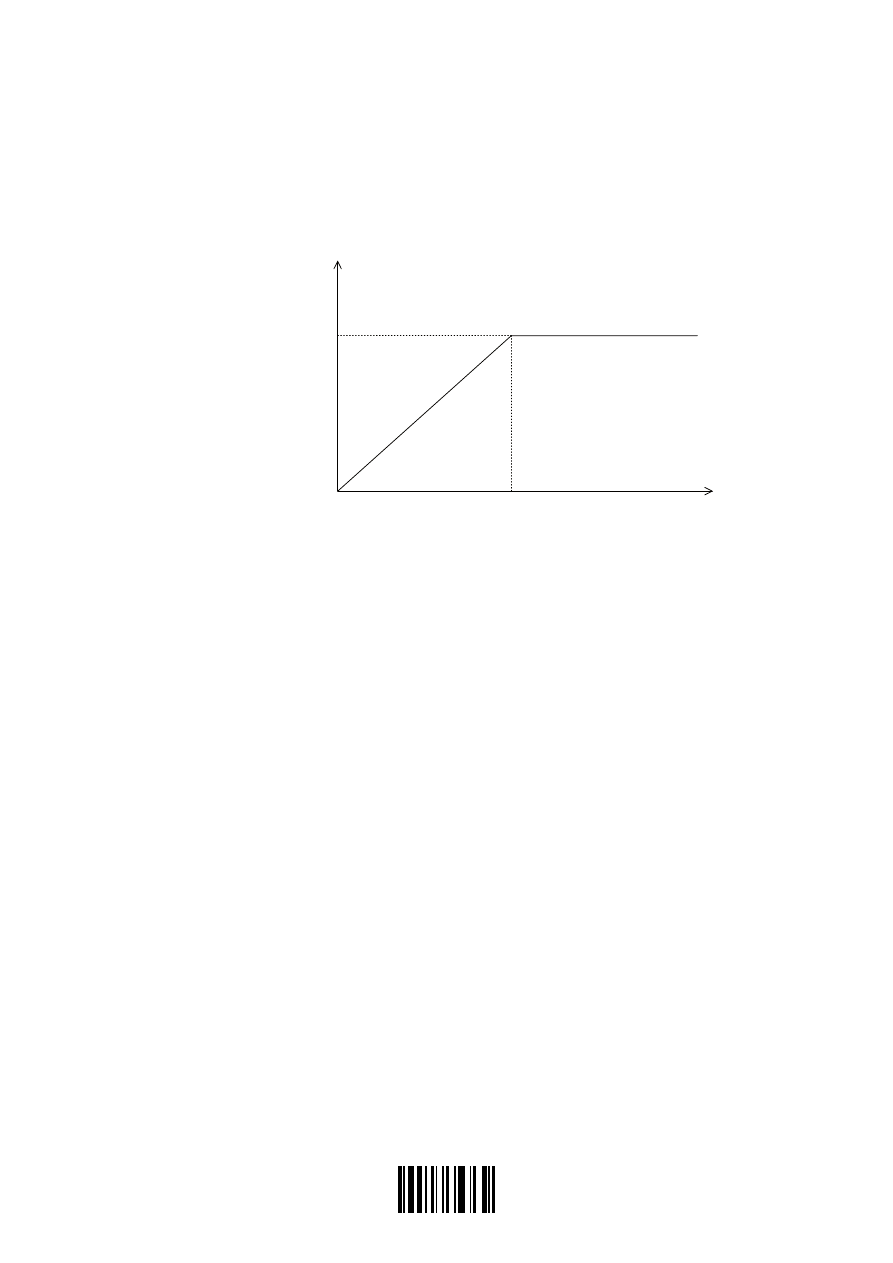
(d) Water is heated at a constant rate in a container that has negligible heat capacity. The
container is thermally insulated from the surroundings.
The sketch-graph below shows the variation with time of the temperature of the water.
temperature /
°
C
20
A
B
0
420
time / s
The following data are available:
initial mass of water
=
0.40 kg
initial temp of water
=
20
°
C
rate at which water is heated
=
300 W
specific heat capacity of water = 4.2 10
3
J kg
–1
°
−
C
1
(i) State the reason why the temperature is constant in the region AB.
. . . . . . . . . . . . . . . . . . . . . . . . . . . . . . . . . . . . . . . . . . . . . . . . . . . . . . . . . . . . . . . . . .
. . . . . . . . . . . . . . . . . . . . . . . . . . . . . . . . . . . . . . . . . . . . . . . . . . . . . . . . . . . . . . . . . .
[1]
(ii) Calculate the temperature at which the water starts to boil.
. . . . . . . . . . . . . . . . . . . . . . . . . . . . . . . . . . . . . . . . . . . . . . . . . . . . . . . . . . . . . . . . . .
. . . . . . . . . . . . . . . . . . . . . . . . . . . . . . . . . . . . . . . . . . . . . . . . . . . . . . . . . . . . . . . . . .
. . . . . . . . . . . . . . . . . . . . . . . . . . . . . . . . . . . . . . . . . . . . . . . . . . . . . . . . . . . . . . . . . .
. . . . . . . . . . . . . . . . . . . . . . . . . . . . . . . . . . . . . . . . . . . . . . . . . . . . . . . . . . . . . . . . . .
. . . . . . . . . . . . . . . . . . . . . . . . . . . . . . . . . . . . . . . . . . . . . . . . . . . . . . . . . . . . . . . . . .
. . . . . . . . . . . . . . . . . . . . . . . . . . . . . . . . . . . . . . . . . . . . . . . . . . . . . . . . . . . . . . . . . .
. . . . . . . . . . . . . . . . . . . . . . . . . . . . . . . . . . . . . . . . . . . . . . . . . . . . . . . . . . . . . . . . . .
. . . . . . . . . . . . . . . . . . . . . . . . . . . . . . . . . . . . . . . . . . . . . . . . . . . . . . . . . . . . . . . . . .
[5]
(This question continues on the following page)
2634

2207-6514
– 27 –
turn over
M07/4/PHYSI/HP2/ENG/TZ2/XX+
(Question B3, part 1 continued)
(e) All the water is boiled away 3.0 10
3
s after it first starts to boil. Determine a value for
the specific latent heat L of vaporisation of water.
. . . . . . . . . . . . . . . . . . . . . . . . . . . . . . . . . . . . . . . . . . . . . . . . . . . . . . . . . . . . . . . . . . . . . . .
. . . . . . . . . . . . . . . . . . . . . . . . . . . . . . . . . . . . . . . . . . . . . . . . . . . . . . . . . . . . . . . . . . . . . . .
. . . . . . . . . . . . . . . . . . . . . . . . . . . . . . . . . . . . . . . . . . . . . . . . . . . . . . . . . . . . . . . . . . . . . . .
. . . . . . . . . . . . . . . . . . . . . . . . . . . . . . . . . . . . . . . . . . . . . . . . . . . . . . . . . . . . . . . . . . . . . . .
[2]
(This question continues on the following page)
2734

2207-6514
– 28 –
M07/4/PHYSI/HP2/ENG/TZ2/XX+
(Question B3 continued)
part 2 Electrical conduction and induced currents
(a) The diagram below shows a copper rod inside which an electric field of strength E is
maintained by connecting the copper rod in series with a cell. (Connections to the cell
are not shown.)
E
copper rod
Describe how the electric field enables the conduction electrons to have a drift velocity in
a direction along the copper rod.
. . . . . . . . . . . . . . . . . . . . . . . . . . . . . . . . . . . . . . . . . . . . . . . . . . . . . . . . . . . . . . . . . . . . . . .
. . . . . . . . . . . . . . . . . . . . . . . . . . . . . . . . . . . . . . . . . . . . . . . . . . . . . . . . . . . . . . . . . . . . . . .
. . . . . . . . . . . . . . . . . . . . . . . . . . . . . . . . . . . . . . . . . . . . . . . . . . . . . . . . . . . . . . . . . . . . . . .
. . . . . . . . . . . . . . . . . . . . . . . . . . . . . . . . . . . . . . . . . . . . . . . . . . . . . . . . . . . . . . . . . . . . . . .
. . . . . . . . . . . . . . . . . . . . . . . . . . . . . . . . . . . . . . . . . . . . . . . . . . . . . . . . . . . . . . . . . . . . . . .
[3]
(This question continues on the following page)
2834
2207-6514
– 29 –
turn over
M07/4/PHYSI/HP2/ENG/TZ2/XX+
(Question B3, part 2 continued)
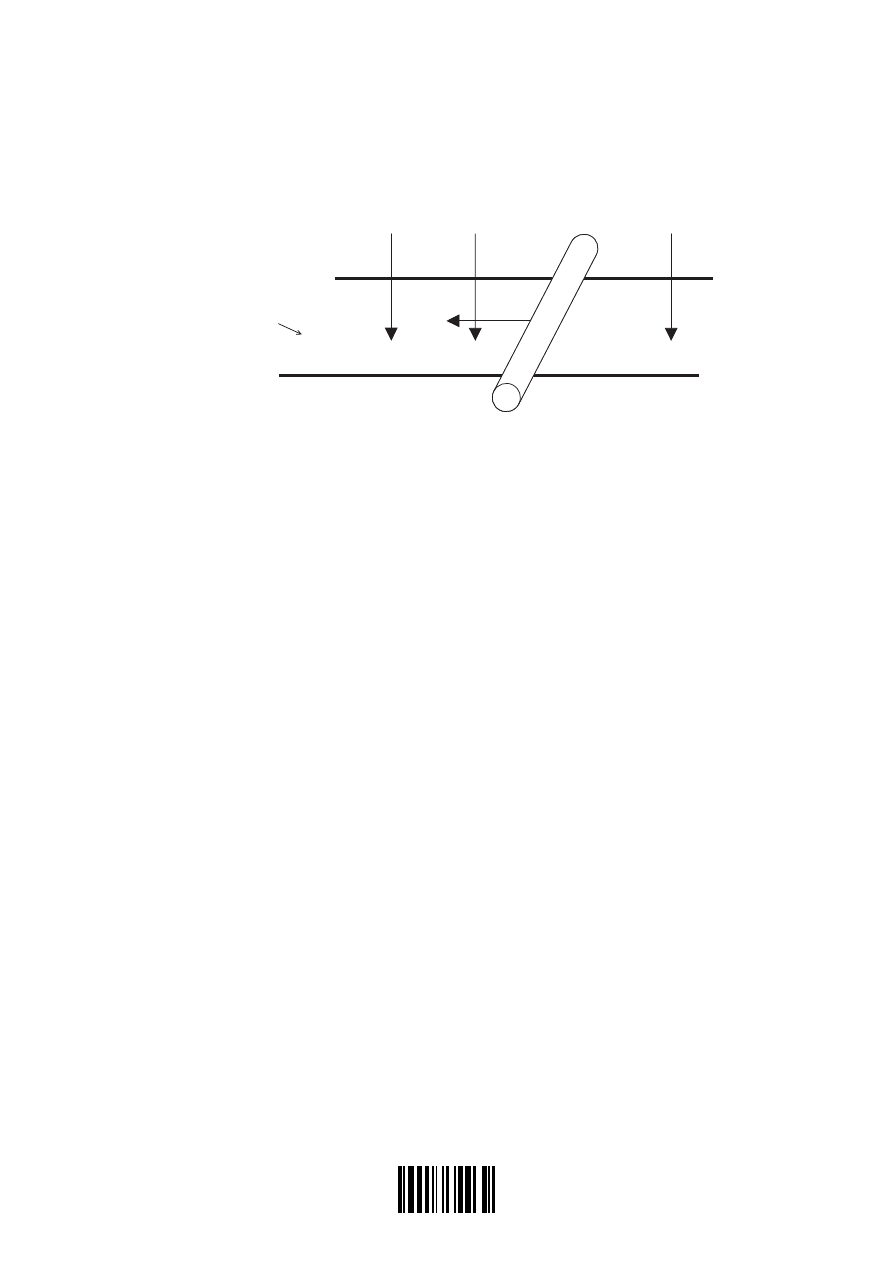
(b) A copper rod is placed on two parallel, horizontal conducting rails PQ and SR as shown
below.
conducting wire
S
B
B
copper rod
B
P
Q
F
R
The rails and the copper rod are in a region of uniform magnetic field of strength B.
The magnetic field is normal to the plane of the conducting rods as shown in the
diagram above.
A conducting wire is connected between the ends P and S of the rails. A constant force,
parallel to the rails, of magnitude F is applied to the copper rod in the direction shown.
The copper rod moves along the rails with a decreasing acceleration.
(i) On the diagram, draw an arrow to show the direction of induced current in the
copper rod. Label this arrow with the letter I.
[1]
(ii) Explain, by reference to Lenz’s law, why the induced current is in the direction you
have shown in (i).
. . . . . . . . . . . . . . . . . . . . . . . . . . . . . . . . . . . . . . . . . . . . . . . . . . . . . . . . . . . . . . . . . .
. . . . . . . . . . . . . . . . . . . . . . . . . . . . . . . . . . . . . . . . . . . . . . . . . . . . . . . . . . . . . . . . . .
. . . . . . . . . . . . . . . . . . . . . . . . . . . . . . . . . . . . . . . . . . . . . . . . . . . . . . . . . . . . . . . . . .
. . . . . . . . . . . . . . . . . . . . . . . . . . . . . . . . . . . . . . . . . . . . . . . . . . . . . . . . . . . . . . . . . .
[2]
(iii) By considering the forces on the conduction electrons in the copper rod, explain
why the acceleration of the copper rod decreases as it moves along the rails.
. . . . . . . . . . . . . . . . . . . . . . . . . . . . . . . . . . . . . . . . . . . . . . . . . . . . . . . . . . . . . . . . . .
. . . . . . . . . . . . . . . . . . . . . . . . . . . . . . . . . . . . . . . . . . . . . . . . . . . . . . . . . . . . . . . . . .
. . . . . . . . . . . . . . . . . . . . . . . . . . . . . . . . . . . . . . . . . . . . . . . . . . . . . . . . . . . . . . . . . .
. . . . . . . . . . . . . . . . . . . . . . . . . . . . . . . . . . . . . . . . . . . . . . . . . . . . . . . . . . . . . . . . . .
. . . . . . . . . . . . . . . . . . . . . . . . . . . . . . . . . . . . . . . . . . . . . . . . . . . . . . . . . . . . . . . . . .
[3]
(This question continues on the following page)
2934

2207-6514
– 30 –
M07/4/PHYSI/HP2/ENG/TZ2/XX+
(Question B3, part 2 continued)
(c) The copper rod in (b) eventually moves with constant speed v. The induced e.m.f.
ε
=
Bvl
in
the copper rod is given by the expression
ε
=
Bvl
where l is the length of copper rod in the region of uniform magnetic field.
(i) State Faraday’s law of electromagnetic induction.
. . . . . . . . . . . . . . . . . . . . . . . . . . . . . . . . . . . . . . . . . . . . . . . . . . . . . . . . . . . . . . . . . .
. . . . . . . . . . . . . . . . . . . . . . . . . . . . . . . . . . . . . . . . . . . . . . . . . . . . . . . . . . . . . . . . . .
[1]
(ii) Deduce that the expression is consistent with Faraday’s law.
. . . . . . . . . . . . . . . . . . . . . . . . . . . . . . . . . . . . . . . . . . . . . . . . . . . . . . . . . . . . . . . . . .
. . . . . . . . . . . . . . . . . . . . . . . . . . . . . . . . . . . . . . . . . . . . . . . . . . . . . . . . . . . . . . . . . .
. . . . . . . . . . . . . . . . . . . . . . . . . . . . . . . . . . . . . . . . . . . . . . . . . . . . . . . . . . . . . . . . . .
. . . . . . . . . . . . . . . . . . . . . . . . . . . . . . . . . . . . . . . . . . . . . . . . . . . . . . . . . . . . . . . . . .
. . . . . . . . . . . . . . . . . . . . . . . . . . . . . . . . . . . . . . . . . . . . . . . . . . . . . . . . . . . . . . . . . .
[3]
(iii) The following data are available:
F = 0.32 N
l = 0.40 m
B = 0.26 T
resistance of copper rod = 0.15
Determine the induced current and the speed v of the copper rod.
Induced current: . . . . . . . . . . . . . . . . . . . . . . . . . . . . . . . . . . . . . . . . . . . . . . . . . . . .
. . . . . . . . . . . . . . . . . . . . . . . . . . . . . . . . . . . . . . . . . . . . . . . . . . . .
Speed v:
. . . . . . . . . . . . . . . . . . . . . . . . . . . . . . . . . . . . . . . . . . . . . . . . . . . .
. . . . . . . . . . . . . . . . . . . . . . . . . . . . . . . . . . . . . . . . . . . . . . . . . . . .
[4]
3034

2207-6514
– 31 –
turn over
M07/4/PHYSI/HP2/ENG/TZ2/XX+
b4. This question is in two parts. part 1 is about radioactive decay. part 2 is about friction.
part 1 Radioactive decay
(a) The nucleon number (mass number) of a stable isotope of argon is 36 and of a radioactive
isotope of argon is 39.
(i) State what is meant by a nucleon.
. . . . . . . . . . . . . . . . . . . . . . . . . . . . . . . . . . . . . . . . . . . . . . . . . . . . . . . . . . . . . . . . . .
. . . . . . . . . . . . . . . . . . . . . . . . . . . . . . . . . . . . . . . . . . . . . . . . . . . . . . . . . . . . . . . . . .
[1]
(ii) Outline the structure of nucleons in terms of quarks.
. . . . . . . . . . . . . . . . . . . . . . . . . . . . . . . . . . . . . . . . . . . . . . . . . . . . . . . . . . . . . . . . . .
. . . . . . . . . . . . . . . . . . . . . . . . . . . . . . . . . . . . . . . . . . . . . . . . . . . . . . . . . . . . . . . . . .
[2]
(iii) Explain, in terms of the number of nucleons and the forces between them,
why argon-36 is stable and argon-39 is radioactive.
. . . . . . . . . . . . . . . . . . . . . . . . . . . . . . . . . . . . . . . . . . . . . . . . . . . . . . . . . . . . . . . . . .
. . . . . . . . . . . . . . . . . . . . . . . . . . . . . . . . . . . . . . . . . . . . . . . . . . . . . . . . . . . . . . . . . .
. . . . . . . . . . . . . . . . . . . . . . . . . . . . . . . . . . . . . . . . . . . . . . . . . . . . . . . . . . . . . . . . . .
. . . . . . . . . . . . . . . . . . . . . . . . . . . . . . . . . . . . . . . . . . . . . . . . . . . . . . . . . . . . . . . . . .
. . . . . . . . . . . . . . . . . . . . . . . . . . . . . . . . . . . . . . . . . . . . . . . . . . . . . . . . . . . . . . . . . .
[4]
(This question continues on the following page)
3134

2207-6514
– 32 –
M07/4/PHYSI/HP2/ENG/TZ2/XX+
(Question B4, part 1 continued)
(b) Argon-39 undergoes
β
−
decay to an isotope of potassium (K). The nuclear reaction
equation for this decay is
18
39
Ar
K
→
+
+
−
β
x
.
(i) State the proton (atomic) number and the nucleon (mass) number of the potassium
nucleus and identify the particle x.
Proton number: . . . . . . . . . . . . . . . . . . . . . . . . . . . . . . . . . . . . . . . . . . . . . . . . . . .
Nucleon number: . . . . . . . . . . . . . . . . . . . . . . . . . . . . . . . . . . . . . . . . . . . . . . . . . . .
Particle x:
. . . . . . . . . . . . . . . . . . . . . . . . . . . . . . . . . . . . . . . . . . . . . . . . . . .
[3]
(ii) The existence of the particle x was postulated some years before it was actually
detected. Explain the reason, based on the nature of
β
−
energy spectra,
for postulating its existence.
. . . . . . . . . . . . . . . . . . . . . . . . . . . . . . . . . . . . . . . . . . . . . . . . . . . . . . . . . . . . . . . . . .
. . . . . . . . . . . . . . . . . . . . . . . . . . . . . . . . . . . . . . . . . . . . . . . . . . . . . . . . . . . . . . . . . .
. . . . . . . . . . . . . . . . . . . . . . . . . . . . . . . . . . . . . . . . . . . . . . . . . . . . . . . . . . . . . . . . . .
. . . . . . . . . . . . . . . . . . . . . . . . . . . . . . . . . . . . . . . . . . . . . . . . . . . . . . . . . . . . . . . . . .
. . . . . . . . . . . . . . . . . . . . . . . . . . . . . . . . . . . . . . . . . . . . . . . . . . . . . . . . . . . . . . . . . .
[3]
(iii) Use the following data to determine the maximum energy, in J, of the
β
−
particle
in the decay of a sample of argon-39.
Mass of argon-39 nucleus = 38.96431 u
Mass of K nucleus
=
38.96370 u
. . . . . . . . . . . . . . . . . . . . . . . . . . . . . . . . . . . . . . . . . . . . . . . . . . . . . . . . . . . . . . . . . .
. . . . . . . . . . . . . . . . . . . . . . . . . . . . . . . . . . . . . . . . . . . . . . . . . . . . . . . . . . . . . . . . . .
. . . . . . . . . . . . . . . . . . . . . . . . . . . . . . . . . . . . . . . . . . . . . . . . . . . . . . . . . . . . . . . . . .
. . . . . . . . . . . . . . . . . . . . . . . . . . . . . . . . . . . . . . . . . . . . . . . . . . . . . . . . . . . . . . . . . .
[3]
(This question continues on the following page)
3234

2207-6514
– 33 –
turn over
M07/4/PHYSI/HP2/ENG/TZ2/XX+
(Question B4, part 1 continued)
(c) The half-life of argon-39 is 270 years.
(i) State what quantities you would measure to determine the half-life of argon-39.
. . . . . . . . . . . . . . . . . . . . . . . . . . . . . . . . . . . . . . . . . . . . . . . . . . . . . . . . . . . . . . . . . .
. . . . . . . . . . . . . . . . . . . . . . . . . . . . . . . . . . . . . . . . . . . . . . . . . . . . . . . . . . . . . . . . . .
[2]
(ii) Explain how you would calculate the half-life using the quantities you have stated
in (i).
. . . . . . . . . . . . . . . . . . . . . . . . . . . . . . . . . . . . . . . . . . . . . . . . . . . . . . . . . . . . . . . . . .
. . . . . . . . . . . . . . . . . . . . . . . . . . . . . . . . . . . . . . . . . . . . . . . . . . . . . . . . . . . . . . . . . .
. . . . . . . . . . . . . . . . . . . . . . . . . . . . . . . . . . . . . . . . . . . . . . . . . . . . . . . . . . . . . . . . . .
. . . . . . . . . . . . . . . . . . . . . . . . . . . . . . . . . . . . . . . . . . . . . . . . . . . . . . . . . . . . . . . . . .
[3]
(This question continues on the following page)
3334

2207-6514
– 34 –
M07/4/PHYSI/HP2/ENG/TZ2/XX+
(Question B4 continued)
part 2 Friction
(a) State two factors that affect the frictional force between surfaces in contact.
1.
. . . . . . . . . . . . . . . . . . . . . . . . . . . . . . . . . . . . . . . . . . . . . . . . . . . . . . . . . . . . . . . . . .
2.
. . . . . . . . . . . . . . . . . . . . . . . . . . . . . . . . . . . . . . . . . . . . . . . . . . . . . . . . . . . . . . . . . .
[2]
(b) Distinguish between static friction and dynamic (sliding) friction.
. . . . . . . . . . . . . . . . . . . . . . . . . . . . . . . . . . . . . . . . . . . . . . . . . . . . . . . . . . . . . . . . . . . . . . .
. . . . . . . . . . . . . . . . . . . . . . . . . . . . . . . . . . . . . . . . . . . . . . . . . . . . . . . . . . . . . . . . . . . . . . .
. . . . . . . . . . . . . . . . . . . . . . . . . . . . . . . . . . . . . . . . . . . . . . . . . . . . . . . . . . . . . . . . . . . . . . .
. . . . . . . . . . . . . . . . . . . . . . . . . . . . . . . . . . . . . . . . . . . . . . . . . . . . . . . . . . . . . . . . . . . . . . .
. . . . . . . . . . . . . . . . . . . . . . . . . . . . . . . . . . . . . . . . . . . . . . . . . . . . . . . . . . . . . . . . . . . . . . .
[3]
(c) A block of wood of weight 12 N is at rest on a flat, horizontal surface. The minimum
horizontal force required to move the block is 7.2 N. Calculate the coefficient of static
friction between the block and the surface.
. . . . . . . . . . . . . . . . . . . . . . . . . . . . . . . . . . . . . . . . . . . . . . . . . . . . . . . . . . . . . . . . . . . . . . .
. . . . . . . . . . . . . . . . . . . . . . . . . . . . . . . . . . . . . . . . . . . . . . . . . . . . . . . . . . . . . . . . . . . . . . .
. . . . . . . . . . . . . . . . . . . . . . . . . . . . . . . . . . . . . . . . . . . . . . . . . . . . . . . . . . . . . . . . . . . . . . .
[1]
(d) The force of 7.2 N is applied continuously to the block. Explain whether the block will
accelerate or move with constant speed.
. . . . . . . . . . . . . . . . . . . . . . . . . . . . . . . . . . . . . . . . . . . . . . . . . . . . . . . . . . . . . . . . . . . . . . .
. . . . . . . . . . . . . . . . . . . . . . . . . . . . . . . . . . . . . . . . . . . . . . . . . . . . . . . . . . . . . . . . . . . . . . .
. . . . . . . . . . . . . . . . . . . . . . . . . . . . . . . . . . . . . . . . . . . . . . . . . . . . . . . . . . . . . . . . . . . . . . .
. . . . . . . . . . . . . . . . . . . . . . . . . . . . . . . . . . . . . . . . . . . . . . . . . . . . . . . . . . . . . . . . . . . . . . .
. . . . . . . . . . . . . . . . . . . . . . . . . . . . . . . . . . . . . . . . . . . . . . . . . . . . . . . . . . . . . . . . . . . . . . .
[3]
3434
Wyszukiwarka
Podobne podstrony:
M Physics HL paper 2 TZ2 M07 E
E Physics HL paper 1 TZ2 M07 E
M Physics HL paper 1 TZ2 M07 E
E Physics HL paper 2 TZ1 M07 E
M Physics HL paper 2 TZ1 M07 E
M Physics HL paper 1 TZ1 M07 E
E Physics HL paper 1 TZ1 M07 E
Physics HL paper 2 TZ1 M
Chemistry HL paper 2 TZ2
Physics HL paper 1 TZ1 M
Physics HL paper 3 TZ1 M
Chemistry HL paper 1 TZ2
Chemistry HL paper 3 TZ2
Chemistry HL paper 2 TZ2
May 2002 History HL Paper 3 EU
Nov 2003 History Europe HL paper 3
Mathematics HL paper 3 discrete mathematics
Chemistry HL paper 2 TZ2mk
Mathematics HL paper 3 series and differential equations 001
więcej podobnych podstron