
2205-6509
30 pages
M05/4/PHYSI/HP3/ENG/TZ1/XX+
Friday 20 May 2005 (morning)
PHYSICS
HIGHER LEVEL
PAPER 3
IB DIPLOMA PROGRAMME
PROGRAMME DU DIPLÔME DU BI
PROGRAMA DEL DIPLOMA DEL BI
INSTRUCTIONS TO CANDIDATES
•
Write your session number in the boxes above.
•
Do not open this examination paper until instructed to do so.
•
Answer all of the questions from two of the Options in the spaces provided.
•
At the end of the examination, indicate the letters of the Options answered in the candidate box on
your cover sheet.
1 hour 15 minutes
Candidate session number
0
0
22056509
0131

2205-6509
– 2 –
M05/4/PHYSI/HP3/ENG/TZ1/XX+
Option D — Biomedical Physics
D1. This question is about scaling and thermal energy loss.
An adult of height 1.80 m and a child of height 1.20 m are stranded during a hiking trip and
must spend the cold night outdoors.
(a) Estimate the value of the ratio
Q
Q
adult
child
where
Q = total rate of thermal energy loss
mass
.
. . . . . . . . . . . . . . . . . . . . . . . . . . . . . . . . . . . . . . . . . . . . . . . . . . . . . . . . . . . . . . . . . . . . . .
. . . . . . . . . . . . . . . . . . . . . . . . . . . . . . . . . . . . . . . . . . . . . . . . . . . . . . . . . . . . . . . . . . . . . .
. . . . . . . . . . . . . . . . . . . . . . . . . . . . . . . . . . . . . . . . . . . . . . . . . . . . . . . . . . . . . . . . . . . . . .
. . . . . . . . . . . . . . . . . . . . . . . . . . . . . . . . . . . . . . . . . . . . . . . . . . . . . . . . . . . . . . . . . . . . . .
. . . . . . . . . . . . . . . . . . . . . . . . . . . . . . . . . . . . . . . . . . . . . . . . . . . . . . . . . . . . . . . . . . . . . .
. . . . . . . . . . . . . . . . . . . . . . . . . . . . . . . . . . . . . . . . . . . . . . . . . . . . . . . . . . . . . . . . . . . . . .
. . . . . . . . . . . . . . . . . . . . . . . . . . . . . . . . . . . . . . . . . . . . . . . . . . . . . . . . . . . . . . . . . . . . . .
[4]
(b) Using your answer in (a) explain whether the adult or the child is at greater risk from
hypothermia (core body temperature significantly below normal).
. . . . . . . . . . . . . . . . . . . . . . . . . . . . . . . . . . . . . . . . . . . . . . . . . . . . . . . . . . . . . . . . . . . . . .
. . . . . . . . . . . . . . . . . . . . . . . . . . . . . . . . . . . . . . . . . . . . . . . . . . . . . . . . . . . . . . . . . . . . . .
[1]
0231

2205-6509
– 3 –
Turn over
M05/4/PHYSI/HP3/ENG/TZ1/XX+
D2. This question is about sound and hearing.
(a) State the approximate range of frequencies that are audible to a person with normal
hearing.
. . . . . . . . . . . . . . . . . . . . . . . . . . . . . . . . . . . . . . . . . . . . . . . . . . . . . . . . . . . . . . . . . . . . . .
[1]
(b) Outline the mechanism by which different frequencies are distinguished in the cochlea.
. . . . . . . . . . . . . . . . . . . . . . . . . . . . . . . . . . . . . . . . . . . . . . . . . . . . . . . . . . . . . . . . . . . . . .
. . . . . . . . . . . . . . . . . . . . . . . . . . . . . . . . . . . . . . . . . . . . . . . . . . . . . . . . . . . . . . . . . . . . . .
. . . . . . . . . . . . . . . . . . . . . . . . . . . . . . . . . . . . . . . . . . . . . . . . . . . . . . . . . . . . . . . . . . . . . .
. . . . . . . . . . . . . . . . . . . . . . . . . . . . . . . . . . . . . . . . . . . . . . . . . . . . . . . . . . . . . . . . . . . . . .
. . . . . . . . . . . . . . . . . . . . . . . . . . . . . . . . . . . . . . . . . . . . . . . . . . . . . . . . . . . . . . . . . . . . . .
. . . . . . . . . . . . . . . . . . . . . . . . . . . . . . . . . . . . . . . . . . . . . . . . . . . . . . . . . . . . . . . . . . . . . .
[3]
(c) A person with normal hearing can just hear a sound of intensity
10
12
−
W
m
−2
at a frequency
of 1000 Hz.
(i) A sound wave of frequency 1000 Hz incident on the ear drum has an intensity of
2 7 10
5
. ×
−
W
m
−2
. Calculate the sound intensity level at the ear.
. . . . . . . . . . . . . . . . . . . . . . . . . . . . . . . . . . . . . . . . . . . . . . . . . . . . . . . . . . . . . . . . .
. . . . . . . . . . . . . . . . . . . . . . . . . . . . . . . . . . . . . . . . . . . . . . . . . . . . . . . . . . . . . . . . .
. . . . . . . . . . . . . . . . . . . . . . . . . . . . . . . . . . . . . . . . . . . . . . . . . . . . . . . . . . . . . . . . .
. . . . . . . . . . . . . . . . . . . . . . . . . . . . . . . . . . . . . . . . . . . . . . . . . . . . . . . . . . . . . . . . .
. . . . . . . . . . . . . . . . . . . . . . . . . . . . . . . . . . . . . . . . . . . . . . . . . . . . . . . . . . . . . . . . .
[2]
(ii) Explain why the response of the ear is measured as a change in sound intensity level
rather than a change of intensity of sound.
. . . . . . . . . . . . . . . . . . . . . . . . . . . . . . . . . . . . . . . . . . . . . . . . . . . . . . . . . . . . . . . . .
. . . . . . . . . . . . . . . . . . . . . . . . . . . . . . . . . . . . . . . . . . . . . . . . . . . . . . . . . . . . . . . . .
. . . . . . . . . . . . . . . . . . . . . . . . . . . . . . . . . . . . . . . . . . . . . . . . . . . . . . . . . . . . . . . . .
. . . . . . . . . . . . . . . . . . . . . . . . . . . . . . . . . . . . . . . . . . . . . . . . . . . . . . . . . . . . . . . . .
[3]
0331

2205-6509
– 4 –
M05/4/PHYSI/HP3/ENG/TZ1/XX+
D3. This question is about various diagnostic techniques.
(a) State and explain one situation, in each case, where the following diagnostic techniques
would be used.
(i) X-rays
. . . . . . . . . . . . . . . . . . . . . . . . . . . . . . . . . . . . . . . . . . . . . . . . . . . . . . . . . . . . . . . . .
. . . . . . . . . . . . . . . . . . . . . . . . . . . . . . . . . . . . . . . . . . . . . . . . . . . . . . . . . . . . . . . . .
[1]
(ii) Ultrasound
. . . . . . . . . . . . . . . . . . . . . . . . . . . . . . . . . . . . . . . . . . . . . . . . . . . . . . . . . . . . . . . . .
. . . . . . . . . . . . . . . . . . . . . . . . . . . . . . . . . . . . . . . . . . . . . . . . . . . . . . . . . . . . . . . . .
[1]
(iii) Nuclear magnetic resonance
. . . . . . . . . . . . . . . . . . . . . . . . . . . . . . . . . . . . . . . . . . . . . . . . . . . . . . . . . . . . . . . . .
. . . . . . . . . . . . . . . . . . . . . . . . . . . . . . . . . . . . . . . . . . . . . . . . . . . . . . . . . . . . . . . . .
[1]
(b) Apart from health hazards, explain why different means of diagnosis are needed.
. . . . . . . . . . . . . . . . . . . . . . . . . . . . . . . . . . . . . . . . . . . . . . . . . . . . . . . . . . . . . . . . . . . . . .
. . . . . . . . . . . . . . . . . . . . . . . . . . . . . . . . . . . . . . . . . . . . . . . . . . . . . . . . . . . . . . . . . . . . . .
. . . . . . . . . . . . . . . . . . . . . . . . . . . . . . . . . . . . . . . . . . . . . . . . . . . . . . . . . . . . . . . . . . . . . .
. . . . . . . . . . . . . . . . . . . . . . . . . . . . . . . . . . . . . . . . . . . . . . . . . . . . . . . . . . . . . . . . . . . . . .
. . . . . . . . . . . . . . . . . . . . . . . . . . . . . . . . . . . . . . . . . . . . . . . . . . . . . . . . . . . . . . . . . . . . . .
. . . . . . . . . . . . . . . . . . . . . . . . . . . . . . . . . . . . . . . . . . . . . . . . . . . . . . . . . . . . . . . . . . . . . .
. . . . . . . . . . . . . . . . . . . . . . . . . . . . . . . . . . . . . . . . . . . . . . . . . . . . . . . . . . . . . . . . . . . . . .
[3]
0431
2205-6509
– 5 –
Turn over
M05/4/PHYSI/HP3/ENG/TZ1/XX+
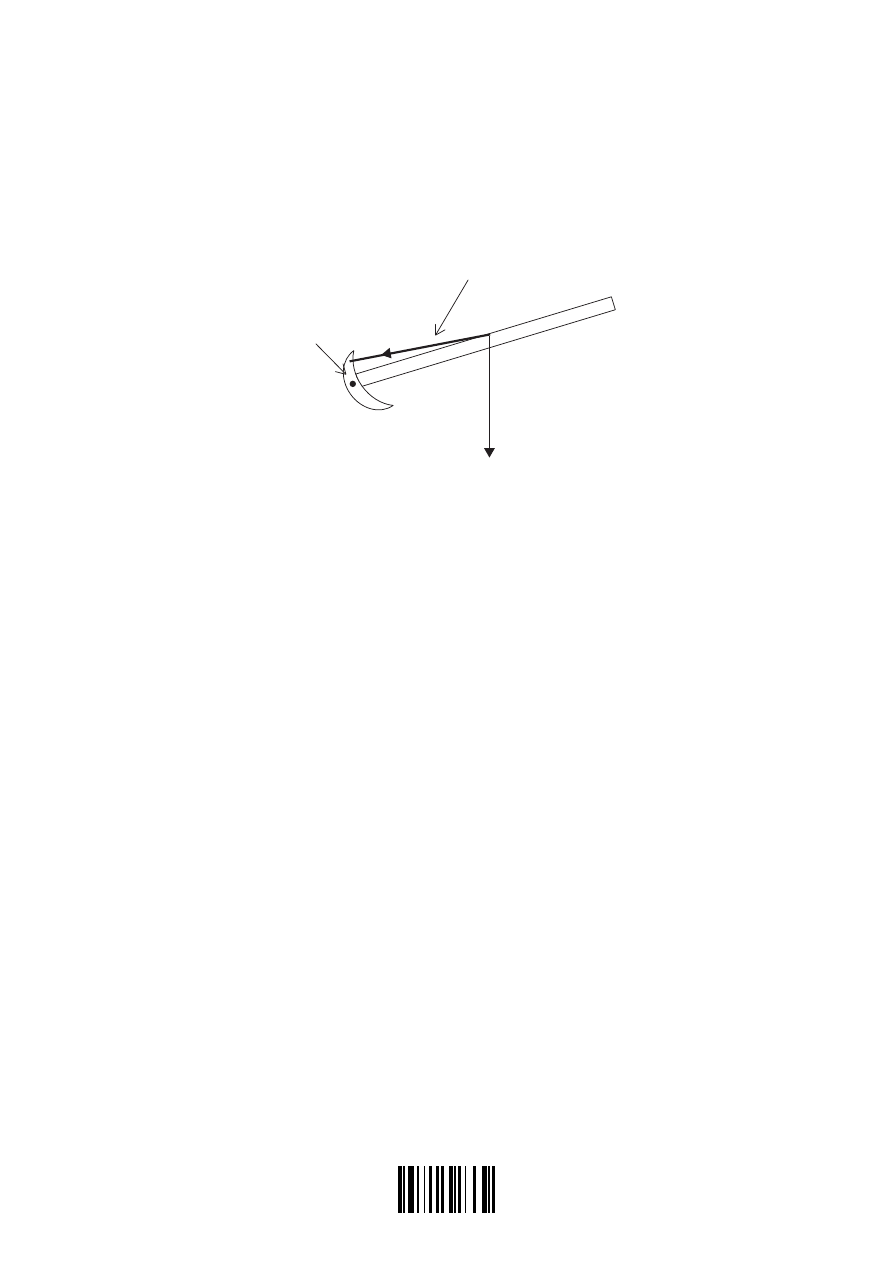
D4. This question is about various forces exerted when a person bends over.
A person bends his/her body at the hips.
A simplified diagram of the spine, pelvis and extensor muscle attached to the spine and pelvis
is shown below.
pivot
extensor muscle
P
spine
pelvis
weight of upper body, W
The spine, considered to be a rigid rod, is pivoted at the pelvis.
The magnitude of the force exerted on the spine by the extensor muscle is P.
(a) Explain why the spine is under compression.
. . . . . . . . . . . . . . . . . . . . . . . . . . . . . . . . . . . . . . . . . . . . . . . . . . . . . . . . . . . . . . . . . . . . . .
. . . . . . . . . . . . . . . . . . . . . . . . . . . . . . . . . . . . . . . . . . . . . . . . . . . . . . . . . . . . . . . . . . . . . .
[2]
(b) On the diagram, draw an arrow to show the direction of the compression force. Label this
arrow S.
[1]
(c) Explain, with reference to the diagram, why the force P and the compression force S on
the spine are much greater than the weight W of the upper body of the person.
. . . . . . . . . . . . . . . . . . . . . . . . . . . . . . . . . . . . . . . . . . . . . . . . . . . . . . . . . . . . . . . . . . . . . .
. . . . . . . . . . . . . . . . . . . . . . . . . . . . . . . . . . . . . . . . . . . . . . . . . . . . . . . . . . . . . . . . . . . . . .
. . . . . . . . . . . . . . . . . . . . . . . . . . . . . . . . . . . . . . . . . . . . . . . . . . . . . . . . . . . . . . . . . . . . . .
. . . . . . . . . . . . . . . . . . . . . . . . . . . . . . . . . . . . . . . . . . . . . . . . . . . . . . . . . . . . . . . . . . . . . .
. . . . . . . . . . . . . . . . . . . . . . . . . . . . . . . . . . . . . . . . . . . . . . . . . . . . . . . . . . . . . . . . . . . . . .
[2]
0531

2205-6509
– 6 –
M05/4/PHYSI/HP3/ENG/TZ1/XX+
D5. This question is about radioactive isotopes of iodine.
The isotope iodine-131 is used to treat malignant growths in the thyroid gland. The isotope has
a physical half-life of 8 days and a biological half-life of 21 days.
(a) Explain the term biological half-life.
. . . . . . . . . . . . . . . . . . . . . . . . . . . . . . . . . . . . . . . . . . . . . . . . . . . . . . . . . . . . . . . . . . . . . .
. . . . . . . . . . . . . . . . . . . . . . . . . . . . . . . . . . . . . . . . . . . . . . . . . . . . . . . . . . . . . . . . . . . . . .
. . . . . . . . . . . . . . . . . . . . . . . . . . . . . . . . . . . . . . . . . . . . . . . . . . . . . . . . . . . . . . . . . . . . . .
. . . . . . . . . . . . . . . . . . . . . . . . . . . . . . . . . . . . . . . . . . . . . . . . . . . . . . . . . . . . . . . . . . . . . .
[2]
(b) Calculate the effective half-life of the isotope.
. . . . . . . . . . . . . . . . . . . . . . . . . . . . . . . . . . . . . . . . . . . . . . . . . . . . . . . . . . . . . . . . . . . . . .
. . . . . . . . . . . . . . . . . . . . . . . . . . . . . . . . . . . . . . . . . . . . . . . . . . . . . . . . . . . . . . . . . . . . . .
. . . . . . . . . . . . . . . . . . . . . . . . . . . . . . . . . . . . . . . . . . . . . . . . . . . . . . . . . . . . . . . . . . . . . .
[2]
The isotope iodine-123 has a physical half-life of 13 hours.
(c) Suggest why it is preferable to use this isotope for imaging the thyroid rather than
iodine-131.
. . . . . . . . . . . . . . . . . . . . . . . . . . . . . . . . . . . . . . . . . . . . . . . . . . . . . . . . . . . . . . . . . . . . . .
. . . . . . . . . . . . . . . . . . . . . . . . . . . . . . . . . . . . . . . . . . . . . . . . . . . . . . . . . . . . . . . . . . . . . .
[1]
0631

2205-6509
– 7 –
Turn over
M05/4/PHYSI/HP3/ENG/TZ1/XX+
Option E — The History and Development of Physics
E1. This question is about models of the universe.
(a) In the course of one night, the stars appear to move across the sky. Outline how this
observed motion is explained in
(i) the Ptolemaic model.
. . . . . . . . . . . . . . . . . . . . . . . . . . . . . . . . . . . . . . . . . . . . . . . . . . . . . . . . . . . . . . . . .
. . . . . . . . . . . . . . . . . . . . . . . . . . . . . . . . . . . . . . . . . . . . . . . . . . . . . . . . . . . . . . . . .
. . . . . . . . . . . . . . . . . . . . . . . . . . . . . . . . . . . . . . . . . . . . . . . . . . . . . . . . . . . . . . . . .
[2]
(ii) the Copernican model.
. . . . . . . . . . . . . . . . . . . . . . . . . . . . . . . . . . . . . . . . . . . . . . . . . . . . . . . . . . . . . . . . .
. . . . . . . . . . . . . . . . . . . . . . . . . . . . . . . . . . . . . . . . . . . . . . . . . . . . . . . . . . . . . . . . .
. . . . . . . . . . . . . . . . . . . . . . . . . . . . . . . . . . . . . . . . . . . . . . . . . . . . . . . . . . . . . . . . .
[2]
(b) Observations show that the brightnesses of the planets Venus and Mercury vary with
time.
Explain why these observations
(i) cannot be explained in the Ptolemaic model of the universe.
. . . . . . . . . . . . . . . . . . . . . . . . . . . . . . . . . . . . . . . . . . . . . . . . . . . . . . . . . . . . . . . . .
. . . . . . . . . . . . . . . . . . . . . . . . . . . . . . . . . . . . . . . . . . . . . . . . . . . . . . . . . . . . . . . . .
. . . . . . . . . . . . . . . . . . . . . . . . . . . . . . . . . . . . . . . . . . . . . . . . . . . . . . . . . . . . . . . . .
[2]
(ii) can be explained in the Copernican model.
. . . . . . . . . . . . . . . . . . . . . . . . . . . . . . . . . . . . . . . . . . . . . . . . . . . . . . . . . . . . . . . . .
. . . . . . . . . . . . . . . . . . . . . . . . . . . . . . . . . . . . . . . . . . . . . . . . . . . . . . . . . . . . . . . . .
. . . . . . . . . . . . . . . . . . . . . . . . . . . . . . . . . . . . . . . . . . . . . . . . . . . . . . . . . . . . . . . . .
[2]
0731

2205-6509
– 8 –
M05/4/PHYSI/HP3/ENG/TZ1/XX+
E2. This question is about force and motion.
(a) Two bodies are moving on a straight horizontal line with constant speed. Body A has
double the speed of body B.
State and explain the net force on each body according to Aristotle and Galileo.
(i) Aristotle
. . . . . . . . . . . . . . . . . . . . . . . . . . . . . . . . . . . . . . . . . . . . . . . . . . . . . . . . . . . . . . . . .
. . . . . . . . . . . . . . . . . . . . . . . . . . . . . . . . . . . . . . . . . . . . . . . . . . . . . . . . . . . . . . . . .
. . . . . . . . . . . . . . . . . . . . . . . . . . . . . . . . . . . . . . . . . . . . . . . . . . . . . . . . . . . . . . . . .
[2]
(ii) Galileo
. . . . . . . . . . . . . . . . . . . . . . . . . . . . . . . . . . . . . . . . . . . . . . . . . . . . . . . . . . . . . . . . .
. . . . . . . . . . . . . . . . . . . . . . . . . . . . . . . . . . . . . . . . . . . . . . . . . . . . . . . . . . . . . . . . .
. . . . . . . . . . . . . . . . . . . . . . . . . . . . . . . . . . . . . . . . . . . . . . . . . . . . . . . . . . . . . . . . .
[2]
(b) A stone and a feather are dropped from rest from the same height. State why on the basis
of Aristotle’s theory the stone reaches the ground before the feather.
. . . . . . . . . . . . . . . . . . . . . . . . . . . . . . . . . . . . . . . . . . . . . . . . . . . . . . . . . . . . . . . . . . . . . .
. . . . . . . . . . . . . . . . . . . . . . . . . . . . . . . . . . . . . . . . . . . . . . . . . . . . . . . . . . . . . . . . . . . . . .
[2]
0831

2205-6509
– 9 –
Turn over
M05/4/PHYSI/HP3/ENG/TZ1/XX+
E3. This question is about theories of heat.
(a) State what is meant by phlogiston.
. . . . . . . . . . . . . . . . . . . . . . . . . . . . . . . . . . . . . . . . . . . . . . . . . . . . . . . . . . . . . . . . . . . . . .
. . . . . . . . . . . . . . . . . . . . . . . . . . . . . . . . . . . . . . . . . . . . . . . . . . . . . . . . . . . . . . . . . . . . . .
. . . . . . . . . . . . . . . . . . . . . . . . . . . . . . . . . . . . . . . . . . . . . . . . . . . . . . . . . . . . . . . . . . . . . .
[1]
(b) State and explain one experimental piece of evidence that convinced Lavoisier that the
phlogiston did not exist.
. . . . . . . . . . . . . . . . . . . . . . . . . . . . . . . . . . . . . . . . . . . . . . . . . . . . . . . . . . . . . . . . . . . . . .
. . . . . . . . . . . . . . . . . . . . . . . . . . . . . . . . . . . . . . . . . . . . . . . . . . . . . . . . . . . . . . . . . . . . . .
. . . . . . . . . . . . . . . . . . . . . . . . . . . . . . . . . . . . . . . . . . . . . . . . . . . . . . . . . . . . . . . . . . . . . .
. . . . . . . . . . . . . . . . . . . . . . . . . . . . . . . . . . . . . . . . . . . . . . . . . . . . . . . . . . . . . . . . . . . . . .
[2]
(c) State and explain how Rumford reached the conclusion that heat is not a fluid.
. . . . . . . . . . . . . . . . . . . . . . . . . . . . . . . . . . . . . . . . . . . . . . . . . . . . . . . . . . . . . . . . . . . . . .
. . . . . . . . . . . . . . . . . . . . . . . . . . . . . . . . . . . . . . . . . . . . . . . . . . . . . . . . . . . . . . . . . . . . . .
. . . . . . . . . . . . . . . . . . . . . . . . . . . . . . . . . . . . . . . . . . . . . . . . . . . . . . . . . . . . . . . . . . . . . .
. . . . . . . . . . . . . . . . . . . . . . . . . . . . . . . . . . . . . . . . . . . . . . . . . . . . . . . . . . . . . . . . . . . . . .
[3]
0931

2205-6509
– 10 –
M05/4/PHYSI/HP3/ENG/TZ1/XX+
E4. This question is about the Bohr model of the hydrogen atom and the extension of the model to
include singly ionised helium.
In his theory of the hydrogen atom, Bohr refers to stable electron orbits.
(a) State the Bohr postulate that determines which stable orbits are allowed.
. . . . . . . . . . . . . . . . . . . . . . . . . . . . . . . . . . . . . . . . . . . . . . . . . . . . . . . . . . . . . . . . . . . . . .
. . . . . . . . . . . . . . . . . . . . . . . . . . . . . . . . . . . . . . . . . . . . . . . . . . . . . . . . . . . . . . . . . . . . . .
[1]
(b) Describe how the existence of such orbits accounts for the emission line spectrum of
atomic hydrogen.
. . . . . . . . . . . . . . . . . . . . . . . . . . . . . . . . . . . . . . . . . . . . . . . . . . . . . . . . . . . . . . . . . . . . . .
. . . . . . . . . . . . . . . . . . . . . . . . . . . . . . . . . . . . . . . . . . . . . . . . . . . . . . . . . . . . . . . . . . . . . .
. . . . . . . . . . . . . . . . . . . . . . . . . . . . . . . . . . . . . . . . . . . . . . . . . . . . . . . . . . . . . . . . . . . . . .
. . . . . . . . . . . . . . . . . . . . . . . . . . . . . . . . . . . . . . . . . . . . . . . . . . . . . . . . . . . . . . . . . . . . . .
. . . . . . . . . . . . . . . . . . . . . . . . . . . . . . . . . . . . . . . . . . . . . . . . . . . . . . . . . . . . . . . . . . . . . .
[3]
The Bohr model of the hydrogen atom can be extended to singly ionised helium atoms. The
model leads to the following expression for the energy
E
k
n
n
= −
2
of the electron in an orbit specified
by the integer
n
.
E
k
n
n
= −
2
where k is a constant.
In the spectrum of singly ionised helium, the line corresponding to a wavelength of 362 nm
rises from electron transitions between the orbit
n = 3
to the orbit
n = 2
.
(c) Deduce the value of the ionisation energy of singly ionised helium atoms.
. . . . . . . . . . . . . . . . . . . . . . . . . . . . . . . . . . . . . . . . . . . . . . . . . . . . . . . . . . . . . . . . . . . . . .
. . . . . . . . . . . . . . . . . . . . . . . . . . . . . . . . . . . . . . . . . . . . . . . . . . . . . . . . . . . . . . . . . . . . . .
. . . . . . . . . . . . . . . . . . . . . . . . . . . . . . . . . . . . . . . . . . . . . . . . . . . . . . . . . . . . . . . . . . . . . .
. . . . . . . . . . . . . . . . . . . . . . . . . . . . . . . . . . . . . . . . . . . . . . . . . . . . . . . . . . . . . . . . . . . . . .
. . . . . . . . . . . . . . . . . . . . . . . . . . . . . . . . . . . . . . . . . . . . . . . . . . . . . . . . . . . . . . . . . . . . . .
. . . . . . . . . . . . . . . . . . . . . . . . . . . . . . . . . . . . . . . . . . . . . . . . . . . . . . . . . . . . . . . . . . . . . .
[4]
(This question continues on the following page)
1031

2205-6509
– 11 –
Turn over
M05/4/PHYSI/HP3/ENG/TZ1/XX+
(Question E4 continued)
(d) Outline how the Schrödinger model of the hydrogen atom leads to the idea of discrete
electron energy levels.
. . . . . . . . . . . . . . . . . . . . . . . . . . . . . . . . . . . . . . . . . . . . . . . . . . . . . . . . . . . . . . . . . . . . . .
. . . . . . . . . . . . . . . . . . . . . . . . . . . . . . . . . . . . . . . . . . . . . . . . . . . . . . . . . . . . . . . . . . . . . .
. . . . . . . . . . . . . . . . . . . . . . . . . . . . . . . . . . . . . . . . . . . . . . . . . . . . . . . . . . . . . . . . . . . . . .
. . . . . . . . . . . . . . . . . . . . . . . . . . . . . . . . . . . . . . . . . . . . . . . . . . . . . . . . . . . . . . . . . . . . . .
[2]
1131

2205-6509
– 12 –
M05/4/PHYSI/HP3/ENG/TZ1/XX+
Option F — Astrophysics
F1. This question is about eclipsing binary stars.
(a) In a particular binary star system, star A has apparent brightness
8 0 10
13
. ×
−
W
m
−2
and
star B has apparent brightness
2 0 10
14
. ×
−
W
m
−2
.
(i) Explain how it is possible to deduce that star A has a higher luminosity than star B.
. . . . . . . . . . . . . . . . . . . . . . . . . . . . . . . . . . . . . . . . . . . . . . . . . . . . . . . . . . . . . . . . . . . . . . .
. . . . . . . . . . . . . . . . . . . . . . . . . . . . . . . . . . . . . . . . . . . . . . . . . . . . . . . . . . . . . . . . . . . . . . .
. . . . . . . . . . . . . . . . . . . . . . . . . . . . . . . . . . . . . . . . . . . . . . . . . . . . . . . . . . . . . . . . .
[2]
(ii) The surface area of star B is 10 000 times smaller than that of star A. Calculate the ratio
surface temperature of star B
surface temperature of star A
.
. . . . . . . . . . . . . . . . . . . . . . . . . . . . . . . . . . . . . . . . . . . . . . . . . . . . . . . . . . . . . . . . . . . . . . .
. . . . . . . . . . . . . . . . . . . . . . . . . . . . . . . . . . . . . . . . . . . . . . . . . . . . . . . . . . . . . . . . . . . . . . .
. . . . . . . . . . . . . . . . . . . . . . . . . . . . . . . . . . . . . . . . . . . . . . . . . . . . . . . . . . . . . . . . . . . . . . .
. . . . . . . . . . . . . . . . . . . . . . . . . . . . . . . . . . . . . . . . . . . . . . . . . . . . . . . . . . . . . . . . . . . . . . .
. . . . . . . . . . . . . . . . . . . . . . . . . . . . . . . . . . . . . . . . . . . . . . . . . . . . . . . . . . . . . . . . . . . . . . .
. . . . . . . . . . . . . . . . . . . . . . . . . . . . . . . . . . . . . . . . . . . . . . . . . . . . . . . . . . . . . . . . .
[4]
(This question continues on the following page)
1231
2205-6509
– 13 –
Turn over
M05/4/PHYSI/HP3/ENG/TZ1/XX+
(Question F1 continued)
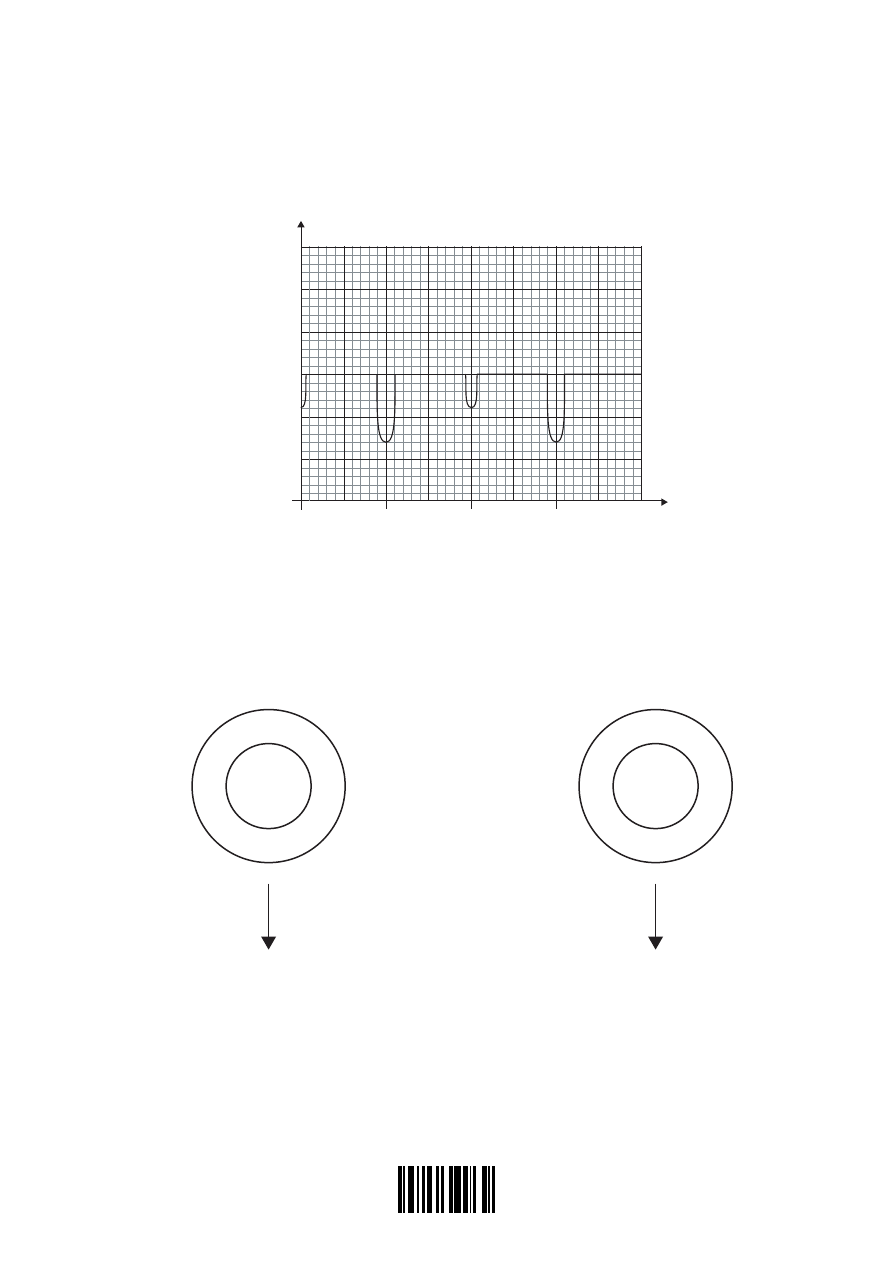
(b) The graph below shows the variation with time of the intensity of light received on Earth
from the two stars.
intensity
5
10
15
time / years
(i) The diagrams below each show the orbits of the two stars. Star A is in the inner
orbit. Annotate the diagrams to show the relative positions of stars A and B as
seen from Earth, that correspond to the intensity-time graph opposite at times
of 5 and 10 years.
[2]
Diagram at 5 years
Diagram at 10 years
line of sight
line of sight
from Earth
from Earth
(ii) State the period of this binary star system.
. . . . . . . . . . . . . . . . . . . . . . . . . . . . . . . . . . . . . . . . . . . . . . . . . . . . . . . . . . . . . . . . .
[1]
(iii) State what can be deduced from knowing the period of the binary and the separation
of the stars.
. . . . . . . . . . . . . . . . . . . . . . . . . . . . . . . . . . . . . . . . . . . . . . . . . . . . . . . . . . . . . . . . .
[1]
1331

2205-6509
– 14 –
M05/4/PHYSI/HP3/ENG/TZ1/XX+
F2. This question is about cosmology.
(a) State what is meant by critical density.
. . . . . . . . . . . . . . . . . . . . . . . . . . . . . . . . . . . . . . . . . . . . . . . . . . . . . . . . . . . . . . . . . . . . . .
. . . . . . . . . . . . . . . . . . . . . . . . . . . . . . . . . . . . . . . . . . . . . . . . . . . . . . . . . . . . . . . . . . . . . .
[1]
(b) Recent measurements suggest that the mass density of the universe is likely to be less
than the critical density. State what this observation implies for the evolution of the
universe in the context of the Big Bang model.
. . . . . . . . . . . . . . . . . . . . . . . . . . . . . . . . . . . . . . . . . . . . . . . . . . . . . . . . . . . . . . . . . . . . . .
. . . . . . . . . . . . . . . . . . . . . . . . . . . . . . . . . . . . . . . . . . . . . . . . . . . . . . . . . . . . . . . . . . . . . .
[1]
(c) (i) Outline what is meant by dark matter.
. . . . . . . . . . . . . . . . . . . . . . . . . . . . . . . . . . . . . . . . . . . . . . . . . . . . . . . . . . . . . . . . .
. . . . . . . . . . . . . . . . . . . . . . . . . . . . . . . . . . . . . . . . . . . . . . . . . . . . . . . . . . . . . . . . .
. . . . . . . . . . . . . . . . . . . . . . . . . . . . . . . . . . . . . . . . . . . . . . . . . . . . . . . . . . . . . . . . .
. . . . . . . . . . . . . . . . . . . . . . . . . . . . . . . . . . . . . . . . . . . . . . . . . . . . . . . . . . . . . . . . .
. . . . . . . . . . . . . . . . . . . . . . . . . . . . . . . . . . . . . . . . . . . . . . . . . . . . . . . . . . . . . . . . .
[2]
(ii) Give two possible examples of dark matter.
1.
. . . . . . . . . . . . . . . . . . . . . . . . . . . . . . . . . . . . . . . . . . . . . . . . . . . . . . . . . . . .
2.
. . . . . . . . . . . . . . . . . . . . . . . . . . . . . . . . . . . . . . . . . . . . . . . . . . . . . . . . . . . .
[1]
[1]
1431
2205-6509
– 15 –
Turn over
M05/4/PHYSI/HP3/ENG/TZ1/XX+
F3. This question is about cosmic background radiation.
(a) Describe what is meant by cosmic background radiation.
. . . . . . . . . . . . . . . . . . . . . . . . . . . . . . . . . . . . . . . . . . . . . . . . . . . . . . . . . . . . . . . . . . . . . .
. . . . . . . . . . . . . . . . . . . . . . . . . . . . . . . . . . . . . . . . . . . . . . . . . . . . . . . . . . . . . . . . . . . . . .
. . . . . . . . . . . . . . . . . . . . . . . . . . . . . . . . . . . . . . . . . . . . . . . . . . . . . . . . . . . . . . . . . . . . . .
[2]
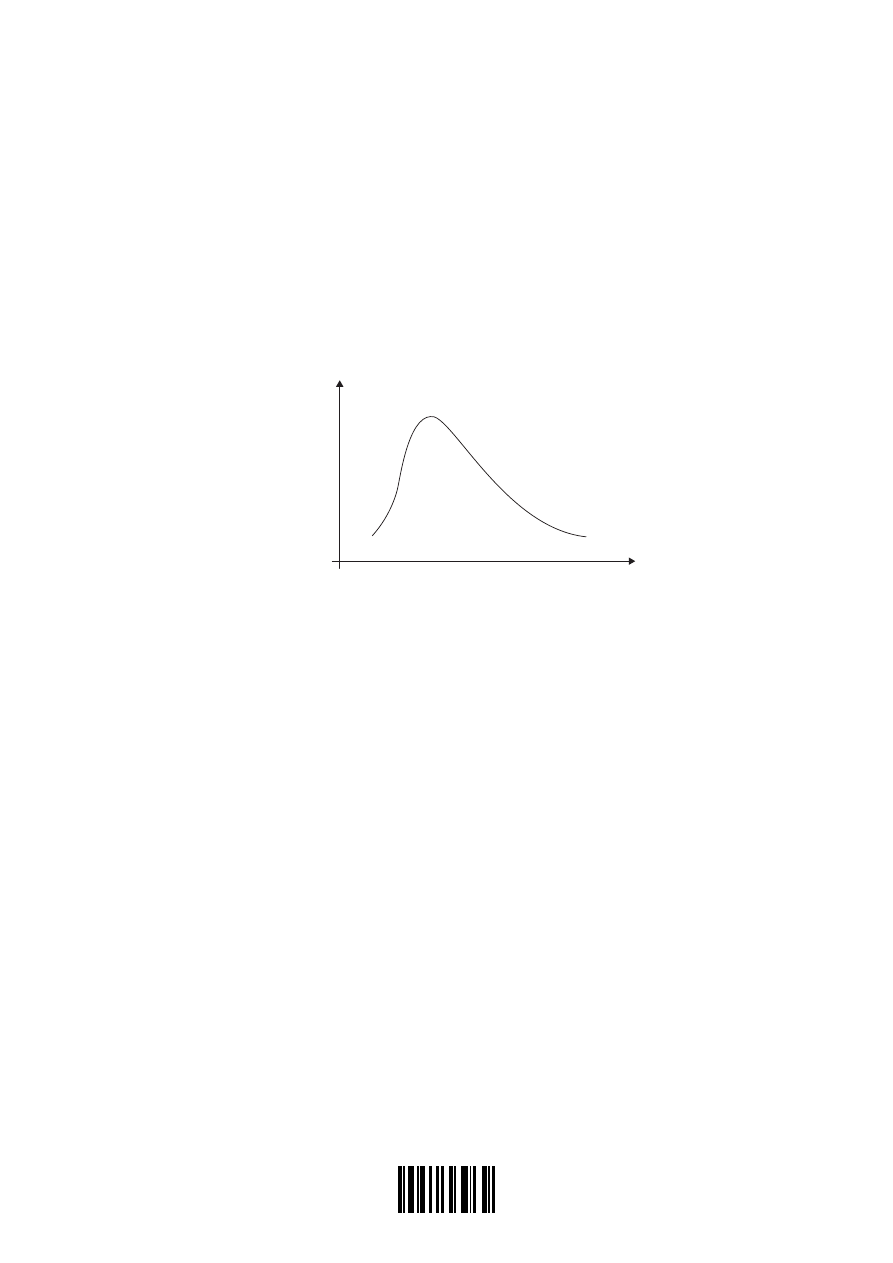
(b) The graph below shows the spectrum of the cosmic background radiation i.e. the variation,
with wavelength, of the intensity of the cosmic background radiation.
intensity
0
0
wavelength
There is evidence to suggest that the universe will expand forever. On the diagram above,
sketch a graph to show the spectrum of the background radiation for the universe many
millions of years from now.
[2]
1531

2205-6509
– 16 –
M05/4/PHYSI/HP3/ENG/TZ1/XX+
F4. This question is about the evolution of stars.
The diagram below is a flow chart that shows the stages of evolution of a main sequence star
such as the Sun. (Mass of the Sun, the solar mass
= 8M
e
= 8M
e
)
main
sequence star
red giant
planetary
white
mass
≈
M
e
nebula
dwarf
(a) Complete the boxes below to show the stages of evolution of a main sequence star that
has a mass greater than
8M
e
.
[3]
main
sequence star
mass >
8M
e
(b) Outline why
(i) white dwarf stars cannot have a greater mass than
1 4
. M
e
.
. . . . . . . . . . . . . . . . . . . . . . . . . . . . . . . . . . . . . . . . . . . . . . . . . . . . . . . . . . . . . . . . .
. . . . . . . . . . . . . . . . . . . . . . . . . . . . . . . . . . . . . . . . . . . . . . . . . . . . . . . . . . . . . . . . .
. . . . . . . . . . . . . . . . . . . . . . . . . . . . . . . . . . . . . . . . . . . . . . . . . . . . . . . . . . . . . . . . .
. . . . . . . . . . . . . . . . . . . . . . . . . . . . . . . . . . . . . . . . . . . . . . . . . . . . . . . . . . . . . . . . .
[2]
(ii) it is possible for a main sequence star with a mass equal to
8M
e
to evolve to a
white dwarf.
. . . . . . . . . . . . . . . . . . . . . . . . . . . . . . . . . . . . . . . . . . . . . . . . . . . . . . . . . . . . . . . . .
. . . . . . . . . . . . . . . . . . . . . . . . . . . . . . . . . . . . . . . . . . . . . . . . . . . . . . . . . . . . . . . . .
. . . . . . . . . . . . . . . . . . . . . . . . . . . . . . . . . . . . . . . . . . . . . . . . . . . . . . . . . . . . . . . . .
[1]
1631

2205-6509
– 17 –
Turn over
M05/4/PHYSI/HP3/ENG/TZ1/XX+
F5. This question is about Hubble’s law.
The light received from many distant galaxies is red-shifted.
(a) State the cause of this red-shift.
. . . . . . . . . . . . . . . . . . . . . . . . . . . . . . . . . . . . . . . . . . . . . . . . . . . . . . . . . . . . . . . . . . . . . .
. . . . . . . . . . . . . . . . . . . . . . . . . . . . . . . . . . . . . . . . . . . . . . . . . . . . . . . . . . . . . . . . . . . . . .
[1]
(b) State Hubble’s law.
. . . . . . . . . . . . . . . . . . . . . . . . . . . . . . . . . . . . . . . . . . . . . . . . . . . . . . . . . . . . . . . . . . . . . .
. . . . . . . . . . . . . . . . . . . . . . . . . . . . . . . . . . . . . . . . . . . . . . . . . . . . . . . . . . . . . . . . . . . . . .
[1]
(c) Deduce the relationship between the age of the universe T and the Hubble constant H.
State any assumptions you have made.
. . . . . . . . . . . . . . . . . . . . . . . . . . . . . . . . . . . . . . . . . . . . . . . . . . . . . . . . . . . . . . . . . . . . . .
. . . . . . . . . . . . . . . . . . . . . . . . . . . . . . . . . . . . . . . . . . . . . . . . . . . . . . . . . . . . . . . . . . . . . .
. . . . . . . . . . . . . . . . . . . . . . . . . . . . . . . . . . . . . . . . . . . . . . . . . . . . . . . . . . . . . . . . . . . . . .
. . . . . . . . . . . . . . . . . . . . . . . . . . . . . . . . . . . . . . . . . . . . . . . . . . . . . . . . . . . . . . . . . . . . . .
[2]
1731

2205-6509
– 18 –
M05/4/PHYSI/HP3/ENG/TZ1/XX+
Blank page
1831
2205-6509
– 19 –
Turn over
M05/4/PHYSI/HP3/ENG/TZ1/XX+
Option G — Relativity
G1. This question is about the postulates of special relativity.
(a) State the two postulates of the special theory of relativity.
[2]
Postulate 1
. . . . . . . . . . . . . . . . . . . . . . . . . . . . . . . . . . . . . . . . . . . . . . . . . . . . . . . . . . . . . . . . . . . . . .
. . . . . . . . . . . . . . . . . . . . . . . . . . . . . . . . . . . . . . . . . . . . . . . . . . . . . . . . . . . . . . . . . . . . . .
Postulate 2
. . . . . . . . . . . . . . . . . . . . . . . . . . . . . . . . . . . . . . . . . . . . . . . . . . . . . . . . . . . . . . . . . . . . . .
. . . . . . . . . . . . . . . . . . . . . . . . . . . . . . . . . . . . . . . . . . . . . . . . . . . . . . . . . . . . . . . . . . . . . .
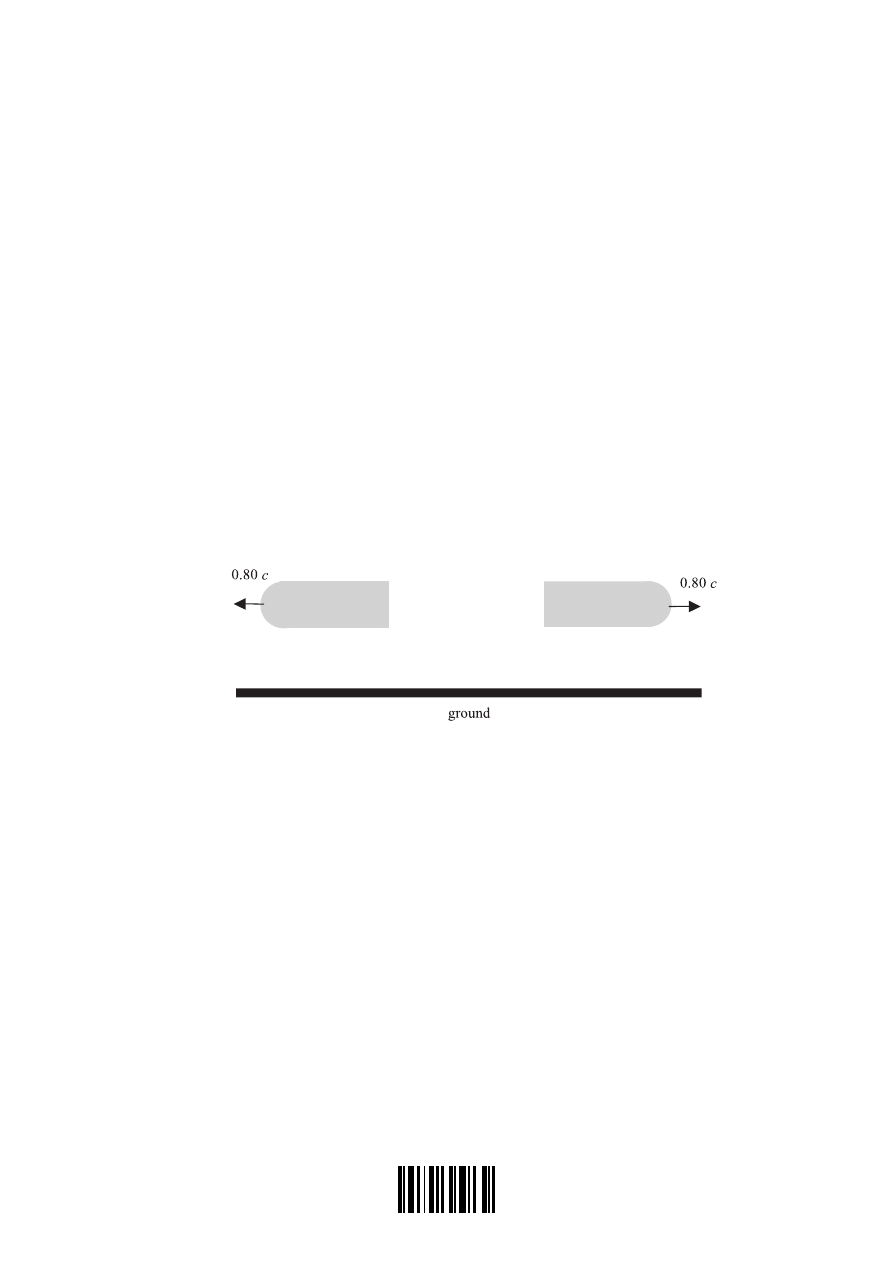
(b) Two identical spacecraft are moving in opposite directions each with a speed of 0.80 c
as measured by an observer at rest relative to the ground. The observer on the ground
measures the separation of the spacecraft as increasing at a rate of 1.60 c.
(i) Explain how this observation is consistent with the theory of special relativity.
. . . . . . . . . . . . . . . . . . . . . . . . . . . . . . . . . . . . . . . . . . . . . . . . . . . . . . . . . . . . . . . . .
. . . . . . . . . . . . . . . . . . . . . . . . . . . . . . . . . . . . . . . . . . . . . . . . . . . . . . . . . . . . . . . . .
. . . . . . . . . . . . . . . . . . . . . . . . . . . . . . . . . . . . . . . . . . . . . . . . . . . . . . . . . . . . . . . . .
[1]
(ii) Calculate the speed of one spacecraft relative to an observer in the other.
. . . . . . . . . . . . . . . . . . . . . . . . . . . . . . . . . . . . . . . . . . . . . . . . . . . . . . . . . . . . . . . . .
. . . . . . . . . . . . . . . . . . . . . . . . . . . . . . . . . . . . . . . . . . . . . . . . . . . . . . . . . . . . . . . . .
. . . . . . . . . . . . . . . . . . . . . . . . . . . . . . . . . . . . . . . . . . . . . . . . . . . . . . . . . . . . . . . . .
. . . . . . . . . . . . . . . . . . . . . . . . . . . . . . . . . . . . . . . . . . . . . . . . . . . . . . . . . . . . . . . . .
[3]
2031

2205-6509
– 20 –
M05/4/PHYSI/HP3/ENG/TZ1/XX+
G2. This question is about relativistic kinematics.
(a) Muons are unstable particles that have an average lifetime of
2 2 10
6
. ×
−
s as measured in
a reference frame in which they are at rest. Muons that are created at a height of 3.0 km
above the Earth’s surface move vertically downward with a speed of 0.98 c as measured
by an observer at rest on the Earth’s surface.
(i) Calculate the average lifetime of a muon as measured by the observer on Earth.
. . . . . . . . . . . . . . . . . . . . . . . . . . . . . . . . . . . . . . . . . . . . . . . . . . . . . . . . . . . . . . . . .
. . . . . . . . . . . . . . . . . . . . . . . . . . . . . . . . . . . . . . . . . . . . . . . . . . . . . . . . . . . . . . . . .
. . . . . . . . . . . . . . . . . . . . . . . . . . . . . . . . . . . . . . . . . . . . . . . . . . . . . . . . . . . . . . . . .
. . . . . . . . . . . . . . . . . . . . . . . . . . . . . . . . . . . . . . . . . . . . . . . . . . . . . . . . . . . . . . . . .
[2]
(ii) Calculate the distance travelled by a muon during a time equal to the average lifetime
of the muon according to the observer at rest relative to the Earth’s surface.
. . . . . . . . . . . . . . . . . . . . . . . . . . . . . . . . . . . . . . . . . . . . . . . . . . . . . . . . . . . . . . . . .
. . . . . . . . . . . . . . . . . . . . . . . . . . . . . . . . . . . . . . . . . . . . . . . . . . . . . . . . . . . . . . . . .
. . . . . . . . . . . . . . . . . . . . . . . . . . . . . . . . . . . . . . . . . . . . . . . . . . . . . . . . . . . . . . . . .
. . . . . . . . . . . . . . . . . . . . . . . . . . . . . . . . . . . . . . . . . . . . . . . . . . . . . . . . . . . . . . . . .
[2]
(iii) Calculate the distance travelled by the Earth during a time equal to the average
lifetime of the muon according to an observer at rest relative to the muon.
. . . . . . . . . . . . . . . . . . . . . . . . . . . . . . . . . . . . . . . . . . . . . . . . . . . . . . . . . . . . . . . . .
. . . . . . . . . . . . . . . . . . . . . . . . . . . . . . . . . . . . . . . . . . . . . . . . . . . . . . . . . . . . . . . . .
. . . . . . . . . . . . . . . . . . . . . . . . . . . . . . . . . . . . . . . . . . . . . . . . . . . . . . . . . . . . . . . . .
. . . . . . . . . . . . . . . . . . . . . . . . . . . . . . . . . . . . . . . . . . . . . . . . . . . . . . . . . . . . . . . . .
[2]
(This question continues on the following page)
2131

2205-6509
– 21 –
Turn over
M05/4/PHYSI/HP3/ENG/TZ1/XX+
(Question G2 continued)
(iv) Muons created at a height of 3.0 km above the Earth’s surface are in fact detected on
the surface of the Earth. Use your answers to (ii) and (iii) together with any other
relevant calculations to explain this observation according to
1.
the observer at rest on the surface of the Earth.
. . . . . . . . . . . . . . . . . . . . . . . . . . . . . . . . . . . . . . . . . . . . . . . . . . . . . . . . . . . .
. . . . . . . . . . . . . . . . . . . . . . . . . . . . . . . . . . . . . . . . . . . . . . . . . . . . . . . . . . . .
. . . . . . . . . . . . . . . . . . . . . . . . . . . . . . . . . . . . . . . . . . . . . . . . . . . . . . . . . . . .
[2]
2.
the observer at rest relative to the muon.
. . . . . . . . . . . . . . . . . . . . . . . . . . . . . . . . . . . . . . . . . . . . . . . . . . . . . . . . . . . .
. . . . . . . . . . . . . . . . . . . . . . . . . . . . . . . . . . . . . . . . . . . . . . . . . . . . . . . . . . . .
. . . . . . . . . . . . . . . . . . . . . . . . . . . . . . . . . . . . . . . . . . . . . . . . . . . . . . . . . . . .
. . . . . . . . . . . . . . . . . . . . . . . . . . . . . . . . . . . . . . . . . . . . . . . . . . . . . . . . . . . .
[3]
(b) The rest mass of the muon is 106
106
2
MeVc
−
. Calculate the potential difference through
which a muon at rest in the lab must be accelerated in order to have a speed of 0.98 c.
(The electric charge of the muon is identical to that of the electron.)
. . . . . . . . . . . . . . . . . . . . . . . . . . . . . . . . . . . . . . . . . . . . . . . . . . . . . . . . . . . . . . . . . . . . . .
. . . . . . . . . . . . . . . . . . . . . . . . . . . . . . . . . . . . . . . . . . . . . . . . . . . . . . . . . . . . . . . . . . . . . .
. . . . . . . . . . . . . . . . . . . . . . . . . . . . . . . . . . . . . . . . . . . . . . . . . . . . . . . . . . . . . . . . . . . . . .
. . . . . . . . . . . . . . . . . . . . . . . . . . . . . . . . . . . . . . . . . . . . . . . . . . . . . . . . . . . . . . . . . . . . . .
[3]
2231

2205-6509
– 22 –
M05/4/PHYSI/HP3/ENG/TZ1/XX+
G3. This question is about General Relativity and experimental evidence to support it.
On 29 March 1919, an experiment was carried out by Eddington to provide evidence to support
Einstein’s General Theory of Relativity. The diagram below (not to scale) shows the relative
position of the Sun, Earth and a star S on this date.
Earth
S
Sun
orbit path of
Earth about Sun
This particular date was chosen because at the place where the experiment was carried out,
there was a total eclipse of the Sun.
Eddington measured the apparent position of the star and six months later, he again measured
the position of the star from Earth.
(a) State why it was necessary for there to be a total solar eclipse to carry out the experiment.
. . . . . . . . . . . . . . . . . . . . . . . . . . . . . . . . . . . . . . . . . . . . . . . . . . . . . . . . . . . . . . . . . . . . . .
. . . . . . . . . . . . . . . . . . . . . . . . . . . . . . . . . . . . . . . . . . . . . . . . . . . . . . . . . . . . . . . . . . . . . .
[1]
(b) Explain why it was necessary to measure the position of the star six months later.
. . . . . . . . . . . . . . . . . . . . . . . . . . . . . . . . . . . . . . . . . . . . . . . . . . . . . . . . . . . . . . . . . . . . . .
. . . . . . . . . . . . . . . . . . . . . . . . . . . . . . . . . . . . . . . . . . . . . . . . . . . . . . . . . . . . . . . . . . . . . .
[1]
(c) On the diagram, draw the path of a ray of light from S to the Earth as suggested by
Einstein’s theory.
[1]
(This question continues on the following page)
2331

2205-6509
– 23 –
Turn over
M05/4/PHYSI/HP3/ENG/TZ1/XX+
(Question G3 continued)
(d) Explain how Einstein’s theory accounts for the path of the ray that you have drawn.
. . . . . . . . . . . . . . . . . . . . . . . . . . . . . . . . . . . . . . . . . . . . . . . . . . . . . . . . . . . . . . . . . . . . . .
. . . . . . . . . . . . . . . . . . . . . . . . . . . . . . . . . . . . . . . . . . . . . . . . . . . . . . . . . . . . . . . . . . . . . .
. . . . . . . . . . . . . . . . . . . . . . . . . . . . . . . . . . . . . . . . . . . . . . . . . . . . . . . . . . . . . . . . . . . . . .
. . . . . . . . . . . . . . . . . . . . . . . . . . . . . . . . . . . . . . . . . . . . . . . . . . . . . . . . . . . . . . . . . . . . . .
. . . . . . . . . . . . . . . . . . . . . . . . . . . . . . . . . . . . . . . . . . . . . . . . . . . . . . . . . . . . . . . . . . . . . .
[2]
(e) On the diagram, label with the letter A, the apparent position of the star as seen from
Earth.
[1]
G4. This question is about relativistic mechanics.
A proton is accelerated from rest through a potential difference. After acceleration the proton
has a mass equal to twice its rest mass,
m
p
.
(a) State an expression in terms of
m
p
, for the total energy E of the proton after acceleration.
. . . . . . . . . . . . . . . . . . . . . . . . . . . . . . . . . . . . . . . . . . . . . . . . . . . . . . . . . . . . . . . . . . . . . .
[1]
(b) Determine the momentum of the proton after acceleration given that the rest mass
m
p
=
−
930
2
MeVc
MeVc
–2
.
. . . . . . . . . . . . . . . . . . . . . . . . . . . . . . . . . . . . . . . . . . . . . . . . . . . . . . . . . . . . . . . . . . . . . .
. . . . . . . . . . . . . . . . . . . . . . . . . . . . . . . . . . . . . . . . . . . . . . . . . . . . . . . . . . . . . . . . . . . . . .
. . . . . . . . . . . . . . . . . . . . . . . . . . . . . . . . . . . . . . . . . . . . . . . . . . . . . . . . . . . . . . . . . . . . . .
. . . . . . . . . . . . . . . . . . . . . . . . . . . . . . . . . . . . . . . . . . . . . . . . . . . . . . . . . . . . . . . . . . . . . .
. . . . . . . . . . . . . . . . . . . . . . . . . . . . . . . . . . . . . . . . . . . . . . . . . . . . . . . . . . . . . . . . . . . . . .
[3]
2431
2205-6509
– 24 –
M05/4/PHYSI/HP3/ENG/TZ1/XX+
Option H — Optics
H1. This question is about light and the electromagnetic spectrum.
(a) Outline the electromagnetic nature of light.
. . . . . . . . . . . . . . . . . . . . . . . . . . . . . . . . . . . . . . . . . . . . . . . . . . . . . . . . . . . . . . . . . . . . . .
. . . . . . . . . . . . . . . . . . . . . . . . . . . . . . . . . . . . . . . . . . . . . . . . . . . . . . . . . . . . . . . . . . . . . .
. . . . . . . . . . . . . . . . . . . . . . . . . . . . . . . . . . . . . . . . . . . . . . . . . . . . . . . . . . . . . . . . . . . . . .
. . . . . . . . . . . . . . . . . . . . . . . . . . . . . . . . . . . . . . . . . . . . . . . . . . . . . . . . . . . . . . . . . . . . . .
[2]
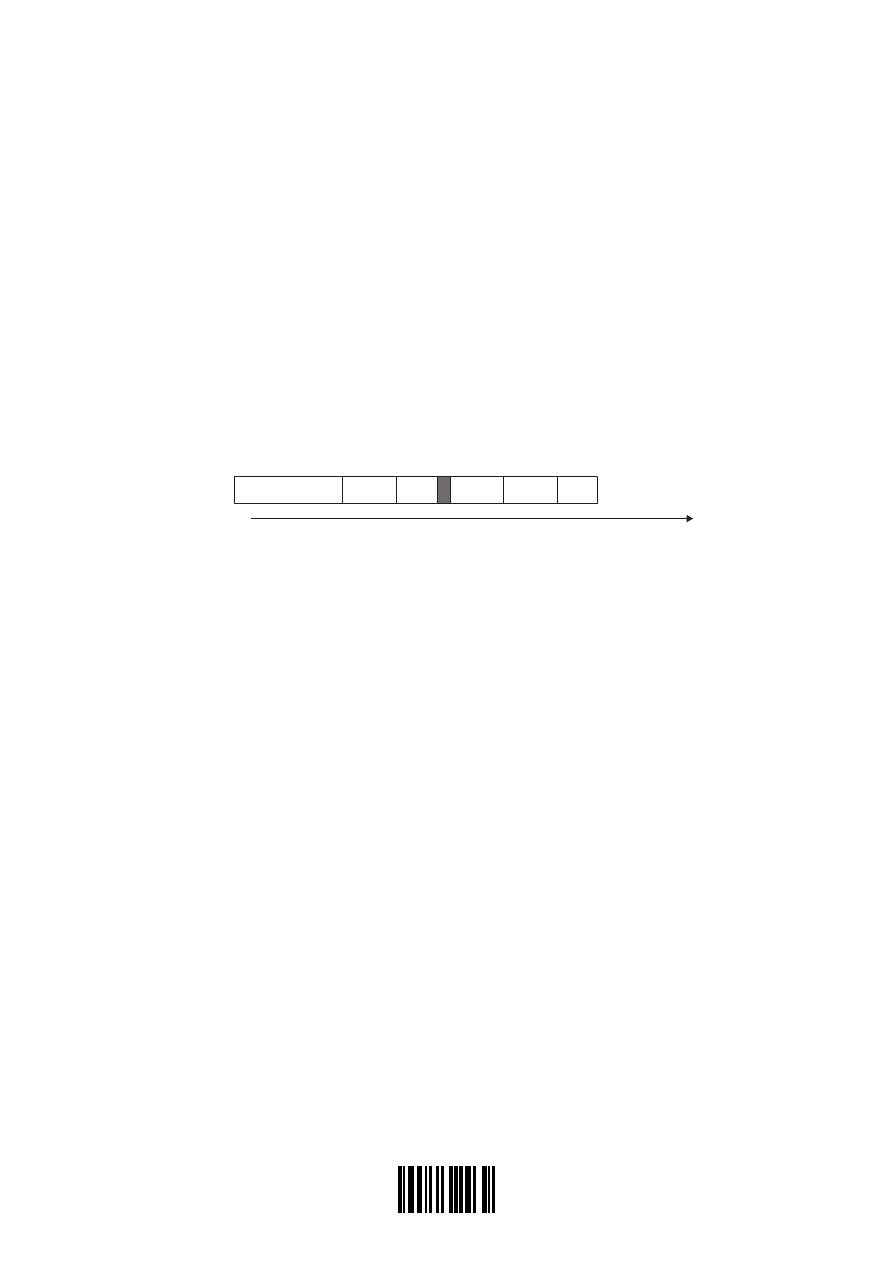
(b) The diagram below is a representation of the electromagnetic spectrum.
visible
light
increasing frequency
In the diagram the region of visible light has been indicated.
Indicate on the diagram above the approximate position occupied by
(i) infrared waves (label this I).
[1]
(ii) microwaves (label this M).
[1]
(iii) gamma rays (label this G).
[1]
2531
2205-6509
– 25 –
Turn over
M05/4/PHYSI/HP3/ENG/TZ1/XX+
H2. This question is about converging lenses.
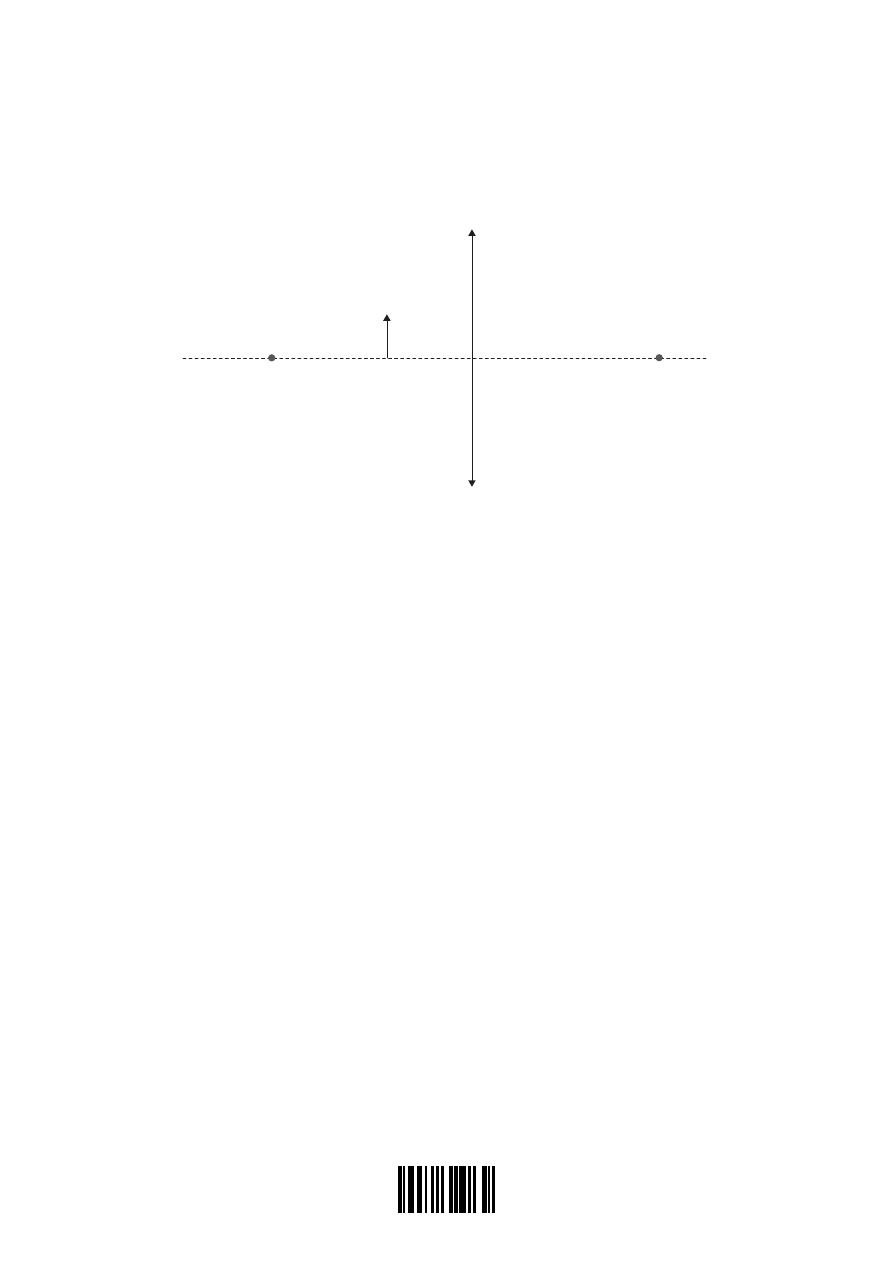
(a) The diagram shows a small object O represented by an arrow placed in front of a
converging lens L. The focal points of the lens are labelled F.
F
O
F
L
(i) Define the focal point of a converging lens.
. . . . . . . . . . . . . . . . . . . . . . . . . . . . . . . . . . . . . . . . . . . . . . . . . . . . . . . . . . . . . . . . .
. . . . . . . . . . . . . . . . . . . . . . . . . . . . . . . . . . . . . . . . . . . . . . . . . . . . . . . . . . . . . . . . .
. . . . . . . . . . . . . . . . . . . . . . . . . . . . . . . . . . . . . . . . . . . . . . . . . . . . . . . . . . . . . . . . .
[2]
(ii) On the diagram above, draw rays to locate the position of the image of the object
formed by the lens.
[3]
(iii) Explain whether the image is real or virtual.
. . . . . . . . . . . . . . . . . . . . . . . . . . . . . . . . . . . . . . . . . . . . . . . . . . . . . . . . . . . . . . . . .
. . . . . . . . . . . . . . . . . . . . . . . . . . . . . . . . . . . . . . . . . . . . . . . . . . . . . . . . . . . . . . . . .
[1]
(This question continues on the following page)
2631

2205-6509
– 26 –
M05/4/PHYSI/HP3/ENG/TZ1/XX+
(Question H2 continued)
(b) A convex lens of focal length 6.25 cm is used to view an ant of length 0.80 cm that is
crawling on a table. The lens is held 5.0 cm above the table.
(i) Calculate the distance of the image from the lens.
. . . . . . . . . . . . . . . . . . . . . . . . . . . . . . . . . . . . . . . . . . . . . . . . . . . . . . . . . . . . . . . . .
. . . . . . . . . . . . . . . . . . . . . . . . . . . . . . . . . . . . . . . . . . . . . . . . . . . . . . . . . . . . . . . . .
. . . . . . . . . . . . . . . . . . . . . . . . . . . . . . . . . . . . . . . . . . . . . . . . . . . . . . . . . . . . . . . . .
[2]
(ii) Calculate the length of the image of the ant.
. . . . . . . . . . . . . . . . . . . . . . . . . . . . . . . . . . . . . . . . . . . . . . . . . . . . . . . . . . . . . . . . .
. . . . . . . . . . . . . . . . . . . . . . . . . . . . . . . . . . . . . . . . . . . . . . . . . . . . . . . . . . . . . . . . .
. . . . . . . . . . . . . . . . . . . . . . . . . . . . . . . . . . . . . . . . . . . . . . . . . . . . . . . . . . . . . . . . .
. . . . . . . . . . . . . . . . . . . . . . . . . . . . . . . . . . . . . . . . . . . . . . . . . . . . . . . . . . . . . . . . .
[2]
2731
2205-6509
– 27 –
Turn over
M05/4/PHYSI/HP3/ENG/TZ1/XX+
H3. This question is about a compound microscope.
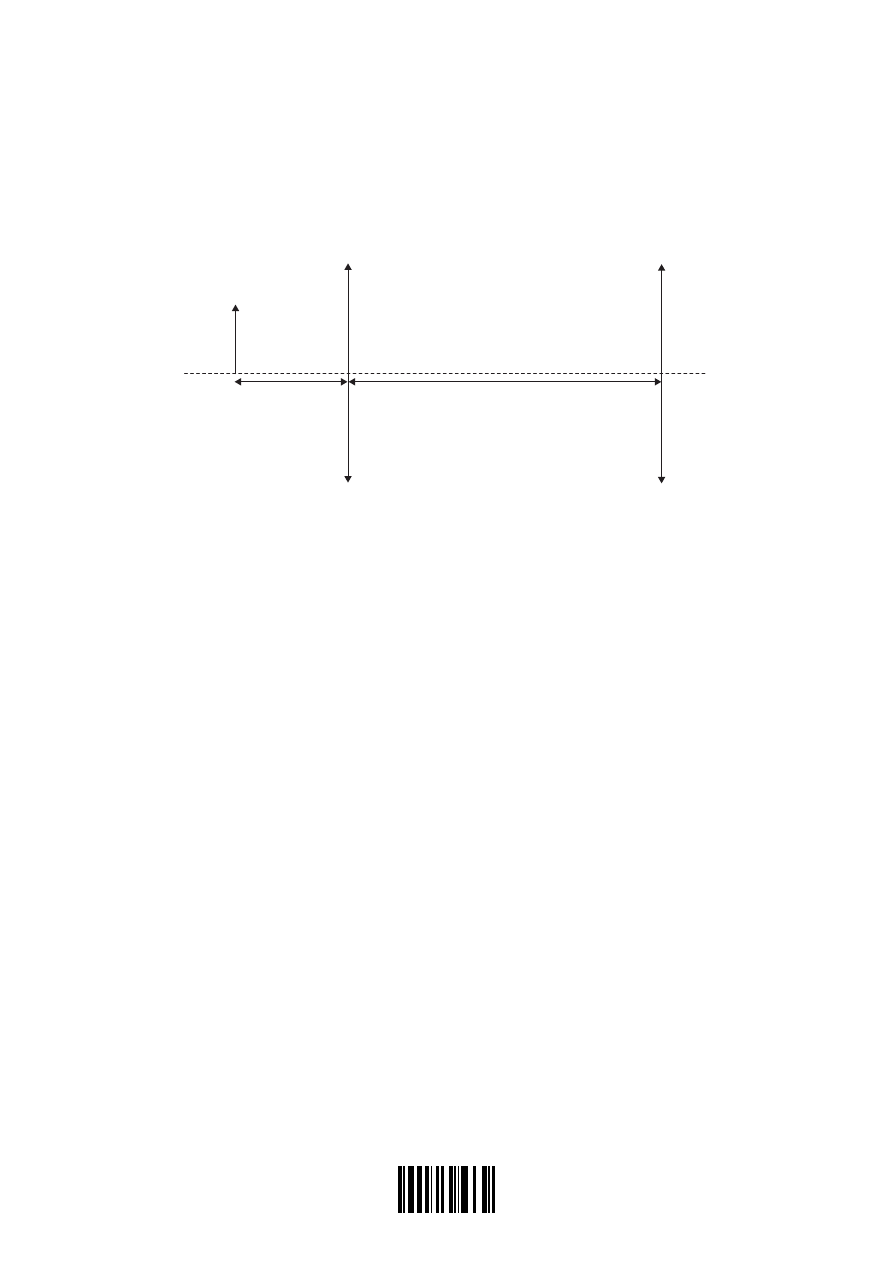
A compound microscope consists of two convex lenses of focal lengths 1.20 cm (lens A) and
11.0 cm (lens B). The lenses are separated by a distance of 23.0 cm as shown below. (The
diagram is not drawn to scale.)
O
1.30 cm
23.0 cm
Lens A
Lens B
f =1.20 cm
f =11.0 cm
An object O is placed 1.30 cm from lens A. An image of O in lens A is formed a distance of
15.6 cm from A.
(a) This image forms an object for lens B. Calculate the object distance for lens B.
. . . . . . . . . . . . . . . . . . . . . . . . . . . . . . . . . . . . . . . . . . . . . . . . . . . . . . . . . . . . . . . . . . . . . .
[1]
(b) Calculate the distance from lens B of the image as produced by the lens B.
. . . . . . . . . . . . . . . . . . . . . . . . . . . . . . . . . . . . . . . . . . . . . . . . . . . . . . . . . . . . . . . . . . . . . .
. . . . . . . . . . . . . . . . . . . . . . . . . . . . . . . . . . . . . . . . . . . . . . . . . . . . . . . . . . . . . . . . . . . . . .
. . . . . . . . . . . . . . . . . . . . . . . . . . . . . . . . . . . . . . . . . . . . . . . . . . . . . . . . . . . . . . . . . . . . . .
[2]
(c) Calculate the magnification of the microscope.
. . . . . . . . . . . . . . . . . . . . . . . . . . . . . . . . . . . . . . . . . . . . . . . . . . . . . . . . . . . . . . . . . . . . . .
. . . . . . . . . . . . . . . . . . . . . . . . . . . . . . . . . . . . . . . . . . . . . . . . . . . . . . . . . . . . . . . . . . . . . .
. . . . . . . . . . . . . . . . . . . . . . . . . . . . . . . . . . . . . . . . . . . . . . . . . . . . . . . . . . . . . . . . . . . . . .
. . . . . . . . . . . . . . . . . . . . . . . . . . . . . . . . . . . . . . . . . . . . . . . . . . . . . . . . . . . . . . . . . . . . . .
[2]
2831
2205-6509
– 28 –
M05/4/PHYSI/HP3/ENG/TZ1/XX+
H4. This question is about diffraction at a single slit.
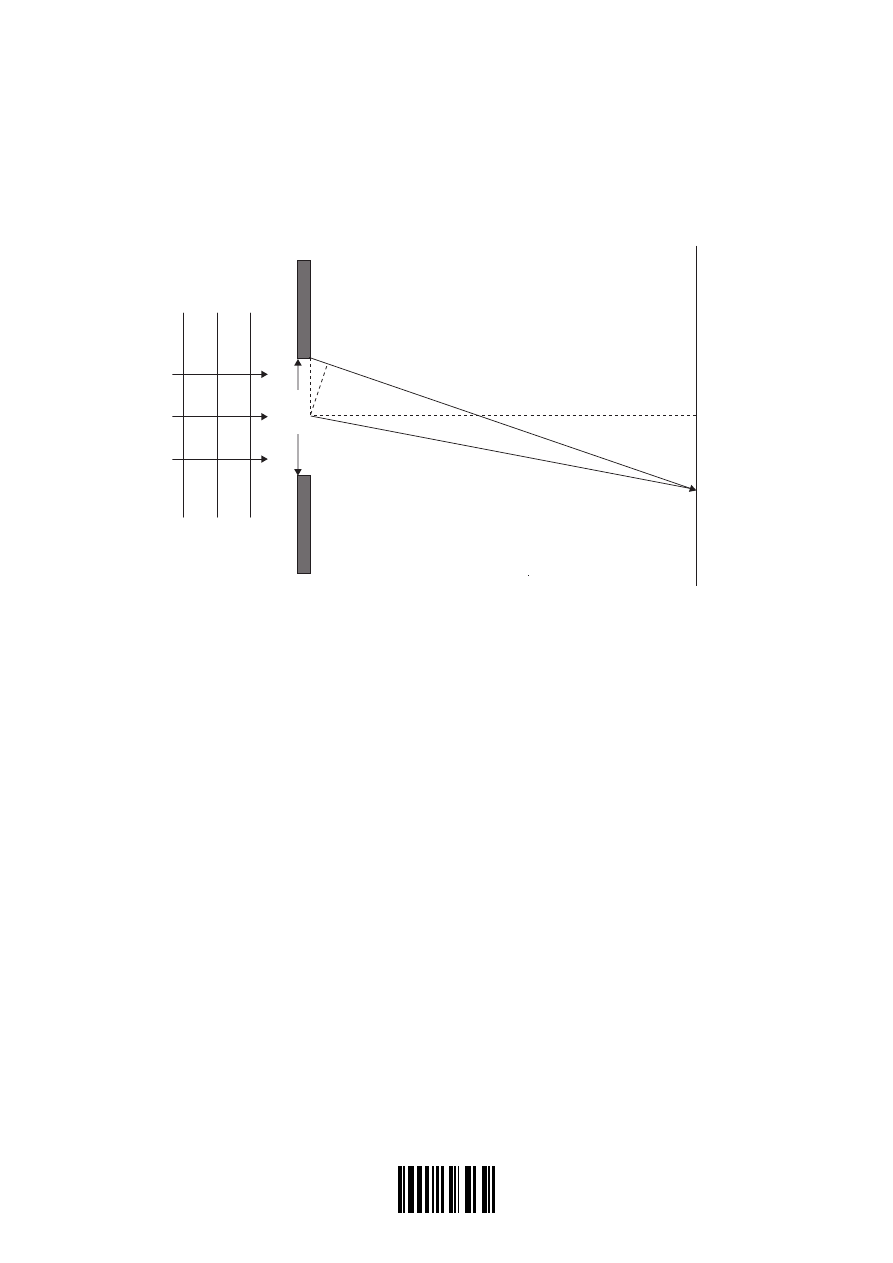
Plane wavefronts of monochromatic light are incident on a narrow, rectangular slit whose
width b is comparable to the wavelength
λ
of the light. After passing through the slit, the light
is brought to a focus on a screen.
Z W
φ
b
X
slit
Q
Y
P
screen
The line XY, normal to the plane of the slit, is drawn from the centre of the slit to the screen and
the points P and Q are the first points of minimum intensity as measured from point Y.
The diagram also shows two rays of light incident on the screen at point P. Ray ZP leaves one
edge of the slit and ray XP leaves the centre of the slit.
The angle
φ
is small.
(a) On the diagram, label the half angular width
θ
of the central maximum of the diffraction
pattern.
[1]
(b) State and explain an expression, in terms of
λ
for the path difference ZW between the rays
ZP and XP.
. . . . . . . . . . . . . . . . . . . . . . . . . . . . . . . . . . . . . . . . . . . . . . . . . . . . . . . . . . . . . . . . . . . . . .
. . . . . . . . . . . . . . . . . . . . . . . . . . . . . . . . . . . . . . . . . . . . . . . . . . . . . . . . . . . . . . . . . . . . . .
[2]
(This question continues on the following page)
2931

2205-6509
– 29 –
Turn over
M05/4/PHYSI/HP3/ENG/TZ1/XX+
(Question H4 continued)
(c) Hence deduce that the half angular width
θ
is given by the expression
θ
λ
=
b
.
. . . . . . . . . . . . . . . . . . . . . . . . . . . . . . . . . . . . . . . . . . . . . . . . . . . . . . . . . . . . . . . . . . . . . .
. . . . . . . . . . . . . . . . . . . . . . . . . . . . . . . . . . . . . . . . . . . . . . . . . . . . . . . . . . . . . . . . . . . . . .
. . . . . . . . . . . . . . . . . . . . . . . . . . . . . . . . . . . . . . . . . . . . . . . . . . . . . . . . . . . . . . . . . . . . . .
. . . . . . . . . . . . . . . . . . . . . . . . . . . . . . . . . . . . . . . . . . . . . . . . . . . . . . . . . . . . . . . . . . . . . .
. . . . . . . . . . . . . . . . . . . . . . . . . . . . . . . . . . . . . . . . . . . . . . . . . . . . . . . . . . . . . . . . . . . . . .
[3]
(d) In a particular demonstration of single slit diffraction,
λ = 450 nm
,
b = 0.15 mm
and the
screen is a long way from the slits.
Calculate the angular width of the central maximum of the diffraction pattern on the
screen.
. . . . . . . . . . . . . . . . . . . . . . . . . . . . . . . . . . . . . . . . . . . . . . . . . . . . . . . . . . . . . . . . . . . . . .
. . . . . . . . . . . . . . . . . . . . . . . . . . . . . . . . . . . . . . . . . . . . . . . . . . . . . . . . . . . . . . . . . . . . . .
[2]
(This question continues on the following page)
3031
2205-6509
– 30 –
M05/4/PHYSI/HP3/ENG/TZ1/XX+
(Question H4 continued)
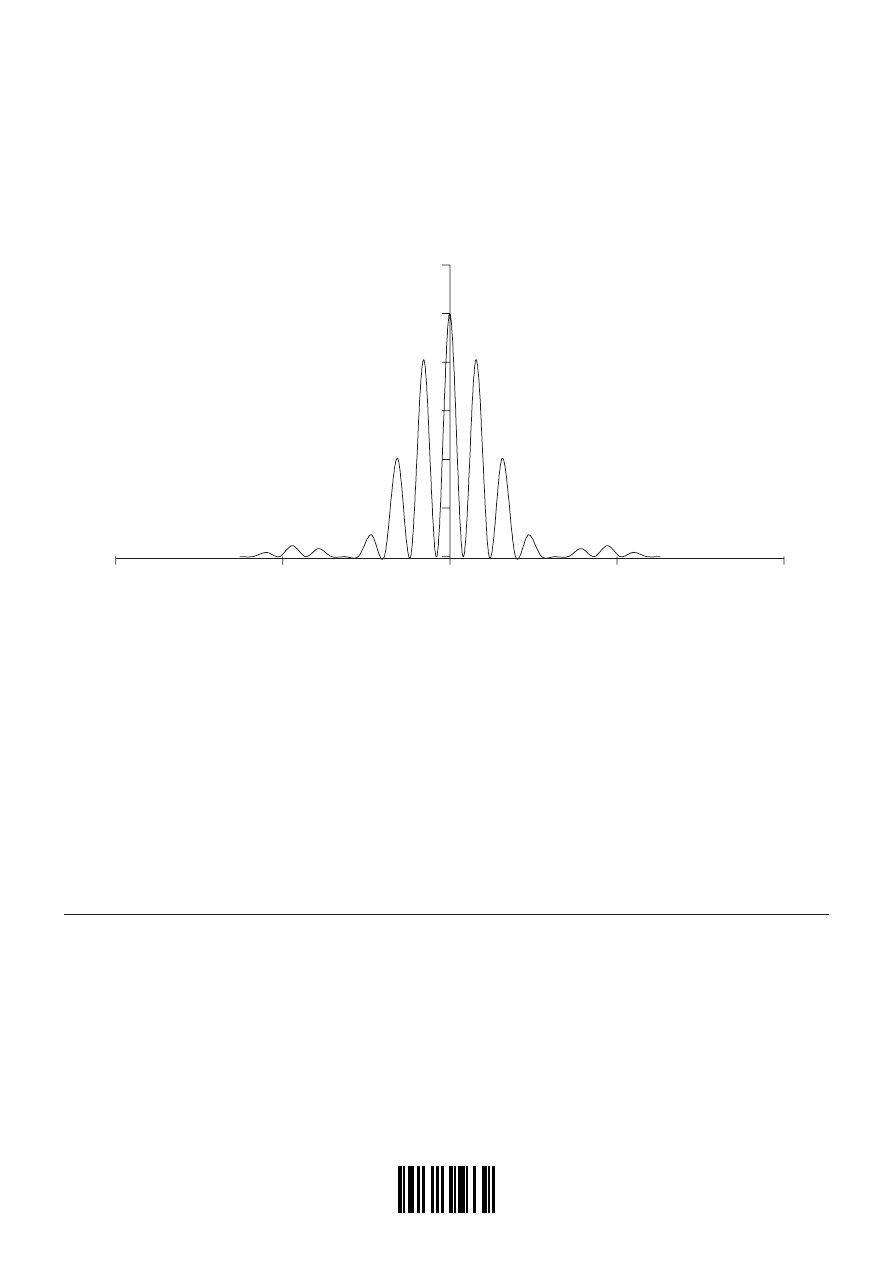
Using light of the same wavelength as above (450 nm), an arrangement is set up to demonstrate
diffraction by a double slit. Each slit has the same width as that above (0.15 mm) and the slit
separation is d. The graph below shows the variation with the angle of diffraction
ψ
of the
intensity I of the diffraction pattern on the screen.
I / arbitary units
– 10
– 5
0
5
ψ =
×
−
3 0 10
3
.
/
ψ =
×
−
3 0 10
3
.
rad 10
From the graph it can be seen that a maximum is missing at the angle
ψ =
×
−
3 0 10
3
.
rad.
(e) Calculate the slit separation d.
. . . . . . . . . . . . . . . . . . . . . . . . . . . . . . . . . . . . . . . . . . . . . . . . . . . . . . . . . . . . . . . . . . . . . .
. . . . . . . . . . . . . . . . . . . . . . . . . . . . . . . . . . . . . . . . . . . . . . . . . . . . . . . . . . . . . . . . . . . . . .
. . . . . . . . . . . . . . . . . . . . . . . . . . . . . . . . . . . . . . . . . . . . . . . . . . . . . . . . . . . . . . . . . . . . . .
. . . . . . . . . . . . . . . . . . . . . . . . . . . . . . . . . . . . . . . . . . . . . . . . . . . . . . . . . . . . . . . . . . . . . .
[2]
3131
Wyszukiwarka
Podobne podstrony:
PhysHL P3 M05 TZ1 M
PhysHL P3 M05 TZ1 M
PhysHL P3 M06 TZ1
PhysHL P3 M04 TZ1
PhysHL P2 M05 TZ1 M
PhysHL P2 M05 TZ1
PhysHL P3 M05 TZ2 M
PhysHL P1 M05 TZ1
PhysHL P1 M05 TZ1 M
PhysHL P3 M05 TZ2
PhysHL P3 M01 MS
PhysHL P3 M06 TZ2
PhysHL P1 M06 TZ1
PhysHL P3 M01
PhysHL P3 M04 TZ2
PhysHL P3 N04 TZ0 M
PhysHL P2 M05 TZ2 M
PhysHL P3 M04 TZ2 M
PhysHL P3 N01
więcej podobnych podstron