The Glass Transition
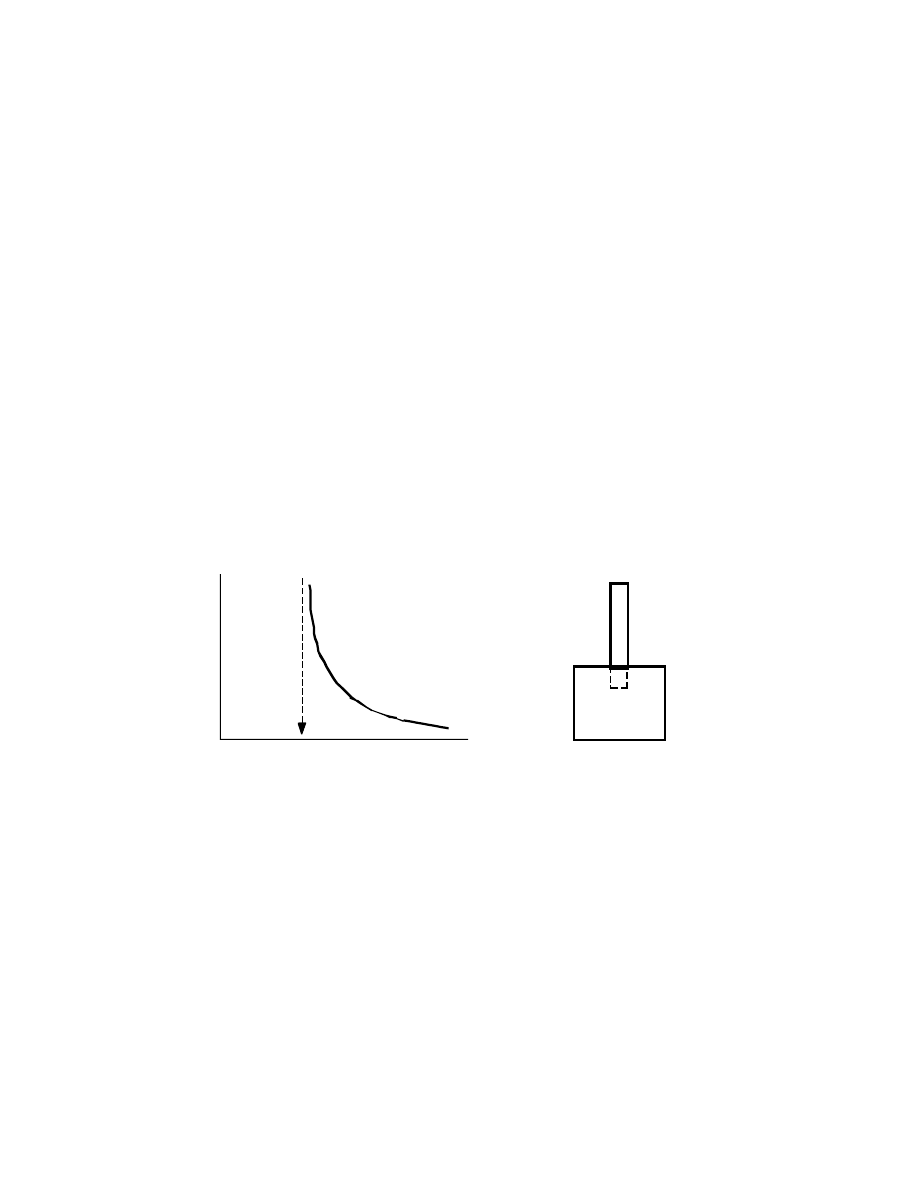
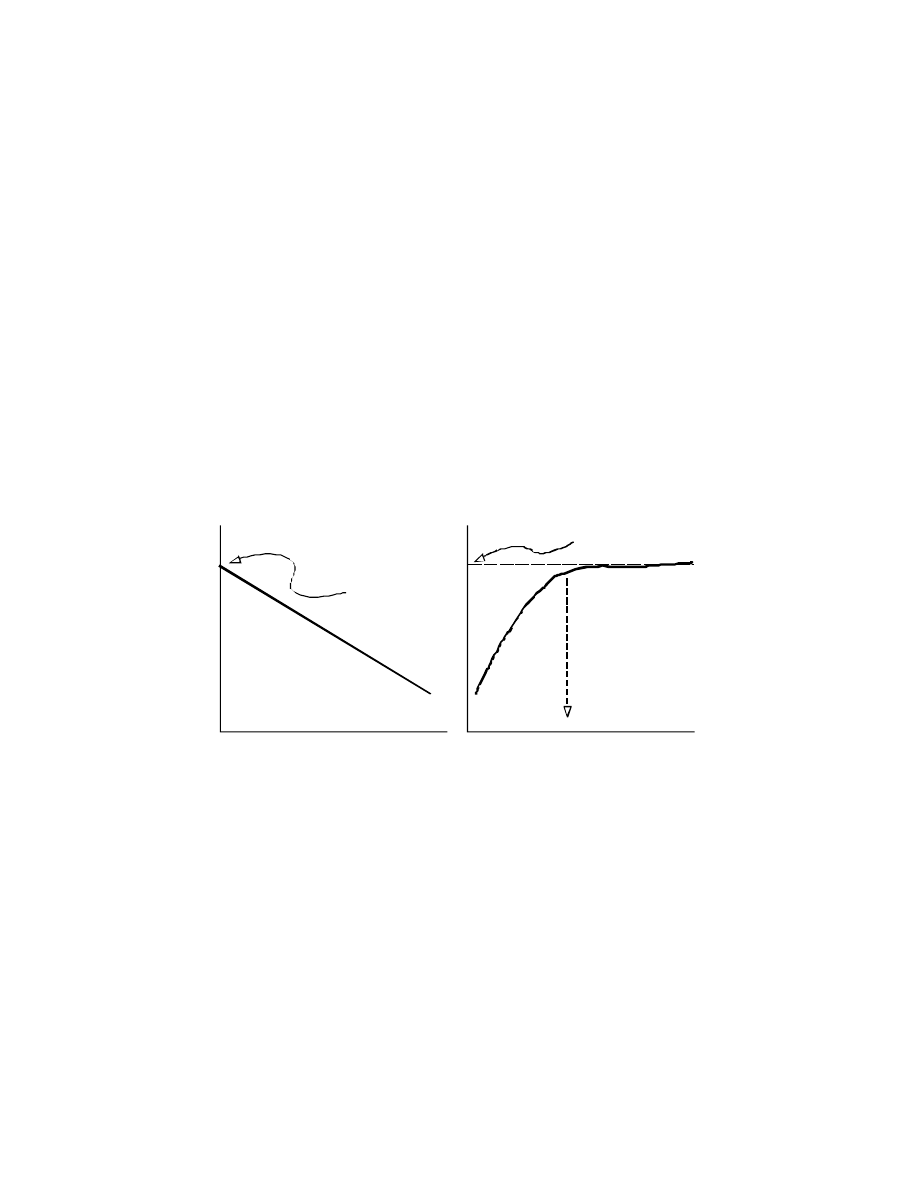
• On cooling, some polymer melts don't crystallize
rather they form a glass;
Vitrify
Tg
Force
Temperature
Soft -- above Tg
Hard -- below Tg
F
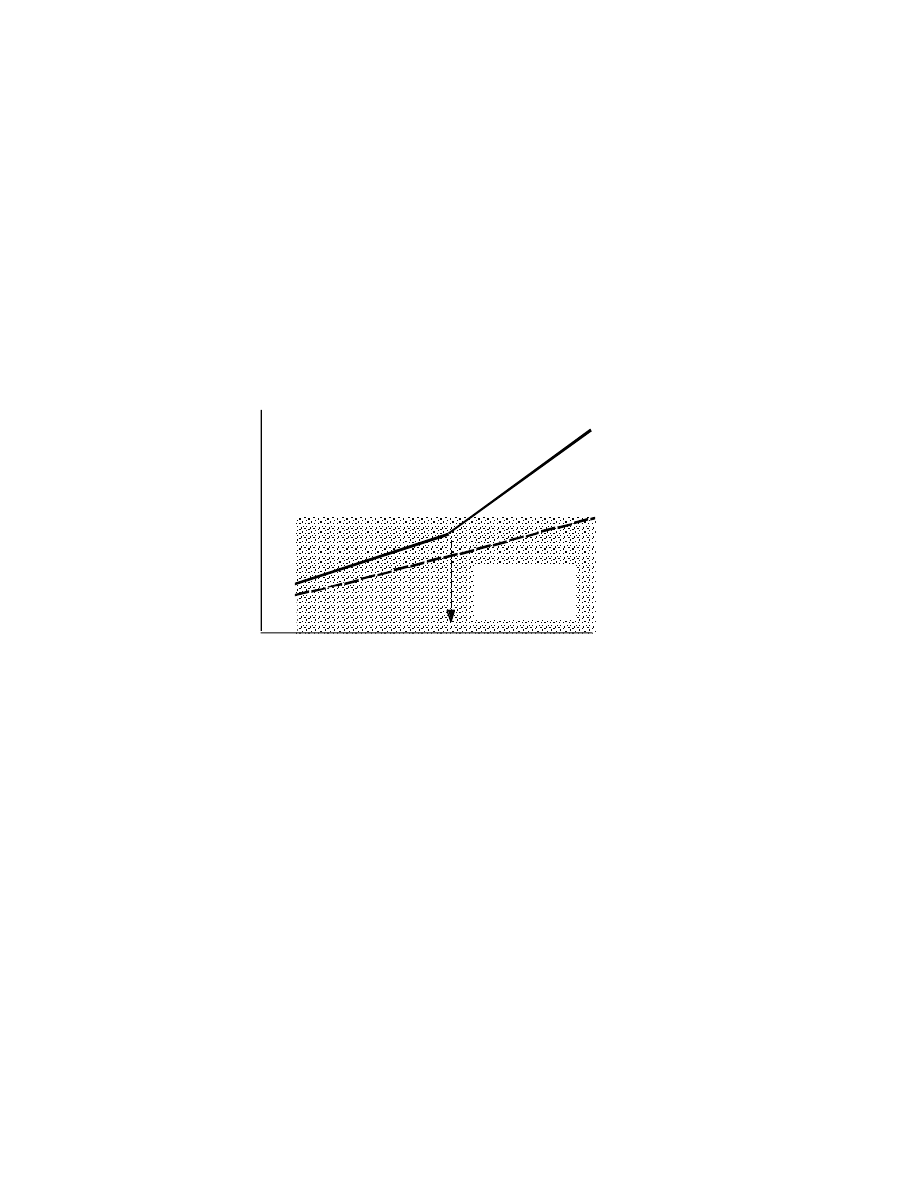
α
g
Specific Vol.
Tg
Temperature
α
l
α
g
2
≈
Total
Volume
Occupied
Volume
• Coefficient of expansion of the polymer liquid (melt)
is approximately twice that of the glass.
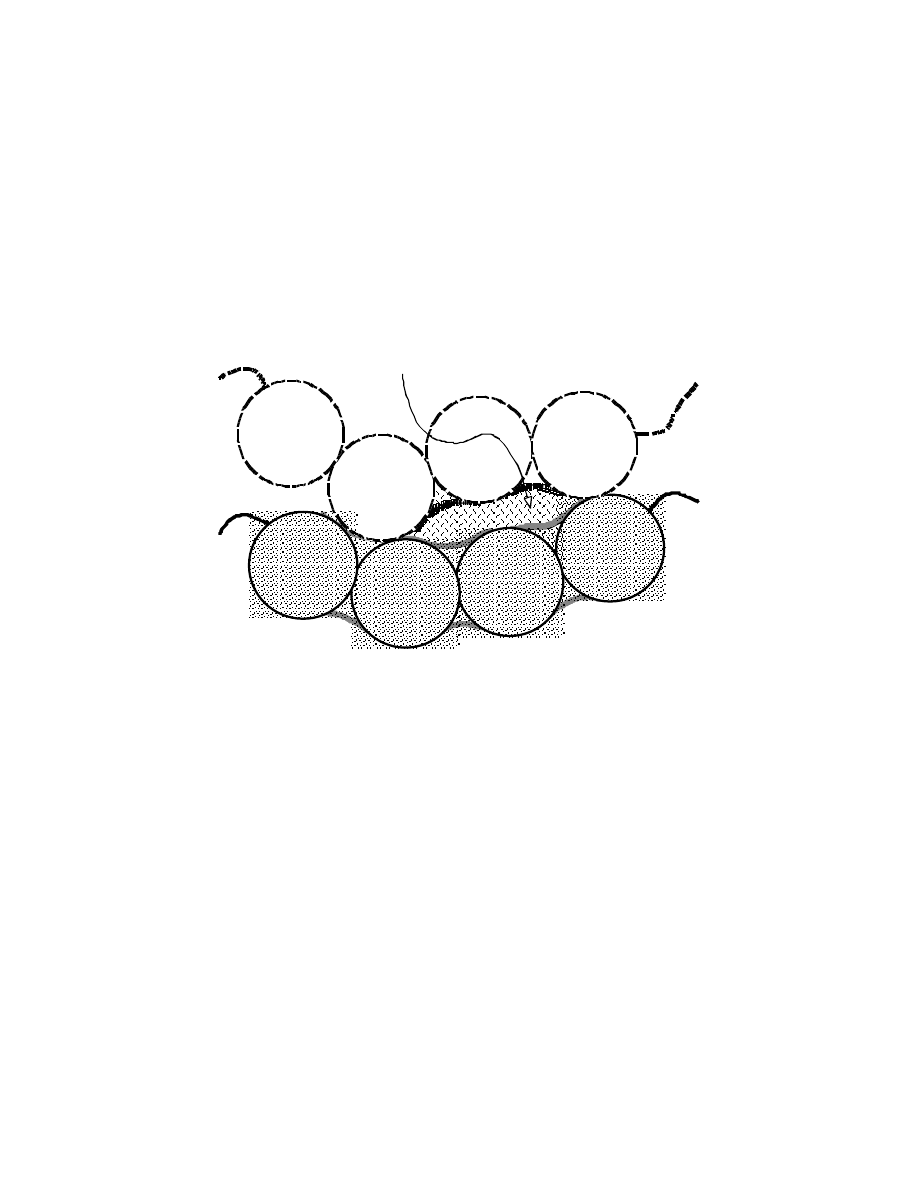
Free Volume
• Total system volume =
Volume occupied by
chains; physically or
effectively
+
Unoccupied volume;
space between chains
(free volume)
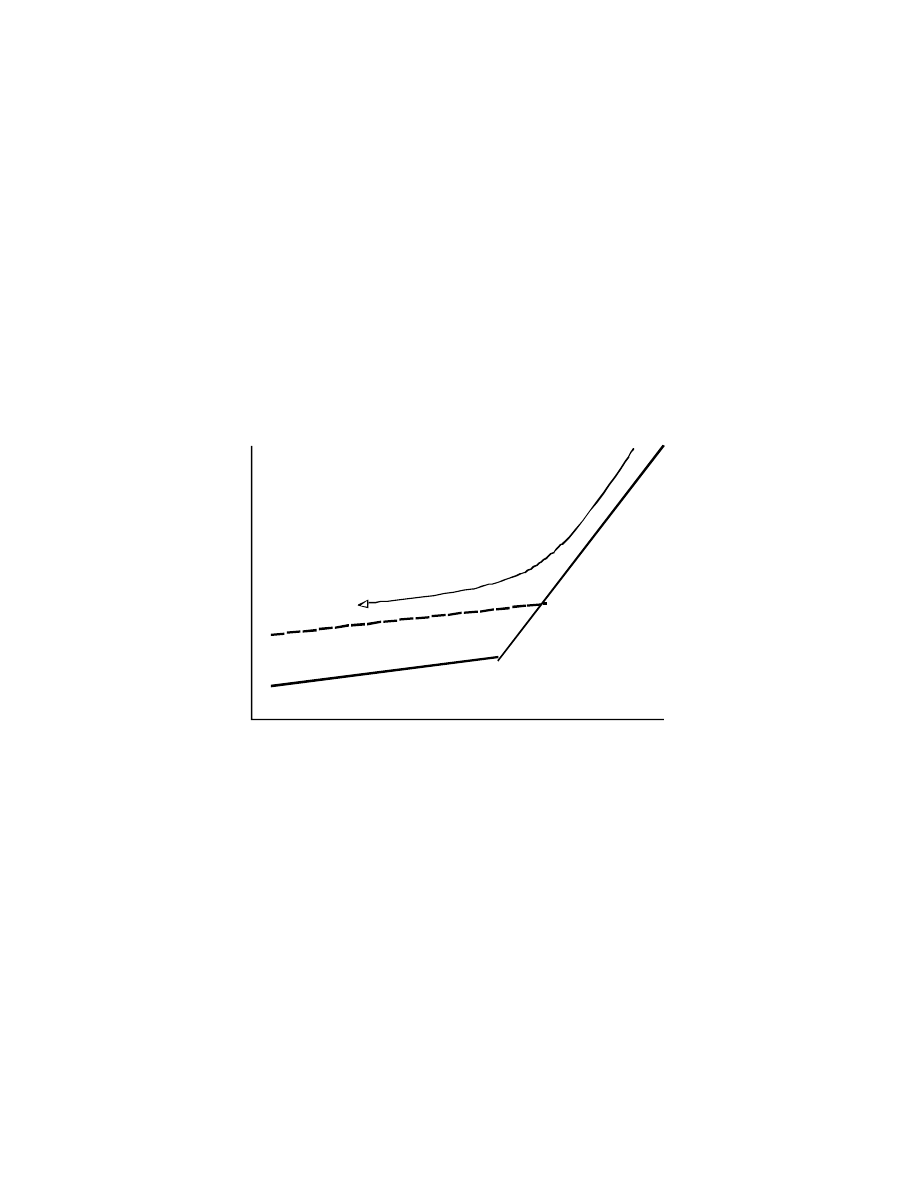
Volume
Temperature
Fast
Slow

• Tg is rate dependent; higher heating/cooling rates
or higher frequencies test rates give higher values
for Tg.
• Both cooling and heating rates should be specified
when measuring and reporting Tg.
• After fast cooling a polymer below Tg, the sample
will try and find the most thermodynamically stable
state through reorganization.
• Possible 'Aging' and embrittlement of polymer held
at up to 50° below Tg.
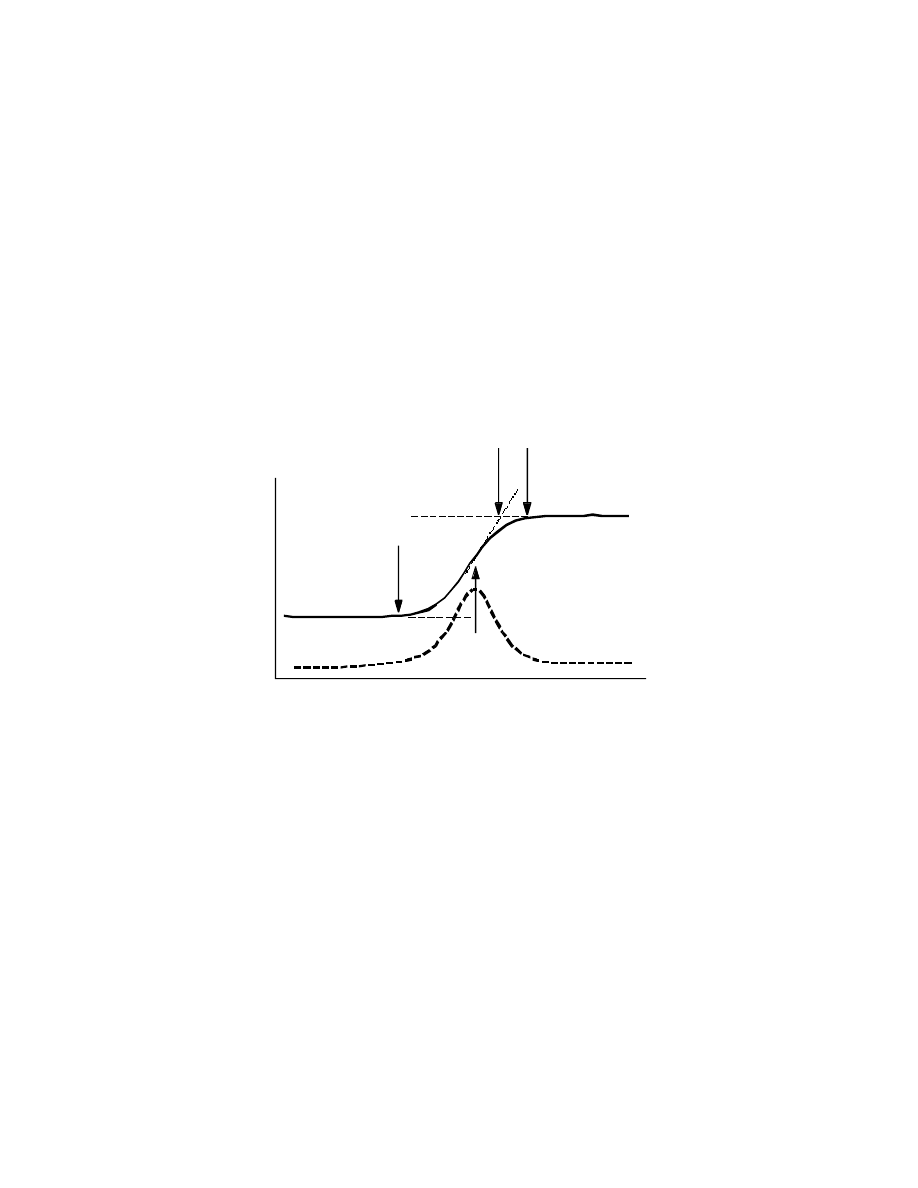
Practical determination of Tg
• DSC or DTA; use large samples and as high a
heating rate as possible to amplify poor signals.
∆
T or
∆
H
Temperature
• Several thermal 'definitions' of Tg including;
Onset + (Extrapolated);
Mid line intersection;
Return + (Extrapolated);
Inflection point;
Derivative.

• With semicrystalline polymers having moderate to
high crystallinity Tg may be poorly resolved.
• Other STATIC methods used to measure Tg:-
Refractive index (OM); Gas Diffusion/Solubility;
Thermal conductivity;
Chain mobility (NMR);
Specific volume (Dilatometer).
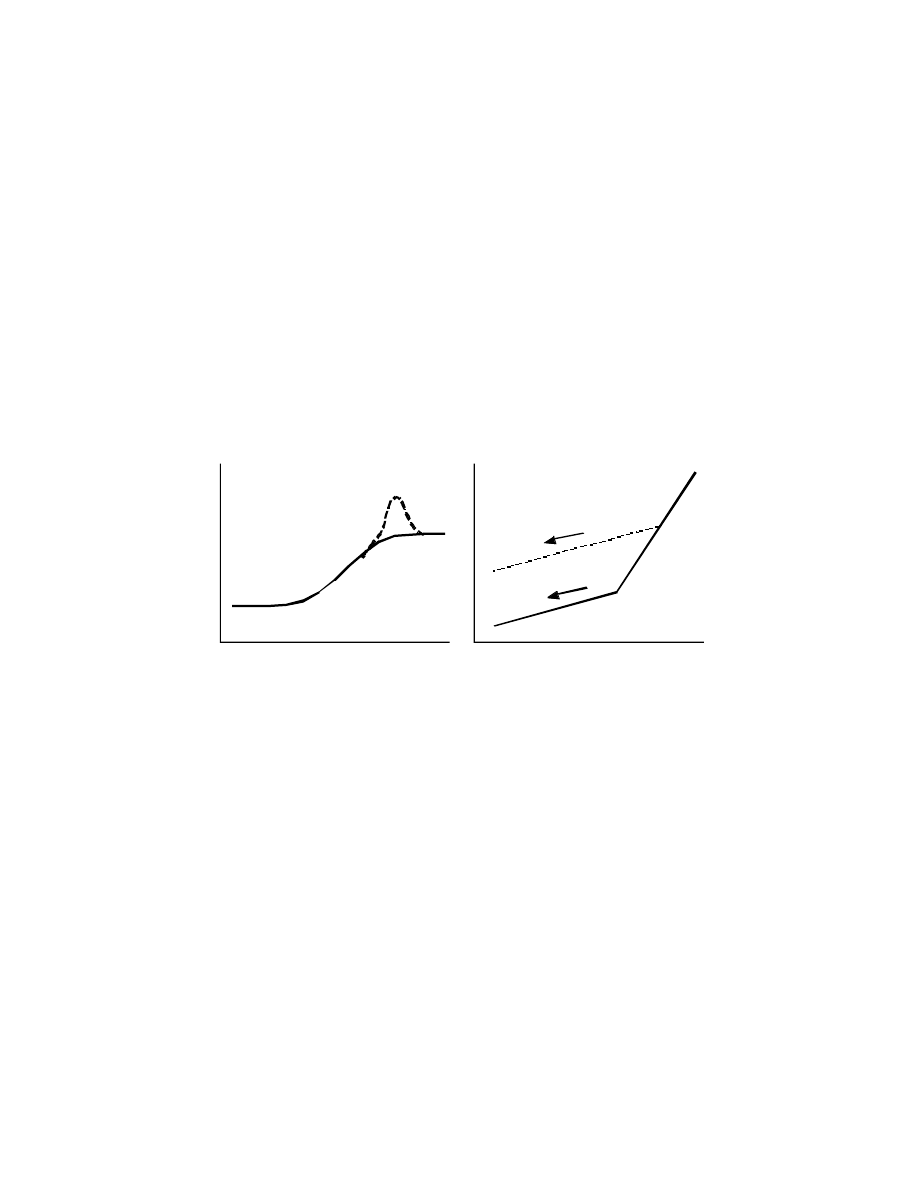
• Tg as measured by thermal methods often show
'peaks' near the transition.
Fast
Slow
∆
T or
∆
H
Temperature
Specific Vol.
Temperature
• Exotherm near Tg explained as the 'melting out' of
holes or of frozen in 'free volume".

• Experimentally observed Tg is a function of several
variables including :-
Molecular weight
Plasticizer content
Test Rate/Frequency
Sample size
Copolymers/Blends
Cross-linking
Crystallinity
Tacticity
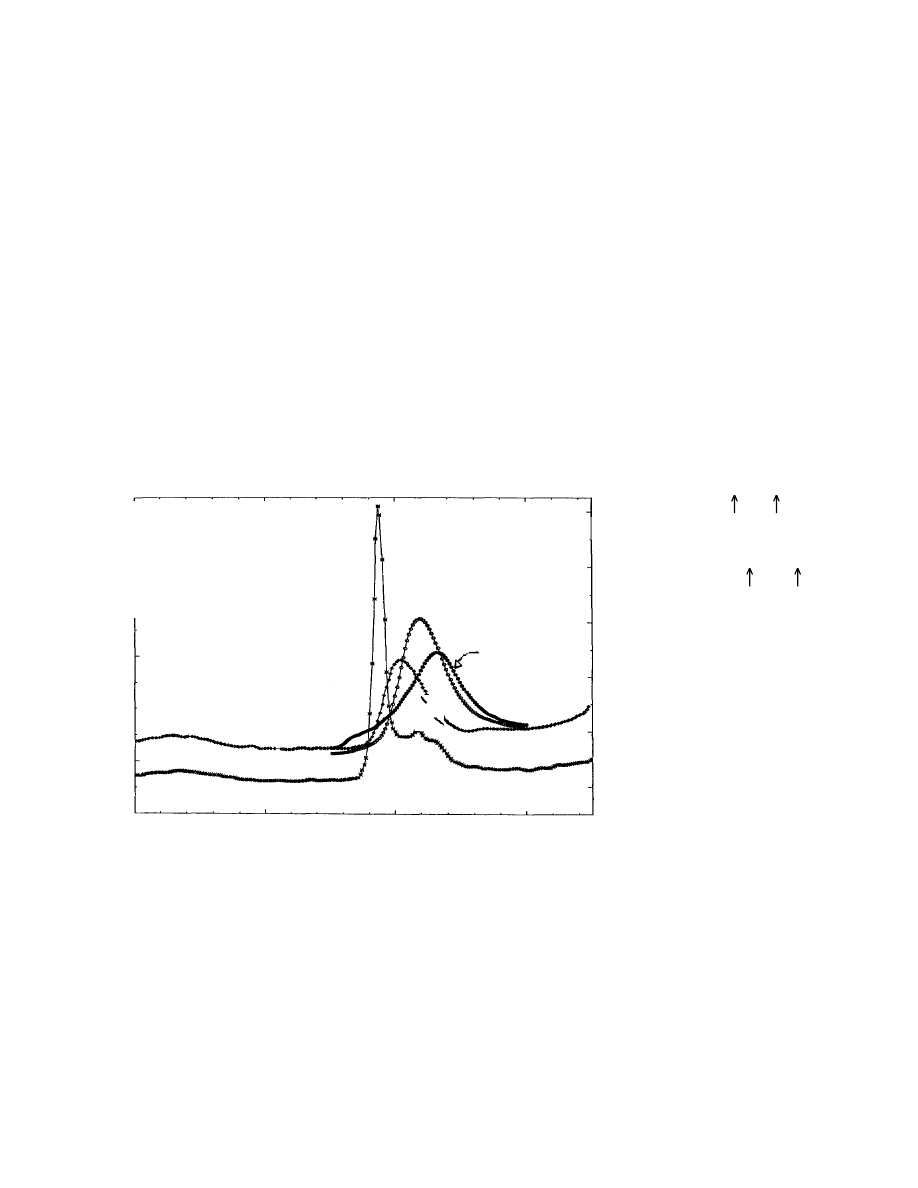
Influence of Crystallinity and Orientation
• Ratio of energy dissipated by viscous component
vs. energy stored by the elastic component;
Tan
δ
(Loss Tangent) is maximum near Tg.
a)
Drawn (x3.5)
b)
Drawn (x5.4)
c)
Crystalline
d)
Amorphous
Tan
δ
or
Loss Tangent
0
Temperature (°C)
a
b
c
d
• Crystallinity
,
Tg ;
restrain amorphous chains.
• Cold drawing , Tg ;
tension in amorphous
chains.
Influence of Molecular Weight
• Experimentally, Tg is a fn. of molecular weight.
• Major changes in Tg at low molecular weights and
small changes at high molecular weights.
More free volume at the
ends of a chain, so more
chain ends per volume
means lower Tg.
• Fox-Flory equation:-
Tg = Tg
∞
-K/Mn (K
≈
25x103)
Tg
Mn -1
Mn
Tg
Tg
∞
Tg
∞
≈
25x10 3
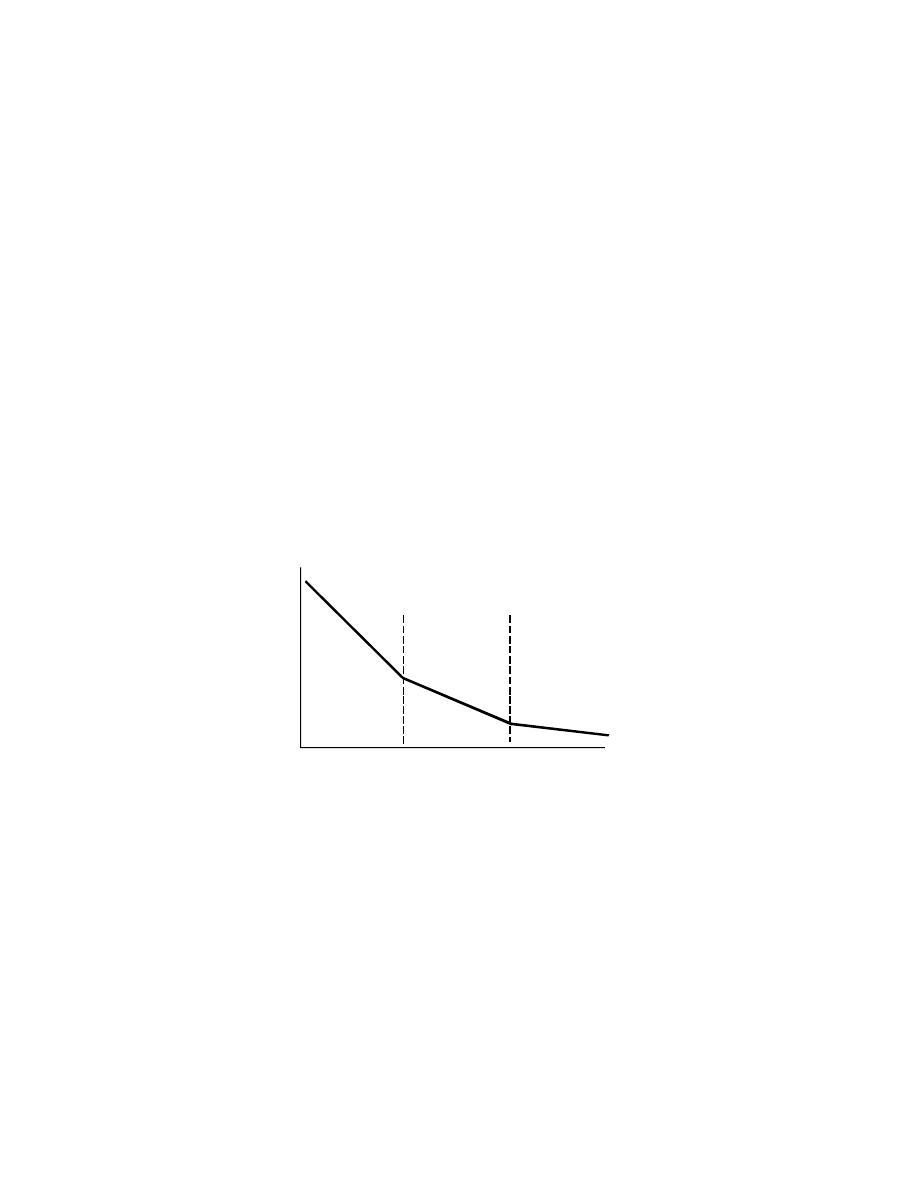
• Situation regarding molecular weight dependence is
experimentally more complicated, some systems
show 2 or 3 straight line regions.
• Transition from entangled coils to isolated coils to
rod like systems. Rods pack more efficiently than
coils so free volume associated with chain end is
lower for rods.
10
3
10
4
Isolated
coils
Rod-like
molecules
Tg
Mn-1
Tangled
coils
• Different K's for different molecular weights;
K from one region can't predict Tg in another.

Note
•
Some RING compounds follow Fox-Flory!!!
•
Hydroxyl terminated PPO has no mol.wt.
dependence of Tg; K=0.!! CH3 terminated K>0.
•
Tg(upper) - restrained amorphous; folds.
Tg(lower) - free amorphous; cilia, loose loops.
Influence of Branching and Cross-links
• Intuitively, adding cross-links increases Tg; restrain
chains more than in uncrosslinked state.
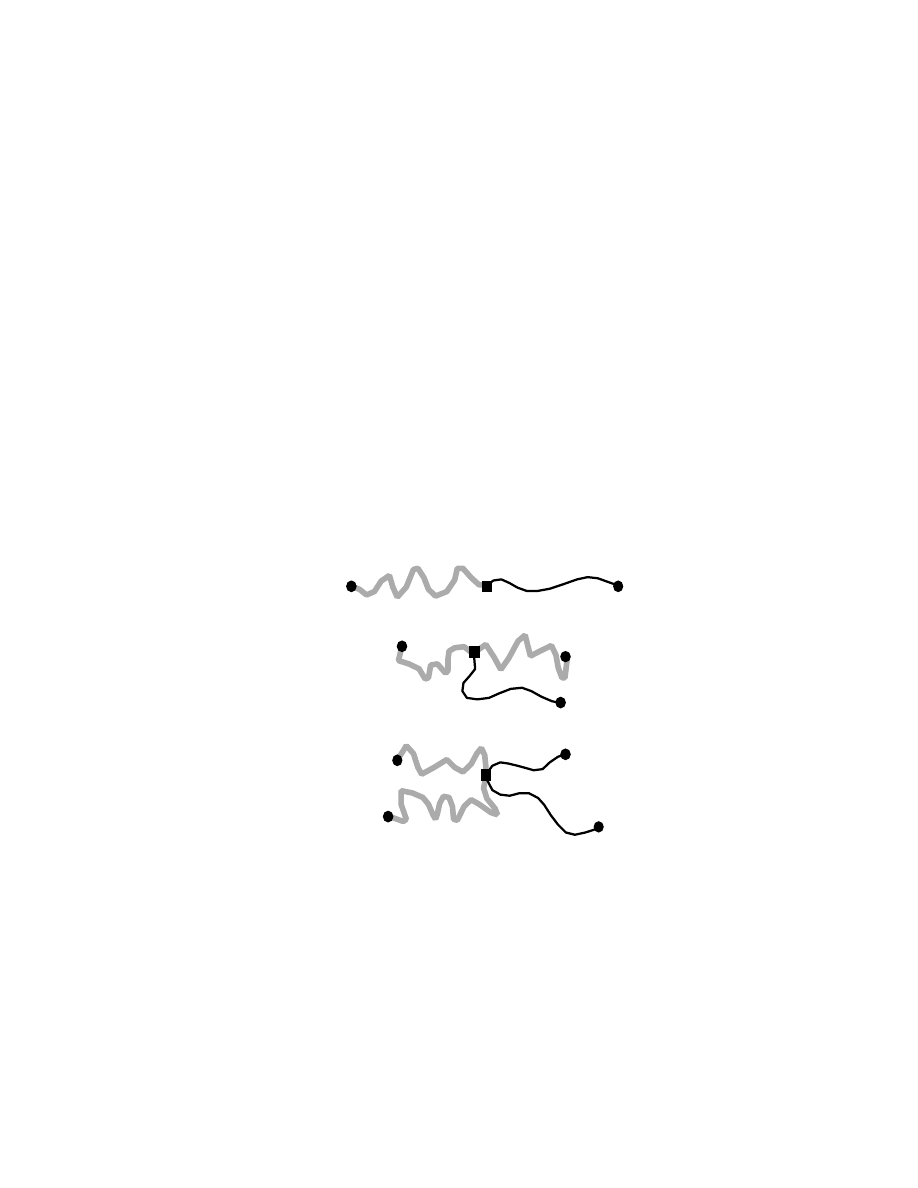
• However, consider joining two chains together
whose molecular weights are M1 and M2.
Type of Join
# of
Ends
End to end
"T" junction
Middles as
"X" joint
2
3
4

• All joined chains have the same molecular weight.
• For the SAME molecular weight Tg is depressed
more for branched polymers vs. linear molecules.
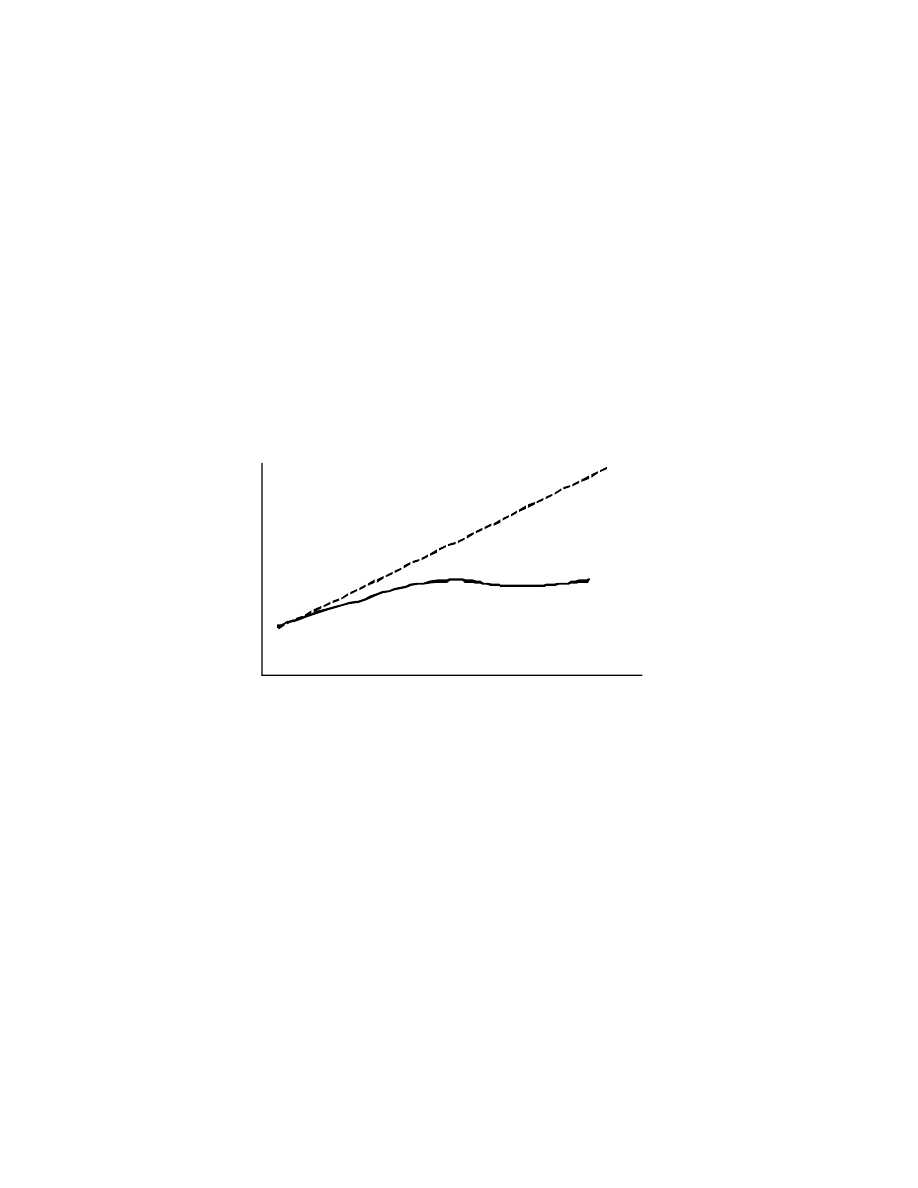
• If chains are crosslinked anticipate increase in Tg.
Decrease free volume. Inhibit chain motion.
Increase average size of moving units.
Tg = Tg
∞
-K/M + Kx.(# crosslinks/gm)
Predicted
Observed
Tg
% Cross-Links
• Network is a copolymer. If cross-link agent is ‘like’
the polymer the equation above works. If the
chemistry of the cross-link is different could see a
maximum in Tg vs. # of cross-links.
• At very high cross-link densities Tg rises faster than
predicted.

Influence of Copolymerization, Blending and
Plasticization
• Equations developed for these systems depend on
the assumption that free volume is additive.
• General form of the equation for diluents
(plasticizers) is given by :-
α
p.Vp.Tgp +
α
d.(1 - Vp).Tgd
Tgs = –––––––––––––––––––––––
α
p.Vp +
α
d.(1 - Vp)
Where
Vp
= Volume fraction of polymer.
α
p
= Coefficient of expansion of
free polymer volume.
Tgp
= Tg of the polymer.

• How do we find
α
d and Tgp for a low molecular
weight liquid.
Remember;
α
l
≈
2.
α
g; so,
α
(free volume)
≈
α
l;
assume
α
p or
α
d to be
≈
10-3 for many liquids.
• Make up one or two mixtures and measure Tgs;
then derive Tgd using the above equation.

• For copolymers and blends simplify the previous
equation with some assumptions:-
Tg(copolymer or miscible blend) =
α
p1.Vp1.Tgp1 +
α
p2.(1 - Vp1).Tgp2
–––––––––––––––––––––––––––
α
p1.Vp1 +
α
p2.(1 - Vp1)
Now,
α
p1
≈
α
p2
and Vp1 + Vp2 =1
and many polymer have
≈
the same density so
Vp1
≈
Xp1 - Mole fraction or weight fraction.
so,
Tg(cop/blend)
≈
X1.Tg1 + X2.Tg2
alternatively, 1/Tg(cop)
≈
(W1/Tg1) + (W2/Tg2)
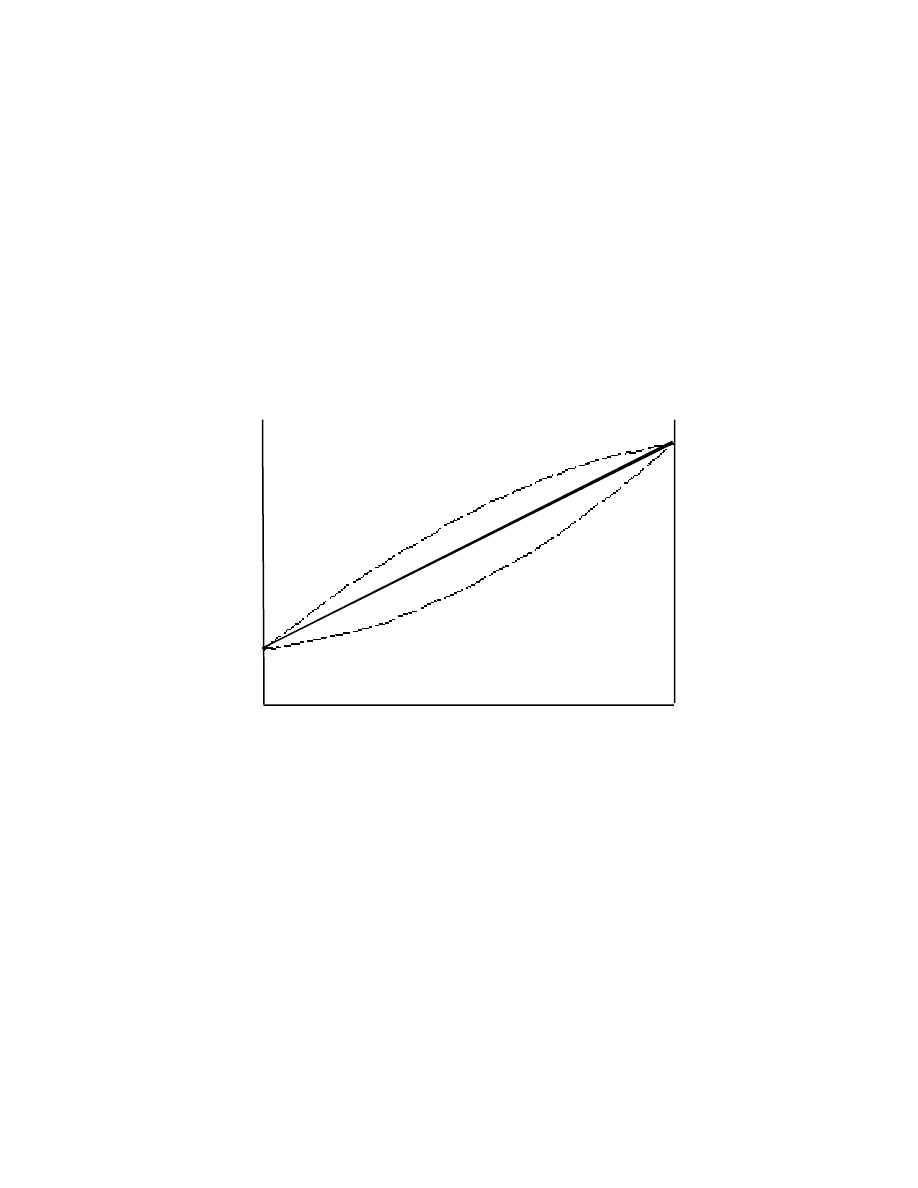
Tg1
Tg2
Composition
• The above equations hold for immiscible blends and
random copolymers.
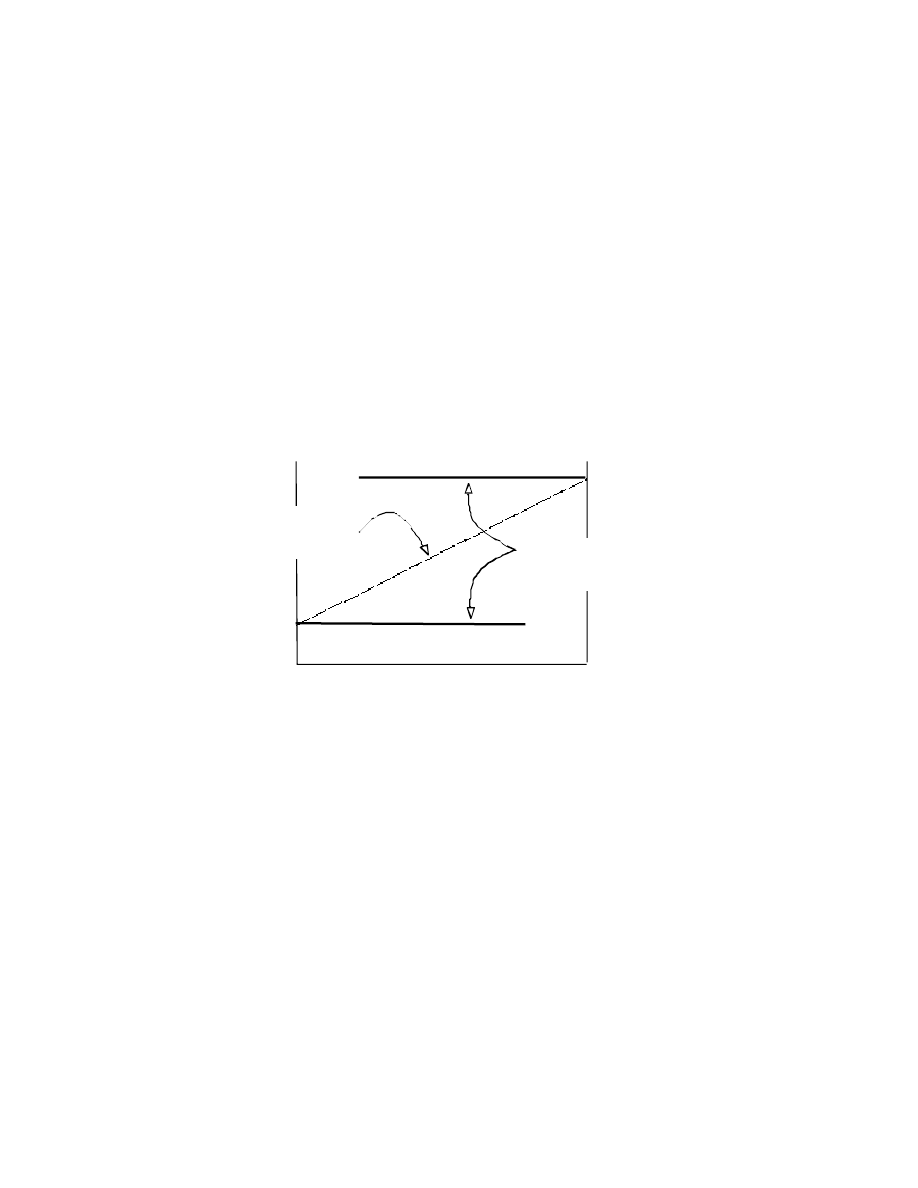
• Block copolymers and Immiscible blends phase
separate and show individual Tg's for each phase.
Tg1
Tg2
Composition
Blocks and
Immiscible blends
Random
copolymers
• For crystallizable copolymers Tg depends on the
composition of the amorphous phase. This could
be different from overall copolymer composition;
polymer chains rich in the most crystallizable
component will preferentially crystallize.
2
-CH -CH -
2
2
-CH -CH
-
|
CH
3
|
2
-CH
C-
|
-
CH
3
CO
2
CH
3
|
2
-CH
C-
-
|
CH
3
2
-CH -CH
-
|
CH
3
+ CH
3
+ CH
3
Influence of Structural Parameters
• Explanations based on the concept of free volume.

CH
3
|
2
-CH
C-
|
-
CH
3
CO
2
2
CH
CH
3
|
2
-CH
C-
|
-
CH
3
CO
2
(
)
3
-
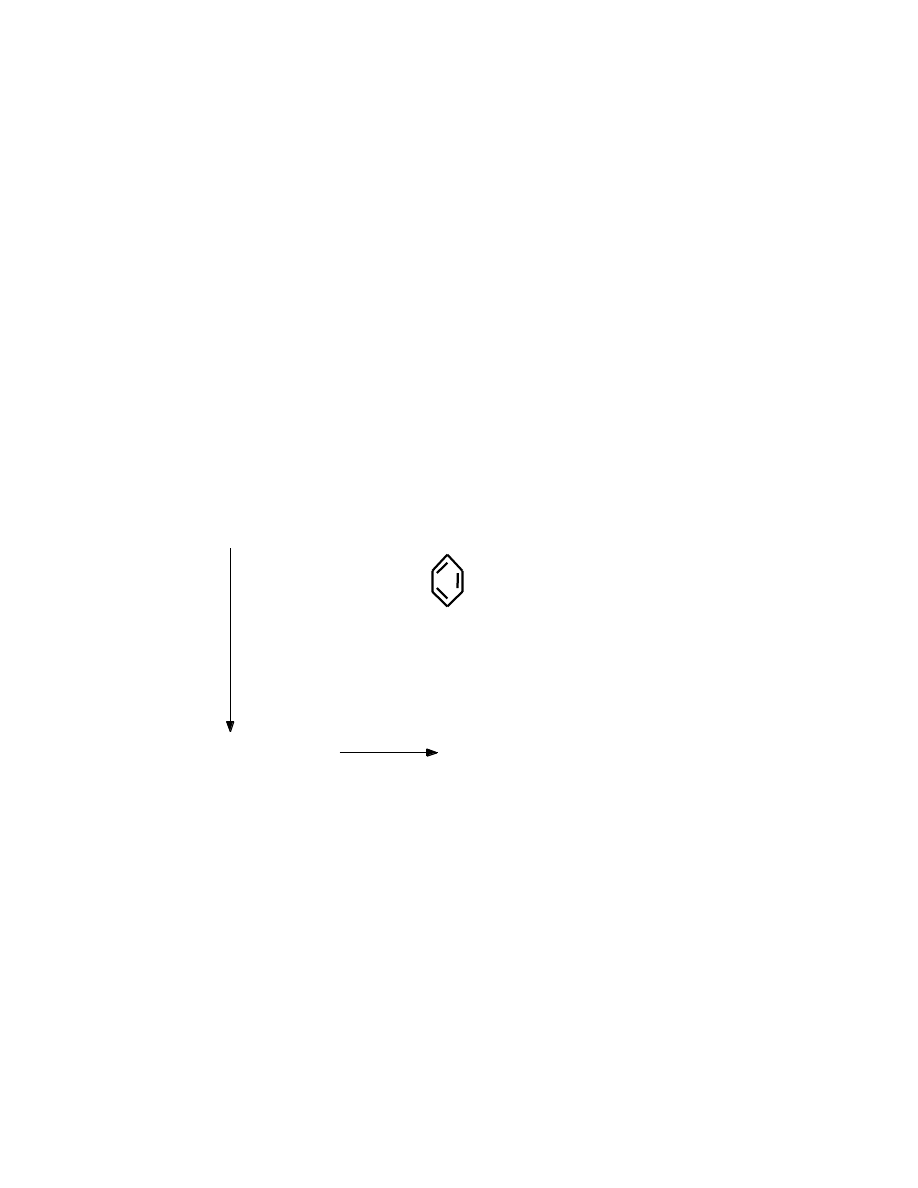
• Flexible side groups introduce more free volume.
• More 'linear' Trans chain can pack better reduces
free volume and raises Tg.
-CH
2
CH -
2
C=C
CH -
2
-CH
2
C=C
Trans
Cis
Tg
≈
-120 Tg
≈
-48
72
x
x
x
x
x
x
x
x
x x
x
x
x
x
x
x
x
x
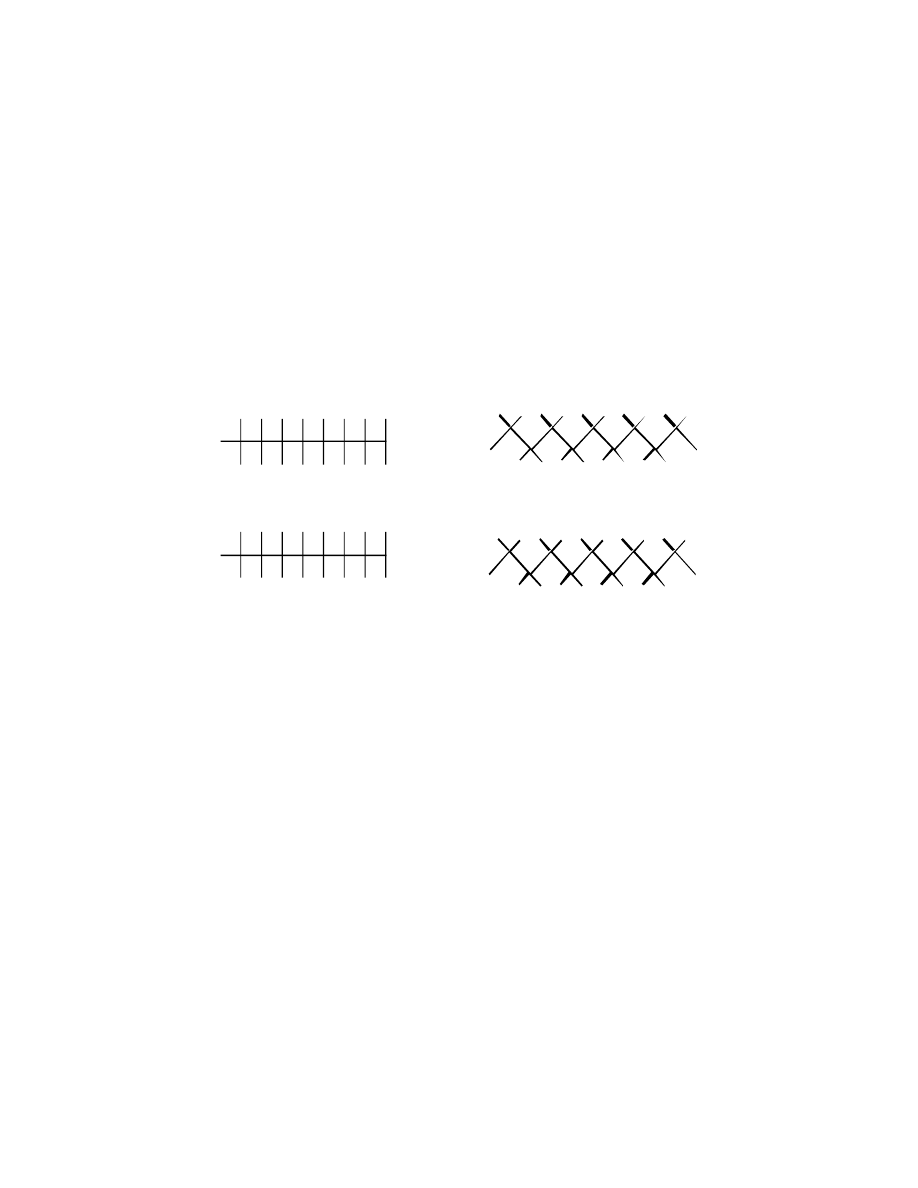
• Tg (iso) PS
≈
Tg (atactic) PS;
but, for most polymers Tg (iso) < Tg (atactic)
Rotation is 'easier' in Isotactic materials, favors
changes in conformation chain mobility.
Energy minima are deeper in less crowded
syndiotactic form.

Chain-chain interactions and backbone flexibility
CH
3
|
CH
3
|
|
CH
3
|
CH
3
CH
3
|
CH
3
|
- C - CH - C - CH -
2
2
|
CH
3
|
CH
3
Cl
|
Cl
|
- C - CH - C - CH -
2
2
|
Cl
|
Cl
≈
≈
• Increase in backbone flexibility lowers T
g.
• Increase in chain-chain interactions increases Tg.

Summary
• Intermolecular interactions pull chains together -
decrease free volume -and raise Tg.
• Chain side substituents
Stiff and bulky groups -inhibit rotation -raise Tg.
Flexible side groups -hold chains apart
-increase free volume -lower Tg.
• Chain backbone substituents
Flexibilize the chain; -thio, ether, Si-O; -lower Tg.
Bulky groups stiffen chain; rings; -raise Tg.
• Easier to rationalize Tg; much more difficult to
predict; some attempts at group contribution
methods.
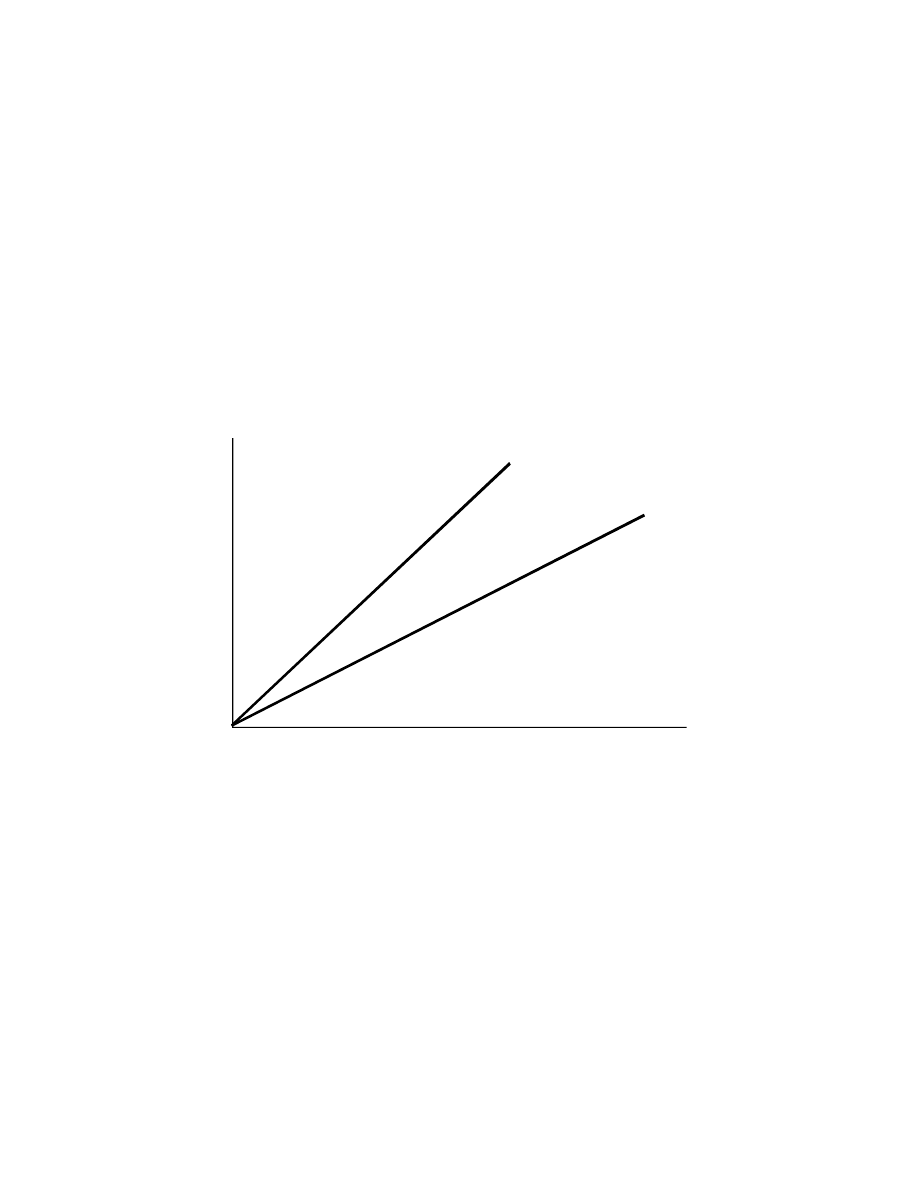
Compatible blends
or
Random copolymers
Tm
Incompatible blends
or
Block copolymers
Homo
polymers
Tg
0.5
0.7
PE, PVDC
PS, PP
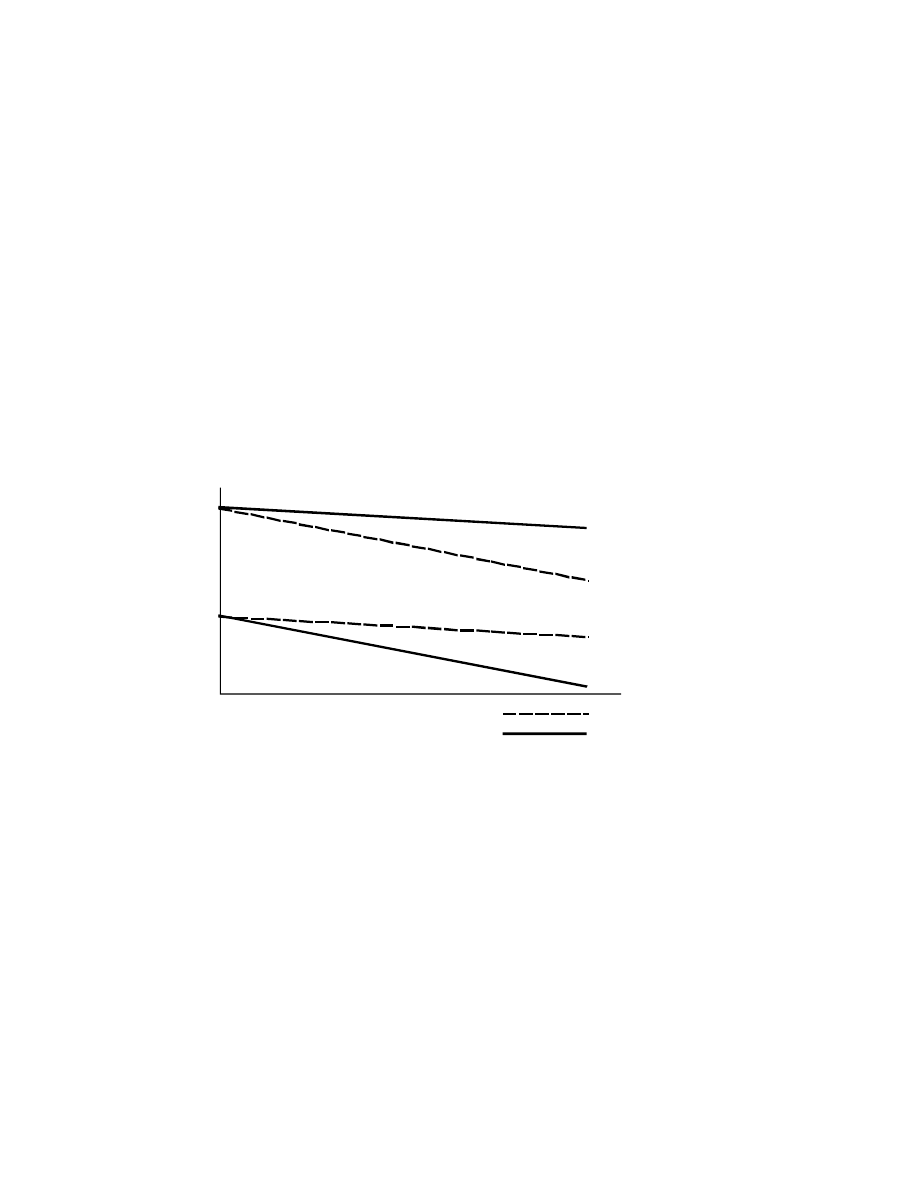
Temp
Tg
% comonomer
or plasticizer
Tm
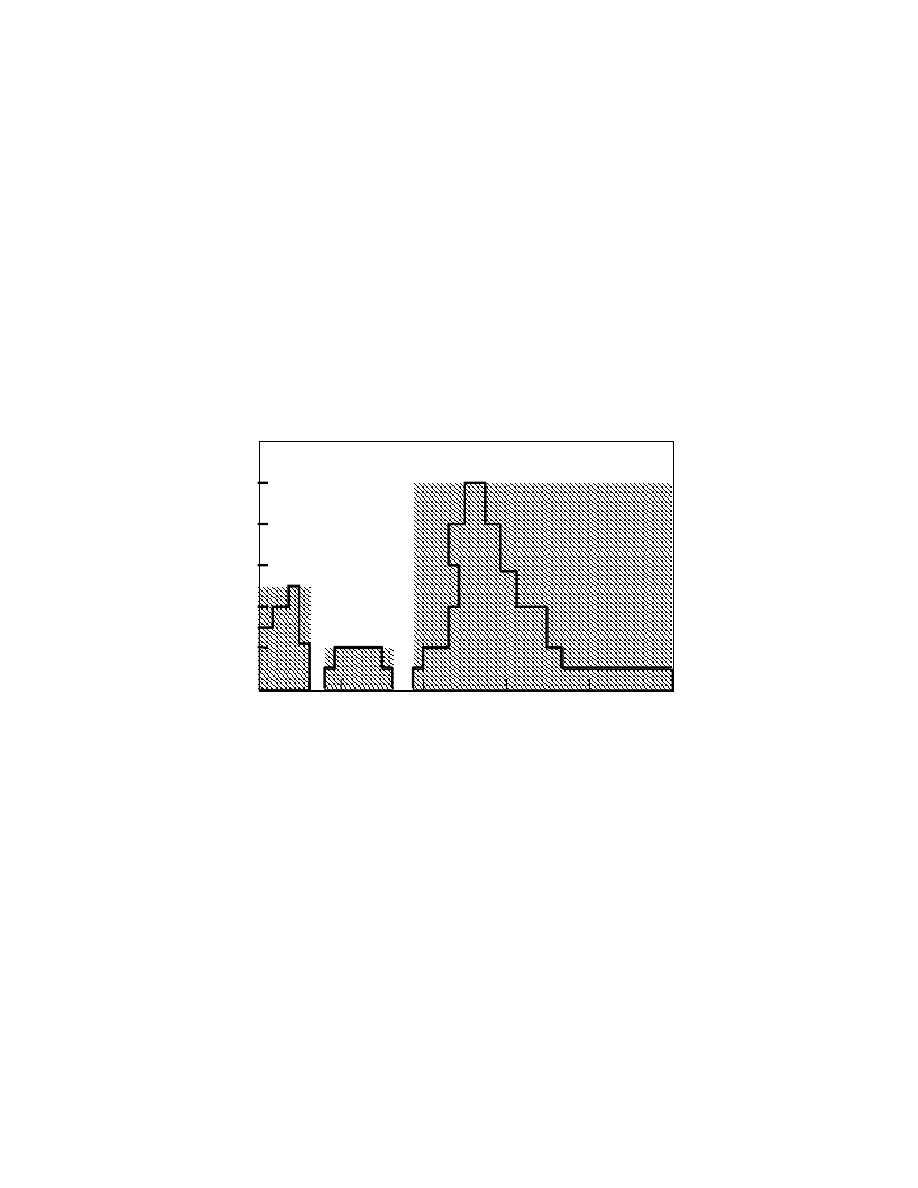
Number of times
Tg reported
140 220 300
2
6
10
Temperature °K
Wyszukiwarka
Podobne podstrony:
Prediction Of High Weight Polymers Glass Transition Temperature Using Rbf Neural Networks Qsar Qspr
Przedmiot PRI i jego diagnoza przegląd koncepcji temperamentu
STRELAU KWESTIONARIUSZ TEMPERAMENTU(1)
W5 Temperatura powietrza WWSTiZ
temperament
4 Temperament typy osobowosci
Temperamentalne uwarunkowania ryzykownych zachowań u kierowców
Czujniki temperatury cieczy chłodzącej
Aktywny,2 przewodowy czujnik temperatury
bmw 3 ci blad temperatury parownika
bmw E36 regulacji temperatury nie dziala
projekt temperatura apdl
82 Nw 04 Stabilizator temperatury
POMIAR TEMPERATURY CIAŁA, Studium medyczne
TEMPERATURA KRAJU, Matura, Geografia
więcej podobnych podstron