
Annex
A1 The Bank for International Settlements (BIS)
The BIS was established in 1930. It is the world's oldest international fi-
nancial institution and remains the principal centre for international central
bank cooperation. The BIS was established in the context of the Young
Plan (1930), which dealt with the issue of the reparation payments impo-
sed on Germany by the Treaty of Versailles following the First World
War. The BIS was also created to act as a trustee for the Dawes and Young
Loans (international loans issued to finance reparations) and to promote
central bank cooperation in general. Since 1930 the Bank has developed its
own research in financial and monetary economics and makes an impor-
tant contribution to the collection, compilation and dissemination of eco-
nomic and financial statistics.
In the monetary policy field, cooperation at the BIS in the immediate af-
termath of the Second World War and until the early 1970s focused on
implementing and defending the Bretton Woods system. In the 1970s and
1980s, the focus was on managing cross-border capital flows following the
oil crises and the international debt crisis. The 1970s crisis also brought the
issue of regulatory supervision of internationally active banks to the fore,
resulting in the 1988 Basel Capital Accord and its ‘Basel II’ revision of
2001-2007. More recently, the issue of financial stability in the wake of
economic integration and globalisation, as highlighted by the 1997 Asian
crisis, has received a lot of attention.
The BIS has also always performed ‘traditional’ banking functions for
the central bank community (e.g. gold and foreign exchange transactions),
as well as trustee and agency functions. The BIS has also provided finance
in the context of IMF-led stabilisation programmes (e.g. for Mexico and
Brazil).

356 Annex
A2 The Group of Ten (G10)
1
The G10 is made up of 11 industrialised countries (Belgium, Canada,
France, Germany, Italy, Japan, the Netherlands, Sweden, Switzerland, the
United Kingdom and the United States) which consult and co-operate on
economic, monetary and financial matters.
The ministers of finance and central bank governors of the Group of Ten
meet once a year in connection with the annual meetings of the Internatio-
nal Monetary Fund and the World Bank. The deputies of the Group of Ten
met as needed, but usually between two and four times a year. Ad hoc
committees and working parties of the Group of Ten were set up as nee-
ded. The meetings of the deputies have been discontinued since 2006.
In recent years, work by the Group of Ten has included reports on col-
lective action clauses, insolvency arrangements and contract enforceabili-
ty, turbulence in asset markets, and the implications for financial markets
and economic policies of ageing and pension system reform. These reports
and the communiqués of the ministers and governors of the Group of Ten
are available from the website of the BIS, IMF and OECD.
1
For the historical link between the BIS and the G10, consult Toniolo, Gianni
(with the assistance of Piet Clement) (2005) Central Bank Cooperation at the
Bank for International Settlements, 1930-1973, (Chap. 11.8) Cambridge Uni-
versity Press.
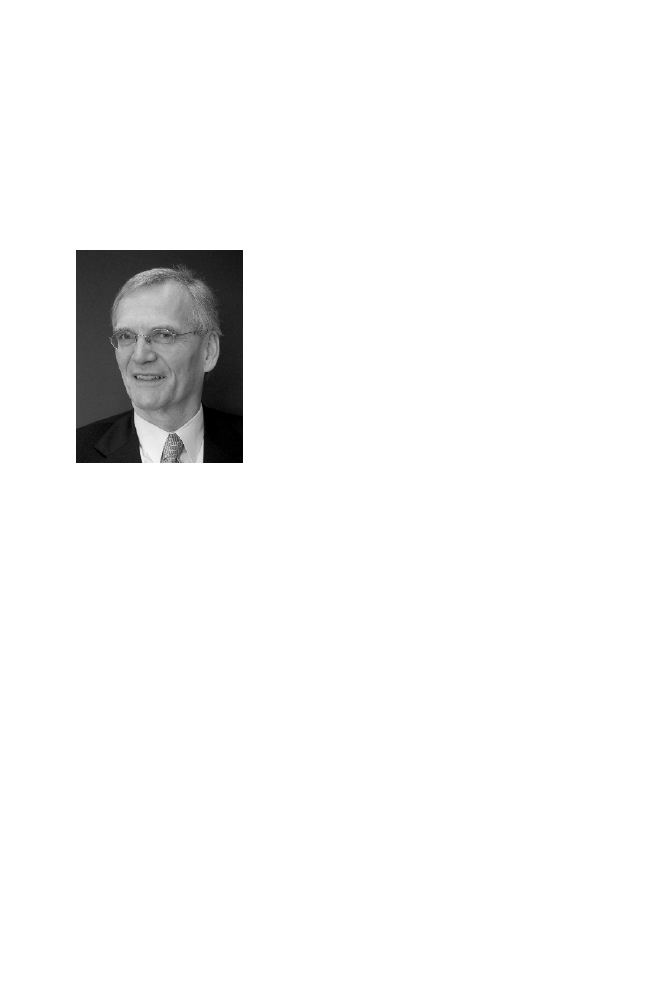
Author
Elmar B. Koch
is a German lawyer and holds MBA and PhD (in finance) degrees from the
USA. He was in the Secretariat of Central Banking Studies at the Bank for
International Settlements (BIS). Earlier assignments at the BIS included the
Secretariat of the G10 Ministers and Governors (2002–2006), Secretariat of
the Central Bank Governance Forum (2003–2006), mediator between Gov-
ernments of the former Yugoslavia (2001–2002), Senior Economist for
“Special Meetings” (2000–2001) and Senior Economist for “All Governors
and Emerging Market Economies” (1995–2000). Before 1995 he held positi-
ons as Deputy Head of Statistics and Documentation, in the Eurocurrency
Standing Committee and the Secretariat of Data Bank Services.
He has published in economics, finance and law in the USA, Europe and
Asia. He was associate professor of finance in the USA and lectured in
particular in Europe at the Joint Vienna Institute, the Financial Stability
Institute, the University of Basel and central banks worldwide. He is on the
editorial board of the Journal of International Economics and Economic
Policy (IEEP) and referees for other journals. His experience covers mac-
roeconomics (monetary and financial policy), the international financial
architecture and such areas as monetary policy instruments/transmission
mechanism, pension funds, ‘collective action clauses’, IMF finances, sov-
ereign debt, e-finance, bank restructuring, corporate finance, central bank
law and insolvency law, governance, real effective exchange rates and
statistical methodologies.
Wyszukiwarka
Podobne podstrony:
English for International Tourism Pre Intermediate WB
norsk grammatik for internasjonale studenter
From Stabilisation to State Building, (DEPARTMENT FOR INTERNATIONAL?VELOPMENT)
Checking methods for internal memory size of Galaxy S6 S6Edge Rev2 0
Everyday english for international nurses
Hydrogen Gas Injector System For Internal Combustion Engine
SMeyer CA1233379A1 Hydrogen Gas Injection for Internal Combustion Engine
Kalmus, Realo, Siibak (2011) Motives for internet use and their relationships with personality trait
English for International Tourism Pre Intermediate WB
Monitoring and Early Warning for Internet Worms
Efficient VLSI architectures for the biorthogonal wavelet transform by filter bank and lifting sc
internetowy bank abc bankowosci id 218870
drugs for youth via internet and the example of mephedrone tox lett 2011 j toxlet 2010 12 014
International Convention for the Safety of Life at Sea
International relations theory for 21st century
Halawa for the last, Interna, Kardiologia
więcej podobnych podstron