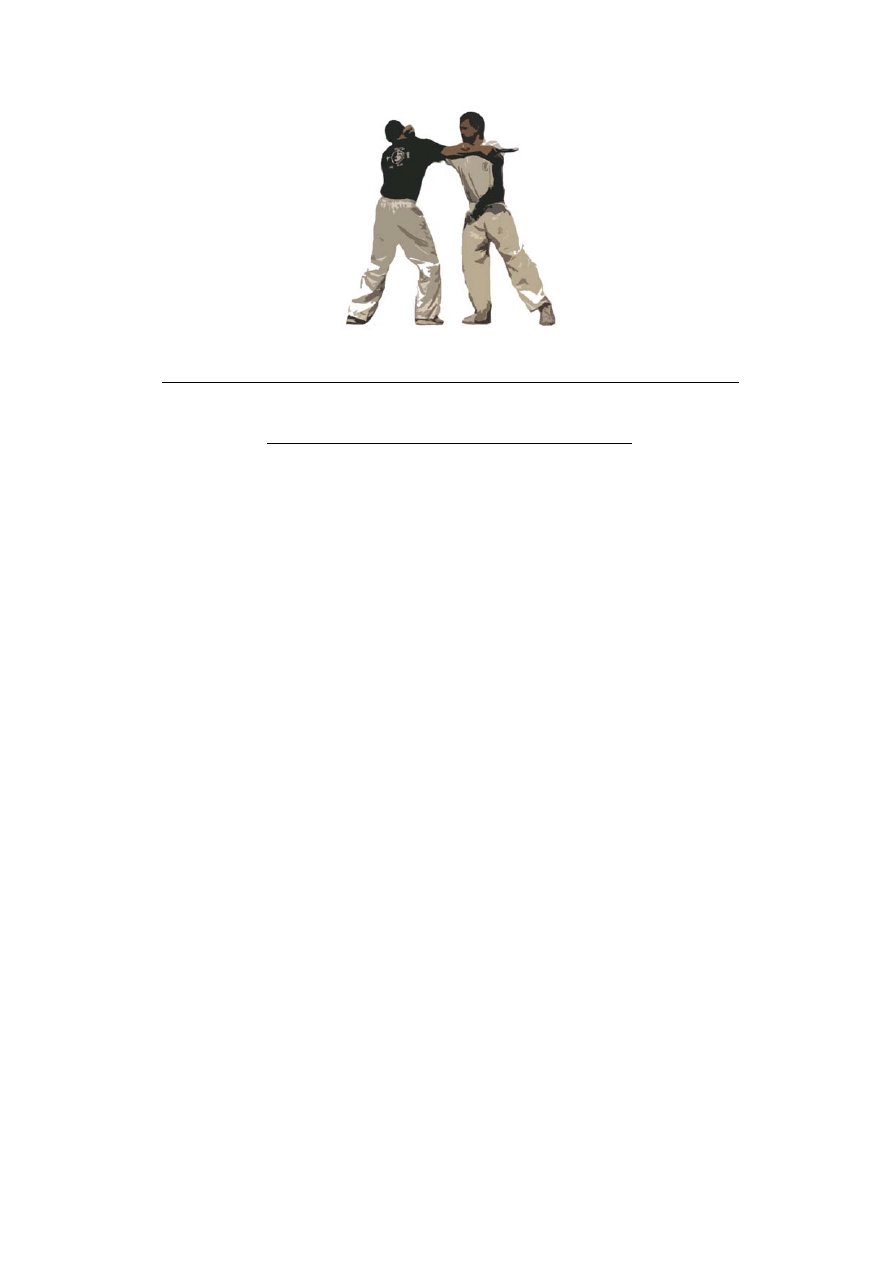
Krav-Maga: Reality fighting on the ground
By Eyal Yanilov and Jon Hegan
The essence of Israels Krav-Maga is purely tactical self-defence
and surviving a real-life violent confrontation. This can be
under any conditions in the street, the battle field or any other
environment, regardless whether it is during a civil, law-
enforcement, terrorist or military type scenario. Our purpose is
not to compete with someone who wears tightly fitting lycra
pants and fights in a ring or cage for a living. Generally, in
most areas of the world, we do not regard or see these people
as a principle threat or risk, as they are highly trained and
disciplined atheletes who rarley find themselves easily dragged
into a common street brawl. Skilled fighters/ground fighters are
exceptionally scarce and as a rule will evade such trouble if
only to avoid injury. Whereas the common attacker and street
hooligan has no such priorities, instead it wouldn't be classed
as a good night out unless they had a trip to the local A&E after
an altercation. For conflict in the street Krav-Maga has no rules
of any sport origin, that means, no referees and includes biting,
gouging the eyes, using incidental objects as weapons,
breaking small joints and striking effectivly with all available
body weapons. This is reality and this is what Krav-Maga is all
about.
What can really happen in a fight that goes to the
ground?

A violent confrontation may eventually go to the ground at
some point, whether you like it or not, especially if one person
is activly trying to acheive just that. Once on the ground the
assailant can continue to attack from in the position they have
landed or trade for a superior one (naturally there will be
weapons or other people getting themselves involved to
consider). As previously mentioned, in the streets today there
are few people who are knowledgeable with the complexities of
ground fighting, but still an attacker may, as part of the natural
behavior found in humans, start to wrestle you resulting in
taking you to the floor (a headlock is still probably the most
common non-skilled grappling throw/attack) or maybe because
they learned some Judo as a child, or worse, a fan of the WWF.
Regarding the common attacker and their methods - we will
always assume that they either have friends close by that will
interfere and will try to hold or kick and punch you, or they
may be able to produce a weapon concealed in their clothing or
simply grab a close-by object and use it to hit you. With this in
mind, one should never to go to the ground voluntarily (even if
this is personal preference). If this was unavoidable, which can
often be the case, you should try not to stay there any longer
than the absolute minimum time required. In vitually all cases
you will be more limited in action and vulnerable to attacks
from other assailants that are even more difficult to defend.
The solutions are naturally not to go to the ground, if at all
possible, for that Krav-Maga has several responses depending
on timing and the movement of the attacker. If you cannot
avert this then do the best you can do, the stratergy is to get
back up as soon as possible, with minimum impairment to
yourself and able to inflict as much damage as needed to the
assailant/s.
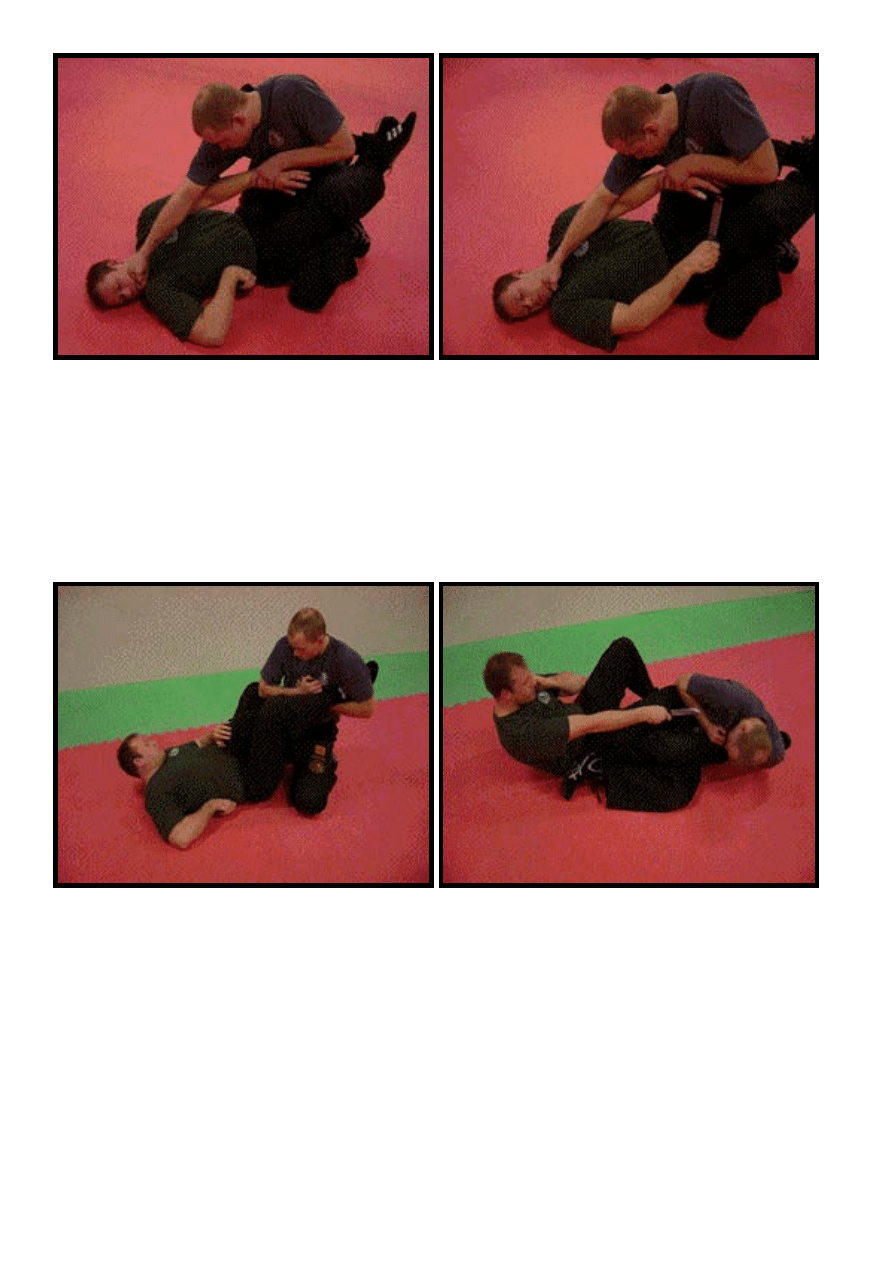
Used to ground fighting, with sport restrictions? You may think
that you posess the upper hand, but street criminals will
invariably have a weapon concealed that they can ''skewer'' you
with well before you think you can get them to, ''tap out''!
Self-defence on the ground - first steps and preventive
measures
Krav-Maga self defence (we differ between basic self-defence
and fighting situations) on the ground includes similar topics to
those that we have already in our standing cirriculum.
The first preventive measures the Krav-Maga practitioner learns
are how to fall, roll and fall-break, subjects that are to be found
in most martial arts and naturally we do it but with our vision

and techniques. It is a fact that many people get injured when
meeting terra firma at high speed, whether it's because
someone sent them there or because they; stumbled, slipped
or fell while walking / running/riding etc. A roll is converting the
fall into a round motion and the fall-break aims to reduce the
shock and absorb the impact of the body with the ground.
The second set of measures are to try and prevent the
attacker from taking you to the ground, techniques include
distancing, blocking the attackers body from getting close to
you and obviously counterattacking with maximum efficiency
The last phase of preventive measures is how to avert the
assailant from reaching you if they are standing and you are on
the ground. This is done by tactical moves on the ground,
turning with the hips and legs towards the assailant, kicking
from the ground, stopping the assailant reaching you and how
to get up as fast as possible (to the most suitable direction or
exit) whether charging the opponent, avoiding, or retreating
from them.
Defending a standing opponent - that kicks, punches, or
uses a weapon
As a confrontation can start while you are in any position, the
Krav-Maga instructors and curriculum direct the student to
constantly operate from a disadvantagous position. As a
defender, the moment that you observe the danger, you may
find yourself standing, walking, sitting on a chair, in a car,
sitting on the ground or laying down. During a scuffle people
often fall to the ground or the assailant causes them to fall
whilst they are still standing. It is highly likely that the assailant
will attack you while they are still standing and you are laying
down, this is a very vulnerable and dangerous position to be in.
Although in the UK we have a saying ''Never kick a man when
he's down'', the street criminal will normally reply, ''Well, can
you think of a better time to do it''?
We include defending kicks directed to the head or body,
defending punches and naturally defending attacks with
weapons such as sticks (and other blunt objects) and edged
weapons.
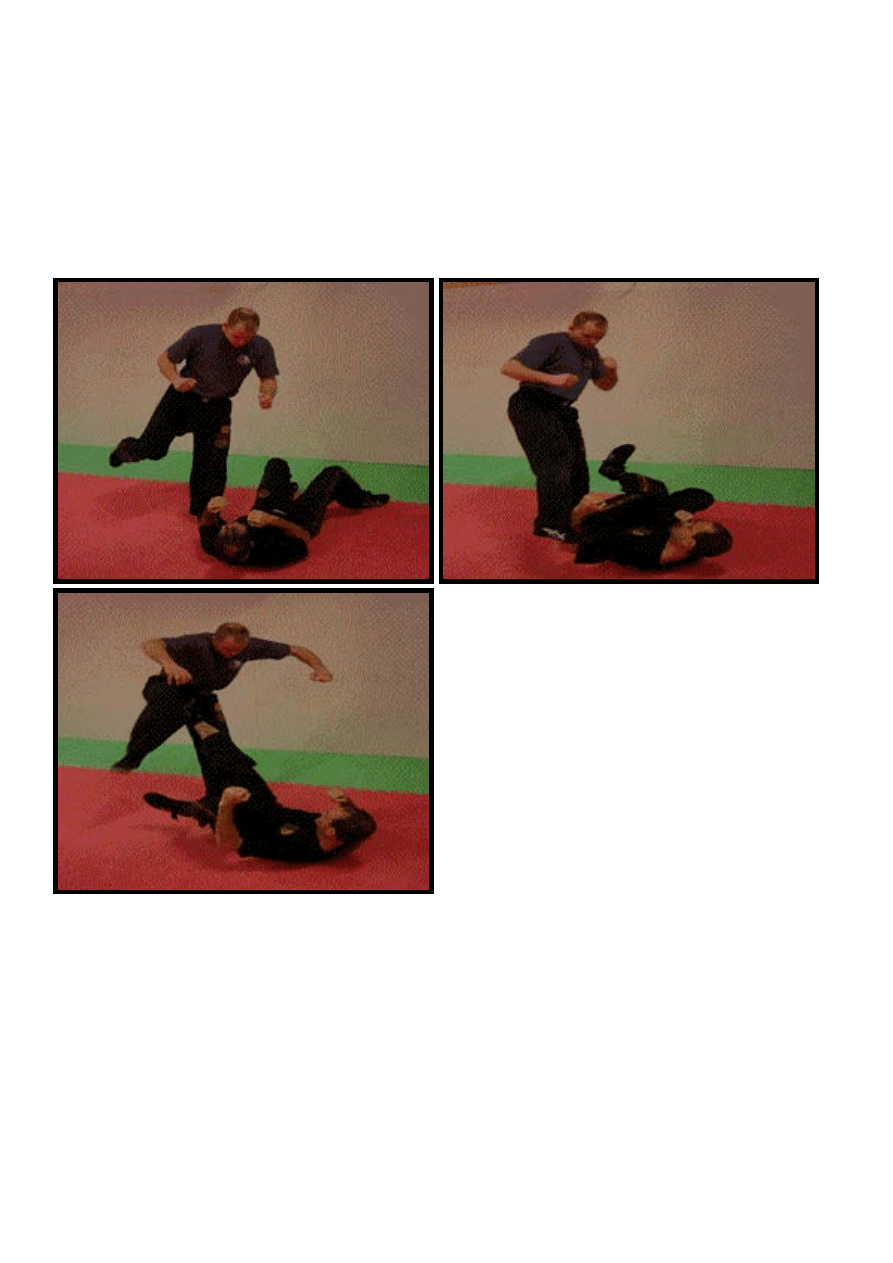
Example
-
you are on the ground and the assailant managed to
get close to you and deliver a kick towards your head. You
respond with a forearm defence, simultaneously, move the
body away and then direct the counterattacks with your leg to
groin or knee area. Then get up as soon as possible.
1. The attack - a football type kick at your
head
2. Block and defend your head, move around and prepare
to counter
3. Strike out with a stomping kick and then get up
Basic defenses and releases when both of you have
ended up on the floor

In the basic self-defence section - The student learns to deal
with an opponent who is on the ground, positioned near or on
top of them. Krav-Maga basic techniques include dealing with
an assailant who may be: choking with the palms (when either
sitting on you, or kneeling by your side, or is between your
legs); puts you in different types of head locks; Grabs your
wrists and pins you down; or is punching to the head or body;
(When concerned with self-defence for women on the ground,
the main emphasis is on defending grabs and chokes, when the
assailant is either sitting on the defender or is between the
legs.)
Krav-Maga’s range of solutions against those attacks on the
ground are based on techniques and principles of defences and
releases that we have already have in the standing positions,
as well as on the basics of how to move and change positions
on the ground. Naturally there are unique techniques for
specific problems when one is on the ground and the attacker
executes an attack from the one of the options that were
mentioned before.
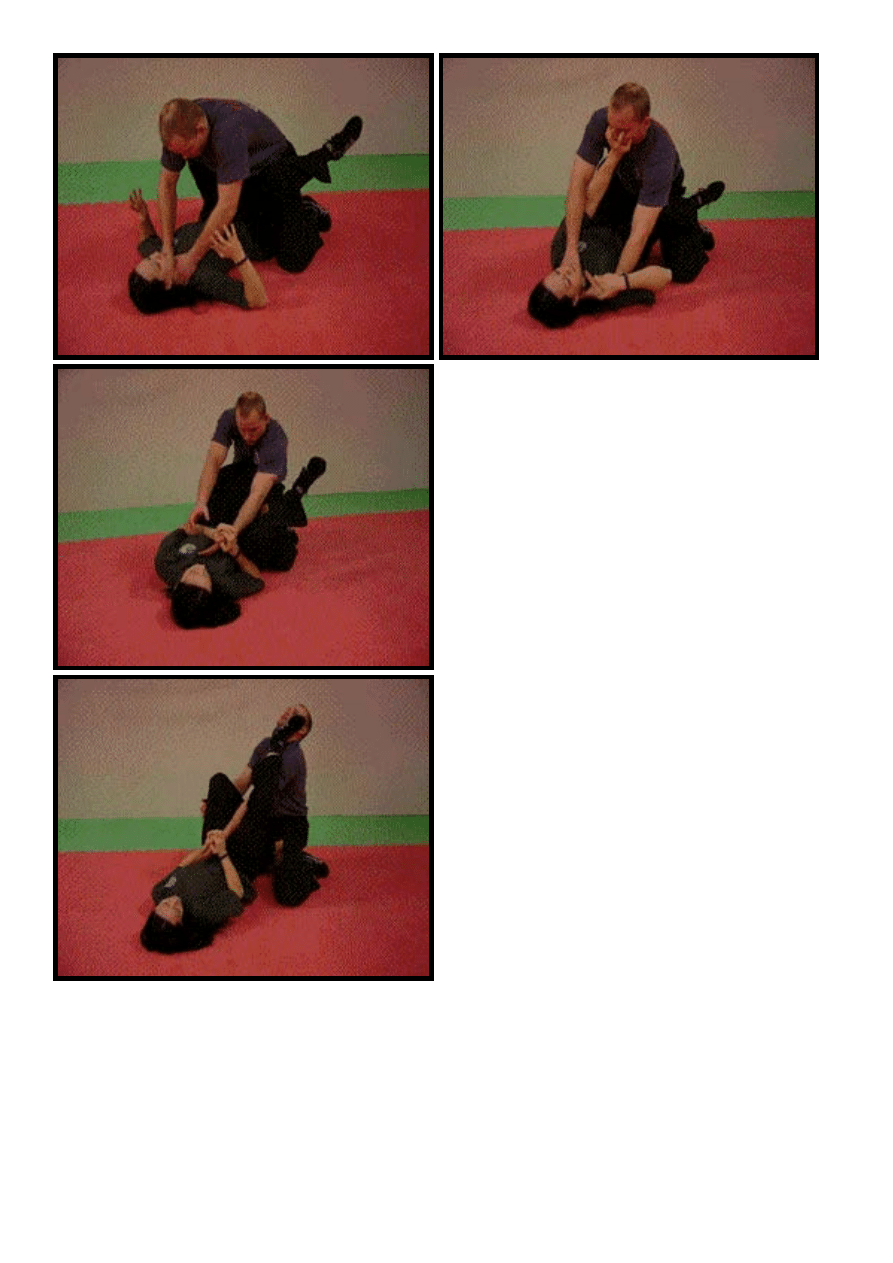
Example: In the basic technique to release from a choke from
the front (standing), the trainee will pluck (remove) the
assailant’s hands from the throat and simultaneously attacks
with a knee to the groin, then the defender will finish the
“situation” with more countering strikes and/or retreating.
When the choke is on the ground - our example is an attacker
choking from between the legs of the defender - the same
principle and technique apply, using the same plucking motion
while moving to send the knee against the assailant’s chest (to
push them away) and then kick them strongly in the face.
1. Being choked on the ground with the assailents palms
and thumbs
2. Release the pressure on the throat with an eye gouge
and push the assailant away
3. Insert and push your knee on the assailents chest, still
controlling their wrist
4. Counterattack decisively with a strong kick to the face
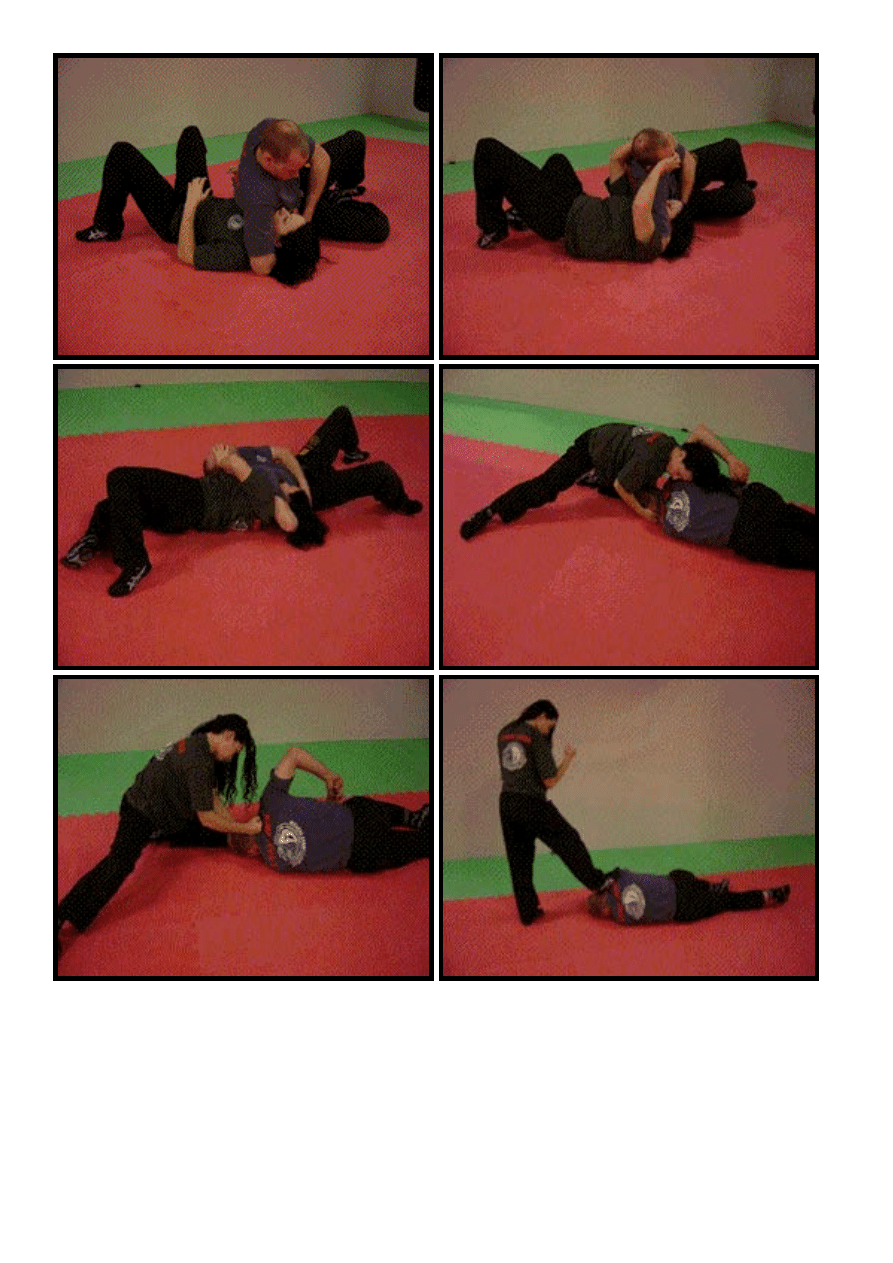
1. You are caught in a headlock
2. Move your body inwards to releive the pressure on
your chest and gouge the eyes
3. Pull and turn
4
.
Finish the roll
5. Counterattack
6. Finish the “situation”
Whilst on the ground - Defending an opponent that uses
a weapon
If you end up on the ground, the assailant may also try to use
a weapon. Our training includes a variety of exercises, based
on principles and techniques from our Krav-Maga standing and
basic ground self defense, so the trainee will be able to deal
with attacks such as stabs/threats with edged weapons; attacks
with blunt instruments and more.
For members of the military, specialist agencies, police units
and also for our higher-level expert instructors, we also have
solutions if an assailant threatens with a firearm.
The aim of the system is to solve many types of problems with
the same solution, the result of which is a reaction and a
decision making process that is non-convoluted, fast to learn
and easy to retain, these are important factors in a time of
need when a Krav-Maga trainee is placed under traumatic
conditions.
Example
:
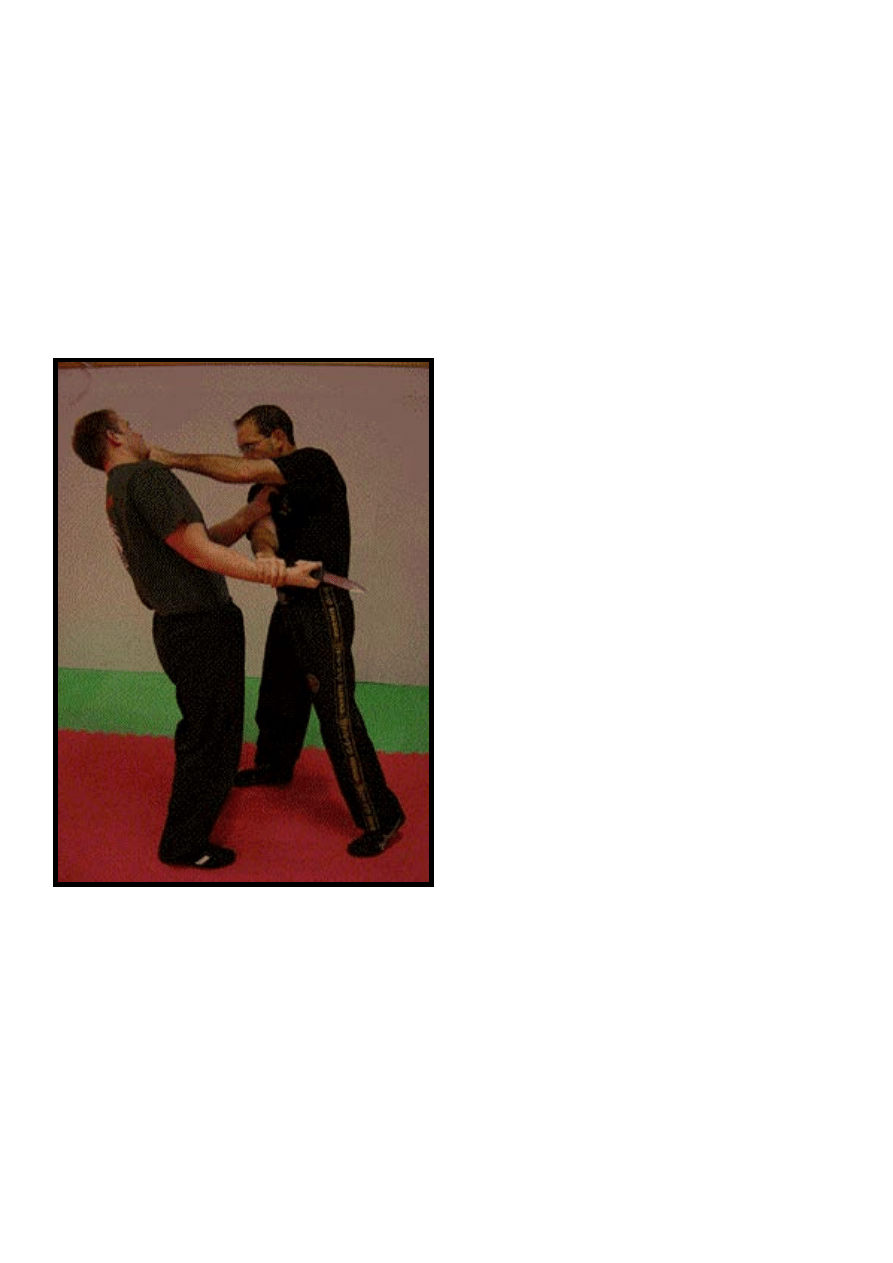
Defending a knife threat while standing. There may
be various threats from different directions, distances and at
several heights (and parts of the body). As an example we
take a right-handed assailant who grabs the defender with his
left hand and places the knife to the left side of their throat.
The basic Krav-Maga technique (sometimes with some small
adjustments) naturally manages to deal with many variants of
the situation, positions of the knife and of the attacker. In
addition, an almost identical technique deals with threats of a
pistol and other barreled weapons.
In the solution for a standing threat, the defender starts with a
hand movement to remove the weapon from their throat and a
body movement to distance them away from the knife further.
Subsequently the defender advances diagonally forwards and
launches a counter attack. To close the situation, deliver more
counterattacks and then disarm or move away.
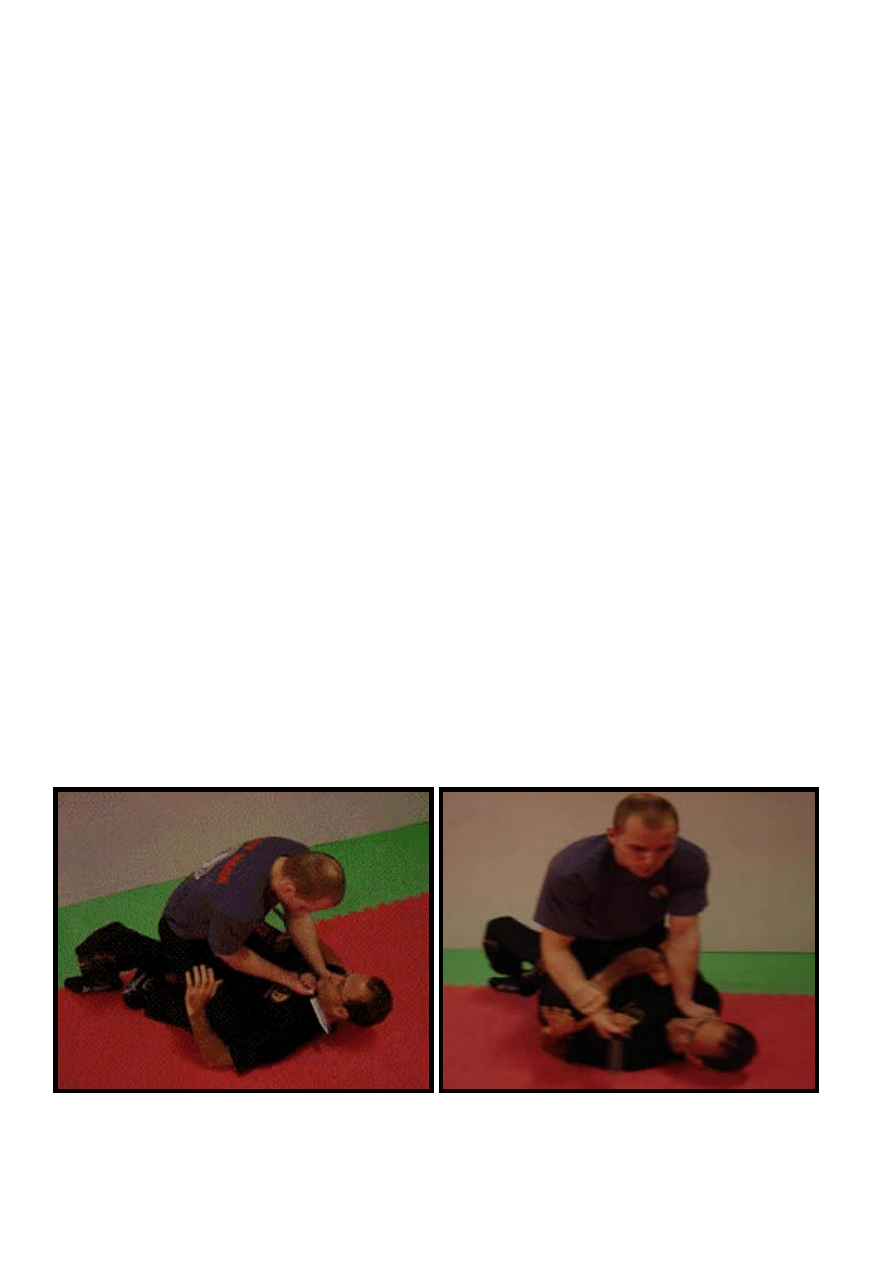
On the ground when the knife is at the throat, in the same
manner, and the assailant is sitting on the defender, the
solution starts the same way. Then the defender enhances the
control over the knife while (grabbing with two hands the wrist
area of the hand holding the knife) throwing the attacker with a
simple bridge, rolling on him and countering. The end is for the
defender to move away with or without disarming, as required
by the situation.
1. The threat (assume they will cut your your
throat)
2. Using a hand and body defence control the weapon
3. Bridge/throw the opponent off you
4. Immediatly launch a counterattack
5. Deliver repeated hand and head strikes to incapacitate
the assailant, then disarm.
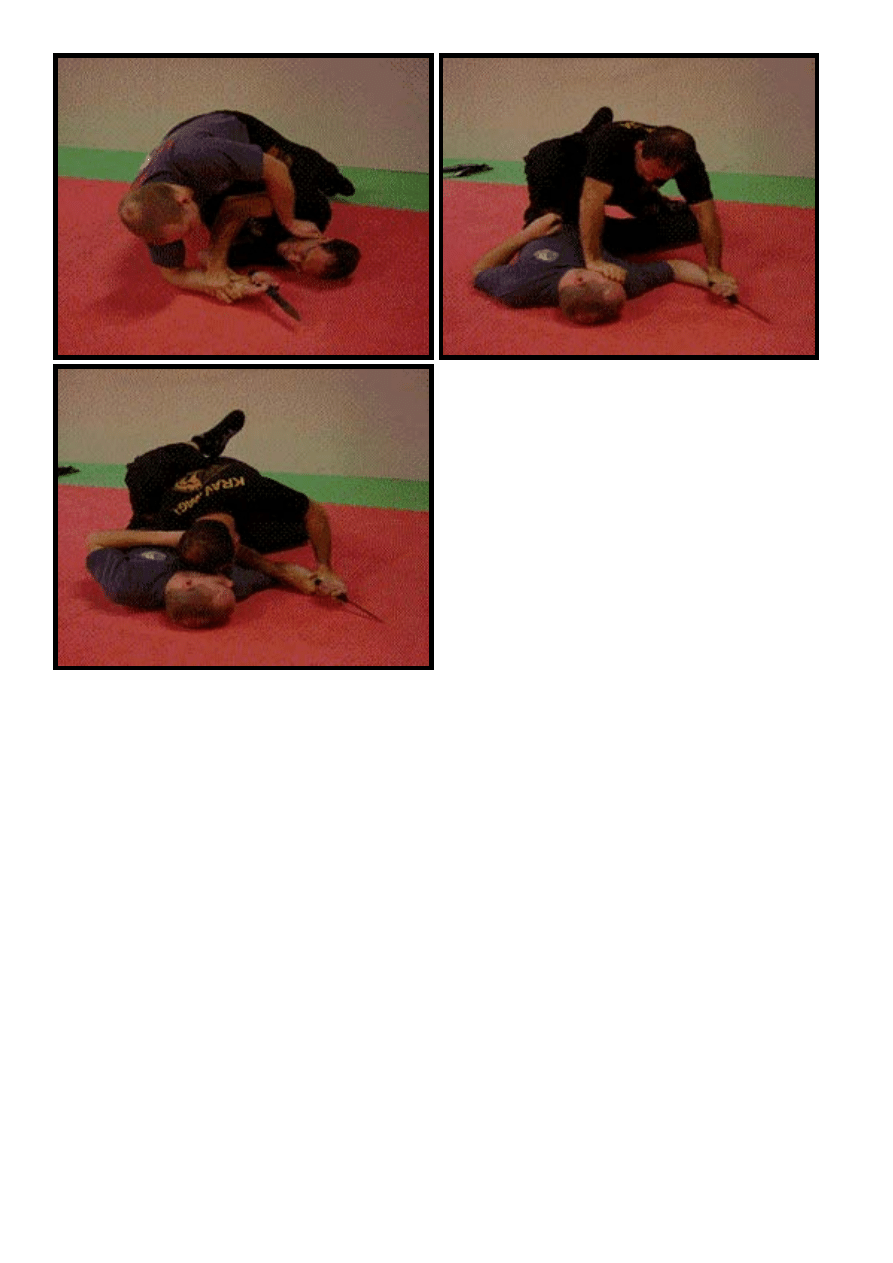
Defending a knife stab
We demonstrate here how to defend counter, control the
attacking hand, counterattack and throw the assailant off you.
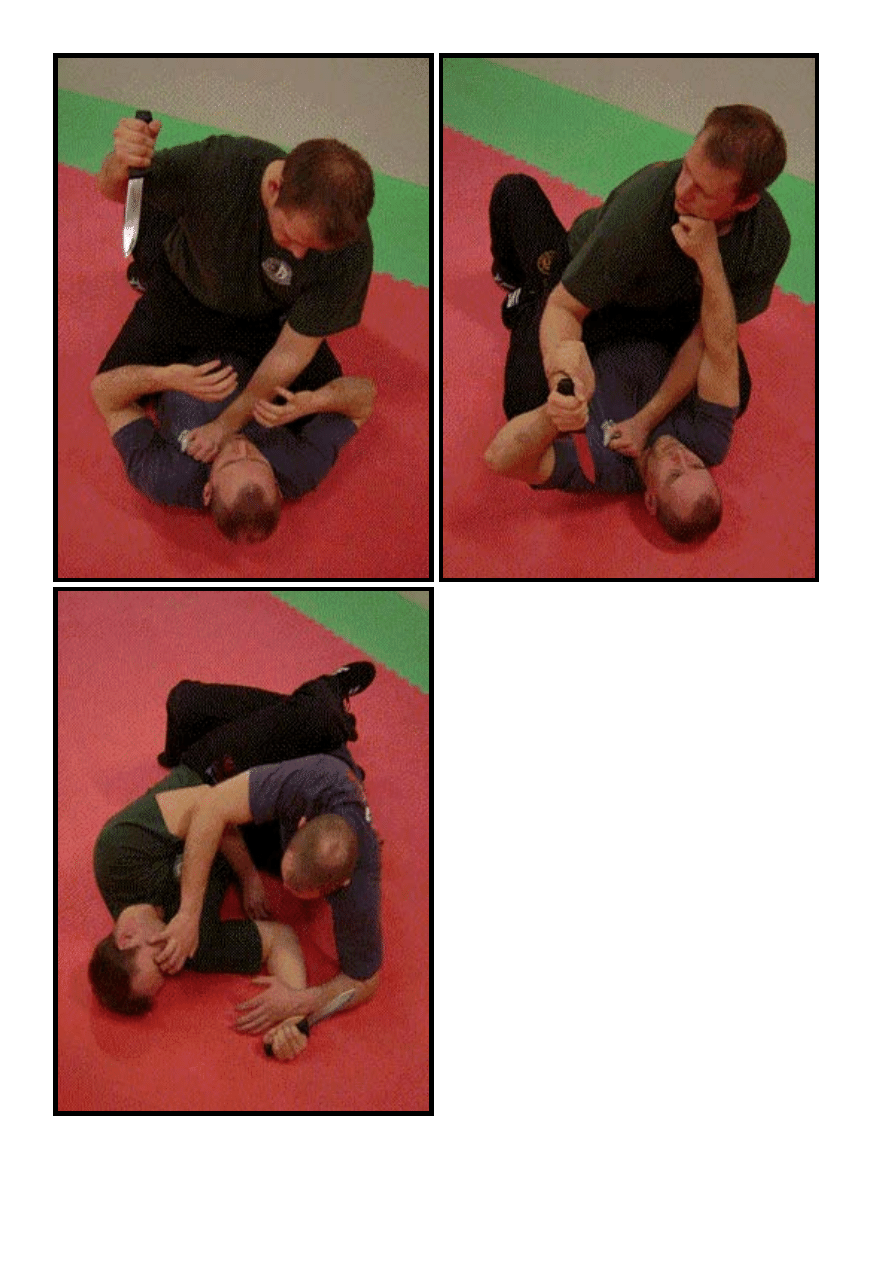
1. The threat, which will often be a frenzied
attack
2. Defend and control the knife whilst countering to the
throat or face
3. Throwing the opponent and turning on him with a
frenzied attack of your own!
Training for the ground
The ground fighting that we teach in Krav-Maga is divided to
two parts. One - playing and “having fun” in training, done with
relaxed sparring including a variety of pins, sweeps, chokes,
arm and leg locks. Two - a very aggressive and brutal
approach, to eliminate any danger and stand up in the fastest
way possible. This includes all type of strikes, with the hands,
feet, elbows, knees and the head, (biting, and even shouting to
ear are included) impacting to all sensitive areas, grabbing and
pulling at vulnerable zones such as the groin, eyes and the
neck. In this section though we only need to have a limited
range of fundamental choking and joint manipulations.
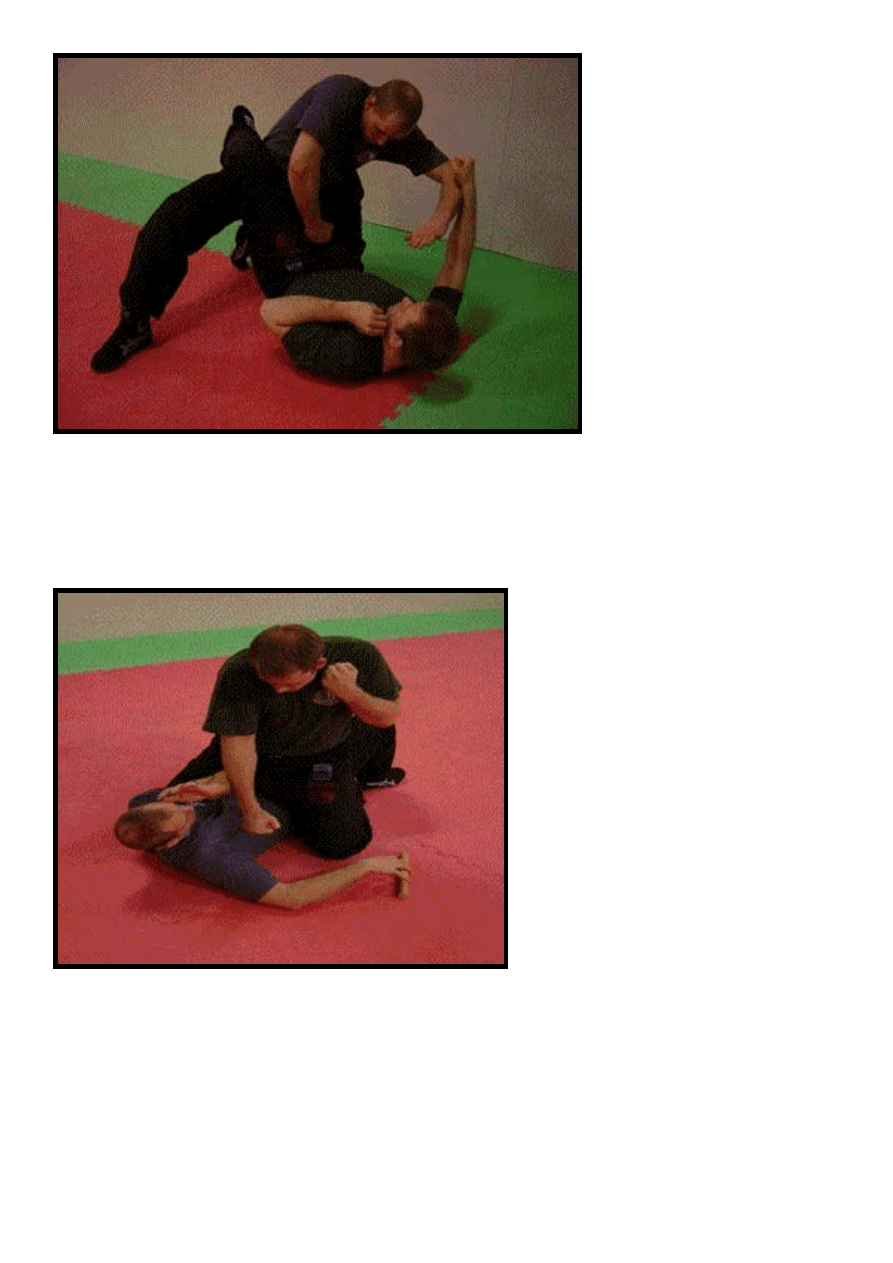
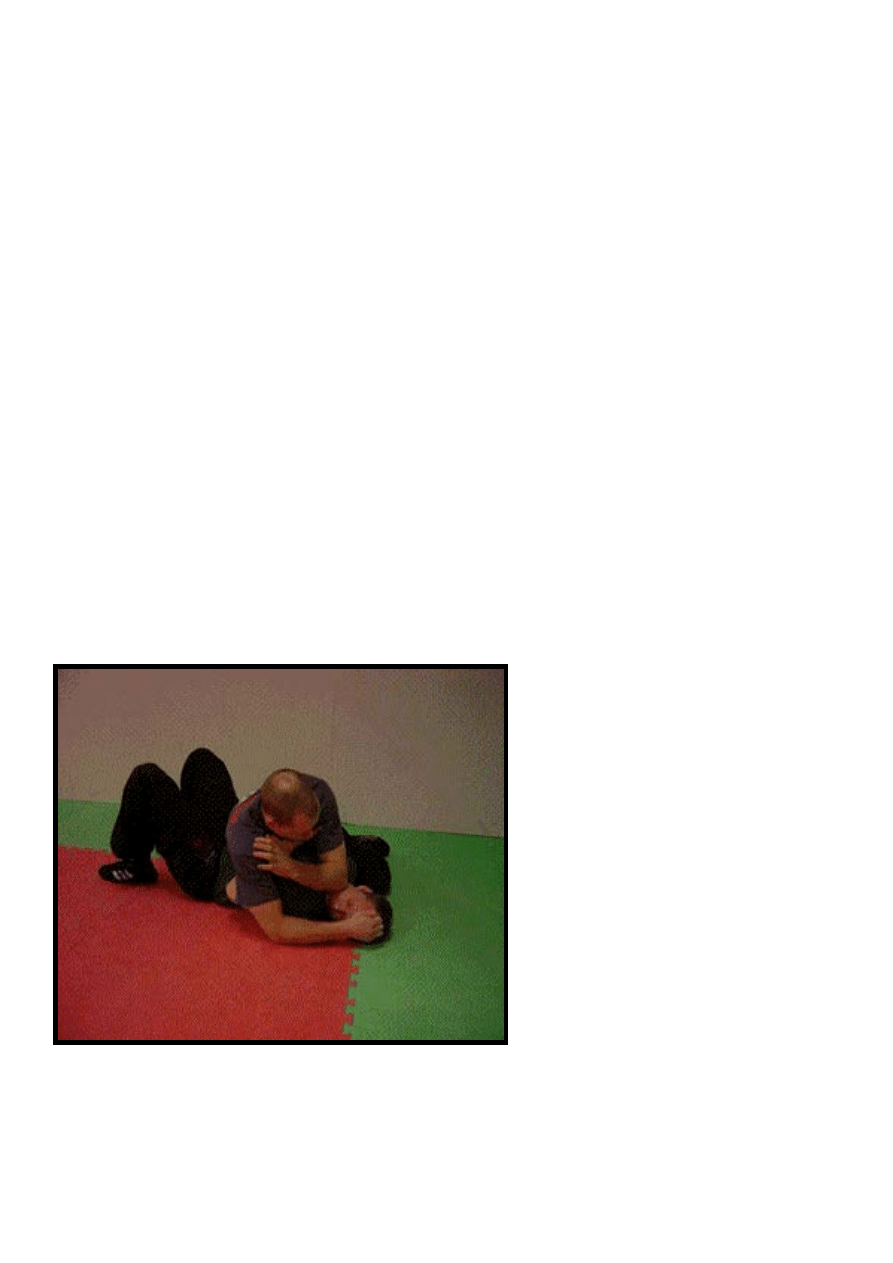
Attacking and defending without sporting restrictions
Making use of common objects effectivly.
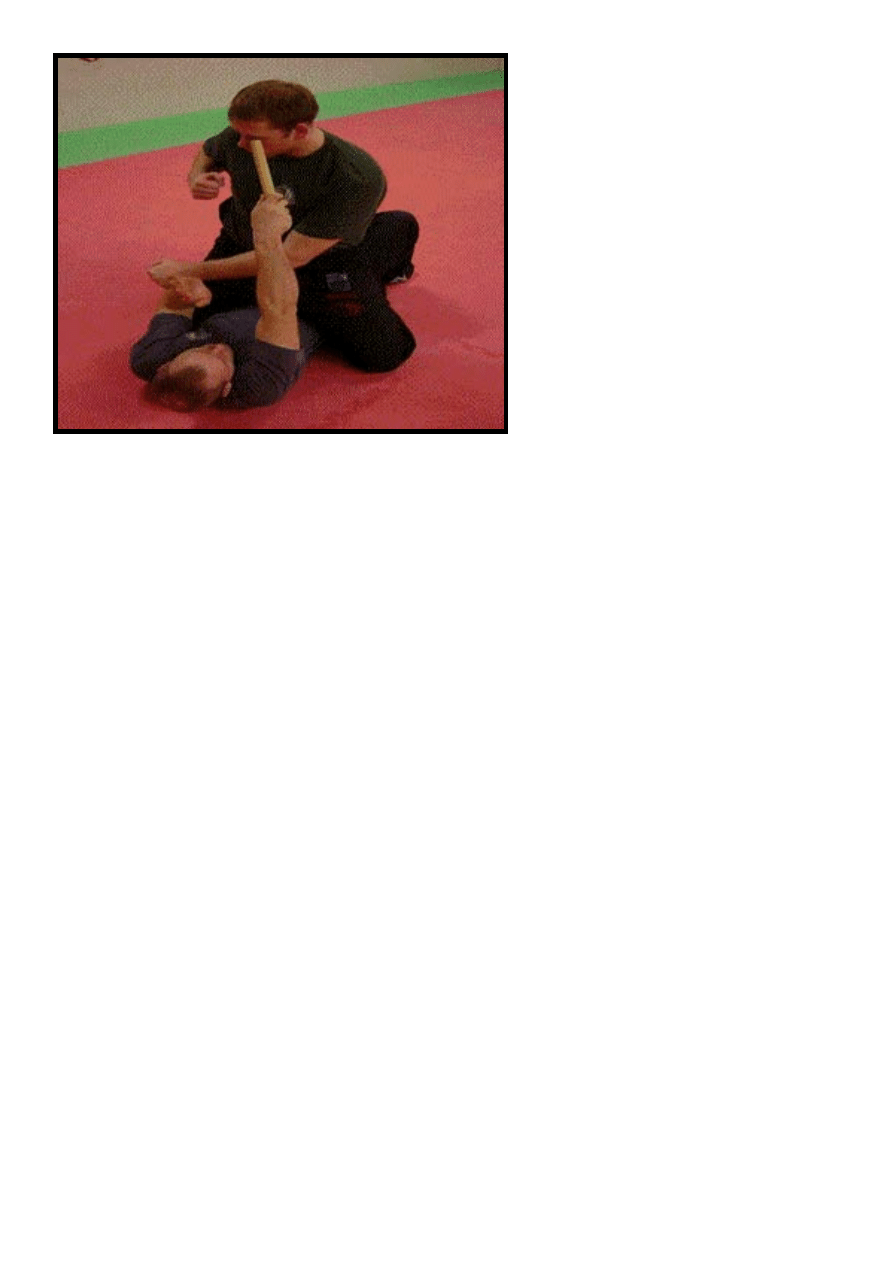
Whenever possible grab a near by object and use it the
appropriate manner.
The objective is to get up quickly before the gang is coming and
before the opponent manages to inflict any serious injury.
Training also includes specific techniques and drills to deal with
more than one opponent. From a defensive perspective the
approach to Krav-Maga ground fighting includes techniques for
defending all manner of punches and strikes, securing a
dominant position while executing effective attacks.
About the writers
Eyal Yanilov is the Head Instructor of the International Krav-
Maga Federation. He was the closest instructor to Imi Sde-Or,
founder of Krav-Maga, and carries Krav-Maga's highest grade.
Jon Hegan is an Expert level 1 from the UK. He also holds a
Judo black belt and is a BJJ blue belt.
Wyszukiwarka
Podobne podstrony:
Kriogenika egzamin 2014 id 250 Nieznany
Abolicja podatkowa id 50334 Nieznany (2)
4 LIDER MENEDZER id 37733 Nieznany (2)
katechezy MB id 233498 Nieznany
metro sciaga id 296943 Nieznany
perf id 354744 Nieznany
interbase id 92028 Nieznany
Mbaku id 289860 Nieznany
Probiotyki antybiotyki id 66316 Nieznany
miedziowanie cz 2 id 113259 Nieznany
LTC1729 id 273494 Nieznany
D11B7AOver0400 id 130434 Nieznany
analiza ryzyka bio id 61320 Nieznany
pedagogika ogolna id 353595 Nieznany
Misc3 id 302777 Nieznany
cw med 5 id 122239 Nieznany
więcej podobnych podstron