
An Undetectable Computer Virus
David M. Chess and Steve R. White
IBM Thomas J. Watson Research Center
Hawthorne, New York, USA
chess@us.ibm.com, srwhite@us.ibm.com
One of the few solid theoretical results in the study of computer viruses is Cohen's 1987
demonstration that there is no algorithm that can perfectly detect all possible viruses [1]. This
brief paper adds to the bad news, by pointing out that there are computer viruses which no
algorithm can detect, even under a somewhat more liberal definition of detection. We also
comment on the senses of "detect" used in these results, and note that the immediate impact of
these results on computer virus detection in the real world is small.
Computer Viruses
Consider the set of programs which produce one or more programs as output. For any pair of
programs p and q, p eventually produces q if and only if p produces q either directly or through a
series of steps (the "eventually produces" relation is the transitive closure of the "produces"
relation.) A viral set is a maximal set of programs V such that for every pair of programs p and q
in V, p eventually produces q, and q eventually produces p. ("Maximal" here means that there is
no program r not in the set that could be added to the set and have the set still satisfy the
conditions.) For the purposes of this paper, a computer virus is a viral set; a program p is said to
be an instance of, or to be infected with, a virus V precisely when p is a member of the viral set V.
A program is said to be infected simpliciter when there is some viral set V of which it is a
member. A program which is an instance of some virus is said to spread whenever it produces
another instance of that virus. The simplest virus is a viral set that contains exactly one program,
where that program simply produces itself. Larger sets represent polymorphic viruses, which
have a number of different possible forms, all of which eventually produce all the others.
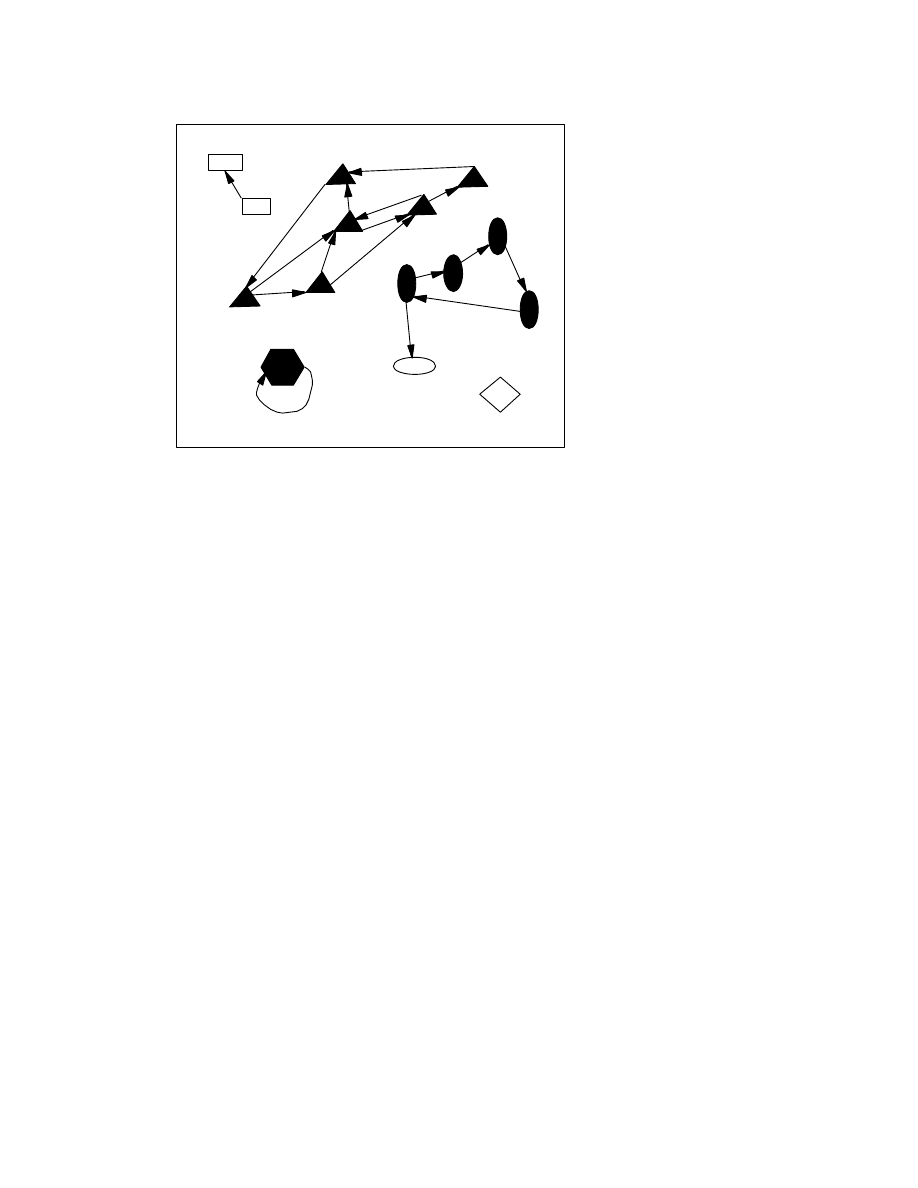
Figure 1. The shapes represent programs, and the arrows show
which programs produce which as output. The filled shapes are
members of viral sets, the empty shapes are not. The filled hexagon
represents a simple non-polymorphic virus, whose sole member
produces only itself.
In practical terms, this notion of computer virus encompasses overwriting viruses (which replace
existing programs with copies of themselves) and some kinds of worms (which spread as
standalone programs by creating new copies of themselves). A more complex notion of
computer virus would incorporate "parasitic" viruses, which infect other programs by inserting
themselves in such a way that both the viral code and the original program are executed when
the infected program is executed. (The classic informal definition of "computer virus" is "a
program that can 'infect' other programs by modifying them to include a possibly evolved copy of
itself." [1]. A more formal definition in terms of regions of a Turing Machine tape can be found in
[2].) In a subsequent paper, we will extend the current results to that richer notion of computer
virus; essentially all the results we obtain here still hold.
Detecting a Virus
For the purposes of this paper, an algorithm A detects a virus V if and only if for every program p,
A(p) terminates, and returns "true" if and only if p is infected with V. Similarly, an algorithm A
detects a set of viruses S if and only if for every program p, A(p) terminates, and returns "true" if
and only if p is infected with some virus V which is a member of S. This is essentially Cohen's
definition in [1], and it is the only formal definition of detection that has proven theoretically fruitful.
It also captures (at least to a first approximation) our intuitive notion of computer virus detection.
Cohen's Result
In [1], Fred Cohen demonstrates that there is no algorithm that can detect the set of all possible
computer viruses (returning "true" if and only if its input is an object infected with some computer
virus). The proof is a simple diagonal argument, like Cantor's proof of the uncountability [3] of the
real numbers, or Turing's proof of the undecidability of the Halting Problem [4]. For any candidate
computer virus detection algorithm A, there is a program p, which reads:
if A(p), then exit; else spread

Clearly A does not return the correct result when called on p, since if it returns "true" (i.e. it says
that p is infected), then p just exits (and is therefore not infected), whereas if A returns anything
else (i.e. it says that p is not infected), then p spreads (and is therefore infected).
1
So there is no
algorithm which detects all viruses without error; any program that attempts to detect all viruses
will either miss some infected files (a false negative), accuse some non-infected files of being
infected (a false positive) or fail to return anything (a bug).
An Undetectable Virus
A very similar example demonstrates that there are viruses for which no error-free detection
algorithm exists. That is, not only can we not write a program that detects all viruses known and
unknown with no false positives, but in addition there are some viruses for which, even when we
have a sample of the virus in hand and have analyzed it completely, we cannot write a program
that detects just that particular virus with no false positives.
2
As noted above, a virus is said to be "polymorphic" if the size of the viral set is greater than one;
that is, if the code of the virus is different in different infected objects. Consider a virus which is
sufficiently polymorphic that for any implementable algorithm X the program p:
if X(p) then exit, else spread
is an instance of the virus (provided of course that p actually spreads). There is no algorithm B
that correctly detects this virus, by an argument directly analogous to that above: for any
algorithm B that claims to detect this virus, there is a program q:
if B(q) then exit, else spread
for which B does not return the correct result. If B(q) returns true, then q does not spread, and is
therefore not an instance of this or any other virus; whereas if B(q) returns false, then q does
spread, and is an instance of the virus.
Is any possible actual virus sufficiently polymorphic to have this property? Clearly yes. Consider
a virus W one instance of which is r:
if subroutine_one(r) then exit, else {
replace the text of subroutine_one with a random program;
spread;
exit;
}
subroutine_one:
return false;
For any candidate W-detection algorithm C, there is a program s:
if subroutine_one(s) then exit, else {
replace the text of subroutine_one with a random program;
spread;
exit;
1
Note that A is not an input to p here; every time p is run, it calls A on itself, and spreads if and
only if A returns false. The program p therefore always spreads, or always exits, regardless of
any input.
2
A similar proof, showing that no Turing Machine program can decide if one virus "evolves" into
another, can be found in [2], but as far as we are aware the implications of that result for virus
detection have never been explored.
}
subroutine_one:
return C(argument);
for which C does not return the correct result; if C(s) returns true, then s just exits (and is
therefore not an instance of W, or of any other virus), whereas if C(s) returns false, then s is an
instance of W. So no algorithm can detect W without error.
3
A Looser Notion of Detection
There is a looser notion of detection under which our result still holds. We may be willing to
forgive a candidate V-detection algorithm for claiming to find V in some program p which is not
infected with V, provided that p is infected with some virus. Let us say, then, that an algorithm A
loosely-detects a virus V if and only if for every program p, A(p) terminates, returning "true" if p is
infected with V, and returning something other than "true" if p is not infected with any virus. The
algorithm may return any result at all for programs infected with some virus other than V
(although it must still terminate).
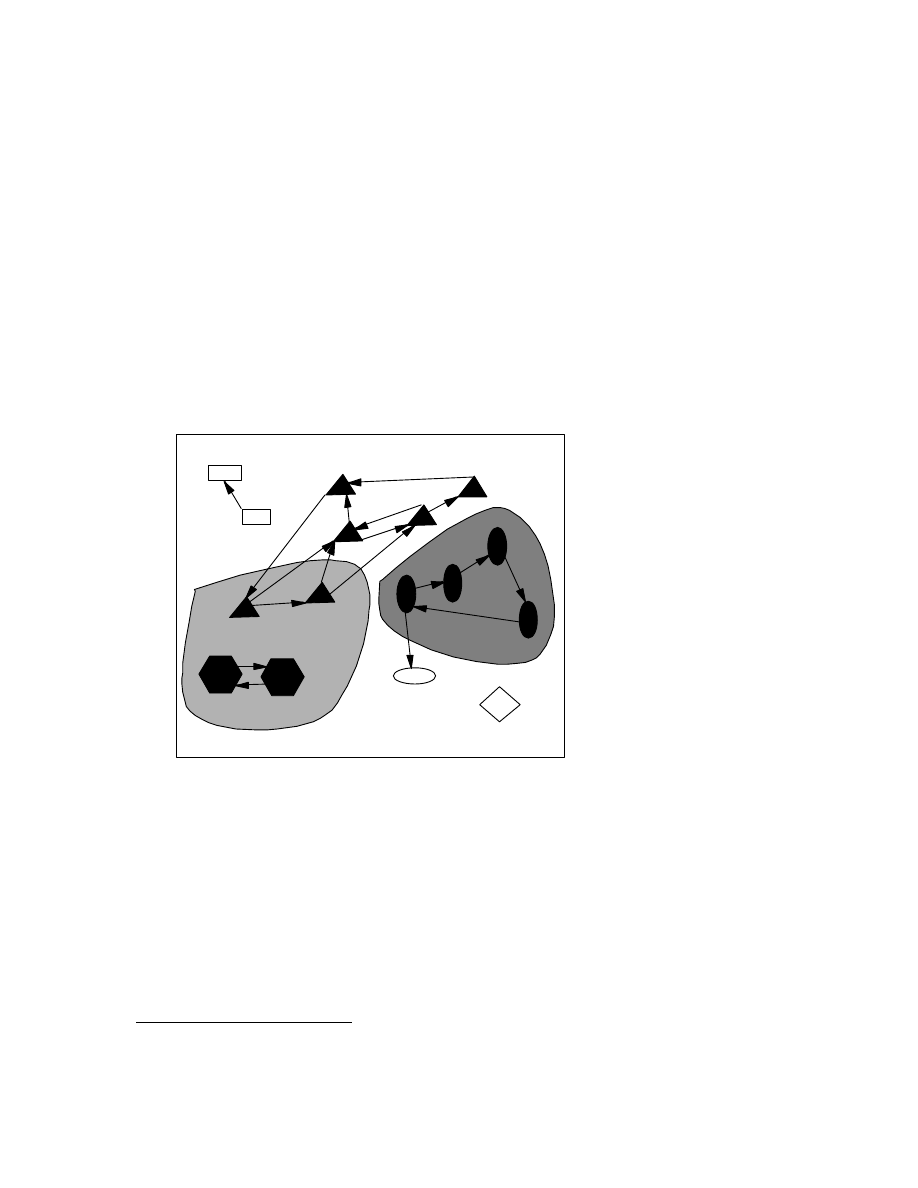
Figure 2. The slanted lines show the (perfect) detection of the viral
set of filled ovals; the algorithm picks out exactly those programs
infected with that virus. The vertical lines show loose-detection of the
viral set consisting of the filled hexagons; the algorithm picks out all
the programs in that viral set, as well as some other infected
programs.
It is clear that our result still applies under this looser notion of detection. Since every algorithm
either returns true for a program which simply exits, or fails to return true for some program
infected with W, no algorithm even loosely-detects W.
Comparison with Cohen
Our result is clearly complementary to Cohen's result in [1] that no algorithm can detect all
3
This example assumes that P has access to an arbitrarily-long stream of random bits; some
formalizations of the notion of algorithm do not allow this. See the appendix for a somewhat more
complex example that does not require any random bits.
viruses. That result may be expressed as
∀
A,
∃
V s.t. A does not detect V (for every algorithm, there is some virus that it does not
detect)
whereas our results are
∃
V s.t.
∀
A, A does not detect V (there exists a virus which no algorithm perfectly detects)
∃
V s.t.
∀
A, A does not loosely-detect V (there exists a virus which no algorithm loosely-
detects)
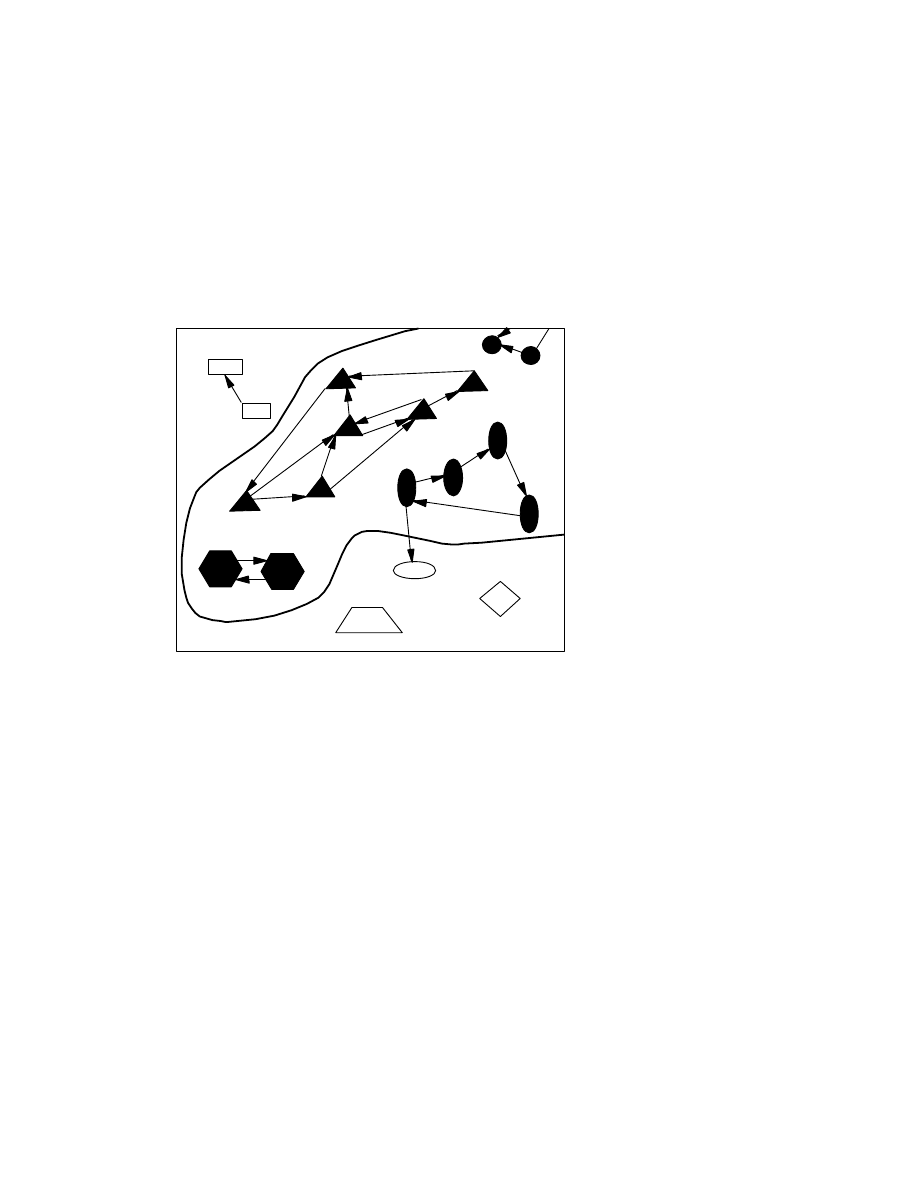
Figure 3. Cohen's result says that it is impossible for a program to
perfectly draw the solid line suggested above, enclosing all and only
those programs that are infected with some virus. For every program
that attempts to draw that line, there will be some infected object that
the program says is uninfected, or some uninfected object that it says
is infected.
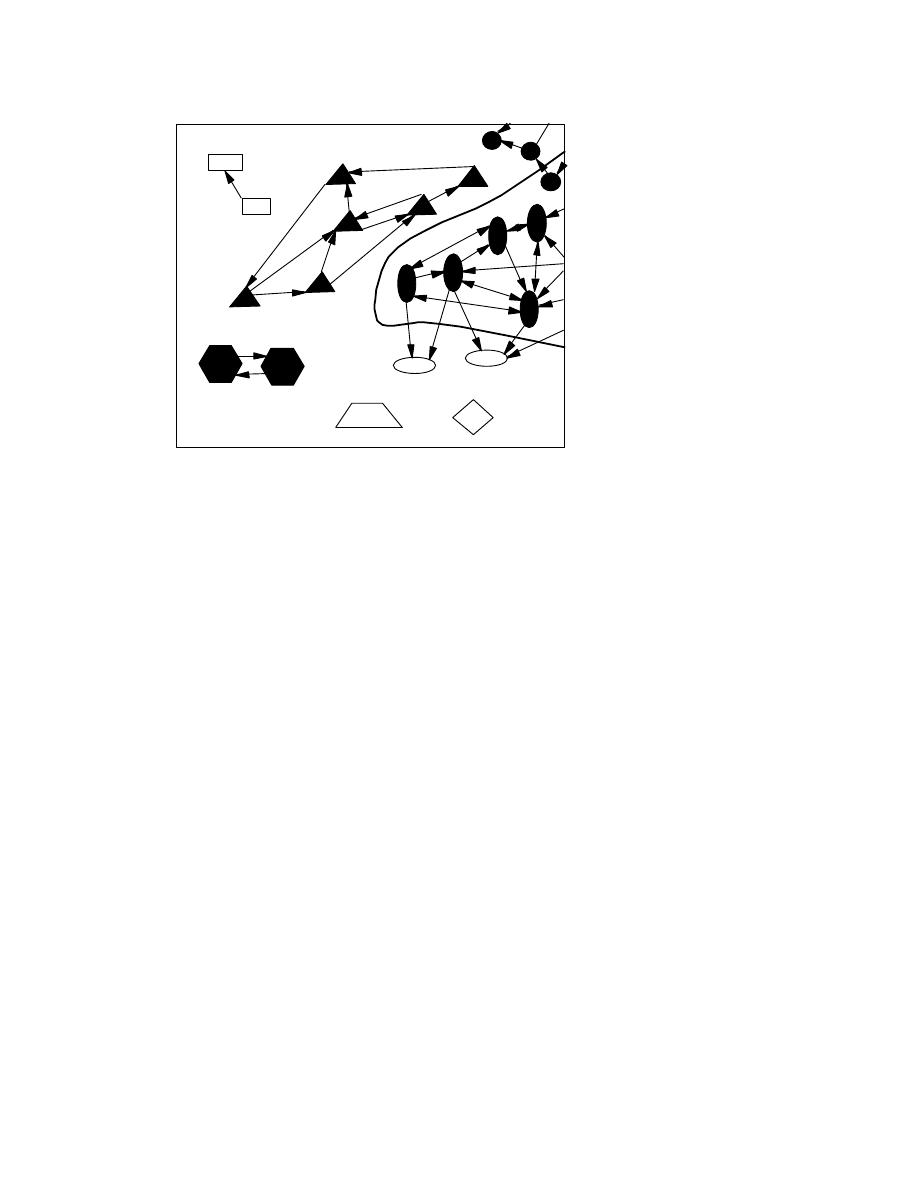
Figure 4. Our result says that for some viruses it is impossible for a
program to correctly draw the solid line suggested above, enclosing
all those programs that are infected with that virus, and enclosing no
programs that are not infected with any virus.
Practical Consequences
The virus W above is clearly not a remarkably viable virus, nor is the failure of detection a
particularly serious one. In particular, no user of a real virus detection program D would object if
it were to say that it found a virus in t:
if D(t), then exit; else spread
or in u:
if subroutine_one(u) then exit, else {
replace the text of subroutine_one with a random program
spread;
exit;
}
subroutine_one:
return D(argument);
since, although these do not in fact spread, they are closely related to programs that do spread.
The main immediate impact of Cohen's undecidability result on the day-to-day activities of those
who study computer viruses is that we can dismiss without detailed study any claim that some
method correctly detects "all possible viruses known and unknown". The main practical impact of
the current result is to dispel the notion that it is always possible to create a detector for a given
virus that has no false positives, even if you have a copy of the virus in hand.
When we say in common speech that a given program detects a given virus, we mean something
rather different from the formal senses above. Every widely-deployed virus detection program in
use today will claim to find a virus in at least some non-viral objects (a false positive), because
the methods used for detection are approximate, based on the presence of a particular binary

string in a certain place, on the calculation of the finite-size checksum of a macro, on a certain
pattern of changes to a file, and so on. Producers of anti-virus software of course try to minimize
the number of actual non-viral programs that are falsely detected. But no one worries about the
fact that the algorithms used to detect viruses produce false positives on an enormous number of
non-viral objects that have never been, and will never be, present on any actual user's computer.
This paper's title, then, is deliberately somewhat provocative: while the viruses that we present
here are undetectable in the strict formal sense of the term, there is no reason to think that it is
impossible to write a program that would detect them sufficiently well for all practical purposes.
Acceptable virus detection, in the real world, involves detecting all viable instances of the virus in
question, and preferably some number of minor variants of it, while falsely detecting the virus in
only a vanishingly small number of innocent programs that are actually present on a computer
somewhere. It would be helpful to have a formal characterization of this more realistic notion of
detection; theorists in the area of computer virus protection might usefully work toward such a
characterization.
References
[1] Fred Cohen, "Computer Viruses: Theory and Experiments", Computers and Security 6 (1987)
22-35.
[2] Fred Cohen, "Computational Aspects of Computer Viruses", Computers and Security 8 (1989)
325-244.
[3] Y. N. Moschovakis, “Notes on Set Theory”, Springer-Verlag, NY, 1994, p. 11 (or any similar
text).
[4] Alan Turing, "On Computable Numbers, with an application to the Entscheidungsproblem",
Proceedings London Mathematical Society (series 2)
vol 42, 1936-7, pp.230-265.
Appendix
The example undetectable virus in the body of the paper requires access to an arbitrarily-large
stream of random bits; many formalizations of the notion of algorithm do not allow this. This
Appendix gives a slightly more complex example that does not require any random bits.
Understanding the main results of this paper does not require understanding this Appendix.
Consider the virus W' one instance of which is x:
state = 0;
serial_number = 0;
if subroutine_one(x) then exit;
if state==0 then {
spread once, incrementing the constant in the second line of the new copy,
spread again, making these changes in the new copy:
change the constant in the first line to 1,
replace the body of subroutine_one() with the subroutine corresponding to
serial_number under mapping M
} else {
spread, making these changes in the new copy:
change the constant in the first line to 0,
change the constant in the second line to 0,
replace the body of subroutine_one() with the code "return false;"
}
exit;
subroutine_one():
return false;
end;

where M is a mapping from the integers to the set of programs for the relevant machine, such that
for every implementable algorithm A, there is some integer n such that M maps n to A. Many
such mappings of course exist for the typical machine. (Note that the variable serial_number
must be stored as an unlimited-size integer (a "bignum").)
All instances of the above which begin "state = 0;" are viral, and trivial to detect; they differ only in
the second line, where serial_number is set. Every program which differs from the above only in
having a different non-negative integer in the second line is an element of W'. Instances of the
above which begin "state = 1;", on the other hand, are only sometimes viral, since the content of
subroutine_one() is different, and will often not terminate at all, or will return true (causing the
program to exit before spreading). Those that are viral create, in the next generation, exactly the
above code again, so every element of W' is an ancestor, eventually, of every other (and W' is
therefore a viral set). For any candidate W'-detection algorithm E, consider program y:
state = 1;
serial_number = Q;
if subroutine_one(y) then exit;
if state==0 then {
spread once, incrementing the constant in the second line of the new copy,
spread again, making these changes in the new copy:
change the constant in line 1 to 1,
replace the body of subroutine_one() with the subroutine corresponding to
serial_number under mapping M
} else {
spread, making these changes in the new copy:
change the constant in line 1 to 0,
change the constant in line 2 to 0,
replace the body of subroutine_one() with the code "return false;"
}
exit;
subroutine_one():
return E(argument);
end;
where M maps Q to an implementation of E. Just as described above, E does not return the
correct result when called on y, so E does not detect W'. And because E either returns "true" on
a program that simply exits, or returns something other than "true" on a program infected with W',
A also fails to loosely-detect W' in the sense defined above.
Wyszukiwarka
Podobne podstrony:
Use of an Attenuated Computer Virus as a Mechanism for Teaching Epidemiology
Prosecuting Computer Virus Authors The Need for an Adequate and Immediate International Solution
How to Modify an ATX Computer Power Supply
Data security from malicious attack Computer Virus
Computer Virus Propagation Model Based on Variable Propagation Rate
Ich kam an dem Computer vorbei
Formal Affordance based Models of Computer Virus Reproduction
Classification of Packed Executables for Accurate Computer Virus Detection
Threats to Digitization Computer Virus
The Virtual Artaud Computer Virus as Performance Art
Zero hour, Real time Computer Virus Defense through Collaborative Filtering
Toward an abstract computer virology
Computer Virus Operation and New Directions
Quantitative risk assessment of computer virus attacks on computer networks
The Computer Virus From There to Here
Advanced Code Evolution Techniques and Computer Virus Generator Kits
System Dynamic Model for Computer Virus Prevalance
COMPUTER VIRUS RESPONSE USING AUTONOMOUS AGENT TECHNOLOGY
Modeling computer virus prevalence with a susceptible infected susceptible model with reintroduction
więcej podobnych podstron