University of Washington
Roadmap
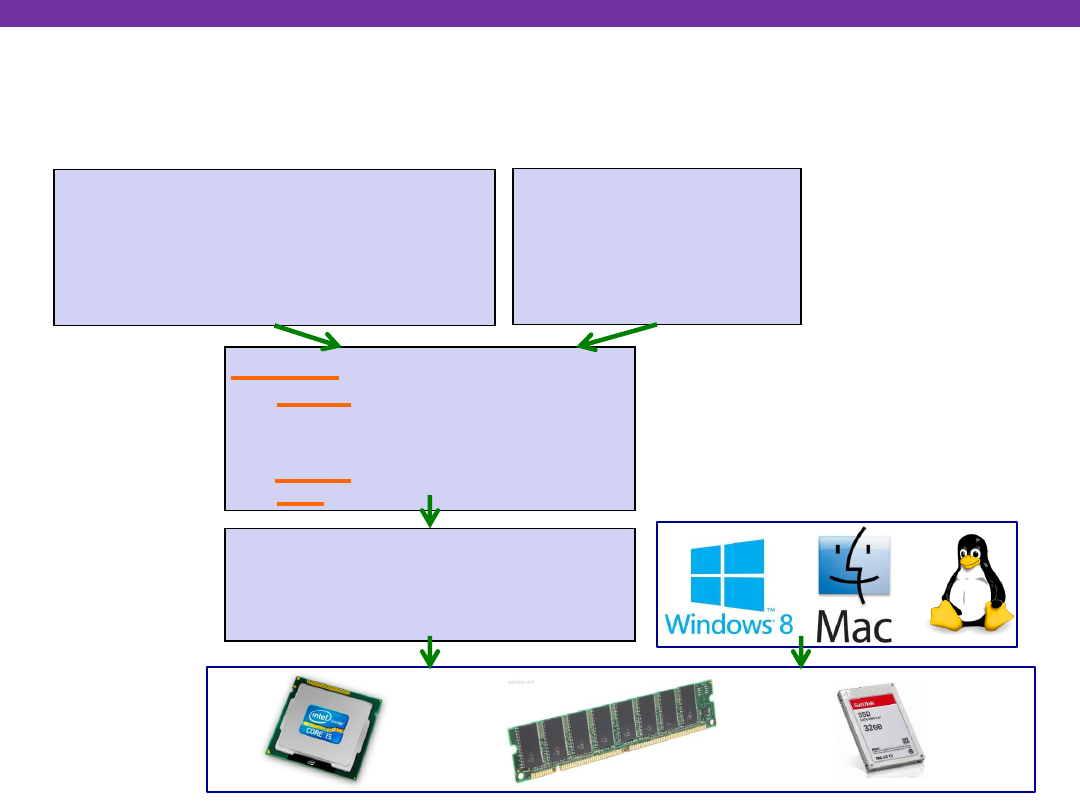
car *c = malloc(sizeof(car));
c->miles = 100;
c->gals = 17;
float mpg = get_mpg(c);
free(c);
Car c = new Car();
c.setMiles(100);
c.setGals(17);
float mpg =
c.getMPG();
get_mpg:
pushq %rbp
movq %rsp, %rbp
...
popq %rbp
ret
Java:
C:
Assembly
language:
Machine
code:
0111010000011000
100011010000010000000010
1000100111000010
110000011111101000011111
Computer
system:
OS:
Procedures and Stacks
Memory & data
Integers & floats
Machine code & C
x86 assembly
Procedures & stacks
Arrays & structs
Memory & caches
Processes
Virtual memory
Memory allocation
Java vs. C

University of Washington
Section 5: Procedures & Stacks
Stacks in memory and stack operations
The stack used to keep track of procedure calls
Return addresses and return values
Stack-based languages
The Linux stack frame
Passing arguments on the stack
Allocating local variables on the stack
Register-saving conventions
Procedures and stacks on x64 architecture
Procedure Calls
University of Washington
Memory Layout
Procedures and Stacks
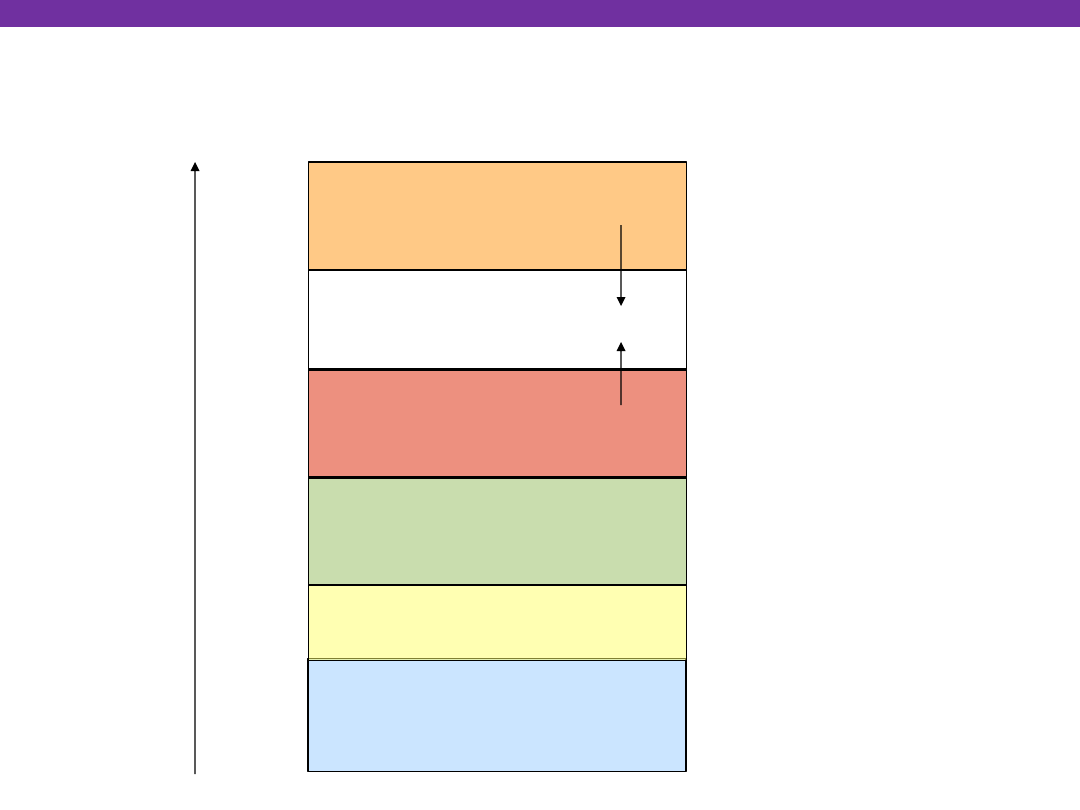
Instructions
Literals
Static Data
Dynamic Data
(Heap)
Stack
literals (e.g., “example”)
static variables
(including global variables (C))
variables allocated with
new or malloc
local variables;
procedure context
0
2
N
-1
University of Washington
Memory Layout
Procedures and Stacks
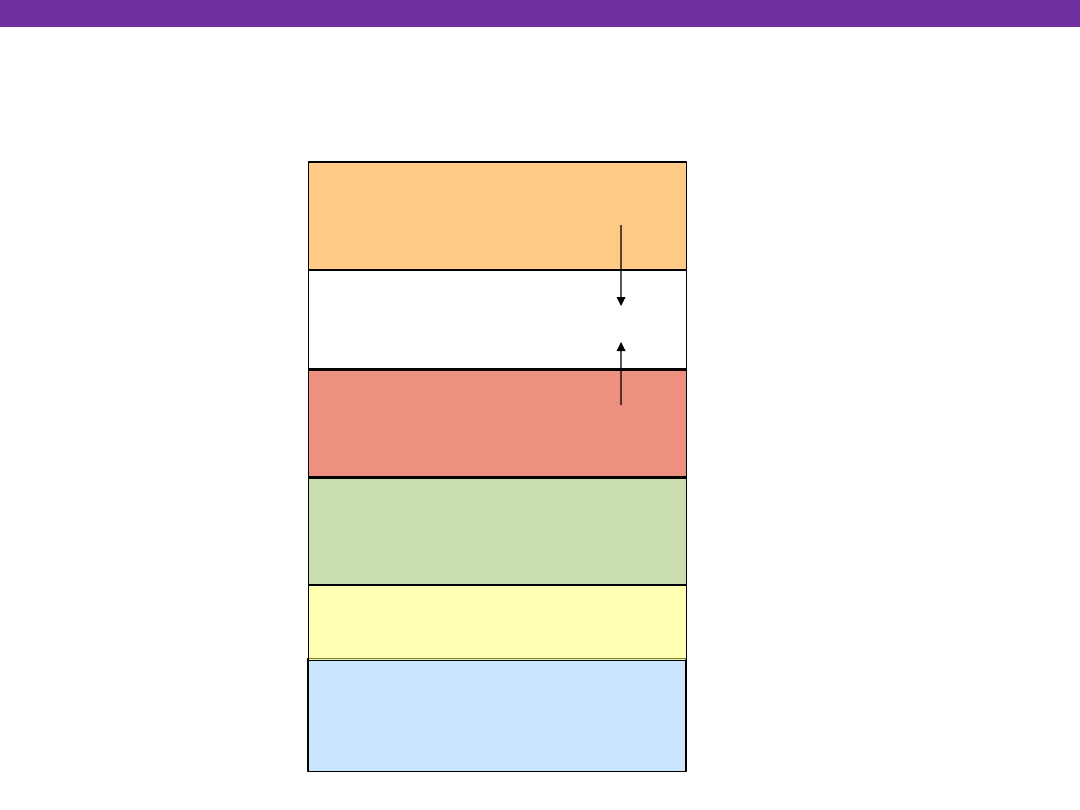
Instructions
Literals
Static Data
Dynamic Data
(Heap)
Stack
Managed “automatically”
(by compiler)
writable; not executable
Managed by programmer
writable; not executable
Initialized when process starts
writable; not executable
Initialized when process starts
Read-only; not executable
Initialized when process starts
Read-only; executable

University of Washington
IA32 Call Stack
Region of memory managed
with a stack “discipline”
Grows toward lower addresses
Customarily shown “upside-down”
Register %esp contains
lowest stack address
= address of “top” element
Stack Pointer:
%esp
Stack Grows
Down
Increasing
Addresses
Stack “Top”
Stack “Bottom”
Procedures and Stacks

University of Washington
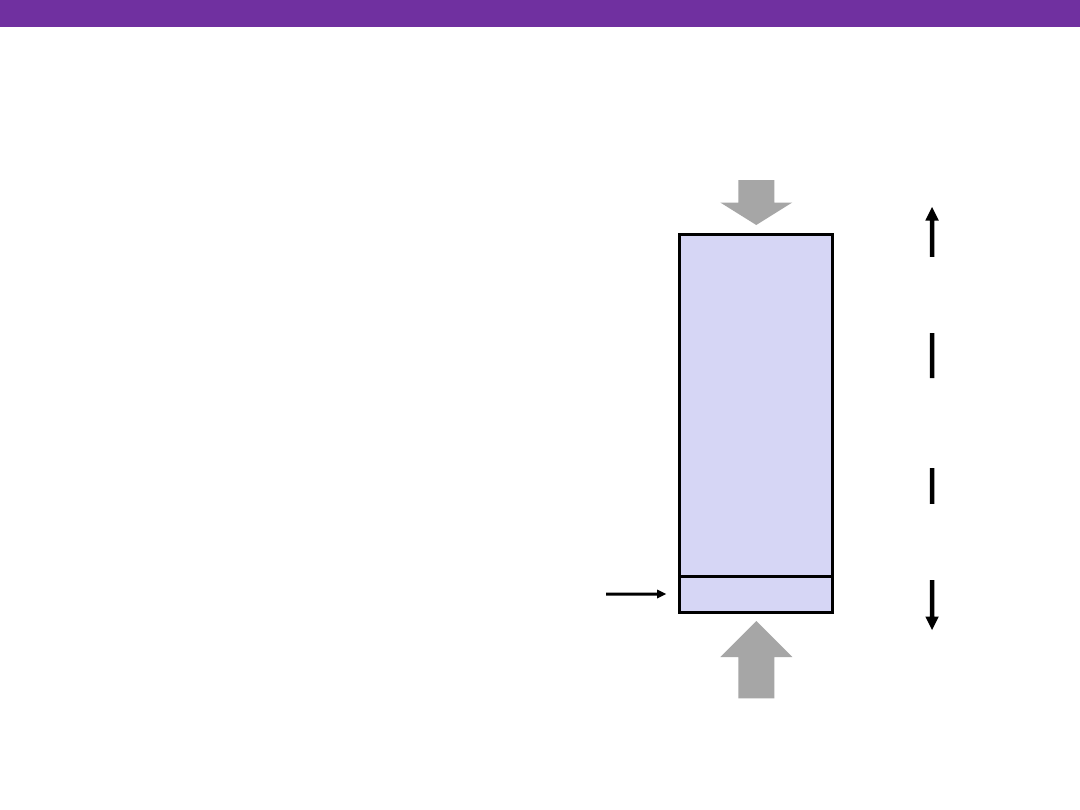
IA32 Call Stack: Push
pushl Src
Stack Grows
Down
Increasing
Addresses
Stack “Top”
Stack “Bottom”
Stack Pointer:
%esp
Procedures and Stacks
University of Washington
IA32 Call Stack: Push
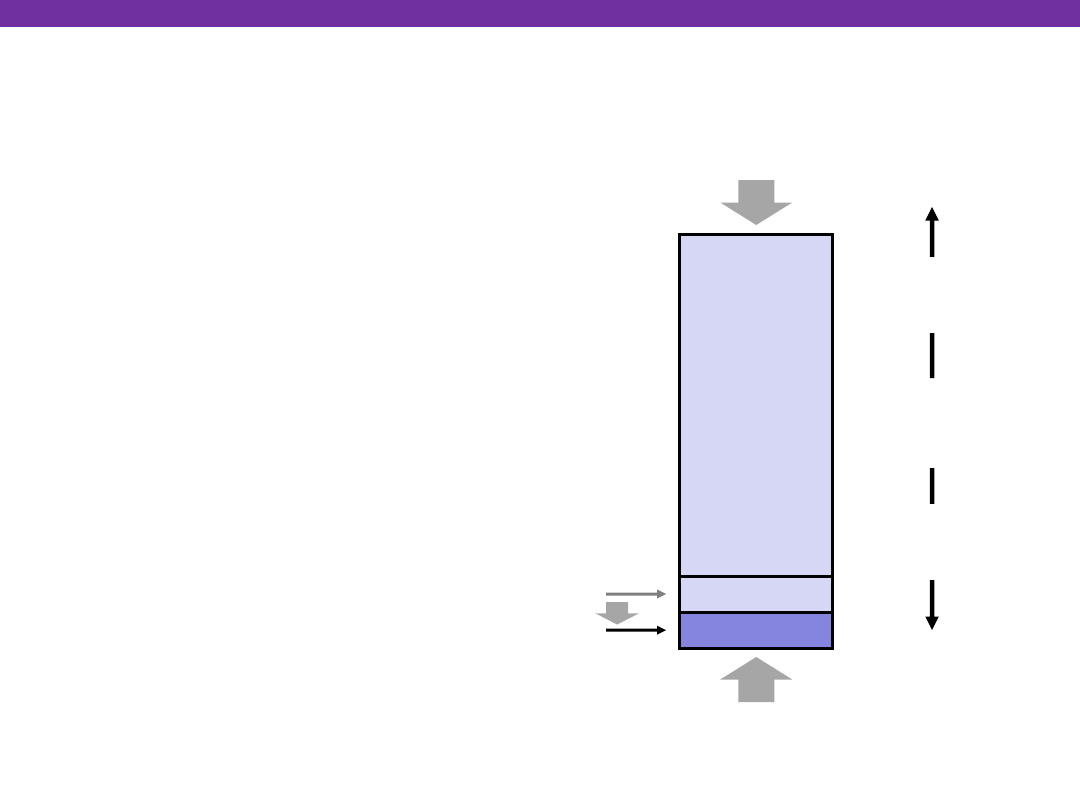
pushl Src
Fetch value from Src
Decrement %esp by 4 (why 4?)
Store value at address
given by %esp
Stack Grows
Down
Increasing
Addresses
Stack “Top”
Stack “Bottom”
Stack Pointer:
%esp
-4
Procedures and Stacks
University of Washington
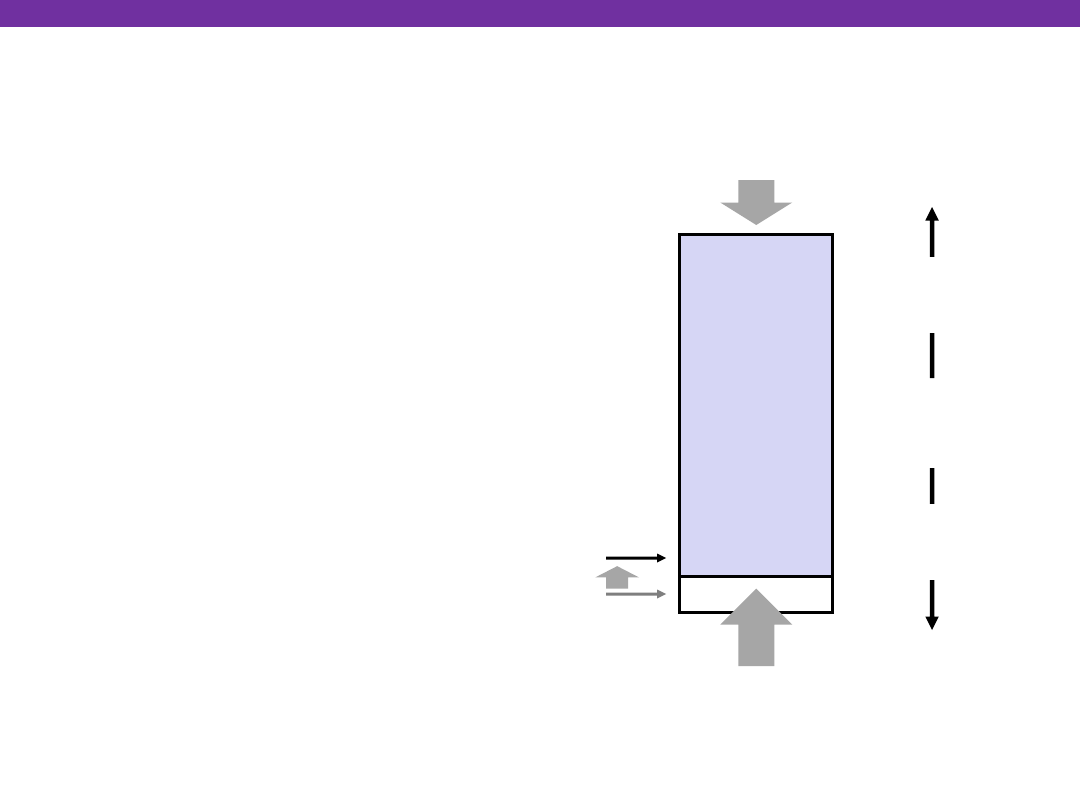
IA32 Call Stack: Pop
Stack Pointer:
%esp
Stack Grows
Down
Increasing
Addresses
Stack “Top”
Stack “Bottom”
popl Dest
Procedures and Stacks
University of Washington
IA32 Call Stack: Pop
Stack Pointer:
%esp
Stack Grows
Down
Increasing
Addresses
Stack “Top”
Stack “Bottom”
popl Dest
Load value from address %esp
Write value to Dest
Increment %esp by 4
+4
Procedures and Stacks
Wyszukiwarka
Podobne podstrony:
01 Stacks in Memory and Stack Operations
20090602 01 ANSF, Coalition Forces further disable IED?lls in Khowst and Zabul
01 [ABSTRACT] Development of poplar coppices in Central and Eastern Europe
20090202 01 Together?ghan National Police and Coalition Forces rescue a?ptive in Khowst
No Shirt, No Shoes, No Status Uniforms, Distinction, and Special Operations in International Armed C
Implementation of redirection and pipe operators in shell — Sarath Lakshman
Intelligent debugging and In Memory Fuzzers
Estimation of Dietary Pb and Cd Intake from Pb and Cd in blood and urine
automating with step 7 in lad and fbd simatic (1)
Key Concepts in Language and Linguistics
Guide to the properties and uses of detergents in biology and biochemistry
2008 4 JUL Emerging and Reemerging Viruses in Dogs and Cats
2002 3 MAY Lasers in Medicine and Surgery
In vivo MR spectroscopy in diagnosis and research of
Numerical methods in sci and eng
conceptual storage in bilinguals and its?fects on creativi
Kramar Koncert pro 2 cl Op 35 parts 01 Clarinet in Bb
więcej podobnych podstron