
University of Washington
Condi3onals and Control Flow
l
A condi3onal branch is sufficient to implement most control
flow constructs offered in higher level languages
l
if (condi)on) then {...} else {…}
l
while (condi)on) {…}
l
do {…} while (condi)on)
l
for (ini)aliza)on; condi)on; itera)ve) {...}
l
Uncondi3onal branches implement some related control flow
constructs
l
break, con)nue
l
In x86, we’ll refer to branches as “jumps” (either condi3onal
or uncondi3onal)
x86
University of Washington
Jumping
¢
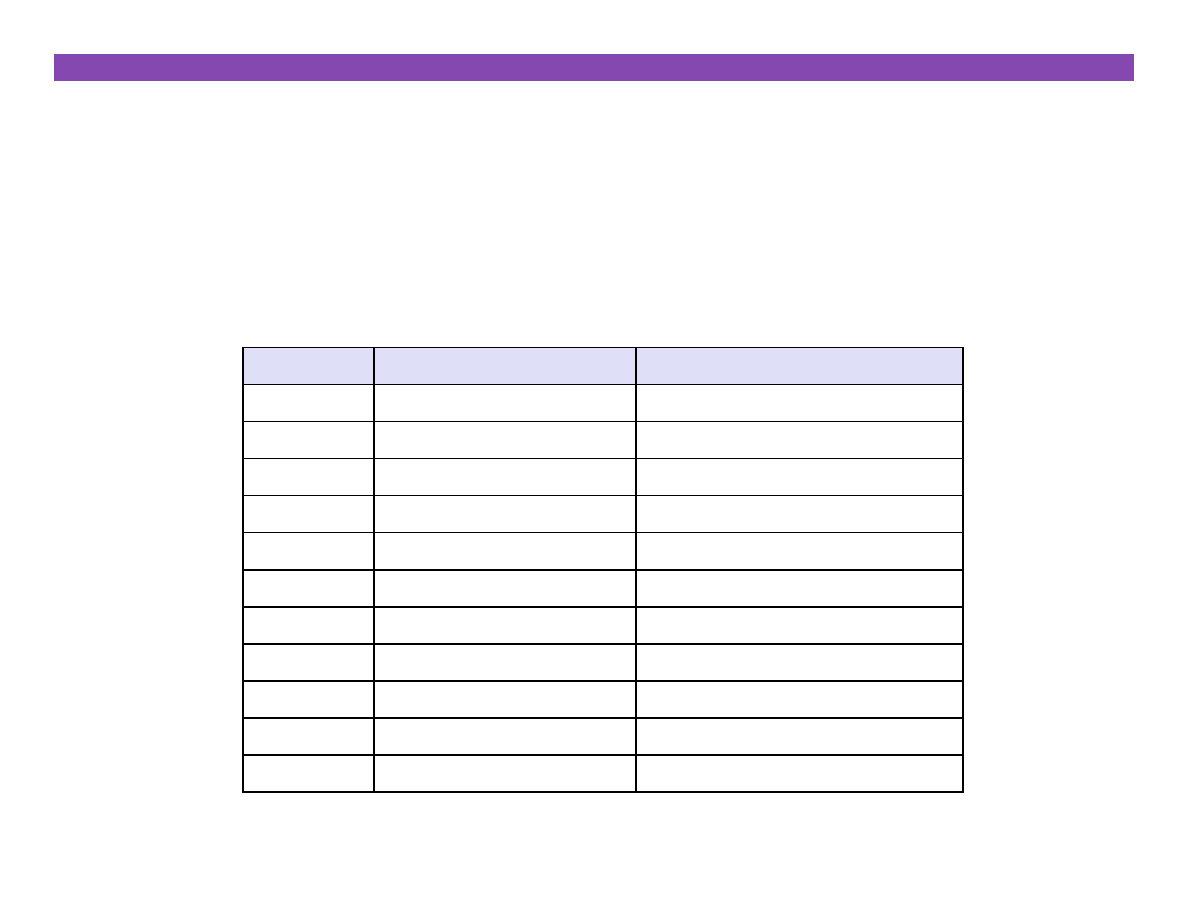
jX Instruc3ons
§
Jump to different part of code depending on condi)on codes
jX
Condi3on
Descrip3on
jmp
1
Uncondi3onal
je
ZF
Equal / Zero
jne
~ZF
Not Equal / Not Zero
js
SF
Nega3ve
jns
~SF
Nonnega3ve
jg
~(SF^OF)&~ZF
Greater (Signed)
jge
~(SF^OF)
Greater or Equal (Signed)
jl
(SF^OF)
Less (Signed)
jle
(SF^OF)|ZF
Less or Equal (Signed)
ja
~CF&~ZF
Above (unsigned)
jb
CF
Below (unsigned)
x86
University of Washington
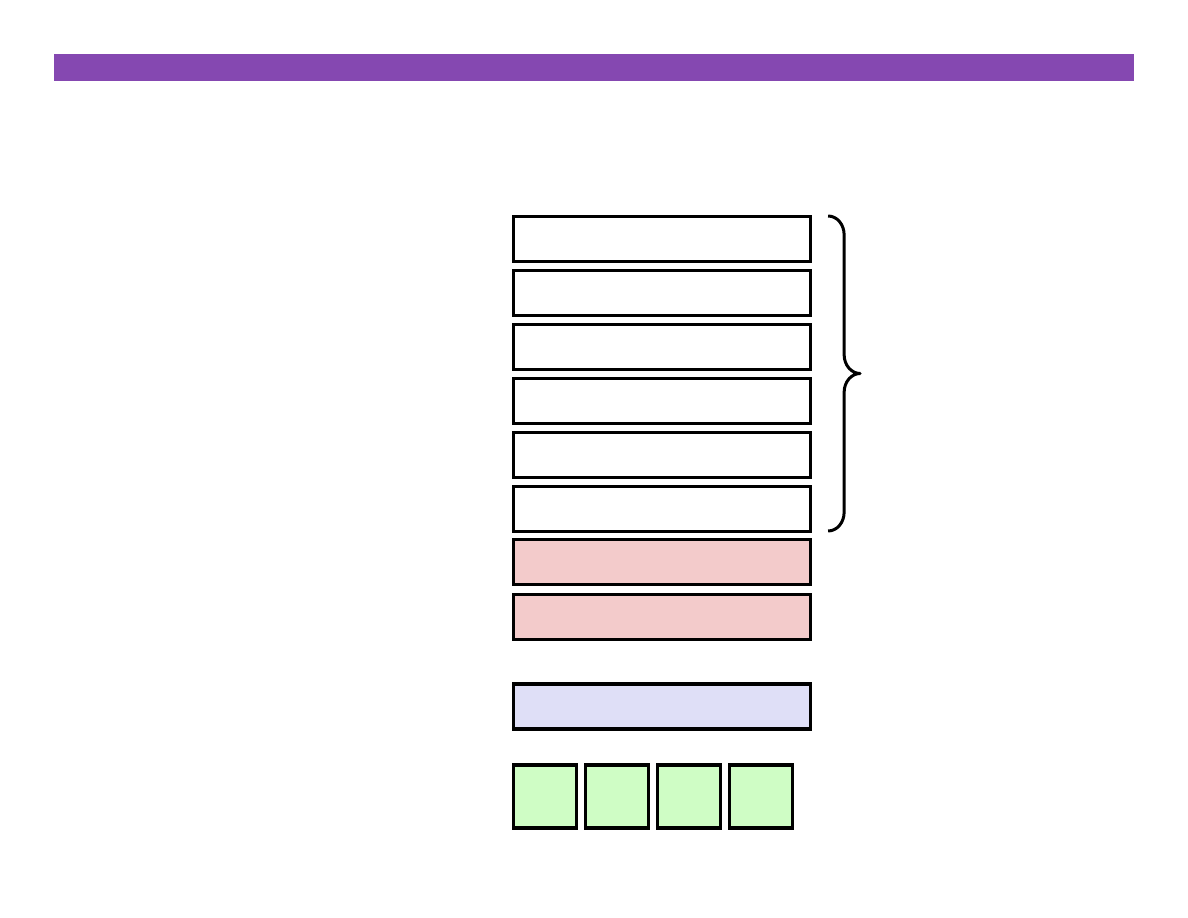
Processor State (IA32, Par3al)
¢
Informa3on about
currently execu3ng
program
§
Temporary data
( %eax, …)
§
Loca)on of run)me
stack
( %ebp,%esp)
§
Loca)on of current
code control point
( %eip )
§
Status of recent tests
( CF,ZF,SF,OF )
%eip
General purpose
registers
Current stack top
Current stack frame
Instruc3on pointer
CF ZF SF OF
Condi3on codes
%eax
%ecx
%edx
%ebx
%esi
%edi
%esp
%ebp
x86

University of Washington
Condi3on Codes (Implicit Se[ng)
¢
Single-‐bit registers
CF Carry Flag (for unsigned)
SF Sign Flag (for signed)
ZF Zero Flag
OF Overflow Flag (for signed)
¢
Implicitly set (think of it as side effect) by arithme3c opera3ons
Example:
addl/addq Src,Dest ↔ t = a+b
§
CF set
if carry out from most significant bit (unsigned overflow)
§
ZF set
if t == 0
§
SF set
if t < 0 (as signed)
§
OF set
if two’s complement (signed) overflow
(a>0 && b>0 && t<0) || (a<0 && b<0 && t>=0)
¢
Not set by lea instruc3on (beware!)
¢
Full documenta3on
(IA32):
h`p://www.jegerlehner.ch/intel/IntelCodeTable.pdf
x86

University of Washington
Condi3on Codes (Explicit Se[ng: Compare)
¢
Single-‐bit registers
CF Carry Flag (for unsigned)
SF Sign Flag (for signed)
ZF Zero Flag
OF Overflow Flag (for signed)
¢
Explicit Se[ng by Compare Instruc3on
cmpl/cmpq Src2,Src1
cmpl b,a like compu)ng a-b without seRng des)na)on
§
CF set
if carry out from most significant bit (used for unsigned comparisons)
§
ZF set
if a == b
§
SF set
if (a-b) < 0 (as signed)
§
OF set
if two’s complement (signed) overflow
(a>0 && b<0 && (a-b)<0) || (a<0 && b>0 && (a-b)>0)
x86

University of Washington
Condi3on Codes (Explicit Se[ng: Test)
¢
Single-‐bit registers
CF Carry Flag (for unsigned)
SF Sign Flag (for signed)
ZF Zero Flag
OF Overflow Flag (for signed)
¢
Explicit Se[ng by Test instruc3on
testl/testq Src2,Src1
testl b,a like compu)ng a & b without seRng des)na)on
§
Sets condi)on codes based on value of Src1 & Src2
§
Useful to have one of the operands be a mask
§
ZF set
if a&b == 0
§
SF set
if a&b < 0
§
testl %eax, %eax
§
Sets SF and ZF, check if eax is +,0,-‐
x86
University of Washington
Reading Condi3on Codes
¢
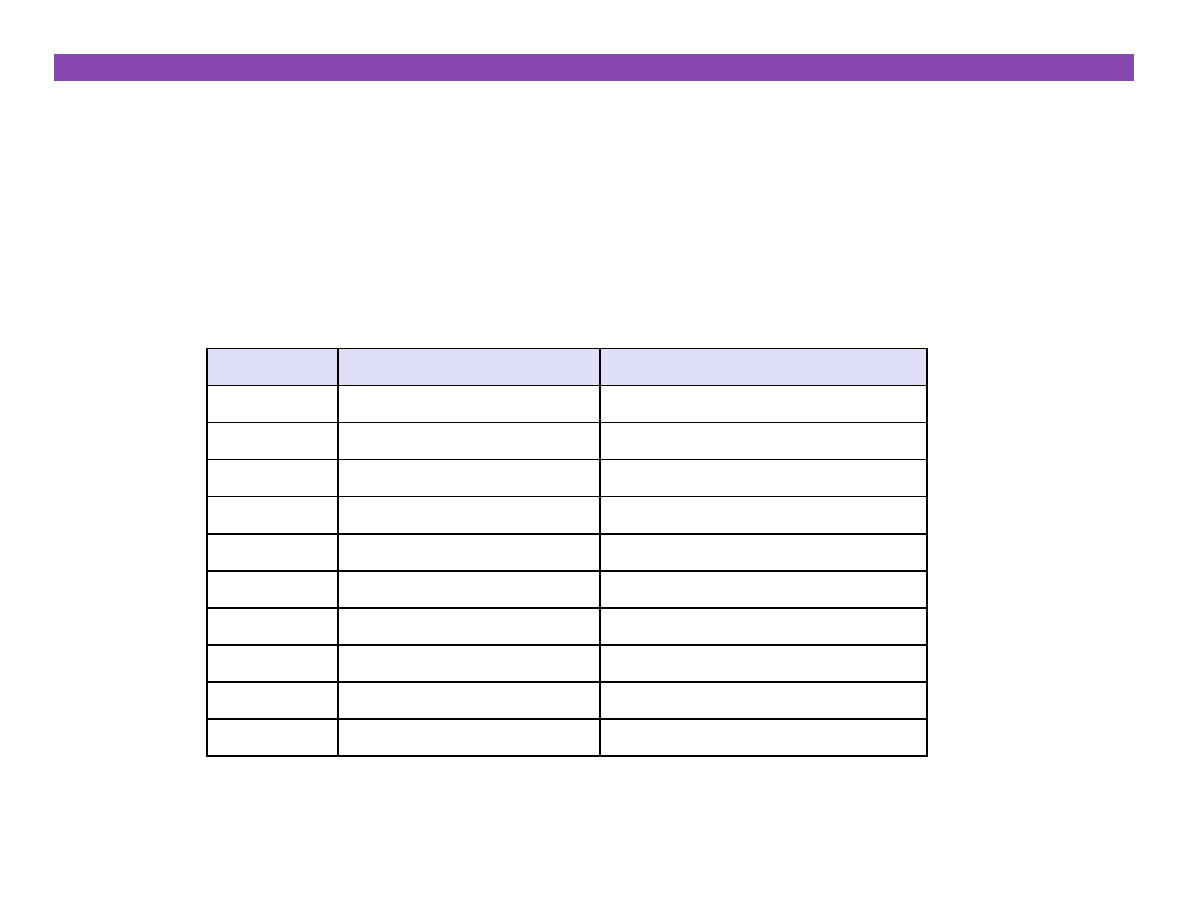
SetX Instruc3ons
§
Set a single byte to 0 or 1 based on combina)ons of condi)on codes
SetX
Condi3on
Descrip3on
sete
ZF
Equal / Zero
setne
~ZF
Not Equal / Not Zero
sets
SF
Nega3ve
setns
~SF
Nonnega3ve
setg
~(SF^OF)&~ZF
Greater (Signed)
setge
~(SF^OF)
Greater or Equal (Signed)
setl
(SF^OF)
Less (Signed)
setle
(SF^OF)|ZF
Less or Equal (Signed)
seta
~CF&~ZF
Above (unsigned)
setb
CF
Below (unsigned)
x86
University of Washington
Reading Condi3on Codes (Cont.)
¢
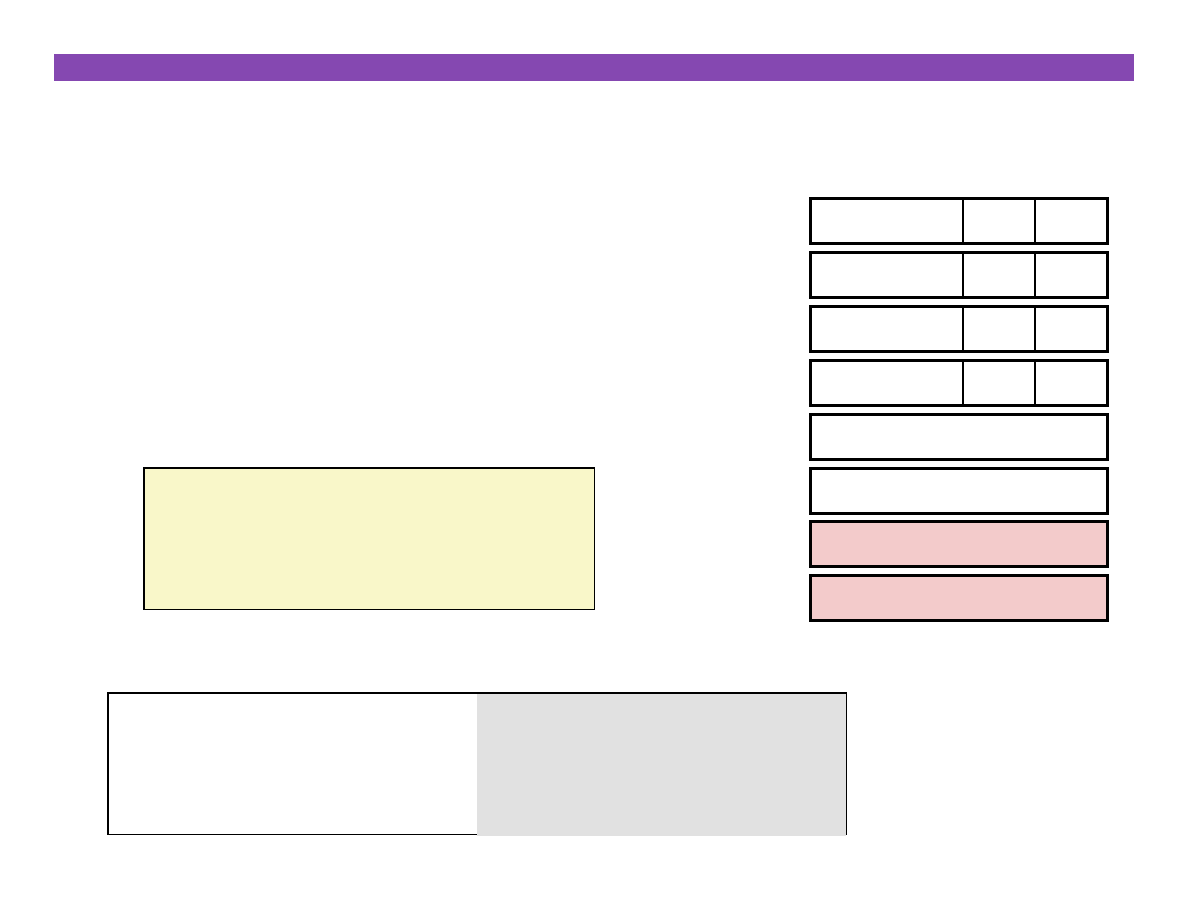
SetX Instruc3ons:
Set single byte to 0 or 1 based on combina)on of
condi)on codes
¢
One of 8 addressable byte registers
§
Does not alter remaining 3 bytes
§
Typically use movzbl to finish job
int gt (int x, int y)
{
return x > y;
}
movl 12(%ebp),%eax
# eax = y
cmpl %eax,8(%ebp)
# Compare x : y
setg %al
# al = x > y
movzbl %al,%eax
# Zero rest of %eax
%eax
%ecx
%edx
%ebx
%esi
%edi
%esp
%ebp
%al
%ah
%cl
%ch
%dl
%dh
%bl
%bh
What does each of
these instruc3ons do?
Body:
y at 12(%ebp), x at 8(%ebp)
x86
University of Washington
Reading Condi3on Codes (Cont.)
¢
SetX Instruc3ons:
Set single byte to 0 or 1 based on combina)on of
condi)on codes
¢
One of 8 addressable byte registers
§
Does not alter remaining 3 bytes
§
Typically use movzbl to finish job
int gt (int x, int y)
{
return x > y;
}
movl 12(%ebp),%eax
# eax = y
cmpl %eax,8(%ebp)
# Compare x and y
setg %al
# al = x > y
movzbl %al,%eax
# Zero rest of %eax
(x – y)
Body:
y at 12(%ebp), x at 8(%ebp)
%eax
%ecx
%edx
%ebx
%esi
%edi
%esp
%ebp
%al
%ah
%cl
%ch
%dl
%dh
%bl
%bh
x86
Wyszukiwarka
Podobne podstrony:
04 Conditionals and Control Flow
Detecting Metamorphic viruses by using Arbitrary Length of Control Flow Graphs and Nodes Alignment
Marijuana is one of the most discussed and controversial topics around the world
P4 explain how an individual?n exercise command and control
Power Converters And Control Renewable Energy Systems
Causes and control of filamentous growth in aerobic granular sludge sequencing batch reactors
What is command and control
2009 6 NOV Small Animal Parasites Biology and Control
04 Emotions and well being across cultures
04 Shifting and Sign Extension
Active Sub Woofer and Controller
[0] Step Motor And Servo Motor Systems And Controls
04 1b Zelio Control RM4T instr Nieznany
Monitoring and Controlling the Project
04 1b Zelio Control RM4U RM4J i Nieznany (2)
foc im and control by sliding mode
Allyson James Tales Of The Shareem 04 Aiden and Ky
Matlab Tutorial for Systems and Control Theory (MIT) (1999) WW
więcej podobnych podstron