
DIPLOMA SUPPLEMENT
RECORD OF ACADEMIC ACHIEVEMENT
This Diploma Supplement follows the model developed by the European Commission, Council of Europe and UNESCO/CEPES. The purpose of the Supplement is to provide
sufficient independent data to improve the international “transparency” and fair academic and professional recognition of qualifications (diplomas, degrees, certificates,
etc.). It is designed to provide a description of the nature, level, context, content and status of the studies that were pursued and successfully completed by the individual
named on the original qualification to which this supplement is appended. It should be free from any value-judgements, equivalence statements or suggestions about
recognition. Information in all eight sections should be provided. Where information is not provided an explanation should give the reason why.
The Diploma Supplement is issued in a widely spoken European language and free of charge to every student upon graduation.
INFORMATION IDENTIFYING THE HOLDER OF THE QUALIFICATION
Family name(s) Other
Date of Birth
01 Jan 1984
Given name(s) Alison
Nicole
Student ID 4123456
HESA Reference 0000021234567
INFORMATION IDENTIFYING THE QUALIFICATION
Qualification
Bachelor of Science with Honours
Awarding Institution
The University of Nottingham
Programme of Study Environmental
Biology
Administering Institution The University of Nottingham
Language of Instruction English
INFORMATION ON THE LEVEL OF THE QUALIFICATION
(please see overleaf for Access Requirements)
Level of Qualification 6
Length of Programme
3 year UG
INFORMATION ON THE CONTENTS AND RESULTS GAINED
(please see overleaf for Programme Requirements and Grading Scheme)
Degree Classification
Second Class, Division Two
Special Award
Mode of Study Full
time
Programme Details
2004 - 2005
Mark
Resit Mark
Credit
C135E3
Soil and Water Science
48
20
D211F1
Food: Manufacturing, Nutrition and Health
68
10
D235E4
Dynamic Interactions: Pure and Applied Population Biology
38
10
C13688
Avian Biology and Conservation
50
10
F82228
Patterns of Life
45 10
D23BEP
Research Project in Environmental Biology 2
55
40
F83223
Ecology, Conservation & Management
52
20
2003 - 2004
Mark
Resit Mark
Credit
C12321
Animal
Behaviour
38 10
C12327
Conservation Biology & Biogeography
51
10
C12338
Ecology
49 10
C123E3
Soil
Science
63 10
D223E2
Environmental Science Field Course
57
10
D223Z5
Animal Physiological Ecology
62
10
C111E2
Oceanography
62 10
C12458
Biological Photography and Imaging 1
40
10
C124E4
Aquatic
Science
49 10
C124E5
Aquatic Science Field Course
45
10
D224P4
World
Agroecosystems
52
10
D224Z4
Research Techniques in Agriculture and Physiology
50
10
2002 - 2003
Mark
Resit Mark
Credit
C111E1
Global Environmental Processes
50
10
D211E2
Foundation
Science
61 10
D211E4
Principles
of
Ecology
58 10
D211N1
Introductory Biochemistry: The Molecules of Life
55
10
D211P1
Genetics and Cell Biology
48
10
D211Z1
Whole
Organism
Biology
39
39
10
C112E2
Atmospheric
Environment
49
10
C41236
Evolutionary
Biology
25 37
10
D212E1
Data Transfer, Analysis and Presentation
61
10
D212P1
Community & Whole Plant Physiology A: Systematics, Growth & Differ
26
41
10
D212P2
Plant and Cell Physiology A: Growth and Differentiation
33
10
D212P3
Genetics with Specialist Options
26
43
10
Total Credits
360
Final Mark
52
Date of Award
15 Dec 2005
CERTIFICATION OF THE SUPPLEMENT
ELECTRONIC SIGNATURES OF VC & REGISTRAR
Signature
Name
Professor Sir Colin M Campbell
Mr Keith H Jones
Capacity
Vice-Chancellor
Registrar
Date Diploma Supplement Issued
01 Feb 2006

INFORMATION ON THE LEVEL OF THE QUALIFICATION (continued from previous page)
Admissions requirements
Information on the minimum qualifications necessary to be considered for entry to a course (including English language requirements, other
required skills or experience) is given in the relevant Programme Specification available at:
http://www.nottingham.ac.uk/programme-
.
INFORMATION ON THE CONTENTS AND RESULTS GAINED (continued from previous page)
Programme requirements
A Programme Specification is produced for any course on which a student may be registered. Information on the course structure, assessment
criteria, learning outcomes and any other requirements which are in addition to those stated in the University’s study regulations
http://www.nottingham.ac.uk/quality-manual/study-regulations/index.htm
) and the University of Nottingham’s Qualifications Framework
http://www.nottingham.ac.uk/quality-manual/QAstructures/quals-framework.htm
) are given in the relevant Programme Specification available at:
http://www.nottingham.ac.uk/programme-specifications
.
Information on modules taught at the University of Nottingham for the current session is available from the Module Catalogue available at:
http://www.nottingham.ac.uk/module-catalogue
. For information on modules taught in previous sessions please e-mail:
module-specifications@nottingham.ac.uk
.
University policies and procedures as set out in University Regulations (
http://www.nottingham.ac.uk/regulations
) and the Quality Manual
http://www.nottingham.ac.uk/quality-manual
) automatically apply to all courses.
Undergraduate credit structure
Each individual module has a credit value, which contributes to the academic year. University of Nottingham credit values are translated into ECTS
credit values by dividing the Nottingham credit value by two.
10 hours of effort per 1 credit
120 credits per full-time academic year or equivalent
360 credits for award of Honours degree
480 credits for award of Integrated Masters
360 credits for award of Pass degree
300 credits for award of Ordinary degree
240 credits for award of Undergraduate Diploma
120 credits for award of Undergraduate and Foundation Certificates
There may be exceptions to the standard credit totals owing to entry at a later stage of the course, or Accreditation of Prior (Experiential) Learning
(AP(E)L), or because of a change of course or the need to take a stage of the course for a second time.
Grading scheme and, if available, grade distribution guidance
For the majority of awards, numeric marks are awarded on the scale 0-100. The module pass mark is 40%.
Compensation and reassessment
Candidates have the right to one reassessment attempt and under certain circumstances may be offered one further reassessment opportunity at
the School’s discretion. If applicable these marks are shown in the Resit column. Information on the award of credit, progression, compensation
and reassessment is contained in the University’s study regulations available at:
http://www.nottingham.ac.uk/quality-manual/study-
.
Awards
Full information on the methods for classifying undergraduate degrees approved for use in the University of Nottingham is available at:
http://www.nottingham.ac.uk/quality-manual/assessment/degree-class.htm
For the majority of awards, the weighted numerical average is translated into degree classification as follows:
I (First class honours)
=
70%+
IIi (Upper Second Class Honours)
=
60% - 69%
IIii (Lower Second Class Honours)
=
50% - 59%
III (Third Class Honours)
=
40% - 49%
Rounding
The University convention on rounding of numeric marks is available at:
http://www.nottingham.ac.uk/quality-manual/assessment/degree-
Use of borderlines
The University convention on the use of borderlines is available at:
http://www.nottingham.ac.uk/quality-manual/assessment/degree-class.htm
.
The Examination Board may use the procedure set out in the relevant Programme Specification (
http://www.nottingham.ac.uk/programme-
) to determine if the classification of borderline candidates may be raised.
INFORMATION ON THE FUNCTION OF THE QUALIFICATION
Access to further study
Subject to attainment of the minimum qualifications necessary to be considered for entry to a course, a University of Nottingham Honours
Bachelors degree provides access to taught postgraduate and postgraduate research programmes either at Masters or Doctoral level. Integrated
Masters degrees provide access to Doctoral programmes.
Professional status
Information on the accreditation, professional or statutory recognition of a course (if applicable) is given in the relevant Programme Specification
accessible through the University’s website at:
http://www.nottingham.ac.uk/programme-specifications
. Information on the current professional
standing of the holder of a University of Nottingham award may be obtained from the relevant professional or statutory body.
ADDITIONAL INFORMATION
Additional information
Additional information may be obtained from the University’s website at:
or by e-mailing:
. To check the validity of this document please e-mail:
.
Further information sources
Diploma Supplement:
http://www.nottingham.ac.uk/courses-office/examinations/diploma_supplement.htm
European Credit Transfer System (ECTS) Credit:
http://www.nottingham.ac.uk/courses-office/marks-processing/ECTS.htm
National Recognition Information Centre for the
UK (UK NARIC):

INFORMATION ON THE NATIONAL HIGHER EDUCATION SYSTEM
In England, Wales and Northern Ireland
, Higher Education institutions are independent, self-governing bodies active in teaching,
research and scholarship and established by Royal Charter or legislation. Most are part-funded by government.
Higher Education (HE) is provided by many different types of institution. In addition to universities and university colleges, whose
Charters and statutes are made through the Privy Council
which advises the Queen on the granting of Royal Charters and
incorporation of universities, there are a number of publicly-designated and autonomous institutions within the higher education
sector. About ten per cent of higher education provision is available in colleges of further education by the authority of another
duly empowered institution. Teaching to prepare students for the award of higher education qualifications can be conducted in
any higher education institution or further education college.
Degree awarding powers and the title ‘university’:
All the universities and many of the higher education colleges have legal power to develop their own courses and award their
own degrees, and determine the conditions on which they are awarded: some HE colleges and specialist institutions without
these powers offer programmes, with varying extents of devolved authority, leading to the degrees of an institution which does
have them. All universities in existence before 2005 have the power to award degrees on the basis of completion of taught
courses and the power to award research degrees. From 2005, institutions in England and Wales that award only taught degrees
(‘first’ and ‘second cycle’) and which meet certain numerical criteria, may also be permitted to use the title ‘university’. Higher
education institutions that award only taught degrees but which do not meet the numerical criteria may apply to use the title
‘university college’, although not all choose to do so.
All of these institutions are subject to the same regulatory quality assurance and funding requirements as universities; and all
institutions decide for themselves which students to admit and which staff to appoint.
Degrees and other higher education qualifications are legally owned by the awarding institution, not by the state.
The names of institutions with their own degree awarding powers (“Recognised Bodies”) are set out at:
http://www.dfes.gov.uk/recognisedukdegrees/annex4.shtml
Institutions able to offer courses leading to a degree of a recognised body (“Listed Bodies”) are listed by the English, Welsh and
Northern Irish authorities. The list may be found at: http://www.dfes.gov.uk/recognisedukdegrees/annex5.shtml.
Qualifications
The types of qualifications awarded by higher education institutions at sub-degree and undergraduate (first cycle) and
postgraduate level (second and third cycles) are described in the Framework for Higher Education Qualifications for in England,
Wales and Northern Ireland (FHEQ), including qualifications descriptors, developed with the sector by the Quality Assurance
Agency (QAA - established in 1997 as an independent UK-wide body to monitor the standard of higher education provision -
www.qaa.ac.uk). The Qualifications and Curriculum Authority (QCA), the Qualifications Curriculum and Assessment Authority for
Wales (ACCAC) and the Council for Curriculum Examination and Assessment, (Northern Ireland) (CCEA) have established the
National Qualifications Framework, which is aligned with the FHEQ as shown overleaf with typical credit values. These authorities
regulate a number of professional, statutory and other awarding bodies which control qualifications at HE and other levels.
Foundation degrees, designed to create intermediate awards strongly oriented towards specific employment opportunities, were
introduced in 2001 and are available in England, Wales and Northern Ireland. In terms of the European HE Area they are “short
cycle” qualifications within the first cycle.
Quality Assurance
Academic standards are established and maintained by higher education institutions themselves using an extensive and
sophisticated range of shared quality assurance approaches and structures. Standards and quality in institutions are underpinned
by universal use of external examiners, a standard set of indicators and other reports and by the activities of the QAA and in
professional areas by relevant Professional and Statutory Bodies. This ensures that institutions meet national expectations
described in the FHEQ: subject benchmark (character) statements, the Code of Practice and a system of programme
specifications. QAA conducts peer-review based audits and reviews of higher education institutions with the opportunity for
subject-based review as the need arises. Accuracy and adequacy of quality-related information published by the higher education
institutions is also reviewed. QAA reviews also cover higher education programmes taught in further education institutions.
Credit Systems
There is a national credit system in place in Wales which embraces all post-16 education. Around 75% of institutions in England
and Northern Ireland (around 85% of students) belong to credit systems consortia. There are local credit systems in some other
institutions. QCA is developing a system intended for further education in England, the Framework for Achievement, designed to
articulate with higher education. Many institutions use credit points for students transferring between programmes or
institutions, and use ECTS for transfers within the European area and to recognise learning gained by students on exchange visits
with institutions elsewhere in Europe.
Admission
The most common qualification for entry to higher education is the General Certificate of Education at ‘Advanced’ (A)-level
(including the “advanced supplementary”). Other qualifications for entry are the Advanced Vocational Certificate of Education,
the kite-marked Access Certificate or other qualifications located in the National Qualification Framework (NQF) level 3 Advanced,
or the equivalent according to the Credit and Qualifications Framework in Wales, including the Welsh Baccalaureate and
qualifications in the Scottish Credit and Qualifications Framework. A-levels are normally taken by students in their 13th year of
school or at a college of further education and comprise up to three or four specialist subjects studied in considerable depth,
involving coursework and final examinations. Part-time and mature students may enter with these qualifications or alternatives
with evidenced equivalent prior learning and experience. Institutions will admit students whom they believe to have the
potential to complete their programmes successfully, and set their requirements for entry to particular programmes accordingly.
1
The UK has a system of devolved government, including for higher education, to Scotland, to Wales and to Northern Ireland. This description is approved by the High
Level Policy Forum which includes representatives of the Department for Education and Skills (DfES), Scottish Executive, the Welsh Assembly Government, the Higher
Education Funding Councils for England, Scotland and Wales, the Quality Assurance Agency (QAA), Universities UK (UUK), the Standing Conference of Principals and
the National Recognition Information Centre for the UK (UK NARIC).
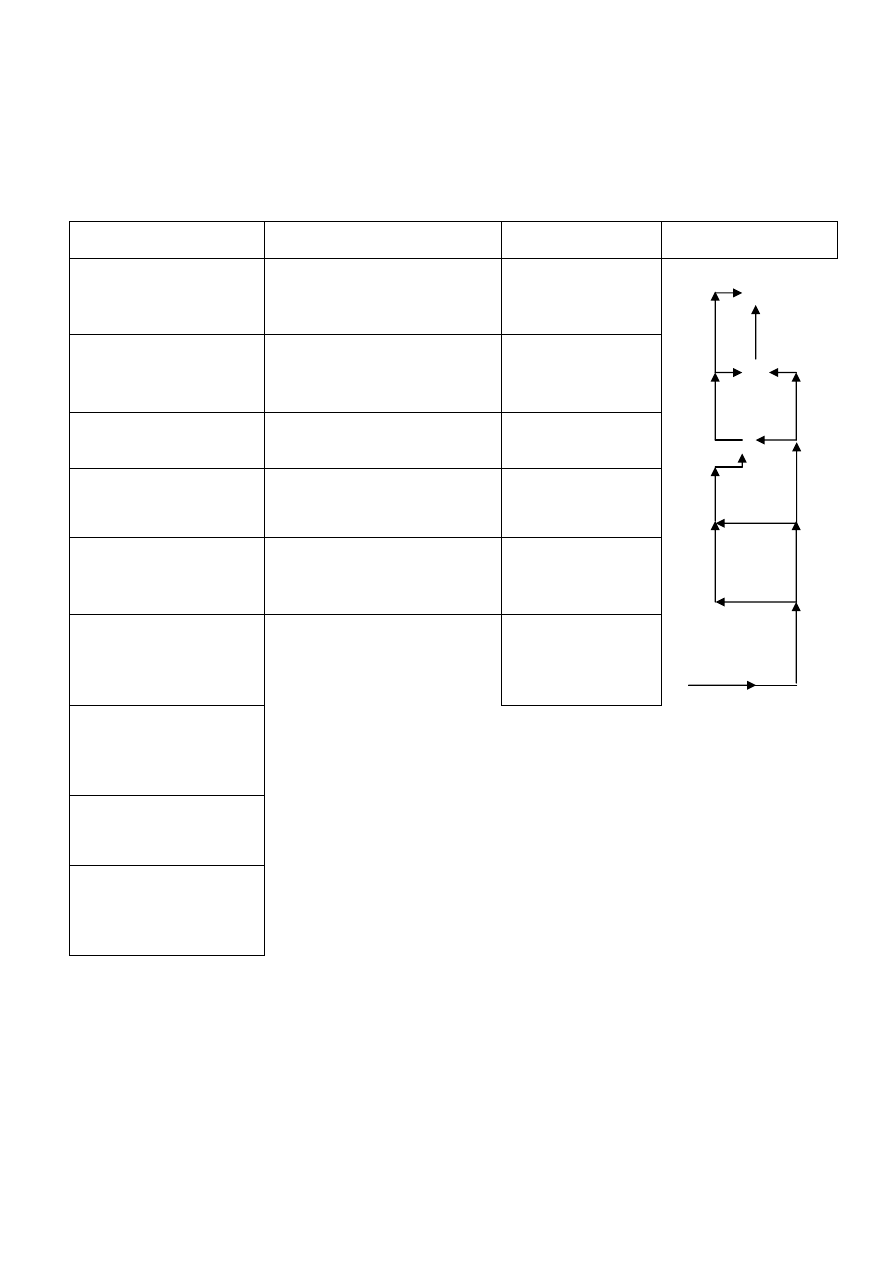
National Qualifications
Framework
⎯
Framework for Higher Education
Qualifications
′
European HE Area
Cycle/typical credits
Progression with
selection of students
8
Specialist awards
D (doctoral)
Doctorates
Third cycle
(540 where
appropriate)
7
Level 7 Diploma
M (masters)
Masters degrees, Postgraduate
Diplomas and Certificates
Second cycle
(180/120/60)
6
Level 6 Diploma
H (honours)
Bachelors Degrees, Graduate
Diplomas and Certificates
First cycle
(360)
5
Level 5 BTEC Higher
National Diploma
I (intermediate)
Diplomas of Higher Education and
Further Education, Foundation
Degrees, Higher National Diplomas
Short cycle
(240)
4
Level 4 Certificate
C (certificate)
Certificates of Higher Education
(120)
3
Level 3 Certificate
Level 3 NVQ
A levels
Entry
s2
Level 2 Diploma
Level 2 NVQ
GCSEs Grades A*-C
1
Level 1 Certificate
Level 1 NVQ
GCSEs Grades D-G
Entry
Entry Level Certificate in
Adult Literacy
_
QCA/ACCAC/CCEA (non-HE)
′ QAA
Entry to each level of the
Framework for Higher Education
Qualifications is possible from the
next lower level in the National
Qualifications Framework or
Framework for Higher Education
Qualifications for students with
the necessary pre-requisites.
Typically one undergraduate
academic year is 120 credits
(compare ECTS: 60 credits)
National Recognition
Information Centre for the
United Kingdom (UK NARIC),
Version 3, 17 February 2005
D
M
H
I
C
Document Outline
- All of these institutions are subject to the same regulatory quality assurance and funding requirements as universities; and all institutions decide for themselves which students to admit and which staff to appoint.
- Degrees and other higher education qualifications are legally owned by the awarding institution, not by the state.
- The names of institutions with their own degree awarding powers (“Recognised Bodies”) are set out at: http://www.dfes.gov.uk/recognisedukdegrees/annex4.shtml
- Qualifications
- The types of qualifications awarded by higher education institutions at sub-degree and undergraduate (first cycle) and postgraduate level (second and third cycles) are described in the Framework for Higher Education Qualifications for in England, Wales and Northern Ireland (FHEQ), including qualifications descriptors, developed with the sector by the Quality Assurance Agency (QAA - established in 1997 as an independent UK-wide body to monitor the standard of higher education provision - www.qaa.ac.uk). The Qualifications and Curriculum Authority (QCA), the Qualifications Curriculum and Assessment Authority for Wales (ACCAC) and the Council for Curriculum Examination and Assessment, (Northern Ireland) (CCEA) have established the National Qualifications Framework, which is aligned with the FHEQ as shown overleaf with typical credit values. These authorities regulate a number of professional, statutory and other awarding bodies which control qualifications at HE and other levels.
Wyszukiwarka
Podobne podstrony:
Przykłady Europass Suplement do Dyplomu RO
Przykłady Europass Suplement do Dyplomu SI
Przykłady Europass Suplement do Dyplomu FR
Przykłady Europass Suplement do Dyplomu PL
Przykłady Europass Suplement do Dyplomu BE
Przykłady Europass Suplement do Dyplomu DE
Przykłady Europass Suplement do Dyplomu ES
Przykłady Europass Suplement do Dyplomu IS
Przykłady Europass Suplement do Dyplomu NL
Przykłady Europass Suplement do Dyplomu PT
Europass Suplement do Dyplomu Potwierdzającego Kwalifikacje Zawodowe GB
Europass Suplement do Dyplomu Potwierdzającego Kwalifikacje Zawodowe PT
Europass Suplement do Dyplomu Potwierdzającego Kwalifikacje Zawodowe SE
Europass Suplement do Dyplomu Potwierdzającego Kwalifikacje Zawodowe DK
Europass Suplement do Dyplomu Potwierdzającego Kwalifikacje Zawodowe SI
Europass Suplement do Dyplomu Potwierdzającego Kwalifikacje Zawodowe BG
Europass Suplement do Dyplomu Potwierdzającego Kwalifikacje Zawodowe NL
Europass Suplement do Dyplomu Potwierdzającego Kwalifikacje Zawodowe FI
Europass Suplement do Dyplomu Potwierdzającego Kwalifikacje Zawodowe DE
więcej podobnych podstron