TR AN S PO R T
Few roads don’t lead to Paris, one of the most
visited destinations on earth. Practically every
major airline flys through it, and most Euro-
pean train tracks and bus routes cross it.
As for getting around – easy! The metro
system is vast, efficient and spans every pocket
of Paris. Buses are more scenic but can be
slowed by traffic, while getting to know the
many different routes is an art in itself.
For those who prefer a spot of fresher air
in their lungs, or who simply want to make
getting from A to B a historical and aesthetic
feast in itself, walking and Rollerblading are
serious options. With city sights spread across
a distance no greater than 10km, the major
places of interest are pleasurably walkable.
That is, of course, if Paris’ innovative, highly
praised communal bicycle scheme, Vélib’
( op-
posite )
, doesn’t tempt you into some footloose
and fancy-free pedal-powered action.
Book flights, tours and train tickets online
at www.lonelyplanet.com/travel_services.
AIR
Most international airlines fly through Paris;
for flight, route and carrier info contact
Aéro-
ports de Paris
(%39 50, from abroad +33 1 70 36 39 50;
www.aeroportsdeparis.fr)
.
Airports
Paris is served by Aéroport d’Orly and Aéro-
port Roissy Charles de Gaulle, both well linked
by public transport to central Paris. More of a
trek is Aéroport de Beauvais, which handles
charter and some budget carriers, including
Ryanair and Central Wings.
ORLY
The older, smaller of Paris’ two major airports,
Aéroport d’Orly
(ORY;
Map pp78–9
; %39 50, from abroad
+33 1 70 36 39 50; www.aeroportsdeparis.fr)
, is 18km
south of the city. Its two terminals, Orly Ouest
(Orly West) and Orly Sud (Orly South), are
linked by a free shuttle bus service that con-
tinues to/from the airport car parks and RER
C station Pont de Rungis-Aéroport d’Orly (see
boxed text,
p390
); the Orlyval automatic metro
links both terminals with the RER B station
Antony (see boxed text,
p390
).
Need to get from Orly to Roissy Charles de
Gaulle (or vice versa)? See
below
.
ROISSY CHARLES DE GAULLE
Aéroport Roissy Charles de Gaulle
(CDG; %39 50, from
abroad +33 1 70 36 39 50; www.aeroportsdeparis.fr)
, 30km
northeast of central Paris in the suburb of
Roissy, has three aérogares (terminals) – aptly
numbered 1, 2 and 3 – and two train stations
served by commuter trains on RER line B3:
Aéroport Charles de Gaulle 1 (CDG1), which
serves terminals 1 and 3, and the sleek Aéro-
port Charles de Gaulle 2 (CDG2) for terminal
2. A free shuttle bus links the terminals with
the train stations.
To get to/from Charles de Gaulle and Orly,
take the RER line B3 to the Antony stop then
pick up the Orlyval automatic metro (adult/
child four to ten years €9.30/4.65) or hop
TR
ANSP
OR
T
AIR
aboard the
Air France shuttle bus 3
(adult/child 2-11yr
€16/8; h6am or 7am–10.30pm)
linking the two air-
ports. Both journeys take an hour, as does a
taxi (€50 to €60). See p390
).
BEAUVAIS
Charter companies and Ryanair, Central
Wings and various other budget airlines
land/take off at
Aéroport Paris-Beauvais
(BVA; %0
892 682 066; www.aeroportbeauvais.com)
, 75km north
of central Paris.
BICYCLE
Two-wheeling has never been so good in the
city of romance thanks to Vélib’ (a crunching
of vélo, meaning bike, and liberté, meaning free-
dom), a self-service bike scheme whereby you
pick up a pearly-grey bike for peanuts from one
roadside Vélib’ station, pedal wherever you’re
going, and park it right outside at another.
A runaway success since its launch in 2007,
Vélib’
(%01 30 79 79 30; www.velib.paris.fr; day/week/year
subscription €1/5/29, bike hire 1st/2nd/3rd & each additional
half-hr free/€2/4)
has revolutionised how Parisians
get around. Its 1451 stations Vélib’ across the
city – one every 300m – sport 20-odd bike
stands a head (at the last count there were
20,600 bicycles in all flitting around Paris)
and are accessible around the clock.
To get a bike, you need a Vélib’ account:
One- and seven-day subscriptions can be
done on the spot at any station with any major
credit card providing it has a microchip and
pin number ( be warned North Americans!).
As deposit you’ll need to pre-authorise a di-
rect debit of €150, all except €35 of which
is debited if your bike is not returned or is
reported as stolen). If the station you want
to return your bike to is full, swipe your card
across the multilingual terminal to get 15 min-
utes for free to find another station. Bikes
are geared to cyclists aged 14 and over, and
are fitted with gears, antitheft lock with key,
reflective strips and front/rear lights. Bring
your own helmet though!
For more information on cycling in Paris,
and a list of rental outlets where you can rent
wheels for longer periods of time, see
p320
.
Guided bicycle tours are listed on
p406
.
BOAT
For pleasure cruises on the Seine, Canal St-
Martin and Canal de l’Ourcq, see
p406
.
For a more flexible, hop-on-and-off
approach, sail with the
Compagnie de Batobus
(%08 25 05 01 01; www.batobus.com; adult 1-/2-/3-
day pass €12/14/17, student €8/9/11, child 2-16yr €6/7/8;
TR
ANSP
OR
T
BIC
YC
LE
lonelyplanet
.c
om
© Lonely Planet Publications
CLIMATE CHANGE & TRAVEL
Climate change is a serious threat to the ecosystems that humans rely upon, and air travel is the fastest-growing con-
tributor to the problem. Lonely Planet regards travel, overall, as a global benefit, but believes we all have a responsibility
to limit our personal impact on global warming.
Flying & Climate Change
Pretty much every form of motor transport generates CO₂ (the main cause of human-induced climate change) but planes
are far and away the worst offenders, not just because of the sheer distances they allow us to travel, but because they
release greenhouse gases high into the atmosphere. The statistics are frightening: two people taking a return flight
between Europe and the US will contribute as much to climate change as an average household’s gas and electricity
consumption over a whole year.
Carbon Offset Schemes
Climatecare.org and other websites use ‘carbon calculators’ that allow travellers to offset the greenhouse gases they
are responsible for with contributions to energy-saving projects and other climate-friendly initiatives in the developing
world – including projects in India, Honduras, Kazakhstan and Uganda.
Lonely Planet, together with Rough Guides and other concerned partners in the travel industry, supports the carbon
offset scheme run by climatecare.org. Lonely Planet offsets all of its staff and author travel.
For more information check out our website: www.lonelyplanet.com.
THINGS CHANGE...
The information in this chapter is particularly vulner-
able to change. Check directly with the airline or a
travel agent to make sure you understand how a fare
(and ticket you may buy) works and be aware of the
security requirements for international travel. Shop
carefully. The details given in this chapter should be
regarded as pointers and are not a substitute for your
own careful, up-to-date research.
ONLINE TICKET RESOURCES
No great deal to be struck going straight to the air-
line website? See what these online airline ticketing
resources throw up.
Anyway
(www.anyway.fr, in French)
Bargain Holidays
(www.bargainholidays.com)
Cheap Flights
(www.cheapflights.co.uk)
easyvols
(www.easyvols.com, in French)
ebookers
(www.ebookers.com)
e-mondial
(www.e-mondial.com, in French)
Go Voyages
(www.govoyages.com, in French)
Last Minute
(www.lastminute.com)
Opodo
(www.opodo.com)
Travelocity
(www.travelocity.com)
Voyages SNCF
(www.voyages-sncf.com, in French)
BIKES ON PUBLIC TRANSPORT
Bicycles are not allowed on the metro except on line
1 on Sunday and public holidays. You can, however,
take your bicycle to the suburbs on some RER lines on
weekdays before 6.30am, between 9am and 4.30pm,
after 7pm, and all day on the weekend and on public
holidays. More lenient rules apply to SNCF commuter
services. Contact SNCF
( p395 )
for details.
388
389

h10am-9.30pm May-Aug, 10am-7pm Sep–mid-Nov & mid-
Mar-Apr, 10.30am-4.30pm mid-Nov–mid-Dec & Feb–mid-Mar,
10.30am-5pm mid-Dec–Jan)
. Its fleet of glassed-in
trimarans dock at small piers along the Seine
and tickets are sold at each stop or tourist
offices. For those keen to combine boat with
bus, its Paris à la Carte deal allows two/three
consecutive days of unlimited travel on Ba-
tobus boats and Open Tour buses
( p407 )
for
€37/40. Boats depart every 15 to 30 minutes
from various stops:
Champs-Élysées
(
Map pp140–1
; Port des Champs-Élysées,
8e; mChamps-Élysées Clemenceau)
Eiffel Tower
(
Map pp132–3
; Port de la Bourdonnais, 7e;
mChamp de Mars-Tour Eiffel)
Hôtel de Ville
(
Map pp98–9
; quai de l’Hôtel de Ville, 4e;
mHôtel de Ville)
Jardin des Plantes
(
Map pp110–11
; quai St-Bernard, 5e;
mJussieu)
Musée d’Orsay
(
Map pp128–9
; quai de Solférino, 7e;
mMusée d’Orsay)
Musée du Louvre
(
Map p86
; quai du Louvre, 1er;
mPalais Royal-Musée du Louvre)
Notre Dame
(
Map pp110–11
; quai de Montebello, 5e;
mSt-Michel)
St-Germain des Prés
(
Map pp116–17
; quai Malaquais, 6e;
mSt-Germain des Prés)
TR
ANSP
OR
T
BO
AT
lonelyplanet
.c
om
BUS
Local Buses
Paris’ bus system, operated by RATP (see
p393
), runs from 5.45am to 8.30pm Monday
to Saturday; after that another 20 lines con-
tinue until 12.30am. Services are drastically
reduced on Sunday and public holidays, when
buses run from 7am to 8.30pm. Among many
service en soirée (evening service) routes –
distinct from the Noctilien overnight services
described on
right
– are route 26 between the
Gare St-Lazare and Cours de Vincennes via
Gare du Nord and Gare de l’Est; route 38
linking Gare du Nord, Châtelet and Porte
d’Orléans via blvd St-Michel; route 92 from
Gare Montparnasse to place Charles de Gaulle
and back via Alma Marceau; and route 95
between Porte de Montmartre and Porte de
Vanves via Opéra and St-Germain. The same
fares and conditions apply on evening routes
as for regular daytime services. Most evening
routes finish at around midnight.
Night Buses
Night buses pick up the traffic after the last
metro (around 1am Sunday to Thursday,
2.15am Friday and Saturday). Buses depart
hourly from 12.30am to 5.30pm. The RATP
runs 42 night bus lines on its improved
TR
ANSP
OR
T
BUS
lonelyplanet
.c
om
GETTING INTO TOWN
Getting into town is straightforward and inexpensive thanks to a fleet of public-transport options, listed under airport
headings. Bus drivers sell tickets.
Pricier, door-to-door alternatives include taxi
(€40 to €50 between central Paris and Orly, €40 to €60 to/from
Charles de Gaulle, €110 to €150 to/from Beauvais; see
p395
for taxi telephone numbers); or a private minibus shuttle
such as
Allô Shuttle
(%01 34 29 00 80; www.alloshuttle.com),
Paris Airports Service
(%01 55 98 10 80; www
.parisairportservice.com) or
PariShuttle
(%01 53 39 18 18; www.parishuttle.com). Count on around €25 per person
(€40 between 8pm and 6am) for Orly or Charles de Gaulle and €150 for one to four people to/from Beauvais. Book in
advance and allow ample time for other pick-ups and drop-offs.
Aéroport d’Orly
Unless noted otherwise, these options to/from Orly call at both terminals.
Air France bus 1
(%08 92 35 08 20; www.cars-airfrance.com; adult single/return €9/14; h6am-11.30pm from
Orly, 5.45am-11pm from Invalides) This navette (shuttle bus) runs every 15 minutes to/from the eastern side of Gare
Montparnasse (
Map pp124–5
; 30 to 45 minutes) and Aérogare des Invalides (
Map pp128–9
; 30 to 45 minutes) in the
7e. On the way into the city, passengers without baggage stowed in the coach hold can ask to get off at metro Porte
d’Orléans
(Map pp78–9 )
or metro Duroc
(Map pp128–9 )
.
Jetbus
(%01 69 01 00 09; adult/under 5yr €5.70/free; h6.20am-11.10pm from Orly, 6.15am-10.30am from
Paris) Jetbus runs every 15 to 25 minutes to/from metro Villejuif Louis Aragon (
Map pp78–9
; 55 minutes), a bit south
of the 13e on the city’s southern fringe, from where a metro/bus ticket gets you into town.
Noctilien bus 31
(%08 92 68 77 14, 08 92 68 41 14 in English; adult/4-9yr €6/3; h12.30am-5.30pm) Part of
the RATP’s night service, Noctilien bus 31 links Gare de Lyon
(Map pp158–9 )
, place d’Italie
(Map pp162–3 )
and Gare
d’Austerlitz
(Map pp158–9 )
with Orly-Sud. It runs every hour and journey time is 45 minutes to an hour.
Orlybus
(%08 92 68 77 14; adult/4-11yr €6.10/3.05; h6am-11.50pm from Orly, 5.35am-11.25pm from Paris)
This RATP bus runs every 15 to 20 minutes between both terminals and metro Denfert- Rochereau (
Map pp78–9
; 30
minutes) in the 14e, making several stops in the eastern 14e en route.
Orlyval & RER B
(%08 92 68 77 14; adult/4-10yr €9.30/4.65; h6am-11pm) From either terminal take the
Orlyval automatic rail to the RER B station Antony, then RER B4 north (35 to 40 minutes to Châtelet, every four to 12
minutes). Orlyval tickets are valid for the subsequent RER and metro journey.
RATP bus 183
(%08 92 68 77 14; adult/4-9yr €1.50/0.75 or 1 metro/bus ticket; h6am-9.40pm from Orly, 5.35am-
8.35pm from Porte de Choisy) The cheapest means of getting to/from Orly Sud, this slow public bus links the South
Terminal with metro Porte de Choisy (
Map pp78–9
; one hour), on the southern edge of the 13e, every 35 minutes.
RER C & shuttle
(%08 90 36 10 10; adult/4-10yr €6/4.25; h5.30am-11.50pm) From the airport, hop aboard an
airport shuttle bus (every 15 to 30 minutes) to the RER station Pont de Rungis-Aéroport d’Orly, then RER C2 train to
Paris’ Gare d’Austerlitz (50 minutes). Coming from Paris, be sure to get the shuttle at Pont de Rungis that goes to the
correct terminal.
Aéroport Roissy Charles de Gaulle
Air France bus 2
(%08 92 35 08 20; www.cars-airfrance.com; single/return €13/18; h5.45am-11pm) Links the
airport every 15 minutes with the Arc de Triomphe outside 1 av Carnot, 17e (
Map pp140–1
; 35 to 50 minutes) and
the Palais des Congrès de Paris, 17e (
Map pp144–5
; 35 to 50 minutes).
Air France bus 4
(%08 92 35 08 20; www.cars-airfrance.com; single/return €14/22; h7am-9pm from CDG,
6.30am-9.30pm from Paris) Links the airport every 30 minutes with Gare de Lyon (
Map pp158–9
; 45 to 55 minutes)
and Gare Montparnasse (
Map pp124–5
; 45 to 55 minutes).
Noctilien night bus
(%08 92 68 77 14; adult/4-9yr €7.50/3.75; h12.30am-5.30pm) Part of the RATP night
service, Noctilien buses 120, 121 (linking Montparnasse, Châtelet, Gare du Nord) and 140 (linking Gare du Nord and
Gare de l’Est) go to Roissy-Charles de Gaulle hourly.
RATP bus 350
(%08 92 68 77 14; adult/4-9yr €4.50/2.25 or 3 metro/bus tickets; h5.45am-7pm each direction)
Links Aérogares 1 and 2 with Gare de l’Est (
Map pp152–3
; one hour, every 30 minutes) and Gare du Nord (
Map
pp152–3
; one hour, every 30 minutes).
RATP bus 351
(%08 92 68 77 14; adult/4-9yr €4.50/2.25 or 3 metro/bus tickets; h7am-9.30pm from the airport,
8.30am-8.20pm from Paris) Links the eastern side of place de la Nation
(Map pp78–9 )
with Roissy-Charles de Gaulle
(55 minutes, every 30 minutes).
RER B
(%08 90 36 10 10; adult/4-11yr €8.20/5.80; h5am-midnight) RER line B3 links CDG1 and CDG2 with the
city (30 minutes; every 10 to 15 minutes). To get to the airport take any RER line B train whose four-letter destination
code begins with E (eg EIRE) and a shuttle bus (every five to eight minutes) takes you to the correct terminal. Regular
metro ticket windows can’t always sell RER tickets to the airport so you may have to buy one at the RER station
where you board.
Roissybus
(%08 92 68 77 14; adult €8.60; h5.45am-11pm) Direct public bus linking several points at both
terminals with rue Scribe, next to Palais Garnier, in the 9e (
Map pp148–9
; 45 to 60 minutes, every 15 minutes).
Aéroport Paris-Beauvais
Express Bus
(%car park 08 92 68 20 64, airport 08 92 68 20 66; one way €13) Leaves Parking Pershing
(Map
pp144–5 )
, west of the Palais des Congrès de Paris, three hours before flight departures (board 15 minutes before)
and leaves the airport 20 to 30 minutes after arrivals, dropping passengers south of the Palais des Congrès on place
de la Porte Maillot
(Map pp144–5 )
. Journey time is one to 1¼ hours and tickets can be purchased up to 24 hours in
advance online (http://ticket.aeroportbeauvais.com), at the airport from
Ryanair
(%03 44 11 41 41) and at a kiosk
in the carpark. Only plane ticket holders can board the bus, so leave the farewell troops at home.
390
391
Noctilien network (www.noctilien.fr has infor-
mation, maps and itineraries in English), in-
cluding direct or semidirect services out to the
suburbs. The services pass through the main
gares (train stations) and cross the major axes
of the city before leading out to the suburbs.
Many go through Châtelet (rue de Rivoli and
blvd Sébastopol). Look for blue N or Noctilien
signs at bus stops. There are two circular lines
within Paris (the N01 and N02) that link four
main train stations, St-Lazare, Gare de l’Est,
Gare de Lyon, Montparnasse (but not Châte-
let), as well as popular nightspots Bastille, the
Champs-Elysées, Pigalle and St-Germain.
The buses are equipped with security sur-
veillance systems linked to local police, and
RATP staff members are posted at major
points to help passengers. Do remain alert,
however, and watch your bags and pockets –
especially on weekends when the post-
drinking crowd circulates.
Noctilien services are free if you have a
Mobilis or Paris Visite
( p394 )
pass for the zones
in which you are travelling. Otherwise you
pay a certain number of standard €1.50 metro
tickets, depending on the length of your jour-
ney: the driver can sell you tickets and will
explain how many you need to get to your
destination.
Tickets & Fares
Short bus rides embracing one or two bus
zones cost one metro/bus ticket (€1.50);
longer rides require two tickets. Transfers to
other buses or the metro are not allowed on
the same ticket. Travel to the suburbs costs
up to three tickets, depending on the zone.
Special tickets valid only on the bus can be
purchased from the driver.
Whatever kind of single-journey ticket you
have, you must oblitérer (cancel) it in the com-
posteur (cancelling machine) next to the driver.
If you have a Mobilis or Paris Visite
( p394 )
pass,
flash it at the driver when you board. Do not
cancel the magnetic coupon that accompanies
your pass.
Long-Distance Buses
Eurolines
(
Map pp110–11
; %01 43 54 11 99; www.eurolines
.fr, in French; 55 rue St-Jacques, 5e; h9.30am-6.30pm Mon-
Fri, 10am-1pm & 2-5pm Sat; mCluny-La Sorbonne)
, an as-
sociation of more than 30 national and private
bus companies that links Paris with points all
over Western and Central Europe, Scandinavia
and Morocco, can organise ticket reservations
and sales. The
Gare Routière Internationale de Paris-
Galliéni
(
Map pp78–9
; %08 92 89 90 91; 28 av du Général
de Gaulle; mGallieni)
, the city’s international bus
terminal, is in the inner suburb of Bagnolet.
CAR & MOTORCYCLE
The quickest way of turning your stay in Paris
into an uninterrupted series of hassles is to
drive. If driving the car doesn’t destroy your
holiday sense of spontaneity, parking the
thing certainly will.
Driving
While driving in Paris is nerve-wracking, it’s
not impossible – except for the faint-hearted
or indecisive. The fastest way to get across the
city is usually via the blvd Périphérique
(Map
pp78–9 )
, the ring road that encircles the city.
Hire
You can get a small car (eg a Renault Twingo
or Opel Corsa) for one day for no more than
€100, including unlimited mileage and insur-
ance. Most of the larger companies have offices
throughout Paris and at airports and main
train stations, including
Gare de Nord
(
Map pp152–3
;
mGare de Nord). Several are represented at
Aérog-
are des Invalides
(
Map pp128–9
; mInvalides)
in the 7e.
Avis
(%08 02 05 05 05; www.avis.fr, in French)
Budget
(%08 25 00 35 64; www.budget.fr, in French)
TR
ANSP
OR
T
CA
R & M
OTO
RC
YC
LE
lonelyplanet
.c
om
Europcar
(%08 25 35 83 58; www.europcar.fr, in French)
Hertz
(%08 25 88 92 65; www.hertz.fr)
National Citer
(%08 25 16 12 12; www.citer.fr)
Sixt
(%08 20 00 74 98; www.sixt.fr, in French)
Smaller agencies often offer more-reasonable
rates and have several branches throughout
Paris. Find a complete list in the Yellow Pages
(www.pagesjaunes.fr, in French) under ‘Loca-
tion d’Automobiles: Tourisme et Utilitaires’.
ADA
(%08 25 16 91 69; www.ada.fr, in French) ADA has
a dozen branches in Paris including
8e arrondissement
(
Map pp140–1
; %01 42 93 65 13; 72 rue de Rome, 8e;
mRome) and
11e arrondissement
(
Map pp94–5
; %01
48 06 58 13; 34 av de la République, 11e; mParmentier).
easyCar
(www.easycar.com) This budget agency has cars
at competitive prices from branches at main train stations
including
Montparnasse
(
Map pp124–5
; Parking Gaîté,
33 rue du Commandant René Mouchotte, 15e; mGaîté).
Branches are in underground car parks and are fully auto-
mated systems; book in advance and fill in the forms online.
Rent A Car Système
(%08 91 70 02 00; www.rentacar
.fr, in French) Rent A Car has 16 outlets in Paris, including
Bercy
(
Map pp158–9
; %01 43 45 98 99; 79 rue de Bercy,
12e; mBercy) and
16e arrondissement
(
Map pp132–3
;
%01 42 88 40 04; 84 av de Versailles, 16e; mMirabeau).
If you’ve got the urge to look like you’ve just
stepped into (or out of) a black-and-white
French film from the 1950s, a motor scooter
will fit the bill perfectly.
Free Scoot
(
Map pp94–5
; %01 44 93 04 03; www.free
-scoot.com, in French; 144 blvd Voltaire, 11e; h9am-1pm &
2-7pm Mon-Fri; mVoltaire) Rents 50cc scooters per day/24
hours/weekend/week from €30/35/75/145, and 125cc scoot-
ers for €45/55/110/245. Prices include third-party insurance
as well as two helmets, locks, raingear and gloves. To rent
a 50/125cc scooter you must be at least 21/23 and leave a
credit card deposit of €1300/1600. Freescoot runs a seasonal
branch in the
5e arrondissement
(
Map pp110–11
; %01 44
07 06 72; 63 quai de la Tournelle, 5e; h9am-1pm & 2-7pm
Mon-Sat mid-Apr–mid-Sep; mMaubert Mutualité).
Parking
In most parts of Paris, street parking costs €1
to €3 an hour and is limited to a maximum
of two hours. Municipal public car parks, of
which there are 140 in Paris, charge between
€1.70 and €2.80 an hour or €20 to €25 per 24
hours. Most open 24 hours.
Parking attendants dispense fines ranging
from €11 to €35, depending on the offence
and its gravity, with great abandon. To pay
a fine, buy a timbre amende (fine stamp) for
the amount written on the ticket from any
tabac (tobacconist), stick a stamp on the pre-
addressed coupon and post it in a postbox.
METRO & RER NETWORKS
Paris’ underground network, run by RATP
(Régie Autonome des Transports Parisians),
consists of two separate but linked systems:
the Métropolitain, aka the métro, with 14 lines
and 373 stations (one more will open in 2008
and another in 2010); and the RER (Réseau
Express Régional), a network of suburban
lines (designated A to E and then numbered)
that pass through the city centre. When giving
the names of stations in this book, the term
‘metro’ is used to cover both the Métropolitain
and the RER system within Paris proper.
Information
Metro maps of various sizes and degrees of
detail are available for free at metro ticket win-
dows; several can also be downloaded for free
from the highly informative, comprehensive
and useful RATP website (www.ratp.fr).
For information on the metro, RER and
bus systems, contact
RATP
(%3246, 0 892 693 246;
www.ratp.fr, in French; h7am-9pm Mon-Fri, 9am-5pm Sat
& Sun)
.
Metro
Each metro train is known by the name of its
terminus. On maps and plans each line has a
different colour and number (from 1 to 14);
Parisians usually refer to the line number.
Signs in metro and RER stations indicate
the way to the correct platform for your line.
The direction signs on each platform indicate
the terminus. On lines that split into several
branches (like lines 3, 7 and 13), the terminus
of each train is indicated on the cars with
backlit panels, and often on the increasingly
common electronic signs on each platform
giving the number of minutes until the next
train.
Signs marked correspondance (transfer)
show how to reach connecting trains. At sta-
tions with many intersecting lines, like Châtelet
and Montparnasse Bienvenüe, walking from
one train to the next can take a long time.
Different station exits are indicated by
white-on-blue sortie (exit) signs. You can get
your bearings by checking the plan du quartier
(neighbourhood maps) posted at exits.
TR
ANSP
OR
T
M
ET
RO & R
ER NE
TW
OR
KS
lonelyplanet
.c
om
VOGUÉO
That’s the name of Paris’ brand-spanking-new river metro (métro fluvial), set to sail along the Seine from the end of
June 2008 for an initial two-year trial period.
Navettes (shuttle boats) will yo-yo between Gare d’Austerlitz
(Map pp162–3 )
and the École Vétérinaire de Maisons
Alfort, southeast of central Paris in the Val de Marne – a 40-minute journey door to door – and will initially stop at
Bibliothèque Nationale de François Mitterand, 13e
(Map pp162–3 )
, Bercy, 12e
(Map pp158–9 )
and Port d’Ivry
(Map
pp78–9 )
. Boats will run every 20 minutes (every 30 minutes between 10am and 5pm) from 7am to 8.30pm Monday to
Friday, and every 30 minutes from 10am to 8pm Saturday and Sunday. One-week Navigo Découverte travel passes will
be valid aboard; otherwise pay €3 for a single fare.
392
393

Each line has its own schedule, but trains
usually start at around 5.30am, with the last
train beginning its run between 12.35am and
1am (2.15am on Friday and Saturday).
RER
The RER is faster than the metro but the stops
are much further apart. Some attractions, par-
ticularly those on the Left Bank (eg the Musée
d’Orsay, Eiffel Tower and Panthéon), can be
reached far more conveniently by the RER
than by the metro.
RER lines are known by an alphanumeric
combination – the letter (A to E) refers to
the line, the number to the spur it will follow
somewhere out in the suburbs. As a rule of
thumb, even-numbered RER lines head for
Paris’ southern or eastern suburbs, while odd-
numbered ones go north or west. All trains
whose four-letter codes (indicated both on
the train and on the lightboard) begin with the
same letter share the same terminus. Stations
served are usually indicated on electronic des-
tination boards above the platform.
Tickets & Fares
The same RATP tickets are valid on the metro,
the RER (for travel within the city limits),
buses, trams and the Montmartre funicular.
A ticket – white in colour and called un ticket –
costs €1.50 if bought individually and €11.10
for adults (half-price for children aged four to
nine years for a carnet (book) of 10. Tickets are
sold at all metro stations; ticket windows and
vending machines accept most credit cards.
One metro/bus ticket lets you travel between
any two metro stations (no return journeys)
for a period of 1½ hours, no matter how many
transfers are required. You can also use it on the
RER for travel within zone 1. A single ticket can
be used to transfer between buses, but not to
transfer from the metro to bus or vice-versa.
Always keep your ticket until you exit from
your station; you may be stopped by a contrô-
leur (ticket inspector) and will have to pay a fine
(€25 to €50 on the spot or €47 to €72 within two
months) if you don’t have a valid ticket.
TRAVEL PASSES
If you’re staying a week or more, the cheapest
and easiest way to use public transport in Paris
is to get a combined travel pass that allows un-
limited travel on the metro, RER and buses for
a week, a month or a year. You can get passes
for travel in two to eight urban and suburban
zones but, unless you’ll be using the suburban
commuter lines extensively, the basic ticket
valid for zones 1 and 2 should be sufficient.
The Navigo system (www.navigo.fr, in
French), like London’s Oyster or Hong Kong’s
Octopus cards, provides you with a refillable
weekly, monthly or yearly unlimited pass that
you can recharge at Navigo machines in most
metro stations; swipe the card across the elec-
tronic panel as you go through the turnstiles.
Standard Navigo passes, available to anyone
with an address in Paris, are free but take up to
three weeks to be issued; ask at the ticket coun-
ter for a form. Otherwise pay €5 for a Nagivo
Découverte, issued on the spot but – unlike the
Navigo pass – not replaceable if lost or stolen.
Both passes require a passport photo and can be
recharged for periods of one week or more.
A weekly ticket (coupon hebdomadaire) pass
costs €16.30 for zones 1 and 2 and is valid from
Monday to Sunday. It can be purchased from
the previous Thursday until Wednesday; from
Thursday weekly tickets are available for the
following week only. Even if you’re in Paris
for three or four days, it may work out cheaper
than buying carnets and will certainly cost less
than buying a daily Mobilis or Paris Visite pass
(see
below
). The monthly ticket (coupon men-
suel; €53.50 for zones 1 and 2) begins on the
first day of each calendar month; you can buy
one from the 20th of the preceding month.
Both are sold in metro and RER stations from
6.30am to 10pm and at some bus terminals.
TOURIST PASSES
The Mobilis and Paris Visite passes are valid
on the metro, RER, SNCF’s suburban lines
( op-
posite )
, buses, night buses, trams and Montmar-
tre funicular railway. No photo is needed, but
write your card number on the ticket. Passes
are sold at larger metro and RER stations,
SNCF offices in Paris, and the airports.
The Mobilis card coupon allows unlimited
travel for one day in two/three/four/five/six
zones and costs €5.60/7.50/9.30/12.50/15.90.
Buy it at any metro, RER or SNCF station in
the Paris region. Depending on how many
times you plan to hop on/off the metro in a
day, a carnet might work out cheaper.
Paris Visite allows unlimited travel (includ-
ing to/from airports) as well as discounted
entry to certain museums and other discounts
and bonuses. Passes are valid for either three,
five or eight zones. The zone 1 to 3 pass costs
€8.50/14/19/27.50 for one/two/three/five
days. Children aged four to 11 years pay
€4.25/7/9.50/13.75.
TR
ANSP
OR
T
M
ET
RO & R
ER NE
TW
OR
KS
lonelyplanet
.c
om
TAXI
The prise en charge (flagfall) is €2.10. Within the
city limits, it costs €0.82 per kilometre for travel
between 10am and 5pm Monday to Saturday
(Tarif A; white light on meter). At night (5pm to
10am), on Sunday from 7am to midnight, and
in the inner suburbs the rate is €1.10 per km
(Tarif B; orange light on meter). Travel in the
outer suburbs is at Tarif C, €1.33 per kilometre.
There’s a €2.75 surcharge for taking a fourth
passenger, but drivers often refuse for insur-
ance reasons. The first piece of baggage is free;
additional pieces over 5kg cost €1 extra. When
tipping, round up to the nearest €1.
Flagging down one of Paris’ 15,500-odd
licensed taxis can be hard, particularly after
1am. Some ‘freelance’ (illegal) taxis nip around
town but are not organised (like minicabs are
in London) and offer no guarantee on price
or safety.
To order a taxi, call Paris’
central taxi switch-
board
(%01 45 30 30 30, passengers with reduced mobility
01 47 39 00 91; h24hrs)
or reserve online with
Alpha
Taxis
(%01 45 85 85 85; www.alphataxis.com),
Taxis Bleus
(%01 49 36 29 48, 08 91 70 10 10; www.taxis-bleus.com)
or
Taxis G7
(%01 47 39 47 39; www.taxisg7.fr, in French).
TRAIN
Suburban
The RER and the commuter lines of the
SNCF
(Sociéte’ Nationale des Chemins de Fer; %08 91 36 20 20, 08
91 67 68 69 for timetables; www.sncf.fr)
serve suburban
destinations outside the city limits (ie zones 2
to 8). Purchase your ticket before you board the
train or you won’t be able to get out of the sta-
tion when you arrive. You are not allowed to
pay the additional fare when you get there.
If you are issued with a full-sized SNCF
ticket for travel to the suburbs, validate it
in one of the time-stamp pillars before you
board the train. You may also be given a con-
tremarque magnétique (magnetic ticket) to
get through any metro-/RER-type turnstiles
on the way to/from the platform. If you are
travelling on a Mobilis or Paris Visite
( opposite )
pass, do not punch the magnetic coupon in
one of the time-stamp machines. Most but
not all RER/SNCF tickets purchased in the
suburbs for travel to the city allow you to
continue your journey by metro. For some
destinations, tickets can be purchased at any
metro ticket window; for others you have to
go to an RER station on the line you need to
buy a ticket.
Mainline & International
Thanks to very fast TGV (train à grande
vitesse) trains, of which the French are in-
ordinately proud, many of the most exciting
and scenic cities in provincial France are all
within a few hours of the capital from one
of six major train stations, each with its own
metro station: Gare d’Austerlitz (13e), Gare de
l’Est (10e), Gare de Lyon (12e), Gare du Nord
(10e), Gare Montparnasse (15e) and Gare St-
Lazare (8e). Each station handles passenger
traffic to different parts of France and Europe.
Information for
SNCF
mainline services
(%36 35,
08 92 35 35 35; www.voyages-sncf.com)
is available by
phone or internet.
The super-speedy
Eurostar
(%08 36 35 35 39;
in UK 0875 186 186; www.eurostar.com)
links Gare du
Nord with London’s sizzling new St-Pancras
International train station in a lightening two
hours and not much longer with dozens of
other regional stations in the UK; through-
ticketing to/from Paris and 68 regional sta-
tions in the UK is now possible. Gare du Nord
is likewise the point of departure/terminus for
Thalys
(%36 35, 08 92 35 35 36; www.thalys.com)
trains
to Brussels, Amsterdam and Cologne.
Mainline stations in Paris have left-
luggage offices or lockers (consignes). They
cost €4/7.50/9.50 per 48 hours for a small/
medium/large bag, then €5 per day per item.
Most left-luggage offices and lockers open
from around 6am to 11pm.
TRAM & FUNICULAR
Paris has three tram lines (www.tramway
.paris.fr, in French), although the majority of
visitors are unlikely to use them: T1 links the
northern suburb of St-Denis with Noisy le
Sec on RER line E2 via metro Bobigny Pablo
Picasso on metro line 5; T2 runs south along
the Seine from La Défense to the Issy Val de
Seine RER station on line C; and T3 traces a
7.9km-long curve around the southern edge of
Paris from Point to Garigliano (15e), through
Porte de Versailles (where it links with the
T2), Porte d’Orléans, Porte d’Italie and up to
Porte d’Ivry. Normal metro tickets and passes
remain valid here and function in the same
way as on the buses. Buy tickets at automatic
machines at each tram stop.
One form of transport that most travellers
will use is the Montmartre funicular, which
whisks visitors up the southern slope of Butte
de Montmartre from square Willette (metro
Anvers) to Sacré Cœur.
TR
ANSP
OR
T
TA
XI
lonelyplanet
.c
om
394
395
D I R EC TO RY
BUSINESS HOURS
Small
businesses are open daily, except Sunday
and sometimes Monday. Hours are usually
9am or 10am to 6.30pm or 7pm, often with a
midday break from 1pm to 2pm or 2.30pm.
Shops that open Monday usually get started
late (eg at 11.30am).
Banks usually open from 8am or 9am to
between 11.30am and 1pm, and then 1.30pm
or 2pm to 4.30pm or 5pm, Monday to Friday
or Tuesday to Saturday. Exchange services
may end 30 minutes before closing time.
Most post offices
open 8am to 7pm week-
days and 8am or 9am till noon on Saturday.
Supermarkets
open Monday to Saturday
from 8.30/9am to 8pm, though a few now
open on Sunday morning as well. Small food
shops
are mostly closed on Sunday and often
Monday too, so Saturday afternoon may be
your last chance to stock up on certain types
of food (eg cheese) until Tuesday.
Restaurants keep the most convoluted
hours of any business in Paris; for details
see
p228
.
Most museums are closed one day a week:
usually Monday or Tuesday. Some museums
have a weekly nocturne in which they remain
open until as late as 10pm one night a week,
including the Louvre (Wednesday and Friday)
and the Musée d’Orsay (Thursday).
CHILDREN
Paris is extraordinarily kid-friendly. Be it
playing tag around Daniel Buren’s black and
white columns at Palais Royal
( p88 )
, laughing
with puppets in Jardin de Luxembourg
( p119 )
,
sailing down the Seine
( p407 )
or resting little
legs with a city sightseeing tour via one of
its two above-ground metro lines (2 and 6),
there really does seem to be a cheap childish
pleasure around every corner here.
Some restaurants serve a menu enfant (set
children’s menu), usually for children under
12, though often starters or the savoury crêpes
served in neighbourhood brasseries are more
imaginative (steak haché and fries gets tire-
some after two days). Cafétérias
( p226 )
are a
good place to bring kids if you just want to
feed and water them fast and cheaply, as are
French chain restaurants
( p229 )
.
Kids aged between six and 12 and keen to
cook and consume their own creations can do
so at Alef-Bet
( p249 )
.
Information
Pariscope and L’Officiel des Spectacles
( p302 )
both have decent ‘Enfants’ sections covering
the week’s shows, theatre performances and
circuses for kids. Online see the exhaustive
site, www.cityjunior.com (in French).
The newspaper Libération
( p54 )
produces an
English translation of its bimonthly supplement
Paris Mômes (www.parismomes.fr, in French)
called Paris with Kids. It has listings and other
useful information aimed at kids up to age 12;
focusing on the ‘unusual’ is its philosophy.
Lonely Planet’s Travel with Children by
Cathy Lanigan includes useful advice for trav-
elling parents.
Sights & Activities
Many museums organise educational, fun-
packed ateliers enfants (kids’ workshops) for
children from aged four or six and upwards.
Sessions cost €3 to €10, last a couple of hours,
and must be booked in advance; some are
in English. Favourites include hands-on art
workshops at Les Arts Décoratifs
( p84 )
, Musée
de la Halle St-Pierre
( p171 )
, Musée d’Orsay
( p130 )
, Palais de Tokyo
( p135 )
and Centre Pom-
pidou
( p88 )
; money- and medal-making at the
Musée de la Monnaie de Paris
( p120 )
; meet-
ing marine life at the Centre de la Mer
( p109 )
;
learning about animals with activities and film
at the Musée National d’Histoire Naturelle
( p113 )
; and calligraphy, Arab music and mosa-
ics at the Institut du Arabe Monde
( p112 )
.
Building an Eiffel Tower, Parisian church
or entire village from thousands of miniature
wooden planks is what kids do at the innova-
tive
Centre Kapla
(
Map pp152–3
; %01 43 56 13 38; www
.kapla.com/centre_kapla.html; 27 rue de Montreuil, 11e;
sessions €10; h10.30am-6pm Wed, Sat & school holidays;
mFaidherbe-Chaligny). It runs three 1½ hour
building sessions daily; book in advance.
Around Paris, the mesmerising equestrian
displays and stable visits at Versailles
( p360 )
and
Chantilly
( p373 )
make magical half-day trips;
the Disney
( p384 )
and Astérix theme parks
( p385 )
need at least a full day.
DI
RE
CT
ORY
BUS
IN
ES
S H
OU
RS
See the Neighbourhoods chapter for details
on the following suggestions:
Children’s Playgrounds
Port de Plaisance de Paris-Arsenal
(
Map pp158–9
; 4e; mBastille); Jardin du Luxembourg
(
Map pp116–17
; 6e; mLuxembourg); Square Willette
(
Map p169
; Montmartre, 18e; mAnvers)
CineAqua
(
Map pp132–3
; 2 av des Nations Unies, 16e;
mTrocadéro)
Cité de la Musique
(
Map pp174–5
; 221 av Jean Jaurès,
19e; mPorte de Pantin) Saturday-morning educational
concerts, music discovery workshops, concerts and shows
for children.
Cité des Sciences et de l’Industrie
(
Map pp174–5
; Parc
de la Villette, 19e; mPorte de la Villette) Including the
Géode, Cinaxe and planetarium.
Eiffel Tower
(
Map pp132–3
; Parc du Champ de Mars, 7e;
mChamp de Mars-Tour Eiffel)
Exploradôme & Jardin d’Acclimatation
(
Map p178
; Bois
de Boulogne; mLes Sablons) Interactive science, art and
multimedia; plus a funfair to fill a day.
Ménagerie du Jardin des Plantes
(
Map pp110–11
; Jardin
des Plantes, 5e; mJussieu or Gare d’Austerlitz) Near the
Musée National d’Histoire Naturelle.
Musée de la Curiosité et de la Magie
(
Map pp92–3
; 11
rue St-Paul, 4e; mSt-Paul) Magic shows.
Palais de la Découverte
(
Map pp140–1
; Champs-Élysées,
8e; mChamps-Élysées Clemenceau)
Parc Zoologique de Paris
(
Map p177
; Bois de Vincennes;
mPorte Dorée)
Babysitting
L’Officiel des Spectacles
( p302 )
lists gardes
d’enfants (baby-sitters) available in Paris.
Au Paradis des Petits
(%01 43 65 58 58) From €7 per
hour (€10 subscription fee).
Baby Sitting Services
(%01 46 21 33 16) From €6.80 per
hour (€11.90 subscription), €60 for 10 hours or one day.
Étudiants de l’Institut Catholique
(
Map pp116–17
;
%01 44 39 60 24; 21 rue d’Assas, 6e; mRennes) From
€7.50 per hour (plus €2 for each session).
Fondation Claude Pompidou
(%01 40 13 75 00)
Specialises in looking after children with disabilities.
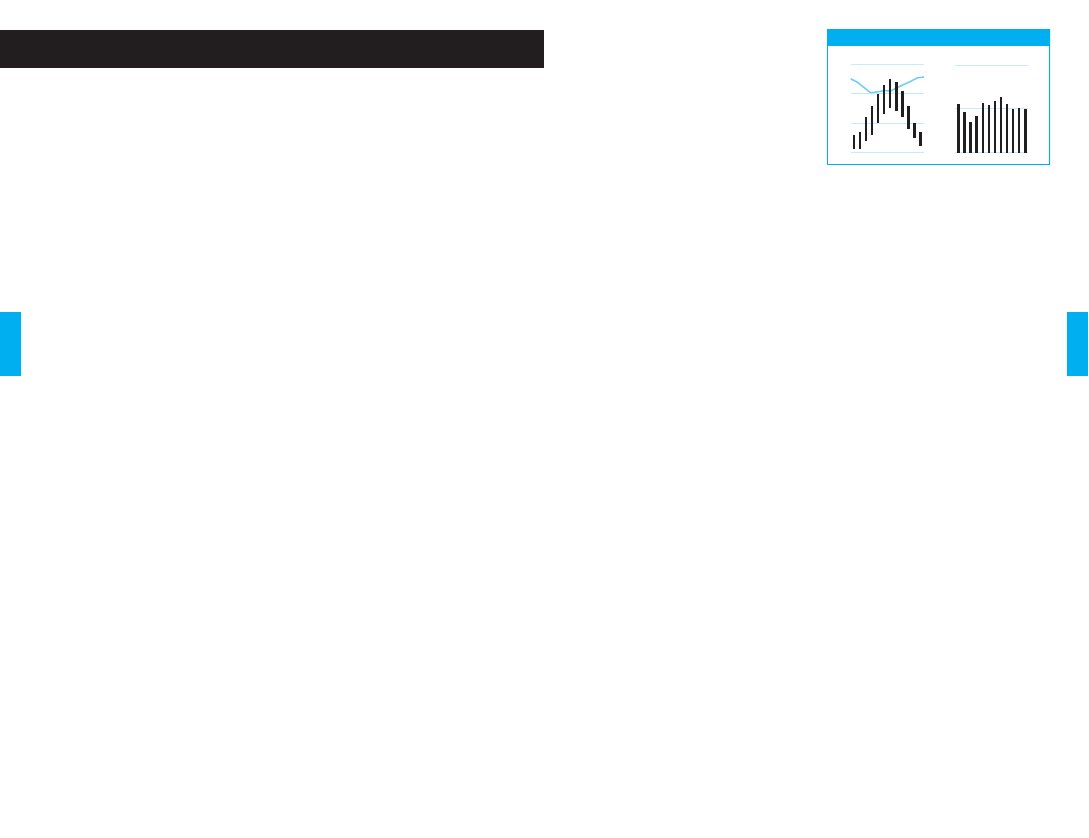
CLIMATE
The Paris basin lies midway between coastal
Brittany and mountainous Alsace and is af-
fected by both climates. The Île de France
region, of which Paris is the centre, records
among the lowest annual precipitation (about
640mm) in the nation, but rainfall is erratic;
you’re just as likely to be caught in a heavy
spring shower or an autumn downpour as in
a sudden summer cloudburst. Paris’ average
yearly temperature is just under 12°C (2°C
in January, 19°C in July), but the mercury
sometimes drops below zero in winter and can
climb into the 30s in the middle of summer.
You can find out the weather forecast in
French for the Paris area by calling %0 892
680 275. The national forecast can be heard
on %0 899 701 234 in French or %0 899
701 111 in one of 11 different languages. Call
charges for either number are €1.35 then €0.35
per minute. Another number (French only)
is %3250 charged at €0.34 per minute. The
summary can also be read for free on the web-
site of Météo France (www.meteofrance.com,
in French).
COURSES
Cooking
What better place to discover the secrets of la
cuisine française than in Paris, the capital of
gastronomy? Courses are available at different
levels and lengths of time and the cost of tui-
tion varies widely. One of the most popular –
and affordable – for beginners is the Les
Coulisses du Chef
Cours de Cuisine Olivier Berté
(
Map pp82–3
; %01 40 26 14 00; www.coursdecuisineparis
.com; 2nd fl, 7 rue Paul Lelong, 2e; mBourse)
, which of-
fers three-hour courses (adult/12 to 14 years
€100/30) at 10.30am from Wednesday to Sat-
urday with an additional class from 6pm to
9pm on Friday. ‘Carnets’ of five/20 courses
cost €440/1500.
Much more expensive are the
Paris Cook-
ing Classes with Patricia Wells
(www.patriciawells.com;
US$5000)
led by the incomparable American
food critic and author at her cooking studio
in rue Jacob, 6e. The class runs from Monday
to Friday, is limited to seven participants and
includes market visits, tastings, local transport
and daily lunch. See the boxed text on
p213
. For
DI
RE
CT
ORY
CL
IM
AT
E
lonelyplanet
.c
om
J F M A M J J A S O N D
Rainfall
50
100
0
4
2
0
mm
in
J F M A M J J A S O N D
Temp/
Humidity
50
32
86
68
10
0
30
20
100
66
33
0
°F
°C
%
PARIS
75m (256ft)
Average
Max/Min
396
397

information about getting the kids in front of
the stove, see
p249
.
Other cooking schools in Paris include the
following:
Coin-Cuisine
(
Map pp166–7
; %01 45 79 01 40; www
.coin-cuisine.fr, in French; 110 rue du Théatre, 15e; mAv
Émile Zola) Courses of various themes and levels lasting
from one to four hours (€16 to €80).
Cook’n with Class
(
Map p169
; %06 31 73 62 77; www
.cooknwithclass.com; 21 rue Custine, 18e; mChâteau
Rouge) Morning/evening/full-day classes available for
€135/135/200.
École Le Cordon Bleu
(
Map pp166–7
; %01 53 68 22
50; www.cordonbleu.edu; 8 rue Léon Delhomme, 15e;
mVaugirard or Convention) Dating back to 1895, the
Cordon Bleu school has professional courses as well as
one-day themed workshops (€160) on topics like terrines
and viennoiserie (baked goods), and two- (€299) and four-
day courses (€869) on classic and modern sauces and the
secrets of bread and pastry making.
École Ritz Escoffier
(
Map pp82–3
; %01 43 16 30 50;
www.ritzescoffier.com; 15 place Vendôme, 1er mCon-
corde) This prestigious cooking school is based in what is
arguably Paris’ finest hotel (though you also enter from 38
rue Cambon, 1er). A four-hour Saturday themed workshop
(petits fours, truffles, carving fruit and vegetables, pairing
food and wine etc) costs €135; a two-day introductory
course is €920.
Language
All manner of French-language courses, last-
ing from two weeks to a full academic year,
are available in Paris, and many places begin
new courses every month or so.
Alliance Française
(
Map pp116–17
; %01 42 84 90 00;
www.alliancefr.org; 101 blvd Raspail, 6e; h8.30am-7pm
Mon & Tue, 8.30am-6pm Wed-Fri; mSt-Placide) French
courses (minimum two weeks) at all levels begin every
two weeks; registration (€55) takes place five days before.
Intensif courses meet for four hours a day, start at 9am and
1.30pm and cost from €400/700 for two weeks/one month;
extensif courses involve three hours of class for three days a
week, start at the same two times and cost from €176/332.
Cours de Langue et Civilisation Françaises de la
Sorbonne
(
Map pp110–11
; %01 44 10 77 00, 01 40
46 22 11; www.ccfs-sorbonne.fr; Galerie Richelieu, office
C391, 17 rue de la Sorbonne, 5e; h10am-noon & 2-4pm
Mon-Fri; mCluny La Sorbonne or Maubert Mutualité)
The Sorbonne’s prestigious French Language and Civilisa-
tion Course has courses for all levels. A four-week summer
course starts at €530, while 20 hours a week of lectures and
tutorials costs €1300 per semester. Instructors take a very
academic (though solid) approach to language teaching.
Eurocentres
(
Map pp116–17
; %01 40 46 72 00; www
.eurocentres.com; 13 passage Dauphine, 6e; h8.15am-
6pm Mon-Fri; mOdéon) Intensive courses lasting two/
four weeks with 10 to 14 participants cost from €660/1272.
New courses begin every two, three or four weeks.
Inlingua
(
Map pp128–9
; %01 45 51 46 60; www
.inlingua-paris.com; 109 rue de l’Université, 7e;
h7.30am-8.15pm Mon-Fri, 9am-1.30pm Sat; mInvali-
des) Individual and group lessons for all levels, from ‘first
contacts’ through to that linguistic state we all aspire to,
‘full control’. It has seven centres, including in La Défense
and Versailles. French lessons for kids too.
Institut Parisien de Langue et de Civilisation
Françaises
(
Map pp140–1
; %01 40 56 09 53; www
.institut-parisien.com; 2nd fl, 29 rue de Lisbonne, 8e;
h8.30am-5pm Mon-Fri; mMonceau) Four-week
courses with a maximum of 10 students per class cost
€148/222/296/370 for 10/15/20/25 hours a week plus an
enrolment fee of €40.
Langue Onze
(
Map pp94–5
; %01 43 38 22 87; www
.langueonzeparis.com; 15 rue Gambey, 11e; h11am-
5pm Mon-Fri;mParmentier) Well-received independent
language school with two-/four-week intensive courses of
four hours’ instruction a day for €390/630; evening classes
(four hours a week) start at €175 for four weeks. Classes
have a maximum of nine students.
CUSTOMS REGULATIONS
Duty-free shopping within the EU was abol-
ished in 1999; you cannot, for example, buy
tax-free goods in, say, France and take them
to the UK. However, you can still enter an EU
country with duty-free items from countries
outside the EU (eg Australia, the USA) where
the usual allowances apply: 200 cigarettes, 50
cigars or 250g of loose tobacco; 2L of still wine
and 1L of spirits; 50g of perfume and 250cc
of eau de toilette.
Do not confuse these with duty-paid items
(including alcohol and tobacco) bought at
normal shops in another EU country (eg
Spain or Germany) and brought into France,
where certain goods might be more expensive.
Here allowances are generous: 800 cigarettes,
200 cigars, 400 small cigars or 1kg of loose
tobacco; and 10L of spirits (more than 22%
alcohol by volume), 20L of fortified wine or
aperitif, 90L of wine or 110L of beer.
DISCOUNT CARDS
Museums, the national rail service SNCF (So-
ciété Nationale des Chemins de Fer), ferry
companies and other institutions give dis-
DI
RE
CT
ORY
CU
ST
OMES
RE
GUL
ATIONS
lonelyplanet
.c
om
counts to those aged under 26 (ie holders of
the International Youth Travel Card, IYTC),
students with an International Student Iden-
tity Card (ISIC; age limits may apply) and le
troisième age (usually those aged over 60).
Look for the words tarif réduit (reduced rate)
or demi-tarif (half-price tariff) and then ask if
you qualify. Those under 18 years of age get
an even wider range of discounts, including
free admission to the musées nationaux (na-
tional museums). Some 22 museums are free
on the first Sunday of every month, though
not necessarily year-round. For specifics,
see
p102
.
The
Paris Museum Pass
(www.parismuseumpass.fr;
2/4/6 days €30/45/60)
is valid for entry to some
38 venues in Paris – including the Louvre,
Centre Pompidou, Musée d’Orsay as well
as the Musée du Quai Branly and Cité de
l’Architecture et du Patrimoine. Outside the
city limits but still within the Île de France
region, it will get you into another 22 places,
including the basilica at St-Denis
( p182 )
and
parts of the chateaux at Versailles
( p360 )
and
Fontainebleau
( p368 )
. The pass is conveniently
available online as well as from the participat-
ing venues, branches of the Paris Convention
& Visitors Bureau
( p411 )
, Fnac outlets
( p302 )
,
RATP (Régie Autonome des Transports Pa-
risians) information desks and major metro
stations.
ELECTRICITY
France runs on 220V at 50Hz AC. Plugs are the
standard European type with two round pins.
French outlets often have an earth (ground)
pin in which case you may have to have a
French adapter to use a two-pin European
plug. The best place for adapters and other
electrical goods is the Bazar de l’Hôtel de Ville
( p203 )
department store near Hôtel de Ville or
any branch of the electronics chain
Darty
(%0
821 082 082; www.darty.fr, in French; h10am-7.30pm Mon-
Sat)
, which has a
République branch
(Map pp92–3 )
1 av
de la République, 11e; mRépublique)
and a
Ternes branch
(
Map pp144–5
; 8 av des Ternes, 17e; mTernes)
.
EMBASSIES
French Embassies &
Consulates
Almost all of the French embassies and consu-
lates listed following have information posted
on the internet at www.france.diplomatie.fr.
Australia
embassy (%02-6216 0100; www.ambafrance
-au.org; 6 Perth Ave, Yarralumla, ACT 26000); consulate
(%02-9268 2400; www.ambafrance-au.org; 26th fl, St
Martin’s Tower, 31 Market St, Sydney, NSW 2000)
Belgium
embassy (%02-548 8700; www.ambafrance
-be.org; 65 rue Ducale, 1000 Brussels); consulate (%02-
548 8811; www.ambafrance-be.org; 42 blvd du Régent,
1000 Brussels)
Canada
embassy (%613-789 1795; www.ambafrance
-ca.org; 42 Sussex Dr, Ottawa, Ont K1M 2C9); consulate
(%416-847 1900; www.consulfrance-toronto.org; Suite
2200, 2 Bloor St East, Toronto, Ont M4W 1A8)
Germany
embassy (%030-590 03 90 00; www.am
bafrance-de.org; Parizer Platz 5, 10117 Berlin); consulate
(%069-795 09 60; www.consulatfrance.de/francfort;
Zeppelinallee 35 60325 Frankfurt am Main)
Ireland
embassy (%01-277 5000; www.ambafrance
-ie.org; 36 Ailesbury Rd, Ballsbridge, Dublin 4)
Italy
embassy (%06-686 011; www.ambafrance-it.org;
Piazza Farnese 67, 00186 Rome); consulate (%06-686
011; www.ambafrance-it.org; Via Giulia 251, 00186
Rome)
Netherlands
embassy (%070-312 58 00; www
.ambafrance-nl.org; Smidsplein 1, 2514 BT The Hague);
consulate (%020-530 69 69; www.consulfrance-amster
dam.org; Vijzelgracht 2, 1000 HR Amsterdam)
New Zealand
embassy (%04-384 2555; www.am
bafrance-nz.org; 13th fl, Rural Bank Bldg, 34-42 Manners
St, Wellington)
South Africa
embassy Apr-Jan (%012-425 1600; www
.ambafrance-rsa.org; 250 Melk St, New Muckleneuk, 0181
Pretoria); embassy Feb-Mar (%021-422 1338; www
.ambafrance-za.org; 78 Queen Victoria St, 8001 Cape Town)
Spain
embassy (%91-423 8900; www.ambafrance
-es.org; Calle de Salustiano Olozaga 9, 28001 Madrid);
consulate (%93-270 3000; www.consulfrance-barcelone
.org; Ronda Universitat 22b, 08007 Barcelona)
Switzerland
embassy (%031-359 2111; www.consul
france-geneve.org; Schlosshaldenstrasse 46, 3006 Berne);
consulate (%01-268 8585; www.consulatfrance-zurich
.org; Signaustrasse 1, 8008 Zürich)
UK
embassy (%020-7073 1000; www.ambafrance
-uk.org; 58 Knightsbridge, London SW1X 7JT); consulate
(%020-7073 1200; www.consulfrance-londres.org; 21
Cromwell Rd, London SW7 2EN)
USA
embassy (%202-944 6000; www.ambafrance
-us.org; 4101 Reservoir Rd NW, Washington, DC 20007);
consulate (%212-606 3600; www.consulfrance-newyork
.org; 934 Fifth Ave, New York, NY 10021)
DI
RE
CT
ORY
EL
EC
TRICIT
Y
lonelyplanet
.c
om
398
399

Embassies & Consulates
in Paris
It’s important to realise what your own em-
bassy – the embassy of the country of which
you are a citizen – can and cannot do to help
you if you’re in trouble. In general, it won’t
be much help if the trouble you’re in is even
remotely your own fault. Remember that you
are bound by French law while visiting Paris.
Your embassy will not be sympathetic if you
commit a crime locally, even if such actions
are legal in your own country.
In genuine emergencies you might get
some assistance, but only if other channels
have been exhausted. For example, if you need
to get home urgently, a free ticket home is ex-
ceedingly unlikely – the embassy would expect
you to have insurance. If you have all your
money and documents stolen, it might assist
with getting a new passport, but a loan for
onward travel is usually out of the question.
The following is a list of selected embassies
and consulates in Paris. For a more complete
list, consult the Pages Jaunes (Yellow Pages;
www.pagesjaunes.fr, in French) under ‘Am-
bassades et Consulats’ or the website of the
tourist office (www.parisinfo.com).
Australia
embassy (
Map pp166–7
; %01 40 59 33 00;
4 rue Jean Rey, 15e; mBir Hakeim)
Belgium
embassy (
Map pp140–1
; %01 44 09 39 39;
9 rue de Tilsitt, 17e; mCharles de Gaulle-Étoile)
Canada
embassy (
Map pp140–1
; %01 44 43 29 00;
35 av Montaigne, 8e; mFranklin D Roosevelt)
Germany
embassy (
Map pp140–1
; %01 53 83 45 00;
13-15 av Franklin D Roosevelt, 8e; mFranklin D Roo-
sevelt); consulate (
Map pp132–3
; %01 53 83 46 70;
28 rue Marbeau, 16e; mPorte Maillot)
Ireland
embassy (
Map pp132–3
; %01 44 17 67 00;
4 rue Rude, 16e; mArgentine)
Italy
embassy (
Map pp128–9
; %01 49 54 03 00;
47-51 rue de Varenne, 7e; mRue du Bac); consulate (
Map
pp132–3
; %01 44 30 47 00; 5 blvd Émile Augier, 16e;
mLa Muette)
Japan
embassy
(
Map pp140–1
; %01 48 88 62 00;
7 av Hoche, 8e; mCourcelles)
Netherlands
embassy (
Map pp128–9
; %01 40 62 33 00;
7 rue Eblé, 7e; mSt-François Xavier)
New Zealand
embassy (
Map pp132–3
; %01 45 00 24
11; 7ter rue Léonard de Vinci, 16e; mVictor Hugo)
South Africa
embassy (
Map pp128–9
; %01 53 59 23 23;
59 quai d’Orsay, 7e; mInvalides)
Spain
embassy (
Map
pp140-1
; %01 44 43 18 00;
22 av Marceau, 8e; mAlma-Marceau)
Switzerland
embassy (
Map pp128–9
; %01 49 55 67
00; 142 rue de Grenelle, 7e; mVarenne); consulate (
Map
pp166–7
; %01 45 66 00 80; 13 rue du Laos, 15e)
UK
embassy (
Map
pp140-1
; %01 44 51 31 00; 35 rue
du Faubourg St-Honoré, 8e; mConcorde); consulate
(
Map
pp140-1
; %01 44 51 31 02; 18bis rue d’Anjou, 8e;
mConcorde)
USA
embassy ( pp140-1
; %01 43 12 22 22; 2 av Gabriel,
8e; mConcorde); consulate (
Map
pp82-3
; %0 810 264
626; 2 rue St-Florentin, 1er; mConcorde)
EMERGENCY
The following numbers are to be dialled in an
emergency. See
p403
for hospitals with 24-hour
accident and emergency departments.
Ambulance
(SAMU; %15)
EU-wide emergency hotline
(%112)
Fire brigade
(%18)
Police
(%17)
Rape crisis hotline
(Viols Femmes Informations; %0 800
05 95 95; h10am-7pm Mon-Fri)
SOS Helpline
(%01 47 23 80 80; hin English 3-11pm
daily)
SOS Médecins
(%01 47 07 77 77, 24hr house calls 0 820
33 24 24; www.sosmedecins-france.fr)
Urgences Médicales de Paris
(Paris Medical Emergencies;
%01 53 94 94 94; www.ump.fr, in French)
Lost Property
All objects found anywhere in Paris – except
those picked up on trains or in train stations –
are brought to the city’s
Bureau des Objets Trouvés
(Lost Property Office;
Map pp166–7
; %0 821 00 25 25; www
.prefecture-police-paris.interieur.gouv.fr/demarches/article/serv-
ice_objets_trouves.htm, in French; 36 rue des Morillons, 15e;
h8.30am-5pm Mon-Thu, 8.30am-4.30pm Fri; mConvention),
which is run by the Préfecture de Police. Since
telephone enquiries are impossible, the only
way to find out if a lost item has been located is
to go there and fill in the forms in person.
Items lost on the metro are held by
station
agents
(%3246; h7am-9pm Mon-Fri, 9am-5pm Sat &
Sun)
before being sent to the Bureau des Ob-
jets Trouvés. Anything found on trains or
stations is taken to the lost-property office
(usually attached to the left-luggage office)
of the relevant station. Phone enquiries (in
French) are possible:
DI
RE
CT
ORY
EMERGENC
Y
lonelyplanet
.c
om
Gare d’Austerlitz
(%01 53 60 71 98)
Gare de l’Est
(%01 40 18 88 73)
Gare de Lyon
(%01 53 33 67 22)
Gare du Nord
(%01 55 31 58 40)
Gare Montparnasse
(%01 40 48 14 24)
Gare St-Lazare
(%01 53 42 05 57)
HOLIDAYS
There is at least one public holiday a month
in France and, in some years, up to four in
the month of May alone. Be aware, though,
that unlike in the USA or UK, where public
holidays usually fall on (or are shifted to) a
Monday, in France a jour férié (public holi-
day) is celebrated strictly on the day on which
it falls. Thus if May Day falls on a Saturday
or Sunday, no provision is made for an extra
day off.
The following holidays are observed in
Paris:
New Year’s Day
(Jour de l’An) 1 January
Easter Sunday & Monday
(Pâques & Lundi de Pâques)
Late March/April
May Day
(Fête du Travail) 1 May
Victory in Europe Day
(Victoire 1945) 8 May
Ascension Thursday
(L’Ascension) May (celebrated on the
40th day after Easter)
Pentecost/Whit Sunday & Whit Monday
(Pentecôte
& Lundi de Pentecôte) Mid-May to mid-June (Seventh
Sunday and Monday after Easter)
Bastille Day/National Day
(Fête Nationale) 14 July
Assumption Day
(L’Assomption) 15 August
All Saints’ Day
(La Toussaint) 1 November
Armistice Day/Remembrance Day
(Le Onze Novembre)
11 November
Christmas
(Noël) 25 December
INSURANCE
A travel insurance policy to cover theft, loss
and medical problems is a good idea. There
is a wide variety of policies available, so check
the small print. EU citizens on public-health
insurance schemes should note that they’re
generally covered by reciprocal arrangements
in France.
You may prefer a policy which pays doctors
or hospitals directly rather than you having to
pay on the spot and then claim it back later.
If you have to claim later make sure you keep
all documentation. Ensure that your policy
covers ambulances or an emergency flight
home.
Paying for your airline ticket with a credit
card often provides limited travel accident
insurance, and you may be able to reclaim the
payment if the operator doesn’t deliver. Ask
your credit card company what it’s prepared
to cover.
INTERNET ACCESS
Paris has a surfeit of internet cafés. Among the
biggest, best and/or most central:
Baby Connect
(
Map pp116–17
; %01 40 62 98 00; 56 rue
de Babylone, 7e; per 15/30/60min €1/2/4; h10am-8pm
Mon-Sat; mSt-François Xavier) Very near La Pagode
cinema.
Cyber Cube
(
Map pp124–5
; %01 56 80 08 08; www
.cybercube.fr; 9 rue d’Odessa, 14e; per 15/30min €1/2, per
5/10hr €30/40; h10am-10pm; mMontparnasse Bien-
venüe) One of three branches; expensive but convenient to
Gare Montparnasse.
Cyber Latin
(
Map pp116–17
; %01 42 22 89 35; 35bis rue
de Fleurus, 6e; per 15/30/60min €1.25/2.25/4, per 5/10/20hr
€17/34/56; h9.30am-7.30pm Mon-Fri, 11.30am-7.30pm
Sat; mSt-Placide) Just west of the Jardin du Luxembourg.
Cyber Squ@re
(
Map
pp92–3
; %01 48 87 82 36; info@
cybersquare-paris.com; 1 place de la République; per
5/15/30/60min €0.75/2.30/3.80/6, per 10/20hr €45/76;
h10am-8pm Mon-Sat; mRépublique) This small but
convivial place on two levels is entered from passage
Vendôme.
Manga Square
(
Map p86
; 28 blvd de Sébastopol, 4e; per
1hr €3, per 5/10 hr €15/27.50; h1-10pm; mLes Halles)
Groovy cyber café in a shop selling Japanese comic books.
Milk
(
Map pp110–11
; %0 820 00 10 00; www.milklub
.com; 17 rue Soufflot, 5e; daytime per 1/2/3/5hr
€4/7/9/12, night time per 3/10hr €6/13; h24hr;
mLuxembourg) This branch of a minichain of seven
internet cafés, including a big
Les Halles branch
(
Map
p86
; 31 blvd de Sébastopol, 1er; h24hr; mLes Halles),
is bright, buzzy and open round the clock.
Netvision
(
Map pp116–17
; %01 43 25 13 90; 10 Gît le
Cœur, 6e; per 1min €0.07, 20min €1.40; h10am-8pm;
mSt-Michel) On a quiet street west of the blvd St-Michel.
Phon’net
(
Map pp94–5
; %01 42 05 10 73; 74 rue de
Charonne, 11e; per 1/5/15/30hr €5/16/30/45; h10am-
midnight; mCharonne or Ledru Rollin)
Taxiphone Internet
(
Map p169
; %01 42 59 64 14; 2 rue
de La Vieuville, 18e; per 5/10/20/30/60min €0.50/1/2/3/4,
per 5hr €10; h9am-10pm Mon-Sat; mAbbesses) One
of the few internet cafés in high-rent Montmartre.
DI
RE
CT
ORY
HOL
ID
AYS
lonelyplanet
.c
om
400
401

Web 46
(
Map pp98–9
; %01 40 27 02 89, fax 01 40 27 03
89; 46 rue du Roi de Sicile, 4e; per 15/30/60min €2.50/4/7,
per 5hr €29; h10am-11pm Mon-Fri, 10am-9pm Sat,
noon-11pm Sun; mSt-Paul) Pleasant, very well-run café
in the heart of the Marais.
Zeidnet
(
Map pp110–11
; %01 44 07 20 15; www
.zeidnet.com; 18 rue de la Bûcherie, 5e; per 10/30/60min
€1/2.50/4; h10.30am-11pm; mMaubert-Mutualité)
Small and personal, handy to Notre Dame.
LAUNDRY
There’s a laverie libre-service (self-service
laundrette) around every corner in Paris;
your hotel or hostel can point you to one in
the neighbourhood. Machines usually cost
€3.50 to €4.50 for a small load (around 6kg)
and €5.50 to €8 for a larger one (about 10kg).
Drying costs €1 for 10 to 12 minutes. Some
laundrettes have self-service nettoyage à sec
(dry-cleaning) machines.
You usually pay at a monnayeur central
(central control box) – not the machine it-
self – and push a button that corresponds to
the number of the washer or dryer you wish
to operate. Some machines don’t take notes;
come prepared with change for the séchoirs
(dryers) as well as the lessive (laundry powder)
and javel (bleach) dispensers.
The control boxes are sometimes
programmed to deactivate the machines 30
minutes to an hour before closing time.
Among centrally located self-service laun-
drettes are the following:
C’Clean Laverie
(
Map pp94–5
; 18 rue Jean-Pierre Tim-
baud, 11e; h7am-9pm; mOberkampf )
Julice Laverie
56 rue de Seine, 6e; h7am-11pm (
Map
pp116–17
; mMabillon); 22 rue des Grands Augustins, 6e;
h7am-9pm (
Map pp116–17
; mSt-André des Arts)
Lav’ Net
(
Map pp110–11
; 88 bis blvd du Port-Royal, 5e;
mPort-Royal)
Laverie Libre Service
7 rue Jean-Jacques Rousseau, 1er,
near the BVJ Paris-Louvre hostel (
Map p86
; h7.30am-
10pm; mLouvre-Rivoli); 14 rue de la Corderie, 3e (
Map
pp92–3
; h8am-9pm, mRépublique or Temple); 35 rue
Ste-Croix la Bretonnerie, 4e (
Map pp98–9
; h7am-9pm,
mHôtel de Ville); 25 rue des Rosiers, 4e (
Map pp98–9
;
h7.30am-10pm; mSt-Paul); 216 rue St-Jacques, 5e,
three blocks southeast of the Panthéon (
Map pp110–11
;
h7am-10pm; mLuxembourg) 63 rue Monge, 5e, south
of the Arènes de Lutèce (
Map pp110–11
; h6.30am-10pm;
mPlace Monge) 3 rue de la Montagne Ste-Geneviève & 2
rue Jean de Beauvais, 5e (
Map pp110–11
; h7am-11pm;
mMaubert-Mutualite); 116 rue d’Assas, 6e (
Map pp116–
17
; h7am-10pm; mMabillon); 94 rue du Dessous des
Berges, 12e (
Map pp162–3
; h7.30am-10pm; mBibli-
othèque); 92 rue des Martyrs, 18e (
Map p169
; h7.30am-
10pm; mAbbesses); 4 rue Burq, 18e, west of the Butte de
Montmartre (
Map p169
; h7.30am-10pm; mBlanche)
Laverie Libre Service Primus
40 rue du Roi de Sicile,
4e(
Map p98–9
; h7.30am-10pm mSt-Paul); 83 rue
Jean-Pierre Timbaud, 11e; h7.30am-10pm (
Map p155
;
mCouronnes)
Laverie Miele Libre Service
(
Map pp94–5
; 4 rue de
Lappe, 11e; h7am-10pm; mBastille)
Laverie SBS
(Map pp152–3 )
; 6 rue des Petites Écuries, 10e;
h7am-10pm; mChâteau d’Eau)
Salon Lavoir Sidec
(
Map p169
; 28 rue des Trois Frères,
18e; h7am-8.50pm; mAbbesses)
LEGAL MATTERS
Drink Driving
As elsewhere in the EU, the laws in France
are very tough when it comes to drinking
and driving, and for many years the slogan
has been: ‘Boire ou conduire, il faut choisir’
(roughly – to make it rhyme in English too –
‘To drive or to booze, you have to choose’).
The acceptable blood-alcohol limit is 0.05%,
and drivers exceeding that amount but still
under 0.08% (the limit in the UK and Ire-
land) face a fine of €135; over 0.08% and it
could cost you €4500 (or a maximum of two
years in jail). Licences can also be immediately
suspended. If you cause an accident while
driving under the influence, the fine could
be increased to €30,000. And if you cause
serious bodily harm or commit involuntary
manslaughter, you face 10 years in jail and a
fine of up to €150,000.
The Police
Thanks to the Napoleonic Code on which
the French legal system is based, the police
can search anyone they want to at any time –
whether or not there is probable cause.
France has two separate police forces. The
Police Nationale, under the command of de-
partmental prefects (and, in Paris, the Préfet
de Police), includes the Police de l’Air et des
Frontières (PAF; the border police). The Gen-
darmerie Nationale, a paramilitary force under
the control of the Ministry of Defence, handles
airports, borders and so on. During times of
crisis (eg a wave of terrorist attacks), the army
may be called in to patrol public places.
DI
RE
CT
ORY
LA
U
N
D
RY
lonelyplanet
.c
om
The dreaded Compagnies Républicaines
de Sécurité (CRS) – riot-police heavies to be
avoided at all costs – are part of the Police
Nationale. You often see hundreds of them,
each bigger and butcher than the next and
armed with the latest riot gear, at marches or
demonstrations. Police with shoulder patches
reading ‘Police Municipale’ are under the con-
trol of the local mayor.
The American concept of neighbourhood
cops walking their beat or the British bobby
giving directions does not exist whatsoever in
France; police here are to maintain order, not
mingle and smile. If asked a direct question,
a French policeman or policewoman will be
correct and helpful but not much more; assist-
ing tourists is not part of their job description.
If the police stop you for any reason, be polite
and remain calm. They have wide powers of
search and seizure and, if they take a dislike
to you, they may choose to use them all. Be
aware that the police can, without any particu-
lar reason, decide to examine your passport,
visa, carte de séjour (residence permit) and so
on. Do not challenge them.
French police are very strict about secu-
rity. Do not leave baggage unattended; they
are quite serious when they say that suspi-
cious objects will be summarily blown up.
Your bags will be inspected and you will have
to pass through security gates not only at
airports but also at many public buildings
(including certain museums and galleries)
throughout the city. If asked to open your
bag or backpack for inspection, please do
so willingly – it’s for your (and our) safety
ultimately.
MAPS
The most ubiquitous (and user-friendly)
pocket-sized street atlas available is
L’Indispensable’s Paris Practique par Ar-
rondissement (€4.90), though the similar
Paris Utile (€4.50) from Blay Foldex has its
supporters. More detailed is Michelin’s Paris
Poche Plan (No 50; €2.20). All of these are
usually available from newsstands and the
Espace IGN
( p213 )
.
MEDICAL SERVICES
If you are not an EU citizen, it is imperative
that you take out travel insurance before your
departure. EU passport holders have access
to the French social security system, which
reimburses up to 70% of medical costs.
Hospitals
There are some 50 assistance publique (pub-
lic health service) hospitals in Paris. If you
need an ambulance, call %15; the EU-wide
emergency number (with English speakers) is
%112. For emergency treatment, call
Urgences
Médicales de Paris
(%01 53 94 94 94) or
SOS Médecins
(%01 47 07 77 77 or 0 820 332 424)
. Both offer 24-
hour house calls costing between €35 and €90
depending on the time of day and whether
you have French social security.
Hospitals in Paris include the following:
American Hospital in Paris
(off
Map pp144–5
;%01
46 41 25 25; www.american-hospital.org; 63 blvd Victor
Hugo, 92200 Neuilly-sur-Seine; mPont de Levallois
Bécon) Private hospital offering emergency 24-hour medi-
cal and dental care.
Hertford British Hospital
(off
Map pp144–5
;%01 46
39 22 22; www.british-hospital.org; 3 rue Barbès, 92300
Levallois-Perret; mAnatole France) A less-expensive
private English-speaking option than the American
Hospital.
Hôpital Hôtel Dieu
(
Map p105
; %01 42 34 82 34; www
.aphp.fr, in French; 1 place du Parvis Notre Dame, 4e;
mCité) One of the city’s main government-run public
hospitals (Assistance Publique Hôpitaux de Paris); after
8pm use the emergency entrance on rue de la Cité.
Dental Clinics
For emergency dental care contact either of
the following:
Hôpital de la Pitié-Salpêtrière
(
Map pp162–3
; %01 42
16 00 00; rue Bruant, 13e; mChevaleret) The only dental
hospital with extended hours – from 6am to 10.30pm.
After 5.30pm use the emergency entrance at 83 blvd de
l’Hôpital, 13e (metro St-Marcel).
SOS Dentaire
(
Map pp162–3
; %01 43 37 51 00; 87 blvd
de Port Royal, 13e; mPort Royal) A private dental office
that offers services when most dentists are off-duty (8pm
to 11pm weekdays, 9.45am to 11pm weekends).
Pharmacies
Pharmacies with extended hours:
Pharmacie Bader
(
Map pp116–17
; %01 43 26 92 66; 12
blvd St-Michel, 5e; h9am-9pm; mSt-Michel)
Pharmacie de La Mairie
(
Map pp98–9
; %01 42 78 53 58;
9 rue des Archives, 4e; h9am-8pm; mHôtel de Ville)
Pharmacie des Champs
(
Map pp140–1
;%01 45 62 02
41; Galerie des Champs, 84 av des Champs-Élysées, 8e;
h24hr; mGeorge V)
DI
RE
CT
ORY
MA
PS
lonelyplanet
.c
om
402
403

Pharmacie des Halles
(
Map p86
; %01 42 72 03 23; 10
blvd de Sébastopol, 4e; h9am-midnight Mon-Sat, 9am-
10pm Sun; mChâtelet)
Pharmacie Européenne
(
Map pp144–5
; %01 48 74 65
18; 6 place de Clichy, 17e; h24hr; mPlace de Clichy)
MONEY
France is among the 15 member-states of the
EU (Austria, Belgium, Cyprus, Finland, Ger-
many, Greece, Ireland, Italy, Luxembourg,
Malta, the Netherlands, Portugal, Slovenia
and Spain) that have adopted the euro (abbre-
viated € and pronounced eu-roh in French)
as its national currency. One euro is divided
into 100 cents (centimes in French). There are
seven euro notes in different colours and sizes;
they come in denominations of €5, €10, €20,
€50, €100, €200 and €500. The designs on the
recto (generic windows or portals) and verso
(imaginary bridges, map of the EU) are exactly
the same in all 15 countries and symbolise
openness and cooperation.
The eight coins in circulation are in de-
nominations of €1 and €2, then one, two, five,
10, 20 and 50 cents. The ‘head’ side of the
coin, on which the denomination is shown, is
identical throughout the euro zone; the ‘tail’
side is specific to each member-state, though
euro coins can be used anywhere that accepts
euros, of course. In France the €1 (silver centre
with brassy ring) and €2 (brassy centre with
silver ring) coins portray the tree of liberty;
the 10, 20 and 50 cent coins (all brass) have la
Semeuse (the Sower), a recurring theme in the
history of the French franc; and the one, two
and five cent coins (all copper) portray Mari-
anne, the symbol of the French Republic.
Exchange rates are given in the Quick Ref-
erence section on the inside front cover of this
book. The latest rates are available on websites
such as www.oanda.com and www.xe.com.
For a broader view of the local economy and
costs in Paris, see
p15
.
ATMs
You’ll find an ATM, which here is known as
as a DAB (distributeur automatique de billets)
or point d’argent, linked to the Cirrus, Maes-
tro, Visa or MasterCard networks, virtually
on every corner. Those without a local bank
account should know that there is usually a
transaction surcharge of around €3 for cash
withdrawals. You should contact your bank
to find out how much this is before using
ATMs too freely.
Changing Money
In general, cash is not a very good way to carry
money. Not only can it be stolen, but in France
it doesn’t usually offer the best exchange rates.
What’s more, in recent years ATMs and the
euro have virtually wiped out bureaux de
change and even centrally located banks rarely
offer exchange services these days.
That said, some banks, post offices and
bureaux de change pay up to 2.5% or more
for travellers cheques, more than making up
for the 1% commission usually charged when
buying the cheques in the first place.
Post offices that have a Banque Postale can
offer the best exchange rates, and they accept
banknotes (commission €4.50) in various cur-
rencies as well as travellers cheques issued by
Amex (no commission) or Visa (1.5%, mini-
mum €4.50).
Commercial banks usually charge a simi-
lar amount per foreign-currency transaction.
For example BNP Paribas charges €5.95 for
cash while Société Générale takes €5.40 (or
€11.40 if you don’t bank with them). The rates
charged on travellers cheques vary but neither
BNP Paribas or Société Générale charge a fee
to change travellers cheques in euros.
In Paris, bureaux de change are usually
faster and easier, open longer hours and give
better rates than most banks. It’s best to fa-
miliarise yourself with the rates offered by
the post office and compare them with those
on offer at bureaux de change, which are not
generally allowed to charge commissions. Bu-
reaux de change charge anything between 6%
and 13% plus €3 or €4 on cash transactions
and 6% to just under 10% (plus €3) to change
travellers cheques.
Among some of the better bureaux de
change:
American Express Bureau de Change
(
Map pp148–9
;
%01 47 77 79 50; 11 rue Scribe, 9e; h9am-6.30pm
Mon-Sat; mAuber or Opéra)
Best Change
(
Map p86
; %01 42 21 46 05; 21 rue du
Roule, 1er; h9.30am-7pm Mon-Sat; mLouvre Rivoli)
Three blocks southwest of Forum des Halles.
CCO
(
Map pp82–3
; %01 42 66 24 44; 12 blvd de
Capucines, 9e; h9am-5.30pm Mon-Fri, 9.30am-4pm Sat;
mOpéra); Opéra branch (
Map pp148–9
; %01 47 42 20
96; 9 rue Scribe, 9e; h9am-5.30pm Mon-Fri, 9.30am-
4pm Sat; mOpéra)
European Exchange Office
(
Map p169
; %01 42 52 67
19; 6 rue Yvonne Le Tac, 18e; h10am-noon & 2-6pm
Mon-Sat; mAbbesses) A few steps from the Abbesses
metro station.
DI
RE
CT
ORY
MONE
Y
lonelyplanet
.c
om
Le Change du Louvre
(
Map p86
; %01 42 97 27 28; 151
rue St-Honoré, 1er; h10am-6pm Mon-Fri; mPalais
Royal-Musée du Louvre) This moneychanger is on the
northern side of Le Louvre des Antiquaires
( p80 )
.
Multi Change
(
Map pp116–17
; %01 42 22 45 00; 180
blvd St-Germain, 6e; h9am-6.30pm Mon-Sat; mSt-
Germain des Prés) Just west of Église St-Germain des Prés.
Société Touristique de Services
(
Map pp110–11
; %01
43 54 76 55; 2 place St-Michel, 6e; h9am-8pm Mon-Fri,
10am-8pm Sat; mSt-Michel) A bureau de change in the
heart of the Latin Quarter.
Credit Cards
In Paris, Visa/Carte Bleue is the most widely
accepted credit card, followed by MasterCard
(Eurocard). Amex cards can be useful at more
upmarket establishments. In general, all three
cards can be used for train travel, restaurant
meals and cash advances.
When you get a cash advance on your Visa
or MasterCard account, your issuer charges a
transaction fee, which can be high; check with
your card issuer before leaving home. Some
banks charge a commission of 4% (minimum
around €6) for a cash advance though BNP
Parisbas does it for free (though the card-holder’s
issuing bank will probably do so) to a maximum
of €1000. American Express takes a 5% com-
mission on cash advances on Visa cards.
Call the following numbers if your card
is lost or stolen. It may be impossible to get
a lost Visa or MasterCard reissued until you
get home so two different credit cards are
generally safer than just one.
Amex
(%01 47 77 72 00, 01 71 23 08 38)
Diners Club
(%0 820 82 05 36, 0 800 22 20 73)
MasterCard/Eurocard
(%0 800 90 13 87, 01 45 67 84 84)
Visa/Carte Bleue
(%0 892 70 57 05, 0 800 90 20 33)
Travellers Cheques
The most flexible travellers cheques are is-
sued by American Express (in US dollars or
euros) and Visa, as they can be changed at
many post offices.
Amex offices charges a commission on all
travellers cheques of about 4% (minimum €2).
If your Amex travellers cheques are lost or sto-
len while you are in Paris, call %0 800 83 28
20 (24-hour, toll-free). Reimbursements can be
made at the main
American Express
office
(
Map pp148–9
;
%01 47 77 79 50; www.americanexpress.fr, in French; 11 rue
Scribe, 9e; h9am-5.30pm Mon-Sat; mAuber or Opéra)
.
NEWSPAPERS & MAGAZINES
Among English-language newspapers widely
available in Paris are the International Her-
ald Tribune (€2.50), which is edited in Paris
and has very good coverage of both French
and international news; the Guardian and
the more compact Guardian Weekly; the Fi-
nancial Times; the Times of London; and the
colourful (if lightweight) USA Today. English-
language news weeklies that are widely
available include Newsweek, Time and the
Economist. For information about the French-
language press, see
p54
.
The Paris-based Fusac (France USA Con-
tacts), a freebie issued every two weeks, con-
sists of hundreds of ads placed by companies
and individuals. To place one yourself, con-
tact
Fusac
(
Map pp124–5
; %01 56 53 54 54; www.fusac
.fr; 26 rue Bénard, 14e; h10am-7pm Mon-Fri; mAlésia or
Pernety)
,still going strong after two decades. It
is distributed free at Paris’ English-language
bookshops, Anglophone embassies and the
American Church
(
Map pp128–9
; %01 40 62 05 00; www
.acparis.org; 65 quai d’Orsay, 7e; reception h9am-noon &
1-10pm Mon-Sat, 2-7.30pm Sun; mPont de l’Alma or Invali-
des)
, which functions as a kind of community
centre for English speakers and is an excel-
lent source of information on au pair work,
short-term accommodation etc. The free Paris
Times (www.theparistimes.com), published
monthly, is also worth a look. See the website
for a full list of distribution points.
ORGANISED TOURS
If you can’t be bothered making your own way
around Paris or don’t have the time, consider
a tour by air, bus, boat, bicycle or on foot.
There’s no reason to feel sheepish or embar-
rassed about taking a guided tour. They are an
excellent way to learn the contours of a new
city, and even experienced guidebook writers
have been known to join them from time to
time. Most useful are the buses and other con-
veyances that allow you to disembark when
and where you want and board the next one
that suits you. They usually offer little or no
commentary aside from calling out the stop
names but offer the most freedom to do what
you want.
True couch potatoes will head for
Paris Story
(
Map pp148–9
; %01 42 66 62 06; www.paris-story.com; 11bis
rue Scribe, 9e; adult/student & 6-17yr/family €10/6/26, under 6 yr
free; h10am-6pm; mAuber or Opéra)
, which includes
a 50-minute audiovisual romp through Paris’
2000-year history on the hour, with headset
DI
RE
CT
ORY
NE
WSP
APER
S & M
AG
AZ
INE
S
lonelyplanet
.c
om
404
405

commentary in 14 languages; an interactive
model of Paris called
Paris Miniature
; and
Paris
Experience
, a gallery of five themed video clips.
Air
Hot-air balloon
Ballon Eutelsat
(
Map pp166–7
; %01
44 26 20 00; www.aeroparis.com, in French; Parc André Citroën,
2 rue de la Montagne de la Fage, 15e; Mon-Fri adult/3-11 yr/12-
17yr €10/5/9, Sat & Sun €12/6/10, under 3yr free; h9am-
5.30pm to 9.30pm (seasonal); mBalard)
, in the Parc
André Citroën in southwestern Paris, lifts you
150m off the ground and offers fabulous views
of Paris and the Seine. But don’t expect to get
very far; the helium-filled balloon remains
firmly tethered to the ground. Be sure to call
in advance as the balloon does not ascend in
windy conditions.
A company called
iXAir
(
Map pp166–7
; %01 30 08
80 80; www.ixair.com, in French; 4 av de la Porte de Sèvres, 15e;
mPorte de Sèvres) at the Héliport de Paris next to
the Aquaboulevard in the 15e offers circuits
by helicopter over the city lasting between 25
and 45 minutes for €128 to €195. You should
book 10 to 15 days ahead.
Bicycle
Fat Tire Bike Tours
(
Map pp166–7
; %01 56 58 10 54; www
.fattirebiketoursparis.com; 24 rue Edgar Faure, 15e; hof-
fice 9am-6pm; mLa Motte-Picquet Grenelle)
offers
daytime bike tours of the city (adult/student
€24/22; four hours), starting at 11am daily
from mid-February to early January, with an
additional departure at 3pm from April to
October. Night bicycle tours (adult/student
€28/26) depart at 7pm on Sunday, Tuesday,
Thursday and Saturday from mid-February
to mid-March and in November and at the
same time daily from mid-March to October.
A day and night combination tour costs €48
for adults and €44 for students.
Participants can meet at the Fat Tire Bike
Tours office, where you can store bags, log
on to the internet and get tourist informa-
tion, but tours actually depart from opposite
the Eiffel Tower’s South Pillar at the start of
the Champ de Mars; just look for the yellow
signs. Costs include the bicycle and, if neces-
sary, rain gear.
The same company runs
City Segway Tours
(www.citysegwaytours.com)
which, though not on bi-
cycles, involve two-wheeled, electric-powered
conveyances. Segway tours (€70), which fol-
low an abbreviated route of the bike tours
and last four hours, depart at 9.30am from
mid-February to early January, with an extra
tour at 6.30pm from April to October. You
must book these tours in advance.
Bike tours lasting three hours from cycle shop
Gepetto & Vélos
(
Map pp110–11
; %01 43 54 19 95; www
.gepetto-et-velos.com, in French; 59 rue du Cardinal Lemoine,
5e; tours €25; h9am-1pm & 2-7.30pm Tue-Sat, 10am-1pm
& 2-7pm Sun; mCardinal Lemoine)
include guide, bi-
cycle and insurance. There is also a branch
in the
Latin Quarter
(
Map pp110–11
; h01 43 37 16 17;
46 rue Daubenton, 5e; h9am-1pm & 2-7.30pm Tue-Sat;
mCensier Daubenton).
RATP-sponsored
Maison Roue Libre
(
Map p86
;
%0 810 44 15 34; www.rouelibre.fr; Forum des Halles, 1
passage Mondétour, 1er; adult/under 26 yr €27/20, with own
bike €17; h9am-7pm Feb-Oct, 10am-6pm Wed-Sun Nov
& Jan; mLes Halles)
has as many as 15 different
themed bike tours from 12km to 26km lasting
from three to eight hours. Tours operate on
certain weekend days throughout the year
starting at 10am, 2pm or 8pm. Consult the
website for exact details. The
Bastille branch
(
Map
pp92–3
; %0 810 44 15 34; 37 blvd Bourdon, 4e; mBastille)
keeps the same hours but shuts Wednesday
and Thursday in winter.
Paris à Vélo, C’est Sympa!
(
Map pp94–5
; %01 48 87
60 01; www.parisvelosympa.com, in French; 22 rue Alphonse
Baudin, 11e; h9.30am-1pm & 2-6pm Mon-Fri, 9am-1pm
& 2-7pm Sat & Sun Apr-Oct, 9.30am-1pm & 2-5.30pm Mon-
Fri, 9am-1pm & 2-6pm Sat & Sun Nov-Mar; mSt-Sébastien
Froissart)
This association with the cringey name
(Paris by Bike is Nice!) has five different three-
hour bike tours available for €34/28/18 for
adult/12 to 25 years/under-12 years. Prices
include bicycle and insurance.
Boat
Be it on what Parisians call la ligne de vie de
Paris (the lifeline of Paris or the Seine) or the
rejuvenated canals to the northeast, a boat
cruise is the most relaxing way to watch the
city glide by.
CANAL CRUISES
Canauxrama
(
Map pp158–9
&
Map pp174–5
; %01 42 39
15 00; www.canauxrama.com, in French; Bassin de la Villette,
13 quai de la Loire, 19e; Mon-Fri adult/6-12yr/student & senior
€15/8/11, under 6yr free, admission afternoon Sat & Sun €15;
hMar-Nov; mJaurès) has barges that run from
Port de Plaisance de Paris-Arsenal, 12e, oppo-
site 50 blvd de la Bastille, to Parc de la Villette,
19e, along charming Canal St-Martin and
Canal de l’Ourcq. Departures are at 9.45am
and 2.30pm from Port de Plaisance de Paris-
Arsenal during the season and, in summer
DI
RE
CT
ORY
OR
GA
N
ISED
T
OUR
S
lonelyplanet
.c
om
only, at 9.45am and 2.45pm from Bassin de la
Villette. The cruise last 2½ hours.
Paris Canal Croisières
(
Map pp174–5
; %01 42 40 96 97;
www.pariscanal.com; Bassin de la Villette, 19-21 quai de la
Loire, 19e; adult/4-11yr/senior & 12-25yr €17/10/14, under 4yr
free; hlate Mar–mid-Nov; mJaurès or Musée d’Orsay)
has
2½-hour cruises from quai Anatole France
(7e), northwest of Musée d’Orsay, at 9.30am
and departing from Parc de la Villette for the
return trip at 2.30pm.
RIVER CRUISES
On the Right Bank just east of Pont de l’Alma,
Bateaux-Mouches
(
Map pp140–1
; %01 42 25 9610; www.bateaux
mouches.com, in French; Port de la Conférence, 8e; adult/senior
& 4-12yr €9/4, under 4 yr free; hmid-Mar–mid-Nov; mAlma
Marceau)
, the most famous river-boat company
in Paris, runs nine 1000-seat glassed-in tour
boats, still the largest on the Seine. Cruises (70
minutes) depart eight times a day between
10.15am and 3.15pm and then every 20 minutes
till 11pm April to September and 10 times a day
between 10.15am and 9pm the rest of the year.
Commentary in French and English.
From its base northwest of the Eiffel Tower,
Bateaux Parisiens
(
Map pp132–3
; %0 825 01 01 01; www
.bateauxparisiens.com; Port de la Bourdonnais, 7e; adult/3-11yr
€10.50/5, under 3yr free; hevery half hr 10am-10.30pm
Apr-Sep, hourly 10am-10pm Oct-Mar; mPont de l’Alma)
runs one-hour river circuits with recorded
commentary in 13 different languages.
La Marina de Paris
(
Map pp128–9
; %01 43 43 40 30; www
.marinadeparis.com; port de Solferino, quai Anatole France, 7e;
mMusée d’Orsay) offers lunch cruises at 12.15pm
(€51) and dinner cruises at 6.30pm (€45 and
€59) and 9pm (€79). They last about 2¼ hours
and a menu for those under 12 (€39) is avail-
able at all meals.
Vedettes du Pont Neuf
(
Map p105
; %01 46 33 98 38;
www.pontneuf.net; square du Vert Galant, 1er; adult/4-12yr
€11/6; hevery half hr 10.30am-noon, 1.30-8pm & 9-10.30pm
mid-Mar-Oct; mPont Neuf )
, whose home dock is at
the far western tip of the Île de la Cité (1er),
has one-hour boat excursions year-round.
From November to mid-March there are 13
departures from 10.30am to 10pm Monday
to Thursday and 15 departures until 10.30pm
Friday to Sunday.
Bus
In season, RATP
Balabus
(%3246; www.ratp.fr;
€1.40 or 1 metro/bus ticket; hdepartures 12.30-8pm from La
Défense, 1.30pm from Gare de Lyon Sun Apr-Sep)
, designed
for tourists, follows a 50-minute route to/from
Gare de Lyon
(Map pp158–9 )
and La Défense
(Map p180 )
, passing many of central Paris’ most
famous sights.
Located just opposite the western end of
the Louvre,
Cityrama
(
Map pp82–3
; %01 44 55 60 00;
www.pariscityrama.com; 2 rue des Pyramides, 1er; adult/4-
11yr €18/9; htours 10am, 11.30am & 2.30pm; mTuileries)
runs 1½-hour tours of the city, accompanied
by taped commentaries in 16 languages, three
times a day year-round.
L’Open Tour
(
Map pp148–9
; %01 42 66 56 56; www.paris
cityrama.com; 13 rue Auber, 9e; 1 day adult/4-11yr €26/13, 2
consecutive days €29/13; mHavre Caumartin or Opéra)
, now
part of the same group, runs open-deck buses
along four circuits (central Paris, 2¼ hours;
Montmartre-Grands Boulevards, 1¼ hours;
Bastille-Bercy, one hour; and Montparnasse-
St-Germain, one hour) daily year-round. You
can jump on and off at more than 50 stops.
On the ‘Grand Tour’ of central Paris, with
some 20 stops on both sides of the river be-
tween Notre Dame and the Eiffel Tower, buses
depart every 10 to 15 minutes from 9.30am
to 7pm April to October and every 25 to 30
minutes from 9.45am to 6pm November to
March. Holders of the Paris Visite card
( p394 )
pay €22 for a one-day pass.
Walking
If your French is up to it, the sky’s the limit on
specialised and themed walking tours avail-
able in Paris. Both Pariscope and Officiel des
Spectacles
( p302 )
list a number of themed walks
(usually €10) each week under the heading
‘Conférences’ or ‘Visites Conférences’. They
are almost always informative and entertain-
ing, particularly those run by
Paris Passé, Présent
(%01 42 58 95 99; http://parispassepresent.free.fr)
and
Écoute du Passé
(%01 42 82 11 81, 06 83 89 18 25)
.
Long-established and highly rated by read-
ers,
Paris Walks
(%01 48 09 21 40; www.paris-walks.com;
adult/under 15yr/student under 21 from €10/5/8)
has tours
in English of several different districts, includ-
ing Montmartre at 10.30am on Sunday and
Wednesday (leaving from metro Abbesses,
Map
p169
) and the Marais at 10.30am on Tuesday
and 2.30pm on Sunday (departing from metro
St-Paul,
Map pp98–9
). There are other tours fo-
cusing on people and themes, eg Hemingway,
medieval Latin Quarter, fashion, the French
Revolution and – yum-yum – chocolate.
PHOTOGRAPHY
Kodak and Fuji colour-print film is avail-
able in supermarkets, photo shops and cer-
tain Fnac stores, but it is relatively expensive
DI
RE
CT
ORY
PH
OT
OG
RA
PH
Y
lonelyplanet
.c
om
406
407

compared with a lot of other countries so it
might pay to stock up before you leave home.
Developing a 24-exposure film costs around
€13 but can be almost twice that if you want
your photos in a hurry. Printing 50 digitals
(10cm x 13cm) costs between €9.50 and €12
plus €2 for developing.
It’s getting increasingly difficult to find
express photo labs in Paris. One place with
labs for both traditional and digital work and
highly recommended by professionals is
Né-
gatif+
(
Map pp148–9
; %01 45 23 41 60; www.negatifplus
.com, in French; 104-106 rue La Fayette, 10e; h8am-7.30pm
Mon-Fri, 10am-1pm & 2-7.30pm Sat; mPoissonière)
.
PLACES OF WORSHIP
The following places offer services in English.
For a more comprehensive list of churches
and other places of worship, check the Pages
Jaunes (Yellow Pages; www.pagesjaunes.fr).
or the website of the tourist office (http://
en.parisinfo.com/guide-paris/worship).
Adath Shalom Synagogue
(
Map pp166–7
; %01 45 67
97 96; www.adathshalom.org, in French; 8 rue George
Bernard Shaw, 15e; mDupleix) Conservative Jewish.
American Cathedral in Paris
(
Map pp140–1
; %01 53
23 84 00; www.americancathedral.org; 23 av George V, 8e;
mAlma Marceau) Protestant.
American Church in Paris
(
Map pp128–9
; %01 40 62
05 00; www.acparis.org; 65 quai d’Orsay, 7e; mInvalides)
Nondenominational Protestant.
Church of Jesus Christ of the Latter Day Saints
(
Map
pp174–5
; %01 42 45 29 29; 64-66 rue de Romainville,
19e; mPorte des Lilas) Mormon.
First Church of Christ Scientist
(
Map pp124–5
; %01
47 07 26 60; 36 blvd St-Jacques, 14e; mSt-Jacques)
Christian Scientist.
Mosquée de Paris
(
Map pp110–11
; %01 45 35 97 33;
www.mosquee-de-paris.org, in French; 2bis place du Puits de
l’Ermite, 5e; mCensier Daubenton or Place Monge) Muslim.
St Joseph’s Catholic Church
(
Map pp140–1
; %01 42 27
28 56; www.stjoeparis.org; 50 av Hoche, 8e; mCharles de
Gaulle-Étoile) Roman Catholic.
Sri Manikar Vinayakar Temple
(
Map p169
; %01 40 34 21
89; 72 rue Philippe de Girard, 18e; mMarx Dormoy) Hindu.
POST
Most post offices (bureaux de poste) in Paris
are open from 8am to 7pm weekdays and 8am
or 9am till noon on Saturday. Tabacs (tobac-
conists) usually sell postage stamps.
The
main post office
(
Map pp82–3
; www.laposte.fr,
in French; 52 rue du Louvre, 1er; h24hr; mSentier or Les
Halles)
, five blocks north of the eastern end
of the Musée du Louvre, is open round the
clock, but only for basic services such as send-
ing letters and picking up poste restante mail
(window 11; €0.54 per letter). Other services,
including currency exchange, are available
only during regular opening hours. Be pre-
pared for long queues after 7pm and at the
weekend. Poste restante mail not specifically
addressed to a particular branch post office
will be delivered here. There is a one-hour
closure from 6.20am to 7.20am Monday to
Saturday and from 6am to 7am on Sunday.
Each arrondissement has its own five-digit
postcode, formed by prefixing the number
of the arrondissement with ‘750’ or ‘7500’
(eg 75001 for the 1er arrondissement, 75019
for the 19e). The only exception is the 16e,
which has two postcodes: 75016 and 75116.
All mail to addresses in France must include
the postcode. Cedex (Courrier d’Entreprise à
Distribution Exceptionelle) simply means that
mail sent to that address is collected at the
post office rather than delivered to the door.
Domestic letters weighing up to 20/50g
cost €0.55/0.88. Postcards and letters up to
20/50g sent within the EU cost €0.65/1.25 and
€0.85/1.70 to the rest of the world.
RADIO
You can pick up a mixture of the BBC World
Service and BBC for Europe in Paris on 648
kHz AM. The Voice of America (VOA) is on
1197 kHz AM and 96.9 MHz FM. You can
pick up an hour of Radio France Internation-
ale (RFI) news in English three times a day
(7am, 2.30pm and 4.30pm) on 738 kHz AM.
Pocket-sized short-wave radios and the in-
ternet make it easy to keep abreast of world
news in English wherever you are. The BBC
World Service can be heard on 6195 kHz,
9410 kHz and 12095 kHz (a good daytime
frequency), depending on the time of day.
BBC Radio 4 broadcasts on 198 kHz LW,
and carries BBC World Service programming
in the wee hours of the morning. The VOA
broadcasts in English at various times of the
day on 7170 kHz, 9535 kHz, 9760 kHz, 9770
kHz, 11805 kHz, 15205 kHz and 15255 kHz.
The following are some of the more popular
French-language radio stations:
FIP
(105.1MHz FM) Eclectic mix of musical genres, with
some news and cultural info; a favourite with Parisians and
part of France Inter.
DI
RE
CT
ORY
PL
AC
ES
O
F WO
RS
HIP
lonelyplanet
.c
om
France Info
(105.5 MHz FM; www.france-info.com) Oper-
ates 24-hour, all-news radio.
France Inter
(87.8 MHz FM; www.radiofrance.fr/france
inter/accueil) Talk-back station specialising in music, news
and entertainment.
Paris Jazz
(88.2 MHz FM; www.comfm.com/live/radio
/parisjazz) Jazz and blues.
Radio FG
(98.2 MHz FM; www.radiofg.com) The station for
house, techno, garage, trance, club news and gigs.
Radio Nova
(101.5 MHz FM; www.novaplanet.com)
Latino, clubs, modern beats.
TSF
(89.9 MHz FM; www.tsfjazz.com) Popular jazz station.
RELOCATING
If you’re considering moving to Paris and you
are not a citizen of the EU you must have both
a carte de séjour (residence permit;
p412
) and
an autorisation de travail (work permit;
p414
).
Neither is easy to come by.
For practical information on living and
working in employment in Paris and France,
pick up a copy of Live and Work in France
by Victoria Pybus, now in its 5th edition, or
Living and Working in France: A Survival
Handbook by David Hampshire.
The fortnightly Fusac
( p405 )
is an excellent
source for job-seekers.
SAFETY
In general, Paris is a safe city and random
street assaults are rare. The so-called Ville
Lumière (City of Light) is generally well lit,
and there’s no reason not to use the metro
until it stops running at some time between
12.30am and just past 1am. As you’ll notice,
women do travel alone on the metro late at
night in most areas, though not all who do so
report feeling 100% comfortable.
Metro stations that are best avoided late
at night include Châtelet-Les Halles and
its seemingly endless corridors, Château
Rouge in Montmartre, Gare du Nord, Stras-
bourg St-Denis, Réaumur Sébastopol, and
Montparnasse Bienvenüe. Bornes d’alarme
(alarm boxes) are located in the centre of each
metro/RER platform and in some station cor-
ridors.
Nonviolent crime such as pickpocketing
and thefts from handbags and packs is a
problem wherever there are crowds, espe-
cially packs of tourists. Places to be particu-
larly careful include Montmartre (especially
around Sacré Cœur); Pigalle; the areas around
Forum des Halles and the Centre Pompidou;
the Latin Quarter (especially the rectangle
bounded by rue St-Jacques, blvd St-Germain,
blvd St-Michel and quai St-Michel); below
the Eiffel Tower; and anywhere on the metro
during rush hour. Take the usual precautions:
don’t carry more money than you need, and
keep your credit cards, passport and other
documents in a concealed pouch, a hotel safe
or a safe-deposit box.
Vigipirate is a security plan devised by the
Paris city council to combat terrorism. Both
citizens and visitors are asked to report any
abandoned luggage or package at all times.
When the full Vigipirate scheme is put into ac-
tion, public litter bins are sealed, left-luggage
services in train stations and at airports are
unavailable, checks at the entrances to public
buildings and tourist sites are increased, and
cloakrooms and lockers in museums and at
monuments are closed.
TAXES & REFUNDS
France’s value-added tax (VAT) is known as
TVA (taxe sur la valeur ajoutée) and is 19.6%
on most goods except medicine and books,
for which it’s 5.5%. Prices that include TVA
are often marked TTC (toutes taxes comprises;
literally ‘all taxes included’).
If you’re not an EU resident, you can get a
TVA refund provided that: you’re aged over
15; you’ll be spending less than six months
in France; you purchase goods worth at least
€175 at a single shop on the same day (not
more than 10 of the same item); the goods fit
into your luggage; you are taking the goods
out of France within three months after pur-
chase; and the shop offers vente en détaxe
(duty-free sales).
Present a passport at the time of pur-
chase and ask for a bordereau de vente à
l’exportation (export sales invoice) to be
signed by the retailer and yourself. Most
shops will refund less than the full amount
(about 14%) to which you are entitled, in
order to cover the time and expense involved
in the refund procedure.
As you leave France or another EU country,
have all three pages of the bordereau vali-
dated by the country’s customs officials at
the airport or at the border. Customs officials
will take one sheet and hand you two. You
must post one copy (the pink one) back to
the shop and retain the other (green) sheet
for your records in case there is any dispute.
Once the shop where you made your purchase
DI
RE
CT
ORY
REL
OC
ATING
lonelyplanet
.c
om
408
409

receives its stamped copy, it will send you
a virement (fund transfer) in the form you
have requested. Be prepared for a wait of up
to three months.
If you’re flying out of Orly or Roissy Charles
de Gaulle, certain shops can arrange for you
to receive your refund as you’re leaving the
country though you must complete the steps
outlined preceding. You must make such ar-
rangements at the time of purchase.
For more information contact the
customs
information centre
(%0 820 02 44 44; www.douane.minefi
.gouv.fr; h8.30am-6pm Mon-Fri)
.
TELEPHONE
There are no area codes in France – you al-
ways dial the 10-digit number. Telephone
numbers in Paris always start with %01.
Mobile phones through France commence
with %06.
Once the domain of France Télécom, the
domestic service des renseignements (directory
enquiries or assistance) is now offered by over
a dozen operators on six-digit numbers start-
ing with 118 (France Télécom, for example,
uses %118 710, 118 711, 118 712 and 118
810). For a complete listing in French consult
www.allo118.com.
Note that while numbers beginning with
%0 800, 0 804, 0 805 and 0 809 are toll-free in
France, other numbers beginning with ‘8’ are
not. A number starting with %0 810 or 0 811
is charged at local rates (€0.078 then €0.028)
while one beginning with %0 820 and 0 821
cost €0.12 per minute, or even €0.15 if the
prefix numbers are %0 890. The ubiquitous
%0 892 numbers are billed at an expensive
€0.34 per minute whenever you call. %0 899
numbers cost €1.35 per connection then €0.34
per minute, Numbers beginning with %0 897
cost a flat €0.562 per call.
Most four-digit numbers starting with 10,
30 or 31 are also free of charge.
France’s country code is %33. To call a
number in Paris from outside France, dial
your country’s international access code (usu-
ally %00 but exceptions include %011 from
the USA and %001 from Hong Kong), then
%33 and then the local number, omitting
the first ‘0’.
To call abroad from Paris, dial France’s
international access code (%00), the country
code (see
right
), the area code (usually without
the initial ‘0’, if there is one) and the local
number. International Direct Dial (IDD) calls
to almost anywhere in the world can be placed
from public telephones. The international re-
duced rate applies from 7pm to 8am weekdays
and all day at the weekend.
For international directory enquiries, dial
%3212. Note that the cost for this service is
€3 per call. Instead consult the phone book on
the internet (www.pagejaunes.fr).
Selected country codes
Australia
%61
Belgium
%32
Canada
%1
Germany
%49
Ireland
%353
Italy
%39
Netherlands
%31
New Zealand
%64
South Africa
%27
Spain
%34
Switzerland
%41
UK
%44
USA
%1
Mobile Phones
France uses the GSM 900 network, which is
compatible with the rest of Europe, Australia
and New Zealand but not with the North
American GSM 1900 (though many North
Americans now have GSM 1900/900 phones
that do work in France) or the totally different
system in Japan. If you have a GSM phone,
check with your service provider about using
it in France, and beware of calls being routed
internationally, which can make a ‘local’ call
very expensive indeed.
It’s usually most convenient to buy a local
SIM card from one of the major providers
such as
Orange/France Telecom
(%0 800 83 08 00 or
%+33 1 41 43 79 40 outside France; www.orange.fr, in
French)
has a €59 package that includes a Sony
Ericson MP3 mobile phone, a local phone
number and €5 of call time.
For more time, you can buy a prepaid Mo-
bicarte recharge card (€5 to €100) from tabacs
(tobacconist) and other places you’d buy a
télécarte (phonecard); Mobicartes from €25
upward offer extra talk time (€5 bonus for
€25, €10 bonus for €35, up to €50 extra for
€100). If you don’t mind changing your tele-
phone number to a French one during your
stay, you can also buy a local SIM card for
your mobile (provided it’s not blocked) for
€20 (plus 10 minutes’ talk time) and recharge
with Mobicartes as you go along. The biggest
outlet is
La Boutique Orange
(
Map pp140–1
; 16 place de la
Madeleine, 8e; h10am-7pm Mon-Sat; mMadeleine).
DI
RE
CT
ORY
TELEPHONE
lonelyplanet
.c
om
Phonecards
All public phones can receive both domestic
and international calls. If you want some-
one to call you back, just give them France’s
country code and the 10-digit number, usually
written after the words ‘Ici le…’ or ‘No d’appel’
on the tariff sheet or on a little sign inside the
phone box. Remind them to drop the ‘0’ of the
initial ‘01’ of the number. When there’s an
incoming call, the words ‘décrochez – appel
arrive’ (pick up receiver – incoming call) will
appear in the LCD window.
Public telephones in Paris usually require
a télécarte (phonecard; €7.50/15 for 50/120
calling units), which can be purchased at post
offices, tabacs, supermarkets, SNCF ticket
windows, metro stations and anywhere you
see a blue sticker reading ‘télécarte en vente
ici’ (phonecard for sale here).
You can buy prepaid phonecards in France
such as Allomundo (www.allomundo.com, in
French) that are up to 60% cheaper for calling
abroad than the standard télécarte. They’re
usually available in denominations of up to
€15 from tabacs, newsagents, phone shops
and other sales points, especially in ethnic
areas such as rue du Faubourg St-Denis (10e),
Chinatown (13e) and Belleville (19e and 20e).
In general they’re valid for two months but the
ones offering the most minutes for the least
euros can expire in just a week.
TIME
France uses the 24-hour clock in most case,
with the hours usually separated from the
minutes by a lower-case ‘h’. Thus, 15h30 is
3.30pm, 00h30 is 12.30am and so on.
France is on Central European Time,
which is one hour ahead of (ie later than)
GMT. During daylight-saving time, which
runs from the last Sunday in March to the
last Sunday in October, France is two hours
ahead of GMT.
Without taking daylight-saving time into
account, when it’s noon in Paris it’s 11pm in
Auckland, 11am in London, 6am in New York,
3am in San Francisco and 9pm in Sydney.
TIPPING
French law requires that restaurant, café and
hotel bills include a service charge (usually
between 12% and 15%); for more information
on tipping at restaurants and cafés, see
p228
.
Taxi drivers expect small tips of between 5%
and 10% of the fare though the usual proce-
dure is to round up to the nearest €1 regard-
less of the fare.
TOILETS
Public toilets in Paris are signposted toilettes
or WC. The tan-coloured, self-cleaning cylin-
drical toilets you see on Parisian pavements
are open 24 hours and are free of charge. Look
for the words libre (‘free’; green-coloured) or
occupé (‘occupied’; red-coloured).
Café-owners do not appreciate you using
their facilities if you are not a paying customer.
When desperate, try a fast-food place, major
department store or even a big hotel. There
are free public toilets in front of Notre Dame
cathedral, near the Arc de Triomphe, east
down the steps at Sacré Cœur, at the north-
western entrance to the Jardins des Tuileries
and in some metro stations. Check out the
wonderful Art Nouveau public toilets, built
in 1905, below place de la Madeleine, 8e
(Map
pp140–1 )
. In older cafés and bars, you may find
a toilette à la turque (Turkish-style toilet),
which is what the French call a squat toilet.
TOURIST INFORMATION
The main branch of the
Paris Convention & Visi-
tors Bureau
(Office de Tourisme et de Congrès de Paris;
Map
pp82–3
; %0 892 68 30 00; www.parisinfo.com; 25-27 rue des
Pyramides, 1er; h9am-7pm Jun-Oct, 10am-7pm Mon-Sat &
11am-7pm Sun Nov-May, closed May Day; mPyramides)
is
about 500m northwest of the Louvre.
The bureau also maintains a handful of
centres elsewhere in Paris, listed following
(telephone numbers and websites are the same
as for the main office). For details of the area
around Paris, contact Espace du Tourisme
d’Île de France,
p360
.
Anvers
(
Map p169
; opp 72 blvd Rochechouart, 18e;
h10am-6pm, closed Christmas Day, New Year’s Day &
May Day; mAnvers)
Gare de Lyon
(
Map pp158–9
; Hall d’Arrivée, 20 blvd
Diderot, 12e; h8am-6pm Mon-Sat, closed May Day) In
the arrivals hall for mainline trains.
Gare du Nord
(Map pp152–3 )
18 rue de Dunkerque, 10e;
h8am-6pm, closed Christmas Day, New Year’s Day &
May Day; mGare du Nord) Under the glass roof of the Île
de France departure and arrival area at the eastern end of
the station.
Syndicate d’Initiative de Montmartre
(
Map p169
; %01
42 62 21 21; 21 place du Tertre, 18e; h10am-7pm;
mAbbesses) This locally run tourist office and shop is in
Montmartre’s most picturesque square and open year-round.
DI
RE
CT
ORY
TIME
lonelyplanet
.c
om
410
411

Information offices beyond central Paris in-
clude those at La Défense and St-Denis:
Espace Info-Défense
(
Map p180
; %01 47 74 84 24;
www.ladefense.fr; 15 place de la Défense; h9am-
5.15pm Mon-Fri; mLa Défense Grande Arche) La
Défense’s tourist office has reams of free information,
including the useful Discover La Défense brochure and
details on cultural activities.
Office de Tourisme de St-Denis Plaine Commune
(
Map
p182
; %01 55 87 08 70; www.saint-denis-tourisme
.com, in French; 1 rue de la République; h9.30am-1pm
& 2-6pm Mon-Sat, 10am-2pm Sun Oct-Mar, 10am-1pm &
2-4pm Sun Apr-Sep; mBasilique de St-Denis) This helpful
tourist office is 100m west of the basilica.
TRAVELLERS WITH
DISABILITIES
Paris is an ancient city and is thus not particu-
larly well equipped for les handicapés (disabled
people): kerb ramps are few and far between,
older public facilities and bottom-end hotels
usually lack lifts, and the metro, dating back
more than a century, is inaccessible for those
in a wheelchair (fauteuil roulant). But efforts
are being made and early in the new millen-
nium the tourist office launched its ‘Tourisme
& Handicap’ initiative in which museums, cul-
tural attractions, hotels and restaurants that
provided access or special assistance or facilities
for those with physical, mental, visual and/or
hearing disabilities would display a special logo
at their entrances. For a list of the places quali-
fying, visit the tourist office’s website (www
.parisinfo.com) and click on ‘Practical Paris’.
Information & Organisations
The SNCF has made many of its train car-
riages more accessible to people with physical
disabilities. A traveller in a wheelchair can
travel in both the TGV (train à grande vitesse;
high-speed train) and in the 1st-class carriage
with a 2nd-class ticket on mainline trains pro-
vided they make a reservation by phone or
at a train station at least a few hours before
departure. Details are available in the SNCF
booklet Le Mémento du Voyageur Handicapé
(Handicapped Traveller Summary) available
at all train stations. For advice on planning
your journey from station to station contact
the SNCF service
Acces Plus
(%0 890 64 06 50; www
.accessibilite.sncf.com, in French).
For information on accessibility to all
forms of public transport in the Paris region,
get a copy of the Guide Practique à l’Usage des
Personnes à Mobilité Réduite (Practical Usage
Guide for those with Reduced Mobility) from
the
Syndicat des Transports d’Île de France
(%0 810 64
64 64; www.stif-idf.fr)
. Its
Info Mobi
(www.infomobi.com,
in French)
is especially useful. Also helpful is the
RATP’s Assistance Voyageurs à Mobilité Réduite
(Assistance
for Travellers with Reduced Mobility; %01 53 11 11 12)
.
For information about what cultural venues
in Paris are accessible visit the website of
Access
Culture
(www.accessculture.org)
.
Access in Paris, a 245-page guide to the
French capital for the disabled, was being
updated at the time of research and should
be available from
Access Project
(www.accessinparis
.org; 39 Bradley Gardens, West Ealing, London W13 8HE, UK)
by the time you read this.
The following organisations can provide
information to disabled travellers:
Association des Paralysées de France
(APF; %01 40 78
69 00; www.apf.asso.fr, in French; 17 blvd Blanqui, 75013
Paris) Brochures on wheelchair access and accommodation
throughout France, including Paris.
Groupement pour l’Insertion des Personnes Handi-
capées Physiques
(GIHP; %01 43 95 66 36; www
.gihpnational.org, in French; 10 rue Georges de Porto
Riche, 75014 Paris) Provides special vehicles outfitted for
people in wheelchairs for use within the city.
Mobile en Ville
(%06 82 91 72 16; 1 rue de
l’Internationale; www.mobile-en-ville.asso.fr, in French;
B.P. 59, 91002 Evry) Association set up in 1998 by students
and researchers with the aim of making independent travel
within the city easier for people in wheelchairs.
VISAS
There are no entry requirements for nation-
als of EU countries. Citizens of Australia, the
USA, Canada and New Zealand do not need
visas to visit France for up to three months.
Except for people from a handful of other
European countries (including Switzerland),
everyone, including citizens of South Africa,
needs a so-called Schengen Visa, named after
the Schengen Agreement that has abolished
passport controls among 22 EU countries and
has also been ratified by the non-EU govern-
ments of Iceland, Norway and Switzerland. A
visa for any of these countries should be valid
throughout the Schengen area, but it pays to
double check with the embassy or consulate
of each country you intend to visit.
Visa fees depend on the current exchange
rate but transit and the various types of short-
stay (up to 90 days) visas all cost €60, while a
DI
RE
CT
ORY
TR
AV
ELLE
RS
WITH D
IS
ABILITIE
S
lonelyplanet
.c
om
long-stay visa allowing stays of more than 90
days costs €99. You will need: your passport
(valid for a period of three months beyond the
date of your departure from France); a return
ticket; proof of sufficient funds to support
yourself; proof of prearranged accommoda-
tion; a recent passport-sized photo; and the
visa fee in cash payable in local currency.
If all the forms are in order, your visa
will usually be issued on the spot. You can
also apply for a French visa after arriving in
Europe – the fee is the same, but you may
not have to produce a return ticket. If you
enter France overland, your visa may not be
checked at the border, but major problems
can arise if the authorities discover that you
don’t have one later on (for example, at the
airport as you leave the country).
Carte de Séjour
If you are issued a long-stay visa valid for six
months or longer, you should apply for a carte
de séjour (residence permit) within eight days
of your arrival in France. Students must apply
in person for a carte de séjour at the
Centre des
Étudiants Étrangers
(Foreign Student Centre;
Map pp166–7
;
%01 53 71 51 68; 13 rue Miollis, 15e; h8.30am-4.30pm
Mon-Thu, 8.30am-4pm Fri; mCambronne or Ségur)
. Arrive
early – the queues can be mammoth.
Those holding a passport from one of the
original EU member-states and seeking to
take up residence in France no longer need
to acquire a carte de séjour; their passport or
national ID card is sufficient. Citizens of any
one of the 10 so-called accession countries
that joined the EU in 2004 who wish to stay
permanently must for the time being apply to
the Service Étranger (Foreigner Service) office
on the ground floor next to escalier F (stairway
F) in the
Préfecture de Police
(
Map p105
; %01 53 71 51
68; www.prefecture-police-paris.interieur.gouv.fr, in French;
1 place Louis Lépine,
15e 4e; h8.30am-4.50pm Mon-Thu,
8.30am-4.15pm Fri; mCité)
for guidance.
Foreigners with non-EU passports must
go to one of two offices, depending on the
arrondissement in which they’re living or
staying. The offices are open from 9am to
4.30pm Monday to Thursday and from 9am
to 4pm on Friday. The office that deals with
1er to 10e and 15e to 18e Arrondissements
is
Hôtel de Police
(
Map pp144–5
; %01 44 90 37 17; 19-21
rue Truffaut, 17e; mPlace de Clichy or La Fourche)
; for 11e
to 14e and 19e to 20e Arrondissements go to
Hôtel de Police
(
Map pp124–5
; %01 53 74 14 06; 114-116
av du Maine, 15e 14e; mGaîté)
.
Long-Stay & Student
If you would like to work, study or stay in
France for longer than three months, apply
to the French embassy or consulate nearest to
you for the appropriate long séjour (long-stay)
visa. For details of au pair visas, which must
be arranged before you leave home (unless
you’re an EU resident), see
p414
.
Unless you hold an EU passport, it’s ex-
tremely difficult to get a visa that will allow
you to work in France. For any sort of long-
stay visa, begin the paperwork in your home
country several months before you plan to
leave. Applications cannot usually be made
in a third country nor can tourist visas be
turned into student visas after you arrive in
France. People with student visas can apply
for permission to work part-time; enquire at
your place of study.
Visa Extensions
Tourist visas cannot be extended except in
emergencies (such as medical problems). If
you have an urgent problem, you should call
the Service Étranger (Foreigner Service) at the
Préfecture de Police (see left
) for guidance.
If you don’t need a visa to visit France,
you’ll almost certainly qualify for another
automatic three-month stay if you take the
train to, say, Geneva or Brussels and then re-
enter France. The fewer recent French entry
stamps you have in your passport the easier
this is likely to be.
If you needed a visa the first time around,
one way to extend your stay is to go to a
French consulate in a neighbouring country
and apply for another one there.
WOMEN TRAVELLERS
In 1923 French women obtained the right
to – wait for it – open their own mail. The
right to vote didn’t come until 1945 during De
Gaulle’s short-lived postwar government, and
a woman still needed her husband’s permis-
sion to open a bank account or get a passport
until 1964. It was in such an environment that
Simone de Beauvoir wrote Le Deuxième Sexe
(The Second Sex) in 1949.
Younger French women especially are
quite outspoken and emancipated but self-
confidence has yet to translate into equality
in the workplace, where women are not in-
frequently passed over for senior and man-
agement positions in favour of their male
colleagues. Women attract more unwanted
DI
RE
CT
ORY
WO
ME
N TR
AV
ELLE
RS
lonelyplanet
.c
om
412
413

attention than men, but female travellers
need not walk around Paris in fear: people
are rarely assaulted on the street. However,
the French seem to have given relatively little
thought to sexual harassment (harcèlement
sexuel), and many men still think that to
stare suavely at a passing woman is to pay
her a compliment.
Information & Organisations
France’s women’s movement flourished as
in other countries in the late 1960s and early
1970s, but by the mid-80s had become mori-
bund. For reasons that have more to do with
French society than anything else, few women’s
groups function as the kind of supportive so-
cial institutions that exist in English-speaking
countries.
La Maison des Femmes de Paris
(
Map pp158–9
; %01
43 43 41 13; http://maisondesfemmes.free.fr in French; 163 rue
de Charenton, 12e; hoffice 9am-7pm Mon-Fri; mReuilly
Diderot)
is a meeting place for women of all ages
and nationalities, with events, workshops and
exhibitions scheduled throughout the week.
France’s national
rape-crisis hotline
(%0 800
05 95 95; h10am-7pm Mon-Fri)
can be reached
toll-free from any telephone, without using a
phonecard. It’s run by a group called
Collectif
Féministe contre le Viol
(Feminist Collective Against Rape;
CFCV; www.sosviol.com)
.
In an emergency, you can always call the
police
(%17). Medical, psychological and legal
services are available to people referred by the
police at the
Service Médico-Judiciaire
(%01 42 34 86
78; h24hr)
of the Hôtel Dieu
( p403 )
.
WORK
Although there are strict laws preventing non-
EU nationals from being employed in France,
it’s possible to work ‘in the black’ (ie without
the legally required documents). Au pair work
is popular and can be done legally even by
non-EU nationals.
To work legally in France you need a carte
de séjour
( p412 )
. Getting one is almost impos-
sible if you aren’t a citizen of the EU, unless
you are a full-time student. At the same time
non-EU nationals cannot work legally unless
they obtain an autorisation de travail (work
permit) before arriving in France. This is no
easy matter, as a prospective employer has
to convince the authorities that there is no
French person – or other EU national, for
that matter – who can do the job being of-
fered to you.
In addition to the fortnightly Fusac
( p405 )
,
an excellent source for job-seekers, the follow-
ing agencies might be of some assistance.
Agence Nationale pour l’Emploi
(National Employment
Agency; ANPE; www.anpe.fr, in French),
France’s national
employment service, has lists of job openings
and branches throughout the city. The
ANPE
Hôtel de Ville
branch
(
Map pp98–9
; %01 42 71 24 68; 20bis
rue Ste-Croix de la Bretonnerie, 4e; h9am-5pm Mon-Wed &
Fri, 9am-noon Thu; mHôtel de Ville)
assists those resid-
ing in the 1er, 4e and 12e arrondissements.
Centres d’Information et de Documentation Jeunesse
(CIDJ; Youth Information & Documentation Centres; www.cidj
.com, in French)
offices have information on hous-
ing, professional training and educational
options, and notice boards with work possi-
bilities. Its
Paris headquarters
(
Map pp166–7
; %01 44
49 12 00, 0 825 090 630; 101 quai Branly, 15e; h10am-6pm
Mon-Wed & Fri, 1-6pm Thu, 9.30am-1pm Sat; mChamp de
Mars-Tour Eiffel)
is a short distance southwest of
the Eiffel Tower.
Doing Business
If you are going to Paris on business, it’s a
good idea to contact one of the main com-
mercial offices or your embassy’s trade office
in Paris before you leave home, to establish
contacts and make appointments. These in-
clude the following:
American Chamber of Commerce
(
Map pp140–1
; %01
56 43 45 67; www.amchamfrance.org; 1st fl, 156 blvd
Haussmann, 75008 Paris)
Australian Trade Commission
(
Map pp166–7
; %01 40 59
33 85; www.austrade.gov.au; 4 rue Jean Rey, 75015 Paris)
Canadian Government Department of Commercial &
Economic Affairs
(
Map pp140–1
; %01 44 43 29 00;
www.amb-canada.fr; 35-37 av Montaigne, 75008 Paris)
Chambre de Commerce et d’Industrie de Paris
(
Map
p86
; CCIP; %01 55 65 40 03, 0 820 012 112; www
.ccip.fr, in French; Bourse de Commerce, 2 rue de Viarmes,
75001 Paris)
France-Canada Chamber of Commerce
(
Map pp128–9
;
%01 43 59 32 38; www.ccfc-france-canada.com, in
French; 5 rue Constantine, 75007 Paris)
Franco-British Chamber of Commerce & Industry
(
Map
pp140–1
; %01 53 30 81 30; www.francobritishchamber
.com; 3rd fl, 31 rue Boissy d’Anglas, 75008 Paris)
Irish Embassy Trade Office
(
Map pp132–3
; %01 44 17 67
04; www.embassyofirelandparis.com; 4 rue Rude, 75016 Paris)
New Zealand Embassy Trade Office
(
Map pp132–3
;
%01 45 01 43 10; www.nzembassy.com/france; 7ter rue
Léonard de Vinci, 75116 Paris)
DI
RE
CT
ORY
WO
RK
lonelyplanet
.c
om
UK Embassy Trade Office
(Map pp140-1
; %01 44 51
34 56; www.amb-grandebretagne.fr; 35 rue du Faubourg
St-Honoré, 75008 Paris)
US Embassy Trade Office
(Map pp140-1
; %01 43 12 23
83; www.buyusa.gov/france/en; 2 av Gabriel, 75008 Paris)
If you are looking to set up a business in
France and need a temporary office or secre-
tarial assistance, contact the following:
Copy-Top
(www.copytop.com, in French; h9am-7pm)
This chain is useful for photocopying, printing etc and has
28 outlets in central Paris, including a
Bastille branch
(
Map pp94–5
; %01 48 05 80 84; 87 blvd Voltaire, 11e;
mVoltaire) and a
Montparnasse branch
(
Map pp124–5
;
%01 42 22 80 58; 52 blvd du Montparnasse, 15e;
mMontparnasse Bienvenüe).
NewWorks
(www.newworks.net, in French; h9am-
7pm) This service bureau chain can supply most of your
office and secretarial needs and serve as your temporary
office too. There are four outlets, including
Champs-
Élysées branch
( Map pp140-1
; %01 72 74 24 54; 10 rue
du Colisée, 8e; mFranklin D Roosevelt).
Volunteering
Under what’s called the au pair system, single
people aged 18 to 27 can live with a French
family and receive lodging, full board and
some pocket money in exchange for tak-
ing care of the kids, babysitting, doing light
housework and perhaps teaching English
to the children. Most families prefer young
women, but some positions are also avail-
able for men. Many families want au pairs
who are native English-speakers; knowing at
least some French may be a prerequisite. For
practical information, pick up the recently
updated Au Pair and Nanny’s Guide to Work-
ing Abroad by Susan Griffith and Sharon Legg
and visit the website of the
International Au Pair
Association
(www.iapa.org).
By law, au pairs must have one full day off
a week. Some families may provide metro
passes. The family must also pay for French
social security, which covers about 70% of
medical expenses (get supplementary insur-
ance if you are not an EU citizen).
Residents of the EU can easily arrange for
an au pair job and a carte de séjour after arriv-
ing in France. Non-EU nationals who decide
to look for au pair work after entering the
country cannot do so legally and won’t be
covered by the protections provided for under
French law.
Check the bulletin boards at the American
Church
( p405 )
and the classifieds in Fusac
( p405 )
for job ads. In the latter, you’ll find au pair
work listed under ‘Childcare’.
DI
RE
CT
ORY
WO
RK
lonelyplanet
.c
om
414
415
416
416
417
417
L AN G UAG E
Whatever you may have heard about the French people and their reputation for arrogance when
it comes to foreigners on their beat who don’t speak their language, you’ll find any attempt to
communicate in French will be much appreciated. What is usually perceived as arrogance is
often just a subtle objection to the assumption by many travellers that they should be able to
speak English anywhere, in any situation, and be understood. You can easily avoid the prob-
lem by approaching people and addressing them in French. Even if the only sentence you can
muster is Pardon, madame/monsieur, parlez-vous anglais? (Excuse me, madam/sir, do you speak
English?), you’re sure to be more warmly received than if you stick blindly to English.
Be Polite!
Politeness pays dividends in Parisian daily life and the easiest way to make a good impression
on Parisian merchants is always to say Bonjour Monsieur/Madame/Mademoiselle when you
enter a shop, and Merci Monsieur/Madame/Mademoiselle, au revoir when you
leave. Monsieur means ‘sir’ and can be used with any adult male. Madame is
used where ‘Mrs’ or ‘Ma’am’ would apply in English. Officially, Mademoiselle
(Miss) relates to unmarried women, but it’s much more common to use Ma-
dame, unless of course you know the person’s marital status! Simi larly, if you
want help or need to interrupt someone, approach them with Excusez-moi,
Monsieur/Madame/Mademoiselle.
If you want to learn more French than we’ve included here, pick up a copy
of Lonely Planet’s comprehensive but user-friendly French Phrasebook.
SOCIAL
Meeting People
Hello.
Bonjour/Salut.
(polite/informal)
Goodbye.
Au revoir/Salut.
(polite/informal)
Please.
S’il vous plaît.
Thank you (very much).
Merci (beaucoup).
Yes/No.
Oui/Non.
Do you speak English?
Parlez-vous anglais?
Do you understand (me)?
Est-ce que vous (me) comprenez?
Yes, I understand.
Oui, je comprends.
No, I don’t understand.
Non, je ne comprends pas.
Could you please ...?
Pourriez-vous ..., s’il vous plaît?
repeat that
répéter
speak more
parler plus lentement
slowly
write it down
l’écrire
Going Out
What’s on ...?
Qu’est-ce qu’on joue ...?
locally
dans le coin
this weekend
ce week-end
today
aujourd’hui
tonight
ce soir
Where are the ...?
Où sont les ...?
clubs
clubs/boîtes
gay venues
boîtes gaies
places to eat
restaurants
pubs
pubs
Is there a local entertainment guide?
Y a-t-il un programme des spectacles?
Where is the toilet?
Oú sont les toilettes?
condom
préservatif
PRACTICAL
Question Words
Who?
Qui?
Which?
Quel/Quelle?
(m/f)
When?
Quand?
Where?
Où?
How?
Comment?
How much/many?
Combien/Combien de?
Numbers & Amounts
0
zéro
1
un
2
deux
3
trois
4
quatre
5
cinq
6
six
7
sept
8
huit
9
neuf
10
dix
11
onze
12
douze
13
treize
14
quatorze
15
quinze
16
seize
17
dix-sept
18
dix-huit
19
dix-neuf
20
vingt
21
vingt et un
22
vingt deux
30
trente
40
quarante
50
cinquante
60
soixante
70
soixante-dix
80
quatre-vingts
90
quatre-vingt-dix
100
cent
1000
mille
Days
Monday
lundi
Tuesday
mardi
Wednesday
mercredi
Thursday
jeudi
Friday
vendredi
Saturday
samedi
Sunday
dimanche
Banking
I’d like to ...
Je voudrais ...
cash a cheque
encaisser un chèque
change money
changer de l’argent
change some
changer des chèques
travellers cheques
de voyage
Where’s the nearest ...?
Où est ... le plus prochain?
ATM
le guichet automatique
foreign exchange
le bureau de change
office
Post
Where is the post office?
Où est le bureau de poste?
I want to send a ...
Je voudrais envoyer ...
letter
une lettre
parcel
un colis
postcard
une carte postale
I want to buy ...
Je voudrais acheter ...
an aerogram
un aérogramme
an envelope
une enveloppe
a stamp
un timbre
Phones & Mobiles
I want to buy a phone card.
Je voudrais acheter une carte téléphonique.
I want to make a call (to Australia/to Rome).
Je veux téléphoner (en Australie/à Rome).
I want to make a reverse-charge/collect call.
Je veux téléphoner avec préavis en PCV.
(‘PCV’ is pronounced ‘pay say vay’)
Where can I find a/an ...?
Où est-ce que je peux trouver ...?
I’d like a/an ...
Je voudrais ...
adaptor plug
une prise multiple
charger for my
un chargeur pour
phone
mon portable
mobile/cell phone
louer un portable
for hire
prepaid mobile/
un portable pré-payé
cell phone
SIM card for
une carte SIM pour
your network
le réseau
Internet
Where’s the local internet café?
Où est le cybercafé du coin?
I’d like to ...
Je voudrais ...
check my email
consulter mon courrier
électronique
get online
me connecter à
l’internet
LA
NGU
AG
E
SOC
IA
L
LA
NGU
AG
E
PR
AC
TI
CA
L

418
418
419
419
Transport
What time does the ... leave?
À quelle heure part ...?
bus
le bus
ferry
le bateau
plane
l’avion
train
le train
What time’s the ... bus?
Le ... bus passe à quelle heure?
first
premier
last
dernier
next
prochain
Are you free? (taxi)
Vous êtes libre?
Please put the meter on.
Mettez le compteur, s’il vous plaît.
How much is it to ...?
C’est combien pour aller à ...?
Please take me to (this address).
Conduisez-moi à (cette adresse), s’il vous
plaît.
FOOD
breakfast
le petit déjeuner
lunch
le déjeuner
dinner
le dîner
snack
un casse-croûte
eat
manger
drink
boire
Can you recommend a ...
Est-ce que vous pouvez me conseiller un ...
bar/pub
bar/pub
café
café
restaurant
un restaurant
A table for two, please.
Une table pour deux, s’íl vous plaît.
Is service/cover charge included in the bill?
Le service est compris?
Do you have a menu in English?
Est-ce que vous avez la carte en anglais?
I’d like the set menu.
Je prends le menu.
I’d like the dish of the day.
Je voudrais avoir le plat du jour.
I’m a vegetarian.
Je suis végétarien/végétarienne.
(m/f)
May I see the wine list?
Puis-je voir la carte des vins, s’il vous plaît?
I’d like a glass of red/white wine.
Je voudrais un verre de vin rouge/blanc,
s’il vous plaît.
Cheers!
Santé!
(pronounced ‘son-tay’)
The bill, please.
La note, s’il vous plaît.
I don’t eat ...
Je ne mange pas de ...
meat
viande
fish
poisson
seafood
fruits de mer
For more detailed information on food and
dining out, see p223.
Food Glossary
MEAT, CHICKEN & POULTRY
agneau
lamb
bœuf
beef
brochette
kebab
canard
duck
charcuterie
cooked or prepared
meats
(usually
pork)
côte
chop of pork, lamb or
mutton
cuisses de
frogs’ legs
grenouilles
dinde
turkey
escargot
snail
foie
liver
foie gras de
duck liver pâté
canard
jambon
ham
lapin
rabbit
lard
bacon
porc
pork
poulet
chicken
rognons
kidneys
saucisson
large sausage
veau
veal
viande
meat
volaille
poultry
ORDERING A STEAK
bleu
nearly raw
saignant
very rare (lit: ‘bleeding’)
à point
medium rare but still pink
bien cuit
lit: ‘well cooked’, but more
like
medium
rare
FISH & SEAFOOD
anchois
anchovy
anguille
eel
calmar
squid
chaudrée
fish stew
coquille
scallop
St-Jacques
crabe
crab
crevette grise
shrimp
crevette rose
prawn
fruits de mer
seafood
huître
oyster
langouste
crayfish
moules
mussels
poisson
fish
saumon
salmon
thon
tuna
truite
trout
VEGETABLES
ail
garlic
asperge
asparagus
betterave
beetroot
carotte
carrot
céleri
celery
champignon
mushroom
chou
cabbage
citrouille
pumpkin
concombre
cucumber
courgette
courgette (zucchini)
échalotte
shallot
épinards
spinach
haricots
beans
haricots verts
French (string) beans
laitue
lettuce
légumes
vegetables
lentilles
lentils
maïs
sweetcorn
oignon
onion
petit pois
peas
poireau
leek
poivron rouge/vert
red/green pepper
pomme de terre
potato
riz
rice
salade
salad or lettuce
tomate
tomato
FRUIT & NUTS
abricot
apricot
arachide
peanut
banane
banana
cacahuète
peanut
cassis
blackcurrant
cerise
cherry
citron
lemon
fraise
strawberry
framboise
raspberry
marron
chestnut
melon
melon
noisette
hazelnut
orange
orange
pamplemousse
grapefruit
pêche
peach
poire
pear
pomme
apple
prune
plum
raisin
grape
BASICS
beurre
butter
chocolat
chocolate
confiture
jam
crème fraîche
cream (naturally
thickened)
farine
flour
huile
oil
miel
honey
œuf
egg
poivre
pepper
sel
salt
sucre
sugar
vinaigre
vinegar
DRINKS
au lait
with milk
avec sucre
with sugar
bière
beer
café
coffee
eau
water
eau
minérale
mineral water
lait
milk
jus d’orange
orange juice
thé
tea
vin rouge/blanc
red/white wine
EMERGENCIES
It’s an emergency!
C’est urgent!
Could you please help me/us?
Este-ce que vous pourriez m’aider/nous
aider, s’il vous plaît?
Call the police/a doctor/an ambulance!
Appelez la police/un médecin/une
ambulance!
Where’s the police station?
Où est le commissariat (de police)?
HEALTH
Where’s the nearest ...?
Où est ... le/la plus prochain/e?
(m/f)
chemist
(night)
la pharmacie (de nuit)
dentist
le dentiste
doctor
le médecin
hospital
l’hôpital
(m)
I need a doctor (who speaks English).
J’ai besoin d’un médecin (qui parle anglais).
I have (a) ...
J’ai ...
diarrhoea
la diarrhée
fever
de la fièvre
headache
mal à la tête
pain
une douleur
LA
NGU
AG
E
FO
OD
LA
NGU
AG
E
EMERGENCIES

420
420
421
421
GLOSSARY
(m) indicates masculine gender, (f ) feminine gender,
(pl) plural and (adj) adjective
accueil
(m) – reception (eg at a hotel)
adjoint
(m) – deputy mayor
alimentation générale
(f ) – grocery store
ancien régime
(m) – ‘old order’; France under the mon-
archy before the Revolution
apéritif
(m) – a drink taken before dinner
arrondissement
(m) – one of 20 administrative divisions
in Paris; abbreviated on street signs as 1er (1st arrondis-
sement), 2e or 2ème (2nd) etc
auberge (de jeunesse)
(f ) – (youth) hostel
avenue
(f ) – avenue (abbreviated av)
banlieues
(f pl) – suburbs
belle époque
(f ) – ‘beautiful age’; era of elegance and
gaiety characterising fashionable Parisian life roughly
from 1870 to 1914
bière à la pression
(f ) – draught/draft beer
bière
(f ) – beer
bière blonde
(f ) – lager
billet
(m) – ticket
billeterie
(f ) – ticket office or window
biologique
or
bio (adj)
– organic
boucherie
(f ) – butcher
boulangerie
(f ) – bakery
boules
(f pl) – a game played with heavy metal balls on
a sandy pitch; also called pétanque
brasserie
(f ) – ‘brewery’; a restaurant that usually serves
food all day long
brioche
(f ) – small roll or cake, sometimes made with
nuts, currants or candied fruits
bureau de change
(m) – currency exchange bureau
bureau des objets trouvés
(m) – lost and found bureau,
lost property office
cacher
(adj) – kosher
café du quartier
(m) – neighbourhood café
carnet
(m) – a book of (usually) 10 bus, tram, metro or
other tickets sold at a reduced rate
carrefour
(m) – crossroads, intersection
carte
(f ) – card; menu; map
carte de séjour
(f ) – residence permit
cave
(f ) – (wine) cellar
chai
(m) – wine storehouse
chambre
(f ) – room
chambre d’hôte
(f ) – private room, usually bed and
breakfast
chanson française
(f ) – ‘French song’; traditional musical
genre where lyrics are paramount
chansonnier
(m) – cabaret singer
charcuterie
(f ) – a variety of pork products that are cured,
smoked or processed, including sausages, hams, pâtés and
rillettes; shop selling these products
cimetière
(m) – cemetery
consigne
(f ) – left-luggage office
consigne manuelle
(f ) – left-luggage locker
correspondance
(f ) – linking tunnel or walkway, eg in
the metro; rail or bus connection
cour
(f ) – courtyard
DAB
(m) – distributeur automatique de billets; ATM
défendu
– prohibited
dégustation
(f ) – tasting, sampling
demi
(m) – half; 330mL glass of beer
département
(m) – administrative division of France
dessert
(m) – dessert
digestif
(m) – ‘digestive’; a drink served after a meal
eau
(f ) – water
eau-de-vie
(f ) – ‘water of life’; any of a number of bran-
dies made from fruits, berries or nuts
église
(f ) – church
embarcadère
(m) – pier, jetty
entrée
(f ) – entrance; first course or starter
épicerie
(f ) – small grocery store
escalier
(m) – stairway
espace
(f ) – space; outlet
exposition universelle
(f ) – world exhibition
fête
(f ) – festival; holiday
ficelle
(f ) – string; a thinner, crustier 200g version of the
baguette not unlike a very thick breadstick
fin de siècle
(adj) – ‘end of the century’; characteristic of
the last years of the 19th century and generally used to
indicate decadence
forêt
(f ) – forest
formule
(f ) – similar to a menu but allows choice of
whichever two of three courses you want (eg starter and
main course or main course and dessert)
fromagerie
(f ) – cheese shop
funiculaire
(m) – funicular railway
galerie
(f ) – gallery; covered shopping arcade (also called
passage)
galette
(f ) – a pancake or flat pastry, with a variety of
(usually savoury) fillings; see also crêpe
gare
or
gare SNCF
(f ) – railway station
gare routière
(f ) – bus station
gendarmerie
(f ) – police station; police force
grand magasin
(m) – department store
grand projet
(m) – huge, public edifice erected by a gov-
ernment or politician generally in a bid to immortalise
themselves
Grands Boulevards
(m pl) – ‘Great Boulevards’; the eight
contiguous broad thoroughfares that stretch from place de
la Madeleine eastwards to the place de la République
halles
(f pl) – covered food market
hameau
(m) – hamlet
hammam
(m) – steam room, Turkish bath
haute couture
(f ) – literally ‘high sewing’; the creations
of leading designers
haute cuisine
(f ) – ‘high cuisine’; classic French cooking
style typified by elaborately prepared multicourse meals
hors service
– out of order
hôtel de ville
(m) – city or town hall
hôtel particulier
(m) – private mansion
interdit
– prohibited
intra-muros
– ‘within the walls’ (Latin); refers to central
Paris
jardin
(m) – garden
jardin botanique
(m) – botanical garden
jeux d’eau
(m pl) – fountain displays
kir
(m) – white wine sweetened with a blackcurrant (or
other) liqueur
laverie
(f ) – laundrette
laverie libre-service
(f ) – self-service laundrette
libre-service
– self-service
lycée
(m) – secondary school
mairie
(f ) – city or town hall
maison de la presse
(f ) – newsagent
marché
(m) – market
marché aux puces
(m) – flea market
marché couvert
(m) – covered market
marché découvert
(m) – open-air market
menu
(m) – fixed-price meal with two or more courses;
see formule
musée
(m) – museum
musette
(f ) – accordion music
navette
(f ) – shuttle bus, train or boat
nocturne
(f ) – late night opening at a museum, depart-
ment store etc
orangerie
(f ) – conservatory for growing citrus fruit
pain
(m) – bread
palais de justice
(m) – law courts
parc
(m) – park
parvis
(m) – square in front of a church or public
building
passage (couvert)
(m) – covered shopping arcade (also
called galerie)
pastis
(m) – an aniseed-flavoured aperitif mixed with
water
pâté
(m) – potted meat; a thickish paste, often of pork,
cooked in a ceramic dish and served cold (similar to
terrine)
pâtisserie
(f ) – cakes and pastries; shop selling these
products
pelouse
(f ) – lawn
pétanque
(f ) – see boules
pied-noir
(m) – ‘black foot’; French colonial born in
Algeria
place
(f ) – square or plaza
plan
(m) – city map
plan du quartier
(m) – map of nearby streets (hung on
the wall near metro exits)
plat du jour
(m) – daily special in a restaurant
point d’argent
(m) – ATM
poissonnerie
(f ) – fishmonger, fish shop
pont
(m) – bridge
port
(m) – harbour, port
port de plaisance
(m) – boat harbour or marina
porte
(f ) – door; gate in a city wall
poste
(f ) – post office
pourboire
(m) – tip
préfecture
(f ) – prefecture; capital city of a département
produits biologique
– organic food
quai
(m) – quay
quartier
(m) – quarter, district, neighbourhood
raï
– a type of Algerian popular music
RATP
– Régie Autonome des Transports Parisiens; Paris’
public transport system
RER
– Réseau Express Regional; Paris’ suburban train
network
résidence
(f ) – residence; hotel usually intended for long-
term stays
rillettes
(f pl) – shredded potted meat or fish
rive
(f ) – bank of a river
rond point
(m) – roundabout
rue
(f ) – street or road
salle
(f ) – hall; room
salon de thé
(m) – tearoom
séance
(f ) – performance or screening (film)
service des urgences
(f ) – casualty ward, emergency
room
SNCF
– Société Nationale de Chemins de Fer; France’s
national railway organisation
soldes
(m pl) – sale, the sales
sonnette
(f ) – doorbell
sono mondiale
(f ) – world music
sortie
(f ) – exit
spectacle
(m) – performance, play or theatrical show
square
(m) – public garden
syndicat d’initiative
(m) – tourist office
tabac
(m) – tobacconist (which also sells bus tickets,
phonecards etc)
tarif réduit
(m) – reduced price (for students, seniors,
children etc)
tartine
(f ) – a slice of bread with any topping or garnish
taxe de séjour
(f ) – municipal tourist tax
télécarte
(f ) – phonecard
TGV
– train à grande vitesse; high-speed train
tour
(f ) – tower
tous les jours
– every day (eg on timetables)
traiteur
(m) – caterer, delicatessen
Vélib’
(m) – communal bicycle rental scheme in Paris
vélo
(m) – bicycle
version française
or
v.f.
(m) – literally ‘French version’, a
film dubbed in French
version originale
or
v.o.
– literally ‘original version’,
a nondubbed film in its original language with French
subtitles
vin de table
(m) – table wine
voie
(f ) – way; railway platform
LA
NGU
AG
E
GL
OSSA
RY
LA
NGU
AG
E
GL
OSSA
RY

422
422
LA
NGU
AG
E
© Lonely Planet Publications
© Lonely Planet Publications. To make it easier for you to use, access to this chapter is not digitally
restricted. In return, we think it’s fair to ask you to use it for personal, non-commercial purposes
only. In other words, please don’t upload this chapter to a peer-to-peer site, mass email it to
everyone you know, or resell it. See the terms and conditions on our site for a longer way of saying
the above - ‘Do the right thing with our content.’
Document Outline
- LANGUAGE
- DIRECTORY
- BUSINESS HOURS
- CHILDREN
- CLIMATE
- COURSES
- CUSTOMS REGULATIONS
- DISCOUNT CARDS
- ELECTRICITY
- EMBASSIES
- EMERGENCY
- HOLIDAYS
- INSURANCE
- INTERNET ACCESS
- LAUNDRY
- LEGAL MATTERS
- MAPS
- MEDICAL SERVICES
- MONEY
- NEWSPAPERS & MAGAZINES
- ORGANISED TOURS
- PHOTOGRAPHY
- PLACES OF WORSHIP
- POST
- RADIO
- RELOCATING
- SAFETY
- TAXES & REFUNDS
- TELEPHONE
- TIME
- TIPPING
- TOILETS
- TOURIST INFORMATION
- TRAVELLERS WITH DISABILITIES
- VISAS
- WOMEN TRAVELLERS
- WORK
- LANGUAGE
Wyszukiwarka
Podobne podstrony:
Direct3D 11 Tessellation
Premier Press Beginning DirectX 9
Active Directory
5. Prensa, Hiszpański, Kultura, España en directo
Active Directory
Direct3D Vertex shader 1
Intermediate Short Stories with Questions, Driving Directions
Directional Movement Index, giełda(3)
directx
Komunikacja rynkowa direct response marketing
Aplikacje Direct3D
23 directionsforuse
Direct3D Blending
Direct Conversion Receiver, MPSKIQ and Direct Conversion
Directions
Przegląd Active Directory
Direct3D Swiatla
więcej podobnych podstron