
1
150 chess endings
By Jan van Reek
Fifty-two endgame experts were selected from the over-the-board players. Their
150 best over-the-board, theoretical and composed endings got new annotations.
Great innovators are Philidor, Lasker, Botvinnik and Kramnik. Philidor played the
first recorded endgame of acceptable quality. Lasker used endgame technique as a
weapon. He approached perfection in some games. Botvinnik scored wins and
saved games by superior analyses of adjourned games. Kramnik applies all aspects
of struggle and prophylaxis with great talent.
Other experts from the list of fifty are Tarrasch, Rubinstein, Capablanca, Euwe,
Reshevsky, Keres, Smyslov, Petrosian, Korchnoi, Fischer, Karpov and Kasparov.
The endings are a small selection from a series of thirty books on chess players as
endgame artists.
The games diverts from the usual order in two ways:
A. Players are rank ordered by year of birth.
B. The round number has been used for the follow-up of the endings by the
expert.
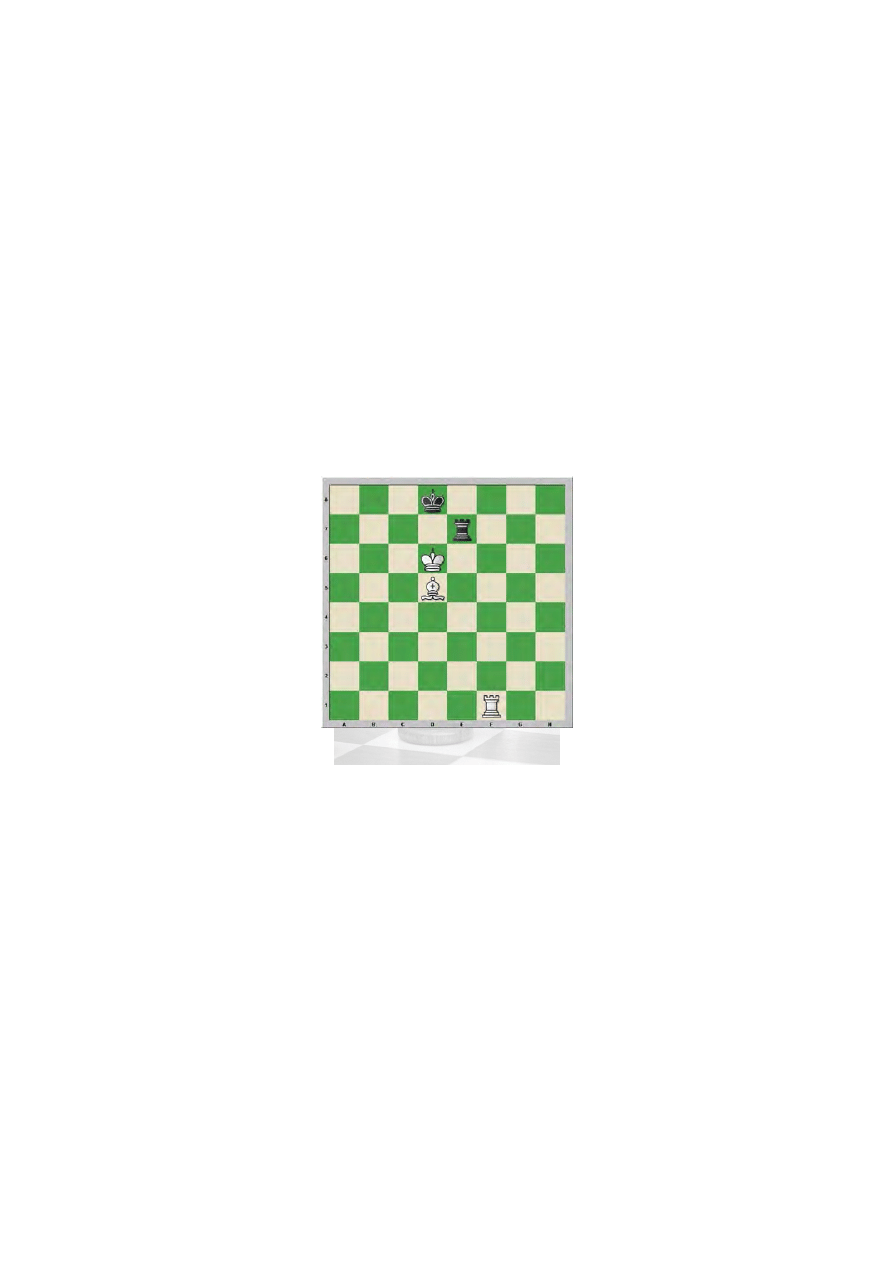
(1) Bruehl,Count John - Philidor,Francois [C23]
Philidor London 1783 (1), 1726
[JvR]
Modern positional play begins with the musician Philidor (1726–1795). He likes to
support pawns by pieces from behind. His eyes are blindfolded in this game. 1.e4
Philidor has the better pawn structure in the endgame. He can attack on both
flanks. 1...e5 2.¥c4 c6 3.£e2 d6 4.c3 f5 5.d3 ¤f6 6.exf5 ¥xf5 7.d4 e4 8.¥g5
d5 9.¥b3 ¥d6 10.¤d2 ¤bd7 11.h3 h6 12.¥e3 £e7 13.f4 h5 14.c4 a6
15.cxd5 cxd5 16.£f2 0–0 17.¤e2 b5 18.0–0 ¤b6 19.¤g3 g6 20.¦ac1 ¤c4
21.¤xf5 gxf5 22.£g3+ £g7 23.£xg7+ ¢xg7 24.¥xc4 bxc4 25.g3 ¦ab8
26.b3
2
Philidor has the better pawn structure in the endgame. He can attack on both
flanks. 26...¥a3 27.¦c2 cxb3 28.axb3? [A weakness is avoided by 28.¤xb3 ]
28...¦fc8 29.¦xc8 ¦xc8 30.¦a1 ¥b4 31.¦xa6 ¦c3 32.¢f2 ¦d3 33.¦a2
¥xd2 34.¦xd2 ¦xb3 Black pressures on the queenside. 35.¦c2 h4! The attack
switches to the kingside. 36.¦c7+ ¢g6 37.gxh4 ¤h5 38.¦d7 [38.¦c6+ ¢f7
39.¦c7+ ¢e6 40.¦c6+!; 38.¢e2 ¤g3+ 39.¢f2 ¤f1 leads to the game. 40.¢xf1 ¦xe3
41.¦d7 ¦f3+ 42.¢g2] 38...¤xf4! Philidor sees a combination despite of the
blindfold. [When Black plays 38...¤f6 or; 38...¦b5 he will make no progress.]
39.¥xf4 ¦f3+ 40.¢g2 ¦xf4 41.¦xd5 ¦f3 Philidor has his favorite connected
passed pawns. 42.¦d8 ¦d3 43.d5 f4 44.d6 ¦d2+ 45.¢f1 ¢f7 46.h5 e3 47.h6??
[47.¦d7+! ¢e6 48.¦d8! leads to an escape.] 47...f3 This is the first acceptable
practical endgame that I could find. 0–1
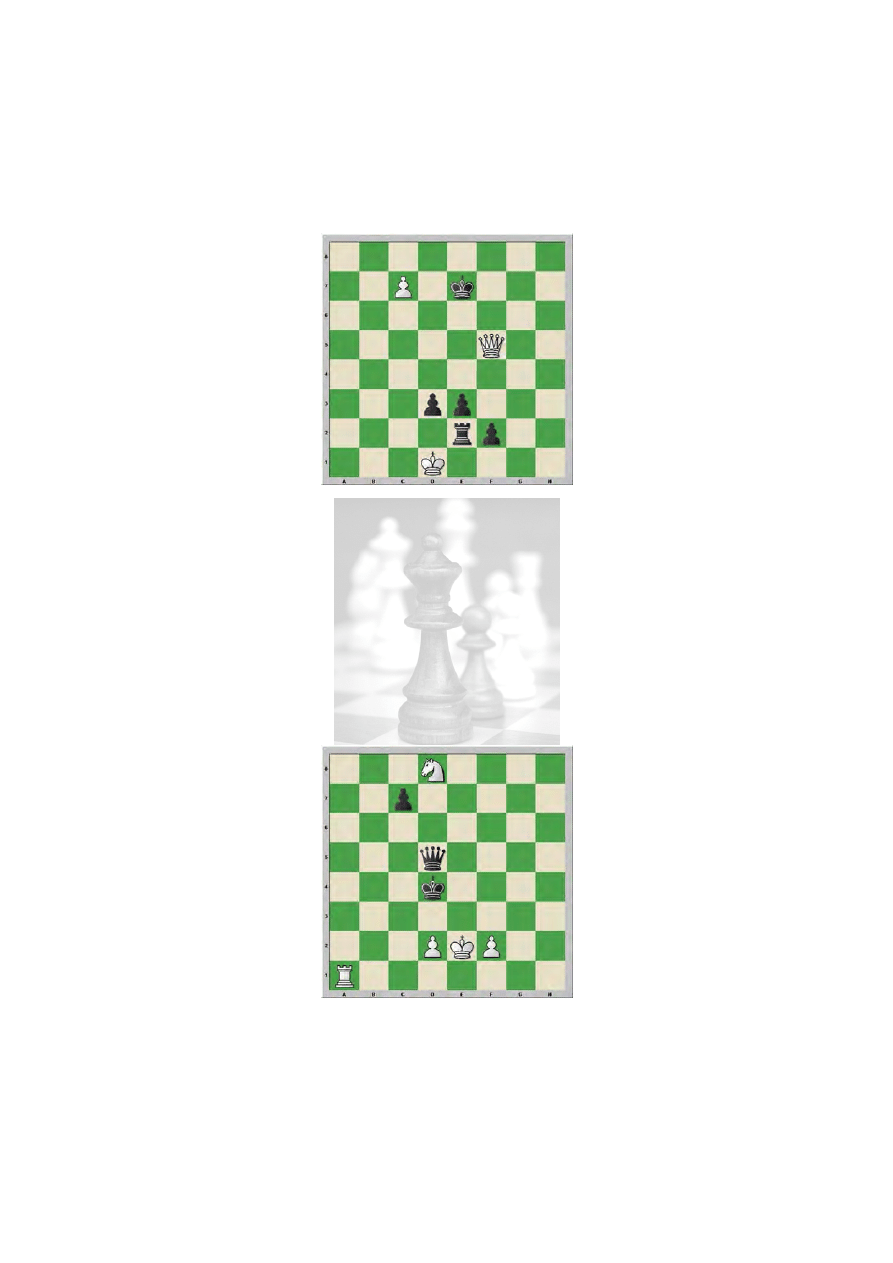
(2) Philidor,Francois
Philidor L'analyse des echecs 1749 (2), 1726
[JvR]
Endgame theory started with Polerio, Greco and Stamma. Philidor also made
valuable contributions. He formulated the basics for the endgame of rook and
bishop versus rook. 1.¦f8+ ¦e8 2.¦f7 ¦e2! [2...¦h8 3.¦a7 ¦h6+ 4.¥e6 leads to
mate.] 3.¦g7! The black rook is forced to a less favorable square. 3...¦e1 [Weak is
3...¦e3 4.¦b7] 4.¦b7 ¦c1 [Another interesting variation is 4...¢c8 5.¦a7! ¦b1
6.¦h7! ¢b8
(6...¦b6+ 7.¥c6)
7.¦h8+ ¢a7 8.¦a8+ ¢b6 9.¦b8+] 5.¥b3!! This move
would make no sense if the black rook should be on c2. 5...¦c3! The rook moves
to a bad rank. [White also wins in 5...¢c8 6.¦b4 ¢d8 7.¦f4 ¦e1
(7...¢c8 8.¥d5 ¢b8
9.¦a4)
8.¥a4 ¢c8 9.¥c6 ¦d1+ 10.¥d5 ¢b8 11.¦a4] 6.¥e6 ¦d3+ 7.¥d5 ¦c3
[7...¢c8 8.¦a7 loses at once.] 8.¦d7+! ¢c8 [Or 8...¢e8 9.¦g7] 9.¦f7 ¢b8
10.¦b7+ ¢c8 11.¦b4! ¢d8 [The first point of the last white move is 11...¦d3
12.¦a4] 12.¥c4!! The second point: 12...¢c8 13.¥e6+ ¢d8 14.¦b8+ ¦c8
15.¦xc8# 1–0
3
(3) De la Bourdonnais,Louis
Bourdonnais La Palamede 1837, 1797
[JvR]
De la Bourdonnais (1797–1840) played a series of six matches with MacDonnell in
London 1834. It was the first long international chess event. The tactical talent of the
Frenchman prevailed. He composed a simple endgame study. 1.c8¤+! Calvi and
De la Bourdonnais supported the idea of minor promotion as a law of chess.
[1.£h7+? ¢f6! leads to a repetition of moves.] 1...¢e8 [1...¢d8 2.£xd3+ ¢xc8
3.¢xe2 f1£+ 4.¢xf1 ¢c7 5.£g6] 2.£g6+ ¢f8 3.£f6+ ¢g8 4.¤e7+ ¢h7 5.£g6+
¢h8 6.£g8# 1–0
(4) Kling & Horwitz
Horwitz Chess Studies 1851, 1807
[JvR]
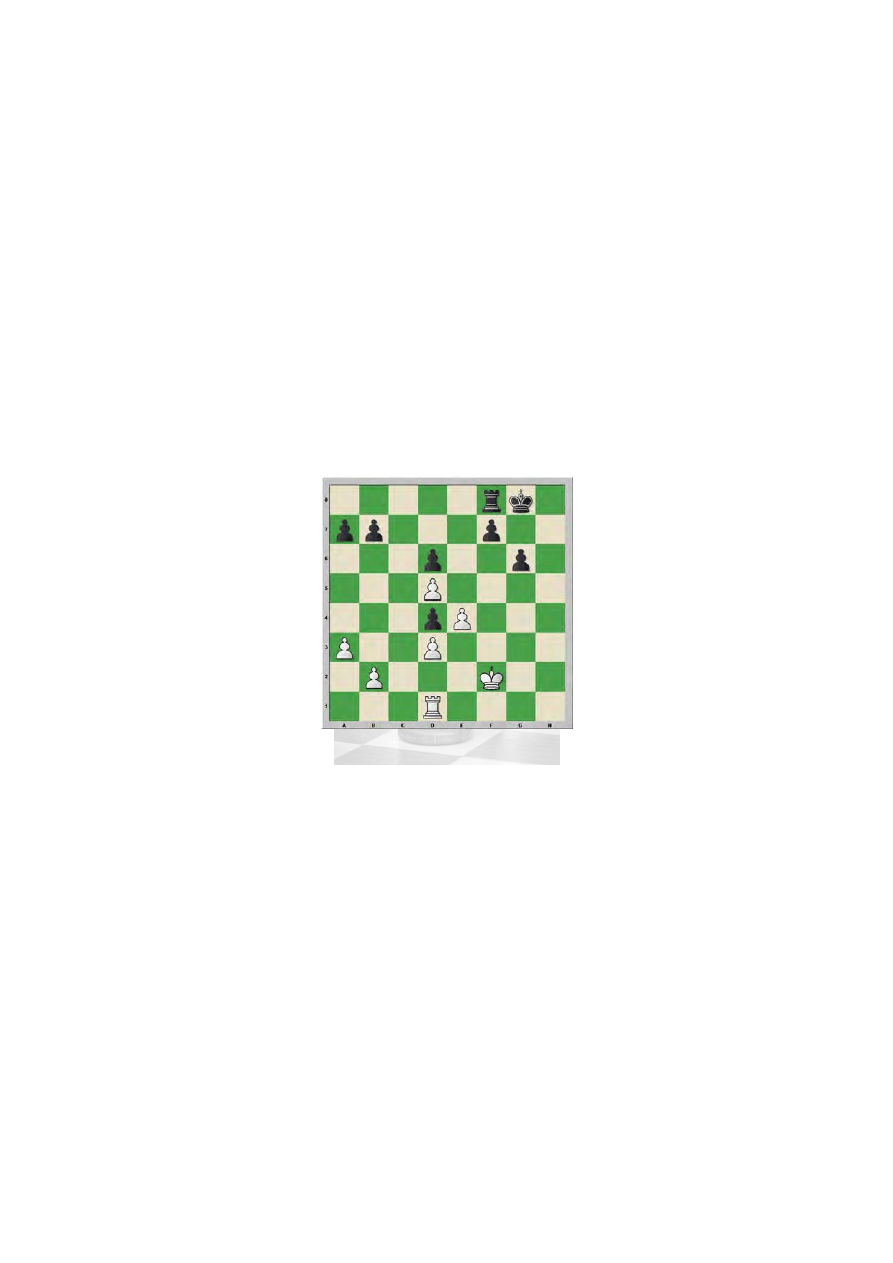
Bernhard Horwitz (1807–1885) moved from Germany to London in 1846. Staunton
defeated him in a match. He cooperated with the chess composer Josef Kling.
4
Endgame composition began with their joined effort. 1.¦a4+ ¢e5 2.¦a5! c5
[2...£xa5 3.¤c6+] 3.¦xc5! £xc5 4.d4+! ¢xd4 [4...£xd4 5.¤c6+] 5.¤e6+ A fork
decides the game in three variations. 1–0
(5) De Saint Amant,Pierre - Staunton,Howard [A34]
Staunton London 1843 (1), 1810
[JvR]
Howard Staunton lost a short match against De Saint-Amant in London 1843. A
long return match was won by Staunton in Paris during the same year. 1.e4 c5 2.c4
e6 3.¤c3 ¤e7 4.d3 ¤bc6 5.¥e3 ¤g6 6.f4 d6 7.¤f3 ¥e7 8.a3 ¥f6 9.¥e2 0–0
10.0–0 ¥d4 11.£d2 ¤xf4 12.¤xd4 cxd4 13.¥xf4 e5 14.¤d5 exf4 15.£xf4
¥e6 16.£g3 ¥xd5 17.cxd5 ¤e5 18.¦f2 ¦c8 19.¥g4 ¦c5 20.¦af1 £g5
21.h3 ¦c1 22.¢h2 ¦xf1 23.¦xf1 £d2 24.¦f2 £e1 25.¦c2 £b1 26.¦d2 g6
27.£f2 h5 28.¥d1 £c1 29.g4 hxg4 30.hxg4 £xd1 31.¦xd1 ¤xg4+ 32.¢g3
¤xf2 33.¢xf2
Black has an extra pawn and occupies the open file. 33...¦c8 34.¦d2 ¢g7
35.¢f3 ¦c1 36.¦h2 ¢f6 37.¦h8 ¦d1 38.¢e2 White loses another pawn
temporarily. 38...¦b1 39.¢f3 ¦xb2 40.¦e8 ¦b6 41.e5+! A counteraction begins.
41...dxe5 42.¢e4 ¦d6 43.¦xe5 ¦d7 44.¢xd4 g5?! [Staunton suggests the move
44...¦e7! Notice the point 45.d6 ¦xe5 46.d7 ¢e7] 45.¦e1 g4 46.¢c5 ¢g5 47.d6
f5 48.¦e7 ¦d8 49.¢d5?! [49.¦xb7 grabs a pawn.] 49...¢f4 50.d7 g3 51.¦g7
¢f3 52.¢e5 g2 53.¢e6 f4 54.d4 ¢f2 55.d5 g1£ 56.¦xg1 ¢xg1 57.¢e7
¦xd7+ 58.¢xd7 f3 59.¢c7 f2 60.d6 f1£ 61.d7 £d3 62.d8£ £xd8+
63.¢xd8 b5 64.¢c7 a5 65.¢b6 b4 66.a4 b3 67.¢xa5 b2 68.¢a6 b1£ 69.a5
£b4 The technical level is disappointing. 0–1
(6) Morphy,Paul - Anderssen,Adolf [C52]
Anderssen Paris 1858 (1), 1818
[JvR]
Adolf Anderssen (1818–1879) won the first international chess tournament London
1851. He was a great attacker. His techniques were shown in the first game of a
match against Morphy. 1.e4 e5 2.¤f3 ¤c6 3.¥c4 ¥c5 4.b4 ¥xb4 5.c3 ¥a5
6.d4 exd4 7.0–0 ¤f6 8.e5 d5 9.¥b5 ¤e4 10.cxd4 0–0 11.¥xc6 bxc6 12.£a4
5
¥b6 13.£xc6 ¥g4 14.¥b2 ¥xf3 15.gxf3 ¤g5 16.¤d2 ¦e8 17.¢h1 ¤h3
18.f4 £h4 19.£xd5 ¤xf2+ 20.¢g1 ¤d3 21.¥c3 ¤xf4 22.£f3 ¤h3+
23.¢h1 ¤g5 24.£g2 ¦ad8 25.¦g1 h6 26.¦af1 £h3 27.£f3 £d7 28.£g2
¥xd4 29.¥xd4 £xd4 30.¤f3 £d5 31.h4 ¤e6 32.£g4 £c6 33.¦g2 ¦d3
34.£f5 ¦ed8 35.£f6 £d5 36.£f5 ¦d1 37.¦xd1 £xd1+ 38.¢h2 ¦d3 39.¦f2
¦e3 40.¤d2 ¦e2 41.£xf7+ ¢h8 42.¤e4 ¦xf2+ 43.¤xf2
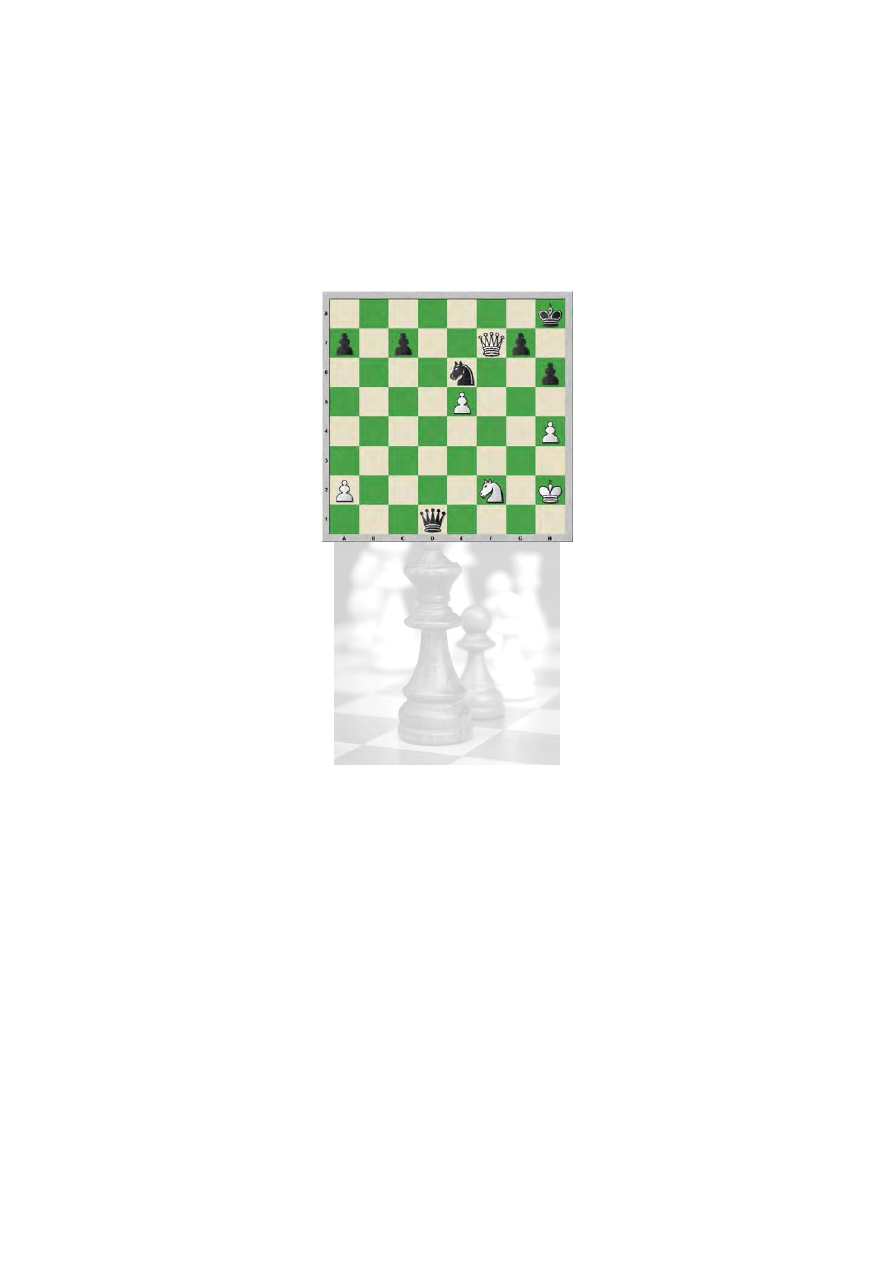
Black has a decisive material advantage. 43...£d5 44.¤g4 £xa2+ 45.¢g3 £b3+
46.¢h2 £c2+ 47.¢g3 £c3+ 48.¢h2 £c6! [48...£b3?? 49.£e8+ ¢h7 50.£f7
leads to a repetition of moves.] 49.h5 a5 Anderssen chooses a prosaic move. [Max
Lange found the witty alternative 49...£c2+ 50.¢g3 £c3+ 51.¢g2 £h3+ 52.¢xh3
¤g5+ 53.¢g3 ¤xf7 54.e6 ¤d6] 50.¤f6! gxf6 51.£xf6+ ¢g8 52.£g6+ ¢f8
53.£xh6+ ¢e8 54.£g6+ ¢d7 55.h6 £d5 56.h7 [Maroczy mentions 56.£h5
£d2+ 57.¢h1 £c1+ 58.¢h2 £f4+ 59.¢h1 ¤g5 and Black wins.] 56...£xe5+
57.¢g1 ¤g5 58.h8£ £xh8 59.£xg5 Black has kept his advantage of two
pawns. 59...£d4+ 60.¢f1 a4 61.£f5+ ¢c6 62.£c8 ¢b5! 63.¢e1 [63.£xc7
£c4+!] 63...c5 64.£b7+ ¢c4 65.£f7+ ¢c3 66.£f3+ £d3 67.£f6+ ¢b3
68.£b6+ ¢c2! 69.£a7 £c3+ 70.¢e2 a3 71.£a4+ ¢b2 72.£b5+ £b3! The
best players of the world showed great accuracy in the endgame, a fine
achievement for those days. Anderssen had a good start of the match. Morphy won
eventually. 0–1
(7) Hannah,James - Paulsen,Louis [C65]
Paulsen London 1862 (1), 1833
[JvR]
Louis Paulsen (1833–1891) was a prudent and accurate player. He slowly moves
forward in this endgame. 1.e4 e5 2.¤f3 ¤c6 3.¥b5 ¤f6 4.c3 ¤xe4 5.£e2 ¤d6
6.¥xc6 dxc6 7.£xe5+ £e7 8.d4 f6 9.£xe7+ ¥xe7 10.¥f4 ¥g4 11.¤bd2 0–
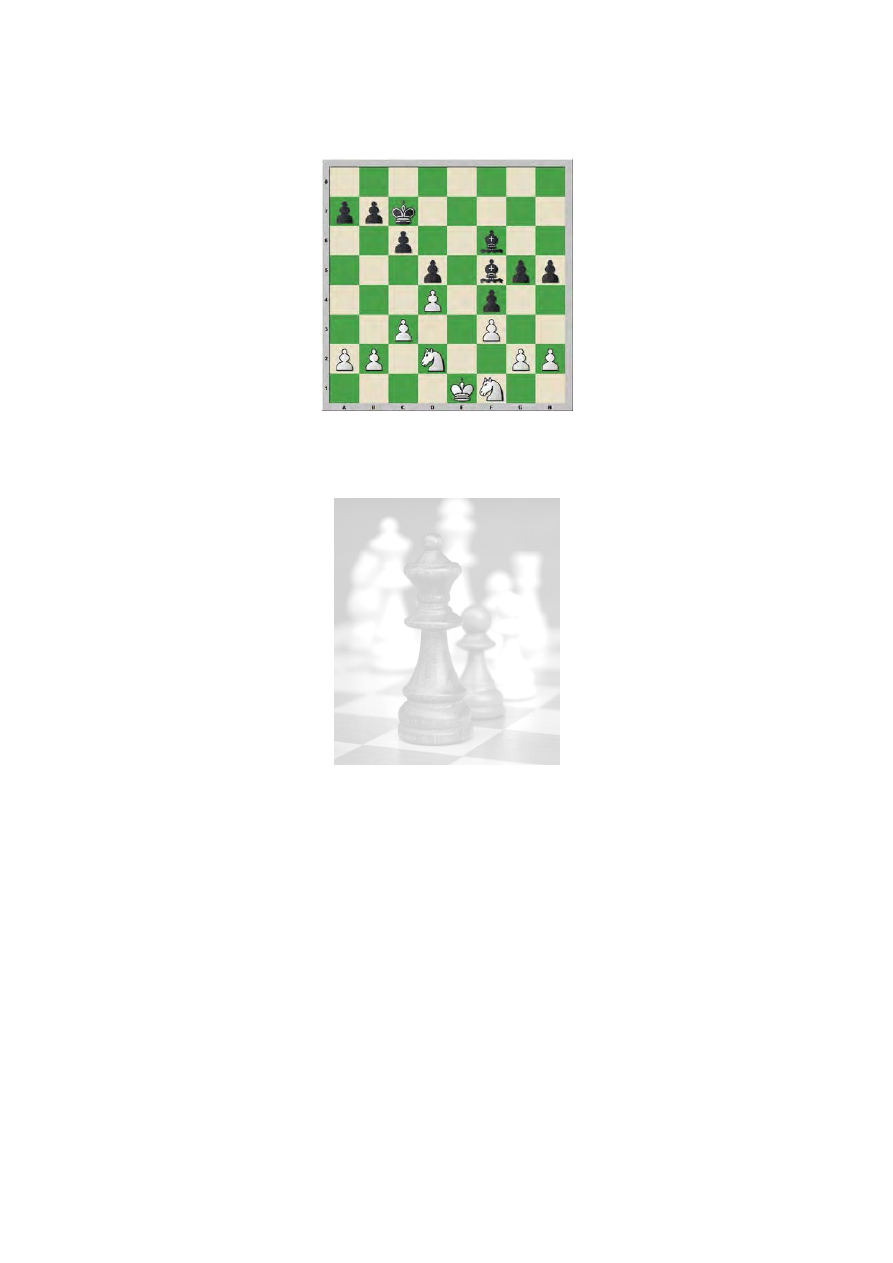
0–0 12.0–0 g5 13.¦fe1 ¦de8 14.¥g3 ¥d8 15.¥xd6 cxd6 The position seems
to be equal, but Paulsen shows how the advantage of the pair of bishops can be
utilized. 16.¤e4 ¢c7 17.¤fd2 f5 18.¤g3 f4 19.¤gf1?! The knight becomes too
passive. [Wiser is 19.¤ge4 ] 19...h5 20.f3 ¥f5 21.¢f2 d5 22.¦xe8 ¦xe8 23.¦e1
¦xe1 24.¢xe1 ¥f6
6
The adjacent bishops are called Horwitz bishops. Their combined strength works
murderously. 25.¤b3 b6 26.¢e2 a5 27.¤c1 ¢d6 28.¤d3 c5 29.dxc5+ bxc5
30.¢d2 c4 The knights are driven back systematically. 31.¤c1 g4 32.¢e2? The
king occupies an important square for a knight. [Correct is 32.¢e1 gxf3 33.gxf3 ¢e5
34.¤e2!] 32...a4 33.a3 ¢c5 34.¢d2 gxf3 35.gxf3 d4! 36.¤e2 [36.cxd4+ ¥xd4
costs a pawn.] 36...¥h3 37.¢e1 ¥h4+ 38.¤fg3 fxg3 39.cxd4+ ¢d5 40.hxg3
¥g5 41.f4 ¥f6 42.¤c3+ ¢xd4 43.¤xa4 ¢d3 44.¢d1 ¥d4 45.¤c3 ¥xc3
46.bxc3 ¢xc3 47.a4 ¢b4 48.¢d2 ¢xa4 49.¢c3 ¢b5 50.¢b2 ¢b4 The
advantage of the pair of bishops in an open position is used for the first time in an
endgame. 0–1
(8) Anderssen,Adolf - Paulsen,Louis [C11]
Paulsen Crefeld 1871 playoff (2), 1833
[JvR]
Paulsen applied consolidation in an excellent manner. 1.e4 e6 2.d4 d5 3.¤c3 ¤f6
4.¥d3 c5 5.exd5 exd5 6.¤f3 ¤c6 7.0–0 c4 8.¥e2 ¥b4 9.¥d2 0–0 10.b3
cxb3 11.axb3 ¤e4 12.¤b5 ¤xd2 13.¤xd2 a6 14.¤f3 ¥g4 15.c3 ¥a5 16.b4
¥xb4 17.cxb4 axb5 18.¦xa8 £xa8 19.¥xb5 ¤xb4 20.£b3 ¥xf3 21.£xb4
¥e4 22.f3 ¥f5 23.£c5 £a5 24.¦c1 ¥e6 25.¥d3 £d2 26.£c3 £g5 27.g3 g6
28.f4 £h5 29.£e1 ¦e8 30.£e5 £f3 31.£e2 £xe2 32.¥xe2
7
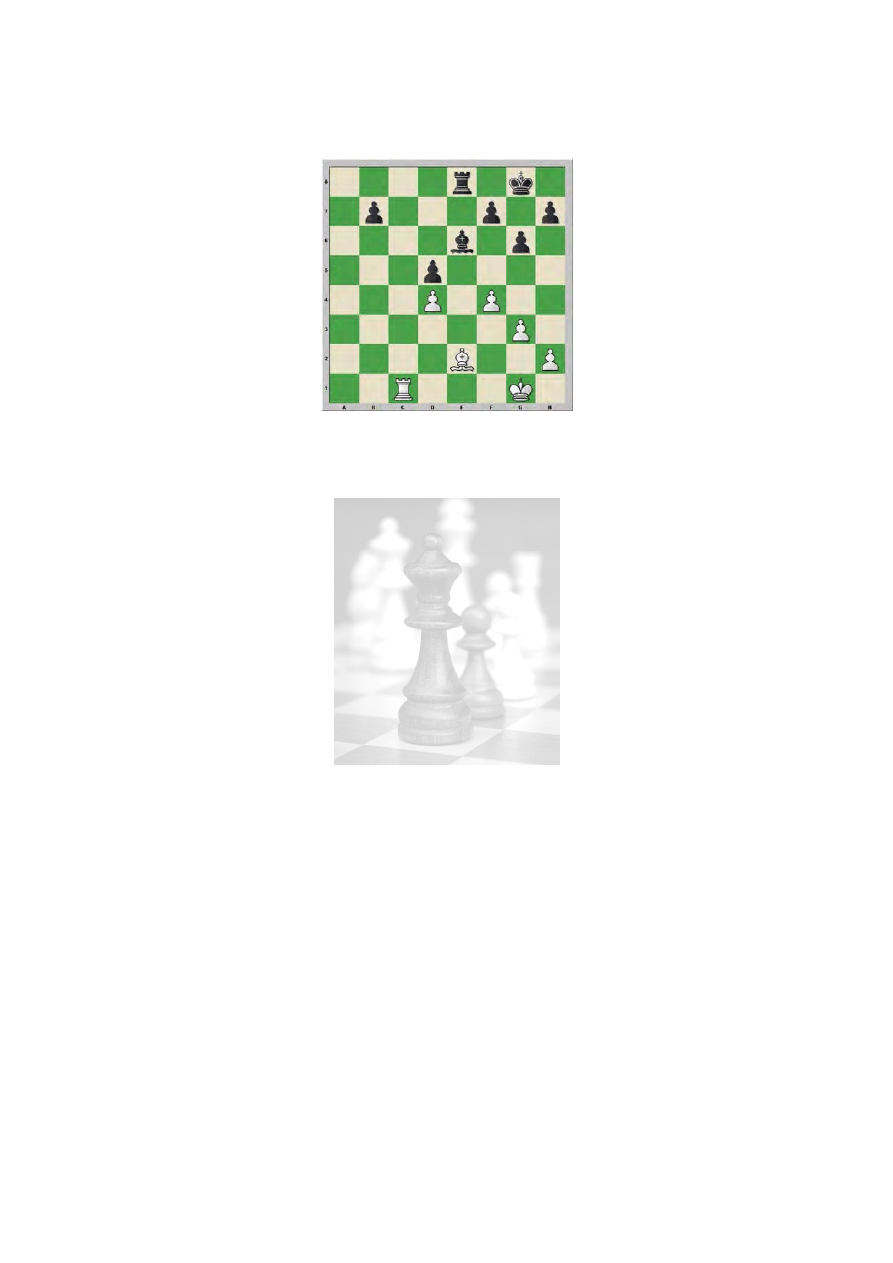
The extra pawn on b7 needs protection. 32...¥d7! 33.¥f3 ¥c6 34.¦c5 ¦d8
35.¢f2 f6 36.h4 h6 37.¢e3 ¢f7 38.f5!? g5! 39.hxg5 fxg5! Paulsen creates
chances on the kingside. 40.g4 ¢f6 41.¦c1?! ¦e8+! 42.¢d3? [Support to the
kingside gives 42.¢f2! h5 43.gxh5 ¢xf5 44.¦c5 ¢f4 45.¥xd5 ¥xd5 46.¦xd5 ¦h8
47.¦d7] 42...h5! 43.¦h1? [Correct is 43.gxh5 ¢xf5 44.¦g1] 43...h4! 44.¦a1 ¢e7
45.¢d2 ¢d6 46.¦a3 ¥b5 47.¦b3 ¥c6 48.¦a3 h3! A diversion begins. 49.¥h1
¦h8 50.¢e3 The king returns to his side. 50...b5 51.¢f2 h2 52.¢g3 b4! Black
sacrifices a pawn for an undisturbed advance on the queenside. 53.¦b3 ¦b8
54.¢xh2 ¥a4 55.¦h3 ¦d8!! The d-pawn needs to be consolidated again.
56.¥g2 ¥c2 57.¥f1 b3 58.¦h6+ ¢c7 59.¦h7+ ¦d7 60.¦xd7+ ¢xd7
61.¥b5+ ¢c7 62.¥a4 ¥d1! Black threatens..b2.[62...¥d1 63.¥b5 ¥xg4 Paulsen
showed great patience.] 0–1
(9) Bird,Henry - Steinitz,Wilhelm [C80]
Steinitz Wien 1873 (1), 1834
[JvR]
Wilhelm Steinitz (1834–1900) is regarded as the first world champion. He applied
the strategic dogma of Cluley: an attack has to be prepared. Steinitz is called the
founder of positional chess. He applied this approach in Vienna 1873. 1.e4 e5
2.¤f3 ¤c6 3.¥b5 a6 4.¥a4 ¤f6 5.0–0 ¤xe4 6.d4 b5 7.¥b3 d5 8.¤xe5
¤xe5 9.dxe5 c6 10.c3 ¥c5 11.¤d2 ¤xd2 12.¥xd2 £h4 13.¢h1 0–0 14.f4
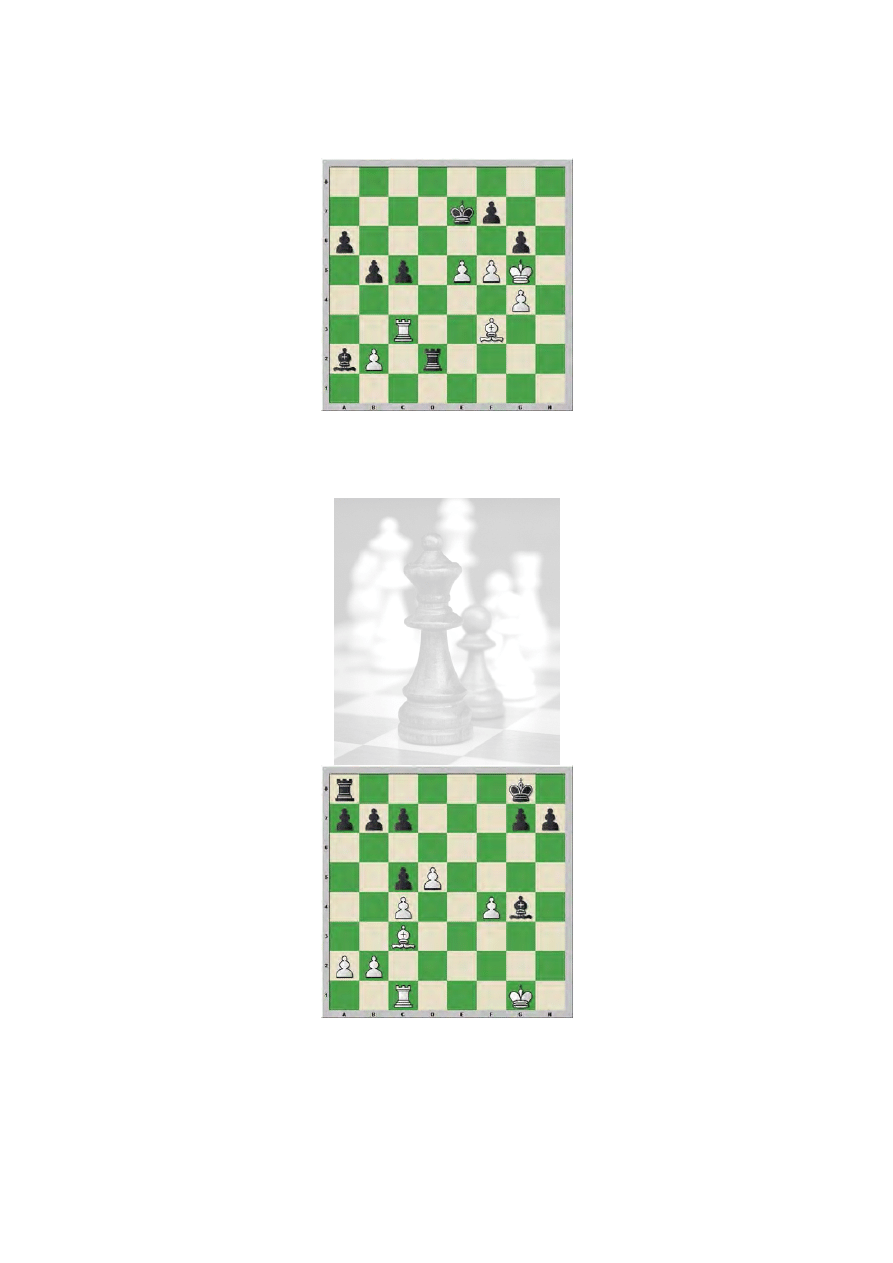
¥g4 15.£e1 £xe1 16.¦axe1 ¥f5 17.¥e3 ¥xe3 18.¦xe3 Black has a pawn
majority on the queenside, a structural strength. It gives an advantage because
White cannot take the initiative on the kingside. 18...¦ad8 Black prepares the
advance of the c- and d-pawn. 19.¦d1 ¦d7 20.h3!? h5 21.¦d2 ¦fd8 22.¥d1
g6 23.¥f3 c5 An important advance is carried out. 24.g4 hxg4 25.hxg4 ¥e6
26.¢g2 d4 27.cxd4 ¦xd4 28.¦xd4 ¦xd4 Black has activated his pawn majority.
29.¢g3 ¦d2 30.¢h4! White starts a vicious counterattack. 30...¢f8 [Black avoids
the complications of 30...¦xb2 31.¢g5 ¥xa2 32.f5] 31.¢g5 ¢e7 32.f5 ¥xa2
33.¦c3?!
8
[Better is 33.¦a3 ¥d5 34.¥xd5 ¦xd5 35.¦xa6 ¦xe5 36.¦a7+] 33...¥c4 34.¥b7
gxf5 35.gxf5 a5 36.b3 ¦d3 37.f6+ ¢d7 38.¦xd3+ ¥xd3 39.¥d5 ¢e8
40.¥c6+? White loses an important tempo. [Correct is 40.¢f4! ¢f8 41.¢e3 ¥f5
42.¢d2 ¥e6 43.¥xe6 fxe6 44.¢c3 The pawn ending is drawn.] 40...¢f8 41.¢f4
¥c2 42.¥d5 [42.¥xb5 ¥xb3 43.¢e3 a4 44.¢d2 a3 and Black wins.] 42...a4
43.bxa4 bxa4 44.e6 fxe6 45.¥xe6 ¥b3 46.¥f5 a3 47.¥b1 a2 48.¥xa2 ¥xa2
49.¢e3 ¢f7 50.¢d3 ¢xf6 Contemporaries found his new style boring. The game
makes a modern impression nowadays. 0–1
(10) Schiffers,Emanuel - Steinitz,Wilhelm [C49]
Steinitz Hastings 1895 (2), 1834
[JvR]
1.e4 e5 2.¤f3 ¤f6 3.¤c3 ¤c6 4.¥b5 ¥b4 5.¤d5 ¤xd5 6.exd5 e4 7.dxc6
dxc6 8.¥e2 exf3 9.¥xf3 0–0 10.0–0 ¥d6 11.d4 f5 12.c4 ¥e7 13.d5 c5
14.¥d2 ¥d6 15.¦c1 £f6 16.¥c3 £h6 17.g3 f4 18.¥g4 fxg3 19.hxg3 ¥xg3
20.fxg3 ¦xf1+ 21.£xf1 ¥xg4 22.£f4 £xf4 23.gxf4
White is lost if we believe the tournament book. Actually Steinitz wins by superior
play. 23...¦d8 24.¥e5 ¦d7 25.¢f2 ¢f7 26.¦g1 h5 27.¢g3 ¢g6 28.b3 ¢f5
29.¦e1 ¦e7 Black threatens ..g5. 30.¥c3 ¦xe1 31.¥xe1 White has structural
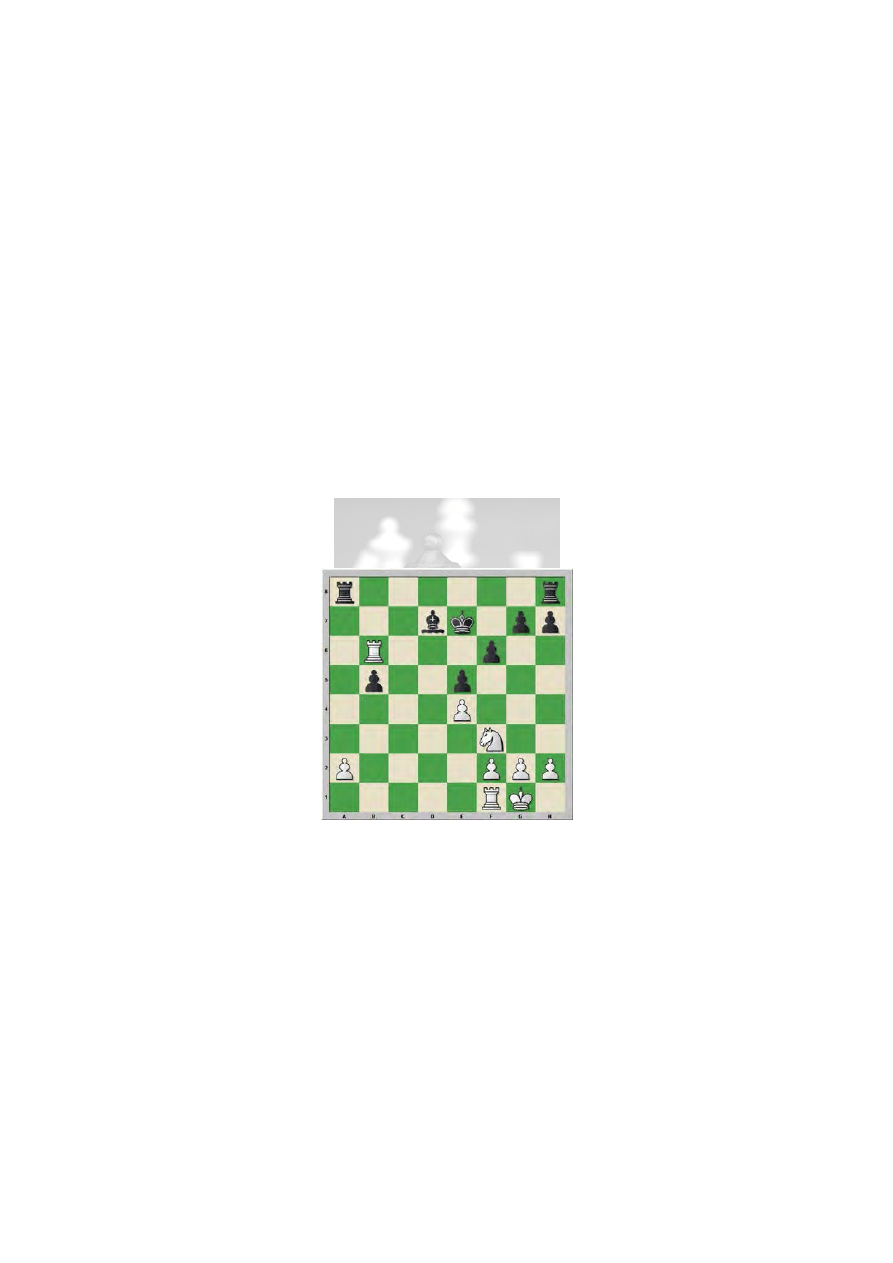
9
weaknesses on the queenside. 31...g6 32.¥c3 ¥d1 33.¥e5! A counterattack
gives sufficient chances. 33...g5! 34.¥xc7 gxf4+ 35.¢f2 ¥c2 36.¥b8 a6
37.¢f3?! [De Zeeuw has found 37.¥a7! ¥b1 38.a3 ¥c2 39.d6 ¢e6 40.¥xc5 ¥xb3
41.¢f3 ¥xc4 42.¢xf4 and White draws due to the bishops of opposite colors.]
37...¥e4+! Black wins a tempo. 38.¢f2 ¥b1 39.¥d6? White misses the narrow
escape. [39.a3! ¥a2 40.b4! cxb4 41.d6 ¢e6 42.axb4 ¥xc4 43.¢f3 b6 44.¥c7 a5
45.bxa5 b5! 46.a6 b4 47.a7 ¥d5+ 48.¢xf4 b3 49.d7! ¢xd7 50.¥e5 ¢e6 51.¥b2
draws.] 39...¥xa2 40.¥xf4 ¥xb3 41.d6 ¢e6 42.¢e3 ¥xc4 43.¢d2 ¥b5
44.¢c3 ¥c6 45.¢c4 b6 46.¥g3 ¥d5+ 47.¢c3 b5 48.¢d3 a5 49.¢e3 a4
50.¢d3 a3 51.¢c2 b4 Steinitz showed solid endgame techniques. 0–1
(11) Chigorin,Mikhail - Steinitz,Wilhelm [C52]
Steinitz W Ch Havana 1889 (3),
[JvR]
1.e4 e5 2.¤f3 ¤c6 3.¥c4 ¥c5 4.b4 ¥xb4 5.c3 ¥a5 6.0–0 £f6 7.d4 ¤ge7
8.¥g5 £d6 9.d5 ¤d8 10.£a4 b6 11.¤a3 a6 12.¥b3 ¥xc3 13.¦ac1 £b4
14.¤b5 £xb5 15.£xb5 axb5 16.¦xc3 White controls more area as
compensation for two pawns. 16...c5! Steinitz starts a counterattack. [Unpleasant is
16...f6 17.¥e3 ¦a7 18.¦fc1] 17.dxc6 ¤dxc6 18.¥xe7?! [Preferable is 18.¥e3 ]
18...¢xe7 19.¥d5 f6! 20.¥xc6 dxc6 21.¦xc6 ¥d7 22.¦xb6
¦hb8! Black shows harmonic play. [The greedy 22...¦xa2 23.¦b7 ¦d8 24.¦d1
leads to another bind.] 23.¦xb8 ¦xb8 24.¦b1 ¥c6! 25.¦e1 [Steinitz mentions
25.¤d2 ¦d8 26.¦b2 ¥xe4!] 25...¦a8 26.¦e2 ¦a4 27.¦b2 ¦xe4 28.h3 ¢d6
29.¤d2 ¦a4 30.f3 f5!? 31.¢f2 ¦a3 32.¤b1 ¦d3 33.¢e2 e4!? 34.¤d2 ¦a3
35.fxe4 fxe4 36.¤b1 ¦g3 37.¢f2 ¦d3 38.¢e2 h5 39.¤d2 ¦g3 40.¢f2 ¦a3
41.¤f1 ¥d5 42.¦xb5 ¦xa2+ 43.¢e3 ¦xg2?! [Steinitz suggests 43...¢c6 ]
44.¢d4! ¥c6 45.¦xh5 ¦a2? [Correct is 45...¦f2! 46.¤e3 ¦d2+ 47.¢c4 ¥d7]
46.¤e3? [46.¦g5! forces a draw (Steinitz).] 46...¦d2+ 47.¢c4 ¥d7 48.¦g5 ¥e6+
49.¢b4 ¦d4+ 50.¢b5 ¦d3 51.¤c4+ ¥xc4+ 52.¢xc4 ¦d1! 53.¦xg7 [Or
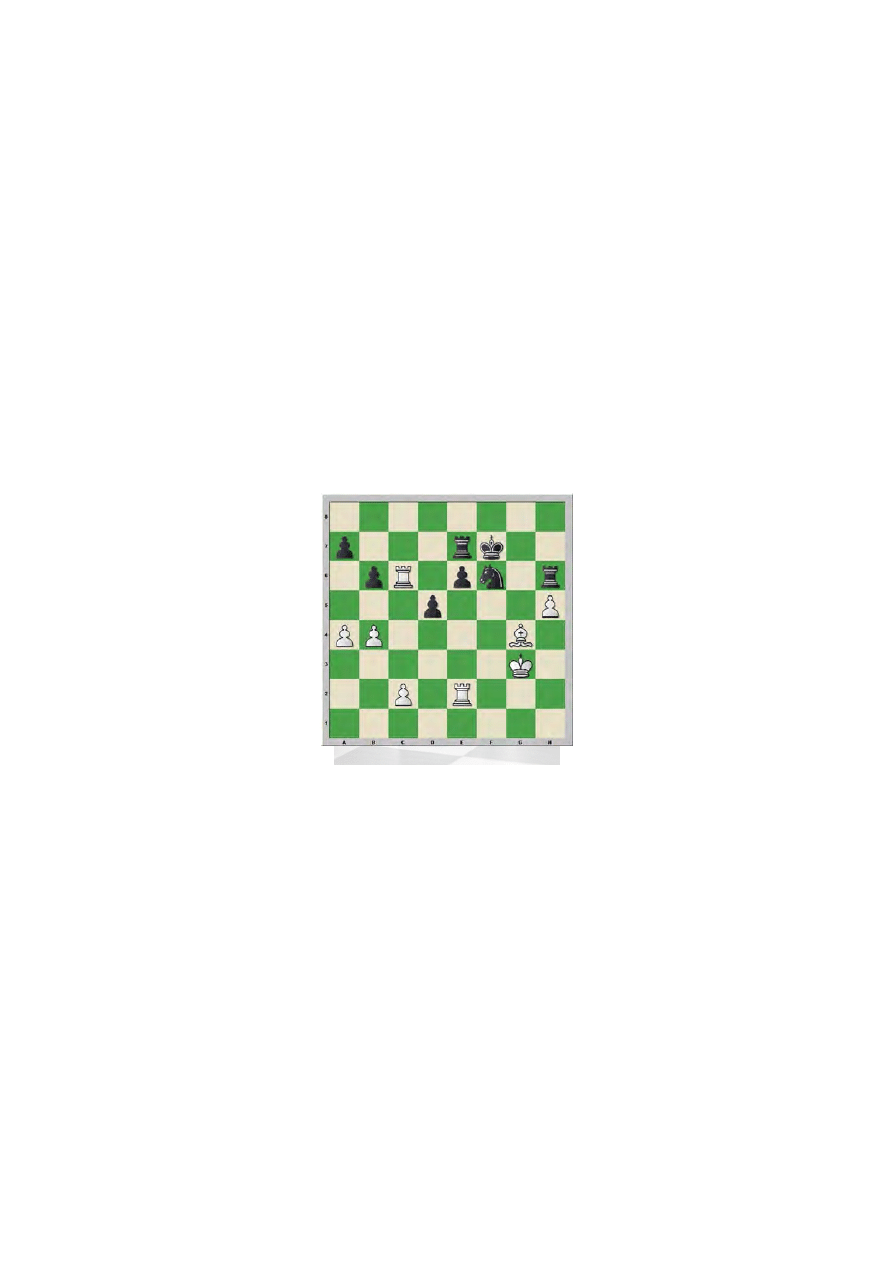
53.¦g6+ ¢e5 54.¦xg7 ¦c1+] 53...e3 54.¦g2 ¢e5 55.¢c3 ¢e4 56.¢c2 ¦f1
Steinitz played very well at the beginning of the endgame. Thereafter it became a
hard battle for victory. 0–1
10
(12) Morphy,Paul - Paulsen,Louis [B40]
Morphy New York 1857 (1), 1837
[JvR]
Paul Morphy (1837–1884) was the first complete chess player. He was mainly active
in 1857 and 1858 and defeated everybody. 1.e4 c5 2.¤f3 e6 3.d4 cxd4 4.¤xd4
¥c5 5.¥e3 £b6 6.¤b5 ¤f6 7.¥xc5 £xc5 8.¤d6+ ¢e7 9.¤xc8+ ¦xc8
10.¥d3 ¤c6 11.0–0 h5 12.¤d2 h4 13.h3 g5 14.a3 ¦g8 15.b4 £b6 16.¤c4
£c7 17.f3 ¤e5 18.¤xe5 £xe5 19.£d2 ¦g7 20.¦ad1 ¦d8 21.£f2 b6 22.f4
gxf4 23.£xf4 £g5 24.¦f2 £xf4 25.¦xf4 White has a slight advantage due to
the pressure on h4. 25...¦dg8 [Black can liberate his position by 25...d5! 26.exd5
¤xd5! 27.¦xh4 ¤e3 28.¦d2 ¤xc2! 29.¦xc2 ¦xd3 30.¦c7+ ¦d7] 26.¦d2 ¦h8 The
rook moves to a passive place. 27.e5 ¤d5 28.¦d4 f6 29.exf6+ ¤xf6 30.¦c4
¢d8 31.a4 ¤d5 32.¥e4 ¤c7 33.¥f3 d5!? 34.¦c6 ¦d7?! [Better is 34...¦f8!
35.¥g4 ¢d7] 35.¥g4 ¦h6 36.¦e2 ¢e7 37.¢h2 ¢f7 38.g3 hxg3+ 39.¢xg3
¦e7 40.h4 ¤e8 41.h5 ¤f6!
[41...¤c7? Strangulation results from 42.¢h4 ¢g7 43.¢g5 ¦f6 44.c3] 42.¦cxe6
¦xe6 43.¥xe6+ ¢g7? [Fiske suggests 43...¢f8! The idea is 44.¦e5 ¦xh5 45.¦xh5
¤xh5+ 46.¢f3 ¢e7 47.¥xd5 White has won a pawn, but Black will be able to
defend himself.] 44.¥g4 ¤xh5+ 45.¥xh5 ¦xh5 46.¦e7+ ¢f6 [Better seems to
be 46...¢f8 47.¦xa7 ¦e5 48.¦a6 ¦e3+ 49.¢f2 ¦a3! 50.a5! but 50...bxa5 51.¦xa5 ¦c3
52.¦c5 ¦xc5 53.bxc5 ¢e7 54.¢e3 ¢d7 55.¢d4 ¢c6 56.c3 leads to a white win.]
47.¦xa7 ¢e5 48.¦a6 ¦g5+ 49.¢f3 ¦f5+ 50.¢e2 b5 [Fiske mentions 50...¦f6
51.a5 bxa5 52.¦xf6 ¢xf6 53.bxa5 and White wins.] 51.axb5 ¦f4 52.c3 d4! Black
grabs his last chance. 53.c4! ¦h4 54.c5 ¦h2+ 55.¢d3 ¦h3+ 56.¢c2 ¦h2+
57.¢b3 ¦h3+ 58.¢a4 [58.¢c4?? ¦c3#] 58...¢d5 59.¦d6+ ¢c4 60.c6 ¦h1
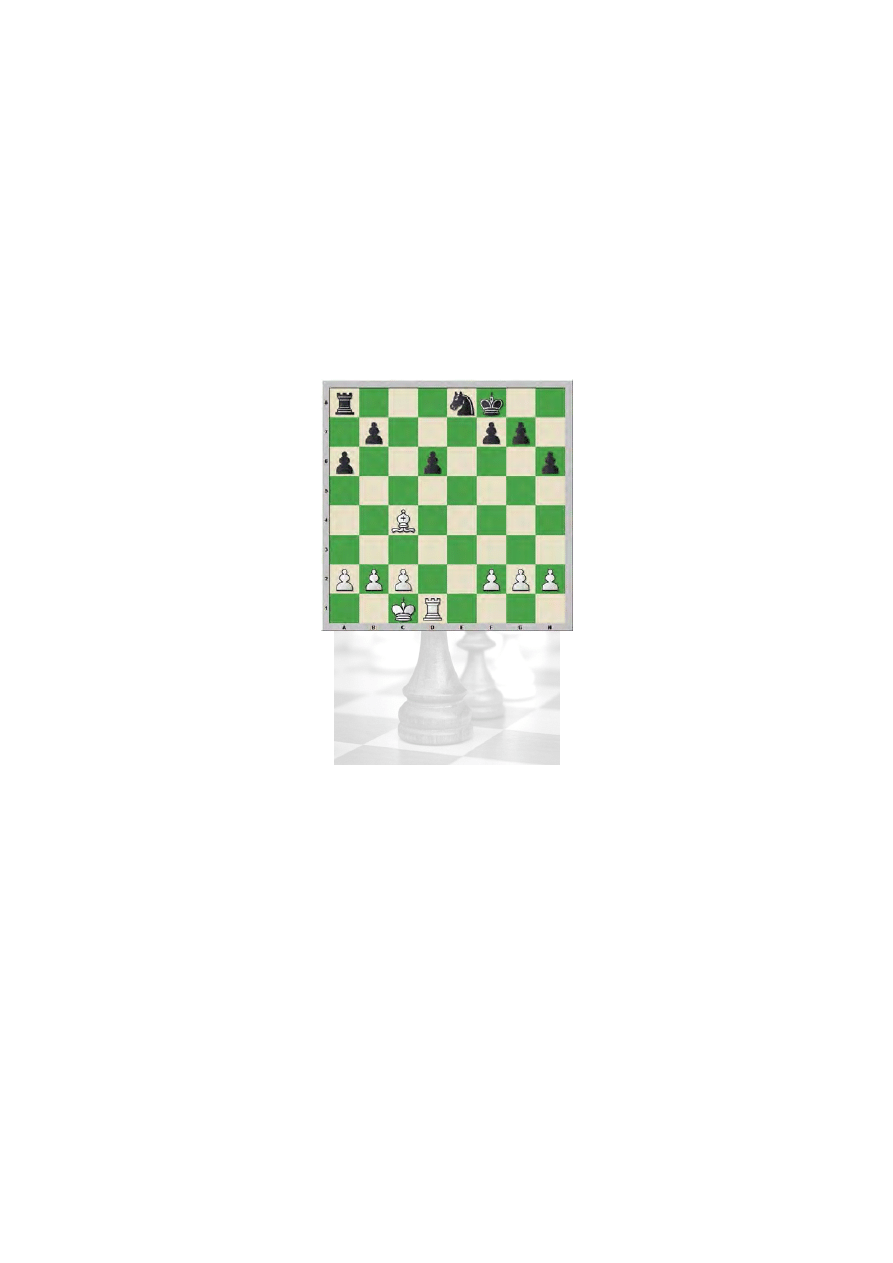
61.¦xd4+! [Morphy avoids the prosaic 61.¢a5 ] 61...¢xd4 62.c7 ¦h8 63.b6 ¢c4
64.b7 Paulsen was defeated in a game that lasted ten hours. 1–0
11
(13) Morphy,Paul - Harrwitz,Daniel [C41]
Morphy Paris 1858 (2), 1837
[JvR]
1.e4 e5 2.¤f3 d6 3.d4 exd4 4.£xd4 ¤f6 5.e5 dxe5 6.£xd8+ ¢xd8 7.¤xe5
¥e6 Harrwitz hopes to survive in the endgame. 8.¤c3 ¥d6 9.¤c4 ¥xc4
10.¥xc4 ¦e8+ 11.¥e3 ¢e7? [Maroczy advices 11...¤g4! with a plus for Black.]
12.0–0–0 a6 13.¥g5 ¤bd7 14.¤e4 h6 15.¥xf6+ [Or 15.¦he1 ¢f8!] 15...¤xf6
16.¤xd6 cxd6 17.¦he1+ ¢f8 18.¦xe8+ ¤xe8
White has a better development. He also controls the blocking square d5. 19.¥d5
¦b8 20.¥f3 g6 21.c3 ¢e7 22.¦e1+ ¢f8 23.¢c2 ¤c7 24.¢b3?! ¤e6 25.¢a4?!
b6?! [25...¤c5+! 26.¢a3 leads to a loss of time for White.] 26.b4 h5 27.h4 ¢e7
28.¦e3 ¢d7 29.¥d5 ¦e8 30.¢b3 ¦g8 A wrong plan is chosen. 31.¦f3 ¢e7
32.a4 a5?! [32...¦b8 protects the queenside.] 33.¥xe6!? ¢xe6? Black blunders.
[33...fxe6! 34.¢c4 g5 35.¦g3 g4 36.¢b5 d5! 37.¢xb6!? axb4 38.cxb4 ¦b8+ 39.¢c5
¦c8+ White has to accept perpetual check.] 34.¢c4 g5 35.¢b5 axb4 36.cxb4
gxh4 37.¢xb6 ¦b8+ [Awful is 37...¦xg2 38.a5] 38.¢a5 ¢d5 39.¦d3+ ¢c4
40.¦xd6 ¦xb4 41.¦d4+ ¢xd4 42.¢xb4 f5 43.f4 ¢e3 44.a5 ¢f2 45.a6 ¢xg2
46.a7 h3 47.a8£+ ¢g1 48.£f3 Morphy accumulated advantages. 1–0
(14) Blackburne,Joseph - Fleissig,Miksa [D31]
Blackburne Wien 1873, 1841
[JvR]
Joseph Blackburne (1841–1924) was a courageous attacker. His ability in the
endgame is shown in this long game. 1.d4 d5 2.c4 e6 3.¤c3 b6 4.¥f4 ¥d6
5.¥g3 ¤f6 6.¤f3 ¤c6 7.e3 ¤e7 8.¦c1 ¥b7 9.£b3 dxc4 10.¥xc4 0–0
11.¥d3 ¤ed5 12.¥h4 ¤xc3 13.bxc3 ¥e7 14.£b1 g6 15.¤e5 ¤h5 16.¥g3
¤g7 17.h4 f5 18.f3 ¤h5 19.¥f2 ¥f6 20.¤c4 £e8 21.¤d2 ¢h8 22.¦h2 ¤g7
23.¢f1 e5 24.¢g1 f4 25.e4 ¦d8 26.d5 ¥e7 27.c4 c5 28.£b2 ¥d6 29.£a3
¦a8 30.¦b1 £e7 31.¤b3 ¥c8 32.¤c1 ¥d7 33.¥c2 ¦fd8 34.¤d3 ¤e8
35.£b2 ¤g7 36.¦e1 ¦f8 37.¥d1 ¤h5 38.a3 ¦ab8 39.a4 ¢g8 40.¦e2 ¢h8
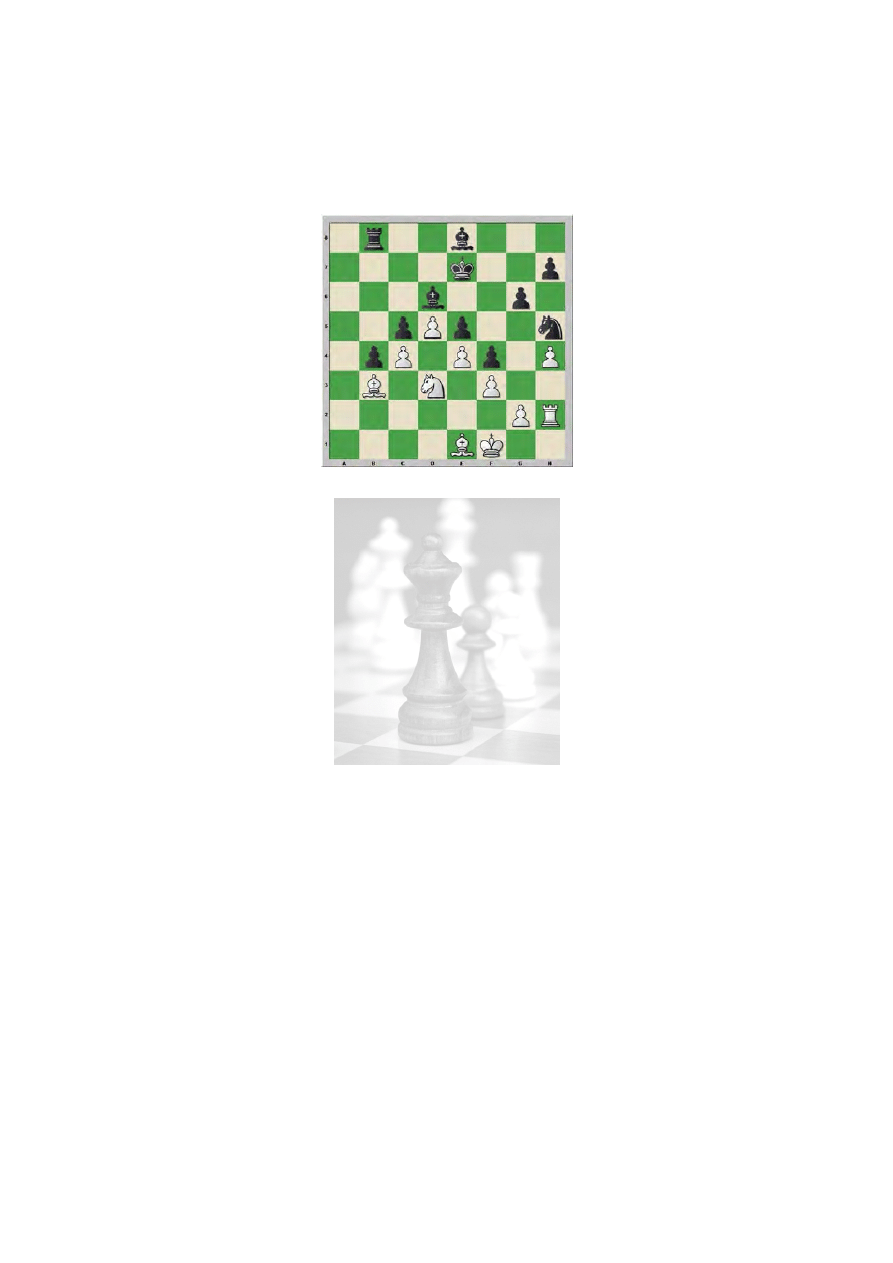
12
41.¥e1 ¢g8 42.¥c3 ¦fe8 43.£a1 a6 44.¦b2 b5 45.axb5 axb5 46.¥b3 b4
47.¥e1 ¦a8 48.¦a2 ¦xa2 49.£xa2 ¦b8 50.£a7 ¢f8 51.¢f1 ¥e8 52.£xe7+
¢xe7
White has to develop his rook. 53.¥f2 ¦a8! 54.¢e2 Capture on c5 will lead to an
imprisoned king. 54...¦a3 55.¤c1 ¥a4!? Black plays for a win. 56.¥xa4 ¦xa4
57.¢d2 ¦a3 58.¢c2! ¦c3+ 59.¢b2 ¦xc4 60.¤e2! b3 Black has to return the
pawn. 61.¢xb3 ¦b4+ 62.¢c2 ¦a4 63.¤c3 ¦a1 64.¤d1 ¤f6 65.¦h1 ¤d7
66.¢b2 ¦a7 67.¤c3 ¤b6 68.¦b1 ¤a4+? Exchanges favor White. 69.¢c2
¤xc3 70.¢xc3 ¦a2 71.¦b2 ¦xb2 72.¢xb2 ¢d7 Black has the bad bishop.
73.¥e1! ¢c7 74.¥a5+ ¢b7 75.¢b3 ¢a6 76.¢a4 ¥b8 Fleissig has to remain
passively. [The point is 76...c4? 77.¥b4!] 77.¥d8 ¥d6 78.¥g5 ¥f8 [The way to
freedom of 78...¢b6 79.h5 c4 80.hxg6 hxg6 81.¥h4 ¢c5?? 82.¥f2# ends in a
disaster.] 79.¥f6! ¥d6 80.¥d8! White has lost a tempo. 80...h6 81.¥f6 ¢b6
82.h5! gxh5 83.¥h4 ¢a6 84.¥d8 ¥b8 Black has to weaken his position again.
85.¥e7 ¢b6 86.¥f8 h4 87.¥e7 h3 88.gxh3 h5 89.h4? The pawn goes to a
wrong square. [The game is beautifully ended by 89.¥f8! ¥c7 90.d6 ¥b8 91.d7 ¢c7
92.¥d6+!] 89...¢c7 90.¢b5 ¢d7 91.¥xc5? White misses a good chance again.
[91.¥f8!! ¥c7 92.¢xc5 ¥d8 93.¥g7! ¥xh4
(93...¥e7+? 94.d6!)
94.¥xe5 ¥g3
(94...¥f2+ 95.¢c4 ¥g3 96.¢d3!)
95.¥d4 h4 96.e5 h3 97.e6+ ¢e7 98.¢c6! h2
99.¥c5+ ¢f6 100.e7 h1£ 101.e8£ £xf3 102.£e6+ ¢g7 103.¥d4+ The queen and
bishop will deliver mate eventually.] 91...¥c7 92.¥f2 ¥d8 93.¢c5 ¥a5! The
bishop moves outside of the own pawn chain. [Avoids 93...¥e7+? 94.d6! ¥xd6+
95.¢d5 ¥c7 96.¥e1 ¥d6 97.¥c3] 94.d6 ¥c3 95.¢d5 ¥b2 96.¥e1 ¥d4 97.¥b4
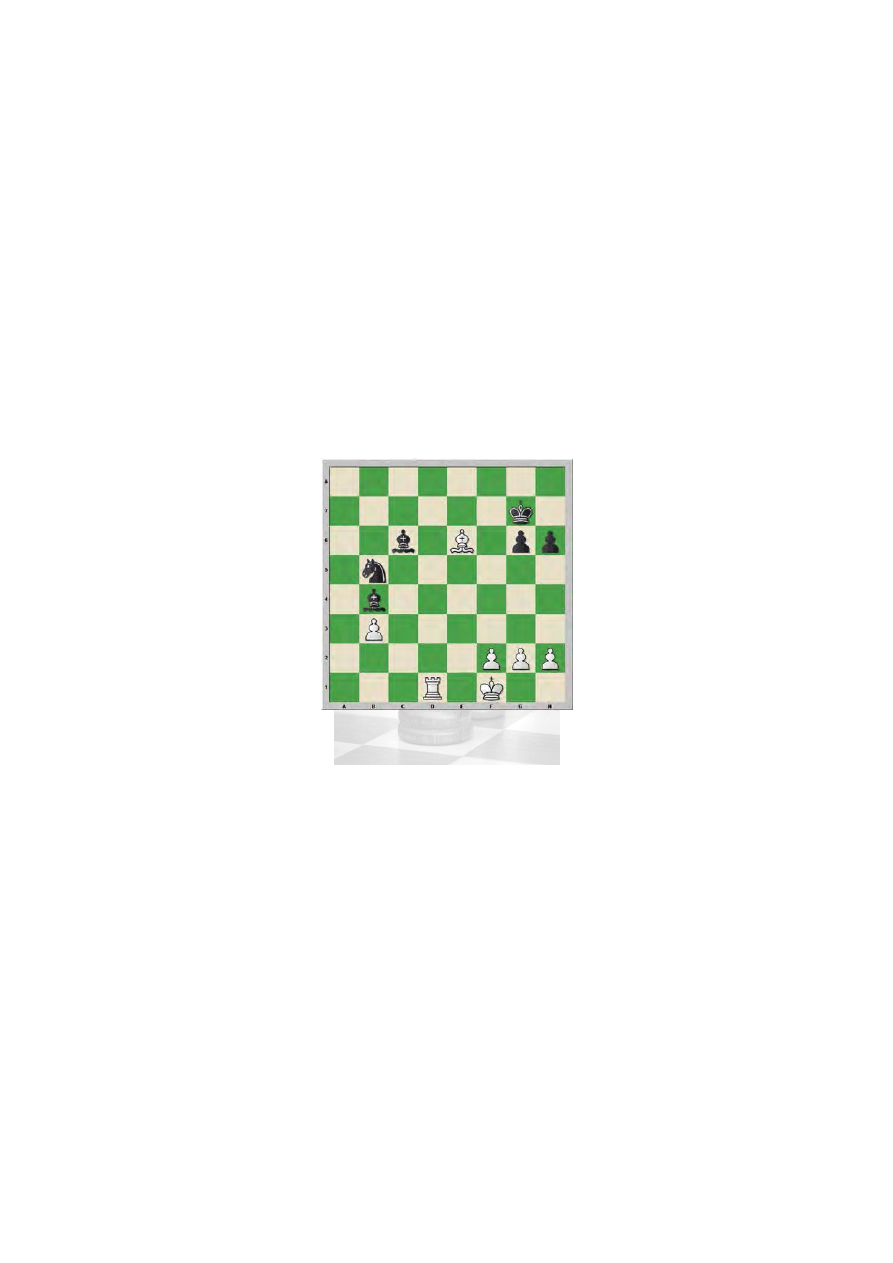
This position would be won without pawn d5. 97...¥a1? Accuracy lacks. [The
variation 97...¥b2! 98.¥d2 ¥a1! 99.¥c1 ¥c3! shows the three supplementary
squares.] 98.¢c4! White forces the exchange of bishops. If the black bishop had
been on b2, it could have moved to c1. 98...¥b2 99.¥c3 ¥xc3 100.¢xc3 ¢xd6
101.¢b4! ¢c6 102.¢c4 Opposition decides the game. 102...¢d6 103.¢b5 1–0
13
(15) Zukertort,Johannes - Steinitz,Wilhelm [B14]
Zukertort W Ch New Orleans 1886, 1842
[JvR]
Zukertort (1842–1888) was a violent attacker with a sense of positional play. He
played in the first world championship match with Steinitz. 1.d4 d5 2.c4 e6 3.¤c3
¤f6 4.¥f4 c5 5.e3 cxd4 6.exd4 dxc4 7.¥xc4 ¤c6 8.¤f3 ¥e7 9.0–0 0–0
10.¦e1 ¥d7 11.£e2 £a5 12.¤b5 a6 13.¥c7 b6 14.¤c3 ¦fc8 15.¥f4 b5
16.¥b3 £b6 17.¦ed1 ¤a5 18.¥c2 ¤c4 19.¥d3 ¤d6 20.¤e5 ¥e8 21.¥g5
£d8 22.£f3 ¦a7 23.£h3 h6 24.¥e3 ¦ac7 25.d5 b4 26.¤e2 ¤xd5 27.¥xa6
¦a8 28.¥d3 ¥f6 29.¥d4 ¤b5 30.¤f3 ¤xd4 31.¤fxd4 ¦a5 32.£f3 ¥a4
33.¦e1 ¤e7 34.£e4 g6 35.b3 ¥e8 36.¥c4 ¤f5 37.¤xe6 fxe6 38.¥xe6+
¢g7 39.¦ad1 £e7 40.¤f4 ¦e5 41.£b1 ¦xe1+ 42.¦xe1 ¥c3 43.¤d5 £c5
44.¤xc7 £xc7 45.¦d1 ¤d4 46.¥c4 ¥c6 47.£d3 ¥a8 48.£e3 £d6 49.a3
¥c6 50.axb4 £f6 51.¢f1 ¤b5 52.£e6 £xe6 53.¥xe6 ¥xb4
The unequal material favors
’
White. 54.¥d7! ¤c3 55.¦d4 ¥xd7 56.¦xd7+ ¢f6
57.¦d4 The minor pieces lack cooperation. 57...¥e7 58.b4 ¢e5 59.¦c4 ¤b5
60.¦c6 ¥d6 61.¦b6 ¤d4 62.¦b7! The mobile rook moves to the other flank.
62...g5 63.b5 ¢d5 64.b6 ¢c6 65.¦h7 ¢xb6 66.¦xh6 ¢c7 67.h4! gxh4
68.¦xh4 The pawn exchanges have resulted in two connected passed pawns.
68...¤f5 69.¦h7+ ¢d8 70.g4 ¤e7 [The restriction of the white king in 70...¤d4
71.¢g2 ¥f4 is ended by 72.¦b7 ¢e8 73.¦b4 ¤e6 74.¢f3] 71.¢g2 ¢e8 72.¢f3
¥c5 [If Black controls f4 by 72...¤g6 the white king moves to e4 and f5.] 73.¦h5
¥d4 74.¢g3 ¢f7 75.f4 ¥c3 76.¦b5 ¥e1+ 77.¢f3 ¥c3 78.g5 ¥a1 79.¢g4
¥c3 80.f5 ¥d4 81.¦b7 ¥c3 82.¢h5 Black has a sort of bastion. 82...¥d4?!
[Better is 82...¥g7! 83.¦b5 ¤g8 84.¦b8 ¤e7 85.¦b7! White has lost a tempo. Black
experiences zugzwang. 85...¥e5 86.¢h6!] 83.¢h6! ¥g7+ 84.¢h7 ¥e5 85.g6+
¢f8 86.¦xe7! Zukertort lost the match eventually, because he collapsed during
the final stage. 1–0
14
(16) Berger,Johann
Berger Theorie und Praxis der Schach, 1845
[JvR]
Berger (1845–1933) was a great theorist of the endgame. He also composed studies.
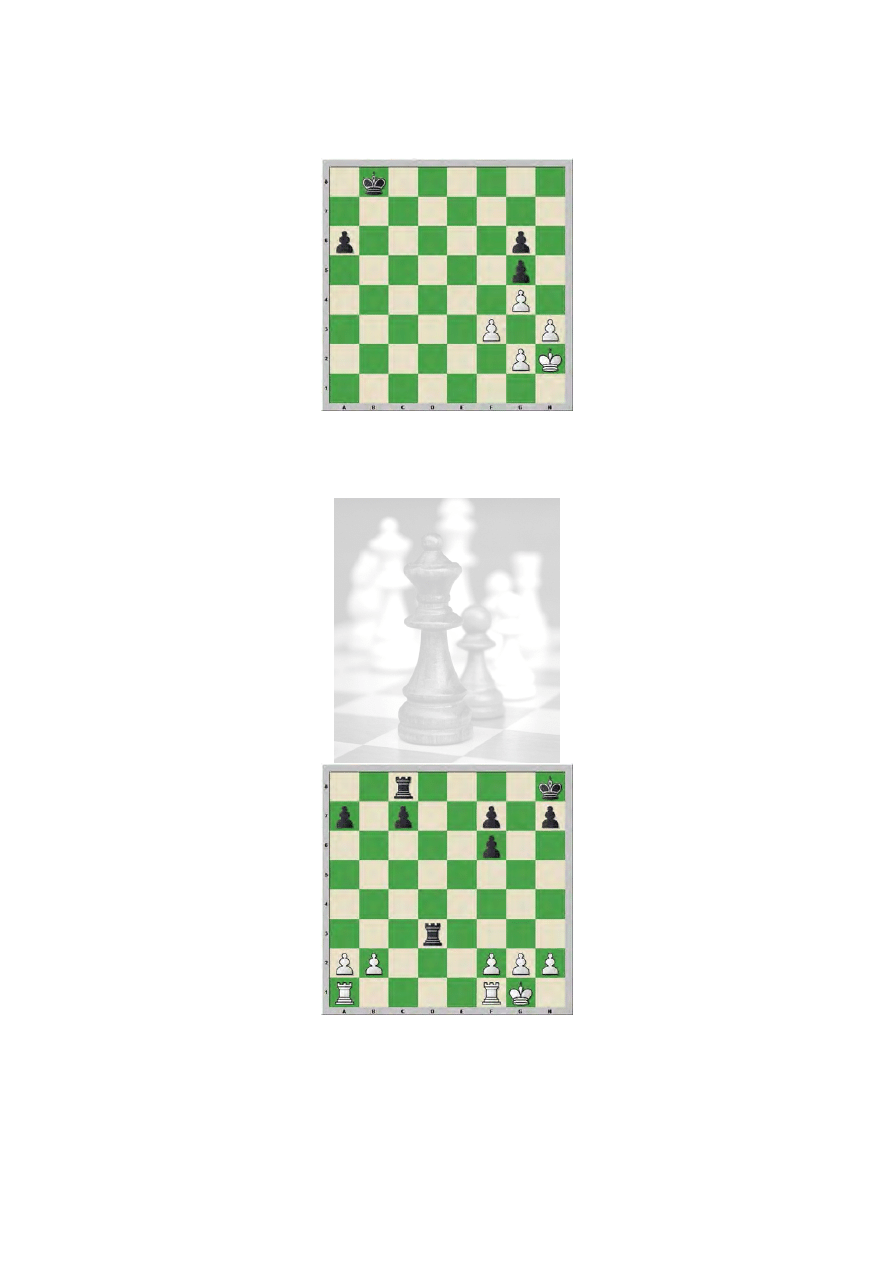
1.f4! [No good is 1.h4? gxh4 2.f4 ¢c7 3.f5 ¢d7!] 1...¢c7! 2.fxg5! a5 3.¢g3 a4
4.¢h4 a3 5.g3 a2 It ends with self stalemate. ½–½
(17) Chigorin,Mikhail - Tarrasch,Siegbert [C65]
Chigorin Budapest 1896, 1850
[JvR]
Chigorin (1850–1908) was a great attacker and an accurate player in the endgame.
1.e4 e5 2.¤f3 ¤c6 3.¥b5 ¤f6 4.£e2 d6 5.d4 exd4 6.e5 d3 7.cxd3 dxe5
8.¤xe5 ¥b4+ 9.¥d2 0–0 10.¥xc6 ¥xd2+ 11.¤xd2 bxc6 12.¤xc6 £d6
13.¤e7+ ¢h8 14.¤xc8 ¦axc8 15.0–0 ¦fd8 16.¤e4 £xd3 17.£xd3 ¦xd3
18.¤xf6 gxf6
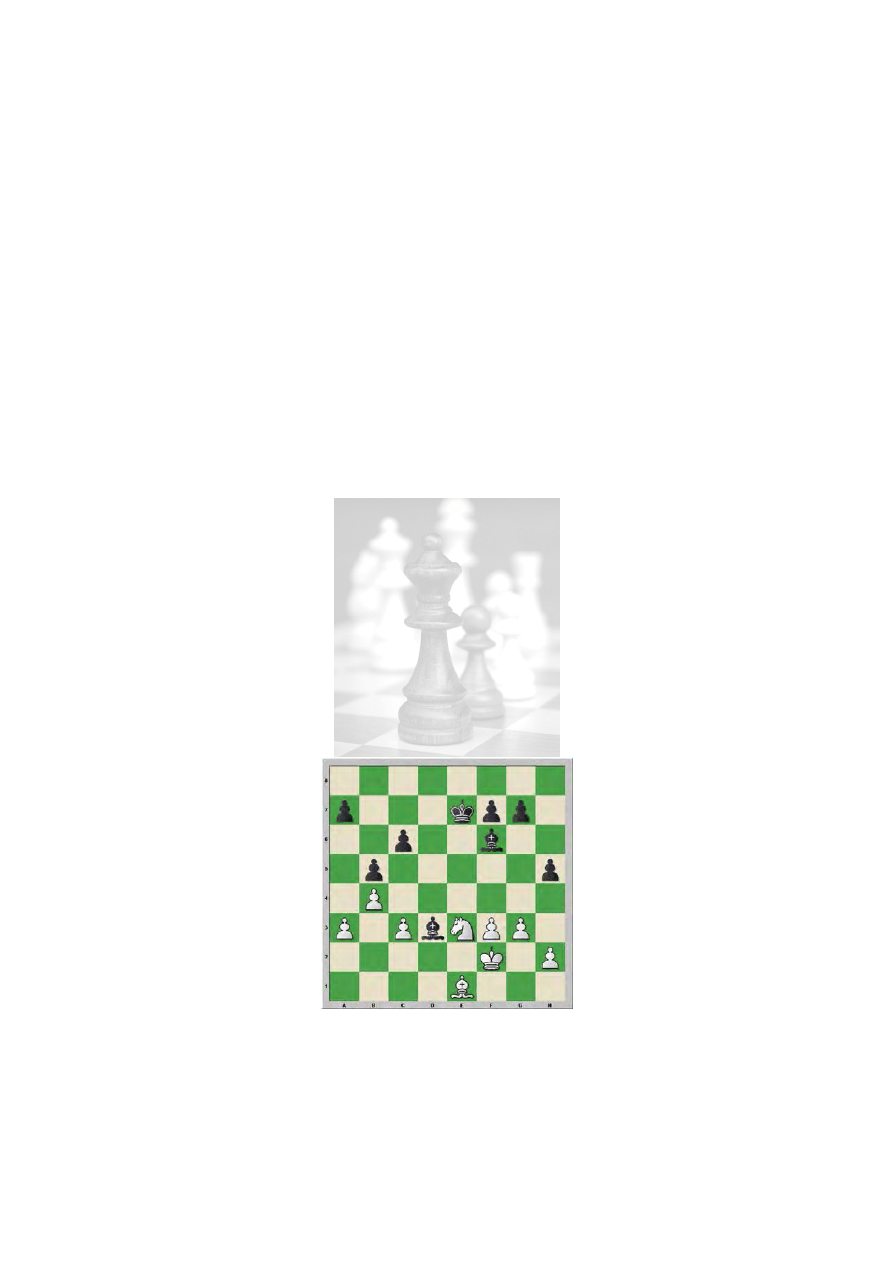
The black pawns are weak. 19.¦fd1! White has to play actively. 19...¦cd8
20.¦xd3 ¦xd3 21.g3 ¦d2 22.¦c1! Another active move secures the advantage.
22...¦xb2 23.¦xc7 ¦xa2 [Levenfisch mentions the alternative 23...¢g7!? 24.¦xa7
15
¢g6] 24.¦xf7 The black pawns have remained weak. 24...¦a6 25.¢g2 ¢g8
26.¦b7 ¦a2 27.h4 a6 [My preference goes to 27...a5! 28.¦a7 ¦a4] 28.¢f3 h5
[Levenfish and Smyslov give 28...¦a4 29.h5 h6 as an alternative. Black will sacrifice
the a-pawn and draw.] 29.¦c7 ¦a5 Black counters the threat 30. Rc5. 30.¢f4
¢f8 31.f3 The advance on the kingside continues. 31...¢g8 Black keeps his rook
on the fifth rank and his king on f8 or g8. 32.¦a7 ¢f8 33.g4! hxg4 34.fxg4 ¦a1?
Suddenly Black changes his plan. The consequences are fatal. [Correct is 34...¢g8
35.h5 ¦b5! 36.¦xa6 ¢g7 (Levenfish).] 35.¢f5 ¦f1+ 36.¢g6 ¦f4 37.g5! fxg5 [The
first point is 37...¦xh4 38.¦a8+ ¢e7 39.gxf6+] 38.hxg5 ¦a4 [38...¢g8 39.¦a8+ ¦f8
40.¦xf8+ ¢xf8 41.¢h7 is the second point.] 39.¦a8+ ¢e7 40.¢h6 a5 41.g6 ¦a1
42.g7 ¦h1+ 43.¢g6 ¦g1+ 44.¢h7 ¦h1+ 45.¢g8 ¦a1 [45...¦h5 46.¦a6 ¢e8
47.¦a7 leads to zugzwang.] 46.¦a7+ ¢e8 47.¦a6! White threatens 48.Kh7.
47...¦h1 48.¦xa5 ¦e1 49.¦h5 ¦g1 50.¦e5+ ¢d7 51.¢h7 Black lost although
he had several good plans. Chigorin became a cult figure in Russia after the
revolution. 1–0
(18) Blackburne,Joseph - Weiss,Miksa [C65]
Weiss New York 1889, 1857
[JvR]
Max Weiss (1857–1927) was an accurate player. He refused to play a match against
Steinitz and preferred employment by Rothschild's bank. 1.e4 e5 2.¤f3 ¤c6
3.¥b5 ¤f6 4.d4 exd4 5.0–0 ¥e7 6.¦e1 0–0 7.¤xd4 ¤xd4 8.£xd4 d5 9.exd5
¤xd5 10.¥c4 ¥e6 11.¥xd5 ¥xd5 12.¤c3 ¥e6 13.£e4 c6 14.¥f4 ¦e8
15.¦ad1 £b6 16.¤a4 £b4 17.£xb4 ¥xb4 18.¦e4 ¥g4 19.¦xe8+ ¦xe8
Steinitz: "Herr Weiss is one of the greatest masters of simplifying positions, and he
can well rely on his judgment in the ending, which he conducts with exemplary
skill". 20.f3 ¥f5 21.c3 ¥e7 22.b3 b5 23.¤b2 ¥f6 24.¥d2!? ¦d8! The pressure
increases. 25.b4 h5 26.¥e1 ¦xd1 27.¤xd1 The Horwitz bishops are strong.
27...¥c2 28.¤e3 ¥b1 29.a3 ¢f8 30.¢f2 ¥d3 31.g3 ¢e7
32.f4? Square e4 will become an entrance for the black king (Steinitz). White
should have kept the fortress intact. 32...¢e6 33.¢f3 ¥d8 34.¥f2 a5 35.¤d1
¥c2 36.¤e3 ¥b3 37.¢e4 f5+ 38.¢d3 a4! 39.¤g2 ¥c4+ 40.¢d2 ¢d5
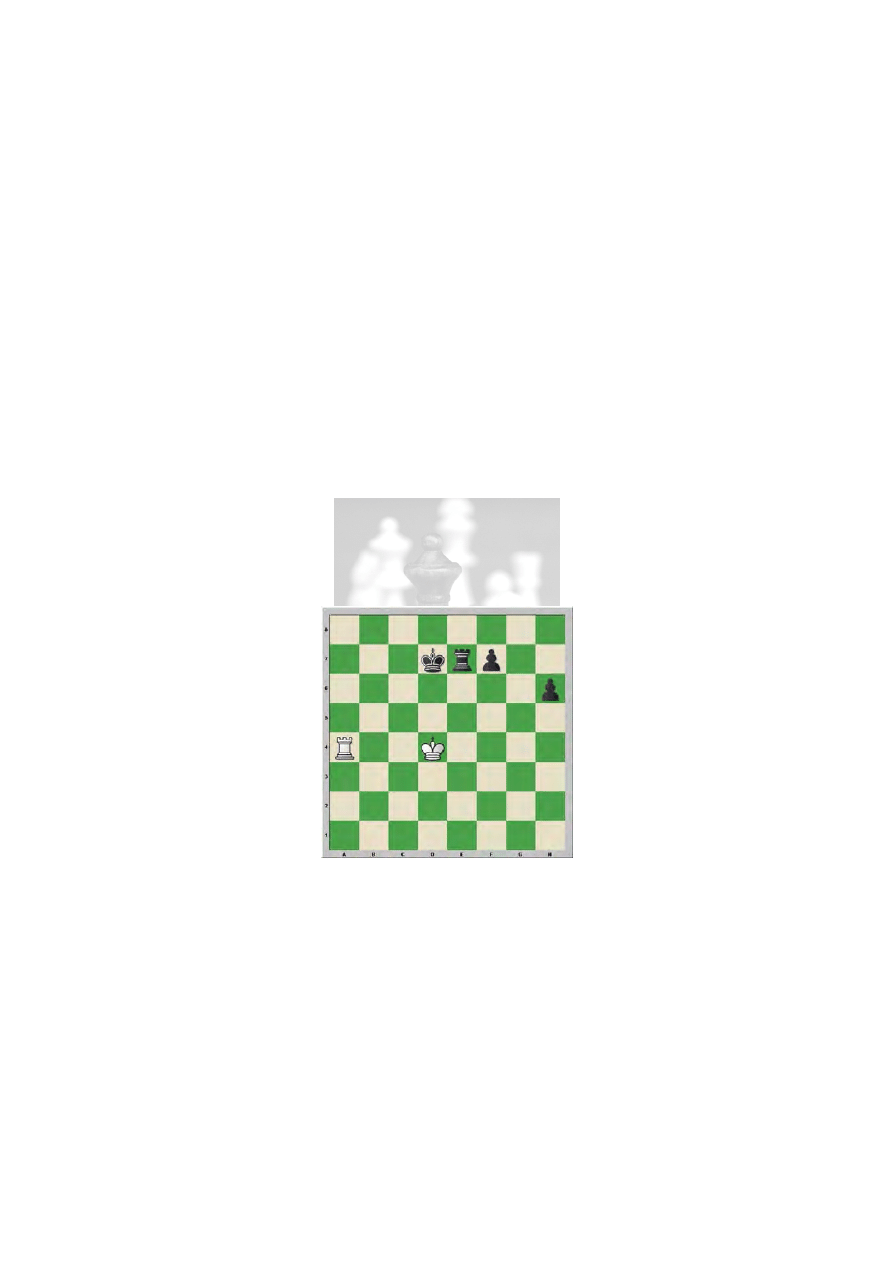
41.¥d4 g6 Blackburne stands on the edge of the ravine. 42.¤e3+? [The pawn
16
sacrifice 42.¤h4! ¥xh4 43.gxh4 ¢e4 44.¥e5 ¢f3 45.¥d6 ¢g4 46.¢e3 ¢xh4 47.¢f2
¢h3 48.¢g1 leads to a defendable position.] 42...¢e4 43.¤xc4 bxc4 44.¢e2
Black has the advantages of the good bishop and strong king. Pawn a3 will become
the fatal weakness. 44...g5! 45.¥e3 gxf4 46.¥xf4 ¥f6 47.¥d2 h4 48.gxh4
¥xh4 49.¥e3 ¥f6 50.¥d2 f4 51.¥e1 f3+ 52.¢f2 ¥h4+ 53.¢f1 ¥xe1! Weiss
has calculated a long and forced win. 54.¢xe1 ¢d3 55.h4 ¢xc3 56.h5 ¢b3
57.h6 c3 58.h7 c2 59.¢d2 f2 60.h8£ c1£+! 61.¢xc1 f1£+ 62.¢d2 £f2+
63.¢d3 £c2+ 64.¢e3 £c3+ 65.£xc3+ ¢xc3 66.¢e4 ¢b3 67.¢d4 ¢xa3
68.¢c3 ¢a2 69.¢c2 a3 70.¢c1 ¢b3 Weiss played the best chess of 1889. 0–1
(19) Albin,Adolf - Weiss,Miksa [C29]
Weiss Vienna 1890 (2), 1857
[JvR]
1.e4 e5 2.¤c3 ¤f6 3.f4 d5 4.fxe5 ¤xe4 5.d4 ¥b4 6.£f3 ¤xc3 7.bxc3 £h4+
8.g3 £xd4 9.¤e2 ¥g4 10.£f4 ¥xc3+ 11.¤xc3 £xc3+ 12.¢f2 £xc2+
13.¥d2 £f5 14.h3 £xf4+ 15.gxf4 ¥f5 16.¥b4 ¤d7 17.¦c1 c6 18.¥d6 ¤f8
19.¦g1 ¤e6 20.¦g3 ¢d7 21.¦b3 b6 22.¦bc3 ¤c5 23.¥xc5 bxc5 24.¦xc5
¦hc8 25.¥a6 ¦c7 26.¥b5 ¢e7 27.¦xc6 ¦xc6 28.¦xc6 ¥xh3 29.¦c7+ ¢f8
30.¥d3 g6 31.¢g3 ¥e6 32.f5 gxf5 33.¢f4 ¦b8 34.a3 ¦b3 35.¥xf5 ¥xf5
36.¢xf5 ¦f3+ 37.¢g5 ¦xa3 38.e6 ¦g3+ 39.¢f4 ¦g7 40.e7+ ¢e8 41.¢e5
¦g5+ 42.¢d6 ¦g6+ 43.¢xd5 a5 44.¦a7 ¦e6 45.¢d4 a4 46.¢d5 h6 47.¢d4
¦xe7 48.¦a8+ ¢d7 49.¦xa4
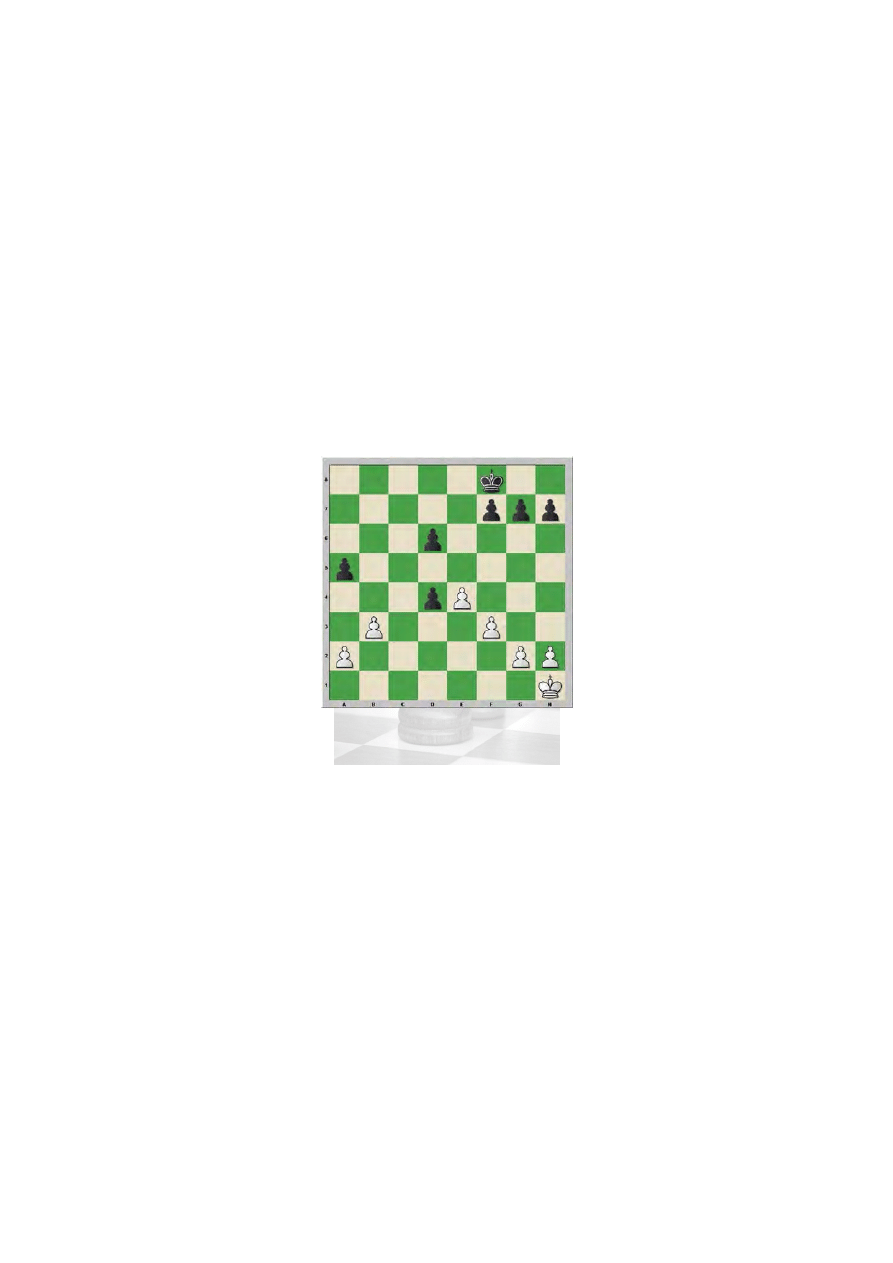
The ending of rook plus bishop- and rook-pawns versus rook became later known
by the game Marshall-Rubinstein, San Sebastian 1911. 49...¦e6 50.¢d5? [Correct
is 50.¦a8! ¢e7 51.¦h8 ¢f6!? Black almost wins but 52.¦xh6+ ¢f5 53.¦h5+ ¢f4
54.¦h4+ ¢g3 55.¦h5 ¢g4 56.¦h1 f5 57.¦g1+ draws.] 50...¢e7 51.¦h4 ¢f8
52.¦g4 ¦g6? The white king is allowed to cross the e-file. [The win is achieved by
52...h5! 53.¦h4 ¢g7! 54.¦xh5 ¦e1! 55.¢d4 ¢g6 56.¦a5 f5] 53.¦h4 ¢g7 54.¢e4
¦g1 55.¢e3 ¢g6 56.¢f2 ¢g5!? 57.¦a4 ¦b1 58.¢g3 ¦b3+ 59.¢g2 h5
60.¢f2 f5 61.¢g2 h4 62.¢h2? The king leaves the ideal square too soon.
[Correct is 62.¦a8 (Goldman) 62...h3+ 63.¢h2! f4 64.¦a7 ¢g4 65.¦g7+ ¢f3 66.¦a7!
A theoretical draw.] 62...f4 63.¦a8 ¢g4 64.¦g8+ ¢f3! This position is drawn, if
the h-pawn has reached the third rank. 65.¦f8 ¦b2+ 66.¢h3 ¢e3 67.¦e8+ [Or
67.¢xh4 f3 68.¢g3 ¦g2+ 69.¢h3 ¦g1!] 67...¢f2 68.¦e4 f3 69.¦f4 ¦b1 70.¢h2
17
¢e3 71.¦f8 f2 72.¦e8+ ¢d4 73.¦d8+ ¢e5 74.¦e8+ ¢d6 75.¦f8 f1£ Albin
fought well, but the better play won. 0–1
(20) Tarrasch,Siegbert - Berger,Johann [C77]
Tarrasch Breslau 1889 (1), 1862
[JvR]
Siegbert Tarrasch (1862–1934) was the great teacher of chess. 1.e4 e5 2.¤f3 ¤c6
3.¥b5 a6 4.¥a4 ¤f6 5.¤c3 ¥b4 6.¤d5 ¥e7 7.d3 d6 8.¤b4 ¥d7 9.¤xc6
¥xc6 10.¥xc6+ bxc6 11.0–0 0–0 12.£e2 c5 13.c3 ¤d7 14.d4 exd4 15.cxd4
¥f6 16.¥e3 cxd4 17.¥xd4 ¦e8 18.£c2 ¥xd4 19.¤xd4 ¤c5 20.f3 £f6
21.¦fd1 ¦eb8 22.¦ab1 a5 23.¢h1 ¦b6 24.¤e2 ¤e6 25.¤c3 ¦c6 26.£a4
¦c5 27.¤d5 £d8 28.¦bc1 ¦xc1 29.¦xc1 c5 30.¦d1 ¤d4 31.£c4 ¦b8 32.b3
¦c8 33.¦xd4 cxd4 34.¤e7+ £xe7 35.£xc8+ £f8 36.£xf8+ ¢xf8
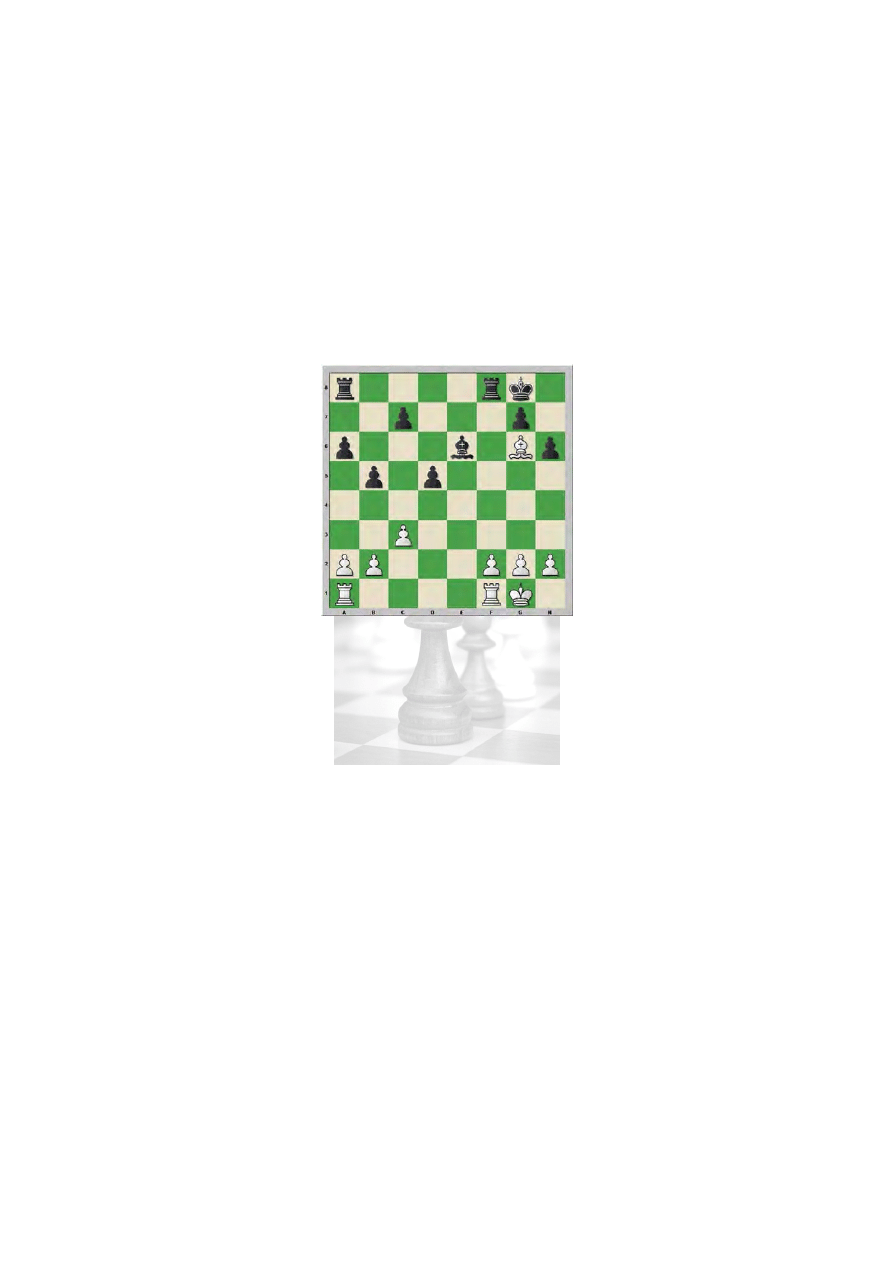
The sixth congress of the German chess federation took place in the city of
Anderssen and Tarrasch. White has a won pawn ending. 37.¢g1 ¢e7 38.¢f2 d5!
39.e5 [39.exd5 More easily wins 39...¢d6 40.¢e2 ¢xd5 41.a3 ¢c5 42.¢d3
(Nimzowitsch).] 39...¢e6 40.¢e2 [Not 40.f4? g5!] 40...¢xe5 41.¢d3 h5 Black
needs counteraction. 42.a3 h4 43.b4 axb4 [Or 43...a4 44.f4+!] 44.axb4 ¢d6
45.¢xd4 ¢c6 46.b5+? [Correct is 46.f4! ¢b5 47.¢xd5 ¢xb4 48.¢d6 ¢c4 49.¢e7
¢d4 50.¢xf7 ¢e4 51.g3 h3 52.¢xg7 ¢f3 53.f5 ¢g2 54.f6 ¢xh2 55.f7 ¢xg3 56.f8£
and Black lacks one tempo.] 46...¢xb5 47.¢xd5 ¢b4! 48.¢d4 [48.¢d6 ¢c3
draws because White has lost a tempo.] 48...¢b5 49.¢e5 ¢c4 50.¢f4 ¢d4
51.¢g4 ¢e5? The drawing king misses his chance. [51...¢e3! 52.¢xh4 ¢f2 53.¢h3
g5 draws.] 52.¢xh4 ¢f4 53.¢h5! The white king has remained mobile. 53...¢f5
[53...¢e3 54.¢g4 ¢f2 55.g3+-] 54.g3 ¢f6 55.¢g4 ¢g6 The rest is simple, but
White takes his time. 56.¢f4 ¢f6 57.¢e4 ¢e6 58.¢d4 ¢d6 59.¢c4 ¢c6 60.f4
¢d6 61.¢d4 ¢e6 62.¢c5 ¢e7 63.¢d5 ¢d7 64.¢e5 ¢e7 65.f5 f6+ 66.¢d5
¢d7 67.h3 ¢e7 68.¢c6 ¢e8 69.h4 ¢e7 70.¢c7 ¢e8 71.¢d6 ¢d8 72.¢e6
¢e8 73.h5 ¢f8 74.h6 This pawn endgame was still difficult for Tarrasch and
Berger in these days. 1–0
18
(21) Tarrasch,Siegbert - Chigorin,Mikhail [C82]
Tarrasch St. Petersburg 1893 (2), 1862
[JvR]
Tarrasch and Chigorin played a long match (+9, =4, -9). 1.e4 e5 2.¤f3 ¤c6
3.¥b5 a6 4.¥a4 ¤f6 5.0–0 ¤xe4 6.d4 b5 7.¥b3 d5 8.dxe5 ¥e6 9.c3 ¥c5
10.¤bd2 0–0 11.¥c2 ¤xd2 12.£xd2 ¤e7 13.¤g5 ¤g6 14.£e2 £d7 15.¥e3
¥g4 16.£d3 ¥xe3 17.£xe3 h6 18.e6 fxe6 19.¤xe6 £xe6 20.£xe6+ ¥xe6
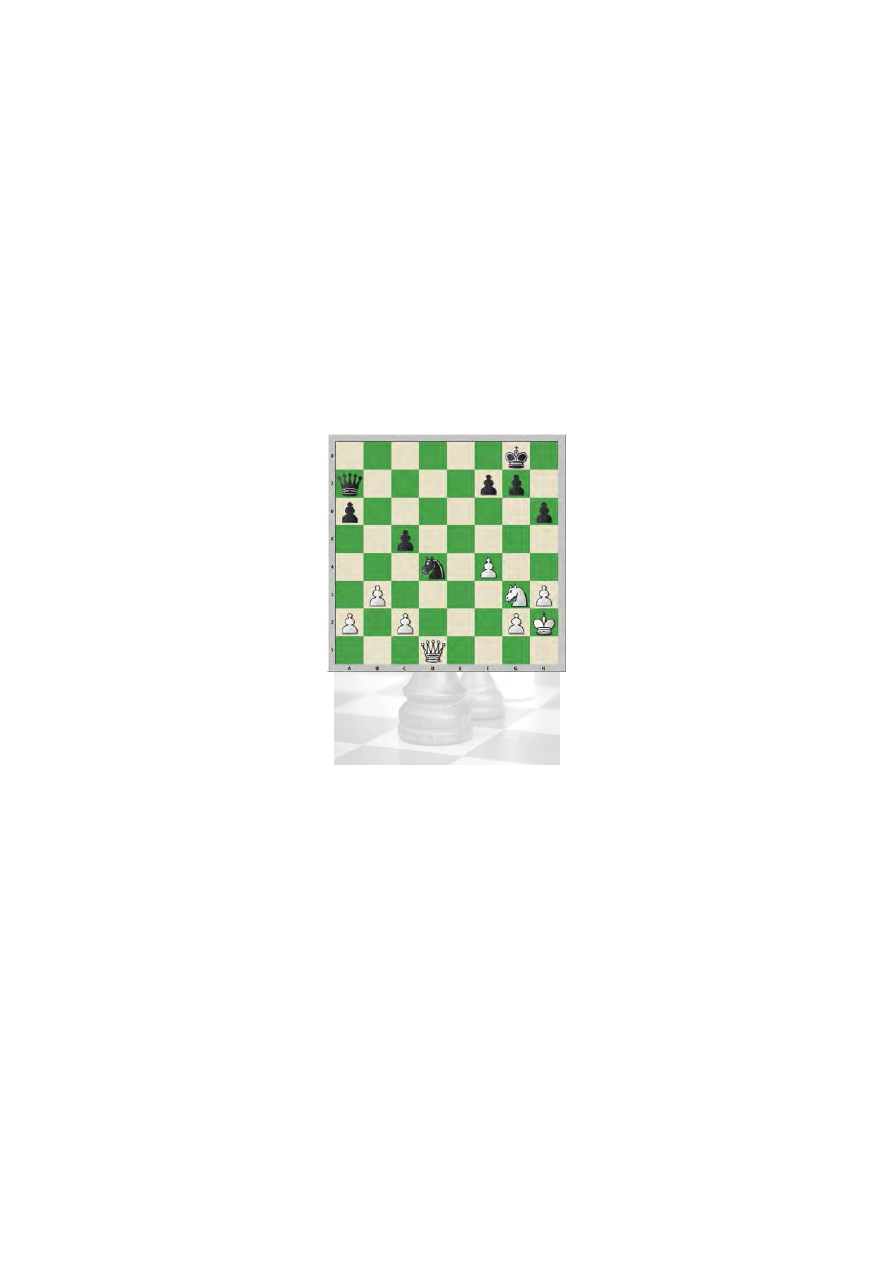
21.¥xg6
Tarrasch offers a draw. Chigorin refuses because he wants to use the pawn majority
on the queenside. 21...c5 22.¦fe1 White occupies the open file. 22...¦f6 [22...¥f7
23.¥xf7+ ¢xf7 24.¦e5 ¦ad8 25.¦d1 ¦fe8 draws.] 23.¥h5 ¦d8 24.¦e5 ¢f8?
[Great complications are started by 24...d4! 25.¦xc5 dxc3! 26.¦xc3 ¦d2 27.¦c6
¦fxf2 28.¦xe6 ¦xg2+ 29.¢f1 ¦df2+ 30.¢e1 ¦xb2 31.¦e2 ¦xh2 32.¦xh2 ¦xh2
33.¥e2 ¦h1+ 34.¥f1 ¦h2 Black can take a draw or play for a win.] 25.¦ae1 ¦d6
26.f4! Threatens f5. 26...g6 27.¥xg6 ¦xg6 28.f5 ¦f6? [Far stronger is 28...¥xf5
29.¦xf5+ ¦gf6] 29.fxe6 ¢e7 30.¦d1 ¦fxe6 31.¦dxd5 ¦xd5 32.¦xd5 White
seems to win. 32...¦e2! But Black creates new chances. 33.¦xc5 ¦xb2 34.¦c6
¦xa2 35.¦xh6 a5 36.h4 a4 37.¦a6 ¦c2 38.¦a5 ¢f6 39.¦xb5 ¦xc3 The
connected passed pawns are dangerous. 40.¢h2 ¢g6 41.¦a5 a3 42.g3 ¦c2+
43.¢h3 ¦a2? [43...a2! draws according to the present theory.] 44.¢g4 ¦a1
45.¦a6+ ¢f7 46.¢g5 a2 Black threatens ..Rg1. 47.g4 ¢e7 48.¦a7+ ¢e8 49.h5
¢f8 50.h6 ¦b1 [50...¢g8 51.¢g6 threatens mate.] 51.¦xa2 ¢g8 52.¦a8+ ¢h7
53.¦a7+ ¢h8 54.¦f7 ¦b5+ 55.¢g6 ¦b6+ 56.¦f6 ¦b8 57.g5 ¦a8 58.¦f5 ¢g8
59.¦d5 ¦b8 60.¢h5 ¦a8 61.g6 ¢h8 62.¦f5 ¦g8 63.g7+ Tarrasch improved
the theory of rook endings.[63.g7+ ¢h7 64.¦f8 ¦xf8 65.gxf8¥ ¢g8 66.¢g6 ends the
game with firework.] 1–0
19
(22) Tarrasch,Siegbert - Schlechter,Carl [C84]
Tarrasch Koeln 1911 (3), 1862
[JvR]
The match between Tarrasch and Schlechter ended in 8-8. 1.e4 e5 2.¤f3 ¤c6
3.¥b5 a6 4.¥a4 ¤f6 5.0–0 ¥e7 6.¤c3 d6 7.d4 ¥d7 8.¥xc6 ¥xc6 9.£d3
exd4 10.¤xd4 0–0 11.¦e1 ¤d7 12.¤xc6 bxc6 13.¥e3 ¥f6 14.¦ad1 £b8
15.b3 £b4 16.¥d2 £b7 17.¤a4 ¦fe8 18.¥c3 ¦e6 19.¥xf6 ¤xf6 20.¦e3
¦ae8 21.¤c3 h6 22.h3 £a7 23.£d4 c5 24.£d3 £b7 25.¦de1 £b4 26.f3
£b7 27.¦3e2 £a7 28.¢h2 c6 29.f4 ¤d7 30.¦d1 d5 31.exd5 ¦xe2 32.dxc6
¤b8 33.¤xe2 ¤xc6 34.¤g3 ¦d8 35.£f3 ¦xd1 36.£xd1 ¤d4
Tarrasch has an extra pawn. 37.c3 ¤e6 38.f5 [Tarrasch prefers 38.£d6! ] 38...¤f8
39.£d5 ¤d7 40.¤e4 £b8+ 41.£d6 £a8 An exchange of pawns loses quickly.
Black gives a pawn. 42.¤xc5 ¤xc5 43.£xc5 The win seems to be easy.
43...£b8+! 44.¢h1 £f4 45.£c4! White prevents perpetual check. 45...£d2
46.£xa6 £c1+ 47.¢h2 £f4+ 48.¢g1 £e3+ 49.¢f1 £xc3 50.£e2 £c1+
51.¢f2 £c5+ 52.¢g3 £d6+ 53.¢f3 £c6+ 54.£e4 £c3+ 55.£e3 The checks
are ended at the cost of a pawn. 55...£c2 56.a4 £xf5+ 57.¢g3 £g6+ 58.¢h2
£d6+ 59.£g3! £b4! 60.a5! White sacrifices a pawn for the advance of the b-
pawn. 60...£xa5 61.£b8+ ¢h7 62.b4 £g5! 63.b5 f5 64.b6 [Tarrasch does not
like 64.£e5 £g6 but 65.£c7! gives winning chances.] 64...£e3 65.£d6?! [Better is
65.£c7 f4 66.£c2+] 65...£b3?! [Schlechter misses 65...f4 66.£b4 f3] 66.£c6 £e3
67.£d6?! £b3?! 68.£c6 £e3 69.£d6?! £b3?! 70.£c6 £e3 71.£b5! Tarrasch
finds the right plan. 71...£f4+ 72.¢g1 £d4+ 73.¢f1 £d1+ 74.¢f2 £c2+
75.¢g3 f4+!? 76.¢f3 £c3+ 77.¢xf4 £d2+ 78.¢f3 [Avoids 78.¢e5?? £g5+]
78...£d1+ 79.¢e3 £e1+ 80.¢f3 £d1+ 81.¢e4 £e1+ 82.¢d5 The advance
continues at the cost of a pawn. 82...£d2+ 83.¢e6 £xg2 84.b7 "Is it possible for
White to escape from perpetual check and promote the passed pawn" Tarrasch,
Schlechter and Lasker asked themselves. 84...£g6+ [84...£xh3+?? 85.£f5+!]
85.¢d5 £f5+ 86.¢c6 £e6+ 87.¢c7 £e7+ 88.¢b6 £d8+ 89.¢a7 £d4+
90.¢a8 The king has found a safe haven. 90...£e4 91.£a5 £f3 92.£b4 £d5
93.£b1+! Black has a difficult choice. 93...g6 [93...¢g8 94.£g6 is unpleasant.]
94.£c2 h5! The king gets an escape on the sixth rank. 95.h4?! [Better is 95.£c7+ ]
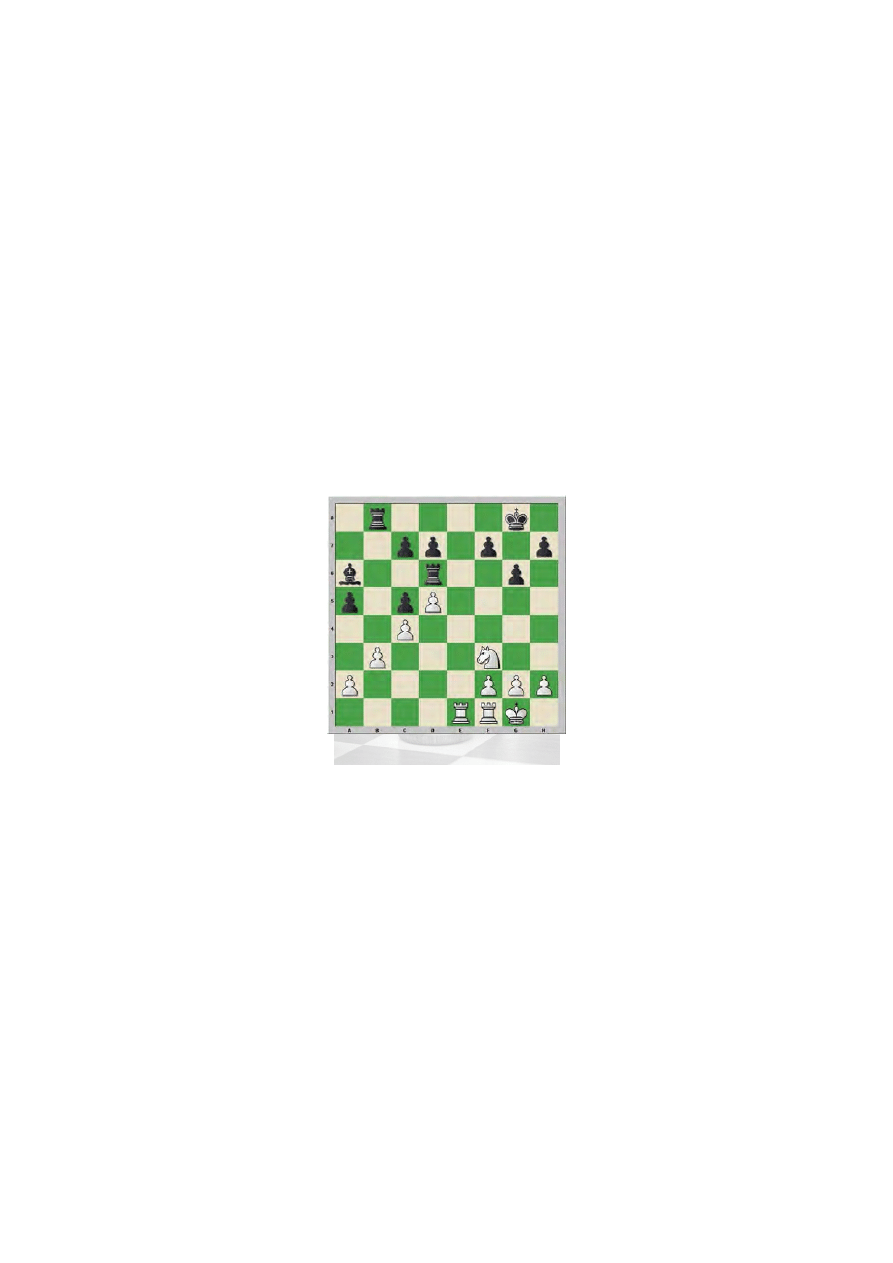
20
95...¢h6?! [95...£a5+! 96.¢b8 £d8+ 97.£c8 £xh4 98.£d7+ ¢h6! A win for White
will be hard to find.] 96.£c7! A fine maneuver starts. 96...£e4 97.£d7 £f3
98.£e7 £c6 99.¢a7! The king starts a march. 99...£a4+ 100.¢b6 £b3+
101.¢a7 £a4+ 102.¢b6 £b3+ 103.¢c7 £c4+ 104.¢d7 £b5+ 105.¢d8 £b2
106.¢e8 £h2 107.¢f8 £b8+ 108.¢f7 £f4+ 109.¢g8 Black will be mated. 1–0
(23) Lasker,Emanuel - Showalter,Jackson [C65]
Lasker Logansport 1892 (1), 1868
[JvR]
Emanuel Lasker (1868–1941) was the second world champion. As an expert of the
endgame he had many successes at the final stage of the game. 1.e4 e5 2.¤f3 ¤c6
3.¥b5 ¤f6 4.£e2 ¥c5 5.¥xc6 bxc6 6.¤xe5 0–0 7.c3 a5 8.d4 ¥a6 9.£f3
¦e8 10.¥g5 ¥e7 11.¤d2 ¦b8 12.b3 £c8 13.c4 ¥d8 14.0–0 c5 15.£h3 ¦e6
16.¤ef3 ¤xe4 17.¤xe4 ¦xe4 18.¥xd8 £xd8 19.£f5 £e7 20.¦ae1 ¦e6
21.d5 g6 22.£f4 £d6 23.£xd6 ¦xd6
White has achieved the better endgame. 24.¤g5! a4 [24...¦db6 25.¤e4 d6 26.¤f6+
¢g7 27.¤d7 and White wins the exchange.] 25.¤e4 axb3 26.axb3 ¦xb3!
[26...¦db6 27.¤xc5 ¥c8 28.¦e7 d6 29.¤e4 ¥f5 30.¤d2 White has an extra pawn.]
27.¤xd6 cxd6 28.¦c1 ¦b4 29.¦b1 ¥xc4! [29...¦xc4 30.¦b6 ¦a4 31.¦c1
favours White.] 30.¦xb4 cxb4 31.¦d1 ¥a2 32.¦d2 b3 33.¦b2! White prevents
33...Bb1. He still has the initiative. 33...¢g7 34.f4 ¢f6 35.¢f2 g5! Black has to
counterattack. [35...¢f5? 36.¢f3 h5 37.g3 f6 38.h3 g5 39.g4+ ¢g6 40.f5+ White
moves his king to c3 and wins.] 36.¢f3! h6 37.¢e4 ¢g6 38.f5+!? White has to
advance. 38...¢f6 39.g4 ¢e7 40.¢d4 ¢f6 41.¢e4 ¢e7 42.¢d3! The white
king starts a triangle. 42...¢f6 43.¢d4 ¢g7 44.¢c3 h5! [44...¢f6? 45.¦e2 b2
46.¦xb2 ¥xd5 47.h3 h5 48.gxh5 ¢xf5 49.¦b5+-] 45.gxh5 [45.h3 hxg4 46.hxg4 ¢f6
47.¦e2 b2 48.¢xb2 ¥xd5 49.¦e3 ¥c6 leads to a defendable position for Black.]
45...¢h6 46.¦e2 [Or 46.¦d2 ¥b1] 46...b2! [Not 46...¢xh5? 47.¢b2! ¢g4 48.f6 ¢f5
49.¦e7 ¢xf6 50.¦xd7; Or 46...¥b1? 47.¦e7 ¥xf5 48.¦xf7] 47.¦xb2 ¥xd5 48.¦d2
¥e4 49.¦xd6+ ¢xh5 50.f6 ¥f5 51.¢d4 ¥e6 52.¢e5 g4? [52...¢g6!
Supplementary squares for rook and bishop are d3 + g4, d2 + f5 and d1 + h3.
53.¦d4! Zugzwang. 53...g4! 54.¦d1 ¥f5 55.h3 d6+!=] 53.¦d3? [Lasker misses
53.¦d2! ¢g6 54.¦f2!] 53...¢g6 54.¦d2 ¢g5? [Correct is 54...¥f5! 55.¦f2 d6+!
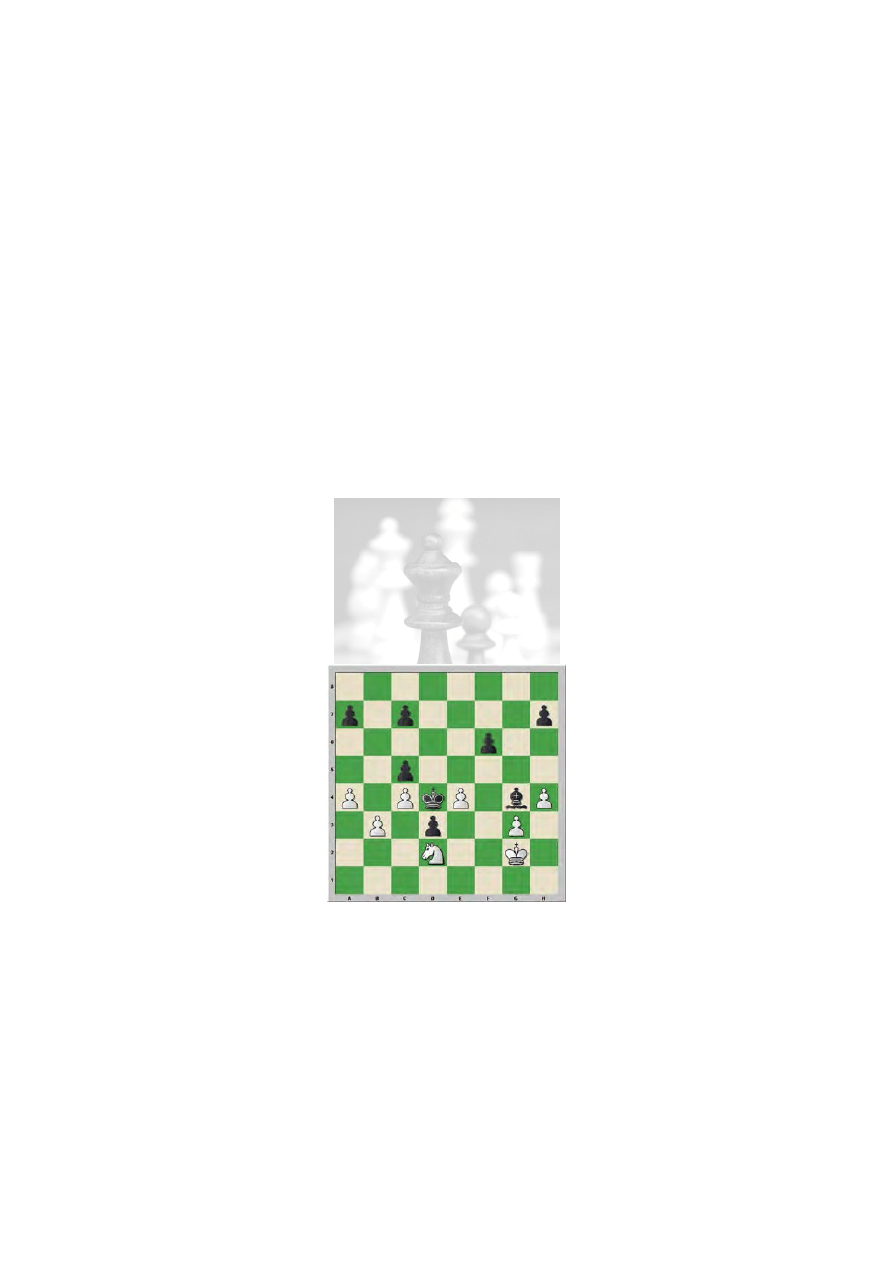
21
56.¢xd6 ¢xf6] 55.¦f2! ¢g6 56.¢d6! ¢g5 57.¢e7 White has been able to
improve the position of his king. 57...¢h5 58.¦e2 ¢g6 59.¦e5 ¥b3 60.¦b5
¥e6 61.¦b6 ¥c4 62.¦b8 ¥e6 63.¦h8 ¢g5 [Or 63...d5 64.¦d8 ¢g5 65.¦d6 ¢g6
66.¦xe6] 64.¦h7 d5 65.¦xf7 ¥xf7 66.¢xf7 d4 [The first mate at the border
shows 66...g3 67.hxg3 d4 68.¢g7 d3 69.f7 d2 70.f8£ d1£ 71.£f4+ ¢h5 72.£h4#]
67.¢g7 d3 68.f7 Lasker reached a high level in the endgame at the end of the
nineteenth century.[68.f7 d2 69.f8£ d1£ 70.£f6+ ¢h5 71.£h6# The second mate at
the border.] 1–0
(24) Marshall,Frank - Lasker,Emanuel [C65]
Lasker W Ch New York 1907 (2), 1868
[JvR]
1.e4 e5 2.¤f3 ¤c6 3.¥b5 ¤f6 4.d4 exd4 5.0–0 ¥e7 6.e5 ¤e4 7.¤xd4 0–0
8.¤f5 d5 9.¥xc6 bxc6 10.¤xe7+ £xe7 11.¦e1 £h4 12.¥e3 f6 13.f3 fxe5
14.fxe4 d4 15.g3 £f6 16.¥xd4 exd4 17.¦f1 £xf1+ 18.£xf1 ¦xf1+ 19.¢xf1
The endgame might end in a quick draw. 19...¦b8!! Lasker weakens the queenside
before he switches to the kingside. [The obvious 19...¥h3+ creates less chances.]
20.b3 ¦b5! Black takes the initiative in a brilliant way. 21.c4!? [Reti's variation
21.¤d2 ¦h5 22.¢g2 ¦c5 also leads to a black plus.] 21...¦h5 22.¢g1 [22.h4? g5!
23.hxg5 ¦h2 and Black wins.] 22...c5 23.¤d2 ¢f7 24.¦f1+? Marshall loses time.
[Correct is 24.a3! ¦h6 25.b4 ¦a6 and White has the time for 26.bxc5!] 24...¢e7
25.a3 ¦h6 26.h4 ¦a6 27.¦a1?! [Slightly better is 27.a4 ] 27...¥g4 28.¢f2 ¢e6
29.a4 ¢e5 30.¢g2 ¦f6 31.¦e1 d3 An entrance for the king is created. 32.¦f1
¢d4 33.¦xf6 gxf6
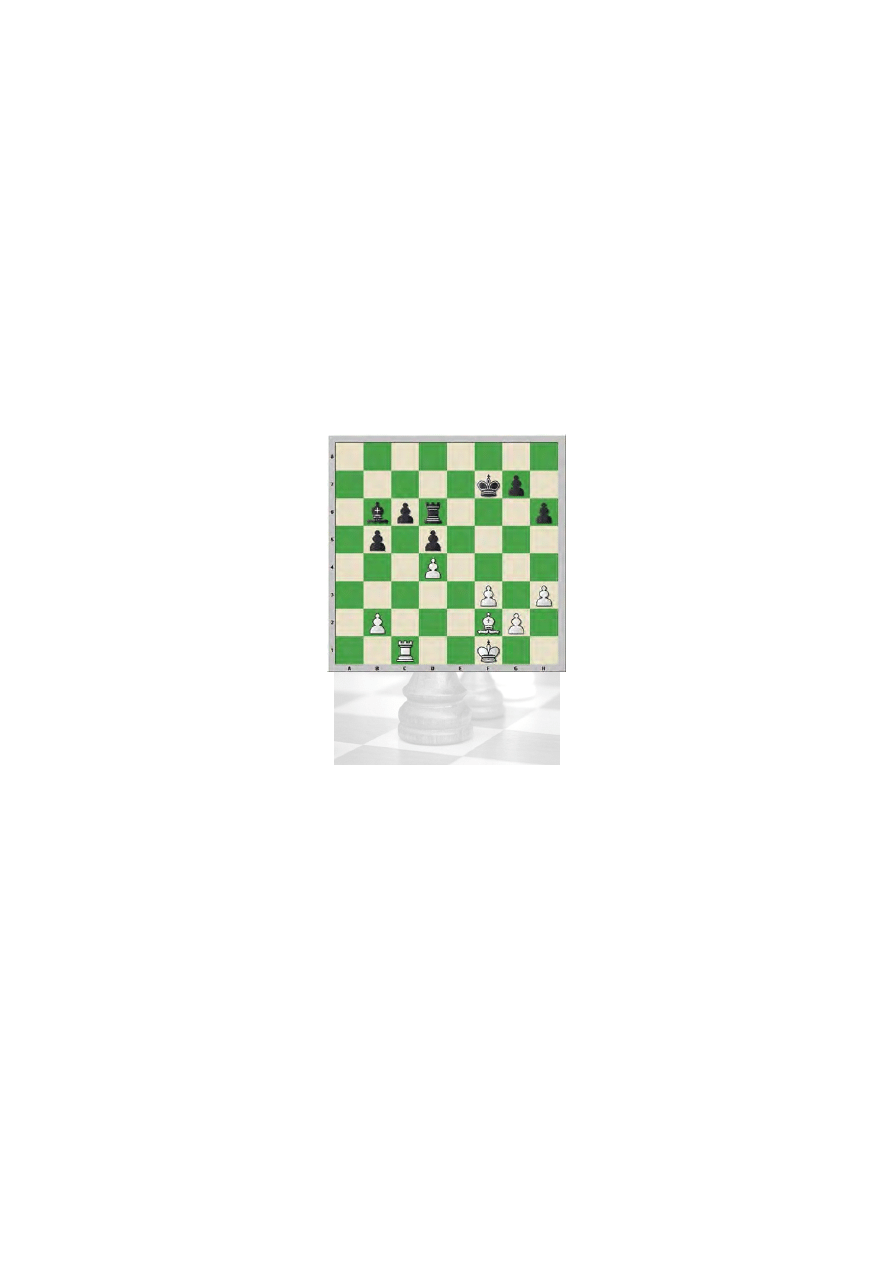
Black finds a charming win. 34.¢f2 c6 35.a5 a6! Zugzwang! 36.¤b1 ¢xe4
37.¢e1 ¥e2 38.¤d2+ ¢e3 39.¤b1 f5 40.¤d2 h5! Another zugzwang. The rest
is simple. 41.¤b1 ¢f3 42.¤c3 ¢xg3 43.¤a4 f4 44.¤xc5 f3 45.¤e4+ ¢f4
46.¤d6 c5 47.b4 cxb4 48.c5 b3 49.¤c4 ¢g3 0–1
22
(25) Lasker,Emanuel - Rubinstein,Akiba [C82]
Lasker St.Petersbrug 1914 (3), 1868
[JvR]
1.e4 e5 2.¤f3 ¤c6 3.¥b5 a6 4.¥a4 ¤f6 5.0–0 ¤xe4 6.d4 b5 7.¥b3 d5
8.dxe5 ¥e6 9.c3 ¥c5 10.¤bd2 0–0 11.¥c2 ¤xd2 12.£xd2 f6 13.exf6 ¦xf6
14.¤d4 ¤xd4 15.cxd4 ¥b6 16.a4 ¦b8 17.axb5 axb5 18.£c3 £d6 19.¥e3
¥f5 20.¦fc1 ¥xc2 21.¦xc2 ¦e8 22.¦ac1 ¦fe6 23.h3 ¦e4 24.£d2 ¦8e6
25.¦c6 £d7 26.¦xe6 £xe6 27.£d3 £e8 28.£c3 ¢f7 29.£d3 ¢g8 30.£c3
£e6 31.¦a1 £e8 32.¢f1 h6 33.£d3 ¢f7 34.¦c1 ¢g8 35.£b3 £f7 36.¦d1
c6 37.f3 £f6 38.£d3 ¦e7 39.¥f2 £d6 40.£c2 ¢f7 41.¦c1 ¦e6 42.£f5+ ¦f6
43.£e5 ¦e6 44.£xd6 ¦xd6
White has the better pawn structure. He will take the initiative on the kingside.
45.¢e2 ¢e7 46.¢d3 ¦g6 Black prevents Bg3-e5. 47.g3 ¦f6 48.f4 ¢d7 49.¦e1
¦f8 50.¦a1 h5 51.¥e3 g6 52.¦f1! ¢d6? [Right is the prophylactic 52...¥c7!
pressures on f4. 53.g4 hxg4 54.hxg4 ¢e6 White cannot make progress.] 53.g4 hxg4
54.hxg4 c5? The next exchanges lead to a defeat. [Tarrasch proposes 54...¢e6
Reinfeld and Fine continue with 55.¦e1 ¢d7 56.¦h1 ¥c7 57.¦h7+ ¢c8! 58.f5 gxf5
59.¥h6! ¦f6 60.¥g7 ¦f7 61.g5 ¦e7!
(
Reinfeld and Fine analyze
61...f4? 62.g6 ¦f5
63.¥h6 f3 64.g7 f2 65.g8£+ ¢b7 66.¦xc7+!)
62.g6 ¦e6 63.¥f6 ¦xf6 64.g7 ¦g6
65.¦h8+ ¢d7 66.g8£ ¦xg8 67.¦xg8 f4 Black has a solid fortress.] 55.dxc5+ ¥xc5
56.¥xc5+ ¢xc5 Rubinstein defeated Lasker in a similar endings five years ago.
57.f5 gxf5 58.gxf5 ¦f6 The blockade inactivates the rook. 59.¦f4 b4 [Or 59...d4
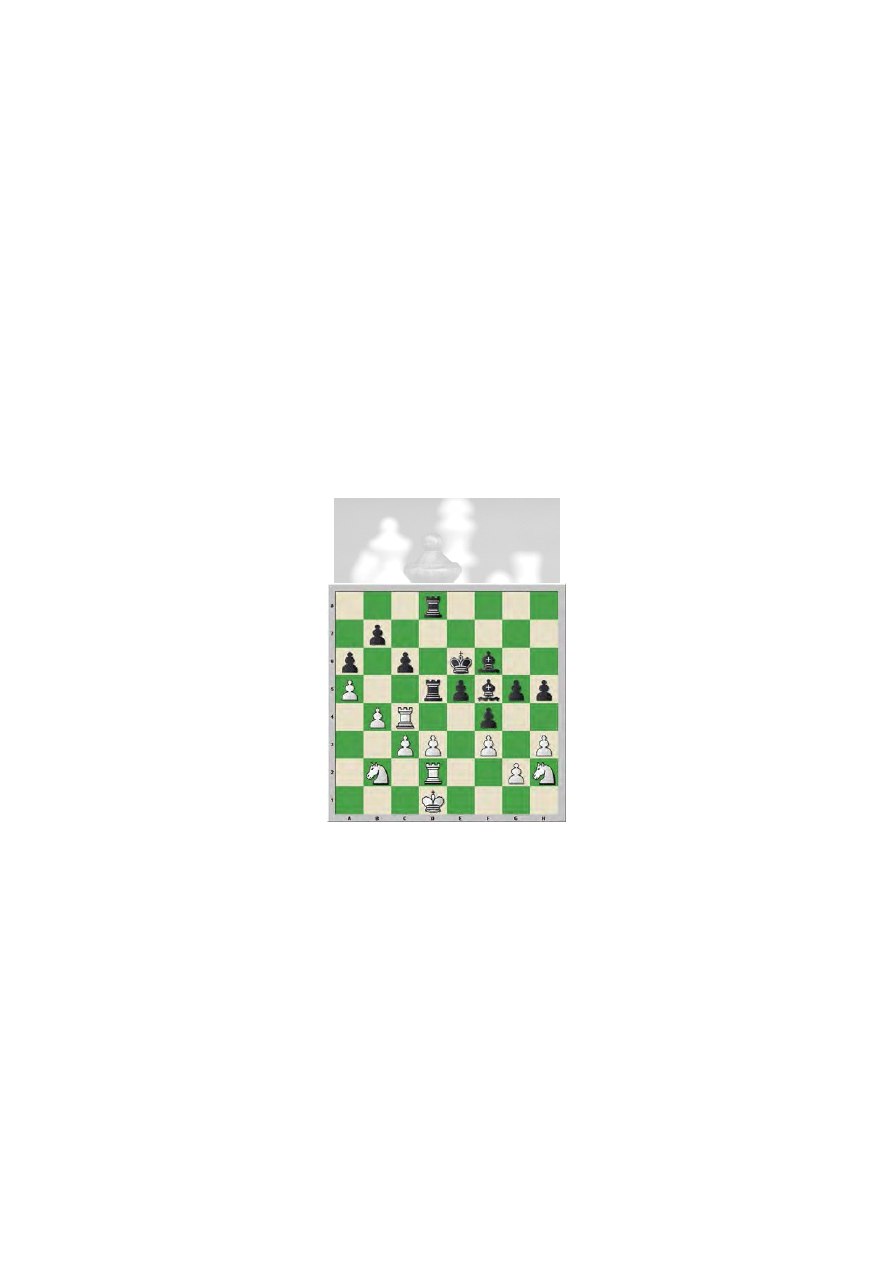
60.¢e4 ¦d6 61.¦f3] 60.b3! Zugzwang. 60...¦f7 61.f6 ¢d6 62.¢d4 ¢e6 63.¦f2
¢d6 If Black exchanges, White wins the pawn ending easily. 64.¦a2 ¦c7
65.¦a6+ ¢d7 66.¦b6! The rook ending is well known from theoretical
books.[Dueckstein shows the elegant 66.¦b6 ¦c3 67.¦xb4 ¦f3 68.¢e5 ¦f1 69.¦f4
¦xf4 70.¢xf4 ¢e6 71.f7] 1–0
23
(26) Lasker,Emanuel - Janowski,David [C87]
Lasker New York 1924 (4), 1868
[JvR]
1.e4 e5 2.¤f3 ¤c6 3.¥b5 a6 4.¥a4 ¤f6 5.0–0 d6 6.¦e1 ¥g4 7.c3 ¥e7 8.h3
¥h5 9.d3 £d7 10.¥xc6 £xc6 11.¥g5 ¥g6 12.¤bd2 h6 13.¥xf6 ¥xf6
14.¤f1 0–0 15.¤e3 ¦ae8 16.£b3 ¥d8 17.£d5 £xd5 18.¤xd5 Miracles
happen in some endgames of Lasker. 18...f5! The pair of bishops is activated.
19.¤d2 ¥f7 20.¤e3 f4! The battle will rage on several fronts. 21.¤ec4 ¥f6
22.a4 ¦d8 23.¤a5 ¦b8 24.¤f3? Lasker makes a positional error. He moves the
king's knight to passivity. [Wiser is 24.b4 ¦fd8 25.¤ac4] 24...g5 25.¤h2 h5
26.¤c4 ¥e6 27.f3 ¦fd8 28.¦e2 ¢f7 29.a5 ¦g8 30.¦a4 ¦bd8 31.¦b4 ¥c8
Lasker's counter-play has no effect. 32.b3 ¦h8 33.¤b2 d5! The centre is opened
while the knights are away. 34.exd5 ¦xd5 35.¦c4 c6 36.b4 ¥f5 37.¦d2 ¦hd8
38.¢f2 ¦b5?! Capture is okay. [Correct is 38...¥xd3 39.¤xd3 ¦xd3 40.¦xd3 ¦xd3
41.¢e2 e4! (Alekhine).] 39.¢e2 ¦bd5 [Janowski discovered that 39...¥e6 does not
win the exchange after ..Bxc4, according to Alekhine and Euwe.] 40.¢d1!? Lasker
was not a psychologist, but he expected the same blunder to occur twice. He used
his common sense. 40...¢e6?!
[The capture 40...¥xd3 41.¤xd3 ¦xd3 42.¦xd3 ¦xd3+ 43.¢c2 e4! wins.] 41.¢c2
¥e7 42.¤f1 c5! Another strong attack begins 43.bxc5 ¥xc5 44.¦a4 ¦8d7
45.¦d1 ¥a7 46.¦a3 g4 47.hxg4 hxg4 48.c4 ¦5d6 49.¤d2 ¥e3? [Better is
49...¦h7 ] 50.¦h1 gxf3 51.gxf3 ¦g7 52.¦h2 ¥g1 53.¦e2 ¦g3 54.¤d1!? ¦d7
[54...¥c5 55.¦b3 b6 56.axb6 ¥xb6] 55.¦b3 ¦dg7 56.¤c3 ¥e3?! [Or 56...¦g2?!
57.¦xb7!] 57.¤d5! ¦g2 58.¦xe3! fxe3 59.¦b6+ ¢d7 60.¤xe3 ¢c7? The tables
turn completely. [60...¦e2! 61.¦xb7+ ¢c6 (Alekhine) 62.¦b6+!? ¢c7 gives the last
chance.] 61.¤xf5 ¦h7 62.¤d6 ¦hh2 63.¤6e4 ¦h1 64.¢c3 ¦c1+ 65.¢b4
¦d1 66.¤b3 ¦xd3 67.¦xb7+ ¢c8 68.¦f7 ¦b2 69.¤ec5 ¦d6 70.¦f5 ¦e2
71.¤e4 ¦d3 72.¦xe5 ¦b2 73.¤ec5 ¦xf3 74.¦e8+ ¢c7 75.¦e6 ¦c2
76.¤xa6+ ¢b7 77.¤ac5+ ¢a7 78.¦e7+ ¢a8 79.¤a4 ¦h2 80.¤bc5 ¢b8
81.¦b7+ ¢c8 82.a6 "Lasker plays such stupid chess. I cannot stand it!" Janowski
used to say. 1–0
24
(27) Lasker,Emanuel
Lasker Deutsches Wochenschach 1890 (5), 1868
[JvR]
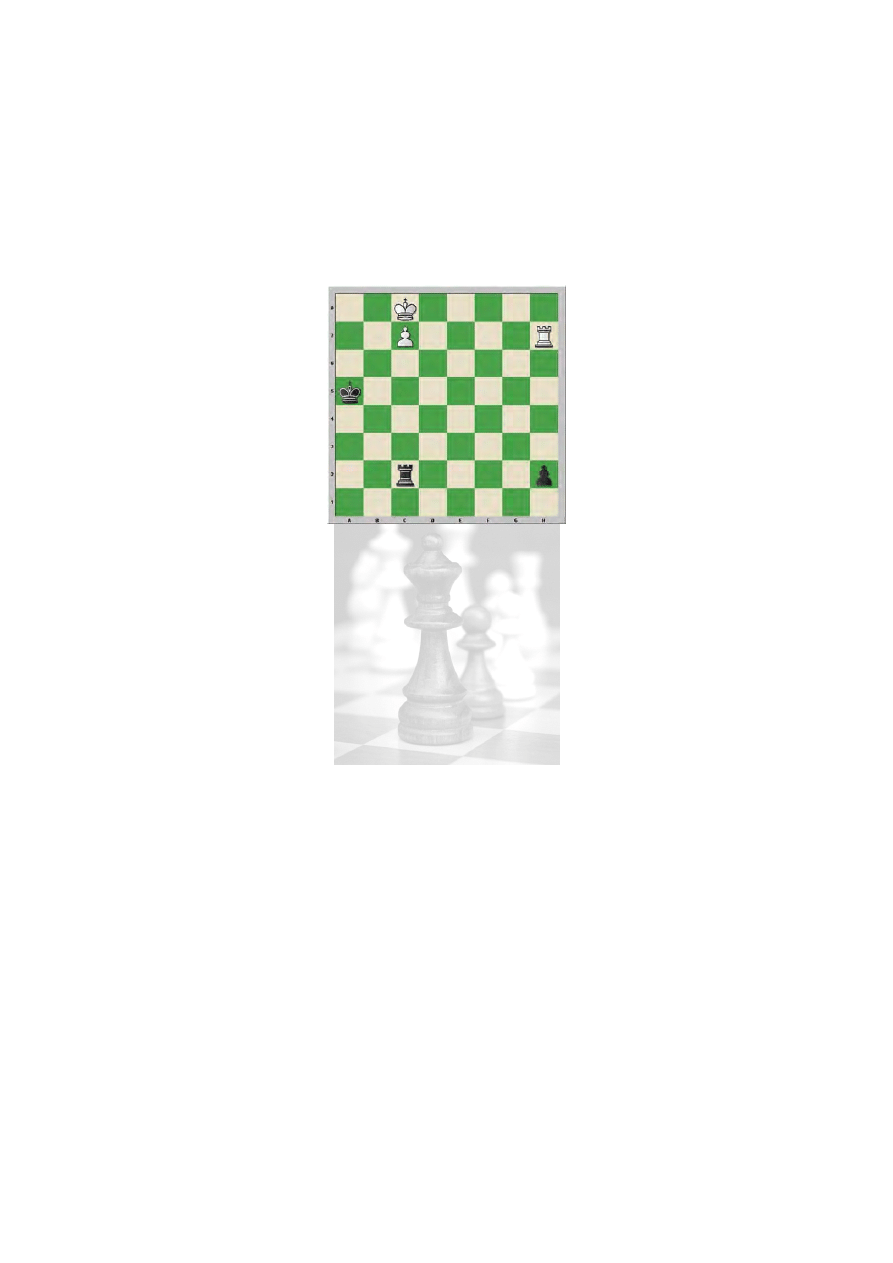
Lasker composed an important study. 1.¢b7 ¦b2+ 2.¢a7! ¦c2 3.¦h5+! The
systematic movement of rooks and kings is called the Lasker manoeuvre. 3...¢a4
4.¢b6 ¦b2+ 5.¢a6 ¦c2 6.¦h4+ ¢a3 7.¢b6 ¦b2+ 8.¢a5 ¦c2 9.¦h3+ ¢a2
10.¦xh2! 1–0
(28) Rotlewi,Gersz - Teichmann,Richard [D61]
Teichmann Karlsbad 1911, 1868
[JvR]
Teichmann (1868–1925) was a quiet positional player. The greatest success was his
victory in Karlsbad 1911. 1.d4 d5 2.¤f3 ¤f6 3.c4 e6 4.¤c3 ¥e7 5.¥g5 ¤bd7
6.e3 0–0 7.£c2 c5 8.0–0–0 £a5 9.cxd5 exd5 10.dxc5 ¤xc5 11.¤d4 ¥e6
12.¢b1 ¦ac8 13.¥d3 h6 14.¥xf6 ¥xf6 15.¥f5 ¦fd8 16.¥xe6 fxe6 17.£g6
¦d6 18.¦c1 ¦a6 19.f3 ¦d8 20.¦c2 ¥xd4 21.exd4 e5 22.£g4 exd4 23.£xd4
¤e6 24.£e5 b5 25.b3 d4 26.¤e4 d3 27.¦d2 ¤d4 28.¦c1 ¤c2 29.£b2 ¤a3+
30.¢a1 ¤c2+ 31.¢b1 ¤a3+ 32.¢a1 ¤c2+ 33.¢b1 ¦c6 34.¦cd1 ¦dc8
35.¦xd3 ¤a3+ 36.¢a1 b4 37.¦d7 £e5 38.¦d8+ ¦xd8 39.¦xd8+ ¢h7
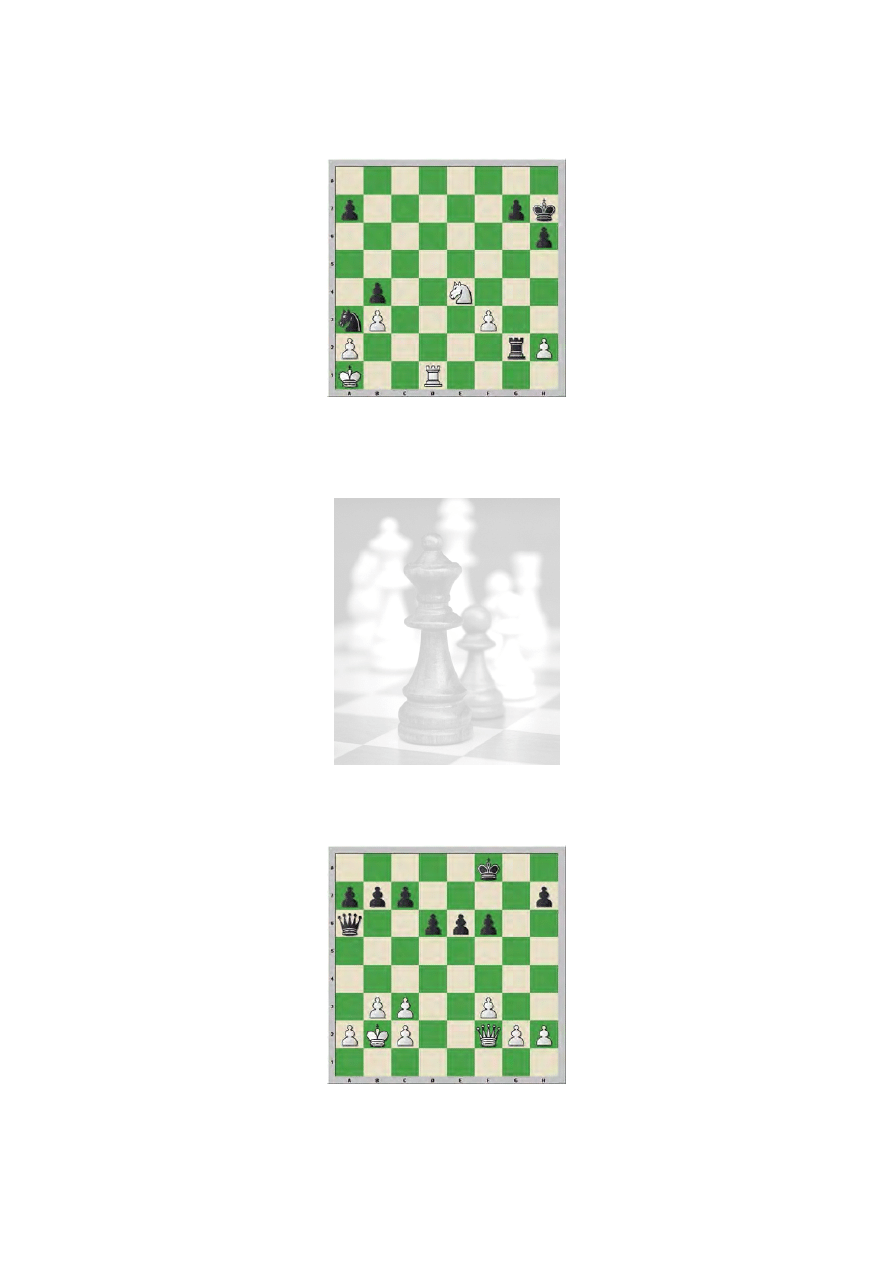
40.¦d1 £xb2+ 41.¢xb2 ¦c2+ 42.¢a1 ¦xg2
25
The young talent Roltewi experiences difficulties on both flanks. 43.¦h1 White
has no counter-play. [43.¦d2 ¦g1+ 44.¢b2 ¦b1#] 43...g5 44.¤f6+ ¢g7 45.¤e4
¢g6 46.¤d6 a5 47.¦c1 The black king goes to f5, if the white knight moves.
47...¦xh2 48.¤c4! ¤b5! Exchange would lessen the pressure. 49.¤e5+
[49.¤xa5?? ¤c3] 49...¢g7 50.¤g4 ¦e2 51.¦c5 White's effort to counter has no
effect. 51...¦e1+ 52.¢b2 ¤a3 53.¦c7+ ¢f8 54.¦c1 ¦e2+ Some repetitions
follow. 55.¢a1 ¤c2+ 56.¢b1 ¤a3+ 57.¢a1 ¤b5 58.¦c5 ¦e1+ 59.¢b2 ¤a3
60.¦c1 ¦e2+ 61.¢a1 ¦e6 62.¦h1 ¢g7 63.¦c1 ¢g6 64.¦c6! The pressure can
be released somewhat. 64...¦xc6 65.¤e5+ ¢f5 66.¤xc6 White seems to have
chances. 66...h5 But this advance decides at once. 67.¤d4+ ¢e5 68.¤e2 ¤c2+
69.¢b2 ¤d4 A defeat by strangulation can drive you crazy. That is exactly what
literally happened with poor Rotlewi. 0–1
(29) Maroczy,Geza - Marshall,Frank [C48]
Maroczy Karlsbad 1907 (1), 1870
[JvR]
Maroczy (1870–1951) played the endgame accurately. His specialty was the queen
ending. 1.e4 e5 2.¤f3 ¤c6 3.¤c3 ¤f6 4.¥b5 ¤d4 5.¤xe5 ¥b4 6.¥e2 £e7
7.¤d3 ¥xc3 8.dxc3 ¤xe2 9.£xe2 £xe4 10.¥e3 0–0 11.0–0–0 d6 12.f3 £c4
13.¥d4 ¦e8 14.£f2 ¥f5 15.b3 £a6 16.¥xf6 ¥xd3 17.¦xd3 gxf6 18.¢b2
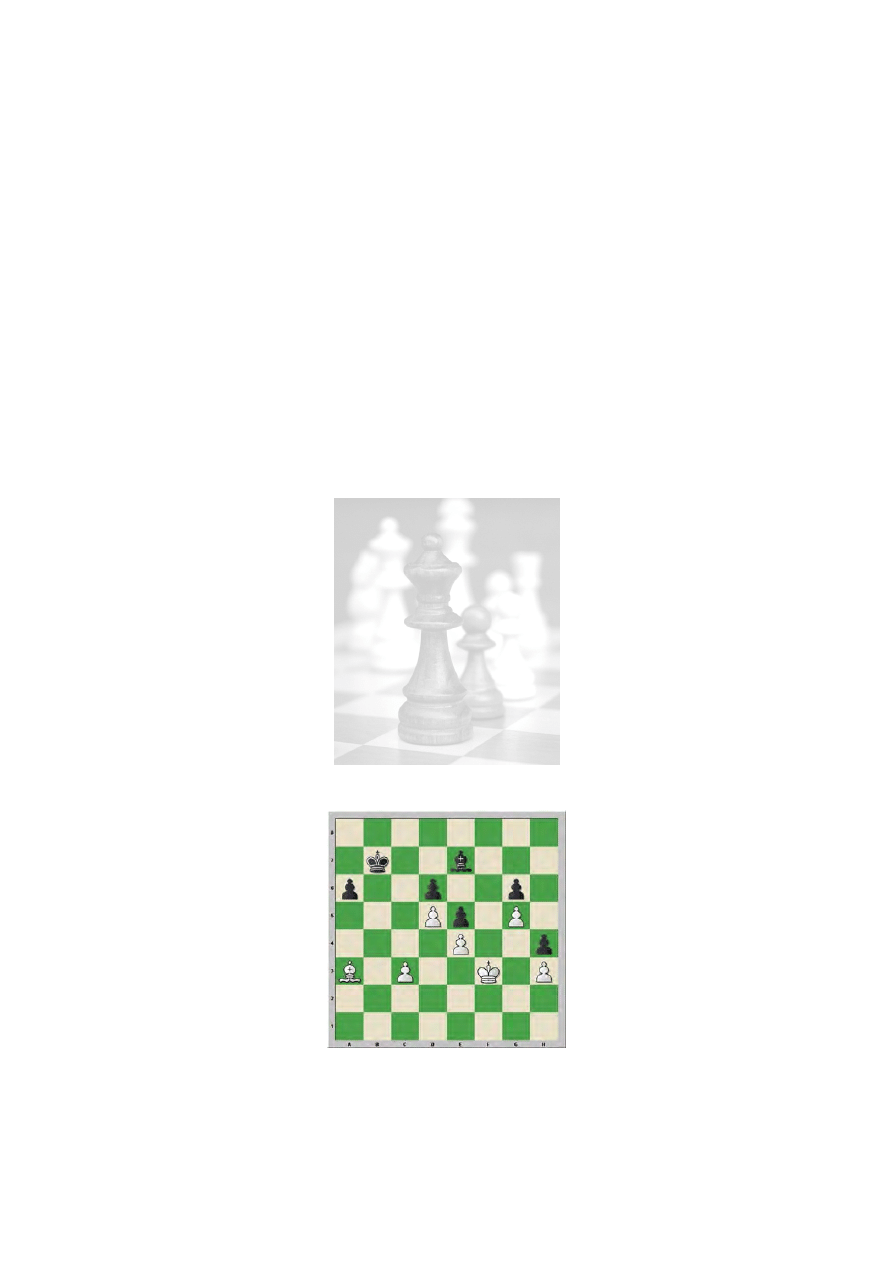
¦e6 19.¦e1 ¦ae8 20.¦de3 ¢f8 21.¦xe6 ¦xe6 22.¦xe6 fxe6
26
White has the advantages of a shelter for the king, the offside black queen and the
isolated black h-pawn. 23.£h4 ¢g7 24.£g4+ ¢f7 25.£h5+? Many
commentators give this move an acclamation mark. [25.£h3! wins a pawn.]
25...¢g7 26.£e8 £e2 "Does White have any advantage?" Marco asks in the
tournament book. 27.£e7+ ¢g6 28.£f8? Maroczy claims to select the most
instructive variation. [Fine analyses the alternative 28.£xc7 £xg2 29.£xb7 £xh2
30.£xa7 h5 31.a4 h4 32.a5 h3 33.£b8!] 28...e5? Marshall has an instructive escape.
[Correct is 28...d5! 29.h4 £e5! 30.£g8+ ¢h6 31.g4 d4! White's box is opened. 32.g5+
fxg5 33.hxg5+ £xg5 34.£xe6+ £g6 35.£h3+ £h5 36.£g3 dxc3+ 37.¢xc3 draw.]
29.£g8+ ¢h6 30.£f8+ ¢g6 31.£g8+ ¢h6 32.h4! Master Maroczy continues
the lesson. 32...£f2 33.£f8+ ¢g6 34.h5+! ¢xh5 35.£g7 £d2 [Or 35...f5
36.£xh7+ ¢g5 (Marco) 37.£xc7] 36.£xh7+ £h6 37.g4+ ¢g5 38.£xc7 ¢f4
39.£xb7 £h1 40.£b4+!? White gives a pawn for the initiative. 40...¢xf3
41.£xd6 ¢xg4 42.c4 e4 43.c5 f5 44.c6 £h8+! 45.c3 e3 46.£g6+! ¢f4 47.c7
e2 [The point is 47...¢e5 48.£a6!] 48.£e6 ¢f3 49.£xf5+ ¢g2 50.£g4+! ¢f2
51.£f4+ ¢g2 52.£e3 ¢f1 53.£f3+ ¢e1 54.£f4 [Marco recommends 54.£f5! ]
54...£c8 55.£d6 ¢f2 56.£d8 e1£ 57.£xc8 £d2+ 58.¢a3 £c1+ 59.¢a4
£f4+ 60.c4 This queen ending is regarded a classic in the literature. 1–0
(30) Maroczy,Geza - Teichmann,Richard [C84]
Maroczy Monte Carlo 1902 (2), 1870
[JvR]
1.e4 e5 2.¤f3 ¤c6 3.¥b5 a6 4.¥a4 ¤f6 5.0–0 ¥e7 6.¤c3 b5 7.¥b3 d6 8.d3
¤a5 9.¤e2 0–0 10.¤g3 ¦e8 11.c3 ¤xb3 12.axb3 ¥f8 13.¦e1 c5 14.h3 £c7
15.¥g5 ¤d7 16.¤f5 h6 17.¥c1 ¢h7 18.g4 g6 19.¤e3 ¤f6 20.¦f1 ¥g7
21.¤e1 ¦f8 22.¤1g2 c4 23.bxc4 bxc4 24.f3 cxd3 25.£xd3 ¥b7 26.¦d1
¦fd8 27.c4 ¥f8 28.¤d5 ¤xd5 29.cxd5 ¦dc8 30.¥e3 £c4 31.¦a3 £xd3
32.¦dxd3 ¦c7 33.¦dc3 ¦ac8 34.¥b6 ¦xc3 35.¦xc3 ¦xc3 36.bxc3 ¢g7
37.¥d8 f5 38.¤e3 fxe4 39.fxe4 ¢f7 40.¤c4 ¢e8 41.¥b6 ¢d7 42.¢f2 ¥e7
43.¢f3 ¥c8 44.¢g3 h5 45.¥a5 h4+ 46.¢f3 ¢e8 47.¢e3 ¥g5+ 48.¢f2 ¥e7
49.¢f3 ¥b7 50.¥b4 ¢d7 51.¤a5 ¢c7 52.¥a3 ¢c8 53.g5 ¢c7 54.¤xb7
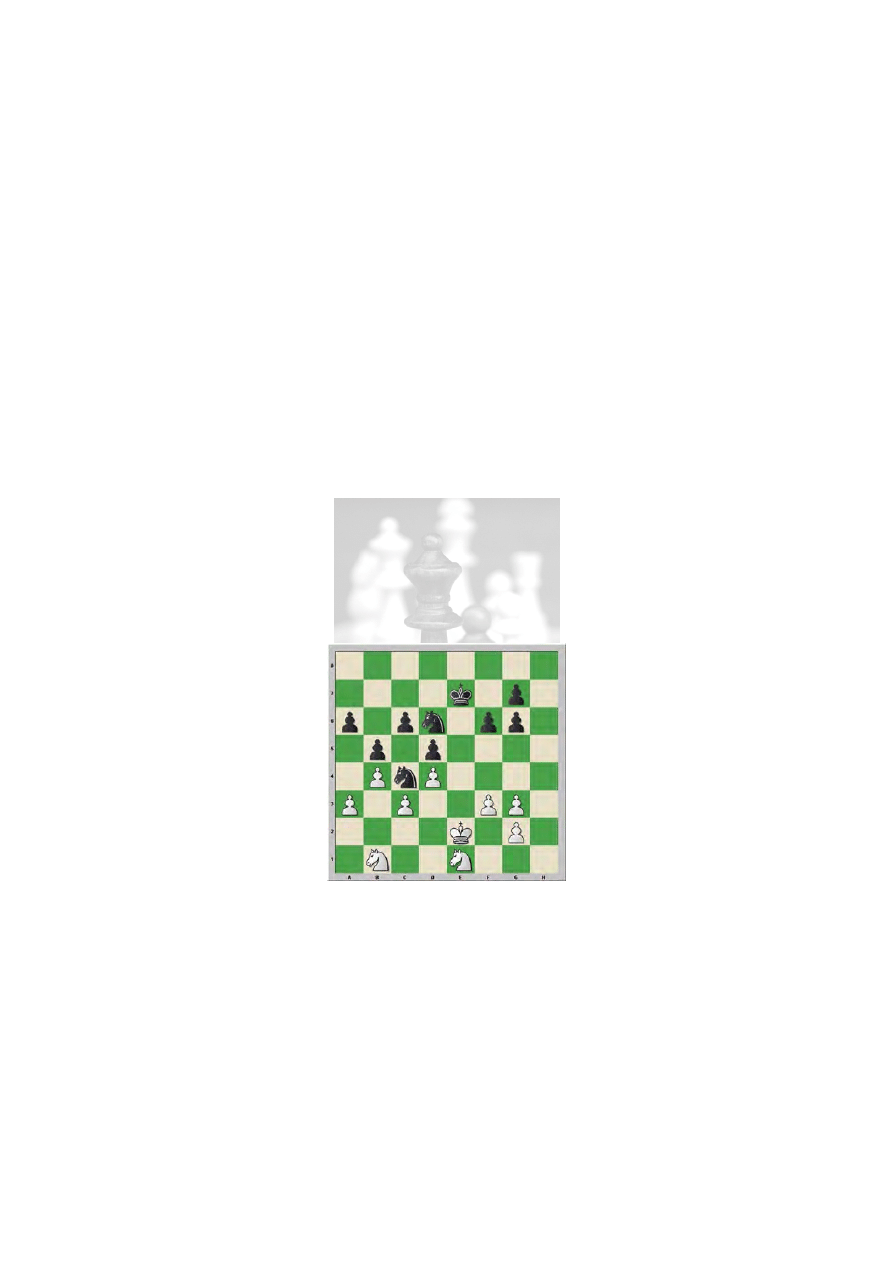
¢xb7
The centre is closed in this endgame. A race on two flanks begins. 55.¢g4 ¢b6
56.¢xh4 ¢b5 57.¢g4 ¢a4 58.¥c1 ¢b3 59.h4 ¢xc3 [An interesting
27
alternative is 59...¢c2 60.¥a3 ¢b3 61.¥b4 ¢a4 62.h5 gxh5+ 63.¢xh5 a5
64.¥xd6!+-] 60.¥a3! The race has to be prepared. [60.h5? gxh5+ 61.¢xh5 ¢d4
62.g6 ¥f6 63.¢h6 ¢xe4 64.¥g5 ¥h8 65.¥e7 ¢f5 66.¥xd6 e4 67.¥c5 a5 68.¢h7
¥e5 and Black survives.] 60...¢b3 Black hopes for a repetition of moves. [A fine
variation is 60...a5 61.h5 gxh5+ 62.¢xh5 ¢d4 63.g6 ¥f6 64.¥xd6 ¢xe4 65.¥e7! a4
66.¥xf6 a3 67.g7 a2 68.¥xe5! ¢xe5 69.g8£ a1£ 70.£g7+ (Maroczy).] 61.¥xd6
¥xd6 62.h5 a5 [A long stand is given in 62...gxh5+ 63.¢xh5 a5 64.g6 a4 65.g7 a3
66.g8£ a2 67.£g3+ ¢b2 68.£f2+ ¢b1 69.£b6+ ¢c2 70.£xd6 a1£ 71.¢g5 ¢d3
72.¢f5] 63.h6 [Or 63.hxg6 ] 63...a4 64.h7 a3 65.h8£ a2 66.£h3+ ¢b2 67.£g2+
¢b1 68.£f1+ ¢b2 69.£b5+ ¢c1 70.£a6 ¢b1 71.£xd6 a1£ 72.£xg6 ¢c2
73.£c6+ ¢d3 74.d6 ¢e3 75.¢f5 £f1+ 76.¢xe5 £f7 77.d7 £e7+ 78.£e6
£xg5+ 79.¢d6 £d8 80.e5 £f8+ 81.¢c7 £c5+ 82.¢b7 Maroczy showed his
patience, accuracy and brilliance in the endgame. 1–0
(31) Marco,George - Maroczy,Geza [C00]
Maroczy Wien 1899 (3), 1870
[JvR]
1.e4 e6 2.d4 d5 3.exd5 exd5 4.¥d3 ¥d6 5.¤f3 ¤f6 6.0–0 0–0 7.c3 c6 8.¥g5
¥g4 9.¤bd2 ¤bd7 10.£c2 £c7 11.¦fe1 ¦ae8 12.¥h4 ¥h5 13.¥g3 ¥xg3
14.hxg3 ¥g6 15.¦xe8 ¦xe8 16.¥xg6 hxg6 17.¦e1 a6 18.£b1 ¢f8
19.¦xe8+ ¤xe8 20.a3 £d8 21.£e1 £e7 22.£xe7+ ¢xe7 Draws are not
allowed before move 30 in this tournament. So play continues. 23.¢f1 ¤d6
24.¢e2 f6 25.¤e1 b5 26.b4 [Simpler is 26.¤d3 ] 26...¤b6 27.f3 ¤bc4 28.¤b1?!
[28.¤xc4 ¤xc4 29.¤d3 ¤xa3 30.¤c5 draws immediately. Marco finds the calculation
too tiring.] 28...¤f5! 29.g4 ¤fe3 30.¢f2 [30.g3! draws.] 30...g5 31.¢e2 [31.¤d3
¤c2 32.¤c5 ¤2xa3 33.¤xa3 ¤xa3 loses a pawn (Marco). But 34.¢e2! draws.]
31...g6 32.¢f2 ¢d6 33.¢e2 ¢c7 34.¢f2? [White misses the last chance for
34.g3! ¢b6 35.¤d3! a5 36.bxa5+ ¢xa5 37.¤c5 ¤c2 38.¢d3 ¤2xa3 39.¤xa3 ¤xa3
40.¤d7 f5 41.gxf5 gxf5 42.¤e5 ¢b6 43.¤f7=] 34...¢b6! The queenside has been
consolidated. 35.¢e2 a5 36.¢f2 a4 White's position has become awful. He is
paralyzed. 37.¢e2 ¢c7 38.¢f2 ¢d6 39.¢e2 ¢e7 40.¢f2 ¢f7 41.¢e2 ¢g7
42.¢f2 ¢h7 43.g3 ¢h6 44.¢e2 f5 This advance got a long perpetrated. 45.gxf5
gxf5 46.¢f2 ¢h5 47.¢e2 f4 48.gxf4 gxf4 49.¢f2 ¢g5 50.¢e2 ¢h4 51.¢f2
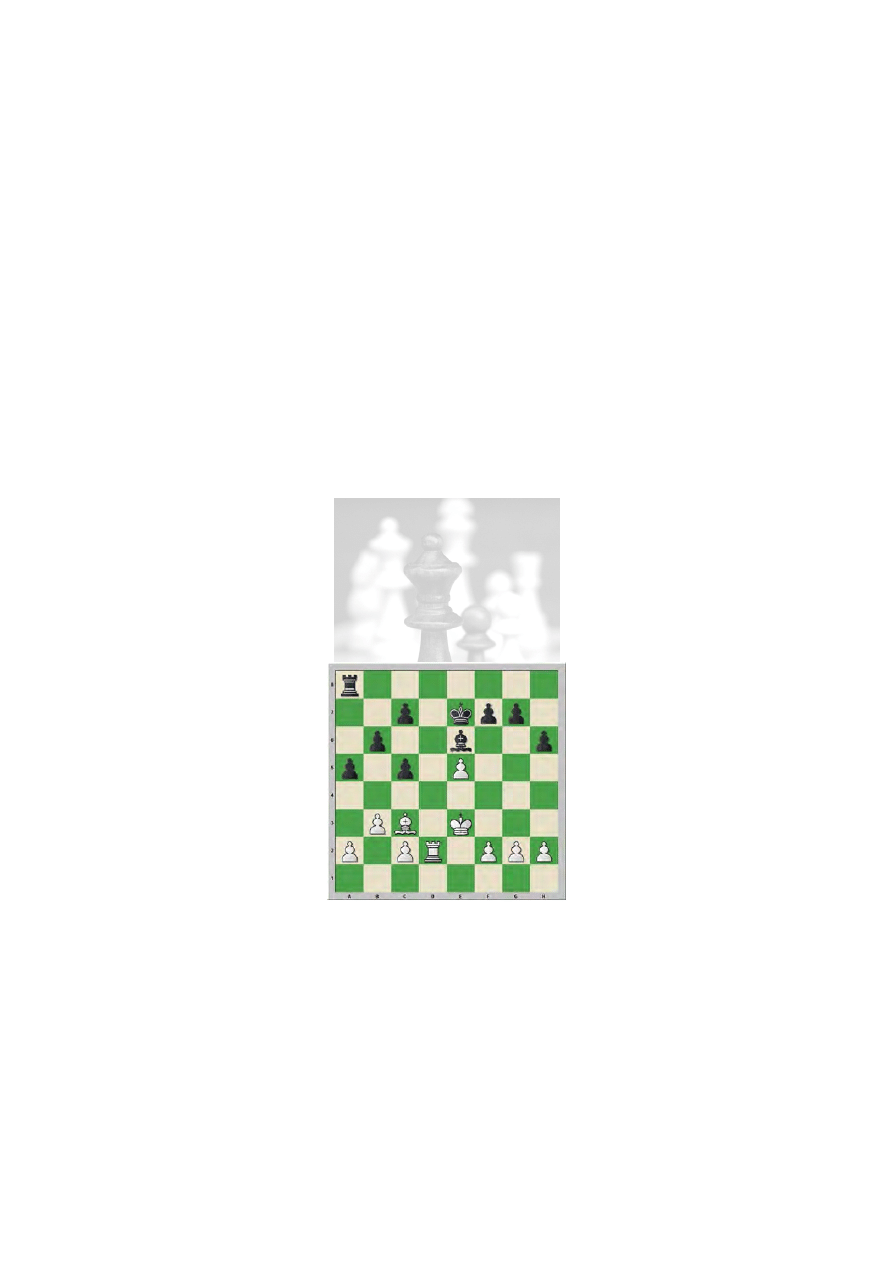
28
¢h3 52.¤d3 The knight has to play. [Not 52.¢e2? ¢g3 53.¢d3 ¢f2] 52...¤c2
53.¤xf4+ ¢h4 54.¤d3 [The alternative is 54.¤g6+ ¢g5 55.¤e5 ¤2xa3 56.¤xa3
¤xa3 57.¤xc6 ¤c4 (Marco) 58.¤d8! a3 59.¤e6+ ¢f5 60.¤c5 ¤d2!–+] 54...¤4xa3
55.¤xa3 ¤xa3 56.¤c1 ¤b1 57.¤a2 White has a passive position again.
57...¢h3 58.¢e3 ¢g3 59.f4 ¢g4 60.f5 ¢xf5 61.¢d3 [Or 61.¢f3 ¤d2+ 62.¢e3
¤e4 63.¢f3 ¢g5 64.¢e3 ¢g4 and the black king invades.] 61...¢f4 62.¤c1 ¢f3
63.¢c2 ¤a3+ 64.¢d3 Marco mentions the belligerents in studies by Kling and
Horwitz. 64...¢f2 65.¢d2 ¤c4+ 66.¢d1 [66.¢d3 ¢e1 67.¢c2 ¤e3+ 68.¢d3 ¢d1!
Black will enter the queenside.] 66...¢e3 67.¢c2 a3! 68.¤a2 ¤b2! 69.¤c1
¤d3!! Maroczy plays elegantly. 70.¤b3 [70.¤a2 ¢e2 71.¢b3 ¢d2 72.¢xa3 ¢c2
leads to suffocation.] 70...¤e1+ 71.¢d1 ¢d3 72.¢xe1 White sets a trap.
72...¢xc3 73.¤a1 ¢xd4! [Avoids 73...¢b2? 74.¢d2 ¢xa1 75.¢c1] 74.¤c2+ ¢c3
75.¢d1 [75.¤xa3 ¢b2 dominates the knight.] 75...a2 76.¢c1 d4 77.¤a1 d3
78.¤c2 c5! Maroczy got a beauty prize for the endgame. 0–1
(32) Maroczy,Geza - Pillsbury,Harry [C67]
Maroczy Muechen 1900 (4), 1870
[JvR]
Maroczy was a great defender in the endgame. 1.e4 e5 2.¤f3 ¤c6 3.¥b5 ¤f6
4.0–0 ¤xe4 5.d4 ¤d6 6.¥xc6 dxc6 7.dxe5 ¤f5 8.£xd8+ ¢xd8 9.¦d1+ ¢e8
10.¤c3 h6 11.b3 ¥b4 12.¥b2 ¥xc3 13.¥xc3 ¥e6 14.¤d4 ¤xd4 15.¦xd4
White seems to have a better position in the Berlin Defence. That will lead to a
disappointment. 15...c5! 16.¦d2 ¦d8 17.¦ad1 ¢e7 18.¢f1 ¦xd2 19.¦xd2 b6
20.¢e2 a5 21.¢e3 ¦a8!
Black avoids the exchange of rook. Bishop and rook support the initiative on the
queenside. 22.a3 White keeps the queenside closed. 22...g6 23.¦d1 [More useful
is 23.g3 ] 23...¥f5 24.¦d2 a4 25.b4 cxb4 26.¥xb4+ c5 27.¥c3 ¦d8 28.f3
¦xd2 29.¢xd2 A pawn has become on the queenside. The advanced pawn can
become a weakness too. 29...h5 30.¥b2 b5 31.c4! b4 [31...bxc4 32.¥c3 draws at
once.] 32.¥c1 ¢e6 33.¥b2 ¥b1 34.g3 ¢f5 35.¢e2 ¥a2 36.¢d3 ¥b3
37.¥a1!? [An alternative is 37.axb4 cxb4 38.¥d4 a3 39.¥c5 a2 40.¥d4] 37...bxa3
38.¥c3 They will not pass! 38...¢e6 39.¥a1 ¥d1 40.¢e3 ¥c2 41.h3!? White
starts with a strange action. 41...¢f5 42.h4 ¥b3 43.¢d3 g5 44.hxg5 ¢xg5
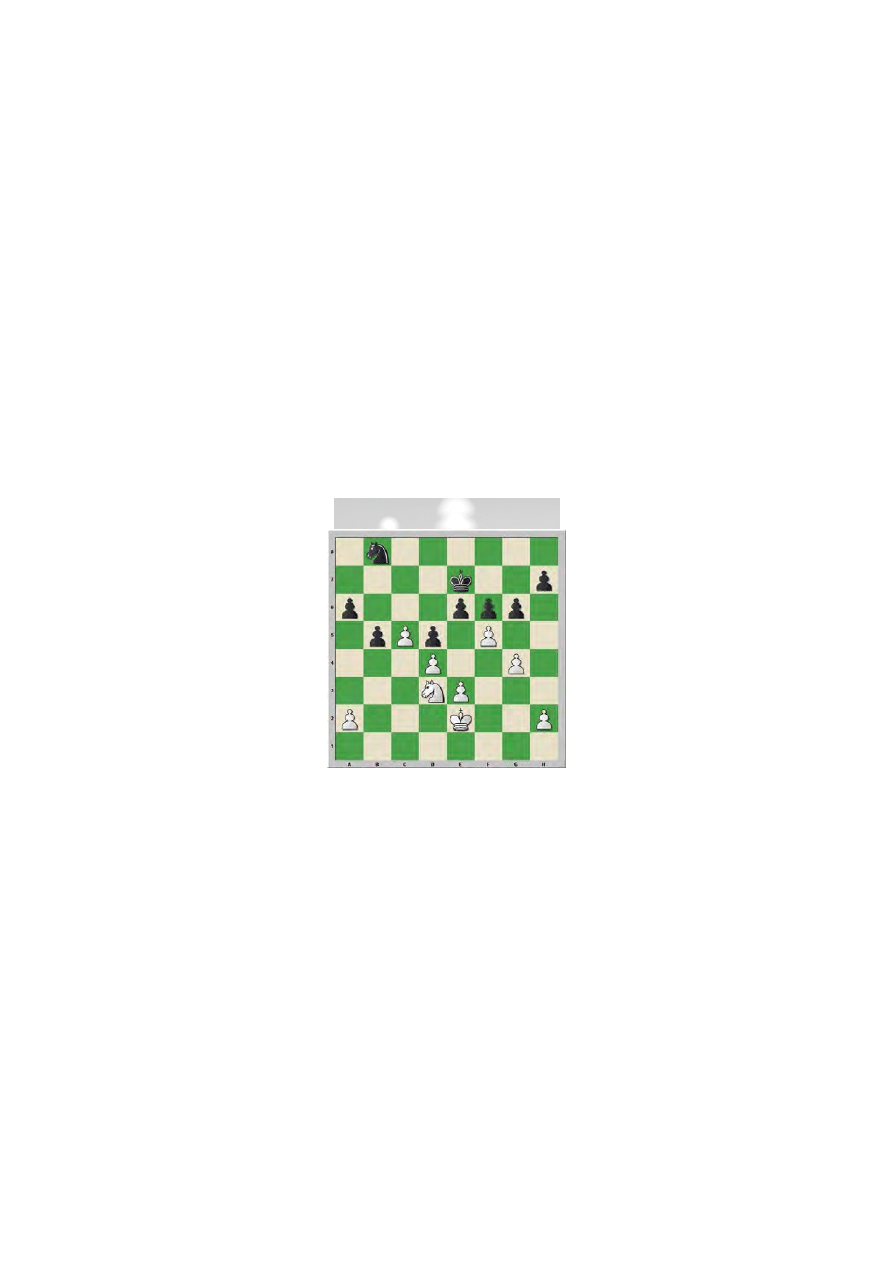
29
45.¥c3 h4 46.gxh4+ ¢xh4 47.f4 ¢g4 48.¢e4! A remarkable march begins.
48...¥xc4 49.f5 ¢g5 50.e6! A road is opened for the white king. 50...fxe6
51.fxe6 ¥xe6 52.¢e5! [No good is 52.¢d3? ¢f4 53.¢c2 ¥f5+ 54.¢c1 ¥d3
(Maroczy).] 52...¥b3 53.¢d6 c4 54.¢c5 ¢f5 55.¢b4 a2 56.¢a3 ¢e4 57.¢b2
¢d3 58.¢a1! The encircling maneuver ends with an elementary draw. Capture
leads to stalemate. ½–½
(33) Pillsbury,Harry - Gunsberg,Isidor [D94]
Pillsbury Hastings 1895, 1872
[JvR]
1.d4 d5 2.c4 c6 3.e3 g6 4.¤c3 ¥g7 5.¤f3 ¤f6 6.¥d3 0–0 7.¤e5 dxc4
8.¥xc4 ¤d5 9.f4 ¥e6 10.£b3 b5 11.¥xd5 ¥xd5 12.¤xd5 £xd5 13.£xd5
cxd5 Pillsbury needs a draw in the last round for a shared first prize. So he plays
with great prudence. 14.¤d3 ¤d7 15.¥d2 ¦fc8 16.¢e2 e6 17.¦hc1 ¥f8
18.¦xc8 ¦xc8 19.¦c1 ¦xc1 20.¥xc1 ¥d6 21.¥d2 ¢f8 22.¥b4 ¢e7 23.¥c5
a6?! [Even better is 23...a5! ] 24.b4 f6 25.g4 ¥xc5?! 26.bxc5 ¤b8? A famous
combination starts. 27.f5!
g5 [27...gxf5 Lasker analyses 28.gxf5 exf5 29.¤f4; 27...exf5 and 28.gxf5 g5 29.¤b4]
28.¤b4 a5 29.c6! ¢d6 30.fxe6! ¤xc6 [30...axb4 Or 31.e7 ¢xe7 32.c7] 31.¤xc6
¢xc6 32.e4! dxe4 33.d5+ ¢d6 34.¢e3 b4 35.¢xe4 a4 36.¢d4 h5 [36...¢e7!
The main line continues with 37.¢c4 b3 38.axb3 a3! 39.¢c3 f5 40.gxf5 h5 41.b4! g4
42.b5 h4 43.b6 a2 44.¢b2 g3 45.hxg3 hxg3 46.d6+ ¢xd6 47.b7 ¢c7 48.b8£+ ¢xb8
49.e7 a1£+ 50.¢xa1 g2 51.e8£+ (Lasker). A check decides after a combination of
twenty-five moves.] 37.gxh5 a3 38.¢c4 f5 39.h6 f4 40.h7 Pillsbury had won
Hastings 1895! 1–0
(34) Schlechter,Carl - Duras,Oldrich [D46]
Schlechter Nuernberg 1906 (1), 1874
[JvR]
Schlechter (1874–1918) was an excellent defender. He escapes miraculously in this
game. 1.d4 d5 2.c4 e6 3.¤c3 ¤f6 4.¤f3 c6 5.e3 ¤bd7 6.¥d3 ¥d6 7.e4 dxe4
8.¤xe4 ¤xe4 9.¥xe4 £a5+ 10.¥d2 £h5 11.h3 f5 12.¥d3 0–0 13.£c2 e5
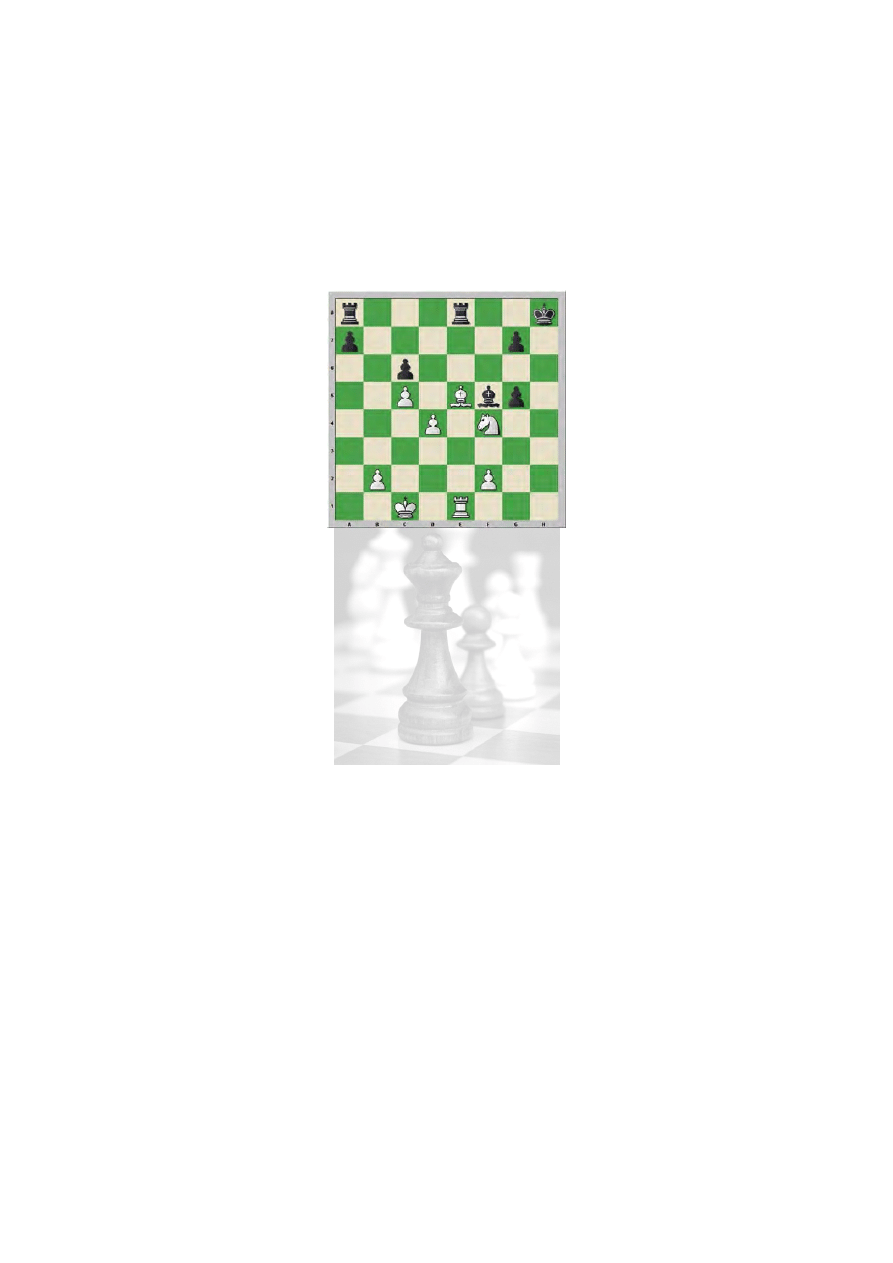
30
14.c5 ¥c7 15.0–0–0 e4 16.¥c4+ ¢h8 17.¤g5 ¤f6 18.£b3 ¤d5 19.¥xd5
cxd5 20.£xd5 £g6 21.h4 h6 22.¦de1 £c6 23.£xc6 bxc6 24.¤h3 ¥e6
25.¥f4 ¥d8 26.¥d6 ¦e8 27.¤f4 ¥xa2 28.g4 fxg4 29.¦hg1 ¥f7 30.¥e5
¥xh4 31.¦xg4 ¥g5 32.¦xe4 ¥g6 33.¦e1 ¥f5 34.¦xg5 hxg5
Schlechter had to give an exchange, but he seems to have positional compensation.
35.¤h5 ¦e7 36.¦g1 g4 37.¤g3 The pressure on g7 has little effect. 37...¥d7
Black has consolidated his position. 38.¤e2 ¦f7 39.¤f4 ¦e8 40.¢d2 ¢g8
41.¢e3 g5 42.¤d3 ¦f3+ 43.¢e2 ¥e6 44.¤b4 ¦c8?! [Tarrasch analyses
44...¦b3 45.¤xc6 ¦xb2+ 46.¢e3 ¥d5 47.¤a5 ¦f8 and Black has a decisive attack.]
45.d5!! Schlechter gives pawns in order to restrict black pieces. 45...cxd5 46.¤c2!
¥d7?! [46...¦b3! still wins.] 47.c6! The combination continues. 47...¥xc6?!
[47...¦f5! wins.] 48.¤d4 ¦h3 49.¦xg4 ¦h5 50.¥f6 Schlechter's plan is difficult to
understand. 50...¥d7? [Correct is 50...¦e8+ 51.¢d2
(51.¢d3 ¦h3+ 52.f3
moves the
pawn from an important square
)
51...¦f8! 52.¦xg5+ ¦xg5 53.¥xg5 ¦xf2+ 54.¢e3
¦g2 55.¤xc6 ¦xg5 56.¤xa7 ¢f7 Black's material plus decides.] 51.¦xg5+ ¦xg5
52.¥xg5 ¢f7 53.¢d3 ¢g6 54.¥e3 a6 55.¥d2 ¥f5+ 56.¢e2 ¦b8 57.¥c3
¦e8+ 58.¢d2 ¢g5 59.¤b3 ¥d7 60.¥d4 ¢f4 61.¥e3+ Duras recognizes the
impregnable fortress.[61.¥e3+ ¢f3 62.¤d4+ ¢e4 63.b3 Black pieces can do little by
the dominant position of the knight. Exchange of the a- and b-pawn makes little
difference. If all pawns are exchanged, a theoretical draw is created. Black can
sacrifice the rook for f-pawn and bishop. Then White can give his knight for the d-
pawn and draw.] ½–½
(35) Schlechter,Carl - Lasker,Emanuel [C48]
Schlechter Wien 1910 (2), 1874
[JvR]
1.e4 e5 2.¤f3 ¤c6 3.¥b5 ¤f6 4.0–0 d6 5.d4 ¥d7 6.¤c3 ¥e7 7.¥g5 0–0
8.dxe5 ¤xe5 9.¥xd7 ¤fxd7 10.¥xe7 ¤xf3+ 11.£xf3 £xe7 12.¤d5 £d8
13.¦ad1 ¦e8 14.¦fe1 ¤b6 15.£c3 ¤xd5 16.¦xd5 ¦e6 17.¦d3 £e7 18.¦g3
¦g6 19.¦ee3 ¦e8 20.h3 ¢f8 21.¦xg6 hxg6 22.£b4 c6 White has a slightly
better pawn structure. 23.£a3 a6 24.£b3 ¦d8 25.c4 ¦d7 26.£d1 £e5 27.£g4
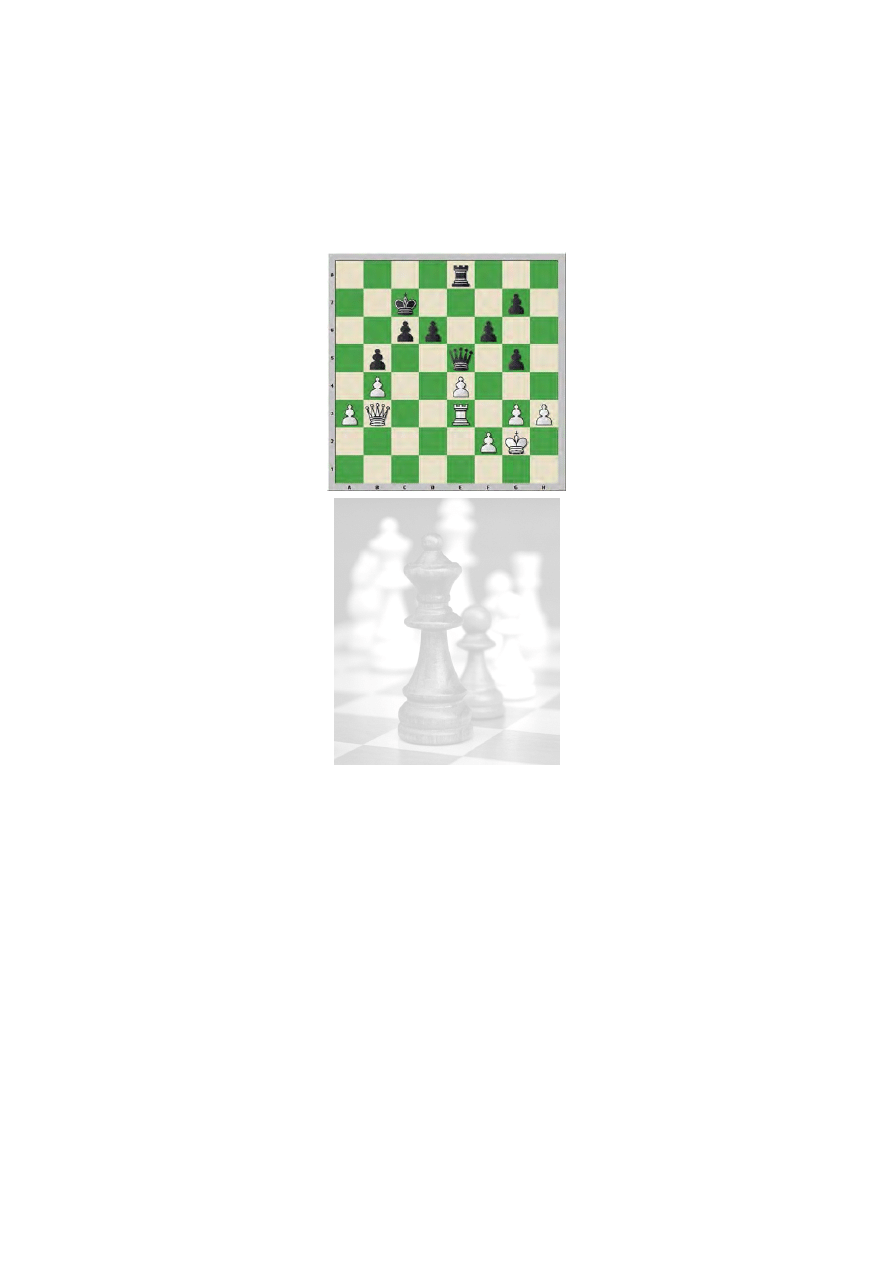
31
¢e8! The king supports the defense. 28.£e2 ¢d8 29.£d2 ¢c7 Black improves
his position on the queenside. 30.a3 ¦e7 31.b4?! The start of an attack on the king
has a contra-productive effect. 31...b5! 32.cxb5 axb5 33.g3 g5 34.¢g2 ¦e8
35.£d1 f6 36.£b3?!
[Tarrasch recommends 36.a4! White needs a pawn sacrifice for this move later.
36...bxa4 37.£xa4 ¢b7 (Romanovsky) 38.¦e2! £b5 39.£xb5+ cxb5 40.f4 with
equality.] 36...£e6 37.£d1? [Correct is 37.£xe6 ¦xe6 (Schlechter).] 37...¦h8
38.g4 £c4 White has a positional problem. He sacrifices a pawn for the initiative in
the style of Lasker. 39.a4!? £xb4!? [Capablanca's suggestion 39...bxa4? 40.£xa4
¦b8 41.£a7+ is too risky.; 39...¦b8?! 40.axb5 ¦xb5 41.£a4 ¦b7 42.¦a3! is
interesting.] 40.axb5 £xb5 41.¦b3 £a6 42.£d4 ¦e8 43.¦b1 ¦e5 44.£b4
£b5 45.£e1 £d3 46.¦b4 c5 47.¦a4 c4 48.£a1 Opportunism leads to another
pawn sacrifice. 48...£xe4+ 49.¢h2 ¦b5 50.£a2! £e5+ 51.¢g1 £e1+ 52.¢h2
d5 53.¦a8 £b4! Black wants to win. [53...£e5+ 54.¢g1 £e1+=] 54.¢g2! [54.£a6?
£d6+] 54...£c5? [54...¦b8 55.£a7+ ¦b7 56.£a6!
(
Many analysts investigate
56.£e3
)
56...c3
(56...£e1 57.¦f8! £e4+ 58.¢h2 £e5+ 59.¢g2=; 56...£b6 57.£a3=)
57.¦g8!
£b6 58.£a3 d4 59.£e7+ White's pieces remain very active in the calculations of
Fritz. Probably Schlechter can draw.] 55.£a6! Suddenly the tables turn. 55...¦b8?!
[55...¦b7 56.£e6! (Schlechter); Lasker mentions 55...c3! Huebner's main variation
goes 56.¦a7+ ¢b8 57.¦xg7 d4 58.¦g8+ ¢c7 59.¦c8+ ¢d7 60.¦xc5 ¦xc5 61.£a4+
¢c7 62.£xd4 ¦c6 63.£a7+ ¢d6 64.£a3+ ¢d7 65.£c1 c2 66.h4 gxh4 67.¢h3 White
will win eventually.] 56.¦a7+ ¢d8 57.¦xg7 £b6 58.£a3 ¢c8 and mate in
three. Schlechter had scored 3-2. The match would end with 5-5. Lasker kept the
title. 1–0
(36) Schlechter,Carl - Walbrodt,Carl [A84]
Schlechter Wien 1898 (3), 1874
[JvR]
1.d4 d5 2.c4 e6 3.¤c3 f5 4.¥f4 c6 5.e3 ¤f6 6.¥d3 ¥e7 7.¤f3 0–0 8.0–0 ¤e4
9.¥xe4 fxe4 10.¤e5 ¤d7 11.£e2 ¤xe5 12.¥xe5 ¥d6 13.¥xd6 £xd6 14.c5
£e7 15.f4 exf3 16.¦xf3 ¦xf3 17.£xf3 e5 18.¦f1 exd4 19.exd4 ¥d7 20.h3
¦e8 21.¦f2 ¦f8 22.£xf8+ £xf8 23.¦xf8+ ¢xf8
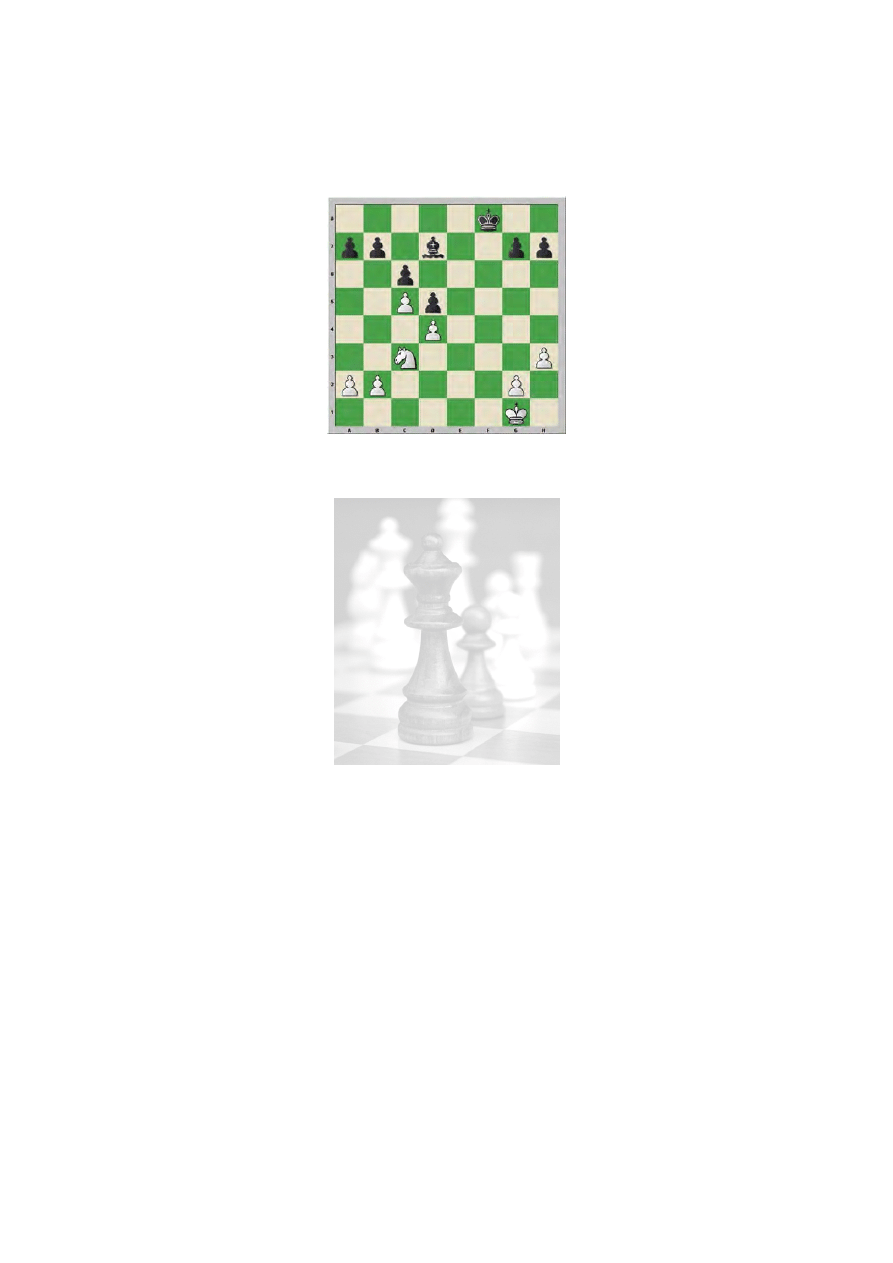
32
Schlechter has an excellent knowledge of the openings. He often reaches a plus
and keeps it until the endgame. Lesser players collapse under the pressure when he
keeps on trucking. 24.¤d1 ¢e7 25.¤e3 ¢f6 26.h4 ¥f5 27.b4 ¥d3 28.¢f2 h5!
Black has the bad bishop and can do little. Now he takes square g4 from the knight.
29.¢f3 g5! Square f4 is taken from the white king. 30.g3 ¥e4+ 31.¢e2 ¢g6
32.¢d2 ¢f6 33.¢c3 ¥g6 [Or 33...¢g6 34.b5! and 34...cxb5? 35.¢b4 a6? 36.¢a5+-
] 34.b5! ¥e4 35.a4 gxh4? Marco calls it a blunder. Black gives away the control
over f4. [Correct is 35...¢g6! 36.¢b4 ¥f5! 37.b6 a6] 36.gxh4 ¢e6 37.¢b4 ¥d3
38.b6 a6 Black has to close the queenside. Exchange would be a mistake. 39.a5
¥e4 40.¢c3 ¢f6 41.¢d2 ¥f5 42.¢e1 ¥e4 43.¢f2 ¢e6 44.¢g3 ¢f7!
[44...¢f6? 45.¢f4 leads to zugzwang. 45...¥g6 46.¤xd5+ cxd5 47.c6] 45.¢f4 ¢f6
46.¤f1!? A duel between knight and bishop begins. 46...¥f5 47.¤g3 ¥g4
48.¤h1 ¥e6 49.¤f2 ¥f5 50.¤d1 ¥g4?! The bishop should prevent the knight
maneuver via d3 or f3 to e5. [More resistance is offered by 50...¥d3! 51.¢e3! ¥c4
52.¢f3! White threatens ..Ne3. 52...¥d3 53.¢f4 ¥g6 54.¤c3 ¥f5 55.¤a2 ¥d3
(55...¥e6
leads to the game
)
56.¢e3! ¥b5
(56...¥c4 57.¤b4 ¥b5 58.¢f4
zugzwang
)
57.¤c3 ¥c4 58.¢f4 ¥b3 59.¤b5!+-] 51.¤c3 ¥d7 52.¤a2! ¥e6 53.¤b4! White
will reaches e5. 53...¥c8! Black has retreated to the last line of his fortress. White
has to lose a tempo. 54.¤d3 ¥f5 55.¤e5 ¥c8 56.¢e3! ¢e6 57.¤g6!? White
loses time. [Better: 57.¢e2! ¢f6 58.¢f2! ¢e7 59.¢f3 ¢e6 and now 60.¤d3! ¢f6
61.¢e3 ¢f5 62.¤f4 ¢g4 63.¤xh5!] 57...¢f6 58.¢f4 ¥d7 Capture is avoided.
59.¤e5 ¥c8 60.¤f3 ¥f5 61.¢e3 ¥c8 62.¤e5 ¢e6 63.¢f3 ¢e7 64.¤d3 ¥f5
65.¤f4 ¥g4+ 66.¢e3 ¢f7?! [Slightly better is 66...¢f6! 67.¢f2 ¢g7 68.¤d3 ¢f6
69.¤e5 ¥c8 70.¢g2! ¢e6 71.¢g3! ¢e7 72.¢f3! ¢e6 73.¤d3! ¢f6 74.¤f4 ¥g4+
75.¢e3 Pawn d5 or h5 falls.] 67.¤d3 ¢e7 68.¤e5 ¥c8 69.¢f3 ¢e6 70.¤d3
¢f6 71.¢e3 A wonderful example of restriction.[71.¢e3 ¥g4 72.¤e5 ¥c8 73.¢f4
zugzwang.] 1–0
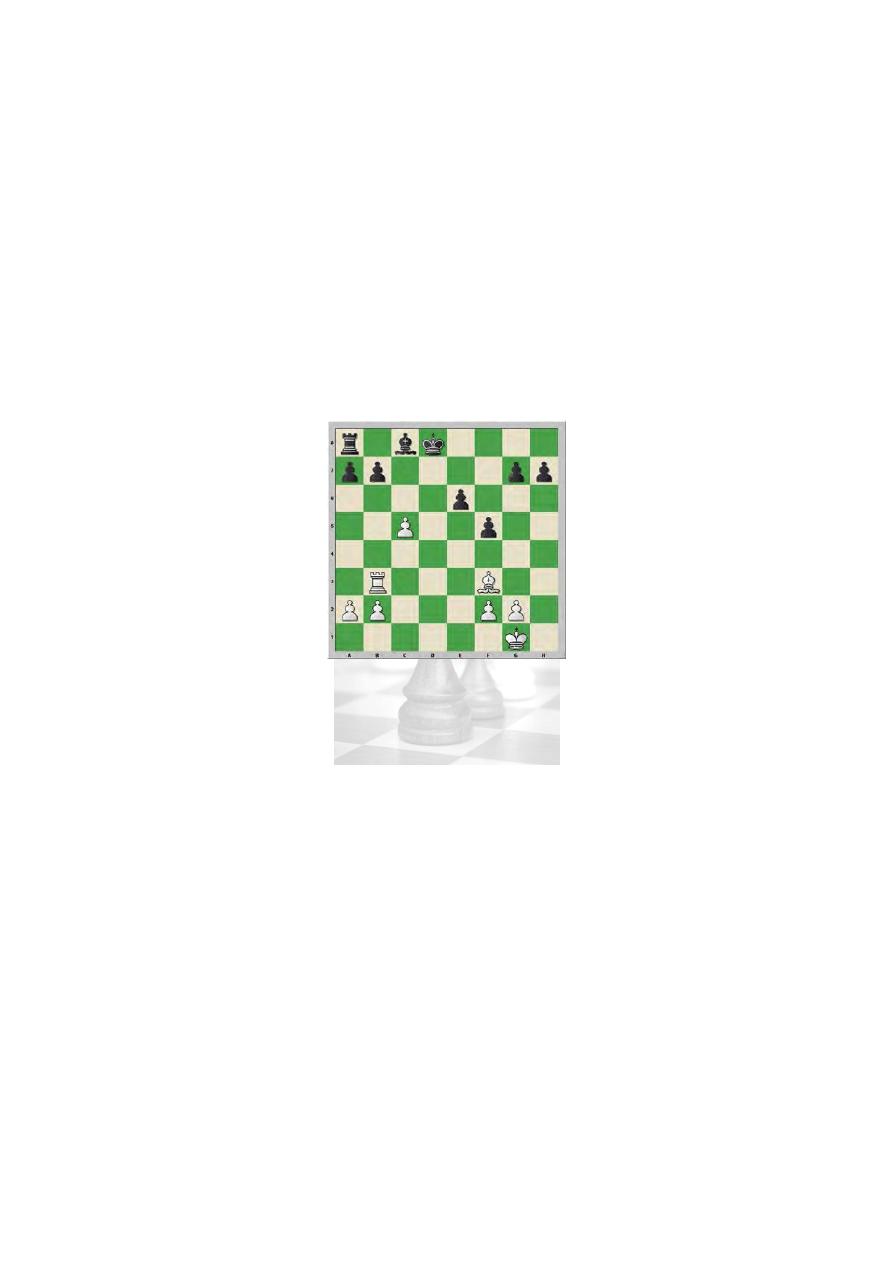
33
(37) Schlechter,Carl - Tarrasch,Siegbert [D30]
Schlechter Oostende 1907 (4), 1874
[JvR]
1.c4 e6 2.d4 d5 3.¤f3 c5 4.e3 ¤f6 5.¥d3 ¥d6 6.0–0 0–0 7.£e2 £e7 8.¤bd2
¤bd7 9.¦e1 ¦e8 10.e4! dxe4 11.¤xe4 ¤xe4 12.¥xe4 cxd4 13.¤xd4
¥xh2+ 14.¢xh2 £d6+ 15.¢g1 £xd4 16.¥g5 ¤f8 17.¦ad1 £c5 18.¥f4
¤g6 19.¥d6 £g5 20.£e3 £xe3 21.¦xe3 White has great compensation for the
pawn: the pair of bishops, an advantage in development and pressure on the
queenside. 21...¦d8 Tarrasch wants to play ..Ne7. 22.¦ed3 f5 23.¥f3 ¢f7
24.¦b3 ¦d7 25.c5 ¤e7 26.¥xe7?! [26.¦e3! keeps the constraint.] 26...¦xd1+
27.¥xd1 ¢xe7 28.¥f3 This intermezzo is very similar to the final of Schlechter-
Marshall in the same tournament. 28...¢d8?!
[Black gains a plus in 28...¦b8! 29.¦a3!
(
not
29.c6 b5!;
or
29.a4 e5 30.¥d5 ¥e6!)
29...a6 30.¦b3 ¢d7] 29.c6! ¦b8 30.cxb7 ¥d7 31.¦a3 e5 32.¥d5 ¢c7 33.¦xa7
¥c6 34.¥xc6 ¢xc6 35.¦a5! The last try. [No win brings 35.b4 ¢b6 36.¦a5 ¦xb7
37.¦xe5 ¦a7 38.¦xf5 ¦xa2 39.¦f7 ¦a7!] 35...¦xb7 36.¦xe5 ¦xb2 37.¦xf5
¦b7?! [37...¦xa2 38.¦f7 g5! 39.¦xh7 ¢d6! 40.¦f7 ¢e6 leads to a defendable
position.] 38.a4! ¢d6 39.a5 ¢c6? Tarrasch misses his last chance. [Correct is
39...¢e6! 40.¦g5 ¢f6 41.f4 ¦b2 and the black rook moves behind the passed
pawn.] 40.g3 ¦b5 41.¦f7 ¦b7 42.¦f8 ¢d6 43.¢g2 ¢e6 44.¦f4! ¦a7 45.¦a4
¢d6 46.f4 ¢c6 47.¢f3 ¢b5 48.¦a1 ¢a6 49.¦h1 h6 50.¦h5 ¦c7 51.¦e5
¦d7 52.¢g4 ¦f7 53.¢h5 ¦d7 54.¢g6 ¦c7 55.¦f5 Schlechter kept on trucking.
1–0
(38) Janowski,David - Rubinstein,Akiba [C49]
Rubinstein Karlsbad 1907 (1), 1882
[JvR]
Rubinstein (1882–1961) had a great natural talent for the endgame. His rook
endings are famous. 1.e4 e5 2.¤f3 ¤c6 3.¤c3 ¤f6 4.¥b5 ¥b4 5.0–0 0–0 6.d3
¥xc3 7.bxc3 d6 8.¥g5 £e7 9.£d2 ¤d8 10.¥c4 ¥e6 11.¥b3 ¥xb3 12.axb3
¤e6 13.¥h4 h6 14.¦fe1 a6 15.¥g3 ¤h5 16.d4 ¤ef4 17.¥xf4 ¤xf4 18.g3
¤g6 19.£d3 £e6 20.¤d2 f5 21.d5 £d7 22.exf5 ¦xf5 23.¤e4 ¦af8 24.¦e3
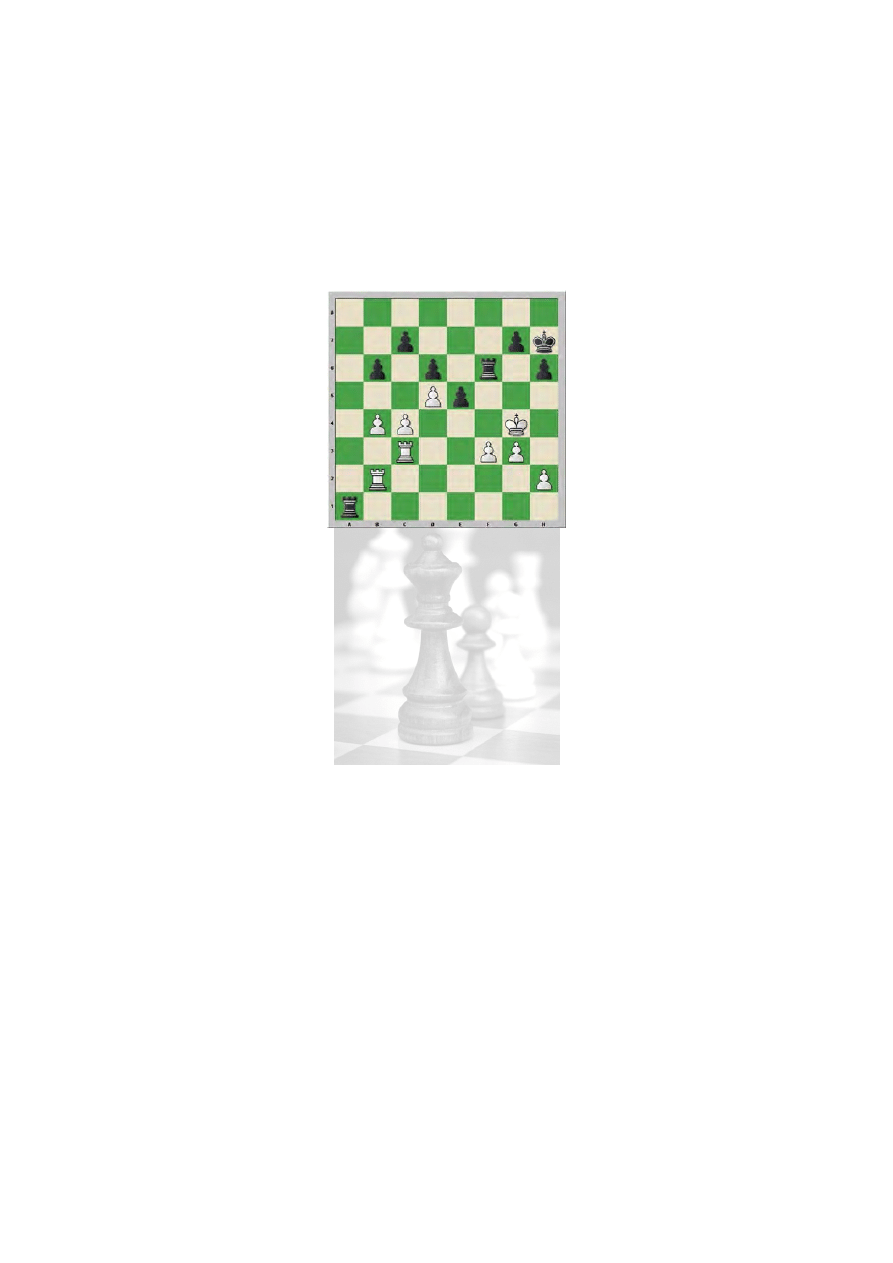
34
¤e7 25.¦d1 ¢h8 26.c4 ¤g8 27.f3 ¤f6 28.¦f1 ¤xe4 29.£xe4 £d8 30.£g4
£b8 31.¢g2 £a7 32.¦fe1 £c5 33.£e4 £b4 34.¦1e2 ¦5f6 35.£d3 ¢g8
36.£c3 a5 37.£xb4 axb4 38.c3 bxc3 39.¦xc3 Black pressures on the f-file.
39...¦a8 He controls another file. 40.¢h3?! [40.c5! ¦a3! 41.cxd6 cxd6 (Kmoch)
42.h4=] 40...b6! 41.¢g4 ¦a1 42.¦b2 ¢h7 43.b4?!
White weakens the queenside. [The retreat 43.¢h3! g5 44.¢g2 can be followed by a
passive defence.] 43...¢g6 44.¦bb3? [44.¢h3 is okay.] 44...¦f5! 45.¦c2 The
overprotection of h2 occurs too late. 45...¦h1 46.f4 [A helpmate is created by
46.h4 h5#] 46...exf4 47.gxf4 h5+ 48.¢g3 ¦g1+ 49.¢f2 ¦g4 50.¦f3 ¦gxf4
51.¦xf4 ¦xf4+ Black has gained a pawn. 52.¢e3 ¢f5 53.¢d3 ¦f3+ 54.¢d4
¦b3!? Rubinstein worries about the queenside. [But the alternative 54...g5 55.¦a2
g4 56.¦a7 ¦f4+! 57.¢d3 ¢e5 58.¦xc7 ¦f3+ 59.¢d2 ¦h3 is fine.] 55.¦f2+ ¢g6
56.¦g2+ ¢h6 57.b5 [57.¦e2 ¦xb4 58.¦e7 b5 59.¦xc7 ¦xc4+ 60.¦xc4 bxc4
61.¢xc4 g5 is mentioned in the Encyclopaedia.] 57...¦f3 58.¢e4 ¦f6 59.¦a2 g5
60.¦a7 ¦f4+! Subtle counter-play is necessary. 61.¢d3 ¦f7 62.c5!? dxc5 63.d6
¦d7! The pointe of the preparatory move becomes apparent. 64.¦xc7 ¦xd6+
65.¢e4 ¦d4+ 66.¢f5 h4 67.¦c8 [Or 67.¦c6+ ¢h5 68.¦xb6 ¦f4+ 69.¢e5 ¦f2
(Kmoch).] 67...¦f4+ 68.¢e5 c4 69.¦h8+ ¢g7 70.¦c8 ¢g6 71.¦g8+ ¢h5
72.h3 c3 73.¦h8+ ¢g6 74.¦g8+ ¢h6 75.¦h8+ ¢g7 76.¦c8 ¦f3 77.¦c6
¦xh3 78.¦xb6 ¦f3 Rubinstein carried out a magnificent strategic plan. 0–1
(39) Rubinstein,Akiba - Lasker,Emanuel [D30]
Rubinstein St.Petersburg 1909 (2), 1882
[JvR]
1.d4 d5 2.¤f3 ¤f6 3.c4 e6 4.¥g5 c5 5.cxd5 exd5 6.¤c3 cxd4 7.¤xd4 ¤c6
8.e3 ¥e7 9.¥b5 ¥d7 10.¥xf6 ¥xf6 11.¤xd5 ¥xd4 12.exd4 £g5 13.¥xc6
¥xc6 14.¤e3 0–0–0 15.0–0 ¦he8 16.¦c1 ¦xe3 17.¦xc6+ bxc6 18.£c1!
¦xd4 19.fxe3 ¦d7 20.£xc6+ ¢d8 21.¦f4 f5 22.£c5 £e7 23.£xe7+ ¢xe7
Rubinstein has won a pawn. 24.¦xf5!
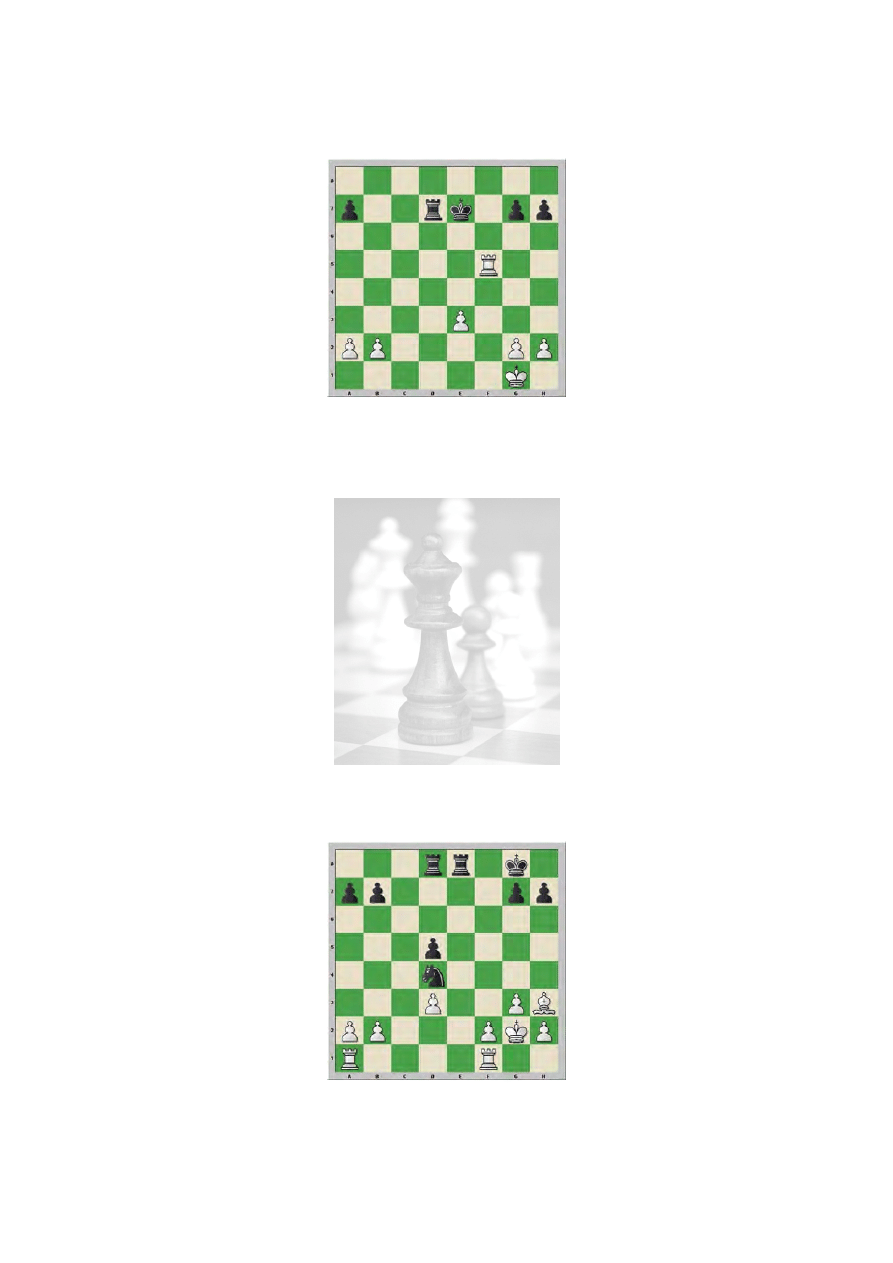
35
White creates a passed pawn. [24.¦d4 ¦c7 is less impressive.] 24...¦d1+ 25.¢f2!
[25.¦f1 ¦d2 26.¦b1 leads to passivity.] 25...¦d2+ 26.¢f3 ¦xb2 27.¦a5 ¦b7
28.¦a6! White controls the centre and restricts the black king. 28...¢f8 29.e4 ¦c7
30.h4 ¢f7 31.g4 ¢f8 32.¢f4 ¢e7 33.h5 h6 [Fine analyses the passive 33...¢f7
34.h6 gxh6 35.¦xh6 ¢g7 36.¦a6 ¢f7 37.¢f5 ¦e7 38.e5 ¦b7 39.¦c6 The a-pawn
advances and strangulation will be the result.] 34.¢f5 ¢f7 Square g6 needs
protection. 35.e5 ¦b7 36.¦d6 ¢e7 [Or 36...¦c7 37.¦d7+! ¦xd7 38.e6+] 37.¦a6
White repeated moves in order to pass the time control on move 37. 37...¢f7
38.¦d6 ¢f8 39.¦c6 ¢f7 40.a3 The world champion was beaten in their first
confrontation. Rubinstein was a challenger of Lasker until his nerves
collapsed.[40.a3 ¦e7
(40...¢e8 41.¢g6
shows the point of the subtlety: the black
rook cannot go to b4.
)
41.e6+ ¢g8 42.¢g6 ¦e8 43.e7 (Kmoch).] 1–0
(40) Rubinstein,Akiba - Capablanca,Jose [D33]
Rubinstein San Sebastian 1911 (3), 1882
[JvR]
1.d4 d5 2.¤f3 c5 3.c4 e6 4.cxd5 exd5 5.¤c3 ¤c6 6.g3 ¥e6 7.¥g2 ¥e7 8.0–0
¦c8 9.dxc5 ¥xc5 10.¤g5 ¤f6 11.¤xe6 fxe6 12.¥h3 £e7 13.¥g5 0–0
14.¥xf6 £xf6 15.¤xd5 £h6 16.¢g2 ¦cd8 17.£c1! exd5 18.£xc5 £d2
19.£b5 ¤d4 20.£d3 £xd3 21.exd3 ¦fe8
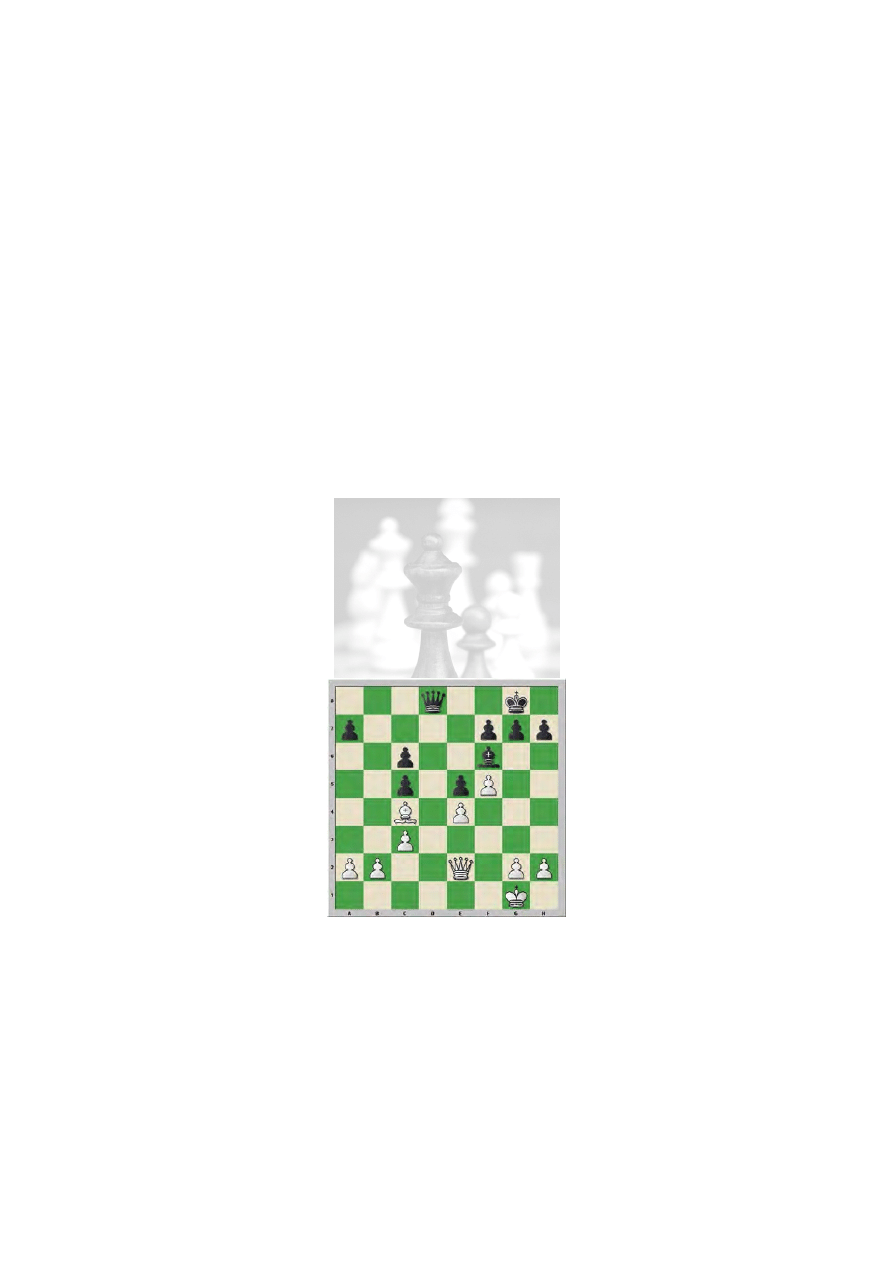
36
White has won a pawn in a way known from the previous game. 22.¥g4! White
prevents ..Re2. 22...¦d6 23.¦fe1 ¦xe1 24.¦xe1 ¦b6!? Black tries to achieve
counteraction. 25.¦e5 ¦xb2 26.¦xd5 ¤c6 27.¥e6+ ¢f8 28.¦f5+ ¢e8
29.¥f7+ ¢d7 30.¥c4 a6! He gives up the pawns on the kingside. 31.¦f7+ ¢d6
32.¦xg7 b5 33.¥g8! a5 Black waists no time on ..Nb4. 34.¦xh7 a4 35.h4 b4
36.¦h6+ [A fine alternative is 36.h5! b3 37.h6! bxa2 38.¥xa2 ¦xa2 39.¦g7]
36...¢c5 37.¦h5+ ¢b6 38.¥d5? [Right is 38.¥c4! and 38...¦xa2? fails due to
39.¦b5+] 38...b3? Capa misses his extra chance. [An explosion causes 38...¦xa2!!
39.g4!!
(
The pointe is
39.¥xa2?? b3; 39.¥c4? ¦c2 40.¦b5+ ¢c7 41.¥g8! a3 42.h5 a2
43.¥xa2 ¦xa2 44.h6 ¦a6! 45.g4 ¤e7 46.g5 ¦b6! 47.¦xb6 ¢xb6 48.f4! b3! 49.h7 ¤g6
50.f5 b2 51.fxg6 b1£ 52.h8£ £c2+=
(various annotators)
; 39.¦h8?
(Vukovic) is
refuted by
39...¦d2! 40.¦h6 ¦c2 41.g4 ¢c7 42.g5 ¤e7 43.¥c4? b3 44.¦e6 ¦xc4!
45.dxc4 ¤f5)
39...¦c2
(
the pointe is
39...b3 40.¦h6 ¦c2 41.g5 b2 42.¥a2)
40.¦h6
¢c7 41.g5 ¤e7 42.g6! ¤xd5 43.g7 ¤e7 44.¦e6 ¤g8 45.¦e8 ¦c6 Elegance shows
46.h5! ¤h6 47.¦h8 ¦c5 48.f4! ¦xh5 49.¦xh6! ¦xh6 50.g8£ and White wins.]
39.axb3 a3 40.¥xc6 ¦xb3 41.¥d5 a2 42.¦h6+! Rubinstein defeated the future
world champion.[42.¦h6+ ¢a7
(42...¢a5 43.¥c4)
43.¦h8] 1–0
(41) Rubinstein,Akiba - Gruenfeld,Ernst [A47]
Rubinstein Karlsbad 1929 (4), 1882
[JvR]
1.d4 ¤f6 2.¤f3 e6 3.e3 b6 4.¤bd2 ¥b7 5.¥d3 c5 6.0–0 ¥e7 7.e4 cxd4
8.¤xd4 ¤c6 9.¤xc6 dxc6 10.£e2 £c7 11.f4 ¤d7 12.c3 e5 13.¤c4 ¥f6
14.f5 ¤c5 15.¥c2 ¥a6 16.¥e3 0–0 17.¥xc5 bxc5 18.¥d3 ¥xc4 19.¥xc4
¦fd8 20.¦ad1 ¦xd1 21.¦xd1 ¦d8 22.¦xd8+ £xd8
I call this endgame ultra modern, because it has phases. The battle in the first
phase occurs with queen and bishop on both sides. The pressure on the weak
pawns will mount due to bishops of different colors. 23.¢f1 g6 24.fxg6 hxg6
25.g3 ¢g7 The king has to protect his flank. 26.h4 £d7 27.¢g2 £d6 [27...¥d8!
leads to more flexibility.] 28.¥b3 £d7 29.£c4 £d2+? [The quiet 29...£e7 is
okay.] 30.¢f3 ¢h6 Black has to lose a pawn. 31.£xc5! White captures the right
pawn. [31.£xf7? £d3+ draws.] 31...£xb2 32.£e3+ ¢g7 [32...g5? 33.¢g4!
(Becker).] 33.£xa7 £xc3+ 34.¢g4 £d3! A nice riposte. 35.£xf7+ ¢h6
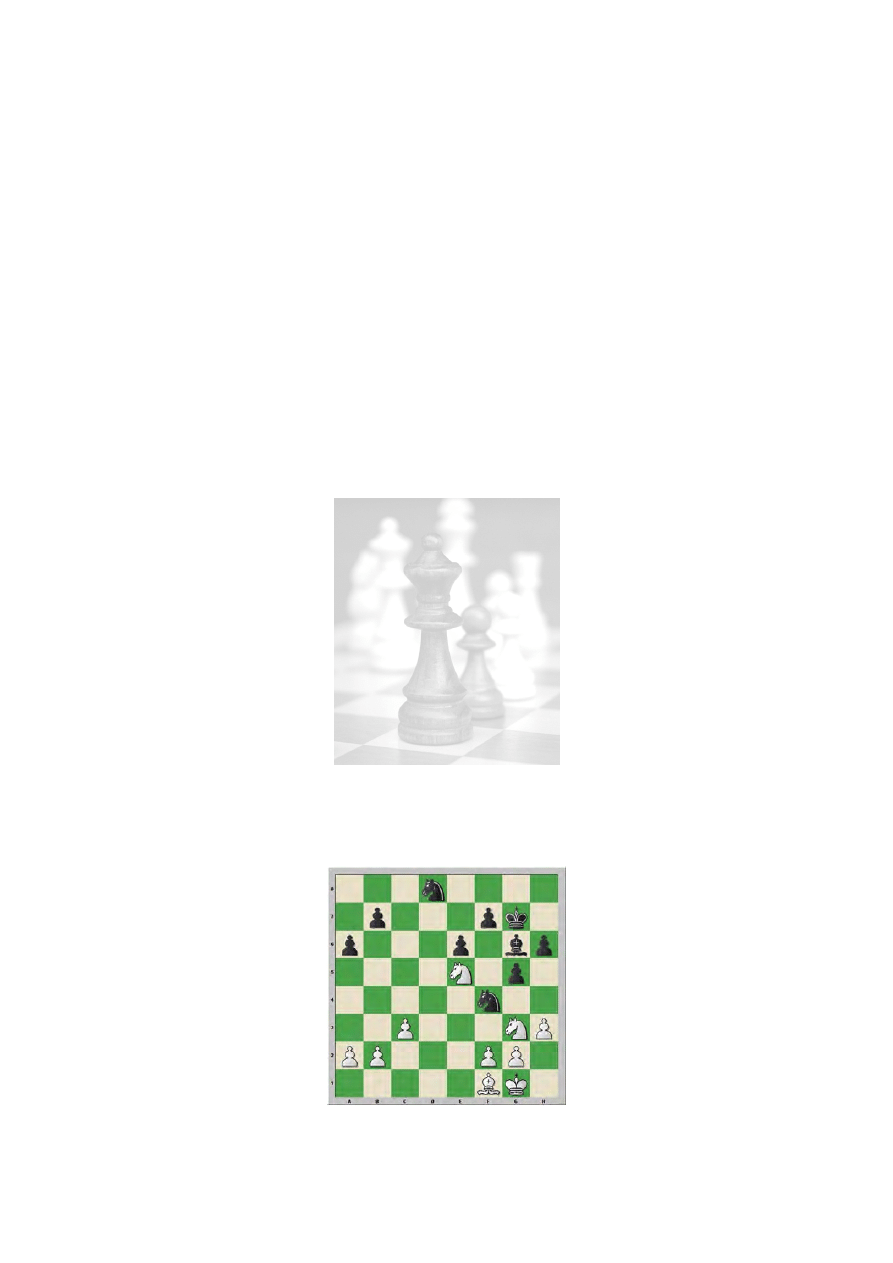
37
36.£c4! [36.£xf6?? £xe4+ 37.¢h3 £h1+=] 36...£d2! Black threatens ..Bxh4! and
mate, if the bishop is captured. 37.£f1 ¢g7 38.£d1 £g2 39.£f3 £d2 Black
threatens 40...Qd7+. 40.¢h3 £d8 41.£c3 £d6 42.g4! White takes the initiative
after the consolidation of the kingside. 42...¥d8 The bishop is needed on the
queenside. 43.g5 ¥b6 44.£f3 £f8 [44...£e7 45.a4 ¥a5 46.¥c4 White improves
his position steadily.] 45.£xf8+ ¢xf8 The second phase consists of a bishop
ending. Black might draw due to the bishops of different color. The exchange also
has positive consequences for White. The mobility of his king has improved and
distant passed pawns will become dangerous. 46.¢g4 ¥e3 47.¥a4! c5 48.¥b3
¥d2 49.¥c4! The blockade of the passed pawn favors White. 49...¢g7 50.a4
¢f8 51.¢f3! [51.h5? gxh5+ 52.¢xh5 ¢g7 White cannot make progress.] 51...¢e7
[The point of the subtle maneuver is 51...¥e1 52.¢e2!! ¥xh4? 53.a5 ¥xg5 54.a6]
52.¢e2 ¥a5 53.¢d1! ¥b4 54.¥e2! White wants to create passed pawns on the
flanks, while the king supports the a-pawn and the bishop helps the g-pawn.
54...¢d6? The endgame is too complicated. [Correct is 54...¥a5! 55.¢c2 ¥e1 56.h5
gxh5 57.¥xh5 and Black has the time to play 57...c4!] 55.h5? [55.¢c2! ¥e1 56.h5
gxh5 57.¥xh5 ¢e7 58.¢d3 and wins (Rabinovich).] 55...gxh5 56.¥xh5 ¢e7
57.¢c2 c4! The white king is restricted. 58.¥e2 c3? [58...¢f7! 59.¥xc4+ ¢g6
60.¢b3 ¥e1 61.¥d5 ¢xg5 62.¢c4 ¢f6 63.¢b5 ¢e7 64.a5 ¢d8 65.¢b6 ¢c8 66.a6
¥f2+ and Black is just in time (Becker in the tournament book).] 59.¢b3 ¢f7
60.¥d3 ¥a5 61.¢c4 ¢g6 Black is too late. 62.¢b5 ¥d8 63.a5 ¥xg5 64.a6
¥e3 65.¢c6 ¢g5 66.¢b7 ¢f4 67.¥b1!! [67.a7? ¥xa7 68.¢xa7 ¢e3 69.¥b1 ¢d2
70.¢b6 ¢c1 71.¥d3 ¢d2 ends with a perpetual.] 67...¥d4 Black has to lose a
tempo. 68.a7 ¥xa7 69.¢xa7 ¢e3 70.¢b6 The artist Strouhal has written a book
about this game, Rubinstein and his world. 1–0
(42) Schlage,Willi - Nimzowitsch,Aaron [B29]
Nimzowitsch Berlin 1928 (1), 1886
[JvR]
Nimzowitsch (1886–1935) innovated the idea about prophylaxis in chess. 1.e4 c5
2.¤f3 ¤f6 3.¤c3 d5 4.exd5 ¤xd5 5.¥b5+ ¥d7 6.¥c4 ¤b6 7.¥e2 ¤c6 8.0–
0 ¥f5 9.¦e1 a6 10.d3 e6 11.¤e4 £c7 12.c3 ¦d8 13.£c2 ¤d5 14.¥g5 ¥e7
15.¥xe7 £xe7 16.h3 0–0 17.¦ad1 ¦d7 18.¥f1 ¦fd8 19.£c1 h6 20.¢h2 g5
21.¤g3 ¥g6 22.d4 ¤b6 23.dxc5 £xc5 24.¦xd7 ¦xd7 25.¢g1 £e7 26.¦d1
¦xd1 27.£xd1 £d8 28.£c1 ¢g7 29.£e3 ¤d5 30.£d2 ¤f4 31.£xd8 ¤xd8
32.¤e5
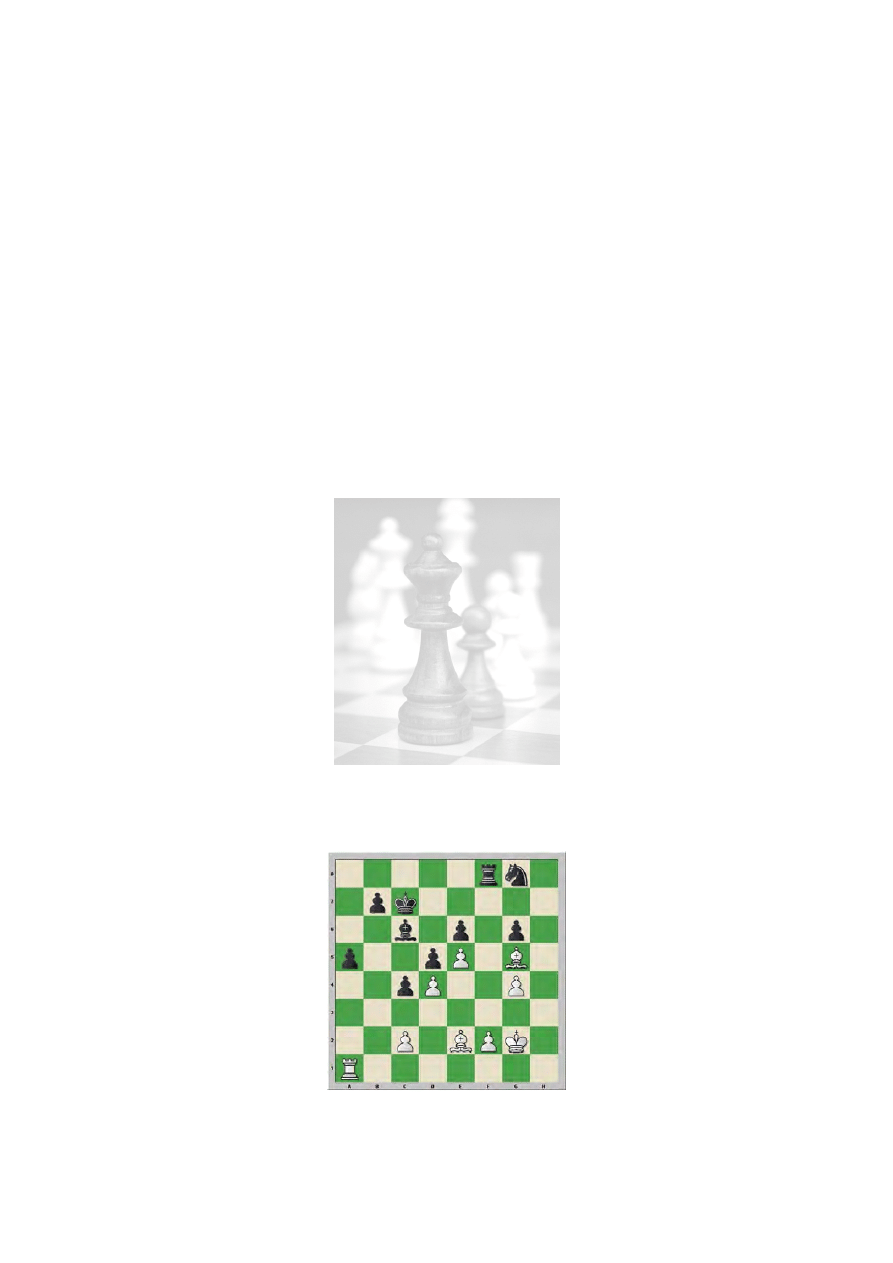
38
Develop, weaken and destroy characterizes Nimzowitsch approach to the attack.
In this game he has achieved a better development. 32...¥b1 33.a3 f6 34.¤d7
¢f7 35.¤c5 ¢e7 36.¥c4 f5 37.¤e2? [Better is 37.¢f1! ¢d6 38.b4] 37...¢d6!
38.b4 [The point is 38.¤xf4? ¢xc5 39.¤xe6+ ¢xc4 40.¤xd8 b5 41.¤f7 ¢b3–+]
38...¥a2 39.¤xf4 ¥xc4 40.¤h5 White has to accept a weakening. [40.¤fd3?
¥xd3 41.¤xd3 ¢d5 42.¤b2 ¤f7 43.¢f1 ¤d6 44.¢e2 ¤c4 leads to a black win.]
40...b6 41.¤a4 ¥b3! 42.¤b2 Capture will be punished. 42...¤f7 43.¤g3 ¤e5
44.¤f1 b5 The queenside has been fixed. Nimzowitsch has created a weakness.
45.¤d2 ¥d5 46.a4 h5 47.axb5 axb5 48.f3 ¢c6 49.¢f1 h4 50.¤d1 ¥c4+!
51.¢g1 [51.¤xc4? ¤xc4 52.¢e2 ¢d5 (Nimzowitsch),] 51...¤d3? 52.¤e3? Schlage
misses an opportunity. [52.¤xc4! bxc4 53.¢f1 ¢b5 54.¤e3] 52...¥d5 53.¤c2 ¤b2
54.¤d4+ ¢b6 55.¢h2 ¤d1 56.¤e2 e5 The advance looks threatening. 57.¢g1
¢c6 58.¢f1 ¥a2 59.¢g1 ¤e3 60.¢f2 ¤d5 61.g4!? White accepts an
unnecessary weakening of f3. 61...hxg3+ 62.¢xg3 ¤f6 63.¢f2 [Not 63.h4? f4+
64.¢g2 g4] 63...¢d6 64.¤g3 ¢e6 65.¤e2 ¤d5 66.¢g3 ¤f6 67.¤c1 ¥d5
68.¤d3 ¤h5+ 69.¢h2? The king should not move offside. [Correct is 69.¢f2!
¢d6 70.¤b2 ¤f4 71.c4! bxc4 72.¤bxc4+ ¢e6 73.¢g3 Black has to continue his
maneuvers against the weaknesses.] 69...e4! The destruction begins. 70.fxe4 fxe4
71.¤e1 ¤f4 72.¤c2 ¤e2 73.¤b1 The knights are cornered. 73...¥c4 74.¢g2
¥d3 75.¤ca3 ¤f4+ 76.¢f2! ¤d5!? 77.¢g3 e3 78.¢f3 ¢e5 Zugzwang. 79.c4
bxc4 80.b5 ¢d6 81.b6 ¢c6 82.b7 ¢xb7 83.¤b5 ¥xb1 84.¤d6+ ¢c7
85.¤xc4 ¥f5 Poor Schlage was tortured for twelve hours. 0–1
(43) Kmoch,Hans - Nimzowitsch,Aaron [C15]
Nimzowitsch Bad Niendorf 1927 (2), 1886
[JvR]
1.e4 ¤c6 2.¤c3 e6 3.d4 ¥b4 4.¤ge2 d5 5.e5 h5 6.¤f4 g6 7.¥e3 ¥xc3+
8.bxc3 ¤a5 9.¥d3 ¤e7 10.¤h3 c5 11.¥g5 c4 12.¥e2 ¤ac6 13.¥f6 ¦g8
14.0–0 £a5 15.£d2 ¤f5 16.¦fd1 ¢d7 17.¤g5 ¦f8 18.h3 ¢c7 19.g4 hxg4
20.hxg4 ¤fe7 21.¢g2 ¤g8 22.¥g7 ¦e8 23.¦h1 ¥d7 24.¦h3 ¤d8 25.¦f3
¦c8 26.¦h1 £xa2 27.¦h7 ¢b8 28.¤xf7 ¤xf7 29.¦xf7 ¥c6 30.¥f6 a5
31.¦h1 £b2 32.¥g5 ¦f8 33.¦fh7 ¦c7 34.¦xc7 ¢xc7 35.£c1 £xc3 36.£a1
£xa1 37.¦xa1
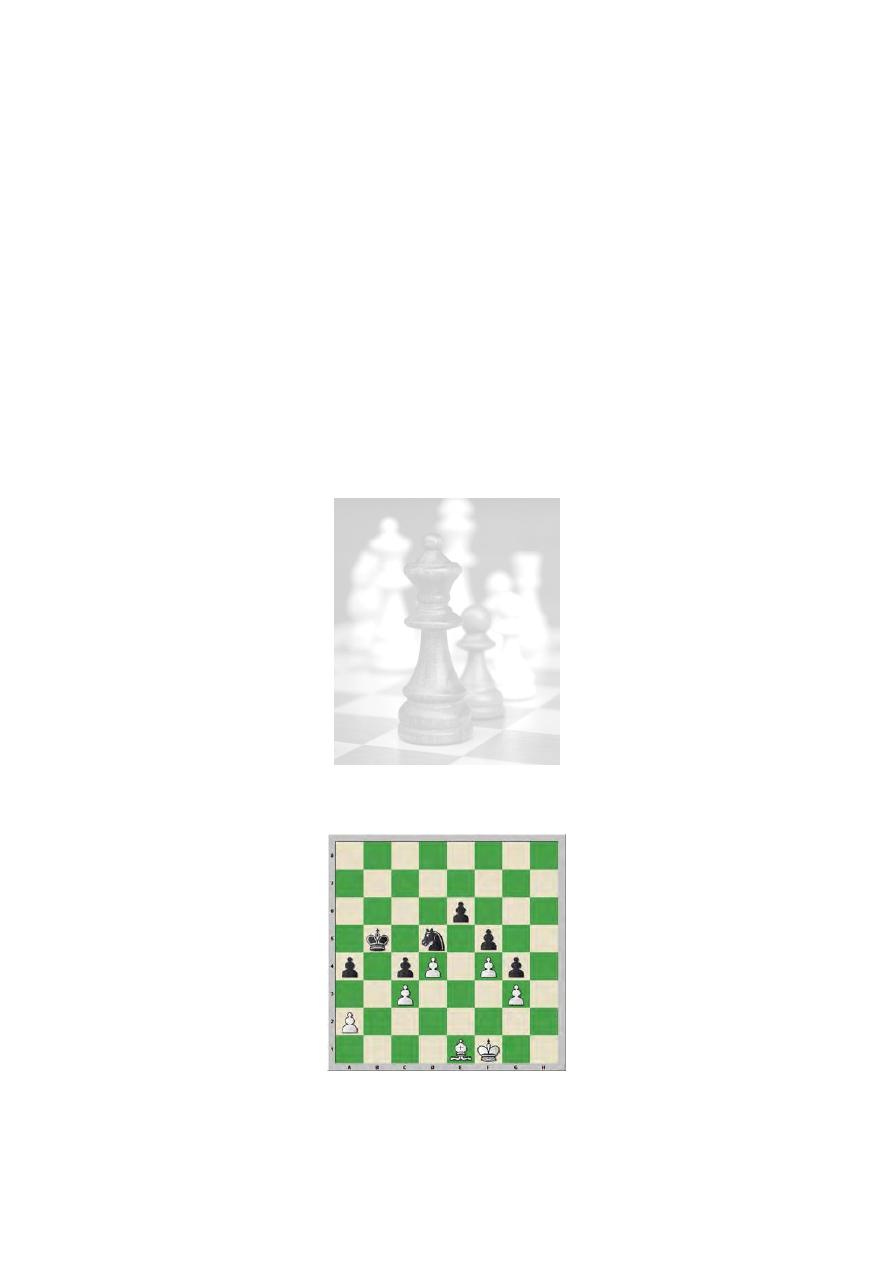
39
Black has to fight the consolidation of the queenside. He has an extra pawn. If the
pawns break through, the win becomes simple. 37...¦a8 38.¥d2 b6 39.¢g3 ¤e7
40.¥d1! Kmoch builds the fortress in a smart way. 40...¥d7? Nimzowitsch allows
a strengthening. [Correct is 40...¥b7! 41.f4 ¤c6 42.c3 b5] 41.¥b4! ¤c6 42.¥d6+
¢b7 43.c3 b5 44.¦b1 b4 45.¥a4 White has stopped the advance. 45...b3
46.¥xc6+ ¢xc6 47.g5! The black bishop is restricted. 47...¦a7 48.¦b2 ¦b7
49.¢f4? White allows a combination. [49.¥a3! Nimzowitsch regards the position as
drawn. See 49...¥c8 50.f4! ¦h7 51.¢g2 ¦h4 52.¦f2] 49...¥c8 Black threatens ..Rh7.
50.¢g3 ¦b4!! The end of the blockade on b2 is worth a rook. 51.cxb4 Otherwise
Black plays ..Ra4. 51...a4 52.b5+ ¢xb5 53.¥a3 c3 54.¦b1 ¢c4 The bastion is
taken. 55.f4 ¢xd4 56.¢f2 ¢c4 57.¢e1 d4 58.¢e2 ¢d5 59.¢f3 ¥b7 60.¦e1
¢c4+ 61.¢f2 b2 62.f5 exf5 63.e6 ¥c6 A highly interesting endgame! 0–1
(44) Henneberger,Walter - Nimzowitsch,Aaron [B15]
Nimzowitsch Winterthur 1931 (3), 1886
[JvR]
1.e4 c6 2.d4 d5 3.¤c3 dxe4 4.¤xe4 ¤f6 5.¤g3 c5 6.¥b5+ ¥d7 7.¥xd7+
¤bxd7 8.¤f3 £a5+ 9.c3 £a6 10.£e2 £xe2+ 11.¤xe2 ¦c8 12.0–0 e6
13.¥f4 ¥e7 14.¦fe1 ¤d5 15.¥g3 c4 16.¤e5 ¤xe5 17.¥xe5 The aims of
prophylaxis are strengthening, restriction and suffocation. 17...f6 The position of
the white bishop is insecure. Black strengthens his position with the gain of a
tempo. 18.¥g3 g5! [18...¢f7 19.¤f4 and exchange.] 19.f4 h6! [19...g4 allows the
liberation 20.f5! exf5 21.¦f1] 20.¦ad1 ¢f7 21.¦d2 b5 22.¦f1 ¦he8 23.¦f3?
[23.f5! ¥f8 24.fxe6+ ¦xe6 25.¦f5 ¦d8 Black has a plus (Nimzowitsch).] 23...g4!
24.¦f1 f5 25.¥f2 ¦g8 26.g3 h5 The kingside is restricted. 27.¢g2 ¥d6 28.¦c1
h4 29.¦dd1 ¦h8 30.¦d2 ¢e7 31.¦dc2 ¢d7 32.¦e1 ¦h7 33.¦a1 hxg3!?
Restriction of the queenside is the other option. 34.hxg3 a5?! [The activity on the
kingside is continued by 34...¦ch8! 35.¥g1 ¦h1 36.¢f2 ¤f6] 35.¦cc1? [35.a4! b4
36.cxb4 ¤xb4 37.¦c3 gives some counter-play.] 35...¦ch8 36.¦h1 ¦xh1
37.¦xh1 ¦xh1 38.¢xh1 b4 39.¢g2 a4 40.cxb4 ¥xb4 41.¢f1 ¢c6 42.¥e1
¢b5!? [White hoped for 42...¤e3+ 43.¢f2 ¤d1+ 44.¢f1 ¥xe1 45.¢xe1 ¤xb2
46.¤c3 according to Keene, but 46...¤d3+ wins easily.] 43.¤c3+ ¥xc3 44.bxc3
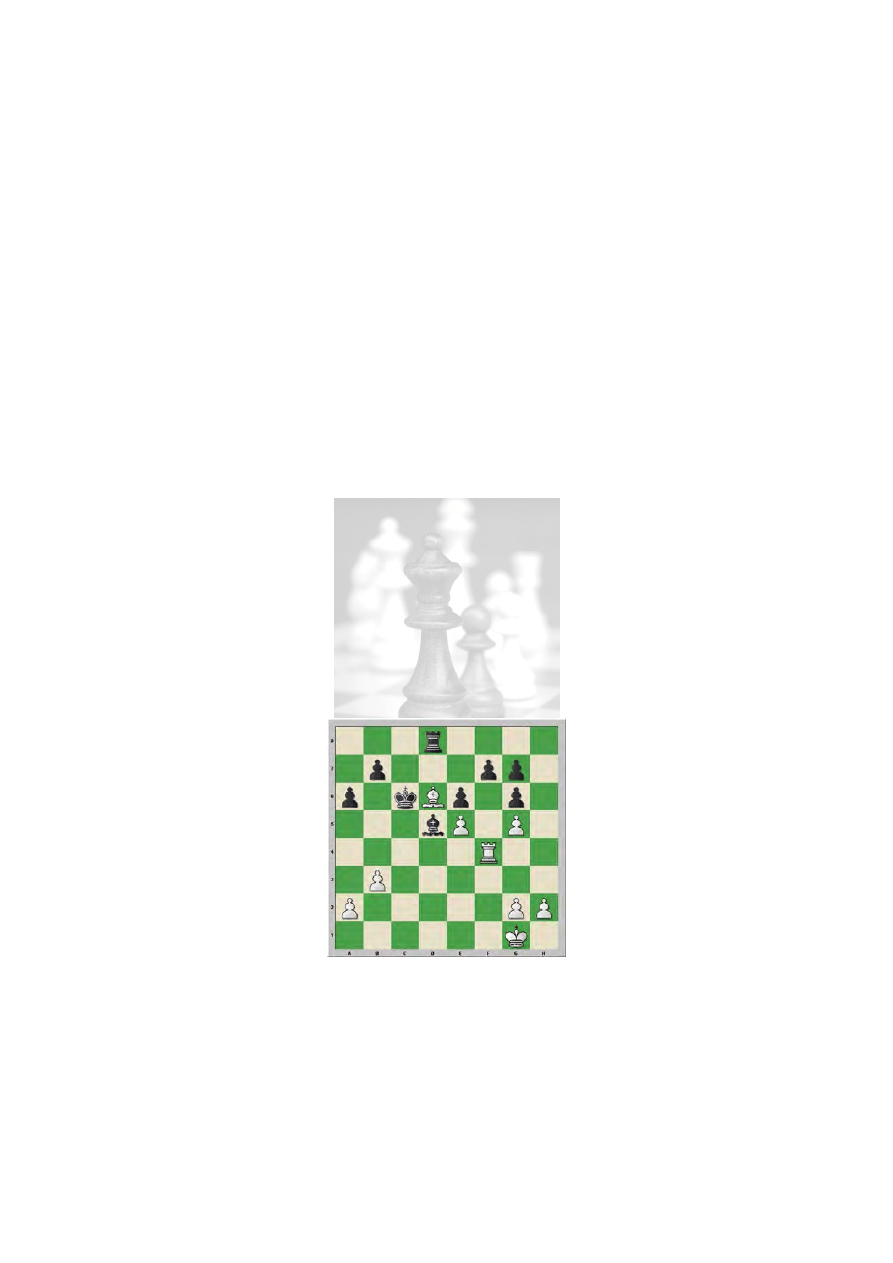
40
A well-known endgame begins. White will be suffocated. 44...¢c6 45.¢e2 ¤f6
46.¢e3 ¤e4 47.¢e2 ¢d5 48.¢e3 ¢d6 49.¢e2 ¢c6 50.¢e3 ¢d5 51.¢e2
¤d6! The black king threatens to use the small opening. 52.¢e3 ¤b5 53.¥d2
¤a3 54.¥c1 ¤b1! 55.¥b2 a3! 56.¥a1 ¢d6! A triangulation begins. 57.¢e2
¢c6! 58.¢d1 ¢d5 59.¢c2 [Or 59.¢e1 ¢e4 60.¢e2 ¤d2!] 59...¢e4 60.¢xb1
¢f3 61.¥b2 axb2 62.a4 ¢xg3 63.a5 ¢h2 64.a6 g3 65.a7 g2 66.a8£ g1£+
67.¢xb2 £g2+ 68.£xg2+ ¢xg2 69.¢a3 ¢f3 70.¢b4 ¢xf4 71.¢xc4 ¢e3
72.d5 exd5+ 73.¢xd5 f4 74.c4 f3 75.c5 f2 76.c6 f1£ Black had a forced win of
thirty moves. 0–1
(45) Nimzowitsch,Aaron - Bernstein,Ossip [C02]
Nimzowitsch Vilnius 1912 (4), 1886
[JvR]
1.e4 e6 2.d4 d5 3.e5 c5 4.¤f3 cxd4 5.£xd4 ¤c6 6.£f4 £c7 7.¤c3 a6 8.¥d3
¤ge7 9.0–0 ¤g6 10.¥xg6 hxg6 11.¤e2 ¥e7 12.¤ed4 ¤xd4 13.£xd4 £xc2
14.¥e3 £c4 15.£xc4 dxc4 Nimzowitsch has lost a pawn. He counterattacks on
the queenside and starts with restriction. 16.¥b6! ¥d7 [The extra pawn is kept in
16...¥d8!? 17.¥xd8 ¢xd8 18.¦fc1 b5 19.a4 ¥d7 20.axb5 ¥xb5] 17.¦fc1 ¦c8
18.¤d2! ¥g5! 19.¤e4! [The point is 19.¤xc4? ¥xc1 20.¤d6+ ¢e7 21.¤xc8+ ¦xc8
and the extra piece is protected.] 19...¥xc1 20.¤d6+ ¢f8? [Lasker recommends
20...¢e7! 21.¤xc8+ ¦xc8 22.¦xc1 g5! 23.f3 f6 Black keeps winning chances.]
21.¤xc8 ¥g5 [Lasker and Nimzowitsch analyse 21...¥xb2? 22.¦d1! ¥e8! 23.¦d8
and Black is in danger.] 22.f4! ¥xc8 [22...¥xf4 23.¦d1 ¢e8 24.¤d6+ ¢e7 25.¥c5
(Lasker) 25...¥xh2+ 26.¢f2 b6 27.¤f5+ ¢e8 28.¤d6+ ¢e7 leads to perpetual check.]
23.fxg5 ¥d7 24.¦d1 ¢e7 25.¥c5+ ¢e8 26.¦d4 ¥c6? Black has to fight for a
draw. [Lasker prefers 26...¦h5! 27.h4 f6!=] 27.¦xc4 ¥d5 28.¦b4 ¢d7 29.¦f4
¢c6 30.¥d6 ¦d8! 31.b3!
[The acceptation of the pawn sacrifice 31.¦xf7 ¦d7 32.¦xd7 ¢xd7 draws.] 31...¦d7
32.h4! a5 33.g4! White wants to create a passed pawn. 33...b5 Black has to
counterattack. 34.h5 gxh5 35.gxh5 a4 36.bxa4! ¥xa2! 37.a5! ¦a7 38.¥f8 ¥b1
[Not 38...¦xa5?? 39.¦xf7] 39.¦f1?! [The sharper line 39.¥xg7! ¥h7 40.¥f8! ¢d5
41.¢f2 ¢xe5 42.¢e3 gives winning chances.] 39...¥d3 40.¦d1 ¥f5 41.¥b4! The
bishop blockades a pawn and protects one. 41...¦a8 [Avoids 41...¦d7? 42.¦d6+]
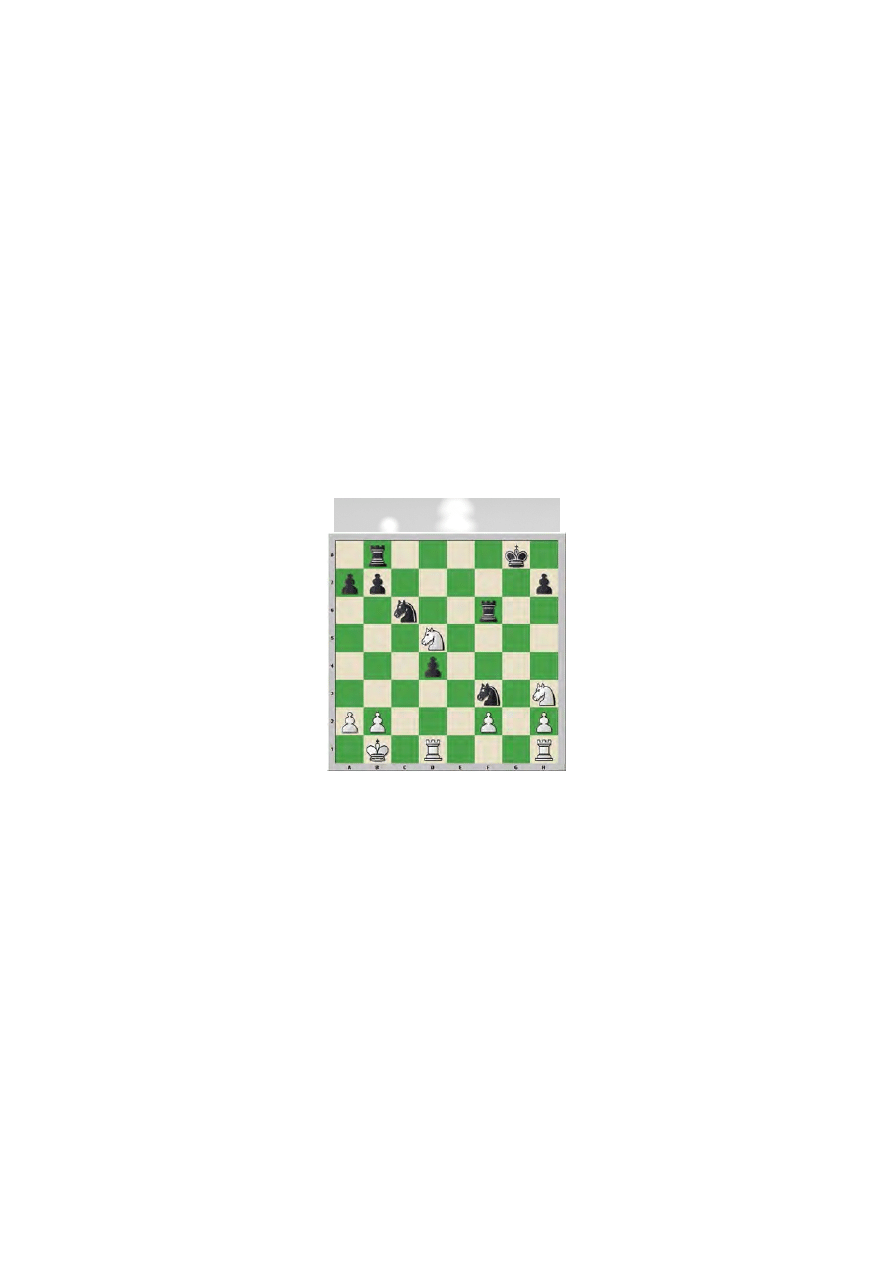
41
42.¦d6+ ¢c7 43.a6 ¦h8 44.¥c5 A counterattack has changed into an attack on
both flanks. [44.¥a5+ ¢b8 45.¥b6 is unpleasant too.] 44...¥g4? If Black captures,
he is mated in two. [44...b4!! The pawn advances outside the reach of the white
king. 45.a7 b3 46.¦b6 ¥e4 47.¦xb3 ¦xh5] 45.h6 gxh6 46.gxh6 ¢b8 [Ineffective
is 46...b4 47.a7 b3 48.¦b6 ¥f3 49.¦xb3 ¥d5 50.¦h3] 47.¢f2 ¥f5 48.¢f3 b4
49.¥e3! ¢a8 50.¦b6 ¦f8 51.¦xb4 f6! 52.¥c5! ¦c8 [The point is 52...¦f7
53.¦b7!] 53.exf6! ¦xc5 54.f7 ¦c8 55.¦b7 ¥d3 56.¦e7! ¥b5 Black sets a trap.
57.¢f4! [57.¦e8?? ¥xe8 58.f8£ ¥c6+] 57...¦h8 58.h7 ¥a4 59.¢e5 ¥b5 60.¢f6
e5 61.¢g7 A fascinating endgame. 1–0
(46) Lasker,Emanuel - Nimzowitsch,Aaron [C17]
Nimzowitsch Zuerich 1934 (5), 1886
[JvR]
1.e4 e6 2.d4 d5 3.¤c3 ¥b4 4.e5 c5 5.¥d2 ¤e7 6.¤b5 ¥xd2+ 7.£xd2 0–0
8.c3 ¤f5 9.g4 ¤h4 10.g5 cxd4 11.cxd4 ¤c6 12.0–0–0 £a5 13.¢b1 £xd2
14.¦xd2 f6 15.gxf6 gxf6 16.¥h3 fxe5 17.¤c7 ¦b8 18.¤xe6 ¦f6 19.¤c7
¥xh3 20.¤xh3 ¤f3 21.¦dd1 exd4 22.¤xd5
Black has a positional advantage. 22...¦f5 23.¤df4 ¦bf8 24.¤d3 ¤ce5?!
Nimzowitsch wants to dislodge the blockader. 25.¤xe5?! [25.¤g1! ¤h4 26.¤e2
improves the white position.] 25...¦xe5 26.¤g1 ¤g5 [A fine alternative gives
26...d3! ] 27.h4 ¤e6 28.¦h2 ¦e4 29.f3 ¦e3 30.¦e2 ¦f4 Black has to accept
exchanges. 31.¦xe3 dxe3 32.¦d3 ¦xh4 33.¦xe3 ¤d4 34.¦e4 ¦xe4 35.fxe4 A
famous knight ending begins. Black has the distant passed pawn. 35...¢f7 36.¢c1
¢f6 37.¢d2 ¢e5! The king has reached the ideal square. 38.¢e3 h5 39.a3 a5
40.¤h3 ¤c2+?! An incorrect maneuver begins. [40...¤e6! places the knight on the
best square.] 41.¢d3 ¤e1+ 42.¢e2 ¤g2 43.¢f3 ¤h4+ 44.¢e3 ¤g6 The
knight is on its way to e5. 45.¤g5 ¢f6 46.¤h7+ ¢g7 47.¤g5 ¢f6 48.¤h7+
¢e7! 49.¤g5 [The point is 49.¢d4? ¤f8! 50.¤g5 ¤e6+] 49...¤e5 The knight has
become a blockader. 50.¢d4 ¢d6 51.¤h3 a4! 52.¤f4 h4 53.¤h3 b6! 54.¤f4
b5 Black has set targets on the queenside. 55.¤h3 [The best chance gives 55.¢c3!
¤f3! 56.¢b4 ¤d4 The knight will move to e6. 57.e5+! ¢d7 58.¢c3 ¤e6 59.¤h3 ¢c6
60.¢b4 ¢b6 61.b3! axb3 62.¢xb3 ¢c5 63.¢c3
(63.a4 bxa4+! 64.¢xa4 ¢d5 65.¢b4
¢xe5–+
Black wins with his last pawn.
)
63...¢d5 64.¢b4 ¤d4 65.¤f2 ¢e6!
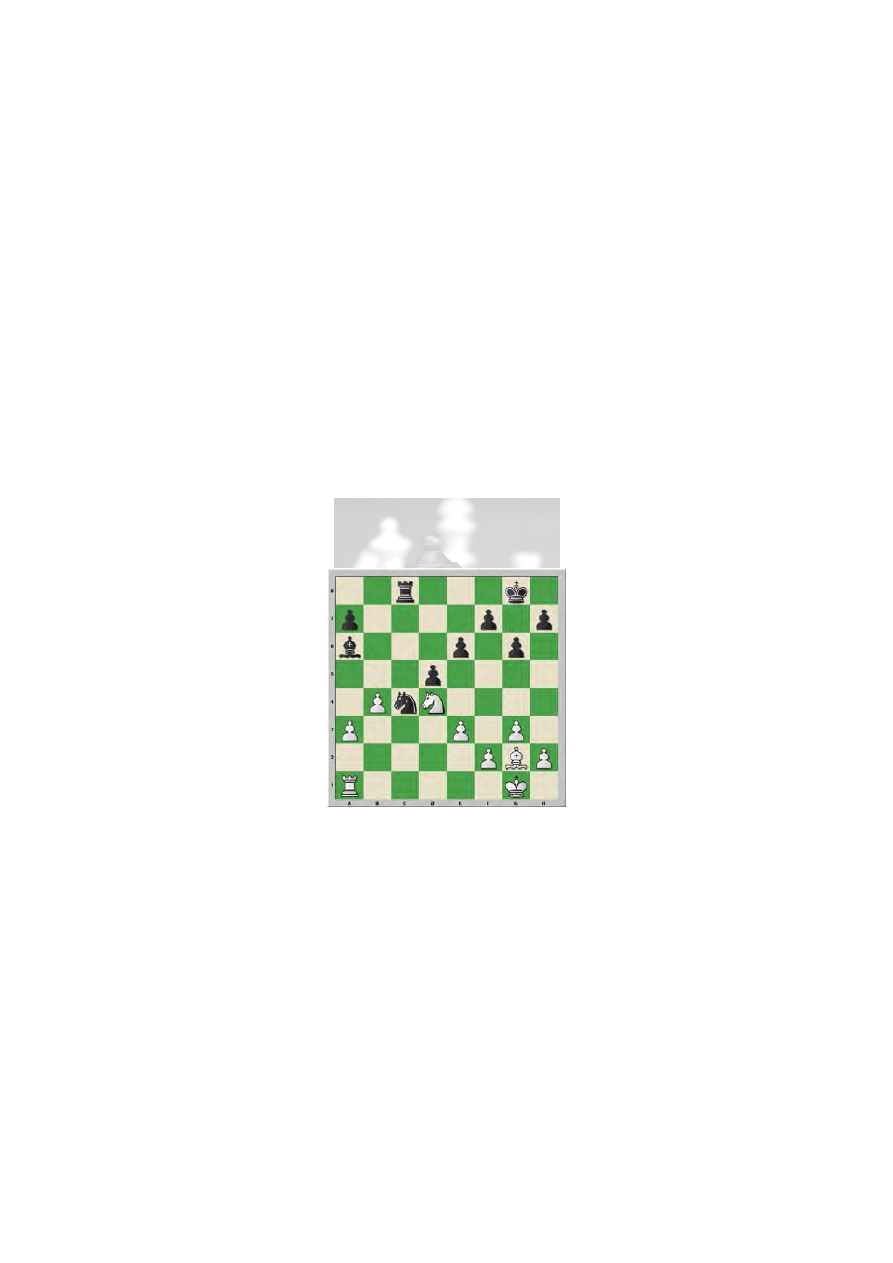
42
(65...¢xe5? 66.¢c5
zugzwang
)
66.¤d3 ¢f5 67.¤f2 ¢f4! 68.¢c5 ¢xe5 At last! 69.¤h3
¢e4 70.¤g1 ¤c2 71.¢xb5 ¤xa3+–+ A theoretical win] 55...¤c6+ 56.¢e3 ¢c5
[56...¤a5! wins more quickly.] 57.¢d3 b4 58.axb4+ ¢xb4 59.¢c2 ¤d4+
60.¢b1 [Euwe investigates 60.¢d3 ¤e6! 61.¢c2 ¢c4 62.¢d2 ¢d4 63.¤f2 ¤g5
64.e5 ¤f3+!] 60...¤e6! The knight has reached the ideal square at last. 61.¢a2!
¢c4 62.¢a3 ¢d4 63.¢xa4 ¢xe4 Black wins by one tempo. 64.b4 ¢f3 65.b5
¢g2 Black dominates the knight.[65...¢g2 66.b6
(66.¤f4+ ¤xf4 67.b6 ¤e6)
66...¢xh3–+] 0–1
(47) Gilg,Karl - Tartakower,Savielly [D02]
Tartakower Semmering 1926 (1), 1887
[JvR]
Tartakower (1887–1956) was an all-round player. A talent was to push weaker
opponents from the board in long endgames. 1.d4 e6 2.¤f3 c5 3.g3 ¤c6 4.¥g2
¤f6 5.0–0 d5 6.c3 ¥e7 7.¤bd2 0–0 8.¤e5 cxd4 9.¤xc6 bxc6 10.cxd4 £b6
11.e3 ¥a6 12.¦e1 c5 13.dxc5 ¥xc5 14.¤b3 ¥b4 15.¥d2 ¦ac8 16.¤d4 ¤d7
17.¥xb4 £xb4 18.£b3 £a5 19.¦ec1 ¤c5 20.£c3 £b6 21.£d2 g6 22.b4
¤d7 23.a3 ¤e5 24.¤b3 ¤d3 25.¦xc8 ¦xc8 26.¥f1 ¤e5 27.¥g2 ¤c4
28.£d4 £xd4 29.¤xd4
Black has the initiative with little success. 29...¤xa3!? He tries a gamble. 30.h3?
Gilg only thinks about passive defense. [30.¥xd5! exd5 31.¦xa3 ¦c1+ 32.¢g2 ¥f1+
33.¢f3 is better for White.] 30...¦c3 31.¥f1 ¥c4 32.¥xc4 dxc4 33.¢f1 a6
34.¤e2 ¦d3 35.¤c1 ¦c3 36.¤e2 ¦b3 37.¤c1 ¦b1 38.¦xa3! [Not 38.¦xb1?
¤xb1 39.¢e1 ¤c3] 38...¦xc1+ 39.¢e2 ¦c2+ 40.¢f3 ¦b2 41.¦xa6 ¦xb4
42.¦c6 White's rook is positioned behind the passed pawn. therefore the extra
pawn gives no decisive advantage. 42...¢g7 43.h4 h5 44.¦c5 ¢f6 45.¦c7 ¦a4
46.¦c5 e5 47.¦c6+ [Or 47.¢e4! ¦a2 48.¦c6+ ¢g7 49.¦xc4 ¦xf2 50.¦c5 f6
51.¦c7+ ¢g8] 47...¢e7 48.¢e4 ¢d7! 49.¦c5 [An alternative is 49.¦f6 c3+ 50.¢d3
(50.¢xe5?? c2)
50...¦c4 51.¢c2 ¢e7 52.¦a6 e4 53.¦a3=] 49...f6 50.¢d5! The
activity of the black king has to restricted. 50...¦a2 51.¦xc4 ¦xf2 Black makes
progress. He has winning chances. 52.¦a4 ¦d2+ 53.¢e4 ¢e6 54.¦a6+ ¦d6 The
rook returns in order to consolidate. 55.¦a7 ¦b6 56.¦a4! [Avoids 56.¦g7? ¦b4+
57.¢f3 ¢f5 (Timman).] 56...f5+ 57.¢f3 ¢f6 Little will happen for a long time.
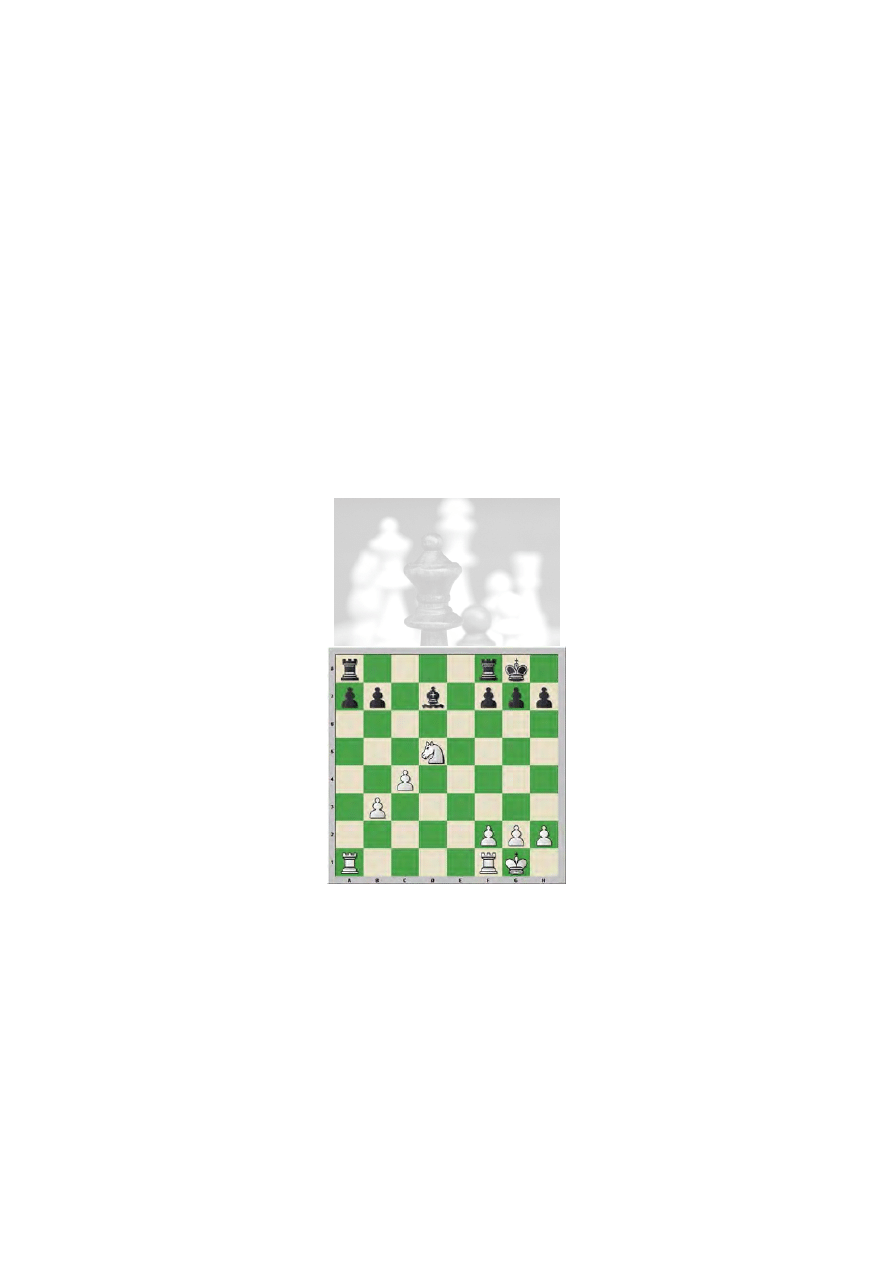
43
58.¦a5 ¦b2 59.¦a6+ ¢g7 60.¦a8 ¦b7 61.¦a5 ¦e7 62.¦a6 ¢h6 63.¦b6 ¦d7
64.¦b8 ¦d6 65.¦e8 ¦d5 66.¦h8+ ¢g7 67.¦a8 ¦d6 68.¦b8 ¦d2 69.¦a8 ¦c2
70.¦b8 ¦c4 71.¦b5 ¢f6 72.¦b6+ ¢f7 73.¦b7+ ¢e6 74.¦b6+ [74.¦b5
continues the useless maneuvers.] 74...¢d5!? Black gives it a try again. 75.¦xg6
¦c2 76.¦f6 e4+ 77.¢f4 ¦f2+ 78.¢g5 ¢e5 79.¦a6 ¦f3 80.¦a5+ ¢e6 81.¦a6+
[Or 81.¦a3! ¦xg3+ 82.¢xh5 f4 83.¦a6+ ¢f5 84.¦a5+] 81...¢d5 82.¦a5+ ¢c4
83.¦xf5 ¢d3 84.¦e5 ¦xe3 85.¢xh5 [85.g4! hxg4 86.¢xg4 ¦e1 87.h5 draws
easily.] 85...¦xg3 86.¢h6? [86.¦g5! ¦xg5+ 87.hxg5] 86...e3 87.¦d5+ [87.¦a5
¦g1!! 88.h5 e2 leads to the game.] 87...¢e4 88.¦d1 e2 89.¦e1 ¢e3 90.h5 ¢f2
91.¦a1 This position is known from theory books about rook endings. 91...¦g1!!
[91...e1£? 92.¦xe1 ¢xe1=] 92.¦a2 ¢f3 93.¦a3+ [Or 93.¦xe2 ¢xe2 94.¢h7 ¢f3
95.h6 ¢f4 96.¢h8 ¢f5 97.h7 ¢g6 98.¢g8 ¦a1 99.h8¤+ ¢f6] 93...¢f4 94.¦a4+
¢g3 95.¦a3+ ¢h4 96.¦a4+ ¦g4 97.¦a1 ¦e4 98.¦h1+ ¢g4 99.¦g1+ ¢f5
100.¦e1 ¢f6! Tartakower avoids the last trap. [100...¦e7? 101.¦f1+! ¢g4 102.¦g1+
¢h4 103.¦h1+] 101.¢h7 ¢g5 102.h6 ¦e7+ The opponent failed by exhaustion.
0–1
(48) Tartakower,Savielly - Trifunovic,Peter [C51]
Tartakower Paris 1950 (2), 1887
[JvR]
1.e4 e5 2.¤f3 ¤c6 3.¥c4 ¥c5 4.b4 ¥xb4 5.c3 ¥e7 6.d4 ¤a5 7.¤xe5 ¤xc4
8.¤xc4 d5 9.exd5 £xd5 10.¤e3 £d8 11.0–0 ¤f6 12.c4 0–0 13.¤c3 c6
14.¥b2 £a5 15.d5 ¥a3 16.¥xa3 £xa3 17.£b3 £xb3 18.axb3 cxd5
19.¤cxd5 ¤xd5 20.¤xd5 ¥d7
White has an advantage by the position of his knight. 21.¦fd1 ¦fd8 22.f3 ¥e8
[The variation 22...¢f8 23.¤b6! axb6 24.¦xa8 ¦xa8 25.¦xd7 ¦a3 26.b4 ¦c3
27.¦xb7 ¦xc4 28.¦xb6 ¢e7 shows similarity to the game.] 23.¤c7 ¦xd1+
24.¦xd1 ¦c8 25.¤xe8 ¦xe8 White can utilize the precarious position of the
black king. 26.¦d7! ¦b8 Black has to accept passivity. 27.¢f2 ¢f8 28.¦c7!
[Avoids 28.c5 b6! 29.c6 ¦c8] 28...g6 29.b4! ¢g7 30.c5 ¢f6 31.g4 h6 32.h4 ¢e6
33.¢e3 b6! Black cannot avoid zugzwang eventually. He sacrifices a pawn at the
right time. 34.¦xa7 bxc5 35.bxc5 ¦b3+ 36.¢f4 g5+!? [36...¦b4+! 37.¢g3 ¦c4
draws easily.] 37.hxg5 hxg5+? [Better is 37...¦b4+! 38.¢e3 hxg5 39.c6 ¦c4]
38.¢xg5 ¦xf3 39.¦a6+ ¢e7! The king has to retreat. [Notice 39...¢d5? 40.¦f6!
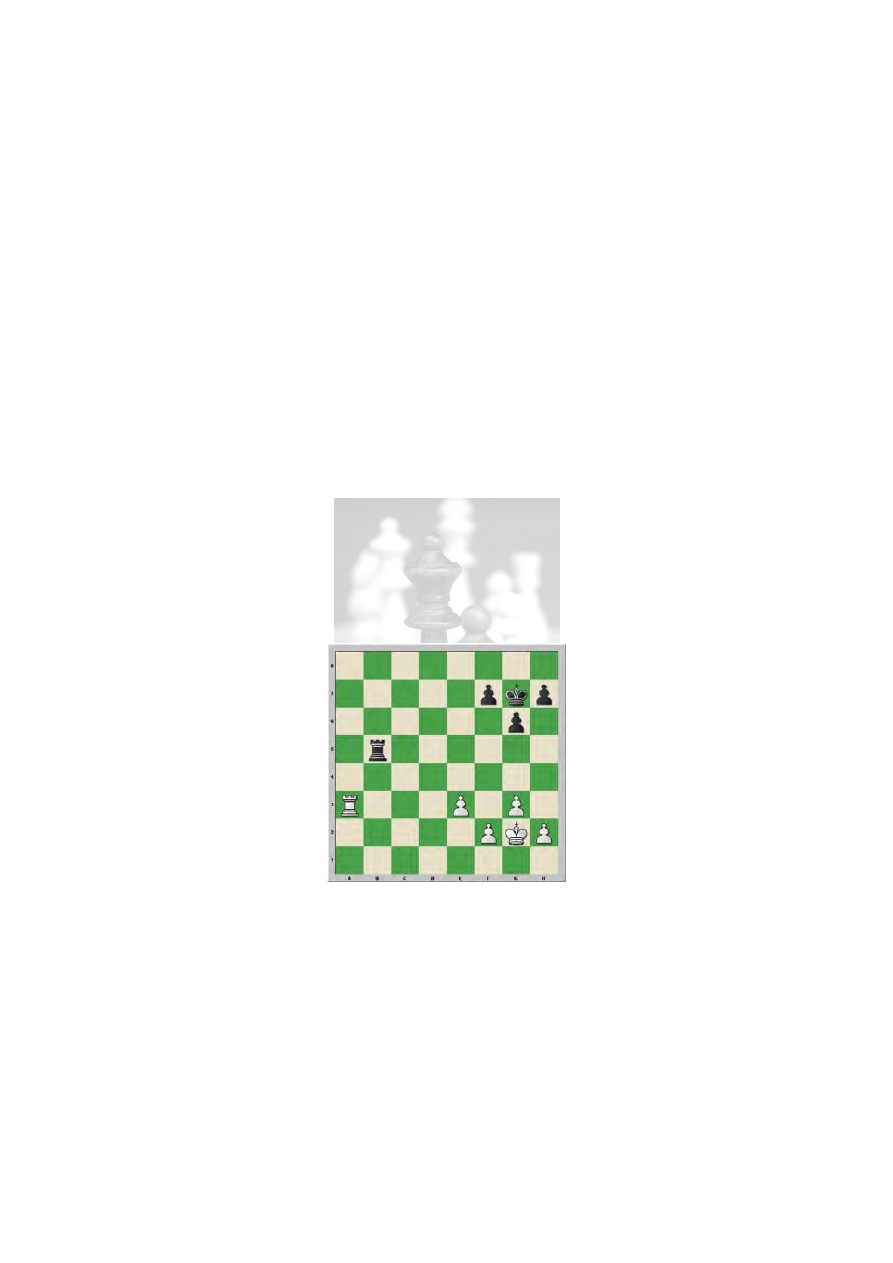
44
and; 39...¢e5? 40.¦a1! f6+ 41.¢h4 ¢d5 42.¦c1 ¢c6 43.¦c4] 40.¦a4 ¦c3 41.¦e4+
¢f8 The f-pawn has to be protected. 42.¦e5 ¦c4 Black applies restriction.
43.¢f5 ¦d4 The restraint increases. 44.g5 ¢g7 45.g6! ¦c4 [The alternative is
45...¢f8!? 46.¦e8+! ¢g7! 47.¢e5 ¦d1! 48.¦b8 f6+ 49.¢e6 ¦e1+ 50.¢d7 ¦d1+
51.¢c7 ¢xg6] 46.¦d5 fxg6+? An obvious move loses. [Correct is 46...¦c1!! 47.¢e5
¢xg6! 48.¢d6 f5 49.c6 f4! 50.c7 f3 51.¦d3 f2 52.¦g3+ ¢h5 53.¦f3 ¦d1+=] 47.¢e6!
¢h6 48.¢d6 g5 49.c6 ¢h5 [Or 49...g4 50.c7 ¦xc7 51.¢xc7 g3 52.¦d3!] 50.c7
¦xc7 51.¢xc7 ¢h4 52.¢d6 g4 53.¢e5 g3 54.¢f4 g2 55.¦g5 ¢h3 56.¦h5#
Tartakower played a fine endgame until the end of his life. 1–0
(49) Capablanca,Jose - Yates,Frederick [D66]
Capablanca Hastings 1930 (1), 1888
[JvR]
Capablaca (1888–1942) was the third world champion. He defeated his opponents
in the endgame like machine. 1.d4 d5 2.c4 e6 3.¤f3 ¤f6 4.¥g5 ¤bd7 5.e3 ¥e7
6.¤c3 0–0 7.¦c1 c6 8.¥d3 dxc4 9.¥xc4 a6 10.0–0 b5 11.¥e2 ¥b7 12.£c2
¦c8 13.¦fd1 c5 14.dxc5 ¦xc5 15.b4 ¦c8 16.£b1 ¤d5 17.¤xd5 ¥xg5
18.¦xc8 ¥xc8 19.¤xg5 £xg5 20.¤c3 ¥b7 21.¤e4 £g6 22.¥f3 ¥d5
23.¤c3 £xb1 24.¤xb1 ¤f6 The game should end in a draw quickly. 25.¤c3
¦c8? [Correct is 25...¥xf3 26.gxf3 ¦c8] 26.¤xd5 ¤xd5 27.¥xd5 exd5 The
isolated pawn a great weakness. 28.g3 g6!? The pawn sacrifice is unnecessary.
[28...¦d8 29.¦d4 f5! prevents e4.] 29.¦xd5 ¦c2 30.a4! bxa4 31.¦a5 ¦a2
32.¦xa6 ¢g7 33.¢g2 a3 34.b5 ¦b2 35.¦xa3 ¦xb5
This endgame can be found in many books, because the confrontation of a rook
with four pawns versus rook plus three pawns on a flank has great theoretical
importance. It shows the importance of matter. 36.¦a6 ¦b4 37.h3 ¦c4 [Black
should play 37...h5! ] 38.¢f3 ¦b4 39.¦a5 ¦c4 40.g4! White prevents ..h5 at last.
40...h6!? This move does not weaken the black position. 41.¢g3 ¦c1 42.¢g2
¦c4 43.¦d5 ¦a4 [43...g5?! should be a weakening.] 44.f4! Action starts. 44...¦a2+
45.¢g3 ¦e2 46.¦e5 ¦e1 47.¢f2 ¦h1 48.¢g2 ¦e1 49.h4 ¢f6 [Kopayev found
the surprising variation 49...f6! 50.¦e7+ ¢f8 51.¦e6 ¢f7 52.f5 gxf5 53.gxf5 h5
54.¢f2 ¦a1 and White cannot make progress.] 50.h5 ¦e2+ 51.¢f3 ¦e1 52.¦a5
¢g7 53.hxg6 ¢xg6! Black needs the f-pawn to stop the e-pawn. 54.e4?! The
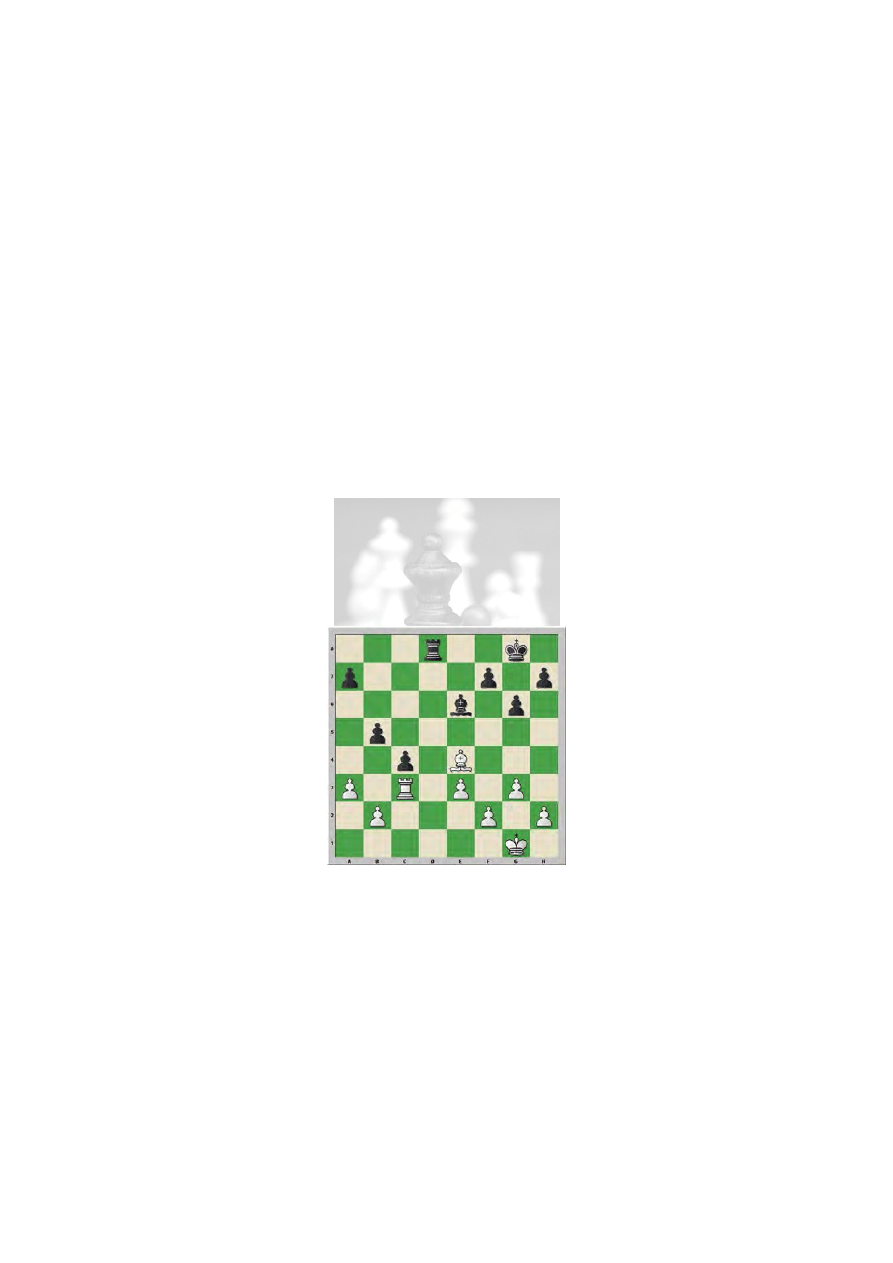
45
rook should go to the d-file as preparation. [Better is 54.¦d5! ] 54...¦f1+ 55.¢g3
¦g1+ 56.¢h3 ¦f1 57.¦f5 ¦e1? The fatal moment. [Correct is 57...f6! 58.¢g2 ¦e1
59.e5 fxe5 60.¦xe5 ¦xe5 61.fxe5 h5!=] 58.e5 ¦e3+ 59.¢g2! [Avoids 59.¢h4? ¦c3
60.¦f6+ ¢g7] 59...¦a3 60.¦f6+ ¢g7 61.¦b6 [Better is 61.¦d6! ] 61...¦e3 62.¦b4
¦c3 63.¢f2 ¦a3 64.¦b7 ¢g8 65.¦b8+ ¢g7 66.f5! ¦a2+ 67.¢e3 ¦a3+
68.¢e4 ¦a4+ 69.¢d5! ¦a5+ [The justification brings 69...¦xg4 70.f6+ ¢h7 71.¦f8
¢g6 72.¦g8+ ¢f5 73.¦xg4 ¢xg4 74.e6] 70.¢d6 ¦a6+ 71.¢c7 ¢h7 [Or 71...¦a7+
72.¢b6 ¦a4 73.f6+] 72.¢d7 ¦a7+ 73.¢d6 ¢g7 74.¦d8! ¦a5 75.f6+ ¢h7
76.¦f8 ¦a7 77.¢c6! Zugzwang. 77...¢g6 78.¦g8+ ¢h7 79.¦g7+ ¢h8
80.¢b6! ¦d7 81.¢c5! ¦c7+ 82.¢d6 ¦a7 83.e6 ¦a6+ 84.¢e7 ¦xe6+ [84...fxe6
85.f7! ¦a7+ 86.¢f6 ¦a8 87.¢g6 and mate.] 85.¢xf7 ¦e4 86.g5! A safe haven is
created. 86...hxg5 87.¢g6 This game is far more interesting the growing grass! 1–
0
(50) Marshall,Frank - Capablanca,Jose [D34]
Capablanca New York 1909 (2), 1888
[JvR]
1.d4 d5 2.c4 e6 3.¤c3 c5 4.cxd5 exd5 5.¤f3 ¤c6 6.g3 ¥e6 7.¥g2 ¥e7 8.0–0
¤f6 9.¥g5 ¤e4= 10.¥xe7 £xe7 11.¤e5 ¤xd4 12.¤xe4 dxe4 13.e3 ¤f3+
14.¤xf3 exf3 15.£xf3 0–0 16.¦fc1 ¦ab8 17.£e4 £c7 18.¦c3 b5 19.a3 c4
20.¥f3 ¦fd8 21.¦d1 ¦xd1+ 22.¥xd1 ¦d8 23.¥f3 g6 24.£c6 £e5 25.£e4
£xe4 26.¥xe4
The battle for terrain is essential in chess. Capablanca has more control over the
queenside and centre in this position. 26...¦d1+ [26...¥h3! 27.¦c1 ¦d2 28.¦b1 a5
is horrible.] 27.¢g2 a5 28.¦c2 b4 29.axb4 axb4 30.¥f3 ¦b1 Black has two big
advantages: an advanced pawn majority and an active rook. 31.¥e2? White allows
a decisive breakthrough. [Correct is 31.¦d2! ¦a1 32.¥c6 ¦a2 33.¢f3! White
activates his last piece. 33...c3 34.¦d8+ ¢g7 35.bxc3 bxc3 36.¦d1 and the struggle
continues.] 31...b3! 32.¦d2 [The first point is 32.¦c3 ¦xb2 33.¥xc4 ¦c2 and White
loses a piece.] 32...¦c1 33.¥d1 c3 34.bxc3 b2! 35.¦xb2 [The second point is
35.¥c2 ¦xc2!] 35...¦xd1 Black has won a piece. He ends the game efficiently.
36.¦c2 ¥f5 37.¦b2 ¦c1 38.¦b3 ¥e4+ 39.¢h3 ¦c2 40.f4 h5 A mate attack.
41.g4 hxg4+ 42.¢xg4 ¦xh2 43.¦b4 f5+ 44.¢g3 ¦e2 45.¦c4 ¦xe3+ 46.¢h4
46
¢g7 47.¦c7+ ¢f6 48.¦d7 ¥g2 49.¦d6+ ¢g7 The natural play of Morphy
returns with Capablanca. 0–1
Wyszukiwarka
Podobne podstrony:
Jan Van Helsing Genesis, Teatr Bogów
Jan van der Noot
Jan van Eyck
Jan van Eyck
Rozmowy ze śmiercią Jan van Helsing
Jan Van Helsing Genesis Teatr Bogów
Genesis, Teatr Bogów Jan Van Helsing
Jan van Scorel
Helsing Jan Van Genesis, Teatr Bogow
Jan Van Helsing Interview Über Seine Bücher Und Die Zukunft (19 12 2003)
Jan van Kraeydonck Time Of My Life score
JAN VAN HELSING
Jan van Helsing Geheimgesellschaften 2 Das Interview mit Jan van Helsing
JAN VAN EYCK(1)
Jan Van Helsing Genesis, Teatr Bogow
Andrei Codrescu The Posthuman Dada Guide Tzara and Lenin Play Chess (The Public Square Book Series)
Jan van Eyck(2)
Philip Van Buskirk, B R Burg Rebel at Large The Diary of Confederate Deserter Philip Van Buskirk (
więcej podobnych podstron