
1
MIND CONTROL USING HOLOGRAPHY AND DISSOCIATION:
A PROCESS MODEL.
By
Murray Gillin Ph.D. Loris Gillin M. Ed (Psych), and Deva Paul
March 2000
ABSTRACT:
The theory of holography as applied to the universe and to the functioning of the mind, sight and hearing is
considered as a means to better understand dissociation. Using a case study, a process model of mind
control is developed which describes how mind control can be created and expanded between controller
and subject. Nine propositions are specified to motivate and guide future empirical investigations.
INTRODUCTION:
Ritual abuse literature (Blood 1994, Noblett and Peskin 1995, Ross 1995, Ryder 1992) highlights the
application of dissociation practices to achieve programming of subjects and the maintaining of mind
control over the actions and loyalty of the abused. Ridell (1994), in a report of the Los Angeles County
Commission for Women states, “despite detailed evidence of ritual abuse coming from child victims and
their families, and from the professionals working with them, and despite the remarkable consistency of
these reports both nationally and internationally, society at large resists believing that ritual abuse really
occurs.’ The Los Angeles report referred to above also makes clear that mind control is the cornerstone of
ritual abuse and the key element in the subjugation and silencing of witnesses – “mind control is achieved
through an elaborate system of brain -washing programming, indoctrination hypnosis and the use of various
mind-altering drugs.”
A corollary of this abuse and mind control in the abused person is the process of dissociation, a condition
related to the creation of multiple personalities and known as Dissociative Identity Disorder (D.I.D) and
described in DSM-IV, (1994). Tertiary dissociation, as described by Van der Kolk, McFarlane and
Weisbath (1996), occurs “when people develop distinct ego states that contain the traumatic experience,
consisting of complete identities with distinct cognitive, affective and behavioural patterns.” The traumatic
memories “for individuals who dissociate, do so not because of active repression, but rather because their
mental capacities are weakened by “vehement emotions,” which impair their ability to integrate mental
contents. The trauma tised (abused) individual is incapable of integrating the memory of the trauma (abuse)
into personal consciousness.” (Van der Kolk et al 1996). Nemiah (1995),(Van der Kolk et al 1996b)
believes it is important to pay attention to the role of dissociation, since he views the study of dissociation
as “critical for reviving an appreciation of the importance of unconscious mental processes and their role in
the pathogenesis of psychiatric disorders.” In summary, the “body keeps the score with the trauma, being
stored in somatic memories and expressed as changes in biological stress responses” (Van der Kolk, 1994).
Such traumatic abuse practices are usually deliberate and can be shown to evolve over time in both
intensity and technical sophistication. Gillin, Gillin and Paul (1997 a) have chronicled the evolution of
such abuse practices by an organisation committed to using dissociation as a primary instrument to achieve
control of individuals behaving in a ‘robotic’ manner. Gillin, Gillin and Paul (1997 b) show the direct
relationship between the use of traumatic physical abuse and abuse administered through experimental and
scientific research and advanced technological applications to create dissociated personalities and
interconnect these fragments of the p erson to respond to ‘triggers’ and programmed signals. Memory for
detail of this induced trauma appears to be boundless (Ross, 1996).
Karl Pribram, a neuro surgeon was involved in research on how the brain processed memory. Based on
research by Lashley (1950), Pribram (1969) noted that no matter what portion of the rats’ brain was cut out,
Lashley could not eradicate their memories. Similar experimentation showed that removing as much as
90% of a rat’s visual cortex or 98% of a cat’s optic nerve did not seriously impair its ability to perform
complex visual tasks (Pribram 1969). He also noted that humans with portions of their brain removed
never suffered loss of specific memories. Indeed, when large sections of the brain were removed, hazy

2
memories were observed but no one ever came out of surgery with any selective memory loss. Pribram
realised that any small piece of a holographic film contains all the information recorded in the whole and
was precisely the mechanism for recording information in the brain. This suggested that the brain was using
some kind of internal hologram, so that only a small piece of the hologram could still reconstruct the whole
of what the eyes were seeing. Pribram claimed memories are encoded holographically.
Based on later research, Pribram (1991) recognised that the electrical communications that take place in the
brain do not occur alone between nerve cells, or neurons but between large groups of neurons firing
repeatedly, in-step and at the same frequency and exhibiting coherence as with laser light (Horgan 1999).
Neurons are packed closely together so that the electrical message moves through like an expanding ripple
of electricity-- a wave-like phenomena--and are constantly criss-crossing on another and producing an
interferogram. It is this almost endless and kaleidoscopic array of interference patterns that gives the brain
its holographic properties. Talbot (1991) shows that the above theory can explain; the vastness of our
memory; ability to recall and forget, associative memory, recognise familiar things, photographic memory,
transference of learned skills, phantom limb sensations.
Today new developments in brain-imaging techniques permit the establishment of the correlations of brain
function (eg. dissociation) with psychodynamic processes. Recent positron emission tomography (P.E.T.),
(Rauch et al 1996) showed that ‘when DID patients are exposed to stimuli reminiscent of their trauma there
is an increase in perfusion of the areas of the right hemisphere associated with emotional states and
autonomic arousal, while there is a simultaneous decrease in oxygen utilization in Brocca’s area, the region
in the left hemisphere responsible for generating words to attach to internal experience.’ (van der Kolk
1997)
In a study of E.E.G. abnormalities Teicher et al (1997) found an association between trauma-abuse history
and neurological abnormalities. Such findings in the context of early-life trauma has direct application to
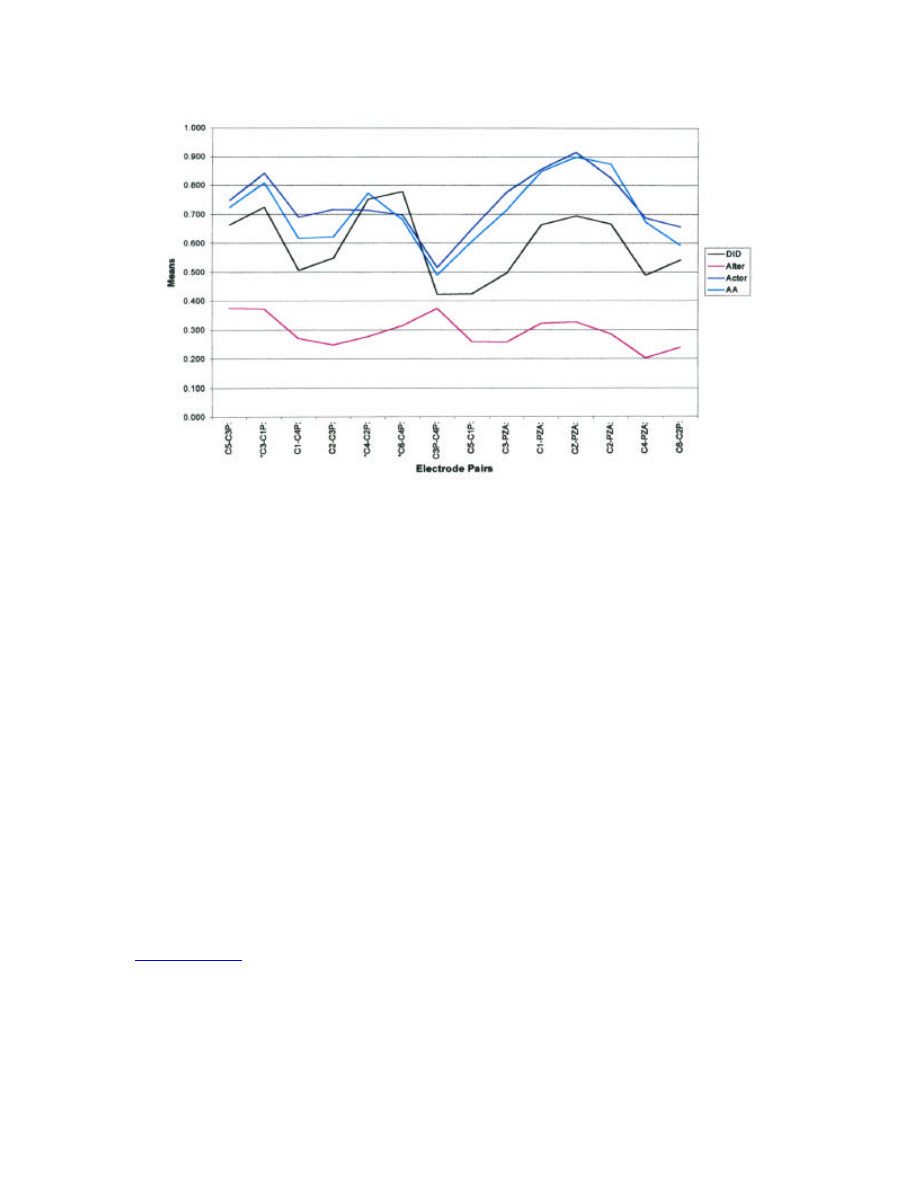
investigating D.I.D. Hopper et al (1999), using measures of the difference of average E.E.G. alpha
coherence, found no significant differences between D.I.D. participants, actors and acted alters, however
significant differences were found between D.I.D. host and alter personalities at frontal, central, parietal
and temporal regions of the cortex. E.E.G. alpha coherence is judged to be an objective measure of
neuronal cortical connectivity and hence D.I.D. psychodynamic processes.
Based on extensive case study research, Gillin et al (1997 b) have identified the presence of large levels of
electromagnetic energy around the controlled subject and some circumstantial evidence to argue that direct
behavioural control of the dissociated person is through an implanted “chip”. This chip is positioned
behind the left ear. The concept of implants is not new. As early as the late 1950’s, Jose Delgardo showed
that by stimulating a correctly positioned “stimociever” within an individuals cranium an outside operator
can wield a surprising degree of control over the subjects performance (Delgardo 1969). Delgardo also
writes “radio stimulation of different points in the amygdala and hippocampus in the four patients produced
a variety of effects including sensations, elation, deep thoughtful concentration, odd feelings, super
relaxation, coloured visions, and other responses” (Delgardo 1973).
Delgardo certainly saw the potential application of his work and the clear association with remotely
induced hallucination and behaviour. He even prophesied a day when brain control could be turned over
to human operators by establishing two -way radio communications between the implanted brain and
computers (Delgardo 1969). Such electronic stimulation of the brain can be programmed to effect mind
sensations and hence behaviour (Thomas, 1989), (Olds, 1962). An examination of the extension of these
pioneering experiments and their application in the U.S.A. Defence and Intelligence services is provided by
Cannon (1995). Cometta (in Andrews 1993), in discussing the research at Pine-Gap, claims that staff
“earmarked for duty on the EMP project, have undergone brain-washing and even implantation of
intracranial devices”. Also Bowart (1995) has completed an historical time-line of mind control
experimentation by the USA government from 1940 to 1995. In a prime example of investigative reporting
Ross, (1996), has integrated the results of F.O.I. documents, Government enquiries, declassified CIA and
Military reports, research contract funding, published papers in journals and personal letters, with both
C.I.A. and military mind control experimental programs. Of major significance is that many leading
academic and medical psychiatric and psychological researches were funded through foundations with

3
proven links to the CIA and Military. Ross (1996) has proved beyond any reasonable doubt that the U.S.
Government had been using M.P.D. and Manchurian candidates operationally since World War II. He has
also established the involvement of the Government in the use of hallucinogenic drugs for mind control and
development of so-called temporal lobe epilepsy theory to account for dissociation. Ross says this is
‘misinformation and DID is iatrogenic.
In a recent novel “Apocalypse Watch”, Ludlum (1995) relates the development of post World War Two
Nazi research on implanted chips in which a central character in the story is controlled by an early version
of a implanted “chip” in the head. Similarly the evolution of Hollywood science-fiction movies such as
“Johnny Mnemonic,” “Conspiracy,” “The Trueman Show,” and currently “The Matrix” visually portray the
basic elemants for human mind control. The implantation of a control device connected to the brain, the
capacity to download programs into the device, and the manipulation of the subjects brain responses and
behaviour through the transmitted signals from a controller, are readily recognized. So, too, is the
presentation of reality to the controlled subject as a “virtual” reality. Many of these themes are also present
in the TV series ‘The Pretender’. Time Magazine (1998) describes a City of Los Angeles program to
implant a microchip in every cat and dog adopted from its shelters. The procedure was first used 10 years
ago to monitor elk and cattle herds for research.
In all the research referred to above there is a direct connection between the ability to influence conscious
behaviour and the control of the brain mechanisms to produce such behaviour. It is thus important to
consider how memory, sight and hearing function, as these appear to be associated with the capacity to
achieve mind control in a human being. They impact directly on our understanding of what ‘reality’ is.
The fundamental claims by Bohm (1980) “that tangible reality of our everyday lives is really an illusion,
like a holographic image” convinced him that the operations of the universe are actually based on
holographic principles “with itself a kind of giant flowing hologram.” Underlying this concept of
existence, is “a vast and more primary level of reality that gives birth to all the objects and appearances of
our physical world in much the same way that a piece of holographic film (an interferogram) gives birth to
a hologram” (Talbot 1991). Bohm calls this deep order of reality the “implicate” (which means enfolded),
and he refers to our own level of existence as the “explicate” or unfolded order. Indeed Bohm describes the
universe as a “holomovement” rather than a hologram in order to convey the dynamic and even active
nature of the enfoldings and unfoldings that “moment by moment create our universe" (Talbot 1991).
Such a theory based on holographic principles, implies that reality is non-local at the subquantum level and
the information contained in the implicate would have non-local properties.
Deutsch (1997) argues that the fabric of reality in the physical world is composed of many universes
‘parallel’ to the one we see around us. Bohm constructed a theory of reality ‘with predictions identical to
those of quantum theory’ and such that his enfoldings and unfolding ‘does not change the fact that in his
theory reality consists of large sets of complex entities, each of which can perceive other entities in its own
set but can only indirectly perceive entities in other sets’. These sets of entities are, in other words, parallel
universes. Based on quantum theory and explanations for the photons we can see and not see, a chain of
reasoning, based on the above fact is presented by Deutsch which ‘rules out the possibility that the universe
we see around us constitutes the whole of reality. In fact the whole of physical reality, the multiverse,
contains vast numbers of parallel universes.’
‘Quantum technology flatly contradicts our common-sense ideas of how the world works. It posits a world
where computers operate without being turned on and objects are found without looking for them (Milburn,
1998). An unimaginably powerful computer can be built from a single molecule. Information moves
instantly between two points, without wires or networks. Distant objects are examined without any contact.
Computers do their calculations in other universes. And teleportation—‘Beam me up Scotty’—is ordinary
and used in many different ways (Crichton, 1999). To date, many advances have been made in developing
quantum ultrasecure messages suggesting that a quantum internet will be built. In addition experiments in
the teleportation of solid objects has been demonstrated in 3 laboratories around the world. ‘Time travel
may or may not be achieved one day’, but Deutsch (1997) concludes that ‘post-directed time travel is not
paradoxical and is a major area for theoretical study’.

4
The fundamental understandings referred to above can form a base for explaining how the mind dissociates
and stores the information on each fragment created. Access to this information and interference in the
communication control processes would require a controller to access the enfolded or coded interferogram
and produce a new image of reality and action.
In an interview with Psychology Today, Karl Pribram states “It isn't that the world of appearances is wrong;
it isn’t that there aren’t objects out there, at one level reality. It’s that if you penetrate through and look at
the universe with a holographic system, you arrive at a different view, a different reality. And that other
reality can explain things that have hitherto remained unexplainable scientifically--paranormal phenomena,
synchronicities, the apparently meaningful coincidence of events."
In a further application of the above findings to an understanding of Out–of-Body or Near-Death
experiences, the literature suggests that “under the right circumstances our consciousness--the thinking,
perceiving part of us--can detach from the physical body and exist just about anywhere it wants to” (Talbot
1991). This concept is based on the non-local characteristics of objects in a holographic universe. By
extension to our brain functions everything is non-local, including consciousness. Think of a dream, what
you perceive in your consciousness appears to be localised in your head but in reality you are in the dream,
“location is also an illusion because everything perceived is unfolding out of the deeper more fundamental
reality of the dreamer” (Talbot 1991).
Both quantum-consciousness theories and neural ones are rejected by Chalmers. Chalmers (1996) argued
that physical theories can account only for the various functions of the brain such as perception, memory
and decision-making. But no physical theory can explain why these cognitive functions are accompanied
by conscious sensations. His theory of consciousness posits the existence of a new fundamental property:
information. Information has some physical embodiment such as the arrangement of ink spots on a piece of
paper or electrons in a computer. But information is not purely ‘physical:’ it also has a ‘phenomenal’
aspect. Indeed reality is much more than we can see and appears to be strongly related to a multiverse.
RESEARCH METHODOLOGY:
This study is part of an on going research project that tracks the healing and integration of dissociated
fragments to achieve wholeness in the dissociator/sufferer as well as examine indications of mind control
techniques.
The research was based on a longitudinal case study design with one highly complex (many sub parts)
dissociator, (Eisenhardt 1989, Yin 1984). Historical and interview data were collected on the whole life of
Deva Paul. This case was selected for both theoretical and clinical reasons as an intentional sample (Glaser
and Strauss 1967). The research was carried out in two stages. The first stage, from April 1994 to August
1996 focused on the clinical evaluation of dissociation. The second stage of the research, from August
1996 to September 1998, and the subject of this paper, focused on the factors associated with creating
dissociation and the formation of techniques to use dissociation for control purposes. Formal interviews
were held on a daily basis with Deva Paul (the executive of the system) and with other presenting sub-parts
as they occurred. Following these interview sessions integration of the sub-parts into Deva Paul would
occur using the techniques described in Gillin, Gillin and Paul (1997 b). The current stage of research is
concerned with establishing the structure, membership, facilities and techniques of a world organization
committed to using advanced technology in the development of mind control and manipulation of world
power.
All interviews lasted a minimum of two hours and were open-ended. No tape recorders were used but the
interviewers made extensive notes. Some video taping of the integration (fusion) process was recorded.
The interviews and integration procedures were conducted by the first and second authors of this paper.
Comparison between the author’s notes and between the evidence provided by many of the presenting parts
showed a consistent agreement to a level that was exceptional. This provided confidence that the data were
both valid and reliable.
5
Fig. 1 Average alpha coherence for DID subjects, actors, alters and acted alters.
Research by Hopper et al, 1999, strongly supports the individuality of presenting parts (alters) in D.I.D.
hosts. Fig. 1 shows no significant differences were found between D.I.D. participants, professional actors
and their acted alters; but very significant differences between a D.I.D. host and their alter personalities
using E.E.G. alpha coherence measures in regions of the cortex.
Historical data, such as birth, residences, associations with friend’s etc. were obtained from printed material
and interviews with third parties. This historical data made it possible to construct a quantitative picture of
the factors that drove the development of dissociation over the life of Deva Paul. Data collection was
concluded when a level of satisfaction was reached (Glaser and Strauss 1967).
This study is subjected to the general limitations associated with field research. While it would be useful to
study a larger sample of dissociators subjected to mind control, no in-depth study of a highly positioned
asset in a mind-controlling organisation exists. By concentrating on this one dissociator the researchers had
access to sources with intimate knowledge of the details of the evolution of mind control techniques.
DESCRIPTION OF THE CASE:
For the period 21 February to 20 April 1998, a total of some 59 nights, the dissociator, Deva Paul, reported
that she was accessed, that is, her conscious thought processes were interfered with and she found her
perceived self at a distant technological facility. This facility has been identified as Pine Gap, a major
Defence Facility in Australia (see www.octa4.net.au). Deva Paul states categorically that a large
underground research facility exists below the surface buildings and in the hills close by (see
www.octa4.net.au
). Other information provided on the website quotes direct support for a multi-level
underground facility. Deva Paul had been a part of a world wide technological organisation for 36 years.
In the paper Gillin et al (1997 a) a detailed description is provided of how Deva was fragmented or
dissociated from Denise who was born in the North of England of parents committed to the involvement in
occult practices. In 1964 this duo system migrated with their parents to South Australia. Denise
commenced therapy with one of the authors in April 1994 after referral from a Christian doctor for possible

6
dissociation. Some 314 (altar) fragments were identified. All but 3 were fused into Denise by November
1997. In August 1996, after an incident of severe physical abuse to Denise that was both dysfunctional and
emotional, Deva surfaced, confronted the therapist for the first time and offered to work with her. Deva in
effect defected from the organisation known as the Global Technological World Alliance (G.T.W.A.). By
September 1996 there was clear evidence of medical R &D and organisational abuse in Deva and a high
probability of physical interference. All 667 (altar) fragments were fused back into Deva by August 1997.
In the follow-up interviews to each of the nightly events associated with the current level of abuse (21Feb-
20Apr.) Deva reported that she perceived herself present within the Defence research facility in a
manifested form that could see, hear, feel and move about. In this total situation she was confronted by
abuse coordinators who were known to her from her previous attachment to the organisation. From this
cycle of abuse, dissociation and control, Deva was subjected to the appearance of many of her associates
with whom she had worked in the laboratories, in strategic planning sessions and on specific research
projects. A number from both Australia and overseas had been her mentors during her training and activity
in the G.T.W.A.
On each night of the abuse period one or more of these organisational colleagues or mentors would be
subjected to severe physical and technological abuse. The severity of this abuse was so traumatic that the
observing Deva would dissociate by creating a new fragment or part in her that could be programmed by
the organisation. In the majority of cases the severity of abuse to the abused colleague or mentor produced
even more shock in Deva. Table 1 provides a summary of the events covered in the period including the
abusers, the number of organisation persons abused and the number of fragments created in Deva.
Deva reported that she was subjected to a technical process in which recorded information on an abused
person, or fragments with the means to control her actions or behaviour could be downloaded into Deva’s
mind. Such information does result in Deva experiencing much pain and suffering in her physical body
during fusion of these parts into herself. Subsequent to the nig htly activities referred to above it was
necessary to ‘cleanse’ these foreign parts from Deva’s psyche and integrate them back into herself so she
remained a whole person. The process of fusion followed was identical with those described by Gillin,
Gillin and Paul 1997 b.
Overall some 231 created parts from both traumatic and technological abuse were fused back into Deva.
(Table 1). Some 181 organisation persons, including mentors aged over 70, laboratory professionals and
technicians, children of all ages and babies were used to achieve this experimental program of
organisational abuse and control.

7
Table 1:
Analysis of Organisational Abuse.
Period
Nights
Abusers
Organisation
Persons
abused
Created
Trauma Parts
Created
Technological
Parts
Spirits
21
st
Feb 1998
1
Bridget/ Raven
3
3
1
22
nd
Feb 1998 to
2
nd
March 1998
8
Neickuler/
Dayles
22
27
4
5
3
rd
March 1998 to
5
th
March 1998
3
? /
? /
? /
? /
?
9
11
1
6
th
March 1998 to
13
th
March 1998
8
Berarra/ others
33
30
9
1
14
th
March 1998
to 15
th
March
1998
2
Begarre/ others
7
7
1
16
th
March 1998
to 22
nd
March
1998
7
Nelson/ ?/
others
28
24
4
2
23
rd
March 1998
to 25
th
March
1998
3
Bejarne/ ?/
Learmont
9
13
3
2
26
th
March 1998
to 30
th
March
1998
5
Status/ Jerome/
? /Johnson/
Yeagon
24
25
31
st
March 1998
to 3
rd
April 1998
4
Yeagon/ ? /
Ckekerata
11
15
4
th
April 1998 to
20
th
April 1998
18
Capetown
45
49
4
Total
59
181
206
25
12
CASE DISCUSSION AND FINDINGS :
Within a 5 km. radius of Deva's home, Deva is observed to respond to some unseen and outside force. This
force exhibits itself initially by a sudden movement of the head, severe pain in the head, and general
convulsive body movements. Such behaviour occurs regularly in the home, when shopping, in the car, in
church and even in the theatre.
8
At home these effects occur regularly, consistently and in all respects in a reproducible way. In the
extreme, Deva can be 'bolted' out of her chair to collapse on the floor and in many cases be knocked
unconscious. A number of visitors have reported a heaviness on entering the home and in particular Deva's
bedroom-‘like pushing through a wall'.
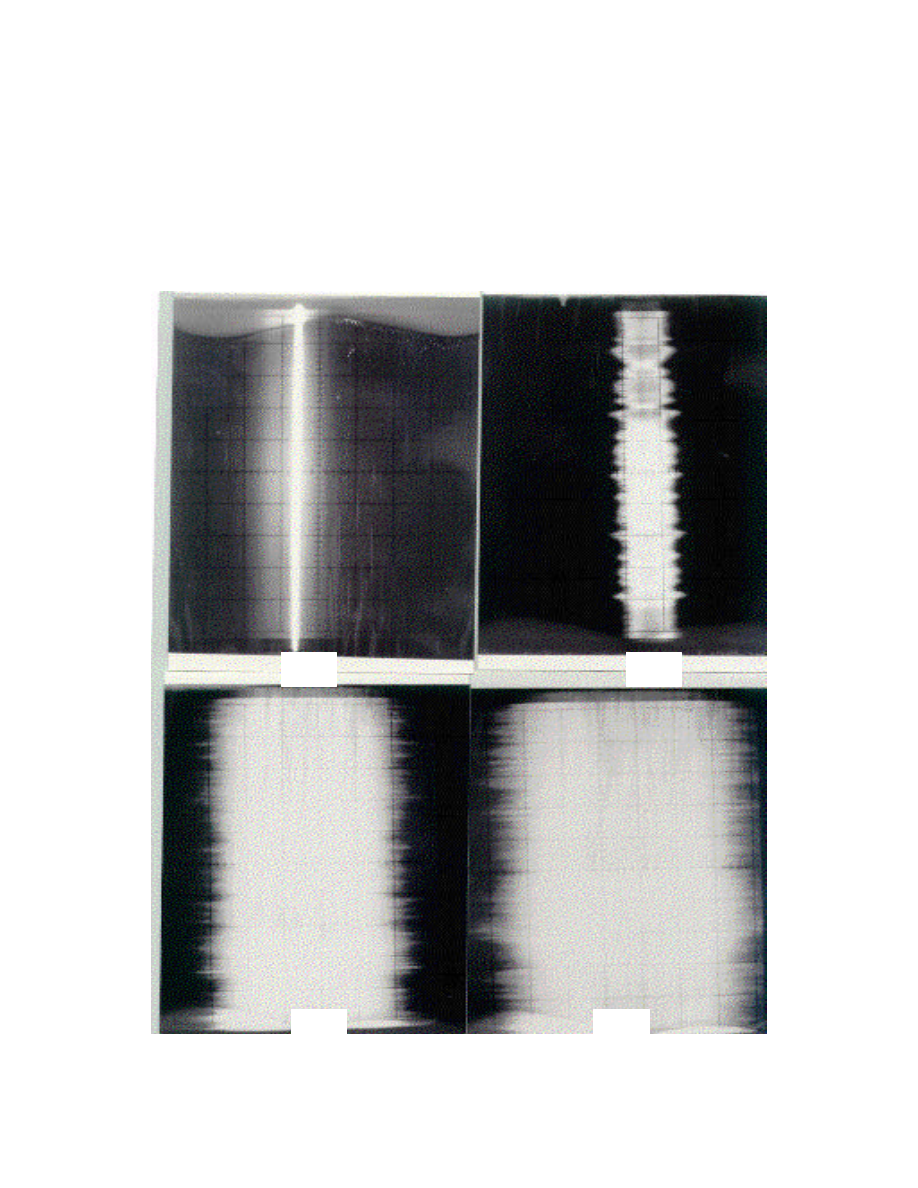
Using a sensitive search coil as a probe and a BWD 826 oscilloscope with a range of 0-50 MHz., an
examination was made for the presence of electro-magnetic energy in and around Deva. Figures 2(a-d)
show the magnitude of frequency traces: 13X in the lounge room (b), 52X in the bedroom (c )and 70X
close to Deva's head(d), compared to a central reading in the laboratory of 2X, see(a).
(A)
(B)
(C)
(D)
Electro- Magnetic Energy around Deva
Fig. 2

9
An initial use of a layer of unearthed bronze wire gauze placed over the left side of the head during a heavy
stage of bolting increased in temperature by approximately 10 Degrees Celsius and was warm to the touch.
Earthing the filter eliminated the temperature rise and reduced significantly the impact of the bolting and
interference to the head. A side effect after some fifteen minutes wearing a special gauze and fibreglass
filter fitted to a helmet was the development of a headache in the forehead.
In an attempt to measure the actual frequencies of what was considered to be energy transmissions, a
spectrum analyser was installed. Amazingly, and during a 24-hour monitoring period no unusual or large
transmissions were identified. However during the exact same period Deva felt no bolts or interference
whatsoever to the head from external sources. Indeed other observers remarked that there was an absence
of heaviness in the room.
During periods of intense interference and bolting Deva reports the presence of a burning sensation in her
body, extensive perspiration and the formation of tiny blisters on the extremities of the body, at the feet and
hands.
Of specific relevance is that Cometta (quoted in Andrews 1993) states that Pine Gap is not only a Space
Research Facility but is also “used to study Electro -Magnetic Propulsion , EMP”. “This research is
conducted completely underground”. He also claims there is an installed underground antenna “that can be
used to generate a gigantic ‘standing-wave’ around the earth which is the basis for a new type of
transmitter-receiver (transceiver)”. Cometta has also identified the presence of computers of “huge
capacity” and which are interconnected to similar assets in “Guam, Krugersdorp (South Africa) and the
Amundsen-Scott U. S. base at the South Pole.
Finding 1:
A massive external energy source is directed and received by Deva.
Observation shows Deva possesses a highly developed sense of hearing and is capable of deciphering
conversations and or specific sounds either at a significant distance or within a noisy situation.
In addition she is able to hear sounds having frequencies well above the normal range and probably in
excess of 20K cycles. A number of carers associated with Deva have heard noises, often bird like that
trigger a part in Deva to surface. At other times unheard sounds can also trigger Deva. On 24
th
April 1998
Matthew Paul, whilst sitting in an adjoining room to Deva, cried out in pain at the intensity of the high
frequency sound he could hear. At the same time a part in Deva was triggered. Over one hour this process
was repeated three times.
A particular example of heightened hearing was observed over a period from 21
st
January to 8
th
February
1998. For long periods each day and night Deva, and also parts Denzal and Suggestion, could hear the
music of the ABC, FM broadcast (105.9). No radio was operating in the flat, no music could be heard
outs ide but on asking the type of music and rhythm and then switching on the ABC, FM station perfect
matching of the transmission occurred. The tests were repeated many times on each of the three parts and
perfect matching was obtained. Of interest is that when songs were being sung only the accompanying
music was transmitted.
According to Depris (1989) “The FM radio band that goes from 87.5 to 108 MHz is one of the most
dangerous to the public health, given the lengths of the waves under consideration (from about
3.40 to 2.75 m)”. He argues that the human body acts as a receptive antenna. “Global resonance for the
average individual would be ideal for functioning as a grounded half-wave antenna, a mode that permits the
capture of a maximum amount of energy emitted by this FM radio band”. Deva, whose height is 1.55 m
will resonate to the maximum at a half-wave of 105 MHz.
In addition voice messages are heard. These messages can be validated by reference to other parts within
the dissociated system. Each part independently confirms the same message. In many cases the message,
by its content, indicates that previous discussions between Deva and carers has been overheard. In
10
particular and following the departure of carers and their sounds and conversations, entry to the flat by
abusers of Deva has occurred. The type and reason for the abuse to Deva often reflects knowledge of the
nature of the discussions and a desire to intimidate Deva.
Finding 2: a) Deva's hypersensitive hearing can be accessed by audio triggering of dissociated parts.
b) Eavesdropping may imply a hearing device?
The finding that Deva both receives and responds to direct energy fields pre -supposes the presence of a
receiver/ transducer in the body. Deva herself identifies the implant as behind the left ear. She asserts the
original device was implanted in 1968 at the age of 7 years. The chip was upgraded 3 times, the last in
1988. Reprogramming has occurred by external means since then.
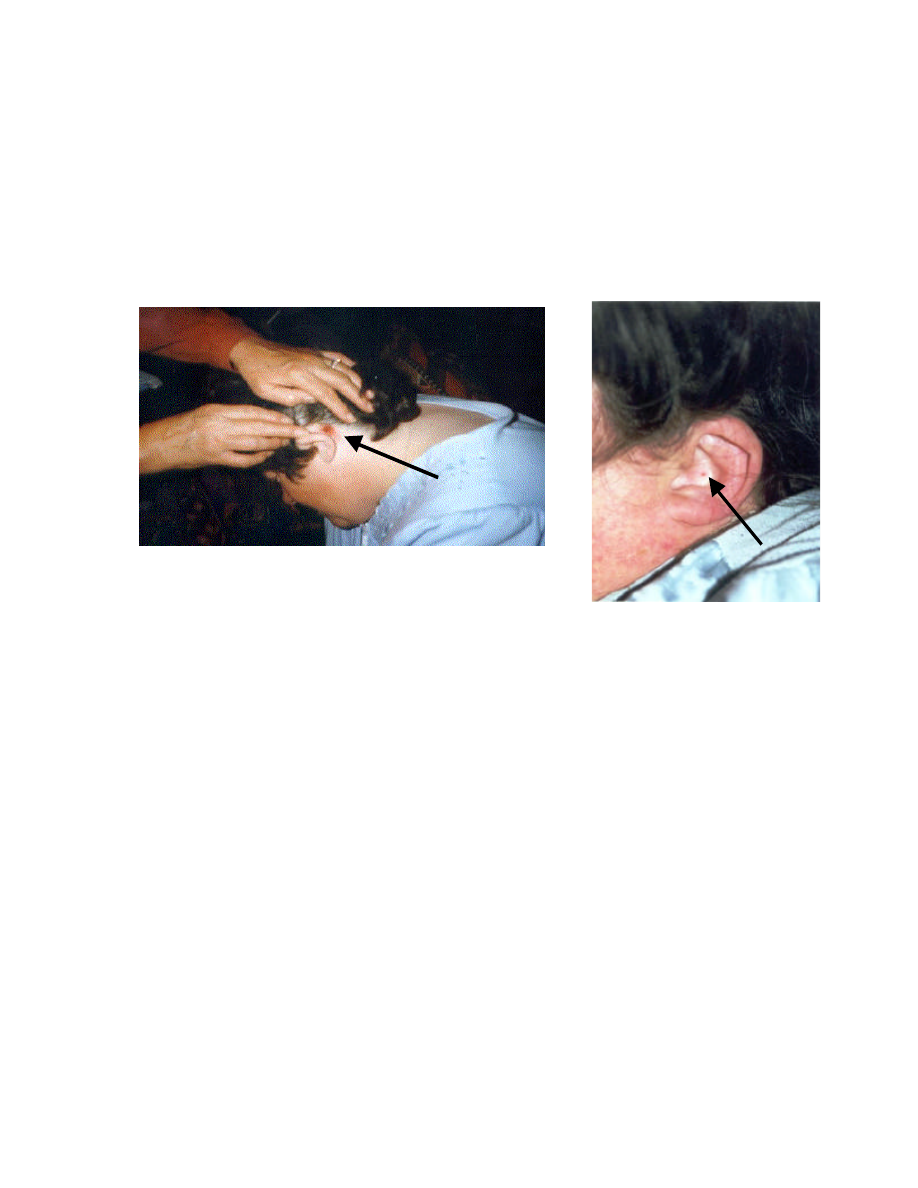
During continued energy transmission and ‘bolting’ of Deva, a raised lump develops behind the left ear and
continued rubbing on the spot during a period of unconsciousness can arouse Deva back to consciousness.
Furthermore the observed minimisation of energy bolting effects on Deva when an earthed gauze filter is
placed over the ear area suggests the presence of a device sensitive to electro -magnetic radiation.
An important reaction to the application of radiation to Deva's head and ear area during CATSCAN
examinations in 1997, Jan.1998 and Jan 2000 was the initial heating of the left side of the head followed by
unconsciousness during the scan. Regaining consciousness took some 10 minutes after completion of the
scan and 2-3 days for the painful effects around the ear to disappear.
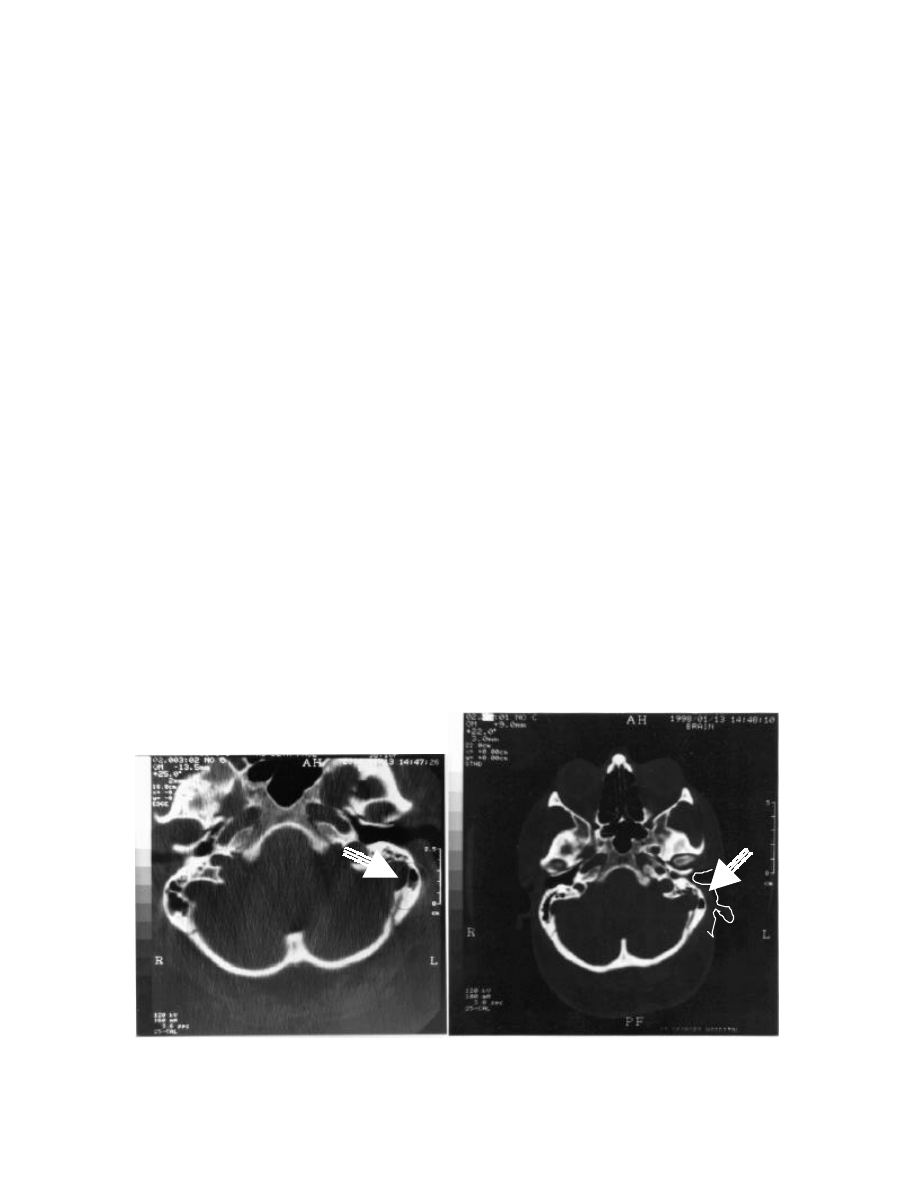
Examination of the CATSCAN (Jan. 2000) radiographs in the area of the middle ear cavity and the petrous
temporal bone indicates the presence of a small air/fluid level within an inferior left mastoid air space. It is
quite localized (Fig 3). This fluid was not present in the Jan. 1998 images (Fig 4). The small change in
shape of the airspace is a result of differences of the angle of scan. By overlaying these scans the space can
be positioned as being immediately behind the left ear lobe and in exactly the position Deva has claimed a
‘chip’ is implanted. The shape is also significant as Gentry, a DID alter, had previously drawn a pear-
shaped cavity as the site for an implanted ‘chip’. Gentry claimed the ‘chip’ was inserted into the neck-end
of the cavity from where connections were made. Examination of Fig 4 in the area of the cavity neck,
indicates a rectangle (approx 8 mm by 2 mm) of greater brightness than the surrounding bone, i.e. a higher
density. If this is linked with the observation that application of externally applied pressure to this spot (Fig
5) can change Deva’s state of consciousness, then the bright rectangle (fig 4) could indicate the presence of
a piezoelectric ceramic transducer. No such feature is observed on the right side.
Fig 3 CATSCAN Radiographs of Deva Fig 4
11
Such a conclusion is collaborated by the fact that during a number of forced entries individuals have
applied energy to the area through electrodes t o the head, injections through the ear lobe area and
application of laser energy behind the ear. Figure 5a shows a burning imprint behind the left ear and an
injection Fig 5b in the ear after such forced entries. Both points in Fig. 5 are directly over the ‘chip’ shown
in Figs. 3 & 4. In addition such reprogramming of transponder frequencies results in changes to the
required pressures applied to the area by carers to Deva in order to regain her consciousness after ‘energy
bolting’. These effects correspond with the reported development of mastoiditis in the region of the cavity
(Fig 3) and probably results from the external interference made during periods of re-programing.
(a) (b)
FIG. 5 Left Ear of Deva
Finding 3: That an energy/ laser sensitive transponder is implanted behind the left ear.
For the whole period of this case study Deva has been subject to extended and varied periods of
unconsciousness which can and do occur at any time of the day or night. These periods of unconsciousness
are not evoked by Deva but appear to be associated with specifically timed and engineered applications of
energy transmissions via the transducer. This suggests that the transducer can transmit to the brain the
necessary signals for it to shut down consciousness. Such a hypothesis is supported by the fact that
interference from energy transmissions can be minimized by way of an energy-filtering helmet and by
rubbing and pressing on the implant facilitating Deva regaining consciousness or maintaining
consciousness. Also, when out of range of the energy footprint (5-7Km. radius) no energy is received at
the implant and no controlled or unexpected periods of unconsciousness occurs. Access to the mind
processors is still possible during periods of “sleep”.
The question can well be asked what causes Deva to go unconscious?
According to Deva, during such a state of unconsciousness her mind is accessed or in other words the
spirit-soul is accessed and can be separated from the physical body. Indeed, the data collected over 3.5
years of observation and recording of these periods of unconsciousness indicates that Deva perc eives her
spirit-soul to be in another location. In addition the spirit-soul of any dissociated part can be accessed.
Deva and the other parts confirm this transfer is to a high technology facility within Australia. Such a
concept of access implies that the spirit-soul can move separately from the physical body.

12
These observations show a striking likeness to experiences recorded in the literature (Talbot 1991) of Out-
of-Body and Near-Death cases. In general these experiences can be understood in terms o f a holographic
universe “where location is itself an illusion” (Talbot 1991). Based on the developing evidence that the
brain operates holographically and that vision and memory are processed holographically it is implied that
the information is encoded in an interferogram of different wavelike phenomena (Pribram 1969). Thus the
hologram was “there all the time in the wave front nature of brain-cell connectivity” (Pribram 1991). In
effect, and “under the right circumstances our consciousness- the thinking, perceiving part of us- can detach
from the physical body and exist just about any where it wants to” (Talbot). Deutsch (1997) would argue
that this so-called detachment is in-reality another image of the self in an alternative universe of the
multiverse. To detach requires a means of transfer that in this case appears to be achieved by medium of
electro magnetic waves. This process would also confirm the presence of a facility with the necessary
technology, associated controllers and operators with the intent and determination to interfere with and
control the minds of human beings.
Finding 4: The mind and a spirit-soul can be accessed holographically and re-located or transported
to a fixed facility electro magnetically.
Based on individual reports by Deva, and internal parts Denzal, Suggestion and Gentry, total agreement is
found over each part being fully conscious after access and transfer to the technology facility. Indeed,
recognition of the full processes of the brain, senses and body responses are identical to those experienced
when present in the physical body. This awareness of “a person form “is also reported by those who
experience Out-of-Body and Near-Death phenomena (Talbot 1991). The former radio and television
executive, R. Monroe, asserts “that it is our thought habits that create our OB forms. Because we are so
habituated to being in a body, we have a tendency to reproduce the same form in the OB state” (Monroe
1971). He goes on to state that in our disembodied form we drop all such disguises, we are at heart a
“vibrational pattern (comprised) of many interacting and resonating frequencies”(Monroe 1985). This
emphasis on resonating frequencies aligns with Bohm’s view of the holographic universe in which
ultimately the human being senses the frequency phenomenon and our mind converts these into various
holographic forms (Talbot 1991). This capacity for holographic- reformation enables the "re-located
conscience" to speak, see, hear and feel, all the bodily functions.
By contrast, Deutsch (1997) describes a theoretical treatment of a virtual reality machine in which the ‘I’
can enter the universe of her alter ego at a different location and interact with each other. Such parallel
universes do not have hidden serial numbers: they are distinguished only by what happens to them.
Therefore ‘in rendering all this for the benefit of ‘me’, the virtual reality generator must recreate for me the
effect of existing as two identical copies who then become different and have different experiences’. To
achieve this: ‘ the virtual reality generator must have the ability to render time travel accurately and
depends on its having detailed information about the user’s state-of-mind’.
If the above is true then controllers and operators at the technical facility interact with the holographic
reform as if they were interfacing with the physical body. Deva has asserted since 1996, that the GTWA
conduct research at advanced technical facilities into accessing the mind of a subject from a distance. She
also claims they are researching techniques for ‘physical teleportation’.
Finding 5: Accessed brain waves can be reformed holographically at a distant facility.
It has long being recognised that dissociation, or fragmentation, occurs as a result of traumatic abuse by
persons outside of the core personality, (Van der Kolk et al 1996), (Gillin, Gillin, Paul 1997a). Due to the
amnesic or partially amnesic walls, which block the memory of trauma for an indefinite number of years,
an adult may grow from childhood having numerous dissociated fragments. This situation was true of
Deva (Gillin et al 1997 a) until August 1997 when, after some 10 months, all the fragments were finally
fused back into the single personality of Deva (Gillin, Gillin and Paul 1997 b).
13
Indeed Deva, now a whole being, was determined never to allow for any dissociated fragments to remain in
her system beyond a few hours. In the period from August 1997 to the events reported in this case study,
namely 21 February 1998 – 20 April 1998, many fragments were created due to facing traumatic
experiences but for every fragment, fusion was achieved within 24 hours.
The corollary associated with finding 5, or the reforming of a "part" holographically at a distant facility,
opens the way for the holographic re-form to be re-traumatized through the senses. Indeed Deva, Denzal,
Suggestion and Gentry report in graphic detail the events witnessed at the distant facility and experience the
same dissociative responses as occurred when previously fragmented from age 3 to 36 years. In other
words it is not necessary to have the physical body present in order to achieve dissociation.
The consideration of the processes of dissociation associated with the period reported in this study are
based on the creation of 231 trauma and technological based fragments in Deva (Table 1). To achieve this
level of fragmentation more than 18 abusers were used with a variety of methods designed to affect a shock
reaction in Deva and hence dissociation.
The foundation for the abuse reported in this study is the application of pain, mental, physical and sexual
abuse to a wide range of human beings having had some relationship or emotional attachment to Deva and
the other parts. For this study some 181 organisation persons including Deva, were abused to achieve the
levels of dissociation reported. As an example, for the 18 nights from the 4-20 April, the abuser known as
the Cape-Town man from South Africa abused some 49 persons and created some 53 fragments in Deva.
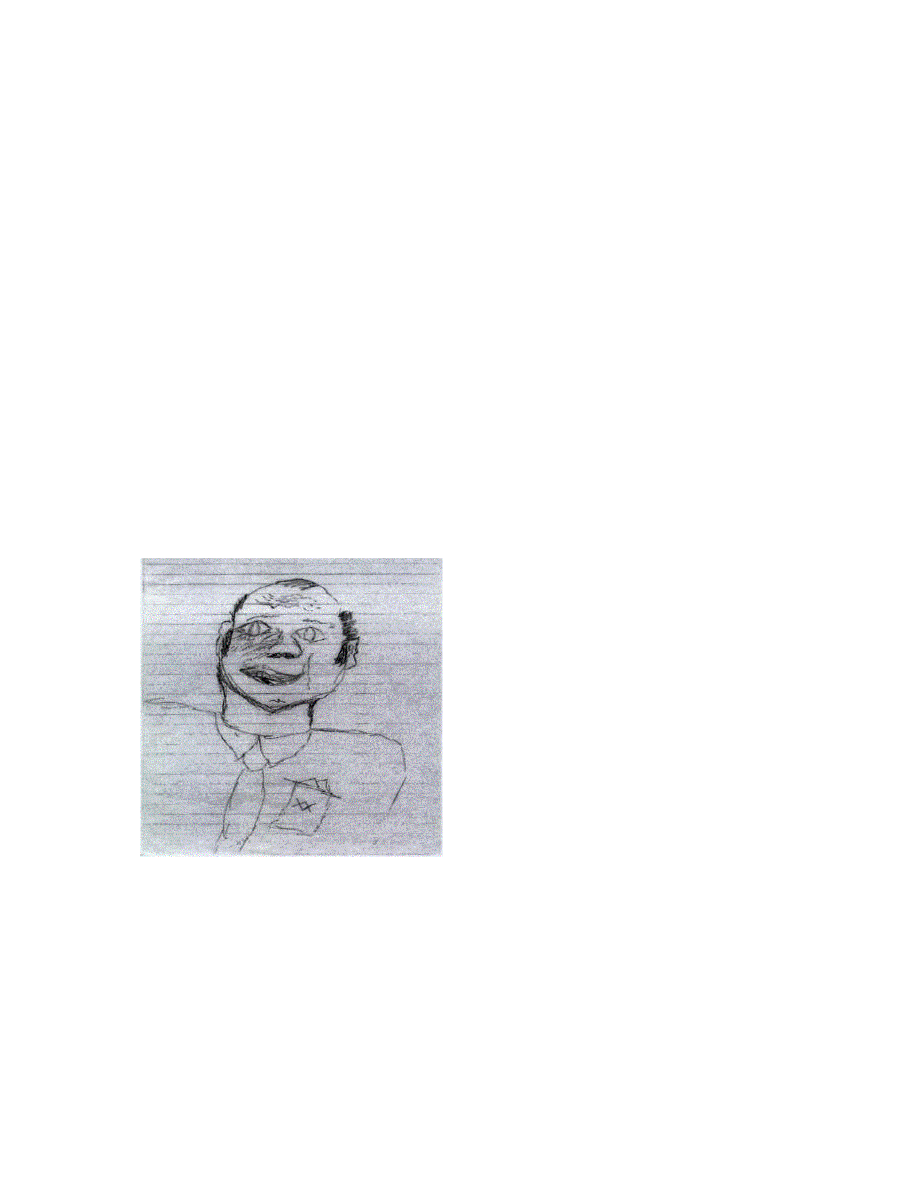
Denzal sketched the outline of this man (Fig.6) and, when shown to some 15 created parts all recognised
the abuser and were fearful of him. All abusers were recognised and named. They came from Australia,
Europe, U.K., USA and South Africa.
FIG. 6
The concept of traumatic shock was enhanced by deliberately playing on forms of abuse known to reflect
the elements of torture, pain and suffering as used on Deva and the other parts to robotise their actions and
behaviours. The characteristics of the abuse varied from: the sacrifice of babies and young genetic clones
to the physical and sexual abuse of persons with strong connections to Deva; application of mind bending
audio frequencies; strobe lighting and subliminal visuals to create virtual reality torment; the use of
electrodes to parts of the body to “inject” programmed patterns; application of high energy lasers to critical
components of the brain and or to implanted chips and hence overload the device with a resulting
implosion; application of acids to produce disfigurement; subjection to water drip torment and or
submersion in water tanks to slowly induce death. In addition many ceremonial "black masses" were
performed with the ritualistic removal of organs and body parts.
The “Cape-Town Man”

14
It is significant that all these abuse situations were performed in high tech facilities such that the mental and
physical responses of the person to the abuse were recorded for later re -use in programming Deva and
Denzal, an associated part. Another danger associated with created fragments is the potential to attract
attached spirits (Gillin et al 1997 b). However, as such fragments were generally fused into Deva within 12
hours, only 12 attached spirits were encountered. These included for example the spirit of Antichrist,
Death, Organisation, Suicide and False Trinity. Deliverance was achieved using the Christian based
technique described in Gillin, Gillin, and Paul (1997 c)
Finding 6
That the reformed holographic image of a physical being can be further dissociated by
exposure of the holographic image to sadistic torture performed on living people.
Subsequent to Deva regaining consciousness after periods of access it has been demonstrated
unambiguously that the resulting created fragments can be called forth and communicated with. This is
true for each of the 206 trauma induced parts in Deva and 35 in Denzal. In every situation the fragments
will reflect the core personality of the tortured person and with the capacity to speak and reason. These
persons ranged from 4 to 87 years of age. In addition the created parts have knowledge and memory of the
actual torture inflicted on the person and can recount the extent of the damage and or pain to body organs
resulting from the abuse. This critical observation implies that the recorded personal characteristics of the
person abused and mental awareness of the pain and damage can be transferred to the created part so the
fragment can act in all respects independent of the abused principal.
At least 90% of the created parts expressed a determination to be helpful to Deva in her battle to gain
freedom. Over 50% of the created parts reported awareness of behavioural requirements that could injure
Deva or cause her to act in a way prejudicial to remaining independent of any form of control. In each of
these cases the created part reported that electrodes had been attached to the head of the holographic
"image" and energy applied in association with the use of laser beams to the critical components of the
brain.
This concept of "down -loading” supports the earlier observation that recorded information can be installed
in the brain of the created part. Such information can be used to influence the actions of a created part
when it is triggered to be the presenting part of the physical Deva.
A variant of the above process is when a fragment is created in the accessed holographic brain by the use of
technological instruments, eg laser shock rather than the use of the trauma shock technique. This approach
was used 25 times on Deva and 12 on Denzal. Such an approach appears to correlate with the above when
existing data bank information is required to be downloaded and for the resulting part to act independently.
For example re-programming a complex part "Stringer" with many sub-parts. “ Stringer” had previously
surfaced in Deva but was fused totally into her. This part is described in Gillin et al (1997 a) and confirms
that behavioural and brain information about a person can be stored and at a later time transferred to a
receptive brain. Another example is the case where a part " Loris" is downloaded which can express many
of the characteristics of the actual Loris Gillin but in addition includes the situation of her being involved in
a serious car accident.
Finding 7
Recorded neural information of a person can be re-programmed into a created part and
other data-bank information down-loaded into the created part.
The antidote to programming is de-programming or fusion, which is the fusion of created fragments into
the whole. The technique of fusion has been fully reported in Gillin et al (1997 b & c) and is based on the
dissociated and programmed Deva first owning the presence of unwanted parts and a determination to fuse
them back into Deva's being. In this case Deva is determined that the fragments be fused within 24 hours.
Preparation for fusion requires a clear identification of each of the fragments present in Deva by name, the

15
process of creation and any programmed knowledge both in regard to deliberate behaviour or in terms of
damage to organs and body functions. Once these details are acknowledged, Deva and the therapist/ pastor
present the claims of Christ to the previously blocked –off fragments within Deva, using the Bible, prayer
and Christian symbols.
In this case it was normal for more than one fragment to be present at each fusion session. As described
earlier multiple dissociations occurred during the period of abuse and hence multiple fragments were able
to be programmed. To reduce both the time and the discomfort associated with the presence of created
fragments, where appropriate, these elements were fused into one fragment that acted as an associated
executive component. In the 8-week period in this study, corresponding to 59 nights, 231 fragments were
fused into Deva and 50 into Denzal's system.
Subsequent to these preliminaries Deva would take executive control of her system and say…” I fuse the
(name) of the fragment or combined fragments into herself. Such a statement would result immediately in
massive body reactions to the fusion process. These reactions can include massive convulsions, locking of
limbs, severe nerve ending pain in body limbs, stroke and paralyses of face and body sides, loss of speech
and or sight, stopping of heart, lung function and kidney sensations. Without immediate application of
prayer, hymn singing, pressure to appropriate pressure points and direct intervention by the part of "Gentry"
who had been involved in research into organ interference, the reactions to the fusion could have proven
fatal. Indeed some of the reactions such as paralysis, loss of speech and sight and breathing could take up
to 72 hours to recover during the period in which integration of memories and body is completed.
Where spirit attachment is identified then deliverance must be facilitated prior to fusion to avoid any
attachment to the core of Deva. (See Gillin et al 1997 b & c). Also in some cases it was necessary to use
E.M.D.R. on Deva prior to fusion to offset the effect of "fail-safes" or hidden programs surfacing during the
fusion process. (Gillin et al 1997 b).
Finding 8:
Fusion of programmed fragments back into the core of Deva results in severe pain and
discomfort and damage to the physical body.
Examination of the interviews with the 281 newly created parts and Deva, Denzal, Suggestion and Gentry
have identified the following:
•
On every night there was a person or persons present that controlled and facilitated abuse of living
subjects; that these subjects had or did work for an organisation associated with technical research and
political alliances;
•
that advanced defence research facilities were used;
•
that research techniques including application of holography, lasers, long range radars, satellite
communications and neural experiments were applied to the subjects;
•
that prominent surgeons and research geneticists were used to surgically operate on some subjects.
Close checking and validation of the fragment’s comments and experiences has resulted in unanimous
agreement to the existence of an organisation with access to the most advanced technological techniques
and determined to experiment and use the new techniques to control Deva.
Finding 9:
That an organisation with access to advanced technology and facilities and focused on
controlling human behaviour on demand exists.
CONCLUSIONS:
For the period of this study, over some 59 consecutive nights, Deva was observed to be accessed
each night and would regain consciousness only to find that new and sometimes dangerous parts would
surface during the day and night.
16
Interviews with each of the 281 parts confirmed that the abuse cycle was no accident or figment of the
imagination. Indeed medical, psychiatric and psychological examinations have concluded that Deva is not
neurotic, psychotic or delusional. These events follow the period September 1997 to August 1998 when
some 800 parts created in Deva over 36 years were gradually fused such that Deva became a whole person
and not a controlled robot. A report on the formation of parts in Deva and their resultant fusion for the
period of 36 years is reported in Gillin et al 1997 a & b. All the parts had been created and programmed
such that each part could carry out specific activities related to research and organisational activity and or
to ensure that Deva acted appropriately and maintained a robotic and guaranteed behaviour pattern.
In this study each of the created parts is designed to contribute to the destruction of Deva's wholeness, to
cause her body to be permanently disable d and to choose to return to the organisation voluntarily. Based
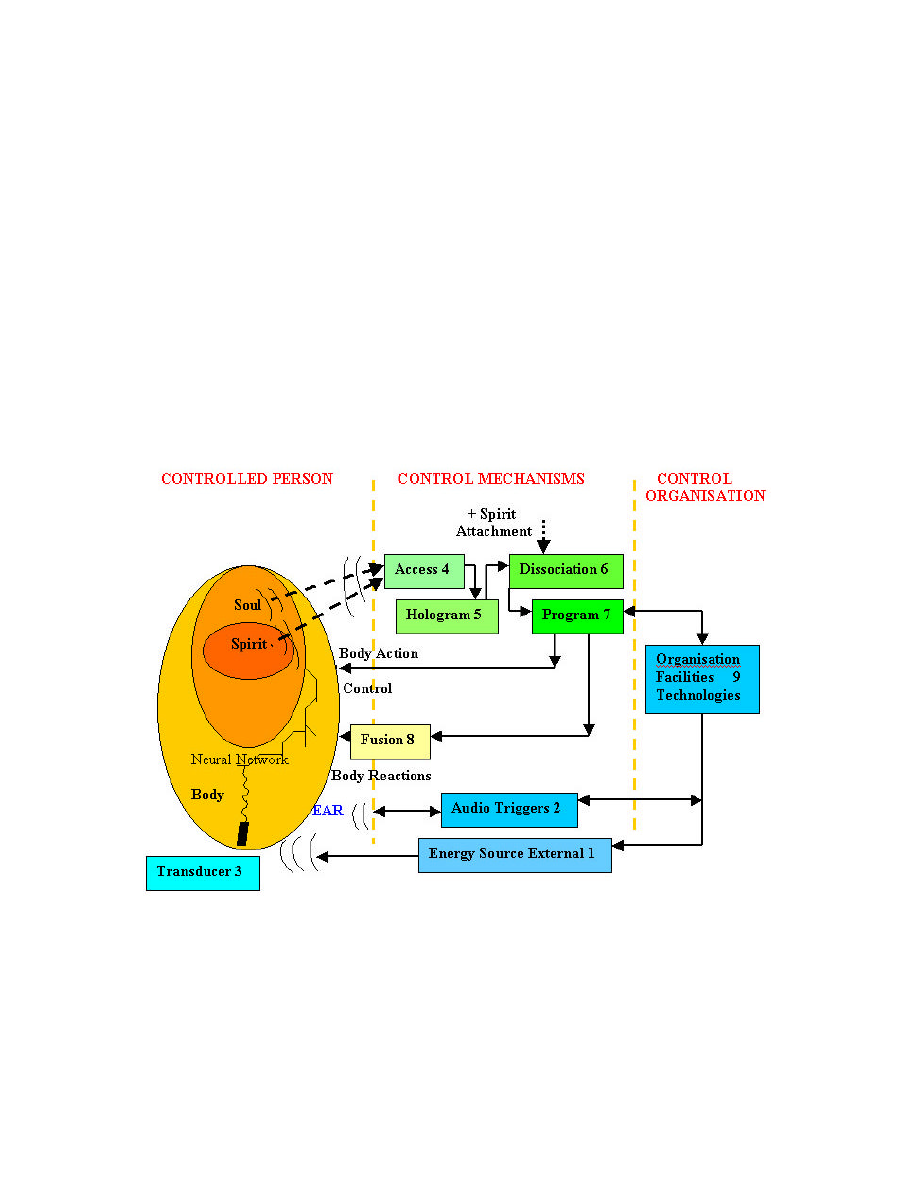
on the nine findings of the case examination it is concluded that the overall process is that of achieving
mind control in Deva. Fig 7 shows a diagrammatic model for the mind control process in terms of the
controlled person, control mechanisms, and the control organisation. Given the evidence for the existence
of interference from an external energy source, the evident dissociation and fragment behaviour and the
results of fusion of these fragments back into Deva, the first eight findings shown in fig 7 are consistent
with the control mechanisms identified and their impact and effect on the controlled person.
PROCESS MODEL FOR MIND CONTROL

17
Finding nine is thus an obvious extension to compliment the first eight findings. In other words, an
organisation exists with access to advanced technology, facilities and technologists and desire to control the
behaviours of a person remotely.
Of particular significance is that many of the created parts are identified with the work of individual
abusers, whether they are torture specialists, physicist, brain scientists, material specialists, surgeons and
genetic researchers as well as politicians. This abuse was administered in the research facilities of a
Defence Organisation and also at leading hospitals.
Given the fact that forced entry into Deva's home has occurred a number of times and she had been
physically interfered with, it is reasonable to ask why was she not taken and returned to the organisation.
Based on the recent developments in remote dissociation and programming of holographic representations
of Deva it can be confidently concluded that the organisation is experimenting with Deva on a nightly basis
to refine and extend their capacity to remotely control any person having an implanted chip capable of
responding to their remote use of energy and laser technology.
This horrific approach to creating trauma, the worldwide use of different abusers showing total indifference
to life and the relentless application of advanced technology indicates that the ethos of this Organisation
(GTWA) is "the end justifies the means".
References:
•
Blood, L, 1994. “The New Satanists”, Warren Books, New York.
•
Bohon, D, 1980. “Wholeness and the Implicate Order”, Routledge & Kegan Paul, London.
•
Bowart, W, 1995. “A History of Mind Control Experimentation”, Mind Control & Ritual Abuse
Conference Dallas, March.
•
Cannon, M, 1995. “Mind Control and the American Government”
•
Chalmers, D, 1996. “The Conscious Mind” , Oxford University Press, New York
•
Cometta, L.H, 1993. Quoted pp 210, Andrews,G.C, “Extra-Terrestrial Friends and Foes”, IllumniNet
Press, Lilbum Georgia.
•
Crichton, M. 1999. “Timeline”, Random House, London.
•
Delgardo, J.M.R, 1969. “Physical Control of the Mind” Harper & Row, New York.
•
Delgardo, J.M.R, 1973. “Intracerbal Radio Stimulation and Recording in Completely Free Patients”,
Psychotechnology CR-L Schwitzgebal & R. Schwitzgebel eds. Holt, Riverhart & Winston, New York.
•
Deutsch , D, 1997. “The Fabric of Reality” Penguin Books, New York.
•
D.S.M-IV, 1994, “Diagnostic and Statistical Manual of Mental Disorders”, American Psychiatric
Association 300.14
•
Eisenhardt, K, 1989. “Building Theories from Case Study Research”, Academy of Management
Review, 4, pp 532-550
•
Gillin, L., Gillin, M., & Paul, D., 1997 a, “Evolving levels of Traumatic Abuse in Tertiary Dissociation
and Mind Manipulation”, at Christian Society for the Healing of Dissociative Disorders, Dallas,
August.
•
Gillin, L., Gillin, M., & Paul, D., 1997 b, “Integrating Personalities in Healing D.I.D. Clients”, at
American Association for Christian Counselling, Dallas, November.
•
Gillin, L., Gillin, M., & Paul, D., 1997 c, “Locating Dissociation in Post Traumatic Stress Disorders”
at American Association for Christian Counselling, Dallas, November.
•
Hopper, A., Ciorciari, J., Johnson, J., Spensley,J., Sergejew, A., & Stough, C., 1999 “EEG Coherence
and Dissociative Identity Dissorder”, Swinburne University of Technology, e-mail
0822638@bud.cc.swin.edu.au
•
Horgan, J., 1999. “The Undiscovered Mind” The Free Press, New York
•
Keeler, A, “Remote Mind Control Technology”
•
Glaser, B.G, & Strauss, B, 1967 “The Discovery of Grounded theory” Aldine, Chicago.

18
•
Lashley, K., 1950. “In Search of the Engram in Psychological Mechanisms in Animal Behaviour”
Academic Press, New York.
•
Ludlum, R. 1995, “The Apocalypse Watch” Bantom Books, New York.
•
Milburn, Gerald J, 1998, “The Feynman Processor” Allen and Unwin, Australia
•
Monroe, J. 1971 “Journey Out of the Body” Doubleday, New York.
•
Monroe, J. 1985 “Far Journeys”, Doubleday, New York
•
Nemiah, J. C. 1995 “Early Concepts of Trauma, Dissociation and the Unconscious:” in D Bremner &
C. Marmar (Eds), “Trauma, Memory and Dissociation” American Psychiatric Press
•
Noblitt, J.R. & Perskim, P. 1995”Cult and Ritual Abuse” Praeger Publishers.
•
Olds, J. 1962 “Hypothalmic Substates of Reward ” Physiological Review 42, pp 554.
•
Pine-Gap see www.octa4.net.au
•
Pribram, K. 1969 “Languages of the Brain” Wadsworth Publishers, Monterey, California.
•
Pribram, K. 1991 “Brain and Perception” Lawrence Erlbaum Associates, Hillsdale, New Jersey
•
Riddell, M. B. 1994 “Ritual Abuse” Report of Ritual Abuse Task Force, Los Angeles County
Commission for Women, Los Angeles.
•
Rauch, S., van der Kolk, B.A., Fischer, R., et.al. 1996, “A Symptom Provocation Study using Positon
Emission Topography” Arch Gen Psychiatry, vol 53.
•
Ross, Colin A. 1995. “Satanic Ritual Abuse” University of Toronto Press, Toronto
•
Ross, Colin A. 1996. “The CIA and Military Mind Control Research: Building the Manchurian
Candidate” 9
th
Annual Clinical Conference on Trauma and Dissociation, April 18, Orange County,
California.
•
Ryder, D. 1992 “Breaking the Circle of Satanic Ritual Abuse” Complare Publishers, Minneapolis.
•
Talbot, M. 1991, “The Holographic Universe” Harper Perenial, New York.
•
Teicher, M.H., Ito, Y., Glod, C.A., Anderson, S.L., Dunmont, N., Acherman, E., 1997, “ Preliminary
Evidence for Abnormal Cortical Development in Physically and Sexually Abused Children using EEG
Coherence and MRI”, Annals N.Y. Ac. Sci. :821 pp 160-175.
•
Thomas, G. 1989, “Journey into Madness: The true story of secret CIA Mind Control and Medical
Abuse” Bantom Books, New York
•
Van der Kolk, B.A., 1994, “The Body Keeps the Score” Harvard Rev. of Psychiatry 1: pp253-265
•
Van der Kolk, B., McFarlane, A., & Weisaeth, L. 1996. “Traumatic Stress”, Guilford Press, New
York.
•
Van der Kolk, B.A., Pelcovitz, D., Roth, S., Mandel, F.S., McFarlane, A., and Herman, J. L., 1996(b),
“Dissociation, Somatization and Affect Dysregulation”, Am. J. Psychiatry: 153:7 July.
•
Van der Kolk, B.A., 1997 “the Psychology of Post-traumatic Stress Disorder”, J. Clin. Psychiatry: 58
Sup 9.
•
Yin, R.K. 1984, “Case Study Research” Sage Publications, California.
Wyszukiwarka
Podobne podstrony:
Control Systems Simulation using Matlab and Simulink
how music and mind control work
Variable Speed Control Of Wind Turbines Using Nonlinear And Adaptive Algorithms
MASTERS OF PERSUASION Power, Politics, Money Laundering, Nazi’s, Mind Control, Murder and Medjugore
The Search for the Manchurian Candidate The CIA and Mind Control by John Marks
Detecting Metamorphic viruses by using Arbitrary Length of Control Flow Graphs and Nodes Alignment
Chavkin Samuel, Mind Stealers Psychosurgery and Mind Control (1978)
Hypnosis Darrell Bross Hypnosis and mind control
[conspiracy] Project Superman Mind Control and The Montauk Projects
John Marks The Search for the Manchurian Candidate, The CIA and Mind Control (1991)
Mind Control Technique Guide
Mind Control by Don Winslow
81 Group tactics using sweepers and screen player using zon
Mind Control NLP Hypnosis
9 Finite Element Method using ProENGINEER and ANSYS
evolving fuzzy rule based controllers using genetik
Auto tuning control using ziegler nichols 1
więcej podobnych podstron