INTRODUCTION TO THE EUROPEAN UNION
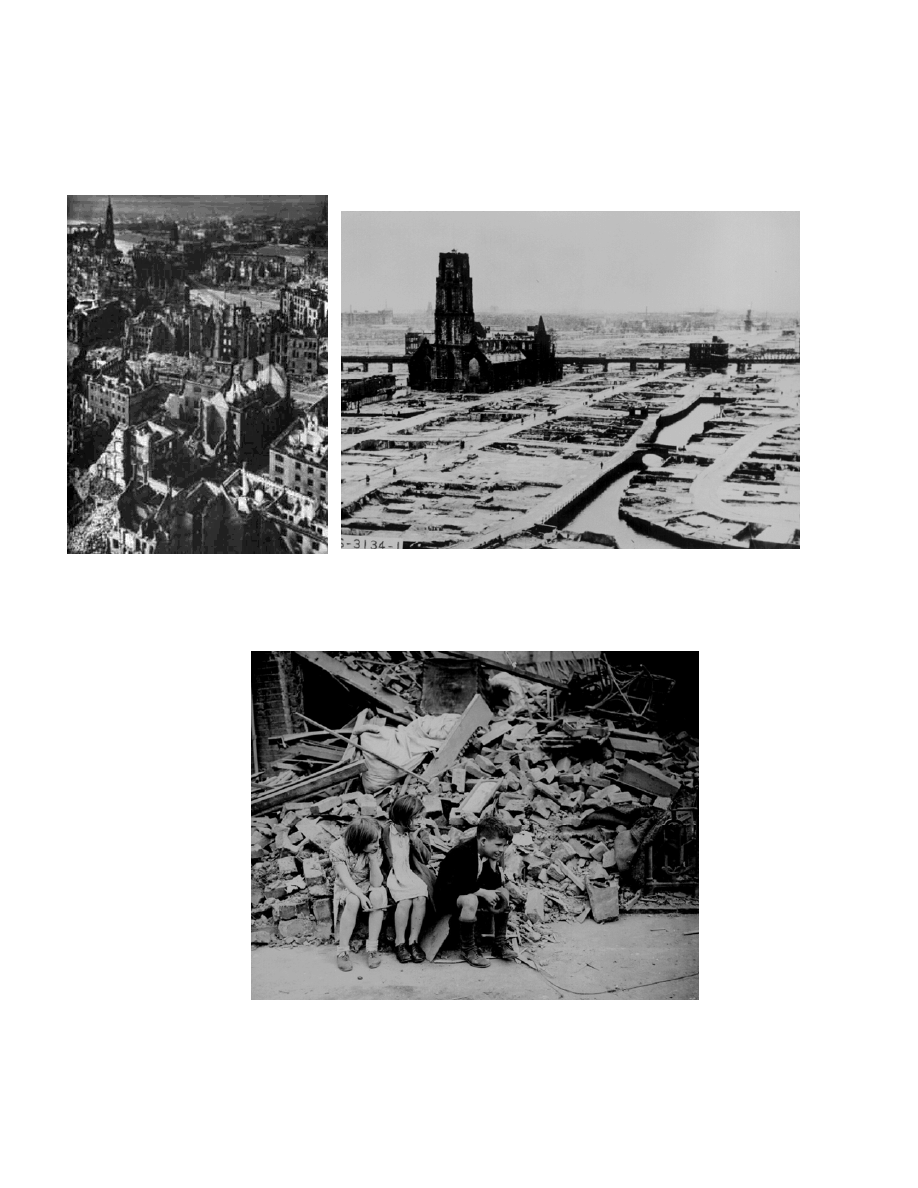
Scenes from Europe at the end of World War II
DRESDEN, GERMANY ROTTERDAM, NETHERLANDS
Wikipedia
www.archives.gov
LONDON, ENGLAND
www.archives.gov
1

A. The Beginning—Europe, 1945-1952
The idea of creating a unified Europe was not a new one. In the 9
th
Century, the
Frankish emperor Charlemagne dominated much of Europe. At the beginning of the 19
th
century, Napoleon Bonaparte attempted to control most of Europe. In the 1930’s, Adolph
Hitler intended to conquer all of Europe. The key words here are dominated, control, and
conquer. Throughout history, wars were fought in Europe over land, religion, and
resources—all with devastating results.
At the end of World War II, it finally became apparent that violence and hatred
could not unify Europe. In 1945, many European cities lay in ruins and people were
homeless. Factories were destroyed, and bridges and railroads were bombed out.
Without their homes and livelihoods, many Europeans were left in despair, not knowing
how their lives could ever be normal again. It was going to take an entirely new way of
thinking to rebuild Europe and help the Europeans rebuild their lives: people were going
to have to work together peacefully. The ancient rivalries and prejudices had to be put
aside and a new spirit of cooperation had to take their place. And cooperate they did in
ways that were nothing short of miraculous! The Marshall Plan
1
and the Berlin Airlift
2
were just two examples of how allied nations worked together to help, instead of punish,
the vanquished nations of World War II. They marked the dawn of a new era of
European history, and set the stage for a peaceful unification of Europe.
Already in 1921, the governments of the Luxemburg and Belgium had the idea
that if they could work together economically, and make trade agreements, they would be
more able to compete with larger countries. During World War II, The Netherlands and
Belgium also took steps toward economic cooperation. Finally, in 1948, The Benelux
Customs Union was formed, which enabled the free movement of goods, workers,
services, and capital between the countries. In 1958, the Benelux Treaty was signed,
formally establishing the Benelux countries as a free trade unit.
Economists and statesmen in other European nations were also suggesting the
possibility that an integrated Europe could have both economic and political advantages.
For example, Jean Monnet of France believed that a union of European nations could
better compete against countries with a larger pool of resources, such as the United
States. Likewise, French foreign minister Robert Schuman believed that the European
producers of coal, such as France and West Germany, could integrate their coal and steel
industries. On the one hand, as Monnet had suggested, this integration could give those
countries more economic clout in the world markets. On the other hand, it would enable
France and other European nations to keep a watchful eye on West Germany’s quickly
reviving economy. As West Germany was beginning its “economic wonder”, and
recovering admirably from the devastation of World War II, the other European countries
wanted to monitor it closely to be sure they weren’t using their coal and steel industries to
rebuild a powerful military. As a result, the European Coal and Steel Community
(ECSC) was formed in 1951 and became effective the next year. The ECSC integrated
the production and trade of the iron, coal and steel in Belgium, Luxemburg, the
Netherlands, France, West Germany and Italy. Thus, in 1952, six European countries
began the path toward a unified Europe.
2

1
Marshall Plan—In 1948, food, machinery and other products were sent to the war-
battered areas of Europe in order to help them rebuild and recover.
2
Berlin Airlift—In 1948, the USSR blockaded all roads, railroads and waterways
connecting East and West Berlin, hoping the West Berliners would be forced to accept
communism. The western allied nations organized a huge airlift to fly supplies into West
Berlin. After nearly a year, the Soviets lifted the blockade and West Berlin remained
free. There is a monument in Berlin commemorating the brave airlift pilots.
Section A Review
I. What did you learn?
1. What three countries originally had the idea of peacefully uniting for economic
reasons?
2. What did these three countries call their organization?
3. What role did Jean Monnet and Robert Schuman play in establishing a unified
Europe?
4. In 1951, what three countries joined the first three countries to create a new
economic union of six nations?
5. What was this new six-nation economic union called?
6. What industries were affected by the treaty that created the new union?
7. Why did the European leaders of the 1950’s believe that these particular industries
should be integrated?
II. Learn more about it!
1. In your library or on the Internet
3
, look up the following in an encyclopedia:
The Schuman Plan
The Marshall Plan
The Benelux Economic Union
The Treaty of Paris (1951)
2. In your library or on the Internet, use atlases to find maps of Belgium, Luxemburg,
The Netherlands, Germany, France, and Italy.
3. Try to find videos or pictures showing the landscapes of the ECSC countries.
4. Using an almanac, look up the ECSC countries and find out the following
demographic information:
• Who are these countries’ leaders?
• What is the population of each country?
• What are the per capita incomes of these countries? (Which one is
the wealthiest?)
3
• What products are manufactured in these countries?
• What animals and crops are raised in these countries?
3
A very useful website for electronic references is
III. Think a little harder—role play!
1. Pretend you are Secretary of State George C. Marshall back in 1947, and you need
to convince President Truman and Congress that they should support your European
Recovery Program. Your job won’t be easy, because you need to persuade them to spend
billions of dollars to rebuild Western Europe, especially West Germany! You must do a
great job, though, because in 1953 your efforts will be rewarded with the Nobel Peace
Prize! To support your argument, read about how the Treaty of Versailles, which ended
World War I, affected the German economy. It may have been a main cause of World
War II!
2. Pretend you are a Berlin Airlift pilot in 1948. How do you feel about your
mission? You are helping the very people that were your enemy just three years ago, and
risking your life to do it! Or, pretend you are a Berliner watching military aircraft fly
over your city every 45 seconds! Four years ago these pilots were destroying your home
and now they are delivering life-sustaining supplies! How does that make you feel? Use
history books or encyclopedias to find out more about the Berlin Airlift, or contact the
Goethe Institute at
to borrow some fascinating videos and booklets.
B. The Evolution of the European Union—1957-1999
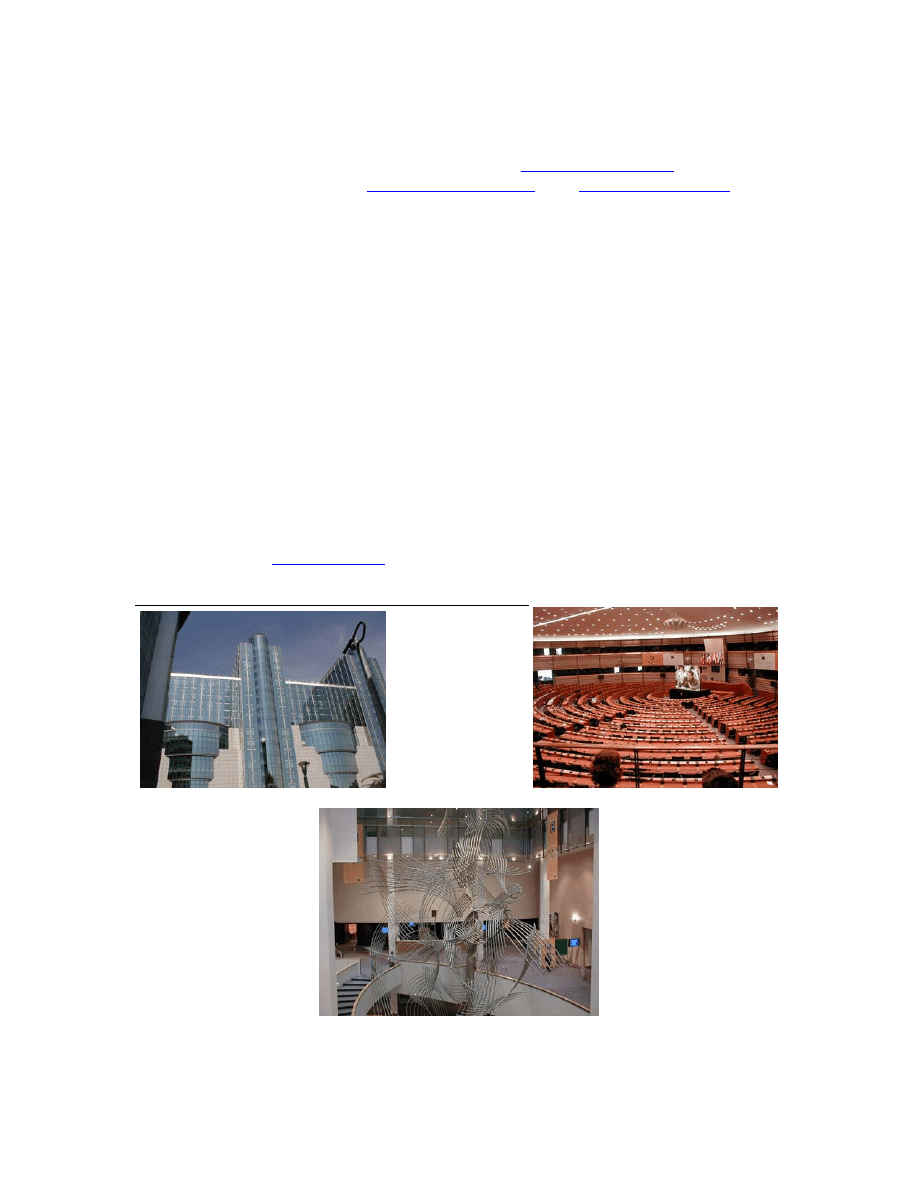
VIEWS OF THE EUROPEAN UNION BUILDING IN BRUSSELS
Photos by Dave Edwards
4

Evolution, Part 1
The Treaty of Paris, signed in 1951, created the European Coal and Steel
Community (ECSC). It took effect in 1952, and eliminated tariffs and quotas on trade in
iron ore, coal, coke, and steel within the six-nation economic union. In order to supervise
the operations of the ECSC, the Treaty of Paris provided for an executive council, a
council of ministers, a common assembly, and a court of justice. These groups of
administrators had very limited power but they were the beginning of a cooperative
organization involving a very important part of European industry. It laid the foundation
for the future stability and prosperity that would become possible in a unified Europe.
The founders of the ECSC must have succeeded in gaining the trust and
confidence of its citizens, because in 1957 and 1958 two more treaties were signed which
greatly increased the areas of cooperation between the six countries. These treaties were
called the Rome Treaties, and created the European Economic Community (EEC, or
Common Market) and the Euratom. Euratom was created to promote the peaceful use of
atomic energy, and the Common Market gradually expanded free trade to include all
other areas of the member countries’ economies. In 1968, after the ratification of the
Merger Treaty, the EEC also became known as the European Community (EC).
Right after the Rome Treaties established the formation of the Common Market,
the United Kingdom, Norway, Sweden, Denmark, Switzerland, Austria, and Portugal
created the European Free Trade Association (EFTA). This organization relaxed tariffs
on industrial products, but not agricultural products, and was much less powerful than the
Common Market. Political tension between several European leaders prevented the
formation of a stronger, more unified European organization for several years.
In 1973, after several changes in leadership and much negotiation, three more
countries from the EFTA joined the European Community. The EC now consisted of
nine countries: France, West Germany, Italy, Luxemburg, the Netherlands, Belgium, the
United Kingdom, Ireland, and Denmark. This enlarged European Community was very
successful in promoting economic cooperation among its members, thereby increasing
their prosperity; however, much more remained to be accomplished before the EC would
have the political strength and influence on world affairs that the European Union has
today. For example, there still was no general election of a European Parliament by the
citizens of the member countries. Also, each of the nine EC countries still had its own
currency. This would all change soon, though, as plans were already underway to create
an organization that would be elected by, and represent, ordinary European citizens.
Economists from the nine EC countries were also working together to regulate their
currencies and protect their economic stability. Finally, in 1974, the head leaders of the
EC countries began meeting three times per year as an organization officially called the
“European Council”. Gradually, through many more treaties and steps toward
unification, the European Community would become a powerful organization that not
only promoted prosperity for its members, but also the security and environmental
welfare of its citizens.
5

Section B, Part 1 Review
I. What did you learn?
1. How was the Common Market of 1958 different from the ECSC of 1952?
2. Why was Euratom created in 1958?
3. Why would the Common Market nations have been particularly interested in
controlling nuclear energy in the 1950’s?
4. What are the treaties called that created the Common Market and Euratom?
5. What countries made up the EFTA in 1960?
6. How was the EFTA different from the Common Market?
7. Which EFTA nations joined the European Community in 1973?
8. Who made up the European Council in 1974?
II. Learn more about it!
1. In your library or on the Internet, look up the following in an encyclopedia:
Charles De Gaulle, President of France
nuclear weapons
NASA
Warsaw Pact
Konrad Adenauer
Cold War
2. In your library or on the Internet, use atlases to find maps of the EFTA countries.
3. Try to find videos or pictures showing the landscapes of the EFTA countries.
4. Using an almanac, look up the EFTA countries to find out the following
demographic information:
• Who are the current leaders of these countries?
• What is the population of each country?
• What are the per capita incomes of each of these countries? (Which one is
the richest?)
• What products are manufactured in these countries?
• What crops and animals are raised in these countries?
III. Think a little harder—role play!
1. In 1961and 1962, the Cold War almost became boiling hot because of two
significant events: the building of the Berlin Wall, and the Cuban missile crisis. The two
events pitted the USSR (Soviet Union) against the United States, and Europe was caught
in the middle. War appeared to be imminent, but it didn’t happen—peace prevailed!
However, the Berlin Wall was built and isolated the East Berliners for 28 years. Pretend
you are an East Berliner and imagine how it felt to be “caged in” by Soviet tanks and
6
troops. You see that you are virtually a prisoner in your own city, and if you try to
escape you’ll be shot! Do you think you would try to escape, anyway? To get a feel of
what the building of the Berlin Wall was like for the Berliners, read about it in an
encyclopedia or history book, or access
and look up the “Berlin
Wall” for riveting pictures and a video.
Or, pretend you are a West Berliner in 1961, and imagine what it would be like to
see your neighbors, maybe even your family, becoming imprisoned behind that huge
wall. What if the Soviets try to take over your part of the city as well, like they did
during the Berlin Blockade? Your nation is a member of the European Community and
NATO! Do you think these organizations should do something to prevent the building of
that wall? Why do you think they didn’t do more? To find some answers to those
questions, read about President John F. Kennedy and Soviet Premier Nikita Khrushchev,
and the meeting they had in Vienna, Austria.
2. It must have been exciting, but confusing to grow up in Europe after World War II!
On the one hand, amazing progress was being made to unite the countries of Western
Europe. On the other hand, the rift between Western and Eastern Europe was becoming
fortified by the Iron Curtain and the Berlin Wall. Pretend you are a “baby-boomer”
growing up in one of the countries of the European Community. Maybe you live where
remnants of war-torn buildings can still be seen, and your parents have told you horrible
stories of what the war years were like. You may also read in the newspapers of the
distrust European leaders still have for one another, or their unwillingness to give up their
absolute authority over their individual resources in favor of building a stronger, more
unified Europe. Would you feel optimistic or pessimistic about the future of your
country? What would your hopes and fears be?
Evolution, part 2
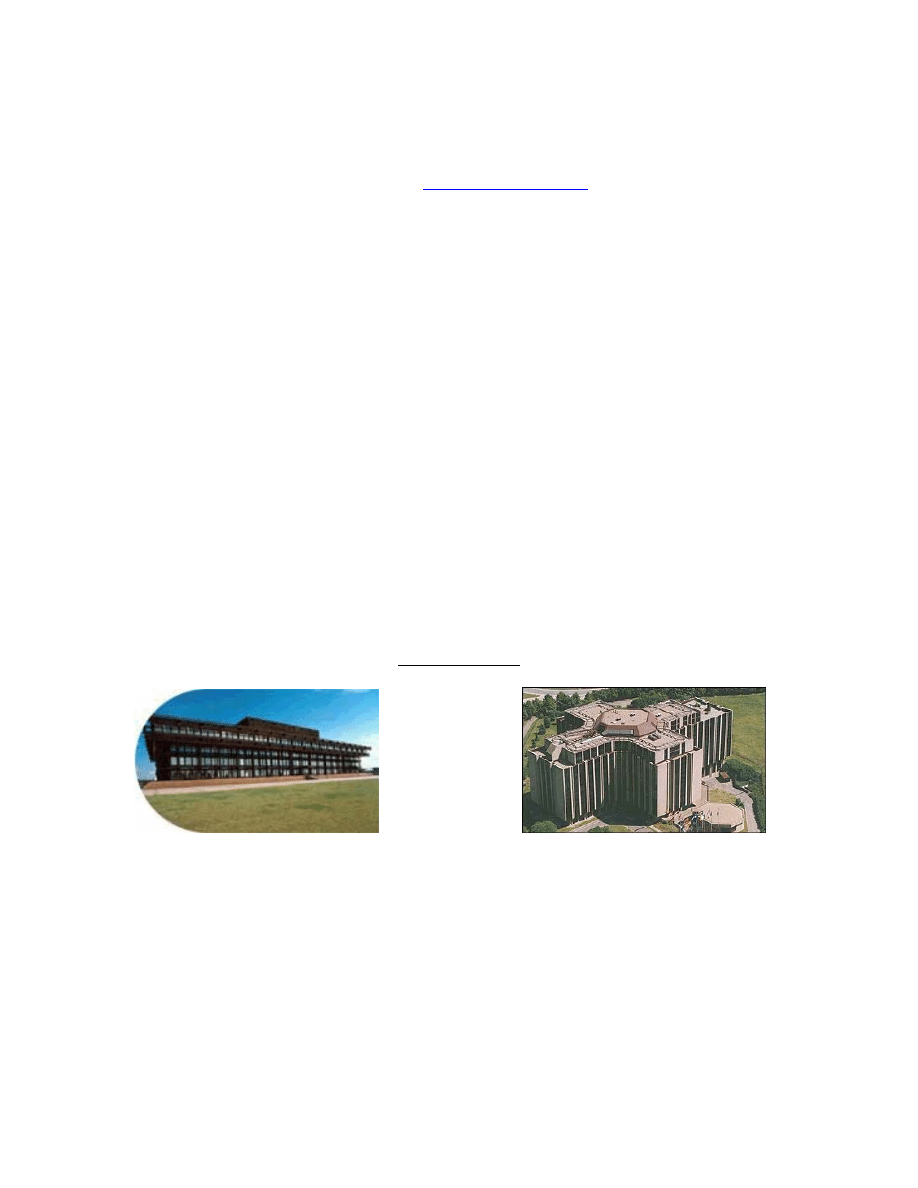
EU COURT OF JUSTICE (Luxemburg) EU COURT OF AUDITORS
www.bbc.co.uk http://news.bbc.co.uk
During the 1970’s the European Community continued to strengthen its authority
over the economies of its member nations. The European Court of Auditors was
established in Luxemburg in 1977, and the European Monetary System was put into
effect in 1979. These two organizations helped regulate the budgets and the currencies of
the EC countries. Also in 1979, the first direct election of members of the European
Parliament took place, and Madame Simone Veil was its President. Gradually, progress
was being made to unify the European economies and direct representation was given to
its citizens.
7

In the 1980’s, Greece (1981), Spain (1986), and Portugal (1986) entered the
European Community, raising the number of EC countries to twelve. Another important
development of this decade was the creation of the Single European Act. This act would
ultimately provide for the total integration of the economies of the EC nations, and
standardize their policies on such issues as health, employment, and the environment.
Finally, the most significant event of the 1980’s was the fall of the Berlin Wall in 1989,
and the beginning of the end of communism in the Warsaw Pact nations. East Germany
became united with West Germany, which again increased the size of the European
Community. Adding these new nations, and enacting the Single European Act, created a
whole new dimension to the European Community. The main concerns of the member
nations were not only economic, but also involved the standard of living of every citizen
of the EC. Economic aid was given to the new Mediterranean members to help
strengthen their economies, and a tremendous effort would be made to help the former
Soviet Block countries achieve higher social and environmental standards for their
citizens. Overall, the people must have felt that the increased stability provided by a
unified Europe was an important goal, because they continued to work toward greater
international cooperation.
In the 1990’s, negotiations and legislation continued to create the framework for
the new European Union (EU). In 1990, the Schengen Agreement was signed, making it
possible for people to easily travel throughout the member countries without having to
show passports at border crossings. Most significantly, in 1993, the Maastricht European
Council adopted the Treaty on European Union, which defined the EU as it is known
today. This treaty, also known as the Maastricht Treaty, called for the EU nations to use
a single currency by 1999. The new currency is called the euro (€),
4
and there are strict
qualifications regarding economic stability that must be fulfilled by the EU nations that
use it. The Maastricht Treaty also gave the EU more authority over such issues as
security, the environment, education, health, and consumer protection.
5
The decade of
the 1990’s also brought three more nations into the EU: Austria, Finland and Sweden
joined in 1995. Finally, in 1999, the Amsterdam Treaty was signed and put into force,
giving the EU even more power and responsibility regarding its citizens. By the end of
the 20
th
century, the EU had become a powerful political and economic body consisting
of 15 European nations.
4
More about the euro in Section C.
5
The Maastricht Treaty defined the three “pillars” of the European Union: 1) European
Community (customs, agriculture, trade issues), 2) Common Foreign and Security Policy,
and 3) Cooperation in Domestic Affairs and Justice (asylum, external borders,
immigration, drug addiction, international crime)
Part B, Section 2 Review
I. What did you learn?
1. What two major developments happened at the end of the 1970’s to help unify the
economies of the European Community?
2. In 1979, all citizens of the EC countries finally had parliamentary representation.
8

What did they get to do for the first time?
3. In the 1980’s and l990’s, six new nations entered the EC. What were they?
4. During the 1980’s and 1990’s, policies were made which affected more than just
the economies of the member nations. What new areas of government were affected?
5. What huge, unexpected historical event happened in November of 1989? How did
this affect the European Community?
6. What is the Schengen Agreement? How will it affect you if you visit the EU?
7. Why is the Maastricht Treaty also called the Treaty on European Union?
8. Make a timeline listing the 15 EU nations that were members in 1999, showing
what year each nation was added. Can you also list their capital cities?
II. Learn more about it!
1. In your library, or on the Internet, look up:
Margaret
Thatcher
John
Major
Georges
Pompidou
Michail
Gorbatschow
Erich Honecker
François Mitterand
2. In your library, or on the Internet, use atlases to find maps of the following
countries: Greece, Spain, Portugal, and Finland.
3. Try to find pictures or videos showing the landscapes of Greece, Spain,
Portugal, and Finland.
4. Use an almanac to find the following demographic information about those
same four countries:
• Who are the current leaders of these countries?
• What is the population of each country?
• What are the per capita incomes of each of these countries?
• What products are manufactured in these countries?
• What crops and animals are raised in these countries?
III. Think a little harder—role play!
1. Pretend you are Helmut Kohl in 1989. The Berlin Wall is being torn down, and
that’s wonderful! However, now you have many big problems. First of all, even
before the Wall came down, thousands of immigrants from Soviet Block countries
were already coming to your country looking for jobs and a new life. How can you
possibly help them all? Also, as the border to East Germany opens up to outsiders, it
becomes evident that the water and air are terribly polluted, and much will need to be
done to bring it up to western environmental standards. Where will the money come
from that will be needed to do all this work? Fortunately, your country is one of the
9
founding nations of the European Community, and most of its leaders will probably be
willing to help you. However, you’ll have to be very persuasive, because some of its
older leaders still have memories of being bombed by Hitler’s air force, and they are
not in any hurry to see Germany become reunited! What type of assistance will you
ask for, and how will you justify your needs? To get some ideas of how the EU
provides economic aid, access
and click on “development”.
2. Pretend it is 1995 and you live in Austria near the Yugoslav border. A war is
going on in Yugoslavia, and you don’t feel very safe! You know that your southern
neighbor is not stable at all, and you hope your country’s new membership to the
European Community will provide some security. What do you think the EU might
be able to do in order to protect your safety? Does the EC have any troops? What
diplomatic power might it have? To get some ideas, access
and look up the “Wars of Yugoslav Succession”.
C. The Euro (€)
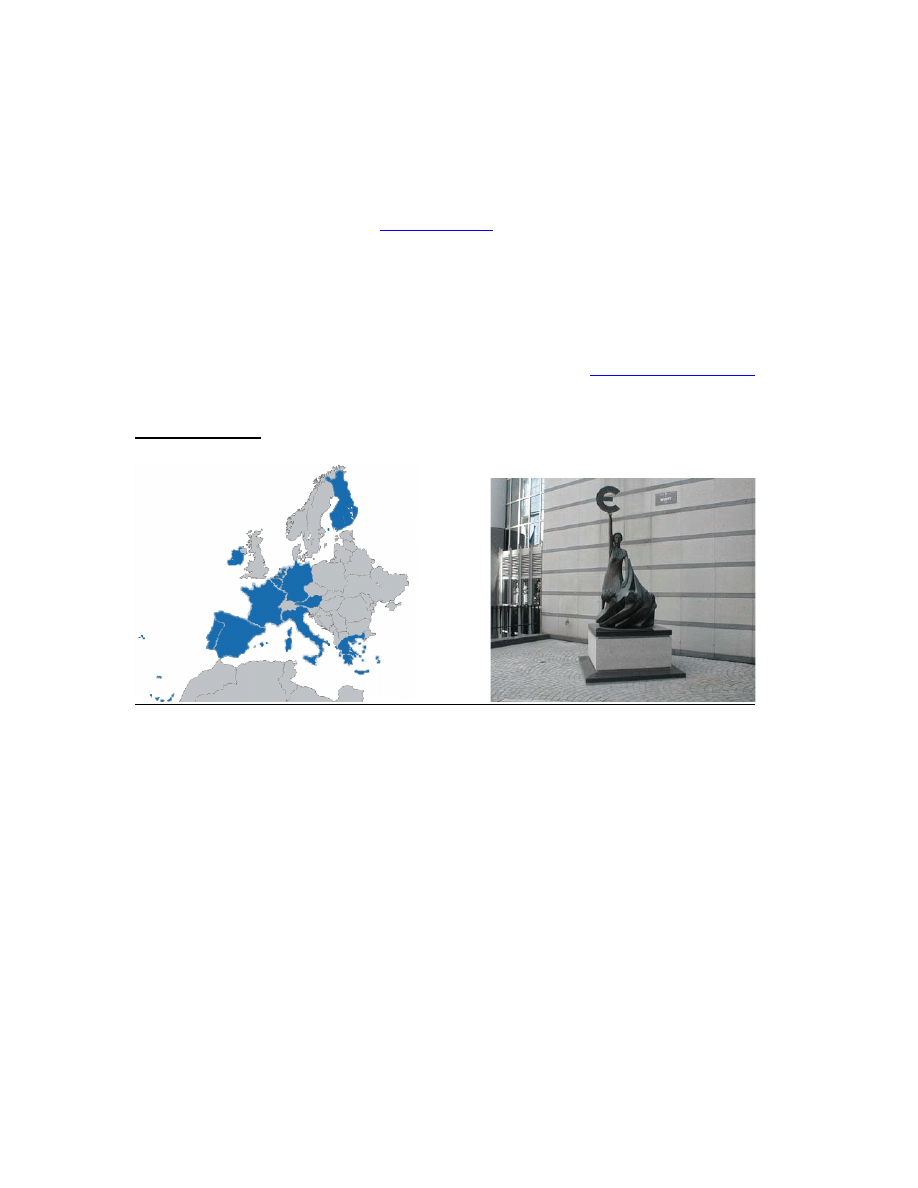
WHERE EUROS ARE USED
EURO STATUE IN BRUSSELS
www.ecb.int Photo by Dave Edwards
According to the Maastricht Treaty, all European Union countries were to be
using euros by 1999. This almost happened, but not quite. The United Kingdom,
Denmark, and Sweden fulfilled the requirements set by the treaty, but chose not to
participate. Greece had not yet fulfilled the requirements in 1999, but did fulfill them one
year later. So, in theory, eleven of the fifteen EU nations were using a single currency by
the designated year. However, the transition could not happen “overnight”, and in 1999
euros were used for electronic (computerized) transactions only. It wasn’t until 2002 that
the individual currencies of the participating twelve nations were replaced by actual euro
coins and bank notes. With the accession of twelve new countries, each one must apply
separately to join the “Euro Zone.” Slovenia began using the Euro on January 1, 2007
and Malta and Cyprus will join on January 1, 2008. The thirteen nations currently using
the euro are: Belgium, Germany, Greece, Spain, France, Ireland, Italy, Luxemburg, The
Netherlands, Austria, Portugal, Finland, and Slovenia.
So, what does the Euro look like? The coins come in values of 1, 2, 5, 10, 20, and
50 cents, and 1or 2 euro(s) (See photo on next page). The front sides of all the coins are
10
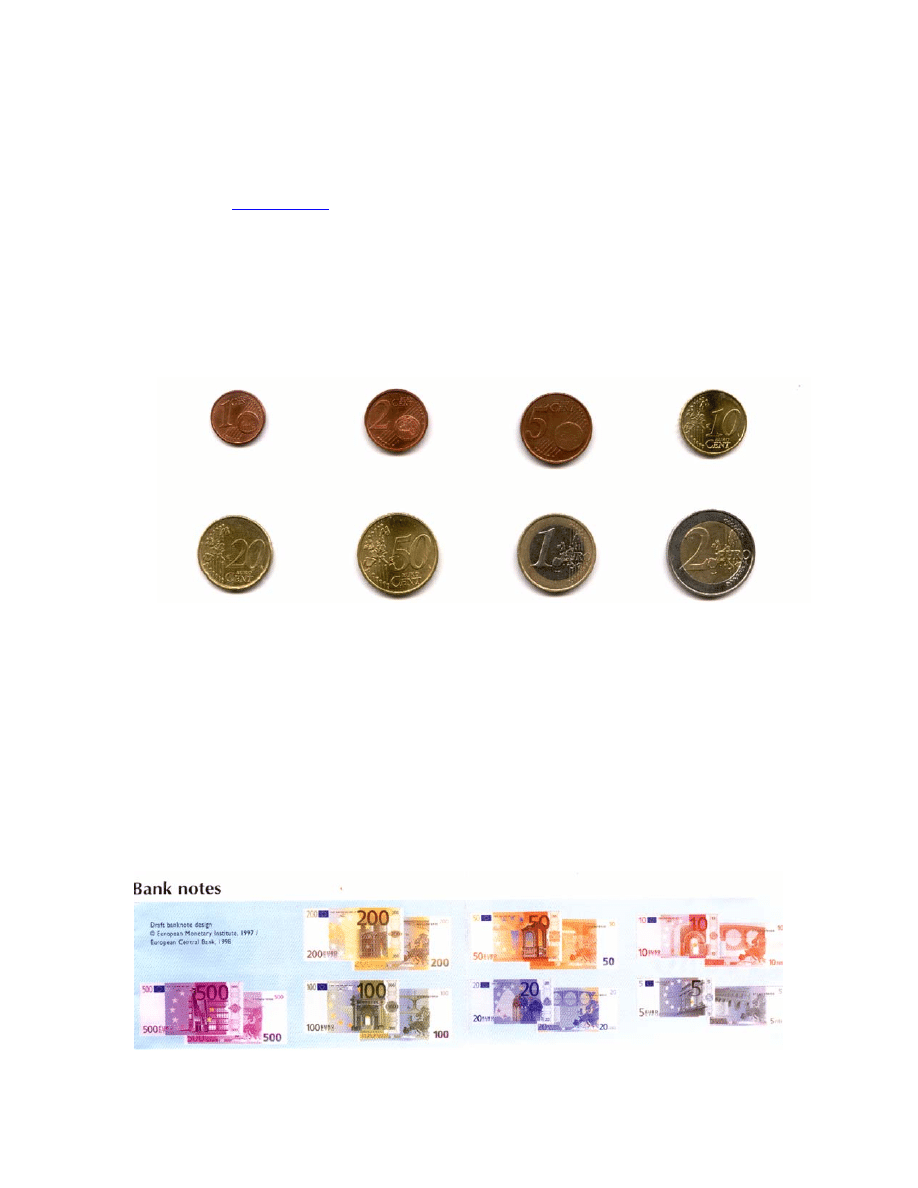
the same, regardless of their country of origin. However, all twelve countries have
special symbols, such as a king or a famous building, on the back sides of their coins.
This indicates that the European Union is unified, yet diverse, with each country
maintaining its own identity. To see a poster which shows all the euro coins and bank
notes, access
and click on “publications”.
EURO COINS (top, left to right): 1 CENT, 2 CENTS, 5 CENTS, 10 CENTS
(bottom, left to right): 20 CENTS, 50 CENTS, 1 EURO, 2 EUROS
Photo by Dave Edwards
Unlike the coins, the euro bank notes have only one design for each
denomination, and all twelve countries use the same designs. The euro bank notes do not
show any pictures of people. Instead, they show pictures of doors, windows and
archways on the front to symbolize open-mindedness and economic opportunity. On the
back side of the bank notes are pictures of bridges, symbolizing the strong bonds which
exist between the EU countries. There are seven denominations of bank notes: 5, 10, 20,
50, 100, 200, and 500 euros. As the values of the bank notes increase, so do their sizes.
There is also a progression of history in architectural styles as the values of the bank
notes increase: for example, the five euro notes show architecture from the 1
st
to 4
th
centuries and the 500 euro notes show architecture from the 20
th
and 21
st
centuries. The
currency is very colorful and full of security devices which are designed to make it
difficult to counterfeit.
Office for Official Publications of the European Communities
11

Since 2002, the use of euros has made life much easier for tourists and merchants.
No longer does money need to be changed at every border, and people who work in
stores, restaurants, and other places of business can now work with one currency.
However, not everyone was delighted when the old currencies were replaced with the
new one. For some people, getting accustomed to new things can often be difficult, and
learning to recognize all the new coins and bank notes took time. Also, converting prices
from old currencies to the new one was a huge task, and many consumers felt that
everything became more expensive as the prices were “rounded up” to euros. At first,
skeptics were concerned that the euro would be too weak to hold its value against the US
dollar and other major currencies. Time has proven, however, that consumers do have
confidence in the EU currency, as it continues to compete well on the world market.
Section C Review
I. What did you learn?
1. By what year were the EU countries supposed to be using a single currency?
2. Which four EU countries did not start using Euros in that year?
3. Which three EU countries chose not to use Euros in 2002?
4. What unique feature do US quarters and EU coins have in common?
5. Instead of people, what do the pictures on Euro bank notes show?
6. If you were to give a blind person a bank note for ten euros and one for fifty euros,
how could s/he know which one was more valuable?
7. What were some of the problems that EU citizens faced when the old currencies
went out of circulation in 2002?
II. Learn more about it!
and explore!
a. Click on “Exchange rates”, and see how many euros your dollars would buy
today. Did the dollar go up or down today?
b. Click on “Children’s Corner”, and play some games about euros!
2. Look in your library for an old (prior to 1999) almanac, and look up the former
currencies that were used by the EU countries. Can you make a list of all twelve
obsolete currencies that have been replaced by the Euro? Which country used which
currency?
12
III. Think a little harder—role play!
It’s time to go back to school, and you have to buy lots of new clothes—in
Europe! Access a European catalog website, such as
and go shopping! Browse through the catalog and pretend to buy several new outfits.
How many euros would you be spending? Using the exchange rate information given in
a business website or publication, calculate how many US dollars that would be. Do the
clothes seem to be more or less expensive than what you are used to at home? Did you
find many of the same brand names that you like to buy in the US?
Section D. How the European Union is Organized
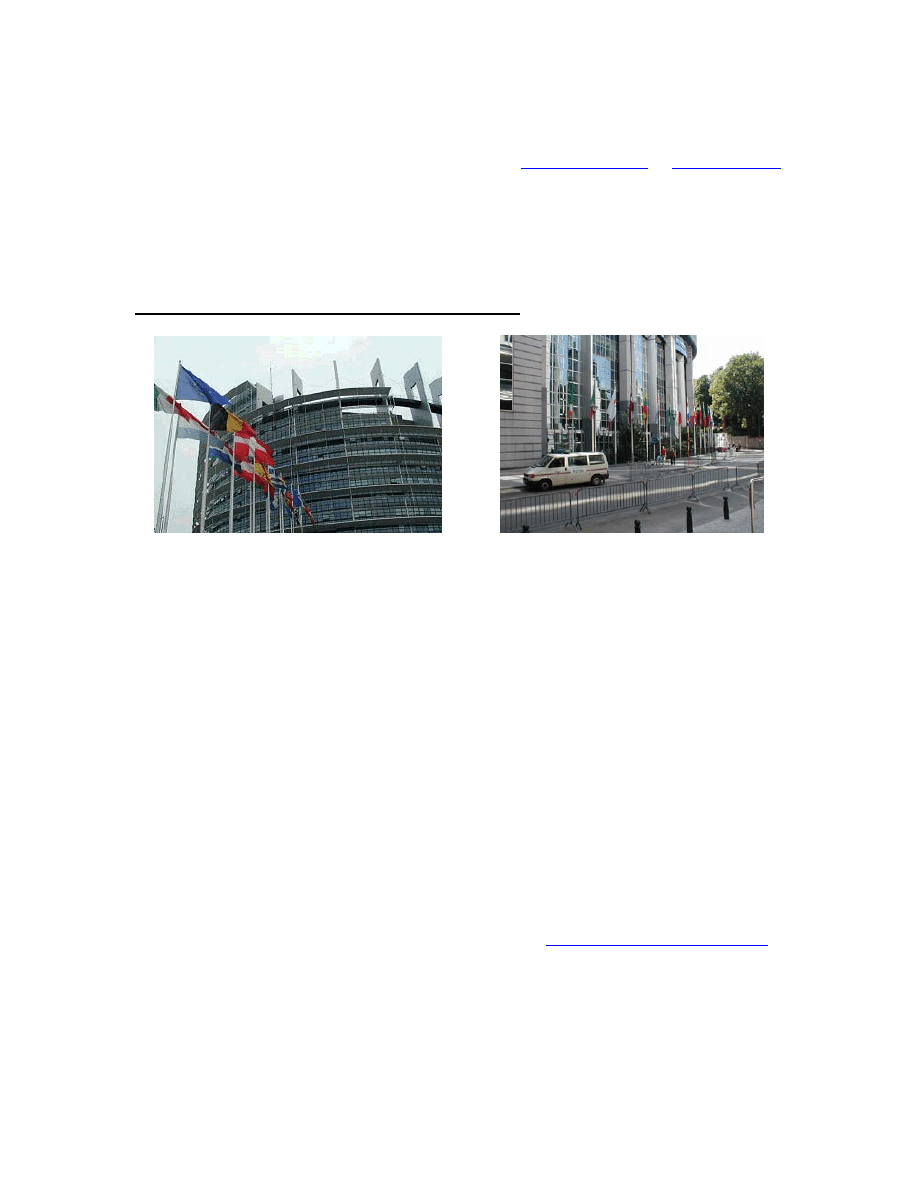
EU PARLIAMENT, STRASBOURG EU PARLIAMENT, BRUSSELS
europa.eu
Photo by Dave Edwards
The European Union is not at all like the United States or any other single
country. It also is unlike any other international organization. It is a complex system that
enables its member countries to work together to preserve peace and promote prosperity,
while maintaining their individual national interests. The following is a list of five EU
“institutions”, and what they do:
The European Parliament—This is the only body of the EU that is directly
elected by the citizens of the member countries. In 2003 there were 626 members of the
EU Parliament; the 2004 enlargement and accession of Bulgaria and Romania in 2007
has increased the number to 785. The number will reduce to 736 after the 2009 elections.
Any citizen of the EU may be a candidate and all citizens may vote. The elections to
choose Members of Parliament are held every five years, and the President of Parliament
is chosen every 2 1/2 years. The Parliament meets in Strasbourg every month and
additional meetings are also held in Brussels (see photos above). It works with the
Council of the European Union to pass laws and approve the budget. It also supervises
the European Commission and can vote to dismiss them, if necessary. To find more
information about the European Parliament online, go to
The Council of the European Union—The “Council” represents the individual
countries, so each EU member nation takes its turn at presiding over Council meetings
for a period of six months. At each meeting, at least one minister from each member
country must be present. Which ministers attend each meeting is determined by the
subject matter of the discussions. For example, if agriculture is to be discussed, Ministers
13
of Agriculture will be present. The Council must work with the Parliament to pass new
laws and approve budgets. The Council’s other duties include finalizing international
agreements and making decisions that involve international security. Council meetings
are held in both Brussels and Luxemburg. To find more information about the Council of
the European Union online, go to
.
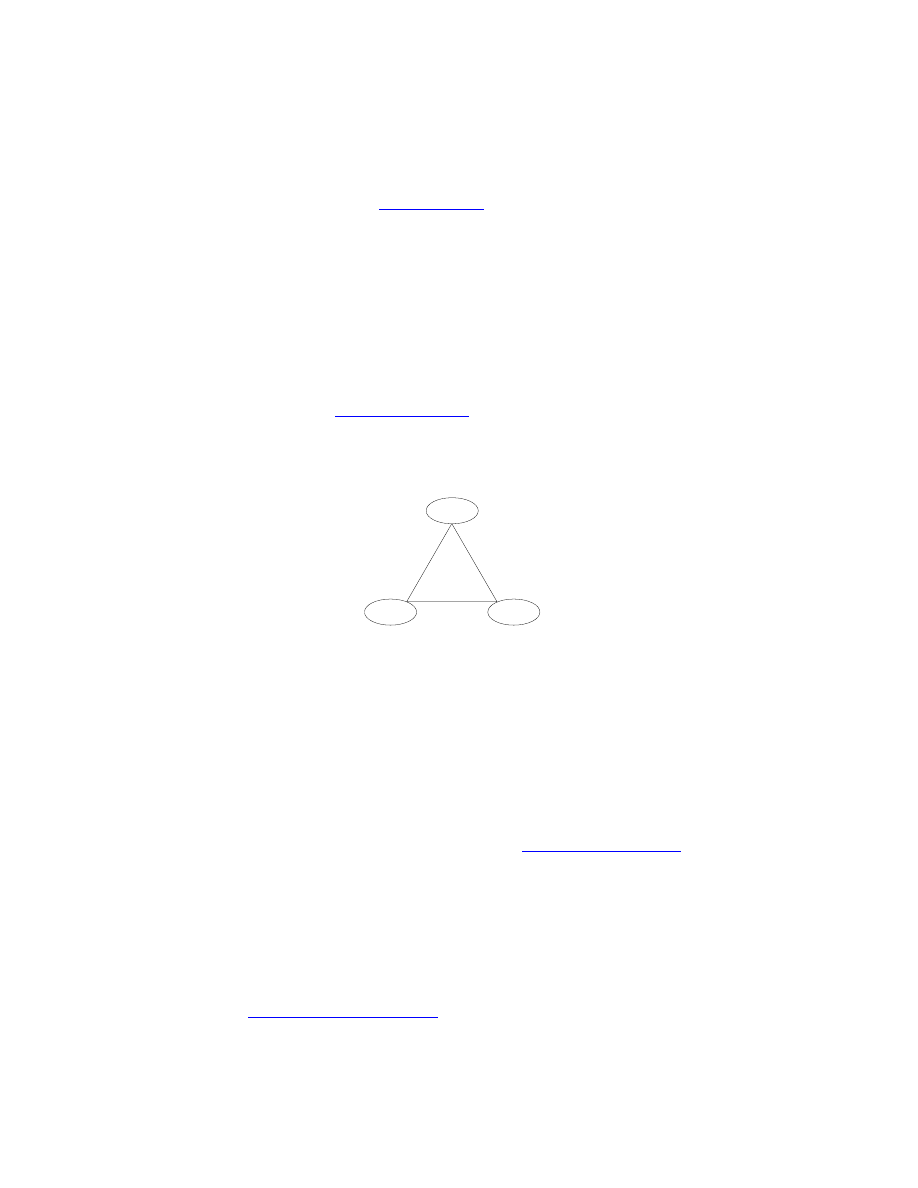
The European Commission—This is the executive side of the “EU Institutions
triangle” (see diagram below) and it represents Europe, as a whole. There is one
appointed commissioner from each member country, and they serve for five years. They,
and their president, must be approved by Parliament, and they can be dismissed or
censured by Parliament. The Commission proposes new laws, and makes sure that
treaties and other international agreements are upheld. It must monitor how EU money is
spent, and ensure that EU laws are followed. It functions independently from the EU
member states, and it meets in Brussels. To find out more about the European
Commission online, go to:
EU INSTITUTIONS TRIANGLE
“Community Method”
European Commission-- proposes new laws
European Parliament // Council of the European Union--
Shared responsibility for passing new laws and budgets
The Court of Justice—This is the “supreme court”, which makes sure that EU
laws are correctly interpreted. It presides over disputes which involve member countries,
EU institutions, businesses and individuals. Because so many cases are brought before
the Court of Justice, the Court of First Instance was created in 1989 to hear certain types
of cases. The Court consists of one appointed judge from each member country, and the
judges serve for renewable terms of six years. There are also eight advocates-general to
assist the judges. The Court of Justice is located in Luxemburg (see photo on page 7). To
find out more about the Court of Justice online, go to
The Court of Auditors—This institution is also located in Luxemburg (see photo
on page 7), and consists of one member from each EU country. The members are
appointed to terms of six years, and their appointments must be approved by Parliament.
It is the Court of Auditor’s responsibility to be sure that all EU funds are received and
correctly spent. It monitors all organization that use EU funds, and must report illegal
use of the funds to the Court of Justice. To learn more online about the Court of
Auditors, go to
14

Some other important EU bodies are the European Investment Bank (Luxemburg)
which lends money for projects of European interest, and the European Central Bank
(Frankfurt) which oversees the stability of the euro. These organizations look out for the
interests of the European Union as a whole, and must function independently of the
individual member countries.
Finally, the European Council is made up of the heads of state of all EU member
countries, and the President of the European Commission. It is supposed to meet four
times a year, and these meetings are presided over by the president or prime minister of
the country that is currently presiding over the Council of the European Union (see page
13—a different head of state presides every six months). The European Council has the
power to initiate new policies, and sometimes is called upon to resolve issues that the
Council of the European Union has failed to resolve.
What began as the European Coal and Steel Community in 1951, has gone
through many steps of enlargement to become today’s European Union. As the European
Community grew, and its focus moved from economic interests to more human issues, its
structure and procedures for doing business had to change. The European Union is the
product of more than fifty years of continuous evolution. As it continues to enlarge and
grow in international prominence, it will also continue to evolve. Change will be
necessary to adapt to the needs of the future.
Section D Review
I. What did you learn?
1. What is the governing body called that is directly elected by EU citizens?
2. Which governing body represents the individual countries of the EU?
3. Which part of the “Community Method” is the executive governing body?
4. What is the official name for the group that consists of the heads of state of all EU
countries, plus the President of the European Commission?
5. Where is the bank located that regulates the euro?
6. Where does the Court of Auditors meet?
7. What two groups must approve budgets and the passage of new laws?
8. Who may be a candidate for the European Parliament?
II. Learn more about it! Explore the following websites to learn about these important
committees and organizations of the EU:
• The European Ombudsman
• The European Investment Bank
• The Committee of the Regions
• The European Economic and Social Committee
15
III. Think a little harder-role play!
1. Pretend you are a candidate for the European Parliament, and you are trying to
convince the voters of your area to vote for you. How do you stand on the important
issues that are of concern to the people that will vote for you? To get some ideas,
access a Europeans news website, such as
, and
read about current hot issues.
2. In June, 2004, there was an election in the European Union to vote for Members
of Parliament. The voter turnout was much lower than is typical for Europeans when
they vote in national elections. Some of the suggested reasons for the low turnout
are apathy (the belief that EU issues aren’t very important to individual citizens), and
a lack of confidence in the effectiveness of EU government. Pretend you are an EU
public relations worker, and it is your job to motivate people to vote. How will you
convince them that their vote is important, and that they should take more interest in
EU affairs? To get some ideas, access
EU, and how it is affecting world events. Be persuasive!
Section E. The 2004 Enlargement, and Future Projections
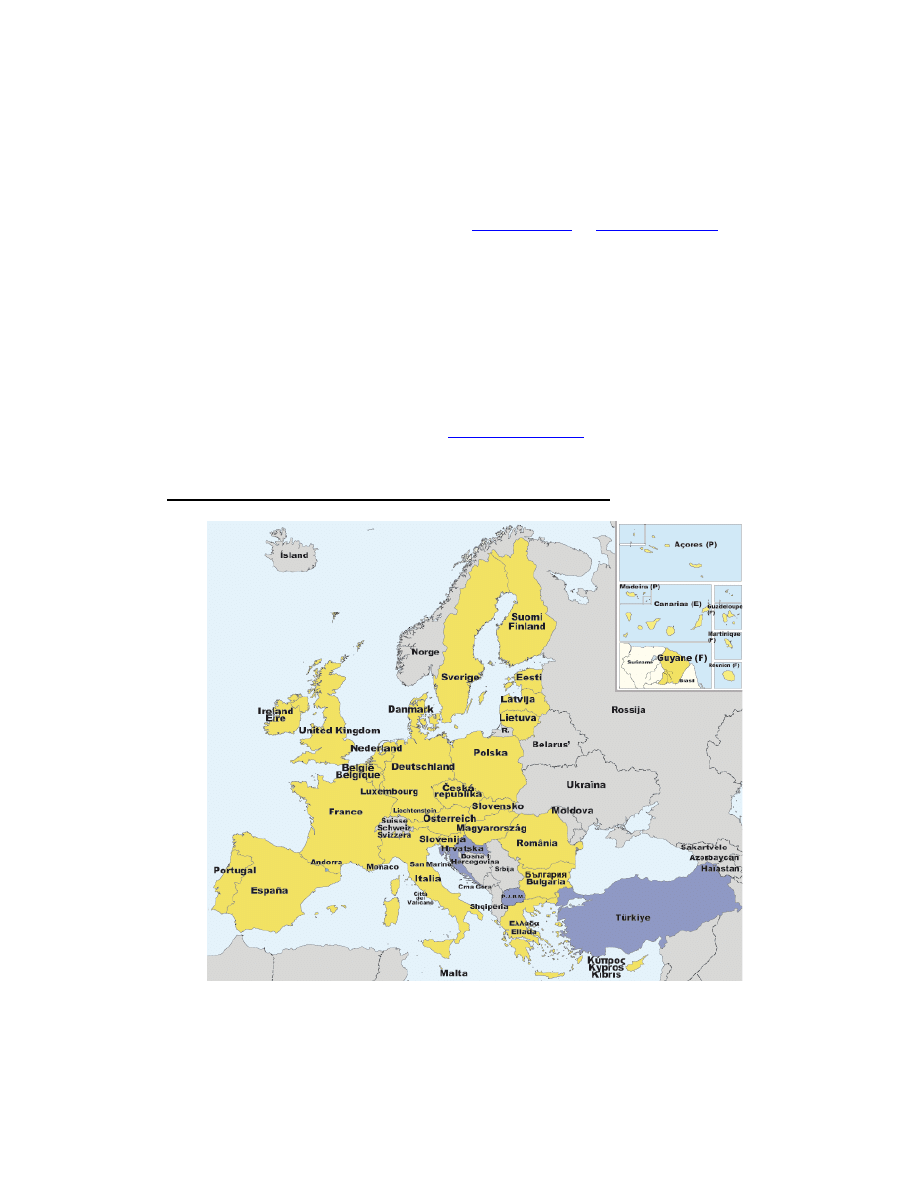
MAP OF THE EUROPEAN UNION, 2007
europa.eu
16

On May 1, 2004, Cyprus, The Czech Republic, Estonia, Hungary, Latvia,
Lithuania, Malta, Poland, Slovakia, and Slovenia were added to the European Union,
making it the largest trade unit in the world. In 2007, Romania and Bulgaria joined,
and Turkey, Croatia, and the Republic of Macedonia are candidate countries. What
must a European country do to qualify for EU membership? First of all, it must be a
stable democracy, respecting human rights, the rule of law, and the protection of
minorities. Second, it must adopt the common rules, standards and policies that
make up the body of EU law. Finally, it must have a functioning market economy
that has low inflation, a low budget deficit, and exchange rate stability (its currency
doesn’t fluctuate much). Once a country has fulfilled those obligations, and becomes
a member state, it enjoys the benefits of the four freedoms on which the EU is
based—free movement of goods, services, labor, and capital. In other words, EU
citizens may live in any EU country, work in any EU country, sell their goods in any
EU country, and invest in any EU country. Everyone enjoys the opportunities and
products of the largest and most diverse market in the world.
As wonderful as that sounds, not all EU citizens are in favor of enlargement, and
it certainly has challenges. The ten countries that were added in 2004, as well as the
two added in 2007, represent a much more culturally diverse group than was ever
added before in previous enlargements. The economies and societies of the new
member countries are much less stable that those of the western European countries.
Finally, in order for the standard of living of the new countries to be raised to the
standards of the older member nations, much economic support from the EU will be
needed. Many people from the western European countries feel that they are
shouldering an unfair burden in the interest of less advantaged countries. They also
worry that large companies may relocate their factories in the new EU countries
because they can hire cheaper labor there or that cheaper consumer products from the
new EU countries will be brought to western European markets and force them to
lower their prices. Despite these concerns, most people feel that the enlargement is
a good thing, because it will help the people in the new member countries improve
their lives and promote peace and stability for the entire continent of Europe.
Another challenge that the European Union will have to face is how to
streamline and simplify the process of passing legislation. Beginning in February of
2002, the European Convention on the Future of Europe met under the leadership of
Valery Giscard d’Estaing (former President of France). Its task was to draft a new
constitution, and create a whole reform package, that would improve the efficiency
and effectiveness of the growing EU. In July of 2003 the Convention presented its
drafted constitution, and it was agreed by all member states on October 29, 2004.
The draft had now become The Treaty Establishing a Constitution for Europe
(TECE) or the European Constitution. The constitution then entered a ratification
phase by each member state. In May and June 2005, French and Dutch voters
rejected the constitution because, among other things, European feared a loss of
national sovereignty. The future of the constitution is unsure, but many leaders are
trying to work to reach consensus. There still is much work to do before the citizens
of the European Union have a legislative system and a constitution that is easy to
understand and support.
17
Despite the many challenges facing the EU today, there is no doubt that
Europeans have a brighter future because of the steps they have taken toward
integration. Removing national barriers and opening markets to free trade promotes
a healthy economy and brings prosperity to those who compete well. Besides
prosperity, EU citizens reap the benefits of human rights, democracy, and a healthy
environment. The EU strives to bring its influence to the rest of the world through
trade and investment, by providing humanitarian aid to many developing countries,
and by maintaining diplomatic relations with over 130 other countries. It is a major
economic, political and diplomatic force in the world today, with the ability to have a
great impact on global affairs.
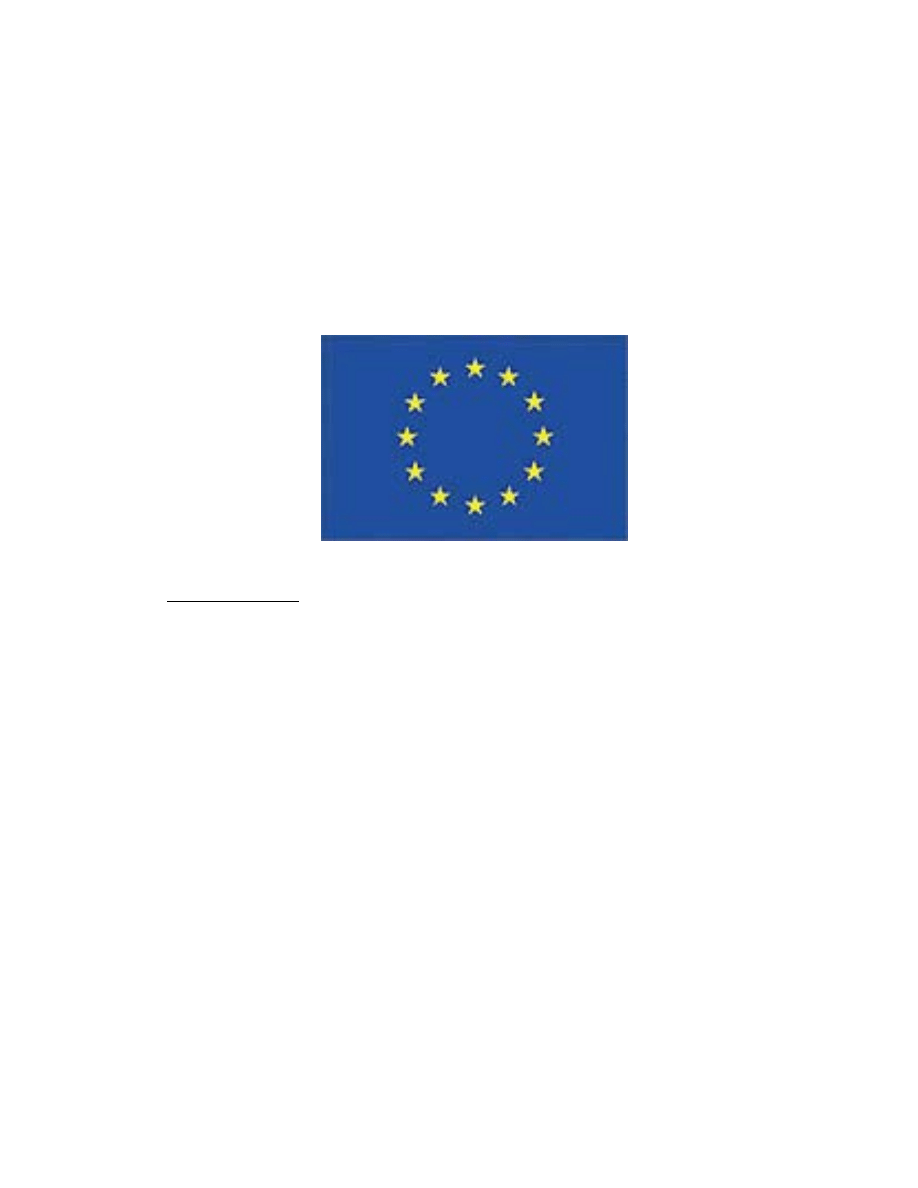
EUROPEAN UNION FLAG
Section E Review
I. What did you learn?
1. In your own words, list the three main three criteria that must be satisfied
before a candidate country can be admitted to the EU?
2. On what four freedoms is the European Union based?
3. Why was the 2004 “jumbo enlargement” different from all previous
enlargements?
4. What concerns do some people from the western European countries have
about adding the ten new nations to the EU?
5. How will EU membership help the 12 members that were added to Union in
2004 and 2007?
6. What was the purpose of the European Convention on the Future of Europe?
7. Did the Convention accomplish its goal? Why or why not?
8. How does the EU have connections with countries that are not EU members?
18

II. Learn more about it!
1. If you study the map in Section E, you will see two tiny countries--Switzerland
and Liechtenstein-- which have never applied for membership to the EU. Why do
you suppose they are not interested in joining the EU? For some hints, read about
Switzerland’s history in an encyclopedia. What was its political status during
World Wars I and II? (Who were its allies?) What would be the advantages and
disadvantages of remaining independent, when all your neighbors are EU
members?
2. On page 18 you can see a picture of the EU flag, and there is also an anthem.
The European Anthem is called “Ode to Joy”, by Ludwig Van Beethoven. To
hear it, access
, and click on “The European Union at a Glance”.
You will find the link for the anthem on the side bar.
3. In the most recent almanac you can find, look up the following information
about each of the twelve new EU members:
• Who is its head of state?
• What is its capital city?
• What are the main industries?
• What crops and livestock are raised there?
• What language do most of its inhabitants speak?
• What is its unit of currency called? (It won’t be the euro yet!)
• What is its per capita income?
4. Try to find pictures or videos that show the landscapes of the new member
countries.
5. Access
and look for the most recent information about the
European Union. Is it any closer to reaching consensus of the future of the
constitution? Has the procedure for passing legislation changed? Are there still
three “pillars”? Has the issue of member representation been resolved? What are
the current issues?
III. Think a little harder—role play!
1. Pretend you are going to tour five EU countries. What cities would you like to
visit in each country? Will you be using Euros? How will you get around? What
kind of clothes will you have to pack? What kinds of landscapes do you think
you will see? What kinds of souvenirs will you look for in each country? To get
some ideas, borrow a guide book from your library, or access its website.
(ex.:
2. Pretend you are a young politician from Iceland or Norway, and you feel like
your country is suffering economically because it is not part of the EU. What
argument would you use to convince your fellow Icelanders or Norwegians that
they need to apply for EU membership? You will have to consult an almanac or
encyclopedia to see what is produced in Iceland or Norway, and see what could
19

be traded with other countries. Also, look up what must be imported to Iceland or
Norway because it is not produced there. What other advantages would there be
for Icelanders or Norwegians if they were to join the EU?
IV. Now that you’re and expert on the European Union, see how many points you can
earn! For each of the Toss-up Questions you get right, give yourself 10 points, and for
every Bonus Question you get right, give yourself 20 pts. Good luck!
TOSS UP QUESTIONS:
1. What is the official monetary unit of Spain?
2. What is the smallest EU coin called?
3. What do the letters ECSC stand for?
4. When was euro currency first used?
5. How many stars are on the EU flag?
6. Who composed the EU anthem?
7. As of June, 2000, how many EU countries were there?
8. In what year did Switzerland join the EU?
9. In what city is the European Central Bank (ECB) located?
10. What is the value of the smallest EU bank note?
11. What do the initials EFTA stand for?
12. When was the euro first used for electronic transactions?
13. What color is the background of the EU flag?
14. The music to the EU anthem is also known as the “Ode to _____”.
15. In 1957, the Treaty of Rome established how many Common Market countries?
16. Besides Liechtenstein, which other country still uses Franken instead of Euros?
17. What is the official currency of French Guyana?
18. How could a blind person distinguish different denominations of euro bank notes?
20

19. Most countries joining the EU in 2004 used to belong to “Cold War” which alliance?
20. Which currency is currently used in England?
21. In which city was the Treaty On European Union signed?
22. Who is credited with writing a “declaration”, which spawned the idea of forming an
integrated Europe?
23. As euro bank notes increase in value, they also feature a more recent style of _____.
24. What is the value of the largest bank note?
25. Of the 13 EU countries currently using the Euro, which was the last one to begin
using it?
ANSWERS TO THE TOSS-UP QUESTIONS
1. The euro
2. The cent
3. European Coal and Steel Community
4. 2002
5. 12
6. Beethoven
7. 15
8. Never
9. Frankfurt, Germany
10. 5 euros
11. European Free Trade Association
12. Jan. 1, 1999
13. Blue
14. Joy
15. Six
16. Switzerland
17. Euros
18. They are different sizes
19. Warsaw Pact
20. British pound
21. Maastricht
22. Schuman
23. Architecture
24. 500 euros
25. Slovenia
BONUS QUESTIONS
1. When one speaks of the “Benelux” countries, what countries are included?
21

2. What were the two main goals of establishing a European Union?
3. In what three cities are most EU buildings located?
4. In 1986, the two “Iberian Peninsula” countries were admitted to the EU. Name them.
5. Name two EU countries that do not use Euros.
6. Name four countries new to the EU in 2004.
7. Name two benefits to travelers that were a result of the integration of Europe.
8. On the front side of Euro bank notes, what structures symbolize open opportunities?
9. Name the three countries that joined the EU in 1995.
10. In 1960, most countries belonged to either ________ or the _________ ________
to protect each other from the threat of attack.
11. What three countries joined the Benelux countries to form the original Common
Market?
12. What three countries joined the EEC in 1973?
13. In what three countries are most of the EU buildings located?
14. What two resources were protected and monitored by the ECSC?
15. Name two ways of how the EU has strengthened the economies of its members.
16. What is the main symbol on the backs of Euro currency? What does this motif
represent?
17. Name three areas in which candidate countries must qualify when applying for EU
membership.
18. Of the following countries, which two were NOT admitted to the EU in 2004:
Poland, Turkey, Hungary, Russia?
19. Name one reason which caused the constitution to be rejected.
20. Name three Scandinavian countries which do not use Euros.
21. Name two Euro coins for which there are no U.S. equivalents.
22

22. Before Cyprus could enter the EU, issues had to be resolved that involved what two
larger countries?
23. Name two reasons why the USA could not qualify for EU membership.
24. What do the designs of EU coins and new US quarters have in common?
25. What architectural styles are featured on the bank notes for 5 and 500 euros?
ANSWERS TO THE BONUS QUESTIONS
1. Belgium, the Netherlands, Luxemburg
2. Preserve peace, promote prosperity
3. Brussels, Strasbourg, Luxemburg
4. Spain, Portugal
5. England, Denmark, Sweden, all 10 new members
6. Poland, Cyprus, Czech Republic, Estonia, Hungary, Latvia, Lithuania, Malta,
Slovakia, Slovenia
7. Single currency for 12 countries, fewer checkpoints at national borders.
8. Windows, archways, doorways
9. Austria, Finland, Sweden
10. NATO, Warsaw Pact
11. France, Germany, Italy
12. England, Ireland, Denmark
13. Belgium, Luxemburg, France
14. Coal and steel
15. One currency, free trade
16. Bridges, cooperation (strong bonds)
17. Economic& political stability, human rights
18. Turkey, Russia
19. Fear of loss of national sovereignty
20. Norway, Sweden, Denmark, Iceland
21. 2 cent, 2 euro, 20 cents
22. Greece and Turkey
23. National debt/deficit, capital punishment, geography
24. Faces are all the same, backs differ according to state of origin
25. 5 euros—Gallo-Roman (1
st
-4
th
centuries), 500 euros—20
th
and 21
st
centuries
23

SOURCES:
EU Publications:
Pamphlets:
A Constitution for Europe?
The Enlargement of the European Union: From Copenhagen to
Copenhagen
Euro Info
Panorama of the European Union
Booklets:
Europe in 12 lessons
How the European Union works
Websites:
http://europa.eu
http://encarta.msn.com
http://peopledaily.com
24
Wyszukiwarka
Podobne podstrony:
The law of the European Union
An Introduction to the Kabalah
Introduction to the MOSFET and MOSFET Inverter(1)
Zinda; Introduction to the philosophy of science
IT 0550 US Army Introduction to the Intelligence Analyst
Introduction to the Direct3D 11 Graphics Pipeline
Introduction to the Magnetic Treatment of Fuel
Introduction to the Humanistic Approach
An introduction to the Analytical Writing Section of the GRE
The European Union is the world
INTRODUCTION TO THE LITERARY THEORY 14
Introduction to the Runes brief background information on runes, with table of Elder Futhark rune m
Cognitive Psychology from Hergenhahn Introduction to the History of Psychology, 2000
Introduction To The Metaphysic Of Morals
K Prolic Taxation Trends in the European Union
Introduction to the chakras
The law of the European Union
An Introduction to the Kabalah
Beginners Introduction to the AVR ASM
więcej podobnych podstron