
The Crespi Ancient Artifact Collection of Cuenca Ecuador
Compiled By Glen W. Chapman
November 1998
Father Carlo Crespi, who comes from Milan, has lived in the small town of Cuenca, Ecuador, for more than 50
yeam. He is a priest of the Church of Maria Auxiliadora. Crespi was accepted by the indians as a real friend. They used
to bring him presents from their hiding places. Finally the father had so many preci6us objects stored in his house and
the church that one day he received permission from the Vatican to open a museum. This museum in the Salesian
School at Cuenca grew and grew Until in 1960 it was one of the biggest museums in Ecuador, and Crespi was
recognized as an archaeological authority. But he has always been a rather embarrassing servant of his church, for he
asserts vehemently that he can prove that there was a direct connection between the Old World (Babylon) and the New
World (pre-Inca civilizations); and that goes right against prevailing opinion. On 20th July 1962 there was an act of
arson and the father's museum was burnt down. What Father Crespi managed to salvage was housed in two long
narrow rooms, which were in a terrible muddle Brass, copper, sheet-metal, zinc, tin and stone and wooden objects and
in the midst of them all pure gold, sheet-gold, silver and sheet -silver. Eric Van Danken (ref. 1) in His book Gold of
The Gods says of this Treasure “Let the Vatican grail guardian Father Crespi of Cuenca be the key witness to the pre-
Christian origin of the metal treasures. He said to me:
‘Every' thing that the Indians brought me from the tunnels dates to before Christ. "Most of the symbols and pre-
historic representations are older than the Flood.’
“Father Crespi has partially stacked his metal plaques by motifs, for example those with pictures of pyramids. I
took a close look at more than 40 and some of them are reproduced in this book.
All
the pyramid engravings have four
things in common: a sun, but more frequently several suns, is depicted above the pyramid; snakes are always flying
next to or over the pyramid; animals of various kinds are always present….
“Professor Miloslav Stingi is the leading South American scholar in the Iron Curtain countries; he
graduated in the ancient civilizations of America. today he is a member of the Academy of Sciences at
Prague and author of archaeological and ethnological books. In versunkenen Mayasta~dten (1971), for
example, is highly acclaimed. Professor Stingl, who was a guest in my house, saw the photographs I had
taken at Cuenca. ‘If these pictures are genuine, and everything indicates that they are, because no one
makes forgeries in gold, at any rate not on such a large scale, this is the biggest archaeological sensation
since the discovery of Troy. Years ago I myself supported the view that the Incas had no writing in the
alphabetical sense of the word. And now I am faced with Inca writing. To be able to give a precise
scientific verdict I should have to subject each plaque to a detailed and lengthy examination, and compare
each one with material already available. For the moment I can only say that I am dumbfounded. The sun
was often part of the scenery in known Inca engravings, but man was never equated with the sun, as I see
time and again in these photographs. There are representations of men with sun's rays round their heads and
there are men depicted with star points coming from them. The symbol of holy power has always been the
head. But in these pictures the head is simultaneously sun or star. That points to new direct connections.’”
J Golden Barton in 1998 tells of a visit see Father Crespi with Dr. Paul Chessman from BYU and
others in the late 1970’s. He writes (ref. 2): “High in the Andes mountains of Ecuador lies beautiful
Cuenca, a peaceful city with red Spanish tile roofs and worn cobble stone streets. Townspeople go about
their daily business happily trading with each other and the native Indians who populate the hills and
valleys surrounding the village. The Indians speak the tongue of their Quechua" ancestors, who watched
the sun rise over the Amazon hundreds of years before. With weathered and rosy cheeks they radiate a
simplicity of harmony with the rugged mountains where they have worked time out of mind. The men of
the tribe wear a single long braid of hair down their back underneath a Panamanian hat. Men, women and
children are dressed in the same black and brown earth-tone cloth, edged with bright colored trim. Each
shuffle along the paths long known by their forefathers, carrying them back and forth from village to
village. Not many tourists travel this way and the service is unrushed but thorough.
“A few blocks from the center of the village stands a Catholic "College of Salesino." Young men
and women from prosperous families attend this secondary school, its classrooms facing a clay and terrazzo
tiled courtyard. Entering through a side door, we found ourselves in a small open-air enclosure facing
stately, hand-carved wooden gates. A friendly young man bid us enter through old wooden doors and
ushered us into a private chamber. A few moments later, a bearded, monkish-looking man with twinkling
eyes and a benign smile arrived and embraced Dr. Cheeseman. Although an octogenarian, he appeared in
lively good health, despite his quaking robes which betrayed a shaky hand. We had heard that he was
senile, but his personal behavior only radiated complete mental competence. So this was Father Carlos
Crespi, Ecuador's unlikely focus of a unique archaeological controversy that continues to baffle everyone
who has heard about it.
“He led us into an inner court of the school yard, where old Spanish wooden doors faced inward,
and the oft-scrubbed floors gleamed with sunlight bouncing off the polished terrazzo. We were unprepared
for what was to come. Father Crespi took a large key from a ring that hung from a braided belt around his

robe, then moved to an obscure wooden door and turned the lock. Together with a single helper, he
disappeared into the dark room. Both soon reappeared with a large piece of metal that had been molded and
hammered into a long sheet. It looked like it might be made of gold. The sheet was inscribed with a curious
artwork
beyond identification.
“Next, they dragged something from the darkness too large to be carried, and only with strenuous
exertions were they able to lean it against the stucco wall. It stands twenty-two inches high and about seven
inches wide its weight must have been prodigious. I reached my hand to touch the object and noticed it
featured a dark covering, as if it had been painted. At first, I supposed it must have been made of lead,
because it was soft and almost pliable. Then the nails of my fingers bit into the body of the figure through
the paint and the gleam from the tell-tale scratch left
no doubt that it was made of pure gold.
Our cameras began to click, and in the excitement Father Crespi talked excitedly, hardly stopping to
breathe. He was our enthusiastic instructor, showing us each new piece as though it had just been brought
to the light of day for the first time.
“
What other wonders did his black vault contain, we wondered? The old man's nimble fingers
joined the ends of two barren electric wires and the chamber was instantly revealed in the radiance of an
incandescent globe. The gleam of gold, silver, and bronze everywhere added to the brightness of its
interior. Shelves of dusty, worn ceramics, starry-eyed idols posturing in hideous
stances or strange
proportions. Stacked from floor to ceiling were hundreds of large cardboard pieces on which were wired
metal bracelets, earrings, nose rings, and necklaces, some untarnished by time. Hide-scrapers, tools,
implements of war, spears, axes, clubs, of wood, metal and stone were stacked everywhere. Father Crespi's
mysterious room seemed overburdened with the treasures of an unknown antiquity. It literally over-flowed
with bizarre artifacts, many wrought in precious metals. Most intriguing were the innumerable plates of
bronze, brass and gold. Many bore strange inscriptions and hieroglyphic symbols. Others were replete with
the engravings of incongruous animals--elephants, snakes, jaguars, wild beasts of every kind. The images
of horse-drawn chariots were clearly etched into metal, calling to mind Juan Moricz's description of "a
Roman chariot" in his underground chamber.
“We photographed a plate inscribed with representations of what appeared to be Egypt's step-
pyramid. Still more plates contained artwork with what looked like Assyrian or Babylonian symbols. We
grew dizzy with the gleaming opulence and historical anomaly all around us. Newell Parkin, a banker from
Bountiful, Utah, Dr. Paul Cheeseman, Wayne Hamby, an undergraduate student from Brigham Young
University, D. Craig Anderson, a Utah State University Research Associate, who acted as our interpreter,
and I spent the afternoon amid these otherworldly splendors. In all my travels throughout the world, my
visit to the Crespi Collection was to be their crowning experience
.
“We asked Father Crespi how he came by such marvelous things. He said he headed the local
parish for over fifty years after studying at Italy's University In Milan, where the subject of archaeology
had caught his interest. Following graduation, he became a priest and was assigned to Ecuador's beautiful
city of Cuenca to work among the Indians. In time, he came to love them. Moreover, in South America he
had opportunity to further his archaeological interests. To his great surprise and delight, the religious
celebrations over which he presided brought a host of Indians bearing gifts to the kindly man who
performed baptisms and marriages and was their friend in trouble. Aware of Father Crespi's enthusiasm for
archaeology, the grateful Indians brought him ancient objects long hidden in the jungle. Soon, his
collection steadily increased until, after fifty years, it filled many rooms.
“A museum was constructed to house these remarkable gifts, but a few years before our visit it was
seriously damaged by an arsonist's fire. Father Crespi managed to salvage three full rooms of the relics, one
of relatively obscure and unimportant tributes, another filled with items of curious antiquity, but the last
was a treasury of gold artifacts. Residing high among the Andes mountains in an obscure village, the old
man had no interest in fame or fortune. Few travelers knew of his collection and even fewer scientists. He
was a private person with a big heart and a deep interest in the past.
‘Where and how do the Indians find these incredible things.,’ we wondered.
‘Oh, they just get them from the caves and subterranean chambers in the jungles,’ he answered in an
offhand manner. 'There are over 200 kilo-meters of tunnels starting here in Cuenca. They run from the
mountains down to the eastern lowlands near the Amazon." Wayne Hamby, an assistant to Cheeseman,
spent a few more days with Father Crespi to catalogue and photograph the entire collection. His results
went into the files of Dr. Cheeseman, who died after his retirement from the faculty of Brigham Young
University.
“Two years following our visit to the kindly priest, I returned to Cuenca with Ben Holbrook, our two
young sons, and a pair of Ecuadoran LDS missionaries acting as interpreters. We were greeted by a young
priest, who informed us that Carlos Crespi had passed away in January 1980, and his collection was no
longer available for public view. In spite of my efforts to convince him that we had traveled a long distance
to view the relics, he stubbornly refused to allow us to see the treasures. He insisted that the room with the
artifacts could not be shown on orders from the Vatican. To my knowledge, no one from the outside world
has seen the treasure since the death of the old Padre. “. Mr. Barton heard rumors that much of the treasure
had been shipped to Rome to the Vatican.

Richard Wingate a Florida based explorer and writer visited Father Crespi four times during the mid to
late 1970’s and photographed the extensive artifact collection. He says this concerning his visits:
“IN A DUSTY, cramped shed on the side porch of the Church of Maria Auxiliadora in Cuenca,
Ecuador, lies the most valuable archaeological treasure on earth. More than one million dollars worth of
dazzling gold is cached here, and much silver, yet the hard money value of this forgotten hoard is not its
principal worth. There are ancient artifacts identified as Assyrian, Egyptian, Chinese, and African so
perfect in workmanship and beauty that any museum director would regard them as first-class acquisitions.
Since this treasure is the strangest collection of ancient archaeological objects in existence, its value lies in
the historical questions it poses, and demands answers to. Yet it is unknown to historians and deliberately
neglected in the journals of orthodox archaeology….
‘Ah,’ the priest said, ‘enough flattery, then, let's take a look.' Without ceremony, he forced a key
into an ancient, rusty padlock and opened the rickety door to his museum. He touched two bare wires
together and a watery yellow light went on. Father Crespi was smiling like a man with a very remarkable
secret.
I was skeptical of the reports I had heard about this place, but now that cautious attitude gave' way to
unabashed astonishment. Stacked against the far wall were golden mummy cases in the quasi-Egyptian
style with a black, baked-enamel finish. A dozen complete sets of gleaming, golden ceremonial armor,
beaten-gold Chaldean-style helmets, and golden inscribed plaques were piled haphazardly on the floor.
These dazzling memoirs of lost times were scattered among an array of beautifully carved Pacific Oceanic
and African-styled wooden statues, shields of a rich, red copper, pottery, canes, sheets, and rolls of silver-
colored metal, and strange, unidentifiable gears, pipes, and wheels which might have been parts to long-lost
technological systems. Rolls of intricately figured sheet metal stood haphazardly piled around the shed. The
priest explained that it had been torn off the interior walls of long abandoned, vine-choked buildings in the
inaccessible eastern jungle. The Indian artifact hunters bring this wallpaper in three different metals: gold, a
metallurgically unique, untarnished silver, and an unknown alloy with the appearance of shiny aluminum.
Every square inch of the peculiar sheet metal is decorated with intricate designs, some of them depicting
long-forgotten ceremonial occasions and some of them humorous and cartoon like. The rolls come in
heights that vary, for the most part, from eight to twelve feet, and they are often fifteen to thirty feet long.
These lengths are composed of many individual four-foot sheets which have been artfully riveted together.
He showed me a dozen bronze plaques. Seemingly, they were among his favorite acquisitions. The
illustrations borne by the plaques made me catch my breath. Images of Egyptian princesses and Assyrian
gods stared at me with a severity undi
minished by the passage of centuries. One of the plaques bore the image of a
Caucasian man writing linear script with a quill pen. Linear script? A quill pen? Needless to say, the Andes Indians did
not have a written language when the Spanish arrived, let alone a tool for writing. There were reportedly fifty-six solid
gold plaques originally, but after a disastrous arson in 1962, which local political fanatics claimed credit for, Father
Crespi had molds made by a local casket maker and the best dozen of his precious plaques were duplicated in coffin-
handle bronze. The original gold plaques lie safe today in a bank vault.
“Father Crespi granted me permission to take photographs. Since most museums jealously guard their treasures
from photographers, the priest's open generosity won me over. Lack of space inside the shed forced me to set up my
tripod and camera in the sunlit outer courtyard. The priest himself brought his treasures out for me to record on film.
Hours passed, and the usual, afternoon equatorial winter rain began. The Father was growing tired. We quit for the day.
I had exposed over ten rolls of film, taken more than three hundred pictures, and covered only a tiny percentage of the
seventy thousand artifacts which filled the museum's three rooms to their ceilings.
“As it turned out, I made not one but three additional visits to Father Crespi in Cuenca, exposed
over three thousand frames, and I still have captured only 2 percent of the collection on film. Between my
second and third trips, the Padre's treasure hunters apparently hit upon a fresh cache in the jungle caves. So

many new pieces arrived during this period that I was forced to climb over heaps of newly unearthed objects
in order to get to certain items that I particularly wanted to photograph. I found myself in the classic one-
step-forward, two-steps-back situation, for new articles were arriving more rapidly than I could take pictures
of the old!
“One of the reasons for my continued efforts was my apprehension for Carlo Crespi's advanced age.
He was born on April 29, 1891, and when he dies, the integrity of the collection is by no means assured. It
might be saved and protected by benevolent church authorities, but an auction to private dealers seems just
as likely. If the priceless museum is somehow disbursed before modern techniques of dating and evaluation
can be applied to its artifacts, a great chance for the reevaluation of the history of the Western hemisphere
will have been missed.
“In spite of the plethora of startling material in his museum, Father Crespi regrets that he missed
acquiring most of the 'treasure unearthed in the jungle, including most of the best articles, because he
simply couldn't match prices with other bidders.
Maintaining the jungle museum has proven a difficult adventure for the Father in other ways as well. The
collection weathered an arson fire in 1962 which melted many objects, burned others, and substantially
diminished its value. Another fire occurred in 1974. There have also been instances of outright theft.
A few archaeologists who
have
heard of the collection are prone to an understandable condescension,
because the shedful of artifacts poses a violent offense to the procedural r~es of their fraternity. The articles
in the trove have been discovered in sloppy, unsupervised, surreptitious digs by wholly untrained J ivaro
Indian diggers. Crespi is not even an accredited museum curator. Although not an uneducated man~he
holds a master’s degree in anthropology from a Milan, Italy, university. The priest has no formal
archaeological training, and the time he gives to his immense collection is stolen from a heavy schedule of
parish duties, as I saw on my visits. Crespi, furthermore, occasionally expresses a salty indifference to the
judgment of the accepted experts. The classification system of his museum is best described as chaotic. It
does not make highly publicized acquisitions at blue ribbon auctions, for the Father wouldn't have the
money, even if he had the need. Nor does it have advanced dating machinery, assistant curators, guards,
guides, set hours, or any of the other appurtenances of the respectable, contemporary museum. And yet the
affection in which the Padre is held by his Shuara (Jivaro) collectors, has made it possible for him to accu-
mulate the most significant single assemblage of South American artifacts anywhere.
“Carlo Crespi was raised in the prosperous northern Italian -city of Milan, where, after a youth spent
with a comfortably wealthy family, he decided to join the Salesian Fathers. More than fifty-five years ago
this missionary order sent Father Crespi to South America. Ever since that voyage, Father Crespi has lived
a life of voluntary poverty, sleeping on the floors of native huts with only a single blanket, and carelessly
eating poor but lovingly offered food. He has cared for the people, listened to their stories of fabulous deep-
jungle temples, explored the treasure-filled Tayos caves, and stubbornly provided a museum for the strange
artifacts of the country… When Father Crespi and his Indian diggers tell of the places where they find their
artifacts, they described giant pyramids, immense, deserted cities, fantastic sacred tunnels, and caves. The
cities, they say, still shine with a mysterious, cool bluish light when the sun goes down. The tunnels are
reportedly large enough to drive a locomotive through. They have cut-stone entrances and walls which, by
native account, are as smooth as glass. And it is these tunnels, at least according to the Indian explorers,
that hold the bulk of the material being offered to the Maria Auxiliadora museum and to other collectors. It
is a fantastic tale, but when one sees the evidence, the thousands of gold treasuresd trinkets, the story of a
vast tunnel system become nealy plausible.
“Although legend tells of this tunnel network honeycombing all of Ecuador and Peru, the only part of it
that has, to my knowledge, been documented, is located in the very dangerous Jivaro country, between the
Santiago and Morona rivers, near Tayos. Unfortunately, this area is decidedly out of bounds for the foreign
adventurer. The local Indians have killed at least four inquisitive outsiders in the last two years. Yet the
tunnels of the Shuara tribes (Jivaro) have been photographed. A naturalized Ecuadorian named Juan Moricz
took several rolls of high-quality pictures, verified in this way the accounts the natives have been giving
Crespi, and subsequently lay legal claim to the entire tunnel network. His grandiose claim was denied by
the courts, but his photographs cannot be. “ Ref. 3
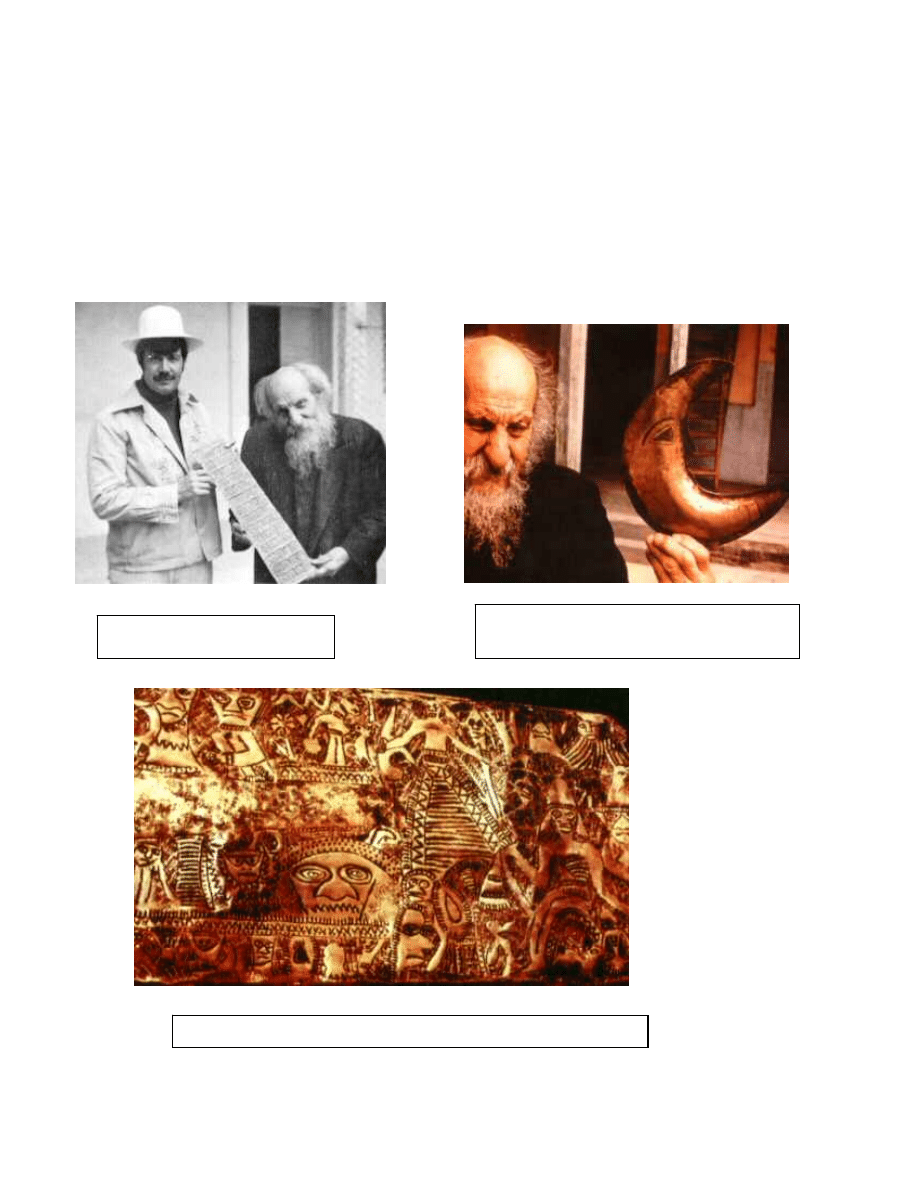
Father Crespi With Wayne Hamby
(Hamby Ref. 4)
Crespi Carved Gold Plate With Bearded Figures (Barton Ref 2)
Father Crespi With One of of His Gold Artifacts
(Barton Ref. 2 )
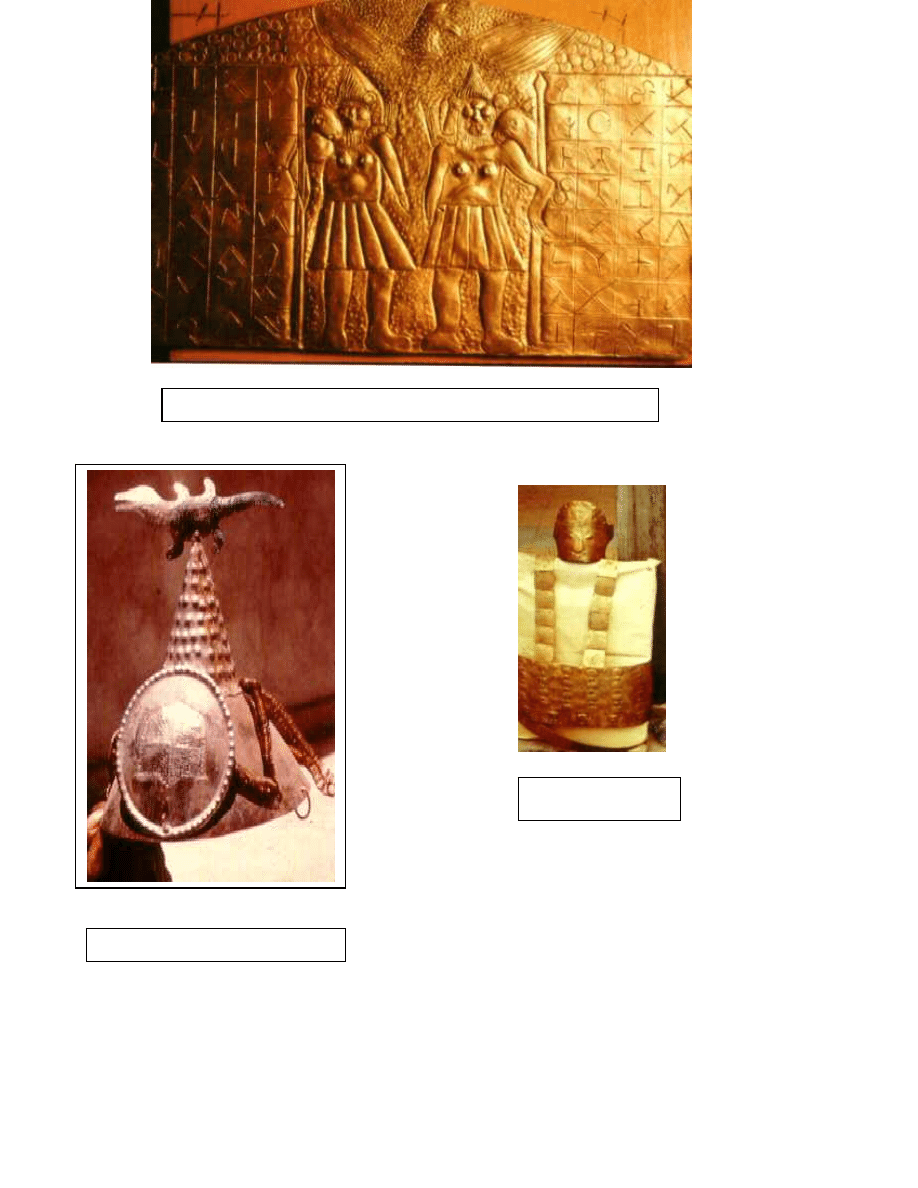
A Crespi Gold Plate With Hieroglyphic Writing (Barton Ref. 2)
Golden Girdle (Barton
Ref 2)
Golden Helmet (Barton Ref 2 )
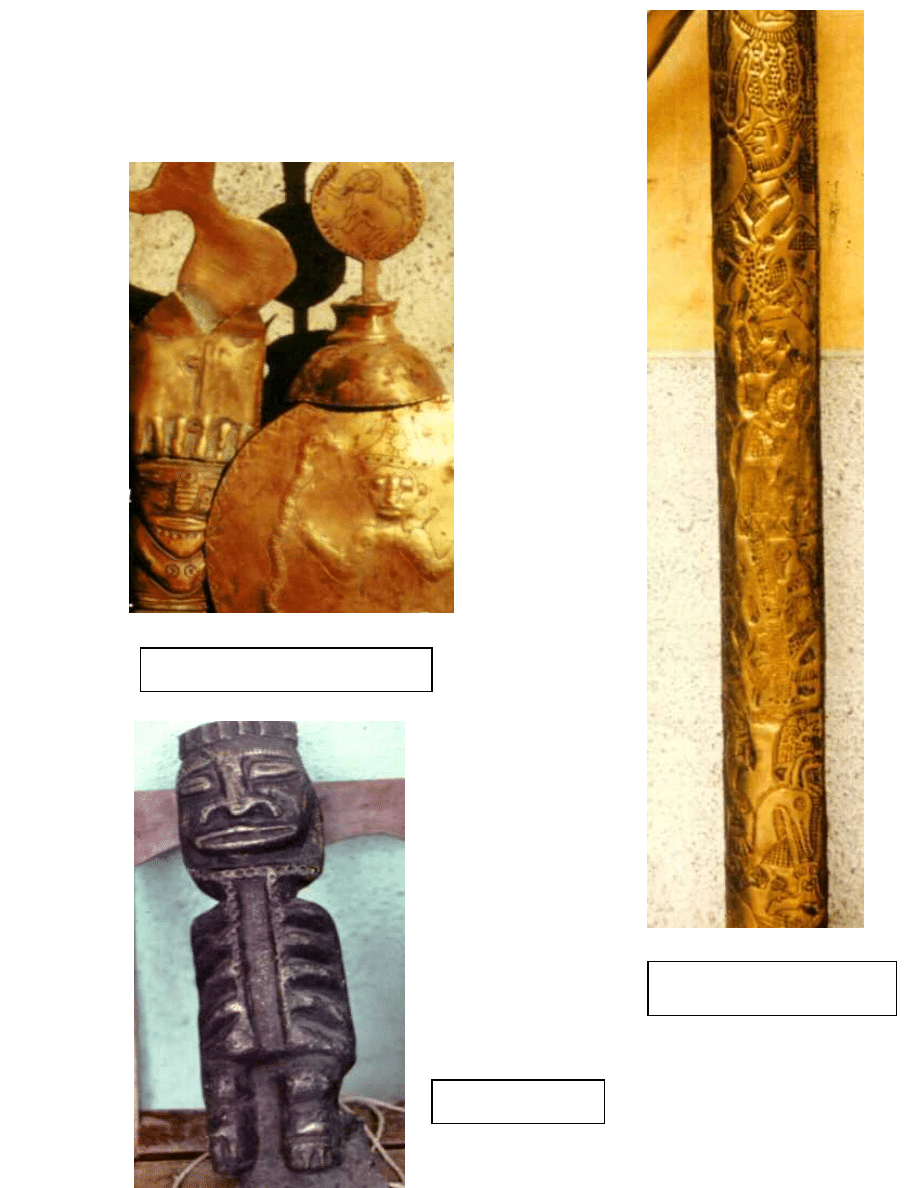
Various Crespi Golden Artifacts
(Barton Ref.2)
A Crespi Golden Carved Cylinder
(Barton Ref. 2)
Crespi Bronz Figure
(Barton Ref. 2 )
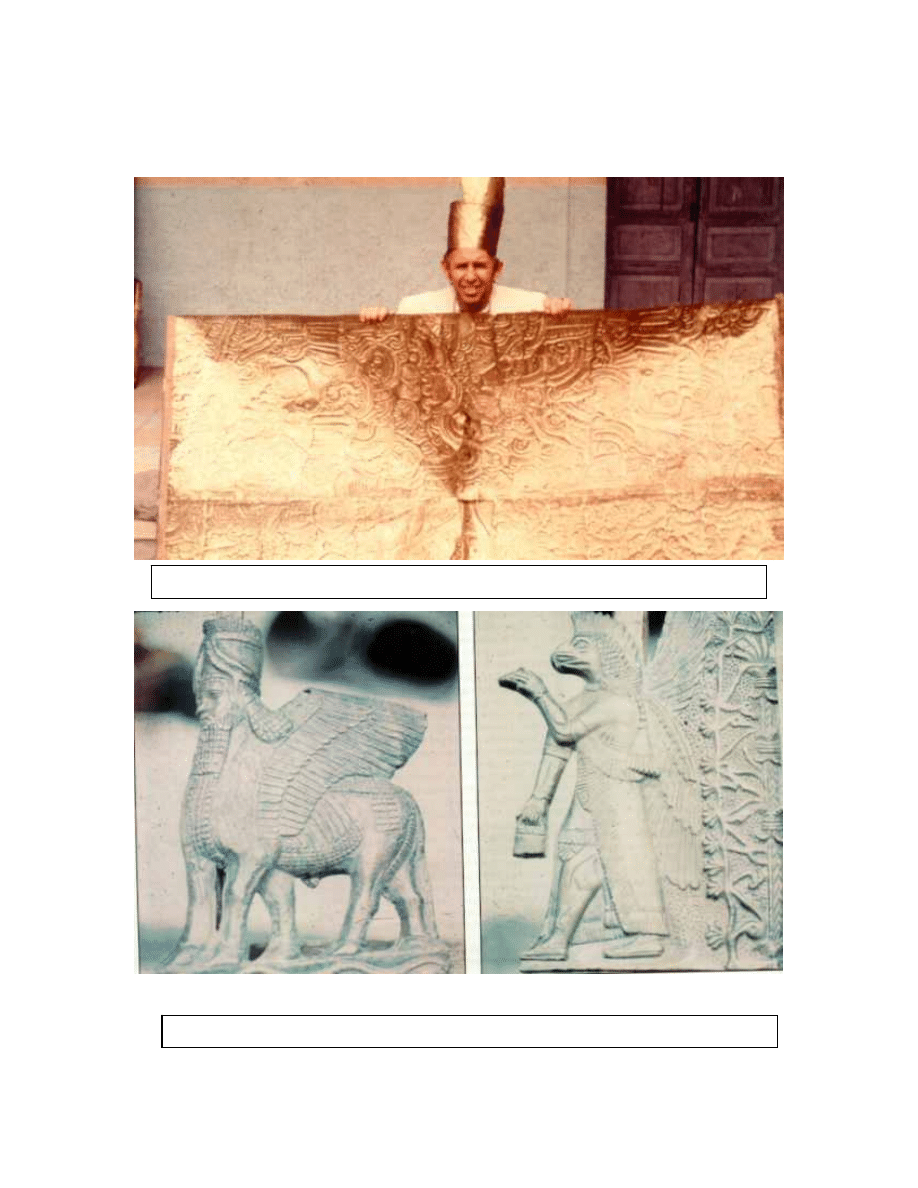
A Crespi Carved Gold Sheet With Paul Barton (Barton Ref. 2 )
Crespi Middle Eastern Stone Carved Figures With Serpents (Barton Reference 2 )
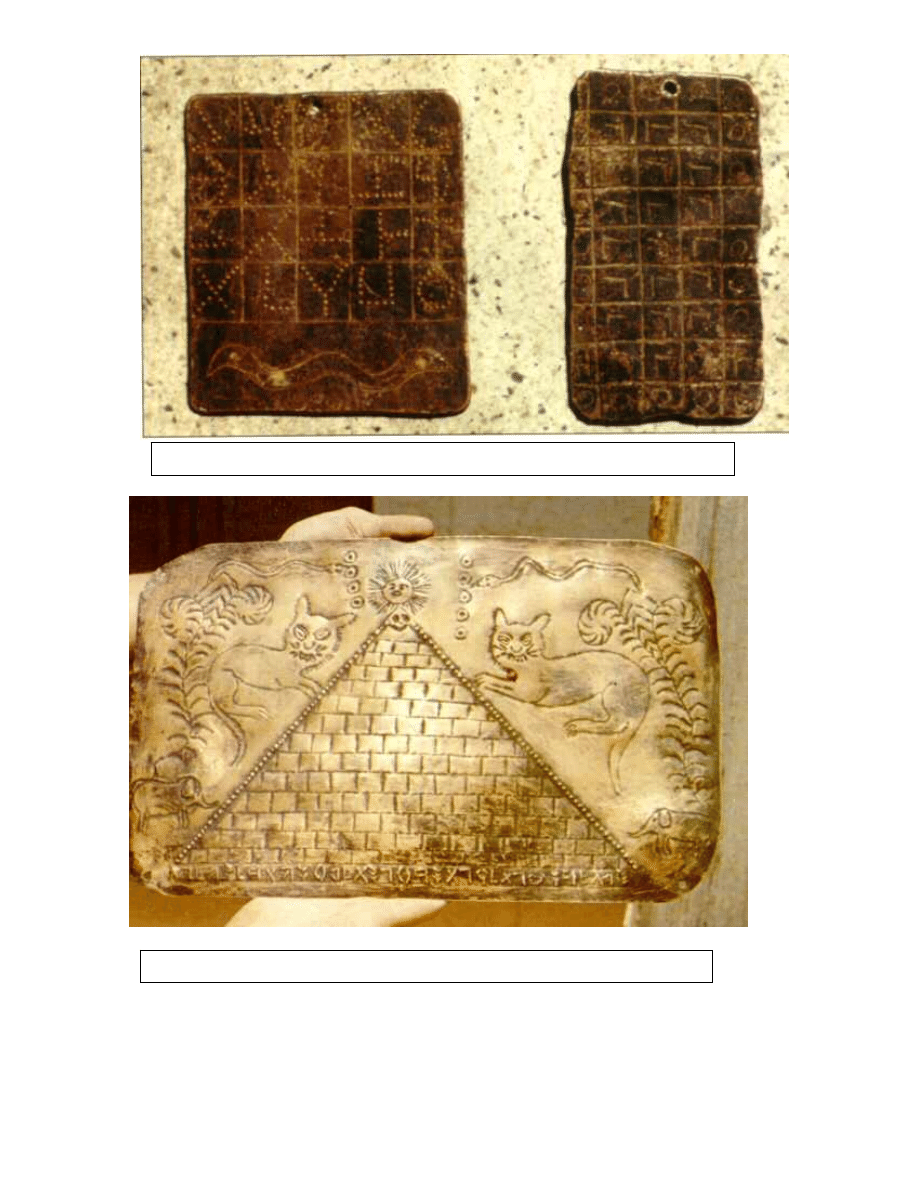
Crespi Gold Plates With Hieroglyphic Writing and Serpent Figure (Barton Reference 2)
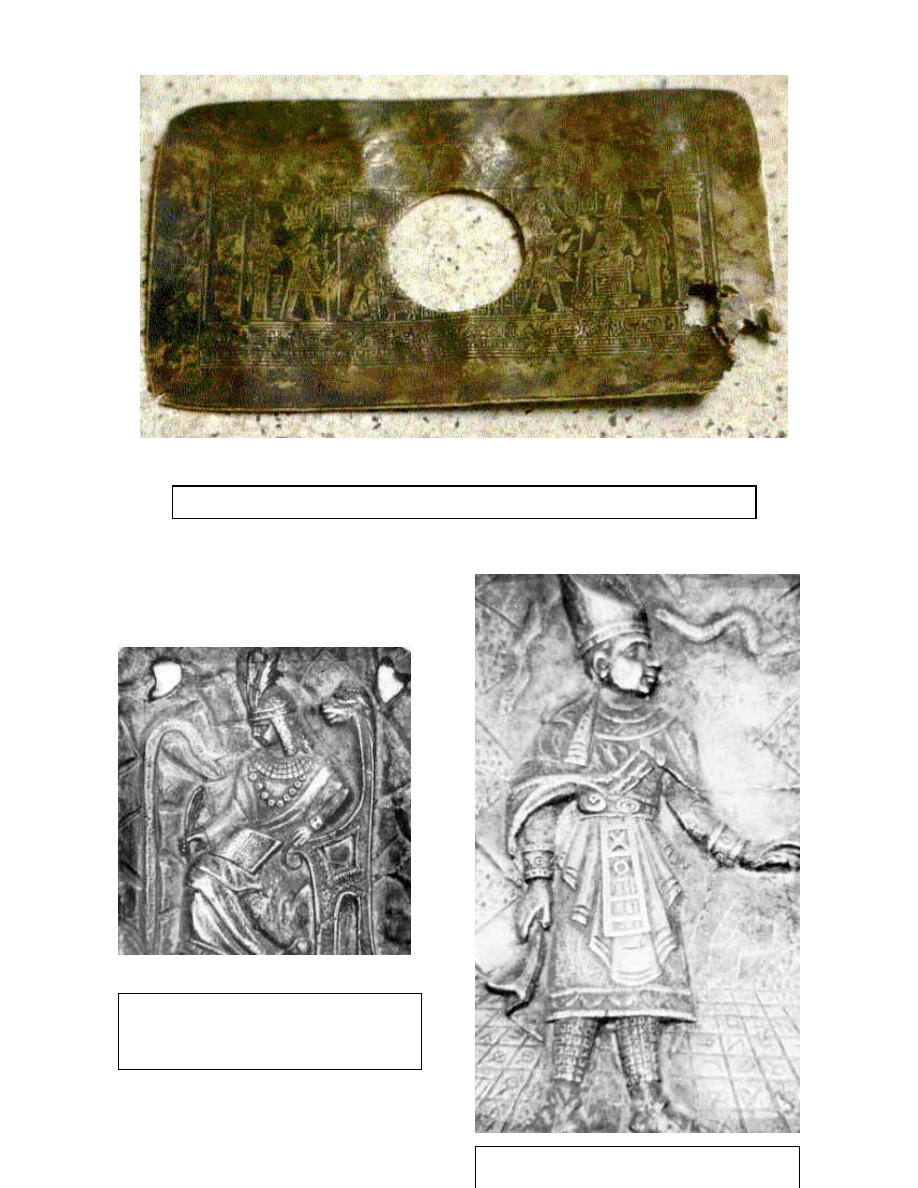
Crespi Collection with Pyramid and Paleo- Hebrew Writing (Hamby Ref. 4)
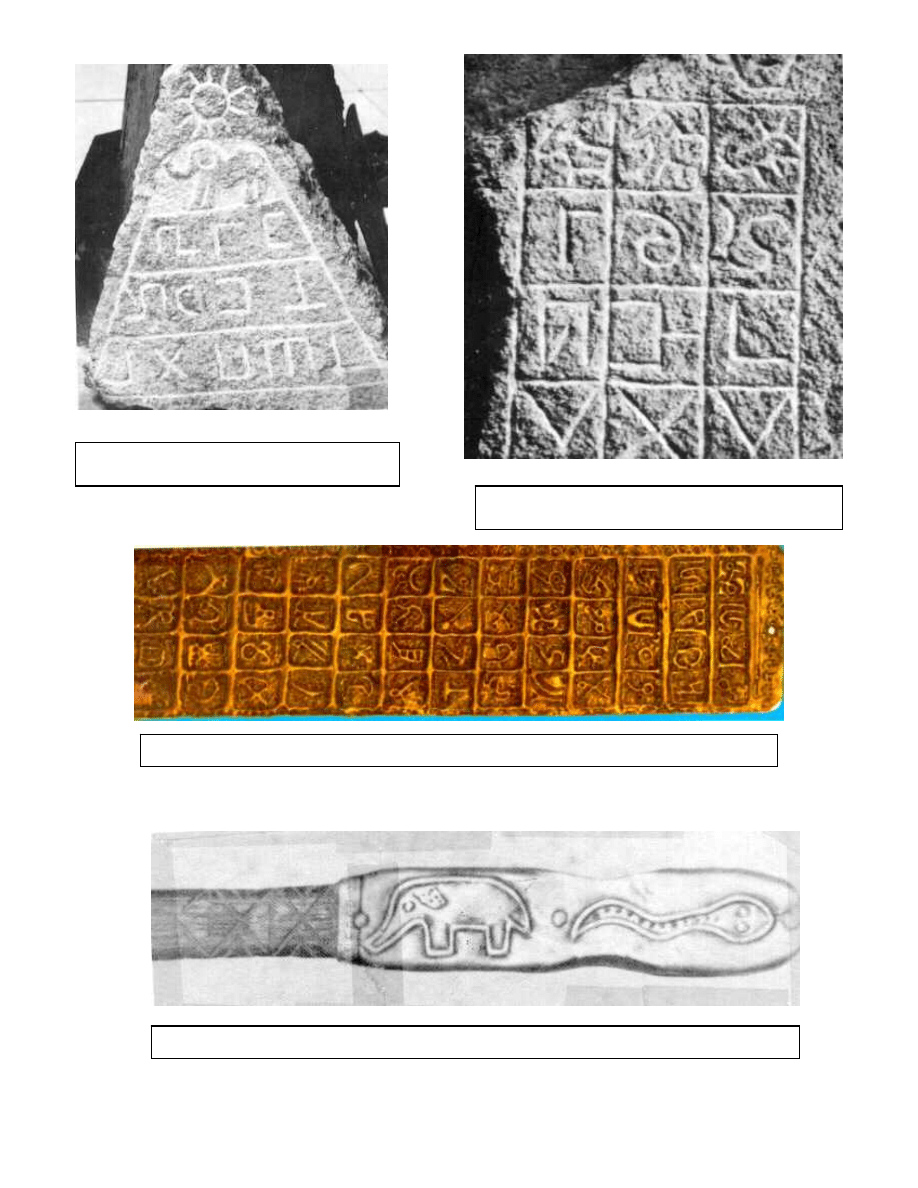
Gold Crespi Artifact Plate With Egyptian Hieroglyphics and Figures (Hamby Ref.4 )
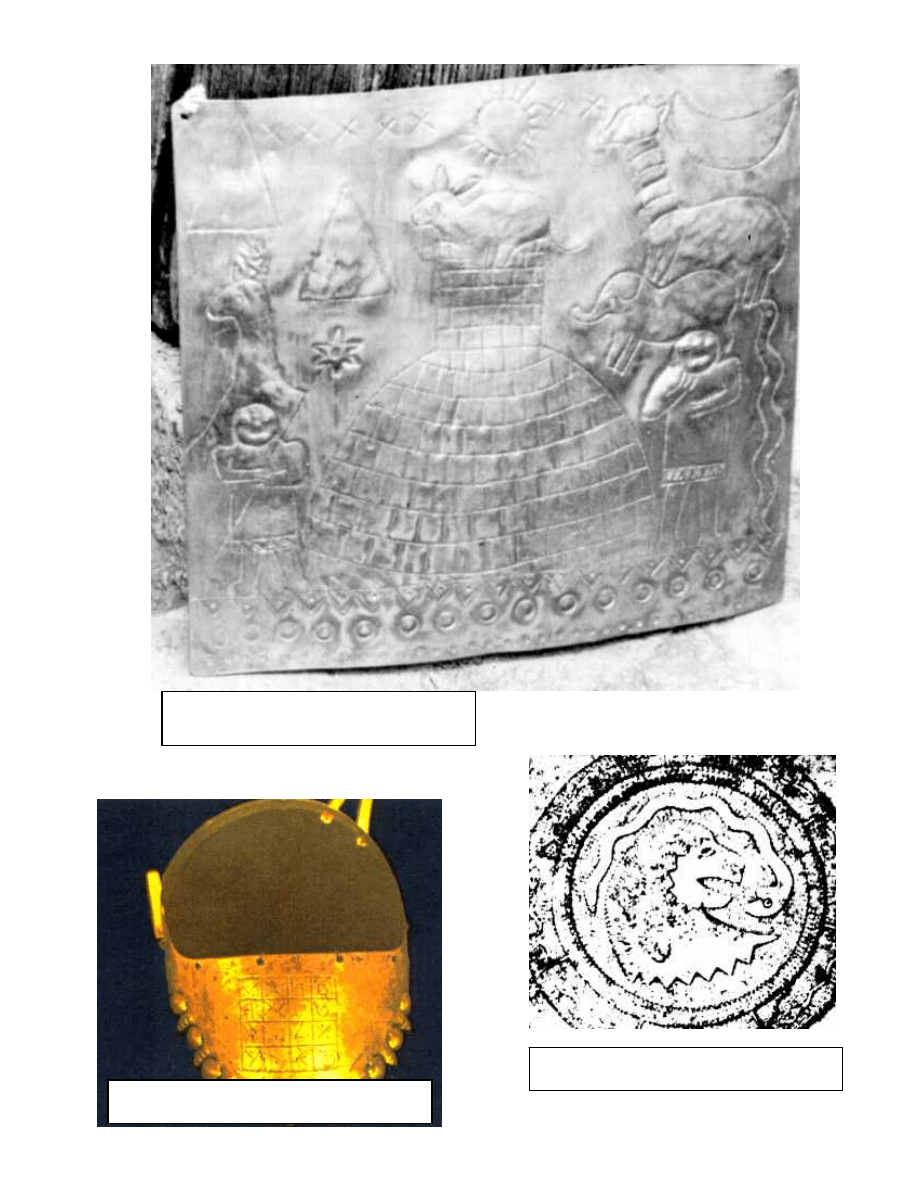
Crespi Carved Figure of Priest in Temple Robes
(Hamby Ref. 4)
Crespi Gold Plate Showing a Robed Person
Writing in a Record With Serpent Figures
(Hamby Ref. 4)
Crespi Carved Stone Writing and Figure of Elephant
And Horse (Von Daniken Ref 1)
Carved Stone Crespi Artifact Showing Writing
and a figure of Elephant (Von Daniken Ref. 1)
A Crespi Gold Plate with Written and Zodiacal Characters (Barton Ref. 2 )
A Crespi Ceremonial Object with Elephant and Serpent ( Van Daniken Ref. 1)
Crespi Gold Plate with Various Animal and
Human Figures (Van Daniken Ref.1 )
Crespi Stone Disk Portraying a Lion and
Serpent (Von Daniken Ref. 1 )
Crespi Gold Pouch Decorated with Writing and
Serpents (Barton Ref. 2)
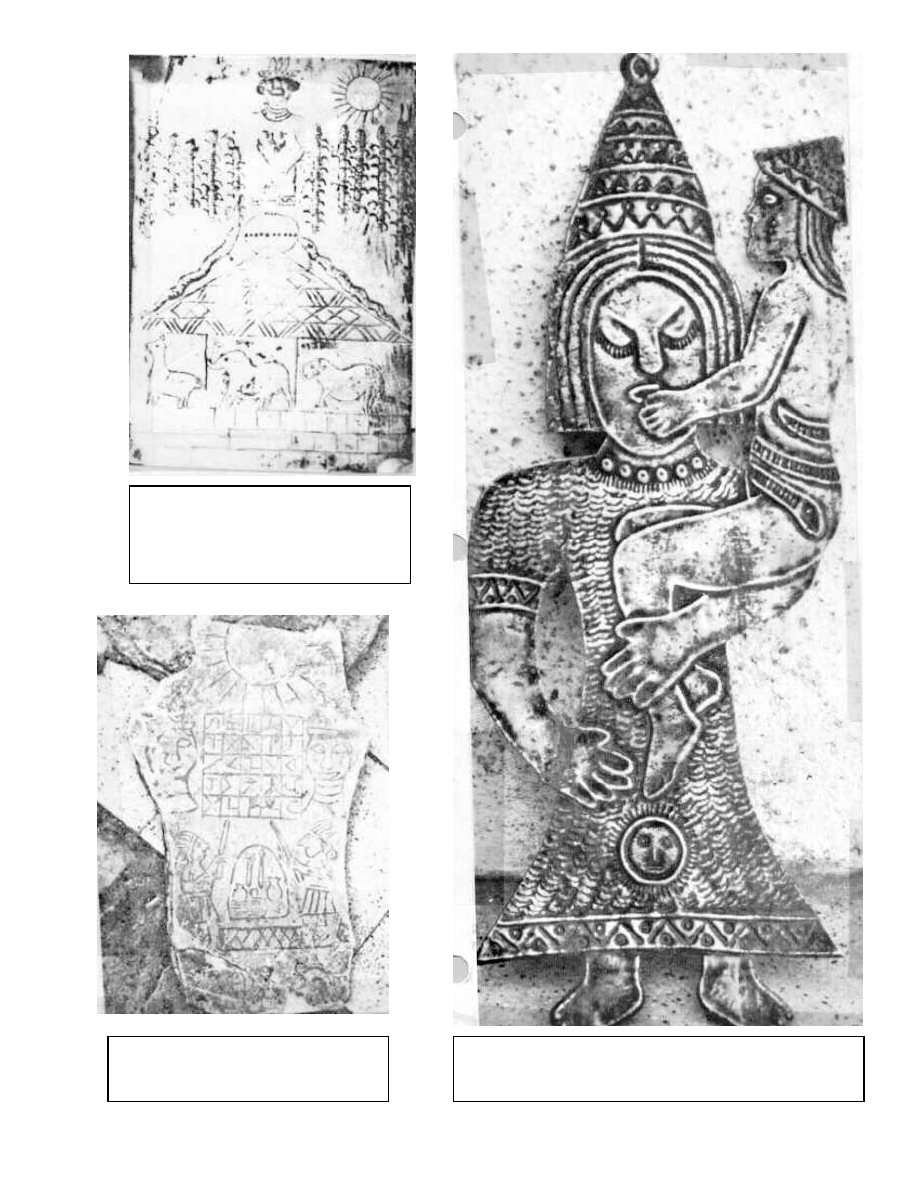
Crespi Gold Plate Showing a Warrior With Braided Armor and
Headress Holding a Naked Child With Serpent wrapped Around
Waist (Von Daniken Ref. 1)
Crespi Gold Plate Showing Pyramid With
Serpents Along The Sides and Sun Disk
on Top and Elephant, Lama, and Toxodon
Supposed to be Extinct in Americas a
Million Years Ago (Von Daniken Ref. 1)
Cespi Carved Stone Tablet showing
Writing , Eating Utensils and Pottery and
Human Figures (Van Daniken Ref. 1 )
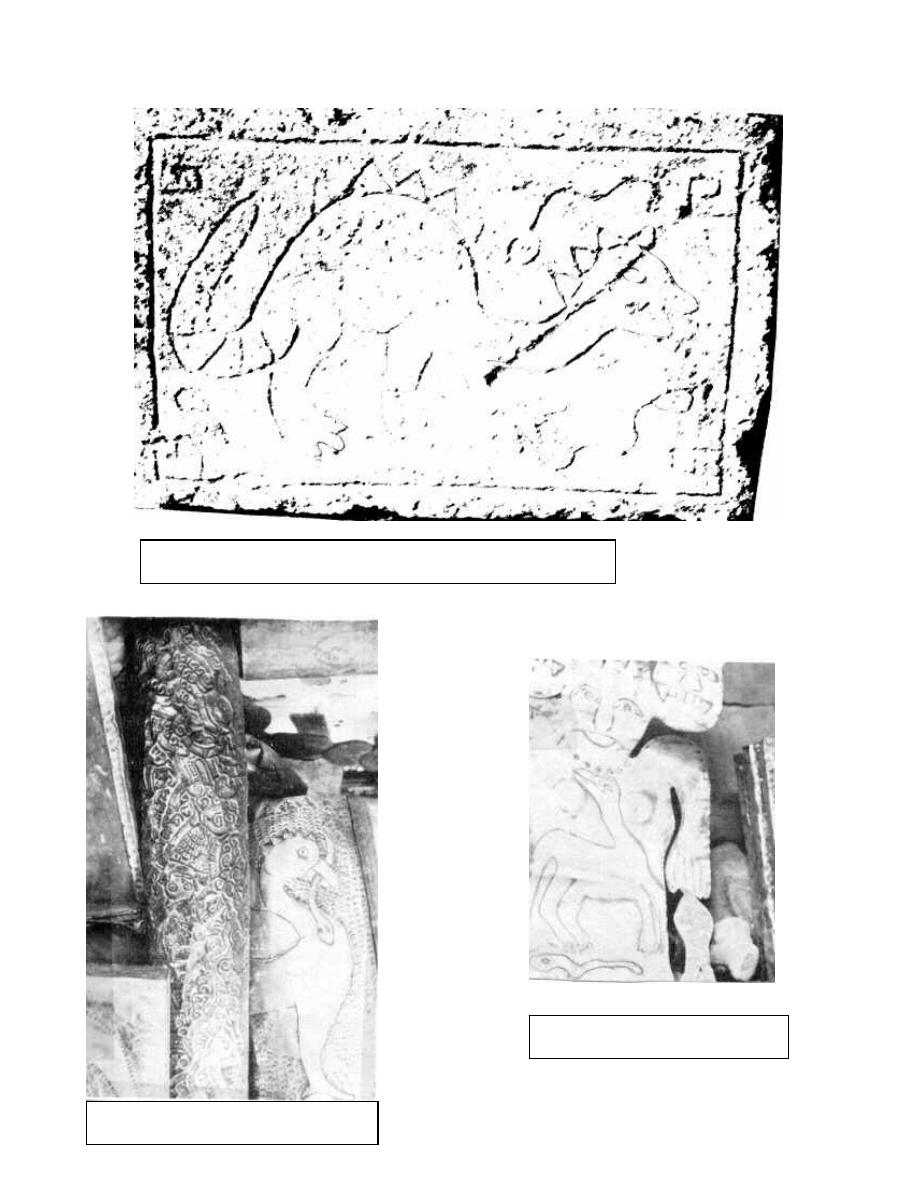
Crespi Strange Carved Stone Showing a Dinosaur (Van Daniken Ref. 1 )
Crespi Gold Wall Covering Showing
Strange Reptile Bird (Van Daniken Ref. 1 )
Crespi Human Figure With Tattoo of
Strange Repti;e (Van Daniken Ref 1)
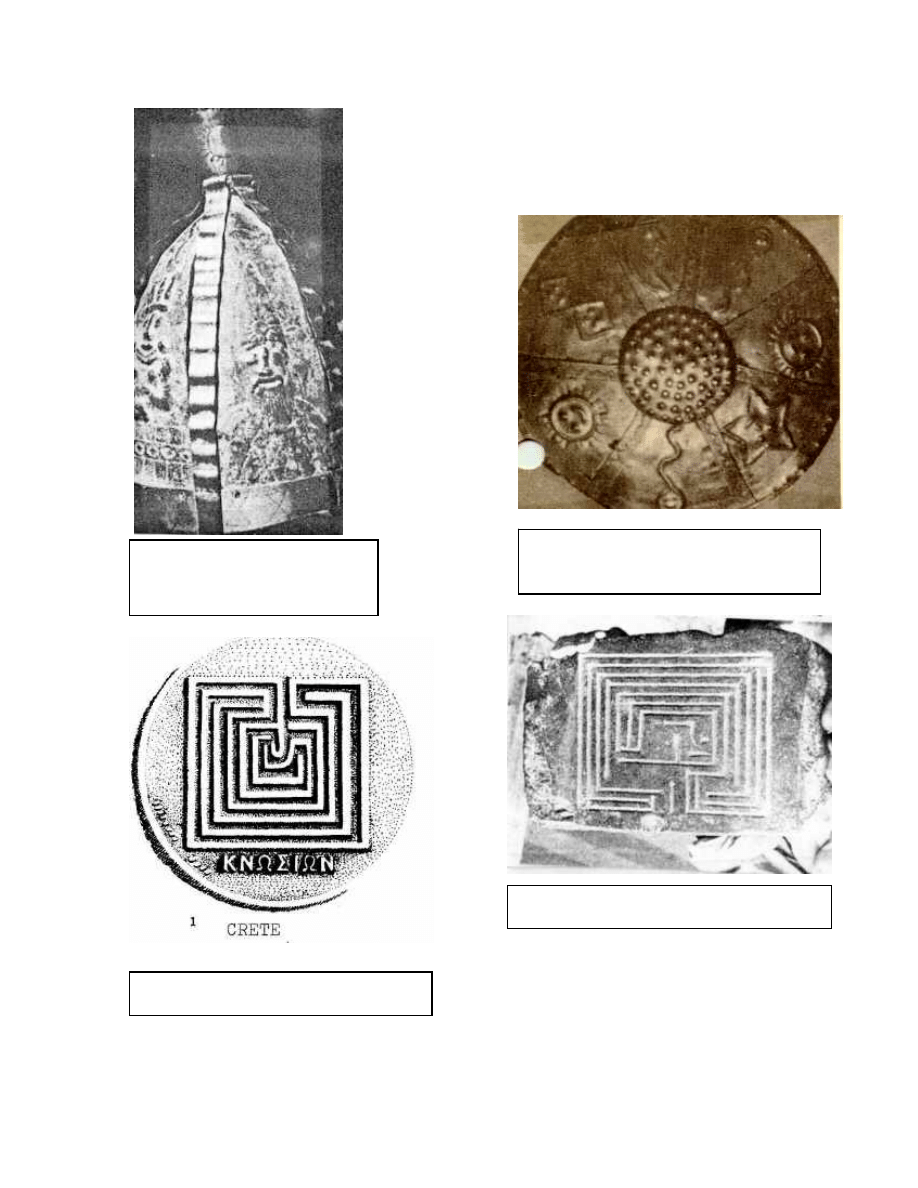
Crespi Strange Crown Showing a
Bearded Man With Crown and
Sundisk and Woman With Crown
(Van Daniken Ref 1)
Crespi Gold Disk With Figures of Suns,
Serpents, and a Five Point Star
(Van Daniken Ref. 1)
Crespi Stone Tablet With Carved Maze
(Van Danken Ref. 1)
A Simular Maze From Minoan Ancient Crete
( Van Daniken Ref. 1 )
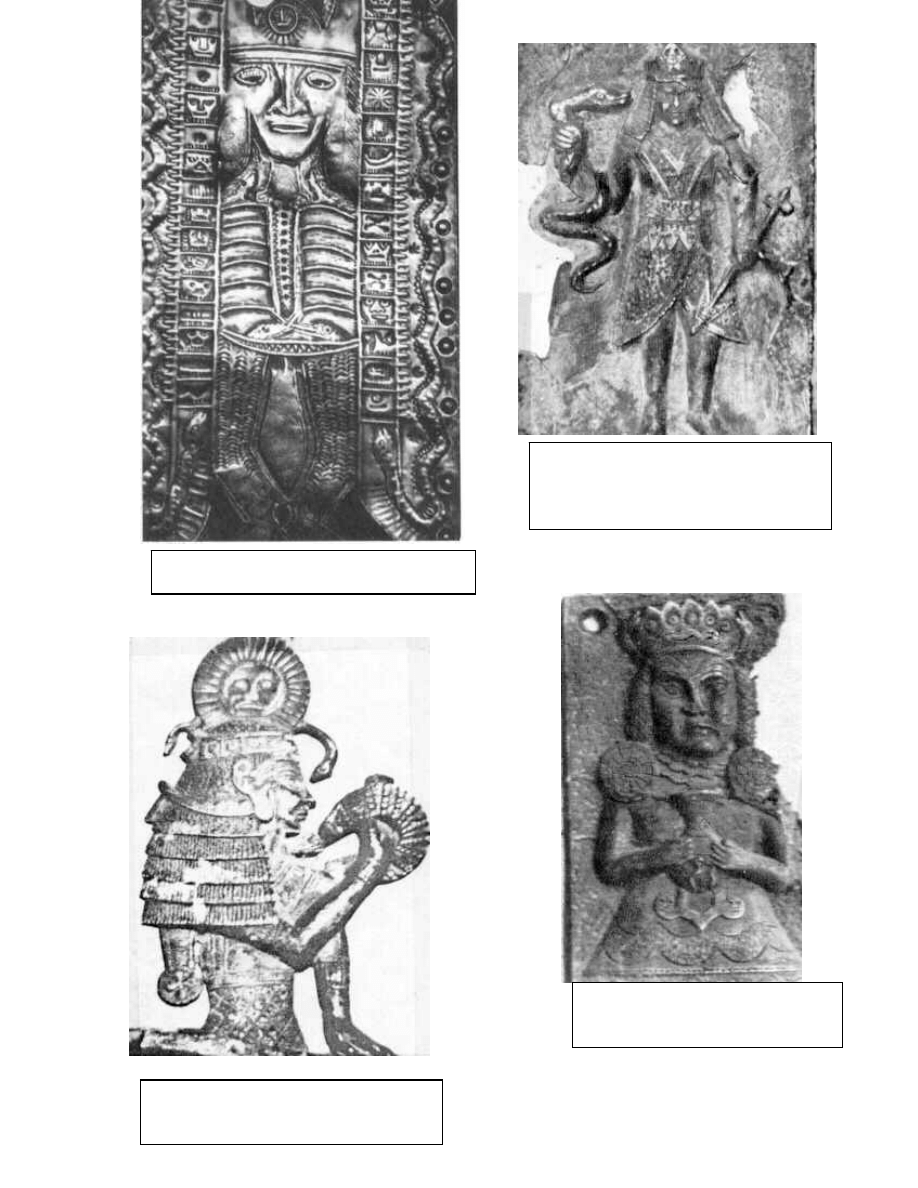
Crespi Gold Plate Showing Figure of Their God
With Serpents ( Von Daniken Ref 1)
Crespi Gold Plate Showing Queen With
Dress Decorated With Serpents and
Strange Images (Van Daniken Ref. 1 )
Crespi Gold Plate Showing a Warrior With
Armor and Weapons With Strange Braided
Headdress Holding a Serpent ( Von Daniken
Ref. 1 )
Crespi Gold Plate Showing Warrior With
Braided Headress with Sun Disk, Armor and
Serpents (Von Daniken Ref. 1 )
Richard Wingate, in Lost Outpost of Atlantis, offers evidence for the authenticity of the
bulk of the Crespi Collection. He writes:
“Similar epigraphy in Father Crespi’s collection was
also labeled a clumsy Indian fraud until better trained scholars discovered some inscriptions were
written in classically pure Egyptian hieroglyphics, Egyptian hieratic, Libyan and Celt-Iberian, and
Punic.” (p. 108)
Concerning the large numbers of brass and bronze high-pressure air pipes: Such pipes
simply can’t be purchased in Ecuador today…We were told by importers that we would have to
special order pipes of these specifications from Germany, and the cost would be substantial.
These technological artifacts, of course, don’t fetch high prices on the market.” (p. 139)
Concerning artifacts that are made of pure or alloyed gold: The native gold panners
“hardly have the leisure or the inclination tofake heavy artifacts of gold and then sell them for
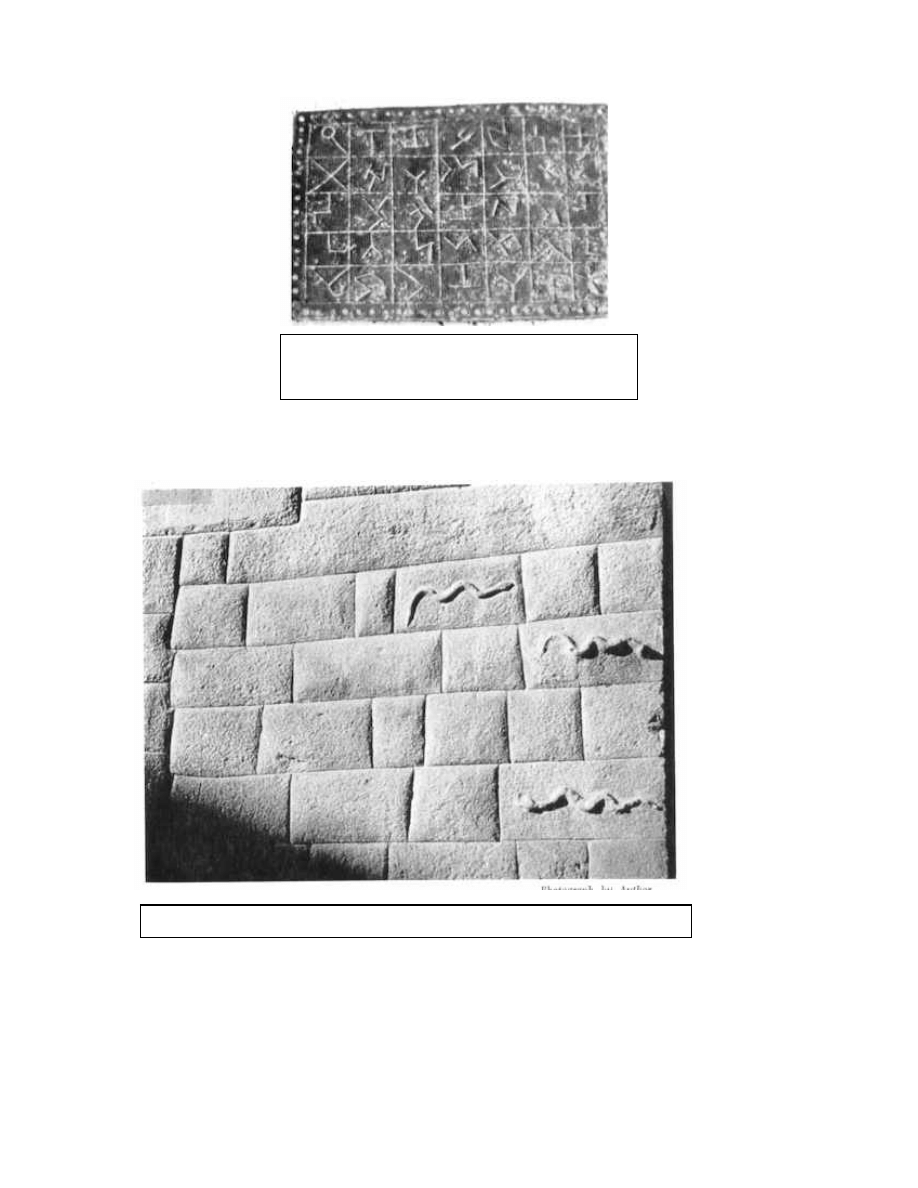
Crespi Gold Plate With Hieroglyphic Writing
Note Squares For Separation (Van Daniken Ref 1)
A Pre-Inca Wall Showing Serpent Portrayal

less than the bullion value of the precious metal.” (p. 139)The “heavy mineral crust enamel
coating” of many artifacts indicates that they were “buried under searing volcanic heat.” (p. 139)
Concerning sophisticated artifacts, like the Phoenician calendars, the golden Middle
Eastern helmets, the golden armor, and the golden plaques: these “would bring hundreds of
thousands of dollars and perhaps millions on the private market; to suggest that a
sophisticated forger unloaded them on the priest for a low price is to
deny the greed that motivates forgery!” (p. 140)
Concerning a cast steel shield: “Steel casting is beyond the
metallurgical capacity of present day Tayos Indians.” (p. 143)
(B) Fakes
Regarding fakes (which Crespi knowingly purchases in his casual, humanitarian style, at the same
time chiding the seller): “The modern solder and hacksaw marks give them away.” (p. 136)
(C) Hybrid real-fakes
Far from creating fakes in order to reap high profits, some of the Indian diggers in Ecuador
have cut up and reshaped genuinely ancient and priceless materials in order to get any kind of
price at all for it. We have mentioned earlier the ebony column…carved with the Ecuadorian
national seal and decorated with gold cut from a sheet of mysterious ancient wallpaper.” (p. 139)
Picture (p. 36)—“Obviously genuine copper ‘radiators’ were redecorated by Indian discoverers.”
Picture (p. 39)—“Heavy brass ‘bass viol’ a real-fake soldered together from original thick wall
sheeting.” The brass sheet metal is genuine and very old, but the instrument was crafted by
modern forgers. One can see where existing designs on the brass sheets were cut through in the
manufacture of the article.
Picture (p. 142)—“Genuine silver wrapped gold trimmed elephant. Yet decorated with modern
brass thumb tacks.”
Picture (p. 146)—“Bottom of tin can. Clumsily fire blackened to simulate real volcanic mineral
patina on genuine objects. The carbon on this olive oil can be rubbed off on a sheet of paper. The
black patina on most of Crespi’s material is enameled to the metal.”
In
summary:
“The genuine green porphyry patina on many of the articles,…the enormous
quantities of cheaply bought gold articles, the metallurgical uniqueness of some of the artifacts
(such as the platinum nose cone and the radiators), the Mid-eastern artistic motifs, and the
abundance of art ides for which little or no market exists (such as the air pipes and the
‘wallpaper’) pose difficult questions for those who carelessly write the collection off as a hoax.”
(p. 140)
References
1. Eric Van Daniken Gold of The Gods (1973)
2. J. Golden Barton The Lost Gold of Ancient Ecuador, Ancient American Vol. 4 Number 25, 1998
3. Richard Wingate Lost Outpost of Atlantis 1980 Everest House Publishing Company
4. Wayne Hamby Voices From The Dust 1977 Osmond Publishing Company
Wyszukiwarka
Podobne podstrony:
Warhammer FRP Collection of Ancient Lore
Catalogue of the Collection of Greek Coins In Gold, Silber, Electrum and Bronze
Philosophy of Science (Collection of Quotes)
Ancient philosophers critics of Athenian?mocracy
A Collection of Studies on the Tibetan Bon Tradition
Philosophy of Science, Practice of Science (a collection of quotes)
Skill 11[1] Collection of Stool Specimen
Collection of Hesiod Homer and Homerica
A collection of lunacy
Francis Healey, Percy Healey A Collection Of 200 Chess Problems Kessinger Publishing, LLC (2009)
Archeological Historical and Artistic Collections of Eufemio Abadiano (1885)
Skill 16[1] Assisting with Collection of Cerebrospinal
Sreenath O G Indian Astrology (A collection of astrological articles)
Relationships A Collection of Articles
Skill 12[1] Collection of Urine Specimen
palahniuk collection of essays short stories e mails
Collection of Brian & Justin Stories Raw NC 17 Part 1
więcej podobnych podstron