1
Reactions of Alkenes…the details
• Electrophilic addition reactions, general
– General mechanism (ex: hydrogen halides)
– Carbocations & transition states
– Regioselectivity
– Rearrangement of carbocations
• Specific reactions
– Addition of water and alcohol
– Addition of halogens
– Oxymercuration-reduction
– Hydroboration-oxidation
– Addition of radicals
– Addition of hydrogen
• Relative stabilities of alkenes
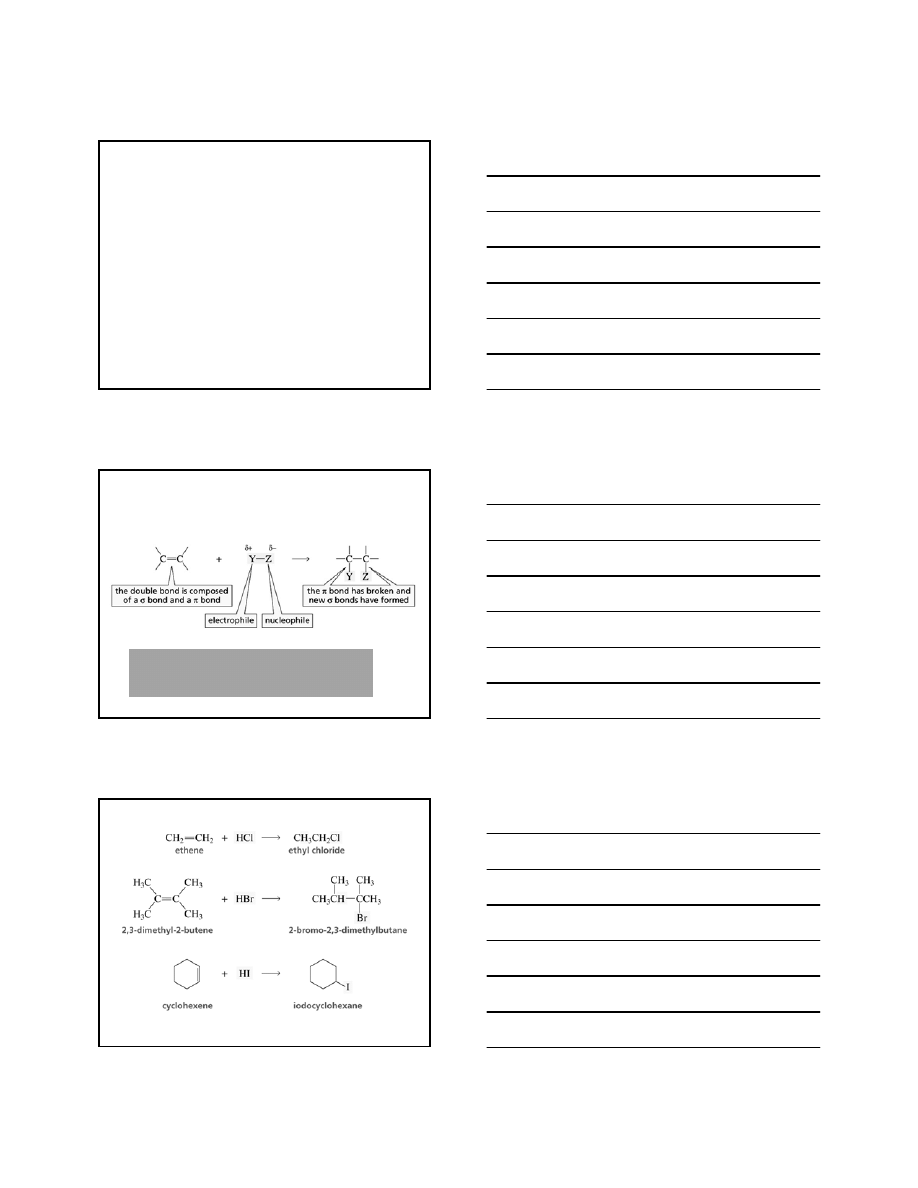
Electrophilic Addition of Alkenes
Every reaction:
1. Starts with addition of electrophile to sp
2
C
2. Ends with addition of nucleophile to second sp
2
C
Example: Addition of Hydrogen Halides
2
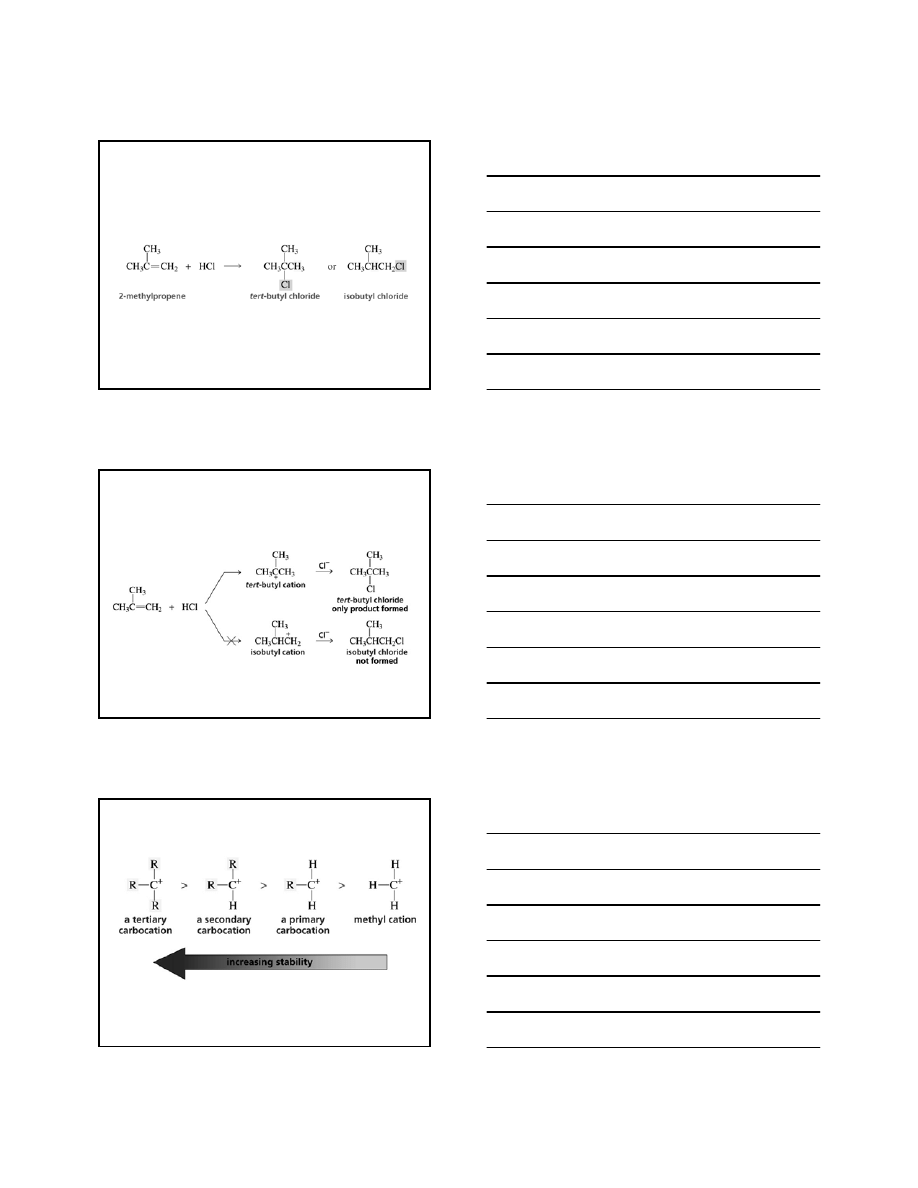
What is the product?
We must examine the
mechanism…
a more stable
carbocation
Carbocation formation is the rate-limiting step
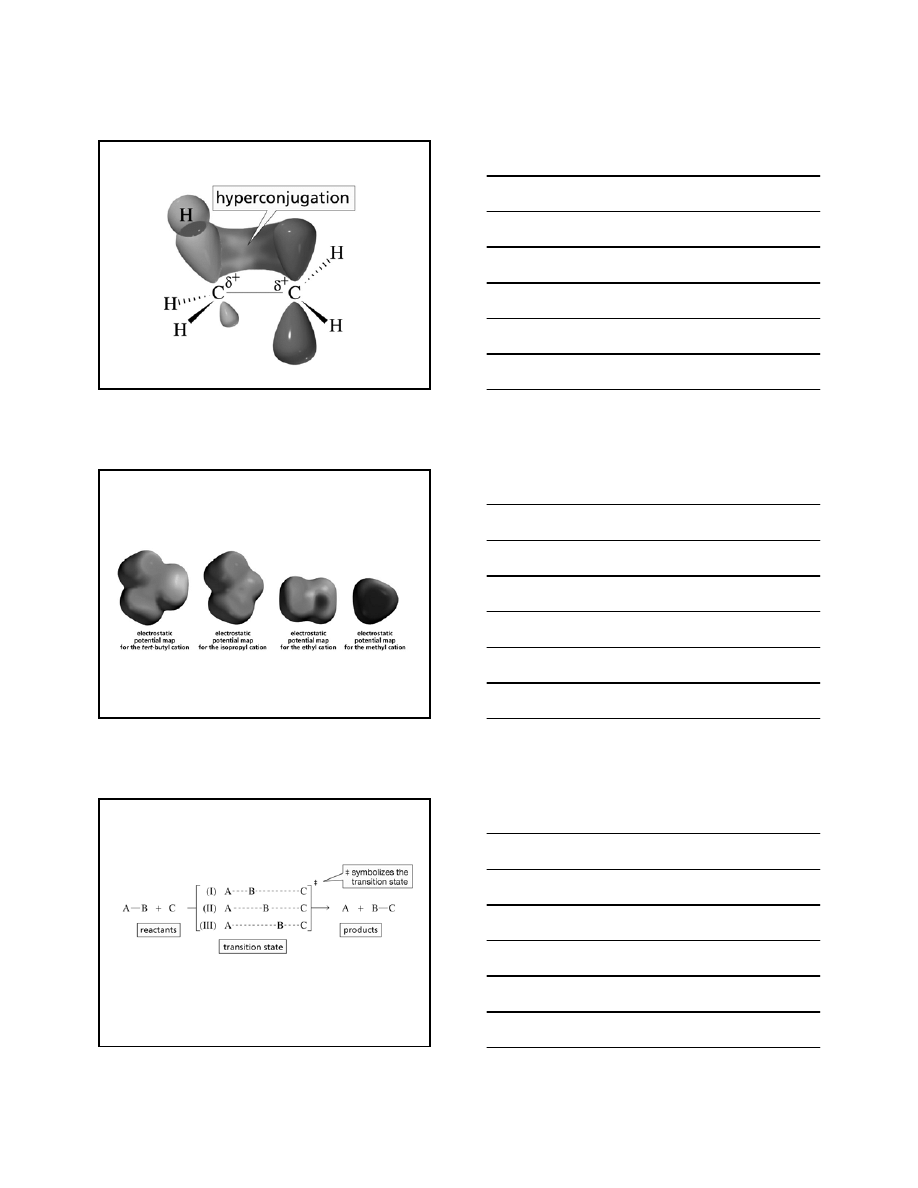
Carbocation Stabilities
3
Delocalization of Electrons
Alkyl groups decrease the concentration of positive
charge in the carbocation
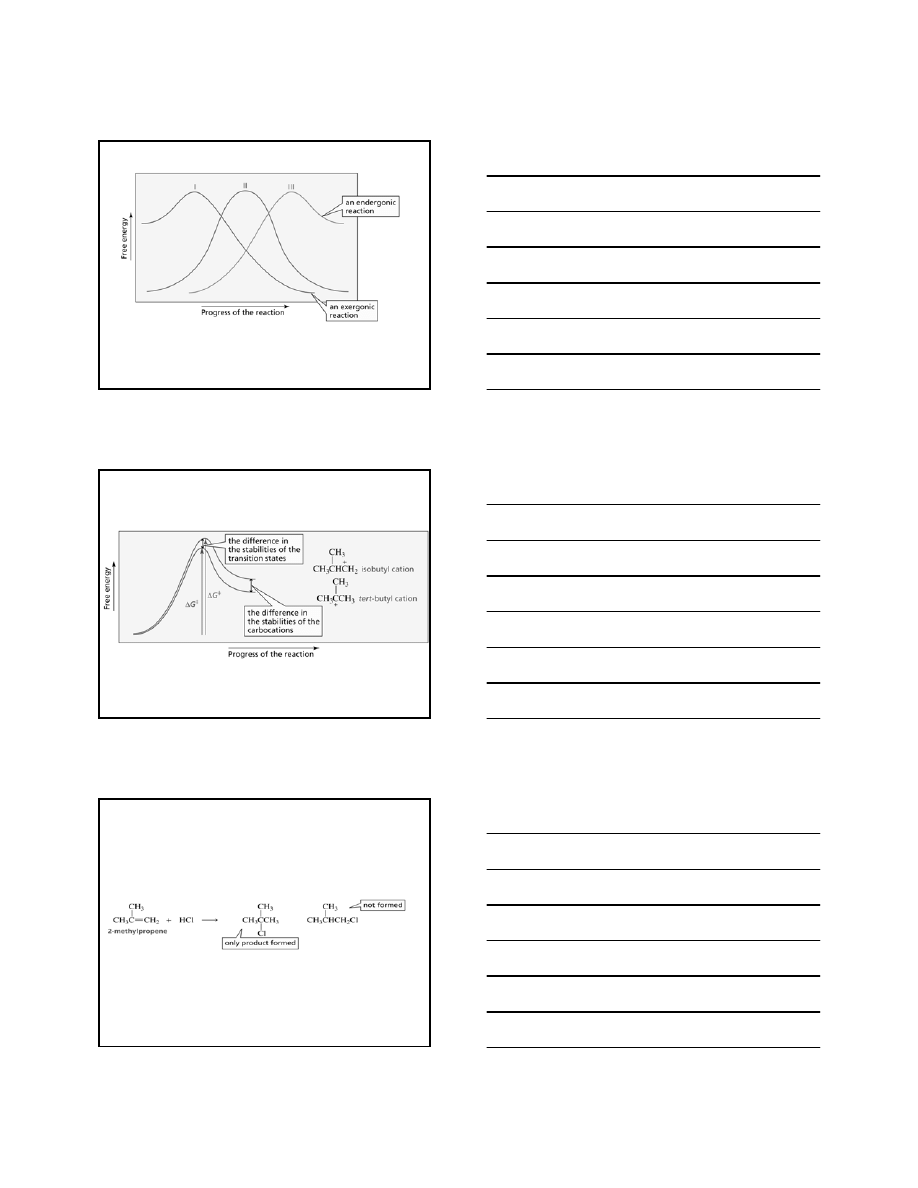
Hammond postulate: the transition state will be more
similar to the species that it is closer to energetically
Exergonic reaction: early transition state
Endergonic reaction: late transition state
4
I: early transition state
II: mid-transition state
III: later transition state
A more stable transition state gives a faster reaction
In a regioselective reaction, one constitutional isomer is the
major or the only product
Regioselectivity: Markovnikov’s Rule
The electrophile adds to the sp
2
carbon that is bonded to
the greater number of hydrogens
5
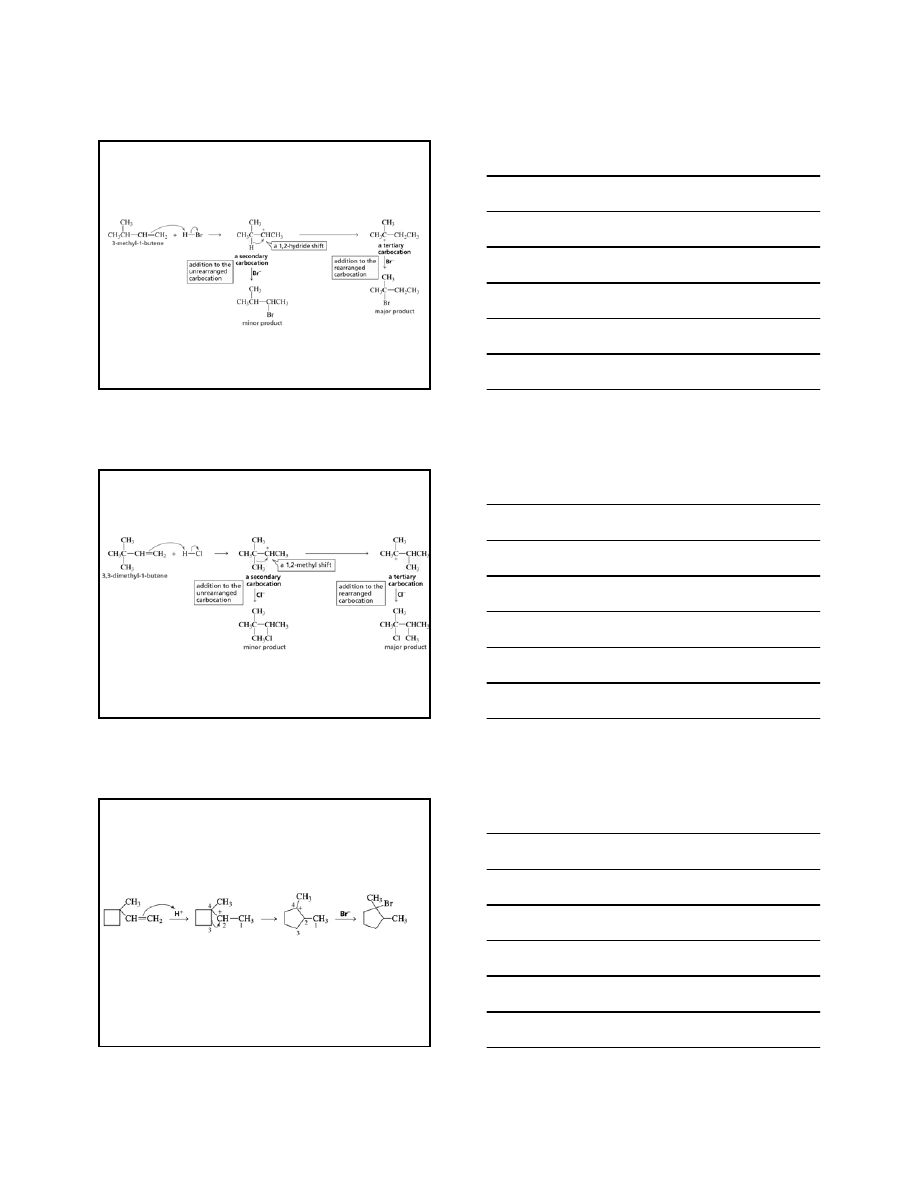
Carbocation Rearrangement
1,2-hydride shift
a more stable
carbocation
a more stable
carbocation
Carbocation Rearrangement
1,2-methyl shift
Carbocation Rearrangement
a more stable
carbocation
Ring Expansion
6
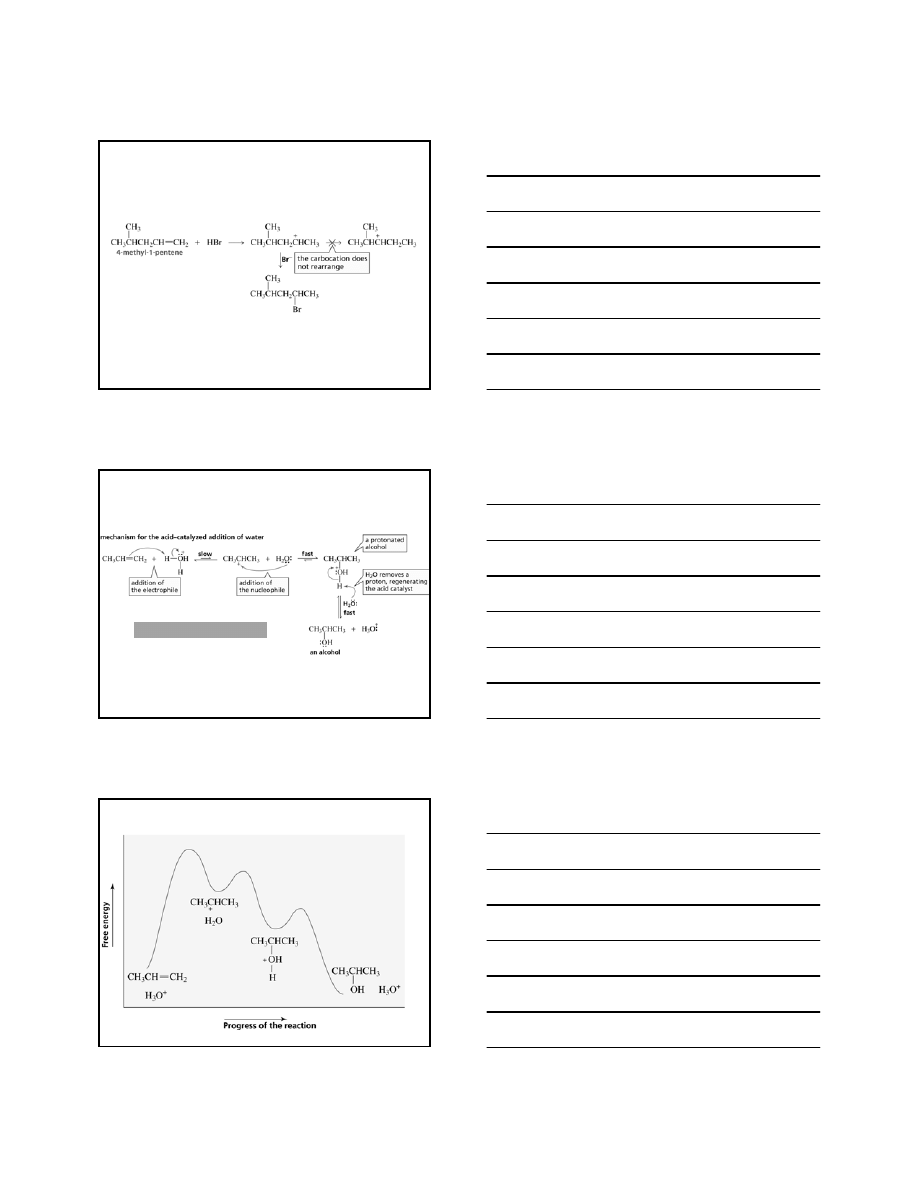
Carbocation does not always rearrange …
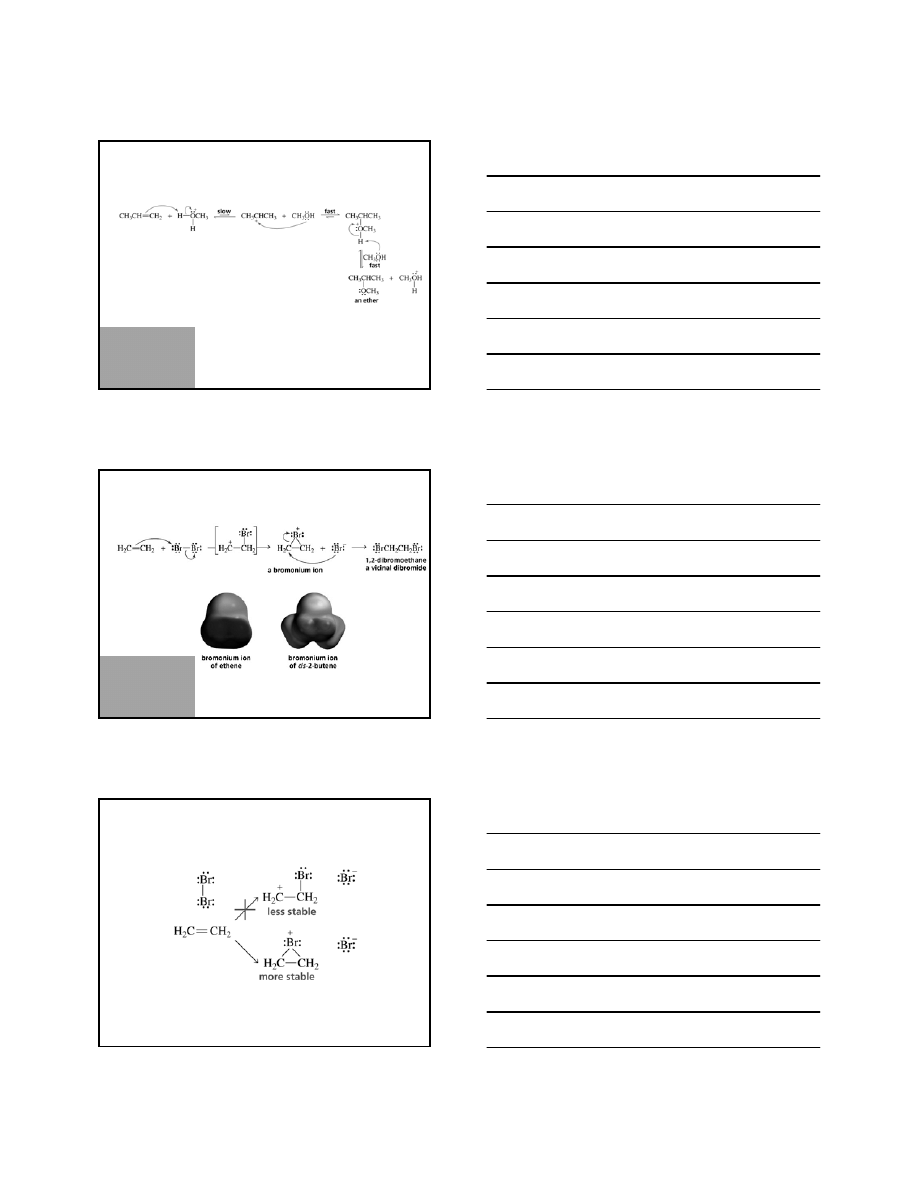
Addition of Water to Alkene
Remember steps 1 & 2
Addition of water is also called hydration
Hydration of Propene
7
Acid-Catalyzed Addition of Alcohol
1. Addition of
electrophile?
2. Addition of
nucleophile?
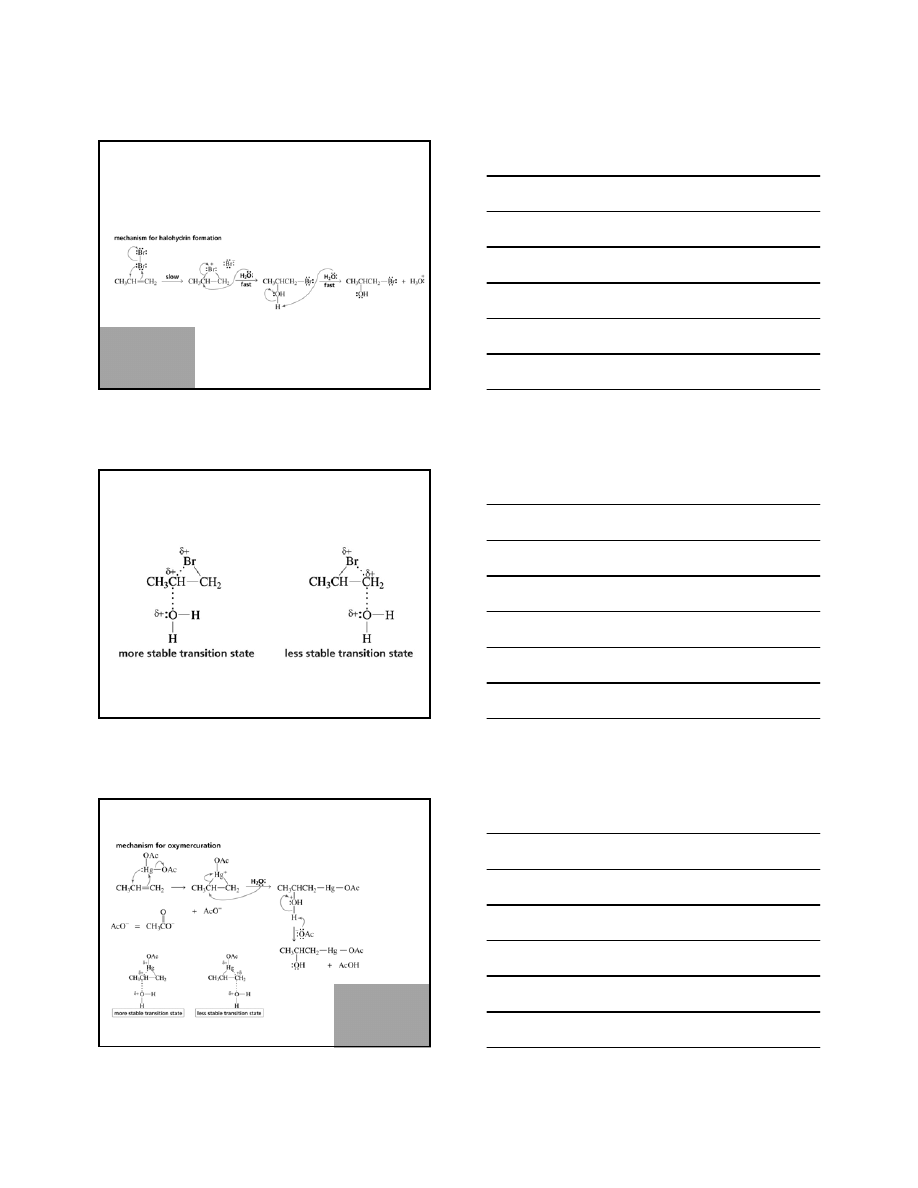
Addition of Halogens to Alkene
1. Addition of
electrophile?
2. Addition of
nucleophile?
8
Addition of Halogens
in the Presence of Water
1. Addition of
electrophile?
2. Addition of
nucleophile?
Why is H
2
O the
nucleophile instead
of Br
-
?
Consider the transition states …
Why a secondary alcohol instead of a primary alcohol?
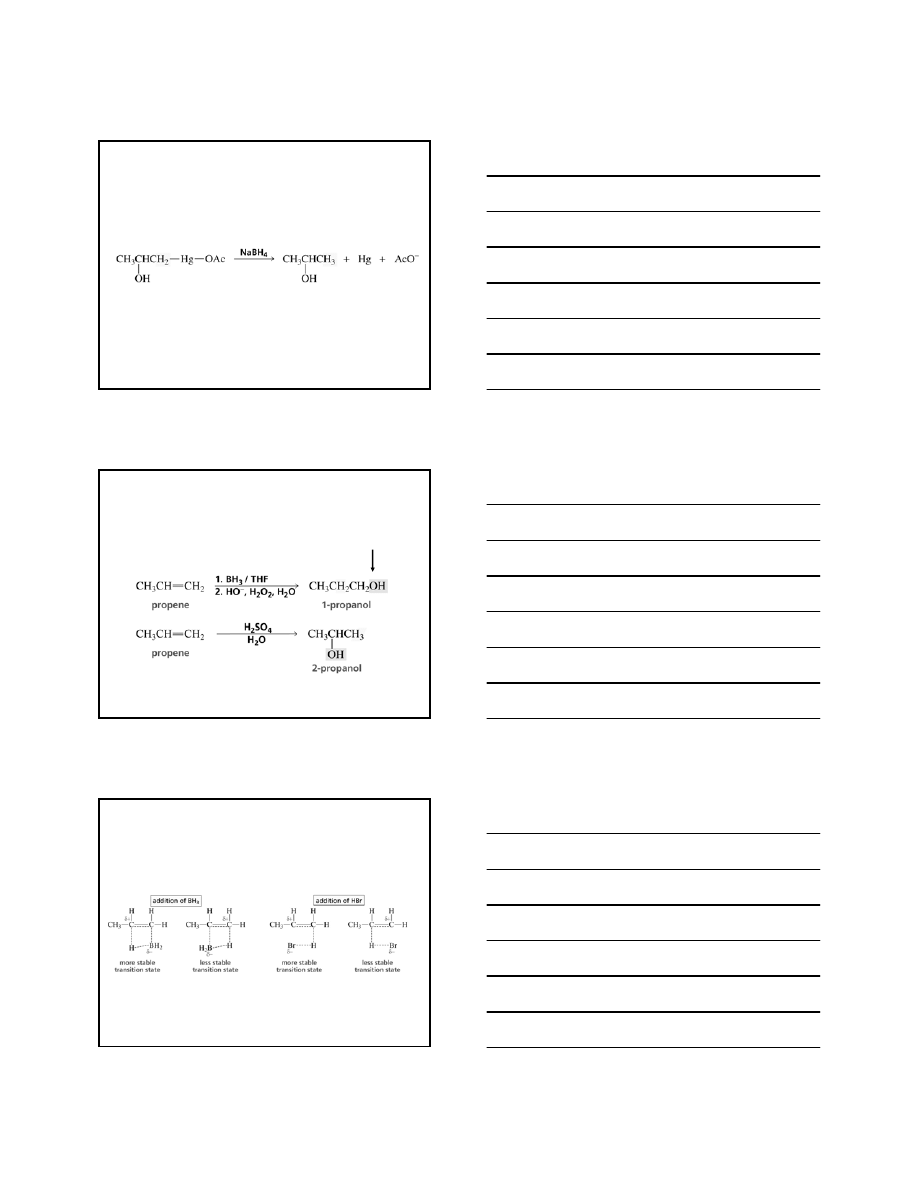
Oxymercuration and Mercuration
of Alkene lead to hydration
1. Addition of
electrophile?
2. Addition of
nucleophile?
9
Demercuration by Reduction
Addition of Borane
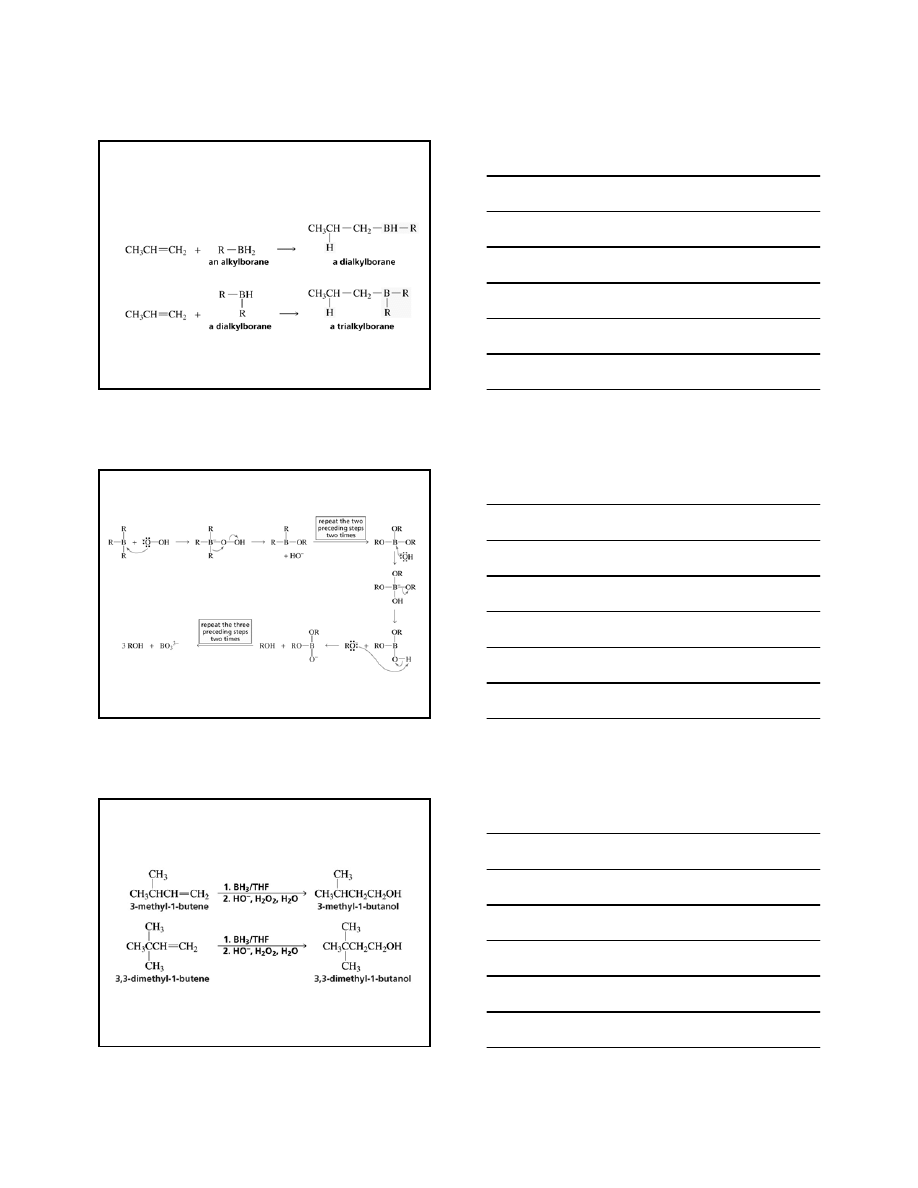
Hydroboration–Oxidation
Anti-Markovnikov’s rule in product formation
Anti-Markovnikov
addition
Markovnikov
addition
(a pericyclic reaction)
10
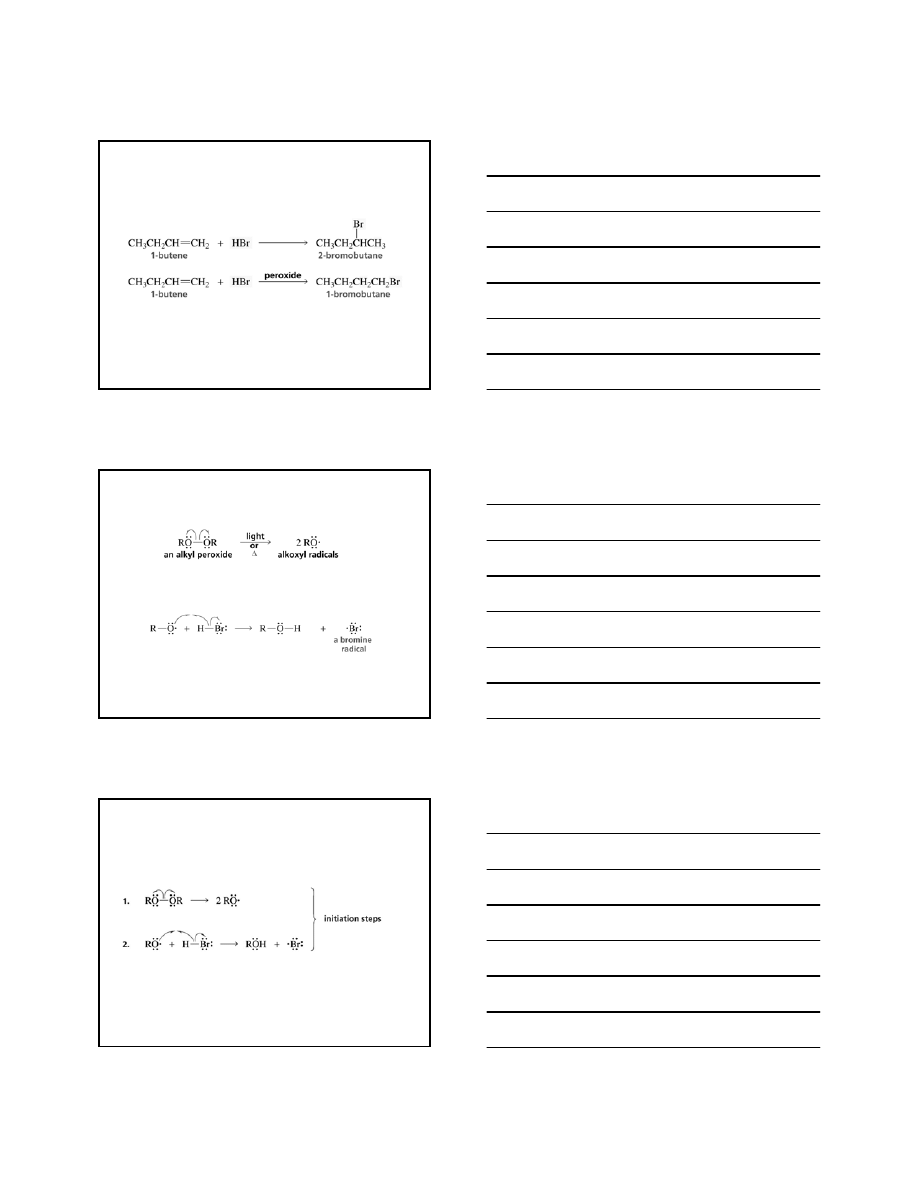
Formation of Alkyl Boranes
OH Replacement of Boron
Anti-Markovnikov Addition
of an OH Group
11
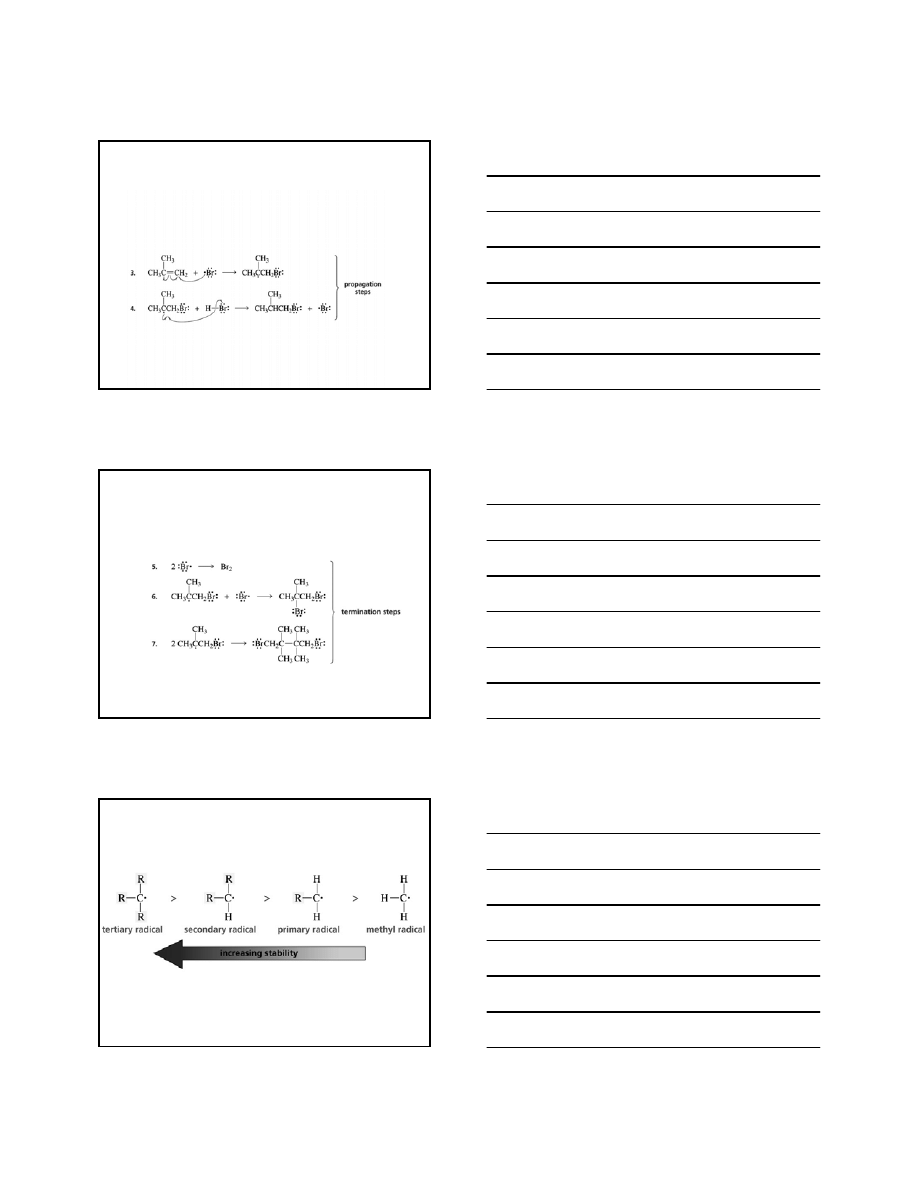
Synthesis of Bromobutane
2 ways: (2 different isomers)
Generation of Radicals
Addition of Radicals to Alkene
Formation of bromine radical
12
Addition of radicals to alkene, cont.
Formation of most stable alkyl radical and
reformation of Br radical
Addition of radicals to alkene, the end.
Three different ways that 2 radicals can combine to
make an electron pair
Relative Stabilities of Alkyl Radicals
13
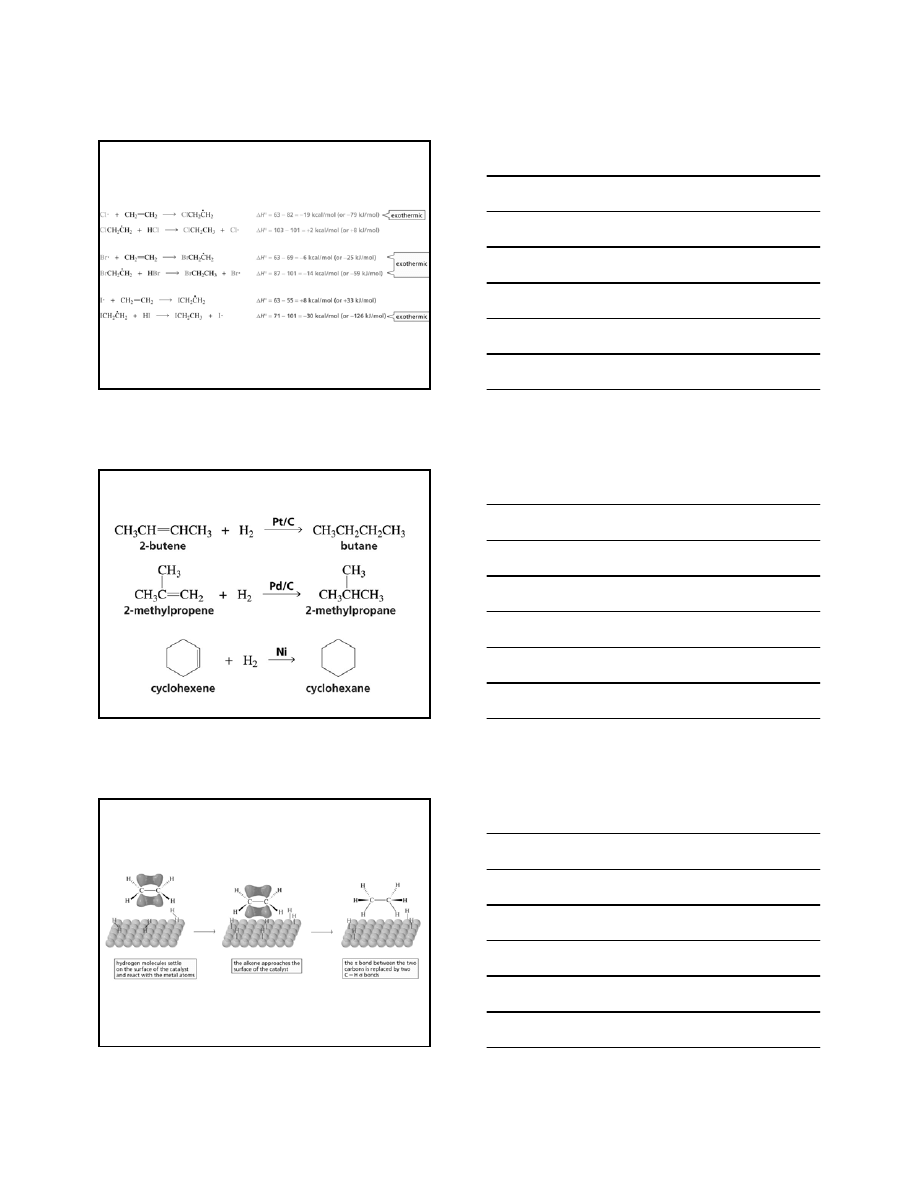
Calculating the Change in H
°
Note: only in Br case are both propagation steps
exothermic
Addition of Hydrogen to Alkenes
Catalytic Hydrogenation of an Alkene
14
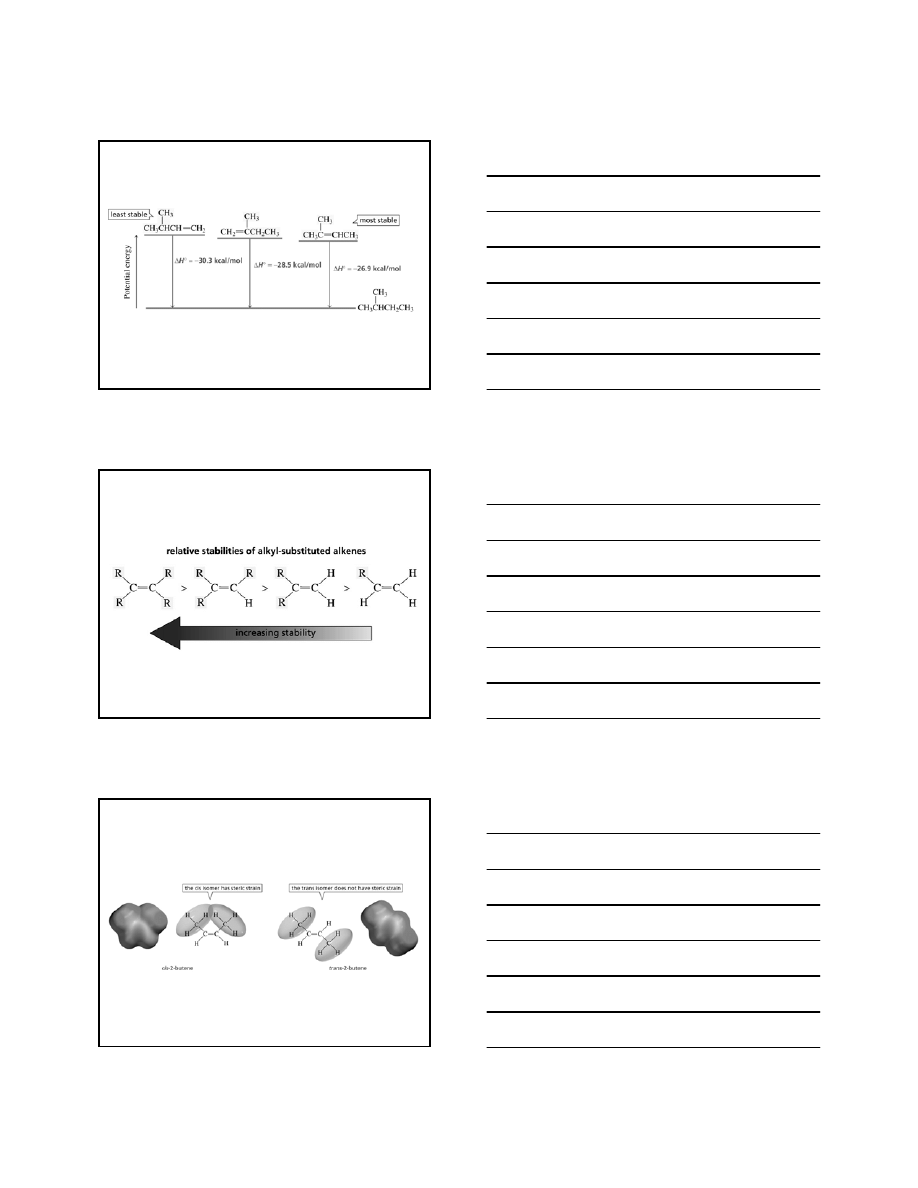
Potential Energies of Pentene Isomers
Relative Stabilities of Alkenes
Steric Strain in Alkenes

15
Relative Stabilities of Dialkyl-
Substituted Alkenes
Wyszukiwarka
Podobne podstrony:
Reactions of alkenes lecture1
Structure and reactivity of alkenes and alkynes
reactions of alkenes and akynes introduction to multistep synthesis
materialy z alkoholi, Reactions of Alcohols, Reactions of Alcohols
A Ruthenium Catalyzed Reaction of Aromatic Ketones with Arylboronates A
Rueda Contribution to inertial mass by reaction of the vacuum to accelerated motion (1998)
Młostoń, Grzegorz Hetero Diels–Alder reactions of hetaryl and aryl thioketones with acetylenic dien
Understanding Globalisation and the Reaction of African Youth Groups Chris Agoha
Rueda Inertia as reaction of the vacuum to accelerated motion (1998)
Synthesis and Surface Reactivity of Organometallic Nanoparticles 233 260
Aho Determination of heats of pyrolysis and thermal reactivity of peats 1989 (2)
A protocol for polymerase chain reaction detection of Enterococcus faecalis and Enterococcus faec
13 161 172 Investigation of Soldiering Reaction in Magnesium High Pressure Die Casting Dies
5 kinetic of bioleaching reaction
Guide to the Gods A fuller and more detailed list of Asatru heathen deities
Of Mice and Man Emotional Reaction to the Novel
Automatic reactive power control of wind diesel micro hydro autonomous hybrid power systems
Performance Parameters of Explosives Equilibrium and Non Equilibrium Reactions
więcej podobnych podstron