1
athroom Cabinet
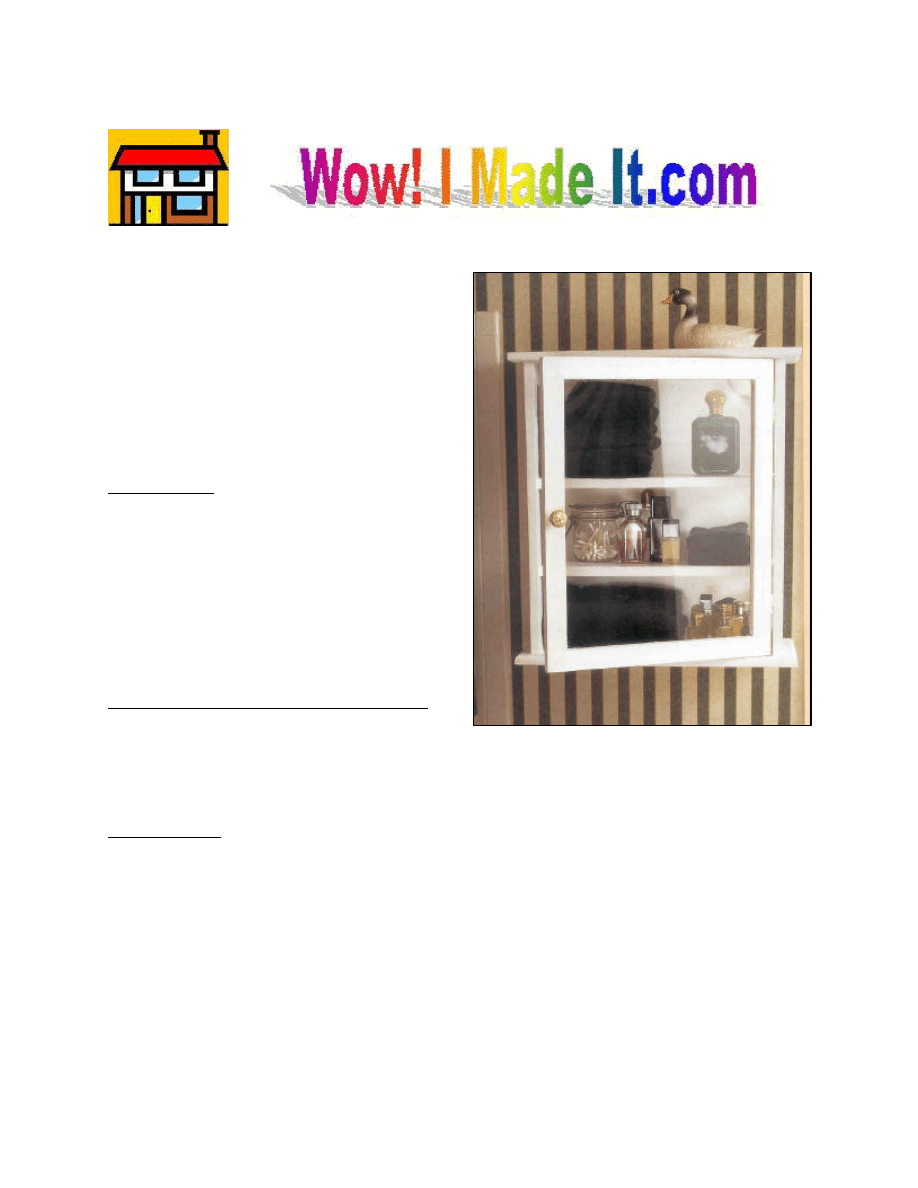
This timeless bathroom cabinet is at home
with any décor! Whether your tastes are
traditional or modern, this handy storage unit
will fit right in. Use it to store extra towels,
cologne and perfumes, and other bathroom
necessaries.
Materials
§ 18 linear feet of 1 x 2 pine
§ 4 linear feet of 1 x 8 pine
§ 2 pieces of double-strength glass
(1/8” thick), each 5-7/8 x 19-3/8”
§ 1 piece of double-strength glass
(1/8” thick) 15-1/4 x 19-1/4”
§ 1 piece of ½” plywood, 18” x 22”
Special Tools and Techniques
§ Bar clamps
§ Miters
§ Dadoes
Hardware
§ 36 1-1/2" (4d) finish nails
§ 10 1-1/2" screws
§ 12 corrugated fasteners (or 24 1-1/2" (4d) finish nails)
§ 1 cabinet pull
§ 2 cabinet hinges
§ 1 door catch
B
2
Cutting List
Code Description
Qty Materials
Dimensions
A
Vertical Side
4
1 x 2 pine
22” long
B
Horizontal Side 4
1 x 2 pine
8 ½” long
C
Side Glass
2
2 double-strength glass 5-7/8” x 19-3/8”
D
Back
1
½” plywood
22” x 18”
E
Shelf
2
1 x 8 pine
18” long
F
Top/Bottom
2
1 x 10 pine
22” long
G
Door Side
2
½ pine
21 7/8” long
1
Door Glass
1
double-strength glass
15-1/4” x 19-1/4”
Building the Cabinet Sides
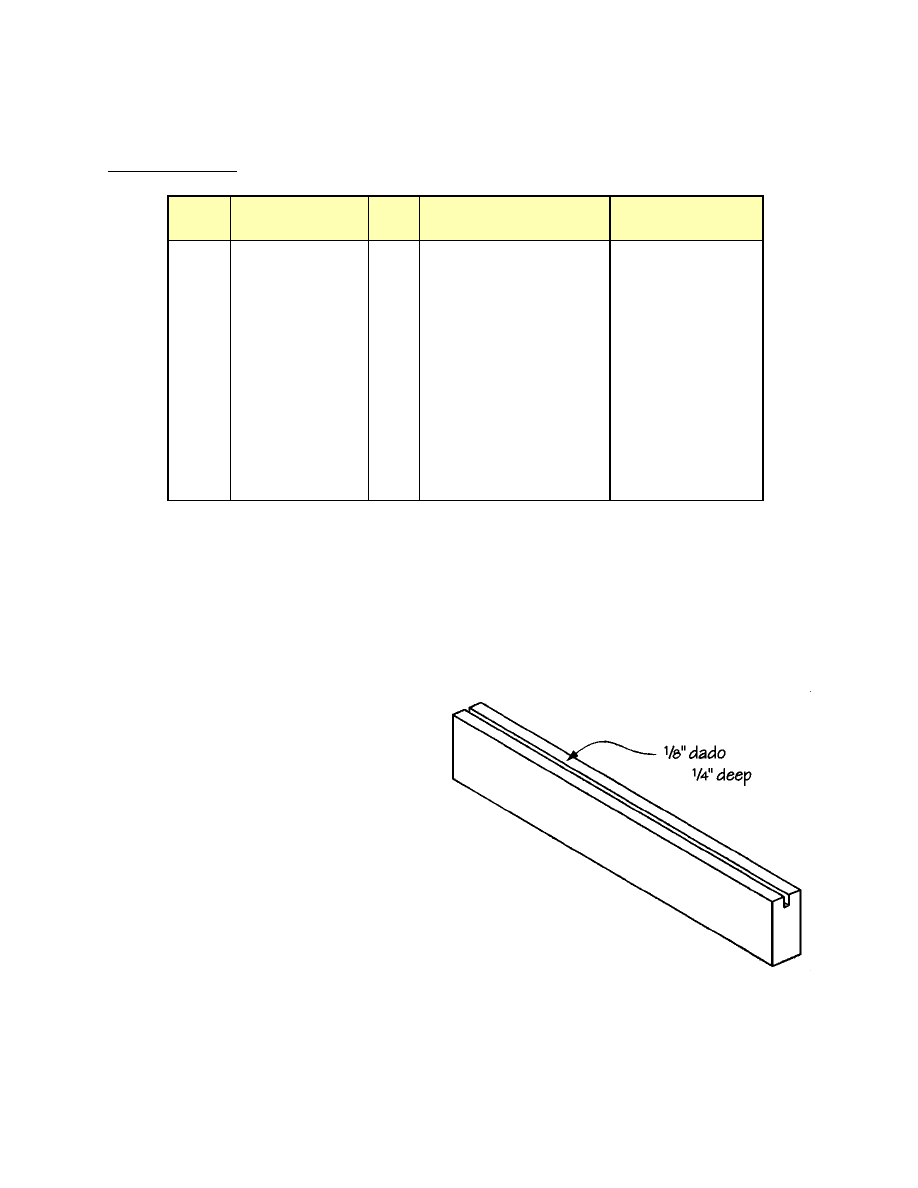
1. Each of the two sides of the cabinet, and the door is a 1 x 2 frame which has been slotted in
the center in the center to accommodate a piece of glass. Dado a total of 18 linear feet of 1
x 2 pine down the center of one edge the width of a saw kerf (about 1/8”) and ¼” deep, as
shown in Figure 1. This may be done with a circular saw with a ripping fence, a table saw,
or a router with a 1/8” straight
cutter.
2. Cut four vertical sides (A) from the
dadoed 1 x 2 pine, each measuring
22 inches long.
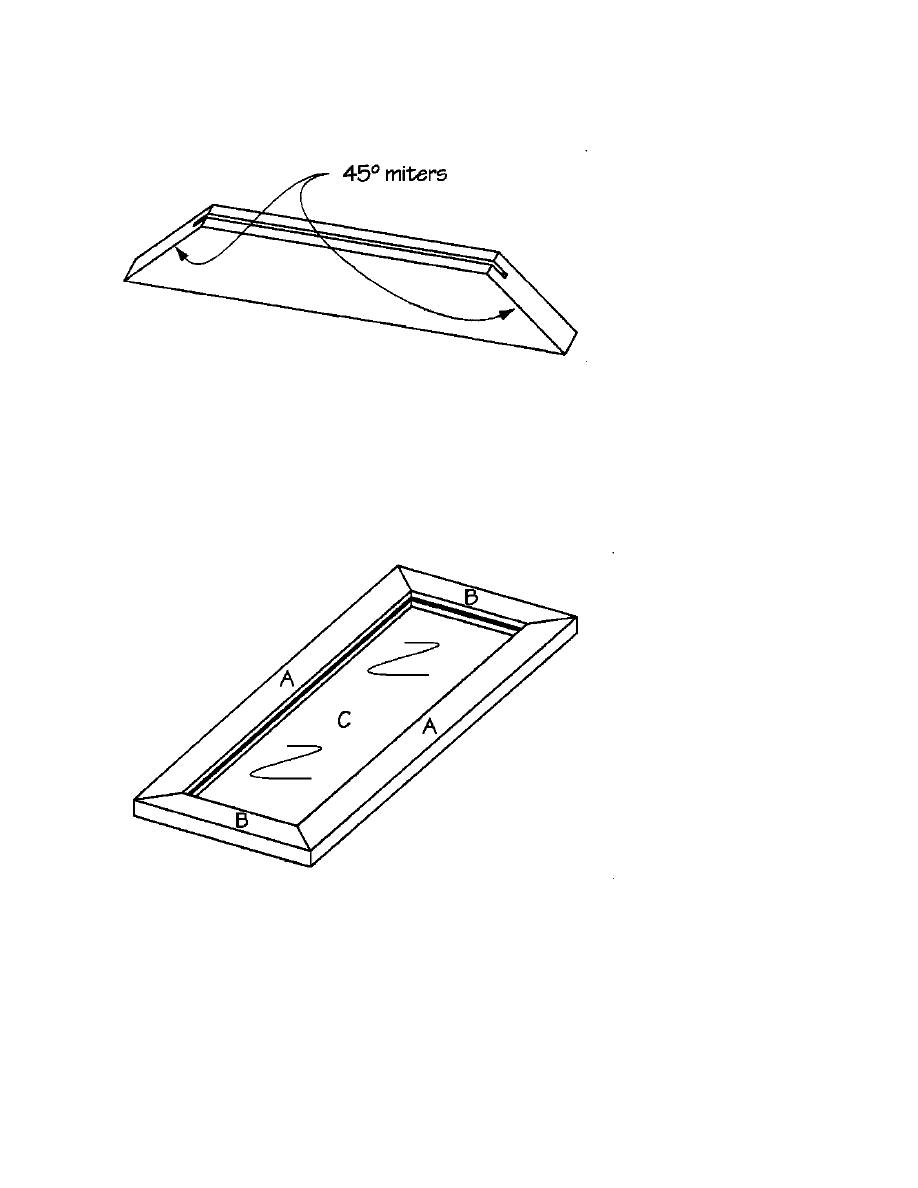
3. Miter each end of the four vertical
sides (A) at opposing 45-degree
angles, as shown in Figure 2. Make
certain that the dadoed edge is on
the short side of each piece.
4. Cut four horizontal sides (B) from
the dadoed 1 x 2 pine, each measuring 8-1/2 inches long.
5. Miter each end of the four horizontal sides (B) at opposing 45-degree angles, as shown in
Figure 2. Again, make certain that the dadoed edge is on the short side of each piece.
Figure 1
3
6. Place two vertical sides (A) on a level surface, parallel to each other and 5-1/2” apart, as
shown in Figure 3. Fit two horizontal sides (B) between the ends of the vertical sides (A),
matching miters. Fit one side glass (C) into the dadoes cut in all four sides. Make certain
that the assembly is square. Apply glue to the miters, and, and use corrugated fasteners
across each of the corner joints to secure them. You may choose to clamp these pieces
together while you drive 1-1/2” 4d finishing nails into the edge near each corner and across
the miter joint. Use two opposing nails at each joint.
7. Repeat Step 6 to assemble a second cabinet side.
Completing the Cabinet
1. Cut one back (D) from ½” plywood, measuring 18 x 22 inches.
2. Place the two assembled sides on edge on a level surface, parallel to each other and 18
Figure 2
Figure 3
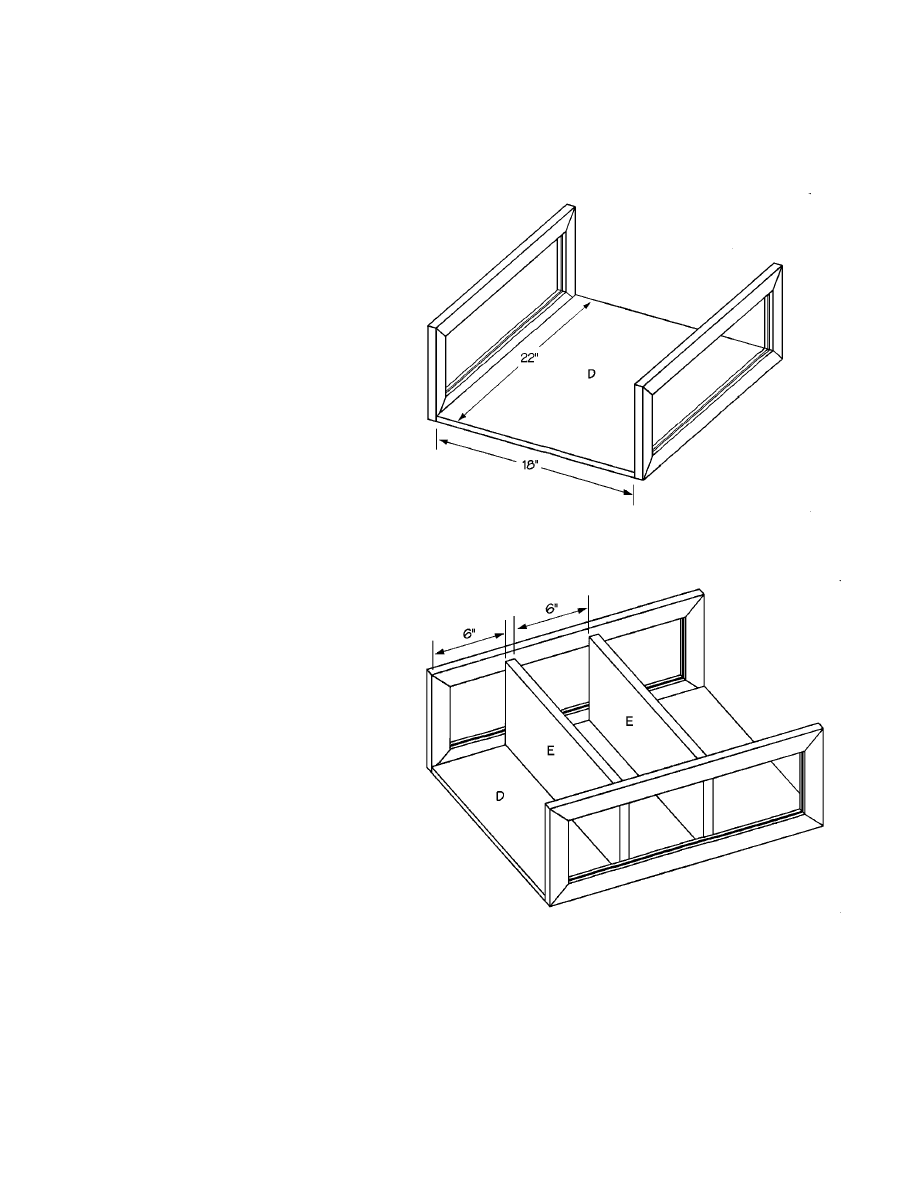
4
inches apart. Place the back (D) between the two sides, matching the 22-inch-long edges, as
shown in Figure 4. Screw through the vertical sides (A) into the edges of the back (D) using
five 1-1/2” screws on each joint.
3. Cut two shelves (E) from 1 x
8 pine, each measuring 18
inches long.
4. Fit one shelf (E) between the
two side assemblies, 6 inches
from the bottom of the
cabinet, and flush against the
back (D), as shown in Figure
5. Nail through the cabinet
vertical sides (A) into the shelf
(E) using two 1-1/2” 4d-
finishing nails on each joint.
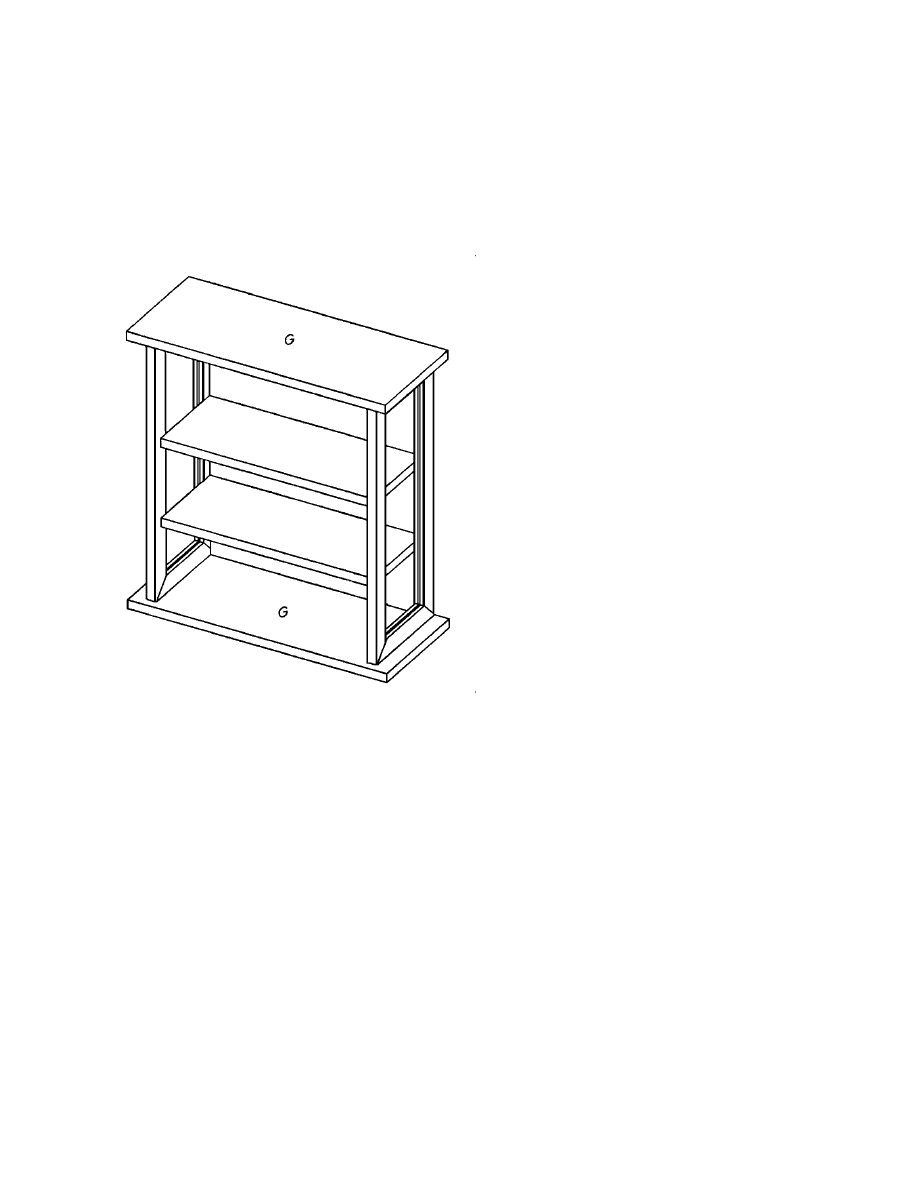
5. Repeat Step 4 to attach the second shelf (E) 6 inches above the first, as shown in Figure 5.
6. Cut two top/bottoms (F) from 1
x 10 pine, each measuring 22
inches long.
7. Each of the top/bottoms (G) will
be centered side-ways on the
open ends of the cabinet
assembly and placed flush with
the back of the cabinet as shown
in Figure 6. Apply glue to the
ends of the side assembly and the
edge of the back, and nail
through the cabinet top/bottoms
into the edges of the back and
side assemblies, using 1-1/2” 4d
finishing nails spaced every 4 inches.
Making the Door
1. The cabinet door, like the sides of the cabinet, is a 1 x 2 frame which has been dadoed in the
center to accommodate a piece of glass.
Figure 4
Figure 5
5
2. Cut two door sides (G) from the remaining dadoed 1 x 2 pine, each measuring 21-7/8” long.
3. Miter each end of both door sides (G) at opposing 45-degree angles, as shown in Figure 2.
Make certain that the dadoed edge is on the short side of each piece.
4. Cut two door top/bottoms (H) from
the dadoed 1 x 2 pine, each measuring
17-7/8” long.
5. Miter each end of both door
top/bottoms (H) at opposing 45-
degree angles, as shown in Figure 2.
Again, make certain that the dadoed
edge is on the narrow side of each
piece.
6. Place the two doors sides (G) on a
level surface, parallel to each other and
14-7/8” apart, in the same manner as
shown in Figure 3. Fit two door
top/bottoms (H) between the ends of
the door sides (G) matching miters. Fit
one door glass (I) into the dadoes cut
in all four pieces. Make certain that the
assembly is square, and use corrugated
fasteners across each of the corner joints to secure them. You may choose to clamp these
pieces together while you drive 1-1/2” 4d finishing nails into the edge near each corner and
across the miter joint. Use two opposing nails on each joint.
Finishing
1. Fill any screw holes or imperfections in the wood with wood filler.
2. Thoroughly sand all of the wood parts on the completed bathroom cabinet.
3. Stain or paint the bathroom cabinet the color of your choice. We painted our cabinet a
bright white.
4. Install the drawer pull on the bathroom cabinet door.
5. Use two cabinet hinges to attach the door to the bathroom cabinet. It will be necessary to
Figure 6

6
chisel out a thin rectangle of wood, the length of the hinge and slightly less deep than the
closed hinge is thick, on the edge of the cabinet door to accommodate each of the cabinet
hinges. If necessary, install a small magnetic catch to keep the door closed.
6. You may hang your bathroom cabinet by screwing directly through the back into studs in an
appropriate wall, as we did. If you cannot find suitable studs, use molly bolts to anchor the
cabinet securely.
Wyszukiwarka
Podobne podstrony:
Cabinet Bathroom 3
bathroom cabinet szafka lazienkowa
Corner Buffet Cabinet(1)
Bathroompieces
cabinetmakerupho00sher
Corner Cabinet 1
clean bathroom
Plan and Install Kitchen Cabinets
bathroomC
Brydcliffe Cabinet
Display Cabinet 2
bathroom
box taurus cabinets manual
skład chemia BATHROOM CLEANER
bathroom flash
Bathroom Mi
więcej podobnych podstron