
1
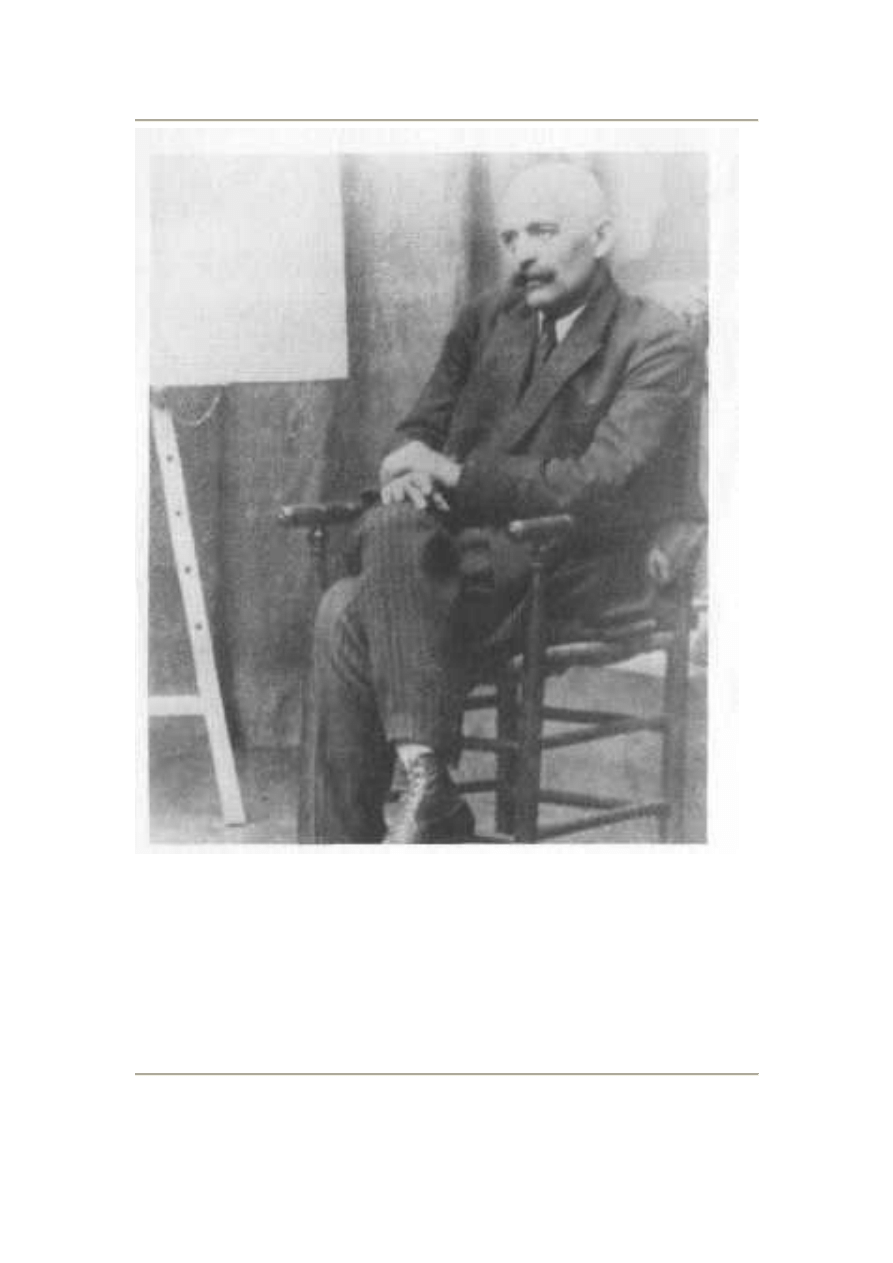
Paris, 1922
Views from the
Real World
Early Talks
in Moscow, Essentuki, Tiflis, Berlin, London,
Paris, New York and Chicago
As Recollected by His Pupils
Introduction
2

This Dutton Paperback edition first published in 1975 by
E. P. Dutton & Co., Inc.
First Edition
No part of this publication may be reproduced or transmitted in
any form or by any means, electronic or mechanical, including
photocopy, recording, or any information storage and retrieval
system now known or to be invented, without permission in writing
from the publisher, except by a reviewer who wishes to quote brief
passages in connection with a review written for inclusion in a
magazine, newspaper or broadcast.
Published simultaneously in Canada by Clarke, Irwin & Company
Limited, Toronto and Vancouver
ISBN: 0-525-47408-0
Library of Congress Catalog Card Number: 73-10482
Gurdjieff is becoming well known as a pioneer of the new current
of thought about man's situation, such as has been provided through-
out the ages at times of transition in human history.
A quarter century after his death, his name has emerged from a
background of rumor and he is recognized today as a great spiritual
force, who saw clearly the direction modern civilization is taking and
who set to work behind the scenes to prepare people in the West to
discover for themselves and eventually to diffuse among mankind the
certainty that Being is the only indestructible reality.
The outline of his life is familiar to readers of his Second and Third
Series, Meetings with Remarkable Men (published in 1963) and Life
Is Real Only Then, When "I Am" (privately printed in 1975).
Born on the frontier of Russia and Turkey in 1877 "in strange,
almost biblical circumstances," his education as a boy left him with
many unanswered questions and he set out when quite young in
search of men who had achieved a complete knowledge of human life.
3

His early travels to unidentified places in Central Asia and the Middle
East lasted twenty years.
On his return, he began to gather pupils in Moscow before the first
World War and continued his work with a small party of followers
while moving, during the year of the Russian revolution, to Essentuki
in the Caucasus, and then through Tiflis, Constantinople, Berlin and
London to the Chateau du Prieure near Paris, where he reopened his
Institute for the Harmonious Development of Man in 1922 on a
larger scale.
[v]
After his first visit to America in 1924, a motor accident interrupted
further plans for the Institute. From 1924 to 1935, he turned all his
energies to writing.
The rest of his life was spent in intensive work, chiefly with French
pupils in Paris where, after completing arrangements for posthumous
publication in New York and London of his First Series, Beelzebub's
Tales to His Grandson, he died in 1949.
What does his teaching consist of? And is it intelligible to
everybody?
He showed that the evolution of man—a theme prominent in the
scientific thinking of his youth—cannot be approached through mass
influences but is the result of individual inner growth; that such an
inner opening was the aim of all religions, of all the Ways, but re-
quires a direct and precise knowledge of changes in the quality of
each man's inner consciousness: a knowledge which had been pre-
served in places he had visited, but can only be acquired with an ex-
perienced guide through prolonged self-study and "work on oneself."
Through the order of his ideas, and the exercises which he changed
repeatedly, the minds of all who came to him were opened to the most
complete dissatisfaction with themselves and at the same time to the
vast scale of their inner possibilities, in a way that none of them ever
forgot.
The statement of his teaching which Gurdjieff presented in
Beelzebub's Tales has to be searched for within a panorama of the
whole history of human culture, from the creation of life on the planet
through the rise and fall of civilizations up to modern times.
Fortunately, some record exists of his actual words and his direct
instructions given in conversations, talks and lectures at the Prieure,
4

and as he traveled from one city to the next with his pupils, often in
difficult conditions. These are the talks contained in this book.
They consist of notes put together from memory by some of those
who heard the talks and recorded them faithfully afterwards. Trea-
sured and carefully protected from misuse, even the fact of the exis-
tence of these notes became known only gradually.
Incomplete as they are, even fragmentary in some cases, the collec-
tion is an authentic rendering of Gurdjieff's approach to work on
oneself, as expressed to his pupils at the required moment. More-
over, even in these notes from memory, it is striking that regardless of
the variety of his audiences—on some occasions, people long familiar
with his idea, on others people invited to meet him for the first time-
there is always the same human tone of voice, the same man evoking
an intimate response in each of his listeners.
In her foreword to the first edition of this book, Jeanne de Salz-
mann, who spent thirty years with Gurdjieff from 1919 in Tiflis until
his death, and participated in all the stages of his work, even carrying
the responsibility for his groups in the last ten years of his life, states
that:
"Today, when Gurdjieff's teaching is being studied and put into
practice by sizeable research groups in America, Europe and even
Asia, it seems desireable to shed some light on a fundamental charac-
teristic of his teaching, namely, that while the truth sought for was
always the same, the forms through which he helped his pupils ap-
proach it served only for a limited time. As soon as a new understand-
ing had been reached, the form would change.
"Readings, talks, discussions and studies, which had been the main
feature of work for a period of time and had stimulated the intelli-
gence to the point of opening it to an entirely new way of seeing,
were for some reason or other suddenly brought to an end.
"This put the pupil on the spot. What his intellect had become
capable of conceiving had now to be experienced with his feeling.
"Unexpected conditions were brought about in order to upset
habits. The only possibility of facing the new situation was through a
deep self-examination, with that total sincerity which alone can
change the quality of human feeling.
"Then the body, in its turn, was required to collect all the energy of
its attention, to attune itself to an order which it was there to serve.
"After this, the experience could follow its course on another level.
5

"As Gurdjieff himself used to say: 'All the parts which constitute
the human being must be informed—informed in the only way which
is appropriate for each of them—otherwise the development will be
lopsided and unable to go further.'
"The ideas are a summons, a summons towards another world, a
call from one who knows and who is able to show us the way. But the
transformation of the human being requires something more. It can
only be achieved if there is a real meeting between the conscious
force which descends and the total commitment that answers it. This
brings about a fusion.
"A new life can then appear in a new set of conditions which only
someone with an objective consciousness can create and develop.
"But to understand this one must have passed through all the stages
of this development. Without such experience and understanding the
work will lose its effectiveness and the conditions will be wrongly
interpreted; they will not be brought at the right moment and situa-
tions and efforts will remain on the level of ordinary life, uselessly
repeating themselves."
Views from the Real World
Glimpses of Truth is an account of a conversation with Gurdjieff
written by a Moscow pupil in 1914 and mentioned by P. D. Ouspensky
in In Search of the Miraculous. It is the first—and probably the only-
example of a series of essays on Gurdjieff's ideas projected by him at
that period. The author of it is not known.
The Talks have been compared and regrouped with the help of
Madame Thomas de Hartmann, who from 1917 in Essentuki was pres-
ent at all these meetings and could thus guarantee their authenticity.
It will be noticed that passages in several of the talks (including
those beginning "For an exact study," "To all my questions" and "The
two rivers") are in fact expressions of the material which Gurdjieff
used later in only a slightly different form when writing the last
chapter of Beelzebub's Tales to his Grandson.
Some of the Aphorisms have been published before in accounts of
life at the Prieure. They were inscribed in a special alphabet, known
only to the pupils, above the walls of the Study House where his talks
were given.
6

Contents
Introduction v
I
Glimpses of Truth 3
II
"When speaking on different subjects . . ." 41
"For an exact study, an exact language is needed . . ," 60
"Man is a plural being . . ." 75
One-sided development 82
"What is the method of the Institute?" 84
"Self-observation is very difficult . . ." 88
"How can we gain attention? . . ." 90
"Everyone is in great need of one particular exercise . . ." 94
"Every animal works according to its constitution . . ." 103
"For one section of the people here, their stay has
become completely useless . . ." 107
III
Energy—sleep 115
"Is there a way of prolonging life? . . ." 121
The education of children 124
Formatory apparatus 128
Body, essence and personality 136
[xi]
Essence and personality 143
Separation of oneself from oneself 148
The stop exercise 155
The three powers—economy 159
Experiments with breathing 164
First talk in Berlin 167
"All exercises . . . can be divided into seven
categories ..." 171
"As it is with everything, so it is with movements . . ." 174
The actor 176
Creative art—associations 179
Questions and answers on art, etc. 182
IV
God the Word 195
"Everywhere and always there is affirmation and
7

negation . . ." 199
"It is impossible to be impartial . . ." 207
"Everything in the world is material..." 209
"Working on oneself is not so difficult as wishing to
work . . ." 214
V
"To all my questions . . ." 221
"Now I am sitting here . . ." 228
The two rivers 236
"There are two kinds of love . . ." 243
"Has free will a place in your teaching? . . ." 246
Fears—identification 252
"Man is subject to many influences . . ." 254
"Liberation leads to liberation . . ." 266
VI
The aphorisms 273
I
1914
Glimpses of Truth
written by one of Gurdjieff's circle in Moscow
Strange events, incomprehensible from the ordinary point of
view, have guided my life. I mean those events which influ-
ence a man's inner life, radically changing its direction and
aim and creating new epochs in it. I call them incomprehen-
sible because their connection was clear only to me. It was as
though some invisible person, in pursuit of a definite aim, had
placed in the path of my life circumstances which, at the very
moment of my need, I found there as if by chance. Guided by
such events, I became accustomed from my early years to look
with great penetration into the circumstances surrounding me
and to try to grasp the principle connecting them, and to find
in their interrelations a broader, more complete explanation. I
must say that in every exterior result it was the hidden cause
evoking it that interested me most.
One day in the course of my life, in this same apparently
strange way, I found myself face to face with occultism, and
became interested in it as though in a deep and harmonious
8

philosophical system. But at the very moment when I had
reached something more than mere interest, I again lost, as
suddenly as I had found it, the possibility of proceeding with
its systematic study. In other words, I was thrown entirely on
my own resources. This loss seemed a senseless failure, but I
later recognized in it a necessary stage in the course of my life
and one full of deep meaning. This recognition came only
much later, however. I did not deviate but went forward on
my own responsibility and at my own risk. Insuperable obsta-
cles confronted me, forcing me to retreat. Vast horizons
opened to my vision and as I hastened forward I often slipped
or became entangled. Losing, as it seemed, what I had discov-
ered, I remained wandering round on the same spot, as though
fogbound. In searching I made many efforts and did appar-
ently useless work, rewarded inadequately by results. Today, I
see that no effort went unrewarded and that every mistake
served to guide me toward the truth.
I plunged into the study of occult literature, and without ex-
aggeration can say that I not only read but mastered patiently
and perseveringly the greater part of the available material,
trying to grasp the sense and to understand what was hidden
between the lines. All this only served to convince me that I
would never succeed in finding what I sought in books:
though I glimpsed the outlines of a majestic structure, I could
not see it clearly and distinctly.
I searched for those who might have interests in common
with me. Some seemed to have found something, but on closer
examination I saw that they, like myself, were groping in the
dark. I still hoped in the end to find what I needed; I looked
for a living man, able to give me more than I could find in a
book. Perseveringly and obstinately I sought and, after each
failure, hope revived again and led me to a new search. With
this in view I visited Egypt, India and other countries. Among
those encountered were many who left no trace, but some
were of great importance.
Several years passed; among my acquaintances I counted
some to whom, by the community of our interests, I was bound
more durably. One in close touch with me was a certain A.
The two of us had spent not a few sleepless nights, racking our
brains over several passages in a book we did not understand
and searching for appropriate explanations. In this way we
had come to know each other intimately.
9

But during the last six months I had begun to notice, first at
rare intervals, and then more frequently, something odd about
him. It was not that he had turned his back on me, but he had
seemed to grow cooler toward the search, which had not
ceased to be vital to me. At the same time I saw he had not
forgotten it. He often expressed thoughts and made comments
which became fully comprehensible only after long reflection.
I remarked on it more than once, but he always skillfully
avoided conversations on this subject.
I must confess that this growing indifference of A., who had
been the constant companion of my work, led to gloomy re-
flections. Once I spoke to him openly about it—I scarcely re-
member in which way.
"Who told you," objected A., "that I am deserting you? Wait
a little and you will see clearly that you are mistaken."
But for some reason neither these remarks, nor some others
which at the time seemed strange to me, caught my interest.
Perhaps because I was occupied in reconciling myself to the
idea of my complete isolation.
So it continued. It is only now that I see how, in spite of an
apparent capacity for observation and analysis, I overlooked
the main factor, continually before my eyes, in a way which
was unpardonable. But let the facts speak for themselves.
One day about the middle of November, I spent the evening
with a friend of mine. The conversation was on a subject of lit-
tle interest to me. During a pause in the talk, my host said,
"By the way, knowing your partiality for occultism I think an
item in today's Golos Moskvi [ The Voice of Moscow] would
interest you." And he pointed out an article headed "Round
about the Theatre."
It spoke, giving a brief summary, about the scenario of a
medieval mystery, The Struggle of the Magicians: a ballet writ-
ten by G. I. Gurdjieff, an orientalist who was well-known in
Moscow. The mention of occultism, the title itself and the con-
tents of the scenario, aroused my great interest, but none of
the people present could give any more information about it.
My host, a keen amateur of ballet, admitted that in his circle
he knew of no one corresponding to the description in the arti-
cle. I cut it out, with his permission, and took it away with me.
10

I will not weary you with an exposition of my reasons for
being interested in this article. But it was as a consequence of
them that I took a firm resolve on Saturday morning to find
Mr. Gurdjieff, the writer of the scenario, at all costs.
That same evening when A. called upon me, I showed him
the article. I told him that it was my intention to search for
Mr. Gurdjieff, and asked his opinion.
A. read the article and, glancing at me, said: "Well, I wish
you success. As far as I am concerned, it does not interest me.
Haven't we had enough of such tales?" And he put the article
aside with an air of indifference. Such an attitude toward this
question was so chilling that I gave up and retreated into my
thoughts; A. was also thoughtful. Our conversation was halted.
There was a long silence, interrupted by A., who put his hand
on my shoulder.
"Look here," he said, "don't be offended. I had my own rea-
sons, which I will explain later, for answering you as I did. But
first, I shall ask a few questions which are so serious"—he em-
phasized the word "so"—"you cannot know how serious they
are." Somewhat astonished by this pronouncement, I answered,
"Ask."
"Do, please, tell me why you wish to find this Mr. Gurdjieff?
How will you look for him? What aim will you follow? And if
your search is successful, in what way will you approach him?"
At first unwillingly, but encouraged by the seriousness of
A.'s manner, as well as by questions he occasionally put, I ex-
plained the direction of my thinking.
When I had finished, A. went over what I had said and
added, "I can tell you that you won't find anything."
"How can that be?" I replied. "It seems to me that the ballet
scenario of The Struggle of the Magicians, apart from being
dedicated to Geltzer, is hardly so unimportant that its author
could be lost without a trace."
"It is not a question of the author. You may find him. But he
won't talk with you as he could," said A.
I flared up at this: "Why do you imagine that he . . .?" "I do
not imagine anything," A. interrupted. "I know. But not to
keep you in suspense I tell you, I know this scenario well, very
well. What is more I know its author, Mr. Gurdjieff, person-
ally, and have known him for a long time. The way you have
11

elected to find him might lead you to make his acquaintance,
but not in the way that you would wish. Believe me, if you
will allow me a piece of friendly advice, wait a little longer. I
will try to arrange you a meeting with Mr. Gurdjieff in the
way you wish . . . Well, I must be going."
In the greatest astonishment I seized him. "Wait! You can't
go yet. How did you come to know him? Who is he? Why
have you never told me about him before?"
"Not so many questions," said A. "I categorically refuse to
answer them now. In due course I will answer. Set your mind
at rest meanwhile; I promise to do everything I can to intro-
duce you."
In spite of my most insistent demands A. refused to reply,
adding that it was in my interest not to delay him any longer.
About two o'clock on Sunday, A. telephoned me and said
briefly: "If you wish, be at the railroad station at seven
o'clock." "And where are we going?" I asked. "To Mr. Gurd-
jieff, " he replied, and hung up.
"He certainly does not stand on ceremony with me," flashed
through my mind, "he did not even ask me whether I could
go, and I happen to have some important business tonight. Be-
sides, I have no idea how far we have to go. When shall we be
back? How shall I explain at home?" But then I decided that
A. was not likely to have overlooked the circumstances of my
life; so the "important" business quickly lost its importance
and I began to await the appointed hour. Being impatient, I
arrived at the station almost an hour too early, and waited for
A.
Finally he appeared. "Come, quick," he said, hurrying me.
"I have the tickets. I was delayed and we are late."
A porter was following us with some big boxes. "What is
that?" I asked A. "Are we going away for a year?" "No," he re-
plied laughing. "I'll come back with you; the boxes don't con-
cern us."
We took our seats and, being alone in the compartment, no-
body disturbed our conversation.
"Are we going far?" I asked.
12

A. named one of the country resorts near Moscow and
added, "To save you more enquiries I will tell you everything
possible; but the greater part will be for you alone. Of course,
you are right to be interested in Mr. Gurdjieff as a person, but
I will tell you only a few external facts about him, to give you
your bearings. As for my personal opinions about him I will
keep silent, so that you may take in your own impressions
more fully. We shall return to this matter later."
Settling comfortably into his seat, he began to talk.
He told me that Mr. Gurdjieff had spent many years wan-
dering in the East with a definite purpose and had been in
places inaccessible to Europeans; that two or three years ago
he had come to Russia and had then lived in Petersburg, de-
voting his efforts and his knowledge mainly to work of his
own. Not long ago he had moved to Moscow and had rented a
country house near the town, so as to be able to work in retire-
ment undisturbed. In accordance with a rhythm known only
to himself he would periodically visit Moscow, returning to his
work again after a certain interval. He did not think it neces-
sary, I gathered, to tell his Moscow acquaintances about his
country house and he did not receive anyone there.
"As to how I came to know him," said A., "we will talk of
that another time. That, too, is far from commonplace."
A. went on to say that very early in his acquaintance with
Mr. Gurdjieff he had spoken about me and wished to intro-
duce us; not only had he refused, but he had actually forbid-
den A. to tell me anything about him. On account of my per-
sistent demand to make Mr. Gurdjieff's acquaintance and my
aim of so doing, A. had decided to ask him once more. He had
seen him, after leaving me the previous night, and Mr. Gurd-
jieff, after asking many detailed questions about me, had
agreed to see me and himself had proposed that A. should
bring me to him that evening, in the country.
"In spite of my knowing you for so many years," said A., "he
certainly knows you better than I do, from what I have told
him. Now you realize that it was not just imagination when I
told you that you could not obtain anything in the ordinary
way. Don't forget, a great exception is being made for you and
none of those who know him have been where you are going.
Even those closest to him do not suspect the existence of his
retreat. You owe this exception to my recommendation, so
please do not put me in an awkward position."
13

Several more questions produced no reply from A., but when
I asked him about The Struggle of the Magicians he told me
its contents in some detail. When I questioned him about
something which struck me as incongruous, A. told me Mr.
Gurdjieff would speak about it himself, if he thought it neces-
sary.
This conversation aroused in me a multitude of thoughts
and conjectures. After a silence, I turned to A. with a question.
A. gave me a somewhat perplexed glance and, after a short
pause, said: "Collect your thoughts, or you will make a fool of
yourself. We are nearly there. Don't make me regret having
brought you. Remember what you said about your aim yester-
day."
After this he said nothing.
At the station we left the train in silence and I offered to
carry one of the boxes. It weighed at least seventy pounds, and
the box carried by A. was probably no lighter. A four-seated
sleigh was waiting for us. Silently we took our places, and
drove all the way in the same deep silence. After about fifteen
minutes the sleigh stopped before a gate. A large two-storied
country house was dimly visible at the far end of the garden.
Preceded by our driver carrying the luggage, we entered the
unlocked gate and walked to the house along a path cleared of
snow. The door was ajar. A. rang the bell.
After some time a voice asked, "Who's there?" A. gave his
name. "How are you?" the same voice called through the half-
open door. The driver carried the boxes into the house and
went out again. "Let us go in, now," said A., who appeared to
have been waiting for something.
We passed through a dark hallway into a dimly lit ante-
room. A. closed the door after us; there was nobody in the
room. "Take your things off," he said shortly, pointing to a
peg. We removed our coats.
"Give me your hand; don't be afraid, you won't fall." Clos-
ing the door firmly behind him, A. led me forward into a com-
pletely dark room. The floor was covered with a soft carpet on
which our steps made no sound. I put out my free hand in the
dark and felt a heavy curtain, which ran the whole length of
what seemed to be a large room, forming a kind of passage to
a second door. "Keep your aim before you," A. whispered, and
14

lifting a carpet hung across a door, he pushed me ahead into a
lighted room.
Opposite the door a middle-aged man was sitting against
the wall on a low ottoman, with his feet crossed in Eastern
fashion; he was smoking a curiously shaped water pipe which
stood on a low table in front of him. Beside the pipe stood a
small cup of coffee. These were the first things that caught my
eye.
As we entered, Mr. Gurdjieff—for it was he—raised his hand
and, glancing calmly at us, greeted us with a nod. Then he
asked me to sit down, indicating the ottoman beside him. His
complexion betrayed his Oriental origin. His eyes particularly
attracted my attention, not so much in themselves as by the
way he looked at me when he greeted me, not as if he saw me
the first time but as though he had known me long and well. I
sat down and glanced round the room. Its appearance was so
unusual to a European that I wish to describe it in more detail.
There was no area not covered, either by carpets or hangings
of some sort. A single enormous rug covered the floor of this
spacious room. Even its walls were hung with carpets which
also draped the doors and windows; the ceiling was covered
with ancient silk shawls of resplendent colors, astonishingly
beautiful in their combination. These were drawn together in
a strange pattern toward the center of the ceiling. The light
was concealed behind a dull glass shade of peculiar form re-
sembling a huge lotus flower, which produced a white, dif-
fused glow.
Another lamp, which gave a similar light, stood on a high
stand to the left of the ottoman on which we sat. Against the
left-hand wall was an upright piano covered with antique dra-
peries, which so camouflaged its form that without its candle-
sticks I should not have guessed what it was. On the wall over
the piano, set against a large carpet, hung a collection of
stringed instruments of unusual shapes, among which were
also flutes. Two other collections also adorned the wall. One of
ancient weapons with some slings, yataghans, daggers and
other things, was behind and above our heads. On the oppo-
site wall, suspended by fine white wire, a number of old
carved pipes were arranged in a harmonious group.
Underneath this latter collection, on the floor against the
wall, lay a long row of big cushions covered with a single car-
pet. In the left-hand corner, at the end of the row, was a
Dutch stove draped with an embroidered cloth. The corner on
the right was decorated with a particularly fine color combina-
tion; in it hung an ikon of St. George the Victor, set with pre-
15

cious stones. Beneath it stood a cabinet in which were several
small ivory statues of different sizes; I recognized Christ, Bud-
dha, Moses and Mahomet; the rest I could not see very well.
Another low ottoman stood against the right-hand wall. On
either side of it were two small carved ebony tables and on
one was a coffee-pot with a heating lamp. Several cushions and
hassocks were strewn about the room in careful disorder. All
the furniture was adorned with tassels, gold embroidery and
gems. As a whole, the room produced a strangely cosy impres-
sion which was enhanced by a delicate scent that mingled
agreeably with an aroma of tobacco.
Having examined the room, I turned my eyes to Mr. Gurd-
jieff. He looked at me, and I had the distinct impression that
he took me in the palm of his hand and weighed me. I smiled
involuntarily, and he looked away from me calmly and with-
out haste. Glancing at A., he said something to him. He did
not look at me again in this way and the impression was not
repeated.
A. was seated on a big cushion beside the ottoman, in the
same posture as Mr. Gurdjieff, which seemed to have become
habitual to him. Presently he rose and, taking two large pads
of paper and two pencils from a small table, he gave one to
Mr. Gurdjieff and kept the other. Indicating the coffee-pot he
said to me, "When you want coffee, help yourself. I am going
to have some now." Following his example, I poured out a cup
and, returning to my place, put it beside the water pipe on the
small table.
I then turned to Mr. Gurdjieff and, trying to express myself
as briefly and definitely as possible, I explained why I had
come. After a short silence, Mr. Gurdjieff said: "Well, let's not
lose any precious time," and asked me what I really wanted.
To avoid repetition, I will note certain peculiarities of the
conversation that followed. First of all I must mention a rather
strange circumstance, one I did not notice at the moment, per-
haps because I had not time to think about it. Mr. Gurdjieff
spoke Russian neither fluently nor correctly. Sometimes he
searched for a considerable time for the words and expressions
he needed, and turned constantly to A. for help. He would say
two or three words to him; A. seemed to catch his thought in
the air, and to develop and complete it, and give it a form in-
telligible to me. He seemed well acquainted with the subject
under discussion. When Mr. Gurdjieff spoke, A. watched him
16

with attention. With a word Mr. Gurdjieff would show him
some new meaning, and would swiftly change the direction of
A.'s thought.
Of course A.'s knowledge of me very much helped him to
enable me to understand Mr. Gurdjieff. Many times with a sin-
gle hint A. would evoke a whole category of thoughts. He
served as a sort of transmitter between Mr. Gurdjieff and my-
self. At first Mr. Gurdjieff had to appeal to A. constantly, but
as the subject broadened and developed, embracing new
areas, Mr. Gurdjieff turned to A. less and less often. His
speech flowed more freely and naturally; the necessary words
seemed to come of themselves, and I could have sworn that,
by the end of the conversation, he was speaking the clearest
unaccented Russian, his words succeeding one another fluently
and calmly; they were rich in color, similes, vivid examples,
broad and harmonious perspectives.
In addition, both of them illustrated the conversation with
various diagrams and series of numbers, which, taken together,
formed a graceful system of symbols—a sort of script—in
which one number could express a whole group of ideas. They
quoted numerous examples from physics and mechanics, and
especially brought material from chemistry and mathematics.
Mr. Gurdjieff sometimes turned to A. with a short remark
which referred to something A. was familiar with, and occa-
sionally mentioned names. A. indicated by a nod that he un-
derstood, and the conversation proceeded without interrup-
tion. I also realized that, while teaching me, A. was learning
himself.
Another peculiarity was that I had to ask very rarely. As
soon as a question arose and before it could be formulated, the
development of the thought had already given the answer. It
was as though Mr. Gurdjieff had known in advance and antici-
pated the questions which might arise. Once or twice I made a
false move by asking about some matter that I had not trou-
bled to get clear myself. But I will speak about this at the
right place.
I can best compare the direction of the current of the con-
versation to a spiral. Mr. Gurdjieff, having taken some main
idea, and after having broadened it and given it depth, com-
pleted the cycle of his reasoning by a return to the starting
point, which I saw, as it were, below me, more broadly and in
greater detail. A new cycle, and again there was a clearer and
more precise idea of the breadth of the original thought.
17

I do not know how I should have felt, had I been forced to
speak with Mr. Gurdjieff tete-a-tete. The presence of A., his
calm and serious enquiring attitude toward the conversation,
must have impressed itself upon me without my knowing it.
Taken as a whole, what was said brought me an inexpress-
ible pleasure I had never before experienced. The outlines of
that majestic edifice which had been dark and incomprehen-
sible to me, were now clearly delineated, and not only the out-
lines but some of the facade's details.
I should like to describe, even if it is only approximately, the
essence of this conversation. Who knows but that it may not
help someone in a position similar to my own? This is the pur-
pose of my sketch.
"You are acquainted with occult literature," began Mr.
Gurdjieff, "and so I will refer to the formula you know from
the Emerald Tablets: 'As above, so below.' It is easy to start to
build the foundation of our discussion from this. At the same
time I must say that there is no need to use occultism as the
base from which to approach the understanding of truth.
Truth speaks for itself in whatever form it is manifested. You
will understand this fully only in the course of time, but I wish
to give you today at least a grain of understanding. So, I re-
peat, I begin with the occult formula because I am speaking to
you. I know you have tried to decipher this formula. I know
that you 'understand' it. But the understanding you have now
is only a dim and distant reflection of the divine brilliance.
"It is not about the formula itself that I shall speak to you—I
am not going to analyze or decipher it. Our conversation will
not be about the literal meaning; we shall take it only as a
starting point for our discussion. And to give you an idea of
our subject, I may say that I wish to speak about the overall
unity of all that exists—about unity in multiplicity. I wish to
show you two or three facets of a precious crystal, and to draw
your attention to the pale images faintly reflected in them.
"I know you understand about the unity of the laws govern-
ing the universe, but this understanding is speculative—or
rather, theoretical. It is not enough to understand with the
mind, it is necessary to feel with your being the absolute
truth and immutability of this fact; only then will you be able,
consciously and with conviction, to say 'I know.'"
Such was the sense of the words with which Mr. Gurdjieff
began the conversation. He then proceeded to describe vividly
the sphere in which the life of all mankind moves, with a
18

thought which illustrated the Hermetic formula he had
quoted. By analogies he passed from the little ordinary hap-
penings in the life of an individual to the great cycles in the
life of the whole of mankind. By means of such parallels he un-
derscored the cyclic action of the law of analogy within the di-
minutive sphere of terrestrial life. Then, in the same way, he
passed from mankind to what I would call the life of the earth,
representing it as an enormous organism like that of man, and
in terms of physics, mechanics, biology and so on. I watched
the illumination of his thought come increasingly into focus
on one point. The inevitable conclusion of all that he said was
the great law of tri-unity: the law of the three principles of ac-
tion, resistance and equipoise: the active, passive and neutral
principles. Now resting upon the solid foundation of the earth,
and armed with this law, he applied it, with a bold flight of
thought, to the whole solar system. Now his thought no longer
moved toward this law of tri-unity, but already out from it,
emphasizing it more and more, and manifesting it in the step
nearest to man, that of Earth and Sun. Then, with a brief
phrase, he passed beyond the limits of the solar system. Astro-
nomical data first flashed forth, then appeared to dwindle and
disappear before the infinity of space. There remained only
one great thought, issuing from the same great law. His words
sounded slow and solemn, and at the very same moment
seemed to diminish and lose their significance. Behind them
could be sensed the pulse of a tremendous thought.
"We have come to the brink of the abyss which can never
be bridged by ordinary human reason. Do you feel how super-
fluous and useless words have become? Do you feel how pow-
erless reason by itself is here? We have approached the princi-
ple behind all principles." Having said this, he became silent,
his gaze thoughtful.
Spellbound by the beauty and grandeur of this thought, I
had gradually ceased to listen to the words. I could say that I
felt them, that I grasped his thought not with my reason but
by intuition. Man far below was reduced to nothingness, and
disappeared leaving no trace. I was filled with a sense of close-
ness to the Great Inscrutable, and with the deep consciousness
of my personal nothingness.
As though divining my thoughts, Mr. Gurdjieff asked: "We
started with man, and where is he? But great, all-embracing is
the law of unity. Everything in the Universe is one, the differ-
ence is only of scale; in the infinitely small we shall find the
same laws as in the infinitely great. As above, so below.
19

"The sun has risen over the mountain tops above; the valley
is still in darkness. So reason, transcending the human condi-
tion, regards the divine light, while for those dwelling below
all is darkness. Again I repeat, all in the world is one; and
since reason is also one, human reason forms a powerful instru-
ment for investigation.
"Now, having come to the beginning, let us descend to the
earth from which we came, we shall find its place in the order
of the structure of the Universe. Look!"
He made a single sketch and, with a passing reference to
the laws of mechanics, delineated the scheme of the construc-
tion of the Universe. With numbers and figures in harmonious,
systematic columns, multiplicity within unity began to appear.
The figures began to be clothed with meaning, the ideas which
had been dead began to come to life. One and the same law
ruled all; with delighted understanding I pursued the harmo-
nious development of the Universe. His scheme took its rise
from a Great Beginning and ended with the earth.
While he made this exposition, Mr. Gurdjieff noted the ne-
cessity of what he called a "shock" reaching a given place from
outside and connecting the two opposite principles into one
balanced unity. This corresponded to the point of application
of force in a balanced system of forces in mechanics.
"We have reached the point to which our terrestrial life is
linked," Mr. Gurdjieff said, "and for the present will not go
further. In order to examine more closely what has just been
said, and to emphasize once more the unity of the laws, we
will take a simple scale and apply it, increased proportionately
to the measurement of the microcosmos." And he asked me to
choose something familiar of regular structure, such as the
spectrum of white light, musical scale, and so on. After having
thought, I chose the musical scale.
"You have made a good choice," said Mr. Gurdjieff. "As a
matter of fact the musical scale, in the form in which it now
exists, was constructed in ancient times by those possessed of
great knowledge, and you will realize how much it can con-
tribute to the understanding of the principal laws."
He said a few words about the laws of the scale's structure,
and particularly stressed the gaps, as he called them, which
exist in every octave between the notes mi and fa and also be-
tween si of one octave and do of the next. Between these notes
there are missing half-tones, in both the ascending and de-
scending scales. While in the ascending development of the
20

octave, the notes do, re, fa, sol and la can pass into the next
higher tones, the notes mi and si are deprived of this possibil-
ity. He explained how these two gaps, according to certain
laws depending on the law of tri-unity, were filled in by new
octaves of other orders, these octaves within the gaps playing
a part similar to that of the half-tones in the evolutionary or
involutionary process of the octave. The principal octave was
similar to a tree trunk, sending out branches of subordinate oc-
taves. The seven principal notes of the octave and the two
gaps, "bearers of new directions," gave a total of nine links of a
chain, or three groups of three links each.
After this he turned to the structural scheme of the Uni-
verse, and from it singled out that "ray" whose course led
through the earth.
The original powerful octave, whose notes of apparently
ever-lessening force included the sun, the earth and the moon,
had inevitably fallen, according to the law of tri-unity, into
three subordinate octaves. Here the role of the gaps in the oc-
tave and the differences in their nature were defined and
made clear to me. Of the two intervals, mi-fa and si-do, one
was more active—more of the nature of will—while the other
played the passive part. The "shocks" of the original scheme,
which was not altogether clear to me, were also the rule here,
and appeared in a new light.
In the division of this "ray," the place, the role and the des-
tiny of mankind became clear. Moreover the possibilities of
the individual man were more apparent.
"It may seem to you," said Mr. Gurdjieff, "that in following
the aim of unity, we have deviated from it somewhat in the
direction of learning about multiplicity. What I am going to
explain now you will no doubt understand. At the same time I
am certain that this understanding will chiefly refer to the
structural part of what is set forth. Try to fix your interest and
attention not on its beauty, its harmony and its ingenuity—and
even this side you will not understand entirely—but on the
spirit, on what lies hidden behind the words, on the inner con-
tent. Otherwise you will see only form, deprived of life. Now,
you will see one of the facets of the crystal and, if your eye
could perceive the reflection in it, you would draw nearer to
the truth itself."
Then Mr. Gurdjieff began to explain the way in which fun-
damental octaves are combined with secondary octaves subor-
21

dinate to them; how these, in their turn, send forth new oc-
taves of the next order, and so on. I could compare it to the
process of growth or, more aptly, to the formation of a tree.
Out of a straight vigorous trunk boughs branch out, producing
in their turn small branches and twigs, and then leaves appear
on them. One could already sense the process of formation of
veins.
I must admit that, in fact, my attention was chiefly attracted
to the harmony and beauty of the system. In addition to the
octaves growing, like branches from a trunk, Mr. Gurdjieff
pointed out that each note of every octave appears, from an-
other point of view, as a whole octave: the same was true
everywhere. These "inner" octaves I should compare to the
concentric layers of a tree trunk which fit one within the
other.
All these explanations were given in very general terms.
They emphasized the lawful character of the structure. But for
the examples which accompanied it, it might have been found
ather theoretical. The examples gave it life, and sometimes it
seemed that I really began to guess what was hidden behind
the words. I saw that in this consistency in the structure of the
universe, all the possibilities, all the combinations without ex-
ception, had been foreseen; the infinity of infinities was fore-
shadowed. And yet, at the same time, I could not see it, be-
cause my reason faltered before the immensity of the concept,
Again I was filled with a dual sensation—the nearness of the
possibility of all-knowing and the consciousness of its inacces-
sibility.
Once more I heard Mr. Gurdjieff's words echoing my feel-
ings: "No ordinary reason is enough to enable a man to take
the Great Knowledge to himself, and make it his inalienable
possession. Nevertheless it is possible for him. But first he must
shake the dust from his feet. Vast efforts, tremendous labors,
are needed to come into possession of the wings on which it is
possible to rise. It is many times easier to drift with the cur-
rent, to pass with it from one octave to another; but that takes
immeasurably longer than, alone, to wish and to do. The way
is hard, the ascent becomes increasingly steeper as it goes on,
but one's strength also increases. A man becomes tempered
and with each ascending step his view grows wider. Yes, there
is the possibility."
I saw indeed that this possibility existed. Although not yet
knowing what it was, I saw that it was there. I find it hard to
22

put into words what became more and more understandable. I
saw that the reign of law, now becoming apparent to me, was
really all-inclusive; that what appeared at first sight to be a vi-
olation of a law, on closer examination only confirmed it. One
could say without exaggeration that while "exceptions prove
the rule," at the same time they were not exceptions. For those
who can understand I would say that, in Pythagorean terms, I
recognized and felt how Will and Fate—spheres of action of
Providence—coexist, while mutually competing; how, without
blending or separating, they intermingle. I do not nurture any
hope that such contradictory words can convey or make clear
what I understand; at the same time I can find nothing that is
better.
"You see," Mr. Gurdjieff went on, "that he who possesses a
full and complete understanding of the system of octaves, as it
might be called, possesses the key to the understanding of
Unity, since he understands all that is seen—all happenings, all
things in their essence—for he knows their place, cause and ef-
fect.
"At the same time you see clearly that this consists of a more
detailed development of the original scheme, a more precise
representation of the law of unity, and that all we have said
and are going to say is nothing but a development of the prin-
cipal idea of unity. That a full, distinct, clear consciousness of
this law is precisely the Great Knowledge to which I referred.
"Speculations, suppositions and hypotheses do not exist for
him who possesses such a knowledge. Expressed more defi-
nitely, he knows everything by 'measure, number and weight.'
Everything in the Universe is material: therefore the Great
Knowledge is more materialistic than materialism.
"A look at chemistry will make this more intelligible." He
demonstrated how chemistry, in studying matter of various
densities without a knowledge of the law of octaves, contains
an error which affects the end results. Knowing this, and mak-
ing certain corrections, based on the law of octaves, brings
these results into full accord with those reached by calcula-
tion. In addition he pointed out that the idea of simple sub-
stances and elements in contemporary chemistry cannot be ac-
cepted from the point of view of the chemistry of octaves,
which is "objective chemistry." Matter is the same everywhere;
its various qualities depend only on the place it occupies in a
certain octave, and on the order of the octave itself.
From this point of view, the hypothetical notion of the atom
as an indivisible part of a simple substance or element cannot
23

serve as a model. An atom of a given density, a really existing
individuum, must be taken as the smallest quantity of the sub-
stance examined which retains all those qualities—chemical,
physical and cosmic—which characterize it as a certain note of
a definite octave. For instance, in contemporary chemistry
there is no atom of water, as water is not a simple substance
but a chemical compound of hydrogen and oxygen. Yet from
the point of view of "objective chemistry" an "atom" of water
is an ultimate and definitive volume of it, even visible to the
naked eye. Mr. Gurdjieff added: "Certainly you have to accept
this on trust for the present. But those who seek for the Great
Knowledge under the guidance of one already in possession of
it, must personally work to prove, and verify by investigation,
what these atoms of matter of different densities are."
I saw it all in mathematical terms. I became clearly con-
vinced that everything in the Universe is material and that
everything can be measured numerically in accordance with
the law of octaves. The essential material descends in a series
of separate notes of various densities. These were expressed in
numbers combined according to certain laws, and that which
had seemed immeasurable was measured. What had been re-
ferred to as cosmic qualities of matter was made clear. To my
great surprise, the atomic weights of certain chemical elements
were given as examples, with an explanation showing the error
of contemporary chemistry.
In addition, the law of the construction of "atoms" in matter
of various densities was shown. As this presentation progressed
we passed, almost without my being aware of it, to what might
be called "the Earth octave" and so arrived at the place from
which we had started—on earth.
"In all that I have told you," Mr. Gurdjieff continued, "my
aim was not to communicate any new knowledge. On the con-
trary I only wished to demonstrate that the knowledge of cer-
tain laws makes it possible for a man, without moving from
where he is, to count, weigh and measure all that exists—both
the infinitely great and the infinitely small. I repeat: every-
thing in the universe is material. Ponder those words and you
will understand, at least to some degree, why I used the ex-
pression 'more materialistic than materialism.' . . . Now we
have become acquainted with the laws ruling the life of the
Microcosmos and have returned to earth. Remember once
more 'As above, so below.'
24

"I think even now and without further explanation you
would not dispute the fact that the life of individual man—the
Microcosmos—is ruled by this same law. But let us demon-
strate this further, by taking a single example in which certain
details will become clearer. Let us take a particular question,
the plan of work of the human organism, and examine it."
Mr. Gurdjieff next drew a scheme of the human body and
compared it to a three-storied factory, the stories being repre-
sented by the head, chest and abdomen. Taken together the
factory forms a complete whole. This is an octave of the first
order, similar to that with which the examination of the Ma-
crocosmos began. Each of the stories also represents an entire
octave of the second order, subordinate to the first. Thus we
have three subordinate octaves which are again similar to
those in the scheme of the construction of the universe. Each
of the three stories receives "food" of a suitable nature from
outside, assimilates it and combines it with the materials
which have already been processed, and in this way the fac-
tory functions to produce a certain kind of material.
"I must point out," Mr. Gurdjieff said, "that, although the de-
sign of the factory is good and suitable for production of this
material, because of the ignorance of its top administration, it
manages the business very uneconomically. What would be
the situation of an undertaking if, with a vast and continuous
consumption of material, the greater part of the production
were to go merely to the maintenance of the factory and the
consumption and processing of the material? The remainder of
the production is spent uselessly and its purpose unknown. It
is necessary to organize the business in accordance with exact
knowledge; and it will then bring in a large net income which
may be spent at one's discretion. Let us, however, come back
to our scheme" . . . and he explained that while the food of
the lower story was man's meat and drink, air was the food of
the middle story, and that of the upper story was what could
be called "impressions."
All these three kinds of food, representing matter of certain
densities and qualities, belong to octaves of different orders.
I could not refrain from asking here, "What about thought?"
"Thought is material as well as everything else," answered Mr.
Gurdjieff. "Methods exist by means of which one can prove
not only this but that thought, like all other things, can be
weighed and measured. Its density can be determined, and
thus the thoughts of an individual may be compared with
those of the same man on other occasions. One can define all
25

the qualities of thought. I have already told you that every -
thing in the Universe is material."
After that he showed how these three kinds of food, re-
ceived in different parts of the human organism, enter at the
starting points of the corresponding octaves, interconnected by
a certain process of law; each of them therefore represents do
of the octave of its own order. The laws of the development of
octaves are the same everywhere.
For instance, do of the food octave coming into the stomach,
the third do, passes through the corresponding half-tone into
re, and by way of the next passage through a half-tone is fur-
ther converted into mi. Mi, lacking this half-tone, cannot, by
way of a natural development, pass independently into fa. It is
assisted by the air octave, which enters the chest. As already
shown, this is an octave of a higher order, and its do (the sec-
ond do), having the necessary half-tone for the transition into
re, appears to connect up with the mi of the former octave and
transmute into fa. That is, it plays the part of the missing half-
tone and serves as a shock for the further development of the
former octave.
"We will not stop now," said Mr. Gurdjieff, "to examine the
octave beginning with the second do, nor that of the first do,
which enters at a definite place. This would only complicate
the present situation. We have now made sure of the possibil-
ity of a further development of the octave under discussion,
thanks to the presence of the half-tone. Fa passes through a
half-tone into sol and in fact the material received here ap-
pears to be the salt of the human organism [the Russian word
for salt is sol.] This is the highest that can be produced by it."
Reverting to numbers, he again made his thought clear in
terms of their combinations.
"The further development of the octave transfers sol
through a half-tone into la, and the latter through a half-tone
into si. Here the octave again stops. A new 'shock' is required
for the passage of si into the do of a new octave of the human
organism.
"With what I have now said," Mr. Gurdjieff went on, "and
our conversation about chemistry, you will be able to draw
some valuable conclusions."
At this point, without waiting to clarify a thought which
26

came into my head, I asked something about the usefulness of
fasting.
Mr. Gurdjieff stopped speaking. A. gave me a reproachful
look and I immediately realized clearly how inappropriate my
question was. I wished to correct my mistake, but had not time
to do so, before Mr. Gurdjieff said: "I wish to show you one ex-
periment, which will make it clear to you," but after exchang-
ing glances with A. and asking him something, he said: "No,
better later," and after a short silence continued: "I see that
your attention is tired, but I am already almost at the end of
what I wanted to tell you today. I had intended to touch in a
very general way upon the course of the development of man,
but it is not so important now. Let us postpone conversation
about that until a more favorable occasion."
"May I conclude from what you say," I asked, "that you will
sometimes permit me to see you, and converse on the ques-
tions which interest me?"
"Now that we have begun these conversations," he said, "I
have no objection to continuing them. Much depends on you.
What I mean by this, A. will explain to you in detail." Then,
noticing that I was going to turn to A. for the explanation,
"Rut not now, some other time," he added. "Now I want to tell
you this. As everything in the Universe is one, so, conse-
quently, everything has equal rights, therefore from this point
of view knowledge can be acquired by a suitable and complete
study, no matter what the starting point is. Only one must
know how to 'learn.' What is nearest to us is man; and you
are the nearest of all men to yourself. Regin with the study of
yourself; remember the saying 'Know thyself.' It is possible
that now it will acquire a more intelligible meaning for you.
To begin with, A. will help you in the measure of his own
force and yours. I advise you to remember well the scheme of
the human organism which I gave you. We shall sometimes re-
turn to it in the future, adding to its depth every time. Now A.
and I will leave you alone for a short time, as we have a small
matter to attend to. I recommend that you not puzzle your
brains over what we have spoken about, but give them a short
rest. Even if you happen to forget something, A. will remind
you of it afterwards. Of course it would be better if you did
not need to be reminded. Accustom yourself to forget nothing.
"Now, have a cup of coffee; it will do you good."
When they had gone I followed Mr. Gurdjieff's advice, and,
pouring out coffee, remained sitting. I realized that Mr. Gurd-
27

jieff had concluded from the question about fasting that my at-
tention was tired. And I recognized that my thinking had be-
come feebler and more restricted by the end of the
conversation. Therefore, in spite of my strong desire to look
through all the diagrams and numbers once more, I decided to
give my head a rest, to use Mr. Gurdjieff's expression, and sat
with closed eyes trying not to think of anything. But the
thoughts arose in spite of my will, and I attempted to drive
them out.
In about twenty minutes, A. entered without my hearing
him and asked, "Well, how are you?" I had no time to answer
him when the voice of Mr. Gurdjieff was heard quite close by,
saying to someone, "Do as I have told you and you will see
where the mistake is."
Then, lifting the carpet which hung over the door, he came
in. Taking the same place and attitude as before, he turned to-
ward me. "I hope you have rested—if only a little. Let us talk
now of casual matters, without any definite plan."
I told him that I wanted to ask two or three questions that
had no immediate reference to the subject of our conversation
but might make clearer the nature of what he had said.
"You and A. have quoted so much from the data of contem-
porary science that the question spontaneously arises, 'Is the
knowledge you speak of accessible to an ignorant, uneducated
man?'"
"The material you refer to was quoted only because I spoke
to you. You understand, because you have a certain amount of
knowledge of these matters. They helped you to understand
something better. They were only given as examples. This re-
fers to the form of the conversation but not to its essence.
Forms may be very different. I will not say anything now
about the role and significance of contemporary science. This
question could be the subject of a separate conversation. I will
only say this—that the best educated scholar could prove an
absolute ignoramus compared with an illiterate shepherd who
possesses knowledge. This sounds paradoxical, but the under-
standing of the essence, over which the former spends long
years of minute investigation, will be gained by the latter in an
incomparably fuller degree during one day's meditation. It is a
question of the way of thinking, of the 'density of the thought.'
This term does not convey anything to you at present but in
time it will become clear by itself. What else do you want to
ask?"
28

"Why is this knowledge so carefully concealed?''
"What leads you to ask this question?"
"Certain things which I had the opportunity of learning in
the course of my acquaintance with occult literature," I an-
swered.
"As far as I can judge," said Mr. Gurdjieff, "you are refer-
ring to the question of so-called 'initiation.' Yes, or no?" I re-
plied in the affirmative, and Mr. Gurdjieff went on: "Yes. The
fact of the matter is that in occult literature much that has
been said is superfluous and untrue. You had better forget all
this. All your researches in this area were a good exercise for
your mind: therein lies their great value, but only there. They
have not given you knowledge, as you yourself confessed.
Judge everything from the point of view of your common
sense. Become the possessor of your own sound ideas, and
don't accept anything on faith; and when you, yourself, by
way of sound reasoning and argument, come to an unshakable
persuasion, to a full understanding of something, you will have
achieved a certain degree of initiation. Think it over more
deeply. . . . For instance, today I had a conversation with you.
Remember this conversation. Think, and you will agree with
me that in essence I have told you nothing new. You knew it
all before. The only thing I did was to bring order into your
knowledge. I systematized it, but you had it before you saw
me. You owe it to the efforts you had already made in this
field. It was easy for me to speak to you, thanks to him"—and
he pointed to A.—"because he had learned to understand me,
and because he knew you. From his account, I knew you and
your knowledge, as well as how it was obtained, before you
came to me. But in spite of all these favorable conditions, I
may confidently say that you have not mastered even a hun-
dredth part of what I said. However, I have given you a clue
pointing to the possibility of a new point of view, from which
you can illuminate and bring together your former knowledge.
And thanks to this work, to your own work, you will be able to
reach a much deeper understanding of what I have said. You
will 'initiate' yourself.
"In a year's time we may say the same things, but you will
not wait during this year in the hope that roast pigeons will fly
into your mouth. You will work, and your understanding will
change—you will be more 'initiated.' It is impossible to give a
man anything that could become his inalienable property
without work on his part. Such an initiation cannot exist, but
29

unfortunately people often think so. There is only 'self-initia-
tion.' One can show and direct, but not 'initiate.' The things
which you came across in occult literature with regard to this
question had been written by people who had lost the key to
what they transmitted on, without any verification, from the
words of others.
"Every medal has its reverse. The study of occultism offers
much, as training for the mind, but often, unfortunately very
often, people infected with the poison of mystery, and aiming
at practical results, but not possessing a full knowledge of
what must be done or how, do themselves irreparable harm.
Harmony is violated. It is a hundred times better not to do
anything than to act without knowledge. You said that know-
ledge is concealed. That is not so. It is not concealed, but peo-
ple are incapable of understanding it. If you begin a conversa-
tion about higher mathematical ideas with a man who did not
know mathematics, what good would it be? He simply would
not understand you. And here the matter is more complicated.
I personally should be very glad if I could speak now to some-
body, without trying to adapt myself to his understanding, on
those subjects which are of interest to me. But if I began to
speak to you in this way, for instance, you would take me for a
madman or worse.
"People have too few words with which to express certain
ideas. But there, where words do not matter, but their source
and the meaning behind them, it should be possible to speak
simply. In the absence of understanding it is impossible. You
had the opportunity of proving this to yourself today. I should
not speak to another person in the same way that I spoke to
you, because he would not understand me. You have initiated
yourself already to a certain degree. And before speaking one
must know and see how much the man understands. Under-
standing comes only with work.
"So what you call 'concealment' is in fact the impossibility of
giving, otherwise everything would be quite different. If, in
spite of this, those who know begin to speak, it is useless and
quite unproductive. They speak only when they know that the
listener understands."
"So then, if, for instance, I wanted to tell somebody what I
have learned from you today, would you object?"
"You see," replied Mr. Gurdjieff, "from the very beginning
of our conversation, I foresaw the possibility of continuing it.
Therefore I told you things which I would not tell you were
the contrary the case. I said them in advance, knowing that
30

you are not prepared for them now, but with the intention of
giving a certain direction to your reflections on these ques-
tions. On closer consideration you will be convinced that it is
really so. You will understand precisely what I am speaking
about. If you reach this conclusion it will only be to the advan-
tage of the person with whom you speak; you may say as
much as you like. Then you will be convinced that something
intelligible and clear to you is unintelligible to those who hear.
From this point of view such conversations will be useful."
"And what is your attitude toward enlarging the circle with
whom relations might begin, by giving them some indication
that could help in their work?" I asked.
"I have too little free time to be able to sacrifice it without
being certain that it will be of use. Time is of value to me, and
I need it for my work; therefore I cannot and do not wish to
spend it unproductively. But I have already told you about
that."
"No, it was not with the idea of your making new acquaint-
ances that I asked, but in the sense that indications might be
given through the press. I think it would take less time than
personal conversations."
"In other words you wish to know whether the ideas could
be set forth gradually, in a series of outlines, perhaps?"
"Yes," I replied, "but I certainly do not think it would be
possible to clarify everything, though it seems to me that it
might be possible to indicate a direction leading nearer to the
goal."
"You have raised a very interesting question," said Mr.
Gurdjieff. "I have often discussed it with some of those with
whom I speak. It is not worthwhile repeating now the consid-
erations which were expressed by them and by me. I can only
say that we decided in the affirmative, as long ago as last sum-
mer. I did not refuse to take part in this experiment, but we
were prevented from making it on account of the war."
During the short conversation which followed on this sub-
ject, the idea came into my head that if Mr. Gurdjieff did not
object to making known to the public at large certain views
and methods, it was also possible that the ballet The Struggle
of the Magicians might contain a hidden meaning, represent-
ing not only a work of imagination but a mystery. I asked him
31

a question about it in this sense, mentioning that A. had told
me the contents of the scenario.
"My ballet is not a mystery," replied Mr. Gurdjieff. "The
purpose of it is to present an interesting and beautiful specta-
cle. Of course, under the visible forms a certain sense is hidden,
but I did not aim at demonstrating or emphasizing it. The
chief position in this ballet is occupied by certain dances. I
will explain this to you briefly. Imagine that in studying the
laws of movement of the celestial bodies, let us say the planets
of the solar system, you have constructed a special mechanism
for the representation and recording of these laws. In this
mechanism every planet is represented by a sphere of appro-
priate size and is placed at a strictly determined distance from
the central sphere, which stands for the sun. You set the mech-
anism in motion, and all the spheres begin to turn and move in
definite paths, reproducing in a lifelike way the laws which
govern their movements. This mechanism reminds you of your
knowledge.
"In the same way, in the rhythm of certain dances, in the
precise movements and combinations of the dancers, certain
laws are vividly recalled. Such dances are called sacred. Dur-
ing my journeys in the East, I often saw dances of this kind ex-
ecuted during the performance of sacred rites in some of the
ancient temples. These ceremonies are inaccessible, and un-
known to Europeans. Some of these dances are reproduced in
The Struggle of the Magicians. Further, I may tell you that at
the basis of The Struggle of the Magicians lie three thoughts;
but, as I have no hope that they will be understood by the
public if I present the ballet alone, I call it simply a spectacle."
Mr. Gurdjieff spoke a little more about the ballet and the
dances and then went on:
"Such is the origin of the dances, their significance, in the
distant past. I will ask you now, has anything in this branch of
contemporary art been preserved that could recall, however
remotely, its former great meaning and aim? What is to be
found here but triviality?" After a short silence, as though
waiting for my reply, and gazing sadly and thoughtfully before
him, he continued, "Contemporary art as a whole has nothing
in common with the ancient sacred art. . . . Perhaps you have
thought about it? What is your opinion?"
I explained to him that the question of art, which amongst
others interested me, occupied an important place. To be pre-
cise, I was interested not so much in the works, that is, in the
32

results of art, but in its role and significance in the life of hu-
manity. I had often discussed this question with those who
seemed to be more versed in these matters than I—musicians,
painters, and sculptors, artists and men of letters, and also
with those simply interested in studying art. I happened to
hear a great deal of opinion of many kinds, often contradic-
tory. Some, it is true they were few, called art an amusement
of those who lacked occupation; but the majority agreed that
art is sacred and that its creation bears in itself the seal of di-
vine inspiration. I had formed no opinion which I could call
my firm conviction, and this question had remained open until
now. I expressed all this to Mr. Gurdjieff as clearly as possible;
he listened to my explanation with attention, and said:
"You are right in saying that there are many contradictory
opinions on this subject. Does not that alone prove that people
do not know the truth? Where truth is, there cannot be many
different opinions. In antiquity that which is now called art
served the aim of objective knowledge. And as we said a mo-
ment ago, speaking of dances, works of art represented an ex-
position and a record of the eternal laws of the structure of the
universe. Those who devoted themselves to research and thus
acquired a knowledge of important laws, embodied them in
works of art, just as is done in books today."
At this point Mr. Gurdjieff mentioned some names which
were mostly unknown to me and which I have forgotten. Then
he went on: "This art did not pursue the aim either of 'beauty'
or of producing a likeness of something or somebody. For in-
stance, an ancient statue created by such an artist is neither a
copy of the form of a person nor the expression of a subjective
sensation; it is either the expression of the laws of knowledge,
in terms of the human body, or a means of objective transmis-
sion of a state of mind. The form and action, indeed the whole
expression, is according to law."
After a short silence, in which he appeared to be pondering
something, Mr. Gurdjieff went on: "As we have touched upon
art, I will tell you of an episode which happened recently
which will clarify some points in our conversation.
"Among my acquaintances here in Moscow there is a com-
panion of my early childhood, a famous sculptor. When visit-
ing him I noticed in his library a number of books on Hindu
philosophy and occultism. In the course of conversation I
found that he was seriously interested in these matters. Seeing
how helpless he was in making any independent examination
of these related questions, and not wishing to show my own
acquaintance with them, I asked a man who had often talked
33

with me on these subjects, a certain P., to interest himself in
this sculptor. One day P. told me that the sculptor's interest in
these questions was clearly speculative, that his essence was
not touched by them and that he saw little use in these discus-
sions. I advised him to turn the conversation toward some sub-
ject of closer concern to the sculptor. In the course of what
seemed a purely casual talk at which I was present, P. directed
the conversation to the question of art and creation, where-
upon the sculptor explained that he 'felt' the Tightness of
sculptural forms and asked, 'Do you know why the statue of
the poet Gogol in the Arbat Place has an excessively long
nose?' And he related how, on looking at this statue sideways,
he felt that 'the soft flow of the profile,' as he put it, was vio-
lated at the top of the nose."
"Wishing to test the correctness of this feeling, he decided
to search for Gogol's death mask, which he found, after a long
search, in private hands. He studied the mask, and paid special
attention to the nose. This examination revealed that probably,
when the mask was taken, a small bubble was formed just
where the soft flow of the profile seemed to be violated. The
mask maker had filled in the bubble with an unskilled hand,
changing the form of the writer's nose. Thus the designer of
the monument, not doubting the correctness of the mask, had
furnished Gogol with a nose that was not his.
"What can be said of this incident? Is it not evident that
such a thing could only happen in the absence of real knowl-
edge?
"While one man uses the mask, fully believing in its correct-
ness, the other, 'feeling' the incorrectness of its execution, looks
for a confirmation of his suspicions. Neither is better off than
the other.
"But with a knowledge of the laws of proportion in the
human body, not only could the end of Gogol's nose have been
reconstructed from the mask but the whole of his body could
have been built up exactly as it had been from the nose alone.
Let us go into this in more detail to make clear exactly what I
want to express.
"Today I briefly examined the law of the octave. You saw
that with knowledge of this law the place of everything is
known and, vice versa, if the place is known, one knows what
exists there and its quality. Everything can be calculated, only
one must know how to calculate the passage from one octave
34

to another. The human body, like everything that is a whole,
bears in itself this regularity of measurement. In accordance
with the number of notes of the octave and with the intervals,
the human body has nine principal measurements expressed in
definite numbers. For individual persons these numbers vary
very much—of course within certain limits. The nine principal
measurements, giving an entire octave of the first order, are
transmuted into the subordinate octaves'which, by a wide ex-
tension of this subordinate system, give all the measurements
of any part of the human body. Every note of an octave is it-
self a whole octave. Consequently it is necessary to know the
rules of correlation and combination, and of transition from
one scale to another. Everything is combined by an indissolu-
ble, unchangeable regularity of law. It is as though, around
every point, nine more subordinate points were grouped; and
so on to the atoms of the atom.
"Knowing the laws of descent, man also knows the laws of
ascent, and consequently not only can pass from principal oc-
taves to subordinate ones, but also vice versa. Not only can the
nose be reconstructed from the face alone, but also from the
nose the entire face and body of a man can be reconstructed
inexorably and exactly. There is no search for beauty or resem-
blance. A creation can be nothing other than what it is. ...
"This is more exact than mathematics, because here you do
not meet with probabilities, and it is achieved not by study of
mathematics but by a study of a far deeper and broader kind.
It is understanding which is needed. In a conversation without
understanding, it is possible to talk for decades on the simplest
questions without coming to any result.
"A simple question can reveal that a man has not the re-
quired attitude of thought, and even with the desire to eluci-
date the question, the lack of preparation and understanding
in the hearer nullifies the words of the speaker. Such 'literal
understanding' is very common.
"This episode yet again confirmed what I had long since
known and had proved a thousand times. Recently in Peters-
burg I spoke with a well-known composer. From this conversa-
tion I clearly saw how poor his knowledge in the domain of
true music was, and how deep the abyss of his ignorance. Re-
member Orpheus, who taught knowledge by means of music,
and you will understand what I call true or sacred music."
Mr. Gurdjieff went on, "For such music special conditions
will be needed, and then The Struggle of the Magicians would
not be a mere spectacle. As it is now there will only be frag-
35

ments of the music I heard in certain temples, and even such
true music would convey nothing to the hearers because the
keys to it are lost and perhaps have never been known in the
West. The keys to all the ancient arts are lost, were lost many
centuries ago. And therefore there is no longer a sacred art
embodying laws of the Great Knowledge, and so serving to in-
fluence the instincts of the multitude.
"There are no creators today. The contemporary priests of
art do not create but imitate. They run after beauty and like-
ness or what is called originality, without possessing even the
necessary knowledge. Not knowing, and not being able to do
anything, since they are groping in the dark, they are praised
by the crowd, which places them on a pedestal. Sacred art van-
ished and left behind only the halo which surrounded its ser-
vants. All the current words about the divine spark, talent, ge-
nius, creation, sacred art, have no solid basis—they are
anachronisms. What are these talents? We will talk about
them on some suitable occasion.
"Either the shoemaker's craft must be called art, or all con-
temporary art must be called craft. In what way is a shoe-
maker sewing fashionable custom shoes of beautiful design in-
ferior to an artist who pursues the aim of imitation or
originality? With knowledge, the sewing of shoes may be sa-
cred art too, but without it, a priest of contemporary art is
worse than a cobbler." The last words were full of emphasis.
Mr. Gurdjieff became silent, and A. said nothing.
The conversation had impressed me deeply; I felt how right
A. had been in his warning that in order to listen to Mr.
Gurdjieff more was required than just the wish to meet him.
My thought was working precisely and clearly. Thousands
of questions rose in my mind, but none corresponded to the
depth of what I had heard and so I remained silent.
I looked at Mr. Gurdjieff. He raised his head slowly and
said: "I must go. Today it is enough. In half an hour there will
be horses to take you to the train. About further plans you will
learn from A.," and, turning to him, he' added, "Take my place
as host. Have breakfast with our guest. After taking him to the
station, come back. . . . Well, goodbye."
A. crossed the room and pulled a cord concealed by an otto-
man. A Persian rug hanging on the wall was drawn aside, re-
vealing a huge window. Light from a clear, frosty winter's
36

morning filled the room. This took me by surprise: till that mo-
ment I had not thought of the hour.
"What time is it?" I exclaimed.
"Nearly nine," A. replied, putting out the lamps. He added,
smiling, "As you observe, time does not exist here."
II
God and microbe are the same system, the only difference
is in the number of centers.
(Prieure, April 3, 1923)
ESSENTUKI, ABOUT 1918
Our development is like that of a butterfly. We must "die
and be reborn" as the egg dies and becomes a caterpillar;
the caterpillar dies and becomes a chrysalis; the chrysalis
dies and then the butterfly is born. It is a long process and
the butterfly lives only a day or two. But the cosmic
purpose is fulfilled. It is the same with man, we must
destroy our buffers. Children have none; therefore we
must become like little children. . . .
(Prieure, June 2, 1922)
To someone who asked why we were born and why we
die, Gurdjieff replied: You wish to know? To really know
you must suffer. Can you suffer? You cannot suffer. You
cannot suffer for one franc and to know a little you must
suffer for one million francs. . . .
(Prieure, August 12, 1924)
We listen to our own thoughts when learning, therefore
we cannot hear new thoughts, only by new methods of
listening and studying . . .
(London, February 13, 1922)
When speaking on different subjects, I have noticed how diffi-
cult it is to pass on one's understanding, even of the most ordi-
nary subject and to a person well known to me. Our language
is too poor for full and exact descriptions. Later I found that
37

this lack of understanding between one man and another is a
mathematically ordered phenomenon as precise as the multi-
plication table. It depends in general on the so-called "psyche"
Of the people concerned, and in particular on the state of their
psyche at any given moment.
The truth of this law can be verified at every step. In order
to be understood by another man, it is not only necessary for
the speaker to know how to speak but for the listener to know
how to listen. This is why I can say that if I were to speak in a
way I consider exact, everybody here, with very few exceptions,
would think I was crazy. But since at present I have to speak
to my audience as it is, and my audience will have to listen to
me, we must first establish the possibility of a common under-
standing.
In the course of our talk we must gradually mark the sign-
posts of a productive conversation. All I wish to suggest now is
that you try to look at things and phenomena around you, and
especially at yourselves, from a point of view, from an angle,
that may be different from what is usual or natural to you.
Only to look, for to do more is possible only with the wish and
cooperation of the listener, when the listener ceases to listen
passively and begins to do, that is, when he moves into an ac-
tive state.
Very often in conversation with people, one hears the direct
or implied view that man as we meet with him in ordinary life
could be regarded as almost the center of the universe, the
"crown of creation," or at any rate that he is a large and im-
portant entity; that his possibilities are almost unlimited, his
powers almost infinite. But even with such views there are a
number of reservations: they say that, for this, exceptional con-
ditions are necessary, special circumstances, inspiration, reve-
lation and so on.
However, if we examine this conception of "man," we see at
once that it is made up of features which belong not to one
man but to a number of known or supposed separate individu-
als. We never meet such a man in real life, neither in the pre-
sent nor as a historical personage in the past. For every man
has his own weaknesses and if you look closely the mirage of
greatness and power disintegrates.
But the most interesting thing is not that people clothe oth-
ers in this mirage but that, owing to a peculiar feature of their
own psyche, they transfer it to themselves, if not in its en-
38

tirety, at least in part as a reflection. And so, although they are
almost nonentities, they imagine themselves to be that collec-
tive type or not far removed from it.
But if a man knows how to be sincere with himself—not sin-
cere as the word is usually understood, but mercilessly sincere
—then, to the question "What are you?" he will not expect a
comforting reply. So now, without waiting for you to come
nearer to experiencing for yourselves what I am speaking
about, I suggest that, in order to understand better what I
mean, each of you should now ask himself the question "What
am I?" I am certain that 95 percent of you will be puzzled
by this question and will answer with another one: "What do
you mean?"
And this will prove that a man has lived all his life without
asking himself this question, has taken for granted, as axiom-
atic, that he is "something," even something very valuable,
something he has never questioned. At the same time he is un-
able to explain to another what this something is, unable to
convey even any idea of it, for he himself does not know what
it is. Is the reason he does not know because, in fact, this
"something" does not exist but is merely assumed to exist? Is it
not strange that people pay so little attention to themselves in
the sense of self-knowledge? Is it not strange with what dull
complacency they shut their eyes to what they really are and
spend their lives in the pleasant conviction that they- represent
something valuable? They fail to see the galling emptiness hid-
den behind the highly painted fagade created by their self-de-
lusion and do not realize that its value is purely conventional.
True, this is not always so. Not everyone looks at himself so
superficially. There do exist enquiring minds, which long for
the truth of the heart, seek it, strive to solve the problems set
by life, try to penetrate to the essence of things and phenom-
ena and to penetrate into themselves. If a man reasons and
thinks soundly, no matter what path he follows in solving
these problems, he must inevitably arrive back at himself, and
begin with the solution of the problem of what he is himself
and what his place is in the world around him. For without
this knowledge, he will have no focal point in his search. Soc-
rates' words "Know thyself" remain for all those who seek true
knowledge and being.
I have just used a new word—"being." To make sure that we
all understand the same thing by it, I shall have to say a few
words in explanation.
We have just been questioning whether what a man thinks
about himself corresponds to what he is in reality, and you
39

have asked yourselves what you are. Here is a doctor, there an
engineer, there an artist. Are they in reality what we think
they are? Can we treat the personality of each one as identical
with his profession, with the experience which that profession,
or the preparation for it, has given him?
Every man comes into the world like a clean sheet of paper;
and then the people and circumstances around him begin
vying with each other to dirty this sheet and to cover it with
writing. Education, the formation of morals, information we
call knowledge—all feelings of duty, honor, conscience and so
on—enter here. And they all claim that the methods adopted
for grafting these shoots known as man's "personality" to the
trunk are immutable and infallible. Gradually the sheet is
dirtied, and the dirtier with so-called "knowledge" the sheet
becomes, the cleverer the man is considered to be. The more
writing there is in the place called "duty," the more honest the
possessor is said to be; and so it is with everything. And the
dirty sheet itself, seeing that people consider its "dirt" as merit,
considers it valuable. This is an example of what we call
"man," to which we often even add such words as talent and
genius. Yet our "genius" will have his mood spoiled for the
whole day if he does not find his slippers beside his bed when
he wakes up in the morning.
A man is not free either in his manifestations or in his life.
He cannot be what he wishes to be and what he thinks he is.
He is not like his picture of himself, and the words "man, the
crown of creation" do not apply to him.
"Man"—this is a proud term, but we must ask ourselves
what kind of man? Not the man, surely, who is irritated at tri-
fles, who gives his attention to petty matters and gets involved
in everything around him. To have the right to call himself a
man, he must be a man; and this "being" comes only through
self-knowledge and work on oneself in the directions that be-
come clear through self-knowledge.
Have you ever tried to watch yourself mentally when your
attention has not been set on some definite problem for con-
centration? I suppose most of you are familiar with this, al-
though perhaps only a few have systematically watched it in
themselves. You are no doubt aware of the way we think by
chance association, when our thought strings disconnected
scenes and memories together, when everything that falls
within the field of our consciousness, or merely touches it
lightly, calls up these chance associations in our thought. The
40

string of thoughts seems to go on uninterruptedly, weaving to-
gether fragments of representations of former perceptions,
taken from different recordings in our memories. And these re-
cordings turn and unwind while our thinking apparatus deftly
weaves its threads of thought continuously from this material.
The records of our feelings revolve in the same way—pleasant
and unpleasant, joy and sorrow, laughter and irritation, plea-
sure and pain, sympathy and antipathy. You hear yourself
praised and you are pleased; someone reproves you and your
mood is spoiled. Something new captures your interest and in-
stantly makes you forget what interested you just as much the
moment before. Gradually your interest attaches you to the
new thing to such an extent that you sink into it from head to
foot; suddenly you do not possess it any more, you have disap-
peared, you are bound to and dissolved in this thing; in fact it
possesses you, it has captivated you, and this infatuation, this
capacity for being captivated is, under many different guises, a
property of each one of us. This binds us and prevents our
being free. By the same token it takes away our strength and
our time, leaving us no possibility of being objective and free
—two essential qualities for anyone who decides to follow the
way of self-knowledge.
We must strive for freedom if we strive for self-knowledge.
The task of self-knowledge and of further self-development is
of such importance and seriousness, it demands such intensity
of effort, that to attempt it any old way and amongst other
things is impossible. The person who undertakes this task must
put it first in his life, which is not so long that he can afford to
squander it on trifles.
What can allow a man to spend his time profitably in his
search, if not freedom from every kind of attachment?
Freedom and seriousness. Not the kind of seriousness which
looks out from under knitted brows with pursed lips, carefully
restrained gestures and words filtered through the teeth, but
the kind of seriousness that means determination and persis-
tence in the search, intensity and constancy in it, so that a
man, even when resting, continues with his main task.
Ask yourselves—are you free? Many are inclined to answer
"yes," if they are relatively secure in a material sense and do
not have to worry about the morrow, if they depend on no one
for their livelihood or in the choice of their conditions of life.
But is this freedom? Is it only a question of external condi-
tions?
41

You have plenty of money, let us say. You live in luxury and
enjoy general respect and esteem. The people who run your
well-organized business are absolutely honest and devoted to
you. In a word, you have a very good life. Perhaps you think
so yourself and consider yourself wholly free, for after all your
time is your own. You are a patron of the arts, you settle world
problems over a cup of coffee and you may even be interested
in the development of hidden spiritual powers. Problems of
the spirit are not foreign to you and you are at home among
philosophical ideas. You are educated and well read. Having
some erudition in many fields, you are known as a clever man,
for you find your way easily in all sorts of pursuits; you are an
example of a cultured man. In short, you are to be envied.
In the morning you wake up under the influence of an un-
pleasant dream. The slightly depressed mood disappeared but
has left its trace in a kind of lassitude and uncertainty of
movement. You go to the mirror to brush your hair and by ac-
cident drop your hairbrush. You pick it up and just as you
have dusted it off, you drop it again. This time you pick it up
with a shade of impatience and because of that you drop it a
third time. You try to grab it in midair but instead, it flies at
the mirror. In vain you jump to catch it. Smash! ... a star-
shaped cluster of cracks appears in the antique mirror you
were so proud of. Hell! The records of discontent begin to
turn. You need to vent your annoyance on someone. Finding
that your servant has forgotten to put the newspaper beside
your morning coffee, your cup of patience overflows and you
decide you can no longer stand the wretched man in the
house.
Now it is time for you to go out. Taking advantage of the
fine day, your destination not being far away, you decide to
walk while your car follows slowly behind. The bright sun
somewhat mollifies you. Your attention is attracted to a crowd
that has gathered around a man lying unconscious on the
pavement. With the help of the onlookers the porter puts him
into a cab and he is driven off to the hospital. Notice how the
strangely familiar face of the driver is connected in your asso-
ciations and reminds you of the accident you had last year.
You were returning home from a gay birthday party. What a
delicious cake they had there! This servant of yours who for-
got your morning paper ruined your breakfast. Why not make
up for it now? After all, cake and coffee are extremely impor-
tant! Here is the fashionable cafe you sometimes go to with
your friends. But why have you remembered about the acci-
dent? You had surely almost forgotten about the morning's un-
pleasantness. . . . And now, do your cake and coffee really
taste so good?
42

You see the two ladies at the next table. What a charming
blonde! She glances at you and whispers to her companion,
"That's the sort of man I like."
Surely none of your troubles are worth wasting time on or
getting upset about. Need one point out how your mood
changed from the moment you met the blonde and how it
lasted while you were with her? You return home humming a
gay tune and even the broken mirror only provokes a smile.
But what about the business you went out for in the morning?
You have only just remembered it ... that's clever! Still, it
does not matter. You can telephone. You lift the receiver and
the operator gives you the wrong number. You ring again and
get the same number. Some man says sharply that he is sick of
you—you say it is not your fault, an altercation follows and
you are surprised to learn that you are a fool and an idiot, and
that if you call again . . . The rumpled carpet under your foot
irritates you, and you should hear the tone of voice in which
you reprove the servant who is handing you a letter. The letter
is from a man you respect and whose good opinion you value.
The contents of the letter are so flattering to you that your ir-
ritation gradually dies down and is replaced by the pleasantly
embarrassed feeling that flattery arouses. You finish reading it
in a most amiable mood.
I could continue this picture of your day—you free man.
Perhaps you think I have been exaggerating. No, this is a true
scenario taken from life.
This was a day in the life of a man well known both at home
and abroad, a day reconstructed and described by him that
same evening as a vivid example of associative thinking and
feeling. Tell me where is the freedom when people and things
possess a man to such an extent that he forgets his mood, his
business and himself? In a man who is subject to such varia-
tion can there be any serious attitude toward his search?
You understand better now that a man need not necessarily
be what he appears to be, that the question is not one of exter-
nal circumstances and facts but of the inner structure of a man
and of his attitude toward these facts. But perhaps this is only
true for his associations; with regard to things he "knows"
about, perhaps the situation is different.
But I ask you, if for some reason each of you was unable to
put your knowledge to practical use for several years, how
much would remain? Would this not be like having materials
43

which in time dry up and evaporate? Remember the compari-
son with a clean sheet of paper. And indeed in the course of
our life we are learning something the whole time, and we call
the results of this learning "knowledge." And in spite of this
knowledge, do we not often prove to be ignorant, remote from
real life and therefore ill-adapted to it? We are half-educated
like tadpoles, or more often simply "educated" people with a
little information about many things but all of it woolly and
inadequate. Indeed it is merely information. We cannot call it
knowledge, since knowledge is an inalienable property of a
man; it cannot be more and it cannot be less. For a man
"knows" only when he himself "is" that knowledge. As for your
convictions—have you never known them to change? Are they
not also subject to fluctuation like everything else in us?
Would it not be more accurate to call them opinions rather
than convictions, dependent as much on our mood as on our
information or perhaps simply on the state of our digestion at
a given moment?
Every one of you is a rather uninteresting example of an an-
imated automaton. You think that a "soul," and even a
"spirit," is necessary to do what you do and live as you live.
But perhaps it is enough to have a key for winding up the
spring of your mechanism. Your daily portions of food help to
wind you up and renew the purposeless antics of associations
again and again. From this background separate thoughts are
selected and you attempt to connect them into a whole and
pass them off as valuable and as your own. We also pick out
feelings and sensations, moods and experiences and out of all
this we create the mirage of an inner life, call ourselves con-
scious and reasoning beings, talk about God, about eternity,
about eternal life and other higher matters; we speak about
everything imaginable, judge and discuss, define and evaluate,
but we omit to speak about ourselves and about our own real
objective value, for we are all convinced that if there is any-
thing lacking in us, we can acquire it.
If in what I have said I have succeeded even to a small ex-
tent in making clear in what chaos is the being we call man,
you will be able to answer for yourselves the question of what
he lacks and what he can obtain if he remains as he is, what of
value he can add to the value he himself represents.
I have already said that there are people who hunger and
thirst for truth. If they examine the problems of life and are
sincere with themselves, they soon become convinced that it is
not possible to live as they have lived and to be what they
44

have been until now; that a way out of this situation is essen-
tial and that a man can develop his hidden capacities and
powers only by cleaning his machine of the dirt that has
clogged it in the course of his life. But in order to undertake
this cleaning in a rational way, he has to see what needs to be
cleaned, where and how; but to see this for himself is almost
impossible. In order to see anything of this one has to look
from the outside; and for this mutual help is necessary.
If you remember the example I gave of identification, you
will see how blind a man is when he identifies with his moods,
feelings and thoughts. But is our dependence on things only
limited to what can be observed at first glance? These things
are so much in relief that they cannot help catching the eye.
You remember how we spoke about people's characters,
roughly dividing them into good and bad? As a man gets to
know himself, he continually finds new areas of his mechani-
calness—let us call it automatism—domains where his
will, his "I wish," has no power, areas not subject to him, so
confused and subtle that it is impossible to find his way about
in them without the help and the authoritative guidance of
someone who knows.
This briefly is the state of things in the realm of self-knowl-
edge: in order to do you must know; but to know you must
find out how to know. We cannot find this out by ourselves.
Besides self-knowledge, there is another aspect of the search
—self-development. Let us see how things stand there. It is
clear that a man left to his own devices cannot wring out of
his little finger the knowledge of how to develop and, still less,
exactly what to develop in himself.
Gradually, by meeting people who are searching, by talking
to them and by reading relevant books, a man becomes drawn
into the sphere of questions concerning self-development.
But what may he meet here? First of all an abyss of the
most unpardonable charlatanism, based entirely on the greed
for making money by hoaxing gullible people who are seeking
a way out of their spiritual impotence. But before a man learns
to divide the wheat from the tares, a long time must elapse
and perhaps the urge itself to find the truth will flicker and go
out in him, or will become morbidly perverted and his blunted
flair may lead him into such a labyrinth that the path out of it,
figuratively speaking, will lead straight to the devil. If a man
succeeds in getting out of this first swamp, he may fall into a
new quagmire of pseudo-knowledge. In that case truth will be
45

served up in such an indigestible and vague form that it pro-
duces the impression of a pathological delirium. He will be
shown ways and means of developing hidden powers and ca-
pacities which he is promised, if he is persistent, will without
much trouble give him power and domain over everything, in-
cluding animate creatures, inert matter and the elements. All
these systems, based on a variety of theories, are extraordinar-
ily alluring, no doubt precisely because of their vagueness.
They have a particular attraction for the half-educated, those
who are half-instructed in positivist knowledge.
In view of the fact that most questions studied from the
point of view of esoteric and occult theories often go beyond
the limits of data accessible to modern science, these theories
often look down on it. Although on the one hand they give
positivist science its due, on the other, they belittle its impor-
tance and leave the impression that science is not only a fail-
ure but even worse.
What is the use then of going to the university, of studying
and straining over official textbooks, if theories of this kind en-
able one to look down on all other learning and to pass judg-
ment on scientific questions?
But there is one important thing the study of such theories
does not give; it does not engender objectivity in questions of
knowledge, less so even than science. Indeed it tends to blur a
man's brain and to diminish his capacity for reasoning and
thinking soundly, and leads him toward psychopathy. This is
the effect of such theories on the half-educated who take them
for authentic revelation. But their effect is not very different
on scientists themselves, who may have been affected, how-
ever slightly, by the poison of discontent with existing things.
Our thinking machine possesses the capacity to be convinced
of anything you like, provided it is repeatedly and persistently
influenced in the required direction. A thing that may appear
absurd to start with will in the end become rationalized, pro-
vided it is repeated sufficiently often and with sufficient con-
viction. And, just as one type will repeat ready-made words
which have stuck in his mind, so a second type will find intri-
cate proofs and paradoxes to explain what he says. But both
are equally to be pitied. All these theories offer assertions
which, like dogmas, usually cannot be verified. Or in any case
they cannot be verified by the means available to us.
Then methods and ways of self-development are suggested
which are said to lead to a state in which their assertions can
46

be verified. There can be no objection to this in principle. But
the consistent practice of these methods may lead the over-
zealous seeker to highly undesirable results. A man who ac-
cepts occult theories and believes himself knowledgeable in
this sphere will not be able to resist the temptation to put into
practice the knowledge of the methods he has gained in his re-
search, that is, he will pass from knowledge to action. Perhaps
he will act with circumspection, avoiding methods which from
his point of view are risky, and applying the more reliable and
authentic ways; perhaps he will observe with the greatest of
care. All the same, the temptation to apply them and the insis-
tence on the necessity for doing so, as well as the emphasis
laid on the miraculous nature of the results and the conceal-
ment of their dark sides, will lead a man to try them.
Perhaps, in trying them, a man will find methods which are
harmless for him. Perhaps, in applying them, he will even get
something from them. In general, all the methods for self-
development which are offered, whether for verification, as a
means, or as an end, are often contradictory and incomprehen-
sible. Dealing as they do with such an intricate, little-known
machine as the human organism and with that side of our life
closely connected with it which we call our psyche, the least
mistake in carrying them out, the smallest error or excess of
pressure can lead to irreparable damage to the machine.
It is indeed lucky if a man escapes from this morass more or
less intact. Unfortunately very many of those who are engaged
in the development of spiritual powers and capacities end
their career in a lunatic asylum or ruin their health and psyche
to such a degree that they become complete invalids, unable
to adapt to life. Their ranks are swelled by those who are at-
tracted to pseudo-occultism out of a longing for anything mi-
raculous and mysterious. There are also those exceptionally
weak-willed individuals who are failures in life and who, out
of considerations of personal gain, dream of developing in
themselves the power and the ability to subjugate others. And
finally there are people who are simply looking for variety in
life, for ways of forgetting their sorrows, of finding distraction
from the boredom of the daily round and of escaping its con-
flicts.
As their hopes of attaining the qualities they counted on
begin to dwindle, it is easy for them to fall into intentional
charlatanism. I remember a classic example. A certain seeker
after psychic power, a man who was well off, well read, who
had traveled widely in his search for anything miraculous,
ended by going bankrupt and became at the same time disillu-
sioned in all his researches.
47

Looking for another means of livelihood, he hit on the idea
of making use of the pseudo-knowledge on which he had spent
so much money and energy. No sooner said than done. He
wrote a book, bearing one of those titles that adorn the covers
of occult books, something like A Course in Development of
the Hidden Forces in Man.
This course was written in seven lectures and represented a
short encyclopedia of secret methods for developing magne-
tism, hypnotism, telepathy, clairvoyance, clairaudience, escape
into the astral realm, levitation and other alluring capacities.
The course was well advertised, put on sale at an exceedingly
high price, although in the end an appreciable discount (up to
95 percent) was offered to the more persistent or parsimonious
customers on condition that they recommend it to their friends.
Owing to the general interest in such matters, the success of
the course exceeded all the expectations of its compiler. Soon
he began to receive letters from purchasers in enthusiastic,
reverent and deferential tones, addressing him as "dear
teacher" and "wise mentor" and expressing deepest gratitude
for the wonderful exposition and most valuable instruction
which gave them the possibility of developing various occult
capacities remarkably quickly.
These letters made a considerable collection and each of
them surprised him until there at last came a letter informing
him that with the help of his course someone had, in about a
month, become able to levitate. This indeed overran the cup
of his astonishment.
Here are his actual words: "I am astonished at the absurdity
of things that happen. I, who wrote the course, have no very
clear idea of the nature of the phenomena I am teaching. Yet
these idiots not only find their way about in this gibberish but
even learn something from it and now some superidiot has
even learned to fly. It is, of course, all nonsense. He can go to
hell. . . . Soon they will put him into a straitjacket. It will
serve him right. We are much better off without such fools."
Occultists, do you appreciate the argument of this author of
one of the textbooks on psychodevelopment? In this case, it is
possible that somebody might accidentally learn something,
for often a man, though ignorant himself, can speak with cu-
rious correctness about various things, without knowing how
he does it. At the same time, of course, he also talks such non-
48

sense that any truths he may have expressed are completely
buried and it is utterly impossible to dig the pearl of truth out
of the muckheap of every kind of nonsense.
"Why this strange capacity?" you may ask. The reason is
very simple. As I have already said, we have no knowledge of
our own, that is, knowledge given by life itself, knowledge that
cannot be taken away from us. All our knowledge, which is
merely information, may be valuable or worthless. In absorb-
ing it like a sponge, we can easily repeat and talk about it logi-
cally and convincingly, while understanding nothing about it.
It is equally easy for us to lose it, for it is not ours but has been
poured into us like some liquid poured into a vessel. Crumbs
of truth are scattered everywhere; and those who know and
understand can see and marvel how close people live to the
truth, yet how blind they are and powerless to penetrate it.
But in searching for it, it is far better not to venture at all into
the dark labyrinths of human stupidity and ignorance than to
go there alone. For without the guidance and explanations of
someone who knows, a man at every step, without noticing it,
may suffer a strain, a dislocation of his machine, after which he
would have to spend a great deal more on its repair than he
spent damaging it.
What can you think of a solid individual who says of himself
that "he is a man of perfect meekness and that his behavior is
not under the jurisdiction of those around him, since he lives
on a mental plane to which standards of physical life cannot
be applied"? Actually, his behavior should long ago have been
the subject of study by a psychiatrist. This is a man who con-
scientiously and persistently "works" on himself for hours
daily, that is, he applies all his efforts to deepening and
strengthening further the psychological twist, which is already
so serious that I am convinced that he will soon be in an in-
sane asylum.
I could quote hundreds of examples of wrongly directed
search and where it leads. I could tell you the names of well-
known people in public life who have become deranged
through occultism and who live in our midst and astonish us
by their eccentricities. I could tell you the exact method that
deranged them, in what realm they "worked" and "developed"
themselves and how these affected their psychological makeup
and why.
49

But this question could form the subject of a long and sepa-
rate conversation so, for lack of time, I will not permit myself
to dwell on it now.
The more a man studies the obstacles and deceptions which
lie in wait for him at every step in this realm, the more con-
vinced he becomes that it is impossible to travel the path of
self-development on the chance instructions of chance people,
or the kind of information culled from reading and casual talk.
At the same time he gradually sees more clearly—first a fee-
ble glimmer, then the clear light of truth which has illumined
mankind throughout the ages. The beginnings of initiation are
lost in the darkness of time, where the long chain of epochs
unfolds. Great cultures and civilizations loom up, dimly arising
from cults and mysteries, ever changing, disappearing and
reappearing.
The Great Knowledge is handed on in succession from age
to age, from people to people, from race to race. The great
centers of initiation in India, Assyria, Egypt, Greece, illumine
the world with a bright light. The revered names of the great
initiates, the living bearers of the truth, are handed on rever-
ently from generation to generation. Truth is fixed by means of
symbolical writings and legends and is transmitted to the mass
of people for preservation in the form of customs and cere-
monies, in oral traditions, in memorials, in sacred art through
the invisible quality in dance, music, sculpture and various rit-
uals. It is communicated openly after a definite trial to those
who seek it and is preserved by oral transmission in the chain
of those who know. After a certain time has elapsed, the cen-
ters of initiation die out one after another, and the ancient
knowledge departs through underground channels into the
deep, hiding from the eyes of the seekers.
The bearers of this knowledge also hide, becoming unknown
to those around them, but they do not cease to exist. From
time to time separate streams break through to the surface,
showing that somewhere deep down in the interior, even in
our day, there flows the powerful ancient stream of true
knowledge of being.
To break through to this stream, to find it—this is the task
and the aim of the search; for, having found it, a man can en-
trust himself boldly to the way by which he intends to go;
then there only remains "to know" in order "to be" and "to
do." On this way a man will not be entirely alone; at difficult
moments he will receive support and guidance, for all who fol-
low this way are connected by an uninterrupted chain.
50

Perhaps the only positive result of all wanderings in the
winding paths and tracks of occult research will be that, if a
man preserves the capacity for sound judgment and thought,
he will evolve that special faculty of discrimination which can
be called flair. He will discard the ways of psychopathy and
error and will persistently search for true ways. And here, as
in self-knowledge, the principle which I have already quoted
holds good: "In order to do, it is necessary to know; but in
order to know, it is necessary to find out how to know."
To a man who is searching with all his being, with all his
inner self, comes the unfailing conviction that to find out how
to know in order to do is possible only by finding a guide with
experience and knowledge, who will take on his spiritual guid-
ance and become his teacher.
And it is here that a man's flair is more important than any-
where else. He chooses a guide for himself. It is of course an
indispensable condition that he choose as a guide a man who
knows, or else all meaning of choice is lost. Who can tell
where a guide who does not know may lead a man?
Every seeker dreams of a guide who knows, dreams about
him but seldom asks himself objectively and sincerely—is he
worthy of being guided? Is he ready to follow the way?
Go out one clear starlit night to some open space and look
up at the sky, at those millions of worlds over your head. Re-
member that perhaps on each of them swarm billions of
beings, similar to you or perhaps superior to you in their orga-
nization. Look at the Milky Way. The earth cannot even be
called a grain of sand in this infinity. It dissolves and vanishes,
and with it, you. Where are you? And is what you want simply
madness?
Before all these worlds ask yourself what are your aims and
hopes, your intentions and means of fulfilling them, the de-
mands that may be made upon you and your preparedness to
meet them.
A long and difficult journey is before you; you are preparing
for a strange and unknown land. The way is infinitely long.
You do not know if rest will be possible on the way nor where
it will be possible. You should be prepared for the worst. Take
all the necessities for the journey with you.
51

Try to forget nothing, for afterwards it will be too late and
there will be no time to go back for what has been forgotten,
to rectify the mistake. Weigh up your strength. Is it sufficient
for the whole journey? How soon can you start?
Remember that if you spend longer on the way you will
need to carry proportionately more supplies, and this will
delay you further both on the way and in your preparations
for it. Yet every minute is precious. Once having decided to
go, there is no use wasting time.
Do not reckon on trying to come back. This experiment may
cost you very dear. The guide undertakes only to take you
there and, if you wish to turn back, he is not obliged to return
with you. You will be left to yourself, and woe to you if you
weaken or forget the way—you will never get back. And even
if you remember the way, the question still remains—will you
return safe and sound? For many unpleasantnesses await the
lonely traveler who is not familiar with the way and the cus-
toms which prevail there. Bear in mind that your sight has the
property of presenting distant objects as though they were
near. Beguiled by the nearness of the aim toward which you
strive, blinded by its beauty and ignorant of the measure of
your own strength, you will not notice the obstacles on the
way; you will not see the numerous ditches across the path. In
a green meadow covered with luxuriant flowers, in the thick
grass, a deep precipice is hidden. It is very easy to stumble
and fall over it if your eyes are not concentrated on the step
you are taking.
Do not forget to concentrate all your attention on the near-
est sector of the way—do not concern yourself about far aims if
you do not wish to fall over the precipice.
Yet do not forget your aim. Remember it the whole time
and keep up in yourself an active endeavor toward it, so as not
to lose the right direction. And once you have started, be ob-
servant; what you have passed through remains behind and
will not appear again; so if you fail to notice it at the time, you
never will notice it.
Do not be overcurious nor waste time on things that attract
your attention but are not worth it. Time is precious and
should not be wasted on things which have no direct relation
to your aim.
Remember where you are and why you are here.
52

Do not protect yourselves and remember that no effort is
made in vain.
And now you can set out on the way.
NEW YORK, FEBRUARY 1924
For an exact study, an exact language is needed. But our ordi-
nary language in which we speak, set forth what we know and
understand, and write books in ordinary life, does not do for
even a small amount of exact speech. An inexact speech can-
not serve an exact knowledge. The words composing our lan-
guage are too wide, too foggy and indefinite, while the mean-
ing put into them is too arbitrary and variable. Every man
who pronounces any word always attaches this or that shade
of meaning to it by his imagination, exaggerates or puts for-
ward this or that side of it, sometimes concentrating all the
significance of the word on a single feature of the object, that
is, designating by this word not all the attributes but those
chance external ones which first spring to his notice. Another
man speaking with the first attaches to the same word another
shade of meaning, takes this word in another sense, which is
often exactly the opposite. If a third man joins the conversa-
tion, he again puts into the same word his own meaning. And
if ten people speak, every one of them once more gives his
own meaning, and the same word has ten meanings. And men
speaking in this way think that they can understand each
other, that they can transfer their thoughts one to another.
It can be said with full confidence that the language in
which contemporary men speak is so imperfect that whatever
they speak about, especially on scientific matters, they can
never be sure that they call the same ideas by the same words.
On the contrary, one can say almost certainly that they un-
derstand every word differently and, while appearing to speak
about the same subject, in practice speak about quite different
things. Moreover, for every man the meaning of his own words
and the meaning which he puts into them changes in accor-
dance with his own thoughts and humors, with the images
which he associates at the moment with the words, as well as
with what and how his interlocutor speaks, for by an involun-
tary imitation or contradiction he can involuntarily change the
meaning of his words. In addition, nobody is able to define ex-
actly what he means by this or that word, or whether this
meaning is constant or subject to change, how, why and for
what reason.
53

If several men speak, everyone speaks in his own way, and
no one of them understands another. A professor reads a lec-
ture, a scholar writes a book, and their audience and readers
listen to, and read, not them but combinations of the authors'
words and their own thoughts, notions, humors and emotions
of the given moment.
The people of today are, to a certain degree, conscious of
the instability of their language. Among the diverse branches
of science every one of them works out its own terminology,
its own nomenclature and language. In philosophy attempts
are made, before using any word, to make clear in what sense
it is taken; but however much people nowadays try to estab-
lish a constant meaning of words, they have failed in it so far.
Every writer fixes his own terminology, changes the terminol-
ogy of his predecessors, contradicts his own terminology; in
short, everyone contributes his share to the general confusion.
This teaching points out the cause of this. Our words have
not and cannot have any constant meaning, and to indicate at
every word the meaning and the particular shade which we at-
tach to this word, that is, the relations in which it is taken by
us, we have in the first place no means; and secondly we do
not aim at this; on the contrary, we invariably wish to estab-
lish our constant meaning for a word and to take it always in
that sense, which is obviously impossible, as one and the same
word used at different times and in various relations has differ-
ent meanings.
Our wrong use of words and the qualities of the words
themselves have made them unreliable instruments of an exact
speech and an exact knowledge, not to mention the fact that
for many notions accessible to our reason we have neither
words nor expressions.
The language of numbers alone can serve for an exact ex-
pression of thought and knowledge; but the language of num-
bers is applied only to designate and compare quantities. But
things do not differ only in size, and their definition from the
point of view of quantities is not sufficient for an exact knowl-
edge and analysis. We do not know how to apply the language
of numbers to the attributes of things. If we knew how to do
it and could designate all the qualities of things by numbers
in relation to some immutable number, this would be an exact
language.
54

The teaching whose principles we are going to expound
here has as one of its tasks the bringing of our thinking nearer
to an exact mathematical designation of things and events and
the giving to men of the possibility of understanding them-
selves and each other.
If we take any of the most commonly used words and try to
see what a varied meaning these words have according to who
uses them and in what connection, we shall see why men have
no power of expressing their thoughts exactly and why every-
thing men say and think is so unstable and contradictory.
Apart from the variety of meanings which every word can
have, this confusion and contradiction are caused by the fact
that men never render any account to themselves of the sense
in which they take this or that word and only wonder why
others do not understand it although it is so clear to them-
selves. For example, if we say the word "world" in front of ten
hearers, every one of them will understand the word in his
own way. If men knew how to catch and write down their
thoughts themselves, they would see that they had no ideas
connected with the word "world" but that merely a well-
known word and an accustomed sound was uttered, the signif-
icance of which is supposed to be known. It is as if everybody
hearing this word said to himself: "Ah, the 'world,' I know
what it is." As a matter of fact he does not really know at all.
But the word is familiar, and therefore no such question and
answer occur to him. It is just accepted. A question
comes only in respect of new unknown words and then the
man tends to substitute for the unknown word a known one.
He calls this "understanding."
If we now ask the man what he understands by the word
"world," he will be perplexed by such a question. Usually,
when he hears or uses the word "world" in conversation, he
does not think at all about what it means, having decided once
and for all that he knows and that everybody knows. Now for
the first time he sees that he does not know and that he has
never thought about it; but he will not be able to and will not
know how to rest with the thought of his ignorance. Men are
not capable enough of observing and not sufficiently sincere
with themselves to do so. He will soon recover himself, that is,
he will very quickly deceive himself; and remembering or com-
posing in haste a definition of the word "world" from some fa-
miliar source of knowledge or thought, or the first definition of
someone else's which enters his head, he will express it as his
own understanding of the meaning of the word, though in fact
he has never thought about the word "world" in this way and
does not know how he has thought.
55

The man interested in astronomy will say that the "world"
consists of an enormous number of suns surrounded by plan-
ets, placed at immeasurable distances from one another and
composing what we call the Milky Way, beyond which are
still further distances and, beyond the limits of investigation,
other stars and other worlds may be supposed to lie.
He who is interested in physics will speak about the world
of vibrations and electric discharges, about the theory of en-
ergy, or perhaps about the likeness of the world of atoms and
electrons to the world of suns and planets.
The man inclined to philosophy will begin to speak about
the unreality and illusory character of the whole visible world
created in time and space by our feeling and senses. He will
say that the world of atoms and electrons, the earth with its
mountains and seas, its vegetable and animal life, men and
towns, the sun, the stars, and the Milky Way, all these are the
world of phenomena, a deceptive, untrue and illusory world,
created by our own conception. Beyond this world, beyond
the limits of our knowledge, there lies a world, incomprehen-
sible for us, of noumena—a shadow, a reflection of which is the
phenomenal world.
The man acquainted with the modern theory of many-di-
mensional space will say that the world is usually regarded as
an infinite three-dimensional sphere, but that in reality the
three-dimensional world, as such, cannot exist, and represents
only an imaginary section of another, a four-dimensional
world, from which all our events come and where they go.
A man whose world concept is built on the dogma of reli-
gion will say that the world is the creation of God and de-
pends upon God's will, that beyond the visible world, where
our life is short and dependent on circumstances or accident,
an invisible world exists where life is eternal and where man
will receive a reward or punishment for everything he has
done in this life.
A theosophist will say that the astral world does not em-
brace the visible world as a whole, but that seven worlds exist
penetrating one another mutually and composed of more or
less subtle matter.
A Russian peasant, or a peasant of some Eastern countries,
will say that the world is the village community of which he is
56

a member. This world is nearest to him. He even addresses his
fellow villagers at general meetings by calling them the
"world."
All these definitions of the word "world" have their merits
and defects: their chief defect consists in that each of them ex-
cludes its opposite, while all picture one side of the world and
examine it only from one point of view. A correct definition
will be such as would combine all the separate understand-
ings, showing the place of each and at the same time giving, in
each case, the possibility of stating about which side of the
world the man speaks, from which point of view and in which
relation.
This teaching says that if the question of what the world is
were approached in the right way, we could establish quite ac-
curately what we understand by this word. And this definition
of a right understanding would include in itself all views upon
the world and all approaches to the question. Having thus
agreed on such a definition, men would be able to understand
one another when speaking about the world. Only starting
from such a definition can one speak about the world.
But how to find this definition? The teaching points out that
the first thing is to come to the question as simply as possible;
that is, to take the most commonly used expressions with
which we speak about the world and to consider about which
world we speak. In other words, to look at our own relation to
the world and take the world in its relation to ourselves. We
shall see that, speaking of the world, we most often speak of
the earth, of the terrestrial globe, or rather of the surface of
the terrestrial globe, that is, just the world in which we live.
If we now look at the relation of the earth to the universe,
we shall see that on the one hand the earth's satellite is in-
cluded in the sphere of its influence, while on the other the
earth enters as a component part into the planetary world of
our solar system. The earth is one of the small planets turning
round the sun. The mass of the earth forms an almost negligi-
ble fraction compared with the whole mass of planets of the
solar system, and the planets exert a very great influence on
the life of the earth and on all existing and living organisms—a
far greater influence than our science imagines. The life of in-
dividual men, of collective groups, of humanity, depends upon
planetary influences in very many things. The planets also live,
as we live upon the earth. But the planetary world in its
turn enters into the solar system, and enters as a very unim-
57

portant part because the mass of all the planets put together is
many times less than the mass of the sun.
The world of the sun is also a world in which we live. The
sun in turn enters into the world of stars, in the enormous ac-
cumulation of suns forming the Milky Way.
The starry world is also a world in which we live. Taken as
a whole, even according to the definition of modern astrono-
mers, the starry world seems to represent a separate entity
having a definite form, surrounded by space beyond the limits
of which scientific investigation cannot penetrate. But astron-
omy supposes that at immeasurable distances from our starry
world other accumulations may exist. If we accept this suppo-
sition, we shall say that our starry world enters as a compo-
nent part into the total quantity of these worlds. This accumu-
lation of worlds of the "All Worlds" is also a world in which
we live.
Science cannot look further, but philosophical thought will
see the ultimate principle lying beyond all the worlds, that is,
the Absolute, known in Hindu terminology as Brahman.
All that has been said about the world can be represented by
a simple diagram. Let us designate the earth by a small circle
and mark it with the letter A. Inside the circle A let us place a
smaller circle, representing the moon, and let us mark it with
the letter B. Round the circle of the earth let us draw a larger
circle showing the world into which the earth enters and let us
mark it with the letter C. Round this let us draw the circle
representing the sun and mark it with the letter D. Then
round this circle again a circle representing the starry world
which we shall mark with the letter E, and then the circle of
all worlds which we mark with the letter F. The circle F we
shall enclose in the circle G designating the philosophical prin-
ciple of all things, the Absolute.
The diagram will appear as seven concentric circles. Keep-
ing this diagram in view, a man in pronouncing the word
"world" will always be able to define exactly which world he is
speaking about and in what relation to this world he stands.
As we shall explain later, the same diagram will help us to
understand and combine together the astronomical definition
of the world, the philosophical, physical and physico-chemical
definitions as well as the mathematical one (the world of many
dimensions), and the theosophical (worlds interpenetrating one
another) and others.
58

This also makes clear why men speaking about the world
can never understand one another. We live at one and the
same time in six worlds, just as we live on a floor of such and
such a house, in such and such a street, in such and such a
town, such and such a state, and such and such a part of the
world.
If a man speaks about the place where he lives without indi-
cating whether he refers to the floor or the town or the part of
the world, he certainly will not be understood by his interlocu-
tors. But men always speak in this way about anything having
no practical importance; and, as we saw in the example of the
"world," they designate too readily by a single word a series of
notions which are related to one another as a negligible part is
related to an enormous whole, and so on. But an exact speech
should point out always and quite exactly in what relation
each notion is taken and what it includes in itself. That is, of
what parts it consists and into what it enters as a component
part.
Logically it is intelligible and inevitable, but unfortunately
it never comes to pass if only for the reason that men very
often do not know, and don't know how to find, the different
parts and the relations of the given notion.
The making clear of the relativity of every notion, taking it
not in the sense of the general abstract idea that everything in
the world is relative but indicating exactly in what and how it
relates to the rest, is an important part of the principles of this
teaching.
If we now take the notion "man," we shall again see the mis-
understanding of this word, we shall see that the same contra-
dictions are put into it. Everybody uses this word and thinks
he understands what "man" means: but as a matter of fact,
each one understands in his own way, and all in different
ways.
The learned naturalist sees in man a perfected breed of
monkey and defines man by the construction of the teeth and
so on.
The religious man, who believes in God and the future life,
sees in man his immortal soul confined in a perishable ter-
59

restrial envelope, which is surrounded by temptations and
leads man into danger.
The political economist considers man as a producing and
consuming entity.
All these views seem entirely opposed to one another, con-
tradicting one another and having no points of contact with
one another. Moreover, the question is further complicated by
the fact that we see among men many differences, so great and
so sharply defined that it often seems strange to use the gen-
eral term "man" for these beings of such different categories.
And if, in the face of all this, we ask ourselves what man is,
we shall see that we cannot answer the question—we do not
know what is man.
Neither anatomically, physiologically, psychologically nor
economically do the definitions suffice here, as they relate to
all men equally, without allowing us to distinguish differences
which we see in man.
Our teaching points out that our store of information about
man would be quite sufficient for the purpose of determining
what man is. But we don't know how to approach the matter
simply. We ourselves complicate and entangle the question too
much.
Man is the being who can "do," says this teaching. To do
means to act consciously and according to one's will. And we
must recognize that we cannot find any more complete defini-
tion of man.
Animals differ from plants by their power of locomotion.
And although a mollusc attached to a rock, and also certain
seaweeds capable of moving against the current, seem to vio-
late this law, yet the law is quite true—a plant can neither
hunt for food, avoid a shock nor hide itself from its pursuer.
Man differs from the animal by his capacity for conscious
action, his capacity for doing. We cannot deny this, and we
see that this definition satisfies all requirements. It makes it
possible to single out man from a series of other beings not
possessing the power of conscious action, and at the same time
according to the degree of consciousness in his actions.
Without any exaggeration we can say that all the differences
which strike us among men can be reduced to the differences
in the consciousness of their actions. Men seem to us to vary so
60

much just because the actions of some of them are, according
to our opinion, deeply conscious, while the actions of others
are so unconscious that they even seem to surpass the uncon-
sciousness of stones, which at least react rightly to external
phenomena. The question is complicated by the mere fact that
often one and the same man shows us, side by side with what
appear to us entirely conscious actions of will, other quite un-
conscious animal-mechanical reactions. In virtue of this, man
appears to us to be an extraordinarily complicated being. This
teaching denies this complication and puts before us a very
difficult task in connection with man. Man is he who can "do"
but among ordinary men, as well as among those who are con-
sidered extraordinary, there is no one who can "do." In their
case, everything from beginning to end is "done," there is
nothing they can "do."
In personal, family and social life, in politics, science, art,
philosophy and religion, everything from beginning to end is
"done," nobody can "do" anything. If two persons, beginning a
conversation about man, agree to call him a being capable of
action, of "doing," they will always understand one another.
Certainly they will make sufficiently clear what "doing"
means. In order to "do," a very high degree of being and of
knowledge is necessary. Ordinary men do not even understand
what "doing" means because, in their own case and in every-
thing around them, everything is always "done" and has al-
ways been "done." And yet man can "do."
A man who sleeps cannot "do." With him everything is done
in sleep. Sleep is understood here not in the literal sense of our
organic sleep, but in the sense of a state of associative exis-
tence. First of all he must awake. Having awakened, he will
see that as he is he cannot "do." He will have to die voluntar-
ily. When he is dead he may be born. But the being who has
just been born must grow and learn. When he has grown and
knows, then he will "do."
If we analyze what has been said about man, we see that the
first half of what has been said, that is, that man cannot "do"
anything and that everything is "done" in him, coincides with
what positive science says about man. According to the posi-
tivist view, man is a very complicated organism which has de-
veloped, by the way of evolution, from the simplest organism
and is capable of reacting in a very complicated manner to ex-
ternal impressions. This capacity for reaction in man is so com-
plicated, and the answering movements may be so remote
from the causes which called them forth and conditioned them,
61

that a man's actions, or at least a part of them, seem to a naive
observer to be quite spontaneous and independent.
As a matter of fact, man is not capable of even the smallest
independent or spontaneous action. The whole of him is noth-
ing but the result of external influences. Man is a process, a
transmitting station of forces. If we imagine a man deprived
from his birth of all impressions, and by some miracle having
preserved his life, such a man would not be capable of a single
action or movement. In actual fact he could not live, as he
could neither breathe nor feed. Life is a very complicated se-
ries of actions—breathing, feeding, interchange of matters,
growth of cells and tissues, reflexes, nervous impulses and so
on. A man lacking external impressions could not have any of
these things, and of course he could not show those manifesta-
tions, those actions which are usually regarded as of the will
and consciousness.
Thus from the positivist point of view man differs from ani-
mals only by the greater complexity of his reactions to external
impressions, and by a longer interval between the impression
and the reaction. But both man and animals lack independent
actions, born within themselves, and what may be called will
in man is nothing but the resultant of his wishes.
Such is a clearly positivist view. But there are very few who
sincerely and consistently hold this view. Most men, while as-
suring themselves and others that they stand on the ground of
a strictly scientific positivist world-concept, actually hold a
mixture of theories, that is, they recognize the positivist view
of things only to a certain degree, until it begins to be too aus-
tere and to offer too little consolation. Recognizing on the one
hand that all physical and psychical processes in man are re-
flex in character, they admit at the same time some indepen-
dent consciousness, some spiritual principle, and free will.
Will, from this point of view, is a certain combination de-
rived from certain specially developed qualities, existing in a
man capable of doing. Will is a sign of a being of a very high
order of existence as compared with the being of an ordinary
man. Only men who are in possession of such a being can do.
All other men are merely automata, put into action by external
forces like machines or clockwork toys, acting as much and as
long as the wound-up spring within them acts, and not capa-
ble of adding anything to its force. Thus the teaching I am
speaking about recognizes great possibilities in man, far
62

greater than those which positive science sees, but denies to
man as he is now any value as an entity of independence and
will.
Man, such as we know him, is a machine. This idea of the
mechanicalness of man must be very clearly understood and
well-represented to oneself in order to see all its significance
and all the consequences and results arising from it.
First of all everyone should understand his own mechanical-
ness. This understanding can come only as the result of a
rightly formulated self-observation. As to self-observation—it
is not so simple a thing as it may seem at first sight. There-
fore the teaching puts as the foundation stone the study of the
principles of right self-observation. But before passing to the
study of these principles a man must make the decision that he
will be absolutely sincere with himself, will not close his eyes
to anything, will not turn aside from any results, wherever
they may lead him, will not fear any deductions, will not limit
himself to any previously erected walls. For a man unaccus-
tomed to thinking in this direction, very much courage is re-
quired to accept sincerely the results and conclusions arrived
at. They upset man's whole line of thinking and deprive him of
his most pleasant and dearest illusions. He sees, first of all, his
total impotence and helplessness in the face of literally every-
thing that surrounds him. Everything possesses him, every-
thing rules him. He does not possess, does not rule anything.
Things attract or repel him. All his life is nothing but a blind
following of those attractions and repulsions. Further, if he is
not afraid of the conclusions, he sees how what he calls his
character, tastes and habits are formed: in a word, how his
personality and individuality are built up. But man's self-
observation, however seriously and sincerely it may be carried
out, by itself cannot draw for him an absolutely true picture of
his internal mechanism.
The teaching which is being expounded gives general prin-
ciples of the construction of the mechanism, and with the help
of self-observation a man checks these principles. The first
principle of this teaching is that nothing shall be taken on
faith. The scheme of the construction of the human machine
which he studies must serve a man only as a plan for his own
work, in which the center of gravity lies.
Man is born, it is said, with a mechanism adapted for receiv-
ing many kinds of impressions. The perception of some of
these impressions begins before birth; and during his growth
more and more receiving apparatuses spring forth and become
perfected.
63

The construction of these receiving apparatuses is the same,
recalling the clean wax discs from which phonograph records
are made. On these rolls and reels all the impressions received
are noted down, from the first day of life and even before. Be-
sides this, the mechanism has one more automatically acting
adjustment, thanks to which all newly received impressions are
connected with those previously recorded.
In addition to these a chronological record is kept. Thus
every impression which has been experienced is written down
in several places on several rolls. On these rolls it is preserved
unchanged. What we call memory is a very imperfect adapta-
tion by means of which we can keep on record only a small
part of our store of impressions; but impressions once experi-
enced never disappear; they are preserved on rolls where they
are written down. Many experiences in hypnosis have been
made and it has been stated with irrefutable examples that
man remembers everything he has ever experienced down to
the minutest detail. He remembers all the details of his sur-
roundings, even the faces and voices of the people round him
during his infancy, when he seemed to be an entirely uncon-
scious being.
It is possible by hypnosis to make all the rolls turn, even to
the deepest depths of the mechanism. But it may happen that
these rolls begin to unroll by themselves as a result of some
visible or hidden shock, and scenes, pictures or faces, appar-
ently long forgotten, suddenly come to the surface. All the in-
ternal psychic life of man is nothing but an unfolding, before
the mental vision, of these rolls with their records of impres-
sions. All the peculiarities of a man's world conception and the
characteristic features of his individuality depend on the order
in which these records come and upon the quality of the rolls
existing in him.
Let us suppose that some impression was experienced and
recorded in connection with another having nothing in com-
mon with the first—for instance, some very bright dance tune
has been heard by a man in a moment of intense psychic
shock, distress or sorrow. Then this tune will always evoke in
him the same negative emotion and correspondingly the feel-
ing of distress will recall to him that bright dance tune. Sci-
ence calls this associative thinking and feeling; but science
does not realize how much man is bound by these associations
and how he cannot get away from them. Man's world-concep-
tion is entirely defined by the character and quantity of these
associations.
64

Now we see to a certain extent why men cannot under-
stand each other when speaking about man. In order to speak
about man in any serious manner it is necessary to know
much, otherwise the conception of man becomes too entangled
and too diffuse. Only when one knows the first principles of
the human mechanism can one indicate which sides and which
qualities one is going to speak about. A man who does not
know will entangle both himself and his hearers. A conversa-
tion between several persons who speak about man without
defining and indicating which man they are speaking about
will never be a serious conversation but merely empty words
without content. Consequently, in order to understand what
man is, one must first understand what kinds of man may exist
and in what ways they differ from one another. Meanwhile we
must realize that we do not know.
LONDON, 1922
Man is a plural being. When we speak of ourselves ordinarily,
we speak of 'I.' We say, " 'I' did this," " 'I' think this," " T want
to do this"—but this is a mistake.
There is no such T,' or rather there are hundreds, thousands
of little 'I's in every one of us. We are divided in ourselves but
we cannot recognize the plurality of our being except by ob-
servation and study. At one moment it is one T that acts, at
the next moment it is another 'I.' It is because the 'I's' in our-
selves are contradictory that we do not function harmoniously.
We live ordinarily with only a very minute part of our func-
tions and our strength, because we do not recognize that we
are machines, and we do not know the nature and working of
our mechanism. We are machines.
We are governed entirely by external circumstances. All our
actions follow the line of least resistance to the pressure of out-
side circumstances.
Try for yourselves: can you govern your emotions? No. You
may try to suppress them or cast out one emotion by another
emotion. But you cannot control it. It controls you. Or you
may decide to do something—your intellectual 'I' may make
such a decision. But when the time comes to do it, you may
find yourself doing just the opposite.
If circumstances are favorable to your decision you may do
it, but if they are unfavorable you will do whatever they di-
rect. You do not control your actions. You are a machine and
65

external circumstances govern your actions irrespective of
your desires.
I do not say nobody can control his actions. I say you can't,
because you are divided. There are two parts to you, a strong
and a weak part. If your strength grows, your weakness will
also grow, and will become negative strength unless you learn
to stop it.
If we learn to control our actions, that will be different.
When a certain level of being is reached we can really control
every part of ourself—but, as we are now, we cannot even do
what we decide to do.
(Here a theosophist posed a question claiming that we could
change conditions.)
Answer: Conditions never change—they are always the same.
There is no change, only modification of circumstances.
Question: Isn't it a change if a man becomes better?
Answer: One man means nothing to humanity. One man be-
comes better, another becomes worse—it is always the same.
Question: But is it not an improvement for a liar to become
truthful?
Answer: No, it is the same thing. First he tells lies mechani-
cally because he cannot tell the truth; then he will tell the
truth mechanically because it is now easier for him. Truth and
lies are only valuable in relation to ourselves if we can control
them. Such as we are we cannot be moral because we are me-
chanical. Morality is relative—subjective, contradictory and
mechanical. It is the same with us: physical man, emotional
man, intellectual man—each has a different set of morals befit-
ting his nature. The machine in every man is divided into
three basic parts, three centers.
Look at yourself at any moment and ask: "What sort of 'I' is
it that is working at the moment? Does it belong to my intel-
lectual center, to my emotional center or to my moving cen-
ter?"
You will probably find that it is quite different from what
you imagine, but it will be one of these.
Question: Is there no absolute code of morality that ought to
be binding on all men alike?
66

Answer: Yes. When we can use all the forces that control our
centers—then we can be moral. But until then, as long as we
use only a part of our functions, we cannot be moral. We act
mechanically in all that we do, and machines cannot be moral.
Question: It seems a hopeless position?
Answer: Quite right. It is hopeless.
Question: Then how can we change ourselves, and use all
our forces?
Answer: That is another matter. The chief cause of our weak-
ness is our inability to apply our will to all three of our centers
simultaneously.
Question: Can we apply our will to any of them?
Answer: Certainly, sometimes we do. Sometimes we may
even be able to control one of them for a moment with very
extraordinary results. (He relates the story of a prisoner throw-
ing a ball of paper with a message to his wife through a high
and difficult window.) This is his only means to become
free. If he fails the first time he will never have another
chance. He succeeds for the moment in having absolute con-
trol over his physical center so that he is able to accomplish
what otherwise he never could have done.
Question: Do you know anybody who has reached this
higher plane of being?
Answer: It means nothing if I say yes or no. If I say yes, you
cannot verify it and if I say no, you are none the wiser. You
have no business to believe me. I ask you to believe nothing
that you cannot verify for yourself.
Question: If we are wholly mechanical, how are we to get
control over ourselves? Can a machine control itself?
Answer: Quite right—of course not. We cannot change our-
selves. We can only modify ourselves a little. But we can be
changed with help from the outside.
The theory of esotericism is that mankind consists of two
circles: a large, outer circle, embracing all human beings, and
a small circle of instructed and understanding people at the
center. Real instruction, which alone can change us, can only
67

come from this center, and the aim of this teaching is to help
us to prepare ourselves to receive such instruction.
By ourselves we cannot change ourselves—that can come
only from outside.
Every religion points to the existence of a common center of
knowledge. In every sacred book knowledge is there, but peo-
ple do not wish to know it.
Question: But haven't we a great store of knowledge al-
ready?
Answer: Yes, too many kinds of knowledge. Our present
knowledge is based on sense perceptions—like children's. If we
wish to acquire the right kind of knowledge, we must change
ourselves. With a development of our being we can find a
higher state of consciousness. Change of knowledge comes
from change of being. Knowledge in itself is nothing. We must
first have self-knowledge, and with the help of self-knowledge,
we shall learn how to change ourselves—if we wish to change
ourselves.
Question: And this change must still come from without?
Answer: Yes. When we are ready for new knowledge it will
come to us.
Question: Can one alter one's emotions by acts of judgment?
Answer: One center of our machine cannot change another
center. For example: in London I am irritable, the weather
and the climate dispirit me and make me bad-tempered,
whereas in India I am good-tempered. Therefore my judgment
tells me to go to India and I shall drive out the emotion of ir-
ritability. But then, in London, I find I can work; in the trop-
ics not as well. And so, there I should be irritable for another
reason. You see, emotions exist independently of the judgment
and you cannot alter one by means of the other.
Question: What is a higher state of being?
Answer: There are several states of consciousness:
1) sleep, in which our machine still functions but at very low
pressure.
2) waking state, as we are at this moment.
These two are all that the average man knows.
68

3) what is called self-consciousness. It is the moment when a
man is aware both of himself and of his machine. We have it
in flashes, but only in flashes. There are moments when you
become aware not only of what you are doing but also of your-
self doing it. You see both T and the 'here' of 'I am here'—
both the anger and the 'I' that is angry. Call this self-remem-
bering, if you like.
Now when you are fully and always aware of the T and
what it is doing and which 'I' it is—you become conscious of
yourself. Self-consciousness is the third state.
Question: Is it not easier when one is passive?
Answer: Yes, but useless. You must observe the machine
when it is working. There are states beyond the third state of
consciousness, but there is no need to speak of them now.
Only a man in the highest state of being is a complete man.
All the others are merely fractions of man. The outside help
which is necessary will come from teachers or from the teach-
ing I am following. The starting points of this self-observation
are:
1) that we are not one.
2) that we have no control over ourselves. We do not con-
trol our own mechanism.
3) we do not remember ourselves. If I say 'I' am reading a
book' and do not know that 'I' am reading, that is one thing,
but when I am conscious that 'I' am reading, that is self-
remembering.
Question: Doesn't cynicism result?
Answer: Quite true. If you go no further than to see that you
and all men are machines, you will simply become cynical. But
if you carry your work on, you will cease to be cynical.
Question: Why?
Answer: Because you will have to make a choice, to decide
—to seek either to become completely mechanical or com-
pletely conscious. This is the parting of the ways of which all
mystical teachings speak.
69

Question: Are there no other ways of doing what I want to
do?
Answer: In England, no. In the East, it is different. There are
different methods for different men. But you must find a
teacher. You alone can decide what it is that you wish to do.
Search into your heart for what you most desire and if you are
capable of doing it, you will know what to do.
Think well about it, and then go forward.
PARIS, AUGUST 1922
One - sided development
In each of those present here one of his inner machines is
more developed than the others. There is no connection be-
tween them. Only he can be called a man without quotation
marks in whom all three machines are developed. A one-sided
development is only harmful. If a man possesses knowledge
and even knows all he must do, this knowledge is useless and
can even do harm. All of you are deformed. If only personality
is developed it is deformity; such a man can in no way be
called a complete man—he is a quarter, a third of a man. The
same applies to a man with a developed essence or a man with
developed muscles. Nor can he be called a complete man in
whom a more or less developed personality is combined with a
developed body, while his essence remains totally undevel-
oped. In short, a man in whom only two of the three machines
are developed cannot be called a man. A man of such one-
sided development has more desires in a given sphere, desires
he cannot satisfy and at the same time cannot renounce. Life
becomes miserable for him. For this state of fruitless, half-satis-
fied desires I can find no more suitable word than onanism.
From the standpoint of the ideal of full harmonious develop-
ment such a one-sided man is worthless.
The reception of external impressions depends on the
rhythm of the external stimulators of impressions ;and on the
rhythm of the senses. Right reception of impressions is possible
only if these rhythms correspond to one another. If I or any-
one were to say two words, one of them would be said with
one understanding, another with another. Each of my words
has a definite rhythm. If I say twelve words, in each of my lis-
teners some words—say three—would be taken in by the body,
seven by personality and two by essence. Since the machines
are not connected with each other, each part of the listener
has recorded only part of what was said; in recollecting, the
70

general impression is lost and cannot be reproduced. The same
happens when a man wants to express something to another.
Owing to the absence of connection between the machines he
is able to express only a fraction of himself.
Every man wants something, but first he must find out and
verify all that is wrong or lacking in himself, and he must bear
in mind that a man can never be a man if he has no right
rhythms in himself.
Take the reception of sound. A sound reaches the receiving
apparatuses of all the three machines simultaneously but
owing to the fact that the rhythms of the machines are differ-
ent, only one of them has time to receive the impression, for
the receiving faculty of the others lags behind. If a man hears
the sound with his thinking faculty and is too slow to pass it
on to the body, for which it is destined, then the next sound he
hears, also destined for the body, drives away the first com-
pletely and the required result is not obtained. If a man de-
cides to do something, for instance to hit something or some-
one, and at the moment of decision the body does not fulfill
this decision since it was not quick enough to receive it in
time, the force of the blow will be much weaker or there will
be no blow at all.
Just as in the case of reception, a man's manifestations, too,
can never be complete. Sorrow, joy, hunger, cold, envy and
other feelings and sensations are experienced only by a part of
an ordinary man's being, instead of by the whole of him.
NEW YORK, FEBRUARY 13, 1924
Question: What is the method of the Institute?
Answer: The method is a subjective one, that is, it depends
on the individual peculiarities of each person. There is only
one general rule which can be applied to everyone—
observation. This is indispensable for all. However, this obser-
vation is not for change but for seeing oneself. Everyone has
his own peculiarities, his own habits which a man usually does
not see. One must see those peculiarities. In this way one may
"discover many Americas." Every small fact has its own basic
cause. When you have collected material about yourselves it
will be possible to speak; at present, conversation is only theo-
retical.
71

If we put weight on one side, we must balance it in some
way. By trying to observe ourselves, we get practice in con-
centration, which will be useful even in ordinary life.
Question: What is the role of suffering in self-development?
Answer: There are two kinds of suffering—conscious and un-
conscious. Only a fool suffers unconsciously.
In life there are two rivers, two directions. In the first, the
law is for the river itself, not for the drops of water. We are
drops. At one moment a drop is at the surface, at another mo-
ment at the bottom. Suffering depends on its position. In the
first river, suffering is completely useless because it is acciden-
tal and unconscious.
Parallel with this river is another river. In this other river
there is a different kind of suffering. The drop in the first river
has the possibility of passing into the second. Today the drop
suffers because yesterday it did not suffer enough. Here the
law of retribution operates. The drop can also suffer in ad-
vance. Sooner or later everything is paid for. For the Cosmos
there is no time. Suffering can be voluntary and only volun-
tary suffering has value. One may suffer simply because one
feels unhappy. Or one may suffer for yesterday and to prepare
for tomorrow.
I repeat, only voluntary suffering has value.
Question: Was Christ a teacher with a school preparation, or
was he an accidental genius?
Answer: Without knowledge he could not have been what he
was, nor could he have done what he did. It is known that
where he was there was knowledge.
Question: If we are only mechanical, what sense has reli-
gion?
Answer: For some, religion is a law, a guidance, a direction;
for others—a policeman.
Question: In what sense was it said in an earlier lecture that
the earth is alive?
Answer: It is not only we who are alive. If a part is alive,
then the whole is alive. The whole universe is like a chain, and
72

the earth is one link in this chain. Where there is movement,
there is life.
Question: In what sense was it said that one who has not
died cannot be born?
Answer: All religions speak about death during this life on
earth. Death must come before rebirth. But what must die?
False confidence in one's own knowledge, self-love and ego-
ism. Our egoism must be broken. We must realize that we are
very complicated machines, and so this process of breaking is
bound to be a long and difficult task. Before real growth be-
comes possible, our personality must die.
Question: Did Christ teach dances?
Answer: I was not there to see. It is necessary to distinguish
between dances and gymnastics—they are different things. We
do not know whether his disciples danced, but we do know
that where Christ got his training they certainly taught "sa-
cred gymnastics."
Question: Is there any value in Catholic ceremonies and
rites?
Answer: I have not studied Catholic ritual, but I know the
rituals of the Greek Church well, and there, underlying the
form and ceremony, there is real meaning. Every ceremony, if
it continues to be practiced without change, has value. Ritual
is like ancient dances which were guidebooks where truth was
written down. But to understand one must have a key.
Old country dances also have meaning—some even contain
such things as recipes for making jam.
A ceremony is a book in which much is written. Anyone
who understands can read it. In one ceremony more is con-
tained than in a hundred books. Usually everything changes,
but customs and ceremonies can remain unchanged.
Question: Does reincarnation of souls exist?
Answer: A soul is a luxury. No one has yet been born with a
fully developed soul. Before we can speak of reincarnation, we
must know what kind of man we are speaking about, what
kind of soul and what kind of reincarnation. A soul may dis-
integrate immediately after death, or it may do so after a cer-
tain time. For example, a soul may be crystallized within the
73

limits of the earth and may remain there, yet not be crystal-
lized for the sun.
Question: Can women work as well as men?
Answer: Different parts are more highly developed in men
and women. In men it is the intellectual part, which we will
call A; in women the emotional, or B. Work in the Institute is
sometimes more along the lines of A, in which case it is very
difficult for B. At other times it is more along the lines of B, in
which case it is harder for A. But what is essential for real un-
derstanding is the fusion of A and B. This produces a force
that we shall call C.
Yes, there are equal chances for men and for women.
NEW YORK, MARCH 13, 1924
Self-observation is very difficult. The more you try, the more
clearly you will see this.
At present you should practice it not for results but to un-
derstand that you cannot observe yourselves. In the past you
imagined that you saw and knew yourselves.
I am speaking of objective self-observation. Objectively you
cannot see yourselves for a single minute, because it is a differ-
ent function, the function of the master.
If it seems to you that you can observe yourselves for five
minutes, this is wrong; if it is for twenty minutes or for one
minute—it is equally wrong. If you simply realize that you
cannot, it will be right. To come to it is your aim.
To achieve this aim, you must try and try.
When you try, the result will not be, in the true sense, self-
observation. But trying will strengthen your attention, you will
learn to concentrate better. All this will be useful later. Only
then can one begin to remember oneself.
If you work conscientiously, you will remember yourselves
not more but less, because self-remembering requires many
things. It is not so easy, it costs a great deal.
The exercise of self-observation is sufficient for several
74

years Do not attempt anything else. If you work conscien-
tiously, you will see what you need.
At present you have but one attention, either in the body or
the feeling.
NEW YORK, DECEMBER 9, 1930
Question: How can we gain attention?
Answer: There is no attention in people. You must aim to ac-
quire this. Self-observation is only possible after acquiring at-
tention. Start on small things.
Question: What small things can we start on? What should
we do?
Answer: Your nervous and restless movements make every-
one know, consciously or unconsciously, that you have no au-
thority and are a booby. With these restless movements you
cannot be anything. The first thing for you to do is to stop
these movements. Make this your aim, your God. Even get
your family to help you. Only after this, you can perhaps gain
attention. This is an example of doing.
Another example—an aspiring pianist can never learn except
little by little. If you wish to play melodies without first prac-
ticing, you can never play real melodies. The melodies you
will play will be cacophonous and will make people suffer and
hate you. It is the same with psychological ideas: to gain any-
thing, long practice is necessary.
Try to accomplish very small things first. If at first you aim
at big things you will never be anything. And your manifesta-
tions will act like cacophonous melodies and cause people to
hate you.
Question: What must I do?
Answer: There are two kinds of doing—automatic doing, and
doing according to aim. Take a small thing which you now are
not able to do, and make this your aim, your God. Let nothing
interfere. Only aim at this. Then, if you succeed in doing this,
I will be able to give you a greater task. Now you have an ap-
petite to do things too big for you. This is an abnormal appe-
tite. You can never do these things, and this appetite keeps
you from doing the small things you might do. Destroy this
75

appetite, forget big things. Make the breaking of a small habit
your aim.
Question: I think my worst fault is talking too much. Would
trying not to talk so much be a good task?
Answer: For you this is a very good aim. You spoil every-
thing with your talking. This talk even hinders your business.
When you talk much, your words have no weight. Try to over-
come this. Many blessings will flow to you if you succeed.
Truly, this is a very good task. But it is a big thing, not small. I
promise you, if you achieve this, even if I am not here, I will
know about your achievement, and will send help so that you
will know what to do next.
Question: Would a good task be to endure the manifestations
of others?
Answer: To endure the manifestations of others is a big
thing. The last thing for a man. Only a perfect man can do
this. Start by making your aim or your God the ability to bear
one manifestation of one person that you cannot now endure
without nervousness. If you "wish," you "can." Without "wish-
ing," you never "can." Wish is the most powerful thing in the
world. With conscious wish everything comes.
Question: I frequently remember my aim but I have not the
energy to do what I feel I should do.
Answer; Man has no energy to fulfill voluntary aims because
all his strength, acquired at night during his passive state, is
used up in negative manifestations. These are his automatic
manifestations, the opposite of his positive, willed manifesta-
tions.
For those of you who are already able to remember your
aim automatically, but have no strength to do it: Sit for a pe-
riod of at least one hour alone. Make all your muscles relaxed.
Allow your associations to proceed but do not be absorbed by
them. Say to them: "If you will let me do as I wish now, I shall
later grant you your wishes." Look on your associations as
though they belonged to someone else, to keep yourself from
identifying with them.
At the end of an hour take a piece of paper and write your
aim on it. Make this paper your God. Everything else is noth-
ing. Take it out of your pocket and read it constantly, every
76

day. In this way it becomes part of you, at first theoretically,
later actually. To gain energy, practice this exercise of sitting
still and making your muscles dead. Only when everything in
you is quiet after an hour, make your decision about your aim.
Don't let associations absorb you. To undertake a voluntary
aim, and to achieve it, gives magnetism and the ability to "do."
Question: What is magnetism?
Answer: Man has two substances in him, the substance of ac-
tive elements of the physical body, and the substance made up
of the active elements of astral matter. These two form a third
substance by mixing. This mixed substance gathers in certain
parts of a man and also forms an atmosphere around him, like
the atmosphere surrounding a planet. Planetary atmospheres
are continually gaining or losing substances because of other
planets. Man is surrounded by other men, just as planets are
surrounded by other planets. Within certain limits, when two
atmospheres meet, and if the atmospheres are "sympathetic," a
connection is made between them and lawful results occur.
Something flows. The amount of atmosphere remains the
same, but the quality changes. Man can control his atmo-
sphere. It is like electricity, having positive and negative parts.
One part can be increased and made to flow like a current.
Everything has positive and negative electricity. In man,
wishes and non-wishes may be positive and negative. Astral
material always opposes physical material.
In ancient times priests were able to cure disease by bless-
ing. Some priests had to lay their hands on the sick person.
Some could cure at a short distance, some at a great distance.
A "priest" was a man who had mixed substances and could
cure others. A priest was a magnetizer. Sick persons have not
enough mixed substances, not enough magnetism, not enough
"life." This "mixed substance" can be seen if it is concentrated.
An aura or halo was a real thing and can sometimes be seen at
holy places or in churches. Mesmer rediscovered the use of
this substance.
To be able to use this substance, you must first acquire it. It
is the same with attention. It is gained only through conscious
labor and intentional suffering, through doing small things vol-
untarily. Make some small aim your God, and you will be
going toward acquiring magetism. Like electricity, magnetism
can be concentrated and made to flow. In a real group, a real
answer could be given to this question.
77

NEW YORK, FEBRUARY 22, 1924
Everyone is in great need of one particular exercise, both if
one wants to continue working and for external life.
We have two lives, inner and outer life, and so we also have
two kinds of considering. We constantly consider.
When she looks at me, I feel inside a dislike of her, I am
cross with her, but externally I am polite because I must be
very polite since I need her. Internally I am what I am, but ex-
ternally I am different. This is external considering. Now she
says that I am a fool. This angers me. The fact that I am an-
gered is the result, but what takes place in me is internal con-
sidering.
This internal and external considering are different. We
must learn to be able to control separately both kinds of con-
sidering: the internal and the external. We want to change not
only inside but also outside.
Yesterday, when she gave me an unfriendly look, I was
cross. But today I understand that perhaps the reason why she
looked at me like that is that she is a fool; or perhaps she had
learned or heard something about me. And today I want to re-
main calm. She is a slave and I should not be angry with her
inwardly. From today onward I want to be calm inside.
Outwardly I want today to be polite, but if necessary I can
[94]
appear angry. Outwardly it must be what is best for her and
for me. I must consider. Internal and external considering
must be different. In an ordinary man the external attitude is
the result of the internal. If she is polite, I am also polite. But
these attitudes should be separated.
Internally one should be free from considering, but exter-
nally one should do more than one has been doing so far. An
ordinary man lives as he is dictated to from inside.
When we speak of change, we presume the need of inner
change. Externally if everything is all right, there is no need to
change. If it is not all right, perhaps there is no need to change
either, because maybe it is original. What is necessary is to
change inside.
Until now we did not change anything, but from today we
want to change. But how to change? First, we must separate
and then sort out, discard what is useless and build something
78

new. Man has much that is good and much that is bad. If we
discard everything, later it will be necessary to collect again.
If a man has not enough on the external side, he will need
to fill the gaps. Who is not well educated should be better ed-
ucated. But this is for life.
The work needs nothing external. Only the internal is
needed. Externally, one should play a role in everything. Ex-
ternally a man should be an actor, otherwise he does not an-
swer the requirements of life. One man likes one thing; an-
other, another thing: if you want to be a friend to both and
behave in one way, one of them will not like it; if you behave
in another way, the other will not like it. You should behave
with one as he likes it and with the other as this other likes it.
Then your life will be easier.
But inside it must be different: different in relation to the
one and the other.
As things are now, especially in our times, every man con-
siders utterly mechanically. We react to everything affecting
us from outside. Now we obey orders. She is good, and I am
good; she is bad, and I am bad. I am as she wants me to be, I
am a puppet. But she too is a mechanical puppet. She also
obeys orders mechanically and does what another one wants.
We must cease reacting inside. If someone is rude, we must
not react inside. Whoever manages to do this will be more
free. It is very difficult.
Inside us we have a horse; it obeys orders from outside. And
our mind is too weak to do anything inside. Even if the mind
gives the order to stop, nothing will stop inside.
We educate nothing but our mind. We know how to behave
with such and such. "Goodbye." "How do you do?" But it is
only the driver who knows this. Sitting on his box he has read
about it. But the horse has no education whatever. It has not
even been taught the alphabet, it knows no languages, it never
went to school. The horse was also capable of being taught,
but we forgot all about it. ... And so it grew up a neglected
orphan. It only knows two words: right and left.
What I said about inner change refers only to the need of
change in the horse. If the horse changes, we can change even
externally. If the horse does not change, everything will re-
main the same, no matter how long we study.
79

It is easy to decide to change sitting quietly in your room.
But as soon as you meet someone, the horse kicks. Inside us
we have a horse.
The horse must change.
If anyone thinks that self-study will help and he will be able
to change, he is greatly mistaken. Even if he reads all the
books, studies for a hundred years, masters all knowledge, all
mysteries—nothing will come of it.
Because all this knowledge will belong to the driver. And
he, even if he knows, cannot drag the cart without the horse—
it is too heavy.
First of all you must realize that you are not you. Be sure of
that, believe me. You are the horse, and if you wish to start
working, the horse must be taught a language in which you
can talk to it, tell it what you know and prove to it the neces-
sity of, say, changing its disposition. If you succeed in this,
then, with your help, the horse too will begin to learn.
But change is possible only inside.
As to the cart, its existence was completely forgotten. Yet it
is also a part, and an important part, of the team. It has its
own life, which is the basis of our life. It has its own psychol-
ogy. It also thinks, is hungry, has desires, takes part in the
common work. It too should have been educated, sent to
school, but neither the parents nor anyone else cared. Only the
driver was taught. He knows languages, knows where such
and such a street is. But he cannot drive there alone.
Originally our cart was built for an ordinary town; all the
mechanical parts were designed to suit the road. The cart has
many small wheels. The idea was that the unevennesses of the
road would distribute the lubricating oil evenly and thus oil
them. But all this was calculated for a certain town where the
roads are not too smooth. Now the town has changed, but the
make of the cart has remained the same. It was made to cart
luggage, but now it carries passengers. And it always drives
along one and the same street, the "Broadway." Some parts
80

got rusty from long disuse. If, at times, it needs to drive along
a different street, it seldom escapes a breakdown and a more
or less serious overhaul afterwards. Badly or well, it can still
work on the "Broadway," but for another street it must first be
altered.
Every cart has its own momentum, but in certain senses our
cart has lost it. And it cannot work without momentum.
Moreover the horse can pull, say, only fifty kilos, whereas
the cart can take a hundred kilos. So even if they wish to, they
cannot work together.
Some machines are so damaged that nothing can be done
with them. They can only be sold. Others can still be mended.
But this requires a long time, for some of the parts are too
damaged. The machine has to be taken to pieces, all the metal
parts have to be put in oil, cleaned and then put together
again. Some of them will have to be replaced. Certain parts
are cheap and can be bought, but others are expensive and
cannot be replaced—the cost would be too high. Sometimes it
is cheaper to buy a new car than to repair an old one.
Quite possibly all those who sit here wish and can wish only
with one part of themselves. Again it is only with the driver,
for he has read something, heard something. He has many fan-
tasies, he even flies to the moon in his dreams.
Those who think that they can do something with them-
selves are greatly mistaken. To change something within is
very difficult. What you know, it is the driver who knows it.
All your knowledge is just manipulations. Real change is a
very difficult thing, more difficult than finding several hundred
thousand dollars in the street.
Question: Why was the horse not educated?
81

Answer: The grandfather and grandmother gradually forgot,
and all the relatives forgot. Education needs time, needs suf-
fering; life becomes less peaceful. At first they did not educate
it through laziness, and later they forgot altogether.
Here again, the law of three works. Between the positive
and the negative principles there must be friction, suffering.
Suffering leads to the third principle. It is a hundred times
easier to be passive so that suffering and result happen outside
and not inside you. Inner result is achieved when everything
takes place inside you.
Sometimes we are active, at other times we are passive. For
one hour we are active, for another hour passive.
When we are active we are being spent, when we are pas-
sive we rest. But when everything is inside you, you cannot
rest, the law acts always. Even if you do not suffer, you are not
quiet.
Every man dislikes suffering, every man wants to be quiet.
Every man chooses what is easiest, least disturbing, tries not to
think too much. Little by little our grandfather and grand-
mother rested more and more. The first day, five minutes of
rest; the next day, ten minutes; and so on. A moment came
when half of the time was spent on rest. And the law is such
that if one thing increases by a unit, another thing decreases
by a unit. Where there is more it is added, where there is less
it is reduced. Gradually your grandfather and grandmother
forgot about educating the horse. And now no one remembers
any more.
Question: How to begin inner change?
Answer: My advice—what I said about considering. You
should begin to teach the horse a new language, prepare it for
the desire to change.
The cart and the horse are connected. The horse and the
driver are also connected by the reins. The horse knows two
words—right and left. At times the driver cannot give orders
to the horse because our reins have the capacity now to
thicken, now to become more thin. They are not made of
leather. When our reins become more thin, the driver cannot
control the horse. The horse knows only the language of the
reins. No matter how much the driver shouts, "Please, right,"
the horse does not budge. If he pulls, it understands. Perhaps
the horse knows some language, but not the one the driver
knows. Maybe it is Arabic.
82

The same situation exists between the horse and the cart,
with the shafts. This requires another explanation.
We have something like magnetism in us. It consists not
only of one substance but of several. It is an important part of
us. It is formed when the machine is working.
When we spoke about food we spoke of only one octave.
But there are three octaves there. One octave produces one
substance, the others produce different substances. Si is the re-
sult of the first octave. When the machine works mechanically,
substance No. 1 is produced. When we work subconsciously,
another kind of substance is produced. If there is no subcon-
scious work of this kind, this substance is not produced. When
we work consciously, a third kind of substance is produced.
Let us examine these three. The first corresponds to the
shafts, the second to the reins, the third to the substance
which permits the driver to hear the passenger. You know that
sound cannot travel in vacuum, there must be some substance
there.
We must understand the difference between a casual pas-
senger and the master of the cart. "I" is the master, if we have
an "I." If we have not, there is always someone sitting in the
cart and giving orders to the driver. Between the passenger
and the driver there is a substance which allows the driver to
hear. Whether these substances are there or not depends on
many accidental things. It may be absent. If the substance has
accumulated, the passenger can give orders to the driver, but
the driver cannot order the horse, and so on. At times you can,
at others you cannot, it depends on the amount of substance
there is. Tomorrow you can, today you cannot. This substance
is the result of many things.
One of these substances is formed when we suffer. We suffer
whenever we are not mechanically quiet. There are different
kinds of suffering. For instance, I want to tell you something,
but I feel it is best to say nothing. One side wants to tell, the
other wants to keep silent. The struggle produces a substance.
Gradually this substance collects in a certain place.
Question: What is inspiration?
Answer: Inspiration is an association. It is the work of one
center. Inspiration is cheap, rest assured of that. Only conflict,
argument, may produce a result.
83

Whenever there is an active element there is a passive ele-
ment. If you believe in God, you also believe in the devil. All
this has no value. Whether you are good or bad—it is not
worth anything. Only a conflict between two sides is worth
something. Only when much is accumulated can something
new manifest itself.
At every moment there may be a conflict in you. You never
see yourself. You will believe what I say only when you begin
to look into yourself—then you will see. If you try to do some-
thing you don't want to do—you will suffer. If you want to do
something and don't do it—you also suffer.
What you like—whether good or bad—is of the same value.
Good is a relative concept. Only if you begin to work, your
good and bad begin to exist.
Question: Conflict of two desires leads to suffering. Yet some
suffering leads to a madhouse.
Answer: Suffering can be of different kinds. To begin with,
we shall divide it into two kinds. First, unconscious; second,
conscious.
The first kind bears no results. For instance, you suffer from
hunger because you have no money to buy bread. If you have
some bread and don't eat it and suffer, it is better.
If you suffer with one center, either thinking or feeling, you
get to a lunatic asylum.
Suffering must be harmonious. There must be correspon-
dence between the fine and the coarse. Otherwise something
may break.
You have many centers: not three, not five, not six, but
more. Between them there is a place where argument may
take place. But equilibrium may be upset. You have built a
house, but the equilibrium is upset, the house falls down and
everything is spoiled.
Now I am explaining things theoretically in order to provide
material for mutual understanding.
To do something, however small, is a great risk. Suffering
may have a serious result. I now speak about suffering theoret-
ically, for understanding. But it is only now I do so. At the In-
stitute they do not think about future life, they only think
about tomorrow. Man cannot see and cannot believe. Only
84

when he knows himself, knows his inner structure, only then
can he see. Now we study in an external manner.
It is possible to study the sun, the moon. But man has every-
thing within him. I have inside me the sun, the moon, God. I
am—all life in its totality.
To understand one must know oneself.
PRIEURE, JANUARY 17, 1923
Every animal works according to its constitution. One animal
works more, another less, but all work each as much as is natu-
ral to it. We also work; among us, one is more capable for
work, another less. Whoever works like an ox is worthless and
whoever does not work is also worthless. The value of work is
not in quantity but in quality. Unfortunately I must say that
all our people do not work too well as regards quality. How-
ever, let the work which they have done so far serve as a
source of remorse. If it will serve as a cause for remorse, it will
be of use; if not, it is good for nothing.
Every animal, as already said, works according to what ani-
mal it is. One animal—say, a worm—works quite mechanically;
one cannot expect anything else from it. It has no other brain
but a mechanical one. Another animal works and moves solely
by feeling—such is the structure of its brain. A third animal
perceives movement, which is called work, only through intel-
lect, and one cannot demand from it anything else as it has no
other brain; nothing else can be expected as nature created it
with this kind of brain.
Thus the quality of work depends on what brain there is.
When we consider different kinds of animals, we find that
there are one-brained, two-brained and three-brained animals.
[103]
Man is a three-brained animal. But it often happens that he
who has three brains must work, say, five times more than he
who has two brains. Man is so created that more work is de-
manded from him than he can produce according to his consti-
tution. It is not man's fault, but the fault of nature. Work will
be of value only when man gives as much as is the limit of pos-
sibility. Normally in man's work the participation of feeling and
thought is necessary. If one of these functions is absent, the
85

quality of the man's work will be on the level of work done by
one who works with two brains. If man wants to work like a
man he must learn to work like a man. This is easy to
determine—just as easy as to distinguish between animal and
man—and we shall soon learn to see it. Until then, you have to
take my word for it. All you need is to discriminate with your
mind.
I say that until now you have not been working like men;
but there is a possibility to learn to work like men. Working
like a man means that a man feels what he is doing and thinks
why and for what he does it, how he is doing it now, how it
had to be done yesterday and how today, how he would have
to do it tomorrow, and how it is generally best to get it done
—whether there is a better way. If man works rightly, he will
succeed in doing better and better work. But when a two-
brained creature works, there is no difference between its
work yesterday, today or tomorrow.
During our work, not a single man worked like a man. But
for the Institute it is essential to work differently. Each must
work for himself, for others can do nothing for him. If you can
make, say, a cigarette like a man, you already know how to
make a carpet. All the necessary apparatus is given to man for
doing everything. Every man can do whatever others can do.
If one man can, everyone can. Genius, talent, is all nonsense.
The secret is simple, to do things like a man. Who can think and
do things like a man can at once do a thing as well as another
who has been doing it all his life but not like a man. What had
to be learned by this one in ten years, the other learns in two
or three days and he then does it better than the one who
spent his life doing it. I have met people who, before learning,
worked all their lives not like men, but when they had
learned, they could easily do the finest work as well as the
roughest, work they had never even seen before. The secret is
small and very easy—one must learn to work like a man. And
that is when a man does a thing and at the same time he
thinks about what he is doing and studies how the work
should be done, and while doing it forgets all—his grand-
mother and grandfather and his dinner.
In the beginning it is very difficult. I will give you theoreti-
cal indications as to how to work, the rest will depend on each
individual man. But I warn you that I shall say only as much
as you put into practice. The more there is put into practice,
the more I shall say. Even if people do so only for an hour, I
shall talk to them as long as is necessary, twenty-four hours if
86

need be. But to those who will continue to work as before—to
the devil!
As I said, the essence of correct man's work is in the work-
ing together of the three centers—moving, emotional and
thinking. When all three work together and produce an action,
this is the work of a man. There is a thousand times more
value even in polishing the floor as it should be done than in
writing twenty-five books. But before starting to work with all
centers and concentrating them on the work, it is necessary to
prepare each center separately so that each could concentrate.
It is necessary to train the moving center to work with the oth-
ers. And one must remember that each center consists of three.
Our moving center is more or less adapted.
The second center, as difficulties go, is the thinking center
and the most difficult, the emotional. We already begin to suc-
ceed in small things with our moving center. But neither the
thinking nor the emotional center can concentrate at all. To
succeed in collecting thoughts in a desired direction is not
what is wanted. When we succeed in this, it is mechanical
concentration which everybody can have—it is not the concen-
tration of a man. It is important to know how not to depend
on associations, and we shall therefore begin with the thinking
center. We shall exercise the moving center by continuing the
same exercises we have done so far.
Before going any further, it would be useful to learn to
think according to a definite order. Let everyone take some ob-
ject. Let each of you ask himself questions relating to the ob-
ject and answer these according to his knowledge and material:
1) Its origin
2) The cause of its origin
3) Its history
4) Its qualities and attributes
5) Objects connected with it and related to it
6) Its use and application
7) Its results and effects
87

8) What it explains and proves
9) Its end or its future
10) Your opinion, the cause and motives of this opinion.
PRIEURE, AUGUST 21, 1923
For one section of the people here, their stay has become com-
pletely useless. If this section were asked why they are here,
they would either be completely unable to answer or they
would answer something quite nonsensical, would produce a
whole philosophy, themselves not believing what they were
saying. A few may have known at the beginning why they
came, but they have forgotten. I take it that everyone who
comes here has realized the necessity of doing something, that
he has already tried by himself, and that his attempts have led
him to the conclusion that in the conditions of ordinary life it
is impossible to achieve anything. And so he begins to make
inquiries, to search for places where, owing to prearranged
Conditions, work on oneself is possible. At last he finds; he
learns that here such work is possible. And indeed such a
place has been created here and organized so that the seeker
should be in the conditions he was looking for.
But the section of people I am speaking about does not
make use of these conditions; I may even say they do not see
these conditions. And the fact that they do not see them
proves that in reality these people were not looking for them,
and have not tried in their everyday life to get what they were
supposed to be looking for. Whoever does not make use of the
conditions here for work on himself and does not see them—
this is no place for him. He is wasting his time by remaining
here, hindering others and taking someone else's place. Our
space is limited and there are many applicants whom I have to
refuse for lack of space. You must either make use of this place
or go away and not waste your time and take someone else's
place.
I repeat, I start from the point that presumably those who
come here have already done preparatory work, have been to
lectures, have made attempts to work by themselves, and so
on.
As I see it, those who are here have already realized the ne-
cessity of work on themselves and almost know how it should
88

be done, but are unable, for reasons which are beyond their
control. In consequence there is no need to repeat again why
each of you is here.
I can carry on my work here only if what has already been
received is transmuted into practical life. Unfortunately noth-
ing of the sort takes place, because people live here but do not
work; they do so only under coercion, outwardly, like day la-
borers in ordinary life. I therefore propose to this section of
people that they should work now as they once understood
work, that they should reawaken the ideas they once had, and
set to work in earnest, or that they should understand at once
that their presence here is useless. As things are now, if they
go on for ten years nothing will result.
I am not answerable for anything. Let people try. Otherwise
they may present a claim for the time wasted. Let them arouse
in themselves their former intentions and so make their stay
here useful for themselves and for those around them.
He who can be a conscious egoist here can be not an egoist
in life. To be an egoist here means not to give a hoot for any-
one, myself included; to regard everyone and everything as
something by which to help oneself. There must be no con-
sidering with anything or with anyone. Who is mad, who is
clever does not matter. A madman is also a good subject for
study, for work. And so is a clever man. In other words, both
mad and clever people are necessary. Both the cad and the de-
cent man are needed; for the fool and the clever man, the cad
and the decent man can equally serve as a mirror and a shock
for seeing, studying and using for work on oneself.
Moreover, you should understand for your own guidance
one particular phenomenon.
Our Institute is like the repair shop of a railroad, or like a
garage where repairs are carried out. When an engine or a car
is in the shop, and a new man comes into the shop, he sees en-
gines which he has never seen before. And, indeed, all the
cars he sees outside are covered over and painted, and the
man in the street has never seen their insides. The eyes of the
man in the street are only used to seeing the covering. He
does not see them without the covering as in the repair shop,
where parts are dismantled and all stand cleaned and open to
view, having nothing in common with the appearance familiar
to the eye. And so it is here. When a new person arrives with
his luggage, he is at once undressed. And then all his worst
sides, all his inner "beauties" become evident.
89

This is why those among you who do not know about this
phenomenon get the impression that we have indeed collected
here only people who are stupid, lazy, dense—in a word, all
riff-raff. But they forget one important thing; that it is not he
who discovers this, but that someone has exposed them. But
he sees and ascribes everything to himself. If he is a fool, he
does not see that he himself is a fool and does not realize that
someone else has exposed others. If someone else had not ex-
posed them perhaps he would have been bending the knee to
one of these fools. He sees him undressed, but forgets that he
too is undressed. He imagines that just as in life he could
wear a mask, so here too he can put on a mask. But directly he
entered these gates, the watchman took off his mask. Here he
is naked, everybody senses directly what sort of person he is.
That is why no one must consider internally with anybody
here. If a person has done wrong, do not be indignant, because
you too have done the same. On the contrary, you should be
very thankful and think yourself lucky that you did not get a
slap in the face from anyone, for at every step you act wrongly
toward someone else. Therefore how kind these people must
be who do not consider with you. Whereas, if someone has
done you the slightest wrong, you already want to hit him in
the face.
You must understand this clearly and behave accordingly
and try to make use of other people in all their aspects, good
and bad; and you must also help others in all your own as-
pects, whatever they may be. Whether the other man is clever,
a fool, kind, despicable, be assured that at different times you
also are stupid and clever, despicable and conscientious. All
people are the same, only they manifest themselves differently
at different times, just as you yourself are different at different
times. Just as you need help at different times, so others need
your help, but you must help others not for their sakes but for
your own. In the first place, if you help them, they will help
you, and in the second, through them you will learn for the
benefit of those who are closest to you.
You must know one more thing. Many states of many people
are produced artificially—produced artificially not by them but
by the Institute. Consequently, sometimes upsetting this state
in another hinders the work of the Institute. There is only one
salvation: to remember day and night that you are here only
for yourself, and everything and everyone round you must ei-
ther not hinder you, or you must act so that they do not hin-
90

der you. You must make use of them as means for attaining
your aims.
Yet everything is done here except that. This place has been
turned into something worse than ordinary life. Much worse.
All day long people are either occupied with scandal, or they
blacken one another, or they think things inwardly, judge and
consider with each other, finding some sympathetic, some anti-
pathetic; they strike up friendships, collectively or individually,
play mean tricks on each other, concentrate on the bad sides
of each other.
It is no use thinking that there are some here who are better
than others. There are no others here. Here people are neither
clever nor stupid, neither English nor Russian, neither good
nor bad. There are only spoiled automobiles, the same as you.
It is only thanks to these spoiled automobiles that you can at-
tain what you wished for when you came here. Everyone real-
ized this when he came here, but now you have forgotten.
Now it is necessary to awaken to this realization and to come
back to your former idea.
All that I have said can be formulated in two questions: (1)
Why am I here? and (2) Is it worthwhile my remaining?
Ill
We never accomplish what we intend doing, in big and little
things. We go to si and return to do. Similarly, self-develop-
ment is impossible without additional force from without
and also from within.
(March 25, 1922)
PRIEURE, JANUARY 30, 1923
Energy—sleep
We always use more energy than is necessary, by using
unnecessary muscles, by allowing thoughts to revolve
and reacting too much with feelings. Relax muscles, use
only those necessary, store thoughts and don't express
feelings unless you wish. Don't be affected by externals as
they are harmless in themselves; we allow ourselves to be
hurt.
91

Hard work is an investment of energy with a good re-
turn. Conscious use of energy is a paying investment;
automatic use is a wasteful expenditure.
(Prieure, June 12, 1923)
When one's body revolts against work, fatigue soon sets
in; then one must not rest for it would be a victory for
the body. When the body desires to rest, don't; when the
mind knows it ought to rest, do so, but one must know
and distinguish language of body and mind, and be
honest.
(March 25, 1922)
Without struggle, no progress and no result. Every
breaking of habit produces a change in the machine.
(Prieure, March 2, 1923)
You have probably heard at lectures that in the course of
every twenty-four hours our organism produces a definite
amount of energy for its existence. I repeat, a definite amount.
Yet there is much more of this energy than should be needed
for normal expenditure. But since our life is so wrong, we
spend the greater part and sometimes the whole of it, and we
spend it unproductively.
One of the chief factors consuming energy is our unneces-
sary movements in everyday life. Later you will see from cer-
tain experiments that the greater part of this energy is spent
precisely when we make less active movements. For instance,
how much energy will a man use up in a day wholly spent in
physical labor? A great deal. Yet he will spend even more if he
sits still doing nothing. Our large muscles consume less energy
because they have become more adapted to momentum,
whereas the small muscles consume more because they are less
adapted to momentum: they can be set in motion only by
force. For instance, as I sit here now I appear to you not to
move. But this does not mean I don't spend energy. Every
movement, every tension, whether big or small, is possible for
me only by spending this energy. Now my arm is tense but I
am not moving. Yet I am now spending more energy than if I
moved it like this. (He demonstrates.)
It is a very interesting thing, and you must try to under-
stand what I am saying about momentum. When I make a
sudden movement, energy flows in, but when I repeat the
92

movement the momentum no longer takes energy. (He dem-
onstrates.) At the moment when energy has given the initial
push, the flow of energy stops and momentum takes over.
Tension needs energy. If tension is absent, less energy is
spent. If my arm is tense, as it is now, a continuous current is
required, which means that it is connected with the accumula-
tors. If I now move my arm thus, so long as I do it with
pauses, I spend energy.
If a man suffers from chronic tension, then, even if he does
nothing, even if he is lying down, he uses more energy than a
man who spends a whole day in physical labor. But a man
who does not have these small chronic tensions certainly
wastes no energy when he does not work or move.
Now we must ask ourselves, are there many among us who
are free from this terrible disease? Almost all of us—we are not
speaking of people in general but of those present, the rest do
not concern us—almost all of us have this delightful habit.
We must bear in mind that this energy about which we now
speak so simply and easily, which we waste so unnecessarily
and involuntarily, this same energy is needed for the work we
intend to do and without which we can achieve nothing.
We cannot get more energy, the inflow of energy will not
increase: the machine will remain such as it is created. If the
machine is made to produce ten amperes it will go on produc-
ing ten amperes. The current can be increased only if all the
wires and coils are changed. For instance, one coil represents
the nose, another a leg, a third a man's complexion or the size
of his stomach. So the machine cannot be changed—its struc-
ture will remain as it is. The amount of energy produced is
constant: even if the machine is put right, this amount will in-
crease very little.
What we intend to do requires a great deal of energy and
much effort. And effort requires much energy. With the kind
of efforts we make now, with such lavish expenditure of en-
ergy, it is impossible to do what we are now planning to do in
our minds.
As we have seen, on the one hand we require a great deal of
energy, and on the other our machine is so constructed that it
cannot produce more. Where is a way out of this situation?
The only way out and the only method and possibility is to
economize the energy we have. Therefore if we wish to have a
93

lot of energy when we need it, we must learn to practice econ-
omy wherever we can.
One thing is definitely known: one of the chief leakages of
energy is due to our involuntary tension. We have many other
leakages, but they are all more difficult to repair than the first.
So we shall begin with the easiest: to get rid of this leakage
and to learn to be able to deal with the others.
A man's sleep is nothing else than interrupted connections
between centers. A man's centers never sleep. Since associa-
tions are their life, their movement, they never cease, they
never stop. A stoppage of associations means death. The move-
ment of associations never stops for an instant in any center,
they flow on even in the deepest sleep.
If a man in a waking state sees, hears, senses his thoughts, in
half-sleep he also sees, hears, senses his thoughts and he calls
this state sleep. Even when he thinks that he absolutely ceases
to see or hear, which he also calls sleep, associations go on.
The only difference is in the strength of connections be-
tween one center and another.
Memory, attention, observation is nothing more than obser-
vation of one center by another, or one center listening to an-
other. Consequently the centers themselves do not need to
stop and sleep. Sleep brings the centers neither harm nor
profit. So sleep, as it is called, is not meant to give centers a
rest. As I have said already, deep sleep comes when the
connections between centers are broken. And indeed, deep
sleep, complete rest for the machine, is considered to be that
sleep when all links, all connections cease to function. We
have several centers, so we have as many connections—five
connections.
What characterizes our waking state is that all these connec-
tions are intact. But if one of them is broken or ceases to func-
tion we are neither asleep nor awake.
One link is disconnected—we are no longer awake, neither
are we asleep. If two are broken, we are still less awake—but
again we are not asleep. If one more is disconnected we are
not awake and still not properly asleep, and so on.
Consequently there are different degrees between our wak-
ing state and sleep. (Speaking of these degrees, we take an av-
94

erage: there are people who have two connections, others have
seven. We have taken five as an example—it is not exact.) Con-
sequently we have not two states, one of sleep and the other of
waking, as we think, but several states. Between the most
active and intensive state anyone can have and the most pas-
sive (somnambulistic sleep) there are definite gradations. If
one of the links breaks it is not yet evident on the surface and
is unnoticeable to others. There are people whose capacity to
move, to walk, to live, stops only when all the connections are
broken, and there are other people in whom it is enough to
break two connections for them to fall asleep. If we take the
range between sleep and waking with seven connections, then
there are people who go on living, talking, walking in the third
degree of sleep.
Deep states of sleep are the same for all, but intermediate
degrees are often subjective.
There are even "prodigies" who are most active when one or
several of their connections are broken. If such a state has be-
come customary for a man by education, if he has acquired all
he has in this state, his activity is built upon it, and so he can-
not be active unless this state is there.
For you personally, the active state is relative—in a certain
state you can be active. But there is an objective active state
when all the connections are intact, and there is subjective ac-
tivity in an appropriate state.
So there are many degrees of sleep and waking. Active state
is a state when the thinking faculty and the senses work at
their full capacity and pressure. We must be interested both in
the objective, that is, the genuine, waking state, and in objec-
tive sleep. "Objective" means active or passive in actual fact.
(It is better not to strive to be but to understand.)
Anyway, everyone must understand that the purpose of
sleep is achieved only when all the connections between the
centers are broken. Only then can the machine produce what
sleep is meant to produce. So the word "sleep" should mean a
state when all the links are disconnected.
Deep sleep is a state when we have no dreams or sensations.
If people have dreams it means that one of their connections is
not broken, since memory, observation, sensation is nothing
more than one center observing another. Thus when you see
and remember what is happening in you, it means that one
center observes another. And if it can observe it follows that
there is something through which to observe. And if there is
95

something through which to observe—the connection is not
broken.
Consequently, if the machine is in good order, it needs very
little time to manufacture that quantity of matter for which
sleep is intended; at any rate much less time than we are ac-
customed to sleep. What we call "sleep" when we sleep for
seven to ten hours or God knows how long, is not sleep. The
greater part of that time is spent not in sleep but in these tran-
sitional states—these unnecessary half-dream states. Some peo-
ple need many hours to go to sleep and later many hours to
come to themselves. If we could fall asleep at once, and as
quickly pass from sleep to waking, we would spend on this
transition a third or a quarter of the time we are wasting now.
But we don't know how to break these connections by
ourselves—with us they are broken and reestablished mechani-
cally.
We are slaves of this mechanism. When "it" so pleases, we
can pass into another state; when not, we have to lie and wait
till "it" gives us leave to rest.
This mechanicalness, this unnecessary slavery and undesira-
ble dependence, has several causes. One of the causes is the
chronic state of tension we spoke of in the beginning and
which is one of the many causes of the leakage of our reserve
energy. So you see how liberation from this chronic tension
would serve a double purpose. First, we would save much en-
ergy and, second, we would dispense with the useless lying
and waiting for sleep.
So you see what a simple thing it is, how easy to attain and
how necessary. To free oneself from this tenseness is of tre-
mendous value.
Later I shall give you several exercises for this purpose. I
advise you to pay very serious attention to this and to try as
hard as you can to get what each of these exercises is expected
to give.
It is necessary to learn at all costs not to be tense when ten-
sion is not needed. When you sit doing nothing, let the body
sleep. When you sleep, sleep in such a way that the whole of
you sleeps.
NEW YORK, MARCH 15, 1924
Question: Is there a way of prolonging life?
96

Answer: Different schools have many theories on prolonging
life and there are many systems dealing with this. There are
still credulous people who even believe in the existence of the
elixir of life.
I shall explain schematically how I understand the question.
Here is a clock. You know that there are different makes of
clocks. My clock has a mainspring calculated for twenty-four
hours. After twenty-four hours the clock stops working. Clocks
of other makes can go a week, a month or even perhaps a year.
But the winding mechanism is always calculated for a certain
definite time. As it was made by the clockmaker, so it remains.
You may have seen that clocks have a regulator. If it is
moved, the clock can work slower or faster. If you take it off,
the mainspring may unwind itself very quickly and the spring
calculated for twenty-four hours may run out in three or four
minutes. So my clock can go a week or a month although its
system is calculated for twenty-four hours.
We are like a clock. Our system is already established. Each
man has different springs. If heredity is different, the system is
different. For example, a system may be calculated for seventy
years. When the mainspring runs out, life comes to an end.
Another man's mechanism may be calculated for a hundred
years; it is as though he was made by another craftsman.
So each man has a different time of life. We cannot change
our system. Each man remains as he was made and the length
of our life cannot be changed; the mainspring runs down and I
am finished. In some person the mainspring may last only a
week. Length of life is determined at birth and if we think we
can change something in this respect it is pure imagination. To
do this one would have to change everything: heredity, one's
father, even one's grandmother would have to be changed. It
is too late for that.
Although our mechanism cannot be changed artificially,
there is a possibility to live longer. I said that, instead of
twenty-four hours, the mainspring can be made to last a week.
Or it can be the other way round: if a system is calculated for
fifty years the mainspring can be made to run down in five or
six years.
Each man has a mainspring; it is our mechanism. The un-
winding of this mainspring is our impressions and associations.
97

Only, we have two or three coiled springs—as many as there
are brains. Brains correspond to springs. For instance, our
mind is a spring. Our mental associations have a certain
length. Thinking resembles the unwinding of a reel of thread.
Each reel has a certain length of thread. When I think, the
thread unwinds. My reel has fifty yards of thread, he has a
hundred yards. Today I spend two yards, the same tomorrow,
and when fifty yards come to an end, my life too comes to an
end. The length of thread cannot be changed.
But just as a twenty-four-hour mainspring can be unwound
in ten minutes, so life can be spent very quickly. The only dif-
ference is that a clock usually has only one spring, whereas a
man has several. To each center corresponds one spring of a
certain definite length. When one spring has run down, a man
can go on living. For instance, his thought is calculated for
seventy years, but his feeling only for forty years. So after
forty years a man goes on living without feeling. But the un-
winding of the spring can be accelerated or retarded.
Nothing can be developed here; the only thing we can do is
to economize. Time is proportionate to the flow of associations
—it is relative.
You can easily remember such facts. You sit at home, you
are calm. You feel that you have been sitting thus five minutes,
but the clock shows that an hour has gone by. At another time
you are waiting for someone in the street, you are annoyed
that he does not come and you think you have been waiting
an hour, whereas it was only five minutes. It is because during
this time you had many associations; you thought why does he
not come, maybe he has been run over, and so on.
The more you concentrate, the quicker the time goes. An
hour may pass unnoticed, because if you concentrate you have
very few associations, few thoughts, few feelings, and time
seems short.
Time is subjective; it is measured by associations. When you
sit without concentration, time seems long. Externally time
does not exist; it exists for us only internally.
Just as in the thinking center, associations go on in other
centers also.
The secret of prolonging life depends on the ability to spend
the energy of our centers slowly and only intentionally. Learn
to think consciously. This produces economy in the expendi-
ture of energy. Don't dream.
98

NEW YORK, MARCH 1, 1924
The education of children
Question: There is a way of educating children through
suggestion during sleep. Is it any good?
Answer: This kind of suggestion is no better than a gradual
poisoning, the destruction of the last vestige of will. Education
is a very complicated thing. It must be many-sided. For exam-
ple, it is wrong to give children nothing but physical exercises.
Generally, education is restricted to the formation of the
mind. A child is made to learn poems by heart, like a parrot,
without understanding anything, and parents are glad if he
can do that. At school he learns things no less mechanically
and, after graduating with honors, he nevertheless understands
and feels nothing. In the development of his mind, he is as
adult as a man of forty, but in his essence he remains a boy of
ten. In his mind he is not afraid of anything, but in his essence
he is afraid. His morals are purely automatic, purely external.
Just as he learns poetry by heart, so he learns morals. But a
child's essence, his inner life, is left to itself, without any guid-
ance. If a man is sincere with himself, he has to admit that nei-
ther children nor adults have any morals. Our morality is all
theoretical and automatic for, if we are sincere, we can see
how bad we are.
Education is nothing but a mask which has nothing to do
with nature. People think that one upbringing is better than
another, but in actual fact they are all the same. All people are
the same, yet each is quick to see a mote in another's eye. We
are all blind to our worst faults. If a man is sincere with him-
self, he enters into another's position and knows that he him-
self is no better. If you wish to be better, try to help another.
But as people are now, they hinder each other and run each
other down. Moreover, a man cannot help another, cannot lift
another up, because he cannot even help himself.
Before all else you must think of yourself, you must try to
lift yourself. You must be an egoist. Egoism is the first station
on the way to altruism, to Christianity. But it must be egoism
for a good purpose, and this is very difficult. We bring up our
children to be ordinary egoists and the present state of things
is the result. Yet we must always judge them by ourselves. We
know what we are like; we may be sure that with modern edu-
cation children will be, at best, the same as ourselves.
99

If you wish your children well, you must first wish yourself
well. For if you change, your children too will change. For the
sake of their future you must, for a time, forget about them
and think about yourself.
If we are satisfied with ourselves, we can continue with a
clear conscience to educate our children as we have done up
to now. But are you satisfied with yourselves?
We must always start with ourselves and take ourselves as
an example, for we cannot see another man through the mask
he wears. Only if we know ourselves can we see others, for all
people are alike inside and others are the same as we are.
They have the same good intentions to be better, but they
cannot be; it is just as hard for them; they are equally un-
happy, equally full of regrets afterwards. You must forgive
what there is in them now and remember the future. If you
are sorry for yourself, then for the sake of the future you must
be sorry in advance for others.
The greatest sin of all is to continue educating when you
have begun to have doubts about education. If you believe in
what you are doing, your responsibility is not as great as when
you have begun to doubt.
The law demands that your child shall go to school. Let
him. But you, his father, must not be content with school. You
know from your own experience that school provides only
head knowledge—information. It develops only one center, so
you must try to make this information come alive and to fill in
the gaps. It is a compromise, but sometimes even a compro-
mise is better than doing nothing.
The problem of sex: There is one important problem in chil-
dren's education which is never thought about, or spoken
about, correctly. A strange feature of modern education is that,
in relation to sex, children grow up without guidance; with the
result that this whole side is warped and twisted through gen-
erations of wrong attitudes. This is the primary cause of many
wrong results in life. We see what results from such education.
Each one of us knows from his own experience that this impor-
tant side of life is almost entirely spoiled. It is hard to find a
man who is normal in this respect.
This spoiling happens gradually. Manifestations of sex begin
in a child from the age of four or five, and without guidance
he may easily go wrong. This is the time to begin teaching,
100

and you have your own experience to help you. It is very rare
for children to be trained normally in this respect. You are
often sorry for the child, but can do nothing. And when he
himself begins to understand what is right and what is wrong
it is usually too late and the damage is done.
Guiding children in regard to sex is a very tricky thing, be-
cause each case requires individual treatment and a thorough
knowledge of the child's psychology. If you do not know
enough, guiding him is very risky. To explain or forbid some-
thing often means to put an idea into his head, to implant an
impulse toward the forbidden fruit, to arouse curiosity.
The sex center plays a very great part in our life. Seventy-
live percent of our thoughts come from this center, and they
color all the rest.
Only the people of central Asia are not abnormal in this re-
spect. There, sex education is part of the religious rites and the
results are excellent. There are no sexual evils in that part of
t he world.
Question: How much should a child be directed?
Answer: Generally speaking, a child's education must be
based on the principle that everything must come from his
own will. Nothing should be given in a ready-made form. One
can only give the idea, one can only guide or even teach indi-
rectly, starting from afar and leading him to the point from
something else. I never teach directly, or my pupils would not
learn. If I want a pupil to change, I begin from afar, or speak
to someone else, and so he learns. For, if something is told to a
child directly, he is being educated mechanically and later
manifests himself equally mechanically.
Mechanical manifestations and the manifestations of some-
one who can be called an individual are different and their
quality is different. The former are created; the latter create.
The former are not creation—it is creation through man and
not by him. The result is art which has nothing original. One
can see where every line of such a work of art comes from.
PRIEURE, JANUARY 29, 1923
Formatory apparatus
101
I have understood from conversations that people have a
wrong idea about one of the centers, and this wrong idea cre-
ates many difficulties.
It is about the thinking center, that is, our formatory appa-
ratus. All the stimuli coming from the centers are transmitted
to the formatory apparatus, and all the perceptions of centers
also are manifested through the formatory apparatus. It is not
a center but an apparatus. It is connected with all the centers.
In their turn, centers are connected with one another, but these
connections are of a special kind. There is a certain degree of
subjectivity, a measure of the strength of associations, which
determines the possibility of intercommunication between cen-
ters. If we take vibrations between 10 and 10,000, then within
this range there are many gradations divided into the definite
degrees of strength of associations required for each center.
Only associations of a certain strength in one center evoke cor-
responding associations in another; only then can a stimulus
be given to corresponding connections in another center.
In the formatory apparatus connections with centers are
more sensitive, because all associations reach it. Every local
stimulus in the centers, every association, provokes associa-
tions in the formatory apparatus.
In the case of connections between centers, their sensitivity
is determined by a certain degree of subjectivity. Only if the
stimulus is strong enough can a corresponding roll* in another
center be brought into motion. This can happen only with a
very strong stimulus of a particular velocity, the rate of which
has already become established in you.
The working arrangements of all these centers are alike.
Each one includes a great many smaller ones. Each smaller
one is designed for a specific kind of work. So all these centers
are alike as to structure, but their essence is different. The four
centers are composed of matter which is animate, but the mat-
ter of the formatory apparatus is inanimate. The formatory ap-
102

paratus is simply a machine, just like a typewriter which trans-
mits every impact.
The best way for me to illustrate the formatory apparatus is
by an analogy. It is an office with a typist. Every incoming
paper comes to her, every client who comes in addresses him-
self to her. She replies to everything. The answers she gives
are qualified by the fact that, in herself, she is only an em-
ployee, she does not know anything. But she has instructions,
books, files and dictionaries on the shelves. If she has the where-
withal to look up some particular information she does so and
replies accordingly; if she hasn't, she does not answer.
This factory also has four partners who sit in four different
rooms. These partners communicate with the outside world
[* or tape]
through her. They are connected with her office by telephone.
If one of them phones to her and says something, she has to
pass it on further. Now each of the four directors has a differ-
ent code. Suppose one of them sends her something to be
transmitted exactly. Since the message is in code, she cannot
pass it on as it is, for a code is something arbitrarily agreed
upon. She has in her office a quantity of stereotypes, forms,
and signs, which have accumulated over the years. According
to whom she is in contact with, she consults a book, decodes
and transmits.
If the partners want to talk to each other there is no means
of communication between them. They are connected by tele-
phone, but this telephone can work only in good weather and
in such conditions of calm and quiet as seldom occur. Since
such conditions are rare, they send messages through the cen-
tral exchange, that is, the office. Since each one has his own
code, it is the typist's job to decode and recode these messages.
Consequently the decoding depends on this employee who has
no interest or concern in the business. As soon as the daily
grind is over she goes home. Her decoding depends on how
well she is educated; typists can be of different education. One
may be a fool, another may be a good business woman. There
is an established routine in the office and the typist acts ac-
cording to it. If she needs a certain code, she has to bring out
one or another stereotype, so she uses whichever of the more
frequently used stereotypes happens to be handy.
This office is a modern one and has a number of mechanical
appliances, so the typist's work is very easy. She is very rarely
103

obliged to use a typewriter. There are all sorts of inventions,
both mechanical and semi-mechanical; for every kind of in-
quiry there are ready-made labels which are immediately af-
fixed.
Then of course there is the almost chronic character of all
typists. Usually they are young girls of a romantic disposition
who spend their time reading novels and dealing with their
personal correspondence. A typist is usually coquettish. She
constantly looks at herself in the mirror, powders her face and
busies herself with her own affairs, for her bosses are seldom
there. Often she does not catch exactly what is said, but ab-
sentmindedly presses the wrong button which brings out one
stereotype instead of another. What does she care—the direc-
tors come so seldom!
Just as the directors communicate with each other through
her, so they do with people outside. Everything that comes in
or goes out has to be decoded and recoded. It is her job to de-
code and recode all communications between the directors,
and then forward them to their destination. It is the same with
all incoming correspondence: if it is addressed to one of the
directors, it is forwarded by her in the appropriate code. How-
ever, she often makes mistakes and sends something in the
wrong code to one of them. He gets it and understands noth-
ing. This is an approximate picture of the state of affairs.
This office is our formatory apparatus, and the typist repre-
sents our education, our automatically mechanical views, local
cliches, theories and opinions that have been formed in us.
The typist has nothing in common with the centers, and in-
deed not even with the formatory apparatus. But she works
there, and I have explained to you what this girl means. Educa-
tion has nothing to do with centers. A child is brought up
thus: "If someone is shaking hands with you, you must always
stand like this." All this is purely mechanical—in this case, you
must do that. And once established so it remains. An adult is
the same. If someone treads on his corn he reacts always in the
same manner. Adults are like children, and children are like
adults: all of them react. The machine works and will go on
working in the same way a thousand years hence.
With time a great quantity of labels accumulates on the of-
fice shelves. The longer a man lives, the more labels there are
in the office. It is so arranged that all labels of a similar kind
are kept in one cupboard. So when an inquiry comes in, the
typist begins to search for a suitable label. To do this she must
lake them out, look through and sort them until she finds the
104

right one. A great deal depends on the tidiness of the typist
and in what state she keeps her files of labels. Some typists are
methodical; others not so methodical. Some keep them sorted
out, others don't. One may put an incoming inquiry in a
wrong drawer, others not. One finds a label at once, another
looks for a long time and mixes them all up while searching.
Our so-called thoughts are nothing more than these labels
taken out of the cupboard. What we call thoughts are not
thoughts, we have no thoughts: we have different labels, short,
abbreviated, long—but nothing except labels. These labels are
shifted from one place to another. Inquiries coming from out-
side are what we receive as impressions. These manifestations,
inquiries, come not only from without but also from different
places within. All this has to be recoded.
All this chaos is what we call our thoughts and associations.
At the same time a man does have thoughts. Every center
thinks. These thoughts, if there are any and if they reach the
formatory apparatus, reach it only in the form of stimuli and
are then reconstructed, but the reconstruction is mechanical.
And this is so in the best cases, for as a rule some centers have
hardly any means of communicating with the formatory ap-
paratus. Owing to faulty connections, messages are either not
transmitted at all or are transmitted in distorted form. But this
does not prove the absence of thought. In all centers work
goes on, there are thoughts and associations, but they do not
reach the formatory apparatus and so are not manifested. Nei-
ther are they sent on in another direction—that is, from the
formatory apparatus to the centers—and for the same reason
they cannot get there from outside.
Everyone has centers; the difference lies only in the amount
of material they contain. Some have more, others less. Every-
one has some, the difference is only in the quantity. But the
centers are the same in everyone.
A man is born like an empty cupboard or storehouse. Then
material begins to accumulate. The machine works alike in
everyone; the properties of the centers are the same, but,
owing to their nature and the conditions of life, the links, the
connections between centers, differ in degrees of sensitivity,
coarseness or fineness.
The most primitive and most accessible is the connection
between the moving center and the formatory apparatus. This
connection is the coarsest, the most "audible," the speediest,
thickest and best. It is like a large pipe (I mean here not the
105

center itself but the connection). It is the quickest to form, and
the quickest to be filled. The second is considered to be the
connection with the sex center. The third—the connection
with the emotional center. The fourth—the connection with
the thinking center.
So the amount of material and the degree of functioning of
these connections stand in this gradation. The first connection
exists and functions in all men; associations are received and
manifested. The second connection, the one with the sex cen-
ter, exists in the majority of men. Consequently most people
live with the first and second centers—their whole life, all their
perceptions and manifestations come from these centers and
originate in them. People whose emotional center is connected
with the formatory apparatus are in the minority, and in their
case all their life and manifestations proceed through it. But
there is hardly anyone in whom the connection with the think-
ing center works.
If a man's manifestations in life are to be classified according
to their quality and cause, we find the following proportion: 50
percent of his vital manifestations and perceptions belong to
the moving center, 40 percent to the sex center and 10 percent
to the emotional center. Yet at a superficial glance we are ac-
customed to attach a high value to these manifestations of the
emotional center and give high-sounding names to their com-
ings and goings, allotting a lofty place to them.
Anyway, we have so far been speaking of the situation at its
best. With us things are still worse. If the thinking center is of
quality No. 1; the emotional, quality No. 2; the sex center,
quality No. 3; and the moving, quality No. 4, then at best we
have very little of the second quality, more of the third quality
and a lot of the fourth quality, taking it from the point of view
of true value. In actual fact, however, over 75 percent of our
vital manifestations and perceptions take place with no
connection whatever, entirely through this hired employee
who, when she goes out, leaves behind only a machine.
I began with one thing and ended by speaking of another.
Let us return to what I meant to say about the formatory ap-
paratus.
For some reason those who come to lectures call it also a
center. But in order to understand what follows it is necessary
to make clear that it is not a center. It is simply a certain
organ, although it too is in the brain. Both in its matter and its
106

structure it is completely different from what we call an ani-
mate center. These animate centers, if we take them singly,
are in themselves animals and they live like corresponding ani-
mals. This one is the brain of a worm; that one the first brain
of a sheep. There are animals which have something similar.
Here brains of different degrees of fineness are collected to-
gether in one. There exist one-brained organizations and two-
brained organizations. So that each one of these brains in an
individual organization acts as a moving factor—as a soul.
They are independent. Even if they live in one and the same
place, they can and do exist independently. Each has its own
properties. Some people live animated now by one, now by an-
other. Each brain has a definite, independent, specific exis-
tence. In short, according to the quality of its matter, each can
be called an individual entity, a soul.
Cohesion, existence, has its own laws. From the point of
view of its materiality, in accordance with the law of cohesion,
the formatory apparatus is an organism. In the centers, life, as-
sociations, influence and existence are psychical, whereas in
the formatory apparatus all its properties, qualities, its exis-
tence, are organic.
(Injury, sickness, treatment of sickness, disharmony are
physical. Effect, cause, quality, state, change are psychical.)
To those who have heard about densities of intelligence I
can say that the sex center and the moving center have a cor-
responding density of intelligence, whereas the formatory ap-
paratus does not have this property. The action of these cen-
ters and their reaction are both psychical, whereas in the
formatory apparatus they are both material. Consequently our
thinking, our so-called thoughts—if the cause and effect of this
thinking lie in the formatory apparatus—are material. No mat-
ter how highly varied our thinking may be, no matter what
label it bears, what guise it assumes, what high-sounding name
it has, the value of this thinking is simply material. And mate-
rial things are, for instance, bread, coffee, the fact that some-
one has trodden on my corn, looking sideways or straight,
scratching my back, and so on. If this material, such as pain in
the corn, etc., were absent, there would be no thinking.
PARIS, AUGUST 1922
Body, essence and personality
When a man is born, three separate machines are born with
him which continue to form till his death. These machines
107

have nothing in common with one another: they are our body,
our essence and our personality. Their formation does not de-
pend on us in any way. Their future development, the devel-
opment of each one separately, depends on the data a man
possesses and the data which surround him, such as environ-
ment, circumstances, geographical conditions and so on.
For the body these data are heredity, geographical condi-
tions, food and movement. They do not affect personality.
In the course of a man's life, personality is formed exclusively
through what a man hears and through reading.
Essence is purely emotional. It consists of what is received
from heredity before the formation of personality, and later,
only those sensations and feelings among which a man lives.
What comes after merely depends on the transition.
So the body begins to develop in each man subjectively. The
development of all three starts from the first days of a man's
life. All three develop independently of one another. Thus it
may happen, for instance, that the body begins its life in favor-
able conditions, on healthy soil and, as a result, is brave; but
this does not necessarily mean that the man's essence is of a
similar character. In the same conditions, essence may be
weak and cowardly. A man may have a brave body contrast-
ing with a cowardly essence. Essence does not necessarily de-
velop parallel with the development of the body. A man may
be very strong and healthy, yet as timid as a rabbit.
The center of gravity of the body, its soul, is the moving
center. The center of gravity of the essence is the emotional
center, and the center of gravity of the personality is the
thinking center. The soul of the essence is the emotional cen-
ter. Just as a man may have a healthy body and a cowardly es-
sence, so personality may be bold and essence timid. Take for
instance a man of common sense; he has studied and knows
that hallucinations can occur; he knows that they cannot be
real. So in his personality he does not fear them, but his es-
sence is afraid. If his essence sees a phenomenon of this kind it
cannot help being afraid. Development of one center does not
depend on the development of another, and one center cannot
transfer its results to another.
It is impossible to say positively that a man is such or such.
One of his centers may be brave, another cowardly; one good,
another wicked; one may be sensitive, another very coarse;
one gives readily, another is slow in giving or quite incapable
108

of giving. So it is impossible to say: good, brave, strong or
wicked.
As we have said already, each of the three machines is the
whole chain, the whole system relating to one, to another, to a
third. In itself each machine is very complicated but is
brought into motion very simply. The more complicated the
parts of the machine, the fewer the levers. Each human ma-
chine is complex, but the number of levers in each one sepa-
rately may differ—in one, more levers, in another, fewer.
In the course of life one machine may form many levers for
bringing it into motion, whereas another may be brought into
motion by a small number of levers. Time for the formation of
levers is limited. In its turn this time also depends on heredity
and geographical conditions. On an average, new levers are
formed up to seven or eight years of age; later, up to the age
of 14 or 15, they are capable of alterations; but after 16 or 17
years of age levers are neither formed nor altered. So later in
life only those levers act which have been already formed.
This is how things are in ordinary normal life, no matter how
much a man may be puffing and blowing. This is true even as
regards man's capacity to learn. New things can be learned
only up to the age of 17; what can be learned later is only
learning in quotation marks, that is, merely a reshuffling of the
old. At first this may seem difficult to understand.
Each individual man with his levers depends on his heredity
and the place, social circle and circumstances in which he was
born and grew up. The workings of all three centers, or souls,
are similar. Their construction is different, but their manifesta-
tion is the same.
The first movements are recorded. Records of the move-
ments of the body are purely subjective. This recording is like
that of a phonograph disc—at first, up to three months, it is
very sensitive; then after four months it becomes less sensitive;
after a year, still weaker. At first even the sound of breathing
can be heard, a week later one can hear nothing below a low-
voiced conversation. It is the same with the human brain: at
first it is very receptive and every new movement is recorded.
As a final result one man may have many postures, another
only a few. For instance, one man may have acquired 55 pos-
tures while the possibility of recording them lasted, while an-
other man, living in the same conditions, may have obtained
250. These levers, these postures, are formed in each center ac-
cording to the same laws, and remain there for the rest of a
109

man's life. The difference among these postures is only in the
way they are recorded. Take, for instance, postures of the
moving center. Up to a certain time postures become formed
in every man. Then they stop being formed, but those that are
formed remain till his death. Their number is limited, so what-
ever a man may be doing he will use these same postures. If
he wishes to play one or another role, he will use a combina-
tion of postures he already has, for he will never have any oth-
ers. In ordinary life there can be no new postures. Even if a
man wishes to be an actor his position will be the same in this
respect.
The difference between sleep and waking of the body is that
when a shock comes from outside in sleep, it does not excite,
does not produce associations in the corresponding brain.
Let us say a man happens to be tired. The first shock is
given. Some lever begins to move mechanically. Equally me-
chanically it touches another lever and makes it move; that
lever touches a third, the third a fourth, and so on. This is
what we call associations of the body. The other machines also
have postures and they are brought into motion in the same
way.
Besides the central, independently working machines—
body, personality and essence—we also have soulless manifes-
tations which take place outside of the centers. In order to un-
derstand this, it is very important to note that we divide
postures of body and feeling into two kinds: 1) direct manifes-
tations of any center, and 2) purely mechanical manifestations
arising outside centers. For instance, the movement of lifting
up my arm is initiated by the center. But in another man it
may be initiated outside the center. Suppose a similar pro-
cess is taking place in the emotional center, such as joy, sor-
row, vexation, jealousy. At one time a strong posture may have
coincided with one of these emotional postures and the two
postures have thus given rise to a new mechanical posture.
This happens independently of centers, mechanically.
When I spoke of machines I called normal work a manifes-
tation of a man—which implies all three centers taken to-
gether. This is his manifestation. But owing to abnormal life
some people have other levers, which become formed outside
centers and which provoke movement independently of the
soul. It can be in the flesh, the muscles, anywhere.
Movements, manifestations, perceptions by separate centers
are manifestations of centers but not of man, if we bear in
110

mind that man consists of three centers. The capacity to feel
joy, sorrow, cold, heat, hunger, tiredness is in each center.
These postures exist in every center and may be small or big
and different in quality. We shall speak later about how this
happens in each separate center and how to know to which
center they belong. For the moment you must bear in mind
and realize one thing: you must learn to distinguish the mani-
festations of man from the manifestations of centers. When
people speak of a man, they say he is wicked, clever, a fool
—all this is he. But they cannot say that this is John or Simon.
We are accustomed to saying "he." But we must become
used to saying "he" in the sense of he as body, he as essence,
he as personality.
Suppose in a given case we represent essence as 3 units: 3
represents the number of postures. In the case of this man's
body the number is 4. The head is represented by 6. Thus,
when we speak of 6 we do not refer to the whole man. We
must evaluate him by 13, for 13 is his manifestations, his per-
ception. When it is the head alone, it would be 6. The impor-
tant thing is not to evaluate him by only 6 but by 13. The total
is what defines him. A man should be able to give a total of 30
for everything taken together. This figure can be obtained only
if each center can give a certain corresponding number—for
instance, 12 + 10 + 8. Let us suppose that this figure 30 rep-
resents the manifestation of a man, a householder. If we find
that one center must necessarily give 12, it must contain cer-
tain corresponding postures which would produce 12. If one
unit is missing and it gives only 11, 30 cannot be obtained. If
there is a total of only 29 it is not a man, if we call a man one
whose sum-total is 30.
When we spoke about centers and a harmonious develop-
ment of centers, we meant that in order to become such a
man, to be able to produce what we were speaking about, the
following is necessary. At the very beginning we said that our
centers are formed independently of one another and have
nothing in common with each other. But there should be a
correlation between them, because the sum-total of manifesta-
tions can be obtained only from the three together, and not
from only one. If 30 is correctly a true manifestation of man
and this 30 is produced by three centers in a corresponding
correlation, then it is imperative that the centers should be in
this correlation. It should be so, but in reality it is not so. Each
center is separate (I speak of those present), they have no
proper relationship to one another and so they are disharmo-
nious.
111

For example, one has a great many postures in one center,
another in another center. If we take each type separately, the
sum-total of everyone will be different. If, according to the
principle, there should be 12, 10, and 8, but only 10 and 8 are
there, and instead of 12 there is o, the result is 18 and not 30.
Take some substance—say, bread. It requires a definite pro-
portion of flour, water and fire. It is bread only when the in-
gredients are in the right proportion, and similarly with man,
to obtain the figure 30, each source must contribute a corre-
sponding quality and quantity. If J. has much flour, that is,
physical postures, but no water or fire, it is simply flour and
not an individual, not bread. She (O.) produces water (feeling),
she has many postures. But no bread can be got from water—
again it is worth nothing; the sea is full of water. L. has much
fire but no flour or water—again it is worth nothing. If they
could be put together, the result would be 30—an individual.
As they are, they are only pieces of meat; but the three to-
gether would give 30 as manifestation. Could she say "I"?
"We," not "I." She produces water, yet she says "I." Each of
these three machines is, as it were, a man. And all the three fit
into one another. Man consists of three men; each has a differ-
ent character, different nature and suffers from lack of corre-
spondence with the others. Our aim must be to organize them
so as to make them correspond. But before beginning to orga-
nize them and before thinking of a manifestation worth 30, let
us pause to see consciously that these three machines of ours
are indeed at variance with one another. They are not ac-
quainted with one another. Not only do they not listen to one
another, but if one of them begs the other very hard to do
something, and knows how it should be done, the other either
cannot or will not do it.
As it is late, we must put off the rest till another time. By
then you may perhaps learn to do!
AMERICA, MARCH 29, 1924
Essence and personality
In order to understand better the meaning of external and in-
ternal considering, you must understand that every man has
two completely separate parts, as it were two different men, in
him. These are his essence and his personality.
Essence is I—it is our heredity, type, character, nature.
112

Personality is an accidental thing—upbringing, education,
points of view—everything external. It is like the clothes you
wear, your artificial mask, the result of your upbringing, of the
influence of your surroundings, opinions consisting of informa-
tion and knowledge which change daily, one annulling the
other.
Today you are convinced of one thing—you believe it and
want it. Tomorrow, under another influence, your belief, your
desires become different. All the material constituting your
personality may be completely changed artificially or acciden-
tally with a change in your surrounding conditions and place
—and this in a very short time.
Essence does not change. For instance, I have a swarthy
skin, and I shall remain as I was born. This belongs to my
type.
Here, when we speak of development and change, we speak
of essence. Our personality remains a slave; it may be changed
very quickly, even in half an hour. For instance, by hypnosis it
is possible to change your convictions. This is because they are
alien, not your own. But what we have in our essence is our
own.
We always consider in essence, mechanically. Every influ-
ence mechanically evokes a corresponding considering. Me-
chanically, you may like me, and so, mechanically, you regis-
ter this impression of me. But it is not you. It does not come
from consciousness; it happens mechanically. Sympathy and
antipathy is a question of correspondence of types. Inwardly
you like me, and although in your mind you know that I am
bad, that I do not deserve your liking, you cannot dislike me.
Or again: you may see that I am good, but you do not like me
—and so it remains.
But we have the possibility not to consider inwardly. At pres-
ent you cannot do this, because your essence is a function.
Our essence consists of many centers, but our personality has
only one center, the formatory apparatus.
Remember our example of the carriage, horse and driver.
Our essence is the horse. It is precisely the horse that should
not consider. But even if you realize this, the horse does not,
because it doesn't understand your language. You cannot
order it about, teach it, tell it not to consider, not to react, not
to respond.
113

With your mind you wish not to consider, but first of all you
must learn the language of the horse, its psychology, in order
to be able to talk to it. Then you will be able to do what the
mind, what logic, wishes. But if you try to teach it now, you
will not be able to teach it or to change anything in a hundred
years; it will remain an empty wish. At present you have only
two words at your disposal: "right" and "left." If you jerk the
reins the horse will go here or there, and even then not al-
ways, but only when it is full. But if you start telling it some-
thing it will only keep on driving away flies with its tail, and
you may imagine that it understands you. Before our nature
was spoiled, all four in this team—horse, cart, driver, master—
were one; all the parts had a common understanding, all
worked together, labored, rested, fed, at the same time. But
the language has been forgotten, each part has become sepa-
rate and lives cut off from the rest. Now, at times, it is neces-
sary for them to work together, but it is impossible—one part
wants one thing, another part something else.
The point is to reestablish what has been lost, not to acquire
anything new. This is the purpose of development. For this
one must learn to discriminate between essence and personal-
ity, and to separate them. When you have learned to do this
you will see what to change and how. Meantime, you have
only one possibility—to study. You are weak, you are
dependent—you are slaves. It is difficult to break all at once
the habits accumulated in years. Later it will be possible to re-
place certain habits with others. These will also be mechanical.
Man is always dependent on external influences; only, some
influences hinder, other influences do not.
To begin with, it is necessary to prepare conditions for
work. There are many conditions. At present you can only ob-
serve and collect material which will be useful for work; you
cannot distinguish where your manifestations come from—
from essence or from personality. But if you look carefully you
may understand afterwards. While you are collecting material
you cannot see that. This is because ordinarily man has only
one attention, directed on what he is doing. His mind does not
see his feelings, and vice versa.
Many things are necessary for observing. The first is sincer-
ity with oneself. And this is very difficult. It is much easier to
be sincere with a friend. Man is afraid to see something bad,
and if, by accident, looking deep down, he sees his own bad,
he sees his nothingness. We have the habit of driving away
thoughts about ourselves because we fear the gnawings of con-
science. Sincerity may be the key which will open the door
through which one part can see another part. With sincerity
114

man may look and see something. Sincerity with oneself is
very difficult, for a thick crust has grown over essence. Each
year a man puts on new clothes, a new mask, again and again.
All this should be gradually removed—one should free oneself,
uncover oneself. Until man uncovers himself he cannot see.
In the beginning of the work one exercise is very useful, for
it helps one to see oneself, to collect material. This exercise is:
entering into the position of another. This should be under-
taken as a task. To explain what I mean, let us take a simple
fact. I know that you need a hundred dollars by tomorrow, but
you have not got it. You try to get it and fail. You are sad.
Your thoughts and feelings are occupied with this problem. In
the evening you are here at the lecture. Half of you keeps
thinking about the money. You are absentminded, nervous. If
I am rude to you on some other occasion you will not be as
angry as you are today. Perhaps tomorrow, when you have the
money, you will laugh at the same thing. If I see that you are
angry, then, knowing that you are not always like that, I will
try to enter into your position. I ask myself how I would act in
your place if someone were rude to me. If I ask this question
often I shall soon understand that if rudeness angers or hurts
another there is always some reason for it at that moment. I
shall soon understand that all people are alike—that no one is
always bad or always good. We are all alike. Just as I change
so does another. If you realize this and remember it, if you
think and do your task at the right time, you will see many
new things in yourself and your surroundings, things you have
not seen before. This is the first step.
The second step is—practice in concentration. Through this
exercise you can achieve another thing. Self-observation is
very difficult, but it can give much material. If you remember
how you manifest yourself, how you react, how you feel, what
you want—you may learn many things. Sometimes you may
distinguish at once what is thought, what is feeling, what is
body.
Each part is under different influences; and if we free our-
selves of one we become slaves of another. For example, I can
be free in my mind, but I cannot change the emanations of my
body—my body responds differently. A man sitting next to me
affects me by his emanations. I know that I should be polite
but I feel antipathy. Each center has its own spheres of ema-
nations, and at times there is no escaping them. It is very good
115

to combine this exercise of putting oneself in another's place
with self-observation.
But we always forget. We remember only afterwards. At the
necessary moment our attention is occupied, for example, with
the fact that we don't like the man and cannot help feeling it.
But facts should not be forgotten, they should be recorded in
the memory. The taste of an experience remains only for a
time. Without attention, manifestations vanish. Things should
be noted in the memory, otherwise you will forget. And what
we want is not to forget. There are many things that are sel-
dom repeated. Accidentally you see something, but if you
don't commit it to memory you will forget and lose it. If you
want "to know America" you must imprint it on your memory.
Sitting in your room you will not see anything: you should ob-
serve in life. In your room you cannot develop the master. A
man may be strong in a monastery, but weak in life, and we
want strength for life. For instance, in a monastery, a man
could be without food for a week, but in life he cannot be
without food even for three hours. What then is the good of
his exercises?
PRIEURE, FEBRUARY 28, 1923
Separation of oneself from oneself
As long; as a man does not separate himself from himself he
can achieve nothing, and no one can help him.
To govern oneself is a very difficult thing—it is a problem
for the future; it requires much power and demands much
work. But this first thing, to separate oneself from oneself, does
not require much strength, it only needs desire, serious desire,
the desire of a grown-up man. If a man cannot do it, it shows
that he lacks the desire of a grown-up man. Consequently it
proves that there is nothing for him here. What we do here
can only be a doing suitable for grown-up men.
Our mind, our thinking, has nothing in common with us,
with our essence—no connection, no dependence. Our mind
lives by itself and our essence lives by itself. When we say "to
separate oneself from oneself" it means that the mind should
stand apart from the essence. Our weak essence can change at
any moment, for it is dependent on many influences: on food,
on our surroundings, on time, on the weather, and on a multi-
tude of other causes. But the mind depends on very few influ-
ences and so, with a little effort, it can be kept in the desired
116

direction. Every weak man can give the desired direction to
his mind. But he has no power over his essence; great power is
required to give direction to essence and keep essence to it.
(Body and essence are the same devil.) Man's essence does not
depend on him: it can be good-tempered or bad-tempered, ir-
ritable, cheerful or sad, excitable or placid. All these reactions
may happen independently of him. A man may be cross be-
cause he has eaten something which has produced this effect.
If a man has no special attainments, nothing can be de-
manded of him. Therefore one cannot expect of him more than
he has. From a purely practical point of view, a man is cer-
tainly not responsible in this respect; it is not his fault that he
is what he is. So I take this fact into consideration, for I know
that you cannot expect from a weak man something that re-
quires strength. One can make demands of a man only in ac-
cordance with the strength he has to fulfill them.
Naturally the majority of people present are here because
they lack this strength and have come here to acquire it. This
means that they wish to be strong, and so strength is not ex-
pected of them.
But I am speaking now of another part of us, the mind.
Speaking of the mind I know that each of you has enough
strength, each of you can have the power and capacity to act
not as he now acts.
The mind is capable of functioning independently, but it
also has the capacity of becoming identified with the essence,
of becoming a function of the essence. In the majority of those
present, the mind does not try to be independent but is merely
a function.
I repeat, every grown-up man can achieve this; everyone
who has a serious desire can do it. But no one tries.
And so, in spite of the fact that they have been here so long,
in spite even of the desire they had for so long before coming
here—they still stand on a level below that of a householder,
that is, the level of a man who never intended to do anything.
I repeat again: at present we are not capable of controlling
our states, and so it cannot be demanded of us. But when we
acquire this capacity, corresponding demands will be made.
117

In order to understand better what I mean, I shall give you
an example: now, in a calm state, not reacting to anything or
anyone, I decide to set myself the task of establishing a good
relationship with Mr. B., because I need him for business pur-
poses and can do what I wish only with his help. But I dislike
Mr. B. for he is a very disagreeable man. He understands
nothing. He is a blockhead. He is vile, anything you like. I am
so made that these traits affect me. Even if he merely looks at
me, I become irritated. If he talks nonsense, I am beside my-
self. I am only a man, so I am weak and cannot persuade my-
self that I need not be annoyed—I shall go on being annoyed.
Yet I can control myself, depending on how serious my de-
sire is to gain the end I wish to gain through him. If I keep to
this purpose, to this desire, I shall be able to do so. No matter
how annoyed I may be, this state of wishing will be in my
mind. No matter how furious, how beside myself I am, in a
corner of my mind I shall still remember the task I set myself.
My mind is unable to restrain me from anything, unable to
make me feel this or that toward him, but it is able to remem-
ber. I say to myself: "You need him, so don't be cross or rude
to him." It could even happen that I would curse him, or hit
him, but my mind would continue to pluck at me, reminding
me that I should not do so. But the mind is powerless to do
anything.
This is precisely what anyone who has a serious desire not
to identify himself with his essence can do. This is what is
meant by "separating the mind from the essence."
And what happens when the mind becomes merely a func-
tion? If I am annoyed, if I lose my temper, I shall think, or
rather "it" will think, in accordance with this annoyance, and I
shall see everything in the light of the annoyance. To hell with
it!
And so I say that with a serious man—a simple, ordinary
man without any extraordinary powers, but a grown-up man
—whatever he decides, whatever problem he has set himself,
that problem will always remain in his head. Even if he cannot
achieve it in practice, he will always keep it in his mind. Even
if he is influenced by other considerations, his mind will not
forget the problem he has set himself. He has a duty to per-
form and, if he is honest, he will strive to perform it, because
he is a grown-up man.
No one can help him in this remembering, in this separation
of oneself from oneself. A man must do it for himself. Only
then, from the moment a man has this separation, can another
118

man help him. Consequently, only from that moment can the
Institute be of any use to him, if he came to the Institute seek-
ing this help.
You have probably heard things said at lectures on the sub-
ject of what a man wishes. I can say about the majority of
those who are here now that they do not know what they
wish, they do not know why they are here. They have no basic
desire. At every moment each one wishes something, but in
him "it" wishes.
I have just given as an example that I wish to borrow money
from Mr. B. I can get what I wish only by making this desire
primary, the chief thing I want. And so, if each of you wishes
something and the Institute knows what he wishes, the Insti-
tute will be able to help. But if a man has a million desires,
and no predominant one, then not a single desire can be satis-
fied, for years are needed to give one thing, and to give a mil-
lion things. ... It is true that it is not easy to wish; but the
mind must always remember what it wishes.
The only difference between a child and a grown-up man is
in the mind. All the weaknesses are there, beginning with hun-
ger, with sensitivity, with naivete; there is no difference. The
same things are in a child and in a grown-up man: love, hate,
everything. Functions are the same, receptivity is the same,
equally they react, equally they are given to imaginary fears.
In short there is no difference. The only difference is in the
mind: we have more material, more logic than a child.
Now again as an example: A. looked at me and called me a
fool. I lost my temper and went for him. A child does the
same. But a grown-up man, who will be just as angry, will not
hit him; he will restrain himself. For if he does hit him, the po-
lice will come and he is afraid of what other people will think;
they will say: "What an uncontrolled man!" Or I refrain for
fear he will run away from me tomorrow, and I need him for
my work. In short, there are thousands of thoughts that may
stop me or fail to stop me. But still these thoughts will be
there.
A child has no logic, no material, and because of that his
mind is only function. His mind will not stop to think—with
him it will be "it thinks," but this "it thinks" will be colored
with hate, which means identification.
119

There are no definite degrees between children and adults.
Length of life does not mean maturity. A man may live to a
hundred and yet remain a child; he may grow tall and be a
child all the same, if we mean by a "child" one who has no in-
dependent logic in his mind. A man can be called "grown-up"
only from the moment his mind has acquired this quality. So,
from this point of view, it can be said that the Institute is only
for grown-up people. Only a grown-up person can derive any
profit from it. A boy or a girl of eight can be grown-up, and a
man of sixty can be a child. The Institute cannot make people
grown-up; they have to be grown-up before they come to the
Institute. Those who are in the Institute must be grown-up,
and by this I mean grown-up not in their essence but in their
mind.
Before going any further it is necessary to make clear what
each person wishes, and what he or she can give to the Insti-
tute.
The Institute can give very little. The program of the Insti-
tute, the power of the Institute, the aim of the Institute, the
possibilities of the Institute can be expressed in few words: the
Institute can help one to be able to be a Christian. Simple!
That is all! It can do so only if a man has this desire, and a
man will have this desire only if he has a place where constant
desire is present. Before being able, one must wish.
Thus there are three periods: to wish, to be able, and to be.
The Institute is the means. Outside the Institute it is possi-
ble to wish and to be; but here, to be able.
The majority of those present here call themselves Chris-
tians. Practically all are Christians in quotation marks. Let us
examine this question like grown-up men.
—Dr. X., are you a Christian? What do you think, should
one love one's neighbor or hate him? Who can love like a
Christian? It follows that to be a Christian is impossible. Chris-
tianity includes many things; we have taken only one of them,
to serve as an example. Can you love or hate someone to
order?
Yet Christianity says precisely this, to love all men. But this
is impossible. At the same time it is quite true that it is neces-
sary to love. First one must be able, only then can one love.
Unfortunately, with time, modern Christians have adopted the
second half, to love, and lost view of the first, the religion
which should have preceded it.
120

It would be very silly for God to demand from man what he
cannot give.
Half of the world is Christian, the other half has other reli-
gions. For me, a sensible man, this makes no difference; they
are the same as the Christian. Therefore it is possible to say
that the whole world is Christian, the difference is only in
name. And it has been Christian not only for one year but for
thousands of years. There were Christians long before the ad-
vent of Christianity. So common sense says to me: "For so
many years men have been Christians—how can they be so
foolish as to demand the impossible?"
But it is not like that. Things have not always been as they
are now. Only recently have people forgotten the first half,
and because of that have lost the capacity for being able. And
so it became indeed impossible.
Let every one ask himself, simply and openly, whether he
can love all men. If he has had a cup of coffee, he loves; if not,
he does not love. How can that be called Christianity?
In the past not all men were called Christians. Some mem-
bers of the same family were called Christians, others pre-
Christians, still others were called non-Christians. So in one
and the same family there could be the first, the second and
the third. But now all call themselves Christians. It is naive,
dishonest, unwise and despicable to wear this name without
justification.
A Christian is a man who is able to fulfill the Command-
ments.
A man who is able to do all that is demanded of a Christian,
both with his mind and his essence, is called a Christian with-
out quotation marks. A man who, in his mind, wishes to do all
that is demanded of a Christian, but can do so only with his
mind and not with his essence, is called pre-Christian. And a
man who can do nothing, even with his mind, is called a non-
Christian.
Try to understand what I wish to convey by all this. Let
your understanding be deeper and broader.
PARIS, AUGUST 6, 1922
The stop exercise
121

The "stop" exercise is obligatory for all the students of the In-
stitute. In this exercise, at the command "stop," or at a pre-
viously arranged signal, every student must instantly stop all
movement, wherever he may be and whatever he may be
doing. Whether in the middle of rhythmic movements or in
the ordinary life of the Institute, at work or at table, he not
only must stop his movements but must retain the expression
of his face, smile, glance and the tension of all the muscles of
his body in exactly the state they were in at the command
"stop." He must keep his eyes fixed on the exact spot at which
they happened to be looking at the moment of the command.
While he is in this state of arrested movement, the student
must also arrest the flow of his thoughts, not admitting any
new thoughts whatever. And he must concentrate the whole of
his attention on observing the tension of the muscles in the
various parts of his body, guiding the attention from one part
of the body to another, taking care that the muscular tension
does not alter, neither decreasing nor increasing.
In a man thus arrested and remaining motionless, there are
no postures. This is simply a movement interrupted at the mo-
ment of passage from one posture to another.
Generally we pass from one posture to another so rapidly
that we do not notice the attitudes we take in passing. The
"stop" exercise gives us the possibility of seeing and feeling our
own body in postures and attitudes which are entirely unac-
customed and unnatural to it.
Every race, every nation, every epoch, every country, every
class and every profession has its own limited number of pos-
tures from which it can never depart and which represents the
particular style of the given epoch, race or profession. Every
man, according to his individuality, adopts a certain number
of postures from the style available to him, and therefore each
individual has an extremely limited repertory of postures. This
can easily be seen, for instance in bad art, when an artist, ac-
customed mechanically to represent the style and movements
of one race or one class, attempts to portray another race or
class.
Rich material in this respect is given by illustrated newspa-
pers, where we may often see Orientals with movements and
attitudes of English soldiers, or peasants with the movements
and postures of operatic singers.
122

The style of the movements and postures of every epoch,
every race and every class is indissolubly connected with dis-
tinctive forms of thought and of feeling. And they are so
closely bound together that a man can change neither the
form of his thought nor the form of his feeling without having
changed his repertory of postures.
The forms of thought and feeling may be called postures of
thought and feeling. Every man has a definite number of intel-
lectual and emotional postures, just as he has a definite num-
ber of moving postures; and his moving, intellectual and emo-
tional postures are all interconnected. Thus, a man can never
get away from his own repertory of intellectual and emotional
postures unless his moving postures are changed.
Psychological analysis and the study of the psychomotor
functions, applied in a certain manner, demonstrate that each
of our movements, voluntary or involuntary, is an unconscious
transition from one automatically fixed posture to another,
equally automatic. It is an illusion that our movements are vol-
untary; in reality they are automatic. Our thoughts and feel-
ings are equally automatic. And the automatism of our
thoughts and of our feelings is definitely connected with the
automatism of our movements. One cannot be changed with-
out the other. And if, for instance, the attention of a man is
concentrated on changing the automatism of thought, his ha-
bitual movements and postures will obstruct the new mode of
thought by evoking old habitual associations.
We do not recognize to what an extent the intellectual,
emotional and moving functions are mutually dependent, al-
though, at the same time, we can be aware of how much our
moods and emotional states depend on our movements and
postures. If a man assumes a posture that corresponds, in him,
to a feeling of grief or dejection, then within a short time he
will actually feel grief or dejection. Fear, indifference, aversion
and so on may be created by artificial changes of posture.
Since all the functions of man—intellectual, emotional and
moving—possess their own definite repertory of postures and
are in constant reciprocal action, it follows that a man can
never depart from his own repertory.
But the methods of work in the Institute for the Harmonious
Development of Man offer a possibility to depart from this cir-
cle of innate automatism, and one of the means for this, espe-
cially at the beginning of work upon oneself, is the "stop" exer-
cise. Nonmechanical study of oneself is possible only with the
application of the "stop" exercise.
123

The movement that has been begun is broken off at the sud-
den command or signal. The body becomes motionless and
fixed in mid-passage from one posture to another, in an atti-
tude in which it never stops in ordinary life. By perceiving
himself in this state, that is, in the state of an unaccustomed
posture, a man looks at himself from new points of view, sees
and observes himself anew. In this posture, not customary for
him, he can think anew, feel anew, and know himself anew. In
this manner the circle of the old automatism is broken. The
body vainly struggles to take the habitual posture comfortable
for it. The will of the man, brought into action by the order
"stop," prevents this. The "stop" exercise is simultaneously an
exercise for the will, for the attention, for thought, for feeling
and for movements.
But it is necessary to understand that to activate the will
strongly enough to hold a man in the unaccustomed posture,
the external command "stop" is indispensable. A man cannot
give the command "stop" to himself, for his will would not
submit itself to this order. The reason for this lies in the fact
that the combination of habitual postures, intellectual, emo-
tional and moving, is stronger than the will. The command
"stop," coming from outside, itself replaces the intellectual and
emotional postures and, in this case, the moving posture sub-
mits itself to the will.
PRIEURE, MAY 23, 1923
The three powers — economy
Man has three kinds of power. Each is independent in its na-
ture, and each has its own laws and composition. But the
sources of their formation are the same.
The first power is what is called physical power. Its quantity
and quality depend on the structure and tissues of the human
machine.
The second power is called psychic power. Its quality de-
pends on a man's thinking center and the material it contains.
What is called "will" and other similar things are functions of
this power.
The third is called moral power. It depends on education
and heredity.
124

The first two can easily be changed for they are easily
formed. Moral power, on the other hand, is very hard to
change, for it takes a long time to form.
If a man has common sense and sound logic, any action
may change his opinion and his "will." But changing his na-
ture, that is, his moral make-up, needs prolonged pressure.
All the three powers are material. Their quantity and qual-
ity depend on the quantity and quality of that which produces
them. A man has more physical power if he has more muscles.
For example, A. can lift more than B. The same applies to
psychic power—it depends on the amount of material and data
a man has.
In the same way, a man can have greater moral power if the
conditions of his life have included influences of many ideas,
religion and feeling. Thus, in order to change something, one
must live a long time.
Moral and psychic power are also relative. It is often said,
for instance, that man can change. But what he is, what he has
been created by nature, he will remain. So, as in the case of
physical strength, man cannot change; all he can do is to accu-
mulate force if he wants to increase. Of course if we are speak-
ing of a sick man, if he becomes healthy, he will be dif-
ferent.
Thus we see that the producer of energy cannot be
changed; he will remain the same, but it is possible to increase
the product. All three powers can be increased by economy
and by right expenditure. If we learn this, it will be an
achievement.
So a man can increase all three powers if he learns to prac-
tice economy and right expenditure. To economize and to
know the proper way of spending energy makes a man a
hundred times stronger than an athlete. If J. knew how to save
and how to spend, she would at a given moment be a hundred
times stronger than K., even physically. It is so in everything.
Economy can be practiced also in psychic and moral matters.
Now let us examine physical power. For instance, in spite of
the fact that you use different words and speak of different
things than before, not one of you knows how to work. Not
only do you spend much force unnecessarily when you work,
but even when you do nothing. You can economize not only
125

when you sit but also when you work. You can work five times
harder and spend ten times less energy. For instance, when B.
uses a hammer, he hammers with his whole body. If, for exam-
ple, he spends ten pounds of force, then one pound is spent on
the hammer and nine pounds quite unnecessarily. But to pro-
duce better results the hammer requires two pounds, and B.
gives it only half that amount. Instead of five minutes he takes
ten; instead of one pound, he burns two pounds of coal. So he
does not work as he should.
Sit as I sit, close your fists and take care to tighten your
muscles only in your fists, as hard as you can. You see, every-
one does it differently. One has tightened his legs, another his
back.
If you pay attention, you will do it differently from the way
you do ordinarily. Learn—when you sit, when you stand, when
you lie down—to tense your right arm or your left. (Speaking
to M.) Get up, tense your arm and keep the rest of your body
relaxed. Try it in practice to understand better. When you
pull, try to distinguish strain from resistance.
I now walk without tension, taking care only to keep my
balance. If I stand still, I shall rock. Now I want to walk with-
out spending any force. I only give an initial push, the rest
goes by momentum. In this way I cross the room without hav-
ing wasted any force. To do this you must let the movement
do itself; it does not depend on you. I said earlier to someone
that if he regulates his speed it shows that he is tensing his
muscles.
Try to relax everything except your legs, and walk. Pay par-
ticular attention to keeping your body passive, but the head
and face must be alive. The tongue and eyes must speak.
All day long, at every step, we are annoyed at something,
like something, hate something, and so on. Now we are con-
sciously relaxing some parts of our body and consciously tens-
ing others. As we practice it, we do so with enjoyment. Each
of us is able to do it more or less, and each one is sure that the
more he practices it, the better he will be able to do it. All you
need is practice; you must only want to and do it. The desire
brings the possibility. I am speaking of physical things.
From tomorrow on, let each person also begin to practice
the following exercise: if you are touched to the quick, see that
it does not spread all over the body. Control your reaction; do
not let it spread.
126

For instance, I have a problem: someone has insulted me. I
don't want to forgive him, but I try to prevent the insult from
affecting the whole of me. I dislike P.'s face. As soon as I see
her, I have a feeling of antipathy. So I try not to be taken by
this feeling. The point is not in the people—the point is the
problem.
Now another thing. If everyone were nice and pleasant, I
would have no opportunity for practical training; so I should
be glad to have people to practice on.
Everything that touches us does so without our presence. It
is arranged that way in us. We are slaves of it. For instance,
she is antipathetic to me but she may be sympathetic to some-
one else. My reaction is in me. The thing that makes her anti-
pathetic is in me. She is not to blame, she is antipathetic rela-
tive to myself. Everything that reaches us in the course of the
day, and in the course of our whole life, is relative to us. At
times what reaches us may be good.
This relativity is mechanical, just as the tensions in our mus-
cles are mechanical. We are now learning to work. At the
same time we also want to learn to be touched by what ought
to touch us. As a rule we are touched by what ought not to
touch us, for the things that touch us to the quick all day long
should not have the power to touch us, since they have no real
existence. This is an exercise in moral power.
And as regards psychic power, the thing to do is not to let
"it" think, but to try to stop "it" often and often, whether what
"it" thinks is good or bad. As soon as we remember, as soon as
we catch ourselves, we must stop "it" from thinking.
In any case, such thinking will not discover an America, ei-
ther in something good or something bad. Just as it is difficult
at this moment not to tense your leg, so it is difficult not to let
"it" think. But it is possible.
About the exercises. When you have practiced them, let
those who have done them come to me for further ones. Now
you have enough exercises for the present.
You must work with as few parts of the body as possible.
The principle of your work should be: to try to concentrate all
the force you can on the parts of your body that are doing the
work at the expense of the other parts.
127

CHICAGO, MARCH 26, 1924
Experiments with breathing
Can experimenting with breathing be useful?
All Europe has gone mad about breathing exercises. For
four or five years I have made money by treating people who
had ruined their breathing by such methods! Many books are
written about it, everyone tries to teach others. They say: "The
more you breathe, the greater the inflow of oxygen," etc., and,
as a result, they come to me. I am very grateful to the authors
of such books, founders of schools, and so on.
As you know, air is the second kind of food. Correct propor-
tions are required in all things, in phenomena studied in chem-
istry, physics and so on. Crystallization can take place only
with a certain correspondence, only then can something new
be achieved.
Every matter has a certain density of vibrations. Interaction
between matters can take place only with an exact correspon-
dence between the vibrations of different matters. I have spo-
ken of the Law of Three. For instance, if vibrations of positive
matter are 300 and those of negative matter 100, combination
is possible. Otherwise, if in practice vibrations do not corre-
spond exactly to these figures, no combination will result; it
will be a mechanical mixture which could be again resolved
into its original component parts. It is not yet new matter.
The quantity of substances to be combined should also be in
a certain definite proportion. You know that to obtain dough
you need a definite amount of water for the amount of flour
you want to use. If you take less water than is required, you
will not have dough.
Your ordinary breathing is mechanical, and mechanically
you take in as much air as you need. If there is more air it can-
not combine in the way it should; so a right proportion is neces-
sary.
If artificially controlled breathing is practiced as it usually is,
it results in disharmony. Therefore, in order to escape the
harm which artificial breathing may bring, one must corre-
spondingly change the other foods. And this is possible only
with full knowledge. For instance, the stomach needs a defi-
nite quantity of food, not only for nutrition but because it is
accustomed to it. We eat more than we need simply for taste,
128

simply for satisfaction, and because the stomach is used to a
certain pressure. You know that the stomach has certain
nerves. When there is no pressure in the stomach, these nerves
stimulate the stomach muscles and we have a sensation of hun-
ger.
Many organs work mechanically, without our conscious par-
ticipation. Each of them has its own rhythm, and the rhythms
of different organs stand in a definite relationship to one an-
other.
If, for example, we change our breathing, we change the
rhythm of our lungs; but since everything is connected, other
rhythms also gradually begin to change. If we go on with this
breathing for a long time it may change the rhythm of all the
organs. For instance, the rhythm of the stomach will change.
And the stomach has its own habits, it needs a certain time to
digest food; say, for example, the food must lie there an hour.
If the rhythm of the stomach changes, food may pass through
more quickly and the stomach will not have time to take from
it all it needs. In another place the reverse may occur.
It is a thousand times better not to interfere with our ma-
chine, to leave it in bad condition rather than correct it with-
out knowledge. For the human organism is a very complicated
apparatus containing many organs with different rhythms and
different requirements, and many organs are connected with
one another. Either everything must be changed or nothing,
otherwise instead of good one may do harm. Artificial breath-
ing is the cause of many illnesses. Only accidentally, in iso-
lated cases where a man manages to stop in time, does he avoid
harming himself. If a man practices it long, the results are al-
ways bad.
To work on oneself one must know every screw, every nail
of one's machine—then you will know what to do. But if you
know a little and try, you may lose a great deal. The risk is
great, for the machine is very complicated. It has very small
screws which can be easily damaged, and if you push harder
you may break them. And these screws cannot be bought in a
shop.
One must be very careful. When you know, it is another
thing. If anyone here is experimenting with breathing, it is
better to stop while there is still time.
BERLIN, NOVEMBER 24, 1921
129

First talk in Berlin
You ask about the aim of the movements. To each position of
the body corresponds a certain inner state and, on the other
hand, to each inner state corresponds a certain posture. A
man, in his life, has a certain number of habitual postures and
he passes from one to another without stopping at those be-
tween.
Taking new, unaccustomed postures enables you to observe
yourself inside differently from the way you usually do in ordi-
nary conditions. This becomes especially clear when on the
command "Stop!" you have to freeze at once. At this command
you have to freeze not only externally but also to stop all your
inner movements. Muscles that were tense must remain in the
same state of tension, and the muscles that were relaxed must
remain relaxed. You must make the effort to keep thoughts
and feelings as they were, and at the same time to observe
yourself.
For instance, you wish to become an actress. Your habitual
postures are suited to acting a certain part—for instance, a
maid—yet you have to act the part of a countess. A countess
has quite different postures. In a good dramatic school you
would be taught, say, two hundred postures. For a countess
the characteristic postures are, say, postures number 14, 68,
101 and 142. If you know this, when you are on the stage you
have simply to pass from one posture to another, and then
however badly you may act you will be a countess all the time.
But if you don't know these postures, then even a person who
has quite an untrained eye will feel that you are not a countess
but a maid.
It is necessary to observe yourself differently than you do in
ordinary life. It is necessary to have a different attitude, not
the attitude you had till now. You know where your habitual
attitudes have led you till now. There is no sense in going on
as before, either for you or for me, for I have no desire to work
with you if you remain as you are. You want knowledge, but
what you have had until today was not knowledge. It was only
mechanical collecting of information. It is knowledge not in
you but outside you. It has no value. What concern is it of
yours that what you know was created at one time by some-
body else? You have not created it, therefore it is of small
value. You say, for instance, that you know how to set type for
newspapers, and you value this in yourself. But now a machine
can do that. Combining is not creating.
130

Everyone has a limited repertoire of habitual postures, and
of inner states. She is a painter and you will say, perhaps, that
she has her own style. But it is not style, it is limitation. What-
ever her pictures may represent, they will always be the same,
whether she paints a picture of European life or of the East. I
will at once recognize that she, and nobody else, has painted
it. An actor who is the same in all his roles—just himself—what
kind of an actor is he? Only by accident can he have a role
that entirely corresponds to what he is in life.
In general, until today all knowledge has been mechanical
as everything else has been mechanical. For example, I look at
her with kindliness; she at once becomes kindly. If I look at
her angrily, she is at once displeased—and not only with me
but with her neighbor, and this neighbor with someone else,
and so it goes on. She is angry because I have looked at her
crossly. She is angry mechanically. But to become angry of her
own free will, she cannot. She is a slave to the attitudes of oth-
ers. And it would not be so bad if all these others were always
living beings, but she is also a slave to all things. Any object is
stronger than she. It is continuous slavery. Your functions are
not yours, but you yourself are the function of what goes on in
you.
To new things one must learn to have new attitudes. You
see, now everybody is listening in his own way, but a way cor-
responding to his inner posture. For example, "Starosta" listens
with his mind, and you with your feeling; and if all of you
were asked to repeat, everyone would repeat in his own way
in accordance with his inner state of the moment. One hour
passes, someone tells something unpleasant to "Starosta," while
you are given a mathematical problem to solve. "Starosta" will
repeat what he heard here colored by his feeling, and you will
do it in a logical form.
And all this is because only one center is working—for in-
stance, either mind or feeling. Yet you must learn to listen in a
new way. The knowledge you have had up to today is the
knowledge of one center—knowledge without understanding.
Are there many things you know and at the same time under-
stand? For instance, you know what electricity is, but do you
understand it as clearly as you understand that twice two
makes four? The latter you understand so clearly that no one
can prove to you the contrary; but with electricity it is differ-
ent. Today it is explained to you in one way—you believe it.
Tomorrow you will be given a different explanation—you will
also believe that. But understanding is perception not by one
but by not less than two centers. There exists a more complete
perception, but for the moment it is enough if you make one
131

center control the other. If one center perceives and the other
approves the perception, agrees with it or rejects it, this is un-
derstanding. If an argument between centers fails to produce a
definite result, it will be half-understanding. Half-understand-
ing is also no good. It is necessary that everything you listen to
here, everything you talk about among yourselves elsewhere,
should be said or listened to not with one center but with two.
Otherwise there will be no right result either for me or for
you. For you it will be as before, a mere accumulation of new
information.
PRIEURE, NOVEMBER 1922
All exercises that may be given in the Institute can be divided
into seven categories. The center of gravity of the first cate-
gory is that they are specially for the body. The second kind,
specially for the mind. The third kind, specially for the feeling.
The fourth kind, mind and body together. The fifth kind, for
body and feeling. The sixth kind, for feelings, thoughts and
body. The seventh kind, for all three together and our automa-
tism. It must be noted that we live most of all in this automa-
tism. If we lived the whole time by centers alone they would
not have enough energy. Therefore this automatism is quite
indispensable to us, although at the present moment it is our
greatest enemy from which we have temporarily to free our-
selves in order, first, to form a conscious body and mind.
Later, this automatism must be studied for the purpose of
adapting it.
Until we are free of automatism, we cannot learn anything
else. We must do away with it temporarily.
Certain exercises are already known to us. For example, we
study exercises for the body. The various tasks we have done
were elementary exercises for the mind. We have not yet done
any exercises for the feelings—these are more complex. At first
they are even difficult to visualize. Yet they are of the foremost
importance to us. The realm of feeling comes first in our inner
life; indeed all our misfortunes are due to disorganized feeling.
We have too much material of that kind and we live on it the
whole time.
But at the same time we have no feeling. I mean that we
have neither objective nor subjective feeling. The whole realm
132

of our feeling is filled with something alien and completely
mechanical. There are three kinds of feeling—subjective, ob-
jective and automatic. For example, there is no feeling of moral-
ity either subjective or objective.
The objective feeling of morality is connected with certain
general, orderly and immutable moral laws, established over
the centuries, in accordance both chemically and physically
with human circumstances and nature, established objectively
for all and connected with nature (or, as is said, with God).
The subjective feeling of morality is when a man, on the
basis of his own experience and his own personal qualities, his
personal observations, a sense of justice entirely his own, and
so on, forms a personal conception of morality, on the basis of
which he lives.
Both the first and the second feeling of morality are not only
absent in people but people even have no idea of them.
What we say about morality relates to everything.
We have in our minds a more or less theoretical idea of mo-
rality. We have heard and we have read. But we cannot apply
it to life. We live as our mechanism allows us. Theoretically
we know that we should love N., but in actual fact he may be
antipathetic to us—we may not like his nose. I understand
with my mind that emotionally also I should have a right atti-
tude to him, but I am unable to. Somewhere far away from N.,
I can in the course of a year decide to have a good attitude to-
ward him. But if certain mechanical associations have estab-
lished themselves, it will be just the same as before when I see
him again. With us the feeling of morality is automatic. I may
have established a rule for myself to think in this way, but "it"
does not live like that.
If we wish to work on ourselves we must not be only subjec-
tive; we must accustom ourselves to understand what objec-
tive means. Subjective feeling cannot be the same in everyone,
since all people are different. One is English, another a Jew;
one likes plover, and so on. We are all different, but our differ-
ences should be united by objective laws. In certain circum-
stances small subjective laws are sufficient. But in communal
life justice can be attained only through the objective. Objec-
tive laws are very limited. If all people had this small number
of laws in them, our inner and outer life would be a great deal
happier. There would be no loneliness, nor would there be un-
happy states.
133

From the most ancient times through experience of life and
wise statesmanship, life itself gradually evolved fifteen com-
mandments and established them for the good of individuals
as well as for all peoples. If these fifteen commandments were
actually in us all, we would be able to understand, to love, to
hate. We would have levers for the basis of right judgment.
All religions, all teachings come from God and speak in the
name of God. This does not mean that God actually gave
them, but they are connected with one whole and with what
we call God.
For example: God said, Love thy parents and thou wilt
love me. And indeed, whoever does not love his parents can-
not love God.
Before we go any further, let us pause and ask ourselves:
Did we love our parents, did we love them as they deserved,
or was it simply a case of "it loves," and how should we have
loved?
PRIEURE, FEBRUARY 9, 1923
As it is with everything, so it is with movements. Movements
are performed without the participation of other parts of the
organism. Such movements are harmful for the organism. It is
useful for its consequences. I emphasize for its consequences.
But, for the particular scale to which the organism is accus-
tomed, every movement which exceeds this scale is harmful at
first, for a short time. Movements become useful in the future
if they are accompanied by proper calculations.
Movements, taken as work, can be divided into the follow-
ing categories:
1) When one takes the peculiarities of a man's constitution into
consideration, both those present now and those which
may be likely in the future.
2) When breathing participates in movement.
3) When thought participates in movement.
4) When a man's old, constant, unchangingly characteristic
movement takes part.
134

Only if movements are connected with the things which I
have enumerated can they be useful for ordinary, everyday life.
I separate the idea of everyday life from the idea of life con-
nected with work for self-perfection and inner development.
By everyday life, I mean a normal, healthy life.
For our work, apart from the four categories I have enumer-
ated, we have to join our normal feelings and sensations with
movement, as well as the special feeling and special sensation
which we are aiming to acquire. This other sensation should
be acquired without destroying the sensations already present.
So there are four conditions.
Thus you see that to make a movement truly useful we must
gradually join with it all the above-mentioned other move-
ments of a different category. You must realize that only then
can a movement be useful. No result can be expected if even
one of the conditions mentioned is lacking.
The easiest of our movements is that crude organic move-
ment which we are able to do (which we have studied al-
ready). The movements we have been doing so far are those
that all people do, and everyone can do them. And although
the movements we shall be doing may look complicated at the
first glance, they can easily be done by everyone if they are
sufficiently practiced.
However, if we begin to add to these movements one of the
conditions I mentioned, it will prove much more difficult and
will no longer be possible for everyone. And if we gradually
add to it several conditions, such a movement will become
possible for only a very limited number of people.
In the end, in order to make a beginning in achieving the
aim for the sake of which we began to study movements, it is
necessary gradually to join to the movement which proceeds
in us the conditions I spoke about.
Now, to begin with, it is essential to pick out the more or
less appropriate types. Together with this we shall gradually
study and practice the second condition—that is, breathing.
At first we shall be divided into groups; later we shall divide
groups themselves, and in this way shall come to individuals.
NEW YORK, MARCH 16, 1924
135

The actor
Question: Is the actor's profession useful in developing coor-
dinated work of centers?
Answer: The more an actor acts, the more the work of cen-
ters becomes separated in him. In order to act, one must first
of all be an artist.
We have spoken about the spectrum producing white light.
A man can be called an actor only if he is able, so to speak, to
produce a white light. A real actor is one who creates, one
who can produce all the seven colors of the spectrum. There
have been and are even today such artists. But in modern
times an actor is generally only outwardly an actor.
Like any other man, an actor has a definite number of basic
postures; his other postures are only different combinations of
these. All roles are built out of postures. It is impossible to ac-
quire new postures by practice; practice can only strengthen
old ones. The longer you go on, the more difficult it becomes
to learn new postures—the fewer possibilities there are.
All the intensity of the actor is in vain: it is only a waste of
energy. If this material were saved and spent on something
new, it would be more useful. As it is, it is spent on old things.
Only in his own and other people's imagination does an
actor appear to create. In actual fact, he cannot create.
In our work, this profession cannot help; on the contrary, it
spoils things for tomorrow. The sooner a man abandons this
occupation, the better for tomorrow, the easier it is to start
something new.
Talent can be made in twenty-four hours. Genius exists, but
an ordinary man cannot be a genius. It is only a word.
It is the same in all the arts. Real art cannot be the work of
an ordinary man. He cannot act, he cannot be "I." An actor
cannot have what another man has—he cannot feel as another
man feels. If he plays the part of a priest, he ought to have the
understanding and feelings of a priest. But he can have these
only if he has all the priest's material, all that a priest knows
and understands. And it is so with every profession; special
knowledge is required. The artist without knowledge only
imagines.
Associations work in a definite way in each person. I see a
man making a certain movement. This gives me a shock, and
136

from this associations start. A policeman would probably as-
sume that the man wanted to pick my pocket. But supposing
the man never thought of my pocket, I, as the policeman,
would not have understood the movement. If I am a priest, I
have other associations; I think the movement has something
to do with the soul, though the man is actually thinking of my
pocket.
Only if I know the psychology both of the priest and of the
policeman, and their different approaches, can I understand
with my mind; only if I have corresponding feelings and pos-
tures in my body can I know with my mind what will be their
thinking associations, and also which thinking associations
evoke in them which feeling associations. This is the first
point.
Knowing the machine, I give orders every moment for asso-
ciations to change—but I have to do this at every moment.
Every moment associations change automatically, one evokes
another and so on. If I am acting, I have to direct at every mo-
ment. It is impossible to leave it to momentum. And I can di-
rect only if there is someone present who is able to direct.
My thought cannot direct—it is occupied. My feelings are
also occupied. So there must be someone there who is not en-
gaged in acting, not engaged in life—only then is it possible to
direct.
A man who has "I" and who knows what is required in
every respect can act. A man who has no "I" cannot act.
An ordinary actor cannot play a role—his associations are
different. He may have the appropriate costume and keep ap-
proximately to suitable postures, make grimaces as the pro-
ducer or the author directs. The author must also know all
this.
In order to be a real actor, one must be a real man. A real
man can be an actor and a real actor can be a man.
Everyone should try to be an actor. This is a high aim. The
aim of every religion, of every knowledge, is to be an actor.
But at present all are actors.
NEW YORK, MARCH 2, 1924
Creative art—associations
137

Question: Is it necessary to study the mathematical founda-
tions of art, or can works of art be created without such a
study?
Answer: Without this study, one can expect only accidental
results; repetition cannot be expected.
Question: Can there be no unconscious creative art, coming
from feeling?
Answer: There can be no unconscious creative art, and our
feeling is very stupid. It sees only one side, whereas under-
standing of everything must be of all sides. Studying history
we see that there were such accidental results, but it is not a
rule.
Question: Can one write music harmonically, without knowl-
edge of mathematical laws?
Answer: There will be harmony between one note and an-
other and there will be chords, but there will be no harmony
among the harmonies. We are speaking now of influence, of
conscious influence. A composer can exert an influence.
As things are at present, anything can bring a man into one
or another state. Supposing you feel happy. At this moment
there is a noise, a bell, some music—any tune, it may be a fox-
trot. You forget entirely that you have heard it, but later,
when you hear the same music, or the same bell, it evokes the
same feeling by association: let us say, love. This too is an in-
fluence, but it is subjective. Not only music but any kind of
noise may serve as association here. If it is connected with
something unpleasant, as, for instance, with having lost some
money, an unpleasant association will result.
But we are speaking of objective art, of objective laws in
music or in painting.
The art we know is subjective, for without mathematical
knowledge there can be no objective art. Accidental results are
very rare.
Associations are a very powerful and important phenome-
non for us, but their significance is already forgotten. In an-
cient times people had special feast days. One day, for in-
stance, was dedicated to certain combinations of sound,
another to flowers, or colors, a third to taste, another to the
138

weather, coldness and heat. Then the different sensations were
compared.
For example, supposing one day was the feast of sound. One
hour there would be one sound, another hour another sound.
During this time a special drink was handed around, or at
times a special "smoke." In a word, certain states and feelings
were evoked by chemical means with the help of external in-
fluences, in order to create certain associations for the future.
Later when similar external circumstances were repeated, they
evoked the same states.
There was even a special day for mice, snakes and animals
we are generally afraid of. People were given a special drink
and then made to handle such things as snakes in order to get
used to them. This produced such an impression that after-
wards a man was not afraid any more. Such customs existed a
long time ago in Persia and Armenia. In former times people
understood human psychology very well and were guided by
it. But the reasons were never explained to the masses; they
were given quite a different interpretation, from a different
angle. Only the priests knew the meaning of it all. These facts
refer to the pre-Christian times when people were ruled by
priest-kings.
Question: Do dances only serve to control the body or have
they also a mystical significance?
Answer: Dances are for the mind. They give nothing to the
soul—the soul does not need anything. A dance has a certain
meaning; every movement has a certain content.
But the soul does not drink whiskey, it does not like it. It
likes another food which it receives independently of us.
NEW YORK, FEBRUARY 29, 1924
Questions and answers on art, etc.
Question: Does the work of the Institute necessitate giving
up our own work for some years, or can it be carried on at the
same time?
Answer: Institute work is inner work; so far you only do
outer work, but this is quite different. For some it may be nec-
essary to stop outer work, for others not.
139

Question: Is the aim to develop and reach a balance, so that
we may become stronger than the outside and develop into su-
perman?
Answer: Man must realize that he cannot do. All our activi-
ties are set in motion by external impetus; it is all mechanical.
You cannot do even if you wish to do.
Question: What place do art and creative work occupy in
your teaching?
Answer: Present-day art is not necessarily creative. But for
us art is not an aim but a means.
Ancient art has a certain inner content. In the past, art
served the same purpose as is served today by books—the pur-
pose of preserving and transmitting certain knowledge. In an-
cient times they did not write books but expressed knowledge
in works of art. We shall find many ideas in the ancient art
which has reached us, if we know how to read it. Every art
was like that then, including music. And people of ancient
times looked on art in this way.
You saw our movements and dances. But all you saw was
the outer form—beauty, technique. But I do not like the exter-
nal side you see. For me, art is a means for harmonious devel-
opment. In everything we do the underlying idea is to do
what cannot be done automatically and without thought.
Ordinary gymnastics and dances are mechanical. If our aim
is a harmonious development of man, then for us, dances and
movements are a means of combining the mind and the feeling
with movements of the body and manifesting them together.
In all things, we have the aim to develop something which
cannot be developed directly or mechanically—which inter-
prets the whole man: mind, body and feeling.
The second purpose of dances is study. Certain movements
carry a proof in them, a definite knowledge, or religious and
philosophical ideas. In some of them one can even read a rec-
ipe for cooking some dish.
In many parts of the East the inner content of one or an-
other dance is now almost forgotten, yet people continue to
dance it simply from habit.
Thus movements have two aims: study and development.
140

Question:
cance?
Does this mean that all Western art has no signifi-
Answer: I studied Western art after studying the ancient art
of the East. To tell you the truth, I found nothing in the West
to compare with Eastern art. Western art has much that is ex-
ternal, sometimes a great deal of philosophy; but Eastern art is
precise, mathematical, without manipulations. It is a form of
script.
Question: Haven't you found something similar in the an-
cient art of the West?
Answer: In studying history we see how everything grad-
ually changes. It is the same with religious ceremonies. At first
they had meaning and those who performed them understood
this meaning. But little by little the meaning was forgotten
and ceremonies continued to be performed mechanically. It is
the same with art.
For example, to understand a book written in English, it is
necessary to know English. I am not speaking of fantasy but of
mathematical, non-subjective art. A modern painter may be-
lieve in and feel his art, but you see it subjectively: one person
likes it, another dislikes it. It is a case of feeling, of like and
dislike.
But ancient art was not for liking. Everyone who read un-
derstood. Now, this purpose of art is entirely forgotten.
For instance, take architecture. I saw some examples of ar-
chitecture in Persia and Turkey—for instance, one building of
two rooms. Everyone who entered these rooms, whether old or
young, whether English or Persian, wept. This happened with
people of different backgrounds and education. We continued
this experiment for two or three weeks and observed every-
one's reactions. The result was always the same. We specially
chose cheerful people. With these architectural combinations,
the mathematically calculated vibrations contained in the
building could not produce any other effect. We are under
certain laws and cannot withstand external influences. Because
the architect of this building had a different understanding
and built mathematically, the result was always the same.
We made another experiment. We tuned our musical instru-
ments in a special way and so combined the sounds that even
141

by bringing in casual passersby from the street we obtained
the result we wanted. The only difference was that one felt
more, another less.
You come to a monastery. You are not a religious man, but
what is played and sung there evokes in you a desire to pray.
Later you will be surprised by this. And so it is with everyone.
This objective art is based on laws, whereas modern music is
entirely subjective. It is possible to prove where everything in
this subjective art comes from.
Question: Is mathematics the basis of all art?
Answer: All Eastern ancient art.
Question: Then could anyone who knew the formula build a
perfect form like a cathedral, producing the same emotion?
Answer: Yes, and get the same reactions, too.
Question: Then art is knowledge, not talent?
Answer: It is knowledge. Talent is relative. I could teach you
to sing well in a week, even without a voice.
Question: So if I knew mathematics, I could write like
Schubert?
Answer: Knowledge is necessary—mathematics and physics.
Question: Occult physics?
Answer: All knowledge is one. If you only know the four
rules of arithmetic, then decimal fractions are higher mathe-
matics for you.
Question: To write music, wouldn't you need an idea as well
as knowledge?
Answer: The mathematical law is the same for everyone. All
mathematically constructed music is the result of movements.
At one time I conceived the idea of observing movements, so
while traveling and collecting material about art I observed
only movements. Coming back home, I played music in ac-
cordance with the movements I had observed and it proved
identical with the actual music, for the man who wrote it
wrote mathematically. Yet while observing the movements I
did not listen to the music, for I had no time.
142

(Someone asks a question about the tempered scale.)
Answer: In the East they have the same octave as we have—
from do to do. Only here we divide the octave into 7, while
there they have different divisions: into 48, 7, 4, 23, 30. But the
law is the same everywhere: from do to do, the same octave.
Each note also contains seven. The finer the ear, the greater
the number of divisions.
In the Institute we use quarter tones because Western in-
struments have no smaller divisions. With the piano one has to
make a certain compromise, but stringed instruments allow the
use of quarter tones. In the East they not only use quarters but
a seventh of a tone.
To foreigners, Eastern music seems monotonous, they only
wonder at its crudity and musical poverty. But what sounds
like one note to them is a whole melody for the local
inhabitants—a melody contained in one note. This kind of mel-
ody is much more difficult than ours. If an Eastern musician
makes a mistake in his melody the result is cacophony for
them, but for a European the whole thing is a rhythmic mono-
tone. In this respect, only a man who grew up there can distin-
guish good and bad music.
Question: Given mathematical knowledge, would a man ex-
press himself in one of the arts?
Answer: For development there is no limit, for young or old.
Question: In what direction?
Answer: In all directions.
Question: Do we need to wish for it?
Answer: It is not merely wishing. First I will explain about
development. There is the law of evolution and involution.
Everything is in motion, both organic life and inorganic, either
up or down. But evolution has its limits, as well as involution.
As an example, let us take the musical scale of seven notes.
From one do to the other there is one place where there is a
stop. When you touch the keys, you start a do—a vibration
which has a certain momentum in it. With its vibration it can
go a certain distance till it starts another note vibrating,
namely re, then mi. Up to that point the notes have an inner
possibility of going on, but here, if there is no outside push,
the octave goes back. If it gets this outside help, it can go on
143

by itself for a long way. Man is also constructed in accordance
with this law.
Man serves as an apparatus in the development of this law. I
eat, but Nature has made me for a certain purpose, I must
evolve. I do not eat for myself but for some outside purpose. I
eat because this thing cannot evolve by itself without my help.
I eat some bread, I also take in air and impressions. These
come in from outside and then work by law. It is the law of
the octave. If we take any note, it can become a do. Do con-
tains both possibility and momentum; it can rise to re and mi
without help. Bread can evolve, but if not mixed with air it
cannot become fa: this energy helps it to pass a difficult place.
After that it needs no help until si, but it can go no further
than this by itself. Our aim is to help the octave to completion.
Si is the highest point in ordinary animal life, and it is the mat-
ter from which a new body can be built.
Question: Is the soul separate?
Answer: All law is one; but the soul is remote, while just now
we are talking of nearby things. But this law, the law of the
trinity, is everywhere—there can be no new thing without the
third force.
Question: Can you get past the stop by means of the third
force?
Answer: Yes, if you have knowledge. Nature arranged it so
that air and bread are chemically quite different, and cannot
mix; but as bread changes in re and mi, it becomes more
permeable, so that they can mix.
Now you must work on yourself, you are do; when you get
to mi, you can meet help.
Question: By accident?
Answer: One piece of bread I eat, another I throw away; is
this accident? Man is a factory with three stories. There are
three doors by which the raw materials are taken in to their
respective storage rooms where they are stored. If it were a
sausage factory, the world would only see carcasses taken in
and sausages coming out. But in actual fact it is a much more
complicated arrangement. If we wish to build a factory like
the one we are studying, we must first look at all the machines
and inspect them in detail. The law "as above, so below" is the
144

same everywhere; it is all one law. We also have in us the sun,
the moon, and the planets, only on a very small scale.
Everything is in movement, everything has emanations, be-
cause everything eats something and is itself eaten by some-
thing. The earth also has emanations, and so has the sun, and
these emanations are matter. The earth has an atmosphere
which limits its emanations. Between the earth and the sun
there are three kinds of emanations; the emanations of the
earth go only a short distance, those of the planets go much
further, but not all the way to the sun. Between us and the sun
there are three kinds of matter, each with a different density.
First—the matter near the earth, containing its emanations;
then the matter containing emanations of the planets; and still
further—the matter where there are only emanations of the
sun. The densities stand in the ratio 1, 2, and 4, and vibrations
are in an inverse ratio, as finer matter has a greater rate of vi-
bration. But beyond our sun are other suns which also have
emanations and send influences and matter, and beyond them
there is the source, which we can only express mathematically,
also with its emanations. These higher places are beyond the
reach of the sun's emanations.
If we take the material from the uttermost limit as 1, then
the more divisions of matter according to density, the higher
the numbers. The same law goes through everything, the Law
of Three—positive, negative, neutralizing. When the first two
forces are mixed with a third, something quite different is cre-
ated. For example, flour and water remain flour and water—
there is no change; but if you add fire, then fire will bake them
and a new thing will be created which has different properties.
Unity consists of three matters. In religion we have a
prayer: God the Father, God the Son and God the Holy Ghost,
Three in One—expressing the law rather than a fact. This fun-
damental unity is used in physics, and taken as the standard of
unity. The three matters are "carbon," "oxygen" and "nitrogen,"
and together they make the "hydrogen" which is the foundation
of all matter, whatever its density. The Cosmos is an octave
of seven notes, each note of which can be subdivided into a fur-
ther octave, and again and again to the uttermost divisible
atom. Everything is arranged in octaves, each octave being
one note of a greater octave, until you come to the Cosmic Oc-
tave. From the Absolute, emanations go in every direction, but
we will take one—the Cosmic Ray on which we are: the Moon,
Organic Life, the Earth, the Planets, the Sun, All Suns, the Ab-
solute. The Cosmic Ray goes no further.
Emanations from the Absolute meet other matter and are
145

converted into new matter, gradually becoming denser and
denser and changing according to law. We can take these em-
anations from the Absolute as threefold, but when mixed with
the next order of matter they become six. And since, as in our-
selves, there is both evolution and involution, the process can
go either up or down, and do has the power to transform into
si, or in the other direction into re. The octave of the Earth
needs help at mi, which it gets from the Planets, to turn mi
into fa.
Question: Based on the octave, is it possible to conceive of
other cosmoses with a different arrangement?
Answer: This law is all-prevailing, it has been proved by ex-
periments.
Question: Man has an octave inside him; but what about
higher possibilities?
Answer: This is the aim of all religions, to find out how to do.
It cannot be done unconsciously, but is taught by a system.
Question: Is it a gradual unfolding?
Answer: Up to a certain limit, but later there comes the diffi-
cult place (mi-fa) and it is necessary to find how to pass to it in
accordance with law.
Question: Is the limit the same for everyone?
Answer: The ways of approach are different, but all must get
to "Philadelphia." The limits are the same.
Question: With mathematical law could everyone be devel-
oped to a higher degree?
Answer: The body, when born, is the result of many things,
and is just an empty possibility. Man is born without a soul,
but it is possible to make one. Heredity is not important for
the soul. Each man has many things he must change; they are
individual; but, beyond that point, preparation cannot help.
The ways are different, but all must get to "Philadelphia"—
this is the basic aim of all religions. But each goes by a special
route. Special preparation is necessary; all our functions must
be coordinated and all our parts developed. After "Philadel-
phia," the road is one.
146

Man is three persons with different languages, different de-
sires, different development and upbringing; but later—all is
the same. There is only one religion, for all must be equal in
development.
You may start as a Christian, a Buddhist, a Moslem, and
work along the line you are accustomed to, and start from one
center. But afterwards the others must be developed too.
Sometimes religion deliberately hides things, for otherwise
we could not work. In Christianity faith is an absolute neces-
sity, and Christians must develop feeling; and for that it is nec-
essary to work only on that function. If you believe, you can
do all the necessary exercises. But without faith you could not
do them productively.
If we want to cross the room, we may not be able to go
straight across, for the way is very difficult. The teacher knows
this and knows that we must go to the left, but does not tell
us. Though going to the left is our subjective aim, our respon-
sibility is to get across. Then, when we arrive there and are
past the difficulty, we must have a new aim again. We are
three, not one, each with different desires. Even if our mind
knows how important the aim is, the horse cares for nothing
but its food; so sometimes we must manipulate and fool the
horse.
But whichever way we take, our aim is to develop our soul,
to fulfil our higher destiny. We are born in one river where the
drops are passive, but he who works for himself is passive on
the outside and active inside. Both lives are according to law:
one goes by the way of involution and the other by evolution.
Question: Are you happy when you get to "Philadelphia"?
Answer: I only know two chairs. No chair is unhappy: here it
is happy, and that other chair is also happy. Man can always
look for a better chair. When he begins looking for a better
one, it always means that he is disillusioned, because if he is
satisfied, he does not look for another one. Sometimes his chair
is so bad that he cannot sit on it any longer and decides that
as it is so bad where he is, he will look for something else.
Question: What happens after "Philadelphia"?
Answer: A very small thing. At present it is very bad for the
carriage that there are only passengers, all giving orders as
147

they please—no permanent master. After "Philadelphia" there
is a master in charge, who thinks for all, arranges everything
and sees that things are right. I am sure it is clear that it is
better for all to have a master.
Question: You advised sincerity. I have discovered that I
would rather be a happy fool than an unhappy philosopher.
Answer: You believe you are not satisfied with yourself. I
push you. You are quite mechanical, you cannot do anything,
you are hallucinated. When you look with one center you are
entirely under hallucination; when with two you are half-free;
but if you look with three centers you cannot be under halluci-
nation at all. You must begin by collecting material. You can
have no bread without baking; knowledge is water, body is
flour, and emotion—suffering—is fire.
IV
All this teaching given in fragments must be pieced to-
gether, and observations and actions must be connected
to it. If there is no paste, nothing will stick.
(Prieure, July 17, 1922 and March 2, 1923)
All our emotions are rudimentary organs of "something
higher," e.g., fear may be an organ of future clairvoyance,
anger of real force, etc.
(Prieure, July 29, 1922)
The secret of being able to assimilate the involving part
of air is to try to realize your true significance, and the
true significance of those around you . . .
From looking at your neighbor and realizing his true
significance, and that he will die, pity and compassion
will arise in you for him and finally you will love him.
(New York, February 8, 1931)
If you help others, you will be helped, perhaps tomorrow,
perhaps in 100 years, but you will be helped. Nature must
pay off the debt. . . . It is a mathematical law and all
life is mathematics.
(Prieure, August 12, 1924)
148

Looking backwards, we only remember the difficult per-
iods of our lives, never the peaceful times; the latter are
sleep, the former are struggle and therefore life.
(Prieure, August 12, 1924)
NEW YORK, MARCH 1, 1924
God the Word
At the beginning of every religion we find an affirmation of
the existence of God the Word and the Word-God.
One teaching says that when the world was still nothing,
there were emanations, there was God the Word. God the
Word is the world. God said: "Let it be so," and sent the Fa-
ther and the Son. He is always sending the Father and the
Son. And once He sent the Holy Ghost.
Everything in the world obeys the Law of Three, everything
existing came into being in accordance with this law. Combi-
nations of positive and negative principles can produce new
results, different from the first and the second, only if a third
force comes in.
If I affirm, she denies and we argue. But nothing new is cre-
ated until something else is added to the discussion. Then
something new arises.
Take the Ray of Creation. At the top is the Absolute, God
the Word, divided into three: God the Father, God the Son
and God the Holy Ghost.
The Absolute creates in accordance with the same law. Only
in this case all the three forces necessary to produce a new
manifestation are in the Absolute Himself. He sends them
forth from Himself, emanates them.
Sometimes the three forces change their places.
The three forces or principles, issuing from the Absolute,
have created the whole multitude of suns, one of which is our
sun. Everything has emanations. The interaction of emanations
produces new combinations. This refers to man, to the earth
and to the microbe. Each of the suns also emanates, and ema-
nations of the suns, by means of combinations of positive and
negative matter, give rise to new formations. The result of one
149

of these combinations is our earth, and the newest combina-
tion is our moon.
After the act of creation, existence and emanations go on.
Emanations penetrate everywhere according to their possibili-
ties. Thus emanations also reach man.
The result of the interaction of emanations is new frictions.
The difference between the creative activity of the Absolute
and subsequent acts of creation consists in the fact that, as I
have said, the Absolute creates from Himself. Only the Abso-
lute has Will; He alone sends forth the three forces from Him-
self. Subsequent acts of creation proceed mechanically, by
means of interaction based on the same Law of Three. No sin-
gle entity can create by itself—only collective creation is possi-
ble.
The direction of the creative activity of the Absolute pro-
ceeding toward man is the direction of momentum. According
to the Law of Seven, development can go on only as far as a
certain point.
We have taken the line issuing from the Absolute and pass-
ing through us. This line, able to proceed only as far as a cer-
tain point, ends in our moon. The moon is the last point of cre-
ation on this line.
The result is something like a ladder, and the moon is the
base of this ladder. The main points of this line of creation are:
Absolute, Sun, Earth, and the last point, Moon. Between these
four points there are three octaves: Absolute—Sun; Sun—
Earth; Earth—Moon. Each of these points is a do. Between
them, at three points, there are, as it were, three machines
whose function is to make fa pass into mi.
All through the cosmic octave the shock at fa must come
from outside, and the shock at si comes from inside the do. By
means of these, involution proceeds from top to bottom and
evolution from bottom to top. The life of man plays the same
role as planets in relation to earth, earth in relation to moon
and all suns in relation to our sun.
The matter which comes from the Absolute is hydrogen, re-
sulting from a combination of carbon, oxygen and nitrogen.
One hydrogen combining with another turns it into another
kind of hydrogen with its own qualities and density.
150

Everything is governed by law—which is very simple. I have
shown you how the law works outside; now you can find out
how it works in you. In accordance with the law, you can fol-
low either the law of evolution or the law of involution. You
must put the outside law inside.
In our system we are similar to God—threefold. If we con-
sciously receive three matters and send them out, we can con-
struct outside what we like. This is creation. When they are
received through us it is the creation of the creator. In this
case, all three forces manifest through us and blend outside.
Every creation can be either subjective or objective.
Question: What is the neutralizing element in the birth of
man?
Answer: Some kind of color mixed with the active and pas-
sive principles; it too is material and has special vibrations. All
the planets project their vibrations on the earth, and all life is
colored by the vibrations of the planet nearest to the earth at a
given moment. All planets have emanations, and the emana-
tions of each particular planet are strongest when it is nearest
to the earth. Planets project special influences, but each special
influence stays unmixed only for a short time. Sometimes the
totality has special vibrations. Here, too, the three principles
must correspond to one another in accordance with law; when
their relationship is correct there can be crystallization.
(Question about the moon)
Answer: The moon is man's big enemy. We serve the moon.
Last time you heard about kundabuffer. Kundabuffer is the
moon's representative on earth. We are like the moon's sheep,
which it cleans, feeds and shears, and keeps for its own pur-
poses. But when it is hungry it kills a lot of them. All organic
life works for the moon. Passive man serves involution; and ac-
tive man, evolution. You must choose. But there is a principle:
in one service you can hope for a career; in the other you re-
ceive much but without a career. In both cases we are slaves,
for in both cases we have a master. Inside us we also have a
moon, a sun and so on. We are a whole system. If you know
what your moon is and does, you can understand the cosmos.
NEW YORK, FEBRUARY 20, 1924
Everywhere and always there is affirmation and negation, not
only in individuals but in the whole of mankind as well. If one
151

half of mankind affirms something, the other half denies it. For
instance, there are two opposing currents—science and reli-
gion. What science affirms, religion denies and vice versa. This
is a mechanical law and it cannot be otherwise. It operates
everywhere and on every scale—in the world, in cities, in the
family, in the inner life of an individual man. One center of a
man affirms, another denies. We are always a particle of these
two.
It is an objective law and everybody is a slave of this law;
for instance, I must be a slave of either science or religion. In
either case man is a slave of this objective law. It is impossible
to free oneself from it. Only he is free who stands in the mid-
dle. If he can do this, he escapes from this general law of slav-
ery. But how to escape? It is very difficult. We are not strong
enough not to submit to this law. We are slaves. We are weak.
Yet the possibility exists of our getting free from this law; if we
try slowly, gradually, but steadily. From the objective point of
view this means, of course, to go against the law, against na-
ture, in other words, to commit sin. But we can do so because
a law of a different order exists as well; we have been given
another law by God.
What then is necessary to achieve this? Let us take again
the first example: religion and science. I shall discuss this with
myself, and each man should try to do the same.
I reason in this way: I am a small man. I have only lived for
fifty years, and religion has existed for thousands of years.
Thousands of men have studied these religions and yet I deny
them. I ask myself: "Is it possible that they were all fools and
that only I am clever?" The situation is the same with science.
It has also existed for many years. Suppose I deny it. Again the
same question arises: "Can it be that I alone am more clever
than all the multitude of men who have studied science for so
long a time?"
If I reason impartially I shall understand that I may be
more intelligent than one or two men but not than a thousand.
If I am a normal man and I reason without being biased, I
shall understand that I cannot be more intelligent than mil-
lions. I repeat, I am but a small man. How can I criticize reli-
gion and science? What then is possible? I begin to think that
perhaps there is some truth in them; it is impossible for every-
one to be mistaken. So now I set myself the task of trying to
understand what it is all about. When I begin to think and
study impartially, I find that religion and science are both
right, in spite of the fact that they are opposed to one another.
152

I discover a small mistake. One side takes one subject; the
other side, another. Or they study the same subject but from
different angles; or one studies the causes, the other the effects
of the same phenomenon, and so they never meet. But both
are right, for both are based on laws that are mathematically
exact. If we take only the result, we shall never understand in
what the difference consists.
Question: In what way does your system differ from the
philosophy of the yogis?
Answer: Yogis are idealists; we are materialists. I am a skep-
tic. The first injunction inscribed on the walls of the Institute
is: "Believe nothing, not even yourself." I believe only if I have
statistical proof; that is, only if I have obtained the same result
over and over again. I study, I work for guidance, not for be-
lief.
I shall try to explain something schematically, only do not
take it literally, but try to understand the principle.
Apart from the Law of Three, already known to you, there is
the Law of Seven, which says that nothing remains at rest;
each thing moves either in the direction of evolution or in the
direction of involution. Only there is a limit to both these move-
ments. In every line of development there are two points where
it cannot proceed without extraneous help. In two definite
places an additional shock is needed coming from an external
force. Everything needs to be pushed at these points; other-
wise it cannot continue to move. We find this Law of Seven
everywhere—in chemistry, physics, etc.: the same law operates
in everything.
The best example of this law is the structure of the musical
scale. Let us take a musical octave for explanation. We begin
with do. Between it and the next note there is a semitone, and
do is able to pass into re. In the same way re is able to pass
into mi. But mi does not have this possibility, so something ex-
traneous must give it a shock to make it pass into fa. Fa is able
to move on to sol, sol to la, la to si. But just as in the case of
mi, si also needs extraneous help.
Every result is a do, not in the course of the process but as
an element. Each do is in itself a whole octave. There are a
number of musical instruments which can produce seven out
of this do. Each of these seven is a do. Every unit has seven
units in itself and, upon division, results in another seven units.
In dividing do we again obtain do, re, me and so on.
153

Evolution of food
Man is a three-storied factory. We have said that there are
three kinds of food, entering through three different doors.
The first kind of food is what is usually called food: bread,
meat, etc.
Each kind of food is a do. In the organism the do passes into
other notes. Each do has the possibility of passing into re in
the stomach, where the substances of food change their vibra-
tions and their density. These substances are transformed
chemically, become mixed, and by means of certain combina-
tions pass into re. Re also has the possibility of passing into mi.
But mi cannot evolve by itself. Here the food of the second oc-
tave comes to its assistance. The do of the second kind of food,
that is, of the second octave, helps mi of the first octave to
pass into fa, after which its evolution can proceed further. In
its turn, at a similar point, the second octave also requires help
from a higher octave. It is helped by a note of the third octave,
that is, of the third kind of food—the octave of "impressions."
Thus the first octave evolves up to si. The final substance
that the human organism can produce from what is usually
called food is si. So the evolution of a piece of bread reaches si.
But si cannot develop further in an ordinary man. If si could
develop and pass into do of a new octave, it would be possible
to build a new body within us. This needs special conditions.
Man, by himself, cannot become a new man; special inner
combinations are necessary.
Crystallization
When such a special matter accumulates in sufficient quanti-
ties, it may begin to crystallize, as salt begins to crystallize in
water if more than a certain proportion of it is added. When a
great deal of fine matter accumulates in a man, there comes a
moment when a new body can form and crystallize in him: the do
of a new octave, a higher octave. This body, often called the
astral, can only be formed from this special matter and cannot
come into being unconsciously. In ordinary conditions, this
matter may be produced in the organism, but is used and
thrown out.
Ways
154

To build this body inside man is the aim of all religions and
all schools; every religion has its own special way, but the aim
is always the same.
There are many ways toward achieving this aim. I have stud-
ied about two hundred religions, but if they are to be classi-
fied, I would say that there exist only four ways.
Imagine a man as a flat with four rooms. The first room is
our physical body and corresponds to the cart in another illus-
tration I have given. The second room is the emotional center,
or the horse; the third room, the intellectual center, or the
driver; and the fourth room, the master.
Every religion understands that the master is not there and
seeks him. But a master can be there only when the whole flat
is furnished. Before receiving visitors, all the rooms
should be furnished.
Everyone does this in his own way. If a man is not rich, he
furnishes every room separately, little by little. In order to fur-
nish the fourth room, one must first furnish the other three.
The four ways differ according to the order in which the three
rooms are furnished.
The first way begins with the furnishing of the first room,
and so on.
The fourth way
The fourth way is the way of "Haida-yoga." It resembles the
way of the yogi, but at the same time it has something differ-
ent.
Like the yogi, the "Haida-yogi" studies everything that can
he studied. But he has the means of knowing more than an or-
dinary yogi can know. In the East there exists a custom: if I
know something, I tell it only to my eldest son. In this manner
certain secrets are passed on, and outsiders cannot learn them.
Of a hundred yogis perhaps only one knows these secrets.
The point is that there is a certain prepared knowledge which
speeds up work on the way.
What is the difference? I shall explain with an example. Let
us suppose that in order to obtain a certain substance a yogi
must do a breathing exercise. He knows that he must lie down
155

and breathe for a certain time. A "Haida-yogi" also knows all
that a yogi knows, and does the same as he. But a "Haida-
yogi" has a certain apparatus with the help of which he can
collect from the air the elements required for his body. A "Hai-
da-yogi" saves time because he knows these secrets.
A yogi spends five hours, a "Haida-yogi" one hour. The lat-
ter uses knowledge which the yogi has not got. A yogi does in
a year what a "Haida-yogi" does in a month. And so it is in
everything.
All these ways aim at one thing—to transform si inwardly
into a new body.
Just as a man can build his astral body by an orderly process
conforming to law, so he can construct within himself a third
body and can then begin to build a fourth body. One body
comes into being inside another. They can be separated, and
sit on different chairs.
All the ways, all schools have one and the same aim, they al-
ways strive for one thing. But a man who has joined one of the
ways may not realize this. A monk has faith and thinks that
one can only succeed in his way. His teacher alone knows the
aim, but he purposely does not tell him, for if his pupil knew
he would not work so hard.
Each way has its own theories, its own proofs.
Matter is the same everywhere, but it constantly changes
place and enters into different combinations. From the density
of a stone to the finest matter, each do has its own emanation,
its own atmosphere; for each thing either eats or is eaten. One
thing eats another; I eat you, you eat him, and so on.
Everything within man either evolves or involves. An entity
is something which remains for a certain duration without in-
volving. Each substance, whether organic or inorganic, can be
an entity. Later we shall see that everything is organic. Every
entity emanates, sends forth certain matter. This refers equally
to the earth, to man, and to the microbe. The earth on which
we live has its own emanations, its own atmosphere. Planets
are also entities, they also emanate, as do the suns. By means
of positive and negative matter new formations resulted from
the emanations of the suns. The result of one of these combi-
nations is our earth.
The emanations of every entity have their limits, and there-
fore each place has a different density of matter. After the act
156

of creation, existence continues, as do emanations. Here on this
planet there are emanations of the earth, the planets, and the
sun. But the emanations of the earth spread only so far, and
beyond that limit there are only emanations coming from the
sun and the planets, but not from the earth.
In the region of emanations coming from the earth and the
moon, matter is denser; above this region, it is finer. Emana-
tions penetrate everything, according to their possibilities. In
this way they reach man.
There are other suns besides ours. Just as I grouped all the
planets together, so now I group all the suns and their emana-
tions together. Further than that we can no longer see, but we
may logically speak of a world of a higher order. For us it is
the last point. It, too, has its own emanations.
According to the Law of Three, matter constantly enters
into various combinations, becomes more dense, meets with
other matter and becomes still denser, thus changing all its
properties and possibilities. For instance, in the higher
spheres, intelligence is in its pure form, but as it descends it
becomes less intelligent.
Every entity has intelligence, that is, is more or less intelli-
gent. If we take the density of the Absolute as 1, the next den-
sity will be 3, or three times more dense, because in God, as in
everything, there are three forces. The law is the same every-
where.
The density of the next matter will be twice as great as the
density of the second and six times greater than the density of
the first matter. The density of the next matter is 12, and in a
certain place it is 48. This means that this matter is 48 times
heavier, 48 times less intelligent, and so on. We can know the
weight of each matter if we know its place. Or, if we know its
weight, we shall also know from which place that matter comes.
NEW YORK, FEBRUARY 20, 1924
It is impossible to be impartial, even when nothing touches
you on the raw. Such is the law, such is the human psyche.
We shall speak later about the why and wherefore of it. In the
meantime we shall formulate it thus:
1) the human machine has something that does not allow it to
remain impartial, that is, to reason calmly and objectively,
without being touched on the raw, and
157

2) at times it is possible to free oneself from this feature by
special efforts.
Concerning this second point I am asking you now to wish
to, and to make, this effort, in order that our conversation
should not be like all other conversations in ordinary life, that
is, mere pouring from the empty into the void, but should be
productive both for yourselves and for me.
I called usual conversations pouring from the empty into the
void. And indeed, think seriously about the long time each of
us has lived in the world and the many conversations we have
had! Ask yourselves, look into yourselves—have all those con-
versations ever led to anything? Do you know anything as
surely and indubitably as, for instance, that two and two make
four? If you search sincerely in yourselves and give a sincere
answer, you will say they have not led to anything.
So our common sense can conclude from past experience
that, since this way of talking has so far led to nothing, it will
lead to nothing in the future. Even if a man were to live a
hundred years, the result would be the same.
Consequently, we must look for the cause of this and if possi-
ble change it. Our purpose, then, is to find this cause; so, from
the first steps, we shall try to alter our way of carrying on a
conversation.
Last time we spoke a little about the Law of Three. I said
that this law is everywhere and in everything. It is also found
in conversation. For instance, if people talk, one person af-
firms, another denies. If they don't argue, nothing comes of
those affirmations and negations. If they argue, a new result is
produced, that is, a new conception unlike that of the man
who affirmed or that of the one who denied.
This too is a law, for one cannot altogether say that your
former conversations never brought any results. There has
been a result, but this result has not been for you but for
something or someone outside you.
But now we speak of results in us, or of those we wish to
have in us. So, instead of this law acting through us, outside
us, we wish to bring it within ourselves, for ourselves. And in
order to achieve this we have merely to change the field of ac-
tion of this law.
158

What you have done so far when you affirmed, denied and
argued with others, I want you now to do with yourselves, so
that the results you get may not be objective, as they have
been so far, but subjective.
ESSENTUKI, 1918
Everything in the world is material and—in accordance with
universal law—everything is in motion and is constantly being
transformed. The direction of this transformation is from the
finest matter to the coarsest, and vice versa.
Between these two limits there are many degrees of densily
of matter. Moreover, this transformation of matter does not
proceed evenly and consecutively.
At some points in the development there are, as it were,
stops or transmitting stations. These stations are everything
that can be called organisms in the broad sense of the word—
(he sun, the earth, man and microbe. These stations are com-
mutators which transform matter both in its ascending move-
ment, when it becomes finer, and in its descending movement,
toward greater density. This transformation takes place purely
mechanically.
Matter is the same everywhere, but at each different level
matter has a different density. Therefore each substance has its
own place in the general scale of matter, and it is possible to
tell whether it is on the way to becoming finer or denser.
Commutators differ only in scale. Man is as much a trans-
mitting station as, for instance, the earth or the sun; he has in
him the same mechanical processes. The same transformation
goes on in him of higher forms of matter into lower and of
lower into higher.
This transformation of substances in two directions, which is
called evolution and involution, proceeds not only along the
main line from the absolutely fine to the absolutely coarse and
vice versa, but at all intermediate stations, on all levels, it
branches aside. A substance needed by some entity may be
taken by it and absorbed, thus serving the evolution or involu-
tion of that entity. Everything absorbs, that is, eats something
else, and also itself serves as food. This is what reciprocal ex-
change means. This reciprocal exchange takes place in every-
thing, in both organic and inorganic matter.
159

As I have said, everything is in motion. No motion follows a
straight line but has simultaneously a twofold direction, cir-
cling around itself and falling toward the nearest center of
gravity. This is the law of falling which is usually called the
law of motion. These universal laws were known in very an-
cient times. We can come to this conclusion on the basis of his-
torical events which could not have taken place if in the re-
mote past men had not possessed this knowledge. From the
most ancient times people knew how to use and control these
laws of Nature. This directing of mechanical laws by man is
magic and includes not only transformation of substances in
the desired direction but also resistance or opposition to cer-
tain mechanical influences based on the same laws.
People who know these universal laws and know how to us
them are magicians. There is white and black magic. White
magic uses its knowledge for good, black magic uses knowl-
edge for evil, for its own selfish purposes.
Like Great Knowledge, magic, which has existed from the
most ancient times, has never been lost, and knowledge is al-
ways the same. Only the form in which this knowledge was ex-
pressed and transmitted changed, depending on the place and
the epoch. For instance, now we speak in a language which two
hundred years hence will no longer be the same, and two
hundred years ago the language was different. In the same
way, the form in which the Great Knowledge is expressed is
barely comprehensible to subsequent generations and is
mostly taken literally. In this way the inner content becomes
lost for most people.
In the history of mankind we see two parallel and indepen-
dent lines of civilization: the esoteric and the exoteric. Invaria-
bly one of them overpowers the other and develops while the
other fades. A period of esoteric civilization comes when there
are favorable external conditions, political and otherwise.
Then Knowledge, clothed in the form of a Teaching corre-
sponding to the conditions of time and place, becomes widely
spread. Thus it was with Christianity.
But while for some people religion serves as guidance, for
others it is only a policeman. Christ, too, was a magician, a
man of Knowledge. He was not God, or rather Me was God,
but on a certain level.
The true meaning and significance of many events in the
Gospels are almost forgotten now. For instance, the Last Sup
per was something quite different from what people usually
160

think. What Christ mixed with bread and wine and gave to
the disciples was really his blood.
To explain this I must say something else.
Everything living has an atmosphere around itself. The dif-
ference lies only in its size. The larger the organism, the larger
its atmosphere. In this respect every organism can be com-
pared to a factory. A factory has an atmosphere around it com-
posed of smoke, steam, waste materials and certain admixtures
which evaporate in the process of production. The value of
these component parts varies. In exactly the same way, human
atmosphere is composed of different elements. And as the at-
mosphere of different factories has a different smell, so has the
atmosphere of different people. For a more sensitive nose, for
instance for a dog, it is impossible to confuse the atmosphere of
one man with the atmosphere of another.
I have said that man is also a station for transforming sub-
stances. Parts of the substances produced in the organism are
used for the transformation of other matters, while other parts
go into his atmosphere, that is, are lost.
So here, too, the same thing happens as in a factory.
Thus the organism works not only for itself, but also for
something else. Men of Knowledge know how to retain the fine
matters in themselves and accumulate them. Only a large ac-
cumulation of these fine matters enables a second and lighter
body to be formed within man.
Ordinarily, however, the matters composing man's atmo-
sphere are constantly used up and replaced by man's inner
work.
Man's atmosphere does not necessarily have the shape of a
sphere. It constantly changes its form. In times of strain, of
threat or of danger, it becomes stretched out in the direction
of the strain. Then the opposite side becomes thinner.
Man's atmosphere takes up a certain space. Within the lim-
its of this space it is attracted by the organism, but beyond a
certain limit particles of the atmosphere become torn off and
return no more. This can happen if the atmosphere is greatly
stretched out in one direction.
The same happens when a man moves. Particles of his atmo-
sphere become torn off, are left behind and produce a "trail"
161

by which a man can be traced. These particles may quickly
mix with the air and dissolve, but they may also stay in place
for a fairly long time. Particles of atmosphere also settle on a
man's clothes, underclothes and other things belonging to him,
so that a kind of track remains between them and the man.
Magnetism, hypnotism and telepathy are phenomena of the
same order. The action of magnetism is direct; the action of
hypnotism is at a short distance through the atmosphere; telep-
athy is action at a greater distance. Telepathy is analogous to
the telephone or telegraph. In these, the connections are metal
wires, but in telepathy they are the trail of particles left by
man. A man who has the gift of telepathy can fill this trail with
his own matter and thus establish a connection, forming as it
were a cable through which he can act on a man's mind. If he
possesses some object belonging to a man, then, having thus
established a connection, he fashions round this object an
image out of wax or clay and, acting upon it, thus acts on the
man himself.
FEBRUARY 17, 1924
Working on oneself is not so difficult as wishing to work, tak-
ing the decision. This is so because our centers have to agree
among themselves, having realized that, if they are to do any-
thing together, they have to submit to a common master. But
it is difficult for them to agree because once there is a master,
it will no longer be possible for any of them to order the others
about and to do what they like. There is no master in ordinary
man. And if there is no master, there is no soul.
A soul—this is the aim of all religions, of all schools. It is
only an aim, a possibility; it is not a fact.
Ordinary man has no soul and no will. What is usually
called will is merely the resultant of desires. If a man has a de-
sire and at the same time there arises a contrary desire, that is,
an unwillingness of greater strength than the first, the second
will check the first and extinguish it. This is what in ordinary
language is called will.
A child is never born with a soul. A soul can be acquired
only in the course of life. Even then it is a great luxury and
only for a few. Most people live all their lives without a soul,
without a master, and for ordinary life a soul is quite unneces-
sary.
162

But a soul cannot be born from nothing. Everything is mate-
rial and so is the soul, only it consists of very fine matter. Con-
sequently, in order to acquire a soul, it is first of all necessary
to have the corresponding matter. Yet we do not have enough
materials even for our everyday functions.
Consequently, in order to have the necessary matter or capi-
tal, we must begin to economize, so that something may re-
main over for the next day. For instance, if I am accustomed
to eating one potato a day, I may eat only a half and put the
other half aside, or I may fast altogether. And the reserve of
substances which has to be accumulated must be large; other-
wise what there is will soon be dissipated.
If we have some crystals of salt and put them into a glass of
water, they will quickly dissolve. More can be added over and
over again, and they will still dissolve. But there comes a mo-
ment when the solution is saturated. Then the salt no longer
dissolves and the crystals remain whole at the bottom.
It is the same with the human organism. Even if materials
which are required for the formation of a soul are being con-
stantly produced in the organism, they are dispersed and dis-
solved in it. There must be a surfeit of such materials in the or-
ganism; only then is crystallization possible.
The material crystallized after such a surfeit takes the form
of the man's physical body, is a copy of it and may be sepa-
rated from the physical body. Each body has a different life
and each is subject to different orders of laws. The new, or
second, body is called the astral body. In relation to the physi-
cal body it is what is called the soul. Science is already coming
to the possibility of establishing experimentally the existence
of the second body.
If we talk about the soul, we must explain that there can be
several categories of souls, but that only one of these can truly
be called by this word.
A soul, as has been said, is acquired in the course of life. If a
man has begun to accumulate these substances, but dies before
they have crystallized, then simultaneously with the death of
the physical body, these substances also disintegrate and be-
come dispersed.
Man, like every other phenomenon, is the product of three
forces.
163

It must be said that—like everything living—the earth, the
planetary world and the sun give out emanations. Out in space
between the sun and the earth there are, as it were, three mix-
tures of emanations. The emanations of the sun, which are
longer in proportion to its larger size, reach the earth and even
go through it unchecked, since they are the finest. The emana-
tions of the planets reach the earth but do not reach the sun.
The emanations of the earth are still shorter. In this way,
within the confines of the earth's atmosphere there are three
kinds of emanations—those of the sun, of the earth and of the
planets. Beyond it there are no emanations of the earth, there
are only the emanations of the sun and planets; and higher
still there are only the emanations of the sun.
A man is the result of the interaction of planetary emana-
tions and the earth's atmosphere, with matters of the earth. At
the death of an ordinary man, his physical body disintegrates
into its component parts; the parts from the earth go to the
earth. "Dust thou art and unto dust shalt thou return." Parts
which came with planetary emanations return to the planetary
world; parts from the earth's atmosphere return there. In this
way nothing remains as a whole.
If the second body succeeds in becoming crystallized in a
man before his death, it can continue to live after the death of
the physical body. The matter of this astral body, in its vibra-
tions, corresponds to matter of the sun's emanations and is,
theoretically, indestructible within the confines of the earth
and its atmosphere. All the same, the duration of its life can be
different. It can live a long time or its existence can end very
quickly. This is because, like the first, the second body also has
centers; it also lives and also receives impressions. And since it
lacks sufficient experience and material of impressions it must,
like a newborn baby, receive a certain education. Otherwise it
is helpless and cannot exist independently, and very soon dis-
integrates like the physical body.
Everything that exists is subject to the same law, for "as
above, so below." What can exist in one set of conditions can-
not exist in another. If the astral body comes up against matter
of finer vibrations it disintegrates.
And so, to the question "Is the soul immortal?," in general
it is only possible to answer "yes and no." To answer more def-
initely, we must know what kind of soul is meant and what
kind of immortality.
As I have said, the second body of man is the soul in rela-
tion to the physical body. Although in itself it is also divided
into three principles, taken as a whole it represents the active
164

force, the positive principle in relation to the passive, negative
principle which is the physical body. The neutralizing princi-
ple between them is a special magnetism, which is not pos-
sessed by everyone but without which it is impossible for the
second body to be master of the first.
Further development is possible. A man with two bodies can
acquire new properties by the crystallization of new sub-
stances. A third body is then formed within the second, which
is sometimes called the mental body. The third body will then
be the active principle; the second, the neutralizing; and the
first, the physical body, the passive principle.
But this is still not soul in the real meaning of the word. At
the death of the physical body, the astral may also die and the
mental body may remain alone. But, although in a certain
sense it is immortal, it too can die sooner or later.
Only the fourth body completes all the development possi-
ble for man in the earthly conditions of his existence. It is im-
mortal within the limits of the solar system. Real will belongs
to this body. It is the real "I," the soul of man, the master. It is
the active principle in relation to the other bodies taken to-
gether.
All four bodies, which fit one into another, may be sepa-
rated. After the death of the physical body, the higher bodies
may become divided.
Reincarnation is a very rare phenomenon. It is possible ei-
ther over a very long period of time, or in the event of there
being a man whose physical body is identical with that of the
man who possessed these higher bodies. Moreover, the astral
body can reincarnate only if it accidentally meets with such a
physical body, but this can happen only unconsciously. But
the mental body is able to choose.
V
Music played during exercises diverts the movement innate
in us which in life is the chief source of interference. Music
alone cannot separate the whole of our unconscious auto-
matism, but it is one of the aids to this. Music cannot draw
away the whole of our mechanicalness, but for the moment,
165

owing to the absence of other means, we shall use only
music.
One thing is important: while performing all the given
external tasks to the accompaniment of music, you must
learn from the beginning not to pay attention to the music
but to listen to it automatically. At first, attention will stray
to the music from time to time, but later it will be possible
to listen to music and other things entirely with automatic
attention, the nature of which is different.
It is important to learn to distinguish this attention from
mechanical attention. As long as the two attentions are not
separated from one another they remain so alike that an
ignorant person is unable to distinguish between them. Full,
deep, highly concentrated attention makes it possible
to separate the one from the other. Learn to know the
difference between these two kinds of attention by taste
in order to discriminate between our incoming thoughts,
information on one side and differentiation on the other.
(Prieure, January 20, 1923)
PRIEURE, JANUARY 19, 1923
To all my questions, "Has anyone thought, while working
today, about yesterday's lecture?" I invariably receive the
same answer—they forgot. And yet to think while working is
the same as to remember oneself.
It is impossible to remember oneself. And people do not re-
member because they wish to live by mind alone. Yet the store
of attention in the mind (like the electric charge of a battery)
is very small. And other parts of the body have no wish to re-
member.
Maybe you remember it being said that man is like a rig
consisting of passenger, driver, horse and carriage. Except
there can be no question of the passenger, for he is not there,
so we can only speak of the driver. Our mind is the driver.
This mind of ours wants to do something, has set itself the
task of working differently from the way it worked before, of
remembering itself. All the interests we have related to self-
change, self-alteration, belong only to the driver, that is, are
only mental.
As regards feeling and body—these parts are not in the least
interested in putting self-remembering into practice. And yet
166

the main thing is to change not in the mind, but in the parts
that are not interested. The mind can change quite easily. At-
tainment is not reached through the mind; if it is reached
through the mind it is of no use at all.
Therefore one should teach, and learn, not through the
mind but through the feelings and the body. At the same time
feeling and body have no language; they have neither the lan-
guage nor the understanding we possess. They understand nei-
ther Russian nor English; the horse does not understand the
language of the driver, nor the carriage that of the horse. If
the driver says in English, "Turn right," nothing will happen.
The horse understands the language of the reins and will turn
right only obeying the reins. Or another horse will turn with-
out reins if you rub it in an accustomed place—as for instance,
donkeys in Persia are trained. The same with the carriage—it
has its own structure. If the shafts turn right, the rear wheels
go left. Then another movement and the wheels go right. This
is because the carriage only understands this movement and
reacts to it in its own way. So the driver should know the
weak sides, or the characteristics, of the carriage. Only then
can he drive it in the direction he wishes. But if he merely sits
on his box and says in his own language "go right" or "go left,"
the team will not budge even if he shouts for a year.
We are an exact replica of such a team. Mind alone cannot
be called a man, just as a driver who sits in a pub cannot be
called a driver who fulfills his function. Our mind is like a pro-
fessional cabby who sits at home or in a pub and drives pas-
sengers to different places, in his dreams. Just as his driving is
not real, so trying to work with the mind alone will lead no-
where. One will only become a professional, a lunatic.
The power of changing oneself lies not in the mind, but in
the body and the feelings. Unfortunately, however, our body
and our feelings are so constituted that they don't care a jot
about anything so long as they are happy. They live for the
moment and their memory is short. The mind alone lives for
tomorrow. Each has its own merits. The merit of the mind is
that it looks ahead. But it is only the other two that can "do."
Until now, until today, the greater part of desire and striv-
ing was accidental, only in the mind. This means that the de-
sire exists in the mind alone. So far, in the minds of those pres-
ent there arose accidentally a desire to attain something, to
change something. But only in the mind. But nothing has
167

changed in them yet. There is only this bare idea in the head,
but each has remained as he was. Even if he works ten years
with his mind, if he studies day and night, remembers in his
mind and strives, he will achieve nothing useful or real, be-
cause in the mind there is nothing to change; what must
change is the horse's disposition. Desire must be in the horse,
and ability in the carriage.
But, as we have said already, the difficulty is that, owing to
wrong modern upbringing and the fact that the lack of
connection in us between body, feeling and mind has not been
recognized from childhood, the majority of people are so de-
formed that there is no common language between one part
and another. This is why it is so difficult for us to establish a
connection between them, and still more difficult to force our
parts to change their way of living. This is why we are obliged
to make them communicate, but not in the language given us
by nature, which would have been easy and by means of
which our parts would very soon have become reconciled to
one another, would have come to an accord and, by concerted
efforts and understanding, would have attained the desired
aim common to them all.
In most of us this common language I speak about is irre-
trievably lost. The only thing left us is to establish a connec-
tion in a roundabout, "fraudulent" way. And these indirect,
"fraudulent," artificial connections must be very subjective,
since they must depend on a man's character and the form his
inner makeup has taken.
So now we must establish this subjectivity, and find a pro-
gram of work, in order to make connections with the other
parts. Establishing this subjectivity is also complicated; it can-
not be arrived at at once, not until a man is thoroughly ana-
lyzed and pulled to pieces, not until one has probed "as far as
his grandmother."
Therefore on the one hand we shall go on establishing this
subjectivity for each man separately, and on the other we shall
begin general work possible for everyone—practical exercises.
There are certain subjective methods and there are general
methods. So we shall try to find subjective methods and at the
same time try to apply general methods.
Bear in mind that subjective directions will be given only to
those who will prove themselves, who will show that they can
work and don't idle. General methods, general occupations
168

will be accessible to all, but subjective methods will be given
in groups only to those who work, who try and wish to try to
work with their whole being. Those who are lazy, who trust to
luck, will never see or hear that which constitutes real work,
even if they remain here for ten years.
Those who heard lectures must have already heard of,
thought about and tried the so-called "self-remembering."
Those who have tried have probably found that, in spite of
great efforts and desire, this self-remembering, so understand-
able to the mind, intellectually so easily possible and admissi-
ble, is, in actual practice, impossible. And indeed it is impossi-
ble.
When we say "remember yourself," we mean yourself. But
we ourselves, my "I," are—my feelings, my body, my sensa-
tions. I myself am not my mind, not my thought. Our mind is
not us—it is merely a small part of us. It is true that this part
has a connection with us, but only a small connection, and so
very little material is allotted to it by our organization. If our
body and feelings receive for their existence the necessary en-
ergy and various elements in the proportion of say, twenty
parts, our mind receives only one part. Our attention is the
product evolved from these elements, this material. Our sepa-
rate parts have different attention; its duration and its power
are proportionate to the material received. The part which re-
ceives more material has more attention.
Since our mind is fed by less material, its attention, that is,
its memory, is short and it is effective only as long as the mate-
rial for it lasts. Indeed, if we wish (and continue to wish) to re-
member ourselves only with our mind, we shall be unable to
remember ourselves longer than our material allows, no matter
how much we may dream about it, no matter how much we
may wish it or what measures we take. When this material is
spent, our attention vanishes.
It is exactly like an accumulator for lighting purposes. It will
make a lamp burn as long as it is charged. When the energy is
spent the lamp cannot give any light even if it is in order and
the wiring in good repair. The light of the lamp is our mem-
ory. This should explain why a man cannot remember himself
longer. And indeed he cannot because this particular memory
is short and will always be short. It is so arranged.
It is impossible to install a bigger accumulator or to fill it
with a greater amount of energy than it can hold. But it is pos-
sible to increase our self-remembering, not by enlarging our
accumulator but by bringing in other parts with their own ac-
169

cumulators and making them participate in the general work.
If this is achieved, all our parts will lend a hand and mutually
help one another in keeping the desired general light burning.
Since we have confidence in our mind and our mind has
come to the conclusion that it is good and necessary for our
other parts, we must do all we can to arouse their interest and
try to convince them that the desired achievement is useful
and necessary for them too.
I must admit that the greater part of our total "I" is not in
the least interested in self-remembering. More than that, it
does not even suspect the existence of this desire in its
brother—thought. Consequently we must try to acquaint them
with these desires. If they conceive a desire to work in this
direction, half the work is done; we can begin teaching and
helping them.
Unfortunately one cannot speak to them intelligently at
once because, owing to careless upbringing, the horse and the
carriage don't know any language fitting for a well-brought-up
man. Their life and their thinking are instinctive, as in an ani-
mal, and so it is impossible to prove to them logically where
their future profit lies or explain all their possibilities. For the
present it is only possible to make them start working by round-
about, "fraudulent" methods. If this is done they may possibly
develop common sense. Logic and common sense are not for-
eign to them, but they received no education. They are like a
man who has been made to live away from his fellowmen,
without any communication with them. Such a man cannot
think logically as we do. We have this capacity because from
childhood we have lived among other men and have had to
deal with them. Like this man, isolated from others, our parts
lived by animal instincts, without thought and logic. Owing to
this, these capacities have degenerated, the qualities given
them by nature have become dulled and atrophied. But in
view of their original nature, this atrophy has no irreparable
consequences and it is possible to bring them back to life in
their original form.
Naturally, a great deal of labor is needed to destroy the
crust of vices—consequences—already formed. So, instead of
starting new work, it is necessary to correct old sins.
For example, I wish to remember myself as long as possible.
But I have proved to myself that I very quickly forget the task
170

I set myself, because my mind has very few associations con-
nected with it.
I have noticed that other associations engulf the associations
connected with self-remembering. Our associations take place
in our formatory apparatus owing to shocks which the forma-
tory apparatus receives from the centers. Each shock has asso-
ciations of its own particular character; their strength depends
on the material which produces them.
If the thinking center produces associations of self-remem-
bering, incoming associations of another character, which
come from other parts and have nothing to do with self-re-
membering, absorb these desirable associations, since they
come from many different places and so are more numerous.
And so here I sit.
My problem is to bring my other parts to a point where my
thinking center would be able to prolong the state of self-re-
membering as much as possible, without exhausting the en-
ergy immediately.
It should be pointed out here that self-remembering, how-
ever full and whole, can be of two kinds, conscious and
mechanical—remembering oneself consciously and remember-
ing oneself by associations. Mechanical, that is, associative
self-remembering can bring no essential profit, yet such asso-
ciative self-remembering is of tremendous value in the begin-
ning. Later it should not be used, for such a self-remembering,
however complete, does not result in any real, concrete doing.
But in the beginning it too is necessary.
There exists another, a conscious, self-remembering which is
not mechanical.
PRIEURE, JANUARY 20, 1923
Now I am sitting here. I am totally unable to remember myself
and I have no idea of it. But I have heard about it. A friend of
mine proved to me today that it is possible.
Then I thought about it and became convinced that if I
could remember myself long enough I would make fewer mis-
takes and would do more things that are desirable.
Now I wish to remember, but every rustle, every person,
every sound distracts my attention, and I forget.
171

Before me is a sheet of paper on which I deliberately wrote
it, in order that this paper should act for me as a shock for re-
membering myself. But the paper has proved of no help. So
long as my attention is concentrated on this paper I remem-
ber. As soon as my attention becomes distracted I look at the
paper, but I cannot remember myself.
I try another way. I repeat to myself, "I wish to remember
myself." But this does not help either. At moments I notice
that I repeat it mechanically, but my attention is not there.
I try in every possible way. For instance, I sit and try to as-
sociate certain physical discomforts with self-remembering.
For example, my corn aches. But the corn helps only for a
short time; later this corn begins to be felt purely mechani-
cally.
Still I try all possible means, for I have a great desire to suc-
ceed in remembering myself.
In order to know how to proceed, I would be interested to
know who has thought as I have and who has tried in a simi-
lar way?
Supposing I have not yet tried in this way. Supposing till
now I have always tried directly by the mind. I have not yet
tried to create in myself associations of another nature as well,
associations which are not only those of the thinking center. I
wish to try; maybe the result will be better. Maybe I shall un-
derstand more quickly about the possibility of something dif-
ferent.
I wish to remember—at this moment I remember.
I remember by my mind. I ask myself: do I remember by
sensation as well? As a matter of fact I find that by sensation I
do not remember myself.
What is the difference between sensation and feeling?
Does everyone understand?
For example, here I sit. Owing to my unaccustomed posture
my muscles are unusually tensed. As a rule I have no sensation
of my muscles in my established customary posture. Like
everyone else I have a limited number of postures. But now I
have taken a new, unusual position. I have a sensation of my
body, if not the whole of it, at least of some parts of my body,
of warmth, of the circulation of the blood. As I sit I feel that
behind me there is a hot stove. Since it is warm behind and
172

cold in front, there is a great difference in the air, so I never
cease to sense myself thanks to this external contrasting differ-
ence of the air.
Tonight I had rabbit for supper. Since the rabbit and the ha-
bur-chubur were very good I ate too much. I sense my stom-
ach and my breathing is unusually heavy. I sense the whole
time.
Just now I have been preparing a dish with A. and have put
it in the oven. While I was preparing it, I remembered how
my mother used to prepare this dish. I remembered my
mother and remembered certain moments connected with this.
These memories aroused feeling in me. I feel these moments
and my feeling does not leave me.
Now I look at this lamp. When there was as yet no lighting
in the Study House I thought that I needed precisely this kind
of light. At that time I made a plan of what was required to
obtain this kind of lighting. It was done, and this is the result.
When the light was switched on and I saw it, I had a feeling
of self-satisfaction; and the feeling, which was aroused then,
continues—I feel this self-satisfaction.
A moment ago I was walking from the Turkish bath. It was
dark and, as I could not see in front of me, I hit a tree. I re-
membered by association how, on one occasion, I was walking
in similar darkness and collided with a man. I received the im-
pact of this collision in my chest, so I let fly and hit the un-
known man who had run into me. Later I found out that the
man was not to blame; yet I hit him so hard that he lost sev-
eral teeth. At the moment I had not thought that the man who
had run into me might be innocent, but when I had calmed
down, I understood. When later I saw this innocent man in
the street, with his disfigured face, I was so sorry for him that
when I remember him now I experience the same pang of
conscience I felt then. And now, when I hit the tree, this feel-
ing came to life in me again. I again saw before me the un-
happy, bruised face of this good man.
I have given you examples of six different inner states.
Three of them relate to the moving center and three to the
emotional center. In ordinary language all six are called feel-
ings. Yet in right classification those whose nature is connected
with the moving center should be called sensations, and those
whose nature is connected with emotional center, feelings.
There are thousands of different sensations which are usually
173

called feelings. They are all different, their material is differ-
ent, their effects different and their causes different.
In examining them more closely we can establish their na-
ture and give them corresponding names. They are often so
different in their nature that they have nothing whatever in
common. Some originate in one place, others in another place.
In some people one place of origin (of a given kind of sensa-
tions) is absent, in others another place of origin may be lack-
ing. In yet other people, all may be present.
The time will come when we shall endeavor to shut off arti-
ficially one, or two, or several together, to learn their real
nature.
At present we must have an idea of two different experi-
ences, one of which we shall agree to call "feeling" and the
other "sensation." We shall call "feeling" the one whose place
of origin is what we call the emotional center; while "sensa-
tions" are those so-called feelings whose place of origin is in
what we call the moving center. Now, of course, each one
must understand and examine his sensations and feelings and
learn approximately the difference between them.
For primary exercises in self-remembering the participation
of all three centers is necessary, and we began to speak of the
difference between feelings and sensations because it is neces-
sary to have simultaneously both feeling and sensation.
We can come to this exercise only with the participation of
thought. The first thing is thought. We already know this. We
desire, we wish; therefore our thoughts can be more or less
easily adapted to this work, because we have already had
practical experience of them.
At the beginning all three need to be evoked artificially. In
the case of our thoughts the means of artificially evoking them
is conversations, lectures and so on. For example, if nothing is
said, nothing is evoked. Readings, talks have served as an arti-
ficial shock. I call it artificial because I was not born with
these desires, they are not natural, they are not an organic ne-
cessity. These desires are artificial and their consequences will
be equally artificial.
And if thoughts are artificial, then I can create in myself for
this purpose sensations which are also artificial.
I repeat: artificial things are necessary only in the begin-
174

ning. The fullness of what we desire cannot be attained artifi-
cially, but, for beginning, this way is necessary.
I take the easiest, most simple thing: I wish to start trying
with what is simplest. In my thoughts I already have a certain
number of associations for self-remembering, especially thanks
to the fact that here we have suitable conditions and a suitable
place, and are surrounded with people who have the same
aims. Owing to all this, in addition to the associations I al-
ready have, I shall continue to form new ones. Consequently I
am more or less assured that on this side I shall have remind-
ers and shocks, and therefore I shall pay little attention to
thoughts, but shall chiefly concern myself with the other parts
and shall devote all my time to them.
The simplest, most accessible sensation, for the beginning, can
be got through uncomfortable postures. Now I am sitting as I
never sat before. For a time it is all right, but after a while I
develop an ache; a strange, unaccustomed sensation starts in
my legs. In the first place I am convinced that the ache is not
harmful and will lead to no harmful consequences, but is
merely an unaccustomed and therefore unpleasant sensation.
In order better to understand the sensations I am going to
speak about, I think it would be best if from this moment you
all assumed some uncomfortable position.
I have all the time an urge to shift about, to move my legs
in order to change the uncomfortable position. But I have for
the present undertaken the task to bear it, to keep a "stop" of
the whole body, except my head.
For the moment I wish to forget about self-remembering.
Now I wish temporarily to concentrate all my attention, all my
thoughts, on not allowing myself automatically, unconsciously,
to change my position.
Let us direct our attention to the following: at first the
legs begin to ache, then this sensation begins to rise higher and
higher, so the region of pain widens. Let the attention pass on
to the back. Is there a place where a special sensation is local-
ized? Only he can sense this who has indeed assumed an un-
comfortable, unaccustomed position.
Now, when an unpleasant sensation in the body, especially
in certain places, has already resulted, I begin to think in my
mind: "I wish. I wish very much to be able often to recollect,
in order to remember that it is necessary to remember myself.
175

I wish! You—it is me, it is my body." I say to my body: "You.
You—me. You are also me. I wish!"
These sensations which my body is now experiencing—and
every similar sensation—I wish them to remind me. "I wish!
You are me. I wish! I wish to recollect as often as possible that
I wish to remember, that I wish to remember myself."
My legs have gone to sleep. I get up.
"I wish to remember."
Let those who also wish get up. "I wish to remember often."
All these sensations will remind me.
Now our sensations will begin to change in different de-
grees. Let each degree, each change in these sensations re-
mind me of self-remembering. Think, walk. Walk about, and
think. My uncomfortable state has now gone.
I assume another position.
First: I 2nd: wish 3rd: to remember 4th: myself.
I—simply "I" mentally.
Wish—I feel. Remember now the vibrations which occur in
your body when you set yourself a task for the next day. A
sensation similar to the one which will occur tomorrow when
you are performing your task should take place in you now in
a lesser degree. I wish to remember the sensation. For in-
stance, I wish to go and lie down. I experience a pleasant sensa-
tion together with my thought about it. At this moment I ex-
perience this pleasant sensation in my whole body, in a lesser
degree. If one pays attention, it is possible clearly to see this
vibration in oneself. For this, one has to pay attention to what
kinds of sensations arise in the body. At the present moment
we need to understand the taste of the sensation of mental
wishing.
When you pronounce these four words—"I wish to remem-
ber myself"—I wish you to experience what I am now going to
speak about.
When you pronounce the word "I" you will have a purely
subjective sensation in the head, the chest, the back, according
to the state you are in at the moment. I must not say "I"
merely mechanically, as a word, but I must note in myself its
resonance. This means that in saying "I" you must listen care-
fully to the inner sensation and watch so as never once to say
the word "I" automatically, no matter how often you say it.
176

The second word is "wish." Sense with your whole body the
vibration which occurs in you.
"To remember." Every man, when he remembers, has a
barely perceptible process in the middle of the chest.
"Myself." When I say "myself," I mean the whole of myself.
Usually, when I say the word "myself," I am accustomed to
mean either thought, or feeling or body. Now we must take
the whole, the atmosphere, the body and all that is in it.
All the four words, each one by itself, has its own nature
and its own place of resonance.
If all the four words were to resound in one and the same
place, it would never be possible for all four to resound with
equal intensity. Our centers are like galvanic batteries from
which current flows for a certain time if a button is pressed.
Then it stops and the button has to be released to enable the
galvanic battery to refill itself with electricity.
But in our centers the expenditure of energy is still quicker
than in a galvanic battery. These centers of ours, which pro-
duce a resonance when we pronounce each of the four words,
must be given rest in turn, if they are to be able to respond.
Each of the bells possesses its own battery. While I am saying
"I," one bell answers; "wish," another bell; "to remember," a
third bell; "myself," the general bell.
Some time ago it was said that each center has its own accu-
mulator. At the same time our machine has a general accumu-
lator, independent of the accumulators belonging to the cen-
ters. The energy in this general accumulator is generated only
when all accumulators work one after another in a certain def-
inite combination. By this means the general accumulator is
charged. In this case, the general accumulator becomes an ac-
cumulator in the full sense of the word, for reserve energy is
collected and stored there during the moments when a certain
energy is not being spent.
A feature common to us all is that the accumulators of our
centers are refilled with energy only insofar as it is being
spent, so that no energy remains in them beyond the amount
being expended.
To prolong the memory of self-remembering is possible by
making the energy stored in us last longer, if we are able to
manufacture a store of this energy.
177

NEW YORK, FEBRUARY 22, 1924
The two rivers
It will be useful if we compare human life in general to a large
river which arises from various sources and flows into two sep-
arate streams, that is to say, there occurs in this river a divid-
ing of the waters, and we can compare the life of any one man
to one of the drops of water composing this river of life.
On account of the unbecoming life of people, it was estab-
lished for the purposes of the common actualizing of
everything existing that, in general, human life on the Earth
should flow in two streams. Great Nature foresaw and grad-
ually fixed in the common presence of humanity a correspond-
ing property, so that, before the dividing of the waters, in each
drop that has this corresponding inner subjective "struggle
with one's own denying part," there might arise that "some-
thing," thanks to which certain properties are acquired which
give the possibility, at the place of the branching of the waters
of life, of entering one or the other stream.
Thus there are two directions in the life of humanity: active
and passive. Laws are the same everywhere. These two laws,
these two currents, continually meet, now crossing each other,
now running parallel. But they never mix; they support each
other, they are indispensable for each other.
It was always so and so it will remain.
Now, the life of all ordinary men taken together can be
thought of as one of these rivers in which each life, whether of
a man or of any other living being, is represented by a drop in
the river, and the river in itself is a link in the cosmic chain.
In accordance with general cosmic laws, the river flows in a
fixed direction. All its turns, all its bends, all these changes
have a definite purpose. In this purpose every drop plays a
part insofar as it is part of the river, but the law of the river as
a whole does not extend to the individual drops. The changes
of position, movement and direction of the drops are com-
pletely accidental. At one moment a drop is here; the next mo-
ment it is there; now it is on the surface, now it has gone to
the bottom. Accidentally it rises, accidentally it collides with
another and descends; now it moves quickly, now slowly.
Whether its life is easy or difficult depends on where it hap-
pens to be. There is no individual law for it, no personal fate
Only the whole river has a fate, which is common to all the
178

drops. Personal sorrow and joy, happiness and suffering—in
that current, all these are accidental.
But the drop has, in principle, a possibility of escaping from
this general current and jumping across to the other, the
neighboring, stream.
This too is a law of Nature. But, for this, the drop must know
how to make use of accidental shocks, and of the momentum
of the whole river, so as to come to the surface and be closer
to the bank at those places where it is easier to jump across. It
must choose not only the right place but also the right time, to
make use of winds, currents and storms. Then the drop has a
chance to rise with the spray and jump across into the other
river.
From the moment it gets into the other river, the drop is in
a different world, in a different life, and therefore is under dif-
ferent laws. In this second river a law exists for individual
drops, the law of alternating progression. A drop comes to the
top or goes to the bottom, this time not by accident but by
law. On coming to the surface, the drop gradually becomes
heavier and sinks; deep down it loses weight and rises again.
To float on the surface is good for it—to be deep down is bad.
Much depends here on skill and on effort. In this second river
there are different currents and it is necessary to get into the
required current. The drop must float on the surface as long as
possible in order to prepare itself, to earn the possibility of
passing into another current, and so on.
But we are in the first river. As long as we are in this passive
current it will carry us wherever it may; as long as we are pas-
sive we shall be pushed about and be at the mercy of every ac-
cident. We are the slaves of these accidents.
At the same time Nature has given us the possibility of es-
caping from this slavery. Therefore when we talk about
freedom we are talking precisely about crossing over into the
other river.
But of course it is not so simple—you cannot cross over
merely because you wish. Strong desire and long preparation
are necessary. You will have to live through being identified
with all the attractions in the first river. You must die to this
river. All religions speak about this death: "Unless you die, you
cannot be born again."
179

This does not mean physical death. From that death there is
no necessity to rise again because if there is a soul, and it is
immortal, it can get along without the body, the loss of which
we call death. And the reason for rising again is not in order to
appear before the Lord God on the day of judgment as the fa-
thers of the Church teach us. No, Christ and all the others
spoke of the death which can take place in life, the death of
the tyrant from whom our slavery comes, that death which is a
necessary condition of the first and principal liberation of man.
If a man were deprived of his illusions and all that prevents
him from seeing reality—if he were deprived of his interests,
his cares, his expectations and hopes—all his strivings would
collapse, everything would become empty and there would re-
main an empty being, an empty body, only physiologically
alive.
This would be the death of "I," the death of everything it
consisted of, the destruction of everything false collected
through ignorance or inexperience. All this will remain in him
merely as material, but subject to selection. Then a man will
be able to choose for himself and not have imposed on him
what others like. He will have conscious choice.
This is difficult. No, difficult is not the word. The word "im-
possible" is also wrong, because, in principle, it is possible;
only it is a thousand times more difficult than to become a
multimillionaire through honest work.
Question: There are two rivers—how can a drop go from the
first to the second?
Answer: It must buy a ticket. It is necessary to realize that
only he can cross who has some real possibility of changing,
This possibility depends on desire, strong wish of a very spe-
cial kind, wishing with the essence, not with the personality.
You must understand that it is very difficult to be sincere ith
yourself, and a man is very much afraid of seeing the truth,
Sincerity is a function of conscience. Every man has a
conscience—it is a property of normal human beings. But
owing to civilization this function has become crusted over
and has ceased to work, except in special circumstances where
the associations are very strong. Then, it functions for a little
time and disappears again. Such moments are due to strong
shock, great sorrow, or insult. At these times conscience unites
personality and essence, which otherwise are altogether sepa-
rate.
180

This question about two rivers refers to essence, as all real
things do. Your essence is permanent; your personality is your
education, your ideas, your beliefs—things caused by your en-
vironment; these you acquire, and can lose. The object of
these talks is to help you to get something real. But now we
cannot ask this question seriously; we must first ask: "How can
I prepare myself to ask this question?"
I suppose that some understanding of your personality has
led you to a certain dissatisfaction with your life as it is, and to
the hope of finding something better. You hope that I will tell
you something you do not know which will show you the first
step.
Try to understand that what you usually call "I" is not I;
there are many "I's" and each "I" has a different wish. Try to
verify this. You wish to change, but which part of you has this
wish? Many parts of you want many things, but only one part
is real. It will be very useful for you to try to be sincere with
yourself. Sincerity is the key which will open the door through
which you will see your separate parts, and you will see some-
thing quite new. You must go on trying to be sincere. Each day
you put on a mask, and you must take it off little by little.
But there is one important thing to realize. Man cannot free
himself; he cannot observe himself all the time; perhaps he
can for five minutes, but really to know himself he must know
how he spends his whole day. Also, man has only one atten-
tion; he cannot always see new things, but he can sometimes
make discoveries by accident, and these he can recognize
again. There is this peculiarity: when you once discover a
thing in yourself—you see it again. But, because man is me-
chanical, he can very rarely see his weakness. When you see
something new, you get an image of it, and afterwards you see
this thing with the same impression, which may be right or
wrong. If you hear of someone before you see him, you make
up an image of him, and if it bears any resemblance to the
original, this image and not the reality is photographed. We
very rarely see what we look at.
Man is a personality full of prejudices. There are two kinds
of prejudice: prejudice of essence and prejudice of personality.
Man knows nothing, he lives under authority, he accepts and
believes all influences. We know nothing. We fail to differen-
tiate when a man is speaking on a subject he really knows, and
when he is talking nonsense—we believe it all. We have noth-
181

ing of our own; everything that we put in our pocket is not
our own—and on the inside, we have nothing.
And in our essence we have almost nothing, because from
the time we were babies we have absorbed almost nothing.
Except that, by accident, sometimes something may enter.
We have in our personality perhaps twenty or thirty ideas
we have picked up. We forget where we got them, but when
something like one of these ideas comes along, we think we
understand it. It is just an imprint on the brain. We are really
slaves, and we set one prejudice against another.
Essence has a similar impressionability. For example we
spoke about colors, and said that everybody has a special color
lie cherishes. These partialities are also acquired mechanically.
Now, as to the question. I can put it this way. Suppose you
find a teacher with real knowledge who wishes to help you,
and you wish to learn: even so, he cannot help you. He can
only do so when you wish in the right way. This must be your
aim; but this aim is also too far off, it is necessary to find what
will bring you to it or at least bring you nearer to it. The aim
must be divided. So, we must have as our aim the capacity to
wish, and this can only be attained by a man who realizes his
nothingness. We must revalue our values, and this must be
based on need. Man cannot do this revaluation by himself
alone.
I can advise you, but I cannot help you; nor can the Insti-
tute help you. It can only help you when you are on the Way
—but you are not there.
First you must decide: is the Way necessary for you or not?
How are you to begin to find this out? If you are serious, you
must change your point of view, you must think in a new way,
you must find your possible aim. This you cannot do alone,
you must call on a friend who can help you—everyone can
help—but especially two friends can help each other to revalue
their values.
It is very difficult to be sincere all at once, but, if you try,
you will improve gradually. When you can be sincere, I can
show you, or help you to see, the things you are afraid of, and
you will find what is necessary and useful for yourself. These
values really can change. Your mind can change every day,
but your essence stays as it is.
182

But there is a risk. Even this preparation of the mind gives
results. Occasionally a man may feel with his essence some-
thing which is very bad for him, or at least for his peace of
mind. He has already tasted something and, though he forgets,
it may return. If it is very strong, your associations will keep
reminding you of it and, if it is intense, you will be half in one
place and half in another, and you will never be quite comfort-
able. This is good only if a man has a real possibility of
change, and the chance of changing. People can be very un-
happy, neither fish nor flesh nor herring. It is a serious risk.
Before you think of changing your seat you would be wise to
consider very carefully and take a good look at both kinds of
chairs. Happy is the man who sits in his ordinary chair. A
thousand times happier is the man who sits in the chair of the
angels, but miserable is the man who has no chair. You must
decide—is it worthwhile? Examine the chairs, revalue your
values.
The first aim is to forget all about everything else, talk to
your friend, study and examine the chairs. But I warn you,
when you start looking you will find much that is bad in your
present chair.
Next time, if you have made up your mind what you are
going to decide about your life, I can talk differently on this
subject. Try to see yourself, for you do not know yourself. You
must realize this risk; the man who tries to see himself can be
very unhappy, for he will see much that is bad, much that he
will wish to change—and that change is very difficult. It is
easy to start, but, once you have given up your chair, it is very
difficult to get another, and it may cause great unhappiness.
Everyone knows the gnawings of remorse. Now your con-
science is relative, but when you change your values you will
have to stop lying to yourself. When you have seen one thing,
it is much easier to see another, and it is more difficult to shut
your eyes. You must either stop looking or be willing to take
risks.
PRIEURE, MAY 24, 1923
There are two kinds of love: one, the love of a slave; the other,
which must be acquired by work. The first has no value at all;
only the second has value, that is, love acquired through work.
This is the love about which all religions speak.
If you love when "it" loves, it does not depend on you and
so has no merit. It is what we call the love of a slave. You love
even when you should not love. Circumstances make you love
mechanically.
183

Real love is Christian, religious love; with that love no one
is born. For this love you must work. Some know it from child-
hood, others only in old age. If somebody has real love, he ac-
quired it during his life. But it is very difficult to learn. And it
is impossible to begin learning directly, on people. Every man
touches another on the raw, makes you put on brakes and
gives you very little chance to try.
Love may be of different kinds. To understand what kind of
love we are speaking about, it is necessary to define it.
Now we are speaking about love for life. Wherever there is
life—beginning with plants (for they too have life), animals, in
a word wherever life exists, there is love. Each life is a repre-
sentative of God. Whoever can see the representative will see
Him who is represented. Every life is sensitive to love. Even
inanimate things such as flowers, which have no consciousness,
understand whether you love them or not. Even unconscious
life reacts in a corresponding way to each man, and responds
to him according to his reactions.
As you sow, so you reap, and not only in the sense that if
you sow wheat you will get wheat. The question is how you
sow. It can literally turn to straw. On the same ground, differ-
ent people can sow the same seeds and the results will be dif-
ferent. But these are only seeds. Man is certainly more sensi-
tive to what is sown in him than a seed. Animals are also very
sensitive, although less so than man. For instance, X. was sent
to look after the animals. Many became ill and died, the hens
laid fewer eggs, and so on. Even a cow will give less milk if
you do not love her. The difference is quite startling.
Man is more sensitive than a cow, but unconsciously. And so
if you feel antipathy or hate another person, it is only because
somebody has sown something bad in you. Whoever wishes to
learn to love his neighbor must begin by trying to love plants
and animals. Whoever does not love life does not love God. To
begin straightaway by trying to love a man is impossible, be-
cause the other man is like you, and he will hit back at you.
But an animal is mute and will sadly resign itself. That is why
it is easier to start practicing on animals.
It is very important for a man who works on himself to un-
derstand that change can take place in him only if he changes
his attitude to the outside world. In general you don't know
what must be loved and what must not be loved, because all
that is relative. With you, one and the same thing is loved and
184

not loved; but there are objective things which we must love
or must not love. Therefore it is more productive and practical
to forget about what you call good and bad and begin to act
only when you have learned to choose for yourself.
Now if you want to work on yourself, you must work out in
yourself different kinds of attitudes. Except with big and more
clear-cut things which are undeniably bad, you have to exer-
cise yourselves in this way: if you like a rose, try to dislike it; if
you dislike it, try to like it. It is best to begin with the world of
plants; try from tomorrow to look at plants in a way you have
not looked before. Every man is attracted toward certain
plants, and not by others. Perhaps we have not noticed that till
now. First you have to look, then put another in its place and
then notice and try to understand why this attraction or aver-
sion is there. I am sure that everyone feels something or senses
something. It is a process which takes place in the subcon-
scious, and the mind does not see it, but if you begin to look
consciously, you will see many things, you will discover many
Americas. Plants, like man, have relations between themselves,
and relations exist also between plants and men, but they
change from time to time. All living things are tied one to an-
other. This includes everything that lives. All things depend
on each Other.
Plants act on a man's moods and the mood of a man acts on
the mood of a plant. As long as we live we shall make experi-
ments. Even living flowers in a pot will live or die according to
the mood.
NEW YORK, MARCH 1, 1924
Question: Has free will a place in your teaching?
Answer: Free will is the function of the real I, of him whom
we call the Master. He who has a Master has will. He who has
not has no will. What is ordinarily called will is an adjust-
ment between willingness and unwillingness. For instance, the
mind wants something and the feeling does not want it; if the
mind proves to be stronger than the feeling, a man obeys his
mind. In the opposite case, he will obey his feelings. This is
what is called "free will" in an ordinary man. An ordinary man
is ruled now by the mind, now by the feeling, now by the
body. Very often he obeys orders coming from the automatic
apparatus; a thousand times more often he is ordered about by
the sex center.
185

Real free will can only be when one I always directs, when
man has a Master for his team. An ordinary man has no mas-
ter; the carriage constantly changes passengers and each pas-
senger calls himself I.
Nevertheless, free will is a reality, it does exist. But we, as
we are, cannot have it. A real man can have it.
Question: Are there no people who have free will?
Answer: I am speaking of the majority of men. Those who
have will—have will. Anyway, free will is not an ordinary phe-
nomenon. It cannot be had for the asking, cannot be bought in
a shop.
Question: What is the attitude of your teaching to morality?
Answer: Morality can be subjective or objective. Objective
morality is the same throughout the earth; subjective morality
is different everywhere and everybody defines it differently:
what is good for one is bad for another, and vice versa. Moral-
ity is a stick with two ends—it can be turned this way and that
way.
From the time when man began to live on the earth, from
the time of Adam—with the help of God, Nature, and all our
surroundings—there gradually formed in us an organ, the
function of which is conscience. Every man has this organ, and
whoever is guided by conscience automatically behaves in ac-
cordance with the Commandments. If our conscience were
open and pure, there would be no need to speak about moral-
ity. Then, unconsciously or consciously, everyone would be-
have according to the dictates of this inner voice.
Conscience is not a stick with two ends. It is the quite defi-
nite realization, formed in us through the ages, of what is good
and what is bad. Unfortunately, for many reasons, this organ is
usually covered over with a kind of crust.
Question: What can break the crust?
Answer: Only intense suffering or shock pierces the crust,
and then conscience speaks; but after a while a man calms
down and the organ becomes covered over once more. A
strong shock is needed for the organ to become uncovered au-
tomatically.
For instance, a man's mother dies. Instinctively conscience
186

begins to speak in him. To love, to honor and to cherish one's
mother is the duty of every man, but a man is seldom a good
son. When his mother dies, a man remembers how he had be-
haved toward her, and begins to suffer from the gnawings of
conscience. But man is a great swine; he very soon forgets,
and again lives in the old way.
He who has no conscience cannot be moral. I may know
what I should not do, but, through weakness, I cannot refrain
from doing it. For instance: I know—I was told by the doctor
—that coffee is bad for me. But when I want some coffee I re-
member only about coffee. It is only when I don't want any
coffee that I agree with the doctor and don't drink it. When I
am full, I can be moral to a certain extent.
You should forget about morality. Conversations about mo-
rality would now be simply empty talk.
Inner morality is your aim. Your aim is to be Christian. But
for that you must be able to do—and you cannot. When you
are able to do, you will become Christian.
But I repeat, external morality is different everywhere. One
should behave like others and, as the saying goes, when in
Rome do as the Romans do. This is external morality.
For internal morality a man must be able to do, and for this
he must have an I. The first thing that is necessary is to sepa-
rate inner things from outer, just as I have said about internal
and external considering.
For instance, I am sitting here, and although I am used to
sitting with my legs crossed under me, I consider the opinion
of those present, what they are accustomed to, and I sit as
they do, with my legs down.
Now someone gives me a disapproving look. This immedi-
ately starts corresponding associations in my feeling, and I am
annoyed. I am too weak to refrain from reacting, from con-
sidering internally.
Or, for example, although I know that coffee is bad for me I
also know that if I don't drink it I shall not be able to talk, I
shall feel too tired. I consider my body, and drink the coffee,
doing it for my body.
Usually we live like that; what we feel inside we manifest
outside. But a boundary line should be established between
the inner and the outer, and one should learn to refrain from
187

reacting inwardly to anything, not to consider outer impacts,
but externally sometimes to consider more than we do now.
For instance, when we have to be polite, we should if neces-
sary learn to be even more polite than we have been till now.
It can be said that what has always been inside should now be
outside, and what was outside should be inside.
Unfortunately, we always react. For example, if I am angry
everything in me is angry, every manifestation. I can learn to
be polite when I am angry, but I remain the same inside. But
if I use common sense, why should I be angry with someone
who gives me a disapproving look? Perhaps he does it out of
foolishness. Or perhaps someone turned him against me. He is
the slave of someone else's opinion—an automaton, a parrot
repeating other people's words. Tomorrow he may change his
opinion. If he is weak, I, if I am annoyed, am still weaker, and
I may spoil my relationship with others if I am angry with
him, making a mountain out of a molehill.
You should understand and establish it as a strict rule that
you must not pay attention to other people's opinions, you
must be free of the people surrounding you. When you are
free inside, you will be free of them.
Outwardly, at times, it may be necessary to pretend to be
annoyed. For instance, you may have to pretend to be angry.
If you are struck on one cheek, it does not necessarily mean
that you must offer the other cheek. Sometimes it is necessary
to answer back in such a way that the other will forget his
grandmother. But internally one should not consider.
If you are free inwardly it may happen sometimes that if
someone strikes you on one cheek, you should offer the other.
This depends on a man's type. Sometimes the other will not
forget such a lesson in a hundred years.
At times one should retaliate, at other times not. It is neces-
sary to adjust yourself to your circumstances—now you cannot
because you are inside out. You must discriminate among your
inner associations. Then you can separate, and recognize every
thought, but for that it is necessary to ask and to think why.
Choice of action is possible only if a man is free inside. An or-
dinary man cannot choose, he cannot form a critical estimate
of the situation; with him, his external is his internal. It is nec-
essary to learn to be unbiased, to sort out and analyze each ac-
tion as though one were a stranger. Then one can be just. To
be just at the very moment of action is a hundred times more
valuable than to be just afterwards. A great deal is necessary
188

for this. An unbiased attitude is the basis of inner freedom, the
first step toward free will.
Question: Is it necessary to suffer all the time to keep con-
science open?
Answer: Suffering can be of very different kinds. Suffering is
also a stick with two ends. One leads to the angel, the other to
the devil. One must remember the swing of the pendulum, and
that after great suffering there is proportionately great re-
action. Man is a very complicated machine. By the side of
every good road there runs a corresponding bad one. One
thing is always side by side with the other. Where there is lit-
tle good there is also little bad; where there is much good
there is also much bad. The same with suffering—it is easy to
find oneself on the wrong road. Suffering easily becomes plea-
surable. You are hit once, you are hurt; the second time you
are less hurt; the fifth time you already wish to be hit. One
must be on guard, one must know what is necessary at each
moment, because one can stray off the road into a ditch.
Question: What is the relation of conscience to the acquisi-
tion of I?
Answer: Conscience helps only in that it saves time. A man
who has conscience is calm; a man who is calm has time which
he can use for work. However, conscience serves this purpose
only in the beginning, later it serves another purpose.
ESSENTUKI, 1917
Fears — identification
Sometimes a man is lost in revolving thoughts which return
again and again to the same thing, the same unpleasantness,
which he anticipates and which not only will not but cannot
happen in reality.
These forebodings of future unpleasantnesses, illnesses,
losses, awkward situations often get hold of a man to such an
extent that they become waking dreams. People cease to see
and hear what actually happens, and if someone succeeds in
proving to them that their forebodings and fears were un-
founded in some particular instance, they even feel a certain
disappointment, as though they were thus deprived of a pleas-
ant expectation.
189

Very often a man leading a cultured life in cultured sur-
roundings does not realize how big a role fears play in his life.
He is afraid of everything: afraid of his servants, afraid of the
children of his neighbor, the porter in the entrance hall, the
man selling newspapers around the corner, the cab-driver, the
shop assistant, a friend he sees in the street and tries to pass
unobtrusively so as not to be noticed. And in their turn the
children, the servants, the hall porter, and so on, are afraid of
him.
And this is so in ordinary, normal times but, at such times as
we are going through now, this all-pervading fear becomes
clearly visible.
It is no exaggeration to say that a great part of the events of
the last year are based on fear and are the results of fear.
Unconscious fear is a very characteristic feature of sleep.
Man is possessed by all that surrounds him because he can
never look sufficiently objectively on his relationship to his
surroundings.
He can never stand aside and look at himself together with
whatever attracts or repels him at the moment. And because of
this inability he is identified with everything.
This too is a feature of sleep.
You begin a conversation with someone with the definite
aim of getting some information from him. To attain this aim
you must never cease to watch yourself, to remember what
you want, to stand aside and look at yourself and the man you
are talking to. But you cannot do it. Nine times out of ten you
will become identified with the conversation and instead of
getting the Information you want, you will yourself tell him
things you had no intention of telling.
People have no idea how much they are carried away by
fear. This fear is not easily defined. More often than not it is
fear of awkward situations, fear of what another man may
think. At times this fear becomes almost a mania.
NEW YORK, FEBRUARY 24, 1924
Man is subject to many influences, which can be divided into
two categories. First, those which result from chemical and
190

physical causes, and second, those which are associative in ori-
gin and are a result of our conditioning.
Chemico-physical influences are material in nature and re-
sult from the mixture of two substances which produce some-
thing new. They arise independently of us. They act from
without.
For example, someone's emanations may combine with mine
—the mixture produces something new. And this is true not
only of external emanations; the same thing also happens in-
side a man.
You perhaps have noticed that you feel at ease or ill at ease
when someone is sitting close to you. When there is no accord,
we feel ill at ease.
Each man has different kinds of emanations, with their own
laws, allowing of various combinations.
Emanations of one center form various combinations with
emanations of another center. This kind of combination is
chemical. Emanations vary, even depending on whether I had
tea or coffee.
Associative influences are quite different. If someone pushes
me or weeps, the resulting action on me is mechanical. It
touches off some memory and this memory or association gives
rise in me to other associations, and so on. Owing to this shock
my feelings, my thoughts change. Such a process is not chemi-
cal but mechanical.
These two kinds of influences come from things that are
near to us. But there are also other influences which come
from big things, from the earth, from the planets and from the
sun, where laws of a different order operate. At the same time
there are many influences of these great entities which cannot
reach us if we are wholly under the influence of small things.
First, to speak about chemico-physical influences. I said that
man has several centers. I spoke about the carriage, the horse
and the driver, and also about the shafts, the reins and the
ether. Everything has its emanations and its atmosphere. The
nature of each atmosphere is different from others because
each has a different origin, each has different properties, and a
different content. They are similar to one another, but the vi-
brations of their matter differ.
191

The carriage, our body, has an atmosphere with its own spe-
cial properties.
My feelings also produce an atmosphere, the emanations of
which may go a long way.
When I think as a result of my associations, the result is em-
anations of a third kind.
When there is a passenger instead of an empty place in the
carriage, emanations are also different, distinct from the ema-
nations of the driver. The passenger is not a country bumpkin;
he thinks of philosophy and not about whiskey.
Thus every man may have four kinds of emanations, but not
necessarily. Of some emanations he may have more, of others
less. People are different in this respect; and one and the same
man may also be different at different times. I had coffee but
he hadn't—the atmosphere is different. I smoke but she sighs.
There is always interaction, at times bad for me, at other
times good. Every minute I am this or that, and around me it
is so or so. And the influences inside me also vary. I can
change nothing. I am a slave. These influences I call chemico-
physical.
Associative influences, on the other hand, are quite different.
Let us take first the associative influences on me of "form."
Form influences me. I am accustomed to see a particular
form, and when it is absent I am afraid. Form gives the initial
shock to my associations. For example, beauty is also form. In
reality we cannot see form as it is, we only see an image.
The second of these associative influences is my feelings, my
sympathies or antipathies.
Your feelings affect me, my feelings react correspondingly.
But sometimes it happens the other way round. It depends on
the combinations. Either you influence me or I influence you.
This influence may be called "relationship."
The third of these associative influences may be called "per-
suasion" or "suggestion." For example, one man persuades an-
other with words. One persuades you, you persuade another.
Everybody persuades, everybody suggests.
The fourth of these associative influences is the superiority
of one man over another. Here there may be no influence of
192

form or feeling. You may know that a given man is more
clever, wealthier, can talk about certain things; in a word, pos-
sesses something special, some authority. This affects you be-
cause it is superior to you, and it happens without any feel-
ings.
So these are eight kinds of influences. Half of them are
chemico-physical, the other half associative.
In addition there exist other influences which affect us most
seriously. Every moment of our life, every feeling and thought
is colored by planetary influences. To these influences also we
are slaves.
I shall dwell only briefly on this aspect and shall then return
to the main subject. Don't forget what we have been speaking
about. Most people are inconsistent and constantly stray from
the subject.
The earth and all other planets are in constant motion, each
with a different velocity. Sometimes they approach one an-
other, at other times they recede from one another. Their mu-
tual interaction is thus intensified or weakened, or even ceases
altogether. Generally speaking, planetary influences on the
earth alternate: now one planet acts, now another, now a
third, and so on. Some day we shall examine the influence of
each planet separately, but at present, in order to give you a
general idea, we shall take them in their totality.
Schematically we can picture these influences in the follow-
ing way. Imagine a big wheel, hanging upright above the
earth, with seven or nine enormous colored spotlights fixed
round the rim. The wheel revolves, and the light of now one
and now another projector is directed toward the earth—thus
the earth is always colored by the light of the particular
projector which illuminates it at a given moment.
All beings born on earth are colored by the light prevailing
at the moment of birth, and keep this color throughout life.
Just as no effect can be without cause, so no cause can be
without effect. And indeed planets have a tremendous influ-
ence both on the life of mankind in general and on the life of
every individual man. It is a great mistake of modern science
not to recognize this influence. On the other hand this influ-
ence is not so great as modern "astrologers" would have us be-
lieve.
Man is a product of the interaction of three kinds of matter:
positive (atmosphere of the earth), negative (minerals, metals)
193

and a third combination, planetary influences, which comes
from outside and meets these two matters. This neutralizing
force is the planetary influence which colors each newly born
life. This coloring remains for the whole of its existence. If the
color was red, then when this life meets with red it feels in
correspondence with it.
Certain combinations of colors have a calming effect, others
a disturbing effect. Each color has its own peculiar property.
There is a law in this; it depends on chemical differences.
There are, so to speak, congenial and uncongenial combina-
tions. For instance, red stimulates anger, blue awakens love.
Pugnacity corresponds to yellow. Thus if I am apt to lose my
temper suddenly, this is due to the influence of the planets.
It does not mean that you or I are actually like that, but we
may be. There may be stronger influences. Sometimes another
influence acts from within and prevents you from feeling the
external influence; you may have such a strong preoccupation
that you are, as it were, encased in armor. And this is so not
only with planetary influences. Often a distant influence can-
not reach you. The more remote the influence, the weaker it is.
And even if it were specially sent to you, it might not reach
you because your armor would prevent it.
The more developed a man is, the more he is subject to in-
fluences. Sometimes, wishing to free ourselves from influences,
we get free of one and fall under many others and so become
even less free, even more slaves.
We have spoken of nine influences.
Always everything influences us. Every thought, feeling,
movement is a result of one or another influence. Everything
we do, all our manifestations are what they are because some-
thing influences us from without. Sometimes this slavery hu-
miliates us, sometimes not; it depends on what we like. We are
also under many influences which we share in common with
animals. We may want to get free from one or two, but having
got free of them we may acquire another ten. On the other
hand we do have some choice, that is, we can keep some and
free ourselves of others. It is possible to become free of two
kinds of influences.
To free oneself of chemico-physical influences, one has to be
passive. I repeat, these are the influences which are due to the
emanations of the atmosphere of the body, of feeling, of
194

thought, and in some people also of ether. To be able to resist
these influences one has to be passive. Then one can become a
little freer of them. The law of attraction operates here. Like
attracts like. That is, everything goes toward the place where
there is more of the same kind. To him who has much, more is
given. From him who has little, even that is taken away.
If I am calm, my emanations are heavy so other emanations
come to me and I can absorb them, as much as I have room
for. But if I am agitated I have not enough emanations, for
they are going out to others.
If emanations come to me, they occupy empty places, for
they are necessary where there is a vacuum.
Emanations remain where there is calm, where there is no
friction, where there is an empty place. If there is no room, if
everything is full, emanations may hit against me but they re-
bound or pass by. If I am calm, I have an empty place so I can
receive them; but if I am full they do not trouble me. So I am
ensured in either case.
To become free of influences of the second, that is, the asso-
ciative kind, requires an artificial struggle. Here the law of re-
pulsion acts. This law consists in the fact that where there is
little, more is added, that is, it is the reverse of the first law.
With influences of this kind everything proceeds according to
the law of repulsion.
So for freeing oneself from influences there are two separate
principles for the two different kinds of influences. If you want
to be free you must know which principle to apply in every
particular case. If you apply repulsion where attraction is
needed, you will be lost. Many do the reverse of what is re-
quired. It is very easy to discriminate between these two influ-
ences; it can be done at once.
In the case of other influences one has to know a great deal.
But these two kinds of influences are simple; everyone, if he
takes the trouble to look, can see what kind of influence it is.
But some people, although they know that emanations exist,
don't know the difference between them. Yet, it is easy to dis-
tinguish emanations if one observes them closely. It is very in-
teresting to embark upon such a study; every day one obtains
greater results, one acquires a taste for discrimination. But it is
very difficult to explain it theoretically.
195

It is impossible to obtain a result immediately, and become
free from these influences at once. But study and discrimina-
tion are possible for everyone.
Change is a distant goal, requiring much time and labor.
But study does not take much time. Still, if you prepare your-
selves for the change, it will be less difficult, you won't need to
waste time on discrimination.
To study the second or associative kind of influence is easier
in practice. For instance, take influence through form. Either
you or I influence the other. But form is external: movements,
clothes, cleanliness or otherwise—what is generally called the
"mask." If you understand, you can easily change it. For exam-
ple, he likes you in black and, through that, you can influence
him. Or she can influence you. But do you wish to change
your dress only for him or for many? Some want to do it only
for him, others not. Sometimes a compromise is necessary.
Never take anything literally. I say this only as an example.
As regards the second kind of associative influence, what we
have called feeling and relationship, we should know that the
attitude of others toward us depends on us. In order to live in-
telligently, it is very important to understand that the respon-
sibility for almost every good or bad feeling lies in you, in your
outer and inner attitude. The attitude of other people often re-
flects your own attitude: you begin and the other person does
the same. You love, she loves. You are cross, she is cross. It is a
law—you receive what you give.
But sometimes it is different. Sometimes one should love one
and not love another. Sometimes if you like her she does not
like you, but as soon as you cease to like her she begins to like
you. This is due to chemico-physical laws.
Everything is the result of three forces: everywhere there is af-
firmation and negation, cathode and anode, Man, earth,
everything is like a magnet. The difference is only in the quan-
tity of emanations. Everywhere two forces are at work, one at-
tracting, another repelling. As I said, man is also a magnet.
The right hand pushes, the left hand pulls, or vice versa. Some
things have many emanations, some less, but everything at-
tracts or repels. Always there is push and pull, or pull and
push. When you have your push and pull well-balanced with
another, then you have love and right adjustment. Therefore
results may be very different. If I push and he pulls corre-
spondingly, or if the same thing is done not correspondingly,
the result is different. Sometimes both he and I repulse. If
196

there is a certain correspondence, the resulting influence is
calming. If not, it is the reverse.
One thing depends on another. For instance, I cannot be
calm; I push and he pulls. Or I cannot be calm if I cannot alter
the situation. But we can attempt some adjustment. There is a
law that after a push there is a pause. We can use this pause if
we can prolong it and not rush forward to the next push. If we
can be quiet, then we can take advantage of the vibrations
which follow a push.
Everyone can stop for there is a law that everything moves
only so long as momentum lasts. Then it stops. Either he or I
can stop it. Everything happens in this way. A shock to the
brain, and vibrations start. Vibrations go on by momentum,
similar to rings on the surface of water if a stone is thrown in.
If the impact is strong, a long time elapses before the move-
ment subsides. The same happens with vibrations in the brain.
If I don't continue to give shocks, they stop, quiet down. One
should learn to stop them.
If I act consciously, the interaction will be conscious. If I act
unconsciously, everything will be the result of what I am send-
ing out.
I affirm something; then he begins to deny it. I say this is
black; he knows it is black but is inclined to argue and begins
to assert that it is white. If I deliberately agree with him, he
will turn around and affirm what he denied before. He cannot
agree because every shock provokes in him the opposite. If he
grows tired he may agree externally, but not internally. For
example, I see you, I like your face. This new shock, stronger
than the conversation, makes me agree externally. Sometimes
you already believe but you continue to argue.
It is very interesting to observe other people's conversation,
if one is oneself out of it. It is much more interesting than the
cinema. Sometimes two people speak of the same thing: one
affirms something, another does not understand, but argues,
although he is of the same opinion.
Everything is mechanical.
About relationships, it can be formulated like this: our exter-
nal relationships depend on us. We can change them if we
take the necessary measures.
197

The third kind of influence, suggestion, is very powerful.
Every person is under the influence of suggestion; one person
suggests to another. Many suggestions occur very easily, espe-
cially if we don't know that we are being exposed to sugges-
tion. But even if we do know, suggestions penetrate.
It is very important to understand one law. As a rule, at
every moment of our life only one center works in us—either
mind or feeling. Our feeling is of one kind when another cen-
ter is not looking on, when the ability to criticize is absent. By
itself a center has no consciousness, no memory; it is a chunk
of a particular kind of meat without salt, an organ, a certain
combination of substances which merely possesses a special ca-
pacity of recording.
Indeed it greatly resembles the coating of a recording tape.
If I say something to it, it can later repeat it. It is completely
mechanical, organically mechanical. All centers differ slightly
as to their substance, but their properties are the same.
Now, if I say to one center that you are beautiful, it believes
it. If I tell it that this is red—it also believes. But it does not
understand—its understanding is quite subjective. Later, if I
ask it a question, it repeats in reply what I have said. It will
not change in a hundred, in a thousand years—it will always
remain the same. Our mind has no critical faculty in itself, no
consciousness, nothing. And all the other centers are the same.
What then is our consciousness, our memory, our critical
faculty? It's very simple. It is when one center specially
watches another, when it sees and feels what is going on there
and, seeing it, records it all within itself.
It receives new impressions, and later, if we wish to know
what happened the previous time, if we ask and search in an-
other center, we will be able to find what has taken place in
the first center. It is the same with our critical faculty—one
center watches another. With one center we know that this
thing is red, but another center sees it as blue. One center is
always trying to persuade another. This is what criticism is.
If two centers go on for a long time disagreeing about some-
thing, this disagreement hinders us in thinking about it fur-
ther.
If another center is not watching, the first continues to think
as it did originally. We very seldom watch one center from an-
other, only sometimes, perhaps one minute a day. When we
198

sleep we never look at one center from another, we do so only
sometimes when we are awake.
In the majority of cases each center lives its own life. It be-
lieves everything it hears, without criticism, and records
everything as it has heard it. If it hears something it has heard
before, it simply records. If something it hears is incorrect, for
instance, something was red before and is blue now, it resists,
not because it wants to find out what is right but simply be-
cause it does not immediately believe. But it does believe, it
believes everything. If something is different, it only needs
time for perceptions to settle down. If another center is not
watching at the moment, it puts blue over red. And so blue
and red remain together and later, when we read the records,
it begins to answer: "red." But "blue" is just as likely to pop
out.
It is possible for us to ensure a critical perception of new ma-
terial if we take care that, during perception, another center
should stand by and perceive this material from aside. Suppos-
ing I now say something new. If you listen to me with one
center, there will be nothing new for you in what I am saying;
you need to listen differently. Otherwise as there was nothing
before, so there will be nothing now. The value will be the
same: blue will be red, or vice versa, and again there will be
no knowledge. Blue may become yellow.
If you wish to hear new things in a new way, you must lis-
ten in a new way. This is necessary not only in the work but
also in life. You can become a little more free in life, more se-
cure, if you begin to be interested in all new things and re-
member them by new methods. This new method can be un-
derstood easily. It would no longer be wholly automatic but
semi-automatic. This new method consists in the following:
when thought is already there, try to feel. When you feel
something, try to direct your thoughts on your feeling. Up to
now, thought and feeling have been separated.
Begin to watch your mind: feel what you think. Prepare for
tomorrow and safeguard yourselves from deceit. Speaking gen-
erally, you will never understand what I wish to convey if you
merely listen.
Take all you already know, all you have read, all you have
seen, all you have been shown—I am certain that you under-
stand nothing of it. Even if you ask yourselves sincerely, do
you understand why two and two make four, you will find that
you are not sure even of that. You only heard someone else say
199

so, and you repeat what you have heard. And not only in ques-
tions of daily life, but also in higher serious matters, you un-
derstand nothing. All that you have is not yours.
You have a garbage can and, until now, you have been
dumping things into it. There are many precious things in it
which you could make use of. There are specialists who collect
all kinds of refuse from garbage cans; some make a lot of
money this way. In your garbage cans you have enough mate-
rial to understand everything. If you understand, you will
know everything. There is no need to gather more into this
garbage can—everything is there. But there is no under-
standing—the place of understanding is quite empty.
You may have a great deal of money that does not belong to
you, but you would be better off to have far less, even a
hundred dollars that is your own, but nothing you have is
yours.
A large idea should be taken only with large understanding.
For us, small ideas are all we are capable of understanding—if
even these. Generally it is better to have a little thing inside
than something big outside.
Do it very slowly. You can take anything you like and think
about it, but think in a different way than you have thought
before.
PRIEURE, FEBRUARY 13, 1923
Liberation leads to liberation.
These are the first words of truth—not truth in quotation
marks but truth in the real meaning of the word; truth which
is not merely theoretical, not simply a word, but truth that can
be realized in practice. The meaning behind these words may
be explained as follows:
By liberation is meant the liberation which is the aim of all
schools, all religions, at all times.
This liberation can indeed be very great. All men desire it
and strive after it. But it cannot be attained without the first
liberation, a lesser liberation. The great liberation is liberation
from influences outside us. The lesser liberation is liberation
from influences within us.
200

At first, for beginners, this lesser liberation appears to be
very great, for a beginner depends very little on external influ-
ences. Only a man who has already become free of inner influ-
ences falls under external influences.
Inner influences prevent a man from falling under external
influences. Maybe it is for the best. Inner influences and inner
slavery come from many varied sources and many indepen-
dent factors—independent in that sometimes it is one thing
and sometimes another, for we have many enemies.
There are so many of these enemies that life would not be
long enough to struggle with each of them and free ourselves
from each one separately. So we must find a method, a line of
work, which will enable us simultaneously to destroy the
greatest possible number of enemies within us from which
these influences come.
I said that we have many independent enemies, but the
chief and most active are vanity and self-love. One teaching
even calls them representatives and messengers of the devil
himself.
For some reason they are also called Mrs. Vanity and Mr.
Self-Love.
As I have said, there are many enemies. I have mentioned
only these two as the most fundamental. At the moment it is
hard to enumerate them all. It would be difficult to work on
each of them directly and specifically, and it would take too
much time since there are so many. So we have to deal with
them indirectly in order to free ourselves from several at once.
These representatives of the devil stand unceasingly at the
threshold which separates us from the outside, and prevent not
only good but also bad external influences from entering. Thus
they have a good side as well as a bad side.
For a man who wishes to discriminate among the influences
he receives, it is an advantage to have these watchmen. But if
a man wishes all influences to enter, no matter what they may
be—for it is impossible to select only the good ones—he must
liberate himself as much as possible, and finally altogether,
from these watchmen, whom some consider undesirable.
For this there are many methods, and a great number of
means. Personally I would advise you to try freeing yourselves
and to do so without unnecessary theorizing, by simple reason-
ing, active reasoning, with yourselves.
201

Through active reasoning this is possible, but if anyone does
not succeed, if he fails to do so by this method, there are no
other means for what is to follow.
Take, for instance, self-love, which occupies almost half of
our time and our life. If someone, or something, has wounded
our self-love from outside, then, not only at that moment but
for a long time afterwards, its momentum closes all the doors,
and therefore shuts out life.
When I am connected with outside, I live. If I live only in-
side myself, it is not life; but everybody lives thus. When I ex-
amine myself, I connect myself with the outside.
For instance, now I sit here. M. is here and also K. We live
together. M. called me a fool—I am offended. K. gave me a
scornful look—I am offended. I consider, I am hurt and shall
not calm down and come to myself for a long time.
All people are so affected, all have similar experiences the
whole time. One experience subsides, but no sooner has it sub-
sided than another of the same nature starts. Our machine is
so arranged that there are no separate places where different
things can be experienced simultaneously.
We have only one place for our psychic experiences. And so
if this place is occupied with such experiences as these, there
can be no question of our having the experiences we desire.
And if certain attainments or liberations are supposed to bring
us to certain experiences, they will not do so if things remain
as they are.
M. called me a fool. Why should I be offended? Such things
do not hurt me, so I don't take offense—not because I have no
self-love; maybe I have more self-love than anyone here.
Maybe it is this very self-love that does not let me be offended.
I think, I reason in a way exactly the reverse of the usual
way. He called me a fool. Must he necessarily be wise? He
himself may be a fool or a lunatic. One cannot demand wis-
dom from a child. I cannot expect wisdom from him. His rea-
soning was foolish. Either someone has said something to him
about me, or he has formed his own foolish opinion that I am a
fool—so much the worse for him. I know that I am not a fool,
so it does not offend me. If a fool has called me a fool, I am
not affected inside.
But if in a given instance I was a fool and am called a fool, I
202

am not hurt, because my task is not to be a fool; I assume this
to be everyone's aim. So he reminds me, helps me to realize
that I am a fool and acted foolishly. I shall think about it and
perhaps not act foolishly next time.
So, in either case I am not hurt.
K. gave me a scornful look. It does not offend me. On the
contrary, I feel sorry for him because of the dirty look he gave
me. For a dirty look must have a reason behind it. Can he
have such a reason?
I know myself. I can judge from my knowledge of myself.
He gave me a dirty look. Possibly someone had told him some-
thing that made him form a bad opinion of me. I am sorry for
him because he is so much a slave that he looks at me through
other people's eyes. This proves that he is not. He is a slave
and SO he cannoj: hurt me.
I say all this as an example of reasoning.
Actually, the secret and the cause of all such things lies in
the fact that we do not possess ourselves nor do we possess
genuine self-love. Self-love is a great thing. If we consider
self-love, as we generally understand it, as reprehensible, then
it follows that true self-love—which, unfortunately, we do not
possess—is desirable and necessary.
Self-love is a sign of a high opinion of oneself. If a man has
this self-love it proves what he is.
As we have said earlier, self-love is a representative of the
devil; it is our chief enemy, the main brake to our aspirations
and our achievements. Self-love is the principal weapon of the
representative of hell.
But self-love is an attribute of the soul. By self-love one can
discern the spirit. Self-love indicates and proves that a given
man is a particle of heaven. Self-love is I—I is God. Therefore
it is desirable to have self-love.
Self-love is hell, and self-love is heaven. These two, bearing
the same name, are outwardly alike, but totally different and
opposite to one another in essence. But if we look superficially,
we can go on looking throughout our whole life without ever
distinguishing the one from the other.
203

There exists a saying: "He who has self-love is halfway to
freedom." Yet, among those sitting here, everyone is full to over-
flowing with self-love. And in spite of the fact that we are
full to the brim with self-love, we have not yet attained one
tiny bit of freedom. Our aim must be to have self-love. If we
have self-love, by this very fact we shall become free of many
enemies in us. We can even become free of these principal
ones—Mr. Self-Love and Mrs. Vanity.
How to distinguish between one kind of self-love and an-
other? We have said that on the surface it is very difficult.
This is so even when we look at others; when we look at our-
selves it is still more difficult.
Thank God we, who are sitting here, are safe from confusing
the one with the other. We are lucky! Genuine self-love is to-
tally absent, so there is nothing to confuse.
In the beginning of the lecture I used the words "active
reasoning."
Active reasoning is learned by practice; it should be prac-
ticed long and in many varied ways.
VI
The aphorisms
inscribed in a special script above the
walls of the Study House at the Prieure
1. Like what "it" does not like.
2. The highest that a man can attain is to be able to do.
3. The worse the conditions of life the more productive the
work, always provided you remember the work.
4. Remember yourself always and everywhere.
5. Remember you come here having already understood the
necessity of struggling with yourself—only with yourself.
Therefore thank everyone who gives you the opportunity.
6. Here we can only direct and create conditions, but not
help.
204

7. Know that this house can be useful only to those who have
recognized their nothingness and who believe in the possi-
bility of changing.
8. If you already know it is bad and do it, you commit a sin
difficult to redress.
9. The chief means of happiness in this life is the ability to
consider externally always, internally never.
10. Do not love art with your feelings.
11. A true sign of a good man is if he loves his father and
mother.
12. Judge others by yourself and you will rarely be mistaken.
13. Only help him who is not an idler.
14. Respect every religion.
15. I love him who loves work.
16. We can only strive to be able to be Christians.
17. Don't judge a man by the tales of others.
18. Consider what people think of you—not what they say.
19. Take the understanding of the East and the knowledge of
the West—and then seek.
may
20. Only he who can take care of what belongs to others
have his own.
21. Only conscious suffering has any sense.
22. It is better to be temporarily an egoist than never to be
just.
23. Practice love first on animals, they are more sensitive.
24. By teaching others you will learn yourself.
205

25. Remember that here work is not for work's sake but is
only a means.
26. Only he can be just who is able to put himself in the posi-
tion of others.
27. If you have not by nature a critical mind your staying here
is useless.
28. He who has freed himself of the disease of "tomorrow" has
a chance to attain what he came here for.
29. Blessed is he who has a soul, blessed is he who has none,
but woe and grief to him who has it in embryo.
30. Rest comes not from the quantity but from the quality of
sleep.
31. Sleep little without regret.
32. The energy spent on active inner work is then and there
transformed into a fresh supply, but that spent on passive
work is lost for ever.
33. One of the best means for arousing the wish to work on
yourself is to realize that you may die at any moment. But
first you must learn how to keep it in mind.
34. Conscious love evokes the same in response. Emotional
love evokes the opposite. Physical love depends on type
and polarity.
35. Conscious faith is freedom. Emotional faith is slavery. Me-
chanical faith is foolishness.
36. Hope, when bold, is strength. Hope, with doubt, is coward-
ice. Hope, with fear, is weakness.
37. Man is given a definite number of experiences—econo-
mizing them, he prolongs his life.
38. Here there are neither Russians nor English, Jews nor
Christians, but only those who pursue one aim—
to be able to be.
206

Great changes have taken place in the quarter-century since the
death of George Ivanovitch Gurdjieff, yet much of the mystery that
surrounded him in his lifetime remains. This book satisfies the de-
mand to "hear" his actual voice and direct instructions—in the form
of conversations between Gurdjieff and his pupils.
That any record of these lectures exists at all is due to a few pupils
who—with astonishing powers of memory and in most cases entirely
without Gurdjieff's knowledge—managed to write down what they
had heard afterwards, whether during the tense and difficult times
of their escape from revolutionary Russia, or at the Institute for the
Harmonious Development of Man near Paris, or during visits to
American pupils in New York and elsewhere.
To lectures of the years 1917-1933 has been added the account of
a conversation with Gurdjieff known as "Glimpses of Truth," written
by a Moscow pupil in 1914 and mentioned by P. D. Ouspensky in
In Search of the Miraculous. Gurdjieff's aphorisms, formerly in-
scribed above the walls of the Study House at the Institute, conclude
the volume.
207
Wyszukiwarka
Podobne podstrony:
Olcott People From the Other World
Faber Chocolate Hearts from the New World
Anti Virus Product Evaluation in the Real World
English for the Real World (En) 40p
Largo from the New World Symphony (oboe piano) Antonin Dvorak
English for the Real World (En Ru) 42p
Catcher in the Rye, The Holden s View of the Real World doc
Jewish Emigration From The Third Reich Ingrid Weckert (Real History Truth Second World War Nazi Hit
There are many languages and cultures which are disappearing or have already disappeared from the wo
Maps of the Ancient World Ortelius A Selection of 30 Maps from The Osher and Smith Collections
A Content Analysis of Magazine?vertisements from the United States and the Arab World
Real world anti virus product reviews and evaluations the current state of affairs
0557078326 {7AC3ACCA} Real World Java EE Night Hacks Dissecting the Business Tier [Bien 2009 06 15]
James Dawes The Language of War, Literature and Culture in the U S from the Civil War through World
O'Reilly How To Build A FreeBSD STABLE Firewall With IPFILTER From The O'Reilly Anthology
FreeNRG Notes from the edge of the dance floor
WHO WAS THE REAL MONSTER spr
(doc) Islam Interesting Quotes from the Hadith?out Forgiveness
Roosevelt's Justification for Entering the U S into World W
więcej podobnych podstron