Executive Summary
Afghanistan Opium Survey 2008
August 2008
Government of Afghanistan
Ministry of Counter Narcotics

ii
ABBREVIATIONS
AEF
Afghan
Eradication
Force
ANP
Afghan National Police
GPS
Global Positioning System
ICMP
Illicit Crop Monitoring Programme (UNODC)
MCN
Ministry of Counter-Narcotics
RAS
Research and Analysis Section (UNODC)
UNODC
United Nations Office on Drugs and Crime
ACKNOWLEDGEMENTS
The following organizations and individuals contributed to the implementation of the 2008
Afghanistan Opium Survey and to the preparation of this report:
Survey and Monitoring Directorate of Ministry of Counter-Narcotics:
Ibrahim Azhar (Director)
Mir Abdullah (Deputy Director)
Survey Coordinators: Fazal Karim (for the central region), Abdul Mateen (Nangarhar province),
Abdul Latif Ehsan ( Hirat province), Fida Mohammad (Balkh province), Mohammed Ishaq
Anderabi (Badakhshan province), Hashmatullah Asek (Kandahar province)
Remote sensing analysts: Ghulam Abbas and Sayed Sadat Mahdi
Khiali Jan (Survey Coordinator for the central region), Sayed Mehdi (Remote Sensing Analyst),
Ghulam Abbas (Remote Sensing Analyst), Mohammad Khyber Wardak (Data Expert), Arzo
Omid (Data Clerk), Mohammad Ajmal (Data Clerk), Sahar (Data Clerk).
United Nations Office on Drugs and Crime (Kabul)
Christina Oguz (Country Representative), Hakan Demirbüken (Regional Illicit Crop Monitoring
Expert for South-West Asia and Survey Project Manager, STAS), Shirish Ravan (International
Project Coordinator, ICMP), Ziauddin Zaki (Data Analyst), Abdul Manan Ahmdzai (Survey
Officer)
Survey Coordinators: Abdul Basir Basiret (eastern region) Abdul Jalil (northern region), Abdul
Qadir Palwal (southern region), Fawad Alahi (western region), Mohammed Rafi (north-eastern
region), Rahimullah Omar (central region), Sayed Ahmad (southern region), Abdul Rahim Marikh
(eastern region), Fardin Osmani (northern region)
Eradication Verification Coordinators: Awal Khan, Hafizullah Hakimi, Khalid Sameem, and
Emran Bismell
Provincial Coordinators: Fazal Mohammad Fazli (southern region), Mohammad Alam Ghalib
(eastern region), Altaf Hussain Joya (western region), Mohammed Alem Yaqubi (north-eastern
region), Lufti Rahman (north region)
Eradication reporters: Ramin Sobhi and Zia Ulhaqa
United Nations Office on Drugs and Crime (Vienna)
Sandeep Chawla (Chief, Policy Analysis and Research Branch), Angela Me (Chief, Statistics And
Surveys Section-SASS), Thibault Le Pichon (Chief, Studies and Threat Analysis Section-STAS),
Anja Korenblik (Programme Management Officer, STAS), Fernanda Tripodi (Programme Officer,
SASS/ICMP), Patrick Seramy (Database management, SASS/ICMP), Coen Bussink (GIS Expert,
SASS/ICMP), Kristina Kuttnig (Public Information Assistant, STAS).
The implementation of the survey would not have been possible without the dedicated work of the
field surveyors, who often faced difficult security conditions.
The UNODC Illicit Crop Monitoring activities in Afghanistan were made possible by financial
contributions from the European Commission and the Governments of Finland, Norway, the
United Kingdom and the United States of America.

iii
This report is dedicated to the memory of Fazal Ahmad,
MCN/UNODC who was part of the team carrying out the dangerous
task of verifying opium eradication statistics and lost his life in the
process.
The report is also dedicated to all the others who have lost their
lives in the cause of building peace in Afghanistan.

iv

v
Afghanistan
2008 Annual Opium Poppy Survey
Executive Summary
August 2008

vi

vii
Foreword
A receding flood?
The opium flood waters in Afghanistan have started to recede. This year, the historic high-water
mark of 193,000 hectares of opium cultivated in 2007 has dropped by 19% to 157,000 hectares.
Opium production declined by only 6% to 7,700 tonnes: not as dramatic a drop as cultivation
because of greater yields (a record 48.8 kg/ha against 42.5kg in 2007). Eradication was
ineffective in terms of results (only 5,480 ha and about one quarter of last year’s amount), but very
costly in terms of human lives.
Also the data collection for this Afghan Opium Survey turned into tragedy as one of our colleagues
perished in a suicide attack. Hence the decision to dedicate this work to him, and all those who
have died in Afghanistan for the cause of democracy and security.
Since last year, the number of opium-free provinces has increased by almost 50%: from 13 to 18.
This means that no opium is grown in more than half of the country’s 34 provinces. Indeed, 98%
of all of Afghanistan’s opium is grown in just seven provinces in the south-west (Hilmand,
Kandahar, Uruzgan, Farah, Nimroz, and to a lesser extent Daykundi and Zabul), where there are
permanent Taliban settlements, and where organized crime groups profit from the instability. This
geographical overlap between regions of opium and zones of insurgency shows the inextricable
link between drugs and conflict. Since drugs and insurgency are caused by, and effect, each other,
they need to be dealt with at the same time – and urgently.
The most glaring example is Hilmand province, in the south, where 103,000 ha of opium were
cultivated this year – two thirds of all opium in Afghanistan. If Hilmand were a country, it would
once again be the world’s biggest producer of illicit drugs.
By contrast, Nangarhar, Afghanistan’s second highest opium producing province in 2007, has
become poppy free. This is a remarkable accomplishment, the first time it happens in the
country’s modern history.
What made the flood recede?
Success in 2008 can be attributed to two factors: good local leadership and bad weather.
First, strong leadership by some governors, for example in Badakshan, Balkh and Nangarhar,
discouraged farmers from planting opium through campaigns against its cultivation, effective peer
pressure and the promotion of rural development. They deserve tangible recognition. Religious
leaders, elders and shura also deserve credit for becoming increasingly effective in convincing
farmers not to grow opium, not least because it is against Islam.
Second, drought contributed to crop failure, particularly in the north and north-west where most
cultivation is rain-fed. The same drastic weather conditions also hurt other crops, like wheat,
increasing significantly its domestic price. This, combined with the global impact of rising food
prices, is creating a food crisis. Yet, higher farm-gate wheat prices (because of shortages), and
lower farm-gate opium prices (because of excess supply) have significantly improved the terms of
trade of food: this may provide further incentive to shift crops away from drugs.
Winning back Afghanistan, province by province
To ensure that the opium flood recedes even further, several practical measures are needed.
x
Regain control of the West. The policy of winning back Afghanistan province by province has
proven successful. The goal for 2008 was to make many more provinces, and especially
Nangarhar and Badakshan, opium free. This has been achieved. The goal for 2009 should be
to win back Farah and Nimroz (as well as Zabul and Day Kundi) where opium cultivation and

viii
insurgency are lower than in the south. Because of low productivity, the economic incentive
to grow opium in this region is lower than in the country’s more fertile south.
x
Reward good performance. Prevention is less costly (in terms of human lives and economic
means) than manual eradication. Governors of opium free provinces, and those who may join
them in 2009, need to be able to deliver on their promises of economic assistance. Aid should
be disbursed more quickly, avoiding the transaction costs of national and international
bureaucracy. The revenue from licit crops has improved in both absolute and relative terms.
The gross income ratio of opium to wheat (per hectare) in 2007 was 10:1. This year it has
narrowed to 3:1.
x
Feed the poor. Afghanistan, already so poor, faces a food crisis. In addition to long-term
development assistance, Afghan farmers and urban dwellers urgently need food aid. If such
food is purchased domestically and redistributed, as UNODC has long been calling for, this
would further improve the terms of trade of licit crops.
x
Stop the cannabis With world attention focussed on Afghan opium, benign neglect has turned
Afghan cannabis into a low risk/high value cash crop. There is no point in reducing opium
cultivation if farmers switch to cannabis. This is happening in some of the provinces that are
opium free (for example in the north). The issue needs to be seriously researched and
addressed. Although in gross terms opium cultivation is most remunerative, today in
Afghanistan one hectare of cannabis generates even greater net income (because of opium’s
high labour cost.)
x
Build integrity and justice. Drug cultivation, production, and trafficking are carried out on an
enormous scale thanks to collusion between corrupt officials, landowners, warlords and
criminals. Until they all face the full force of the law, the opium economy will continue to
prosper with impunity, and the Taliban will continue to profit from it. It is the task of
development agencies and military operations to maintain economic growth and improve
security. These measures should be complemented by equally robust efforts towards good
governance, efficient administration and honest judiciary: these efforts have yet to gain
momentum.
x
Find the missing opium. While Afghan opium cultivation and production are declining, in
2008 (and for the third year in a row) its supply far outweighs world demand. Current
domestic opium prices (US$70 at farm-gates) show that this market is responding only slowly
to economic conditions. Such an inelastic price response suggests that vast amounts of opium,
heroin and morphine (thousand of tons) have been withheld from the market. We know little
about these stockpiles of drugs, besides that (as reported in the Winter Survey) they are not in
the hands of farmers. These stockpiles are a time bomb for public health and global security.
As a priority, intelligence services need to examine who holds this surplus, where it may go,
and for what purpose.
x
Catch the most wanted. In line with Security Council Resolutions 1735 and 1822, the Afghan
government, assisted by other countries, should bring to justice the most wanted drug
traffickers who are bankrolling terrorism and insurgency. Member states have yet to
demonstrate willingness to comply with the Security Council’s decisions, for example by
seeking extradition of the criminals who sow death among their youth.
x
Stop the precursor chemicals. In line with another Security Council resolution (1817 of July
2008) Member States agreed to step up efforts to stop the smuggling of precursor chemicals
used in Afghanistan to process heroin. During the past few months, increased joint operations
have resulted in larger seizures of acetic anhydride bound for Afghanistan. Yet, the risks and
the costs of producing heroin are still too low in Afghanistan and west Asia.
x
Regional security. Most of the opium-producing areas in Afghanistan are located along the
Iranian and, especially, the Pakistani borders. Greater counter-narcotics cooperation between

ix
the three countries, as well as Central Asia and the Gulf, would disrupt drug smuggling and
money laundering.
Hold the course
Afghanistan’s opium problem is big, but more and more localized to a handful of provinces in the
south-west. To reduce the problem further, farmers, provincial governors, and district officials
need to receive incentives and face deterrents in order not to grow poppy. Stronger security, rule
of law and development assistance are urgently needed.
The time to act is now. Unlike coca, opium is a seasonal plant. In a few weeks, farmers will decide
whether or not to plant opium for the 2008/09 harvest.
Afghan society has started to make progress in its fight against opium. Farmers now recognize
that the risk/reward balance is tilting against growing opium. Local administrators and religious
leaders have started to deliver. It is up to the central government to provide the leadership, security,
justice and integrity needed for further progress: a politically sensitive and yet crucial requirement
as the young Afghan democracy enters another election period.
Antonio Maria Costa
Executive Director
UNODC

x

1
2008 Annual Opium Poppy Survey in Afghanistan
Fact Sheet
2007
Difference on
2007
2008
Net opium poppy cultivation (after eradication)
193,000 ha -19% 157,000
ha
In percent of agricultural land
4.27%
2.05%
In percent of global cultivation
82%
N/A
Number of provinces affected by poppy
cultivation
21 16
Number of poppy free provinces
13
18
Eradication
19,047 ha
-71%
5,480 ha
Weighted average opium yield
42.5 kg/ha
+15%
48.8 kg/ha
Potential production of opium
8,200 mt
-6%
7,700 mt
In percent of global production 93%
N/A
Number of households involved in opium
cultivation
509,000 -28% 366,500
Number of persons involved in opium
cultivation
3.3 million
-28%
2.4 million
In percent of total population (23
million)
1
14.3% 10%
Average farm gate price (weighted by
production) of fresh opium at harvest time
US$ 86/kg
-19%
US$ 70/kg
Average farm gate price (weighted by
production) of dry opium at harvest time
US$ 122/kg
-22%
US$ 95/kg
Afghanistan GDP
2
US$ 7.5 billion
+36% US$
10.2
billion
Total farm gate value of opium production
US$ 1 billion
-27%
US$ 732 million
In percent of GDP
13%
7%
Total export value of opium to neighboring
countries
US$ 4 billion
N/A
In percent of GDP
53%
N/A
Household average yearly gross income from
opium of opium poppy growing families
US$ 1965
+2%
US$ 1997
Per capita gross income from poppy growing
for opium poppy growing farmers
US$ 302
+2%
US$ 307
Current Afghanistan GDP per capita
US$ 310
+34%
US$ 415
Indicative gross income from opium per ha
US$ 5200
-10%
US$ 4662
Indicative gross income from wheat per ha
US$ 546
+198%
US$ 1625
1
Source: Afghan Government, Central Statistical Office.
2
Source: Afghan Government, Central Statistical Office, preliminary estimate.

2
3
Summary findings
The total opium cultivation in 2008 in Afghanistan is estimated at 157,000 hectares (ha), a
19% reduction compared to 2007. Unlike previous years, 98% of the total cultivation is
confined to seven provinces with security problems: five of these provinces are in the south
and two in the west of Afghanistan.
Of the 34 provinces in the country, 18 were poppy free in 2008 compared to 13 in 2007. This
includes the eastern province of Nangarhar, which was the number two cultivator in 2007 and
now is free from poppy cultivation. At the district level, 297 of Afghanistan’s 398 districts
were poppy free in 2008. Only a tiny portion of the total cultivation took place in the north
(Baghlan and Faryab), north-east (Badakhshan) and east (Kunar, Laghman and Kapisa).
Together these regions counted for less than two per cent of cultivation. The seven southern
and western provinces that contributed to 98% of Afghan opium cultivation and production
are Hilmand, Kandahar, Uruzgan, Daykundi, Zabul, Farah and Nimroz. This clearly
highlights the strong link between opium cultivation and the lack of security.
The total opium production in 2008 is estimated at 7,700 metric tons (mt), a 6% reduction
compared to production in 2007. Almost all of the production (98%) takes place in the same
seven provinces where the cultivation is concentrated and where the yield per hectare was
relatively higher than in the rest of the country. All the other provinces contributed only 2%
of total opium production in the country.
The gross income for farmers who cultivated opium poppy is estimated at US$ 732 million in
2008. This is a decrease from 2007, when farm-gate income for opium was estimated at US$
1 billion.
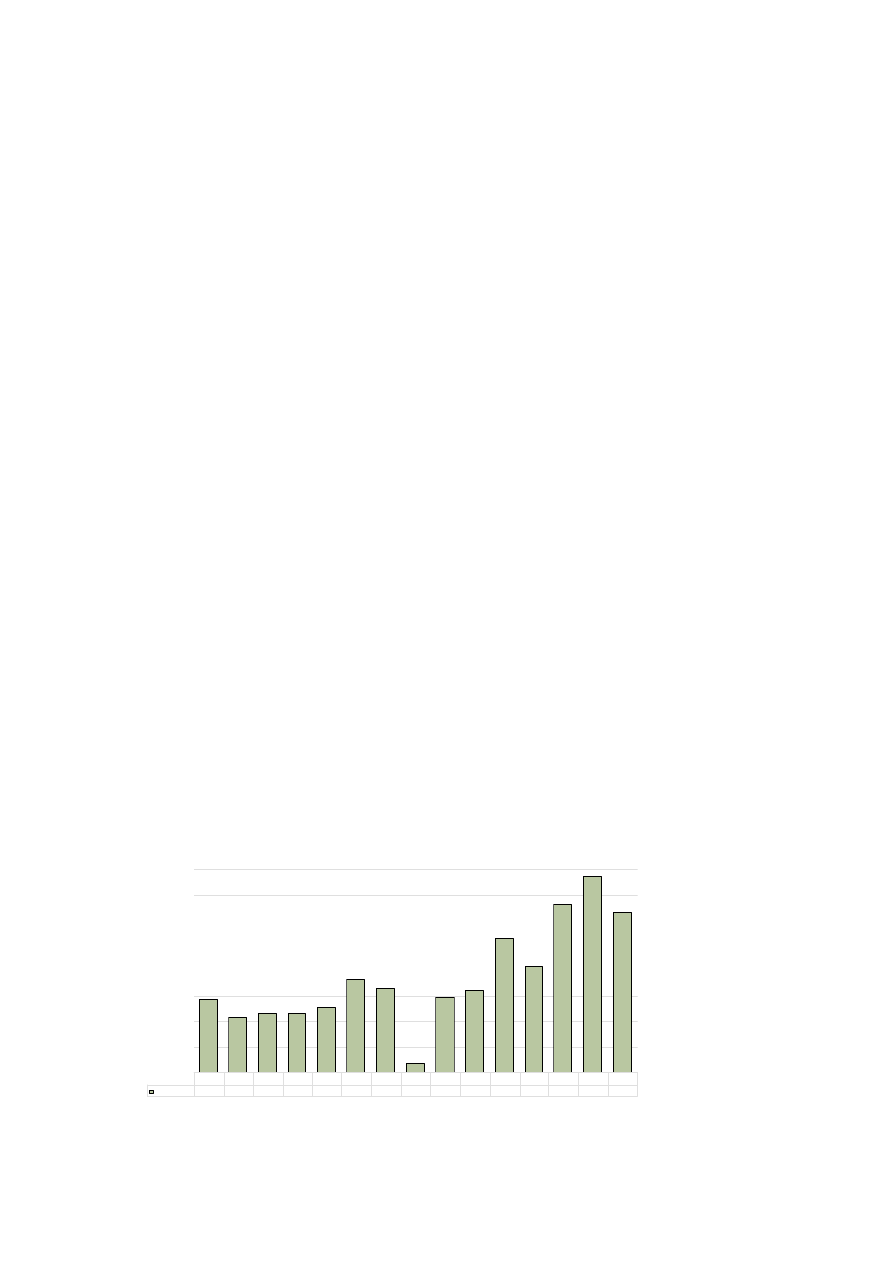
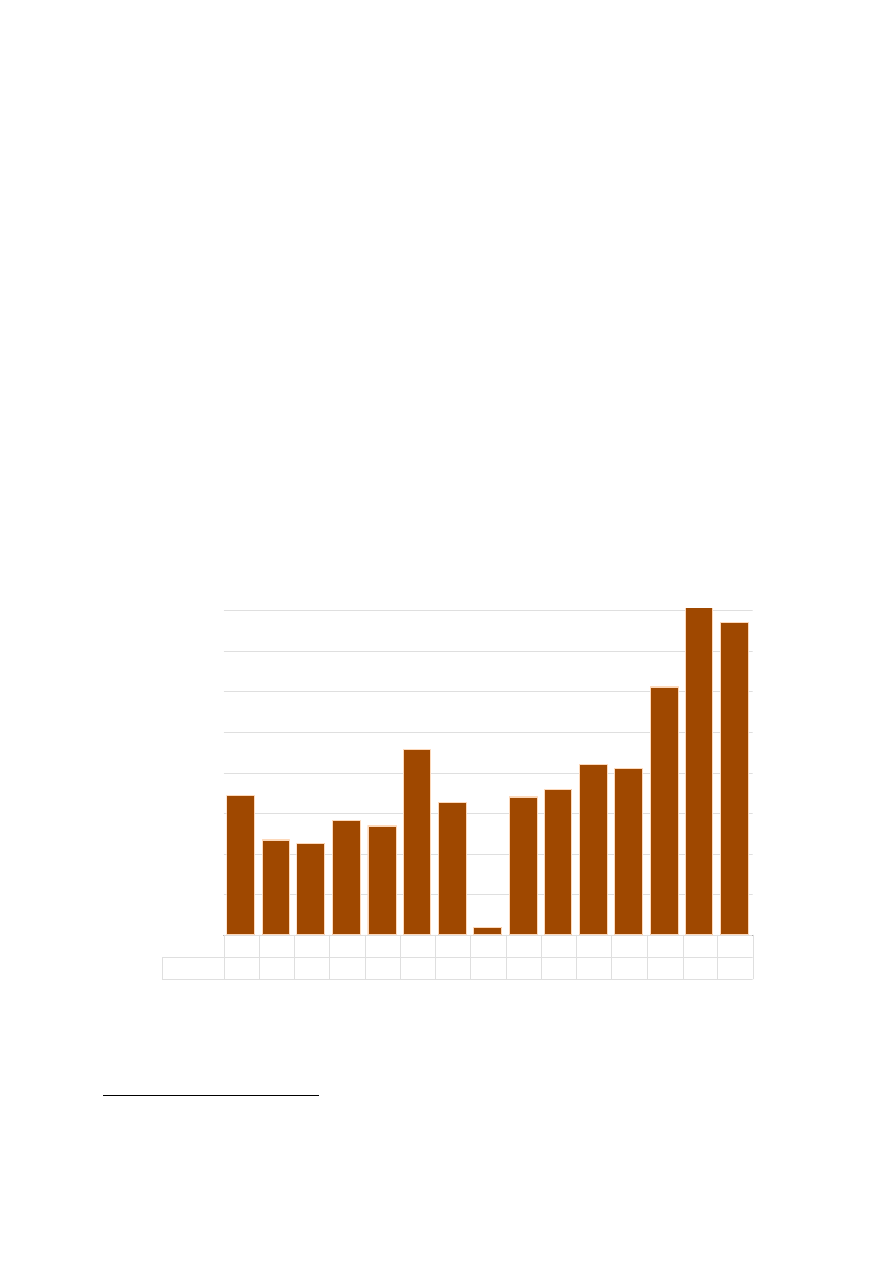
Opium poppy cultivation decreases by 19% in 2008
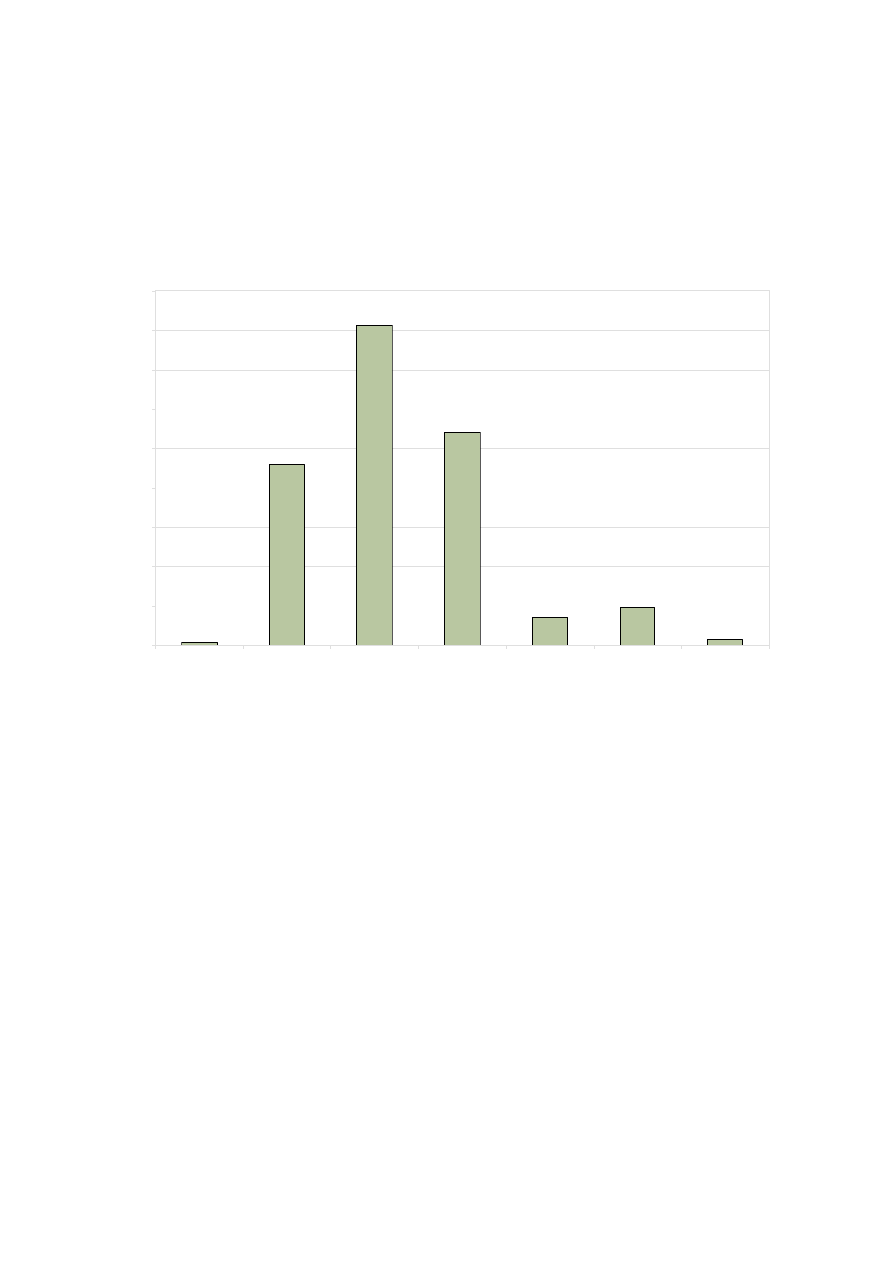
The area under opium poppy cultivation in Afghanistan decreased by 19% in 2008, from
193,000 ha in 2007 to 157,000 ha, 98% of which is confined to seven provinces in the south
and the west.
Figure 1: Opium poppy cultivation in Afghanistan (ha), 1994-2008
0
25,000
50,000
75,000
100,000
125,000
150,000
175,000
200,000
He
cta
re
s
Cult ivat ion
71,000
54,000
57,000
58,000
64,000
91,000
82,000
8,000
74,000
80,000
131,000
104,000
165,000
193,000
157,000
1994
1195
1996
1997
1998
1999
2000
2001
2002
2003
2004
2005
2006
2007
2008

4
The Opium Winter Assessment Survey 2008 (implemented in January/February 2008)
anticipated a slight reduction in opium cultivation (UNODC, Afghanistan Opium Winter
Rapid Assessment Report, February 2008). The full Opium Survey shows that the cultivation
has reduced more than expected thanks to successful counter-narcotic efforts in the northern
and eastern provinces of Afghanistan. This decline was also a result of unfavorable weather
conditions that caused extreme drought and crop failure in some provinces, especially those in
which agriculture is rain-fed.
In areas where the cultivation decline has been the result of the severe drought, there are real
challenges for the Government and international stakeholders to sustain the declining
cultivation trend. There is an urgent need to mobilize support to meet short term and long
term needs of the farmers affected by the drastic weather conditions.
Eighteen provinces have been found to be free of poppy and cultivation. In eastern and
northern provinces cultivation was reduced to negligible levels. The province of Nangarhar,
which was once the top producing province, has become poppy free for the first time since the
systematic monitoring of opium started in Afghanistan in the early 1990s. 2008 also presents
a stark contrast because Nangarhar cultivated as much as 18,739 ha only last year.
The regional divide of opium cultivation between the south and rest of the country continued
to sharpen in 2008. Most of the opium cultivation is confined to the south and the west, which
are dominated by insurgency and organized criminal networks. This corresponds to the
sharper polarization of the security situation between the lawless south and relatively stable
north. Hilmand still remains the dominant opium cultivating province (103,500 ha) followed
by Kandahar, Uruzgan, Farah and Nimroz.
A major difference in the regional distribution of 2007 and 2008 cultivation is that cultivation
in the east (Nangarhar, Kunar and Laghman) has dropped to insignificant levels in 2008.
Compared to a total of 19,746 ha of opium cultivation in 2007, in 2008 the eastern region is
estimated to have cultivated only 1,150 ha.
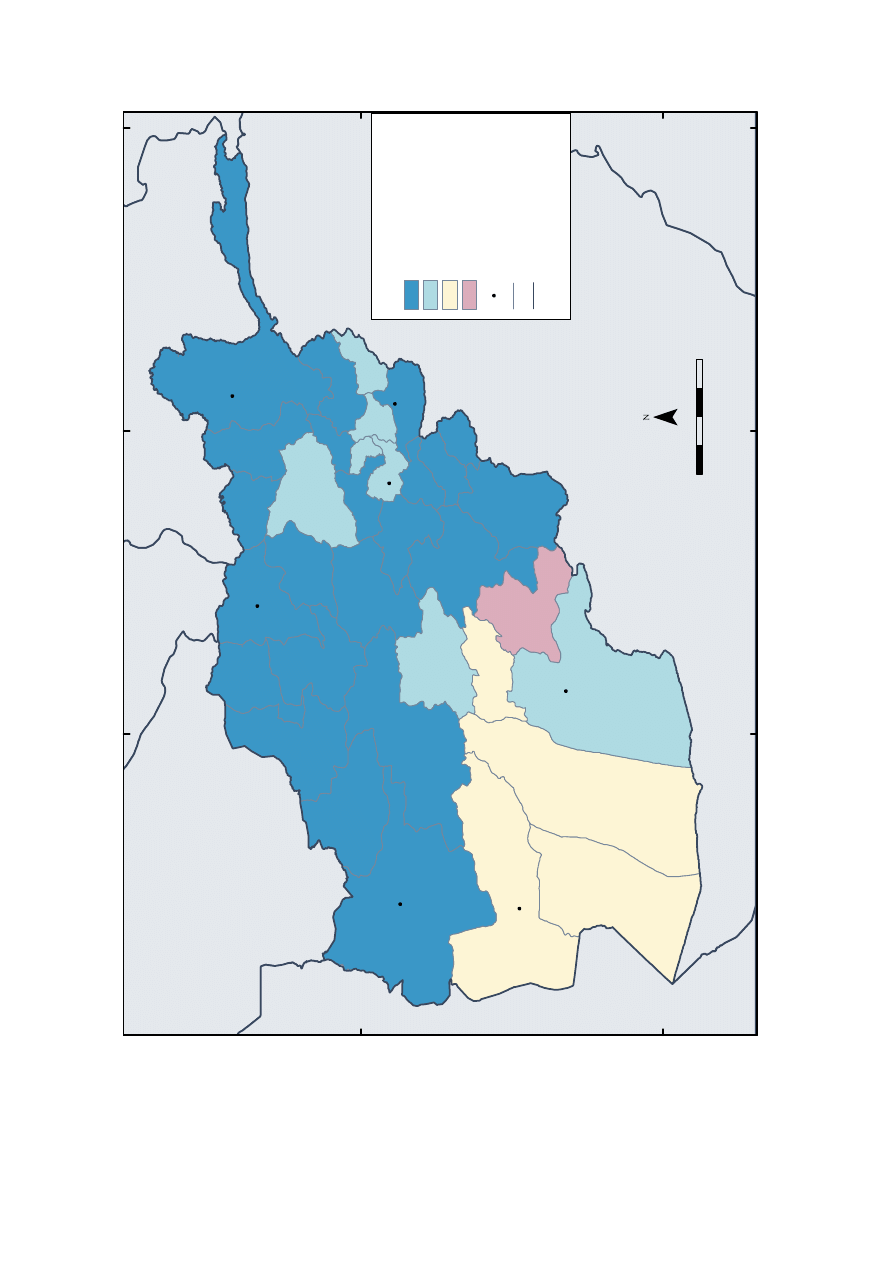
Number of opium poppy free provinces increases to 18 in 2008
The number of opium poppy free provinces increased to 18 in 2008 compared to 13 in 2007
and six in 2006. These poppy free
3
provinces are shown in the table below:
Central region
Ghazni*,Khost*, Logar*, Nuristan*, Paktika*, Paktya*, Panjshir*,
Parwan*, Wardak*
North region
Balkh*, Bamyan*, Jawzjan, Samangan*, Sari Pul
North-East region
Kunduz*, Takhar
East region
Nangarhar
West region
Ghor
* Poppy free provinces in 2007 and 2008
Encouragingly, all the provinces which were poppy free in 2007 remained poppy free in
2008. Campaigns against poppy cultivation, effective law enforcement implementation by the
Government, and alternative development assistance to farmers contributed to the increase in
the number of poppy free provinces. Prevailing conditions of drought, as noted above, also
played a part in making opium cultivation negligible in the rain-fed areas of northern
Afghanistan (Faryab and Badakhshan).
3
A region is defined as poppy free when it is estimated to have less than 100 ha of opium cultivation.

5
Nangarhar becomes poppy free for the first time in the history of UN opium monitoring in
Afghanistan
Nangarhar was traditionally a large poppy growing province and in 2007 it was estimated to
have 18,739 ha of opium cultivation. In 2008, Nangarhar province became poppy free for the
first time since the UN began opium cultivation monitoring in Afghanistan,
In 2004, poppy cultivation in Nangarhar was 28,213 ha; in 2005, it fell to1,093 ha. In 2006, it
increased to 4,872 ha but could only be found in very remote parts of the province.
Kunar and Laghman provinces also showed a considerable reduction (35% and 24%
respectively) in poppy cultivation in 2008. In both provinces, opium poppy cultivation
(amounting each to less then 500 ha) was restricted to remote areas that are difficult to access.
Kapisa also experienced a considerable reduction of 45% in opium cultivation. However, this
is a province with a high security risk and a higher percentage of agricultural land if
compared to Kunar and Laghman. These factors increase the challenges of sustaining the
reduction next year.
The poppy free status of Nangarhar and reduced cultivation in Kunar and Laghman show an
effective provincial leadership in implementing control measures to stop poppy cultivation in
the eastern region
North and North-East Afghanistan show drastic reduction in opium cultivation
Northern Afghanistan also shows successes in terms of poppy free status and reduced
cultivation. The total reduction in poppy cultivation in the north and north-east regions is 84
and 96% respectively compared to 2007.
In north and north-east Afghanistan, the amount of opium cultivation is estimated to be very
low affecting only three provinces, namely Faryab (289 ha), Baghlan (475 ha) and
Badakhshan (200 ha). The rest of the provinces in northern region (Balkh, Bamyan, Jawzjan,
Samangan, Saripul, Kunduz and Takhar) are poppy free.
The drought in 2008 affected not only opium cultivation but other agricultural production as
well. In particular, it caused the failure of the rain-fed wheat crop, which resulted in serious
difficulties for farmers. As a consequence, food prices have escalated in Afghanistan. If
emergency food aid and massive development aid are not extended to the northern, central
and eastern parts of the country (especially Nangarhar), there is a serious risk of a backlash
next year. Many farmers are losing the cash income they used to receive from opium, and at
the same time they have to buy wheat and other food items at very high prices. This poses
considerable challenges in keeping the region poppy free in the near future.
98% of opium poppy cultivation is restricted to the South and South-West
The number of security incidents increased sharply in the last three years, especially in the
south and south-west of Afghanistan. Over the same period, and in the same regions, opium
cultivation showed the same sharp increase. In 2008, 98% of opium cultivation is confined to
seven provinces in the south and west, namely Hilmand, Kandahar, Uruzgan, Zabul, Farah
and Nimroz. Security conditions are extremely poor in those provinces.
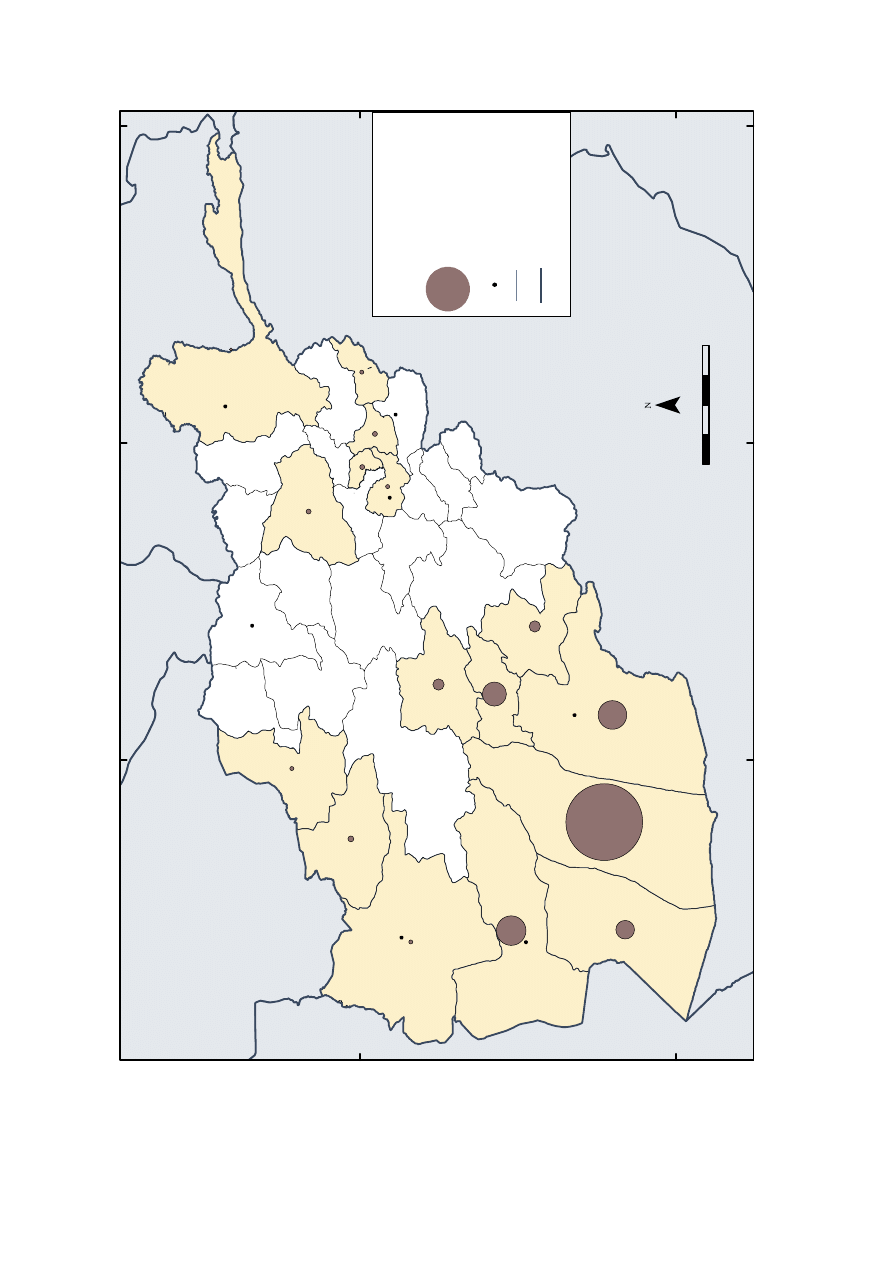
Hilmand still remains the single largest opium cultivating province with 103,500 ha (66% of
total cultivation in Afghanistan) almost at the same level as 2007. Between 2002 and 2008,
cultivation in Hilmand province more than tripled. A lot of land outside the traditional
agricultural areas has been reclaimed for the sole purpose of opium cultivation in Hilmand.
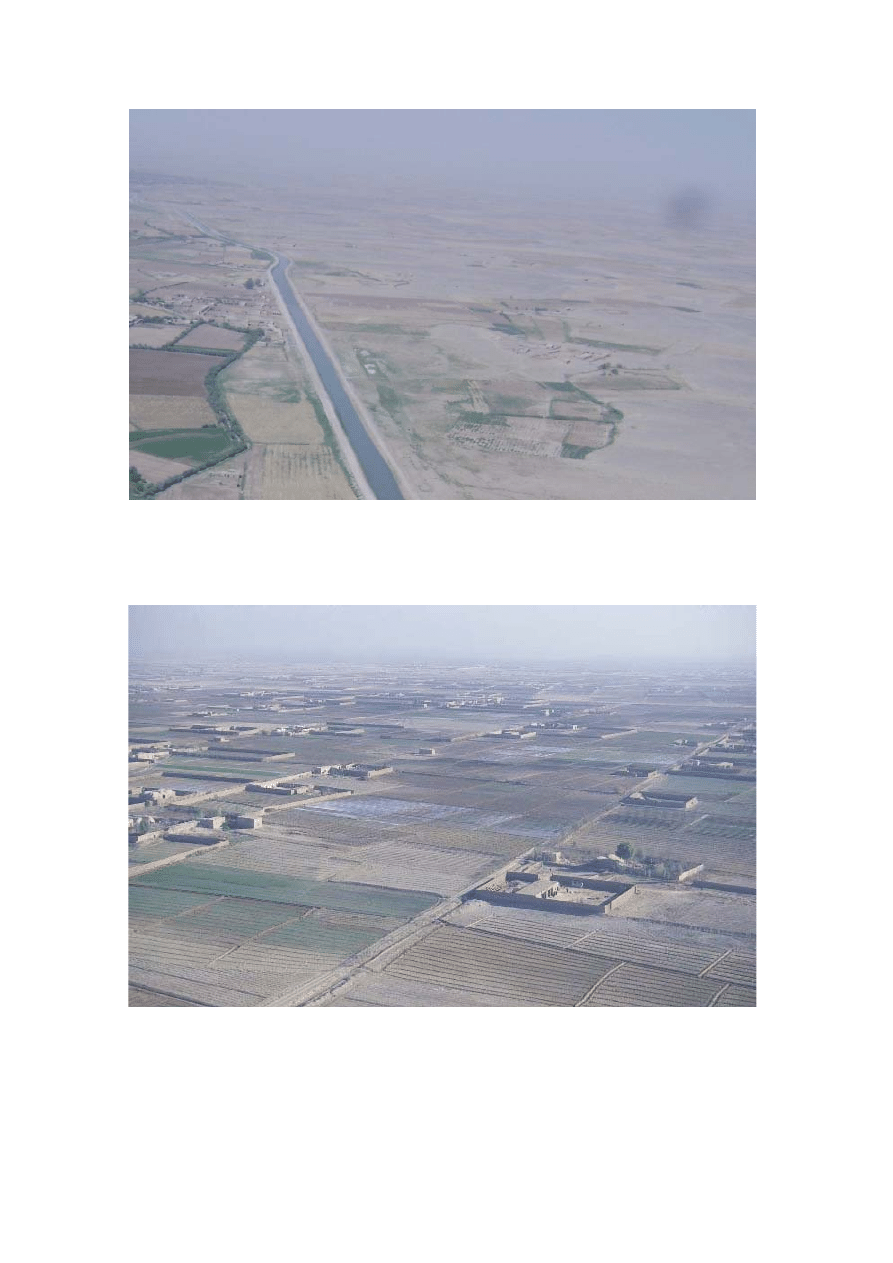
6
Photo 1
Photo 1 shows an area on the right side of the canal which has been newly reclaimed as
agricultural land for opium cultivation. Farmers in Hilmand appear to be able to afford the
high expenses needed to reclaim land for opium cultivation.
Photo 2
Photo 2 shows agriculture land in Nad Ali district which is well developed with ample
irrigation facilities. This area is known for its intensive opium cultivation. The picture shows
wheat and poppy in the sprouting stage. Wheat can be distinguished from opium because of
its darker green colour.

7
In Kandahar province, opium cultivation was 14,623 ha in 2008 (a reduction of 12% from
2007) but remaining significantly higher than in 2006. The increase in opium cultivation
started in the year 2004 when only 4,959 ha were cultivated. Since then, the area under opium
poppy has tripled. The total area under opium in Zabul increased by 45% reaching 2,335 ha in
2008.
Table 1:
Distribution of opium poppy cultivation in Afghanistan by region, 2007- 2008
Region
2007 (ha)
2008 (ha)
Change
2007-2008
2007 (ha) as
% of total
2008 (ha) as
% of total
Southern 133,546
132,760
-1%
69%
84%
Northern 4,882
766
-84%
3%
0.5%
Western
28,619
22,066 -23% 15% 14%
North-eastern
4,853
200 -96% 3% 0.1%
Eastern
20,581
715 -97% 11% 0.5%
Central 500
746
49%
0.3%
0.5%
In 2008 there was a 5% decrease in opium cultivation in Nimroz province (6,203 ha)
compared to last year. Cultivation in Nimroz was three times as high as in 2006. The majority
of the cultivation has always been located in Khash Rod district. Many new agricultural areas
were developed in the northern part of this district since 2007, and a vast majority of them
have been used for opium cultivation.
Opium cultivation in Farah amounted to 15,010 ha with a 1% increase compared to 2007
(14,865 ha) when the total area under opium poppy almost doubled compared to 2006 (7,694
ha). No eradication was carried out in this province despite the high opium cultivation. In
2002, the total cultivation in this province was only 500 ha.
Table 2:
Main opium poppy cultivating provinces in Afghanistan (ha), 2008
Province
2003
2004
2005
2006
2007
2008
Change
2007-
2008
%
Total
in
2008
Hilmand 15,371
29,353
26,500
69,324
102,770
103,590
1%
66%
Kandahar
3,055
4,959 12,989 12,619 16,615 14,623 -14% 9%
Farah 1,700
2,288
10,240
7,694
14,865
15,010
1%
10%
Uruzgan 4,698
N/A
2,024
9,773
9,204
9,939 7% 6%
Nimroz
26
115 1,690 1,955 6,507 6,203 -5% 4%
8
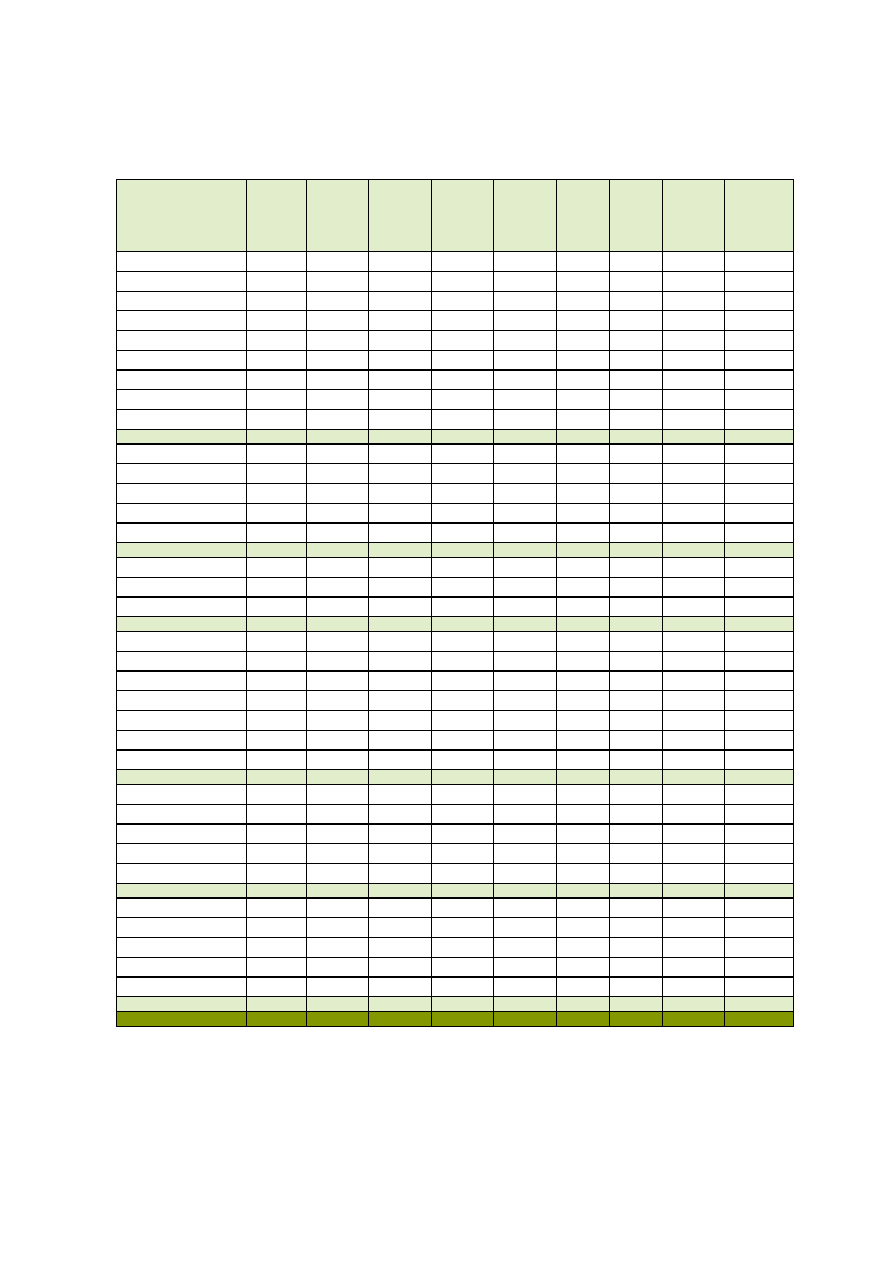
Table 3:
Opium poppy cultivation (2004-2008) and eradication (2007-2008) in Afghanistan (ha)
by region and province
PROVINCE
Cultivation
2004 (ha)
Cultivation
2005 (ha)
Cultivation
2006 (ha)
Cultivation
2007 (ha)
Cultivation
2008 (ha)
Change
2007-2008
(ha)
Change
2007-2008
(%)
Total area of
eradication in
2007 (ha)
Total area of
eradication in
2008 (ha)
Kabul
282
0
80
500
310
-190
-38%
14
20
Khost
838
0
133
0
0
0
0%
16
0
Logar
24
0
0
0
0
0
0%
0
0
Paktya
1,200
0
0
0
0
0
0%
0
0
Panjshir
0
0
0
0
0
0
0%
0
0
Parwan
1,310
0
124
0
0
0
0%
1
0
Wardak
1,017
106
0
0
0
0
0%
0
0
Ghazni
62
0
0
0
0
0
0%
0
0
Paktika
0
0
0
0
0
0
0%
0
0
Central Region
4,733
106
337
500
310
-190
-38%
31
20
Kapisa
522
115
282
835
436
-399
-48%
10
6
Kunar
4,366
1,059
932
446
290
-156
-35%
27
103
Laghman
2,756
274
710
561
425
-136
-24%
802
26
Nangarhar
28,213
1,093
4,872
18,739
0
-18,739
-100%
2,339
26
Nuristan
764
1,554
1,516
0
0
0
0%
0
3
Eastern Region
36,621
4,095
8,312
20,581
1,151
-19,430
-94%
3,178
164
Badakhshan
15,607
7,370
13,056
3,642
200
-3,442
-95%
1,311
774
Takhar
762
1,364
2,178
1,211
0
-1,211
-100%
781
0
Kunduz
224
275
102
0
0
0
0%
5
0
North-eastern Region
16,593
9,009
15,336
4,853
200
-4,653
-96%
2,097
774
Baghlan
2,444
2,563
2,742
671
475
-196
-29%
185
85
Balkh
2,495
10,837
7,232
0
0
0
0%
14
0
Bamyan
803
126
17
0
0
0
0%
0
0
Faryab
3,249
2,665
3,040
2,866
291
-2,575
-90%
337
0
Jawzjan
1,673
1,748
2,024
1,085
0
-1,085
-100%
122
0
Samangan
1,151
3,874
1,960
0
0
0
0%
0
0
Sari Pul
1,974
3,227
2,252
260
0
-260
-100%
114
0
Northern Region
13,789
25,040
19,267
4,882
766
-4,116
-84%
772
85
Hilmand
29,353
26,500
69,324
102,770
103,590
820
1%
4,003
1,416
Kandahar
4,959
12,989
12,619
16,615
14,623
-1,992
-12%
7,905
1,222
Uruzgan
11,080
2,024
9,703
9,204
9,939
735
8%
204
113
Zabul
2,977
2,053
3,210
1,611
2,335
724
45%
183
0
Day Kundi
0
2,581
7,044
3,346
2,273
-1,073
-32%
5
0
Southern Region
48,369
46,147
101,900
133,546
132,760
-786
-1%
12,300
2,751
Badghis
614
2,967
3,205
4,219
587
-3,632
-86%
232
0
Farah
2,288
10,240
7,694
14,865
15,010
145
1%
143
9
Ghor
4,983
2,689
4,679
1,503
0
-1,503
-100%
188
38
Hirat
2,531
1,924
2,287
1,525
266
-1,259
-83%
70
352
Nimroz
115
1,690
1,955
6,507
6,203
-304
-5%
35
113
Western Region
10,531
19,510
19,820
28,619
22,066
-6,553
-23%
668
511
Total (rounded)
131,000
104,000
165,000
193,000
157,000
-36,000
-19%
19,047
4,306
9
Potential opium production in Afghanistan declines to 7,700 mt in 2008
The average yield for Afghanistan in 2008 was 48.8 kg/ha compared to 42.5 kg/ha in 2007.
This is the highest average yield estimated for Afghanistan since 2000.
The yield per hectare in the southern region is normally considerably higher than the rest of
the country. Prior to 2008, there was significant opium cultivation outside the southern region
which lowered the average national yield. In 2008, the region that accounted for 98% of the
total national cultivation is the one with the highest yield.
Although the weather conditions were unfavorable for a second crop (spring cultivation)
throughout the whole country, the first crop (fall cultivation) in south and south-west received
adequate irrigation. These conditions naturally led to a reduced level of cultivation in 2008
and lower yields in the central and eastern regions, but they did not affect the yield in the
south, where most of the cultivation was concentrated and where the yield actually increased.
Given the different distribution of the cultivation and yield, the 19% total decrease in
cultivation resulted in a smaller 6% decrease in potential opium production which is estimated
in 2008 at 7,700 mt. If all the opium were converted into heroin and using a 7:1 ratio as
reported in previous studies, this would amount to 1,100 mt of heroin
4
.
Figure 2: Potential opium production in Afghanistan (metric tons), 1994-2008
0
1,000
2,000
3,000
4,000
5,000
6,000
7,000
8,000
M
e
tr
ic
t
o
n
s
Production 3,416 2,335 2,248 2,804 2,693 4,565 3,278 185
3,400 3,600 4,200 4,100 6,100 8,200 7,700
1994 1995 1996 1997 1998 1999 2000 2001 2002 2003 2004 2005 2006 2007 2008
Reflecting the distribution of the cultivation, almost 98% of the potential opium production
took place in the south and south-west of Afghanistan in 2008. The opium production in
Hilmand alone (5,397 mt) was higher than Afghanistan’s total production in 2005 (4,100 mt).
4
It is estimated that the actual production of morphine and heroin in Afghanistan is about 30 to 40% less than
the total 1,100 mt, since a significant amount of opium is exported to other countries without being processed in
Afghanistan.

10
Table 4:
Average opium yield in Afghanistan by region, 2007-2008
Region
2007 Average
yield (kg/ha)
2008 Average
yield (kg/ha)
Change
Central (Parwan, Paktya, Wardak, Khost, Kabul,
Logar, Ghazni, Paktika, Panjshir)
51.9
36.2 -30%
East (Nangarhar, Kunar, Laghman, Nuristan, Kapisa)
45.2
39.3 -13%
North-east (Badakhshan, Takhar, Kunduz)
40.7
31.4 -23%
North (Bamyan, Jawzjan, Sari Pul, Baghlan, Faryab,
Balkh, Samangan)
49.7
54.6 10%
South (Hilmand, Uruzgan, Kandahar, Zabul, Day
Kundi)
42.2
52.1 23%
West (Ghor, Hirat, Farah, Nimroz, Badghis)
28.8
29.7 3%
Weighted national average
42.5
48.8
15%
Potential opium production in the southern region of Afghanistan increased in 2008 by 20%
reaching 6,917 mt, which is equivalent to 90% of the production in the whole country. In
western regions, potential opium production decreased by 32% to 655 mt. Opium
production decreased by 82% in the northern region, by 97% in the north-east and by 96%
in the eastern region. The total amount of production in north, north-east and east was only
93 mt, which is just over 1% of the total potential opium production of the country.

11
Table 5:
Potential opium production
5
by region and by province (metric ton), 2007-2008
PROVINCE
Production
2007 (mt)
Production
2008 (mt)
Change
2007-2008
(mt)
Change
2007-2008
(%)
REGION
Kabul 26
11
-15 -57%
Central
Khost 0
0
0 0%
Central
Logar 0
0
0 0%
Central
Paktya 0
0
0 0%
Central
Panjshir 0
0
0 0%
Central
Parwan 0
0
0 0%
Central
Wardak 0
0
0 0%
Central
Ghazni 0
0
0 0%
Central
Paktika 0
0
0 0%
Central
Central Region
26
11
-15
-57%
Kapisa 40
17
-23
-58%
East
Kunar 18
11
-7
-38%
East
Laghman 20
17
-3
-15%
East
Nangarhar 1,006
0
-1006
-100%
East
Nuristan 0
0
0
0%
East
Eastern Region
1,084
45
-1039
-96%
Badakhshan
152
6 -146 -96% North-East
Takhar 43
0
-43
-100%
North-East
Kunduz 0
0
0
0%
North-East
North-eastern
Region
195
6
-189
-97%
Baghlan 36
26
-10
-28%
North
Balkh 0
0
0
0%
North
Bamyan 0
0
0
0%
North
Faryab 135
16
-119
-88%
North
Jawzjan 54
0
-54
-100%
North
Samangan 0
0
0
0%
North
Sari Pul
9
0
-9
-100%
North
Northern Region
233
42
-192
-82%
Hilmand 4,399
5,397
998
23%
South
Kandahar 739
762
22
3%
South
Uruzgan 411
518
107
26%
South
Zabul 61
122
60
98%
South
Day
Kundi
135 118 -17 -12%
South
Southern Region
5,745
6,917
1172
20%
Badghis 100
17
-83
-83%
West
Farah 409
446
37
9%
West
Ghor 44
0
-44
-100%
West
Hirat 33
8
-25
-76%
West
Nimroz 372
184
-188
-51%
West
Western Region
959
655
-303
-32%
Total (rounded)
8,200
7,700
-500
-6%
5
Total national opium production is derived from the weighted average yield and total cultivation

12
10.3% of the total population is involved in opium cultivation
The total number of households involved in growing poppy in 2008 is estimated at 366,000, a
reduction of 28% compared to 2007. Of these, 266,862 families (73%) were in the southern
region (Hilmand, Kandahar, Uruzgan, Zabul and Day Kundi) and 18% in the western region
(Nimroz and Farah). The percentage of opium cultivating families is negligible in the rest of
the country.
Given an average of 6.5 members per household
6
, this represents an estimated total of about
2.38 million persons, or 10.3 % of Afghanistan’s total population of 23 million
7
In terms of the average size of fields dedicated to poppy cultivation per poppy-growing
household, the southern region showed the biggest size (0.5 ha) compared to any other region.
Table 6:
Number of families involved in opium cultivation in Afghanistan, 2008
Region
Opium poppy
cultivation (ha)
Total no. of
households growing
poppy
Percentage of
poppy growing
households over
total number of
households
Average size of
poppy fields per
each household
growing poppy-
(ha)
Central 310
3,747
1% 0.08
Eastern 1,151
19,743
5% 0.06
North-eastern 200
6,218
2% 0.03
Northern 766 5,240
1% 0.15
Southern 132,760
266,862
73% 0.50
Western 22,066
64,674
18% 0.34
Total (rounded)
157,000
366,500
100%
0.43
Opium prices fall in 2008
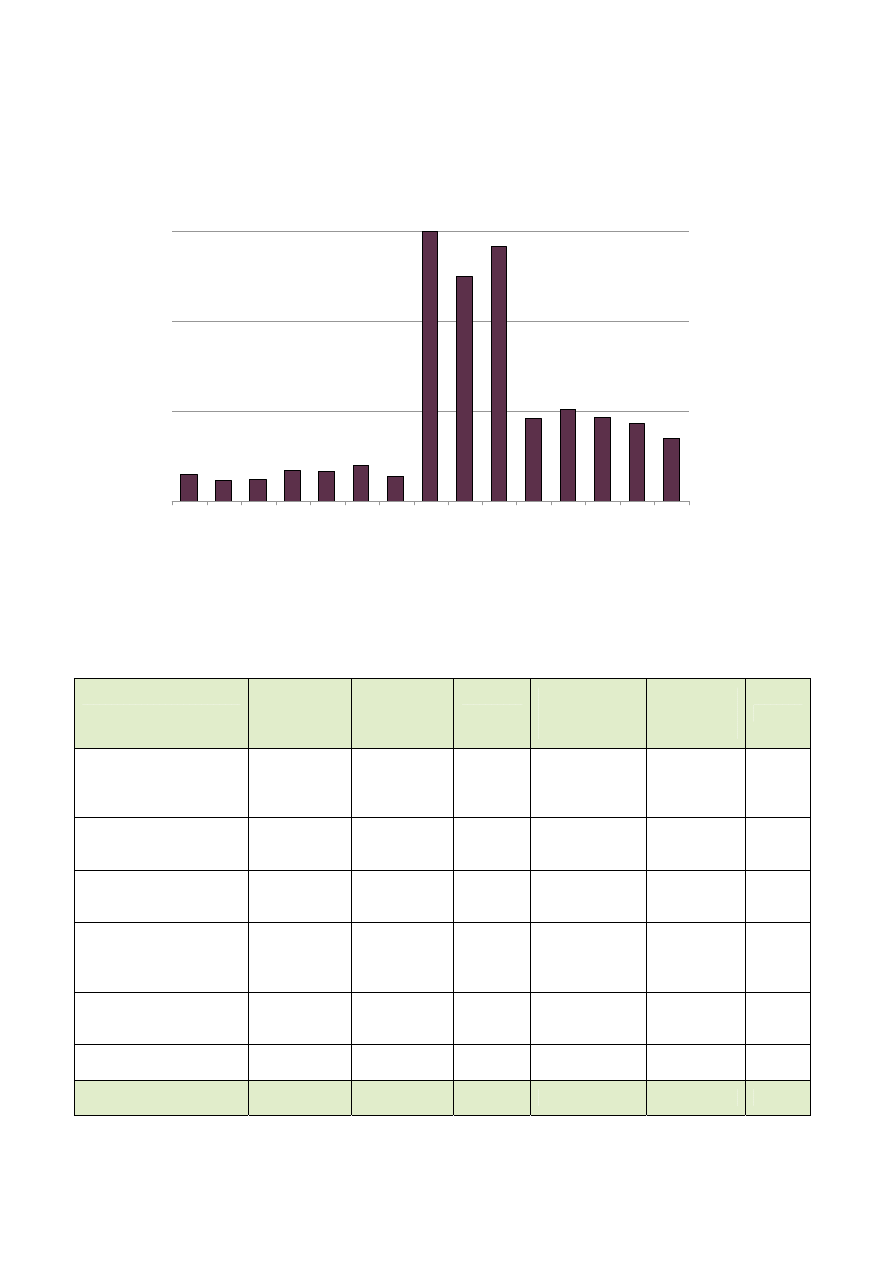
In 2008, the weighted average farm-gate price of fresh opium at harvest time was US$ 70/kg,
which is 19% lower than in 2007 and almost one fifth of the price in 2001. Between 2007 and
2008 farm-gate prices of dry opium also fell by 22%, reaching US$ 95/kg (weighted price) at
harvest time.
The Afghanistan Government (Ministry of Counter-Narcotics) and UNODC (MCN/UNODC)
have monitored opium prices on a monthly basis in various provinces of Afghanistan since
1994
8
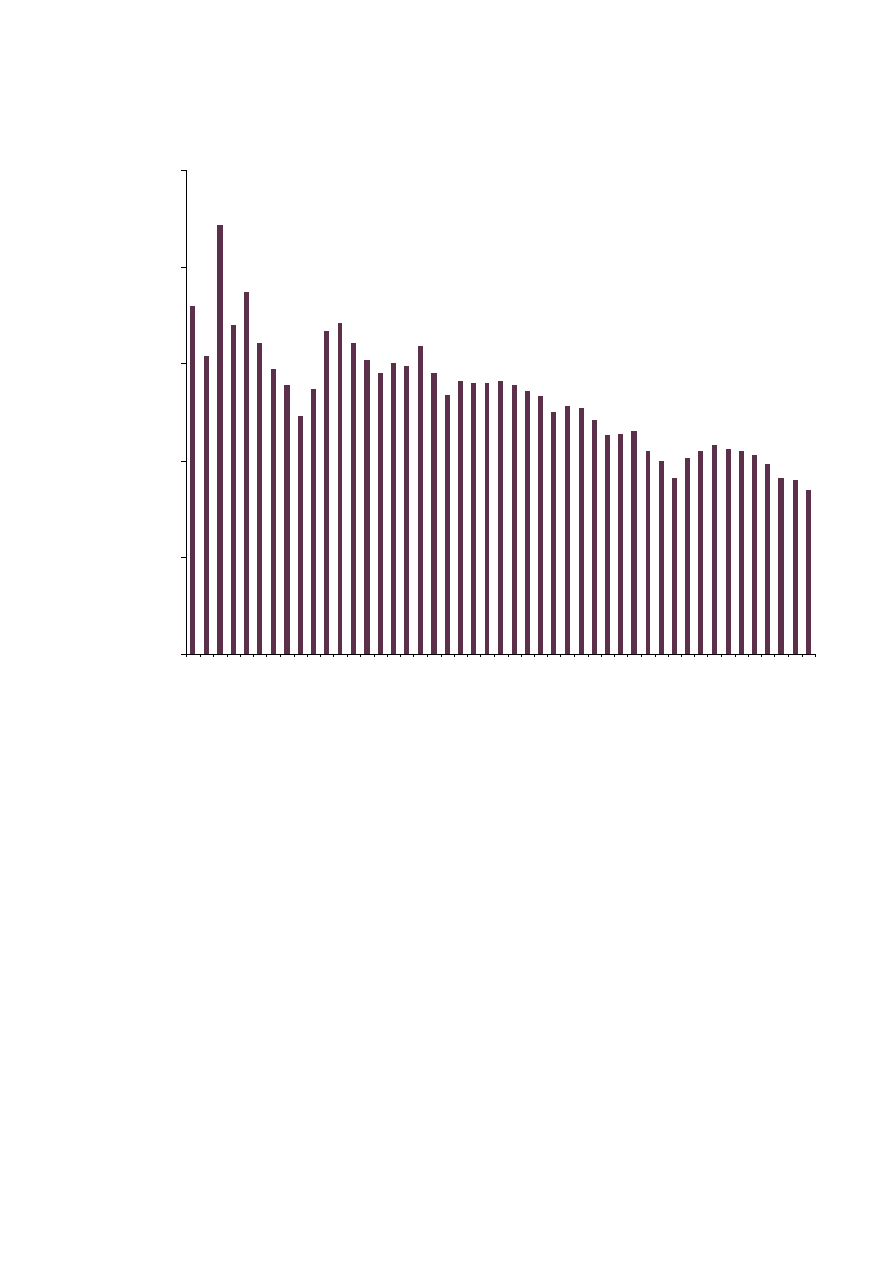
. These monthly prices show a decreasing trend for farm-gate dry opium prices since the
year 2004.
6
Source: Central Statistics Office, Government of Afghanistan.
7
Source: Central Statistics Office, Government of Afghanistan.
8
UNODC also started monitoring prices in two key provinces in 1997.
13
Figure 3: Average farm-gate price of dry opium (US$/kg), September 2004 to July 2008
18
0
154
222
170
18
7
161
147
139
123
137
167
171
161
152
14
5
15
0
149
15
9
14
5
13
4
141
140
140
141
139
13
6
133
125
128
12
7
121
11
3
114
11
5
105
100
101
105
108
106
105
103
98
91
90
85
91
0
50
100
150
200
250
S
e
p
-0
4
O
ct
-0
4
N
o
v
-0
4
D
e
c
-0
4
J
a
n
-0
5
F
e
b
-0
5
M
a
r-
0
5
A
p
r-
0
5
M
a
y
-0
5
J
u
n
-0
5
J
u
l-
0
5
A
u
g
-0
5
S
e
p
-0
5
O
ct
-0
5
N
o
v
-0
5
D
e
c
-0
5
J
a
n
-0
6
F
e
b
-0
6
M
a
r-
0
6
A
p
r-
0
6
M
a
y
-0
6
J
u
n
-0
6
J
u
l-
0
6
A
u
g
-0
6
S
e
p
-0
6
O
ct
-0
6
N
o
v
-0
6
D
e
c
-0
6
J
a
n
-0
7
F
e
b
-0
7
M
a
r-
0
7
A
p
r-
0
7
M
a
y
-0
7
J
u
n
-0
7
J
u
l-
0
7
A
u
g
-0
7
S
e
p
-0
7
O
ct
-0
7
N
o
v
-0
7
D
e
c
-0
7
J
a
n
-0
8
F
e
b
-0
8
M
a
r-
0
8
A
p
r-
0
8
M
a
y
-0
8
J
u
n
-0
8
J
u
l-
0
8
Month
P
ri
c
e
in
(U
S
D
/K
g
)
14
Figure 4: Fresh opium farm-gate prices at harvest time (weighted by production) in
Afghanistan(US$/kg), 1994-2008
30
23
24
34
33
40
28
301
250
283
92
102
94
86
70
0
50
100
150
200
250
300
350
1994 1995 1996 1997 1998 1999 2000 2001 2002 2003 2004 2005 2006 2007 2008
U
S
$/
kg
Sources: UNODC, Opium Surveys 1994-2007
Table 7:
Farm-gate prices of dry and fresh opium in Afghanistan at harvest time (US$/kg) by
region, 2008
Region
Average
Fresh Opium
Price (US$)-
2007
Average
Fresh Opium
Price (US$)-
2008
Change
Average Dry
Opium Price
(US$)-2007
Average Dry
Opium Price
(US$)-2008
Change
Central (Parwan, Paktya,
Wardak, Khost, Kabul,
Logar, Ghazni, Paktika,
Panjshir)
124 133
7% 167 171
2%
Eastern (Nangarhar,
Kunar, Laghman,
Nuristan, Kapisa)
88 92
5%
168 117
-30%
North-eastern
(Badakhshan, Takhar,
Kunduz)
71 85
20%
86 72
-16%
Northern (Bamyan,
Jawzjan, Sari Pul,
Baghlan, Faryab, Balkh,
Samangan)
71 56
-21%
90 72
-20%
Southern (Hilmand,
Uruzgan, Kandahar,
Zabul, Day Kundi)
85 69
-19%
115 94
-18%
Western (Ghor, Hirat,
Farah, Nimroz, Badghis)
97 83
-14%
125 104
-17%
National average price
weighted by production
86
70
-19%
122
95
-22%

15
Trends in average dry farm-gate prices vary according to regions. They decreased by 30% in
eastern regions, while in other regions (except the central region), the decrease in dry farm-
gate prices is between 16-20%. Opium prices increased by only 2% in the central region. The
highest dry opium prices were reported in the central (US$ 171/kg) and eastern regions (US$
117/kg).
One possible explanation for the general decreasing trend is that there is a surplus of opium
due to the record production of 8,200 mt in 2007 and another significant production level of
7,700 mt in 2008. These production levels are above the estimated global demand of illicit
opium
9
suggesting that the surplus production has been accumulated as stocks.
It could be argued that given the production increases in 2006 and 2007 and the still high
production in 2008, prices have not fallen as much as expected. A possible explanation could
be that after the sharp decrease in opium poppy cultivation in Myanmar and Laos in recent
years, opium from Afghanistan appears to be increasingly trafficked to China, India and
South-East Asia, which were traditionally supplied by opium from the Golden Triangle.
Total farm-gate value of opium decreased by 27% to US$ 732 million
Based on opium production and reported opium prices, the farm-gate value of the opium
harvest amounted in 2008 to US$ 732 million. The farm-gate value of opium as a proportion
of GDP decreased in 2008 to 7% compared to 13% in 2007
10
.
Slight decrease of opium income for Hilmand farmers
In 2008, farmers in Hilmand earned a total of US$ 513 million of income from the farm-gate
value of opium. In 2007, the total opium income for farmers in Hilmand amounted to US$
528 million, an increase from the total US$ 347 million estimated in 2006.
Several parts of the south and south-west are under the control of anti-government elements.
Some of the 10% agricultural tax that is generally levied could thus provide revenue for these
anti-government elements who, in turn, provide protection for poppy growing areas.
Reasons for cultivation/non-cultivation of opium poppy
As part of the 2008 survey, 3,050 farmers in 1,529 villages across Afghanistan were asked
about their reasons for cultivating, or not cultivating, opium poppy. Each farmer could
provide more than one reason.
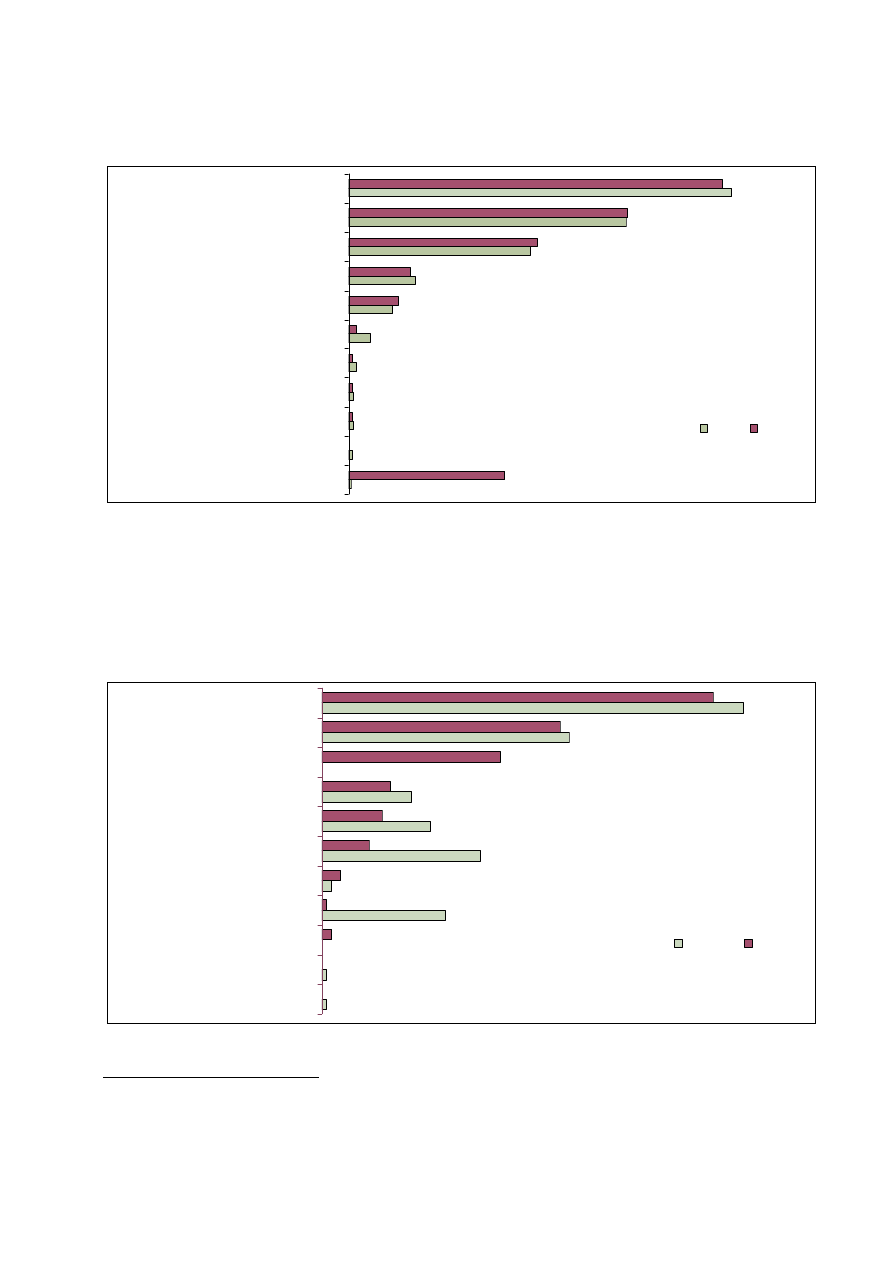
As in 2007, almost all farmers who never cultivated opium reported ‘religion’ as one of the
reasons (91% of farmers in 2008 and 93% in 2007). A consistent number of farmers also
reported ’illegality of the crop’ (68% of farmers), and ‘respect for a shura/elders decision’
(46% of farmers). Based on these results, it could be argued that the majority of farmers who
never cultivated poppy appear to be sensitive to the rule of law. In fact few farmers cited
reasons related to income or climate for not growing poppy. This also shows that the
cultural/religious pressure for not cultivating poppy can indeed be very strong.
9
World Drug Report 2008, UNODC
10
These percentages were calculated considering the 2007 GDP estimated by the Central Statistical Office of
Afghanistan).at US$ 10.2 billion.
16
Figure 5: Reasons for never having cultivated poppy (n=1488 farmers in 2007; n=1804 in
2008)
11
1%
1%
1%
1%
2%
5%
11%
16%
44%
68%
93%
38%
1%
1%
1%
2%
12%
15%
46%
68%
91%
Respect for government ban
Fear of eradication
Lack of experience
Lack of water
Negative impact on society
Other
Climate condition is not suitable
Earn enough from other crops / sources
Elders and shura decision
Illegal crop
Against Islam
2007
2008
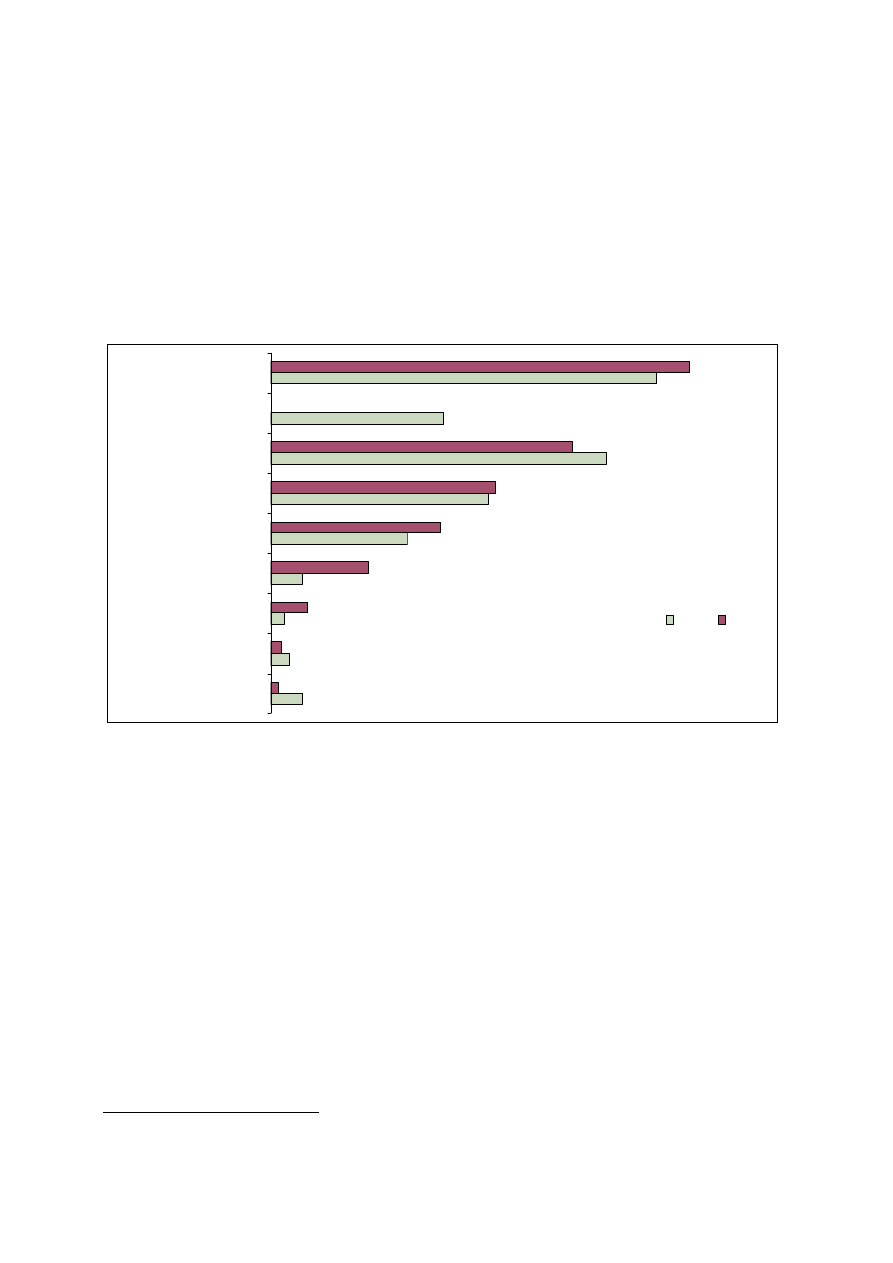
Among the farmers that grew poppy in the past but stopped, “respect for Government ban” is
one of the reasons most commonly reported (79% of farmers), followed by “decisions of the
elders and the Shura” (48%), and poor yield (36%). To a lesser extent farmers reported
reasons related to weather or agricultural conditions.
Figure 6: Reasons for not having cultivated opium poppy in 2007 and 2008 (n=2261 in 2007;
n=2521 in 2008)
11
1%
1%
25%
2%
32%
22%
18%
50%
85%
2%
1%
4%
9%
12%
14%
36%
48%
79%
Negative impact of society
Fear of eradication
Low sale price of opium
Other
Against Islam
Land/climate conditions not suitable
Lack of experience
Lack of water
Poor yield
Elders and Shura decision
Respect for government ban
2007
2008
11
The percentages add to more 100 because farmers reported more than one reason. The presentation of the data
differs from previous years. This year the percentage of each reported reason is presented as percentage of total
number of farmers. Previous years data were reported as percentage of total number of responses (total number
of responses were higher than the number of farmers because farmers reported more than one response).
17
Shura decisions, respect for Government ban and religion are less important in the south of
Afghanistan compared to the other regions. In the eastern region, farmers appear to be more
concerned about respecting the Government ban than in other regions.
One of the reasons reported by the majority of farmers for cultivating opium across the
regions was ‘poverty alleviation’ (92% of farmers). Among the most common additional
reasons provided were ‘high sale price of opium’ (66% of farmers) and ‘possibility of
obtaining loans’(50% of farmers). In southern and western provinces, high sale price and
poverty alleviation were the dominant reasons for opium cultivation while in the eastern
region it was poverty alleviation.
Figure 7: Reasons for opium poppy cultivation in 2008 (n=718 in 2007; n=508 in 2008)
12
7%
4%
3%
7%
30%
48%
74%
38%
85%
2%
2%
8%
21%
37%
50%
66%
92%
Other
Low cost of inputs (seeds, fertilizer,
labour)
Encouraged by external influence
Needed for personal consumption
High demand for opium
Possibility of obtaining loan
High sale price of opium
High cost of wedding
Poverty alleviation
2007
2008
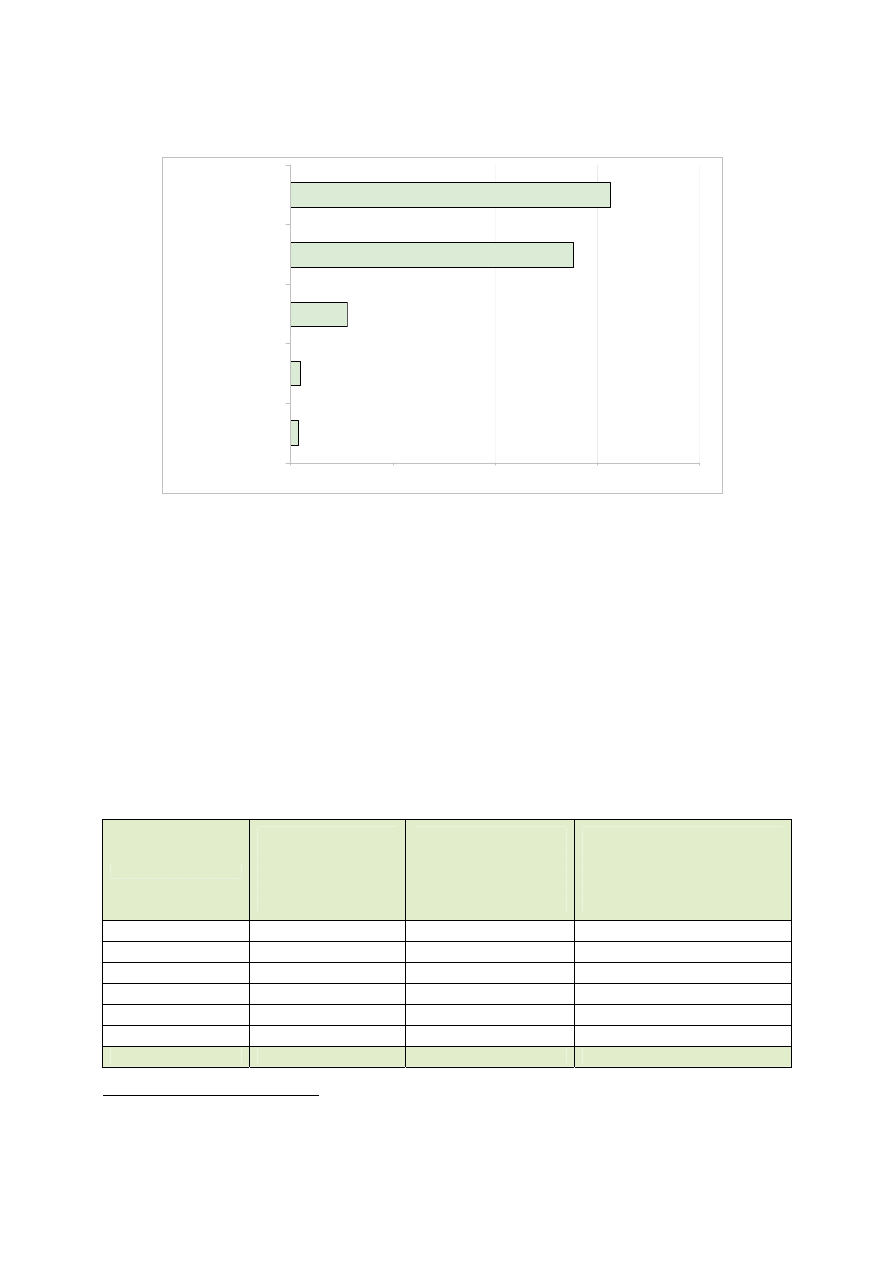
Agriculture assistance received by the farmer
In addition to farmers, headmen were interviewed in each of the 1,529 villages included in the
survey. According to the information that they provided, 281 out of the 1,529 surveyed
villages (18.4%) received agricultural assistance. The type of assistance varied and included
improved seeds/saplings (78% of villages), fertilizers (69% of villages), irrigation facilities
(14% of villages). Only 2% received agricultural training.
The majority (72%) of the villages which received agriculture assistance did not opt for
poppy cultivation in 2008. However the remaining 28% still cultivated poppy despite
receiving agricultural assistance.
12
See footnote 11.
18
Figure 8: Type of agricultural assistance delivered to villages as reported by headman (n = 281
villages that received agricultural assistance)
13
2%
2%
14%
69%
78%
0%
25%
50%
75%
100%
Agricultural Training
Other
Irrigation
Fertilizer
Improved
seeds/saplings
Income levels and poppy cultivation
In the 2008 village survey, MCN/UNODC collected information on the 2007 annual
household income of 3,050 farmers, both poppy growing and non-growing. Results confirm
the 2006 trend that in the southern region farmers have higher income than those living in
other regions. The 2007 average annual income for poppy growing farmers increased in
southern and western Afghanistan while it decreased in the rest of Afghanistan compared to
2006. The average annual income of poppy growing farmers in north-eastern and central
Afghanistan was less than that of non-poppy growing farmers in 2007 due to the low level of
poppy cultivation and the decrease in prices. In these two regions, farmers grew opium
mainly for personal consumption.
Similar to 2007, the 2008 survey shows that the cultivation of opium is more widely spread
in regions where farmers have the highest levels of income.
Table 8:
2007 annual household income by region
14
Region
Average annual
household income of
poppy famers in 2007
(US$)
1
Average annual
household income of
non-poppy famers in
2007 (US$)
2
% household income
difference between non-poppy
farmers and poppy farmers as
% of poppy farmers income
(2-1)/1
Central 2357
2674
+13%
Eastern 1817
1753
-4%
North-eastern 1970
2290
+16%
Northern 2270 1862
-18%
Southern 6194 3382
-45%
Western 2895 2273
-21%
Over all
5055
2370
-53%
13
The percentages add to more than 100 because the village may have received more than one type of assistance.
14
Caution should be used in comparing household income of growing and non growing households and across
regions given the different size and distribution of farmers in the samples.
19
Security and opium cultivation show strong correlation
In 2008, 98% of the opium poppy cultivation was concentrated in Hilmand, Kandahar,
Uruzgan, Day Kundi, Zabul, Farah and Nimroz, where security conditions are classified as
high or extremely risky by the United Nations Department of Safety and Security (UNDSS).
Most of the districts in this region are not accessible to the UN and NGOs. Anti-government
elements as well as drug traders are very active in this region. Provinces in the south are the
stronghold of anti-government elements, while provinces in the west (Farah and Nimroz) are
known to have organized criminal networks. The security map (source: UNDSS) shows the
difference between southern and northern provinces in terms of security.
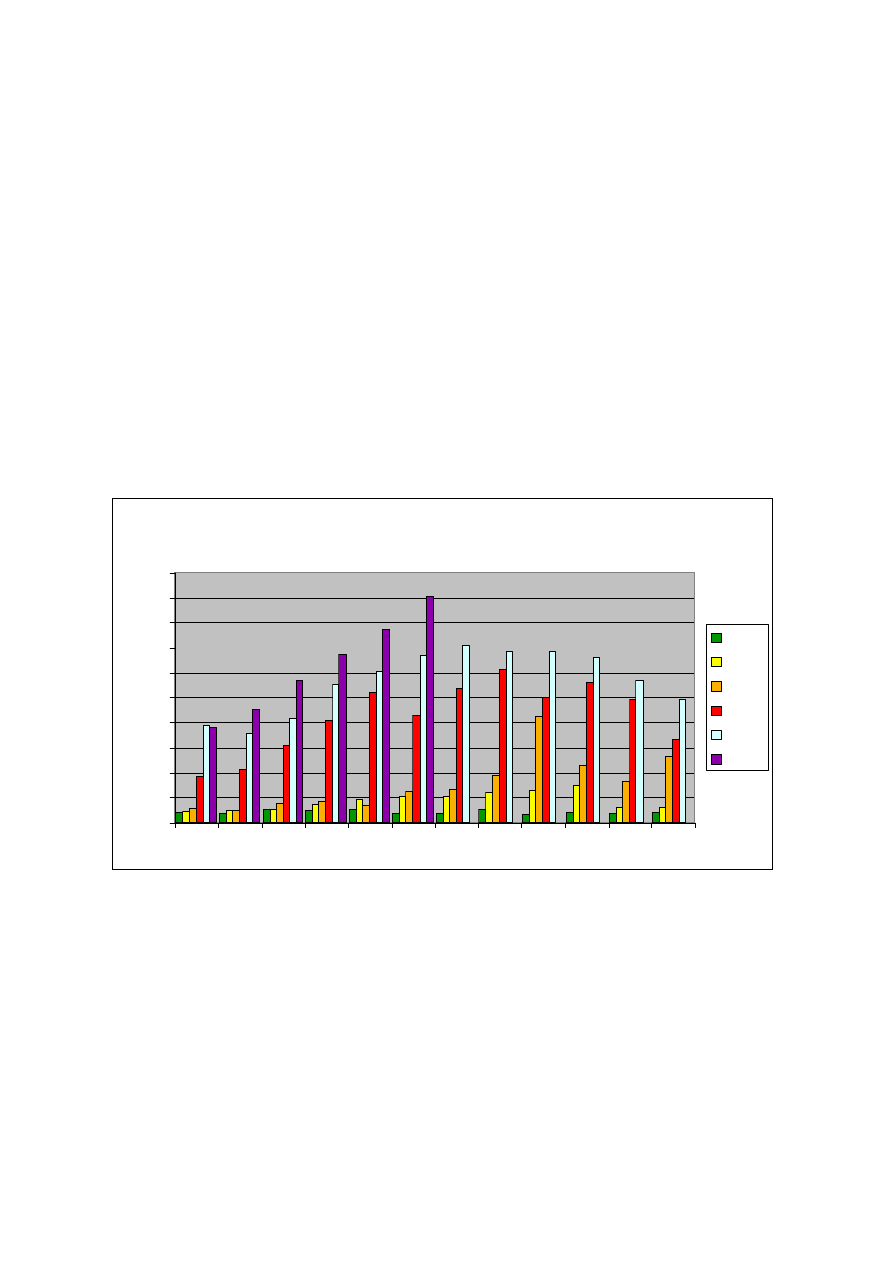
Security incidents in Afghanistan have been on the rise every year since 2003, especially in
the south and south-western provinces. The number of security incidents increased sharply in
2006, in parallel with the increase of opium poppy cultivation. The year 2008 shows a further
sharp increase in security incidents.
Figure 9: Number of security incidents by month, January 2003 to June 2008
Source: UNDSS, Kabul
Opium poppy eradication has become more risky
Eradication activities in 2008 were severely affected by resistance from insurgents. Since
most of the poppy cultivation remains confined to the south and south-west region dominated
by strong insurgency, eradication operations may in the future become even more
challenging.
Security incidents associated with eradication activities in Hilmand, Kandahar, Hirat, Nimroz,
Kapisa, Kabul and Nangarhar provinces included shooting and mine explosions resulting in
UNDSS SECURITY INCIDENTS
0
100
200
300
400
500
600
700
800
900
1000
Jan
Feb
Mar
Apr May
Jun
Jul
Aug Sep
Oct
Nov Dec
2003
2004
2005
2006
2007
2008

20
the death of at least 78 people, most of whom were policemen. This is an increase of about
75% if compared to the 19 deaths in 2007. The major incidents were in Nanarhar and Nimroz
provinces.
One of the most serious incidents happened in Khogyani district of Nangarhar, where 20
policemen were killed together with Fazal Ahmad, a MCN/UNODC surveyor whose job was
to collect the data that feed into this report. Other incidents happened in Khashrod district of
Nimroz, where 29 people died along with the district police chief. Both attacks were carried
out by suicide bombers. The Poppy Eradication Force (PEF) faced a large number of rocket
attacks while carrying out eradication in Hilmand province.
The nature of the attacks changed between 2007 and 2008. In 2007, police deaths were the
result of violence by farmers whereas deaths in 2008 were the result of insurgent actions,
including suicide attacks.
5,480 ha of opium poppy eradication verified
A total of 5,480 ha of eradicated poppy fields were verified by MCN/UNODC. This included
Governor-led eradication (GLE) (4,306 ha) and eradication led by the centrally controlled
Poppy Eradication Force (PEF) (1,174 ha). It should be noted that the figure provided for
GLE is a result of adjustments made to the initial figures reported by the field verifiers in the
two provinces of Helmand and Kandahar following the discovery of significant over-
reporting in these two provinces. These adjustments were made using satellite images which
brought the figure of 6,326 ha initially reported by the field verifiers down to 3,842 ha. All
verification from the centrally directed PEF was found accurate after a similar verification
was done using satellite images.
Summary of eradication since 2005
The eradication and cultivation situation since 2005 is provided in the table below:
Table 9:
Eradication and cultivation in Afghanistan (ha) 2005-2008
Year
2005
2006
2007
2008
GLE (ha)
4,000
13,050
15,898
4,306
15
PEF (ha)
210
2,250
3,149
1,174
Total (ha)
4,210
15,300
19,510
5,480
Cultivation
(ha)
104,000 165,000 193,000 157,000
% poppy in insecure provinces of South and
West
56% 68% 80% 98%
Poppy free provinces
8
6
13
18
Some of the key factors that could explain the drop in eradication carried out in 2008 are:
o A reduction in the number of provinces eradicating because of the number of poppy-
free provinces and provinces with negligible levels of cultivation increased in 2008.
In 2007, 26 provincial governors conducted eradication; in 2008 only 17 provinces
conducted eradication.
o Overall crop failure due to an extremely cold winter reduced the poppy crop in a
number of provinces.
15
The final figure adjusted using high resolution satellite images.

21
o Increased voluntary and/or forced self-eradication by poppy farmers. An active public
information campaign and vigorous enforcement action by some provincial governors
led to a substantial amount of self-eradication carried out by farmers either voluntarily
or through coercion. These figures cannot be counted in the official figures (because
they are not verifiable) but the claims are in the order of 3,000- 4,000 ha..
o Unlike previous years, most of the cultivation is concentrated in a limited number of
lawless provinces in the south (Hilmand, Kandahar, Uruzgan, Zabul and Daykundi)
and west (Farah and Nimroz). Eradication in these provinces is more challenging due
to security problems.
Table 10:
Governor-led eradication by province (ha), 2008
Province
Eradication
(ha)
verified
No. of
fields
eradication
reported
No. of
villages
eradication
reported
Total standing poppy
after eradication in
the reported villages
(ha)
Per centage of
opium poppy
eradication in
surveyed villages
Badakhshan 774 1374 145
125
86%
Baghlan 85
125
16
0
100%
Farah 9
15
9 670
1%
Ghor 38
170
38 11
78%
Hilmand 1416
2221
140
1449
49%
Hirat 352
606
55 140
72%
Jawzjan 0.05 1 1
0
100%
Kabul 20
95
6
118
14%
Kandahar 1222 2141 228
3199
28%
Kapisa 6
21
3
0
100%
Kunar 103
1124
58
18
85%
Laghman 26 106 7
0
100%
Nangarhar 26 227 18
7
79%
Nimroz 113
199
16
377
23%
Nuristan 3 28 1
0
87%
Uruzgan 113
221 21
636
15%
Zabul 0.14
2
1
0
100%
Grand Total
4,306
8,676
763
6,749
39%
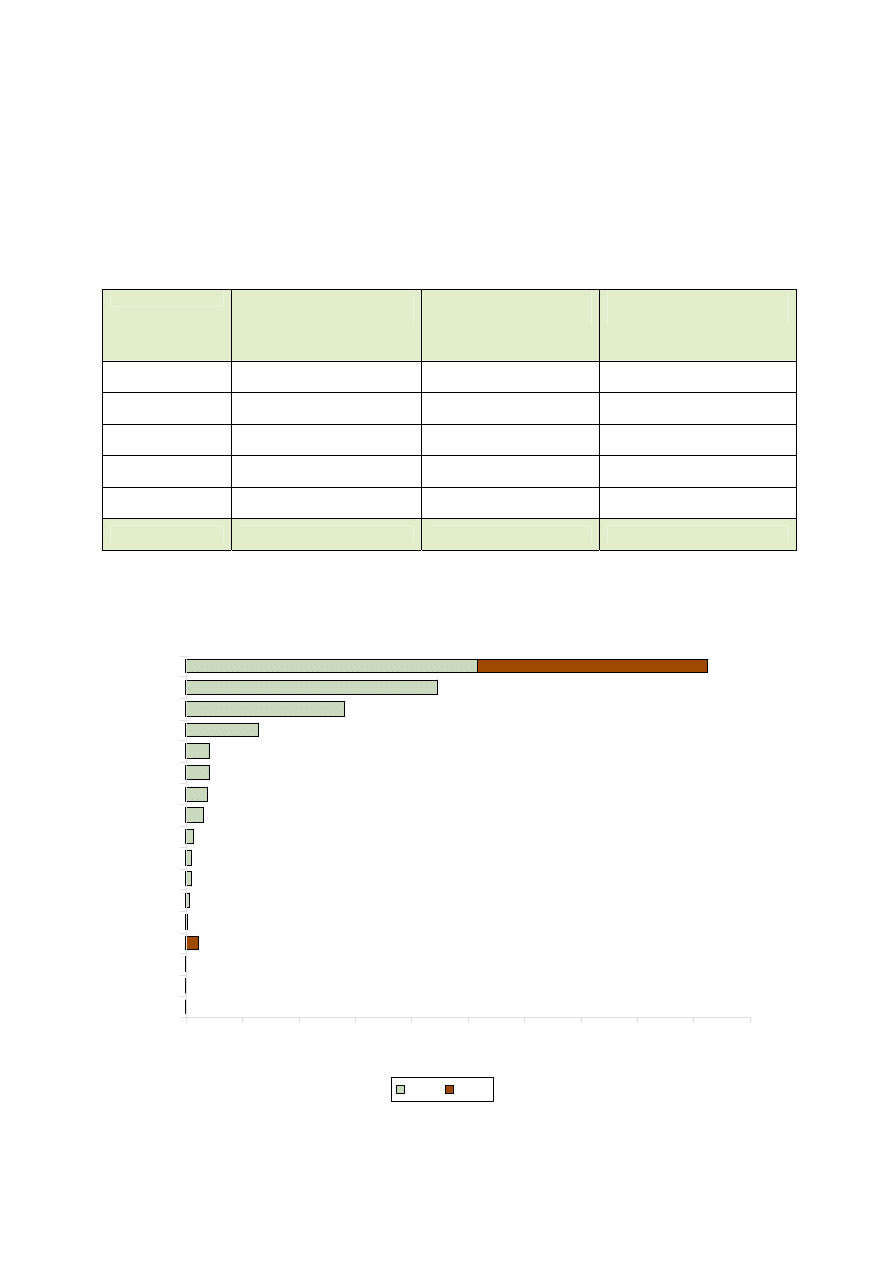
Although the highest eradication was reported in Hilmand (1,416 ha), this amount becomes
almost negligible considering the amount of poppy cultivation in this province (103,590 ha).
Eradication in Kandahar (1,222 ha) was proportionally higher considering the total cultivation
of 14,623 ha. Government officials in Kandahar also forced farmers to eradicate their poppy
in the early stages of cultivation. Considering the low level of cultivation in 2008, eradication
efforts in Badakhshan (714 ha), Hirat (322 ha) and Kunar (103 ha) provinces can be
considered successful. In contrast only 9 ha of poppy fields were eradicated in Farah province
despite of the high amount of poppy cultivation in 2008.
22
Eradication area within/outside target zones
GLE eradication target zones were defined by MCN for the five highest opium poppy
cultivating provinces (Farah, Hilmand, Kandahar, Nimroz and Uruzgan). Target zones are
shown in the maps provided at the end of this report. Table 2 shows the total area eradicated
within and outside the eradication target zones in each province.
Table 11:
Area within/outside target zones (ha) 2008
Province
Area within eradication
target zone (ha)
Area outside eradication
target zone (ha)
Total eradication verified
(ha)
Farah 5 4 9
Hilmand
780
636
1,416
Kandahar 97 1,125 1,222
Nimroz 106 7
113
Uruzgan 54 60 113
Grand Total
1,042
1,832
2,873
Figure 10: Percentage of total eradication (GLE and PEF) by province 2008
0.001%
0.003%
0.05%
0.1%
1%
0.2%
0.4%
0.5%
0.5%
1%
2%
2%
2%
2%
6%
14%
22%
26%
20%
0%
5%
10%
15%
20%
25%
30%
35%
40%
45%
50%
Percentage of total eradication
Jawzjan
Zabul
Nuristan
Kapisa
Farah
Kabul
Laghman
Nangarhar
Ghor
Baghlan
Kunar
Nimroz
Uruzgan
Hirat
Badakhshan
Kandahar
Hilmand
GLE
PEF
23
Timing and percentage of eradication by month
Figure 14 shows timing and proportions of total governor-led eradication each month. Ninety
one per cent of eradication was carried out in three months from February 2008 to April 2008.
The amount of eradication was negligible between October (planting time) and January.
Figure 11: Total area eradicated each month, shown as percentage
0.4%
23%
41%
27%
4%
5%
1%
0.0%
5.0%
10.0%
15.0%
20.0%
25.0%
30.0%
35.0%
40.0%
45.0%
January
February
March
April
May
June
July
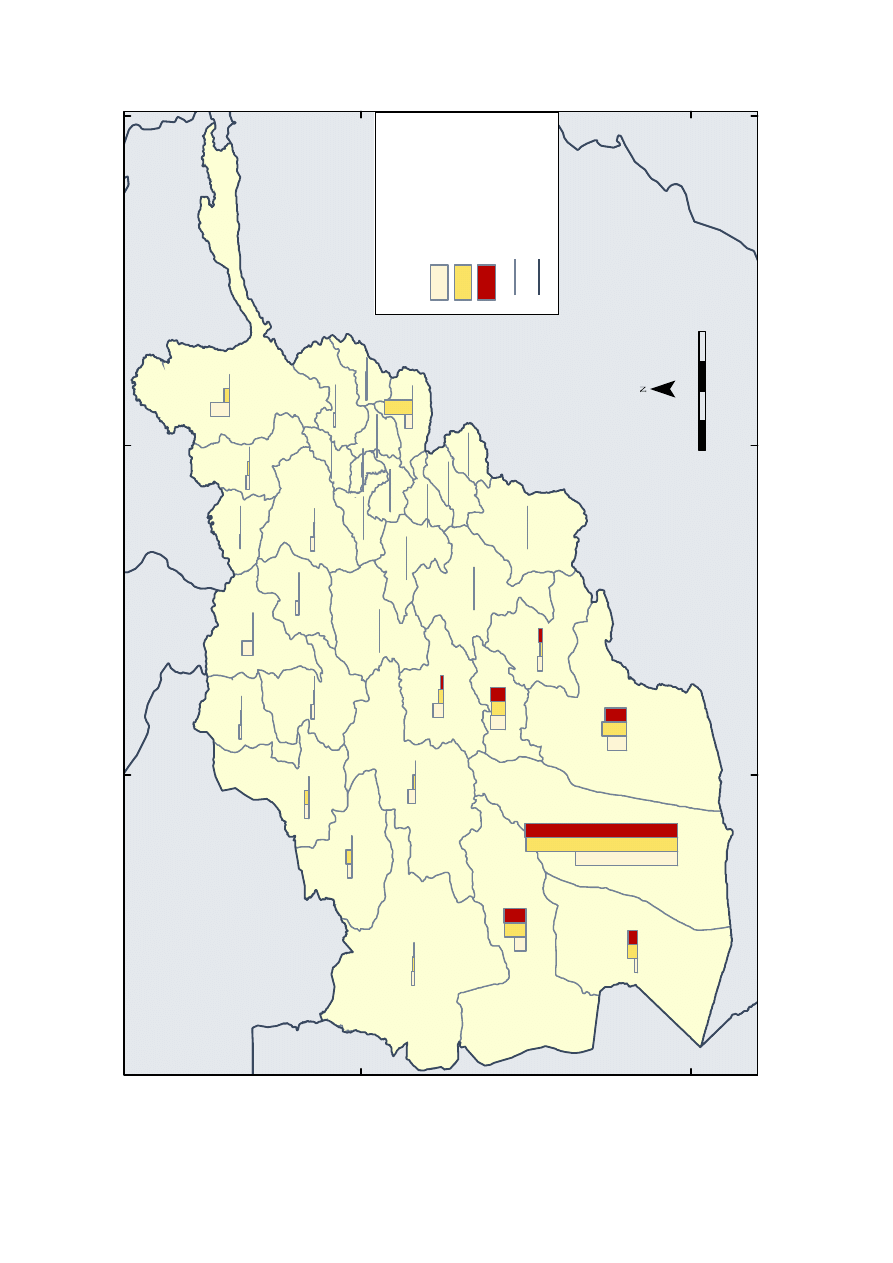
Cannabis cultivation is becoming as lucrative as opium poppy
In 2008, cannabis cultivation was reported in 14 provinces namely Badakhshan, Badghis,
Baghlan, Bamyan, Day Kundi, Farah, Hilmand, Kandahar, Khost, Kunduz, Laghman,
Nangarhar, Uruzgan and Zabul. The highest cultivation was reported in Uruzgan, followed by
Kandahar, Hilmand and Nangarhar. The average price of cannabis at the end of July was
USD$ 56/kg.
Cannabis prices have been increasing in the last two years and reached US$ 56/kg in July
2008. Farmers growing cannabis may earn the same net income per hectare as farmers who
grow opium, or even more, because cultivating cannabis is less labour intensive than opium.
Though the opium survey does gather some data on cannabis cultivation, no estimates can be
provided in this preliminary report. It is clear, however, that cultivating cannabis is becoming
increasigly lucrative. When this is considered in conjuction with the fact that all the emphasis
is put on reducing opium, there is a great risk of farmers switching to cannabis.
24
Hira
t
Fa
ra
h
Nimro
z
Hilma
n
d
K
a
nd
ah
ar
Za
b
u
l
Pak
ti
k
a
G
h
az
ni
Uru
z
g
a
n
Gh
o
r
B
a
dg
hi
s
Fa
ry
a
b
J
a
wz
ja
n
Sar
i
P
u
l
Bal
k
h
Sam
ang
an
K
u
nd
uz
Ta
k
h
a
r
B
a
d
a
kh
sh
a
n
Nu
ris
ta
n
Kun
ar
Lag
hm
a
n
Kap
is
a
Par
w
a
n
Bag
hl
a
n
Bam
y
a
n
Wa
rd
a
k
Log
ar
P
a
kt
ya
Kho
s
t
N
ang
ar
har
Pan
js
hi
r
D
a
y
K
u
ndi
K
a
bul
65°
E
65°
E
70°
E
70°
E
30°N
30°N
35°N
35°N
O
p
ium
popp
y
c
ult
iv
at
io
n
in
A
fgha
nis
tan,
200
6-
2
008
T
URKM
E
N
IS
T
A
N
IRAN
P
AKI
S
T
AN
T
A
J
IKI
S
T
AN
UZ
BE
KI
S
T
AN
S
our
ce
:
G
ov
e
rnm
en
t
o
f
A
fghan
is
ta
n
-
N
a
tional
m
o
ni
to
ri
n
g
sy
s
tem
im
pl
em
ent
ed
by
U
N
O
D
C
N
o
te
:
T
he
boun
dar
ie
s
a
n
d
n
a
m
e
s
s
how
n
and
th
e
des
ig
n
a
ti
ons
u
s
ed
on
th
is
m
a
p
d
o
not
im
pl
y
o
ff
ic
ia
l
e
n
dor
s
e
m
ent
o
r
ac
cept
a
n
c
e
by
th
e
U
ni
te
d
N
at
io
ns
.
G
e
o
g
ra
ph
ic
pr
o
jec
ti
on
:
W
G
S
8
4
0
200
100
km
50
103,590
14,6
23
C
u
ltiv
ation
Y
e
a
r
200
6
In
te
rn
at
io
na
l
b
ou
nd
ar
ie
s
200
7
200
8
Pr
o
v
in
c
ia
l
bou
nd
ar
ie
s
6,20
3
15,0
10
266
587
9,93
9
2,33
5
291
200
2273
25
Hir
a
t
Far
ah
G
hor
H
ilm
and
Nim
ro
z
K
andahar
B
adak
hs
han
Ba
lk
h
G
haz
ni
Zabul
Far
y
a
b
P
a
kt
ik
a
B
adghi
s
B
aghl
an
Ba
m
y
a
n
Sa
ri
P
u
l
Ta
k
h
a
r
D
a
y
K
undi
Ja
w
z
ja
n
U
ruz
ga
n
W
a
rdak
Nu
ri
s
ta
n
K
unduz
S
a
m
a
n
gan
K
unar
Logar
P
a
kt
ya
K
abul
Pa
rw
a
n
K
hos
t
N
angar
har
P
anj
s
h
ir
Laghm
an
K
api
s
a
Fa
ra
h
Hi
ra
t
K
a
bul
K
a
nda
har
F
a
yza
b
a
d
Ja
la
la
b
a
d
Ma
za
ri
S
h
a
ri
f
65°
E
65°
E
70°
E
70°
E
75°
E
75°
E
30°N
30°N
35°N
35°N
O
p
ium
P
o
p
p
y
C
u
ltiv
atio
n
in
A
fgha
nis
tan
,
20
08
(at
p
rovi
nce
le
vel
)
T
URKM
E
N
IS
T
A
N
IRAN
P
AKI
S
T
A
N
T
A
J
IKI
S
T
AN
UZ
BE
KI
S
T
AN
0
200
100
S
our
ce
:
G
ov
er
n
m
e
n
t
o
f
A
fgha
ni
s
ta
n
-
N
at
io
n
a
l
m
oni
to
ri
ng
s
ys
te
m
im
pl
e
m
ent
ed
by
U
N
O
D
C
N
o
te
:
T
he
boun
dar
ie
s
a
nd
nam
es
s
h
o
w
n
a
nd
th
e
d
e
s
ignat
ions
us
e
d
o
n
th
is
m
a
p
d
o
not
im
pl
y
o
ff
ic
ia
l
e
n
dor
s
e
m
ent
o
r
ac
cept
anc
e
b
y
the
U
n
it
e
d
N
a
ti
ons
.
G
e
o
g
ra
ph
ic
pr
o
je
c
ti
on
:
W
G
S
84
km
50
1
03,590
6
,203
1
5
,010
1
4
,623
26
6
58
7
29
1
9
,939
2
,273
2
,335
31
0
42
5
29
0
47
5
20
0
43
6
Le
g
e
nd
In
te
rn
at
io
na
l
b
ou
nd
a
ri
e
s
Ma
in
c
it
ie
s
P
rov
in
c
ial
bo
un
da
ri
es
O
p
iu
m
p
op
py
c
u
lt
iv
at
io
n
(h
a
)
by
pr
o
v
in
c
e
26
Ur
u
z
g
a
n
Pa
n
jsh
ir
Hi
ra
t
Fa
ra
h
Hi
lm
a
n
d
Gh
o
r
Ni
m
ro
z
K
a
n
d
ah
ar
B
a
d
a
kh
sh
a
n
Da
y
K
u
n
d
i
G
h
az
ni
Ba
lkh
Za
b
u
l
Fa
ry
a
b
B
a
d
ghi
s
Pa
kt
ik
a
Ba
g
h
la
n
Sa
ri
P
u
l
Ba
m
y
a
n
Ta
k
h
a
r
Ja
w
z
ja
n
Pa
rw
a
n
Wa
rd
a
k
S
a
m
a
ng
an
K
u
n
duz
Nu
ri
s
ta
n
Ku
n
a
r
Ka
b
u
l
N
ang
ar
har
Kh
o
s
t
P
a
kt
ya
Lo
g
a
r
L
agh
man
Ka
p
is
a
Fa
ra
h
Hi
ra
t
Ka
b
u
l
K
a
n
dahar
F
a
y
z
abad
J
a
la
laba
d
M
a
z
a
ri
S
har
if
65°
E
65°
E
70°
E
70°
E
75°
E
75°
E
30°N
30°N
35°N
35°N
O
p
ium
popp
y
c
ultiv
atio
n
c
h
a
ng
e
in
A
fgha
nis
tan
(by
p
rovin
ce)
,
20
07
-
2
0
0
8
T
URKM
E
N
IS
T
A
N
IRAN
P
AKI
S
T
AN
T
A
J
IKI
S
T
AN
UZ
BE
KI
S
T
AN
S
our
ce
:
G
ov
e
rnm
en
t
o
f
A
fghan
is
ta
n
-
N
a
tional
m
o
ni
to
ri
n
g
sy
s
tem
im
pl
em
ent
ed
by
U
N
O
D
C
N
o
te
:
T
he
boun
dar
ie
s
a
n
d
n
a
m
e
s
s
how
n
and
th
e
des
ig
n
a
ti
ons
u
s
ed
on
th
is
m
a
p
d
o
not
im
pl
y
o
ff
ic
ia
l
e
n
dor
s
e
m
ent
o
r
ac
cept
a
n
c
e
by
th
e
U
ni
te
d
N
at
io
ns
.
G
e
o
g
ra
ph
ic
pr
o
jec
ti
on
:
W
G
S
8
4
0
200
100
km
50
C
u
lt
ivat
io
n
c
h
a
n
g
e
(%
)
P
ro
v
in
c
ia
l
bou
ndar
ie
s
In
te
rn
at
io
n
a
l
b
o
undar
ie
s
Ma
in
c
it
ie
s
D
e
c
reas
e
(-
49%
to
-1
1%
)
In
c
reas
e
(1
1
%
to
5
0%
)
S
tabl
e
(-
1
0
%
to
10%
)
P
opp
y
fr
e
e
o
r
S
tr
ong
dec
re
a
s
e
(-
1
00%
to
-50%
)
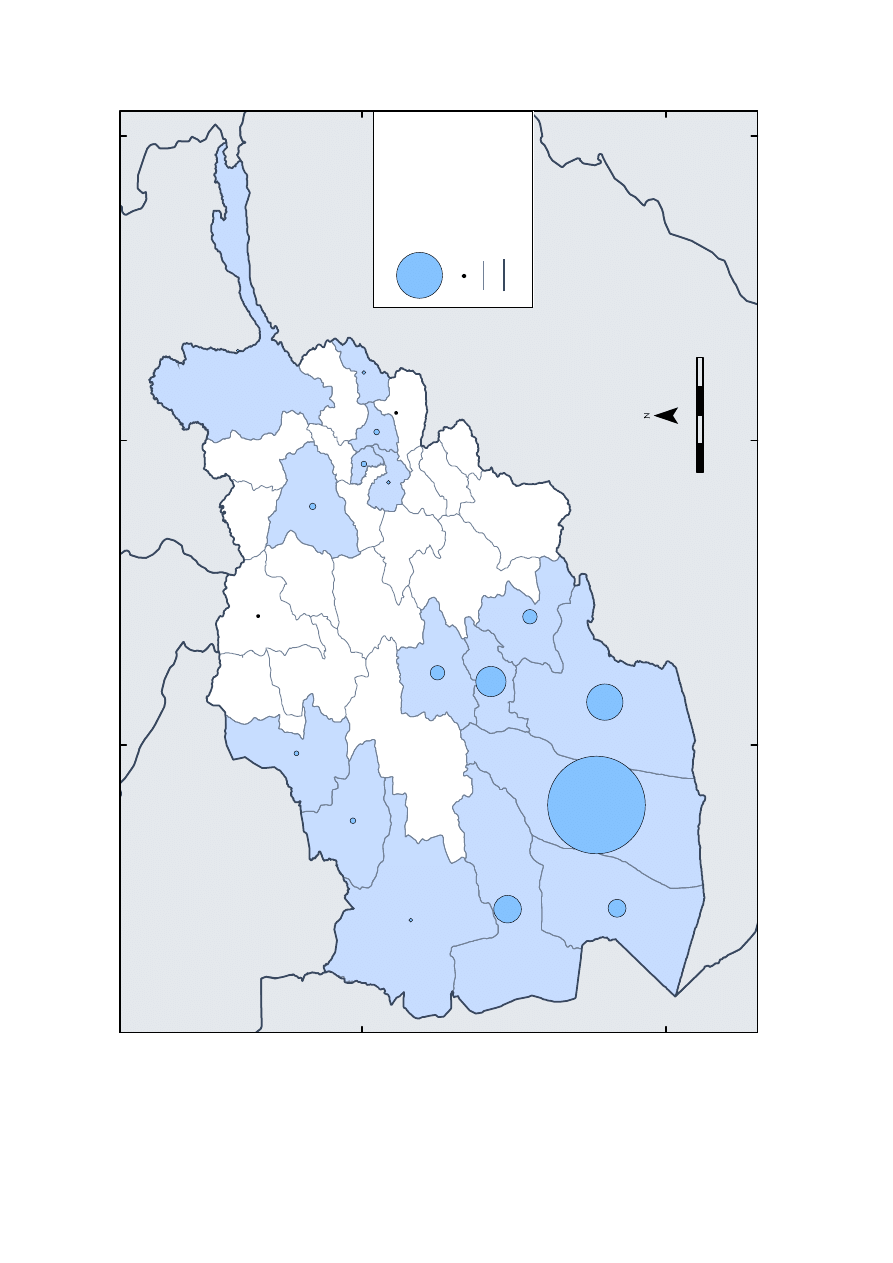
27
Ur
u
z
g
a
n
P
anj
s
h
ir
6
Hi
ra
t
Fa
ra
h
H
ilm
and
Gh
o
r
Ni
m
ro
z
K
and
ahar
B
ada
k
h
s
han
D
a
y
K
und
i
Gh
a
z
n
i
Ba
lk
h
Z
a
bul
Fa
ry
a
b
B
adg
hi
s
Pa
k
ti
k
a
B
agh
la
n
Sa
ri
P
u
l
Ba
m
y
a
n
Ta
k
h
a
r
Ja
w
z
ja
n
Pa
rw
a
n
Wa
rd
a
k
S
a
m
angan
K
und
uz
Nu
ri
s
ta
n
K
una
r
K
abu
l
N
angar
ha
r
K
hos
t
P
a
kt
ya
L
ogar
L
aghm
an
K
api
s
a
Fa
ra
h
Hi
ra
t
Ka
b
u
l
K
and
ahar
F
a
y
z
abad
J
a
la
labad
Ma
za
ri
Sh
a
ri
f
65°
E
65°
E
70°
E
70°
E
75°
E
75°
E
30°N
30°N
35°N
35°N
O
p
ium
pr
od
ucti
on
in
A
fgh
ani
sta
n
b
y
p
ro
v
inc
e
(m
t),
2
0
0
8
T
URKM
E
N
IS
T
A
N
IRAN
P
AKI
S
T
A
N
T
A
J
IKI
S
T
AN
UZ
BE
KI
S
T
AN
S
our
ce
:
G
ov
er
n
m
e
n
t
o
f
A
fgha
ni
s
ta
n
-
N
at
io
n
a
l
m
oni
to
ri
ng
s
ys
te
m
im
pl
e
m
ent
ed
by
U
N
O
D
C
N
o
te:
The
boun
dar
ie
s
a
nd
nam
es
s
h
o
w
n
a
nd
th
e
d
e
s
ignat
ions
us
e
d
o
n
th
is
m
a
p
d
o
not
im
pl
y
o
ff
ic
ia
l
e
n
dor
s
e
m
ent
o
r
ac
cept
anc
e
b
y
the
U
n
it
e
d
N
a
ti
ons
.
G
e
o
g
ra
ph
ic
pr
o
je
c
ti
on
:
W
G
S
84
0
200
100
km
50
5,
397
184
446
8
118
518
122
762
17
16
11
17
17
11
26
O
p
iu
m
p
roduc
ti
on
(m
e
tr
ic
tons
)
Ma
in
c
it
ie
s
In
te
rn
at
io
na
l
b
ou
nd
a
ri
e
s
P
rov
in
c
ial
bo
un
da
ri
es
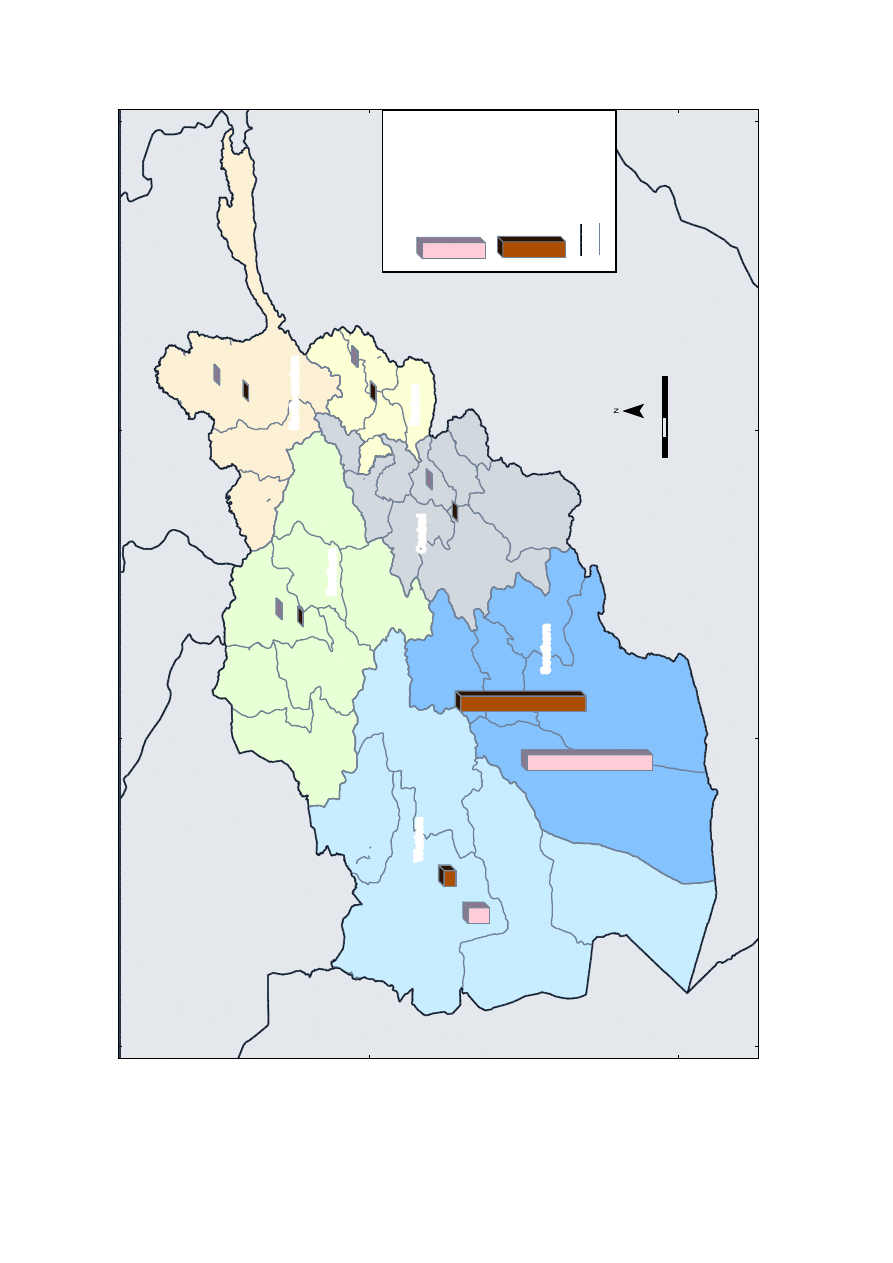
28
IRAN
IRAN
P
AKI
S
T
AN
P
AKI
S
T
AN
INDI
A
INDI
A
T
U
RKM
E
N
IS
T
A
N
T
U
RKM
E
N
IS
T
A
N
TA
J
IK
IS
T
A
N
TA
J
IK
IS
T
A
N
U
Z
BE
KI
S
T
AN
U
Z
BE
KI
S
T
AN
65
°E
65
°E
70
°E
70
°E
30
°N
30
°N
35
°N
35
°N
R
eg
ion
a
l
op
iu
m
po
ppy
c
u
lt
iva
ti
on
a
n
d
pr
o
d
uc
ti
on
in
Af
g
h
an
is
tan
,
2008
S
o
u
rce
:
G
ove
rn
m
ent
of
A
fg
han
is
ta
n
-
N
a
ti
on
al
m
o
n
it
o
ri
ng
sys
te
m
im
p
le
m
e
n
ted
by
U
N
O
D
C
N
o
te
:
T
he
bou
nd
ar
ie
s
a
nd
n
a
m
e
s
s
ho
w
n
an
d
th
e
d
e
si
g
n
a
ti
o
n
s
u
s
ed
on
th
is
m
a
p
d
o
n
ot
im
p
ly
o
ff
ici
al
e
ndo
rs
e
m
e
n
t
o
r
a
cce
pt
a
n
ce
by
th
e
U
n
it
e
d
N
a
ti
o
ns.
So
u
th
e
rn
We
s
te
rn
Ce
n
tr
a
l
N
o
rt
h
e
rn
01
0
0
2
0
0
50
Km
G
eogr
aphi
c
p
ro
je
c
ti
on,
D
a
tu
m
W
G
S
84
132,760
22,0
66
200
766
6,91
7
655
11
42
6
E
ast
er
n
No
rt
h
E
a
s
te
rn
20581
L
e
ge
nd
C
u
lt
iv
at
io
n
(ha)
P
rodu
c
ti
o
n
(m
t)
In
te
rnat
io
n
a
l
b
o
undar
ie
s
P
rov
in
c
ia
l
boun
dar
ie
s
E
ast
er
n
310
1,15
1
45
N
o
rt
h
-east
er
n
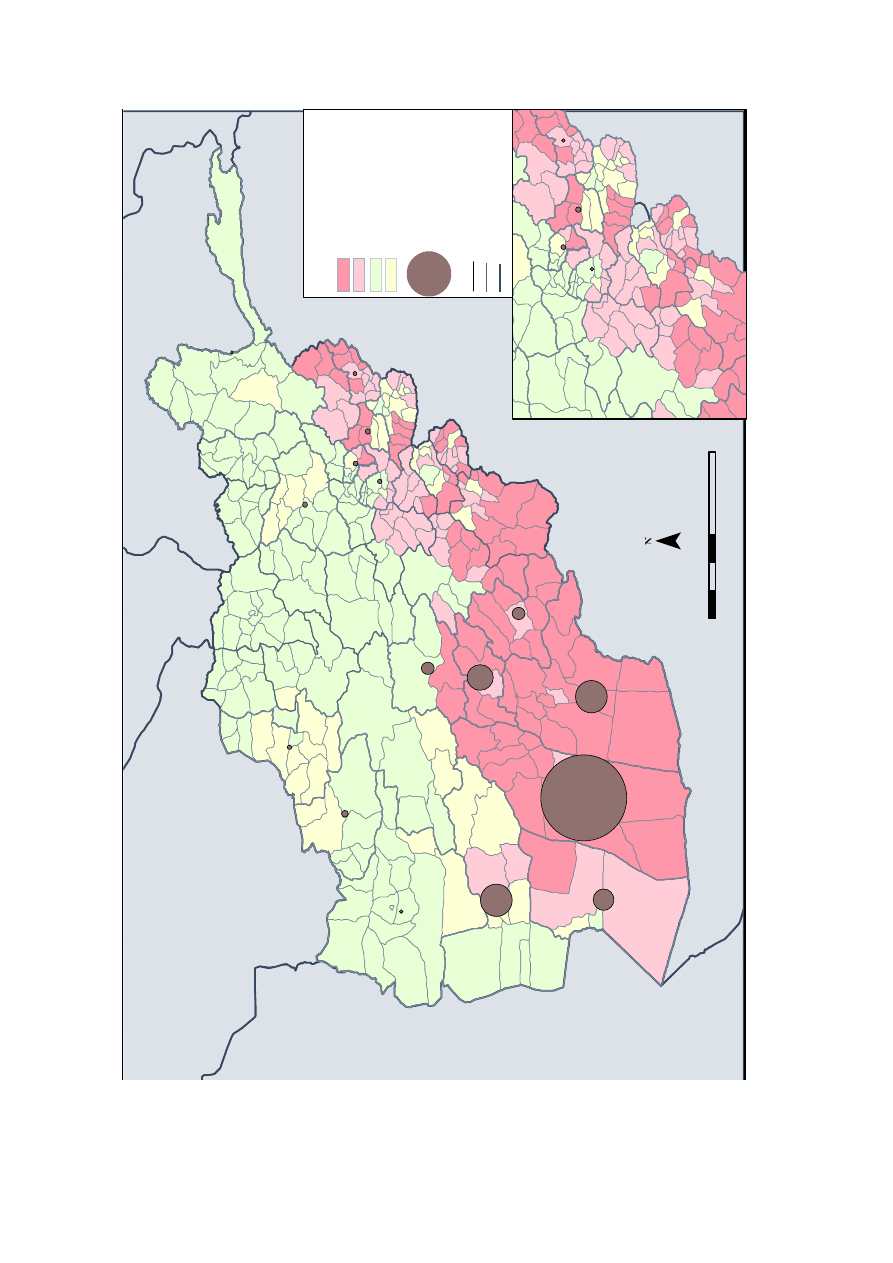
29
IRAN
PA
K
IS
T
A
N
T
URK
M
E
N
IS
T
AN
TA
J
IK
IS
T
A
N
UZ
BE
KIS
T
A
N
Hi
ra
t
Fa
ra
h
G
hor
H
ilm
and
Ni
m
ro
z
K
andaha
r
B
adak
hs
ha
n
Ba
lk
h
G
haz
ni
Z
abul
Fa
ry
a
b
P
a
kt
ik
a
B
adghi
s
B
aghl
an
Ba
m
y
a
n
Sa
ri
P
u
l
Ta
k
har
D
a
y
K
undi
Ja
w
z
ja
n
U
ruz
gan
W
a
rdak
Nu
ri
s
ta
n
K
unduz
S
a
m
angan
K
unar
L
ogar
P
a
kt
ya
K
abul
Pa
rw
a
n
K
hos
t
N
angar
har
P
anj
s
h
ir
L
aghm
an
K
api
s
a
Gh
a
z
n
i
Pa
k
ti
k
a
Wa
rd
a
k
Ba
m
y
a
n
Nu
ri
s
ta
n
B
aghl
an
Loga
r
P
a
kt
ya
K
abul
Pa
rw
a
n
K
unar
K
host
N
anga
rh
a
r
P
anj
shi
r
S
a
m
ang
an
Lagh
m
a
n
Zabul
K
api
sa
B
adak
hsh
an
D
a
y
K
und
i
S
our
c
e
s
e
c
u
ri
ty
m
ap:
U
N
D
S
S
S
our
c
e
c
u
lt
iv
at
io
n
:G
o
v
e
rn
m
ent
of
A
fgh
anis
ta
n
-
N
a
ti
onal
m
o
n
it
o
ri
ng
s
y
s
tem
im
plem
ent
ed
by
U
N
O
D
C
N
ot
e:
T
h
e
b
o
undr
ies
and
nam
es
s
how
n
and
th
e
des
ig
nat
ions
us
ed
o
n
th
is
m
a
p
d
o
not
im
ply
of
fi
c
ial
endor
s
e
m
ent
or
ac
c
ept
anc
e
b
y
the
U
n
it
e
d
N
a
ti
ons
S
ecu
ri
ty
m
a
p
(
as
a
t
12
J
une
20
08)
a
n
d
opi
u
m
p
oppy
c
u
lt
iv
a
ti
o
n
in
A
fgha
ni
s
ta
n
by
pr
ov
in
c
e
,
200
7-
2008
01
3
0
2
6
0
65
km
G
e
ogr
ap
hi
c
p
ro
je
c
ti
o
n
:
W
G
S
8
4
S
ecu
ri
ty
Lo
w
R
is
k
Me
d
iu
m
R
is
k
Hig
h
R
is
k
Ex
tr
e
m
e
R
is
k
P
rov
in
c
ia
l
bou
ndar
ie
s
In
te
rnat
ional
b
ound
ar
ie
s
D
is
tr
ic
t
bou
ndar
ie
s
O
p
iu
m
po
pp
y
c
ul
ti
v
a
ti
on
(ha)
by
pr
o
v
in
c
e
103
,5
9
0
6,
2
0
3
15,
010
14,
623
266
587
291
9,
9
3
9
2,
2
7
3
2,
3
3
5
310
425
290
475
200
436
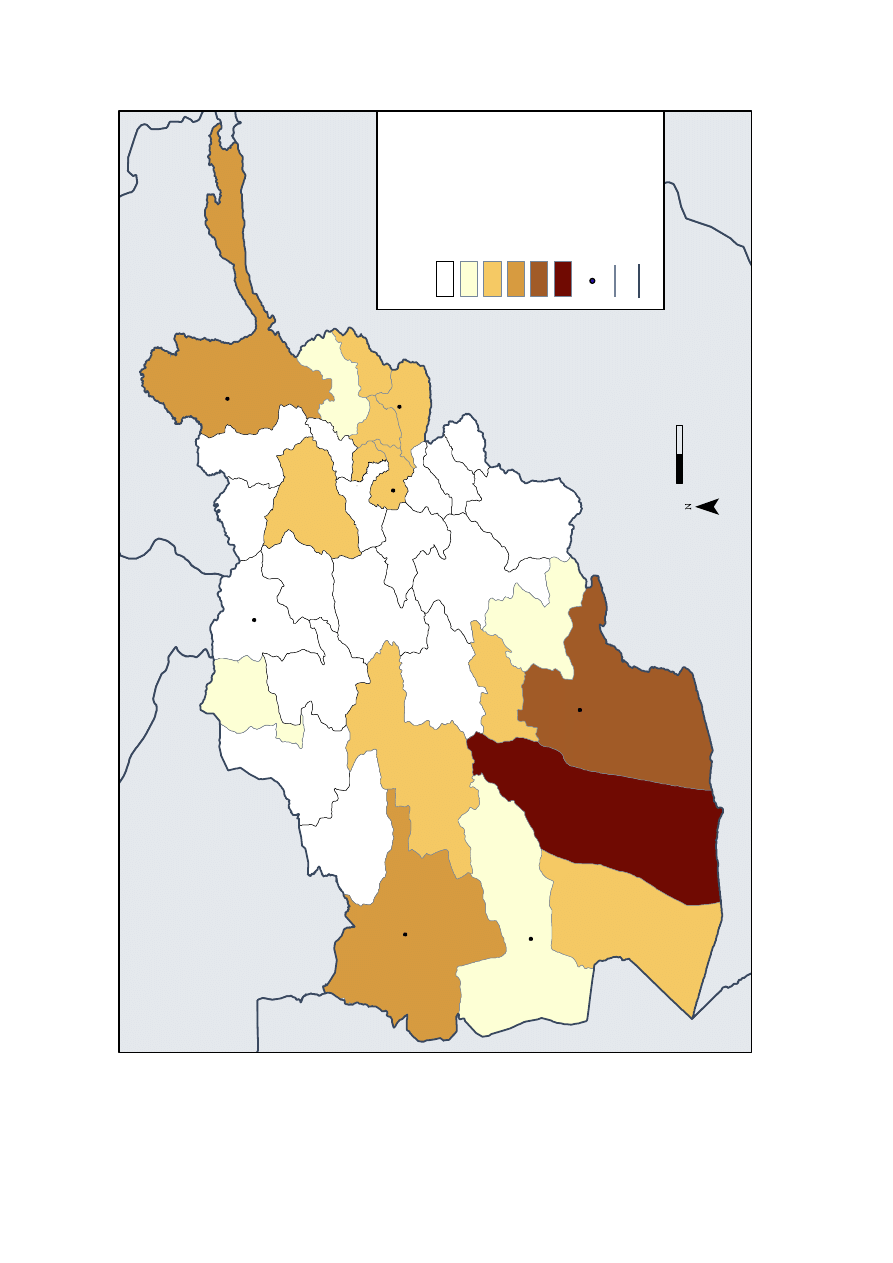
30
TURK
ME
NI
S
T
AN
TURK
ME
NI
S
T
AN
UZBE
KI
S
T
AN
UZBE
KI
S
T
AN
T
A
J
IKI
S
T
AN
T
A
J
IKI
S
T
AN
P
A
KI
S
T
AN
PA
K
IS
T
A
N
IN
D
IA
IN
D
IA
IR
A
N
IR
A
N
Q
u
e
tta
Pe
sh
w
a
r
Ja
la
la
b
a
d
Fay
z
A
ba
d
Ma
za
r-
E
-S
h
a
ri
f
Hi
ra
t
Fa
ra
h
G
hor
H
ilma
n
d
Ni
m
ro
z
K
a
n
dahar
B
a
d
a
k
h
s
han
G
haz
ni
Ba
lk
h
Z
a
bul
Fa
ry
a
b
Ba
g
h
la
n
B
a
d
ghi
s
Pa
k
ti
k
a
Sa
ri
Pu
l
T
a
k
har
Ba
m
y
a
n
D
a
y
K
undi
Ja
wz
ja
n
U
ruz
gan
Wa
rd
a
k
Nu
ri
st
a
n
K
u
n
duz
S
a
m
a
n
gan
P
a
kt
ya
Pa
rw
a
n
L
ogar
Ku
n
a
r
Ka
b
u
l
N
ang
ar
har
Kh
o
s
t
Pa
n
js
h
ir
L
aghm
an
Ka
p
is
a
Afg
h
a
n
istan
:
V
er
if
ie
d
G
L
E
an
d
P
E
F
in
2008
(b
y
p
ro
vi
n
ce)
S
o
u
rce
:
G
o
v
e
rnm
ent
of
A
fg
han
is
ta
n
-
N
a
ti
on
al
m
o
n
it
o
ri
ng
syst
em
im
p
lem
en
te
d
b
y
U
N
O
D
C
N
o
te
:
T
he
bou
nda
ri
e
s
an
d
n
am
es
sho
w
n
and
th
e
d
e
s
ig
nat
ions
us
ed
on
th
is
m
a
p
d
o
n
ot
im
pl
y
o
ff
ic
ia
l
e
n
d
o
rsem
en
t
o
r
a
c
cep
ta
n
c
e
b
y
the
U
n
it
ed
N
a
ti
ons
.
G
eogr
aphi
c
P
ro
je
ct
io
n
Da
tu
m
:
W
G
S
8
4
Ki
lo
m
e
te
rs
0
100
50
Pr
o
v
in
c
e
b
oun
ar
ie
s
In
te
rn
at
io
na
l
B
ou
nd
ar
ie
s
Ma
in
c
it
ie
s
L
e
ge
nd
Eradication
(ha)
N
o
e
rad
ic
at
io
n
Ne
g
lig
ib
le
11
-
1
5
0
151
-
1
00
0
100
1
-
20
00
>2
0
0
0
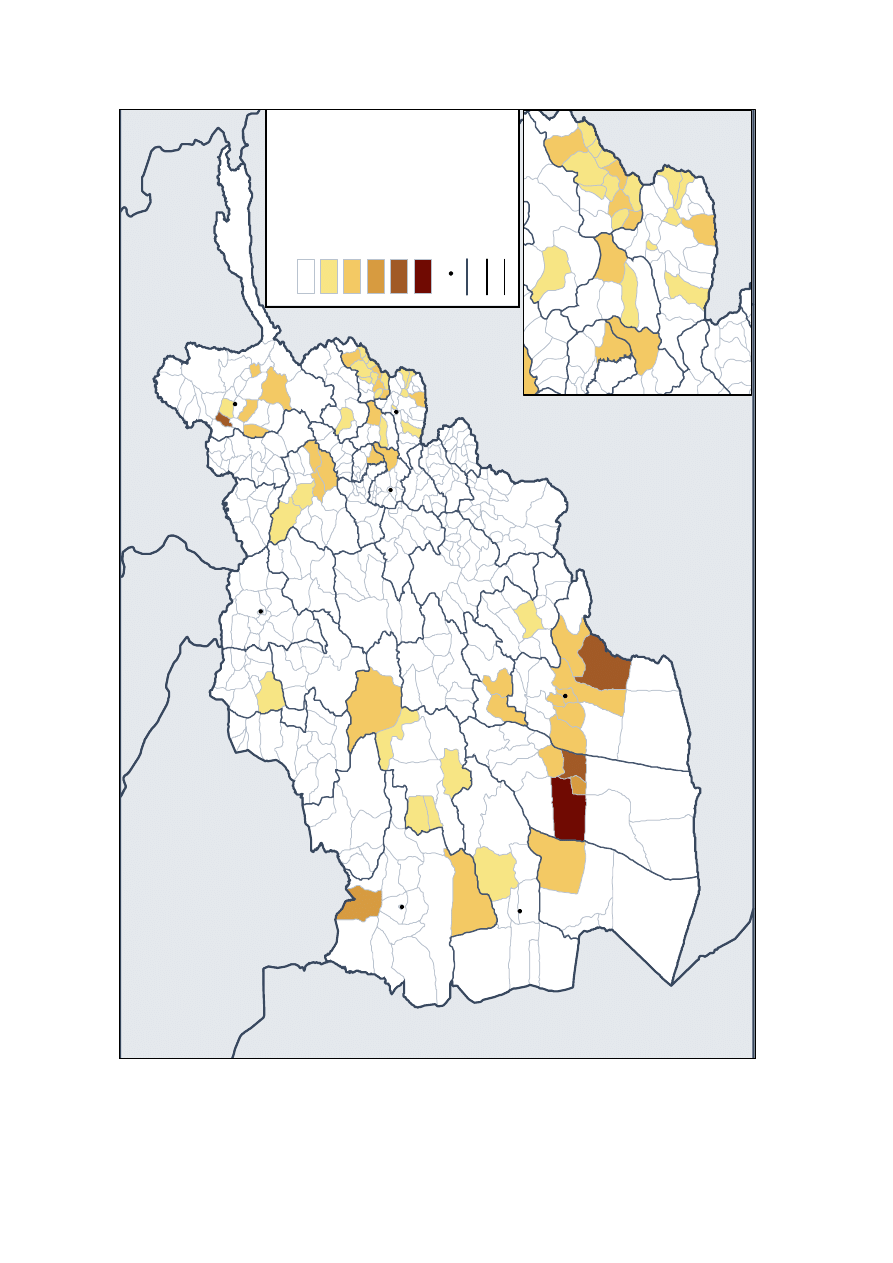
31
IRAN
P
AKI
S
T
AN
INDI
A
T
URKM
E
N
IS
T
A
N
T
A
J
IKI
S
T
AN
U
Z
BE
KI
S
T
AN
Hi
ra
t
Fa
ra
h
Gh
o
r
H
ilm
a
n
d
Ni
m
ro
z
K
a
n
d
ah
ar
B
a
d
a
k
h
sh
an
Ba
lk
h
Gh
a
z
n
i
Za
bu
l
Fa
ry
a
b
Pa
k
ti
k
a
B
a
dg
hi
s
Ba
g
h
la
n
Ba
m
y
a
n
Sa
ri
Pu
l
T
a
kh
ar
D
a
y
K
un
di
Ja
w
z
ja
n
Ur
u
z
g
a
n
Wa
rd
a
k
Nu
ri
s
ta
n
K
u
nd
uz
Sa
m
a
n
g
a
n
Ku
n
a
r
Log
a
r
Pa
k
ty
a
Ka
b
u
l
Pa
rw
a
n
Kh
o
s
t
N
a
ng
a
rha
r
Pa
n
js
h
ir
La
gh
m
a
n
Ka
p
is
a
Re
g
C
h
ahar
Burja
W
a
khan
A
d
ra
ska
n
A
nar
D
a
ra
Ja
wa
n
d
Gu
lr
a
n
Na
wu
r
G
u
lis
ta
n
C
h
ak
ha
ns
ur
S
h
inda
nd
G
hory
an
Na
d
A
li
G
a
rm
se
r
(H
a
za
rju
ft)
K
has
h
R
od
W
a
sher
Ma
ru
f
C
h
aghc
haran
K
ohis
ta
nat
Gi
za
b
Go
m
a
l
Da
ma
n
Ob
e
Yak
a
w
la
ng
P
a
n
jwa
yi
Q
adis
S
hahra
k
M
u
rghab
Di
sh
u
(Re
g
ista
n
)
Ch
or
a
Pu
r
C
ha
m
a
n
Ku
sh
k
S
h
ighn
an
In
jil
S
p
in
Bolda
k
Na
wa
B
a
la
Buluk
Wa
ra
s
S
aghar
B
aghra
n
R
e
g
(K
h
a
n
Ni
sh
in
)
K
hulm
P
a
saband
Fa
ra
h
S
horab
ak
K
hadir
Wa
rs
a
j
Fa
rs
i
K
ohs
an
D
u
Lay
na
B
a
lk
hab
D
ila
Tu
lak
Q
a
la-I
-Kah
A
rghis
ta
n
La
sh
Wa
Ju
wa
yn
K
has
h
Ba
kw
a
Ki
ti
Qa
ys
a
r
Sa
ri
P
u
l
Ze
ba
k
Al
m
a
r
Ish
ta
rl
a
y
Zh
ar
i
M
a
yw
and
Mi
ra
m
or
Da
rw
a
z
P
anjab
Ka
ja
ki
N
ili
W
or
M
am
ay
S
a
yghan
K
ohis
ta
n
Ju
rm
S
ham
ulz
ay
i
Ch
ak
D
a
w
lat
aba
d
S
h
ibirg
han
Ja
lre
z
Ru
yi
Du
A
b
Ti
ri
n
K
o
t
Ba
rm
a
l
Ar
ch
i
S
h
irin
Tagab
Az
ra
S
holga
ra
Sa
yy
a
d
C
h
is
ht
iSharif
Ku
fA
b
Ru
sta
q
S
h
ink
ay
S
hort
epa
Ti
s
h
ka
n
K
a
ldar
D
a
w
lat
aba
d
Na
w
Z
ad
Ta
ywa
ra
Q
a
lat
Du
sh
i
Wa
m
a
Ne
sh
Ka
ru
kh
K
u
ran
W
a
M
unjan
D
a
yc
hopa
n
Da
wl
a
tY
a
r
A
ybak
K
ang
Ja
ghuri
Gu
za
ra
Ba
m
y
an
Za
ri
Q
a
la-I
-Z
a
l
Ra
gh
Zu
rm
a
t
Aj
ri
st
a
n
Ka
jr
a
n
Gi
ro
D
ih
raw
ud
Z
ind
a
Jan
Wa
za
K
h
w
a
Qa
rq
in
La
lW
a
S
arjang
al
Ta
la
W
a
B
ar
fa
k
G
horak
S
huhad
a
Da
rz
a
b
Na
hr
in
Mu
sa
Q
a
la
Ch
im
ta
l
S
hahjo
y
A
ndara
b
S
h
ibar
K
has
U
ruz
gan
G
horm
ac
h
A
tg
har
B
ilc
hiragh
Ba
rg
iM
a
tal
Na
ri
G
e
lan
B
aghla
ni
Jadi
d
K
h
injan
S
hah
W
a
li
Kot
Mi
za
n
M
a
rk
az
iB
ihs
ud
Ish
ka
s
hi
m
Fa
rk
h
ar
Aq
ch
a
Q
a
ram
qol
K
is
hindih
S
angi
Ta
kh
t
S
u
robi
Ma
lis
ta
n
K
hak
rez
N
a
hr
i
S
hahi
Ja
ji
Bu
rk
a
S
h
ib
Koh
Im
am
S
ahib
Tu
rw
o
Nu
ris
ta
n
G
horba
nd
Du
A
b
N
a
hr
i
S
arraj
K
u
sh
k
iKu
hna
Ni
rk
h
M
a
ndol
K
ahm
ard
La
sh
k
ar
G
a
h
Gu
rz
iw
a
n
Ab
K
a
m
a
ri
Ch
al
A
ndar
K
h
w
a
ja
D
u
Ko
h
Mu
qu
r
S
hahid
i
H
as
s
as
A
b
Band
S
hahris
ta
n
Q
a
raba
gh
M
in
gajik
K
a
m
des
h
A
rghan
dab
Pu
li
A
lam
Z
a
ranj
Da
ra
-I
-
S
uf
iB
a
la
Ro
da
t
Ta
ni
Ja
ghat
u
D
a
ra
-I
-
S
uf
iP
ay
in
K
huram
W
a
Sarba
gh
C
h
ahar
Kint
S
angin
Pa
ry
a
n
S
a
ydabad
Yaw
a
n
Ki
s
hi
m
A
lingar
Q
a
rgha
y
i
Mi
ya
Ni
s
h
in
W
a
ygal
B
angi
S
angc
hara
k
P
a
sh
tu
n
Z
arg
hun
A
liabad
C
h
ahar
D
ara
K
h
w
ahan
Pa
sh
tu
n
K
o
t
Ch
ar
s
ad
a
F
a
yz
abad
N
ijr
ab
P
u
li
H
is
a
r
G
a
rdez
K
hak
i
S
af
ed
Hi
sa
ra
k
Da
ra
S
a
lang
S
hek
h
Ali
Q
a
la
-I-
Na
w
Ta
rn
ak
W
a
Ja
ldak
Ac
hi
n
Ta
ga
b
Z
a
rghun
Shah
r
B
a
lk
h
Da
ra
y
im
Mu
qu
r
D
a
hana-I
-Gho
ri
Ur
gu
n
K
unduz
Ma
rd
y
an
A
rghan
j
K
hw
a
K
ham
ya
b
K
a
laf
gan
Ko
t
Di
h
Y
a
k
Pu
sh
t
R
o
d
Ar
g
o
D
a
y
M
irdad
Ch
ah
A
b
S
u
rk
hi
Pars
a
Ha
zr
a
ti
S
u
lta
n
S
h
ik
i
K
h
w
a
ja
Sabz
K
ohi
Saf
i
Di
h
S
al
a
h
Pe
ch
Om
n
a
So
zm
a
Q
al
a
Di
h
S
ab
z
S
pera
A
lis
hing
K
hus
hi
Un
ab
a
A
s
adabad
D
a
rw
az
iB
ala
S
herz
ad
N
u
rgaram
S
hahri
Buz
urg
Di
h
B
al
a
B
a
r
K
unar
Ish
ka
mi
s
h
D
a
rqad
W
aghaz
Sa
r
H
aw
za
Ja
dr
a
n
P
u
li
Khum
ri
Go
sh
ta
Mi
ht
a
rla
m
K
hogy
ani
Mu
ha
mm
ad
A
g
h
a
Ch
ar
k
h
K
h
w
a
ja
Ghar
Te
re
Z
a
yi
Ba
k
Ma
rm
ul
S
a
robi
M
a
ym
ana
S
abari
F
e
ro
z
N
ak
hc
hi
r
F
a
yz
abad
K
hani
C
hahar
Ba
gh
S
haran
Y
af
tali
Suf
la
B
ahara
k
G
o
sf
an
di
W
a
rduj
Zi
ru
k
Da
sh
ti
Q
a
la
K
hak
i
Jabb
ar
S
a
yi
d
K
aram
K
a
ka
r
(Khak
-e
Af
gha
n)
G
u
za
rgahi
N
u
r
A
rghan
dab
Hi
sa
-I
-
A
wa
lB
ih
s
u
d
K
haniq
a
A
ndk
hoy
Du
r
B
ab
a
K
harw
ar
K
hos
t
W
a
F
iring
G
u
rbuz
La
lP
u
r
Ka
m
a
Ra
sh
id
a
n
Lija
M
angal
Na
wa
-i-
B
a
ra
kza
yi
Q
u
rgha
n
C
ha
har
Bolak
G
haz
ni
K
andah
ar
(D
and)
Y
angi
Qala
Ga
ya
n
N
a
w
B
aha
r
K
ohis
ta
n
Ja
ji
Ma
yd
a
n
N
a
rang
N
u
rgal
K
has
K
unar
S
irk
anay
D
a
ngam
Ist
al
if
Y
am
gan
(G
irw
an)
F
irin
g
W
a
G
haru
K
h
w
a
ja
Bahaw
ud
din
Hi
ra
t
S
hay
gal
w
a
S
h
ilt
an
S
o
ur
c
e
:
G
ov
er
n
m
ent
o
f
A
fg
hani
s
ta
n
-
N
a
ti
onal
m
o
n
it
o
ri
ng
syst
e
m
im
p
le
m
e
n
te
d
b
y
U
N
O
D
C
N
o
te
:
T
he
bou
ndar
ie
s
and
na
m
e
s
s
ho
wn
and
th
e
d
e
s
igna
ti
ons
us
ed
on
th
is
m
a
p
d
o
n
o
t
im
pl
y
o
ff
ic
ia
l
endo
rs
em
ent
o
r
a
c
c
e
pt
anc
e
b
y
th
e
Unit
ed
Na
ti
ons
.
Nu
ris
ta
n
K
abul
Logar
Nu
ris
ta
n
K
unar
K
abul
K
unar
Laghm
an
K
unar
Nu
ris
ta
n
Nu
ris
ta
n
Nu
ris
ta
n
Laghm
an
Pa
rw
a
n
Laghm
an
K
apis
a
K
unar
K
apis
a
Nu
ris
ta
n
P
a
kt
ya
P
a
kt
ya
N
a
ngarhar
N
a
ngarhar
P
anjs
hir
Laghm
an
K
unar
Nu
ris
ta
n
Laghm
an
P
anjs
hir
K
abul
K
unar
Logar
N
a
ngarhar
Logar
K
apis
a
K
abul
K
unar
N
a
ngarhar
K
unar
N
a
ngarhar
K
hos
t
P
a
kt
ya
P
anjs
hir
N
a
ngarhar
N
a
ngarhar
N
a
ngarhar
P
anjs
hir
K
unar
N
a
ngarhar
P
a
kt
ya
N
a
ngarhar
K
unar
B
aghla
n
P
anjs
hir
K
unar
N
a
ngarhar
P
anjs
hir
P
a
kt
ya
K
unar
K
unar
N
a
ngarhar
N
a
ngarhar
N
a
ngarhar
K
apis
a
K
unar
N
a
ngarhar
K
apis
a
P
a
kt
ya
K
unar
N
a
ngarhar
N
a
ngarhar
N
a
ngarhar
N
a
ngarhar
B
adak
hs
han
N
a
ngarhar
N
a
ngarhar
Logar
P
a
kt
ya
Ku
n
a
r
N
u
ri
st
an
N
a
ng
a
rha
r
L
a
ghm
a
n
Ka
b
u
l
P
akt
ya
Pa
n
js
h
ir
Ka
p
is
a
L
oga
r
Pa
rw
a
n
Kh
o
s
t
B
a
d
akh
sh
an
A
fg
ha
ni
st
an:
Ve
ri
fi
e
d
G
L
E
a
nd
PE
F
E
radi
c
a
ti
o
n
in
200
8
(by
di
st
ri
c
t)
E
rad
icat
io
n
(h
a
)
P
ro
v
in
c
ial
bou
nda
ri
e
s
D
is
tr
ict
bo
und
ar
ie
s
In
te
rn
a
ti
o
n
a
l
b
oun
da
ri
es
Ma
in
c
it
ie
s
N
o
dat
a
N
e
g
lig
ib
le
11
-
2
0
0
20
1
-
50
0
50
1
-
75
0
>7
5
0
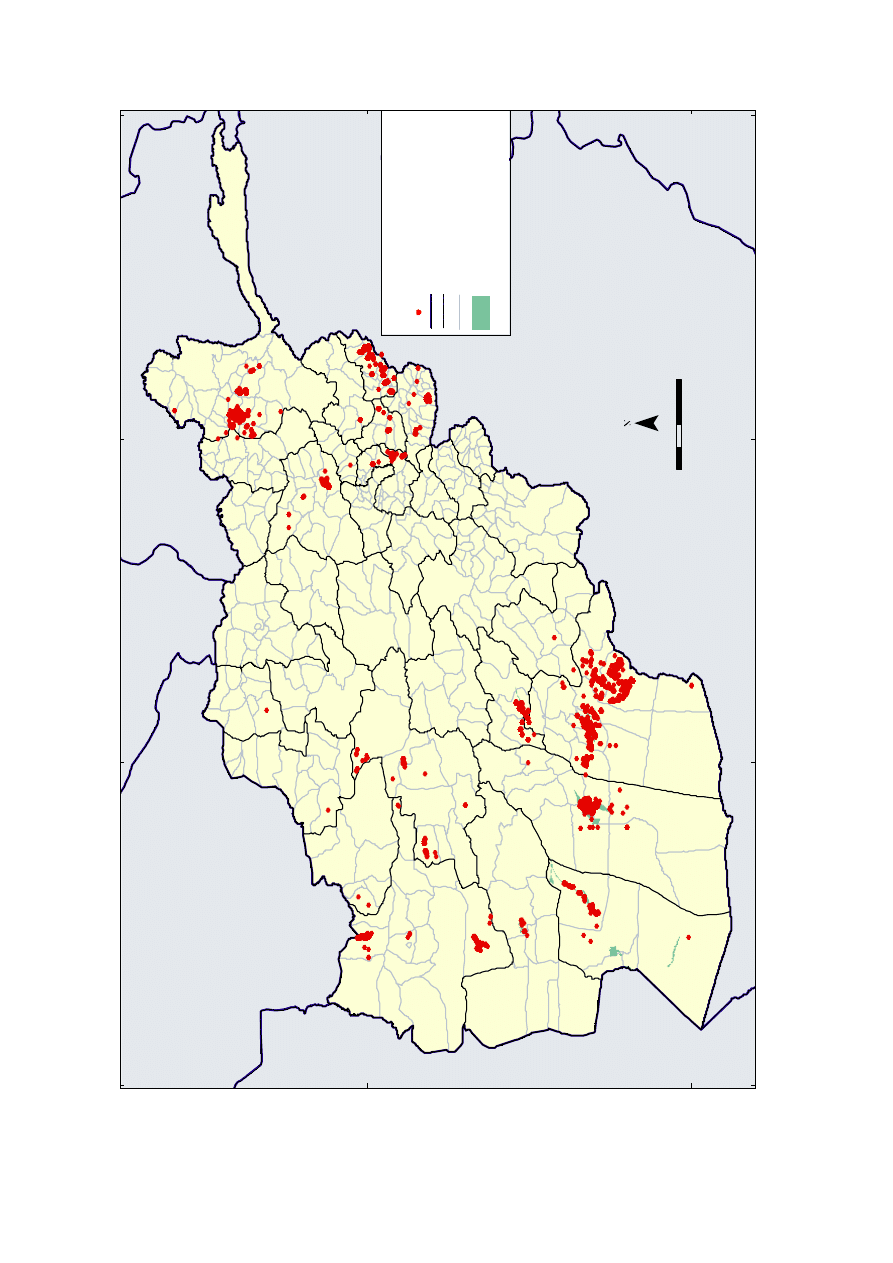
32
IRAN
IRAN
P
AKI
S
T
AN
P
AKI
S
T
AN
IN
D
IA
IN
D
IA
T
U
RKM
E
N
IS
T
A
N
T
U
RKM
E
N
IS
T
A
N
T
A
J
IKI
S
T
AN
T
A
J
IKI
S
T
AN
UZ
B
E
KI
S
T
A
N
UZ
B
E
KI
S
T
A
N
Hi
ra
t
Fa
ra
h
Gh
o
r
H
ilm
and
Ni
m
ro
z
K
andahar
B
adak
hs
han
Gh
a
zn
i
Ba
lk
h
Z
abul
Fa
ry
a
b
B
aghl
an
B
adghi
s
Pa
kt
ik
a
Sa
ri
Pu
l
D
a
yku
n
d
i
Ta
khar
Ba
m
ya
n
Ja
w
zj
a
n
U
ruz
gan
W
a
rdak
Nu
ri
st
a
n
K
unduz
S
a
m
angan
K
unar
K
abul
N
angar
har
Logar
K
hos
t
P
a
kt
ya
Pa
rw
a
n
P
anj
sher
Laghm
an
K
api
sa
W
a
sher
La
s
h
W
a
Ju
w
a
yn
Re
g
C
hahar
B
u
rja
W
a
khan
Ad
ra
s
ka
n
A
nar
D
a
ra
Ja
w
and
Gu
lr
an
Na
wu
r
Gu
lis
ta
n
C
hak
ha
ns
ur
S
h
in
dand
G
hor
ya
n
Na
d
A
li
G
a
rm
se
r
(H
a
za
rj
u
ft)
K
has
h
R
od
Ma
ru
f
C
haghc
har
an
K
ohi
s
tan
at
Gi
z
a
b
Go
m
al
Da
m
a
n
Ob
e
Y
ak
a
w
lang
P
anj
w
a
y
i
Q
adi
s
S
hahr
ak
M
u
rghab
D
is
hu
(R
egi
st
an)
Ch
o
ra
P
u
r
C
ham
an
Ku
sh
k
S
h
ig
hnan
In
jil
S
p
in
B
o
ldak
Na
wa
Ba
la
B
u
lu
k
Wa
ra
s
S
aghar
B
aghr
an
Re
g
(K
h
a
n
Ni
s
hi
n
)
K
hul
m
P
a
saband
Fa
ra
h
S
hor
abak
K
hadi
r
Wa
rs
a
j
Fa
rs
i
K
ohs
an
D
u
Lay
na
B
a
lk
hab
Di
la
Tu
la
k
Qa
la
-I
-K
a
h
A
rghi
st
an
Na
w
Z
ad
K
has
h
Ba
kw
a
Ki
ti
Qa
ys
a
r
Sa
ri
Pu
l
Ta
yw
a
ra
Qa
la
t
Ze
ba
k
Al
m
a
r
Is
ht
ar
la
y
Du
s
h
i
Zh
ar
i
Wa
m
a
Ma
y
w
an
d
Mi
ra
m
o
r
Da
rw
a
z
P
anj
ab
Ne
s
h
Ka
ja
k
i
Ni
li
W
o
r
M
am
ay
Ka
ru
k
h
S
a
yghan
K
ohi
s
tan
Ju
rm
K
u
ra
nW
aM
u
nj
a
n
D
ay
chopan
Da
wl
a
tY
ar
S
ham
ul
za
y
i
A
ybak
K
ang
Ch
a
k
Jaghu
ri
Gu
za
ra
D
aw
lat
ab
ad
Ba
m
ya
n
S
h
ib
ir
ghan
Za
ri
Qa
la
-I
-Z
a
l
Ra
g
h
Zu
rm
a
t
Aj
ri
st
a
n
Ka
jr
a
n
Gi
ro
D
ihr
aw
ud
Ja
lr
e
z
Z
inda
Ja
n
Ru
y
iDu
A
b
Wa
za
K
hw
a
Qa
rq
in
La
l
W
a
S
ar
janga
l
Ta
la
W
a
B
a
rf
a
k
Ti
ri
n
K
o
t
G
hor
ak
S
huhad
a
Da
rz
a
b
Ba
rm
a
l
Ar
c
h
i
Na
h
ri
n
S
h
ir
in
Tagab
Mu
s
a
Q
a
la
Ch
im
ta
l
S
hahj
oy
A
ndar
ab
Az
ra
S
hol
gar
a
Sh
ib
a
r
Sa
yy
a
d
C
hi
sht
i
S
har
if
Ku
fA
b
K
has
U
ru
z
gan
G
hor
m
a
ch
A
tghar
B
ilc
hi
ragh
B
a
rg
i
M
at
al
Na
ri
Ge
la
n
B
aghl
ani
J
adi
d
K
h
in
ja
n
S
hah
W
a
li
K
o
t
Mi
za
n
Ma
rk
a
zi
B
ih
su
d
Ru
s
ta
q
Is
hk
as
hi
m
F
a
rk
har
Aq
ch
a
Sh
in
k
a
y
S
hor
tepa
Qa
ra
m
q
ol
Ki
sh
in
d
ih
S
angi
Ta
k
h
t
S
u
robi
Ma
lis
ta
n
K
hak
re
z
N
ahr
iS
hahi
Ja
ji
Bu
rk
a
Sh
ib
K
o
h
Ti
sh
k
a
n
Im
am
S
ahi
b
Tu
rw
o
Nu
ri
s
ta
n
Ka
ld
a
r
G
hor
ban
d
Du
A
b
Na
h
ri
S
ar
ra
j
K
u
sh
k
iK
uhn
a
Ni
rk
h
M
andol
K
ahm
ar
d
La
s
h
ka
r
G
a
h
D
aw
lat
ab
ad
Gu
rz
iw
a
n
Ab
K
am
a
ri
Ch
a
l
A
ndar
K
h
wa
ja
Du
K
oh
M
uqur
S
hahi
di
H
as
sas
Ab
B
an
d
S
hahr
is
ta
n
Q
a
rabag
h
M
inga
jik
Ka
m
d
es
h
A
rghandab
Pu
li
Al
a
m
Z
a
ranj
Da
ra
-I
-
S
uf
i
B
a
la
R
odat
Tani
Jagha
tu
Da
ra
-I
-
S
uf
i
P
a
y
in
K
hur
am
W
a
S
a
rb
agh
C
hahar
K
int
S
angi
n
Pa
ry
a
n
S
a
ydabad
Ya
w
a
n
Ki
sh
im
Q
a
rghay
i
M
iya
N
ish
in
W
a
ygal
B
angi
S
angc
har
ak
P
a
sh
tu
n
Z
ar
ghun
A
liabad
C
hahar
D
a
ra
K
h
w
ahan
Pa
sh
tu
n
K
o
t
C
har
sada
F
a
yz
abad
Ni
jr
a
b
Pu
li
H
is
a
r
G
a
rdez
K
hak
i
S
af
ed
Hi
s
ar
a
k
Da
ra
Sa
la
n
g
S
hek
h
A
li
Qa
la
-I
-N
a
w
Ta
rnak
W
a
J
a
ldak
Ac
hi
n
Tagab
Z
a
rghu
n
S
hah
r
Ba
lk
h
Da
ra
yi
m
M
uqur
D
ahana-
I-
G
h
or
i
U
rgun
K
unduz
Ma
rd
y
a
n
A
rghanj
K
h
w
a
K
ham
ya
b
K
a
la
fgan
Ko
t
Di
h
Y
a
k
Pu
sh
t
R
o
d
Ar
g
o
D
ay
M
irdad
Ch
a
h
A
b
S
u
rk
h
iP
a
rs
a
H
az
rat
iS
ul
ta
n
Sh
ik
i
Kh
w
a
ja
S
a
bz
K
ohi
S
a
fi
Pe
ch
Om
n
a
So
zm
a
Q
a
la
S
per
a
U
naba
A
s
adabad
D
ar
w
az
iB
al
a
S
her
z
ad
S
hahr
iB
uz
ur
g
Di
h
B
a
la
B
a
r
K
una
r
Is
hk
am
is
h
Da
rq
ad
W
a
ghaz
Sa
r
H
a
w
z
a
Jadr
an
Pu
li
K
hu
m
ri
Go
sh
ta
K
hogy
ani
Ch
a
rk
h
Kh
w
a
ja
G
ha
r
Te
re
Z
a
yi
Ba
k
Ma
rm
u
l
S
a
robi
M
a
y
m
ana
S
abar
i
F
a
yz
abad
K
hani
C
hahar
B
agh
S
har
an
B
ahar
ak
G
o
sf
andi
W
a
rduj
Zi
ru
k
Da
s
h
ti
Q
a
la
K
hak
i
Jabbar
K
a
ka
r
(K
hak
-e
A
fgha
n)
G
u
za
rgahi
N
u
r
A
rghandab
H
is
a-I
-A
w
a
lB
ih
s
u
d
A
ndk
hoy
Du
r
B
a
b
a
K
har
w
a
r
P
aghm
an
K
h
o
st
W
a
F
ir
in
g
G
u
rbuz
La
l
P
u
r
Ka
m
a
R
as
h
idan
Na
wa
-i
-B
a
ra
kz
a
yi
Q
u
rghan
K
andah
ar
(D
and
)
Y
angi
Q
a
la
K
u
z
K
unar
Ga
ya
n
N
aw
B
aha
r
Ja
ji
M
ay
dan
K
has
K
una
r
S
ir
kanay
D
angam
Y
am
gan
(G
ir
w
an)
Hi
ra
t
65°
E
65°
E
70°
E
70°
E
30°
N
30°
N
35°
N
35°
N
Af
g
h
an
is
tan
:
V
er
if
ie
dl
oc
a
ti
on
s
o
fG
ov
e
rno
r-
le
d
er
a
di
ca
ti
on,
20
08
Sourc
e:
M
C
N
-
U
N
OD
C
A
fg
h
anis
ta
n
E
radic
at
io
n
S
urv
e
y
200
8
N
o
te
:
T
he
bou
ndaries
and
nam
es
s
how
n
and
th
e
des
ignat
ions
us
e
d
o
n
th
is
m
a
p
d
o
not
im
p
ly
o
ff
ic
ial
end
ors
e
m
e
n
t
o
r
a
c
ce
p
ta
n
ce
b
y
the
U
nit
ed
N
a
tion
s.
0
100
200
50
Km
G
e
og
ra
p
h
ic
p
roj
ec
ti
on
,
D
at
um
W
G
S
8
4
Le
ge
nd
G
L
E
-
G
o
ve
rn
or
le
d
e
radi
c
a
tion
V
e
ri
fied
er
adi
ca
ti
on
lo
c
a
tion
(G
LE
)
In
te
rn
at
io
na
l
boundar
ie
s
E
radi
c
a
ti
o
n
ta
rg
et
z
one
(M
C
N
-S
M
T
V
)
D
is
tr
ic
t
bo
undar
ie
s
P
rov
in
c
ial
bounda
ri
es
Wyszukiwarka
Podobne podstrony:
The Asia Foundation Survey 2008
Afganistan zamieni mak i opium na granaty (21-11-2008)
Afganistan zamieni mak i opium na granaty (21 11 2008)
uk esure secrey survey data 2008
Ubytki,niepr,poch poł(16 01 2008)
2008 XIIbid 26568 ppt
Tamponada serca, Karpacz, 2008
Bliźniuk G , interoperacyjność przegląd, marzec 2008
komunikacja niewerbalna wgGlodowskiego 2008
Osteoporaza diag i lecz podsumow interna 2008
Wzorniki cz 3 typy serii 2008 2009
Norma ISO 9001 2008 ZUT sem 3 2014
2 Fizyko KRIOTERAPIA 2008
Wyklad 4 HP 2008 09
ostre białaczki 24 11 2008 (kurs)
download Prawo PrawoAW Prawo A W sem I rok akadem 2008 2009 Prezentacja prawo europejskie, A W ppt
więcej podobnych podstron