
1 of 165
S
TANFORD
U
NIVERSITY
Christopher Alexander
The Search for Beauty

2 of 165
S
TANFORD
U
NIVERSITY
Patterns
•
Patterns and pattern languages for software
•
P
attern
L
anguages
o
f
P
rograms
•
Hillside Group
•
“Pattern Languages of Program Design” (Coplien and Schmidt)

3 of 165
S
TANFORD
U
NIVERSITY
Christopher Alexander
•
Notes on the Synthesis of Form
, 1964
•
The Oregon Experiment
, 1975
•
A Pattern Language
, 1977
•
The Timeless Way of Building
, 1979
•
The Production of Houses
, 1985
•
A New Theory of Urban Design
, 1987
•
A Foreshadowing of 21st Century Art: The Color and Geometry of Very Early
Turkish Carpets
, 1993
•
The Nature of Order
, 199x

4 of 165
S
TANFORD
U
NIVERSITY
Fact and Value
•
Mind and matter separated by philosophy and science in the 17
th
and 18
th
centuries
•
Descartes
•
Science searched for what was, not for what made things beautiful
•
Contingency—a thing is beautiful
to
some observer

5 of 165
S
TANFORD
U
NIVERSITY
Fact and Value
M
yself, as some of you know, originally a mathematician, I spent several
years, in the early sixties, trying to define a view of design, allied with
science, in which values were also let in by the back door. I too played with
operations research, linear programming, all the fascinating toys, which
mathematics and science have to o
ff
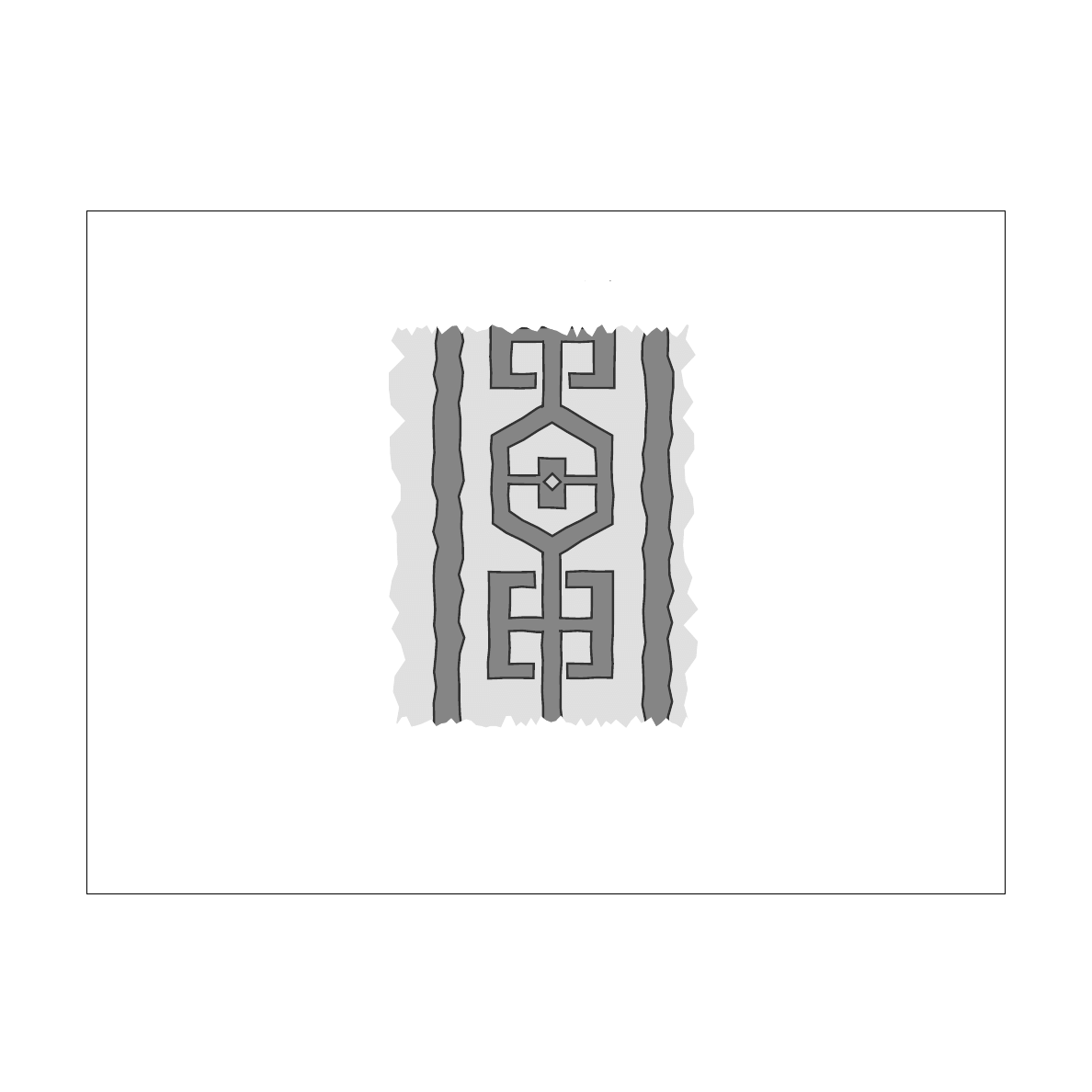
er us, and tried to see how these things
can give us a new view of design, what to design, and how to design.
Finally, however, I recognized that this view is essentially not productive,
and that for mathematical and scientific reasons, if you like, it was essential
to find a theory in which value and fact are one, in which we recognize that
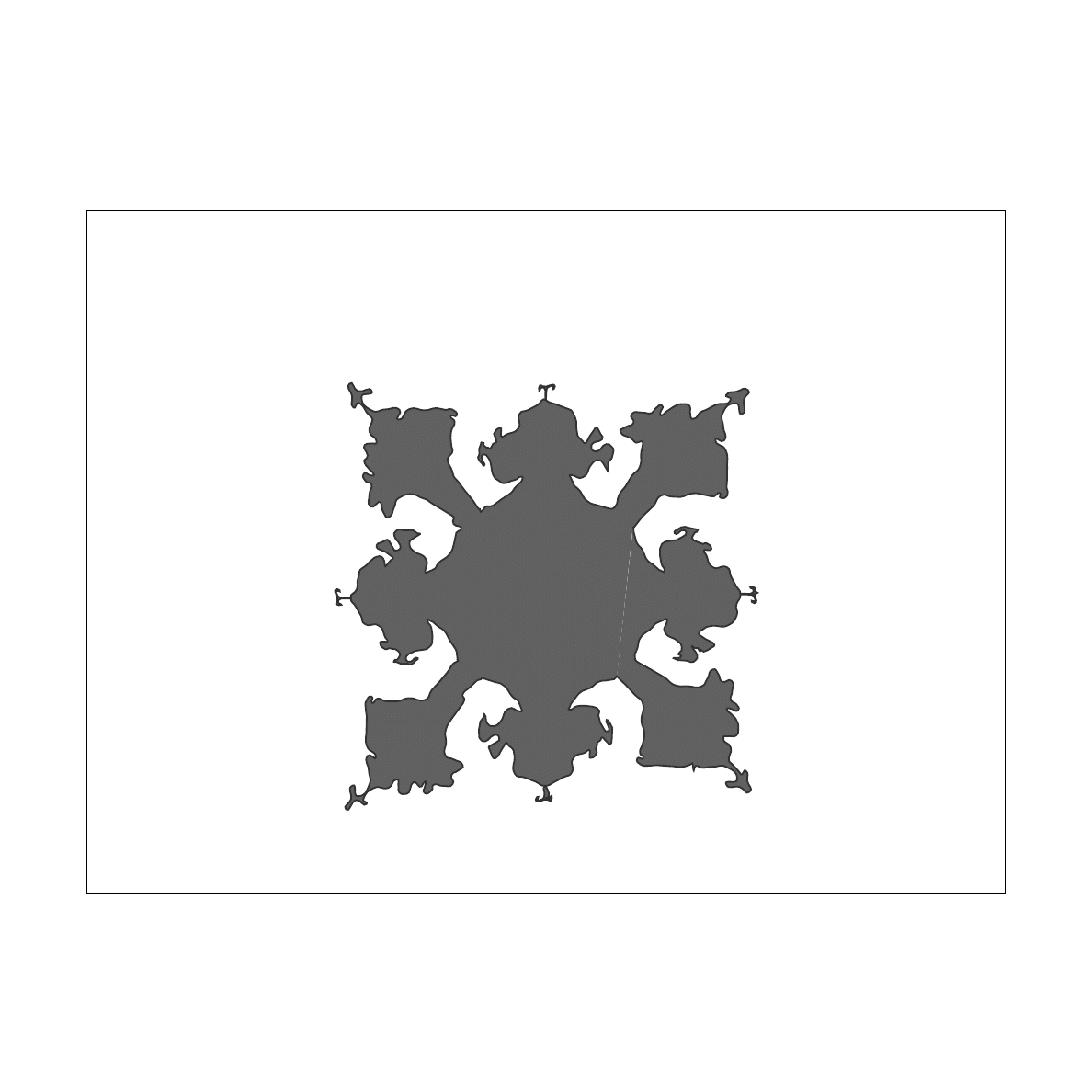
here is a central value, approachable through feeling, and approachable by
loss of self, which is deeply connected to facts, and forms a single indivisible
world picture,
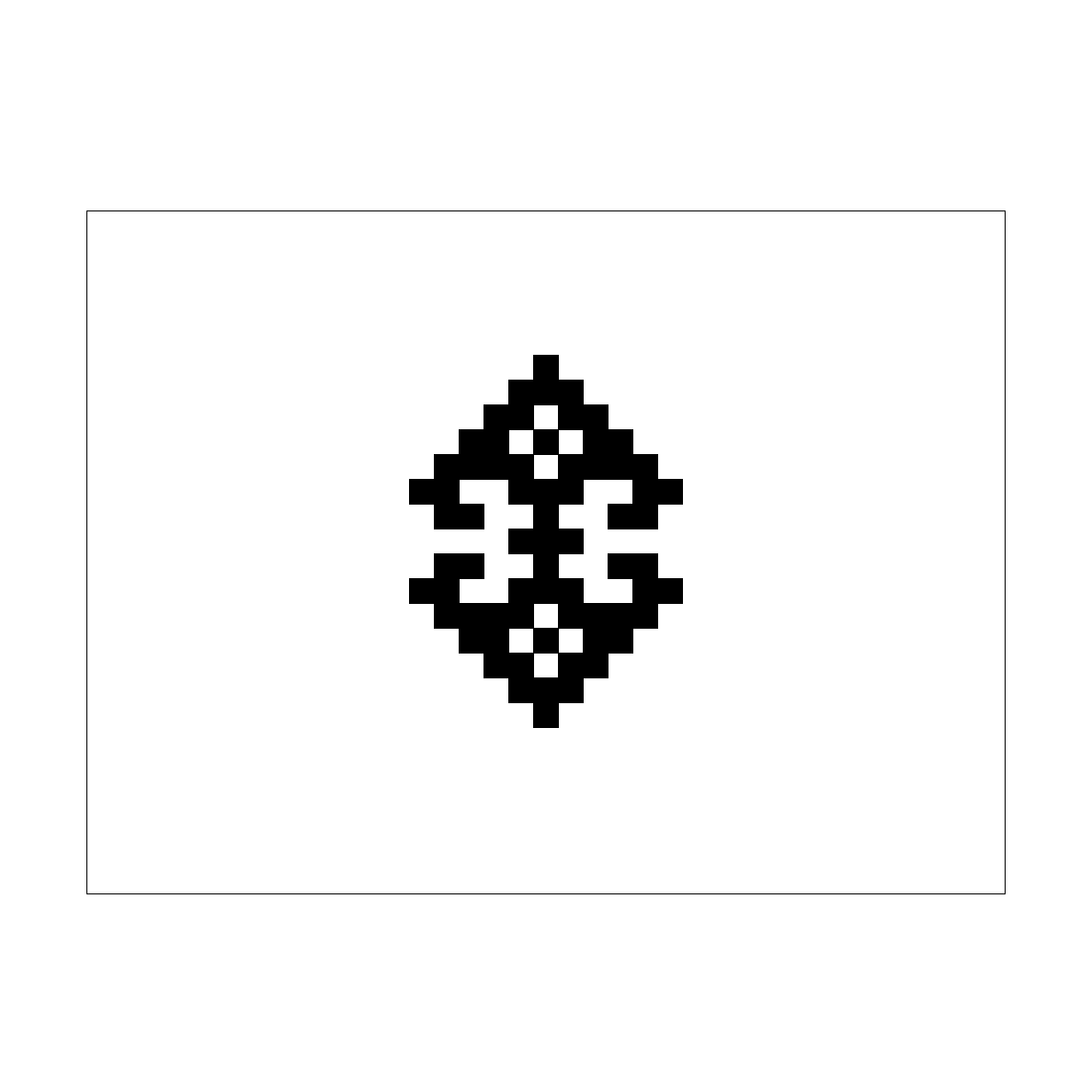
within which productive results can be obtained
.

6 of 165
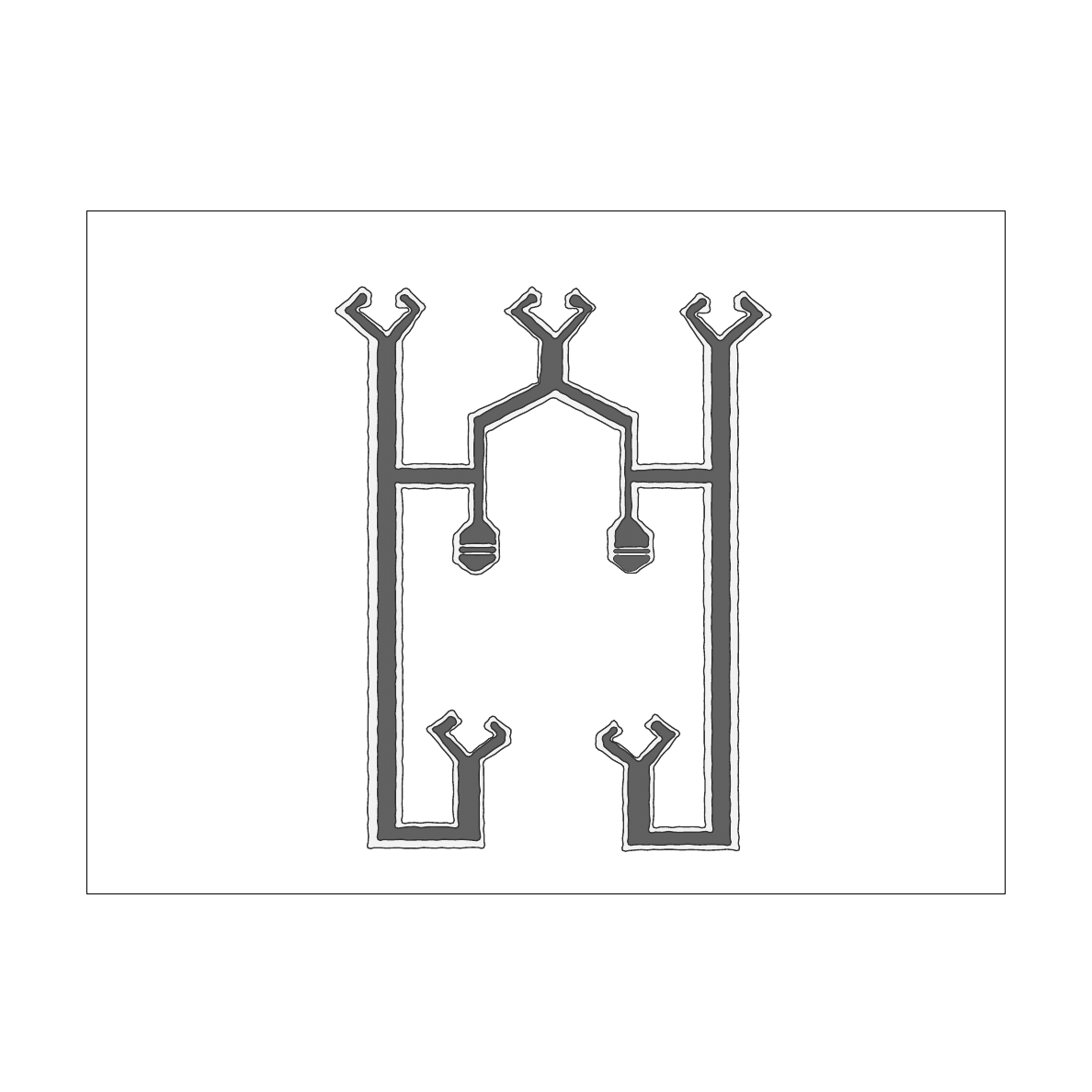
S
TANFORD
U
NIVERSITY
The Timeless Way of Building
T
here is one timeless way of building.
It is thousands of years old, and the same today as it has always been.
T
he great traditional buildings of the past, the villages and tents and temples
in which man feels at home, have always been made by people who were very
close to the center of this way. It is not possible to make great buildings, or
great towns, beautiful places, places where you feel yourself, places where you
feel alive, except by following this way. And, as you will see, this way will
lead anyone who looks for it to buildings which are themselves as ancient in
their form, as the trees and hills, and as our faces are.

7 of 165
S
TANFORD
U
NIVERSITY
The Quality
T
o seek the timeless way we must first know the quality without a name.
T
here is a central quality which is the root criterion of life and spirit in a
man, a town, a building, or a wilderness. This quality is objective and
precise, but it cannot be named.

8 of 165
S
TANFORD
U
NIVERSITY
The Gate
T
o reach the quality without a name we must then build a living pattern
language as a gate.
This quality in buildings and in towns cannot be made, but only generated,
indirectly, by the ordinary actions of the people, just as a flower cannot be
made, but only generated from the seed.
The people can shape buildings for themselves, and have done it for
centuries, by using languages I call pattern languages. A pattern language
gives each person who uses it the power to create an infinite variety of new
and unique buildings, just as his ordinary language gives him the power to
create an infinite variety of sentences.

9 of 165
S
TANFORD
U
NIVERSITY
The Way
O
nce we have built the gate, we can pass through it to the practice of the
timeless way.
Now we shall begin to see in detail how the rich and complex order of a town
can grow from thousands of creative acts. For once we have a common
pattern language in our town, we shall all have the power to make our streets
and buildings live, through our most ordinary acts. The language, like a seed,
is the genetic system which gives our millions of small acts the power to form
a whole.

10 of 165
S
TANFORD
U
NIVERSITY
The Quality
I was no longer willing to start looking at any pattern unless it presented
itself to me as having the capacity to connect up with some part of this
quality [the quality without a name]. Unless a particular pattern actually
was capable of generating the kind of life and spirit that we are now
discussing, and that it had this quality itself, my tendency was to dismiss it,
even though we explored many, many patterns.

11 of 165
S
TANFORD
U
NIVERSITY
The Quality
T
he first place I think of when I try to tell someone about this quality is a
corner of an English country garden where a peach tree grows against a wall.
The wall runs east to west; the peach tree grows flat against the southern
side. The sun shines on the tree and, as it warms the bricks behind the tree,
the warm bricks themselves warm the peaches on the tree. It has a slightly
dozy quality. The tree, carefully tied to grow flat against the wall; warming
the bricks; the peaches growing in the sun; the wild grass growing around the
roots of the tree, in the angle where the earth and roots and wall all meet.
This quality is the most fundamental quality there is in anything.

12 of 165
S
TANFORD
U
NIVERSITY
The Quality
I
t is a subtle kind of freedom from inner contradictions.

13 of 165
S
TANFORD
U
NIVERSITY
BART Study
Notes on the Synthesis of Form
•
in a good design there must be an underlying correspondence between the
structure of the problem and the structure of the solution— good design proceeds
by writing down the requirements, analyzing their interactions on the basis of
potential misfits, producing a hierarchical decomposition of the parts, and piecing
together a structure whose
structural hierarchy is the exact counterpart of the functional hierarchy
established during the analysis of the program.

14 of 165
S
TANFORD
U
NIVERSITY
BART Study
•
study the system of forces surrounding a ticket booth
•
390 requirements about what ought to be happening near it
being there to get tickets
being able to get change
being able to move past people waiting in line to get tickets
not having to wait too long for tickets
•
certain parts of the system were not subject to the requirements, and the system
itself could become bogged down because these other forces—forces not subject
to control by requirements—acted to come to their own balance within the
system
For example, if one person stopped and another also stopped to talk with the
first, congestion could build up that would defeat the mechanisms designed to
keep tra
ffi
c flow smooth. Of course there was a requirement that there not be
congestion, but there was nothing the designers could do to prevent it with
designed mechanism.

15 of 165
S
TANFORD
U
NIVERSITY
BART Study
S
o it became clear that the free functioning of the system did not purely
depend on meeting a set of requirements. It had to do, rather, with the
system coming to terms with itself and being in balance with the forces that
were generated internal to the system, not in accordance with some arbitrary
set of requirements we stated. I was very puzzled by this because the general
prevailing idea at the time [1964] was that essentially everything was based
on goals. My whole analysis of requirements was certainly quite congruent
with the operations research point of view that goals had to be stated and so
on. What bothered me was that the correct analysis of the ticket booth could
not be based purely on one’s goals, that there were realities emerging from
the center of the system itself and that whether you succeeded or not had to
do with whether you created a configuration that was stable with respect to
these realities
.

16 of 165
S
TANFORD
U
NIVERSITY
The Quality—Alive
•
“alive” captures some of the meaning when you think about a fire that is alive.
S
uch a fire is not just a pile of burning logs, but a structure of logs in which
there are su
fficient and well-placed air chimneys within the structure of logs.
When someone has built such a fire you don’t see them push the logs about
with a poker but you see them lift a particular log and move it an inch or
maybe a half inch, so that the air flows more smoothly or the flame curls
around the log in a specific way to catch a higher-up log. Such a fire burns
down to a small quantity of ash. This fire has the quality without a name.
[rpg]
•
The problem with this word is that it is a metaphor—it is hard to know whether
something literally not alive, like a fire, is alive

17 of 165
S
TANFORD
U
NIVERSITY
The Quality—Whole
•
“Whole” captures part of the meaning—a thing that is whole is free from internal
contradictions or inner forces that can tear it apart.
...a ring of trees around the edge of a windblown lake: the trees bend in a
strong wind, and the roots of the trees keep the bank from eroding, and the
water in the lake helps nourish the trees. Every part of the system is in
harmony with every other part. On the other hand, a steep bank with no
trees is easily eroded—the system is not whole, and the system can destroy
itself: the grasses and trees are destroyed by the erosion, the bank is torn
down, and the lake is filled with mud and disappears. The first system of
trees, bank, and lake has the quality without a name.
[rpg]
•
The problem with this word is that “whole” implies, to some, being enclosed or
separate. A lung is whole but it is not whole while still completely within a
person—a lung requires air to breathe, which requires plants to absorb carbon
dioxide and to produce oxygen.

18 of 165
S
TANFORD
U
NIVERSITY
The Quality—Comfortable
I
magine yourself on a winter afternoon with a pot of tea, a book, a reading
light, and two or three huge pillows to lean back against. Now, make yourself
comfortable. Not in some way you can show to other people and say how
much you like it. I mean so that you really like it for yourself.
You put the tea where you can reach it; but in a place where you can’t
possibly knock it over. You pull the light down to shine on the book, but not
too brightly, and so that you can’t see the naked bulb. You put the cushions
behind you and place them, carefully, one by one, just where you want them,
to support your back, your neck, your arm: so that you are supported just
comfortably, just as you want to sip your tea, and read, and dream.
When you take the trouble to do all that, and you do it carefully, with much
attention, then it may begin to have the quality with no name.
•
The problem with “comfortable” is that it has too many other meanings. For
example, a family with too much money and a house that is too warm is also
comfortable.

19 of 165
S
TANFORD
U
NIVERSITY
The Quality—Free
•
The word “free” helps define the quality by implying that things that are not
completely perfect or over-planned or precise can have the quality too. It also frees
us from the confines and limitations of “whole” and “comfortable.”
•
“Free” is not correct because it can imply reckless abandon or not having roots in
its own nature.

20 of 165
S
TANFORD
U
NIVERSITY
The Quality—Exact
•
The word “exact” counterbalances “comfortable” and “free”, which can give the
impression that there is a fuzziness or over-looseness.
T
he quality is loose and fluid, but it involves precise, exact forces acting in
balance. If you try to build a small table on which to put birdseed in the
winter for blackbirds, you must know the exact forces that determine the
blackbirds’ behavior so that they will be able to use the table as you planned.
The table cannot be too low, because blackbirds don’t like to swoop down
near the ground, and it cannot be too high because the wind might blow
them o
ff course, it cannot be too near to things that could frighten the birds
like clotheslines, and it cannot be too exposed to predators. Almost every size
for the table and every place to put it you can think of won’t work. When it
does work, the birdseed table has the quality with no name.
[rpg]

21 of 165
S
TANFORD
U
NIVERSITY
The Quality—Exact
•
“Exact” fails because it means the wrong sort of thing to many people.
U
sually when we say something is exact, we mean that it fits some abstract
image exactly. If I cut a square of cardboard and make it perfectly exact, it
means that I have made the cardboard perfectly square: its sides are exactly
equal: and its angles are exactly ninety degrees. I have matched the image
perfectly.
The meaning of the work “exact” which I use here is almost the opposite. A
thing which has the quality without a name never fits any image exactly.
What is exact is its adaptation to the forces which are in it.

22 of 165
S
TANFORD
U
NIVERSITY
The Quality—Egoless
W
hen a place is lifeless or unreal, there is almost always a mastermind
behind it. It is so filled with the will of the maker that there is no room for its
own nature.
Think, by contrast, of the decoration on an old bench—small hearts carved
in it; simple holes cut out while it was being put together—these can be
egoless.
They are not carved according to some plan. They are carefree, carved into it
wherever there seems to be a gap.
•
The word “egoless” is wrong because it is possible to build something with the
quality without a name while retaining some of the personality of its builder.

23 of 165
S
TANFORD
U
NIVERSITY
The Quality—Eternal
•
Finally is the word “eternal”—something with the quality is so strong, so
balanced, so clearly self-maintaining that it reaches into the realm of eternal truth,
even if it lasts for only an instant.
•
But “eternal” hints at the mysterious, and there is nothing mysterious about the
quality.
T
he quality which has no name includes these simpler sweeter qualities. But
it is so ordinary as well that it somehow reminds us of the passing of our life.
It is a slightly bitter quality.

24 of 165
S
TANFORD
U
NIVERSITY
The Quality—What About Software?
•
Is Alexander merely pining after the days when quaint villages and eccentric
buildings were the norm?
•
Architecture has a very long history and the artifacts of architecture from a lot of
that history are visible today
•
We in software are not so lucky—all of our artifacts were conceived and
constructed firmly within the system of fact separated from value.
•
But, there are programs we can look at and about which we say, “no way I’m
maintaining that kluge”
•
And there are other programs about which we can say, “wow, who wrote this!”

25 of 165
S
TANFORD
U
NIVERSITY
The Quality in Software—Modularity?
S
uppose, for example, that an architect makes the statement that buildings
have to be made of modular units. This statement is already useless to me
because I know that quite a few things are not made of modular units,
namely people, trees, and stars, and so therefore the statement is completely
uninteresting—aside from the tremendous inadequacies revealed by a
critical analysis on its own terms. But even before you get to those
inadequacies, my hackles are already up because this statement cannot
possibly apply to everything there is in the universe and therefore we are in
the wrong ballgame....In other words, I actually do not accept buildings as a
special class of things unto themselves, although of course I take them very
seriously as a special species of forms. But beyond that is my desire to see
them belong with people, trees, and stars as part of the universe.

26 of 165
S
TANFORD
U
NIVERSITY
The Quality in Software—Modularity?
I
n order for the building to be alive, its construction details must be unique
and fitted to their individual circumstances as carefully as the larger
parts....The details of a building cannot be made alive when they are made
from modular parts.

27 of 165
S
TANFORD
U
NIVERSITY
The Quality in Software
•
it was not written to an unrealistic deadline
•
its modules and abstractions are not too big—if they were too big their size and
inflexibility would have created forces that would over-govern the overall
structure of the software; every module, function, class, and abstraction is small
and named so I know what it is without looking at its implementation
•
any bad parts were repaired during maintenance, or are being repaired now
•
if it was small, it was written by an extraordinary person, someone I would like as
a friend; if it was large, it was not designed by one person, but over time in a slow,
careful, incremental way
•
if I look at any small part of it, I can see what is going on—I don’t need to refer to
other parts to understand what something is doing; this tells me that the
abstractions make sense for themselves—they are whole
•
if I look at any large part in overview, I can see what is going on—I don’t need to
see all the details to get it
•
it is like a fractal, in which every level of detail is as locally coherent and as well-
thought-out as any other level

28 of 165
S
TANFORD
U
NIVERSITY
The Quality in Software
•
every part of the code is transparently clear—there are no sections that are
obscure to gain e
fficiency
•
everything about it seems familiar
•
I can imagine changing it, adding some functionality
•
I am not afraid of it, I will remember it

29 of 165
S
TANFORD
U
NIVERSITY
Pattern Languages
•
A
farmer in a particular Swiss valley wishes to build a barn....
a double door to accommodate the haywagon
a place to store hay, a place to house the cows
a place to put the cows so they can eat the hay
this last place must be convenient to hay storage
there must be a good way to remove the cow excrement
the whole building has to be structurally sound enough to withstand harsh
winter snow and wind.
•
I
f each farmer were to design and build a barn based on these functional
requirements, each barn would be di
fferent, probably radically different. Some would
be round, the sizes would vary wildly, some would have double naves, doubly pitched
roofs.
•
Alexander says that each farmer is copying a set of patterns which have evolved to
solve the Swiss-valley-barn problem.

30 of 165
S
TANFORD
U
NIVERSITY
Patterns
•
a picture, which shows an archetypal example of that pattern
•
an introductory paragraph, which sets the context for the pattern by explaining how
it helps to complete certain larger patterns
•
three diamonds to mark the beginning of the problem
•
a headline, in bold type—this headline gives the essence of the problem in one or two
sentences
•
the body of the problem—it describes the empirical background of the pattern, the
evidence for its validity, the range of di
fferent ways the pattern can be manifested in a
building, and so on
•
the solution—the heart of the pattern—which describes the field of physical and
social relationships which are required to solve the stated problem, in the stated
context. This solution is always stated in the form of an instruction—so that you
know exactly what you need to do, to build the pattern
•
a diagram, which shows the solution in the form of a diagram, with labels to indicate
its main components
•
another three diamonds, to show that the main body of the pattern is finished
•
a paragraph which ties the pattern to all those smaller patterns in the language,
which are needed to complete the pattern, to embellish it, to fill it out

31 of 165
S
TANFORD
U
NIVERSITY
Patterns
A
nd yet, we do believe, of course, that this language which is printed here is
something more than a manual, or a teacher, or a version of a possible
pattern language. Many of the patterns here are archetypal—so deep, so
deeply rooted in the nature of things, that it seems likely that they will be a
part of human nature, and human action, as much in five hundred years, as
they are today....
In this sense, we have also tried to penetrate, as deep as we are able, into the
nature of things in the environment....

32 of 165
S
TANFORD
U
NIVERSITY
A Pattern
179.
A
lcoves**
...many large rooms are not complete unless they have smaller rooms and
alcoves opening o
ff them....
✥ ✥ ✥

33 of 165
S
TANFORD
U
NIVERSITY
A Pattern
No homogeneous room, of homogeneous height, can serve a group of people
well. To give a group a chance to be together, as a group, a room must also
give them the chance to be alone, in one’s and two’s in the same space.
This problem is felt most acutely in the common rooms of a house—the
kitchen, the family room, the living room. In fact, it is so critical there, that
the house can drive the family apart when it remains unsolved....
In modern life, the main function of a family is emotional; it is a source of
security and love. But these qualities will only come into existence if the
members of the house are physically able to be together as a family.
This is often di
fficult. The various members of the family come and go at
di
fferent times of day; even when they are in the house, each has his own
private interests.... In many houses, these interests force people to go o
ff to
their own rooms, away from the family. This happens for two reasons. First,
in a normal family room, one person can easily be disturbed by what the
others are doing....Second, the family room does not usually have any space
where people can leave things and not have them disturbed....
To solve the problem, there must be some way in which the members of the
family can be together, even when they are doing di
fferent things.

34 of 165
S
TANFORD
U
NIVERSITY
A Pattern
Therefore:
Make small places at the edge of any common room, usually no more than 6
feet wide and 3 to 6 feet deep and possibly much smaller. These alcoves
should be large enough for two people to sit, chat, or play and sometimes
large enough to contain a desk or table.
✥ ✥ ✥
Give the alcove a ceiling which is markedly lower than the ceiling height in
the main room....
alcoves

35 of 165
S
TANFORD
U
NIVERSITY
Other Patterns
•
Ring Roads (17)
•
Quiet Backs (59)
•
Small Public Squares (61)
•
Sleeping in Public (94)
•
Wings of Light (107)
•
Sheltering Roof (117)
•
Common Areas at the Heart (129)
•
Zen View (134)
•
Light on Two Sides of Every Room (159)
•
Low Sill (222)
•
Climbing Plants (246)
•
Things From Your Life (253)

36 of 165
S
TANFORD
U
NIVERSITY
Generativeness
Generative patterns—patterns that generate the quality without a name
•
hit a point beyond the tennis ball in the direction the racket is moving
•
random number generator

37 of 165
S
TANFORD
U
NIVERSITY
Patterns and Software
People have done the obvious thing:
•
develop patterns that are a prescription of how to solve particular problems that
come up in development
•
Knuth
What do pattern languages provide?
•
common vocabulary
•
common base of understanding what’s important in programming
•
a large corpus of solutions makes developers more e
ffective

38 of 165
S
TANFORD
U
NIVERSITY
A Software Pattern
P
attern: Concrete Behavior in a Stateless Object
Context: You have developed an object. You discover that its behavior is just
one example of a family of behaviors you need to implement.
Problem: How can you cleanly make the concrete behavior of an object
flexible without imposing an unreasonable space or time cost, and with
minimal e
ffect on the other objects in the system?
Constraints: No more complexity in the object.... Flexibility—the solution
should be able to deal with system-wide, class-wide, and instance-level
behavior changes. The changes should be able to take place at any time....
Minimal time and space impact....
Solution: Move the behavior to be specialized into a stateless object which is
invoked when the behavior is invoked.
Example: The example is debug printing....
[Beck 1993]

39 of 165
S
TANFORD
U
NIVERSITY
A Software Pattern
T
he idea is that you define a side object (and a class) that has the behavior
you want by defining methods on it. All the methods take an extra argument
which is the real object on which to operate. Then you implement the desired
behavior on the original object by first sending a message to self to determine
the appropriate side object and then sending the side object a message with
the real object as an extra argument. By defining the method that returns the
side object you can get either instance-level, class-level, or global changes in
behavior.

40 of 165
S
TANFORD
U
NIVERSITY
Patterns in Software
•
take advantage of common patterns without building costly, confusing, and
unnecessary abstractions when the goal is merely to write something
understandable. That is, when there are more idioms to use, using them is far
better than inventing a new vocabulary
•
most useful patterns are quite large—architecture patterns
•
patterns interact with larger and smaller patterns in such a way that the actual
manifestation of any given pattern is influenced by and influences several or many
other patterns

41 of 165
S
TANFORD
U
NIVERSITY
A Danger in Software Patterns
Compression
I
t is quite possible that all the patterns for a house might, in some form, be
present, and overlapping, in a simple one-room cabin. The patterns do not
need to be strung out, and kept separate. Every building, every room, every
garden is better, when all the patterns which it needs are compressed as far as
it is possible for them to be. The building will be cheaper; and the meanings
in it will be denser.

42 of 165
S
TANFORD
U
NIVERSITY
OK, So What’s With Alexander?
•
Alexander is merely pining after the days when quaint villages and eccentric
buildings were the norm
•
Alexander likes buildings that have survived for centuries and are hence selected
for beauty
•
Alexander likes (old) European and third-world buildings
small space implies mistakes and imperfections are small and hence nice
small space implies things packed in
small space implies constraints and the Poetry Effect
small space implies you should use nonflammable materials which are harder
to work with and look more natural
•
Alexander likes things that look like nature—fractal-like

43 of 165
S
TANFORD
U
NIVERSITY
The Perfection of Imperfection
House of Tiles in Mexico City:
W
e have become used to almost fanatical precision in the construction of
buildings. Tile work, for instance, must be perfectly aligned, perfectly square,
every tile perfectly cut, and the whole thing accurate on a grid to a tolerance
of a sixteenth of an inch. But our tilework is dead and ugly, without soul.
In this Mexican house the tiles are roughly cut, the wall is not perfectly
plumb, and the tiles don’t even line up properly. Sometimes one tile is as
much as half an inch behind the next one in the vertical plane.
And why? Is it because these Mexican craftsmen didn’t know how to do
precise work? I don’t think so. I believe they simply knew what is important
and what is not, and they took good care to pay attention only to what is
important: to the color, the design, the feeling of one tile and its relationship
to the next—the important things that create the harmony and feeling of the
wall. The plumb and the alignment can be quite rough without making any
di
fference, so they didn’t bother to spend too much effort on these things.
They spent their e
ffort in the way that made the most difference. And so they
produced this wonderful quality, this harmony...simply because that is what
they paid attention to, and what they tried to produce.

44 of 165
S
TANFORD
U
NIVERSITY
The Perfection of Imperfection
The reason that American craftsmen cannot achieve the same thing is that they are
concerned with perfection and plumb, and it is not possible to concentrate on two
things at the same time—perfection and the field of centers.
I
n our time, many of us have been taught to strive for an insane perfection
that means nothing. To get wholeness, you must try instead to strive for this
kind of perfection, where things that don’t matter are left rough and
unimportant, and the things that really matter are given deep attention.
This is a perfection that seems imperfect. But it is a far deeper thing.

45 of 165
S
TANFORD
U
NIVERSITY
The Failure of Pattern Languages
The Modesto Clinic
A
ll the architects and planners in christendom, together with The Timeless
Way of Building and the Pattern Language, could still not make buildings
that are alive because it is other processes that play a more fundamental role,
other changes that are more fundamental.
...
U
p until that time I assumed that if you did the patterns correctly, from a
social point of view, and you put together the overall layout of the building in
terms of those patterns, it would be quite alright to build it in whatever
contemporary way that was considered normal. But then I began to realize
that it was not going to work that way.
...
I
t’s somewhat nice in plan, but it basically looks like any other building of
this era. One might wonder why its plan is so nice, but in any really
fundamental terms there is nothing to see there. There was hardly a trace of
what I was looking for.

46 of 165
S
TANFORD
U
NIVERSITY
The Failure of Pattern Languages
Architects were trying it out on the sly:
B
ootleg copies of the pattern language were floating up and down the West
Coast and people would show me projects they had done and I began to be
more and more amazed to realize that, although it worked, all of these
projects basically looked like any other buildings of our time. They had a few
di
fferences. They were more like the buildings of Charles Moore or Joseph
Esherick, for example, than the buildings of S.O.M. or I. M. Pei; but
basically, they still belonged perfectly within the canons of mid-twentieth
century architecture. None of them whatsoever crossed the line.

47 of 165
S
TANFORD
U
NIVERSITY
The Failure of Pattern Languages
These architects thought it was working, but Alexander didn’t:
T
hey thought the buildings were physically di
fferent. In fact, the people who
did these projects thought that the buildings were quite di
fferent from any
they had designed before, perhaps even outrageously so. But their perception
was incredibly wrong; and I began to see this happening over and over
again—that even a person who is very enthusiastic about all of this work
will still be perfectly capable of making buildings that have this mechanical
death-like morphology, even with the intention of producing buildings that
are alive.
So there is the slightly strange paradox that, after all those years of work, the
first three books are essentially complete and, from a theoretical point of
view, do quite a good job of identifying the di
fference but actually do not
accomplish anything. The conceptual structures that are presented are just
not deep enough to actually break down the barrier. They actually do not do
anything.

48 of 165
S
TANFORD
U
NIVERSITY
The Failure of Pattern Languages
Geometry is central:
...the majority of people who read the work, or tried to use it, did not realize
that the conception of geometry had to undergo a fundamental change in
order to come to terms with all of this. They thought they could essentially
graft all the ideas about life, and patterns, and functions on to their present
conception of geometry. In fact, some people who have read my work actually
believe it to be somewhat independent of geometry, independent of style—
even of architecture.

49 of 165
S
TANFORD
U
NIVERSITY
Growth Process
W
hat (D’Arcy) Thompson insisted on was that every form is basically the
end result of a certain growth process. When I first read this I felt that of
course the form in a purely static sense is equilibrating certain forces and
that you could say that it was even the product of those forces—in a non-
temporal, non-dynamic sense, as in the case of a raindrop, for example,
which in the right here and now is in equilibrium with the air flow around
it, the force of gravity, its velocity, and so forth—but that you did not really
have to be interested in how it actually got made. Thompson however was
saying that everything is the way it is today because it is the result of a
certain history—which of course includes how it got made. But at the time I
read this I did not really understand it very well; whereas I now realize that
he is completely right.

50 of 165
S
TANFORD
U
NIVERSITY
Development Process
The ideal process has to answer the following questions satisfactorily:
•
W
hat kind of person is in charge of the building operation itself?
An architect-builder is in charge
•
H
ow local to the community is the construction firm responsible for building?
Each site has its own builder’s yard, each responsible for local development
•
W
ho lays out and controls the common land between the houses, and the array of
lots and houses?
This is handled by the community itself, in groups small enough to come to agree-
ment in face-to-face meetings
•
W
ho lays out the plans of individual houses?
Families design their own homes

51 of 165
S
TANFORD
U
NIVERSITY
Development Process
•
I
s the construction system based on the assembly of standard components, or is it
based on acts of creation which use standard processes?
Construction is based on a standard process rather than by standard components
•
H
ow is cost controlled?
Cost is controlled flexibly so that local decisions and trade-o
ffs can be made
•
W
hat is the day-to-day life like, on-site, during the construction operation?
It is not just a place where the job is done, but a place where the importance of the
houses themselves as homes infuses the everyday work

52 of 165
S
TANFORD
U
NIVERSITY
Organic Order
Alexander’s philosophy extends to the building process, through a series of
principles:
O
rganic Order: ...the kind of order that is achieved when there is a perfect
balance between the needs of the parts and the needs of the whole.

53 of 165
S
TANFORD
U
NIVERSITY
The Principle of Organic Order
T
he principle of organic order: Planning and construction will be guided by
a process which allows the whole to emerge gradually from local acts.

54 of 165
S
TANFORD
U
NIVERSITY
The Principle of Participation
T
he Principle of Participation: All decisions about what to build, and how to
build it, will be in the hands of the users.
•
Who is a user in software?
the end-user?
the developer (inhabitant)?
both?

55 of 165
S
TANFORD
U
NIVERSITY
Master Plans
It is not possible to produce a master plan for building:
I
t is simply not possible to fix today what the environment should be like [in
the future], and then to steer the piecemeal process of development toward
that fixed, imaginary world.

56 of 165
S
TANFORD
U
NIVERSITY
Master Plans
M
aster plans have two additional unhealthy characteristics. To begin with,
the existence of a master plan alienates the users.... After all, the very
existence of a master plan means, by definition, that the members of the
community can have little impact on the future shape of their community,
because most of the important decisions have already been made. In a sense,
under a master plan people are living with a frozen future, able to a
ffect only
relatively trivial details. When people lose the sense of responsibility for the
environment they live in, and realize that there are merely cogs in someone
else’s machine, how can they feel any sense of identification with the
community, or any sense of purpose there?
Second, neither the users nor the key decision makers can visualize the actual
implications of the master plan.

57 of 165
S
TANFORD
U
NIVERSITY
Piecemeal Growth
...each new building is not a “finished” thing....They are never torn down,
never erased; instead they are always embellished, modified, reduced,
enlarged, improved. This attitude to the repair of the environment has been
commonplace for thousands of years in traditional cultures. We may
summarize the point of view behind this attitude in one phrase: piecemeal
growth.

58 of 165
S
TANFORD
U
NIVERSITY
Large Lump Development
L
arge lump development hinges on a view of the environment which is static
and discontinuous; piecemeal growth hinges on a view of the environment
which is dynamic and continuous....According to the large lump point of
view, each act of design or construction is an isolated event which creates an
isolated building—“perfect” at the time of its construction, and then
abandoned by its builders and designers forever. According to the piecemeal
point of view, every environment is changing and growing all the time, in
order to keep its use in balance; and the quality of the environment is a kind
of semi-stable equilibrium in the flux of time....Large lump development is
based on the idea of replacement. Piecemeal growth is based on the idea of
repair.

59 of 165
S
TANFORD
U
NIVERSITY
The Principle of Piecemeal Growth
T
he principle of piecemeal growth: The construction undertaken in each
budgetary period will be weighted overwhelmingly toward small projects.

60 of 165
S
TANFORD
U
NIVERSITY
The Principle of Patterns
T
he principle of patterns: All design and construction will be guided by a
collection of communally adopted planning principles called patterns.

61 of 165
S
TANFORD
U
NIVERSITY
The Principle of Diagnosis
T
he principle of diagnosis: The well being of the whole will be protected by
an annual diagnosis which explains, in detail, which spaces are alive and
which ones are dead, at any given moment in the history of the community.

62 of 165
S
TANFORD
U
NIVERSITY
The Principle of Coordination
T
he principle of coordination: Finally, the slow emergence of organic order
in the whole will be assured by a funding process which regulates the stream
of individual projects put forward by users.

63 of 165
S
TANFORD
U
NIVERSITY
Grassroots Housing Process
•
a sponsor—a group of people, a corporation—would provide land at a reasonable
price.
•
a builder who is actually an architect, a builder, and a manager rolled into one
•
families would get an allotment of money to begin construction
•
the builder would help and with the pattern language each family would build its
own home
•
each family pays a fee per year with the following characteristics.
the fee is based on square footage and the fee declines from a very high rate in
the early years to very low in later years
it is assumed to take around 13 years to pay off things
materials for building are free to families (of course, it is paid for by the fees)
T
his means that families are encouraged to initially build small homes.
Because materials are free and the only fees are for square footage, each
family is encouraged to improve or embellish its existing space and the
cluster’s common space. As time goes on and the fees drop in later years,
homes can be enlarged. These clusters would nest in the sense that there
would be a larger “political” unit responsible for enhancing structures larger
than any particular cluster. For example, roads would be handled this way
and the political unit would be a sort of representative government.
[rpg]

64 of 165
S
TANFORD
U
NIVERSITY
The Mexicali Housing Project
Alexander gets to try his entire process:
T
he Mexican government became convinced that Alexander would be able
to build a community housing project for far less than the usual cost. So they
gave him the power he needed to organize the project as he felt proper. The
land was provided in such a way that the families together owned the
encompassed public land and each family owned the land on which their
home was built. The point of the experiment was to see whether, with a
proper process and a pattern language, a community could be built that
demonstrated the quality without a name. Because of the expected low cost
of the project and the strong recommendation of the University of Mexico
regarding Alexander’s work, the Mexican government was willing to allow
Alexander to put essentially his grassroots system of production into practice.
[rpg]

65 of 165
S
TANFORD
U
NIVERSITY
The Failure of Pattern Languages and Grassroots Process
First the Mexican government:
T
he almost naïve, childish, rudimentary outward character of the houses
disturbed them extremely. (Remember that the families, by their own
frequent testimony, love their houses.)
The builder’s yard was abandoned within 3 years of the end of the project

66 of 165
S
TANFORD
U
NIVERSITY
The Failure of Pattern Languages
The quality without a name is not apparent:
T
he buildings, for example, are very nice, and we are very happy that they so
beautifully reflect the needs of di
fferent families. But they are still far from
the limpid simplicity of traditional houses, which was our aim. The roofs are
still a little awkward, for example. And the plans, too, have limits. The
houses are very nice internally, but they do not form outdoor space which is
as pleasant, or as simple, or as profound as we can imagine it. For instance,
the common land has a rather complex shape, and several of the gardens are
not quite in the right place. The freedom of the pattern language, especially
in the hands of our apprentices, who did not fully understand the deepest
ways of making buildings simple, occasionally caused a kind of confusion
compared with what we now understand, and what we now will do next
time.

67 of 165
S
TANFORD
U
NIVERSITY
The Failure of Pattern Languages
Maybe artistry has something to do with it:
W
hen their [the government’s] support faded, the physical buildings of the
builder’s yard had no clear function, and, because of peculiarities in the way
the land was held, legally, were not transferred to any other use, either; so
now, the most beautiful part of the buildings which we built stand idle. And
yet these buildings, which we built first, with our own deeper understanding
of the pattern language, were the most beautiful buildings in the project.
That is very distressing, perhaps the most distressing of all.

68 of 165
S
TANFORD
U
NIVERSITY
The Failure of Pattern Languages
The patterns produce nice homes and buildings, but not the Quality:
T
here was one fact above everything else I was aware of, and that was that
the buildings were still a bit more funky than I would have liked. That is,
there are just a few little things that we built down there that truly have that
sort of limpid beauty that have been around for ages and that, actually, are
just dead right. That’s rare; and it occurred in only a few places. Generally
speaking, the project is very delightful—di
fferent of course from what is
generally being built, not just in the way of low-cost housing—but it doesn’t
quite come to the place where I believe it must.
...But what I am saying now is that, given all that work (or at least insofar as
it came together in the Mexican situation) and even with us doing it (so
there is no excuse that someone who doesn’t understand it is doing it), it only
works partially. Although the pattern language worked beautifully—in the
sense that the families designed very nice houses with lovely spaces and
which are completely out of the rubric of modern architecture—this very
magical quality is only faintly showing through here and there.

69 of 165
S
TANFORD
U
NIVERSITY
The Failure of Pattern Languages
Simplicity is not quite what it seems:
W
e were running several little experiments in the builder’s yard. There is an
arcade around the courtyard with each room o
ff of the arcade designed by a
di
fferent person. Some of the rooms were designed by my colleagues at the
Center and they also had this unusual funkiness—still very charming, very
delightful, but not calm at all. In that sense, vastly di
fferent from what is
going on in the four-hundred year old Norwegian farm where there is an
incredible clarity and simplicity that has nothing to do with its age. But this
was typical of things that were happening. Here is this very sort of limpid
simplicity and yet the pattern language was actually encouraging people to
be a little bit crazy and to conceive of much more intricate relationships than
were necessary. They were actually disturbing. Yet in all of the most
wonderful buildings, at the same time that they have all of these patterns in
them, they are incredibly simple. They are not simple like an S.O.M.
building;—sometimes they are incredibly ornate—so I’m not talking about
that kind of simplicity. There is however a kind of limpidity which is very
crucial; and I felt that we just cannot keep going through this problem. We
must somehow identify what it is and how to do it—because I knew it was
not just my perception of it.

70 of 165
S
TANFORD
U
NIVERSITY
The Failure of Pattern Languages
Simplicity:
...
T
he problem is complicated because the word simplicity completely fails to
cover it; at another moment it might be exactly the opposite. Take the
example of the columns. If you have the opportunity to put a capital or a foot
on it, it is certainly better to do those two things than not—which is di
fferent
from what the modern architectural tradition tells you to do. Now, in a
peculiar sense, the reasons for it being better that way are the same as the
reasons for being very simple and direct in the spacing of those same columns
around the courtyard. I’m saying that, wherever the source of that judgment
is coming from, it is the same in both cases.... The word simplicity is
obviously not the relevant word. There is something which in one instance
tells you to be simple and which in another tells you to be more complicated.
It’s the same thing which is telling you those two things.

71 of 165
S
TANFORD
U
NIVERSITY
The Failure of Pattern Languages
Skill and artistry:
O
nly recently have I begun to realize that the problem is not merely one of
technical mastery or the competent application of the rules—like trowelling
a piece of concrete so that it’s really nice—but that there is actually
something else which is guiding these rules. It actually involves a di
fferent
level of mastery. It’s quite a di
fferent process to do it right; and every single
act that you do can be done in that sense well or badly. But even assuming
that you have got the technical part clear, the creation of this quality is a
much more complicated process of the most utterly absorbing and
fascinating dimensions. It is in fact a major creative or artistic act—every
single little thing you do—and it is only in the years since the Mexican
project that I have begun to see the dimensions of that fact.

72 of 165
S
TANFORD
U
NIVERSITY
The Failure of Pattern Languages
I
had been watching what happens when one uses pattern languages to
design buildings and became uncomfortably aware of a number of
shortcomings. The first is that the buildings are slightly funky—that is,
although it is a great relief that they generate these spontaneous buildings
that look like agglomerations of traditional architecture when compared
with some of the concrete monoliths of modern architecture, I noticed an
irritatingly disorderly funkiness. At the same time that it is lovely, and has
many of these beautiful patterns in it, it’s not calm and satisfying. In that
sense it is quite di
fferent from traditional architecture which appears to have
this looseness in the large but is usually calm and peaceful in the small.
To caricature this I could say that one of the hallmarks of pattern language
architecture, so far, is that there are alcoves all over the place or that the
windows are all di
fferent. So I was disturbed by that—especially down in
Mexico. I realized that there were some things about which the people
putting up the buildings did not know—and that I knew, implicitly, as part
of my understanding of pattern languages (including members of my own
team). They were just a bit too casual about it and, as a result, the work was
in danger of being too relaxed. As far as my own e
fforts were concerned, I
realized that there was something I was tending to put in it in order to
introduce a more formal order—to balance this otherwise labyrinthine
looseness.

73 of 165
S
TANFORD
U
NIVERSITY
The Failure of Pattern Languages
...
T
he other point is that even although the theory of pattern languages in
traditional society clearly applies equally to very great buildings—like
cathedrals—as well as to cottages, there was the sense that, somehow, our
own version of it was tending to apply more to cottages. In part, this was a
matter of the scale of the projects we were working on; but it also had to do
with something else. It was almost as if the grandeur of a very great church
was inconceivable within the pattern language as it was being presented. It’s
not that the patterns don’t apply; just that, somehow, there is a wellspring for
that kind of activity which was not present in either A Pattern Language or
The Timeless Way of Building.

74 of 165
S
TANFORD
U
NIVERSITY
The Search for Beauty
•
Alexander went o
ff in search of a universal formative principle, a generative
principle governing form that would be shared by both the laws of nature and
great art.
•
If the principle could be written down and was truly formative then aesthetic
judgment and beauty would be objective and not subjective, and it would be
possible to produce art and buildings with the quality without a name
•
If there were such a universal principle, any form that stirs us would do so at a
deep cognitive level rather than at a representational level where its
correspondence to reality is most important.
That is, the feeling great form in art gives us would be a result of the form operat-
ing directly on us and in us rather than indirectly through nature; and nature
would share the same forms because the principle is universal.

75 of 165
S
TANFORD
U
NIVERSITY
The Bead Game Conjecture
T
hat it is possible to invent a unifying concept of structure within which all
the various concepts of structure now current in di
fferent fields of art and
science, can be seen from a single point of view. This conjecture is not new. In
one form or another people have been wondering about it, as long as they
have been wondering about structure itself; but in our world, confused and
fragmented by specialisation, the conjecture takes on special significance. If
our grasp of the world is to remain coherent, we need a bead game; and it is
therefore vital for us to ask ourselves whether or not a bead game can be
invented.

76 of 165
S
TANFORD
U
NIVERSITY
The Search for Beauty
One problem with the pattern language is that the importance of geometry is not
explicit:
T
he point is that I was aware of some sort of field of stu
ff—some geometrical
stu
ff—which I had actually had a growing knowledge of for years and years,
had thought that I had written about or explained, and realized that,
although I knew a great deal about it, I had never really written it down....
In a diagnostic sense, I can say that if this geometrical field is not present in
something then there is something wrong there and I can assess that fact
within a few seconds.
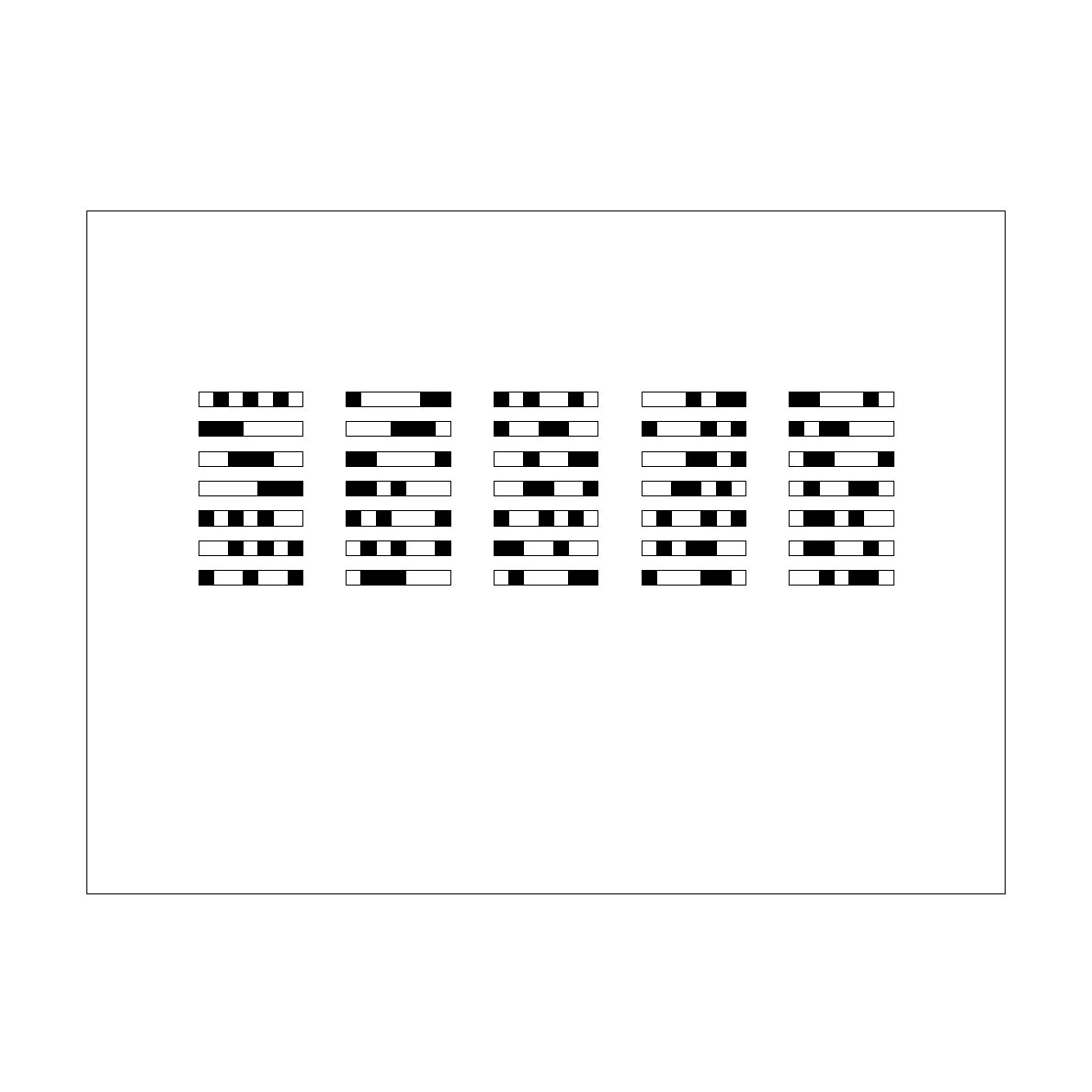
77 of 165
S
TANFORD
U
NIVERSITY
Is Beauty Objective?
Subsymmetry work in the ’60’s
78 of 165
S
TANFORD
U
NIVERSITY
Is Beauty Objective?
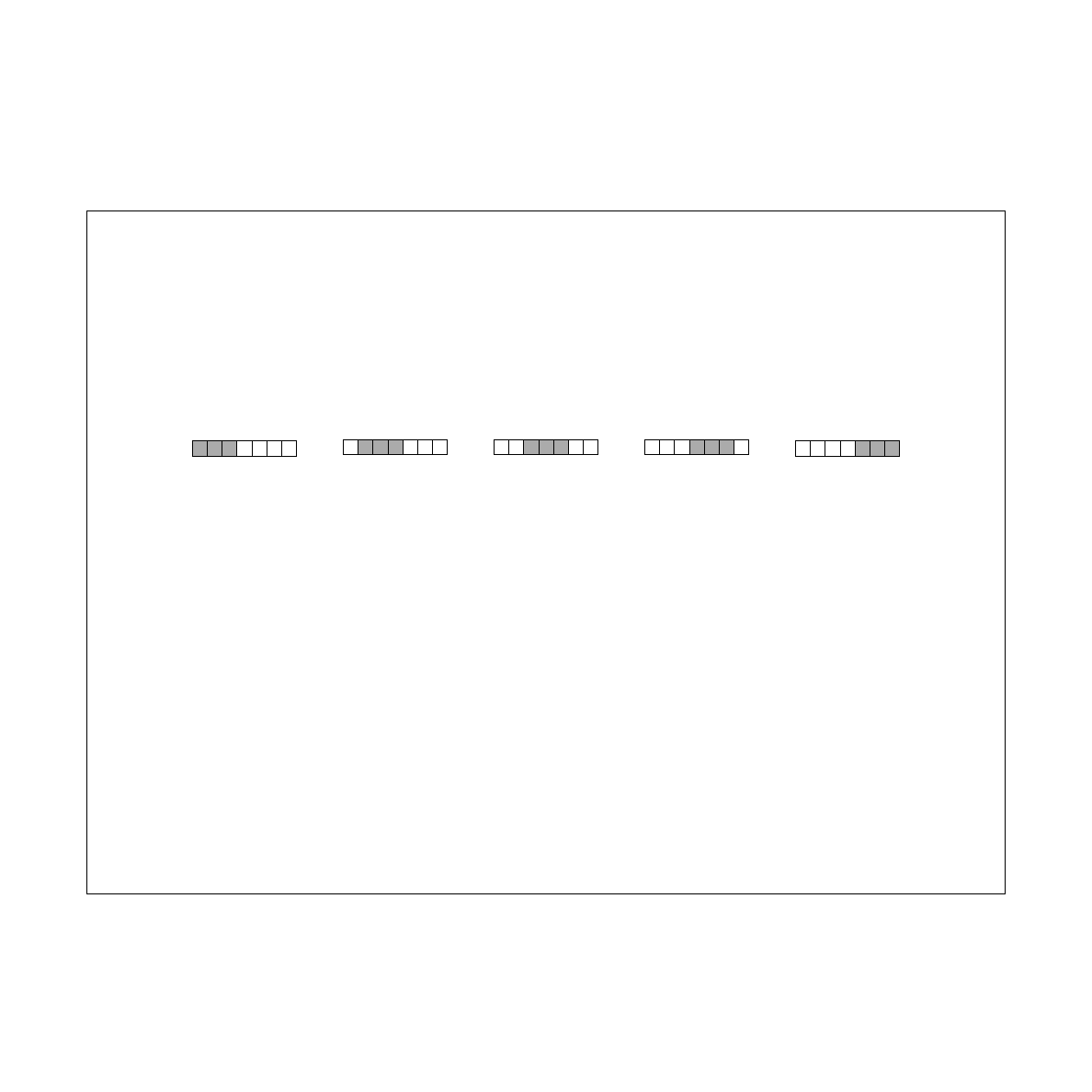
Subsymmetries of length 3:
79 of 165
S
TANFORD
U
NIVERSITY
Is Beauty Objective?
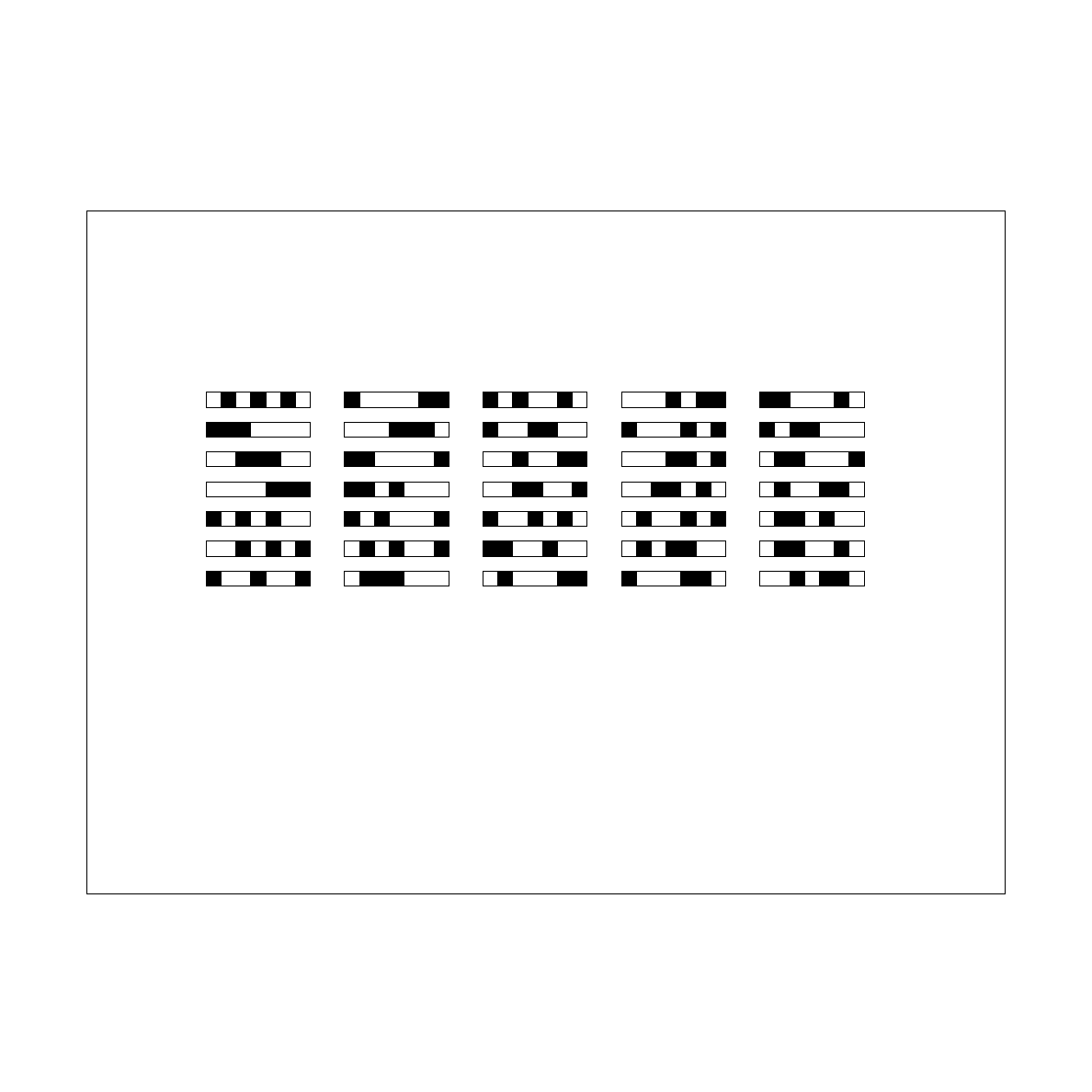
Counting subsymmetries:
8
7
8
6
9
9
7
9
7
7
7
6
6
7
6
6
6
6
6
6
6
6
6
6
5
6
5
6
6
6
6
5
5
5
5

80 of 165
S
TANFORD
U
NIVERSITY
Turkish Carpets
His friends mentioned to him that his carpets had some special something:
W
hen people started telling me this I began to look more carefully to
discover that there was indeed something I was attracted to in a half-
conscious way. It seemed to me that the rugs I tended to buy exuded or
captured an incredible amount of power which I did not understand but
which I obviously recognized.
In the course of buying so many rugs I made a number of discoveries. First, I
discovered that you could not tell if a rug had this special property—a
spiritual quality—until you had been with it for about a week.... So, as a
short cut, I began to be aware that there were certain geometrical properties
that were predictors of this spiritual property. In other words, I made the
shocking discovery that you could actually look at the rug in a sort of
superficial way and just see if it had certain geometrical properties, and if it
did, you could be almost certain that it had this spiritual property as well.

81 of 165
S
TANFORD
U
NIVERSITY
Small Scale
I
n short, the small structure, the detailed organization of matter—controls
the macroscopic level at a way that architects have hardly dreamed of.
But twentieth century art has been very bad at handling this level. We have
become used to a “conceptual” approach to building, in which like
cardboard, large superficial slabs of concrete, or glass, or painted sheetrock or
plywood create very abstract forms at the big level. But they have no soul,
because they have no fine structure at all....
It means, directly, that if we hope to make buildings in which the rooms and
building feel harmonious—we too, must make sure that the structure is
correct down to
⅛
th
of an inch. Any structure which is more gross, and which
leaves this last eighth of an inch, rough, or uncalculated, or inharmonious—
will inevitably be crude.

82 of 165
S
TANFORD
U
NIVERSITY
Detail Leads to Color
T
he geometric micro-organization which I have described leads directly to
the glowing color which we find in carpets. It is this achievement of color
which makes the carpet have the intense “being” character that leads us to
the soul.

83 of 165
S
TANFORD
U
NIVERSITY
A Carpet is a Picture of God
A
carpet is a picture of God. That is the essential fact, fundamental to the
people who produced the carpets, and fundamental to any proper
understanding of these carpets....
The Sufis, who wove most of these carpets, tried to reach union with God.
And, in doing it, in contemplating this God, the carpet actually tries, itself, to
be a picture of the all seeing everlasting stu
ff. We may also call it the infinite
domain or pearl-stu
ff.

84 of 165
S
TANFORD
U
NIVERSITY
Wholeness
The depth of feeling in a carpet is related to wholeness:
B
oth the animal-being which comes to life in a carpet, and the inner light of
its color, depend directly on the extent to which the carpet achieves wholeness
in its geometry. The greatest carpets—the ones which are most valuable,
most profound—are, quite simply, the carpets which achieve the greatest
degree of this wholeness within themselves.

85 of 165
S
TANFORD
U
NIVERSITY
Alexander’s Test of the Objective Quality of Beauty
I
f you had to choose one of these two carpets, as a picture of your own self,
then which one of the two carpets would you choose?...
In case you find it hard to ask the question, let me clarify by asking you to
choose the one which seems better able to represent your whole being, the
essence of yourself, good and bad, all that is human in you.

86 of 165
S
TANFORD
U
NIVERSITY
Alexander’s Test of the Objective Quality of Beauty
Waving Border Carpet
Flowered Carpet

87 of 165
S
TANFORD
U
NIVERSITY
Alexander’s Test of the Objective Quality of Beauty
I
believe that almost everyone, after careful thought, will choose the left-
hand example. Even though the two are of roughly equal importance, and of
comparable age, I believe most people will conclude that the left-hand one is
more profound: that one feels more calm looking at it; that one could look at
it, day after day, for more years, that it fills one more successfully, with a
calm and peaceful feeling. All this is what I mean by saying that, objectively,
the left-hand carpet is the greater—and the more whole, of the two.

88 of 165
S
TANFORD
U
NIVERSITY
Where Does this Quality Come From?
Centers:
A
s a first approximation, a “center” may be defined as a psychological entity
which is perceived as a whole, and which creates the feeling of a center, in the
visual field.
89 of 165
S
TANFORD
U
NIVERSITY
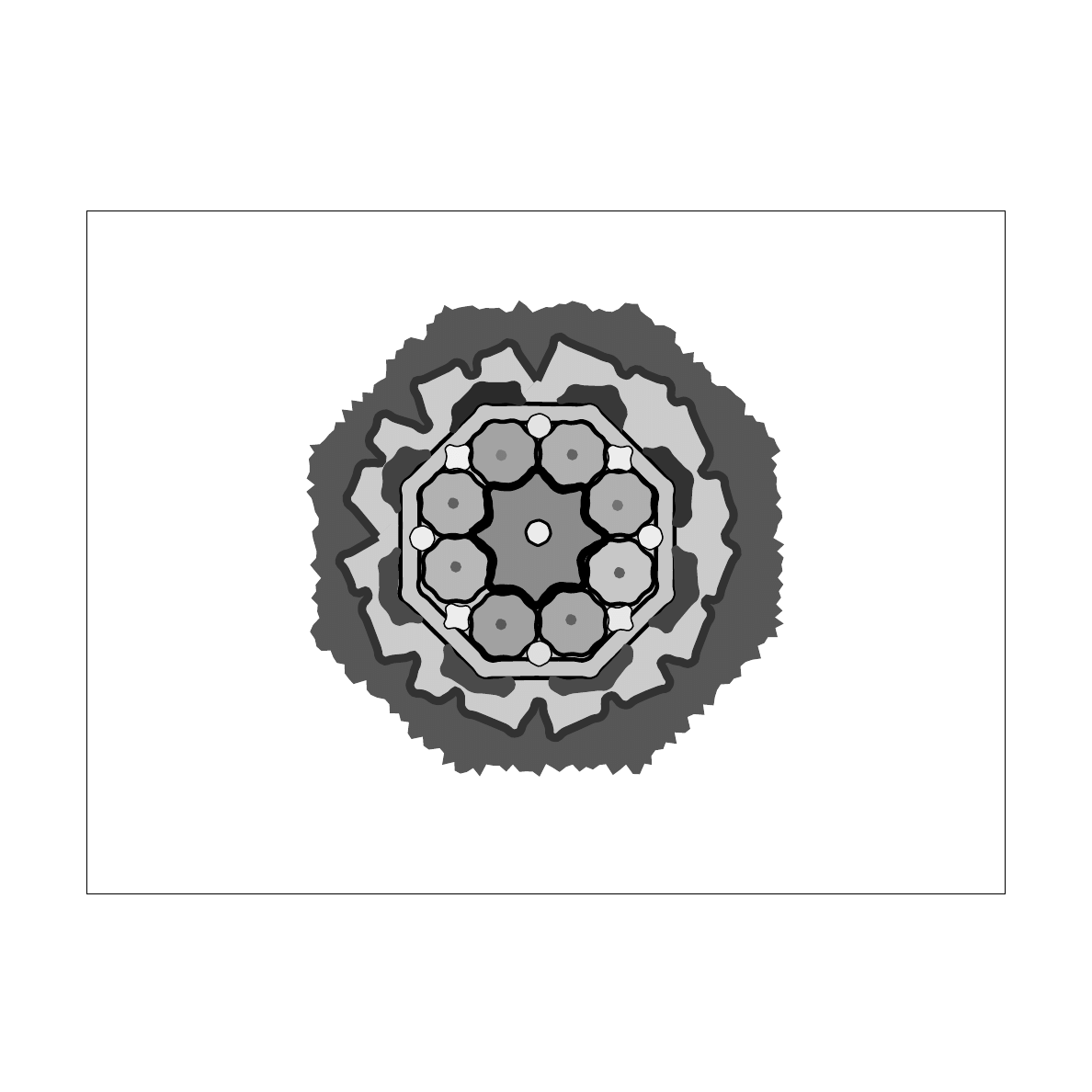
Centers in the Blossom Fragment

90 of 165
S
TANFORD
U
NIVERSITY
Centers in the Blossom Fragment:
N
otice that this figure has a strong center—in the very middle. But that’s
not the main point. Each of the lighter octagons and diamonds forms
another center, the darker dots at the centers of the smaller blossoms form
others. The asymmetrical black leaves are kinds of centers. The sharp
indentations of the outer press towards the middle, reinforcing the center.
[rpg]

91 of 165
S
TANFORD
U
NIVERSITY
Niche of the Coupled Column Prayer Rug

92 of 165
S
TANFORD
U
NIVERSITY
Multiplicity of Centers
T
he degree of wholeness which a carpet achieves is directly correlated to the
number of centers which it contains. The more centers it has in it, the more
powerful and deep its degree of wholeness.
93 of 165
S
TANFORD
U
NIVERSITY
Border of the Seljuk Prayer Carpet
H
ere both the dark design elements and the lighter background form centers
wherever there is a convex spot, wherever linear parts cross, and at bends.
There are perhaps a dozen or more centers here.
[rpg]

94 of 165
S
TANFORD
U
NIVERSITY
Local Symmetries
Centers are made up of local symmetries
1.
M
ost centers are symmetrical. This means they have at least one bilateral
symmetry.
2. Even when centers are asymmetrical, they are always composed of smaller
elements or centers which are symmetrical.
3. All centers are made of many internal local symmetries, which produce
smaller centers within the larger center (most of them not on the main axis
of the larger center), and have a very high internal density of local
symmetries. It is this property which gives them their power.

95 of 165
S
TANFORD
U
NIVERSITY
Symmetries?

96 of 165
S
TANFORD
U
NIVERSITY
Centers Recursively Defined
A
center will become distinct, and strong, only when it contains, within
itself, another center, also strong, and no less than half its own size.

97 of 165
S
TANFORD
U
NIVERSITY
Positive Space
98 of 165
S
TANFORD
U
NIVERSITY
Di
fferentiation of Centers
Central Star of the Star Ushak Rug

99 of 165
S
TANFORD
U
NIVERSITY
Central Star of the Star Ushak Rug
1.
T
he centers next to the figure—those created by the space around it—are
also very strong.
2. These strong centers are extremely di
fferent in character from the star
itself—thus the distinctness is achieved, in part, by the di
fferences between
the centers of the figure, and the centers of the ground.
3. There are very strong color di
fferences between field and ground.
4. The complex character of the boundary line seems, at least in this case, to
contribute to the distinctiveness of the form....
5. The hierarchy of levels of scale in the centers also help create the e
ffect, by
increasing the degree to which the form is perceived as a whole, entity, or
being in its own right.

100 of 165
S
TANFORD
U
NIVERSITY
Definition of Centers
E
very successful center is made of a center surrounded by a boundary which
is itself made of centers.
101 of 165
S
TANFORD
U
NIVERSITY
Two-Dimensional Strips in Konya Carpets

102 of 165
S
TANFORD
U
NIVERSITY
Design Process for Carpets
...the greatest structures, the greatest centers, are created not within the
framework of a standard pattern—no matter how dense the structures it
contains—but in a more spontaneous frame of mind, in which the centers
lead to other centers, and the structure evolves, almost of its own accord,
under completely autonomous or spontaneous circumstances. Under these
circumstances the design is not thought out, conceived—it springs into
existence, almost more spontaneously, during the process by which it is
made.
And, of course, this process corresponds more closely to the conditions under
which a carpet is actually woven—since working, row by row, knot by knot,
and having to create the design as it goes along, without ever seeing the
whole, until the carpet itself is actually finished—this condition, which
would seem to place such constraint and di
fficulty on the act of creation—is
in fact just that circumstance in which the spontaneous, unconscious
knowledge of the maker is most easily released from the domination of
thought—and thus allows itself most easily to create the deepest centers of
all.

103 of 165
S
TANFORD
U
NIVERSITY
The Emergence of Beings
I
now present the culmination of the argument. This hinges on an
extraordinary phenomenon—closely connected to the nature of wholeness—
and fundamental to the character of great Turkish carpet art. It may be
explained in a single sentence: As a carpet begins to be a center (and thus to
contain the densely packed structure of centers...), then, gradually, the
carpet as a whole also begins to take on the nature of “being.” We may also
say that it begins to be a picture of a human soul.
The subject is delicate, because it is not quite clear how to discuss it—not
even how to evaluate it—nor even in what field or category to place it. It
opens the door to something we can only call “spirit” and to the empirical
fact—a fact of psychology if of nothing else—that after all, when a carpet
does achieve some greatness, the greatness it achieves seems to lie in the
realm of the spirit, not merely in the realm of art.
104 of 165
S
TANFORD
U
NIVERSITY
The Being in the Seljuk Prayer Rug

105 of 165
S
TANFORD
U
NIVERSITY
Beginnings
I
see the beginnings of an attitude in which the structure may be
understood, concretely, and with a tough mind—not only with an emotional
heart. And I see the rebirth of an attitude about the world, perhaps based on
new views of ethics, truth, ecology, which will give us a proper ground-stu
ff
for the mental attitude from which these works can spring.
I do not believe that these works—the works of the 21
st
century—will
resemble the Turkish carpets in any literal sense. But I believe some form of
the same primitive force, the same knowledge of structure, and the same
desire to make a work in which the work carries and illuminates the spirit—
will be present.
I am almost certain, that in the 21
st
century, this ground-stu
ff will appear.

106 of 165
S
TANFORD
U
NIVERSITY
Is the Story Over?
I
n order to better understand how these problems might be solved in
software engineering, we might look at where Richard Gabriel’s examination
of my work stops short and at the remainder of my work, particularly, the
progress my colleagues and I have made since 1985. It is in this time period
that the goal of our thirty-year program has been achieved for the first time.
We have begun to make buildings which really do have the quality I sought
for all those years. It may seem immodest, to presuppose such success, but I
have been accurate, painfully accurate in my criticism of my own work, for
thirty years, so I must also be accurate about our success. This has come
about in large part because, since 1983, our group has worked as architects
and general contractors. Combining these two aspects of construction in a
single o
ffice, we have achieved what was impossible when one accepts the
split between design and construction. But it has come about, too, because
theoretical discoveries, considerably more potent than the pattern language
have supplemented the power of the patterns, and the way they work, and
their e
ffectiveness.

107 of 165
S
TANFORD
U
NIVERSITY
Is the Story Over?
T
he articles describe a number of my building projects that have indeed
succeeded; they are both large and small, and include both private and
public buildings. The first article gives concrete glimpses of material beauty,
achieved in our time. Here the life, dreamed about, experienced in ancient
buildings, has been arrived at by powerful new ways of unfolding space.
These methods have their origin in pattern languages, but rely on new ways
of creating order, in space, by methods that are more similar to biological
models, than they are to extant theories of construction. Above all, they reach
the life of buildings, by a continuous unfolding process in which structure
evolves almost continuously, under the criterion of emerging life, and does
not stop until life is actually achieved. The trick is, that this is accomplished
with finite means, and without back-tracking. The second article describes
the nature of the social process I believe is needed in the design-construction
business to get these results; it is a kind of Hippocratic oath for the future.
The second shows what kind of social and professional program may be
needed to change things e
ffectively in the world. If anything similar is needed
for computer programmers, it would be fascinating. Both these articles may
have a bearing on the way software people understand this material.

108 of 165
S
TANFORD
U
NIVERSITY
Is the Story Over?
A
full description of all these new developments, together with a radical new
theoretical underpinning, will appear shortly in The Nature of Order, the
book on geometry and process which has taken more than 20 years to write,
and is just now being published. The book, being published by Oxford, will
appear in three volumes: Book 1: The Phenomenon of Life, Book 2: The
Process of Creating Life, and Book 3: The Luminous Ground. These three
books show in copious detail, with illustrations from many recently-built
projects all over the world, how, precisely how, these profound results can be
achieved. What is perhaps surprising, is that in these books I have shown,
too, that a radical new cosmology is needed to achieve the right results. In
architecture, at least, the ideas of A Pattern Language cannot be applied
mechanically. Instead, these ideas—patterns—are hardly more than
glimpses of a much deeper level of structure, and is ultimately within this
deeper level of structure, that the origin of life occurs. The quality without a
name, first mentioned in The Timeless Way of Building, finally appears
explicitly, at this level of structure.

109 of 165
S
TANFORD
U
NIVERSITY
The Nature of Order
In the Winter of 1997 I obtained draft copies of the first two books of The Nature of
Order. In those books Alexander presents a new theory of how beauty arises from a
field of centers. The theory includes a process for creating beauty along with
numerous examples.

110 of 165
S
TANFORD
U
NIVERSITY
The Nature of Order
Our idea of matter is essentially governed by our idea of order. What matter
is is governed by our idea of how space can be arranged; and that in turn is
governed by our idea of how orderly arrangement in space creates matter. So
it is the nature of order which lies at the root of the whole thing. Hence the
title of this book.

111 of 165
S
TANFORD
U
NIVERSITY
What is Order?
What is order? We know that everything in the world around us is governed
by an immense orderliness. We experience order every time we take a walk.
The grass, the sky, the leaves on the trees, the flowing water in the river, the
windows in the houses along the street—all of it is immensely orderly. It is
this order which makes us gasp when we take our walk. It is the changing
arrangement of the sky, the clouds, the flowers, leaves, the faces round about
us, the order, the dazzling geometrical coherence, together with its meaning
in our minds. But this geometry which means so much, which makes us feel
the presence of order so clearly—we do not have a language for it.

112 of 165
S
TANFORD
U
NIVERSITY
Mechanistic Idea of Order
The mechanistic idea of order can be traced to Descartes, about 1640. His
idea was: If you want to know how something works, you can find out by
pretending that it is a machine. You completely isolate the thing you are
interested in from everything else, and you just say, suppose that thing,
whatever it happens to be—the rolling of a ball, the falling of an apple,
anything you want, in isolation—can you invent a mechanical model, a
little toy, a mental toy, which does this and this and this, and which has
certain rules, which will then replicate the behavior of that thing? It was
because of this kind of Cartesian thought that one was able to find out how
things work in the modern sense.

113 of 165
S
TANFORD
U
NIVERSITY
Two Devastating Results
The appearance of this 20
th
century mechanistic view had two tremendous
consequences, both devastating for artists. The first was that the “I” went out
of our world-picture. The picture of the world as a machine doesn’t have an
“I” in it. The “I”, what it means to be a person, the inner experience of being
a person, just isn’t part of this picture. Of course, it is still there in our
experience. But it isn’t part of the picture we have of how things are. So what
happens? How can you make something which has no “I” in it, when the
whole process of making anything comes from the “I”? The process of trying
to be an artist in a world which has no sensible notion of “I” and no natural
way that the personal inner life can be part of our picture of things—leaves
the art of building in a vacuum. You just cannot make sense of it.
The second devastating thing that happened with the onset of the 20
th
-
century mechanistic world-picture was that our understanding about value
went out of the world. The picture of the world we have from physics, because
it is built only out of mental machines, no longer has any definite feeling of
value in it: value has become sidelined as a matter of opinion, not intrinsic to
the nature of the world at all.
The real nature of this deep order hinges on a simple and fundamental
question: “What kinds of statements do we recognize as being true or false?”

114 of 165
S
TANFORD
U
NIVERSITY
Statements of Fact in the 20
th
Century
“One door frame is more harmonious and more in keeping with the life of
the room than another door frame.” “One door creates more life in the room
than another door.” “A pale yellow on this door has more life than a dark
grey.” Within the canon of 20
th
century science, these are not considered
statements which can be true or false. They are thought of as statements of
opinion. As a matter of principle within the 20
th
century mechanistic view,
statements of this kind may not be considered potentially true or false.

115 of 165
S
TANFORD
U
NIVERSITY
A New Concept of Life
So—my aim in this book is to create a scientific view of the world in which
this concept —that everything has its degree of life—is well defined. We can
then ask very precise questions about what must be done to create life in the
world—whether in a single room, even in a doorknob, or in a neighborhood,
or in a vast region . . . .

116 of 165
S
TANFORD
U
NIVERSITY
Life
I claim that this quality is not merely the basis for a distinction between
beautiful things and ugly things. It is something which is detectable as a
subtle distinction, in every corner of the world, as we walk about, in the most
ordinary places, during the most ordinary events. It is a quality which
changes from place to place and from moment to moment, and which marks,
in varying degrees, every moment, every event, every point in space.

117 of 165
S
TANFORD
U
NIVERSITY
Alexander’s Hypothesis
I state this by means of the following hypothesis: What we call “life” is a
general condition which exists to some degree or other in every part of
space: brick, stone, grass river, painting, building, daffodil, human being,
forest, city. And further: The key to this idea is that every part of space—
every connected region of space, small or large—has some degree of life, and
that this degree of life is well-defined, objectively existing and measurable.

118 of 165
S
TANFORD
U
NIVERSITY
Centers and Wholeness
There is a class of entities which I call centers appearing everywhere in space.
They appear where they do, as a result of the configuration which appears in
the world. Every part of the world, at every scale, has centers appearing in it.
The system of these centers pays a vital role in determining what happens in
the world. The system as a whole—that is to say, its pattern— is the thing
which we generally think of when we speak about something as a whole.
Although the system of centers is fluid, and changes from time to time as the
configuration and arrangement and conditions all change. Still, at any given
moment, these centers form a definite pattern. This pattern of all the centers
appearing in a given part of space—constitutes the wholeness of that part of
space. It is this structure, which is responsible for its degree of life.

119 of 165
S
TANFORD
U
NIVERSITY
Wholeness
The wholeness of a window is the coherence which binds the window
together—its sill, glass, the sloping reveals, its mullions, the landscape
outside, the light coming in, the soft light on the wall next to the window, the
chair drawn up toward the window’s light—and the arrangement of the
larger entities which makes them one: the space of the window seat which
binds reveals, seat, sill, and window plane; the view which combines chair,
outdoor landscape, and the glazing bars into a single entity; the light falling
on the window reveal and on the floor. In each case the wholeness is defined
by the major wholes and the way these wholes are arranged to form still
larger wholes.

120 of 165
S
TANFORD
U
NIVERSITY
Centers
<Centers> are those particular identified sets, or systems, which appear
within the larger whole as distinct and noticeable parts. They appear because
they have noticeable distinctness, which makes them separate out from their
surroundings and makes them cohere, and it is from the arrangements of
these coherent parts that other coherent parts appear.

121 of 165
S
TANFORD
U
NIVERSITY
Centers
The crux of the matter is this: A center is a kind of entity which can be
defined only in terms of other centers. Centers are—and can only be—made
of other centers.

122 of 165
S
TANFORD
U
NIVERSITY
Centers
1.
Centers arise in space.
2.
Each center is created by configurations of other centers.
3.
Each center has a certain life or intensity. . . . This life or intensity is not
inherent in the center by itself, but is a function of the whole
configuration in which the center occurs.
4.
The life or intensity of one center gets increased or decreased according
to the position and intensity of other nearby centers. Above all, centers
become most intense when the centers which they are made of help each
other.
5.
The centers are the fundamental elements of the wholeness, and the
degree of wholeness or life, of any given part of the poem depends
entirely on the presence and structure of the centers there.
123 of 165
S
TANFORD
U
NIVERSITY
Centers

124 of 165
S
TANFORD
U
NIVERSITY
Fifteen Properties
Over a 20+ year period, Alexander examined objects for life and wholeness. He
identified 15 structural features which appear again and again in things which have
life:
•
Levels of Scale
•
Strong Centers
•
Boundaries
•
Repetition
•
Positive Space
•
Good Shape
•
Local Symmetries
•
Deep Interlock and Ambiguity
•
Contrast
•
Gradients
•
Roughness
•
Echoes
•
The Void
•
Simplicity and Inner Calm
•
Not-Separateness

125 of 165
S
TANFORD
U
NIVERSITY
Levels of Scale
•
Centers of all sizes
•
Centers of all sizes support or help each other
•
Small jumps (2:1 to 4:1 is best)

126 of 165
S
TANFORD
U
NIVERSITY
Strong Centers
•
Not just centers but strong centers
•
A strong center is one toward which other centers point
. . . the eye rests on it, one keeps coming back to it, going away from it,
coming back to it. In short, the entire design sets up a vector field so that
every point has the property that from that point the center is in a certain
direction . . . .

127 of 165
S
TANFORD
U
NIVERSITY
Boundaries
•
A boundary separates a center from other centers
•
A boundary focuses attention on the center
•
A boundary is itself made of centers
128 of 165
S
TANFORD
U
NIVERSITY
Alternating Repetition
•
Strong centers repeated with alternating centers
•
Not simple repeating
•
Pattern with variation

129 of 165
S
TANFORD
U
NIVERSITY
Positive Space
•
Positive space is the characteristic of a center that moves outward from itself,
seemingly oozing life rather than collapsing on itself
We may see it like ripening corn, each kernel swelling until it meets the
others, each one having its own positive shape caused by its growth as a cell
from the inside.
In poor design, sometimes, in order to give an entity good shape, the
background space where it lies has left-over shape, or no shape at all. It is
merely left over.
130 of 165
S
TANFORD
U
NIVERSITY
Good Shape
•
Good shape is the characteristic of a center that it is somehow beautiful by itself
•
A center has good shape when it is reinforced by other centers of good shape
•
A center has good shape when it is made of centers of good shape
131 of 165
S
TANFORD
U
NIVERSITY
Local Symmetries
Wherever there is a local symmetry, there tends to be a center.
Living things, though often symmetrical, rarely have perfect symmetry.
Indeed, perfect symmetry is often a mark of death in things rather than life.
Observe, first, that overall symmetry in a system, by itself, is not a strong
source of life or wholeness.
In general, a large symmetry of the simplified neoclassicist type rarely
contributes to the life of a thing, because in any complex whole in the world,
there are nearly always complex, asymmetrical forces at work—matters of
location, and context, and function—which require that symmetry be
broken.

132 of 165
S
TANFORD
U
NIVERSITY
Deep Interlock and Ambiguity
•
Centers are sometimes “hooked” into their surroundings
•
It is sometimes difficult to disentangle a center from its surroundings
•
. . . through actual interlock
•
. . . through an ambiguous zone which belongs both to the center and to its
surroundings
•
A Go board in mid-game
133 of 165
S
TANFORD
U
NIVERSITY
Contrast
Another feature I have found repeatedly in works of art which have great life
is that they often have surprisingly intense contrast in them—far more than
one remembers, more than one imagines would be helpful or even possible to
sustain.

134 of 165
S
TANFORD
U
NIVERSITY
Gradients
You have noticed I am sure, as I have, that almost anything which has real
life has a certain softness. Qualities vary, slowly, subtly, gradually, across the
extent of each thing. Gradients occur. One quality changes slowly across
space, and becomes another.
Almost always the strengthened field-like character of the center is caused, in
part, by the fact that an organization of smaller centers creates gradients
which “point to” some new and larger virtual center. Sometimes the arrows
and gradients set up in the field give the center its primary strength.

135 of 165
S
TANFORD
U
NIVERSITY
Roughness
Things which have real life always have a certain ease, a morphological
roughness. It is not a residue of technically inferior culture, or the result of
handcraft or inaccuracy. It is an essential structural feature which they have
and without which a things cannot be whole.

136 of 165
S
TANFORD
U
NIVERSITY
Roughness
Often the border of an ancient carpet is “irregular” where it goes round the
corner—that is, the design breaks, the corner seems “patched together.” This
does not happen through carelessness or inaccuracy. On the contrary, it
happens because the weaver is paying close attention to the positive and
negative, to the alternating repetition of the border, to the good shape of each
compartment of the wave and each bit of open space—and makes an effort
all along the border to be sure these are “just right.” To keep all of them just
right along the length of the border, some loose and makeshift composition
must be done at the corner.
If the weaver wanted instead to calculate or plot out a so-called “perfect”
solution to the corner, she would then have to abandon her constant paying
attention to the right size, right shape, right positive-negative of the border
elements, because these would all be determined mechanically by outside
considerations—i.e., by the grid of the border. The corner solution would
then dominate the design in a way which would destroy the weaver’s ability
to do what is just right at each point. The life of the design would be
destroyed.
<continued>

137 of 165
S
TANFORD
U
NIVERSITY
Roughness
All my examples show how the seemingly rough solution—which seems
superficially inaccurate—is in fact more precise, not less so, because it comes
about as a result of paying attention to what matters most, and letting go of
what matters less. As the power of this completed carpet clearly shows, a
perfect corner does not matter nearly as much as the correct balance and
positive space in the border. The seemingly rough arrangement is more
precise because it comes from a much more careful guarding of the
essential centers in the design.
In a man-made thing, another essential aspect of the property of roughness,
is its abandon. Roughness can never be consciously or deliberately created.
Then it is merely contrived. To make a thing live, its roughness must be the
product of egolessness, the product of no will.

138 of 165
S
TANFORD
U
NIVERSITY
Echoes
When Echoes is present, the various smaller elements and centers, from
which the larger centers are made, are all members of the same family, they
contain echoes of one another, there are deep internal similarities between
them which tie them together to form a single unity.

139 of 165
S
TANFORD
U
NIVERSITY
The Void
In the most profound centers which have perfect wholeness, there is at the
heart a void, which is like water, in infinite depth—surrounded by and
contrasted with the clutter of the stuff and fabric all around it.
•
The altar
•
The empty space at the crossing of a church or mosque
The need for the void arises in all centers. A cup or a bowl rests, as a living
center, on the quiet of the space in the bowl itself, its stillness.
140 of 165
S
TANFORD
U
NIVERSITY
Simplicity and Inner Calm
It has to do with a certain slowness, majesty, quietness, which I think of as
inner calm.
This quality comes about when everything unnecessary is removed. All
centers that are note actively supporting other centers are stripped out, cut
out, excised. What is left, when boiled away, is the structure in a state of
inner calm.
It is essential that the great beauty and intricacy of ornament go only just far
enough to bring this calm into being, and not so far that it destroys it.

141 of 165
S
TANFORD
U
NIVERSITY
Simplicity and Inner Calm
Shaker furniture:
•
It uses very simple shapes (the actual pieces of wood have simple shapes
and are usually close to the form in which they were first milled).
•
The ornament is very sparse, but does occasionally exist to offset the
classical line, with an off curve here or there, but less than in other
American pieces.
•
The proportions are unusual. Pieces are unusually long, unusually high,
elongated, tall, broad, etc. They are marked by their proportions as
slightly unusual or remarkable—even startling. Often this has a good
reason in it (i.e. use all the space available, etc.).
•
Many of the pieces are strange in some specific way which marks them as
indeed unusual. For instance, chest with drawers opening from different
sides; two beds sliding under a bigger bed; table with drawers hanging on
either side of pedestal; peg boards. Always these “strange” configurations
have good reasons and come from an uncompromising steadfastness to
function, following the thing to its logical conclusion, refusing to be
deterred by convention. An extreme freedom.
<continued>

142 of 165
S
TANFORD
U
NIVERSITY
Simplicity and Inner Calm
•
Pieces were colored—beautiful colors, most often worked into the wood
(not paint), and coded, yellow, blue, red, green, etc., each for its specific
type of furniture. Yet they were always severe. What this means is the
essence, but very hard to pin down.
•
Finally, everything is still, silent.

143 of 165
S
TANFORD
U
NIVERSITY
Not Separateness
What Not Separateness means, quite simply, is that we experience a living
whole as being at one with the world, and not separate from it—according to
its degree of wholeness.
This is, finally, perhaps the most important property of all. In my
experiments with shapes and buildings, I have discovered that the other
fourteen ways in which centers come to life, will make a center which is
compact, beautiful, determined, subtle—but, without this fifteenth property,
are still often somehow strangely separate, cut off from what lies around it,
lonely, awkward in its loneliness, too brittle, too sharp, perhaps too well
delineated—above all too egocentric, because it shouts “Look at me, look at
me, look how beautiful I am.”

144 of 165
S
TANFORD
U
NIVERSITY
An Empirical Test for Comparing the Degree of Life of
Different Centers (Mirror of the Self)
•
Which of the two seems to generate a greater feeling of life in me?
•
Which of the two makes me more aware of my own life?
•
Which of the two makes me feel a greater wholesomeness in myself?
•
Which of the two is more like my best self, or which of the two seems more
like a picture of the self?
•
Which of the two makes me feel devotion, or inspires devotion in me?
•
Which of the two makes me more aware of God, or makes me feel close to
God?
•
How do I observe the rising and falling of my humanity: Which of the two
causes a greater rising of my humanity?
•
Which of the two has more feeling in it or, more accurately: Which of the
two makes me experience a deeper feeling of unity in myself?

145 of 165
S
TANFORD
U
NIVERSITY
Unfolding
•
In nature, order unfolds smoothly
•
In general, order emerges from a process which is integral to the thing being
created
a painting emerges through a seemingly random process of adding and altering
paint
a wood carving emerges through a seemingly random process of removing and
smoothing wood

146 of 165
S
TANFORD
U
NIVERSITY
Structure-Preserving Transformations
A structure-preserving transformation strengthens existing centers by doing one or
several of the following:
•
adding new centers that reinforce existing ones
•
strengthening or developing one or several existing centers into a more complex,
stronger center
•
removing weak or dysfunctional centers
The process, in general, adds one or several of the 15 characteristics discussed earlier

147 of 165
S
TANFORD
U
NIVERSITY
Image-based Architecture and Building
Modern (and post-modern) architecture is based on coming up with a picture or
image and then constructing it, usually out of components and modular parts

148 of 165
S
TANFORD
U
NIVERSITY
Alexander’s Definition of Architecture
Architecture is just that stuff—material organization—which has unfolded.

149 of 165
S
TANFORD
U
NIVERSITY
Four Conditions Necessary for Unfolding to Happen
•
Step-by-Step Adaptation: The process, whether large or small, must be
step-by-step, and gradual. Each part of the environment, at every stage of
its planning, conception, and construction, must evolve, be developed
step-by-step. The form must be created step-by-step, each step being an
adaptation in which things get fitted more and more closely to a
harmonious whole.
•
Feedback: To guide the adaptation, at each step in the process there must
be a continuous and relatively immediate feedback about whether what
has been done is a living structure in sufficient degree. In human society
this requires as a minimum a common shared understanding of “life”.
The process is then capable of adapting to this feedback, instantaneously,
so that what has life can be kept and what doesn’t have life will be
rejected—with agreement—all while the process is going on.
<continued>

150 of 165
S
TANFORD
U
NIVERSITY
Four Conditions Necessary for Unfolding to Happen
•
Unpredictability: To make the adaptation successful, the process must be
relaxed about the unpredictable character of where it goes. Unfolding
cannot occur except in a framework which allows the whole to go where it
must go. The dire modern passion for planning and advance control must
be replaced by an attitude which recognizes that openness to the future,
and lack of predictability, is a condition for success. It must be alright for
the thing to become whatever it becomes, under the influence of
adaptation and feedback, even though one does not know, in detail, what
that thing is going to be.
•
Awareness of the Whole: Fourth, and this is the most difficult for us,
there must be an ever-present awareness of the whole, throughout the
process. For the adaptation to allow wholes to unfold successfully, the
unfolding must take place within a framework of true awareness of the
whole.

151 of 165
S
TANFORD
U
NIVERSITY
Fundamental Process (1–5)
1.
At every step of the process—whether conceiving, designing, making,
maintaining, or repairing—we must always be concerned with the
whole within which we are making anything. We look at this wholeness,
absorb it, try to feel its deep structure.
2.
We ask which kind of thing we can do next that will do the most to give
this wholeness the most positive increase of life.
3.
As we ask this question, we necessarily direct ourselves to centers, the
units of energy within the whole, and ask which one center could be
created (or extended or intensified or even pruned) that will most
increase the life of the whole.
4.
As we work to enhance this new living center, we do it in such a way as
also to create or intensify (by the same action) the life of some larger
center.
5.
Simultaneously we also make at least one center of the same size (next
to the one we are concentrating on), and one or more smaller centers—
increasing their life too.

152 of 165
S
TANFORD
U
NIVERSITY
Fundamental Process (6–8)
6.
We check to see if what we have done has truly increased the life and
feeling of the whole. If the feeling of the whole has not been deepened by
the step we have just taken, we wipe it out. Otherwise we go on.
7.
We then repeat the entire process, starting at step 1 again, with the
newly modified whole.
8.
We stop altogether when there is no further step we can take that
intensifies the feeling of the whole.

153 of 165
S
TANFORD
U
NIVERSITY
What of Patterns and Pattern Languages?
•
The Fundamental Process needs some idea of what is being built:
e.g. for a fireplace you need a firebox, a fireback, splayed sides, a hearth, a
throat, a smoke shelf, and a chimney
•
What you are building has a cultural component because of how cultures have
come to live:
tea for an Englishman involves sitting on chairs
tea for an Indian involves sitting on the floor
•
Therefore one needs a set of generic centers
•
These generic centers form the pattern language for the project
The essence of it is that the generic centers must unfold from the culture.

154 of 165
S
TANFORD
U
NIVERSITY
What of Patterns and Pattern Languages?
There was always one great difficulty with the theory of pattern languages,
and with the languages my colleagues and I, and others, published. Where
did the patterns come from?
Much of our early work implicitly made use of the idea that good patterns
were to be derived, somehow, from existing culture thus ensuring a relation
to the subtleties of culture variation, and preserving things that were good
and important, which had been swept aside in the onrush of techno-
civilization. But there was always hanging over this process, a sword of
Damocles. If—as a procedure—one takes the patterns from existing culture,
then one merely reiterates what is being built. That is not necessarily good.
The unfolding process takes existing cultural patterns and moves the culture
forward.

155 of 165
S
TANFORD
U
NIVERSITY
Sequences
A sequence is the ordering of an unfolding. It is a series of statements that describe
the thing to be created.

156 of 165
S
TANFORD
U
NIVERSITY
Japanese Tea House Sequence
1.
SECLUDED TEA HOUSE. The tea house is in a secluded garden.
2.
GARDEN WALL. Some kind of wall or barrier surrounds the entire
garden. From inside the garden the public world is not visible, and
hardly audible. If there is a family dwelling associated with the tea
house, the dwelling may be part of this wall.
3.
INNER AND OUTER GARDEN. A low barrier divides the garden into
two parts: an outer garden and an inner garden. The tea house is in the
inner garden.
4.
GARDEN PATH. There is a slightly meandering path running through
the outer garden, past the low barrier, and through the inner garden to
the tea house.
5.
STONE PATH. The meandering garden path is composed of mossy
stepping stones, and is loosely bordered by trees and bushes.
6.
OUTER GATE. Where the garden path meets the edge of the outer
garden there is a gate, connecting the outer garden to the public walk
The gate is opaque. There are no direct view of the public path into the
outer garden.

157 of 165
S
TANFORD
U
NIVERSITY
Japanese Tea House Sequence
7.
MIDDLE GATE. Where the garden path crosses the low barrier,
between the inner garden and the outer garden, there is a gate called the
middle gate. The middle gate is small with a roof or low door on hinges.
8.
BRANCHING PATHS. In the outer garden the garden path may
branch in several places along its length. Any given branching path may
or may not lead eventually to the tea house.
9.
GUIDE STONES. Where the path branches there are guide stones set
near the stepping stones. The host closes off some branches by placing a
guide stone on the stepping stone at the branching point. Before the
guest arrives on a given day there is only one path open through the
garden to the tea house.
10. WAITING BENCH. In the outer garden, near the middle gate, there is a
waiting bench. The bench is roughly 7 feet long, and may be covered.
11. WAITING NEAR HOUSE. If there is a family dwelling associated with
the tea house, then the waiting bench is usually near the dwelling. If so,
the waiting area may be connected with the physical structure of the
dwelling.
12. TEA HOUSE APPROACH. The length of the path from the middle gate
and waiting bench to the tea house, is rarely more than 20 feet.

158 of 165
S
TANFORD
U
NIVERSITY
Japanese Tea House Sequence
13. STONE WATER BASIN. Somewhere along this 20 foot path through
the inner garden, between the middle gate and tea house, there is a
stone water basin and running water.
14. RECESS SHELTER If the tea house is to accommodate long meal
sessions, then there is a covered bench a few steps away from the tea
house where people can sit and view the garden.
15. KNEELING-IN ENTRANCE. Where the stone path meets the tea
house there is a window like entrance—a small opening in the face of
the tea house. The entrance is roughly 2 feet high and 2 feet wide, and 2
feet above the path. Thus a man entering must stoop down and kneel in.
16. TEA HOUSE HAS THREE PARTS. The tea house is made up of three
parts in plan: the tea-room proper, the tokonoma and an anteroom. The
tea-room is the largest part—it is where the guests gather and the tea
ritual occurs. The anteroom is a tiny area off the tea room where
equipment is kept and some preparation is made. The tokonoma is a
shallow alcove off the tea-room where objects, art, and flowers are
displayed.
17. SIZE OF THE TEA HOUSE. The floor area of the tea room is limited to
four sizes: 1.5 mat, 2 mat, 3 mat and 4.5 mat (a mat is roughly 6'x 3').

159 of 165
S
TANFORD
U
NIVERSITY
Japanese Tea House Sequence
18. 4.5 MAT CONFIGURATION. In the 4.5 mat tea room, the half mat is
placed in the center, and the 4 mats laid evenly around it in a spiral.
19. CENTRAL HEARTH. A small square hearth is fitted into the floor at
approximately the center of the tea room. Guests sit on pillows around
the heart.
20. HOST’S ENTRANCE. The host enters the tea house through a sliding
screen door. The hosts entrance is always in a different wall than the
kneeling-in entrance.
21. CEILING HEIGHT. The tea room has a roughly 6.5 foot ceiling in it.
22. DIM LIGHTING. There are very few windows in the tea house walls.
Where there are windows they are high, near the ceiling—and placed to
give a dim indirect light throughout the tea house.
23. TOKONOMA. The tokonoma is an alcove off the tea room, which is
visible on entering the tea house. The size of the tokonoma varies with
the size of the tea room. In the smallest tea-house the tokonoma is
simply a curve in the wall.
24. TOKONOMA PILLAR. The tokonoma contains a small pillar on which
an object, a work of art, or a vase of flowers may be placed. The pillar is
made of wood—a kind of wood not used in the rest of the tea house.

160 of 165
S
TANFORD
U
NIVERSITY
Sequences
A generative sequence not only guarantees feasibility and the emergence of a
coherent form. It also provides the conditions in which structure-preserving
transformations can occur.
For instance, in the tea house. if I try to locate the waiting bench too early, at
a moment when I do not yet have the location of the middle barrier, the
context for placing it does not yet exist. But more important, it is also not
possible, in this case, for me to use the waiting bench and its location to
preserve the structure of the rest. For the waiting bench to preserve the
structure of the garden, I have to put it in at a time when the garden has
developed. I can make the structure-preserving process work only if things
come at the right time, in the right order.

161 of 165
S
TANFORD
U
NIVERSITY
Sequences
If there is no sequence, the fundamental process guarantees you’ll find a good
sequence, but it might take more work.

162 of 165
S
TANFORD
U
NIVERSITY
Design and Construction at the Same Time
If we look at any one sequence of unfolding, we may think of it as a long
sequence of experiments to find out which centers should, most
appropriately, unfold next, and in what way they will unfold best, to do the
most, for the emerging wholeness. As far as possible, we do this with real life
experiments, full size simulations so that one by one we check the various
features. Whenever we cannot do real life size experiments, we do the most
realistic simulation we can to check experimentally whatever aspect we are
trying to fix.
As the features get fixed one by one, the whole takes its form. This is the
practical way in which the unfolding happens.
The experimental nature of this activity is vital. I find that while I am
working, I am often wrong ten times for every one time I am right. This is
why the experiments are so essential. You cannot tell what next step has the
biggest effect on the life and wholeness of the larger whole, without trying
things out. This trying out is the human equivalent of the feedback which
nature accomplishes in even smaller increments during every physical
process. And of course, because you are finding out, you must be wrong some
of the time, even much of the time. In many cases, it is by being wrong, by
trying things out and seeing how they do not work, that you first get a
realistic sense of how to do it differently, and right.
This is always so, and is fundamental to all success.

163 of 165
S
TANFORD
U
NIVERSITY
Deep Feeling
In the end, it is the quality that a building can generate deep feelings in people that
matters most.
People are able to judge the whole, to see and experience the whole, by paying
attention to the question: Is it increasing my own wholeness? Is it increasing
the feeling I experience when in contact with the thing? Is it becoming like a
mirror of the self? Is it becoming like the soul? More succinctly, the extent to
which a thing is coming to life, can be steered by the extent to which it has
deep feeling.
. . .
Being guided by the whole, and being guided by feeling are thus
synonymous. Real feeling, true feeling, is the experience of the whole.
This principle may be formulated as an essential rule: In any building
process, the way forward, the next step which is most structure
preserving, is that step which intensifies the feeling most.
Feeling gives us our access to structure preserving transformations. It is the
process of intensifying deep feeling in the whole which is thus the key of the
unfolding process—whenever it is in human hands.

164 of 165
S
TANFORD
U
NIVERSITY
Deep Feeling
Obviously, the key issue in all these statements is the precise definition of the
word “feeling,” and what we mean, exactly, by saying that a structure feels
right. It requires a holistic, non-emotional approach to feeling, where we ask
ourselves to what extent a given structure feels right, in the sense of “possesses
life,” “possesses unity.”
This almost rarefied and abstract feeling, going to the highest level, is
something very different from rank emotionalism: and it is this which I
claim correlates correctly, and universally, with functional rightness.
It is not an artist expressing or recording feeling or emotion in a work of art—it is
making a building (or work of art) generate feeling in people (in me).

165 of 165
S
TANFORD
U
NIVERSITY
Conclusion?
Alexander is trying to develop software which will embody the ideas of wholeness,
unfolding, centers, structure-preserving transformations, and sequences. In his 1996
OOPSLA keynote address, he called on the computing community to come to the aid
of his anti-Cartesian crusade.
What do you think?
Wyszukiwarka
Podobne podstrony:
czytanie - koło II, 7, The Search for
The search for artificial intelligence, nkjo.leg.pobrane materiały, Czytanie
The Search For Happiness
0813124468 University Press of Kentucky Peace Out of Reach Middle Eastern Travels and the Search for
The Search for the Manchurian Candidate The CIA and Mind Control by John Marks
Odyssey The Search for Ulysses
Terry OReilly The Search For The Soaring Hawk
Imagining the Anglo Saxon Past The Search for Anglo Saxon Paganism and Anglo Saxon Trial by Jury ed
Science Religion and the Search for Extraterrestrial Intelligence 2
John Marks The Search for the Manchurian Candidate, The CIA and Mind Control (1991)
Science Religion and the Search for Extraterrestrial Intelligence
How?n We Help the Homeless and Should We Searching for a
BIBLIOGRAPHY #5 Cyril of Alexandria & the Christological Controversy
Searching for the Neuropathology of Schizophrenia Neuroimaging Strategies and Findings
Search for the Lost Jedi Ryder Windham
In search for the best chocoloate related recipes
Searching for the Traces of Aleksandrinke Slovene Migrant Women in Egypt Dasa Koprivec
więcej podobnych podstron