1
Antonio Fruttaldo
PhD student in ESP
antonio.fruttaldo@unina.it
Department of Political Science
University of Naples ‘Federico II’
An Introduction to Cohesion and Coherence
1. What is a text?
In linguistics the word ‘text’ is used to refer to “any passage, spoken or
written, of whatever length, that does form a unified whole” (Halliday &
Hasan 1976: 1).
But, does this mean that every specimen of our own language constitutes
a text? Thus, more appropriately, we can define a text as “a communicative
occurrence which meets […] the standards of textuality” (de Beaugrande &
Dressler 1981: 3). Three main standards of textuality can be distinguished:
a) Cohesion, which “[...] concerns the ways in which the components of
the surface text, i.e. the actual words we hear or see, are mutually
connected within a sequence” (de Beaugrande & Dressler 1981: 3).
b) Coherence “[...] concerns the ways in which the components of the
textual world, i.e. the configuration of concepts and relations which
underlie the surface text, are mutually accessible and relevant” (de
Beaugrande & Dressler 1981: 3).
c) Intentionality, that is to say, “[...] the text producer’s attitude that the
set of occurrences should constitute a cohesive and coherent text
instrumental in fulfilling the producer’s intentions, e.g., to distribute
knowledge or to attain a goal specified in a plan” (de Beaugrande &
Dressler 1981: 3).
2. Cohesion
Cohesion can be defined as “a set of lexicogrammatical systems that have
evolved specifically as a resource for making it possible to transcend the
boundaries of the clause” (Halliday 2014: 603).
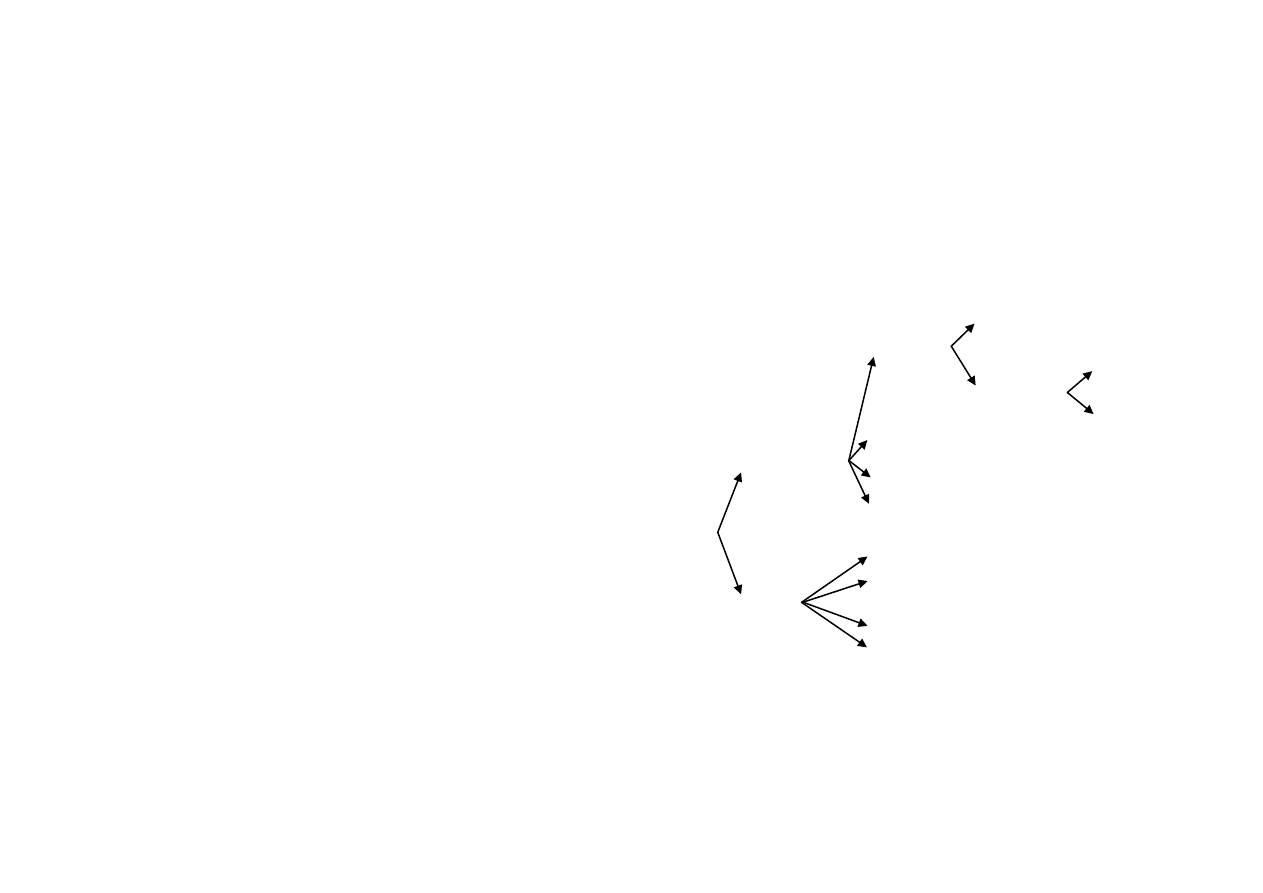
EXOPHORIC
REFERENCE
CATAPHORIC
ENDOPHORIC
ANAPHORIC
ELLIPSIS
GRAMMATICAL
SUBSTITUTION
CONJUNCTION
COHESION
REPETITION
SYNONYMS
LEXICAL
SUPERORDINATES
GENERAL WORDS
2.1 Grammatical cohesion
2.1.1 Reference
References are resources to refer to a participant or to a circumstantial
element whose identity is recoverable. Hence, reference is the act of “using

2
referring expressions to refer to referents in the context” (Cutting 2002: 9).
Speakers use linguistic forms, known as referring expressions, to enable
hearers to identify the entity being referred to, which is in turn known as the
referent.
We can distinguish between two main type of references:
- exophoric reference, that is, when there is no previous mention of the
referent in the text and it is dependent on the context outside the text
for its interpretation:
(1) Nearly 2½ years after Fukushima suffered a meltdown in the wake of a
massive tsunami, the Tokyo Electric Power Co. (TEPCO) is struggling to
contain new leaks of highly radioactive water flowing from the plant.
(The Fallout Grows At Fukushima, The Time: September 16, 2013)
- endophoric reference, on the other hand, refers to referents which can
be found in the same text. Endophora are generally used to avoid
unnecessary repetition. We can distinguish between two types of
endophoric reference:
a) anaphoric reference → it links back to something that went before
in the text:
(2) On Sept. 3 the Japanese government announced that it would take over the
cleanup and spend nearly $500 million on an underground ice wall and
other measures that would hopefully halt the leaks of radioactive water.
(The Fallout Grows At Fukushima, The Time: September 16, 2013)
b) cataphoric reference → it links forward to a referent in the text that
follows:
(3) In his first state-of-the-nation address, on Sept. 2, the Mexican President
said this could be the year the country “dared to take off.”
(How Enrique Peña Nieto Wants to Transform Mexico, The Time:
September 16, 2013)
2.1.2 Substitution
Substitution holds the text together by avoiding repletion. It tends to be
endophoric, that is, the noun phrase being substituted is usually in the text:
(4) Ready, Set, Acquire How big companies build their future by buying little ones
(The Time: September 16, 2013; bold in the original text)
2.1.3 Ellipsis
Also in the case of ellipsis, it is mainly used to avoid repetition and it
depends on the hearer or reader’s being able to retrieve the missing words
from the surrounding context:
(5) As a result, the U.S. might be inching into a complex civil war, all the while
denying that it is doing so.
(Words Have Consequences, The Time: September 16, 2013)
2.1.4 Conjunction
Conjunctions are resources which connect messages via addition,
comparison, temporality and causality:

3
(6) The decision to have a child or not is a private one, but it takes place, in America at
least, in a culture that often equates womanhood with motherhood.
(None Is Enough, The Time: September 16, 2013)
2.2 Lexical Cohesion
2.2.1 Repetition
Repetition is simply repeated words or word-phrases, threading through the
text. While substitution and ellipsis avoid repetition, lexical repetition
exploits it for stylistic effect:
(7) Russia is what Russia does.
(The World According To Vladimir Putin, The Time: September 16, 2013)
2.2.2 Synonyms
Instead of repeating the exact same word, a speaker or a writer can use
another word which means the same or almost the same. Again, this lexical
strategy allows language users to avoid repetition:
(8) His [Bashar Assad’s] military is destroying Syrian cities held by antiregime rebels
[…] and his forces are slaughtering armed opponents and civilians alike.
(The Cult Of Assad, The Time: September 16, 2013)
2.2.3 Superordinates
Superordinates are another way of avoiding repetition by using:
a) hyponymy → a word or a word-phrase whose semantic field is
included within that of another word; a particular sub-class of a higher
class. In (8), ‘opponent’ is the hyponym of the word ‘civilian’;
b) hypernymy → a word or a word-phrase whose semantic field is more
generic than a given word; the higher class of a particular sub-class. In
(8), the noun ‘civilian’ is the hypernym of the noun ‘opponent’;
c) meronymy → a part of the whole (for instance, a ‘finger’ is a
meronym of ‘hand’ when the latter is used in order to refer to the
latter).
2.2.4 General words
General words can be general nouns, such as ‘thing’, ‘stuff’, ‘place’,
‘person’, ‘woman’, ‘man’, etc., or general verbs, such as ‘do’ or ‘happen’,
which are higher level superordinates: they are the umbrella terms that can
cover almost everything. General nouns and verbs do not carry much
information in themselves: they mostly depend on the context for their
actual, specific meaning. Hence, they are used only when hearers and
readers can identify what is being referred to from the rest of the text (or
speakers/writers can also exploit this lack of information carried out by these
nouns and verbs so as not to reveal too much information).
3. Coherence
Coherence can be defined as “the process whereby a reading position is
naturalized by texts for listeners/readers” (Martin 2001: 35). In other words,
coherence is “a semantic property of discourse formed through the

4
interpretation of each individual sentence relative to the interpretation of
other sentences, with “interpretation” implying interaction between the text
and the reader” (van Dijk 1980: 93).
References
Cutting, J. 2002. Pragmatics and Discourse: A Resource Book for Students.
London & New York: Routledge.
Halliday, M.A.K. 2014
4
. An Introduction to Functional Grammar. London
& New York: Routledge.
Halliday, M.A.K. / Hasan, R. 1976. Cohesion in English. London: Longman.
de Beaugrande, R. / Dressler, W.U. 1981. Introduction to Text Linguistics.
London: Longman.
Martin, J.R. 2001. Cohesion and Texture. In Schriffin, D. / Tanner, D. /
Hamilton, H. (eds). The Handbook of Discourse Analysis. Oxford:
Blackwell, 35-53.
van Dijk, T.A. 1980. Text and Context: Explorations in the Semantics and
Pragmatics of Discourse. London: Longman.
Wyszukiwarka
Podobne podstrony:
Jonathan Jacobs Dimensions of Moral Theory An Introduction to Metaethics and Moral Psychology 2002
How to Design Programs An Introduction to Computing and Programming Matthias Felleisen
1405187654 An Introduction to Science and Technology Studies
An Introduction To Swirl and Daisy FGB by M81170
An Introduction to USA 1 The Land and People
An Introduction to USA 4 The?onomy and Welfare
An Introduction to USA 7 American Culture and Arts
An Introduction to USA 5 Science and Technology
Poisonous and Edible Mushrooms An Introduction to Mushrooms in Norway (2012)
An Introduction to USA 3 Public Life and Institutions
An Introduction to USA 2 Geographical and Cultural Regions of the USA
Chris Travers The Serpent and the Eagle An Introduction to the Runic Tradition
SCHAFER, Christian The Philosophy of Dionysius the Areopagite an introduction to the structure and
Jd Fuentes Basic Arousal v1 0 An Introduction To High Impact Communication, Covert Hypnosis, And G
An Introduction to Statistical Inference and Data Analysis M Trosset (2001) WW
Gee; An Introduction to Discourse Analysis Theory and Method
Zizek, Slavoj Looking Awry An Introduction to Jacques Lacan through Popular Culture
Introduction to Lagrangian and Hamiltonian Mechanics BRIZARD, A J
An Introduction to the Kabalah
więcej podobnych podstron