
Do Big Five personality Factors aFFect inDiviDual
creativity? the moDerating role oF extrinsic
motivation
S
un
Y
oung
S
ung
and
J
in
n
am
C
hoi
Seoul National University, South Korea
Creativity has been acknowledged as one of the most predominant factors contributing to
individual performance in various domains of work, and both researchers and practitioners
have been devoting increasing attention to creative performance. In this study, we examined
the potential trait-trait interaction between the Big Five personality factors (Costa & McCrae,
1992) and the motivational orientations of individuals in shaping their creative performance.
Our hypotheses were empirically tested using longitudinal data collected from 304
undergraduate students at a North American business school. Results showed that extraversion
and openness to experience had significant positive effects on creative performance. Analysis
also revealed that the positive relationship between openness to experience and creativity
was stronger when the person possessed strong extrinsic motivation. Agreeableness was a
positive predictor of creative performance only when the person’s extrinsic motivation was
low. Patterns found relating to personality-motivation interaction as an explanatory factor of
individuals’ creative performance are described.
Keywords: Big Five personality factors, creativity, extrinsic motivation, work performance.
In a rapidly changing environment, both scholars and practitioners highlight
the predominant role of creativity as a core competence required for individuals
working in diverse domains of work (Shalley, Zhou, & Oldham, 2004).
Considerable evidence demonstrates that creativity promotes individual task
performance as well as organizational innovation and effectiveness (Amabile,
SOCIAL BEHAVIOR AND PERSONALITY, 2009,
37(7), 941-956
© Society for Personality Research (Inc.)
DOI 10.2224/sbp.2009.37.7.941
941
Sun Young Sung and Jin Nam Choi, College of Business Administration, Seoul National University,
Seoul, South Korea.
This study was financially supported by grants from the Suam Foundation and the Institute of
Industrial Relations of the College of Business Administration at Seoul National University.
Appreciation is due to anonymous reviewers.
Please address correspondence and reprint requests to: Jin Nam Choi, College of Business
Administration, Seoul National University, Seoul, South Korea. Phone: 82-2-880-2527; Fax: 82-2-
878-3154; Email:
jnchoi@snu.kr

Linking personaLity to creativity
942
1996; Scott & Bruce, 1994). Because of the increasing interest in investigating
creativity, in recent studies various predictors of individual creative performance
have been examined, mostly focusing on workplace characteristics such as task
design, leader and coworker characteristics, and organizational climate (Choi,
2007; George & Zhou, 2001; Lim & Choi, 2009; Tierney, Farmer, & Graen,
1999).
Relatively less attention has been paid to the possibility that creativity is
predicted by individuals’ personal characteristics. Most of the early efforts to
investigate the significance of personality traits for creativity employed either
Gough’s (1979) Creative Personality Scale (CPS) or measures of the Big Five
model of personality (Feist, 1998; Oldham & Cummings, 1996). With increasing
acknowledgement of reliability and validity of the Big Five factors (extraversion,
agreeableness, conscientiousness, emotional stability, and openness to experience)
in representing individual dispositions at the highest level in a hierarchy of
personality traits (Costa & McCrae, 1992; Digman, 1990; Goldberg, 1990),
numerous studies have been conducted to understand the implications of the
Big Five factors with regard to individual behavior and performance, including
creativity (James & Mazerolle, 2002).
Unfortunately, in previous creativity studies using the Big Five factors the
focus tended to be on only one or two factors, such as openness to experience
(e.g., McCrae, 1987; McCrae & Costa, 1997) and conscientiousness (e.g.,
Barrick, Mount, & Strauss, 1993; George & Zhou, 2001). In our study, we
expanded the creativity literature by developing a theoretical rationale regarding
the relationships between each of the Big Five factors and creativity and also by
testing them empirically. This holistic approach offered a more comprehensive
understanding of the way individuals’ stable dispositions shape their creative
performance.
In recent studies on creativity an interactional perspective has been adopted
whereby creativity is regarded as the result of the complex interaction between
person and situation factors (see e.g., George & Zhou, 2001). In this regard, in
trait activation theory it has been suggested that trait-relevant situational factors
exaggerate or attenuate the effect of personal dispositions on human behavior
by providing an occasion for individuals to respond in ways that are consistent
or inconsistent with their innate traits (Tett & Burnett, 2003). In our study, we
expanded the interaction perspective to trait-trait interaction in which the effect
of a particular trait on creativity is expected to be stronger with the copresence of
another pertinent disposition, which is expected to boost the relationship between
the trait and creativity (Barrick, Parks, & Mount, 2005). To this end, we proposed
that the Big Five-creativity relationship would become stronger with the
copresence of strong motivation. Motivation (particularly, intrinsic motivation)
has been examined as an important mediator explaining the relationship between
Linking personaLity to creativity
943
contextual characteristics and creativity (Oldham & Cummings, 1996; Shalley
& Perry-Smith, 2001; Zhou & Shalley, 2003). The results are, however, still
controversial.
Inconsistent findings involving motivation as a mediator may be due to the
possibility that motivation plays a role as a moderator rather than, or in addition
to, being a mediator between context and creativity. Another possibility is that
motivation may affect creativity by interacting with other individual variables,
such as personality, rather than interacting with contextual factors. Adopting the
trait-trait interaction perspective, we proposed a new possibility that motivation
affects creativity by interacting with other individual dispositions such as
personality, instead of – or in addition to – exerting a main effect on creativity.
Therefore, in the present study a contribution is made to the creativity literature
in two ways. First, we empirically tested the relationship between the Big
Five factors and creative performance. Second, we investigated the trait-trait
interaction perspective to better understand the effects of individual dispositions
on creativity. Although an interactional perspective has an intuitive appeal, in
prior studies of creativity the focus has been solely on the interaction between
person and situation, thus ignoring the possibility that another innate characteristic
could moderate the relationship between a trait and creative performance. To
validate our theoretical framework we used longitudinal data collected from
304 undergraduate students who were attending a North American business
school. Below we develop a conceptual model that is aimed at accounting for the
interplay between personality and motivation in predicting creativity.
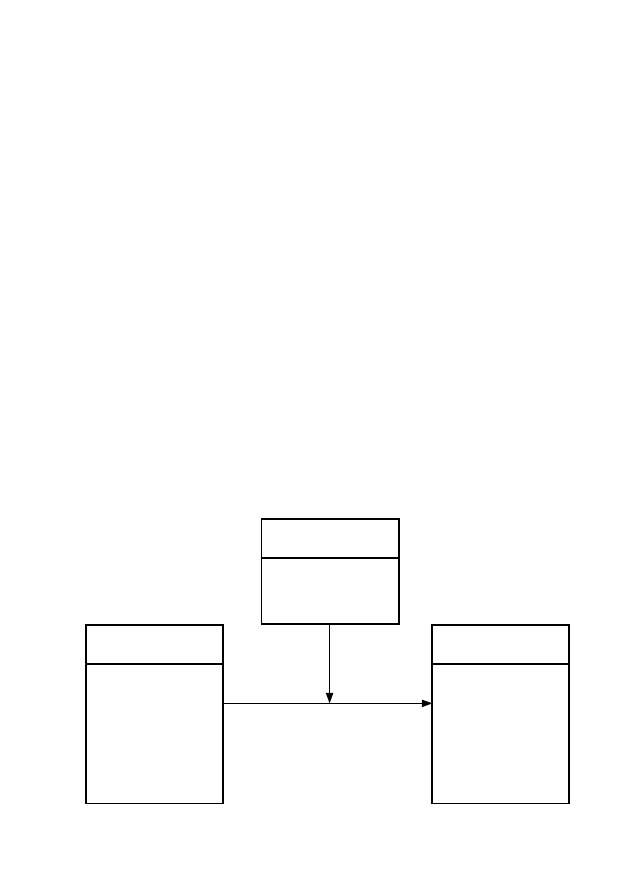
Motivation
- Intrinsic Motivation
- Extrinsic Motivation
Creativity
- Creative Performance
Big 5 Traits
- Extraversion
- Agreeableness
- Conscientiousness
- Emotional Stability
- Openness to Experience
Figure 1. Trait-trait interaction model of creative performance.

Linking personaLity to creativity
944
T
he
B
ig
F
ive
F
acTors
, M
oTivaTion
,
and
c
reaTive
P
erForMance
Creativity refers to the generation of novel and potentially useful ideas (Shalley
et al., 2004). Based on the possibility of trait-trait interaction in explaining
creativity, we developed a theoretical framework that considers the interaction
between personality and motivation variables, as depicted in Figure 1. In addition
to the main effects of the Big Five factors on creative performance, intrinsic
and extrinsic motivation are considered as moderators of this relationship, thus
incorporating the trait-trait interaction.
The Big Five Traits and Creative Performance Scholars have demonstrated the
reliability, validity and generalizability of the Big Five factor model using
numerous samples with varying demographic backgrounds (Costa & McCrae,
1992). In some studies it has also been shown that the Big Five factors are
meaningful drivers of individual behavior and performance (James & Mazerolle,
2002; Zhao & Seibert, 2006). In this study, we proposed that these five personality
characteristics also have significant bearings on creative performance.
Extraversion
Extraversion reflects individuals’ tendencies to be energetic,
enthusiastic and ambitious (Raja & Johns, 2004). Individuals with high
extraversion are more likely to seek stimulation (Zhao & Siebert, 2006), whereas
those with low extraversion tend to be reserved and quiet (Costa & McCrae,
1992). Creativity may result from a person’s proactive behavior, such as actively
engaging in a task, or trying out different ideas. For this reason, individuals who
are passive and wait for someone to inspire and stimulate them are less likely to
be creative. The enthusiasm of people with high extraversion may lead them to be
curious about even routine events and to experiment with them. Extraverts tend
to seek novel ways of doing tasks and to confront problems instead of avoiding
them, which is likely to increase creative performance. We thus hypothesized the
following relationship:
Hypothesis 1: Extraversion will be positively related to creative performance.
Agreeableness
Agreeableness refers to individuals’ courteous, trusting, and
cooperative demeanor (Goldberg, 1990). People who score high on agreeableness
tend to be good-natured, considerate, and tolerant. By contrast, less agreeable
people tend to be manipulative, self-centered, and suspicious (Digman, 1990).
Creative ideas are often regarded as challenging the status quo and thus
disrupting interpersonal relations and work processes endorsed by others, which
can cause tension with work colleagues and/or supervisors (Choi, 2007; Lim &
Choi, 2009). Agreeable people tend to care about others’ feelings and avoid being
abrasive to, or in conflict with, colleagues. Therefore, they are inclined to engage
in cooperative, helping behavior that mostly serves the goal of maintaining
existing relationships. Given their strong desire for interpersonal harmony,
agreeable people may have difficulty in generating and expressing ideas that
are different from those of others or from the existing − or traditional − ways of
doing things. Hypothesis 2 was formed in relation to this:

Linking personaLity to creativity
945
Hypothesis 2: Agreeableness will be negatively related to creative performance.
Conscientiousness
Conscientiousness refers to the degree to which individuals
are purposeful, hardworking, persistent, and strive for achievement (Goldberg,
1990). Research has shown that individuals high in conscientiousness tend to set
clear goals to direct their efforts and to exert greater effort than less conscientious
people (Mount & Barrick, 1995). This is thought to be why, of the Big Five
factors, conscientiousness has been found to be the most significant predictor
of task performance as well as job satisfaction (Barrick & Mount, 1991; Raja
& Johns, 2004). Because they have high task performance and job satisfaction
levels, conscientious individuals may be less motivated to seek a problem or
a new opportunity (Zhou & George, 2001). In addition, conscientious people
may be mostly oriented toward carrying out the given task in an efficient and
organized way rather than introducing interruptions of the given task flow by
coming up with new ideas (George & Zhou, 2001). Because of their focus on
“doing things right” instead of doing the right things, individuals with high con-
scientiousness have been found to avoid risk taking or experimentation because
these may cause uncertainties and unexpected delays in their work (James &
Mazerolle, 2002; Raja & Johns, 2004). Hypothesis 3 relates to this:
Hypothesis 3: Conscientiousness will be negatively related to creative
performance.
Emotional stability
Emotional stability is a measure of an individual’s degree
of calmness and security (Barrick & Mount, 1991). People who score high on
emotional stability are characterized as being self-confident and relaxed, while
those with low emotional stability tend to be anxious, depressed, insecure,
and fearful (Goldberg, 1990). Emotionally unstable individuals experience
hopelessness and a lack of energy to perform their tasks (Colbert, Mount, Harter,
Witt, & Barrick, 2004). Moreover, they tend to avoid situations in which they
are afraid they will fail, and they lack the confidence needed for the social and
task-related risk taking that is commonly involved in creative endeavors (Raja &
Johns, 2004; Zhao & Siebert, 2006). Emotionally stable individuals, in contrast,
are relaxed and possess positive views about their tasks and of other people.
Creativity requires the ability to integrate information efficiently and seek a
new way of thinking that can be promoted by having a calm demeanor and self-
confidence. Therefore, individuals with high emotional stability are more willing
and ready to engage in the demanding and abrasive process of creative problem
solving. Thus, hypothesis 4 was formed:
Hypothesis 4: Emotional stability will be positively related to creative
performance.
Openness to experience Among the Big Five factors, openness to experience
has been the most frequently investigated and has received consistent empirical
support as a positive predictor of creativity (George & Zhou, 2001; McCrae &
Costa, 1997). This is not surprising given that openness to experience represents

Linking personaLity to creativity
946
the extent to which individuals are imaginative, broad-minded, curious, and
nontraditional (Mount & Barrick, 1995). Creativity usually starts from novel
and unfamiliar ideas that are looked on by others as “wrong” when they are
first conceived. Individuals with high openness to experience are more flexible
in embracing novel ideas even though these may be untested or fanciful. Open-
minded people have strong tendencies to seek out unfamiliar situations that allow
for greater access to new experiences and perspectives (Goldberg, 1990). They
are willing to expose themselves to a variety of feelings, perspectives, and ideas.
On the other hand, individuals with low openness to experience tend to be more
conservative and cautious. They find more comfort in the status quo and prefer
ideas and things that are familiar rather than novel and unique, because these
reduce uncertainty (Choi, 2004; George & Zhou, 2001). This was the basis of
hypothesis 5:
Hypothesis 5: Openness to experience will be positively related to creative
performance.
M
oTivaTion
as
a
M
oderaTor
Although we hypothesized that the Big Five personality traits would be related
to individual creativity, we also hypothesized that this Big Five-creativity link
would be more pronounced when people have strong motivation to complete the
task than when their motivation is weak. Motivation concerns energy, direction,
and persistence which are all the aspects of activation and intention, with regard
to the behavior in question. According to goal-setting theory, the assumption is
that behavior reflects conscious goals and intentions, thus, a person’s efforts and
performance are influenced by the goals assigned to, and selected by, oneself
(Fried & Slowik, 2004; Locke & Latham, 1990, 2002; Naylor, Pritchard, & Ilgen,
1980). Similarly, the emphasis in self-determination theory (Ryan & Deci, 2000)
and self-regulatory focus theory (Brockner & Higgins, 2001; Higgins, 1997,
1998) is on the critical role of motivation as an individual’s inner resources that
are developed for behavioral self-regulation and engaging in behaviors becoming
aligned with appropriate goals and standards (Kark & van Dijk, 2007).
Scholars have identified two distinct forms of motivation.
Intrinsic motivation
refers to a
natural inclination toward mastery, interest, and exploration that
represents a critical source of enjoyment and vitality (Csikszentmihalyi &
Rathunde, 1993). With intrinsic motivation, individuals undertake tasks because
they find them interesting and because they derive satisfaction from performing
the tasks themselves (Gagne & Deci, 2005). On the other hand,
extrinsic
motivation refers to the individual’s inclination to perform tasks in order to attain
some separable consequences, such as tangible or verbal rewards (Ryan & Deci,
2000). The individual’s identification of the value of behaviors for his/her own
self-selected goals leads his/her to behave according to self-regulation.

Linking personaLity to creativity
947
Indeed, both intrinsic and extrinsic motivation have implications for creative
performance since high levels of energy, concentration, and willingness are
required. Although the social psychological approach to creativity has emphasized
the role of intrinsic motivation for creativity (Amabile, 1988), in recent studies it
has been shown that extrinsic motivation also exerts a significant positive effect
on creativity (Choi, 2004; Eisenberger & Rhoades, 2001). In addition to their main
effects on creativity, we advanced the idea that intrinsic and extrinsic motivation
offer a stage or condition in which individuals can behave in accordance with
their own personal inclinations based on their Big Five characteristics (cf. trait-
trait interaction, Barrick et al., 2005). For example, the positive effect of openness
to experience on creative performance may not be manifest when the person is
not interested in performing the task. Without proper task motivation, openness
becomes irrelevant in promoting the person’s creative performance. In this case,
task motivation (either intrinsic or extrinsic) may create the setting in which a
person’s openness can be activated to increase his/her creativity in performing
the task (trait activation theory, Tett & Burnett, 2003). Overall, we proposed that
the association between the Big Five factors and creative performance could
be either promoted or attenuated depending on the person’s level of motivation
for the task at hand. Based on this theoretical consideration, we developed the
following moderation hypotheses:
Hypothesis 6a: Intrinsic motivation will moderate the relationship between the
Big Five factors and creative performance such that the relationship will be
stronger when the degree of intrinsic motivation is higher.
Hypothesis 6b: Extrinsic motivation will moderate the relationship between
the Big Five factors and creative performance such that the relationship will be
stronger when the degree of extrinsic motivation is higher.
methoD
P
arTiciPanTs
and
d
aTa
c
ollecTion
P
rocedure
To test our hypotheses, we collected data from undergraduate students who
were enrolled in an introductory organizational behavior course at a North
American business school. The target sample included 430 students comprising
14 sections (independent groups taught by different instructors) taught by 28
instructors (each section was taught by two instructors). Instructors utilized
discussions and experiential learning rather than giving lectures and encouraged
students to post interesting questions and to offer novel perspectives.
Participation in this study was voluntary and students were rewarded with gift
certificates for participating. Participants completed survey questionnaires in the
8th week (Time 1; T1) and the 12th week (Time 2; T2) of the semester. Of the 430
students, 304 completed both T1 and T2 questionnaires, resulting in a response

Linking personaLity to creativity
948
rate of 70.7%. The participants included 48.4% males with an average age of 19.8
years (
SD = 2.56), who had spent an average of 2.1 years at the university (1 =
Freshman, 2 = Sophomore, 3 = Junior, and 4 = Senior).
M
easures
We tested the current hypotheses empirically using longitudinal data. The
measures assessing the Big Five traits and motivation were completed at T1. The
dependent variable (creative performance) was assessed at T2. Each scale included
multiple items. All items were rated on a 7-point Likert-type scale ranging from 1
(
not at all true) to 7 (absolutely true) unless otherwise indicated.
Big Five factors (T1) To assess the Big Five traits, we employed the scale items
developed by Goldberg (1992). Using a 7-point scale (1 =
not at all accurate
to 7 =
very accurate), participants rated each marker of the Big Five factors
based on the following instruction “How much do you feel that the following
words accurately describe you?” Extraversion was measured by four items (a
= .72): (a) talkative, (b) assertive, (c) energetic, and (d) active. The scale for
agreeableness included the following five items (a = .82): (a) agreeable, (b)
kind, (c) cooperative, (d) sympathetic, and (e) warm. Conscientiousness was
assessed by four items (a = .75): (a) organized, (b) efficient, (c) careful, and
(d) conscientious. Emotional stability was measured by four items (a = .75): (a)
anxious, (b) emotional, (c) irritable, and (d) nervous (all four items were reverse-
coded). The openness to experience scale was composed of five items (a = .80):
(a) intellectual, (b) creative, (c) imaginative, (d) bright, and (e) innovative.
Intrinsic motivation (T1) To assess intrinsic motivation, we used three items
(a = .61) developed by Amabile, Hill, Hennessey, and Tighe (1994): (a) “I want
to find out how good I really can be at my work,” (b) “What matters most to
me is enjoying what I do,” and (c) “It is important for me to have an outlet for
self-expression.” The intrinsic motivation scale focused on the degree to which
participants enjoyed the task and performed it for its own sake.
Extrinsic motivation (T1) We assessed participants’ extrinsic motivation using
four items (a = .61) validated by Amabile et al. (1994): (a) I am strongly motivated
by the grades I can earn, (b) I am keenly aware of the Grade Point Average goals
I set for myself, (c) I seldom think about grades and awards (reverse-coded), and
(d) As long as I can do what I enjoy, I’m not that concerned about exactly what
grades or awards I can earn (reverse-coded). These items measure the extent to
which participants relied on external incentives as the impetus for their work.
Creative performance (T2) Participants reported their creative performance
during the class at the end of the semester. Drawing on existing studies of
creative performance (Eisenberger & Rhoades, 2001; Tierney et al., 1999), we
constructed a four-item index (a = .81) that was designed to assess students’
creative performance in the setting of that instructional context. The scale’s items

Linking personaLity to creativity
949
were: (a) “During this class, I supplied new ideas and differing perspectives to
the class,” (b) “During this class, I raised interesting issues and challenging
questions for discussion,” (c) “During this class, I actively listened to others and
integrated their ideas to offer creative solutions,” and (d) “During this class, I
combined ideas from different modules and came up with a more integrated view
of the phenomena.”
results
Descriptive statistics and correlations among all study variables are reported in
Table 1. To test our hypotheses, we conducted hierarchical regression analysis,
in which the Big Five factors were entered into the equation predicting creative
performance in the first step, motivation variables in the second step, and the
interaction terms in the last step. To reduce the multicollinearity among main
effect variables and their interaction terms, scores on the Big Five factors and
motivation variables were mean-centered (Aiken & West, 1991). Evidence of
a moderating effect would be present if significant incremental variance in
creative performance was explained when the interaction terms were added to the
equation. Table 2 reports the results of the hierarchical regression equations.
TaBle 1
M
eans
, s
Tandard
d
eviaTions
,
and
c
orrelaTions
a
Mong
s
Tudy
v
ariaBles
(N = 304)
Variables
M
SD
1
2
3
4
5
6
7
8
1. Extraversion
5.14 1.02
--
2. Agreeableness
5.60
.88 .24
**
--
3. Conscientiousness
5.21 1.03 .23
**
.32
**
--
4. Emotional Stability
3.66 1.28 -.01
-.15
**
-.28
**
--
5. Openness to Experience 5.16
.95 .38
**
.26
**
.19
**
-.05
--
6. Intrinsic Motivation
5.72
.85 .34
**
.17
**
.07
-.12
*
.30
**
--
7. Extrinsic Motivation
5.06 1.22 -.02
.11
*
.24
**
-.13
*
.01
-.03
--
8. Creative Performance
5.00 1.21 .30
**
.06
.03
.06 .26
**
.09
.11
--
*
p < .05;
**
p < .01
In Model 1, we entered the Big Five factors as predictors of creative
performance. Of the five personality variables, extraversion and openness to
experience were significantly related to creative performance, b = .25, p < .001
and b = .19, p < .01, respectively, supporting Hypotheses 1 and 5. However,
the effects of agreeableness, conscientiousness, and emotional stability on
creative performance were not found to be significant, indicating no support for
Hypotheses 2, 3 and 4. In Model 2, we added the two motivation variables to
the equation. We found it interesting that extrinsic motivation, but not intrinsic
motivation, was a significant predictor of creative performance b = .13, p < .05
and b = -.02, ns., respectively.

Linking personaLity to creativity
950
TaBle 2
h
ierarchical
r
egression
a
nalysis
Predictors
Model 1
Model 2
Model 3
Extraversion
.25
***
.27
***
.31
***
Extraversion x Intrinsic Motivation
-.03
Extraversion x Extrinsic Motivation
-.07
Agreeableness
-.03
-.03
.01
Agreeableness x Intrinsic Motivation
.09
Agreeableness x Extrinsic Motivation
-.21
**
Conscientiousness
-.05
-.08
-.10
Conscientiousness x Intrinsic Motivation
-.14
Conscientiousness x Extrinsic Motivation
-.01
Emotional Stability
.06
.06
.06
Emotional Stability x Intrinsic Motivation
.02
Emotional Stability x Extrinsic Motivation
-.02
Openness to Experience
.19
**
.19
**
.16+
Openness to Experience x Intrinsic Motivation
.03
Openness to Experience x Extrinsic Motivation
.12
*
Intrinsic Motivation
-.02
-.05
Extrinsic Motivation
.13
*
.11+
R²
.13
***
.14
***
.22
***
∆R²
.01
.08
**
Note: N = 304. Standardized beta coefficients are shown.
*
p < .05;
**
p < .01;
***
p < .001
In Model 3, we tested the moderating role of motivation by entering ten
interaction terms to the equation. These interaction terms significantly increased
the explained variance of the outcome (Δ
R
2
= .08,
p < .01). Of the ten interaction
terms, results for two involving extrinsic motivation were significant: the
interaction between agreeableness and extrinsic motivation (b = -.21, p < .01) and
the interaction between openness to experience and extrinsic motivation (b = .12,
p < .05).
To specify the interaction patterns, we plotted the significant interaction
effects by conducting separate regression analyses for two subgroups composed
of members with either high (1
SD above the mean) or low (1 SD below the
mean) extrinsic motivation (Aiken & West, 1991). The interaction pattern
involving agreeableness and extrinsic motivation is depicted in Figure 2. For
individuals with high levels of extrinsic motivation, agreeableness did not show
any meaningful relationship with creative performance (b = -.05, p > .10). In
contrast, for those with low extrinsic motivation, agreeableness was positively
related to their creative performance (b = .25, p < .01). This counterintuitive
pattern is discussed later.

Linking personaLity to creativity
951
Figure 3 illustrates the interaction between openness to experience and extrinsic
motivation, showing that the relationship between openness to experience and
creative performance was stronger for individuals with high levels of extrinsic
motivation than for those with lower extrinsic motivation; b = .27, p < .10 and b
= .04,
ns., respectively. Overall, our data demonstrate that extrinsic motivation
significantly moderates the relationships between two of the Big Five factors and
creative performance, thus Hypothesis 6b was partially supported.
Figure 2. Interaction between agreeableness and extrinsic motivation in predicting creative
performance.
Figure 3. Interaction between openness to experience and extrinsic motivation in creative
performance.

Linking personaLity to creativity
952
Discussion
With the recognition that innovation is rooted in the creative ideas of individuals,
increasing attention has been devoted to the determinants of individual creativity
(Amabile, 1996; Oldham & Cummings, 1996; Shalley et al., 2004). In this
regard, scholars have often examined the role of the Big Five personality factors
as a meaningful predictor of individual creativity (Barrick et al., 1993; Feist,
1998; George & Zhou, 2001). Nevertheless, in most of the existing studies the
focus has been on specific factors of the Big Five traits, thus failing to provide
an integrative picture of the relationship between the Big Five and creativity.
In the present study all aspects of the Big Five factors were investigated in the
context of the creative performance of students. More importantly, employing the
trait-trait interaction perspective, we advanced intrinsic and extrinsic motivation
as critical moderators or shapers of the relationship between the Big Five
factors and creativity. In our empirical analysis we revealed that extraversion
and openness to experience had significant effects on individual creativity, and
that extrinsic motivation played a meaningful role in determining the nature
and the strength of the relationship between the Big Five and creativity. Below
we highlight important findings of the present study and their implications, and
discuss limitations along with directions for future research.
Consistent with previous studies (George & Zhou, 2001; McCrae and
Costa, 1997), openness to experience exhibited a significant positive effect on
creative performance. This is likely to be because people with high openness to
experience tend to be flexible and willing to accept various perspectives, even
when the ideas are unfamiliar and seem somewhat fanciful/underdeveloped
(Zhao & Seibert, 2006). Our finding offers additional empirical evidence that
openness to experience enables people to move away from traditional beliefs and
conventions and engage in novel and unique ways of thinking.
Although researchers have paid less attention to extraversion as a source of
creativity, our data suggest that of the Big Five factors, extraversion can be the
most significant predictor of creative performance. Indeed, people with high
extraversion are full of energy and enthusiasm, encouraging such behaviors as
seeking stimulation and proactively addressing problems, which should enhance
creative thinking and performance (Costa & McCrae, 1992; Zhao & Seibert,
2006). Another potential reason for the strong effect of extraversion may lie in
the fact that the measure of creative performance used in our study was related
to expressing or communicating creative ideas in the class, which should favor
students who were extroverted and thus felt comfortable in presenting their
thoughts to others (cf. Unsworth, 2001). It is reasonable to expect that expressed
or social forms of creativity may have sets of predictors that are different from
those of unexpressed forms of creativity (Choi, 2004). This possibility could be
further explored in future studies.

Linking personaLity to creativity
953
Another interesting finding of this study was the significant effect of extrinsic
motivation versus the nonsignificant role of intrinsic motivation in creativity. This
pattern clearly indicates that there may need to be a more balanced consideration
of intrinsic and extrinsic motivation by researchers, going beyond the sole focus
on intrinsic task motivation as the motivational basis of creativity (Amabile,
1988). Recently, the positive roles of rewards and extrinsic motivation with
regard to creativity have been acknowledged among researchers (Choi, 2004;
Eisenberger & Rhoades, 2001), particularly in the domain of social or public
forms of creativity, such as creative performance in schools or in workplaces,
extrinsic motivation may play a critical role (often more so than intrinsic
motivation) in predicting creative performance. Perhaps for the same reason, in
this study extraversion turned out to be a strong predictor of creativity.
In addition to the main effect of extrinsic motivation on creativity, in this study
extrinsic motivation was also revealed as a meaningful moderator that changes
the meaning of personal traits with regard to individual creativity. It was of note
that our analysis showed that extrinsic motivation played somewhat contrasting
roles for agreeableness and openness to experience. Supporting our expectation,
the association between openness and creativity became stronger in a situation
where the person had strong extrinsic motivation. Individuals with high openness
to experience seemed to act more strongly on their innate trait when they were
strongly motivated to perform the task and gain rewards and acknowledgement
from their performance. Thus, extrinsic motivation activates the functioning of a
person’s openness trait, supporting trait activation theory (Tett & Burnett, 2003)
as well as the trait-trait interaction perspective (Barrick et al., 2005).
For agreeable people, on the other hand, high extrinsic motivation was not
beneficial for their creative performance (see Figure 2). Given that agreeable
individuals care about others and tend to prefer agreeing with others’ opinions
to keep the peace, their creative performance will be further decreased when
they are concerned about rewards, compensation, or others’ evaluation of
their performance. In contrast, agreeableness was positively associated with
creativity when the person had low extrinsic motivation, and thus he/she was less
constrained by others’ opinions. This pattern indicates that for agreeable people
low extrinsic motivation meant that they were less likely to be influenced by the
social or evaluative constraints of a given setting.
The present study has several limitations. First, the present data were collected
from students and the results, therefore, may not be generalizable to other
populations. For example, the creative performance of employees may be more
strongly driven by organizational context variables than by their individual
dispositions. Nevertheless, given the ample evidence that employees’ creativity
is a function of both individual and contextual characteristics (Amabile, 1996;
Oldham & Cummings, 1996; Shalley et al., 2004), the trait-trait interaction
perspective may be a viable approach in understanding creativity in organizational

Linking personaLity to creativity
954
settings. Secondly, although we employed a longitudinal design that separated
the measures of predictors and the outcome by four weeks, all variables were
self-reported and the results might be affected by same-method bias. Given the
potential differences between self and observer ratings (Mount & Barrick, 1995;
Schmidt, Shaffer, & Oh, 2008), in future studies a multisource design could be
adopted to provide a more robust research finding. Thirdly, in implementing
our longitudinal research design, we could not guarantee the anonymity of
participants who provided multiwave data. This data collection strategy could
introduce systematic response biases owing to participants’ tendency to offer
socially desirable responses. Finally, in our current research framework, we
focused on the trait-trait interaction involving the Big Five traits and motivation
in predicting creativity. Therefore, other factors that might explain variance
in creativity such as situational and contextual factors were not included. In
future research the current framework could be expanded and could incorporate
various contextual variables to examine their moderating effects on the trait-trait
interactions identified in this study.
Despite these limitations, the present study makes meaningful contributions
to the creativity literature by offering an integrative perspective and empirical
validation of the relationship between the Big Five personality traits and individual
creativity. Moreover, we demonstrated the value of the trait-trait interaction
perspective in better explaining the effects of personality traits on creative
performance. Our analysis showed that the effects of a person’s agreeableness
and openness on his/her creative performance had different directions and
strengths depending on the level of his/her extrinsic motivation. In particular,
the contrasting effects of extrinsic motivation observed for agreeableness
versus openness to experience offer a more sophisticated understanding of the
distinct ways in which motivation and personality characteristics work together
to produce individual behavior. In further studies the mechanisms involved in
trait-trait interaction could be elaborated and the theoretical framework could
be expanded by incorporating contextual moderators to account for individual
creativity in various settings.
reFerences
Aiken, L. S., & West, S. G. (1991).
Multiple regression: Testing and interpreting interactions.
Newbury Park, CA: Sage.
Amabile, T. M. (1988). A model of creativity and innovation in organizations. In B. M. Staw & L.
L. Cummings (Eds.),
Research in organizational behavior (pp. 123-167). Greenwich, CT: JAI
Press.
Amabile, T. M. (1996).
Creativity in context. Boulder, CO: Westview.
Amabile, T. M., Hill, K. G., Hennessey, B. A., & Tighe, E. M. (1994). The work preference inventory:
Assessing intrinsic and extrinsic motivational orientations.
Journal of Personality and Social
Psychology,
66, 950-967.

Linking personaLity to creativity
955
Barrick, M. R., & Mount, M. K. (1991). The Big Five personality dimensions and job performance:
A meta-analysis.
Personnel Psychology,
44, 1-26.
Barrick, M. R., Mount, M. K., & Strauss, J. P. (1993). Conscientiousness and performance of sales
representatives: Test of the mediating effects of goal setting.
Journal of Applied Psychology,
78,
715-722.
Barrick, M. R., Parks, L., & Mount, M. K. (2005). Self-monitoring as a moderator of the relationships
between personality traits and performance.
Personnel Psychology,
58, 745-767.
Brockner, J., & Higgins, E. T. (2001). Regulatory focus theory: Implications for the study of emotions
at work.
Organizational Behavior and Human Decision Processes,
86, 35-66.
Choi, J. N. (2004). Individual and contextual predictors of creative performance: The mediating role
of psychological processes.
Creativity Research Journal,
16, 187-199.
Choi, J. N. (2007). Change-oriented organizational citizenship behavior: Effects of work environment
characteristics and intervening psychological processes.
Journal of Organizational Behavior,
28,
467-484.
Colbert, A. E., Mount, M. K., Harter, J. K., Witt, L. A., & Barrick, M. R. (2004). Interactive effects
of personality and perceptions of the work situation on workplace deviance.
Journal of Applied
Psychology,
89, 599-609.
Costa, P. T., Jr., & McCrae, R. R. (1992).
Revised NEO Personality Inventory (NEO PI-R) and NEO
Five-Factor Inventory (NEO-FFI) professional manual. Odessa, FL: Psychological Assessment
Resources.
Csikszentmihalyi, M., & Rathunde, K. (1993). The measurement of flow in everyday life: Toward a
theory of emergent motivation. In J. E. Jacobs (Ed.),
Developmental perspectives on motivation
(pp.
57-97). Lincoln, NE: University of Nebraska Press.
Digman, J. M. (1990). Personality structure: Emergence of the five-factor model.
Annual Review of
Psychology,
41, 417-440.
Eisenberger, R., & Rhoades, L. (2001). Incremental effects of reward on creativity.
Journal of
Personality and Social Psychology,
81, 728-741.
Feist, G. J. (1998). A meta-analysis of personality in scientific and artistic creativity.
Personality and
Social Psychology Review,
4, 290-309.
Fried, Y., & Slowik, L. H. (2004). Enriching goal-setting theory with time: An integrated approach.
Academy of Management Review,
29, 404-422.
Gagne, M., & Deci, E. L. (2005). Self-determination theory and work motivation.
Journal of
Organizational Behavior,
26, 331-362.
George, J. M., & Zhou, J. (2001). When openness to experience and conscientiousness are related to
creative behavior: An interactional approach.
Journal of Applied Psychology,
86, 513-524.
Goldberg, L. R. (1990). An alternative description of personality: The Big Five factor structure.
Journal of Personality and Social Psychology,
59, 1216-1229.
Goldberg, L. R. (1992). The development of markers for the Big-Five factor structure.
Personality
Assessment,
4, 26-42.
Gough, H. G. (1979). A creative personality scale for the Adjective Check List.
Journal of Personality
and Social Psychology,
37, 1398-1405.
Higgins, E. T. (1997). Beyond pleasure and pain.
American Psychologist,
52, 1280-1300.
Higgins, E. T. (1998). Promotion and prevention: Regulatory focus as a motivational principle.
Advances in Experimental Social Psychology,
30, 1-46.
James, L. R., & Mazerolle, M. D. (2002).
Personality in work organizations. Thousand Oaks, CA:
Sage.
Kark, R., & van Dijk, D. (2007). Motivation to lead, motivation to follow: The role of the self-
regulatory focus in leadership processes.
Academy of Management Review,
32, 500-528.

Linking personaLity to creativity
956
Lim, H. S., & Choi, J. N. (2009). Testing an alternative relationship between individual and
contextual predictors of creative performance.
Social Behavior and Personality: An international
journal,
37, 117-136.
Locke, E. A., & Latham, G. P. (1990).
A theory of goal setting and task performance. Englewood
Cliffs, NJ: Prentice-Hall.
Locke, E. A., & Latham, G. P. (2002). Building a practically useful theory of goal setting and task
motivation: A 35-year odyssey.
American Psychologist,
57, 705-717.
McCrae, R. R. (1987). Creativity, divergent thinking, and openness to experience.
Journal of
Personality and Social Psychology,
52, 1258-1265.
McCrae, R. R., Jr., & Costa, P. T. (1997). Conceptions and correlates of openness to experience. In R.
Hogan, J. Johnson, & S. Briggs (Eds.),
Handbook of personality psychology (pp. 825-847). San
Diego, CA: Academic Press.
Mount, M. K., & Barrick, M. R. (1995). The Big Five personality dimensions: Implications for
theory and practice in human resource management.
Research in Personnel and Human Resource
Management,
13, 153-200.
Naylor, J. C., Pritchard, R. D., & Ilgen, D. R. (1980).
A theory of behavior in organizations. New
York, NY: Academic Press.
Oldham, G. R., & Cummings, A. (1996). Employee creativity: Personal and contextual factors at
work.
Academy of Management Journal,
39, 607-634.
Raja, U., & Johns, G. (2004). The impact of personality on psychological contracts.
Academy of
Management Journal,
47, 350-367.
Ryan, R. M., & Deci, E. L. (2000). Self-determination theory and the facilitation of intrinsic
motivation, social development, and well-being.
American Psychologist,
55, 68-78.
Schmidt, F. L., Shaffer, J. A., & Oh, I. (2008). Increased accuracy for range restriction corrections:
Implications for the role of personality and general mental ability in job and training performance.
Personnel Psychology,
61, 827-868.
Scott, S. G., & Bruce, R. A. (1994). Determinants of innovative behavior: A path model of individual
innovation in the workplace.
Academy of Management Journal,
37, 580-607.
Shalley, C. E., & Perry-Smith, J. E. (2001). Effects of social-psychological factors on creative
performance: The role of informational and controlling expected evaluation and modeling
experience.
Organizational Behavior and Human Decision Processes,
84, 1-22.
Shalley, C. E., Zhou, J., & Oldham, J. R. (2004). The effects of personal and contextual characteristics
on creativity: Where should we go from here?
Journal of Management,
30, 933-958.
Tett, R. P., & Burnett, D. D. (2003). A personality trait-based interactionist model of job performance.
Journal of Applied Psychology,
88, 500-517.
Tierney, P., Farmer, S. M., & Graen, G. B. (1999). An examination of leadership and employee
creativity: The relevance of traits and relationships.
Personnel Psychology,
52, 591-620.
Unsworth, K. (2001). Unpacking creativity.
Academy of Management Review,
26, 289-297.
Zhao, H., & Seibert, S. E. (2006). The Big Five personality dimensions and entrepreneurial status: A
meta-analytical review.
Journal of Applied Psychology,
91, 259-271.
Zhou, J., & George, J. M. (2001). When job dissatisfaction leads to creativity: Encouraging the
expression of voice.
Academy of Management Journal,
44, 682-696.
Zhou, J., & Shalley, C. E. (2003). Research on employee creativity: A critical review and directions for
future research. In J. Martocchio (Ed.),
Research in personnel and human resource management
(pp. 165–217). Oxford, England: Elsevier.

Copyright of Social Behavior & Personality: An International Journal is the property of Society for Personality
Research and its content may not be copied or emailed to multiple sites or posted to a listserv without the
copyright holder's express written permission. However, users may print, download, or email articles for
individual use.
Wyszukiwarka
Podobne podstrony:
The Relation Between Learning Styles, The Big Five Personality Traits And Achievement Motivation
Thinking Styles and the Big Five Personality
Salisbury () Internet overuse and personality A look at Big Five, BIS BAS, lonelines and boredom
127729 5 4a Factors affecting economic growth16 01 03
Factors affecting
Blazek wyklady z ub roku (2006-07), Model BIG-Five, Model BIG-FIVE
Kod do Programu i instalacja Time Factory
List motywacyjny skierowany do agencji doradztwa personalnego, Logistyka
Materiały do wykładu Zarządzanie personelem wykład ZMZ3131W
PERSONAL FACTORS
THE SIXTEEN PERSONALITY FACTOR QUESTIONAIRE CATTELL 16 PF
więcej podobnych podstron