
In collaboration with Lastline, Inc.
Command & Control
Understanding, Denying and Detecting
Joseph Gardiner
Marco Cova
Shishir Nagaraja
February 2014

Abstract
One of the leading problems in cyber security today is the emergence
of targeted attacks conducted by adversaries with access to
sophisticated tools, sometimes referred to as Advanced Persistent
Threats (APTs). These attacks target specific organisations or
individuals and aim at establishing a continuous and undetected
presence in the targeted infrastructure. The goal of these attacks
is often espionage: stealing valuable intellectual property and
confidential documents.
As trends and anecdotal evidence show, providing effective defences
against targeted attacks is a challenging task. In this report, we restrict
our attention to a specific part of this problem: specifically, we look
at the Command and Control (C2) channel establishment, which, as
we will see, is an essential step of current attacks. Our goals are to
understand C2 establishment techniques, and to review approaches
for the detection and disruption of C2 channels.
More precisely, we first briefly review the current state of cyber
attacks, highlighting significant recent changes in how and why such
attacks are performed. This knowledge is foundational to understand
C2 techniques and to design effective countermeasures.
We then investigate the “mechanics” of C2 establishment: we provide
a comprehensive review of the techniques used by attackers to set up
such a channel and to hide its presence from the attacked parties and
the security tools they use.
Finally, we switch to the defensive side of the problem, and review
approaches that have been proposed for the detection and disruption
of C2 channels. We also map such techniques to widely-adopted
security controls, emphasizing gaps or limitations (and success
stories) in current best practices.
We would like to acknowledge the help
and support of CPNI in researching this
topic and producing the accompanying
products.
PAGE 2
Command & Control: Understanding, Denying and Detecting
FEBRUARY 2014
University of Birmingham | CPNI.gov.uk

Executive Summary
Formation and use of a Command and
Control (C&C) system is an essential part
of remotely-conducted cyber attacks.
C&C is used to instruct compromised
machines to perform malicious activity -
C&C can also be used as a channel over
which data can be exfiltrated. Statistics
show that cyber attacks are widespread
across all sectors and that preventing
intrusion is difficult. A promising
alternative consists of detecting and
disrupting the C&C channels used by
attackers: this effectively limits the
damage suffered as a consequence of
a successful attack (e.g., preventing
sensitive data to being leaked).
C&C communication and traffic
Attackers experiment with alternative
strategies to build reliable and robust
C&C infrastructures and to devise
stealthy communication methods.
As a consequence, different C&C
architectures and communication
techniques have emerged. For example,
attackers have used centralised
architectures, based on the standard
IRC and HTTP protocols. More recently,
they have introduced decentralised
architectures based on P2P protocols,
which are more difficult to take down.
Similarly, direct forms of communication
have been substituted by encrypted
channels, where attacker’s commands
and stolen information cannot be
readily accessed. To make channel
detection and blocking more difficult,
attackers also use covert communication
mechanisms that mimic regular traffic
patterns. For example C&C traffic can
occur through pages and images on
Online Social Networks (OSNs), covert
DNS traffic, and networks for anonymous
communication, such as Tor.
C&C detection and disruption
A variety of techniques for the detection
and disruption of C&C channels have
been proposed. They typically rely on
the automated monitoring and analysis
of network traffic to identify indicators
of compromise, malicious traffic, or
anomalous communication patterns.
The importance of human involvement
in this activity cannot be overstated.
As attackers constantly adapt their
strategies, it is critical to gain a thorough
understanding of the traffic flow patterns
followed by manual tuning of monitoring,
detection, and response infrastructure at
periodic intervals.
The following is a checklist of measures
that help detecting and denying C&C in
your organisation.
Detect known-bad network activity
Collect and analyse network traffic to
identify activity that is known to be
caused by an active C2 channel.
• MonitorDNStraffic to identify
internal devices that attempt to
contact domains that are known
to be involved in C2 activity. This
measure involves collection of DNS
traffic information (either through
a passive DNS collector or via the
nameservers logs) and matching
of requests against one or more
blacklists of malicious domain
names.
• MonitorIPtraffic to identify internal
devices that attempt to connect
to end points that are known to
be involved in C2 activity. This
measure involves collection of IP
traffic information (for example,
enabling NetFlow and sFlow
collection in routers) and matching
of communications against one
or more blacklists of malicious IP
addresses.
• Monitortrafficcontent to identify
content that matches known
C2 traffic (e.g., specific network
request/responses signatures). This
measure involves collection of full
traffic content (for example, enabling
a network sniffer) and matching of
the collected data against traffic
signatures.
These measures enable the detection
of C2 channels that are set up by
known malware families, leverage
known infrastructure, or employ known
communication techniques.
Detect anomalous network activity
Collect and analyse network traffic to
identify activity that deviates from the
expected, normal traffic profile of the
monitored network.
• Establishtrafficbaselines to
determine the “normal” profile of
the network (normal communication
patterns, data exchange volumes,
etc.). This measure can be
implemented by determining
baselines for different time windows
(e.g., hour, day), internal devices,
and network services.
• Evaluatecurrentnetworkactivity
against the established baselines
to identify deviations that may
be indicative of C2 activity. Pay
particular attention to anomalies
such as periodic beaconing, surge
in the amount of exchanged traffic,
suspicious network behaviours.
• For example, C2 activity that
relies on fast-flux techniques can
be detected by searching DNS
data for patterns of fast-changing
associations between domain
names and IP addresses; DGA-
based C2 activity is revealed in DNS
data by use-and-discard patterns
of domain names; data exfiltration
may be detected in Net-Flow data
by unusually large volumes of data
exchanges.
These measures enable the detection of
C2 channels that are set up by never-
seen-before malware families and that
do not re-use any known malicious
infrastructure.
Deny C2 activity
Architect and operate the network in
such a way that C2 activity is effectively
denied or greatly impaired.
• Segmentthenetwork to separate
devices with different trust and risk
values (e.g., front-facing, publicly
servers vs. internal hosts storing
sensitive documents).
• Introducerate-limitpolicies to slow
down traffic directed to disreputable
or un- trusted endpoints.
• Blockunwantedorunused
communicationsmechanisms
that may be used to piggy back
C2 activity (e.g., anonymisation
networks, P2P overlays, social net-
works).
PAGE 3
Command & Control: Understanding, Denying and Detecting
FEBRUARY 2014
University of Birmingham | CPNI.gov.uk

Executive Summary
Introduction
We are currently in the middle of a
computer security crisis: the number of
attacks, their sophistication and potential
impact have grown substantially in the
last few years. In particular, targeted
attacks, sometimes also called advanced
persistent threats (APTs), have emerged
as today’s most challenging security
threat. Targeted attacks target specific
individuals or organisations with the
typical intent of obtaining confidential
data, such as contracts, business
plans, and manufacturing designs.
They typically employ extensive
reconnaissance and information
gathering to identify weaknesses in
the target’s defences, and rely on
sophisticated malware to perform the
intended actions (e.g., locate and steal
sensitive documents within the target’s
network).
Because of their nature, targeted attacks
are particularly difficult to prevent. To
in- trude and take control of the target’s
systems, they may use 0-day exploits
[11] or other malicious code that is
known to evade the specific defence
mechanisms used by the target. They
may also rely on carefully-crafted social
engineering techniques to “exploit the
human”, that is to convince unsuspecting
users within the targeted organisation
to perform unwanted activities, such as
installing and running malware.
An additional line of defence against
targeted attacks is the detection and
disruption of individual steps that are
essential for the successful progression
of an attacks. This is the so-called
kill chain approach [19]. Of particular
interest for a defender is identifying the
step in which a compromised system
establishes a Command & Control
channel (C2), i.e., a communication
channel with the attackers through which
it can receive further commands or can
send any stolen data.
Blocking an intrusion in the C2
step has several advantages. If no
sensitive data is ever exfiltrated, the
targeted organisation limits its damage
significantly: while the integrity of
the organisation’s systems has been
compromised, its most valuable
assets (e.g., intellectual property and
R&D plans) are still intact. Even in the
event of successful data stealing, an
understanding of the C2 structure could
prove essential to determine what has
been stolen and where it ended to. In
addition, the analysis of the C2 channel
may provide indications useful to
attribute the attack to specific groups of
people, which may facilitate legal actions
against them.
The overarching goal of our study is to
understand the techniques of Command
and Control in order to improve our
defensive approaches. We will examine
C2 activity both from the attacker’s
perspective (howareC2channels
setupandmaintained?) and from the
defender’s perspective (howareC2
channelsdetectedanddisrupted?).
Having an understanding of both sides
of the problem (attacks and defences)
is key to understand what attackers are
currently capable of doing (or might do
in the future) and what defences may be
effective against them.
Our approach to the problem of
understanding and combating C2 is
based on a com- prehensive review,
systematization, and contextualization of
the substantive work in this area, done
by both the academic and commercial
community. For the academic work,
we focus our attention on publications
appearing in top conferences and
journals, such as USENIX Security,
ACM CCS, IEEE Security & Privacy,
and NDSS. For the indus- try work, we
review publications at conferences such
as RSA and BlackHat, technical reports,
and blog postings authored by the main
security vendors. Whenever possible,
we emphasise practical considerations
extracted from these works, with the
hope that they may lead to better
defence mechanisms to be deployed.
The rest of the report is organised as
follows: we start by covering some
background
material on Command & Control
(section C). We then review in detail the
techniques that attackers use (or may
use) to create and maintain C2 channels
(section D). We review approaches
that have been proposed to detect C2
channels and disrupt them (section
E). Finally, we revisit security controls
that are commonly adopted by organ-
isations to spotlight those that are more
likely to successfully identify and disrupt
C2 activity, and to identify any gaps in
the current best practices (section F).
Practicalities
Start small, measure, and scale up:
security controls can be applied itertively,
covering first high-risks groups, idetifying
mechanisms that are effective, and then
expanding their applications to larger
portions of the organisation.
PAGE 4
Command & Control: Understanding, Denying and Detecting
FEBRUARY 2014
University of Birmingham | CPNI.gov.uk

The Command and Control Problem
Command and Control identifies the step
of an attack where the compromised
system contacts back the attackers to
obtain addition attack instructions and to
send them any relevant information that
has been collected up to that point. To
really understand C2 activity, we need to
review a number of aspects that, taken
together, characterise today’s attacks.
In particular, we will examine the factors
that shape the current attack landscape
(whytargetedattackshavebecomesuch
athreat?). We also review the actual way
in which the attacks attacks are carried
out (howdoesatargetedattackwork?)
and the reasons why C2 activity is a
critical step in these attacks. Then we
look at the available data on targeted
attacks to quantify them and to learn
some lessons specifically on C2 activity,
before reviewing notable cases of
targeted attacks.
C.1
Attack Landscape
The security field is co-dependent
with an adversary. As the adversary’s
motivations, drivers, or technical means
change, so does the entire security
landscape. We posit that changes in
cyber attacks that have occurred lately
(and that affect our ability to defend
against them) are largely the result
of several significant changes in the
techniques and behaviours of attackers.
We focus here on three main thrusts:
changes in attackers’ motivations, the
increased targeting of attacks, and their
use of evasive techniques.
Motivations
The motivations of attackers have
changed substantially, transforming their
activity from a reputation economy to
a cash economy [37]. Long gone are
the days when attacks were performed
predominantly by individuals with the
intent to display their technical skills
and to gain “street credibility”. The last
ten years have seen instead the rise
of criminal groups that use Internet-
based attacks to make a financial profit.
Criminal groups can be well-organised
and technically sophisticated. They can
often rely on specialised “contractors”
for different parts of the attack: for
example, they may include a computer
programmer for the development of
actual attack code and a “cashier” for
the monetization of stolen data. Less
advanced groups can rely on the wide
availability of commoditised attack
tools, such as pre-packaged exploit kits
[41] or phishing kits [24], which simplify
considerably the steps required to launch
relatively sophisticated attacks.
Notably, the activity of these groups is
sufficiently well-established to give rise
to active underground markets, where
malicious code, stolen goods, tips and
tricks are exchanged or sold [35]. An
overview of cyber crime evidence for the
UK has been recently published [76].
Traditionally, criminal groups have
focused on getting access to financial
data, such as credit card numbers and
online banking account credentials,
which can be easily monetized. This
activity has been referred to as “cyber
crime”, since it replicates traditional
criminal activities (such as money
stealing and fraud) in the online domain.
However, more recently attackers have
increasingly targeted sensitive data
different than financial, focusing primarily
on acquiring intellectual property,
such as manufacturing designs, legal
contracts, etc. These attacks can often
be classified as examples of industrial
and commercial espionage.
A significant evolution in this line of
changes to attackers’ motivation is the
rise of State-sponsored attacks. With this
term are denoted attacks that, for their
scope, objectives, and cost, are likely to
be mandated and funded by State-level
entities. State-level attacks encompass
two typical goals: the systematic and
comprehensive espionage of other
nations’ entire economic sectors with the
objective of gaining strategic advantage
[13], and the sabotage of critical national
infrastructure, such as power plants
and transportation control systems.
The impact and consequences of these
attacks have led some commentators
to discuss the possibility of cyber wars
[18]. The most well-known example of
a State-level attack is Stuxnet, a worm
believed to be created by the United
States and Israel to sabotage a nuclear
facility in Iran [69, 106].
Targeted Attacks
A second significant change that is
relevant to our study of Command and
Control is the increasingly targeted
nature of attacks. Cyber crime activity is
typically opportunistic: attackers cast a
wide net and are happy with any target
they can capture. More sophisticated
attacks, on the contrary, take aim at
very specific organisations or individuals
and expend significant resources to
compromise them.
This change in the mode of attacks
has several important consequences.
Attackers do not simply move from one
potential victim to another, in search of
the system that, being least defended,
offers the easiest way in. Instead,
attackers focus relentlessly on their
selected target.
Second, the methodology of attacks
change. In particular, the attack life-cycle
includes a reconnaissance phase in
which the target’s security posture and
the defensive tools it uses are carefully
examined and analysed to identify
possible weaknesses [73]. In addition,
a targeted compromise attempts to
establish its presence on the victim’s
systems for as long as possible, so
as to reap the benefits of the intrusion
over time. Consequently, the life cycle
commonly includes phases in which
the intruder moves “laterally”, i.e., gains
access to additional systems, and
introduces techniques to main- tain
the attackers’ presence in the intruded
system.
Actual attack artefacts, for example,
malware samples or network-based
attacks, tend to become unique: they
are tailored to a specific target and,
thus, are less likely to be reused in
other attacks. This is problematic for
security tools, which sometimes use
the observation of the same suspicious
artefact in multiple locations as an
indication of maliciousness, and for
security companies, which may prioritise
the investigation of novel attacks and
artefacts based on their prevalence.
Security researchers are also less likely
to develop signatures to match these
rarely-seen artefacts.
PAGE 5
Command & Control: Understanding, Denying and Detecting
FEBRUARY 2014
University of Birmingham | CPNI.gov.uk

The Command and Control Problem
Evasions
The last aspect of modern attacks that
we want to discuss in detail is their
increasing use of evasive techniques.
Attackers want to stay under the radar
for as long as possible, to avoid being
detected or raising alerts. To achieve
this, they adopt a number of measures
that, as we will see, have a significant,
negative impact on the effectiveness
of a number of traditional defence
mechanisms.
Evading signatures
Traditional defence systems (such
as traditional anti-virus and intrusion
detection systems) often rely on
signatures to detect attacks or malicious
code. A signature characterises a known
attack by defining its characteristics. For
example, in the context of malware, a
signature could be a regular expression
that matches the bytes found in a
specific malicious file. Unfortunately,
a number of obfuscation techniques
have been proposed (and are used
extensively) to counter signature-based
detection. For example, polymorphism is
a technique that enables an attacker to
mutate an existing malicious binary and
create a completely new version from
it, which retains its original functionality
but is undetected by current signatures
[52]. The anti-virus vendor Kaspersky
recently reported detecting more than 2
unique malicious samples per second,
likely the result of extensive application
of polymorphic techniques [64].
Evading dynamic analysis systems
To overcome the limitations of signature-
based analysis of malicious code,
researchers use dynamic analysis tools,
also called sandboxes [31]. These tools
execute a binary in an instrumented
environment and classify it as either
benign or malicious depending on the
observed behaviour.
To thwart automated dynamic analysis,
malware authors have developed a
number of checks (so-called “red pills”)
to detect the presence of malware
analysis tools and popular sandbox
environments. When the malware
detects indications that a malware
analysis system is present, it typically
suppresses the execution of malicious
functionality or simply terminates
[8]. The way in which the checks are
implemented depends on the type of
malware analysis system that is targeted.
One class of checks inspects the runtime
environment to determine whether an
analysis tool is present. Often, such
checks look for files, registry keys, or
processes that are specific to individual
analysis tools. A second class of checks
exploits characteristics of the execution
environment that are different between
a real host and a virtualised environment
[2, 33, 34, 105] or an emulated system
[74, 88, 98] (which are frequently used
to implement the analysis sandbox). For
these checks, small variations in the
semantics of CPU instructions or timing
properties are leveraged to determine
whether a malware process is run in an
emulator or a virtual machine (VM).
As another evasive technique, malware
may execute its malicious payload or
spe- cific parts of its code only when
some “trigger” fires, i.e., only when some
specific precondition is satisfied [78].
For example, a malware program may
check that certain files or directories
exist on a machine and only run parts
of its code when they do. Other triggers
require that a connection to the Internet
be established or that a specific
mutex object not exist. Other malware
becomes active only in a specific date
range, when run by a user with a hard-
coded username, or if the system has
been assigned a precise IP address.
Furthermore, some malware listens for
certain commands that must be sent
over a control channel before an activity
is started.
In the next step of the arms race,
malware authors have started to
introduce stalling code into their
malicious programs [66]. Stalling code
is executed before any malicious
behaviour, regardless of the execution
environment. The purpose of such
evasive code is to delay the execution
of malicious activity long enough so that
the automated analysis system stops the
analysis having observed benign activity
only, thus incorrectly concluding that the
program is non-functional or does not
execute any action of interest. Of course,
on a regular system, the malware would
perform all of its malicious behaviour,
right after the delay. Stalling affects all
analysis systems (virtualised, emulated,
or physical machines), even those that
are fully transparent. This technique
simply leverages the fact that, to analyse
a large volume of programs, an analysis
system must bound the time it spends
executing a single sample to a limited
time (in the order of few minutes). To
make things worse, malware authors can
often craft their programs so that their
execution in a monitoring environment is
much slower than in a regular system (by
a factor of 100 or even more).
Evading reputation systems
Another defensive approach that has
gained traction in the last few years is the
use of reputation information for network
entities (servers or domain names). The
idea is that if a client attempts to contact
a domain or server with poor reputation
it should be stopped, since that will
stop also its exposure to potential
malicious activity. Reputation data is
often compiled into blacklists, i.e., list of
domains and IPs that should be avoided,
and distributed to devices that enforce
the blocking of elements on the blacklist.
For example, devices that may use
reputation data include firewalls, proxies,
and URL filteres.
Malware authors have a crude but
effective attack against such reputation
blacklists: they can use a certain server
or domain for malicious purposes only
for a very limited amount of time. After
its IP or domain name is “tainted”, that
is, has entered one or more blacklists,
it is simply abandoned and no longer
used. This strategy imposes additional
effort and expenses on the attackers
(they need to register new domain
names or manage new servers with high
frequency), but it is effective.
Recent data from researchers at Google
shows that this strategy is in fact already
well in use: they studied domains hosting
exploit kits used in drive-by-downloads
and found that their median lifetime is
only 2.5 hours [41]. Clearly, an effective
blacklist should be able to detect the
malicious domain and distribute this
knowledge to all the enforcement
devices before the domain has been
abandoned.
PAGE 6
Command & Control: Understanding, Denying and Detecting
FEBRUARY 2014
University of Birmingham | CPNI.gov.uk
The Command and Control Problem
C.2
Command and Control
Activity
We have seen that today’s attacks are
targeted, evasive, and aim at obtaining
and exfiltrating sensitive data. How are
these attacks carried out in practice?
While the specific attack steps and their
naming may vary across publications
[19, 55, 73], the literature agrees on the
general structure of targeted attacks,
which is commonly represented as a
sequence of steps similar to those of
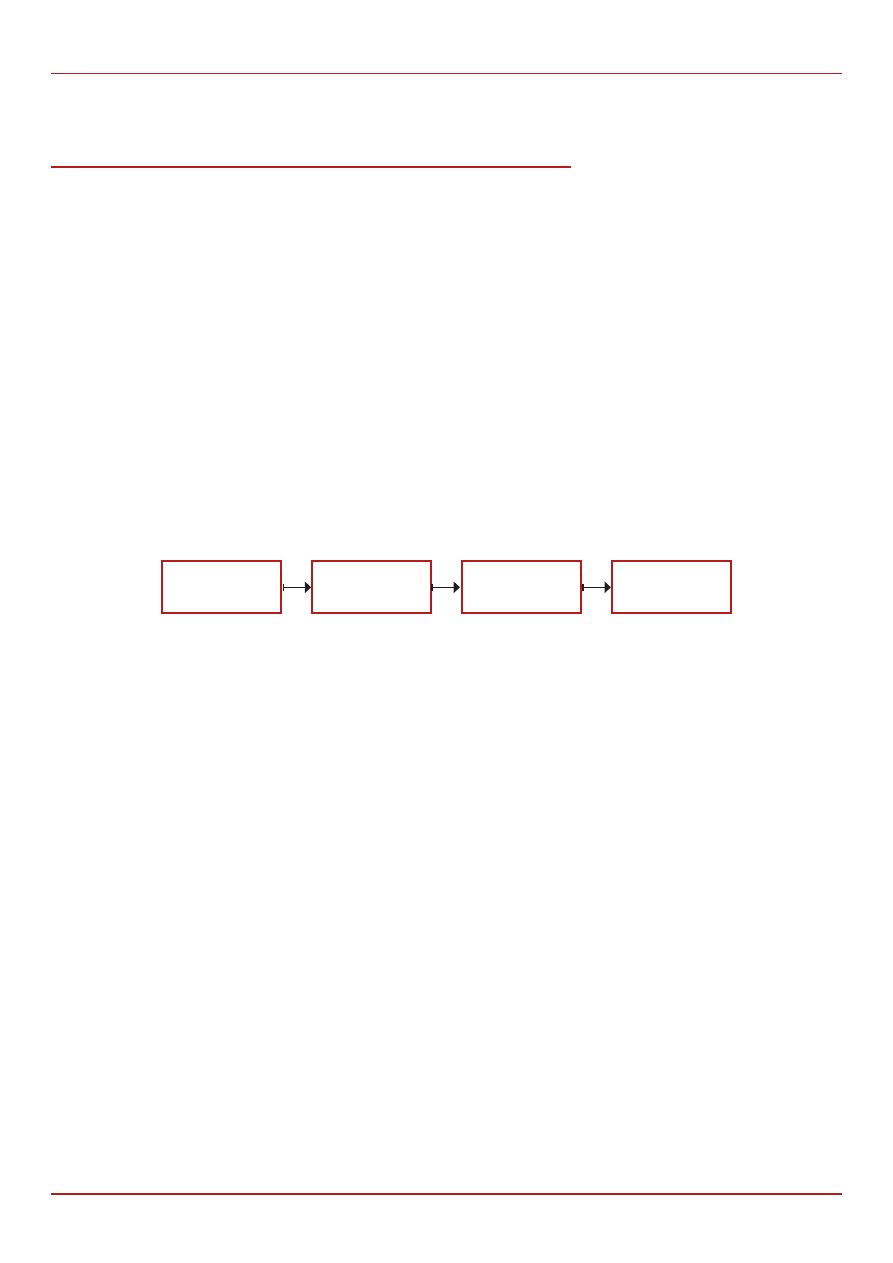
Figure 1.
Reconnaissance
This is where the attacker learns more
about its target and identifies the
weaknesses that will be exploited during
the actual attack. The reconnaissance
activity encompasses both computer
systems and individuals. Attackers
examine their target’s networks
and systems by using traditional
methodologies, such as port scanning
and service enumeration, in search of
vulnerabilities and misconfiguration
that could provide an entry point in the
organisation. Attackers also collect
information about key people in the
targeted organisation, for example by
combing through data available on social
media websites: this information will
be used to facilitate later stages of the
attack.
Initial compromise
This stage represents the actual
intrusion, in which attackers manage
to penetrate the target’s network. Most
frequently, the method of compromise
is spear phishing. A spear phishing
message may contain a malicious
attachment or a link to a malicious web
site [125]. Often times, the content of
the spear phishing message are tailored
based on the information acquired during
the reconnaissance stage, so that they
appear credible and legitimate.
A second common method of intrusion
is the strategic compromise of websites
of interest to the victim (or “watering
hole” attack). In these attacks, attackers
place mali- cious code on sites that are
likely to be visited by the intended target:
when the target visits the compromised
website, she will be exposed to one or
more exploits. Watering hole attacks
represent an evolution of the traditional,
opportunistic drive-by-download attacks
[95, 97], in which victims are attracted,
by different means, to a malicious web
page. The web page contains code,
typically written in the JavaScript
language, that exploits vulnerabilities in
the user’s browser or in the browser’s
plugins. If successful, the exploit
downloads malware on the victim’s
machine, which as a consequence,
becomes fully under the control of the
attacker [92, 96].
Command & Control
The Command & Control phase of the
attack is the stage where adversaries
leverage the compromise of a system.
More precisely, compromised systems
are forced to establish a communication
channel back to the adversary through
which they can be directly controlled.
The C2 channel enables an attacker
to establish a “hands-on-keyboard”
presence on the infected system (via
so-called remote access tools), to install
additional specialised malware modules,
and to perform additional malicious
actions (e.g., spread to other machines
or start a denial of service attack).
Exfiltration
In this stage, the attackers extract,
collect, and encrypt information stolen
from the victim’s environment. The
information is then sent to the attackers,
commonly through the same C2 channel
that was established earlier.
Of course, the exfiltration of data has
been a key step in opportunistic attacks
as well and it has been well documented
in the literature. For example, studies
of the data stolen (or “dropped”) by
the key loggers components employed
in banking trojans have reported on
the amount of data being transferred,
its estimated value, and the modus
operandi of their operators [50].
Furthermore, researchers have sinkholed
or hijacked entire botnets with the goal
of gaining an inside view of the data
stolen from infected machines and the
operations of botmasters [114]. With
respect to the exfiltration techniques
seen in these traditional attacks, we
expect targeted malware to expand
more effort into disguising its exfiltration
activity and its infrastructure.
Reconnaissance
Initial
Compromise
Command and
Control
Exfiltration
Figure 1: Targeted attack life cycle
PAGE 7
Command & Control: Understanding, Denying and Detecting
FEBRUARY 2014
University of Birmingham | CPNI.gov.uk

The Command and Control Problem
Differences with other models
In this exposition, we have simplified the
attack models discussed in the literature,
to avoid distracting the attention from
the main purpose of this study: the
Command & Control phase. More
detailed descriptions of other phases
may be useful for readers focusing on
other steps of the attack chain, such as
the initial compromise.
In particular, Hutchins et al. [55]
emphasise the steps required to perform
the initial intrusion by introducing specific
phases named Weaponization, Delivery,
Exploitation, and Installation. Since we
focus on the C2 stage, we group all
these phases under the generic Initial
Intrusion label.
Mandiant’s report [73] emphasises
instead the steps performed by attackers
after the initial compromise and leading
to a persistent presence inside a target’s
network. After a stage named Establish
Foothold, the authors present a cycle
of steps (Escalate Privileges, Internal
Recon, Move Laterally, and Maintain
Presence) that enable attackers to
establish an expanded foothold inside
the target’s network. The authors
point out that these steps are optional
and may not occur in all attacks. We
consider these activities to be part of the
compromise phase.
C.3
Statistics
It is notoriously hard to obtain adequate
statistics on information security in
general, and to measure the volume and
impact of cyber attacks in particular.
As a high-profile example of the
difficulties of this task, a recent review
has found significant flaws in a report
[27] commissioned by the UK Cabinet
Office from Detica, which provided high
estimates for cybercrime’s annual cost to
the UK [4].
The sources of data on cyber attacks
have traditionally been surveys and
telemetry collected by security vendors
across their installation base. Both
sources have their own issues [5]. For
example, surveys often introduce bias
by collecting most of their responses
from large companies, which have the
resources to collect the data requested
by surveyors. In turn, statistics from
security vendors have often been
scrutinised for issues of over-reporting,
which increases the perception of the
risk involved with security threats and
potentially favours the sales of a vendor’s
product. To further complicate the matter,
conclusions from different sources have
sometimes been found to be significantly
different, if not contrasting.
Recent legal developments may help
the collection of meaningful security
metrics: in the last few years, disclosure
laws have been introduced requiring
businesses to report security incidents
involving the theft of personal data
[15]. Such regulation may increase the
collection of attack metrics available, but
at the moment they only cover specific
incident types and geographic areas.
Collecting sound statistics for targeted
attacks seems especially challenging:
this activity shares some of the same
problems found with quantifying cyber
attacks in general and it adds a few
issues that are specific of this particular
domain:
• The victims of targeted attacks are
likely not willing to disclose the
information that they have been
attacked or, worse, breached. This
knowledge may be embarrassing
with customers and regulatory
agencies, and the disclosure details
may provide useful information to
competitors (e.g., information about
new product lines). Even more
problematically, as we will see,
targets may not know for a long time
that they have been attacked.
• Targeted attacks span vast sectors
of the economy, therefor, it may be
difficult for any single entity (security
vendor or governmental agency) to
have a sufficiantly broad visibility of
the problem.
• Different reporters may have
different definitions for what counts
as a targeted attack and for the
reporting methodology. It is not
unusual to encounter descriptions
of targeted attacks from one vendor
that other vendors classify as
traditional attacks.
Even with these caveats in mind, we
present here a number of statistics from
different sources. We consider reports
that provide (aggregated) data about
targeted attacks. We do not, instead,
include in our review reports that only
describe the attacks in general. For the
reasons we have discussed, the statistics
reported here should be approached with
a healthy dose of caution, in particular
with regard to their ability to support
general inference about targeted attacks;
but they still provide a snapshot, an initial
quantitative look into targeted attacks,
offering some light on questions such
as their pervasiveness and their usual
targets. We hope that in the future more
and better data on targeted attacks
will be available, enabling more robust
quantitative analysis of this phenomenon.
Mandiant Report
Mandiant is a security vendor providing
incident management products and
services to large institutions. Due to
their business focus, Mandiant has built
a reputation of dealing with targeted
attacks. They publish a yearly report with
findings from their engagements; the
latest available report covers data from
2012 [72].
Mandiant’s report suffers from some of
the general problems we have discussed
earlier. In particular, the sample size
(the number of incidents) used as the
basis of the report is not specified.
Similarly, it is not clear if the incidents
analysed in the report (those affecting
Mandiant’s customers) are a sample set
representative of the general population.
Nonetheless, the report contains a
number of statistics that are worth
discussing, as they offer an initial
characterisation of targeted attacks.
First, it discloses that only 37% of the
intrusions were discovered by the victim
itself: in the remaining cases, the victim
was notified by some external party (e.g.,
law enforcement, customers, security
vendor). The median time during which
attackers are able to maintain a presence
in the intruded network is reported to
243 days, well over 8 months. They also
report that in 38% of the cases, attacks
are repeated, supporting the notion that
attackers are persistent once they have
identified an intended target.
The list of targeted sectors include:
aerospace and defence (17% of the
cases), energy, oil, and gas (14%),
finance (11%), computer software
PAGE 8
Command & Control: Understanding, Denying and Detecting
FEBRUARY 2014
University of Birmingham | CPNI.gov.uk

The Command and Control Problem
and hardware (8%), legal (7%), media
(7%), telecommunications (6%),
pharmaceutical (4%), other (25%). The
report does not elaborate on how the
business classification was drawn.
Symantec
Symantec is a large computer security
company, focusing on virus protection.
They publish a yearly report on the status
of Internet security; the latest available
data covers the year 2012 [120].
The report investigates targeted attacks
on the basis of the targeted malicious
emails identified by Symantec’s
products. In total, the analysed dataset
comprises about 55,000 attacks. The
methodology used to discriminate
whether a malicious email is targeted
or opportunistic is intuitively presented,
but there is no detailed description
of the algorithm used to make this
determination.
Out of this dataset, Symantec reports
observing a number of targeted attacks
per day ranging from 50 to about 225.
The report warns that one large attack
campaign in April against a single target
would have significantly skewed results
and, thus, has been removed from the
presented results: while a reasonable
course of action, this observation
questions the sample size and
generalizability of reported data.
Also in this case, the report lists the
targeted sectors: manufacturing (24%
of the cases), finance insurance and
real estate (19%), other services (17%),
government (12%), energy/utilities (10%),
services professional (8%), aerospace
(2%), retail (2%), wholesale (2%), and
transportation (1%).
The report also comments on the size of
the targets: 50% of the attacks targeted
large organisations (those with 2,501
employees or more), 31% small and
medium business up to 250 employees.
The analysis of the malicious email
dataset also provides some insight into
the targets of the initial compromise:
R&D personnel (27% of the attacks),
sales (24%), C-level executives (17%),
and shared inboxes (13%). Interestingly,
the report points out a handful of
significant changes from previous year
data (for example, R&D personnel used
to be targeted only 9% of the cases in
2011 compared with 27% of 2012): it is
not clear if these changes are an artefact
of the data collection and analysis
process or correspond to actual changes
in the tactics of attackers.
Verizon
The telecommunication company
Verizon publishes a yearly report on
data breaches. The last available report
at the times of writing covers 2012
and contains data compiled from 19
organisations for a total of of more than
47,000 security incidents [127].
The report has a more general scope
than those discussed so far (it covers
data breaches in general), but it does
provide some useful insights on targeted
attacks. The report is characterised by a
careful methodology, which is explained
in detail.
The main findings relevant to our analysis
is that 25% of the breaches they report
on are targeted. The report confirms
the elusive nature of attacks (targeted
or not): 69% of breaches were spotted
by an external party (9% customers),
and 66% of the breaches took months
or even years to discover. Another
interesting observation is that, in most
cases, the initial compromise does not
require sophisticated techniques; in 68%
of the cases it is rated as “low difficulty”
and less than 1% as “high”. More
worryingly, subsequent actions may be
more sophisticated: 21% are high and
71% are low. Unfortunately, the report
does not break down these statistics
between targeted and opportunistic
attacks.
Discussion
As we have anticipated, the available
data is unfortunately somewhat limited
and the reporting methodology used
to analyse it is not always sufficiently
described. This limits our ability to make
generalizations on the basis of the data
sources that we have briefly listed here.
However, there are several points that
are worth discussing, keeping in mind
our objective of designing and deploying
better defences against targeted attacks.
Ability to detect
There seems to be support to the notion
that attacks in general, and especially
targeted ones, remain unnoticed
for a long time. This indicates that
organisations do not have appropriate
controls, tools, and processes to
identify the presence of intruders in
their network. Unfortunately, we do not
possess enough data to conclusively
point to the precise reasons for why this
occurs: in particular, it may be result of
factors ranging from cultural ones, such
as the lack of appropriate awareness to
this specific risk (the “I’m not a target”
mentality), to technological reasons, such
as the unavailability (real or perceived) of
effective defensive tools.
The failure to detect intrusions for
months, if not years, also implies that
attackers have a long time to carry out
their attacks, compounding the damage
inflicted on the target organisation. At
the same time, from a defensive point
of view, it shows an imbalance between
two common defensive strategies
targeting different steps in the attack
kill chain: defending by preventing the
intrusion and defending by detecting
an intruder. More precisely, detecting
the initial compromise requires to catch
and identify the individual event that
leads to the intrusion (e.g., the receipt
of a specific spear phishing email or the
visit of a specific malicious web site).
This is an event that occurs in a specific
point of time, and, lacking forensics
capabilities, its detection requires that
at that specific time some defensive
tool (e.g., intrusion detection system or
anti-virus tool) is capable of performing
the detection. Intuitively, detecting the
presence of an intruder may instead
happen at any time after the intruder has
established a presence in the target’s
network, during which time defensive
tools may be updated or improved. This
situation flips the imbalance between
attack and defence: while detecting the
initial compromise requires that defence
tools work effectively at all times (a
single missed detection may lead to the
compromise), to detect the intruder’s
presence it is sufficient that the attacker
makes a single mistake, revealing its
presence.
PAGE 9
Command & Control: Understanding, Denying and Detecting
FEBRUARY 2014
University of Birmingham | CPNI.gov.uk

The Command and Control Problem
Targets
Different sources provide different lists of
targeted sectors. This could certainly be
a result of the selection biases inherent
in each source. However, what we can
conclude by looking at the target lists
provided, for example, by Mandiant and
Symantec, is that any significant sector
of the economy may be the target of
attacks. Also relevant is the observation
that an organisation size is not a
predictor for being attacked or not:
organisations of any size, from small
businesses to large corporations, have
been attacked in the past.
In our context, this observation has
important consequences. From an
organisation point a view, the results and
recommendations that we provide in this
report should be generally applicable.
From a vendor perspective, this points
to the need of providing tools and
mechanisms that are amenable to widely
different organisations, with large ranges
of technical skills, human resources, and
budget numbers.
Sophistication
Third, the Verizon report contains some
preliminary data about the technical
sophistication of attacks and, more
precisely, it finds that a majority of the
initial compromises are carried out
with low difficulty techniques. While
it is not clear if the same results hold
when considering only targeted attacks
(rather than looking at all kinds of
attacks including opportunistic ones),
this observation does match anecdotal
experience from individual attacks,
which often do not show particular
sophistication, such as 0-day exploits or
stolen digital certificates.
The lesson learned from this data point
could be that, while defending against
sophisticated attacks is becoming
increasingly necessary, one cannot
discard traditional attack techniques.
C.4
Case Studies
In this section, we review a number of
cases of targeted attacks. There exist
many more accounts of attacks than we
can report here; we decided to focus
on those cases that show particular
attack techniques and objectives, or
that highlight the importance of C2
detection. More precisely, we include
a set of cases that have been publicly
disclosed: these attacks affected high-
profile organisations and had egregious
impact. We also include a set of cases
that were provided by Lastline, a security
company providing solutions to defend
against advanced attacks. These cases,
opportunely anonymised to protect the
identity of the targeted organisations,
are based on Lastline experience “in the
trenches”, working with its customers,
and draw attention to specific aspects
of attacks or to problems with existing
security approaches.
Political espionage
In January 2013, the New York Times
publicly denounced that it had been
subjected to targeted attacks for a
period of four months. The attacks had
been traced to Chinese hackers and
were linked to an ongoing investigation
at the journal that was highly critical of
the Chinese political elite [91]. Further
investigation of the attack methods and
objectives linked the attack to a larger
attack campaign targeting news and
media companies, including Bloomberg
News, which was compromised the
previous year.
An investigation of the incident found
that the attack activity showed some
of the traits typical of targeted attacks
originating from China: attackers hopped
through com- promised accounts at
US Universities, as a way to hide their
identity and make investigation more
complex, and they were suspected of
using spear phishing to gain the initial
access to the Times’ network.
The following steps of the attack fully
reveal the targeted nature of the incident:
the attackers obtained the passwords for
every Times employees and used them
to gain access to the personal computers
of 53 of them. Then, they deployed code
to search for and steal documents kept
by reporters on the current investigation
on Chinese politicians.
The Times article contains two pieces of
information that are useful to illustrate
the limitations of traditional security
approaches that are based on the
detection of the initial intrusion activity.
The article comments that the spear
phishing attack completely bypassed
existing defences at the perimeter:
“Attackers no longer go after our
firewall. They go after individuals.”.
The Times also reported that of the 45
malware samples used in the course of
the intrusion, only one was identified
by the journal’s anti-virus tool, whose
vendor later issued a statement reading
“We encourage customers to be very
aggressive in deploying solutions that
offer a combined approach to security.
Anti-virus software alone is not enough.”
[122].
Military espionage
In May 2013, the confidential version of a
report prepared by the Defence Science
Board for the Pentagon was leaked to
the Washington Post [83]. The report
claimed that the designs for many of the
US advanced weapons systems had
been compromised by Chinese hackers.
The report claimed that the extensive
theft had targeted the documentation for
several missile systems, combat aircraft,
and ships.
While there are at the moment few
details regarding how the intrusion
actually occurred, it appears likely that
the attacks targeted in particular large
military contractors, which are involved in
the design and production of the military
systems.
This case study is a cogent example
of attacks aiming at obtaining valuable
intellectual property: sources from the
Washington Post claimed the stolen
designs were the result of 15 years worth
of research and development.
Supply chain attacks
In February 2013, the security
vendor Bit9 reported that it had been
compromised [67]. Bit9 produces a
whitelisting product, which specifies
the list of software that should be
allowed to run in a network; anything
else is considered to be dangerous.
As a consequence of the intrusion, the
attackers managed to steal the secret
certificate that Bit9 uses to sign its
software releases. The company also
revealed that some if its customers
had received malware that was digitally
signed with the stolen certificate.
Also in this case, the specific details
PAGE 10
Command & Control: Understanding, Denying and Detecting
FEBRUARY 2014
University of Birmingham | CPNI.gov.uk

The Command and Control Problem
of the intrusion are not entirely clear.
There are, however, several interesting
aspects in this attack. First, attackers
compromised Bit9 with the primary intent
of acquiring the capability required to
successfully attack upstream targets
protected by the company’s products.
These are often called “supply chain
attacks” because they target one link
of a chain that eventually leads to
the organisation that is actually being
targeted.
Manufacturing espionage
Military secrets are hardly the only ones
to be sought after by attackers. In early
2013, Lastline started monitoring the
network of a manufacturer active in the
field of fashion. During this monitoring,
it determined that an internal server was
infected: further investigation revealed
an unexpected remote connection
to that server originating from China.
Among other data, the server contained
all the designs of the manufacturer’s
new collection, which had not yet been
officially presented.
This episode shows that the data
targeted by sophisticated attackers is not
limited to highly confidential documents.
Industrial espionage, in certain
cases conducted with semi-official
governmental blessing, has targeted a
large spectrum of economic sectors [73].
Malicious infrastructure agility
In mid 2013, a Lastline product was
installed at a professional services firm.
Lastline detected a successful drive-by-
download attack against one of the firm’s
employees. The drive-by had started
when the employee visited a legitimate
web site that had been compromised;
the web site collects information relevant
to the firm’s business. Additional drive-
by-download attacks were detected
short thereafter, originating again from
web sites belonging to companies and
organisations in the same business field
as the firm.
After one of the successful drive-by-
download attacks, connection attempts
to a malicious domain were observed:
the connections did not succeed
because the destination server failed
to respond. However, a day later,
connections to the same domain were
observed: this time, the server was
responding and was actually distributing
the configuration file of a widespread
financial malware.
These events suggest that attackers run
campaigns targeting specific business
sectors (these could be considered
less targeted versions of the watering
hole attacks). Furthermore, the sudden
activation of malicious domains shows
that the malicious infrastructure used by
attackers (exploit sites and C2 domains)
can vary quite rapidly, thus requiring its
constant and up-to-date monitoring.
Built-in polymorphism
This case study was collected after
the installation of Lastline product in
a University environment. Here, an
administrative user received a malicious
email and clicked on link contained
therein twice in a short span of time. The
link caused the download of a malware
program. Interestingly, the binaries
downloaded as a consequence of the
user’s actions were different: they not
only had different hashes, but they also
received different scores on VirusTotal,
an online service that scans submitted
binaries with over 40 anti-virus tools.
This episode shows that the use of
evasion techniques, polymorphism in this
case, is a built-in component in many
attacks: all the binaries downloaded in
the course of the attack are (superficially)
different. In addition, this case illustrates
the importance of user security
education: users are all too often a weak
link in the security of an organisation.
C.5
A New Focus
There are several lessons that we can
learn from the statistics on today’s
attacks and the case studies that we
have presented.
One is that preventingcompromises
maybedifficult. We have seen that
intrusions happen, even at security
conscious organisations which possess
considerable domain knowledge,
expertise, and budget for security. We
have also seen that there does not really
appear to be a sector that is immune
from attacks: modern businesses and
organisations handle on a regular basis
confidential data of various nature
(personal, financial, R&D) that is valuable
to attackers. It should also be noted that
the compromise may initiate outside of
an organisation’s perimeter (and away
from the defences that the organisation
has put in place), and then spread inside
it as the infected device re-enters the
perimeter. For example, with bring-
your-own-device (BYOD) policies,
organisations explicitly allow employees
to bring on the workplace personally-
owned and managed mobile devices,
such as smartphones, and to use these
devices to store privileged data and to
interact with internal systems.
As a consequence, it is clear that
detectingthatacompromisehas
occurrediscritical. Ideally, the detection
is performed as early as possible in
the life cycle of the attack, to limit the
damage that is suffered (for example,
before confidential data is actually
stolen). Unfortunately, we have seen,
in particular with the Verizon data on
breaches, that a significant number of
infections go completely unnoticed for a
long amount of time.
C2 detection and disruption seems
to offer a solution to this problem:
by focusing on the C2 phase of an
attack, one accepts that a device may
become under control of attackers,
may enter organisation’s network, and
may even acquire confidential data.
However, the successful detection of
C2 activity will preclude the attackers
from performing the actual malicious,
damaging activity of their actions,
such as stealing confidential data. Of
course, C2 detection should be seen
as a complementary approach to the
prevention of compromise, rather than a
substitution for it: completely blocking an
attacker, whenever possible, is preferable
than having to deal with it after the fact.
With this approach in mind, we review
in the next sections the techniques that
attackers use to set up C2 channels,
and then the approaches that have been
proposed to detect and disrupt such
channels.
PAGE 11
Command & Control: Understanding, Denying and Detecting
FEBRUARY 2014
University of Birmingham | CPNI.gov.uk

C&C Techniques
As we have already discussed there is
a constant battle between the attackers
(malware writers) and the defenders
(security professionals), wherein the
defenders find a new way to detect
and block attackers, and in response
the attackers come up with new, often
novel ways of performing their C&C
communication to evade the defenders.
In this section we will discuss various
techniques used by the attackers,
including some in-depth case studies
of actual malware that use them, and
describe the general trends that the
malware is exhibiting.
The command and control system
for most modern malware has
three components. These are
controller discovery, bot-controller
communication protocol and the C&C
topology. In the controller discovery
phase, the malware attempts to identify
the location of the control system. The
topology of the system may take many
forms, falling into the broad categories
of centralised and de-centralised.
Finally, there is the actual method of
communication from the malware to
the controller. These three steps are
often completely separated, and it is
a common occurrence for malware to
update one of these components while
keeping the other components constant.
This section is structured as follows:
first, we will give a brief insight into the
trends in malware command and control
over the years. We will then describe the
various techniques used by malware to
perform the three actions as described
above.
D.1
Overview
Over the years, the architecture of the C2
channel has evolved substantially, driven
by an arms race with detection-response
mechanisms. The network structure
(or topology) of the C2 channel has an
intimate relationship with its resilience
to attack and error, as well as scalability
to larger numbers. C2 designers desire
scalability, robustness to take-down
efforts, and stealth – anonymity against
detection.
C2 communication structure
Early C2 designs followed a centralised
architecture such as using an IRC
channel. In this design, administration
and management tasks are simple
and the architecture tolerates random
losses of C2 nodes with little impact on
efficiency. However, such a topology
is fragile against targeted attacks — if
the defenders can identify the channel
and attack or take down the server, they
effectively disable the C2 channel. Such
fragile architectures were accompanied
by poor software engineering practices.
For instance, the address of this server
was often hard-coded in to the malware
and static in nature.
However, the growing size of botnets, as
well as the development of mechanisms
that detect centralised command-
and-control servers [10,12,40,43–
45,63,71,117,135], has motivated the
design of decentralised peer-to-peer
botnets. Several recently discovered
botnets, such as Storm, Peacomm,
and Conficker, have adopted the use of
structured overlay networks [93,94,116].
These networks are a product of
research into efficient communication
structures and offer a number of
benefits. Their lack of centralization
means a botnet herder can join and
control at any place, simplifying ability
to evade discovery. The topologies
themselves provide low delay any-to-
any communication and low control
overhead to maintain the structure.
Further, structured overlay mechanisms
are designed to remain robust in the face
of churn [47, 70], an important concern
for botnets, where individual machines
may be frequently disinfected or simply
turned off for the night. Finally, structured
overlay networks also have protection
mechanisms against active attacks
[16]. Fully decentralised topologies offer
systematic resilience guarantees against
targeted attacks on the C2 channel,
yielding new forms of robustness. The
vast power of peer-to-peer botnets from
the use of resilient topologies comes at
the cost of stealth; the unique structure
can be also be used as a point of
detection [82].
C2 communication traffic
Relationshipbetweentrafficand
structure. C2 evolution has also been
driven by largescale defence efforts to
isolate C2 traffic based on its unique
traffic characteristics. Defence efforts
to block unused ports and application
protocols simply encouraged C2
designers to tunnel their traffic through
legitimate services, paving the way for
the return of centralised architectures –
C2 channels has been observed in the
wild using comments in HTML pages or
even actual blog posts on public forums
to communicate. Since traffic is routed
through legitimate services, defenders
are effectively denied the option of
disabling the service, as doing so would
hurt legitimate interests.
Communicationtraffic-patternanonymity.
Other drivers of C2 techniques have
been defence efforts arising from the
application of statistical traffic analysis
techniques. These range from simple
anomaly detection techniques to
sophisticated machine learning based
detection. In response, C2 designers
have adopted evasion techniques
[87, 107] to hide traffic patterns from
detectors. Such techniques mask the
statistical characteristics of C2 traffic by
embedding it within synthetic, encrypted,
cover traffic. The adoption of such
schemes only require minimal alterations
to pre-existing architectures and can be
adopted on a strap-on basis by other
C2 operators. We can expect these
techniques to mature quite well in the
near future.
Communicationend-pointanonymity.
An interesting development is that C2
designers have adopted anonymous
communication techniques within their
architectures. Initial designs used simple
anonymous proxies or stepping stones
to route the traffic through a number
of proxies to anonymise C2 traffic
endpoints. More recently, C2 designers
have started abusing systems designed
for Internet privacy such as Tor, JAP,
and anonymiser [30, 59]. End-point
anonymity prevents defenders from
isolating (and filtering) C2 hosts even
if they can successfully detect traffic
patterns.
Communicationunobservability. C2
techniques in the form of practical
unobservable communications have
also been developed. These are
especially powerful as they offer full
unobservability; the strongest possible
anonymity guarantee, subsuming both
PAGE 12
Command & Control: Understanding, Denying and Detecting
FEBRUARY 2014
University of Birmingham | CPNI.gov.uk

C&C Techniques
end-point anonymity as well as traffic-
flow anonymity. Currently adopted
techniques are based on the use of
covert communication techniques. For
instance, the application of probablistic
information-hiding techniques such as
image sharing behaviour on social
networks [81]. Emerging trends include,
the use of uncompromised DNS servers
as transient stores of C2 payloads.
Techniques to evade responses. The
primary response mechanism against C2
channel is to isolate domain names and
IP addresses related to C2 activity. In
response, C2 architects have developed
techniques inspired by fault-tolerance
literature. This is characterised by
the evolution of domain generation
algorithms (DGAs), and fast-flux
networks which can allow large numbers
of IP addresses to be linked to a single
domain.
D.2
Communication structure
Centralised architectures
Early C2 designs were based on a
centralised architecture where one
or more servers are exclusively used
to coordinate C2 communication.
The classic design for command and
control in malware is to make use of an
Internet Relay Chat (IRC) server. IRC was
developed in 1988, and is a protocol
used for text chat over the internet. Its
primary function is to provide “channels”,
which are chat rooms allowing for group
conversations (private user-to-user chat
is also available but less common).
Channels are hosted on servers, which
in turn are part of IRC networks. While
most channels are publicly accessible, it
is possible to require authorisation to join
a channel. User within a channel have
varying levels of access (modes), which
can define what that user can do within
a channel. The channel itself has modes
which define what each user mode
can do, such as changing the channel
topic, and other options regarding the
channel (such as access authentication).
All of this makes it a simple platform for
malware communication. It provides
a simple function for the attacker to
deliver commands to the malware, and
it’s equally simple for the malware to
transmit information, such as collected
data, back to the human controller.
Centralised architectures are simple and
easy to manage, and robust to the failure
of large numbers of malware-infected
computers. In 2000, researchers [3]
famously showed that while centralised
architectures are robust to random
failure, they are fragile against strategic
attacks; removing the high-centrality
components of the communication
structure disables the C2.
Further, centralised C2 networks are not
scalable. Supporting a large C2 network
consisting of hundreds of thousands to
millions of malware instances requires
careful coordination amongst a large
number of control servers, each servicing
a few thousand or so malware instances.
Decentralised architectures
To counter the structural weaknesses
and scalability limits of centralised
architectures, many C2 designers are
moving to decentralised or peer-to-
peer (P2P) architectures for command
and control. The main design goals
of these architectures are: scalability
(nodes maintain a limited state and
communication costs grow slower than
the number of nodes), fault tolerance
(requests can be routed around failed/
takedown nodes) and P2P nature
(distributed architecture with no single
point of failure and strong availability
guarantees).
In a P2P network, there is no central
control server; instead every member of
the network acts (or can act) as a server,
thus providing a load balancing property.
Further, decentralisation ensures large
amounts of redundancy against targeted
attacks, consequently in comparison
to centralised C2, any takedown effort
will need to attack a significantly larger
percentage of the nodes to completely
disable the C2 network.
The use of decentralised C2 networks
has heavily borrowed from P2P file
sharing networks (used for both legal
and illegal means). In a P2P network,
each member communicates to a non-
uniform number of other members or
‘neighbours’. Nodes only communicate
with their neighbours in the network,
with different variants of P2P networks
providing different methods for the
routing of data around the network. P2P
networks can either be unstructured
overlay networks ( Bittorrent, Gnutella, or
Kazaa). Or, structured overlay networks
such as CAN, Chord, Pastry, deBruijn-
based options (Koorde, ODRI, Broose,
D2B), Kautz, Accordion, Tapestry,
Bamboo, and Kademilia. We have named
a few but there are many other options,
which indicates the substantive depth of
the design possibilities.
We will now take look at the typical
operation of the Bittorrent network. To
access a file on the network, the user
downloads a tracker file, which contains
a list of peers that hold some or all
‘pieces’ of the file. The user then directly
connects to these peers, and downloads
the pieces they have. Eventually, you
will have the entire file. The more users
who are involved in the “seeding”
(hosting) of file pieces, the faster the
download speed. Obviously, currently the
most common use for this technology
is in the sharing of (often copyright)
media files. The network can, though,
provide an easy method for propagating
information among a large number of
users without the use of a central server.
The typical situation for malware is that
the malware will have a list of peers to
which they are connected, and they
will repeatedly check with these peers
for new commands. The bot controller
simply has to “upload” the commands to
a single (or group of) nodes (which can
be anywhere in the network), and the
command will eventually reach all nodes
through a flooding mechanism. This
has the additional advantage that there
is no need for a link between the data
and the uploader, as is the case with a
centralised system.
Case Study: Storm
Storm is an good example of a botnet
that uses a p2p network for its command
and control. The Storm botnet, at its
peak in 2007, comprised of anywhere
between 1 and 50 million infected hosts.
Storm propagates solely through the use
of spam emails, which contain links to
either websites which take advantage
of browser exploits, or prompt the
download of malicious software. One of
the first actions the malware performs
is to make sure that the system clock is
correct. This is vital for communication.
Storm makes use of OVER- NET, which
is a Kademlia based distributed hast
PAGE 13
Command & Control: Understanding, Denying and Detecting
FEBRUARY 2014
University of Birmingham | CPNI.gov.uk

C&C Techniques
table (DHT) based p2p network. Each bot
has an 128 bit DHT id, which is randomly
generated. Routing is performed by
computing the XOR distances of the
IDs to the destination, node a which
has a message for node d will forward
to the peer (neighbour) with the closes
id to d. Storm, like many p2p networks,
uses a
publish/subscribe style of
communication. A node publishes
information using an identifier generated
from the contents of the information.
Consumers can then subscribe to the
information using the identifier. The
bots compute identifiers to subscribe
to using the day and a random number
between 0 and 31. The controller can
precompute these identifiers and publish
information using them. The information
published consists of a filename of the
form ”*.mpg;size=*”, where * represents
a 16 bit number. The malware converts
this to an IP address and port number,
at which point the malware performs a
direct connection to talk to the controller
directly.
Social Networks
Social networks now play a huge part
in many peoples lives. The benefits
that they bring to both businesses and
end users are hard to ignore. In fact,
Facebook, the largest social network,
now has over 1.1 billion users, and
is currently the second most visited
website (www.alexa.com) in the world.
The sheer volume of social network
traffic, plus the ability to easily host
information within a social network page
for little to no cost, has made them a
very attractive tool to malware creators.
In this case, C2 channels are built as an
overlay network over a social network,
again both centralised and decentralised
configurations are possible. Although
social networks are largely based around
a small number of highly well-connected
central servers, it’s not possible to simply
block the OSN due to their immense
popularity with legitimate users. Further,
online social network (OSN) providers
have invested significantly in computing
infrastructure. OSNs feature worldwide
availability and load balancing, thus
mitigating the traditional scalability limits
of centralised C2 channels. They host
a rich variety of content enabling the
use of steganographic communication
techniques, which we will discuss this in
future sections of the report.
There have already been numerous
examples in the wild of malware that
uses social networks (or similar sites)
as part or all of the command and
control system. One (possible) botnet
that has been found is an unnamed
piece of malware that receives its
commands through tweets posted to
a particular Twitter account [132]. It is
unclear however if in this case this was
a researcher testing a new toolkit for
Twitter command and control rather
than an actual botnet. An example
found by Arbor Networks [85] also
demonstrates a botnet using Twitter as
part of it’s C2 channel; in this case the
twitter account posts base64 encoded
URLs, which represent secondary C2
servers. The same behaviour is also
found on identically named Jaiku and
Tumblr profiles. They also found a botnet
that uses a malicious application on
the Google App Engine cloud hosting
platform which also returns URLs to
which the malware will then proceed to
connect to [84].
A confirmed piece of highly targeted
malware that is using a social network
as part of its command and control is
Taidoor. Taidoor attacks organisations
that have links to Taiwan (hence the
name), and security firm FireEye have
found that the malware has been
modified to host the actual malware
binaries in a Yahoo blog post [129].
The malware is initially delivered by
email end performs an exploit against
Microsoft Office, and a downloader is
installed. This downloader connects
to a Yahoo blog post, which contains
seemingly random data. The data is in
fact the actual malware binary, contained
between two markers and encrypted
using the RC4 stream cipher, with the
resulting cipher-text being base64
encoded. When decrypted, the data is
a dll file containing the malware. The
malware then connects directly to two
C&C servers.
D.3
C2 communication traffic
Communication pattern analysis. A key
feature of C2 channels that distinguishes
them from other malicious activity is
the fact that the individual malware-
infested hosts communicate with
each other. This lets them carry out
sophisticated coordinated activities,
but it can also be used as a point of
detection. Traffic analysis techniques
can be used to detect communication
patterns among bots, and how such
patterns can be used for more effective
botnet countermeasures, and tradeoffs
between botnet performance, resilience,
and stealth. Trafficanalysis is an old
field hence many of the techniques
are applicable. We will review these
in Section E. Consequently, C2
designers have adopted techniques to
hide communication patterns. Traffic
analysisresistance, is a much desired
property by C2 designers. Anonymous
communications technologies study
the design of communication channels
that are resistant to traffic analysis.
For C2 designers, the ultimate goal
is unobservable communications.
The property of unobservability – the
strongest form of communication
anonymity – refers to the communication
capability that a third party cannot
distinguish between a communicating
and non-communicating entity. For
instance, by appearing indistinguishable
from legitimate traffic, C2 activity will
be effectively undetectable. There’s a
substantial amount of knowledge in the
public domain on the topic on which C2
designers can build upon.
We now briefly review the current state of
adoption of anonymous communications
technology by C2 designers.
Tor
Tor (originally TOR:The Onion Router) is
a service used to provide anonymity over
the internet. It is used by governments
and the public alike (for example it is
extremely popular with whistle-blowers),
and even receives a large proportion of
its funding from the US Department of
Defence. The basic system works by
relaying internet traffic through a number
of nodes, and applies multiple levels of
encryption/decryption to mutate the
traffic after each hop. It is extremely
difficult to identify the original sender
and receiver of packets sent over the
network. This security has also made it
PAGE 14
Command & Control: Understanding, Denying and Detecting
FEBRUARY 2014
University of Birmingham | CPNI.gov.uk

C&C Techniques
a target for malware coders, and there
have been cases of malware that use
the Tor network (and some of its extra
features) to aid in command and control.
To become a part of the Tor network, one
simply has to install a simple piece of
software. The machine can then act as a
replay node for others, and make use of
the Tor network.
One of the more advanced features
of Tor is the ability to set up Hidden
Services. These allow a server to hide
behind a proxy, keeping the actual
identity of the server hidden from those
who access it. Hidden services work
by setting up “Rendezvous” points.
A rendezvous point is a node on the
Tor network, whicis used as the entry
point for the server. Traffic between
the rendezvous point and the server
is routed in the normal Tor fashion,
providing anonymity. A rendezvous point
is access using an “.onion” link.
While few examples of actual bots have
been identified that use Tor as part of
their C&C channel, there is growing
evidence that this is occurring on a large
scale. In late August/early September
2013 the Tor network experienced a
large increase in the number of users
[29]. The actual amount of traffic on exit
nodes, however, only showed a minimal
increase. This was eventually identified
to be down to the SDC botnet [134].
The SDC botnet hosts its command
and control server behind a Tor hidden
service. The botnet, however, shows
little activity, and is believed to simply be
used for installing other malware.
Case Study: Skynet
Skynet is a moderately-sized ( ̃12000
machines) botnet based upon the Zeus
family of malware. The interesting thing
(apart from the usage of Tor) about
Skynet is that its operator hosted an
IAmA (Q&A) session on Reddit 1. When
a team of researchers [46] discovered
an instance of the malware, they were
able to use the information provided by
the Reddit post, plus a small amount of
reverse engineering, to provide an almost
complete profile on the operation of the
botnet.
The malware is spread primarily through
the Usenet file sharing network, and is
primarily used for DDoS attacks, data
mining and Bitcoin mining. When the
malware is installed onto a machine, the
Tor client for Windows is also installed,
and a Tor hidden service is set up for the
machine itself. All C&C communication
is performed over a Tor SOCKS proxy
running locally on the machine. The
hidden service is opened on port 55080.
The primary method of C&C is an
IRC server hosted behind a Tor
hidden service. The server runs at
“uy5t7cus7dptkchs.onion” on port
16667. The controller issues com- mands
to the malware through the IRC channel.
These actions can include performing
attacks and returning info on the host
machines.
The malware also includes a version of
the Zeus malware family. Zeus is a very
common banking trojan, with a primary
goal of stealing personal financial
details (for example credit card numbers
and online banking passwords). Zeus
provides a web- based C&C server,
which the controller has hidden behind a
second Tor hidden service. By accessing
the control server, the researchers were
able to recover a XML file con- taining
the current target websites.
The final component of the malware
performs Bitcoin mining. The malware
includes the open source “CGMiner”
software used for Bitcoin mining, which
connects to a number of Bitcoin mining
proxy servers. Interestingly, seven IP
addresses for proxy servers were found,
of which two were active, but none were
hidden by Tor.
Due to the use of Tor, it is almost
impossible to identify the actual location
(and owner) of the command and
control servers. Through responses
on the Reddit post, plus the botnets
concentration in central Europe (in
particular the Netherlands and Germany)
there is a strong chance that the operator
is based in Germany.
Unobservable C2
Communications
Whereas systems such as Tor aim to
provide anonymity through unlinkability
(i.e. disguising who is talking to whom),
unobservable communication methods
aim to hide the fact that anyone is
communicating altogether. Tor, and
similar systems, are designed to provide
low-latency communications but this
is often difficult to achieve when using
unobservable communication methods,
which often provide a higher-latency for
of communication. While this is often
deemed unacceptable for the user-base
of Tor like systems where usability is
a factor, it is not an issue for malware
coders. The most common form of
providing unobservable communications
is through the use of steganography.
1 http://www.reddit.com/r/IAmA/
comments/sq7cy/iama_a_malware_
coder_ and_botnet_operator_ama/
Steganography (Greek: “concealed
writing”) is the art of writing messages
in such a way that nobody, apart from
the sender and receiver, suspects
the existence of the message.
Steganography is an art that has been
used for thousands of years, and has
been reinvigorated in the digital age. The
main purpose of using steganography
is that it can make the communication
unobservable. There are two ways
in which steganography can be used
by malware to hide the command
and control communications. The
first is that the malware can make its
communication protocol appear as
another, and secondly it can embed
itself within otherwise legitimate content
online, such as images.
Today most media types, including
text, images and video, are capable of
contain- ing hidden data in a number of
ways. In the simplest cases, this can be
achieved by adding extra metadata to
files to store the required information,
although this is easily discovered. The
alternative, and more advanced, method
is to change the actual file contents
itself. For example, in a image file the
least significant bit of each pixel in the
image can store the data. This will allow
a relatively large amount of data to be
stored (directly corresponding to the size
of the image), and to the untrained eye
the image will appear to be unchanged.
Unobservable C2
Communications
In a audio file, the data can be hidden
PAGE 15
Command & Control: Understanding, Denying and Detecting
FEBRUARY 2014
University of Birmingham | CPNI.gov.uk

C&C Techniques
by introducing an echo, with the amount
of delay indicating the data (the delay
will be in the 10s of milliseconds so
unobservable to the untrained ear).
There are numerous algorithms for
steganography, providing differing levels
of unobservability and modification
resistance (the classic way to remove
image steganography, for example, is to
resize or slightly distort the image).
Currently, there are very few examples of
steganography being used by malware
in the wild. It is expected, however,
that the amount of malware making
use of steganography will increase
as command and control detection
methods become more advanced and
difficult to circumvent using traditional
means. Therefore, this section will
mainly deal with proposed designs
for steganography-based malware
command and control.
One example of real world malware
using a form of steganography is the
Trojan.Downbot Trojan [137]. Trojan.
Downbotspreads through targeted
emails, and the first thing it does is to
access an attacker-controlled website,
for which the address is hardcoded into
the malware itself. The website is made
to look like a code tutorial site, and to
anyone who happens to access them
legitimately the website will appear
completely harmless. If the page source
is analysed, however, it can be found
that the source contains specially
formatted and encoded comments in
HTML files, or extra bytes in image files.
These comments and images contain
the command and control commands for
the malware, including a command for
the malware to contact a specific IP/port
combination (to upload collected data).
This technique is effective as all the
command and control communication is
performed over HTTP and would appear
in logs to be normal web browsing
behaviour, and to block all HTTP
traffic would cause usability issues for
legitimate users.
Case Study: Stegobot
Stegobot is a proposed design for a de-
centralised botnet with an unobservable
C2 protocol based upon steganography.
The system utilises the existing user
behaviour of the uploading of digital
images to a social network, and the
subsequent broadcast of these images
to all of the users connections.
The social network that is the focus
of this paper is Facebook. The typical
activity of Facebook is that a user
uploads an image through the web
interface, and while they are browsing
the “news feed”, the recently uploaded
images of their connections are
downloaded to a temporary folder
on the local machine. The malware
operates as a proxy - when an image
is uploaded data is inserted into it
before it is uploaded. The malware
also attempts to extract data from the
temporarily downloaded images, storing
any recovered information. The malware
is designed for information collection, in
particular bank details and passwords.
Commands are issued by the controller
at some point in the network (note: this
can be from any of the bots with with
equal probability), and the command
is then propagated through the use of
flooding. Collected data is returned to
the controller in the same way.
The system uses a steganography
algorithm that is hard to detect
automatically (YASS), so provides
reliable unobservability. The C2 system
creates no extra web traffic as it uses
exclusively the normal browsing habits
of the affected users. When simulated
on a social network of 7200 nodes, the
bot controller can receive up to 86.13MB
of data per month, which may seem
like a small amount, but can represent
many thousands of bank details and
passwords.
D.4
Evasion
DNS
The Domain Name Service (DNS)
is a naming system for computers
on the Internet. It’s a basic piece of
infrastructure that translates human-
relatable computer resource names to IP
addresses which can be used to route
information. Attackers extensively use it
to build and operate the C2 channel.
DNS Fast Flux
One of the major positive points for
malware coders is that the IP addresses
returned by an DNS request do not
need to be static. This property is
used by legitimate services through
the use of Content Delivery Networks
(CDNs). CDNs are used by large-scale
web services (such as Amazon and
Facebook) for a number of purposes, the
primary purpose being to enable the use
of multiple servers around the world, so a
user can access content closest to them.
It is also useful to aid in load balancing
and provides extra redundancy in case of
failure. In a CDN, a typical DNS response
will contain multiple IP addresses, all
of which are valid. The user will then
connect to one of these. The returned
IP addresses will typically have a TTL
measured in hours or days. This is so
that the effects of DNS caching can
be felt; if the TTL is too short effective
caching of results cannot be performed.
Repeat request for the same domain
from the same location will in general
return the same set of IP addresses,
possibly with some differences if the
CDN needs to load balance.
An variation on a CDN is a Fast-Flux
Service Network (FFSN) [51], in which the
command and control server is hidden
behind a wall of compromised machines,
which are often part of a botnet. Each
of these compromised hosts acts as a
sort of “proxy” to the C&C server; each
time they receive a request for the server
they will forward it, and will return replies
to the original requester. Each of these
hosts will have a unique IP address,
which can be used to access the server.
For example, an FFSN comprising of
10,000 compromised machines provides
up to 10,000 IP addresses that can all
point to a single server.
The FFSN operates as follows. The
domain of the server is public. A host
wishing to contact the server makes
a DNS request for the domain, and is
returned a set of IP addresses, and then
connects to one of them. This sounds
familiar doesn’t it? This part of a FFSN
is almost identical to a CDN except for a
few small differences. First, the returned
IP addresses returned will not be for
the actual controller(s), rather they will
point to compromised machines within
the flux network. Second, the returned
IP addresses will have a very short TTL,
measured in minutes (rather than the
days as is the case in a CDN). A second
request will in most cases return a
PAGE 16
Command & Control: Understanding, Denying and Detecting
FEBRUARY 2014
University of Birmingham | CPNI.gov.uk

C&C Techniques
completely different set of IP addresses.
This is the fast-flux behaviour; the
malware controller has no control over
which of his compromised hosts are
online so the returned IP addresses
needs to change frequently to increase
the risk that a hot is available.
DNS as a Medium
It is also possible to use the DNS system
as a communication channel rather than
just as a way to set up the channel. One
example of this being used in the wild
is Feederbot [28]. Feederbot makes use
of the fact that the RDATA field in a DNS
response can be of multiple types, not
just an IP address. One of these is TXT,
which as the name suggests means
actual text can be transmitted. Feederbot
uses TXT replies to transmit data. The
commands are encrypted and the
encoded into base64 (which resembles
random text). The remainder of the DNS
response packet uses valid syntax,
making detection difficult.
While Feederbot is optimised for one-
way command and control, in most
cases the malware will need to transmit
information back to its controller.
Seth Bromberger, working for the
US Department of Energy, proposed
a system for exfiltrating data from
organisations by making use of DNS
requests. In this case, the domain name
that is being queried contains the data
to be transmitted. The attack works as
follows. The attacker sets up a domain
name (evil.com) and makes sure
that he has control of its authoritative
nameserver (nameserver.evil.com). Say,
for example, an infected hosts wishes to
transmit the data “Super Secret Stuff”
back to its controller. It will simply make
a DNS request for evil.com, pre-pending
the data to the domain (so the request
will be for super.secret.stuff.evil.com.
The data can be encrypted before
pre-pending to prevent the contents
of the data being identified. When the
request reaches the attacker controlled
nameserver (nameserver.evil.com), the
attacker can simply read off the data.
The attacker can also send commands
back to the malware in the response,
either by using the method of Feederbot,
or by, for example, using specific IP
responses to indicate a particular task
to be performed. A similar approach
is proposed by Xu et al [133], who
extend this idea to also include traffic
patterns for the communication to avoid
detection, for example by only creating
DNS queries when the host machine is
making them.
A second example of malware that
makes use of the TXT record is the
W32.Morto worm [79]. In this case,
DNS requests to harcoded domains
return encrypted binary signatures and
IP addresses in TXT responses. The
malware then downloads a binary from
the included IP address. It is also rather
peculiar in that there are no A records for
the domains, only TXT records, indicating
that the domains are used for the sole
purpose of controlling the worm.
Domain Generation Algorithms (DGA)
One method of providing resilience to
both detection and reverse engineering is
the use of Domain Generation Algorithms
(DGAs). The function of a DGA is to
allow the malware to programmatically
generate domains for which it attempts
to access a command and control server.
It is then up to the attacker to ensure
he controls the domains that will be
generated.
A DGA will often be reliant on factors
such as the current time or date, and the
result should be consistent across
multiple hosts. The malware will
repeatedly run the algorithm to generate
a domain and attempt to connect. The
attacker can also run the algorithm, in
advance, and register the domains when
they are required to use as a temporary
command and control server.
The main benefit to an attacker of a DGA
is that they allow for a large amount of
redundancy in the command and control
server. The controller, at any one time, is
short lived and so if one is taken down, a
new one will be available in little time.
For example, the Conficker malware
will generate 250 domain names every
three hours, based upon the current
UTC date [94], The same domains are
generated every three hours (8 times
per day). The malware will do an lookup
on every generated domain, and will
attempt to contact every domain that
has an assigned IP address to download
binaries.
Case Study: Torpig
Torpig is a botnet that is designed to
steal personal information. In 2009, a
team of researchers were able to take
control of the botnet for a period of ten
days, in which time they were able to
document the operations of the botnet
in its entirety [114, 115]. One of the
key points of the Torpig botnet is that
it makes use of a domain generation
algorithm. Each bot independently uses
a DGA to generate a set of domains
based upon the current time. They then
attempt to connect to each of these in
turn, until one succeeds (i.e., the domain
resolves to an IP address and the server
replies with a valid response). The
botmaster also computes the domains
and registers them, usually with less than
honest domain registrars, before they
are generated, with the goal of getting
at least one online. (The researchers
were able to take control by beating
the botmaster to it and registering the
domains, effectively sinkholing the
botnet).
Future: Protocol Mimicking
One area of research that has grown
recently is the area of protocol
mimicking. The idea is to hide certain,
noticeable communications by making
them seem like they belong to a different
protocol. The main area of focus on
this so far is in obfuscating Tor traffic.
In many cases it can be dangerous to
use Tor, and it exhibits very noticeable
communication patterns.
There are a number of systems that
attempt to make Tor traffic appear as
Skype traffic. As Skype is a widely used,
low-latency and high bandwidth system,
it is ideal to emulate. SkypeMorph [77],
for example, attempts to make Tor traffic
appear as a Skype video call. Both the
client and the bridge node run the Skype
client on a high numbered UDP port, and
the client sends a Skype text message to
the bridge containing its IP, UDP port and
public key. The bridge replies with the
same information. The client then starts
a video call to the bridge, which it does
not answer. Instead, the call is dropped
and instead the encrypted data is sent
PAGE 17
Command & Control: Understanding, Denying and Detecting
FEBRUARY 2014
University of Birmingham | CPNI.gov.uk

C&C Techniques
over UDP between the ports opened for
Skype. Once data communication starts,
Skype is exited on both the client and
bridge.
A slightly different approach is taken
by StegoTorus [131]. In this system,
Skype is not actually used, instead
entirely new traffic is created that follows
the traffic pattern from a previously
collected Skype network trace. Packets
contain simulated headers that match
realistic Skype headers. The system
also uses a similar approach with HTTP
by generating fake HTTP requests
from clients, and fake HTTP responses
from the server to transmit data (which
appear as normal HTTP browsing). The
HTTP requests are replays based upon
previously collected traces, with header
information replaced with the data to be
transmitted. The same approach is used
for the responses from the server, except
the data is hidden within the returned
content (such as PDF and JavaScript
files).
A third, completely different system
is CensorSpoofer [130]. This system,
designed for obfuscated web
browsing, decouples the upstream and
downstream channels. HTTP requests
are sent to the server over a low capacity
channel such as email or instant
messaging. The server responds to the
client by mimicking UDP-based VoIP
traffic, by mimicking the traffic from a
dummy P2P host, more specifically SIP-
based VoIP.
All three of these approaches were
deemed broken by Houmansadr et al.
[53], who proved that all three systems
are detectable due to their lack of
complete protocol emulation. All three
systems do not fully emulate all aspects
(for example, error handling) of the
protocol that they are attempting to hide
as, allowing for detection by comparing
the system traffic to legitimate traffic.
While this has debunked these three
systems, there is ongoing work to make
systems like these less detectable. Even
though this approach has not been seen
in malware yet, it is fully expected that
malware will start to take this approach
in the near future. At the simplest level,
malware that makes use of social
networks is starting to adopt this
behaviour by mimicking HTTP traffic.
A 2013 report from Symantec [121]
details an targeted attack against a
major internet hosting provider in which
malware was installed on linux servers
which opened a backdoor. The backdoor
operated as a network monitor which
scanned all traffic entering the system
over SSH (and other protocols). The
monitor looked for a certain sequence of
characters, namely “:!;”. If this flag was
seen, the malware extracted encrypted
and encoded data which followed.
The data could be embedded in any
incoming traffic, making it very difficult to
detect.
Future: Namecoin
Another further development that is
beginning to appear in the wild is the
use of the Namecoin service. Namecoin
is related to Bitcoin, and provides a
decentralised method to register and
control domain names. Domains that
belong to the Namecoin service use the
“.bit” top-level domain. The advantage
to a malicious user is that is provides
the means to anonymously purchase
a domain outside the control of any
international body. McCardle et al [75]
have found malware that is using this
service in the wild, and it is expected that
ti will become more widespread.
Future: Esoteric C&C Channels
It is also expected that attacker will
make use of further unusual channels for
command and control in order to evade
controls. A common control is to provide
an “air gap” around a machine – i.e. the
machine is physically disconnected from
any other machine, including the internet.
In the perfect situation, this would be
a laptop disconnected from the power
supply (data can be transmitted through
power cabling, a method that is used
in the consumer “Powerline” network
adapters). Recently, however, Hanspach
and Goetz [49] have proposed a design
for malware that can operate even in the
face of an air gap. The proposed channel
is to make use of the microphones and
speakers found in most laptops in order
to transmit data between machines
using inaudible frequencies. Using this
channel, a data rate of approximately
20bit/s up to a range of 19.7m can be
achieved. By extending the system into a
mesh network, multi-hop communication
can be achieved. While 20bits/s seems
low at first, it is more than enough to
transmit small amounts of data such as
passwords, banking details or memory
dumps.
D.5
Future Trends
As malware writers attempt to make their
malware more resilient to take-down
attempts and detection, there are a
number of trends that we can expect in
the near future.
First, the use of decentralised malware
will increase. This will be both down to
the additional redundancy provided by
a decentralised network, and also the
scalability provided by such systems,
as it is also expected that botnets will
continue to increase in size. We expect
that the malware designers will start to
use resilient network designs offered by
scientific literature.
Second, the use of anonymity services
will also increase. As it is harder to avoid
detection, and it is getting easier for
authorities to locate malware operators,
the operators will increasingly want to
minimise the risk that they are identified.
Services such as Tor will therefore
become more widespread.
Finally, although in the wild it is currently
extremely rare to find examples, there
is a high probability that techniques
involving steganography will become
more widespread. This will allow the
malware to use legitimate services to
transmit information, i.e. by hiding in
plain sight. This will vastly reduce the
effectiveness of most current detection
methods.
PAGE 18
Command & Control: Understanding, Denying and Detecting
FEBRUARY 2014
University of Birmingham | CPNI.gov.uk

C&C Detection
Given the range of C2 design techniques,
there is much interest in the design of
techniques to localise C2 communication
traffic by exploiting its special nature.
Detection techniques can be used to
carry out such analysis effectively on
large scale networks to engage with
malicious network activity. In recent
years, a number of new techniques have
been proposed to mine complex traffic
data in order to support correlation and
fusion using innovations from the fields
of machine learning, semantic analysis,
information theory, and traffic analysis.
C&C detection falls broadly into two
categories: signature-based and non-
signature based. In signature-based
detection, the detection algorithms are
designed to look for known patterns
of behaviour collected from malware
samples (or “signatures”). These
algorithms are often good at detecting
the C&C of particular malware, but not
so good at detecting new malware.
Host-based anti virus systems usually fall
into this category. Non-signature based
algorithms instead look for anomalies
compared to the norm. They are often
much more adaptable to new variants
of malware, but may not perform as
well against known malware. Further
to this, there are three different targets
for detection, each requiring differing
approaches for detection. These are
infected hosts, command servers and
the communication protocol.
There are two primary measures of
the success of a C&C detection, true
positive rate(TP) and false positive rate
(FP). The true positive rate measures the
percentage of malicious samples that are
labelled correctly as malware, while the
false positive rate measures the number
of legitimate samples that are incorrectly
labelled as malware.
E.1
Measurement and Data
Collection
When detecting malware C&C, the
selection of which data to collect and
analyse is extremely important. For
example, varying detection methods
require different levels of detail in the
data. As networks scale, it will get
increasingly harder to store all traffic
— a requirement of most enterprise C2
detection techniques. Thus, if C2 traffic
traces go unrecorded, then detection
systems cannot work.
Current measurement techniques have
addressed scalability limitations of data
collection by developing measurement
architectures for aggregation and
sampling. However they do so
without addressing evasion resilience
requirements. Also, little attention has
been paid to measurement control
mechanisms — tuning measurement in
response to C2 evasion.
E.2
Scalable measurement
Traffic monitoring is performed by
routers, commonly using Netflow [17]
feature or the sFlow feature. Alternatively,
standalone measurement devices [25]
observing traffic via network mirroring
devices or splitters (optical or electrical)
are more flexible than in-router methods.
In both cases, traffic traces are exported
to collectors which store the traces.
Enterprise networks carrying a few
tens of terabytes a day, resulting in
tens of giga- bytes of flow records are
currently manageable as all records can
be collected. However, the growth in
network speeds might change this in the
future. Additionally, C2 designers can
attack the measurement system to evade
detection. For instance, by flooding the
finite-storage data collectors. Network
defenders would thus be forced to
switch to sampling network traffic as
storage of complete traffic flow records
could be impossible under conditions of
flooding or network congestion.
In the case of ISPs, the volume of traffic
flow records is immense. A tier-1 ISP
carries several tens petabytes of user
traffic per day [1], resulting in hundreds
of terabytes of flow records. Even with
low storage and transmission costs,
storing entire traffic traces beyond a few
days is not feasible for ISP traffic while
storing the entire traffic including packet
data is outright impossible.
The volume of traffic on ISP networks
presents a challenge which requires
collectors to summarise trace data. This
can be done either via summarisation
techniques or via sampling techniques.
Unlike high-level summaries produced
by summarisation techniques, sampling
techniques produce fine-grained
traces that are representative of
complete network traffic data. Sampling
techniques can support the creation
of arbitrary sub-aggregates to support
detection techniques that need not be
specified at the time that sampling takes
place.
The challenge is to achieve the following
requirements: 1. Fairness: yield accurate
estimates about traffic based on the
samples 2. Confirm to the sampling
budget – the maximum number of
samples to be gathered from data
arriving within a specified time period. 3.
Timeliness: provide samples in a timely
manner to detection mechanisms.
Fairness is an important criteria. If
the fairness guarantees are weak or
non-existent, then the adversary can
exploit weaknesses in the sampling
algorithm. This can result in the C2 traffic
evading the monitoring system, as a
consequence detection would fail.
In the rest of this section section, we will
briefly outline the main methods of data
collection that are used by the detection
methods discussed later.
NetFlow
NetFlow is a network protocol for
collecting IP traffic information.
Developed by Cisco, NetFlow is used
to collect and monitor network traffic
flows at the router level. It is the current
industry standard for traffic monitoring
due to its low overhead but high level of
detail.
NetFlow data represents “flows” of
traffic. A flow is defined by Cisco to
represent a unidirectional sequence
of packets between a single source-
destination pair. As an example, NetFlow
data could consist of the following:
• Source IP
• Destination IP
• Source Port
• Destination Port
• Protocol (e.g. TCP, UDP)
There are numerous other traffic flow
features that can also be stored,
including timestamps, byte count, and
headers. One of the key points, however,
is that the actual payload data is not
stored. This is due to the fact that the
storage requirements would increase
dramatically if all data is stored as well (if
you imagine a 1Gbps router logging for
just 1 day would create 7.2Tb of data to
PAGE 19
Command & Control: Understanding, Denying and Detecting
FEBRUARY 2014
University of Birmingham | CPNI.gov.uk

C&C Detection
(E)
store and process!).
Honeynets/Malware Traps
Honeynets and malware traps are
essentially bait and traps for malware in
the wild. A honeynet is typically made
up of a number of honeypot nodes,
which are machines that run vulnerable
(un-patched) software with a goal of
becoming infected with malware. The
infected machines can then be used to
profile malware through wither automatic
or human means. This data is one if
the primary sources of signatures for
signature-based detection methods.
Honeynet nodes do not have to be a
single machine. It is possible, through
the use of virtual machines, to run
large volumes of honeynet nodes on a
relatively small amount of hardware. It is
important to note that often the malware
will be prevented from performing illegal
activities (DDoS attacks etc) while under
the researchers control.
Honeypot techniques have been widely
used by researchers. Cooke et al. [22]
conducted several studies of botnet
propagation and dynamics using
Honeypots; Barford and Yegneswaran
[9] collected bot samples and carried
out a detailed study on the source code
of several families; finally, Freiling et
al. [38] and Rajab et al. [99] carried out
measurement studies using Honeypots.
Collins et al. [21] present a novel botnet
detection approach based on the
tendency of unclean networks to contain
compromised hosts for extended periods
of time and hence acting as a natural
Honeypot for various botnets. However
Honeypot-based approaches are limited
by their ability to attract botnets that
depend on human action for an infection
to take place, an increasingly popular
aspect of the attack vector [80].
Sandboxes
A slight variant on a honeynet is a
malware sandbox. In this instance,
malware is directly installed on a
machine and the activities analysed.
The main difference with a honeynet,
however, is that the owner will also
interact with the malware (for example,
by mimicking command and control
servers). This allows the researcher
to gain a much bigger picture of the
malware’s operation under different
situations.
Reverse Engineering
Perhaps the most labour intensive,
reverse engineering is probably the
most useful tool in learning about
the command and control systems
of malware. Many of the examples
of command and control systems
discussed in the previous section
were discovered through reverse
engineering. To reverse engineer
malware, the researcher will analyse the
actual malware binary, and attempt to
recover the source code. This can give
valuable insights into the operation of
the malware, and can even give vital
information such as hardcoded C&C
server addresses and encryption keys.
The main issue is that it can take a very
long time to completely reverse engineer
a piece of malware (and in some cases
it may not be possible at all), and it is
a process that is extremely difficult to
automate.
E.3
Signature Based Methods
In signature-based detection methods,
malware C&C is detected by looking
for known patterns of behaviour, or
“Signatures”. Signatures are generated
for known malware samples, and
then new traffic is compared to these
signatures. If the new traffic matches a
signature, then the traffic is classed as
C2 traffic.
Signatures are generated by analysing
confirmed C2 traffic collected from
various sources. The main sources are
honeynets and sandboxes. Malware
is run in controlled conditions, and its
activity logged. What is logged depends
on the detection algorithm being used,
but almost every aspect of the malware’s
behaviour can be included in a signature.
Some systems, for example, solely base
signatures upon the payload data of
packets, while others can cover entire
flows and the timings of packets. It
is also not the case that one piece of
malware will be represented by a single
signature, and vice versa. It is often
the case that a single malware sample
will generate multiple signatures as
the conditions on a host machine can
vary, which will affect the command
and control activity. Conversely, a
signature may represent multiple pieces
of malware that exhibit very similar
behaviour.
Communication Detection
As we have seen, many malware variants
have very particular protocols when it
comes to communication. These are
often noticeably different to legitimate
traffic, both in packet contents and in
the behaviour of the communications.
This makes signature based detection
methods very good for detecting known
variants of malware. Many different
pieces of malware may also be based
upon a common component, meaning
that a single signature can be used to
detect multiple pieces of similar malware.
One possibility for this kind of detection
is to produce signatures based upon
the contents of packets. It is often the
case that packets of data involved in the
C&C of malware will be almost identical
across multiple hosts. Even though
some malware familes use encryption in
their communications, that encryption is
usually a simple, lightweight algorithm
(as the encryption is often for obscurity
rather than security), so their are
similarities among different ciphertexts.
For example, in the work of Rieck et al
[103], in which n-gram based signatures
are generated for the payloads of
malware that is run under controlled
conditions in a sandbox. Signatures are
also generated for legitimate traffic, and
with this method the system can achieve
detection rates of close to 95%, with a
false positive rate of close to zero when
running on a network gateway.
Encryption can make the detection of
malware traffic much more difficult,
especially if the system uses widespread
protocols such as HTTP. One approach
is then to attempt to decrypt all packets
and then perform signature detection on
the decrypted contents, as is done by
Rossow et al [104]. They take advantage
of the fact that in many cases the
encryption used is very simple, and often
the key for encryption is hardcoded
into the malware binary. They keys are
fetched by reverse engineering, and
then the payloads can be decrypted,
PAGE 20
Command & Control: Understanding, Denying and Detecting
FEBRUARY 2014
University of Birmingham | CPNI.gov.uk

C&C Detection
ans signature-based detection applied.
The obvious down- side to this method
is that it requires the labour intensive
reverse engineeing step.
Further to this, Rafique et al. [102]
proposed a system for large-scale
automatic signature generation. The
system uses network traces collected
from sandboxes and produces
signatures for groups of similar malware,
covering numerous protocols. This
system is able to identify numerous
malware example with a high rate, and
experiences a low false positive rate
due to the specificness of the signatures
generated. The signatures are designed
to be exported to intrusion detection
systems such as Snort for on-line
detection.
Spam Detection
There have also been attempts at
performing spam detection based
upon the method that the spam email
was sent, which is quite often through
malware. The work of Stringhini et al
[118] utilises the fact that many different
mail clients, including malware, introduce
slight variations into the standard SMTP
protocol. They use this to produce
“dialects”, which are signatures for
each mail client that can represent
these variations. Dialects are collected
for known sources of spam, including
malware, and also for legitimate mail
services. It is then a simple case of
matching incoming emails to a dialect to
make the decision of if the email is spam.
In a further piece of work from the same
authors [119], they propose a different
approach ion BotMagnifier. This system
first clusters spam messages according
to their content, and then measures the
source and destination IP addresses
to match clusters to known botnets.
This allows for both the enumeration of
known botnets, and the discovery of new
ones. It is of course the case that many
spam campaigns could originate from
the same botnet, so clusters that share
source IPs are liked to the same botnet.
It also is observed that a particular
botnet will often target a particular set
of destinations, such as one particular
country, which is used to add precision.
Server Detection
Nelms et al. [86] propose ExecScent, a
system for identifying malicious domains
within network traffic. The system works
by creating network traces from known
malware samples to create signatures,
that can then be compared with network
traffic. The sig- natures are not just
based upon the domain names, but
also the full HTTP requests associated
with them. How this system is unique,
however, is that the signatures are
tailored to the network that they will be
used on based upon the background
network traffic. This step is extremely
useful at reducing the level of false
positives by exploiting the fact that
different networks will exhibit different
browsing behaviour (for example a car
manufacturer is unlikely to visit the same
websites as a hospital).
E.4
Non-Signature Based
Methods
The main disadvantage of using a
signature based detection method
is that these detection systems are
usually not very effective at detecting
new, or updated, malware. Every time
a new piece of malware is discovered,
or an exiting piece updates itself, the
signatures have to be recreated. If the
new variant is not discovered, then it is
unlikely to be detected by these systems.
This is where non-signature based
detection comes in. In these systems,
the algorithms look for behaviour that
is not expected, rather than looking for
particular known behaviour, or looking for
a specific type of behaviour without the
use of signatures.
Server Detection: DNS
There has been a large amount of work
that attempts to provide a detection
mechanism that can identify domains
associated with malware at the DNS
level. As we have seen, DNS is used by a
large amount of malware that makes use
of a centralised command and control
structure.
One proposed detection method
is to make use of the reputation of
domain names to decide if they are
related to malicious activities [6]. In
this system (Notos), domains are
clustered in two ways. First, they are
clustered according to the IP addresses
associated with them. Secondly, they
are clustered according to similarities
in the syntactic structure of the domain
names themselves. These clusters
are then classified as malicious or not
based upon a collection of whitelists
and blacklists: domains in a cluster that
contains blacklist domains are likely to
be malicious themselves. This system
is run on local DNS servers and can
achieve a true positive rate of 96% and
an low false positive rate. In a further
piece of work from the same authors as
Notos, the idea is vastly expanded to
use the global view of the upper DNS
hierarchy. In this new system (Kopis) [7],
a classifier is built that, instead of looking
at the domains’ IP and name, looks at
the hosts that make the DNS requests.
They leverage the fact that malware-
related domains are likely to have an
inconsistent, varied pool of requesting
hosts, compared to a legitimate domain
which will be much more consistent.
They also look at the locations of the
requesters: requesters inside large
networks are given higher weighting as
a large network is more likely to contain
infected machines. When tested, this
system was actually able to identify a
new botnet based in China, which was
later removed from the internet.
DNS is also used in another way by
malware controllers that we have not yet
mentioned. One feature of DNS is DNS
blacklists (DNSBL). These are used by
spam filters to block emails from known
malicious IPS. The malware controllers
will often query these blacklists for IPs
under their control to test their own
networks [101]. The behaviour of a
botmaster performing DNS lookups for
his own hosts will differ from legitimate
use of DNSBLs. For example, a
malicious host performing DNS lookups
on behalf of the controller will perform
lots of queries, but will not be queried
itself, while a legitimate service will
receive incoming queries. This behaviour
is relatively easy to detect by simply
looking for queries that exhibit this
behaviour.
Paxson et al [89] attempt to provide a
detection mechanism that leverages
the amount of information transmitted
PAGE 21
Command & Control: Understanding, Denying and Detecting
FEBRUARY 2014
University of Birmingham | CPNI.gov.uk

C&C Detection
over a DNS channel in order to detect
suspicious flows. The system allows
for a upper bound to be set, any DNS
flow that exceeds this barrier is flagged
for inspection. The upper bound can
be circumvented by limiting flows, but
this has an impact the amount of data
exfiltration/command issuing that can
occur. The system looks primarily at data
included within domain names, but also
looks at interquery timings and DNS
packet field values, both of which can
provide low capacity channels.Several
other works seek to exploit DNS usage
patterns. Dagon et al. [26] studied the
propagation rates of malware released
at different times by redirecting DNS
traffic for bot domain names. Their use
of DNS sinkholes is useful in measuring
new deployments of a known botnet.
However, this approach requires a priori
knowledge of botnet domain names
and negotiations with DNS operators
and hence does not target scaling to
networks where a botnet can simply
change domain names, have a large
pool of C&C IP addresses and change
the domain name generation algorithm
by remotely patching the bot. DNS
blacklists and phishing blacklists [110],
while initially effective have are becoming
increasingly ineffective [100] owing to
the agility of the attackers. Much more
recently, Villamar et al. [128] applied
Bayesian methods to isolate centralised
botnets that use fast-flux to counter DNS
blacklists, based on the similarity of their
DNS traffic with a given corpus of known
DNS botnet traces.
Fast Flux
As we recall, in a fast flux network
the command and control server is
hidden behind a proxy of numerous
compromised hosts. Performing DNS
queries on the domain of the server will
return a large, and constantly changing,
set of IP addresses. As you may expect,
this type of behaviour is relatively easy to
detect.
As we discussed, there are some
differences between fast-flux service
networks (FFSNs) and content delivery
networks (CDNs) [51]. To detect a FFSN
is a simple process, due to the two
characteristics of an FFSN: short TTL
values in DNS responses and non-
overlapping DNS responses. If DNS
traffic is monitored, then by simply
looking for DNS responses for domains
that meet this criteria will indicate a
possible FFSN. This can also be done
manually for individual suspect domains
by generating multiple DNS queries.
This will give two pieces of information.
The main result is that domains can be
identified as being behind FFSNs and
therefore added to blacklists. Secondly,
the returned IP addresses will be those
of likely compromised machines, which
are quite possibly part of a botnet.
This list can be compared with internal
networks to identify and mitigate
compromised machines, and also
enumerate the botnet.
It is also possible to automatically
detect which domains belong to the
same FFSN. The work or Perdisci et al
[90] applies clustering to domains so
they are grouped according to overlap
in the returned IP addresses. By then
comparing the clusters to previously
labelled data, they can then be classified
as flux or non-flux, revealing domains
that make use of the same network.
Host Detection
An interesting system for host detection
is BotHunter [44]. BotHunter is a system
for identifying compromised hosts
based upon the actions they perform,
more specifically the pattern of infection
and initial connection to a command
and control server. There are 5 steps
to this patter: inbound scan, inbound
exploit, binary download, outbound
C&C communication and outbound
infection scanning (for propagation).
These steps are identified as being
an good generalisation of the typical
infection model for a botnet (although
some botnets will obviously leave out or
add extra steps). The system works by
correlating IDS alerts and the payloads
of request packets. These are used to
identify hosts performing the 5 steps,
and if a host is found to perform certain
combinations of these within a time
period, they are identified as a possible
bot. The timer is used as legitimate
services may give the appearance of
performing one of these steps. There
are two conditions for a host to be
labelled as compromised. The first is
that it has been the victim of an inbound
exploit, and has at least one occurrence
of outward C&C communication or
propagation. The second is that it has
at least two distinct signs of outward
bot coordination or attack propagation.
This system can achieve 95% detection
rates, and low false positive rates. The
downside, however, is that as it is heavily
reliant on detecting the behaviour of
existing botnets it can be evaded by
slowing down the infection process to
fall outside the time limits. BotHunter is
available as an open source product.
The BotHunter authors produced a
further system, BotMiner [43], that
detects infected hosts without previous
knowledge of botnets. In this system,
bots are identified by clustering hosts
that exhibit similar communication
and (possible) malicious activities. The
clustering allows hosts to be groups
according to the botnet that they belong
to as hosts within the same botnet will
have similar communication patterns,
and will usually perfrom the same
activities at the same time (such as a
DDoS attack).
Finally, there are also schemes that
combine network and host-based
approaches. The work of Stinson et al.
[112] attempts to discriminate between
locally-initiated versus remotely-
initiated actions by tracking data
arriving over the network being used
as system call arguments using taint
tracking methods. Following a similar
approach, Gummadi et al. [48] whitelist
application traffic by identifying and
attesting humangenerated traffic from
a host which allows an application
server to selectively respond to service
requests. Finally, John et al. [61] present
a technique to defend against spam
botnets by automating the generation
of spam feeds by directing an incoming
spam feed into a Honeynet, then
downloading bots spreading through
those messages and then using the
outbound spam generated to create a
better feed.
Graph-based approaches
Several works [20, 56, 57, 60, 138]
have previously applied graph analysis
to detect botnets. The technique of
Collins and Reiter [20] detects anomalies
induced in a graph of protocol specific
flows by a botnet control traffic. They
suggest that a botnet can be detected
PAGE 22
Command & Control: Understanding, Denying and Detecting
FEBRUARY 2014
University of Birmingham | CPNI.gov.uk

C&C Detection
based on the observation that an
attacker will increase the number of
connected graph components due to
a sudden growth of edges between
unlikely neighbouring nodes. While it
depends on being able to accurately
model valid network growth, this is a
powerful approach because it avoids
depending on protocol semantics or
packet statistics. However this work only
makes minimal use of spatial relationship
information. Additionally, the need
for historical record keeping makes it
challenging in scenarios where the victim
network is already infected when it seeks
help and hasn’t stored past traffic data,
while our scheme can be used to detect
pre-existing botnets as well. Illiofotou
et al. [56,57] also exploit dynamicity of
traffic graphs to classify network flows
in order to detect P2P networks. It uses
static (spatial) and dynamic (temporal)
metrics centred on node and edge
level metrics in addition to the largest-
connected-component-size as a graph
level metric. Our scheme however
starts from first principles (searching
for expanders) and uses the full extent
of spatial relationships to discover
P2P graphs including the joint degree
distribution and the joint-joint degree
distribution and so on.
Of the many botnet detection and
mitigation techniques mentioned above,
most are rather adhoc and only apply
to specific scenarios of centralised
botnets such as IRC/HTTP/FTP botnets,
although studies [42] indicate that the
centralised model is giving way to the
P2P model. Of the techniques that
do address P2P botnets, detection is
again dependent on specifics regarding
control traffic ports, network behaviour
of certain types of botnets, reverse
engineering botnet protocols and so on,
which limits the applicability of these
techniques. Generic schemes such as
BotMiner [43] and TAMD [135] using
behaviour based clustering are better
off but need access to extensive flow
information which can have legal and
privacy implications. It is also important
to think about possible defences that
botmasters can apply, the cost of these
defences and how they might affect
the efficiency of detection. Shear and
Nicol [87, 107] describe schemes to
mask the statistical characteristics of
real traffic by embedding it in synthetic,
encrypted, cover traffic. The adoption
of such schemes will only require
minimal alterations to existing botnet
architectures but can effectively defend
against detection schemes that depend
on packet level statistics including
BotMiner and TAMD.
E.5
Host Detection
An initial defence against botnets is to
prevent systems from being infected
in the first place. Anti-virus software,
firewalls, filesystem intrusion detection
systems, and vulnerability patches help,
but completely preventing infection is
very difficult task. Malware authors use
encryption [136] and polymorphism [123]
among other obfuscation techniques
[123] to thwart static analysis based
approaches used by anti-virus software.
In response, dynamic analysis (see
Vasudevan et al. [126] and references
therein) overcomes obfuscations that
prevent static analysis. Malware authors
have countered this by employing trigger
based behaviour such as bot command
inputs and logic bombs which exploit
analyzer limitations of only observing a
single execution path. These limitations
are overcome by analyzing multiple
execution paths [14, 78], but bots may in
turn counter this using schemes relying
on the principles of secure triggers
[39, 109]. In order to remain invisible to
detection, bots can also use a variety of
VM (Virtual Machine) based techniques
for extra stealth, such as installing
virtual machines underneath the existing
operating system [65] to prevent access
from software running on the target
system and being able to identify a
virtual analysis environment including
VMs and Honeypots [36]. Graph analysis
techniques have also been used in
host-based approaches. BLINC [62] is
a traffic-classification method that uses
“Graphlets” to model flow characteristics
of a host and touches on the benefit
of analyzing the “IP social-network”
of a machine. Graph analysis has also
been applied to automated malware
classification based on function call
graphs [54].
One of the areas that is most important
to organisations is to identify hosts that
are infected malware so appropriate
actions can be taken. It is important to
note here that we are only interested in
host detection through the command
and control actions of the malware, NOT
the actual infection of the malware itself
through binary detection (as is covered
by anti-virus software).
PAGE 23
Command & Control: Understanding, Denying and Detecting
FEBRUARY 2014
University of Birmingham | CPNI.gov.uk

Controls for C&C
Over the years, a number of security
standards, recommendations, and
best practices have been proposed
to address security risks. In particular,
the Council on CyberSecurity (CCS)
publishes and manages the “Critical
Controls for Effective Cyber Defence
v4.1” [23], a list of key actions that
organisations should take to detect,
block, or mitigate attacks. The controls
are informed from experience with actual
attacks, as provided by a broad range of
contributors to the list, and are designed
so that they can be implemented,
enforced and monitored largely in an
automated fashion. These controls
are recommended by UK Government
for improving cyber defences in all
organisations.
Hereinafter, we will review the Controls in
the context of detecting and disrupting
C2 activity. We will base our review on
version 4.1 of the Controls, the latest
available at the time of writing. More
precisely, we will highlight the controls
that appear suited at defending against
C2: we will reflect on their effectiveness
and on their practical applicability on the
basis of the C2 techniques that we have
discussed so far.
F.1
Controls for C2 Detection
Critical Control 5: Malware Defences
Control 5 is a very broad control that
encompasses processes and tools for
detecting, preventing, or correcting
the installation and execution of
malicious software on all devices of an
organisation.
Some of the actions it recommends are
related to the prevention of infections
(e.g., keeping systems and defence
tools up to date, disabling auto-run
mechanisms and preforming automatic
scans of removable media, emails, and
web pages, deploying anti-exploitation
techniques). Several actions can instead
be used to specifically detect and disrupt
C2 activity:
• Monitoring all inbound and
outbound traffic on a continuous
basis. The control specifically
suggests to watch large transfers of
data or unauthorised traffic, which
may happen during the exfiltration
phase of an attack.
• Detecting anomalies in network
flows. The control recommends to
look for anomalies in the network
traffic which may be indicative
of malware activity (such as C2
communications) or of compromised
machines.
• Logging DNS queries and applying
reputation checks. The control
suggests to monitor DNS requests
for attempts to resolve known
malicious domains or attempts
to contact domains with poor
reputation.
Critical Control 13: Boundary Defence
Control 13 is concerned with detecting
and preventing information flows at an
organisation boundaries that may violate
the organisation’s security policies.
More specifically, it can be used to
identify signs of attacks and evidence of
compromise.
The practical actions that this control
recommends include:
• Using blacklists to deny
communication from internal
machines toward known malicious
hosts.
• Storing network traffic and alerts in
logs analytics systems for further
analysis and inspection.
• Deploying NIDS to monitor the
network traffic looking for signs of
infection.
• Capturing and analysing netflow
data to identify anomalous activity.
• Configuring the network so that all
outgoing traffic passes through a
“choke point” and so that it can be
segmented to prevent and contain
infections.
Critical Control 17: Data Loss
Prevention
The goal of control 17 is to track, control,
prevent, and correct data transmissions
and storage that violate an organisation’s
security policy. Since stealing sensitive
data is the final objective of most
targeted attacks, the recommendations
of this control are clearly relevant in the
context of C2 activity.
A number of actions described as part
of this control can be effectively used to
detect and mitigate C2 channels:
• Deploying data loss prevention
(DLP) tools at the perimeter, to
identify sensitive data leaving the
organisation premises. These tools
often search the traffic for keywords
or data formats that are associated
with sensitive data.
• Detecting the unauthorised use of
encryption in network traffic. The
rationale here is that malware may
use encryption to exfiltrate sensitive
data bypassing tools (such as DLPs)
that rely on the inspection of traffic
content.
• Blocking access to known file
transfer and email exfiltration sites.
• Searching for anomalies in traffic
patterns.
F.2
Controls for C2 Disruption
Critical Control 19: Secure Network
Engineering
Control 19 prescribes a set of actions
to broadly create an infrastructure that
can withstand attacks. In particular, the
following actions are relevant to the task
of disrupting C2 activity:
• Segmenting the network according
to trust zones. This activity
can be particular beneficial if it
possible to clearly separate high-
risk components of the network
(e.g., parts that are particularly
exposed to attacks) from high-value
components (e.g., those that store
sensitive data).
• Designing an infrastructure that
allows the rapid deployment of new
access controls, rules, signatures,
etc. This is especially important to
reap the benefits of other controls
we have discussed: for example, to
deploy new blacklists that have been
available or to update the signatures
of indicators of compromise used in
network-based monitors.
• Ensure that clients query internal
DNS servers, which can be
monitored and whose replies can
be manipulated to, for example,
prevent access to known malicious
or unauthorised domains.
PAGE 24
Command & Control: Understanding, Denying and Detecting
FEBRUARY 2014
University of Birmingham | CPNI.gov.uk

Controls for C&C
F.3
Other Controls
The Critical Control list includes a few
other controls that are not immediately
related to the detection or disruption of
C2 activity, but that are often associated
to the defence against targeted attacks.
More precisely, Control9(SecuritySkills
AssessmentandAppropriateTraining
toFillGaps) recommends training
employees and organisation members
to be aware of attacks. Intuitively better
awareness can help avoiding human
mistakes. However, the effectiveness of
security training in general is debated
[108], and the characteristics of targeted
attacks may make training even less
effective (e.g., attacks are more likely to
resemble normal activity). Some case
studies describing training programs
specifically designed with targeted
attacks in mind have been described in
the literature [111].
CriticalControl18(IncidentResponse
andManagement) indicates a list of
actions for responding to incidents.
Clearly, having a well defined plan to
deal with the detection of C2 activity
is necessary to avoid or minimise
the damages of an attack or ongoing
infection.
Finally, CriticalControl20(Penetration
TestsandRedTeamExercises) should
also be taken in account in the context
of C2 activity as a way to test the
effectiveness of the techniques and tools
used within an organisation. In particular,
such security exercises should test
whether attempts to set up C2 channels,
using both known and new techniques
or variations on existing techniques,
would be detected by the other controls
employed by the organisation.
F.4
Discussion
Limitations
Our review of the Critical Controls shows
that while they do include sensible
advice on defending against C2 activity,
they also have some limitations that
may hinder their effective adoption. For
the most part, these limitations seem a
consequence of the general nature of
the 20 Critical Controls, which are not
tailored to C2 activity specifically.
First, controls are often extremely
broad, encompassing a wide variety
of technologies and approaches. For
example, the activities listed in Control
5 encompass whole sectors of the
information security industry, ranging
from anti-virus technologies, intrusion
detection systems, reputation systems,
and anomaly detection. This is not a
problem per se: the use of orthogonal
mechanisms (“defence in depth”) has
long been considered good practice.
However, extracting techniques that are
specific for C2 detection and disruption
among the full list of controls may
become daunting.
Similarly, activities that are relevant
for C2 detection are scattered through
several controls, which makes it more
difficult for someone focusing on C2 to
ensure that all relevant controls have
been implemented or considered.
Finally, the Controls document provides
little discussion of the limitations inherent
in the controls it proposes. While the
metric and test sections in each control
provide a discussion of how to measure
and test the effectiveness of a control, it
may be easy for a reader to focus on the
defensive mechanisms rather than on the
results that they provide.
Generalization of controls for C2
detection and disruption
From our discussion of C2 techniques
and defences, it is evident that most
approaches to the detection of C2
activity rely on monitoring network traffic
and applying some form of detection
algorithm on it. The Security Controls do
include activities that lead organisations
toward this approach to security; here,
we will generalise and comment on these
recommendations:
• Monitor all inbound and outbound
traffic. More precisely, it is important
to inspect inbound traffic for signs of
attacks that may lead to an infection,
for ex- ample, drive-by-download or
spear phishing attacks. Outbound
traffic should be analysed looking
for indications that a C2 channel has
been established (data ex- filtration,
Command & Control check-in, etc.)
• Monitor network activity to identify
connection attempts to known-
bad end points, i.e., IPs and
domains that are known to be
used in attacks. The rationale is
that access to these endpoints
can be prevented, assuming that
appropriate mechanisms are in
place (e.g., firewalls). The key aspect
here is of course that of creating
and maintaining up-to-date lists
of malicious endpoints. Different
approaches to create and evaluate
such lists have been proposed
both in the academia and in the
commercial sector [32, 58, 68, 95,
113, 124].
• Identify and inspect anomalies in
the network traffic. The rationale
is that targeted attacks rely on
infrastructure that is less likely to be
included in generally- available lists
of malicious endpoints or to use C2
techniques (e.g., protocols) that are
used also by general malware. Then,
focusing on detecting anomalous
traffic would enable defenders to
catch these novel threats. There are
two assumptions underlying this
recommendation: targeted attacks
result in anomalous traffic and
anomalous traffic is an indication
of compromise. Both assumptions
may need to be re-evaluated from
time to time: we have seen that
attackers are devising new methods
to “blend in” with the normal traffic;
the characteristics of traffic on
a network may change as new
services and devices are introduced.
• Collect specific subsets of network
traffic, in particular DNS queries
and netflow data. A motivation
for this recommendation is that it
may be easier to collect such data,
rather than setting up a full network
monitoring system. As we have seen
from our literature review, several
approaches have been devised to
identify C2 traffic based on these
inputs.
• Architect the network in such a way
that simplifies traffic monitoring
and the activation of responses to
attacks. For example, by having a
single choke point where all traffic
passes through, an organisation
can simplify the full collection of
traffic and its inspection. As another
example, network segmentation
can help keeping separated
networks of different trust values
(e.g., networks hosting front- facing
PAGE 25
Command & Control: Understanding, Denying and Detecting
FEBRUARY 2014
University of Birmingham | CPNI.gov.uk

Controls for C&C
servers vs. those hosting internal
services). In addition, the use of rate
limiting techniques may slow down
attackers as they try to exfiltrate
data and increase the window of
time in which a detection can occur.
Risks
There are several factors that may limit
the effectiveness of a control. Attackers
are always looking for ways to “remain
under the radar” and avoid detection.
For example, to limit the effectiveness of
content analysis techniques, they may
use encrypted communication protocols,
or they may adapt their C2 traffic so
that it resembles regular traffic seen on
a network. To thwart controls that call
for matching traffic (e.g., connection
endpoints, DNS queries) against lists
of known malicious entities, attackers
refrain from re-using artefacts (such
as actual attack vectors, servers, and
domain names) in multiple attacks.
To work around anomaly detection
approaches, attackers may make their
activities, in particular their C2 traffic,
similar to benign traffic.
Practical matters
We will conclude our review of security
controls with a discussion of some
non technical issues that may face an
adopter of the controls. For example,
an organisation may not have sufficient
resources (staff, time, or money) to
apply a control in its entirety. In addition,
implementing a control may require
changes to or collaboration from a
multitude of departments or groups
inside organisation. For example,
monitoring DNS queries may require
that the security group interacts with the
networking group. It would be helpful
to have some guidance on addressing
such issues, perhaps in the form of case
studies.
An approach that we have seen applied
successfully to the introduction of
new controls for C2 activity could be
summarised as “start small, measure,
and scale up”. An organisation does
not need to apply a control throughout
its entire infrastructure (startsmall): for
example, it could choose to initially
protect a subset of users, such as
a high-risk group, or a group that is
tolerant to initial experimentation with
potentially higher than normal false
positive rates. Similarly, an organisation
could choose to focus on a specific type
of traffic (e.g., DNS) that has smaller
performance requirements and still a
good potential of leading to the detection
of C2 channel activity. After the initial,
limited implementation of a control,
its effectiveness should be assessed
(measure). If successful, the control
could be extended to larger portions of
the organisation (scaleup).
PAGE 26
Command & Control: Understanding, Denying and Detecting
FEBRUARY 2014
University of Birmingham | CPNI.gov.uk

Bibliography
[1]
At&t global networking facts. http:www.corp.att.com/gov/about_
ags/fact_sheet.
[2]
K.Adams,T.Garfinkel,A.Warfield,andJ.Franklin.
CompatibilityisNotTrans- parency: VMM Detection Myths and
Realities. In Proc.oftheUSENIXWork-shoponHotTopicsin
OperatingSystems(HotOS),2007.
[3]
R. Albert and A. Baraba ́si. Statistical mechanics of complex
networks. ReviewsofModernPhysics, 74(1):47–97, 2002.
[4]
R. Anderson, C. Barton, R. Bo ̈hme, R. Clayton, M. J. van Eeten,
M. Levi, T. Moore, and S. Savage. Measuring the Cost of Cybercrime.
In Proc.oftheWorkshopontheEconomicsofInformationSecurity
(WEIS), 2012.
[5]
R. Anderson, R. Bo ̈hme, R. Clayton, and T. Moore. Security
Economics and the Internal Market. Technical report, ENISA, 2008.
[6]
M. Antonakakis, R. Perdisci, D. Dagon, W. Lee, and N. Feamster.
Building a dynamic reputation system for dns. In Proc.oftheUSENIX
SecuritySymposium, 2010.
[7]
M. Antonakakis, R. Perdisci, W. Lee, N. Vasiloglou, and D. Dagon.
Detecting Malware Domains at the Upper DNS Hierarchy. In Proc.of
theUSENIXSecuritySymposium, 2011.
[8]
D. Balzarotti, M. Cova, C. Karlberger, C. Kruegel, E. Kirda, and G.
Vigna. Effi- cient Detection of Split Personalities in Malware. In Proc.of
theSymposiumonNetworkandDistributedSystemSecurity(NDSS),
2010.
[9]
P. Barford and V. Yegneswaran. AnInsideLookatBotnets, volume
27 of Ad-vancedinInformationSecurity. Springer, 2006.
[10]
A. Barsamian. Network characterization for botnet detection using
statistical- behavioral methods. Masters thesis, Thayer School of
Engineering, Dartmouth College, USA, June 2009.
[11]
L. Bilge and T. Dumitras. Before We Knew It: An Empirical
Study of Zero-Day Attacks in the Real World. In Proc.oftheACM
ConferenceonComputerandCommunicationsSecurity
(CCS), 2012.
[12]
J. R. Binkley and S. Singh. An algorithm for anomaly-based botnet
detection. In
SRUTI’06: Proceedingsofthe2ndconferenceonStepstoReducing
UnwantedTrafficontheInternet, pages 7–7, Berkeley, CA, USA, 2006.
PAGE 27
Command & Control: Understanding, Denying and Detecting
FEBRUARY 2014
University of Birmingham | CPNI.gov.uk

Bibliography
USENIX Associa- tion.
[13]
J. Brenner. AmericatheVulnerable:InsidetheNewThreatMatrix
ofDigitalEspionage,Crime,andWarfare. The Penguin Press HC,
2011.
[14]
D. Brumley, C. Hartwig, Z. Liang, J. Newsome, D. X. Song, and H.
Yin. Au- tomatically identifying trigger-based behavior in malware. In
BotnetDetection, pages 65–88. 2008.
[15]
California State Senate. Assembly Bill 700. http://www.leginfo.
ca.gov/pub/01-02/bill/asm/ab_0651-0700/ab_700_bill_ 20020929_
chaptered.pdf.
[16]
M. Castro, P. Druschel, A. Ganesh, A. Rowstron, and D. S.
Wallach. Secure routing for structured peer-to-peer overlay networks.
In Proceedingsofthe5thSymposiumonOperatingSystemsDesign
andImplementation, dec 2002.
[17]
Cisco Systems Inc. Cisco IOS Netflow. http://www.cisco.com/
web/ go/netflow.
[18]
R. Clarke. CyberWar:TheNextThreattoNationalSecurityand
WhattoDoAboutIt. Ecco, 2010.
[19]
M. Cloppert. Security Intelligence: Attacking the Cyber Kill Chain.
http://computer-forensics.sans.org/blog/2009/10/14/ security-
intelligence-attacking-the-kill-chain, 2009.
[20]
M. P. Collins and M. K. Reiter. Hit-list worm detection and bot
identification in large networks using protocol graphs. In RAID, 2007.
[21]
M. P. Collins, T. J. Shimeall, S. Faber, J. Janies, R. Weaver, M. De
Shon, and J. Kadane. Using uncleanliness to predict future botnet
addresses. In IMC, pages 93–104, New York, NY, USA, 2007. ACM.
[22]
E. Cooke and F. Jahanian. The zombie roundup: Understanding,
detecting, and disrupting botnets. In StepstoReducingUnwanted
TrafficontheInternetWorkshop, 2005.
[23]
Council on CyberSecurity. Critical Controls for Effective Cyber
Defense — Version 4.1. Technical report, Council on CyberSecurity,
2013.
[24]
M. Cova, C. Kruegel, and G. Vigna. There Is No Free Phish: An
Analysis of “Free” and Live Phishing Kits. In Proc. oftheUSENIX
WorkshoponOffensiveTechnologies(WOOT), 2008.
PAGE 28
Command & Control: Understanding, Denying and Detecting
FEBRUARY 2014
University of Birmingham | CPNI.gov.uk

Bibliography
[25]
C. Cranor, T. Johnson, O. Spataschek, and V. Shkapenyuk.
Gigascope: a stream database for network applications. In
Proceedingsofthe2003ACMSIGMODinternationalconferenceon
Managementofdata, SIGMOD ’03, pages 647–651, New York, NY,
USA, 2003. ACM.
(CCS), 2012.
[26]
D. Dagon, C. Zou, and W. Lee. Modeling botnet propagation using
time zones. In NetworkandDistributedSystemsSecuritySymposium,
2006.
[27]
Detica and the Office of Cyber Security and Information
Assurance in the Cabi- net Office. The cost of cyber crime. http://
www.cabinetoffice.gov. uk/resource-library/cost-of-cyber-crime,
2011.
[28]
C. J. Dietrich. Feederbot - a bot using DNS as carrier for its C&C.
http://blog.cj2s.de/archives/28-Feederbot-a-bot- using-DNS-as-
carrier-for-its-CC.html, 2011.
[29]
R. Dingledine. Many more Tor users in the past week? https: //
lists.torproject.org/pipermail/tor-talk/2013- August/029582.html,
2013.
[30]
R. Dingledine, N. Mathewson, and P. Syverson. Tor: The second-
generation onion router. In Proceedingsofthe13thUSENIXSecurity
Symposium, Aug. 2004.
[31]
M.Egele,T.Scholte,E.Kirda,andC.Kruegel.ASurveyon Automated
Dynamic Malware Analysis Techniques and Tools. ACMComputing
Surveys, 44(2), 2012.
[32]
M.Felegyhazi,C.Kreibich,andV.Paxson.
OnthePotentialofProactiveDomain Blacklisting. 2010.
[33]
P. Ferrie. Attacks on More Virtual Machine Emulators. Technical
report, Syman- tec, 2007.
[34]
P. Ferrie. Attacks on Virtual Machines. In Proceedingsofthe
AssociationofAnti-VirusAsiaResearchersConference, 2007.
[35]
M. Fossi, E. Johnson, D. Turner, T. Mack, J. Blackbird, D.
McKinney, M. K. Low, T. Adams, M. P. Laucht, and J. Gough.
Symantec Report on the Underground Economy. Technical report,
Symantec, Inc., 2008.
PAGE 29
Command & Control: Understanding, Denying and Detecting
FEBRUARY 2014
University of Birmingham | CPNI.gov.uk

Bibliography
[36]
J. Franklin, M. Luk, J. M. McCune, A. Seshadri, A. Perrig, and L.
van Doorn. Towards sound detection of virtual machines. In Botnet
Detection. 2008.
[37]
J. Franklin, V. Paxson, A. Perrig, and S. Savage. An Inquiry into
the Nature and Causes of the Wealth of Internet Miscreants. In Proc.
of the ACMConferenceonComputerandCommunicationsSecurity
(CCS), 2007.
[38]
F. C. Freiling, T. Hoz, and G. Wichereski. Botnet tracking:
Exploring a root- cause methodology to prevent distributed denial-of-
service attacks. In EuropeanSymposiumonResearchinComputer
Security, 2005.
[39]
A. Futoransky, E. Kargieman, C. Sarraute, and A. Waissbein.
Foundations and applications for secure triggers. ACM Trans. Inf.
Syst. Secur., 9(1):94–112, 2006.
[40]
J. Goebel and T. Holz. Rishi: Identify bot contaminated hosts by
IRC nickname evaluation. In HotTopicsinUnderstandingBotnets, Apr.
2007.
[41]
C. Grier, L. Ballard, J. Caballero, N. Chachra, C. J. Dietrich,
K. Levchenko, P. Mavrommatis, D. McCoy, A. Nappa, A. Pitsillidis,
N. Provos, M. Z. Raque, M. A. Rajab, C. Rossow, K. Thomas, V.
Paxson, S. Savage, and G. M. Voelker. Manufacturing Cpromise: The
Emergence of Exploit-as-a-Service . In Proc.oftheACMConference
onComputerandCommunicationsSecurity (CCS), 2012.
[42]
J. B. Grizzard, V. Sharma, C. Nunnery, B. B. Kang, and D. Dagon.
Peer-to-peer botnets: Overview and case study. In Hot Topicsin
UnderstandingBotnets, Apr. 2007.
[43]
G. Gu, R. Perdisci, J. Zhang, and W. Lee. BotMiner: Clustering
Analysis of Network Traffic for Protocol- and Structure-Independent
Botnet Detection. InProc.oftheUSENIXSecuritySymposium, 2008.
[44]
G. Gu, P. Porras, V. Yegneswaran, M. Fong, and W. Lee.
BotHunter: Detect- ing Malware Infection Through IDS-Driven Dialog
Correlation. In Proc.oftheUSENIXSecuritySymposium, 2007.
[45]
G. Gu, J. Zhang, and W. Lee. BotSniffer: Detecting botnet
command and control channels in network traffic. In Proceedingsof
the15thAnnualNetworkandDistributedSystemSecuritySymposium
(NDSS’08), February 2008.
[46]
C. Guarnieri. Skynet, a Tor-powered Botnet Straight from Reddit.
PAGE 30
Command & Control: Understanding, Denying and Detecting
FEBRUARY 2014
University of Birmingham | CPNI.gov.uk

Bibliography
https://community.rapid7.com/community/infosec/blog/
2012/12/06/skynet-a-tor-powered-botnet-straight- from-reddit,
2012.
[47]
K. P. Gummadi, R. Gummadi, S. D. Gribble, S. Ratnasamy, S.
Shenker, and I. Stoica. The impact of DHT routing geometry on
resilience and proximity. In ProceedingsofACMSIGCOMM2003,
Aug. 2003.
[48]
R.Gummadi,H.Balakrishnan,P.Maniatis,andS.Ratnasamy.Not-a-
Bot(NAB): Improving Service Availability in the Face of Botnet Attacks.
In NSDI2009, Boston, MA, April 2009.
[49]
M. Hanspach and M. Goetz. On covert acoustical mesh networks
in air. JournalofCommunications, 8:758–767, 2013.
[50]
T. Holz, M. Engelberth, and F. Freiling. Learning More About the
Underground Economy: A Case-Study of Keyloggers and Dropzones.
In Proc.oftheEuropeanSymposiumonResearchinComputer
Security(ESORICS), 2009.
[51]
T. Holz, C. Gorecki, K. Rieck, and F. Freiling. Measuring and
Detecting FastFlux Service Networks. In Proc.oftheSymposiumon
NetworkandDistributedSystemSecurity(NDSS), 2008.
[52]
C. Hosmer. Polymorphic & Metamorphic Malware. In Proceedings
oftheBlackHatConference, 2008.
[53]
A. Houmansadr, C. Brubaker, and V. Shmatikov. The parrot
is dead: Observ- ing unobservable network communications. In
Proceedingsofthe2013IEEESymposiumonSecurityandPrivacy,
2013.
[54]
X. Hu, T. cker Chiueh, and K. G. Shin. Large-scale malware
indexing using function-call graphs. In Proceedings of the 16th ACM
Conference on Computer and Communications Security, 2009.
[55]
E. M. Hutchins, M. J. Clopperty, and R. M. Amin. Intelligence-
Driven Computer Network Defense Informed by Analysis of Adversary
Campaigns and Intrusion Kill Chains. Technical report, Lockheed
Martin Corporation, 2010.
[56]
M. Iliofotou, M. Faloutsos, and M. Mitzenmacher. Exploiting
dynamicity in graph-based traffic analysis: Techniques and
applications. In ACM CoNext, 2009.
[57]
M. Iliofotou, P. Pappu, M. Faloutsos, M. Mitzenmacher, G.
PAGE 31
Command & Control: Understanding, Denying and Detecting
FEBRUARY 2014
University of Birmingham | CPNI.gov.uk

Bibliography
Varghese, and H. Kim. Graption: Automated detection of P2P
applications using traffic disper- sion graphs (TDGs). In UCRiverside
TechnicalReport, CS-2008-06080, 2008.
[58]
L. Invernizzi, S. Benvenuti, M. Cova, P. M. Comparetti, C. Kruegel,
and G. Vi- gna. EvilSeed: A Guided Approach to Finding Malicious
Web Pages. In Proc.oftheIEEESymposiumonSecurityandPrivacy,
2012.
[59]
JAP. Jap anon proxy. http://anon.inf.tu-dresden.de/
publications/index_en.html.
[60]
M. Jelasity and V. Bilicki. Towards automated detection of peer-to-
peer botnets: On the limits of local approaches. In USENIXWorkshop
onLarge-ScaleExploitsandEmergentThreats (LEET), 2009.
[61]
J. P. John, A. Moshchuk, S. D. Gribble, and A. Krishnamurthy.
Studying spam- ming botnets using botlab. In NSDI’09: Proceedings
ofthe6thUSENIXsympo-siumonNetworkedsystemsdesignand
implementation, pages 291–306, Berke- ley, CA, USA, 2009. USENIX
Association.
[62]
T. Karagiannis, K. Papagiannaki, and M. Faloutsos. BLINC:
multilevel traffic classification in the dark. In ACMSIGCOMM, 2005.
[63]
A. Karasaridis, B. Rexroad, and D. Hoeflin. Wide-scale botnet
detection and characterization. In HotTopicsinUnderstanding
Botnets, Apr. 2007.
[64]
Kaspersky. Ask An Expert: The Brainstorming. http://blog.
kaspersky.com/ask-an-expert-the-brainstorming/, 2013.
[65]
S. T. King, P. M. Chen, Y.-M. Wang, C. Verbowski, H. J. Wang,
and J. R. Lorch. Subvirt: Implementing malware with virtual machines.
SecurityandPrivacy,IEEESymposiumon, 0:314–327, 2006.
[66]
C. Kolbitsch, E. Kirda, and C. Kruegel. The Power of
Procrastination: Detec- tion and Mitigation of Execution-Stalling
Malicious Code. In Proc. oftheACMConferenceonComputerand
CommunicationsSecurity (CCS), 2011.
[67]
B. Krebs. Security Firm Bit9 Hacked, Used to Spread Malware.
KrebsonSecuity, February 13 2013.
[68]
M. Ku ̈hrer and T. Holz. An Empirical Analysis of Malware
Blacklists. PraxisderInformationsverarbeitungundKommunikation,
35(1), 2012.
PAGE 32
Command & Control: Understanding, Denying and Detecting
FEBRUARY 2014
University of Birmingham | CPNI.gov.uk

Bibliography
[69]
R. Langner. To Kill a Centrifuge: A Technical Analysis of What
Stuxnet’s Cre- ators Tried to Achieve. Technical report, Langner
Group, Nov. 2013.
[70]
D. Loguinov, A. Kumar, V. Rai, and S. Ganesh. Graph-theoretic
analysis of structured peer-to-peer systems: Routing distances and
fault resilience. In ProceedingsofACMSIGCOMM, Aug. 2003.
[71]
W. Lu, M. Tavallaee, and A. A. Ghorbani. Automatic discovery
of botnet communities on large-scale communication networks. In
ASIACCS, pages 1–10, New York, NY, USA, 2009. ACM.
[72]
Mandiant. 2013 Threat Report. https://www.mandiant.com/
resources/m-trends, 2013.
[73]
Mandiant. APT1: Exposing One of Chinas Cyber Espionage Units.
Technical report, 2013.
[74]
L. Martignoni, R. Paleari, G. F. Roglia, and D. Bruschi. Testing CPU
Emulators. In ProceedingsoftheInternationalSymposiumonSoftware
TestingandAnalysis (ISSTA), 2009.
[75]
R. McCardle. A .bit odd. http://blog.trendmicro.com/ trendlabs-
security-intelligence/a-bit-odd/, 2013.
[76]
M. McGuire and S. Dowling. Cyber crime: A review of the
evidence. Research Report 75, Home Office, 2013.
[77]
H. Mohajeri Moghaddam, B. Li, M. Derakhshani, and I. Goldberg.
Skypemorph: protocol obfuscation for tor bridges. In Proceedingsof
the2012ACMconferenceonComputerandcommunicationssecurity,
2012.
[78]
A. Moser, C. Kruegel, and E. Kirda. Exploring Multiple Execution
Paths for Malware Analysis. In Proc. oftheIEEESymposiumon
SecurityandPrivacy, 2007.
[79]
C. Mullaney. Morto worm sets a (DNS) record. http://www.
symantec. com/connect/blogs/morto-worm-sets-dns-record,
2011.
[80]
S.NagarajaandR.Anderson.Thesnoopingdragon:social-
malwaresurveillance of the tibetan movement. Technical Report
UCAM-CL-TR-746, University of Cambridge, March 2009.
[81]
S. Nagaraja, A. Houmansadr, P. Piyawongwisal, V. Singh, P.
PAGE 33
Command & Control: Understanding, Denying and Detecting
FEBRUARY 2014
University of Birmingham | CPNI.gov.uk

Bibliography
Agarwal, and N. Borisov. Stegobot: a covert social network botnet. In
InformationHidingConference, Lecture Notes in Computer Science,
pages 112–125. Springer, 2011.
[82]
S. Nagaraja, P. Mittal, C.-Y. Hong, M. Caesar, and N. Borisov.
BotGrep: Finding P2P bots with structured graph analysis. In USENIX
SecuritySymposium, pages 95–110, 2010.
[83]
E. Nakashima. Confidential report lists U.S. weapons system
designs compromised by Chinese cyberspies. TheWashingtonPost,
May 27 2013.
[84]
J. Nazario. Malicious Google AppEngine Used as a CnC. http:
//www.arbornetworks.com/asert/2009/11/malicious- google-
appengine-used-as-a-cnc/, 2009.
[85]
J. Nazario. Twitter-based Botnet Command Channel. http: //
www.arbornetworks.com/asert/2009/08/twitter-based- botnet-
command-channel/, 2009.
[86]
T. Nelms, R. Perdisci, and M. Ahamad. ExecScent: Mining for
New C&C Do- mains in Live Networks with Adaptive Control Protocol
Templates. In Proc.oftheUSENIXSecuritySymposium, 2013.
[87]
D. M. Nicol and N. Schear. Models of privacy preserving traffic
tunneling. Sim- ulation, 85(9):589–607, 2009.
[88]
R. Paleari, L. Martignoni, G. F. Roglia, and D. Bruschi. A Fistful
of Red-Pills: How to Automatically Generate Procedures to Detect
CPU Emulators. In Proc.oftheUSENIXWorkshoponOffensive
Technologies (WOOT), 2009.
[89]
V. Paxson, M. Christodorescu, M. Javed, J. Rao, R. Sailer, D.
Schales, M. P. Stoecklin, K. Thomas, W. Venema, and N. Weaver.
Practical comprehensive bounds on surreptitious communication over
dns. In Proceedingsofthe22NdUSENIXConferenceonSecurity,
2013.
[90]
R. Perdisci, W. Lee, and N. Feamster. Behavioral Clustering of
HTTP-Based Malware and Signature Generation Using Malicious
Network Traces. In Proc.oftheUSENIXSymposiumonNetworked
SystemsDesign&Implementation, 2010.
[91]
N. Perlroth. Hackers in China Attacked The Times for Last 4
Months. TheNewYorkTimes, January 30 2013.
[92]
M. Polychronakis, P. Mavrommatis, and N. Provos. Ghost Turns
Zombie: Ex- ploring the Life Cycle of Web-Based Malware. In Proc.of
PAGE 34
Command & Control: Understanding, Denying and Detecting
FEBRUARY 2014
University of Birmingham | CPNI.gov.uk

Bibliography
theUSENIXWorkshoponLarge-ScaleExploitsandEmergentThreats
(LEET), 2008.
[93]
P. Porras, H. Saidi, and V. Yegneswaran. A multi-perspective
analysis of the Storm (Peacomm) worm. In SRITechnicalReport10-
01, 2007.
[94]
P. Porras, H. Saidi, and V. Yegneswaran. A Foray into Conficker’s
Logic and Rendezvous Points. In Proc. of the USENIX Workshop on
Large-Scale Exploits and Emergent Threats (LEET), 2009.
[95]
N. Provos, P. Mavrommatis, M. A. Rajab, and F. Monrose. All Your
iFrames Point to Us. In Proc.oftheUSENIXSecuritySymposium,
2008.
[96]
N. Provos, D. McNamee, P. Mavrommatis, K. Wang, and N.
Modadugu. The Ghost in the Browser: Analysis of Web-based
Malware. In Proc.oftheUSENIXWorkshoponHotTopicsin
UnderstandingBotnet, 2007.
[97]
N. Provos, M. A. Rajab, and P. Mavrommatis. Cybercrime 2.0:
When the Cloud Turns Dark. CommunicationsoftheACM, 52(4),
2009.
[98]
T. Raffetseder, C. Kruegel, and E. Kirda. Detecting System
Emulators. In ProceedingsoftheInformationSecurityConference,
2007.
[99]
M. Rajab, J. Zarfoss, F. Monrose, and A. Terzis. A multifaceted
approach to understanding the botnet phenomenon. In Internet
MeasurementConference, 2006.
[100]
A. Ramachandran, D. Dagon, and N. Feamster. Can DNS-based
blacklists keep up with bots? In CEAS, 2006.
[101]
A. Ramachandran, N. Feamster, and D. Dagon. Revealing
Botnet Membership Using DNSBL Counter-Intelligence. In Proc. of
the USENIX Workshop on Steps to Reducing Unwanted Traffic on the
Internet (SRUTI), 2006.
[102]
M. Z. Raque and J. Caballero. FIRMA: Malware Clustering and
Network Signa- ture Generation with Mixed Network Behaviors. In
Proc.oftheSymposiumonRecentAdvancesinIntrusionDetection
(RAID), 2013.
[103]
K. Rieck, G. Schwenk, T. Limmer, T. Holz, and P. Laskov. Botzilla:
Detecting the “Phoning Home” of Malicious Software. In Proc.ofthe
PAGE 35
Command & Control: Understanding, Denying and Detecting
FEBRUARY 2014
University of Birmingham | CPNI.gov.uk

Bibliography
ACMSymposiumonAppliedComputing(SAC), 2010.
[104]
C. Rossow and C. J. Dietrich. ProVex: Detecting Botnets
with Encrypted Com- mand and Control Channels. In Proc.ofthe
ConferenceonDetectionofIntrusionsandMalware&Vulnerability
Assessment(DIMVA), 2013.
[105]
J. Rutkowska. Red Pill... or how to detect VMM using (almost)
one CPU in- struction. http://www.invisiblethings.org/papers/
redpill. html, 2004.
[106]
D. Sanger. Obama Order Sped Up Wave of Cyberattacks Against
Iran. TheNewYorkTimes, 1 June 2012.
[107]
N. Schear and D. M. Nicol. Performance analysis of real
traffic carried with encrypted cover flows. In PADS, pages 80–87,
Washington, DC, USA, 2008. IEEE Computer Society.
[108]
B. Schneier. Security Awareness Training. https://www.
schneier.com/ blog/archives/2013/03/security_awaren_1.html,
2013.
[109]
M. I. Sharif, A. Lanzi, J. T. Giffin, and W. Lee. Impeding malware
analysis using conditional code obfuscation. In NDSS.TheInternet
Society, 2008.
[110]
S. Sheng, B. Wardman, G. Warner, L. F. Cranor, J. Hong, and C.
Zhang. An empirical analysis of phishing blacklists. In CEAS, 2009.
[111]
A. M. Smith and N. Y. Toppel. Case Study: Using Security
Awareness to Com- bat the Advanced Persistent Threat. In Proc. of
theColloquiumforInformationSystemsSecurityEducation, 2009.
[112]
E. Stinson and J. C. Mitchell. Characterizing bots’ remote control
behavior. In BotnetDetection. 2008.
[113]
J. Stokes, R. Andersen, C. Seifert, and K. Chellapilla. WebCop:
Locating Neighborhoods of Malware on the Web. 2010.
[114]
B.Stone-Gross,M.Cova,L.Cavallaro,B.Gilbert,M.Szydlowski,R.
Kemmerer, C. Kruegel, and G. Vigna. Your Botnet is my Botnet:
Analysis of a Botnet Takeover. In Proc.oftheACMConferenceon
ComputerandCommunicationsSecurity(CCS), 2009.
[115]
B. Stone-Gross, M. Cova, C. Kruegel, and G. Vigna. Peering
Through the iFrame. In Proc.oftheIEEEConferenceonComputer
Communications(IN-FOCOM)Mini-Conference, 2011.
PAGE 36
Command & Control: Understanding, Denying and Detecting
FEBRUARY 2014
University of Birmingham | CPNI.gov.uk

Bibliography
[116]
S. Stover, D. Dittrich, J. Hernandez, and S. Dietrich. Analysis of
the Storm and Nugache trojans: P2P is here. ;login, 32(6), Dec. 2007.
[117]
W. T. Strayer, D. E. Lapsley, R. Walsh, and C. Livadas. Botnet
detection based on network behavior. In AdvancesinInformation
Security. 2008.
[118]
G. Stringhini, M. Egele, A. Zarras, T. Holz, C. Kruegel, , and G.
Vigna. B@bel: Leveraging Email Delivery for Spam Mitigation. In Proc.
oftheUSENIXSecuritySymposium, 2012.
[119]
G.Stringhini,T.Holz,B.Stone-Gross,C.Kruegel,,andG.Vigna.
BotMagnifier: Locating Spambots on the Internet. In Proc.ofthe
USENIXSecuritySymposium, 2011.
[120]
Symantec. Internet Security Threat Report 2013 – Volume 18.
Technical report, Symantec, Inc., 2013.
[121]
Symantec. Linux back door uses covert communication
protocol.
http://www.symantec.com/connect/blogs/linux-back- door-uses-
covert-communication-protocol, 2013.
[122]
Symantec Corp. Symantec Statement Regarding New York
Times Cyber Attack. http://www.symantec.com/connect/blogs/
symantec- statement-regarding-new-york-times-cyber-attack,
2013.
[123]
P. Szor. TheArtofComputerVirusResearchandDefense.
Addison-Wesley Professional, 2005.
[124]
K. Thomas, C. Grier, J. Ma, V. Paxson, and D. Song. Design and
Evaluation of a Real-Time URL Spam Filtering Service. In Proc.ofthe
IEEESymposiumonSecurityandPrivacy, 2011.
[125]
TrendLabs APT Research Team. Spear-Phishing Email: Most
Favored APT Attack Bait. Technical report, Trend Micro Incorporated,
2012.
[126]
A. Vasudevan and R. Yerraballi. Cobra: Fine-grained malware
analysis using stealth localized-executions. InProceedingsof2006
IEEESymposiumonSecurityandPrivacy (Oakland.06, 2006.
[127]
Verizon RISK Team. 2013 Data Breach Investigations Report.
Technical report, Verizon, 2013.
PAGE 37
Command & Control: Understanding, Denying and Detecting
FEBRUARY 2014
University of Birmingham | CPNI.gov.uk

Bibliography
[128]
R. Villamar ́ın-Salomo ́n and J. C. Brustoloni. Bayesian bot
detection based on dns traffic similarity. In SAC’09:Proceedingsof
the2009ACMsymposiumonAppliedComputing, pages 2035–2041,
New York, NY, USA, 2009. ACM.
[129]
N. Villeneuve, N. Moran, and T. Haq. Evasive Tactics: Taidoor.
http: //www.fireeye.com/blog/technical/2013/09/evasive- tactics-
taidoor-3.html, 2013.
[130]
Q. Wang, X. Gong, G. T. Nguyen, A. Houmansadr, and N.
Borisov. Censorspoofer: asymmetric communication using ip spoofing
for censorship-resistant web browsing. In Proceedings of the 2012
ACMconferenceonComputerandcommunicationssecurity, 2012.
[131]
Z. Weinberg, J. Wang, V. Yegneswaran, L. Briesemeister, S.
Cheung, F. Wang, and D. Boneh. Stegotorus: a camouflage proxy
for the tor anonymity system. In Proceedings of the 2012 ACM
conference on Computer and communications security, 2012.
[132]
C. Wisniewski. Twitter botnet command and control captured.
http://nakedsecurity.sophos.com/2010/05/18/twitter- botnet-
command-control-captured/, 2010.
[133]
K. Xu, P. Butler, S. Saha, and D. Yao. DNS for Massive-Scale
Command and Control. IEEETransactionsonDependableandSecure
Computing, 10(3), 2013.
[134]
ydklijnsma. Large botnet cause of recent Tor network overload.
http://blog.fox-it.com/2013/09/05/large-botnet-cause- of-recent-
tor-network-overload/, 2013.
[135]
T.-F. Yen and M. K. Reiter. Traffic aggregation for malware
detection. In DIMVA ’08: Proceedings of the 5th international
conference on Detection of Intrusions and Malware, and Vulnerability
Assessment, pages 207–227, Berlin, Heidelberg, 2008. Springer-
Verlag.
[136]
A. Young and M. Yung. Cryptovirology: Extortion-based security
threats and countermeasures. In SP ’96: Proceedingsofthe1996IEEE
SymposiumonSecurityandPrivacy, page 129, Washington, DC, USA,
1996. IEEE Computer Society.
[137]
E. Young and E. Ward. Trojan.Downbot. http://www.symantec.
com/ security_response/writeup.jsp?docid=2011-052413-1248-
99, 2011.
[138]
Y. Zhao, Y. Xie, F. Yu, Q. Ke, Y. Yu, Y. Chen, and E. Gillum.
Botgraph: Large scale spamming botnet detection. In NSDI, 2009.
PAGE 38
Command & Control: Understanding, Denying and Detecting
FEBRUARY 2014
University of Birmingham | CPNI.gov.uk
Wyszukiwarka
Podobne podstrony:
P4 explain how an individual?n exercise command and control
What is command and control
P4 explain how ben can exercise command and control
Command and Control of Special Operations Forces for 21st Century Contingency Operations
ben P4 explain how an individual can exercise command and control
Shelli Stevens Holding Out for a Hero 02 of 03 Command and Control
Marijuana is one of the most discussed and controversial topics around the world
Power Converters And Control Renewable Energy Systems
Causes and control of filamentous growth in aerobic granular sludge sequencing batch reactors
2009 6 NOV Small Animal Parasites Biology and Control
Active Sub Woofer and Controller
[0] Step Motor And Servo Motor Systems And Controls
Monitoring and Controlling the Project
foc im and control by sliding mode
Matlab Tutorial for Systems and Control Theory (MIT) (1999) WW
Tom Swift and his undersea search by Victor Appleton
więcej podobnych podstron