
Open Access Journals in LIS…
Rufai, Gul & Shah
TRIM 7 (2) July - Dec 2011
218
Open Access Journals in Library and Information Science:
The Story so Far
Reyaz Rufai
*
Sumeer Gul
**
Tariq Ahmad Shah
***
Abstract
Purpose: Internet has triggered the growth of scholarly publications and every
discipline is witnessing an unremitting growth in the scholarly market. Open
access, the product of Internet has also captured the global disciplines. Library
and Information Science, is also witnessing a dramatic growth in the open access
field. The study explores the status of open access titles in the field of Library and
Information Science (LIS). Various characteristics highlighting open access titles in
the field of LIS are featured in the study.
Design/Methodology/Approach: A systematic method for characterizing the
open access titles in the field of Library and Information Science was carried out
by extracting the data from Directory of Open Access Journals (DOAJ), Open J-
Gate, and Ulrichsweb.com.
Findings: The results clearly reveal an expounding growth of open access titles in
the field of Library and Information Science. Commercial publishers have also
joined hands as open access market players. Indexing policies of OA titles in LIS
need to be restructured and low income nations have to evolve in the field of OA
bazaar.
Research Implications: The study will be helpful for the researchers in exploring
the open access titles in the field of LIS. Furthermore, it can act as an eye opener
to the scholarly world to know about the real status of open access titles in the
field of LIS.
Future Research: Future research can be carried out to expedite the innovative
trends in the LIS open journals.
Keywords: Open Access; Library and Information Science; Open Access Journals;
Open Access-Growth-Development
Paper Type: Research
Introduction
cientific publishing is undergoing significant changes due to the
growth of online publications and increases in the number of
open access journals (Voronin, Myrzahmetov & Bernstein,
2011).The concept of open access (OA) that opened new dimensions in
the information communication cycle has been widely accepted all over
the world. Open access, which provides free access to the information
content, is widely expanding its domain because of enormous benefits
*
Librarian. Allama Iqbal Library. University of Kashmir, Jammu and Kashmir. 190 006. India.
email: rufai@kashmiruniversity.ac.in
**
Assistant Professor. Dept. of Library and Information Science.
University of Kashmir,
Jammu and Kashmir. 190 006. India. email: sumeersuheel@gmail.com
***
Research Scholar. Dept. of Library and Information Science
University of Kashmir, Jammu
and Kashmir. 190 006. India. email: tariqahmadshah@gmail.com
S

Open Access Journals in LIS…
Rufai, Gul & Shah
TRIM 7 (2) July - Dec 2011
219
accrued from it. It is a blessing for everyone involved with the
information communication process. Their growth and development has
been one of the success stories over World Wide Web. With only five
journals offering open access mode to their contents in 1992 and 1200 in
2004 (Falk, 2004), the number has reached to more than 7000 as on
December 01, 2010 (Directory of Open Access Journals, 2010). Different
authorities on open access have highlighted this budding concept in
different ways. One of the lucid definitions on open access has been
provided by Budapest open access initiative which states that open
access is the free availability of articles on the public internet, permitting
any users to read, download, copy, distribute, print, search, or link to the
full texts of these articles, crawl them for indexing, pass them as data to
software, or use them for any other lawful purpose, without financial,
legal, or technical barriers other than those inseparable from gaining
access to the internet itself (Budapest Open Access Initiative, 2002).
However, Association of Research Libraries (ARL, 2007) define open
access as any dissemination model created with no expectation of direct
monetary return and which makes works available online at no cost to
the readers. An important and well renowned authority, Suber (2003) on
open access, defines open access as free online availability of scholarly
literature. Lynch (2006) also comments on open access as an increased
elimination of barriers to the use of the scholarly literature by anyone
interested in making such use. McCulloch (2006) visualizes that open
access movement attempts to reassert control over publicly funded
research in order to achieve “the best value” and make such research
output transparent and freely accessible. Nicholas, Huntington and
Rowlands (2005) elaborate on the value of such activity by stressing that
it is possible to “read, download, copy, distribute and print articles and
other materials freely”. The free availability of research is tempting the
researchers to embrace the open access revolution with warm welcome.
Number of advantages ranging from wider visibility to high citation have
made open access so popular among the researchers that the heat of
open access publishing is accelerating day by day. Highly ranked journals
like Nature, Wall Street Journal and The Scientist all ranked open access
among their top stories in 2003 (Willinsky, 2006). Initially a strong
resentment was seen from the publishing industry, that open scholarship
was a great threat to their business venture. But with the passage of
time, leading publishers also joined the open access bandwagon because
of innumerable potentialities that are adhered to it. Leading publishers
like Elsevier, Oxford, Taylor and Francis, Sage, Springer and many more
made some of their content freely available to the readers. Projects like
HINARI, AGORA, and OARE etc that made the scholarly content freely
available to developing economies also helped to propagate the cause of

Open Access Journals in LIS…
Rufai, Gul & Shah
TRIM 7 (2) July - Dec 2011
220
open access, i.e. information for all. Scholarly and scientific journals are
now enjoying flavours of open access and are growing at an escalating
rate day by day. Open access journals have in this relatively shorter span
of time won the hearts of the elements associated with the rim of open
access. With leading publishers and reputed universities their count is
growing at a very fast rate. The serial crisis that was the outcome of
spurting economy has also been solved by open access platform.
However, open access is gaining popularity day by day and every subject
has been positively affected by it. Social Sciences, which deal with the
various facets of society in relation to man, are also embracing this
concept with open arms. Scholars in the various fields of Social Sciences,
including Library and Information Science are contributing to open access
journal revolution because of innumerable benefits adhered to it.
Review of Literature
A number of studies have been carried that highlight various facets of
open access. Falk (2004) studied that 1200 open access journals were
available on the Web as compared to a total of only five in 1992.
Deals between publishers can be one of the catalytic forces in the
increase of open access journals. Development of open access journal
publishing has also been researched by Laakso, Welling, Bukvova,
Nyman, Björk & Hedlund, 2011). A steady rate of increase of the open
access journals has also been witnessed by number of authorities. Many
carry on studies were also conducted to trace the growth and
development of open access journals (Wells, 1999; Crawford, 2002;
Gustaffson 2002 (as cited in Laakso, Welling, Bukvova, Nyman, Björk &
Hedlund, 2011; Morris, 2006; Dramatic Growth of Open, 2007; Gul,
Wani & Majeed, 2008; Ware & Mabe, 2009)
A study by McVeigh (2004) documents that the number of open access
journals in the citation indexes provided by ISI Thomson™ is growing,
both in terms of creating new titles and conversion of established titles.
Open access journal publishing in different fields is also studied by
Borgman (2007).
The open access platform provided by publishers has also been studied
by Dallmeier-Tiessen, et al, (2010). Recent studies have explored a
dramatic growth of open access journals (Happy, 2012…, 2011;
rovençal, 2011; The challenges of success…, 2011; Illustrations of the
global…, 2012).
Problem
Millions of scholarly articles are appearing on the Web but due to
number of restrictions, access to them can’t be availed every time. Out of
them, a large number of articles are useful for LIS research and

Open Access Journals in LIS…
Rufai, Gul & Shah
TRIM 7 (2) July - Dec 2011
221
development that appear in different journals from time to time. Open
access journals that provide free access to the research have made their
debut to provide ease in access to the research. Day by day, these
journals increase at a very fast rate on the Web. The study will
encompass the development of open access journals in the field of LIS.
Objectives
The main objective was to study how open access journals in the field of
LIS are experimenting with features like publishing origin, publishing
models, language usage, visibility, article processing, and status concerns.
Scope
The study was undertaken to visualize the position of LIS field in this
epoch of open access which has revolutionized the entire world in a short
duration of time, as it got started with a meeting conveyed by Open
Society Institute held at Budapest, Hungary in the month of December
2001 (Budapest Open Access Initiative, 2002).
Methodology
In order to ascertain the no. of OA journals published in the field of
Library and Information Science (LIS), three authoritative and authentic
databases were consulted, i.e., Lund University’s Directory of Open Access
Journals (DOAJ), Serials Solution’s Ulrichsweb.com, and Informatics India
Private limited, Open J-Gate. As on June 10, 2011, DOAJ indexed 117
titles in the field of LIS, 93 by Ulrichsweb.com and 66 peer reviewed
journals by Open J-Gate. The titles from the three databases were
clubbed together and repeated titles were removed in order to avoid the
risk of duplication and to achieve an accurate and realistic number. Each
title was further manually checked on their respective websites and a no.
of discrepancies were found in the list of Open J-Gate & Ulrichweb.com,
like:
Wrong Classification
Journals that belong to field of Computers and Education were tagged by
Open J-Gate under the field of LIS, like
Title
Original Subject/s
International Journal of Peer to Peer Networks
Computers
Transformations: Liberal Arts in the Digital Age
Computers
International Journal of Educational Technology
Computers & Education
Journal of Research on Technology in Education
Computers & Education
Current Issues in Education
Education
Turkish Online Journal of Distance Education
Education
Open Access Journals in LIS…
Rufai, Gul & Shah
TRIM 7 (2) July - Dec 2011
222
Trade Journal instead of Scholarly
By open access we mean scholarly and peer reviewed publications and
not the trade journals. Open J-Gate tagged a journal - Idaho Librarian
(ISSN: 2151-7738) – as OA when its contents were supporting trade
instead of scholarly nature.
Embargo Period/ Access to select issues only
Embargo period which denotes a time lag between the most current
issue/volume published and the content of the journal freely available on
the public web is against the very spirit of open access movement. OA
journals provide free access not only to the current issue or current
volume but also to back issues. However, in case of Journal of University
Librarians Association of Sri Lanka (ISSN: 13914081), it provides free
access to back issues only; current issue is available up to abstract level
only. Tushu Zixum Xuekan (parallel title: Bulletin of Library and
Information Science, ISSN: 10232125) which is tagged by Ulrichsweb.com
as Open Access journal also provides free access to back issues only.
Besides, Law Library Journal (ISSN: 10246444) does not provide free
access to all the issues, users are supposed to subscribe to access its
archive.
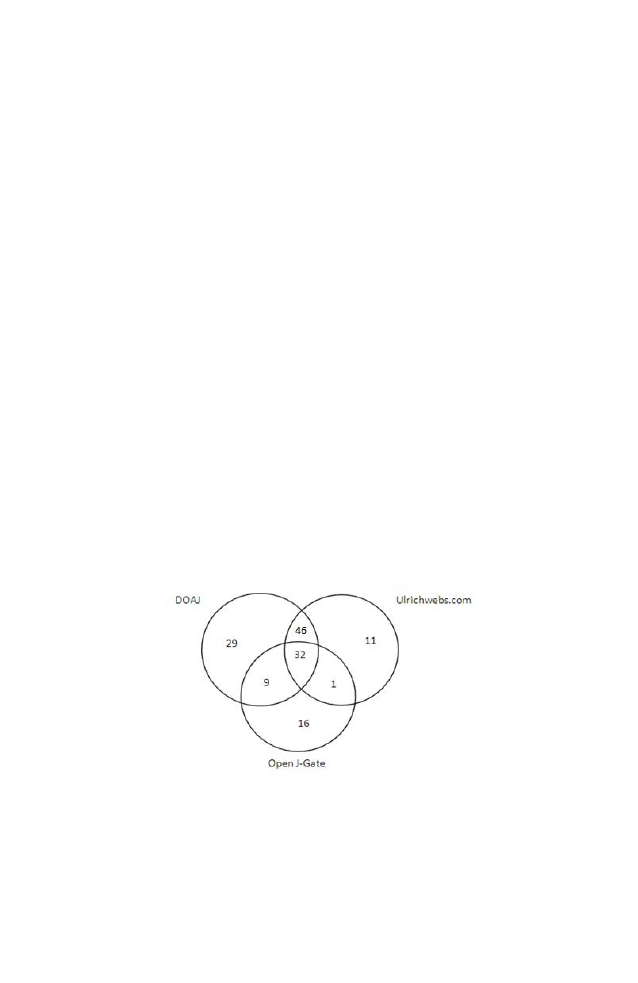
When all these doubtful titles were removed, a total of 144 OA journals
in the field of Library and Information Science were obtained. Among
these, 32 journals are indexed by all databases while 29 titles are indexed
only by DOAJ, 11 only by Urlichsweb.com & 16 by Open J-gate (Fig. 1).
Fig 1: Comparative Strength of LIS titles
Results & Discussion
Country of Publication
144 OA LIS journals are published from 37 countries. Among these, a
maximum of 45 titles are published in United States (31.25%), followed
respectively by 12 in Brazil (8.33%) and 10 in Spain (6.95%). On the other

Open Access Journals in LIS…
Rufai, Gul & Shah
TRIM 7 (2) July - Dec 2011
223
extreme, five countries publish two journals each while 20 countries
including India publish single journal each.
If the countries are classified according to four economic zones of The
World Bank, i.e., High income, Upper-Middle-income, Lower-Middle-
income & Low-income (Country and Lending Groups, 2011), 20 countries
that published OA journals fall under High-income economic zone, 12
countries under Upper-Middle-income economic zone and 5 countries
from Lower-Middle-income zone while countries from Low-income
economic zone have yet to publish any OA journal in the field of Library
and Information Science.
Publisher Account
129 publishers take active part in the publication of OA LIS journals.
Informing Science Institute, USA publishes a maximum of 7 titles followed
by American Library Association (USA) which publishes 5 titles while 2
titles are published each by National Taiwan University (Taiwan),
Universidad Complutense de Madrid (Spain), Australian Library and
Information Association (Australia), Chartered Institute of Library and
Information Professionals (UK), and International Consortium for the
Advancement of Academic Publication (Canada). Rest of 122 publishers
publishes one title each.
When it comes to the nature of publishing body, it is found that
universities are the leading publishers of OA Journals which publish 55
titles, accounting to 38.19 per cent of the total, followed by library
associations and research centers & institutes with 32 (22.22%)and 22
(15.28%) titles respectively. Commercial publishers also offer 9 (6.25%)
journals while 5 (3.47%) titles are result of individual efforts. Rest of 21
(14.58%) titles is an endeavour of societies, consortia and others.
Lingual Assessment
When it comes to the content language(s), 72.92 per cent of journals
(105) are unilingual, 19.44 per cent as bilingual (28), 4.17 titles (6) in
three languages, 2.78 per cent titles (4) in four languages and a single
title (0.69%) is published in a maximum of four languages. Overall, OA LIS
journals are represented in 22 different languages. English is the content
language preferred by majority of journals (114, 79.17%), followed
respectively 23 in Spanish (15.97%) and 15 in Portuguese (10.42%). On
the other hand, 2 journals are published each in Catalan, Danish,
Romanian, and Swedish languages. One journal each is published in
Arabic, Bulgarian, Croatian, Czech, Indonesian, Lithuanian, Polish,
Norwegian Slovak, and Slovene (Table 1).

Open Access Journals in LIS…
Rufai, Gul & Shah
TRIM 7 (2) July - Dec 2011
224
Table 2: Lingual Assessment of OA LIS journals
Rank
Language
No. of Journals
Percentage
1
English
114
79.17
2
Spanish
23
15.97
3
Portuguese
15
10.42
4
French
11
7.64
5
German
7
4.86
6
Italian
6
4.17
7
Turkish
3
2.08
7
Chinese
3
2.08
Visibility
DOAJ not only indexes OA journals but also archives material of about 45
per cent of indexed titles. In case of OA LIS journals, 33 per cent of them
i.e. 47 titles are searchable to article level in DOAJ. For rest of titles, one
has to access them individually at their respective websites. Besides,
Seadle (2011) argues that most of the open access titles listed in DOAJ
currently have no effective long-term digital archiving. So far as Scopus is
concerned, one of the largest indexing and abstracting services in the
world; also indexes a few OA LIS journals, i.e. 15.3 per cent (22). This
represents a very poor visibility of them.
Article Processing Charges / Handling Fee
By OA we mean that the journal is freely available to the user on the
public web, but the publisher may charge its authors to pay in the form of
article processing charges or handling charges. Since managing a journal
is a costly affair and the studies have shown that the process of peer
review costs on an average 400USD per article (Rowland, 2002).
Of 144 journals, only 6 journals charge their authors to pay article
processing charges or handling fee. Authors have to pay 1900 USD to get
their article published in Journal of Medical Internet Research (ISSN:
14388871), 550USD to published in International Journal of Library and
Information Science (ISSN: 21412537) and 50 USD for South African
Journal of Information Management (ISSN: 1560683X). However, the fee
charged by Anales de Documentación (ISSN: 15752437), Hipertext.net
(ISSN: 16955498), and Infodiversidad (ISSN: 1514514X) could not be
traced out.
Status
Managing a journal is not an easy task. Like other ventures, it too
requires the active participation of experts (human expertise), material
(research contribution) and money (finance). 134 journals (93 %) have
Open Access Journals in LIS…
Rufai, Gul & Shah
TRIM 7 (2) July - Dec 2011
225
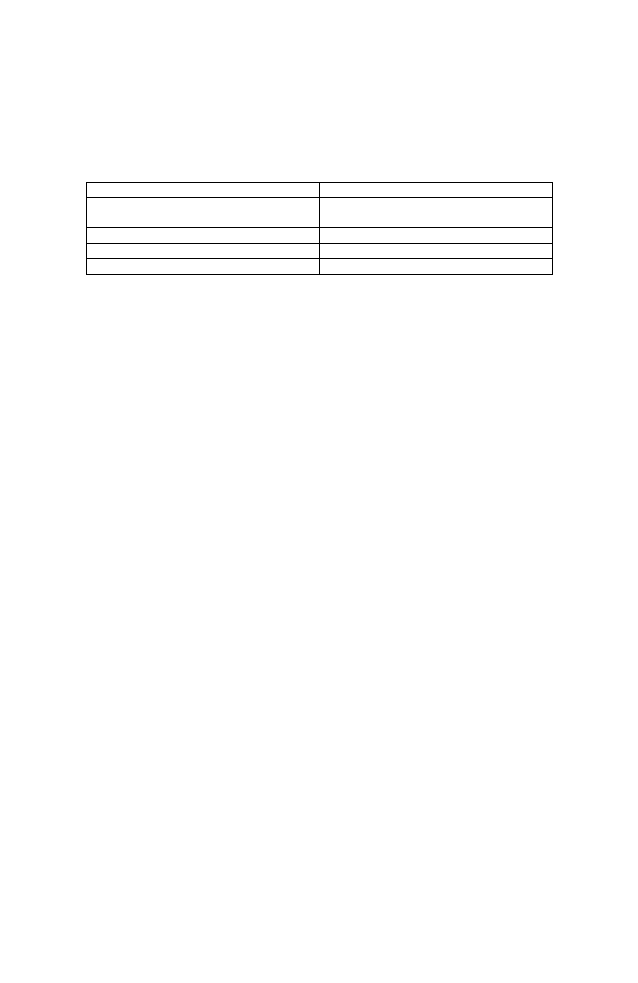
sustained their existence and are regularly being published. The
remaining 10 titles had ceased their publication and among these, four
titles are continued by some other journal name (Table 2).
Table 2
Ceased Title
Continued by
Journal of Southern Academic and Special
Librarianship
Electronic Journal of Academic and Special
Librarianship
Medizin-Bibliothek-Information
GMS Medizin-Bibliothek-Information
Journal of Library Science
Journal of Library and Information Studies
Bulletin of the Medical Library Association
Journal of the Medical Library Association
Conclusion and Discussion
The sustainability of open access journals in the field of LIS is evident
from the study. Countries falling in the low-income economic zones have
to come on open access canvas. Use of open journal systems (OJS’s) can
be one of the best solutions in the times of economic crisis and especially
for those nations which are endemically short of adequate financial
resources to cope up with the changing technologies (Gul & Shah, 2011).
Though commercial publishers have joined hands in open access market,
yet there need to be lots of efforts on their side to remove the economic
barrier that has always hindered the researchers from quality research in
the LIS field. Not only universities should be the pioneers in highlighting
the research in LIS but research institutes and centers, societies and other
elements associated with research should actively take part in the
research output. The journals offering hybrid or fee based mode should
try to slash down the author processing charges so that the article
publication can become an affordable job. Assigning the job of article
processing on volunteer basis and reduced costs can help in the elevation
of OA articles which in turn can benefit the readers to a greater extent.
Content availability in more languages with English as one of the
languages can help to remove the language barrier between the two
ends of information communication process. Indexing the journals in
more sources can help to increase the content visibility of OA journals in
the field of OA. Even a proper archiving policy in indexing sources can
help in long term preservation of the open digital content. To achieve
long term sustainability the elements associated with the scholarly
publication need to work in a more coordinated manner as researched by
Legace (as cited in Gul & Shah, 2010). Marketing the scholarly content in
a more organized and coordinated manner can also help in long term
sustainability of the journals. Application of Web 2.0 tools for the content
promotion and inclusion in different subjective forums and boards can
also help in the sustenance of the journals in the present dynamic and
ever changing digital environment.

Open Access Journals in LIS…
Rufai, Gul & Shah
TRIM 7 (2) July - Dec 2011
226
References
Association of Research Libraries (ARL). (2007). Retrieved from
www.arl.org/osc/models/oa.html
Borgman, C.L. (2007). Scholarship in the digital age: Information,
infrastructure, and the Internet (p.186). Cambridge, MA: MIT
Press.
Budapest Open Access Initiative. (2002). Read the Budapest Open Access
Initiative. Budapest open access initiative. Retrieved from
http://www.soros.org/openaccess/read
Country and Lending Groups. (2011). The World Bank. Retrieved from
http://data.worldbank.org/about/country-
classifications/country-and-lending-groups
Dallmeier-Tiessen, S., et al. (2010). Open Access Publishing - Models and
Attributes
(p.62).
Max
Planck
Digital
Library/Informationsversorgung.
Directory of Open Access Journals. (2010). Retrieved from
Dramatic Growth of Open…. (2007). Dramatic Growth of Open Access
Series. The imaginary journal of poetic economics. Retrieved
from
http://poeticeconomics.blogspot.com/2006/08/dramatic-
growth-of-open-access-series.html
Falk, H. (2004). Open access gains momentum. The Electronic Library, 22
(6), 527-530. doi: 10.1108/02640470410570848
Gul, S., Wani, Z. A., & Majeed, I. (2008). Open Access Journals: A Global
Perspective. Trends in Information Management. 4 (1). 1-19.
Gul, S., & Shah, T.A. (2011). Managing Knowledge Repository in Kashmir:
Leap towards a Knowledge Based Society. Trends in Information
Management, 7 (1), 41-55.
Happy 2012…. (2011). Happy 2012 Open Access Movement! December
31, 2011 Dramatic Growth of Open Access. The imaginary
journal of poetic economics. Retrieved from
http://poeticeconomics.blogspot.com/2011/12/happy-2012-
open-access-movement.html
Illustrations of the global….. (2012). Illustrations of the global reach of the
open access movement. The imaginary journal of poetic
economics. Retrieved from
http://poeticeconomics.blogspot.com/2012/01/illustrations-of-
global-reach-of-open.html
Laakso M,. Welling P,. Bukvova H,. Nyman L,. Björk B-C,. & Hedlund,
Turid. (2011). The Development of Open Access Journal
Publishing from 1993 to 2009. PLoS ONE, 6(6): e20961.
doi:10.1371/journal.pone.0020961

Open Access Journals in LIS…
Rufai, Gul & Shah
TRIM 7 (2) July - Dec 2011
227
Lynch, C. (2006). Improving access to research results: six points. ARL
Bimonthly Report, 248, October, pp. 5-7, Retrieved from
http://www.arl.org/bm~doc/arlbr248sixpoints.pdf
McCulloch, E. (2006). Taking stock of open access: progress and issues.
Library
Review,
55
(6),
337-343.
doi:
10.1108/00242530610674749
McVeigh, M. E. (2004). Open access journals and the ISI citation
database: Analysis of impact factors and citation patterns.
Thomson Scientific Whitepaper. Retrieved November 12, 2010
from
www.thomsonisi.com/media/presentrep/essayspdf/openaccess
citations2.pdf
Morris, S. (2006). Personal View: When is a journal not a journal - a closer
look
at
the
DOAJ.
Learned
Publishing
19:
doi:10.1087/095315106775122565
Nicholas, D., Huntington, P., & Rowlands, I. (2005). Open access journal
publishing: the views of some of the world's senior authors.
Journal
of
Documentation,
61(4),
497-519.
doi:
10.1108/00220410510607499
Provençal, J. (2011). Scholarly journal publishing in Canada: Annual
industry report 2010-2011. Canada: Canadian Association of
Learned Journals. Retrieved from
http://www.calj-
acrs.ca/docs/CALJ_%20IndustryReport_2011.pdf
Rowland, F. (2002). The peer-review process. Learned publishing, 15 (4),
247-258. doi: 10.1087/095315102760319206
Seadle, M. (2011). Archiving in the networked world: open access
journals. Library Hi Tech, 29 (2), 394- 404. doi:
10.1108/07378831111138251
Suber, P. (2003). How should we define open access? SPARC Open Access
Newsletter, 64. Retrieved from
http://www.earlham.edu/~peters/fos/newsletter/08-04-03.htm
The challenges of success….. (2011). The challenges of success: dramatic
growth of open access early year-end edition. The imaginary
journal of poetic economics. Retrieved from
http://poeticeconomics.blogspot.com/2011/12/challenges-of-
success-dramatic-growth.html
Voronin Y ., Myrzahmetov. A ., & Bernstein, A. (2011). Access to Scientific
Publications: The Scientist's Perspective. PLoS One, 6(11):
e27868. doi:10.1371/journal.pone.0027868
Ware M,. & Mabe, M. (2009). The STM report - An overview of scientific
and scholarly journals publishing (p.68). International
Association of Scientific, Technical and Medical Publishers.

Open Access Journals in LIS…
Rufai, Gul & Shah
TRIM 7 (2) July - Dec 2011
228
Willinsky, J. (2006). The Access Principle – The Case for Open Access to
Research and Scholarship. The MIT Press, Cambridge, MA.

Copyright of Trends in Information Management is the property of University of Kashmir and its content may
not be copied or emailed to multiple sites or posted to a listserv without the copyright holder's express written
permission. However, users may print, download, or email articles for individual use.
Wyszukiwarka
Podobne podstrony:
Funding open access journal
Open access journals – what publishers offer, what researchers want
More than gatekeeping Close up on open access evaluation in the Humanities
Open Access and Academic Journal Quality
Issues in Publishing an Online, Open Access CALL Journal
Open Access and Academic Journal Quality
How can existing open access models work for humanities and social science research
A Łozowska, Technologie informacyjne Między DOI a Open Access
All That Glisters Investigating Collective Funding Mechanisms for Gold Open Access in Humanities Dis
Academics’ Opinions on Wikipedia and Open Access Publishing
A Łozowska, Technologie informacyjne Między DOI a Open Access
Martin J Walker Cultural Dwarfs and Junk Journalism Dr Ben Goldacre, Quackbusting and Corporate Sc
Physics Papers Lee Smolin (1993), Time, Measurement And Information Loss In Quantum Cosmology
więcej podobnych podstron