Small Steps Guidance and Examples
Block 2 – Position & Direction
Years
5/6
Released March 2018
The sequence of small steps has been produced by White Rose Maths. White Rose Maths gives permission to schools and teachers to use the small steps
in their own teaching in their own schools and classrooms. We kindly ask that any other organisations, companies and individuals who would like to
reference our small steps wider kindly seek the relevant permission. Please contact
support@whiterosemaths.com
for more information.
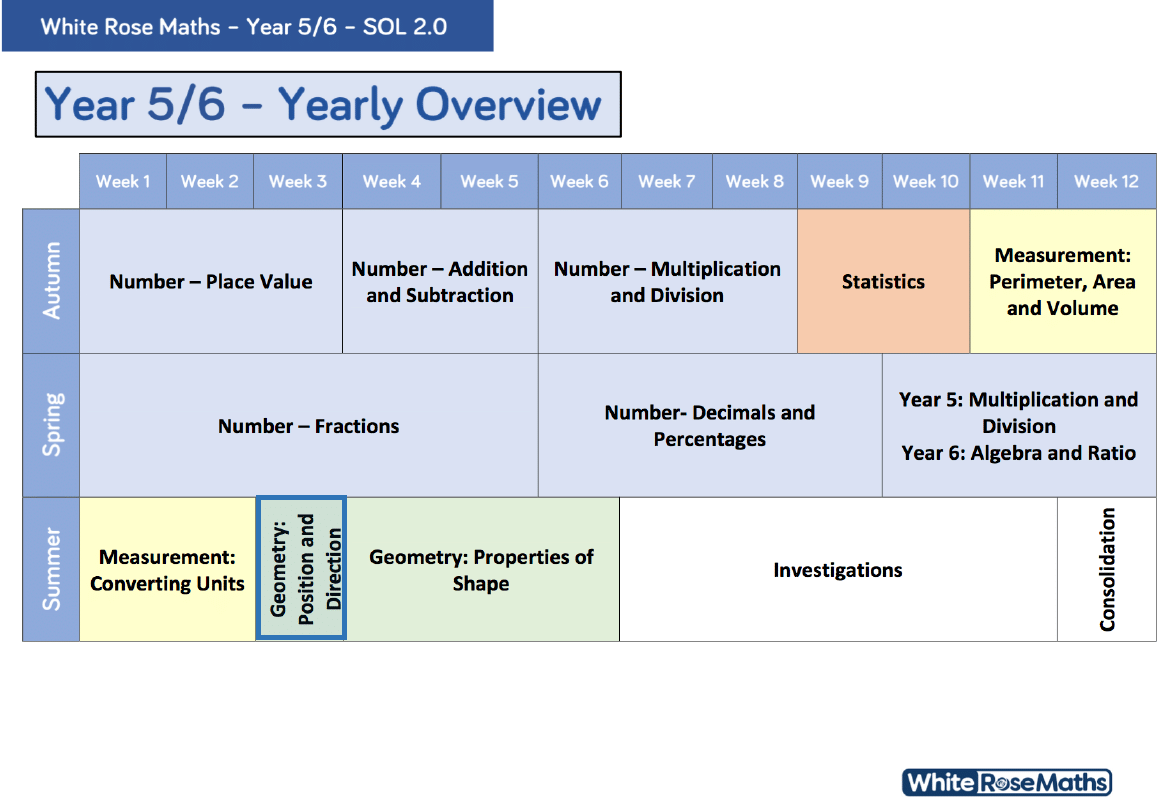
Week 3 – Geometry: Position & Direction
Overview
Small Steps
Year 5/6
|
Summer Term
|
Teaching Guidance
Position in the first quadrant
Co-ordinates in the first quadrant
Plotting co-ordinates
Reflection
Reflections
Reflection with co-ordinates
Translation
Translations
Translation with co-ordinates
Year 5
Year 6
Year 5
|
Summer Term
|
Teaching Guidance
Notes and Guidance
Mathematical Talk
Varied Fluency
Week 3 – Geometry: Position & Direction
Position in the 1
st
Quadrant
2
1
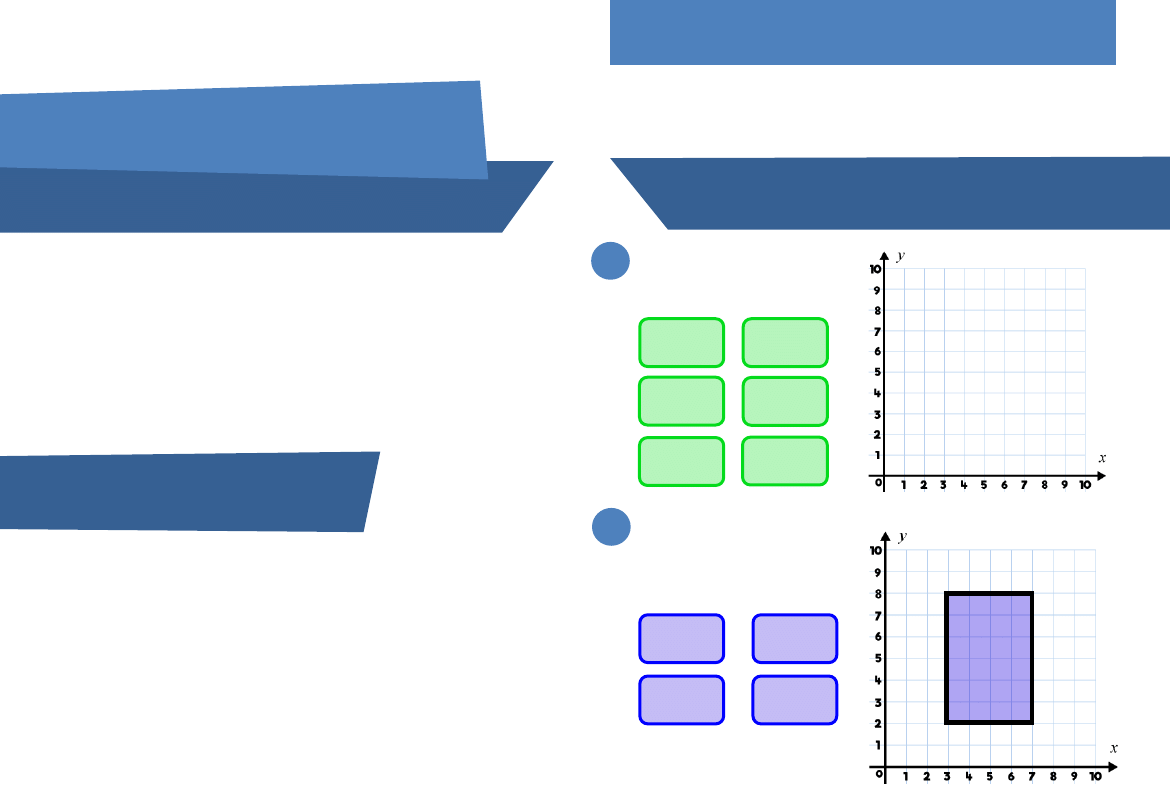
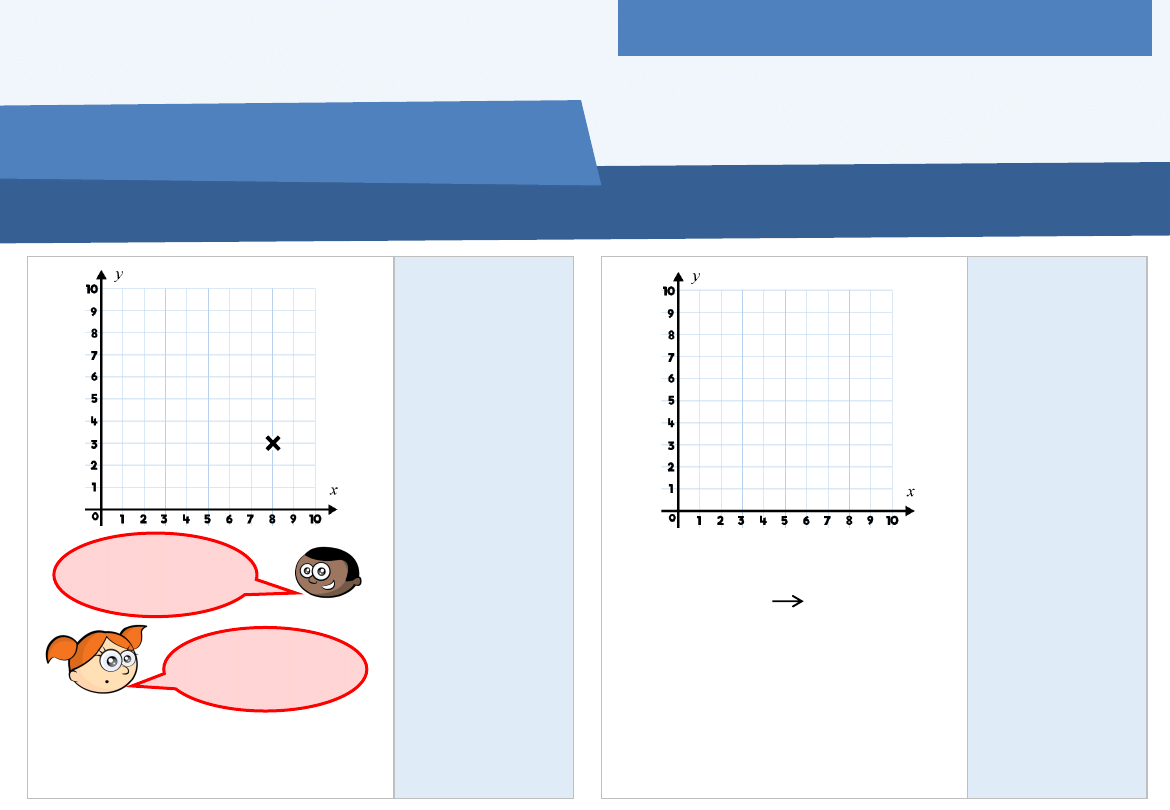
Children recap their use of coordinates from Year 4.
They understand to read co-ordinates they need to start at the
origin (0,0) and firstly read along the
𝑥–axis and they up the 𝑦
axis. For example, (3,5) – 3 along the
𝑥–axis and 5 up the 𝑦
axis.
Children mark co-ordinates on a grid and use co-ordinates to
draw the vertices of shapes.
Which of the numbers represents the coordinate on the
𝑥-axis?
Which of the numbers represents the coordinate on the
𝑦-axis?
Does it matter which way around they are written?
Look at the coordinate I have marked, what is its value on the
𝑥
/
𝑦-axis?
If I moved the coordinate one place to the left, which digit would
change? If I moved the coordinate down one, which digit would
change?
Plot the following points
on the grid.
What are the coordinates
of the vertices of the
rectangle?
(3, 5)
(6, 5)
(4, 4)
(5, 3)
(0, 2)
(2, 0)
( , )
( , )
( , )
( , )
Week 3 – Geometry: Position & Direction
Year 5
|
Summer Term
Reasoning and Problem Solving
Position in the 1
st
Quadrant
Who do you agree with? Can you spot
the mistake the other child has made?
Sam is correct.
Holly has made a
mistake by thinking
the first digit is on
the
𝑦-axis.
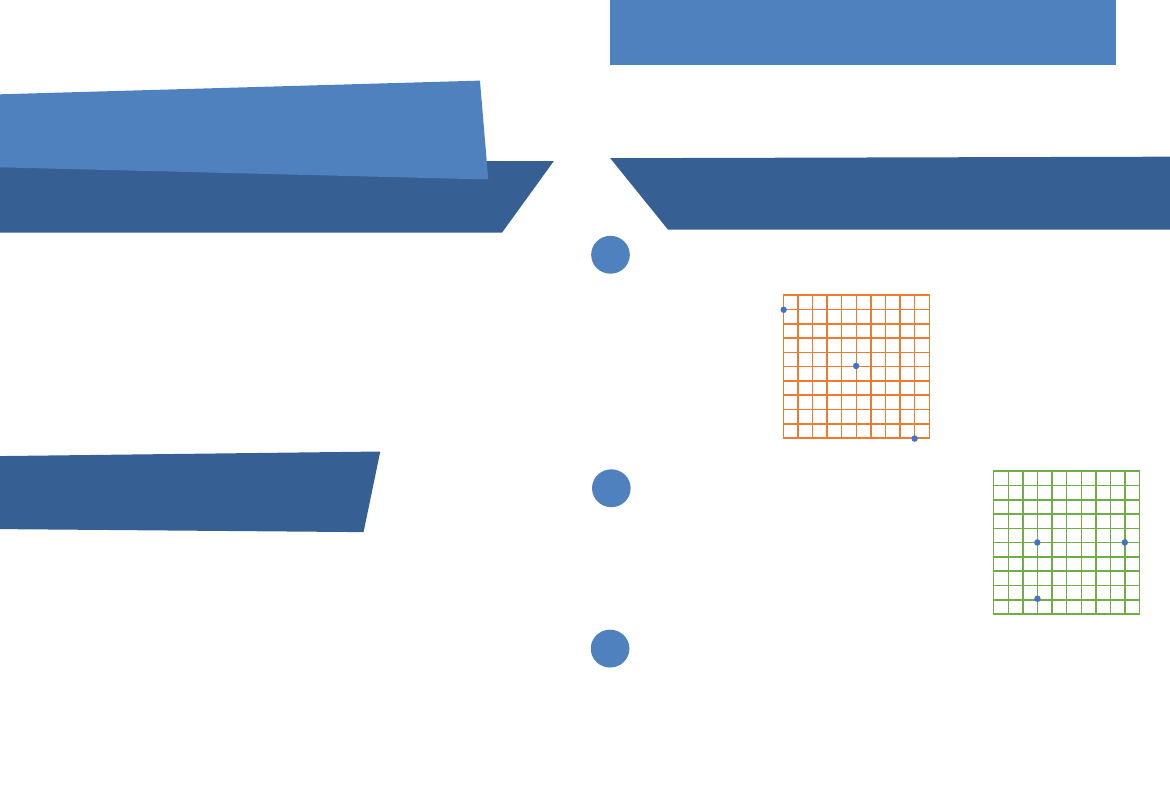
Tanya is finding co-ordinates whose
digits add up to 8.
For example: (3, 5)
3 + 5 = 8
Find all of Tanya’s co-ordinates and plot
them on the grid.
What do you notice?
What would happen if the digits summed
to other numbers?
Tanya’s co-
ordinates form a
diagonal line (8, 0)
to (0, 8)
The point is at
(8, 3)
The point is at
(3, 8)
Sam
Holly
Year 6
|
Autumn Term
|
Teaching Guidance
Notes and Guidance
Mathematical Talk
Varied Fluency
Week 3 – Geometry: Position & Direction
Children recap work from Year 4 and Year 5 by reading
and plotting coordinates.
They draw shapes on a 2D grid from co-ordinates given
and use their increasing understanding to write
co-ordinates for shapes with no grid lines.
Which axis do we look at first?
Does joining up the vertices already given help you
to draw the shape?
Can you draw a shape in the first quadrant and
describe the co-ordinates of the vertices to a friend?
Chris plots three coordinates.
Work out the coordinates for A, B and C.
2
1
3
The First Quadrant
0 1 2 3 4 5 6 7 8 9 10
1
2
3
4
5
6
7
8
9
10
C
B
A
Amir is drawing a rectangle on a grid.
Plot the final vertex of the rectangle.
Write the co-ordinate of the final
vertex.
Draw the vertices of the polygon with the co-ordinates
(7, 1) , (7, 4) and (10, 1).
What type of polygon is the shape?
0 1 2 3 4 5 6 7 8 9 10
1
2
3
4
5
6
7
8
9
10
Week 3 – Geometry: Position & Direction
Year 6
|
Autumn Term
Reasoning and Problem Solving
The First Quadrant
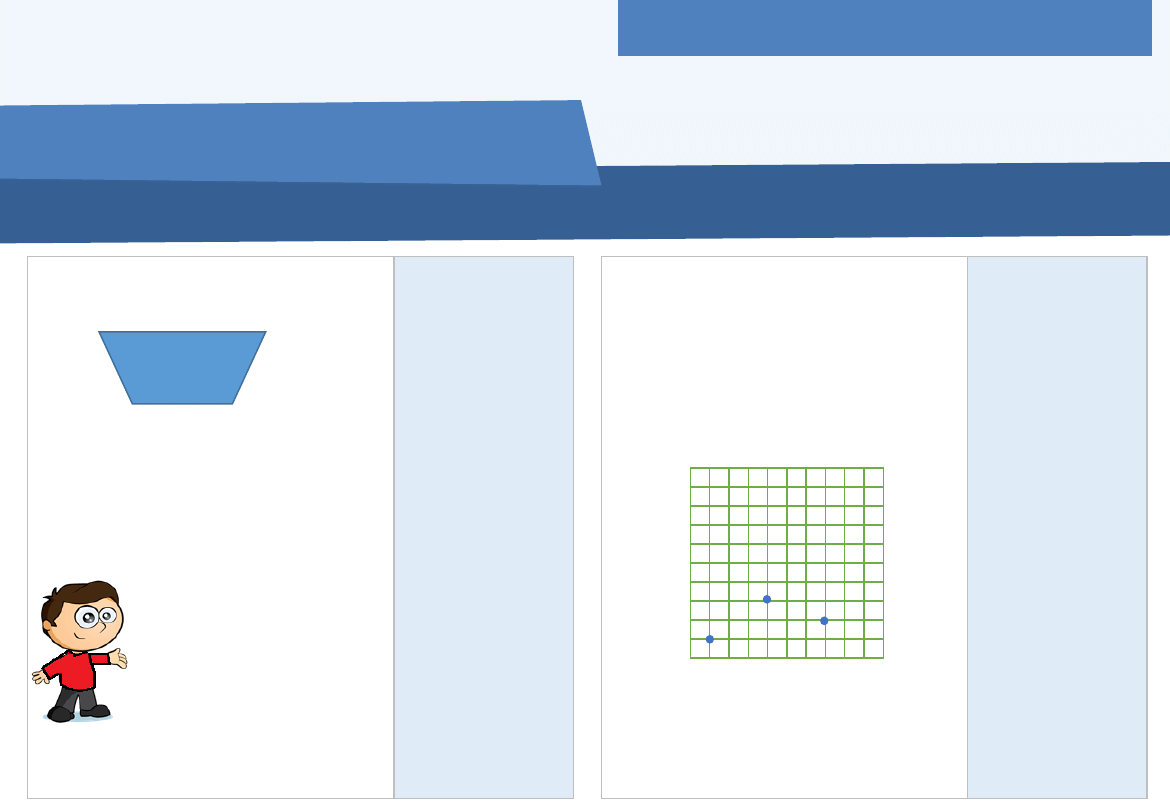
Jamie is drawing a trapezium.
He wants his final shape to look like this:
Jamie uses the co-ordinates (2, 4) ,
(4, 5) , (1, 6) and (5, 6).
Will he draw a trapezium that looks
correct?
If not, can you correct his co-ordinates?
Jamie has plotted
the co-ordinate
(4, 5) incorrectly.
This should be
plotted at (4, 4) to
make the trapezium
that Jamie wanted
to draw.
Marie has written the co-ordinates of point
A, B and C.
A (1, 1) B (2, 7) C (3, 4)
Mark Marie’s work and correct any
mistakes.
0 1 2 3 4 5 6 7 8 9 10
1
2
3
4
5
6
7
8
9
10
A
B
C
A is correct but B &
C have been
plotted with the
𝑥 &
𝑦 co-ordinates the
wrong way round.
Year 6
|
Autumn Term
|
Teaching Guidance
Notes and Guidance
Mathematical Talk
Varied Fluency
Week 3 – Geometry: Position & Direction
Children use knowledge of the first quadrant to read and plot
coordinates in all four quadrants.
They draw shapes from co-ordinates given.
Children need to become fluent in deciding which part of the axis is
positive or negative.
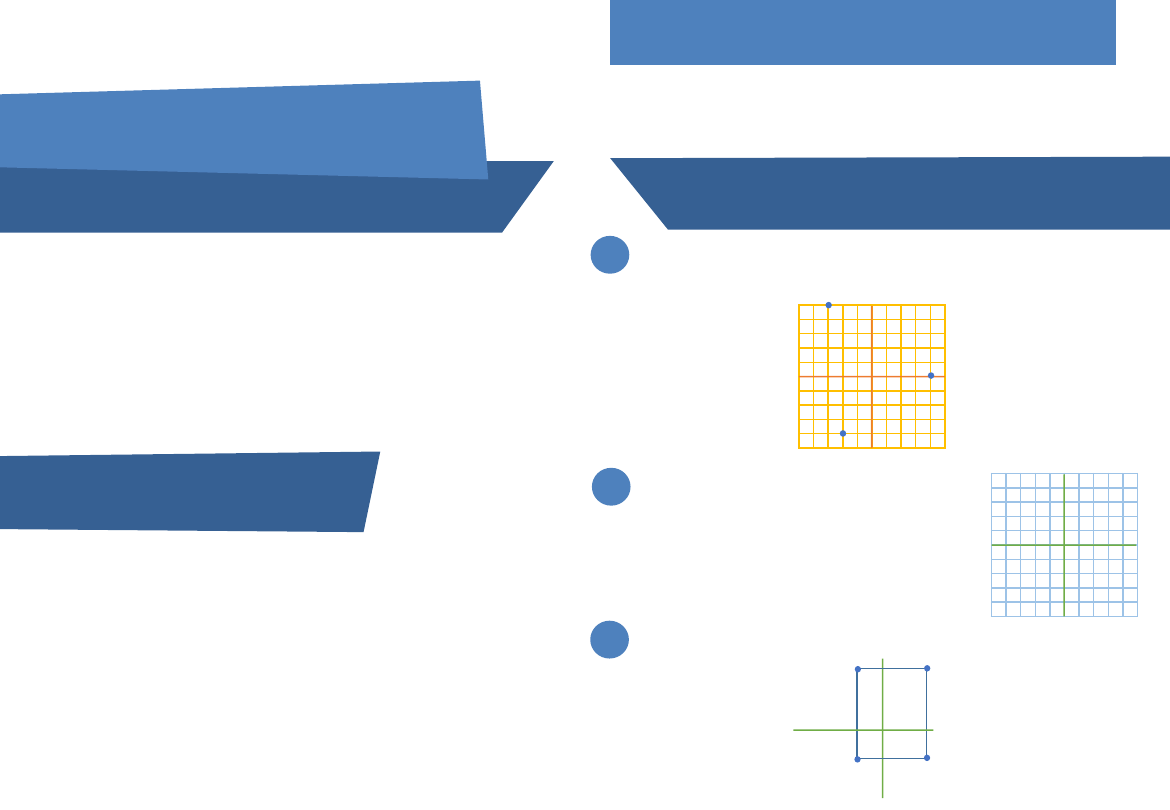
Emily plotted three co-ordinates.
Work out the co-ordinates of A, B and C.
2
1
3
Which axis do we look at first?
If (0, 0) is the centre of the axis (the origin), which
way do you move on the x axis to find negative
co-ordinates? Which way do you move on the y axis
to find negative co-ordinates?
-5 -4 -3 -2 -1 1 2 3 4 5
-5
-
4
-
3
-2
-
1
1
2
3
4
5
A
B
C
Draw the shape with the following
co-ordinates (-2, 2) , (-4, 2) , (-2, -3)
and (-4, -2).
What kind of shape have you drawn?
-5 -4 -3 -2 -1 1 2 3 4 5
-5
-
4
-
3
-2
-
1
1
2
3
4
5
C
(
–1,−3)
B
(7,8)
Work out the missing co-ordinates of the rectangle.
A
D
𝒚
𝒙
Four Quadrants
Week 3 – Geometry: Position & Direction
Year 6
|
Autumn Term
Reasoning and Problem Solving
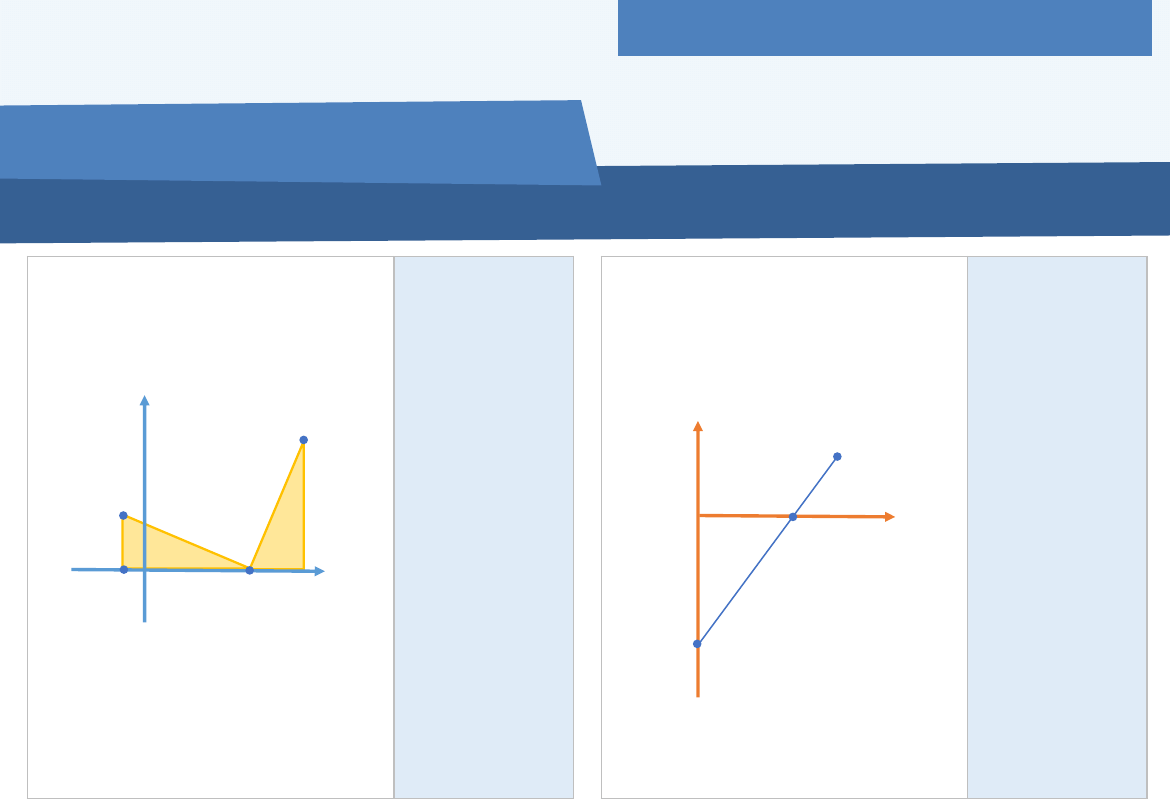
The diagram shows two identical triangles.
The co-ordinates of three points are
shown.
Find the co-ordinates of point A.
Answer:
(9, 7)
A is the point (0,
–10)
B is the point (8, 0)
The distance from A to B is two thirds of
the distance from A to C.
Find the co-ordinates of C
C
B
A
𝒚
𝒙
Answer:
(12,5)
Four Quadrants
(6, 0)
(-1, 0)
(-1, 3)
A
𝒚
𝒙
Year 5
|
Summer Term
|
Teaching Guidance
Notes and Guidance
Mathematical Talk
Varied Fluency
Week 3 – Geometry: Position & Direction
Reflection
2
1
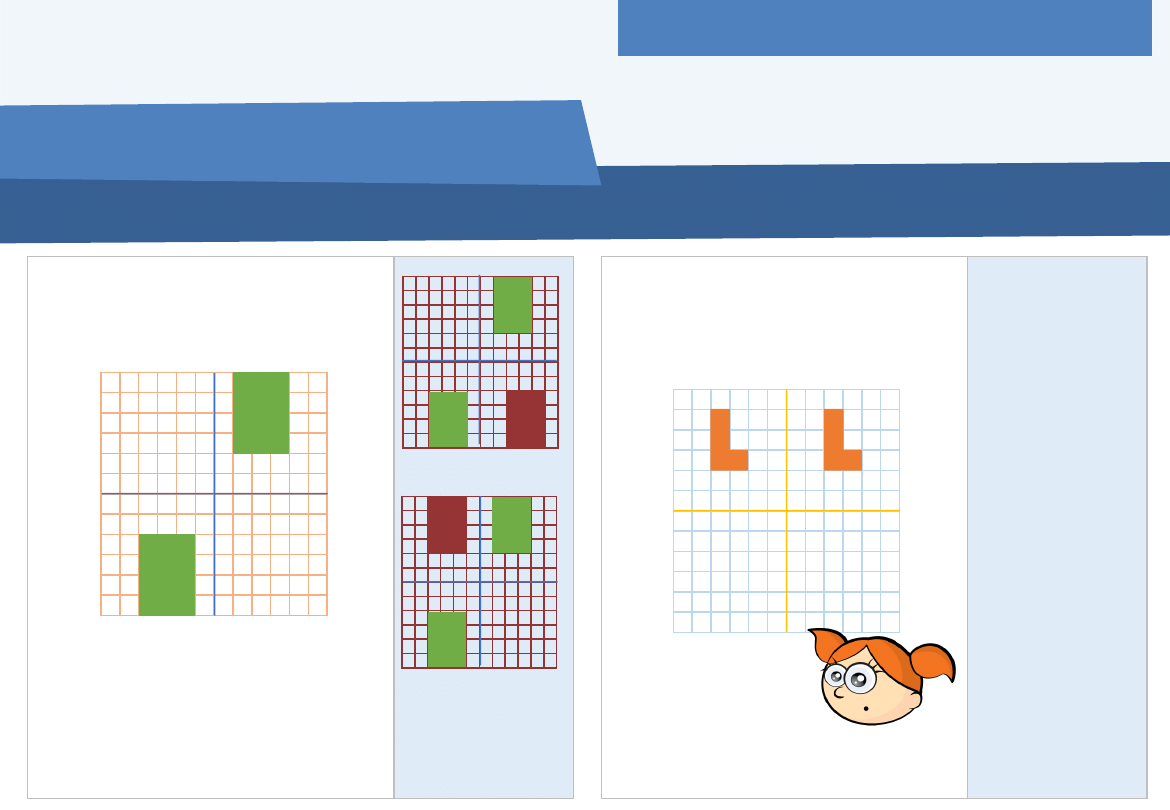
Children use a mirror line to reflect shapes in the first quadrant
horizontally and vertically.
Children use mirrors for them to understand how an image
changes when it is mirrored. Children could explore this
practically, for example: if your partner’s right hand is raised,
which hand will you need to raise?
When I mirror something, what changes about the image? Is it
exactly the same?
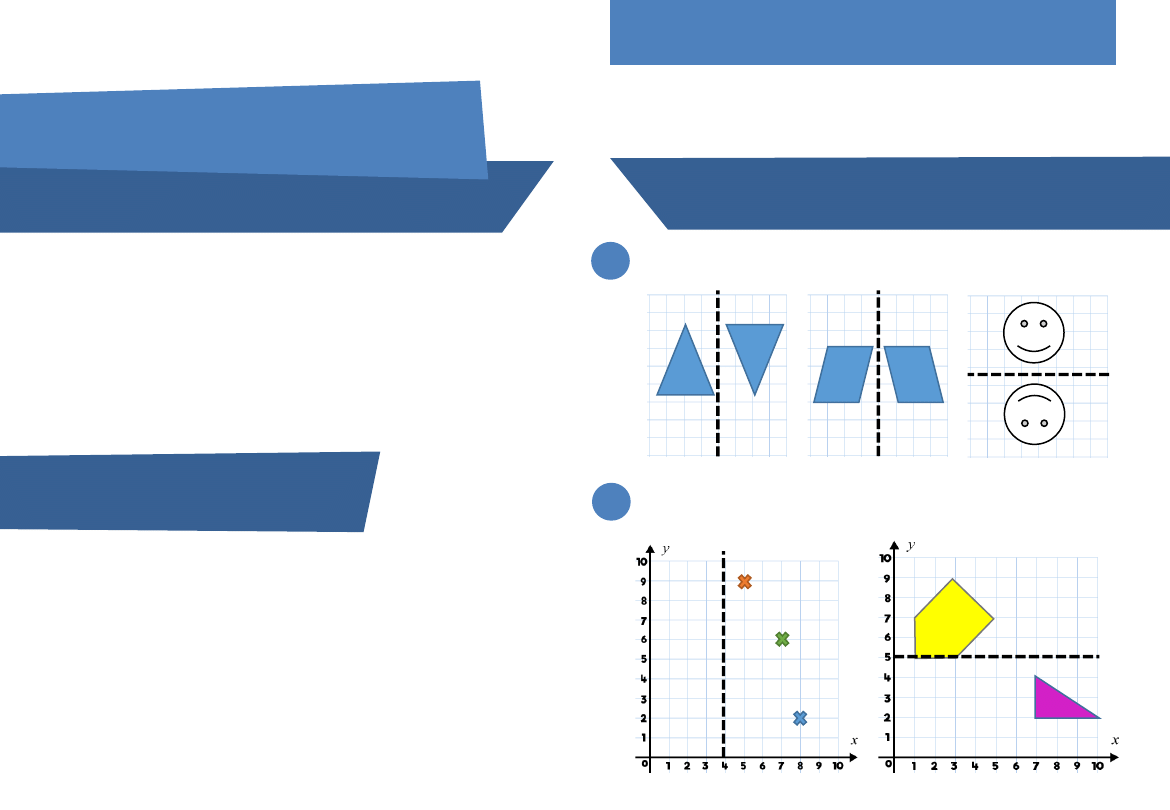
What is the coordinate of this point? If I reflect it in the mirror
line, where will it move to?
If I reflect this point/shape in a vertical/horizontal mirror line,
will the
𝑥 or 𝑦 coordinates change?
Which of the images have been reflected in the mirror line?
Reflect the shapes and coordinates in the mirror line.
Week 3 – Geometry: Position & Direction
Year 5
|
Summer Term
Reasoning and Problem Solving
Reflection
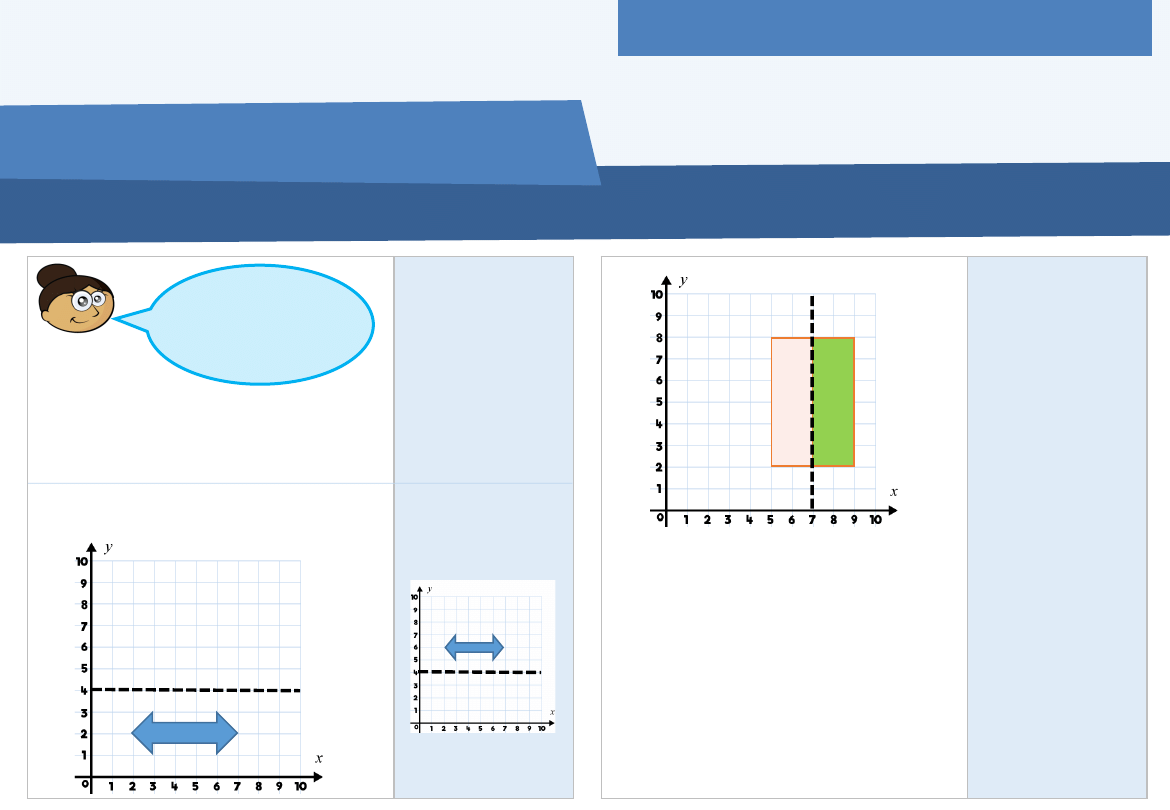
Do you agree with Amina?
Explain your thinking.
Reflect the shape in the mirror line.
Amina is incorrect,
the shape’s
dimensions do not
change.
The rectangle is pink and green.
The rectangle is reflected in the mirror
line.
What would its reflection look like?
The shape would
remain in the same
position, although
the colours would
be swapped –
green on the left
and orange on the
right.
When you
reflect a shape,
its dimensions
change.
Amina
Year 6
|
Autumn Term
|
Teaching Guidance
Notes and Guidance
Mathematical Talk
Varied Fluency
Week 3 – Geometry: Position & Direction
Children extend their knowledge of reflection by reflecting shapes in
four quadrants. They will reflect in both the
𝑥 and the 𝑦-axis.
Children should use their knowledge of co-ordinates to ensure that
shapes are correctly reflected.
2
1
How is reflecting different to translating?
Can you reflect one vertex at a time? Does this make
it easier to reflect the shape?
Reflections
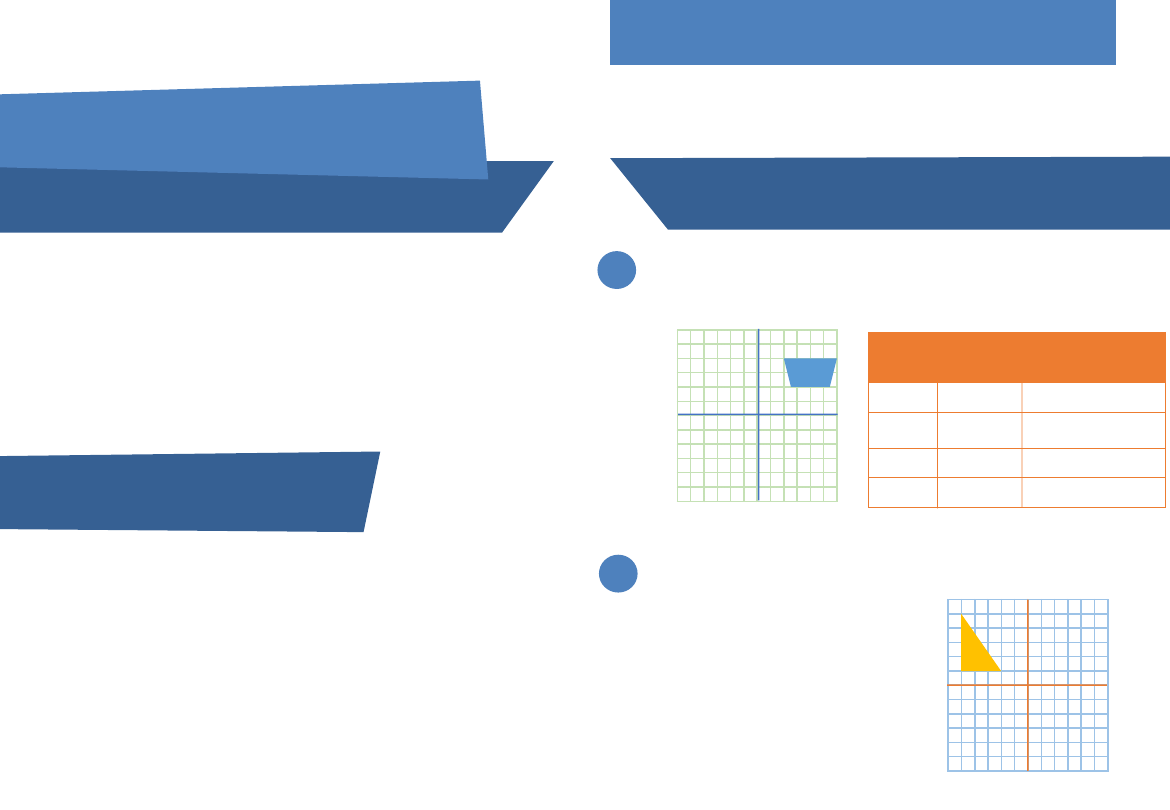
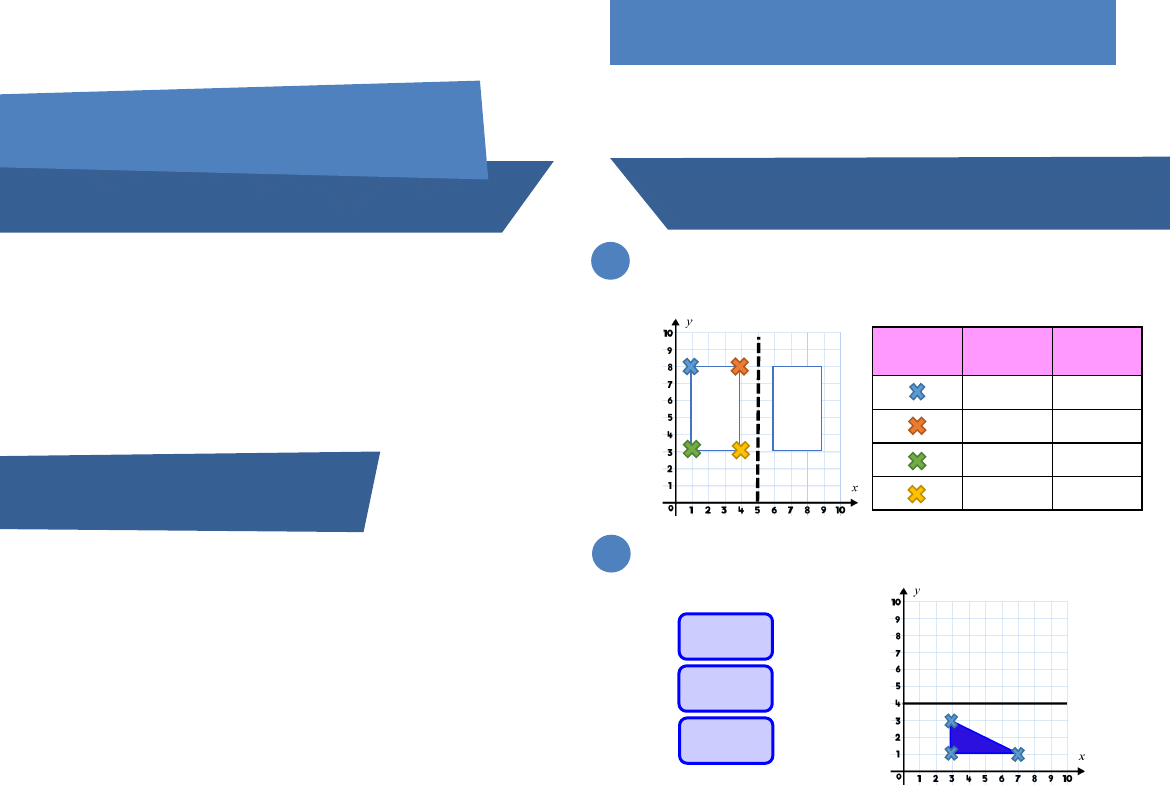
Reflect the trapezium in the
𝑥 and the 𝑦 axis.
Complete the table with the new co-ordinates of the shape.
-6 -5 -4 -3 -2 -1 1 2 3 4 5 6
-6
-
5
-
4
-
3
-2
-
1
1
2
3
4
5
6
Translate the shape 4 units to the right.
Reflect the shape in the
𝑦 axis.
Reflected in
the
𝒙 axis
Reflected in the
y axis
(3,4)
(6,4)
(7,7)
(2,7)
-6 -5 -4 -3 -2 -1 1 2 3 4 5 6
-6
-
5
-
4
-
3
-2
-
1
1
2
3
4
5
6
Week 3 – Geometry: Position & Direction
Year 6
|
Autumn Term
Reasoning and Problem Solving
Reflections
A rectangle has been reflected in the
𝑥
axis and the
𝑦 axis.
Where could the starting rectangle have
been? Is there more than one option?
-6 -5 -4 -3 -2 -1
1 2 3 4 5 6
-6
-
5
-
4
-
3
-2
-
1
1
2
3
4
5
6
-6 -5 -4 -3 -2 -1 1 2 3 4 5 6
-6
-5
-
4
-
3
-2
-
1
1
2
3
4
5
6
-6 -5 -4 -3 -2 -1 1 2 3 4 5 6
-6
-5
-
4
-
3
-2
-
1
1
2
3
4
5
6
Tess has reflected the orange shape
across the
𝑥 axis. Is her drawing correct?
If not explain why.
-6 -5 -4 -3 -2 -1
1 2 3 4 5 6
-6
-
5
-
4
-
3
-2
-
1
1
2
3
4
5
6
Answer:
The shape has been
translated 6 across
and 0 down but has
not been reflected.
Year 5
|
Summer Term
|
Teaching Guidance
Notes and Guidance
Mathematical Talk
Varied Fluency
Week 3 – Geometry: Position & Direction
Reflection with Co-ordinates
2
1
Children build on their understanding of reflection by
describing the effect of reflection with coordinates.
Children should explore different methods or strategies for
reflecting shapes and be encouraged to recognise what
happens to the coordinates of the reflected shape. They then
can predict coordinates after a reflection.
What is the
𝑥 coordinate for this vertex? What is the 𝑦 co-
ordinate for this vertex?
If we look at this coordinate, where will its new position be when
it is reflected? Which digit has changed? Have any stayed the
same?
Do you always need to use a mirror? How else could you plot
each vertex accurately?
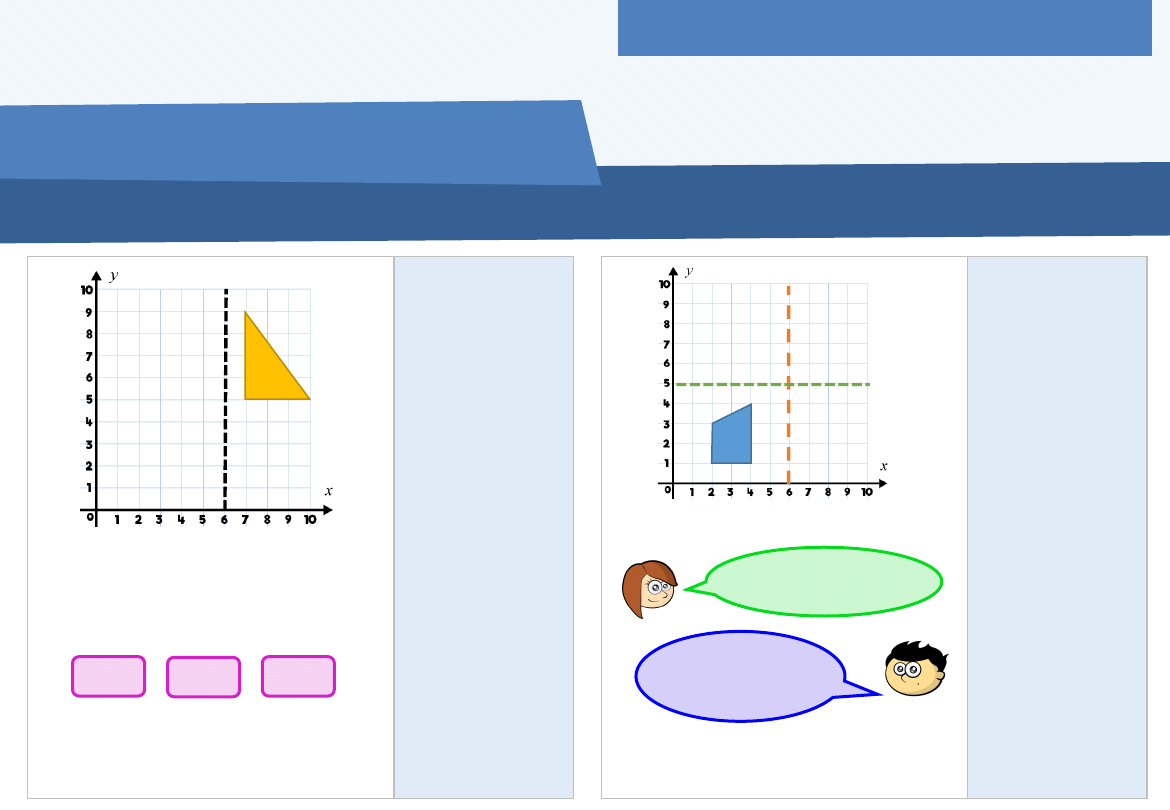
Shape A is reflected in the mirror line to position B.
Write the coordinates of the vertices for each shape.
Write the coordinates of the shape after it has been reflected
in the mirror line.
A
B
Original
Coordinate
Reflected
Coordinate
( , )
( , )
( , )
Week 3 – Geometry: Position & Direction
Year 5
|
Summer Term
Reasoning and Problem Solving
Reflection with Co-ordinates
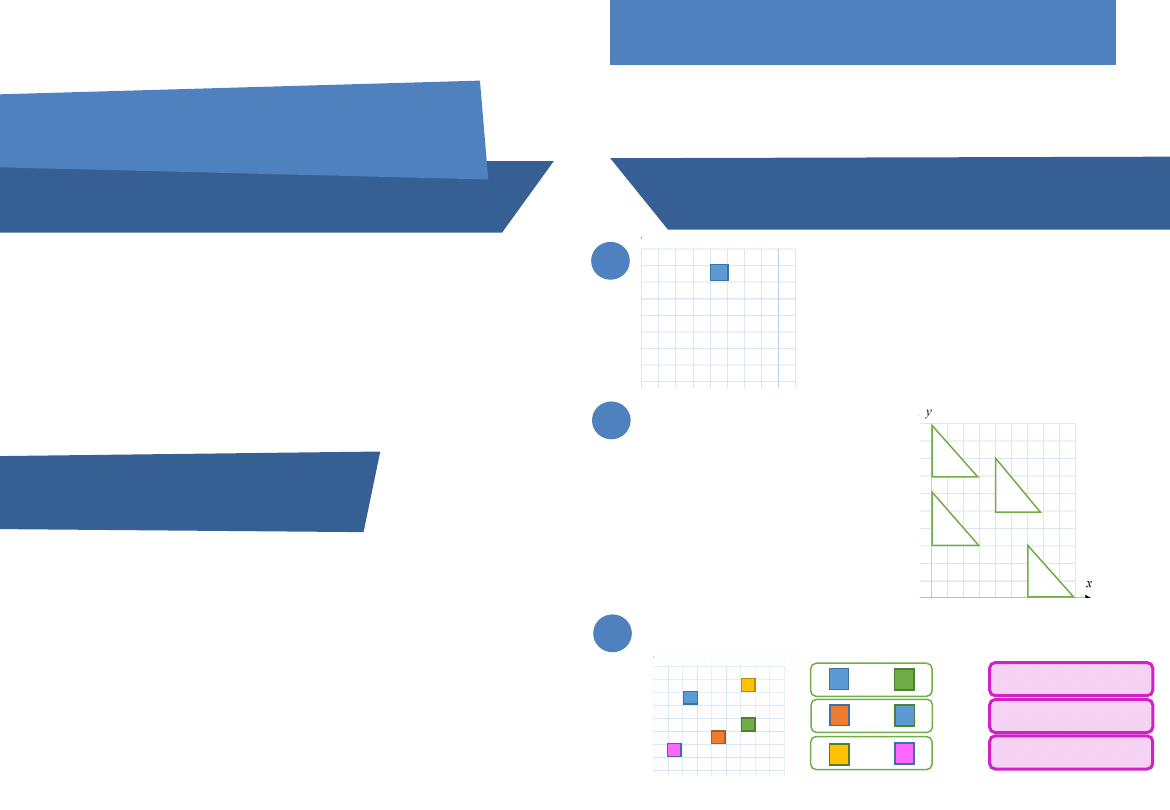
Maggie reflects the shape in the mirror
line.
She calculates the coordinates for the
vertices of the reflected shape as:
Is Maggie is correct?
Explain why.
The (2, 9)
coordinate is
incorrect, it should
be (5, 9). She may
have translated the
shape rather than
reflecting it.
This is a shape after it has been
reflected.
Kate
Xander
Who is correct? Explain and prove it.
What would the coordinates be of the
original shape?
Both could be
correct, as you
could have
reflected the shape
in either mirror line.
(5, 5)
(2, 5)
(2, 9)
The green mirror
line is correct.
The orange
mirror line is
correct.
Year 5
|
Summer Term
|
Teaching Guidance
Notes and Guidance
Mathematical Talk
Varied Fluency
Week 3 – Geometry: Position & Direction
Translation
2
1
Children learn to translate shapes on a grid. They do not need
to move individual coordinates at this point.
Children could focus on one vertex at a time when translating.
Attention should be drawn to the fact that the shape itself does
not change dimensions when translated.
When writing coordinates, the left and right direction comes
before the up and down, for example: (3 right, 2 down)
What does translate mean?
Look what happens when I translate this shape. What has
happened to the shape? Have the dimensions of the shape
changed?
Are there any other ways I can get the shape to this point?
A square is translated two squares
to the right and three down.
Draw the new position of the square.
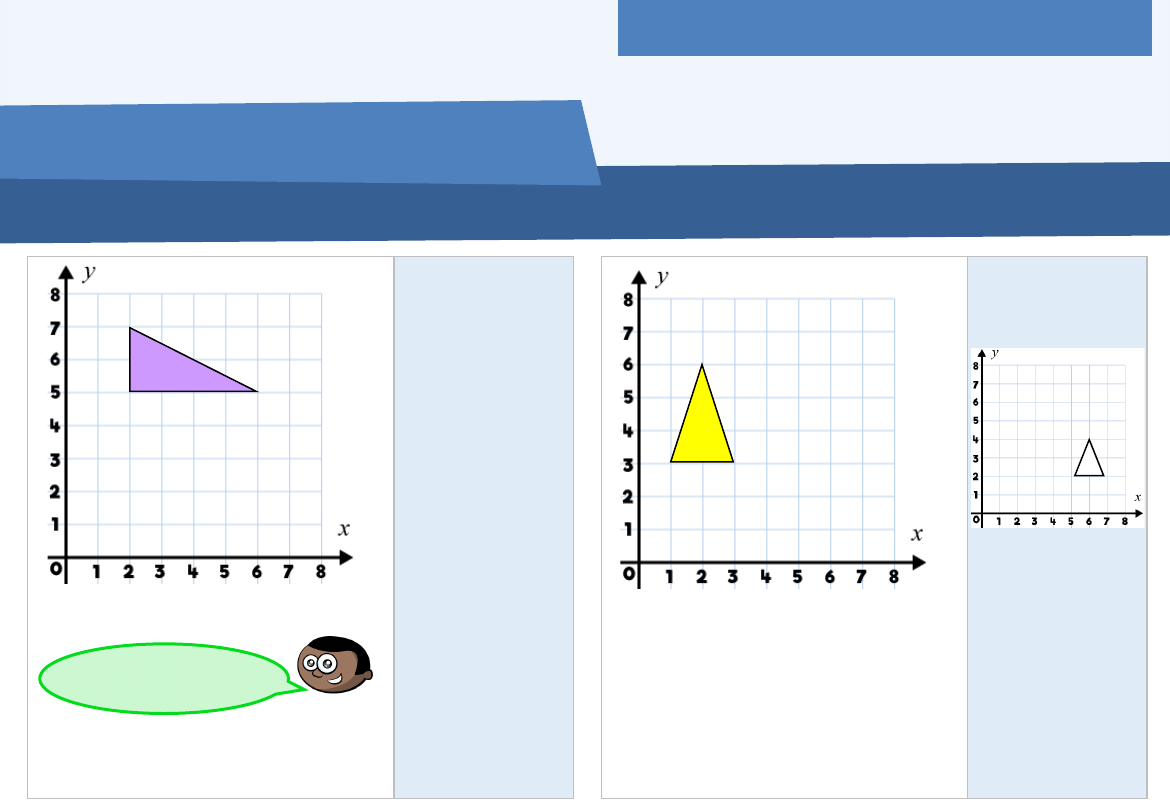
Describe the translation of
shape A to the different
positions.
Shape A has been
translated ________ left/right
and ________ up/down.
Match the translations.
A
B
C
D
3
to
to
to
(5 right, 5 up)
(2 left, 3 up)
(5 left, 5 down)
Week 3 – Geometry: Position & Direction
Year 5
|
Summer Term
Reasoning and Problem Solving
Translation
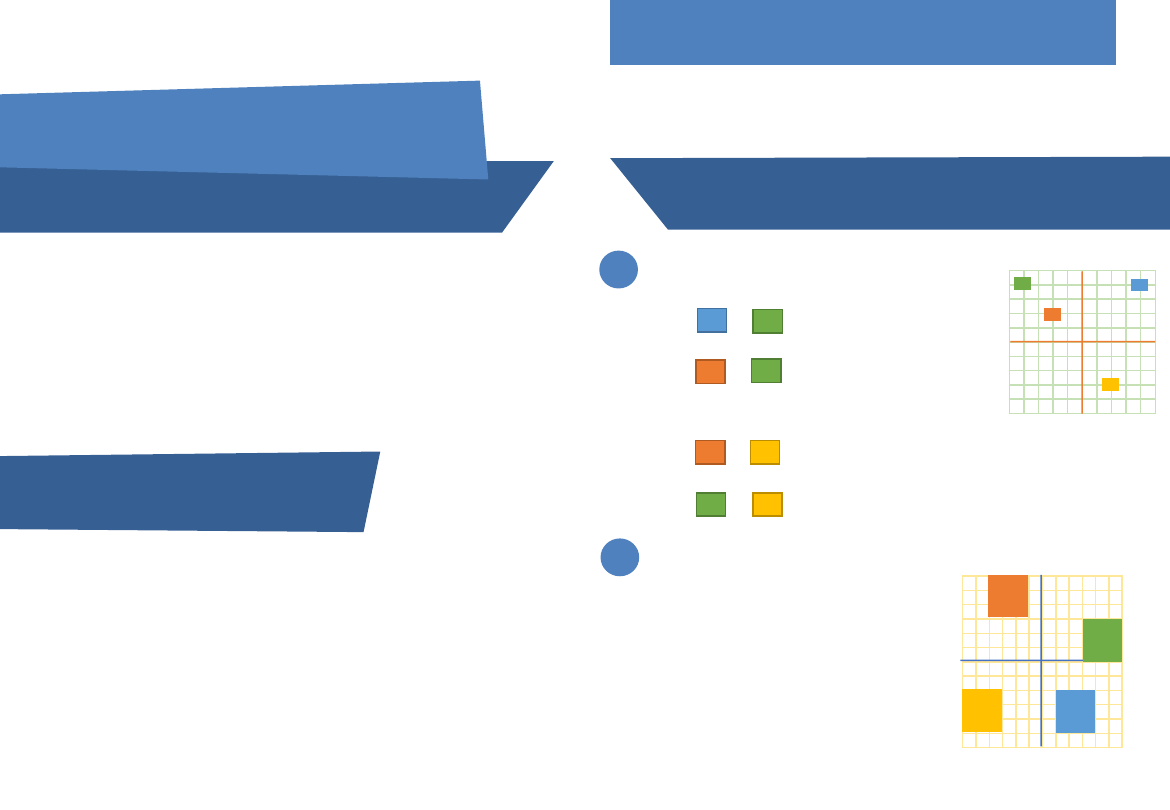
Triangle ABC is translated so that point
B becomes point D
Will
Do you agree with Will?
Explain your thinking.
Will is incorrect, the
shape is translated
one right and three
down. It will fit on
the quadrant.
A triangle is drawn on the grid.
It is translated so that point A becomes
point B.
Draw the new triangle.
It won’t fit on the
quadrant!
A
B
C
D
A
B
B
Year 6
|
Autumn Term
|
Teaching Guidance
Notes and Guidance
Mathematical Talk
Varied Fluency
Week 3 – Geometry: Position & Direction
Translations
Children use knowledge of co-ordinates and positional language to
translate shapes in all four quadrants.
They describe translations using direction and and use instructions
draw translated shapes.
2
1
What does translation mean?
Which point are you going to look at when describing
the translation?
Does each vertex translate in the same way?
-5 -4 -3 -2 -1 1 2 3 4 5
-5
-
4
-
3
-2
-
1
1
2
3
4
5
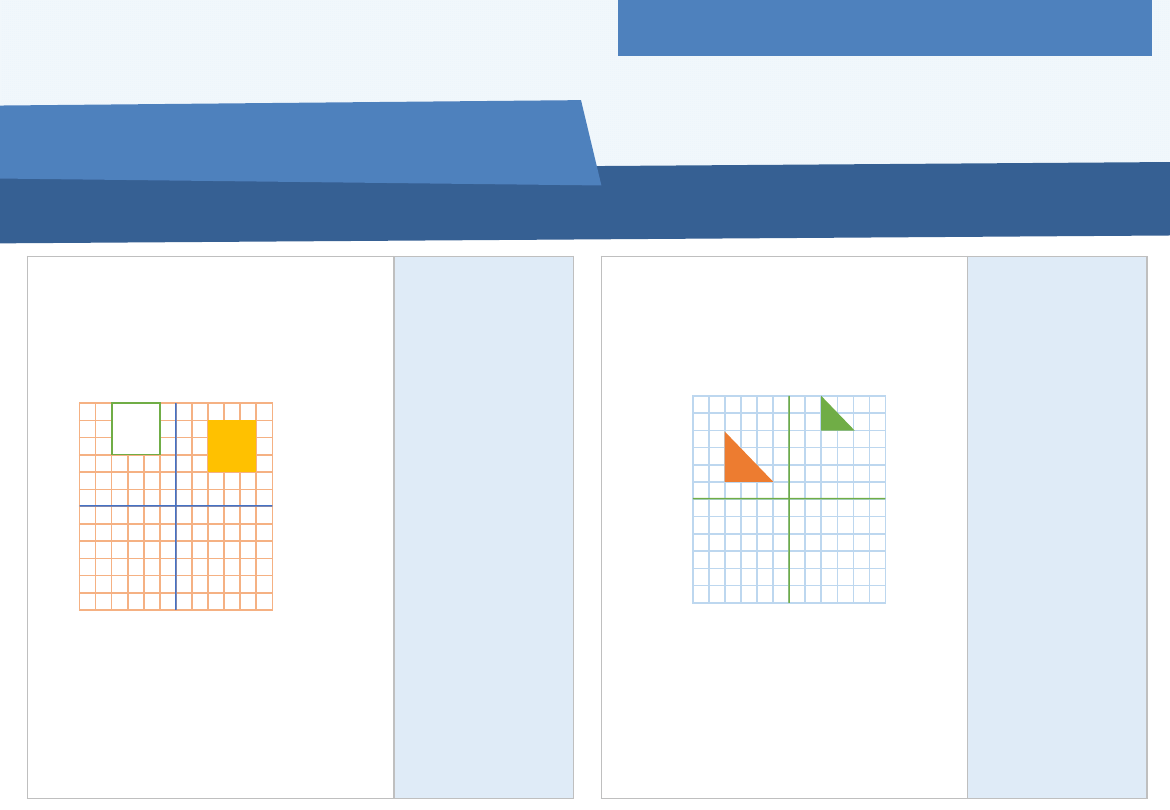
Use the graph describe the translations.
One has been done for you.
From to translate 8 units to the left.
From to translate __ units to the left
and __ units up.
From to translate 4 units to the _____ and 5 units _____.
From to translate __ units to the ____ and __ units ____.
Write the coordinates for A, B, C and D.
Describe the translation of
ABCD to the blue square.
ABCD is moved 8 units up and
2 units to the right- which colour
square is it moved to?
Write the co-ordinates for
A, B, C and D now it is translated.
-6 -5 -4 -3 -2 -1 1 2 3 4 5 6
-6
-
5
-
4
-
3
-2
-
1
1
2
3
4
5
6
B
A
D
C
Week 3 – Geometry: Position & Direction
Year 6
|
Autumn Term
Reasoning and Problem Solving
Translations
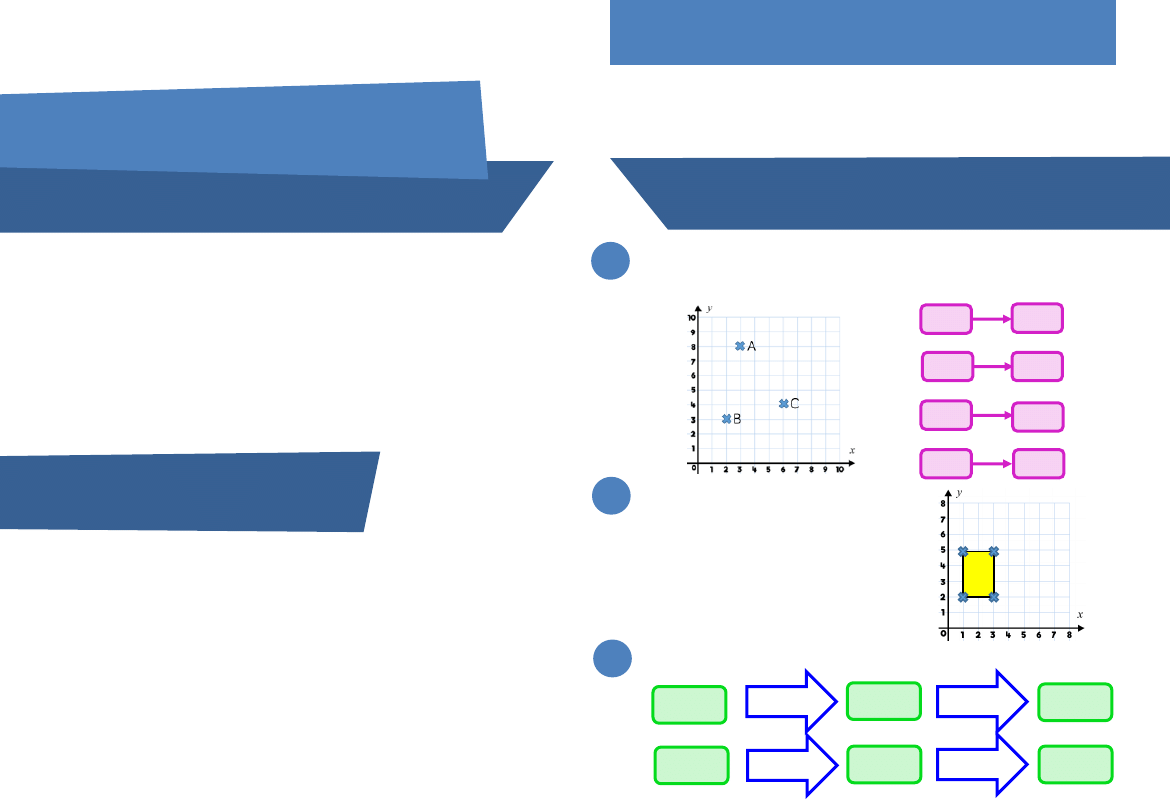
True or false
Sam has translated ABCD 6 units down
and 1 unit to the right to get to the yellow
square.
Answer:
False.
The translation is 6
units to the right and
1 unit down.
-6 -5 -4 -3 -2 -1 1 2 3 4 5 6
-6
-
5
-
4
-
3
-2
-
1
1
2
3
4
5
6
A
B
C
D
Spot the mistake.
The green triangle has been translated 6
units to the left and 3 units down.
-6 -5 -4 -3 -2 -1 1 2 3 4 5 6
-6
-
5
-
4
-
3
-2
-
1
1
2
3
4
5
6
Answer:
The mistake is that
the red triangle is
larger than the blue
triangle
Explain your reasoning.
Year 5
|
Summer Term
|
Teaching Guidance
Notes and Guidance
Mathematical Talk
Varied Fluency
Week 3 – Geometry: Position & Direction
Translation with Co-ordinates
2
1
Children translate using coordinates in the first quadrant and
describe the effect that translation has on coordinates. Children
continue to translate using the first quadrant to help visualise
the movements before recording the coordinates.
Attention should be drawn to the effect on the digits in the
coordinates and the relationship that left and right has on the
𝑥
coordinate and up and down has on the
𝑦 coordinate.
If we move this coordinate down, which digit changes? What if it
moves up?
If I move the coordinate two places to the right, which digit will
change and by how much?
If this is the translated coordinate, what was the original
coordinate?
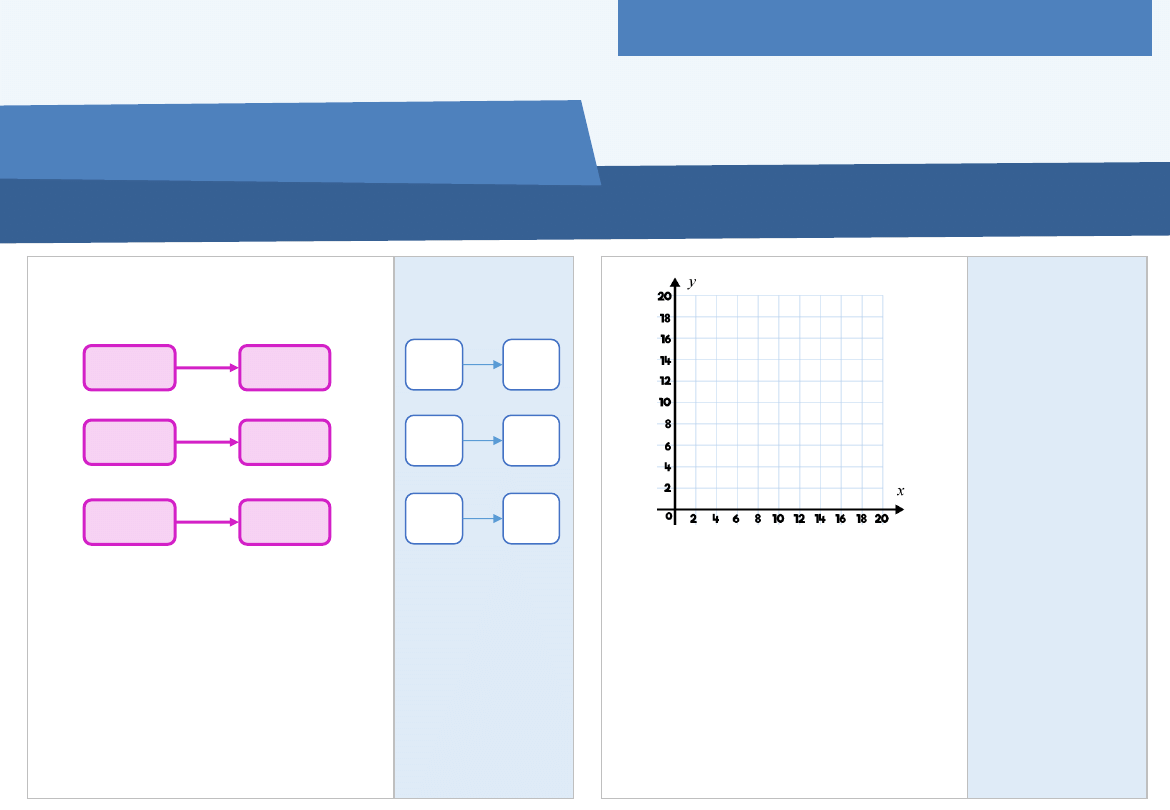
Translate each coordinate 2 places down, 1 place to the right.
Record the coordinate of its new position.
Rectangle ABCD is translated so
vertex C moves to vertex B.
What is the translation and what
are the coordinates of the
translated rectangle?
Translate the coordinates below.
3
(3, 8)
(3, 8)
B
A
C
D
(3, 6)
3 left
( , )
1 up
( , )
(5, 7)
2 right
( , )
4 down
( , )
Week 3 – Geometry: Position & Direction
Year 5
|
Summer Term
Reasoning and Problem Solving
Translation with Co-ordinates
Some coordinates have all been
translated in the same way.
Can you work out the translation and the
missing coordinates?
Translation 2 right
2 down.
A rectangle is translated 3 squares up
and two squares to the left.
Three of the coordinates of the
translated rectangle are: (5, 7) (10, 14)
(10, 7).
What are the coordinates of the original
rectangle?
( _ , _ )
(3 , 1)
( _ , 5)
(4 , 3)
(4 , _ )
(6 , 1)
(5 , 3)
(3 , 1)
(2 , 5)
(4 , 3)
(4 , 3)
(6 , 1)
(7, 4) (12, 4)
(7, 11) (12, 11)
Wyszukiwarka
Podobne podstrony:
Year 5 Summer Block 3 Position and direction
Year 2 Summer Block 1 Position and Direction
Year 1 Summer Block 3 Position and direction
Year 6 Block 4 Position and Direction October 2017
Direct Conversion Receiver, MPSKIQ and Direct Conversion
Lab 02 UNIX files and directories management
Year 1 Summer Block 6 Time
The Most Rapid and Direct Means to Eternal Bliss
Year 6 Year 5 and 6 Mark Scheme Arithmetic
Year 1 Year 1 and 2 Mark Scheme Arithmetic
Year 6 Year 5 and 6 Mark Scheme Reasoning and Problem Solving
Year 3 Year 3 and 4 Mark Scheme Arithmetic
Year 2 Year 1 and 2 Mark Scheme Arithmetic
Year 3 Summer Block 1 Number Fractions
[Filmmaking Technique] The virtual cinematographer a paradigm for automatic real time camera contr
Year 5 Year 5 and 6 Mark Scheme Arithmetic
więcej podobnych podstron