
Biotechnology and Molecular Biology Review Vol. 1 (2), pp. 66-75, June 2006
Available online at http://www.academicjournals.org/BMBR
ISSN 1538-2273 © 2006 Academic Journals
Standard Review
Molecular Chaperones involved in Heterologous
Protein Folding in
Escherichia coli
E. BETIKU
Department of Chemical Engineering, Obafemi Awolowo University,Ile-Ife, Osun State, Nigeria
Accepted 30 May, 2006
The Gram-negative bacterium
Escherichia coli is one of the most attractive host employed in the
heterologous production of proteins. However, these target proteins are deposited as insoluble
aggregates known as inclusion bodies (IBs) and hence are biologically inactive. The ubiquitous
molecular chaperones, a group of unrelated classes of polypeptides help in the mediation of proper
folding of the target protein. However, the choice of chaperone(s) is still based on a trial-and-error
procedure. Wrong choice of chaperone(s) will affect both the host micro-organism and product
stability, negatively. Recent advances in the mechanisms and substrate specificities of the major
chaperones and their roles in the chaperone-network now gives some ideas for more rational choice of
the chaperone(s) for co-expression. Here, the functions and mechanisms of interactions between the
major molecular chaperones are presented.
Key words:
molecular chaperones, inclusion bodies, heterologous, aggregates, protein folding
Table of Content
1.0
Introduction
2.0
Methods for preventing or decreasing protein aggregation.
2.2 Use of fusion proteins
2.3 Mutations in the target protein
2.4 Optimisation of cultivation conditions
2.5 Co-expression of molecular
3.0
Molecular chaperones
3.1 The Trigger Factor (TF)
3.2 The DnaK System
3.3 Cooperation of DnaK system with other Chaperones
3.4 The Small Heat-Shock Proteins (sHsps)
3.5 The GroEL System
4.0
Conclusion
5.0
Acknowledgement
6.0
References
1.0
INTRODUCTION
The heterologous production of proteins in the bacterium
host
Escherichia coli
is a widely used techniques both in
research and for commercial purposes. However, a
*Correspondence author. E-mail: ebetiku@oauife.edu.ng, Tel.:
+234-836602988, Fax: +234 (36) 232401.
fraction of these proteins are deposited in insoluble form.
These proteins form aggregates that accumulate into
inclusion bodies (IBs). IBs are refractile protein
aggregates with porous structures (Taylor et al. 1986;
Rinas et al. 1992; Carrió and Villaverde 2001). They have
high density (Hwang 1996) and are known to be in non-
native form and hence biologically inactive (Goloubinoff
et al. 1999; Hoffmann and Rinas 2004). The need to
Betiku 67
Native
ClpB
ATP
ADP
GroELS
KJE
Folding chaperones
IbpA/B
Native
Disaggregating
chaperones
TF
KJE
KJE
ADP
ATP
ADP
ATP
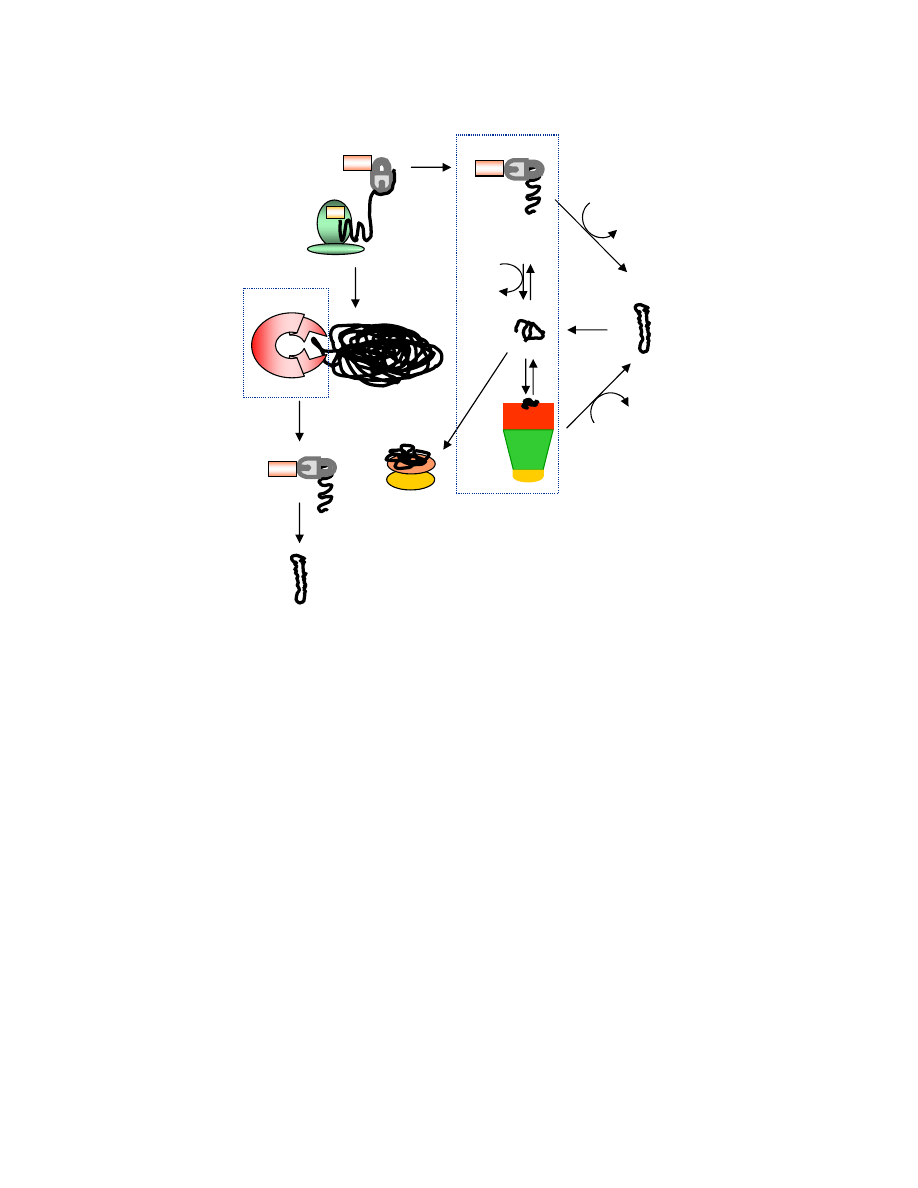
Figure 1.
A model of molecular chaperone-mediated protein folding in the cytoplasm of the bacterium
Escherichia coli
. Newly synthesized polypeptides first interact with Trigger Factor or DnaKJE. The
intermediate formed may reach native protein or interacts with GroELS before reaching native form. The
intermediate may also form aggregates known as inclusion bodies (IBs), which may need to interact with
ClpB for disaggregation before reaching native form after interaction with DnaKJE. IbpAB binds partially
folded proteins until disaggregating chaperone ClpB becomes available.
avoid formation of aggregates during heterologous
production of proteins in
E. coli
is not only informed by
the increase demand for cellular “quality control”
machinery (Hoffmann and Rinas 2004) which, may lead
to low productivity but also has to do with the involvement
of aggregates in some unrelated diseases such as
Alzheimer’s disease, bovine spongiform encephalopathy
and type II diabetes (Haper and Lansdury 1997; Azriel
and Gazit 2001).
Molecular chaperones are ubiquitous and highly
conserved proteins that shepherd other polypeptides to
fold properly and are not themselves components of the
final functional structures (Hartl 1996; Baneyx and
Palumbo, 2003). There are ~ 20 families of this class of
proteins which have different molecular weights,
structures, cellular locations and functions (Radford,
2000). They were originally identified by their increased
abundance as a result of heat shock (Bukau and
Horwich, 1998). Molecular chaperones work as networks
in protein folding in the cytoplasm of
E. coli
(Figure 1).
2.0
Methods for preventing or decreasing protein
aggregation.
Several methods have been suggested or shown to
prevent or decrease aggregation during overproduction of
recombinant protein in the host cell. Some of these
methods include: rate of synthesis, fusion proteins,
mutations in the target protein, cultivation conditions and
coexpression of molecular chaperones.
2.1
Control of the rate of synthesis of expressed
proteins
Typically, the more rapid the intracellular product
accumulation, the greater the probability of product
aggregation. The expression rate and the correct folding
of the product are among other parameters determined
by the level of gene induction, promoter strength, the
efficiency of translation initiation and mRNA stability
(Swartz 2001). Best results are usually obtained by low

68 Biotechnol. Mol. Biol. Rev.
cultivation temperature (18-25
o
C) and application of low
gene dosage (Kopetzki et al. 1989; Swartz 2001). Hence,
high soluble protein yield depends on low specific protein
synthesis rate and sustained production period (Kopetzki
et al. 1989; LaVallie et al. 1993).
2.2
Use of fusion proteins
Unrelated proteins originally were constructed together
(at genetic level) to facilitate protein detection/purification
and immobilization (Uhlen et al. 1983), and to couple the
activity of enzymes acting in a single metabolic pathway.
However, expression of a set of foreign genes e.g.
protease domain of human urokinase UKP as a fusion to
ubiquitin gene in yeast showed improved yield of
recombinant protein (Butt et al. 1989). Some fusion
partners
often
employed
include
prokaryotic
Staphylococcus
protein A (Abrahmsén et al. 1986);
maltose-binding protein (Sachdev and Chirgwin 1998),
thioredoxin (Lavillie et al. 1993) and DsbA (Winter et al.,
2000) from
E. coli
. The order of fusion partners often
determines the solubility level of the target protein
(Sachdev and Chirgwin 1998). As a periplasmic protein,
maltose-binding protein directs by its native signal
peptide the whole fusion to the periplasmic space of the
cells. This positive influence of maltose-binding protein
can be attributed to both its molecular characteristics and
its interaction with the target proteins. Although, most
protein fusions are soluble but the target proteins are not
always correctly folded (Sachdev and Chirgwin 1998) and
IBs can still be formed (Strandberg and Enfors 1991).
The disadvantages of fusion-protein technologies include:
liberation of the passenger proteins requires expensive
proteases (such as Factor Xa), cleavage is rarely
complete leading to reduction of yields, additional steps
may be required to obtain an active product e.g.
formation and isomerisation of disulfide bonds (Banyex
1999).
2.3
Mutations in the target protein
Many reports have been presented to show the effects of
mutations in target proteins overproduced in
E. coli
. King
and co-workers employed genetic techniques to identify
second-site suppressor mutations of temperature
sensitive folding mutants of the P22 tailspike protein,
which when placed in a wild-type background, give the
phenotype of decreased IBs content compared to wild-
type (Fane and King 1991). Mutations in the hFGF-2
gave different results; no soluble hFGF-2 was formed
when cysteines 26 and 93 were replaced with serines,
while a single substitution of cysteine 70 by serine
decreases the fraction of soluble hFGF-2 significantly
(Rinas et al. 1992). Recombinant production of interferon
gamma protein (IFN-
γ
) in
E. coli
at 37
o
C results in over
90% of the total accumulated gene product into IBs and
in addition, mutations in the protein show mutants that
retain high biological activity and are localized almost
entirely in the soluble fraction (Wetzel et al. 1991).
Observations in a series of mutations in the human
interleukin-1 beta (IL-1
β
) show no strong correlations
between extent of IB formation and either thermodynamic
or thermal stability (Chrunyk et al. 1993). Replacement of
Lys
97
by Val produces substantially more IL-1
β
in IBs
than in wild type despite generating a protein more
thermodynamically stable than wild type (Chrunyk et al.
1993).
2.4
Optimisation of cultivation conditions
IB formation during high-level recombinant production
may be reduced or avoided by optimising culture
conditions. Growth temperatures have been shown to
affect formation of IBs e.g.
β
-lactamase (Valax and
Georgiou 1993) and hFGF-2 (Squires et al. 1988). High
cultivation temperature leads to recombinant protein
aggregation (Schein and Noteborn 1988; Schein 1989).
Low temperatures can greatly reduce the formation of IBs
(Chalmers et al. 1990). This is corroborated by the work
of Piatak et al. (1988), soluble and fully functional Ricin A
chain was produced at 37
o
C, but the one produced at
42
o
C was aggregated. pH of the culture medium also
affects inclusion body formation. Formation of IBs also
depends on the level of induction. By using 0.01 mM
IPTG for induction of alkaline phosphate when produced
in
E. coli
, more than 90% of the product could be
recovered from the periplasm in soluble form, whereas
when induction was made at 1 mM IPTG, most of the
secreted alkaline phosphate formed IBs (Choi et al.
2000). The expression of
α
-glucosidase depends upon
the inducer concentration as well as on the period of
induction (Kopetzki et al. 1989). The type of medium
employed for recombinant production has influence on
the level of IBs formed. It has been shown that growth on
glycerol (Kopetzki et al. 1989) or on complex medium
(Winter et al. 2000) can be advantageous for solubility
and folding of the recombinant product. The ratio of
soluble to aggregated
β
-lactamase can be increased by
growing cells in the presence of certain non-
metabolizable sugars (Bowden and Georgiou 1988) and
it was also shown that the inhibition of aggregation
depends on the concentration of the sugar in the growth
medium (Bowden and Georgiou 1990). Wunderlich and
Glockshuber (1993) reported a five-fold increase in
correctly folded target protein after adding reduced and
oxidized glutathione to the growth medium. Glycine also
influences the folding of aggregation-prone proteins
(Kaderbhai et al. 1997). However, optimization of these
various parameters (such as pH, host strains, media,
temperature) is required for prevention of aggregation
and for the production of soluble and active products
(Kopetzki et al. 1989; Winter et al. 2000).

Betiku 69
Table 1.
Enhancing soluble production by co expression of molecular chaperones
Chaperone
Protein product
Results
References
GroEL/GroES
Rubisco
Protein-tyrosine kinase P
50csk
Increased production of assembled and
active Rubisco proteins from various
species is observed.
>50% of P
50csk
is soluble following
GroELS overexpression.
Goloubinoff et al.,
1989
Amrein et al., 1995
Trigger Factor (TF)
Endostatin
>80% of Endostatin is soluble following
TF overexpression.
Nishihara et al., 2000
DnaK
Human growth factor
Co expression of DnaK inhibits human
growth factor IB formation and increases
the amount of soluble product from 5% to
>85%.
Blum et al., 1992
GroEL/GroES and
TF
ORP150
86% of ORP150 is soluble following
GroELS/TF overexpression.
Nishihara et al., 2000
GroEL/GroES and
DnaK
Cryj2
Co expression of GroELS/DnaK resulted
in marked stabilization and accumulation
of Cryj2 without extensive aggregation
Nishihara et al., 1998
Source:
Betiku, 2005
2.5
Co-expression of molecular chaperones
Anfinsen’s observation that all information necessary for
a protein to adopt the unique three-dimensional structure
is contained in the amino acids sequence (Anfinsen
1973) remains unchallenged, in the last decade this view
of cellular protein folding has changed considerably.
Protein folding in the vicious and crowded environment of
the cell is very different from
in vitro
processes in which a
single protein is allowed to refold at low concentration in
an optimised buffer (Baneyx and Palumbo 2003). The
initial folding of proteins and assembly of multiprotein
complexes can be helped and sometimes required the
participation of chaperones. By binding exposed
hydrophobic patches on the protein, they prevent proteins
from aggregating into insoluble, non-functioning IBs and
help them reach their stable native state (Wickner et al.
1999). Chaperones do not provide specific steric
information for the folding of the target protein, but rather
inhibit unproductive interactions (Walter and Buchner
2002).
3.0
Molecular chaperones
The major chaperones implicated in
de novo
protein
folding are the trigger factor (TF), and the DnaK and the
GroEL chaperone systems (Horwich et al. 1993; Bukau et
al. 2000). Other chaperones involved in folding of
recombinant proteins include the AAA+ chaperone ClpB
and IbpA/IbpB. These molecular chaperones have been
reported to enhance soluble production of recombinant
proteins in
E. coli
(Table 1).
3.1
The Trigger Factor (TF)
TF was originally identified by its activity to stimulate
membrane translocation of the precursor of the outer-
membrane protein A (preOmpA)
in vitro
(Crooke and
Wickner 1987). In the
E. coli
cytosol, nascent
polypeptides interact first with TF (Valent et al. 1995;
Hesterkamp et al. 1996). TF has both peptidyl-prolyl cis-
trans isomerase activity and chaperone-like function
(Crooke and Wickner 1987; Hesterkamp et al. 1996). The
enzymatic mechanism of TF follows the Michaelis-
Menten kinetic (Scholz et al. 1997). TF binds to the
ribosome at proteins L23/L29 near the polypeptide exit
site (Kramer et al. 2002). TF’s peptidyl-prolyl cis-trans
isomerase activity is not essential for protein folding in
E.
coli
(Kramer et al. 2004). It is composed of three
domains: an N-terminal domain, which mediates
association with the large ribosomal subunit; a central
substrate binding and peptidyl-prolyl cis-trans isomerase
(PPIase) domain with homology to FKBP [(FK506
Binding Protein)(
FK506 is a macrolide lactone,
Tacrolimus also called Fujimycin)]; and a C-terminal
domain of unknown function (Hesterkamp and Bukau
1996; Hesterkamp et al. 1997). TF affinity for substrate is
very low compared to most chaperones and is ATP
independent, suggesting that rapid binding to and release
from TF may be critical for elongating polypeptide chains
(Maier et al., 2001). The binding motif of TF has been
identified as a stretch of eight amino acids, enriched in
aromatic residues and with a positive net charge (Patzelt
et al. 2001). TF cooperates with the DnaK system in
folding of nascent polypeptides. They share an
overlapping substrate pool (Teter et al. 1999; Deuerling
et al. 1999, 2003). Both chaperones help in multidomain

70 Biotechnol. Mol. Biol. Rev.
protein folding but at the expense of folding speed
(Agashe et al. 2004). They can compensate for one
another; however, their combined deletion is lethal at
temperatures above 30
o
C (Deuerling et al. 1999; Teter et
al., 1999). Overproduction of GroEL chaperone system
could efficiently suppress the growth defect as a result of
tigdnak
deletion (Genevaux et al. 2004). TF function
together with GroEL-GroES in selective degradation of
certain polypeptides (Kandror et al. 1995) and
in vivo
, TF
associate with GroEL to promote its binding to certain
unfolded proteins (Kandror et al. 1997). TF prevents the
aggregation of recombinant proteins either in combination
with the chaperonin GroEL-GroES or alone (for example,
lysozyme, Nishihara et al. 2000).
3.2
The DnaK System
The DnaK is the most general molecular chaperone. It is
also known as heat shock protein 70 (Hsp70). The
structural and mechanistic features of the
E. coli
DnaK
chaperone system have been reviewed (Bukau and
Horwich 1998). DnaK works in cooperation with its
cochaperones – DnaJ and GrpE (Liberek et al. 1991).
Structural features of DnaK are required for interaction
with DnaJ (Suh et al. 1999). The importance of these
features for substrate binding has been shown by
mutational analysis (Mayer et al. 2000). The rate of ATP
hydrolysis is accelerated by DnaJ (Laufen et al. 1999).
This stimulation is disrupted by mutation of conserved
leucine residues of DnaK located in the linker between
substrate binding and ATPase domains, resulting in
considerable loss of chaperone activity (Han and
Christen 2001). DnaJ also targets the substrates to DnaK
(Liberek et al. 1995), and substrates with low affinity for
DnaK are not able to stimulate the ATPase and
chaperone activity of DnaK without DnaJ (Mayer et al.
2000). The cochaperone GrpE accelerates the exchange
of ADP with ATP, resulting in the release of the unfolded
substrate and completion of the chaperone cycle
(Packschies et al. 1997). Besides the promiscuous
binding of aggregation-prone substrate proteins, DnaK –
targeted by DnaJ (Liberek et al. 1995) – specifically
recognizes a “region C” of the heat-shock sigma factor
σ
32
(Nagai et al. 1994). Abundant free DnaK-DnaJ inhibits
σ
32
-dependent gene expression (Tatsuta et al., 1998).
Furthermore, the C-terminal part of
σ
32
becomes
accessible to the protease FtsH, resulting in rapid
degradation of
σ
32
(Blaszczak et al. 1999), therefore,
DnaK negatively regulates the heat-shock response.
Under stress conditions, misfolded proteins withdraw
DnaK from
σ
32
, which regains activity and stability,
resulting in enhanced transcription of
σ
32
-dependent
heat-shock genes, including
dnaK
, until sufficient
amounts of DnaK accumulate to bind both the misfolded
proteins and
σ
32
(Bukau 1993). The increase in the level
of
σ
32
is accelerated, when, additional to the titration of
DnaK by misfolded proteins, high temperatures stimulate
translation of the
rpoH
mRNA (Morita et al. 2000). The
DnaK chaperone acts on different levels:
de novo
folding
of protein (Bukau and Horwich 1998), rescue or
degradation of denatured proteins and reversion of
aggregation (Hoffmann and Rinas 2004). In addition to
the role in ATP-dependent unfolding, DnaK can prevent
aggregation by longterm binding to thermolabile
substrates when higher temperatures reduce the affinity
of DnaK for both DnaJ and GrpE (Diamant and
Goloubinoff 1998), thereby preventing aggregation or
stabilizing the substrates for refolding by the GroEL
chaperone system (Buchberger et al. 1996). DnaK binds
preferentially newly synthesized proteins in the size
range of 16-167 kDa with an enrichment of proteins
larger than 60 kDa (Deuerling et al. 2003).
3.3
Cooperation of DnaK system with other
Chaperones
Beside TF, DnaK also cooperates with the
E. coli
Hsp31
(“holdase”) in management of protein misfolding under
severe stress conditions (Mujacic et al. 2004).
In vitro
and
in vivo
experiments show that cooperation between DnaK
and the AAA+ chaperone ClpB is needed for prevention
and reversion of aggregation in prokaryotes (Mogk et al.
1999; Zolkiewski 1999). Heat-inactivated proteins
released by the DnaK-ClpB bichaperone system are
recognized as non-native folding intermediates by the
chaperonins system (Watanabe et al. 2000). The
disaggregating activity of the ClpB-DnaK chaperone
network exhibits broad substrate specificity; at least 75%
of thermally aggregated
E. coli
proteins in cell extract are
solubilised (Mogk et al. 1999). The mechanism of
solubilisation and refolding of protein aggregates by this
bichaperone network is sequential (Goloubinoff et al.
1999). It has been proposed that ClpB interacts directly
with protein aggregates prior to the DnaK on protein
substrates (Weibezahn et al. 2003). Schlee et al. (2004)
have shown that a specific interaction between ClpB and
DnaK exists, and the affinity of the complex formed is
weak and their interaction is nucleotide-dependent
(Schlee et al. 2004). Hsp104/ClpB was first described as
a heat-inducible protein conferring thermo-tolerance to
yeast (Sanchez and Lindquist 1990). ClpB is ATP-
dependent (Woo et al. 1992) and belongs to the
Hsp100/Clp family of AAA+ (ATPase associated with a
variety of cellular activities) and is composed of an N-
terminal domain and two AAA domains that are
separated by a “linker” region (Schirmer et al. 1996). The
AAA domains mediate ATP binding and hydrolysis and
are essential for ClpB oligomerization (Mogk et al.
2003a). The function of the N domain and the “linker”
segment are currently unknown. While the N domains are
dispensable for the disaggregating activity of ClpB, the
linker region has an essential function in this process
(Mogk et al. 2003a).

3.4
The Small Heat-Shock Proteins (sHsps)
The small heat-shock proteins (sHsps) are ATP-
independent proteins, grouped as a family of heat-shock
proteins based on a low degree of homology in a core
region of about 85 amino acids (the
α
-crystallin domain),
their ability to be induced by cellular stress, and their low
protomer molecular weight, which usually ranges
between 15-30 kDa (Shearstone and Baneyx 1999). The
E. coli
homology is IbpA/IbpB with molecular weight of
14- and 16-kDa, respectively, co-transcribed during
stress by the bacterial heat shock transcription factor
σ
32
(Allen et al. 1992). IbpB consists mainly of
β
-pleated
secondary structure (Shearstone and Baneyx 1999). In
E.
coli
, IbpA and IbpB are found associated with
endogenous proteins that aggregate intracellularly during
heat shock (Laskowska et al. 1996) and with non-native
recombinant proteins in Inclusion bodies (Allen et al.
1992). However, they are not found in inclusion bodies of
partially soluble proteins (Valax and Georgiou 1993;
Hoffmann and Rinas 2000). Over-production of IbpA/IbpB
can increase stress tolerance in
E. coli
(Thomas and
Baneyx, 1998). Despite the high sequence homology
between IbpA and IbpB, the two proteins behave
differently upon over-expression in
E. coli
; whereas IbpA
is found in the insoluble S-fraction, IbpB is mainly soluble
when produced in the absence of IbpA, but co-migrates
to the aggregated fraction upon co-production with IbpA
(Kuczy ska-Wi nik et al. 2002). Generally, sHsps bind
substrate proteins exposing hydrophobic surfaces and for
refolding, a transfer to ATP-dependent chaperones is
required (Hoffmann and Rinas 2004). IbpA/IbpB
cooperate with the bichaperone (DnaK and ClpB) both
in
vivo
and
in vitro
, in reversing aggregated proteins, and
they become essential at 37
o
C if DnaK levels are reduced
(Mogk et al. 2003b).
3.5
The GroEL System
The GroEL-GroES system (i.e. chaperonins) are currently
the molecular chaperone system, for which there is the
most structural and mechanistic information (Braig et al.
1994; Rye et al. 1997; Sigler et al. 1998). They are
essential for cell viability at all temperatures (Fayet et al.
1989; Horwich et al. 1993). During cellular stress, 30% of
newly translated polypeptides depend on the GroEL
chaperone (Horwich et al. 1993). GroEL is also known as
heat shock protein 60 (Hsp60) and is a homo-oligomer of
14 subunits, each of relative molecular mass of 57 kDa,
arranged into two heptameric rings, forming a cylindrical
structure with two large cavities (Braig et al. 1994).
Substrate protein, with hydrophobic amino acid residues
exposed, binds in the central cavity of the cylinder,
engaging the hydrophobic surfaces exposed by the apical
GroEL domain (Fenton et al. 1994). Folding usually
occurs with the aid of GroES, a dome-shaped ring
containing seven subunits of 10 kDa (Hunt et al. 1996).
Betiku 71
Binding of GroES to the polypeptide-containing ring of
GroEL in an ATP-dependent reaction results in the
displacement of polypeptide into an enclosed cage,
defined by the GroEL cavity and the dome of GroES, in
which aggregation is prevented and folding to native state
is possible (Weissman et al. 1994). After the GroEL-
bound ATP has been hydrolysed to ADP, ATP binding to
the opposite ring of GroEL results in the dissociation of
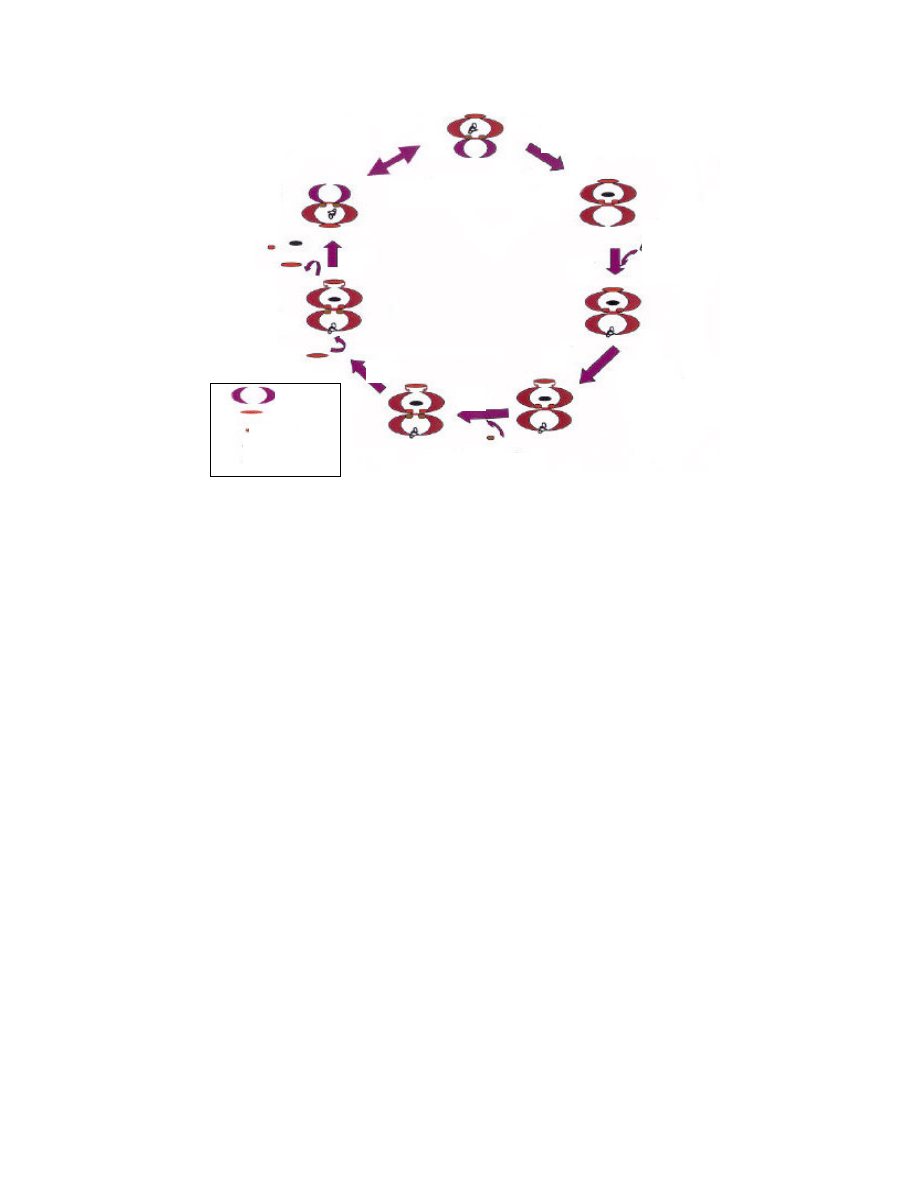
GroES and folded protein from GroEL (Figure 2). Some
proteins require multiple chaperonin cycles for folding
(Hartl 1996; Sigler et al. 1998). GroEL preferentially
interacts with newly synthesized polypeptides with the
size range between 10-55 kDa (Ewalt et al. 1997), but
most GroEL substrates are larger than 20 kDa (Houry et
al. 1999). GroEL substrates consist of two or more
domains with
αβ
-folds, which contain
α
-helices and
buried
β
-sheets with extensive hydrophobic surfaces
(Houry et al. 1999). The oligomeric structure of GroEL-
GroES is required for biologically significant chaperonin
function in protein folding (Weber et al. 1998) and the
maximum size of substrate protein that can be
encapsulated in the GroEL-GroES cavity is ~ 57 kDa
(Sakikawa et al. 1999). GroEL-GroES can also mediate
folding of substrate protein, which are too large to be
enclosed within this cavity (Chaudhuri et al. 2001). Co-
production of GroEL-GroES can increase solubility of
some recombinant proteins (Goloubinoff et al. 1989;
Amrein et al. 1995). GroEL-chaperone system
cooperates with other molecular chaperones, for example
DnaK (Buchberger et al. 1996; Nishihara et al. 1998,
2000), and TF (Nishihara et al. 2000) in increasing
solubility of certain recombinant proteins. Betiku (2005)
show that GroELS can prevent inclusion bodies formation
during recombinant production of human basic Fibroblast
Growth Factor (hFGF-2) in
E. coli
. GroELS of
E. coli
are
the rate-limiting cellular determinant of growth at lower
temperatures (Ferrer et al. 2003).
4.0
CONCLUSION
Several methods have been suggested or shown to
prevent or decrease aggregation during overproduction of
recombinant protein in the host cell. Some of these
methods include: controlling the rate of synthesis, use of
fusion proteins, mutations in the target protein,
optimisation of cultivation conditions and co-expression of
molecular chaperones. The use of chaperones is just
evolving and more studies are still needed to understand
how they function. Hitherto, the use of chaperones in
improving recombinant production of protein is by trial-
and-error procedure. Future research should be focused
on the interactions/cooperation between these chape-
rones and the various target protein. When there is
enough data, it will then be possible to choose the right
combination of molecular chaperones to co-express with
the individual target protein in order to avoid formation of
aggregation
and
hence,
increase
the
yield.
72 Biotechnol. Mol. Biol. Rev.
Initiation of folding
1
ATP Hydrolysis: rate limiting
0.12 s
-1
Substrate
binding in
trans
2
3
4
ATP binding
5
6
Binding
and
release of
GroES:
concerted
event
Release of
GroES,
Substrate
and ADP
from cis
GroEL
GroES
ADP
ATP
Folded substrate
Unfolded substrate
Figure 2. The GroEL-GroES reaction cycle.
(1) Binding of substrate protein stimulates ATP and GroES
binding in
cis
, which leads to the substrate protein being released in the cavity, and initiation of folding. (2)
Substrate protein binds to the
trans
ring only after ATP hydrolysis takes place in the
cis
ring. (3) In the
presence of substrate in the
trans
ring, there is a fast structural rearrangement in the ADP and GroES-
bound
cis
ring that primes it for releasing GroES. (4) The binding of substrate protein in the
trans
ring
stimulates ATP binding in
trans
. (5) The subsequent binding of GroES to the
trans
ring is simultaneous with
the release of GroES from the
cis
ring. (6) The GroES- and ATP- bound
trans
ring causes structural
rearrangements in the
cis
ring leading to release of ADP and substrate protein. Upon completion of one
folding cycle, the next cycle is initiated in the alternate ring (adapted from Bhutani and Udgaonkar, 2002).
5.0
ACKNOWLEDGEMENT
The author wishes to acknowledge the financial support
for this work by DAAD. This work was carried out at the
National
Research
centre
for
Biotechnology,
Braunschweig, Germany.
6.0
REFERENCES
Abrahmsén L, Moks T, Nilsson B, Uhlen M (1986). Secretion of
heterologous gene products to the culture medium of
Escherichia coli
. Nucleic Acids Res. 14: 7487-7500.
Agashe VR, Guha S, Chang HC, Genevaux P, Hayer-Hartl M, Stemp M,
Georgopoulos C, Hartl FU, Barral JM (2004). Function of trigger
factor and DnaK in multidomain protein folding: increase in yield at
the expense of folding speed. Cell. 117: 199-209.
Allen SP, Polazzi JO, Gierse JK, Easton AM (1992). Two novel heat
shock genes encoding proteins produced in response to
heterologous protein expression in
Escherichia coli
. J. Bacteriol. 174:
6938-6947.
Amrein KE, Takacs B, Stieger M, Molnos J, Flink NA, Burn P (1995).
Purification and characterization of recombinant human p50
csk
protein-
tyrosine kinase from an
Escherichia coli
expression system
overproducing the bacterial chaperones GroES and GroEL. Proc.
Natl. Acad. Sci. USA. 92: 1048-1052.
Anfinsen CB (1973). Principles that govern the folding of protein chains.
Science. 181: 223-230.
Azriel R, Gazit E (2001) Analysis of the Minimal Amyloid-forming
Fragment of the Islet Amyloid Polypeptide. J. Biol. Chem. 276: 34156
-34161.
Baneyx F (1999). Recombinant protein expression in
Escherichia coli
.
Curr. Opin. Biotechnol. 10: 411-421.
Baneyx F, Palumbo JL (2003). Improving heterologous protein folding
via molecular chaperone and foldase co-expression. Methods Mol.
Biol. 205: 171-197.
Betiku E (2005) Heterologous Production of the Human Basic Fibroblast
Growth Factor and the Glucosyltransferase-S in
Escherichia coli
with
and without Coproduction of Molecular Chaperones (PhD thesis)
ISBN 3-86537-367-4.
Bhutanib N, Udgaonkar JB (2002). Chaperonins as protein-folding
machines. Curr. Sci. 83: 1337-1351 2002
Blaszczak A, Georgopoulos C, Liberek K (1999). On the mechanism of
FtsH-dependent degradation of the sigma 32 transcriptional regulator
of
Escherichia coli
and the role of the DnaK chaperone machine. Mol.
Microbiol. 31: 157-166.
Blum P, Velligan M, Lin N, Matin A (1992). DnaK-mediated alterations in
human growth hormone protein inclusion bodies. Bio/Technology. 10:
301-304.
Bowden G, Georgiou G (1988). Effects of Sugars on -lactamase
Aggregation in
Escherichia coli
. Biotechnol. Prog. 3: 97-101.
Braig K, Otwinowski Z, Hegde R, Boisvert DC, Joachimiak A, Horwich
AL, Sigler PB (1994). The crystal structure of the bacterial chaperonin
GroEL at 2.8 Å. Nature. 371: 578-586.
Buchberger A, Schröder H, Hesterkamp T, Schönfeld H-J, Bukau B
(1996). substrate shuttling between the DnaK and GroEL system
indicates a chaperone network promoting protein folding. J. Mol. Biol.
261: 328-333.
Bukau B (1993). Regulation of the
Escherichia coli
heat-shock
response. Mol. Microbiol. 9: 671-680.
Bukau B, Deuerling E, Pfund C, Craig EA (2000). Getting newly synthe-

sized proteins in to shape. Cell. 101: 119-122.
Bukau B, Horwich AL (1998). The Hsp70 and Hsp60 chaperone
machines. Cell. 92: 351-366.
Butt TR, Jonnalagadda S, Monia BP, Sternberg EJ, Marsh JA, Stadel
JM, Ecker DJ, Crooke ST (1989). Ubiquitin fusion augments the yield
of cloned gene products in
Escherichia coli
. Proc. Natl. Acad. Sci.
USA. 86: 2540-2544.
Carrió MM, Villaverde A (2001). Protein aggregation as bacterial
inclusion bodies is reversible. FEBS Lett. 489: 29-33.
Chalmers JL, Kim E, Telford JN, Wong EY, Tacon WC, Shuler ML,
Wilson DB (1990). Effects of temperature on
Escherichia coli
overproducing beta–lactamase or human epidermal growth factor.
Appl. Environ. Microbiol. 56: 104-111.
Chaudhuri TK, Farr GW, Fenton WA, Rospert S, Horwich AL (2001).
GroEL/GroES-mediated folding of a protein too large to be
encapsulated. Cell. 107: 235-246.
Choi JH, Jeong KJ, Kim SC, Lee SY (2000). Efficient secretory
production of alkaline phosphatase by high cell density culture of
recombinant
Escherichia coli
using the
Bacillus
sp. endoxylanase
signal sequence. Appl. Microbiol. Biotechnol. 53: 640-645.
Chrunyk BA, Evans J, Lillquist J, Young P, Wetzel R (1993). Inclusion
body formation and protein stability in sequence variants of
interleukin-1 beta. J. Biol. Chem. 268: 18053-18061.
Crooke E, Wickner W (1987). Trigger factor: a soluble protein that folds
pro-OmpA into a membrane-assembly-competent form. Proc. Natl.
Acad. Sci. USA. 84: 5216-5220.
Deuerling E, Patzelt H, Vorderwülbecke S, Rauch T, Kramer G,
Schaffitzel E, Mogk A, Schulze-Specking A, Langen H, Bukau B
(2003). Trigger factor and DnaK posses overlapping substrate pools
and binding specificities. Mol. Microbiol. 47: 1317-1328.
Deuerling E, Schulze-Specking A, Tomoyasu T, Mogk A, Bukau B
(1999). Trigger factor and DnaK cooperate in folding of newly
synthesized proteins. Nature. 400: 693-696.
Diamant S, Goloubinoff P (1998). Temperature-controlled activity of
DnaK-DnaJ-GrpE chaperones: protein-folding arrest and recovery
during and after heat shock depends on the substrate protein and the
GrpE concentration. Biochem. 37: 9688-9694.
Ewalt KL, Hendrick JP, Houry WA, Hartl FU (1997). In vivo observation
of polypeptide flux through the bacterial chaperonin system. Cell. 99:
491-500.
Fane B, King J (1991). Intragenic suppressors of folding defects in the
P22 tailspike protein. Genetics. 127: 263-277.
Fayet O, Ziegelhofer T, Georgopoulos C (1989). The
groES
and
groEL
heat shock gene products of
Escherichia coli
are essential for
bacterial growth at all temperatures. J. Bacteriol. 171: 1379-1385.
Fenton WA, Kashi Y, Furtak K, Horwich AL (1994). Residues in
chaperonin GroEL required for polypeptide binding and release.
Nature. 371: 614-619.
Ferrer M, TN Chernikova, MM Yakimov, PN Golyshin and KN Timmis
(2003). Chaperonins govern growth of
Escherichia coli
at low
temperatures.
Nature Biotechnol. 21: 1266 – 1267.
Genevaux P, Keppel F, Schwager F, Langendijk-Genevaux PS, Hartl
FU, Georgopoulos C (2004).
In vivo
analysis of the overlapping
functions of DnaK and trigger factor. EMBO Reports. 5: 195-200.
Goloubinoff P, Gatenby AA, Lorimer GH (1989). GroE heat-shock
proteins promote assembly of foreign prokaryotic ribulose
bisphosphate carboxylase oligomers in
Escherichia coli
. Nature. 337:
44-47.
Goloubinoff P, Mogk A, Ben-Zvi AP, Tomoyasu T, Bukau B (1999).
Sequential mechanism of solubilization and refolding of stable protein
aggregates by a bichaperone network.
Proc. Natl. Acad. Sci. USA.
96: 13732-13737.
Harper JD and PT Lansbury (1997) Models of Amyloid Seeding in
Alzheimer's Disease and Scrapie: Mechanistic Truths and
Physiological Consequences of the Time-Dependent Solubility of
Amyloid Proteins Ann. Rev. Biochem. 66: 385-407.
Hartl FU (1996). Molecular chaperones in cellular protein folding.
Nature. 381: 571-579.
Hesterkamp T, Bukau B (1996). Identification of the prolyl isomerase
domain of
Escherichia coli
trigger factor. FEBS Lett. 385: 67-71.
Hesterkamp T, Deuerling E, Bukau B (1997). The amino-terminal 118
amino acids of
Escherichia coli
trigger factor constitute a domain that
Betiku 73
is necessary and sufficient for binding to ribosomes. J. Biol. Chem. 272:
21865-21871.
Hesterkamp T, Hauser S, Lutcke H, Bukau B (1996).
Escherichia coli
trigger factor is a prolyl isomerase that associates with nascent
polypeptide chains. Proc. Natl. Acad. Sci. USA. 93: 4437-4441.
Hoffmann F, Rinas U (2000). Kinetics of heat-shock response and
inclusion body formation during temperature-induced production of
basic fibroblast growth factor in high-cell density cultures of
recombinant
Escherichia coli
. Biotechnol. Prog. 16: 1000-1007.
Hoffmann F, Rinas U (2004). Roles of heat-shock chaperones in the
production of recombinant proteins in
Escherichia coli
. Adv. Biochem.
Eng. Biotechnol. 89: 143-161.
Horwich AL, Low KB, Fenton WA, Hirshfield IN, Furtak K (1993).
Folding
in vivo
of bacterial cytoplasmic proteins: role of GroEL. Cell.
74: 909-917.
Houry WA, Frishman D, Eckerskorn C, Lottspeich F, Hartl FU (1999).
Identification of
in vivo
substrates of the chaperonin GroEL. Nature.
402: 147-154.
Hwang SO (1996) Effect of inclusion bodies on the buoyant density of
recombinant
Escherichia coli
. Biotechnol. Techniques. 10: 157 –
160.
Han W, Christen P (2001). Mutations in the interdomain linker region of
DnaK abolish the chaperone action of the DnaK/DnaJ/GrpE system.
FEBS Lett. 497: 55-58.
Hunt JF, Weaver AJ, Landry SJ, Gierasch L, Deisenhofer J (1996). The
crystal structure of the GroES co-chaperonin at 2.8 Å resolution.
Nature. 379: 37-45.
Kaderbhai N, Karim A, Hankey W, Jenkins G, Venning J, Kaderbhai MA
(1997). Glycine-induced extracellular secretion of a recombinant
cytochrome expressed in
Escherichia coli
. Biotechnol. Appl.
Biochem. 25: 53-61.
Kandror O, Sherman M, Moerschell R, Goldberg AL (1997). Trigger
factor associates with GroEL
in vivo
and promotes its binding to
certain polypeptides. J. Biol. Chem. 272: 1730-1734.
Kandror O, Sherman M, Rhode M, Goldberg AL (1995). Trigger factor is
involved in GroEL-dependent protein degradation in
Escherichia coli
and promotes binding of GroEL to unfolded proteins. EMBO J. 14:
6021-6027.
Kopetzki E, Schumacher G, Buckel P (1989). Control of formation of
active soluble or
inactive insoluble baker's yeast alpha-glucosidase PI in
Escherichia coli
by induction and growth conditions. Mol. Gen. Genet. 216: 149-155.
Kramer G, Patzelt H, Rauch T, Kurz TA, Vorderwulbecke S, Bukau B,
Deuerling E
(2004). Trigger factor peptidyl-prolyl cis/trans isomerase activity is not
essential for the folding of cytosolic proteins in
Escherichia coli
. J.
Biol. Chem. 279: 14165-14170.
Kramer G, Rauch T, Rist W, Vorderwulbecke S, Patzelt H, Schulze-
Specking A, Ban N, Deuerling E, Bukau B (2002). L23 protein
functions as a chaperone docking site on the ribosome. Nature. 419:
171-174.
Kuczy ska-Wisnik D, K dzierska S, Matuszewska E, Lund P, Taylor A,
Lipi ska B, Laskowska E (2002). The
Escherichia coli
small heat-
shock proteins IbpA and IbpB prevent the aggregation of endogenous
proteins denatured
in vivo
during extreme heat shock. Microbiol. 148:
1757-1765.
Laskowska E, Wawrzynó A, Taylor A (1996). IbpA and IbpB, the new
heat-shock proteins, bind to endogenous
Escherichia coli
proteins
aggregated intracellularly by heat shock. Biochimie. 78: 117-122.
Laufen T, Mayer MP, Beisel C, Klostermeier D, Mogk A, Reinstein J,
Bukau B (1999). Mechanism of regulation of hsp70 chaperones by
DnaJ cochaperones. Proc. Natl. Acad. Sci. USA. 96: 5452-5457.
LaVallie ER, DiBlasio EA, Kovacic S, Grant KL, Schendel PF, McCoy
JM (1993). A thioredoxin gene fusion expression system that
circumvents inclusion body formation in the
E. coli
cytoplasm.
Bio/Technol. 11: 187-193.
Liberek K, Wall D, Georgopoulos C (1995). The DnaJ chaperone
catalytically activates the DnaK chaperone to preferentially bind the
sigma 32 heat shock transcriptional regulator. Proc. Natl. Acad. Sci.
USA. 92: 6224-6228.
Liberek K, Marszalek J, Ang D, Georgopoulos C (1991).
Escherichia
coli
DnaJ and

74 Biotechnol. Mol. Biol. Rev.
GrpE heat shock proteins jointly stimulate ATPase activity of the DnaK.
Proc. Natl. Acad. Sci. USA. 88: 2874-2878.
Maier R, Scholz C, Schmid FX (2001). Dynamic association of trigger
factor with protein substrates. J. Mol. Biol. 314: 1181-1190.
Mayer MP, Schroder H, Rudiger S, Paal K, Laufen T, Bukau B (2000).
Multistep mechanism of substrate binding determines chaperone
activity of Hsp70. Nat. Struct. Biol. 7: 586-593.
Mogk A, Schlieker C, Strub C, Rist W, Weibezahn J, Bukau B (2003a).
Roles of individual domains and conserved motifs of the AAA+
chaperone ClpB in oligomerization, ATP hydrolysis, and chaperone
activity. J. Biol. Chem. 278: 17615-17624.
Mogk A, Deuerling E, Vorderwülbeck S, Vierling E, Bukau B (2003b).
Small heat shock proteins, ClpB and the DnaK system form a
functional triade in reversing protein aggregation. Mol.
Microbiol. 50:
585-595.
Mogk A, Tomoyasu T, Goloubinoff P, Rüdiger S, Röder D, Langen H,
Bukau B (1999). Identification of thermolabile
Escherichia coli
proteins: Prevention and reversion of aggregation by DnaK and ClpB.
EMBO J. 18: 6934-6949.
Morita MT, Kanemori M, Yanagi H, Yura T (2000). Dynamic interplay
between antagonistic pathways controlling the sigma 32 level in
Escherichia coli
. Proc. Natl. Acad. Sci. USA. 97: 5860-5865.
Mujacic M, Bader MW, Baneyx F (2004).
Escherichia coli
Hsp31
functions as a holding
chaperone that cooperates with the DnaK-DnaJ-GrpE system in the
management of protein misfolding under severe stress conditions.
Mol. Microbiol. 51: 849-859.
Nagai H, Yuzawa H, Kanemori M, Yura T (1994). A distinct segment of
the sigma 32
polypeptide is involved in DnaK-mediated negative control of the heat
shock response in
Escherichia coli
. Proc. Natl. Acad. Sci. U S A. 91:
10280-10284.
Nishihara K, Kanemori M, Kitagawa M, Yanagi H, Yura T (1998).
Chaperone co expression plasmids: differential and synergistic roles
of DnaK-DnaJ-GrpE and GroEL-GroES in assisting folding of an
allergen of japanese cedar pollen, Cryj2, in
Escherichia coli
. Appl.
Environ. Microbiol. 64: 1694-1699.
Nishihara K, Kanemori M, Yanagi H, Yura T (2000). Overexpression of
trigger factor prevents aggregation of recombinant proteins in
Escherichia coli
. Appl. Environ. Microbiol. 66: 884-889.
Packschies L, Theyssen H, Buchberger A, Bukau B, Goody RS,
Reinstein J (1997). GrpE accelerates nucleotides exchange of the
molecular chaperone DnaK with an associative displacement
mechanism. Biochem. 36: 3417-3422.
Patzelt H, Rüdiger S, Brehmer D, Kramer G, Vorderwülbecke S,
Schaffitzel E, Waitz A, Hesterkamp T, Dong L, Schneider-Mergener
J, Bukau B, Deuerling E (2001). Binding specificity of
Escherichia coli
trigger factor.
Proc. Natl. Acad. Sci. USA. 98: 14244-14249.
Piatak M, Lane JA, Laird W, Bjorn MJ, Wang A, Williams M (1988).
Expression of soluble and fully functional ricin A chain in
Escherichia
coli
is temperature-sensitive. J. Biol. Chem. 263: 4837-4843.
Radford SE (2000). Protein folding: progress made and promises
ahead. Trends Biochem Sci. 25: 611-618.
Rinas U, Tsai LB, Lyons D, Fox GM, Stearns G, Fieschko J, Fenton D,
Bailey JE (1992). Cysteine to serine substitutions in basic fibroblast
growth factor: Effect on inclusion body formation and proteolytic
susceptibility during in vitro refolding. Bio/Technol. 10: 435-440.
Rye HS, Burston SG, Fenton WA, Beechem JM, Xu Z, Sigler PB,
Horwich AL (1997). Distinct actions of cis and trans ATP within the
double ring of the chaperonin GroEL. Nature. 388: 792-798.
Sachdev D, Chirgwin JM (1998). Order of fusions between bacterial and
mammalian proteins can determine solubility in
Escherichia coli
.
Biochem. Biophys. Res. Commun. 244: 933-937.
Sakikawa C, Taguchi H, Makino Y, Yoshida M (1999). On the maximum
size of proteins to stay and fold in the cavity of GroEL underneath
GroES. J. Biol. Chem. 274: 21251-21256.
Sanchez Y, Lindquist SL (1990). HSP104 required for induced
thermotolerance. Science. 248: 1112-1115.
Schein CH (1989). Production of soluble recombinant proteins in
bacteria. Bio/Technology. 7: 1141-1149.
Schein CH, Noteborn MHM (1988). Formation of soluble recombinant
proteins in
Escherichia coli
is favored by lower growth temperature.
Bio/Technol.. 6: 291-294.
Schirmer EC, Glover JR, Singer MA, Lindquist S (1996). HSP100/Clp
proteins: a common mechanism explains diverse functions. Trends
Biochem. Sci. 21: 289-296.
Schlee S, Beinker P, Akhrymuk A, Reinstein J (2004). A chaperone
network for the resolubilization of protein aggregates: direct
interaction of ClpB and DnaK. J. Mol. Biol. 336: 275-285.
Scholz C, Stoller G, Zarnt T, Fischer G, Schmid FX (1997). Cooperation
of enzymatic and chaperone functions of trigger factor in the catalysis
of protein folding. EMBO J. 16: 54-58.
Shearstone JR, Baneyx F (1999). Biochemical characterization of the
small heat shock protein IbpB from
Escherichia coli
. J. Biol. Chem.
274: 9937-9945.
Sigler PB, Xu Z, Rye HS, Burston SG, Fenton WA, Horwich AL (1998).
Structure and function in GroEL-mediated protein folding. Ann. Rev.
Biochem. 67: 581-608.
Squires CH, Childs J, Eisenberg SP, Polverini PJ, Sommer A (1988).
Production and characterization of human basic fibroblast growth
factor from
Escherichia coli
. J. Biol. Chem. 263: 16297-16302.
Strandberg L, Enfors SO (1991). Factors influencing inclusion body
formation in the production of a fused protein in
Escherichia coli
.
Appl. Environ. Microbiol. 57: 1669-1674.
Suh WC, Lu CZ, Gross CA (1999). Structural features required for the
interaction of the Hsp70 molecular chaperone DnaK with its
cochaperone DnaJ. J. Biol. Chem. 274: 30534-30539.
Swartz JR (2001). Advances in
Escherichia coli
production of
therapeutic proteins. Curr. Opin. Biotechnol. 12: 195-201.
Tatsuta T, Tomoyasu T, Bukau B, Kitagawa M, Mori H, Karata K, Ogura
T (1998). Heat
shock regulation in the ftsH null mutant of
Escherichia coli
: dissection of
stability and activity control mechanisms of sigma32
in vivo
. Mol.
Microbiol. 30: 583-593.
Taylor G, Hoare M, Gray DR, Marston FAO (1986). Size and density of
protein inclusion bodies. Bio/Technology. 4: 553-557.
Teter SA, Houry WA, Ang D, Tradler T, Rockabrand D, Fischer, G,
Blum P,
Georgopoulos C, Hartl FU (1999). Polypeptide flux through bacterial
Hsp70: DnaK cooperates with trigger factor in chaperoning nascent
chains. Cell. 97: 755-765.
Thomas JG, Baneyx F (1998). Roles of the
Escherichia coli
small heat
shock proteins IbpA and IbpB in thermal stress management:
comparison with ClpA, ClpB, and HtpG
in vivo
. J. Bacteriol. 180:
5165-5172.
Uhlen M, Nilsson B, Guss B, Lindberg M, Gatenbeck S, Philipson L
(1983). Gene fusion vectors based on the gene for staphylococcal
protein A. Gene. 23: 369-378.
Valax P, Georgiou G (1993). Molecular characterization of -lactamase
inclusion bodies produced in
Escherichia coli
1. composition.
Biotechnol. Prog. 9: 539-547.
Valent QA, Kendall DA, High S, Kusters R, Oudega B, Luirink J (1995).
Early events in preprotein recognition in
E. coli
: interaction of SRP
and trigger factor with nascent polypeptides. EMBO J. 14: 5494-
5505.
Walter S, Buchner J (2002). Molecular chaperones – cellular machines
for protein folding. Angew Chem. Int. Ed. Engl. 41: 1098-1113.
Watanabe YH, Motohashi K, Taguchi H, Yoshida M (2000). Heat-
inactivated proteins managed by DnaKJ-GrpE-ClpB chaperones are
released as a chaperonin-recognizable non-native form. J. Biol.
Chem. 275: 12388-12392.
Weber F, Keppel F, Georgopoulos C, Hayer-Hartl MK, Hartl FU (1998).
The oligomeric structure of GroEL/GroES is required for biologically
significant chaperonin function in protein folding. Nat. Struct. Biol. 5:
977-985.
Weibezahn J, Schlieker C, Bukau B, Mogk, A (2003). Characterization
of a Trap mutant of the AAA+ chaperone ClpB. J. Biol. Chem. 278:
32608-32617.
Weissman JS, Kashi Y, Fenton WA, Horwich AL (1994). GroEL-
mediated protein folding proceeds by multiple rounds of binding and
release of nonnative forms. Cell. 78: 693-702.
Wetzel R, Perry LJ, Veilleux C (1991). Mutations in human interferon
gamma affecting inclusion body formation identified by a general
immunochemical screen. Bio/Technology. 9: 731-737.

Wickner S, Maurizi MR, Gottesman S (1999). Posttranslational quality
control: folding, refolding, and degrading proteins. Science. 286:
1888-1893.
Winter J, Neubauer P, Glockshuber R, Rudolph R (2000). Increased
production of human proinsulin in the periplasmic space of
Escherichia coli
by fusion to DsbA. J. Biotechnol. 84: 175-185.
Woo KM, Kim KI, Goldberg AL, Ha DB, Chung CH (1992). The heat-
shock protein ClpB in
Escherichia coli
is a protein-activated ATPase.
J. Biol. Chem. 267: 20429-20434.
Betiku 75
Wunderlich M, Glockshuber R (1993).
In vivo
control of redox potential
during protein folding catalyzed by bacterial protein disulfide-
isomerase (DsbA). J. Biol. Chem. 268: 24547-24550.
Xu Z, Horwich A, Sigler P (1997). The crystal structure of the
asymmetric GroEL–GroES–(ADP)
7
chaperonin complex. Nature.
388:
741-750.
Zolkiewski M (1999). ClpB cooperates with DnaK, DnaJ, and GrpE in
suppressing protein aggregation. A novel multichaperone system
from
E. coli
. J. Biol. Chem. 274: 28083-28086.
Wyszukiwarka
Podobne podstrony:
Strategies to maximize heterologous protein expression in E coli
Strategies for optimizing heterologous protein expression in E coli
Advanced genetic strategies for recombinant protein expression in E coli
Overview of bacterial expression systems for heterologous protein production from molecular and bioc
Expression of correctly folded proteins in E coli
Method for enhancing solubility of the expressed recombinant protein in E coli
Tuning different expression parametres to achive solube recombinant proteins in E coli
Protein phosphatase 2A Ca is involved in osteoclastogenesis by regulating(1)
2 microorganisms involved in bioleaching
Rapid and efficient purification and refolding of a (His) tagged recombinant protein produced in E c
Production of recombinant proteins in E coli
Strategies for achieving high level expression in E coli
Secretory production of recombinant proteins in E coli
Sexual Attitudes and Activities in Women with Borderline Personality Disorder Involved in Romantic R
Formation of active inclusion bodies in E coli
Solube expression of recombinant proteins in the cytoplasma of E coli
Obrigado how to express your gratitude in Portuguese
Molecular Recognition in Dendrimers
Methods in Enzymology 463 2009 Quantitation of Protein
więcej podobnych podstron