I N T E R N A T I O N A L O R G A N I Z A T I O N F O R M I G R A T I O N
1
I . P O P U L A T I O N D I S P L A C E M E N T I N I R A Q
2.8 million internally displaced Iraqis struggle for adequate shelter, food, employment, and
basic services.
During the first half of 2008, trends of decreased violence and a declining rate of displacement
continued throughout the country. Yet the deteriorating conditions facing the 2.8 million Internally
Displaced Persons (IDPs), as well as the limited returnee population, remain one of the most serious
humanitarian crises in the world. In addition, over two million Iraqis are refugees, mostly in
neighboring Syria and Jordan, resulting in a total of 5 million internally and externally displaced.
On 22 February 2006, the bombing of the Al-Askari Mosque in Samarra triggered escalating sectarian
violence that drastically changed the cause and scale of displacement in Iraq. Although military
operations, crime, and general insecurity remained factors, sectarian violence became the primary
driver for population displacement. Since February 2006, almost 1,600,000
1
Iraqis have been
displaced. Of these, IOM’s assessments cover 179,595 families throughout Iraq (an estimated
1,077,570 individuals).
2
Although the rate of newly displaced Iraqis has slowed
during the past year, the number of displaced in Iraq
remains high. It is estimated that approximately 20% of
the country’s population are internally or externally
displaced. In addition, many displaced families are facing
secondary displacement from eviction threats.
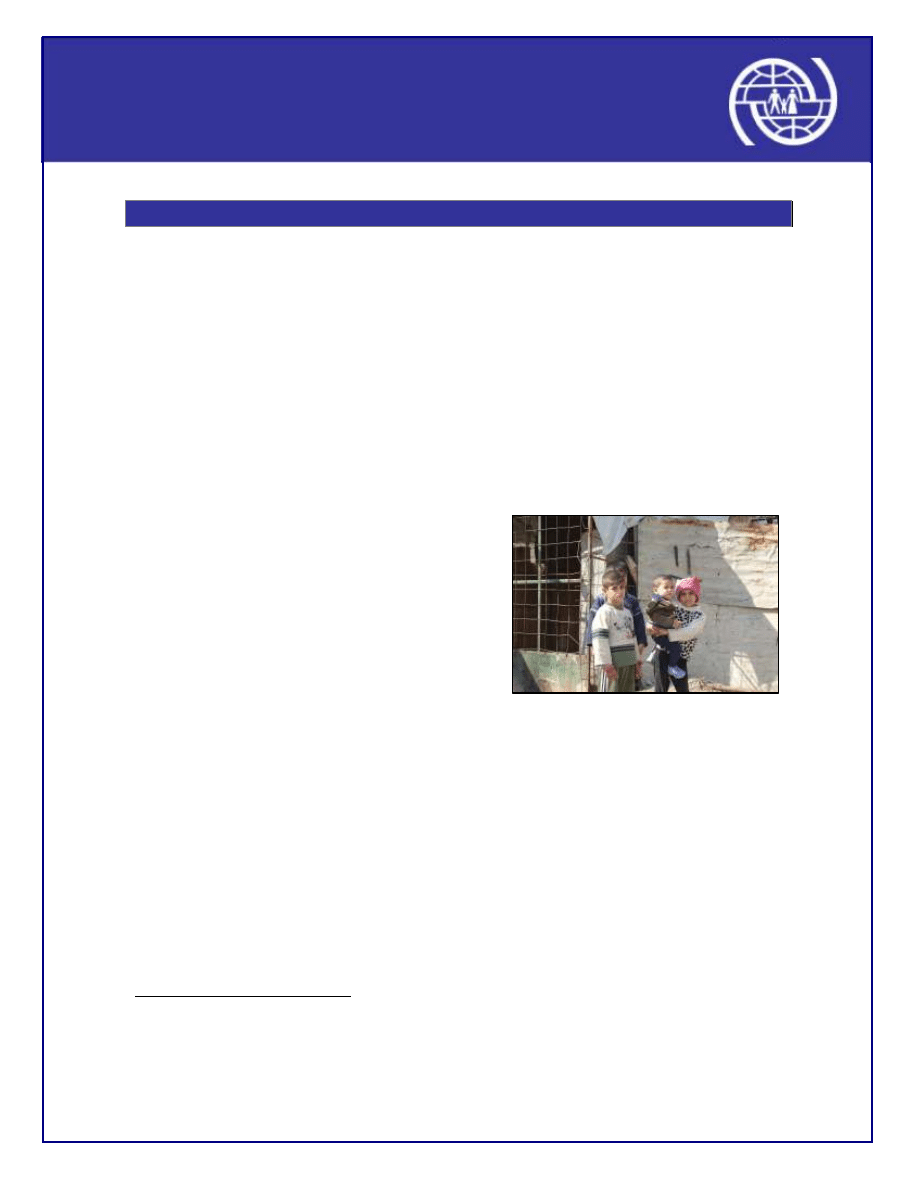
In general, returnees and IDPs face similar problems,
including lack of potable water, PDS rations, and other
basic services such as health care, education, and electricity. Many cannot immediately transfer their
documents home, creating problems with PDS delivery and children’s school exams.
As one of the most vulnerable populations in a conflict-torn country, Iraqi IDPs flee their homes out
of fear and quickly lose easy access to food, water, health care, and other basic services. Some face
constantly increasing rent prices, while others squat in public buildings fearing eviction, depend on
relatives, or live in simple mud huts.
Entering and registering as IDPs in a different governorate is a challenge, particularly if IDPs are not
able to transfer their documents. IDP children have difficulties integrating into often overcrowded
schools, and few sources of employment means a constant financial struggle. More than 60% of
IDPs assessed by IOM wish to return home, although 41% say their property is occupied or
destroyed, while another 40% do not yet know. These IDPs are faced with few viable options, and
the instability of their lives takes a toll on them both physically and psychologically.
1
As per figures from the Kurdistan Regional Government (KRG) for the three northern governorates and the Iraqi Ministry of
Displacement Migration (MoDM) for the 15 central and southern governorates. See the IDP Working Group Internally Displaced Persons
in Iraq Update (June 2008) for figures per governorate.
2
For information on IOM’s monitoring methodology, see “IOM Monitoring Needs Assessments Methodology” available at www.iom-
iraq.net/library.html#IDP
I N T E R N A T I O N A L O R G A N I Z A T I O N F O R M I G R A T I O N
I R A Q D I S P L A C E M E N T & R E T U R N
2 0 0 8 M I D - Y E A R R E V I E W
I N T E R N A T I O N A L O R G A N I Z A T I O N F O R M I G R A T I O N
2
Dates of Displacement for Assessed IDPs
0
2000
4000
6000
8000
10000
12000
14000
16000
18000
20000
F
eb
-2
00
6
A
pr
-2
00
6
Ju
n-
20
06
A
ug
-2
00
6
O
ct
-2
00
6
D
ec
-2
00
6
F
eb
-2
00
7
A
pr
-2
00
7
Ju
n-
20
07
A
ug
-2
00
7
O
ct
-2
00
7
D
ec
-2
00
7
F
eb
-2
00
8
A
pr
-2
00
8
Ju
n-
20
08
IDP Displacement Rate
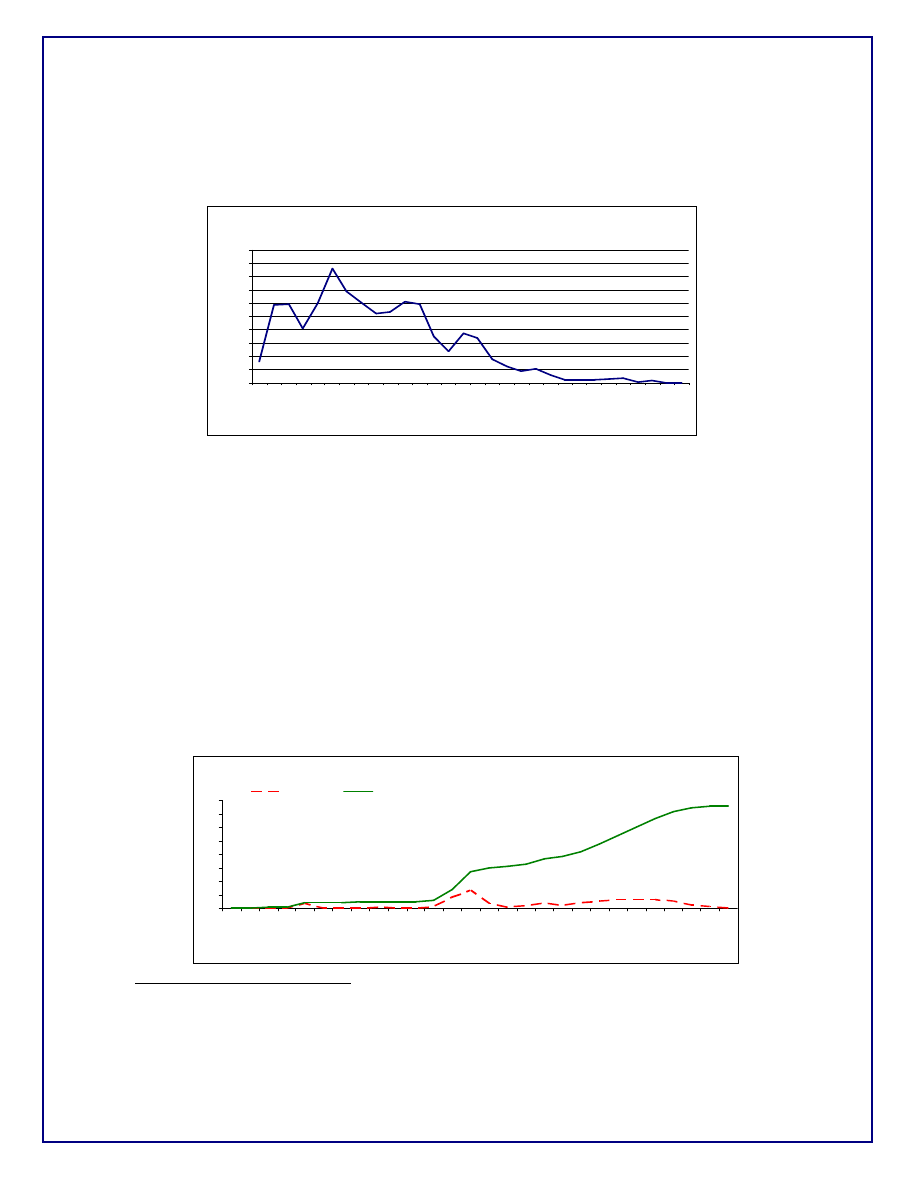
The majority (71%) of IDPs assessed by IOM were displaced during 2006. According to analysis of
IOM date of displacement data from 2006 through the first half of 2008, there is a trend of
significant decline in new displacements, starting in 2007:
The March 2007 displacement spike represents a large number of IDPs arriving to Wassit from
Baghdad and Diyala due to increased violence and military operations in these governorates. The
overall decrease in new displacements may result from a combination of improved security and the
homogenization of previously mixed neighborhoods due to sectarian violence.
IDP and Refugee Returns Through Mid-2008
Some Iraqis have returned home due to improved security, deterioration of conditions in places of
displacement, and illegal status in neighboring countries. IOM Monitors have identified 16,848
returnee
3
families (101,088 persons) in 325 locations in Iraq.
4
Of these, the majority (9,699 families,
or 58%) have returned to Baghdad, and in addition over 3,000 families have been identified as
returning to Anbar. 14,119 families (84%) have returned from internal displacement, and the
remaining 2,729 families (16%) have returned from abroad.
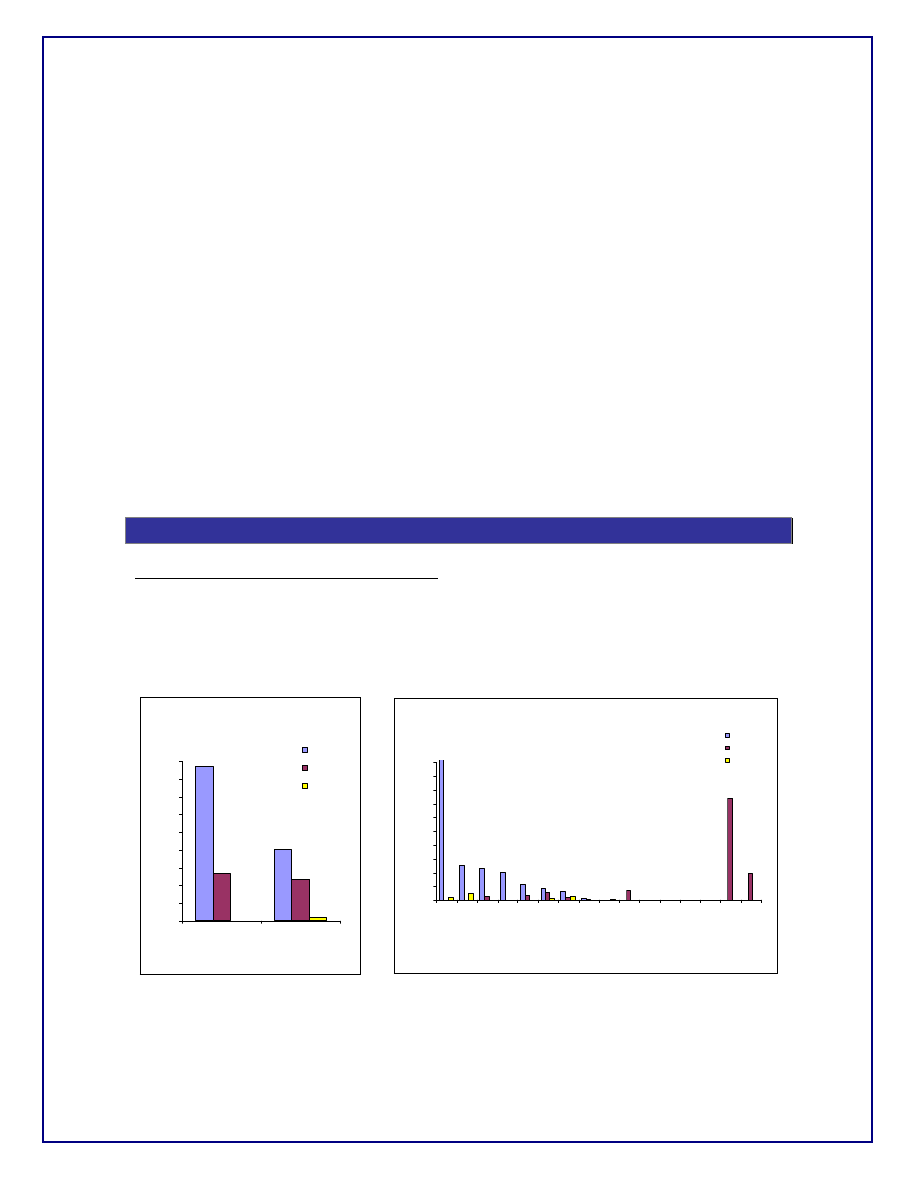
IDP and refugee returns to Iraq have been gradually increasing throughout 2007 and the beginning
of 2008, with small spikes from March – April 2007 and late 2007 – early 2008, as seen below:
3
According to IOM and MoDM, a returnee is someone who has returned to his original neighborhood or home. If someone has returned
to the same city or village but is not able to return to his/her original neighborhood or home, the person is considered secondarily
displaced, not a returnee.
4
The number of returnee families presented in this report is not the total number of returnees in Iraq, but the summary number of
returnee families for locations (villages and neighborhoods) assessed as of the reporting date. With an increased number of sources and
wider coverage of assessments, it is expected that this number will change in subsequent reports.
Returnee Familes By Date of Re turn (Of 1512 Asse ssed)
0
200
400
600
800
1000
1200
1400
1600
F
eb
-0
6
M
ar
-0
6
A
pr
-0
6
M
ay
-0
6
Ju
n-
06
Ju
l-
06
A
ug
-0
6
S
ep
-0
6
O
ct
-0
6
N
ov
-0
6
D
ec
-0
6
Ja
n-
07
F
eb
-0
7
M
ar
-0
7
A
pr
-0
7
M
ay
-0
7
Ju
n-
07
Ju
l-
07
A
ug
-0
7
S
ep
-0
7
O
ct
-0
7
N
ov
-0
7
D
ec
-0
7
Ja
n-
08
F
eb
-0
8
M
ar
-0
8
A
pr
-0
8
M
ay
-0
8
By M onth
Cumulative
I N T E R N A T I O N A L O R G A N I Z A T I O N F O R M I G R A T I O N
3
While the rate of return appears to be gradually accelerating, particularly in recent months, the
number of returnees in comparison to IDPs remains quite small. Local authorities and MoDM are
working to support and encourage such returns, especially in Baghdad, the place of origin of the
majority of displaced. According to MoDM, all IDP returnees and refugees who have spent eight to
twelve months outside the country will now receive one million Iraqi dinars (approximately $835
USD) from MoDM. MoDM will also start registering and providing benefits to returnees throughout
the country, not just in Baghdad.
Many returnees come home to find their property destroyed or in use. Of returnees assessed by IOM
regarding property status, 56% of returnee property is accessible and in good condition, 26% is
partially destroyed, 9% is completely destroyed, and 8% is occupied by others (this does not include
Iraqis who were unable to return to their own home or neighborhood, who are considered
secondarily displaced). Some families leave one person behind to prevent further damage or
occupancy while the rest return to the place of displacement. Others remain with their property
during the day and spend the night with relatives or friends. Many are requesting compensation or
aid in order to rebuild.
While some locations have become ethno-religiously homogenous, other previously mixed
neighborhoods are reintegrating as returns occur. For example, in Al-Saheroon and Al-A’aboos
neighbourhoods of Madaen district, Baghdad, Sunni and Shia neighbors are returning to live
together.
I I . P O S T F E B R U A R Y 2 0 0 6 I D P P O P U L A T I O N P R O F I L E
Places of Origin and Reasons for Displacement
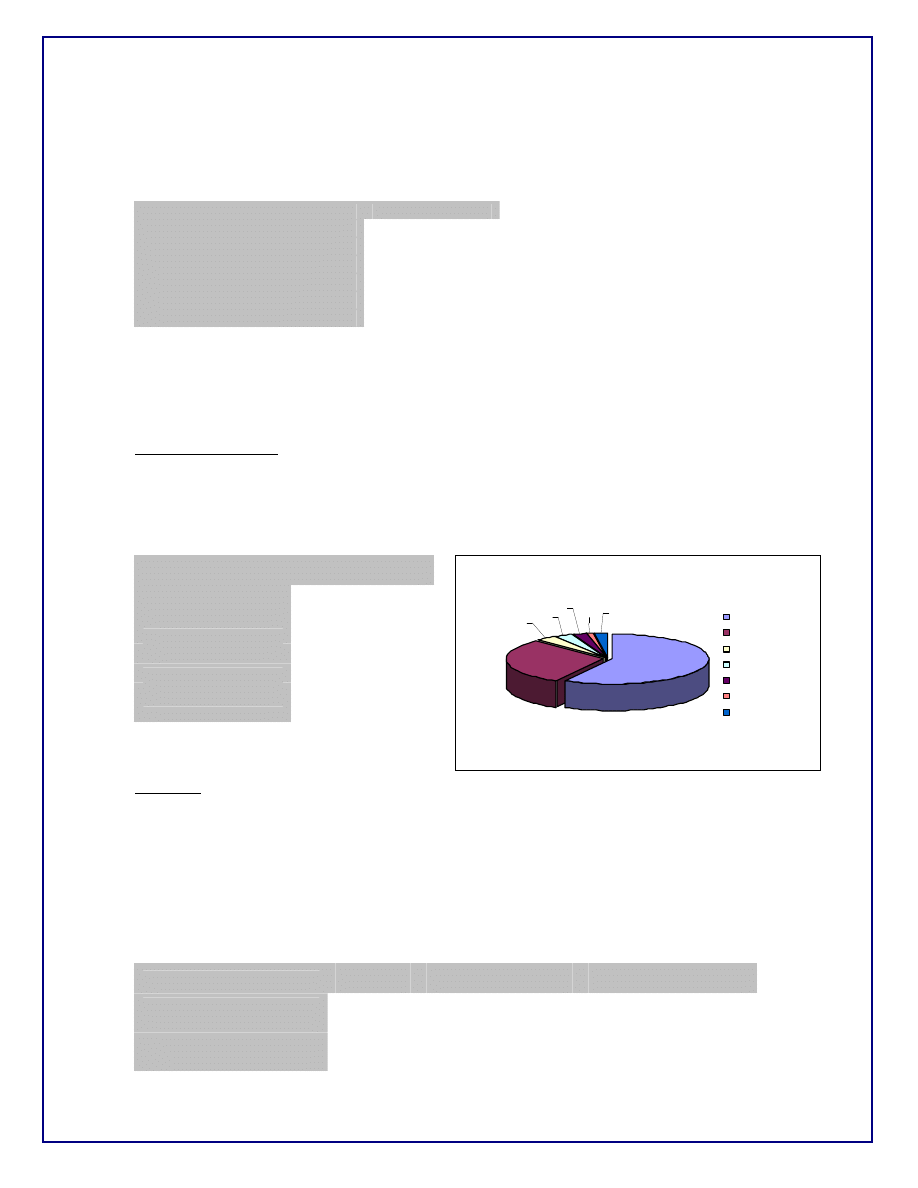
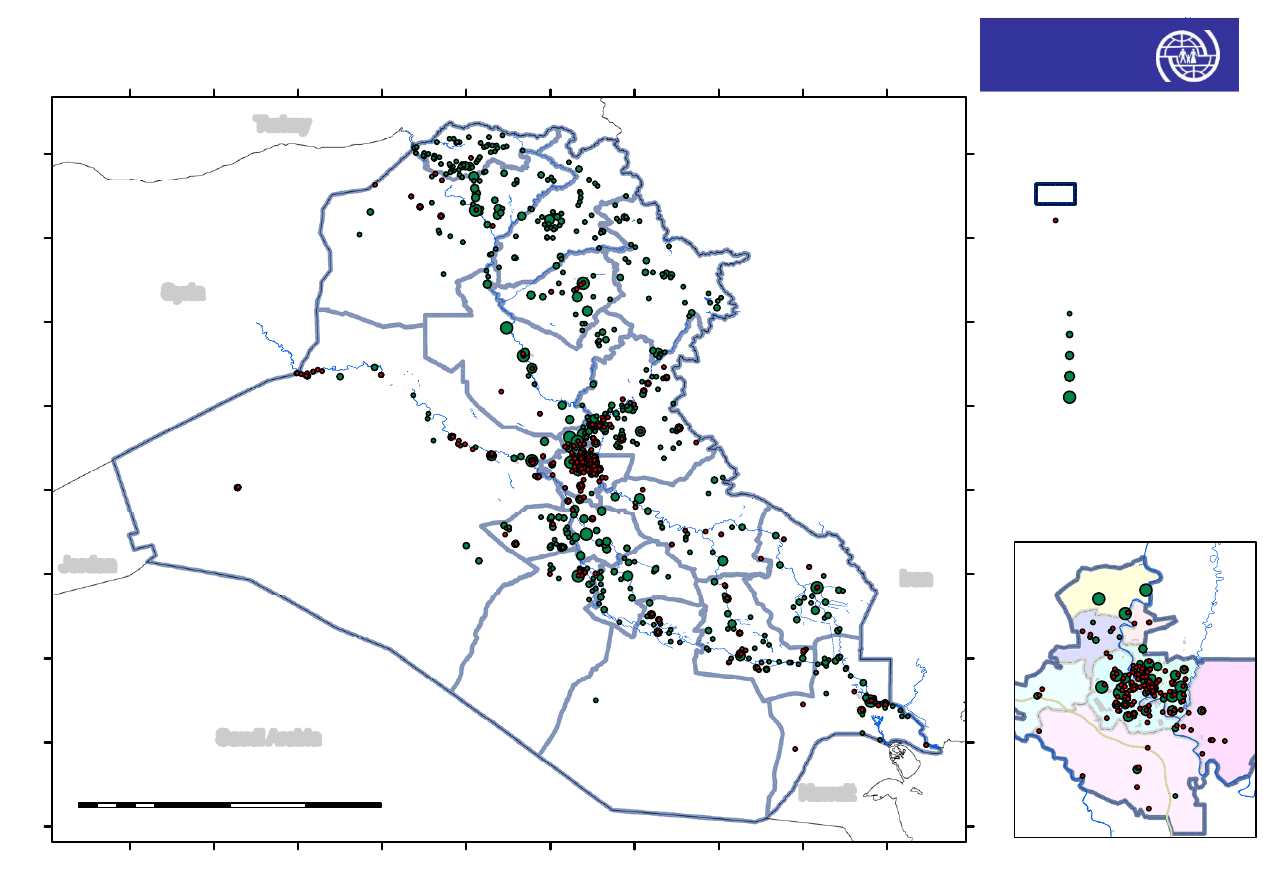
The majority (64%) of IDPs assessed by IOM were displaced either from or within Baghdad
governorate. The two graphs below show IDP origins in Baghdad compared with the rest of the
country and then a breakdown of the remaining IDPs’ origins (36%) in all governorates excluding
Baghdad:
Place of Origin 2006, 2007, 2008
Baghdad Vs Other Governorates
0
10000
20000
30000
40000
50000
60000
70000
80000
90000
Baghdad
Other
Governorates
2006
2007
2008
Place of Origin 2006, 2007, 2008
Other Governorates- Excluding Baghdad
0
2000
4000
6000
8000
10000
12000
14000
16000
18000
20000
D
iy
al
a
N
in
ew
a
A
n
b
ar
Sa
la
h
a
l-
D
in
B
as
ra
h
T
am
ee
m
B
ab
yl
o
n
W
as
si
t
T
h
i-
Q
ar
Q
ad
is
si
ya
M
ut
h
an
n
a
E
rb
il
K
er
b
al
a
M
is
sa
n
D
ah
uk
N
aj
af
2 0 0 6
2 0 0 7
2 0 0 8
I N T E R N A T I O N A L O R G A N I Z A T I O N F O R M I G R A T I O N
4
IDPs have fled their homes for a variety of reasons, all related to security. The most commonly cited
reasons for displacement among those assessed are direct threats to life (37%) and generalized
violence (23%):
R
EASON FOR
D
ISPLACEMENT
% of assessed IDPs
Direct threats of life
36.8%
Generalized violence
23.0%
Forced displacement from property
18.0%
Left out of fear
14.1%
Armed conflict
7.4%
Other
0.7%
When asked why they were targeted, 85% of those assessed attributed it to their sectarian identity.
Another 10% said that they did not feel specifically targeted, while 6% cited political opinion and 4%
cited ethnic identity. Answers do not vary significantly among those displaced in 2006, 2007, and
2008.
Religion and Ethnicity
The majority of the displaced (58%) are Shia Arab, followed by Sunni Arab (30%), along with small
but significant numbers of Sunni Kurds, Assyrian Christians, Chaldean Christians, Turkmen, and
others. The following chart and graph show the religious and ethnic profile of the IDP population:
Intentions
The majority (61%) of assessed IDPs intend to return to their place of origin, while 21% intend to
integrate locally, and 17% plan to resettle in a third location.
Specifically, IDPs displaced close to their place of origin are more interested in returning home than
those who fled to a different governorate. 82% of IDPs displaced within their home governorate
intend to return to their original location, compared with 50% of those displaced to another
governorate who wish to do the same:
IDP
I
NTENTIONS
Of total
assessed
Of those displaced within
the same governorate
Of those displaced to another
governorate
Return to place of origin
61.2%
81.8%
50.3%
Integrate in the current location
20.5%
5.0%
28.7%
Resettle in a third location
16.9%
12.7%
19.1%
Undecided
1.4%
0.5%
1.9%
R
ELIGION AND
E
THNICITY
% of Assessed IDPs
Arab Shia
58.1%
Arab Sunni
29.8%
Kurd Sunni
3.6%
Assyrian Christian
3.1%
Chaldean Christian
2.0%
Turkmen Shia
1.2%
Other
2.2%
Religious & Ethnic Identity of Assessed IDPs
29.8%
58.1%
3.6%
2.2%
1.2%
2.0%
3.1%
Ara b S hia
Ara b S unni
Kurd S unni
As s yria n C hris tia n
C ha lde a n C hris tia n
Turkm e n S hia
Othe r

I N T E R N A T I O N A L O R G A N I Z A T I O N F O R M I G R A T I O N
5
I I I . I D P H U M A N I T A R I A N A S S E S S M E N T
For brevity’s sake, this report summarizes the IDP situation in the security, shelter, food,
water/sanitation, and health sectors. More in-depth information and data on additional sectors is
available at
http://www.iom-iraq.net/idp.html
. IOM’s recently released June 2008 Governorate Profiles
contain detailed area-specific analysis and comparison on displacement throughout Iraq.
Security/Protection
Continuing the trend from 2007, violence appears to have decreased overall throughout the country
during the first half of 2008. As the Iraqi army and police play a more prominent role in security
operations, they are also suffering an increase in casualties. In addition, several governorates,
including Baghdad, Basrah, Ninewa, and Missan, saw brief increases in instability and violence during
military operations launched over the past few months by the Multi-National Forces in Iraq and Iraqi
Forces (MNF-I/IF) against local insurgents. In these cases Improvised Explosive Device (IED)
explosions, artillery exchanges, inter-tribal fighting, search-and-arrest campaigns, and curfews
erupted, though were generally followed by a period of calmer security and did not result in large-
scale displacement.
In recent months, “awakening forces” (sahwa) or inter-tribal, local power-sharing coalitions, have
aided stability and security in several governorates, namely Anbar, Diyala, and Salah al-Din, with
plans to continue reproducing this model elsewhere in the country. However, power disputes among
the awakening forces and other political parties in Anbar have been the cause of a recent spike in
violence there. Security in Anbar was supposed to be transferred to the IF in late June after a
progressive MNF-I handover, however this has been postponed.
The three northern governorates of Kurdistan continue to be significantly more stable than the rest
of the country with the exception of those areas bordering both Turkey and Iran. Bombings and land
incursions in border villages by Turkish forces continue, and there is periodic Iranian cross-border
shelling along the edges of Sulaymaniyah.
Restrictions on IDP Entry and Registration
Governorate-level authorities across the country restrict IDP entry and registration due to security,
economic, and even demographic concerns. In general, IDPs must go through a great deal of
bureaucracy to register, sometimes traveling to five different offices. A varying selection of
documents are required in each governorate, including the original residence card, PDS card, the
national ID, and a letter of approval from city council members, the mayor, local police, and/or
MoDM. Registration is tightly restricted in areas with high levels of ethno-religious tensions, such as
Kirkuk. In addition, proper documentation is often difficult to obtain from the governorate of origin,
and sometimes registration is restricted to those with an advanced degree or professional
qualifications. Many are not allowed to bring furniture with them, if they are allowed to enter.
In Babylon and Kerbala, only IDPs with origins or relatives from the governorate may enter. In
Basrah, Missan, and Wassit, IDPs can enter but are not allowed to register and remain unless they are
displaced from “hot spots,” or particularly dangerous and volatile areas, in Iraq. In Salah al-Din, the
governor has ordered that IDPs from Samarra district and Anbar and Diyala governorates leave the
governorate due to concern that they are security risks.
IDPs who do not originate from Dahuk, Erbil, or Sulaymaniyah must be sponsored by a resident
from these governorates. The borders of Dahuk, Erbil, and Sulaymaniyah continue to be tightly

I N T E R N A T I O N A L O R G A N I Z A T I O N F O R M I G R A T I O N
6
controlled to maintain the relatively high level of stable security in the region. In some cases IDPs
may be turned away, and they are generally not permitted to bring furniture into Dahuk with them.
Shelter
Shelter is consistently among the highest-priority needs cited by IDPs, and eviction threats coupled
with rapidly rising rental prices have created an even more precarious housing situation in recent
months. Earlier this year the Government of Iraq (GoI) issued an eviction order for all IDPs
squatting in public buildings. Although the Iraqi Parliament later voted to postpone the order until
other housing arrangements could be made for IDPs that would be again displaced, individual
governorates are in some cases continuing with threats and even actual evictions. For example, 150
families were recently forced to leave public land in Farah village of Kerbala governorate.
Stifling summer temperatures of up to 45 degrees worsen already-difficult living conditions during
the summer months. Many IDP families do not have the funds for generators nor fuel. 35% of
assessed IDPs report not having access to fuel due to unavailability or financial constraints.
The majority of IDPs (63%) are renting,
which means that the increase in rental
costs across the country badly affects the
dwindling finances of IDP families, the
majority of whom have no source of
income. In Babylon, for example, rental
costs have risen more than 50% since the
beginning of 2006.
Of those IDPs assessed by IOM monitors, almost 26% say that their property is occupied,
controlled, or claimed by private citizens, and 15% say their property is destroyed. Another 40% do
not know the status of their property. Recently, the GoI announced that it will provide 300,000 ID
per month for six months (a total of $1500) to any IDP family squatting in another IDP family’s
home, enabling the house owner’s return and providing rent costs for the family who has to leave.
The problem of occupied and destroyed housing, occupied public buildings, and increased evictions
is a great challenge facing the Iraqi Government.
The camp situation in Iraq is unique, as less than 1% of displaced live in tent camps. This is primarily
due to the fact that camps are set up in desolate areas, have very few services, and are considered a
last resort due to cultural concerns which make people reluctant to live among unfamiliar families.
Food/Public Distribution System (PDS)
IDP families who do receive their PDS rations find that they are insufficient, late, and missing key
items. Many IDPs complain that the transferring of PDS ration cards to the location of displacement
continues to be difficult because of lacking or lost documents and a slow bureaucratic process.
Only 29% of assessed IDPs reported consistent access to PDS rations. Most families receive food
rations only intermittently or not at all: 49% of assessed IDPs sometimes receive their PDS rations,
while 21% report no access. Insecurity of transportation routes and trouble transferring the necessary
documents for PDS registration in places of displacement are the most commonly cited reasons for
non-delivery.
41% of IDPs have received food assistance from other sources, mostly humanitarian organizations
or religious charities.
Living Arrangements of Assessed IDPs
63%
16%
10%
6%
5%
2%
Rented housing
In the house of host family or
relatives
Other
Collective town settlement
Public building
Tent or former military camp
I N T E R N A T I O N A L O R G A N I Z A T I O N F O R M I G R A T I O N
7
Health Care
Substandard living conditions, the stress of long periods of displacement, financial problems,
insufficient diet, and poor sanitation are constant sources of health complications for IDPs. Disease
is more common among IDPs who live in these conditions, and once present, it spreads more
quickly. It is common for IDPs to suffer from diseases such as hypertension, heart disease, diabetes,
skin and intestinal infections, and anemia, along with ailments due to malnutrition. These problems
have a higher occurrence in women and children. In addition, due to witnessing violence and
conflict, displaced children often suffer psychological trauma. Yet, there are few programs which
assist with these problems, creating a new generation of Iraqis who suffer from unaddressed
psychosocial stresses.
Because many IDPs live in poor or rural neighborhoods, access to health care is particularly difficult
to attain. The number of health care centers is often insufficient, and the ones that are present are
not equipped with necessary equipment and medicine. 14% of IDPs reported that they had no access
to health care services, and 30% cannot access the medications they need. Non-access to health care
services is worst in Kirkuk (71%), followed by Diyala (30%), Muthanna (22%), and Salah al-Din
(21%). Those who cannot access health care report financial constraints and unavailability of services
as the most common reasons for non-access.
In addition, there is a serious need for women’s health care and health awareness education to avert
miscarriages and pregnancy complications among IDPs. Because it is often difficult for women to
travel, especially at night, it is harder for them to obtain proper care, and specialized health care is
unavailable.
Access to health care is somewhat better in the three northern governorates, especially in cities.
Water and Sanitation
Access to potable water is often at the root of
serious health problems among IDP populations
who are already more likely to live in poor quality
housing with few or no basic services.
Although 80% of IDPs assessed by IOM reported
access to water, this does not guarantee that this
water is clean enough to use or drink. IDPs obtain
their water from multiples sources, the most
common being municipal pipe networks (90%),
nearby rivers, lakes, and streams (53%), and an open or broken pipe (52%).
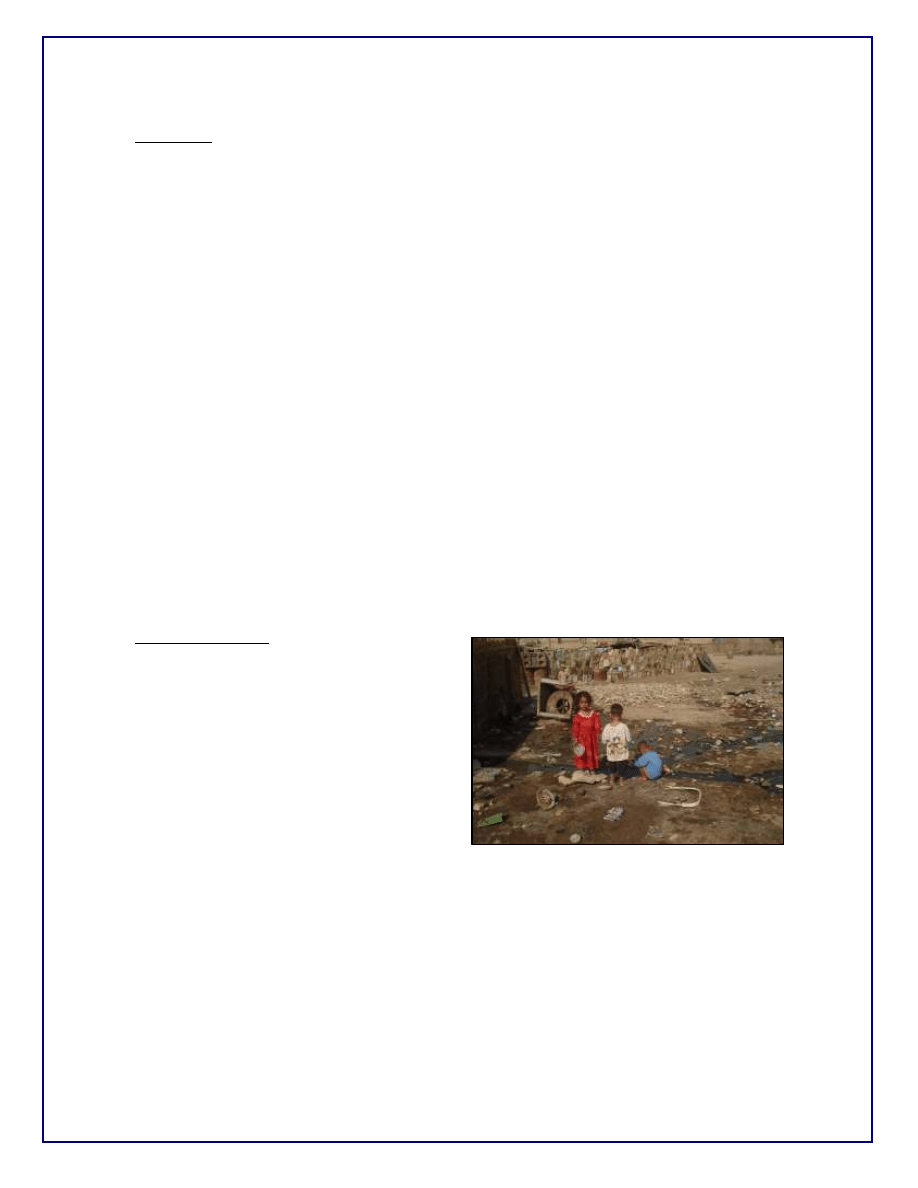
Even when there is some infrastructure available, water is often mixed with dirt and even sewage. In
some locations sewage runs through the streets. In other towns, trash dumps contaminate the water
and living environment, causing diseases such as typhoid and cholera.
Although water provision is relatively better in the three northern governorates, the recent drought in
this area is forcing some farmers and herders to relocate in search of water.

I N T E R N A T I O N A L O R G A N I Z A T I O N F O R M I G R A T I O N
8
Education
IDP children across the reporting area are disproportionately absent from school for a variety of
reasons, including economic difficulties, travel distance to school, staying home to care for the family
while parents work, having to work themselves due to no family income, and lack of proper
documents. Many host community schools are ill-equipped, lacking reading materials, furniture, and
teaching staff. In locations with high concentrations of IDP families, schools are often doing three to
four shifts in order to accommodate as many displaced children as possible.
The IDP children who do attend school often have difficulties resolving social and cultural
differences, such as the move from urban to rural or moderate to conservative areas. In the three
northern governorates, many IDP children lack education opportunities because there are few
Arabic-language schools.
Monitors observe that when boys leave school, it is often to help the family’s financial situation,
while girls are often absent from school because of a lack of emphasis upon female education in
conservative communities. Other children lack documents from their place of origin and cannot
register for school. Of assessed families with male and female children, only one third (33%) report
that all of their boys are in school, and only 22% report that all of their girls are in school.
Employment
Access to work is consistently listed as the top priority need of assessed IDPs. The need for
employment is high for all Iraqis but affects IDPs even more, as they leave behind their sources of
income and move to areas where their skills might not be marketable. In addition, some host
communities discriminate against IDPs, either thinking they are not trustworthy to hire or hiring
them for reduced salaries. Those IDPs who do locate work often hold day-labor jobs that pay poorly
and are temporary. In the three northern governorates, employees usually require Kurdish speakers.
66% of assessed IDP families do not have any members employed. Access to a steady income could
assuage the problems many IDPs face, enabling them to pay for rent, food, health care, and school
expenses.
I V . H U M A N I T A R I A N R E S P O N S E
Iraq continues to be one of the most dangerous places in the world for humanitarian agencies to
work. Humanitarian access is limited by armed conflict, general insecurity and crime, restrictions on
movement, and in some cases obstruction by authorities. Humanitarian workers must operate
cautiously, as in many cases they are deliberately targeted by armed groups. The situation is
complicated by a blurring of roles between military and humanitarian actors. As a result,
humanitarian actors in some locations adopt a “low-profile” approach, hiding their identity as
international or humanitarian organizations. The three northern governorates are the exception;
humanitarian organizations usually can operate freely there.
The majority (62%) of assessed IDPs reported that they had received some form of humanitarian
assistance. The most frequently-reported source was host communities, which provided assistance to
28% of the assessed. Other sources were MoDM (27%), relatives of IDPs (27%), the Iraqi Red
Crescent (24%), religious groups (24%), and humanitarian organizations (19%).
Despite insecurity and limited funding, IOM continues to provide humanitarian assistance to
displaced populations and vulnerable host communities throughout Iraq. In 2007, IOM conducted
16 Emergency Distributions, which provided food and non-food items such as blankets,

I N T E R N A T I O N A L O R G A N I Z A T I O N F O R M I G R A T I O N
9
mattresses, fuel, and kitchen sets to more than 47,000 IDP families and their host communities.
During the first half of 2008, IOM Emergency Distributions have aided and continue to aid more
than 28,000 IDP families with 12 distributions to date.
In 2007, IOM also implemented 38 Community Assistance Projects, improving basic services in the
water, sanitation, health, education, and livelihood sectors and benefiting more than 570,000
individuals. These programs continued and expanded in the first half of 2008; in 2008 IOM
implemented 43 Community Assistance Projects benefiting approximately 285,000 IDPs. These
programs continue along with operations to monitor, assess, and assist IDP populations returning to
their places of origin. However, despite a clear need and ongoing efforts, only 35% of IOM’s $85
million proposal to assist IDPs and other vulnerable groups has been funded.
V . C O N C L U S I O N
While the rate of displacement has slowed to a trickle and returns are increasing, Iraq’s approximately
2.8 million internally displaced continue to face deteriorating living conditions with poor access to
shelter, food, health care, water, and other basic services. 70% of those IDPs assessed by IOM report
intermittent or no access to PDS rations, 14% have no access to health care, and 30% cannot access
the medications they need.
IDPs cite shelter, employment, and food as their priority needs. Currently, eviction from public
buildings and lands is a major concern for squatting IDPs. In addition, skyrocketing food and rent
prices and little hope of employment exacerbate their already difficult situations.
61% of assessed IDPs wish to return home, and that figure grows to 82% when IDPs were displaced
within the same governorate. 26% of assessed IDPs say that their property is occupied, 15% say it is
destroyed, and 43% of assessed returnees have found their property in use or partially or completely
destroyed upon returning home. Some returnees may begin to reintegrate neighborhoods once
homogenized by sectarian violence, especially in Baghdad, other IDPs have been killed upon
returning home, and still others refuse to come back for fear of violent reprisals. However, the GoI is
working to improve security and assist Iraqis to return home.
Despite limited funding and insecurity, IOM continues to assist the displaced, returning Iraqis, and
host communities with emergency food, water and household item distributions, community
assistance projects, and advocacy. However, overall assistance to these vulnerable communities
remains inadequate. Until long-term stability is realized, rule of law improved and basic services
restored, internal displacement in Iraq will remain a serious humanitarian crisis that calls for urgent
assistance.
For further information on displacement, please contact Dana Graber Ladek, Iraq Displacement Specialist, at
dgraber@iom-iraq.net
(+962 79 611 1759).
Iran
Saudi Arabia
Kuwait
Jordan
Syria
Turkey
A n b a r
A n b a r
N i n e w a
N i n e w a
N a j a f
N a j a f
M u t h a n n a
M u t h a n n a
E r b i l
E r b i l
D i y a l a
D i y a l a
W a s s i t
W a s s i t
B a s r a h
B a s r a h
M i s s a n
M i s s a n
T h i - Q a r
T h i - Q a r
K i r k u k
K i r k u k
D a h u k
D a h u k
S a l a h a l - D i n
S a l a h a l - D i n
S u l a y m a n i y a h
S u l a y m a n i y a h
Q a d i s s i y a
Q a d i s s i y a
B a b y l o n
B a b y l o n
K e r b a l a
K e r b a l a
B a g h d a d
B a g h d a d
39°0'0"E
39°0'0"E
40°0'0"E
40°0'0"E
41°0'0"E
41°0'0"E
42°0'0"E
42°0'0"E
43°0'0"E
43°0'0"E
44°0'0"E
44°0'0"E
45°0'0"E
45°0'0"E
46°0'0"E
46°0'0"E
47°0'0"E
47°0'0"E
48°0'0"E
48°0'0"E
29°0'0"N
29°0'0"N
30°0'0"N
30°0'0"N
31°0'0"N
31°0'0"N
32°0'0"N
32°0'0"N
33°0'0"N
33°0'0"N
34°0'0"N
34°0'0"N
35°0'0"N
35°0'0"N
36°0'0"N
36°0'0"N
37°0'0"N
37°0'0"N
IOM IRAQ – ATLAS
IDP AND RETURNEE LOCATIONS, JUNE 2008
IDP locations by
number of families
1- 99
100 - 499
500 - 999
1000 - 1999
2000 and more
Legend
Governorate Boundary
Returnee locations
P O S T - F E B R U A R Y 2 0 0 6
I D P M O N I T O R I N G A N D
N E E D S A S S E S S M E N T S
Data source: IDP and Returnee Monitoring database. Date 30 th June 2008
0
100
200
300
400
50
Kilometers
M a h m o u d i y a
M a h m o u d i y a
T a j i
T a j i
T a r m i a
T a r m i a
M a d a ' i n
M a d a ' i n
K a r k h
K a r k h
A l R e s a f a
A l R e s a f a
I s t i q l a l
I s t i q l a l
B a g h d a d
B a g h d a d
IDP and Returnee locations
in Baghdad
Wyszukiwarka
Podobne podstrony:
mid year test 2009
2012 Mid Year Catalog Final
m1 penetration iraq 2008
iraq seized weapons 2008
Review Santer et al 2008
m1 penetration iraq 2008
iraq seized weapons 2008
David Isenberg Shadow Force, Private Security Contractors in Iraq (2008)
The pharmacology of LSD a review from CNS Neuroscience & therapeutics 2008
Lee 2008 review
2010 Year End TV Review
Victoria Fontan Voices from Post Saddam Iraq, Living with Terrorism, Insurgency, and New Forms of T
Jonathan Cook Israel and the Clash of Civilisations Iraq, Iran and the Plan to Remake the Middle E
iraq seized weapons 2008
Bork 2008, predicting biological networks review
m1 penetration iraq 2008
Ubytki,niepr,poch poł(16 01 2008)
2008 XIIbid 26568 ppt
Tamponada serca, Karpacz, 2008
więcej podobnych podstron