
Mating Behaviour: From
Systems to Strategies
And nothing gainst Time's scythe can make defense,
Save breed to brave him, when he takes thee hence.
(Shakespeare, 'Sonnet 12')
Each generation is a filter, a sieve; good genes tend to fall through the sieve
into the next generation; bad genes tend to end up in bodies that die young or
without reproducing.
(Dawkins, 1995, p. 3)
For individuals of sexually reproducing species, finding a mate is imperative. It
is through mating, essentially the fusion of gametes, that genes secure their
passage to the next generation; without it, the 'immortal replicators' are no
longer immortal. It is hardly surprising then that sex is an enormously powerful
driving force in the lives of animals and is attended to with a sometimes
irrational and desperate urgency. At a fundamental level, sex is basically simple -
a sperm meets an egg - but it is in the varied forms of behaviour leading to this
event that complexity is to be found and needs to be understood. In order to
understand human sexuality, we need to raise some basic questions concerning
the causes, consequences and manifestations of sexual activity in animals as a
whole. This chapter begins this task by looking at some current theories of the
origin and maintenance of sexual reproduction. It also addresses some
fundamental questions, such as why female gametes (eggs) are usually at least
100 times larger than male gametes (sperm) - a phenomenon known as
anisogamy - or why the male to female ratio remains so close to 1:1, albeit with
some slight but significant variations.
It was once thought convenient to classify sexual behaviour in terms of mating
systems, and the terminology of such systems is introduced here. It will be
argued, however, that a better approach is to focus on the strategies of individuals
rather than the putative behaviour of whole groups. This individualistic approach
will reveal that sex is as much about conflict as about co-operation, each sex
employing strategies that best serve its own interests.
9 1

92
EVOLUTION AND HUMAN BEHAVIOUR
4.1 Why sex?
In recent years, it has almost become de rigeur for books on evolutionary biology
to contain a section headed 'Why sex?' Yet for at least 100 years after the publica-
tion of Darwin's On the Origin of Species (1859b), the existence and function of
sex was not really seen as a problem. Sex was viewed as a co-operative venture
between two individuals to produce variable offspring. Variation was required to
secure an adaptive fit to a changing environment and constant variation was
needed to ensure that species did not become too specialised and face extinction
if the environment changed.
From a modern, gene-centred perspective, these arguments now appear fatally
flawed. Variation and selection cannot act for the good of the species; genes only care
for themselves. As soon as we examine the costs and benefits of sexual reproduction,
the very existence and maintenance of sex seems all too problematic (Table 4.1).
Table 4.1
Comparison of the costs and benefits of sexual reproduction
Costs
Benefits
Time and effort is spent attracting,
defending and copulating with mates.
Such effort could have been directed
into reproduction
Individuals may be vulnerable to predation
during mating, especially during
intercourse or courtship displays
There is a risk of damage during the
physical act of mating
A risk of disease transmission from one
individual to another exists
The recombination of genes that follows sex
may throw up a homozygous condition for
a dangerous recessive allele
Sex introduces same-sex competition.
Where polygamous mating is common, an
individual may not find a mate at all
Sex breaks up what might have been a
highly successful combination of genes.
If it Isn't broke', sex still 'fixes it'
Sexual reproduction introduces sibling
rivalry since sibs will now only be related
by r = 0.5 or less (see Chapter 3).
Identical offspring would have a greater
common interest
Parthenogenetic females (females who
are virgins and produce offspring without
copulation) produce offspring faster than
sexual females (see Figure 4.1 below)
Where parental care is found, two individuals
may be able to raise more than twice the
number of offspring that one alone could.
Consider birds: a single female would find it
difficult to incubate and defend her eggs as
well as feed herself and her offspring
New combinations of genes are created that
can exploit variations in environmental
conditions (see text)
New combination of genes arise to cope with
biotic interactions from predators, prey and
parasites (see text)
Sex enables deleterious mutations in DNA to
be repaired during meiosis and be masked by
outcrossing (see text)

MATING BEHAVIOUR: FROM SYSTEMS TO STRATEGIES
93
4.1.1 The costs of sex
'The expense of spirit in a waste of shame' was how Shakespeare summed up the
effects of sexual lust. Table 4.1 does seem to show that, compared with the benefits
it provides, sex is expensive in terms of cost. This of course begs the question of
how big those few benefits are. The first cost on the list goes a long way towards
explaining why there are discrete species at all. Imagine a world in which the
number of species doubled at a stroke, but the number of individuals, being limited
by the carrying capacity of the biosphere, remained the same. Individuals of any one
species would on average incur twice the cost of finding a mate - there would
simply be fewer of the opposite sex. As we increase the number of species (which
can by definition only breed with conspecifics, that is, members of the same
species) so that there is a smooth gradation between one species and the next
instead of discrete jumps, so it becomes more difficult for individuals to mate at all,
and some will become extinct.
Why do males exist?
The question 'Why sex?' resolves itself into the question 'Why do males exist?' All
organisms need to reproduce, but some manage this asexually: females simply make
copies of themselves by a sort of cloning process. This form of reproduction is
known as parthenogenesis ('virgin birth'), and although it is not found among
mammals and birds, it is not uncommon in fish, lizards, frogs and plants. Males are
a problem because, in the absence of male care (which is very common), a mutation
that made a sexually reproducing organism switch to parthenogenesis (which some
organisms can do anyway) should be favoured since it would produce more copies
of itself and rapidly spread throughout the population. Put another way, with a
given set of environmental limitations, females should be able to produce twice as
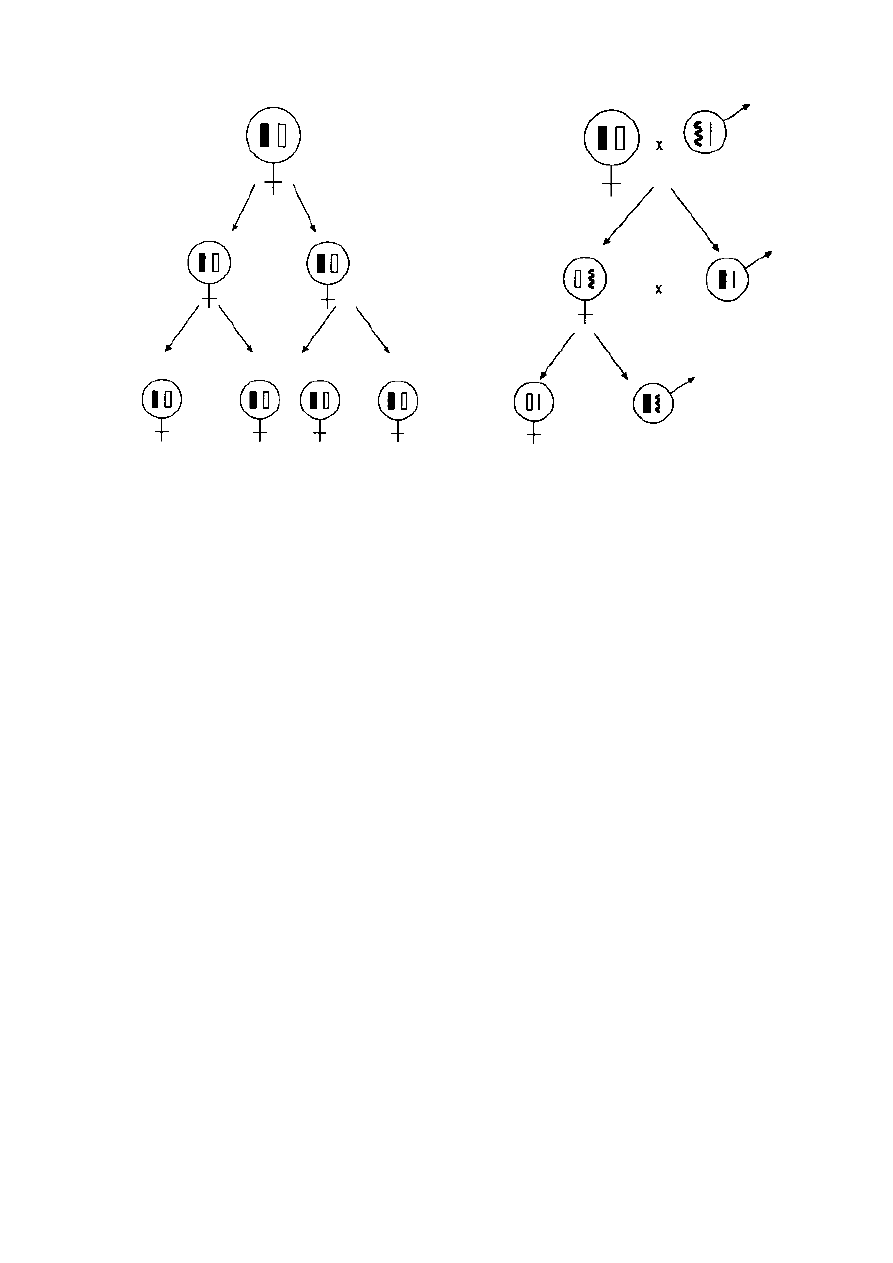
many grandchildren by asexual compared with sexual reproduction (Figure 4.1).
Almost as if to mock the doubts of biologists concerning the functions of sex,
the natural world teems with sexual activity. Intriguingly, asexual species seem to
be of fairly recent origin; they comprise the 'twigs' of the phylogenetic tree rather
than its trunk or main branches. Some asexual species still betray their sexual
ancestry. In the case of the Jamaican whiptail lizard, for example, the female will
lay a fertilised egg only when physically 'groped' by a male. The male provides
nothing in the way of genetic material, but its physical presence seems to trigger
self-fertilisation. In some frog species, the male provides sperm for the activation
of the development of the female's eggs, but again no genetic material is
transmitted. As Sigmund (1993) has observed, it is a case for the male of'love's
labours lost'. This behaviour is probably of fairly recent evolutionary origin or
else the males would have caught on and such time-wasting would be selected
against - another caution against always interpreting animal behaviour as optimal.
Nearer to home, everyone's back garden probably contains a few dandelions. The
gaudy yellow flowers at first sight appear to be made like any other flower to
attract pollinators, but dandelions are entirely self-fertilising; their flowers are
leftovers from their sexual past when cross pollination did occur.
94
EVOLUTION AND HUMAN BEHAVIOUR
Parthenogenesis
Sexual reproduction
By the second generation, the parthenogenetic female has produced four asexual
daughters, whereas the sexual female has only produced one sexual daughter. This
assumes that males contribute nothing other than gametes to female fecundity
Figure 4.1
Comparison of the fecundity of females breeding
asexually and sexually (assuming that each female can
bear two offspring per generation or season)
In many sections of this book, we will flip between the level of the gene and
that of the individual in developing an argument. Although the fundamental unit
of selection must be the gene, operating at the level of the individual for explana-
tory purposes is less tedious and not as pedantic as having constandy to refer to
changing gene frequencies. As Dawkins (1976) points out, although the
immediate manifestation of natural selection occurs at the level of the individual,
the differential reproductive success of individuals is ultimately a matter of
changing gene frequencies in the gene pool. In this view, the gene pool of a given
species can be thought of as being akin to the primeval soup of the first replica-
tors. In forming and breaking temporary alliances of genes, sex and the process of
crossing over serves to keep the gene pool stirred.
An argument is sometimes more easily expressed at the individual level but, as
long as it can also be convincingly expressed in an equivalent way at the level of
the gene, this should not cause a problem. Where the levels conflict, the view
taken here is that the individual-level argument should give way to gene logic.
One case of this conflict is the putative 'dilution' cost of sex. Alany texts list as a
cost of sex the fact that an individual only passes on half of its genome to each
offspring, whereas it passes all of its genome to offspring by asexual reproduc-
tion; this is the so-called 'meiotic cost' of sex.
This argument is not compelling because it fails at the level of the gene. The
whole genome is not the unit of selection. What sex does is to force individual
genes to sit alongside genes from another individual - but so what? From a gene-
centred point of view, the gene is indifferent as to whether its neighbour came

MATING BEHAVIOUR! FROM SYSTEMS TO STRATEGIES
95
from its parent by asexual reproduction or from another parent by sexual
recombination. As Dawkins and Treisman (1976, p. 480) point out, an individual
is a 'temporary federation of genes each intent on maximising its representation
in the next generation'. If we consider sex from a 'sex-inducing' gene's point of
view, sex enables the sex-inducing gene to thrive. It follows that, at the locus for
sexual reproduction, a female is just as related to her offspring as is an asexual
female. The females sacrifice half their genes for sexuality but receive them back
again from the male, who must also carry genes for sexuality. Dawkins and
Treisman show that at the locus at which the mode of reproduction is
determined, the part of the mother's genome determining this is just as well
represented in the next generation for sexual as for asexual mothers.
In this respect, the cost of meiosis disappears from a gene-centred point of view.
We are left instead with the real cost that parthenogenetic females produce more
offspring, and this is a consequence of the fact that males cannot produce babies
by themselves. The issue resolves to the problem that a parthenogenesis-inducing
mutation in a sexual population should spread rapidly. In fact, given a sex ratio of
1:1, it should spread twice as rapidly as the remaining sexual gene; this is often
called the 'twofold cost' of sex (see Figure 4.1 above). If a male is able to help a
female to raise the young rather than simply to provide gametes but nothing more,
this twofold cost may be lessened. Nevertheless, something about sex must confer
an advantage on sexual organisms to drive against this reduction in fecundity.
We will now review some of the major theories advanced to explain the
persistence of sexual modes of reproduction in the face of all the apparent
disadvantages.
4.1.2 The lottery principle
The American biologist George Williams was one of the first to suggest that sex
introduced genetic variety in order to enable genes to survive in changing or novel
environments. He used the lottery analogy: breeding asexually is like buying many
tickets for a national lottery but giving them all the same number; sexual reproduc-
tion is like making do with fewer tickets but having different numbers (Williams,
1975). The essential idea behind the lottery principle is that since sex introduces
variability, organisms have better chance of producing offspring that survive if they
produce a range of types rather than more of the same. On the positive side for this
theory, it may help to explain why creatures such as aphids, which can breed both
sexually and asexually, choose to multiply asexually when environmental conditions
are stable but switch to sexual reproduction when facing an uncertain future. In the
steady months of summer, aphids multiply at a fast rate on rose bushes by partheno-
genesis, but as winter approaches they have bouts of sex to produce numerous and
variable cysts that survive the winter and wait for the return of warmer conditions.
Williams also noticed that when organisms disperse seed beyond their local
habitat, they choose sex as a precursor. This he termed the 'elm-oyster model'.
When organisms wish to colonise their local area, which, since they are there,
they must already be reasonably successful in, they send out runners or vegetative
shoots. This is done asexually and is observed in numerous grasses, strawberry
plants and coral reefs. But oysters and elms are sexual and produce thousands of

96
EVOLUTION AND HUMAN BEHAVIOUR
tiny seeds that waft on currents of water and air to considerable distances away
from the parents. Why do they do this> The answer, according to Williams, is that
oyster beds and an elm forest are already saturated and that there is likely to be
intense competition for any new living space that the seeds might find. Success
goes to the parents who produce a few exceptionally suited seeds rather than to
the parents who produce many average ones.
Parasites also provide an illustration of this principle. When a host is first
invaded, parasites typically reproduce asexually to fill the host as rapidly as
possible. When this niche is filled, new offspring have to leave and infect other
hosts. At this stage, the parasite typically switches to sexual reproduction to take
advantage of the fact that sex produces variation that may be useful for success in
the next round of infecting unknown hosts - some of which may be resistant to
genotype of the parent parasites. In short, sex precedes dispersal.
4.1.3 The tangled bank hypothesis, or spatial heterogeneity
The lottery principle idea of Williams was developed to form the 'tangled bank'
theory of Michael Ghiselin. This term is taken from the last paragraph of Darwin's
Origin, where he referred to a wide assortment of creatures all competing for light
and food on a tangled bank. According to this theory, in environments where
there is an intense competition for space, light and other resources, a premium is
placed on diversification (Ghiselin, 1974). From a gene-centred point of view, a
gene will have an interest in teaming up with a wide variety of other genes in the
hope that at least one such combination will do well in a competitive environment.
An analogy for the tangled bank theory (even though the tangled bank is already a
metaphor) is that of the button-maker. Imagine a button-maker who has made
enough identical buttons for everyone's needs in the local area. What is he to do>
One answer is to diversify in the hope that he may tap into a latent demand for a
slightiy different type of button. Thus, in crowded conditions, we would expect to
find sex as a means of exploiting tiny variations in the local environment.
Although once popular, the tangled bank theory now seems to face many
problems, and former adherents are falling away. The theory would predict a
greater interest in sex among animals that produce lots of small offspring (so-
called r selection) that compete with each other. In fact, sex is invariably associ-
ated with organisms that produce a few large offspring (K selection), whereas
organisms producing smaller offspring frequendy engage in parthenogenesis. In
addition, the evidence from fossils suggests that species go for vast periods of
time without changing much. The tangled bank theory would predict a gradual
change as types drift through the adaptive landscape. It is only really in the special
conditions found on small islands, where populations are tiny and inbred, that we
can observe fairly rapid changes.
Another line of evidence used to test the various theories of sex has been that
of crossover frequencies in chromosomes. Crossing over during meiosis increases
the variability of gametes. We might expect then short-lived organisms with high
fecundity, which could quickly saturate an area, to have high crossover rates. The
opposite seems, however, to be the case. Crossover frequency bears little relation-
ship to the number of young and to body size but is strongly correlated with

MATING BEHAVIOUR: FROM SYSTEMS TO STRATEGIES
97
longevity and age at sexual maturity. Thus, humans have about 30 crossover sites
per chromosome, rabbits 10 and mice 3.
4.1 A The Red Queen hypothesis
The Red Queen hypothesis, which now offers one of the most promising
explanations of sex, was first suggested by Leigh Van Valen in 1973. Van Valen
discovered from his study on marine fossils that the probability of a family of
marine organisms becoming extinct at any one time bears no relation to how long
it has already survived. It is a sobering thought that the struggle for existence
never gets any easier: however well adapted an animal may become, it still has the
same chance of extinction as a newly formed species. Van Valen was reminded of
the Red Queen in Alice in Wonderland, who ran fast with Alice only to stand still.
The application of this theory to the problem of the maintenance of sex is
captured by the phrase 'genetics arms race'. A typical animal must constantly run
the genetic gauntlet of being able to chase its prey, run away from predators and
resist infection by parasites. Parasite infection in particular means that that
parasite and host are locked in a deadly 'evolutionary embrace' (Ridley, 1993).
Each reproduces sexually in the desperate hope that some combination will gain
a tactical advantage in attack or defence. William Hamilton summed this up in a
memorable fashion when he compared sexual species to 'guilds of genotypes
committed to free fair exchange of biochemical technology for parasite exclusion'
(quoted in Trivers, 1985, p. 324).
The Red Queen hypothesis also gains support from the comparative approach
to sexual reproduction developed by Graham Bell in Montreal. Bell (1982) found
that sex is most commonly practised in environments that are stable and not
subject to sudden change. Asexual species, on the other hand, are often highly
fecund small creatures that inhabit changing environments. Even the suggestion
that aphids turn to sex when the prospect of hard times looms has been
challenged. It turns out that a better predictor of sexuality is overcrowding:
aphids will turn to sex in laboratory conditions if they are overcrowded.
The lottery principle suggests that sex is favoured by a variable environment,
yet an inspection of the global distribution of sex shows that where environ-
ments are stable but biotic interactions are intense, such as in the tropics, sexual
reproduction is rife. In contrast, in areas where the environment is subject to
sudden change, such as high latitudes or small bodies of water, it seems that the
best way to fill up a niche that has suddenly appeared is by asexual reproduction.
If your food supply is already dead, it cannot run away, so the best policy if you
are an organism feeding on dead matter (a decomposer) is to propagate your
kind quickly to exploit the food resource and forego the time-wasting business
of sex. In the world of the Red Queen, organisms have to run fast to stay still. A
female always reproducing asexually is 'a sitting duck for exploiters from
parasitic species' (Sigmund, 1993, p. 153).
Further support for the parasite exclusion theory comes from the fact that
genes that code for the immune response - the major histocompatibility
complex (MHC) - are incredibly variable. This is consistent with the idea that
variability is needed to keep an advantage over parasites. Moreover, we have

98
EVOLUTION AND HUMAN BEHAVIOUR
already noted that human females may be choosy about their prospective partners
in relation to their MHC genes, genes that are different from their own being
preferred (see Chapter 3).
4.1.5 The DNA repair hypothesis
Why are babies born young? The question at first sight appears to be a rather
stupid one; surely babies are young by definition? But the question we are really
asking is how, despite the ageing of somatic cells in, for example, the skin and
nervous tissue of the parents, the cells of the newly born have their clocks set back
to zero. Somatic cells die, but the germ line appears to be potentially immortal.
Bernstein et al. lay claim to a solution to this problem:
We argue that the lack of ageing of the germ line results mainly from repair of the
genetic material by meiotic recombination during the formation of germ cells.
Thus our basic hypothesis is that the primary function of sex is to repair the
genetic material of the germ line. (Bernstein et al, 1989, p. 4)
As we have already noted (Chapter 3) the primary features of sex from a gene's
point of view are meiotic recombination and outcrossing. Bernstein et aL
interpret both these events as responses to the need for repair.
DNA faces two types of disruption. It can be damaged in situ by ionising
radiation or mutagenic chemicals, or a mutation can occur through errors of
replication, which are best thought of as change rather than damage. Damage to
the DNA can take a number of forms, repair mechanisms often being suited to
each type. Single-strand damage can be made good by enzymes using the
template provided by the other strand, but double-strand damage is more
serious: the cell may die or possibly make use of the spare copy in haploid cells.
During crossing over in meiosis (see Figure 3.8), the chromosomes line up and
the spare copy is used to repair double-strand breaks.
If damage were the only problem faced by DNA, there would not be an
automatic need for males. Asexually reproducing females could still be diploid
and then produce haploid gametes to fuse with each other to produce offspring
by self-fertilisation. In fact, about 17 per cent of plants do just this. Such a process
would appear to have all the strengths of keeping a spare copy of vital genes
without incurring the cost of sex. Not all damage, however, can be detected by
self-inspection. Errors of replication can occur whereby a wrong base is inserted
into the strand of DNA. These 'mutations' cannot be detected by enzymes since
the strand does not look damaged (comparing one gene with its complementary
copy would not help gready since there is the problem of determining which is
the 'correct version').
Most mutations are deleterious, but fortunately they are recessive and their
effects consequendy swamped by viable alleles on the complementary chromo-
some. As cell division proceeds, however, the burden of mutation steadily
increases, and there will come a time when a genome becomes homozygous for a
dangerous recessive allele. This is an example of an effect called 'Muller's ratchet':
as time passes, mutations accumulate in an irreversible fashion like the clicks of a

MATING BEHAVIOUR: FROM SYSTEMS TO STRATEGIES
99
ratchet. With the outcrossing b r o u g h t about by sex, these mutations can be
masked in the heterozygous state.
In asexual reproduction, any mutation in one generation must necessarily be
passed to the next. Ridley (1993) likened this to photocopying: as a document is
copied, and copies made from the copies and so on, the quality gradually deterio-
rates. In accumulating mutations at a steady rate, asexual organisms face the
prospect that they may eventually not be viable. In sexually reproducing species on
the other hand, some individuals will have a few mutations while some will have
many. This arises from meiosis and outcrossing. Sexual reproduction involves the
shuffling of alleles; some individuals will be 'unlucky' and have a greater share than
average of deleterious mutations in their genome, and some will be 'lucky', with a
smaller share. The unlucky ones will be selected out. This in the long term has the
effect of constantly weeding out harmful mutations through the death of those that
bear them (Crow, 1 9 9 7 ) . Eyre-Walker and Keightley (1999) have reported a
mutation rate in humans of about 1.6 deleterious mutations per person per 25 years.
This would have devastating consequences if it were not for sexual reproduction.
The D N A repair hypothesis will receive vital evidence from the fate of Dolly
the sheep. Dolly was produced when, in 1996, scientists at the Roslin Institute in
Scotland produced a clone of a sheep by introducing D N A from a mature 6-year-
old sheep into a developing embryo. The sheep, since it was cloned from cells of
the m a m m a r y gland of its ' m o t h e r ' , was called Dolly - allegedly after the
American singer Dolly P a r t o n . T h e life history of Dolly will be immensely
interesting. The D N A repair theory would predict that she will n o t live as long as
a sheep from a normal birth. The problem for Dolly is that her chromosomes
were already old and worn at birth; when Dolly's genome was created it was
denied the rejuvenating power of sex.
This theory is n o t without its problems and critics. Perhaps the best conclu-
sion so far is that it is extremely probable that sex evolved o u t of the genetic
mechanisms for D N A repair and that repair may have been the original function
of sex for early organisms. T h e case that sex is n o w maintained to check
constantly for damage and supervise repair is more controversial.
In summary, we have four major types of theory to account for the origin and
maintenance of sex:
1. sex produces variable offspring to thrive as environments change through time
2. sex produces variation to exploit subtle spatial variations in environmental
conditions
3. sex enables organisms to remain competitive in a world where o t h e r
organisms are poised to take advantage of any weakness
4. sex serves to keep at bay the effects of damage wreaked daily on our D N A and
thus weed out deleterious mutations.
There is perhaps no one single explanation for the maintenance of sex in the
face of severe cost. Genes that promote sexual reproduction could flourish for a
variety of reasons. In this respect, we should n o t e that the models are n o t
mutually exclusive: all rely upon sex to maintain genetic variability.
1 0 0
EVOLUTION AND HUMAN BEHAVIOUR
4.2 Sex and anisogamy
Individuals in sexually reproducing species exist in two forms: males and females.
The question is, how do we define 'maleness' and 'femaleness\> In most higher
animals, the distinction is pretty clear. Even if males and females are morphologi-
cally different, we could say that males inject sperm into females. However, to
cover cases of external fertilisation, as practised by many fish species, we need a
better definition than this. A more comprehensive definition would be that males
produce small mobile gametes (sperm) that seek out the larger, less mobile
gametes (eggs) produced by the female.
Yet the ancestral state of life on earth must have been that of primitive, single-
celled asexual organisms. Now a further problem confronts us: since the first
sexually reproducing organisms probably produced gametes from males or
females of equal size (isogamy), how have we arrived at the situation where, for
virtually all cases of sexual reproduction, the size of the gametes from males and
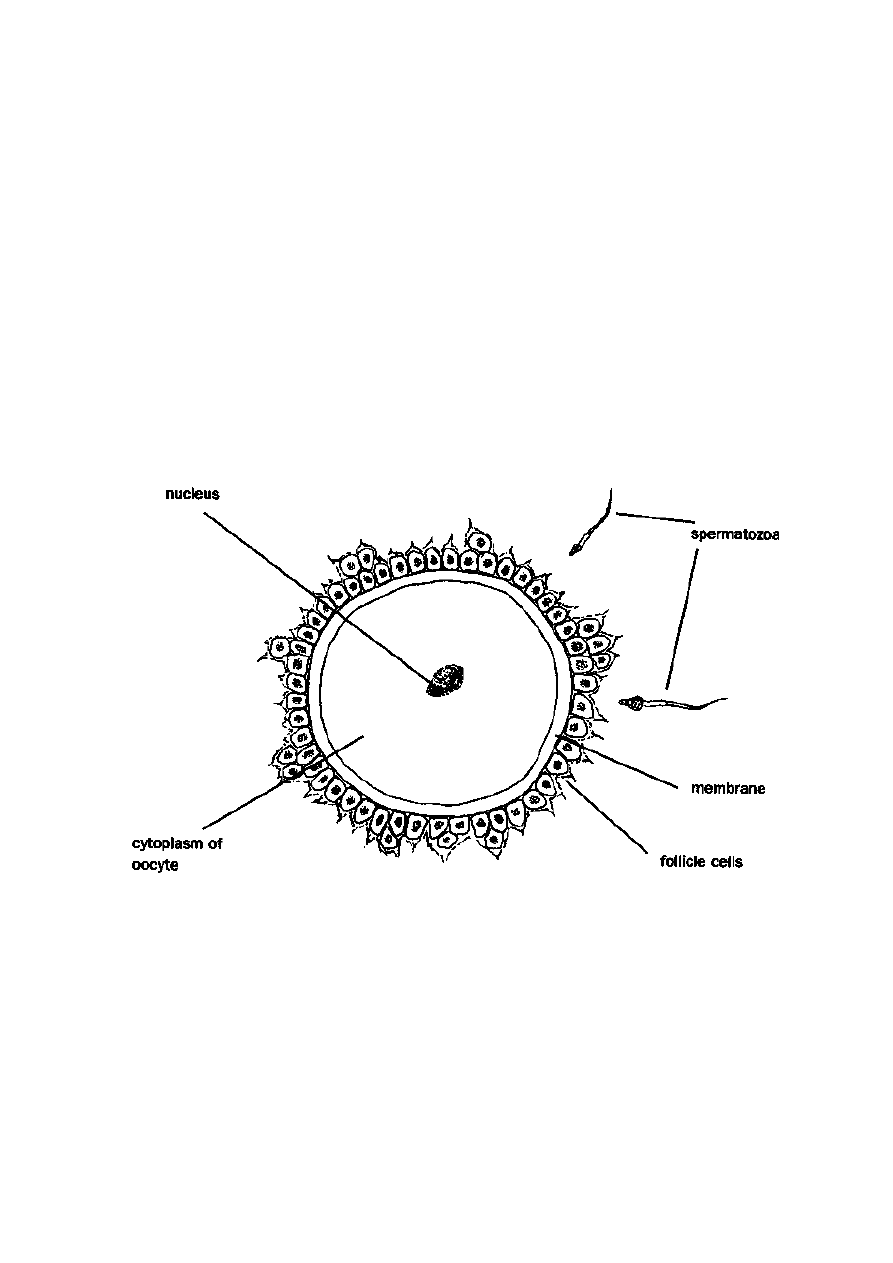
females is vastly different? Figure 4.2 shows how great the discrepancy is.
1
0.1 mm
'
Figure 4.2
Relative dimensions of an egg from a
human female and a sperm from a male
Parker et aL (1972) suggest one probable scenario. Their argument is
essentially that an ancestral state of equally sized gametes quickly breaks down into
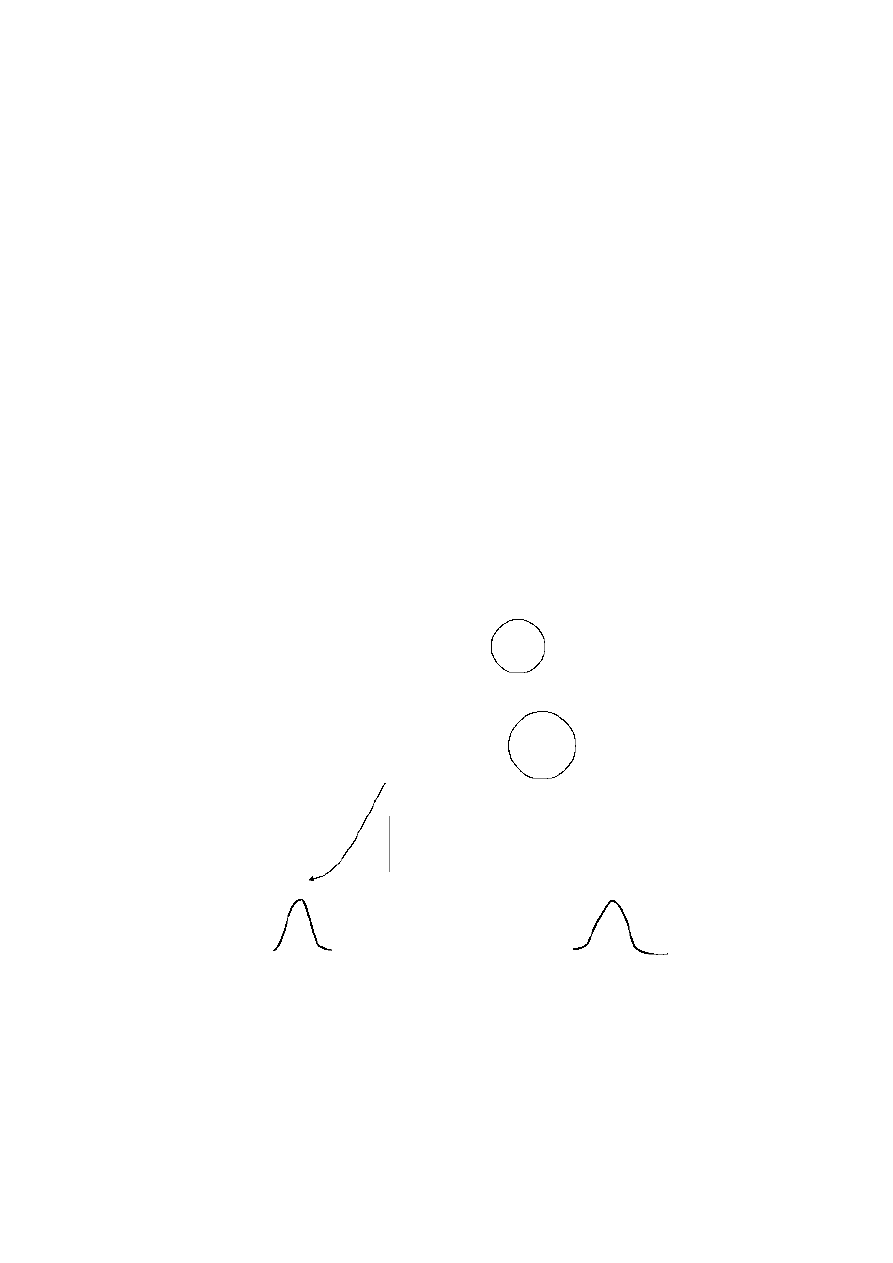
two strategies: providers and seekers (see Figure 4.3). Parker et al. were also able
to show that these two strategies are stable in the sense that they can resist invasion
from other strategies such as that in which both males and females produce large
gametes prior to fusion and thus give them a head start over the smaller zygotes
from anisogamy. In this case, the problem for a male once anisogamy is
MATING BEHAVIOUR: FROM SYSTEMS TO STRATEGIES
1 0 1
established is that any larger gametes, produced to confer an advantage on the
zygote, would easily be out-competed by the larger number of rival small gametes.
Males and females become locked into their separate strategies.
Other suggestions have been made to account for the origin of anisogamy.
One such is the idea that the small size of sperm reduces the likelihood of
transmitting cytoplasmic parasites from the male to the zygote (Hurst, 1990). In
this respect, it is also significant that humans, in common with many animals,
only inherit their mitochondrial DNA (which is different from the DNA of the
chromosomes) from the maternal line. Mitochondria are small bodies within cells
that serve as energy supply units. They convert the chemical energy of molecules
such as sugars to other molecules that can serve as fuel for cellular processes. The
origin of the mitochondria in our cells is thought to derive from an invasion of
bacteria into cells that then became symbiotic. This peculiar inheritance of
mitochondrial DNA has led to some interesting empirical analyses of the lines of
descent of modern human populations, leading some to suggest that all modern
humans can trace their descent to one female in Africa.
Isogamy
Selective advantage in
advance provisioning of
zygote
Selective advantage
in producing a larger
number of
smaller gametes
o
o
o
Disruptive selection now
favours small 'egg-getters'
and large 'egg-providers'
sperm
Size
egg
Figure 4.3
The breakdown of anisogamy by disruptive selection
4.3 Describing mating behaviour: systems and strategies
Throughout the animal kingdom, there is one common denominator to sex: the
fusion of a large gamete supplied by the female with a smaller one supplied by the
male. Yet beyond this, there is a huge diversity and striking contrasts within genera

1 0 2
EVOLUTION AND HUMAN BEHAVIOUR
and families in terms of the social systems and behavioural arrangements that facili-
tate this fusion. In this section, we will discuss the terminology of mating systems.
After that, behavioural imperatives that drive these systems will be examined.
There is as yet no universally accepted precise system to classify patterns of
mating behaviour. This largely results from the fact that a variety of criteria can be
employed to define a mating system. Commonly used criteria usually fall into two
groups: mating exclusivity and pair bond characteristics. In the former, a count is
made of the number of individuals of one sex with which an individual of the
other sex mates. In the latter, it is the formation and duration of the social 'pair
bond' formed between individuals for co-operative breeding that is described.
Both sets of criteria have their problems. In the case of mating exclusivity, the
crucial act of copulation is not always easy for field workers to observe. With
humans we can issue questionnaires and hope for an honest response, but with
other animals copulation may be underground, in mid-air, at night or generally
difficult to see. Such are the problems here that copulatory activity has often been
inferred from the more visible non-copulatory social forms of behaviour such as
parental care and nest cohabitation. It is obvious that this approach is open to
errors of interpretation. Bird species such as the dunnock (Prunella modularis)
that were once classified as monogamous on the basis of shared nest-building and
parental care of offspring have turned out to be more varied in their mating
habits (Davies, 1992). Terms such as 'extrapair copulations' and 'sneak copula-
tions' have consequently entered the repertoire of behavioural terminology.
The problem with the term 'pair bond', as with other theory-laden terms such
as 'partner', is that it suggests a degree of harmony between the two sexes that
may not exist in reality. Such terms are probably hangovers from pre-1970
ethology when mating was viewed as a co-operative venture between two sexes to
perpetuate the species. A more individually focused approach reveals as much
conflict as co-operation between the sexes, and the pair bond for many species
could be seen with equal validity as a sort of 'grudging truce'. Bearing in mind
these reservations, Table 4.2 shows a simplified classificatory scheme combining
both sets of criteria.
The fact that naturalists have found it difficult to devise hard and fast defini-
tions for mating systems need not concern us too much. The attempt to match a
species with a particular mating system faces a more fundamental array of
problems than mere observational difficulty. The first point to note is that the
word 'system' can hide a great deal of diversity. Mating involves a number of
discrete components, such as the means of mate acquisition, the number of mates
or of copulations achieved, and the nature of the 'bond' between the sexes, for
example in the division of parental care. Although these components can be
interdependent, they can also vary independently. To refer to two species
exhibiting monogamy could suggest an underlying similarity greater than
is warranted.
A further problem is that the concept of a system does not really capture the
diversity of mating behaviour within a single species or even a population. We
may find that, in a largely monogamous population, males and females may sneak
extrapair copulations. It must also follow that, since the sex ratio remains close to
1:1 (see below) in groups where some males or females practise polygamy, some

MATING BEHAVIOUR: FROM SYSTEMS TO STRATEGIES
1 0 3
Table 4 . 2
Simple classification of mating systems
System
Mating exclusivity and/or pair bond character
Monogamy
Annual
Perennial
Copulation with only one partner
Pair bond formed anew each year
Pair bond formed for life
Polygamy
Polygynandry
Polygyny
Successive
polygyny
Simultaneous
polygyny
Polyandry
Successive
Simultaneous
One sex copulates with more than one member of the other
sex
Males and females mate several times with each other and
with different partners; for example, a stable group of two
males and two females
Males mate with several females, females with only one male
Males bond with several females in breeding system but only
one at a time
Males bond simultaneously with several females
One female mates with several males, males with only one
female
Females bond with several males but one at a time
Females bond with several males at the same time
individuals may not mate at all. In polygamy, we also have the fact that the two
sexes behave differently even though they are of the same species. The classifica-
tion in terms of polygyny or polyandry is usually based on the sex that 'does best'.
Hence elephant seals are often referred to as polygynous because a few males have
large harems. The females must be thought of as monogamous.
If individuals are behaving differently like this, it suggests that it may be more
productive to examine the rationale behind the behaviour of individuals. After all,
ascribing a system to a group of animals does not explain why such a system is
found. By analogy, we can say that a collection of atoms in the gaseous state in a
closed container exerts a pressure, but we need to look deeper into the impact of
individual atoms with the walls of the container before we understand the origin
of the pressure.
The essential point to grasp is that species in themselves do not behave as a
single entity: it is the behaviour of individuals that is the raw material for
evolution. Any system that we care to project onto groups of individuals is at best
an emergent property resulting from individual actions, and it becomes hard to
justify the application of the term 'system' to an emergent property. A better
approach then would be to focus on strategies pursued by individuals in their
attempt to optimise their inclusive fitness under within the conditions that prevail
at any one time. The most common behaviour of individuals may then allow us
loosely to apply the label 'system' as a matter of descriptive convenience.

1 0 4
EVOLUTION AND HUMAN BEHAVIOUR
4.4 Factors affecting expressed mating strategies
4.4.1 A generalised model of mating behaviour
The lineage of any given animal will obviously have been exposed for a long time
to various biotic and abiotic influences. Selection will thus have led to a set of
phylogenetic constraints on the strategies that an animal can employ. Figure 4.4
shows how we might conceptualise the influence of past (phylogenetic) and
present (ecological and biotic) factors on the mating behaviour of an individual
organism. It is suggested that animals have a range of potential strategies. The
strategy that is expressed is a product of local conditions, the learning experiences
of the animal and its phylogenetic inheritance. We will now examine each of these
factors in turn.
Phytogeny: Ancestral
adaptations for neural
hardware and for
developmental mechanisms
for responding to
experience
Individual organism: range of
potential strategies
Learning during
development
Local ecological
conditions
i
Expressed strategy
Strategies employed
by the same and
opposite sex
Figure 4.4
Model of factors influencing the mating strategy of an individual
4.4.2 Phytogeny
The physiological apparatus of mating (hormones, genital organs, lactatory
devices and so on) will of course be closely tied to the repertoire of behaviour
that an organism can evoke. Desertion immediately after fertilisation is not an
option for human females since they carry the fertilised zygote, but it is for fish.
Men cannot lactate to feed babies, but women can. Individuals are thus pre-
adapted by their evolutionary lineage to certain modes of behaviour. Hence,
varied as taxa are, taxonomy is not totally worthless as a predictor of social
behaviour. We can illustrate this point by a comparison of mammals and birds.
Mammals, unlike birds, are mostly live-bearing, and the offspring must
consequendy be nourished before birth. This is usually done by a placental food

MATING BEHAVIOUR: FROM SYSTEMS TO STRATEGIES
1 0 5
delivery system. Once the young have been born, nurture is then given by female
lactation. It follows that females make a huge investment in parenting, a good
part of which cannot be supplied by the male. In the case of carnivores, the male
could in principle share food with the female, but for mammals feeding on low
calorie foodstuffs, such as herbivores, the potential for male assistance is
extremely limited. If the male is to optimise his reproductive success, his best
strategy
7
would be to divert more effort into mating than to parenting, in other
words to pursue polygyny. A female will be more disposed towards monogamy
(or monandry - having only one male partner) since the bottleneck to her
reproductive success is not the number of impregnations she can solicit but the
resources she is able to accumulate for gestation and nurture.
In the case of birds, the investment of the female in provisioning the fertilised
egg is initially greater than that of the male in that the embryo is laid complete
with a packaged food supply. Once hatched, however, the nestlings can be fed by
both parents, so both sexes can increase their reproductive success by staying
together to help at the nest. Roughly speaking, two parents can feed twice as
many young as can one parent. It benefits the male to remain in a monogamous
social bond if, as a consequence of his desertion, his offspring have a considerably
reduced expectation of survival. If the environment is particularly rich in
resources and one parent could cope, the male may be tempted to desert. In
principle, the female could desert shortly after laying her eggs.
There has been much discussion (Dawkins and Carlisle, 1976) on why, in
these conditions, the male is more inclined to desert than the female. The
simplest explanation probably lies in the fact that desertion entails some risk that
the eggs may fail and that the consequences of failure are more crippling to the
female than to the male. One clutch may represent a significant part of one
season's reproductive labours for a female, and consequently she has fewer
future opportunities to make good than the male does. Given the physiological
differences between birds and mammals, it is no surprise then that most
mammalian species are polygynous but that about 90 per cent of all bird species
are monogamous.
The genetic legacy of ancient environments may help us to understand current
behaviour when simple physiology or comparative socioecology is of little use.
For primates, there have been numerous attempts to understand mating
behaviour in terms of the ecological conditions faced by a species, with much
success. One puzzle, however, that the concept of phylogenetic inertia may help
to solve concerns the mangabeys, which are mostly arboreal but still for some
reason exhibit the multimale groups typical of terrestrial primates such as
baboons and macaques, rather than the uni-male groups typical of tree-dwelling
primates. We find, however, that the nearest relatives of mangabeys are in fact
terrestrial baboons, from which mangabeys probably evolved. Struhsaker (1969)
suggested that phylogenetic inertia was constraining the behaviour of mangabeys.
Such a possibility serves as a warning, before we examine the role of ecological
conditions, that behaviour may not always be optimally adapted to current
environments. This is an ever-present problem when interpreting human
behaviour: what may seem maladaptive in current contexts could have been
adaptive a few hundred thousand years ago.
1 0 6
EVOLUTION AND HUMAN BEHAVIOUR
4.4.2 Ecological conditions
Roughly speaking, for mammals at least, a male's reproductive potential is
constrained by the number of females he can impregnate (and of course the inter-
male competition that follows from the fact that other males have reached the
same conclusion). For females, however, the primary restraint on her reproduc-
tive output is not the availability of willing males but ecological factors such as
food supply. As noted earlier, it follows that males will be more inclined to pursue
polygyny than females will polyandry. One approach then is to start from the
perspective of the male and consider how wider conditions favour or militate
against his predilection for polygyny.
The ability of a male to achieve polygyny is strongly influenced by the distrib-
ution of females. Put simply, if females are widely dispersed, opportunities to
practise polygyny look bleak. If females congregate, for whatever reason, the
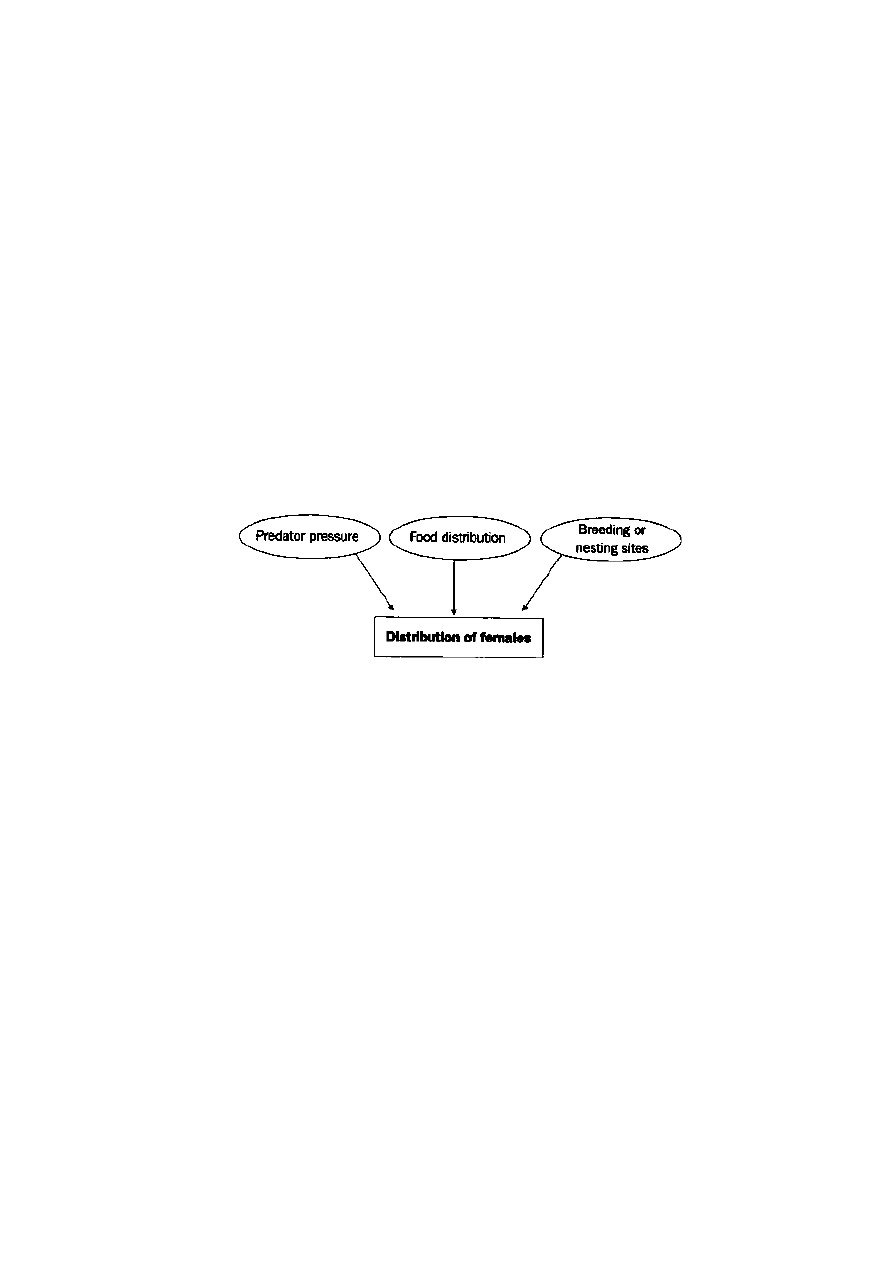
prospects look better. The main influences on female distribution are predation
and food (Figure 4.5).
Male mating strategy
Figure 4.5
Factors determining the distribution of
females and the impact on male mating strategy
If a male can command and defend a resource desired by females, the male
may secure multiple matings. A good illustration of this is the orange-rumped
honey-guide (Indicator xanthonotus), the males defending the nests of bees.
When females visit the nests to feed on the beeswax, the male copulates with her
in what is in effect an exchange of access to food for sex. The correlation between
the degree of polygyny achieved by a male and the quantity or quality of the
resources at his disposal can be illustrated with numerous examples from birds,
fish and mammals (Andersson, 1994). The resources controlled can be food,
territory or breeding sites favoured by the female. The phenomenon is sometimes
called resource defence polygyny.
We must, however, be wary of examining mating solely from the male
perspective. Females have their own reproductive interests at stake and are not
simply passive receptacles for male success. If we remember that, in polygyny,
some males will have many mates and some none, we could ask what makes a
MATING BEHAVIOUR: FROM SYSTEMS TO STRATEGIES
1 0 7
female agree to polygyny when she could presumably mate monogamously with
one of the males left over. In making such a decision, the female has a set of costs
and benefits to assess. The costs of mating with an already-mated male
compared with an unmated male might include sharing resources offered by the
male with other females, sharing help (if any) offered by the male with other
females, and rivalry from other females. The benefits could be that the female
collects a set of successful genes, and if her male offspring inherit such genes, the
number of her grandchildren is increased. An additional benefit might be that
the female acquires access to high-quality resources. The balance of costs and
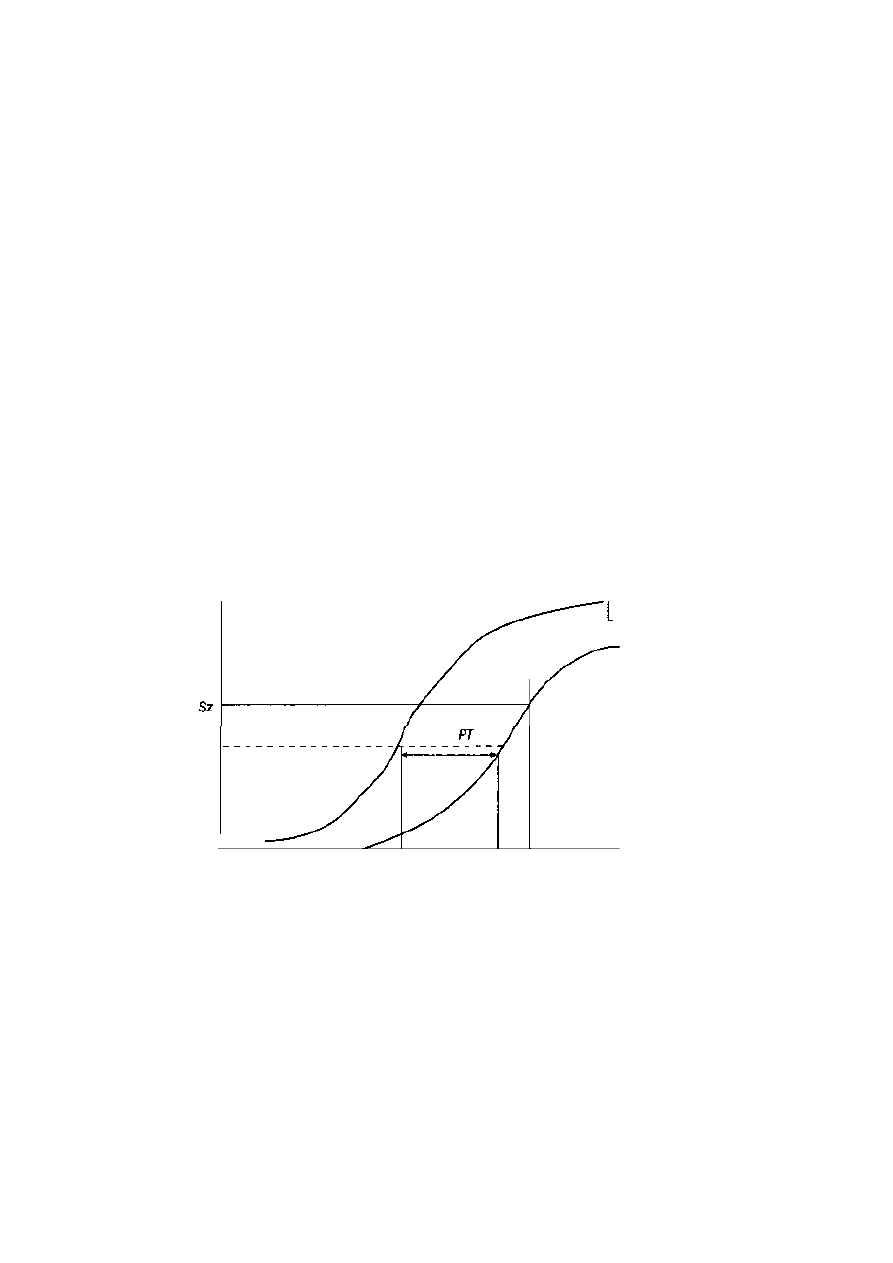
benefits is explored in the polygyny threshold model. Figure 4.6 shows the usual
form in which this model is expressed.
This model has stimulated much field work on resource defence polygyny.
Some work, such as that by Pleszczynska (1978) on the lark bunting, has yielded
results in keeping with the predictions of the model. Support for the model from
human behaviour comes from the work of Borgerhoff-Mulder (1990) on the
Kipsigis people of Kenya. Borgerhoff-Mulder found a strong correlation between
the area ofland owned by a man and his number of wives.
Sx, Sy
Monogamy
Polygyny:
secondary female
x
y
z
Quality of territory (food, breeding sites, etc.)
A female mating monogamously on territory of quality x would achieve the same
success (Sx = Sy) as a female sharing a male on territory y. PT is the polygyny
threshold. If the female increases the quality of the territory to z, her success is
greater than with the monogamous mating strategy (Sz > Sx)
Figure 4.6
The polygyny threshold model (after Orians, 1969)
Most studies on resource defence polygyny have reached die conclusion that
there is a positive relationship between the number of mates held by a male and
environmental factors thought to be indicative of the quality of his territory. The
problem comes, however, when measuring the costs and benefits to the female,
1 0 8
EVOLUTION AND HUMAN BEHAVIOUR
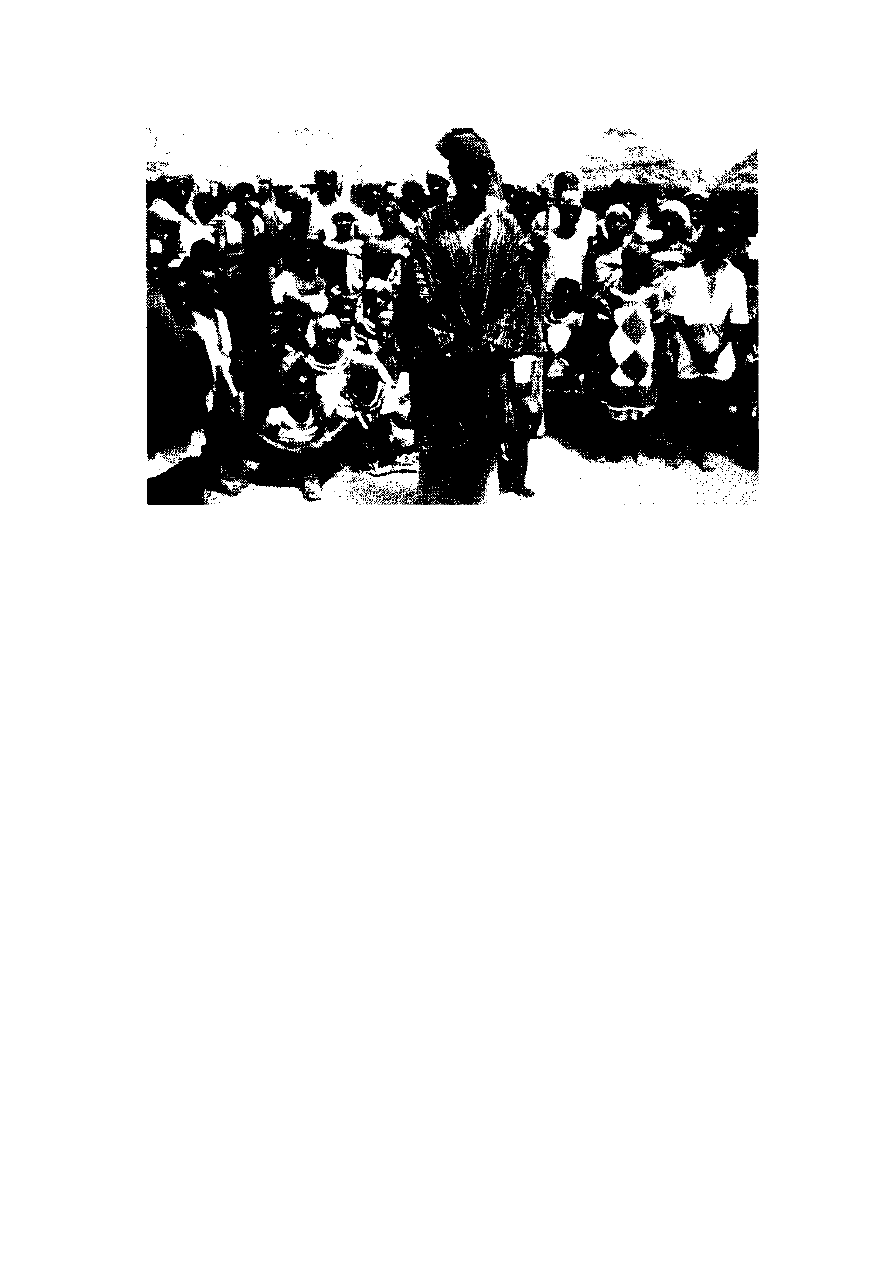
Figure 4.7
Polygyny is a common mating system for humans in many
parts of the world. Here a village chief of the Koko village in
Ghana stands proudly before his 5 wives and 38 children
and this means that results are often difficult to interpret. Studies on yellow-
bellied marmots (Downhower and Armitage, 1971) and pied flycatchers
(Askenmo, 1984) have shown that the reproductive success of females sharing a
male partner is actually lower than that achieved by not sharing. This calls into
question the predictions of the model that polygynous females do as well or (if
they cross the polygyny threshold) better than monogamous females.
Males cannot always control the resources that attract females. Resources
may, for example, be too widely dispersed for a single male to control. A male
can satisfy his propensity for polygyny by defending a group of females against
rivals - so-called female defence polygyny. If females spend time in pre-existing
social groups, evolution towards this type of polygyny is facilitated. Females may
form social groups for a number of reasons. The groups formed by many species
of primates probably evolved as a defence against predators, while female African
elephants (Loxodonta africana) assemble in relation to a patchy and localised
food distribution.
Elephant seals (Mirounjja angustirostris) provide a spectacular illustration of
female defence polygyny brought about by the social grouping of females. Each
year, females haul themselves onto remote beach locations (for example, Ano
Nuevo Island off California) to give birth to their pups. The shortage of beach
locations, the tendency to return to the same site and the fact that females
become sexually receptive only 1 month after giving birth leads to a large concen-
tration of fertile females. Not surprisingly, the male seals fight viciously for access
to these ready-made harems. Intrasexual competition (male versus male) has led
in this species to pronounced sexual dimorphism: the males are several times

MATING BEHAVIOUR! FROM SYSTEMS TO STRATEGIES
1 0 9
heavier than the females and have enormous probosci for calling and for fighting
other males (see Chapter 5).
Female defence polygyny can also occur if the females are solitary, so long as
the male is able to defend a territory containing several females. In fact, in over
60 per cent of mammalian species, males defend a territory that overlaps one or
more female ranges.
As the size of a female group increases, it becomes less defensible from the
intrusions of other males, so it becomes impossible for a single male to have
exclusive sexual access to all the females, and he will be forced to tolerate the
presence of other males. We then end up with multimale and multifemale groups
characteristic of baboons and macaque monkeys. In such groups, mating
behaviour is complicated, and access to females is determined largely but not
entirely by the position of the male in a dominance hierarchy.
Comparative socioecology
The way in which the size of the female group influences the mating strategy of
the male is also illustrated by a comparative socioecological approach. Peter
Jarman's (1974) study of the habits of the numerous species of African antelope
of the family Bovidae (catde and antelope) is a classic in this respect. Jarman
showed that a correlation existed between size, feeding size, social grouping and
mating behaviour.
It is a well-established principle in biology that the metabolic rate of an mammal
increases as its size decreases. This arises largely from the fact that the ratio of
surface area to volume gets larger as a creature gets smaller. Since heat loss is a
product of surface area, small animals lose heat relatively faster than large ones.
Hence to maintain a given body temperature, small animals need to metabolise
faster than large, and small antelope such as steinbock need to eat high-calorie food
such as fruit and buds. This selective grazing does not favour the formation of herds
since the best pickings in a new area would all be taken by the first to arrive. The
best strategy for these feeders would be to feed in small groups in a territory with
fairly dense vegetation. At the other end of the size spectrum, large species with
lower metabolic rates can subsist on low-calorie food obtained by unselective
grazing. Groups of these large creatures such as wildebeest and buffalo can wander
together in a herd. The herd must move about to find fresh grass, but when it is
found, it is likely to be in patches large enough to sustain a large herd and too large
for a few individuals to monopolise anyway.
In both these contexts, the mating strategies employed by males can be
interpreted as an attempt to maximise their reproduction in the context of the
resource-dependent dispersal of females. Males of small species in which the females
are not strongly grouped do best by attaching themselves monogamously to a
female. Males of intermediate-sized species such as reedbuck, impala and gazelle
may be able to command a harem of localised females. Males in a large herd cannot
possibly command exclusive mating rights to all the females but vie with each other
for mating opportunities.

1 1 0
EVOLUTION AND HUMAN BEHAVIOUR
Polyandry
Although there are plenty of examples of females copulating with more than one
male, either in multimale and multifemale groups or through extrapair copulations,
true polyandry, in the form of a stable relationship between one female and several
males in which the sex roles are reversed and males assume parental responsibilities,
is very rare. At first sight, both males and females linked polyandrously would appear
to gain little. From the female's perspective, sperm from one male is sufficient to
fertilise all her eggs, so why bother to mate with more than one male? From the
male perspective, it is even worse: if a male is forced to supply some parental care,
the last thing he should want is to share his mate with another male and face the
prospect of rearing offspring that are not his own.
To understand the emergence of polyandry, we need to consider both food
supply and predatory pressure. In the case of the spotted sandpiper (Actitis
macularia) studied by Oring and Lank (1986), the productivity of the breeding
grounds on Leech Lake, Minnesota, is so high that the female can lay up to five
clutches of four eggs in 40 days. Her reproductive potential is limited not by food
resources but by males to incubate and defend the eggs. In this situation, we
observe sex role reversal: the females are larger than the males and compete with
each other to secure males to incubate their clutches.
Many human societies are mildly polygynous or monogamous (see Chapter
8), there being very few polyandrous human societies. One of the best
documented is the Tre-ba people of Tibet, where two brothers may share a wife.
One reason for this arrangement seems to be as a means of avoiding the split of a
family land-holding in a harsh environment where a family unit must be of a
certain minimum size and where the tax system weighs against the division of
property. This is not, however, simply a reversal of polygyny. Men are socially
dominant over women, the younger brother's ambition is to obtain his own wife
and, as in most societies, Tre-ba men acquire wives rather than the other way
round (Crook and Crook, 1988). Moreover, when a Tre-ba family has daughters
but not sons, polygyny is practised whereby the daughters share a husband and
the family holding is passed on through them.
Polyandry exists briefly as a transition phase among the Pahari people of north
India. Wives have to be purchased at a substantial price. Brothers may typically
pool their assets to buy a wife, which they share. When they can afford it, another
wife is taken. The eventual result is group marriage or polygynandry in which two
or more husbands are married to two or more wives, and all the men are married
to all the women. The Pahari are the only human society in which such polygy-
nandry is the norm (Berreman, 1962).
Leks
When mating takes place on leks - a lek is the name given to the area where males
guard a small patch of territory that they use for display - males neither protect
nor provide resources for females nor supply any parental care. For males, this is
sexual reproduction in its least committed form: they supply only genes. The
word 'lek' comes from the Swedish word for play. A number of species practise
MATING BEHAVIOUR: FROM SYSTEMS TO STRATEGIES
1 1 1
leking, including peacocks, sage grouse, several birds of paradise and a number of
antelopes, deer and bats.
Females visit the lek and, once they have carefully observed the display antics
of the males, appear to make a choice and agree to copulate with one of them.
The display can be visual, as in the case of the peacock that fans its train and the
American sage grouse that struts and dances, or it can be aural, as in the case of
hammer-headed bats {Hypsignathus monstrosus), which flap, call and buzz
passing females.
Given that the males are offering nothing in the way of resources or care, it is
difficult at first sight to see what induces females to comply with this strategy. It
could be that mating in such circumstances also reduces female vulnerability to
predation during mating. The zero investment of males in the protection of the
females and young does not deter females from exercising a very careful choice,
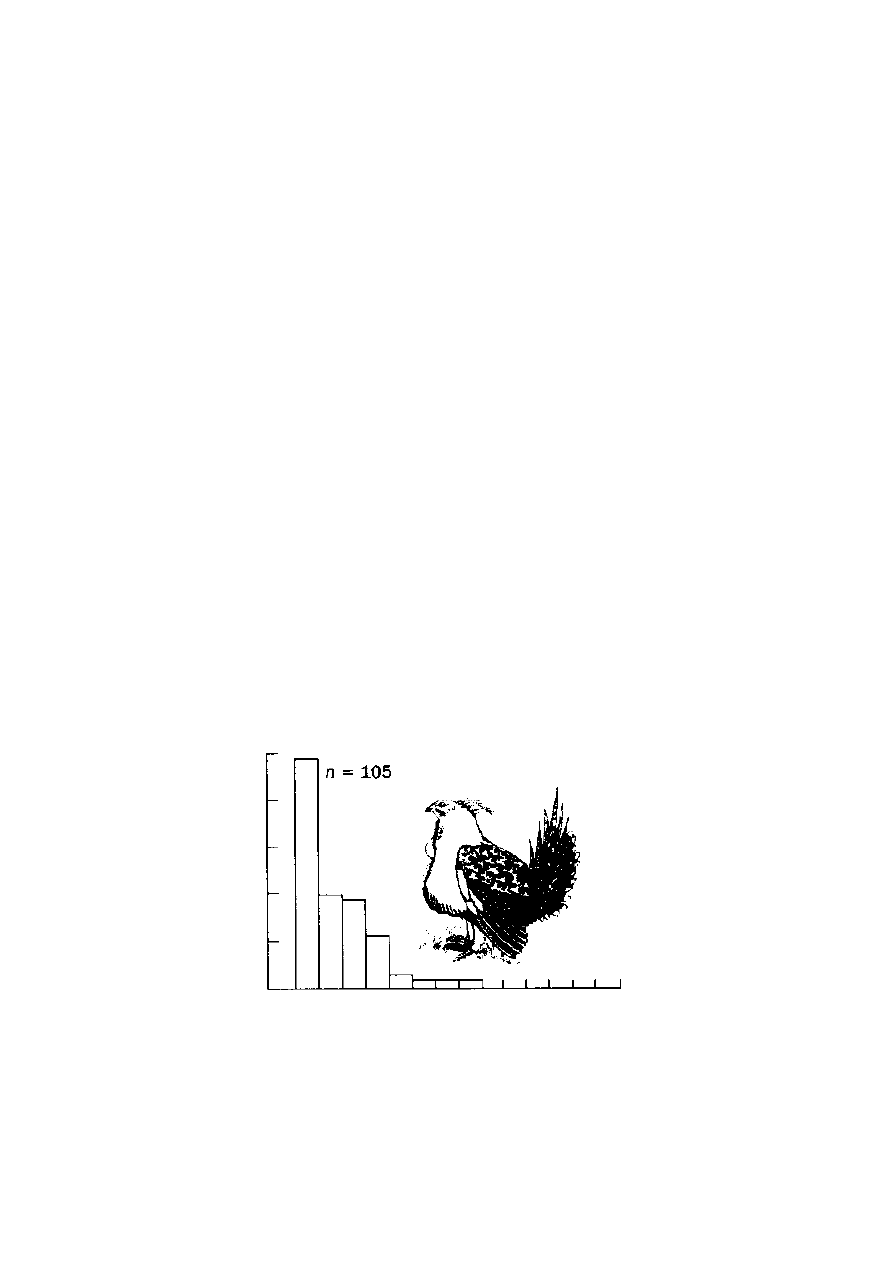
and a relatively few males usually receive nearly all the copulations (Figure 4.8)
It is likely that in these conditions females are making a choice for good genes
(see Chapter 5). The ability of males to compete for display sites and then
perform often complicated display rituals is a reflection of genotype. A female is
attracted to males successful at leking since her offspring will inherit desirable
features including, if they are sons, success on the lek site. The problem with this
plausible answer is the so-called iek paradox'. If females mate with, for example,
only 10 per cent of the males, after a few generations all the females and males
will be nearly identical, and there will be little point in looking for the best male
since they will all look the same. At this point, the females will have exhausted the
possible range of genetic variation. It transpires that there is a way out of this
paradox, to which we will return in Chapter 5.
5 0
c/)
•1 4 0
JS
8 30
CD
&
s
20
10
1 2 3 4 5 6 7 8 9 1 0
1 2
1 4
Males on lek in rank of success
Figure 4 . 8
Variance of male reproductive success in the sage grouse
(Centrocercus urophasianus) (adapted from Krebs and Davies, 1987)

1 1 2
EVOLUTION AND HUMAN BEHAVIOUR
Could there be an equivalent to leking for human courtship? At first sight, it
would seem unlikely since human males are not as polygynous as sage grouse or
peacocks, however much they would like to be. Without doubt, however, human
males and females display to each other. Dunbar has made the amusing but
plausible suggestion that mixed-sex human conversations may be functioning as a
lek. In single-sex groups, both sexes spend much of the time talking about
personal relationships and experiences. In all male groups, for example, the time
spent on 'serious matters' such as religion, ethics or academic questions was often
found to be as low as 0.5 per cent. In mixed-group settings, however, this
percentage for males rose to 15-20 per cent, but with a much smaller rise for
females. In addition, men spend about twice as much time talking about their
own experiences than those of others, but this ratio is reversed for women.
Dunbar concluded that such conversations serve as a type of social lek in which
women practise networking for mutual support whereas men act to display their
status to the opposite and the same sex (Dunbar, 1996a).
4A.3 Game theory: conflicts between rival strategies
The previous sections have shown how animals seek to optimise their reproductive
fitness in relation to ecological parameters. This can sometimes be best appreciated
by considering the male and sometimes the female perspective, the approach illumi-
nating how different mating patterns are favoured by different environments. The
approach needs, however, to be supplemented by further ideas, for two reasons:
1. The strategies employed by either sex are not frequency independent, a
frequency-independent strategy being one that can be pursued regardless of
what other individuals in the population are doing. This is not the case in
mating behaviour, in which success at finding a mate is strongly dependent on
the strategies employed by others
2. The comparative socioecology approach does not sufficiently address the fact
that the interests of the two sexes may be in conflict. In cases in which
parental care is necessary, males may favour polygyny and females polyandry.
So which system results or which strategy prevails?
One way of tackling situations in which two sets of strategies are in conflict is the
use of game theory, which was pioneered by the British biologist John Maynard
Smith (see also Chapter 11). The simplest way to appreciate the theory is to consider
two players who each can play one of two or more strategies. The rewards they reap
from each strategy depends on what the other player does.
As an illustration, consider the game of rock, paper and scissors. Children wave a
fist at each other and then open their hands to reveal one of three possibilities. The
scoring matrix is shown in Table 4.3. In this game, what is the best strategy to play?
If one player consistently plays only one hand, it can eventually be beaten by some
other as every move has another that can defeat it. In the language of game theory,
we would say that no pure strategy is evolutionary stable. A population of, for
example, rock players could be invaded and wiped out by paper players and so on. In
fact, the best strategy is to play each move one third of the time on an unpredictable

MATING BEHAVIOUR: FROM SYSTEMS TO STRATEGIES
1 1 3
BOX 4 . 1
Pay-off matrix for parental care game (after Maynard Smith, 1977)
FEMALE
Guards
Deserts
Guards
MALE
Deserts
\ \
ep
2
ep
2
\ .
^ P o + ^ o ^ ^
p
1
= survival probability of an egg guarded by one
parent
p
0
= survival probability of a deserted egg
E = number of eggs produced by deserting female
q = probability of male finding another mate after
desertion
p
2
= survival probability of an egg guarded by both
parents
e = number of eggs produced by a guarding female
Hence ep
±
q + ep
±
= number of eggs fathered by
E > e
a male that deserts the first female and then finds
another one
basis. This would be an evolutionary stable strategy (ESS), one that is resistant to
being displaced by a rival.
Table 4-3
Scoring matrix for the game of rock,
scissors and paper (after Barash, 1982)
Rock
Scissors
Paper
Rock
0
- 1
+ 1
Scissors
+ 1
0
- 1
Paper
- 1
+ 1
0
In the case of mating behaviour, two strategies can be considered. A male or a
female could mate and then stay to help rear young, or desert and find another
mate. Box 4.1 shows hypothetical conditions for a situation in which both sexes
have to adopt one of two strategies: either to guard or to desert the offspring.
There are four ESSs depending on the values of the variables:
ESS 1:
male deserts and female deserts
requires that Ep
0
> cp
Y
or female guards
and p
0
(1+q) > p
x
or male guards

1 1 4
EVOLUTION AND HUMAN BEHAVIOUR
ESS 2:
male guards and female deserts
requires Ep
x
> ep
2
or female guards
and p
l
> p
Q
(l+q) or male deserts
ESS 3:
male deserts and female guards
requires ep
x
> Ep
Q
or female deserts
and Pi(l+q) > p
2
or male guards
ESS 4:
male guards and female guards
requires ep
2
> Ep
Y
or female deserts
and p
2
> p^I+q) or male deserts
We can see now that the ecological conditions discussed above can be viewed as
setting the values of the various parameters in the models shown in Box 4.1. In the
case of Arctic waders, polyandry may result from Ep
x
> ep
2
perhaps because the
guarding effect of both parents (p
2
) is only slighdy greater than p
Y
but the number
of eggs that a female can produce if she leaves the nest to the male (E) is much
greater than the number that can be incubated in the nest if she guards (e).
In many cases, if p
2
is not much larger than p
v
it pays males to desert if there
is a good chance of finding another female. Females that have already invested
heavily in offspring by, for example, internal fertilisation and gestation will be less
inclined to desert since the cost of going through the whole process again may be
too much to bear, so ep
l
> Ep
0
.
A classic illustration of the operation of sexual conflict underlying mating
behaviour is to be found in the work of Davies (1992) on the common hedge-
sparrow or dunnock (Prunella modularis). The main ecological determinant of the
dunnock's mating pattern is the size of a female's territory, which is in itself a
function of the quality of foraging patches in the environment. A variety of mating
patterns has been observed for this species: monogamy, polygyny, polyandry and
polygynandry. Polyandry is observed when two males share a territory that was
occupied by a single female. A dominance hierarchy is found such that the alpha
male drives away the beta male from food and the female. In one study, the
paternity ratios of these two males, as estimated by observations coupled with DNA
fingerprinting, were 0.6 and 0.4 respectively. When two males share a territory
occupied by two females, polygynandry results. Conflicts arise because each sex may
do best by different mating systems.
Table 4.4 shows a calculation of the reproductive success of males and females
under different mating regimes. The crucial point is that, in rich environments, the
preferred male pattern is polygyny > monogamy > polyandry, whereas the preferred
female pattern is exacdy the opposite: polyandry > monogamy > polygyny. During
the mating period, males in polyandrous situations are constandy fighting, the
dominant male attempting to drive away his rival. Similarly, each polygynous female
fights with the other and attempts to claim the male for herself. Polygynandry,
involving two males and two females, results when the dominant male is unable to
drive the other away and likewise the dominant female is unable to drive away the
other female to achieve polyandry.

MATING BEHAVIOUR! FROM SYSTEMS TO STRATEGIES
1 1 5
Table 4 . 4
Reproductive success of male and female dunnocks
in variable mating conditions (after Davies and Houston, 1986)
Mating pattern
Number of adults
Nestlings
Nestlings
caring for young
fledged
fledged
(per female)
(per male)
Monogamy
One male, one female
5.04
5.04
Polyandry: both
One female, two males
6.75
alpha: 4.05
males feeding
beta: 2.70
Polygyny
One female and part-
3.82
7.64
time help of one male
The lessons here are important. The pattern of mating in the dunnock cannot be
seen as simply the expression of the preferences of one sex but must instead be
understood as the outcome of a conflict of interests between both sexes. The
outcome of such contests is determined by the competitive abilities of the individual
birds and also the food distribution since this determines range size and hence the
ability of male or female dunnocks to monopolise mates (Krebs and Davies, 1991).
Conflicts in human mating strategies
Game theory may be of use in modelling human mating behaviour. If we consider
the hunter-gathering days of human evolution, it would probably not pay a female
to desert a newborn baby since it is so dependent on a mother's milk. There is,
however, an asymmetry that lies at the heart of human reproductive behaviour. A
human male could, by mating with for example 50 partners (if he could time his
copulations accurately to coincide with ovulation by the female), increase his
reproductive output by a factor of 50 compared with mating with one partner. The
same argument does not apply to females: mating with 50 males would not increase
her reproductive success 50-fbld. If the male deserts, however, he faces the prospect
that his child may not survive.
Desertion also brings other problems since a population of deserting males
would constantly be moving from female to female. Any one male now faces the
prospect that he is unsure whether by mating with a woman he becomes the father
of the child. If women announced oestrus in the manner of chimps by swellings
and pheromones, it would be easy to calculate the best time to impregnate a new
female. This would of course lead to male rivalry, and this would also not serve the
interests of females who are looking for a little more than sperm from their
menfolk. One way in which to thwart a male's philandering intentions is to
conceal ovulation. Any one male then does not know how best to time his sexual
advances. A great deal of the evolution of human sexuality can be viewed in this
light of the dynamics of the different but interacting strategies of males and
females. This is explored more fully in Chapter 8.

1 1 6
EVOLUTION AND HUMAN BEHAVIOUR
4.5 The sex ratio: Fisher and after
4.5.1 Why so many males?
Let us recall some of the facts of human anisogamy, which are in many respects
typical of mammals as a whole. Each ejaculate of the human male contains about
280 x 10
6
sperm, enough, if they were all viable and suitably distributed, to
fertilise the entire female population of the United States. Moreover, they are
produced at the phenomenal rate of about 3000 each second (Baker and Bellis,
1995). In contrast, the human female only produces about 400 eggs over her
entire reproductive lifetime of 30-40 years. Now, the ejaculate of the male is of
course not evenly distributed, and a male must impregnate the same woman
many times to have a good chance of fathering a child. Even so, the longer period
of fertility experienced by the male, the fact that females are incapable of
ovulating when bearing a child or breast-feeding, and the heavy demands of
childbearing that fall unevenly on females, all imply that a single male could, in
principle and in practice, fertilise many women.
The obvious question that follows from this is why nature has bothered to
produce so many men. It would seem that a species would do better in terms of
increasing its number by skewing the sex ratio in favour of women, thereby
producing fewer men. Men who remained would then be destined to mate
polygynously with more women. Yet unfailingly, the ratio of males to females at
birth for all mammals is remarkably close to 1:1.
The statistics of polygynous mating seem ever more wasteful. In cases where a
few males fertilise the majority of females, such as in leking species, given a 1:1
sex ratio at birth, it follows that some males are not successful at all. In
evolutionary terms, it seems as if their lives have been poindess and, for the
parents that produced them, a wasted expenditure of paternal effort. It was Fisher
who pointed a way out of this conundrum.
4.5.2 Fisher's argument
A superficial answer to the question of why roughly even numbers of human males
and females are born is that every gamete (oocyte) produced by the female contains
an X chromosome but that gametes produced by the male contains either a Y or X
chromosome, these two types being produced in equal numbers. Consequently,
there is an equal probability of a XX and a XY fusion, and it follows that boys (XY)
are just as numerous as girls (XX). This is, in fact, the mechanism used for all
mammals and birds (except that in birds the females are XY and the males XX).
This is of course only part of the answer. The X/Y chromosome system
provides a proximate mechanism for sex determination, but we know that this is
subject to some variation. In humans, it is estimated that, 3 months after concep-
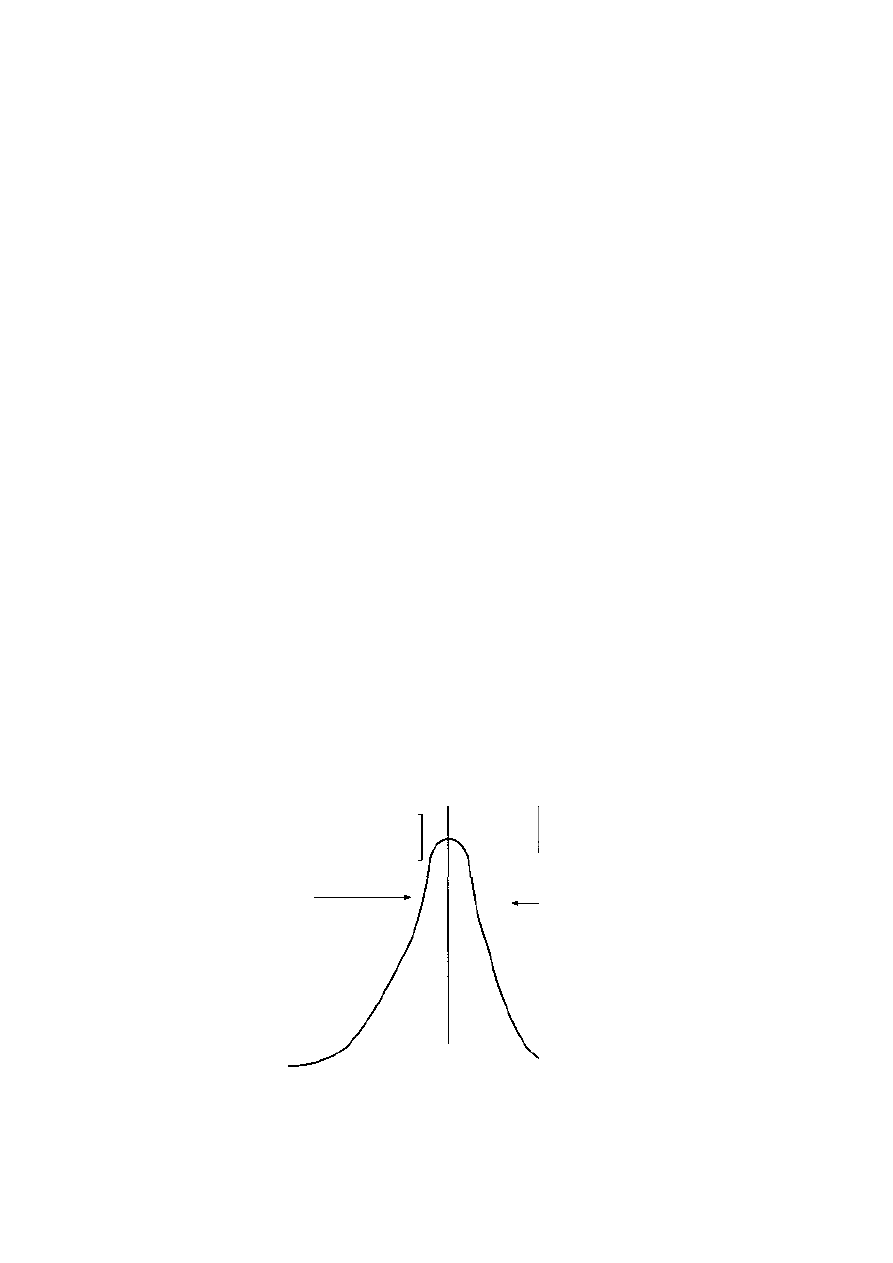
tion, the ratio of males to females is about 1.2:1 and that because of the higher in
utero mortality of male embryos, the ratio falls to 1.06:1 at birth. It evens out at
1:1 at age 15-20. What we are looking for of course is an ultimate evolutionary
argument that explains the adaptive significance of the proximate mechanism. The
argument that is now widely accepted was first provided by Fisher in his The
Genetical Theory of Natural Selection (1930). Fisher's reasoning can be expressed
MATING BEHAVIOUR: FROM SYSTEMS TO STRATEGIES
1 1 7
verbally in terms of negative feedback. First we must rid ourselves of the species-
level thinking that lies behind the view that species would better off with fewer
males. Species might be better off, but selection cannot operate on species.
Selection acts on genes carried by individuals, and what might seem wasteful at a
group level might be eminently sensible at an individual level.
Consider the fate of a mutant gene that appeared and caused an imbalance of
the sex ratio in favour of females. This could take the form of a gene influencing
the probability of fertilisation or survival of the XY zygote in a positive way. Or a
gene that influenced the number of X and Y gametes produced by the male. Let us
further suppose that, for some reason, this gene gained a foothold and shifted the
ratio of males to females to 1:2. Consider now the position of parents making a
'decision' (in the sense of the selection of possibilities over evolutionary time) of
what sex of offspring to produce. In terms of the number of grandchildren, sons
are more profitable than daughters since, in relative terms, a son will on average
fertilise two females every time a daughter is fertilised once. More grandchildren
will be produced down the male line than down the female line. It therefore pays
to produce sons rather than daughters. In genetic terms, the arrival of a gene that
now shifts the sex ratio of offspring in favour of males will flourish.
The argument of course also works the other way round. In a population
dominated by a larger number of males, it is more productive of grandchildren to
produce a female since she will almost certainly bear offspring whereas a male
(given that there is already a surplus) may not. We can picture all this in terms of
two negative feedback pressures tending to stabilise the ratio at about 1:1
(Figure 4.9).
Pays to produce
males
0.8
1.0
1.2
Ratio of males to females
Figure 4.9
Pressures serving to stabilise the sex ratio
Pays to produce
females
0)
=3
0)

1 1 8
EVOLUTION AND HUMAN BEHAVIOUR
The logic of the argument also works for polygamous mating. Suppose only
one male in ten is successful and fertilises ten females. It still pays would-be
parents to produce an equal number of males and females even though nine out
of ten males may never produce offspring because the one male in ten that is
successful will leave many offspring and the gamble is worth it. This one
successful male will have ten times the fertility of each female.
Fisher's argument has logic in its favour, but what of empirical confirmation?
Interesting support for Fisher's theory has come from the work of Conover
et al (1990) on a species offish called the silverside {Menidia menidia). The
silverside is a small fish common in the Atlantic that has its sex partly determined
by the temperature of the water at birth. A low temperature yields females and a
high temperature males. This mechanism in itself probably has adaptive signifi-
cance. A low temperature indicates that it is early in the season, and it is known
that an increase in size boosts the reproductive performance of females more
than males. Parents should prefer females to males early in the season since this
gives the opportunity for growth to increase fertility. Conover ct al kept batches
of fish in tanks at various constant temperatures. At first, the sex ratio drifted
away from 1:1 in the way expected from the temperature effects, but after a few
generations it returned to 1:1 in a way expected from the negative feedback
effects of Fisher's argument.
4.5.3 Testing and extending Fisher's argument
Closer inspection shows that Fisher's reasoning predicts a 1:1 ratio in the
following conditions:
1. The two sexes are equally costly to produce
2. Both sexes benefit or suffer equally from environmental variations.
There are other conditions (such as the requirement that mating is between non-
relatives and the assumption that a gene cannot alter its own probability of
transmission to offspring), which are of less relevance to evolutionary psychology,
that we will not consider here (see Maynard Smith, 1989). Instead we will
explore the two conditions listed above.
Costs of sons and daughters
If sons and daughters are unequal in their production cost, Fisher's line of
reasoning predicts that the sex ratio will be biased in favour of the cheaper sex.
The argument has been placed in a rigorous mathematical form but can also be
expressed verbally (Maynard Smith, 1989). By 'cost' we mean the extent to
which the production and care of an offspring reduces the parents' 'residual
reproductive value' (Clutton-Brock et al, 1991). Imagine a female about to
produce sons and daughters in a population in which there are an equal number
of males and females. Suppose sons are twice as costly as daughters. Within the
1:1 sex ratio prevailing, both sons and daughters face the prospect of equal
reproductive success, but it can be seen that a mother could have produced more
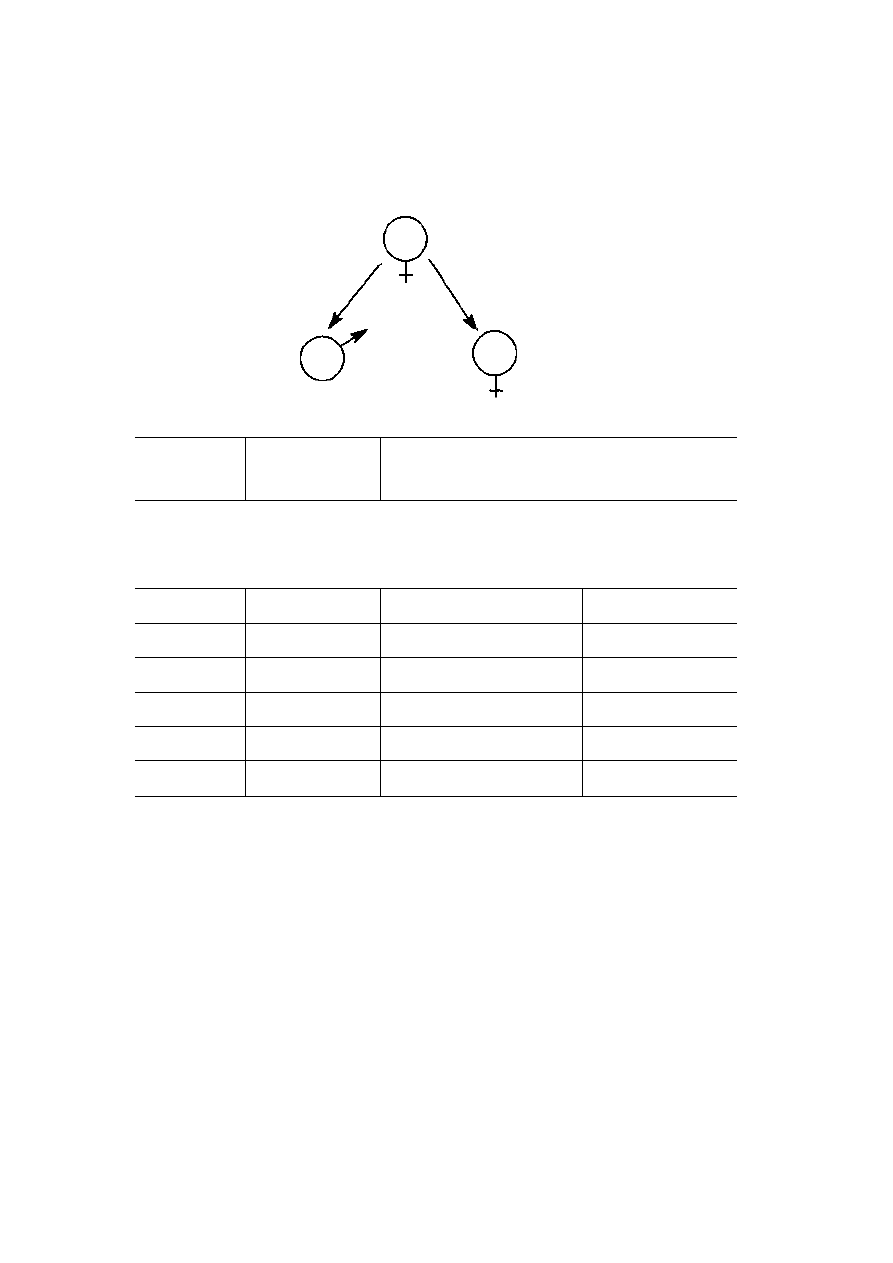
MATING BEHAVIOUR". FROM SYSTEMS TO STRATEGIES
1 1 9
BOX 4.2
Illustration of a hypothetical distribution of sex ratio when
sons and daughters carry unequal costs
Let total lifetime reproductive
effort = 8 units
Cost per
offspring
Sons
2
Daughters
1
Possible balance of offspring
Sons
0
1
2
3
4
Daughters
8
6
4
2
0
Total effort
8
8
8 *
8
8
The evolutionary stable strategy occurs when m = kf
* In this case; m= 0.5 f; that is, 2 sons and 4 daughters
total offspring and hence more grandchildren if she reduced the number of sons.
Natural selection will thus favour a reduction in the output of sons until the extra
cost of producing a son is balanced by the benefits arising from the fact that, as
males become rare, they bring higher rewards from mating (Box 4.2). Eventually
m = &/where:
m= number of males
/ = number of females
k = ratio of costs of females to costs of males

1 2 0
EVOLUTION AND HUMAN BEHAVIOUR
This 'extended Fisherian principle' could explain why the human sex ratio of
males to females at birth is about 1.06:1 with negligible cross-cultural variation.
Statistics show that male mortality is higher in the first few years after birth and
before the end of the period of parental care, which implies that boys are cheaper
to produce than girls (since, if they die earlier, boys need overall less care). This is
compensated for by biasing the sex ratio in favour of males so that the overall
total investment in boys and girls becomes the same.
Effect of environmental variations on the sexes: conditional sex
expression and the Trivers-Willard hypothesis
Fisher's theory assumed that environmental effects (biotic and abiotic) acted
equally on the phenotypes of males and females. In 1973, Trivers and Willard
explored the consequences of questioning this assumption. Let us suppose that,
in a population of mammals, females vary markedly in their condition and that a
female in good condition will produce large, healthy young and females in poor
condition, weaker sons. In most mammalian groups, since males compete for
females, largeness of size carries more of an advantage for males than for females.
In terms of increasing her number of grandchildren, our well-fed female should
bias her offspring in favour of sons. This in essence is the Trivers-Willard
hypothesis: females in good condition should favour sons, females in poor
condition should (since the effect of poor condition has a smaller effect on the
reproductive prospects of females) favour daughters.
4.5A Empirical tests of the Trivers-Willard hypothesis
Many biologists and anthropologists have looked assiduously for evidence of
conditional sex expression. One problem to be faced is that other factors affect
the sex ratio at birth, for example the unequal cost of sons and daughters already
considered, these factors often being difficult to disentangle.
The Venezuelan opossum (Didelphis marsupiafis)
This creature is a large rodent-like marsupial that lives in burrows in central
Venezuela. Austad and Sunquist (1986) trapped and marked 40 virgin female
opossums. Twenty were given extra nourishment (in the form of sardines left
outside their burrows) while the other 20 were left to forage as normal. Every
month, the animals were trapped and the sex of the babies in the pouches
determined. Didelphis marsupialis is a polygynous species, and size in males
Table 4-5
Sex ratio manipulation in the common
opossum (after Austad and Sunquist, 1986)
Number of mothers
Number of babies
Ratio of males to females
Control group
20
256
1:1
Well-nourished group
20
270
1.4:1

MATING BEHAVIOUR: FROM SYSTEMS TO STRATEGIES
1 2 1
carries an advantage in securing a harem. A summary of the results in shown in
Table 4.5. The results are in keeping with the Trivers-Willard hypothesis.
Red deer
In a long-term study on the population of red deer on the Isle of Rhum, Clutton-
Brock et al. (1986) observed the effect of the dominance rank of female red deer
on the reproductive success of their offspring. Dominant mothers in the group
tend to have better body condition, live longer and breed more successfully than
their subordinates.
Because of polygyny, male offspring stand to benefit more from sturdy and well-
adapted mothers than do females. It was also found that subordinate hinds were
less likely to survive and breed the next season if they bore sons; in other words,
sons cost more to produce than daughters. Both these facts, coupled with the
Trivers-Willard hypothesis, lead to a prediction that subordinate females should
prefer daughters and dominant females sons. Such predictions were supported.
Sex ratio differences within humans and other primates
Some primate species, such as spider monkeys (Ateles paniscus), show a sex ratio
effect similar to that of red deer but for different ecological reasons. Unlike most
monkeys, female spider monkeys leave their natal groups on reaching sexual
maturity and males remain at home to breed. High-ranking mothers of A.
paniscus are then in a position to assist the status of their sons and hence to
improve their reproductive prospects. As expected from the predictions of the
Trivers-Willard hypothesis, there is found to be a bias towards male offspring in
high-status mothers and towards female offspring in low-status mothers
(Symington, 1987).
Numerous studies have shown that the human sex ratio is open to various
influences, but most of these studies raise more questions than they provide
answers. One such is the 'returning soldier effect': men returning from wars are
more likely to produce sons than daughters. One easily refuted explanation of this
is that it is to replace the missing men. Such a strategy would not make much
genetic sense since the new children will mate with their contemporaries rather
than with war widows or women of the fighting generation.
As a broad and perhaps tentative generalisation, we could classify the spectrum
of human societies as 'female exogamous patriarchies' in that females more often
than males leave the home to marry, and sons inherit their father's (or sometimes
mother's) status more so than daughters. On this basis, we would predict that
high-status men and women should bias their offspring in favour of males. The
question, which remains largely unresolved, is whether or not they do. Mueller
(1993) has provided evidence suggesting that high-status males tend to father
more sons than daughters (Table 4.6). The mechanism by which this effect is
achieved is unclear. One interesting possibility is that a gonadotrophic hormone
in the mother can increase the proportion of girls, and testosterone in fathers the
proportion of boys. If social rank has a phenotypic effect on hormone produc-
tion, here at least is a mechanism for sex determination. Other proximate

1 2 2
EVOLUTION AND HUMAN BEHAVIOUR
Table 4.6
Sex ratios of the children of high-status
males (data from Mueller, 1993)
Sample
Source
Sons
Daughters Ratio of
Expected
Significance
population
sons to
average
daughters
US elite
1S60-1930
1014
males
German
elite
1830-1939
1757
males
British
industrialists
1789-1925
1179
males
American
Who's Who
German
Who's Who
Jeremy, D. J.
(1984-1986)
Dictionary of
Business
Biography
1180
1473
1789
1064
1294
1522
1.109
1.138
1.1754
1.06
1.0512
1.06
P< 0.005
P< 0.001
P<0.001
mechanisms could include a differential mobility or survival of the X and Y sperm,
or a differential mortality of male and female embryos. Daniela Sieff (1990)
provides an excellent review of biased sex ratios in human populations.
S U M M A R Y mmmmmmmmmm
x Sexual reproduction carries costs and benefits for individual organisms. The
formidable cost of sex is probably offset by the genetic variation conferred on
offspring: genes for sex may find themselves in new winning combinations. Such
variation is invaluable in enabling organisms to compete with others.
At a superficial level, the mating behaviour of animals can be described in terms
of species-characteristic mating systems. A deeper understanding is gained,
however, by looking at the strategies pursued by individuals as they strive to
maximise their reproductive success.
: Such strategies are influenced by a range of factors, for example dispositions
inherited from distant ancestors (phylogenetic heritage), ecological conditions
and the behaviour and distribution of the opposite sex. In many cases, mating
should be seen as the outcome of competition between the two sexes as they
pursue different fitness-maximising strategies.
$' Even where there is to be found considerable variance in the reproductive
success between males and females, the sex ratio remains remarkably close to
1:1. The best ultimate explanation of this so far is that of Fisher, who suggested

MATING BEHAVIOUR: FROM SYSTEMS TO STRATEGIES
1 2 3
that natural selection gives rise to stabilising feedback pressures tending to
maintain unity. Departures from a 1:1 ratio are interesting in themselves and
may have adaptive significance.
KEY WORDS
Anisogamy • Asexual reproduction • Clone • Conspecifics
Evolutionary stable strategy • Game theory • Gamete
Isogamy • Lek • Lineage a Major histocompatability complex
Parthenogenesis • Polygamy a Sex ratio • Sex rote reversal
Trivers-Willard hypothesis • Zygote
FURTHER READING
Alcock, J. (1998) Animal Behaviour: An Evolutionary Approach. Sunderland, MA,
Sinauer Associates.
A good general book on evolution and animal behaviour. Contains only one short
chapter on humans, but see Chapters 10,12 and 13 for mating theories.
Rasa, A. E., Vogel, C. and Voland, E. (1989) The Sociobiology of Sexual and
Reproductive Strategies. London, Chapman & Hall.
A useful series of case studies on humans and other animals.
Short, R. V. and Balaban, E. (1994) The Differences Between the Sexes. Cambridge,
Cambridge University Press.
A valuable series of specialist chapters by experts. Covers humans and non-
humans.

Sexual Selection
The senses of man and of the lower animals seem to
be so constituted that brilliant colours and certain
forms, as well as harmonious and rythmical sounds,
give pleasure and are called beautiful; but why this
should be so we know not
(Darwin, 1871)
This chapter examines the selective force that operates on males and females as a
result of the phenomenon of sexual reproduction and its outcome in shaping the
behaviour and morphology of animals. The selective force is a consequence of the
fact that a sexually reproducing animal has to surmount a number of hurdles
before it can be confident that its gamete has fused with another. It must find a
mate, make a judgement on its suitability as a prospective partner and be judged
in turn. Once copulation has taken place, competition between males is not
necessarily over: the reproductive tract of the female may carry sperm from other
males who have also reached this far. Competition now shifts to the level of sperm
itself. Sperm competes against sperm in the struggle to fertilise the egg. Even
here, the female is no passive recipient and may herself exert some choice over the
sperm she wants to retain.
In this chapter, we will show how all these hurdles have left their mark on the
physical and behavioural characteristics of animals. Features such as size,
behavioural tactics, colouration, the possession of appendages for fighting and the
number and type of sperm produced by males, have all been moulded by the force
of sexual selection. The theoretical principles established in this and the preceding
chapter are then applied to humans in Chapters 8 and 9.
5.1 Finding a mate
5.1.1 Natural and sexual selection
Natural and sexual selection form the twin pillars of Darwin's adajptationist
paradigm. We should be wary, however, of overstating the distinction between
these two forms of selection: whether you survive to reproduce because you can
run fast to avoid predators, or because you are successful in attracting mates, the
124

SEXUAL SELECTION
1 2 5
same principle of the differential survival of genes is in operation. Indeed, some
features that help in avoiding predators, such as body size, may also be of
assistance in securing a mate. One way to view the distinction is shown in Box 5.1.
r
1
BOX 5 . 1
Natural and sexual selection as components of total selection
Selection: The differential survival of genes
Natural selection: Traits favoured by non-sexual aspects of survival, for
example the avoidance of predators and metabolic efficiency
Natural and sexual selection: Traits favoured by natural and sexual
selection, for example size, pathogen resistance, symmetry and motor co-
ordination
Sexual selection: Traits favoured by sexual selection (competing for
mates) but disfavoured by natural selection, for example bright colours and
courting displays.
5.1.2
Inter' and Intrasexual selection
As a rough guide, the degree of choosiness that an individual displays in
selecting a partner is related to the degree of commitment and investment that is
made by either party. Male black grouse that provide no paternal care will mate
with anything that resembles a female black grouse, but females, mindful of their
onerous parental duties, are more discriminating. Likewise, male chimpanzees
provide little care for their young and are consequently not particularly discrim-
inating in their choice of mate - as long as the female has that irresistible pink
swelling announcing oestrus. A male albatross, in contrast, will mate for life and
is consequently very choosy about his choice of partner. Among humans, both
males and females have a highly developed sense of male and female beauty, and
this aesthetic sensibility is similarly consistent with a high degree of maternal and
paternal investment. The more investment that an individual makes, the more
important it becomes to choose its mate carefully. All this decision-making
results in a selective force, complementary to natural selection, that is known as
sexual selection.
We should really distinguish between two types of sexual selection. For reasons
already given (see Chapter 4), the sex ratio usually remains close to 1:1, so where
conditions favour polygyny, males must compete with other males. This leads to
intrasexual selection (intra = within). Intrasexual competition can take place
prior to mating or after copulation has taken place. On the other hand, a female
investing heavily in her offspring or capable of raising only a few offspring in a
season or a lifetime needs to make sure that she has made the right choice. There

1 2 6
EVOLUTION AND HUMAN BEHAVIOUR
will probably be no shortage of males, but the implications of a wrong choice for
the female are graver than for the male, who will be seeking other partners
anyway. Females in these conditions can afford to be choosy. This leads to
intersexual selection (inter = between) (Figure 5.1). The next section examines
the intrasexual selection that results from competition before copulation.
Intersexual selection
Intrasexual
selection
Intrasexual
selection
Intersexual selection
(
)
Figure 5 - 1
Inter- and Intrasexual selection
5.2 Consequences of intrasexual selection
5.2.1 Sexual dimorphism: size end weaponry
Fighting between males over access to females is a sight so common that Darwin
called it the 'law of battle'. Such contests are often spectacular affairs and provide
good footage for the makers of natural history films. Darwin argued that
intrasexual selection was bound to favour the evolution of a variety of special
adaptations, such as weapons, defensive organs, sexual differences in size and
shape and a whole range of subtle devices to threaten or deter rivals. Some of
these structures will be expensive for their possessors and may reduce their
ecological (as opposed to sexual) viability.
Such intrasexual contests will lead to arms races since mating success is a
product of relative rather than absolute size. It could be imagined that as the
escalation of body size or weaponry proceeded through each generation, so
natural selection would increase the mortality of males and as a result adult
males could begin to become rare. It has even been suggested that the trend
towards larger size among some ancient mammals may have led to their extinc-
tion (Maynard Smith and Brown, 1986). The whole process of size escalation
dampened by natural selection has been modelled on a number of occasions
(see, for example, Parker, 1983), the most common result being that, at stable
equilibrium, male traits are distributed polymorphically about a mean that is
shifted from the ecological optimum. In short, sex has led males to grow too
large, and burdened them with appendages that are too demanding for their
own ecological good.
The importance of size is illustrated by a number of seal species. During the
breeding season, bull elephant seals (Mirounga angustirostris) rush towards each
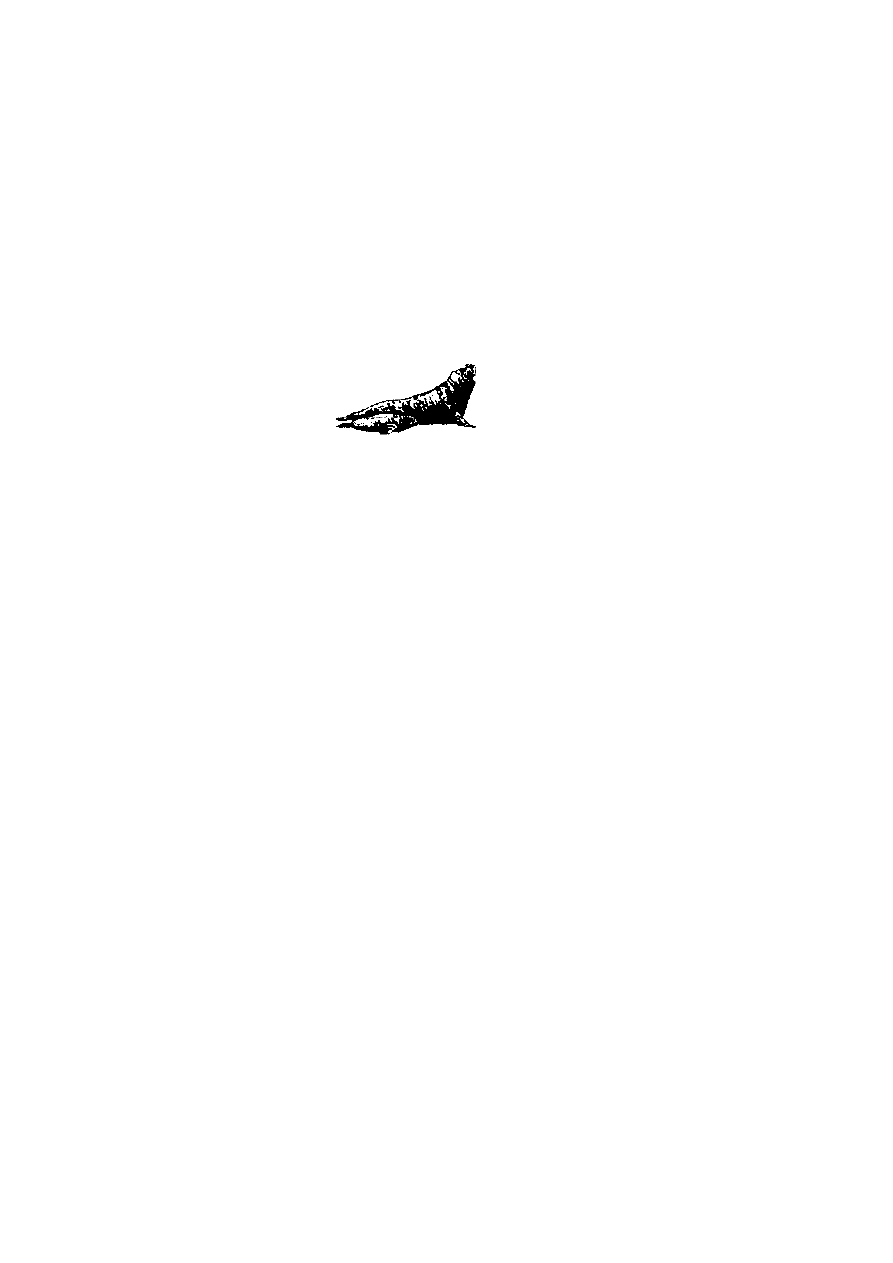
SEXUAL SELECTION
1 2 7
other and engage in a contest of head-butting. Such fighting has led to a strong
selection pressure in favour of size, and male seals are consequently several times
larger than females. Elephant seals are in fact among the most sexually dimorphic
of all animals. In the northern elephant seal (M. angustirostus), a typical male is
about three times heavier than a typical female. The mating system is described as
female defence polygyny and, to defend a sizeable group of females, a male needs
to be large. Competition between males is intense and many males die before
reaching adulthood without ever having mated. The variance in the reproductive
success of males is correspondingly large (Figure 5.2).
1 6 -
12
8 -
10
12
14
_cp
CD
E
6 -
2 -
6
8
10
Age (years)
12
14
Figure 5.2
Mean reproductive success (measured by number of
pups weaned) of male and female elephant seals (Mirounga angustirostris)
(after Le Boeuf and Reiter, 1988, in Andersson, 1994)
In male-male contests, it may also benefit males to possess fighting weapons.
The walrus, elephant and hippopotamus all carry conspicuous tusks. Of the 40
species of deer left today, 36 develop antlers, and in 35 of these species antlers are
an exclusively male characteristic. In the case of the European red deer (Cervus
elaphus)^ the body weight of males is about one and a half times that of the
females, and the males carry large antlers. Males battle with their antlers during
the rutting season, but during the rest of the year they are tolerant of each other
and often move about in groups. It seems probable that antlers also serve as
symbols of dominance (Lincoln, 1972).
Some of the most spectacular examples of such weapons are found in beetles
such as the stag beetle. The males have large horn-like jaws, absent in the females,
which are used only to fight other males. Such differences between males and
females are referred to as sexual dimorphism. As one would expect, the greater

1 2 8
EVOLUTION AND HUMAN BEHAVIOUR
the prize in intramale contests, the greater the degree of sexual dimorphism.
Figure 5.3 shows how the degree of dimorphism in body size relates to the size of
a harem for seals and ungulates.
(a)
11
7
H
Ungulates N = 17
P = 0.018
•96
1.00
1.04
1.08
Male body length/female body length
1.12
(b)
q
60
50
40
30
20
10
5
Pinnipeds N = 13
P < 0.0002
.90
1.00 1.10 1.20 1.30 1.40 1.50 1.60
Male body length/female body length
1.70
Each data point represents a species. Harem size estimated from
females per breeding male or number of copulations per male
Figure 5-3
Sexual dimorphism in relation to harem size for
(a) ungulates (deer and antelope) and (b) pinnipeds (seals)
(Alexander et a/., 1979)
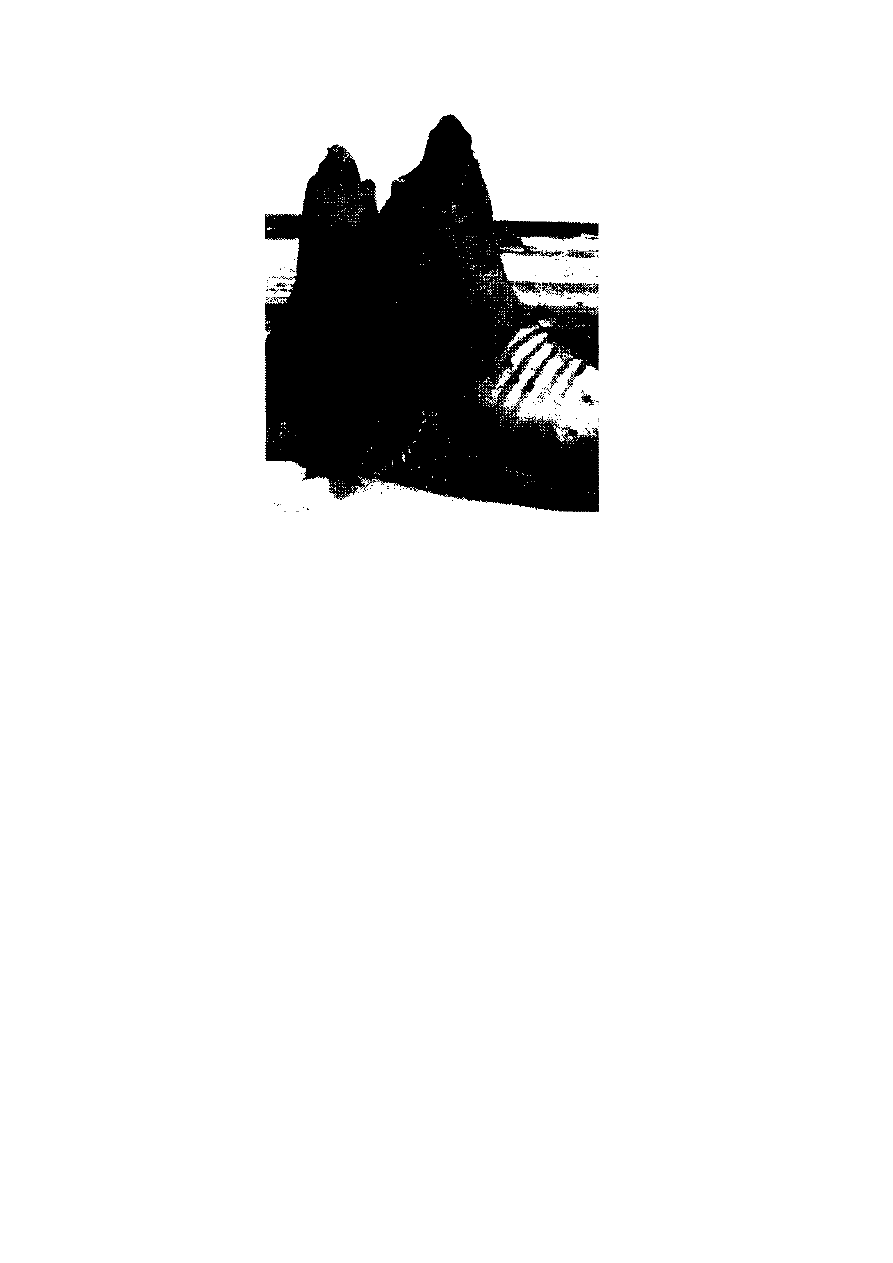
SEXUAL SELECTION
1 2 9
Figure 5.4
Intrasexual selection in action:
male southern elephant seals (Mirounga leonina) fighting
The victor in this contest will reap the genetic benefits of fertilising a harem of
several dozen females. The value of the prize ensures that such contests are fierce
and that males are about seven times heavier than females
5.2.2
Variance in reproductive success - Bateman's principle
Bateman (1948) first quantitatively documented the differential variance in
reproductive success between male and female animals (as illustrated in Figure
5.2 above for elephant seals) in his classic work on Drosophila. The greater
variation in the reproductive success of males compared with females has
become known as Bateman's principle.
Bateman's work was neglected until it was revived in 1971 by Trivers, then a
graduate student, in a paper presented at a symposium commemorating the
centenary of Darwin's 1871 work on sexual selection. Trivers illustrated
Bateman's principle by his own work on the Jamaican lizard (Anolisyarmani).
Trivers found that the variance in reproductive success was larger for males than
females and that large males tended to have more reproductive success (Trivers,
1972). The key concept to note here is that a difference in the variance in
reproductive success between males and females indicates the operation of
intrasexual competition. If male variance is greater, this tends to suggest that
the mating system is averaging out at polygyny. These signs and principles are
important when we come to examine human mating behaviour in later chapters.
It would be wrong to conclude that males are always larger than females. A
useful test of the principle that large body size is favoured in the sex that
competes for the other is to look at cases in which the usual sex roles are reversed.
If we find species where males invest more than females in the production of
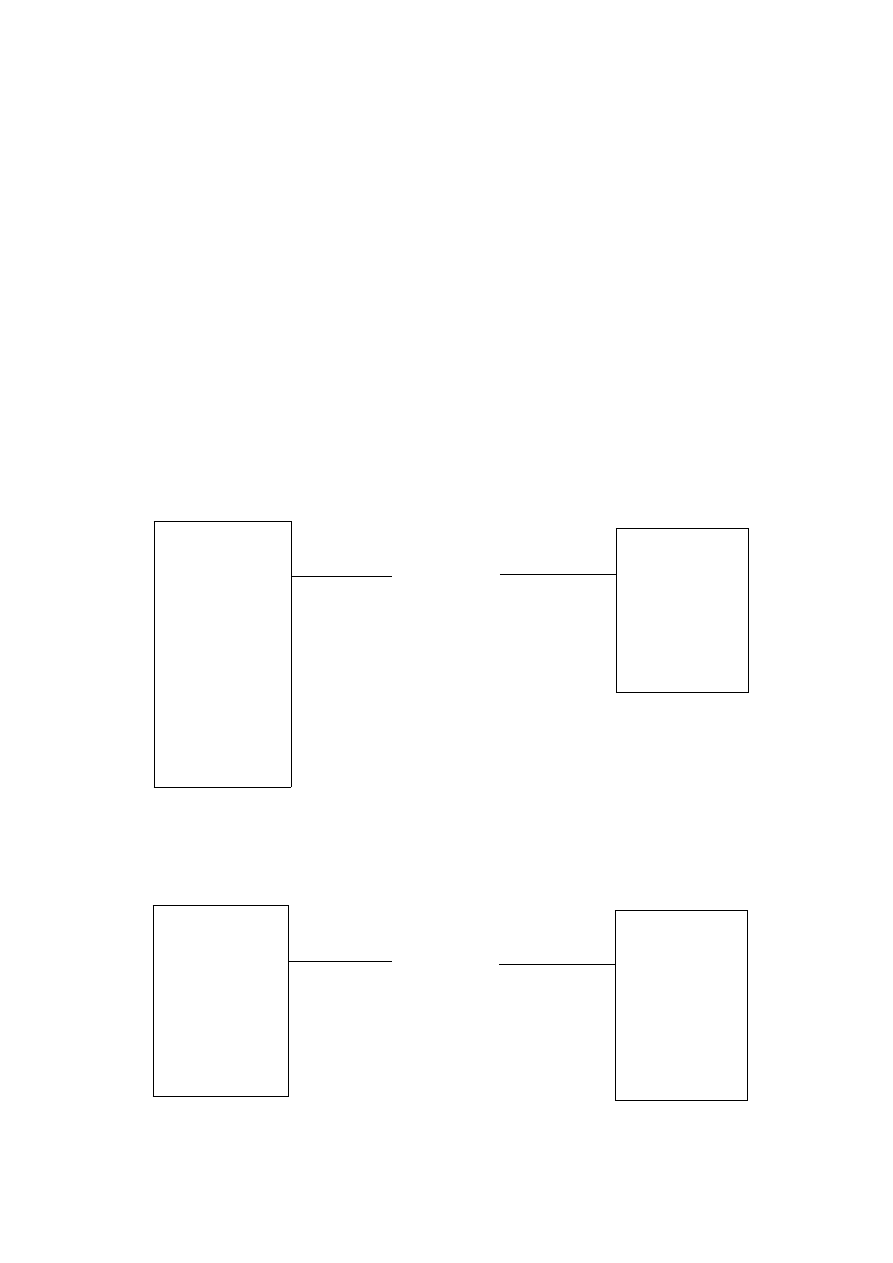
1 3 0
EVOLUTION AND HUMAN BEHAVIOUR
offspring, we would predict that female reproductive success should vary more
than that of males, that females should be larger than males and that males should
be careful in their choice of mating partner. A number of species are known that
bear out these predictions fairly well. In the common British moorhen (GMinula
chloropus), for example, males perform about 72 per cent of the incubation and
lose about 10 per cent of their body weight as a consequence. Petrie (1983) has
observed that competition for mates is more intense among females than males
and that heavier females win fights more often. Females are larger than males and
occasionally mate polyandrously.
Intrasexual competition is not the only cause of sexual dimorphism. Darwin
suggested in 1871 that the larger size of some female animals could be a
consequence of the fact that large size favours increased egg production. In most
BOX 5.2
Selective pressures on body size for males and females
Higher fecundity:
males may
prefer large
females
Dominance in
contests over
males (sex role-
reversed
species)
Defence of
offspring (good
mothering)
Earlier
maturation
Shorter
generation time
Resources can
be diverted to
offspring
Female size
Dominance in
strength
contests
Better sexual
endurance
Females may
prefer large
males
•
^
*
Better
manoeuvrability
Earlier
maturation and
hence breeding
Shorter
generation time
Male size

SEXUAL SELECTION
1 3 1
mammalian species, males are larger than females, and intrasexual competition
seems able to account for this, but there are some species, for example rabbits,
hares and two tribes of small antelope (Cephalophini and Neotrajjini), in which
females are the larger sex. In these cases, natural selection seems to override
sexual selection. Ralls' explanation is the 'big mother hypothesis' that large
mothers can produce larger babies with a better chance of survival. A larger
mother can also provide better maternal care, such as defending and carrying the
young (Ralls, 1976). A summary of the selective factors that influence body size
in males and females is shown in Box 5.2.
Another physiological characteristic that can assist males is 'sexual enthusiasm'
or the capacity to be easily aroused. In many polygynous species, males have a low
threshold for sexual arousal. Some species of frog will, in the mating season, cling
to anything that resembles a female frog, and males will often attempt to mate
with the wrong species and even the wrong sex. Another feature of the sex drive
of the male is the 'Coolidge effect', so named after the United States' President
Coolidge. The story goes that, while visiting a farm, President and Mrs Coolidge
were shown a yard containing many hens and only one cockerel. When Mrs
Coolidge asked why only one cockerel was necessary, she was told that he could
copulate many times each day. 'Please tell that to the President', she said. When
the President was informed, he asked whether the cockerel copulated with the
same hen and was told no; his reply was 'Tell that to Mrs Coolidge'
(Goodenough et #/., 1993). The Coolidge effect has been observed in many
species. In a study on Norway rats (Rattus norvegicus), Fisher (1962) found that
whereas a male rat with a single female reached sexual satiation after about 1.5
hours, some males could be kept sexually active for up to 8 hours by the
introduction of novel females at appropriate intervals.
5.3 Parental investment, reproductive rates and operational
sex ratios
5.3.1
Problems with the concept of parental Investment
When Trivers advanced his concept of parental investment in 1972, it seemed to
promise, and indeed to a degree did deliver, a coherent and plausible way of
examining the relationship between parental investment, sexual selection and
mating behaviour. The sex that invests least will compete over the sex that invests
most, while the sex that invests most will have more to lose by a poor match and
will thus be more exacting in its choice of partner.
Trivers defined parental investment as:
any investment by the parent in an individual offspring that increases the
offspring's chance of surviving (and hence reproductive success) at the cost of the
parent's ability to invest in other offspring. (Trivers, 1972, p. 139)
Using this definition, Trivers concluded that the optimum number of offspring
for each parent would be different. In the case of many mammals, a low-investing
male will have the potential to sire more offspring than a single female could
produce, and a male will therefore increase his reproductive success by increasing

1 3 2
EVOLUTION AND HUMAN BEHAVIOUR
the number of his copulations. It has proved very difficult, however, to measure
such terms as increase in 'offspring's chance of surviving' and 'cost to parents', so
deciding which sex invests the most is not always easy.
In considering the expenditure of time and energy that an organism makes in
mating, it is helpful to divide reproductive effort into mating effort and parenting
effort such that:
Total reproductive effort = Mating effort + Parenting effort
We have already noted that, as a broad generalisation for mammals, we could say
that mating and parenting efforts are unequally distributed across each sex.
Although this distinction is useful, difficulties still arise in deciding how to allocate
particular activities to the two categories. A nuptial gift from a male to a female or
the effort a male makes in guarding a valuable resource could be thought of as
mating effort since it enables him to attract females, or as parental effort in that his
offspring may benefit from the resources provided. One concept that may help to
circumvent these difficulties is that of potential reproductive rates.
5.3.2 Potential reproductive rates: humans and other animals
It can be misleading to focus on anisogamy as a clear sign of an unequal invest-
ment by males and females. It is true that males produce sperm in vaster numbers
than females produce ova, and that sperm are minute compared with eggs, but we
must remember that males deliver millions of sperm, together with seminal fluid,
in the hope of reaching one egg. In terms of energy investment, that of the
ejaculate of the male probably exceeds that needed to produce one egg by the
female. In mammals, it is not the size of the egg but the involvement in gestation
and nurturing that places limitations on the reproductive opportunities of females.
On this theme, Clutton-Brock and Vincent (1991) have suggested that a
fruitful way of understanding mating behaviour is to focus on the potential
offspring production rate of males and females rather than trying to measure
investment per se. As a guide to understand sexual selection, these authors
suggest that it is important to identify the sex that is acting as a 'reproductive
bottleneck' for the other. This approach works particularly well for some species
of frog, bird and fish in which males are responsible for parental care. In some of
these species, brighdy coloured large females compete for smaller, duller males
while in others, large, brighter males compete for choosy females - even though
the paternal care of offspring (and thus high male parental investment) is
common to both sets. Table 5.1 shows two cases in which, even though males
provide parental care, it is the reproductive rate rather than the amount of
parental investment that predicts selection.
In the same study, data on the potential reproductive rates of males and
females from 29 species in which high levels of paternal care are found were
extracted. The results are summarised in Table 5.2. The general conclusion is that
the sex with the highest potential reproductive rate competes for that with the
least and that this is therefore a better predictor of competition than is investment
as such.

SEXUAL SELECTION
1 3 3
Table 5 . 1
Two examples of sexual selection in relation to the potential
reproductive rate of the two sexes (data from Clutton-Brock and Vincent, 1991)
Species
Behaviour
Ratio of
Dimorphism/
female to male
sex-specific
reproductive rate
behaviour
Three-spined
Males can guard
<1
Males brightly
stickleback
up to ten clutches
coloured
(Gasterosteus
of eggs at any one
aculeatus)
time on their own
territory
Females can lay only
one clutch every
3-5 days
Pipe-fish
Males carry
>1
Females
(Nerophis
fertilised eggs
compete
ophidion)
Females can lay
for males
more eggs in a
season than males
can carry
Humans are a special case in point in that the range of parental investment
possible from a male ranges from near zero, if the male deserts, to equal or more
than that of the female. Given this wide range, it is difficult to measure the invest-
ment that human males make. One could turn to hunter-gatherer tribes, but
again there is cross-cultural diversity as well as variation within a culture. Another
approach might be to look at the potential reproductive rate. The record often
claimed for the largest number of children from one parent is 888 for a man and
69 for a woman. The father was Ismail the Bloodthirsty (1672-1727), an
Emperor of Morocco, the mother a Russian lady who experienced 27 pregnancies
with a high number of twins and triplets. It is a safe bet that you are more
astonished by the female record than the male.
Table 5.2
Intersexual competition for mates in cases of high paternal
investment in relation to reproductive rates out of total of 29 species
examined (after Clutton-Brock and Vincent, 1991)
Ratio of female to male
reproductive rate
< 1
> 1
Competition for mates
more Intense In males
Fish 10 species
Frogs 3 species
Fish 1 species
Birds 1 species
Competition for mates
more Intense In females
0 species
Fish 3 species
Birds 11 species
The figure of 888 looks extreme compared with most cases of fatherhood but
would prima facie seem to be a practical possibility. Ismail died at the age of 55

1 3 4
EVOLUTION AND HUMAN BEHAVIOUR
and could have enjoyed a period of fertility of 40 years. Over this time, he could
have had sex with his concubines once or twice daily. The record claimed for
Ismail has, however, recently been questioned by Dorothy Einon of University
College London (Einon, 1998). She analyses the mathematical probability of
conception by members of his harem. The problem for a breeding male with
access to a large number of females is, first, that he is uncertain when they are
ovulating. The fact that ovulation takes place 14-18 days before the next
menstruation was not known until 1920. Copulating with a woman once every
day over her ovarian cycle would only give a probability of hitting the right day of
about 10 per cent, which could be raised to 15 per cent if days of menstruation
were avoided. Second, only half of all menstrual cycles are fertile. Further
reductions then have to be made for probabilities of conception, implantation
and miscarriage. The end result becomes that if Ismail had coitus three times per
week, without interruption caused by illness or exhaustion, he would have
produced a lifetime total of 79 children, and with coitus 14 times per week a total
of 368 children.
It is of course possible that men subconsciously know when ovulation is
taking place and are thus able to target their reproductive efforts better. Even
so, Einon's calculations give us pause to reflect that the male reproductive rate
is not as high at it may seem at first sight. It is reduced of course by the conceal-
ment of ovulation. If Ismail knew exactly when women were ovulating, he
could direct his efforts accordingly. The concealment of ovulation may have
evolved as a tactic by females to elicit more care and attention from males (see
Chapter 8).
It is probably true to say that, in modern Homo sapiens, the limiting factor in
reproduction resides marginally with the female. This would by itself predict
some male versus male competition and sexual selection, and certainly an
increased intensity of these factors in the evolutionary lineage of the hominoids
before ovulation was concealed. We should also note that most men in history
have not been emperors, and the harem that Ismail enjoyed would not have
been a regular feature of our evolutionary past. These issues are examined again
in Chapter 8.
5.3.3 The operational sex ratio
The potential reproductive rate and the operational sex ratio are closely related
concepts. In Chapter 4, it was suggested that the spatial distribution of females
determines the environmental potential for polygyny. Spatially clumped females
could in principle be monopolised by a male who could thereby achieve
polygyny, but such spatial concentration is only useful to the male if the females
are fertile. In this respect, we can think of females as also being temporally
distributed in the sense of their sexual receptivity at any one time. This idea is
contained in the concept of the operational sex ratio:
Operational sex ratio = Fertilisable females
Sexually active males

SEXUAL SELECTION
1 3 5
When this ratio is high, females could be more willing to mate than males and
might engage in competition. If the male pipe-fish, as shown in Table 5.1, can
hold fewer eggs in a season than a female can lay, the operational sex ratio exceeds
1 and is said to be female biased. In these circumstances, females will compete for
males. When the operational sex ratio is low, this situation is reversed and males
will vie with other males for the sexual favours of fewer females.
Of the many factors that can affect the operational sex ratio, food availability
is one of the most important. Studies on the orthopteran katydids or bush
crickets (Tettigonidae) have shown this effect dramatically. Male katydids
transfer sperm in a large nutritious spermatophore during copulation. This
nuptial gift provides an important source of food for the female and affects her
fecundity (Gwynne, 1988). A number of studies have been carried out on these
creatures. The overall effect of food availability on male and female behaviour
across several species of bush cricket is shown in Table 5.3.
Table 5.3
Food supply, operational sex ratios and intraspecific
competition among various species of bush cricket (data from
various sources, reviewed by Andersson, 1994)
Food plentiful
Food scarce
Males
Rapid production of
Production of spermatophores
spermatophores
slow and difficult
Operational sex ratio
Reduces, that is, male
Increases, that is, female
biased
biased
Competition
Reduction in female
Females compete for
competition for males
males
Male investment
Low*
High*
Reproductive bottleneck
Females
Males
*The fact that we can say that male investment is high when food is scarce and the production of
spermatophores is slow stresses the need to define investment carefully. When food is limited, a small
spermatophore produced by a male may represent a high investment of time and energy.
The bush crickets illustrate how food supply, operational sex ratios and sexual
competition are intertwined (Table 5.3). A general model of the way in which
these and other factors may influence the operational sex ratio, and the way this in
turn affects mating competition, is summarised in Figure 5.5. The manner in
which intrasexual competition varies with the operational sex ratio can also be
conjectured along the lines shown in Figure 5.6.
5.3.4 The operational sex ratio and humans
Using the concept of the reproductive bottleneck, it is tempting to say that
females are the limiting resource for male fecundity. After all, a man could
impregnate a different woman every day for a year whereas over this same period
a woman can become pregnant only once. But we need to proceed carefully.
Imagine a male that mates with 56 different women over 56 days and a female
that mates with 56 different men over the same period. The woman is likely to
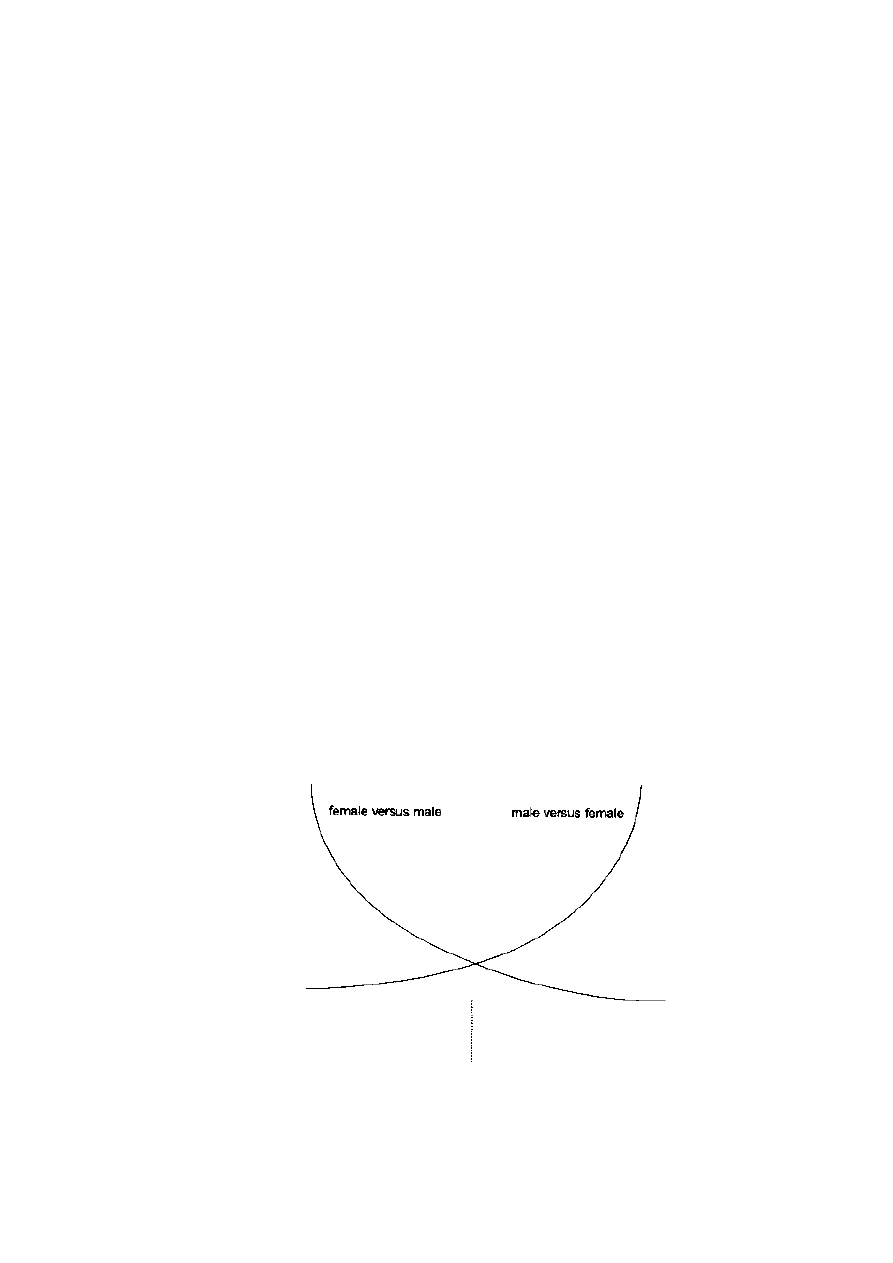
1 3 6
EVOLUTION AND HUMAN BEHAVIOUR
Sexual differences in
potential reproductive rate
Food supply
Age of sexes at maturity
and reproductive longevity
Operational
sex ratio
Mating
competition
Migration and spatial
distribution
Differential mortality
Sexual selection
Figure 5.5
Influences on the operational sex ratio and
the relationship between this and sexual selection
become pregnant and bear one offspring in the same year. Using the reasoning
advanced by Einon earlier, if the male avoids the time of menstruation, he has
about a 15 per cent chance of impregnating a woman during her fertile period.
Only half of the female ovarian cycles will be fertile, some women will be infertile
themselves anyway, and implantation will only take place about 40 per cent of the
time. The number of women a man could expect to make pregnant is one. Over
a year, this could be raised to about 6 (365/56 = 6.5). Women are in one sense a
limiting resource but not to the extreme sometimes claimed. It is, however,
significant that men engage in competitive display tactics and are more likely to
0>
Q.
E
o
3
2
1
0.8
0.6
OSR : females/males
0.4
0.2
o.l
Figure 5.6
Intrasexual competition and the operational sex
ratio (OSR) (adapted from Kvarnemo and Ahnesjo, 1996)

SEXUAL SELECTION
1 3 7
take risks than are women. It is also men who tend to pay for sex - one way of
increasing the supply of the limiting resource.
The operational sex ratio (females to males) for a group of humans with a 1:1
sex ratio will be less than one if we measure it in terms of males or females that are
fertile. There will be more sexually fertile males than females; this arises from the
fact that men experience a longer period of fertility compared with women. It is
counterbalanced to some degree, but not entirely, by the higher mortality rate for
men than women. The picture is, however, complicated if the population is
growing. In these circumstances, the fact that women tend to prefer to marry
slightly older men will mean more younger women than there are slightly older
men available, since the cohort of marriageable men will be smaller than the
number of marriageable women in the expanding cohort below. Guttentag and
Secord (1983) have argued that this can in itself be a contributory factor to the
development of social mores. In the United States from 1965 to the 1970s,
because of the post-war baby boom, there was an oversupply of women, with the
effect of decreasing male-male competition and increasing female-female
competition. This allowed men to pursue their own reproductive preferences,
especially in terms of an increased number of partners, to a greater extent than
women could pursue theirs. These authors suggest that this could be a factor
contributing to the liberal sexual mores of those decades, characterised by a high
divorce rate, a lower level of paternal investment and a relaxed attitude to sex.
They stress that sex ratios by themselves are not a sufficient cause for such social
changes but that they may be part of the equation (Guttentag and Secord, 1983).
A more realistic application of sex ratio thinking may be found in the analysis
of traditional cultures in which social values shift less rapidly. In South America,
there are two indigenous Indian groups with a different sex ratio. The Hiwi tribe
shows a surplus of men while the Ache people have a sex ratio of females to
males of about 1.5 (Hill and Hurtado, 1996). The ecology of the two groups is
otherwise similar, but whereas among the Ache people extramarital affairs are
common and marriages are unstable, marital life is more stable among the Hiwi.
This pattern is what one would expect from the anticipated effect of sex ratio on
mating strategies.
A man who attempts to impregnate several women in the course of a year faces
another problem apart from the concealment of ovulation: other men will
probably want to do the same thing. The reproductive tract of a female could
therefore contain the sperm of more than one male at any one time. This is where
sperm competition begins.
5.4 Post-copulatory intrasexual competition
5.4.1 Sperm competition
It may seem that once copulation has taken place, intrasexual competition is over;
one male must surely have won. The natural world, however, has more surprises
in store. Some females mate with many males and retain sperm in their reproduc-
tive tracts; such sperm compete inside them to fertilise the egg. The concept of
sperm competition illuminates many features of male and female anatomy in
non-human animals. Male insects are particularly adept at neutralising or

1 3 8
EVOLUTION AND HUMAN BEHAVIOUR
displacing sperm already present in the female. The male damselfly (Calopteryx
maculata) has evolved a penis designed both to transfer sperm and, by means of
backward-pointing hairs on the horn of the penis, to remove any sperm already in
the female from a rival male.
We should not, however, think of females as passive in this process of sperm
competition. A female may choose to mate with many males (as is the case with
female chimps) to ensure that the sperm reaching her egg is competitive. The
female may also exercise choice over the sperm once it is inside her (Wirtz, 1997).
Female sand lizards (Lacerta agilis) have been reported to accept sperm from
nearly every male that courts them, including close relatives. Given that mating
between close relatives is likely to reduce genetic fitness, it is a plausible hypoth-
esis that females exert some control over the sperm that they eventually allow to
fertilise their eggs. Olsson et al. (1996) have found support for this. When males
are genetically similar to females, the probability of producing an offspring from
this union is reduced.
Many female insects store sperm that they use to fertilise their eggs at opposi-
tion (egg-laying) as the eggs pass down the female's reproductive tract. It has
been suggested that the function of the female orgasm in humans is to assist the
uptake of sperm towards the cervix (Baker and Bellis, 1995). Thornhill et al.
(1994) carried out a study to show that the bodily symmetry of the male is a
strong predictor of whether or not a female will experience a copulatory orgasm.
Symmetry is thought to be an indicator of genetic fitness and the possession of a
good immune system (Thornhill et al, 1994). The orgasm therefore ensures that
sperm from exciting and desirable males, who are presumably genetically fit and
unlikely to be transmitting a disease, stand a good chance of meeting with the
female's egg. In a sense, the human female is extending her choice beyond
courtship (Baker and Bellis, 1995).
In some ways, all intrasexual competition is a form of sperm competition in
that the winning male is the one which produced the sperm that fertilises the egg.
The term 'sperm competition' is, however, usually reserved for interejaculate
competition, that is, competition between sperm from different males after
ejaculation. Sperm competition also takes place in species in which the eggs are
fertilised outside the female's body, as in many invertebrates, fish and amphibians,
since several males can release their sperm in the vicinity of eggs from the female.
The theory of sperm competition was first developed by Geoffrey Parker, a
biologist at the University of Liverpool, in a classic series of papers (Parker, 1970).
Its importance was first recognised in insects, but the advent of sophisticated
paternity assignment techniques such as DNA fingerprinting has revolutionised the
detection of sperm competition. There is now abundant evidence for the existence
of sperm competition in virtually every animal taxon (Birkhead and Parker, 1997).
5.4.2 Anisogamy and sperm warfare
The theoretical rationale for the production of a large number of small mobile
sperm by males has already been discussed in the context of anisogamy (see
Chapter 4). In this respect, one could argue that the very existence of two sexes is
a result of sperm competition. Anisogamy probably began in conditions of

SEXUAL SELECTION
1 3 9
external fertilisation, and the advantages of small mobile sperm are clear to see.
However, in situations where a single male fertilises an egg internally, we may
question the point of retaining anisogamy. If there are no competitors, the
millions of sperm produced by monogamous mammals are simply wasted. So why
not return to isogamy and have males producing larger gametes, say 50 per cent
of the optimum size for a zygote? The answer is, as pointed out by Parker (1982),
that only a mild degree of sperm competition is required to maintain anisogamy.
Consider cattle. A cow's ovum is typically about 20 000 times larger than a
bull's sperm. If a mutant bull were to appear that reduced the number of sperm
by half but increased their size by a factor of two, the biomass of the fertilised egg
would be increased by 1 in 20 000, or 0.005 per cent - a trivial amount. If this
bull and another now mate with the same cow, and sperm competition takes
place, the chances of the mutant bull (assuming that the larger sperm behave the
same as the smaller ones) are reduced from 50 per cent to 33.3 per cent - a signif-
icant reduction. It follows from this argument that even a mild degree of sperm
competition can maintain anisogamy. It also follows that animals that are anisog-
amous and classified as monogamous have developed monogamy fairly recently in
their evolutionary lineage or else are not 100 per cent monogamous.
The more sperm produced, the greater the chance of one finding an egg: 50
million sperm are twice as effective as 25 million and so on. In situations in which
sperm competition is rife, we would expect males to produce more sperm than
are typically produced when sperm competition is less intense. This could be
expected to apply both within and across species. This prediction has been
supported indirectly between species by measurements on the level of sperm
expenditure as measured by testis size. Species facing intense sperm competition
have larger testes than those in which sperm competition is less pronounced (see
Chapter 8). Measurements of the size of sperm do not, however, fit so neady and
it may be that the ability of larger sperm to swim faster is a confounding variable.
Within a given species, it is at least a theoretical possibility that males could
adjust the number of sperm they ejaculate according to the risk of sperm
competition. Given that it requires energy to produce sperm, it would be in the
interests of any male to reduce the number of sperm introduced into a female
when he suspects the level of competition to be low - as with a socially monoga-
mous partner that he has guarded - and conversely increase the number in the
case of extrapair copulation with an already mated female.
Baker and Bellis at Manchester University provide evidence to support the idea
that the number of sperm in the ejaculate of men is adjusted according to the
probability of sperm competition taking place. In one study, when couples spent
all their time together over a given period, the male was found to ejaculate about
389 x 10
6
sperm during a subsequent sexual act. When the couple only spent 5
per cent of their time together, men typically ejaculated 712 x 10
6
sperm. Baker
and Bellis interpret this as being consistent with the idea that the male increases
the number of sperm in the latter case to compete better against rival sperm in the
case of any infidelity on behalf of the female. Baker and Bellis have been successful
in generating new ideas in an area of research that faces innumerable experimental
and ethical difficulties (Baker and Bellis, 1995). They have also been successful in
disseminating their ideas, helped partly by a prurient media and pardy by the

1 4 0
EVOLUTION AND HUMAN BEHAVIOUR
popularisation of their work in such books as Sperm Wars (Baker, 1996). Some
aspects of their work, especially the sensational and lurid presentation in the latter
work, have caused some concern in academic circles (Birkhead et al, 1997).
In the 'sperm wars', males can adopt various tactics: they can produce sperm in
large number, attempt to displace rival sperm, insert copulatory plugs or produce
sperm that actively seek o u t to destroy rivals. In m o t h s and butterflies (the
Lepidoptera) males produce two types of sperm. O n e type, 'eupyrene' sperm,
carries genetic material and can fertilise eggs. The other type, 'apyrene' sperm,
typically furnishes half the n u m b e r in any ejaculate but is lacking in genetic
material and thus cannot fertilise the female egg. The function of apyrene sperm
is something of a mystery. O n e intriguing hypothesis proposed by Silberglied
et al (1984) is that apyrene sperm play a role in sperm competition. Either they
'seek and destroy' active sperm from other males, or they serve as a cheap 'filler'
that reduces the receptivity of females to further matings. Baker and Bellis (1995)
have developed this into a 'kamikaze sperm hypothesis', claiming that a wide
variety of animals, including humans, produce sperm whose function is to block
or destroy rival sperm.
Copulatory plugs are plugs of a thick, viscous material left by the male in the
reproductive tract of the female. They could be a functionless artefact of insemi-
nation, but it seems much more probable that they either help to seal in the
sperm from the last male to deposit sperm, or serve as 'chastity enforcers' to
reduce the likelihood of successful insemination by a rival male (Voss, 1979). In
the c o m m o n honeybee (Apis mellifera), males produce mating plugs that attempt
to seal off the reproductive tract of the queen to prevent further injections of
sperm from competitors. Interestingly, the female is not as concerned to secure
the sperm from only one male, and in this case the queen still manages to carry
multiple-origin sperm in her body. In the case of deer mice (Peromyscus manicu-
Icttus), experiments by Dewsbury (1988) suggest that the plug serves to retain
the sperm from a male. Perhaps the most determined example of copulatory
plugging occurs when males of the fly Johannseniella nitidia leave behind their
genitalia while the rest of their body is eaten by the female. Baker and Bellis
( 1 9 9 5 ) claim that there is evidence for somewhat less extreme copulatory
plugging in human mating.
L o n g before sperm competition takes place, however, a male has to be
accepted by a female or vice versa. Passing this test of approval has also left its
mark on anatomy and behaviour. It has given rise, of course, to the force of
intersexual selection, and it is to this process that we now turn.
5.5 Intersexual selection
5.5.2 Mechanisms of Intersexual selection
In sexually reproducing species, the outcrossing of genes is the gateway through
which all genes must pass. The fusion of gametes to yield a fertilised zygote
represents a type of genetic rite of passage. Darwin realised that, during all the
preliminaries to this process, when mate choice takes place the preferences of one

SEXUAL SELECTION
1 4 1
sex can exert a selective pressure on the behaviour and physical features of the
other. This is the essence of intersexual selection.
D a r w i n ' s suggestion that female choice could over time bring a b o u t an
extreme change in the appearance of males was poorly received in the patriarchal
climate of Victorian Britain ( C r o n i n , 1 9 9 1 ) . Darwin's insight has, however,
emerged triumphantly since the 1970s and is now the basis of a nourishing school
of research. As n o t e d in Chapter 2, D a r w i n had difficulty in explaining in
adaptionist language why females find certain features attractive. N u m e r o u s
ancillary theories have emerged recendy to address this problem, tending to fall
into two schools: the ' g o o d sense' school and the 'good taste' school.
The good taste school of thought stems largely from the ideas of Fisher, w h o
tackled the problem in the 1930s. Consider a male character such as tail length
that females may find attractive. Fisher argued that a runaway effect would result,
leading to long tails, if some time in the past an arbitrary drift of fashion led a
large number of females in a population to prefer long tails. Once this fashion
t o o k hold, it w o u l d become despotic and self-reinforcing. Any female that
bucked the trend, and mated with a male with a shorter tail, would leave sons
with short tails that were unattractive. Females that succumbed to the fashion
would leave 'sexy sons' with long tails and daughters with the same preference for
long tails. The overall effect is to saddle males with increasingly longer tails, until
the sheer expense of producing them outweighs any benefit in attracting females.
But since attracting females is fundamental, very long tails indeed could be
produced by this process. In this Fisherian view, tail length need serve no other
purpose than a simple fashion accessory to delight the senses of the opposite sex.
The good sense view suggests that an animal is responding t o , and estimating
the quality of the genotype of, a prospective mate through the signals that he or
she sends out prior to mating, or alternatively, that a judgement is made on the
level of resources that a mate is likely to be able to provide. The idea that females
are choosing good genes when selecting a mate was also suggested by Fisher, w h o
in 1915 spoke of the 'profitable instincts of the female bird' in choosing features
such as 'a clearly-marked pattern of bright feathers', which afforded 'a fairly good
index of natural superiority' (quoted in Andersson, 1994, p. 2 7 ) . The idea was
raised again and developed by Williams (1966) and others, now being one of the
most promising lines of inquiry in sexual selection theory.
Table 5.4 shows a breakdown of the different possibilities of intersexual
selection. This division of sexual selection into the neat categories shown should
not, however, deceive us into thinking that the natural world is so simple. Darwin
himself despaired of the possibility of being able to distinguish between natural
and sexual selection in all cases. Pheasants, for example, have long tails, which
would seem to be a classic case of intersexual selection. The tarsal spurs on their
legs used in fighting would appear to be products of intrasexual selection. Yet, in
the case of the golden pheasant {Chysolophuspictus), the tail is used for support
while fighting, and among ring-tailed pheasants (C. colchinus), the females judge
males according to the quality of their spurs (Krebs and Davies, 1991). The
picture is also clouded by the fact that, in some species, the females seem to
encourage the males to fight and then choose the winners. This is found with the

1 4 2
EVOLUTION AND HUMAN BEHAVIOUR
spider Linyphia litigosa: females attract into their nests a succession of males that
fight one another to stay there until she is ready to mate (Watson, 1990).
At the gene level, the distinction is of course even more blurred. Both intra-
and intersexual selection are forms of competition between male genotypes,
whether they are instrumental in displaying to a female or fighting another male.
With these qualifications in mind, we will examine the good taste and good sense
views in turn.
Table 5-4
Mechanisms of intersexual competition
Category
Mechanism
Good taste (Fisherian
Initial female preference becomes self-reinforcing. A runaway
runaway process)
effect results in elaborate and often dysfunctional (in terms of
natural selection) appendages, for example the peacock's train
Good sense (genes)
The female may use signals from the male to indicate the
resistance of the male to parasites. Symmetry could be
inspected as a clue to general metabolic efficiency
Good sense (resources)
The female may inspect resources held by the male and his
willingness to invest resources (potential for good behaviour).
This could also serve as indication of genetic quality
5.5.2 Good taste: Fisher and runaway sexual selection
For many of Darwin's followers, the problem with his theory of sexual selection
was that it did n o t adequately explain the origin and adaptive purpose of female
choice. This perceived weakness was attacked in ironic tones by the Nobel Prize
winning geneticist Thomas H u n t Morgan:
Shall we assume that still another process of selection is going on... that those
females whose taste has soared a little higher than that of the average (a variation
of this sort having appeared) select males to correspond, and thus the two
continue heaping up the ornaments on one side and the appreciation of these
ornaments on the other? No doubt an interesting fiction could be built up along
these lines, but would anyone believe it, and if he did could he prove it> (Morgan,
quoted in Andersson, 1994, p. 24)
The irony backfires since the answer to Morgan's questions is probably yes. The
idea of female taste that could n o t be entertained seriously by Morgan was taken
up and developed by Fisher into one of the classic theories for the existence of
conspicuous male traits.
Fisher's original account of his model was rather brief, but later refinements
have established that a n u m b e r of conditions need to hold if it is to function
properly. In the simplest accounts, these conditions are:
Variation in a male trait that is heritable
Variation in female preference that is heritable
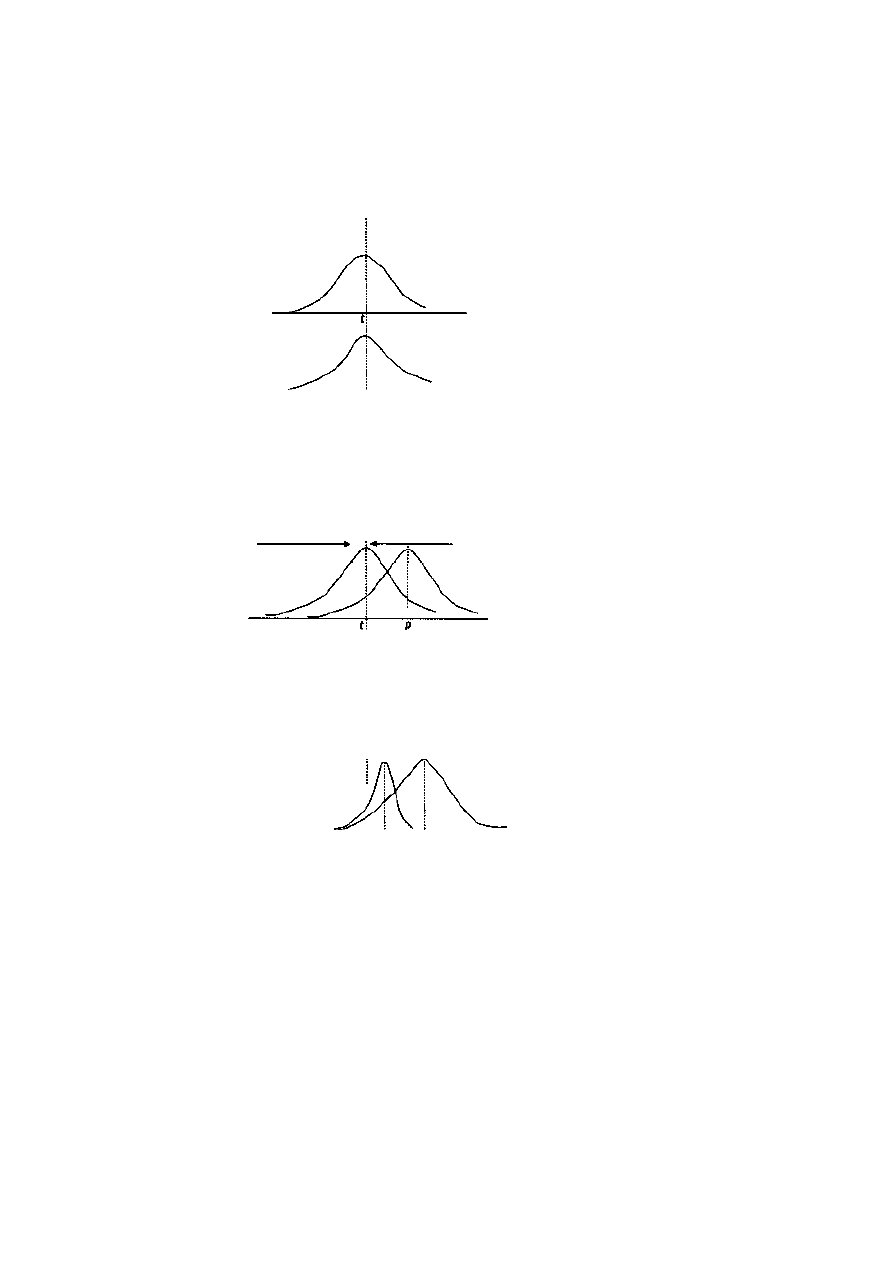
SEXUAL SELECTION
1 4 3
BOX 5.3
Diagrammatic representation of the effect of natural
and sexual selection on the mean value of trait t.
Preference p and trait t
coincide, t is at an ecological
optimum. Both trait and
preference are stable. The
variance in t indicates the
strength of the stabilising
selection
Sexual selection
Natural selection
Drift has caused p to be larger
than t. Females choose males
with t values larger than the mean.
Sexual selection drives tail
length against natural selection
A new equilibrium is reached. t
2
is
larger than the ecological
optimum due to sexual selection.
The variance in t is reduced by the
effect of female choice
Individuals having genes for both trait and preference (linkage disequilibrium)
but only expressing the character appropriate to their sex. Thus males carry
preference genes for a particular trait as well as genes prescribing that trait, but
only the genes for the trait are expressed. It is also assumed that genes for high
trait values are linked with genes for preferring high trait values.
Suppose that females have a preference (p) for a particular tail length, and
that this and the value of tail length in males (t) are both normally distributed.

1 4 4
EVOLUTION AND HUMAN BEHAVIOUR
If values of p and t have the same the mean values, neither will change, and
stability will result. Females with particular values of p will tend to mate with
males having corresponding t values, and any individual will carry matched
values of t and p.
The precise conditions under which this Fisherian process becomes unstable
have been subject to numerous attempts at modelling (see Harvey and Bradbury,
1991). The simplest condition is when (perhaps through drift) the mean value of
the tail length that females prefer (expressed by preference value p) is higher than
the mean population value of the male trait itself (t). Females will thus choose
males with higher than average t values. Such males will also carry higher than
average values of p\ conversely, low-t males with correspondingly low Rvalues will
not fare as well. The net result will be that, in the next generation, the mean
values of p and t will both increase, but since p is now larger than t (because the
next generation contains descendants of females with high p values), this will
continue in a runaway process. The process stops when natural selection forces a
halt to the size of the male trait as it becomes increasingly burdensome (Box 5.3).
We could still ask why a set of p genes should exist at all, in other words why
females should be at all fussy about the value of any trait such as tail length. The
answer that Fisher gave, and one that still seems probable, is that the value of a
particular trait was initially correlated with fitness.
There is a problem at the heart of Fisher's theory of runaway sexual selection,
and that is the 'lek paradox' (see also Chapter 4). Leking species such as grouse and
peacocks are strongly sexually dimorphic: males have elaborate ornaments that look
like the products of a Fisherian runaway process. Since males in leking species
practise polygyny, the generation following a mating season will be descended from
just a few males with higher than average lvalues. The problem is that, after a few
generations, all the variation in £will be exhausted. All males will be descended from
a small number of male ancestors, and they will all have the highest lvalues allowed
by the gene pool. Put another way, males will tend to converge on a particular trait
value. If all males eventually have the same value, there is no point to choosing, and
£ cannot increase any further. This is the lek paradox: how can a trait value £ increase
in a runaway fashion if, after a few generations, the variation in t reduces to zero?
The most satisfactory answer so far relies upon mutation. Lande (1981) and others
have pointed out that a feature such as tail length will not be the expression of a
single gene but will be influenced by a large number of polygenes. The combined
effect of outcrossing and mutation will, according to Lande, always ensure that
there is enough variation for female preference to exert its effect.
Empirical tests of Fisher
It has in fact proved difficult to test Fisher's ideas. One approach has been to
examine the geographical variation of both trait and preference. They should be
found in close proximity if Fisher's ideas about the co-evolution of male traits and
female preferences are correct. A number of studies have shown this to be the
case for the guppy (Poecilia reticulata). The distribution of bright orange
colouration in males was found to be strongly correlated with the strength of
female preference for orange (Endler and Houde, 1995).

SEXUAL SELECTION
1 4 5
Further evidence that is at least consistent with Fisher's ideas comes from
breeding experiments on sticklebacks. It has been known for many years that
some females find the bright red breeding patch on a stickleback highly attractive.
The redness of the patch on males is geographically variable. Bakker (1993) bred
from male sticklebacks with either dull or bright red nuptial colouration. It was
found that the sons of bright red males also tended to have bright red patches and
the daughters of red males preferred red to dull males. The daughters of dull
males showed no particular preference for male colour. Such experiments offer
support for the linkage that Fisher posited between male traits and female prefer-
ences. The general problem with much of the empirical evidence so far is that it
does not give unique support for Fisher, other processes still being possible.
Andersson refers to the problem of deciding between Fisherian and other
mechanisms as 'one of the greatest present challenges in the field of sexual
selection' (Andersson, 1994, p. 51).
5.5.3
Good genes and indicator mechanisms
The good genes dimension of good sense would explain why, in polygynous
mating systems, females share a mate with many other females, even though there
may be plenty of males without partners and despite the fact that males
contribute nothing in the way of resources or parental care. Females are in effect
looking for good genes. The fact that the male is donating them to all and sundry
is of no concern to her. It is suggested that the female is able to judge the quality
of the male's genotype from the 'honest signals' he is forced to send. Thus, for
example, size, bodily condition, colour of plumage, symmetry and size of
territory held are all signals providing the female with information about the
potential of her mate. Human females find some men sexually attractive even
though they know they may be unreliable, philandering and something of a cad.
There are several ways in which selected features may be a signal from a male of
genetic prowess. Two models we will consider are handicap and parasite exclusion.
Handicap models
Imagine that two competitors enter a running race. One is dressed in appropriate
sportswear, the other is similarly attired but with the addition of a rucksack full of
pebbles. The result of the race is a dead heat. Which competitor is most impres-
sive? Most would agree the contestant with the extra load is probably the most
physically fit and able. The analogy is not perfect, but this is roughly how the
handicap principle proposed by Zahavi (1975) is supposed to work. Females
choose males that sport a costly handicap since the very fact that they have
survived with such a handicap is itself an indication that they are genetically fit. As
Zahavi (1975, p. 213) says:
The handicap principle as understood here suggests that the marker of quality
should evolve to handicap the selected sex in a character which is important to the
selecting sex, since the selecting sex tests, through the handicap, the quality of its
potential mate in characters which are of importance.

1 4 6
EVOLUTION AND HUMAN BEHAVIOUR
Since its publication, this idea has met with a very mixed response, and the
literature has become technically complicated. Intuitively, it might seem as if any
handicap carried by a male simply cancels out any superior fitness that a male may
possess in developing one. Although population geneticists originally rejected the
idea, support has been rallying over the last few years. Zahavi's original idea has
been refined into a number of versions. In one, the 'qualifying handicap', only
males with a high viability can survive to display the handicap. The handicap
serves as a sort of fitness filter. In another, the 'revealing handicap', males per-
form some onerous task such as growing a long tail or developing bright colours
as an 'honest signal' of their otherwise hidden qualities.
Whatever the outcome of Zahavi's theory, it has been valuable in introducing
the concept of 'honest signalling' into the study of animal behaviour. It is now
generally accepted that many animals, including humans, carry 'badges'
advertising their worth. It is probable that such badges generally evolve towards
honest advertising, not because honesty is a virtue but because dishonest signals
are eventually ignored. One such honest signal could be the possession of a good
immune system to ward off parasites.
Coping with parasites - the model of Hamilton and Zuk
William Hamilton and Marlene Zuk (1982) tackled the question of how male
ornamentation could be a reliable indication of the male's health and nutritional
status. They suggested that secondary sexual characteristics such as elaborate
ornamentation are indicators of the parasite burden of the host since a male
infected by parasites produces a poorer display than males not so infected. The
conditions in which this process could operate are as follows:
Host fitness decreases with increasing parasite burden
Ornament condition decreases with increasing parasite burden
Resistance to parasites has a heritable component
Female choice favours the most ornamented males since these are the least
parasitised
Host and parasite are locked into a genetic arms race, each striving to stay
ahead of the other's resistance.
The last point also helps to explain the lek paradox - the problem that after a
few generations of choice, males will tend to look alike and females will have no
variation to choose from. In a world of parasite-infected males, the females will
always be choosing a slighdy different set of genes since males must constandy
change genes to keep parasites at bay. If the genes 'stood still', males would
quickly show signs of increased parasite load and appear less attractive to females.
Since Hamilton and Zuk (1982) published their ideas, a mass of experimental
and observational data have accumulated in relation to their hypothesis. On the
whole, the data have been positive in its support. It has proved most difficult to
establish whether or not parasite resistance is heritable, but the evidence is
generally favourable. For three species (guppy, pheasant and swallow) all five
conditions cited above are found to hold (see Andersson, 1994, for a review).

SEXUAL SELECTION
1 4 7
Parasite resistance may also apply to human mate choice. The American
evolutionary psychologist David Buss has done much work on delineating the
features that humans find attractive in the opposite sex. Buss and his co-workers
found that males in all cultures rated female beauty very highly, but especially so
where there was a risk of serious parasitic infection such as malaria or schistoso-
miasis. If you live in a culture where parasites are common, it is even more impor-
tant to choose your mate carefully and use every cue available to estimate his or
her physical health status (Gangstead and Buss, 1993).
Males and females can send signals about their health and reproductive status in
a variety of ways. One time-honoured principle of fashion is that 'If you have it
flaunt it; if you haven't, hide it.' This applies to cosmetics as much as clothes. One
study has suggested a function of bodily markings such as those produced by the
scarification and tattooing practised in some cultures. Devendra Singh and
Matthew Bronstad of the University of Texas found a correlation between the
degree of bodily marking on females and the strength of pathogen prevalence in
that culture. They hypothesise that females draw attention to sexually dimorphic
features such as waist and breast measurements by the use of body markings. In
the cultures examined, they did not find any correlation for male markings (Singh
and Bronstad, 1997).
Hamilton and Zuk's work has been of enormous heuristic value, but there
remains the problem that much of the experimental work is still open to other
interpretation. It could be, for example, that females are simply avoiding the
transmission of parasites to themselves and not judging the condition of the males
with a view to choosing good genes. In many relationships, however, females are
looking for something more substantial than just parasite-resistant genes.
5.5.4 Good resources and good behaviour
In the leking species discussed earlier, the males provide nothing except a few
drops of sperm. The females have come to expect nothing except genes, so if they
are choosy, it will be for good genes. In many species, however, males are
expected to bring something to mating in addition to their DNA. In effect, the
female may only consent to mating once she has exacted some resources from the
male. She may thus judge the ability of the male to provide resources before and
after copulation. Resource provision could be in the form of a nesting site, food,
territory, parental care or some combination of these.
The donation of resources and genes may be linked. A courtship period in
which nuptial gifts are exchanged is a common sight in the animal world. A female
may use this period to assess whether the male is able to gather resources and, just
as importantly, be willing to devote them to the relationship. In many bird species
(for example, European crossbills), males pass food to the females during
courtship. A female could use this as a signal of foraging ability and a willingness to
feed offspring. Such resources may be crucial in raising young and may, as a bonus,
also indicate the genetic fitness of a male to gather such resources. In human
hunter-gatherer societies, there is evidence that food is often exchanged for sex
and that wealthy men are able to secure more partners. In modern societies, the
phenomenon of the 'sugar daddy' is well known. Rich and powerful men seem to

1 4 8
EVOLUTION AND HUMAN BEHAVIOUR
be able to attract younger and highly attractive females as their partners. This
dimension to human mating will be examined in more thoroughly in Chapter 9.
Intra- and intersexual selection often overlap. We have already noted that where
one sex provides a significant commitment in terms of parental investment, such as
a large egg, nurturing a fetus or caring for the young, this sex is often the limiting
factor for the reproductive success of the other sex. The least investing sex will
compete for the sex that constrains its reproductive potential. The limiting sex can
afford to be choosy and may look for good genes, good behaviour (indications of
future investment) or more tangible resources. The insect world is full of examples
of males transferring nutritious offerings before or during sex. In the scorpionfly
Harpobatticus nigriceps, females lay more eggs with males who provide larger gifts
of prey that they have captured. Females also lay more eggs fertilised by larger
males, so females may in this species be choosing for good genes as indicated by
large size of male, and for good resources (which may indirecdy indicate good
genes anyway) by preferring larger prey offerings (Trivers, 1972).
In previous discussions on resource defence polygyny, we saw how this system
allows the males to achieve polygyny. From a female perspective, it may be that
females are choosing males who are able to provide resources. Studies have shown
that the number of females per male is strongly influenced by the resources in the
territory of the male (see, for example, Kitchen, 1974). In polygyny, there will of
course be male competition, and only vigorous males will be able to command the
territory to attract females. In these cases once again, it is not always easy to
establish whether females are choosing good genes, good resources or both.
Courtship has other functions as well as providing a forum for the inspection
of genes and the passing of gifts. Monogamous species often engage in lengthy
courtship rituals prior to actual mating. Courtship has many functions, such as
the identification of species and the advertisement of readiness to mate, but it
seems more than likely that courtship also enables each sex to 'weigh up' its
prospective partners in terms of their commitment to a relationship. In the case
of the behaviour of the common tern (Sterna hirundo), it looks highly probable
that females choose males on the basis of their willingness to invest. When on the
feeding grounds, females rarely provide their own food and instead rely upon
males to bring food to them. The amount of food brought by the male strongly
influences the size of the clutch laid. In the first phase of courtship, the male
provides food as part of pair formation, and a female will only pair with a male
who is carrying a fish (Trivers, 1972). The female is in effect acting to increase the
investment made by the male. The more investment a male makes, the less likely
he is to desert.
5.5.5 Case studies: the peacock and the widow-bird
The peacock's train
The peacock's train has become a paradigm case for the theory of sexual
selection. The train looks precisely like the product of some crazy runaway
Fisherian process (Figure 5.7). It is clearly a handicap and, in the Indian native
home of the peafowl (Pavo cristatus), tigers often bring down male birds by their
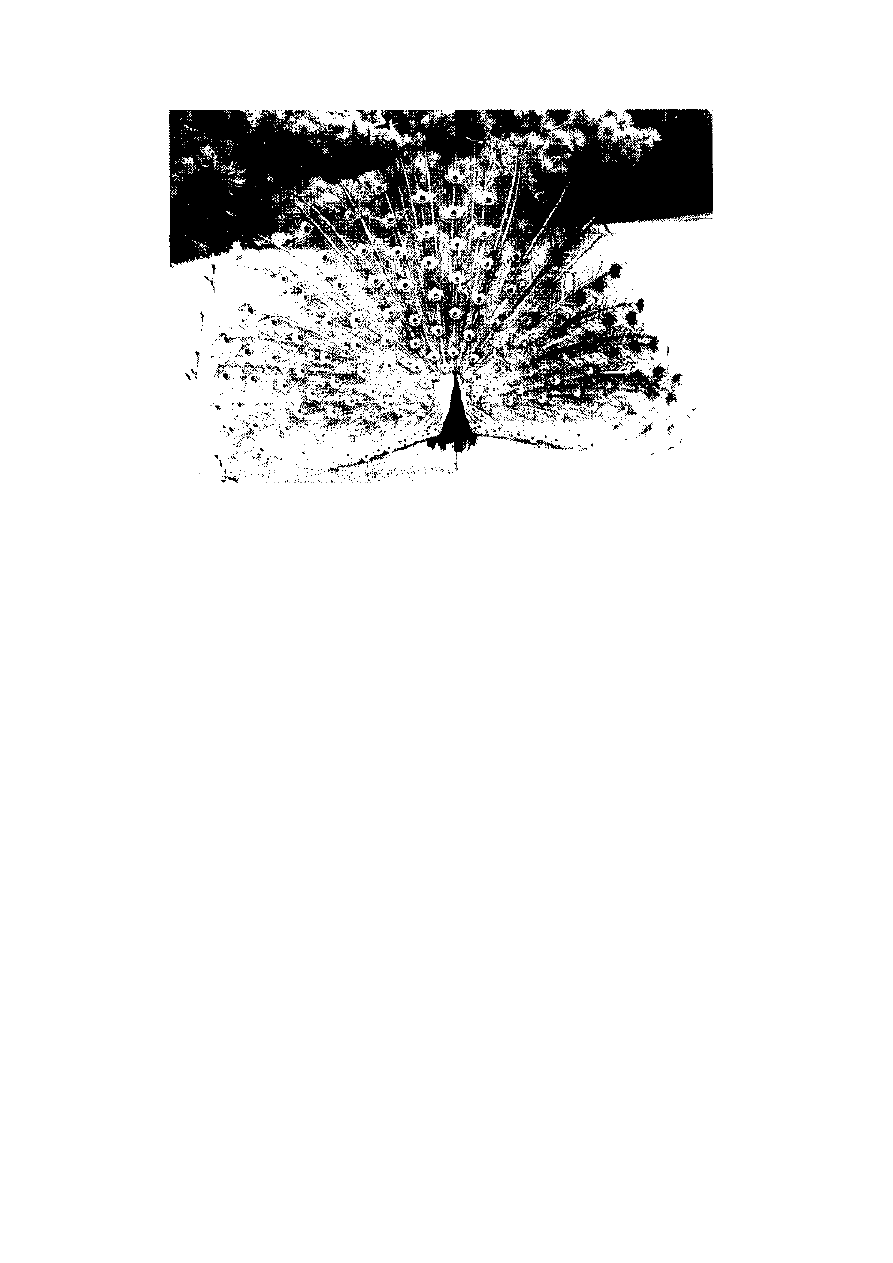
SEXUAL SELECTION
1 4 9
Figure 5-7
The result of intersexual selection: a male of
the common peafowl (Pavo cristatus) displaying
train as they struggle to take flight. It could also be an honest signal that males
with highly elaborate and 'beautiful' trains are relatively free from parasites.
Deciding between these hypotheses has proven very difficult, but the work of
Petrie etal. (1991; Petrie, 1994) on the peafowl population of Whipsnade Park in
the United Kingdom has thrown considerable light on the factors involved.
The behaviour of peafowl is typical of leking species in that males attempt to
secure a display site within the lek and only those which secure a site will display.
Females never mate with the first male to court them and will reject several before
deciding. As in many polygynous mating systems, there is a large variance in
reproductive success. The key predictor of reproductive success in the first studies
turned out to be the number of eye spots in the train (Figure 5.8).
It could be argued of course that the number of spots correlates with some other
variable such as age of the male or his overall symmetry, or that the number of spots
is related to something that males use in intrasexual competition. The question also
arises of what peahens gain by choosing males with plenty of spots. In an effort to
address this last question, Petrie took eight free-ranging displaying males (whose
mating success varied) from Whipsnade Park and transferred them to pens, where
they were each mated individually with four randomly chosen young peahens. The
eggs and the young that resulted from these matings were carefully measured. It
was found that the weight of the young after 84 days and their chances of surviving
when introduced back into Whipsnade Park (both of which can be used as a indica-
tion of condition and fitness) varied strongly with the average area of each eye spot
on the male's train and the overall length of the train (Figure 5.9).

1 5 0
EVOLUTION AND HUMAN BEHAVIOUR
8
7
6
B
5
CD
Z 4
o
CD
t
3
Z
2
1
0
• •
J
1 — L 1
1
1
1
1
1
1
I
I
I
I
l
I
I
I
I
i
i
I
i
i
140
145
150
155
160
Number of eye spots
Figure 5.8
Relationship between the number of eye spots and mating
success in a group of ten peacocks (data from Petrie et a/., 1991)
These results suggest that peahens may be choosing peacocks for good
Viability' genes for their offspring and that Fisherian runaway selection may be
coupled with something that also indicates the genetic quality of the males.
1500
3
1475
j
3
1450
-g 1425 j
o 1400
§> 1375
CD
1350
1325
1300
1275
1250
0
0 -
1
120
125
130
135
140
145
150
Mean area of father's eye spot (mm
2
)
155
Figure 5.9
Relationship between the eye spot area of males
and the fitness of offspring (from Petrie, 1994)
The widow-bird
Another way in which to approach the problem of what females look at in
assessing males is to manipulate experimentally the male character that attracts
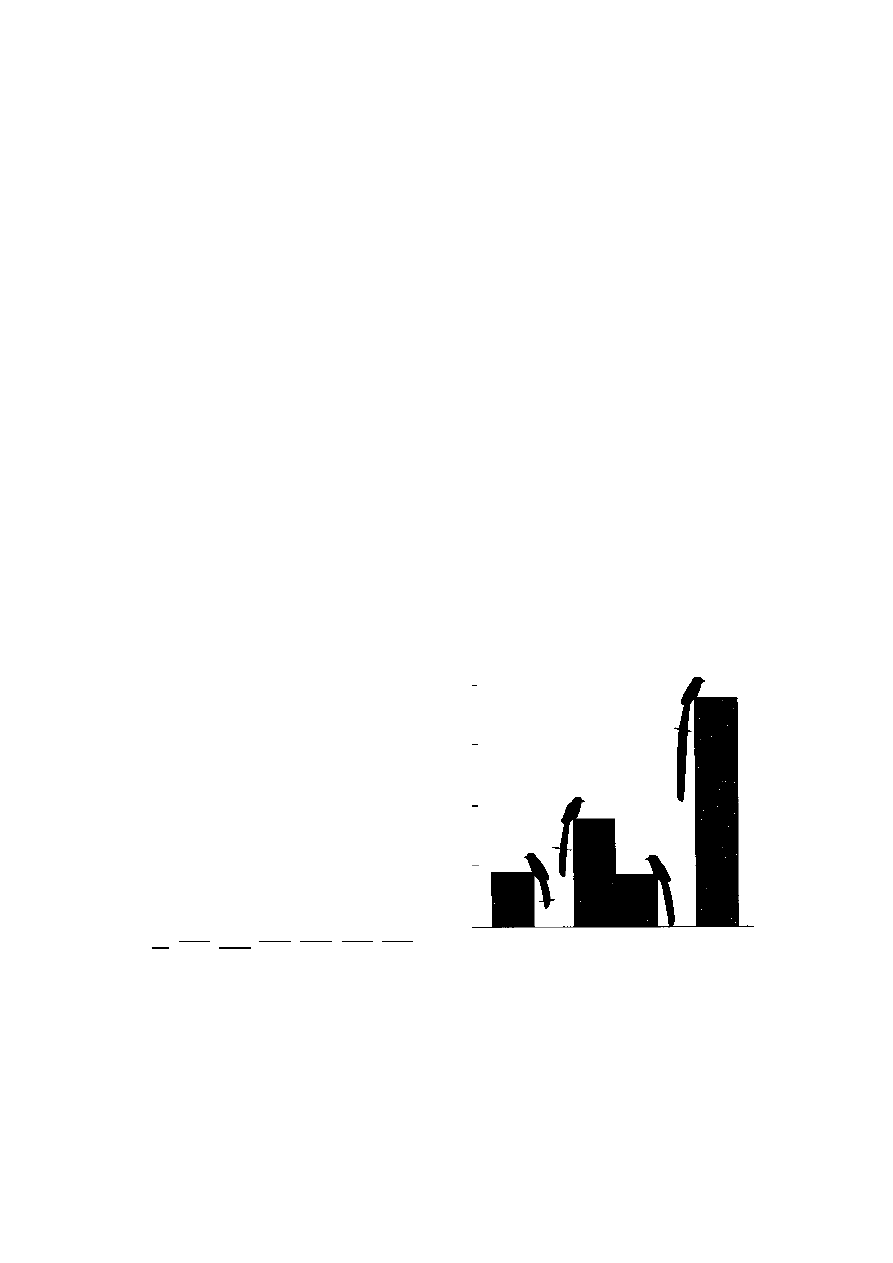
SEXUAL SELECTION
1 5 1
females. Andersson (1982) did this for an African bird called the long-tailed
widow-bird (Euplectes progne). Early in the breeding season, Andersson caught
36 widow-birds, having first recorded the number of nests in their territories,
which in this species is an indication of the number of females that a male has
attracted. Andersson then divided them into four groups and, by cutting off
portions of their tails, manipulated their tails as follows:
Group 1: males whose tails were lengthened by replacing a cut portion with a
piece longer than the one removed
Group 2: males whose tails were shortened by replacing the piece cut off with
a shorter piece
Group 3: males whose tails were kept the same length by gluing back the
piece cut off
Group 4: males whose tails were left untouched.
After this cosmetic surgery, the birds were released and the number of
additional nests that each male secured was counted. As Figure 5.10 shows, the
elongated-tail birds fared better than any of the others, even those who were
returned to the wild in the same condition. Females prefer long tails, and the
longer the better it seems. The results seem to indicate that the perceptual
apparatus of the female long-tailed widow-bird is geared up to prefer a length
even above the male population average. As Francis Bacon commented in the
17th century, 'there is no beauty without some strangeness of proportion'.
&
I
1
1
=5
I
1
]
[
<=
I
1
!
i
I
t
i
<°
I
I
<"
I
I
I
I
ol 1
1
I
1
1
1
L
o
Shortened
Length
unchanged
Before tail treatment
Elongated
Shortened
Length
unchanged
After tail treatment
Elongated
2
3
4
1
2
3
4
'Before' shows the roughly similar mating success of the four groups of males before
any treatment applied. 'After' shows mating success after tail manipulation
1. Tails lengthened by adding a length of tail from another male
2. Tails shortened by replacing the cut portion with a shorter piece
3. Tails cut and replaced, thereby retaining the original length
4. Tails left untouched
Figure 5.10
Effects of manipulation of tail length on the breeding
success of male widow-birds (data from Andersson, 1982;
modified from Hall and Halliday, 1992)
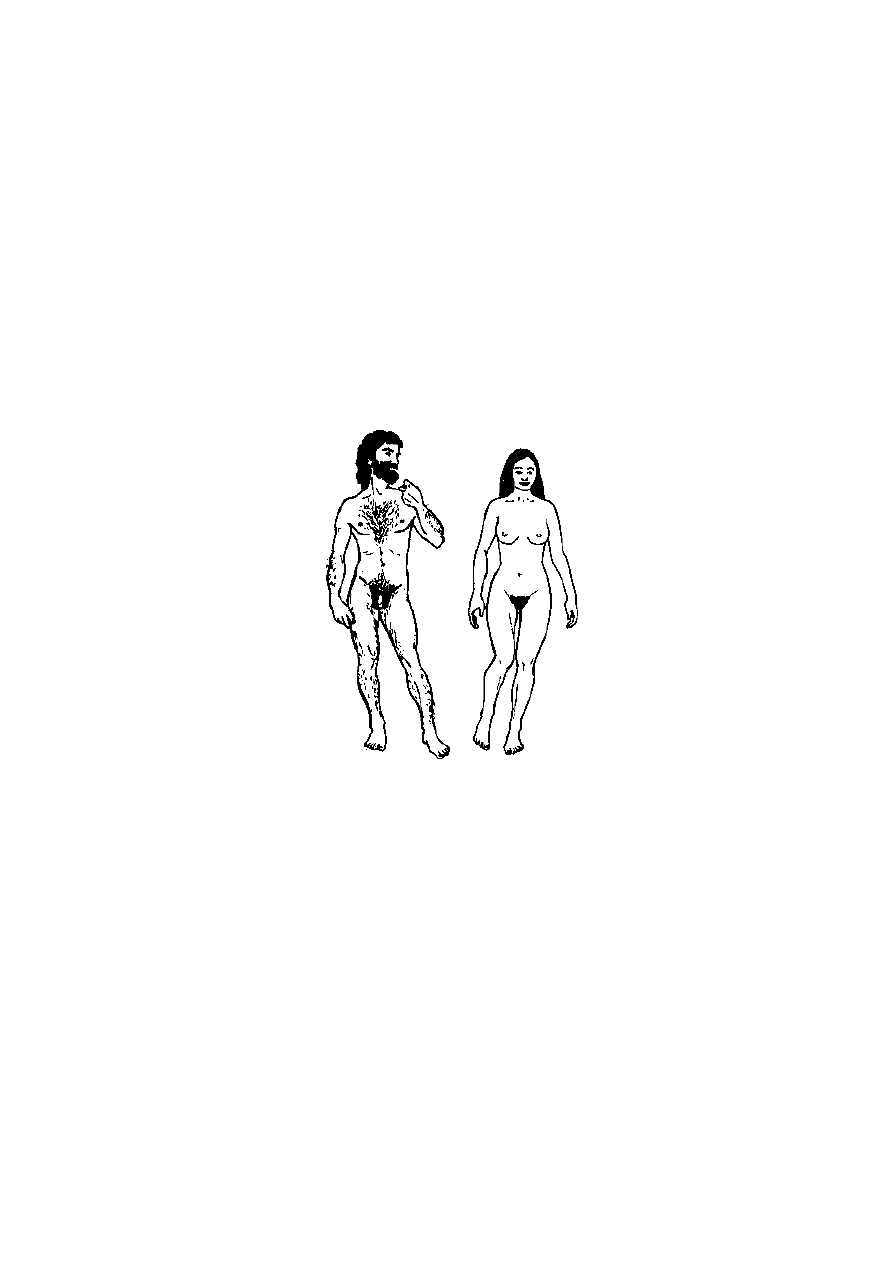
1 5 2
EVOLUTION AND HUMAN BEHAVIOUR
5.5.6 Sexual selection In humans - some questions
Humans show sexual dimorphism in a range of traits (Figure 5.11), and it is
probable that many of these are the results of sexual selection. The fact that
human infants need prolonged care would ensure that females were alert to the
abilities of males to provide resources. In addition, the fact that a female invests
considerably in each offspring would make mistakes (in the form of weak or sickly
offspring that are unlikely to reproduce) very expensive. It has been estimated
that human females of the Old Stone Age would have raised successfully to
adulthood only two or three children. Females would therefore be on the look-
out for males who showed signs of being genetically fit and healthy, and who
were able to provide resources. Both of these attributes, genetic and material,
would ensure that her offspring receive a good start in life.
Males compared with females
On average, males have:
Greater upper body strength
More facial and bodily hair
Greater height and mass
Deeper voices
Riskier life histories and higher juvenile mortality
Later sexual maturity
Earlier death
Broader and more prominent chins
Lower levels of fat deposited on buttocks and hips
Figure 5.11
Human sexual dimorphism
One problem to address is whether features that attract the opposite sex are
the products of sexual selection for good genes (health, fertility, parasite
resistance and so on) or the products of an arbitrary Fisherian runaway process. If
features were the result of the latter, we would expect some or all of the
following:

SEXUAL SELECTION
1 5 3
The expression of the trait is not correlated with any other reliable indicator(s)
of fitness
Differences in traits between people are based on genetic differences
Any cross-cultural differences are not related to ecological factors; hence trait
is arbitrary with respect to natural selection
Extreme expressions of the trait will be more attractive than average ones: size
does matter.
On the other hand, the good genes argument would predict that:
• The trait is correlated with a variety of fitness indicators, for example immuno-
competence, fertility and metabolic efficiency
Symmetrical traits will be preferred to unsymmetrical ones. The logic here is
that sexually selected traits are challenging to physiological mechanisms that
develop and maintain symmetry, and hence revealing of overall genetic
efficiency and fitness. Parasites or environmental stress reduce symmetry.
The theory is clear enough, but it turns out that when tackling human
morphology, it is difficult to find crucial evidence that will falsify one approach and
support another. Two particular enigmatic features of human anatomy that may
have been shaped by sexual selection are the female breast and the human brain.
The female breast
In Western cultures, and probably many more, there is a fascination with the
enlarged mammary glands of the human female. There are strong cultural mores
about when they can be revealed, or should be concealed or only half revealed.
The femininity of a woman is strongly associated with her breasts. Women
sometimes pay large sums of money and experience much discomfort to have
them reduced or enlarged. Bra manufacturers expend much time and effort
researching how best to make a product to support them in the right shape.
There is agreement between the sexes that they are essential objects of desire, but
what are they for> Most people would take this to be a pointless question since it
is obvious that they are there to provide infants with milk. A consideration of the
facts below forces a rethink on this issue:
Breasts are strongly sexually dimorphic and appear at puberty
Permanently enlarged breasts are not found among any other primates: most
primates have enlarged breasts only during pregnancy and lactation
• Large breasts, although attractive to males, interfere with locomotion, and
women athletes engaged in running sports tend to have small breasts
II There is some cross-cultural variation in breast morphology but with no
obvious ecological correlates
The size of a woman's breasts bears very little relationship to her ability to
lactate. Women could supply the necessary nutrition to a baby with much
smaller breasts.
1 5 4
EVOLUTION AND HUMAN BEHAVIOUR
Figure 5.12
Young men and women at a disco. Sexual
selection in action or just having a good time?
It looks then as if breasts have not been shaped by natural selection, women
would move better without them and their permanently enlarged state is not
essential in order to supply milk. Acting as a storage device for fat is a possibility,
but storage around the waist would be mechanically more efficient. Breasts are
thus prime candidates for good genes or runaway sexual selection. Some studies
have shown that breast symmetry correlates with fertility, which suggests a role in
the honest advertisement of good genes. The fact that breast size is not negatively
correlated with asymmetry runs counter to this, however, since a sexual trait that
increases in size should become more asymmetrical as the demands of size growth
take their toll on symmetry (Thornhill and Gangestad, 1994).
Until more conclusive evidence is forthcoming, the consensus seems to be that
they have been sexually selected, but the precise mechanism is not certain.
The brain
One human feature that some have claimed shows signs of runaway sexual selection
is the brain. Between about 6 million and 3 million years ago, our ancestors roamed
the African savannah with brains about the size of those of a modern chimpanzee
(450 cm
3
). Then, 2 million years ago, there began an exponential rise in brain
volume that gave rise to modern humans with brains of about 1300 cm
3
. A tripling
of brain size in 2 million years is rapid by evolutionary standards. One force that can
bring about such rapid change is sexual selection (Miller, 1998).
Miller suggests that humans would have examined potential partners to
estimate heath, age, fertility, social status and cognitive skills. It is this latter
criterion that might have set up a runaway growth in brain size. Miller sees this as
beginning with females choosing males who were amusing and inventive, and had

SEXUAL SELECTION
1 5 5
creative brains. Language accelerated the process since the exchange of informa-
tion could then be used to judge the suitability of a potential partner. Although
brain growth was driven by female choice, both sexes gradually acquired larger
brains since brains were needed to decode and appreciate inventive male displays.
Miller makes a remarkable, and what will prove to be a controversial, assertion:
Males produce about an order of magnitude more art, music, literature... than
women, and they produce it mostly in young adulthood. This suggests that... the
production of art, music, and literature functions primarily as a courtship display.
(Miller, 1998, p. 119)
It is an intriguing thought that much of what passes for culture may be a form
of sexual display. The view that art and literature represent the outpourings of
testosterone-fuelled males strutting their stuff is a wonderful image destined to
infuriate at least half of the academic community and most female artists and
writers, but it has a poetic plausibility that may carry more than a few grains of
truth when we consider the strength of the libido and the sexual activities of
successful artists and musicians.
There are of course other theories to account for the rapid brain growth
(encephalisation) of hominids. The 'Machiavellian intelligence' hypothesis
suggests an arms race between mind-reading and deception. In this view, success
depended on anticipating and manipulating the actions of others. Large brains
helped early humans to understand each other's minds; this allowed deception,
which in turn stimulated brain growth to detect and avoid deception, and so the
process ran on, causing an escalation of brain size. This is examined in more detail
in the next chapter.
SUMMARY
Sexual selection results when individuals compete for mates. Competition within
one sex is termed intrasexual selection, and typically gives rise to selection
pressures that favour large size, specialised fighting equipment and endurance in
struggles.
Individuals of one sex also compete with each other to satisfy the requirements laid
down by the other sex. An individual may require, for example, some demonstration
or signal of genetic fitness or the ability to gather and provide resources. Selective
pressure resulting from the choosiness of one sex for the other is studied under the
heading of intersexual selection. Such pressure often gives rise to elaborate
courtship displays or conspicuous features that may indicate resistance to
parasites, or may possibly be the result of a positive feedback runaway process.
The precise form that mating competition takes (such as which sex competes for
the other) is related to the relative investments made by each sex and the ratio
of fertile males to females. If females, for example, by virtue of their heavy
investments in offspring or scarcity, act as reproductive bottlenecks for males,
males will compete with males for access to females, and females can be
expected to be discriminatory in their choice of mate.

1 5 6
EVOLUTION AND HUMAN BEHAVIOUR
In cases where a female engages in multiple matings and thus carries the sperm
of more than one male in her reproductive tract, competition between sperm
from different males may occur. The theory of sperm competition is successful in
explaining various aspects of animal sexuality, such as the high number of sperm
produced by a male, the frequency of copulation and the existence of copulatory
plugs and infertile sperm.
It is probable that many features of human physiognomy and physique have been
sexually selected. In examining females, males can be expected to look for
features that indicate youth and fertility (nubility), health and resistance to
parasites. Females can be expected to look for strength, wealth, health and
status as well as parasite resistance in prospective male partners. Symmetry is
an attribute valued by both sexes and may correlate with physiological fitness.
The rapid increase in brain size among hominids that started about 2 million
years ago is a candidate for sexual selection.
KEY WORDS
Dishonest signals • Extrapair copulation • Good genes
Handicap principle • Honest signals • Intersexual selection
Intrasexual selection • Nuptial gift • Operational sex ratio
Parental investment a Sex role reversal • Sexual dimorphism
Sperm competition • Symmetry
FURTHER READING
Andersson, M. (1994) Sexual Selection. Princeton, NJ, Princeton University Press.
Extremely thorough book that reviews a wide range of research findings. Tends to
concentrate on non-human animals.
Geary, D. C. (1998) Male, Female: The Evolution of Human Sex Differences.
Washington DC, American Psychological Association.
Geary explains the principles of sexual selection and how these can be used to
understand differences between males and females. Good discussion of the
evidence for real cognitive differences between males and females.
Gould, J. L, and Gould, C. G. (1989) Sexual Selection, New York, Scientific American.
Readable, well structured and well illustrated. Its main drawback is a lack of
references in the text to support the evidence. Mostly covers non-human animals.
Ridley, M. (1993) The Red Queen. London, Viking.
An enjoyable and well-written account of sexual selection theory and its application
to humans.
Wyszukiwarka
Podobne podstrony:
Creativity and Human Evolution
Folk Psychology and the Explanation of Human Behavior
Cosmic and Human Metamorphoses
50 707 719 Thermal Fatique and Softening Behaviour of Hot Work Steels
Life and Human Rights Spring 2010
ehrc equality and human rights commission email
Theory of evolution and religion
student sheet activity 7 e28093 camera angles and shifting behaviours
2008 pre mRNA splicing and human did GenDev
Ten Interesting Things About Human Behavior
Tolerance, Nationalism, and Human Rights in Macedonia
14 Traditional Shapes and Human Names (M Satou)
Making Contact with the Self Injurious Adolescent BPD, Gestalt Therapy and Dialectical Behavioral T
Good Worms and Human Rights
Life and Human Rights Spring 2010
DEPARTMENT OF HEALTH AND HUMAN SERVICES PROTECTION OF HUMAN SUBJECTS
DoD Counterintelligence and Human Intelligence
Ebsco Cabbil The Effects of Social Context and Expressive Writing on Pain Related Catastrophizing
więcej podobnych podstron