
1
ICOM – ICME Conference
Jerusalem, October 2008
DAŠA KOPRIVEC
Searching for the Traces of Aleksandrinke,
Slovene Migrant Women, in Egypt
Slovene economic migration to Egypt
The paper discusses economic migration from the Slovene ethnic territory to
Egypt from 1870 to 1935. Migration was quite intensive during this period but
discontinued after 1935. This was mainly due to the increasingly complex
political and economic conditions in Europe in the years leading to World War
II, though many Slovene families remained in Egypt until 1956. In the years
1956–1958 almost all Slovene migrants left Egypt, so that there is now no
Slovene diaspora left in the country. The paper addresses the endeavours of the
descendants of these migrants to find and preserve traces of the former Slovene
community in Egypt.
Egypt and the Slovene ethnic territory were both part of a wider, global context
in the 1870–1935 period. At a certain point in history their paths crossed and
joined. After the construction of the Suez Canal, Egypt gained a new and very
important economic role in the Mediterranean. Its economic significance was
further boosted by the development of the cotton industry, when Egypt became

2
the world centre of cotton production, not only to England and the rest of
Europe, but also to the USA. Egypt’s flourishing economy attracted many
merchants, cotton growers and cotton processing manufacturers, and other
professions from the middle and upper middle classes of many European
countries, but chiefly from England, France, and Italy. In addition to the upper-
middle-class people who came to Egypt from the Ottoman Empire or Europe
and prospered, many people of different nationalities found a place for
themselves in Egypt: Armenians, Greeks, Jews from various countries, Maltese,
Slovenes, and others. Egypt gradually changed into a cosmopolitan society
where employment was not hard to find.
The Slovene ethnic territory had a very different fate during this period. From
1870 to 1918 it was still a part of the Austro-Hungarian Monarchy. It had
always been a territory which the Slovenes were leaving for various parts of the
world as economic migrants: they went to France as miners, to Romania as
forest workers, to Switzerland as masons, the USA as miners and forest workers,
to Brazil and Argentina as agricultural workers, etc. Women as well sought
employment and were mainly hired as maids and nannies. In the 1870–1914
period and within the Austro-Hungarian Monarchy, women sought and found
employment in the big cities of the great common state – in Trieste, Gorizia,
Vienna, etc.
But how did the economic migration from the Slovene ethnic territory to Egypt
come about? Initially, Slovene women who were employed with prosperous
families in these big cities moved together with them to Cairo or Alexandria,
and this started a chain reaction of women migrating to Egypt to seek work
there.
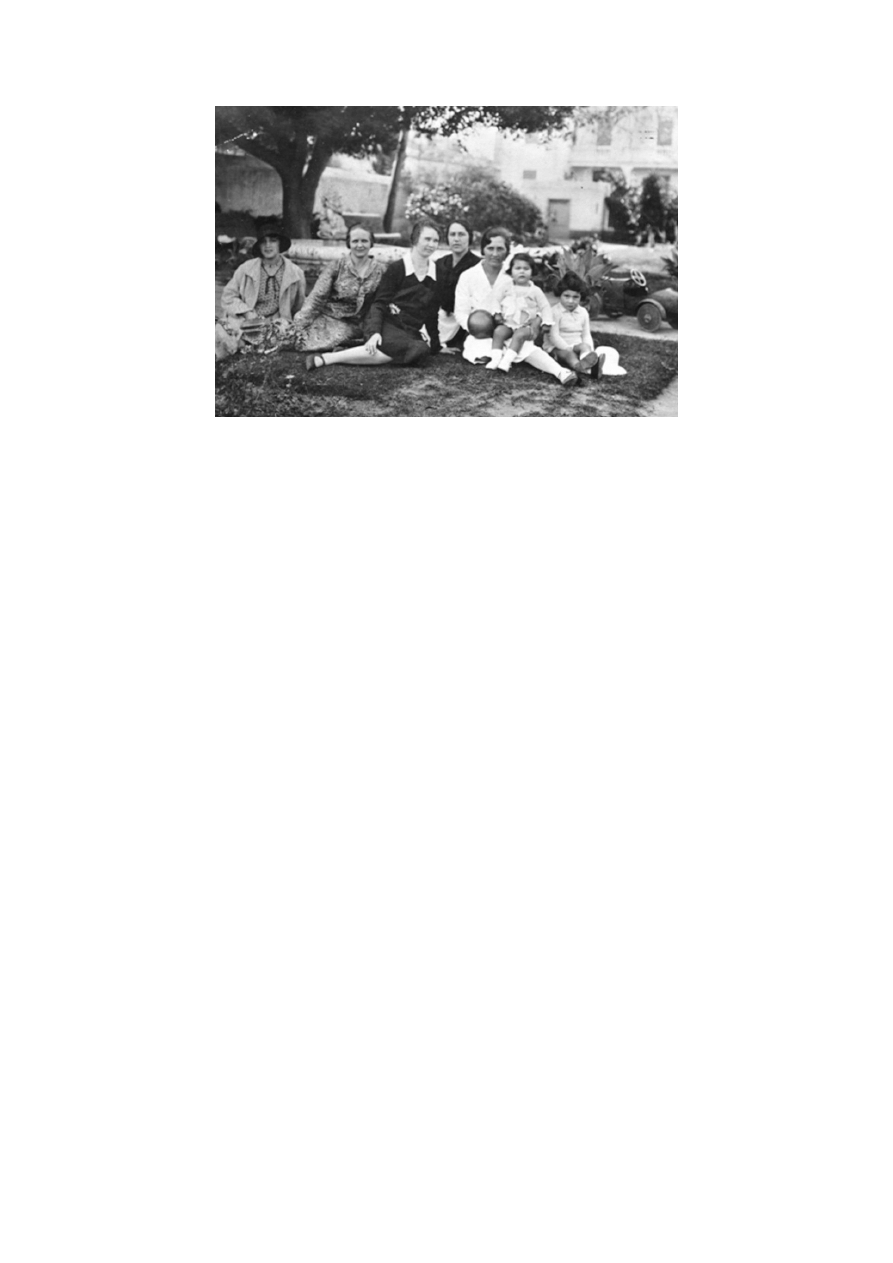
3
The Alexandrines in the thirties of the 20
th
century, in Egypt.
They were very well paid in Egypt, much better than in Vienna or Trieste, and
the first women who arrived in Egypt started to invite their female relatives to
join them. They in turn invited their own relatives, etc. This led to a migration
trend that lasted a full sixty-five years.
In the initial period of migration to Egypt, up to the First World War, Slovene
women chiefly migrated because they could earn well in Egypt, enough to
improve their material position at home, renovate properties, and buy additional
land. The second half of the 19
th
century was indeed a period when the Slovene
ethnic territory was still marked by a predominantly agrarian, peasant economy,
and land was sacred. People’s quality of life depended on how much land they
owned. Every purchase of an additional piece of land was of vital importance to
them. The money earned in Egypt allowed families to advance economically.
When the First World War broke out in 1914, it was to have disastrous
consequences for the Slovene ethnic territory. In particular in its western part,
where it became the scene of one of the greatest war fronts (the Soča/Isonzo
Front). Entire villages were razed to the ground, many people were made
homeless and became refugees. During the initial post-war period, from 1920 to
1925, there was consequently the highest increase in economic migration to

4
Egypt. People had to earn money to rebuild their homes. Most migrants were
women, and only occasionally they were accompanied by other family
members. They found employment in Cairo and Alexandria as maids, nannies,
cooks, governesses, and wet nurses. They were hired by the prosperous classes
of society and families of different nationalities: British, French, Italians, Jews,
Greeks, Copts, Egyptians, and others.
Men did not migrate to Egypt in similar numbers; many lost their lives in the
First World War, and many others had lost their health and were no longer
capable of working; young men also preferred to migrate to Argentina, where
they found employment in agriculture and settled in the country. Egypt attracted
mostly daughters, young mothers, and widows. In the families where the
husband had survived the war, he learned a trade, stayed at home, and took care
of the family, and a small farm. These families thus made a living off farming
and the money sent from Egypt by mothers, sisters, or aunts. Young girls
migrated to earn enough for their wedding and create a family of their own;
some women were later joined by their husbands and children. Fairly large
Slovene communities were thus gradually established in Cairo and Alexandria,
consisting not only of individual narrow families, but also extended families.
The men found employment as drivers, park wardens, masons (especially in
Aswan), mechanics, shop assistants, etc. The children who came from Slovenia
or were born in Egypt attended French, Italian, or German schools. As they grew
up, they learned a trade and became fully integrated in Egypt’s multicultural
society of the 1930s.
The Suez crisis in 1956 put an end to Slovene migration to Egypt, but it had
been preceded by the Egypt (Arab) – Israel war in 1948, and the social and
political transformation of Egypt in 1952. Many European and Jewish families
employing Slovene economic migrants suddenly left Egypt in a hurry. The
Slovenes were thus left behind without their jobs and the families they worked

5
for – their economic basis. And so they too had to leave. The women, their
children and families left Egypt and settled in various countries around the
world – Italy, the USA, Australia, Canada, Yugoslavia.
For many years this particular migration was a taboo theme in Slovenia. The
first research and first book on the theme was published in 1993 and the author
Dorica Makuc, entitled it Aleksandrinke – The Alexandrines. This gave the
Slovene migration to Egypt its special name and defined it as female migration.
The name comes of course from the Egyptian town of Alexandria where most
Slovene women were employed. Historians estimate that 8.000 Slovene women
were employed in Egypt in the 1870 – 1956 period, and this is quite a high
number considering that they left from a small area in western Slovenia.
There are a number of reasons why this migration remained a taboo theme in
Slovenia: in the patriarchal peasant environment it was very hard to accept that
the female migrants earned a living for their families, that they were in demand
as workers in Egypt, while their husbands had to take care of the impoverished
farms at home. There were also bitter changes to family life, since migrant
mothers sometimes remained in Egypt for 10, 15, or even 20 years. Young
mothers were employed as wet nurses in Egypt and had to leave their own
babies at home in the care of female relatives. They went to Cairo or Alexandria
as wet nurses where they were exceptionally well paid. This specific migration
therefore had a strong emotional aspect and was a sensitive theme in the
families. Another reason was economic: the western Slovene territory was part
of four different countries in the period from 1870 to the present; this process
led from the Austro-Hungarian Monarchy (until 1918), via Italy (1918–1946)
and Yugoslavia (1946–1991) to the contemporary state of Slovenia after 1991.
The transitions between four different countries included several currency
devaluations and two world wars with catastrophic damages to the territory. All

6
this devalued the economic contribution earned by the Slovene women working
in Egypt, even though it had been very high. In the places they left behind at
home, a single question thus remained: Why did the mothers leave home?! This
was the judgement that had survived in the awareness of their descendants for a
long time.
Revisits
The memory of Egypt survived. It lives on in the children, grandchildren and
great-grandchildren. They return to Egypt in the footsteps of their mothers and
grandmothers. They visit the particular places the Slovene migrants used to
frequent in Egypt: churches, cemeteries and religious centres. The hidden
migration story led to the wish to preserve the history of the migration of
Slovenes to Egypt and save it from oblivion. The wish seems to have surfaced at
the family level after the parents died, because much was left unsaid and
unsolved in their relationship. Their children are today all over sixty and some
over eighty years old. They wanted to see Egypt, the country where they spent
their childhood, once more. Concerning the children, there are basically two
groups: those who lived in Egypt for some time, and others who never lived
there, but whose mothers and grandmothers worked there. Nowadays they live
scattered around the world: in Australia, Canada, the USA, Italy, Switzerland,
France, and some in Slovenia. They like to visit their relatives in Slovenia and
these visits are opportunities for conducting ethnographic research interviews
with them. In the 2005–2008 period a large number of interviews with the
descendants were done by the Slovene Ethnographic Museum.
The research that has been carrying out since 2005 shows that the descendants
of Slovene migrants visit particularly Cairo and Alexandria. Slovene women
working in Egypt were of the Catholic faith and most of them were committed
believers; those who died there are all buried in Latin cemeteries. The
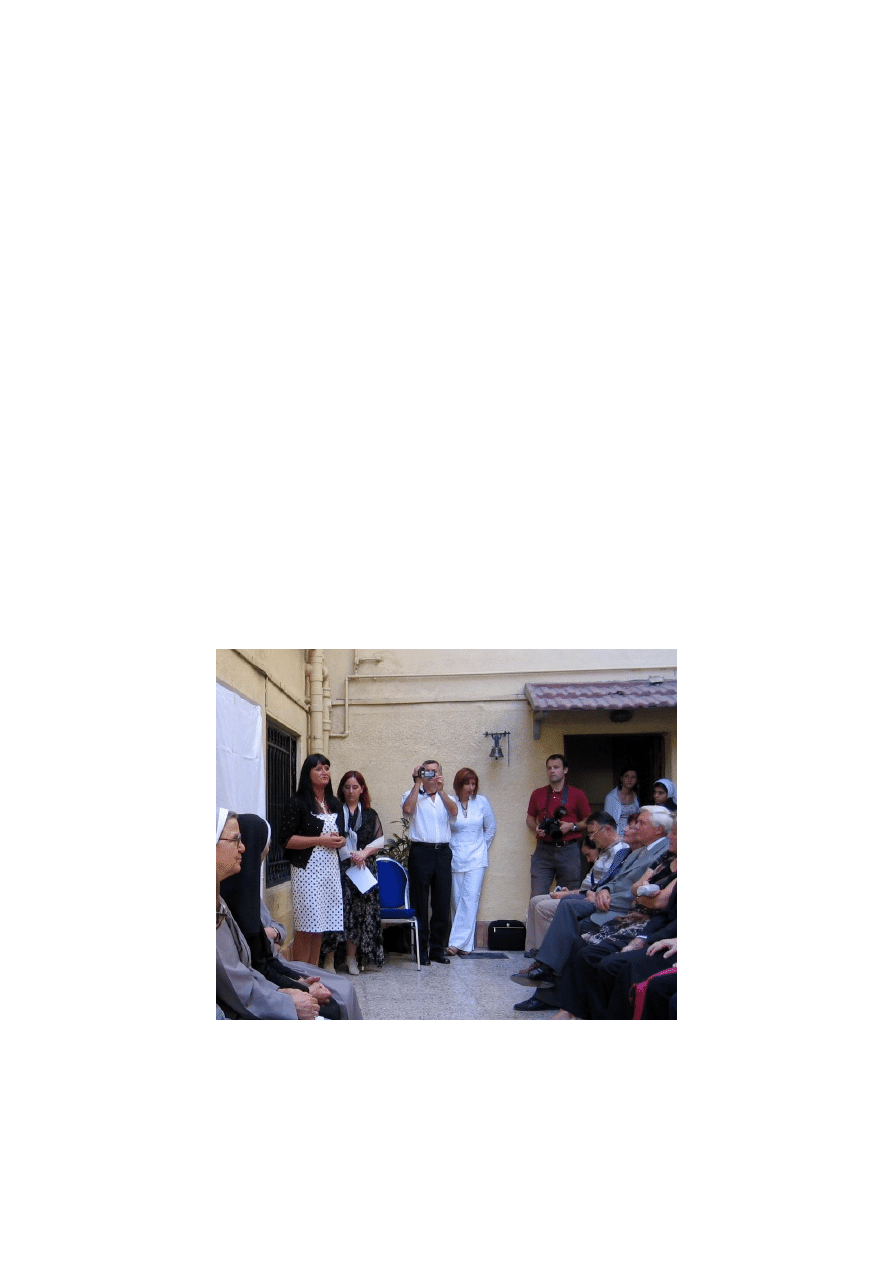
7
descendants travel to Cairo and Alexandria, mainly to visit the local Catholic
churches, the Catholic monasteries of the Franciscan nuns, and the Latin
cemeteries in these towns. They bring candles and flowers from Slovenia to the
graves of their mothers, grandmothers, and other relatives, and take back
candles, blessed in one of the Catholic churches in Cairo or Alexandria, to the
graves at home. They visit the monasteries carrying old family photographs in
the hope to find traces of their relatives who once lived in Egypt.
There have been several individual visits in recent years. Descendants visited
houses and hotels where their mothers and grandmothers had worked, the
children who had lived in Egypt visited the schools they had attended. But the
most significant was the group visit of descendants in 2007. It was the first
organised visit arranged by the Society for Preserving the Alexandrine
Heritage.
Commemoration ceremony. Alexandria, 2007.
(Photo: Vojko Mihelj)
8
The intention was to commemorate Slovene women who were migrant workers
in Egypt. Except for two or three people, they all visited Egypt for the first time
and joined the trip with that particular intention.
The principal destinations of visits
The most important places to the descendants of the Slovene migrants who visit
Egypt are the two Latin cemeteries in Cairo and Alexandria. These two
cemeteries indeed preserve most traces of the Slovenes who once lived and
worked there; their descendants visit them first of all to find the graves of their
grandmothers or great grandmothers, but not all of them do find them. In 2007 I
thus witnessed several very emotional scenes when descendants failed to find
the grave of their grandmother and their journey to Egypt at once lost its entire
meaning.
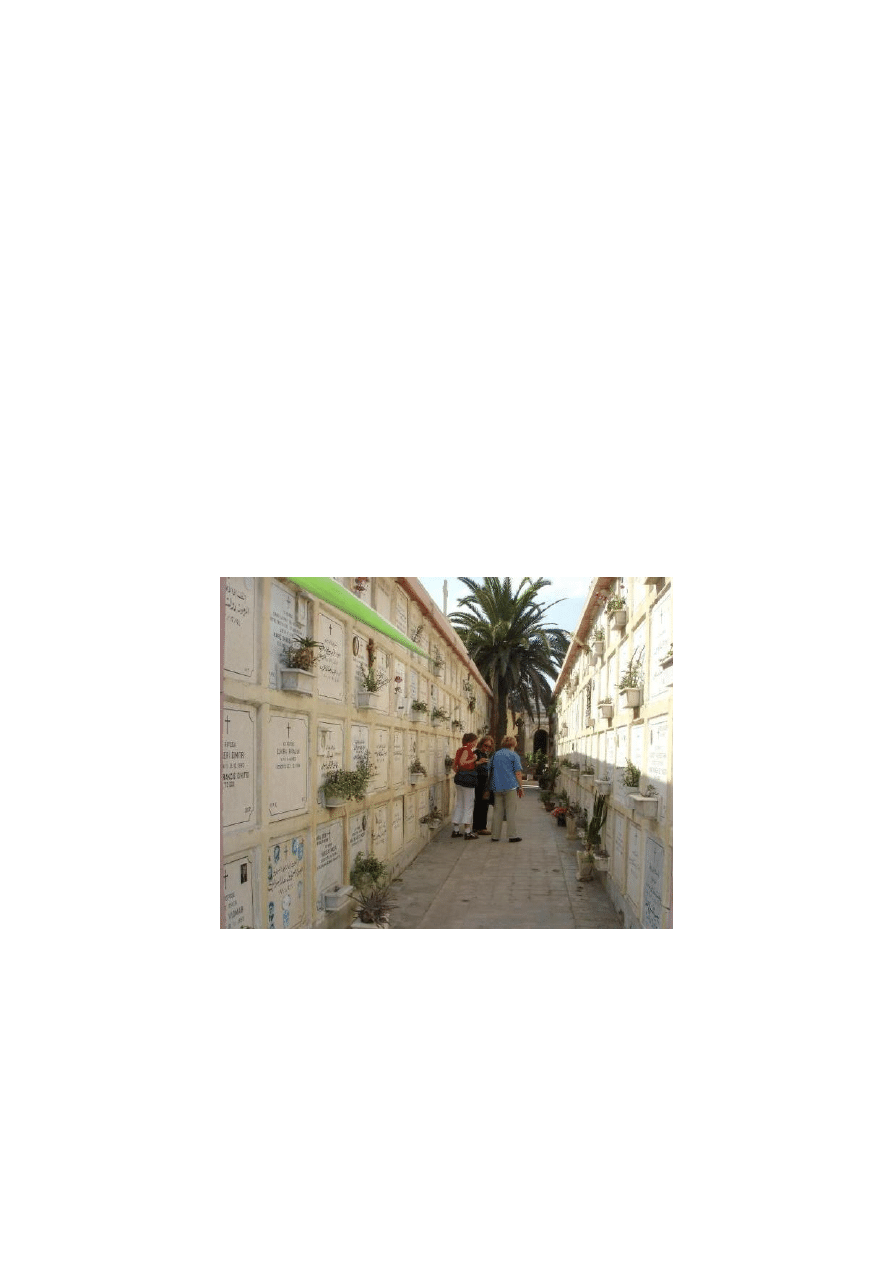
Searching for Slovene gravestones. Alexandria, 2007.
(Photo: Sonja Mravljak)
9
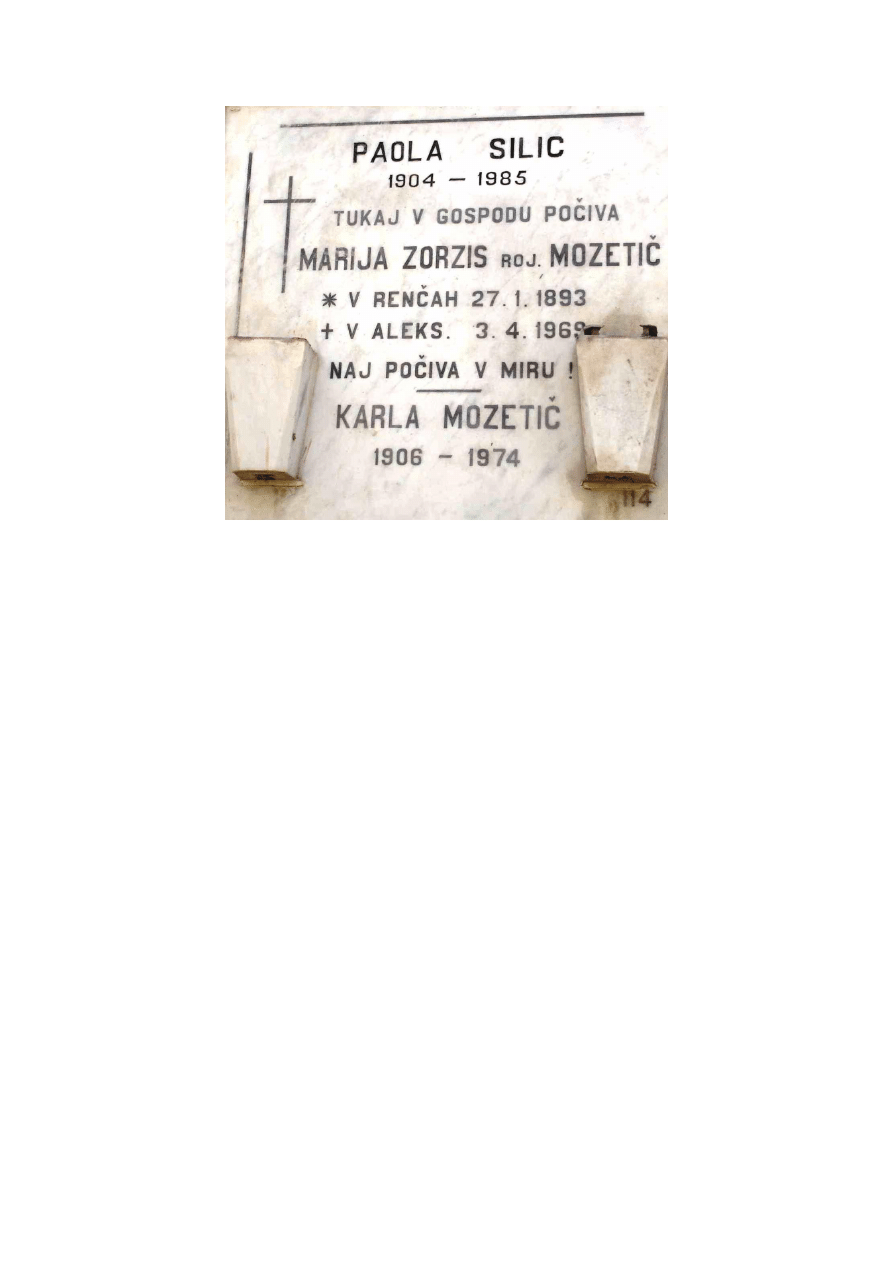
An example of a gravestone inscription in Slovene language.
Alexandria, 2007. (Photo: Daša Koprivec)
It was hard for them to understand why they were not able to find the grave, as it
should have been there according to the family history. Others found the graves
and lit candles they had brought from Slovenia. These graves are in a way
evidence that Slovenes indeed had lived there, since the inscriptions on the
tombstones are in Slovene.
The descendants then sang Slovene songs at the graves and prayed, and this
contact was deeply meaningful to them: it meant contact at the deeper level of a
family’s generations, a meeting after death, at the grave, while in real family life
they had lived separate lives in Egypt and Slovenia.
The candles and greenery that they brought from Slovenia and put on graves in
Egypt, reflect their links with them. They also bought candles in the Catholic
church of St. Catherine in Alexandria, very important in the life of Slovene
women in Egypt, to light them on the graves of grandmothers who had died at
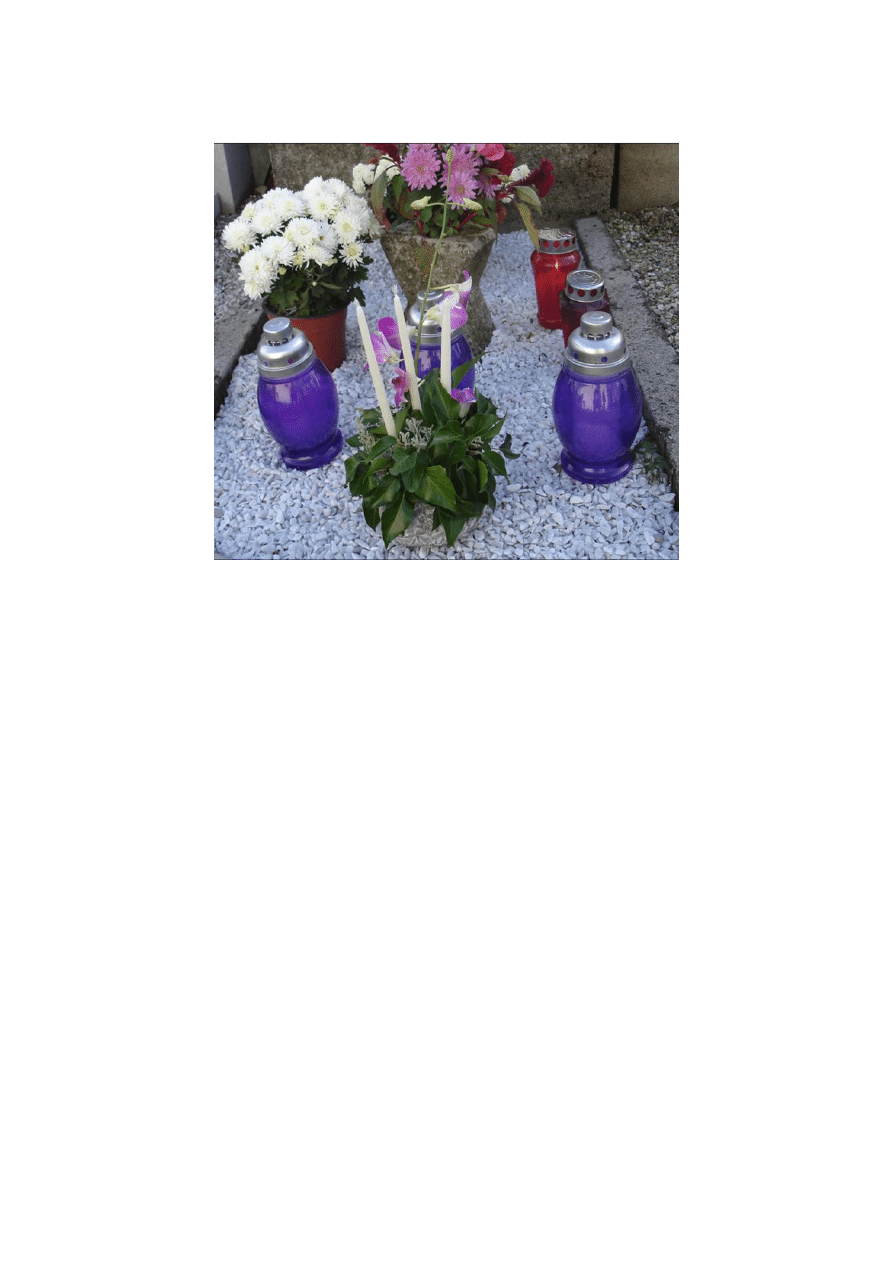
home in Slovenia. The symbolic meaning of the act is is significant: people kept
the candles from Alexandria for one year to light them on All Saints’ Day.
10
Candles from Egypt, lit non All Saints Day. Prvačina, Slovenia, 2008.
(Photo: Daša Koprivec)
On that day people in Slovenia remember their ancestors. The first of
November is celebrated as All Saints’ Day, a special and very important holiday
in Slovenia, when people visit the graves, tend them, light candles and decorate
them flowers.
Other important places are the San Francesco Community Centre in Alexandria
and Cairo, and churches, which were attended by Alexandrines. People now
visit them to obtain information about their grandmothers and great
grandmothers, because there are still Slovene nuns active in them; they may be
very old, but they remember some of the Alexandrines. The San Francesco
Community Centre in Alexandria was twice a very important meeting place for
the descendants of the Slovene women. In 2007, when a memorial stone to
Alexandrines was unveiled, and then in 2008 when Slovene Catholic nuns
celebrated the 100
th
anniversary of their arrival in Egypt. The most important
church in Alexandria for Slovene migrants was St. Catherine’s where they

11
married, baptised their newborn babies, and received the First Communion and
Confirmation.
In the sense of searching for one’s roots within the migration discourse, the
example I presented in this paper stands for returning to the location of a
diaspora that is no longer physically present, but only lives on symbolically in
cemeteries, churches, and religious centres. Descendants of Alexandrines want
to establish a transcendental contact with their deceased ancestors resting in
Egyptian soil.
Daša Koprivec, Curator, Slovene Ethnographic Museum, Migration Department,
Slovenia, Ljubljana (
Wyszukiwarka
Podobne podstrony:
Searching for the Neuropathology of Schizophrenia Neuroimaging Strategies and Findings
The Shifting Search for Self Manifestations of Borderline Pathology
The American Society for the Prevention of Cruelty
[Pargament & Mahoney] Sacred matters Sanctification as a vital topic for the psychology of religion
International Convention for the Safety of Life at Sea
Broad; Arguments for the Existence of God(1)
ESL Seminars Preparation Guide For The Test of Spoken Engl
Kinesio taping compared to physical therapy modalities for the treatment of shoulder impingement syn
GB1008594A process for the production of amines tryptophan tryptamine
Popper Two Autonomous Axiom Systems for the Calculus of Probabilities
Anatomical evidence for the antiquity of human footwear use
The Reasons for the?ll of SocialismCommunism in Russia
APA practice guideline for the treatment of patients with Borderline Personality Disorder
Criteria for the description of sounds
Evolution in Brownian space a model for the origin of the bacterial flagellum N J Mtzke
Hutter, Crisp Implications of Cognitive Busyness for the Perception of Category Conjunctions
więcej podobnych podstron