
1 / 22
The Software Development Life Cycle (SDLC)
For Small To Medium Database Applications
Document ID:
REF-0-02
Version: 1.0d

The Software Development Life Cycle (SDLC)
REF-0-02
For small to medium database applications
Version 1.0d
2

The Software Development Life Cycle (SDLC)
REF-0-02
For small to medium database applications
Version 1.0d
3
T
ABLE OF
C
ONTENTS
............................................................................ 4
.............................................................................. 5
............................................................................. 6
........................................................................................... 7
................................................................................... 8
................................................................. 9
.................................................................... 9
........................................................... 10
............................................................................ 11
............................................................................................. 12
................................................................................... 13
.......................................................... 14
....................................................................................... 16
............................................................................ 17
................................................................... 18
...................................................... 19
.............................................................................. 20
................................................................. 20
...................................................................... 21
......................................................................... 21
The Software Development Life Cycle (SDLC)
REF-0-02
For small to medium database applications
Version 1.0d
4
I
NTRODUCTION
This document describes the Software Development LifeCycle (SDLC) for small
to medium database application development efforts. This chapter presents an
overview of the SDLC, alternate lifecycle models, and associated references. The
following chapter describes the internal processes that are common across all
stages of the SDLC, and the third chapter describes the inputs, outputs, and
processes of each stage. Finally, the conclusion describes the four core concepts
that form the basis of this SDLC.
T
HE
SDLC W
ATERFALL
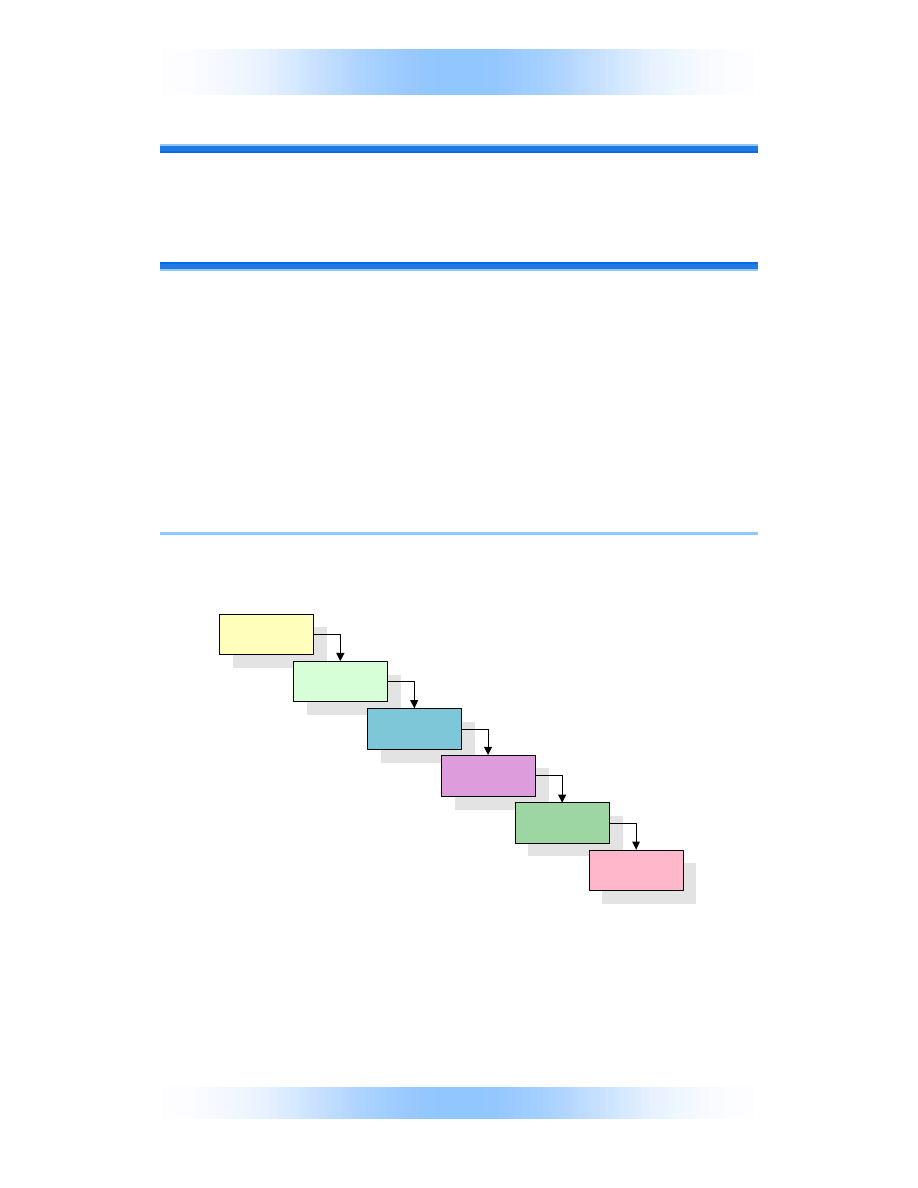
Small to medium database software projects are generally broken down into six
stages:
Project
Planning
Requirements
Definition
Design
Development
Integration
& Test
Installation
& Acceptance
The relationship of each stage to the others can be roughly described as a
waterfall, where the outputs from a specific stage serve as the initial inputs for the
following stage.
During each stage, additional information is gathered or developed, combined
with the inputs, and used to produce the stage deliverables. It is important to note
that the additional information is restricted in scope; “new ideas” that would take

The Software Development Life Cycle (SDLC)
REF-0-02
For small to medium database applications
Version 1.0d
5
the project in directions not anticipated by the initial set of high-level
requirements are not incorporated into the project. Rather, ideas for new
capabilities or features that are out-of-scope are preserved for later consideration.
After the project is completed, the Primary Developer Representative (PDR) and
Primary End-User Representative (PER), in concert with other customer and
development team personnel develop a list of recommendations for enhancement
of the current software.
P
ROTOTYPES
The software development team, to clarify requirements and/or design elements,
may generate mockups and prototypes of screens, reports, and processes.
Although some of the prototypes may appear to be very substantial, they're
generally similar to a movie set: everything looks good from the front but there's
nothing in the back.
When a prototype is generated, the developer produces the minimum amount of
code necessary to clarify the requirements or design elements under
consideration. No effort is made to comply with coding standards, provide robust
error management, or integrate with other database tables or modules. As a result,
it is generally more expensive to retrofit a prototype with the necessary elements
to produce a production module then it is to develop the module from scratch
using the final system design document.
For these reasons, prototypes are never intended for business use, and are
generally crippled in one way or another to prevent them from being mistakenly
used as production modules by end-users.
A
LLOWED
V
ARIATIONS
In some cases, additional information is made available to the development team
that requires changes in the outputs of previous stages. In this case, the
development effort is usually suspended until the changes can be reconciled with
the current design, and the new results are passed down the waterfall until the
project reaches the point where it was suspended.
The PER and PDR may, at their discretion, allow the development effort to
continue while previous stage deliverables are updated in cases where the impacts
are minimal and strictly limited in scope. In this case, the changes must be
carefully tracked to make sure all their impacts are appropriately handled.

The Software Development Life Cycle (SDLC)
REF-0-02
For small to medium database applications
Version 1.0d
6
O
THER
SDLC M
ODELS
The waterfall model is one of the three most commonly cited lifecycle models.
Others include the Spiral model and the Rapid Application Development (RAD)
model, often referred to as the Prototyping model.
S
PIRAL
L
IFECYCLE
The spiral model starts with an initial pass through a standard waterfall lifecycle,
using a subset of the total requirements to develop a robust prototype. After an
evaluation period, the cycle is initiated again, adding new functionality and
releasing the next prototype. This process continues, with the prototype becoming
larger and larger with each iteration. Hence, the “spiral.”
The theory is that the set of requirements is hierarchical in nature, with additional
functionality building on the first efforts. This is a sound practice for systems
where the entire problem is well defined from the start, such as modeling and
simulating software. Business-oriented database projects do not enjoy this
advantage. Most of the functions in a database solution are essentially
independent of one another, although they may make use of common data. As a
result, the prototype suffers from the same flaws as the prototyping lifecycle
described below. For this reason, the software development team has decided
against the use of the spiral lifecycle for database projects.
R
APID
A
PPLICATION
D
EVELOPMENT
(RAD) / P
ROTOTYPING
L
IFECYCLE
RAD is, in essence, the “try before you buy” approach to software development.
The theory is that end users can produce better feedback when examining a live
system, as opposed to working strictly with documentation. RAD-based
development cycles have resulted in a lower level of rejection when the
application is placed into production, but this success most often comes at the
expense of a dramatic overruns in project costs and schedule.
The RAD approach was made possible with significant advances in software
development environments to allow rapid generation and change of screens and
other user interface features. The end user is allowed to work with the screens
online, as if in a production environment. This leaves little to the imagination, and
a significant number of errors are caught using this process.
The down side to RAD is the propensity of the end user to force scope creep into
the development effort. Since it seems so easy for the developer to produce the
basic screen, it must be just as easy to add a widget or two. In most RAD lifecycle
failures, the end users and developers were caught in an unending cycle of
enhancements, with the users asking for more and more and the developers trying
to satisfy them. The participants lost sight of the goal of producing a basic, useful
system in favor of the siren song of glittering perfection.

The Software Development Life Cycle (SDLC)
REF-0-02
For small to medium database applications
Version 1.0d
7
For this reason, the software development team does not use a pure RAD
approach, but instead blends limited prototyping in with requirements and design
development during a conventional waterfall lifecycle. The prototypes developed
are specifically focused on a subset of the application, and do not provide an
integrated interface. The prototypes are used to validate requirements and design
elements, and the development of additional requirements or the addition of user
interface options not readily supported by the development environment is
actively discouraged.
R
EFERENCES
The following standards were used as guides to develop this SDLC description.
The standards were reviewed and tailored to fit the specific requirements of small
database projects.
•
ANSI/IEEE 1028: Standard for Software Reviews and Audits
•
ANSI/IEEE 1058.1: Standard for Software Project Management Plans
•
ANSI/IEEE 1074: Standard for Software Lifecycle Processes
•
SEI/CMM: Software Project Planning Key Process Area
This document makes extensive use of terminology that is specific to software
engineering. A glossary of standard software engineering terms is available online
at:
•
http://www.elucidata.org/refs/seglossary.pdf
The Software Development Life Cycle (SDLC)
REF-0-02
For small to medium database applications
Version 1.0d
8
G
ENERIC
S
TAGE
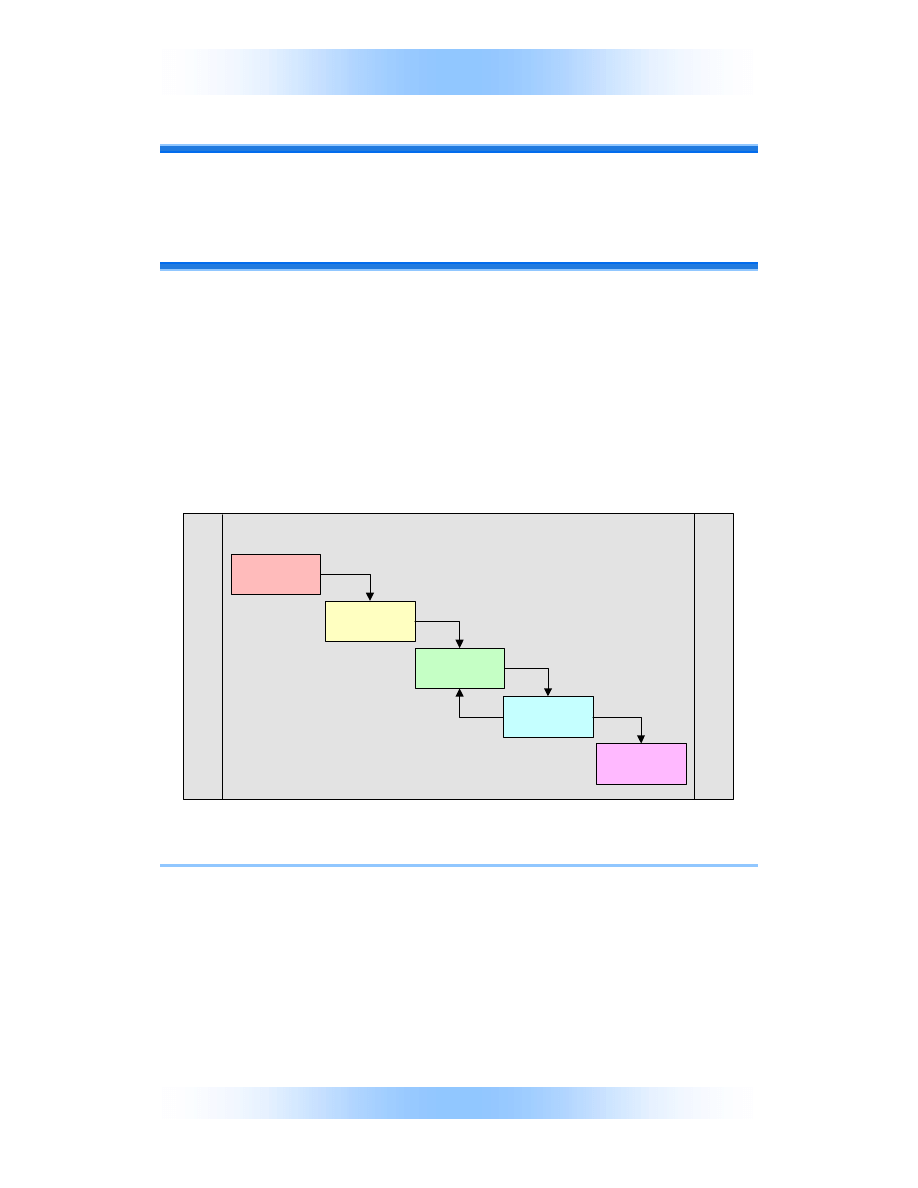
Each of the stages of the development lifecycle follow five standard internal
processes. These processes establish a pattern of communication and
documentation intended to familiarize all participants with the current situation,
and thus minimize risk to the current project plan. This generic stage description
is provided to avoid repetitive descriptions of these internal processes in each of
the following software lifecycle stage descriptions. The five standard processes
are Kickoff, Informal iteration, Formal iteration, In-stage assessment, and Stage
exit:
Kickoff
Process
Informal
Iteration
Formal
Iteration
In-Stage
Assessment
Stage
Exit
SDLC Stage
K
ICKOFF
P
ROCESS
Each stage is initiated by a kickoff meeting, which can be conducted either in
person, or by Web teleconference. The purpose of the kickoff meeting is to
review the output of the previous stage, go over any additional inputs required by
that particular stage, examine the anticipated activities and required outputs of the
current stage, review the current project schedule, and review any open issues.
The PDR is responsible for preparing the agenda and materials to be presented at
this meeting. All project participants are invited to attend the kickoff meeting for
each stage.

The Software Development Life Cycle (SDLC)
REF-0-02
For small to medium database applications
Version 1.0d
9
I
NFORMAL
I
TERATION
P
ROCESS
Most of the creative work for a stage occurs here. Participants work together to
gather additional information and refine stage inputs into draft deliverables.
Activities of this stage may include interviews, meetings, the generation of
prototypes, and electronic correspondence. All of these communications are
deemed informal, and are not recorded as minutes, documents of record,
controlled software, or official memoranda.
The intent here is to encourage, rather than inhibit the communication process.
This process concludes when the majority of participants agree that the work is
substantially complete and it is time to generate draft deliverables for formal
review and comment.
F
ORMAL
I
TERATION
P
ROCESS
In this process, draft deliverables are generated for formal review and comment.
Each deliverable was introduced during the kickoff process, and is intended to
satisfy one or more outputs for the current stage. Each draft deliverable is given a
version number and placed under configuration management control.
As participants review the draft deliverables, they are responsible for reporting
errors found and concerns they may have to the PDR via electronic mail. The
PDR in turn consolidates these reports into a series of issues associated with a
specific version of a deliverable. The person in charge of developing the
deliverable works to resolve these issues, then releases another version of the
deliverable for review. This process iterates until all issues are resolved for each
deliverable. There are no formal check off / signature forms for this part of the
process. The intent here is to encourage review and feedback.
At the discretion of the PDR and PER, certain issues may be reserved for
resolution in later stages of the development lifecycle. These issues are
disassociated from the specific deliverable, and tagged as "open issues." Open
issues are reviewed during the kickoff meeting for each subsequent stage.
Once all issues against a deliverable have been resolved or moved to open status,
the final (release) draft of the deliverable is prepared and submitted to the PDR.
When final drafts of all required stage outputs have been received, the PDR
reviews the final suite of deliverables, reviews the amount of labor expended
against this stage of the project, and uses this information to update the project
plan.
The project plan update includes a detailed list of tasks, their schedule and
estimated level of effort for the next stage. The stages following the next stage

The Software Development Life Cycle (SDLC)
REF-0-02
For small to medium database applications
Version 1.0d
10
(out stages) in the project plan are updated to include a high level estimate of
schedule and level of effort, based on current project experience.
Out stages are maintained at a high level in the project plan, and are included
primarily for informational purposes; direct experience has shown that it is very
difficult to accurately plan detailed tasks and activities for out stages in a software
development lifecycle. The updated project plan and schedule is a standard
deliverable for each stage of the project. The PDR then circulates the updated
project plan and schedule for review and comment, and iterates these documents
until all issues have been resolved or moved to open status.
Once the project plan and schedule has been finalized, all final deliverables for
the current stage are made available to all project participants, and the PDR
initiates the next process.
I
N
-S
TAGE
A
SSESSMENT
P
ROCESS
This is the formal quality assurance review process for each stage. In a small
software development project, the deliverables for each stage are generally small
enough that it is not cost effective to review them for compliance with quality
assurance standards before the deliverables have been fully developed. As a
result, only one in-stage assessment is scheduled for each stage.
This process is initiated when the PDR schedules an in-stage assessment with the
independent Quality Assurance Reviewer (QAR), a selected End-user Reviewer
(usually a Subject Matter Expert), and a selected Technical Reviewer.
These reviewers formally review each deliverable to make judgments as to the
quality and validity of the work product, as well as its compliance with the
standards defined for deliverables of that class. Deliverable class standards are
defined in the software quality assurance section of the project plan.
The End-user Reviewer is tasked with verifying the completeness and accuracy of
the deliverable in terms of desired software functionality. The Technical
Reviewer determines whether the deliverable contains complete and accurate
technical information.
The QA Reviewer is tasked solely with verifying the completeness and
compliance of the deliverable against the associated deliverable class standard.
The QAR may make recommendations, but cannot raise formal issues that do not
relate to the deliverable standard.
Each reviewer follows a formal checklist during their review, indicating their
level of concurrence with each review item in the checklist. Refer to the software
quality assurance plan for this project for deliverable class standards and
associated review checklists. A deliverable is considered to be acceptable when

The Software Development Life Cycle (SDLC)
REF-0-02
For small to medium database applications
Version 1.0d
11
each reviewer indicates substantial or unconditional concurrence with the content
of the deliverable and the review checklist items.
Any issues raised by the reviewers against a specific deliverable will be logged
and relayed to the personnel responsible for generation of the deliverable. The
revised deliverable will then be released to project participants for another formal
review iteration. Once all issues for the deliverable have been addressed, the
deliverable will be resubmitted to the reviewers for reassessment. Once all three
reviewers have indicated concurrence with the deliverable, the PDR will release a
final in-stage assessment report and initiate the next process.
S
TAGE
E
XIT
P
ROCESS
The stage exit is the vehicle for securing the concurrence of principal project
participants to continue with the project and move forward into the next stage of
development. The purpose of a stage exit is to allow all personnel involved with
the project to review the current project plan and stage deliverables, provide a
forum to raise issues and concerns, and to ensure an acceptable action plan exists
for all open issues.
The process begins when the PDR notifies all project participants that all
deliverables for the current stage have been finalized and approved via the In-
Stage Assessment report. The PDR then schedules a stage exit review with the
project executive sponsor and the PER as a minimum. All interested participants
are free to attend the review as well. This meeting may be conducted in person or
via Web teleconference.
The stage exit process ends with the receipt of concurrence from the designated
approvers to proceed to the next stage. This is generally accomplished by entering
the minutes of the exit review as a formal document of record, with either
physical or digital signatures of the project executive sponsor, the PER, and the
PDR.
The Software Development Life Cycle (SDLC)
REF-0-02
For small to medium database applications
Version 1.0d
12
SDLC S
TAGES
O
VERVIEW
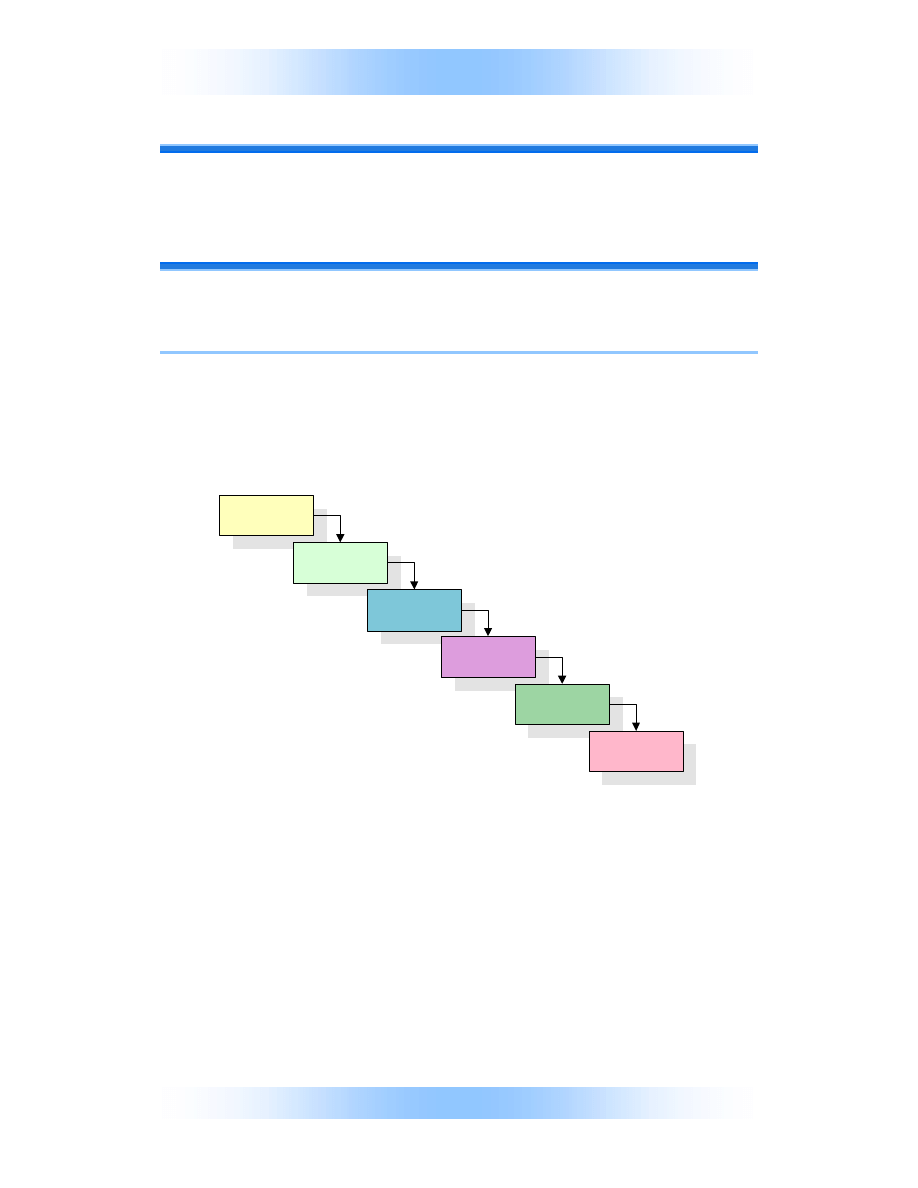
The six stages of the SDLC are designed to build on one another, taking the
outputs from the previous stage, adding additional effort, and producing results
that leverage the previous effort and are directly traceable to the previous stages.
This top-down approach is intended to result in a quality product that satisfies the
original intentions of the customer.
Project
Planning
Requirements
Definition
Design
Development
Integration
& Test
Installation
& Acceptance
Too many software development efforts go awry when the development team and
customer personnel get caught up in the possibilities of automation. Instead of
focusing on high priority features, the team can become mired in a sea of “nice to
have” features that are not essential to solve the problem, but in themselves are
highly attractive. This is the root cause of a large percentage of failed and/or
abandoned development efforts, and is the primary reason the development team
utilizes the Waterfall SDLC.
The Software Development Life Cycle (SDLC)
REF-0-02
For small to medium database applications
Version 1.0d
13
P
LANNING
S
TAGE
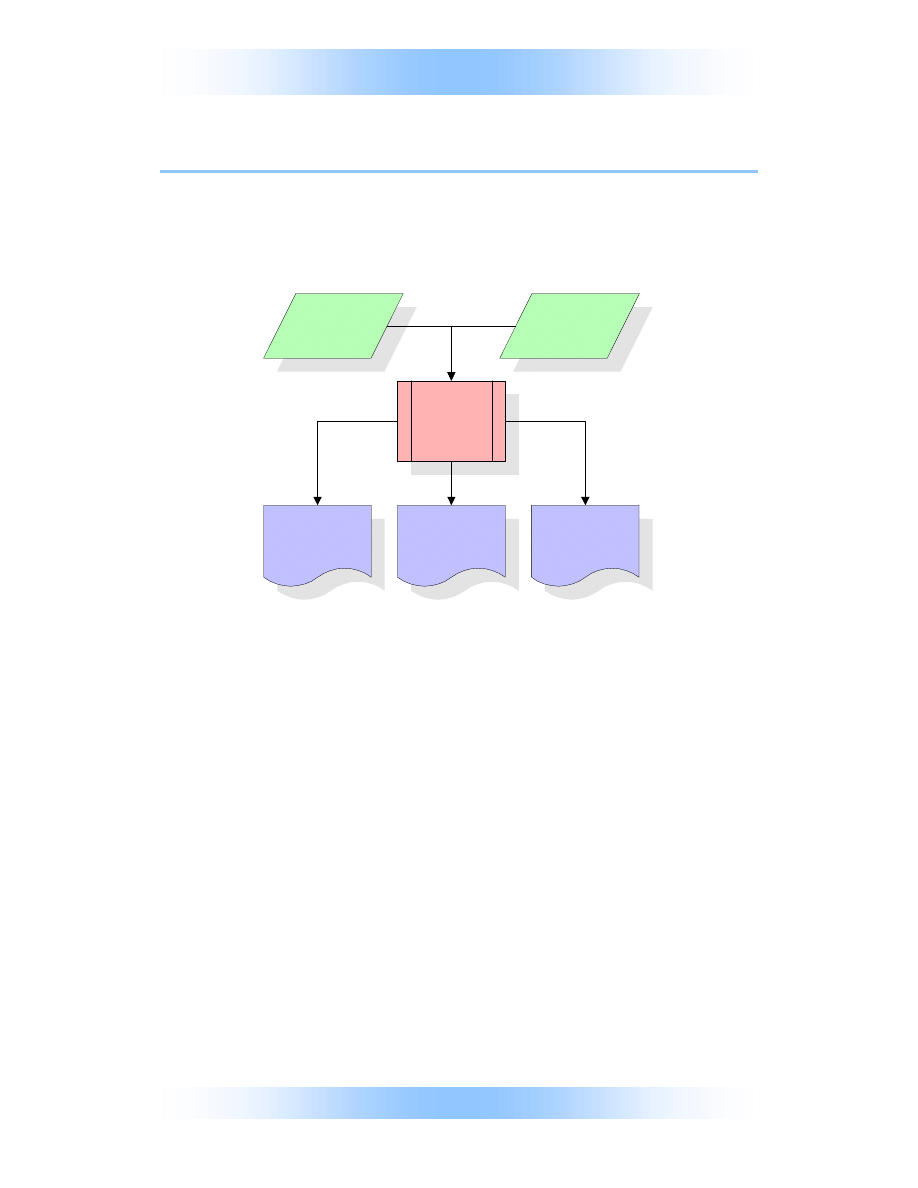
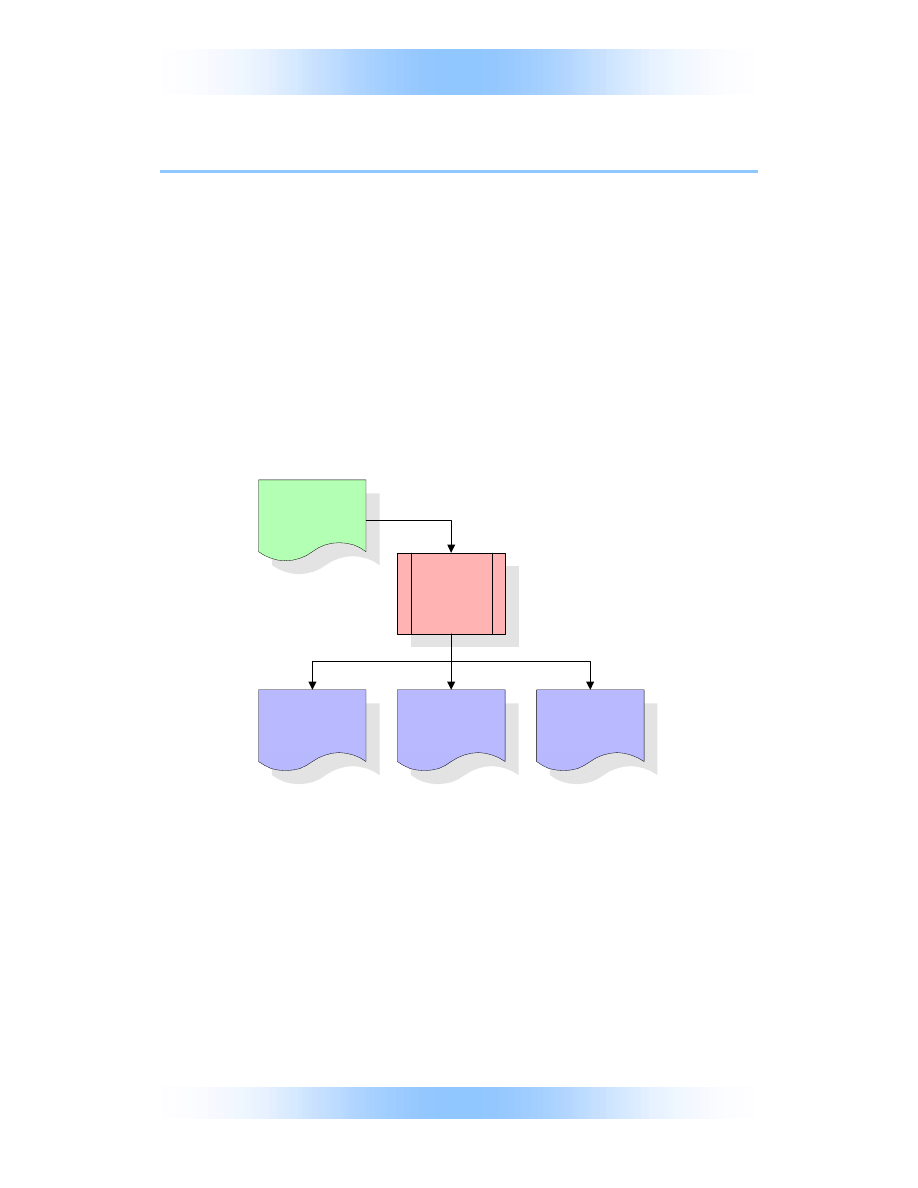
The planning stage establishes a bird's eye view of the intended software product,
and uses this to establish the basic project structure, evaluate feasibility and risks
associated with the project, and describe appropriate management and technical
approaches.
Application
Goals
Planning
Stage
Project Plan
& Schedule
Software Quality
Assurance Plan
Software
Configuration
Management Plan
Lifecycle
Model
The most critical section of the project plan is a listing of high-level product
requirements, also referred to as goals. All of the software product requirements
to be developed during the requirements definition stage flow from one or more
of these goals. The minimum information for each goal consists of a title and
textual description, although additional information and references to external
documents may be included.
The outputs of the project planning stage are the configuration management plan,
the quality assurance plan, and the project plan and schedule, with a detailed
listing of scheduled activities for the upcoming Requirements stage, and high-
level estimates of effort for the out stages.
The Software Development Life Cycle (SDLC)
REF-0-02
For small to medium database applications
Version 1.0d
14
R
EQUIREMENTS
D
EFINITION
S
TAGE
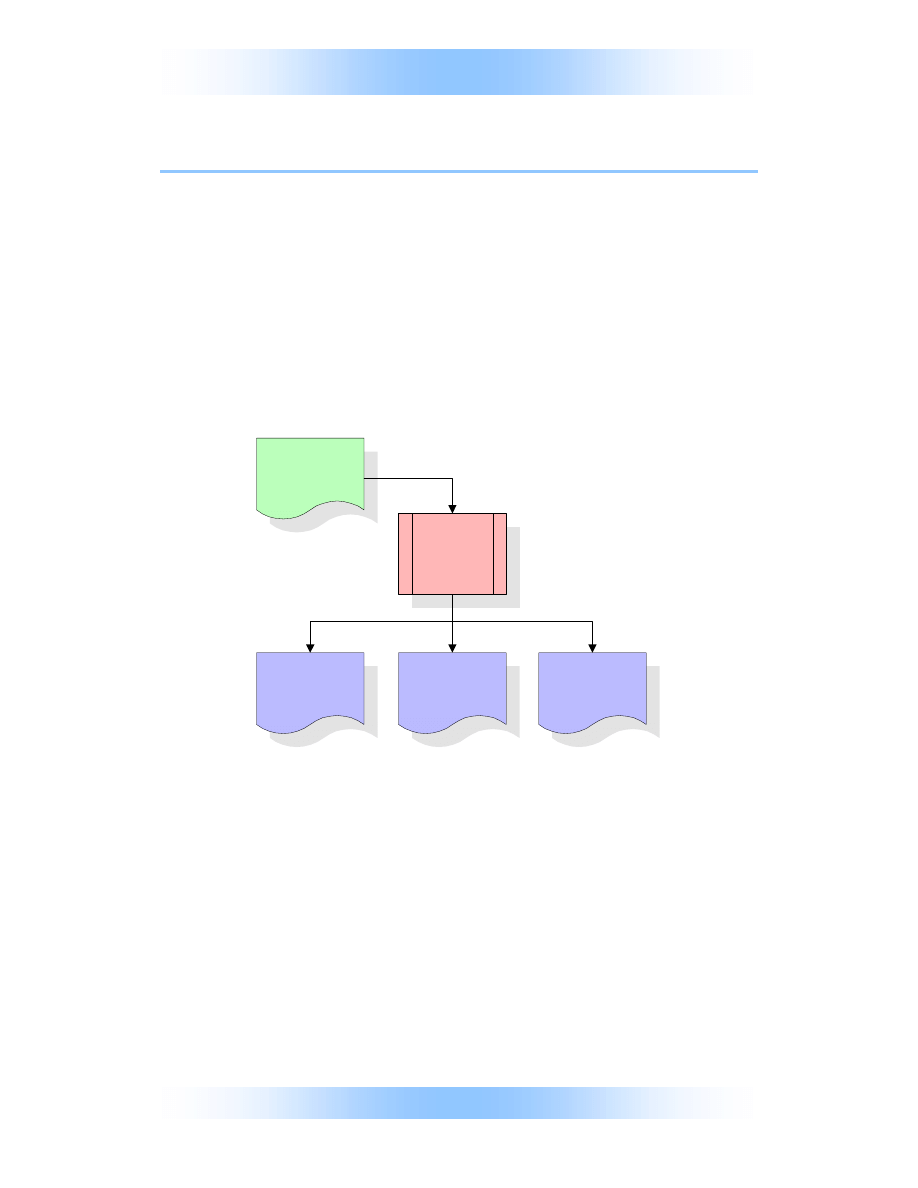
The requirements gathering process takes as its input the goals identified in the
high-level requirements section of the project plan. Each goal will be refined into
a set of one or more requirements.
These requirements define the major functions of the intended application, define
operational data areas and reference data areas, and define the initial data entities.
Major functions include critical processes to be managed, as well as mission
critical inputs, outputs and reports. A user class hierarchy is developed and
associated with these major functions, data areas, and data entities.
Each of these definitions is termed a Requirement. Requirements are identified by
unique requirement identifiers and, at minimum, contain a requirement title and
textual description.
Updated
Project Plan
& Schedule
Requirements
Traceability
Matrix
Requirements
Definition
Stage
Requirements
Document
High-Level
Requirements
(Project Plan)
These requirements are fully described in the primary deliverables for this stage:
the Requirements Document and the Requirements Traceability Matrix (RTM).
the requirements document contains complete descriptions of each requirement,
including diagrams and references to external documents as necessary. Note that
detailed listings of database tables and fields are not included in the requirements
document.
The title of each requirement is also placed into the first version of the RTM,
along with the title of each goal from the project plan. The purpose of the RTM is
to show that the product components developed during each stage of the software
development lifecycle are formally connected to the components developed in
prior stages.

The Software Development Life Cycle (SDLC)
REF-0-02
For small to medium database applications
Version 1.0d
15
In the requirements stage, the RTM consists of a list of high-level requirements,
or goals, by title, with a listing of associated requirements for each goal, listed by
requirement title. In this hierarchical listing, the RTM shows that each
requirement developed during this stage is formally linked to a specific product
goal. In this format, each requirement can be traced to a specific product goal,
hence the term requirements traceability.
The outputs of the requirements definition stage include the requirements
document, the RTM, and an updated project plan.
The Software Development Life Cycle (SDLC)
REF-0-02
For small to medium database applications
Version 1.0d
16
D
ESIGN
S
TAGE
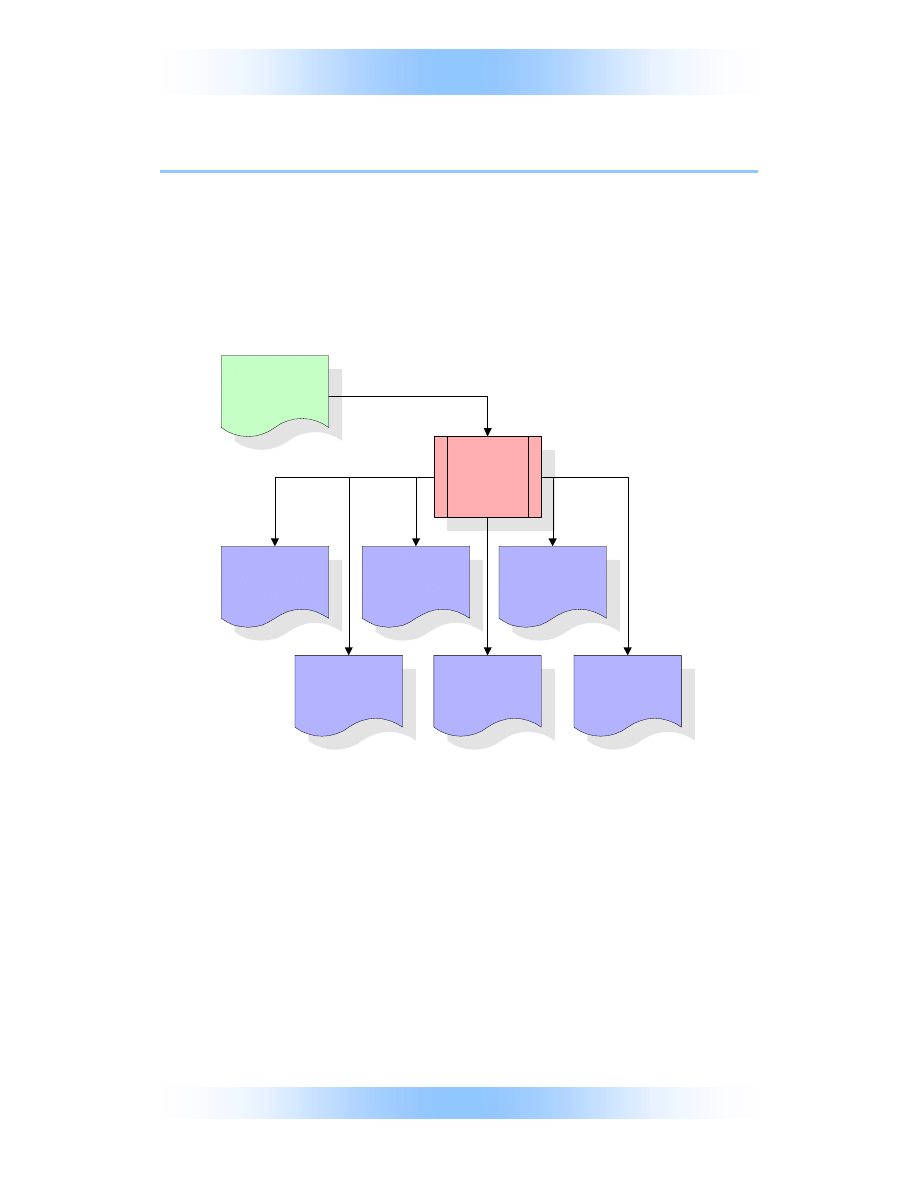
The design stage takes as its initial input the requirements identified in the
approved requirements document. For each requirement, a set of one or more
design elements will be produced as a result of interviews, workshops, and/or
prototype efforts.
Design elements describe the desired software features in detail, and generally
include functional hierarchy diagrams, screen layout diagrams, tables of business
rules, business process diagrams, pseudocode, and a complete entity-relationship
diagram with a full data dictionary. These design elements are intended to
describe the software in sufficient detail that skilled programmers may develop
the software with minimal additional input.
Updated
Project Plan
& Schedule
Updated
Requirements
Traceability
Matrix
Design
Stage
Requirements
Document
Design
Document
When the design document is finalized and accepted, the RTM is updated to show
that each design element is formally associated with a specific requirement. The
outputs of the design stage are the design document, an updated RTM, and an
updated project plan.
The Software Development Life Cycle (SDLC)
REF-0-02
For small to medium database applications
Version 1.0d
17
D
EVELOPMENT
S
TAGE
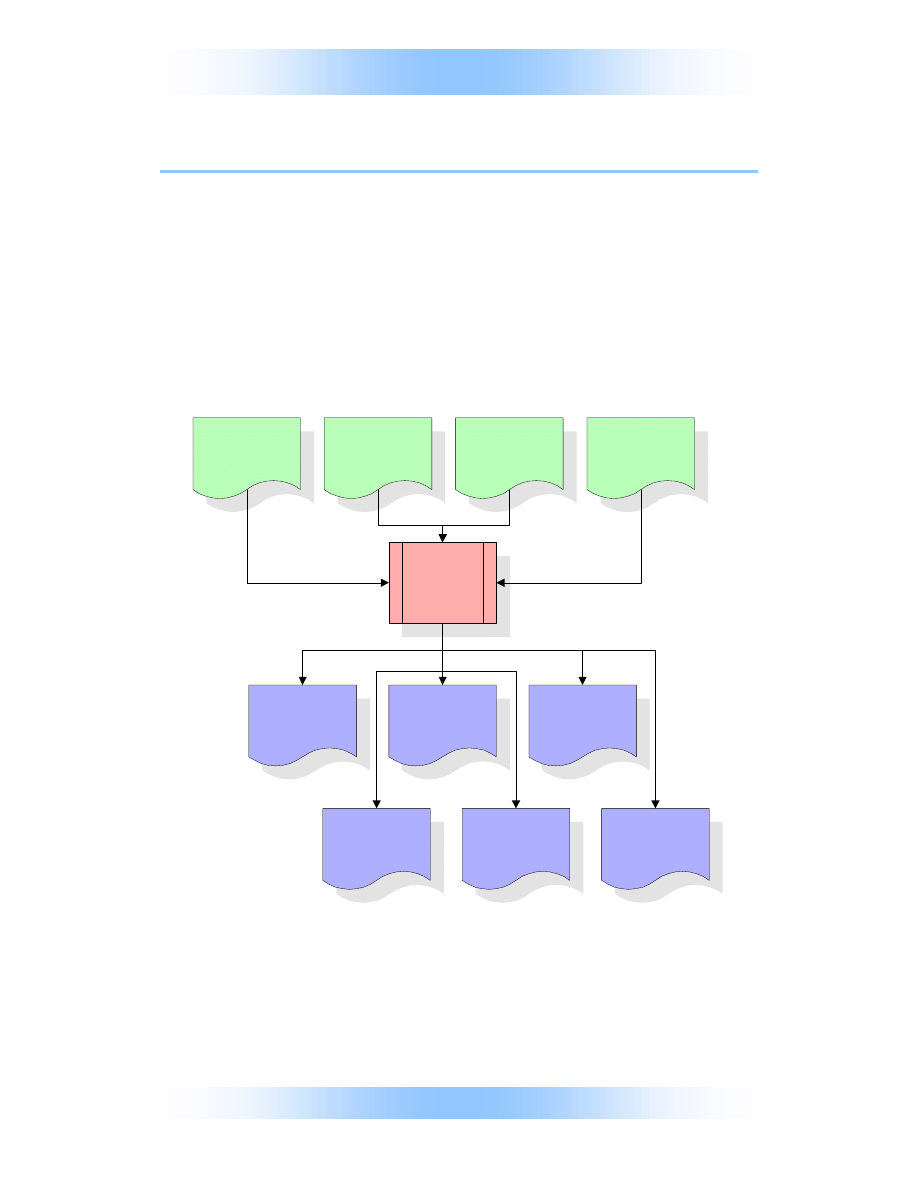
The development stage takes as its primary input the design elements described in
the approved design document. For each design element, a set of one or more
software artifacts will be produced. Software artifacts include but are not limited
to menus, dialogs, data management forms, data reporting formats, and
specialized procedures and functions. Appropriate test cases will be developed
for each set of functionally related software artifacts, and an online help system
will be developed to guide users in their interactions with the software.
Updated
Project Plan
& Schedule
Updated
Requirements
Traceability
Matrix
Development
Stage
Design
Document
Online
Help
Implementation
Map
Test Plan
Software
The RTM will be updated to show that each developed artifact is linked to a
specific design element, and that each developed artifact has one or more
corresponding test case items. At this point, the RTM is in its final configuration.
The outputs of the development stage include a fully functional set of software
that satisfies the requirements and design elements previously documented, an
online help system that describes the operation of the software, an implementation
map that identifies the primary code entry points for all major system functions, a
test plan that describes the test cases to be used to validate the correctness and
completeness of the software, an updated RTM, and an updated project plan.
The Software Development Life Cycle (SDLC)
REF-0-02
For small to medium database applications
Version 1.0d
18
I
NTEGRATION
& T
EST
S
TAGE
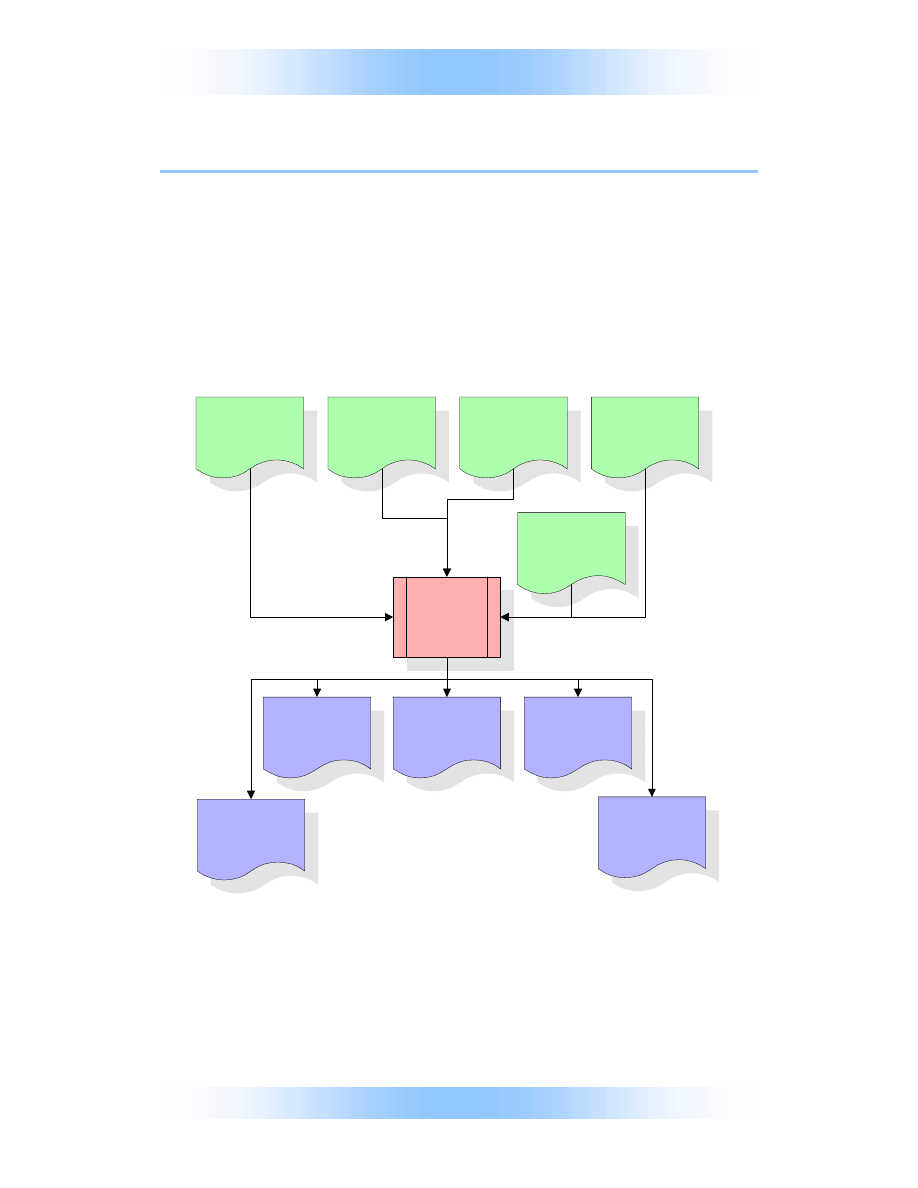
During the integration and test stage, the software artifacts, online help, and test
data are migrated from the development environment to a separate test
environment. At this point, all test cases are run to verify the correctness and
completeness of the software. Successful execution of the test suite confirms a
robust and complete migration capability.
During this stage, reference data is finalized for production use and production
users are identified and linked to their appropriate roles. The final reference data
(or links to reference data source files) and production user list are compiled into
the Production Initiation Plan.
Updated
Project Plan
& Schedule
Integrated
Software
Integration
& Test Stage
Online
Help
Implementation
Map
Test Plan
Software
Online
Help
Production
Initiation Plan
Acceptance
Plan
Implementation
Map
The outputs of the integration and test stage include an integrated set of software,
an online help system, an implementation map, a production initiation plan that
describes reference data and production users, an acceptance plan which contains
the final suite of test cases, and an updated project plan.
The Software Development Life Cycle (SDLC)
REF-0-02
For small to medium database applications
Version 1.0d
19
I
NSTALLATION
& A
CCEPTANCE
S
TAGE
During the installation and acceptance stage, the software artifacts, online help,
and initial production data are loaded onto the production server. At this point, all
test cases are run to verify the correctness and completeness of the software.
Successful execution of the test suite is a prerequisite to acceptance of the
software by the customer.
After customer personnel have verified that the initial production data load is
correct and the test suite has been executed with satisfactory results, the customer
formally accepts the delivery of the software.
Archived
Project Plan
& Schedule
Integrated
Software
Installation &
Acceptance
Stage
Online
Help
Production
Initiation Plan
Acceptance
Plan
Implementation
Map
Archived
Software
Artifacts
Completed
Acceptance Test
Customer
Acceptance
Memorandum
Production
Software
The primary outputs of the installation and acceptance stage include a production
application, a completed acceptance test suite, and a memorandum of customer
acceptance of the software. Finally, the PDR enters the last of the actual labor
data into the project schedule and locks the project as a permanent project record.
At this point the PDR "locks" the project by archiving all software items, the
implementation map, the source code, and the documentation for future reference.

The Software Development Life Cycle (SDLC)
REF-0-02
For small to medium database applications
Version 1.0d
20
C
ONCLUSION
The structure imposed by this SDLC is specifically designed to maximize the
probability of a successful software development effort. To accomplish this, the
SDLC relies on four primary concepts:
•
Scope Restriction
•
Progressive Enhancement
•
Pre-defined Structure
•
Incremental Planning
These four concepts combine to mitigate the most common risks associated with
software development efforts.
S
COPE
R
ESTRICTION
The project scope is established by the contents of high-level requirements, also
known as goals, incorporated into the project plan. These goals are subsequently
refined into requirements, then design elements, then software artifacts.
This hierarchy of goals, requirements, elements, and artifacts is documented in a
Requirements Traceability Matrix (RTM). The RTM serves as a control element
to restrict the project to the originally defined scope.
Project participants are restricted to addressing those requirements, elements, and
artifacts that are directly traceable to product goals. This prevents the substantial
occurrence of scope creep, which is the leading cause of software project failure.
P
ROGRESSIVE
E
NHANCEMENT
Each stage of the SDLC takes the outputs of the previous stage as its initial inputs.
Additional information is then gathered, using methods specific to each stage. As
a result, the outputs of the previous stage are progressively enhanced with
additional information.

The Software Development Life Cycle (SDLC)
REF-0-02
For small to medium database applications
Version 1.0d
21
By establishing a pattern of enhancing prior work, the project precludes the
insertion of additional requirements in later stages. New requirements are
formally set aside by the development team for later reference, rather than going
through the effort of backing the new requirements into prior stage outputs and
reconciling the impacts of the additions. As a result, the project participants
maintain a tighter focus on the original product goals, minimize the potential for
scope creep, and show a preference for deferring out-of-scope enhancements,
rather than attempting to incorporate them into the current effort.
P
RE
-
DEFINED
S
TRUCTURE
Each stage has a pre-defined set of standard processes, such as Informal Iteration
and In-stage Assessment. The project participants quickly grow accustomed to
this repetitive pattern of effort as they progress from stage to stage. In essence,
these processes establish a common rhythm, or culture, for the project.
This pre-defined structure for each stage allows the project participants to work in
a familiar environment, where they know what happened in the past, what is
happening in the present, and have accurate expectations for what is coming in the
near future. This engenders a high comfort level, which in turn generates a higher
level of cooperation between participants. Participants tend to provide needed
information or feedback in a more timely manner, and with fewer
miscommunications. This timely response pattern and level of communications
quality becomes fairly predictable, enhancing the ability of the PDR to forecast
the level of effort for future stages.
I
NCREMENTAL
P
LANNING
The entire intent of incremental planning is to minimize surprises, increase
accuracy, provide notification of significant deviations from plan as early in the
SDLC as possible, and coordinate project forecasts with the most current
available information.
In this SDLC, the project planning effort is restricted to gathering metrics on the
current stage, planning the next stage in detail, and restricting the planning of later
stages, also known as Out Stages, to a very high level. The project plan is updated
as each stage is completed; current costs and schedule to date are combined with
refined estimates for activities and level of effort for the next stage.
The activities and tasks of the next stage are defined only after the deliverables for
the current stage are complete and the current metrics are available. This allows
the planner to produce a highly accurate plan for the next stage. Direct experience
has shown that it is very difficult to develop more than a cursory estimate of
anticipated structure and level of effort for out stages.

The Software Development Life Cycle (SDLC)
REF-0-02
For small to medium database applications
Version 1.0d
22
The estimates for out stages are included to allow a rough estimate of ultimate
project cost and schedule. The estimates for out stages are reviewed and revised
as each stage is exited. As a result, the total project estimate becomes more and
more accurate over time.
As each stage is exited, the updated project plan and schedule is presented to the
customer. The customer is apprised of project progress, cost and schedule, and the
actual metrics are compared against the estimates. This gives the customer the
opportunity to confirm the project is on track, or take corrective action as
necessary. The customer is never left “in the dark” about the progress of the
project.
Document Outline
- The Software Development Life Cycle (SDLC)
- Introduction
- The SDLC Waterfall
- Allowed Variations
- Other SDLC Models
- References
- Generic Stage
- Kickoff Process
- Informal Iteration Process
- Formal Iteration Process
- In-Stage Assessment Process
- Stage Exit Process
- SDLC Stages
- Overview
- Planning Stage
- Requirements Definition Stage
- Design Stage
- Development Stage
- Integration & Test Stage
- Installation & Acceptance Stage
- Conclusion
- Scope Restriction
- Progressive Enhancement
- Pre-defined Structure
- Incremental Planning
Wyszukiwarka
Podobne podstrony:
Rational Unified Process (Rup) Software Life Cycle
Cost Models for Future Software Life Cycle Processes; COCOMO 2 0 Barry Boehm et al
Quality of software (development)
BYT 2004 The concept of a project life cycle
2 Safety Life Cycle PL
Life Cycle of a Pumpkin
Agile Software Development Gra zespolowa Wydanie II agilsd
w coll01 5 Things Your Software Development Teams Should be Doing Now
kurs dla software developer odc4
kurs dla software developer, odcinek 1
E85 Life Cycle Impulse
więcej podobnych podstron