
Ismaël AL AMOUDI
Department: Behaviour in organisations
The Economy of power, an analytical reading of
Michel Foucault.

2
Summary
INTRODUCTION
3
I/ LOCATING THE FOUCAULDIAN FRAMEWORK
5
The Modern dilemma of finitude: meaning or objectivity
5
The two sources of archaeology: hermeneutics and structuralism
7
II/ THE FOUCAULDIAN APPROACH TO HISTORY
9
The birth of archaeology
9
The rehabilitation of genealogy
13
III/ THE ECONOMY OF POWER
15
Beyond the repressive hypothesis: Power as power/knowledge
15
A deterministic economy of power ?
17
Redrawing institutions from discourse/power analysis
20
CONCLUSION: SOME OPEN FIELDS FOR FOUCAULDIAN ANALYSIS
22
BIBLIOGRAPHY
23
References
23
Additional references
23

3
Introduction
‘Words, words misplaced and mutilated, words from
others, were the mere alms that let him hours and
centuries.’
JL Borges, ‘The immortals’ in El Aleph
Few authors have been as much analysed, commented, admired, hated, criticised or defended as
Michel Foucault in the past twenty five years. Today, one can find a great deal of
« Foucauldian » or « Anti-Foucauldian » theses in such different disciplines as philosophy, of
course, but also sociology, history, criminology, psychiatry, politics management, and even
feminist studies. While, the distinctive personality of Michel Foucault or the broadness of the
topics he studied, as well as the tumultuous socio-historical context in which he wrote his books
partly account for this passion, it does not embody his influence and the reactions his works
arose.
On an other hand, it appears that Foucault, who used to hate the critiques of his books, has
very often been, if not totally misunderstood, at least partly betrayed. Most of the comments,
reactions and other criticisms focus on his conceptions of power and discipline. However, these
themes, although important in Foucauldian thought, are not the key objective of Foucault’s work.
As he explains in a late text :
I would like to say, first of all, what has been the goal of my work during the last twenty years. It has not
been to analyse the phenomena of power, nor to elaborate the foundations of such an analysis.
My objective, instead, has been to create a history of the different modes by which, in our culture, human
beings are made subjects. (Foucault M, 1982:208)
Therefore, it appears that any attempt to use Foucault’s works to better analyse organisations
is exposed to a double difficulty: first, we must not be sidetracked by the flourishing rhetorics

4
which try either to appropriate or to radically banish any Foucauldian analysis. Then, and this
point is certainly the most difficult, we must make sure that proper use is made of a material
which was not principally designed to analyse organisations, but to analyse how « human beings
are made subjects ».
One of the first problems which directly arose from these difficulties, was the focus of the
topic in this essay. In such a short paper, a new Foucauldian Organisational analysis would have
certainly been pointless. On the other hand, writing directly about « how human beings are made
subjects » would have been interesting, but might have been less relevant for organisational
analysis, which is our main concern. Therefore, I have tried to undertake a topic which would be
directly linked to the analysis of organisations and which would not betray Foucault’s
views–namely, the economy of power.
The expression « economy of power » is directly borrowed from Foucault himself who uses it
quite often without ever treating it as a core concept. By choosing to read Michel Foucault around
and towards this common but not-defined expression , I am therefore making a double choice:
first, I will try to stick to Foucault as much as possible and to read his thought as honestly as can
be, second I have chosen not to take what could be the « main road », but to follow a shorter path
in the direction of what Foucault calls the « economy of power » and draw some conclusions
about the Foucauldian legacy for the analysis of organisations.
Because Foucault is not (always) an easy author, because of the changes of direction he
brought in his thinking, and, also, because of the enormous importance of his original
methodology, it is important to first present a framework (part 1) against which I will then
present his analytical techniques (part 2). Only then I will go on to analyse the Foucauldian
economy of power as well as the new perspectives it brings to organisational analysis (part 3).

5
I/ Locating the Foucauldian framework
‘We are unknown, we knowers, ourselves to
ourselves: this has its own good reasons’.
F. Nietzsche, The genealogy of morals
In order to enter the Foucauldian thought properly, a double work of analysis will be made. I will
first attempt to summarise the fundamental problem of objectivity it inherited from modernity
and with which it had to deal, then I will try to give a short overview of the two main frameworks
from (and against) which the Foucauldian approach was built.
The Modern dilemma of finitude: meaning or objectivity
At the end of the eighteenth century, western philosophy has been confronted with one of its
deeper crises (Foucault, 1973). The problem raised can be summarised as follows: if we define
objectivity as the match between a statement and the reality to which it refers, then any attempt
to formulate an objective statement is doomed in advance. In effect, as the English philosopher
Berkeley first put it, even the « reality » to which I refer my statement cannot ever be anything
more than another representation. In front of such a declaration, two major schools of philosophy
developed. On a one hand, the idealist school which pretended that there was no reality out of
representation, and that therefore everything was apprehensible in that it was « created » by the
subject itself. This thought was however limited by the « passivity » of the human perception in
front of an object which is apparently not entirely created. I can very easily think or imagine that
6
I have five golden coins in my pocket, but alas I won’t have them effectively by this mere
operation (Kant, 1787).
On the other side a « sckeptic » school, of which Hume was a major figure, developed around
the idea that reality exists « in itself » (ie out of the subject), but that the subject couldn’t build
any objective statement about it. The conclusion of this approach was therefore threatening for
the foundations of reason.
Faced with such a dilemma, between a perception which would entirely create its object and a
perception which denies itself any possibility of objectivity, a first re-definition of objectivity
was conducted by the critical philosophy of Immanuel Kant. Objectivity was not to be
understood in terms of a match between an inside representation and an outside object. In fact,
objectivity was to be considered in terms of « universality », for an objective statement being then
a statement which can be universally understood by any man, independently of any empirical
contingency. Hence, the criteria of objectivity/universality was no longer on the side of the object
but on the side of man.
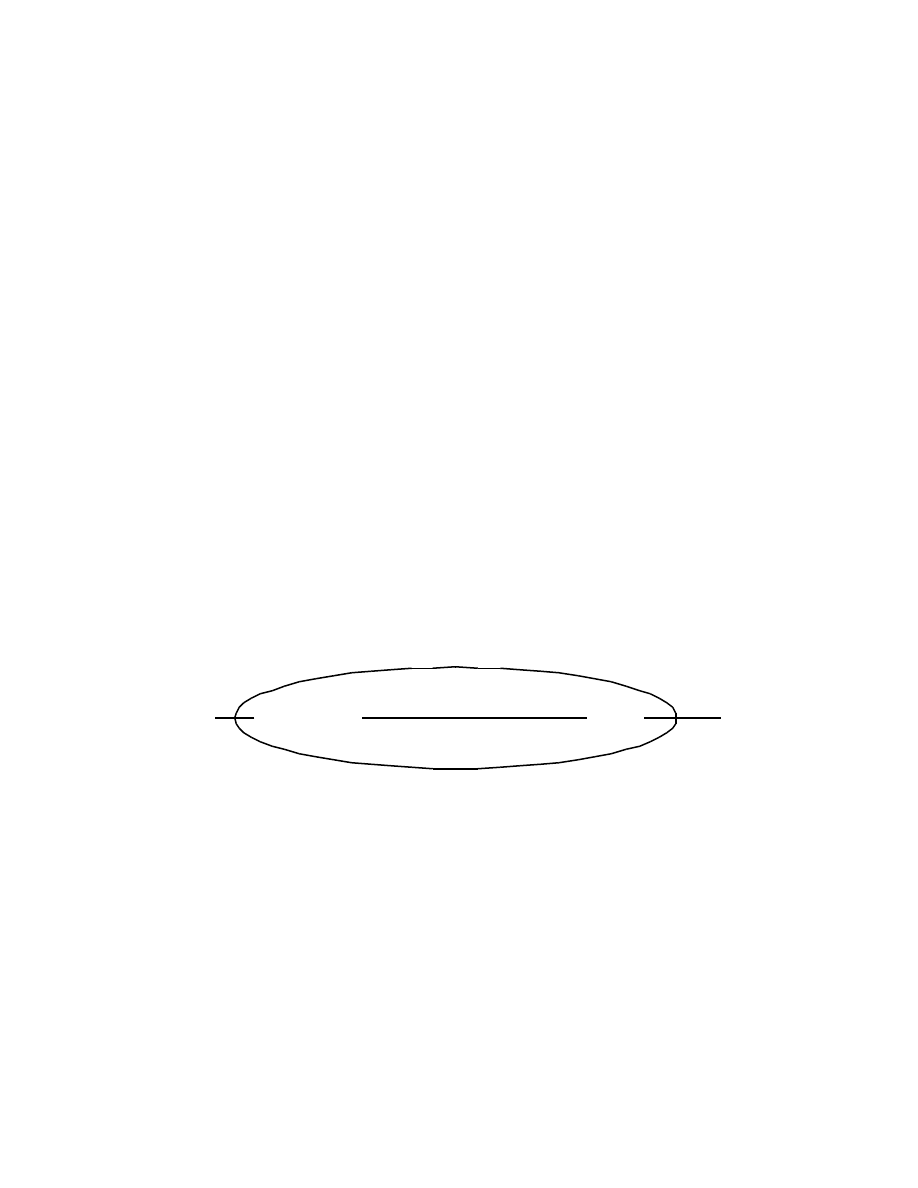
Subject in itself
Representation of
The subject
Represented
object
Object
Field of perception
Figure 1
(transcendental)
Nonetheless, if this shift allowed objectivity to escape the inherent problems of an externality,
it raised huge new problems in accordance to the new « internality » on which objectivity was
then based:
‘It is within this vast but narrow space, opened up by the repetition of the positive within the fundamental,
that the whole of this analytic of finitude -so closely linked to the future of modern thought- will be
deployed; it is there that we shall see in succession the transcendental repeat the empirical, the cogito repeat
the unthought, the return of the origin repeat its retreat....’ (Foucault, 1973:316)

7
In other words, as we can see in figure 1, by defining objectivity in terms of universality, we
no longer need to look at the relation between the object in the perception and the object in itself.
But then, a new gap appears between the subject in the representation (as object of knowledge)
and the subject in itself (as subject of any knowledge or meaning, ie transcendental subject).
Therefore, the main problem for Foucault is to try and reconcile the idea of empirical objectivity
(man as an empirical thing) with the idea of meaning (man as the subject of this meaning). We
shall see now how, appealing to this doom of modernity, Foucault criticised his two main streams
of inspiration, structuralism and hermeneutics, and tried to go beyond them.
The two sources of archaeology: hermeneutics and structuralism
As Dreyfus and Rabinow write it in Michel Foucault, beyond structuralism and hermeneutics,
Foucauldian thought emerged between two main streams of ideas in the sixties: on one hand
structuralism, and on the second hand hermeneutics. Before going further into the Foucauldian
approach, it is important to understand structuralism and hermeneutics, as well as their respective
limits.
Structuralism, which gained its fame in a multiple set of human sciences, could be defined as an
‘Attempt to treat human activity scientifically by finding basic elements (concepts, actions, classes of
works) and the rules or laws by which they are combined. (Dreyfus & Rabinow, 1982:xv, xvi)’
Then, one may define two types of structuralism, a « local » structuralism which defines a
hermetic field of study without bothering about the possible interactions with its « outside »
(Propp VJ,1958), and a « holistic » structuralism, similar to that of Levy Strauss. Applying a
(holistic) structuralist method, implies that analysts:
1) define the phenomenon under study as a relation between two or more terms, real or supposed.
2) construct a table of possible permutations between these terms.
3) take this table as the general object of analysis which, at this level only, can yield necessary
connections, the empirical phenomenon considered at the beginning being only one possible

8
combination amongst others, the complete system of which must be reconstructed beforehand. (Levy
Strauss, 1963:16)
This definition of the structuralist method prompts two important comments: first, it
(deliberately) avoids any possibility of an internal meaning inherent to the object studied from the
point of view of the analyst. Moreover, it also « deletes » any possible meaning given to this
object (a practice or a thought) by those who do practise or think it. To give an example: a
structuralist ethnologist may discover and analyse a particular structure of incestuous prohibition,
but he will never try (be able) to interpret the meaning carried by this interdiction, even for those
who practise it. Second, as Althusser’s works assess it (Althusser,1976), structuralism
« deletes » any form of subjectivity, for there is ontologically nothing beyond the structure
studied, which is then absolutely autonomous.
On the contrary, the hermeneutic thought not only keeps « meaning » and « subjectivity », but
it uses them as the corner-stone of its approach. Historically, hermeneutics are derived from the
European phenomenology of the beginning of the century, started by Husserl and continued by
Heidegger and Merleau-Ponty who Foucault read and studied during his early days.
Heidegger (and, to a large extent, Merleau-Ponty, whose courses Foucault followed at the
Sorbonne) hold that human subjects are formed by the historical cultural practices in which they
develop. Therefore, these practices have a meaning although it is partly hidden in that the human
being does not understand it immediately (directly). In Being and Time, Heidegger exposes his
project of explaining the meaning embodied in everyday practices and calls hermeneutics the
activity of restoring the hidden/lost meaning to things:
‘Dasein’s kind of being... demands that any ontological Interpretation which sets itself the goal of
exhibiting the phenomena in their primordiality, should capture the being of this entity, in spite of the
entity’s own tendency to cover things up.’ (Heidegger, 1962:359)
Again, this approach can be criticised on two counts: first, it presupposes the existence of
autonomous meaning, pre-existent to any human apprehension. Second, it---
‘---rests on the postulate that speech is an act of « translation »... an exegesis, which listens... to the word
of God, ever secret, ever beyond itself’ (Foucault 1975:wvi,xvii)

9
Therefore, if we don’t go beyond the hermeneutic approach, we are stuck in front of an object
which, by definition « covers things up », and of which we can’t have by definition any objective
understanding.
To resume the difficulties raised by these two approaches, we can say that Hermeneutics and
Structuralism fail to go beyond the modern dilemma of finitude as they are precisely based on two
different, antagonistic and irreconcilable conceptions of man. For structuralism, man is considered
an empirical object (man in perception), whereas for hermeneutics he is considered a
transcendental subject of any meaning. Therefore, in his definition of what he calls an
« archaeological » method, Foucault finds himself constantly confronted with the double problem
of staying empirical and keeping a meaning to the reality he describes.
II/ The Foucauldian approach to history
‘I’m looking for the face I had
Before the world was made.’
Yeats, A woman young and old
The birth of archaeology
In order to avoid the illusion of a meaning-giving transcendental subject, Foucault first begins by a
double bracketing, both of truth and of universal meaning (Foucault, 1972). That is, he assumes
that he will try to consider human activities without caring if these seem true or meaningful to
him. However, this does not mean that the reality he will describe cannot be true or false for those
who live in it, neither does it mean that it is meaningless for them. The important point is that
Foucault assumes his analysis will be detached both from the defects of hermeneutics (by

10
bracketing meaning and truth for the analyst) and from the limits of structuralism (by conserving
and assessing the existence of a truth and a meaning for those analysed).
This double bracketing having been made, another problem remains prior to any analysis. On
what historical material should an archaeologist work? The problem is of great importance in
order to avoid any return to a structuralist method. Foucault is aware that if he works on
historical material that define a priori a set of possible combinations and that would therefore
define a space of possibility prior to any actual analysis, then he would still be embedded in a
Structuralist approach.
The only historical material which has the double advantage of supporting the double
bracketing and of not defining in advance a field of possible combinations are what Foucault calls
the « statements » (énoncés):
‘The analysis of statements, then, is a historical analysis, but one that avoids all interpretation: it does not
question things said as to what they are hiding, what they were « really » saying, in spite of themselves,
the unspoken element they contain (...) but, on the contrary, it questions them as to their mode of
existence, what it means for them to have appeared when and where they did-they and no others’ (Foucault,
1972:109)
But then, how can we define briefly what are statements? Following Foucault (1972), a
statement can be defined in opposition to a sentence (‘amare: amo, amas, amat...’ which
schoolchildren had to recite in class is a statement, but not a sentence), to a logical proposition
(‘no one heard’ and ‘it is true that no one heard’ would be different statements but the same
proposition if they were written at the beginning of a novel) and, finally, to a speech act, although
Foucault later rejected this opposition, transforming it to a specificity of the statement relatively
to the speech act. In fact, to define positively what are statements, we can say that they are
« serious speech acts »: they are considered as true and meaningful for those who express them as
well as for those who receive them (read, hear, see, decipher). In other words, Foucault is
interested in the speech acts which would pass some sort of institutional test in order to
constitute a relatively autonomous realm:
‘It is always possible one could speak the truth in a void; one would only be in the true, however, if one
obeyed the rules of some discursive « police » which would have to be reactivated every time one spoke’
(Foucault, 1972:224)

11
Then, because statements are restricted to « serious » speech acts, these are necessarily tied
together in « discursive formations » which enable them not to remain at the status of mere
speech acts but to acquire their seriousness. The important point about discursive formations is
that they are not thought in advance by the archaeologist as fields of possibility, but that they are
discovered gradually during the research. The former is, according to the Archaeology of
knowledge the fundamental difference between archaeology and structuralism:
‘Structuralist holism identifies elements in isolation and then asserts that the system determines which of
the possible set of elements will be individuated as actual. In this case, one might say that the actual hole is
less than the possible sum of its possible parts. Archaeological holism asserts that the whole determines
even what counts as a possible element. The whole verbal context is more fundamental than its elements
and thus is more than the sum of its parts. Indeed, there are no parts except within the field which identifies
and individuates them.’ (Dreyfus and Rabinow, 1982: 55)
In the Order of Things as well as in the Archaeology of knowledge, Foucault then goes beyond
this level of analysis and tries to assess a « unity » of the set of discursive formations which can
be found in a defined place at a defined period. This « unity » is defined under the famous,
although later slightly modified, notion of « episteme »:
‘By episteme we mean (...) the total set of relations that unite, at a given period, the discursive practices
that give rise to epistemological figures, sciences, and possibly formalized systems (...) the episteme is not
a form of knowledge or type of rationality which, crossing the boundaries of the most varied sciences,
manifests the sovereign unity of a subject, a spirit, or a period; it is the totality of relations which can be
discovered, for a given period, between the sciences when one analyses them at the level of discursive
regularities.’(Foucault, 1972:191)
At the time he writes the Archaeology of knowledge, Foucault thinks that the episteme is not a
structuralist concept because its main characteristic is that it is not defined a priori: the « unity »
of the episteme is to be understood as a unity reconstructed by the analyst: the episteme is
subject to time and has no unity out of time. Or, in other words, the episteme is only the
ensemble of continuously shifting discursive formations that can be observed at a certain time in a
certain place. To give an example of episteme, we can go back to the Order of Things, in which
Foucault tries to discover what was the episteme of the Classical age:

12
‘The classical episteme can be defined in its most general arrangements in terms of the articulated system of
a mathesis, a taxinomia and a genetic analysis. The sciences always carry within themselves the project,
however remote it may be, of an exhaustive ordering of the world; they are always directed, too, towards the
discovery of simple elements and their progressive combination; and at their centre they form a table on
which knowledge is displayed in a system. As for the great controversies which occupied men’s minds,
these are accommodated quite naturally in the folds of this organisation.’ (Foucault, 1973:74,75)
To sum it up, archaeology seems to be an extremely powerful tool for the historian, as it
allows him to escape the double trap of a inherent meaning on a one side and of a total absence of
any meaning on the other side. Moreover, Foucault thought in 1969 (date of the French edition of
The Archaeology of knowledge) that his method would allow him to have a fully objective
apprehension of what he calls the episteme of an epoch.
There is however an important problem, which Foucault still could not see at the time of the
Archaeology of knowledge, which is the relation between discursive formations and the so-called
social background. Although Foucault recognises the existence of non-discursive practices in the
Archaeology of knowledge (p. 157), he has however an ambiguous position about the inter-
relation between discursive and non-discursive practices. At that time Foucault (maybe because
of the attractiveness of the concept of episteme?) still considered that the analysis of the external
authorities which delimit choice must show that neither the processes of discourse’s
appropriation, nor its role among non-discursive practices is extrinsic to its unity, its
characterisation and the laws of its formation (Foucault, 1972:p68). Of course, it is amazing in
retrospect that Foucault, by proclaiming this, was committing the mistake of turning back to the
structuralist/pragmatic claim that there are some autonomous rules governing reality. As one critic
later put it:
‘The latter’s rejection of any analytical differentiation between social action and structural constraint
paradoxically leads to a form of explanatory determinism or ‘totalism’ in which social actors become the
products, rather than the creators, of the discoursive formations in which they are trapped’ (Reed, 1998:209)

13
The rehabilitation of genealogy
It is not certain, however that Foucauldian thought had stabilised at the time of the Archaeology
of knowledge. On the contrary, after a silence of two years, Foucault introduced a new concept to
his methodological arsenal: genealogy. In fact, the major reproach he seems to have made to his
former methodology was that it ignored the set of practices generated, but also generating,
discursive formations. Archaeology is still to be maintained as the only tool allowing detachment
from misplaced interpretation (contrary to the hermeneuticist, the archaeologist does not interpret
from his own point of view). But then, archaeology is clearly subordinated to genealogy
(Foucault, 1978). The complementarity of archaeology and genealogy is resumed by Foucault
saying that:
‘If the critical [archaeological] side is one of studied casualness, then the genealogical mood is one of
lighthearted positivism’ (Foucault, Discourse on language, 1970, translation modified)
Genealogy alone always run the risk of interpreting its object of analysis with inappropriate
categories (an extrapolation of the present to the past, or unfounded assumptions about
psychological choices for example). On the other end, archaeology alone had the defect of leading
to a final analysis which would be incapable of differentiating between the discursive formations
and their actors.
Thus, archaeology is maintained as long as it helps to draw positivities which, taken together,
form what Foucault calls a dispositif, translated in English by « apparatus » and which includes
‘Discourses, institutions, architectural arrangements, regulations, laws, administrative measures, scientific
statements, philosophic propositions, morality, philantropy, etc.’ (Foucault, 1980: 194)
Genealogy is then the pragmatic historian’s work of understanding how these positivities
acted and interacted. To use a metaphor, Foucault draws several photographs of History by using
achaeological methods but then, the link between these several photographs is the work of the
genealogist.

14
By operating this shift in his thought, Foucault offered himself new fields of analysis. Not
only was he able then to analyse the discursive birth of sciences (as he did successively in The
order of things) but then, he was also able to analyse institutions and social relations without
having recourse, in a final analysis, to a structuralist approach (that is, unlike in the Birth of the
clinic).
Moreover, the archaeology/genealogy combination also brought to light positivities unassessable
until then, amongst which all those necessary for his analysis of power.

15
III/ The economy of power
‘I would like to suggest another way to go further
towards a new economy of power relations, a way
which is more empirical, more directly related to our
present situation, and which implies more relations
between theory and practice.
Michel Foucault, 1982
Beyond the repressive hypothesis: Power as power/knowledge
Foucault never attempts any (impossible) definition of power. At best, he gives a definition of
power relations in an essay published in 1982:
‘The exercise of power is not simply a relationship between partners, individual or collective; it is a way in
which certain actions modify others. Which is to say, of course, that something called Power, with or
without a capital letter, which is assumed to exist universally in a concentrated or diffused form, does not
exist.’
Therefore, Foucauldian definition of power is drawn in opposition with the « repressive
hypothesis » (Foucault, 1971) which holds that there is a transcendental reason which can be
exercised independently of any power relationship. Precisely because it is transcendental, reason
is then universally compelling. It can limit the political power field and has therefore a role in
opposing domination (ie when political power goes beyond its rights).
Foucault draws the genealogy of this hypothesis advocating two reasons for its appearance in
history(Dreyfus and Rabinow, 1982:130). On a first hand, because of what he calls the
« speaker’s benefit », the mere fact that, by advocating such a hypothesis, the speaker places
himself out of power and within truth. However, this is not the main argument of Foucault as he
must recognise that, not as an archaeologist but as a genealogist, he is himself in a field of power
relations. On a second hand, because:
‘modern power is tolerable on the condition that it masks itself–which it has done very effectively. If truth
is outside of and opposed to power, then the speaker’s benefit is merely an incidental plus. But if truth and

16
power are not external to each other, as Foucault will obviously maintain, then the speaker’s benefit and
associated ploys are among the essential ways in which power operates. It masks itself by producing a
discourse, seemingly opposed to it but really part of a larger deployment of modern power.’
An additional, more technical, reason should be added, which is that talking about a
transcendental reason means falling again in the contradictions of modernity (see part 1).
Therefore, Foucault prefers considering rationality as « a kind of rationality » and study how
several kinds of rationalities could emerge in history (see part 2). However, considering the
emergence of a kind of rationality presupposes that the field of possible knowledge is tightly
linked with an empirical field:
‘I think we must limit the sense of the word « rationalisation » to an instrumental and relative use and to
see how forms of rationalisation become embodied in practices, or systems of practices’ (Foucault, 1980:47)
If reason is reduced to an instrumental, relative reason embodied in an empirical field of
practices, then the field of reason, at a determined time in a certain place is a field of discursive
formations. Hence the two following consequences:
1) Because of its instrumentality, a form of reason as well as any form of knowledge define a set
of possible practices and is thus an instrument of power.
2) Because it is embodied in an empirical field, a form of reason (or any form of knowledge
supported by it) has ontologically no being beyond any set of practices. Therefore, because of
the former consequence, the field of knowledge defines a field of power and vice-versa.
Therefore, power is not to be considered as opposite to reason; but on the contrary as the
necessary condition for the construction of knowledge. Moreover, because power produces
knowledge, it can be, at least partially, grasped by archaeology:
‘These power-knowledge relations are to be analysed, therefore, not on the basis of a subject of knowledge
who is or is not free in relation to power, but, on the contrary, the subject who knows, the objects to be
known and the modalities of knowledge must be regarded as so many effects of these fundamental
implications of power-knowledge and their historical transformations.’ (Foucault, 1977)

17
A deterministic economy of power ?
Foucault’s aim is to establish a genealogy of how power is exercised in our society basing his
analysis on an archaeology of the discursive formations. Hence, his analysis is aimed toward the
‘modes of functioning’ of power in our society. Therefore, his objective is less to mirror the
terrain, than to give tools to use it (Gilles Deleuze, 1985). As he put it in 1978 and in 1979 at the
College de France his work on power relations have a tactic and a practical aim:
‘If there is an imperative in my lesson, then this is a tactical one: « if you want to fight, here are some
guidelines [lignes de force] », ... I will expose tactical directions.’ (Foucault, 1978. I translated the text)
All the elements Foucault exposes cannot then constitute a « system of power ». Because of
their very nature they shape at best an economy of power. The questions he deals with are not:
What is power ? What is the general system of power ? Or even: how is power exercised in such
or such institution ? But rather: What are the main characteristics of power relations in our
society today ? How did they appeared ? On what rationality are they sustained ?
In spite of the practical goals of his analysis, Foucault has been broadly criticised by his
adversaries on the ‘backdoor determinism’ inherent to his conception of power (Alvesson, 1996;
Giddens, 1985; Reed, 1998). As Giddens wrote it:
‘... Foucault is mistaken insofar as he regards ‘maximised’ disciplinary power of this sort as expressing the
general nature of administrative power within the modern state. Prisons, asylums and other locales in
which individuals are kept entirely sequestered from the outside... have to be regarded as having special
characteristics that separate them off rather distinctively from other modern organisations ... The imposition
of disciplinary power outside contexts of enforced sequestration tends to be blunted by the very real and
consequential countervailing power which those subject to it can, and do, develop.’ (Giddens, 1985:pp185-
6)
Such a critique is particularly serious as it reproaches Foucault to have totally missed the
point of what he claimed to study. If Foucauldian analysis of power both is deterministic and
cannot be extrapolated from the institutions he studied, then his whole project of giving « tactical

18
directions » must be considered as a failure. Therefore, two questions are prompted, which issues
may determine Foucault’s relevance: first, does his analysis of power lead to deterministic
conclusions ? Second, to what extent is his choice of studying « special institutions » relevant ?
Replying to the first question means not examining only the rhetoric aspects in Foucault. His
dense and nervous style may lead one to feel that there is no room for agency freedom, and that
Foucault is then unable to distinguish between open doors and brick walls (Smith, 1991).
However, if we refer to the way he defines power relations in his essay « The subject and
Power » (1982), it appears that power relations are set between two limits.
First, its upper limit is that a power relation is not a direct action on a person, but an action
upon other actions. Therefore,
‘The exercise of power consists in guiding the possibility of conduct and putting in order the possible
outcome’ (Foucault, 1982)
Although the exercise of power may need violence or consent, these are not inherent to a
power relation. Moreover, one of the consequences of this limit to power (which the critics did
not seem to notice) is that resistance is the sine qua non condition for power. Indeed, a power
relation, is not an action which determines another action, but an action which influences an other
action by determining a field of possibility for it. In this field of possibility, ways of resisting are
by definition present.
The second limit set to power relations, therefore, is fight. According to Foucault, the goal of a
fight is either to force the opponent to abandon the game (hence a victory which dissolves the
power relation) or to set up a new relation of power. In other words, there is a circularity
between power relations open to fight and a fight aiming at power relations. Therefore there is a
constant instability in a power relationship which excludes by definition any form of
determinism. By stressing the ontological link between power and resistance, Foucault then
invites us to an undeterministic reading of the mechanisms of power he highlights. Even
panopticist power is to be understood then as a form of power, though inquisitory and totalizing,
that is perpetually confronted with potential (and some time actual) resistance.

19
This leads us to the next question, which is about the relevance of drawing general conclusions
from the type of institutions Foucault studied. I think the main point which led Foucault to study
institutions as the hospital, the asylum or the prison was precisely because of his assumption
that modern legal power may be best studied where it generates the more resistance. As he puts
it:
‘[My way of studying power relations] consists of taking the forms of resistance against different forms of
power as a starting point. To use another metaphor, it consists of using this resistance as a chemical
catalyst so as to bring to light power relations, locate their position, find out the point of application and
the methods used. Rather than analysing power from the point of view of its internal rationality, it consists
of analysing power relations through the antagonism of strategies.
For example to find out what our society means by sanity, perhaps we should investigate what is happening
in the field of insanity.
And what we mean by legality in the field of illegality’ (Foucault, 1982)
By drawing a genealogy of the prison, Foucault could then be able to characterise some of the
features of modern power relations which are disciplinary, economic, individualizing, inquisitorial,
normative and curative. In a word, subjectifying. However, this does not mean that Foucauldian
analysis is doomed to see only these features of power. In his genealogical account of the punitive
practices, he draws other forms of power relations, especially those (now absent in our western
modern societies) in relation with the ‘surplus power possessed by the king’ (Foucault, 1977). I
would then be extremely interested in a Foucauldian history of the factory and the dynamics of
workplace trade unionism in British industries as the one announced by Alan McKinlay (1998).
At the condition, of course, that besides the use of Foucauldian concepts, this work be
Foucauldian by its approach to history (genealogical and archaeological).
But there is still a final analytical question. Can an analysis à la Foucault account for the
existence of the institutions in which the power relations occur ? And if yes, then how and to
what extent ?

20
Redrawing institutions from discourse/power analysis
Although Foucault recognises that ‘It is perfectly legitimate to [analyse power relations] by
focusing on carefully defined power institutions’ (1982), he prefers not to begin this analysis for
three reasons. First, because there is then the risk of seeing only the mechanisms of reproduction,
especially in the interaction between several institutions. Then because of the risk of seeking for
the origins of power in the institutions studied, which would lead to an explanation of power to
power. Finally, because the institutions bring into play two elements, a set of tacit or explicit
rules and an apparatus. By studying institutions directly, one runs the risk of explaining the
apparatus in function of rules, which would omit that rules are also generated by the apparatus.
Therefore, Foucault takes the opposite path and tries to understand the institutions by
studying the power relations. Concretely, this means that the five following points must be
analysed:
1) The system of differentiations which permits one to act upon the actions of others: differentiations
determined by law or by traditions of status and privilege; economic differences in the appropriation of
riches and goods, shifts in the processes of production, linguistic or cultural differences ...
2) The types of objectives pursued ... the maintenance of privileges, the accumulation of profits ... the
exercise of a function or a trade.
3) The means of bringing power relations into being: according to whether power is exercised by the threat
of arms, by the effect of the word, by means of economic disparities, by more or less complex means of
control, by systems of surveillance, with or without archives ... with or without the technological means
to put these things into action.
4) Forms of institutionalisation: these may mix traditional predispositions, legal structures, phenomena
relating to custom or to fashion (such as one sees in the institution of the family) ...
5) The degree of rationalisation: the bringing into play of power relations in a field of possibility may be
more or less elaborate in relation to the effectiveness of the instruments and the certainty of the results...’
(Foucault, 1982)
By defining his strategy of investigation in this way, Foucault’s strategy is obviously to
proceed to an archaeology and a genealogy of the institutions he is to study. His aim is to
integrate institutions in both their social and historical backgrounds in order to grasp their
‘fundamental point of anchorage’ which is genealogically outside of them. Therefore, institutions
have a ‘reality’ which is not defined as an independence with the pattern of events they generate

21
(Gergen, 1994), but as a stabilisation of power relations according to the five points exposed
above.
But then, by defining an institution as a stabilisation of power relations, one may succeed to
study the institution through the power relations exerted in and around it, he may also succeed in
using afterwards the power relations he found for his own struggles. But then, he ought to fail in
the last step, which is of knowing what he should want. Because of the repressive hypothesis,
and Foucault perfectly admits this limit to his thought, there is no morality (code of conduct)
embodied in his studies of power.
At this point of the reflection, I would like to summarise the main features I managed to
highlight in Foucauldian economy of power:
1) The expression ‘economy of power’ is not to be understood as referring to a closed system of
power which is to be extracted and abstracted from a ‘reality’ in which it is embodied and
which it would determine. Rather it is the ensemble of power relations which can be
reconstructed by a genealogy in a particular place at a particular time.
2) Because of the definition of power relations on which it lays, the economy of power is not a
determinism.
3) The economy of power does not mirror the whole reality in which it has its roots, but a set of
guidelines (lignes de force) highlighting the possibilities of action toward power relations. Its
essence is fundamentally tactical.
4) Concretely, the economy of power draws institutions by analysing: the system of
differentiation; the types of objectives; the means to bring power relations to being; the forms
of institutionalisation and the degree of rationalisation.
5) Finally, it is amoral. Which makes it paradoxically a map designed for tactics, but without any
bothering of their final goals.

22
Conclusion: some open fields for Foucauldian analysis
This essay has provided an overview of the central problem which Foucault tried to overcome as
well as a critical exposure of his two main sources of inspiration. Then, I tried to analyse
Foucault’s original approach to history as an avoidance of both structuralist determinism and
hermeneutics’ transcendental meaning. These bases being established, I could finally discuss
Foucault’s expression of an ‘economy of power’, which appears in final analysis as an amoral
tactical oriented map of power relations. However, I would like to finish this essay by stressing
three open fields for further Foucauldian analysis:
First, it appeared through this paper that the most interesting legacy Foucault has let to
Organisation analysis is not the set of power relations he found out in the institutions he studied,
but rather his original technique of investigation.
Then, according to the possibility of a history of the factory through its numerous
antagonisms, Foucauldian analysis may open a new field to HRM, which would be to seek an
understanding of the existing culture (and the power relations inherent to it) rather than trying to
implement an artificial ‘Company’s culture’.
Finally, because of the double bracketing of truth and meaning made by archaeology,
Foucauldian analysis may open new fields for the understanding of the way foreign cultures may
function.

23
Bibliography
References
- Althusser, L , Essays in self-criticism , New left books , 1976
- Alvesson, M , Communication, Power and Organisation , Walter de Gruyter , 1996
- Corant et al D , Discourse + Organisation , Sage , 1998
- Dreyfus, HL and Rabinow, P , Foucault, beyond structuralism and hermeneutics , The Harvester Press , 1982
- Foucault M , The subject and power: afterword to 'Michel Foucault, beyond structuralism and hermeneutics' ,
The Harvester Press , 1982
- Foucault M , The order of things: An archeology of the human sciences , Tavistock , 1970 (FR: 1966)
- Foucault M , The archeology of knowledge , Tavistock , 1972 (Fr: 1969)
- Foucault M , The birth of the clinic: an archeology of medical perception , Tavistock , 1973 (Fr: 1963)
- Foucault M , Nietzsche, genealogy, history , Cornell University Press , 1977 (fr:1971)
- Foucault M , Discipline and punish: the birth of the prison , Penguin , 1979 (Fr: 1975)
- Foucault M , The history of sexuality, volume one: An introduction , Allen Lane , 1980 (Fr: 1976)
- Gergen, KJ , Realities and Representation: Soundings in social construction , Harvard University Press , 1994
- Giddens, A , The Nation State and violence , Polity Press , 1985
- Heidegger M , Being and Time , Harper and row , 1962
- Kant I , Critique of pure reason , , 1787
- Lévi-Strauss, C , Totem , Beacon Press , 1963
- Mc Killan, A. and Starkley, K , Foucault, Management and organisation theory , Sage , 1998
- Reed, M , Organisational analysis as discourse analysis: a critique in Discourse + Organisation , Sage , 1998
Additional references
Burchel, G et al , The Foucault effect: studies in governmentality , Harvester , 1991
Burrel G , Modernism, postmodernism and organisational analysis , Organisation studies , 1988
Canghilem G , Etudes d'histoire et de philosophie des sciences , Vrin , 1968
Cooper B , Formal organisation as representation , Sage , 1992
Cousins, M and Hussain , Michel Foucault , Macmillan , 1984
Dandeker C , Surveillance, Power and Modernity , Polity Press , 1990
Dean M , Critical and effective histories: Foucault's methods and historical sociology , Routledge , 1994

24
Du Gay, P and Salaman, G , The culture of the custommer , Journal of management studies , 1992
Dumm T L , Michel Foucault and the politics of freedom , Sage , 1996
Foucault M , Language, counter-memory, practice: Selected essays and interviews , Basil Blackwell , 1977
Foucault M , Governmentality , Ideology and consciousness 6 , 1979
Foucault M , Power/knowledge: selected interviews and other writings 1972-1977 , Harvester press , 1980
Foucault M , Herculine Barbin , Harvester press , 1980
Foucault M , Questions of method: an interview with Michel Foucault , Ideology and consciousness 8 , 1981
Foucault M , Le souci de la vérité: propos recueillis par François Ewald , Magazine Littéraire 207 , 1984
Foucault M , Kant on enlightment and revolution , Economy and society 15 , 1986
Foucault M , Foucault live: interviews, 1966-84 , Semiotext Foreign axents series , 1989
Foucault M , Madness and civilisation : a history of insanity in the age of reason , Tavistock , 1967 (FR: 1961)
Foucault M , Orders of discourse: inaugural lecture delivered at the College de France , Social Science information
, 1971 (Fr: 1971)
Foucault M , Politics and the study of discourse , Ideology and consciousness 3 , 1978 (Fr: 1968)
Foucault M , I, Pierre Rivière, having slaughtered my mother, my sister and my brother: A case of parricide in the
19th Century , Peregrine , 1978 (Fr: 1973)
Foucault M , The use of pleasure: the history of sexuality Volume two , Viking , 1986 (Fr: 1984)
Foucault M , The care of the self: The history of sexuality Volume three , Allen Lane/Penguin press , 1988 (Fr:
1984)
Foucault M , Politics , philosophy, culture: interviews and other writings 1977-1984 , Routledge ,
Gare, M and Johnson, T , Foucault's new domains , Routledge , 1994
Garland D , Punishment and Modern society , Claredon , 1990
Layder D , Modern social theory: Key debates and new directions , University College London Press , 1997
Lyon D , The electronic eye , Polity Press , 1994
Mc Nay H , Foucault: a critical introduction , Polity Press , 1994
Merquiot J , Foucault , Fontana , 1991
Newton T , Theorising subjectivity in organisations : the failure of Foucauldian studies , Organisation studies ,
1998
O' Neil J , The disciplinary society , British Journal of sociology , 1986
Rabinow P , The Foucault reader , Penguin , 1991
Ranson J S , Foucault's discipline , Duke University Press , 1997
Renaud,A and Luc Ferry A , French Philosophy in the Sixties: an Essay on Antihumanism , University of
Massachusets Press , 1990
Rose N , Governing the soul: the shaping of the private self , Routledge , 1989
Sewell, G and B Wilkinson , Someone to watch over me: Surveillance, discipline and Just-in-Time Labour Process
, Sociology , 1992
Smart B , Foucault, marxism and critique , Routledge , 1983
Webster, F and Robins, K , I'll be watching you: comment on Sewell and Wilkinson , Sociology 27 (2) , 1993
Wyszukiwarka
Podobne podstrony:
pobłocki the economics of nostalgia
Good Capitalism, Bad Capitalism, and the Economics of Growth and Prosperity
The economics of short rotation coppice in Germany 2012
Ritter Investment Banking and Securities Insurance (Handbook of the Economics of Finance)(1)
Akerlof Kranton Identity and the economics of organizations
Akerlof George A The Economics of Tagging as Applied to the Optimal Income Tax, Welfare Programs, a
Good Capitalism, Bad Capitalism, and the Economics of Growth and Prosperity
The Creed Of The Imaam Of Hadeeth , Imaam Al Bukhaaree
CT The Rhetorics of Life Foucault
Schuster; Death Reckoning in the Thinking of Heidegger, Foucault, and Derrida
The Problem Of Order In Society, And The Program Of An Analytical Sociology Talcott Parsons,
An Analytical Extension of the Critical Energy Criterion Used to Predict Bare Explosive Response to
Cooke Power and the Spirit of God Towards an Experience Based Pneumatology
Interruption of the blood supply of femoral head an experimental study on the pathogenesis of Legg C
Ogden T A new reading on the origins of object relations (2002)
Sinners in the Hands of an Angry GodSummary
Explaining welfare state survival the role of economic freedom and globalization
[Mises org]Mises,Ludwig von The Causes of The Economic Crisis And Other Essays Before And Aft
więcej podobnych podstron