
Cervical Cancer: Prevention and Early
Detection
What is cervical cancer?
Cervical cancer is cancer that starts in the cervix. The cervix is the lower part of the uterus
(womb). It is sometimes called the uterine cervix. The body of the uterus (the upper part) is
where a fetus grows. The cervix connects the body of the uterus to the vagina (birth canal). The
part of the cervix closest to the body of the uterus is called the endocervix. The part next to the
vagina is the exocervix (or ectocervix). The 2 main types of cells covering the cervix are
squamous cells (on the exocervix) and glandular cells (on the endocervix). The place these 2 cell
types meet is called the transformation zone. Most cervical cancers start in the transformation
zone.
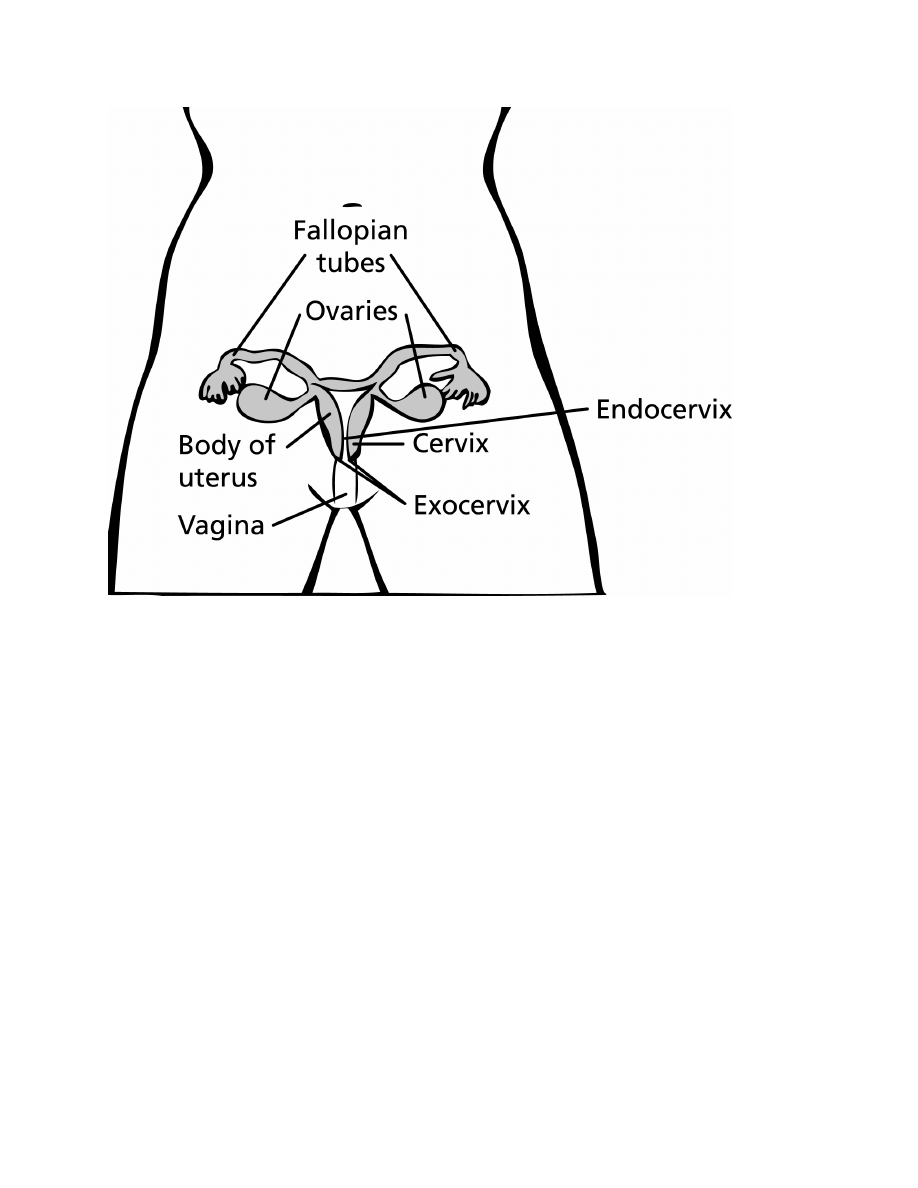
Most cervical cancers begin in the cells lining the cervix. These cells do not suddenly change
into cancer. Instead, the normal cells of the cervix gradually develop pre-cancerous changes that
turn into cancer. Doctors use several terms to describe these pre-cancerous changes, including
cervical intraepithelial neoplasia (CIN), squamous intraepithelial lesion (SIL), and dysplasia.
These changes can be detected by the Pap test and treated to prevent cancer from developing (see
the section, “Can cervical cancer be prevented?”).
Cervical cancers and cervical pre-cancers are classified by how they look under a microscope.
There are 2 main types of cervical cancer: squamous cell carcinoma and adenocarcinoma. About
80% to 90% of cervical cancers are squamous cell carcinomas. These cancers start in the
squamous cells that cover the surface of the exocervix. Under the microscope, this type of cancer
is made up of cells that are like squamous cells.
Most of the remaining types of cervical cancers are adenocarcinomas. Cervical adenocarcinomas
seem to have become more common in the last 20 to 30 years. Cervical adenocarcinoma
develops from the mucus-producing gland cells of the endocervix. Less commonly, cervical
cancers have features of both squamous cell carcinomas and adenocarcinomas. These are called
adenosquamous carcinomas or mixed carcinomas.
Although cervical cancers start from cells with pre-cancerous changes (pre-cancers), only some
women with pre-cancers of the cervix will develop cancer. The change from pre-cancer to cancer
usually takes several years − but it can happen in less than a year. For most women, pre-

cancerous cells will remain unchanged or even go away without any treatment. Still, in some
women pre-cancers turn into true (invasive) cancers. Treating all pre-cancers can prevent almost
all true cancers. Pre-cancerous changes and specific types of treatment for pre-cancers are
discussed in the section, “Can cervical cancer be prevented?”
Importance of cervical cancer screening
The goal of screening for cervical cancer is to find cervix cell changes and early cervical cancers
before they cause symptoms. Screening refers to the use of tests and exams to find a disease,
such as cancer, in people who do not have any symptoms. Early detection means applying a
strategy that results in an earlier diagnosis of cervical cancer than otherwise might have
occurred. Screening tests offer the best chance to detect cervical cancer at an early stage when
successful treatment is likely. Screening can also actually prevent most cervical cancers by
finding abnormal cervix cell changes (pre-cancers) so that they can be treated before they have a
chance to turn into a cervical cancer.
Cancer of the cervix may be prevented or detected early by regular screening with the Pap test
(sometimes combined with a test for human papilloma virus). If it’s detected early, cervical
cancer is one of the most successfully treatable cancers. In the United States, the cervical cancer
death rate declined by almost 70% between 1955 and 1992, in large part due to the effectiveness
of Pap test screening. In recent years, the death rates from cervical cancer have been stable.
Despite the recognized benefits of cervical cancer screening, not all American women take
advantage of it. About half of the cervical cancers diagnosed in the United States are found in
women who were never screened for the disease, with another 10% found in women who hadn’t
been screened within the past 5 years. In particular, older women, those without health insurance,
and women who have recently immigrated are less likely to have regular cervical cancer
screening.
Cervical cancer deaths are higher in populations around the world where women do not have
routine cervical cancer screening. In fact, cervical cancer is the major cause of cancer deaths in
women in many developing countries. These women are usually diagnosed with late stage
cancers, rather than pre-cancers or early cancers.
What are the risk factors for cervical cancer?
A risk factor is anything that changes your chance of getting a disease such as cancer. Different
cancers have different risk factors. For example, exposing skin to strong sunlight is a risk factor
for skin cancer. Smoking is a risk factor for many cancers. But having a risk factor, or even
several, does not mean that you will get the disease.
Several risk factors increase your chance of getting cervical cancer. Women without any of these
risk factors rarely develop cervical cancer. Although these factors increase the odds of getting
cervical cancer, many women with these risk factors do not develop this disease. When a woman
develops cervical cancer or pre-cancerous changes of the cervix, it’s not possible to say with
certainty that a particular risk factor was the cause.

In thinking about the following risk factors, it helps to focus on those you can change or avoid
(like smoking or human papilloma virus infection), rather than those that you cannot (such as
your age and family history). It’s still important, though, to know about risk factors that cannot
be changed, because it's even more important for women who have these factors to get regular
Pap tests to detect cervical cancer early. Cervical cancer risk factors include:
Human papilloma virus infection
The most important risk factor for cervical cancer is infection by the human papilloma virus
(HPV). HPV is a group of more than 150 related viruses, some of which cause a type of growth
called a papilloma, or more commonly known as warts.
HPV can infect cells on the surface of the skin, and those lining the genitals, anus, mouth and
throat, but not the blood or internal organs such as the heart or lungs.
HPV can be passed from one person to another during skin-to-skin contact. One way HPV is
spread is through sex, including vaginal and anal intercourse and even oral sex.
Different types of HPV cause warts on different parts of the body. Some types cause common
warts on the hands and feet. Other types tend to cause warts on the lips or tongue.
Certain types of HPV may cause warts to appear on or around the genital organs and in the anal
area. These warts may barely be visible or they may be several inches across. These are known
as genital warts or condyloma acuminatum. HPV 6 and HPV 11 are the 2 types of HPV that
cause most cases of genital warts. They are called low-risk types of HPV because they are
seldom linked to cervical cancer.
Other types of HPV are called high-risk types because they are strongly linked to cancers,
including cancers of the cervix, vulva, and vagina in women, penile cancer in men, and anal and
oral cancer in men and women. The high-risk types include HPV 16, HPV 18, HPV 31, HPV 33,
and HPV 45, as well as some others. There might be no visible signs of infection with a high-risk
HPV until pre-cancerous changes or cancer develops.
Doctors believe that a woman must be infected by HPV before she develops cervical cancer.
Although this can mean infection with any of the high-risk types, about two-thirds of all cervical
cancers are caused by HPV 16 and 18.
Infection with HPV is common, and in most people the body is able to clear the infection on its
own. Sometimes, however, the infection does not go away and becomes chronic. Chronic
infection, especially when it is with high-risk HPV types, can eventually cause certain cancers,
such as cervical cancer.
Although HPV can be spread during sex − including vaginal intercourse, anal intercourse, and
oral sex − sex doesn't have to occur for the infection to spread. All that is needed to pass HPV
from one person to another is skin-to-skin contact with an area of the body infected with HPV.
Infection with HPV seems to be able to be spread from one part of the body to another − for
example, infection may start in the cervix and then spread to the vagina.

Completely avoiding putting the areas of your body that can become infected with HPV (like the
mouth, anus, and genitals) in contact with those of another person may be the only way to truly
prevent these areas from becoming infected with HPV.
The Pap test looks for changes in cervical cells caused by HPV infection. Other tests look for the
infections themselves by finding genes (DNA) from HPV in the cells. For some women, the
HPV test is used along with the Pap test as a part of screening. The HPV test may also be used to
help decide what to do when a woman has a mildly abnormal Pap test result. If the test finds a
high-risk type of HPV, it could mean she will need a full evaluation with a colposcopy
procedure. Although there is currently no cure for HPV infection, there are ways to treat the
warts and abnormal cell growth that HPV causes.
For more information on preventing HPV infection, see the “Things to do to prevent pre-
cancers” section in this document or ask for our document Human Papilloma Virus (HPV),
Cancer, and HPV Vaccines: Frequently Asked Questions.
Although scientists believe that it’s necessary to have had HPV for cervical cancer to develop,
most women with this virus do not develop cancer. Doctors believe that other factors must come
into play for cancer to develop. Some of these known factors are listed below.
Smoking
Women who smoke are about twice as likely as non-smokers to get cervical cancer. Smoking
exposes the body to many cancer-causing chemicals that affect organs other than the lungs.
These harmful substances are absorbed through the lungs and carried in the bloodstream
throughout the body. Tobacco by-products have been found in the cervical mucus of women who
smoke. Researchers believe that these substances damage the DNA of cervix cells, and may
contribute to the development of cervical cancer. Smoking also makes the immune system less
effective in fighting HPV infections.
Immunosuppression
Human immunodeficiency virus (HIV), the virus that causes AIDS, damages the immune system
and puts women at higher risk for HPV infection. This might, in part, explain the increased risk
of cervical cancer in women with AIDS. Also, that the immune system may be important in
destroying cancer cells and slowing their growth and spread. In women with an impaired
immune system from HIV, a cervical pre-cancer might develop into an invasive cancer faster
than it normally would. Another group of women at risk of cervical cancer are women taking
drugs to suppress their immune response, such as those being treated for an autoimmune disease
(in which the immune system sees the body’s own tissues as foreign and attacks them, as it
would a germ) or those who have had an organ transplant.
Chlamydia infection
Chlamydia is a relatively common kind of bacteria that can infect the reproductive system. It’s
spread by sexual contact. Chlamydia infection can cause pelvic inflammation, leading to
infertility. Some studies have seen a higher risk of cervical cancer in women whose blood test

results show signs of past or current chlamydia infection (compared with women with normal
test results). Women who are infected with chlamydia often have no symptoms. In fact, they may
not know that they are infected at all unless they are tested for chlamydia during a pelvic exam.
Diet
Women whose diets don’t include enough fruits and vegetables may be at increased risk for
cervical cancer. Also, overweight women are more likely to develop adenocarcinoma of the
cervix.
Oral contraceptives (birth control pills)
There is evidence that taking oral contraceptives (OCs) for a long time increases the risk of
cancer of the cervix. Research suggests that the risk of cervical cancer goes up the longer a
woman takes OCs, but the risk goes back down again after the OCs are stopped. In one study, the
risk of cervical cancer was doubled in women who took birth control pills longer than 5 years,
but the risk returned to normal 10 years after they were stopped.
The American Cancer Society believes that a woman and her doctor should discuss whether the
benefits of using OCs outweigh this very slight potential risk. A woman with multiple sexual
partners should use condoms to lower her risk of sexually transmitted infections no matter what
other form of contraception she uses.
Intrauterine device use
A recent study found that women who had ever used an intrauterine device (IUD) had a lower
risk of cervical cancer. The effect on risk was seen even in women who had an IUD for less than
a year, and the protective effect remained after the IUDs were removed.
Using an IUD might also lower the risk of endometrial (uterine) cancer. However, IUDs do have
some risks. A woman interested in using an IUD should first discuss the potential risks and
benefits with her doctor. Also, a woman with multiple sexual partners should use condoms to
lower her risk of sexually transmitted illnesses no matter what other form of contraception she
uses.
Multiple full-term pregnancies
Women who have had 3 or more full-term pregnancies have an increased risk of developing
cervical cancer. No one really knows why this is true. One theory is that these women had to
have had unprotected intercourse to get pregnant, so they may have had more exposure to HPV.
Also, studies have pointed to hormonal changes during pregnancy as possibly making women
more susceptible to HPV infection or cancer growth. Another thought is that pregnant women
might have weaker immune systems, allowing for HPV infection and cancer growth.

Young age at the first full-term pregnancy
Women who were younger than 17 years when they had their first full-term pregnancy are
almost 2 times more likely to get cervical cancer later in life than women who waited to get
pregnant until they were 25 years or older.
Poverty
Poverty is also a risk factor for cervical cancer. Many women with low incomes do not have
ready access to adequate health care services, including Pap tests. This means they might not get
screened or treated for cervical cancers and pre-cancers.
Diethylstilbestrol (DES)
DES is a hormonal drug that was given to some women to prevent miscarriage between 1940 and
1971. Women whose mothers took DES when pregnant with them are often called DES
daughters. These women develop clear cell adenocarcinoma of the vagina or cervix more often
than would normally be expected. This type of cancer is extremely rare in women who are not
DES daughters. There is about 1 case of this type of cancer in every 1,000 women whose mother
took DES during their pregnancy. This means that about 99.9% of DES daughters do not develop
these cancers.
DES-related clear cell adenocarcinoma is more common in the vagina than the cervix. The risk
appears to be greatest in women whose mothers took the drug during their first 16 weeks of
pregnancy. The average age of women when they are diagnosed with DES-related clear-cell
adenocarcinoma is 19 years. Since the use of DES during pregnancy was stopped by the FDA in
1971, even the youngest DES daughters are older than 35 − past the age of highest risk. Still,
there’s no age cut-off when these women are safe from DES-related cancer. Doctors do not know
exactly how long women will remain at risk.
DES daughters may also be at increased risk of developing squamous cell cancers and pre-
cancers of the cervix linked to HPV.
Although DES daughters have an increased risk of developing clear cell carcinomas, women
don’t have to be exposed to DES for clear cell carcinoma to develop. It is extremely rare, but
women were diagnosed with the disease before DES was invented.
You can learn more about DES in our separate document called DES Exposure: Questions and
Answers. It can be read on our Web site, or call to have a free copy sent to you.
Family history of cervical cancer
Cervical cancer may run in some families. If a woman’s mother or sister had cervical cancer, her
chances of developing the disease are 2 to 3 times higher than if no one in the family had it.
Some researchers suspect some instances of this familial tendency are caused by an inherited
condition that makes some women less able to fight off HPV infection than others. In other

instances, women from the same family as a patient already diagnosed could be more likely to
have one or more of the other non-genetic risk factors previously described in this section.
Signs and symptoms of cervical cancer
Women with early cervical cancers and pre-cancers usually have no symptoms. Symptoms often
do not begin until a pre-cancer becomes a true invasive cancer and grows into nearby tissue.
When this happens, the most common symptoms are:
•
Abnormal vaginal bleeding, such as bleeding after sex (vaginal intercourse), bleeding after
menopause, bleeding and spotting between periods, and having longer or heavier (menstrual)
periods than usual. Bleeding after douching, or after a pelvic exam is a common symptom of
cervical cancer but not pre-cancer.
•
An unusual discharge from the vagina − the discharge may contain some blood and may
occur between your periods or after menopause.
•
Pain during sex (vaginal intercourse).
These signs and symptoms can also be caused by conditions other than cervical cancer. For
example, an infection can cause pain or bleeding. Still, if you have any of these problems, you
should see your health care professional right away − even if you have been getting regular Pap
tests. If it is an infection, it will need to be treated. If it’s cancer, ignoring symptoms might allow
it to progress to a more advanced stage and lower your chance for effective treatment.
Even better, don't wait for symptoms to appear. Be screened regularly.
Can cervical cancer be prevented?
Since the most common form of cervical cancer starts with pre-cancerous changes, there are 2
ways to stop this disease from developing. One way is to find and treat pre-cancers before they
become true cancers, and the other is to prevent the pre-cancers in the first place.
Things to do to prevent pre-cancers and cancers
Avoid contact with the human papilloma virus (HPV)
Since HPV is the main cause of cervical cancer and pre-cancer, avoiding exposure to HPV could
help you prevent this disease. HPV is passed from one person to another during skin-to-skin
contact with an infected area of the body. Although HPV can be spread during sex − including
vaginal intercourse, anal intercourse, and oral sex − sex doesn't have to occur for the infection to
spread. All that is needed is skin-to-skin contact with an area of the body infected with HPV.
This means that the virus can be spread through genital-to-genital contact (without intercourse).
It is even possible for a genital infection to spread through hand-to-genital contact.

Also, HPV infection seems to be able to be spread from one part of the body to another. This
means that an infection may start in the cervix and then spread to the vagina and vulva.
It can be very hard not to be exposed to HPV. It may be possible to prevent genital HPV
infection by not allowing others to have contact with your anal or genital area, but even then
there might be other ways to become infected that aren’t yet clear.
In women, HPV infections occur mainly in younger women and are less common in women
older than 30. The reason for this is not clear. Certain types of sexual behavior increase a
woman's risk of getting HPV infection, such as having sex at an early age and having many
sexual partners.
Women who have had many sexual partners are more likely to get infected with HPV, but a
woman who has had only one sexual partner can still get infected. This is more likely if she has a
partner who has had many sex partners or if her partner is an uncircumcised male.
Waiting to have sex until you are older can help you avoid HPV. It also helps to limit your
number of sexual partners and to avoid having sex with someone who has had many other sexual
partners. Although the virus most often spreads between a man and a woman, HPV infection and
cervical cancer also are seen in women who have only had sex with other women. Remember
that someone can have HPV for years and still have no symptoms − it does not always cause
warts or other problems. Someone can have the virus and pass it on without knowing it.
Still, since all that’s needed to pass HPV from one person to another is skin-to-skin contact with
an area of the body infected with HPV, even never having sex doesn’t guarantee that you won’t
ever get infected. It might be possible to prevent anal and genital HPV infection by never
allowing another person to have contact with those areas of your body.
HPV and men: For men, the 2 main factors influencing the risk of genital HPV infection are
circumcision and the number of sexual partners.
Men who are circumcised (have had the foreskin of the penis removed) have a lower chance of
becoming and staying infected with HPV. Men who have not been circumcised are more likely
to be infected with HPV and pass it on to their partners. The reasons for this are unclear. It may
be that after circumcision the skin on the glans (of the penis) goes through changes that make it
more resistant to HPV infection. Another theory is that the surface of the foreskin (which is
removed by circumcision) is more easily infected by HPV. Still, circumcision does not
completely protect against HPV infection − men who are circumcised can still get HPV and pass
it on to their partners.
The risk of being infected with HPV is also strongly linked to having many sexual partners (over
a man's lifetime).
Condoms and HPV: Condoms (“rubbers”) provide some protection against HPV but they don’t
completely prevent infection. Men who use condoms are less likely to be infected with HPV and
to pass it on to their female partners. One study found that when condoms are used correctly
every time sex occurs they can lower the HPV infection rate by about 70%. One reason that
condoms cannot protect completely is because they don’t cover every possible HPV-infected
area of the body, such as skin of the genital or anal area. Still, condoms provide some protection
against HPV, and they also protect against HIV and some other sexually transmitted diseases.

Condoms (when used by the male partner) also seem to help the HPV infection and cervical pre-
cancers go away faster.
Don’t smoke
Not smoking is another important way to reduce the risk of cervical pre-cancer and cancer.
Get vaccinated
Vaccines have been developed that can protect women from HPV infections. So far, a vaccine
that protects against HPV types 6, 11, 16 and 18 (Gardasil
®
) and one that protects against types
16 and 18 (Cervarix
®
) have been studied and approved for use in this country by the US Food
and Drug Administration (FDA). Both vaccines require a series of 3 injections over a 6-month
period.
Side effects are usually mild. The most common one is short-term redness, swelling, and
soreness at the injection site. Rarely, a young woman will faint shortly after the vaccine
injection.
In clinical trials, both vaccines prevented pre-cancers and cancers of the cervix caused by HPV
types 16 and 18. Gardasil also prevented anal, vaginal, and vulvar cancers caused by those HPV
types, as well as genital warts caused by HPV types 6 and 11. Cervarix also provides some
protection against infection and pre-cancers of the cervix caused by high-risk HPV types other
than HPV 16 and 18. It has also been shown to prevent anal infection with HPV types 16 and 18.
Both vaccines only work to prevent HPV infection − they will not treat an infection that is
already there. That is why, to be most effective, the HPV vaccine should be given before a
person becomes exposed to HPV (such as through sexual activity).
In 2009, the Federal Advisory Committee on Immunization Practices (ACIP) published updated
recommendations for HPV vaccination in girls and young women. It recommended that females
aged 11 to 12 routinely be vaccinated with the full series of 3 shots. Females as young as age 9
may also receive the HPV vaccine at the discretion of their doctors. ACIP also recommended
women ages 13 to 26 who have not yet been vaccinated get “catch-up” vaccinations. Either
vaccine, may be used to prevent cervical cancers and pre-cancers. However, the ACIP
recommends using Gardasil to prevent genital warts as well as cervical cancers and pre-cancers.
These vaccines have been tested in women over 26, and do seem to be effective in producing an
immune reaction to the HPV types in the vaccine and also reduce cervical cancers and pre-
cancers in those vaccinated. But the overall benefit in this age group was small, and so they have
not been approved by the FDA for use in women over 26. Studies in males have shown that
Gardasil can prevent anal cancers and pre-cancers as well as anal and genital warts in men, and it
has also been approved by the FDA for that use.
The American Cancer Society also recommends that the HPV vaccine be routinely given to girls
ages 11 to 12 and as early as age 9 at the discretion of doctors. The Society also agrees that
“catch-up” vaccinations should be given to females up to age 18. The independent panel making
the Society recommendations found that there was not yet enough proof that catch-up

vaccinations for all women aged 19 to 26 years would be beneficial. As a result, the American
Cancer Society recommends that women aged 19 to 26 talk with their health care provider about
their risk of previous HPV exposure and potential benefit from vaccination before deciding to get
the vaccine. At this time, the American Cancer Society’s guidelines do not address the use of the
vaccine in older women or males.
These vaccines are expensive − about $375 for the vaccine series (not including any doctor's fee
or the cost of giving the injections). Either vaccine should be covered by most medical insurance
plans (if given according to ACIP guidelines). It should also be covered by government
programs that pay for vaccinations in children under 18. But because vaccination costs so much,
you might want to check your coverage with your insurance company before getting the vaccine.
It’s important to realize that neither vaccine provides complete protection against all cancer-
causing types of HPV, so routine cervical cancer screening is still necessary.
For more information on the vaccine and HPV, please see our document, Human Papilloma
Virus (HPV), Cancer, and HPV Vaccines: Frequently Asked Questions.
Finding cervical pre-cancers
A well-proven way to prevent cervix cancer is to have testing (screening) to find pre-cancers
before they can turn into invasive cancer. The Pap test (sometimes called the Pap smear) and the
HPV (human papilloma virus) test are used for this. If a pre-cancer is found, it can be treated,
stopping cervical cancer before it really starts. Since no HPV vaccine provides complete
protection against all of the HPV types that can cause cancer of the cervix, it cannot prevent all
cases of cervical cancer. This is why it is very important that women continue to have Pap tests,
even after they’ve been vaccinated. Most invasive cervical cancers are found in women who
have not had regular Pap tests.
The American Cancer Society recommends the following guidelines for early
detection:
•
All women should begin cervical cancer testing (screening) at age 21. Women aged 21 to 29,
should have a Pap test every 3 years. HPV testing should not be used for screening in this age
group (it may be used as a part of follow-up for an abnormal Pap test).
•
Beginning at age 30, the preferred way to screen is with a Pap test combined with an HPV
test every 5 years. This is called co-testing and should continue until age 65.
•
Another reasonable option for women 30 to 65 is to get tested every 3 years with just the Pap
test.
•
Women who are at high risk of cervical cancer because of a suppressed immune system (for
example from HIV infection, organ transplant, or long term steroid use) or because they were
exposed to DES in utero may need to be screened more often. They should follow the
recommendations of their health care team.

•
Women over 65 years of age who have had regular screening in the previous 10 years should
stop cervical cancer screening as long as they haven’t had any serious pre-cancers (like CIN2
or CIN3) found in the last 20 years (CIN stands for cervical intraepithelial neoplasia and is
discussed later in this section under the heading “How biopsy results are reported”). Women
with a history of CIN2 or CIN3 should continue to have testing for at least 20 years after the
abnormality was found.
•
Women who have had a total hysterectomy (removal of the uterus and cervix) should stop
screening (such as Pap tests and HPV tests), unless the hysterectomy was done as a treatment
for cervical pre-cancer (or cancer). Women who have had a hysterectomy without removal of
the cervix (called a supra-cervical hysterectomy) should continue cervical cancer screening
according to the guidelines above.
•
Women of any age should NOT be screened every year by any screening method
•
Women who have been vaccinated against HPV should still follow these guidelines.
Some women believe that they can stop cervical cancer screening once they have stopped having
children. This is not true. They should continue to follow American Cancer Society guidelines.
Although annual (every year) screening should not be done, women who have abnormal
screening results may need to have a follow-up Pap test (sometimes with a HPV test) done in 6
months or a year.
The American Cancer Society guidelines for early detection of cervical cancer do not apply to
women who have been diagnosed with cervical cancer. Women who have been diagnosed with
cervical cancer should have follow-up testing as recommended by their healthcare team.
The Papanicolaou (Pap) test
The Pap test is the main screening test for cervical cancer and pre-cancerous changes.
Although the Pap test has been more successful than any other screening test in preventing a
cancer, it’s not perfect. One of the limitations of the Pap test is that it needs to be examined by
humans, so an accurate analysis of the hundreds of thousands of cells in each sample is not
always possible. Engineers, scientists, and doctors are working together to improve this test.
Because some abnormalities may be missed (even when samples are looked at in the best
laboratories), it’s not a good idea to have this test less often than American Cancer Society
guidelines recommend.
A Pap test is not the same as a pelvic exam
Many people confuse pelvic exams with Pap tests. The pelvic exam is part of a woman’s routine
health care. During a pelvic exam, the doctor looks at and feels the reproductive organs,
including the uterus and the ovaries and may do tests for sexually transmitted disease. Pap tests
are often done during pelvic exams, but you can have a pelvic exam without having a Pap test. A
pelvic exam without a Pap test will not help find abnormal cells of the cervix or cervical cancer
at an early stage.

The Pap test is often done during a pelvic exam, after the speculum is placed. To do a Pap test,
the doctor removes cells from the cervix by gently scraping or brushing it with a special
instrument. Pelvic exams may help find other types of cancers and reproductive problems, but a
Pap test is needed to find early cervical cancer or pre-cancers. Ask your doctor if you had a Pap
test with your pelvic exam.
How the Pap test is done
Cytology is the branch of science that deals with the structure and function of cells. It also refers
to tests to diagnose cancer and pre-cancer by looking at cells under the microscope. The Pap test
is a procedure used to collect cells from the cervix for cervical cytology testing.
The health care professional first places a speculum inside the vagina. The speculum is a metal
or plastic instrument that keeps the vagina open so that the cervix can be seen clearly. Next,
using a small spatula, a sample of cells and mucus is lightly scraped from the exocervix (see
illustration in “What is cervical cancer?” section). A small brush or a cotton-tipped swab is then
inserted into the opening of the cervix to take a sample from the endocervix (see illustration in
“What is cervical cancer?” section). The cell samples are then prepared so that they can be
examined under a microscope in the laboratory. This this is done in 2 main ways.
Conventional cytology: One way is to smear the sample directly onto a glass microscope slide,
which is then sent to the laboratory. For about 50 years, all cervical cytology samples were
handled this way. This method works quite well and is relatively inexpensive, but it does have
some drawbacks. One problem with this method is that the cells smeared onto the slide are
sometimes piled up on each other, making it hard to see the cells at the bottom of the pile. Also,
white blood cells (pus), increased mucus, yeast cells, or bacteria from infection or inflammation
can hide the cervical cells. Another problem with direct smears is that if the slides are not treated
with a preservative right away, the cells can dry out. This can make it difficult to tell if there is
something wrong with the cells. If the cervical cells cannot be seen well (because of any of these
problems), the test is less accurate, and it might need to be done again. Conventional cytology is
not often used in the US at this time.
Liquid-based cytology: The other way is to put the sample of cells from the cervix into a special
preservative liquid (instead of putting them directly on a slide) and then send it to the lab.
Technicians then spread some of the cells in the liquid onto glass slides to look at under the
microscope. This method is called liquid-based cytology, or a liquid-based Pap test. The liquid
helps remove some of the mucus, bacteria, yeast, and pus cells in a sample. It also allows the
cervical cells to be spread more evenly on the slide and keeps them from drying out and
becoming distorted. Cells kept in the liquid can also be tested for HPV. Using liquid-based
testing may reduce the chance that the Pap test will need to be repeated, but it does not seem to
find more pre-cancers than a regular Pap test. The liquid-based test is also more likely to find cell
changes that are not pre-cancerous but that will need to be checked out further − leading to
unnecessary tests. This method is more expensive than a usual Pap test.
Another way to improve the Pap test is by using computerized instruments that can spot
abnormal cells in Pap tests. A machine that can read Pap tests has been approved by the FDA to
read Pap tests first (instead of them being examined by a technologist). It’s also approved by the
FDA for rechecking Pap test results that were read as normal by technologists. Any smear
identified as abnormal by the machine would then be reviewed by a doctor or a technologist.

Computerized instruments can find abnormal cells that technologists sometimes miss. Most of
the abnormal cells found this way are in rather early stages, such as atypical squamous cells
(ASCs), but sometimes high-grade abnormalities missed by human testing can be found.
Scientists do not know yet whether the instrument can find enough high-grade abnormalities
missed by human testing to have a real impact on preventing invasive cervical cancers.
Automated testing also increases the cost of cervical cytology testing.
For now, the best way to detect cervical cancer early is to make certain that all women are tested
according to American Cancer Society guidelines. Unfortunately, many of the women most at
risk for cervical cancer are not being tested often enough or at all.
Making your Pap tests more accurate
You can do several things to make your Pap test as accurate as possible:
•
Try not to schedule an appointment for a time during your menstrual period. The best time is
at least 5 days after your menstrual period stops.
•
Don't use tampons, birth-control foams or jellies, other vaginal creams, moisturizers, or
lubricants, or vaginal medicines for 2 to 3 days before the test.
•
Don't douche for 2 to 3 days before the test.
•
Don’t have sexual intercourse for 2 days before the test.
Is there a Pap test you can do at home?
Doctors have been trying to find ways to get more women involved in cervical cancer screening.
Some have proposed methods that would allow women to take cervical cell samples at home. For
this test, a woman would collect cervical cells herself by inserting a small plastic applicator into
the vagina and moving it around on the cervix. This would be put in a special container to
preserve the cells. Women in poorer countries have used this method to check for sexually
transmitted diseases, and it has also been useful to check for HPV infections. So far, however, no
“home-based” Pap test has been approved for use in the United States. Currently, the American
Cancer Society does not recommend any at-home Pap test.
How Pap test results are reported
The most widely used system for describing Pap test results is the Bethesda System (TBS). There
are 3 main categories, some of which have sub-categories:
•
Negative for intraepithelial lesion or malignancy,
•
Epithelial cell abnormalities
•
Other malignant neoplasms.
Negative for intraepithelial lesion or malignancy
This first category means that no signs of cancer, pre-cancerous changes, or other significant
abnormalities were found. Some specimens in this category appear entirely normal. Others may

have findings that are unrelated to cervical cancer, such as signs of infection with yeast, herpes,
or Trichomonas vaginalis (a microscopic parasite), for example. Specimens from some women
may also show “reactive cellular changes”, which is the way cervical cells respond to infection
or other irritation.
Epithelial cell abnormalities
This means that the cells lining the cervix or vagina show changes that might be cancer or a pre-
cancerous condition. This category is divided into several groups for squamous cells and
glandular cells. The epithelial cell abnormalities for squamous cells are:
Atypical squamous cells (ASCs): This category includes atypical squamous cells of uncertain
significance (ASC-US) and atypical squamous cells where high-grade squamous intraepithelial
lesion (SIL) can’t be excluded (ASC-H).
ASC-US is a term used when there are cells that look abnormal, but it is not possible to tell (by
looking at the cells under a microscope) if this is caused by infection, irritation, or if it is a pre-
cancer. Most of the time, cells labeled ASC-US are not pre-cancer, but more testing is needed to
be sure.
If the results of a Pap test are labeled ASC-H, it means that a SIL is suspected.
Pap test results of either type of ASC mean that more testing is needed. This is discussed in the
section, “Work-up of abnormal Pap test results.”
Squamous intraepithelial lesions (SILs): These abnormalities are subdivided into low-grade
SIL (LSIL) and high-grade SIL (HSIL). In LSIL, the cells are mildly abnormal, while in HSIL,
the cells are severely abnormal. HSILs are less likely than LSILs to go away without treatment.
They are also more likely to eventually develop into cancer if they are not treated. Treatment can
cure most SILs and prevent true cancer from developing.
Further tests are needed if SIL is seen on a Pap test. This is discussed in the section, “Work-up of
abnormal Pap test results.”
Squamous cell carcinoma: This result means that the woman is likely to have an invasive
cancer. Further testing will be done to be sure of the diagnosis before treatment can be planned.
The Bethesda System also describes epithelial cell abnormalities for glandular cells.
Adenocarcinoma:Cancers of the glandular cells are called adenocarcinomas. In some cases, the
pathologist examining the cells can tell whether the adenocarcinoma started in the endocervix, in
the uterus (endometrium), or elsewhere in the body.
Atypical glandular cells:When the glandular cells do not look normal, but have features that do
not permit a clear decision as to whether they are cancerous, the term used is atypical glandular
cells (AGCs). The patient should have more testing if her cervical cytology result shows atypical
glandular cells.
Other malignant neoplasms

This category is for forms of cancer that only rarely affect the cervix, such as malignant
melanoma, sarcomas, and lymphoma.
Other descriptions of Pap test results have also been used in the past.
The HPV DNA test
As mentioned earlier, the most important risk factor for developing cervical cancer is infection
with HPV. Doctors can now test for the types of HPV (high-risk or carcinogenic types) that are
most likely to cause cervical cancer by looking for pieces of their DNA in cervical cells. The test
is done similarly to the Pap test in terms of how the sample is collected, and it sometimes can
even be done on the same sample.
The HPV DNA test can be used in 2 situations:
•
The HPV gene test can be used in combination with the Pap test to screen for cervical cancer
in women 30 and older (see American Cancer Society screening guidelines). It does not
replace the Pap test. Women in their 20s who are sexually active are much more likely (than
older women) to have an HPV infection that will go away on its own. For these younger
women, results of this test are not as significant and may be more confusing. For this reason,
the HPV DNA test is not recommended as a screening test in women under 30. For more
information, see the American Cancer Society documents, What Women Should Know About
Cervix Cancer and the Human Papilloma Virus and Thinking About Testing for HPV?
•
The HPV DNA test can also be used in women who have slightly abnormal Pap test results
(ASC-US) to find out if they might need more testing or treatment (see the next section).
If your Pap test result is normal, but you test positive for HPV, there are 2 main options.
•
Repeat co-testing (with a Pap test and an HPV test) in one year
•
Testing to see if you test positive for HPV types 16 or 18 (this can often be done on the
sample in the lab). If you are, colposcopy would be recommended (colposcopy is discussed
in the section, “How is cervical cancer diagnosed?”). If you test negative, you should get
repeat co-testing in one year.
Other tests for women with abnormal cervical cytology results
The Pap test is a screening test − not a diagnostic test − it cannot tell for certain that cancer is
present. An abnormal Pap test result means that other tests will need to be done to find out if a
cancer or a pre-cancer is actually present. The tests that are used include colposcopy (with
biopsy) and endocervical scraping. If a biopsy shows a pre-cancer, doctors will take steps to keep
an actual cancer from developing.
Colposcopy
If you have certain symptoms that suggest cancer or if your Pap test shows abnormal cells, you
will need to have a test called colposcopy. In this procedure you will lie on the exam table as you

do for a pelvic exam. A speculum will be placed in the vagina to help the doctor see the cervix.
The doctor will use a colposcope to examine the cervix. The colposcope is an instrument that has
magnifying lenses (like binoculars). Although it stays outside the woman’s body, it lets the
doctor see the surface of the cervix closely and clearly. The doctor will apply a weak solution of
acetic acid (similar to vinegar) to your cervix to make any abnormal areas easier to see.
Colposcopy itself is not painful, has no side effects, and can be done safely even if you’re
pregnant. Like the Pap test, it’s rarely done during your menstrual period. If an abnormal area is
seen on the cervix, a biopsy will be done. For a biopsy, a small piece of tissue is removed from
the area that looks abnormal. The sample is sent to a pathologist to look at under a microscope. A
biopsy is the only way to tell for certain if an abnormal area is a pre-cancer, a true cancer, or
neither. Although the colposcopy procedure is not painful, cervical biopsy can cause discomfort,
cramping, or even pain in some women.
Cervical biopsies
Several types of biopsies are used to diagnose cervical pre-cancers and cancers. If the biopsy can
completely remove all of the abnormal tissue, it may be the only treatment needed. In some
situations, additional treatment of pre-cancers or cancers is needed.
Colposcopic biopsy: For this type of biopsy, a doctor or other health care professional first
examines the cervix with a colposcope to find the abnormal areas. Using a biopsy forceps, the
doctor will remove a small (about 1/8-inch) section of the abnormal area on the surface of the
cervix. The biopsy procedure may cause mild cramping or brief pain, and you may bleed lightly
afterward. A local anesthetic is sometimes used to numb the cervix before the biopsy.
Endocervical curettage (endocervical scraping): Sometimes the transformation zone (the area
at risk for HPV infection and pre-cancer) cannot be seen with the colposcope. In that situation,
something else must be done to check that area for cancer. This means taking a scraping of the
endocervix by inserting a narrow instrument (called a curette) into the endocervical canal (the
passage between the outer part of the cervix and the inner part of the uterus). The curette is used
to scrape the inside of the canal to remove some of the tissue, which is then sent to the laboratory
for examination. After this procedure, patients may feel a cramping pain, and they may also have
some light bleeding. This procedure is usually done at the same time as the colposcopic biopsy.
Cone biopsy: In this procedure, also known as conization, the doctor removes a cone-shaped
piece of tissue from the cervix. The base of the cone is formed by the exocervix (outer part of the
cervix), and the point or apex of the cone is from the endocervical canal. The transformation
zone (the border between the exocervix and endocervix) is contained within the cone. This is the
area of the cervix where pre-cancers and cancers are most likely to develop. The cone biopsy can
be used as a treatment to completely remove many pre-cancers and some very early cancers.
Having a cone biopsy will not keep most women from getting pregnant, but if the biopsy
removes large amount of tissue these women may have a higher risk of giving birth prematurely.
There are 2 methods commonly used for cone biopsies: the loop electrosurgical excision
procedure (LEEP) (also called large loop excision of the transformation zone or LLETZ) and the
cold knife cone biopsy.

Loop electrosurgical procedure (LEEP or LLETZ): With this method, the tissue is removed
with a thin wire loop that is heated by electrical current and acts as a scalpel. For this procedure,
a local anesthetic is used, and it can be done in your doctor’s office. It can take as little as 10
minutes. You may have mild cramping during and after the procedure, and mild to moderate
bleeding for several weeks.
Cold knife cone biopsy: This method uses a surgical scalpel or a laser instead of a heated wire
to remove tissue. It requires general anesthesia (you are asleep during the operation) and is done
in a hospital, but no overnight stay is needed. After the procedure, cramping and some bleeding
may persist for a few weeks.
How biopsy results are reported
The terms used for reporting biopsy results are slightly different from the Bethesda System for
reporting Pap test results. Pre-cancerous changes on a biopsy are called cervical intraepithelial
neoplasia (CIN), while on a Pap test they would be called squamous intraepithelial lesion (SIL).
CIN is graded on a scale of 1 to 3 based on how much of the cervical tissue looks abnormal when
viewed under the microscope. In CIN1, not much of the tissue looks abnormal, and it’s
considered the least serious cervical pre-cancer. In CIN2 more of the tissue looks abnormal, and
in CIN3 most of the tissue looks abnormal. CIN3 is the most serious pre-cancer.
Sometimes the term dysplasia is used instead of CIN. CIN1 is the same as mild dysplasia, CIN2
is the same as moderate dysplasia, and CIN3 includes severe dysplasia as well as carcinoma in
situ.
The terms for reporting cancers (squamous cell carcinoma and adenocarcinoma) are the same for
Pap tests and biopsies.
Work-up of abnormal Pap test results
If your Pap test results are abnormal, your doctor may recommend testing again (with the Pap
test and/or the HPV test), colposcopy, or a loop electrosurgical procedure (LEEP or LLETZ).
What tests (or treatment) you need depend upon the results of the tests you had.
Atypical squamous cells (ASC-US and ASC-H)
If the Pap results show atypical squamous cells of uncertain significance (ASC-US), some
doctors will repeat the Pap test in 12 months. Another option is to use the HPV DNA test to
decide whether or not to do a colposcopy. If the human papilloma virus (HPV) is detected, the
doctor is likely to order a colposcopy. If HPV is not detected, then the doctor will recommend
that both the Pap test and the HPV test be repeated in 3 years.
If the results of a Pap test are labeled atypical squamous cells cannot exclude high-grade
squamous intraepithelial lesion (ASC-H), it means that a high grade SIL is suspected. The doctor
will recommend colposcopy.

Squamous intraepithelial lesions (SILs)
These abnormalities are divided into low-grade SIL (LSIL) and high-grade SIL (HSIL).
For LSIL, further testing depends upon HPV testing:
•
If the HPV test result was negative (meaning the virus wasn’t detected), then repeating the
Pap test and HPV test in one year is recommended.
•
If HPV was found, then colposcopy is recommended.
•
If no HPV test was done and the woman is at least 25 years old, colposcopy is recommended.
•
If the woman is under 25, she should have a repeat Pap test in a year.
•
Pregnant women with LSIL should have colposcopy.
For HSIL, either colposcopy or a loop electrosurgical procedure is recommended for women 25
and older. For women under 25, colposcopy is recommended.
Atypical glandular cells and adenocarcinoma in situ (on a Pap test)
If the Pap results read atypical glandular cells or adenocarcinoma but the report says that the
abnormal cells do not seem to be from the lining of the uterus (the endometrium), guidelines
recommend colposcopy with the biopsy type called endocervical curettage (endocervical
scraping). The doctor may also biopsy the endometrium (this can be done at the same time as the
colposcopy). For information about endometrial biopsy, see our document Endometrial (Uterine)
Cancer.
If the atypical glandular or adenocarcinoma cells look like they are from the endometrium (based
on how they look under the microscope), experts recommend a biopsy of the endometrium along
with an endocervical curettage, but a colposcopy isn’t needed.
How women with abnormal Pap test results are treated to prevent
cervical cancers from developing
If an abnormal area is seen during the colposcopy, your doctor will be able to remove it with a
loop electrosurgical procedure (LEEP or LLETZ procedure). Other options include a cold knife
cone biopsy and destroying the abnormal cells with cryosurgery or laser surgery.
During cryosurgery, the doctor uses a metal probe cooled with liquid nitrogen to kill the
abnormal cells by freezing them.
In laser surgery, the doctor uses a focused beam of high-energy light to vaporize (burn off) the
abnormal tissue. This is done through the vagina, with local anesthesia.
Both cryosurgery and laser surgery can be done in a doctor's office or clinic. After cryosurgery,
you might have a lot of watery brown discharge for a few weeks.

These treatments are almost always effective in destroying pre-cancers and preventing them from
developing into true cancers. You will need follow-up exams to make sure that the abnormality
does not come back. If it does, the treatments can be repeated.
Cervical cancer prevention and screening:
Financial issues
Financial issues can play an important role in whether or not women are screened for cervical
cancer. Women with lower incomes and those without health insurance are less likely to be
screened.
Many states ensure that private insurance companies, Medicaid, and public employee health
plans provide coverage and reimbursement for Pap test screening. The ACS supports such
coverage assurances, because they remove financial barriers for women who have health
insurance, but whose insurance plans previously did not cover Pap tests.
Other programs are also available to help provide financial assistance for women with lower
incomes and those without insurance.
Federal law
Coverage of cervical cancer screening tests is mandated by the Affordable Care Act (ACA), but
that doesn’t apply to health plans that were in place before it was passed. You can find out the
date your insurance plan started by contacting your health insurance plan administrator. If your
plan started on or after September 23, 2010, it’s required to cover the recommended cervical
cancer screening tests. If your plan started before September 23, 2010, it may still have coverage
requirements mandated by your state, but each state is different.
State efforts to ensure coverage of cervical cancer screening for
private health insurance
Twenty-six states and the District of Columbia now require private health insurers to cover
annual cervical cancer screening services (see table).
A few states have also enacted laws specifically requiring managed care organizations such as
health maintenance organizations (HMOs) and preferred provider organizations (PPOs) to cover
cervical cancer screening.
Some states have ensured that public employee health benefit plans cover cervical cancer
screening. Although Maryland does not have a statewide benefit for cervical cancer screening,
they do have a unique law requiring hospitals to offer a Pap test to adult female inpatients.
Nebraska has a law that requires the Department of Health to contract with health clinics of
American Indian tribes to cover cervical cancer detection services. Individual state laws vary
widely.

States with laws requiring coverage of cervical cancer screening (March 2011)
State
Private Insurance
Other*
Alaska
Annual Pap test for persons age 18 and over
Co-pay, deductibles,
and/or co-insurance may
apply
California
Annual Pap test, pelvic exam, and HPV testing
Need referral of patient's health care provider
Co-pay, deductibles,
and/or co-insurance may
apply
Colorado
Does not specify
Co-pay, deductibles,
and/or co-insurance may
apply
Delaware
Annual Pap test for persons age 18 and over
Co-pay, deductibles,
and/or co-insurance may
apply
District of
Columbia
Annual Pap test
More frequent tests if recommended by a
physician
Georgia
Annual Pap test
Need referral of patient's health care provider
More frequent tests if recommended by a
physician
Co-pay, deductibles,
and/or co-insurance may
apply
Illinois
Annual Pap test
Kansas
Annual Pap test
Need referral of patient's health care provider
Co-pay, deductibles,
and/or co-insurance may
apply
Louisiana
Annual Pap test
Maine
Annual Pap test and pelvic exam
Need referral of patient's health care provider
Maryland
Covers HPV testing only, according to ACOG
Guidelines (see below)
Co-pay, deductibles,
and/or co-insurance may
apply
Massachusetts
Annual Pap test for persons age 18 and over
Minnesota
Cover Pap test when ordered by doctor according
to standard practice
Missouri
Cover Pap test and pelvic exam according to
ACS guidelines (see below)
Co-pay, deductibles,
and/or co-insurance may
apply

Nevada
Annual Pap test for persons age 18 and over
New Jersey
Cover Pap test every 2 years for persons 20 and
over
More frequent testing if recommended by a
doctor
Need referral of patient's health care provider
Certain specified HMOs
must only offer and not
provide coverage
New Mexico
Cover Pap test, pelvic exam, and HPV testing for
persons age 18 and over
Medical standards determine how often testing
should be done
Need referral of patient's health care provider
Co-pay, deductibles,
and/or co-insurance may
apply
New York
Annual Pap test and pelvic exam for persons age
18 and over
Co-pay, deductibles,
and/or co-insurance may
apply
North Carolina
Cover Pap test and HPV testing according to
ACS guidelines (see below) or those established
by the NC Advisory Committee on Cancer
Coordination and Control
Co-pay, deductibles,
and/or co-insurance may
apply
Ohio
Cover Pap test
Oregon
Annual Pap test and pelvic exam for persons age
18-64
More frequent testing if recommended by a
doctor
Pennsylvania
Cover Pap test and pelvic exam according to
ACOG Guidelines (see below)
Rhode Island
Cover Pap test according to ACS Guidelines (see
below)
South Carolina
Annual Pap test
More frequent testing if recommended by a
doctor
Need referral of patient's health care provider
Co-pay, deductibles,
and/or co-insurance may
apply
Texas
Annual Pap test and HPV test when done at the
same time, for persons age 18 and over,
according to ACOG (or similar national
organization) Guidelines (see below)
Virginia
Annual Pap test
West Virginia
Annual Pap test and HPV testing for persons age
18 and over, according to ACOG Guidelines or
USPSTF Recommendations (see below)
Co-pay, deductibles,
and/or co-insurance may
apply
Wyoming
Cover Pap test and pelvic exam
Co-insurance may apply

*Laws on coverage may vary slightly from state to state, so check with your insurer or your state government to
see what is covered. Note that state laws don’t affect self-insured (self-funded) health plans.
American College of Obstetricians and Gynecologists (ACOG) Guidelines: Cervical cancer screening should begin
at 21. Guidelines for subsequent screening differ based on age, type of screening test, and prior test results.
American Cancer Society (ACS) Guidelines: Cervical cancer screening should begin at 21 years of age. Guidelines
for subsequent screening differ based on age, type of screening test, and prior test results.
United States Preventive Services Task Force (USPSTF) Recommendations: The USPSTF strongly recommends
screening for cervical cancer in women who have been sexually active and have a cervix beginning at age 21.
Source: National Cancer Institute: State Cancer Legislative Database Program, Bethesda, MD. 2011.
Self-insured plans
Self-insured or self-funded plans are not regulated at the state level and do not have to follow
state laws about cervical cancer screening. But they are governed by the Affordable Care Act
(ACA), so most are required to cover cervical cancer screening. The exception is any self-
insured plan that was in effect before the ACA. These plans are called grandfathered, and they
don’t have to provide coverage based on what the ACA says.
Self-insured plans are often larger employers which pay employee health care costs from their
own funds, even though they usually contract with another company to track and pay claims.
You can find out if your health plan is self-insured by contacting your insurance administrator at
work or reading your Summary of Plan Benefits. Women who have self-insured based health
insurance should check with their health plans to see what cervical cancer screening services are
offered.
Medicaid
By statute or agency policy, Medicaid or public assistance programs in all 50 states and the
District of Columbia cover screening for cervical cancer either routinely or on a doctor’s
recommendation. This coverage may or may not conform to American Cancer Society
guidelines. Please check with your state Medicaid office to learn more about what services are
provided for cervical cancer screening.
Medicare
Medicare provides coverage for a screening Pap test, pelvic exam, and a clinical breast exam
every 2 years for Medicare beneficiaries. And if a woman is of childbearing age and has had an
abnormal Pap test in the previous 3 years, or is at high risk for cervical or vaginal cancer, she
would be eligible under Medicare to be covered for screening every year. This screening is
provided without co-pay, co-insurance, or deductible as long as you go to a doctor that accepts
what Medicare pays as full payment (this is called accepting assignment). Doctors that don’t
accept assignment are required to tell you up front.

National Breast and Cervical Cancer Early Detection Program
All states are making cervical cancer screening more available to medically underserved women
through the National Breast and Cervical Cancer Early Detection Program (NBCCEDP). This
program provides breast and cervical cancer screening to women without health insurance for
free or at very little cost. The NBCCEDP attempts to reach as many women in medically
underserved communities as possible, including older women, women without health insurance
and women who are members of racial and ethnic minorities.
Though the program is administered within each state, the Centers for Disease Control and
Prevention (CDC) provides matching funds and support to each state program.
Each state’s Department of Health will have information on how to contact the nearest program
participant. For more information on this program, you can also contact the CDC at 1-800-CDC-
INFO (1-800-232-4636) or on the web at www.cdc.gov/cancer/nbccedp.
If cervical cancer is detected during screening in this program, most states can now extend
Medicaid benefits to these women to cover the costs of treatment.
You can learn more about this program in our document called National Breast and Cervical
Cancer Early Detection Program.
HPV vaccine costs
It’s expected that insurance plans will cover the cost of the HPV vaccine in accordance with the
Federal Advisory Committee on Immunization Practices (ACIP) recommendations. ACIP has
also recommended that the HPV vaccine be included in the federal Vaccine for Children (VFC)
entitlement program, which covers vaccine costs for children and teens who don’t have insurance
or who are underinsured.
Additional resources
More information from your American Cancer Society
The following information may also be helpful to you. These materials may be ordered from our
toll-free number, 1-800-227-2345.
American Cancer Society Recommendations for Human Papillomavirus (HPV) Vaccine Use to
Prevent Cervical Cancer and Pre-Cancers
Cervical Cancer (also available in Spanish)
Human Papilloma Virus (HPV), Cancer, and HPV Vaccines: Frequently Asked Questions (also
available in Spanish)
Thinking About Testing for HPV? (also available in Spanish)

What Women Should Know About Cervix Cancer and the Human Papilloma Virus (also
available in Spanish)
National organizations and Web sites*
Along with the American Cancer Society, other sources of information and support include:
Foundation for Women’s Cancer (formerly Gynecologic Cancer Foundation)
Toll free number: 1-800-444-4441 or 1-312-578-1439
Web site: www.foundationforwomenscancer.org
Centers for Disease Control and Prevention (CDC)
National Breast and Cervical Cancer Early Detection Program
Toll free number: 1-800-CDC-INFO (1-800-232-4636)
Web site: www.cdc.gov/cancer/nbccedp
National Cervical Cancer Coalition
Toll free number: 1-800- 685-5531or 1-818-909-3849
Web site: www.nccc-online.org
*Inclusion on this list does not imply endorsement by the American Cancer Society.
No matter who you are, we can help. Contact us anytime, day or night, for information and
support. Call us at 1-800-227-2345 or visit www.cancer.org.
References
Adam E, Kaufman RH, Adler-Storthz K, et al. A prospective study of association of herpes
simplex virus and human papillomavirus infection with cervical neoplasia in women exposed to
diethylstilbestrol in utero. Int J Cancer. 1985;35(1):19−26.
American Cancer Society. Cancer Facts & Figures 2014. Atlanta, Ga: American Cancer
Society; 2014.
American Cancer Society. Cancer Prevention & Early Detection Facts & Figures 2010. Atlanta,
Ga: American Cancer Society; 2010.
American Cancer Society. Detailed Guide: Cervical Cancer. Accessed at
http://www.cancer.org/Cancer/CervicalCancer/DetailedGuide/index on March 28, 2013.
Ault KA, Future II study group. Effect of prophylactic human papillomavirus L1 virus-like-
particle vaccine on risk of cervical intraepithelial neoplasia grade 2, grade 3, and
adenocarcinoma in situ: a combined analysis of four randomised clinical trials. Lancet.
2007;369(9576):1861−1868.
Castellsagué X, Bosch FX, Muñoz N, Meijer CJ, et al. Male circumcision, penile human
papilloma virus infection, and cervical cancer in female partners. N Engl J Med. 2002 Apr 1;
346(15):1105−1112.

Centers for Disease Control and Prevention (CDC). FDA licensure of bivalent human
papillomavirus vaccine (HPV2, Cervarix) for use in females and updated HPV vaccination
recommendations from the Advisory Committee on Immunization Practices (ACIP). MMWR
Morb Mortal Wkly Rep. 2010 May 28;59(20):626−629. Erratum in: MMWR Morb Mortal Wkly
Rep. 2010 Sep 17;59(36):1184
Eifel PJ, Berek JS, Markman, M. Cancer of the cervix, vagina, and vulva. In: DeVita VT,
Hellman S, Rosenberg SA, eds. Cancer: Principles and Practice of Oncology. 8th ed.
Philadelphia, Pa: Lippincott Williams & Wilkins; 2008:1496−1543.
Ghosh C, Baker JA, Moysich KB, et al. Dietary intakes of selected nutrients and food groups and
risk of cervical cancer. Nutr Cancer. 2008;60(3):331−341.
Gray RH, Serwadda D, Kong X, Makumbi F, et al. Male circumcision decreases acquisition and
increases clearance of high-risk human papillomavirus in HIV-negative men: a randomized trial
in Rakai, Uganda. J Infect Dis. 2010 May 15;201(10):1455−1462.
Hatch EE, Herbst AL, Hoover RN, et al. Incidence of squamous neoplasia of the cervix and
vagina in women exposed prenatally to diethylstilbestrol (United States). Cancer Causes
Control. 2001;12(9):837−845.
Hernandez BY, Wilkens LR, Zhu X, et al. Transmission of human papillomavirus in
heterosexual couples. Emerg Infect Dis. 2008;14(6):888−894.
Hogewoning CJ, Bleeker MC, van den Brule AJ, et al. Condom use promotes regression of
cervical intraepithelial neoplasia and clearance of human papillomavirus: a randomized clinical
trial. Int J Cancer. 2003;107(5):811−816.
International Collaboration of Epidemiological Studies of Cervical Cancer. Appleby P, Beral V,
Berrington de González A, Colin D, Franceschi S, Goodhill A, Green J, Peto J, Plummer M,
Sweetland S. Cervical cancer and hormonal contraceptives: collaborative reanalysis of individual
data for 16,573 women with cervical cancer and 35,509 women without cervical cancer from 24
epidemiological studies. Lancet. 2007;370(9599):1609−1621.
Jhingran A, Eifel PJ, Wharton JT, et al. Neoplasms of the cervix. In: Kufe DW, Pollock RE,
Weichselbaum RR, Bast RC, Gansler TS, Holland JF, Frei E, eds. Cancer Medicine 6. Hamilton,
Ontario: BC Decker; 2003: 1779−1808.
Jhingran A, Russel AH, Seiden MV, et al. Cancers of the cervix, vagina and vulva. In: Abeloff
MD, Armitage JO, Lichter AS, et al, eds. Clinical Oncology. 4th ed. Philadelphia, Pa; Elsevier;
2008: 1745−1765.
Lacey JV Jr, Swanson CA, Brinton LA, et al. Obesity as a potential risk factor for
adenocarcinomas and squamous cell carcinomas of the uterine cervix. Cancer.
2003;98(4):814−821.
Lu B, Wu Y, Nielson CM, et al. Factors associated with acquisition and clearance of human
papillomavirus infection in a cohort of US men: a prospective study. J Infect Dis. 2009 Feb
1;199(3):362−371.

Marrazzo JM, Koutsky LA, Stine KL, et al. Genital human papillomavirus infection in women
who have sex with women. J Infect Dis. 1998 Dec;178(6):1604−1609.
Massad LS, Einstein MH, Huh WK, et al. 2012 Updated Consensus Guidelines for the
Management of Abnormal Cervical Cancer Screening Tests and Cancer Precursors. Journal of
Lower Genital Tract Disease. 2013;17(5):S1-S27.
Medicare.gov. Cervical and Vaginal Cancer Screenings. Accessed at
http://www.medicare.gov/navigation/manage-your-health/preventive-services/cervical-cancer-
screening.aspx on 3/28/13.
National Cancer Institute, State Cancer Legislative Database Program. Fact Sheet: Cervical
Cancer. 2011. Accessed at http://www.scld-nci.net/linkdocs/products/factsheets183.pdf on
February 7, 2012.
Nielson CM, Harris RB, Flores R, et al. Multiple-type human papillomavirus infection in male
anogenital sites: prevalence and associated factors. Cancer Epidemiol Biomarkers Prev. 2009
Apr;18(4):1077−1083. Epub 2009 Mar 24.
Paavonen J, Naud P, Salmerón J, et al. Efficacy of human papillomavirus (HPV)-16/18 AS04-
adjuvanted vaccine against cervical infection and precancer caused by oncogenic HPV types
(PATRICIA): final analysis of a double-blind, randomised study in young women. Lancet. 2009
Jul 25;374(9686):301−314.
Ronco G, Cuzick J, Pierotti P, et al. Accuracy of liquid based versus conventional cytology:
overall results of new technologies for cervical cancer screening: randomised controlled trial.
BMJ. 2007;335(7609):28.
Saslow D, Solomon D, Lawson H, et al. American Cancer Society, American Society for
Colposcopy and Cervical Pathology, and American Society for Clinical Pathology Screening
Guidelines for the Prevention and Early Detection of Cervical Cancer. [published online ahead of
print March 14, 2012]. CA Cancer J Clin. 2012;62(3). doi:10.3322/caac.21139.
Schiffman M, Castle PE, Jeronimo J, et al. Human papillomavirus and cervical cancer. Lancet.
2007;370(9590):890−907.
Solomon D, Davey D, Kurman R, et al; Bethesda 2001 Workshop. The 2001 Bethesda System:
Terminology for reporting results of cervical cytology. JAMA. 2002;287:2114−2119.
Tobian AA, Serwadda D, Quinn TC, Kigozi G, et al. Male circumcision for the prevention of
HSV-2 and HPV infections and syphilis. N Engl J Med. 2009 Mar 26;360(13):1298−1309.
Tokudome S, Suzuki S, Ichikawa H, et al. Condom use promotes regression of cervical
intraepithelial neoplasia and clearance of human papillomavirus: a randomized clinical trial. Int J
Cancer. 2004 Oct 20;112(1):
Troisi R, Hatch EE, Titus-Ernstoff L, et al. Cancer risk in women prenatally exposed to
diethylstilbestrol. Int J Cancer. 2007;121(2):356−360.
Winer RL, Hughes JP, Feng Q, et al. Condom use and the risk of genital human papillomavirus
infection in young women. N Engl J Med. 2006;354:2645−2654.

Winer RL, Lee SK, Hughes JP, et al. Genital human papillomavirus infection: incidence and risk
factors in a cohort of female university students. Am J Epidemiol. 2003;157(3):218-226. Erratum
in: Am J Epidemiol. 2003;157(9):858.
Last Medical Review: 5/2/2013
Last Revised: 2/4/2014
2013 Copyright American Cancer Society
Wyszukiwarka
Podobne podstrony:
Human Papillomavirus and Cervical Cancer Knowledge health beliefs and preventive practicies
[41]Hormesis and synergy pathways and mechanisms of quercetin in cancer prevention and management
Real Macrobiotics for Cancer Prevention and Treatment Varona
Morbidity and mortality due to cervical cancer in Poland
What do British women know about cervical cancer symptoms and the risks
Quality of life and disparities among long term cervical cancer suvarviors
Tea polyphenols and their role in cancer prevention and chemotherapy
health behaviors and quality of life among cervical cancer s
The present ways in prevention of cervical cancer
Knowledge of cervical cancer and screening practices of nurses at a regional hospital in tanzania
Human Papillomavirus and Cervical Cancer Knowledge
Cytological screening for cervical cancer prevention — kopia
New technologies for cervical cancer screening
Menagement Dile in cervical cancer
Alternative approaches to cervical cancer screening — kopia
New technologies for cervical cancer screening
Selected Secondary Sources Rituals and ceremonies from late medieval Europe to early America
więcej podobnych podstron